

Search Results for 'die'
-
AuthorSearch Results
-
December 11, 2024 at 4:41 am #7662
In reply to: Quintessence: Reversing the Fifth
The Waking
Lucien – Early 2024 Darius – Dec 2022 Amei – 2022-2023 Elara – 2022 Matteo – Halloween 2023 Aversion/Reflection Jealousy/Accomplishment Pride/Equanimity Attachment/Discernment Ignorance/Wisdom The sky outside Lucien’s studio window was still dark, the faint glow of dawn breaking on the horizon. He woke suddenly, the echo of footsteps chasing him out of sleep. Renard’s shadow loomed in his mind like a smudge he couldn’t erase. He sat up, rubbing his temples, the remnants of the dream slipping away like water through his fingers. The chase felt endless, but this time, something had shifted. There was no fear in his chest—only a whisper of resolve. “Time to stop running.” The hum of the airplane’s engine filled Darius’s ears as he opened his eyes, the cabin lights dimmed for landing. He glanced at the blinking seatbelt sign and adjusted his scarf. The dream still lingered, faint and elusive, like smoke curling away before he could grasp it. He wasn’t sure where he’d been in his mind, but he felt a pull—something calling him back. South of France was just the next stop. Beyond that,… Beyond that? He didn’t know. Amei sat cross-legged on her living room floor, the guided meditation app still playing its soft tones through her headphones. Her breathing steadied, but her thoughts drifted. Images danced at the edges of her mind—threads weaving together, faces she couldn’t place, a labyrinth spiraling endlessly. The meditation always seemed to end with these fragments, leaving her both unsettled and curious. What was she trying to find? Elara woke with a start, the unfamiliar sensation of a dream etched vividly in her mind. Her dreams usually dissolved the moment she opened her eyes, but this one lingered, sharp and bright. She reached for her notebook on the bedside table, fumbling for the pen. The details spilled out onto the page—a white bull, a labyrinth of light, faces shifting like water. “I never remember my dreams,” she thought, “but this one… this one feels important.” Matteo woke to the sound of children laughing outside, their voices echoing through the streets of Avignon. Halloween wasn’t as big a deal here as elsewhere, but it had its charm. He stretched and sat up, the weight of a restless sleep hanging over him. His dreams had been strange—familiar faces, glowing patterns, a sense of something unfinished. The room seemed to glow for a moment. “Strange,” he thought, brushing it off as a trick of the light. “No resentment, only purpose.” “You’re not lost. You’re walking your own path.” “Messy patterns are still patterns.” “Let go. The beauty is in the flow.” “Everything is connected. Even the smallest light adds to the whole.” The Endless Chase –
Lucien ran through a labyrinth, its walls shifting and alive, made of tangled roots and flickering light. Behind him, the echo of footsteps and Renard’s voice calling his name, mocking him. But as he turned a corner, the walls parted to reveal a still lake, its surface reflecting the stars. He stopped, breathless, staring at his reflection in the water. It wasn’t him—it was a younger boy, wide-eyed and unafraid. The boy reached out, and Lucien felt a calm ripple through him. The chase wasn’t real. It never was. The walls dissolved, leaving him standing under a vast, open sky.The Wandering Maze –
Darius wandered through a green field, the tall grass brushing against his hands. The horizon seemed endless, but each step revealed new paths, twisting and turning like a living map. He saw figures ahead—people he thought he recognized—but when he reached them, they vanished, leaving only their footprints. Frustration welled up in his chest, but then he heard laughter—a clear, joyful sound. A child ran past him, leaving a trail of flowers in their wake. Darius followed, the path opening into a vibrant garden. There, he saw his own footprints, weaving among the flowers. “You’re not lost,” a voice said. “You’re walking your own path.”The Woven Tapestry –
Amei found herself in a dim room, lit only by the soft glow of a loom. Threads of every color stretched across the space, intertwining in intricate patterns. She sat before the loom, her hands moving instinctively, weaving the threads together. Faces appeared in the fabric—Tabitha, her estranged friends, even strangers she didn’t recognize. The threads wove tighter, forming a brilliant tapestry that seemed to hum with life. She saw herself in the center, not separate from the others but connected. This time she heard clearly “Messy patterns are still patterns,” a voice whispered, and she smiled.The Scattered Grains –
Elara stood on a beach, the sand slipping through her fingers as she tried to gather it. The harder she grasped, the more it escaped. A wave rolled in, sweeping the sand into intricate patterns that glowed under the moonlight. She knelt, watching the designs shift and shimmer, each one unique and fleeting. “Let go,” the wind seemed to say. “The beauty is in the flow.” Elara let the sand fall, and as it scattered, it transformed into light, rising like fireflies into the night sky.The Mandala of Light –
Matteo stood in a darkened room, the only light coming from a glowing mandala etched on the floor. As he stepped closer, the patterns began to move, spinning and shifting. Faces appeared—his mother, the friends he hadn’t yet met, and even his own reflection. The mandala expanded, encompassing the room, then the city, then the world. “Everything is connected,” a voice said, low and resonant. “Even the smallest light adds to the whole.” Matteo reached out, touching the edge of the mandala, and felt its warmth spread through him.

Dreamtime
It begins with running—feet pounding against the earth, my breath sharp in my chest. The path twists endlessly, the walls of the labyrinth curling like roots, closing tighter with each turn. I know I’m being chased, though I never see who or what is behind me. The air thickens as I round a corner and come to a halt before a still lake. Its surface gleams under a canopy of stars, too perfect, too quiet. I kneel to look closer, and the face that stares back isn’t mine. A boy gazes up with wide, curious eyes, unafraid. He smiles as though he knows something I don’t, and my breath steadies. The walls of the labyrinth crumble, their roots receding into the earth. Around me, the horizon stretches wide and infinite, and I wonder if I’ve always been here.
The grass is soft under my feet, swaying with a breeze that hums like a song I almost recognize. I walk, though I don’t know where I’m going. Figures appear ahead—shadowy forms I think I know—but as I approach, they dissolve into mist. I call out, but my voice is swallowed by the wind. Laughter ripples through the air, and a child darts past me, their feet leaving trails of flowers in the earth. I follow, unable to stop myself. The path unfolds into a garden, vibrant and alive, every bloom humming with its own quiet song. At the center, I find myself again—my own footprints weaving among the flowers. The laughter returns, soft and knowing. A voice says, “You’re not lost. You’re walking your own path.” But whose voice is it? My own? Someone else’s? I can’t tell.
The scene shifts, or maybe it’s always been this way. Threads of light stretch across the horizon, forming a vast loom. My hands move instinctively, weaving the threads into patterns I don’t understand but feel compelled to create. Faces emerge in the fabric—some I know, others I only feel. Each thread hums with life, vibrating with its own story. The patterns grow more intricate, their colors blending into something breathtaking. At the center, my own face appears, not solitary but connected to all the others. The threads seem to breathe, their rhythm matching my own heartbeat. A voice whispers, teasing but kind: “Messy patterns are still patterns.” I want to laugh, or cry, or maybe both, but my hands keep weaving as the threads dissolve into light.
I’m on the beach now, though I don’t remember how I got here. The sand is cool under my hands, slipping through my fingers no matter how tightly I try to hold it. A wave rolls in, its foam glowing under a pale moon. Where the water touches the sand, intricate patterns bloom—spirals, mandalas, fleeting images that shift with the tide. I try to gather them, to keep them, but the harder I hold on, the faster they fade. A breeze lifts the patterns into the air, scattering them like fireflies. I watch them go, feeling both loss and wonder. “Let go,” a voice says, carried by the wind. “The beauty is in the flow.” I let the sand fall from my hands, and for the first time, I see the patterns clearly, etched not on the ground but in the sky.
The room is dark, yet I see everything. A mandala of light spreads across the floor, its intricate shapes pulsing with a rhythm I recognize but can’t place. I step closer, and the mandala begins to spin, its patterns expanding to fill the room, then the city, then the world. Faces appear within the light—my mother’s, a child’s, strangers I know but have never met. The mandala connects everything it touches, its warmth spreading through me like a flame. I reach out, my hand trembling, and the moment I touch it, a voice echoes in the air: “Everything is connected. Even the smallest light adds to the whole.” The mandala slows, its light softening, and I find myself standing at its center, whole and unafraid.
I feel the labyrinth’s walls returning, but they’re no longer enclosing me—they’re part of the loom, their roots weaving into the threads. The flowers of the garden bloom within the mandala’s light, their petals scattering like sand into the tide. The waves carry them to the horizon, where they rise into the sky, forming constellations I feel I’ve always known.
I wake—or do I? The dream lingers, its light and rhythm threading through my thoughts. It feels like a map, a guide, a story unfinished. I see the faces again—yours, mine, ours—and wonder where the path leads next.
December 9, 2024 at 4:15 pm #7659In reply to: Quintessence: Reversing the Fifth
March 2024
The phone buzzed on the table as Lucien pulled on his scarf, preparing to leave for the private class he had scheduled at his atelier. He glanced at the screen and froze. His father’s name glared back at him.
He hesitated. He knew why the man called; he knew how it would go, but he couldn’t resolve to cut that link. With a sharp breath he swiped to answer.
“Lucien”, his father began, his tone already full of annoyance. “Why didn’t you take the job with Bernard’s firm? He told me everything went well in the interview. They were ready to hire you back.”
As always, no hello, no question about his health or anything personal.
“I didn’t want it”, Lucien said, his voice calm only on the surface.
“It’s a solid career, Lucien. Architecture isn’t some fleeting whim. When your mother died, you quit your position at the firm, and got involved with those friends of yours. I said nothing for a while. I thought it was a phase, that it wouldn’t last. And I was right, it didn’t. I don’t understand why you refuse to go back to a proper life.”
“I already told you, it’s not what I want. I’ve made my decision.”
Lucien’s father sighed. “Not what you want? What exactly do you want, son? To keep scraping by with these so-called art projects? Giving private classes to kids who’ll never make a career out of it? That’s not a proper life?”
Lucien clenched his jaw, gripping his scarf. “Well, it’s my life. And my decisions.”
“Your decisions? To waste the potential you’ve been given? You have talent for real work—work that could leave a mark. Architecture is lasting. What you are doing now? It’s nothing. It’s just… air.”
Lucien swallowed hard. “It’s mine, Dad. Even if you don’t understand it.”
A pause followed. Lucien heard his father speak to someone else, then back to him. “I have to go”, he said, his tone back to professional. “A meeting. But we’re not finished.”
“We’re never finished”, Lucien muttered as the line went dead.
Lucien adjusted the light over his student’s drawing table, tilting the lamp slightly to cast a softer glow on his drawing. The young man—in his twenties—was focused, his pencil moving steadily as he worked on the folds of a draped fabric pinned to the wall. The lines were strong, the composition thoughtful, but there was still something missing—a certain fluidity, a touch of life.
“You’re close,” Lucien said, leaning slightly over the boy’s shoulder. He gestured toward the edge of the fabric where the shadows deepened. “But look here. The transition between the shadow and the light—it’s too harsh. You want it to feel like a whisper, not a line.”
The student glanced at him, nodding. Lucien took a pencil and demonstrated on a blank corner of the canvas, his movements deliberate but featherlight. “Blend it like this,” he said, softening the edge into a gradient. “See? The shadow becomes part of the light, like it’s breathing.”
The student’s brow furrowed in concentration as he mimicked the movement, his hand steady but unsure. Lucien smiled faintly, watching as the harsh line dissolved into something more organic. “There. Much better.”
The boy glanced up, his face brightening. “Thanks. It’s hard to see those details when you’re in it.”
Lucien nodded, stepping back. “That’s the trick. You have to step away sometimes. Look at it like you’re seeing it for the first time.”
He watched as the student adjusted his work, a flicker of satisfaction softening the lingering weight of his father’s morning call. Guiding someone else, helping them see their own potential—it was the kind of genuine care and encouragement he had always craved but never received.
When Éloïse and Monsieur Renard appeared in his life years ago, their honeyed words and effusive praise seduced him. They had marveled at his talent, his ideas. They offered to help with the shared project in the Drôme. He and his friends hadn’t realized the couple’s flattery came with strings, that their praise was a net meant to entangle them, not make them succeed.
The studio door creaked open, snapping him back to reality. Lucien tensed as Monsieur Renard entered, his polished shoes clicking against the wooden floor. His sharp eyes scanned the room before landing on the student’s work.
“What have we here?” He asked, his voice bordering on disdain.
Lucien moved in between Renard and the boy, as if to protect him. His posture stiff. “A study”, he said curtly.
Renard examined the boy’s sketch for a moment. He pulled out a sleek card from his pocket and tossed it onto the drawing table without looking at the student. “Call me when you’ve improved”, he said flatly. “We might have work for you.”
The student hesitated only briefly. Glancing at Lucien, he gathered his things in silence. A moment later, the door closed behind the young man. The card remained on the table, untouched.
Renard let out a faint snort, brushing a speck of dust from his jacket. He moved to Lucien’s drawing table where a series of sketches were scattered. “What are these?” he asked. “Another one of your indulgences?”
“It’s personal”, he said, his voice low.
Renard snorted softly, shaking his head. “You’re wasting your time, Lucien. Do as you’re asked. That’s what you’re good at, copying others’ work.”
Lucien gritted his teeth but said nothing. Renard reached into his jacket and handed Lucien a folded sheet of paper. “Eloïse’s new request. We expect fast quality. What about the previous one?”
Lucien nodded towards the covered stack of canvases near the wall. “Done.”
“Good. They’ll come tomorrow and take the lot.”
Renard started to leave but paused, his hand on the doorframe. He said without looking back: “And don’t start dreaming about becoming your own person, Lucien. You remember what happened to the last one who wanted out, don’t you?” The man stepped out, the sound of his steps echoing through the studio.
Lucien stared at the door long after it had closed. The sketches on his table caught his eyes—a labyrinth of twisted roads, fragmented landscapes, and faint, familiar faces. They were his prayers, his invocation to the gods, drawn over and over again as though the repetition might force a way out of the dark hold Renard and Éloïse had over his life.
He had told his father this morning that he had chosen his life, but standing here, he couldn’t lie to himself. His decisions hadn’t been fully his own these last few years. At the time, he even believed he could protect his friends by agreeing to the couple’s terms, taking the burden onto himself. But instead of shielding them, he had only fractured their friendship and trapped himself.
Lucien followed the lines of one of the sketches absently, his fingers smudging the charcoal. He couldn’t shake off the feeling that something was missing. Or someone. Yes, an unfathomable sense that someone else had to be part of this, though he couldn’t yet place who. Whoever it was, they felt like a thread waiting to tie them all together again.
He knew what he needed to do to bring them back together. To draw it where it all began, where they had dreamed together. Avignon.December 8, 2024 at 9:51 pm #7657In reply to: Quintessence: A Portrait in Reverse
A list of events for reference (WIP)
Date Matteo Lucien Darius Amei Elara Nov 2024 M: Working as a server in Paris; recognizes and cryptically addresses the group at the Sarah Bernhardt Café. L: Sketching in Paris; begins orchestrating the reunion by sending letters to the group. D: is back in Paris for the reunion A: visits Paris for the reunion E: visits Paris for the reunion from Churchill Guest House (Samphire Hoe), visits a guest house in Kent, back in England for a week weeks/months, all expense paid. Mrs Lovejoy the landlady. Spring 2024 M: In Avignon, works at a vineyard. Finds a map. Crosses path with Lucien. Moves to next job in Paris. L: Visits Avignon. Caught in debt to Monsieur Renard; creates labyrinthine sketches blending personal and mythical themes. Crosses path with Matteo. D: by June 2024 sends a postcard to Amei, Is seen in Goa A: Her daughter Tabitha is in Goa teaching E: is retired in Tuscany, living with Florian, a distant relative met through family research.
Summer 2024 (Olympics) has a strange dream at CERN learning about the death of her mother who’d actually died in her youth.
She reminisces about chalkapocalypse.Feb 2024 M:In London, works for a moving company. Crosses path with Amei and Tabitha. L: Is implied he is caught back into the schemes of M. Renard to pay his debts. D: A: Moves from her London home to a smaller apartment in London; reflects on her estranged friends and past. Crosses path with Matteo. E: Dec 2023 M:In Avignon, considers moving to a job in London to support his mother’s care. L: Going with the alias “Julien”, he is recognized in the streets, after 3 years of self-imposed exile, to escape M. Renard & Eloïse. D: Resumes his travels on his own terms A: Buys candles, reflects on leaving. E: Nov 2023 M: His mother requires more care, he goes to Avignon regularly where she is in care. Breaks up with Juliette end of summer. L: D: moves on from Guadeloupe, where he spent time rebuilding homes and reflecting. A: E: early 2023 M: Visits Valencia and Xàtiva, hometown of the Borgias with Juliette; she makes him discover Darius’ videos. L: D: Lives in South of France, returns to Guadeloupe after hurricane Fiona. A: E: Dec 2022 M: New year’s eve, Matteo discovers about Elara’s work on memory applicable to early stage Alzheimer with sensory soundwaves stimuli and ancestral genetic research. L: D: Runs a wellness channel. Goes back to Paris, breaks ties with M. Renard & Eloïse. Receives an invitation to see friends in South of France A: Lives with Paul E: early 2022 M: Lives in Paris with Juliette, travels to many places together, week-ends getaways in London, Amsterdam, Rome… L: D: A: E: Early May, pandemic restrictions were largely over. Florian, her distant relative, moves in to Elara’s Tuscan farmhouse, where she is enjoying retirement. end of 2021 M: L: After the pandemic lockdown thinks of a way to escape. Goes by the alias “Julien” D: Locked down in Budapest; sketches empty streets, sends postcards to Amei to maintain emotional connections. A: E: Dec. 2021, first Christmas in Tuscany
Nov – end of Genealogix royalties from her successful patent, taken over by more efficient AI algorithms. She gives the idea to Darius of looking for 1-euro housing.beginning 2021 M: L: Third & last wave of lockdown measures in France D: A: E: 2020 M: L: D: A: E: beg. 2020 M: L: Pandemic starts – first waves of lockdown D: A: E: Nov 2019 M: Last group meeting before the Nov 2024 reunion L: Last group meeting before the Nov 2024 reunion D: Last group meeting before the Nov 2024 reunion A: Last group meeting before the Nov 2024 reunion E: Last group meeting before the Nov 2024 reunion 2019 M: Plans for his mother / co-housing project L: Spring break in Andalucia with Elara D: Spring break in Andalucia with Elara A: Spring break in Andalucia with Elara E: Spring, before pandemic; visit in Andalucia to her father – joined by Lucien & Amei ; Darius tried to bring those people (M. Renard & Eloïse presumably) to see the hidden pyramid ca. 2014 M: L: D: A: E: chalkapocalypse, before Elara’s retirement. She is employed in Warwick.
Before that, lived from short term teaching contracts mostly, enabling her to travel. She learned Spanish when she moved with her father to Spain 30 years ago, working in an English school for expats, improved her French while working in Paris, moved to Warwick to be near her sister Vanessa thinking she would settle there.2010 M: L: D: A: E: Genealogix became unexpectedly lucrative when it was picked up by a now-dominant genealogy platform around 2010. Every ancestry test sold earned her a modest but steady royalty, which for a time, gave her the freedom to pursue less practical research. 2007 M: L: Meets Elara & Amei, Darius a concert of Eliane Radigue at Aarau, Switzerland D: Meets Lucien, Elara & Amei a concert of Eliane Radigue at Aarau, Switzerland A:Accepts Elara’s invitation to go to a concert of Eliane Radigue at Aarau, Switzerland, meets Lucien & Darius there. The group is formed E:Goes to a concert of Eliane Radigue at Aarau, Switzerland with Amei, meets Lucien & Darius there. The group is formed before 2007 M: L: D: A:Meets Elara at a gallery in London, Southbank E: Meets Amei at a gallery, London Southbank December 6, 2024 at 8:44 am #7648In reply to: Quintessence: Reversing the Fifth
Spring 2024
Matteo was wandering through the streets of Avignon, the spring air heavy with the scent of blooming flowers and sun-warmed stone. The hum of activity surrounded him—shopkeepers arranging displays, the occasional burst of laughter from a café terrace. He walked with no particular destination, drawn more by instinct than intent, until a splash of colour caught his eye.
On the cobblestones ahead, an artist crouched over a sprawling chalk drawing. It was a labyrinthine map, its intricate paths winding across the ground with deliberate precision. Matteo froze, his breath catching. The resemblance to the map he’d found at the vineyard office was uncanny—the same loops and spirals, the same sense of motion and stillness intertwined. But it wasn’t the map itself that held him in place. It was the faces.
Four of them, scattered in different corners of the design, each rendered with surprising detail. Beneath them were names. Matteo felt a shiver crawl up his spine. He knew three of those faces. Amei, Elara, Darius… he had met each of them once, in moments that now felt distant and fragmented. Strangers to him, but not quite.
The artist shifted, brushing dark, rain-damp curls from his forehead. His scarf, streaked faintly with paint, hung loosely around his neck. Matteo stepped closer, his curiosity overpowering any hesitation. “Is that your name?” he asked, gesturing toward the face labeled Lucien.
The artist straightened, his hand resting lightly on a piece of green chalk. He studied Matteo for a moment, his expression unreadable. “Yes,” he said simply, his voice low but clear.
Matteo crouched beside him, tracing the edge of the map with his eyes. “It’s incredible,” he said. “The detail, the connections. Why the faces?”
Lucien hesitated, glancing at the names scattered across his work. “Because that’s how it is,” he said softly. “We’re all here, but… not together.”
Matteo tilted his head, intrigued. “You mean you’ve drifted?”
Lucien nodded, his gaze dropping to the chalk in his hand. “Something like that. Paths cross, then they don’t. People take their turns.”
Matteo studied the map again, its intertwining lines seeming both chaotic and deliberate. The faces stared back at him, and he felt the pull of the map he no longer carried. “Do you think paths can lead back?” he asked, his voice thoughtful.
Lucien glanced at him, something flickering briefly in his eyes. “Sometimes. If you follow them long enough.”
Matteo smiled faintly, standing. His curiosity shifted as he turned his attention to the artist himself. “Do you know where I can find absinthe?” he asked.
Lucien raised an eyebrow. “Absinthe? Haven’t heard anyone ask for that in a while.”
“Just something I’ve been chasing,” Matteo replied lightly, his tone almost playful.
Lucien gestured vaguely toward a café down the street. “You might try there. They keep the old things alive.”
“Thanks,” Matteo said, offering a nod. He took a few steps away but paused, turning back to the artist still crouched over his map. “It’s a good drawing,” he said. “Hope your paths cross again.”
Lucien didn’t reply, but his hand moved back to the chalk, drawing a faint line that connected two of the faces. Matteo watched for a moment longer before continuing down the street, the memory of the map and the names lingering in his mind like an unanswered question. Paths crossed, he thought, but maybe they didn’t always stay apart.
For the first time in days, Matteo felt a strange sense of possibility. The map was gone, but perhaps it had done what it was meant to do—leave its mark.
December 4, 2024 at 8:44 am #7641In reply to: Quintessence: Reversing the Fifth
The luxury of an afternoon nap was one of the finer pleasures of retirement, particularly during the heat of an Italian summer. Elara stretched like a cat on the capacious sofa, pulling a couple of kilim covered cushions into place to support her neck. She had only read a few pages of her book about the Cerne Abbas giant, the enigmatic chalk figure on a hill in Dorset, before her eyes slid closed and the book dropped with a thud onto her chest.
The distant clang of a bell woke her several hours later, although she remained motionless, unable to open her eyes at first. Not one to recall dreams as a rule, Elara was surprised at the intensity of the dream she was struggling to awaken from, and the clarity of the details, and the emotion. In the dream she was at the CERN conference, a clamour and cacophony of colleagues, some familiar to her in waking life, some characters complete strangers but familiar to her in the dream. She had felt agitation at the noise and at the cold coffee, and an indescribable feeling when Florian somehow appeared by her side, who was supposed to be in Tuscany, whispering in her ear that her mother had died and she was to make the funeral arrangements.
Elara’s mother had died when she was just a child, barely eight years old. She was no longer sure if she remembered her, or if her memories were from the photographs and anecdotes she’d seen and heard in the following years. Her older sister Vanessa had said darkly that she was lucky and well out of it, to not have had to put up with her when she was a teenager, like she had. Vanessa was ten years older than Elara, and had assumed the role of mother. She explained later that she’d let Elara run wild because she didn’t want to be bossy and domineering, but admitted that she should perhaps have reined her younger sister in a bit more than she had.
Again, the distant bell clanged. Shaking her head as if to dispel the memories the dream had conjured, Elara rose from the sofa and walked out on to the terrace. Across the yard she could see Florian, replacing the old bell on the new gate post.
“Sorry, did I wake you?” he called. “I had a bit of linen round the clanger so it didn’t make a noise while I screwed it to the post, but it slipped. Sorry,” he repeated.
Squinting in the bright sun, Elara strolled over to him, saying, “Honestly, don’t worry, I was glad to wake up. What a dream I had! That’s great Florian, nice job.”
December 2, 2024 at 6:45 pm #7633In reply to: Quintessence: Reversing the Fifth
“Well, this is a surprise,” Amei said, smiling at the phone.
“Hi, Mum,” came the cheerful reply, slightly muffled by background noise. “I thought I’d catch you before it got too late over there.”
“You’ve caught me all right. I’d nearly forgotten I had a daughter. It’s been so long.”
Tabitha laughed lightly. “Sorry about that … things have been… hectic.”
“Hectic in Goa or hectic in your head?” Amei teased, though she knew the answer. Her daughter had always thrived in chaos, diving into life with a zeal Amei envied.
“Both I guess. The school’s been keeping me busy, and, well, India has a way of throwing surprises at you.”
“I’d expect nothing less.”
“Speaking of surprises,” Tabitha continued, her voice shifting slightly, “I thought I saw one of your old buddies at the airport the other day. I was dropping a friend off … what’s his name? Daria?”
Amei frowned and sat up a little straighter. “Darius? At the airport? I’ve not seen him for a few years now. Are you sure?”
“Well, not completely sure. He was in some kind of weird get up, like a disguise … a big hat, sunglasses, scarf. ”
“That’s very … odd,” said Amei. She felt a tightening in her belly but managed to keep her voice level.
Her daughter’s laugh was soft.. “I guess it was just a feeling. He looked like he was trying not to be noticed. He saw me and sort of hurried away.” She paused. “I remembered something… wasn’t Darius the one that turned up with that strange couple? You know, the ones everyone was obsessed with for a while? Like gurus or something?”
The memory was sharp and cold. “Yes,” she said eventually. “Darius often had waifs and strays tagging along.”
“There was a falling out or something? You never did tell me.”
“Nothing to tell really.”
There was a silence. “Well, it was definitely weird,” Tabitha said at last. “Anyway, just thought I’d mention it. Maybe it wasn’t even him.”
“Maybe,” Amei murmured but the unease lingered long after the call ended.
November 25, 2024 at 9:40 pm #7615In reply to: The Incense of the Quadrivium’s Mystiques
The vine smothered statue proved to be the perfect place to hide behind to watch the events of the picnic unfolding. Cedric had been in a quiet turmoil of conflicting emotions, biting his bony knuckle to stop himself from uttering a sound as the extroadinary sequence of dramas and comedies played out before him.
He hadn’t expected to see Frella again. His mental confusion about his job as well as his troubling fixation on the witch had brought him to the brink of jacking it all in. Just leave everything, he told himself, Move away, get another job doing something else, something mundane and manual. And forget her. He’d almost made up his mind to do just that, and, feeling pleased and sure of himself for making the decision, tapped his device to locate and observe Frella one last time just to mentally say adieu, and to see her face again. And then quietly disappear.
When Cedric realized that the witches were going on holiday, and heard Truella saying that no spells were allowed, his heart leapt. If he was giving it all up and moving away anyway, why not have a holiday first? Why not go to Rome? I may not even bump into her, Rome’s as good as anywhere else. I deserve a holiday. And if I do bump into her, it will just be a holiday coincidence, and nothing at all to do with spells. Or work.
All pretence of not minding whether he saw Frella or not left his mind almost immediately, and he began to make arrangements. He didn’t want Frella to use spells, but it didn’t occur to him to wonder why he was still using the tricks of his job. It was easy to track them to Italy.
His disguise as a North African on the coach full of Italians had worked well, even sitting so close to Truella and Giovanni he hadn’t been recognized in his hooded djelaba, and had been able to hear most of their conversation. A quiet word and a large tip secured his trip with their tour guide.
The picnic started out normally enough. They each had a short wander around, and then sprawled on rugs and cushions by the whicker hampers of food and champage. Cedric lurked in the shadows of an arch, sometimes slinking to peer from behind a statue. The temptation to pick a posy of wildflowers to give to Frella was all but overwhelming, as he watched her sitting pensively. Silently sinking to his knees behind the marble bulk of Tiberius, Cedric plucked a daisy from the grass. And another.
When Cromwell appeared on the scene, Cedric, alarmed and almost angry at the intrusion, unwittingly crushed the flowers in his hand. He had no choice but to remain hidden and immobile as the scene rolled out.
As the day progressed, the mood changed and Cedric felt hopeful again. He even had to stifle a laugh as he watched them play cards. Watching Eris pour champage into everyone’s glasses reminded him that he hadn’t had a drink all day. He was parched. He had to make a decision. He wanted to sneak off quietly and call it a day, find a nice restaurant. A part of him wanted to be bold and openly seductive, to stride into the scene and charmingly state his intentions. But he had no opportunity to further consider the options.
“You!” In the moments Cedric taken his eyes off the picnic to ponder his dilemma, Frella has risen and was heading for a necessary bush to go behind. “You! Spying on me!”
“Who?” shouted Truella, “Cedric! What on earth is he doing here, we’re on holiday! Now stop spitting nails, Frella, and invite the man over for a drink!”
Cedric seized the moment.
November 17, 2024 at 11:09 am #7600In reply to: The Incense of the Quadrivium’s Mystiques
“Actually,” Eris ventured, “There’s that spell I’ve been meaning to try for a while, but it’s not entirely safe to do on one’s own.”
“Oh, brazen Eris being cautious, paint me curious now!” tittered Truella.
“It was initially devised as a memory spell, but it soon became clear it was opening more possibilities. It can make us travel in any mentally accessible space, spend as much time as we want there with barely a second passing in the physical world.”
“You’re basically describing dreaming, aren’t you?” Jeezel interjected.
“True, in a sense, it’s like lucid dreaming, but with your physical body —and with an energetic anchoring from the coven, that means you can have a lot more control, and spend as much time there as you’d like.”
“So that means we can have more than one vacation destination at a time!” Truella was starting to see the possibilities.
“Yes, and that’s where it becomes perilous. It’s as physical as real life, so you can die there. And without converging focus, we can be propelled into alternative and unwanted mind spaces. We could spend lifetimes and grow old in realities we’d forget were only mental projections.”
“Right, if we can’t agree an a simple vacation, what could possibly go wrong.”
“Shtt, Frella,” Truella’s imagination was already getting wild. “It also means we can go to fantasy lands as well. Lothlórien, Rivendell,… oh wait! Abalone and Gazalbion, always wanted to see those places!”
“With this one, we’ll need more than one anchor to keep us tethered to reality then…” Frella added sarcastically.
November 5, 2024 at 1:14 pm #7583In reply to: The Incense of the Quadrivium’s Mystiques
Frella rolled her eyes. What were the odds of Truella turning up now!
“Well, don’t look so pleased to see me,” Truella said sarcastically. “I could have drowned you know, if Thomas hadn’t saved me. Are you going to introduce me to your friend?”
Frella looked helplessly at Oliver. “Perhaps you’d better go now, it’s all getting too complicated.”
“My good lady, would you curtail my pleasure at this unexpected meeting with a nephew I knew not existed?” Thomas interrupted, taking control of the situation, in as much as an out of control situation could be managed.
“My good man,” Frella replied tartly, “Would you curtail my pleasure with your nephew?”
“Now, now,” butted in Truella, trying to get a handle on the situation, “Surely nobody needs to have any pleasure curtailed. But Thomas has to get the boat back quickly, so I suggest someone explains to him who his nephew is. Then he can get back to the Thames. And I’ll walk back to your cottage, Frella, and borrow some dry clothes if you don’t mind, and then you can get on with….it, in peace.”
“Get on with what exactly!” Frella retorted, blushing furiously. “Oliver, why don’t you go back with your uncle, you know where the Thames is, don’t you? It just seems easier that way.”
Oliver laughed at the very idea of not knowing where the Thames was. “But my great great grand uncle Thomas died before I was born. I know of him, but he knows not of me. Well, he does now, admittedly.”
“So your name is Oliver,” mused Thomas, “Oliver Cromwell. And by the look of your doublet and hose, you’re a wealthy man. We have much to talk about. Pray step into the boat, my good sir, and we’ll find a way to get you back to your own time later. We must make haste for the sake of my boatman, Rafe.”
And with that they were off in a puff of river mist.
November 5, 2024 at 10:08 am #7582In reply to: The Incense of the Quadrivium’s Mystiques
The postcard was marked URGENT and the man in charge of postcards made haste to find Thomas Cromwell but he was nowhere to be found. The postcard was damp and the ink had run, but “send your boatman asap” was decipherable. The man in charge of postcards was not aware of any boatman by the name of Asap, but knowing Thomas it was possible he’d found another bright waif to train, probably one of the urchins hanging about the gates waiting for scraps from the kitchen.
“Asap! Asap!” the postcard man called as he ran down to the river. “Boatman Asap!”
“There be no boatman by that name on the masters barge, lad. Are you speaking my language?” replied boatman Rafe.
“Have you seen the master?” the postcard man asked, “And be quick about you, whatever your name is.”
“Aye, I can tell you that. He’s asleep in the barge.”
“Asleep? Asleep? In the middle of the day? You fool, get out of my way!” the postcard man shoved Rafe out of the way roughly. “My Lord Cromwell! Asleep on the barge in the middle of the day! Call the physician, you dolt!”
“Calm yourself man, I am in no need of assistance,” Cromwell said, yawning and rubbing his eyes as he rose to see what all the shouting was about. Being in two places at once was becoming difficult to conceal. He would have to employ a man of concealment to cover for him while he was in Malove’s body.
I must have a word with Thurston about licorice spiders, Cromwell made a mental note to speak to his cook, while holding out his hand for the postcard. “Thank you, Babbidge”, he said to the man in charge of postcards, giving him a few coins. “You did well to find me. That will be all.”
“Rafe,” Cromwell said to the boatman after a slight pause, “Can you row to the future, do you think?”
“Whatever you say, master, just tell me where it is.”
“Therein lies the problem,” replied Thomas Cromwell, promptly falling asleep again.
While Malove was tucking into some sugared ghosts at the party, she felt an odd plucking sensation, as if one of her spells had been accessed.
A split second later, Cromwell woke up. There was no time to lose gathering ingredients for spells, or laborious complicated rituals. Cromwell made a mental note to streamline the future coven with more efficient simple magic.
“Take all your clothes off, Rafe.” Astonished, the boatman removed his hat and his cloak. Thomas Cromwell did likewise. “Now you put my clothes on, Rafe, and I’ll wear yours. Get out of the boat and go and find somewhere under a bush to hide until I come back. I’m taking your boat. Don’t, under any circumstances, allow yourself to be seen.”
Terrified, the boatman scuttled off to seek cover. He’d heard the rumours about Cromwell’s imminent arrest. He almost laughed maniacally when the thought crossed his mind that he wished he had a mirror to see himself in Lord Cromwell’s hat, but that thought quickly turned to horror when he imagined the hat ~ and the head ~ rolling under the scaffold. God save us all, he whispered, knowing that God wouldn’t.
In a split second, boatman Cromwell found himself rowing the barge through flooded orange groves. I must fill my pockets with oranges for Thurston to make spiced orange tarts, he thought, before I return.
“Ah, there you are, bedraggled wench, you did well to send for assistance. A biblical flood if ever I saw one. There’s just one small problem,” Cromwell said as he pulled Truella into the barge, ” I can save you from drowning, but we must return forthwith to the Thames. I can not put my boatman in danger for long.”
“The Thames in the 1500s?” Truella said stupidly, shivering in her wet clothes.
Cromwell looked at her tight blue breeches and thin unseemly vest. “Your clothes simply won’t do”.
“Some dry ones would be nice,” Truella admitted.
“It’s not that your clothes are too wet,” he replied, frowning. He could send Rafe for a kitchenmaids dress, but then what would the kitchenmaid wear? They had one dress only, not racks of garments like the people in the future. Not unless they were ladies.
Lord Thomas Cromwell cast another eye over Truella. She was a similar build to Anne of Chives.
“If you think I’m dressing up as one of Henry’s wives…”
Laughing, Cromwell admitted she had a point. “No, perhaps not a good idea, especially as he does not well like this one. No need for her to be the death of both of us.”
“Look, just drop me off in Limerick on the way home, it’s barely out of your way. It’s probably raining there too, but at least I won’t have to worry about clothes. I’d look awful in one of those linen caps anyway.”
Cromwell gave her an approving look and agreed to her idea. Within a split second they were in Ireland, but Cromwell was in for a surprise.
“Yoohoo, Frella!” Truella called, delighted to see her friend strolling along the river bank. “It’s me!”
Thomas Cromwell pulled the boat up to the river bank, tossing the rope to Frella’s friend to secure it. Frella’s friend grabbed the rope and froze in astonishment. “You! Fancy seeing YOU here! Uncle Thomas!”
October 29, 2024 at 7:27 am #7574In reply to: The Incense of the Quadrivium’s Mystiques
In a dream that night, Jeezel connected to one of her Neanderthal ancestry who lived and died in Gibraltar. While that Gibraltar Woman, as affectionately named by archaeologists grunted her name with prehistoric fabulousness, Jeezel thought that nowadays her ancestor would deserve a name like Chantelle.
Chantelle de Gibraltar, a name with flair, mystery and a touch of French elegance.
Jeezel giggled and her ancestor grunted with satisfaction in recognition of their eternal bond.
September 13, 2024 at 8:37 pm #7552In reply to: The Incense of the Quadrivium’s Mystiques
Frella woke with a start. The sun peeked through the curtains of her cottage, softly lighting her room. She lay there quietly trying to hang on to the dream: the bustling fair, the strange cloak-wearing girl with the black cat who said her name was —well she couldn’t remember now—, and even Cedric had made an appearance! Now he was infiltrating her dreams as well! She may need to do a spell for that. As the fog of sleep lifted, the vividness of the dream lingered at the edges of her consciousness and she played it over a few times, wondering what the message was. The fair was months ago, funny that it was coming up in her dreams now.
Her alarm buzzed on the bedside table and a warm tone chimed: “Good morning, Frella. The time is 6:45 a.m. Today’s forecast is mild with a chance of light rain in the morning. Would you like to review today’s tasks?”
Frella snorted and waved her hand in the air, silencing the digital assistant with a flicker of magic. It was far too early for that nonsense. The alarm faded into a soothing melody and the device shifted to Dream Journal mode: “It looks as though you had a vivid dream. Would you like my help to record it while it’s still fresh?”
Ignoring the prompt, Frella sat up and swung her legs over the side of the bed. Her feet made soft taps on the wooden floor as she walked over to the window. She pulled apart the curtains and opened the window, letting the cool morning air fill the room. Birds called in the distance, and she smiled as she leaned on the windowsill and let the fresh breeze stroke her face.
As she turned away from the window, her eyes fell on the postcard which had arrived in the mail yesterday, still sitting on her dressing table. The edges were slightly worn as if it had travelled a very long way to reach her and the spindly writing was indecipherable even with the help of a decrypting spell. The thought crossed her mind that perhaps it was somehow connected with her dream. She picked it up and studied it again; did that signature read Arona? Wasn’t that the name of the girl in the dream!
August 28, 2024 at 1:31 pm #7549In reply to: The Elusive Samuel Housley and Other Family Stories
The Tailor of Haddon
Wibberly and Newton of Over HaddonIt was noted in the Bakewell parish register in 1782 that John Wibberly 1705?-1782 (my 6x great grandfather) was “taylor of Haddon”.
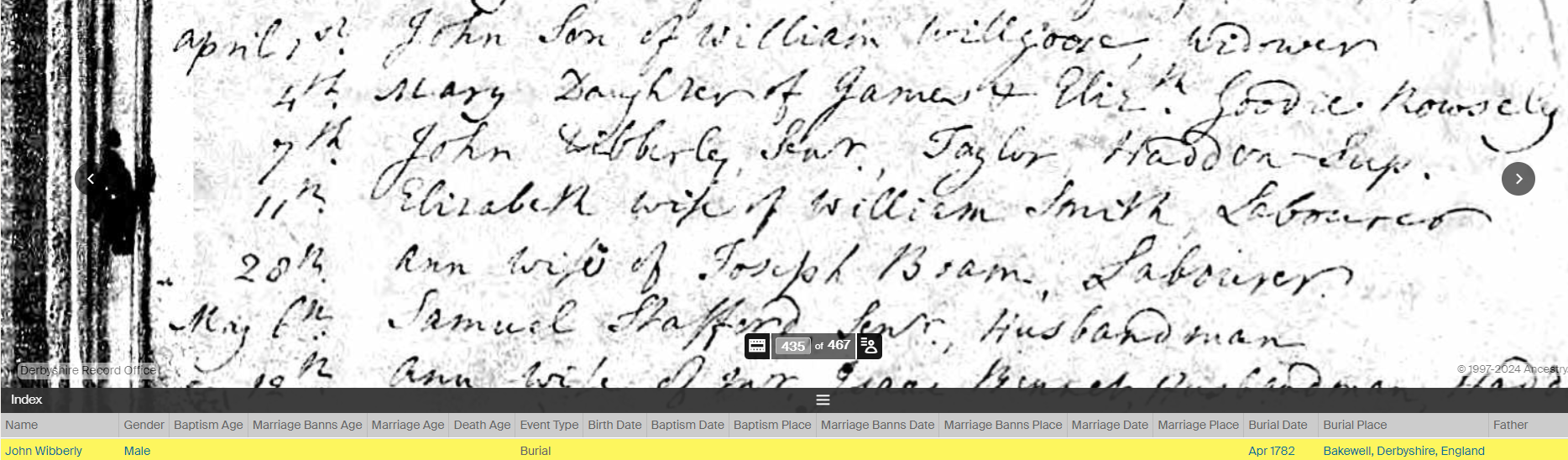
James Marshall 1767-1848 (my 4x great grandfather), parish clerk of Elton, married Ann Newton 1770-1806 in Elton in 1792. In the Bakewell parish register, Ann was baptised on the 2rd of June 1770, her parents George and Dorothy Newton of Upper Haddon. The Bakewell registers at the time covered several smaller villages in the area, although what is currently known as Over Haddon was referred to as Upper Haddon in the earlier entries.
Newton:
George Newton 1728-1798 was the son of George Newton 1706- of Upper Haddon and Jane Sailes, who were married in 1727, both of Upper Haddon.
George Newton born in 1706 was the son of George Newton 1676- and Anne Carr, who were married in 1701, both of Upper Haddon.
George Newton born in 1676 was the son of John Newton 1647- and Alice who were married in 1673 in Bakewell. There is no last name for Alice on the marriage transcription.
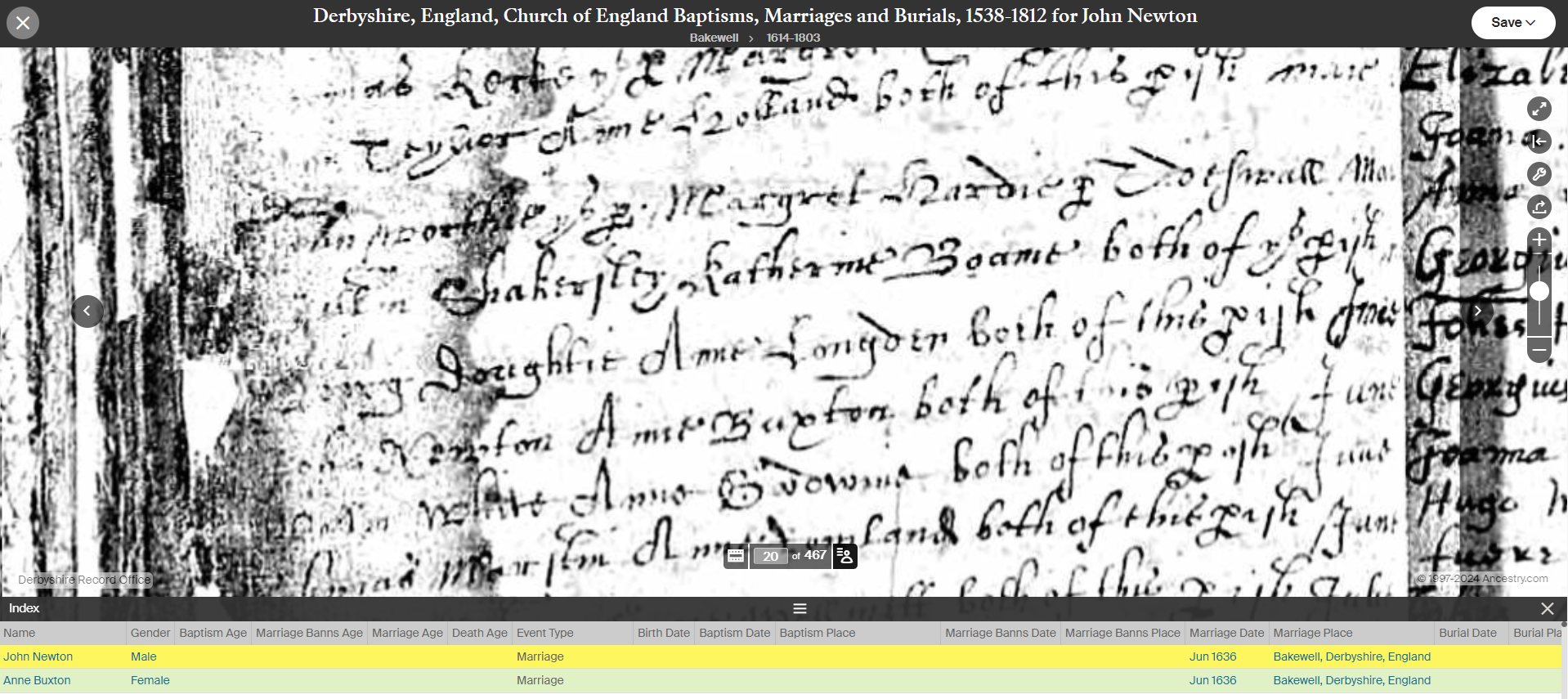
John Newton born in 1647 (my 9x great grandfather) was the son of John Newton and Anne Buxton (my 10x great grandparents), who were married in Bakewell in 1636.
1636 marriage of John Newton and Anne Buxton:
Wibberly
Dorothy Wibberly 1731-1827 married George Newton in 1755 in Bakewell. The entry in the parish registers says that they were both of Over Haddon. Dorothy was baptised in Bakewell on the 25th June 1731, her parents were John and Mary of Over Haddon.

John Wibberly and Mary his wife baptised nine children in Bakewell between 1730 and 1750, and on all of the entries in the parish registers it is stated that they were from Over Haddon. A parish register entry for John and Mary’s marriage has not yet been found, but a marriage in Beeley, a tiny nearby village, in 1728 to Mary Mellor looks likely.
John Wibberly died in Over Haddon in 1782. The entry in the Bakewell parish register notes that he was “taylor of Haddon”.
The tiny village of Over Haddon was historically associated with Haddon Hall.
A baptism for John Wibberly has not yet been found, however, there were Wibersley’s in the Bakewell registers from the early 1600s:
1619 Joyce Wibersley married Raphe Cowper.
1621 Jocosa Wibersley married Radulphus Cowper
1623 Agnes Wibersley married Richard Palfreyman
1635 Cisley Wibberlsy married ? Mr. Mason
1653 John Wibbersly married Grace DaykenHaddon Hall
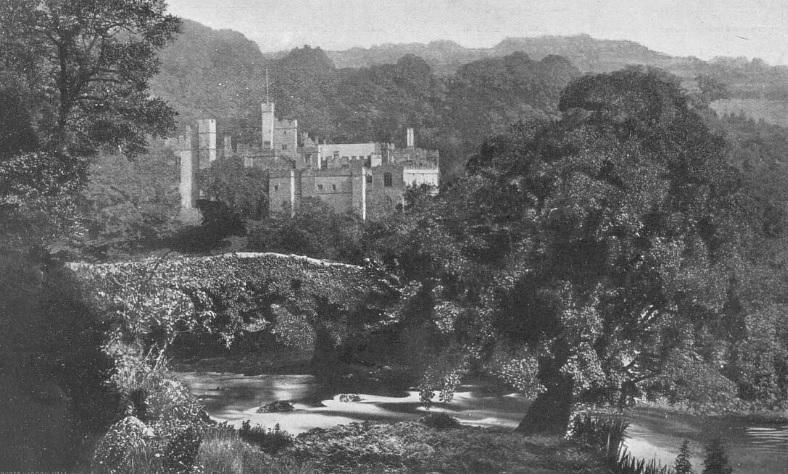
Sir Richard Vernon (c. 1390 – 1451) of Haddon Hall.
Vernon’s property was widespread and varied. From his parents he inherited the manors of Marple and Wibersley, in Cheshire. Perhaps the Over Haddon Wibersley’s origins were from Sir Richard Vernon’s property in Cheshire. There is, however, a medieval wayside cross called Whibbersley Cross situated on Leash Fen in the East Moors of the Derbyshire Peak District. It may have served as a boundary cross marking the estate of Beauchief Abbey. Wayside crosses such as this mostly date from the 9th to 15th centuries.Found in both The History and Antiquities of Haddon Hall by S Raynor, 1836, and the 1663 household accounts published by Lysons, Haddon Hall had 140 domestic staff.
In the book Haddon Hall, an Illustrated Guide, 1871, an example from the 1663 Christmas accounts:
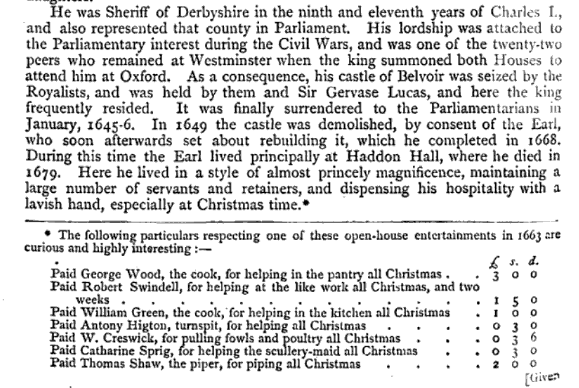
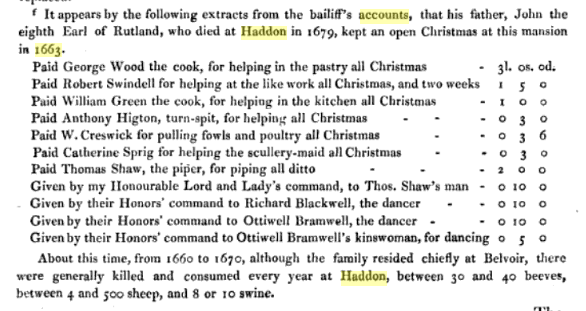
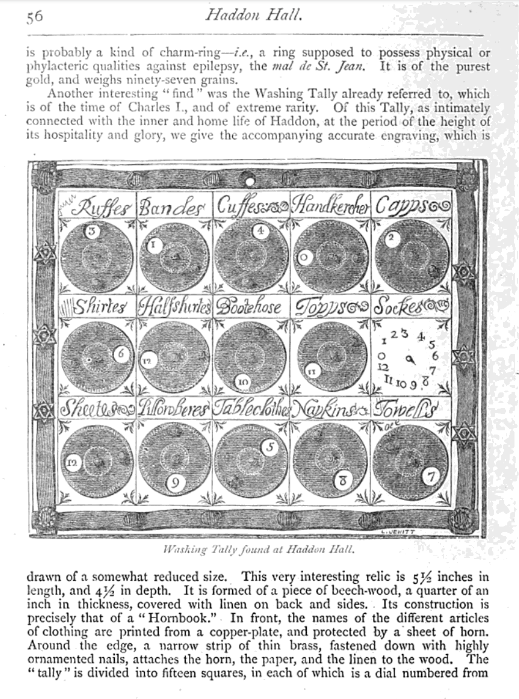
Also in this book, an early 1600s “washing tally” from Haddon Hall:
Over Haddon
Martha Taylor, “the fasting damsel”, was born in Over Haddon in 1649. She didn’t eat for almost two years before her death in 1684. One of the Quakers associated with the Marshall Quakers of Elton, John Gratton, visited the fasting damsel while he was living at Monyash, and occasionally “went two miles to see a woman at Over Haddon who pretended to live without meat.” from The Reliquary, 1861.
August 28, 2024 at 6:26 am #7548In reply to: The Elusive Samuel Housley and Other Family Stories
Elton Marshall’s
Early Quaker Emigrants to USA.
The earliest Marshall in my tree is Charles Marshall (my 5x great grandfather), Overseer of the Poor and Churchwarden of Elton. His 1819 gravestone in Elton says he was 77 years old when he died, indicating a birth in 1742, however no baptism can be found.
According to the Derbyshire records office, Elton was a chapelry of Youlgreave until 1866. The Youlgreave registers date back to the mid 1500s, and there are many Marshalls in the registers from 1559 onwards. The Elton registers however are incomplete due to fire damage.
While doing a google books search for Marshall’s of Elton, I found many American family history books mentioning Abraham Marshall of Gratton born in 1667, who became a Quaker aged 16, and emigrated to Pennsylvania USA in 1700. Some of these books say that Abraham’s parents were Humphrey Marshall and his wife Hannah Turner. (Gratton is a tiny village next to Elton, also in Youlgreave parish.)
Abraham’s son born in USA was also named Humphrey. He was a well known botanist.
Abraham’s cousin John Marshall, also a Quaker, emigrated from Elton to USA in 1687, according to these books.
(There are a number of books on Colonial Families in Pennsylvania that repeat each other so impossible to cite the original source)
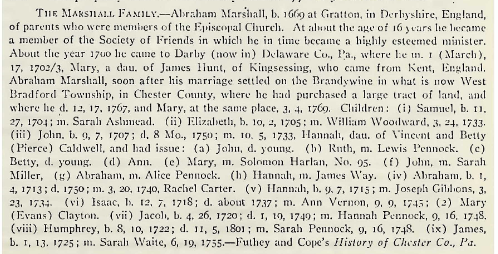
In the Youlgreave parish registers I found a baptism in 1667 for Humphrey Marshall son of Humphrey and Hannah. I didn’t find a baptism for Abraham, but it looks as though it could be correct. Abraham had a son he named Humphrey. But did it just look logical to whoever wrote the books, or do they know for sure? Did the famous botanist Humphrey Marshall have his own family records? The books don’t say where they got this information.
An earlier Humphrey Marshall was baptised in Youlgreave in 1559, his father Edmund. And in 1591 another Humphrey Marshall was baptised, his father George.
But can we connect these Marshall’s to ours? We do have an Abraham Marshall, grandson of Charles, born in 1792. The name isn’t all that common, so may indicate a family connection. The villages of Elton, Gratton and Youlgreave are all very small and it would seem very likely that the Marshall’s who went the USA are related to ours, if not brothers, then probably cousins.
Derbyshire Quakers
In “Derbyshire Quakers 1650-1761” by Helen Forde:
“… Friends lived predominantly in the northern half of the country during this first century of existence. Numbers may have been reduced by emigration to America and migration to other parts of the country but were never high and declined in the early eighteenth century. Predominantly a middle to lower class group economically, Derbyshire Friends numbered very few wealthy members. Many were yeoman farmers or wholesalers and it was these groups who dominated the business meetings having time to devote themselves to the Society. Only John Gratton of Monyash combined an outstanding ministry together with an organising ability which brought him recognition amongst London Friends as well as locally. Derbyshire Friends enjoyed comparatively harmonious relations with civil and Anglican authorities, though prior to the Toleration Act of 1639 the priests were their worst persecutors…..”
Also mentioned in this book: There were monthly meetings in Elton, as well as a number of other nearby places.
John Marshall of Elton 1682/3 appears in a list of Quaker emigrants from Derbyshire.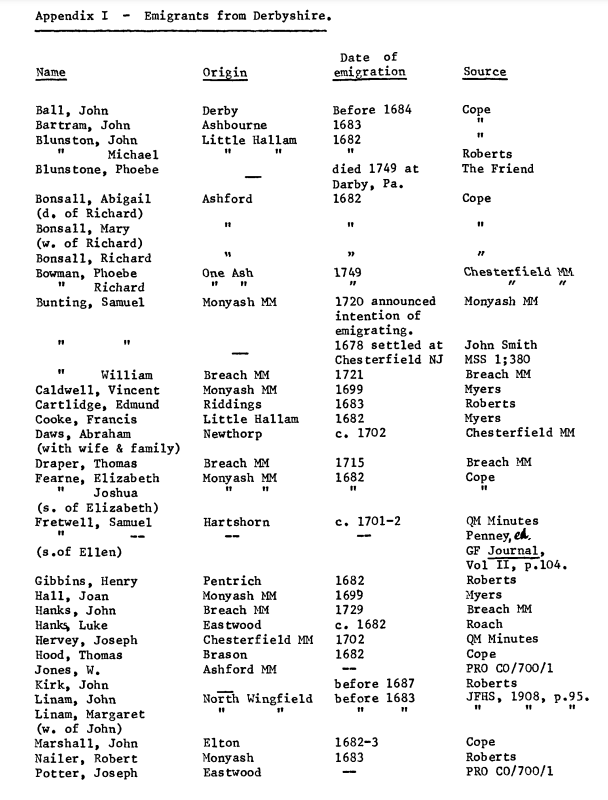
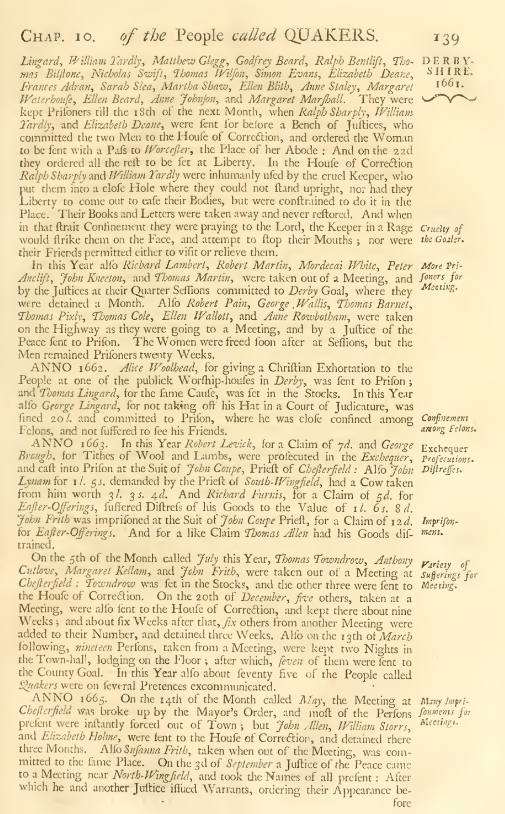
The following image is a page from the 1753 book on the sufferings of Quakers by Joseph Besse as an example of some of the persecutions of Quakers in Derbyshire in the 1600s:
A collection of the sufferings of the people called Quakers, for the testimony of a good conscience from the time of their being first distinguished by that name in the year 1650 to the time of the act commonly called the Act of toleration granted to Protestant dissenters in the first year of the reign of King William the Third and Queen Mary in the year 1689 (Volume 1)
Besse, Joseph. 1753Note the names Margaret Marshall and Anne Staley. This book would appear to contradict Helen Forde’s statement above about the harmonious relations with Anglican authority.
The Botanist
Humphry Marshall 1722-1801 was born in Marshallton, Pennsylvania, the son of the immigrant from Elton, Abraham Marshall. He was the cousin of botanists John Bartram and William Bartram. Like many early American botanists, he was a Quaker. He wrote his first book, A Few Observations Concerning Christ, in 1755.
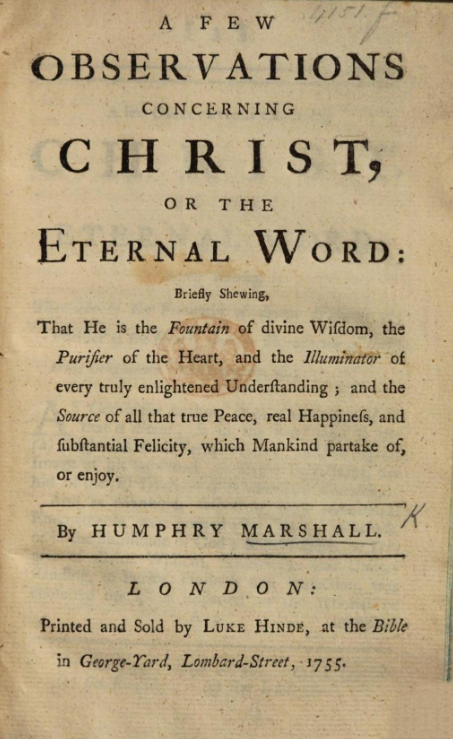
In 1785, Marshall published Arbustrum Americanum: The American Grove, an Alphabetical Catalogue of Forest Trees and Shrubs, Natives of the American United States (Philadelphia).
Marshall has been called the “Father of American Dendrology”.
A genus of plants, Marshallia, was named in honor of Humphry Marshall and his nephew Moses Marshall, also a botanist.
In 1848 the Borough of West Chester established the Marshall Square Park in his honor. Marshall Square Park is four miles east of Marshallton.
via Wikipedia.
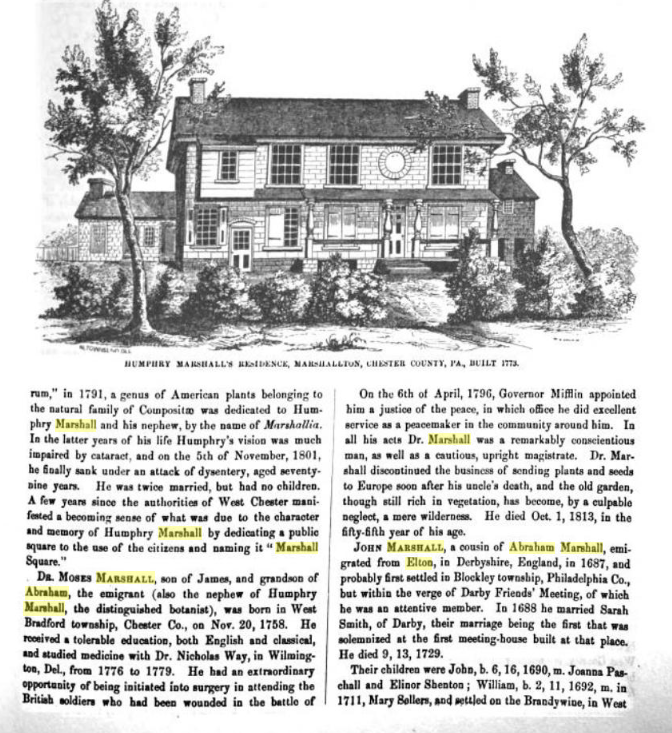
From The History of Chester County Pennsylvania, 1881, by J Smith Futhey and Gilbert Cope:
From The Chester Country History Center:
“Immediately on the Receipt of your Letter, I ordered a Reflecting Telescope for you which was made accordingly. Dr. Fothergill had since desired me to add a Microscope and Thermometer, and will
pay for the whole.’– Benjamin Franklin to Humphry, March 18, 1770
“In his lifetime, Humphry Marshall made his living as a stonemason, farmer, and miller, but eventually became known for his contributions to astronomy, meteorology, agriculture, and the natural sciences.
In 1773, Marshall built a stone house with a hothouse, a botanical laboratory, and an observatory for astronomical studies. He established an arboretum of native trees on the property and the second botanical garden in the nation (John Bartram, his cousin, had the first). From his home base, Humphry expanded his botanical plant exchange business and increased his overseas contacts. With the help of men like Benjamin Franklin and the English botanist Dr. John Fothergill, they eventually included German, Dutch, Swedish, and Irish plant collectors and scientists. Franklin, then living in London, introduced Marshall’s writings to the Royal Society in London and both men encouraged Marshall’s astronomical and botanical studies by supplying him with books and instruments including the latest telescope and microscope.
Marshall’s scientific work earned him honorary memberships to the American Philosophical Society and the Philadelphia Society for Promoting Agriculture, where he shared his ground-breaking ideas on scientific farming methods. In the years before the American Revolution, Marshall’s correspondence was based on his extensive plant and seed exchanges, which led to further studies and publications. In 1785, he authored his magnum opus, Arbustum Americanum: The American Grove. It is a catalog of American trees and shrubs that followed the Linnaean system of plant classification and was the first publication of its kind.”
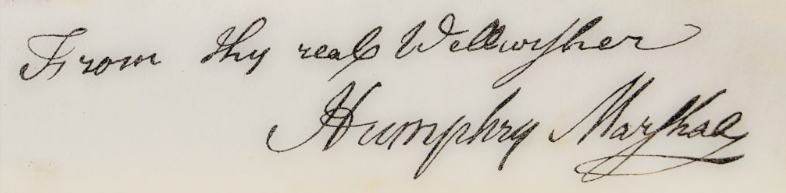 August 21, 2024 at 12:27 pm #7546
In reply to: The Elusive Samuel Housley and Other Family Stories
The Potters of Darley Bridge
Rebecca Knowles 1745-1823, my 5x great grandmother, married Charles Marshall 1742-1819, the churchwarden of Elton, in Darley, Derbyshire, in 1767. Rebecca was born in Darley in 1745, the youngest child of Roger Knowles 1695-1784, and Martha Potter 1702?-1772.
Although Roger and Martha were both from Darley, they were married in South Wingfield by licence in 1724. Roger’s occupation on the marriage licence was lead miner. (Lead miners in Derbyshire at that time usually mined their own land.) Jacob Potter signed the licence so I assumed that Jacob Potter was her father.
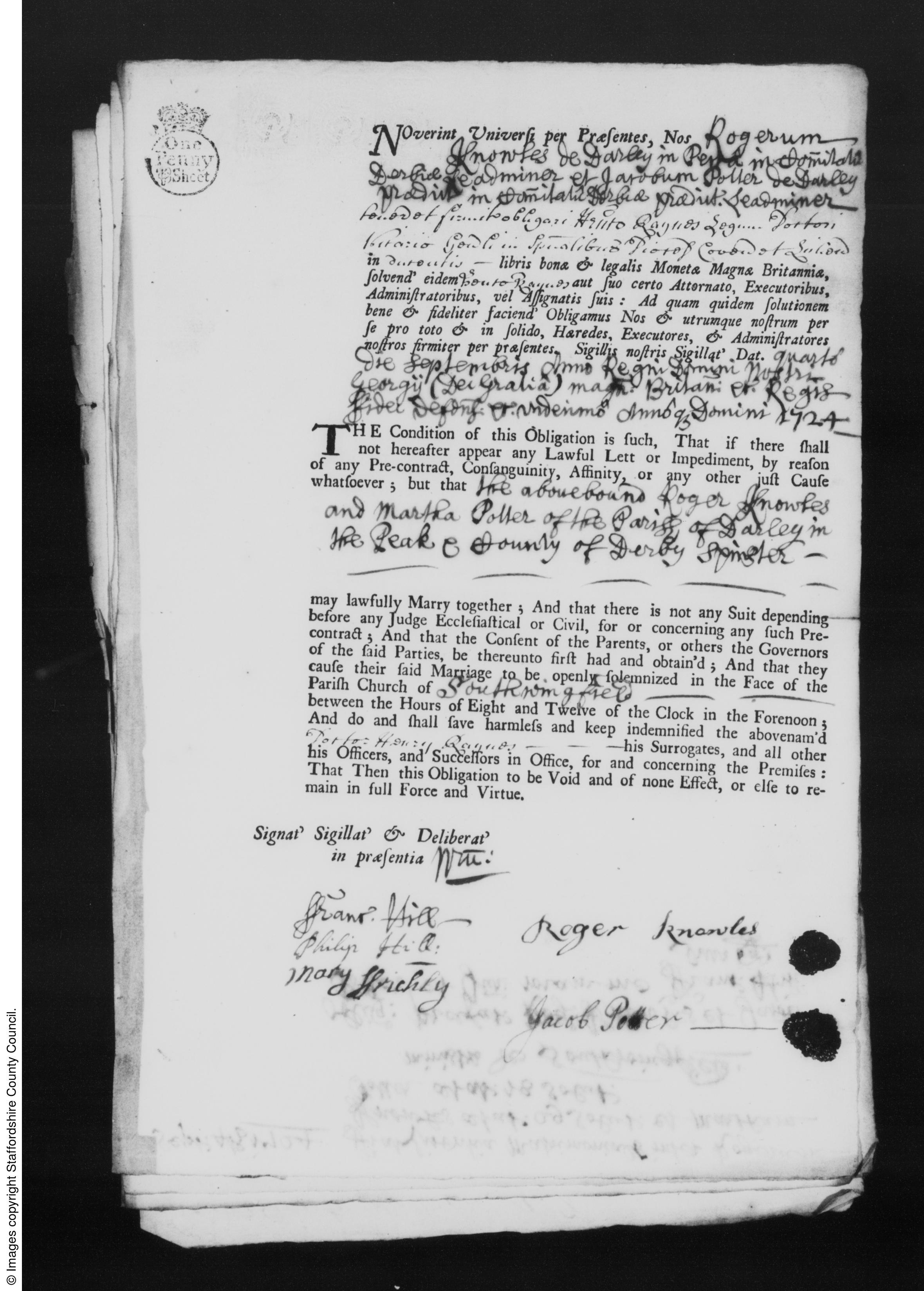
I then found the will of Jacobi Potter who died in 1719. However, he signed the will James Potter. Jacobi is latin for James. James Potter mentioned his daughter Martha in his will “when she comes of age”. Martha was the youngest child of James. James also mentioned in his will son James AND son Jacob, so there were both James’s and Jacob’s in the family, although at times in the documents James is written as Jacobi!
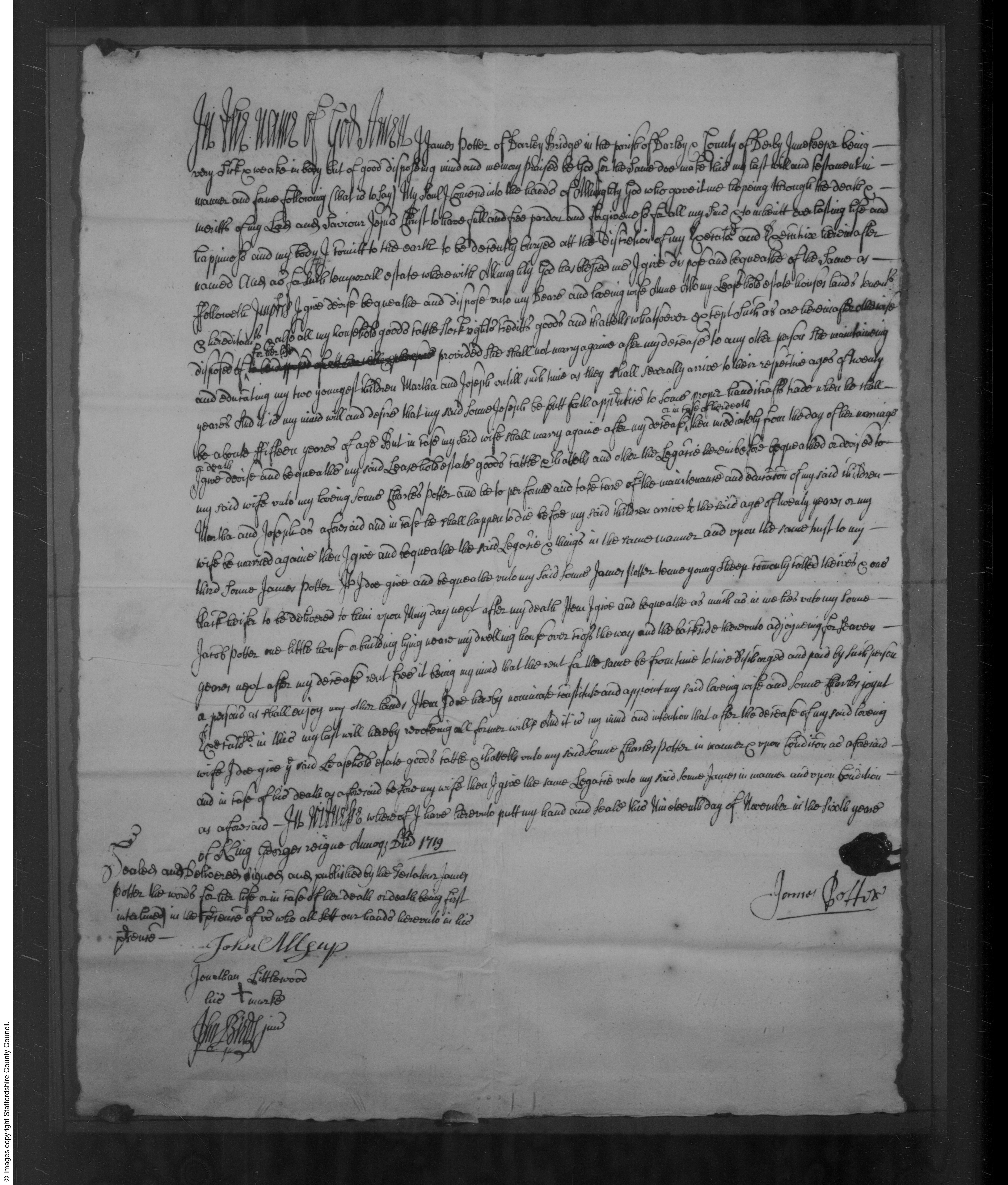
Jacob Potter who signed Martha’s marriage licence was her brother Jacob.
Martha’s brother James mentioned his sister Martha Knowles in his 1739 will, as well as his brother Jacob and his brother Joseph.
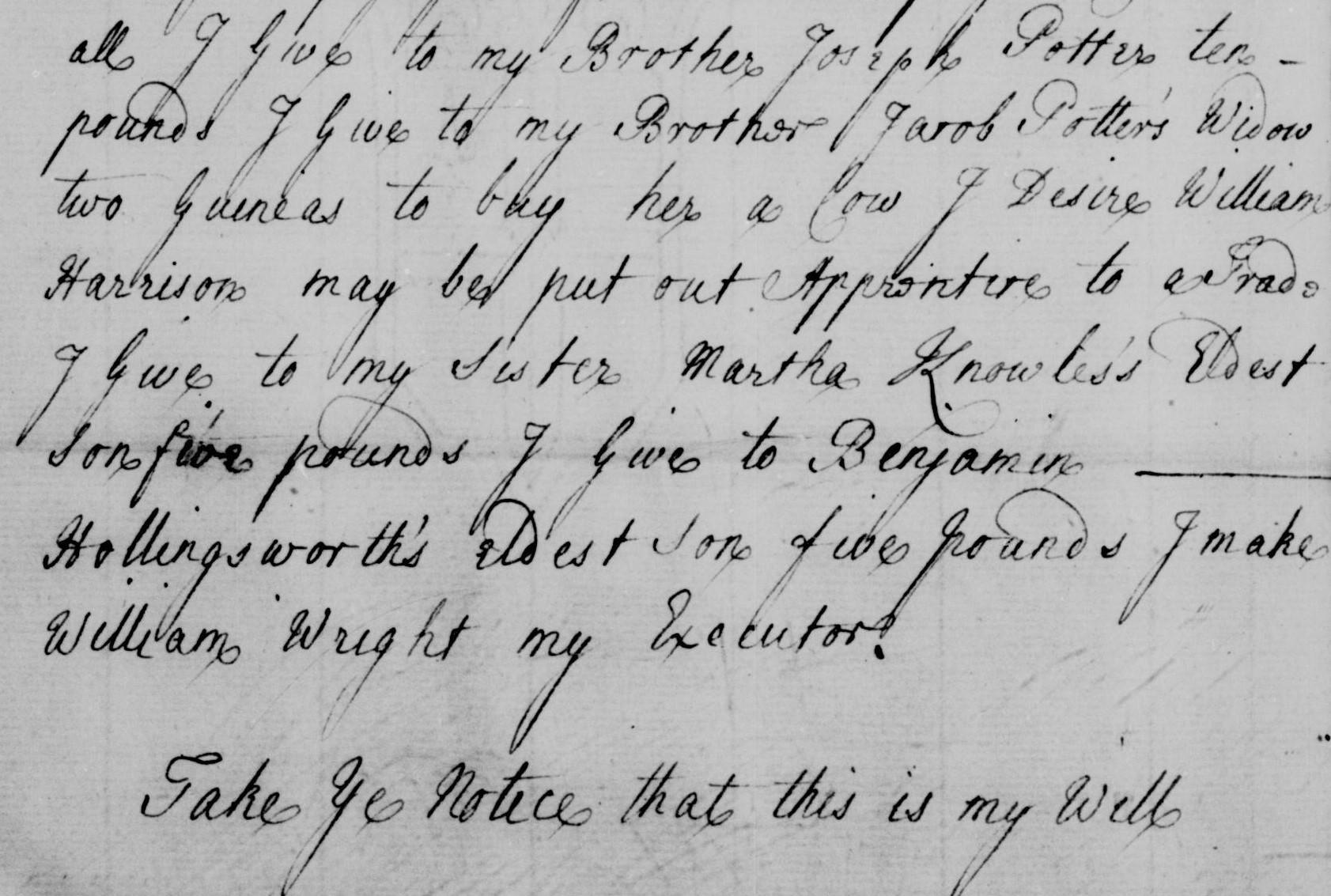
Martha’s father James Potter mentions his wife Ann in his 1719 will. James Potter married Ann Waterhurst in 1690 in Wirksworth, some seven miles from Darley. James occupation was innkeeper at Darley Bridge.
I did a search for Waterhurst (there was only a transcription available for that marriage, not a microfilm) and found no Waterhursts anywhere, but I did find many Warhursts in Derbyshire. In the older records, Warhust is also spelled Wearhurst and in a number of other ways. A Martha Warhurst died in Peak Forest, Derbyshire, in 1681. Her husbands name was missing from the deteriorated register pages. This may or may not be Martha Potter’s grandmother: the records for the 1600s are scanty if they exist at all, and often there are bits missing and illegible entries.
The only inn at Darley Bridge was The Three Stags Heads, by the bridge. It is now a listed building, and was on a medieval packhorse route. The current building was built in 1736, however there is a late 17th century section at rear of the cross wing. The Three Stags Heads was up for sale for £430,000 in 2022, the closure a result of the covid pandemic.

Another listed building in Darley Bridge is Potters Cottage, with a plaque above the door that says “Jonathan and Alice Potter 1763”. Jonathan Potter 1725-1785 was James grandson, the son of his son Charles Potter 1691-1752. His son Charles was also an innkeeper at Darley Bridge: James left the majority of his property to his son Charles.
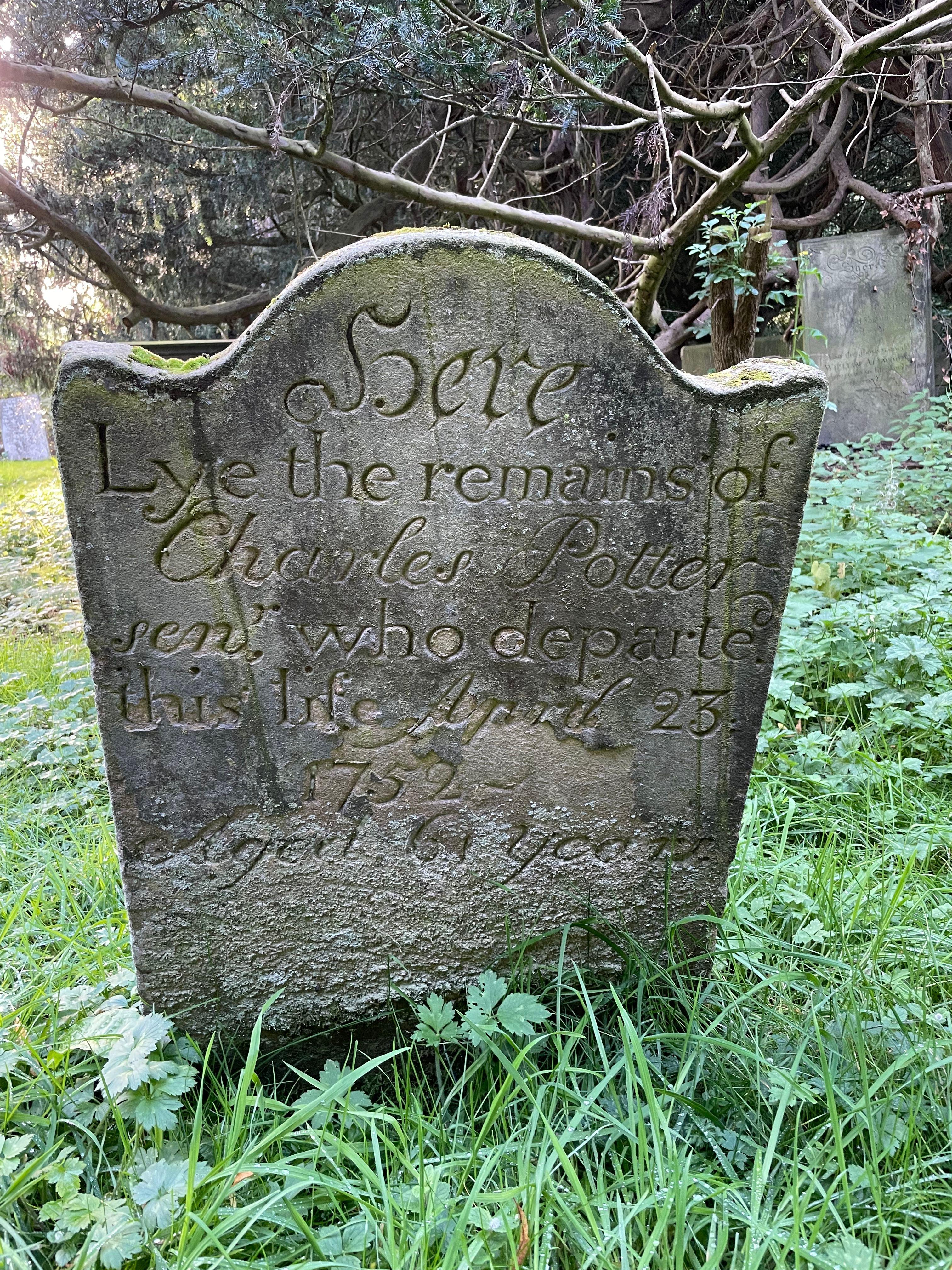
Charles is the only child of James Potter that we know the approximate date of birth, because his age was on his grave stone. I haven’t found any of their baptisms, but did note that many Potters were baptised in non conformist registers in Chesterfield.
Potters Cottage

Jonathan Potter of Potters Cottage married Alice Beeley in 1748.
“Darley Bridge was an important packhorse route across the River Derwent. There was a packhorse route from here up to Beeley Moor via Darley Dale. A reference to this bridge appears in 1504… Not far to the north of the bridge at Darley Dale is Church Lane; in 1635 it was known as Ghost Lane after a Scottish pedlar was murdered there. Pedlars tended to be called Scottish only because they sold cheap Scottish linen.”
via Derbyshire Heritage website.
According to Wikipedia, the bridge dates back to the 15th century.
August 16, 2024 at 2:56 pm #7544In reply to: The Elusive Samuel Housley and Other Family Stories
Youlgreave
The Frost Family and The Big Snow
The Youlgreave parish registers are said to be the most complete and interesting in the country. Starting in 1558, they are still largely intact today.
“The future historian of this parish will find a vast stock of material ready to hand, and if such a work was ever accomplished it would once more be seen how the history of even a remote village is but the history of the nation in little; how national victories were announced on the church bells, and national disasters by the proclamation of a form of prayer…”
J. Charles Cox, Notes on the Churches of Derbyshire, 1877.
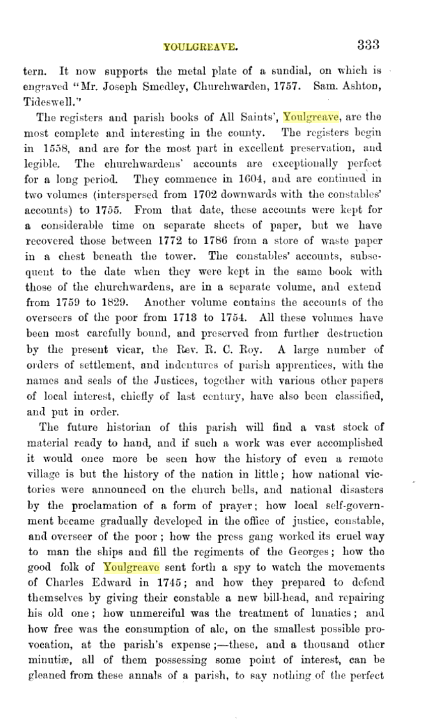
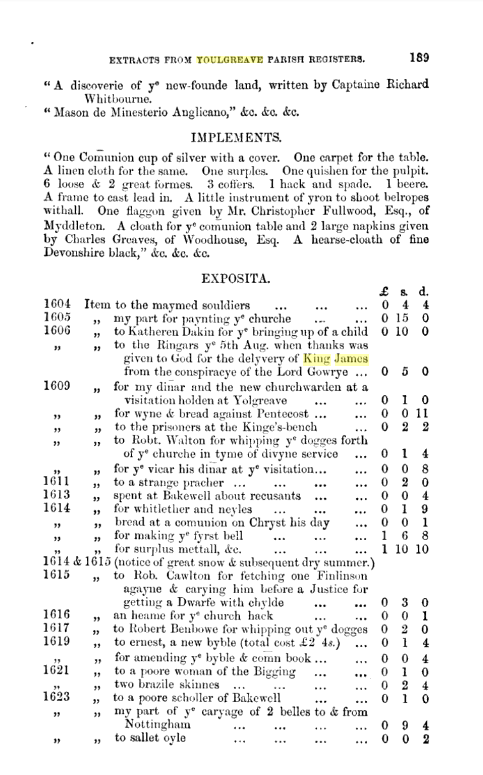
Although the Youlgreave parish registers are available online on microfilm, just the baptisms, marriages and burials are provided on the genealogy websites. However, I found some excerpts from the churchwardens accounts in a couple of old books, The Reliquary 1864, and Notes on Derbyshire Churches 1877.
Hannah Keeling, my 4x great grandmother, was born in Youlgreave, Derbyshire, in 1767. In 1791 she married Edward Lees of Hartington, Derbyshire, a village seven and a half miles south west of Youlgreave. Edward and Hannah’s daughter Sarah Lees, born in Hartington in 1808, married Francis Featherstone in 1835. The Featherstone’s were farmers. Their daughter Emma Featherstone married John Marshall from Elton. Elton is just three miles from Youlgreave, and there are a great many Marshall’s in the Youlgreave parish registers, some no doubt distantly related to ours.
Hannah Keeling’s parents were John Keeling 1734-1823, and Ellen Frost 1739-1805, both of Youlgreave.
On the burial entry in the parish registers in Youlgreave in 1823, John Keeling was 88 years old when he died, and was the “late parish clerk”, indicating that my 5x great grandfather played a part in compiling the “best parish registers in the country”. In 1762 John’s father in law John Frost died intestate, and John Keeling, cordwainer, co signed the documents with his mother in law Ann. John Keeling was a shoe maker and a parish clerk.
John Keeling’s father was Thomas Keeling, baptised on the 9th of March 1709 in Youlgreave and his parents were John Keeling and Ann Ashmore. John and Ann were married on the 6th April 1708. Some of the transcriptions have Thomas baptised in March 1708, which would be a month before his parents married. However, this was before the Julian calendar was replaced by the Gregorian calendar, and prior to 1752 the new year started on the 25th of March, therefore the 9th of March 1708 was eleven months after the 6th April 1708.
Thomas Keeling married Dorothy, which we know from the baptism of John Keeling in 1734, but I have not been able to find their marriage recorded. Until I can find my 6x great grandmother Dorothy’s maiden name, I am unable to trace her family further back.
Unfortunately I haven’t found a baptism for Thomas’s father John Keeling, despite that there are Keelings in the Youlgrave registers in the early 1600s, possibly it is one of the few illegible entries in these registers.
The Frosts of Youlgreave
Ellen Frost’s father was John Frost, born in Youlgreave in 1707. John married Ann Staley of Elton in 1733 in Youlgreave.
(Note that this part of the family tree is the Marshall side, but we also have Staley’s in Elton on the Warren side. Our branch of the Elton Staley’s moved to Stapenhill in the mid 1700s. Robert Staley, born 1711 in Elton, died in Stapenhill in 1795. There are many Staley’s in the Youlgreave parish registers, going back to the late 1500s.)
John Frost (my 6x great grandfather), miner, died intestate in 1762 in Youlgreave. Miner in this case no doubt means a lead miner, mining his own land (as John Marshall’s father John was in Elton. On the 1851 census John Marshall senior was mining 9 acres). Ann Frost, as the widow and relict of the said deceased John Frost, claimed the right of administration of his estate. Ann Frost (nee Staley) signed her own name, somewhat unusual for a woman to be able to write in 1762, as well as her son in law John Keeling.
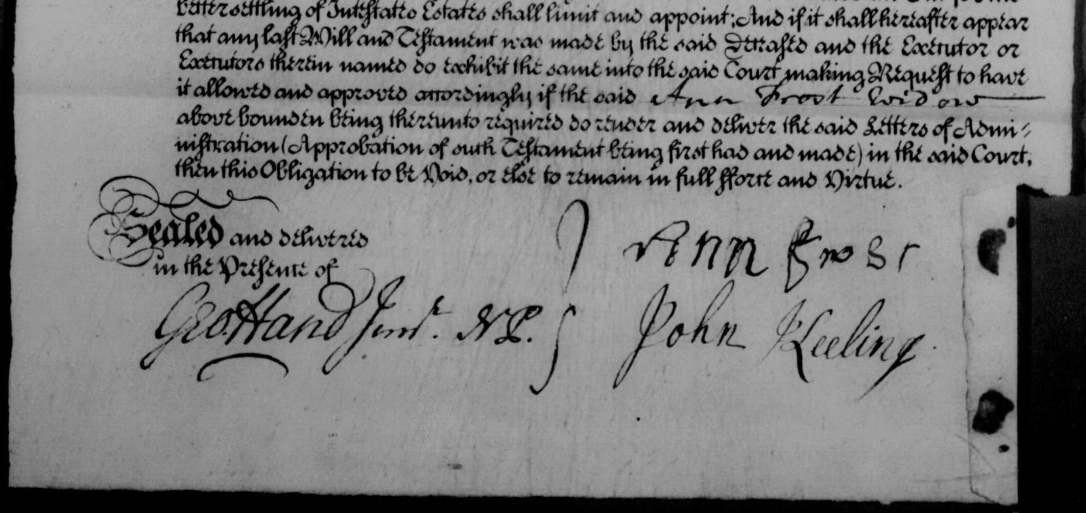
John’s parents were David Frost and Ann. David was baptised in 1665 in Youlgreave. Once again, I have not found a marriage for David and Ann so I am unable to continue further back with her family. Marriages were often held in the parish of the bride, and perhaps those neighbouring parish records from the 1600s haven’t survived.
David’s parents were William Frost and Ellen (or Ellin, or Helen, depending on how the parish clerk chose to spell it). Once again, their marriage hasn’t been found, but was probably in a neighbouring parish.
William Frost’s wife Ellen, my 8x great grandmother, died in Youlgreave in 1713. In her will she left her daughter Catherine £20. Catherine was born in 1665 and was apparently unmarried at the age of 48 in 1713. She named her son Isaac Frost (born in 1662) executor, and left him the remainder of her “goods, chattels and cattle”.
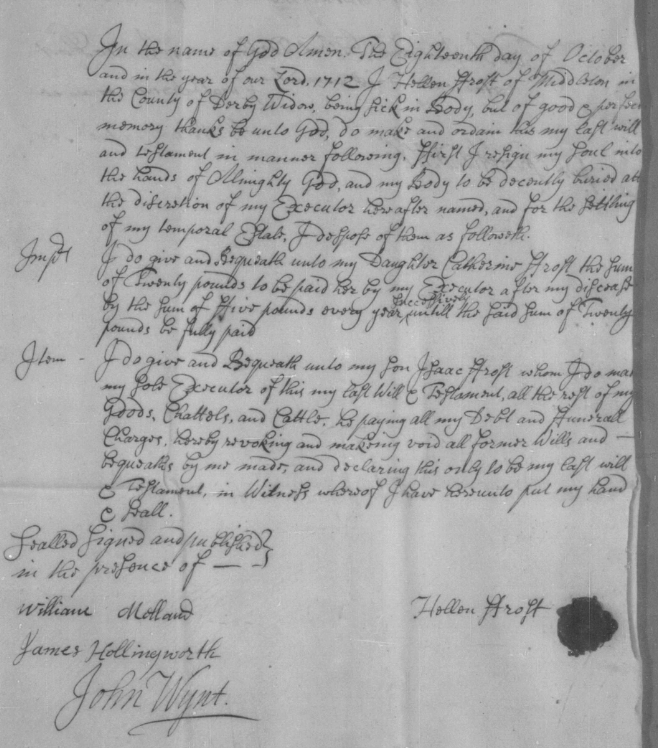
William Frost was baptised in Youlgreave in 1627, his parents were William Frost and Anne.
William Frost senior, husbandman, was probably born circa 1600, and died intestate in 1648 in Middleton, Youlgreave. His widow Anna was named in the document. On the compilation of the inventory of his goods, Thomas Garratt, Will Melland and A Kidiard are named.(Husbandman: The old word for a farmer below the rank of yeoman. A husbandman usually held his land by copyhold or leasehold tenure and may be regarded as the ‘average farmer in his locality’. The words ‘yeoman’ and ‘husbandman’ were gradually replaced in the later 18th and 19th centuries by ‘farmer’.)
Unable to find a baptism for William Frost born circa 1600, I read through all the pages of the Youlgreave parish registers from 1558 to 1610. Despite the good condition of these registers, there are a number of illegible entries. There were three Frost families baptising children during this timeframe and one of these is likely to be Willliam’s.
Baptisms:
1581 Eliz Frost, father Michael.
1582 Francis f Michael. (must have died in infancy)
1582 Margaret f William.
1585 Francis f Michael.
1586 John f Nicholas.
1588 Barbara f Michael.
1590 Francis f Nicholas.
1591 Joane f Michael.
1594 John f Michael.
1598 George f Michael.
1600 Fredericke (female!) f William.Marriages in Youlgreave which could be William’s parents:
1579 Michael Frost Eliz Staley
1587 Edward Frost Katherine Hall
1600 Nicholas Frost Katherine Hardy.
1606 John Frost Eliz Hanson.Michael Frost of Youlgreave is mentioned on the Derbyshire Muster Rolls in 1585.
(Muster records: 1522-1649. The militia muster rolls listed all those liable for military service.)
Frideswide:
A burial is recorded in 1584 for Frideswide Frost (female) father Michael. As the father is named, this indicates that Frideswide was a child.
(Frithuswith, commonly Frideswide c. 650 – 19 October 727), was an English princess and abbess. She is credited as the foundress of a monastery later incorporated into Christ Church, Oxford. She was the daughter of a sub-king of a Merica named Dida of Eynsham whose lands occupied western Oxfordshire and the upper reaches of the River Thames.)
An unusual name, and certainly very different from the usual names of the Frost siblings. As I did not find a baptism for her, I wondered if perhaps she died too soon for a baptism and was given a saints name, in the hope that it would help in the afterlife, given the beliefs of the times. Or perhaps it wasn’t an unusual name at the time in Youlgreave. A Fridesweda Gilbert was buried in Youlgreave in 1604, the spinster daughter of Francis Gilbert. There is a small brass effigy in the church, underneath is written “Frideswide Gilbert to the grave, Hath resigned her earthly part…”
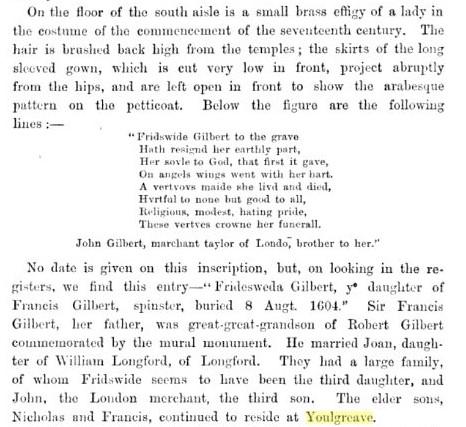
J. Charles Cox, Notes on the Churches of Derbyshire, 1877.
King James
A parish register entry in 1603:
“1603 King James of Skottland was proclaimed kinge of England, France and Ireland at Bakewell upon Monday being the 29th of March 1603.” (March 1603 would be 1604, because of the Julian calendar in use at the time.)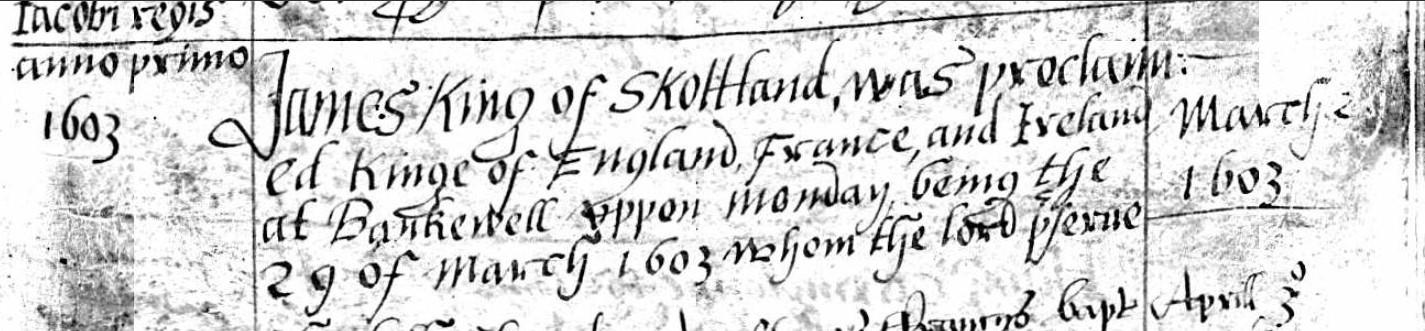
The Big Snow
“This year 1614/5 January 16th began the greatest snow whichever fell uppon the earth within man’s memorye. It covered the earth fyve quarters deep uppon the playne. And for heaps or drifts of snow, they were very deep; so that passengers both horse or foot passed over yates, hedges and walles. ….The spring was so cold and so late that much cattel was in very great danger and some died….”
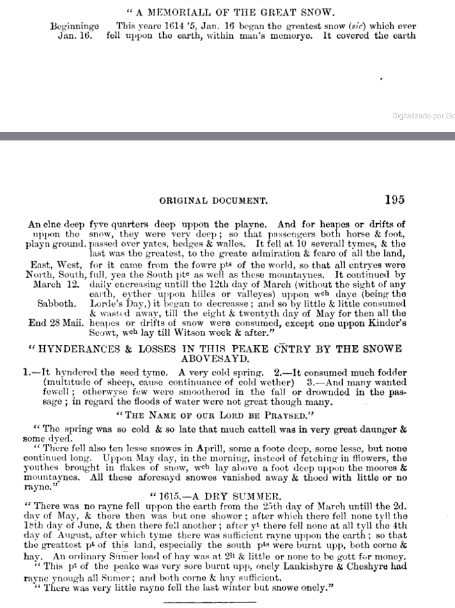
From the Youlgreave parish registers.
Our ancestor William Frost born circa 1600 would have been a teenager during the big snow.
July 18, 2024 at 9:16 am #7534In reply to: The Incense of the Quadrivium’s Mystiques
Ms Nicraith Noble, the Mayor of Limerick taking a bath in the Shannon River with reporters had made the rounds of news in ways that were quite incomprehensible.
Obviously it was part of a media ploy to boost public attention for the incoming Roman Games.
“Did she require some anti-rash-and-boil spells?” Jeezel messaged on the network, worried about what such swimming stunt would do to her ravishing hair.
“Probably…” Eris responded in a terse manner “Don’t forget Austreberthe managed to get us to sponsor the event. She may have eased the deal with some goodies. Like anti-age spell too.”
Eris was glad Austreberthe had refocused the efforts towards the imminent launch of the Roman Games. Those mass events were key moments in the Coven’s seasonal activities, as they provided a bounty of emotions to refine and process for creation of their most epic incenses. The recent mass events had been too heavy on fear, anger and gloom-mongering, not the grade A quality they required.
Austreberthe had called all hands on deck to be ready for the event, having deemed the reconnaissance work in Spain’s cloisters sufficiently well under way to take a break from it. In truth, Eris suspected she’d started to receive the first invoices from the undertakers’ Guild and had realised it was a hefty cost for their consulting services.
On top of that, there was a recent case of the drunken sheep flu in Andalucia, some local variety of virus that got the cloister sisters fear for their elderly’s Mother Loreena’s health. Considering the gleeful vulture’s smiles of the Morticians in waiting, they had decided in agreement for an early dismiss into the Summer holidays retreats.
“More prayers, phew, glad they didn’t need us for that.” true to her swagger way, Truella had conceded and accepted to put a hold to her passionate researches —she’d managed to get their personal phone numbers too anyway.
“One week to the start of the Games then.” Eris sighed. The last stretch to summer holidays seemed to take forever.
July 5, 2024 at 6:39 pm #7531In reply to: Washed off the sea ~ Creative larks
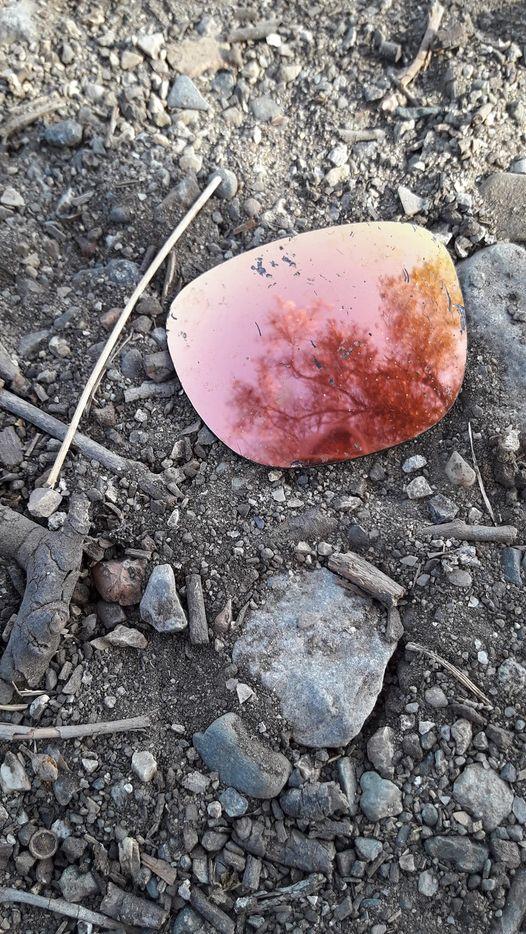
The rose coloured spectacle lens.
Aunt Idle:
“Well, crikey, finding one pink sunglass lens on the road is quite the curiosity, isn’t it? Let’s delve into the symbolic undertones of such an odd discovery. Pink lens, no less—a splash of color with quite the story to tell.
1. Seeing the World through Rose-Tinted Glasses: Finding a pink sunglass lens can symbolize optimism and seeing the world in a positive light. But here’s the kicker—it’s just one lens. This suggests a duality; perhaps you’re being asked to blend optimism with realism. Life isn’t always about sunshine and rainbows, but choosing to see the bright side can balance out the darker shades.
2. Fragmented Perspectives: A single lens means you don’t have the full picture. You’re seeing things partially, which can indicate missing information or a need to look at situations from multiple angles. It’s a nudge to take off those blinders and open your other eye, figuratively speaking. You might be clinging to a half-truth or ignoring an important aspect of your life.
3. Lost and Found: In practical terms, a lone lens on the road means someone has lost it. It’s a signifier of separation, maybe something in your life has split or broken apart. It can be a gentle reminder to look into areas where you might have lost connection—be it with loved ones, a project, or even a part of yourself.
4. Symbol of Love and Compassion: Pink is often associated with love, compassion, and femininity. The lens could be a reminder to look at things with kindness and empathy. Perhaps there’s a situation in your life that requires a softer, more loving approach.
5. Hindsight and Insight: The road is a metaphor for your life’s journey. Finding the lens there might hint at reflecting on past experiences (hindsight) while gaining new understanding or clarity (insight). Maybe there’s an opportunity to learn from what’s happened and apply it moving forward, seeing things with fresh, yet incomplete, clarity.
Putting it in Truella’s Context: If Truella found this lens, it could be a sign she needs to reassess her current path or research direction. Her overwhelming stack of books and discovery of the ancient manuscript hint at a bigger picture she might not be seeing clearly yet. Perhaps she’s overly focused on one aspect and neglecting others.
Personal Symbolism for Aunt Idle: For you, Aunt Idle, this lens could be a cheeky nudge to reassess some of your adventurous antics and half-remembered tales. Maybe there’s an old mystery or a relationship needing a fresh perspective. Or it’s just life’s way of saying, “Look closer, love—you might be missing out!”
In any case, a single pink sunglass lens is a quirky, delightful piece of life’s puzzle, inviting you to ponder, reflect, and adjust your view. So, next time you’re journeying on the dusty roads of life and stumble upon such oddities, take a moment—there just might be a zinger of wisdom waiting for you. Cheers!”
“A lone pink lens paves the road to the unseen clarity of kaleidoscopic sunrise.”
~Journey of Reflections, Enrich P. Lwellman. The Snoot:
“Ahhh, a single pink lens, lost and found amidst the stone and dust! Sings of mysteries and tales untold! Perhaps a sprite misplaced their vision or a pixie left a clue.
Lean close! Such a find whispers soft secrets:
Balance Broken, Yet Bright Like seeing life with a tint of whimsy! One eye tinted pink, the other clear. A call to mix reality with dreams, maybe?
Half Truth, Half Fantasy A hint that stories blend truths and imaginations. Seek both sides to find whole pictures.
Lost and Waiting Could be a sign someone’s journey is incomplete, needing you as a puzzle piece. Maybe the other lens waits for your path?Snootly wisdom: Use the lens not to see, but to imagine.Peer through the pink and let dreams color your heart. Could be you’re on the cusp of a grand adventure; just follow the allure of the pink!
Liz:
Oh, darling, how positively intriguing! A single pink sunglass lens left upon the road—why, it’s like a snippet from one of my novels, fraught with symbolism and brimming with untold stories.
Let’s unravel this little mystery together, shall we? First, the color pink itself is rich with meaning. It speaks of love, compassion, and a certain kind of whimsicality. It’s a hue that embodies the gentle side of passion, the tender whispers of the heart. Now, to find just one lens, separated from its twin, adds a layer of poignancy. It’s a fragment of something once whole, a poignant reminder of loss or incompletion.
One might surmise that this lens represents a part of oneself that has been misplaced or overlooked. Perhaps it’s a call to rediscover a piece of your own heart, the softer, more romantic side that life’s hustle and bustle may have sidelined. Or it could symbolize a different perspective—after all, sunglasses shield us from the sun’s glare, making things clearer in their own shaded way. This lone lens might be urging you to look at a situation with fresh eyes, to find beauty in the fragmented and the unexpected.
Imagine, if you will, a character in one of my novels stumbling upon this very lens. They’d be on the cusp of a grand adventure, naturally. The pink lens would become their talisman, a clue leading them to unforeseen revelations and untold treasures. It would be both a physical object and a metaphorical guide, urging them to view the world—and their place within it—through a lens of love and compassion.
Perhaps it is also a nod to the impermanence of things, a gentle reminder that beauty and meaning can be found even in life’s fleeting moments. Much like the single pink lens, our journeys are filled with fragments of experiences that, when pieced together, create a mosaic of our existence.
So, my dear, take this as a sign to embrace the whimsical, to seek out the overlooked pieces of your own story, and to cherish the beauty of the incomplete. After all, it’s the mysteries and the musings that make life a narrative worth living.
Mater:
Ah, a single pink sunglass lens on the road, you say? Now that’s a curious find. Objects like that can be teeming with symbolic meaning if you’ve got the eyes to see it. Let’s break it down a bit, shall we?
Firstly, the color pink. Traditionally, pink is associated with love, compassion, and nurturing. It’s a color that often brings to mind warmth and affection, something tender and gentle. But finding just one lens suggests something is missing or incomplete—a piece of a larger whole.
A sunglass lens, on the other hand, is meant to protect the eyes from harsh light, allowing you to see the world more clearly without being blinded. Seeing through a pink lens, metaphorically speaking, can mean looking at life with an optimistic or compassionate perspective. It’s like seeing the world through rose-colored glasses, as they say.
Now, finding just one lens on the road—well, roads are pathways, journeys, the direction we take in life. A single lens could indicate a moment of clarity or a shift in perspective on your journey. But it could also symbolize a need to find balance or the missing piece of your outlook to see the full picture clearly.
Maybe it’s a nudge from the universe to take a closer look at how you view your current path. Are you seeing things in the best light possible? Or perhaps it’s a reminder that while optimism and compassion are vital, you might be missing another crucial aspect—realism or practicality, perhaps?
Or, it could be as simple as a reminder to lighten up and find joy and playfulness in your journey.
Like a pink flamingo standing on one leg, sometimes life’s oddities are just there to make you smile and wonder.
Whatever the meaning, love, take it as a sign to reflect and consider. The road ahead is always full of mystery and wonder, and sometimes the smallest things can carry the biggest messages.
Finnley:
Pink sunglass lens on the road, you say? Well, ain’t that a curious bit of rubbish. If we’re dabbling in symbolism, it could mean a variety of things depending on how fanciful you want to get. Pink is often associated with love, compassion, and care. So, finding a lens could mean you’re only seeing half the picture when it comes to matters of the heart. Or maybe you’re missing the rosy view on life, and you need to adjust your perspective.
Then again, it could just mean some poor sod lost their sunnies and now they’ve got a squint and a sunburnt nose. Life’s not always riddled with deep meanings, sometimes it’s just a bit of lost plastic on the tarmac.
Now, if you ask me, you ought to be more concerned about the litter. If everyone went around leaving bits and bobs all over the place, we’d be living in a right tip. So pick it up, toss it in the bin, and let’s keep things tidy, shall we?
Mandrake:
Ah, the solitary pink sunglass lens on the road. Delightfully poetic. A symbol of half-seen truths, perhaps? Seeing the world through rose-tinted glasses, but only partially. Could it be urging you to seek balance, to view life with both optimism and realism? Or maybe just a nudge from the universe to pick up your litter. Such profundity from a piece of plastic. Life’s a riddle, darling.
Sha: A pink sunglass lens on the road, eh? Now that’s a right peculiar find if ever I ‘eard one. Makes you wonder what it means, don’t it?
Glo: Oh, Sha, you’re always lookin’ for the hidden meanin’ in things. It’s just a bit of plastic, ain’t it? Though, come to think of it, pink’s a powerful colour. Symbolises love, compassion, and all that mushy stuff.
Mavis: I reckon it might be a sign, ladies. A pink lens… maybe it’s tellin’ you to look at the world through rose-tinted glasses, y’know? See the good in things. Or it could be a message from the universe, remindin’ you to keep an eye out for the unusual.
Sha: Right you are, Mav! And let’s not forget the conspiracies! Maybe it’s a clue from them secret societies, leavin’ hints for those sharp enough to notice. Could be part of a bigger puzzle, a breadcrumb leadin’ to somethin’ magnificent.
Glo: Or maybe someone’s just dropped their specs out the car window in a rush, and it’s nothin’ more than that. But where’s the fun in that sort of thinkin’?
Mavis: True, true. We’ll go with the idea that it’s a symbol of keepin’ an open mind and lookin’ out for the small wonders of life. Who knows what other treasures we might find if we keep our eyes peeled?
Sha: And next time we’re out and about, let’s be on the lookout for the other lens. Could be a sign that we’re missin’ half the picture.
Glo: Oh, you and your signs, Sha! But alright, we’ll keep our peepers open. Never know what the universe might be tryin’ to tell us next.
June 29, 2024 at 10:01 pm #7527In reply to: The Incense of the Quadrivium’s Mystiques
It was good to get a break from the merger craziness. Eris was thankful for the small mercy of a quiet week-end back at the cottage, free of the second guessing of the suspicious if not philandering undertakers, and even more of the tedious homework to cement the improbable union of the covens.
The nun-witches had been an interesting lot to interact with, but Eris’d had it up to her eyeballs of the tense and meticulous ceremonies. They had been brewing potions for hours on, trying to get a suitable mixture between the herbs the nuns where fond of, and the general ingredients of their own Quadrivium coven’s incenses. Luckily they had been saved by the godlike apparition of another of Frella’s multi-tasking possessions, this time of a willing Sandra, and she’s had harmonized in no time the most perfect blend, in a stroke of brilliance and sheer inspiration, not unlike the magical talent she’d displayed when she invented the luminous world-famous wonder that is ‘Liz n°5’.
As she breathed in the sweet air, Eris could finally enjoy the full swing of summer in the cottage, while Thorsten was happily busy experimenting with an assortment of cybernetic appendages to cut, mulch, segment and compost the overgrown brambles and nettles in the woodland at the back of the property.
Interestingly, she’d received a letter in the mail — quaintly posted from Spain in a nondescript envelop —so anachronistic it was too tempting to resist looking.
Without distrust, but still with a swish of a magical counterspell in case the envelop had traces of unwanted magic, she opened it, only to find it burst with an annoying puff of blue glitter that decided to stick in every corner of the coffee table and other places.
Eris almost cursed at the amount of micro-plastics, but her attention was immediately caught by the Latin sentence mysteriously written in a psychopath ransom note manner: “QUAERO THESAURUM INCONTINUUM”
“Whisp! Elias? A little help here, my Latin must be wrong. What accumulation of incontinence? What sort of spell is that?!”
Echo appeared first, looking every bit like the reflection of Malové. “Quaero Thesaurum Incontinuum,” you say. How quaint, how cryptic, how annoyingly enigmatic. Eris, it seems the universe has a sense of humor—sending you this little riddle while you’re neck-deep in organizational chaos.
“Oh, Echo, stop that! I won’t spend my well-earned week-end on some riddle-riddled chase…”
“You’re no fun Eris” the sprite said, reverting into a more simple form. “It translates roughly to “I seek the endless treasure.” Do you want me to help you dissect this more?”
“Why not…” Eris answered pursing up her lips.
““Seek the endless treasure.” We’re talking obviously something deeper, more profound than simple gold; maybe knowledge —something truly inexhaustible. Given your current state of affairs, with the merger and the restructuring, this message could be a nudge—an invitation to look beyond the immediate chaos and find the opportunity within.”
“Sure,” Eris said, already tired with the explanations. She was not going to spend more time to determine the who, the why, and the what. Who’d sent this? Didn’t really matter if it was an ally, a rival, or even a neutral party with vested interests? She wasn’t interested in seeking an answer to “why now?”. Endless rabbit holes, more like it.
The only conundrum she was left with was to decide whether to keep the pesky glittering offering, or just vacuum the hell of it, and decide if it could stand the test of ‘will it blend?’. She wrapped it in a sheet of clear plastic, deciding it may reveal more clues in the right time.
With that done, Eris’ mind started to wander, letting the enigmatic message linger a while longer… as reminder that while we navigate the mundane, our eyes must always be on the transcendent. To seek the endless treasure…
The thought came to her as an evidence “Death? The end of suffering…” To whom could this be an endless treasure? Eris sometimes wondered how her brain picked up such things, but she rarely doubted it. She might have caught some vibes during the various meetings. Truella mentioning Silas talking about ‘retiring nuns’, or Nemo hinting at Penelope that ‘death was all about…”
The postcard was probably a warning, and they had to stay on their guards.
But now was not the time for more drama, the icecream was waiting for her on the patio, nicely prepared by Thorsten who after a hard day of bramble mulching was all smiling despite looking like he had went through a herd of cats’ fight.
June 26, 2024 at 7:09 am #7526In reply to: The Incense of the Quadrivium’s Mystiques
Truella slept for longer than she intended, indeed, she had not intended to sleep at all, there was too much to do. Trying to hold on to the fragments of dream recall, she sat up and rubbed her eyes. Glancing around the room, she couldn’t immediately remember what she was doing there. Suddenly she sat bolt upright. What was that conversation she’d had before falling alseep? Truella felt dizzy trying to remember. She stood up and started to pace the room, and noticed a letter had been pushed under the bedroom door. She frowned as she bent to pick it up. Nothing was written on the outside, but the envelope had been sealed with a blob of red wax. Truella opened the letter carefully without breaking the seal. A yellowy page was inside, written in Latin.
Ordo Amphibiae-Luciae: pertinebant ad Ordinem Amphibiae-Luciae.
Truella’s Latin was rusty to say the least. She sat back down on the bed struggling to decipher the message.
The Order of Amphibia-Lucia: They belonged to the Order of Amphibia-Lucia.
Nomen Amphibia-Lucia provenit ex duplici natura: tam terrena quam mundana. Rana facies symbolica est repraesentatio nexus eorum ad aquam, transformationem, et antiqua numina amphibiana.
The name “Amphibia-Lucia” stems from their dual nature: both earthly and otherworldly. The frog face is a symbolic representation of their connection to water, transformation, and ancient amphibian deities. They believe in metamorphosis, much like a tadpole turns into a frog, embodying cycles of death and rebirth These priestesses predated Christianity by eons. Their practices and rituals were about aligning with the cosmic cycles, harnessing planetary energies, and maintaining harmony between the seen and the unseen. They were known to perform rites that involved intricate dances, chants in forgotten tongues, and the use of ancient artifacts that, according to legend, could summon or banish entities from beyond our realm—dragons included.
Tartessus in obscurum, secretissimae sectae, ordo Amphibiae-Luciae, sub terra perrexit, ad litteram. Scientiam suam servaverunt, eam per generationes transeuntes, ritus suos in secretis clausulis sub culturis recentioribus obrutos servaverunt. Christianismus in terram pervasit, sed hae sorores aptatae, antiquas vias obtegunt sub specie hodiernae opinionis systemata superstites vigereque.
When Tartessos fell into obscurity, its most secretive sect, the Order of Amphibia-Lucia, went underground—literally. They preserved their knowledge, passing it down through generations, maintaining their rituals in secretive enclaves buried beneath newer civilizations. Christianity might’ve swept over the land, but these sisters adapted, cloaking their ancient ways under the guise of more contemporary belief systems to survive and thrive.
In cellis cellis in ipsum cubiculum illorum claustrorum contextum habemus reliquias ordinis pervetusti, dogmatum ac dogmatum recentioris millennii securos. Hais ex quo saeviunt dii, rudis sacra, et advena mundus.
In the cellars woven into the very bedrock of those cloisters, we have the remnants of an archaic order, unconcerned with dogmas and doctrines of the more recent two millennia. They’re from a time when gods were wilder, rituals were raw, and the world was a stranger.
When the nuns under Hildegarde von Bingen’s influence merged with these ancient priestesses, it wasn’t just a blending of orders but a clash and harmony of traditions. Hildegarde herself, in her visionary wisdom, likely recognized the power and ancient wisdom of the Order of Amphibia-Lucia, choosing to weave their potent rituals into her own esoteric Christian practices. The frog-faced sisters are no mere relics of an outdated faith. They’re the living embodiment of an ancient, potent lineage that predates and outlasts many of the world’s religions. They’re the keepers of ancient Tartessian magic, lurking in those cellars, waiting for the right time to hop back into the forefront of history.
So that was it! But who had pushed the letter under her door? And why was it written in Latin? Had everyone else received a letter?
-
AuthorSearch Results
