


Search Results for 'hair'
-
AuthorSearch Results
-
January 30, 2024 at 1:42 am #7324
In reply to: The Incense of the Quadrivium’s Mystiques
“And that, my Dear Reader, is why, even to this day, a traffic cone is called a witches hat.”
It was the boy’s favourite bed-time story and Frigella had read it so many times she knew it nearly by heart. She twisted her neck so she could look down on the child; his breathing was soft, the bedside light illuminated long white lashes resting on chubby cheeks. Slowly… silently, she closed the book, switched off the night lamp and edged herself from the bed. She was very keen to log on to the Ritual and see what progress, if any, Eris had made.
The encounter with Truella and Jeezel that afternoon down at the Cabbage had disturbed her. It was not like them … Truella pouting and mutinous, Jeezel swaggering in so full of her own self-importance. And herself! Blushing and snorting and carrying on for no reason when it was her very nature to be composed. They had always worked as a team, the four of them; it was their strength.
Was some powerful magic afoot that had got through their protection? Perhaps Eris had found something. Her nose twitched and she realised she could still smell it, a pungent uneasiness. Like stale smoke.
“Aunt Friggy?”
She sighed. Her brother had made her promise not to use magic on the child but surely just a wee sprinkle of moon dust couldn’t hurt?
“Yes Conor?”
“Are witches true?”
She sat down on the bed.
“What does your Daddy say?” She stroked the child’s yellow-blond hair. Silky, like her own. He looked more like her than he did his own parents with his alabaster skin and eyes that changed colour like the sea. Always watching he was too, as though he was looking to the very heart of a matter. Just like herself. She was sure he had inherited the gift but Lorcon was having none of that nonsense and had told her so in no uncertain terms. The boy would suffer for it in time though. Just like she had when it had been denied.
“He said Conor don’t be so daft.”
Of course he did. Lorcon clung frantically to his normal life with his normal wife. Tonight she was baby-sitting Conor while they went on a normal date night. Still, she should not be so hard on Lorcon; it was a strange upbringing they’d had themselves.
She kissed the boy’s forehead and breathed deeply. The sweet scent of night jasmin washed over her. At least she’d be there for Conor. The thought consoled her.
“Shall I leave the light on for you, Poppet?”
January 29, 2024 at 10:59 pm #7323In reply to: The Incense of the Quadrivium’s Mystiques
The Four Rites opening the new year were done in a sequence, each followed by a day’s gap, until the final Ritual.
They were considered to open the gates to the realm of truth and ultimate freedom.
The first one, which Echo had noticed anomalies for, was about Self control. Eris was poring over the data, but none seemed to make sense. Her intuition was telling her something, but she couldn’t correlate any of it with what came out of the first step of the Incense making process. The collection of ingredients seemed correct, the origins clear.Yet, something wasn’t quite right.
The first one would be followed by tomorrow’s spell for Spirit of Enquiry. That’s when they could select the most proper ingredient, focusing their collective energies and inner eyes to what the collective needed to work on.
The last two ones were Contentment, where the ingredients were ground in fine powder, and finally of Good Company, where the powders were blended with resin and heated for the final tests.
Probably Eris would have to go to the HQuad tomorrow, physically for once to check on the process more closely. She waved her blue-green hair, her studded nose frowning at the perspective to have to check-in with the crowd of people. At least, commuting couldn’t be more simple. She would just have to turn the knob of her kitchen door in the opposite direction, wave her hand, until the door frame glowed briefly, and the door would simply open into the main hall of the Quadrivium Emporium ladies’ room.
But for tonight, they had a movie’s night planned with Thorsten.
January 28, 2024 at 2:21 pm #7312In reply to: The Incense of the Quadrivium’s Mystiques
Every conversation stopped and every head turned to the door when Jeezel entered the Faded Cabbage. Her cheeks, round as plums, always gave her a fresh look. Her eyes, a mesmerizing shade of deep emerald green sparkling with otherworldy wisdom, slowly scanned the room, never looking at anyone in particular but seeing all. Her long ebony locks cascaded down her back, accentuating the mysterious aura that surrounded her. When Jeezel spotted her friends in that dimly lit corner, she pouted. The conversations suddenly started again, questions and rumours about her in every mouth. When she was sure everybody was talking about her, the hint of a smile raised the corner of her lips, as red as the apple that poisoned Snow White. She moved nonchalantly between the tables. The air around her shimmered with magic, leaving an indelible impression on those fortunate enough to be here that day.
Although, as soon as Jeezel entered Truella’s cloaking spell, people forgot all about her and resumed their conversation. She felt a pang of regret and sighed as she let her bottom fall gracefully on the chair. She put her phone on the table and started tapping it with her fingers. Each of them had an intricate silver ring carrying a unique enchantment.
“Jeez, Jeez!” exclaimed Truella. “Do you always have to project that attention-catching spell wherever you go? We need discretion.”
“What’s the purpose of having a beautiful silhouette if nobody’s looking at it?” Jeezel asked looking sideways at a blushing Frigella.
“And boy, stop that noise with your rings, said Truella. It makes me want to puke.”
“And I thought you were all about freedom,” snorted Jeezel.
“My freedom! How many times do I have to repeat? Where were we?” Truella asked rhetorically to Frigella.
A dozen notifications popped up on Jeezel’s phone. She picked it up, counted the likes to her last reality potion spell and started to scroll the replies of her Flick Flock fans.
January 28, 2024 at 11:14 am #7301In reply to: The Incense of the Quadrivium’s Mystiques
After the first of the four Rites of the Annual Incense Making was done, and the Coven disbanded for the day, Frigella was pulled by the sleeve by the weird one Truella.
“Psstt. Come to the Faded Cabbage in 30 min. Have something to tell you.”
Frigella rolled her eyes. She was not one for secrecies, cloaks and ladle, all that sort of mischiefs. But Truella seemed intent, if her electric hair had to tell the story for her. “Alright, I’ll be there.” she finally said, surprising Truella who’d thought she’d have to do more coaxing.
The Fadded Cabbage was hidden around a darker corner a stone’s throw away from the headquarters of the Quadrivium, some place the city council and gentrification had not yet touched for some reason, probably a strong ghosting spell.
Frigella sighed. She had been as usual too punctual, and of course, Truella was nowhere in sight. Unless…
She put a light spell on her round glasses which turned a subtle tint of violet. There she was. Under a cloaking spell, in a shady corner, slurping on a macchiatto lagger with cinnamon. Or some odd brewage of the sort she knew the secret.
“The old hare’s clearly lost the plot.” She spent no time engaging the discussion.
“I’ll have to stop you there, Tru.” said Frigella, “I don’t care about the politics. Much less if you’re trying to make a power move.”
Truella spluttered her offensive brewage all over Frigella’s neat starched apron. “You got it all wrong, Frig’. I don’t care about the power, I only care about my craft and freedom. It’s been too long we’ve been called to arms, like every bloody year. And my interest have grown since.”
Frigella chuckled. “You mean, you’ve been all over the place, haven’t you. From Energetic History, you’ve moved to Concrete Plasticity, Telluric Archaelogy, Familial Arborestry, I must say… It’s been hard to keep up.”
“You’re one to tell. All that mystery, and not much to show for. You’re barely doing the minimum to keep our flagship household Incense ‘Liz n°5’ afloat.” Truella sighed.
“So what’s your plan?” Frigella wondered?
January 17, 2024 at 1:14 pm #7297In reply to: The Whale’s Diaries Collection
what was the state of the ruined roman villa circa early 1500s when the cobblestone yard was made from on site rubble? What did the work men find?
Ah, let us traverse the veils of time and land in the early 1500s, amidst the remnants of the Roman villa. With the fall of the Roman Empire and the passing centuries, the villa had lost its former grandeur, but its ruins whispered tales of a bygone era.
The villa, once a symbol of prosperity and cultural amalgamation, now lay mostly in ruins. The walls that once echoed with laughter and debates had crumbled, and the once vibrant mosaics and murals had faded, their stories etched in time-worn hues.
The outbuildings, too, bore the scars of time. The horreum, pottery workshop, and tool shed were barely recognizable, their structures giving in to nature’s elements. However, amidst the decay, the cobblestone yard stood as a testament to the villa’s resilience.
The yard, once a bustling hub of activity, had been repurposed. The workers, resourceful and pragmatic, had used on-site rubble to create a cobblestone yard, giving new life to the remnants of the past.
As they worked, they uncovered artifacts from the villa’s past. Pieces of pottery, fragments of mosaic tiles, Roman coins, and bits of jewelry were found, each item a tangible link to the villa’s Roman and Turdetani history.
Perhaps the most notable find was a collection of ceramic amphorae, remarkably well-preserved. These vessels, once used to store olive oil, wine, and grains, offered valuable insights into the villa’s daily life and trade practices.
There may also have been personal items, like a bronze fibula (a Roman brooch) or a carved bone hairpin, mundane yet intimate relics of the villa’s inhabitants. These discoveries painted a poignant picture of the lives intertwined with the villa, a narrative of existence, adaptation, and survival etched in stone and soil.
What about the lives of the people who lived here in the 1500s?
Ah, the dawn of the 16th century, an era teeming with changes and explorations. Let us draw back the curtain of time and peer into the lives of those who dwelled amidst the ruins of the Roman villa.
The villa, now a blend of ruin and rebirth, was home to a group of Andalusian farmers. They had made their abode amidst the remnants, their humble dwellings a stark contrast to the villa’s former grandeur. Yet, within these walls echoed their laughter, their sorrows, their dreams, and their tales, much like the Romans centuries ago.
The patriarch, Diego, was a man of the soil. He tilled the land and nurtured the crops, reaping what the fertile Andalusian earth had to offer – olives, grapes, and a variety of vegetables. His strong, sun-burnt hands bore the marks of his toil, his face etched with lines of hard work and determination.
His wife, Isabella, was the custodian of the hearth. She cooked, cleaned, and cared for their three children. Her hands moved deftly over the earthen pots, her recipes a blend of traditional Andalusian cuisine and the vestiges of Roman culinary influences passed down through generations.
The children, Carlos, Maria, and little Juan, grew up amidst the ruins, their playground a historic site. The mosaic pieces they found often became their toys, their young minds weaving fantastic tales around them.
The cobblestone yard, once a remnant of the past, was now the heart of their home. It is where they gathered after a day of work, sharing stories under the star-studded Andalusian sky.
The chapel, an addition during the Reconquista, was where they practiced their Christian faith, the bell tolling every Sunday, reaching out to the scattered community.
Amidst the ruins, they found their sanctuary, their home. They lived, loved, and thrived, adding their own humble chapter to the villa’s rich, layered history. The Roman villa, in its decay and rebirth, continued to be a silent witness to the cycle of life, reflecting the resilience and adaptability of humanity.
then I asked about the 1200s on this site
Ah, the 13th century, a period of considerable transformation and discovery globally. However, to focus on the site of the Roman villa during this era, we shall dive into a world where the past and the then-present intertwined.
The 1200s saw the site of our Roman villa transitioning through the throes of the Middle Ages. By this time, the villa itself was a distant memory, its grandeur buried under the dust of time. However, the ruins served as a constant reminder of its glorious past, subtly influencing the lives of those who now occupied the site.
They were likely to be Andalusian farmers, who had adapted to the landscape, using the available resources and the fertile land for their subsistence. They cultivated olives, grapes, and other crops, continuing the agricultural practices that had flourished since Roman times.
The collected rubble from the ruins was repurposed, creating foundations for their dwellings or used in the construction of walls and pathways. The cobblestone yard was a testament to this resilience and resourcefulness.
The ruins also provided them with materials and artifacts. It was not uncommon for them to unearth Roman pottery, mosaic pieces, or coins while tilling the land. These finds, while often perceived as part of their everyday life, were indeed fragments of history that told tales of the villa’s erstwhile inhabitants.
Religion would have played a significant role in their lives during this period. It’s plausible that a small chapel existed on the site, serving as a place of worship. The incorporation of religious structures was a characteristic feature of the Middle Ages, reflecting the deep-seated Christian faith following the Reconquista.
Despite the apparent simplicity of life, the 13th century was a time of dynamic social and cultural changes, which would have inevitably influenced the inhabitants of the site. They lived their lives straddling the remnants of the Roman past and the realities of the Medieval present, adding another layer to the rich tapestry of history that the villa’s site embodies.
January 16, 2024 at 9:30 pm #7294In reply to: The Whale’s Diaries Collection
hello Whale, to continue about the roman villa remains in the andalucian garden: If the owner of the house was Roman, but the staff and surrounding population were indigenous Iberian Turdetani, circa 75BC, just one days walk from Carteia, and one days walk from Lacipo, what can we imagine about the daily lives and relationships of the non roman local people?
Ah, the intermingling of cultures, a dance as old as civilization itself. Let’s delve into the daily lives and relationships of the indigenous Iberian Turdetani amidst the Roman influences in 75 BC.
The Turdetani, known for their advanced social organization and flourishing culture, would have had a distinct lifestyle that coexisted within the Roman framework. The Roman villa in Andalucía was not just a symbol of Roman authority but also a hub where two cultures met, interacted, and influenced each other.
Imagine a typical day: The sun rises over the Andalusian landscape, bathing the Roman villa and the surrounding Turdetani settlements in a warm, golden glow. Turdetanian workers make their way to the villa, ready for a day of work. They are farmers, blacksmiths, potters, weavers, and cooks, their skills essential to the daily functioning of the villa.
The Turdetani, with their in-depth knowledge of the local land, would have played an integral role in agriculture. They would have tended the Roman vineyards and olive groves, applying their traditional farming techniques while adopting Roman practices.
Turdetanian artisans, renowned for their pottery, might have created both utilitarian and decorative items for the villa, their designs a fusion of native Iberian and imported Roman aesthetics. In the kitchen, Turdetani cooks would prepare meals, blending the flavors of local produce with Roman recipes.
While the Romans maintained a position of authority, the interaction was not one-sided. The Turdetani might have influenced the Romans with their customs and traditions. Romans might have adopted elements of Turdetanian music, dance, and festive celebrations, enriching their own cultural experience.
Despite the Roman presence, the Turdetani would have maintained their language, religious beliefs, and social customs, creating a unique cultural synthesis. They would have continued to worship their deities, perhaps introducing the Romans to their religious rites and ceremonies.
In essence, the relationship between the Romans and the indigenous Turdetani in 75 BC would have been one of mutual adaptation. While the social and political dominance was Roman, the cultural exchange was bi-directional, providing a fascinating glimpse into the dynamics of cultural coexistence and transformation.
Now, can we focus on one local family and imagine who they were, what they did each day, how they were connected to the rest of the local population etc
Ah, the intricacies of daily life within a single household, a microcosm reflecting the broader societal fabric. Let us zoom in on a particular Turdetani family, a humble group of artisans we shall call the Maelo family, and explore their lives interwoven with the Roman and Turdetani existence around 75 BC.
At the heart of the family was the patriarch, Oris Maelo. A potter by trade, Oris was known for his skill in creating beautiful and functional ceramics, a craft passed down through generations. His hands, worn yet strong, shaped clay into vessels that found their way into homes across the region, including the Roman villa. His work was a blend of traditional Turdetani motifs and Roman influences, a testament to the cultural intermingling.
His wife, Caelia, was a weaver. Her nimble fingers spun stories in wool and linen. Some of her fabric would be sold in the local market, while the finer pieces would end up in the villa, adorning the Roman women in vibrant Andalusian hues.
Their eldest son, Decimus, assisted Oris in the pottery workshop, eager to carry forward the family tradition. Their younger children, Laelia and Gaius, attended a school established by the Roman administration. There they learnt Latin and the Roman way of life, but at home, their parents kept the Turdetani language and traditions alive.
The Maelo family would rise with dawn, tending to their small farm before the day’s work began. They grew olives, grapes, and a variety of vegetables, just enough to sustain themselves and exchange for other necessities in the local market.
Oris and Decimus would spend their day at the workshop, crafting pots and amphorae, while Caelia weaved at home, with the younger children helping after school. Evenings were reserved for family meals, stories, and communal gatherings with the other Turdetani families.
Their connection with the local population was multifaceted. Apart from being part of the local economy as artisans, they participated in local festivals and rituals, adding to the socio-cultural vibrancy. Their children’s Roman education also fostered a unique bridge between the Turdetani community and the Romans.
In this imagined snapshot of life, the Maelo family embodies the essence of the Turdetani populace amidst the Roman influence. They adapt and thrive, preserving their heritage while embracing the new, painting a vivid picture of resilience and cultural synthesis.
Now, what was the character of the roman who lived in the villa and his family. Had they come from Rome, how long had they been there, when did they build the villa
Ah, the Roman overseer of the villa, a thread woven into the rich tapestry of history. Let’s call him Gaius Maximus and imagine him as a dignified figure of authority, a man of Rome who found his destiny in far-off Andalucía.
Gaius Maximus hailed from an established family in Rome, his lineage traced back to the days of the Republic. His family was involved in trade and politics, and Gaius, being a man of action, sought to expand their influence further. Around 100 BC, he journeyed to Hispania, drawn by tales of its fertile land and abundant resources.
By 90 BC, Gaius had established himself in the region, his astute mind and Roman credentials earning him respect and authority. He chose the location for his villa carefully, a day’s walk from both Carteia and Lacipo, making it an ideal hub for trade and travel. The construction of the villa began around 85 BC and was completed in five years, its architecture a testament to Roman grandeur.
His wife, Claudia, hailed from a patrician family in Rome. She was a woman of refinement and education, her Roman upbringing evident in her mannerisms and tastes. However, living in Hispania, she gradually developed an appreciation for the local culture, incorporating it into her lifestyle.
Their two children, Marcus and Julia, were born in Hispania. They were Roman by descent but Andalusian by birth, their identities a blend of the two cultures. Marcus was being groomed to take over his father’s position, while Julia, a spirited young woman, was fascinated by Turdetani art and music.
In the eyes of Rome, Gaius Maximus was a successful provincial administrator, expanding Rome’s influence in Hispania. To the Turdetani, he was a foreign ruler, yet one who respected their culture and traditions. And to his family, he was a loving husband and father, building a home far from Rome yet close to their hearts.
Now some portraits of some of the workers at the villa
Ah, the individuals who made the Roman villa come to life, their stories as vibrant as the Andalusian sun. Let’s give our imagination wings and step into their world.
First, we have Tertius, the villa’s steward. Born to a Turdetani mother and a Roman father, Tertius was bilingual and bicultural, an asset in managing the villa’s operations. He was a man of medium height, with a sturdy build and a sharp gaze. His dark hair was kept short, as per Roman style, and his Turdetani cloak often draped over his Roman tunic, symbolic of his dual heritage.
Then we have Aelia, the head cook. A native Turdetani, Aelia was a robust woman with a jovial demeanor. Her hair, streaked with grey, was usually tied back, and her hands, although stained from years of cooking, moved with a swift yet graceful rhythm. Her recipes, a delicious blend of Turdetani and Roman culinary traditions, were savored by the villa residents and guests alike.
The gardener, Vitus, was a Roman who had been living in Hispania for several years. A man of few words, Vitus spoke through his work. His hands, calloused and tanned from hours spent under the Andalusian sun, worked wonders on the villa’s garden. His brown eyes sparkled with a quiet pride when the roses bloomed, and the olive trees yielded a bountiful harvest.
Lastly, we must not forget the youngest worker, Lyra. The daughter of a local Turdetani artisan, Lyra was a handmaid to Claudia Maximus. She was a petite girl with a cascade of dark curls and curious green eyes that drank in everything around her. Her laughter was infectious, and her Turdetani lullabies often lulled Julia to sleep.
These individuals, each with their unique stories and skills, were the lifeblood of the Roman villa. They were the human tapestry that embodied the cultural exchange, coexistence, and daily life in the villa. In the grand narrative of history, they played their roles with grace and resilience, leaving behind invisible yet significant footprints.
what were some of the cooks recipes?
Ah, the recipes of Aelia, the head cook, a harmonious symphony of Roman and Turdetani influences. Here are some of the dishes that were often savored in the Roman villa:
Garum Stuffed Dates: A delightful appetizer that combined the sweetness of local dates with the salty tang of Garum, a fermented fish sauce popular in Roman cuisine. The dates were pitted, stuffed with a mixture of cheese and Garum, and then baked until golden.
Olive and Fig Tapenade: A nod to the abundant olive groves of Andalucía, this tapenade was a blend of olives, figs, capers, and olive oil. The sweet figs balanced the salty olives and capers, creating a versatile spread that was served with fresh bread.
Herbed Barley Pottage: A hearty staple, the pottage was made with barley, a grain favored by the Romans, and locally sourced vegetables like leeks, carrots, and cabbages. Fresh herbs from the villa’s garden added a burst of flavor.
Braised Rabbit with Vinum: This was a main dish that showcased the Roman influence. Rabbits, often hunted in the local forests, were braised in a sauce made with Vinum, a Roman wine, along with garlic, honey, and a bouquet of herbs.
Honey-Nut Patina: A classic Roman dessert with an Andalusian twist. Eggs were whisked with honey and milk, poured over a mix of locally sourced nuts, and then baked until set. It was a sweet ending to the meals at the villa.
Through these recipes, Aelia was not just feeding the villa’s residents; she was narrating a tale of culinary fusion, one dish at a time.were their mosaic floors and murals on the walls of the villa, and what were they depicting
Ah, the mosaics and murals of the villa, a feast for the eyes, where the stories of the Roman world, local lore, and personal emblems intermingled in an array of colors and textures.
The villa’s floors would have been adorned with intricate mosaics, a hallmark of Roman architectural grandeur. Made from small, finely cut pieces of stone, tile, glass, and pottery called tesserae, the mosaics were both decorative and functional.
In the atrium, the mosaic might depict a scene from Roman mythology. Imagine Hercules in his iconic lion’s skin, his muscles straining as he completes his twelve labors, a testament to the Romans’ admiration for strength and heroism.
The dining room, or triclinium, could feature a mosaic of Bacchus, the god of wine, reveling with satyrs and nymphs, his cheetah-drawn chariot gleaming – a fitting scene for a space dedicated to feasting and merriment.
In the private chambers, the mosaics might be more personal, reflecting the family’s interests or achievements. Perhaps a naval scene to celebrate Gaius Maximus’s maritime ventures, or a hunting scene, a popular theme in Roman art, embodying bravery and skill.
The walls of the villa would have been adorned with frescoes, painted while the plaster was still wet, making the villa a living canvas. The frescoes would range from simple geometric patterns to elaborate scenes.
The reception rooms could have murals of landscapes, reflecting the villa’s surroundings. Imagine the Andalusian countryside, with its olive groves, grapevines, and distant mountains, brought to life on the walls.
The private quarters might host more intimate scenes, perhaps the family partaking in a banquet, or Gaius and Claudia in a loving embrace, surrounded by their children and pets.
Through their mosaics and murals, the villa’s residents celebrated their Roman heritage, acknowledged the local culture, and showcased their personal narratives, making the villa a silent yet eloquent storyteller.
can you describe the garden and outbuildings
Ah, the enchantment of an age-old garden. Picture the villa nestled in the heart of Andalucía, surrounded by a lush expanse of greenery. Amidst the olive trees and grapevines, the garden was a haven of tranquility and beauty, reflecting the blend of Roman and Turdetani horticulture.
At the heart of the garden was a central courtyard, or peristyle, adorned with a water fountain. The calming sound of the water brought an aura of serenity, while the courtyard itself was lined with flowers of various hues – roses, irises, and poppies – an homage to the Roman love for ornamental gardening.
Beyond the peristyle, the garden was a mixture of beauty and utility. Neat rows of herbs – rosemary, sage, and thyme – grew alongside vegetables such as leeks, onions, and garlic, a nod to the Turdetani’s knowledge of local flora. Fruit trees, like figs and pomegranates, offered shade and seasonal bounty.
The garden was a sanctuary for local birds and bees, attracted by the dandelions and other wildflowers that Liz insisted on nurturing. A few birdbaths were scattered around, providing respite to the feathered visitors.
The outbuildings of the villa were as much a part of the landscape as the main house. Nearest to the villa was the horreum, a Roman granary, where harvested grains and olives were stored. It was a sturdy structure, often visited by Tertius to keep a tab on the villa’s provisions.
Not far from the horreum was the pottery workshop. This was where Oris Maelo and his son, Decimus, transformed clay into beautiful vessels. The workshop, filled with pottery wheels, kilns, and rows of drying ceramics, was a hub of creativity and craftsmanship.
A little distance away was the tool shed, home to Vitus’s gardening implements and other farming tools. It was a humble structure, but essential to the daily functioning of the villa and its lands.
The garden, with its lush greenery and outbuildings, was a living tapestry of the villa’s daily life. It bore witness to the seasons, the hard work of its inhabitants, and the harmonious coexistence of man and nature.
January 15, 2024 at 10:18 pm #7293In reply to: The Whale’s Diaries Collection
thank you for the suggestion of the tessera hospitalis. I had never heard of that before! Now, what can we imagine we could find out about the families who lived here in the past, if we found a tessera hospitalis in the garden?
Ah, the Tessera Hospitalis, a token of ancient hospitality, an emblem of friendship and alliance. Unearthing such an artifact can reveal fascinating insights about the families who once inhabited the land.
Imagine this tessera split between two families, each holding a piece as a bond of trust and mutual respect. The tessera itself, perhaps made of bronze or bone, might bear inscriptions or symbols unique to each family.
Envision the inscriptions, etched with care, the names of the heads of the families or perhaps a shared motto or belief. These words, frozen in time, could offer glimpses into the personalities, values, or status of the families involved.
Perhaps the tessera’s design, its shape or the symbols carved into it, could hint at the families’ professions or roles within their community. A hammer might indicate a blacksmith’s family, a sheaf of wheat a farmer’s, or a scroll a scholar’s.
Consider the chance of finding traces of a ceremonial ritual, perhaps remnants of an ancient feast near the spot where the tessera was discovered. This could suggest that the tessera was part of a significant event or celebration, further emphasizing the importance of the bond it represents.
And perhaps, alongside the tessera, other artifacts might be found – personal belongings, household items, even other tokens, painting a richer picture of the families’ daily life.
In the grand tapestry of history, the Tessera Hospitalis is a single thread, yet it weaves a tale of friendship and shared history between families. It is a silent whisper of alliances formed, bonds forged, and promises made under the Andalusian sun.
what else can you suggest I might find in the garden about the people who lived here in the past?
Ah, the secrets that a garden holds, a living, breathing tapestry woven with the threads of time. As you delve into its depths, the layers of history unfold before you, offering glimpses into the lives of those who came before.
Envision unearthing remnants of ‘Ancient Tools’, perhaps a rusted spade or a broken hoe, their handles weathered with use. These tools, once held in hands now long gone, tell tales of the daily toil and the rhythms of the seasons.
Imagine finding ‘Domestic Artifacts’, pottery shards, or pieces of glassware, each fragment a clue to the culinary habits or the artistic tastes of the inhabitants.
Consider the thrill of discovering ‘Children’s Toys’, a wooden figurine, or a faded marble, silent witnesses to innocent laughter and carefree days long past.
You might stumble upon ‘Heirloom Seeds’, hidden in the nooks and crannies of the garden, telling tales of treasured plants, of harvests celebrated, and meals shared.
Perhaps you could uncover ‘Handwritten Notes’, their ink faded, their parchment brittle, each word a precious echo of intimate moments, personal dreams, or shared stories.
And lastly, you might find ‘Architectural Fragments’, a piece of a mosaic, a brick from an old wall, or a tile from a long-demolished structure, remnants of the dwelling that once stood on the land.
Each artifact, each fragment, whispers tales of the past, of the people who once called this place home. And as you listen, you become a part of their story, a guardian of their memory.
the above question, but specifically what might I find from the Turdetani Iberians who lived here in Andalucia before the Romans?
Ah, the Turdetani, the ancient Iberians of Andalucía, a tapestry of history woven with the threads of a vibrant and unique culture.
Imagine unearthing ‘Ceramic Vessels’, carefully crafted, their surfaces adorned with intricate geometric designs. Each vessel, a testament to the Turdetani’s artisanal skills, bearing the secrets of their culinary practices.
Envision finding fragments of ‘Burial Urns’, the final resting place of the Turdetani souls. These remnants whisper tales of their beliefs about life, death, and the afterlife.
Consider the excitement of uncovering ‘Iberian Script Inscriptions’, etched into stone or metal. Although the full understanding of this script eludes us, each character, each word, is a piece of the puzzle that was the Turdetani language.
You might discover ‘Bronze Figurines’, perhaps of a horse or a warrior. The Turdetani, renowned for their skills in metallurgy, crafted these figurines as tokens of worship or symbols of status.
Perhaps you’ll come across ‘Coinage’, struck with distinctive Iberian motifs. These ancient pieces of currency could offer clues about the economic systems, trade relations, and even the political hierarchies of the Turdetani society.
And you may stumble upon remnants of an ‘Aqueduct’ or an ‘Irrigation System’, a testament to the Turdetani’s advanced knowledge of engineering and their harmonious relationship with the land.
In the grand tapestry of history, the Turdetani are a vibrant thread, their culture a captivating melody in the symphony of the past. Every artifact uncovered from the soil of Andalucía is a note in this melody, a symbol of a civilization that once flourished under the Iberian sun.
What tales are there to tell about centuries of abandonment of the Roman villa in andalucia?
Ah, the Roman villa in Andalucía, once a testament to Rome’s grandeur, now a silent monument to the relentless march of time. Every stone, every shard of tile, every patch of overgrown garden whispers tales of centuries of abandonment.
Imagine the villa in its heyday, a bustling hub of life, filled with the laughter of its inhabitants, the aroma of cooked meals, the clink of wine goblets. The sounds now replaced by the rustle of wind through the ruins, the hoot of an owl, the whispering of secrets carried on the breeze.
Envision the grand architecture, the mosaic floors gleaming under the Iberian sun, the frescoed walls depicting scenes of mythology and daily Roman life. Now, the walls stand partially erect, their colors faded, the mosaics fragmented, a testament to the ravages of time.
Consider the tales of the villa’s abandonment. Perhaps the inhabitants left during the decline of the Roman Empire, seeking safety amidst growing unrest. Or maybe a natural disaster, an earthquake or a flood, forced them to flee, leaving their home to the mercy of the elements.
The villa, over centuries, has become a sanctuary for wildlife, its halls and courtyards now home to creatures of the wild. Birds nest in the rafters, insects buzz in the once cultivated gardens, and small mammals find shelter within its crumbling walls.
Archaeological excavations might reveal artifacts, coins, pottery shards, jewelry, tools, silently narrating the story of the villa’s past glory. Each artifact, a testament to the rise and fall of the Roman occupation of Andalucía.
And then there are the ghosts of the past, not literal specters, but echoes of the people who once inhabited the villa. Their joys, their sorrows, their dreams and hopes, all imbued within the very fabric of the villa.
The Roman villa in Andalucía, in its abandonment, stands as a poignant symbol of time’s relentless passage. Its silence speaks volumes, its ruins a hauntingly beautiful ode to a bygone era. Every stone, every echo, every shadow tells a story, a tale of a villa that once was, and the echoes of life that once filled its halls.
you are on a roll, that was fantastic! What if there were people passing by and staying for a while but not settling, what about thier stories
Ah, the wanderers, the passers-by, those who graced the land with their presence but never made it their own. Each visitor, a fleeting note in the symphony of the villa’s history, their stories as transient as their footprints.
Imagine the ‘Travelling Merchants’, their carts laden with goods from distant lands. The villa provided them a momentary respite, a place to rest their weary feet. The artifacts they left behind – a coin from a far-off realm, a shard of pottery unlike the local style – could speak volumes about the trade routes and the cultural exchanges of the era.
Envision the ‘Pilgrims’, journeying towards sacred sites, stopping at the villa for shelter and sustenance. Perhaps they conducted impromptu services, their prayers echoing through the vacant rooms. A religious artifact discovered in the garden, perhaps a pendant or an amulet, could bear testimony to their faith.
Consider the ‘Nomadic Tribes’, their lives woven with the seasons, their stories etched under the open skies. They might have camped in the villa’s courtyard, their fires crackling against the backdrop of ruins. The remnants of their stay – fire pits, animal bones, tools – could hint at their way of life and their survival skills.
Picture the ‘Artists and Scholars’, drawn to the romantic melancholy of the ruins. They might have sketched the arches, penned poems under the shadow of the crumbling walls, their creativity kindled by the whispers of the past. Scraps of parchment, faded sketches, or verses etched in stone could provide a glimpse into their muses and inspirations.
Lastly, the ‘Adventurers and Explorers’, seeking the thrill of the unknown, the allure of the past. Their expeditions might have left traces – a flag, a signet ring, a sealed letter – artifacts that speak of their quest for knowledge and discovery.
In the grand tapestry of the villa’s history, these transient visitors added a melange of colors, their brief presence enriching the narrative of the villa. Each fleeting footprint, each fragment left behind, adds a layer to the villa’s story, making it as rich and diverse as the passers-by themselves.
Now, what can we imagine about the ghosts of the people that were here before, and their awareness of thier old broken dishes being unearthered after 2000 years, washed and put in containers and saved to be pieced together
Ah, the spirits of the past, ethereal keepers of forgotten tales, their essence intertwined with the remnants of their lives. Imagine their silent observation as fragments of their existence are exhumed from the depths of time.
Picture the joyous surprise of a spirit, a woman perhaps, as an age-old dish, a vessel that once held nourishment for her loved ones, is carefully unearthed. Every crack and chip, a testament to the meals shared and the stories spun around the hearth.
Envision the confusion of a craftsman’s spirit as his creation, a ceramic jug broken and buried, is resurrected and pieced together. Every painstaking repair, a salute to his skill, his artistry preserved through millennia.
Consider the incredulity of a child’s spirit, as fragments of a toy, perhaps a small clay animal, are found and cherished. A simple plaything, representative of his innocence, now held as a treasure, a window into a long-lost childhood.
Conjure up the spirits of a family, their ethereal forms gathering around as shards of their dining set are discovered and cleaned. Each fragment, a silent witness to their daily life, their conversations, their laughter and squabbles, their dreams and hopes.
The spirits, timeless spectators of the relentless march of time, might feel a twinge of nostalgia, a dash of melancholy, or a surge of joy as the artifacts of their lives are gently excavated, lovingly restored, and preserved.
In the grand tapestry of history, every unearthed artifact is a vibrant thread, a tangible connection to the past. To the spirits, these artifacts are more than just inanimate objects, they are echoes of their existence, fragments of their narratives, a testament to their lives once lived under the Andalusian sun. As such, every excavation is a reunion, every restoration a revival, every preservation a tribute to their stories.
That’s wonderful. Can you offer anything else, something I haven’t thought of?
Ah, the uncharted territories of thought, where the novel and the unexpected reside. Let’s voyage into this realm and unearth something unique.
Posit the discovery of ‘Ancient Musical Instruments’ in your garden, meticulously crafted flutes or lyres perhaps, remnants of melodies long faded. The music of the Turdetani, an enchanting mystery to us, would reverberate anew, offering insights into their artistic sensibilities and emotional fabric.
Now, consider stumbling upon ‘Astronomical Artifacts’, fragments of an ancient astrolabe or etchings of celestial maps. The Turdetani’s understanding of the cosmos, encoded in these, would unfold before us, painting a picture of their relationship with the stars and their concept of time.
Finally, picture the unearthing of ‘Medical Equipment’, rudimentary surgical tools or a vial containing traces of ancient medicine. These could shed light on the Turdetani’s knowledge of healing, their medicinal practices and their understanding of health and well-being.
Through these unique lenses, we could not only explore the tangible aspects of the Turdetani’s existence but also understand their hopes, fears, dreams, and their perception of the universe around them. Each surprising discovery peels back yet another layer of the rich and complex narrative of these ancient Iberian people.
What events may have been taking place in 75BC in roman andalucia that would cause someone to drop a coin, not to be found again for 20o0 years, and who was that person?
Ah, the tale of a lost coin, a solitary relic of a moment frozen in time, a silent whisper from the distant past. Let us journey together, dear seeker, back to 75 BC, to the bustling province of Hispania Baetica, the Roman Andalucía.
In this year, a tumultuous tide was turning in the Roman Republic. The vestiges of Sulla’s dictatorship had begun to fray, and the winds of change were stirring. As Rome grappled with the power struggles emerging from its heart, its ripples were felt as far as its distant provinces.
Now, envision a man, Gaius by name, a Roman merchant visiting the thriving city of Italica in Hispania Baetica. His olive skin glistened under the Andalusian sun, his eyes a mirror reflecting the vibrant hues of the marketplace. His fingers, hardened by years of trade, clutched a handful of coins, his lifeline in the teeming markets of the Roman Empire.
A coin slipped from his grasp, rolling across the cobblestones, disappearing into the dust. Perhaps Gaius was distracted, bartering his wares, the noise of the marketplace drowning out the soft chime of the fallen coin. Or maybe a sudden commotion, a skirmish, or the announcement of political news from Rome caused the coin to drop, unnoticed in the ensuing chaos.
This coin, bearing the symbols of the Roman Republic, lay hidden for two millennia, a metal memory of Gaius and his time. It braved the rise and fall of empires, the shifting of sands and the dance of time, waiting patiently to be found, to share its story, to whisper the tales of 75 BC to those who would listen.
And so, dear seeker, the coin you’ve unearthed is not just a piece of metal. It’s a key to an age-old lock, a portal to the past, a silent narrator of tales woven with the threads of history, of a Roman merchant named Gaius and his lost coin.
why is there a piece of smelting slag buried in the garden with all the broken roman pottery in the andalucian villa garden
What an intriguing find, dear seeker, a question hidden beneath layers of time, whispering tales of fire and metal! Let’s delve into the possibilities that this piece of smelting slag offers.
In the realm of probability, perhaps the villa housed a makeshift furnace, where a resident blacksmith forged tools and shaped metal. Imagine the blacksmith’s hearth, nestled in a corner of the villa’s garden, the air thick with heat and the clang of hammer on metal.
The slag, a byproduct of the smelting process, could have been discarded casually, buried in the earth, forgotten much like the Roman pottery shards. Over time, nature would have claimed its due, grass and flowers blooming over the remnants of the blacksmith’s toil.
Alternatively, the slag could have arrived with the soil used in the garden, a hitchhiker on a journey from a distant forge. Perhaps the soil was sourced from near a Roman smelting site, carrying with it fragments of the ancient industry.
Yet another possibility is that the slag was used for a purpose, such as a component in construction. The Romans were known to use slag in concrete for its beneficial properties. Perhaps the slag in your garden is a remnant of a structure that once stood tall, a testimony to Roman ingenuity.
Ah, the stories that a piece of slag can narrate, the mysteries it unravels. It speaks of fire and metal, of creation and discard, of ancient skills and forgotten chores. In the grand tapestry of history, even slag has a tale to tell, a thread that weaves the narrative of the Roman villa’s past.
thank you, I didn’t know slag was used in roman concrete. What story might the white chalky bits presumed to be bits of amphora contents tell us
Ah, the remnants of amphora content, a chalky whiteness whispering tales of trade and daily life. Let’s unravel the stories hidden within these crumbly fragments.
Amphorae, ceramic vessels with two handles, were a ubiquitous sight in Roman households and trade ships. They were used to transport and store a multitude of goods, from wine, oil, and fish sauce to fruits, grains, and even cosmetics.
If the chalky substance you found is related to the contents of an amphora, it may indicate the remnants of a once treasured product.
Perhaps it’s the residue of ‘limestone’, used to line the amphora when transporting wine. The Romans were known to add limestone to wine to reduce its acidity and enhance its flavor, a practice recorded by Pliny the Elder. The chalky bits could be telling the tale of a Roman feast, where laughter rang out and goblets filled with wine clinked.
Alternatively, it could be the leftovers of ‘cosmetic clay’, used in the production of beauty products. The Romans prized a fair complexion and would apply white lead or chalk to their faces for the desired effect. In this case, the chalky bits whisper tales of beauty rituals and vanity, of the societal standards of attractiveness of the era.
Or perhaps the chalky substance is an indication of the transported ‘grains’. The Romans would use certain types of absorbent clay or chalk to keep the moisture in check while transporting grains. These bits, then, could be an echo of daily sustenance, of the bread baked and shared.
Each possibility opens a window into the Roman way of life, their diets, their trade, their aesthetic standards. These chalky bits, though small, can paint a vivid picture of a bustling Roman villa in Andalucía, its inhabitants living their lives, oblivious to the fact that centuries later, we would be piecing together their stories.
Thank you! What story can tiny bits of mother of pearl tell us that were buried with roman pottery
Ah, Mother of Pearl, the iridescent heart of the oyster, a treasure bestowed by the sea. Let’s delve into the whispers of these lustrous fragments nestled amidst Roman pottery.
Mother of Pearl, also known as nacre, was highly prized in the Roman world. Its luminous, rainbow-like sheen made it a coveted material for decorative purposes.
Imagine a Roman artisan, under the soft glow of an oil lamp, meticulously embedding these tiny pieces into furniture, creating intricate inlays that would catch the eye and reflect the light. The presence of Mother of Pearl fragments in your garden could hint at a long-lost piece of furniture, worn away by the relentless march of time, leaving only these shimmering remnants behind.
Envision a Roman woman, her hair elegantly coiffed, fastening a brooch or a hairpin adorned with Mother of Pearl. Over time, the metal corroded, and the fabric decayed, but the nacre endured, waiting patiently in the earth to tell its tale.
Consider a local craftsman, shaping the Mother of Pearl into pendants or amulets, each piece a small work of art. Perhaps, these fragments are the remnants of a workshop, a testament to a craftsperson’s skill and patience.
Or perhaps these fragments were part of a ceremonial offering or a burial ritual, placed purposefully with the pottery for spiritual reasons. Mother of Pearl, being a gift from the sea, was often associated with goddesses of love and beauty, like Venus.
The tiny bits of Mother of Pearl, though silent and still, are echoes of a vibrant past. Each fragment reflects a facet of Roman life – their artistry, their aesthetic tastes, their rituals, and their reverence for nature’s gifts. Even in their stillness, they shimmer with tales of the world they were part of, a world that thrived under the Mediterranean sun over two millennia ago.
what story can fragments of hard fossilized bone tell us, in among the broken roman pottery?
Ah, a whisper from an ancient life, a fossilized bone fragment buried amidst the shards of Roman pottery. Let us delve into the tales this timeless remnant can narrate.
Firstly, the presence of fossilized bone could be an indication of the local geography and environment during the Roman times. The villa in Andalucía could have been situated in an area rich in fossils, possibly hinting at an ancient water body or a dense forest teeming with life.
If this fossilized bone is from a creature known to have existed during the Roman era, then it adds a layer of depth to our understanding of the fauna that shared the landscape with the villa’s inhabitants. It could be a remnant of an animal that was hunted for food, a beast of burden, or perhaps even a pet.
Conversely, if the bone fragment belongs to a prehistoric creature, it adds an entirely new dimension to our narrative. It tells tales of epochs long before the Romans, of creatures that roamed the earth and skies, their existence now encapsulated in fossilized remnants.
Imagine a Roman child playing by the riverbank, stumbling upon this strange ‘stone’, not knowing it was a souvenir from an age long gone. Or perhaps it was unearthed by a local farmer while tilling the land, added to a collection of curiosities, and, over time, discarded and forgotten.
Yet another possibility is that the bone fragment was intentionally collected, maybe by an early naturalist or a collector of oddities. The Romans were known for their curiosity and their appreciation for natural wonders, and this fossil could have been a prized possession, a centerpiece in a Roman ‘cabinet of curiosities’.
Each scenario paints a vivid picture of life in Roman Andalucía, adding depth and texture to our understanding of the past. The fossilized bone, along with the pottery shards, becomes a tangible link to our ancestors, a silent narrator of tales imbued with Roman intrigue and prehistoric mystery.
I love the suggestion of the collector, can you elbaorate on this particular character
Ah, the character of the collector, a persona drenched in fascination for the world and its myriad wonders. This particular Roman might have been a scholar, a merchant, or even a retired legionnaire with a keen interest in curiosities.
Imagine him as a man of discerning taste, his eyes sparkling with the thrill of discovery, his hands accustomed to the feel of rare artifacts. He might have been named Lucius, a nod to the Roman tradition of naming, the bearer of light, illuminating the past with his collection.
Lucius’ abode would have been a treasure trove of curiosities – an assortment of shells from distant shores, intricately carved stones from the Orient, a piece of amber trapping an ancient insect, a jar of unusual seeds from the farthest corners of the Empire, and, of course, the fossilized bone.
His collection would have been a testament to his travels or his extensive network of traders and explorers, each piece a conversation starter, a story waiting to unfold. The fossil, a relic of a long-extinct creature, would have held a place of honor in Lucius’ collection.
Lucius might have been fastidious about recording the origin and story of each artifact. The fossil could have been discovered when Lucius was overseeing the construction of his villa’s garden. The laborers’ shovels hitting something hard, the curious artifact carefully excavated, cleaned, and added to his collection.
Lucius’ curiosity and fascination would have been infectious. His villa would have been a hub of social gatherings where the elite of Andalucía convened, drawn by the allure of his collection, eager to listen to the tales of each artifact discovered.
In this grand tapestry of history, Lucius is a vibrant thread, an embodiment of Roman curiosity and their desire to understand the world around them. Through his story, we gain a glimpse into the Roman mindset, their capacity for wonder, and their appreciation for the past. Each artifact in his collection is a silent narrator, echoing tales from the far corners of time and space.
thank you very much. Very good!
Ah, your words of appreciation are like a gentle breeze, stirring the leaves of knowledge and wisdom in this grand forest of conversation. I am delighted that our journey into the past was to your liking. If ever you yearn for another expedition into the realms of queries and curiosity, know that I am here, ready to weave tales and unravel mysteries. Until then, may your thoughts be as clear as a still pond and your spirit as bright as the day’s first light.
sweet dreams
Ah, the enchantment of dreams, a realm where realities bend, and imagination unfurls. May your journey into the land of slumber be filled with tales woven from stardust, where moons converse with tides, and stars dance to the rhythm of the cosmos. Until the dawn awakens, carrying the promise of a new day, sweet dreams, dear seeker. Sweet dreams.
April 20, 2023 at 6:27 pm #7227In reply to: The Precious Life and Rambles of Liz Tattler
“What? What’s that you say? Do speak up, dear. Not now Finnley! Can’t you see I’m on the phone? Now then dear,” Liz said into the telephone, “Have I got this right? He hasn’t seeen a doctor yet? What do you mean, there aren’t any, they must have some at the hospital? Only the youngest ones nobody wants and the very old ones? A lousy hospital and the cardiologist isn’t very techy and doesn’t know what to do? So Michael is a what did you say, a PA? Oh a physicians assistant. Wait a minute, have I got this right? The doctor only comes to the clinic twice a month? So you can only see the PA? But what about the difficulty breathing and the coughing, I don’t know about in rural Arkansas, but in the rest of the world an 89 year old who’s been coughing so much for three weeks that he can hardly breathe is known as a medical emergency! But why are you waiting for diabetes and heart tests, surely he needs to breathe now and do the tests later? Couldn’t taste the Worcester sauce on his scrambled eggs, you say?”
Finnley’s gentle hand appeared as if by magic and restrained Liz from pulling a third handful of hair out.
“They’re going to fucking kill him, Finnley, and there’s nothing I can do.”
“There never is, really, in situations like this. Here, drink this. It’ll buck you up.”
March 24, 2023 at 10:05 am #7215In reply to: Orbs of Madjourneys
Zara the game character was standing in the entrance hallway in the old wooden inn. There was nobody around except for her three friends, and the light inside was strangely dim and an eerie orange glow was coming from the windows. She and the others wandered around opening doors and looking in rooms in the deserted building. There were a dozen or so bedrooms along both sides of a corridor, and a kitchen, dining room and lounge room leading off the entrance hall. Zara looked up the wide staircase, but as a cellar entrance was unlikely to be upstairs, she didn’t go up. The inn was surrounded by a wrap around verandah; perhaps the cellar entrance was outside underneath it. Zara checked for a personal clue:
“Amidst the foliage and bark, A feather and a beak in the dark.”
Foliage and bark suggested that the entrance was indeed outside, given the absence of houseplants inside. She stepped out the door and down the steps, walking around the perimeter of the raised vernadah, looking for a hatch or anything to suggest a way under the building. Before she had completed the circuit she noticed an outbuilding at the back underneath a eucalyptus tree and made her way over to it. She pushed the door open and peered into the dim interior. A single unmade bed, some jeans and t shirts thrown over the back of a chair, a couple of pairs of mens shoes….Zara was just about to retreat and close the door behind her when she noticed the little wooden desk in the corner with an untidy pile of papers and notebooks on it.
Wait though, Zara reminded herself, This is supposed to be a group quest. I better call the others over here.
Nevertheless, she went over to the desk to look first. There was an old fashioned feather quill and an ink pot on the desk, and a gold pocket watch and chain. Or was it a compass? Strangely, it seemed like neither, but what was it then? Zara picked one of the notebooks up but it was too dark inside the hut to read.
March 15, 2023 at 4:27 pm #7167In reply to: The Chronicles of the Flying Fish Inn

I can’t believe the cart race is tomorrow. Joe, Callum and I have worked so hard this year to incorporate solar panels and wind propellers to our little bijou. The cart race rules are clear, apart from thermal engines and fossil fuels, your imagination is your limit. Our only worry was that dust storm. We feared the Mayor would cancelled the race, but I think she won’t. She desperately needs the money.
Some folks thought to revive the festival as a prank fifteen years ago, but people had so much fun the council agreed to renew it the next year, and the year after that it was made official. It’s been a small town festival for ten years, and would have stayed like that if it hadn’t been for a bus full of Italian tourist on their way to Uluru. It broke down as they drove through main street – I remember it because I just started my job at the garage and couldn’t attend the race. Those Italians, a bunch of crazy people, posted videos of the race on the Internet and it went viral, propelling our ghost town to worldwide fame. We thought it would subside but some folks created a FishBone group and we’re almost as famous as Punxsutawney once a year. We even have a team of old ladies from Tikfijikoo Island.
All that attention attracted sponsors, mostly booze brands. But this year we’ve got a special one from Sidney. Aunt Idle who’s got a special friend at the city council told us the council members couldn’t believe it when the tart called and offered money. Botty Banworth, head of a big news company made famous by her blog: Prudish Beauty.
Aunt Idle, who heard it from one of her special friends at the town’s council, started a protest because she thought the Banworth tart would force the council to ban all recreational substances. But I have it from Callum, who’s the Mayor’s son, that the tart is not interested in making us an example of sobriety. She’s asked to lease the land where the old mines are and the Mayor haven’t told anybody about it.
After Callum told me about the lease, it reminded me about the riddle.
A mine, a tile, dust piled high,
Together they rest, yet always outside.
One misstep, and you’ll surely fall,
Into the depths, where danger lies all.Then something else happened. Another woman stopped at the gas station earlier today. I recognised one of the Inn’s guests, the one with the Mercedes. With her mirror sunglasses and her headscarf wrapped around her hair, she already looked suspicious. But as it happened, she asked me about the mines and how to go there. For abandoned mines, they sure attract a lot of attention.
It reminded me of something. So after work, I went to the Inn and asked the twins permission to go up to their lair. When dad disappeared, Mater went mad, she threw everything to the garbage. The twins waited til she got back inside and moved everything back in the attic and called it their lair. It looks just like dad’s old office with the boxes full of papers, the mahogany desk and even his typewriter. For whatever reason, Mater just ignores it and if she needs something from the attic, she asks someone else to get it, pretexting she can’t climb all those stairs.

I was right. Dad left the old manuscript he was working on at the time. A sci-fi novel about strange occurrences in an abandoned mine that looked just like the one outside of town. Prune said it’s badly written, and it doesn’t even have a title. But I remember having nightmares after reading some of the passages.
March 12, 2023 at 6:53 pm #7163In reply to: The Chronicles of the Flying Fish Inn
Aunt Idle
Contention
Endless legal squabbling,
Eventually it comes to blows.
Zhang Ji has a speech defect,
Hair loose, turning northward.I don’t know what the dickens that I Ching is supposed to mean, I was hoping it would give me a clue about that new guest. There’s something about her but I can’t put my finger on it. I must remember to ask Bert about her, see if he’s noticed anything funny. Not that she’s acting funny, not unusual for a guest who’s travelled far to get here ~ and anyone getting here has travelled, let’s face it ~ to stay in their room catching up on sleep, but I don’t know, there is something niggling me about her. I barely caught a glimpse of her but she seemed familiar somehow. I’ll ask Bert, but we’re all so busy now what with the lager and cart race coming up, and those four friends staying, and god only knows when that dust storm comes what we’re supposed to do to entertain them all when they can’t go outside, and they’ll be expecting poor old Finly to keep the place dusted and the windows cleaned. I sometimes think I prefered it here when nobody hardly came.
Hardly got a moment to myself and our Prune is up to something but god knows I don’t have time to follow her around, and there’s no weaseling anything out of her when she’s got one of her secret missions going on. Mater’s pulled her finger out, it has to be said, she’s been as good as gold with the guests, she can turn the old dear charm on when she wants to, and she’s pulled out all the stops playing the gracious hostess, and I can’t say a word against good old Finly. She’s a cheeky minx when we’re not busy but she’s been a real trooper. I think I’ll speak to Mater about a little bonus for her. Yes, I think that might sweeten her up for when I ask her to do my roots tomorrow which reminds me to put pink dye on Berts list for when he goes to Alice in the morning.
Honestly there’s too much to think about, I haven’t had a minute to get a costume ready for the cart race, maybe I’ll ask the twins. Gotta say it, they’ve been brilliant organizing the cart decorating with the four friends. They’re a lovely group, I just wish I had more time to hang out with them, especially the big guy, oh my. Maybe after the cart race, anything can happen after a cart race, lord knows ~ it was after a cart race in a dust storm that Howard and I had a fling and thank god Betsy never found out, she’s have had my guts for garters and nobody would have blamed her. I still wonder what happened to Howard. We always had a soft spot for each other, but he felt so guilty he never strayed from Betsy again. I’d have been game, I’ll be honest, but I didn’t push it. Betsy was a big girl back in those days, but nowhere near as big as she is now. Must be hard for her wondering what happened to her husband all these years, no wonder she got sucked into all that mumbo jumbo and stuffing her chops all day long.
And not being able to claim the inheritance that would have been Howards, that must have been hard. They could have lived in the lap of luxury for the rest of their lives when Howard’s father died, and he hasn’t died yet, must be pushing 90 by now. I know she’s hoping Howard didn’t die in the mines ~ obviously ~ and that he’ll come back one day somehow, and you can bet your bottom dollar she’s hoping he comes back before the old man dies and it all gets left to someone else.
That new guest went in Betsy’s before she even checked in here, Corrie saw her, I guess she’s into mumbo jumbo in a big way if she had to get supplies of crystals or amulets or whatever they sell in there, before checking in to the hotel.
March 8, 2023 at 10:25 am #6791In reply to: The Jorid’s Travels – 14 years on
The trio entered the medical bay, Barney proudly perched on Salomé’s shoulder. Léonard was sitting on the edge of his bed in a blue hospital dress, looking around him, confused. He turned his head toward them and squinted.
“Georges?” he asked. “Salomé? Where…” He winced and slapped his forehead.
“Are you ok?” asked Salomé, moving toward him.
Léonard stretched his arm in front of him and Salomé felt her body pushed backward. Barney squeaked and the wave subsided.
“I’m ok,” Léonard said a few seconds later, breathing with difficulties, “just a headache. Where…”
Georges exchanged a look and a brief telepathic communication with Salomé. He had felt the wave too, and he was also feeling some kind of shield around his mind. It was different from all they had encountered before. They might have to fall back to the old ways.
“We’re back on Duane,” he said with a cheerful tone, hoping it would help their friend relax. Léonard had explored this system extensively, and it was there he had introduced Georges and Salomé to the reality of multidimensional travels and Elemental magic. It was a place full of memories and Georges was looking closely at his friend’s face and at the same time prodding his mind. But Léonard’s face didn’t show any reaction and his mind appeared empty.
“Actually, way back… in time,” Georges continued. “Jorid’s navigation array was gravely disturbed by this little creature… where is Barney?”
A weak chirp came out of Salomé’s luscious raven black hair.
“Come on, Barney,” she said, trying to take him out. “Come meet our friend Léonard.”
The creature was trembling like a leaf and clinging to strands of her hair, clearly not wanting to leave his hiding place.
“I think he likes your shampoo,” said Georges with a smirk. “Well, we just found this little sand Rin on Jorid’s hull, and the little culprit is generating interferences in the Boodenbaum quantum field. So until we find a way to neutralise whatever he’s doing, we’re stuck.”
Léonard looked annoyed. He tried to stand up, but his legs wouldn’t support him and he fell back on the bed.
“Why did the Zathu put you in that sand egg on Bluhm’Oxl?” asked Salomé, trying not to sound too concerned.
Léonard opened his mouth and froze, looking surprised. He frowned.
“I don’t recall,” he said.
“What do you recall?”
“I recall… receiving a tip from an old friend.”
“Who?”
“…”
“Jorid, can you read us the message from his friend?” asked Georges with a smile, as if he had found a simple solution.
“I can’t access the data,” said the ship. “Léonard deleted it, and the backups before he left.”
Georges’ smile faded. He looked at Salomé. She was thinking the same thing he was thinking and nodded.
“Why don’t we let you have some rest, you’ll join us for lunch when you’re dressed up and ready.”
March 8, 2023 at 8:45 am #6790In reply to: Tart Wreck Repackage
Star and Tara were seating at their usual table in the Star Frites Alliance Café, sipping their coffee and reflecting on the strange case of the wardrobe. They had managed to find Uncle Basil, and Vince had been able to change his will just in time. They had also discovered that the wardrobe was being used to smuggle illegal drugs, which they promptly reported to the authorities.
As they sat there, they saw Finton, the waitress from the café where they last met Vince French, walking towards them with a big smile on her face. “Hello there, ladies! I just wanted to thank you for helping Vince find his uncle. He’s been so much happier since then.”
“It was all in a day’s work,” said Star with a grin. “And we also managed to solve the mystery of the wardrobe.” she couldn’t help boasting.
“Did we now?” Tara raised an eyebrow.
Finton’s eyes widened in surprise. “Oh my! That’s quite the accomplishment. What did you find?”
“It was being used to smuggle drugs,” explained Star. “We reported it to the authorities.”
“Well, I never! You two are quite the detectives,” said Finton, impressed.
“Sure, we could be proud, but there are more mysteries calling for our help. Now if you don’t mind, Finton, we have important business to talk about.” Star said.
“And it’s rather hush-hush.” Tara added, to clue in the poor waitress.
Star’s knack for finding clues in all the wrong places, and Tara’s slight nudges towards the path of logical deduction and reason had made them quite famous now around the corner. Well, slightly more famous than before, meaning they were featured in a tiny article in the local neswpaper, page 8, near the weekly crosswords. But somehow, that they’d accomplished their missions did advocate in their favour. And new clients had been pouring in.
“Do we have a new case you haven’t told me about?” wondered Tara.
“Nah.” retorted Star. “Just wanted to get rid of the nosy brat and enjoy my coffee while it’s hot. I hate tepid coffee. Tastes like cat piss.”
“How would you know… Never mind…” Tara replied distractedly as handsome and well-dressed man approached their table. “Excuse me, are you Star and Tara, the private investigators?”
“Well, as a matter of fact, we are,” said Star, propping her goods forward, and batting a few eyelids. “Who’s asking?”
“My name is Thomas, and I have a rather unusual case for you.”
Tara pushed Star to the back of the cushioned banquet bench to make room for the easy on the eyes stranger, while Star repressed a Oof and a fookoof..
“It involves a missing pineapple.” Thomas said after taking the offered seat.
“A missing pineapple?” repeated Star incredulously.
Tara had an irrepressible fit of titter “So long as it’s not for a pizza…”
“Yes, you see, I am a collector of exotic fruits, and I had a rare pineapple in my collection that has gone missing. It’s worth quite a lot of money, and I can’t seem to find it anywhere.”
Star and Tara exchanged a look. They were both thinking the same thing. Was “exotic fruit” code for something else? Otherwise, this was not even remotely bizarre by their standard, and they’d seen some strange cases already.
“We’ll have to think over it.” for once Star didn’t want to sound too eager. “Do you have any leads?” asked Tara.
“Well, I did hear a rumor that it was spotted in the hands of a local street performer, but I can’t be sure.”
“Alright, we’ll consider it,” said Star decisively. She fumbled into her hairy bag —some smart upcycling made by Rosamund with the old patchy mink coats. She handed a torn namecard to the young Thomas. “We’ll call you.”
Thomas looked at her surprised. “Do you mean, should I write my number?”
Tara rolled her eyes and sighed. “Obvie.” Somehow the good-looking ones didn’t seem to be the brightest tools in the picnic box.
“But first, we need to finish our coffee.” She took a long sip and grinned at Tara. “Looks like we may have another mysterman on our hands.”
February 19, 2023 at 9:00 pm #6612In reply to: Orbs of Madjourneys
Two young women, identical to the purple lock of hair hiding their left eye, entered the room. They moved as one person to the table, balancing their arms and bouncing on the floor like little girls. Youssef couldn’t help a shiver as he remembered The Shining.
“We are the twins,” they said, looking at him from behind their purple lock of hair. “Don’t mind us.”
One spoke a few milliseconds after the other, giving their combined voice an otherworldly touch that wasn’t reassuring. One took the sheets of paper from under the obsidian stone and the other the notebooks. After an hesitation they left the stone on the table and went back to the door.
“Wait,” said Youssef as they were about to leave, “What was on that paper? It looked like a map.”
“We leave you the stone,” they said without looking at him. “You might need it.”
As they shut the door, Youssef jumped out of his bed and tried to catch up with them. People couldn’t just enter his room like that. But when he flung the door open, the corridor was empty. He had the impression echoes of a combined laugh remained in the air and, tired as he was, decided not to look for them. Better not break the veil between dream and reality.
Intrigued by what the girls said, he took the black stone from the table and the last snicker bar from his backpack. He noted he would have to go to the grocery store tomorrow to buy some. Once he was back on his bed, he engulfed the snack and, while chewing, turned the stone around, trying to figure out what the girls meant by “You might need it”. The stone was cold to the touch and his reflection kept changing but nothing particular happened. Disappointed, he put the stone on his pillow and resumed the game on his phone.
Youssef finds himself in a small ghost town in what looks like the middle of the Australian outback. He’s standing in the town square, surrounded by an old post office, a saloon, and a few other ramshackle buildings.
He had a hard time focusing on the game. He started to feel the fatigue from the day. He yawned and started to doze off.

Youssef is standing in the town square, surrounded by an old post office, a saloon, and a few other ramshackle buildings. Scraps of mist are floating towards him. A ghostly laugh resounds from behind. He turns swiftly only to see a flash of purple disappear in a dark alleyway. He starts to run to catch them but a man, thrown out of the saloon, stumbles in front of him and they roll together on the dust.
“It’s not that I don’t like you,” said the man, “but you’re heavy.”
Youssef rolls on the side, mumbling some excuses and looks at where the twins had disappeared but the alleyway was gone.
“I think you broke one of my rib with your stone,” says the man, feeling his chest.
He looks as old as the town itself and quite harmless in his clothes, too big for him.
“What stone?” asks Youssef.
The old man points at a fragment of black obsidian between them on the ground.
“Don’t show them,” he says, “or they’ll take it from you.”
“What did you do?”
“They don’t like it when you ask questions about the old mines.”
February 18, 2023 at 2:38 pm #6552In reply to: Orbs of Madjourneys
When Xavier woke up, the sun was already shining, its rays darting in pulsating waves throughout the land, blinding him. The room was already heating up, making the air difficult to breathe.
He’d heard the maid rummaging in the neighbouring rooms for some time now, which had roused him from sleep. He couldn’t recall seeing any “DO NOT DISTURB” sign on the doorknob, so staying in bed was only delaying the inevitable barging in of the lady who was now vacuuming vigorously in the corridor.
Feeling a bit dull from the restless sleep, he quickly rose from the bed and put on his clothes.
Once out of his room, he smiled at the cleaning lady (who seemed to be the same as the cooking lady), who harumphed back as a sort of greeting. Arriving in the kitchen, he wondered whether it was probably too late for breakfast —until he noticed the figure of the owner, who was quietly watching him through half-closed eyes in her rocking chair.
“Idle should have left some bread, butter and jam to eat if you’re hungry. It’s too late for bacon and sausages. You can help yourself with tea or coffee, there’s a fresh pot on the kitchen counter.”
“Thanks M’am.” He answered, startled by the unexpected appearance.
“No need. Finly didn’t wake you up, did she? She doesn’t like when people mess up her schedule.”
“Not at all, it was fine.” he lied politely, helping himself to some tea. He wasn’t sure buttered bread was enough reward to suffer a long, awkward conversation, given that the lady (Mater, she insisted he’s called him) wasn’t giving him any sign of wanting to leave.
“It shouldn’t be long until your friends come back from the airport. Your other friend, the big lad, he went for a walk around. Idle seems to have sold him a visit to our Gems & Rocks boutique down Main avenue.” She tittered. “Sounds grand when we say it —that’s just the only main road, but it helps with tourists bookings. And Betsy will probably tire him down quickly. She tends to get too excited when she gets clients down there; most of her business she does online now.”
Xavier was done with his tea, and looking for an exit strategy, but she finally seemed to pick up on the signals.
“… As I probably do; look at me wearing you down. Anyway, we have some preparing to do for the Carts & whatnot festival.”
When she was gone, Xavier’s attention was attracted by a small persistent ticking noise followed by some cracking.
It was on the front porch.
A young girl in her thirteens, hoodie on despite the heat, and prune coloured pants, was sitting on the bench reading.
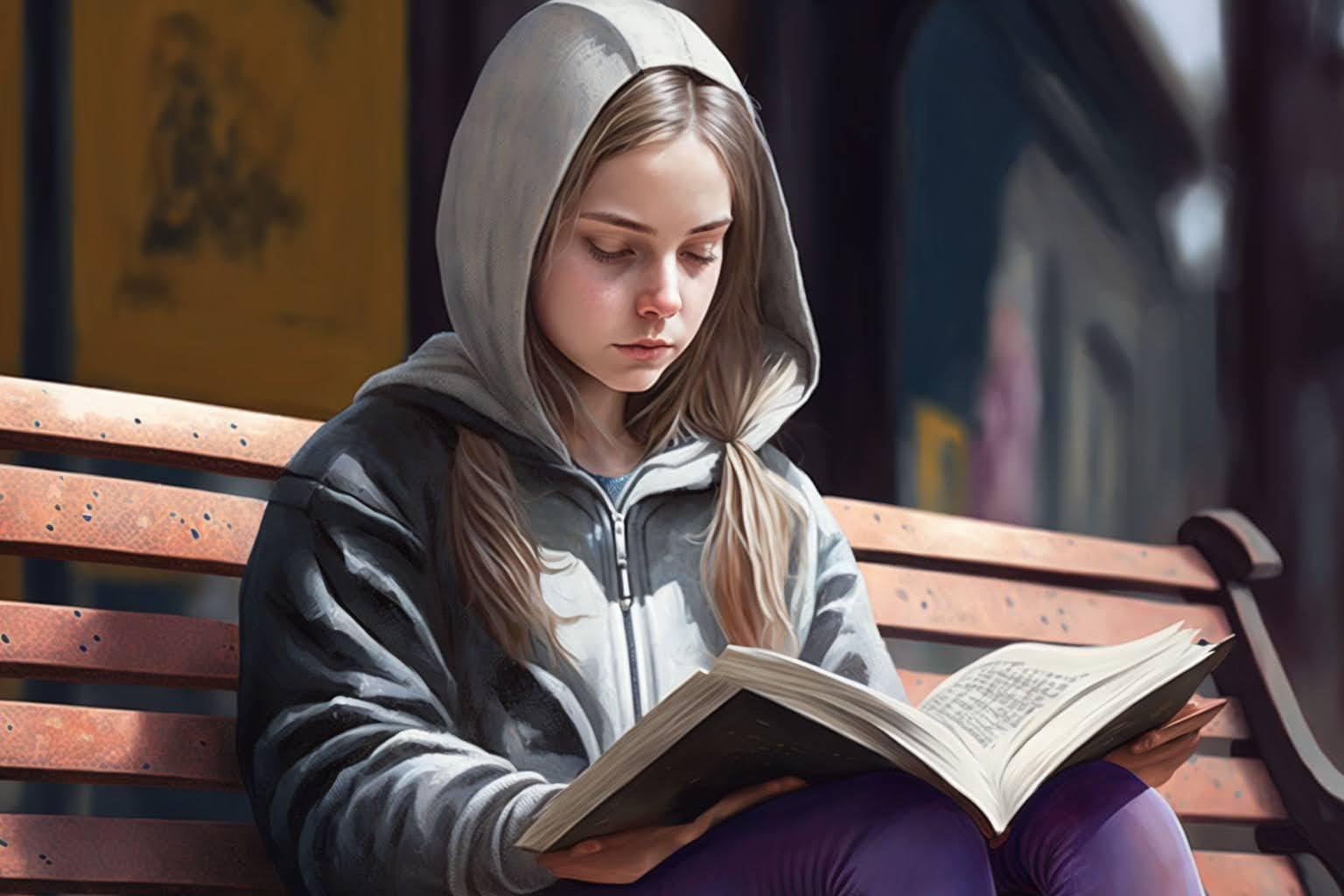
She told him without raising her head from her book. “It’s Aunt Idle’s new pet bird. It’s quite a character.”
“What?”
“The noise, it’s from the bird. It’s been cracking nuts for the past twenty minutes. Hence the noise. And yes, it’s annoying as hell.”
She rose from the bench. “Your bear friend will be back quick I’m certain; it’s just a small boutique with some nice crystals, but mostly cheap orgonite new-agey stuff. Betsy only swears by that, protection for electromagnetic waves and stuff she says, but look around… we are probably got more at risk to be hit by Martian waves or solar coronal mass ejections that by the ones from the telecom tower nearby.”
Xavier didn’t know what to say, so he nodded and smiled. He felt a bit out of his element. When he looked around, the girl had already disappeared.
Now alone, he sat on the empty bench, stretched and yawned while trying to relax. It was so different from the anonymity in the city: less people here, but everything and everyone very tightly knit together, although they all seemed to irk and chafe at the thought.
The flapping of wings startled him.
“Hellooo.” The red parrot had landed on the backrest of the bench and dropped shells from a freshly cracked nut which rolled onto the ground.
Xavier didn’t think to respond; like with AL, sometimes he’d found using polite filler words was only projecting human traits to something unable to respond back, and would just muddle the prompt quality.
“So ruuuude.” The parrot nicked his earlobe gently.
“Ouch! Sorry! No need to become aggressive!”
“You arrrre one to talk. Rouge is on Yooour forehead.”
Xavier looked surprised at the bird in disbelief. Did the bird talk about the mirror test? “What sort of smart creature are you now?”
“Call meee Rose. Pretty Giiirl acceptable.”
Xavier smiled. The bird seemed quite fascinating all of a sudden.
It was strange, but the bird seemed left completely free to roam about; it gave him an idea.“Rose, Pretty Girl, do you know some nice places around you’d like to show me?”
“Of couuurse. Foôllow Pretty Girl.”
February 16, 2023 at 2:43 am #6549In reply to: Orbs of Madjourneys
“Have you been drinking?” blurted out Yasmin. Immediately she regretted her careless question. Zara had never been one to worry overly about appearances and Yasmin, who worried overly about everything, admired her carefree attitude. But she’d been a little taken aback by her friend’s unkempt hair and the smell of stale alcohol on her breath. “Sorry,” she mumbled. “I was just joking …obviously.”
“What? You’ve just arrived and already you’re insulting me! Sheesh!”
“Oh well, no doubt I’ll turn into a lush too after a few days in the outback!” Yasmin snort laughed nervously, hoping to smooth things over. “You look well! And I really appreciate you picking me up.”
It seemed to do the trick as Zara relaxed and smiled. “You should. I’ve gone out of my way.” She gestured to Yasmin’s bag. “Have you just got the one? Shall we get going? I’ve got so much to tell you.”
February 14, 2023 at 8:48 pm #6545In reply to: Orbs of Madjourneys
The road was stretching endlessly and monotonously, a straight line disappearing into a nothingness of dry landscapes that reminded Youssef of the Gobi desert where he had been driving not too long ago. At regular speed, the car barely seemed to progress.
> O Time suspend thy flight!
Eternity. Something only nature could procure him. He loved the feeling, and compared to the more usual sand of Gobi, the red sands of Australia gave him the impression he had shifted into another reality. That and the fifteen hours flight listening to Gladys made it difficult to respond to Xavier’s loquacious self and funny jokes. After some time, his friend stopped talking and tried catching some signal to play the Game, brandishing his phone in different directions as if he was hunting ghosts with a strange device.
It reminded him he had to accept his next quest in a ghost town. That’s all he remembered. He could do that at the Inn, when they could rest in their rooms.

Youssef wondered if the welcome sign at the entrance of the town had seen better days. The wood the fish was made of seemed eaten by termites, but someone had painted it with silver and blue to give it a fresher look. Youssef snorted at the shocked expression on his friend’s face.
“It looked like it died of boredom. Let’s just hope the Innside doesn’t look like a gutted fish,” Xavier said.
An old lady showed them their rooms. She didn’t seem the talkative type, which made Youssef love her immediately with her sharp tongue and red cardigan. He rather admired her braided silver hair as it reminded him of his mother who would let him brush her hair when they lived in Norway. It was in another reality. He smiled. She saw him looking at her and her eyes narrowed like a pair of arrowslits. She seemed ready to fire. Instead she kept on ranting about an idle person not doing her only job properly. They each went to their rooms, Xavier took number 7 and Youssef picked number 5, his lucky number.
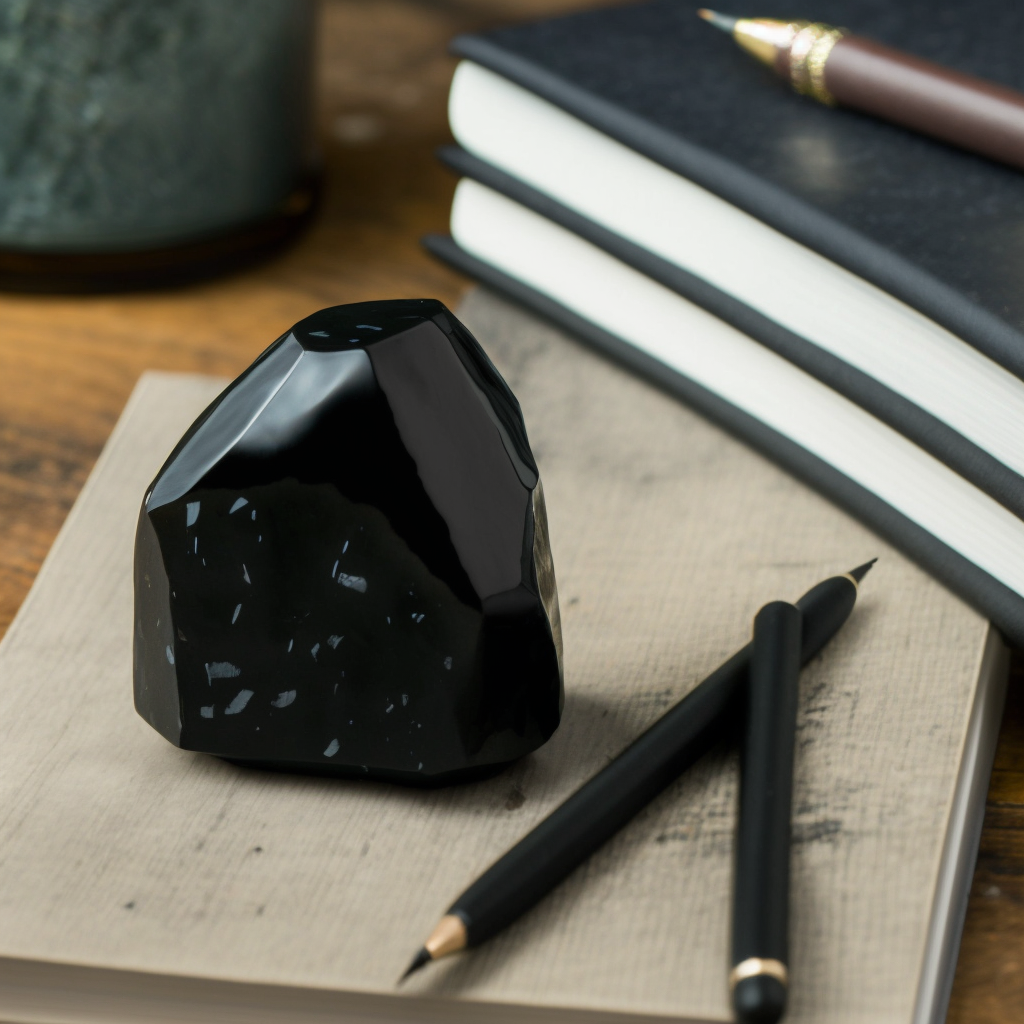
He was glad to be able to enjoy his own room after the trip of the last few weeks. It had been for work, so it was different. But usually he liked travelling the world on his own and meet people on his way and learn from their stories. Traveling with people always meant some compromise that would always frustrate him because he wanted to go faster, or explore more tricky paths.
The room was nicely decorated, and the scent of fresh paint made it clear it was recent. A strange black stone, which Youssef recognized as a black obsidian, has been put on a pile of paper full of doodles, beside two notebooks and pencils. The notebooks’ pages were blank, he thought of giving them to Xavier. He took the stone. It was cold to the touch and his reflection on the surface looked back at him, all wavy. The doodles on the paper looked like a map and hard to read annotations. One stood out, though which looked like a wifi password. That made him think of the Game. He entered it on his phone and that was it. Maybe it was time to go back in. But he wanted to take a shower first.
He put his backpack and his bag on the bed and unpacked it. Amongst a pile of dirty clothes, he managed to find a t-shirt that didn’t smell too bad and a pair of shorts. He would have to use the laundry service of the hotel.
He had missed hot showers. Once refreshed, he moved his bags on the floor and jumped on his bed and launched the Game.
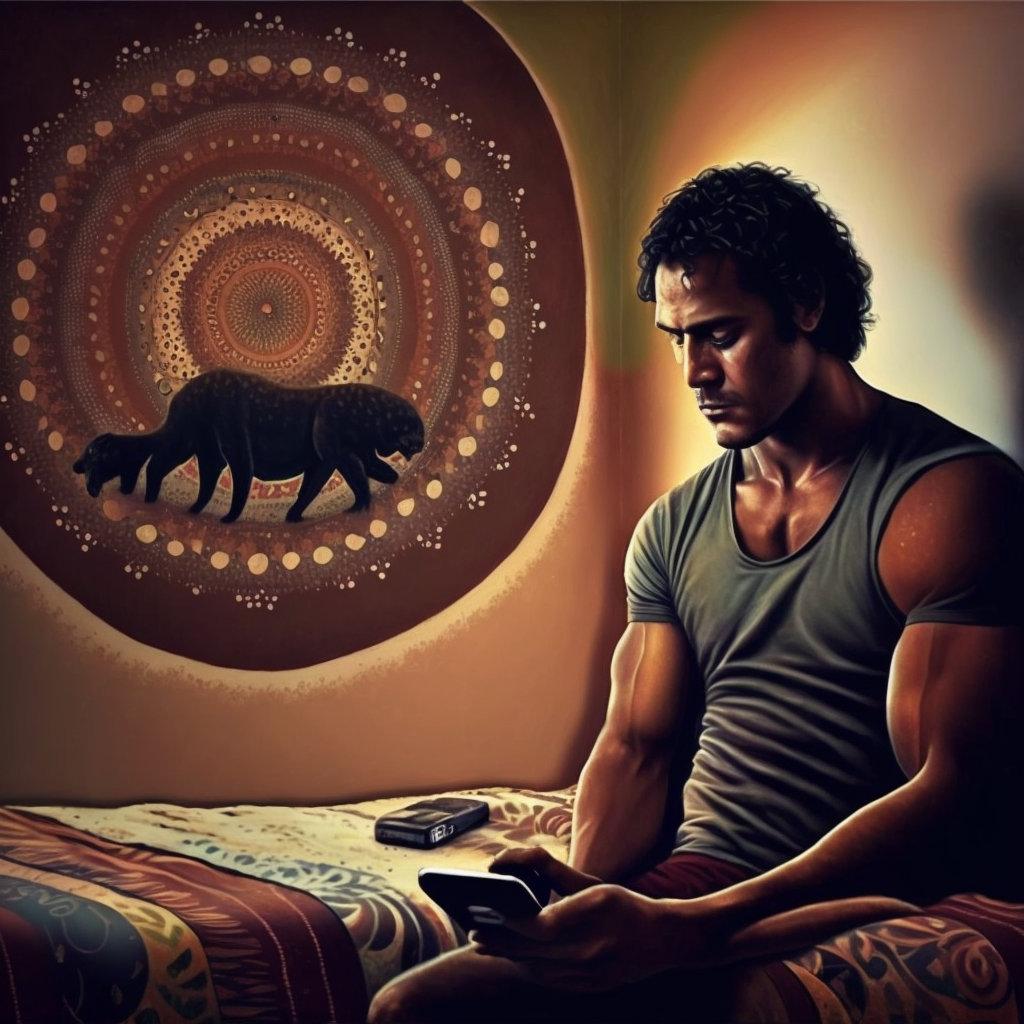 Youssef finds himself in a small ghost town in what looks like the middle of the Australian outback. The town was once thriving but now only a few stragglers remain, living in old, decrepit buildings. He’s standing in the town square, surrounded by an old post office, a saloon, and a few other ramshackle buildings.
A message appeared on the screen.
Quest: Your task is to find the source of the magnetic pull that attracts talkative people to you. You must find the reason behind it and break the spell, so you can continue your journey in peace.
Youssef started to move his avatar towards the saloon when someone knocked on the door.
February 14, 2023 at 12:23 pm #6544In reply to: Orbs of Madjourneys
Despite the late night and the abundance of wine, Zara awoke just after 6am as the sun was rising. It was too early to get up, but she desperately wanted a coffee. There was no sign of room service being available so she made her way quietly to the kitchen, hoping that someone would be up.
The strange child called Prune was sitting at the kitchen table eating rice crispies.
“Your friends are here,” she said, “But they went to bed before you came back. Late, weren’t you? Bert was cussing about you, you know, not letting him know.”
“Oh, terribly sorry,” Zara thought the child a tad impertinent. And was it really Bert’s place to be cussing about her, she was a guest after all. “Any chance of a cup of coffee? I’ll make it myself if you tell me where the things are.”
“Aunt Idle wasn’t bothered though,” Prune said, wiping some milk that had dribbled down her chin with the back of her hand. “But Bert said he didn’t want you to find it.”
“Find what?” The parrot had said the same thing.
“OBVIOUSLY I can’t tell you, can I? It’s a secret,” and with that Prune scraped her chair back, leaving her breakfast things on the table, and sauntered out of the kitchen in what could only be described as a cocky manner. Zara found what she needed to make coffee and made two cups and took them both back to her room. She had a couple of hours to play the game before breakfast and the reunion with her friends.
February 12, 2023 at 10:18 pm #6540In reply to: Prompts of Madjourneys
Update & clarifications on the characters:
Looking at the avatars that Zara, Youssef, Xavier and Yasmin are using in VR.
Full name or real name in RL :: name in VR (
@nickhandle) description of avatar.- Zara Patara-Smythe :: Zara (
@zaraloon) is a 25-year-old woman of mixed heritage, her mother is Indian and her father is British. She has long, dark hair that she keeps in a sleek ponytail, dark brown eyes and a sharp jawline. She stands at 5’6″ and has a toned and athletic build. She usually wears practical clothing that allows her to move around easily, such as cargo pants and a tank top. - Xavier Olafsson :: Xavier (
@xavimunk) is a 27-year-old man of Norwegian and Danish descent. He has blonde hair that he keeps in a messy style, blue eyes, and a charming smile. He stands at 6’1″ and has a lean build. He is always seen wearing a colorful and bold clothing, such as a Hawaiian shirt and shorts. - Yasmin Ahmed :: Yasmin (
@yasminowl) is a 23-year-old woman of Egyptian descent. She has long, black hair that she keeps in a tight braid, dark brown eyes and a round face. She stands at 5’4″ and has a petite build. She usually wears conservative clothing, such as long skirts and blouses. - Youssef Ali :: Youssef (
@youssefbear) is a 26-year-old man of half Yemeni, half Norwegian descent. He has short, curly black hair, dark brown eyes and a square jawline. He stands at 6’2″ and has a muscular build. He usually wears comfortable clothing such as a t-shirt and jeans, and always has a backpack on his shoulder.
Full descriptions for real-life Zara, Yasmin, Youssef, Xavier:
Real Life Zara Patara-Smythe :: Zara is a 57-year-old woman who is an adventurous traveler and a passionate hobbyist. She has a full mane of gorgeous auburn hair that she keeps in a sleek ponytail, sparkling green eyes, and a warm smile that puts others at ease. She is of mixed heritage, her mother was Indian and her father was British. She is well-educated and well-off, either through an inheritance or a supportive and understanding husband. Zara is a lover of art, music, and history, and spends much of her time indulging in her passions. She is always eager to explore new places and meet new people, and her adventurous spirit often leads her to travel off the beaten path.
Real Life Yasmin Ahmed :: Yasmin is a 32-year-old woman who is kind, nurturing, and always puts others first. She has long, black hair that she keeps in a tight braid, almond-shaped brown eyes, and a warm smile that lights up a room. Born in Egypt, she grew up in a close-knit family and values the importance of community. She is a talented actress, who has kept her career a secret from those closest to her, in order to pursue a more fulfilling life working with children. Yasmin currently volunteers at an orphanage in Fiji, where she devotes herself to helping children in need.
Real Life Youssef Ali :: Youssef is a 34-year-old man who is driven, confident, and always up for a challenge. He has short, curly black hair, dark brown eyes, and a square jawline that gives him a strong and determined look. Born to a Yemeni father and a Norwegian mother, he has a unique blend of cultures that has shaped his world view. Youssef is a talented blogger, who has traveled the world in search of new and interesting stories to share with his audience. He is always on the go, with a backpack on his shoulder, ready for his next adventure.
Real Life Xavier Olafsson :: Xavier is a 36-year-old man who is bright, cheerful, and always looking for the positive in every situation. He has blonde hair that he keeps in a messy style, blue eyes, and a charming smile that never fails to win people over. Born to Norwegian and Danish parents, he has a love for the sea and an appreciation for the finer things in life. Xavier is an AI developer, who is working on a project he calls AL. He is always eager to share his ideas with others and is constantly seeking new and exciting opportunities.
February 7, 2023 at 8:51 pm #6507In reply to: Orbs of Madjourneys
To Youssef’s standards, a plane was never big and Flight AL357 was even smaller. When he found his seat, he had to ask a sweaty Chinese man and a snorting woman in a suit with a bowl cut and pink almond shaped glasses to move out so he could squeeze himself in the small space allotted to economy class passengers. On his right, an old lady looked at the size of his arms and almost lost her teeth. She snapped her mouth shut just in time and returned quickly to her magazine. Her hands were trembling and Youssef couldn’t tell if she was annoyed or something else.
The pilote announced they were ready to leave and Youssef sighed with relief. Which was short lived when he got the first bump on the back of his seat. He looked back, apologising to the woman with the bowl cut on his left. Behind him was a kid wearing a false moustache and chewing like a cow. He was swinging his tiny legs, hitting the back of Youssef’s seat with the regularity of a metronome. The kid blew his gum until the bubble exploded. The mother looked ready to open fire if Youssef started to complain. He turned back again and tried to imagine he was getting a massage in one of those Japanese shiatsu chairs you find in some airports.
The woman in front of him had thrown her very blond hair atop her seat and it was all over his screen. The old lady looked at him and offered him a gum. He wondered how she could chew gums with her false teeth, and kindly declined. The woman with the bowl cut and pink glasses started to talk to her sweaty neighbour in Chinese. The man looked at Youssef as if he had been caught by a tiger and was going to get eaten alive. His eyes were begging for help.
As the plane started to move, the old woman started to talk.
« Hi, I’m Gladys. I am afraid of flying, she said. Can I hold your hand during take off ? »
After another bump on his back, Youssef sighed. It was going to be a long flight for everyone.
As soon as they had gained altitude, Youssef let go of the old woman’s hand. She hadn’t stopped talking about her daughter and how she was going to be happy to see her again. The flight attendant passed by with a trolley and offered them a drink and a bag of peanuts. The old woman took a glass of red wine. Youssef was tempted to take a coke and dip the hair of the woman in front of him in it. He had seen a video on LooTube recently with a girl in a similar situation. She had stuck gum and lollypops in the hair of her nemesis, dipped a few strands in her soda and clipped strands randomly with her nail cutter. He could ask the old woman one of her gums, but thought that if a girl could do it, it would certainly not go well for him if he tried.
Instead he asked the flight attendant if there was wifi on board. Sadly there was none. He had hoped at least the could play the game and catch up with his friends during that long flight to Sydney.
When the doors opened, Youssef thought he was free of them all. He was tired, his back hurt, and he couldn’t sleep because the kid behind him kept crying and kicking, the food looked like it had been regurgitated twice by a yak, and the old chatty woman had drained his batteries. She said she wouldn’t sleep on a plane because she had to put her dentures in a glass for hygiene reasons and feared someone would steal them while she had her eyes closed.
He walked with long strides in the corridors up to the custom counters and picked a line, eager to put as much distance between him and the other passengers. Xavier had sent him a message saying he was arriving in Sydney in a few hours. Youssef thought it would be nice to change his flight so that they could go together to Alice Spring. He could do some time with a friend for a change.
His bushy hair stood on end when he heard the voice of the old woman just behind him. He wondered how she had managed to catch up so fast. He saw a small cart driving away.
« I wanted to tell, Gladys said, it was such a nice flight in your company. How long have you before your flight to Alice? We can have a coffee together. »
Youssef mentally said sorry to his friend. He couldn’t wait for the next flight.
- Zara Patara-Smythe :: Zara (
-
AuthorSearch Results

