

Search Results for 'lord'
-
AuthorSearch Results
-
February 2, 2022 at 11:53 am #6265
In reply to: The Elusive Samuel Housley and Other Family Stories
From Tanganyika with Love
continued ~ part 6
With thanks to Mike Rushby.
Mchewe 6th June 1937
Dearest Family,
Home again! We had an uneventful journey. Kate was as good as gold all the
way. We stopped for an hour at Bulawayo where we had to change trains but
everything was simplified for me by a very pleasant man whose wife shared my
compartment. Not only did he see me through customs but he installed us in our new
train and his wife turned up to see us off with magazines for me and fruit and sweets for
Kate. Very, very kind, don’t you think?Kate and I shared the compartment with a very pretty and gentle girl called
Clarice Simpson. She was very worried and upset because she was going home to
Broken Hill in response to a telegram informing her that her young husband was
dangerously ill from Blackwater Fever. She was very helpful with Kate whose
cheerfulness helped Clarice, I think, though I, quite unintentionally was the biggest help
at the end of our journey. Remember the partial dentures I had had made just before
leaving Cape Town? I know I shall never get used to the ghastly things, I’ve had them
two weeks now and they still wobble. Well this day I took them out and wrapped them
in a handkerchief, but when we were packing up to leave the train I could find the
handkerchief but no teeth! We searched high and low until the train had slowed down to
enter Broken Hill station. Then Clarice, lying flat on the floor, spied the teeth in the dark
corner under the bottom bunk. With much stretching she managed to retrieve the
dentures covered in grime and fluff. My look of horror, when I saw them, made young
Clarice laugh. She was met at the station by a very grave elderly couple. I do wonder
how things turned out for her.I stayed overnight with Kate at the Great Northern Hotel, and we set off for
Mbeya by plane early in the morning. One of our fellow passengers was a young
mother with a three week old baby. How ideas have changed since Ann was born. This
time we had a smooth passage and I was the only passenger to get airsick. Although
there were other women passengers it was a man once again, who came up and
offered to help. Kate went off with him amiably and he entertained her until we touched
down at Mbeya.George was there to meet us with a wonderful surprise, a little red two seater
Ford car. She is a bit battered and looks a bit odd because the boot has been
converted into a large wooden box for carrying raw salt, but she goes like the wind.
Where did George raise the cash to buy a car? Whilst we were away he found a small
cave full of bat guano near a large cave which is worked by a man called Bob Sargent.
As Sargent did not want any competition he bought the contents of the cave from
George giving him the small car as part payment.It was lovely to return to our little home and find everything fresh and tidy and the
garden full of colour. But it was heartbreaking to go into the bedroom and see George’s
precious forgotten boots still standing by his empty bed.With much love,
Eleanor.Mchewe 25th June 1937
Dearest Family,
Last Friday George took Kate and me in the little red Ford to visit Mr Sargent’s
camp on the Songwe River which cuts the Mbeya-Mbosi road. Mr Sargent bought
Hicky-Wood’s guano deposit and also our small cave and is making a good living out of
selling the bat guano to the coffee farmers in this province. George went to try to interest
him in a guano deposit near Kilwa in the Southern Province. Mr Sargent agreed to pay
25 pounds to cover the cost of the car trip and pegging costs. George will make the trip
to peg the claim and take samples for analysis. If the quality is sufficiently high, George
and Mr Sargent will go into partnership. George will work the claim and ship out the
guano from Kilwa which is on the coast of the Southern Province of Tanganyika. So now
we are busy building castles in the air once more.On Saturday we went to Mbeya where George had to attend a meeting of the
Trout Association. In the afternoon he played in a cricket match so Kate and I spent the
whole day with the wife of the new Superintendent of Police. They have a very nice
new house with lawns and a sunken rose garden. Kate had a lovely romp with Kit, her
three year old son.Mrs Wolten also has two daughters by a previous marriage. The elder girl said to
me, “Oh Mrs Rushby your husband is exactly like the strong silent type of man I
expected to see in Africa but he is the only one I have seen. I think he looks exactly like
those men in the ‘Barney’s Tobacco’ advertisements.”I went home with a huge pile of magazines to keep me entertained whilst
George is away on the Kilwa trip.Lots of love,
Eleanor.Mchewe 9th July 1937
Dearest Family,
George returned on Monday from his Kilwa safari. He had an entertaining
tale to tell.Before he approached Mr Sargent about going shares in the Kilwa guano
deposit he first approached a man on the Lupa who had done very well out of a small
gold reef. This man, however said he was not interested so you can imagine how
indignant George was when he started on his long trip, to find himself being trailed by
this very man and a co-driver in a powerful Ford V8 truck. George stopped his car and
had some heated things to say – awful threats I imagine as to what would happen to
anyone who staked his claim. Then he climbed back into our ancient little two seater and
went off like a bullet driving all day and most of the night. As the others took turns in
driving you can imagine what a feat it was for George to arrive in Kilwa ahead of them.
When they drove into Kilwa he met them with a bright smile and a bit of bluff –
quite justifiable under the circumstances I think. He said, you chaps can have a rest now,
you’re too late.” He then whipped off and pegged the claim. he brought some samples
of guano back but until it has been analysed he will not know whether the guano will be
an economic proposition or not. George is not very hopeful. He says there is a good
deal of sand mixed with the guano and that much of it was damp.The trip was pretty eventful for Kianda, our houseboy. The little two seater car
had been used by its previous owner for carting bags of course salt from his salt pans.
For this purpose the dicky seat behind the cab had been removed, and a kind of box
built into the boot of the car. George’s camp kit and provisions were packed into this
open box and Kianda perched on top to keep an eye on the belongings. George
travelled so fast on the rough road that at some point during the night Kianda was
bumped off in the middle of the Game Reserve. George did not notice that he was
missing until the next morning. He concluded, quite rightly as it happened, that Kianda
would be picked up by the rival truck so he continued his journey and Kianda rejoined
him at Kilwa.Believe it or not, the same thing happened on the way back but fortunately this
time George noticed his absence. He stopped the car and had just started back on his
tracks when Kianda came running down the road still clutching the unlighted storm lamp
which he was holding in his hand when he fell. The glass was not even cracked.
We are finding it difficult just now to buy native chickens and eggs. There has
been an epidemic amongst the poultry and one hesitates to eat the survivors. I have a
brine tub in which I preserve our surplus meat but I need the chickens for soup.
I hope George will be home for some months. He has arranged to take a Mr
Blackburn, a wealthy fruit farmer from Elgin, Cape, on a hunting safari during September
and October and that should bring in some much needed cash. Lillian Eustace has
invited Kate and me to spend the whole of October with her in Tukuyu.
I am so glad that you so much enjoy having Ann and George with you. We miss
them dreadfully. Kate is a pretty little girl and such a little madam. You should hear the
imperious way in which she calls the kitchenboy for her meals. “Boy Brekkis, Boy Lunch,
and Boy Eggy!” are her three calls for the day. She knows no Ki-Swahili.Eleanor
Mchewe 8th October 1937
Dearest Family,
I am rapidly becoming as superstitious as our African boys. They say the wild
animals always know when George is away from home and come down to have their
revenge on me because he has killed so many.I am being besieged at night by a most beastly leopard with a half grown cub. I
have grown used to hearing leopards grunt as they hunt in the hills at night but never
before have I had one roaming around literally under the windows. It has been so hot at
night lately that I have been sleeping with my bedroom door open onto the verandah. I
felt quite safe because the natives hereabouts are law-abiding and in any case I always
have a boy armed with a club sleeping in the kitchen just ten yards away. As an added
precaution I also have a loaded .45 calibre revolver on my bedside table, and Fanny
our bullterrier, sleeps on the mat by my bed. I am also looking after Barney, a fine
Airedale dog belonging to the Costers. He slept on a mat by the open bedroom door
near a dimly burning storm lamp.As usual I went to sleep with an easy mind on Monday night, but was awakened
in the early hours of Tuesday by the sound of a scuffle on the front verandah. The noise
was followed by a scream of pain from Barney. I jumped out of bed and, grabbing the
lamp with my left hand and the revolver in my right, I rushed outside just in time to see
two animal figures roll over the edge of the verandah into the garden below. There they
engaged in a terrific tug of war. Fortunately I was too concerned for Barney to be
nervous. I quickly fired two shots from the revolver, which incidentally makes a noise like
a cannon, and I must have startled the leopard for both animals, still locked together,
disappeared over the edge of the terrace. I fired two more shots and in a few moments
heard the leopard making a hurried exit through the dry leaves which lie thick under the
wild fig tree just beyond the terrace. A few seconds later Barney appeared on the low
terrace wall. I called his name but he made no move to come but stood with hanging
head. In desperation I rushed out, felt blood on my hands when I touched him, so I
picked him up bodily and carried him into the house. As I regained the verandah the boy
appeared, club in hand, having been roused by the shots. He quickly grasped what had
happened when he saw my blood saturated nightie. He fetched a bowl of water and a
clean towel whilst I examined Barney’s wounds. These were severe, the worst being a
gaping wound in his throat. I washed the gashes with a strong solution of pot permang
and I am glad to say they are healing remarkably well though they are bound to leave
scars. Fanny, very prudently, had taken no part in the fighting except for frenzied barking
which she kept up all night. The shots had of course wakened Kate but she seemed
more interested than alarmed and kept saying “Fanny bark bark, Mummy bang bang.
Poor Barney lots of blood.”In the morning we inspected the tracks in the garden. There was a shallow furrow
on the terrace where Barney and the leopard had dragged each other to and fro and
claw marks on the trunk of the wild fig tree into which the leopard climbed after I fired the
shots. The affair was of course a drama after the Africans’ hearts and several of our
shamba boys called to see me next day to make sympathetic noises and discuss the
affair.I went to bed early that night hoping that the leopard had been scared off for
good but I must confess I shut all windows and doors. Alas for my hopes of a restful
night. I had hardly turned down the lamp when the leopard started its terrifying grunting
just under the bedroom windows. If only she would sniff around quietly I should not
mind, but the noise is ghastly, something like the first sickening notes of a braying
donkey, amplified here by the hills and the gorge which is only a stones throw from the
bedroom. Barney was too sick to bark but Fanny barked loud enough for two and the more
frantic she became the hungrier the leopard sounded. Kate of course woke up and this
time she was frightened though I assured her that the noise was just a donkey having
fun. Neither of us slept until dawn when the leopard returned to the hills. When we
examined the tracks next morning we found that the leopard had been accompanied by
a fair sized cub and that together they had prowled around the house, kitchen, and out
houses, visiting especially the places to which the dogs had been during the day.
As I feel I cannot bear many more of these nights, I am sending a note to the
District Commissioner, Mbeya by the messenger who takes this letter to the post,
asking him to send a game scout or an armed policeman to deal with the leopard.
So don’t worry, for by the time this reaches you I feel sure this particular trouble
will be over.Eleanor.
Mchewe 17th October 1937
Dearest Family,
More about the leopard I fear! My messenger returned from Mbeya to say that
the District Officer was on safari so he had given the message to the Assistant District
Officer who also apparently left on safari later without bothering to reply to my note, so
there was nothing for me to do but to send for the village Nimrod and his muzzle loader
and offer him a reward if he could frighten away or kill the leopard.The hunter, Laza, suggested that he should sleep at the house so I went to bed
early leaving Laza and his two pals to make themselves comfortable on the living room
floor by the fire. Laza was armed with a formidable looking muzzle loader, crammed I
imagine with nuts and bolts and old rusty nails. One of his pals had a spear and the other
a panga. This fellow was also in charge of the Petromax pressure lamp whose light was
hidden under a packing case. I left the campaign entirely to Laza’s direction.
As usual the leopard came at midnight stealing down from the direction of the
kitchen and announcing its presence and position with its usual ghastly grunts. Suddenly
pandemonium broke loose on the back verandah. I heard the roar of the muzzle loader
followed by a vigourous tattoo beaten on an empty paraffin tin and I rushed out hoping
to find the dead leopard. however nothing of the kind had happened except that the
noise must have scared the beast because she did not return again that night. Next
morning Laza solemnly informed me that, though he had shot many leopards in his day,
this was no ordinary leopard but a “sheitani” (devil) and that as his gun was no good
against witchcraft he thought he might as well retire from the hunt. Scared I bet, and I
don’t blame him either.You can imagine my relief when a car rolled up that afternoon bringing Messers
Stewart and Griffiths, two farmers who live about 15 miles away, between here and
Mbeya. They had a note from the Assistant District Officer asking them to help me and
they had come to set up a trap gun in the garden. That night the leopard sniffed all
around the gun and I had the added strain of waiting for the bang and wondering what I
should do if the beast were only wounded. I conjured up horrible visions of the two little
totos trotting up the garden path with the early morning milk and being horribly mauled,
but I needn’t have worried because the leopard was far too wily to be caught that way.
Two more ghastly nights passed and then I had another visitor, a Dr Jackson of
the Tsetse Department on safari in the District. He listened sympathetically to my story
and left his shotgun and some SSG cartridges with me and instructed me to wait until the
leopard was pretty close and blow its b—– head off. It was good of him to leave his
gun. George always says there are three things a man should never lend, ‘His wife, his
gun and his dog.’ (I think in that order!)I felt quite cheered by Dr Jackson’s visit and sent
once again for Laza last night and arranged a real show down. In the afternoon I draped
heavy blankets over the living room windows to shut out the light of the pressure lamp
and the four of us, Laza and his two stooges and I waited up for the leopard. When we
guessed by her grunts that she was somewhere between the kitchen and the back door
we all rushed out, first the boy with the panga and the lamp, next Laza with his muzzle
loader, then me with the shotgun followed closely by the boy with the spear. What a
farce! The lamp was our undoing. We were blinded by the light and did not even
glimpse the leopard which made off with a derisive grunt. Laza said smugly that he knew
it was hopeless to try and now I feel tired and discouraged too.This morning I sent a runner to Mbeya to order the hotel taxi for tomorrow and I
shall go to friends in Mbeya for a day or two and then on to Tukuyu where I shall stay
with the Eustaces until George returns from Safari.Eleanor.
Mchewe 18th November 1937
My darling Ann,
Here we are back in our own home and how lovely it is to have Daddy back from
safari. Thank you very much for your letter. I hope by now you have got mine telling you
how very much I liked the beautiful tray cloth you made for my birthday. I bet there are
not many little girls of five who can embroider as well as you do, darling. The boy,
Matafari, washes and irons it so carefully and it looks lovely on the tea tray.Daddy and I had some fun last night. I was in bed and Daddy was undressing
when we heard a funny scratching noise on the roof. I thought it was the leopard. Daddy
quickly loaded his shotgun and ran outside. He had only his shirt on and he looked so
funny. I grabbed the loaded revolver from the cupboard and ran after Dad in my nightie
but after all the rush it was only your cat, Winnie, though I don’t know how she managed
to make such a noise. We felt so silly, we laughed and laughed.Kate talks a lot now but in such a funny way you would laugh to her her. She
hears the houseboys call me Memsahib so sometimes instead of calling me Mummy
she calls me “Oompaab”. She calls the bedroom a ‘bippon’ and her little behind she
calls her ‘sittendump’. She loves to watch Mandawi’s cattle go home along the path
behind the kitchen. Joseph your donkey, always leads the cows. He has a lazy life now.
I am glad you had such fun on Guy Fawkes Day. You will be sad to leave
Plumstead but I am sure you will like going to England on the big ship with granny Kate.
I expect you will start school when you get to England and I am sure you will find that
fun.God bless my dear little girl. Lots of love from Daddy and Kate,
and MummyMchewe 18th November 1937
Hello George Darling,
Thank you for your lovely drawing of Daddy shooting an elephant. Daddy says
that the only thing is that you have drawn him a bit too handsome.I went onto the verandah a few minutes ago to pick a banana for Kate from the
bunch hanging there and a big hornet flew out and stung my elbow! There are lots of
them around now and those stinging flies too. Kate wears thick corduroy dungarees so
that she will not get her fat little legs bitten. She is two years old now and is a real little
pickle. She loves running out in the rain so I have ordered a pair of red Wellingtons and a
tiny umbrella from a Nairobi shop for her Christmas present.Fanny’s puppies have their eyes open now and have very sharp little teeth.
They love to nip each other. We are keeping the fiercest little one whom we call Paddy
but are giving the others to friends. The coffee bushes are full of lovely white flowers
and the bees and ants are very busy stealing their honey.Yesterday a troop of baboons came down the hill and Dad shot a big one to
scare the others off. They are a nuisance because they steal the maize and potatoes
from the native shambas and then there is not enough food for the totos.
Dad and I are very proud of you for not making a fuss when you went to the
dentist to have that tooth out.Bye bye, my fine little son.
Three bags full of love from Kate, Dad and Mummy.Mchewe 12th February, 1938
Dearest Family,
here is some news that will please you. George has been offered and has
accepted a job as Forester at Mbulu in the Northern Province of Tanganyika. George
would have preferred a job as Game Ranger, but though the Game Warden, Philip
Teare, is most anxious to have him in the Game Department, there is no vacancy at
present. Anyway if one crops up later, George can always transfer from one
Government Department to another. Poor George, he hates the idea of taking a job. He
says that hitherto he has always been his own master and he detests the thought of
being pushed around by anyone.Now however he has no choice. Our capitol is almost exhausted and the coffee
market shows no signs of improving. With three children and another on the way, he
feels he simply must have a fixed income. I shall be sad to leave this little farm. I love
our little home and we have been so very happy here, but my heart rejoices at the
thought of overseas leave every thirty months. Now we shall be able to fetch Ann and
George from England and in three years time we will all be together in Tanganyika once
more.There is no sale for farms so we will just shut the house and keep on a very small
labour force just to keep the farm from going derelict. We are eating our hens but will
take our two dogs, Fanny and Paddy with us.One thing I shall be glad to leave is that leopard. She still comes grunting around
at night but not as badly as she did before. I do not mind at all when George is here but
until George was accepted for this forestry job I was afraid he might go back to the
Diggings and I should once more be left alone to be cursed by the leopard’s attentions.
Knowing how much I dreaded this George was most anxious to shoot the leopard and
for weeks he kept his shotgun and a powerful torch handy at night.One night last week we woke to hear it grunting near the kitchen. We got up very
quietly and whilst George loaded the shotgun with SSG, I took the torch and got the
heavy revolver from the cupboard. We crept out onto the dark verandah where George
whispered to me to not switch on the torch until he had located the leopard. It was pitch
black outside so all he could do was listen intently. And then of course I spoilt all his
plans. I trod on the dog’s tin bowl and made a terrific clatter! George ordered me to
switch on the light but it was too late and the leopard vanished into the long grass of the
Kalonga, grunting derisively, or so it sounded.She never comes into the clearing now but grunts from the hillside just above it.
Eleanor.
Mbulu 18th March, 1938
Dearest Family,
Journeys end at last. here we are at Mbulu, installed in our new quarters which are
as different as they possibly could be from our own cosy little home at Mchewe. We
live now, my dears, in one wing of a sort of ‘Beau Geste’ fort but I’ll tell you more about
it in my next letter. We only arrived yesterday and have not had time to look around.
This letter will tell you just about our trip from Mbeya.We left the farm in our little red Ford two seater with all our portable goods and
chattels plus two native servants and the two dogs. Before driving off, George took one
look at the flattened springs and declared that he would be surprised if we reached
Mbeya without a breakdown and that we would never make Mbulu with the car so
overloaded.However luck was with us. We reached Mbeya without mishap and at one of the
local garages saw a sturdy used Ford V8 boxbody car for sale. The garage agreed to
take our small car as part payment and George drew on our little remaining capitol for the
rest. We spent that night in the house of the Forest Officer and next morning set out in
comfort for the Northern Province of Tanganyika.I had done the journey from Dodoma to Mbeya seven years before so was
familiar with the scenery but the road was much improved and the old pole bridges had
been replaced by modern steel ones. Kate was as good as gold all the way. We
avoided hotels and camped by the road and she found this great fun.
The road beyond Dodoma was new to me and very interesting country, flat and
dry and dusty, as little rain falls there. The trees are mostly thorn trees but here and there
one sees a giant baobab, weird trees with fantastically thick trunks and fat squat branches
with meagre foliage. The inhabitants of this area I found interesting though. They are
called Wagogo and are a primitive people who ape the Masai in dress and customs
though they are much inferior to the Masai in physique. They are also great herders of
cattle which, rather surprisingly, appear to thrive in that dry area.The scenery alters greatly as one nears Babati, which one approaches by a high
escarpment from which one has a wonderful view of the Rift Valley. Babati township
appears to be just a small group of Indian shops and shabby native houses, but I
believe there are some good farms in the area. Though the little township is squalid,
there is a beautiful lake and grand mountains to please the eye. We stopped only long
enough to fill up with petrol and buy some foodstuffs. Beyond Babati there is a tsetse
fly belt and George warned our two native servants to see that no tsetse flies settled on
the dogs.We stopped for the night in a little rest house on the road about 80 miles from
Arusha where we were to spend a few days with the Forest Officer before going on to
Mbulu. I enjoyed this section of the road very much because it runs across wide plains
which are bounded on the West by the blue mountains of the Rift Valley wall. Here for
the first time I saw the Masai on their home ground guarding their vast herds of cattle. I
also saw their strange primitive hovels called Manyattas, with their thorn walled cattle
bomas and lots of plains game – giraffe, wildebeest, ostriches and antelope. Kate was
wildly excited and entranced with the game especially the giraffe which stood gazing
curiously and unafraid of us, often within a few yards of the road.Finally we came across the greatest thrill of all, my first view of Mt Meru the extinct
volcano about 16,000 feet high which towers over Arusha township. The approach to
Arusha is through flourishing coffee plantations very different alas from our farm at Mchewe. George says that at Arusha coffee growing is still a paying proposition
because here the yield of berry per acre is much higher than in the Southern highlands
and here in the North the farmers have not such heavy transport costs as the railway runs
from Arusha to the port at Tanga.We stayed overnight at a rather second rate hotel but the food was good and we
had hot baths and a good nights rest. Next day Tom Lewis the Forest Officer, fetched
us and we spent a few days camping in a tent in the Lewis’ garden having meals at their
home. Both Tom and Lillian Lewis were most friendly. Tom lewis explained to George
what his work in the Mbulu District was to be, and they took us camping in a Forest
Reserve where Lillian and her small son David and Kate and I had a lovely lazy time
amidst beautiful surroundings. Before we left for Mbulu, Lillian took me shopping to buy
material for curtains for our new home. She described the Forest House at Mbulu to me
and it sounded delightful but alas, when we reached Mbulu we discovered that the
Assistant District Officer had moved into the Forest House and we were directed to the
Fort or Boma. The night before we left Arusha for Mbulu it rained very heavily and the
road was very treacherous and slippery due to the surface being of ‘black cotton’ soil
which has the appearance and consistency of chocolate blancmange, after rain. To get to
Mbulu we had to drive back in the direction of Dodoma for some 70 miles and then turn
to the right and drive across plains to the Great Rift Valley Wall. The views from this
escarpment road which climbs this wall are magnificent. At one point one looks down
upon Lake Manyara with its brilliant white beaches of soda.The drive was a most trying one for George. We had no chains for the wheels
and several times we stuck in the mud and our two houseboys had to put grass and
branches under the wheels to stop them from spinning. Quite early on in the afternoon
George gave up all hope of reaching Mbulu that day and planned to spend the night in
a little bush rest camp at Karatu. However at one point it looked as though we would not
even reach this resthouse for late afternoon found us properly bogged down in a mess
of mud at the bottom of a long and very steep hill. In spite of frantic efforts on the part of
George and the two boys, all now very wet and muddy, the heavy car remained stuck.
Suddenly five Masai men appeared through the bushes beside the road. They
were all tall and angular and rather terrifying looking to me. Each wore only a blanket
knotted over one shoulder and all were armed with spears. They lined up by the side of
the road and just looked – not hostile but simply aloof and supercilious. George greeted
them and said in Ki-Swahili, “Help to push and I will reward you.” But they said nothing,
just drawing back imperceptibly to register disgust at the mere idea of manual labour.
Their expressions said quite clearly “A Masai is a warrior and does not soil his hands.”
George then did something which startled them I think, as much as me. He
plucked their spears from their hands one by one and flung them into the back of the
boxbody. “Now push!” he said, “And when we are safely out of the mud you shall have
your spears back.” To my utter astonishment the Masai seemed to applaud George’s
action. I think they admire courage in a man more than anything else. They pushed with a
will and soon we were roaring up the long steep slope. “I can’t stop here” quoth George
as up and up we went. The Masai were in mad pursuit with their blankets streaming
behind. They took a very steep path which was a shortcut to the top. They are certainly
amazing athletes and reached the top at the same time as the car. Their route of course
was shorter but much more steep, yet they came up without any sign of fatigue to claim
their spears and the money which George handed out with a friendly grin. The Masai
took the whole episode in good heart and we parted on the most friendly terms.After a rather chilly night in the three walled shack, we started on the last lap of our
journey yesterday morning in bright weather and made the trip to Mbulu without incident.Eleanor.
Mbulu 24th March, 1938
Dearest Family,
Mbulu is an attractive station but living in this rather romantic looking fort has many
disadvantages. Our quarters make up one side of the fort which is built up around a
hollow square. The buildings are single storied but very tall in the German manner and
there is a tower on one corner from which the Union Jack flies. The tower room is our
sitting room, and one has very fine views from the windows of the rolling country side.
However to reach this room one has to climb a steep flight of cement steps from the
court yard. Another disadvantage of this tower room is that there is a swarm of bees in
the roof and the stray ones drift down through holes in the ceiling and buzz angrily
against the window panes or fly around in a most menacing manner.Ours are the only private quarters in the Fort. Two other sides of the Fort are
used as offices, storerooms and court room and the fourth side is simply a thick wall with
battlements and loopholes and a huge iron shod double door of enormous thickness
which is always barred at sunset when the flag is hauled down. Two Police Askari always
remain in the Fort on guard at night. The effect from outside the whitewashed fort is very
romantic but inside it is hardly homely and how I miss my garden at Mchewe and the
grass and trees.We have no privacy downstairs because our windows overlook the bare
courtyard which is filled with Africans patiently waiting to be admitted to the courtroom as
witnesses or spectators. The outside windows which overlook the valley are heavily
barred. I can only think that the Germans who built this fort must have been very scared
of the local natives.Our rooms are hardly cosy and are furnished with typical heavy German pieces.
We have a vast bleak bedroom, a dining room and an enormous gloomy kitchen in
which meals for the German garrison were cooked. At night this kitchen is alive with
gigantic rats but fortunately they do not seem to care for the other rooms. To crown
everything owls hoot and screech at night on the roof.On our first day here I wandered outside the fort walls with Kate and came upon a
neatly fenced plot enclosing the graves of about fifteen South African soldiers killed by
the Germans in the 1914-18 war. I understand that at least one of theses soldiers died in
the courtyard here. The story goes, that during the period in the Great War when this fort
was occupied by a troop of South African Horse, a German named Siedtendorf
appeared at the great barred door at night and asked to speak to the officer in command
of the Troop. The officer complied with this request and the small shutter in the door was
opened so that he could speak with the German. The German, however, had not come
to speak. When he saw the exposed face of the officer, he fired, killing him, and
escaped into the dark night. I had this tale on good authority but cannot vouch for it. I do
know though, that there are two bullet holes in the door beside the shutter. An unhappy
story to think about when George is away, as he is now, and the moonlight throws queer
shadows in the court yard and the owls hoot.However though I find our quarters depressing, I like Mbulu itself very much. It is
rolling country, treeless except for the plantations of the Forestry Dept. The land is very
fertile in the watered valleys but the grass on hills and plains is cropped to the roots by
the far too numerous cattle and goats. There are very few Europeans on the station, only
Mr Duncan, the District Officer, whose wife and children recently left for England, the
Assistant District Officer and his wife, a bachelor Veterinary Officer, a Road Foreman and
ourselves, and down in the village a German with an American wife and an elderly
Irishman whom I have not met. The Government officials have a communal vegetable
garden in the valley below the fort which keeps us well supplied with green stuff.Most afternoons George, Kate and I go for walks after tea. On Fridays there is a
little ceremony here outside the fort. In the late afternoon a little procession of small
native schoolboys, headed by a drum and penny whistle band come marching up the
road to a tune which sounds like ‘Two lovely black eyes”. They form up below our tower
and as the flag is lowered for the day they play ‘God save the King’, and then march off
again. It is quite a cheerful little ceremony.The local Africans are a skinny lot and, I should say, a poor tribe. They protect
themselves against the cold by wrapping themselves in cotton blankets or a strip of
unbleached sheeting. This they drape over their heads, almost covering their faces and
the rest is wrapped closely round their bodies in the manner of a shroud. A most
depressing fashion. They live in very primitive comfortless houses. They simply make a
hollow in the hillside and build a front wall of wattle and daub. Into this rude shelter at night
go cattle and goats, men, women, and children.Mbulu village has the usual mud brick and wattle dukas and wattle and daub
houses. The chief trader is a Goan who keeps a surprisingly good variety of tinned
foodstuffs and also sells hardware and soft goods.The Europeans here have been friendly but as you will have noted there are
only two other women on station and no children at all to be companions for Kate.Eleanor.
Mbulu 20th June 1938
Dearest Family,
Here we are on Safari with George at Babati where we are occupying a rest
house on the slopes of Ufiome Mountain. The slopes are a Forest Reserve and
George is supervising the clearing of firebreaks in preparation for the dry weather. He
goes off after a very early breakfast and returns home in the late afternoon so Kate and I
have long lazy days.Babati is a pleasant spot and the resthouse is quite comfortable. It is about a mile
from the village which is just the usual collection of small mud brick and corrugated iron
Indian Dukas. There are a few settlers in the area growing coffee, or going in for mixed
farming but I don’t think they are doing very well. The farm adjoining the rest house is
owned by Lord Lovelace but is run by a manager.George says he gets enough exercise clambering about all day on the mountain,
so Kate and I do our walking in the mornings when George is busy, and we all relax in
the evenings when George returns from his field work. Kate’s favourite walk is to the big
block of mtama (sorghum) shambas lower down the hill. There are huge swarms of tiny
grain eating birds around waiting the chance to plunder the mtama, so the crops are
watched from sunrise to sunset.Crude observation platforms have been erected for this purpose in the centre of
each field and the women and the young boys of the family concerned, take it in turn to
occupy the platform and scare the birds. Each watcher has a sling and uses clods of
earth for ammunition. The clod is placed in the centre of the sling which is then whirled
around at arms length. Suddenly one end of the sling is released and the clod of earth
flies out and shatters against the mtama stalks. The sling makes a loud whip like crack and
the noise is quite startling and very effective in keeping the birds at a safe distance.Eleanor.
Karatu 3rd July 1938
Dearest Family,
Still on safari you see! We left Babati ten days ago and passed through Mbulu
on our way to this spot. We slept out of doors one night beside Lake Tiawa about eight
miles from Mbulu. It was a peaceful spot and we enjoyed watching the reflection of the
sunset on the lake and the waterhens and duck and pelicans settling down for the night.
However it turned piercingly cold after sunset so we had an early supper and then all
three of us lay down to sleep in the back of the boxbody (station wagon). It was a tight
fit and a real case of ‘When Dad turns, we all turn.’Here at Karatu we are living in a grass hut with only three walls. It is rather sweet
and looks like the setting for a Nativity Play. Kate and I share the only camp bed and
George and the dogs sleep on the floor. The air here is very fresh and exhilarating and
we all feel very fit. George is occupied all day supervising the cutting of firebreaks
around existing plantations and the forest reserve of indigenous trees. Our camp is on
the hillside and below us lie the fertile wheat lands of European farmers.They are mostly Afrikaners, the descendants of the Boer families who were
invited by the Germans to settle here after the Boer War. Most of them are pro-British
now and a few have called in here to chat to George about big game hunting. George
gets on extremely well with them and recently attended a wedding where he had a
lively time dancing at the reception. He likes the older people best as most are great
individualists. One fine old man, surnamed von Rooyen, visited our camp. He is a Boer
of the General Smuts type with spare figure and bearded face. George tells me he is a
real patriarch with an enormous family – mainly sons. This old farmer fought against the
British throughout the Boer War under General Smuts and again against the British in the
German East Africa campaign when he was a scout and right hand man to Von Lettow. It
is said that Von Lettow was able to stay in the field until the end of the Great War
because he listened to the advise given to him by von Rooyen. However his dislike for
the British does not extend to George as they have a mutual interest in big game
hunting.Kate loves being on safari. She is now so accustomed to having me as her nurse
and constant companion that I do not know how she will react to paid help. I shall have to
get someone to look after her during my confinement in the little German Red Cross
hospital at Oldeani.George has obtained permission from the District Commissioner, for Kate and
me to occupy the Government Rest House at Oldeani from the end of July until the end
of August when my baby is due. He will have to carry on with his field work but will join
us at weekends whenever possible.Eleanor.
Karatu 12th July 1938
Dearest Family,
Not long now before we leave this camp. We have greatly enjoyed our stay
here in spite of the very chilly earl mornings and the nights when we sit around in heavy
overcoats until our early bed time.Last Sunday I persuaded George to take Kate and me to the famous Ngoro-
Ngoro Crater. He was not very keen to do so because the road is very bumpy for
anyone in my interesting condition but I feel so fit that I was most anxious to take this
opportunity of seeing the enormous crater. We may never be in this vicinity again and in
any case safari will not be so simple with a small baby.What a wonderful trip it was! The road winds up a steep escarpment from which
one gets a glorious birds eye view of the plains of the Great Rift Valley far, far below.
The crater is immense. There is a road which skirts the rim in places and one has quite
startling views of the floor of the crater about two thousand feet below.A camp for tourists has just been built in a clearing in the virgin forest. It is most
picturesque as the camp buildings are very neatly constructed log cabins with very high
pitched thatched roofs. We spent about an hour sitting on the grass near the edge of the
crater enjoying the sunshine and the sharp air and really awe inspiring view. Far below us
in the middle of the crater was a small lake and we could see large herds of game
animals grazing there but they were too far away to be impressive, even seen through
George’s field glasses. Most appeared to be wildebeest and zebra but I also picked
out buffalo. Much more exciting was my first close view of a wild elephant. George
pointed him out to me as we approached the rest camp on the inward journey. He
stood quietly under a tree near the road and did not seem to be disturbed by the car
though he rolled a wary eye in our direction. On our return journey we saw him again at
almost uncomfortably close quarters. We rounded a sharp corner and there stood the
elephant, facing us and slap in the middle of the road. He was busily engaged giving
himself a dust bath but spared time to give us an irritable look. Fortunately we were on a
slight slope so George quickly switched off the engine and backed the car quietly round
the corner. He got out of the car and loaded his rifle, just in case! But after he had finished
his toilet the elephant moved off the road and we took our chance and passed without
incident.One notices the steepness of the Ngoro-Ngoro road more on the downward
journey than on the way up. The road is cut into the side of the mountain so that one has
a steep slope on one hand and a sheer drop on the other. George told me that a lorry
coming down the mountain was once charged from behind by a rhino. On feeling and
hearing the bash from behind the panic stricken driver drove off down the mountain as
fast as he dared and never paused until he reached level ground at the bottom of the
mountain. There was no sign of the rhino so the driver got out to examine his lorry and
found the rhino horn embedded in the wooden tail end of the lorry. The horn had been
wrenched right off!Happily no excitement of that kind happened to us. I have yet to see a rhino.
Eleanor.
Oldeani. 19th July 1938
Dearest Family,
Greetings from a lady in waiting! Kate and I have settled down comfortably in the
new, solidly built Government Rest House which comprises one large living room and
one large office with a connecting door. Outside there is a kitchen and a boys quarter.
There are no resident Government officials here at Oldeani so the office is in use only
when the District Officer from Mbulu makes his monthly visit. However a large Union
Jack flies from a flagpole in the front of the building as a gentle reminder to the entirely
German population of Oldeani that Tanganyika is now under British rule.There is quite a large community of German settlers here, most of whom are
engaged in coffee farming. George has visited several of the farms in connection with his
forestry work and says the coffee plantations look very promising indeed. There are also
a few German traders in the village and there is a large boarding school for German
children and also a very pleasant little hospital where I have arranged to have the baby.
Right next door to the Rest House is a General Dealers Store run by a couple named
Schnabbe. The shop is stocked with drapery, hardware, china and foodstuffs all
imported from Germany and of very good quality. The Schnabbes also sell local farm
produce, beautiful fresh vegetables, eggs and pure rich milk and farm butter. Our meat
comes from a German butchery and it is a great treat to get clean, well cut meat. The
sausages also are marvellous and in great variety.The butcher is an entertaining character. When he called round looking for custom I
expected him to break out in a yodel any minute, as it was obvious from a glance that
the Alps are his natural background. From under a green Tyrollean hat with feather,
blooms a round beefy face with sparkling small eyes and such widely spaced teeth that
one inevitably thinks of a garden rake. Enormous beefy thighs bulge from greasy
lederhosen which are supported by the traditional embroidered braces. So far the
butcher is the only cheery German, male or female, whom I have seen, and I have met
most of the locals at the Schnabbe’s shop. Most of the men seem to have cultivated
the grim Hitler look. They are all fanatical Nazis and one is usually greeted by a raised
hand and Heil Hitler! All very theatrical. I always feel like crying in ringing tones ‘God
Save the King’ or even ‘St George for England’. However the men are all very correct
and courteous and the women friendly. The women all admire Kate and cry, “Ag, das
kleine Englander.” She really is a picture with her rosy cheeks and huge grey eyes and
golden curls. Kate is having a wonderful time playing with Manfried, the Scnabbe’s small
son. Neither understands a word said by the other but that doesn’t seem to worry them.Before he left on safari, George took me to hospital for an examination by the
nurse, Sister Marianne. She has not been long in the country and knows very little
English but is determined to learn and carried on an animated, if rather quaint,
conversation with frequent references to a pocket dictionary. She says I am not to worry
because there is not doctor here. She is a very experienced midwife and anyway in an
emergency could call on the old retired Veterinary Surgeon for assistance.
I asked sister Marianne whether she knew of any German woman or girl who
would look after Kate whilst I am in hospital and today a very top drawer German,
bearing a strong likeness to ‘Little Willie’, called and offered the services of his niece who
is here on a visit from Germany. I was rather taken aback and said, “Oh no Baron, your
niece would not be the type I had in mind. I’m afraid I cannot pay much for a companion.”
However the Baron was not to be discouraged. He told me that his niece is seventeen
but looks twenty, that she is well educated and will make a cheerful companion. Her
father wishes her to learn to speak English fluently and that is why the Baron wished her
to come to me as a house daughter. As to pay, a couple of pounds a month for pocket
money and her keep was all he had in mind. So with some misgivings I agreed to take
the niece on as a companion as from 1st August.Eleanor.
Oldeani. 10th August 1938
Dearest Family,
Never a dull moment since my young companion arrived. She is a striking looking
girl with a tall boyish figure and very short and very fine dark hair which she wears
severely slicked back. She wears tweeds, no make up but has shiny rosy cheeks and
perfect teeth – she also,inevitably, has a man friend and I have an uncomfortable
suspicion that it is because of him that she was planted upon me. Upon second
thoughts though, maybe it was because of her excessive vitality, or even because of
her healthy appetite! The Baroness, I hear is in poor health and I can imagine that such
abundant health and spirit must have been quite overpowering. The name is Ingeborg,
but she is called Mouche, which I believe means Mouse. Someone in her family must
have a sense of humour.Her English only needed practice and she now chatters fluently so that I know her
background and views on life. Mouche’s father is a personal friend of Goering. He was
once a big noise in the German Airforce but is now connected with the car industry and
travels frequently and intensively in Europe and America on business. Mouche showed
me some snap shots of her family and I must say they look prosperous and charming.
Mouche tells me that her father wants her to learn to speak English fluently so that
she can get a job with some British diplomat in Cairo. I had immediate thought that I
might be nursing a future Mata Hari in my bosom, but this was immediately extinguished
when Mouche remarked that her father would like her to marry an Englishman. However
it seems that the mere idea revolts her. “Englishmen are degenerates who swill whisky
all day.” I pointed out that she had met George, who was a true blue Englishman, but
was nevertheless a fine physical specimen and certainly didn’t drink all day. Mouche
replied that George is not an Englishman but a hunter, as though that set him apart.
Mouche is an ardent Hitler fan and an enthusiastic member of the Hitler Youth
Movement. The house resounds with Hitler youth songs and when she is not singing,
her gramophone is playing very stirring marching songs. I cannot understand a word,
which is perhaps as well. Every day she does the most strenuous exercises watched
with envy by me as my proportions are now those of a circus Big Top. Mouche eats a
fantastic amount of meat and I feel it is a blessing that she is much admired by our
Tyrollean butcher who now delivers our meat in person and adds as a token of his
admiration some extra sausages for Mouche.I must confess I find her stimulating company as George is on safari most of the
time and my evenings otherwise would be lonely. I am a little worried though about
leaving Kate here with Mouche when I go to hospital. The dogs and Kate have not taken
to her. I am trying to prepare Kate for the separation but she says, “She’s not my
mummy. You are my dear mummy, and I want you, I want you.” George has got
permission from the Provincial Forestry Officer to spend the last week of August here at
the Rest House with me and I only hope that the baby will be born during that time.
Kate adores her dad and will be perfectly happy to remain here with him.One final paragraph about Mouche. I thought all German girls were domesticated
but not Mouche. I have Kesho-Kutwa here with me as cook and I have engaged a local
boy to do the laundry. I however expected Mouche would take over making the
puddings and pastry but she informed me that she can only bake a chocolate cake and
absolutely nothing else. She said brightly however that she would do the mending. As
there is none for her to do, she has rescued a large worn handkerchief of George’s and
sits with her feet up listening to stirring gramophone records whilst she mends the
handkerchief with exquisite darning.Eleanor.
Oldeani. 20th August 1938
Dearest Family,
Just after I had posted my last letter I received what George calls a demi official
letter from the District Officer informing me that I would have to move out of the Rest
House for a few days as the Governor and his hangers on would be visiting Oldeani
and would require the Rest House. Fortunately George happened to be here for a few
hours and he arranged for Kate and Mouche and me to spend a few days at the
German School as borders. So here I am at the school having a pleasant and restful
time and much entertained by all the goings on.The school buildings were built with funds from Germany and the school is run on
the lines of a contemporary German school. I think the school gets a grant from the
Tanganyika Government towards running expenses, but I am not sure. The school hall is
dominated by a more than life sized oil painting of Adolf Hitler which, at present, is
flanked on one side by the German Flag and on the other by the Union Jack. I cannot
help feeling that the latter was put up today for the Governor’s visit today.
The teachers are very amiable. We all meet at mealtimes, and though few of the
teachers speak English, the ones who do are anxious to chatter. The headmaster is a
scholarly man but obviously anti-British. He says he cannot understand why so many
South Africans are loyal to Britain – or rather to England. “They conquered your country
didn’t they?” I said that that had never occurred to me and that anyway I was mainly of
Scots descent and that loyalty to the crown was natural to me. “But the English
conquered the Scots and yet you are loyal to England. That I cannot understand.” “Well I
love England,” said I firmly, ”and so do all British South Africans.” Since then we have
stuck to English literature. Shakespeare, Lord Byron and Galsworthy seem to be the
favourites and all, thank goodness, make safe topics for conversation.
Mouche is in her element but Kate and I do not enjoy the food which is typically
German and consists largely of masses of fat pork and sauerkraut and unfamiliar soups. I
feel sure that the soup at lunch today had blobs of lemon curd in it! I also find most
disconcerting the way that everyone looks at me and says, “Bon appetite”, with much
smiling and nodding so I have to fight down my nausea and make a show of enjoying
the meals.The teacher whose room adjoins mine is a pleasant woman and I take my
afternoon tea with her. She, like all the teachers, has a large framed photo of Hitler on her
wall flanked by bracket vases of fresh flowers. One simply can’t get away from the man!
Even in the dormitories each child has a picture of Hitler above the bed. Hitler accepting
flowers from a small girl, or patting a small boy on the head. Even the children use the
greeting ‘Heil Hitler’. These German children seem unnaturally prim when compared with
my cheerful ex-pupils in South Africa but some of them are certainly very lovely to look
at.Tomorrow Mouche, Kate and I return to our quarters in the Rest House and in a
few days George will join us for a week.Eleanor.
Oldeani Hospital. 9th September 1938
Dearest Family,
You will all be delighted to hear that we have a second son, whom we have
named John. He is a darling, so quaint and good. He looks just like a little old man with a
high bald forehead fringed around the edges with a light brown fluff. George and I call
him Johnny Jo because he has a tiny round mouth and a rather big nose and reminds us
of A.A.Milne’s ‘Jonathan Jo has a mouth like an O’ , but Kate calls him, ‘My brother John’.
George was not here when he was born on September 5th, just two minutes
before midnight. He left on safari on the morning of the 4th and, of course, that very night
the labour pains started. Fortunately Kate was in bed asleep so Mouche walked with
me up the hill to the hospital where I was cheerfully received by Sister Marianne who
had everything ready for the confinement. I was lucky to have such an experienced
midwife because this was a breech birth and sister had to manage single handed. As
there was no doctor present I was not allowed even a sniff of anaesthetic. Sister slaved
away by the light of a pressure lamp endeavouring to turn the baby having first shoved
an inverted baby bath under my hips to raise them.What a performance! Sister Marianne was very much afraid that she might not be
able to save the baby and great was our relief when at last she managed to haul him out
by the feet. One slap and the baby began to cry without any further attention so Sister
wrapped him up in a blanket and took Johnny to her room for the night. I got very little
sleep but was so thankful to have the ordeal over that I did not mind even though I
heard a hyaena cackling and calling under my window in a most evil way.
When Sister brought Johnny to me in the early morning I stared in astonishment.
Instead of dressing him in one of his soft Viyella nighties, she had dressed him in a short
sleeved vest of knitted cotton with a cotton cloth swayed around his waist sarong
fashion. When I protested, “But Sister why is the baby not dressed in his own clothes?”
She answered firmly, “I find it is not allowed. A baby’s clotheses must be boiled and I
cannot boil clotheses of wool therefore your baby must wear the clotheses of the Red
Cross.”It was the same with the bedding. Poor Johnny lies all day in a deep wicker
basket with a detachable calico lining. There is no pillow under his head but a vast kind of
calico covered pillow is his only covering. There is nothing at all cosy and soft round my
poor baby. I said crossly to the Sister, “As every thing must be so sterile, I wonder you
don’t boil me too.” This she ignored.When my message reached George he dashed back to visit us. Sister took him
first to see the baby and George was astonished to see the baby basket covered by a
sheet. “She has the poor little kid covered up like a bloody parrot,” he told me. So I
asked him to go at once to buy a square of mosquito netting to replace the sheet.
Kate is quite a problem. She behaves like an Angel when she is here in my
room but is rebellious when Sister shoos her out. She says she “Hates the Nanny”
which is what she calls Mouche. Unfortunately it seems that she woke before midnight
on the night Johnny Jo was born to find me gone and Mouche in my bed. According to
Mouche, Kate wept all night and certainly when she visited me in the early morning
Kate’s face was puffy with crying and she clung to me crying “Oh my dear mummy, why
did you go away?” over and over again. Sister Marianne was touched and suggested
that Mouche and Kate should come to the hospital as boarders as I am the only patient
at present and there is plenty of room. Luckily Kate does not seem at all jealous of the
baby and it is a great relief to have here here under my eye.Eleanor.
January 14, 2022 at 7:27 am #6252In reply to: The Elusive Samuel Housley and Other Family Stories
The USA Housley’s
This chapter is copied from Barbara Housley’s Narrative on Historic Letters, with thanks to her brother Howard Housley for sharing it with me. Interesting to note that Housley descendants (on the Marshall paternal side) and Gretton descendants (on the Warren maternal side) were both living in Trenton, New Jersey at the same time.
GEORGE HOUSLEY 1824-1877
George emigrated to the United states in 1851, arriving in July. The solicitor Abraham John Flint referred in a letter to a 15-pound advance which was made to George on June 9, 1851. This certainly was connected to his journey. George settled along the Delaware River in Bucks County, Pennsylvania. The letters from the solicitor were addressed to: Lahaska Post Office, Bucks County, Pennsylvania. George married Sarah Ann Hill on May 6, 1854 in Doylestown, Bucks County, Pennsylvania. The service was performed by Attorney James Gilkyson.
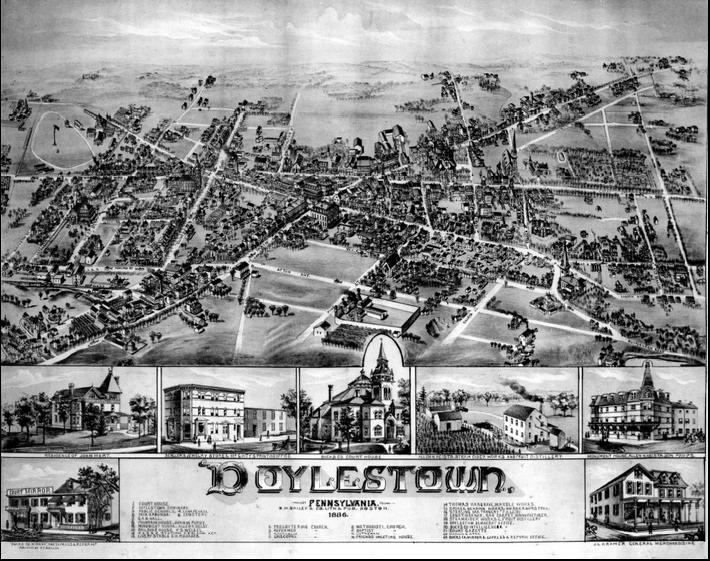
In her first letter (February 1854), Anne (George’s sister in Smalley, Derbyshire) wrote: “We want to know who and what is this Miss Hill you name in your letter. What age is she? Send us all the particulars but I would advise you not to get married until you have sufficient to make a comfortable home.”
Upon learning of George’s marriage, Anne wrote: “I hope dear brother you may be happy with your wife….I hope you will be as a son to her parents. Mother unites with me in kind love to you both and to your father and mother with best wishes for your health and happiness.” In 1872 (December) Joseph (George’s brother) wrote: “I am sorry to hear that sister’s father is so ill. It is what we must all come to some time and hope we shall meet where there is no more trouble.”
Emma (George’s sister) wrote in 1855, “We write in love to your wife and yourself and you must write soon and tell us whether there is a little nephew or niece and what you call them.” In June of 1856, Emma wrote: “We want to see dear Sarah Ann and the dear little boy. We were much pleased with the “bit of news” you sent.” The bit of news was the birth of John Eley Housley, January 11, 1855. Emma concluded her letter “Give our very kindest love to dear sister and dearest Johnnie.”
According to his obituary, John Eley was born at Wrightstown and “removed” to Lumberville at the age of 19. John was married first to Lucy Wilson with whom he had three sons: George Wilson (1883), Howard (1893) and Raymond (1895); and then to Elizabeth Kilmer with whom he had one son Albert Kilmer (1907). John Eley Housley died November 20, 1926 at the age of 71. For many years he had worked for John R. Johnson who owned a store. According to his son Albert, John was responsible for caring for Johnson’s horses. One named Rex was considered to be quite wild, but was docile in John’s hands. When John would take orders, he would leave the wagon at the first house and walk along the backs of the houses so that he would have access to the kitchens. When he reached the seventh house he would climb back over the fence to the road and whistle for the horses who would come to meet him. John could not attend church on Sunday mornings because he was working with the horses and occasionally Albert could convince his mother that he was needed also. According to Albert, John was regular in attendance at church on Sunday evenings.
John was a member of the Carversville Lodge 261 IOOF and the Carversville Lodge Knights of Pythias. Internment was in the Carversville cemetery; not, however, in the plot owned by his father. In addition to his sons, he was survived by his second wife Elizabeth who lived to be 80 and three grandchildren: George’s sons, Kenneth Worman and Morris Wilson and Raymond’s daughter Miriam Louise. George had married Katie Worman about the time John Eley married Elizabeth Kilmer. Howard’s first wife Mary Brink and daughter Florence had died and he remarried Elsa Heed who also lived into her eighties. Raymond’s wife was Fanny Culver.
Two more sons followed: Joseph Sackett, who was known as Sackett, September 12, 1856 and Edwin or Edward Rose, November 11, 1858. Joseph Sackett Housley married Anna Hubbs of Plumsteadville on January 17, 1880. They had one son Nelson DeC. who in turn had two daughters, Eleanor Mary and Ruth Anna, and lived on Bert Avenue in Trenton N.J. near St. Francis Hospital. Nelson, who was an engineer and built the first cement road in New Jersey, died at the age of 51. His daughters were both single at the time of his death. However, when his widow, the former Eva M. Edwards, died some years later, her survivors included daughters, Mrs. Herbert D. VanSciver and Mrs. James J. McCarrell and four grandchildren. One of the daughters (the younger) was quite crippled in later years and would come to visit her great-aunt Elizabeth (John’s widow) in a chauffeur driven car. Sackett died in 1929 at the age of 70. He was a member of the Warrington Lodge IOOF of Jamison PA, the Uncas tribe and the Uncas Hayloft 102 ORM of Trenton, New Jersey. The interment was in Greenwood cemetery where he had been caretaker since his retirement from one of the oldest manufacturing plants in Trenton (made milk separators for one thing). Sackett also was the caretaker for two other cemeteries one located near the Clinton Street station and the other called Riverside.
Ed’s wife was named Lydia. They had two daughters, Mary and Margaret and a third child who died in infancy. Mary had seven children–one was named for his grandfather–and settled in lower Bucks county. Margaret never married. She worked for Woolworths in Flemington, N. J. and then was made manager in Somerville, N.J., where she lived until her death. Ed survived both of his brothers, and at the time of Sackett’s death was living in Flemington, New Jersey where he had worked as a grocery clerk.
In September 1872, Joseph wrote, “I was very sorry to hear that John your oldest had met with such a sad accident but I hope he is got alright again by this time.” In the same letter, Joseph asked: “Now I want to know what sort of a town you are living in or village. How far is it from New York? Now send me all particulars if you please.”
In March 1873 Harriet asked Sarah Ann: “And will you please send me all the news at the place and what it is like for it seems to me that it is a wild place but you must tell me what it is like….” The question of whether she was referring to Bucks County, Pennsylvania or some other place is raised in Joseph’s letter of the same week.
On March 17, 1873, Joseph wrote: “I was surprised to hear that you had gone so far away west. Now dear brother what ever are you doing there so far away from home and family–looking out for something better I suppose.” The solicitor wrote on May 23, 1874: “Lately I have not written because I was not certain of your address and because I doubted I had much interesting news to tell you.” Later, Joseph wrote concerning the problems settling the estate, “You see dear brother there is only me here on our side and I cannot do much. I wish you were here to help me a bit and if you think of going for another summer trip this turn you might as well run over here.”
Apparently, George had indicated he might return to England for a visit in 1856. Emma wrote concerning the portrait of their mother which had been sent to George: “I hope you like mother’s portrait. I did not see it but I suppose it was not quite perfect about the eyes….Joseph and I intend having ours taken for you when you come over….Do come over before very long.”
In March 1873, Joseph wrote: “You ask me what I think of you coming to England. I think as you have given the trustee power to sign for you I think you could do no good but I should like to see you once again for all that. I can’t say whether there would be anything amiss if you did come as you say it would be throwing good money after bad.”
On June 10, 1875, the solicitor wrote: “I have been expecting to hear from you for some time past. Please let me hear what you are doing and where you are living and how I must send you your money.” George’s big news at that time was that on May 3, 1875, he had become a naturalized citizen “renouncing and abjuring all allegiance and fidelity to every foreign prince, potentate, state and sovereignity whatsoever, and particularly to Victoria Queen of Great Britain of whom he was before a subject.”
Another matter which George took care of during the years the estate was being settled was the purchase of a cemetery plot! On March 24, 1873, George purchased plot 67 section 19 division 2 in the Carversville (Bucks County PA) Cemetery (incorporated 1859). The plot cost $15.00, and was located at the very edge of the cemetery. It was in this cemetery, in 1991, while attending the funeral of Sarah Lord Housley, wife of Albert Kilmer Housley, that sixteen month old Laura Ann visited the graves of her great-great-great grandparents, George and Sarah Ann Hill Housley.
George died on August 13, 1877 and was buried three days later. The text for the funeral sermon was Proverbs 27:1: “Do not boast about tomorrow, for you do not know what a day may bring forth.”
December 18, 2021 at 10:02 am #6242In reply to: The Elusive Samuel Housley and Other Family Stories
The Housley Letters
We discovered that one of Samuel’s brothers, George Housley 1826-1877, emigrated to America in 1851, to Solebury, in Pennsylvania. Another brother, Charles 1823-1856, emigrated to Australia at the same time.
I wrote to the Solebury Historical Society to ask them if they had any information on the Housleys there. About a month later I had a very helpful and detailed reply from them.
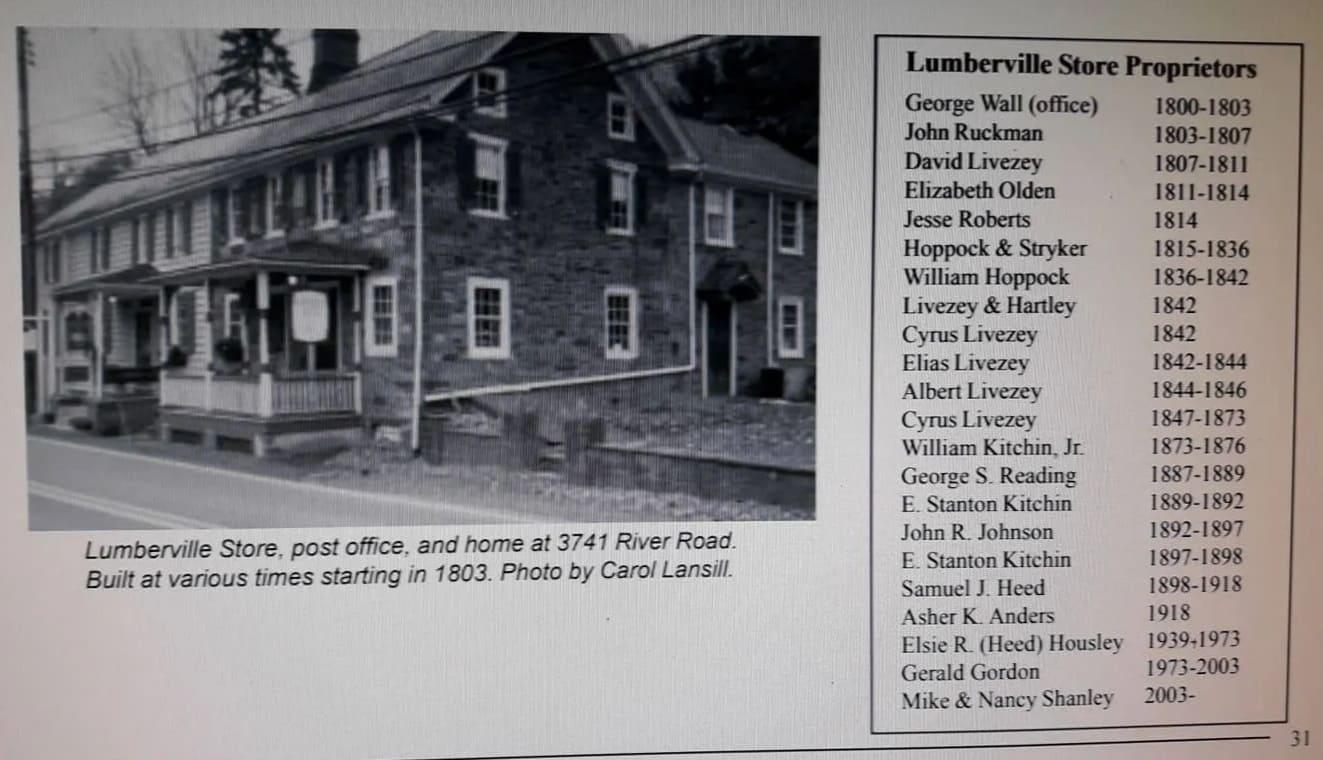
There were Housley people in Solebury Township and nearby communities from 1854 to at least 1973, perhaps 1985. George Housley immigrated in 1851, arriving in New York from London in July 1851 on the ship “Senator”. George was in Solebury by 1854, when he is listed on the tax roles for the Township He didn’t own land at that time. Housley family members mostly lived in the Lumberville area, a village in Solebury, or in nearby Buckingham or Wrightstown. The second wife of Howard (aka Harry) Housley was Elsa (aka Elsie) R. Heed, the daughter of the Lumberville Postmaster. Elsie was the proprietor of the Lumberville General Store from 1939 to 1973, and may have continued to live in Lumberville until her death in 1985. The Lumberville General Store was, and still is, a focal point of the community. The store was also the official Post Office at one time, hence the connection between Elsie’s father as Postmaster, and Elsie herself as the proprietor of the store. The Post Office function at Lumberville has been reduced now to a bank of cluster mailboxes, and official U.S. Postal functions are now in Point Pleasant, PA a few miles north of Lumberville.
We’ve attached a pdf of the Housley people buried in Carversville Cemetery, which is in the town next to Lumberville, and is still in Solebury Township. We hope this list will confirm that these are your relatives.It doesn’t seem that any Housley people still live in the area. Some of George’s descendents moved to Wilkes-Barre, PA and Flemington, NJ. One descendent, Barbara Housley, lived in nearby Doylestown, PA, which is the county seat for Bucks County. She actually visited Solebury Township Historical Society looking for Housley relatives, and it would have been nice to connect you with her. Unfortunately she died in 2018. Her obituary is attached in case you want to follow up with the nieces and great nieces who are listed.
Lumberville General Store, Pennsylvania, Elsie Housley:
I noticed the name of Barbara’s brother Howard Housley in her obituary, and found him on facebook. I knew it was the right Howard Housley as I recognized Barbara’s photograph in his friends list as the same photo in the obituary. Howard didn’t reply initially to a friend request from a stranger, so I found his daughter Laura on facebook and sent her a message. She replied, spoke to her father, and we exchanged email addresses and were able to start a correspondence. I simply could not believe my luck when Howard sent me a 17 page file of Barbara’s Narrative on the Letters with numerous letter excerpts interspersed with her own research compiled on a six month trip to England.
The letters were written to George between 1851 and the 1870s, from the Housley family in Smalley.
Narrative of Historic Letters ~ Barbara Housley.
AND BELIEVE ME EVER MY DEAR BROTHER, YOUR AFFECTIONATE FAMILY
In February 1991, I took a picture of my 16 month old niece Laura Ann Housley standing near the tombstones of her great-great-great-grandparents, George and Sarah Ann Hill Housley. The occassion was the funeral of another Sarah Housley, Sarah Lord Housley, wife of Albert Kilmer Housley, youngest son of John Eley Housley (George and Sarah Ann’s first born). Laura Ann’s great-grandfather (my grandfather) was another George, John Eley’s first born. It was Aunt Sarah who brought my mother, Lois, a packet of papers which she had found in the attic. Mom spent hours transcribing the letters which had been written first horizontally and then vertically to save paper. What began to emerge was a priceless glimpse into the lives and concerns of Housleys who lived and died over a century ago. All of the letters ended with the phrase “And believe me ever my dear brother, your affectionate….”
The greeting and opening remarks of each of the letters are included in a list below. The sentence structure and speech patterns have not been altered however spelling and some punctuation has been corrected. Some typical idiosyncrasies were: as for has, were for where and vice versa, no capitals at the beginnings of sentences, occasional commas and dashes but almost no periods. Emma appears to be the best educated of the three Housley letter-writers. Sister-in-law Harriet does not appear to be as well educated as any of the others. Since their mother did not write but apparently was in good health, it must be assumed that she could not.
The people discussed and described in the following pages are for the most part known to be the family and friends of the Housleys of Smalley, Derbyshire, England. However, practically every page brings conjectures about the significance of persons who are mentioned in the letters and information about persons whose names seem to be significant but who have not yet been established as actual members of the family.To say this was a priceless addition to the family research is an understatement. I have since, with Howard’s permission, sent the file to the Derby Records Office for their family history section. We are hoping that Howard will find the actual letters in among the boxes he has of his sisters belongings. Some of the letters mention photographs that were sent. Perhaps some will be found.
December 16, 2021 at 1:51 pm #6240In reply to: The Elusive Samuel Housley and Other Family Stories
Phyllis Ellen Marshall
1909 – 1983
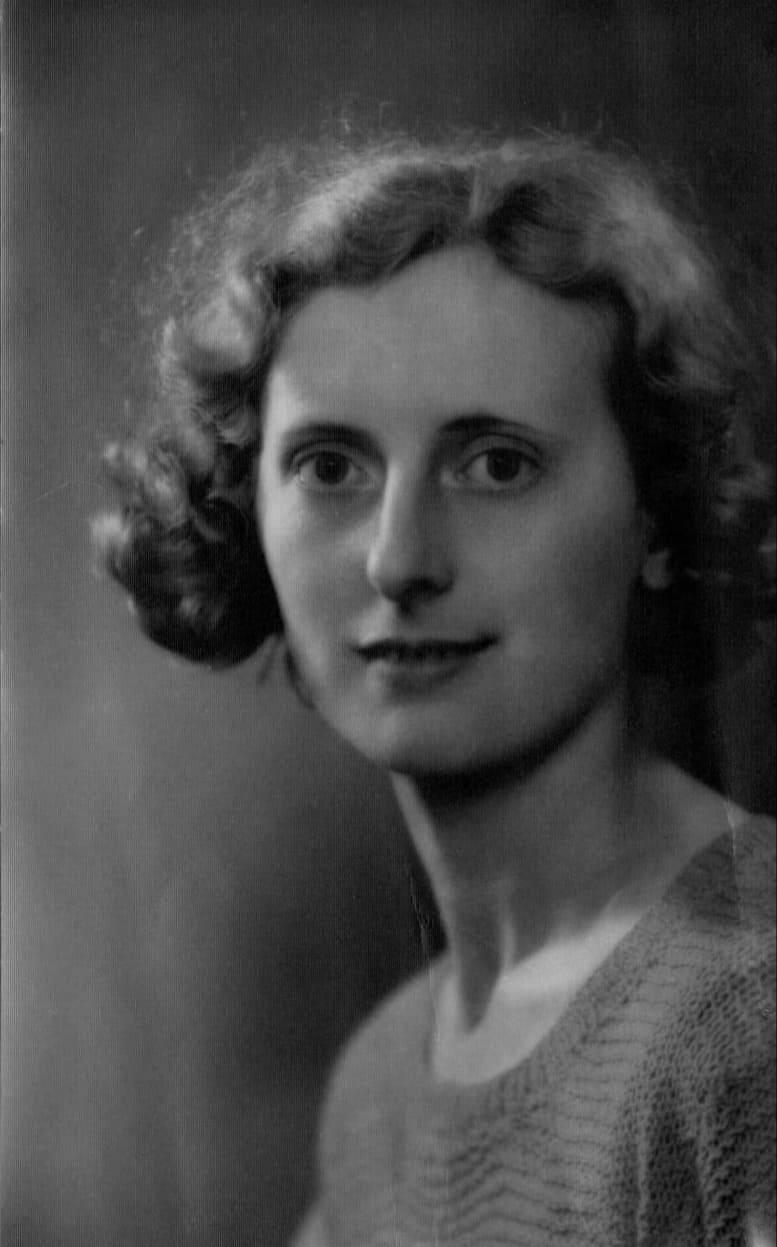
Phyllis, my grandfather George Marshall’s sister, never married. She lived in her parents home in Love Lane, and spent decades of her later life bedridden, living alone and crippled with rheumatoid arthritis. She had her bed in the front downstairs room, and had cords hanging by her bed to open the curtains, turn on the tv and so on, and she had carers and meals on wheels visit her daily. The room was dark and grim, but Phyllis was always smiling and cheerful. Phyllis loved the Degas ballerinas and had a couple of prints on the walls.
I remember visiting her, but it has only recently registered that this was my great grandparents house. When I was a child, we visited her and she indicated a tin on a chest of drawers and said I could take a biscuit. It was a lemon puff, and was the stalest biscuit I’d ever had. To be polite I ate it. Then she offered me another one! I declined, but she thought I was being polite and said “Go on! You can have another!” I ate another one, and have never eaten a lemon puff since that day.
Phyllis’s nephew Bryan Marshall used to visit her regularly. I didn’t realize how close they were until recently, when I resumed contact with Bryan, who emigrated to USA in the 1970s following a successful application for a job selling stained glass windows and church furnishings.
I asked on a Stourbridge facebook group if anyone remembered her.
AF Yes I remember her. My friend and I used to go up from Longlands school every Friday afternoon to do jobs for her. I remember she had a record player and we used to put her 45rpm record on Send in the Clowns for her. Such a lovely lady. She had her bed in the front room.
KW I remember very clearly a lady in a small house in Love Lane with alley at the left hand. I was intrigued by this lady who used to sit with the front door open and she was in a large chair of some sort. I used to see people going in and out and the lady was smiling. I was young then (31) and wondered how she coped but my sense was she had lots of help. I’ve never forgotten that lady in Love Lane sitting in the open door way I suppose when it was warm enough.
LR I used to deliver meals on wheels to her lovely lady.
I sent Bryan the comments from the Stourbridge group and he replied:
Thanks Tracy. I don’t recognize the names here but lovely to see such kind comments.
In the early 70’s neighbors on Corser Street, Mr. & Mrs. Walter Braithwaite would pop around with occasional visits and meals. Walter was my piano teacher for awhile when I was in my early twenties. He was a well known music teacher at Rudolph Steiner School (former Elmfield School) on Love Lane. A very fine school. I seem to recall seeing a good article on Walter recently…perhaps on the Stourbridge News website. He was very well known.
I’m ruminating about life with my Aunt Phyllis. We were very close. Our extra special time was every Saturday at 5pm (I seem to recall) we’d watch Doctor Who. Right from the first episode. We loved it. Likewise I’d do the children’s crossword out of Woman’s Realm magazine…always looking to win a camera but never did ! She opened my mind to the Bible, music and ballet. She once got tickets and had a taxi take us into Birmingham to see the Bolshoi Ballet…at a time when they rarely left their country. It was a very big deal in the early 60’s. ! I’ve many fond memories about her and grandad which I’ll share in due course. I’d change the steel needle on the old record player, following each play of the 78rpm records…oh my…another world.Bryan continues reminiscing about Phyllis in further correspondence:
Yes, I can recall those two Degas prints. I don’t know much of Phyllis’ early history other than she was a hairdresser in Birmingham. I want to say at John Lewis, for some reason (so there must have been a connection and being such a large store I bet they did have a salon?)
You will know that she had severe and debilitating rheumatoid arthritis that eventually gnarled her hands and moved through her body. I remember strapping on her leg/foot braces and hearing her writhe in pain as I did so but she wanted to continue walking standing/ getting up as long as she could. I’d take her out in the wheelchair and I can’t believe I say it along …but down Stanley Road!! (I had subsequent nightmares about what could have happened to her, had I tripped or let go!) She loved Mary Stevens Park, the swans, ducks and of course Canadian geese. Was grateful for everything in creation. As I used to go over Hanbury Hill on my visit to Love Lane, she would always remind me to smell the “sea-air” as I crested the hill.
In the earlier days she smoked cigarettes with one of those long filters…looking like someone from the twenties.I’ll check on “Send in the clowns”. I do recall that music. I remember also she loved to hear Neil Diamond. Her favorites in classical music gave me an appreciation of Elgar and Delius especially. She also loved ballet music such as Swan Lake and Nutcracker. Scheherazade and La Boutique Fantastic also other gems.
When grandad died she and aunt Dorothy shared more about grandma (who died I believe when John and I were nine-months old…therefore early 1951). Grandma (Mary Ann Gilman Purdy) played the piano and loved Strauss and Offenbach. The piano in the picture you sent had a bad (wonky) leg which would fall off and when we had the piano at 4, Mount Road it was rather dangerous. In any event my parents didn’t want me or others “banging on it” for fear of waking the younger brothers so it disappeared at sometime.
By the way, the dog, Flossy was always so rambunctious (of course, she was a JRT!) she was put on the stairway which fortunately had a door on it. Having said that I’ve always loved dogs so was very excited to see her and disappointed when she was not around.Phyllis with her parents William and Mary Marshall, and Flossie the dog in the garden at Love Lane:
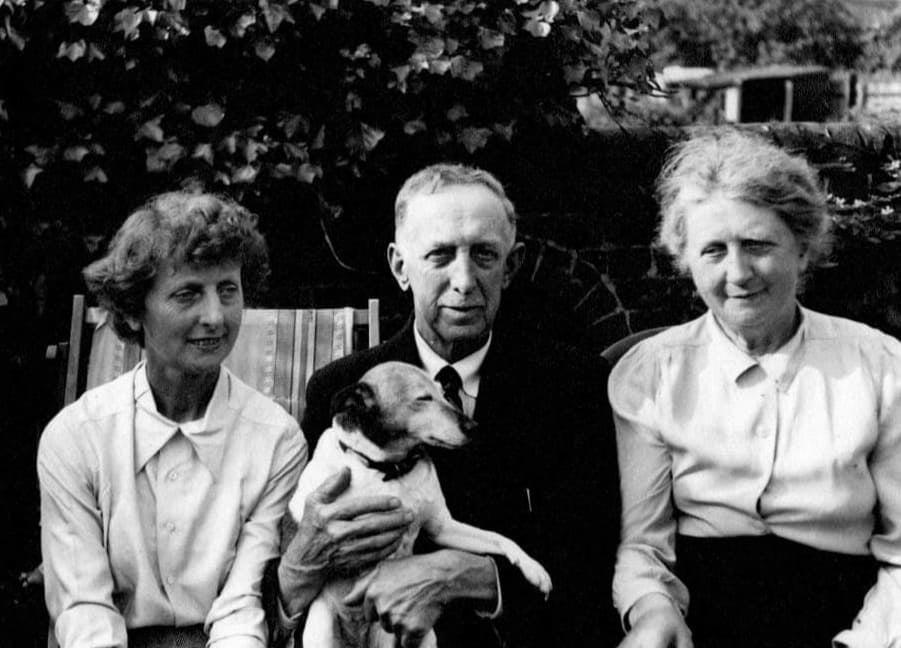
Bryan continues:
I’ll always remember the early days with the outside toilet with the overhead cistern caked in active BIG spider webs. I used to have to light a candle to go outside, shielding the flame until destination. In that space I’d set the candle down and watch the eery shadows move from side to side whilst…well anyway! Then I’d run like hell back into the house. Eventually the kitchen wall was broken through so it became an indoor loo. Phew!
In the early days the house was rented for ten-shillings a week…I know because I used to take over a ten-bob-note to a grumpy lady next door who used to sign the receipt in the rent book. Then, I think she died and it became available for $600.00 yes…the whole house for $600.00 but it wasn’t purchased then. Eventually aunt Phyllis purchased it some years later…perhaps when grandad died.I used to work much in the back garden which was a lovely walled garden with arch-type decorations in the brickwork and semicircular shaped capping bricks. The abundant apple tree. Raspberry and loganberry canes. A gooseberry bush and huge Victoria plum tree on the wall at the bottom of the garden which became a wonderful attraction for wasps! (grandad called the “whasps”). He would stew apples and fruit daily.
Do you remember their black and white cat Twinky? Always sat on the pink-screen TV and when she died they were convinced that “that’s wot got ‘er”. Grandad of course loved all his cats and as he aged, he named them all “Billy”.Have you come across the name “Featherstone” in grandma’s name. I don’t recall any details but Dorothy used to recall this. She did much searching of the family history Such a pity she didn’t hand anything on to anyone. She also said that we had a member of the family who worked with James Watt….but likewise I don’t have details.
Gifts of chocolates to Phyllis were regular and I became the recipient of the overflow!What a pity Dorothy’s family history research has disappeared! I have found the Featherstone’s, and the Purdy who worked with James Watt, but I wonder what else Dorothy knew.
I mentioned DH Lawrence to Bryan, and the connection to Eastwood, where Bryan’s grandma (and Phyllis’s mother) Mary Ann Gilman Purdy was born, and shared with him the story about Francis Purdy, the Primitive Methodist minister, and about Francis’s son William who invented the miners lamp.
He replied:
As a nosy young man I was looking through the family bookcase in Love Lane and came across a brown paper covered book. Intrigued, I found “Sons and Lovers” D.H. Lawrence. I knew it was a taboo book (in those days) as I was growing up but now I see the deeper connection. Of course! I know that Phyllis had I think an earlier boyfriend by the name of Maurice who lived in Perry Barr, Birmingham. I think he later married but was always kind enough to send her a book and fond message each birthday (Feb.12). I guess you know grandad’s birthday – July 28. We’d always celebrate those days. I’d usually be the one to go into Oldswinford and get him a cardigan or pullover and later on, his 2oz tins of St. Bruno tobacco for his pipe (I recall the room filled with smoke as he puffed away).
Dorothy and Phyllis always spoke of their ancestor’s vocation as a Minister. So glad to have this history! Wow, what a story too. The Lord rescued him from mischief indeed. Just goes to show how God can change hearts…one at a time.
So interesting to hear about the Miner’s Lamp. My vicar whilst growing up at St. John’s in Stourbridge was from Durham and each Harvest Festival, there would be a miner’s lamp placed upon the altar as a symbol of the colliery and the bountiful harvest.More recollections from Bryan about the house and garden at Love Lane:
I always recall tea around the three legged oak table bedecked with a colorful seersucker cloth. Battenburg cake. Jam Roll. Rich Tea and Digestive biscuits. Mr. Kipling’s exceedingly good cakes! Home-made jam. Loose tea from the Coronation tin cannister. The ancient mangle outside the back door and the galvanized steel wash tub with hand-operated agitator on the underside of the lid. The hand operated water pump ‘though modernisation allowed for a cold tap only inside, above the single sink and wooden draining board. A small gas stove and very little room for food preparation. Amazing how the Marshalls (×7) managed in this space!
The small window over the sink in the kitchen brought in little light since the neighbor built on a bathroom annex at the back of their house, leaving #47 with limited light, much to to upset of grandad and Phyllis. I do recall it being a gloomy place..i.e.the kitchen and back room.
The garden was lovely. Long and narrow with privet hedge dividing the properties on the right and the lovely wall on the left. Dorothy planted spectacular lilac bushes against the wall. Vivid blues, purples and whites. Double-flora. Amazing…and with stunning fragrance. Grandad loved older victorian type plants such as foxgloves and comfrey. Forget-me-nots and marigolds (calendulas) in abundance. Rhubarb stalks. Always plantings of lettuce and other vegetables. Lots of mint too! A large varigated laurel bush outside the front door!
Such a pleasant walk through the past.
An autograph book belonging to Phyllis from the 1920s has survived in which each friend painted a little picture, drew a cartoon, or wrote a verse. This entry is perhaps my favourite:
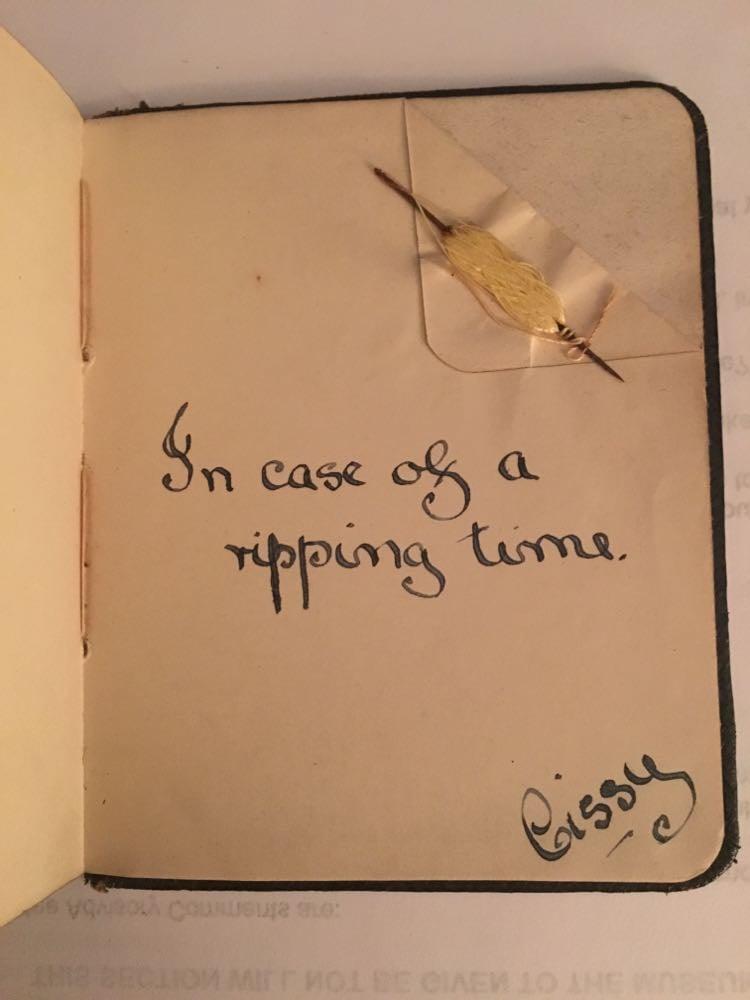 December 15, 2021 at 3:37 pm #6238
In reply to: The Elusive Samuel Housley and Other Family Stories
Ellen (Nellie) Purdy
My grandfathers aunt Nellie Purdy 1872-1947 grew up with his mother Mary Ann at the Gilmans in Buxton. We knew she was a nurse or a matron, and that she made a number of trips to USA.
I started looking for passenger lists and immigration lists (we had already found some of them, and my cousin Linda Marshall in Boston found some of them), and found one in 1904 with details of the “relatives address while in US”.
October 31st, 1904, Ellen Purdy sailed from Liverpool to Baltimore on the Friesland. She was a 32 year old nurse and she paid for her own ticket. The address of relatives in USA was Druid Hill and Lafayette Ave, Baltimore, Maryland.
I wondered if she stayed with relatives, perhaps they were the Housley descendants. It was her great uncle George Housley who emigrated in 1851, not so far away in Pennsylvania. I wanted to check the Baltimore census to find out the names at that address, in case they were Housley’s. So I joined a Baltimore History group on facebook, and asked how I might find out. The people were so enormously helpful! The address was the Home of the Friendless, an orphanage. (a historic landmark of some note I think), and someone even found Ellen Purdy listed in the Baltimore directory as a nurse there.
She sailed back to England in 1913. Ellen sailed in 1900 and 1920 as well but I haven’t unraveled those trips yet.
THE HOME OF THE FRIENDLESS, is situated at the corner of Lafayette and Druid Hill avenues, Baltimore. It is a large brick building, which was erected at a cost of $62,000. It was organized in 1854.The chief aim of the founders of this institution was to respond to a need for providing a home for the friendless and homeless children, orphans, and half-orphans, or the offspring of vagrants. It has been managed since its organization by a board of ladies, who, by close attention and efficient management, have made the institution one of the most prominent charitable institutions in the State. From its opening to the present time there have been received 5,000 children, and homes have been secured for nearly one thousand of this number. The institution has a capacity of about 200 inmates. The present number of beneficiaries is 165. A kindergarten and other educational facilities are successfully conducted. The home knows no demonimational creed, being non-sectarian. Its principal source of revenue is derived from private contributions. For many years the State has appropriated different sums towards it maintenance, and the General Assembly of 1892 contributed the sum of $3,000 per annum.
A later trip: The ship’s manifest from May 1920 the Baltic lists Ellen on board arriving in Ellis Island heading to Baltimore age 48. The next of kin is listed as George Purdy (her father) of 2 Gregory Blvd Forest Side, Nottingham. She’s listed as a nurse, and sailed from Liverpool May 8 1920.
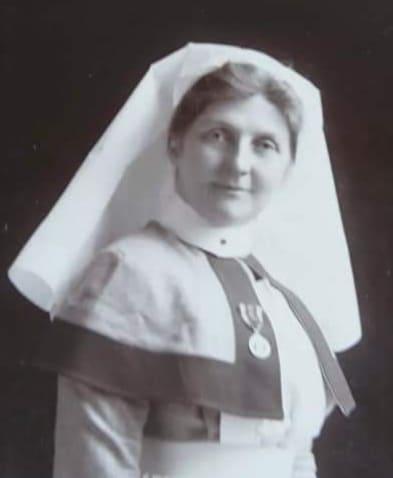
Ellen eventually retired in England and married Frank Garbett, a tax collector, at the age of 51 in Herefordshire. Judging from the number of newspaper articles I found about her, she was an active member of the community and was involved in many fundraising activities for the local cottage hospital.
Her obituary in THE KINGTON TIMES, NOVEMBER 8, 1947:
Mrs. Ellen Garbett wife of Mr. F. Garbett, of Brook Cottage, Kingsland, whose funeral took place at St. Michael’s Church, Kingsland, on October 30th, was a familiar figure in the district, and by her genial manner and kindly ways had endeared herself to many.
Mrs Garbett had had a wide experience in the nursing profession. Beginning her training in this country, she went to the Italian Riviera and there continued her work, later going to the United States. In 1916 she gained the Q.A.I.M.N.S. and returned to England and was appointed sister at the Lord Derby Military Hospital, an appointment she held for four years.We didn’t know that Ellen had worked on the Italian Riviera, and hope in due course to find out more about it.
Mike Rushby, Ellen’s sister Kate’s grandson in Australia, spoke to his sister in USA recently about Nellie Purdy. She replied: I told you I remembered Auntie Nellie coming to Jacksdale. She gave me a small green leatherette covered bible which I still have ( though in a very battered condition). Here is a picture of it.
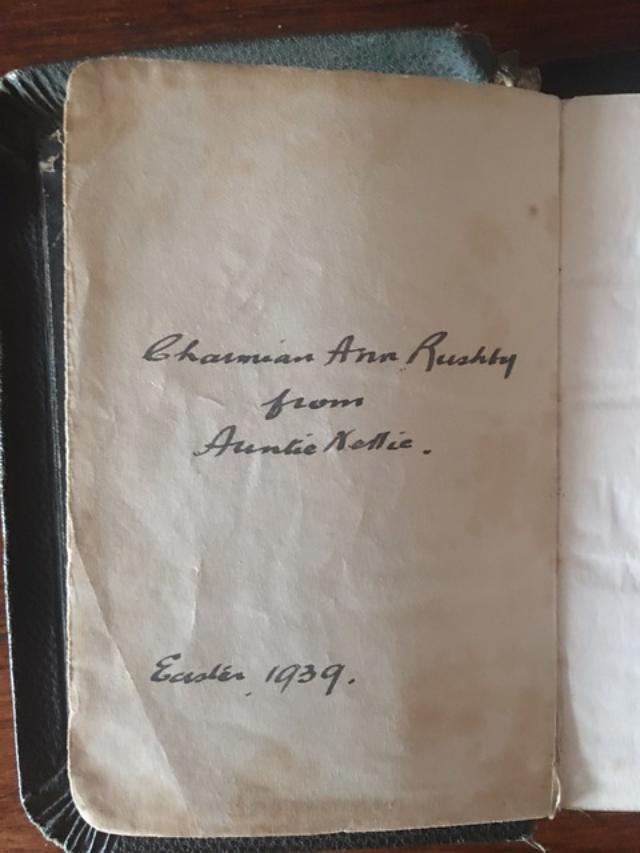 December 15, 2021 at 8:14 am #6235
In reply to: The Elusive Samuel Housley and Other Family Stories
Sydney Smith and Lawrence of Arabia
Hannah Warren 1865-1946 was my great grandfather Samuel’s sister. Hannah married Charles Smith, and their son was Sydney Smith 1888-1971, Lawrence of Arabia’s commanding officer. Sydney’s wife, Clare Sydney Smith, wrote a book about their friendship with Lawrence of Arabia called The Golden Reign.
This photograph of Sydney Smith and Clare is in our collection of family photos. Written on the back: Sydney Smith son of Hannah Smith sister of Samuel Warren married Clare Eustace Jameson, niece of Earl Haig.
The Burton Observer and Chronicle – Thursday 19 September 1940:
BURTONIANS’ FRIENDSHIP WITH EX-ARAB LEADER. By Clare Sydney Smith (Cassell, 12s. 6d.). general interest as an intimate study of the most romantic personality on the Allied side… this volume has distinctly local appeal, for the authoress, who is a niece of the late Earl Haig, is the wife of Mr Commodore Sydney Smith, eldest son of Mr. Charles Smith (former joint managing director of Allsopp’s). Her volume, on the whole, is a fascinating record of the devoted friendship which existed between Colonel Lawrence of Arabia, her husband and herself during the latter years of the one-time Arab leader’s life. Their acquaintance with Lawrence, alias Aircraftman T. E. Shaw, commenced with the Cairo Conference in 1920.
A photograph from the book: From left to right: Lord Astor, Wing-Commander Sydney Smith, Lady Astor, George Bernard Shaw, Charlotte Shaw (hiding behind GBS’s shoulder), Sydney’s daughter Maureen Sydney Smith, an unknown man, Clare Sydney Smith, and on the ladder, T.E.’s feet.
Also from Clare’s book:
Sydney Smith with Lawrence of Arabia:
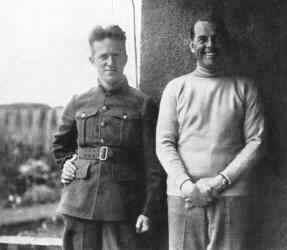 December 13, 2021 at 3:38 pm #6229
In reply to: The Elusive Samuel Housley and Other Family Stories
Gretton Tailoresses of Swadlincote and the Single Journalist Boot Maker Next Door
The Purdy’s, Housley’s and Marshall’s are my mothers fathers side of the family. The Warrens, Grettons and Staleys are from my mothers mothers side.
I decided to add all the siblings to the Gretton side of the family, in search of some foundation to a couple of family anecdotes. My grandmother, Nora Marshall, whose mother was Florence Nightingale Gretton, used to mention that our Gretton side of the family were related to the Burton Upon Trent Grettons of Bass, Ratcliff and Gretton, the brewery. She also said they were related to Lord Gretton of Stableford Park in Leicestershire. When she was a child, she said parcels of nice clothes were sent to them by relatives.

It should be noted however that Baron Gretton is a title in the Peerage of the United Kingdom, and was created in 1944 for the brewer and Conservative politician John Gretton. He was head of the brewery firm of Bass, Ratcliff & Gretton Ltd of Burton upon Trent. So they were not members of the Peerage at the time of this story.
What I found was unexpected.
My great great grandfather Richard Gretton 1833-1898, a baker in Swadlincote, didn’t have any brothers, but he did have a couple of sisters.
One of them, Frances, born 1831, never married, but had four children. She stayed in the family home, and named her children Gretton. In 1841 and 1851 she’s living with parents and siblings. In 1861 she is still living with parents and now on the census she has four children all named Gretton listed as grandchildren of her father.
In 1871, her mother having died in 1866, she’s still living with her father William Gretton, Frances is now 40, and her son William 19 and daughter Jane 15 live there.
By the time she is 50 in 1881 and her parents have died she’s head of the house with 5 children all called Gretton, including her daughter Jane Gretton aged 24.Twenty five year old Robert Staley is listed on the census transcription as living in the same household, but when viewing the census image it becomes clear that he lived next door, on his own and was a bootmaker, and on the other side, his parents Benjamin and Sarah Staley lived at the Prince of Wales pub with two other siblings.
Who was fathering all these Gretton children?
It seems that Jane did the same thing as her mother: she stayed at home and had three children, all with the name Gretton. Jane Gretton named her son, born in 1878, Michael William Staley Gretton, which would suggest that Staley was the name of the father of the child/children of Jane Gretton.
The father of Frances Gretton’s four children is not known, and there is no father on the birth registers, although they were all baptized.
I found a photo of Jane Gretton on a family tree on an ancestry site, so I contacted the tree owner hoping that she had some more information, but she said no, none of the older family members would explain when asked about it. Jane later married Tom Penn, and Jane Gretton’s children are listed on census as Tom Penn’s stepchildren.
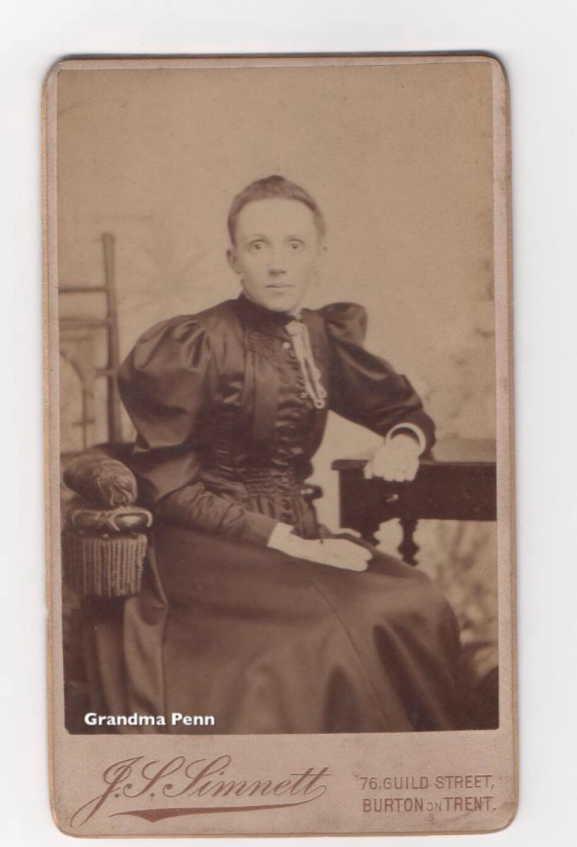
It seems that Robert Staley (who may or may not be the father of Jane’s children) never married. In 1891 Robert is 35, single, living with widowed mother Sarah in Swadlincote. Sarah is living on own means and Robert has no occupation. On the 1901 census Robert is an unmarried 45 year old journalist and author, living with his widowed mother Sarah Staley aged 79, in Swadlincote.
There are at least three Staley Warren marriages in the family, and at least one Gretton Staley marriage.
There is a possibility that the father of Frances’s children could be a Gretton, but impossible to know for sure. William Gretton was a tailor, and several of his children and grandchildren were tailoresses. The Gretton family who later bought Stableford Park lived not too far away, and appear to be well off with a dozen members of live in staff on the census. Did our Gretton’s the tailors make their clothes? Is that where the parcels of nice clothes came from?
Perhaps we’ll find a family connection to the brewery Grettons, or find the family connection was an unofficial one, or that the connection is further back.
I suppose luckily, this isn’t my direct line but an exploration of an offshoot, so the question of paternity is merely a matter of curiosity. It is a curious thing, those Gretton tailors of Church Gresley near Burton upon Trent, and there are questions remaining.
June 5, 2021 at 4:23 am #6198In reply to: The Precious Life and Rambles of Liz Tattler
“You were listening, Finnley!” said Liz barely able to hide her surprise. It had been a long time since anyone had listened to her. Godfrey said it was because she mostly talked nonsense. He’d smiled kindly and handed her a doughnut to soften the harsh words, but it had stung nonetheless.
Finnley rolled her eyes. “I told you already, I’ve turned over a new leaf. Since my brush with … ” She lowered her voice dramatically as her eyes slid around the room. “… death.”
“Death! Oh, you really are ridiculous and very dramatic, Finnley. And why are you squinting like that? It’s most unattractive.” Liz paused. Should she mention the hair? Finnley could be so sensitive about her appearance. Oh dear lord, now the silly girl is crying!
“I’m sorry, Madam. I’m sorry for all the times I haven’t listened to you in your numerous times of need.” Finnley gasped for air through her sobs as Liz flung a philodendron leaf at her.
“Speaking of leaves, you can wipe your nose with that. Now, Finnley, I always say, it does no good to cry over milk which has been spilled. The question is, where to from here?”
August 31, 2020 at 8:15 pm #6117In reply to: The Whale’s Diaries Collection
Well. I did it. I made my escape. I had to! Nobody came for three days and I’d run out of biscuits. Thank the lord my hip wasn’t playing up. I decided not to take anything with me, figuring I could just steal things off washing lines when I wanted a change of clothes. I’ve always hated carrying heavy bags. I reckoned it would look less conspicuous, too. Just an old dear popping out for digestive perambulation. Nobody suspects old dears of anything, not unless they’re dragging a suitcase round, and I had no intention of doing that. I did put a couple of spare masks in my pocket though, you can’t be too careful these days. And it would help with the disguise. I didn’t want any do gooders trying to catch me and take me back to that place.
I had the presence of mind to wear good stout walking shoes and not my pink feather mules, even though it was a wrench to say goodbye to them. I used to love to see them peeping out from under my bath robe. One day I might strike lucky and find another pair.
I’ve been eating like a king, better than ever! I accidentally coughed on someones burger one day, and they dropped it and ran away, and I thought to myself, well there’s an idea. I stuck to random snacks in the street at first and then one day I fancied a Chinese so I thought, well why not give it a try. Coughed all over his brown bag of prawn crackers as he walked out of the restaurant and he put the whole takeaway in the nearest bin. Piping hot meal for six! Even had that expensive crispy duck!
Tonight I fancy sushi. Wish I’d thought of this trick years ago, I said to myself the other day, then my other self said, yeah but it wouldn’t have worked so well before the plague.
Not having much luck with the washing lines though, lazy sods either not doing any laundry or putting it all in the dryer. Weeks of sunny weather as well, the lazy bastards. Lazy and wasteful! You should see the clothes they throw in the clothes bank bins! If the bins are full you can get your arm in and pull out the ones on the top. I change outfits a dozen times a day some days if I’m in the mood. I do sometimes get an urge to keep something if I like it but I’m sticking to my guns and being ruthless about not carrying anything with me.
August 27, 2020 at 9:28 am #6102In reply to: Tart Wreck Repackage
“That damn cult is going from strength to strength and not a damn thing we can do about it,” said Star. “What bloody awful timing for a lockdown, just as we were getting started!”
“I know,” replied Tara sadly. “At this rate we’ll have to go back to work for Madame Limonella.”
“Don’t be silly, she’ll have had to close down too!”
“Don’t you believe it!” retorted Tara, “She’d find a way to keep her clients happy.”
“But we’re not keeping our clients happy are we? We haven’t found a way. We’re pretty useless, aren’t we?”
“Not just our clients. Well client, really, we only had one. We could have saved the world from the Zanone cult if it hadn’t been for this quarantine. Hey, maybe that cult started all this, just so we couldn’t stop them.”
Star barked out a bitter laugh. “Now you sound like one of them parroting out conspiracy theories.”
“We could find a way to break the quarantine, sneak out at night dressed as urban kangaroos or something.”
Star was shocked. “Tara, that’s morally reprehensible! Where is your community spirit!”
“I don’t think the kangaroos would mind all that much,” Tara replied huffily.
“I didn’t mean the kangaroos, good lord! But you know what, you might be on to something. Remember that kangaroo dressed in a mans overcoat that tried to break someones car window the other day?”
Tara had a feeling Star had got her wires crossed somehow, but didn’t question it. Star was getting excited and it was a welcome change from the weeks of despondent boredom.
“Well never mind that,” Star continued, who had started to wonder herself, “The point is, we can use a disguise. And it’s a matter of grave social responsibility to expose the cult. In the fullness of time, we will be exonerated, hailed as heroic, even.”
The excitement was contagious and Tara found herself sitting upright instead of slumped in despair. “Let’s do it!”
May 26, 2020 at 3:35 pm #6088In reply to: Tart Wreck Repackage
No sooner had they reached for the drinks in the office cupboard, than the phone rang loudly.
“Rosamund!” howled Star. “Where is that daft niece of yours, and what good is she if she doesn’t even answer the calls! Rosamund!”
“I thought you gave her the afternoon?” Tara mouthed while picking the annoying phone. “Cartwright and Wrexham Private Investigators, can I help you?”
Her face frowned. “Herself speaking.”
“Yes, we do private investigations. Very successfully I may say. Alright Ma’am, let me check my agenda.” She looked in the air, flipping an imaginary agenda. “Oh, you’re in luck, our 5pm just cancelled. Alright then, see you at our office. Au revoir.”
Tara hung up with a smile.
Star was busy slurping the mojito while struggling with the mint bits in her teeth. “What? Tell me this instant!”
“Our second case! Isn’t it exciting!”
“Sure thing, what it is this time? Evil possession?”
“Actually, it’s not that far off. Apparently, our ladyship needs a falgrante delicto of adultery. Her husband seems to be a cheating one, and with a twinge of double personality… Or at least that’s what she said.”
“Fantastic. Can’t wait for all the juicy details. I’ll go prepare my sequin red dress to set the honey trap darling.”
“Good lord, get a hold of yourself Star, it’s only been a day, and you’re ready to jump on the next passing horse as it were.”
“Who said you shouldn’t mix pleasure with business.”
“Right. Thought that was the reverse…”
“Tsk. Just to get the last word.”
“Indeed.”
April 19, 2020 at 11:27 am #6064In reply to: The Whale’s Diaries Collection
I’ve been up since god knows what time. Got up for the loo and couldn’t face going back to the awful nightmares. That girl that came yesterday said she’d been having nightmares, she said it was common now, people having nightmares, what with the quarantine. I think I might have just snorted at the silly girl, but when I woke up last night I wondered if it was true. Or maybe I’m just a suggestible old fool.
Anyway, I stayed up because lord knows I don’t want to be in a city in America at night, not waking and not dreaming either. I’ve had a feeling for a long time, and much longer than this virus, that it was like a horror movie and it would behoove me not to watch it anymore or I’d be having nightmares. I didn’t stop watching though, sort of a horrified fascination, like I’d watched this far so why stop now.
In the dream I was on a dark city street at a bus stop, it was night time and the lights were bright in a shop window on the other side of the sidewalk. I had a bunch of tickets in my hand all stapled together, but they were indecipherable. I had no idea where I was going or how to get there. Then I noticed the man that was by my side, a stranger that seemed to have latched on to me, had stolen all my tickets and replaced them with the rolled up used ticket stubs. I made him give me back my tickets but then I knew I couldn’t trust him.
Then I realized I hadn’t finished packing properly and only had a ragged orange towel with bloodstains on it. So I go back home (I say home but I don’t know what house it was) to pack my bags properly, and find a stack of nice new black towels, and replace the bloody orange one.
I’m walking around the house, wondering what else I should pack, and one room leads into another, and then another, and then another, in a sort of spiral direction (highly improbable because you’d have ended up back in the same room, in real life) and then I found a lovely room and thought to myself, What a nice room! You’d never have known it was there because it wasn’t on the way to anywhere and didn’t seem to have a function as a room.
It was familiar and I remembered I’d been there before, in another dream, years ago. It had lovely furniture in it, big old polished wooden pieces, but not cluttered, the room was white and bright and spacious. Lovely big old bureau on one wall, I remember that piece quite clearly. Not a speck of dust on it and the lovely dark sheen of ancient polished oak.
Anyway in the dream I didn’t take anything from the room, and probably should have just stayed there but the next thing I know, I’m in a car with my mother and she races off down the fast lane of an empty motorway. I’m thinking, surely she doesn’t know how to take me where I have to go? She seemed so confident, so out of character the way she was driving.
I got up for the loo and all I kept thinking about was that awful scene in the city street, which admittedly doesn’t sound that bad. I won’t bother telling the girl about it when she comes to do my breakfast, it loses a little in the telling, I think.
But the more I think about that lovely room at the end of the spiral of rooms, the more I’m trying to wrack my brains to remember where I’ve seen that room before. I’ve half a mind to go back there and open that dark oak bureau and see what’s inside.
April 14, 2020 at 12:20 pm #6002In reply to: Story Bored
Board 7, Story 2
Hector Coon announces the winner of the biggest carrot competition at the Pillaughpiffleston Manor fete, as Phlynn the gamekeeper gloats over his first prize for the fancy dress party. Lady Theresa Eaglestone (a.k.a. T’eggy) is confident she can continue to conceal the true paternity of the newborn Lord of the Manor, with the help of her old friend Marvin Scrozzezi.
Aunt Idle found the food in Iceland ghastly, especially if you weren’t a fishy sort of person. She contemplated roasting the cat instead.
Francette Fine of the Theatre du Soleil and Igor Popinkin of Russian Ballet troupe set up a food stall to try and make ends meet during La Cuarentena, until large theatre gatherings are permitted again.
April 12, 2020 at 10:42 am #5987In reply to: Story Bored
Board 4, Story 3
Linda Paul: Why are you so shy Belen? Come to the party with Saint Germain.
Aunt Pearlita de la Cabeza: Peanelope, stop cleaning and come to the party with Pee Stoll and me. Leave Gnarfle and its friends to the kids.
Kale: Lordy! That blue Ender took Mother Shirley’s brain after the autopsy and let the blue bees escape!
April 7, 2020 at 2:47 pm #5965In reply to: Newsreel from the Rim of the Realm
Mavis, Sharon and Gloria were looking like icy popsicles in their cubicles, with only their heads popping out.
Berenice, still under training, was overseeing the process, daunted by the alarming number of blinking buttons from the apparatus. She tried to look composed, knowing full well her aunt Barbara wouldn’t make preferential treatment if she were to make a blunder.
“BWAAAAHA!” blurted out Gloria coming out of what appeared to have been a very lucid dream.
“WHAT NOW?! Bloody hell Glor’ you’re goin’ to get us all a tart attack!” Sharon shouted from the adjacent cubicle.
“I just got meself the most horrid dream Shar’, you know wot?”
“Don’t say, my Glor'” Mavis said, having left her ears on the nearby table with her shining teeth too. “It’s that about anuther wet dream with Flump?”
“Good Lord no! WORSE even!”
“WOT now?” Sharon couldn’t help but ask, shushing with a mean eye the poor Berenice.
“NURSE TRASSIE! She was comin’ fur us!”
“Oh bloody hell. Haven’t they confined her already?” Sharon dismissed with a shrug that made the whole concrete floor vibrate like a panzer washing machine in dry mode. “Look lassies, that’s more interesting.” She nodded towards the haggard Sophie lying on one of the tables. “Brought us some competition on the looks area it seems.”
“What?” Mavis strained to hear.
“Look dammit! The poor fashion-impeded soul that landed on a waiting list for one of our spots. Gosh, that latex thingy she sports makes me all blushy! But don’t you worry. She can’t be competition to us, ladies. That cryo-treatment is already working I can tell.”
She felt the need to add and punctuate towards Berenice “And no thanks to you, young lady. You should learn from me. Never been afraid to push a button in my life!”
March 10, 2020 at 5:48 pm #5826In reply to: The Whale’s Diaries Collection
Day 12What was I thinking. That all will be good and all, and forever after.
Lord, sometimes I miss that bloated boat, and its ordeal felt like an old familiar pain that distance makes bearable in retrospect.
A week back into life, and all goes to hell. Good thing I’m not a trader, looking at the stock market would make you want to jump from a tall building.
Since all is in chaos, I’ve been noticing them more. The synchronicities. Seems like the voices have found other ways to reach at me. Talks of forest and trees, arcane words spoken in different contexts.
If only I weren’t paying attention. But then there are the dreams. Last ones have been insane. And not just those after a heavy meal, you know. The kind that gets you more tired when you wake up, as if you’ve spend the whole night piling up mountains upon mountains.
I’d rather just pop a pill and see the elephants dance from branch to branch, if you see what I mean. But the voices wouldn’t let me go. Now they are egging me on to do something I don’t want to do.
A book opened at random, summarizes it all: “Our heart is anxious about being sent here.“
Next line is a tease: “Gathering the resources of all under heaven as in a storehouse.”
But when did I sign up to be the bloody storehouse manager?February 19, 2020 at 12:35 pm #5797In reply to: Two Aunties au Pair and Their Pert Carouses
“This is the life, eh!” June said, stretching out on the sun lounger sipping a fruity cocktail. “Turquoise sea and a salty breeze, this is the life for me!” she said, kicking off her new deck shoes in nautical blue and white, and hitching her dress hem up to expose her thighs to the sun.
The skipper raised an eyebrow and smiled sardonically, while simultaneously averting his eyes from the unappetizing sight of the doughy flesh. He could imagine this one rolling around below decks looking green as soon as the weather changed.
“Sure beats that jail. That had me worried, I’ll admit it. I wasn’t sure we were ever gonna make it outta there,” replied April, smiling fondly at Ella Marie and giving her hand an affectionate squeeze. “You saved our bacon, honey.”
“If it weren’t for that there Lord Wrick turning up, even the money might not have got you out.” Arthur chimed in. “Promising ole president Lump that land for the golf course if’n he pardoned you. Jacqui, you done wonders there.”
“Ah well, the young Lord Wrick owed me a favour, you might say. But that’s another story,” Jacqui replied. “The main thing was we had to get out of the country fast before Lump finds out about that land in Scotland.”
June sniggered. “Can’t imagine him in a kilt, can you? I wonder if he’s orange down there as well.”
“Oh, please! You really know how to lower the tone, dontcha? Gawd, what a thought!” April started to feel queasy. Changing the subject, she said, “Hey, did I tell you our Joanie’s going to meet us in Australia too?”
February 7, 2020 at 9:54 am #5740In reply to: Two Aunties au Pair and Their Pert Carouses
Norma was taking the sheets for a clean when she ran into the tall black figure of Mr August in the neatly carpeted corridors that Finnley had got freshly cleaned. Those odd people from Alabama that had brought Barron back had been all too pleased to help with the carpet cleaning, gaining a contract with the Beige House rather than a one-time reward.
Norma immediately started to blush like a teenybopper feeling silly hidden under the mass of untidy sheets. She dropped the heap at Mr August’s feet and fumbled around in utter confusion.
August was a gentleman, and offered to help, while exchanging some innocent small talk. He was a married man after all. “Those carpets sure do look cleaner than they ever were.”
“Yeah, that Finnley knows her bossing around business, that’s a fact.” reluctantly replied Norma, jealous that the conversation had to mention the other maid.
“You look distressed Norma.” he paused looking genuinely concerned. “It’s nothing to do with the sacking of June & April, is it? Or is that the stress of all that sudden responsibility falling on your shoulder? Taking care of Mr. Barron and all?”
“Oh yes, but no!” she immediately answered. “It was such an honor that Mistress Mellie Noma entrusted me with her child. The Lord will forgive me for speaking ill of them, but these two were not fit and proper to raise a child, with all that partying and …” she stopped thinking she sounded like a bitter spinster.
“Amen.” smiled August. “Not to mention all the gossiping around.” he giggled.
He rose from the floor and gave her back the folded sheet in a neat package.
“Good luck with the kid. Now he’s back, there’s no telling what goes in this head of his. I still wonder how he managed to get on this little trip. I have to go, work to do before Pres. Lump is coming back from his impricotement hearings. Seems he won once again and will be here in no time.”
November 25, 2019 at 7:59 pm #4871In reply to: Coma Cameleon
“Lord Gustard Willoughby Fergusson helped his wife Floribunda onto the camel,” Tibu spoke softly, gently turning the well worn page. “And clamboured onto his own. Cranky and Illi were mounted on donkeys, as were Tibn Zig and Tanlil Ubt, their local guides. Three hot dusty days, and two bitterly cold nights away lay their destination: Tsnit n’Agger and the home of the legendary giant of the Alal’ Azntignit.”
A movement caught Tibu’s eye and he glanced up. She was still there, listening.
He turned back to the book and continued reading. “Cranky was feeling like a fish out of water in the desert, but Illi had taken to it like a duck to water. Not that there was alot of water about in the desert, Cranky grumbled to herself. What she wouldn’t have given for a nice hot cup of tea and a crumpet.”
“Hey, would you like a cup of tea?” she interrupted. “It’s such rotten weather to stand out here and I ~ well, I like just listening to you.”
November 25, 2019 at 8:52 am #4869In reply to: Coma Cameleon
Tibu preferred selling second hand books to selling watches, for he could read them while waiting for customers instead of watching the minutes and hours tick by. Maybe that’s why they called them “watches”, he thought, because if you have one, you watch it. Too much, it would seem.
He was reading “The Perilous Treks of Lord Gustard Willoughby Fergusson” while sheltering from the pounding rain, huddled in the corner of an office building porch with a few dozen books piled onto an old blue blanket. He rarely sold any books, but passing strangers kindly brought him a coffee in a take away cup from time to time, or a sandwich or burger. The more thoughtful ones dropped some money into the upturned bowler hat that he’d found in the bin, so that he could choose tea, which he preferred, or some fruit, which he preferred to burgers. One of the regular office girls, a fresh faced young looking redhead, brought him a brand new lighter one day, after noticing him asking for a light the day before. She was a good listener, and often stood beside him silently listening to him read aloud from one of his books.
-
AuthorSearch Results
