

Daily Random Quote

  • May took the brat down to the kitchen and gave him the pot of cold spinach to play with while she slipped outside to send a coded message to her fiance,  Marduk.  Barron happily commenced smearing globs of green mush all over his face, mimicking his fathers applications of orange skin colouring paste. "We have a window ... · ID #5375 (continued)
    (next in 12h 51min…)

Latest Activity

Search Results for 'provide'

Forums Search Search Results for 'provide'

Viewing 20 results - 61 through 80 (of 141 total)
  • Author
    Search Results
  • #6248
    TracyTracy
    Participant

      Bakewell Not Eyam

      The Elton Marshalls

      Some years ago I read a book about Eyam, the Derbyshire village devastated by the plague in 1665, and about how the villagers quarantined themselves to prevent further spread. It was quite a story. Each year on ‘Plague Sunday’, at the end of August, residents of Eyam mark the bubonic plague epidemic that devastated their small rural community in the years 1665–6. They wear the traditional costume of the day and attend a memorial service to remember how half the village sacrificed themselves to avoid spreading the disease further.

      My 4X great grandfather James Marshall married Ann Newton in 1792 in Elton. On a number of other people’s trees on an online ancestry site, Ann Newton was from Eyam.  Wouldn’t that have been interesting, to find ancestors from Eyam, perhaps going back to the days of the plague. Perhaps that is what the people who put Ann Newton’s birthplace as Eyam thought, without a proper look at the records.

      But I didn’t think Ann Newton was from Eyam. I found she was from Over Haddon, near Bakewell ~ much closer to Elton than Eyam. On the marriage register, it says that James was from Elton parish, and she was from Darley parish. Her birth in 1770 says Bakewell, which was the registration district for the villages of Over Haddon and Darley. Her parents were George Newton and Dorothy Wipperley of Over Haddon,which is incidentally very near to Nether Haddon, and Haddon Hall. I visited Haddon Hall many years ago, as well as Chatsworth (and much preferred Haddon Hall).

      I looked in the Eyam registers for Ann Newton, and found a couple of them around the time frame, but the men they married were not James Marshall.

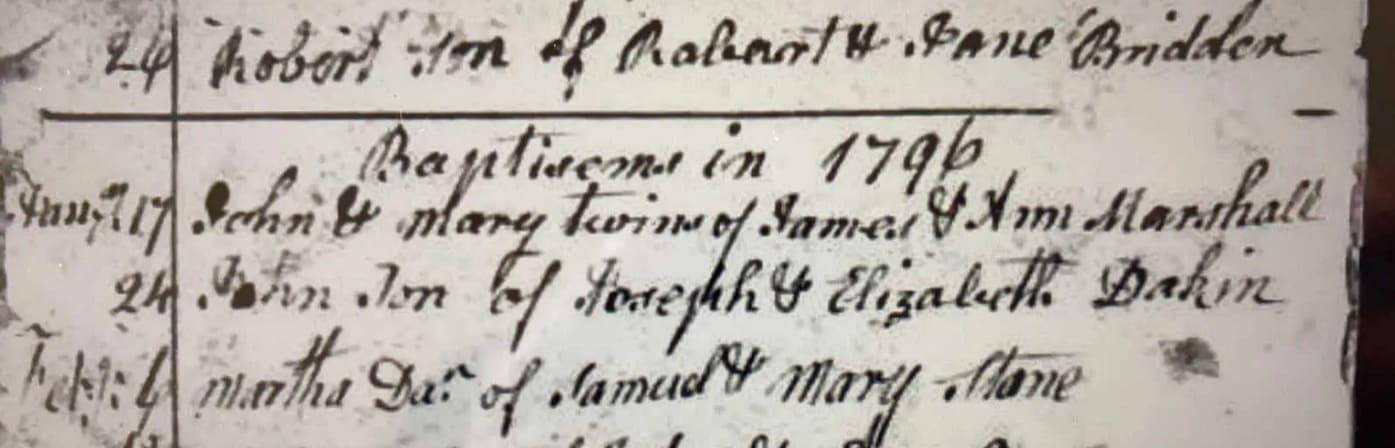
      Ann died in 1806 in Elton (a small village just outside Matlock) at the age of 36 within days of her newborn twins, Ann and James.  James and Ann had two sets of twins.  John and Mary were twins as well, but Mary died in 1799 at the age of three.

      1796 baptism of twins John and Mary of James and Ann Marshall

      Marshall baptism


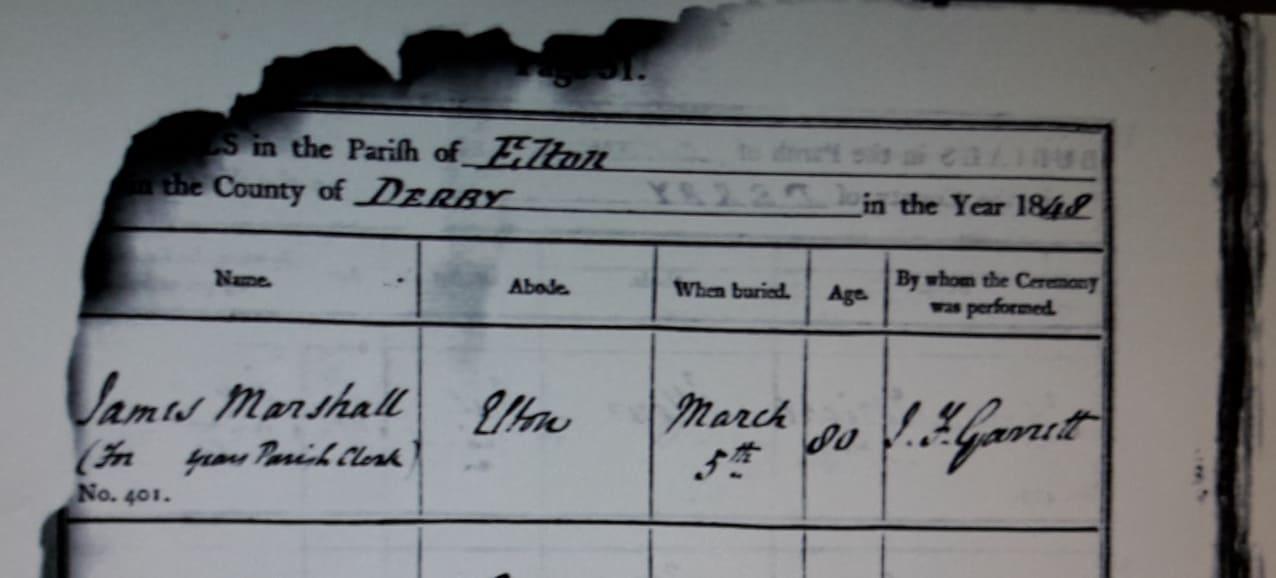
      Ann’s husband James died 42 years later at the age of eighty,  in Elton in 1848. It was noted in the parish register that he was for years parish clerk.

      James Marshall


      On the 1851 census John Marshall born in 1796, the son of James Marshall the parish clerk, was a lead miner occupying six acres in Elton, Derbyshire.

      His son, also John, was registered on the census as a lead miner at just eight years old.


      The mining of lead was the most important industry in the Peak district of Derbyshire from Roman times until the 19th century – with only agriculture being more important for the livelihood of local people. The height of lead mining in Derbyshire came in the 17th and 18th centuries, and the evidence is still visible today – most obviously in the form of lines of hillocks from the more than 25,000 mineshafts which once existed.

      Peak District Mines Historical Society

      Smelting, or extracting the lead from the ore by melting it, was carried out in a small open hearth. Lead was cast in layers as each batch of ore was smelted; the blocks of lead thus produced were referred to as “pigs”. Examples of early smelting-hearths found within the county were stone lined, with one side open facing the prevailing wind to create the draught needed. The hilltops of the Matlocks would have provided very suitable conditions.

      The miner used a tool called a mattock or a pick, and hammers and iron wedges in harder veins, to loosen the ore. They threw the ore onto ridges on each side of the vein, going deeper where the ore proved richer.

      Many mines were very shallow and, once opened, proved too poor to develop. Benjamin Bryan cited the example of “Ember Hill, on the shoulder of Masson, above Matlock Bath” where there are hollows in the surface showing where there had been fruitless searches for lead.

      There were small buildings, called “coes”, near each mine shaft which were used for tool storage, to provide shelter and as places for changing into working clothes. It was here that the lead was smelted and stored until ready for sale.

      Lead is, of course, very poisonous. As miners washed lead-bearing material, great care was taken with the washing vats, which had to be covered. If cattle accidentally drank the poisoned water they would die from something called “belland”.

      Cornish and Welsh miners introduced the practice of buddling for ore into Derbyshire about 1747.  Buddling involved washing the heaps of rubbish in the slag heaps,  the process of separating the very small particles from the dirt and spar with which they are mixed, by means of a small stream of water. This method of extraction was a major pollutant, affecting farmers and their animals (poisoned by Belland from drinking the waste water), the brooks and streams and even the River Derwent.

      Women also worked in the mines. An unattributed account from 1829, says: “The head is much enwrapped, and the features nearly hidden in a muffling of handkerchiefs, over which is put a man’s hat, in the manner of the paysannes of Wales”. He also describes their gowns, usually red, as being “tucked up round the waist in a sort of bag, and set off by a bright green petticoat”. They also wore a man’s grey or dark blue coat and shoes with 3″ thick soles that were tied round with cords. The 1829 writer called them “complete harridans!”

      Lead Mining in Matlock & Matlock Bath, The Andrews Pages

      John’s wife Margaret died at the age of 42 in 1847.  I don’t know the cause of death, but perhaps it was lead poisoning.  John’s son John, despite a very early start in the lead mine, became a carter and lived to the ripe old age of 88.

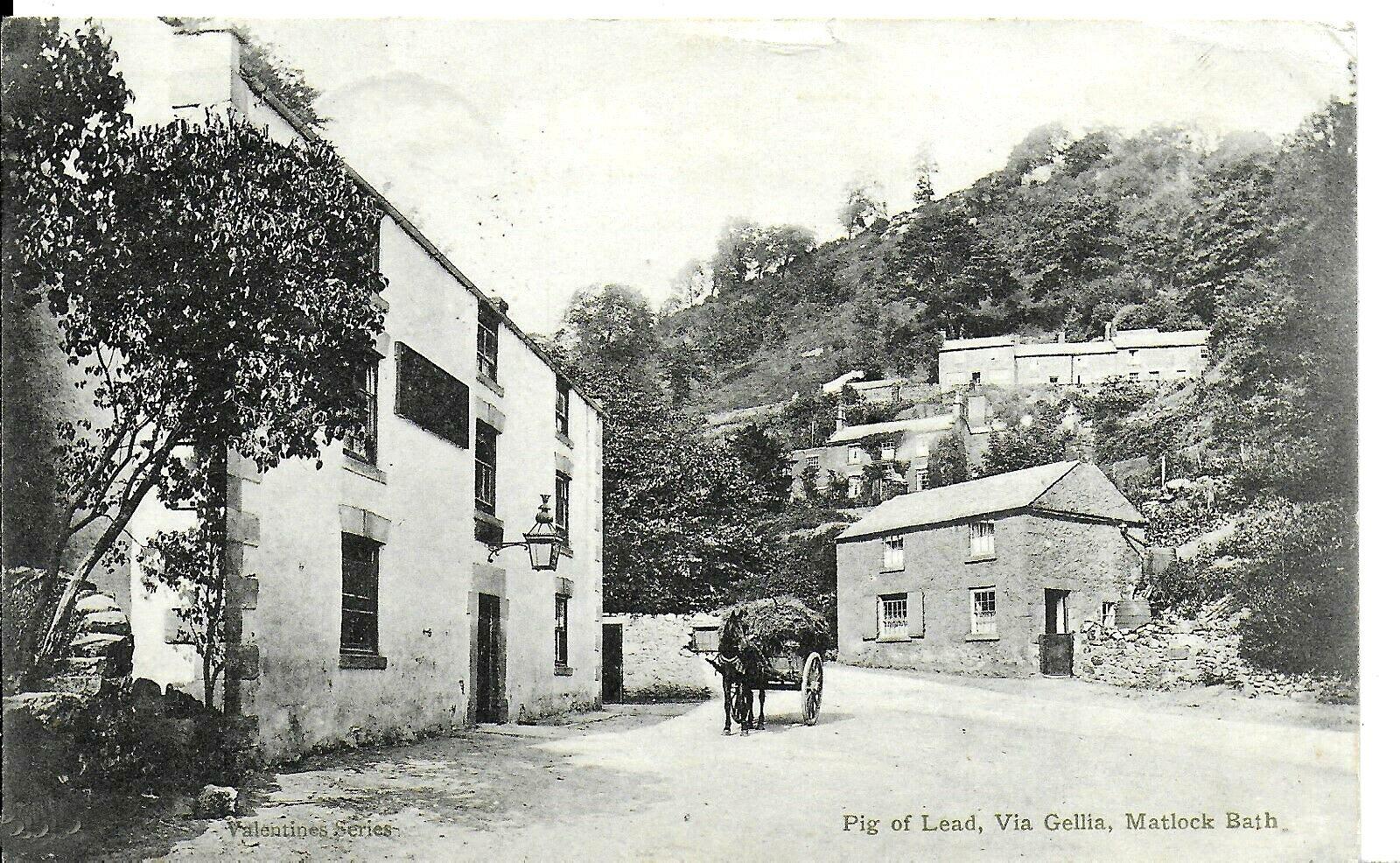
      The Pig of Lead pub, 1904:

      The Pig of Lead 1904


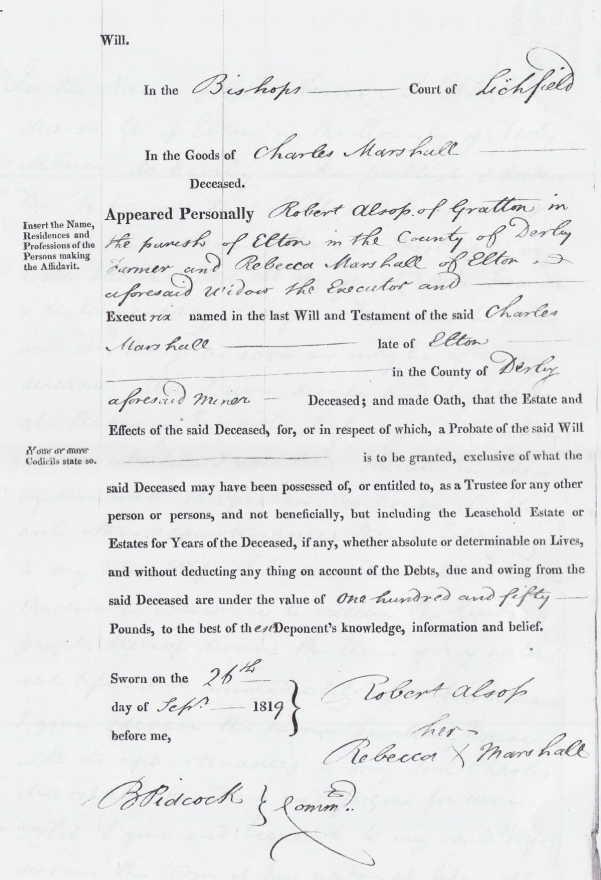
      The earliest Marshall I’ve found so far is Charles, born in 1742. Charles married Rebecca Knowles, 1775-1823.  I don’t know what his occupation was but when he died in 1819 he left a not inconsiderable sum to his wife.

      1819 Charles Marshall probate:

      Charles Marshall Probate


      There are still Marshall’s living in Elton and Matlock, not our immediate known family, but probably distantly related.  I asked a Matlock group on facebook:

      “…there are Marshall’s still in the village. There are certainly families who live here who have done generation after generation & have many memories & stories to tell. Visit The Duke on a Friday night…”

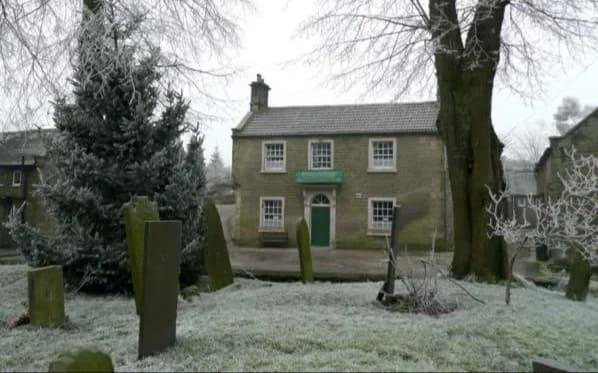
      The Duke, Elton:

      Duke Elton

      #6246
      TracyTracy
      Participant

        Florence Nightingale Gretton

        1881-1927

        Florence’s father was Richard Gretton, a baker in Swadlincote, Derbyshire. When Richard married Sarah Orgill in 1861, they lived with her mother, a widow, in Measham, Ashby de la Zouch in Leicestershire. On the 1861 census Sarah’s mother, Elizabeth, is a farmer of two acres.

        (Swadlincote and Ashby de la Zouch are on the Derbyshire Leicestershire border and not far from each other. Swadlincote is near to Burton upon Trent which is sometimes in Staffordshire, sometimes in Derbyshire. Newhall, Church Gresley, and Swadlincote are all very close to each other or districts in the same town.)

        Ten years later in 1871 Richard and Sarah have their own place in Swadlincote, he is a baker, and they have four children. A fourteen year old apprentice or servant is living with them.

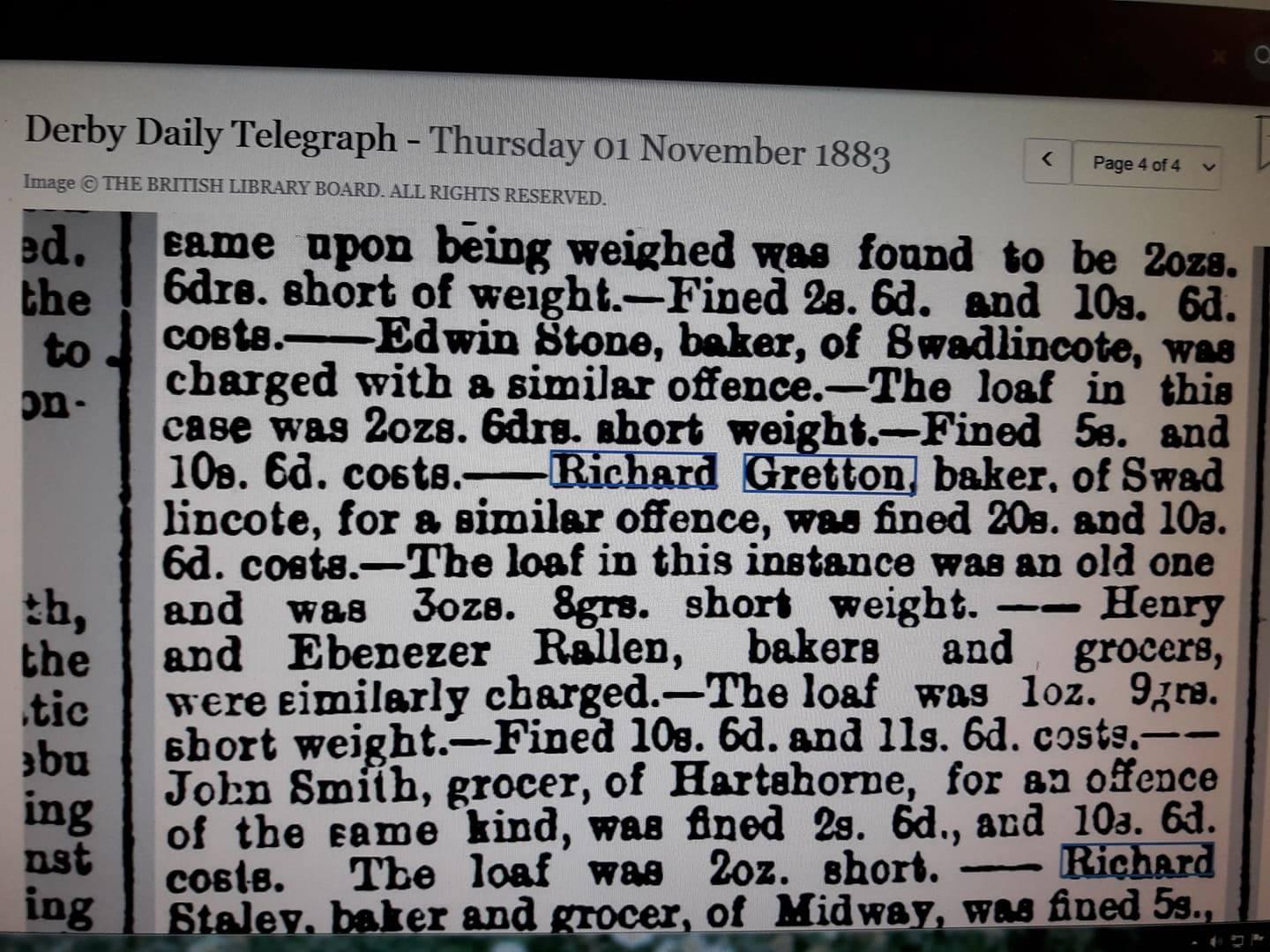
        In the Ashby-de-la-Zouch Gazette on 28 February 1880, it was reported that Richard Gretton, baker, of Swadlincote, was charged by Captain Bandys with carrying bread in a cart for sale, the said cart not being provided with scales and weights, according to the requirements of the Act, on the 17th January last.—Defendant pleaded guilty, but urged in extenuation of the offence that in the hurry he had forgotten to put the scales in the cart before his son started.—The Bench took this view of the case, regarding it as an oversight, and fined him one shilling only and costs.  This was not his only offence.

        In 1883, he was fined twenty shillings, and ten shillings and sixpence costs.

        Richard Gretton

        By 1881 they have 4 more children, and Florence Nightingale is the youngest at four months. Richard is 48 by now, and Sarah is 44. Florence’s older brother William is a blacksmith.

        Interestingly on the same census page, two doors down Thomas and Selina Warren live at the Stanhope Arms.  Richards son John Gretton lives at the pub, a 13 year old servant. Incidentally, I noticed on Thomas and Selena’s marriage register that Richard and Sarah Gretton were the witnesses at the wedding.

        Ten years later in 1891, Florence Nightingale and her sister Clara are living with Selina Warren, widow, retired innkeeper, one door down from the Stanhope Arms. Florence is ten, Clara twelve and they are scholars.
        Richard and Sarah are still living three doors up on the other side of the Stanhope Arms, with three of their sons. But the two girls lived up the road with the Warren widow!

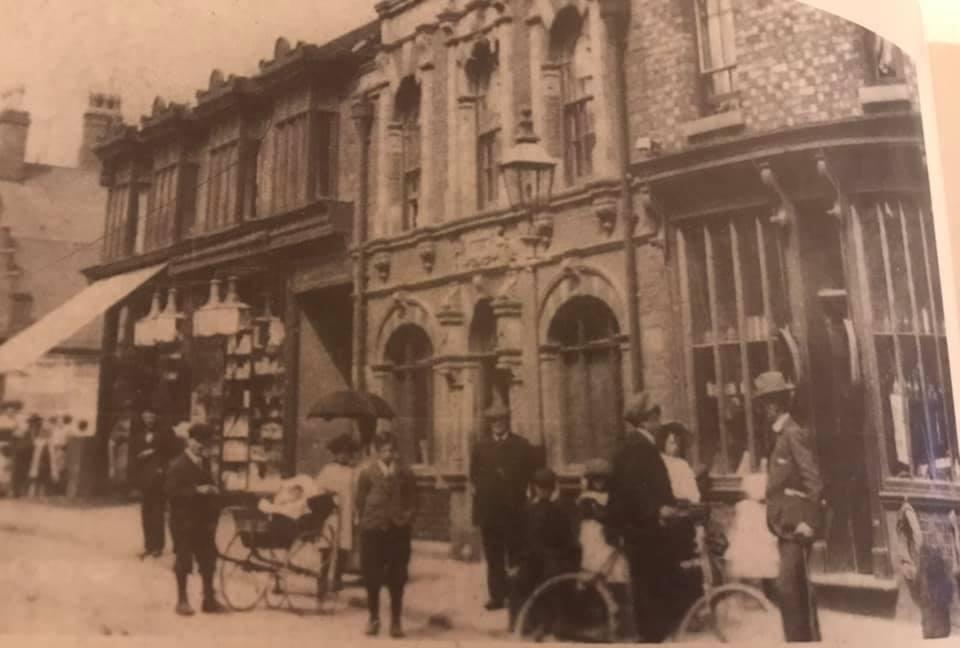
        The Stanhope Arms, Swadlincote: it’s possible that the shop with the awning was Richard Gretton’s bakers shop (although not at the time of this later photo).

        Stanhope Arms


        Richard died in 1898, a year before Florence married Samuel Warren.

        Sarah is a widowed 60 year old baker on the 1901 census. Her son 26 year old son Alf, also a baker,  lives at the same address, as does her 22 year old daughter Clara who is a district nurse.

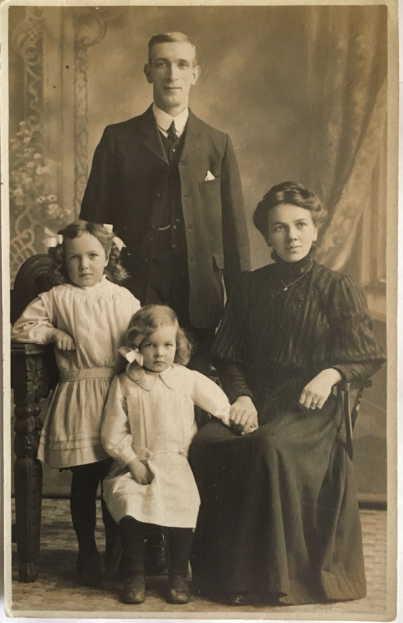
        Clara Gretton and family, photo found online:

        Clara Gretton


        In 1901 Florence Nightingale (who we don’t have a photograph of!) is now married and is Florrie Warren on the census, and she, her husband Samuel, and their one year old daughter Hildred are visitors at the address of  Elizabeth (Staley)Warren, 60 year old widow and Samuel’s mother, and Samuel’s 36 year old brother William. Samuel and William are engineers.

        Samuel and Florrie had ten children between 1900 and 1925 (and all but two of them used their middle name and not first name: my mother and I had no idea until I found all the records.  My grandmother Florence Noreen was known as Nora, which we knew of course, uncle Jack was actually Douglas John, and so on).

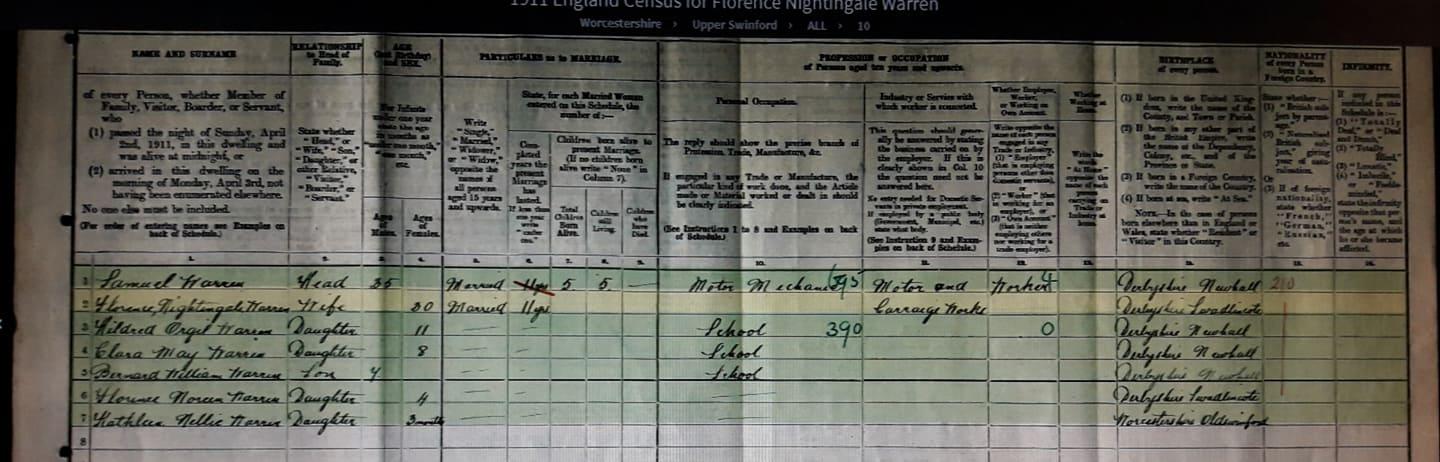
        Hildred, Clara, Billy, and Nora were born in Swadlincote. Sometime between my grandmother’s birth in 1907 and Kay’s birth in 1911, the family moved to Oldswinford, in Stourbridge. Later they moved to Market Street.

        1911 census, Oldswinford, Stourbridge:

        Oldswinford 1911


        Oddly, nobody knew when Florrie Warren died. My mothers cousin Ian Warren researched the Warren family some years ago, while my grandmother was still alive. She contributed family stories and information, but couldn’t remember if her mother died in 1929 or 1927.  A recent search of records confirmed that it was the 12th November 1927.

        She was 46 years old. We were curious to know how she died, so my mother ordered a paper copy of her death certificate. It said she died at 31 Market Street, Stourbridge at the age of 47. Clara May Warren, her daughter, was in attendance. Her husband Samuel Warren was a motor mechanic. The Post mortem was by Percival Evans, coroner for Worcestershire, who clarified the cause of death as vascular disease of the heart. There was no inquest. The death was registered on 15 Nov 1927.

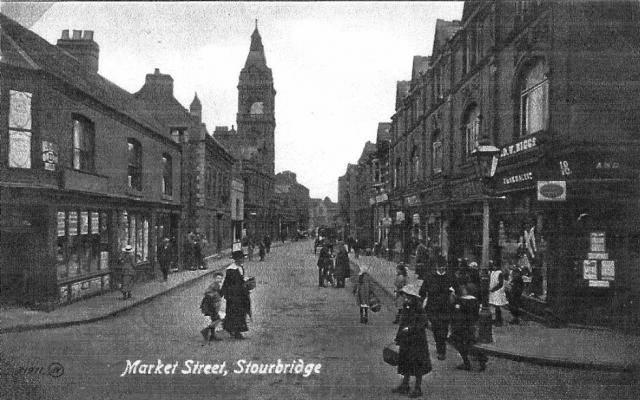
        I looked for a photo of 31 Market Street in Stourbridge, and was astonished to see that it was the house next door to one I lived in breifly in the 1980s.  We didn’t know that the Warren’s lived in Market Street until we started searching the records.

        Market Street, Stourbridge. I lived in the one on the corner on the far right, my great grandmother died in the one next door.

        Market Street


        I found some hitherto unknown emigrants in the family. Florence Nightingale Grettons eldest brother William 1861-1940 stayed in Swadlincote. John Orgill Gretton born in 1868 moved to Trenton New Jersey USA in 1888, married in 1892 and died in 1949 in USA. Michael Thomas born in 1870 married in New York in 1893 and died in Trenton in 1940. Alfred born 1875 stayed in Swadlincote. Charles Herbert born 1876 married locally and then moved to Australia in 1912, and died in Victoria in 1954. Clara Elizabeth was a district nurse, married locally and died at the age of 99.

        #6234
        TracyTracy
        Participant

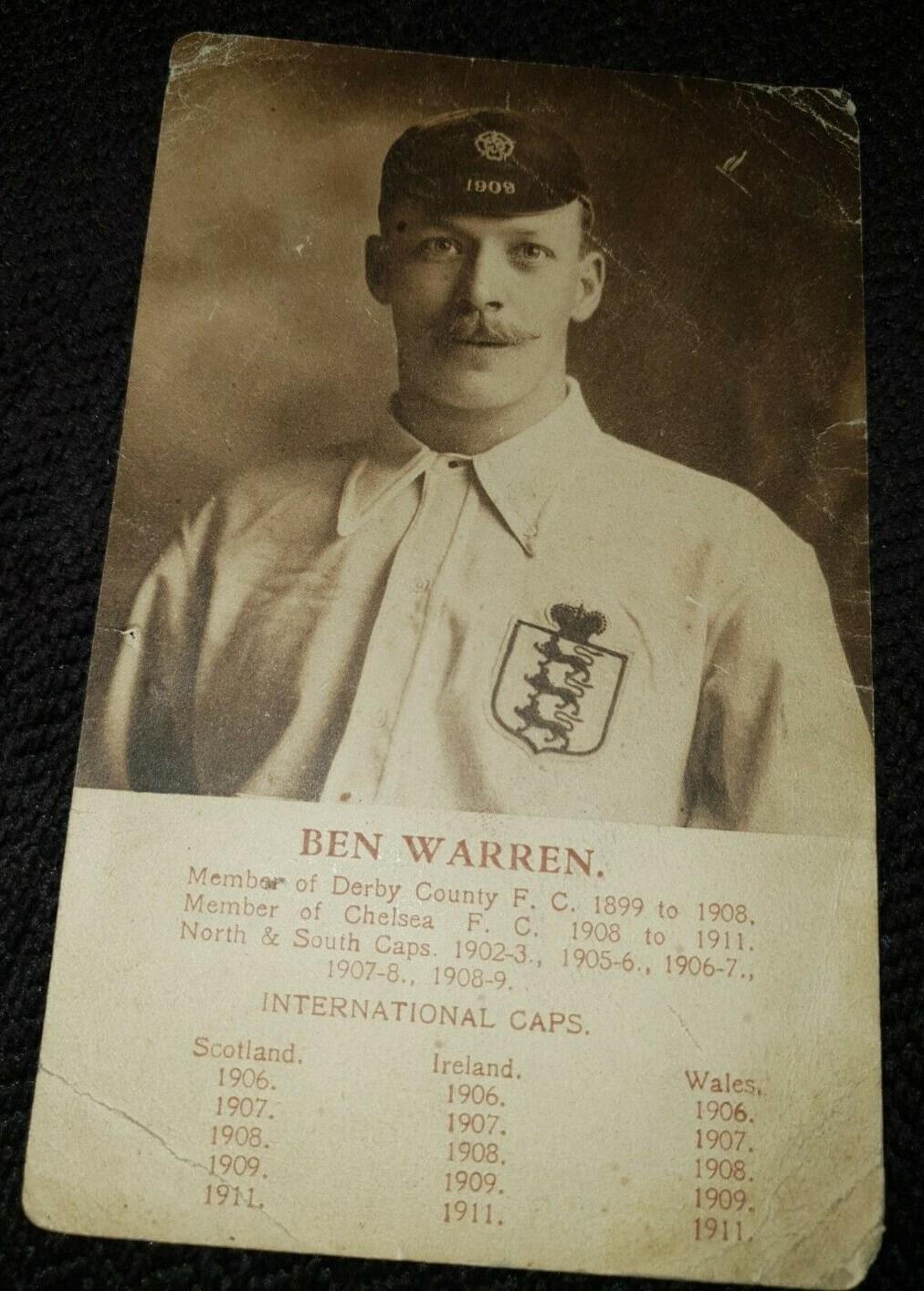
          Ben Warren

          Derby County and England football legend who died aged 37 penniless and ‘insane’


          Ben Warren

          Ben Warren 1879 – 1917  was Samuel Warren’s (my great grandfather) cousin.

          From the Derby Telegraph:

          Just 17 months after earning his 22nd England cap, against Scotland at Everton on April 1, 1911, he was certified insane. What triggered his decline was no more than a knock on the knee while playing for Chelsea against Clapton Orient.

          The knee would not heal and the longer he was out, the more he fretted about how he’d feed his wife and four children. In those days, if you didn’t play, there was no pay. 

          …..he had developed “brain fever” and this mild-mannered man had “become very strange and, at times, violent”. The coverage reflected his celebrity status.

          On December 15, 1911, as Rick Glanvill records in his Official Biography of Chelsea FC: “He was admitted to a private clinic in Nottingham, suffering from acute mania, delusions that he was being poisoned and hallucinations of hearing and vision.”

          He received another blow in February, 1912, when his mother, Emily, died. She had congestion of the lungs and caught influenza, her condition not helped, it was believed, by worrying about Ben.

          She had good reason: her famous son would soon be admitted to the unfortunately named Derby County Lunatic Asylum.

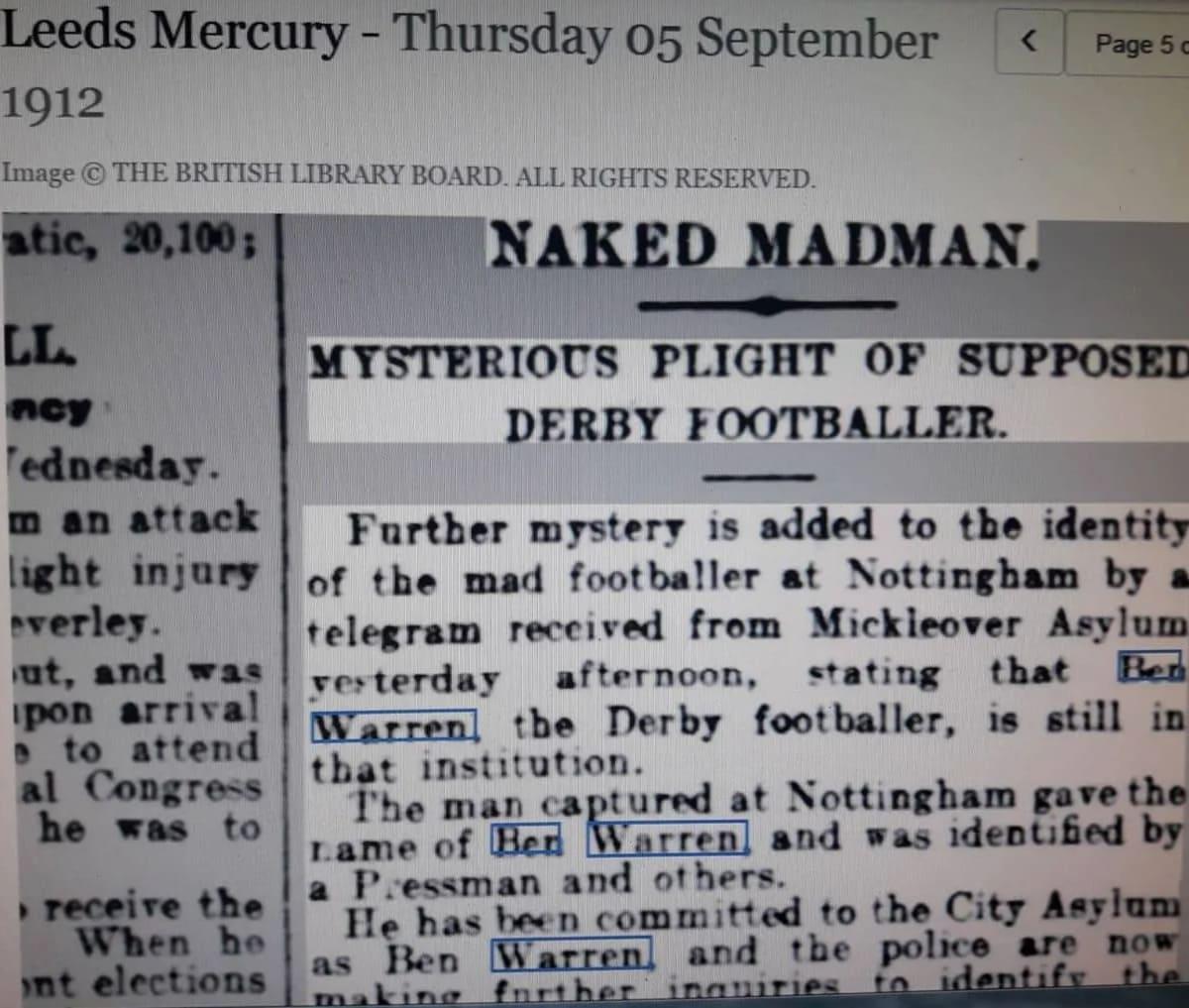
          Ben Warren Madman


          As Britain sleepwalked towards the First World War, Ben’s condition deteriorated. Glanvill writes: “His case notes from what would be a five-year stay, catalogue a devastating decline in which he is at various times described as incoherent, restless, destructive, ‘stuporose’ and ‘a danger to himself’.’”

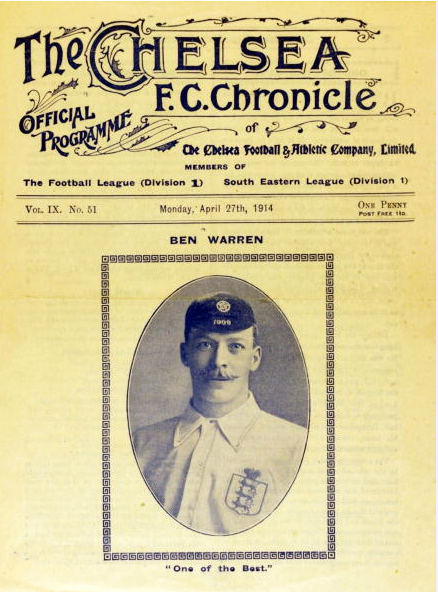
          photo: Football 27th April 1914. A souvenir programme for the testimonial game for Chelsea and England’s Ben Warren, (pictured) who had been declared insane and sent to a lunatic asylum. The game was a select XI for the North playing a select XI from The South proceeds going to Warren’s family.

          Ben Warren 1914


          In September, that decline reached a new and pitiable low. The following is an abridged account of what The Courier called “an amazing incident” that took place on September 4.

          “Spotted by a group of men while walking down Derby Road in Nottingham, a man was acting strangely, smoking a cigarette and had nothing on but a collar and tie.

          “He jumped about the pavement and roadway, as though playing an imaginary game of football. When approached, he told them he was going to Trent Bridge to play in a match and had to be there by 3.30.”

          Eventually he was taken to a police station and recognised by a reporter as England’s erstwhile right-half. What made the story even harder to digest was that Ben had escaped from the asylum and walked the 20 miles to Nottingham apparently unnoticed.

          He had played at “Trent Bridge” many times – at least on Nottingham Forest’s adjacent City Ground.

          As a shocked nation came to terms with the desperate plight of one of its finest footballers, some papers suggested his career was not yet over. And his relatives claimed that he had been suffering from nothing more than a severe nervous breakdown.

          He would never be the same again – as a player or a man. He wasn’t even a shadow of the weird “footballer” who had walked 20 miles to Nottingham.

          Then, he had nothing on, now he just had nothing – least of all self-respect. He ripped sheets into shreds and attempted suicide, saying: “I’m no use to anyone – and ought to be out of the way.”

          “A year before his suicide attempt in 1916 the ominous symptom of ‘dry cough’ had been noted. Two months after it, in October 1916, the unmistakable signs of tuberculosis were noted and his enfeebled body rapidly succumbed.

          At 11.30pm on 15 January 1917, international footballer Ben Warren was found dead by a night attendant.

          He was 37 and when they buried him the records described him as a “pauper’.”

          However you look at it, it is the salutary tale of a footballer worrying about money. And it began with a knock on the knee.

          On 14th November 2021, Gill Castle posted on the Newhall and Swadlincote group:

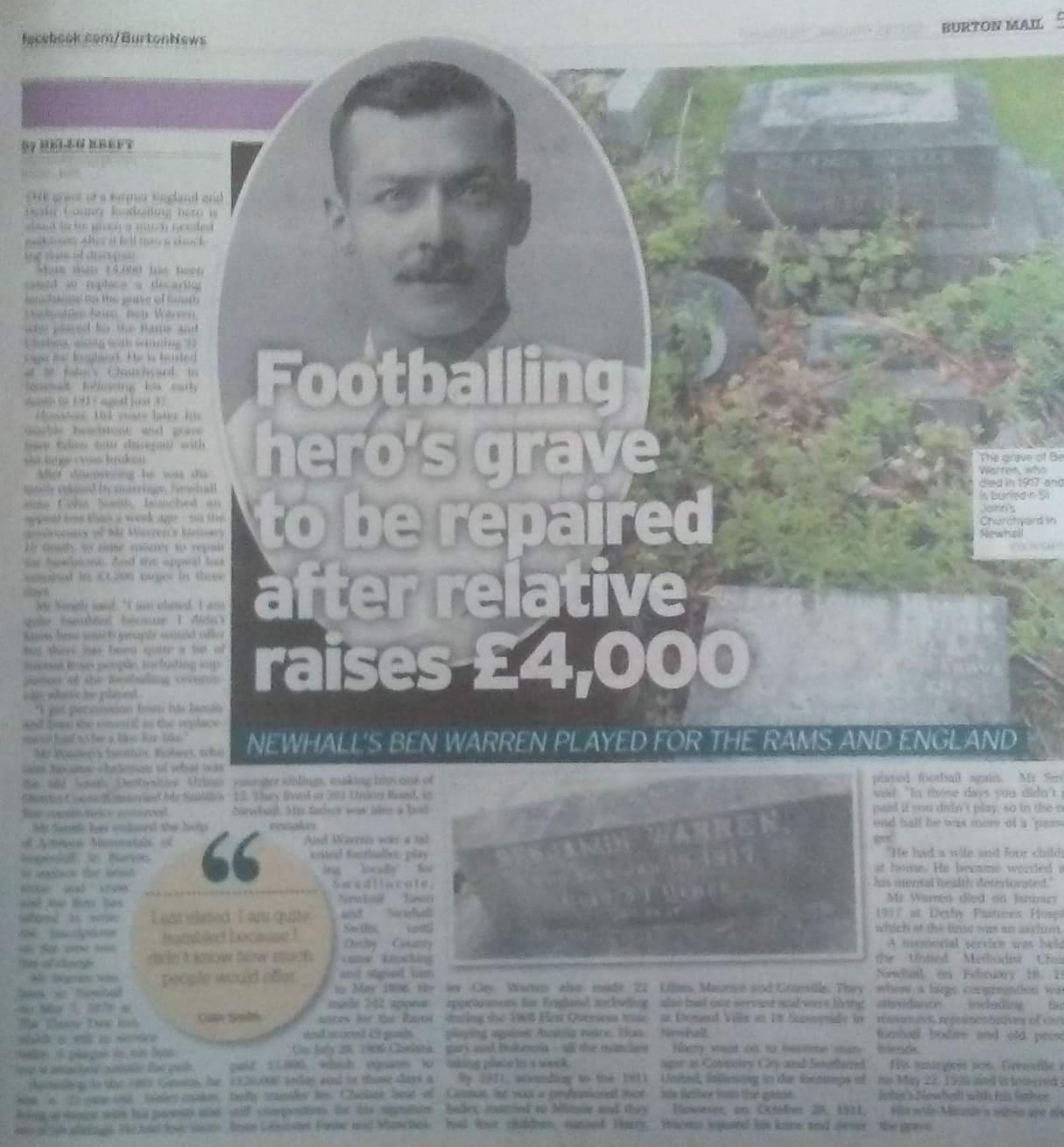
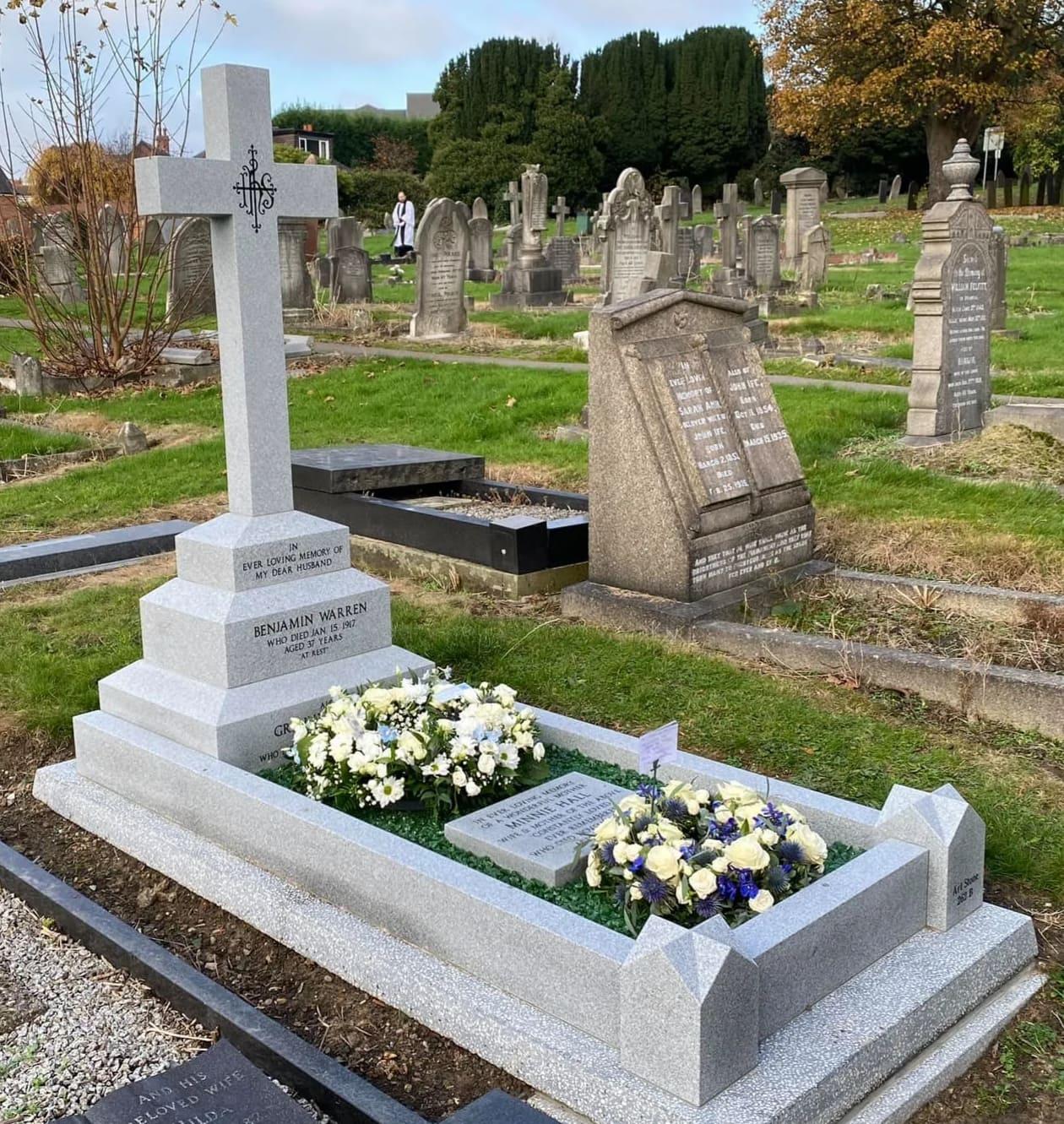
          I would like to thank Colin Smith and everyone who supported him in getting my great grandfather’s grave restored (Ben Warren who played for Derby, Chelsea and England)

          The month before, Colin Smith posted:

          My Ben Warren Journey is nearly complete.
          It started two years ago when I was sent a family wedding photograph asking if I recognised anyone. My Great Great Grandmother was on there. But soon found out it was the wedding of Ben’s brother Robert to my 1st cousin twice removed, Eveline in 1910.
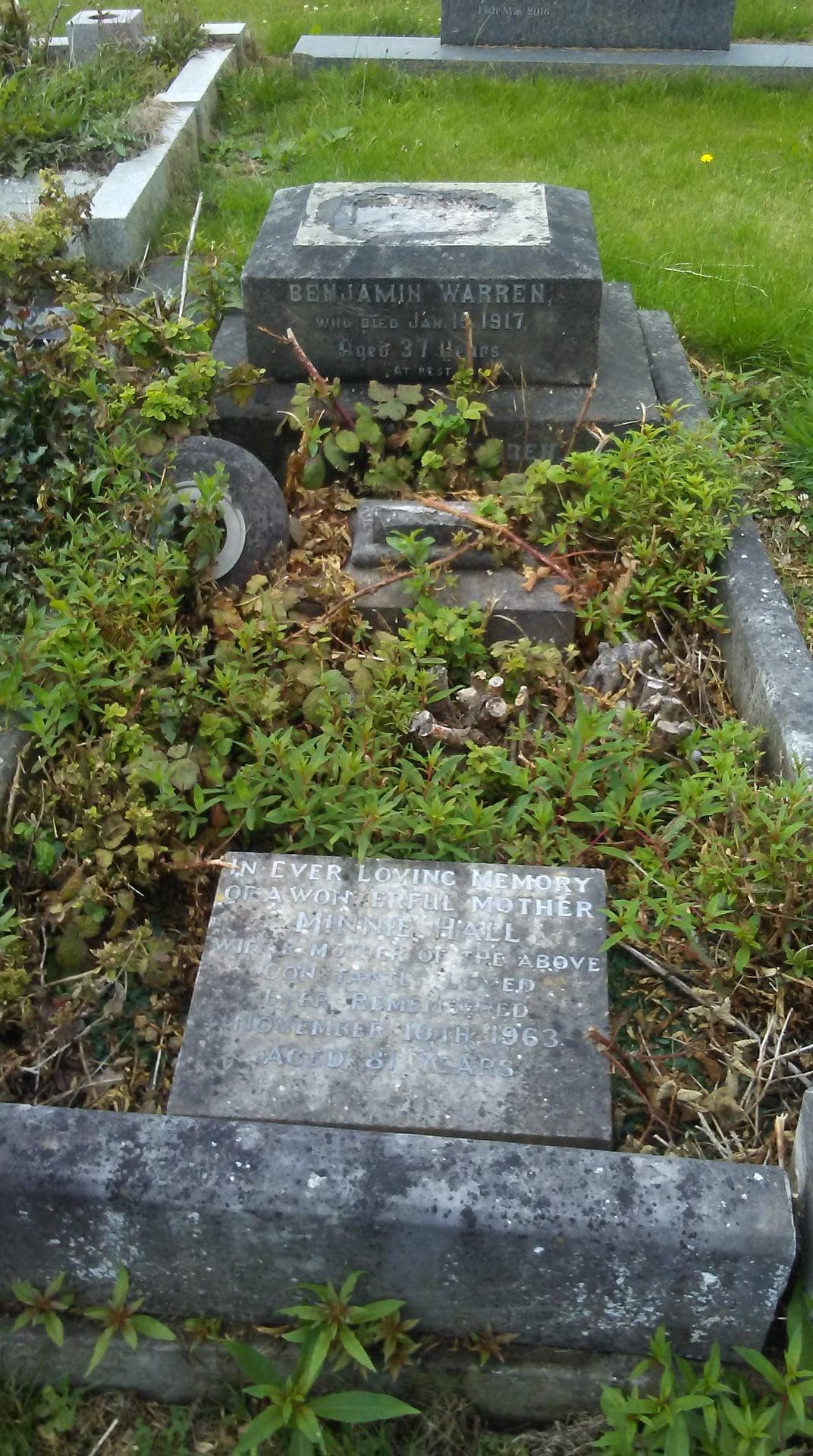
          I researched Ben and his football career and found his resting place in St Johns Newhall, all overgrown and in a poor state with the large cross all broken off. I stood there and decided he needed to new memorial & headstone. He was our local hero, playing Internationally for England 22 times. He needs to be remembered.
          After seeking family permission and Council approval, I had a quote from Art Stone Memorials, Burton on Trent to undertake the work. Fundraising then started and the memorial ordered.
          Covid came along and slowed the process of getting materials etc. But we have eventually reached the final installation today.
          I am deeply humbled for everyone who donated in January this year to support me and finally a massive thank you to everyone, local people, football supporters of Newhall, Derby County & Chelsea and football clubs for their donations.
          Ben will now be remembered more easily when anyone walks through St Johns and see this beautiful memorial just off the pathway.
          Finally a huge thank you for Art Stone Memorials Team in everything they have done from the first day I approached them. The team have worked endlessly on this project to provide this for Ben and his family as a lasting memorial. Thank you again Alex, Pat, Matt & Owen for everything. Means a lot to me.
          The final chapter is when we have a dedication service at the grave side in a few weeks time,
          Ben was born in The Thorntree Inn Newhall South Derbyshire and lived locally all his life.
          He played local football for Swadlincote, Newhall Town and Newhall Swifts until Derby County signed Ben in May 1898. He made 242 appearances and scored 19 goals at Derby County.
          28th July 1908 Chelsea won the bidding beating Leicester Fosse & Manchester City bids.
          Ben also made 22 appearance’s for England including the 1908 First Overseas tour playing Austria twice, Hungary and Bohemia all in a week.
          28 October 1911 Ben Injured his knee and never played football again
          Ben is often compared with Steven Gerard for his style of play and team ethic in the modern era.
          Herbert Chapman ( Player & Manager ) comments “ Warren was a human steam engine who played through 90 minutes with intimidating strength and speed”.
          Charles Buchan comments “I am certain that a better half back could not be found, Part of the Best England X1 of all time”
          Chelsea allowed Ben to live in Sunnyside Newhall, he used to run 5 miles every day round Bretby Park and had his own gym at home. He was compared to the likes of a Homing Pigeon, as he always came back to Newhall after his football matches.
          Ben married Minnie Staley 21st October 1902 at Emmanuel Church Swadlincote and had four children, Harry, Lillian, Maurice & Grenville. Harry went on to be Manager at Coventry & Southend following his father in his own career as football Manager.
          After Ben’s football career ended in 1911 his health deteriorated until his passing at Derby Pastures Hospital aged 37yrs
          Ben’s youngest son, Grenville passed away 22nd May 1929 and is interred together in St John’s Newhall with his Father
          His wife, Minnie’s ashes are also with Ben & Grenville.
          Thank you again everyone.
          RIP Ben Warren, our local Newhall Hero. You are remembered.

          Ben Warren grave


          Ben Warren Grave

          Ben Warren Grave


          #6219
          TracyTracy
          Participant

            The following stories started with a single question.

            Who was Catherine Housley’s mother?

            But one question leads to another, and another, and so this book will never be finished.  This is the first in a collection of stories of a family history research project, not a complete family history.  There will always be more questions and more searches, and each new find presents more questions.

            A list of names and dates is only moderately interesting, and doesn’t mean much unless you get to know the characters along the way.   For example, a cousin on my fathers side has already done a great deal of thorough and accurate family research. I copied one branch of the family onto my tree, going back to the 1500’s, but lost interest in it after about an hour or so, because I didn’t feel I knew any of the individuals.

            Parish registers, the census every ten years, birth, death and marriage certificates can tell you so much, but they can’t tell you why.  They don’t tell you why parents chose the names they did for their children, or why they moved, or why they married in another town.  They don’t tell you why a person lived in another household, or for how long. The census every ten years doesn’t tell you what people were doing in the intervening years, and in the case of the UK and the hundred year privacy rule, we can’t even use those for the past century.  The first census was in 1831 in England, prior to that all we have are parish registers. An astonishing amount of them have survived and have been transcribed and are one way or another available to see, both transcriptions and microfiche images.  Not all of them survived, however. Sometimes the writing has faded to white, sometimes pages are missing, and in some case the entire register is lost or damaged.

            Sometimes if you are lucky, you may find mention of an ancestor in an obscure little local history book or a journal or diary.  Wills, court cases, and newspaper archives often provide interesting information. Town memories and history groups on social media are another excellent source of information, from old photographs of the area, old maps, local history, and of course, distantly related relatives still living in the area.  Local history societies can be useful, and some if not all are very helpful.

            If you’re very lucky indeed, you might find a distant relative in another country whose grandparents saved and transcribed bundles of old letters found in the attic, from the family in England to the brother who emigrated, written in the 1800s.  More on this later, as it merits its own chapter as the most exciting find so far.

            The social history of the time and place is important and provides many clues as to why people moved and why the family professions and occupations changed over generations.  The Enclosures Act and the Industrial Revolution in England created difficulties for rural farmers, factories replaced cottage industries, and the sons of land owning farmers became shop keepers and miners in the local towns.  For the most part (at least in my own research) people didn’t move around much unless there was a reason.  There are no reasons mentioned in the various registers, records and documents, but with a little reading of social history you can sometimes make a good guess.  Samuel Housley, for example, a plumber, probably moved from rural Derbyshire to urban Wolverhampton, when there was a big project to install indoor plumbing to areas of the city in the early 1800s.  Derbyshire nailmakers were offered a job and a house if they moved to Wolverhampton a generation earlier.

            Occasionally a couple would marry in another parish, although usually they married in their own. Again, there was often a reason.  William Housley and Ellen Carrington married in Ashbourne, not in Smalley.  In this case, William’s first wife was Mary Carrington, Ellen’s sister.  It was not uncommon for a man to marry a deceased wife’s sister, but it wasn’t strictly speaking legal.  This caused some problems later when William died, as the children of the first wife contested the will, on the grounds of the second marriage being illegal.

            Needless to say, there are always questions remaining, and often a fresh pair of eyes can help find a vital piece of information that has escaped you.  In one case, I’d been looking for the death of a widow, Mary Anne Gilman, and had failed to notice that she remarried at a late age. Her death was easy to find, once I searched for it with her second husbands name.

            This brings me to the topic of maternal family lines. One tends to think of their lineage with the focus on paternal surnames, but very quickly the number of surnames increases, and all of the maternal lines are directly related as much as the paternal name.  This is of course obvious, if you start from the beginning with yourself and work back.  In other words, there is not much point in simply looking for your fathers name hundreds of years ago because there are hundreds of other names that are equally your own family ancestors. And in my case, although not intentionally, I’ve investigated far more maternal lines than paternal.

            This book, which I hope will be the first of several, will concentrate on my mothers family: The story so far that started with the portrait of Catherine Housley’s mother.
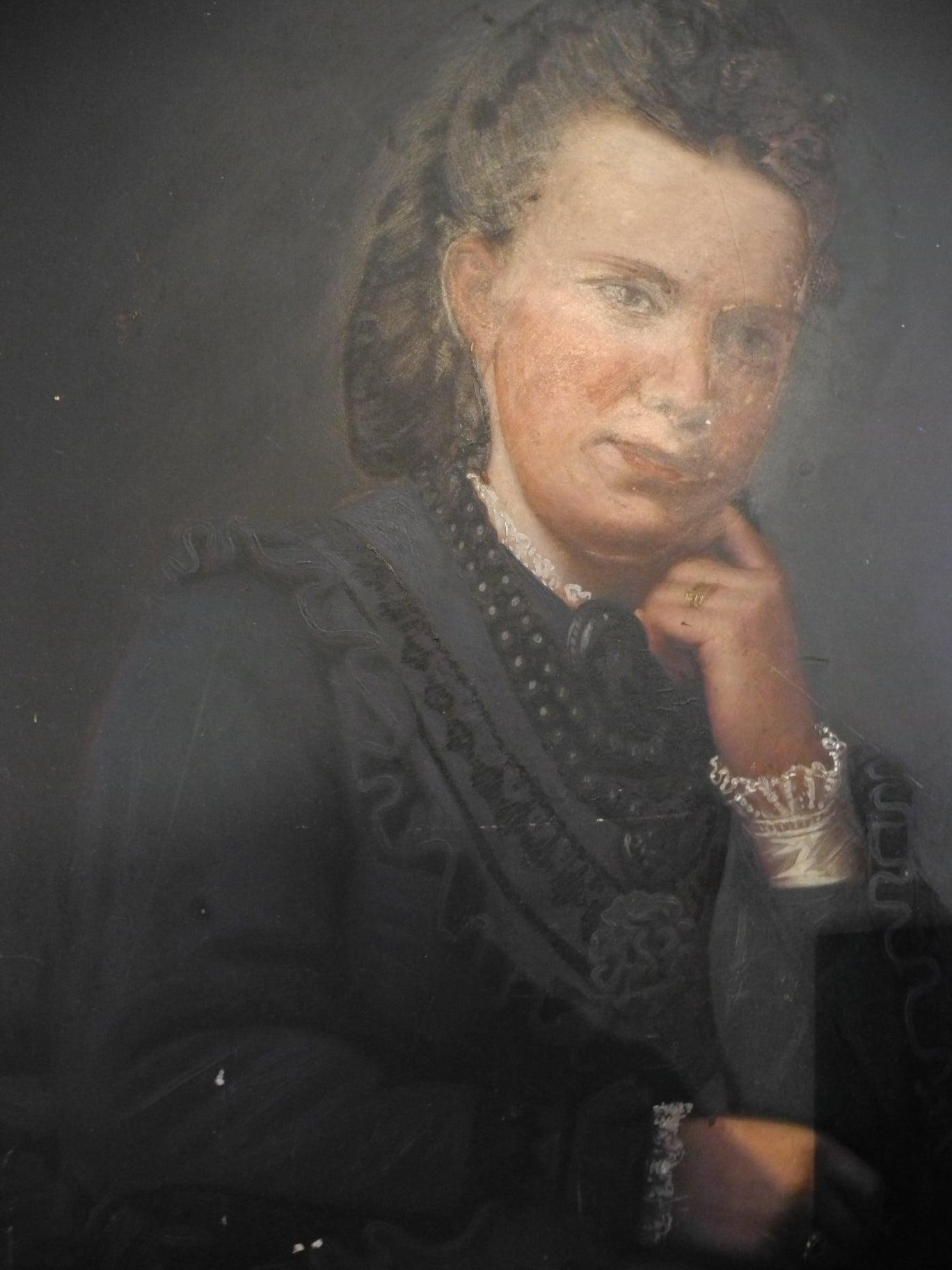
            Elizabeth Brookes


            This painting, now in my mothers house, used to hang over the piano in the home of her grandparents.   It says on the back “Catherine Housley’s mother, Smalley”.

            The portrait of Catherine Housley’s mother can be seen above the piano. Back row Ronald Marshall, my grandfathers brother, William Marshall, my great grandfather, Mary Ann Gilman Purdy Marshall in the middle, my great grandmother, with her daughters Dorothy on the left and Phyllis on the right, at the Marshall’s house on Love Lane in Stourbridge.
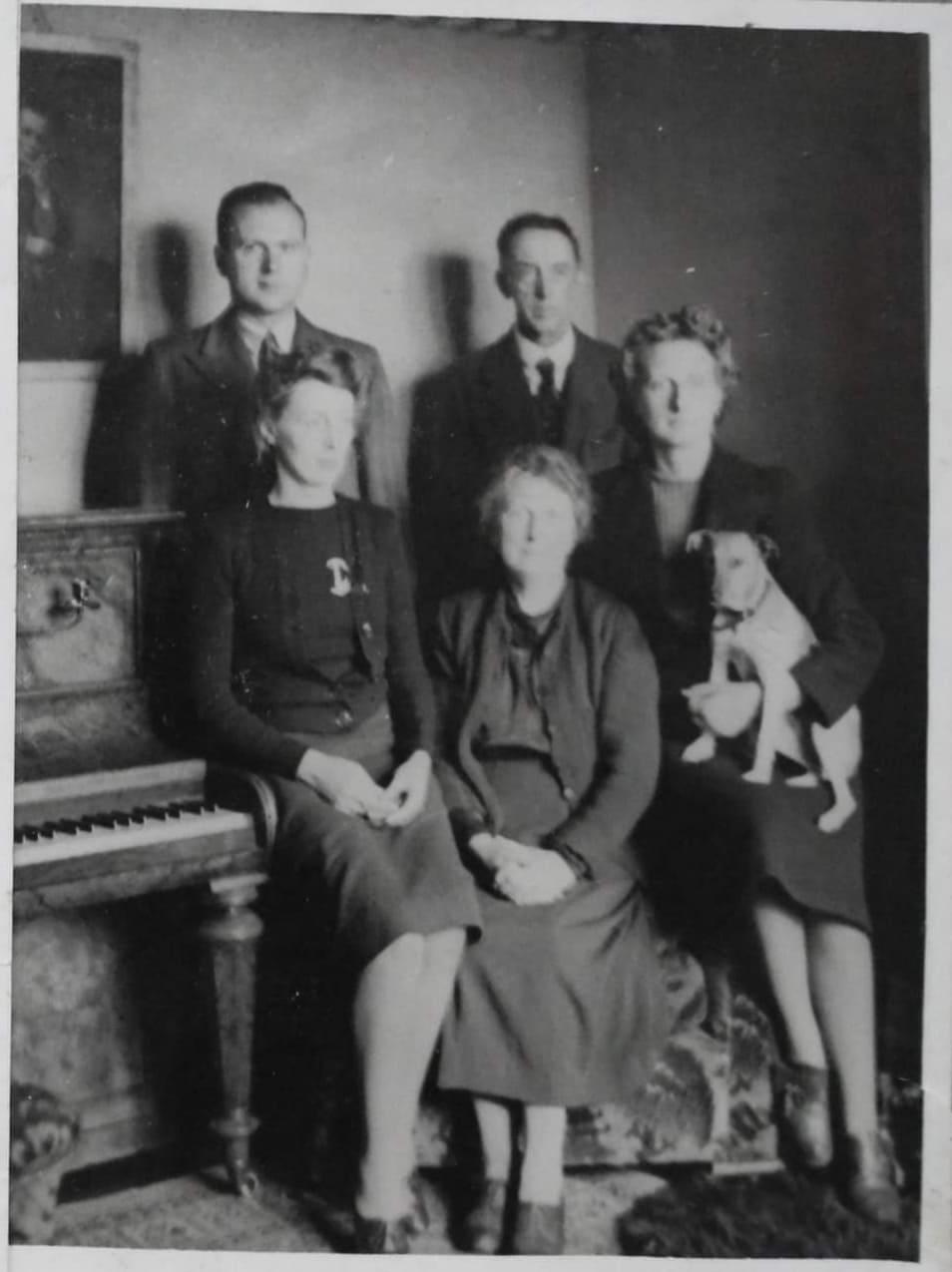
            Marshalls


            The Search for Samuel Housley

            As soon as the search for Catherine Housley’s mother was resolved, achieved by ordering a paper copy of her birth certificate, the search for Catherine Housley’s father commenced. We know he was born in Smalley in 1816, son of William Housley and Ellen Carrington, and that he married Elizabeth Brookes in Wolverhampton in 1844. He was a plumber and glazier. His three daughters born between 1845 and 1849 were born in Smalley. Elizabeth died in 1849 of consumption, but Samuel didn’t register her death. A 20 year old neighbour called Aaron Wadkinson did.
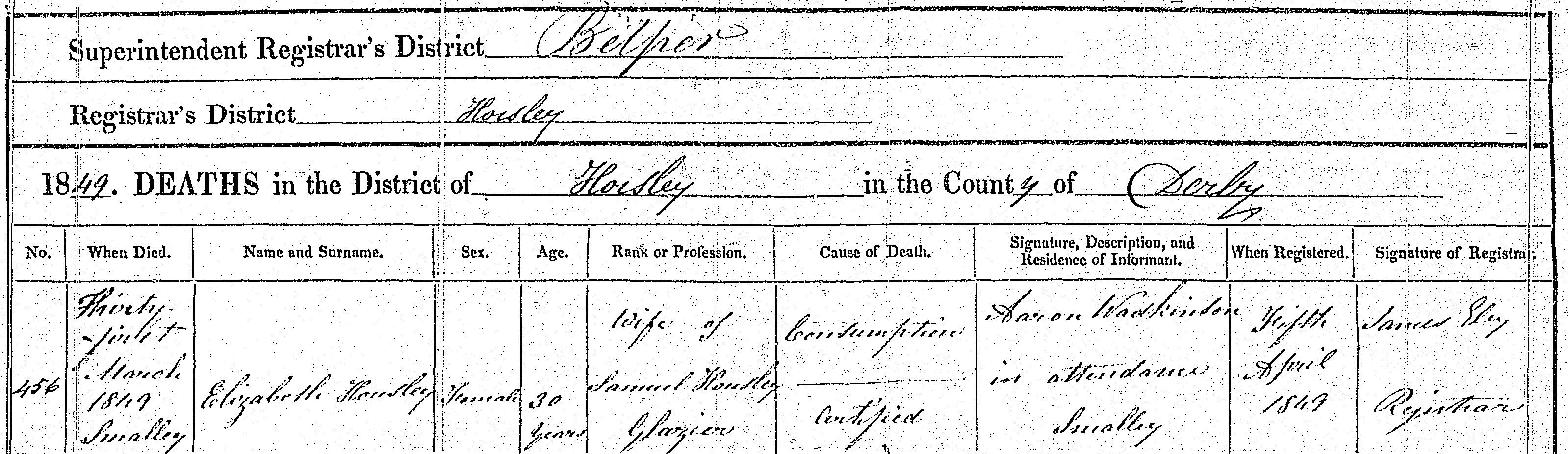
            Elizabeth death


            Where was Samuel?

            On the 1851 census, two of Samuel’s daughters were listed as inmates in the Belper Workhouse, and the third, 2 year old Catherine, was listed as living with John Benniston and his family in nearby Heanor.  Benniston was a framework knitter.

            Where was Samuel?

            A long search through the microfiche workhouse registers provided an answer. The reason for Elizabeth and Mary Anne’s admission in June 1850 was given as “father in prison”. In May 1850, Samuel Housley was sentenced to one month hard labour at Derby Gaol for failing to maintain his three children. What happened to those little girls in the year after their mothers death, before their father was sentenced, and they entered the workhouse? Where did Catherine go, a six week old baby? We have yet to find out.
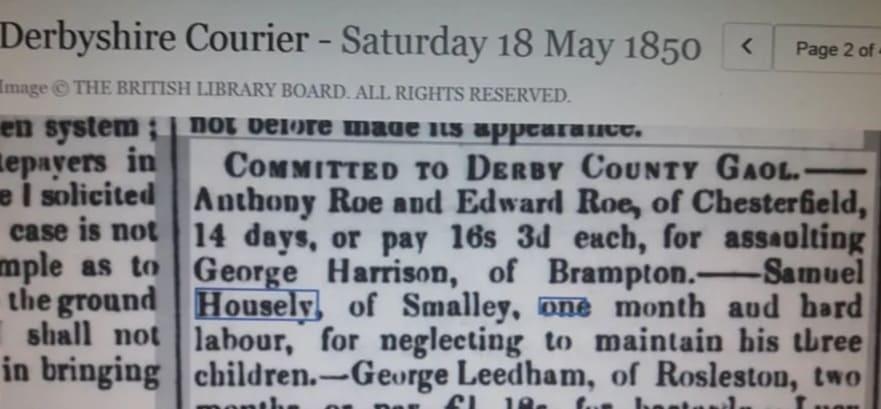
            Samuel Housley 1850


            And where was Samuel Housley in 1851? He hasn’t appeared on any census.

            According to the Belper workhouse registers, Mary Anne was discharged on trial as a servant February 1860. She was readmitted a month later in March 1860, the reason given: unwell.

            Belper Workhouse:
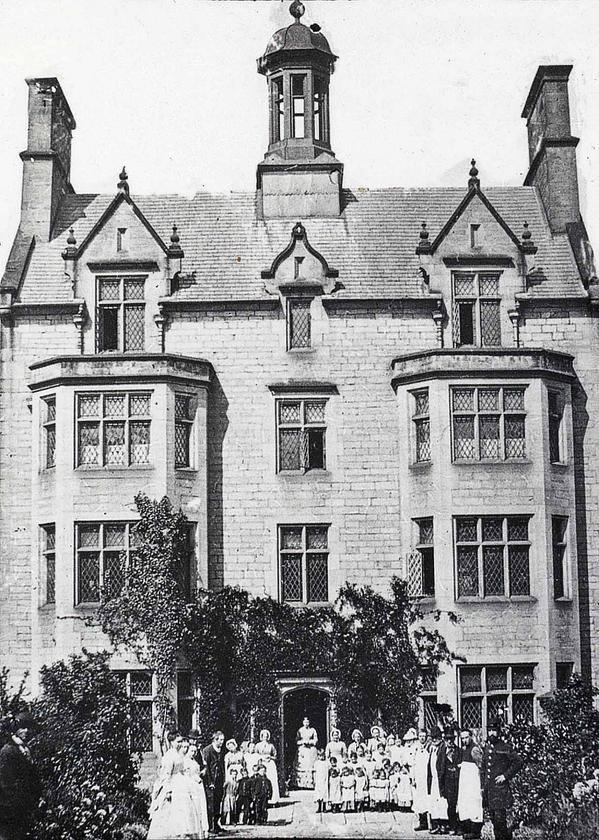
            Belper Workhouse

            Eventually, Mary Anne and Elizabeth were discharged, in April 1860, with an aunt and uncle. The workhouse register doesn’t name the aunt and uncle. One can only wonder why it took them so long.
            On the 1861 census, Elizabeth, 16 years old, is a servant in St Peters, Derby, and Mary Anne, 15 years old, is a servant in St Werburghs, Derby.

            But where was Samuel?

            After some considerable searching, we found him, despite a mistranscription of his name, on the 1861 census, living as a lodger and plumber in Darlaston, Walsall.
            Eventually we found him on a 1871 census living as a lodger at the George and Dragon in Henley in Arden. The age is not exactly right, but close enough, he is listed as an unmarried painter, also close enough, and his birth is listed as Kidsley, Derbyshire. He was born at Kidsley Grange Farm. We can assume that he was probably alive in 1872, the year his mother died, and the following year, 1873, during the Kerry vs Housley court case.
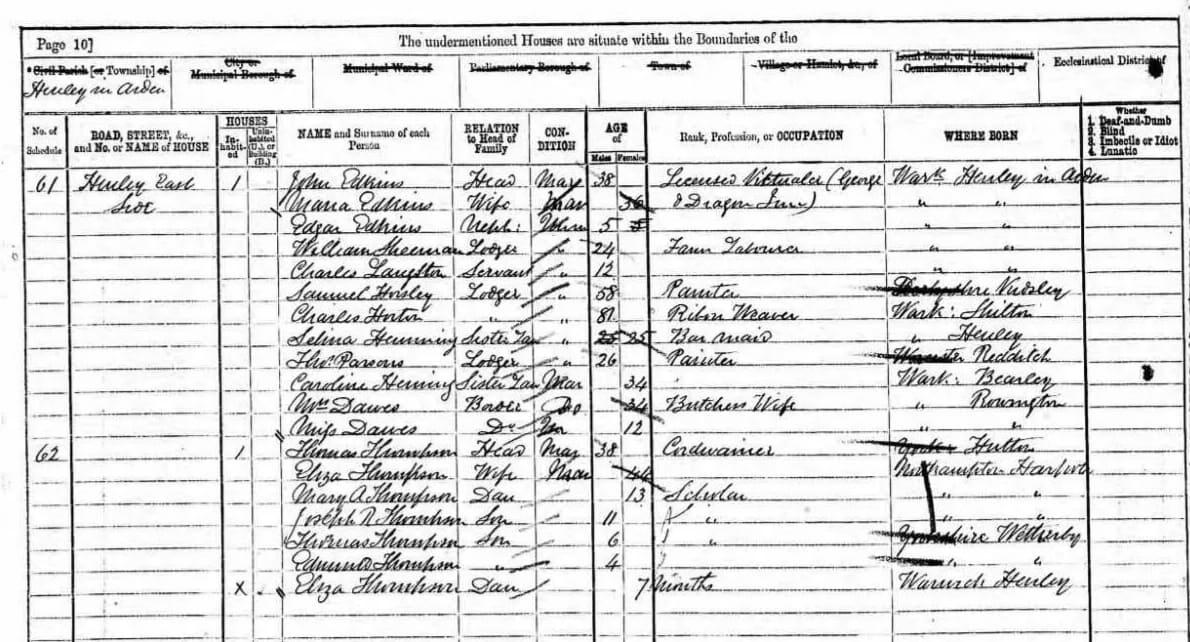
            Samuel Housley 1871


            I found some living Housley descendants in USA. Samuel Housley’s brother George emigrated there in 1851. The Housley’s in USA found letters in the attic, from the family in Smalley ~ written between 1851 and 1870s. They sent me a “Narrative on the Letters” with many letter excerpts.

            The Housley family were embroiled in a complicated will and court case in the early 1870s. In December 15, 1872, Joseph (Samuel’s brother) wrote to George:

            “I think we have now found all out now that is concerned in the matter for there was only Sam that we did not know his whereabouts but I was informed a week ago that he is dead–died about three years ago in Birmingham Union. Poor Sam. He ought to have come to a better end than that….His daughter and her husband went to Birmingham and also to Sutton Coldfield that is where he married his wife from and found out his wife’s brother. It appears he has been there and at Birmingham ever since he went away but ever fond of drink.”

            No record of Samuel Housley’s death can be found for the Birmingham Union in 1869 or thereabouts.

            But if he was alive in 1871 in Henley In Arden…..
            Did Samuel tell his wife’s brother to tell them he was dead? Or did the brothers say he was dead so they could have his share?

            We still haven’t found a death for Samuel Housley.


            #6202
            TracyTracy
            Participant

              While Finnley was making the tea, Liz consulted the Possibe L’Oracle for a reading. It said:

              “We are the collective of the Ancient Draigh’Ones, we greet you and your queries, Liz.

               Well, well. Looking at the concepts you brought up in your last offering to this story thread, we couldn’t really pick up what your energy was trying to express.
              Forgive us, humans still elude us at times. 

               We must withhold points for continuity {audible snort} though, as it feels it needs to gather more support from your fellow companions {snort} for now. But who knows, you may just be a pioneer. Go on trailblazing Liz!

               Psst. We’ll give you a hint, here are some trending concepts here you may want to check out for yourself.”

              Perplexa the robot provided her typically superfluous additional information, with baffling lists of numbers, but Liz noted the many mentions of cleanliness and cleaning implements, and wondered why that hadn’t manifested into a marvelously clean house.

              Leaf (1 ), with mentions by Flove (1) — last seen in  #6198, 2 days ago
              Cleanliness (1 ), with mentions by Flove (1) — last seen in  #6200, 22 hours ago
              The Glow (1 ), with mentions by Flove (1) — last seen in  #6200, 22 hours ago
              The Edge (1 ), with mentions by Tracy (1) — last seen in  #6199, 2 days ago
              Cleaning tools (1 ), with mentions by Tracy (1) — last seen in  #6199, 2 days ago
              Brush (1 ), with mentions by Tracy (1) — last seen in  #6199, 2 days ago
              Jeffrey Combs (1 ), with mentions by Flove (1) — last seen in  #6198, 2 days ago
              The Times (1 ), with mentions by Flove (1) — last seen in  #6198, 2 days ago
              Drama (1 ), with mentions by Flove (1) — last seen in  #6198, 2 days ago
              Fern (1 ), with mentions by Flove (1) — last seen in  #6198, 2 days ago
              Time (1 ), with mentions by Flove (1) — last seen in  #6198, 2 days ago

              #6176
              ÉricÉric
              Keymaster

                Godfrey was getting itchy. The hazmat suit with built-in peanut dispenser was getting stickier by the minute, but he needed it to stay in the room, and provide the moral support Liz’ needed during her bout of glowid.

                She’d caught a mean streak, some said a Tartessian variant, which like all version caused the subject to gradually lose sense of inhibition (which in the case of Liz’ made the changes in her normal behaviour so subtle, it could have explain why it wasn’t detected until much later). After that, the usual symptoms of glowing started to display themselves. At first, Liz’ had dismissed them as hot flashes, but when she started to faintly glow in the dark, there was no longer room for hesitation. She had to be put in solitary confinement and monitored to keep her from sparkling, which was the severe form of the malady.

                “Bronkel has called” Godfrey said in between mouthfuls. “Actually his secretary did. He sent a list of words to inspire you back into writing.”

                “Trend surfing keywords now?” Liz’ was inflamed and started to blink like a police siren. “I AM setting the future trends, so he’d rather let me do my job, or I’ll publish elsewhere.”

                “And…” Godfrey ventured softly “… care to share what new trends you’ve been blazing lately?”

                Finnley chuckled at the inappropriate choice of words.

                #6098
                TracyTracy
                Participant

                  Liz usually rolled her eyes when anyone said “Do the math!” partly because the correct word was maths, not math, but mainly because, well,  she just wasn’t a maths sort of person.  But when the whale said this, she felt fortified and vindicated:

                  “On the 46,741 words which were written here, you have provided 19,821.
                  In other words, you have contributed towards 42.4 % of all words spoken on this thread.”

                  It remained to be seen what the results of her experimental shift in duties with Finnley would result in.  While surreptitiously dusting Finnley’s desk, Liz had noted the catalogues of holiday cottages prominently placed, and evidence of actual writing nowhere to be found.

                  Time would tell.

                  #6074

                  In reply to: Tart Wreck Repackage

                  “Wait a moment!” he turned back and asked Eugene.

                  “Have you given a thought about tartigrades? Heard they’re those sorts of teensiest moss piglets and could eat their fill of microscopic snails — I guess provided with enough microscopic garlic butter.”

                  He didn’t wait for Eugene’s answer. “Give it a thought, will ya.”

                  Damn right he couldn’t do everybody’s job around.

                  #5673

                  The few cars on the dark road were flying past him at speed, sometimes honking in alarm when abruptly realizing he was there at an inch of being run over. But none had stopped so far. Might have been they couldn’t see his little thumb up.

                  “Hitch-hiking my way back isn’t doing so well for me.” reflected Barron after a while. Oh, you may wonder how he escaped from his captors. Simple answer was he got bored waiting and he saw an opportunity.

                  In reality, it was an elaborate plan, and the screeching sound of a nearby car had provided the right amount of distraction for him to make a run for it. Well, not run really, more like a patient and careful tumbling around. The sound had been alarming enough for most of the forces present to run for the potential intruders without caring to leave someone to watch over the innocent sleeping baby (that was him, but he wasn’t really sleeping).

                  Anyway, he hadn’t made it very far outside the clandestine distillery at the back of the Motel, and was about to abandon all hope and phone his half-sister Yvanevskaia for help, when an old DRAPES CLEANING van suddenly braked to a screeching halt just in front of him.

                  “Why d’ya stop Art’! They’re still after us, those maniacs!”

                  “A baby honey! I almost ran over the baby!”

                  “That’s a big ass baby, it’s almost a kid, and what is it doin’ hitch-hickin’ in the dead of night?”

                  “I dunno my sweet cotton-candy luv,… maybe he got bored or sumthin’…”

                  “So what are you waiting for? Just damn’ take it, and let’s pump gas and put some distance between us and these gangsters!”

                  Barron was all too pleased to oblige, and as a matter of fact, had already managed to sit in the back with the funny looking lady with the long face.

                  “Go!” he cooed at Arthur, who pushed the engine back into a roar.

                  #4772

                  It was ridiculous, outrageous even: trapped in a fictional story… Granola couldn’t believe it at first. But the facts were plain and simple. The walls of the glowing red crystal albeit slightly elastic wouldn’t let her pass.

                  It all started when the Doctor launched his experiment, or at least that’s what she surmised from the past few days of observation from inside the crystal. She got to admit the vantage point was interesting, were it not for the red hue tinting everything in her sight. The Doctor was madder than a mad hatter, and kept very strange company.

                  At first, she thought it was all inside of a story made up by her friends and that she was safely within the story realm, but of late it seemed it wasn’t as clear cut as it used to be. The Doctor lived in the same dimension as her friends after all; maybe he was the one who’d managed to voyage through dimensions. But Maeve, Shawn-Paul were still in their Australian adventure, at risk from the magpies, and the remote brainwashing; only Lucinda and Jerk were more or less safe for now, but they were trapped in their rut and lacking of inspiration.

                  When it started, she had immediately noticed the huge bursts of energy, like waves of dark light, and had wished herself at the source of it, to see what was targeting her friends. In turn, it disrupted the evil machinery, and trapped her in the crystal.

                  Mad as he was, the Doctor wasn’t lacking brains. He’d already figured out there was something special about the crystal, and was spending his days observing it ignoring the distractions provided by his beehived coiffed servant.

                  She didn’t want to call Ailill for help, this one she’d got to figure out on her own, and fast, or else her friends may soon be in more dire situation.

                  #4704
                  F LoveF Love
                  Participant

                    Mater:

                    The vegetable garden has provided a dismal crop this year. And what the heat hasn’t shrivelled, the insects have put paid to. Most weeks, I’ve had to send Bert to Willamonga to buy us veges from the Saturday markets. Or I will send him in to town to buy some of the bush food the Aboriginals sell from the store. “Yeah, yeah, Mater,” he says. “Don’t worry about food. There’s plenty.”

                    Of course I worry about food! We’ve all got to eat, don’t we? And look at my poor excuse of a garden; that won’t be feeding us!

                    There’s been some rain, not much, not enough to do more than dampen the surface of the ground. It’s down deep the soil needs water. There are secrets down deep.

                    “Bert,” I say. “You remembered there’s folk coming to stay? We’ll need extra food for them. Better go to the market on Saturday, eh?”

                    “It’s okay, Mater,” he says. “Don’t you worry about food. Dodo has it under control.”


                    “Dodo!” I shake my head. Dodo has it under control! That can’t be right.

                    “You make sure there’s enough food for them all, Bert. We’ve not had this many booked for a long while. And Dodo can’t organise herself to get up in the morning, let alone look after others. Is she still drinking?”

                    “Don’t fuss, Mater,” he says with a smile. “All under control.” And he speaks so loud, like I’m hard of hearing or something.

                    People are always telling me not to worry, nowadays. Telling me to sit down and rest. Do I want a nice cup of tea? they ask. Telling me I’ve earned it. Treating me like I’m halfway in the grave already.

                    Except for that Finly. She turned out to be a godsend when I hired her all those years ago. Smart as a tack, that one. Not much she doesn’t see. Makes me laugh with her little sideways remarks. Works like a horse and honest as the day is long.

                    And my god, the days feel long.

                    Anyway, I won’t be going to the grave any time soon. There’s things need doing first. Wrongs which need putting right. Things the children need to know.

                    The grounds so dry. The worms have all gone down deep to find water. Better remember to put out food and water for the birds. And does Bert know to buy food? There are secrets down deep. The earth’s held them close long enough.

                    #4676

                    When Hilda received the message from her old friend Lucinda her first thought was Miss Bossy Pants award for the “Most Stylistic Synchronistic Article”. There was already a synchronicity because she’s also had a tip off from some guy calling himself “Superjerk”, which was also about dolls. If she followed the lead about the doll stories, and managed to connect them together, it could be the scoop of the year ~ whether or not there was an actual connection between them.

                    Hilda had made copious notes from the long and garbled telephone conversation with Lucinda about everything she knew thus far, and where she was stuck. Clearly the poor dear needed Hilda’s special expertise in following a lead and putting the clues together to form a picture. Admittedly Hilda didn’t always stick to facts ~ who did in journalism these days anyway! But she had an intuition that this was just what she needed to get her teeth into. It had been a boring year in the extreme reportage department. Extremely boring.

                    It had been years since Hilda had been in contact with Lucinda, and that had been on a remote viewing forum. Neither of them had been much good at it, but some of the other members had been brilliant, so it came in useful at times to use their expertise. Hilda made a mental note to rejoin that forum, if it still existed, or find another one. She changed her mind about the mental note, and jotted it down in her notebook. It was a good idea and could come in handy.

                    The short and cryptic note from the guy calling himself Superjerk didn’t provide much information other than the synchronicity, which was of course noteworthy. And he had provided the link to that website “findmydolls.com”. The story was already starting to show promising signs of weaving together.

                    Not wanting any of the other staff to cotton on to her new thread, Hilda told Miss Bossy Pants that she was going to investigate the “hum” in Cadiz. That peculiar Horns of Gabriel phenomenon that occurred randomly around the world had been heard over a wide area of Cadiz and Seville. Hilda had another old friend in that neck of the woods; so she could easily pretend she was there covering that story, with a bit of collaboration from her friend, while she embarked on the real journey to the Flying Fish Inn, in some godforsaken outpost of the outback.

                    That nosy Connie had somehow managed to find out about the whole thing, eavesdropping again no doubt, and Hilda had no option but to come clean with her and ask her to join her in ironing out the story. They would have to deal with Miss Bossy Pants later. If the scoop was the success that Hilda anticipated, then they would be getting an award, not a reprimand.

                    It was worth it. Hilda felt more alive than she had done in a long time.

                    #4669

                    In reply to: The Stories So Near

                    F LoveF Love
                    Participant

                      Why does Arona have a key?

                      Note: I am keeping this very simple. TRACY DID YOU READ THIS HELPFUL STUFF I DID FOR ERIC?

                      Background story to the dolls: already supplied in Maeve’s comment to Lucinda explaining about her Uncle Fergus giving her the instructions to send the keys, via dolls, to certain addresses. Maeve doesn’t know why.

                      Lucinda bought a doll from the market. How did it get there we want to know?

                      This is how:

                      One of the addresses on the list provided by Uncle Fergus was Bert’s address. Bert is mysterious. We don’t know much about him. We do know he refused to remortgage the house and maybe this is why.

                      Aunt Idle opened the parcel for Burt out nosiness. She is very nosy. She fell in love with the doll and decided not to mention it to Burt. Even when he said, “I don’t suppose there’s been any mail for me?”

                      TSK TSK

                      Finly, who is still working there, came along and found the doll and thought it was “awful rubbish and dirty” and put it in the charity pile.

                      The doll was purchased by a lady for her daughter. They were tourists in Australia. They took the doll with them to (wherever it is that Lucinda lives. CANADA?). The lady noticed the key at the airport and took it out as she thought it may not get through airport security.The child eventually got tired of the doll and the doll ended up at the market where it was purchased by Lucinda.

                      How did Arona get the key?

                      The keys have a lot of psychic energy. Arona picks up on psychic energy and zones in on it. She found the key at the airport.

                      Any questions?

                      #4547

                      Eleri nodded off to sleep after a warming bowl of Alexandria’s mushroom soup, followed by a large goblet of mulberry wine, and woke up to the warmth of the flickering fire her friend had lit while she’d been dozing. They sat in a companionable silence for awhile, and even the little dog was silent. Alexandria smiled encouragingly at Eleri, sensing that she had things on her mind that she wished to share.

                      “I had an idea, you see,” Eleri began, as Alexandria topped up her wine goblet, “To do something about Leroway. I fear it may be considered intrusive,” she said with a little frown, “but I expect it will be welcome notwithstanding. Drastic measures are called for.”

                      Alexandria nodded in agreement.

                      “The thing is, since I had this idea, I’ve remembered something that I’d forgotten. Hasamelis It’s all very well turning people into stone statues, but I must ensure they don’t reanimate, and there was the issue of the vengeful emotions on reanimation. Luckily that damn rampaging reanimated guy never caught up with me, and we don’t know where….”

                      “Oh but we do!” interrupted Alexandria.

                      “You do?” exclaimed Eleri. “Where is he?”

                      “He’s behind you!”

                      Eleri slopped wine all over her lap and she jumped up to look behind her. Sure enough, Hasamelis was lurking, thankfully immobile, in the dark corner of the room. Eleri looked at Alexandria enquiringly, “Is he..?”

                      “Oh yes, don’t worry. He’s quite rigid and immobile again. We found the spell you see, Yorath and I.” Eleri swallowed a frisson of jealousy as her friend continued, “ Yorath got a clue from you, when you brought the bones home. I provided the missing ingredient by accident, when I spelled Hasamelis wrong.” Alexandria chuckled merrily at the memory. “I jotted down Hamamelis instead and when Yorath saw it he said that was it, the missing ingredient: witch hazel! Witch hazel and ground bones to reverse a reanimation.”

                      “I say, well done!” Eleri was impressed. “But how did you administer it?” She could not imagine getting close enough to him, or him being amenable to ingest a potion.

                      “We ground the bones up and mixed them with distilled witch hazel and rolled them into little balls, and then catapulted them at him. I’m not very good with my aim, but Lobbocks was brilliant. We had to run like the blazes afterwards though, because it took some time to work, but Hasamelis did start to slow down after a couple of hours. He was heading this way, to your cottage, and eventually came to a standstill right here in this room. We managed to push him into that corner, out of the way.”

                      “I wonder..” Eleri was thinking. “If I immobilize Leroway into a statue..”

                      Alexandria gasped, and her hand flew to her mouth.

                      “If I turn Leroway into a statue, I don’t want him reanimating at all. I wonder if we incorporate the witch hazel and the ground bones into the elerium in the immobilizing process it will prevent any reanimation occurring in the first place?”

                      “I think you need to speak to Yorath,” suggested Alexandria. “But where is he?”

                      #4426
                      TracyTracy
                      Participant

                        Albie pondered Lottie’s words. He’d been trying to forget the doline, but now he realized he’d been avoiding the inevitable. It was no good pretending there were other jobs for him, that much was becoming clear. His mission had been to protect the doline, and he’d failed.

                        Or had he? A new idea was glimmering in his mind, that he hadn’t failed at all. At first he’d been so embarrassed and anxious about the security breach that he’d only seen the obvious superficial layer of events. Yes, strangers had entered the doline; true, they were not supposed to let that happen. But now he wondered, were they strangers to the doline? Who were they? Maybe they were meant to enter, and his apparent lack of attention was a providential and timely. How did he, Albie, even know for sure that he was working for the right side? What did he really know about his bosses? And what about that handsome fellow who’d slithered out of the doline, the dark eyed one with leaves in his hair?

                        Albie hadn’t even told Alex about him, not after the shit hit the fan about the breach and illegal entry. The last thing he felt like doing was admitting that there had been an illegal escape as well. But Albie couldn’t stop thinking about him, the graceful way he shook the dust out of his hair, the depths of those lustrous dark eyes, his long slender fingers….

                        Now, Albie was kicking himself for hiding behind a tree, for not approaching the strange man, or at least following him to see where he was going. His job was to stop people from entering. Nobody had said anything about stopping people leaving it. It was unexpected, and he’d been scared. Was it too late to try and track his movements? He’d come out of the doline, he’d have stories to tell. Albie needed to know, he needed to find him.

                        He would find a way to trace him. He wondered if the new dog could help him, if he could find something with the mans scent upon it. Albie was determined to find a way.

                        #4350
                        ÉricÉric
                        Keymaster

                          Those things people discard… in his life as the rubbish collector, Pepe had seen many. The unusual large package was just one of the highlights of the day; it’s like Providence meant for him to have this thrown away parcel.

                          Curious they didn’t even bother to open it, though he thought as he put it on the front of the truck. He probably would keep it for awhile, to see if anybody claims it back. You’d never know with the lot of crazy hoarding people in this lot. It was not the first time their batty help threw stuff away.

                          If not, whatever that was inside would probably join his large collection.
                          Over 20 years of gathering discarded books, he could almost open a library. And it didn’t matter how much he would give away, more would come back. It was a blessed curse, he used to say.

                          #4291

                          Absentmindedly, Eleri put the bones in her pocket and continued to gaze down upon the valley, lost in thoughts of the past. What had that tree said to her, that day it came to life?

                          Yorath sat quietly, watching her. He noticed the mushrooms growing on the exposed roots beside him, wondering if he had unwittingly crushed any when he sat down next to the tree.

                          “Mushrooms,” he said quietly to himself.

                          Eleri didn’t answer, wasn’t even aware that he has said it, but now she was remembering the days of the floods in the lowlands. The wet, dismal months and years when everything was damp, if not saturated or submerged, when mold grew on every surface. Bright green mossy mold, and slimy dank black mold, and fungus everywhere. Nothing would grow like it used to grow and the odour of rot permeated everything. The fruit trees crumbled in a sickly sweet stench into the mud, and the people named it keeg, and started wearing keegkerchiefs wrapped around their faces to keep the stink out of their nostrils.

                          “Goodbye, farewell,” the tree had said to her. “We are moving north, migrating. But fear not, little one, there are mushrooms migrating here to replace us.”

                          At the time Eleri had thought it was a ridiculous idea, imagining trees packing their trunks and pulling their roots out of the ground, and stomping off into the sunset. A few years later, she understood what the tree had meant.

                          Before the last of the fruit trees crumbled into the swamps, the people has resorted to eating the snails and the mushrooms, unwillingly at first, missing the bright colours and refreshing juices, but as time went on, they found more and more varieties of fungi springing up overnight. There came more and more bright colours, and more interesting flavours. It wasn’t long before they noticed the healing and restorative properties of the new varieties, not to mention the recreational effects of some of the more elusive ones. There was no need for any organized farming of the fungi, because they simply sprang up overnight: the days menu would be whatever had appeared that morning.

                          And so it was considered a gift from the gods in times of trouble, and the people were grateful. Their faith was restored in the earth’s capacity for magic and abundance, and they were inspired and rejuvenated. Eleri vowed never to forget the earth’s magic providence, in the form of mushrooms

                          #4240

                          He had gently coaxed the oiliphant who was reluctant to go past the fences, towards the haunted bamboo forest, a bit further along the way. He’d thought that the Forest had many secret entrances, and would surely provide a way in when the time would be right. All he had to do was to keep his direction steady, and not mind a little detour. There might be a reason for all that —already he could see people coming out of their dwellings eyes full of curiosity to have a closer look at the both of them. Most would only observe in wonder, but some dared follow them for a little while. He started to wave, but nobody paid him any mind, they were clearly here for the creature. So he’d decided to retreat in silent observation.

                          With the excitement of leaving and riding the oiliphant to the Forest, Rukshan had almost forgotten about the phial in his pocket. He wasn’t sure yet what it was for, but it felt auspicious and welcome. A little nudge that would help him once in the thick of the woods.

                          #4239

                          The mechanical human powered toll booth had been one of Leroway’s brain waves, in his opinion, anyway. In order to protect the rare mushrooms and other endangered species in the forest, he had set his teams of farmbot mechanical outdoor workers to the task of building a fence around it. As they worked day and night, non stop regardless of weather, the task had been completed in a very short time, much to the surprise of anyone who was in the habit of using the paths through it. During the fortnight’s deluge of rain, not many had ventured out of their dwellings, and it was during this time that the fence was completed.

                          In order to pass through the toll booths dotted around the perimeter of the forest, a foot traveler was obliged to step onto a treadmill for approximately ten minutes, and the power gained was used to operate the pumps which cleared the low lying areas of flood water, and provide lamp light along the paths for those wishing to travel or simply stroll through the woods at night.

                          Leroway, in his enthusiasm and appreciation for the benefits of the recent construction, was not expecting the backlash from the people who misunderstood his intentions, and raged against the restriction and forced labour.

                          “I don’t think they like it, Jolly,” Eleri said, who had decided to visit her friend when she learned that Leroway had gone down to the toll booth protest to attempt to deal with the angry mob. “It reminds them of the old days. People don’t like fences anymore.”

                          “But he’s never done anything bad for the people, Eleri, everyone knows his intentions are good.”

                          “The people here in Trustinghamton know that, dear, but the ones from elsewhere don’t. Perhaps he should confine his inventions to the village? They are seeing it as an infringement on their liberties from an outside force. I know, I know, such old fashioned ideas, but they do linger, especially when people are confronted with a surprise.”

                          “Well, you are probably right, but what can we do? He does what he wants!”

                          “Yes, he does,” replied Eleri drily, recalling her last encounter with Leroway behind the old mill.

                          #4232

                          The day after their arrival, Alexandria took Leroway and Jolly on a tour of the abandoned village, inviting them to choose a dwelling for themselves. The other new arrivals had chosen places with the least structural damage, places with roofs remaining, regardless of the size or position, for reasons of immediate practicality. Leroway set his sights on the grandest house just outside the castle walls, perched above the other houses. There was very little roof left, but the thick stone walls were standing firm, and the gaping windows provided impressive views. Jolly was delighted with the spacious inner courtyard and crumbling fountain, picturing the flowering Solandra vines she would plant there once the restorations had been completed.

                          Leroway had been making mental notes of salvagable materials as they toured the village, and had soon enlisted the help of Lobbocks and a few of the other young men to drag sheets of corrugated iron from crumbling pig pens and stables and other useable items up the winding streets to the house. To cut a long story short, it wasn’t long at all before Leroway had the new villagers organized into efficient teams, under his innovative direction.

                          Trustinghampton started to take shape. More people arrived and joined in the reconstruction process. Shelter, firewood, and food were the priorities, but Leroway had ideas for the future and during the scavenging he started to collect potentially useful items in the barn adjoining his house.

                          Jolly and Eleri became friends, and spent much of their days exploring the surrounding countryside in search of edible or medicinal ~ or indeed magical ~ plants. After their walks they conferred with the old woman, Cornelia, showing her the plants they’d gathered and comparing notes on their potential uses. The young women were well versed in plant lore, but the old one had the benefit of a lifetimes learning and experience.

                          Cornelia had always lived just outside the village, and had watched the old inhabitants gradually die off or move to the lowlands. The last ones to leave had begged her to join them, but she had refused. She had been born next to the old stones and she would die next to them. Eleri and Jolly had asked her about those strange stones, and Cornelia had enigmatically replied that one day she would tell them the secrets of the stones. When the time was right.

                        Viewing 20 results - 61 through 80 (of 141 total)

                        Daily Random Quote

                        • May took the brat down to the kitchen and gave him the pot of cold spinach to play with while she slipped outside to send a coded message to her fiance,  Marduk.  Barron happily commenced smearing globs of green mush all over his face, mimicking his fathers applications of orange skin colouring paste. "We have a window ... · ID #5375 (continued)
                          (next in 12h 51min…)

                        Recent Replies

                        WordCloud says