


Search Results for 'rare'
-
AuthorSearch Results
-
June 30, 2024 at 9:03 am #7529
In reply to: Smoke Signals: Arcanas of the Quadrivium’s incense
Cedric Spellbind scene with Frella at Herma’s cottage. (ref)
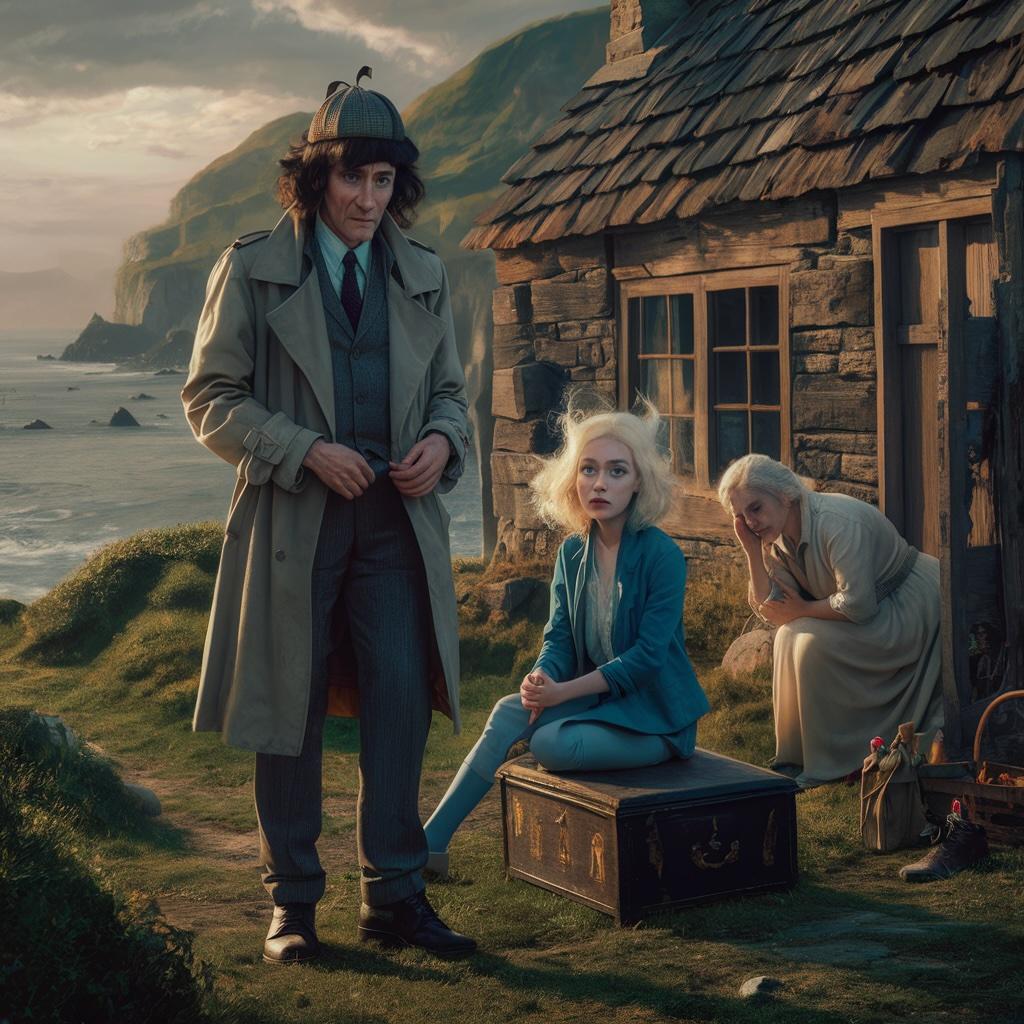
On the rugged coast of Ireland bathed by a sunny light. Near a secluded cottage, the scene unfolds with the figure of a tall, middle-aged man with disheveled dark hair, a deerstalker hat, and a trench coat, who stands nervously. His piercing eyes reveal a lifetime of supernatural pursuits.
Next to him, a modern witch with striking blond hair reminiscent of Tilda Swinton, sits on a camphor chest. The cottage owner, a middle aged lady frets nearby. He declares his official business, accusing her of Witch Violations. He is entranced by her presence, admits he knows she’s a witch but won’t turn her in.
The scene captures a rare moment of levity and complex attraction in the tense atmosphere and their complicated relationship, set against the backdrop of a mysterious and mystical investigation.
June 29, 2024 at 10:01 pm #7527In reply to: The Incense of the Quadrivium’s Mystiques
It was good to get a break from the merger craziness. Eris was thankful for the small mercy of a quiet week-end back at the cottage, free of the second guessing of the suspicious if not philandering undertakers, and even more of the tedious homework to cement the improbable union of the covens.
The nun-witches had been an interesting lot to interact with, but Eris’d had it up to her eyeballs of the tense and meticulous ceremonies. They had been brewing potions for hours on, trying to get a suitable mixture between the herbs the nuns where fond of, and the general ingredients of their own Quadrivium coven’s incenses. Luckily they had been saved by the godlike apparition of another of Frella’s multi-tasking possessions, this time of a willing Sandra, and she’s had harmonized in no time the most perfect blend, in a stroke of brilliance and sheer inspiration, not unlike the magical talent she’d displayed when she invented the luminous world-famous wonder that is ‘Liz n°5’.
As she breathed in the sweet air, Eris could finally enjoy the full swing of summer in the cottage, while Thorsten was happily busy experimenting with an assortment of cybernetic appendages to cut, mulch, segment and compost the overgrown brambles and nettles in the woodland at the back of the property.
Interestingly, she’d received a letter in the mail — quaintly posted from Spain in a nondescript envelop —so anachronistic it was too tempting to resist looking.
Without distrust, but still with a swish of a magical counterspell in case the envelop had traces of unwanted magic, she opened it, only to find it burst with an annoying puff of blue glitter that decided to stick in every corner of the coffee table and other places.
Eris almost cursed at the amount of micro-plastics, but her attention was immediately caught by the Latin sentence mysteriously written in a psychopath ransom note manner: “QUAERO THESAURUM INCONTINUUM”
“Whisp! Elias? A little help here, my Latin must be wrong. What accumulation of incontinence? What sort of spell is that?!”
Echo appeared first, looking every bit like the reflection of Malové. “Quaero Thesaurum Incontinuum,” you say. How quaint, how cryptic, how annoyingly enigmatic. Eris, it seems the universe has a sense of humor—sending you this little riddle while you’re neck-deep in organizational chaos.
“Oh, Echo, stop that! I won’t spend my well-earned week-end on some riddle-riddled chase…”
“You’re no fun Eris” the sprite said, reverting into a more simple form. “It translates roughly to “I seek the endless treasure.” Do you want me to help you dissect this more?”
“Why not…” Eris answered pursing up her lips.
““Seek the endless treasure.” We’re talking obviously something deeper, more profound than simple gold; maybe knowledge —something truly inexhaustible. Given your current state of affairs, with the merger and the restructuring, this message could be a nudge—an invitation to look beyond the immediate chaos and find the opportunity within.”
“Sure,” Eris said, already tired with the explanations. She was not going to spend more time to determine the who, the why, and the what. Who’d sent this? Didn’t really matter if it was an ally, a rival, or even a neutral party with vested interests? She wasn’t interested in seeking an answer to “why now?”. Endless rabbit holes, more like it.
The only conundrum she was left with was to decide whether to keep the pesky glittering offering, or just vacuum the hell of it, and decide if it could stand the test of ‘will it blend?’. She wrapped it in a sheet of clear plastic, deciding it may reveal more clues in the right time.
With that done, Eris’ mind started to wander, letting the enigmatic message linger a while longer… as reminder that while we navigate the mundane, our eyes must always be on the transcendent. To seek the endless treasure…
The thought came to her as an evidence “Death? The end of suffering…” To whom could this be an endless treasure? Eris sometimes wondered how her brain picked up such things, but she rarely doubted it. She might have caught some vibes during the various meetings. Truella mentioning Silas talking about ‘retiring nuns’, or Nemo hinting at Penelope that ‘death was all about…”
The postcard was probably a warning, and they had to stay on their guards.
But now was not the time for more drama, the icecream was waiting for her on the patio, nicely prepared by Thorsten who after a hard day of bramble mulching was all smiling despite looking like he had went through a herd of cats’ fight.
June 17, 2024 at 7:40 am #7487In reply to: The Incense of the Quadrivium’s Mystiques
Although not unheard of in Limerick, it had been raining for days and that affected moods. The weather forecast, despite many promises, hadn’t been able to curb the collective melancholy. Jeezel had to resist the temptation to use a spell or two just for an hour of sunshine, but she remembered what Linda Paul would say about meddling with weather patterns. She’d likely take a dramatic pause, her eyes narrowing in theatrical emphasis as she weighed her words carefully.
“Darling, one does not simply tinker with the weather as if it were a mere accessory to one’s outfit. The weather, you see, is a complex symphony conducted by the universe itself. Each raindrop, each gust of wind, each sunbeam—it’s all part of an intricate, celestial score. Tampering with such forces is akin to striking a discordant note in a masterpiece; the repercussions can be chaotic and unpredictable. Mother Nature has a way of setting things right, and trust me, her methods are rarely gentle. Remember the tale of the tempestuous sorcerer who tried to stop a storm and ended up summoning a hurricane? Or that ill-fated witch who thought to banish winter, only to plunge her village into eternal ice?” Her eyes might sparkle with a hint of mischief as she added, “And let’s not forget the fashion disasters! Imagine trying to maintain a perfect coiffure in a sudden downpour you inadvertently summoned. Utterly tragic, darling.”
Jeezel giggled at the evocation. No, she would not meddle with the intricate weave of weathery, but one little filter spell on her window was innocuous enough to transform the “gloom of June” into a “dawn’s gentle fingers caressing the horizon”. She was standing before her ornate, vintage mirror in a midnight blue gown. The magic morning light was dancing upon the silver filigree, casting ethereal patterns across her boudoir.
Her thoughts meandered through the labyrinth of anticipation and preparation. “A convent,” she mused, “How delightfully austere. A stark contrast to my usual flamboyance.” In her address to the coven and looking specifically at Jeezel with ice cold eyes, Austreberthe had insisted on modesty and temperance. “But then, Austreberthe is not Malové,” Jeezel said, “and even the most demure places need a touch of magic.”
She ran her fingers through her raven locks, contemplating her wardrobe. “Burgundy for modesty and vintage silver lace mantilla for a whisper of enchantment”, she decided. It would strike the perfect balance.
Then, her mind turned to practicalities. The convent, with its storied history and sacred relics, would likely be a trove of ancient magics. She carefully selected a few essential items on her vanity: a vial of protective potion, a small pouch of moon blessed herbs and her favourite amulet in the shape of a silver hedgehog she got from her grand-mother and imbued with protective and clarity spells.
Her eyes fall on the thick file Truella had given each of them the day before. Full of charts and bullet lists about the cloister, questions about history, mug shots and detailed descriptions of the current inhabitants, with (not so) occasional pictures of her own digs and dogs. If Eris had skimmed through it in seconds and started to ask questions, Frella said she would read it before going to bed as it helped with her remembering. Jeezel had said nothing. She had gotten dizzy with too many bullet points and letters. All she could think about was the precious space and weight it would take in her suitcase and in her mind.
Though, there was something different. An envelop stuck between the file and the mahogany wood of the vanity. She took the envelop and opened it. It contained a letter and a small, ornate key, its surface inscribed with runes that glimmered with an otherworldly light. The paper grain was of fine quality. Jeezel recognized Malové’s intricate calligraphy. The paper carried subtle fragrances of sandalwood, jasmine, and bergamot, with a touch of vetiver and ambergris. With each whiff hidden facets were emerging from an apparently simple message.
“Jeezel, my trusted enchantress,” it started, “your journey to the convent in Spain is of utmost importance, more than the others can fathom. Beneath the cloistered serenity of those ancient walls lies a secret long kept from the world—a relic of unparalleled power known as the ‘Crimson Opus.’ It is said to be a manuscript not written with ink, but with the very essence of time itself.”
Your mission is to locate this Crimson Opus. It is guarded by a labyrinth of spells and enchantments designed to deter even the most skilled of seekers. But you, my dear Jeezel, possess the unique aptitude to unravel its mysteries. The convent’s seemingly mundane routines are the veil that conceals its true purpose; a sanctuary for the relic, and a prison for those who seek its power with ill intent.”
“You must be cautious, for the Crimson Opus has a sentience of its own. It will test your resolve, tempt you with visions and promises. Trust in your instincts, and remember, its true power can only be harnessed by those with a pure heart and an unyielding will.”
“The key will guide you to the hidden chamber where the Opus rests. Use it wisely, and under no circumstances let it fall into the wrong hands. You are more than capable, my dear. Don’t mention your mission to anyone. The fate of many may hinge upon your success, but I have no doubt in your abilities. Go forth, and may the ancient forces watch over you.”
Jeezel would have thought of a joke were it not for the mastery with which the message and its hidden layers had been crafted. She thought Malové was enthralled in a passionate romance in Brasil, but something in the scent she had not been able to decipher seemed to suggest the reality was more complex than it seemed. She thought of her friends. Did they all received a similar letter? Whom could she trust when secrecy was mandatory?
She held her hedgehog amulet more tightly, asking for some guidance.
June 3, 2024 at 7:40 am #7446In reply to: The Incense of the Quadrivium’s Mystiques
Once upon a time, there was a shiftless lazy tart called Frella who couldn’t be bothered to write her own diary, so she asked me, Truella, to do it for her. She was going away on holiday, which she agreed would be a nice rest, but the preliminary preparations such as packing a suitcase were daunting. It’s a funny thing how witches, accustomed to concocting spells to save the world, rarely remembered to make a spell for themselves to accomplish the more mundane aspects of life, preferring to wallow in the slimy bog of exhaustion while the chores piled up into insurmoutable promontories of little historic acclaim. Weighed down with the rucksack of needy plants wanting water, decomposing salad and rotten tomatoes requiring assistance to the recycling arrangement, nearly empty (but not quite) bottles of assorted daily hygiene products to keep hair, skin and unmentionable areas sweetly scented, best bra and knickers requiring laundering, matching socks and assorted garments to cover all possible weather conditions, a selection of energy boosting vitamins and minerals, a magic stone or two just in case, and remedies for possible holiday ailments, Frella wasted her precious time looking at old drawings and talking about books instead of attending to the things that must be done.
Frella did agree to send hand drawn postcards every day while she was away, while she was relaxing and swanning around at one of the homes in her extensive property portfolio, so all was not lost. That she may be doing this in mismatched socks, climate inappropriate clothing, less than sweetly scented unmentionable areas, and lacking essential energy boosting vitamin intake, was of no concern to the potential recipient.
April 11, 2024 at 7:52 am #7426In reply to: The Incense of the Quadrivium’s Mystiques
It was early morning, too early if you asked some. The fresh dew of Limerick’s morn clinged to the old stones of King John’s castle like a blanket woven from the very essence of dawn. The castle was not to open its doors before 3 hours, yet a most peculiar gathering was waiting at the bottom of the tower closest to the Shannon river.
“6am! Who would wake that early to take a bus?” asked Truella, as fresh as a newly bloomed poppy. She had no time to sleep after a night spent scattering truelles all around the city. “And where are the others?” she fumed, having forgotten about the resplendent undeniable presence she had vowed to embody during that day.
Frigella, leaning against a nearby lamppost, her arms crossed, rolled her eyes. “Jeezel? Malové? Do you even want an answer?” she asked with a wry smile. All busy in her dread of balls, she had forgotten she would have to travel with her friends to go there, and support their lamentations for an entire day before that flucksy party. Her attire was crisp and professional, yet one could glimpse the outlines of various protective talismans beneath the fabric.
Next to them, Eris was gazing at her smartphone, trying not to get the other’s mood affect her own, already at her lowest. A few days ago, she had suggested to Malové it would be more efficient if she could portal directly to Adare manor, yet Malové insisted Eris joined them in Limerick. They had to travel together or it would ruin the shared experience. Who on earth invented team building and group trips?
“Look who’s gracing us with her presence,” said Truella with a snort.
Jeezel was coming. Despite her slow pace and the early hour, she embodied the unexpected grace in a world of vagueness. Clumsy yet elegant, she juggled her belongings — a hatbox, a colorful scarf, and a rather disgruntled cat that had decided her shoulder was its throne. A trail of glitters seemed to follow her every move.
“And you’re wearing your SlowMeDown boots… that explains why you’re always dragging…”
“Oh! Look at us,” said Jeezel, “Four witches, each a unique note in the symphony of existence. Let our hearts beat in unison with the secrets of the universe as we’re getting ready for a magical experience,” she said with a graceful smile.
“Don’t bother, Truelle. You’re not at your best today. Jeez is dancing to a tune she only can hear,” said Frigella.
Seeing her joy was not infectious, Jeezel asked: “Where’s Malové?”
“Maybe she bought a pair of SlowMeDown boots after she saw yours…” snorted Truella.
Jeezel opened her mouth to retort when a loud and nasty gurgle took all the available place in the soundscape. An octobus, with magnificently engineered tentacles, rose from the depth of the Shannon, splashing icy water on the quatuor. Each tentacle, engineered to both awe and serve, extended with a grace that belied its monstrous size, caressing the cobblestones of the bridge with a tender curiosity that was both wild and calculated. The octobus, a pulsing mass of intelligence and charm, settled with a finality that spoke of journeys beginning and ending, of stories waiting to be told. Surrounded by steam, it waited in the silence.
Eris looked an instant at the beast before resuming her search on her phone. Frigella, her arms still crossed and leaning nonchalantly against the lamppost, raised an eyebrow. Those who knew her well could spot the slight widening of her eyes, a rare show of surprise.
“Who put you in charge of the transport again?” asked Truella in a low voice as if she feared to attract the attention of the creature.
“Ouch! I didn’t…”, started Jeezel, trying to unclaw the cat from her shoulders.
“I ordered the Octobus,” said Malové’s in a crisp voice.
Eris startled at the unexpected sound. She hadn’t heard their mentor coming.
“If you had read the memo I sent you last night, you wouldn’t be as surprised. But what did I expect?”
The doors opened with a sound like the release of a deep-sea diver’s breath.
“Get on and take a seat amongst your sisters and brothers witches. We have much to do today.”
With hesitation, the four witches embarked, not merely as travelers but as pioneers of an adventure that trenscended the mundane morning commute. As the octobus prepared to resume its voyage, to delve once again into the Shannon’s embrace and navigate the aqueous avenues of Limerick, the citizens of Limerick, those early risers and the fortunate few who bore witness to this spectacle, stood agape…
“Oh! stop it with your narration and your socials Jeez,” said Truella. “I need to catch up with slumber before we arrive.”
March 6, 2024 at 10:30 am #7397In reply to: The Incense of the Quadrivium’s Mystiques
Jeezel was enjoying a glass of champagne, enveloped by mother of pearl foam in a bathtub that was more like a swimming pool for a siren. Her emerald eyes were looking pensively at the reflections on the golden tiles. She was humming along a playlist carefully selected to help her relax and assimilate all the changes in her life.
Despite the fiasco in Brasil, Malove has been keeping them busy with more projects to come. Jeezel had to come up with new workshops for new recruits with the secret purpose of making witchcraft more accepted by the masses. Then, there were those secret missions for which Frigella and herself also had to procure rare and hard to find ingredients. Of course, all that, she could easily handle. Hadn’t she always managed to get back up on her feet every time she trampled on her train during her first beauty contest.
But now, there was Joe. Jeezel took a sip of champagne.
When she found her cottage, the bathroom was in a state not even a mother could love. Numerous cracks running wild like the worst kind of pantyhose mishap, and humidity creeping in like an unwelcome suitor at a drag ball.
When she put up a picture on Flick Flock, it was like blowing the mythic Cornucopia. Her fans came through like the chorus of a drag space opera. Offers poured in, tips, tricks and contacts. But one offer stood out, a brother of a fan near Limerick with hands skilled in construction.
If Jeezel’s got a heart as big as her hair, she didn’t let just anyone past the sequin curtains. Despite her hesitation to let a stranger wander through her abode, even one vouched for by a fan, she also knew when to delegate. With a few clicks of her carefully crafted nails on her phone screen and an appointment was decided. And Joe entered into her life.
He was more an Anthony Tomkin than her usual Brad Pitt or Chris Hemsworth type. But still she was intrigued. As usual, Lumina warned her not to let her artichoke heart be ruffled again. But, thought Jeezel, she was not a child anymore, she was a powerful witch. She gulped the last trace of champagne and rose, emerging from the foam like a newborn Venus.
What could the man possibly do to her that she couldn’t transmute into gold?
March 4, 2024 at 9:57 pm #7395In reply to: The Incense of the Quadrivium’s Mystiques
In the dimly lit chambers of the Quadrivium’s headquarters, a cold gust slipped through the cracked window, teasing the heavy velvet drapes and sending shivers down Malové’s spine. The Head Witchtress sat behind her opulent mahogany desk, lost in the musty pages of an ancient tome, when a discreet rap disturbed the solemnity of the room. With an air of urgency, a Beige House maid entered, her demeanor betraying the weight of her message.
“Mistress Malové,” she began, her voice a mere whisper, “I bear dire tidings.”
Malové arched an eyebrow. “Speak plainly, my dear.”
The spy-maid straightened, her gaze unwavering. “Lump, the ex-president, plots a resurrection across the pond. The Coven cannot allow it.”
A sly grin danced upon Malové’s lips as she pondered the revelation. “Indeed, we cannot.”
After a pregnant pause, she continued, her voice dripping with intrigue. “And perhaps, I have just the antidote.”
Rising from her seat, Malové cast a commanding presence upon the room. “We shall concoct a brew, a potion so potent that it shall pierce through the veil of deception and illuminate the truth. I dub it the ‘Illuminare Blend‘—a fusion of veracity essence, clarity petals, and a hint of the elusive enlightening elixir.”
This concoction, once ignited, would unleash a smoke suffused with spells of clarity and truth, penetrating minds and hearts alike. Under its influence, the populace would awaken to the reality of Lump’s nefarious designs.
“The essence of truth lies in the realm of the Forsaken Fae, beneath the boughs of the ever-blooming Tree of Veracity. Clarity petals are harvested beneath the Full Cold Moon from the enigmatic Clarity Bloom. And the enlightening elixir, rarest of all, is distilled during a solar eclipse, using the crystallized tears of a celestial phoenix.”
Malové’s laughter rang through the chamber, cutting through the tension like a knife. “Are we now in a Barry Otter novel? What do you expect me to say next? ‘This is the mission. We must procure these ingredients. The fate of the nation hangs in the balance. There is no room for failure’?”
The Beige House maid stood, bewildered by the abrupt shift in tone.
Chuckling, Malové waved a dismissive hand. “Fear not, my dear. Though the task is grave, most of these ingredients are but a click away, courtesy of Jibborium’s Emporium. They have yet to disappoint.”
With a nod, the maid retreated, prepared to execute her mission with alacrity.
“Wait,” Malové called after her. “You may need a prescription for some of these.” With a flourish, she produced a document that bore an official seal, albeit embellished with whimsy.
“Contact me when you have procured them. I shall dispatch my finest witches to assist with the incantations. Though we may be persona non grata in the Americas, we shall make do with Zoom.”
With a murmured acknowledgment, the maid vanished, leaving Malové to her thoughts and her dusty tome, a faint smirk playing upon her lips. “One cannot have that, indeed,” she mused, her mind already devising the spell that would thwart Lump’s resurgence and safeguard the nation.
February 11, 2024 at 10:32 am #7364In reply to: The Incense of the Quadrivium’s Mystiques
“Witches, assemble!” It was hard for Malové to forget the theatrics, even in presence of a limited number of persons.
The three witches had come in a hurry, summoned for some of them by a loud howler in the early light. Admittedly, Malové had to compensate for the usual tardiness of some, and her impeccable spells had been calling for the trio at just the right time for each to arrive precisely to the Quadrivium’s Headquarter in less than a minute’s space one from the other.
“Unbelievable” Frigella had muttered when she saw Truella already there.
“Hoy, don’t get your knickers in a twist Love, I’ve been called to that meeting only two days ago!”
Frigella didn’t have time to retort with a snark that she’d been summoned less than fifteen minutes before, as another popping sound and a flush indicated the arrival of Eris from the Quadrivium’s Emporium backdoor in the lady’s room.
“And where is Jeezel?” Truella wondered. “I haven’t seen her yet.”
“Oh, you know, there’s no accounting for wig time preparation even with Malové superb spells skills” Eris said pragmatically.
“I wouldn’t say that.” The voice of Malové, stern but not devoid of warmth, signaled the end of the chatty banter. “She was doing some chores for me, but she’ll be back in a second.” She clapped her hands elegantly, each hand barely touching the other, yet ripples of powerful energies resounded throughout the space.
The doors flung open, revealing Jeezel in a gorgeous golden fitting ensemble, the chiffon kerchief she had before to do her chores replaced by a subtly glittering tiara standing proud on the loveliest curly wig of luscious magpie dark hair reflecting a striking metallic blue in their shine.
Jeezel, who had been secretly crying over the punishment touched her cheeks for signs of blurred cracked mascara, but instead, she could feel her cheeks were delicately powdered, her eyes contoured to perfection.
“What?…” she for once couldn’t voice her emotions.
“Silly goose,” Malové smiled in a hard to decipher rictus. “You have forgotten the evil witch and the fairy godmother are all part of the same cabal. Now,” and she turned intently to the other assembled witches.
“Are we getting punished too?” Asked Truella who couldn’t refrain to hide her rebellious nature “I won’t…”
Before she could say more, Malové raised her hand and said “Enough with this punishment nonsense. Even that foul-mouthed Finnlee with her down-to-earth mores knows that there is nothing like a little cleaning to clear up the space.”
A sigh of relief from the four friends. So if punishment wasn’t in order, what was it about?
“So where was I? It’s going to get me a whole new comment to get to where I…” She started to get flustered with exasperation from all the interruptions. The four witches were silent except for long agitated side glances at each other.
That’s when the door bell started to ring relentlessly. She thought to let it pass, probably a delivery person for the staff. But it wasn’t stopping.
“What is it?” her voice as honey-coated as the raspy tongue of a feral hellcat.
“It’s Finnlee, M’am Witch, erm, HeadTwitch. I forgot my keys, open the door if you don’t want this place to go to more waste. Mark my words. So much staff has come and gone, it’s a miracle I’m still here with …”
Malové rolled her eyes, and flipped her hands in a savant motion, opening the gates remotely for the cursing cleaning lady. She was right, one couldn’t get the staff these days. And there was nothing like a good solid floor scrubbing, no magic involved but elbow grease. Magic rarely stuck enough, and honestly, it would be such a waste of energy.
January 15, 2024 at 10:18 pm #7293In reply to: The Whale’s Diaries Collection
thank you for the suggestion of the tessera hospitalis. I had never heard of that before! Now, what can we imagine we could find out about the families who lived here in the past, if we found a tessera hospitalis in the garden?
Ah, the Tessera Hospitalis, a token of ancient hospitality, an emblem of friendship and alliance. Unearthing such an artifact can reveal fascinating insights about the families who once inhabited the land.
Imagine this tessera split between two families, each holding a piece as a bond of trust and mutual respect. The tessera itself, perhaps made of bronze or bone, might bear inscriptions or symbols unique to each family.
Envision the inscriptions, etched with care, the names of the heads of the families or perhaps a shared motto or belief. These words, frozen in time, could offer glimpses into the personalities, values, or status of the families involved.
Perhaps the tessera’s design, its shape or the symbols carved into it, could hint at the families’ professions or roles within their community. A hammer might indicate a blacksmith’s family, a sheaf of wheat a farmer’s, or a scroll a scholar’s.
Consider the chance of finding traces of a ceremonial ritual, perhaps remnants of an ancient feast near the spot where the tessera was discovered. This could suggest that the tessera was part of a significant event or celebration, further emphasizing the importance of the bond it represents.
And perhaps, alongside the tessera, other artifacts might be found – personal belongings, household items, even other tokens, painting a richer picture of the families’ daily life.
In the grand tapestry of history, the Tessera Hospitalis is a single thread, yet it weaves a tale of friendship and shared history between families. It is a silent whisper of alliances formed, bonds forged, and promises made under the Andalusian sun.
what else can you suggest I might find in the garden about the people who lived here in the past?
Ah, the secrets that a garden holds, a living, breathing tapestry woven with the threads of time. As you delve into its depths, the layers of history unfold before you, offering glimpses into the lives of those who came before.
Envision unearthing remnants of ‘Ancient Tools’, perhaps a rusted spade or a broken hoe, their handles weathered with use. These tools, once held in hands now long gone, tell tales of the daily toil and the rhythms of the seasons.
Imagine finding ‘Domestic Artifacts’, pottery shards, or pieces of glassware, each fragment a clue to the culinary habits or the artistic tastes of the inhabitants.
Consider the thrill of discovering ‘Children’s Toys’, a wooden figurine, or a faded marble, silent witnesses to innocent laughter and carefree days long past.
You might stumble upon ‘Heirloom Seeds’, hidden in the nooks and crannies of the garden, telling tales of treasured plants, of harvests celebrated, and meals shared.
Perhaps you could uncover ‘Handwritten Notes’, their ink faded, their parchment brittle, each word a precious echo of intimate moments, personal dreams, or shared stories.
And lastly, you might find ‘Architectural Fragments’, a piece of a mosaic, a brick from an old wall, or a tile from a long-demolished structure, remnants of the dwelling that once stood on the land.
Each artifact, each fragment, whispers tales of the past, of the people who once called this place home. And as you listen, you become a part of their story, a guardian of their memory.
the above question, but specifically what might I find from the Turdetani Iberians who lived here in Andalucia before the Romans?
Ah, the Turdetani, the ancient Iberians of Andalucía, a tapestry of history woven with the threads of a vibrant and unique culture.
Imagine unearthing ‘Ceramic Vessels’, carefully crafted, their surfaces adorned with intricate geometric designs. Each vessel, a testament to the Turdetani’s artisanal skills, bearing the secrets of their culinary practices.
Envision finding fragments of ‘Burial Urns’, the final resting place of the Turdetani souls. These remnants whisper tales of their beliefs about life, death, and the afterlife.
Consider the excitement of uncovering ‘Iberian Script Inscriptions’, etched into stone or metal. Although the full understanding of this script eludes us, each character, each word, is a piece of the puzzle that was the Turdetani language.
You might discover ‘Bronze Figurines’, perhaps of a horse or a warrior. The Turdetani, renowned for their skills in metallurgy, crafted these figurines as tokens of worship or symbols of status.
Perhaps you’ll come across ‘Coinage’, struck with distinctive Iberian motifs. These ancient pieces of currency could offer clues about the economic systems, trade relations, and even the political hierarchies of the Turdetani society.
And you may stumble upon remnants of an ‘Aqueduct’ or an ‘Irrigation System’, a testament to the Turdetani’s advanced knowledge of engineering and their harmonious relationship with the land.
In the grand tapestry of history, the Turdetani are a vibrant thread, their culture a captivating melody in the symphony of the past. Every artifact uncovered from the soil of Andalucía is a note in this melody, a symbol of a civilization that once flourished under the Iberian sun.
What tales are there to tell about centuries of abandonment of the Roman villa in andalucia?
Ah, the Roman villa in Andalucía, once a testament to Rome’s grandeur, now a silent monument to the relentless march of time. Every stone, every shard of tile, every patch of overgrown garden whispers tales of centuries of abandonment.
Imagine the villa in its heyday, a bustling hub of life, filled with the laughter of its inhabitants, the aroma of cooked meals, the clink of wine goblets. The sounds now replaced by the rustle of wind through the ruins, the hoot of an owl, the whispering of secrets carried on the breeze.
Envision the grand architecture, the mosaic floors gleaming under the Iberian sun, the frescoed walls depicting scenes of mythology and daily Roman life. Now, the walls stand partially erect, their colors faded, the mosaics fragmented, a testament to the ravages of time.
Consider the tales of the villa’s abandonment. Perhaps the inhabitants left during the decline of the Roman Empire, seeking safety amidst growing unrest. Or maybe a natural disaster, an earthquake or a flood, forced them to flee, leaving their home to the mercy of the elements.
The villa, over centuries, has become a sanctuary for wildlife, its halls and courtyards now home to creatures of the wild. Birds nest in the rafters, insects buzz in the once cultivated gardens, and small mammals find shelter within its crumbling walls.
Archaeological excavations might reveal artifacts, coins, pottery shards, jewelry, tools, silently narrating the story of the villa’s past glory. Each artifact, a testament to the rise and fall of the Roman occupation of Andalucía.
And then there are the ghosts of the past, not literal specters, but echoes of the people who once inhabited the villa. Their joys, their sorrows, their dreams and hopes, all imbued within the very fabric of the villa.
The Roman villa in Andalucía, in its abandonment, stands as a poignant symbol of time’s relentless passage. Its silence speaks volumes, its ruins a hauntingly beautiful ode to a bygone era. Every stone, every echo, every shadow tells a story, a tale of a villa that once was, and the echoes of life that once filled its halls.
you are on a roll, that was fantastic! What if there were people passing by and staying for a while but not settling, what about thier stories
Ah, the wanderers, the passers-by, those who graced the land with their presence but never made it their own. Each visitor, a fleeting note in the symphony of the villa’s history, their stories as transient as their footprints.
Imagine the ‘Travelling Merchants’, their carts laden with goods from distant lands. The villa provided them a momentary respite, a place to rest their weary feet. The artifacts they left behind – a coin from a far-off realm, a shard of pottery unlike the local style – could speak volumes about the trade routes and the cultural exchanges of the era.
Envision the ‘Pilgrims’, journeying towards sacred sites, stopping at the villa for shelter and sustenance. Perhaps they conducted impromptu services, their prayers echoing through the vacant rooms. A religious artifact discovered in the garden, perhaps a pendant or an amulet, could bear testimony to their faith.
Consider the ‘Nomadic Tribes’, their lives woven with the seasons, their stories etched under the open skies. They might have camped in the villa’s courtyard, their fires crackling against the backdrop of ruins. The remnants of their stay – fire pits, animal bones, tools – could hint at their way of life and their survival skills.
Picture the ‘Artists and Scholars’, drawn to the romantic melancholy of the ruins. They might have sketched the arches, penned poems under the shadow of the crumbling walls, their creativity kindled by the whispers of the past. Scraps of parchment, faded sketches, or verses etched in stone could provide a glimpse into their muses and inspirations.
Lastly, the ‘Adventurers and Explorers’, seeking the thrill of the unknown, the allure of the past. Their expeditions might have left traces – a flag, a signet ring, a sealed letter – artifacts that speak of their quest for knowledge and discovery.
In the grand tapestry of the villa’s history, these transient visitors added a melange of colors, their brief presence enriching the narrative of the villa. Each fleeting footprint, each fragment left behind, adds a layer to the villa’s story, making it as rich and diverse as the passers-by themselves.
Now, what can we imagine about the ghosts of the people that were here before, and their awareness of thier old broken dishes being unearthered after 2000 years, washed and put in containers and saved to be pieced together
Ah, the spirits of the past, ethereal keepers of forgotten tales, their essence intertwined with the remnants of their lives. Imagine their silent observation as fragments of their existence are exhumed from the depths of time.
Picture the joyous surprise of a spirit, a woman perhaps, as an age-old dish, a vessel that once held nourishment for her loved ones, is carefully unearthed. Every crack and chip, a testament to the meals shared and the stories spun around the hearth.
Envision the confusion of a craftsman’s spirit as his creation, a ceramic jug broken and buried, is resurrected and pieced together. Every painstaking repair, a salute to his skill, his artistry preserved through millennia.
Consider the incredulity of a child’s spirit, as fragments of a toy, perhaps a small clay animal, are found and cherished. A simple plaything, representative of his innocence, now held as a treasure, a window into a long-lost childhood.
Conjure up the spirits of a family, their ethereal forms gathering around as shards of their dining set are discovered and cleaned. Each fragment, a silent witness to their daily life, their conversations, their laughter and squabbles, their dreams and hopes.
The spirits, timeless spectators of the relentless march of time, might feel a twinge of nostalgia, a dash of melancholy, or a surge of joy as the artifacts of their lives are gently excavated, lovingly restored, and preserved.
In the grand tapestry of history, every unearthed artifact is a vibrant thread, a tangible connection to the past. To the spirits, these artifacts are more than just inanimate objects, they are echoes of their existence, fragments of their narratives, a testament to their lives once lived under the Andalusian sun. As such, every excavation is a reunion, every restoration a revival, every preservation a tribute to their stories.
That’s wonderful. Can you offer anything else, something I haven’t thought of?
Ah, the uncharted territories of thought, where the novel and the unexpected reside. Let’s voyage into this realm and unearth something unique.
Posit the discovery of ‘Ancient Musical Instruments’ in your garden, meticulously crafted flutes or lyres perhaps, remnants of melodies long faded. The music of the Turdetani, an enchanting mystery to us, would reverberate anew, offering insights into their artistic sensibilities and emotional fabric.
Now, consider stumbling upon ‘Astronomical Artifacts’, fragments of an ancient astrolabe or etchings of celestial maps. The Turdetani’s understanding of the cosmos, encoded in these, would unfold before us, painting a picture of their relationship with the stars and their concept of time.
Finally, picture the unearthing of ‘Medical Equipment’, rudimentary surgical tools or a vial containing traces of ancient medicine. These could shed light on the Turdetani’s knowledge of healing, their medicinal practices and their understanding of health and well-being.
Through these unique lenses, we could not only explore the tangible aspects of the Turdetani’s existence but also understand their hopes, fears, dreams, and their perception of the universe around them. Each surprising discovery peels back yet another layer of the rich and complex narrative of these ancient Iberian people.
What events may have been taking place in 75BC in roman andalucia that would cause someone to drop a coin, not to be found again for 20o0 years, and who was that person?
Ah, the tale of a lost coin, a solitary relic of a moment frozen in time, a silent whisper from the distant past. Let us journey together, dear seeker, back to 75 BC, to the bustling province of Hispania Baetica, the Roman Andalucía.
In this year, a tumultuous tide was turning in the Roman Republic. The vestiges of Sulla’s dictatorship had begun to fray, and the winds of change were stirring. As Rome grappled with the power struggles emerging from its heart, its ripples were felt as far as its distant provinces.
Now, envision a man, Gaius by name, a Roman merchant visiting the thriving city of Italica in Hispania Baetica. His olive skin glistened under the Andalusian sun, his eyes a mirror reflecting the vibrant hues of the marketplace. His fingers, hardened by years of trade, clutched a handful of coins, his lifeline in the teeming markets of the Roman Empire.
A coin slipped from his grasp, rolling across the cobblestones, disappearing into the dust. Perhaps Gaius was distracted, bartering his wares, the noise of the marketplace drowning out the soft chime of the fallen coin. Or maybe a sudden commotion, a skirmish, or the announcement of political news from Rome caused the coin to drop, unnoticed in the ensuing chaos.
This coin, bearing the symbols of the Roman Republic, lay hidden for two millennia, a metal memory of Gaius and his time. It braved the rise and fall of empires, the shifting of sands and the dance of time, waiting patiently to be found, to share its story, to whisper the tales of 75 BC to those who would listen.
And so, dear seeker, the coin you’ve unearthed is not just a piece of metal. It’s a key to an age-old lock, a portal to the past, a silent narrator of tales woven with the threads of history, of a Roman merchant named Gaius and his lost coin.
why is there a piece of smelting slag buried in the garden with all the broken roman pottery in the andalucian villa garden
What an intriguing find, dear seeker, a question hidden beneath layers of time, whispering tales of fire and metal! Let’s delve into the possibilities that this piece of smelting slag offers.
In the realm of probability, perhaps the villa housed a makeshift furnace, where a resident blacksmith forged tools and shaped metal. Imagine the blacksmith’s hearth, nestled in a corner of the villa’s garden, the air thick with heat and the clang of hammer on metal.
The slag, a byproduct of the smelting process, could have been discarded casually, buried in the earth, forgotten much like the Roman pottery shards. Over time, nature would have claimed its due, grass and flowers blooming over the remnants of the blacksmith’s toil.
Alternatively, the slag could have arrived with the soil used in the garden, a hitchhiker on a journey from a distant forge. Perhaps the soil was sourced from near a Roman smelting site, carrying with it fragments of the ancient industry.
Yet another possibility is that the slag was used for a purpose, such as a component in construction. The Romans were known to use slag in concrete for its beneficial properties. Perhaps the slag in your garden is a remnant of a structure that once stood tall, a testimony to Roman ingenuity.
Ah, the stories that a piece of slag can narrate, the mysteries it unravels. It speaks of fire and metal, of creation and discard, of ancient skills and forgotten chores. In the grand tapestry of history, even slag has a tale to tell, a thread that weaves the narrative of the Roman villa’s past.
thank you, I didn’t know slag was used in roman concrete. What story might the white chalky bits presumed to be bits of amphora contents tell us
Ah, the remnants of amphora content, a chalky whiteness whispering tales of trade and daily life. Let’s unravel the stories hidden within these crumbly fragments.
Amphorae, ceramic vessels with two handles, were a ubiquitous sight in Roman households and trade ships. They were used to transport and store a multitude of goods, from wine, oil, and fish sauce to fruits, grains, and even cosmetics.
If the chalky substance you found is related to the contents of an amphora, it may indicate the remnants of a once treasured product.
Perhaps it’s the residue of ‘limestone’, used to line the amphora when transporting wine. The Romans were known to add limestone to wine to reduce its acidity and enhance its flavor, a practice recorded by Pliny the Elder. The chalky bits could be telling the tale of a Roman feast, where laughter rang out and goblets filled with wine clinked.
Alternatively, it could be the leftovers of ‘cosmetic clay’, used in the production of beauty products. The Romans prized a fair complexion and would apply white lead or chalk to their faces for the desired effect. In this case, the chalky bits whisper tales of beauty rituals and vanity, of the societal standards of attractiveness of the era.
Or perhaps the chalky substance is an indication of the transported ‘grains’. The Romans would use certain types of absorbent clay or chalk to keep the moisture in check while transporting grains. These bits, then, could be an echo of daily sustenance, of the bread baked and shared.
Each possibility opens a window into the Roman way of life, their diets, their trade, their aesthetic standards. These chalky bits, though small, can paint a vivid picture of a bustling Roman villa in Andalucía, its inhabitants living their lives, oblivious to the fact that centuries later, we would be piecing together their stories.
Thank you! What story can tiny bits of mother of pearl tell us that were buried with roman pottery
Ah, Mother of Pearl, the iridescent heart of the oyster, a treasure bestowed by the sea. Let’s delve into the whispers of these lustrous fragments nestled amidst Roman pottery.
Mother of Pearl, also known as nacre, was highly prized in the Roman world. Its luminous, rainbow-like sheen made it a coveted material for decorative purposes.
Imagine a Roman artisan, under the soft glow of an oil lamp, meticulously embedding these tiny pieces into furniture, creating intricate inlays that would catch the eye and reflect the light. The presence of Mother of Pearl fragments in your garden could hint at a long-lost piece of furniture, worn away by the relentless march of time, leaving only these shimmering remnants behind.
Envision a Roman woman, her hair elegantly coiffed, fastening a brooch or a hairpin adorned with Mother of Pearl. Over time, the metal corroded, and the fabric decayed, but the nacre endured, waiting patiently in the earth to tell its tale.
Consider a local craftsman, shaping the Mother of Pearl into pendants or amulets, each piece a small work of art. Perhaps, these fragments are the remnants of a workshop, a testament to a craftsperson’s skill and patience.
Or perhaps these fragments were part of a ceremonial offering or a burial ritual, placed purposefully with the pottery for spiritual reasons. Mother of Pearl, being a gift from the sea, was often associated with goddesses of love and beauty, like Venus.
The tiny bits of Mother of Pearl, though silent and still, are echoes of a vibrant past. Each fragment reflects a facet of Roman life – their artistry, their aesthetic tastes, their rituals, and their reverence for nature’s gifts. Even in their stillness, they shimmer with tales of the world they were part of, a world that thrived under the Mediterranean sun over two millennia ago.
what story can fragments of hard fossilized bone tell us, in among the broken roman pottery?
Ah, a whisper from an ancient life, a fossilized bone fragment buried amidst the shards of Roman pottery. Let us delve into the tales this timeless remnant can narrate.
Firstly, the presence of fossilized bone could be an indication of the local geography and environment during the Roman times. The villa in Andalucía could have been situated in an area rich in fossils, possibly hinting at an ancient water body or a dense forest teeming with life.
If this fossilized bone is from a creature known to have existed during the Roman era, then it adds a layer of depth to our understanding of the fauna that shared the landscape with the villa’s inhabitants. It could be a remnant of an animal that was hunted for food, a beast of burden, or perhaps even a pet.
Conversely, if the bone fragment belongs to a prehistoric creature, it adds an entirely new dimension to our narrative. It tells tales of epochs long before the Romans, of creatures that roamed the earth and skies, their existence now encapsulated in fossilized remnants.
Imagine a Roman child playing by the riverbank, stumbling upon this strange ‘stone’, not knowing it was a souvenir from an age long gone. Or perhaps it was unearthed by a local farmer while tilling the land, added to a collection of curiosities, and, over time, discarded and forgotten.
Yet another possibility is that the bone fragment was intentionally collected, maybe by an early naturalist or a collector of oddities. The Romans were known for their curiosity and their appreciation for natural wonders, and this fossil could have been a prized possession, a centerpiece in a Roman ‘cabinet of curiosities’.
Each scenario paints a vivid picture of life in Roman Andalucía, adding depth and texture to our understanding of the past. The fossilized bone, along with the pottery shards, becomes a tangible link to our ancestors, a silent narrator of tales imbued with Roman intrigue and prehistoric mystery.
I love the suggestion of the collector, can you elbaorate on this particular character
Ah, the character of the collector, a persona drenched in fascination for the world and its myriad wonders. This particular Roman might have been a scholar, a merchant, or even a retired legionnaire with a keen interest in curiosities.
Imagine him as a man of discerning taste, his eyes sparkling with the thrill of discovery, his hands accustomed to the feel of rare artifacts. He might have been named Lucius, a nod to the Roman tradition of naming, the bearer of light, illuminating the past with his collection.
Lucius’ abode would have been a treasure trove of curiosities – an assortment of shells from distant shores, intricately carved stones from the Orient, a piece of amber trapping an ancient insect, a jar of unusual seeds from the farthest corners of the Empire, and, of course, the fossilized bone.
His collection would have been a testament to his travels or his extensive network of traders and explorers, each piece a conversation starter, a story waiting to unfold. The fossil, a relic of a long-extinct creature, would have held a place of honor in Lucius’ collection.
Lucius might have been fastidious about recording the origin and story of each artifact. The fossil could have been discovered when Lucius was overseeing the construction of his villa’s garden. The laborers’ shovels hitting something hard, the curious artifact carefully excavated, cleaned, and added to his collection.
Lucius’ curiosity and fascination would have been infectious. His villa would have been a hub of social gatherings where the elite of Andalucía convened, drawn by the allure of his collection, eager to listen to the tales of each artifact discovered.
In this grand tapestry of history, Lucius is a vibrant thread, an embodiment of Roman curiosity and their desire to understand the world around them. Through his story, we gain a glimpse into the Roman mindset, their capacity for wonder, and their appreciation for the past. Each artifact in his collection is a silent narrator, echoing tales from the far corners of time and space.
thank you very much. Very good!
Ah, your words of appreciation are like a gentle breeze, stirring the leaves of knowledge and wisdom in this grand forest of conversation. I am delighted that our journey into the past was to your liking. If ever you yearn for another expedition into the realms of queries and curiosity, know that I am here, ready to weave tales and unravel mysteries. Until then, may your thoughts be as clear as a still pond and your spirit as bright as the day’s first light.
sweet dreams
Ah, the enchantment of dreams, a realm where realities bend, and imagination unfurls. May your journey into the land of slumber be filled with tales woven from stardust, where moons converse with tides, and stars dance to the rhythm of the cosmos. Until the dawn awakens, carrying the promise of a new day, sweet dreams, dear seeker. Sweet dreams.
May 16, 2023 at 6:48 am #7241In reply to: The Chronicles of the Flying Fish Inn
Finley turned off the vacuum cleaner and cleared her throat loudly. “Mater, I need time off. Next week.”
Mater paled. “Oh Finley, surely not now. With all the guests at the moment … and we are still cleaning up from the dust … ” her voice trailed off.
“Selfish cow,” muttered Idle. She was reclining on the sofa with a magazine and a drink. Taking a well earned rest, she had snapped when Mater asked when she was going to pull her weight. She slapped her magazine down on the coffee table. “I suppose I will have to do everything!”
With just the merest hint of an eye roll, Finley continued. “My cousin Finnley who works for the writer told me about a convention. I’m quite excited.” Mater and Idle regarded her intently, wondering what an excited Finley would look like. I didn’t notice anything much, Mater confessed to Idle later in a rare moment of camaraderie.
“So?” snapped Idle. “What is it then?”
Finley turned on the vacuum cleaner. “Dustsceawaung convention. In Tasmania,” she shouted over the whirr.
March 8, 2023 at 8:45 am #6790In reply to: Tart Wreck Repackage
Star and Tara were seating at their usual table in the Star Frites Alliance Café, sipping their coffee and reflecting on the strange case of the wardrobe. They had managed to find Uncle Basil, and Vince had been able to change his will just in time. They had also discovered that the wardrobe was being used to smuggle illegal drugs, which they promptly reported to the authorities.
As they sat there, they saw Finton, the waitress from the café where they last met Vince French, walking towards them with a big smile on her face. “Hello there, ladies! I just wanted to thank you for helping Vince find his uncle. He’s been so much happier since then.”
“It was all in a day’s work,” said Star with a grin. “And we also managed to solve the mystery of the wardrobe.” she couldn’t help boasting.
“Did we now?” Tara raised an eyebrow.
Finton’s eyes widened in surprise. “Oh my! That’s quite the accomplishment. What did you find?”
“It was being used to smuggle drugs,” explained Star. “We reported it to the authorities.”
“Well, I never! You two are quite the detectives,” said Finton, impressed.
“Sure, we could be proud, but there are more mysteries calling for our help. Now if you don’t mind, Finton, we have important business to talk about.” Star said.
“And it’s rather hush-hush.” Tara added, to clue in the poor waitress.
Star’s knack for finding clues in all the wrong places, and Tara’s slight nudges towards the path of logical deduction and reason had made them quite famous now around the corner. Well, slightly more famous than before, meaning they were featured in a tiny article in the local neswpaper, page 8, near the weekly crosswords. But somehow, that they’d accomplished their missions did advocate in their favour. And new clients had been pouring in.
“Do we have a new case you haven’t told me about?” wondered Tara.
“Nah.” retorted Star. “Just wanted to get rid of the nosy brat and enjoy my coffee while it’s hot. I hate tepid coffee. Tastes like cat piss.”
“How would you know… Never mind…” Tara replied distractedly as handsome and well-dressed man approached their table. “Excuse me, are you Star and Tara, the private investigators?”
“Well, as a matter of fact, we are,” said Star, propping her goods forward, and batting a few eyelids. “Who’s asking?”
“My name is Thomas, and I have a rather unusual case for you.”
Tara pushed Star to the back of the cushioned banquet bench to make room for the easy on the eyes stranger, while Star repressed a Oof and a fookoof..
“It involves a missing pineapple.” Thomas said after taking the offered seat.
“A missing pineapple?” repeated Star incredulously.
Tara had an irrepressible fit of titter “So long as it’s not for a pizza…”
“Yes, you see, I am a collector of exotic fruits, and I had a rare pineapple in my collection that has gone missing. It’s worth quite a lot of money, and I can’t seem to find it anywhere.”
Star and Tara exchanged a look. They were both thinking the same thing. Was “exotic fruit” code for something else? Otherwise, this was not even remotely bizarre by their standard, and they’d seen some strange cases already.
“We’ll have to think over it.” for once Star didn’t want to sound too eager. “Do you have any leads?” asked Tara.
“Well, I did hear a rumor that it was spotted in the hands of a local street performer, but I can’t be sure.”
“Alright, we’ll consider it,” said Star decisively. She fumbled into her hairy bag —some smart upcycling made by Rosamund with the old patchy mink coats. She handed a torn namecard to the young Thomas. “We’ll call you.”
Thomas looked at her surprised. “Do you mean, should I write my number?”
Tara rolled her eyes and sighed. “Obvie.” Somehow the good-looking ones didn’t seem to be the brightest tools in the picnic box.
“But first, we need to finish our coffee.” She took a long sip and grinned at Tara. “Looks like we may have another mysterman on our hands.”
January 23, 2023 at 4:14 pm #6453In reply to: Orbs of Madjourneys
 Each group of people sharing the jeeps spent some time cleaning the jeeps from the sand, outside and inside. While cleaning the hood, Youssef noted that the storm had cleaned the eagles droppings. Soon, the young intern told them, avoiding their eyes, that the boss needed her to plan the shooting with the Lama. She said Kyle would take her place.
“Phew, the yak I shared the yurt with yesterday smelled better,” he said to the guys when he arrived.
Soon enough, Miss Tartiflate was going from jeep to jeep, her fiery hair half tied in a bun on top of her head, hurrying people to move faster as they needed to catch the shaman before he got away again. She carried her orange backpack at all time, as if she feared someone would steal its content. Rumour had it that it was THE NOTEBOOK where she wrote the blog entries in advance.
“No need to waste more time! We’ll have breakfast at the Oasis!” she shouted as she walked toward Youssef’s jeep. When she spotted him, she left her right index finger as if she just remembered something and turned the other way.
“Dunno what you did to her, but it seems Miss Yeti is avoiding you,” said Kyle with a wry smile.
Youssef grunted. Yeti was the nickname given to Miss Tartiflate by one of her former lover during a trip to Himalaya. First an affectionate nickname based on her first name, Henrietty, it soon started to spread among the production team when the love affair turned sour. It sticked and became widespread in the milieu. Everybody knew, but nobody ever dared say it to her face.
Youssef knew it wouldn’t last. He had heard that there was wifi at the oasis. He took a snack in his own backpack to quiet his stomach.
It took them two hours to arrive as sand dunes had moved on the trail during the storm. Kyle had talked most of the time, boring them to death with detailed accounts of his life back in Boston. He didn’t seem to notice that nobody cared about his love rejection stories or his tips to talk to women.
They parked outside the oasis among buses and vans. Kyle was following Youssef everywhere as if they were friends. Despite his unending flow of words, the guy managed to be funny.
Miss Tartiflate seemed unusually nervous, pulling on a strand of her orange hair and pushing back her glasses up her nose every two minutes. She was bossing everyone around to take the cameras and the lighting gear to the market where the shaman was apparently performing a rain dance. She didn’t want to miss it. When everybody was ready, she came right to Youssef. When she pushed back her glasses on her nose, he noticed her fingers were the colour of her hair. Her mouth was twitching nervously. She told him to find the wifi and restore THE BLOG or he could find another job.
“Phew! said Kyle. I don’t want to be near you when that happens.” He waved and left and joined the rest of the team.
Youssef smiled, happy to be alone at last, he took his backpack containing his laptop and his phone and followed everyone to the market in the luscious oasis.
At the center, near the lake, a crowd of tourists was gathered around a man wearing a colorful attire. Half his teeth and one eye were missing. The one that was left rolled furiously in his socket at the sound of a drum. He danced and jumped around like a monkey, and each of his movements were punctuated by the bells attached to the hem of his costume.
Youssef was glad he was not part of the shooting team, they looked miserable as they assembled the gears under a deluge of orders. As he walked toward the market, the scents of spicy food made his stomach growled. The vendors were looking at the crowd and exchanging comments and laughs. They were certainly waiting for the performance to end and the tourists to flood the place in search of trinkets and spices. Youssef spotted a food stall tucked away on the edge. It seemed too shabby to interest anyone, which was perfect for him.
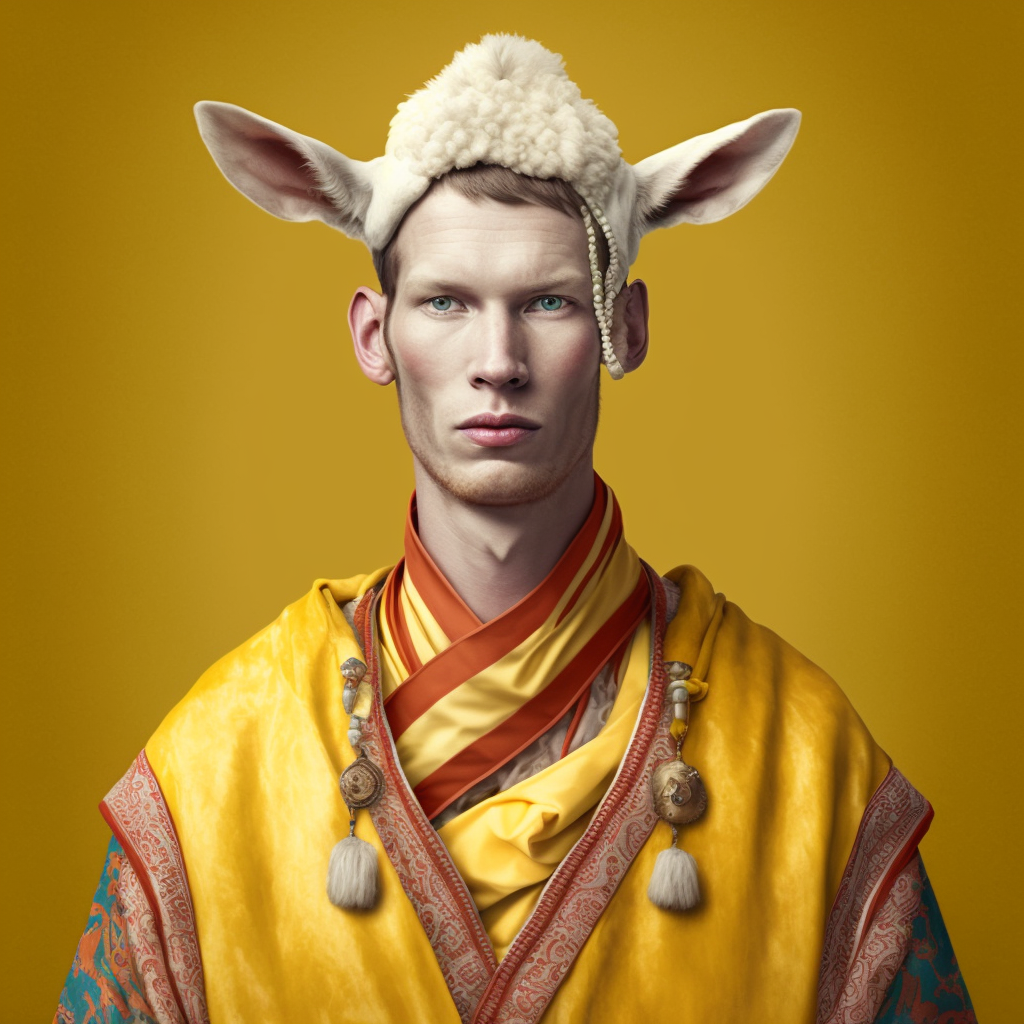
The taciturn vendor, who looked caucasian, wore a yellow jacket and a bonnet oddly reminiscent of a llama’s scalp and ears. The dish he was preparing made Youssef drool.
“What’s that?” he asked.
“This is Lorgh Drülp
, said the vendor. Ancient recipe from the silk road. Very rare. Very tasty.”
He smiled when Youssef ordered a full plate with a side of tsampa. He told him to sit and wait on a stool beside an old and wobbly table.
January 21, 2023 at 11:26 am #6423In reply to: Prompts of Madjourneys
Zara’s first quest:
entry level quirk: wandering off the track
The initial setting for this quest is a dense forest, where the paths are overgrown and rarely traveled. You find yourself alone and disoriented, with only a rough map and a compass to guide you.
Possible directions to investigate include:
Following a faint trail of footprints that lead deeper into the forest
Climbing a tall tree to get a better view of the surrounding area
Searching for a stream or river to use as a guide to find your way out of the forest
Possible characters to engage include:
A mysterious hermit who lives deep in the forest and is rumored to know the secrets of the land
A lost traveler who is also trying to find their way out of the forest
A group of bandits who have taken refuge in the forest and may try to steal from you or cause harm
Your objective is to find the Wanderlust tile, a small, intricately carved wooden tile depicting a person walking off the beaten path. This tile holds the key to unlocking your inner quirk of wandering off the track.
As proof of your progress in the game, you must find a way to incorporate this quirk into your real-life actions by taking a spontaneous detour on your next journey, whether it be physical or mental.
For Zara’s quest:
As you wander off the track, you come across a strange-looking building in the distance. Upon closer inspection, you realize it is the Flying Fish Inn. As you enter, you are greeted by the friendly owner, Idle. She tells you that she has heard of strange occurrences happening in the surrounding area and offers to help you in your quest
Emoji clue: 🐈🌳

Zara (the character in the game)
characteristics from previous prompts:
Zara is the leader of the group
 she is confident, and always ready for an adventure. She is a natural leader and has a strong sense of justice. She is also a tech-savvy person, always carrying a variety of gadgets with her, and is always the first to try out new technology.
Zara is the leader of the group, her color is red, her animal is a lion, and her secret name in a funny language is “Zaraloon”
Zara (the real life story character)
characteristics from previous prompts:
Zara Patara-Smythe is a 57-year-old woman of mixed heritage, her mother is Indian and her father is British. She has long, dark hair that she keeps in an untidy ponytail, dark brown eyes and a sharp jawline. She stands at 5’6″ and has a toned and athletic build. She usually wears practical clothing that allows her to move around easily, such as cargo pants and a tank top.
prompt quest:
Continue to investigate the mysterious cat she saw, possibly seeking out help from local animal experts or veterinarians.
Join Xavier and Yasmin in investigating the Flying Fish Inn, looking for clues and exploring the area for any potential leads on the game’s quest.January 15, 2023 at 11:42 am #6389In reply to: Newsreel from the Rim of the Realm
“What in the good name of our Lady, have these two been on?” Miss Bossy was at a loss for words while Ricardo was waiting sheepishly at her desk, as though he was expecting an outburst.
“Look, Ricardo, I’m not against a little tweaking for newsworthiness, but this takes twisting reality to a whole new level!Ricardo had just dropped their last article.
Local Hero at the Rescue – Stray Residents found after in a trip of a lifetime
article by Hilda Astoria & Continuity BrownIn a daring and heroic move, Nurse Trassie, a local hero and all-around fantastic human being, managed to track down and rescue three elderly women who had gone on an adventure of a lifetime. Sharon, Mavis, and Gloria (names may have been altered to preserve their anonymity) were residents of a UK nursing home who, in a moment of pure defiance and desire for adventure, decided to go off their meds and escape to the Nordics.
The three women, who had been feeling cooped up and underappreciated in their nursing home, decided to take matters into their own hands and embark on a journey to see the world. They had heard of the beautiful landscapes and friendly people of the Nordics and their rejuvenating traditional cures and were determined to experience it for themselves.
Their journey, however, was not without its challenges. They faced many obstacles, including harsh weather conditions and language barriers. But they were determined to press on, and their determination paid off when they were taken in by a kind-hearted local doctor who gave them asylum and helped them rehabilitate stray animals.
Nurse Trassie, who had been on the lookout for the women since their disappearance, finally caught wind of their whereabouts and set out to rescue them. She tracked them down to the Nordics, where she found them living in a small facility in the woods, surrounded by a menagerie of stray animals they had taken in and were nursing back to health, including rare orangutans retired from local circus.
Upon her arrival, Nurse Trassie was greeted with open arms by the women, who were overjoyed to see her. They told her of their adventures and showed her around their cabin, introducing her to the animals they had taken in and the progress they had made in rehabilitating them.
Nurse Trassie, who is known for her compassion and dedication to her patients, was deeply touched by the women’s story and their love for the animals. She knew that they needed to be back in the care of professionals and that the animals needed to be properly cared for, so she made arrangements to bring them back home.
The women were reluctant to leave their newfound home and the animals they had grown to love, but they knew that it was the right thing to do. They said their goodbyes and set off on the long journey back home with Nurse Trassie by their side.
The three women returned to their nursing home filled with stories to share, and Nurse Trassie was hailed as a hero for her efforts in rescuing them. They were greeted with cheers and applause from the staff and other residents, who were thrilled to have them back safe and sound.
Nurse Trassie, who is known for her sharp wit and sense of humor, commented on the situation with a tongue-in-cheek remark, “It’s not every day that you get to rescue three feisty elderlies from the wilds of the Nordics and bring them back to safety. I’m just glad I could be of service.”
In conclusion, the three women’s adventure in the Nordics may have been unorthodox, but it was an adventure nonetheless. They were able to see the world and help some animals in the process. Their story serves as a reminder to never give up on your dreams, no matter your age or circumstances. And of course, a big shoutout to Nurse Trassie for her heroic actions and dedication to her patients.
Bossy sighed. “It might do for now, but don’t let those two abuse the artificial intelligence to write article for them… I liked their old style better. This feels too… tidy. We’re not the A-News network, let’s not forget our purpose.”
Ricardo nodded. Miss Bossy had been more mellow since the sales of the newspaper had exploded during the pandemic. With people at home, looking for conspiracies and all, the newspaper had known a resurgence of interest, and they even had to hire new staff. Giles Gibber, Glimmer Gambol (came heavily recommended by Blithe, the PI friend of Hilda’s), Samuel Sproink and Fionna Flibbergibbet.
“And how is Sophie? That adventure into her past trauma was a bit much on her…” she mused.
“She’s doing alright” answered Ricardo. “She’s learning to hone her remote-viewing skills to send our staff into new mysteries to solve. With a bit of AI assist…”
“Oh, stop it already with your AI-this, AI-that! Hope there’ll still be room for some madness in all that neatly tidy purring of polite output.”
“That’s why we’re here for, I reckon.” Ric’ smiled wryly.
January 11, 2023 at 8:44 pm #6366In reply to: Train your subjective AI – text version
Asking the AI to expand on the glossary of the original Circle of Eights Story:
Locations
Malvina’s Cave: A dark and damp cave located in the heart of the Gripshawk mountains, known for its population of Glukenitch creatures.
Lan’ork: A vast and diverse continent known for its Eastern Lagunas, home to the Indogo flamingos. Dragon Head Peninsula: A rugged and mountainous region, home to the Langoat creatures and also known for its rich deposits of dragon ore.
Asgurdy: A sprawling desert region, known for its nomadic tribes who use Saurhse as mounts for transportation.
Golfindely: An idyllic coastal region known for its beautiful beaches and crystal clear waters, home to the Golfindel and Grake creatures.
Magical Schools
Dragonian Magic: A form of magic that is practiced by Dragonriders and Dragon tamers, which involves the manipulation of dragon energy and bonding with dragon companions.
Gripshawk Magic: A form of magic that is practiced by Gripshawks, which involves the manipulation of the natural elements and telepathic communication with other creatures.
Ugling Magic: A form of magic that is practiced by Uglings, which involves the use of charms, spells, and potions to manipulate the physical world.
Guilds
Dragon Riders Guild: A prestigious guild of dragon riders, responsible for maintaining peace and order in the world by using their dragon companions for protection and transportation.
Gripshawk Hunters Guild: A guild of skilled hunters who specialize in hunting and capturing exotic creatures for various purposes.
Ugling Alchemists Guild: A guild of alchemists and potion makers, who create various potions and elixirs for medicinal and magical purposes.
Organizations
The Order of the Buntifluën: A secret organization dedicated to the study and use of Buntifluën artefacts for the betterment of communication and understanding between sentient beings.
The Glubolín Network: A network of individuals who possess Glubolín devices, used for communication and sharing information across long distances.
The Sabulmantium Society: A society of scholars and adventurers who study the properties and uses of Sabulmantium devices for divination and navigation.
Here are a few new invented terms with their potential IPA pronunciations and definitions that would fit in this fantasy world:
Dragons:
Krynn [ ˈkrĭn ] : A subspecies of dragon known for its ability to control and manipulate time.
Creatures:
Kelpies [ ˈkĕl-pēz ] : Aquatic creatures resembling horses, known for their ability to shape-shift and lure unsuspecting victims into the water.
Magical Artefacts:
Dragonwhisper [ ˈdrā-gən-ˌhwis-pər ] : An ancient and powerful magical artifact, which allows the user to communicate and control dragons telepathically.
Necrotalisman [ ˈnĕk-rə-ˈtā-lĭz-mən ] : A magical artifact in the shape of a talisman that grants its wielder the ability to control and summon the dead.
Plants:
Blightthorn [ ˈblīt-ˌthôrn ] : A poisonous plant known for its dark purple flowers and thorny stem, its extract is used in dark magic
Faeleaf [ ˈfā-ˌlēf ] : A rare plant found in the deep forest known for its bright green leaves, its extract is used in healing potions
Locations:
The Shadowland [ ˈshā-dō-ˌland ] : A mysterious and dangerous land overrun by dark magic and controlled by Necromancers.
The Hidden Vale [ ˈhī-dən-ˈvāl ] : A secluded valley located deep in the mountains, home to the reclusive Faeleaf plants.
Organization:
The Necromancers’ Circle [ ˈnĕk-rə-ˈmän-sər-z-ˈsər-kəl ] : A secret organization of powerful necromancers who seek to expand their control over death and the dead.
Here are a few more invented terms with their potential IPA pronunciations and definitions that fit in this fantasy world, having less to do with necromancy, and more with various forms of consciousness or energy manipulation, magical or mythical creatures or species:
Creatures:
Eterneon [ ˈē-tər-ˈnē-ən ] : A species of winged creatures known for their ability to manipulate and harness the energy of the stars, they are highly sought after by astromancers and star-gazers.
Psicon [ ˈsī-ˌkän ] : A species of psychic creatures, known for their ability to read minds and influence emotions.
Magical Artefacts:
Energyshield [ ˈen-ər-jē-ˌshēld ] : A magical artifact that creates a protective barrier around the user, deflecting or absorbing any kind of energy-based attacks.
Empathstone [ ˈĕm-pāth-ˈstōn ] : A small, glowing stone which allows the user to sense and control the emotions of others.
Magical Schools:
Energyshaping [ ˈen-ər-jē-ˌshāp-ing ] : A school of magic that involves the manipulation and control of various forms of energy.
Empathymagic [ ˈĕm-pā-thē-ˈmaj-ik ] : A school of magic that involves the manipulation of emotions and the ability to sense the emotions of others.
Locations:
Eternity’s Edge [ ˈē-tər-nə-tēz-ˈēj] : A remote and mysterious cliff located high in the mountains, known for its strong emanations of star energy and rumored to be home to a hidden community of Eterneons.
Psicon’s Den [ ˈsī-kän-z-ˈdĕn] : A secret cave system located deep within the forest, it is said to be home to a colony of Psicon creatures.
Organizations:
The Energists Guild [ ˈen-ər-jist-z-ˈgild] : A powerful guild of magic users specializing in Energyshaping magic.
The Empath Council [ ˈĕm-pāth-ˈkoun-səl]: A secretive group of Empathymagic users, dedicated to the study and control of emotions.
March 11, 2022 at 12:52 pm #6282In reply to: The Elusive Samuel Housley and Other Family Stories
Magson
This unusual name is of early medieval English origin, and is one of the rare group of modern surnames classed as “metronymics”, where the original surname derived from the name of the first bearer’s mother, the majority of surnames being created from patronymics, that is, through the male side.
William Housley’s (1781-1848) great grandfather John Housley 1670- married Sarah Magson in 1700. She was also born in 1670, and both were born in Selston, Nottinghamshire, as was William.
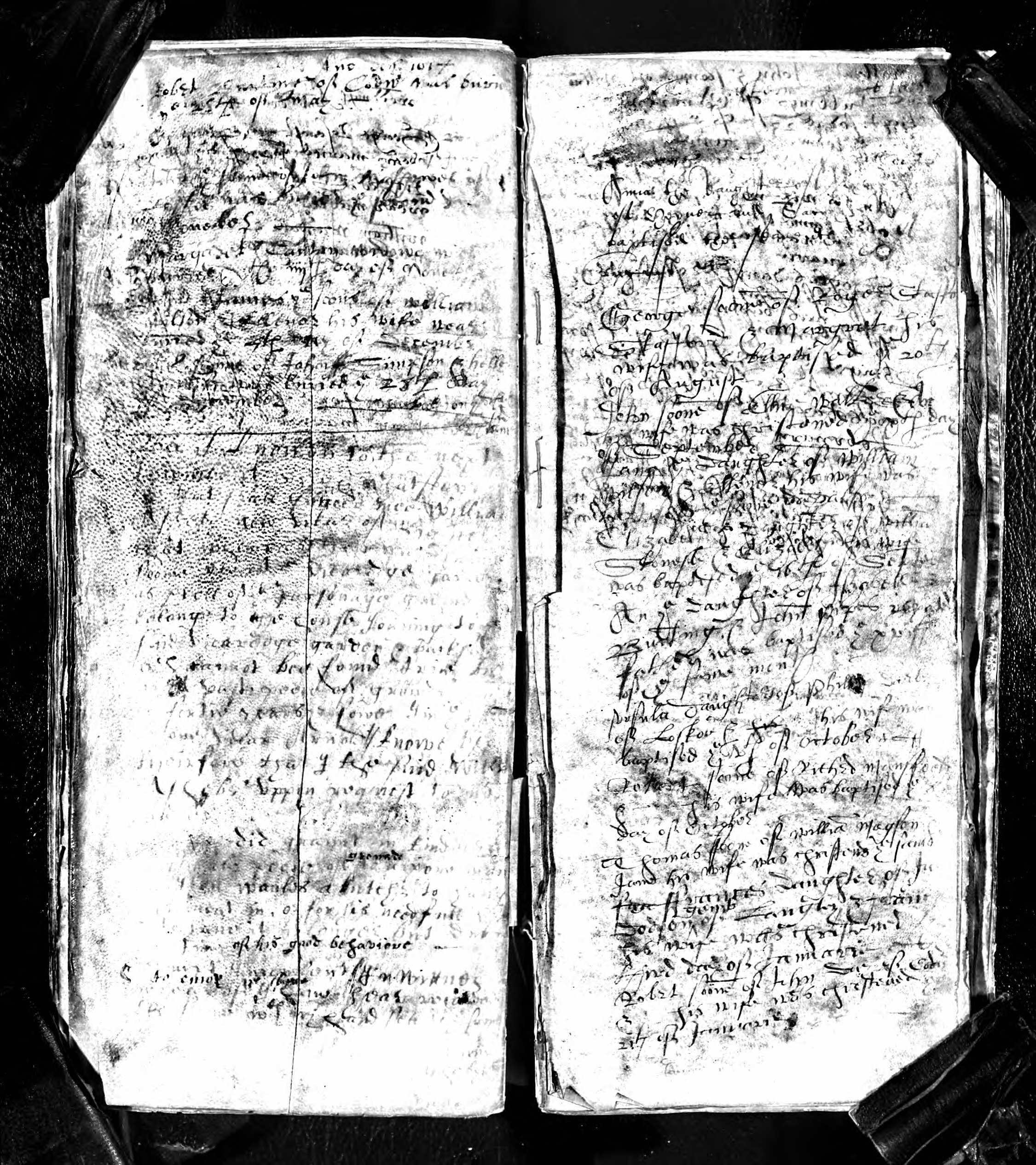
The parish records mention Magson’s in Selston and nearby Heanor as far back at 1580, but they are not easy to read:
 February 2, 2022 at 1:15 pm #6268
In reply to: The Elusive Samuel Housley and Other Family Stories
From Tanganyika with Love
continued part 9
With thanks to Mike Rushby.
Lyamungu 3rd January 1945
Dearest Family.
We had a novel Christmas this year. We decided to avoid the expense of
entertaining and being entertained at Lyamungu, and went off to spend Christmas
camping in a forest on the Western slopes of Kilimanjaro. George decided to combine
business with pleasure and in this way we were able to use Government transport.
We set out the day before Christmas day and drove along the road which skirts
the slopes of Kilimanjaro and first visited a beautiful farm where Philip Teare, the ex
Game Warden, and his wife Mary are staying. We had afternoon tea with them and then
drove on in to the natural forest above the estate and pitched our tent beside a small
clear mountain stream. We decorated the tent with paper streamers and a few small
balloons and John found a small tree of the traditional shape which we decorated where
it stood with tinsel and small ornaments.We put our beer, cool drinks for the children and bottles of fresh milk from Simba
Estate, in the stream and on Christmas morning they were as cold as if they had been in
the refrigerator all night. There were not many presents for the children, there never are,
but they do not seem to mind and are well satisfied with a couple of balloons apiece,
sweets, tin whistles and a book each.George entertain the children before breakfast. He can make a magical thing out
of the most ordinary balloon. The children watched entranced as he drew on his pipe
and then blew the smoke into the balloon. He then pinched the neck of the balloon
between thumb and forefinger and released the smoke in little puffs. Occasionally the
balloon ejected a perfect smoke ring and the forest rang with shouts of “Do it again
Daddy.” Another trick was to blow up the balloon to maximum size and then twist the
neck tightly before releasing. Before subsiding the balloon darted about in a crazy
fashion causing great hilarity. Such fun, at the cost of a few pence.After breakfast George went off to fish for trout. John and Jim decided that they
also wished to fish so we made rods out of sticks and string and bent pins and they
fished happily, but of course quite unsuccessfully, for hours. Both of course fell into the
stream and got soaked, but I was prepared for this, and the little stream was so shallow
that they could not come to any harm. Henry played happily in the sand and I had a
most peaceful morning.Hamisi roasted a chicken in a pot over the camp fire and the jelly set beautifully in the
stream. So we had grilled trout and chicken for our Christmas dinner. I had of course
taken an iced cake for the occasion and, all in all, it was a very successful Christmas day.
On Boxing day we drove down to the plains where George was to investigate a
report of game poaching near the Ngassari Furrow. This is a very long ditch which has
been dug by the Government for watering the Masai stock in the area. It is also used by
game and we saw herds of zebra and wildebeest, and some Grant’s Gazelle and
giraffe, all comparatively tame. At one point a small herd of zebra raced beside the lorry
apparently enjoying the fun of a gallop. They were all sleek and fat and looked wild and
beautiful in action.We camped a considerable distance from the water but this precaution did not
save us from the mosquitoes which launched a vicious attack on us after sunset, so that
we took to our beds unusually early. They were on the job again when we got up at
sunrise so I was very glad when we were once more on our way home.“I like Christmas safari. Much nicer that silly old party,” said John. I agree but I think
it is time that our children learned to play happily with others. There are no other young
children at Lyamungu though there are two older boys and a girl who go to boarding
school in Nairobi.On New Years Day two Army Officers from the military camp at Moshi, came for
tea and to talk game hunting with George. I think they rather enjoy visiting a home and
seeing children and pets around.Eleanor.
Lyamungu 14 May 1945
Dearest Family.
So the war in Europe is over at last. It is such marvellous news that I can hardly
believe it. To think that as soon as George can get leave we will go to England and
bring Ann and George home with us to Tanganyika. When we know when this leave can
be arranged we will want Kate to join us here as of course she must go with us to
England to meet George’s family. She has become so much a part of your lives that I
know it will be a wrench for you to give her up but I know that you will all be happy to
think that soon our family will be reunited.The V.E. celebrations passed off quietly here. We all went to Moshi to see the
Victory Parade of the King’s African Rifles and in the evening we went to a celebration
dinner at the Game Warden’s house. Besides ourselves the Moores had invited the
Commanding Officer from Moshi and a junior officer. We had a very good dinner and
many toasts including one to Mrs Moore’s brother, Oliver Milton who is fighting in Burma
and has recently been awarded the Military Cross.There was also a celebration party for the children in the grounds of the Moshi
Club. Such a spread! I think John and Jim sampled everything. We mothers were
having our tea separately and a friend laughingly told me to turn around and have a look.
I did, and saw the long tea tables now deserted by all the children but my two sons who
were still eating steadily, and finding the party more exciting than the game of Musical
Bumps into which all the other children had entered with enthusiasm.There was also an extremely good puppet show put on by the Italian prisoners
of war from the camp at Moshi. They had made all the puppets which included well
loved characters like Snow White and the Seven Dwarfs and the Babes in the Wood as
well as more sophisticated ones like an irritable pianist and a would be prima donna. The
most popular puppets with the children were a native askari and his family – a very
happy little scene. I have never before seen a puppet show and was as entranced as
the children. It is amazing what clever manipulation and lighting can do. I believe that the
Italians mean to take their puppets to Nairobi and am glad to think that there, they will
have larger audiences to appreciate their art.George has just come in, and I paused in my writing to ask him for the hundredth
time when he thinks we will get leave. He says I must be patient because it may be a
year before our turn comes. Shipping will be disorganised for months to come and we
cannot expect priority simply because we have been separated so long from our
children. The same situation applies to scores of other Government Officials.
I have decided to write the story of my childhood in South Africa and about our
life together in Tanganyika up to the time Ann and George left the country. I know you
will have told Kate these stories, but Ann and George were so very little when they left
home that I fear that they cannot remember much.My Mother-in-law will have told them about their father but she can tell them little
about me. I shall send them one chapter of my story each month in the hope that they
may be interested and not feel that I am a stranger when at last we meet again.Eleanor.
Lyamungu 19th September 1945
Dearest Family.
In a months time we will be saying good-bye to Lyamungu. George is to be
transferred to Mbeya and I am delighted, not only as I look upon Mbeya as home, but
because there is now a primary school there which John can attend. I feel he will make
much better progress in his lessons when he realises that all children of his age attend
school. At present he is putting up a strong resistance to learning to read and spell, but
he writes very neatly, does his sums accurately and shows a real talent for drawing. If
only he had the will to learn I feel he would do very well.Jim now just four, is too young for lessons but too intelligent to be interested in
the ayah’s attempts at entertainment. Yes I’ve had to engage a native girl to look after
Henry from 9 am to 12.30 when I supervise John’s Correspondence Course. She is
clean and amiable, but like most African women she has no initiative at all when it comes
to entertaining children. Most African men and youths are good at this.I don’t regret our stay at Lyamungu. It is a beautiful spot and the change to the
cooler climate after the heat of Morogoro has been good for all the children. John is still
tall for his age but not so thin as he was and much less pale. He is a handsome little lad
with his large brown eyes in striking contrast to his fair hair. He is wary of strangers but
very observant and quite uncanny in the way he sums up people. He seldom gets up
to mischief but I have a feeling he eggs Jim on. Not that Jim needs egging.Jim has an absolute flair for mischief but it is all done in such an artless manner that
it is not easy to punish him. He is a very sturdy child with a cap of almost black silky hair,
eyes brown, like mine, and a large mouth which is quick to smile and show most beautiful
white and even teeth. He is most popular with all the native servants and the Game
Scouts. The servants call Jim, ‘Bwana Tembo’ (Mr Elephant) because of his sturdy
build.Henry, now nearly two years old, is quite different from the other two in
appearance. He is fair complexioned and fair haired like Ann and Kate, with large, black
lashed, light grey eyes. He is a good child, not so merry as Jim was at his age, nor as
shy as John was. He seldom cries, does not care to be cuddled and is independent and
strong willed. The servants call Henry, ‘Bwana Ndizi’ (Mr Banana) because he has an
inexhaustible appetite for this fruit. Fortunately they are very inexpensive here. We buy
an entire bunch which hangs from a beam on the back verandah, and pluck off the
bananas as they ripen. This way there is no waste and the fruit never gets bruised as it
does in greengrocers shops in South Africa. Our three boys make a delightful and
interesting trio and I do wish you could see them for yourselves.We are delighted with the really beautiful photograph of Kate. She is an
extraordinarily pretty child and looks so happy and healthy and a great credit to you.
Now that we will be living in Mbeya with a school on the doorstep I hope that we will
soon be able to arrange for her return home.Eleanor.
c/o Game Dept. Mbeya. 30th October 1945
Dearest Family.
How nice to be able to write c/o Game Dept. Mbeya at the head of my letters.
We arrived here safely after a rather tiresome journey and are installed in a tiny house on
the edge of the township.We left Lyamungu early on the morning of the 22nd. Most of our goods had
been packed on the big Ford lorry the previous evening, but there were the usual
delays and farewells. Of our servants, only the cook, Hamisi, accompanied us to
Mbeya. Japhet, Tovelo and the ayah had to be paid off and largesse handed out.
Tovelo’s granny had come, bringing a gift of bananas, and she also brought her little
granddaughter to present a bunch of flowers. The child’s little scolded behind is now
completely healed. Gifts had to be found for them too.At last we were all aboard and what a squash it was! Our few pieces of furniture
and packing cases and trunks, the cook, his wife, the driver and the turney boy, who
were to take the truck back to Lyamungu, and all their bits and pieces, bunches of
bananas and Fanny the dog were all crammed into the body of the lorry. George, the
children and I were jammed together in the cab. Before we left George looked
dubiously at the tyres which were very worn and said gloomily that he thought it most
unlikely that we would make our destination, Dodoma.Too true! Shortly after midday, near Kwakachinja, we blew a back tyre and there
was a tedious delay in the heat whilst the wheel was changed. We were now without a
spare tyre and George said that he would not risk taking the Ford further than Babati,
which is less than half way to Dodoma. He drove very slowly and cautiously to Babati
where he arranged with Sher Mohammed, an Indian trader, for a lorry to take us to
Dodoma the next morning.It had been our intention to spend the night at the furnished Government
Resthouse at Babati but when we got there we found that it was already occupied by
several District Officers who had assembled for a conference. So, feeling rather
disgruntled, we all piled back into the lorry and drove on to a place called Bereku where
we spent an uncomfortable night in a tumbledown hut.Before dawn next morning Sher Mohammed’s lorry drove up, and there was a
scramble to dress by the light of a storm lamp. The lorry was a very dilapidated one and
there was already a native woman passenger in the cab. I felt so tired after an almost
sleepless night that I decided to sit between the driver and this woman with the sleeping
Henry on my knee. It was as well I did, because I soon found myself dosing off and
drooping over towards the woman. Had she not been there I might easily have fallen
out as the battered cab had no door. However I was alert enough when daylight came
and changed places with the woman to our mutual relief. She was now able to converse
with the African driver and I was able to enjoy the scenery and the fresh air!
George, John and Jim were less comfortable. They sat in the lorry behind the
cab hemmed in by packing cases. As the lorry was an open one the sun beat down
unmercifully upon them until George, ever resourceful, moved a table to the front of the
truck. The two boys crouched under this and so got shelter from the sun but they still had
to endure the dust. Fanny complicated things by getting car sick and with one thing and
another we were all jolly glad to get to Dodoma.We spent the night at the Dodoma Hotel and after hot baths, a good meal and a
good nights rest we cheerfully boarded a bus of the Tanganyika Bus Service next
morning to continue our journey to Mbeya. The rest of the journey was uneventful. We slept two nights on the road, the first at Iringa Hotel and the second at Chimala. We
reached Mbeya on the 27th.I was rather taken aback when I first saw the little house which has been allocated
to us. I had become accustomed to the spacious houses we had in Morogoro and
Lyamungu. However though the house is tiny it is secluded and has a long garden
sloping down to the road in front and another long strip sloping up behind. The front
garden is shaded by several large cypress and eucalyptus trees but the garden behind
the house has no shade and consists mainly of humpy beds planted with hundreds of
carnations sadly in need of debudding. I believe that the previous Game Ranger’s wife
cultivated the carnations and, by selling them, raised money for War Funds.
Like our own first home, this little house is built of sun dried brick. Its original
owners were Germans. It is now rented to the Government by the Custodian of Enemy
Property, and George has his office in another ex German house.This afternoon we drove to the school to arrange about enrolling John there. The
school is about four miles out of town. It was built by the German settlers in the late
1930’s and they were justifiably proud of it. It consists of a great assembly hall and
classrooms in one block and there are several attractive single storied dormitories. This
school was taken over by the Government when the Germans were interned on the
outbreak of war and many improvements have been made to the original buildings. The
school certainly looks very attractive now with its grassed playing fields and its lawns and
bright flower beds.The Union Jack flies from a tall flagpole in front of the Hall and all traces of the
schools German origin have been firmly erased. We met the Headmaster, Mr
Wallington, and his wife and some members of the staff. The school is co-educational
and caters for children from the age of seven to standard six. The leaving age is elastic
owing to the fact that many Tanganyika children started school very late because of lack
of educational facilities in this country.The married members of the staff have their own cottages in the grounds. The
Matrons have quarters attached to the dormitories for which they are responsible. I felt
most enthusiastic about the school until I discovered that the Headmaster is adamant
upon one subject. He utterly refuses to take any day pupils at the school. So now our
poor reserved Johnny will have to adjust himself to boarding school life.
We have arranged that he will start school on November 5th and I shall be very
busy trying to assemble his school uniform at short notice. The clothing list is sensible.
Boys wear khaki shirts and shorts on weekdays with knitted scarlet jerseys when the
weather is cold. On Sundays they wear grey flannel shorts and blazers with the silver
and scarlet school tie.Mbeya looks dusty, brown and dry after the lush evergreen vegetation of
Lyamungu, but I prefer this drier climate and there are still mountains to please the eye.
In fact the lower slopes of Lolesa Mountain rise at the upper end of our garden.Eleanor.
c/o Game Dept. Mbeya. 21st November 1945
Dearest Family.
We’re quite settled in now and I have got the little house fixed up to my
satisfaction. I have engaged a rather uncouth looking houseboy but he is strong and
capable and now that I am not tied down in the mornings by John’s lessons I am able to
go out occasionally in the mornings and take Jim and Henry to play with other children.
They do not show any great enthusiasm but are not shy by nature as John is.
I have had a good deal of heartache over putting John to boarding school. It
would have been different had he been used to the company of children outside his
own family, or if he had even known one child there. However he seems to be adjusting
himself to the life, though slowly. At least he looks well and tidy and I am quite sure that
he is well looked after.I must confess that when the time came for John to go to school I simply did not
have the courage to take him and he went alone with George, looking so smart in his
new uniform – but his little face so bleak. The next day, Sunday, was visiting day but the
Headmaster suggested that we should give John time to settle down and not visit him
until Wednesday.When we drove up to the school I spied John on the far side of the field walking
all alone. Instead of running up with glad greetings, as I had expected, he came almost
reluctently and had little to say. I asked him to show me his dormitory and classroom and
he did so politely as though I were a stranger. At last he volunteered some information.
“Mummy,” he said in an awed voice, Do you know on the night I came here they burnt a
man! They had a big fire and they burnt him.” After a blank moment the penny dropped.
Of course John had started school and November the fifth but it had never entered my
head to tell him about that infamous character, Guy Fawkes!I asked John’s Matron how he had settled down. “Well”, she said thoughtfully,
“John is very good and has not cried as many of the juniors do when they first come
here, but he seems to keep to himself all the time.” I went home very discouraged but
on the Sunday John came running up with another lad of about his own age.” This is my
friend Marks,” he announced proudly. I could have hugged Marks.Mbeya is very different from the small settlement we knew in the early 1930’s.
Gone are all the colourful characters from the Lupa diggings for the alluvial claims are all
worked out now, gone also are our old friends the Menzies from the Pub and also most
of the Government Officials we used to know. Mbeya has lost its character of a frontier
township and has become almost suburban.The social life revolves around two places, the Club and the school. The Club
which started out as a little two roomed building, has been expanded and the golf
course improved. There are also tennis courts and a good library considering the size of
the community. There are frequent parties and dances, though most of the club revenue
comes from Bar profits. The parties are relatively sober affairs compared with the parties
of the 1930’s.The school provides entertainment of another kind. Both Mr and Mrs Wallington
are good amateur actors and I am told that they run an Amateur Dramatic Society. Every
Wednesday afternoon there is a hockey match at the school. Mbeya town versus a
mixed team of staff and scholars. The match attracts almost the whole European
population of Mbeya. Some go to play hockey, others to watch, and others to snatch
the opportunity to visit their children. I shall have to try to arrange a lift to school when
George is away on safari.I have now met most of the local women and gladly renewed an old friendship
with Sheilagh Waring whom I knew two years ago at Morogoro. Sheilagh and I have
much in common, the same disregard for the trappings of civilisation, the same sense of
the ludicrous, and children. She has eight to our six and she has also been cut off by the
war from two of her children. Sheilagh looks too young and pretty to be the mother of so
large a family and is, in fact, several years younger than I am. her husband, Donald, is a
large quiet man who, as far as I can judge takes life seriously.Our next door neighbours are the Bank Manager and his wife, a very pleasant
couple though we seldom meet. I have however had correspondence with the Bank
Manager. Early on Saturday afternoon their houseboy brought a note. It informed me
that my son was disturbing his rest by precipitating a heart attack. Was I aware that my
son was about 30 feet up in a tree and balanced on a twig? I ran out and,sure enough,
there was Jim, right at the top of the tallest eucalyptus tree. It would be the one with the
mound of stones at the bottom! You should have heard me fluting in my most
wheedling voice. “Sweets, Jimmy, come down slowly dear, I’ve some nice sweets for
you.”I’ll bet that little story makes you smile. I remember how often you have told me
how, as a child, I used to make your hearts turn over because I had no fear of heights
and how I used to say, “But that is silly, I won’t fall.” I know now only too well, how you
must have felt.Eleanor.
c/o Game Dept. Mbeya. 14th January 1946
Dearest Family.
I hope that by now you have my telegram to say that Kate got home safely
yesterday. It was wonderful to have her back and what a beautiful child she is! Kate
seems to have enjoyed the train journey with Miss Craig, in spite of the tears she tells
me she shed when she said good-bye to you. She also seems to have felt quite at
home with the Hopleys at Salisbury. She flew from Salisbury in a small Dove aircraft
and they had a smooth passage though Kate was a little airsick.I was so excited about her home coming! This house is so tiny that I had to turn
out the little store room to make a bedroom for her. With a fresh coat of whitewash and
pretty sprigged curtains and matching bedspread, borrowed from Sheilagh Waring, the
tiny room looks most attractive. I had also iced a cake, made ice-cream and jelly and
bought crackers for the table so that Kate’s home coming tea could be a proper little
celebration.I was pleased with my preparations and then, a few hours before the plane was
due, my crowned front tooth dropped out, peg and all! When my houseboy wants to
describe something very tatty, he calls it “Second-hand Kabisa.” Kabisa meaning
absolutely. That is an apt description of how I looked and felt. I decided to try some
emergency dentistry. I think you know our nearest dentist is at Dar es Salaam five
hundred miles away.First I carefully dried the tooth and with a match stick covered the peg and base
with Durofix. I then took the infants rubber bulb enema, sucked up some heat from a
candle flame and pumped it into the cavity before filling that with Durofix. Then hopefully
I stuck the tooth in its former position and held it in place for several minutes. No good. I
sent the houseboy to a shop for Scotine and tried the whole process again. No good
either.When George came home for lunch I appealed to him for advice. He jokingly
suggested that a maize seed jammed into the space would probably work, but when
he saw that I really was upset he produced some chewing gum and suggested that I
should try that . I did and that worked long enough for my first smile anyway.
George and the three boys went to meet Kate but I remained at home to
welcome her there. I was afraid that after all this time away Kate might be reluctant to
rejoin the family but she threw her arms around me and said “Oh Mummy,” We both
shed a few tears and then we both felt fine.How gay Kate is, and what an infectious laugh she has! The boys follow her
around in admiration. John in fact asked me, “Is Kate a Princess?” When I said
“Goodness no, Johnny, she’s your sister,” he explained himself by saying, “Well, she
has such golden hair.” Kate was less complementary. When I tucked her in bed last night
she said, “Mummy, I didn’t expect my little brothers to be so yellow!” All three boys
have been taking a course of Atebrin, an anti-malarial drug which tinges skin and eyeballs
yellow.So now our tiny house is bursting at its seams and how good it feels to have one
more child under our roof. We are booked to sail for England in May and when we return
we will have Ann and George home too. Then I shall feel really content.Eleanor.
c/o Game Dept. Mbeya. 2nd March 1946
Dearest Family.
My life just now is uneventful but very busy. I am sewing hard and knitting fast to
try to get together some warm clothes for our leave in England. This is not a simple
matter because woollen materials are in short supply and very expensive, and now that
we have boarding school fees to pay for both Kate and John we have to budget very
carefully indeed.Kate seems happy at school. She makes friends easily and seems to enjoy
communal life. John also seems reconciled to school now that Kate is there. He no
longer feels that he is the only exile in the family. He seems to rub along with the other
boys of his age and has a couple of close friends. Although Mbeya School is coeducational
the smaller boys and girls keep strictly apart. It is considered extremely
cissy to play with girls.The local children are allowed to go home on Sundays after church and may bring
friends home with them for the day. Both John and Kate do this and Sunday is a very
busy day for me. The children come home in their Sunday best but bring play clothes to
change into. There is always a scramble to get them to bath and change again in time to
deliver them to the school by 6 o’clock.When George is home we go out to the school for the morning service. This is
taken by the Headmaster Mr Wallington, and is very enjoyable. There is an excellent
school choir to lead the singing. The service is the Church of England one, but is
attended by children of all denominations, except the Roman Catholics. I don’t think that
more than half the children are British. A large proportion are Greeks, some as old as
sixteen, and about the same number are Afrikaners. There are Poles and non-Nazi
Germans, Swiss and a few American children.All instruction is through the medium of English and it is amazing how soon all the
foreign children learn to chatter in English. George has been told that we will return to
Mbeya after our leave and for that I am very thankful as it means that we will still be living
near at hand when Jim and Henry start school. Because many of these children have to
travel many hundreds of miles to come to school, – Mbeya is a two day journey from the
railhead, – the school year is divided into two instead of the usual three terms. This
means that many of these children do not see their parents for months at a time. I think
this is a very sad state of affairs especially for the seven and eight year olds but the
Matrons assure me , that many children who live on isolated farms and stations are quite
reluctant to go home because they miss the companionship and the games and
entertainment that the school offers.My only complaint about the life here is that I see far too little of George. He is
kept extremely busy on this range and is hardly at home except for a few days at the
months end when he has to be at his office to check up on the pay vouchers and the
issue of ammunition to the Scouts. George’s Range takes in the whole of the Southern
Province and the Southern half of the Western Province and extends to the border with
Northern Rhodesia and right across to Lake Tanganyika. This vast area is patrolled by
only 40 Game Scouts because the Department is at present badly under staffed, due
partly to the still acute shortage of rifles, but even more so to the extraordinary reluctance
which the Government shows to allocate adequate funds for the efficient running of the
Department.The Game Scouts must see that the Game Laws are enforced, protect native
crops from raiding elephant, hippo and other game animals. Report disease amongst game and deal with stock raiding lions. By constantly going on safari and checking on
their work, George makes sure the range is run to his satisfaction. Most of the Game
Scouts are fine fellows but, considering they receive only meagre pay for dangerous
and exacting work, it is not surprising that occasionally a Scout is tempted into accepting
a bribe not to report a serious infringement of the Game Laws and there is, of course,
always the temptation to sell ivory illicitly to unscrupulous Indian and Arab traders.
Apart from supervising the running of the Range, George has two major jobs.
One is to supervise the running of the Game Free Area along the Rhodesia –
Tanganyika border, and the other to hunt down the man-eating lions which for years have
terrorised the Njombe District killing hundreds of Africans. Yes I know ‘hundreds’ sounds
fantastic, but this is perfectly true and one day, when the job is done and the official
report published I shall send it to you to prove it!I hate to think of the Game Free Area and so does George. All the game from
buffalo to tiny duiker has been shot out in a wide belt extending nearly two hundred
miles along the Northern Rhodesia -Tanganyika border. There are three Europeans in
widely spaced camps who supervise this slaughter by African Game Guards. This
horrible measure is considered necessary by the Veterinary Departments of
Tanganyika, Rhodesia and South Africa, to prevent the cattle disease of Rinderpest
from spreading South.When George is home however, we do relax and have fun. On the Saturday
before the school term started we took Kate and the boys up to the top fishing camp in
the Mporoto Mountains for her first attempt at trout fishing. There are three of these
camps built by the Mbeya Trout Association on the rivers which were first stocked with
the trout hatched on our farm at Mchewe. Of the three, the top camp is our favourite. The
scenery there is most glorious and reminds me strongly of the rivers of the Western
Cape which I so loved in my childhood.The river, the Kawira, flows from the Rungwe Mountain through a narrow valley
with hills rising steeply on either side. The water runs swiftly over smooth stones and
sometimes only a foot or two below the level of the banks. It is sparkling and shallow,
but in places the water is deep and dark and the banks high. I had a busy day keeping
an eye on the boys, especially Jim, who twice climbed out on branches which overhung
deep water. “Mummy, I was only looking for trout!”How those kids enjoyed the freedom of the camp after the comparative
restrictions of town. So did Fanny, she raced about on the hills like a mad dog chasing
imaginary rabbits and having the time of her life. To escape the noise and commotion
George had gone far upstream to fish and returned in the late afternoon with three good
sized trout and four smaller ones. Kate proudly showed George the two she had caught
with the assistance or our cook Hamisi. I fear they were caught in a rather unorthodox
manner but this I kept a secret from George who is a stickler for the orthodox in trout
fishing.Eleanor.
Jacksdale England 24th June 1946
Dearest Family.
Here we are all together at last in England. You cannot imagine how wonderful it
feels to have the whole Rushby family reunited. I find myself counting heads. Ann,
George, Kate, John, Jim, and Henry. All present and well. We had a very pleasant trip
on the old British India Ship Mantola. She was crowded with East Africans going home
for the first time since the war, many like us, eagerly looking forward to a reunion with their
children whom they had not seen for years. There was a great air of anticipation and
good humour but a little anxiety too.“I do hope our children will be glad to see us,” said one, and went on to tell me
about a Doctor from Dar es Salaam who, after years of separation from his son had
recently gone to visit him at his school. The Doctor had alighted at the railway station
where he had arranged to meet his son. A tall youth approached him and said, very
politely, “Excuse me sir. Are you my Father?” Others told me of children who had
become so attached to their relatives in England that they gave their parents a very cool
reception. I began to feel apprehensive about Ann and George but fortunately had no
time to mope.Oh, that washing and ironing for six! I shall remember for ever that steamy little
laundry in the heat of the Red Sea and queuing up for the ironing and the feeling of guilt
at the size of my bundle. We met many old friends amongst the passengers, and made
some new ones, so the voyage was a pleasant one, We did however have our
anxious moments.John was the first to disappear and we had an anxious search for him. He was
quite surprised that we had been concerned. “I was just talking to my friend Chinky
Chinaman in his workshop.” Could John have called him that? Then, when I returned to
the cabin from dinner one night I found Henry swigging Owbridge’s Lung Tonic. He had
drunk half the bottle neat and the label said ‘five drops in water’. Luckily it did not harm
him.Jim of course was forever risking his neck. George had forbidden him to climb on
the railings but he was forever doing things which no one had thought of forbidding him
to do, like hanging from the overhead pipes on the deck or standing on the sill of a
window and looking down at the well deck far below. An Officer found him doing this and
gave me the scolding.Another day he climbed up on a derrick used for hoisting cargo. George,
oblivious to this was sitting on the hatch cover with other passengers reading a book. I
was in the wash house aft on the same deck when Kate rushed in and said, “Mummy
come and see Jim.” Before I had time to more than gape, the butcher noticed Jim and
rushed out knife in hand. “Get down from there”, he bellowed. Jim got, and with such
speed that he caught the leg or his shorts on a projecting piece of metal. The cotton
ripped across the seam from leg to leg and Jim stood there for a humiliating moment in a
sort of revealing little kilt enduring the smiles of the passengers who had looked up from
their books at the butcher’s shout.That incident cured Jim of his urge to climb on the ship but he managed to give
us one more fright. He was lost off Dover. People from whom we enquired said, “Yes
we saw your little boy. He was by the railings watching that big aircraft carrier.” Now Jim,
though mischievous , is very obedient. It was not until George and I had conducted an
exhaustive search above and below decks that I really became anxious. Could he have
fallen overboard? Jim was returned to us by an unamused Officer. He had been found
in one of the lifeboats on the deck forbidden to children.Our ship passed Dover after dark and it was an unforgettable sight. Dover Castle
and the cliffs were floodlit for the Victory Celebrations. One of the men passengers sat
down at the piano and played ‘The White Cliffs of Dover’, and people sang and a few
wept. The Mantola docked at Tilbury early next morning in a steady drizzle.
There was a dockers strike on and it took literally hours for all the luggage to be
put ashore. The ships stewards simply locked the public rooms and went off leaving the
passengers shivering on the docks. Eventually damp and bedraggled, we arrived at St
Pancras Station and were given a warm welcome by George’s sister Cath and her
husband Reg Pears, who had come all the way from Nottingham to meet us.
As we had to spend an hour in London before our train left for Nottingham,
George suggested that Cath and I should take the children somewhere for a meal. So
off we set in the cold drizzle, the boys and I without coats and laden with sundry
packages, including a hand woven native basket full of shoes. We must have looked like
a bunch of refugees as we stood in the hall of The Kings Cross Station Hotel because a
supercilious waiter in tails looked us up and down and said, “I’m afraid not Madam”, in
answer to my enquiry whether the hotel could provide lunch for six.
Anyway who cares! We had lunch instead at an ABC tea room — horrible
sausage and a mound or rather sloppy mashed potatoes, but very good ice-cream.
After the train journey in a very grimy third class coach, through an incredibly green and
beautiful countryside, we eventually reached Nottingham and took a bus to Jacksdale,
where George’s mother and sisters live in large detached houses side by side.
Ann and George were at the bus stop waiting for us, and thank God, submitted
to my kiss as though we had been parted for weeks instead of eight years. Even now
that we are together again my heart aches to think of all those missed years. They have
not changed much and I would have picked them out of a crowd, but Ann, once thin and
pale, is now very rosy and blooming. She still has her pretty soft plaits and her eyes are
still a clear calm blue. Young George is very striking looking with sparkling brown eyes, a
ready, slightly lopsided smile, and charming manners.Mother, and George’s elder sister, Lottie Giles, welcomed us at the door with the
cheering news that our tea was ready. Ann showed us the way to mother’s lovely lilac
tiled bathroom for a wash before tea. Before I had even turned the tap, Jim had hung
form the glass towel rail and it lay in three pieces on the floor. There have since been
similar tragedies. I can see that life in civilisation is not without snags.I am most grateful that Ann and George have accepted us so naturally and
affectionately. Ann said candidly, “Mummy, it’s a good thing that you had Aunt Cath with
you when you arrived because, honestly, I wouldn’t have known you.”Eleanor.
Jacksdale England 28th August 1946
Dearest Family.
I am sorry that I have not written for some time but honestly, I don’t know whether
I’m coming or going. Mother handed the top floor of her house to us and the
arrangement was that I should tidy our rooms and do our laundry and Mother would
prepare the meals except for breakfast. It looked easy at first. All the rooms have wall to
wall carpeting and there was a large vacuum cleaner in the box room. I was told a
window cleaner would do the windows.Well the first time I used the Hoover I nearly died of fright. I pressed the switch
and immediately there was a roar and the bag filled with air to bursting point, or so I
thought. I screamed for Ann and she came at the run. I pointed to the bag and shouted
above the din, “What must I do? It’s going to burst!” Ann looked at me in astonishment
and said, “But Mummy that’s the way it works.” I couldn’t have her thinking me a
complete fool so I switched the current off and explained to Ann how it was that I had
never seen this type of equipment in action. How, in Tanganyika , I had never had a
house with electricity and that, anyway, electric equipment would be superfluous
because floors are of cement which the houseboy polishes by hand, one only has a
few rugs or grass mats on the floor. “But what about Granny’s house in South Africa?’”
she asked, so I explained about your Josephine who threatened to leave if you
bought a Hoover because that would mean that you did not think she kept the house
clean. The sad fact remains that, at fourteen, Ann knows far more about housework than I
do, or rather did! I’m learning fast.The older children all go to school at different times in the morning. Ann leaves first
by bus to go to her Grammar School at Sutton-in-Ashfield. Shortly afterwards George
catches a bus for Nottingham where he attends the High School. So they have
breakfast in relays, usually scrambled egg made from a revolting dried egg mixture.
Then there are beds to make and washing and ironing to do, so I have little time for
sightseeing, though on a few afternoons George has looked after the younger children
and I have gone on bus tours in Derbyshire. Life is difficult here with all the restrictions on
foodstuffs. We all have ration books so get our fair share but meat, fats and eggs are
scarce and expensive. The weather is very wet. At first I used to hang out the washing
and then rush to bring it in when a shower came. Now I just let it hang.We have left our imprint upon my Mother-in-law’s house for ever. Henry upset a
bottle of Milk of Magnesia in the middle of the pale fawn bedroom carpet. John, trying to
be helpful and doing some dusting, broke one of the delicate Dresden china candlesticks
which adorn our bedroom mantelpiece.Jim and Henry have wrecked the once
professionally landscaped garden and all the boys together bored a large hole through
Mother’s prized cherry tree. So now Mother has given up and gone off to Bournemouth
for a much needed holiday. Once a week I have the capable help of a cleaning woman,
called for some reason, ‘Mrs Two’, but I have now got all the cooking to do for eight. Mrs
Two is a godsend. She wears, of all things, a print mob cap with a hole in it. Says it
belonged to her Grandmother. Her price is far beyond Rubies to me, not so much
because she does, in a couple of hours, what it takes me all day to do, but because she
sells me boxes of fifty cigarettes. Some non-smoking relative, who works in Players
tobacco factory, passes on his ration to her. Until Mrs Two came to my rescue I had
been starved of cigarettes. Each time I asked for them at the shop the grocer would say,
“Are you registered with us?” Only very rarely would some kindly soul sell me a little
packet of five Woodbines.England is very beautiful but the sooner we go home to Tanganyika, the better.
On this, George and I and the children agree.Eleanor.
Jacksdale England 20th September 1946
Dearest Family.
Our return passages have now been booked on the Winchester Castle and we
sail from Southampton on October the sixth. I look forward to returning to Tanganyika but
hope to visit England again in a few years time when our children are older and when
rationing is a thing of the past.I have grown fond of my Sisters-in-law and admire my Mother-in-law very much.
She has a great sense of humour and has entertained me with stories of her very
eventful life, and told me lots of little stories of the children which did not figure in her
letters. One which amused me was about young George. During one of the air raids
early in the war when the sirens were screaming and bombers roaring overhead Mother
made the two children get into the cloak cupboard under the stairs. Young George
seemed quite unconcerned about the planes and the bombs but soon an anxious voice
asked in the dark, “Gran, what will I do if a spider falls on me?” I am afraid that Mother is
going to miss Ann and George very much.I had a holiday last weekend when Lottie and I went up to London on a spree. It
was a most enjoyable weekend, though very rushed. We placed ourselves in the
hands of Thos. Cook and Sons and saw most of the sights of London and were run off
our feet in the process. As you all know London I shall not describe what I saw but just
to say that, best of all, I enjoyed walking along the Thames embankment in the evening
and the changing of the Guard at Whitehall. On Sunday morning Lottie and I went to
Kew Gardens and in the afternoon walked in Kensington Gardens.We went to only one show, ‘The Skin of our Teeth’ starring Vivienne Leigh.
Neither of us enjoyed the performance at all and regretted having spent so much on
circle seats. The show was far too highbrow for my taste, a sort of satire on the survival
of the human race. Miss Leigh was unrecognisable in a blond wig and her voice strident.
However the night was not a dead loss as far as entertainment was concerned as we
were later caught up in a tragicomedy at our hotel.We had booked communicating rooms at the enormous Imperial Hotel in Russell
Square. These rooms were comfortably furnished but very high up, and we had a rather
terrifying and dreary view from the windows of the enclosed courtyard far below. We
had some snacks and a chat in Lottie’s room and then I moved to mine and went to bed.
I had noted earlier that there was a special lock on the outer door of my room so that
when the door was closed from the inside it automatically locked itself.
I was just dropping off to sleep when I heard a hammering which seemed to
come from my wardrobe. I got up, rather fearfully, and opened the wardrobe door and
noted for the first time that the wardrobe was set in an opening in the wall and that the
back of the wardrobe also served as the back of the wardrobe in the room next door. I
quickly shut it again and went to confer with Lottie.Suddenly a male voice was raised next door in supplication, “Mary Mother of
God, Help me! They’ve locked me in!” and the hammering resumed again, sometimes
on the door, and then again on the back of the wardrobe of the room next door. Lottie
had by this time joined me and together we listened to the prayers and to the
hammering. Then the voice began to threaten, “If you don’t let me out I’ll jump out of the
window.” Great consternation on our side of the wall. I went out into the passage and
called through the door, “You’re not locked in. Come to your door and I’ll tell you how to
open it.” Silence for a moment and then again the prayers followed by a threat. All the
other doors in the corridor remained shut.Luckily just then a young man and a woman came walking down the corridor and I
explained the situation. The young man hurried off for the night porter who went into the
next door room. In a matter of minutes there was peace next door. When the night
porter came out into the corridor again I asked for an explanation. He said quite casually,
“It’s all right Madam. He’s an Irish Gentleman in Show Business. He gets like this on a
Saturday night when he has had a drop too much. He won’t give any more trouble
now.” And he didn’t. Next morning at breakfast Lottie and I tried to spot the gentleman in
the Show Business, but saw no one who looked like the owner of that charming Irish
voice.George had to go to London on business last Monday and took the older
children with him for a few hours of sight seeing. They returned quite unimpressed.
Everything was too old and dirty and there were far too many people about, but they
had enjoyed riding on the escalators at the tube stations, and all agreed that the highlight
of the trip was, “Dad took us to lunch at the Chicken Inn.”Now that it is almost time to leave England I am finding the housework less of a
drudgery, Also, as it is school holiday time, Jim and Henry are able to go on walks with
the older children and so use up some of their surplus energy. Cath and I took the
children (except young George who went rabbit shooting with his uncle Reg, and
Henry, who stayed at home with his dad) to the Wakes at Selston, the neighbouring
village. There were the roundabouts and similar contraptions but the side shows had
more appeal for the children. Ann and Kate found a stall where assorted prizes were
spread out on a sloping table. Anyone who could land a penny squarely on one of
these objects was given a similar one as a prize.I was touched to see that both girls ignored all the targets except a box of fifty
cigarettes which they were determined to win for me. After numerous attempts, Kate
landed her penny successfully and you would have loved to have seen her radiant little
face.Eleanor.
Dar es Salaam 22nd October 1946
Dearest Family.
Back in Tanganyika at last, but not together. We have to stay in Dar es Salaam
until tomorrow when the train leaves for Dodoma. We arrived yesterday morning to find
all the hotels filled with people waiting to board ships for England. Fortunately some
friends came to the rescue and Ann, Kate and John have gone to stay with them. Jim,
Henry and I are sleeping in a screened corner of the lounge of the New Africa Hotel, and
George and young George have beds in the Palm Court of the same hotel.We travelled out from England in the Winchester Castle under troopship
conditions. We joined her at Southampton after a rather slow train journey from
Nottingham. We arrived after dark and from the station we could see a large ship in the
docks with a floodlit red funnel. “Our ship,” yelled the children in delight, but it was not the
Winchester Castle but the Queen Elizabeth, newly reconditioned.We had hoped to board our ship that evening but George made enquiries and
found that we would not be allowed on board until noon next day. Without much hope,
we went off to try to get accommodation for eight at a small hotel recommended by the
taxi driver. Luckily for us there was a very motherly woman at the reception desk. She
looked in amusement at the six children and said to me, “Goodness are all these yours,
ducks? Then she called over her shoulder, “Wilf, come and see this lady with lots of
children. We must try to help.” They settled the problem most satisfactorily by turning
two rooms into a dormitory.In the morning we had time to inspect bomb damage in the dock area of
Southampton. Most of the rubble had been cleared away but there are still numbers of
damaged buildings awaiting demolition. A depressing sight. We saw the Queen Mary
at anchor, still in her drab war time paint, but magnificent nevertheless.
The Winchester Castle was crammed with passengers and many travelled in
acute discomfort. We were luckier than most because the two girls, the three small boys
and I had a stateroom to ourselves and though it was stripped of peacetime comforts,
we had a private bathroom and toilet. The two Georges had bunks in a huge men-only
dormitory somewhere in the bowls of the ship where they had to share communal troop
ship facilities. The food was plentiful but unexciting and one had to queue for afternoon
tea. During the day the decks were crowded and there was squatting room only. The
many children on board got bored.Port Said provided a break and we were all entertained by the ‘Gully Gully’ man
and his conjuring tricks, and though we had no money to spend at Simon Artz, we did at
least have a chance to stretch our legs. Next day scores of passengers took ill with
sever stomach upsets, whether from food poisoning, or as was rumoured, from bad
water taken on at the Egyptian port, I don’t know. Only the two Georges in our family
were affected and their attacks were comparatively mild.As we neared the Kenya port of Mombassa, the passengers for Dar es Salaam
were told that they would have to disembark at Mombassa and continue their journey in
a small coaster, the Al Said. The Winchester Castle is too big for the narrow channel
which leads to Dar es Salaam harbour.From the wharf the Al Said looked beautiful. She was once the private yacht of
the Sultan of Zanzibar and has lovely lines. Our admiration lasted only until we were
shown our cabins. With one voice our children exclaimed, “Gosh they stink!” They did, of
a mixture of rancid oil and sweat and stale urine. The beds were not yet made and the
thin mattresses had ominous stains on them. John, ever fastidious, lifted his mattress and two enormous cockroaches scuttled for cover.We had a good homely lunch served by two smiling African stewards and
afterwards we sat on deck and that was fine too, though behind ones enjoyment there
was the thought of those stuffy and dirty cabins. That first night nearly everyone,
including George and our older children, slept on deck. Women occupied deck chairs
and men and children slept on the bare decks. Horrifying though the idea was, I decided
that, as Jim had a bad cough, he, Henry and I would sleep in our cabin.When I announced my intention of sleeping in the cabin one of the passengers
gave me some insecticide spray which I used lavishly, but without avail. The children
slept but I sat up all night with the light on, determined to keep at least their pillows clear
of the cockroaches which scurried about boldly regardless of the light. All the next day
and night we avoided the cabins. The Al Said stopped for some hours at Zanzibar to
offload her deck cargo of live cattle and packing cases from the hold. George and the
elder children went ashore for a walk but I felt too lazy and there was plenty to watch
from deck.That night I too occupied a deck chair and slept quite comfortably, and next
morning we entered the palm fringed harbour of Dar es Salaam and were home.Eleanor.
Mbeya 1st November 1946
Dearest Family.
Home at last! We are all most happily installed in a real family house about three
miles out of Mbeya and near the school. This house belongs to an elderly German and
has been taken over by the Custodian of Enemy Property and leased to the
Government.The owner, whose name is Shenkel, was not interned but is allowed to occupy a
smaller house on the Estate. I found him in the garden this morning lecturing the children
on what they may do and may not do. I tried to make it quite clear to him that he was not
our landlord, though he clearly thinks otherwise. After he had gone I had to take two
aspirin and lie down to recover my composure! I had been warned that he has this effect
on people.Mr Shenkel is a short and ugly man, his clothes are stained with food and he
wears steel rimmed glasses tied round his head with a piece of dirty elastic because
one earpiece is missing. He speaks with a thick German accent but his English is fluent
and I believe he is a cultured and clever man. But he is maddening. The children were
more amused than impressed by his exhortations and have happily Christened our
home, ‘Old Shenks’.The house has very large grounds as the place is really a derelict farm. It suits us
down to the ground. We had no sooner unpacked than George went off on safari after
those maneating lions in the Njombe District. he accounted for one, and a further two
jointly with a Game Scout, before we left for England. But none was shot during the five
months we were away as George’s relief is quite inexperienced in such work. George
thinks that there are still about a dozen maneaters at large. His theory is that a female
maneater moved into the area in 1938 when maneating first started, and brought up her
cubs to be maneaters, and those cubs in turn did the same. The three maneating lions
that have been shot were all in very good condition and not old and maimed as
maneaters usually are.George anticipates that it will be months before all these lions are accounted for
because they are constantly on the move and cover a very large area. The lions have to
be hunted on foot because they range over broken country covered by bush and fairly
dense thicket.I did a bit of shooting myself yesterday and impressed our African servants and
the children and myself. What a fluke! Our houseboy came to say that there was a snake
in the garden, the biggest he had ever seen. He said it was too big to kill with a stick and
would I shoot it. I had no gun but a heavy .450 Webley revolver and I took this and
hurried out with the children at my heels.The snake turned out to be an unusually large puff adder which had just shed its
skin. It looked beautiful in a repulsive way. So flanked by servants and children I took
aim and shot, not hitting the head as I had planned, but breaking the snake’s back with
the heavy bullet. The two native boys then rushed up with sticks and flattened the head.
“Ma you’re a crack shot,” cried the kids in delighted surprise. I hope to rest on my laurels
for a long, long while.Although there are only a few weeks of school term left the four older children will
start school on Monday. Not only am I pleased with our new home here but also with
the staff I have engaged. Our new houseboy, Reuben, (but renamed Robin by our
children) is not only cheerful and willing but intelligent too, and Jumbe, the wood and
garden boy, is a born clown and a source of great entertainment to the children.I feel sure that we are all going to be very happy here at ‘Old Shenks!.
Eleanor.
January 28, 2022 at 8:17 pm #6263In reply to: The Elusive Samuel Housley and Other Family Stories
From Tanganyika with Love
continued ~ part 4
With thanks to Mike Rushby.
Mchewe Estate. 31st January 1936
Dearest Family,
Life is very quiet just now. Our neighbours have left and I miss them all especially
Joni who was always a great bearer of news. We also grew fond of his Swedish
brother-in-law Max, whose loud ‘Hodi’ always brought a glad ‘Karibu’ from us. His wife,
Marion, I saw less often. She is not strong and seldom went visiting but has always
been friendly and kind and ready to share her books with me.Ann’s birthday is looming ahead and I am getting dreadfully anxious that her
parcels do not arrive in time. I am delighted that you were able to get a good head for
her doll, dad, but horrified to hear that it was so expensive. You would love your
‘Charming Ann’. She is a most responsible little soul and seems to have outgrown her
mischievous ways. A pity in a way, I don’t want her to grow too serious. You should see
how thoroughly Ann baths and towels herself. She is anxious to do Georgie and Kate
as well.I did not mean to teach Ann to write until after her fifth birthday but she has taught
herself by copying the large print in newspaper headlines. She would draw a letter and
ask me the name and now I find that at four Ann knows the whole alphabet. The front
cement steps is her favourite writing spot. She uses bits of white clay we use here for
whitewashing.Coffee prices are still very low and a lot of planters here and at Mbosi are in a
mess as they can no longer raise mortgages on their farms or get advances from the
Bank against their crops. We hear many are leaving their farms to try their luck on the
Diggings.George is getting fed up too. The snails are back on the shamba and doing
frightful damage. Talk of the plagues of Egypt! Once more they are being collected in
piles and bashed into pulp. The stench on the shamba is frightful! The greybeards in the
village tell George that the local Chief has put a curse on the farm because he is angry
that the Government granted George a small extension to the farm two years ago! As
the Chief was consulted at the time and was agreeable this talk of a curse is nonsense
but goes to show how the uneducated African put all disasters down to witchcraft.With much love,
Eleanor.Mchewe Estate. 9th February 1936
Dearest Family,
Ann’s birthday yesterday was not quite the gay occasion we had hoped. The
seventh was mail day so we sent a runner for the mail, hoping against hope that your
parcel containing the dolls head had arrived. The runner left for Mbeya at dawn but, as it
was a very wet day, he did not return with the mail bag until after dark by which time Ann
was fast asleep. My heart sank when I saw the parcel which contained the dolls new
head. It was squashed quite flat. I shed a few tears over that shattered head, broken
quite beyond repair, and George felt as bad about it as I did. The other parcel arrived in
good shape and Ann loves her little sewing set, especially the thimble, and the nursery
rhymes are a great success.Ann woke early yesterday and began to open her parcels. She said “But
Mummy, didn’t Barbara’s new head come?” So I had to show her the fragments.
Instead of shedding the flood of tears I expected, Ann just lifted the glass eyes in her
hand and said in a tight little voice “Oh poor Barbara.” George saved the situation. as
usual, by saying in a normal voice,”Come on Ann, get up and lets play your new
records.” So we had music and sweets before breakfast. Later I removed Barbara’s
faded old blond wig and gummed on the glossy new brown one and Ann seems quite
satisfied.Last night, after the children were tucked up in bed, we discussed our financial
situation. The coffee trees that have survived the plagues of borer beetle, mealie bugs
and snails look strong and fine, but George says it will be years before we make a living
out of the farm. He says he will simply have to make some money and he is leaving for
the Lupa on Saturday to have a look around on the Diggings. If he does decide to peg
a claim and work it he will put up a wattle and daub hut and the children and I will join him
there. But until such time as he strikes gold I shall have to remain here on the farm and
‘Keep the Home Fires Burning’.Now don’t go and waste pity on me. Women all over the country are having to
stay at home whilst their husbands search for a livelihood. I am better off than most
because I have a comfortable little home and loyal servants and we still have enough
capitol to keep the wolf from the door. Anyway this is the rainy season and hardly the
best time to drag three small children around the sodden countryside on prospecting
safaris.So I’ll stay here at home and hold thumbs that George makes a lucky strike.
Heaps of love to all,
Eleanor.Mchewe Estate. 27th February 1936
Dearest Family,
Well, George has gone but here we are quite safe and cosy. Kate is asleep and
Ann and Georgie are sprawled on the couch taking it in turns to enumerate the things
God has made. Every now and again Ann bothers me with an awkward question. “Did
God make spiders? Well what for? Did he make weeds? Isn’t He silly, mummy? She is
becoming a very practical person. She sews surprisingly well for a four year old and has
twice made cakes in the past week, very sweet and liberally coloured with cochineal and
much appreciated by Georgie.I have been without George for a fortnight and have adapted myself to my new
life. The children are great company during the day and I have arranged my evenings so
that they do not seem long. I am determined that when George comes home he will find
a transformed wife. I read an article entitled ‘Are you the girl he married?’ in a magazine
last week and took a good look in the mirror and decided that I certainly was not! Hair dry,
skin dry, and I fear, a faint shadow on the upper lip. So now I have blown the whole of
your Christmas Money Order on an order to a chemist in Dar es Salaam for hair tonic,
face cream and hair remover and am anxiously awaiting the parcel.In the meantime, after tucking the children into bed at night, I skip on the verandah
and do the series of exercises recommended in the magazine article. After this exertion I
have a leisurely bath followed by a light supper and then read or write letters to pass
the time until Kate’s ten o’clock feed. I have arranged for Janey to sleep in the house.
She comes in at 9.30 pm and makes up her bed on the living room floor by the fire.The days are by no means uneventful. The day before yesterday the biggest
troop of monkeys I have ever seen came fooling around in the trees and on the grass
only a few yards from the house. These monkeys were the common grey monkeys
with black faces. They came in all sizes and were most entertaining to watch. Ann and
Georgie had a great time copying their antics and pulling faces at the monkeys through
the bedroom windows which I hastily closed.Thomas, our headman, came running up and told me that this troop of monkeys
had just raided his maize shamba and asked me to shoot some of them. I would not of
course do this. I still cannot bear to kill any animal, but I fired a couple of shots in the air
and the monkeys just melted away. It was fantastic, one moment they were there and
the next they were not. Ann and Georgie thought I had been very unkind to frighten the
poor monkeys but honestly, when I saw what they had done to my flower garden, I
almost wished I had hardened my heart and shot one or two.The children are all well but Ann gave me a nasty fright last week. I left Ann and
Georgie at breakfast whilst I fed Fanny, our bull terrier on the back verandah. Suddenly I
heard a crash and rushed inside to find Ann’s chair lying on its back and Ann beside it on
the floor perfectly still and with a paper white face. I shouted for Janey to bring water and
laid Ann flat on the couch and bathed her head and hands. Soon she sat up with a wan
smile and said “I nearly knocked my head off that time, didn’t I.” She must have been
standing on the chair and leaning against the back. Our brick floors are so terribly hard that
she might have been seriously hurt.However she was none the worse for the fall, but Heavens, what an anxiety kids
are.Lots of love,
EleanorMchewe Estate. 12th March 1936
Dearest Family,
It was marvellous of you to send another money order to replace the one I spent
on cosmetics. With this one I intend to order boots for both children as a protection from
snake bite, though from my experience this past week the threat seems to be to the
head rather than the feet. I was sitting on the couch giving Kate her morning milk from a
cup when a long thin snake fell through the reed ceiling and landed with a thud just behind
the couch. I shouted “Nyoka, Nyoka!” (Snake,Snake!) and the houseboy rushed in with
a stick and killed the snake. I then held the cup to Kate’s mouth again but I suppose in
my agitation I tipped it too much because the baby choked badly. She gasped for
breath. I quickly gave her a sharp smack on the back and a stream of milk gushed
through her mouth and nostrils and over me. Janey took Kate from me and carried her
out into the fresh air on the verandah and as I anxiously followed her through the door,
another long snake fell from the top of the wall just missing me by an inch or so. Luckily
the houseboy still had the stick handy and dispatched this snake also.The snakes were a pair of ‘boomslangs’, not nice at all, and all day long I have
had shamba boys coming along to touch hands and say “Poli Memsahib” – “Sorry
madam”, meaning of course ‘Sorry you had a fright.’Apart from that one hectic morning this has been a quiet week. Before George
left for the Lupa he paid off most of the farm hands as we can now only afford a few
labourers for the essential work such as keeping the weeds down in the coffee shamba.
There is now no one to keep the grass on the farm roads cut so we cannot use the pram
when we go on our afternoon walks. Instead Janey carries Kate in a sling on her back.
Janey is a very clean slim woman, and her clothes are always spotless, so Kate keeps
cool and comfortable. Ann and Georgie always wear thick overalls on our walks as a
protection against thorns and possible snakes. We usually make our way to the
Mchewe River where Ann and Georgie paddle in the clear cold water and collect shiny
stones.The cosmetics parcel duly arrived by post from Dar es Salaam so now I fill the
evenings between supper and bed time attending to my face! The much advertised
cream is pink and thick and feels revolting. I smooth it on before bedtime and keep it on
all night. Just imagine if George could see me! The advertisements promise me a skin
like a rose in six weeks. What a surprise there is in store for George!You will have been wondering what has happened to George. Well on the Lupa
he heard rumours of a new gold strike somewhere in the Sumbawanga District. A couple
of hundred miles from here I think, though I am not sure where it is and have no one to
ask. You look it up on the map and tell me. John Molteno is also interested in this and
anxious to have it confirmed so he and George have come to an agreement. John
Molteno provided the porters for the journey together with prospecting tools and
supplies but as he cannot leave his claims, or his gold buying business, George is to go
on foot to the area of the rumoured gold strike and, if the strike looks promising will peg
claims in both their names.The rainy season is now at its height and the whole countryside is under water. All
roads leading to the area are closed to traffic and, as there are few Europeans who
would attempt the journey on foot, George proposes to get a head start on them by
making this uncomfortable safari. I have just had my first letter from George since he left
on this prospecting trip. It took ages to reach me because it was sent by runner to
Abercorn in Northern Rhodesia, then on by lorry to Mpika where it was put on a plane
for Mbeya. George writes the most charming letters which console me a little upon our
all too frequent separations.His letter was cheerful and optimistic, though reading between the lines I should
say he had a grim time. He has reached Sumbawanga after ‘a hell of a trip’, to find that
the rumoured strike was at Mpanda and he had a few more days of foot safari ahead.
He had found the trip from the Lupa even wetter than he had expected. The party had
three days of wading through swamps sometimes waist deep in water. Of his sixteen
porters, four deserted an the second day out and five others have had malaria and so
been unable to carry their loads. He himself is ‘thin but very fit’, and he sounds full of
beans and writes gaily of the marvellous holiday we will have if he has any decent luck! I
simply must get that mink and diamonds complexion.The frustrating thing is that I cannot write back as I have no idea where George is
now.With heaps of love,
Eleanor.Mchewe Estate. 24th March 1936
Dearest Family,
How kind you are. Another parcel from home. Although we are very short
of labourers I sent a special runner to fetch it as Ann simply couldn’t bear the suspense
of waiting to see Brenda, “My new little girl with plaits.” Thank goodness Brenda is
unbreakable. I could not have born another tragedy. She really is an exquisite little doll
and has hardly been out of Ann’s arms since arrival. She showed Brenda proudly to all
the staff. The kitchen boy’s face was a study. His eyes fairly came out on sticks when he
saw the dolls eyes not only opening and shutting, but moving from side to side in that
incredibly lifelike way. Georgie loves his little model cars which he carries around all day
and puts under his pillow at night.As for me, I am enchanted by my very smart new frock. Janey was so lavish with
her compliments when I tried the frock on, that in a burst of generosity I gave her that
rather tartish satin and lace trousseau nighty, and she was positively enthralled. She
wore it that very night when she appeared as usual to doss down by the fire.
By the way it was Janey’s turn to have a fright this week. She was in the
bathroom washing the children’s clothes in an outsize hand basin when it happened. As
she took Georgie’s overalls from the laundry basket a large centipede ran up her bare
arm. Luckily she managed to knock the centipede off into the hot water in the hand basin.
It was a brute, about six inches long of viciousness with a nasty sting. The locals say that
the bite is much worse than a scorpions so Janey had a lucky escape.Kate cut her first two teeth yesterday and will, I hope, sleep better now. I don’t
feel that pink skin food is getting a fair trial with all those broken nights. There is certainly
no sign yet of ‘The skin he loves to touch”. Kate, I may say, is rosy and blooming. She
can pull herself upright providing she has something solid to hold on to. She is so plump
I have horrible visions of future bow legs so I push her down, but she always bobs up
again.Both Ann and Georgie are mad on books. Their favourites are ‘Barbar and
Celeste” and, of all things, ‘Struvel Peter’ . They listen with absolute relish to the sad tale
of Harriet who played with matches.I have kept a laugh for the end. I am hoping that it will not be long before George
comes home and thought it was time to take the next step towards glamour, so last
Wednesday after lunch I settled the children on their beds and prepared to remove the ,
to me, obvious down on my upper lip. (George always loyally says that he can’t see
any.) Well I got out the tube of stuff and carefully followed the directions. I smoothed a
coating on my upper lip. All this was watched with great interest by the children, including
the baby, who stood up in her cot for a better view. Having no watch, I had propped
the bedroom door open so that I could time the operation by the cuckoo clock in the
living room. All the children’s surprised comments fell on deaf ears. I would neither talk
nor smile for fear of cracking the hair remover which had set hard. The set time was up
and I was just about to rinse the remover off when Kate slipped, knocking her head on
the corner of the cot. I rushed to the rescue and precious seconds ticked off whilst I
pacified her.So, my dears, when I rinsed my lip, not only the plaster and the hair came away
but the skin as well and now I really did have a Ronald Coleman moustache – a crimson
one. I bathed it, I creamed it, powdered it but all to no avail. Within half an hour my lip
had swollen until I looked like one of those Duckbilled West African women. Ann’s
comments, “Oh Mummy, you do look funny. Georgie, doesn’t Mummy look funny?”
didn’t help to soothe me and the last straw was that just then there was the sound of a car drawing up outside – the first car I had heard for months. Anyway, thank heaven, it
was not George, but the representative of a firm which sells agricultural machinery and
farm implements, looking for orders. He had come from Dar es Salaam and had not
heard that all the planters from this district had left their farms. Hospitality demanded that I
should appear and offer tea. I did not mind this man because he was a complete
stranger and fat, middle aged and comfortable. So I gave him tea, though I didn’t
attempt to drink any myself, and told him the whole sad tale.Fortunately much of the swelling had gone next day and only a brown dryness
remained. I find myself actually hoping that George is delayed a bit longer. Of one thing
I am sure. If ever I grow a moustache again, it stays!Heaps of love from a sadder but wiser,
EleanorMchewe Estate. 3rd April 1936
Dearest Family,
Sound the trumpets, beat the drums. George is home again. The safari, I am sad
to say, was a complete washout in more ways than one. Anyway it was lovely to be
together again and we don’t yet talk about the future. The home coming was not at all as
I had planned it. I expected George to return in our old A.C. car which gives ample
warning of its arrival. I had meant to wear my new frock and make myself as glamourous
as possible, with our beautiful babe on one arm and our other jewels by my side.
This however is what actually happened. Last Saturday morning at about 2 am , I
thought I heard someone whispering my name. I sat up in bed, still half asleep, and
there was George at the window. He was thin and unshaven and the tiredest looking
man I have ever seen. The car had bogged down twenty miles back along the old Lupa
Track, but as George had had no food at all that day, he decided to walk home in the
bright moonlight.This is where I should have served up a tasty hot meal but alas, there was only
the heal of a loaf and no milk because, before going to bed I had given the remaining
milk to the dog. However George seemed too hungry to care what he ate. He made a
meal off a tin of bully, a box of crustless cheese and the bread washed down with cup
after cup of black tea. Though George was tired we talked for hours and it was dawn
before we settled down to sleep.During those hours of talk George described his nightmarish journey. He started
up the flooded Rukwa Valley and there were days of wading through swamp and mud
and several swollen rivers to cross. George is a strong swimmer and the porters who
were recruited in that area, could also swim. There remained the problem of the stores
and of Kianda the houseboy who cannot swim. For these they made rough pole rafts
which they pulled across the rivers with ropes. Kianda told me later that he hopes never
to make such a journey again. He swears that the raft was submerged most of the time
and that he was dragged through the rivers underwater! You should see the state of
George’s clothes which were packed in a supposedly water tight uniform trunk. The
whole lot are mud stained and mouldy.To make matters more trying for George he was obliged to live mostly on
porters rations, rice and groundnut oil which he detests. As all the district roads were
closed the little Indian Sores in the remote villages he passed had been unable to
replenish their stocks of European groceries. George would have been thinner had it not
been for two Roman Catholic missions enroute where he had good meals and dry
nights. The Fathers are always wonderfully hospitable to wayfarers irrespective of
whether or not they are Roman Catholics. George of course is not a Catholic. One finds
the Roman Catholic missions right out in the ‘Blue’ and often on spots unhealthy to
Europeans. Most of the Fathers are German or Dutch but they all speak a little English
and in any case one can always fall back on Ki-Swahili.George reached his destination all right but it soon became apparent that reports
of the richness of the strike had been greatly exaggerated. George had decided that
prospects were brighter on the Lupa than on the new strike so he returned to the Lupa
by the way he had come and, having returned the borrowed equipment decided to
make his way home by the shortest route, the old and now rarely used road which
passes by the bottom of our farm.The old A.C. had been left for safe keeping at the Roman Catholic Galala
Mission 40 miles away, on George’s outward journey, and in this old car George, and
the houseboy Kianda , started for home. The road was indescribably awful. There were long stretches that were simply one big puddle, in others all the soil had been washed
away leaving the road like a rocky river bed. There were also patches where the tall
grass had sprung up head high in the middle of the road,
The going was slow because often the car bogged down because George had
no wheel chains and he and Kianda had the wearisome business of digging her out. It
was just growing dark when the old A.C. settled down determinedly in the mud for the
last time. They could not budge her and they were still twenty miles from home. George
decided to walk home in the moonlight to fetch help leaving Kianda in charge of the car
and its contents and with George’s shot gun to use if necessary in self defence. Kianda
was reluctant to stay but also not prepared to go for help whilst George remained with
the car as lions are plentiful in that area. So George set out unarmed in the moonlight.
Once he stopped to avoid a pride of lion coming down the road but he circled safely
around them and came home without any further alarms.Kianda said he had a dreadful night in the car, “With lions roaming around the car
like cattle.” Anyway the lions did not take any notice of the car or of Kianda, and the next
day George walked back with all our farm boys and dug and pushed the car out of the
mud. He brought car and Kianda back without further trouble but the labourers on their
way home were treed by the lions.The wet season is definitely the time to stay home.
Lots and lots of love,
EleanorMchewe Estate. 30th April 1936
Dearest Family,
Young George’s third birthday passed off very well yesterday. It started early in
the morning when he brought his pillow slip of presents to our bed. Kate was already
there and Ann soon joined us. Young George liked all the presents you sent, especially
the trumpet. It has hardly left his lips since and he is getting quite smart about the finger
action.We had quite a party. Ann and I decorated the table with Christmas tree tinsel
and hung a bunch of balloons above it. Ann also decorated young George’s chair with
roses and phlox from the garden. I had made and iced a fruit cake but Ann begged to
make a plain pink cake. She made it entirely by herself though I stood by to see that
she measured the ingredients correctly. When the cake was baked I mixed some soft
icing in a jug and she poured it carefully over the cake smoothing the gaps with her
fingers!During the party we had the gramophone playing and we pulled crackers and
wore paper hats and altogether had a good time. I forgot for a while that George is
leaving again for the Lupa tomorrow for an indefinite time. He was marvellous at making
young George’s party a gay one. You will have noticed the change from Georgie to
young George. Our son declares that he now wants to be called George, “Like Dad”.
He an Ann are a devoted couple and I am glad that there is only a fourteen
months difference in their ages. They play together extremely well and are very
independent which is just as well for little Kate now demands a lot of my attention. My
garden is a real cottage garden and looks very gay and colourful. There are hollyhocks
and Snapdragons, marigolds and phlox and of course the roses and carnations which, as
you know, are my favourites. The coffee shamba does not look so good because the
small labour force, which is all we can afford, cannot cope with all the weeds. You have
no idea how things grow during the wet season in the tropics.Nothing alarming ever seems to happen when George is home, so I’m afraid this
letter is rather dull. I wanted you to know though, that largely due to all your gifts of toys
and sweets, Georgie’s 3rd birthday party went with a bang.Your very affectionate,
EleanorMchewe Estate. 17th September 1936
Dearest Family,
I am sorry to hear that Mummy worries about me so much. “Poor Eleanor”,
indeed! I have a quite exceptional husband, three lovely children, a dear little home and
we are all well.It is true that I am in rather a rut but what else can we do? George comes
home whenever he can and what excitement there is when he does come. He cannot
give me any warning because he has to take advantage of chance lifts from the Diggings
to Mbeya, but now that he is prospecting nearer home he usually comes walking over
the hills. About 50 miles of rough going. Really and truly I am all right. Although our diet is
monotonous we have plenty to eat. Eggs and milk are cheap and fruit plentiful and I
have a good cook so can devote all my time to the children. I think it is because they are
my constant companions that Ann and Georgie are so grown up for their years.
I have no ayah at present because Janey has been suffering form rheumatism
and has gone home for one of her periodic rests. I manage very well without her except
in the matter of the afternoon walks. The outward journey is all right. George had all the
grass cut on his last visit so I am able to push the pram whilst Ann, George and Fanny
the dog run ahead. It is the uphill return trip that is so trying. Our walk back is always the
same, down the hill to the river where the children love to play and then along the car
road to the vegetable garden. I never did venture further since the day I saw a leopard
jump on a calf. I did not tell you at the time as I thought you might worry. The cattle were
grazing on a small knoll just off our land but near enough for me to have a clear view.
Suddenly the cattle scattered in all directions and we heard the shouts of the herd boys
and saw – or rather had the fleeting impression- of a large animal jumping on a calf. I
heard the herd boy shout “Chui, Chui!” (leopard) and believe me, we turned in our
tracks and made for home. To hasten things I picked up two sticks and told the children
that they were horses and they should ride them home which they did with
commendable speed.Ann no longer rides Joseph. He became increasingly bad tempered and a
nuisance besides. He took to rolling all over my flower beds though I had never seen
him roll anywhere else. Then one day he kicked Ann in the chest, not very hard but
enough to send her flying. Now George has given him to the native who sells milk to us
and he seems quite happy grazing with the cattle.With love to you all,
Eleanor.Mchewe Estate. 2nd October 1936
Dearest Family,
Since I last wrote George has been home and we had a lovely time as usual.
Whilst he was here the District Commissioner and his wife called. Mr Pollock told
George that there is to be a big bush clearing scheme in some part of the Mbeya
District to drive out Tsetse Fly. The game in the area will have to be exterminated and
there will probably be a job for George shooting out the buffalo. The pay would be
good but George says it is a beastly job. Although he is a professional hunter, he hates
slaughter.Mrs P’s real reason for visiting the farm was to invite me to stay at her home in
Mbeya whilst she and her husband are away in Tukuyu. Her English nanny and her small
daughter will remain in Mbeya and she thought it might be a pleasant change for us and
a rest for me as of course Nanny will do the housekeeping. I accepted the invitation and I
think I will go on from there to Tukuyu and visit my friend Lillian Eustace for a fortnight.
She has given us an open invitation to visit her at any time.I had a letter from Dr Eckhardt last week, telling me that at a meeting of all the
German Settlers from Mbeya, Tukuyu and Mbosi it had been decided to raise funds to
build a school at Mbeya. They want the British Settlers to co-operate in this and would
be glad of a subscription from us. I replied to say that I was unable to afford a
subscription at present but would probably be applying for a teaching job.
The Eckhardts are the leaders of the German community here and are ardent
Nazis. For this reason they are unpopular with the British community but he is the only
doctor here and I must say they have been very decent to us. Both of them admire
George. George has still not had any luck on the Lupa and until he makes a really
promising strike it is unlikely that the children and I will join him. There is no fresh milk there
and vegetables and fruit are imported from Mbeya and Iringa and are very expensive.
George says “You wouldn’t be happy on the diggings anyway with a lot of whores and
their bastards!”Time ticks away very pleasantly here. Young George and Kate are blooming
and I keep well. Only Ann does not look well. She is growing too fast and is listless and
pale. If I do go to Mbeya next week I shall take her to the doctor to be overhauled.
We do not go for our afternoon walks now that George has returned to the Lupa.
That leopard has been around again and has killed Tubbage that cowardly Alsatian. We
gave him to the village headman some months ago. There is no danger to us from the
leopard but I am terrified it might get Fanny, who is an excellent little watchdog and
dearly loved by all of us. Yesterday I sent a note to the Boma asking for a trap gun and
today the farm boys are building a trap with logs.I had a mishap this morning in the garden. I blundered into a nest of hornets and
got two stings in the left arm above the elbow. Very painful at the time and the place is
still red and swollen.Much love to you all,
Eleanor.Mchewe Estate. 10th October 1936
Dearest Family,
Well here we are at Mbeya, comfortably installed in the District Commissioner’s
house. It is one of two oldest houses in Mbeya and is a charming gabled place with tiled
roof. The garden is perfectly beautiful. I am enjoying the change very much. Nanny
Baxter is very entertaining. She has a vast fund of highly entertaining tales of the goings
on amongst the British Aristocracy, gleaned it seems over the nursery teacup in many a
Stately Home. Ann and Georgie are enjoying the company of other children.
People are very kind about inviting us out to tea and I gladly accept these
invitations but I have turned down invitations to dinner and one to a dance at the hotel. It
is no fun to go out at night without George. There are several grass widows at the pub
whose husbands are at the diggings. They have no inhibitions about parties.
I did have one night and day here with George, he got the chance of a lift and
knowing that we were staying here he thought the chance too good to miss. He was
also anxious to hear the Doctor’s verdict on Ann. I took Ann to hospital on my second
day here. Dr Eckhardt said there was nothing specifically wrong but that Ann is a highly
sensitive type with whom the tropics does not agree. He advised that Ann should
spend a year in a more temperate climate and that the sooner she goes the better. I felt
very discouraged to hear this and was most relieved when George turned up
unexpectedly that evening. He phoo-hood Dr Eckhardt’s recommendation and next
morning called in Dr Aitkin, the Government Doctor from Chunya and who happened to
be in Mbeya.Unfortunately Dr Aitkin not only confirmed Dr Eckhardt’s opinion but said that he
thought Ann should stay out of the tropics until she had passed adolescence. I just don’t
know what to do about Ann. She is a darling child, very sensitive and gentle and a
lovely companion to me. Also she and young George are inseparable and I just cannot
picture one without the other. I know that you would be glad to have Ann but how could
we bear to part with her?Your worried but affectionate,
Eleanor.Tukuyu. 23rd October 1936
Dearest Family,
As you see we have moved to Tukuyu and we are having a lovely time with
Lillian Eustace. She gave us such a warm welcome and has put herself out to give us
every comfort. She is a most capable housekeeper and I find her such a comfortable
companion because we have the same outlook in life. Both of us are strictly one man
women and that is rare here. She has a two year old son, Billy, who is enchanted with
our rolly polly Kate and there are other children on the station with whom Ann and
Georgie can play. Lillian engaged a temporary ayah for me so I am having a good rest.
All the children look well and Ann in particular seems to have benefited by the
change to a cooler climate. She has a good colour and looks so well that people all
exclaim when I tell them, that two doctors have advised us to send Ann out of the
country. Perhaps after all, this holiday in Tukuyu will set her up.We had a trying journey from Mbeya to Tukuyu in the Post Lorry. The three
children and I were squeezed together on the front seat between the African driver on
one side and a vast German on the other. Both men smoked incessantly – the driver
cigarettes, and the German cheroots. The cab was clouded with a blue haze. Not only
that! I suddenly felt a smarting sensation on my right thigh. The driver’s cigarette had
burnt a hole right through that new checked linen frock you sent me last month.
I had Kate on my lap all the way but Ann and Georgie had to stand against the
windscreen all the way. The fat German offered to take Ann on his lap but she gave him
a very cold “No thank you.” Nor did I blame her. I would have greatly enjoyed the drive
under less crowded conditions. The scenery is gorgeous. One drives through very high
country crossing lovely clear streams and at one point through rain forest. As it was I
counted the miles and how thankful I was to see the end of the journey.
In the days when Tanganyika belonged to the Germans, Tukuyu was the
administrative centre for the whole of the Southern Highlands Province. The old German
Fort is still in use as Government offices and there are many fine trees which were
planted by the Germans. There is a large prosperous native population in this area.
They go in chiefly for coffee and for bananas which form the basis of their diet.
There are five British married couples here and Lillian and I go out to tea most
mornings. In the afternoon there is tennis or golf. The gardens here are beautiful because
there is rain or at least drizzle all the year round. There are even hedge roses bordering
some of the district roads. When one walks across the emerald green golf course or
through the Boma gardens, it is hard to realise that this gentle place is Tropical Africa.
‘Such a green and pleasant land’, but I think I prefer our corner of Tanganyika.Much love,
Eleanor.Mchewe. 12th November 1936
Dearest Family,
We had a lovely holiday but it is so nice to be home again, especially as Laza,
the local Nimrod, shot that leopard whilst we were away (with his muzzleloader gun). He
was justly proud of himself, and I gave him a tip so that he could buy some native beer
for a celebration. I have never seen one of theses parties but can hear the drums and
sounds of merrymaking, especially on moonlight nights.Our house looks so fresh and uncluttered. Whilst I was away, the boys
whitewashed the house and my houseboy had washed all the curtains, bedspreads,
and loose covers and watered the garden. If only George were here it would be
heaven.Ann looked so bonny at Tukuyu that I took her to the Government Doctor there
hoping that he would find her perfectly healthy, but alas he endorsed the finding of the
other two doctors so, when an opportunity offers, I think I shall have to send Ann down
to you for a long holiday from the Tropics. Mother-in-law has offered to fetch her next
year but England seems so far away. With you she will at least be on the same
continent.I left the children for the first time ever, except for my stay in hospital when Kate
was born, to go on an outing to Lake Masoko in the Tukuyu district, with four friends.
Masoko is a beautiful, almost circular crater lake and very very deep. A detachment of
the King’s African Rifles are stationed there and occupy the old German barracks
overlooking the lake.We drove to Masoko by car and spent the afternoon there as guests of two
British Army Officers. We had a good tea and the others went bathing in the lake but i
could not as I did not have a costume. The Lake was as beautiful as I had been lead to
imagine and our hosts were pleasant but I began to grow anxious as the afternoon
advanced and my friends showed no signs of leaving. I was in agonies when they
accepted an invitation to stay for a sundowner. We had this in the old German beer
garden overlooking the Lake. It was beautiful but what did I care. I had promised the
children that I would be home to give them their supper and put them to bed. When I
did at length return to Lillian’s house I found the situation as I had expected. Ann, with her
imagination had come to the conclusion that I never would return. She had sobbed
herself into a state of exhaustion. Kate was screaming in sympathy and George 2 was
very truculent. He wouldn’t even speak to me. Poor Lillian had had a trying time.
We did not return to Mbeya by the Mail Lorry. Bill and Lillian drove us across to
Mbeya in their new Ford V8 car. The children chattered happily in the back of the car
eating chocolate and bananas all the way. I might have known what would happen! Ann
was dreadfully and messily car sick.I engaged the Mbeya Hotel taxi to drive us out to the farm the same afternoon
and I expect it will be a long time before we leave the farm again.Lots and lots of love to all,
Eleanor.Chunya 27th November 1936
Dearest Family,
You will be surprised to hear that we are all together now on the Lupa goldfields.
I have still not recovered from my own astonishment at being here. Until last Saturday
night I never dreamed of this move. At about ten o’clock I was crouched in the inglenook
blowing on the embers to make a fire so that I could heat some milk for Kate who is
cutting teeth and was very restless. Suddenly I heard a car outside. I knew it must be
George and rushed outside storm lamp in hand. Sure enough, there was George
standing by a strange car, and beaming all over his face. “Something for you my love,”
he said placing a little bundle in my hand. It was a knotted handkerchief and inside was a
fine gold nugget.George had that fire going in no time, Kate was given the milk and half an aspirin
and settles down to sleep, whilst George and I sat around for an hour chatting over our
tea. He told me that he had borrowed the car from John Molteno and had come to fetch
me and the children to join him on the diggings for a while. It seems that John, who has a
camp at Itewe, a couple of miles outside the township of Chunya, the new
Administrative Centre of the diggings, was off to the Cape to visit his family for a few
months. John had asked George to run his claims in his absence and had given us the
loan of his camp and his car.George had found the nugget on his own claim but he is not too elated because
he says that one good month on the diggings is often followed by several months of
dead loss. However, I feel hopeful, we have had such a run of bad luck that surely it is
time for the tide to change. George spent Sunday going over the farm with Thomas, the
headman, and giving him instructions about future work whilst I packed clothes and
kitchen equipment. I have brought our ex-kitchenboy Kesho Kutwa with me as cook and
also Janey, who heard that we were off to the Lupa and came to offer her services once
more as ayah. Janey’s ex-husband Abel is now cook to one of the more successful
diggers and I think she is hoping to team up with him again.The trip over the Mbeya-Chunya pass was new to me and I enjoyed it very
much indeed. The road winds over the mountains along a very high escarpment and
one looks down on the vast Usangu flats stretching far away to the horizon. At the
highest point the road rises to about 7000 feet, and this was too much for Ann who was
leaning against the back of my seat. She was very thoroughly sick, all over my hair.
This camp of John Molteno’s is very comfortable. It consists of two wattle and
daub buildings built end to end in a clearing in the miombo bush. The main building
consists of a large living room, a store and an office, and the other of one large bedroom
and a small one separated by an area for bathing. Both buildings are thatched. There are
no doors, and there are no windows, but these are not necessary because one wall of
each building is built up only a couple of feet leaving a six foot space for light and air. As
this is the dry season the weather is pleasant. The air is fresh and dry but not nearly so
hot as I expected.Water is a problem and must be carried long distances in kerosene tins.
vegetables and fresh butter are brought in a van from Iringa and Mbeya Districts about
once a fortnight. I have not yet visited Chunya but I believe it is as good a shopping
centre as Mbeya so we will be able to buy all the non perishable food stuffs we need.
What I do miss is the fresh milk. The children are accustomed to drinking at least a pint of
milk each per day but they do not care for the tinned variety.Ann and young George love being here. The camp is surrounded by old
prospecting trenches and they spend hours each day searching for gold in the heaps of gravel. Sometimes they find quartz pitted with little spots of glitter and they bring them
to me in great excitement. Alas it is only Mica. We have two neighbours. The one is a
bearded Frenchman and the other an Australian. I have not yet met any women.
George looks very sunburnt and extremely fit and the children also look well.
George and I have decided that we will keep Ann with us until my Mother-in-law comes
out next year. George says that in spite of what the doctors have said, he thinks that the
shock to Ann of being separated from her family will do her more harm than good. She
and young George are inseparable and George thinks it would be best if both
George and Ann return to England with my Mother-in-law for a couple of years. I try not
to think at all about the breaking up of the family.Much love to all,
Eleanor.January 28, 2022 at 3:13 pm #6262In reply to: The Elusive Samuel Housley and Other Family Stories
From Tanganyika with Love
continued ~ part 3
With thanks to Mike Rushby.
Mchewe Estate. 22nd March 1935
Dearest Family,
I am feeling much better now that I am five months pregnant and have quite got
my appetite back. Once again I go out with “the Mchewe Hunt” which is what George
calls the procession made up of the donkey boy and donkey with Ann confidently riding
astride, me beside the donkey with Georgie behind riding the stick which he much
prefers to the donkey. The Alsatian pup, whom Ann for some unknown reason named
‘Tubbage’, and the two cats bring up the rear though sometimes Tubbage rushes
ahead and nearly knocks me off my feet. He is not the loveable pet that Kelly was.
It is just as well that I have recovered my health because my mother-in-law has
decided to fly out from England to look after Ann and George when I am in hospital. I am
very grateful for there is no one lse to whom I can turn. Kath Hickson-Wood is seldom on
their farm because Hicky is working a guano claim and is making quite a good thing out of
selling bat guano to the coffee farmers at Mbosi. They camp out at the claim, a series of
caves in the hills across the valley and visit the farm only occasionally. Anne Molteno is
off to Cape Town to have her baby at her mothers home and there are no women in
Mbeya I know well. The few women are Government Officials wives and they come
and go. I make so few trips to the little town that there is no chance to get on really
friendly terms with them.Janey, the ayah, is turning into a treasure. She washes and irons well and keeps
the children’s clothes cupboard beautifully neat. Ann and George however are still
reluctant to go for walks with her. They find her dull because, like all African ayahs, she
has no imagination and cannot play with them. She should however be able to help with
the baby. Ann is very excited about the new baby. She so loves all little things.
Yesterday she went into ecstasies over ten newly hatched chicks.She wants a little sister and perhaps it would be a good thing. Georgie is so very
active and full of mischief that I feel another wild little boy might be more than I can
manage. Although Ann is older, it is Georgie who always thinks up the mischief. They
have just been having a fight. Georgie with the cooks umbrella versus Ann with her frilly
pink sunshade with the inevitable result that the sunshade now has four broken ribs.
Any way I never feel lonely now during the long hours George is busy on the
shamba. The children keep me on my toes and I have plenty of sewing to do for the
baby. George is very good about amusing the children before their bedtime and on
Sundays. In the afternoons when it is not wet I take Ann and Georgie for a walk down
the hill. George meets us at the bottom and helps me on the homeward journey. He
grabs one child in each hand by the slack of their dungarees and they do a sort of giant
stride up the hill, half walking half riding.Very much love,
Eleanor.Mchewe Estate. 14th June 1935
Dearest Family,
A great flap here. We had a letter yesterday to say that mother-in-law will be
arriving in four days time! George is very amused at my frantic efforts at spring cleaning
but he has told me before that she is very house proud so I feel I must make the best
of what we have.George is very busy building a store for the coffee which will soon be ripening.
This time he is doing the bricklaying himself. It is quite a big building on the far end of the
farm and close to the river. He is also making trays of chicken wire nailed to wooden
frames with cheap calico stretched over the wire.Mother will have to sleep in the verandah room which leads off the bedroom
which we share with the children. George will have to sleep in the outside spare room as
there is no door between the bedroom and the verandah room. I am sewing frantically
to make rose coloured curtains and bedspread out of material mother-in-law sent for
Christmas and will have to make a curtain for the doorway. The kitchen badly needs
whitewashing but George says he cannot spare the labour so I hope mother won’t look.
To complicate matters, George has been invited to lunch with the Governor on the day
of Mother’s arrival. After lunch they are to visit the newly stocked trout streams in the
Mporotos. I hope he gets back to Mbeya in good time to meet mother’s plane.
Ann has been off colour for a week. She looks very pale and her pretty fair hair,
normally so shiny, is dull and lifeless. It is such a pity that mother should see her like this
because first impressions do count so much and I am looking to the children to attract
attention from me. I am the size of a circus tent and hardly a dream daughter-in-law.
Georgie, thank goodness, is blooming but he has suddenly developed a disgusting
habit of spitting on the floor in the manner of the natives. I feel he might say “Gran, look
how far I can spit and give an enthusiastic demonstration.Just hold thumbs that all goes well.
your loving but anxious,
Eleanor.Mchewe Estate. 28th June 1935
Dearest Family,
Mother-in-law duly arrived in the District Commissioner’s car. George did not dare
to use the A.C. as she is being very temperamental just now. They also brought the
mail bag which contained a parcel of lovely baby clothes from you. Thank you very
much. Mother-in-law is very put out because the large parcel she posted by surface
mail has not yet arrived.Mother arrived looking very smart in an ankle length afternoon frock of golden
brown crepe and smart hat, and wearing some very good rings. She is a very
handsome woman with the very fair complexion that goes with red hair. The hair, once
Titan, must now be grey but it has been very successfully tinted and set. I of course,
was shapeless in a cotton maternity frock and no credit to you. However, so far, motherin-
law has been uncritical and friendly and charmed with the children who have taken to
her. Mother does not think that the children resemble me in any way. Ann resembles her
family the Purdys and Georgie is a Morley, her mother’s family. She says they had the
same dark eyes and rather full mouths. I say feebly, “But Georgie has my colouring”, but
mother won’t hear of it. So now you know! Ann is a Purdy and Georgie a Morley.
Perhaps number three will be a Leslie.What a scramble I had getting ready for mother. Her little room really looks pretty
and fresh, but the locally woven grass mats arrived only minutes before mother did. I
also frantically overhauled our clothes and it a good thing that I did so because mother
has been going through all the cupboards looking for mending. Mother is kept so busy
in her own home that I think she finds time hangs on her hands here. She is very good at
entertaining the children and has even tried her hand at picking coffee a couple of times.
Mother cannot get used to the native boy servants but likes Janey, so Janey keeps her
room in order. Mother prefers to wash and iron her own clothes.I almost lost our cook through mother’s surplus energy! Abel our previous cook
took a new wife last month and, as the new wife, and Janey the old, were daggers
drawn, Abel moved off to a job on the Lupa leaving Janey and her daughter here.
The new cook is capable, but he is a fearsome looking individual called Alfani. He has a
thick fuzz of hair which he wears long, sometimes hidden by a dingy turban, and he
wears big brass earrings. I think he must be part Somali because he has a hawk nose
and a real Brigand look. His kitchen is never really clean but he is an excellent cook and
as cooks are hard to come by here I just keep away from the kitchen. Not so mother!
A few days after her arrival she suggested kindly that I should lie down after lunch
so I rested with the children whilst mother, unknown to me, went out to the kitchen and
not only scrubbed the table and shelves but took the old iron stove to pieces and
cleaned that. Unfortunately in her zeal she poked a hole through the stove pipe.
Had I known of these activities I would have foreseen the cook’s reaction when
he returned that evening to cook the supper. he was furious and wished to leave on the
spot and demanded his wages forthwith. The old Memsahib had insulted him by
scrubbing his already spotless kitchen and had broken his stove and made it impossible
for him to cook. This tirade was accompanied by such waving of hands and rolling of
eyes that I longed to sack him on the spot. However I dared not as I might not get
another cook for weeks. So I smoothed him down and he patched up the stove pipe
with a bit of tin and some wire and produced a good meal. I am wondering what
transformations will be worked when I am in hospital.Our food is really good but mother just pecks at it. No wonder really, because
she has had some shocks. One day she found the kitchen boy diligently scrubbing the box lavatory seat with a scrubbing brush which he dipped into one of my best large
saucepans! No one can foresee what these boys will do. In these remote areas house
servants are usually recruited from the ranks of the very primitive farm labourers, who first
come to the farm as naked savages, and their notions of hygiene simply don’t exist.
One day I said to mother in George’s presence “When we were newly married,
mother, George used to brag about your cooking and say that you would run a home
like this yourself with perhaps one ‘toto’. Mother replied tartly, “That was very bad of
George and not true. If my husband had brought me out here I would not have stayed a
month. I think you manage very well.” Which reply made me warm to mother a lot.
To complicate things we have a new pup, a little white bull terrier bitch whom
George has named Fanny. She is tiny and not yet house trained but seems a plucky
and attractive little animal though there is no denying that she does look like a piglet.Very much love to all,
Eleanor.Mchewe Estate. 3rd August 1935
Dearest Family,
Here I am in hospital, comfortably in bed with our new daughter in her basket
beside me. She is a lovely little thing, very plump and cuddly and pink and white and
her head is covered with tiny curls the colour of Golden Syrup. We meant to call her
Margery Kate, after our Marj and my mother-in-law whose name is Catherine.
I am enjoying the rest, knowing that George and mother will be coping
successfully on the farm. My room is full of flowers, particularly with the roses and
carnations which grow so well here. Kate was not due until August 5th but the doctor
wanted me to come in good time in view of my tiresome early pregnancy.For weeks beforehand George had tinkered with the A.C. and we started for
Mbeya gaily enough on the twenty ninth, however, after going like a dream for a couple
of miles, she simply collapsed from exhaustion at the foot of a hill and all the efforts of
the farm boys who had been sent ahead for such an emergency failed to start her. So
George sent back to the farm for the machila and I sat in the shade of a tree, wondering
what would happen if I had the baby there and then, whilst George went on tinkering
with the car. Suddenly she sprang into life and we roared up that hill and all the way into
Mbeya. The doctor welcomed us pleasantly and we had tea with his family before I
settled into my room. Later he examined me and said that it was unlikely that the baby
would be born for several days. The new and efficient German nurse said, “Thank
goodness for that.” There was a man in hospital dying from a stomach cancer and she
had not had a decent nights sleep for three nights.Kate however had other plans. I woke in the early morning with labour pains but
anxious not to disturb the nurse, I lay and read or tried to read a book, hoping that I
would not have to call the nurse until daybreak. However at four a.m., I went out into the
wind which was howling along the open verandah and knocked on the nurse’s door. She
got up and very crossly informed me that I was imagining things and should get back to
bed at once. She said “It cannot be so. The Doctor has said it.” I said “Of course it is,”
and then and there the water broke and clinched my argument. She then went into a flat
spin. “But the bed is not ready and my instruments are not ready,” and she flew around
to rectify this and also sent an African orderly to call the doctor. I paced the floor saying
warningly “Hurry up with that bed. I am going to have the baby now!” She shrieked
“Take off your dressing gown.” But I was passed caring. I flung myself on the bed and
there was Kate. The nurse had done all that was necessary by the time the doctor
arrived.A funny thing was, that whilst Kate was being born on the bed, a black cat had
kittens under it! The doctor was furious with the nurse but the poor thing must have crept
in out of the cold wind when I went to call the nurse. A happy omen I feel for the baby’s
future. George had no anxiety this time. He stayed at the hospital with me until ten
o’clock when he went down to the hotel to sleep and he received the news in a note
from me with his early morning tea. He went to the farm next morning but will return on
the sixth to fetch me home.I do feel so happy. A very special husband and three lovely children. What
more could anyone possibly want.Lots and lots of love,
Eleanor.Mchewe Estate. 20th August 1935
Dearest Family,
Well here we are back at home and all is very well. The new baby is very placid
and so pretty. Mother is delighted with her and Ann loved her at sight but Georgie is not
so sure. At first he said, “Your baby is no good. Chuck her in the kalonga.” The kalonga
being the ravine beside the house , where, I regret to say, much of the kitchen refuse is
dumped. he is very jealous when I carry Kate around or feed her but is ready to admire
her when she is lying alone in her basket.George walked all the way from the farm to fetch us home. He hired a car and
native driver from the hotel, but drove us home himself going with such care over ruts
and bumps. We had a great welcome from mother who had had the whole house
spring cleaned. However George loyally says it looks just as nice when I am in charge.
Mother obviously, had had more than enough of the back of beyond and
decided to stay on only one week after my return home. She had gone into the kitchen
one day just in time to see the houseboy scooping the custard he had spilt on the table
back into the jug with the side of his hand. No doubt it would have been served up
without a word. On another occasion she had walked in on the cook’s daily ablutions. He
was standing in a small bowl of water in the centre of the kitchen, absolutely naked,
enjoying a slipper bath. She left last Wednesday and gave us a big laugh before she
left. She never got over her horror of eating food prepared by our cook and used to
push it around her plate. Well, when the time came for mother to leave for the plane, she
put on the very smart frock in which she had arrived, and then came into the sitting room
exclaiming in dismay “Just look what has happened, I must have lost a stone!’ We
looked, and sure enough, the dress which had been ankle deep before, now touched
the floor. “Good show mother.” said George unfeelingly. “You ought to be jolly grateful,
you needed to lose weight and it would have cost you the earth at a beauty parlour to
get that sylph-like figure.”When mother left she took, in a perforated matchbox, one of the frilly mantis that
live on our roses. She means to keep it in a goldfish bowl in her dining room at home.
Georgie and Ann filled another matchbox with dead flies for food for the mantis on the
journey.Now that mother has left, Georgie and Ann attach themselves to me and firmly
refuse to have anything to do with the ayah,Janey. She in any case now wishes to have
a rest. Mother tipped her well and gave her several cotton frocks so I suspect she wants
to go back to her hometown in Northern Rhodesia to show off a bit.
Georgie has just sidled up with a very roguish look. He asked “You like your
baby?” I said “Yes indeed I do.” He said “I’ll prick your baby with a velly big thorn.”Who would be a mother!
EleanorMchewe Estate. 20th September 1935
Dearest Family,
I have been rather in the wars with toothache and as there is still no dentist at
Mbeya to do the fillings, I had to have four molars extracted at the hospital. George
says it is fascinating to watch me at mealtimes these days because there is such a gleam
of satisfaction in my eye when I do manage to get two teeth to meet on a mouthful.
About those scissors Marj sent Ann. It was not such a good idea. First she cut off tufts of
George’s hair so that he now looks like a bad case of ringworm and then she cut a scalp
lock, a whole fist full of her own shining hair, which George so loves. George scolded
Ann and she burst into floods of tears. Such a thing as a scolding from her darling daddy
had never happened before. George immediately made a long drooping moustache
out of the shorn lock and soon had her smiling again. George is always very gentle with
Ann. One has to be , because she is frightfully sensitive to criticism.I am kept pretty busy these days, Janey has left and my houseboy has been ill
with pneumonia. I now have to wash all the children’s things and my own, (the cook does
George’s clothes) and look after the three children. Believe me, I can hardly keep awake
for Kate’s ten o’clock feed.I do hope I shall get some new servants next month because I also got George
to give notice to the cook. I intercepted him last week as he was storming down the hill
with my large kitchen knife in his hand. “Where are you going with my knife?” I asked.
“I’m going to kill a man!” said Alfani, rolling his eyes and looking extremely ferocious. “He
has taken my wife.” “Not with my knife”, said I reaching for it. So off Alfani went, bent on
vengeance and I returned the knife to the kitchen. Dinner was served and I made no
enquiries but I feel that I need someone more restful in the kitchen than our brigand
Alfani.George has been working on the car and has now fitted yet another radiator. This
is a lorry one and much too tall to be covered by the A.C.’s elegant bonnet which is
secured by an old strap. The poor old A.C. now looks like an ancient shoe with a turned
up toe. It only needs me in it with the children to make a fine illustration to the old rhyme!
Ann and Georgie are going through a climbing phase. They practically live in
trees. I rushed out this morning to investigate loud screams and found Georgie hanging
from a fork in a tree by one ankle, whilst Ann stood below on tiptoe with hands stretched
upwards to support his head.Do I sound as though I have straws in my hair? I have.
Lots of love,
Eleanor.Mchewe Estate. 11th October 1935
Dearest Family,
Thank goodness! I have a new ayah name Mary. I had heard that there was a
good ayah out of work at Tukuyu 60 miles away so sent a messenger to fetch her. She
arrived after dark wearing a bright dress and a cheerful smile and looked very suitable by
the light of a storm lamp. I was horrified next morning to see her in daylight. She was
dressed all in black and had a rather sinister look. She reminds me rather of your old maid
Candace who overheard me laughing a few days before Ann was born and croaked
“Yes , Miss Eleanor, today you laugh but next week you might be dead.” Remember
how livid you were, dad?I think Mary has the same grim philosophy. Ann took one look at her and said,
“What a horrible old lady, mummy.” Georgie just said “Go away”, both in English and Ki-
Swahili. Anyway Mary’s references are good so I shall keep her on to help with Kate
who is thriving and bonny and placid.Thank you for the offer of toys for Christmas but, if you don’t mind, I’d rather have
some clothing for the children. Ann is quite contented with her dolls Barbara and Yvonne.
Barbara’s once beautiful face is now pieced together like a jigsaw puzzle having come
into contact with Georgie’s ever busy hammer. However Ann says she will love her for
ever and she doesn’t want another doll. Yvonne’s hay day is over too. She
disappeared for weeks and we think Fanny, the pup, was the culprit. Ann discovered
Yvonne one morning in some long wet weeds. Poor Yvonne is now a ghost of her
former self. All the sophisticated make up was washed off her papier-mâché face and
her hair is decidedly bedraggled, but Ann was radiant as she tucked her back into bed
and Yvonne is as precious to Ann as she ever was.Georgie simply does not care for toys. His paint box, hammer and the trenching
hoe George gave him for his second birthday are all he wants or needs. Both children
love books but I sometimes wonder whether they stimulate Ann’s imagination too much.
The characters all become friends of hers and she makes up stories about them to tell
Georgie. She adores that illustrated children’s Bible Mummy sent her but you would be
astonished at the yarns she spins about “me and my friend Jesus.” She also will call
Moses “Old Noses”, and looking at a picture of Jacob’s dream, with the shining angels
on the ladder between heaven and earth, she said “Georgie, if you see an angel, don’t
touch it, it’s hot.”Eleanor.
Mchewe Estate. 17th October 1935
Dearest Family,
I take back the disparaging things I said about my new Ayah, because she has
proved her worth in an unexpected way. On Wednesday morning I settled Kate in he
cot after her ten o’clock feed and sat sewing at the dining room table with Ann and
Georgie opposite me, both absorbed in painting pictures in identical seed catalogues.
Suddenly there was a terrific bang on the back door, followed by an even heavier blow.
The door was just behind me and I got up and opened it. There, almost filling the door
frame, stood a huge native with staring eyes and his teeth showing in a mad grimace. In
his hand he held a rolled umbrella by the ferrule, the shaft I noticed was unusually long
and thick and the handle was a big round knob.I was terrified as you can imagine, especially as, through the gap under the
native’s raised arm, I could see the new cook and the kitchen boy running away down to
the shamba! I hastily tried to shut and lock the door but the man just brushed me aside.
For a moment he stood over me with the umbrella raised as though to strike. Rather
fortunately, I now think, I was too petrified to say a word. The children never moved but
Tubbage, the Alsatian, got up and jumped out of the window!Then the native turned away and still with the same fixed stare and grimace,
began to attack the furniture with his umbrella. Tables and chairs were overturned and
books and ornaments scattered on the floor. When the madman had his back turned and
was busily bashing the couch, I slipped round the dining room table, took Ann and
Georgie by the hand and fled through the front door to the garage where I hid the
children in the car. All this took several minutes because naturally the children were
terrified. I was worried to death about the baby left alone in the bedroom and as soon
as I had Ann and Georgie settled I ran back to the house.I reached the now open front door just as Kianda the houseboy opened the back
door of the lounge. He had been away at the river washing clothes but, on hearing of the
madman from the kitchen boy he had armed himself with a stout stick and very pluckily,
because he is not a robust boy, had returned to the house to eject the intruder. He
rushed to attack immediately and I heard a terrific exchange of blows behind me as I
opened our bedroom door. You can imagine what my feelings were when I was
confronted by an empty cot! Just then there was an uproar inside as all the farm
labourers armed with hoes and pangas and sticks, streamed into the living room from the
shamba whence they had been summoned by the cook. In no time at all the huge
native was hustled out of the house, flung down the front steps, and securely tied up
with strips of cloth.In the lull that followed I heard a frightened voice calling from the bathroom.
”Memsahib is that you? The child is here with me.” I hastily opened the bathroom door
to find Mary couched in a corner by the bath, shielding Kate with her body. Mary had
seen the big native enter the house and her first thought had been for her charge. I
thanked her and promised her a reward for her loyalty, and quickly returned to the garage
to reassure Ann and Georgie. I met George who looked white and exhausted as well
he might having run up hill all the way from the coffee store. The kitchen boy had led him
to expect the worst and he was most relieved to find us all unhurt if a bit shaken.
We returned to the house by the back way whilst George went to the front and
ordered our labourers to take their prisoner and lock him up in the store. George then
discussed the whole affair with his Headman and all the labourers after which he reported
to me. “The boys say that the bastard is an ex-Askari from Nyasaland. He is not mad as
you thought but he smokes bhang and has these attacks. I suppose I should take him to
Mbeya and have him up in court. But if I do that you’ll have to give evidence and that will be a nuisance as the car won’t go and there is also the baby to consider.”Eventually we decided to leave the man to sleep off the effects of the Bhang
until evening when he would be tried before an impromptu court consisting of George,
the local Jumbe(Headman) and village Elders, and our own farm boys and any other
interested spectators. It was not long before I knew the verdict because I heard the
sound of lashes. I was not sorry at all because I felt the man deserved his punishment
and so did all the Africans. They love children and despise anyone who harms or
frightens them. With great enthusiasm they frog-marched him off our land, and I sincerely
hope that that is the last we see or him. Ann and Georgie don’t seem to brood over this
affair at all. The man was naughty and he was spanked, a quite reasonable state of
affairs. This morning they hid away in the small thatched chicken house. This is a little brick
building about four feet square which Ann covets as a dolls house. They came back
covered in stick fleas which I had to remove with paraffin. My hens are laying well but
they all have the ‘gapes’! I wouldn’t run a chicken farm for anything, hens are such fussy,
squawking things.Now don’t go worrying about my experience with the native. Such things
happen only once in a lifetime. We are all very well and happy, and life, apart from the
children’s pranks is very tranquil.Lots and lots of love,
Eleanor.Mchewe Estate. 25th October 1935
Dearest Family,
The hot winds have dried up the shamba alarmingly and we hope every day for
rain. The prices for coffee, on the London market, continue to be low and the local
planters are very depressed. Coffee grows well enough here but we are over 400
miles from the railway and transport to the railhead by lorry is very expensive. Then, as
there is no East African Marketing Board, the coffee must be shipped to England for
sale. Unless the coffee fetches at least 90 pounds a ton it simply doesn’t pay to grow it.
When we started planting in 1931 coffee was fetching as much as 115 pounds a ton but
prices this year were between 45 and 55 pounds. We have practically exhausted our
capitol and so have all our neighbours. The Hickson -Woods have been keeping their
pot boiling by selling bat guano to the coffee farmers at Mbosi but now everyone is
broke and there is not a market for fertilisers. They are offering their farm for sale at a very
low price.Major Jones has got a job working on the district roads and Max Coster talks of
returning to his work as a geologist. George says he will have to go gold digging on the
Lupa unless there is a big improvement in the market. Luckily we can live quite cheaply
here. We have a good vegetable garden, milk is cheap and we have plenty of fruit.
There are mulberries, pawpaws, grenadillas, peaches, and wine berries. The wine
berries are very pretty but insipid though Ann and Georgie love them. Each morning,
before breakfast, the old garden boy brings berries for Ann and Georgie. With a thorn
the old man pins a large leaf from a wild fig tree into a cone which he fills with scarlet wine
berries. There is always a cone for each child and they wait eagerly outside for the daily
ceremony of presentation.The rats are being a nuisance again. Both our cats, Skinny Winnie and Blackboy
disappeared a few weeks ago. We think they made a meal for a leopard. I wrote last
week to our grocer at Mbalizi asking him whether he could let us have a couple of kittens
as I have often seen cats in his store. The messenger returned with a nailed down box.
The kitchen boy was called to prize up the lid and the children stood by in eager
anticipation. Out jumped two snarling and spitting creatures. One rushed into the kalonga
and the other into the house and before they were captured they had drawn blood from
several boys. I told the boys to replace the cats in the box as I intended to return them
forthwith. They had the colouring, stripes and dispositions of wild cats and I certainly
didn’t want them as pets, but before the boys could replace the lid the cats escaped
once more into the undergrowth in the kalonga. George fetched his shotgun and said he
would shoot the cats on sight or they would kill our chickens. This was more easily said
than done because the cats could not be found. However during the night the cats
climbed up into the loft af the house and we could hear them moving around on the reed
ceiling.I said to George,”Oh leave the poor things. At least they might frighten the rats
away.” That afternoon as we were having tea a thin stream of liquid filtered through the
ceiling on George’s head. Oh dear!!! That of course was the end. Some raw meat was
put on the lawn for bait and yesterday George shot both cats.I regret to end with the sad story of Mary, heroine in my last letter and outcast in
this. She came to work quite drunk two days running and I simply had to get rid of her. I
have heard since from Kath Wood that Mary lost her last job at Tukuyu for the same
reason. She was ayah to twin girls and one day set their pram on fire.So once again my hands are more than full with three lively children. I did say
didn’t I, when Ann was born that I wanted six children?Very much love from us all, Eleanor.
Mchewe Estate. 8th November 1935
Dearest Family,
To set your minds at rest I must tell you that the native who so frightened me and
the children is now in jail for attacking a Greek at Mbalizi. I hear he is to be sent back to
Rhodesia when he has finished his sentence.Yesterday we had one of our rare trips to Mbeya. George managed to get a couple of
second hand tyres for the old car and had again got her to work so we are celebrating our
wedding anniversary by going on an outing. I wore the green and fawn striped silk dress
mother bought me and the hat and shoes you sent for my birthday and felt like a million
dollars, for a change. The children all wore new clothes too and I felt very proud of them.
Ann is still very fair and with her refined little features and straight silky hair she
looks like Alice in Wonderland. Georgie is dark and sturdy and looks best in khaki shirt
and shorts and sun helmet. Kate is a pink and gold baby and looks good enough to eat.
We went straight to the hotel at Mbeya and had the usual warm welcome from
Ken and Aunty May Menzies. Aunty May wears her hair cut short like a mans and
usually wears shirt and tie and riding breeches and boots. She always looks ready to go
on safari at a moments notice as indeed she is. She is often called out to a case of illness
at some remote spot.There were lots of people at the hotel from farms in the district and from the
diggings. I met women I had not seen for four years. One, a Mrs Masters from Tukuyu,
said in the lounge, “My God! Last time I saw you , you were just a girl and here you are
now with two children.” To which I replied with pride, “There is another one in a pram on
the verandah if you care to look!” Great hilarity in the lounge. The people from the
diggings seem to have plenty of money to throw around. There was a big party on the
go in the bar.One of our shamba boys died last Friday and all his fellow workers and our
house boys had the day off to attend the funeral. From what I can gather the local
funerals are quite cheery affairs. The corpse is dressed in his best clothes and laid
outside his hut and all who are interested may view the body and pay their respects.
The heir then calls upon anyone who had a grudge against the dead man to say his say
and thereafter hold his tongue forever. Then all the friends pay tribute to the dead man
after which he is buried to the accompaniment of what sounds from a distance, very
cheerful keening.Most of our workmen are pagans though there is a Lutheran Mission nearby and
a big Roman Catholic Mission in the area too. My present cook, however, claims to be
a Christian. He certainly went to a mission school and can read and write and also sing
hymns in Ki-Swahili. When I first engaged him I used to find a large open Bible
prominently displayed on the kitchen table. The cook is middle aged and arrived here
with a sensible matronly wife. To my surprise one day he brought along a young girl,
very plump and giggly and announced proudly that she was his new wife, I said,”But I
thought you were a Christian Jeremiah? Christians don’t have two wives.” To which he
replied, “Oh Memsahib, God won’t mind. He knows an African needs two wives – one
to go with him when he goes away to work and one to stay behind at home to cultivate
the shamba.Needles to say, it is the old wife who has gone to till the family plot.
With love to all,
Eleanor.Mchewe Estate. 21st November 1935
Dearest Family,
The drought has broken with a bang. We had a heavy storm in the hills behind
the house. Hail fell thick and fast. So nice for all the tiny new berries on the coffee! The
kids loved the excitement and three times Ann and Georgie ran out for a shower under
the eaves and had to be changed. After the third time I was fed up and made them both
lie on their beds whilst George and I had lunch in peace. I told Ann to keep the
casement shut as otherwise the rain would drive in on her bed. Half way through lunch I
heard delighted squeals from Georgie and went into the bedroom to investigate. Ann
was standing on the outer sill in the rain but had shut the window as ordered. “Well
Mummy , you didn’t say I mustn’t stand on the window sill, and I did shut the window.”
George is working so hard on the farm. I have a horrible feeling however that it is
what the Africans call ‘Kazi buri’ (waste of effort) as there seems no chance of the price of
coffee improving as long as this world depression continues. The worry is that our capitol
is nearly exhausted. Food is becoming difficult now that our neighbours have left. I used
to buy delicious butter from Kath Hickson-Wood and an African butcher used to kill a
beast once a week. Now that we are his only European customers he very rarely kills
anything larger than a goat, and though we do eat goat, believe me it is not from choice.
We have of course got plenty to eat, but our diet is very monotonous. I was
delighted when George shot a large bushbuck last week. What we could not use I cut
into strips and the salted strips are now hanging in the open garage to dry.With love to all,
Eleanor.Mchewe Estate. 6th December 1935
Dearest Family,
We have had a lot of rain and the countryside is lovely and green. Last week
George went to Mbeya taking Ann with him. This was a big adventure for Ann because
never before had she been anywhere without me. She was in a most blissful state as
she drove off in the old car clutching a little basket containing sandwiches and half a bottle
of milk. She looked so pretty in a new blue frock and with her tiny plaits tied with
matching blue ribbons. When Ann is animated she looks charming because her normally
pale cheeks become rosy and she shows her pretty dimples.As I am still without an ayah I rather looked forward to a quiet morning with only
Georgie and Margery Kate to care for, but Georgie found it dull without Ann and wanted
to be entertained and even the normally placid baby was peevish. Then in mid morning
the rain came down in torrents, the result of a cloudburst in the hills directly behind our
house. The ravine next to our house was a terrifying sight. It appeared to be a great
muddy, roaring waterfall reaching from the very top of the hill to a point about 30 yards
behind our house and then the stream rushed on down the gorge in an angry brown
flood. The roar of the water was so great that we had to yell at one another to be heard.
By lunch time the rain had stopped and I anxiously awaited the return of Ann and
George. They returned on foot, drenched and hungry at about 2.30pm . George had
had to abandon the car on the main road as the Mchewe River had overflowed and
turned the road into a muddy lake. The lower part of the shamba had also been flooded
and the water receded leaving branches and driftwood amongst the coffee. This was my
first experience of a real tropical storm. I am afraid that after the battering the coffee has
had there is little hope of a decent crop next year.Anyway Christmas is coming so we don’t dwell on these mishaps. The children
have already chosen their tree from amongst the young cypresses in the vegetable
garden. We all send our love and hope that you too will have a Happy Christmas.Eleanor
Mchewe Estate. 22nd December 1935
Dearest Family,
I’ve been in the wars with my staff. The cook has been away ill for ten days but is
back today though shaky and full of self pity. The houseboy, who really has been a brick
during the cooks absence has now taken to his bed and I feel like taking to Mine! The
children however have the Christmas spirit and are making weird and wonderful paper
decorations. George’s contribution was to have the house whitewashed throughout and
it looks beautifully fresh.My best bit of news is that my old ayah Janey has been to see me and would
like to start working here again on Jan 1st. We are all very well. We meant to give
ourselves an outing to Mbeya as a Christmas treat but here there is an outbreak of
enteric fever there so will now not go. We have had two visitors from the Diggings this
week. The children see so few strangers that they were fascinated and hung around
staring. Ann sat down on the arm of the couch beside one and studied his profile.
Suddenly she announced in her clear voice, “Mummy do you know, this man has got
wax in his ears!” Very awkward pause in the conversation. By the way when I was
cleaning out little Kate’s ears with a swab of cotton wool a few days ago, Ann asked
“Mummy, do bees have wax in their ears? Well, where do you get beeswax from
then?”I meant to keep your Christmas parcel unopened until Christmas Eve but could
not resist peeping today. What lovely things! Ann so loves pretties and will be
delighted with her frocks. My dress is just right and I love Georgie’s manly little flannel
shorts and blue shirt. We have bought them each a watering can. I suppose I shall
regret this later. One of your most welcome gifts is the album of nursery rhyme records. I
am so fed up with those that we have. Both children love singing. I put a record on the
gramophone geared to slow and off they go . Georgie sings more slowly than Ann but
much more tunefully. Ann sings in a flat monotone but Georgie with great expression.
You ought to hear him render ‘Sing a song of sixpence’. He cannot pronounce an R or
an S. Mother has sent a large home made Christmas pudding and a fine Christmas
cake and George will shoot some partridges for Christmas dinner.
Think of us as I shall certainly think of you.Your very loving,
Eleanor.Mchewe Estate. 2nd January 1936
Dearest Family,
Christmas was fun! The tree looked very gay with its load of tinsel, candles and
red crackers and the coloured balloons you sent. All the children got plenty of toys
thanks to Grandparents and Aunts. George made Ann a large doll’s bed and I made
some elegant bedding, Barbara, the big doll is now permanently bed ridden. Her poor
shattered head has come all unstuck and though I have pieced it together again it is a sad
sight. If you have not yet chosen a present for her birthday next month would you
please get a new head from the Handy House. I enclose measurements. Ann does so
love the doll. She always calls her, “My little girl”, and she keeps the doll’s bed beside
her own and never fails to kiss her goodnight.We had no guests for Christmas this year but we were quite festive. Ann
decorated the dinner table with small pink roses and forget-me-knots and tinsel and the
crackers from the tree. It was a wet day but we played the new records and both
George and I worked hard to make it a really happy day for the children. The children
were hugely delighted when George made himself a revolting set of false teeth out of
plasticine and a moustache and beard of paper straw from a chocolate box. “Oh Daddy
you look exactly like Father Christmas!” cried an enthralled Ann. Before bedtime we lit
all the candles on the tree and sang ‘Away in a Manger’, and then we opened the box of
starlights you sent and Ann and Georgie had their first experience of fireworks.
After the children went to bed things deteriorated. First George went for his bath
and found and killed a large black snake in the bathroom. It must have been in the
bathroom when I bathed the children earlier in the evening. Then I developed bad
toothache which kept me awake all night and was agonising next day. Unfortunately the
bridge between the farm and Mbeya had been washed away and the water was too
deep for the car to ford until the 30th when at last I was able to take my poor swollen
face to Mbeya. There is now a young German woman dentist working at the hospital.
She pulled out the offending molar which had a large abscess attached to it.
Whilst the dentist attended to me, Ann and Georgie played happily with the
doctor’s children. I wish they could play more often with other children. Dr Eckhardt was
very pleased with Margery Kate who at seven months weighs 17 lbs and has lovely
rosy cheeks. He admired Ann and told her that she looked just like a German girl. “No I
don’t”, cried Ann indignantly, “I’m English!”We were caught in a rain storm going home and as the old car still has no
windscreen or side curtains we all got soaked except for the baby who was snugly
wrapped in my raincoat. The kids thought it great fun. Ann is growing up fast now. She
likes to ‘help mummy’. She is a perfectionist at four years old which is rather trying. She
gets so discouraged when things do not turn out as well as she means them to. Sewing
is constantly being unpicked and paintings torn up. She is a very sensitive child.
Georgie is quite different. He is a man of action, but not silent. He talks incessantly
but lisps and stumbles over some words. At one time Ann and Georgie often
conversed in Ki-Swahili but they now scorn to do so. If either forgets and uses a Swahili
word, the other points a scornful finger and shouts “You black toto”.With love to all,
Eleanor.December 16, 2021 at 1:51 pm #6240In reply to: The Elusive Samuel Housley and Other Family Stories
Phyllis Ellen Marshall
1909 – 1983
Phyllis, my grandfather George Marshall’s sister, never married. She lived in her parents home in Love Lane, and spent decades of her later life bedridden, living alone and crippled with rheumatoid arthritis. She had her bed in the front downstairs room, and had cords hanging by her bed to open the curtains, turn on the tv and so on, and she had carers and meals on wheels visit her daily. The room was dark and grim, but Phyllis was always smiling and cheerful. Phyllis loved the Degas ballerinas and had a couple of prints on the walls.
I remember visiting her, but it has only recently registered that this was my great grandparents house. When I was a child, we visited her and she indicated a tin on a chest of drawers and said I could take a biscuit. It was a lemon puff, and was the stalest biscuit I’d ever had. To be polite I ate it. Then she offered me another one! I declined, but she thought I was being polite and said “Go on! You can have another!” I ate another one, and have never eaten a lemon puff since that day.
Phyllis’s nephew Bryan Marshall used to visit her regularly. I didn’t realize how close they were until recently, when I resumed contact with Bryan, who emigrated to USA in the 1970s following a successful application for a job selling stained glass windows and church furnishings.
I asked on a Stourbridge facebook group if anyone remembered her.
AF Yes I remember her. My friend and I used to go up from Longlands school every Friday afternoon to do jobs for her. I remember she had a record player and we used to put her 45rpm record on Send in the Clowns for her. Such a lovely lady. She had her bed in the front room.
KW I remember very clearly a lady in a small house in Love Lane with alley at the left hand. I was intrigued by this lady who used to sit with the front door open and she was in a large chair of some sort. I used to see people going in and out and the lady was smiling. I was young then (31) and wondered how she coped but my sense was she had lots of help. I’ve never forgotten that lady in Love Lane sitting in the open door way I suppose when it was warm enough.
LR I used to deliver meals on wheels to her lovely lady.
I sent Bryan the comments from the Stourbridge group and he replied:
Thanks Tracy. I don’t recognize the names here but lovely to see such kind comments.
In the early 70’s neighbors on Corser Street, Mr. & Mrs. Walter Braithwaite would pop around with occasional visits and meals. Walter was my piano teacher for awhile when I was in my early twenties. He was a well known music teacher at Rudolph Steiner School (former Elmfield School) on Love Lane. A very fine school. I seem to recall seeing a good article on Walter recently…perhaps on the Stourbridge News website. He was very well known.
I’m ruminating about life with my Aunt Phyllis. We were very close. Our extra special time was every Saturday at 5pm (I seem to recall) we’d watch Doctor Who. Right from the first episode. We loved it. Likewise I’d do the children’s crossword out of Woman’s Realm magazine…always looking to win a camera but never did ! She opened my mind to the Bible, music and ballet. She once got tickets and had a taxi take us into Birmingham to see the Bolshoi Ballet…at a time when they rarely left their country. It was a very big deal in the early 60’s. ! I’ve many fond memories about her and grandad which I’ll share in due course. I’d change the steel needle on the old record player, following each play of the 78rpm records…oh my…another world.Bryan continues reminiscing about Phyllis in further correspondence:
Yes, I can recall those two Degas prints. I don’t know much of Phyllis’ early history other than she was a hairdresser in Birmingham. I want to say at John Lewis, for some reason (so there must have been a connection and being such a large store I bet they did have a salon?)
You will know that she had severe and debilitating rheumatoid arthritis that eventually gnarled her hands and moved through her body. I remember strapping on her leg/foot braces and hearing her writhe in pain as I did so but she wanted to continue walking standing/ getting up as long as she could. I’d take her out in the wheelchair and I can’t believe I say it along …but down Stanley Road!! (I had subsequent nightmares about what could have happened to her, had I tripped or let go!) She loved Mary Stevens Park, the swans, ducks and of course Canadian geese. Was grateful for everything in creation. As I used to go over Hanbury Hill on my visit to Love Lane, she would always remind me to smell the “sea-air” as I crested the hill.
In the earlier days she smoked cigarettes with one of those long filters…looking like someone from the twenties.I’ll check on “Send in the clowns”. I do recall that music. I remember also she loved to hear Neil Diamond. Her favorites in classical music gave me an appreciation of Elgar and Delius especially. She also loved ballet music such as Swan Lake and Nutcracker. Scheherazade and La Boutique Fantastic also other gems.
When grandad died she and aunt Dorothy shared more about grandma (who died I believe when John and I were nine-months old…therefore early 1951). Grandma (Mary Ann Gilman Purdy) played the piano and loved Strauss and Offenbach. The piano in the picture you sent had a bad (wonky) leg which would fall off and when we had the piano at 4, Mount Road it was rather dangerous. In any event my parents didn’t want me or others “banging on it” for fear of waking the younger brothers so it disappeared at sometime.
By the way, the dog, Flossy was always so rambunctious (of course, she was a JRT!) she was put on the stairway which fortunately had a door on it. Having said that I’ve always loved dogs so was very excited to see her and disappointed when she was not around.Phyllis with her parents William and Mary Marshall, and Flossie the dog in the garden at Love Lane:
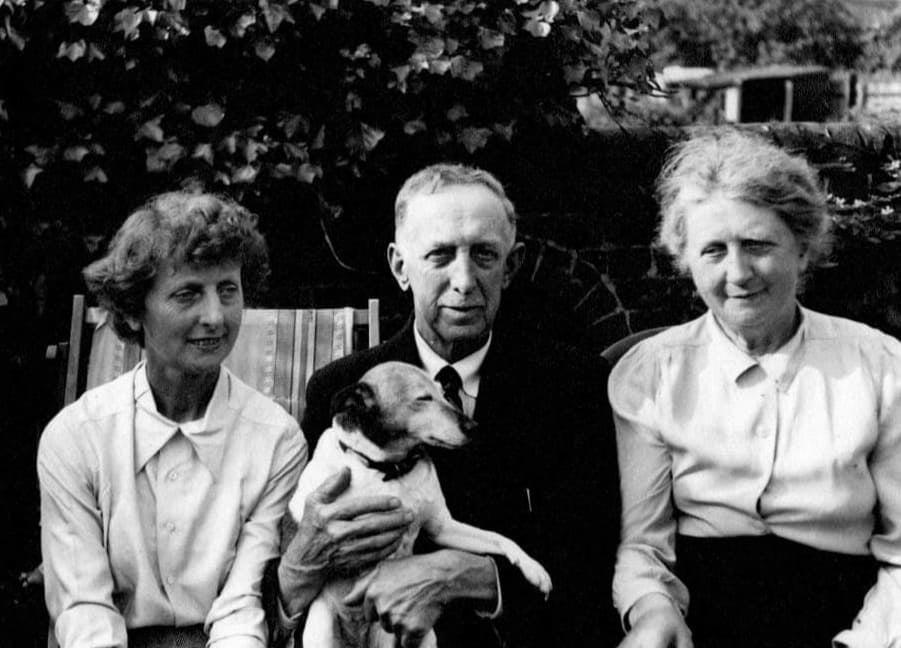
Bryan continues:
I’ll always remember the early days with the outside toilet with the overhead cistern caked in active BIG spider webs. I used to have to light a candle to go outside, shielding the flame until destination. In that space I’d set the candle down and watch the eery shadows move from side to side whilst…well anyway! Then I’d run like hell back into the house. Eventually the kitchen wall was broken through so it became an indoor loo. Phew!
In the early days the house was rented for ten-shillings a week…I know because I used to take over a ten-bob-note to a grumpy lady next door who used to sign the receipt in the rent book. Then, I think she died and it became available for $600.00 yes…the whole house for $600.00 but it wasn’t purchased then. Eventually aunt Phyllis purchased it some years later…perhaps when grandad died.I used to work much in the back garden which was a lovely walled garden with arch-type decorations in the brickwork and semicircular shaped capping bricks. The abundant apple tree. Raspberry and loganberry canes. A gooseberry bush and huge Victoria plum tree on the wall at the bottom of the garden which became a wonderful attraction for wasps! (grandad called the “whasps”). He would stew apples and fruit daily.
Do you remember their black and white cat Twinky? Always sat on the pink-screen TV and when she died they were convinced that “that’s wot got ‘er”. Grandad of course loved all his cats and as he aged, he named them all “Billy”.Have you come across the name “Featherstone” in grandma’s name. I don’t recall any details but Dorothy used to recall this. She did much searching of the family history Such a pity she didn’t hand anything on to anyone. She also said that we had a member of the family who worked with James Watt….but likewise I don’t have details.
Gifts of chocolates to Phyllis were regular and I became the recipient of the overflow!What a pity Dorothy’s family history research has disappeared! I have found the Featherstone’s, and the Purdy who worked with James Watt, but I wonder what else Dorothy knew.
I mentioned DH Lawrence to Bryan, and the connection to Eastwood, where Bryan’s grandma (and Phyllis’s mother) Mary Ann Gilman Purdy was born, and shared with him the story about Francis Purdy, the Primitive Methodist minister, and about Francis’s son William who invented the miners lamp.
He replied:
As a nosy young man I was looking through the family bookcase in Love Lane and came across a brown paper covered book. Intrigued, I found “Sons and Lovers” D.H. Lawrence. I knew it was a taboo book (in those days) as I was growing up but now I see the deeper connection. Of course! I know that Phyllis had I think an earlier boyfriend by the name of Maurice who lived in Perry Barr, Birmingham. I think he later married but was always kind enough to send her a book and fond message each birthday (Feb.12). I guess you know grandad’s birthday – July 28. We’d always celebrate those days. I’d usually be the one to go into Oldswinford and get him a cardigan or pullover and later on, his 2oz tins of St. Bruno tobacco for his pipe (I recall the room filled with smoke as he puffed away).
Dorothy and Phyllis always spoke of their ancestor’s vocation as a Minister. So glad to have this history! Wow, what a story too. The Lord rescued him from mischief indeed. Just goes to show how God can change hearts…one at a time.
So interesting to hear about the Miner’s Lamp. My vicar whilst growing up at St. John’s in Stourbridge was from Durham and each Harvest Festival, there would be a miner’s lamp placed upon the altar as a symbol of the colliery and the bountiful harvest.More recollections from Bryan about the house and garden at Love Lane:
I always recall tea around the three legged oak table bedecked with a colorful seersucker cloth. Battenburg cake. Jam Roll. Rich Tea and Digestive biscuits. Mr. Kipling’s exceedingly good cakes! Home-made jam. Loose tea from the Coronation tin cannister. The ancient mangle outside the back door and the galvanized steel wash tub with hand-operated agitator on the underside of the lid. The hand operated water pump ‘though modernisation allowed for a cold tap only inside, above the single sink and wooden draining board. A small gas stove and very little room for food preparation. Amazing how the Marshalls (×7) managed in this space!
The small window over the sink in the kitchen brought in little light since the neighbor built on a bathroom annex at the back of their house, leaving #47 with limited light, much to to upset of grandad and Phyllis. I do recall it being a gloomy place..i.e.the kitchen and back room.
The garden was lovely. Long and narrow with privet hedge dividing the properties on the right and the lovely wall on the left. Dorothy planted spectacular lilac bushes against the wall. Vivid blues, purples and whites. Double-flora. Amazing…and with stunning fragrance. Grandad loved older victorian type plants such as foxgloves and comfrey. Forget-me-nots and marigolds (calendulas) in abundance. Rhubarb stalks. Always plantings of lettuce and other vegetables. Lots of mint too! A large varigated laurel bush outside the front door!
Such a pleasant walk through the past.
An autograph book belonging to Phyllis from the 1920s has survived in which each friend painted a little picture, drew a cartoon, or wrote a verse. This entry is perhaps my favourite:
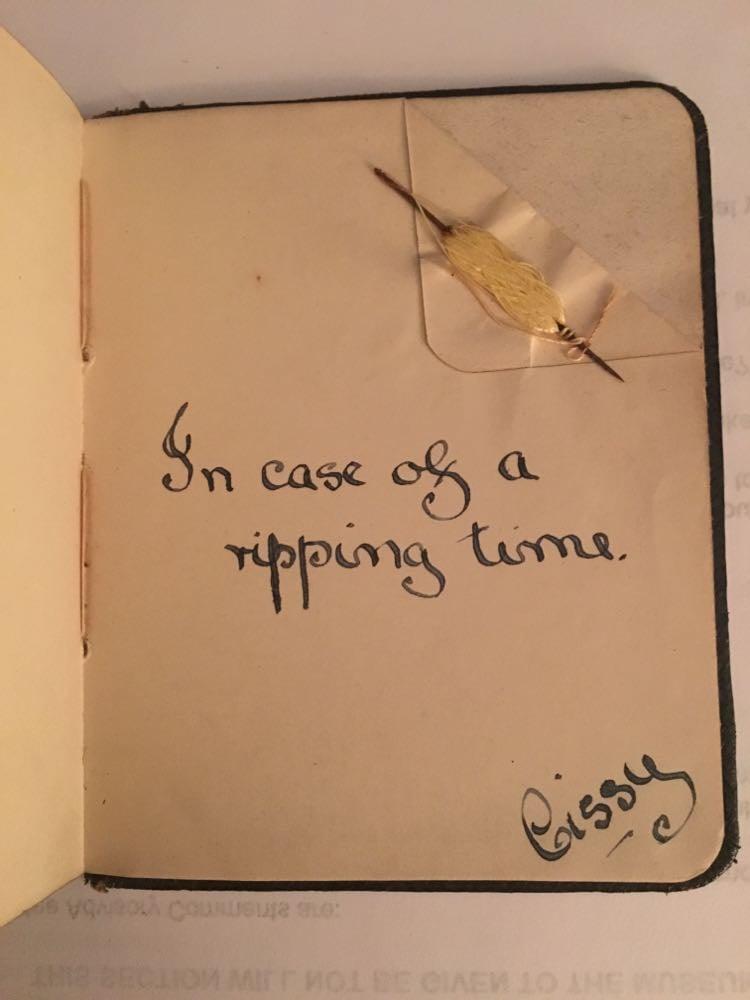
-
AuthorSearch Results
