
Search Results for 'registers'

Forums Search Search Results for 'registers'

Viewing 8 results - 21 through 28 (of 28 total)
  • Author
    Search Results
  • #6293
    TracyTracy
    Participant

      Lincolnshire Families


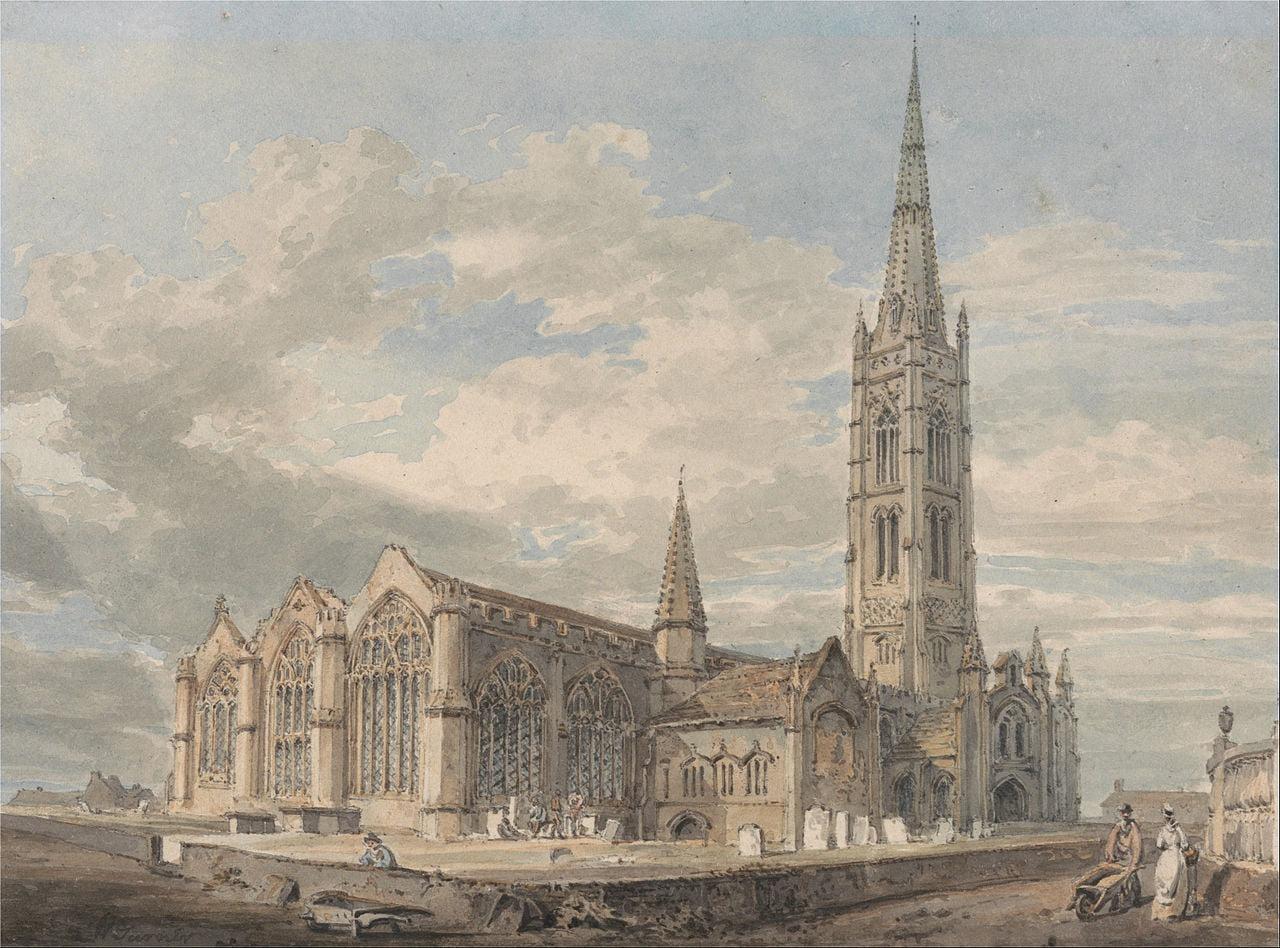
      Thanks to the 1851 census, we know that William Eaton was born in Grantham, Lincolnshire. He was baptised on 29 November 1768 at St Wulfram’s church; his father was William Eaton and his mother Elizabeth.

      St Wulfram’s in Grantham painted by JMW Turner in 1797:

      St Wulframs


      I found a marriage for a William Eaton and Elizabeth Rose in the city of Lincoln in 1761, but it seemed unlikely as they were both of that parish, and with no discernable links to either Grantham or Nottingham.

      But there were two marriages registered for William Eaton and Elizabeth Rose: one in Lincoln in 1761 and one in Hawkesworth Nottinghamshire in 1767, the year before William junior was baptised in Grantham. Hawkesworth is between Grantham and Nottingham, and this seemed much more likely.

      Elizabeth’s name is spelled Rose on her marriage records, but spelled Rouse on her baptism. It’s not unusual for spelling variations to occur, as the majority of people were illiterate and whoever was recording the event wrote what it sounded like.

      Elizabeth Rouse was baptised on 26th December 1746 in Gunby St Nicholas (there is another Gunby in Lincolnshire), a short distance from Grantham. Her father was Richard Rouse; her mother Cave Pindar. Cave is a curious name and I wondered if it had been mistranscribed, but it appears to be correct and clearly says Cave on several records.

      Richard Rouse married Cave Pindar 21 July 1744 in South Witham, not far from Grantham.

      Richard was born in 1716 in North Witham. His father was William Rouse; his mothers name was Jane.

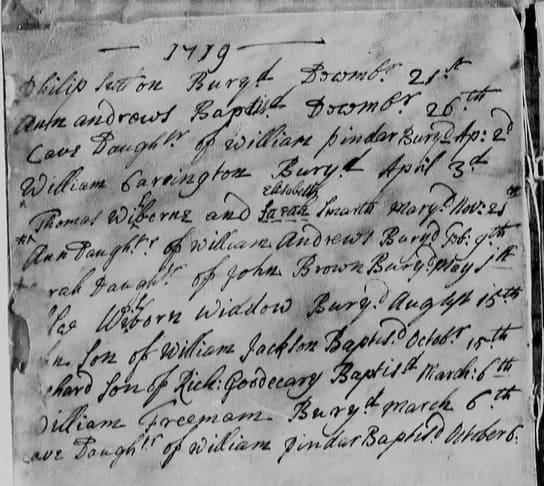
      Cave Pindar was born in 1719 in Gunby St Nicholas, near Grantham. Her father was William Pindar, but sadly her mothers name is not recorded in the parish baptism register. However a marriage was registered between William Pindar and Elizabeth Holmes in Gunby St Nicholas in October 1712.

      William Pindar buried a daughter Cave on 2 April 1719 and baptised a daughter Cave on 6 Oct 1719:

      Cave Pindar


      Elizabeth Holmes was baptised in Gunby St Nicholas on 6th December 1691. Her father was John Holmes; her mother Margaret Hod.

      Margaret Hod would have been born circa 1650 to 1670 and I haven’t yet found a baptism record for her. According to several other public trees on an ancestry website, she was born in 1654 in Essenheim, Germany. This was surprising! According to these trees, her father was Johannes Hod (Blodt|Hoth) (1609–1677) and her mother was Maria Appolonia Witters (1620–1656).

      I did not think it very likely that a young woman born in Germany would appear in Gunby St Nicholas in the late 1600’s, and did a search for Hod’s in and around Grantham. Indeed there were Hod’s living in the area as far back as the 1500’s, (a Robert Hod was baptised in Grantham in 1552), and no doubt before, but the parish records only go so far back. I think it’s much more likely that her parents were local, and that the page with her baptism recorded on the registers is missing.

      Of the many reasons why parish registers or some of the pages would be destroyed or lost, this is another possibility. Lincolnshire is on the east coast of England:

      “All of England suffered from a “monster” storm in November of 1703 that killed a reported 8,000 people. Seaside villages suffered greatly and their church and civil records may have been lost.”

      A Margeret Hod, widow, died in Gunby St Nicholas in 1691, the same year that Elizabeth Holmes was born. Elizabeth’s mother was Margaret Hod. Perhaps the widow who died was Margaret Hod’s mother? I did wonder if Margaret Hod had died shortly after her daughter’s birth, and that her husband had died sometime between the conception and birth of his child. The Black Death or Plague swept through Lincolnshire in 1680 through 1690; such an eventually would be possible. But Margaret’s name would have been registered as Holmes, not Hod.

      Cave Pindar’s father William was born in Swinstead, Lincolnshire, also near to Grantham, on the 28th December, 1690, and he died in Gunby St Nicholas in 1756. William’s father is recorded as Thomas Pinder; his mother Elizabeth.

      GUNBY: The village name derives from a “farmstead or village of a man called Gunni”, from the Old Scandinavian person name, and ‘by’, a farmstead, village or settlement.
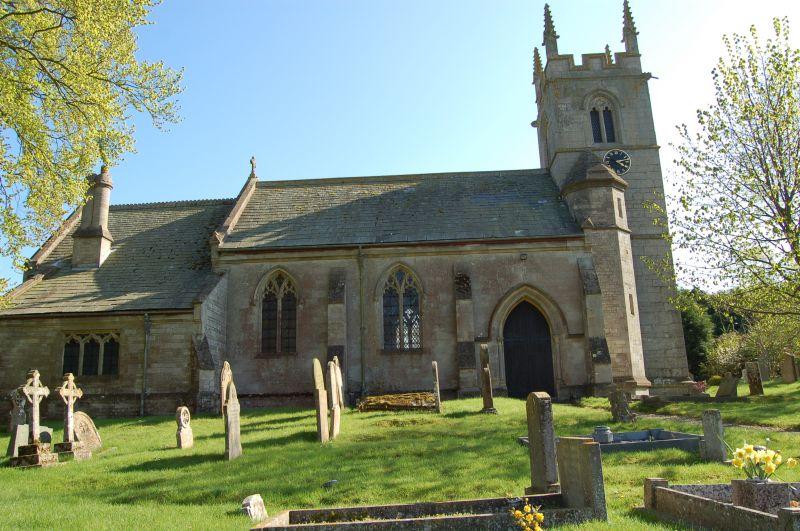
      Gunby Grade II listed Anglican church is dedicated to St Nicholas. Of 15th-century origin, it was rebuilt by Richard Coad in 1869, although the Perpendicular tower remained.

      Gunby St Nicholas

      #6290
      TracyTracy
      Participant

        Leicestershire Blacksmiths

        The Orgill’s of Measham led me further into Leicestershire as I traveled back in time.

        I also realized I had uncovered a direct line of women and their mothers going back ten generations:

        myself, Tracy Edwards 1957-
        my mother Gillian Marshall 1933-
        my grandmother Florence Warren 1906-1988
        her mother and my great grandmother Florence Gretton 1881-1927
        her mother Sarah Orgill 1840-1910
        her mother Elizabeth Orgill 1803-1876
        her mother Sarah Boss 1783-1847
        her mother Elizabeth Page 1749-
        her mother Mary Potter 1719-1780
        and her mother and my 7x great grandmother Mary 1680-

        You could say it leads us to the very heart of England, as these Leicestershire villages are as far from the coast as it’s possible to be. There are countless other maternal lines to follow, of course, but only one of mothers of mothers, and ours takes us to Leicestershire.

        The blacksmiths

        Sarah Boss was the daughter of Michael Boss 1755-1807, a blacksmith in Measham, and Elizabeth Page of nearby Hartshorn, just over the county border in Derbyshire.

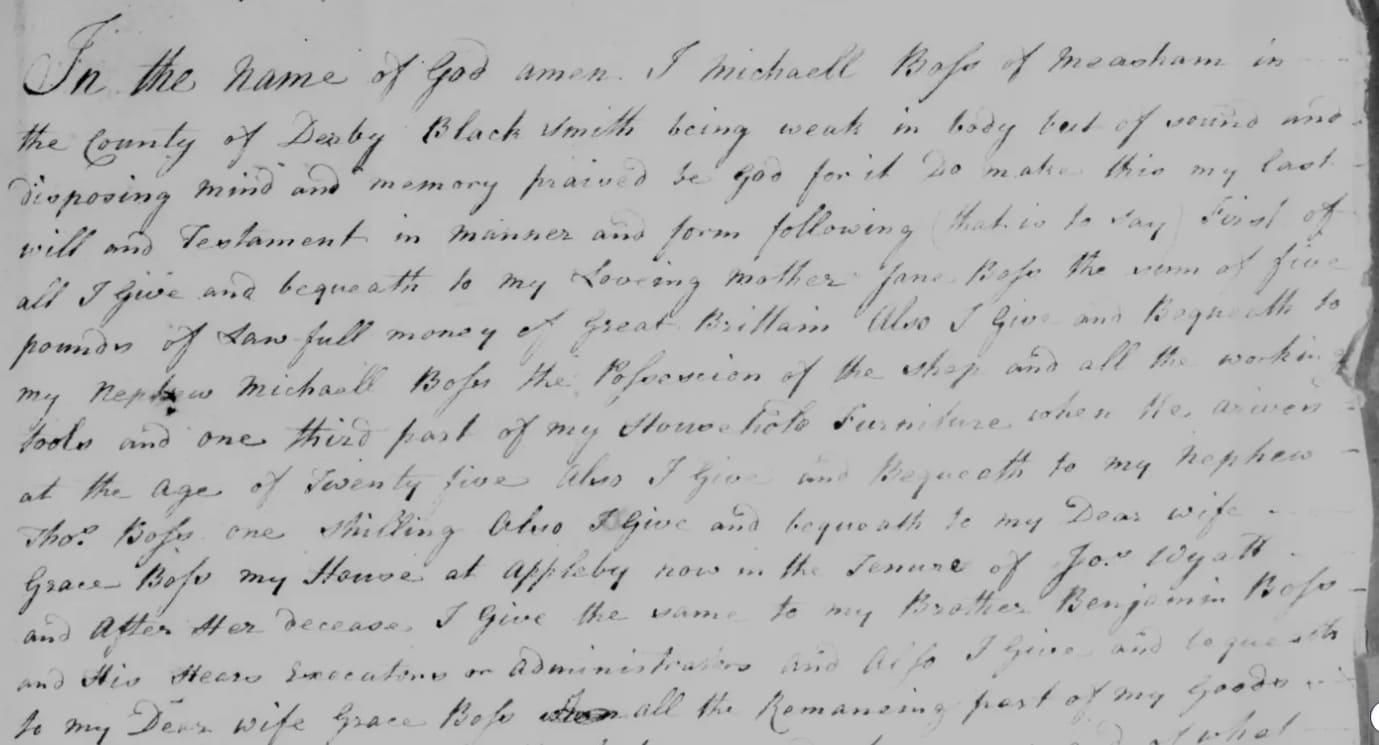
        An earlier Michael Boss, a blacksmith of Measham, died in 1772, and in his will he left the possession of the blacksmiths shop and all the working tools and a third of the household furniture to Michael, who he named as his nephew. He left his house in Appleby Magna to his wife Grace, and five pounds to his mother Jane Boss. As none of Michael and Grace’s children are mentioned in the will, perhaps it can be assumed that they were childless.

        The will of Michael Boss, 1772, Measham:

        Michael Boss 1772 will


        Michael Boss the uncle was born in Appleby Magna in 1724. His parents were Michael Boss of Nelson in the Thistles and Jane Peircivall of Appleby Magna, who were married in nearby Mancetter in 1720.

        Information worth noting on the Appleby Magna website:

        In 1752 the calendar in England was changed from the Julian Calendar to the Gregorian Calendar, as a result 11 days were famously “lost”. But for the recording of Church Registers another very significant change also took place, the start of the year was moved from March 25th to our more familiar January 1st.
        Before 1752 the 1st day of each new year was March 25th, Lady Day (a significant date in the Christian calendar). The year number which we all now use for calculating ages didn’t change until March 25th. So, for example, the day after March 24th 1750 was March 25th 1751, and January 1743 followed December 1743.
        This March to March recording can be seen very clearly in the Appleby Registers before 1752. Between 1752 and 1768 there appears slightly confused recording, so dates should be carefully checked. After 1768 the recording is more fully by the modern calendar year.

        Michael Boss the uncle married Grace Cuthbert.  I haven’t yet found the birth or parents of Grace, but a blacksmith by the name of Edward Cuthbert is mentioned on an Appleby Magna history website:

        An Eighteenth Century Blacksmith’s Shop in Little Appleby
        by Alan Roberts

        Cuthberts inventory

        The inventory of Edward Cuthbert provides interesting information about the household possessions and living arrangements of an eighteenth century blacksmith. Edward Cuthbert (als. Cutboard) settled in Appleby after the Restoration to join the handful of blacksmiths already established in the parish, including the Wathews who were prominent horse traders. The blacksmiths may have all worked together in the same shop at one time. Edward and his wife Sarah recorded the baptisms of several of their children in the parish register. Somewhat sadly three of the boys named after their father all died either in infancy or as young children. Edward’s inventory which was drawn up in 1732, by which time he was probably a widower and his children had left home, suggests that they once occupied a comfortable two-storey house in Little Appleby with an attached workshop, well equipped with all the tools for repairing farm carts, ploughs and other implements, for shoeing horses and for general ironmongery. 

        Edward Cuthbert born circa 1660, married Joane Tuvenet in 1684 in Swepston cum Snarestone , and died in Appleby in 1732. Tuvenet is a French name and suggests a Huguenot connection, but this isn’t our family, and indeed this Edward Cuthbert is not likely to be Grace’s father anyway.

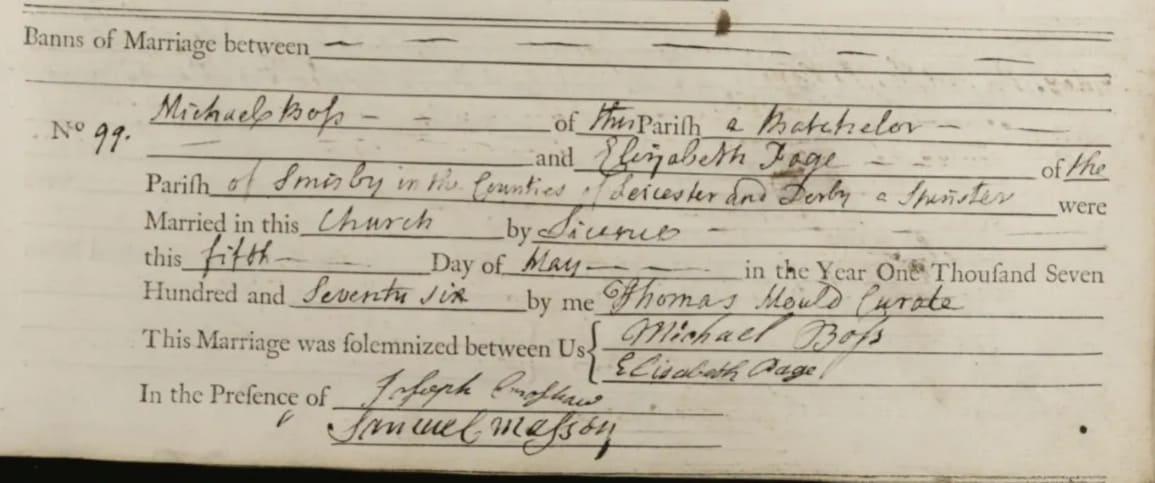
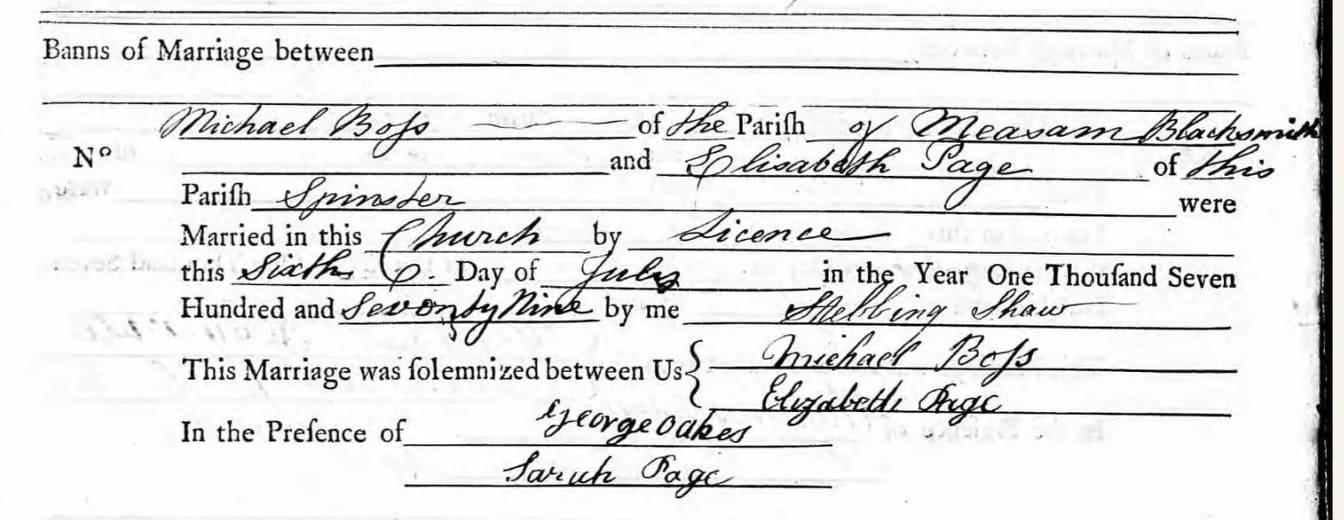
        Michael Boss and Elizabeth Page appear to have married twice: once in 1776, and once in 1779. Both of the documents exist and appear correct. Both marriages were by licence. They both mention Michael is a blacksmith.

        Their first daughter, Elizabeth, was baptized in February 1777, just nine months after the first wedding. It’s not known when she was born, however, and it’s possible that the marriage was a hasty one. But why marry again three years later?

        But Michael Boss and Elizabeth Page did not marry twice.

        Elizabeth Page from Smisby was born in 1752 and married Michael Boss on the 5th of May 1776 in Measham. On the marriage licence allegations and bonds, Michael is a bachelor.

        Baby Elizabeth was baptised in Measham on the 9th February 1777. Mother Elizabeth died on the 18th February 1777, also in Measham.

        In 1779 Michael Boss married another Elizabeth Page! She was born in 1749 in Hartshorn, and Michael is a widower on the marriage licence allegations and bonds.

        Hartshorn and Smisby are neighbouring villages, hence the confusion.  But a closer look at the documents available revealed the clues.  Both Elizabeth Pages were literate, and indeed their signatures on the marriage registers are different:

        Marriage of Michael Boss and Elizabeth Page of Smisby in 1776:

        Elizabeth Page 1776


        Marriage of Michael Boss and Elizabeth Page of Harsthorn in 1779:

        Elizabeth Page 1779


        Not only did Michael Boss marry two women both called Elizabeth Page but he had an unusual start in life as well. His uncle Michael Boss left him the blacksmith business and a third of his furniture. This was all in the will. But which of Uncle Michaels brothers was nephew Michaels father?

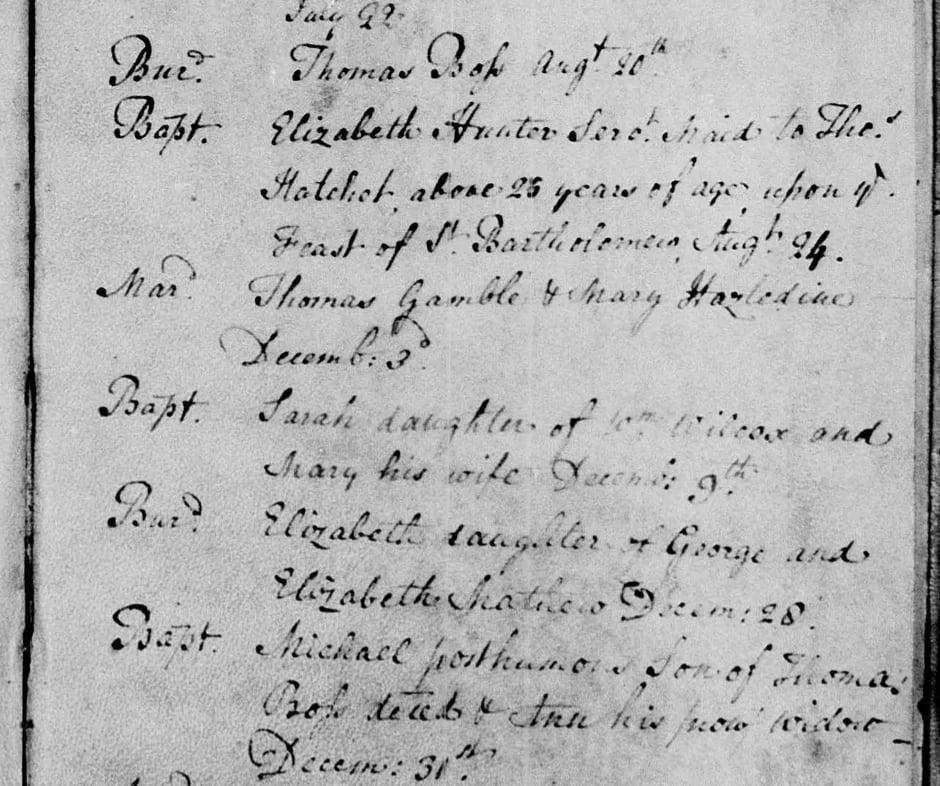
        The only Michael Boss born at the right time was in 1750 in Edingale, Staffordshire, about eight miles from Appleby Magna. His parents were Thomas Boss and Ann Parker, married in Edingale in 1747.  Thomas died in August 1750, and his son Michael was baptised in the December, posthumus son of Thomas and his widow Ann. Both entries are on the same page of the register.

        1750 posthumus


        Ann Boss, the young widow, married again. But perhaps Michael and his brother went to live with their childless uncle and aunt, Michael Boss and Grace Cuthbert.

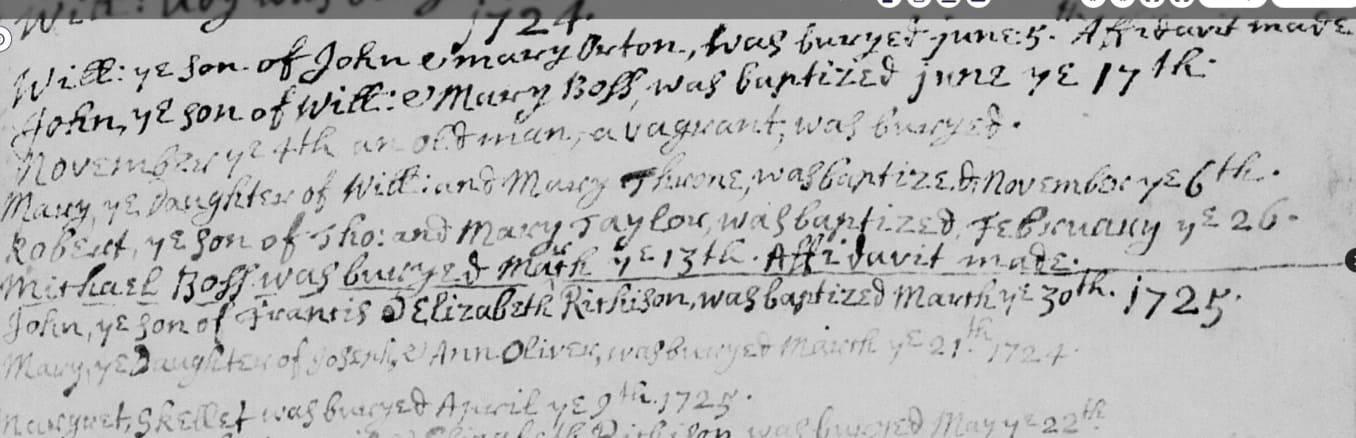
        The great grandfather of Michael Boss (the Measham blacksmith born in 1850) was also Michael Boss, probably born in the 1660s. He died in Newton Regis in Warwickshire in 1724, four years after his son (also Michael Boss born 1693) married Jane Peircivall.  The entry on the parish register states that Michael Boss was buried ye 13th Affadavit made.

        I had not seen affadavit made on a parish register before, and this relates to the The Burying in Woollen Acts 1666–80.  According to Wikipedia:

         “Acts of the Parliament of England which required the dead, except plague victims and the destitute, to be buried in pure English woollen shrouds to the exclusion of any foreign textiles.  It was a requirement that an affidavit be sworn in front of a Justice of the Peace (usually by a relative of the deceased), confirming burial in wool, with the punishment of a £5 fee for noncompliance. Burial entries in parish registers were marked with the word “affidavit” or its equivalent to confirm that affidavit had been sworn; it would be marked “naked” for those too poor to afford the woollen shroud.  The legislation was in force until 1814, but was generally ignored after 1770.”

        Michael Boss buried 1724 “Affadavit made”:

        Michael Boss affadavit 1724


        Elizabeth Page‘s father was William Page 1717-1783, a wheelwright in Hartshorn.  (The father of the first wife Elizabeth was also William Page, but he was a husbandman in Smisby born in 1714. William Page, the father of the second wife, was born in Nailstone, Leicestershire, in 1717. His place of residence on his marriage to Mary Potter was spelled Nelson.)

        Her mother was Mary Potter 1719- of nearby Coleorton.  Mary’s father, Richard Potter 1677-1731, was a blacksmith in Coleorton.

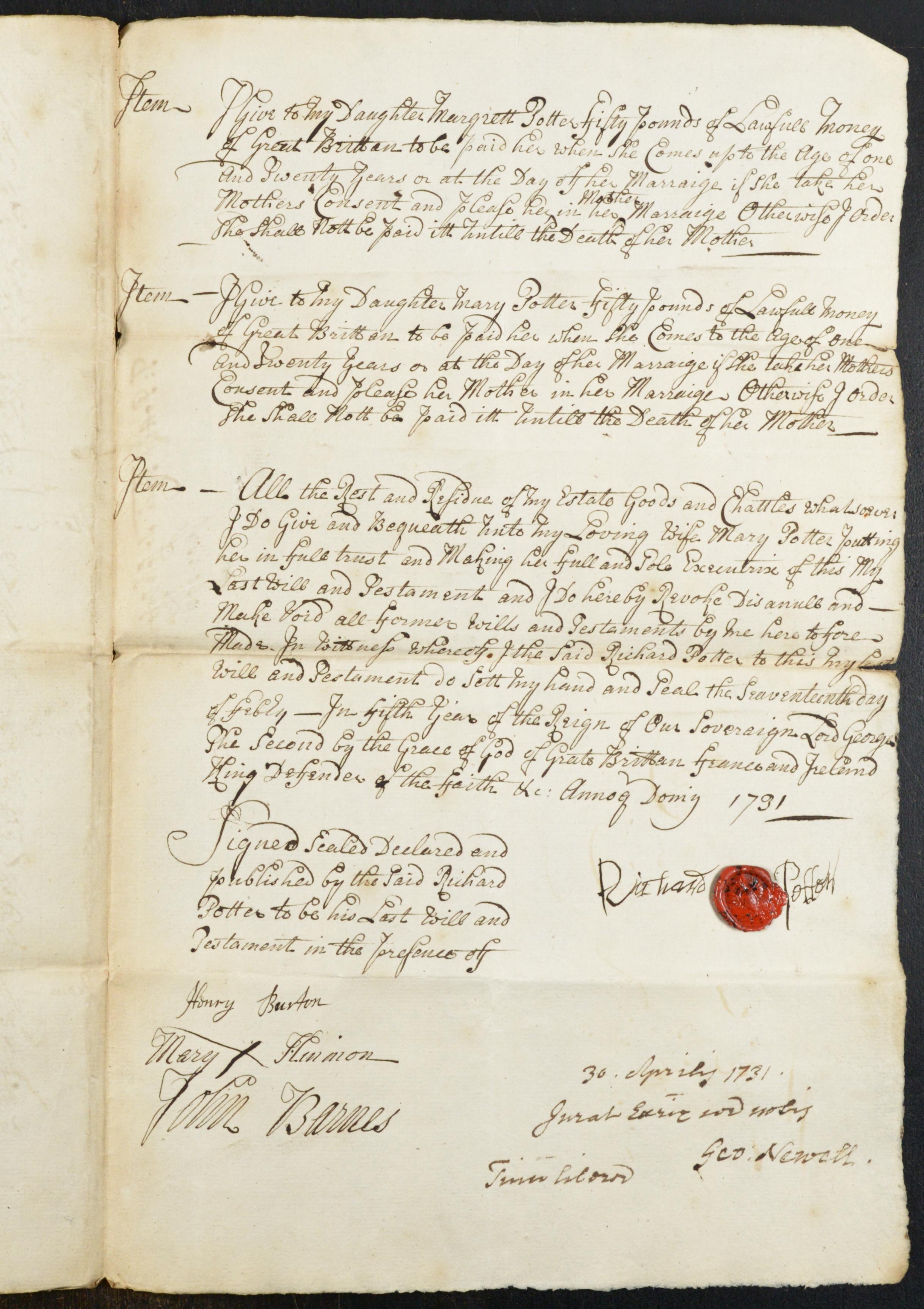
        A page of the will of Richard Potter 1731:

        Richard Potter 1731


        Richard Potter states: “I will and order that my son Thomas Potter shall after my decease have one shilling paid to him and no more.”  As he left £50 to each of his daughters, one can’t help but wonder what Thomas did to displease his father.

        Richard stipulated that his son Thomas should have one shilling paid to him and not more, for several good considerations, and left “the house and ground lying in the parish of Whittwick in a place called the Long Lane to my wife Mary Potter to dispose of as she shall think proper.”

        His son Richard inherited the blacksmith business:  “I will and order that my son Richard Potter shall live and be with his mother and serve her duly and truly in the business of a blacksmith, and obey and serve her in all lawful commands six years after my decease, and then I give to him and his heirs…. my house and grounds Coulson House in the Liberty of Thringstone”

        Richard wanted his son John to be a blacksmith too: “I will and order that my wife bring up my son John Potter at home with her and teach or cause him to be taught the trade of a blacksmith and that he shall serve her duly and truly seven years after my decease after the manner of an apprentice and at the death of his mother I give him that house and shop and building and the ground belonging to it which I now dwell in to him and his heirs forever.”

        To his daughters Margrett and Mary Potter, upon their reaching the age of one and twenty, or the day after their marriage, he leaves £50 each. All the rest of his goods are left to his loving wife Mary.


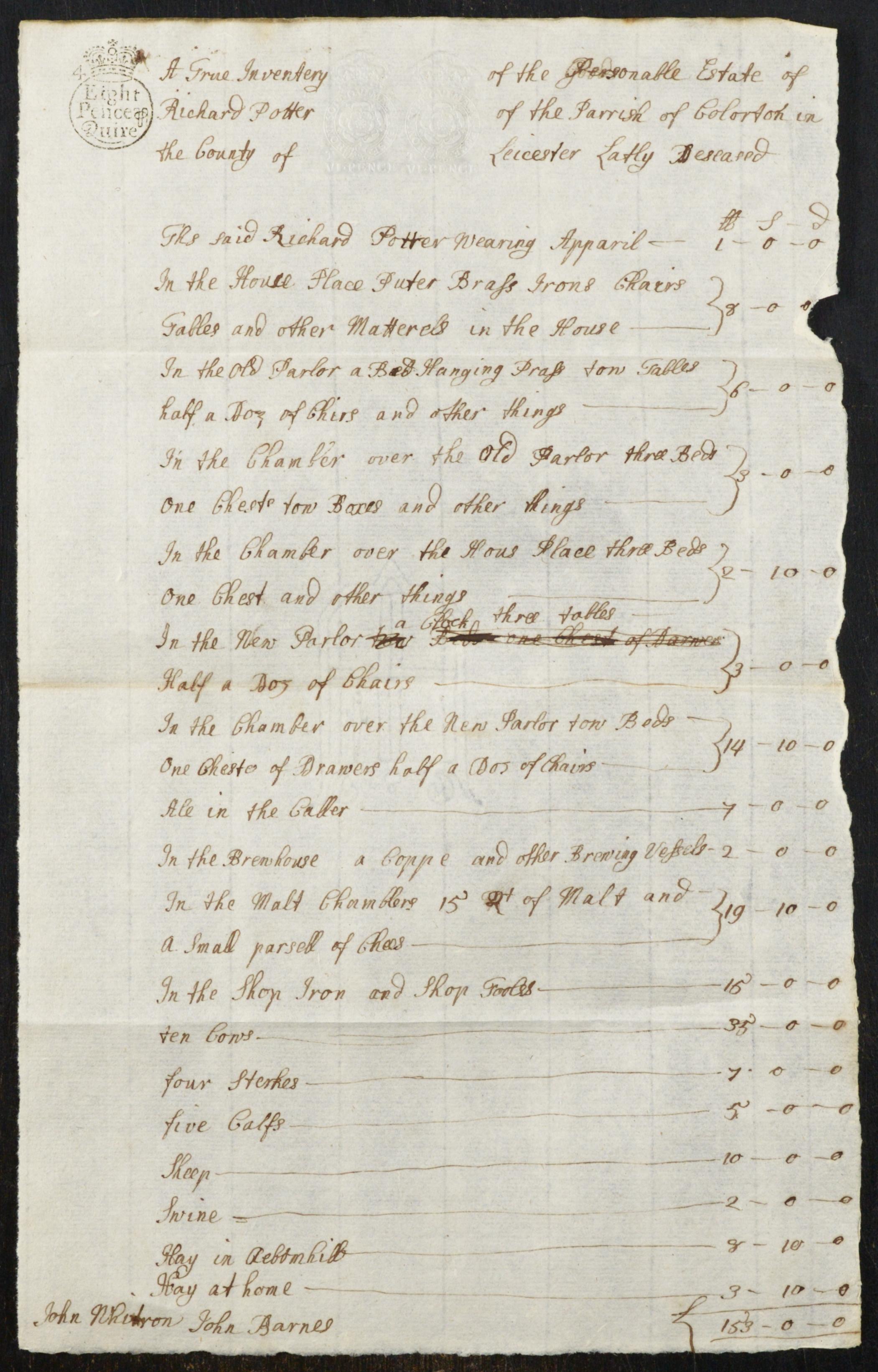
        An inventory of the belongings of Richard Potter, 1731:

        Richard Potter inventory


        Richard Potters father was also named Richard Potter 1649-1719, and he too was a blacksmith.

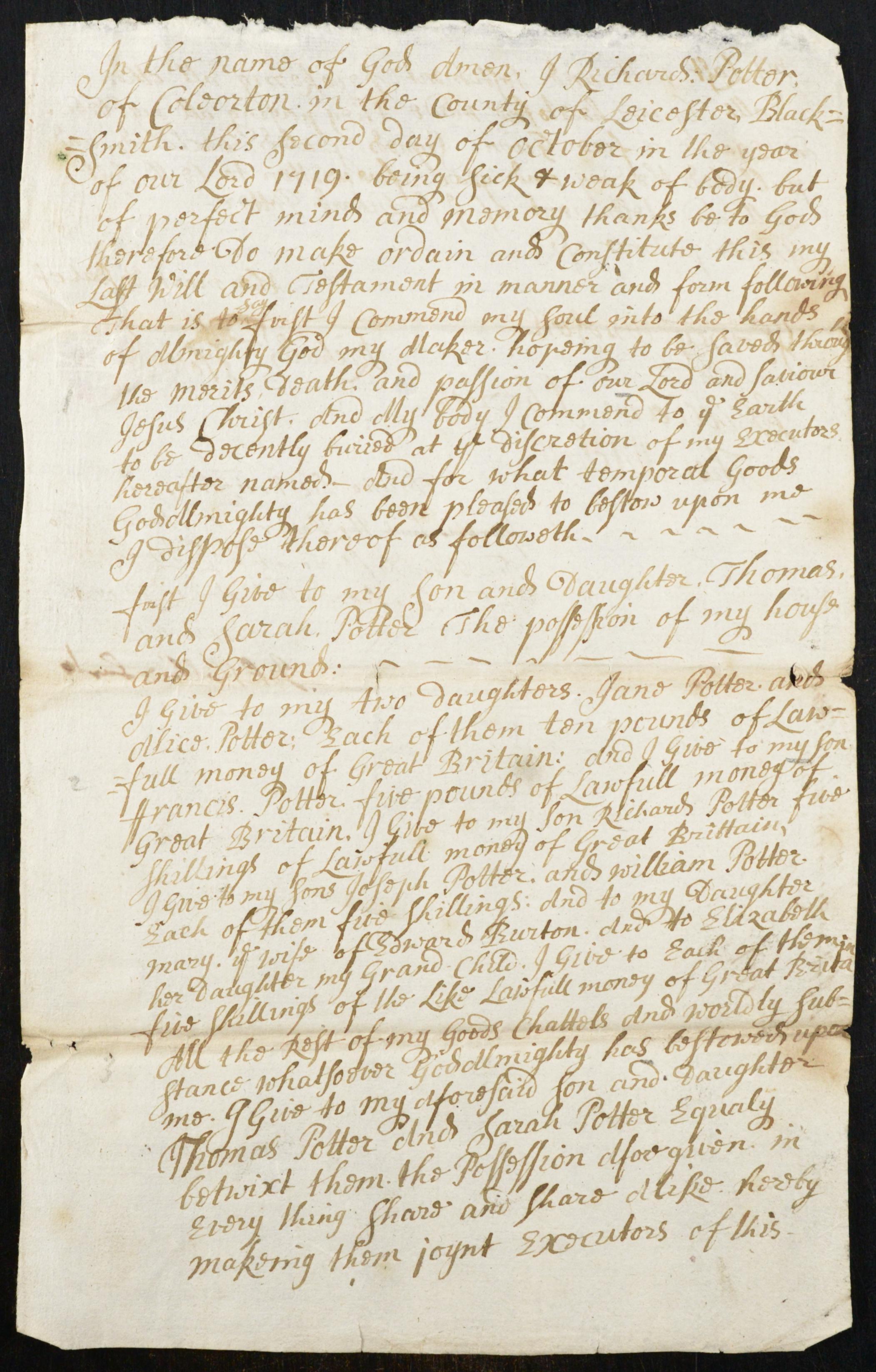
        Richard Potter of Coleorton in the county of Leicester, blacksmith, stated in his will:  “I give to my son and daughter Thomas and Sarah Potter the possession of my house and grounds.”

        He leaves ten pounds each to his daughters Jane and Alice, to his son Francis he gives five pounds, and five shillings to his son Richard. Sons Joseph and William also receive five shillings each. To his daughter Mary, wife of Edward Burton, and her daughter Elizabeth, he gives five shillings each. The rest of his good, chattels and wordly substance he leaves equally between his son and daugter Thomas and Sarah. As there is no mention of his wife, it’s assumed that she predeceased him.

        The will of Richard Potter, 1719:

        Richard Potter 1719


        Richard Potter’s (1649-1719) parents were William Potter and Alse Huldin, both born in the early 1600s.  They were married in 1646 at Breedon on the Hill, Leicestershire.  The name Huldin appears to originate in Finland.

        William Potter was a blacksmith. In the 1659 parish registers of Breedon on the Hill, William Potter of Breedon blacksmith buryed the 14th July.

        #6284
        TracyTracy
        Participant

          To Australia

          Grettons

          Charles Herbert Gretton 1876-1954

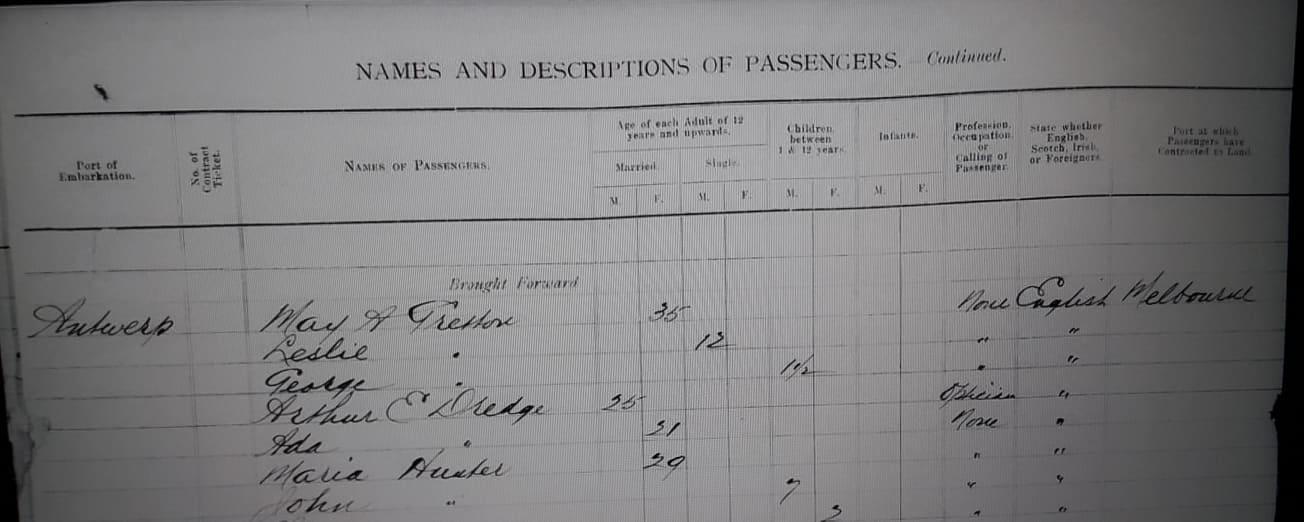
          Charles Gretton, my great grandmothers youngest brother, arrived in Sydney Australia on 12 February 1912, having set sail on 5 January 1912 from London. His occupation on the passenger list was stockman, and he was traveling alone.  Later that year, in October, his wife and two sons sailed out to join him.

          Gretton 1912 passenger


          Charles was born in Swadlincote.  He married Mary Anne Illsley, a local girl from nearby Church Gresley, in 1898. Their first son, Leslie Charles Bloemfontein Gretton, was born in 1900 in Church Gresley, and their second son, George Herbert Gretton, was born in 1910 in Swadlincote.  In 1901 Charles was a colliery worker, and on the 1911 census, his occupation was a sanitary ware packer.

          Charles and Mary Anne had two more sons, both born in Footscray:  Frank Orgill Gretton in 1914, and Arthur Ernest Gretton in 1920.

          On the Australian 1914 electoral rolls, Charles and Mary Ann were living at 72 Moreland Street, Footscray, and in 1919 at 134 Cowper Street, Footscray, and Charles was a labourer.  In 1924, Charles was a sub foreman, living at 3, Ryan Street E, Footscray, Australia.  On a later electoral register, Charles was a foreman.  Footscray is a suburb of Melbourne, and developed into an industrial zone in the second half of the nineteenth century.

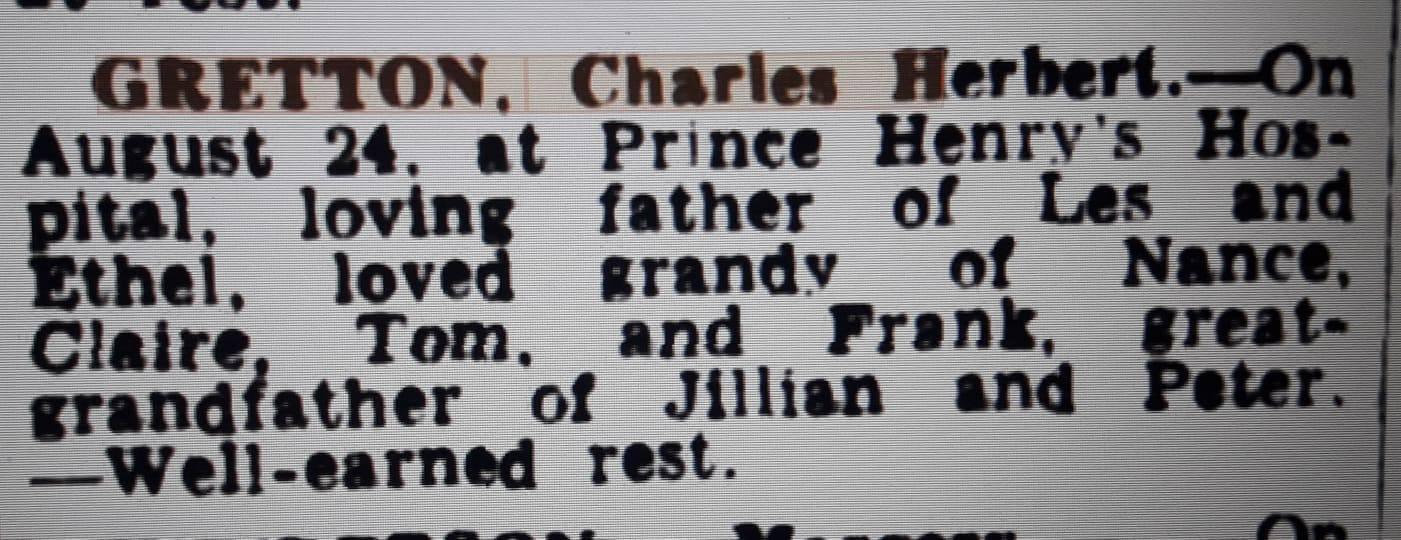
          Charles died in Victoria in 1954 at the age of 77. His wife Mary Ann died in 1958.

          Gretton obit 1954


          Charles and Mary Ann Gretton:

          Charles and Mary Ann Gretton


          Leslie Charles Bloemfontein Gretton 1900-1955

          Leslie was an electrician.   He married Ethel Christine Halliday, born in 1900 in Footscray, in 1927.  They had four children: Tom, Claire, Nancy and Frank. By 1943 they were living in Yallourn.  Yallourn, Victoria was a company town in Victoria, Australia built between the 1920s and 1950s to house employees of the State Electricity Commission of Victoria, who operated the nearby Yallourn Power Station complex. However, expansion of the adjacent open-cut brown coal mine led to the closure and removal of the town in the 1980s.

          On the 1954 electoral registers, daughter Claire Elizabeth Gretton, occupation teacher, was living at the same address as Leslie and Ethel.

          Leslie died in Yallourn in 1955, and Ethel nine years later in 1964, also in Yallourn.


          George Herbert Gretton 1910-1970

          George married Florence May Hall in 1934 in Victoria, Australia.  In 1942 George was listed on the electoral roll as a grocer, likewise in 1949. In 1963 his occupation was a process worker, and in 1968 in Flinders, a horticultural advisor.

          George died in Lang Lang, not far from Melbourne, in 1970.


          Frank Orgill Gretton 1914-

          Arthur Ernest Gretton 1920-


          Orgills

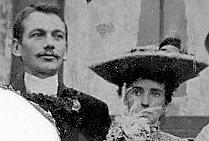
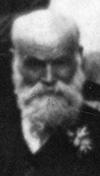
          John Orgill 1835-1911

          John Orgill was Charles Herbert Gretton’s uncle.  He emigrated to Australia in 1865, and married Elizabeth Mary Gladstone 1845-1926 in Victoria in 1870. Their first child was born in December that year, in Dandenong. They had seven children, and their three sons all have the middle name Gladstone.

          John Orgill was a councillor for the Shire of Dandenong in 1873, and between 1876 and 1879.

          John Orgill:

          John Orgill


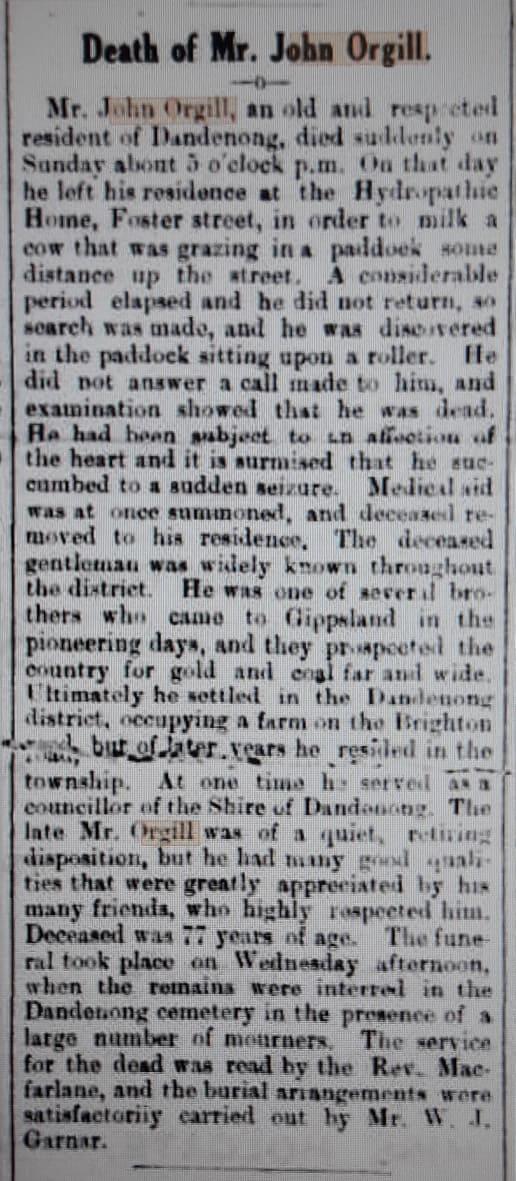
          John Orgill obituary in the South Bourke and Mornington Journal, 21 December 1911:

          John Orgill obit


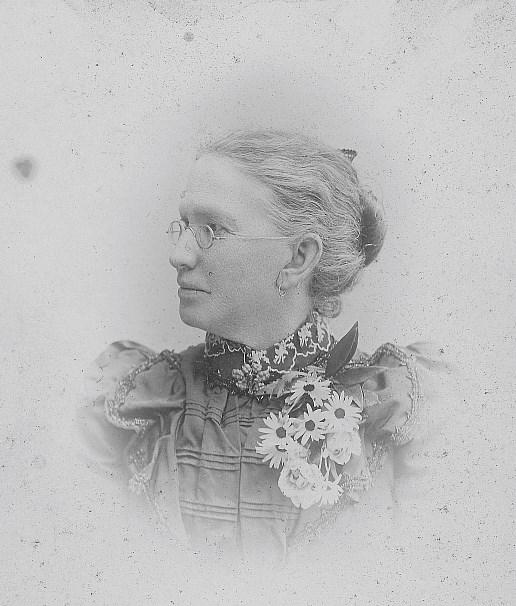
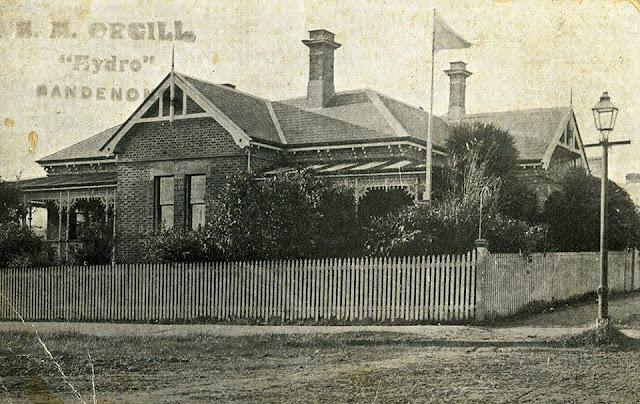
          John’s wife Elizabeth Orgill, a teacher and a “a public spirited lady” according to newspaper articles, opened a hydropathic hospital in Dandenong called Gladstone House.

          Elizabeth Gladstone Orgill:

          Elizabeth Gladstone Orgill


          On the Old Dandenong website:

          Gladstone House hydropathic hospital on the corner of Langhorne and Foster streets (153 Foster Street) Dandenong opened in 1896, working on the theory of water therapy, no medicine or operations. Her husband passed away in 1911 at 77, around similar time Dr Barclay Thompson obtained control of the practice. Mrs Orgill remaining on in some capacity.

          Elizabeth Mary Orgill (nee Gladstone) operated Gladstone House until at least 1911, along with another hydropathic hospital (Birthwood) on Cheltenham road. She was the daughter of William Gladstone (Nephew of William Ewart Gladstone, UK prime minister in 1874).

          Around 1912 Dr A. E. Taylor took over the location from Dr. Barclay Thompson. Mrs Orgill was still working here but no longer controlled the practice, having given it up to Barclay. Taylor served as medical officer for the Shire for before his death in 1939. After Taylor’s death Dr. T. C. Reeves bought his practice in 1939, later that year being appointed medical officer,

          Gladstone Road in Dandenong is named after her family, who owned and occupied a farming paddock in the area on former Police Paddock ground, the Police reserve having earlier been reduced back to Stud Road.

          Hydropathy (now known as Hydrotherapy) and also called water cure, is a part of medicine and alternative medicine, in particular of naturopathy, occupational therapy and physiotherapy, that involves the use of water for pain relief and treatment.

          Gladstone House, Dandenong:

          Gladstone House


          John’s brother Robert Orgill 1830-1915 also emigrated to Australia. I met (online) his great great grand daughter Lidya Orgill via the Old Dandenong facebook group.

          John’s other brother Thomas Orgill 1833-1908 also emigrated to the same part of Australia.

          Thomas Orgill:

          Thomas Orgill


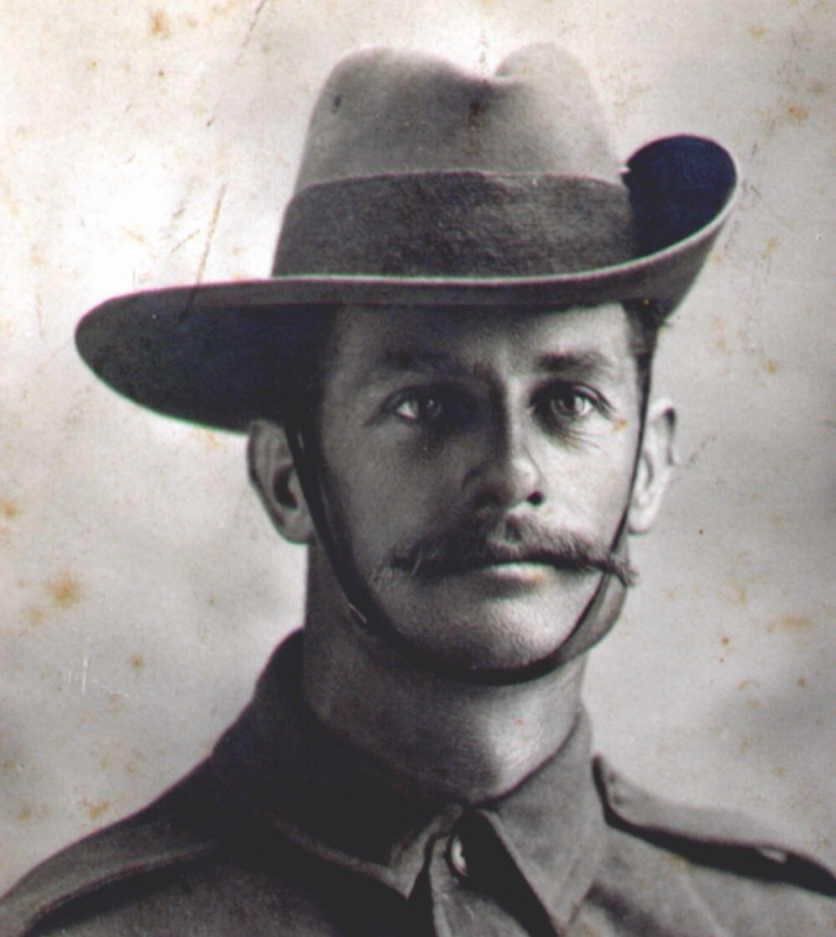
          One of Thomas Orgills sons was George Albert Orgill 1880-1949:

          George Albert Orgill


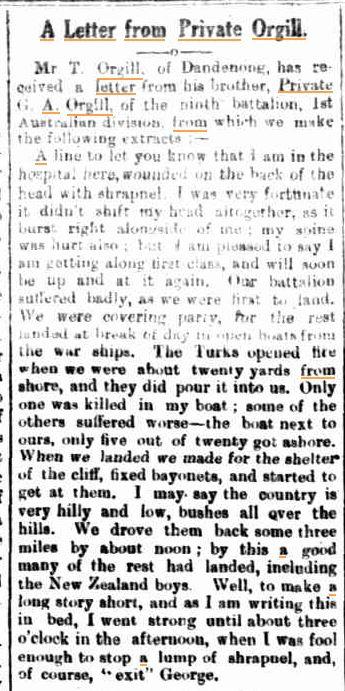
          A letter was published in The South Bourke & Mornington Journal (Richmond, Victoria, Australia) on 17 Jun 1915, to Tom Orgill, Emerald Hill (South Melbourne) from hospital by his brother George Albert Orgill (4th Pioneers) describing landing of Covering Party prior to dawn invasion of Gallipoli:

          George Albert Orgill letter


          Another brother Henry Orgill 1837-1916 was born in Measham and died in Dandenong, Australia. Henry was a bricklayer living in Measham on the 1861 census. Also living with his widowed mother Elizabeth at that address was his sister Sarah and her husband Richard Gretton, the baker (my great great grandparents). In October of that year he sailed to Melbourne.  His occupation was bricklayer on his death records in 1916.

          Two of Henry’s sons, Arthur Garfield Orgill born 1888 and Ernest Alfred Orgill born 1880 were killed in action in 1917 and buried in Nord-Pas-de-Calais, France. Another son, Frederick Stanley Orgill, died in 1897 at the age of seven.

          A fifth brother, William Orgill 1842-   sailed from Liverpool to Melbourne in 1861, at 19 years of age. Four years later in 1865 he sailed from Victoria, Australia to New Zealand.


          I assumed I had found all of the Orgill brothers who went to Australia, and resumed research on the Orgills in Measham, in England. A search in the British Newspaper Archives for Orgills in Measham revealed yet another Orgill brother who had gone to Australia.

          Matthew Orgill 1828-1907 went to South Africa and to Australia, but returned to Measham.

          The Orgill brothers had two sisters. One was my great great great grandmother Sarah, and the other was Hannah.  Hannah married Francis Hart in Measham. One of her sons, John Orgill Hart 1862-1909, was born in Measham.  On the 1881 census he was a 19 year old carpenters apprentice.  Two years later in 1883 he was listed as a joiner on the passenger list of the ship Illawarra, bound for Australia.   His occupation at the time of his death in Dandenong in 1909 was contractor.

          An additional coincidental note about Dandenong: my step daughter Emily’s Australian partner is from Dandenong.


          Housleys

          Charles Housley 1823-1856

          Charles Housley emigrated to Australia in 1851, the same year that his brother George emigrated to USA.  Charles is mentioned in the Narrative on the Letters by Barbara Housley, and appears in the Housley Letters chapters.


          Rushbys

          George “Mike” Rushby 1933-

          Mike moved to Australia from South Africa. His story is a separate chapter.

          #6276
          TracyTracy
          Participant

            Ellastone and Mayfield
            Malkins and Woodwards
            Parish Registers


            Jane Woodward


            It’s exciting, as well as enormously frustrating, to see so many Woodward’s in the Ellastone parish registers, and even more so because they go back so far. There are parish registers surviving from the 1500’s: in one, dated 1579, the death of Thomas Woodward was recorded. His father’s name was Humfrey.

            Jane Woodward married Rowland Malkin in 1751, in Thorpe, Ashbourne. Jane was from Mathfield (also known as Mayfield), Ellastone, on the Staffordshire side of the river Dove. Rowland was from Clifton, Ashbourne, on the Derbyshire side of the river. They were neighbouring villages, but in different counties.

            Jane Woodward was born in 1726 according to the marriage transcription. No record of the baptism can be found for her, despite there having been at least four other Woodward couples in Ellastone and Mayfield baptizing babies in the 1720’s and 1730’s.  Without finding out the baptism with her parents names on the parish register, it’s impossible to know which is the correct line to follow back to the earlier records.

            I found a Mayfield history group on Facebook and asked if there were parish records existing that were not yet online. A member responded that she had a set on microfiche and had looked through the relevant years and didn’t see a Jane Woodward, but she did say that some of the pages were illegible.

            The Ellasone parish records from the 1500s surviving at all, considering the events in 1673, is remarkable. To be so close, but for one indecipherable page from the 1700s, to tracing the family back to the 1500s! The search for the connecting link to the earlier records continues.

            Some key events in the history of parish registers from familysearch:

            In medieval times there were no parish registers. For some years before the Reformation, monastic houses (especially the smaller ones) the parish priest had been developing the custom of noting in an album or on the margins of the service books, the births and deaths of the leading local families.
            1538 – Through the efforts of Thomas Cromwell a mandate was issued by Henry VIII to keep parish registers. This order that every parson, vicar or curate was to enter in a book every wedding, christening and burial in his parish. The parish was to provide a sure coffer with two locks, the parson having the custody of one key, the wardens the others. The entries were to be made each Sunday after the service in the presence of one of the wardens.
            1642-60 – During the Civil War registers were neglected and Bishop Transcripts were not required.
            1650 – In the restoration of Charles they went back to the church to keep christenings, marriages and burial. The civil records that were kept were filed in with the parish in their registers. it is quite usual to find entries explaining the situation during the Interregnum. One rector stated that on 23 April 1643 “Our church was defaced our font thrown down and new forms of prayer appointed”. Another minister not quite so bold wrote “When the war, more than a civil war was raging most grimly between royalists and parliamentarians throughout the greatest part of England, I lived well because I lay low”.
            1653 – Cromwell, whose army had defeated the Royalists, was made Lord Protector and acted as king. He was a Puritan. The parish church of England was disorganized, many ministers fled for their lives, some were able to hide their registers and other registers were destroyed. Cromwell ruled that there would be no one religion in England all religions could be practiced. The government took away from the ministers not only the custody of the registers, but even the solemnization of the marriage ceremony. The marriage ceremony was entrusted to the justices to form a new Parish Register (not Registrar) elected by all the ratepayers in a parish, and sworn before and approved by a magistrate.. Parish clerks of the church were made a civil parish clerk and they recorded deaths, births and marriages in the civil parishes.


            Ellastone:

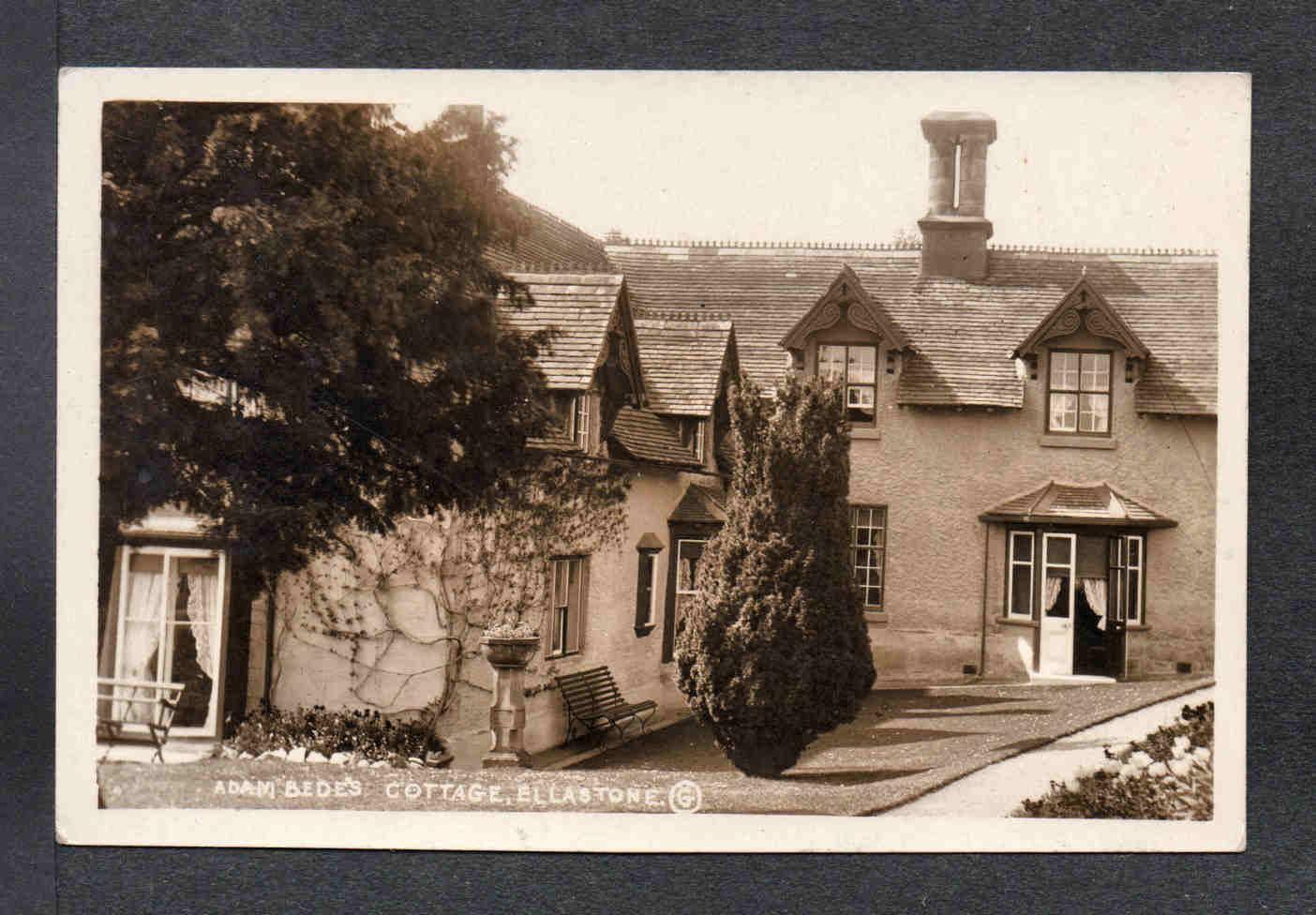
            “Ellastone features as ‘Hayslope’ in George Eliot’s Adam Bede, published in 1859. It earned this recognition because the author’s father spent the early part of his life in the village working as a carpenter.”

            Adam Bede Cottage, Ellastone:

            Ellasone Adam Bede

            “It was at Ellastone that Robert Evans, George Eliot’s father, passed his early years and worked as a carpenter with his brother Samuel; and it was partly from reminiscences of her father’s talk and from her uncle Samuel’s wife’s preaching experiences that the author constructed the very powerful and moving story of Adam Bede.”


            Mary Malkin

            1765-1838

            Ellen Carrington’s mother was Mary Malkin.

            Ellastone:

            Ellastone


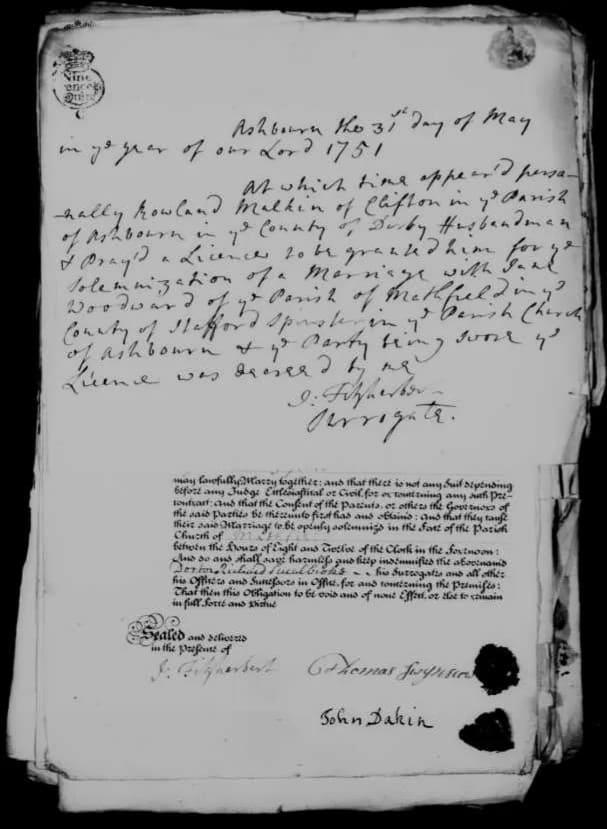
            Ashbourn the 31st day of May in the year of our Lord 1751.  The marriage of Rowland Malkin and Jane Woodward:

            Rowland Malkin marriage 1751

            #6248
            TracyTracy
            Participant

              Bakewell Not Eyam

              The Elton Marshalls

              Some years ago I read a book about Eyam, the Derbyshire village devastated by the plague in 1665, and about how the villagers quarantined themselves to prevent further spread. It was quite a story. Each year on ‘Plague Sunday’, at the end of August, residents of Eyam mark the bubonic plague epidemic that devastated their small rural community in the years 1665–6. They wear the traditional costume of the day and attend a memorial service to remember how half the village sacrificed themselves to avoid spreading the disease further.

              My 4X great grandfather James Marshall married Ann Newton in 1792 in Elton. On a number of other people’s trees on an online ancestry site, Ann Newton was from Eyam.  Wouldn’t that have been interesting, to find ancestors from Eyam, perhaps going back to the days of the plague. Perhaps that is what the people who put Ann Newton’s birthplace as Eyam thought, without a proper look at the records.

              But I didn’t think Ann Newton was from Eyam. I found she was from Over Haddon, near Bakewell ~ much closer to Elton than Eyam. On the marriage register, it says that James was from Elton parish, and she was from Darley parish. Her birth in 1770 says Bakewell, which was the registration district for the villages of Over Haddon and Darley. Her parents were George Newton and Dorothy Wipperley of Over Haddon,which is incidentally very near to Nether Haddon, and Haddon Hall. I visited Haddon Hall many years ago, as well as Chatsworth (and much preferred Haddon Hall).

              I looked in the Eyam registers for Ann Newton, and found a couple of them around the time frame, but the men they married were not James Marshall.

              Ann died in 1806 in Elton (a small village just outside Matlock) at the age of 36 within days of her newborn twins, Ann and James.  James and Ann had two sets of twins.  John and Mary were twins as well, but Mary died in 1799 at the age of three.

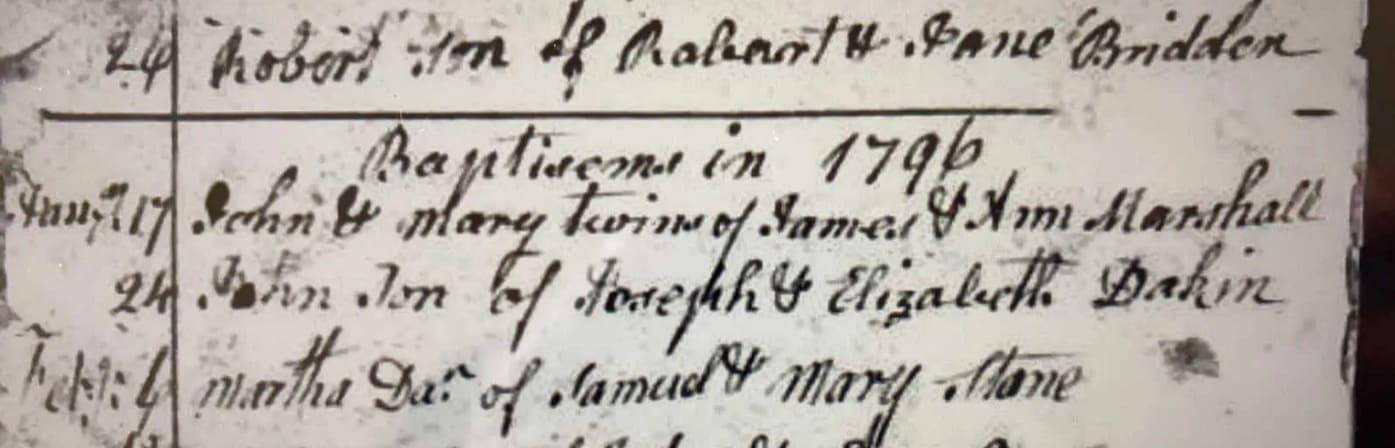
              1796 baptism of twins John and Mary of James and Ann Marshall

              Marshall baptism


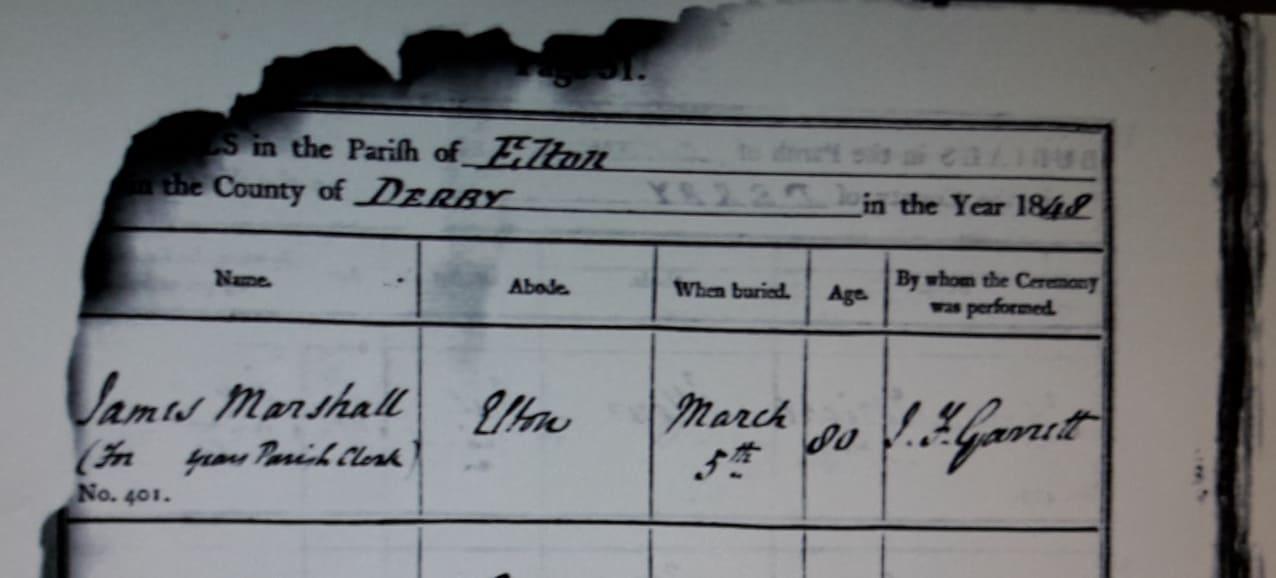
              Ann’s husband James died 42 years later at the age of eighty,  in Elton in 1848. It was noted in the parish register that he was for years parish clerk.

              James Marshall


              On the 1851 census John Marshall born in 1796, the son of James Marshall the parish clerk, was a lead miner occupying six acres in Elton, Derbyshire.

              His son, also John, was registered on the census as a lead miner at just eight years old.


              The mining of lead was the most important industry in the Peak district of Derbyshire from Roman times until the 19th century – with only agriculture being more important for the livelihood of local people. The height of lead mining in Derbyshire came in the 17th and 18th centuries, and the evidence is still visible today – most obviously in the form of lines of hillocks from the more than 25,000 mineshafts which once existed.

              Peak District Mines Historical Society

              Smelting, or extracting the lead from the ore by melting it, was carried out in a small open hearth. Lead was cast in layers as each batch of ore was smelted; the blocks of lead thus produced were referred to as “pigs”. Examples of early smelting-hearths found within the county were stone lined, with one side open facing the prevailing wind to create the draught needed. The hilltops of the Matlocks would have provided very suitable conditions.

              The miner used a tool called a mattock or a pick, and hammers and iron wedges in harder veins, to loosen the ore. They threw the ore onto ridges on each side of the vein, going deeper where the ore proved richer.

              Many mines were very shallow and, once opened, proved too poor to develop. Benjamin Bryan cited the example of “Ember Hill, on the shoulder of Masson, above Matlock Bath” where there are hollows in the surface showing where there had been fruitless searches for lead.

              There were small buildings, called “coes”, near each mine shaft which were used for tool storage, to provide shelter and as places for changing into working clothes. It was here that the lead was smelted and stored until ready for sale.

              Lead is, of course, very poisonous. As miners washed lead-bearing material, great care was taken with the washing vats, which had to be covered. If cattle accidentally drank the poisoned water they would die from something called “belland”.

              Cornish and Welsh miners introduced the practice of buddling for ore into Derbyshire about 1747.  Buddling involved washing the heaps of rubbish in the slag heaps,  the process of separating the very small particles from the dirt and spar with which they are mixed, by means of a small stream of water. This method of extraction was a major pollutant, affecting farmers and their animals (poisoned by Belland from drinking the waste water), the brooks and streams and even the River Derwent.

              Women also worked in the mines. An unattributed account from 1829, says: “The head is much enwrapped, and the features nearly hidden in a muffling of handkerchiefs, over which is put a man’s hat, in the manner of the paysannes of Wales”. He also describes their gowns, usually red, as being “tucked up round the waist in a sort of bag, and set off by a bright green petticoat”. They also wore a man’s grey or dark blue coat and shoes with 3″ thick soles that were tied round with cords. The 1829 writer called them “complete harridans!”

              Lead Mining in Matlock & Matlock Bath, The Andrews Pages

              John’s wife Margaret died at the age of 42 in 1847.  I don’t know the cause of death, but perhaps it was lead poisoning.  John’s son John, despite a very early start in the lead mine, became a carter and lived to the ripe old age of 88.

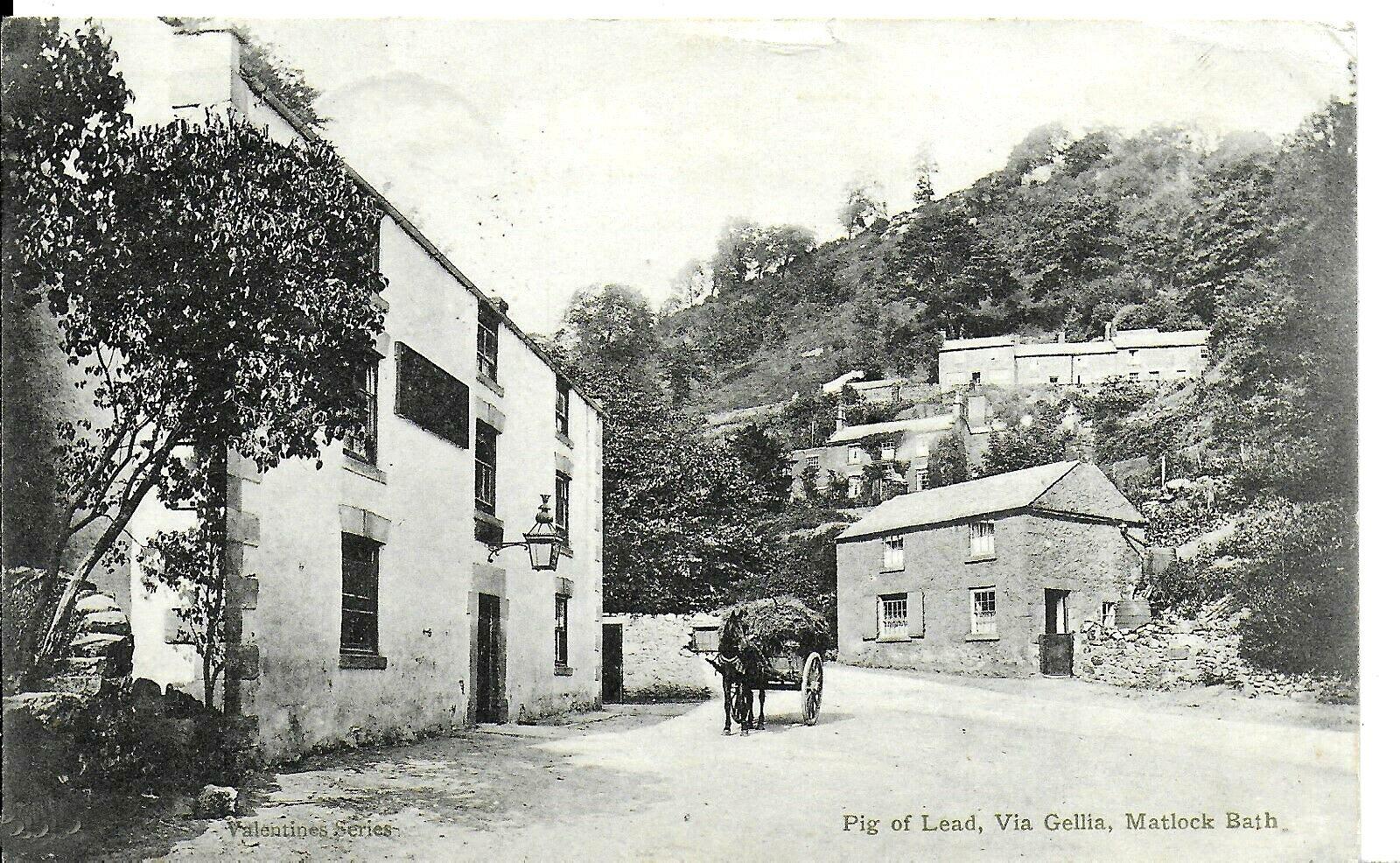
              The Pig of Lead pub, 1904:

              The Pig of Lead 1904


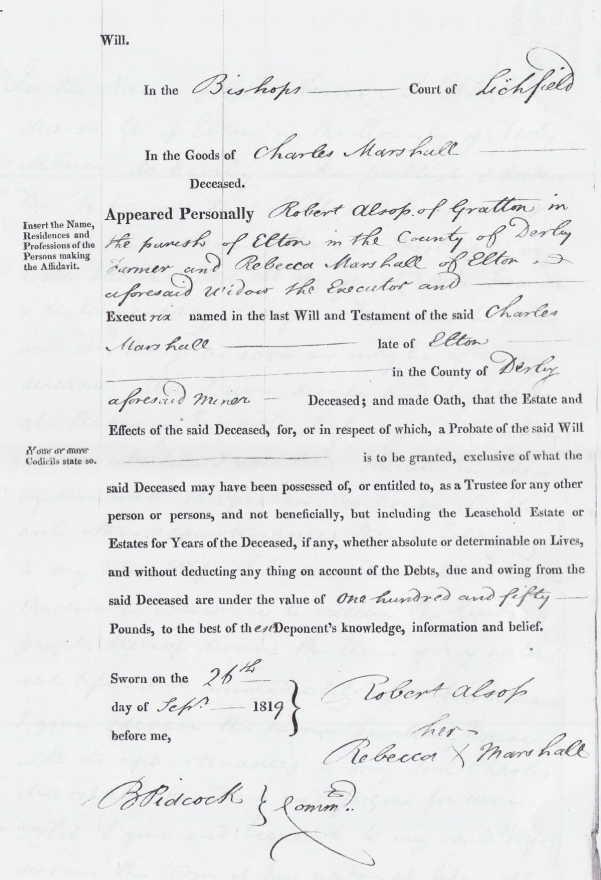
              The earliest Marshall I’ve found so far is Charles, born in 1742. Charles married Rebecca Knowles, 1775-1823.  I don’t know what his occupation was but when he died in 1819 he left a not inconsiderable sum to his wife.

              1819 Charles Marshall probate:

              Charles Marshall Probate


              There are still Marshall’s living in Elton and Matlock, not our immediate known family, but probably distantly related.  I asked a Matlock group on facebook:

              “…there are Marshall’s still in the village. There are certainly families who live here who have done generation after generation & have many memories & stories to tell. Visit The Duke on a Friday night…”

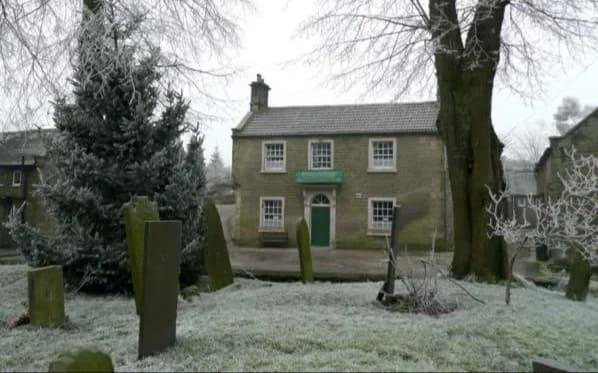
              The Duke, Elton:

              Duke Elton

              #6229
              TracyTracy
              Participant

                Gretton Tailoresses of Swadlincote and the Single Journalist Boot Maker Next Door

                The Purdy’s, Housley’s and Marshall’s are my mothers fathers side of the family.  The Warrens, Grettons and Staleys are from my mothers mothers side.

                I decided to add all the siblings to the Gretton side of the family, in search of some foundation to a couple of family anecdotes.  My grandmother, Nora Marshall, whose mother was Florence Nightingale Gretton, used to mention that our Gretton side of the family were related to the Burton Upon Trent Grettons of Bass, Ratcliff and Gretton, the brewery.  She also said they were related to Lord Gretton of Stableford Park in Leicestershire.  When she was a child, she said parcels of nice clothes were sent to them by relatives.

                Bass Ratcliffe and Gretton


                It should be noted however that Baron Gretton is a title in the Peerage of the United Kingdom, and was created in 1944 for the brewer and Conservative politician John Gretton. He was head of the brewery firm of Bass, Ratcliff & Gretton Ltd of Burton upon Trent. So they were not members of the Peerage at the time of this story.

                What I found was unexpected.

                My great great grandfather Richard Gretton 1833-1898, a baker in Swadlincote, didn’t have any brothers, but he did have a couple of sisters.

                One of them, Frances, born 1831, never married, but had four children. She stayed in the family home, and named her children Gretton. In 1841 and 1851 she’s living with parents and siblings. In 1861 she is still living with parents and now on the census she has four children all named Gretton listed as grandchildren of her father.
                In 1871, her mother having died in 1866, she’s still living with her father William Gretton, Frances is now 40, and her son William 19 and daughter Jane 15 live there.
                By the time she is 50 in 1881 and her parents have died she’s head of the house with 5 children all called Gretton, including her daughter Jane Gretton aged 24.

                Twenty five year old Robert Staley is listed on the census transcription as living in the same household, but when viewing the census image it becomes clear that he lived next door, on his own and was a bootmaker, and on the other side, his parents Benjamin and Sarah Staley lived at the Prince of Wales pub with two other siblings.

                Who was fathering all these Gretton children?

                It seems that Jane did the same thing as her mother: she stayed at home and had three children, all with the name Gretton.  Jane Gretton named her son, born in 1878, Michael William Staley Gretton, which would suggest that Staley was the name of the father of the child/children of Jane Gretton.

                The father of Frances Gretton’s four children is not known, and there is no father on the birth registers, although they were all baptized.

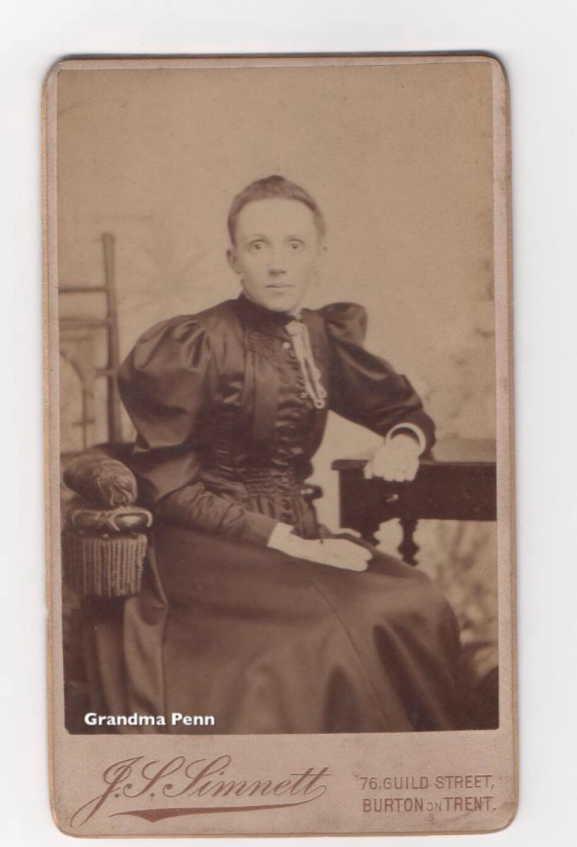
                I found a photo of Jane Gretton on a family tree on an ancestry site, so I contacted the tree owner hoping that she had some more information, but she said no, none of the older family members would explain when asked about it.  Jane later married Tom Penn, and Jane Gretton’s children are listed on census as Tom Penn’s stepchildren.

                Jane Gretton Penn


                It seems that Robert Staley (who may or may not be the father of Jane’s children) never married. In 1891 Robert is 35, single, living with widowed mother Sarah in Swadlincote. Sarah is living on own means and Robert has no occupation. On the 1901 census Robert is an unmarried 45 year old journalist and author, living with his widowed mother Sarah Staley aged 79, in Swadlincote.

                There are at least three Staley  Warren marriages in the family, and at least one Gretton Staley marriage.

                There is a possibility that the father of Frances’s children could be a Gretton, but impossible to know for sure. William Gretton was a tailor, and several of his children and grandchildren were tailoresses.  The Gretton family who later bought Stableford Park lived not too far away, and appear to be well off with a dozen members of live in staff on the census.   Did our Gretton’s the tailors make their clothes? Is that where the parcels of nice clothes came from?

                Perhaps we’ll find a family connection to the brewery Grettons, or find the family connection was an unofficial one, or that the connection is further back.

                I suppose luckily, this isn’t my direct line but an exploration of an offshoot, so the question of paternity is merely a matter of curiosity.  It is a curious thing, those Gretton tailors of Church Gresley near Burton upon Trent, and there are questions remaining.

                #6225
                TracyTracy
                Participant

                  William Marshall’s Parents

                  William Marshall  1876-1968, my great grandfather, married Mary Ann Gilman Purdy in Buxton. We assumed that both their families came from Buxton, but this was not the case.  The Marshall’s came from Elton, near Matlock; the Purdy’s from Eastwood, Nottinghamshire.

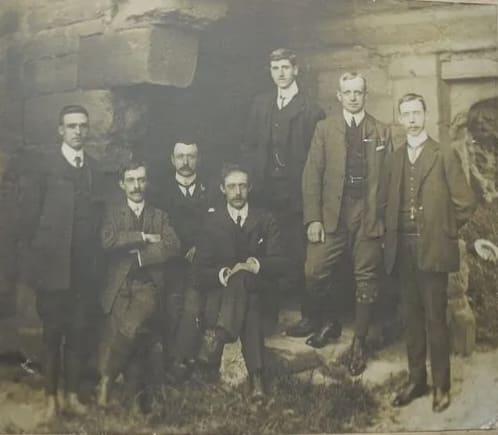
                  William Marshall, seated in centre, with colleagues from the insurance company:

                  William Marshall


                  William and all his siblings were born in Fairfield in Buxton. But both Emma Featherstone 1847-1928, his mother, and John Marshall 1842-1930, his father, came from rural Derbyshire. Emma from Ashbourne (or Biggin, Newhaven, or Hartington, depending on what she chose to put on the census, which are all tiny rural places in the same area).

                  Emma and John Marshall in the middle, photo says “William Marshall’s parents” on the back:

                  Emma and John Marshall


                  John Marshall was a carter, later a coal carter, and was born in Elton, Derbyshire. Elton is a rural village near to Matlock. He was unable to write (at least at the time of his wedding) but Emma signed her own name.

                  In 1851 Emma is 3 or 4 years old living with family at the Jug and Glass Inn, Hartington. In 1861 Emma was a 14 year old servant at a 112 acre farm, Heathcote, but her parents were still living at the Jug and Glass. Emma Featherstone’s parents both died when she was 18, in 1865.
                  In 1871 she was a servant at Old House Farm, Nether Hartington Quarter, Ashborne.

                  On the census, a female apprentice was listed as a servant, a boy as an apprentice. It seems to have been quite normal, at least that’s what I’ve found so far,  for all teenagers to go and live in another household to learn a trade, to be independent from the parents, and so doesn’t necessarily mean a servant as we would think of it. Often they stayed with family friends, and usually married in their early twenties and had their own household ~ often with a “servant” or teenager from someone else’s family.

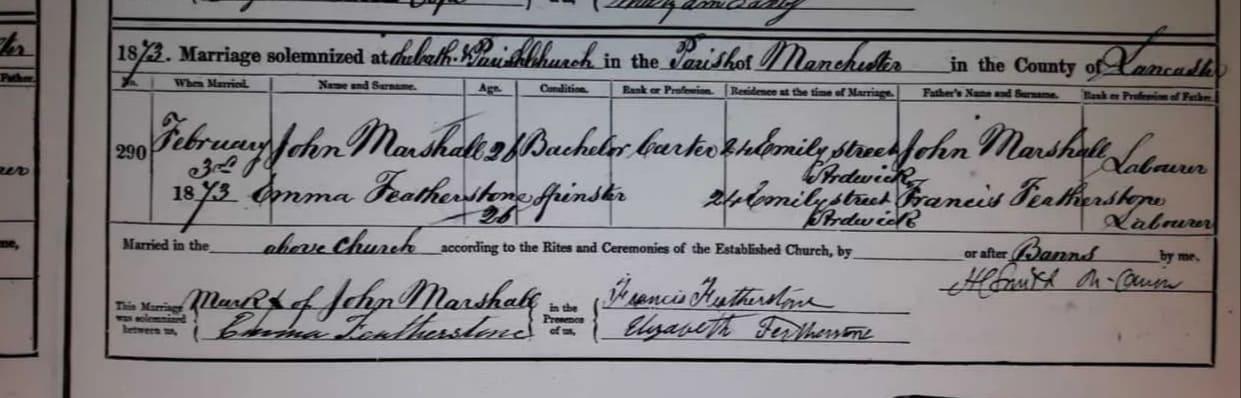
                  The only marriage I could find for Emma and John was in Manchester in 1873, which didn’t make much sense. If Emma was single on the 1871 census, and her first child James was born in 1873, her marriage had to be between those dates. But the marriage register in Manchester appears to be correct, John was a carter, Emma’s father was Francis Featherstone. But why Manchester?

                  Marshall Featherstone marriage

                  I noticed that the witnesses to the marriage were Francis and Elizabeth Featherstone. He father was Francis, but who was Elizabeth? Emma’s mother was Sarah. Then I found that Emma’s brother Francis married Elizabeth, and they lived in Manchester on the 1871 census. Henry Street, Ardwick. Emma and John’s address on the marriage register is Emily Street, Ardwick. Both of them at the same address.

                  The marriage was in February 1873, and James, the first child was born in July, 1873, in Buxton.

                  It would seem that Emma and John had to get married, hence the move to Manchester where her brother was, and then quickly moved to Buxton for the birth of the child.  It was far from uncommon, I’ve found while making notes of dates in registers, for a first child to be born six or 7 months after the wedding.

                  Emma died in 1928 at the age of 80, two years before her husband John. She left him a little money in her will! This seems unusual so perhaps she had her own money, possibly from the death of her parents before she married, and perhaps from the sale of the Jug and Glass.

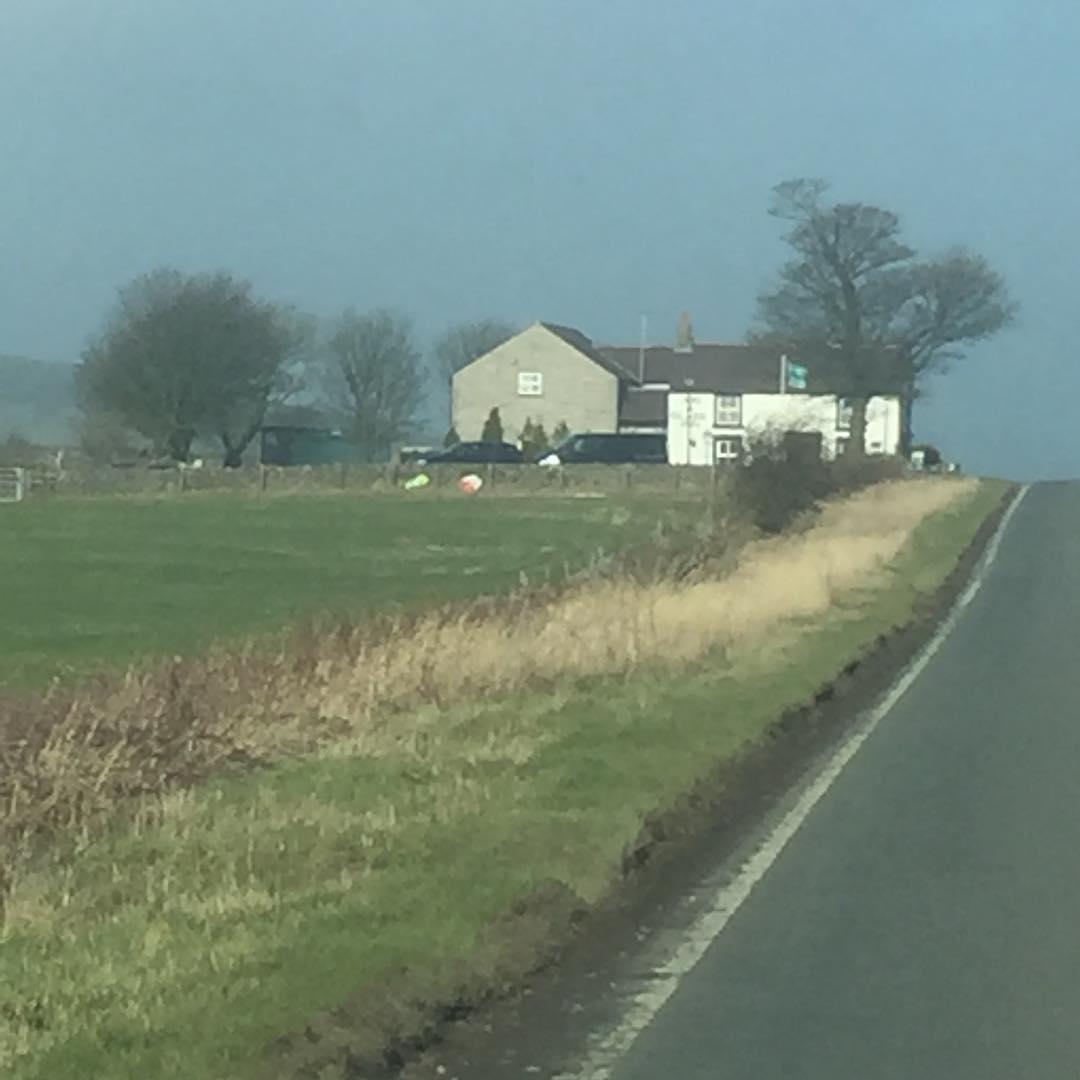
                  I found a photo of the Jug and Glass online.  It looks just like the pub I’d seen in my family history meditations on a number of occasions:

                  Jug and Glass

                  #6219
                  TracyTracy
                  Participant

                    The following stories started with a single question.

                    Who was Catherine Housley’s mother?

                    But one question leads to another, and another, and so this book will never be finished.  This is the first in a collection of stories of a family history research project, not a complete family history.  There will always be more questions and more searches, and each new find presents more questions.

                    A list of names and dates is only moderately interesting, and doesn’t mean much unless you get to know the characters along the way.   For example, a cousin on my fathers side has already done a great deal of thorough and accurate family research. I copied one branch of the family onto my tree, going back to the 1500’s, but lost interest in it after about an hour or so, because I didn’t feel I knew any of the individuals.

                    Parish registers, the census every ten years, birth, death and marriage certificates can tell you so much, but they can’t tell you why.  They don’t tell you why parents chose the names they did for their children, or why they moved, or why they married in another town.  They don’t tell you why a person lived in another household, or for how long. The census every ten years doesn’t tell you what people were doing in the intervening years, and in the case of the UK and the hundred year privacy rule, we can’t even use those for the past century.  The first census was in 1831 in England, prior to that all we have are parish registers. An astonishing amount of them have survived and have been transcribed and are one way or another available to see, both transcriptions and microfiche images.  Not all of them survived, however. Sometimes the writing has faded to white, sometimes pages are missing, and in some case the entire register is lost or damaged.

                    Sometimes if you are lucky, you may find mention of an ancestor in an obscure little local history book or a journal or diary.  Wills, court cases, and newspaper archives often provide interesting information. Town memories and history groups on social media are another excellent source of information, from old photographs of the area, old maps, local history, and of course, distantly related relatives still living in the area.  Local history societies can be useful, and some if not all are very helpful.

                    If you’re very lucky indeed, you might find a distant relative in another country whose grandparents saved and transcribed bundles of old letters found in the attic, from the family in England to the brother who emigrated, written in the 1800s.  More on this later, as it merits its own chapter as the most exciting find so far.

                    The social history of the time and place is important and provides many clues as to why people moved and why the family professions and occupations changed over generations.  The Enclosures Act and the Industrial Revolution in England created difficulties for rural farmers, factories replaced cottage industries, and the sons of land owning farmers became shop keepers and miners in the local towns.  For the most part (at least in my own research) people didn’t move around much unless there was a reason.  There are no reasons mentioned in the various registers, records and documents, but with a little reading of social history you can sometimes make a good guess.  Samuel Housley, for example, a plumber, probably moved from rural Derbyshire to urban Wolverhampton, when there was a big project to install indoor plumbing to areas of the city in the early 1800s.  Derbyshire nailmakers were offered a job and a house if they moved to Wolverhampton a generation earlier.

                    Occasionally a couple would marry in another parish, although usually they married in their own. Again, there was often a reason.  William Housley and Ellen Carrington married in Ashbourne, not in Smalley.  In this case, William’s first wife was Mary Carrington, Ellen’s sister.  It was not uncommon for a man to marry a deceased wife’s sister, but it wasn’t strictly speaking legal.  This caused some problems later when William died, as the children of the first wife contested the will, on the grounds of the second marriage being illegal.

                    Needless to say, there are always questions remaining, and often a fresh pair of eyes can help find a vital piece of information that has escaped you.  In one case, I’d been looking for the death of a widow, Mary Anne Gilman, and had failed to notice that she remarried at a late age. Her death was easy to find, once I searched for it with her second husbands name.

                    This brings me to the topic of maternal family lines. One tends to think of their lineage with the focus on paternal surnames, but very quickly the number of surnames increases, and all of the maternal lines are directly related as much as the paternal name.  This is of course obvious, if you start from the beginning with yourself and work back.  In other words, there is not much point in simply looking for your fathers name hundreds of years ago because there are hundreds of other names that are equally your own family ancestors. And in my case, although not intentionally, I’ve investigated far more maternal lines than paternal.

                    This book, which I hope will be the first of several, will concentrate on my mothers family: The story so far that started with the portrait of Catherine Housley’s mother.
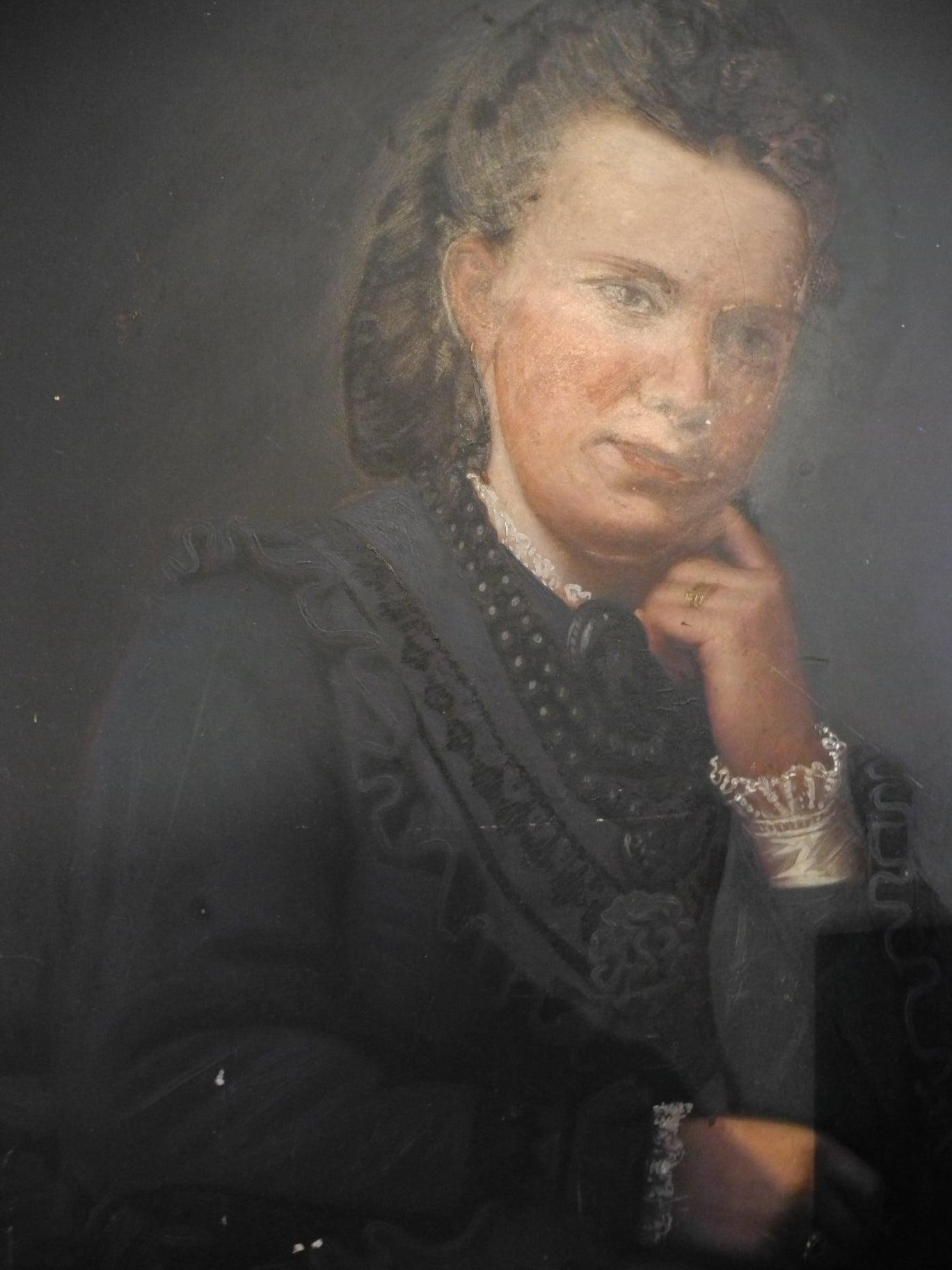
                    Elizabeth Brookes


                    This painting, now in my mothers house, used to hang over the piano in the home of her grandparents.   It says on the back “Catherine Housley’s mother, Smalley”.

                    The portrait of Catherine Housley’s mother can be seen above the piano. Back row Ronald Marshall, my grandfathers brother, William Marshall, my great grandfather, Mary Ann Gilman Purdy Marshall in the middle, my great grandmother, with her daughters Dorothy on the left and Phyllis on the right, at the Marshall’s house on Love Lane in Stourbridge.
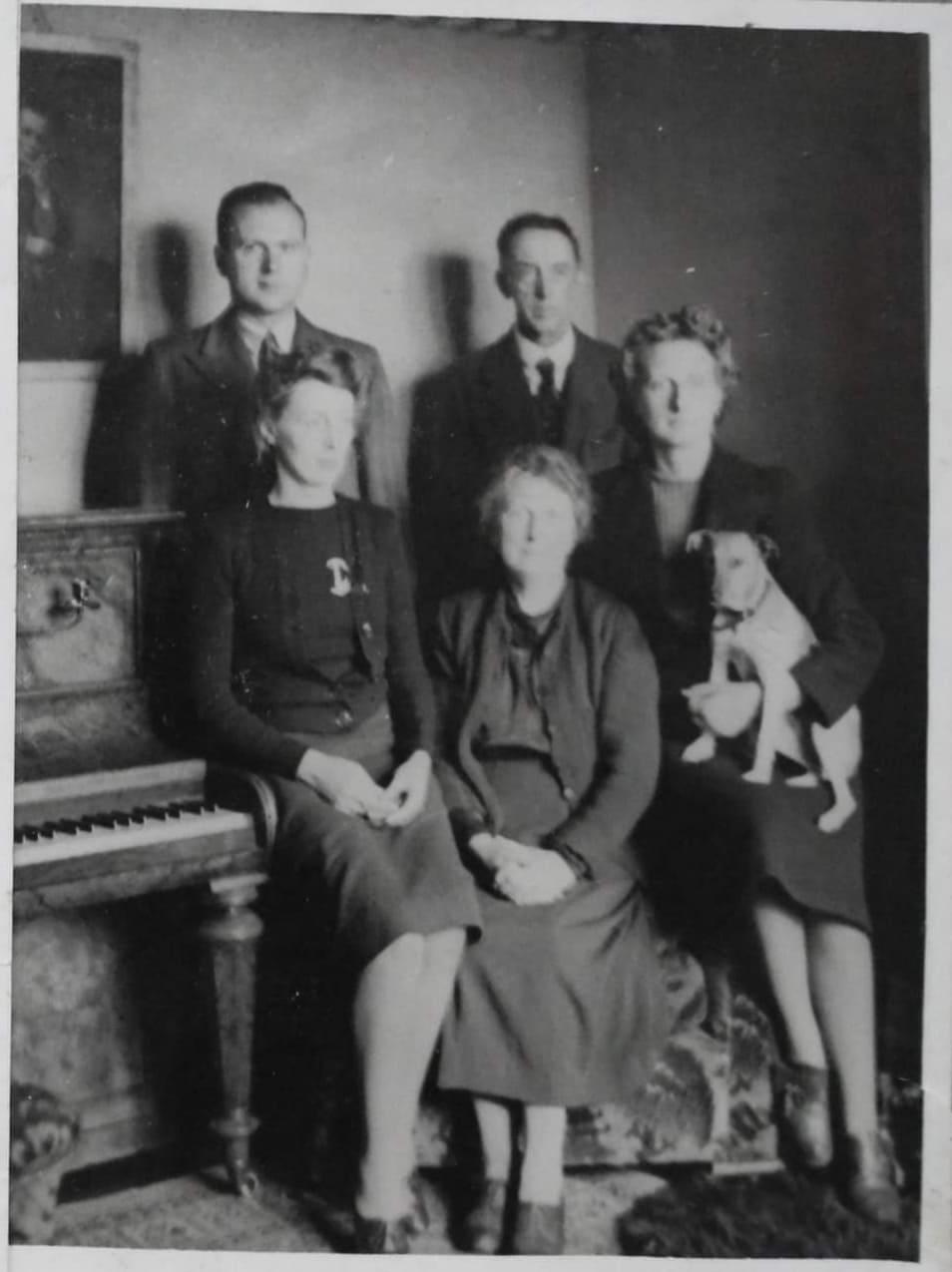
                    Marshalls


                    The Search for Samuel Housley

                    As soon as the search for Catherine Housley’s mother was resolved, achieved by ordering a paper copy of her birth certificate, the search for Catherine Housley’s father commenced. We know he was born in Smalley in 1816, son of William Housley and Ellen Carrington, and that he married Elizabeth Brookes in Wolverhampton in 1844. He was a plumber and glazier. His three daughters born between 1845 and 1849 were born in Smalley. Elizabeth died in 1849 of consumption, but Samuel didn’t register her death. A 20 year old neighbour called Aaron Wadkinson did.
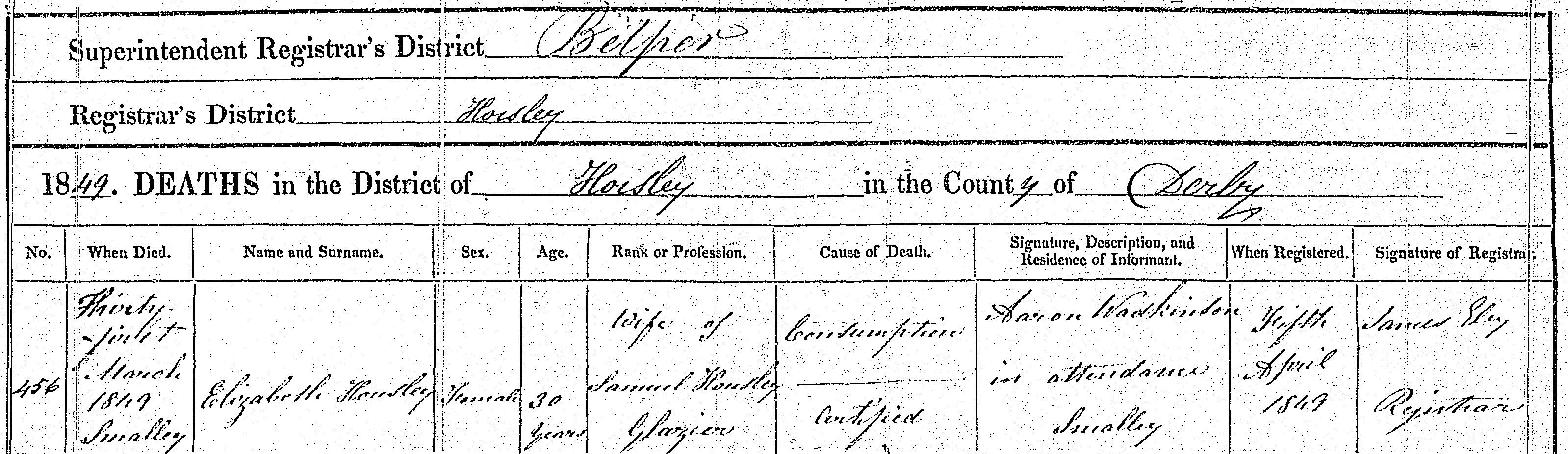
                    Elizabeth death


                    Where was Samuel?

                    On the 1851 census, two of Samuel’s daughters were listed as inmates in the Belper Workhouse, and the third, 2 year old Catherine, was listed as living with John Benniston and his family in nearby Heanor.  Benniston was a framework knitter.

                    Where was Samuel?

                    A long search through the microfiche workhouse registers provided an answer. The reason for Elizabeth and Mary Anne’s admission in June 1850 was given as “father in prison”. In May 1850, Samuel Housley was sentenced to one month hard labour at Derby Gaol for failing to maintain his three children. What happened to those little girls in the year after their mothers death, before their father was sentenced, and they entered the workhouse? Where did Catherine go, a six week old baby? We have yet to find out.
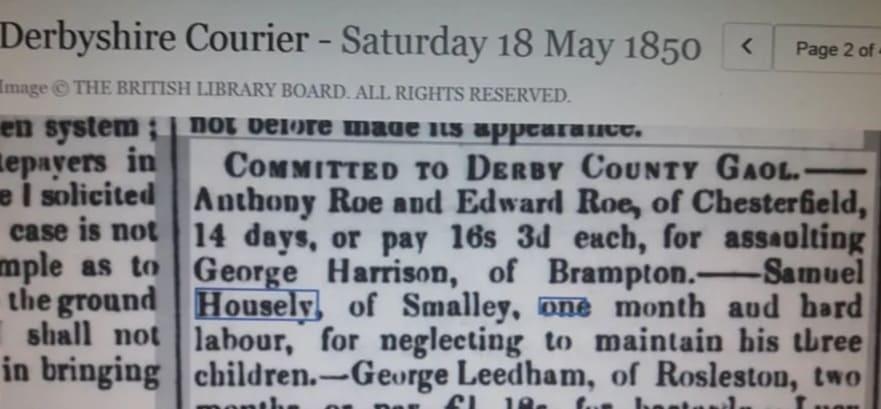
                    Samuel Housley 1850


                    And where was Samuel Housley in 1851? He hasn’t appeared on any census.

                    According to the Belper workhouse registers, Mary Anne was discharged on trial as a servant February 1860. She was readmitted a month later in March 1860, the reason given: unwell.

                    Belper Workhouse:
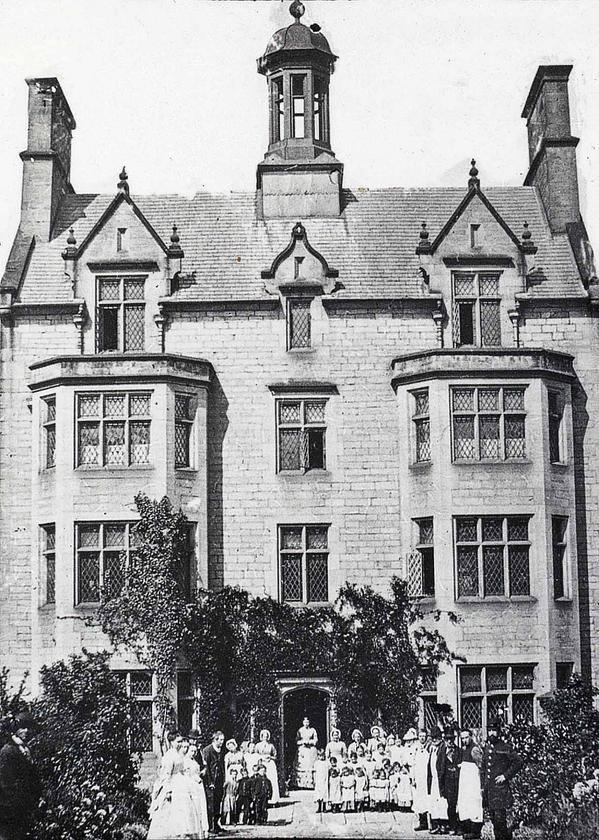
                    Belper Workhouse

                    Eventually, Mary Anne and Elizabeth were discharged, in April 1860, with an aunt and uncle. The workhouse register doesn’t name the aunt and uncle. One can only wonder why it took them so long.
                    On the 1861 census, Elizabeth, 16 years old, is a servant in St Peters, Derby, and Mary Anne, 15 years old, is a servant in St Werburghs, Derby.

                    But where was Samuel?

                    After some considerable searching, we found him, despite a mistranscription of his name, on the 1861 census, living as a lodger and plumber in Darlaston, Walsall.
                    Eventually we found him on a 1871 census living as a lodger at the George and Dragon in Henley in Arden. The age is not exactly right, but close enough, he is listed as an unmarried painter, also close enough, and his birth is listed as Kidsley, Derbyshire. He was born at Kidsley Grange Farm. We can assume that he was probably alive in 1872, the year his mother died, and the following year, 1873, during the Kerry vs Housley court case.
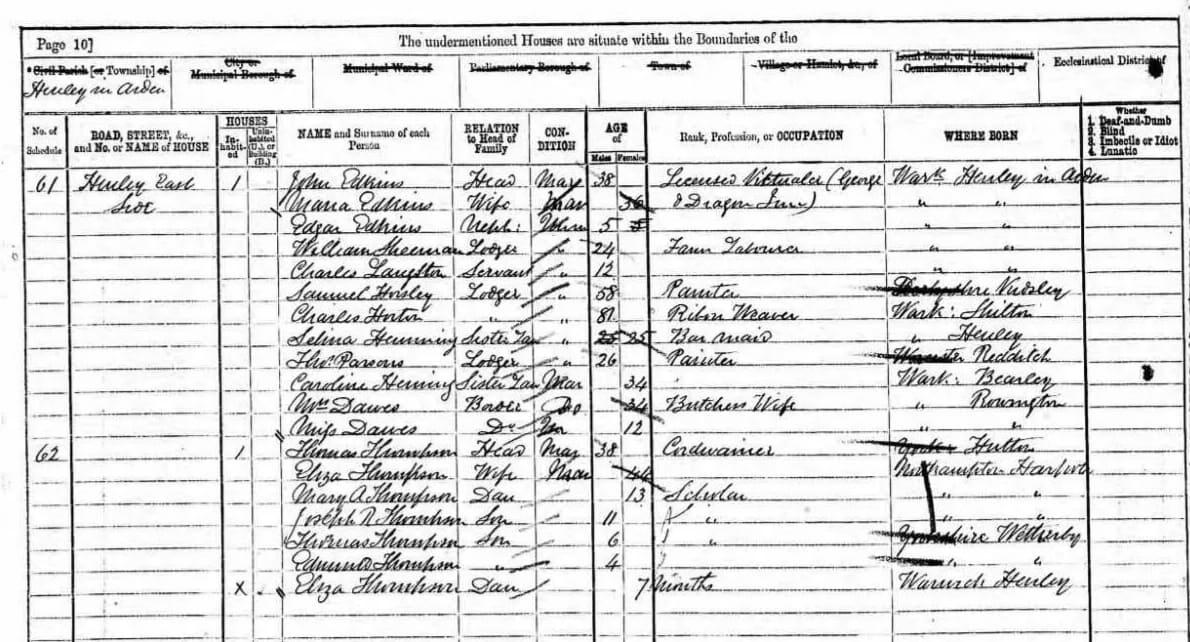
                    Samuel Housley 1871


                    I found some living Housley descendants in USA. Samuel Housley’s brother George emigrated there in 1851. The Housley’s in USA found letters in the attic, from the family in Smalley ~ written between 1851 and 1870s. They sent me a “Narrative on the Letters” with many letter excerpts.

                    The Housley family were embroiled in a complicated will and court case in the early 1870s. In December 15, 1872, Joseph (Samuel’s brother) wrote to George:

                    “I think we have now found all out now that is concerned in the matter for there was only Sam that we did not know his whereabouts but I was informed a week ago that he is dead–died about three years ago in Birmingham Union. Poor Sam. He ought to have come to a better end than that….His daughter and her husband went to Birmingham and also to Sutton Coldfield that is where he married his wife from and found out his wife’s brother. It appears he has been there and at Birmingham ever since he went away but ever fond of drink.”

                    No record of Samuel Housley’s death can be found for the Birmingham Union in 1869 or thereabouts.

                    But if he was alive in 1871 in Henley In Arden…..
                    Did Samuel tell his wife’s brother to tell them he was dead? Or did the brothers say he was dead so they could have his share?

                    We still haven’t found a death for Samuel Housley.


                  Viewing 8 results - 21 through 28 (of 28 total)