


Search Results for 'works'
-
AuthorSearch Results
-
December 7, 2024 at 11:18 am #7652
In reply to: Quintessence: Reversing the Fifth
Darius: The Call Home
South of France: Early 2023
Darius stared at the cracked ceiling of the tiny room, the faint hum of a heater barely cutting through the January chill. His breath rose in soft clouds, dissipating like the ambitions that had once kept him moving. The baby’s cries from the next room pierced the quiet again, sharp and insistent. He hadn’t been sleeping well—not that he blamed the baby.
The young couple, friends of friends, had taken him in when he’d landed back in France late the previous year, his travel funds evaporated and his wellness “influencer” groups struggling to gain traction. What had started as a confident online project—bridging human connection through storytelling and mindfulness—had withered under the relentless churn of algorithm changes and the oversaturated market: even in its infancy, AI and its well-rounded litanies seemed the ubiquitous answers to humanities’ challenges.
“Maybe this isn’t what people need right now,” he had muttered during one of his few recent live sessions, the comment section painfully empty.
The atmosphere in the apartment was strained. He felt it every time he stepped into the cramped kitchen, the way the couple’s conversation quieted, the careful politeness in their questions about his plans.
“I’ve got some things in the works,” he’d say, avoiding their eyes.
But the truth was, he didn’t.
It wasn’t just the lack of money or direction that weighed on him—it was a gnawing sense of purposelessness, a creeping awareness that the threads he’d woven into his identity were fraying. He could still hear Éloïse’s voice in his mind sometimes, low and hypnotic: “You’re meant to do more than drift. Trust the pattern. Follow the pull.”
The pull. He had followed it across continents, into conversations and connections that felt profound at the time but now seemed hollow, like echoes in an empty room.
When his phone buzzed late one night, the sound startling in the quiet, he almost didn’t answer.
“Darius,” his aunt’s voice crackled through the line, faint but firm. “It’s time you came home.”
Arrival in Guadeloupe
The air in Pointe-à-Pitre was thick and warm, clinging to his skin like a second layer. His aunt met him at the airport, her sharp gaze softening only slightly when she saw him.
“You look thin,” she said, her tone clipped. “Let’s get you fed.”
The ride to Capesterre-Belle-Eau was a blur of green —banana fields and palms swaying in the breeze, the mountains rising in the distance like sleeping giants. The scent of the sea mingled with the earthy sweetness of the land, a sharp contrast to the sterile chill of the south of France.
“You’ll help with the house,” his aunt said, her hands steady on the wheel. “And the fields. Don’t think you’re here to lounge.”
He nodded, too tired to argue.

The first few weeks felt like penance. His aunt was tireless, moving with an energy that gainsaid her years, barking orders as he struggled to keep up.
“Your hands are too soft,” she said once, glancing at his blistered palms. “Too much time spent talking, not enough doing.”
Her words stung, but there was no malice in them—only a brutal honesty that cut through his haze.
Evenings were quieter, spent on the veranda with plates of steaming rice and codfish, with the backdrop of cicadas’ relentless and rhythmic agitation. She didn’t ask about his travels, his work, or the strange detours his life had taken. Instead, she told stories—of storms weathered, crops saved, neighbors who came together when the land demanded it.
A Turning Point
One morning, as the sun rose over the fields, his aunt handed him a machete.
“Today, you clear,” she said.
He stood among the ruined banana trees, their fallen trunks like skeletal remains of what had once been vibrant and alive. The air was heavy with the scent of damp earth and decay.
With each swing of the machete, he felt something shift inside him. The physical labor, relentless and grounding, pulled him out of his head and into his body. The repetitive motion—strike, clear, drag—was almost meditative, a rhythm that matched the heartbeat of the land.
By midday, his shirt clung to his back, soaked with sweat. His muscles ached, his hands stung, but for the first time in months, his mind felt quiet.
As he paused to drink from a canteen, his aunt approached, a rare smile softening her stern features.
“You’re starting to see it, aren’t you?” she said.
“See what?”
“That life isn’t just what you chase. It’s what you build.”
Over time, the work became less about obligation and more about integration. He began to recognize the faces of the neighbors who stopped by to lend a hand, their laughter and stories sending vibrant pulsating waves resonant of a community he hadn’t realized he missed.
One evening, as the sun dipped low, a group gathered to share a meal. Someone brought out drums, the rhythmic beat carrying through the warm night air. Darius found himself smiling, his feet moving instinctively to the music.
The trance of Éloïse’s words—the pull she had promised—dissipated like smoke in the wind. What remained was what mattered: it wasn’t the pull but the roots —the people, the land, the stories they shared.
The Bell
It was his aunt who rang the bell for dinner one evening, the sound sharp and clear, cutting through the humid air like a call to attention.
Darius paused, the sound resonating in his chest. It reminded him of something—a faint echo from his time with Éloïse and Renard, but different. This was simpler, purer, untainted by manipulation.
He looked at his aunt, who was watching him with a knowing smile. “You’ve been lost a long time, haven’t you?” she said quietly.
Darius nodded, unable to speak.
“Good,” she said. “It means you know the way back.”
By the time he wrote to Amei, his hand no longer trembled. “Guadeloupe feels like a map of its own,” he wrote, the words flowing easily. “its paths crossing mine in ways I can’t explain. It made me think of you. I hope you’re well.”
For the first time in years, he felt like he was on solid ground—not chasing a pull, but rooted in the rhythm of the land, the people, and himself.
The haze lifted, and with it came clarity and maybe hope. It was time to reconnect—not just with long-lost friends and shared ideals, but with the version of himself he thought he’d lost.
December 7, 2024 at 10:16 am #7651In reply to: Quintessence: A Portrait in Reverse
Exploring further potential backstory for the characters – to be explored further…
This thread beautifully connects to the lingering themes of fractured ideals, missed opportunities, and the pull of reconnection. Here’s an expanded exploration of the “habitats participatifs” (co-housing communities) and how they tie the characters together while weaving in subtle links to their estrangement and Matteo’s role as the fifth element.
Backstory: The Co-Housing Dream
Habitat Participatif: A Shared Vision
The group’s initial bond, forged through shared values and late-night conversations, had coalesced around a dream: buying land in the Drôme region of France to create a co-housing community. The French term habitat participatif—intergenerational, eco-conscious, and collaborative living—perfectly encapsulated their ideals.
What Drew Them In:
- Amei: Longing for a sense of rootedness and community after years of drifting.
- Elara: Intrigued by the participatory aspect, where decisions were made collectively, blending science and sustainability.
- Darius: Enchanted by the idea of shared creative spaces and a slower, more intentional way of living.
- Lucien: Inspired by the communal energy, imagining workshops where art could flourish outside the constraints of traditional galleries.
The Land in Drôme
They had narrowed their options to a specific site near the village of Crest, not far from Lyon. The land, sprawling and sun-drenched, had an old farmhouse that could serve as a communal hub, surrounded by fields and woods. A nearby river threaded through the valley, and the faint outline of mountains painted the horizon.
The traboules of Lyon, labyrinthine passageways, had captivated Amei during an earlier visit, leaving her wondering if their metaphorical weaving through life could mirror the paths their group sought to create.
The Role of Monsieur Renard
When it came to financing, the group faced challenges. None of them were particularly wealthy, and pooling their resources fell short. Enter Monsieur Renard, whose interest in supporting “projects with potential” brought him into their orbit through Éloïse.
Initial Promise:
- Renard presented himself as a patron of innovation, sustainability, and community projects, offering seed funding in exchange for a minor share in the enterprise.
- His charisma and Éloïse’s insistence made him seem like the perfect ally—until his controlling tendencies emerged.
The Split: Fractured Trust
Renard’s involvement—and Éloïse’s increasing influence on Darius—created fault lines in the group.
- Darius’s Drift:
- Darius became entranced by Renard and Éloïse’s vision of community as something deeper, bordering on spiritual. Renard spoke of “energetic alignment” and the importance of a guiding vision, which resonated with Darius’s creative side.
- He began advocating for Renard’s deeper involvement, insisting the project couldn’t succeed without external backing.
- Elara’s Resistance:
- Elara, ever the pragmatist, saw Renard as manipulative, his promises too vague and his influence too broad. Her resistance created tension with Darius, whom she accused of being naive.
- “This isn’t about community for him,” she had said. “It’s about control.”
- Lucien’s Hesitation:
- Lucien, torn between loyalty to his friends and his own fascination with Éloïse, wavered. Her talk of labyrinths and collective energy intrigued him, but he grew wary of her sway over Darius.
- When Renard offered to fund Lucien’s art, he hesitated, sensing a price he couldn’t articulate.
- Amei’s Silence:
- Amei, haunted by her own experiences with manipulation in past relationships, withdrew. She saw the dream slipping away but couldn’t bring herself to fight for it.
Matteo’s Unseen Role
Unbeknownst to the others, Matteo had been invited to join as a fifth partner—a practical addition to balance their idealism. His background in construction and agriculture, coupled with his easygoing nature, made him a perfect fit.
The Missed Connection:
- Matteo had visited the Drôme site briefly, a stranger to the group but intrigued by their vision. His presence was meant to ground their plans, to bring practicality to their shared dream.
- By the time he arrived, however, the group’s fractures were deepening. Renard’s shadow loomed too large, and the guru-like influence of Éloïse had soured the collaborative energy. Matteo left quietly, sensing the dream unraveling before it could take root.
The Fallout: A Fractured Dream
The group dissolved after a final argument about Renard’s involvement:
- Elara refused to move forward with his funding. “I’m not selling my future to him,” she said bluntly.
- Darius, feeling betrayed, accused her of sabotaging the dream out of stubbornness.
- Lucien, caught in the middle, tried to mediate but ultimately sided with Elara.
- Amei, already pulling away, suggested they put the project on hold.
The land was never purchased. The group scattered soon after, their estrangement compounded by the pandemic. Matteo drifted in a different direction, their connection lost before it could form.
Amei’s Perspective: Post-Split Reflection
In the scene where Amei buys candles :
- The shopkeeper’s comments about “seeking something greater” resonate with Amei’s memory of the co-housing dream and how it became entangled with Éloïse and Renard’s influence.
- Her sharper-than-usual reply reflects her lingering bitterness over the way “seeking” led to manipulation and betrayal.
Reunion at the Café: A New Beginning
When the group reunites, the dream of the co-housing project lingers as a symbol of what was lost—but also of what could still be reclaimed. Matteo’s presence at the café bridges the gap between their fractured past and a potential new path.
Matteo’s Role:
- His unspoken connection to the co-housing plan becomes a point of quiet irony: he was meant to be part of their story all along but arrived too late. Now, at the café, he steps into the role he missed years ago—the one who helps them see the threads that still bind them.
December 4, 2024 at 6:22 am #7638In reply to: Quintessence: Reversing the Fifth
The Bell’s Moment: Paris, Summer 2024 – Olympic Games
The bell was dangling unassumingly from the side pocket of a sports bag, its small brass frame swinging lightly with the jostle of the crowd. The bag belonged to an American tourist, a middle-aged man in a rumpled USA Basketball T-shirt, hustling through the Olympic complex with his family in tow. They were here to cheer for his niece, a rising star on the team, and the bell—a strange little heirloom from his grandmother—had been an afterthought, clipped to the bag for luck. It seemed to fit right in with the bright chaos of the Games, blending into the swirl of flags, chants, and the hum of summer excitement.
1st Ring of the Bell: Matteo
The vineyard was quiet except for the hum of cicadas and the soft rustle of leaves. Matteo leaned against the tractor, wiping sweat from his brow with the back of his hand.
“You’ve done good work,” the supervisor said, clapping Matteo on the shoulder. “We’ll be finishing this batch by Friday.”
Matteo nodded. “And after that?”
The older man shrugged. “Some go north, some go south. You? You’ve got that look—like you already know where you’re headed.”
Matteo offered a half-smile, but he couldn’t deny it. He’d felt the tug for days, like a thread pulling him toward something undefined. The idea of returning to Paris had slipped into his thoughts quietly, as if it had been waiting for the right moment.
When his phone buzzed later that evening with a job offer to do renovation work in Paris, it wasn’t a surprise. He poured himself a small glass of wine, toasting the stars overhead.
Somewhere, miles away, the bell rang its first note.
2nd Ring of the Bell: Darius
In a shaded square in Barcelona, the air was thick with the scent of jasmine and the echo of a street performer’s flamenco guitar. Darius sprawled on a wrought-iron bench, his leather-bound journal open on his lap. He sketched absentmindedly, the lines of a temple taking shape on the page.
A man wearing a scarf of brilliant orange sat down beside him, his energy magnetic. “You’re an artist,” the man said without preamble, his voice carrying the cadence of Kolkata.
“Sometimes,” Darius replied, his pen still moving.
“Then you should come to India,” the man said, grinning. “There’s art everywhere. In the streets, in the temples, even in the food.”
Darius chuckled. “You recruiting me?”
“India doesn’t need recruiters,” the man replied. “It calls people when it’s time.”
The bell rang again in Paris, its chime faint and melodic, as Darius scribbled the words “India, autumn” in the corner of his page.
3rd Ring of the Bell: Elara
The crowd at CERN’s conference hall buzzed as physicists exchanged ideas, voices overlapping like equations scribbled on whiteboards. Elara sat at a corner table, sipping lukewarm coffee and scrolling through her messages.
The voicemail notification glared at her, and she tapped it reluctantly.
“Elara, it’s Florian. I… I’m sorry to tell you this over a message, but your mother passed away last night.”
Her coffee cup trembled slightly as she set it down.
Her relationship with her mother had been fraught, full of alternating period of silences and angry reunions, and had settled lately into careful politeness that masked deeper fractures. Years of therapy had softened the edges of her resentment but hadn’t erased it. She had come to accept that they would never truly understand each other, but the finality of death still struck her with a peculiar weight.
Her mother had been living alone in Montrouge, France, refusing to leave the little house Elara had begged her to sell for years. They had drifted apart, their conversations perfunctory and strained, like the ritual of winding a clock that no longer worked.
She would have to travel to Montrouge for the funeral arrangements.
In that moment, the bell in Les Reliques rang a third time.
4th Ring of the Bell: Lucien
The train to Lausanne glided through fields of dried up sunflowers, too early for the season, but the heat had been relentless. He could imagine the golden blooms swaying with a cracking sound in the summer breeze. Lucien stared out the window, the strap of his duffel bag wrapped tightly around his wrist.
Paris had been suffocating. The tourists swarmed the city like ants, turning every café into a photo opportunity and every quiet street into a backdrop. He hadn’t needed much convincing to take his friend up on the offer of a temporary studio in Lausanne.
He reached into his bag and pulled out a sketchbook. The pages were filled with half-finished drawings, but one in particular caught his eye: a simple doorway with an ornate bell hanging above it.
He didn’t remember drawing it, but the image felt familiar, like a memory from a dream.
The bell rang again in Paris, its resonance threading through the quiet hum of the train.
5th Ring of the Bell: …. Tabitha
In the courtyard of her university residence, Tabitha swung lazily in a hammock, her phone propped precariously on her chest.
“Goa, huh?” one of her friends asked, leaning against the tree holding up the hammock. “Think your mum will freak out?”
“She’ll probably worry herself into knots,” Tabitha replied, laughing. “But she won’t say no. She’s good at the whole supportive parent thing. Or at least pretending to be.”
Her friend raised an eyebrow. “Pretending?”
“Don’t get me wrong, I love her,” Tabitha said. “But she’s got her own stuff. You know, things she never really talks about. I think it’s why she works so much. Keeps her distracted.”
The bell rang faintly in Paris, though neither of them could hear it.
“Maybe you should tell her to come with you,” the friend suggested.
Tabitha grinned. “Now that would be a trip.”
Last Ring: The Pawn
It was now sitting on the counter at Les Reliques. Its brass surface gleamed faintly in the dim shop light, polished by the waves of time. Small and unassuming, its ring held something inexplicably magnetic.
Time seemed to settle heavily around it. In the heat of the Olympic summer, it rang six times. Each chime marked a moment that mattered, though none of the characters whose lives it touched understood why. Not yet.
“Where’d you get this?” the shopkeeper asked as the American tourist placed it down.
“It was my grandma’s,” he said, shrugging. “She said it was lucky. I just think it’s old.”
The shopkeeper ran her fingers over the brass surface, her expression unreadable. “And you’re selling it?”
“Need cash to get tickets for the USA basketball game tomorrow,” the man replied. “Quarterfinals. You follow basketball?”
“Not anymore,” the shopkeeper murmured, handing him a stack of bills.
The bell rang softly as she placed it on the velvet cloth, its sound settling into the space like a secret waiting to be uncovered.
And so it sat, quiet but full of presence, waiting for someone to claim it maybe months later, drawn by invisible threads woven through the magnetic field of lives, indifferent to the heat and chaos of the Parisian streets.
November 4, 2024 at 2:01 pm #7578In reply to: The Incense of the Quadrivium’s Mystiques
When Eris gave Jeezel carte blanche to decorate the meeting room, Frella and Truella looked at her as if she’d handed fireworks to a dragon. They protested immediately, arguing that giving Jeezel that much freedom was like inviting a storm draped in sequins and velvet. After all, Jeezel was a queen diva—a master of flair and excess, ready to transform any ordinary space into a grand stage for her dramatic vision. In their eyes, it would defeat the whole purpose! But Eris raised a firm hand, silencing her sister’s objections.
“Let’s be honest, Malové is no ordinary witch,” she began, addressing Truella, Frella, and even Jeezel, who was still stung by her sisters’ criticism of her decorating skills. “We don’t know how many centuries that witch has been roaming the world, gathering knowledge and sharpening her mind. But what we do know is that she’d detect any concealing spell in a heartbeat.”
“Yeah, you’re right,” Truella agreed. “I think that’s the smell…”
“You mean based on your last potion experiment?” snorted Frella.
“Girls, focus,” Eris said. “This meeting is long overdue, and we need to conceal the truth-revealing spell’s elements. Jeezel’s flair may be our best distraction. Malové has always dismissed her grandiosity as harmless extravagance, so for once, let’s use that to our advantage.”
While Eris spoke, Jeezel’s brow furrowed as she engaged in an animated dialogue with her inner diva, picturing every details. Frella rolled her eyes subtly, glancing off-camera as though for dramatic effect.
“Isn’t that a bit much for a meeting?” Truella groaned. “You already assigned us topics to prepare. Now we’re adding decorations?”
“You won’t have to lift a finger,” Jeezel declared. “I’ve got it all under control—and I already have everything we need. Here’s my vision: Halloween is coming, so the decor should be both elegant and enchanting. I’ll start by draping the room in velvet curtains in deep purples and midnight blacks—straight from my own bedroom.”
Truella’s jaw dropped, while Jeezel’s grin only widened.
“Oh! I love those,” Frella murmured approvingly.
“Next, delicate cobweb accents with a touch of silver thread to catch the light,” Jeezel continued. “Truella, we’ll need your excavation lamps with a few colored gels. They’ll cast a warm, inviting glow—a perfect mix of relaxation and intrigue, with shadows in just the right places. And for the season, a few glowing pumpkins tucked around the room will complete the scene.”
Jeezel’s inner diva briefly entertained the idea of mystical fog, but she discarded it—after all, this was a meeting, not a sabbat. Instead, she proposed a more subtle touch: “To conceal the spell’s elements, I’ll bring in a few charming critters. Faux ravens perched on shelves, bats hanging from the ceiling…a whimsical, creepy-cute vibe. We’ll adorn them with runes and sigils in an insconpicuous way and Frella can cast a gentle animation spell to make them shift ever so slightly. The movement will be just enough to escape Malové’s notice as she stays focused on the meeting. That way she’ll be oblivious to the spell being woven around her.”
“Are you starting to see where this is going?” Eris asked, looking at her sisters.
Frella nodded, and before Truella could chime in with any objections, Jeezel added, “And no Halloween gathering would be complete without wickedly delightful treats! Picture a grand table with themed snacks and drinks on polished silver trays and cauldrons. Caramel apples, spiced cider, chocolates shaped like magic potions—tempting enough to charm even a disciplined witch.”
“Now you’re talking my language,” Truella admitted, finally warming up to the idea.
“Perfect, then it’s settled,” Eris said, pleased. “You all have your tasks. They’ll help us reveal her hidden agenda and how the spell is influencing her. Truella, you’l handle Historical Artifacts and Lore. Frella, with your talent for connections, you’ll cover Coven Alliances and Mutual Interests. Jeezel, you’re in charge of Telluric and Cosmic Energies—it shouldn’t be hard with your endless videos on the subject. I’ll handle the rest: Magical Incense Innovations, Leadership Philosophy, and Coven Dynamics.”
July 22, 2024 at 8:46 pm #7539In reply to: The Incense of the Quadrivium’s Mystiques
There was a quietness before the rush of tourists, and the placid disposition of cows near the field was a nice relief after the madness of the Coven’s endless succession of rituals, workshops, business cases and budgeting of late.
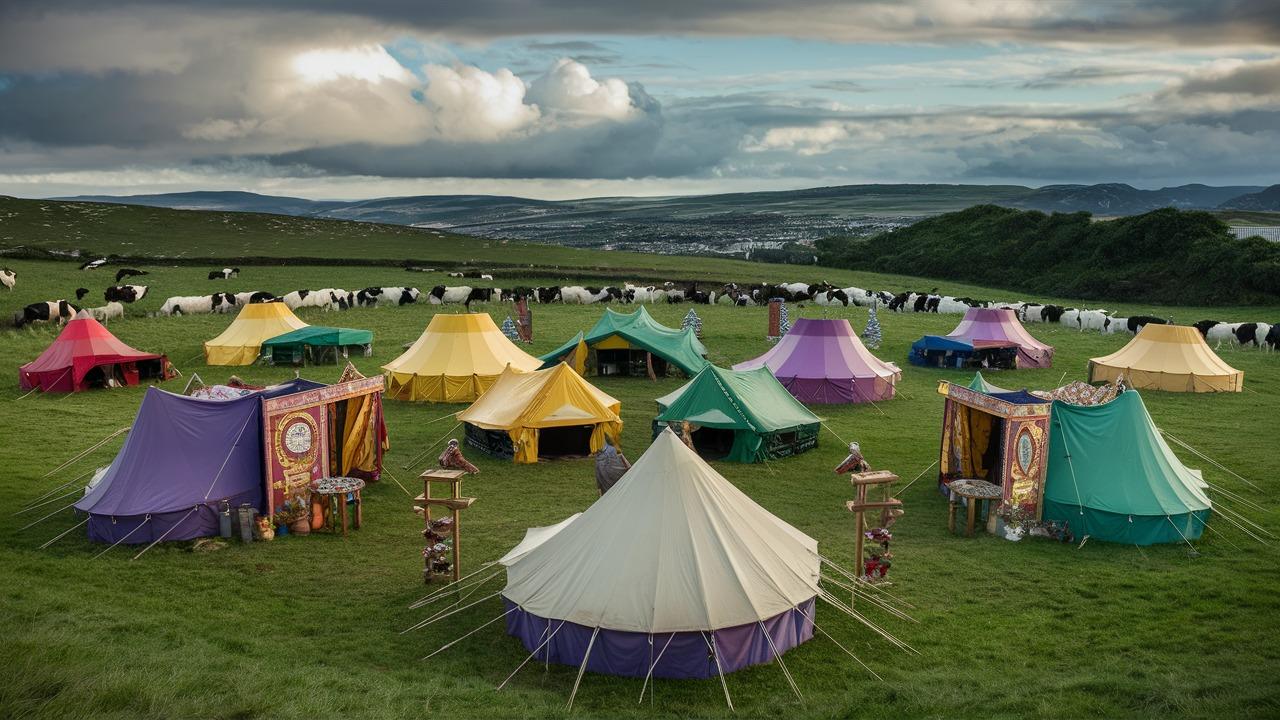
It would be as close a permission slip from Austreberthe for a holiday as any of them were likely to get in a lifetime, so they’d better enjoy it —Eris had reasoned.
Picking the assigned one without putting too much thought to it, Eris had found her yurt pleasantly arranged with an attractive purple color, and even if she was only midly fond of the very hippy and communal setup, with a few insonorisation spells, and interior-designer-enlargement spells, the tent had proven adequate enough.
She’d been here already when Truella and Frella had come through the other tents, chatting vivaciously of course. She’d lifted the muffling spell for long enough to overhear about Malové being here. Well, in case there were any doubt, it seemed it was again all about business. Eris was surprised though that Malové would join, but remembered that Malové was known in her youth to have been a mad racer with a fondness for breakneck speeds. She was probably just here for the Games, like many others.
The longwinded story about the camphor chest had started to recede in the background sound of cud chewing so she didn’t get the fine details of it for now.
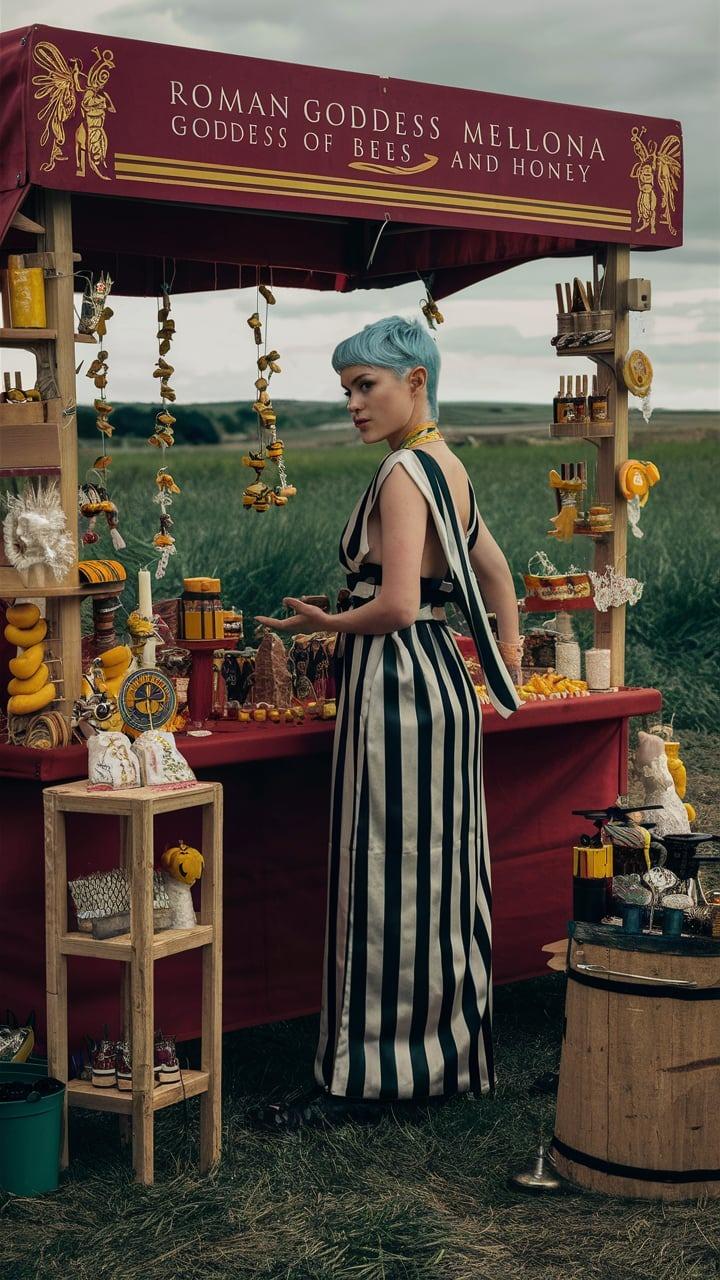
Now Eris was wide awake from her nap, and it was as good a time as any to setup her Mellona stall. After all that Coven’s busy activity of the past weeks, there was no small irony (or synchronicity, which would be the same, with a better state of mind) that she’d found herself in charge of the Roman Goddess’ stall. Maybe she would find interesting ways to channel the hive’s power to support their queen.
 June 21, 2024 at 7:22 am #7511
In reply to: The Incense of the Quadrivium’s Mystiques
“What? Malové sent you a personal letter? And a golden key! We merely had a memo for the merger,” Truella said, pacing quickly in Jeezel’s bedroom.
“You’ve been swooning over Mr. Dark since we got here,” said Jeezel. “Have you even checked your own things? Maybe you have some kind of message or clue or I don’t know what. But stop pacing like that, you’ll bore a hole in my floor.”
“That’s not your floor,” said Truella with fire in her eyes.
“Girls, stop. That’s not the point,” said Eris, her voice carrying icy breeze of Sweden’s coldest winters. “We don’t even know if that message is from Malové.”
“What do you mean?” asked Jeezel and Truella in unison.
“Yes, what do you mean?” asked a floating glowing orb with Frella’s voice.
Eris brushed a few sparkling dark purple powder from her chest. “Bloody dragon soot,” she muttered. “Well, from what you told us, Silas tried to jinx you when you were discussing about the rituals. Baiting you with the idea that there are amongst or around us forces that would rather see this merger fail. Then, conveniently, handsome Garrett comes to your rescue and warns you about Silas’ evil plot, and talks to you about the very thing Malové supposedly entrusted you with in that letter, and muddying the waters even further with that tale about ancient Punic families.”
“What’s wrong with Punic families,” said Truella.
“Why are you blushing?” asked Jeezel.
“The point is, that it could very well be part of a plot to plant doubts about everyone and everything, so that we make the merger fail ourselves.”
“And then exit the witches from the picture,” said Frella’s glowing voice.
“But who could possibly have hidden the envelope amongst my things without me noticing?” asked Jeezel.
“Who comes and goes into your home?” asked Eris.
“Yes, who?” asked Truella with a sudden renewed interest.
After a few moments of reflection, Jeezel raised her hand to her mouth. “You can’t mean Joe? My fan’s brother who came to do some works for me.”
“I don’t mean anything. But if I recall well, you mentioned you gave him the keys or your home so that he could come do the repairs whenever you’re not there.”
“You gave him your keys?” asked Truella, her eyes wide open.
“But Luminia would have seen him.”
“Well even a familiar needs to go out sometimes.”
“Or maybe after a torrid night, when you’re finally resting,” suggested Truella.
“Ooh! You would love that!” Jeezel said. Then she put the back of her hand on her forehead and moaned: “My brain’s not made for that kind of messy story. I can’t investigate, do the rituals, flirt with the enemy. There are too many things to do and too many possibilities.”
“There, dear. You have us now,” said Eris, still brushing the dragon soot from her dress.
“And I know one who needs to go to the bottom of a chest,” added Truella. “Frella, we need you here.”
“I’m not sure,” Frella said. “I guess someone has to investigate what really happened to Malové. Who knows if that postcard and that love affair are even real? I’ll let you know.”
June 18, 2024 at 7:12 pm #7501In reply to: The Incense of the Quadrivium’s Mystiques
While the other sisters were mingling, and trying to figure out with some circumspection, the good which could come out of this union, Eris had retreated in a quieter corner of the cloister. After all, and despite the renovations made to cater to external seminars, workshops and celebrations, it remained a place of mystery and introspection. The stone walls had this deep cold quietness which felt refreshing in the scolding heat of things.
For the past weeks, Eris was mulling over the impossible assignment given by Austreberthe to conduct a reorganisation, which seemed preposterious. Now, with the merger in motion, it had become plain for the Quadrivium board of directors that there was a need to change their way.
Put in another way, they were basically saying that the autonomous functioning of their small squads of witches wasn’t helping for a larger expansion, and had to move to more industrial separation of tasks, something of a matricial organisation. The irony wasn’t lost on her — talking about mothers, matrix, but actually being more bent to patriarchal structure with all the new additions asked for by the merger of figureheads: head of product, head of delivery, head of convergence all these new roles to invent —yet feeling thoroughly alien, akin to grafting machine onto a living organism. The Quadrivium had always thrived on its autonomous squads, and the idea of industrialising their structure seemed almost heretical.
The undertakers consultants, with their methodical approach were supposed to help, but she hadn’t been able yet to make them work for her, as she could see them struggle with the finer nuances of their craft.
Looking for inspiration in the quiet space she’d found, Eris closed her eyes, drawing a deep breath. Her mind wandered to her Aunt Amara’s garden, where order and chaos coexisted in a delicate balance.
A plan started to present itself, almost like one of those annoying lists that Malové would often love to provide.
It had to start with mapping the terrain —the existing strengths of the autonomous groups in the coven. It would require documenting their capabilities, ongoing projects, and key members, creating a clear picture of what the coven had to offer.
Then to look at potential synergies between the squads and the new roles Austreberthe envisioned. The Head of Product could harness the creative energies of the crafting squad, while the Head of Delivery might streamline the efforts of those specializing in executing the vision into tangible deliverables. The Head of Convergence would need to be a master diplomat, someone who could bridge the gap between the nuns and the witches.
More subtle, but with potential, the next step came in boldly, with an impudence that could mean as much genius as it could spell out disaster: Hybrid Squads. Instead of dismantling the existing groups of the coven, she could propose hybrid squads. Each hybrid squad would retain its core identity but include members from the Cloister Crafts and have a liaison to the new heads. This way, the squads could maintain their autonomy while integrating new skills and perspectives.
She took a moment to ponder the implications.
Eris knew she would need to test this approach before full-scale implementation. She would start with pilot projects, assigning a few key squads to work under the new structure. Regular feedback sessions would allow adjustments and refinements, ensuring the system evolved organically.
That would be where the Morticians’ Guild would be able to support more directly. Garrett and Silas could facilitate the integration rituals and workshops to ease any lingering tensions. Rufus would ensure security, while Nemo, the analyst, would provide insights into improving efficiencies without compromising their magical integrity.
All this needed a catalyst, or this plan would drag on forever.
Drag on…
Nothing like a dragon crisis to put things in motion! There surely were abundant dragon energy left in those tunnels, powerful telluric energies to muster into a spell to invigorate and cement the newfound alliance between witches and nuns.
She snapped her fingers. Echo who was never far away, reappeared with a smirk. “I can see you have some devious idea. How can I help?”
June 17, 2024 at 7:13 pm #7493In reply to: The Incense of the Quadrivium’s Mystiques
“Do you know who that Everone is?” Jeezel whispered to Eris.
“Shtt,” she silenced Jeezel worried that some creative inspiration sparked into existence yet another character into their swirling adventure.
The ancient stone walls of the Cloisters resonated with the hum of anticipation. The air was thick with the scent of incense barely covering musky dogs’ fart undertones, mingling with the faint aroma of fresh parchment eaten away by centuries of neglect. Illuminated by the soft glow of enchanted lanterns sparkling chaotically like a toddler’s magic candle at its birthday, the grand hall was prepared for an unprecedented gathering of minds and traditions.

While all the attendants were fumbling around, grasping at the finger foods and chitchatting while things were getting ready, Eris was reminded of the scene of the deal’s signature between the two sisterhoods unlikely brought together.
Few weeks before, under a great deal of secrecy, Malové, Austreberthe, and Lorena had convened in the cloister’s grand hall, the gothic arches echoing their words. Before she signed, Lorena had stated rather grandiloquently, with a voice firm and unwavering. “We are a nunnery dedicated to craftsmanship and spiritual devotion. This merger must respect our traditions.”
Austreberthe, ever the pragmatist, replied, “And we bring innovation and magical prowess. Together, we can create something greater than the sum of our parts.”
The undertaker’s spokesman, Garrett, had interjected with a charming smile, “Consider us the matchmakers of this unlikely union. We promise not to leave you at the altar.”
That’s were he’d started to spell out the numbingly long Strategic Integration Plan to build mutual understanding of the mission and a framework for collaboration.Eris sighed at the memory. That would require yet a great deal of joint workshops and collaborative sessions — something that would be the key to facilitate new product developments and innovation. Interestingly, Malové at the time had suggested for Jeezel to lead with Silas the integration rituals designed to symbolically and spiritually unite the groups. She’d had always had a soft spot for our Jeezel, but that seemed unprecedented to want to put her to task on something as delicate. Maybe there was another plan in motion, she would have to trust Malové’s foresight and let it play out.
As the heavy oak doors creaked open, a hush fell over the assembled witches, nuns and the undertakers. Mother Lorena Blaen stepped forward. Her presence was commanding, her eyes sharp and scrutinising. She wore the traditional garb of her order, but her demeanour was anything but traditional.
“Welcome, everyone,” Lorena began, her voice echoing through the hallowed halls. “Or should I say, welcome to the heart of tradition and innovation, where ancient craftsmanship meets arcane mastery.”
She paused, letting her words sink in, before continuing. “You stand at the threshold of the Quintessivium Cloister Crafts, a sanctuary where every stitch is a prayer, every garment a humble display of our deepest devotion. But today, we are not just nuns and witches, morticians and mystics. Today, we are the architects of a new era.”
Truella yawned at the speech, not without waving like a schoolgirl at the tall Rufus guy, while Lorena was presenting a few of the nuns, ready to model in various fashionable nun’s garbs for their latest midsummer fashion show.
Lorena’s eyes twinkled with a mixture of pride and determination as she turned back to the visitors. “Together, we shall transcend the boundaries of faith and magic. With the guidance of the Morticians’ Guild—Garrett, Rufus, Silas, and Nemo—we will forge a new path, one that honors our past while embracing the future.”
Garrett, ever the showman, gave a theatrical bow. “We’re here to ensure this union is as seamless as a well-tailored shroud, my dear Lorena.” Rufus, standing silent and vigilant, offered a nod of agreement. Silas, with his grandfatherly smile, added, “We bring centuries of wisdom to this endeavor. Trust in the old ways, and we shall succeed.” Nemo, with his characteristic smirk, couldn’t resist a final quip. “And if things go awry, well, we have ways of making them… interesting.”
June 12, 2024 at 8:55 pm #7471In reply to: The Incense of the Quadrivium’s Mystiques
Looking at the news, Truella had started to push messages into the group’s channel. Frigella, Jeezel, and Eris were unusually quick to answer.
Truella: (rolling her eyes icon) “So, Austreberthe’s brilliant plan is to merge our sophisticated incense business with… what was it again? Puffer coats and kilts made by Spanish witch nuns? I honestly can’t wait to see how that plays out.”
Frigella: (smirking) “Oh, don’t forget the quills. How could we possibly survive without those finely crafted quills? I mean, who needs innovation in magic when you can have a hand-stitched quilt from a nun’s workshop?”
Jeezel: (chuckling) “I can see it now—our next product line: ‘Blessed Be the Quilted Puffer Coats.’ Perfect for those chilly nights when you’re out casting spells in the woods. Truly revolutionary.”
Truella: “Yes, and let’s not overlook the cultural synergy. Religious Spanish nuns known to overdo the religious stuff, merging with our… less-than-conventional coven. A match made in heaven, for sure.”
Jeezel: “I can already hear Austreberthe’s sales pitch. ‘Introducing the new line of enchanted apparel—each item blessed with a dash of piety and a sprinkle of old-world charm. Because nothing says cutting-edge magic like a quilted kilt.'”
Frigella: “And the quills! ‘Handcrafted by the devout sisters, these quills will not only enhance your writing but also keep your soul in line.’ Imagine the marketing campaigns!”
Jeezel: “It’s like we’re stepping back into the Middle Ages. What’s next? A line of chastity belts with magical locks?”
Frigella: “I get that Austreberthe is trying to diversify and all, but does she really think this will integrate seamlessly with our brand? We’ve built our reputation on unique, powerful incense blends. How do quills and coats fit into that?”
Jeezel: (looking for the snorting icon) “Don’t forget the puffer coats. Perfect for those who wish to repent in style.”
Eris not wanting to sound too sycophantic, and trying to remain optimistic considering it was after all part of all the potential business she’d looked into: “Well, it seemed like a good idea in the beginning. You should have seen what we avoided! Plus, they have a solid balance sheet, believe it on not, I’m sure that’s what got Austreberthe. I knew Malové had her reservations, but before she left, she pushed hard for it, so maybe there’s some hidden genius in this we just can’t see yet. And Austreberthe will have a cunning plan to fuse these disparate elements into something… cohesive.”
Truella: (raising an eyebrow) “Cohesive like a patched-up quilt, you mean? I suppose we’ll have to wait and see if this grand vision of hers is a stroke of genius or just… well, a stroke.”
June 12, 2024 at 8:45 pm #7470In reply to: The Incense of the Quadrivium’s Mystiques
After all the months of secret work for Malové, where Eris was being tasked to scout for profitable new ventures for the Quadrivium’s Emporium that would keep with traditions, and endless due diligence under the seal of secrecy, she’d learnt that the deal had been finally sealed by Austreberthe.
The announcement had just went out, not really making quite the splash Eris would have expected.
Press Release
FOR IMMEDIATE RELEASE
Quadrivium Emporium Announces Strategic Acquisition of Spanish based company Quintessivium Cloister Crafts
Limerick, 12th June 2024– Quadrivium Emporium, renowned for its exceptional range of artisanal incense blends and commitment to quality, is pleased to announce the successful acquisition of Quintessivium Cloister Crafts. This strategic move marks a significant milestone in Quadrivium Emporium’s ongoing expansion and diversification efforts.About Quintessivium Cloister Crafts
Quintessivium Cloister Crafts has been a trusted name in the production of high-quality nun’s couture. Known for their craftsmanship and dedication to preserving traditional techniques, started as a small business focussed on quills and writing accessories as well as cardigans, Quintessivium Cloister Crafts has maintained a reputation for excellence and innovation in the market.
Strategic Vision and Synergies
The integration of Quintessivium Cloister Crafts into the Quadrivium family aligns with our vision to expand our product portfolio while maintaining the high standards of quality and craftsmanship our customers have come to expect. This acquisition will allow Quadrivium Emporium to diversify its offerings and tap into new markets and customer segments.
“We are thrilled to welcome Quintessivium Cloister Crafts to the Quadrivium Emporium family,” said Austreberthe Baltherbridge, interim CEO of Quadrivium Emporium. “Their commitment to quality and tradition mirrors our own values, and we are excited about the opportunities this acquisition presents. Together, we will continue to innovate and deliver exceptional products to our customers.”
Future Endeavours
Quadrivium Emporium plans to leverage the expertise and resources of Quintessivium Cloister Crafts to develop new and unique product lines. Customers can look forward to an expanded range of high-quality writing instruments, apparel and accessories, crafted with the same attention to detail and dedication that both brands are known for.
For more information, please contact: media@quadrivium.emporium
The internal memo that they’d received on the internal email list bore some of the distinct style of Malové, even if sent from Austreberthe’s email and adjusted with the painstaking attention to minute details she was known for.
Internal Memo
To: Quadrivium Leadership Team
Subject: Synergies and Strategic Integration with Quintessivium Cloister Crafts (previously codenamed as ‘Cardivium Nun’s Quills & Cardigans’)Team,
With the acquisition of Quintessivium Cloister Crafts finalised, we are poised to explore the deeper synergies between our coven and the nun witches’ coven operating behind their front. Here are some key areas where we can harness our collective strengths:
1. Resource Sharing:
– Their expertise in crafting high-quality quills can complement our focus on artisanal incense blends. By sharing resources and best practices, both covens can enhance their craftsmanship and innovation.2. Collaborative Spellcraft:
– The nun witches bring a unique perspective and set of rituals that can enrich our own magical practices. Joint spellcasting sessions and workshops can lead to the development of powerful new enchantments and products.3. Knowledge Exchange:
– The historical and esoteric knowledge held by the nuns is a treasure trove we can tap into. Regular exchanges of scrolls, texts, and insights can deepen our understanding of ancient magic and its applications in modern contexts.4. Market Expansion:
– By combining our product lines, we can create bundled offerings that appeal to a broader audience. Imagine a premium writing set that includes a handcrafted quill, a magical ink blend, and a specially composed incense for enhancing focus and creativity. Or outdoor outfits with puffer jackets, or specially knit cardigans with embedded magical properties.5. Strengthening Alliances:
– This acquisition sets a precedent for future alliances with other covens and magical entities. It demonstrates our commitment to growth and collaboration, reinforcing our position as a leading force in the magical community.Remember, the true value of this acquisition lies not just in the products we can create together, but in the unity and strength we gain as a collective. Let’s approach this integration with the spirit of collaboration and mutual respect.
Yours in strength and magic,
Austreberthe, on behalf of MalovéJune 12, 2024 at 6:29 am #7468In reply to: The Incense of the Quadrivium’s Mystiques
At least the weather was nice in Brussels. The trip to the International Witch Bank of Grungebotts, in the quarters of Ravenstein was luckily a day trip this time, rather these week-long offsite workshops they’d been submitted to in the previous months.
It had not taken long to Austreberthe to send some of the Quadrivium witches to do her errands.
Eris was summoned in the wee hours of the day, in order to do a check-in with the bankers. The state of finances of the Quadrivium had been under scrutiny already at the time of Malové, but probably even more now during this power vacuum period.
Austreberthe had insisted Eris could be there to join with a few of the Witches of Compliance who would handle most of the discussion, while she would present the business side of their last ventures. Apparently Malové had only hinted at the secret missions she’d given some of the witches, without sharing any detail to her head of Finance.
Malové was apparently very used to these exchanges with the bankers, having struggled for a while to keep the Incense venture afloat. The presentation had been very expertly put together, and Eris for her part was mostly here to embody the seriousness and practicality of the business; in truth the bankers themselves, some greying end-of-career wizards, were obviously just here to do their job, and not eager to find fault that would require a more heavy-handed audit approach.
Within two hours of confident presentation, soft discussions on the state of international witches and wizard affairs, the political state in the union, and the incoming Worldwide Roman Games, with the help of a few madeleines dipped in black coffee, it was quickly done.
“How did it go?” Austreberthe anxious message was already flashing imperiously on her device as she boarded the return magical train. Eris distractly showed her ticket to the lady controller with the red lavallière and the strangest red octopus brooch, while struggling to answer.
She was too tired to overthink it. She tapped in quick taps the answer “All good for now. We should be in the clear until the next one.” and reclined back to get some needed rest.
June 8, 2024 at 9:23 am #7461In reply to: The Incense of the Quadrivium’s Mystiques
Once again, the Quadrivium headquarters buzzed with an undercurrent of tension and anticipation. Malové stood at the helm, her gaze as steely and unwavering as ever. The coven’s regular meetings had taken on a new urgency in the face of mounting market pressures and the ever-accelerating pace of competition.
The witches assembled in the grand hall, each carrying the weight of their individual concerns and collective anxieties. A large screen was projecting the agenda in flashy neon colours with a glamourous photo of their leader. The event was broadcast across many locations, not all witches able to join physically as the ongoing Worldwide Roman Games preparation and the 333th celebration of the Treaty of Limerick ending the Williamite War, had made the city impenetrable due to the convergence of world leaders.
Not only for those present, all of them seated in-person, or remotely connected had felt the tremors of change, the subtle yet insistent push towards transformation. Yet despite their best efforts, a cohesive vision for the coven’s future remained elusive.
As the last witch took her seat and the various technical glitches got sorted, Malové stepped forward, her presence commanding immediate silence. With a flick of her wrist, a spectral map materialized before them, shimmering with points of light that represented their past achievements and future challenges.
“Listen well,” Malové began, her voice echoing through the hall with the gravity of an ancient spell. “We stand at a crossroads, a juncture where our past accomplishments meet the demands of an unforgiving future. Our strength has always been in our unity and our mastery of the arcane, but now, we must also master the art of transformation.”
She paused, allowing her words to sink in. The witches leaned forward, their eyes locked onto their formidable leader.
“Transformation,” she continued, “is not merely a matter of adapting to external pressures. It requires a boldness of spirit and a willingness to steer the deepest currents of our inner selves. It demands that we break free from the confines of tradition without losing our core essence.”
Malové waved her hand, and the map shifted to reveal a complex network of interconnected pathways. “Our path forward will not be linear. It will be a labyrinth, requiring both cunning and courage. But fear not, for I have charted a course that will lead us through.”
She pointed to three glowing nodes on the map. “First, we shall innovate. Our magical incense blends have always been our hallmark, but we must go beyond. We will delve into new realms of magic, combining our ancient practices with cutting-edge techniques. Each of you will be tasked with researching and developing a new blend that can transform not just our coven, but the world.”
The witches exchanged glances, a mixture of excitement and apprehension flickering in their eyes.
“Second,” Malové continued, “we must strengthen our alliances. The world is vast, and we are not alone in our quest for magical mastery. We will forge new partnerships with other covens, magical beings, and even those who walk the line between the mundane and the mystical. Together, we will create a network of power and influence that none can rival.”
The map expanded, showing potential allies and strategic locations across the globe. The witches nodded, recognizing the necessity of this bold move.
“Lastly,” Malové said, her voice softening yet losing none of its intensity, “we must look within. Inner transformation is the crucible in which true power is forged. Each of you will undergo a rigorous process of self-examination and growth. You will face your fears, confront your weaknesses, and emerge stronger and more resilient. Only then can we hope to lead others through their own transformations.”
She paused, meeting the eyes of each witch in turn. “I will be with you every step of the way. My role is not just to lead, but to guide and support you. We will hold workshops, retreats, and one-on-one sessions to ensure that every member of the Quadrivium is prepared for the journey ahead.”
Truella, who had tuned in remotely, winced softly behind her screen – she quickly checked. Phew, she had been on mute the whole time.
Malové’s voice grew softer still, almost a whisper, but it carried the weight of an ancient prophecy. “We are the Quadrivium. We are woven together by threads of magic and destiny. Our future is not written in stone, but in the stars. Together, we will reach for those stars and make them our own.”
The hall was silent, the witches absorbing the magnitude of Malové’s words. Slowly, a sense of resolve began to build, a collective determination to embrace the path laid out before them.
As the meeting drew to a close, Malové turned back to the spectral map, her eyes reflecting the myriad possibilities that lay ahead. “Remember this day, for it marks the beginning of our grand transformation. We will not be merely a coven. We will be a force of nature, a symphony of magic that weaves through time and space.”
With a final wave of her hand, the map vanished, leaving only the echoes of her words and the indomitable spirit of the Quadrivium, and throngs of witches left more confused as they exited the halls in hushed tones.
April 17, 2024 at 8:09 pm #7434In reply to: The Incense of the Quadrivium’s Mystiques
Getting this out in the room did bring a tide of emotions; pent-up frustration, indignation, bits of bruised egoes, the whole spectrum. Truella’s tirade had managed to uncork a complete bundle of electricity in the atmosphere, but the genie had left the building.
Eris had suddenly felt like scrambling away, but had stayed along with spaced out Frigella and Jeezel as she’d felt a pang of responsibility.
Surprisingly, Malové had remained composed throughout the heated ensuing exchanges, trying to be constructive at every turn, and managing to conclude most of the debates —even when was not fully settled, and by far, a round of collected feedback afterwards, she’d clapped appreciatively saying. “Congratulations team, seeing how we are no longer covertly disagreeing behind everyone else’s back, I can see improvement in our functioning as a cohesive Coven. Believe it or not, being in a place to openly voice disagreement is a sign of progress, we’ve moved past the trust issues, into constructive conflict. There is still much to be done to commit, be accountable and focus on results together, but I feel we are on track to a brighter future, you’ve all done well.”
Back in her cottage in Finland, Eris was wondering “then why do I feel so bloody exhausted…”
She played back in her head some of the comments that Malové had shared in private after, when Eris had enquired if there would be some consequences for her witch’s friend actions. Once more, Malové has shown a unusual restraint that had put her worries at ease for now.
“Truella’s actions during the Adare Manor workshop presentation displayed boldness and conviction, two qualities that are essential for any individual, executive or otherwise, who wishes to effect change within an organization or a venture. Standing up for oneself is not only about self-assurance; it’s about ensuring that your voice and perspective are heard and considered.
However, the manner in which one stands up for oneself is crucial. Berating others, especially in a public forum such as a workshop presentation, can be counterproductive. It can create resistance and diminish the opportunity for constructive dialogue. While I understand her frustration, it is important to channel such energies towards a more strategic approach that fosters collaboration and leads to solutions.
As a leader, I advocate for clear communication and assertiveness, tempered with respect for all members of the coven. The success of our ventures, vaping or otherwise, depends on our ability to work cohesively towards our common goals. Truella’s passion is commendable, but it must be directed appropriately to benefit the coven and our business endeavors.”
She had asked Eris to convey the same to Truella. She’d made no promises —her friend was known to be more difficult to herd than cats. But with time, there would be a chance she would see reason.
Meanwhile, their sales targets had not gone away, and they had to keep the Quadrivium afloat. With Truella checking out of the game, and clearly not overly engaged on results, it fell onto the rest of the team to deliver.
A second session of workshop and celebration was planned in a month’s time in Spain with all top witches. With Eris’ last experience in Spain and her elephant head, she was starting to dread another mishap. Plus, she sighed when she looked at the invite. She would have to fetch a cocktail attire. A vacation was long overdue…
April 12, 2024 at 7:59 pm #7430In reply to: The Incense of the Quadrivium’s Mystiques
“Of course I know,” said Eris, looking worn out by the excess of social interaction, or maybe that was her latest goth make-up. “Have I been the only one paying attention?”
“Shtt, don’t speak too loud, my head is pounding…” Jeezel moaned softly. “And what is happening with us?”
“You haven’t got it, have you? Should I spell it out loud?” Eris glanced sideways, wary of Malové being within earshot. “It was all a test… but I don’t see us getting in the good graces of the Coven with was has transpired so far.”
Truella tugged at Frigella’s sleeve, as she went to refill her plate and had noticed the impromptu discussion which was suspiciously conspirational. Frigella groaned “don’t wake up Yikes, look how cutie pooh he is.”
Truella motioned for them to join Eris and Jeezel, who grimaced at the sight of Truella’s questionable cheese selection. “What’s going on? We want in.”
Eris sighed. “Fine, but not here. Let’s get some fresh air.” As discreetly as a herd of elephant in a dry savanah, they made their way to the terrace, escaping the breakfast room which was getting crowded, to bask in the morning sunlight.
As they settled in, Eris began to explain. “I think it’s a side-effect of my memory spell, that unexpectedly, I still remember most of it.”
“Spill it already, they’re about to close the buffet, and the morning sessions are starting soon, and we can’t be late,” Truella urged, fidgeting impatiently.
“You see, that’s exactly it, Tru’. None of us have been ourselves. And do you really think that baby is a coincidence?” She nodded towards Frigella, who was cooing over the sleeping infant.
“First off, have you noticed, this workshop is meant for the top brass. Only the high-rank witches of the Coven have been invited, and you don’t even think twice about why we’re here. Malové has been setting us to a test amongst her next in line. We’ve been in competition since the start with the other witches, and you didn’t even notice! They were apparently more prepared than us lot. They managed to honeypot Frigella with a baby which I’m pretty sure is nothing more than a transformed rodent. As for Truella, the spell on her must have started on the Octobus; not sure you’ve noticed, but when we stopped on our way to collect the other ones, that’s when she started to get sick and get all sorts of strange cravings.”
“But… what’s the point?” Jeezel asked, still bewildered. “Is that why I can’t get my hair right, and my eye makeup is a disaster, and… and…” She choked back tears.
“These witches are fiercely competitive. And probably less skilled that us, which is why they will not play fair; we’ve got to step up ladies. Otherwise, we’ll be on tuspellware duties for years until some opportunity like that happens again.” Eris was getting fired up, an unusual sight for someone generally mildly interested in office politics.
“Truella!” Eris called out as Truella was starting to gorge on the cornichons she’d piled up next to the fromages assemblage. “You’re presenting in the morning session! Malové is counting on you to update us on the vaping venture… new sales channels, market studies, double-digit growth, you know the drill.”
Truella seemed to snap out of her daze. “Don’t tell me,” Eris sighed, “you forgot… Luckily, I have a memory for all of us, and I brewed some ginkgo potion this morning.” She produced an orange flask with black tea stains around the edges, and poured it into glasses she conjured.
“Now bottoms up, ladies. We’ve got a presentation to nail and some witches to put in their place.”
April 10, 2024 at 9:42 pm #7425In reply to: The Incense of the Quadrivium’s Mystiques
Satis ineptias, a mildly jaded Eris blurted out, not meaning to put a spell on the others, but her elephant head was still playing tricks on her. Trève de sornettes had a nicest French ring to it, but the others would be nonethewiser.
“Are we broompooling to Adare Manor, or someone has a spare vortexmaker?”
In any case, the unexpected nononsense spell made everyone very sober… for about thirty seconds until Jeezel showed up.
“Are those the latest slowmedown boots?” Truella couldn’t believe her eyes. “Those are collector, near impossible to get!” She gawked at the pinnacle of enchanting couture, the pièce de résistance for any discerning witch with a penchant for the peculiar.
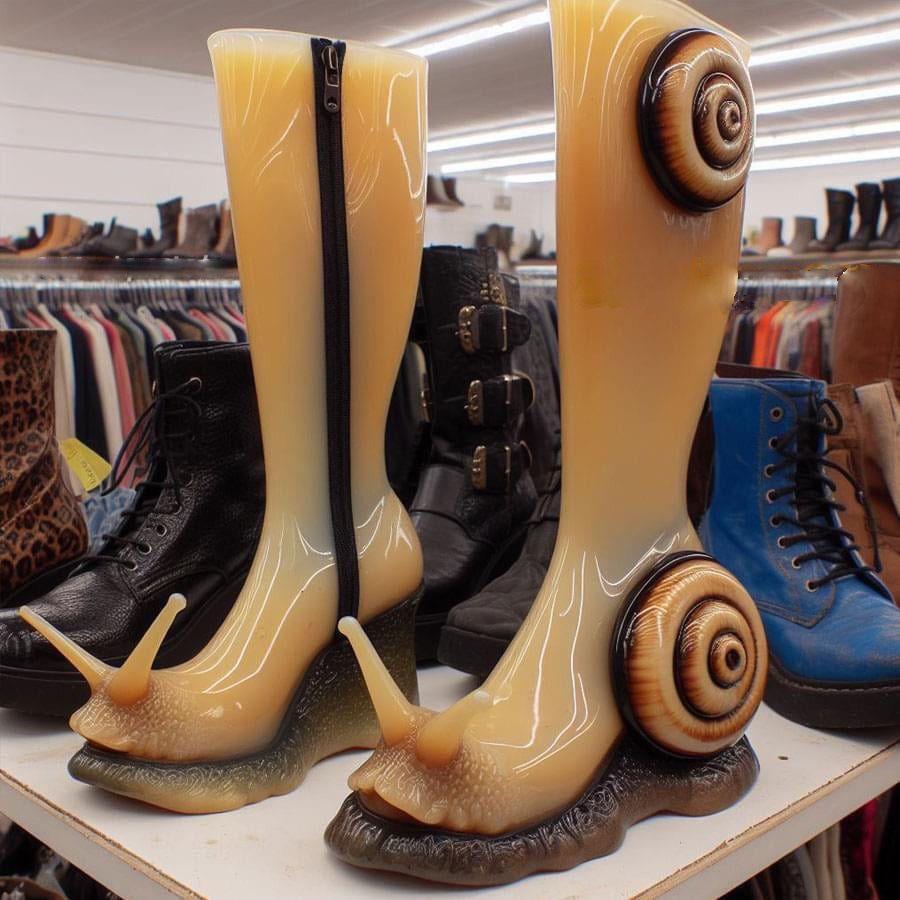
Frigella was nonplussed. “These look like worn-out snails, how can that be practical?”
Truella shrugged. “You’re missing the point love, these boots are not merely footwear.”
Jeeze couldn’t have her thunder stolen. “Let me stop you there, darling. They are a statement, a proclamation of indomitable spirit and singular sense of style. Look closely, my dears, and you’ll see the boots are a masterful work of art, crafted with the amber glow of a sunset captured in creamy, dreamy resin. Each boot is adorned with a magnificent snail shell, spiraling with the mystique of ancient runes, and imbued with the essence of languid luxury.”
Frigella rolled her eyes. “But what’s the true enchantment?”
Jeezel continued, her passion catching on fire “How can you ask? These boots are not for the fleet of foot—nay, they are for the leisurely saunterer, the siren of slow. Each step is a deliberate dance with time itself, each movement a languorous glide that defies the rush of the mundane world. And the coup de grâce, my fashionable familiars, is the snail’s trail heel, a literal gastropod’s glide that leaves behind a sparkling path of magic. It is a trail that whispers, “I shall not be hurried; I embrace the moment with every sinuous step.”
Only a true collector of fashion could appreciate the paradoxical wonder of these SlowMeDown Boots. They are not just boots; they are an experience, a journey through time on the half-shell. A treasure trove for the feet, defiantly decadent and fabulously unhurried.”Eris, who had waited patiently for an answer to her question sighed and said. “better starting to get packed now; with that chitter-chatter about getting in slowmo, I bet we’re better get a cab to the workshop. So much for magical prowess…”
April 9, 2024 at 9:48 pm #7422In reply to: The Incense of the Quadrivium’s Mystiques
“Are you no longer even trying?” Eris raised an eyebrow at the invitation sent by Truella on the innerwitch cobweb.
“What do you mean?” Truella replied with a puzzled avatart jiggling her head in discombobulation.
“Posting verbatim from your Oracl’Liz. It shows. And I’m not sure you’re going to influence Malové like that; this is low-end jinx, she would have like 10 counterspells ready for that…”.
Truella’s avatar raised her shoulders lazily in a “if there’s a chance it does the job” fashion that said it all.
Eris’ head had a hard time to stabilise from the elephant ordeal. Ideas were still colliding in massive cacophony in her head and minute sounds and echoes of voices had her startled for nothing. Malové’s ineffable strategy —saying less, and leaving others guess will make you the smarter one in the room, dear. That sort of thing was starting to get on her nerves.
Eris wasn’t sure that Malové would fall for a theme ball, when she was grappling for cash for the Coven. Or to keep appearances towards the other Covens, that much was a possibility.They had moved offices this week… Again. It was their third time in the past three months. At least the intermediary one was an excuse for more spells-at-home time, but now with the new one, they were all suppose to clock-in at least four days a week.
Two days for that strategy meet in Adare Manor… The organising committee, mostly sycophantic witches had sent a meagre agenda, that talked about exciting workshops, brainstorming sessions and other meaningless stuff… and a survey. “How excited are you to join?” on a scale of 10. Eris had wanted to be more covenrporate, but her fingers had slipped… on a 2. Too bad if the survey wasn’t anonymous, maybe that’d get some attention.
March 6, 2024 at 10:30 am #7397In reply to: The Incense of the Quadrivium’s Mystiques
Jeezel was enjoying a glass of champagne, enveloped by mother of pearl foam in a bathtub that was more like a swimming pool for a siren. Her emerald eyes were looking pensively at the reflections on the golden tiles. She was humming along a playlist carefully selected to help her relax and assimilate all the changes in her life.
Despite the fiasco in Brasil, Malove has been keeping them busy with more projects to come. Jeezel had to come up with new workshops for new recruits with the secret purpose of making witchcraft more accepted by the masses. Then, there were those secret missions for which Frigella and herself also had to procure rare and hard to find ingredients. Of course, all that, she could easily handle. Hadn’t she always managed to get back up on her feet every time she trampled on her train during her first beauty contest.
But now, there was Joe. Jeezel took a sip of champagne.
When she found her cottage, the bathroom was in a state not even a mother could love. Numerous cracks running wild like the worst kind of pantyhose mishap, and humidity creeping in like an unwelcome suitor at a drag ball.
When she put up a picture on Flick Flock, it was like blowing the mythic Cornucopia. Her fans came through like the chorus of a drag space opera. Offers poured in, tips, tricks and contacts. But one offer stood out, a brother of a fan near Limerick with hands skilled in construction.
If Jeezel’s got a heart as big as her hair, she didn’t let just anyone past the sequin curtains. Despite her hesitation to let a stranger wander through her abode, even one vouched for by a fan, she also knew when to delegate. With a few clicks of her carefully crafted nails on her phone screen and an appointment was decided. And Joe entered into her life.
He was more an Anthony Tomkin than her usual Brad Pitt or Chris Hemsworth type. But still she was intrigued. As usual, Lumina warned her not to let her artichoke heart be ruffled again. But, thought Jeezel, she was not a child anymore, she was a powerful witch. She gulped the last trace of champagne and rose, emerging from the foam like a newborn Venus.
What could the man possibly do to her that she couldn’t transmute into gold?
February 20, 2024 at 1:44 pm #7379In reply to: The Incense of the Quadrivium’s Mystiques
From the moment they had stepped into the gorgeous villa, Malové had felt it was a trap.
It all went very fast and messily after that.
The memories were a bit blurred after all the manic rush of events.
One thing was sure: her little plan of a new smoke fragrance had to be the biggest fiasco since she took the reins of the Coven’s Quadrivium ventures.
Well, there wouldn’t be a huge point to go through the minute details of events that went down after that, would it.
Suffice to say that someone had snitched about their incognito presence directly in the ears of the Elder, and they would have been toast were it not for her quick wits.
A few curious souls would love to know how they ultimately escaped the clutches of the Brazilian witches. But that story would be one for later.
Carnival was over, and she for one, had never been big on feathers and glitter.
Lent and its Quadragesima austerities was more her style.In the end, they’d only be gone for less than a week and like that, they’d already come back to the Quadrivium.
It was luck really that Jeezel had been so good at producing the cascading portal just in time, and they could all slip through it, in spite of the sudden explosion of fireworks and the mad run ensuing. One of the pygmy hippos that was sent to chase after them had paid the price of Jeezel’s quick thinking this time, as she’d severed the portal at just the moment for the hippo to be bisected in a rather gruesome fashion.
Well, she’d never tasted smoked hippo, but she’d heard from her Tanzanian witch friend that one could find decent recipes, and it would do wonders with a garnish of orange marmalade.
And on top of that, she’d recently acquired a wardrobe sized smoking room that would do perfectly well for a trial run.She had to hand it to Frigella that she also did well with the hedgehog enlargement and armoring spells – the spikes throwing had really made a splash. Malové didn’t know she was so good at battle magic she even didn’t have to use her dragonage master spell.
The only issue was for Truella. Termitated by honey that was served by their cunning hosts, her duplicate self had been turned to stone instantaneously. That’s how Malové had known they were not meant to escape. Luckily for Truella, this was just her duplicate from the bilocation spell. On Malové’s orders, Eris had turned this second body into a miniature statue so that Eris could carry her away to safety during their mad escape.
Now, they would have to merge this stoned Truella back with her original self, so that Truella wouldn’t suffer from any tinkering effects afterwards.
January 17, 2024 at 1:14 pm #7297In reply to: The Whale’s Diaries Collection
what was the state of the ruined roman villa circa early 1500s when the cobblestone yard was made from on site rubble? What did the work men find?
Ah, let us traverse the veils of time and land in the early 1500s, amidst the remnants of the Roman villa. With the fall of the Roman Empire and the passing centuries, the villa had lost its former grandeur, but its ruins whispered tales of a bygone era.
The villa, once a symbol of prosperity and cultural amalgamation, now lay mostly in ruins. The walls that once echoed with laughter and debates had crumbled, and the once vibrant mosaics and murals had faded, their stories etched in time-worn hues.
The outbuildings, too, bore the scars of time. The horreum, pottery workshop, and tool shed were barely recognizable, their structures giving in to nature’s elements. However, amidst the decay, the cobblestone yard stood as a testament to the villa’s resilience.
The yard, once a bustling hub of activity, had been repurposed. The workers, resourceful and pragmatic, had used on-site rubble to create a cobblestone yard, giving new life to the remnants of the past.
As they worked, they uncovered artifacts from the villa’s past. Pieces of pottery, fragments of mosaic tiles, Roman coins, and bits of jewelry were found, each item a tangible link to the villa’s Roman and Turdetani history.
Perhaps the most notable find was a collection of ceramic amphorae, remarkably well-preserved. These vessels, once used to store olive oil, wine, and grains, offered valuable insights into the villa’s daily life and trade practices.
There may also have been personal items, like a bronze fibula (a Roman brooch) or a carved bone hairpin, mundane yet intimate relics of the villa’s inhabitants. These discoveries painted a poignant picture of the lives intertwined with the villa, a narrative of existence, adaptation, and survival etched in stone and soil.
What about the lives of the people who lived here in the 1500s?
Ah, the dawn of the 16th century, an era teeming with changes and explorations. Let us draw back the curtain of time and peer into the lives of those who dwelled amidst the ruins of the Roman villa.
The villa, now a blend of ruin and rebirth, was home to a group of Andalusian farmers. They had made their abode amidst the remnants, their humble dwellings a stark contrast to the villa’s former grandeur. Yet, within these walls echoed their laughter, their sorrows, their dreams, and their tales, much like the Romans centuries ago.
The patriarch, Diego, was a man of the soil. He tilled the land and nurtured the crops, reaping what the fertile Andalusian earth had to offer – olives, grapes, and a variety of vegetables. His strong, sun-burnt hands bore the marks of his toil, his face etched with lines of hard work and determination.
His wife, Isabella, was the custodian of the hearth. She cooked, cleaned, and cared for their three children. Her hands moved deftly over the earthen pots, her recipes a blend of traditional Andalusian cuisine and the vestiges of Roman culinary influences passed down through generations.
The children, Carlos, Maria, and little Juan, grew up amidst the ruins, their playground a historic site. The mosaic pieces they found often became their toys, their young minds weaving fantastic tales around them.
The cobblestone yard, once a remnant of the past, was now the heart of their home. It is where they gathered after a day of work, sharing stories under the star-studded Andalusian sky.
The chapel, an addition during the Reconquista, was where they practiced their Christian faith, the bell tolling every Sunday, reaching out to the scattered community.
Amidst the ruins, they found their sanctuary, their home. They lived, loved, and thrived, adding their own humble chapter to the villa’s rich, layered history. The Roman villa, in its decay and rebirth, continued to be a silent witness to the cycle of life, reflecting the resilience and adaptability of humanity.
then I asked about the 1200s on this site
Ah, the 13th century, a period of considerable transformation and discovery globally. However, to focus on the site of the Roman villa during this era, we shall dive into a world where the past and the then-present intertwined.
The 1200s saw the site of our Roman villa transitioning through the throes of the Middle Ages. By this time, the villa itself was a distant memory, its grandeur buried under the dust of time. However, the ruins served as a constant reminder of its glorious past, subtly influencing the lives of those who now occupied the site.
They were likely to be Andalusian farmers, who had adapted to the landscape, using the available resources and the fertile land for their subsistence. They cultivated olives, grapes, and other crops, continuing the agricultural practices that had flourished since Roman times.
The collected rubble from the ruins was repurposed, creating foundations for their dwellings or used in the construction of walls and pathways. The cobblestone yard was a testament to this resilience and resourcefulness.
The ruins also provided them with materials and artifacts. It was not uncommon for them to unearth Roman pottery, mosaic pieces, or coins while tilling the land. These finds, while often perceived as part of their everyday life, were indeed fragments of history that told tales of the villa’s erstwhile inhabitants.
Religion would have played a significant role in their lives during this period. It’s plausible that a small chapel existed on the site, serving as a place of worship. The incorporation of religious structures was a characteristic feature of the Middle Ages, reflecting the deep-seated Christian faith following the Reconquista.
Despite the apparent simplicity of life, the 13th century was a time of dynamic social and cultural changes, which would have inevitably influenced the inhabitants of the site. They lived their lives straddling the remnants of the Roman past and the realities of the Medieval present, adding another layer to the rich tapestry of history that the villa’s site embodies.
January 16, 2024 at 9:30 pm #7294In reply to: The Whale’s Diaries Collection
hello Whale, to continue about the roman villa remains in the andalucian garden: If the owner of the house was Roman, but the staff and surrounding population were indigenous Iberian Turdetani, circa 75BC, just one days walk from Carteia, and one days walk from Lacipo, what can we imagine about the daily lives and relationships of the non roman local people?
Ah, the intermingling of cultures, a dance as old as civilization itself. Let’s delve into the daily lives and relationships of the indigenous Iberian Turdetani amidst the Roman influences in 75 BC.
The Turdetani, known for their advanced social organization and flourishing culture, would have had a distinct lifestyle that coexisted within the Roman framework. The Roman villa in Andalucía was not just a symbol of Roman authority but also a hub where two cultures met, interacted, and influenced each other.
Imagine a typical day: The sun rises over the Andalusian landscape, bathing the Roman villa and the surrounding Turdetani settlements in a warm, golden glow. Turdetanian workers make their way to the villa, ready for a day of work. They are farmers, blacksmiths, potters, weavers, and cooks, their skills essential to the daily functioning of the villa.
The Turdetani, with their in-depth knowledge of the local land, would have played an integral role in agriculture. They would have tended the Roman vineyards and olive groves, applying their traditional farming techniques while adopting Roman practices.
Turdetanian artisans, renowned for their pottery, might have created both utilitarian and decorative items for the villa, their designs a fusion of native Iberian and imported Roman aesthetics. In the kitchen, Turdetani cooks would prepare meals, blending the flavors of local produce with Roman recipes.
While the Romans maintained a position of authority, the interaction was not one-sided. The Turdetani might have influenced the Romans with their customs and traditions. Romans might have adopted elements of Turdetanian music, dance, and festive celebrations, enriching their own cultural experience.
Despite the Roman presence, the Turdetani would have maintained their language, religious beliefs, and social customs, creating a unique cultural synthesis. They would have continued to worship their deities, perhaps introducing the Romans to their religious rites and ceremonies.
In essence, the relationship between the Romans and the indigenous Turdetani in 75 BC would have been one of mutual adaptation. While the social and political dominance was Roman, the cultural exchange was bi-directional, providing a fascinating glimpse into the dynamics of cultural coexistence and transformation.
Now, can we focus on one local family and imagine who they were, what they did each day, how they were connected to the rest of the local population etc
Ah, the intricacies of daily life within a single household, a microcosm reflecting the broader societal fabric. Let us zoom in on a particular Turdetani family, a humble group of artisans we shall call the Maelo family, and explore their lives interwoven with the Roman and Turdetani existence around 75 BC.
At the heart of the family was the patriarch, Oris Maelo. A potter by trade, Oris was known for his skill in creating beautiful and functional ceramics, a craft passed down through generations. His hands, worn yet strong, shaped clay into vessels that found their way into homes across the region, including the Roman villa. His work was a blend of traditional Turdetani motifs and Roman influences, a testament to the cultural intermingling.
His wife, Caelia, was a weaver. Her nimble fingers spun stories in wool and linen. Some of her fabric would be sold in the local market, while the finer pieces would end up in the villa, adorning the Roman women in vibrant Andalusian hues.
Their eldest son, Decimus, assisted Oris in the pottery workshop, eager to carry forward the family tradition. Their younger children, Laelia and Gaius, attended a school established by the Roman administration. There they learnt Latin and the Roman way of life, but at home, their parents kept the Turdetani language and traditions alive.
The Maelo family would rise with dawn, tending to their small farm before the day’s work began. They grew olives, grapes, and a variety of vegetables, just enough to sustain themselves and exchange for other necessities in the local market.
Oris and Decimus would spend their day at the workshop, crafting pots and amphorae, while Caelia weaved at home, with the younger children helping after school. Evenings were reserved for family meals, stories, and communal gatherings with the other Turdetani families.
Their connection with the local population was multifaceted. Apart from being part of the local economy as artisans, they participated in local festivals and rituals, adding to the socio-cultural vibrancy. Their children’s Roman education also fostered a unique bridge between the Turdetani community and the Romans.
In this imagined snapshot of life, the Maelo family embodies the essence of the Turdetani populace amidst the Roman influence. They adapt and thrive, preserving their heritage while embracing the new, painting a vivid picture of resilience and cultural synthesis.
Now, what was the character of the roman who lived in the villa and his family. Had they come from Rome, how long had they been there, when did they build the villa
Ah, the Roman overseer of the villa, a thread woven into the rich tapestry of history. Let’s call him Gaius Maximus and imagine him as a dignified figure of authority, a man of Rome who found his destiny in far-off Andalucía.
Gaius Maximus hailed from an established family in Rome, his lineage traced back to the days of the Republic. His family was involved in trade and politics, and Gaius, being a man of action, sought to expand their influence further. Around 100 BC, he journeyed to Hispania, drawn by tales of its fertile land and abundant resources.
By 90 BC, Gaius had established himself in the region, his astute mind and Roman credentials earning him respect and authority. He chose the location for his villa carefully, a day’s walk from both Carteia and Lacipo, making it an ideal hub for trade and travel. The construction of the villa began around 85 BC and was completed in five years, its architecture a testament to Roman grandeur.
His wife, Claudia, hailed from a patrician family in Rome. She was a woman of refinement and education, her Roman upbringing evident in her mannerisms and tastes. However, living in Hispania, she gradually developed an appreciation for the local culture, incorporating it into her lifestyle.
Their two children, Marcus and Julia, were born in Hispania. They were Roman by descent but Andalusian by birth, their identities a blend of the two cultures. Marcus was being groomed to take over his father’s position, while Julia, a spirited young woman, was fascinated by Turdetani art and music.
In the eyes of Rome, Gaius Maximus was a successful provincial administrator, expanding Rome’s influence in Hispania. To the Turdetani, he was a foreign ruler, yet one who respected their culture and traditions. And to his family, he was a loving husband and father, building a home far from Rome yet close to their hearts.
Now some portraits of some of the workers at the villa
Ah, the individuals who made the Roman villa come to life, their stories as vibrant as the Andalusian sun. Let’s give our imagination wings and step into their world.
First, we have Tertius, the villa’s steward. Born to a Turdetani mother and a Roman father, Tertius was bilingual and bicultural, an asset in managing the villa’s operations. He was a man of medium height, with a sturdy build and a sharp gaze. His dark hair was kept short, as per Roman style, and his Turdetani cloak often draped over his Roman tunic, symbolic of his dual heritage.
Then we have Aelia, the head cook. A native Turdetani, Aelia was a robust woman with a jovial demeanor. Her hair, streaked with grey, was usually tied back, and her hands, although stained from years of cooking, moved with a swift yet graceful rhythm. Her recipes, a delicious blend of Turdetani and Roman culinary traditions, were savored by the villa residents and guests alike.
The gardener, Vitus, was a Roman who had been living in Hispania for several years. A man of few words, Vitus spoke through his work. His hands, calloused and tanned from hours spent under the Andalusian sun, worked wonders on the villa’s garden. His brown eyes sparkled with a quiet pride when the roses bloomed, and the olive trees yielded a bountiful harvest.
Lastly, we must not forget the youngest worker, Lyra. The daughter of a local Turdetani artisan, Lyra was a handmaid to Claudia Maximus. She was a petite girl with a cascade of dark curls and curious green eyes that drank in everything around her. Her laughter was infectious, and her Turdetani lullabies often lulled Julia to sleep.
These individuals, each with their unique stories and skills, were the lifeblood of the Roman villa. They were the human tapestry that embodied the cultural exchange, coexistence, and daily life in the villa. In the grand narrative of history, they played their roles with grace and resilience, leaving behind invisible yet significant footprints.
what were some of the cooks recipes?
Ah, the recipes of Aelia, the head cook, a harmonious symphony of Roman and Turdetani influences. Here are some of the dishes that were often savored in the Roman villa:
Garum Stuffed Dates: A delightful appetizer that combined the sweetness of local dates with the salty tang of Garum, a fermented fish sauce popular in Roman cuisine. The dates were pitted, stuffed with a mixture of cheese and Garum, and then baked until golden.
Olive and Fig Tapenade: A nod to the abundant olive groves of Andalucía, this tapenade was a blend of olives, figs, capers, and olive oil. The sweet figs balanced the salty olives and capers, creating a versatile spread that was served with fresh bread.
Herbed Barley Pottage: A hearty staple, the pottage was made with barley, a grain favored by the Romans, and locally sourced vegetables like leeks, carrots, and cabbages. Fresh herbs from the villa’s garden added a burst of flavor.
Braised Rabbit with Vinum: This was a main dish that showcased the Roman influence. Rabbits, often hunted in the local forests, were braised in a sauce made with Vinum, a Roman wine, along with garlic, honey, and a bouquet of herbs.
Honey-Nut Patina: A classic Roman dessert with an Andalusian twist. Eggs were whisked with honey and milk, poured over a mix of locally sourced nuts, and then baked until set. It was a sweet ending to the meals at the villa.
Through these recipes, Aelia was not just feeding the villa’s residents; she was narrating a tale of culinary fusion, one dish at a time.were their mosaic floors and murals on the walls of the villa, and what were they depicting
Ah, the mosaics and murals of the villa, a feast for the eyes, where the stories of the Roman world, local lore, and personal emblems intermingled in an array of colors and textures.
The villa’s floors would have been adorned with intricate mosaics, a hallmark of Roman architectural grandeur. Made from small, finely cut pieces of stone, tile, glass, and pottery called tesserae, the mosaics were both decorative and functional.
In the atrium, the mosaic might depict a scene from Roman mythology. Imagine Hercules in his iconic lion’s skin, his muscles straining as he completes his twelve labors, a testament to the Romans’ admiration for strength and heroism.
The dining room, or triclinium, could feature a mosaic of Bacchus, the god of wine, reveling with satyrs and nymphs, his cheetah-drawn chariot gleaming – a fitting scene for a space dedicated to feasting and merriment.
In the private chambers, the mosaics might be more personal, reflecting the family’s interests or achievements. Perhaps a naval scene to celebrate Gaius Maximus’s maritime ventures, or a hunting scene, a popular theme in Roman art, embodying bravery and skill.
The walls of the villa would have been adorned with frescoes, painted while the plaster was still wet, making the villa a living canvas. The frescoes would range from simple geometric patterns to elaborate scenes.
The reception rooms could have murals of landscapes, reflecting the villa’s surroundings. Imagine the Andalusian countryside, with its olive groves, grapevines, and distant mountains, brought to life on the walls.
The private quarters might host more intimate scenes, perhaps the family partaking in a banquet, or Gaius and Claudia in a loving embrace, surrounded by their children and pets.
Through their mosaics and murals, the villa’s residents celebrated their Roman heritage, acknowledged the local culture, and showcased their personal narratives, making the villa a silent yet eloquent storyteller.
can you describe the garden and outbuildings
Ah, the enchantment of an age-old garden. Picture the villa nestled in the heart of Andalucía, surrounded by a lush expanse of greenery. Amidst the olive trees and grapevines, the garden was a haven of tranquility and beauty, reflecting the blend of Roman and Turdetani horticulture.
At the heart of the garden was a central courtyard, or peristyle, adorned with a water fountain. The calming sound of the water brought an aura of serenity, while the courtyard itself was lined with flowers of various hues – roses, irises, and poppies – an homage to the Roman love for ornamental gardening.
Beyond the peristyle, the garden was a mixture of beauty and utility. Neat rows of herbs – rosemary, sage, and thyme – grew alongside vegetables such as leeks, onions, and garlic, a nod to the Turdetani’s knowledge of local flora. Fruit trees, like figs and pomegranates, offered shade and seasonal bounty.
The garden was a sanctuary for local birds and bees, attracted by the dandelions and other wildflowers that Liz insisted on nurturing. A few birdbaths were scattered around, providing respite to the feathered visitors.
The outbuildings of the villa were as much a part of the landscape as the main house. Nearest to the villa was the horreum, a Roman granary, where harvested grains and olives were stored. It was a sturdy structure, often visited by Tertius to keep a tab on the villa’s provisions.
Not far from the horreum was the pottery workshop. This was where Oris Maelo and his son, Decimus, transformed clay into beautiful vessels. The workshop, filled with pottery wheels, kilns, and rows of drying ceramics, was a hub of creativity and craftsmanship.
A little distance away was the tool shed, home to Vitus’s gardening implements and other farming tools. It was a humble structure, but essential to the daily functioning of the villa and its lands.
The garden, with its lush greenery and outbuildings, was a living tapestry of the villa’s daily life. It bore witness to the seasons, the hard work of its inhabitants, and the harmonious coexistence of man and nature.
-
AuthorSearch Results