-
AuthorSearch Results
-
January 17, 2023 at 8:17 am #6393
In reply to: Train your subjective AI – text version
Give me an unusual plot structure for a narrative
One unusual plot structure for a narrative could be a “reverse chronological” structure, where the story begins at the end and works backwards in time, revealing events and information in a non-linear way. Another could be a “choose your own adventure” style, where the reader is presented with a series of choices at different points in the story that determine the direction and outcome of the plot.
How would role playing qualify in terms of plot structure?
Role-playing games (RPGs) can be considered a unique form of plot structure because they are interactive and open-ended. In a traditional RPG, the players take on the roles of characters within a fictional setting and work together to create a shared narrative. The plot structure of an RPG is determined by the actions and decisions of the players, rather than a pre-written script. The game master (GM) creates an overarching plot and a set of rules for the players to follow, but the players’ choices and actions will determine the direction and outcome of the story. This makes the plot structure of an RPG fluid and ever-changing, unlike a traditional linear narrative.
What about “Cloud Atlas” in terms of plot structure?
“Cloud Atlas” is a novel written by David Mitchell that was later adapted into a film. It has a complex and non-linear plot structure, which employs multiple storylines that are set in different time periods and locations, and are connected by recurring themes and motifs. The novel is divided into six nested stories, each set in a different time period and location, that are told in a non-linear fashion. The story begins in the 19th century and then jumps back and forth between the 19th, 20th and 23rd century, and each story is interconnected and interrelated, with characters reappearing in different time periods, the events that happen in one story impacting the others. The novel is also notable for its use of different genres, such as science fiction, historical fiction, and thriller, and the way it explores the themes of destiny, reincarnation, and the power of human connection. The film adaptation also used this structure, with the different stories intertwined and characters reprising their roles in different settings and eras.
Take a story thread made of comments. In each comment is a text about characters in a particular plot, location, action etc. The comments are sequential, but they are not necessarily continuous. It is a mix between Cloud Atlas and RPG plot structures. How do you sort something that’s fundamentally non-linear to present it in an accessible way?
One way to sort and present a story thread made of comments that is fundamentally non-linear, yet accessible, is to group the comments based on their content. For example, you could group the comments by characters, and present them in chronological order of their appearance in the story. Another way could be grouping the comments by location, and present them in chronological order of when the action takes place in that particular location. You could also group comments by the type of action taking place, such as combat, conversation, or puzzle-solving, and present them in chronological order of when they occur in the story.
Another approach could be using visual aids, such as mind maps, timelines, or flowcharts, to help organize and present the information in a clear and easy-to-understand way. For example, you could use a mind map to show how different characters are connected, or a timeline to show the chronology of events. Additionally, you could use labels, such as “character introduction,” “location change,” or “plot twist,” to make it clear to the reader what type of information they can expect in each comment.
It’s also important to keep in mind the audience for which you are organizing the story. It should be easy for them to understand and follow the story, and if it’s a game, you should make sure it’s easy for the players to play and make decisions.
January 13, 2023 at 7:40 pm #6379In reply to: Prompts of Madjourneys
Asking to give each of the 4 characters some particular traits that makes them uniquely distinctive and recognizable
The four friends, Zara, Xavier, Yasmin, and Youssef, each have their own unique traits that make them stand out and recognizable.
Zara is the leader of the group, she is confident, and always ready for an adventure. She is a natural leader and has a strong sense of justice. She is also a tech-savvy person, always carrying a variety of gadgets with her, and is always the first to try out new technology.
Xavier is the joker of the group, always cracking jokes and making puns. He is a free-spirited person who is always up for an adventure, he has a great sense of humor and is not afraid to be himself. He is also an artist and often carries a sketchbook and pencils with him, he likes to draw whatever he sees in his journeys.
Yasmin is the brains of the group, she is intelligent and logical. She is always able to think on her feet and come up with a plan when things get tough. She is also a bit of a perfectionist and likes to have everything organized. She is a history buff and always carries a notebook with her to document her findings.
Youssef is the muscle of the group, He is physically strong, and always ready to help out in a fight. He is also a bit of a foodie and loves trying new dishes. He is always the first one to volunteer to carry the heavy bags and equipment. He is also a bit of a daredevil and loves trying out new sports and activities.
Give each of them a color, and an animal, and a secret name in a funny language
The four friends, Zara, Xavier, Yasmin, and Youssef, each have their own unique traits that make them stand out and recognizable.
Zara is the leader of the group, her color is red, her animal is a lion, and her secret name in a funny language is “Zaraloon”
Xavier is the joker of the group, his color is orange, his animal is a monkey, and his secret name in a funny language is “Xavimunk”
Yasmin is the brains of the group, her color is blue, her animal is an owl, and her secret name in a funny language is “Yasminowl”
Youssef is the muscle of the group, his color is green, his animal is a bear, and his secret name in a funny language is “Youssefbear”
Now, we need physical descriptions for each of them. Also, their ages, height, clothes, facial features, ethnicity (for instance Youssef may be half Yemeni and half Norwegian), etc. with a good mix of generic and eccentric. We also need surnames congruent with their described ethnicity, not too bland, but not too daft either. For instance Youssef Olafsson, Zara Patara-Smythe, etc. Also explain how they become friends.
Zara Patara-Smythe is a
25-year-oldwoman of mixed heritage, her mother is Indian and her father is British. She has long, dark hair that she keeps in a sleek ponytail, dark brown eyes and a sharp jawline. She stands at 5’6″ and has a toned and athletic build. She usually wears practical clothing that allows her to move around easily, such as cargo pants and a tank top.Xavier Olafsson is a
27-year-oldman of Norwegian and Danish descent. He has blonde hair that he keeps in a messy style, blue eyes, and a charming smile. He stands at 6’1″ and has a lean build. He is always seen wearing a colorful and bold clothing, such as a Hawaiian shirt and shorts.Yasmin Ahmed is a
23-year-oldwoman of Egyptian descent. She has long, black hair that she keeps in a tight braid, dark brown eyes and a round face. She stands at 5’4″ and has a petite build. She usually wears conservative clothing, such as long skirts and blouses.Youssef Ali is a
26-year-oldman of half Yemeni, half Norwegian descent. He has short, curly black hair, dark brown eyes and a square jawline. He stands at 6’2″ and has a muscular build. He usually wears comfortable clothing such as a t-shirt and jeans, and always has a backpack on his shoulder.The four of them became friends
in college, they were all studying different majors, but they all shared a love for adventure and exploration. They found themselves in the same class project, and from there they formed a strong bond. After college, they decided to keep exploring the world together, and went on many trips and adventures, always seeking for something new and exciting.
1/ Change the ages of Zara, Xavier, Yasmin and Youssef to more random patterns – rewrite if needed how they met each other to reflect eventual age gaps. Give them some flaws, mental or physical challenges.
2/ increase again the age gaps while keeping the youngest one a young adult, and remove “minor” from the flaws descriptionsZara is a 22-year-old woman who is the youngest of the group. She is a free-spirited, adventurous person, but also a bit reckless and impulsive. She has a scar on her cheek that she got from a Skateboarding accident when she was a teenager.
Xavier is a 45-year-old man who is the oldest of the group. He is a responsible and level-headed person, but also a bit of a perfectionist and can be hard on himself and others. He has dyslexia which he has been able to work around and it doesn’t impede his daily life.
Yasmin is a 38-year-old woman who is the second oldest of the group. She is a kind and compassionate person, but also a bit of a pushover and can have trouble standing up for herself. She has social anxiety that affect her in certain situations and she have been working on coping mechanisms.
Youssef is a 33-year-old man who is the second youngest of the group. He is a charismatic and outgoing person, but also a bit of a flirt and can be a bit insensitive to others feelings. He has ADHD which he has been able to manage with medication, but it still affects him from time to time.
The group met each other through different means, Xavier and Yasmin met at work, Zara and Youssef met at a college class, and eventually, they all became friends through common interests and activities. They decided to go on this adventure together because they were all looking for a change in their lives and wanted to explore the unknown.
December 6, 2022 at 2:17 pm #6350In reply to: Family Stories From The Other Side ~ Book Two
Transportation
Isaac Stokes 1804-1877
Isaac was born in Churchill, Oxfordshire in 1804, and was the youngest brother of my 4X great grandfather Thomas Stokes. The Stokes family were stone masons for generations in Oxfordshire and Gloucestershire, and Isaac’s occupation was a mason’s labourer in 1834 when he was sentenced at the Lent Assizes in Oxford to fourteen years transportation for stealing tools.
Churchill where the Stokes stonemasons came from: on 31 July 1684 a fire destroyed 20 houses and many other buildings, and killed four people. The village was rebuilt higher up the hill, with stone houses instead of the old timber-framed and thatched cottages. The fire was apparently caused by a baker who, to avoid chimney tax, had knocked through the wall from her oven to her neighbour’s chimney.
Isaac stole a pick axe, the value of 2 shillings and the property of Thomas Joyner of Churchill; a kibbeaux and a trowel value 3 shillings the property of Thomas Symms; a hammer and axe value 5 shillings, property of John Keen of Sarsden.
(The word kibbeaux seems to only exists in relation to Isaac Stokes sentence and whoever was the first to write it was perhaps being creative with the spelling of a kibbo, a miners or a metal bucket. This spelling is repeated in the criminal reports and the newspaper articles about Isaac, but nowhere else).
In March 1834 the Removal of Convicts was announced in the Oxford University and City Herald: Isaac Stokes and several other prisoners were removed from the Oxford county gaol to the Justitia hulk at Woolwich “persuant to their sentences of transportation at our Lent Assizes”.
via digitalpanopticon:
Hulks were decommissioned (and often unseaworthy) ships that were moored in rivers and estuaries and refitted to become floating prisons. The outbreak of war in America in 1775 meant that it was no longer possible to transport British convicts there. Transportation as a form of punishment had started in the late seventeenth century, and following the Transportation Act of 1718, some 44,000 British convicts were sent to the American colonies. The end of this punishment presented a major problem for the authorities in London, since in the decade before 1775, two-thirds of convicts at the Old Bailey received a sentence of transportation – on average 283 convicts a year. As a result, London’s prisons quickly filled to overflowing with convicted prisoners who were sentenced to transportation but had no place to go.
To increase London’s prison capacity, in 1776 Parliament passed the “Hulks Act” (16 Geo III, c.43). Although overseen by local justices of the peace, the hulks were to be directly managed and maintained by private contractors. The first contract to run a hulk was awarded to Duncan Campbell, a former transportation contractor. In August 1776, the Justicia, a former transportation ship moored in the River Thames, became the first prison hulk. This ship soon became full and Campbell quickly introduced a number of other hulks in London; by 1778 the fleet of hulks on the Thames held 510 prisoners.
Demand was so great that new hulks were introduced across the country. There were hulks located at Deptford, Chatham, Woolwich, Gosport, Plymouth, Portsmouth, Sheerness and Cork.The Justitia via rmg collections:
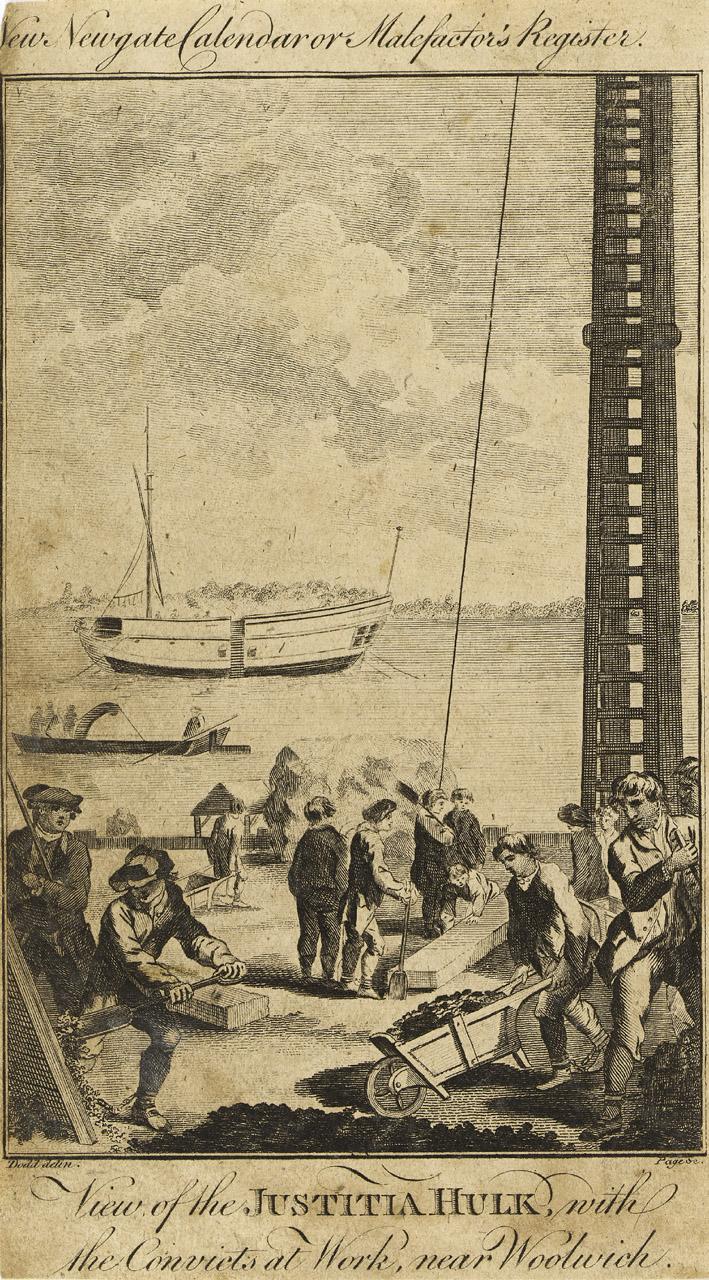
Convicts perform hard labour at the Woolwich Warren. The hulk on the river is the ‘Justitia’. Prisoners were kept on board such ships for months awaiting deportation to Australia. The ‘Justitia’ was a 260 ton prison hulk that had been originally moored in the Thames when the American War of Independence put a stop to the transportation of criminals to the former colonies. The ‘Justitia’ belonged to the shipowner Duncan Campbell, who was the Government contractor who organized the prison-hulk system at that time. Campbell was subsequently involved in the shipping of convicts to the penal colony at Botany Bay (in fact Port Jackson, later Sydney, just to the north) in New South Wales, the ‘first fleet’ going out in 1788.
While searching for records for Isaac Stokes I discovered that another Isaac Stokes was transported to New South Wales in 1835 as well. The other one was a butcher born in 1809, sentenced in London for seven years, and he sailed on the Mary Ann. Our Isaac Stokes sailed on the Lady Nugent, arriving in NSW in April 1835, having set sail from England in December 1834.
Lady Nugent was built at Bombay in 1813. She made four voyages under contract to the British East India Company (EIC). She then made two voyages transporting convicts to Australia, one to New South Wales and one to Van Diemen’s Land (Tasmania). (via Wikipedia)
via freesettlerorfelon website:
On 20 November 1834, 100 male convicts were transferred to the Lady Nugent from the Justitia Hulk and 60 from the Ganymede Hulk at Woolwich, all in apparent good health. The Lady Nugent departed Sheerness on 4 December 1834.
SURGEON OLIVER SPROULE
Oliver Sproule kept a Medical Journal from 7 November 1834 to 27 April 1835. He recorded in his journal the weather conditions they experienced in the first two weeks:
‘In the course of the first week or ten days at sea, there were eight or nine on the sick list with catarrhal affections and one with dropsy which I attribute to the cold and wet we experienced during that period beating down channel. Indeed the foremost berths in the prison at this time were so wet from leaking in that part of the ship, that I was obliged to issue dry beds and bedding to a great many of the prisoners to preserve their health, but after crossing the Bay of Biscay the weather became fine and we got the damp beds and blankets dried, the leaks partially stopped and the prison well aired and ventilated which, I am happy to say soon manifested a favourable change in the health and appearance of the men.
Besides the cases given in the journal I had a great many others to treat, some of them similar to those mentioned but the greater part consisted of boils, scalds, and contusions which would not only be too tedious to enter but I fear would be irksome to the reader. There were four births on board during the passage which did well, therefore I did not consider it necessary to give a detailed account of them in my journal the more especially as they were all favourable cases.
Regularity and cleanliness in the prison, free ventilation and as far as possible dry decks turning all the prisoners up in fine weather as we were lucky enough to have two musicians amongst the convicts, dancing was tolerated every afternoon, strict attention to personal cleanliness and also to the cooking of their victuals with regular hours for their meals, were the only prophylactic means used on this occasion, which I found to answer my expectations to the utmost extent in as much as there was not a single case of contagious or infectious nature during the whole passage with the exception of a few cases of psora which soon yielded to the usual treatment. A few cases of scurvy however appeared on board at rather an early period which I can attribute to nothing else but the wet and hardships the prisoners endured during the first three or four weeks of the passage. I was prompt in my treatment of these cases and they got well, but before we arrived at Sydney I had about thirty others to treat.’
The Lady Nugent arrived in Port Jackson on 9 April 1835 with 284 male prisoners. Two men had died at sea. The prisoners were landed on 27th April 1835 and marched to Hyde Park Barracks prior to being assigned. Ten were under the age of 14 years.
The Lady Nugent:
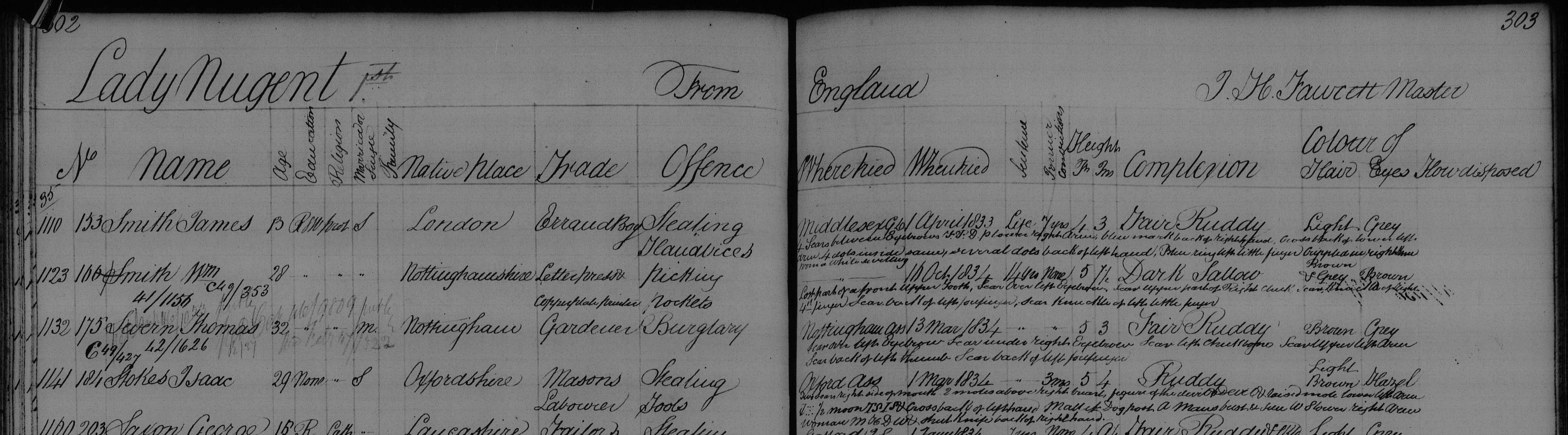
Isaac’s distinguishing marks are noted on various criminal registers and record books:
“Height in feet & inches: 5 4; Complexion: Ruddy; Hair: Light brown; Eyes: Hazel; Marks or Scars: Yes [including] DEVIL on lower left arm, TSIS back of left hand, WS lower right arm, MHDW back of right hand.”
Another includes more detail about Isaac’s tattoos:
“Two slight scars right side of mouth, 2 moles above right breast, figure of the devil and DEVIL and raised mole, lower left arm; anchor, seven dots half moon, TSIS and cross, back of left hand; a mallet, door post, A, mans bust, sun, WS, lower right arm; woman, MHDW and shut knife, back of right hand.”
From How tattoos became fashionable in Victorian England (2019 article in TheConversation by Robert Shoemaker and Zoe Alkar):
“Historical tattooing was not restricted to sailors, soldiers and convicts, but was a growing and accepted phenomenon in Victorian England. Tattoos provide an important window into the lives of those who typically left no written records of their own. As a form of “history from below”, they give us a fleeting but intriguing understanding of the identities and emotions of ordinary people in the past.
As a practice for which typically the only record is the body itself, few systematic records survive before the advent of photography. One exception to this is the written descriptions of tattoos (and even the occasional sketch) that were kept of institutionalised people forced to submit to the recording of information about their bodies as a means of identifying them. This particularly applies to three groups – criminal convicts, soldiers and sailors. Of these, the convict records are the most voluminous and systematic.
Such records were first kept in large numbers for those who were transported to Australia from 1788 (since Australia was then an open prison) as the authorities needed some means of keeping track of them.”On the 1837 census Isaac was working for the government at Illiwarra, New South Wales. This record states that he arrived on the Lady Nugent in 1835. There are three other indent records for an Isaac Stokes in the following years, but the transcriptions don’t provide enough information to determine which Isaac Stokes it was. In April 1837 there was an abscondment, and an arrest/apprehension in May of that year, and in 1843 there was a record of convict indulgences.
From the Australian government website regarding “convict indulgences”:
“By the mid-1830s only six per cent of convicts were locked up. The vast majority worked for the government or free settlers and, with good behaviour, could earn a ticket of leave, conditional pardon or and even an absolute pardon. While under such orders convicts could earn their own living.”
In 1856 in Camden, NSW, Isaac Stokes married Catherine Daly. With no further information on this record it would be impossible to know for sure if this was the right Isaac Stokes. This couple had six children, all in the Camden area, but none of the records provided enough information. No occupation or place or date of birth recorded for Isaac Stokes.
I wrote to the National Library of Australia about the marriage record, and their reply was a surprise! Issac and Catherine were married on 30 September 1856, at the house of the Rev. Charles William Rigg, a Methodist minister, and it was recorded that Isaac was born in Edinburgh in 1821, to parents James Stokes and Sarah Ellis! The age at the time of the marriage doesn’t match Isaac’s age at death in 1877, and clearly the place of birth and parents didn’t match either. Only his fathers occupation of stone mason was correct. I wrote back to the helpful people at the library and they replied that the register was in a very poor condition and that only two and a half entries had survived at all, and that Isaac and Catherines marriage was recorded over two pages.
I searched for an Isaac Stokes born in 1821 in Edinburgh on the Scotland government website (and on all the other genealogy records sites) and didn’t find it. In fact Stokes was a very uncommon name in Scotland at the time. I also searched Australian immigration and other records for another Isaac Stokes born in Scotland or born in 1821, and found nothing. I was unable to find a single record to corroborate this mysterious other Isaac Stokes.
As the age at death in 1877 was correct, I assume that either Isaac was lying, or that some mistake was made either on the register at the home of the Methodist minster, or a subsequent mistranscription or muddle on the remnants of the surviving register. Therefore I remain convinced that the Camden stonemason Isaac Stokes was indeed our Isaac from Oxfordshire.
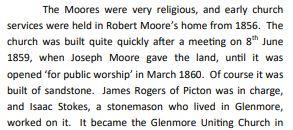
I found a history society newsletter article that mentioned Isaac Stokes, stone mason, had built the Glenmore church, near Camden, in 1859.
From the Wollondilly museum April 2020 newsletter:
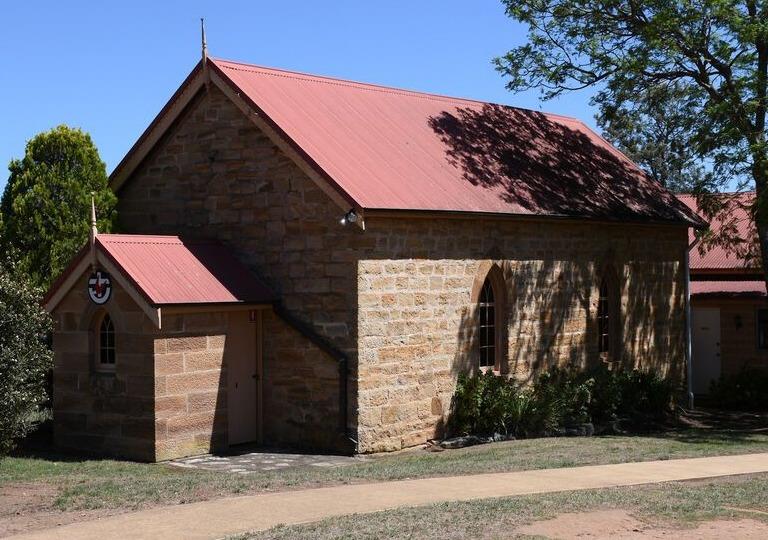
From the Camden History website:
“The stone set over the porch of Glenmore Church gives the date of 1860. The church was begun in 1859 on land given by Joseph Moore. James Rogers of Picton was given the contract to build and local builder, Mr. Stokes, carried out the work. Elizabeth Moore, wife of Edward, laid the foundation stone. The first service was held on 19th March 1860. The cemetery alongside the church contains the headstones and memorials of the areas early pioneers.”
Isaac died on the 3rd September 1877. The inquest report puts his place of death as Bagdelly, near to Camden, and another death register has put Cambelltown, also very close to Camden. His age was recorded as 71 and the inquest report states his cause of death was “rupture of one of the large pulmonary vessels of the lung”. His wife Catherine died in childbirth in 1870 at the age of 43.
Isaac and Catherine’s children:
William Stokes 1857-1928
Catherine Stokes 1859-1846
Sarah Josephine Stokes 1861-1931
Ellen Stokes 1863-1932
Rosanna Stokes 1865-1919
Louisa Stokes 1868-1844.
It’s possible that Catherine Daly was a transported convict from Ireland.
Some time later I unexpectedly received a follow up email from The Oaks Heritage Centre in Australia.
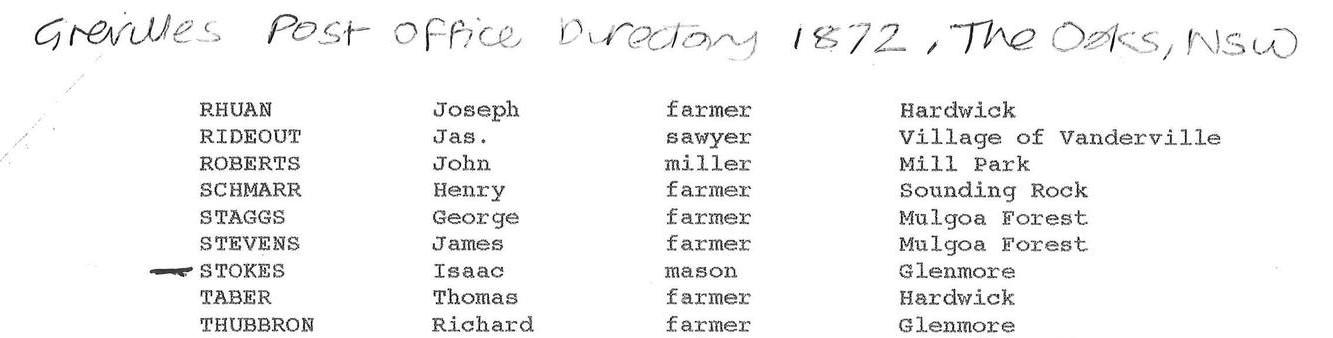
“The Gaudry papers which we have in our archive record him (Isaac Stokes) as having built: the church, the school and the teachers residence. Isaac is recorded in the General return of convicts: 1837 and in Grevilles Post Office directory 1872 as a mason in Glenmore.”
 November 18, 2022 at 4:47 pm #6348
In reply to: Family Stories From The Other Side ~ Book Two
Wong Sang
Wong Sang was born in China in 1884. In October 1916 he married Alice Stokes in Oxford.
Alice was the granddaughter of William Stokes of Churchill, Oxfordshire and William was the brother of Thomas Stokes the wheelwright (who was my 3X great grandfather). In other words Alice was my second cousin, three times removed, on my fathers paternal side.
Wong Sang was an interpreter, according to the baptism registers of his children and the Dreadnought Seamen’s Hospital admission registers in 1930. The hospital register also notes that he was employed by the Blue Funnel Line, and that his address was 11, Limehouse Causeway, E 14. (London)
“The Blue Funnel Line offered regular First-Class Passenger and Cargo Services From the UK to South Africa, Malaya, China, Japan, Australia, Java, and America. Blue Funnel Line was Owned and Operated by Alfred Holt & Co., Liverpool.
The Blue Funnel Line, so-called because its ships have a blue funnel with a black top, is more appropriately known as the Ocean Steamship Company.”Wong Sang and Alice’s daughter, Frances Eileen Sang, was born on the 14th July, 1916 and baptised in 1920 at St Stephen in Poplar, Tower Hamlets, London. The birth date is noted in the 1920 baptism register and would predate their marriage by a few months, although on the death register in 1921 her age at death is four years old and her year of birth is recorded as 1917.
Charles Ronald Sang was baptised on the same day in May 1920, but his birth is recorded as April of that year. The family were living on Morant Street, Poplar.
James William Sang’s birth is recorded on the 1939 census and on the death register in 2000 as being the 8th March 1913. This definitely would predate the 1916 marriage in Oxford.
William Norman Sang was born on the 17th October 1922 in Poplar.
Alice and the three sons were living at 11, Limehouse Causeway on the 1939 census, the same address that Wong Sang was living at when he was admitted to Dreadnought Seamen’s Hospital on the 15th January 1930. Wong Sang died in the hospital on the 8th March of that year at the age of 46.
Alice married John Patterson in 1933 in Stepney. John was living with Alice and her three sons on Limehouse Causeway on the 1939 census and his occupation was chef.
Via Old London Photographs:
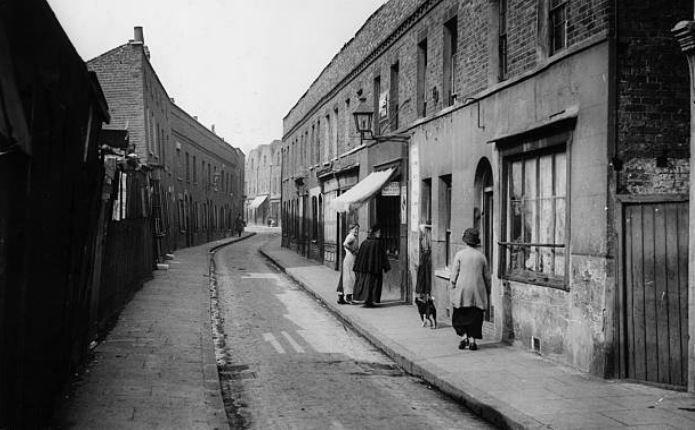
“Limehouse Causeway is a street in east London that was the home to the original Chinatown of London. A combination of bomb damage during the Second World War and later redevelopment means that almost nothing is left of the original buildings of the street.”
Limehouse Causeway in 1925:
From The Story of Limehouse’s Lost Chinatown, poplarlondon website:
“Limehouse was London’s first Chinatown, home to a tightly-knit community who were demonised in popular culture and eventually erased from the cityscape.
As recounted in the BBC’s ‘Our Greatest Generation’ series, Connie was born to a Chinese father and an English mother in early 1920s Limehouse, where she used to play in the street with other British and British-Chinese children before running inside for teatime at one of their houses.
Limehouse was London’s first Chinatown between the 1880s and the 1960s, before the current Chinatown off Shaftesbury Avenue was established in the 1970s by an influx of immigrants from Hong Kong.
Connie’s memories of London’s first Chinatown as an “urban village” paint a very different picture to the seedy area portrayed in early twentieth century novels.
The pyramid in St Anne’s church marked the entrance to the opium den of Dr Fu Manchu, a criminal mastermind who threatened Western society by plotting world domination in a series of novels by Sax Rohmer.
Thomas Burke’s Limehouse Nights cemented stereotypes about prostitution, gambling and violence within the Chinese community, and whipped up anxiety about sexual relationships between Chinese men and white women.
Though neither novelist was familiar with the Chinese community, their depictions made Limehouse one of the most notorious areas of London.
Travel agent Thomas Cook even organised tours of the area for daring visitors, despite the rector of Limehouse warning that “those who look for the Limehouse of Mr Thomas Burke simply will not find it.”
All that remains is a handful of Chinese street names, such as Ming Street, Pekin Street, and Canton Street — but what was Limehouse’s chinatown really like, and why did it get swept away?
Chinese migration to Limehouse
Chinese sailors discharged from East India Company ships settled in the docklands from as early as the 1780s.
By the late nineteenth century, men from Shanghai had settled around Pennyfields Lane, while a Cantonese community lived on Limehouse Causeway.
Chinese sailors were often paid less and discriminated against by dock hirers, and so began to diversify their incomes by setting up hand laundry services and restaurants.
Old photographs show shopfronts emblazoned with Chinese characters with horse-drawn carts idling outside or Chinese men in suits and hats standing proudly in the doorways.
In oral histories collected by Yat Ming Loo, Connie’s husband Leslie doesn’t recall seeing any Chinese women as a child, since male Chinese sailors settled in London alone and married working-class English women.
In the 1920s, newspapers fear-mongered about interracial marriages, crime and gambling, and described chinatown as an East End “colony.”
Ironically, Chinese opium-smoking was also demonised in the press, despite Britain waging war against China in the mid-nineteenth century for suppressing the opium trade to alleviate addiction amongst its people.
The number of Chinese people who settled in Limehouse was also greatly exaggerated, and in reality only totalled around 300.
The real Chinatown
Although the press sought to characterise Limehouse as a monolithic Chinese community in the East End, Connie remembers seeing people of all nationalities in the shops and community spaces in Limehouse.
She doesn’t remember feeling discriminated against by other locals, though Connie does recall having her face measured and IQ tested by a member of the British Eugenics Society who was conducting research in the area.
Some of Connie’s happiest childhood memories were from her time at Chung-Hua Club, where she learned about Chinese culture and language.
Why did Chinatown disappear?
The caricature of Limehouse’s Chinatown as a den of vice hastened its erasure.
Police raids and deportations fuelled by the alarmist media coverage threatened the Chinese population of Limehouse, and slum clearance schemes to redevelop low-income areas dispersed Chinese residents in the 1930s.
The Defence of the Realm Act imposed at the beginning of the First World War criminalised opium use, gave the authorities increased powers to deport Chinese people and restricted their ability to work on British ships.
Dwindling maritime trade during World War II further stripped Chinese sailors of opportunities for employment, and any remnants of Chinatown were destroyed during the Blitz or erased by postwar development schemes.”
Wong Sang 1884-1930
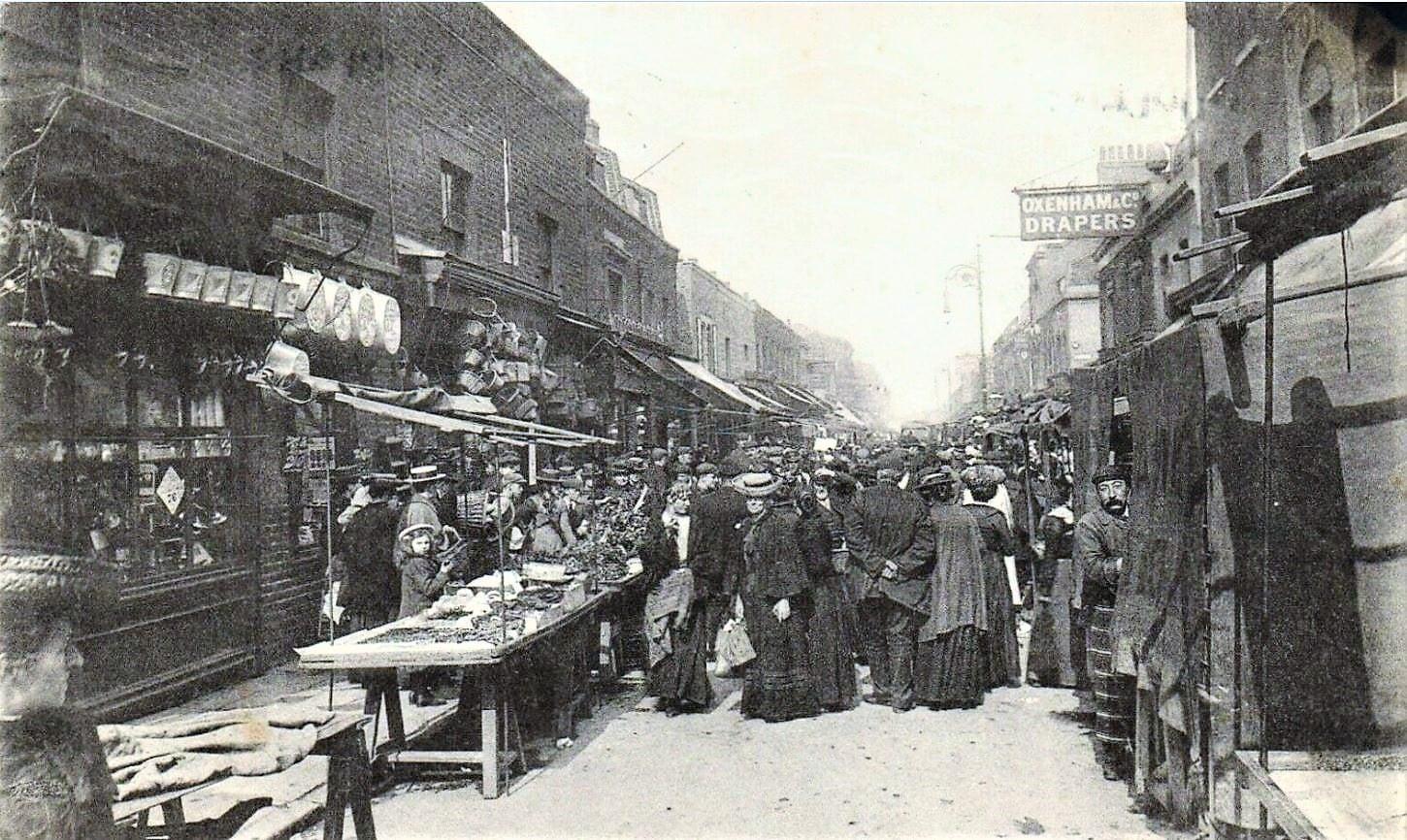
The year 1918 was a troublesome one for Wong Sang, an interpreter and shipping agent for Blue Funnel Line. The Sang family were living at 156, Chrisp Street.
Chrisp Street, Poplar, in 1913 via Old London Photographs:
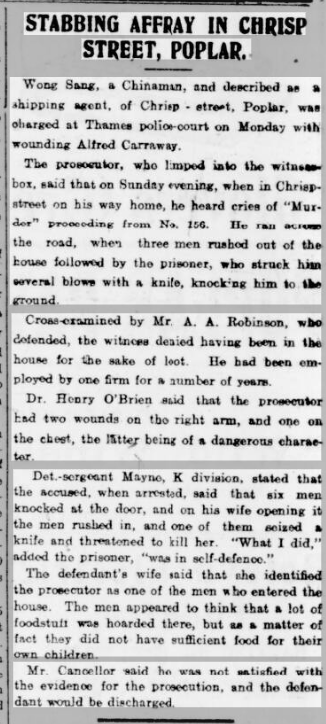
In February Wong Sang was discharged from a false accusation after defending his home from potential robbers.
East End News and London Shipping Chronicle – Friday 15 February 1918:
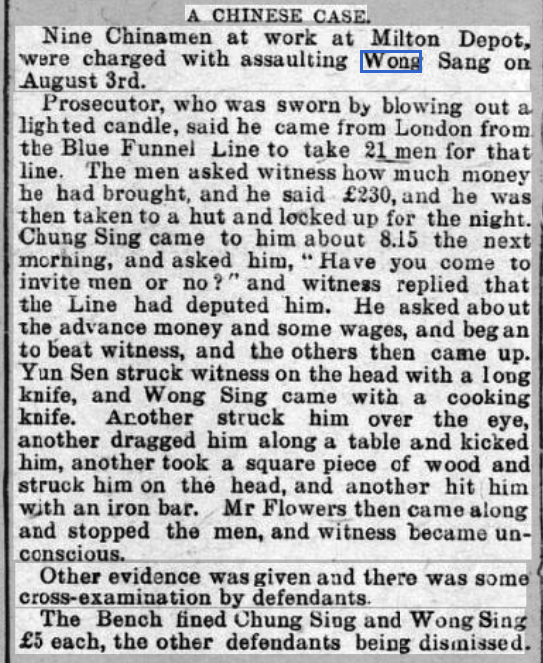
In August of that year he was involved in an incident that left him unconscious.
Faringdon Advertiser and Vale of the White Horse Gazette – Saturday 31 August 1918:
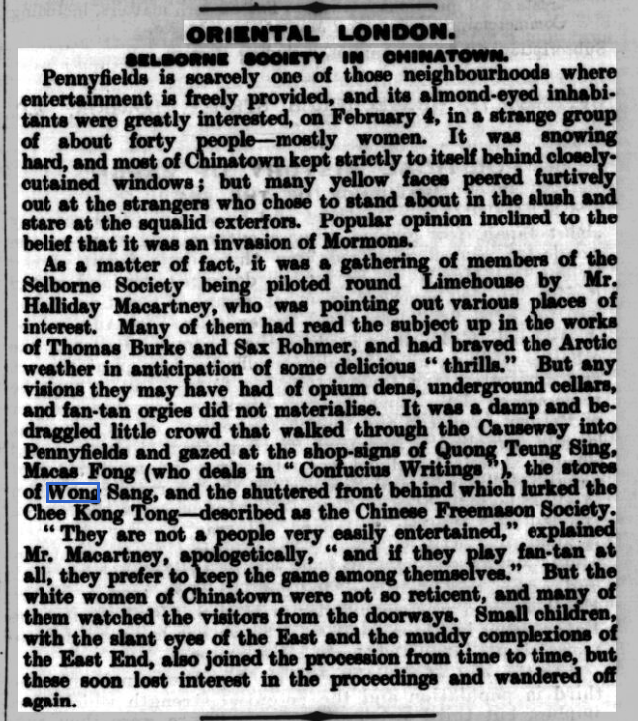
Wong Sang is mentioned in an 1922 article about “Oriental London”.
London and China Express – Thursday 09 February 1922:
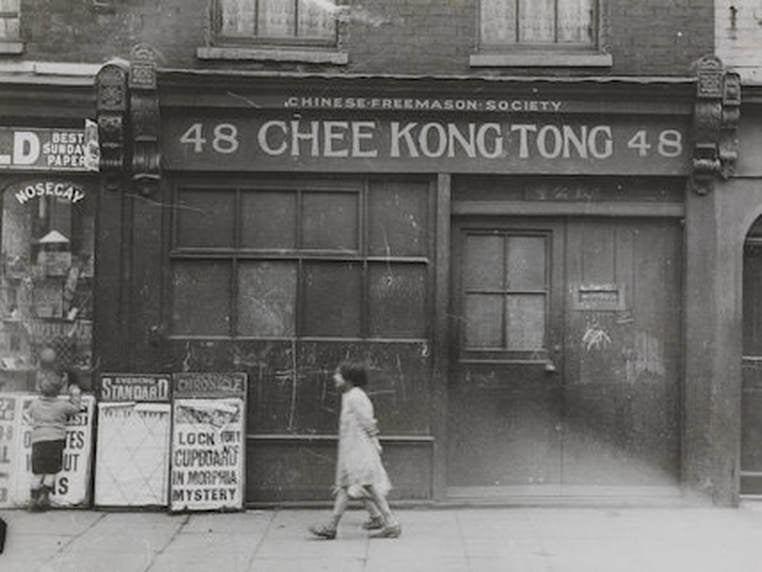
A photograph of the Chee Kong Tong Chinese Freemason Society mentioned in the above article, via Old London Photographs:
Wong Sang was recommended by the London Metropolitan Police in 1928 to assist in a case in Wellingborough, Northampton.
Difficulty of Getting an Interpreter: Northampton Mercury – Friday 16 March 1928:
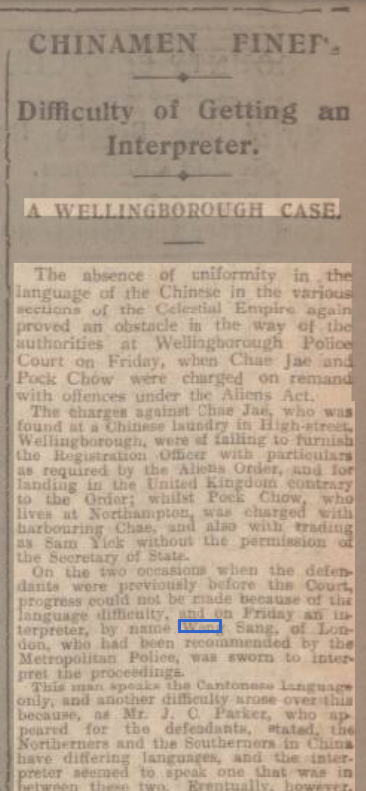
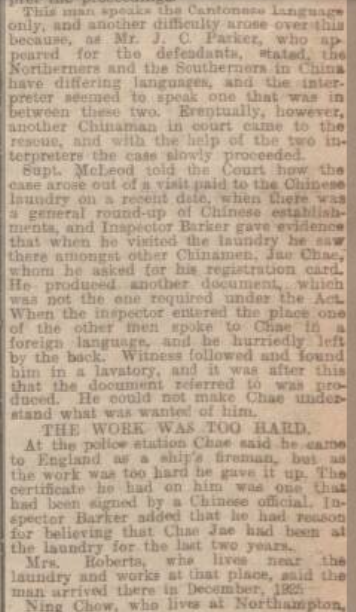
The difficulty was that “this man speaks the Cantonese language only…the Northeners and the Southerners in China have differing languages and the interpreter seemed to speak one that was in between these two.”
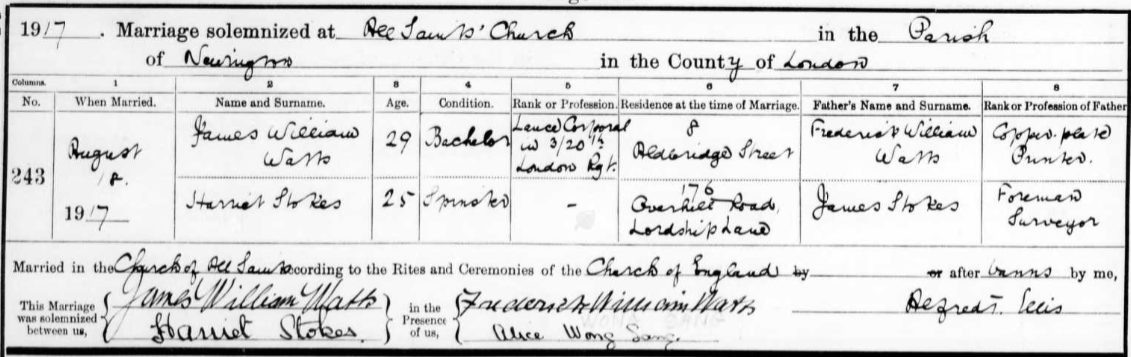
In 1917, Alice Wong Sang was a witness at her sister Harriet Stokes marriage to James William Watts in Southwark, London. Their father James Stokes occupation on the marriage register is foreman surveyor, but on the census he was a council roadman or labourer. (I initially rejected this as the correct marriage for Harriet because of the discrepancy with the occupations. Alice Wong Sang as a witness confirmed that it was indeed the correct one.)
James William Sang 1913-2000 was a clock fitter and watch assembler (on the 1939 census). He married Ivy Laura Fenton in 1963 in Sidcup, Kent. James died in Southwark in 2000.
Charles Ronald Sang 1920-1974 was a draughtsman (1939 census). He married Eileen Burgess in 1947 in Marylebone. Charles and Eileen had two sons: Keith born in 1951 and Roger born in 1952. He died in 1974 in Hertfordshire.
William Norman Sang 1922-2000 was a clerk and telephone operator (1939 census). William enlisted in the Royal Artillery in 1942. He married Lily Mullins in 1949 in Bethnal Green, and they had three daughters: Marion born in 1950, Christine in 1953, and Frances in 1959. He died in Redbridge in 2000.
I then found another two births registered in Poplar by Alice Sang, both daughters. Doris Winifred Sang was born in 1925, and Patricia Margaret Sang was born in 1933 ~ three years after Wong Sang’s death. Neither of the these daughters were on the 1939 census with Alice, John Patterson and the three sons. Margaret had presumably been evacuated because of the war to a family in Taunton, Somerset. Doris would have been fourteen and I have been unable to find her in 1939 (possibly because she died in 2017 and has not had the redaction removed yet on the 1939 census as only deceased people are viewable).
Doris Winifred Sang 1925-2017 was a nursing sister. She didn’t marry, and spent a year in USA between 1954 and 1955. She stayed in London, and died at the age of ninety two in 2017.
Patricia Margaret Sang 1933-1998 was also a nurse. She married Patrick L Nicely in Stepney in 1957. Patricia and Patrick had five children in London: Sharon born 1959, Donald in 1960, Malcolm was born and died in 1966, Alison was born in 1969 and David in 1971.
I was unable to find a birth registered for Alice’s first son, James William Sang (as he appeared on the 1939 census). I found Alice Stokes on the 1911 census as a 17 year old live in servant at a tobacconist on Pekin Street, Limehouse, living with Mr Sui Fong from Hong Kong and his wife Sarah Sui Fong from Berlin. I looked for a birth registered for James William Fong instead of Sang, and found it ~ mothers maiden name Stokes, and his date of birth matched the 1939 census: 8th March, 1913.
On the 1921 census, Wong Sang is not listed as living with them but it is mentioned that Mr Wong Sang was the person returning the census. Also living with Alice and her sons James and Charles in 1921 are two visitors: (Florence) May Stokes, 17 years old, born in Woodstock, and Charles Stokes, aged 14, also born in Woodstock. May and Charles were Alice’s sister and brother.
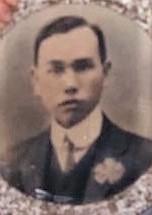
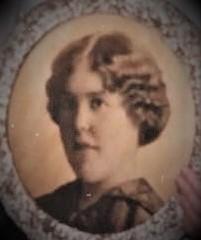
I found Sharon Nicely on social media and she kindly shared photos of Wong Sang and Alice Stokes:
 November 13, 2022 at 10:29 pm #6345
In reply to: Family Stories From The Other Side ~ Book Two
Crime and Punishment in Tetbury
I noticed that there were quite a number of Brownings of Tetbury in the newspaper archives involved in criminal activities while doing a routine newspaper search to supplement the information in the usual ancestry records. I expanded the tree to include cousins, and offsping of cousins, in order to work out who was who and how, if at all, these individuals related to our Browning family.
I was expecting to find some of our Brownings involved in the Swing Riots in Tetbury in 1830, but did not. Most of our Brownings (including cousins) were stone masons. Most of the rioters in 1830 were agricultural labourers.
The Browning crimes are varied, and by todays standards, not for the most part terribly serious ~ you would be unlikely to receive a sentence of hard labour for being found in an outhouse with the intent to commit an unlawful act nowadays, or for being drunk.
The central character in this chapter is Isaac Browning (my 4x great grandfather), who did not appear in any criminal registers, but the following individuals can be identified in the family structure through their relationship to him.
RICHARD LOCK BROWNING born in 1853 was Isaac’s grandson, his son George’s son. Richard was a mason. In 1879 he and Henry Browning of the same age were sentenced to one month hard labour for stealing two pigeons in Tetbury. Henry Browning was Isaac’s nephews son.
In 1883 Richard Browning, mason of Tetbury, was charged with obtaining food and lodging under false pretences, but was found not guilty and acquitted.
In 1884 Richard Browning, mason of Tetbury, was sentenced to one month hard labour for game trespass.Richard had been fined a number of times in Tetbury:
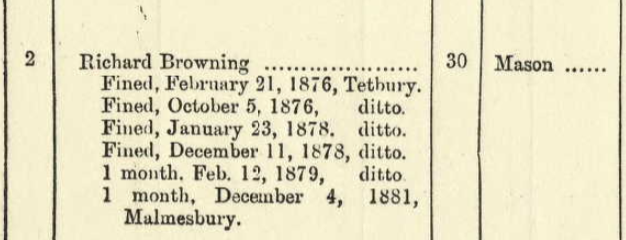
Richard Lock Browning was five feet eight inches tall, dark hair, grey eyes, an oval face and a dark complexion. He had two cuts on the back of his head (in February 1879) and a scar on his right eyebrow.
HENRY BROWNING, who was stealing pigeons with Richard Lock Browning in 1879, (Isaac’s brother Williams grandson, son of George Browning and his wife Charity) was charged with being drunk in 1882 and ordered to pay a fine of one shilling and costs of fourteen shillings, or seven days hard labour.
Henry was found guilty of gaming in the highway at Tetbury in 1872 and was sentenced to seven days hard labour. In 1882 Henry (who was also a mason) was charged with assault but discharged.
Henry was five feet five inches tall, brown hair and brown eyes, a long visage and a fresh complexion.
Henry emigrated with his daughter to Canada in 1913, and died in Vancouver in 1919.THOMAS BUCKINGHAM 1808-1846 (Isaacs daughter Janes husband) was charged with stealing a black gelding in Tetbury in 1838. No true bill. (A “no true bill” means the jury did not find probable cause to continue a case.)
Thomas did however neglect to pay his taxes in 1832:
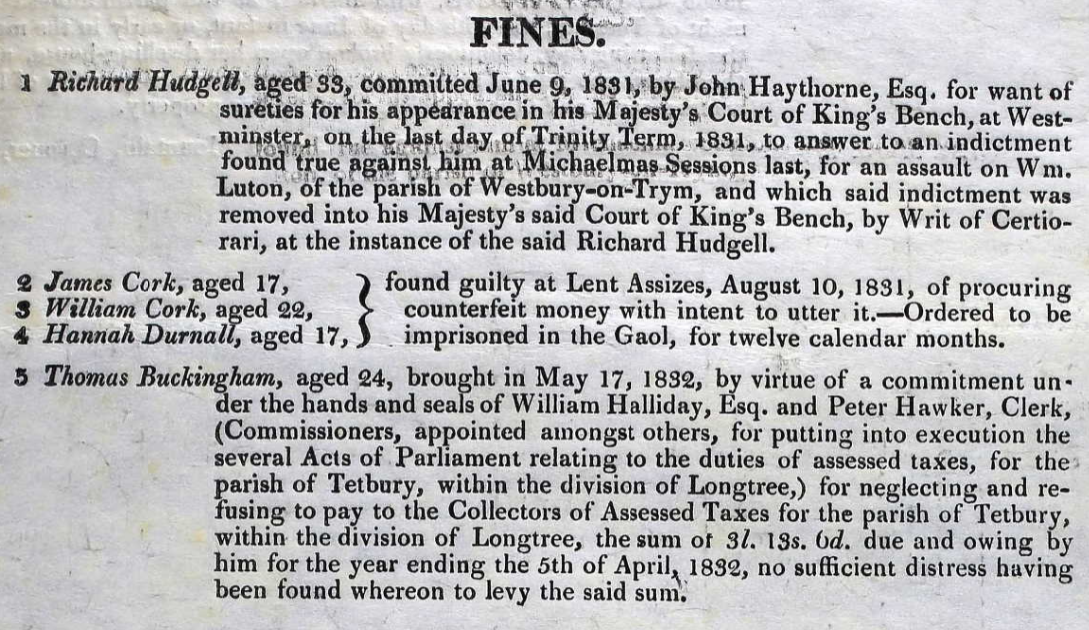
LEWIN BUCKINGHAM (grandson of Isaac, his daughter Jane’s son) was found guilty in 1846 stealing two fowls in Tetbury when he was sixteen years old.
In 1846 he was sentence to one month hard labour (or pay ten shillings fine and ten shillings costs) for loitering with the intent to trespass in search of conies.
A year later in 1847, he and three other young men were sentenced to four months hard labour for larceny.
Lewin was five feet three inches tall, with brown hair and brown eyes, long visage, sallow complexion, and had a scar on his left arm.JOHN BUCKINGHAM born circa 1832, a Tetbury labourer (Isaac’s grandson, Lewin’s brother) was sentenced to six weeks hard labour for larceny in 1855 for stealing a duck in Cirencester. The notes on the register mention that he had been employed by Mr LOCK, Angel Inn. (John’s grandmother was Mary Lock so this is likely a relative).
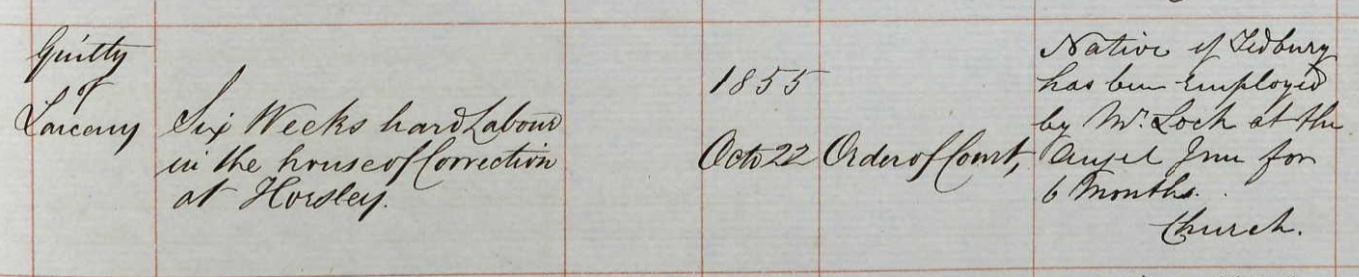
The previous year in 1854 John was sentenced to one month or a one pound fine for assaulting and beating W. Wood.
John was five feet eight and three quarter inches tall, light brown hair and grey eyes, an oval visage and a fresh complexion. He had a scar on his left arm and inside his right knee.JOSEPH PERRET was born circa 1831 and he was a Tetbury labourer. (He was Isaac’s granddaughter Charlotte Buckingham’s husband)
In 1855 he assaulted William Wood and was sentenced to one month or a two pound ten shilling fine. Was it the same W Wood that his wifes cousin John assaulted the year before?
In 1869 Joseph was sentenced to one month hard labour for feloniously receiving a cupboard known to be stolen.JAMES BUCKINGAM born circa 1822 in Tetbury was a shoemaker. (Isaac’s nephew, his sister Hannah’s son)
In 1854 the Tetbury shoemaker was sentenced to four months hard labour for stealing 30 lbs of lead off someones house.
In 1856 the Tetbury shoemaker received two months hard labour or pay £2 fine and 12 s costs for being found in pursuit of game.
In 1868 he was sentenced to two months hard labour for stealing a gander. A unspecified previous conviction is noted.
1871 the Tetbury shoemaker was found in an outhouse for an unlawful purpose and received ten days hard labour. The register notes that his sister is Mrs Cook, the Green, Tetbury. (James sister Prudence married Thomas Cook)
James sister Charlotte married a shoemaker and moved to UTAH.
James was five feet eight inches tall, dark hair and blue eyes, a long visage and a florid complexion. He had a scar on his forehead and a mole on the right side of his neck and abdomen, and a scar on the right knee.November 10, 2022 at 12:08 pm #6344In reply to: Family Stories From The Other Side ~ Book Two
The Tetbury Riots
While researching the Tetbury riots (I had found some Browning names in the newspaper archives in association with the uprisings) I came across an article called “Elizabeth Parker, the Swing Riots, and the Tetbury parish clerk” by Jill Evans.
I noted the name of the parish clerk, Daniel Cole, because I know someone else of that name. The incident in the article was 1830.
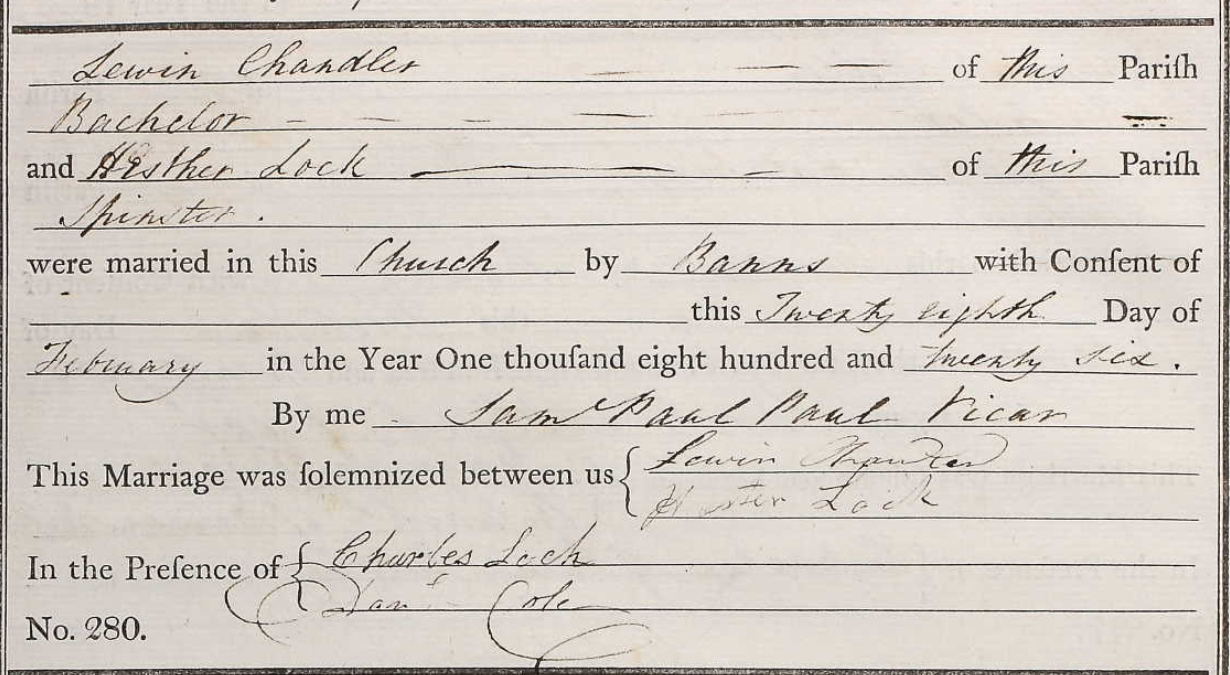
I found the 1826 marriage in the Tetbury parish registers (where Daniel was the parish clerk) of my 4x great grandmothers sister Hesther Lock. One of the witnesses was her brother Charles, and the other was Daniel Cole, the parish clerk.
Marriage of Lewin Chandler and Hesther Lock in 1826:
from the article:
“The Swing Riots were disturbances which took place in 1830 and 1831, mostly in the southern counties of England. Agricultural labourers, who were already suffering due to low wages and a lack of work after several years of bad harvests, rose up when their employers introduced threshing machines into their workplaces. The riots got their name from the threatening letters which were sent to farmers and other employers, which were signed “Captain Swing.”
The riots spread into Gloucestershire in November 1830, with the Tetbury area seeing the worst of the disturbances. Amongst the many people arrested afterwards was one woman, Elizabeth Parker. She has sometimes been cited as one of only two females who were transported for taking part in the Swing Riots. In fact, she was sentenced to be transported for this crime, but never sailed, as she was pardoned a few months after being convicted. However, less than a year after being released from Gloucester Gaol, she was back, awaiting trial for another offence. The circumstances in both of the cases she was tried for reveal an intriguing relationship with one Daniel Cole, parish clerk and assistant poor law officer in Tetbury….
….Elizabeth Parker was committed to Gloucester Gaol on 4 December 1830. In the Gaol Registers, she was described as being 23 and a “labourer”. She was in fact a prostitute, and she was unusual for the time in that she could read and write. She was charged on the oaths of Daniel Cole and others with having been among a mob which destroyed a threshing machine belonging to Jacob Hayward, at his farm in Beverstone, on 26 November.
…..Elizabeth Parker was granted royal clemency in July 1831 and was released from prison. She returned to Tetbury and presumably continued in her usual occupation, but on 27 March 1832, she was committed to Gloucester Gaol again. This time, she was charged with stealing 2 five pound notes, 5 sovereigns and 5 half sovereigns, from the person of Daniel Cole.
Elizabeth was tried at the Lent Assizes which began on 28 March, 1832. The details of her trial were reported in the Morning Post. Daniel Cole was in the “Boat Inn” (meaning the Boot Inn, I think) in Tetbury, when Elizabeth Parker came in. Cole “accompanied her down the yard”, where he stayed with her for about half an hour. The next morning, he realised that all his money was gone. One of his five pound notes was identified by him in a shop, where Parker had bought some items.
Under cross-examination, Cole said he was the assistant overseer of the poor and collector of public taxes of the parish of Tetbury. He was married with one child. He went in to the inn at about 9 pm, and stayed about 2 hours, drinking in the parlour, with the landlord, Elizabeth Parker, and two others. He was not drunk, but he was “rather fresh.” He gave the prisoner no money. He saw Elizabeth Parker next morning at the Prince and Princess public house. He didn’t drink with her or give her any money. He did give her a shilling after she was committed. He never said that he would not have prosecuted her “if it was not for her own tongue”. (Presumably meaning he couldn’t trust her to keep her mouth shut.)”
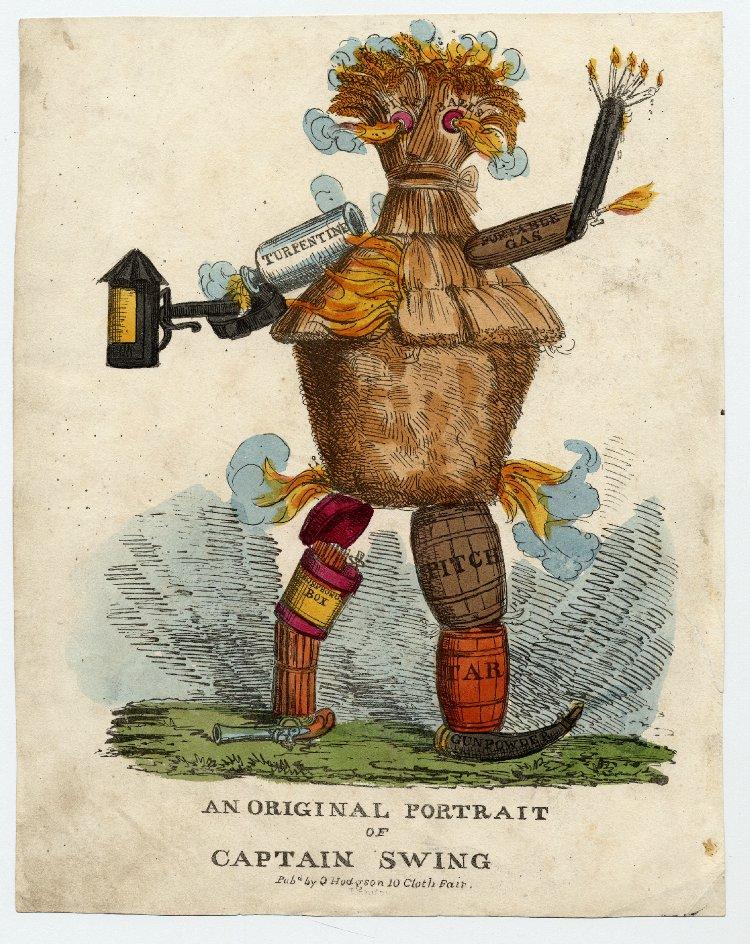
Contemporary illustration of the Swing riots:
Captain Swing was the imaginary leader agricultural labourers who set fire to barns and haystacks in the southern and eastern counties of England from 1830. Although the riots were ruthlessly put down (19 hanged, 644 imprisoned and 481 transported), the rural agitation led the new Whig government to establish a Royal Commission on the Poor Laws and its report provided the basis for the 1834 New Poor Law enacted after the Great Reform Bills of 1833.
An original portrait of Captain Swing hand coloured lithograph circa 1830:
 November 10, 2022 at 10:59 am #6343
In reply to: Family Stories From The Other Side ~ Book Two
Colney Hatch Lunatic Asylum
William James Stokes
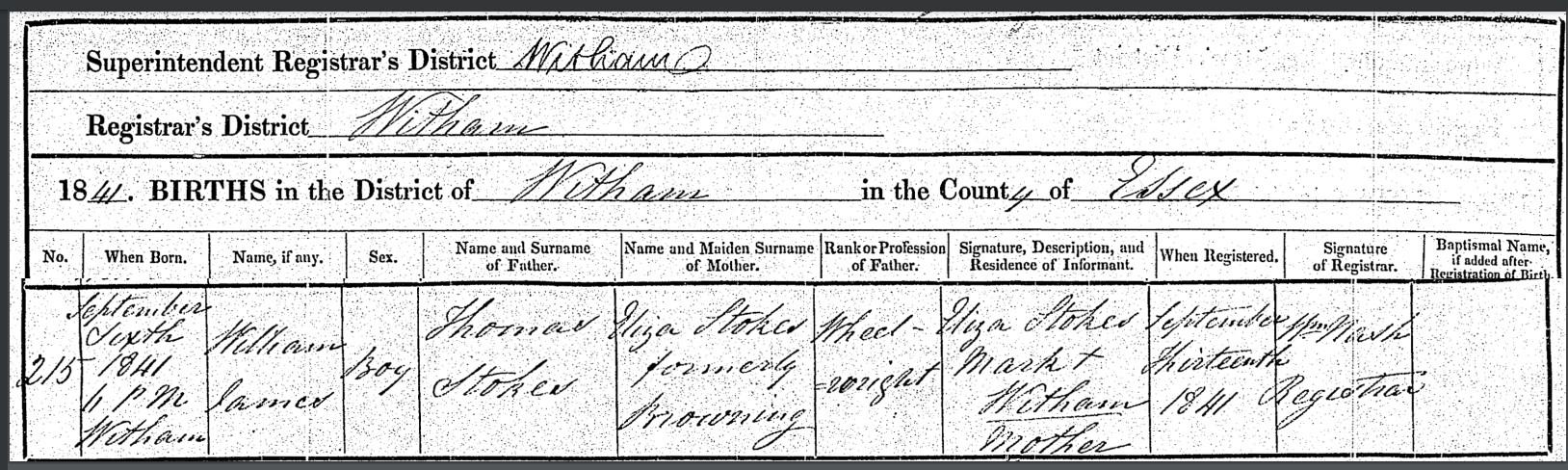
William James Stokes was the first son of Thomas Stokes and Eliza Browning. Oddly, his birth was registered in Witham in Essex, on the 6th September 1841.
Birth certificate of William James Stokes:
His father Thomas Stokes has not yet been found on the 1841 census, and his mother Eliza was staying with her uncle Thomas Lock in Cirencester in 1841. Eliza’s mother Mary Browning (nee Lock) was staying there too. Thomas and Eliza were married in September 1840 in Hempstead in Gloucestershire.
It’s a mystery why William was born in Essex but one possibility is that his father Thomas, who later worked with the Chipperfields making circus wagons, was staying with the Chipperfields who were wheelwrights in Witham in 1841. Or perhaps even away with a traveling circus at the time of the census, learning the circus waggon wheelwright trade. But this is a guess and it’s far from clear why Eliza would make the journey to Witham to have the baby when she was staying in Cirencester a few months prior.
In 1851 Thomas and Eliza, William and four younger siblings were living in Bledington in Oxfordshire.
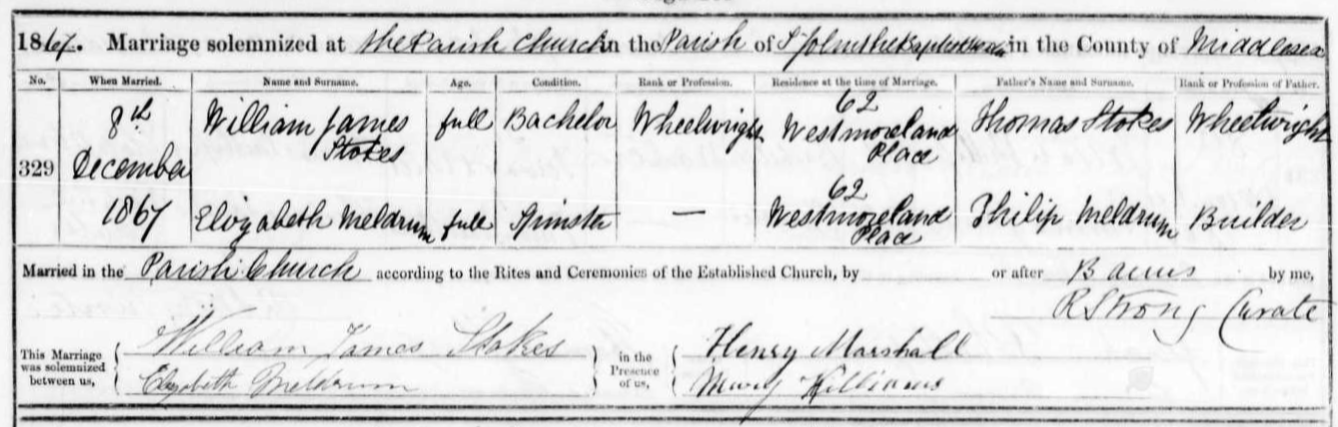
William was a 19 year old wheelwright living with his parents in Evesham in 1861. He married Elizabeth Meldrum in December 1867 in Hackney, London. He and his father are both wheelwrights on the marriage register.
Marriage of William James Stokes and Elizabeth Meldrum in 1867:
William and Elizabeth had a daughter, Elizabeth Emily Stokes, in 1868 in Shoreditch, London.
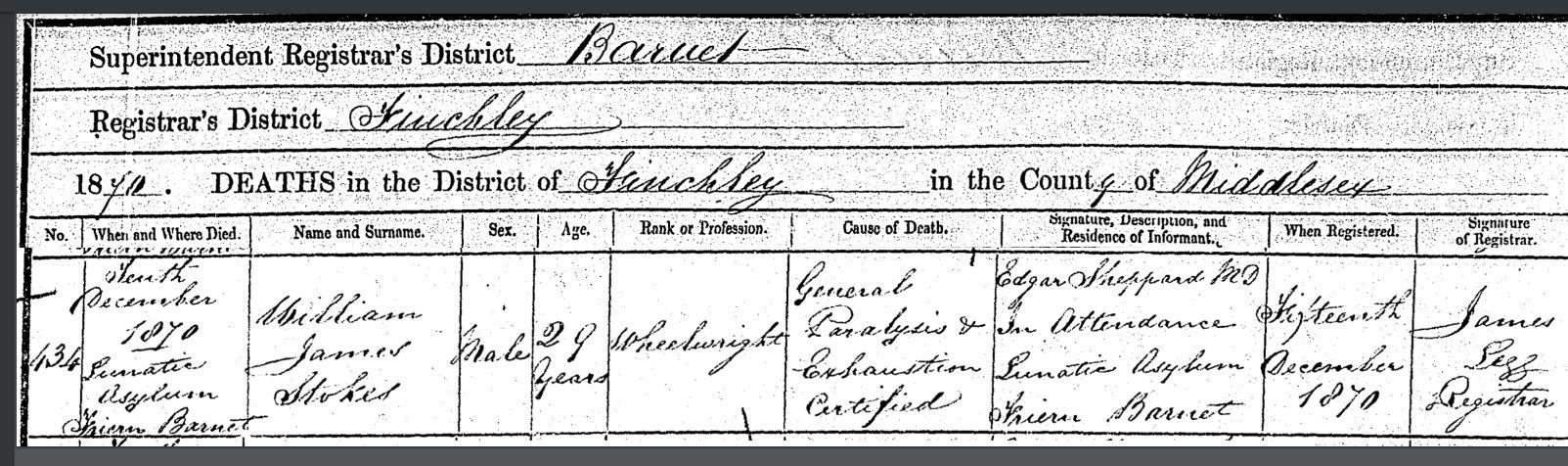
On the 3rd of December 1870, William James Stokes was admitted to Colney Hatch Lunatic Asylum. One week later on the 10th of December, he was dead.
On his death certificate the cause of death was “general paralysis and exhaustion, certified. MD Edgar Sheppard in attendance.” William was just 29 years old.
Death certificate William James Stokes:
I asked on a genealogy forum what could possibly have caused this death at such a young age. A retired pathology professor replied that “in medicine the term General Paralysis is only used in one context – that of Tertiary Syphilis.”
“Tertiary syphilis is the third and final stage of syphilis, a sexually transmitted disease that unfolds in stages when the individual affected doesn’t receive appropriate treatment.”From the article “Looking back: This fascinating and fatal disease” by Jennifer Wallis:
“……in asylums across Britain in the late 19th century, with hundreds of people receiving the diagnosis of general paralysis of the insane (GPI). The majority of these were men in their 30s and 40s, all exhibiting one or more of the disease’s telltale signs: grandiose delusions, a staggering gait, disturbed reflexes, asymmetrical pupils, tremulous voice, and muscular weakness. Their prognosis was bleak, most dying within months, weeks, or sometimes days of admission.
The fatal nature of GPI made it of particular concern to asylum superintendents, who became worried that their institutions were full of incurable cases requiring constant care. The social effects of the disease were also significant, attacking men in the prime of life whose admission to the asylum frequently left a wife and children at home. Compounding the problem was the erratic behaviour of the general paralytic, who might get themselves into financial or legal difficulties. Delusions about their vast wealth led some to squander scarce family resources on extravagant purchases – one man’s wife reported he had bought ‘a quantity of hats’ despite their meagre income – and doctors pointed to the frequency of thefts by general paralytics who imagined that everything belonged to them.”
The London Archives hold the records for Colney Hatch, but they informed me that the particular records for the dates that William was admitted and died were in too poor a condition to be accessed without causing further damage.
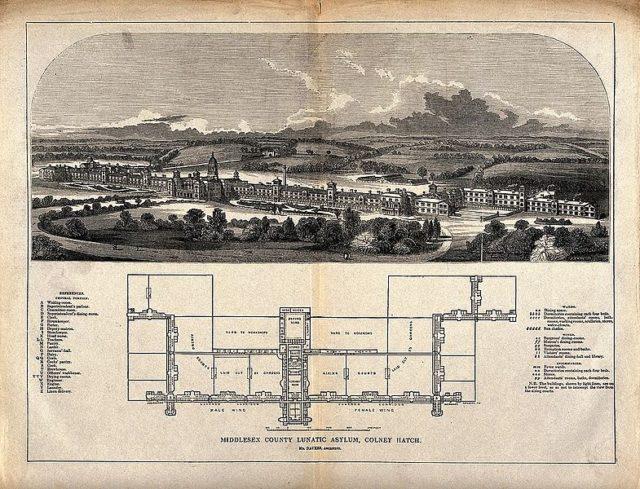
Colney Hatch Lunatic Asylum gained such notoriety that the name “Colney Hatch” appeared in various terms of abuse associated with the concept of madness. Infamous inmates that were institutionalized at Colney Hatch (later called Friern Hospital) include Jack the Ripper suspect Aaron Kosminski from 1891, and from 1911 the wife of occultist Aleister Crowley. In 1993 the hospital grounds were sold and the exclusive apartment complex called Princess Park Manor was built.
Colney Hatch:
In 1873 Williams widow married William Hallam in Limehouse in London. Elizabeth died in 1930, apparently unaffected by her first husbands ailment.
November 4, 2022 at 2:19 pm #6342In reply to: Family Stories From The Other Side ~ Book Two
Brownings of Tetbury
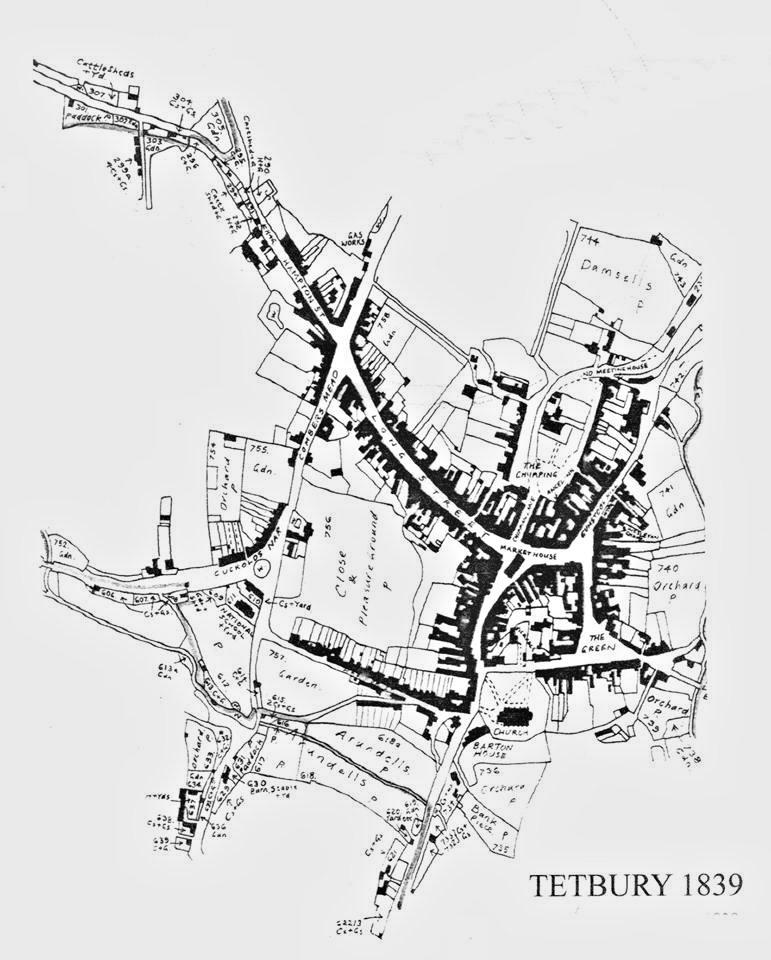
Isaac Browning (1784-1848) married Mary Lock (1787-1870) in Tetbury in 1806. Both of them were born in Tetbury, Gloucestershire. Isaac was a stone mason. Between 1807 and 1832 they baptised fourteen children in Tetbury, and on 8 Nov 1829 Isaac and Mary baptised five daughters all on the same day.
I considered that they may have been quintuplets, with only the last born surviving, which would have answered my question about the name of the house La Quinta in Broadway, the home of Eliza Browning and Thomas Stokes son Fred. However, the other four daughters were found in various records and they were not all born the same year. (So I still don’t know why the house in Broadway had such an unusual name).
Their son George was born and baptised in 1827, but Louisa born 1821, Susan born 1822, Hesther born 1823 and Mary born 1826, were not baptised until 1829 along with Charlotte born in 1828. (These birth dates are guesswork based on the age on later censuses.) Perhaps George was baptised promptly because he was sickly and not expected to survive. Isaac and Mary had a son George born in 1814 who died in 1823. Presumably the five girls were healthy and could wait to be done as a job lot on the same day later.
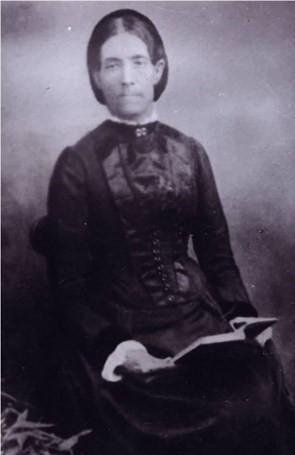
Eliza Browning (1814-1886), my great great great grandmother, had a baby six years before she married Thomas Stokes. Her name was Ellen Harding Browning, which suggests that her fathers name was Harding. On the 1841 census seven year old Ellen was living with her grandfather Isaac Browning in Tetbury. Ellen Harding Browning married William Dee in Tetbury in 1857, and they moved to Western Australia.
Ellen Harding Browning Dee: (photo found on ancestry website)
OBITUARY. MRS. ELLEN DEE.
A very old and respected resident of Dongarra, in the person of Mrs. Ellen Dee, passed peacefully away on Sept. 27, at the advanced age of 74 years.The deceased had been ailing for some time, but was about and actively employed until Wednesday, Sept. 20, whenn she was heard groaning by some neighbours, who immediately entered her place and found her lying beside the fireplace. Tho deceased had been to bed over night, and had evidently been in the act of lighting thc fire, when she had a seizure. For some hours she was conscious, but had lost the power of speech, and later on became unconscious, in which state she remained until her death.
The deceased was born in Gloucestershire, England, in 1833, was married to William Dee in Tetbury Church 23 years later. Within a month she left England with her husband for Western Australian in the ship City oí Bristol. She resided in Fremantle for six months, then in Greenough for a short time, and afterwards (for 42 years) in Dongarra. She was, therefore, a colonist of about 51 years. She had a family of four girls and three boys, and five of her children survive her, also 35 grandchildren, and eight great grandchildren. She was very highly respected, and her sudden collapse came as a great shock to many.
Eliza married Thomas Stokes (1816-1885) in September 1840 in Hempstead, Gloucestershire. On the 1841 census, Eliza and her mother Mary Browning (nee Lock) were staying with Thomas Lock and family in Cirencester. Strangely, Thomas Stokes has not been found thus far on the 1841 census, and Thomas and Eliza’s first child William James Stokes birth was registered in Witham, in Essex, on the 6th of September 1841.
I don’t know why William James was born in Witham, or where Thomas was at the time of the census in 1841. One possibility is that as Thomas Stokes did a considerable amount of work with circus waggons, circus shooting galleries and so on as a journeyman carpenter initially and then later wheelwright, perhaps he was working with a traveling circus at the time.
But back to the Brownings ~ more on William James Stokes to follow.
One of Isaac and Mary’s fourteen children died in infancy: Ann was baptised and died in 1811. Two of their children died at nine years old: the first George, and Mary who died in 1835. Matilda was 21 years old when she died in 1844.
Jane Browning (1808-) married Thomas Buckingham in 1830 in Tetbury. In August 1838 Thomas was charged with feloniously stealing a black gelding.
Susan Browning (1822-1879) married William Cleaver in November 1844 in Tetbury. Oddly thereafter they use the name Bowman on the census. On the 1851 census Mary Browning (Susan’s mother), widow, has grandson George Bowman born in 1844 living with her. The confusion with the Bowman and Cleaver names was clarified upon finding the criminal registers:
30 January 1834. Offender: William Cleaver alias Bowman, Richard Bunting alias Barnfield and Jeremiah Cox, labourers of Tetbury. Crime: Stealing part of a dead fence from a rick barton in Tetbury, the property of Robert Tanner, farmer.
And again in 1836:
29 March 1836 Bowman, William alias Cleaver, of Tetbury, labourer age 18; 5’2.5” tall, brown hair, grey eyes, round visage with fresh complexion; several moles on left cheek, mole on right breast. Charged on the oath of Ann Washbourn & others that on the morning of the 31 March at Tetbury feloniously stolen a lead spout affixed to the dwelling of the said Ann Washbourn, her property. Found guilty 31 March 1836; Sentenced to 6 months.
On the 1851 census Susan Bowman was a servant living in at a large drapery shop in Cheltenham. She was listed as 29 years old, married and born in Tetbury, so although it was unusual for a married woman not to be living with her husband, (or her son for that matter, who was living with his grandmother Mary Browning), perhaps her husband William Bowman alias Cleaver was in trouble again. By 1861 they are both living together in Tetbury: William was a plasterer, and they had three year old Isaac and Thomas, one year old. In 1871 William was still a plasterer in Tetbury, living with wife Susan, and sons Isaac and Thomas. Interestingly, a William Cleaver is living next door but one!
Susan was 56 when she died in Tetbury in 1879.
Three of the Browning daughters went to London.
Louisa Browning (1821-1873) married Robert Claxton, coachman, in 1848 in Bryanston Square, Westminster, London. Ester Browning was a witness.
Ester Browning (1823-1893)(or Hester) married Charles Hudson Sealey, cabinet maker, in Bethnal Green, London, in 1854. Charles was born in Tetbury. Charlotte Browning was a witness.
Charlotte Browning (1828-1867?) was admitted to St Marylebone workhouse in London for “parturition”, or childbirth, in 1860. She was 33 years old. A birth was registered for a Charlotte Browning, no mothers maiden name listed, in 1860 in Marylebone. A death was registered in Camden, buried in Marylebone, for a Charlotte Browning in 1867 but no age was recorded. As the age and parents were usually recorded for a childs death, I assume this was Charlotte the mother.
I found Charlotte on the 1851 census by chance while researching her mother Mary Lock’s siblings. Hesther Lock married Lewin Chandler, and they were living in Stepney, London. Charlotte is listed as a neice. Although Browning is mistranscribed as Broomey, the original page says Browning. Another mistranscription on this record is Hesthers birthplace which is transcribed as Yorkshire. The original image shows Gloucestershire.
Isaac and Mary’s first son was John Browning (1807-1860). John married Hannah Coates in 1834. John’s brother Charles Browning (1819-1853) married Eliza Coates in 1842. Perhaps they were sisters. On the 1861 census Hannah Browning, John’s wife, was a visitor in the Harding household in a village called Coates near Tetbury. Thomas Harding born in 1801 was the head of the household. Perhaps he was the father of Ellen Harding Browning.
George Browning (1828-1870) married Louisa Gainey in Tetbury, and died in Tetbury at the age of 42. Their son Richard Lock Browning, a 32 year old mason, was sentenced to one month hard labour for game tresspass in Tetbury in 1884.
Isaac Browning (1832-1857) was the youngest son of Isaac and Mary. He was just 25 years old when he died in Tetbury.
October 11, 2022 at 2:58 pm #6334In reply to: Family Stories From The Other Side ~ Book Two
The House on Penn Common
Toi Fang and the Duke of Sutherland
Tomlinsons
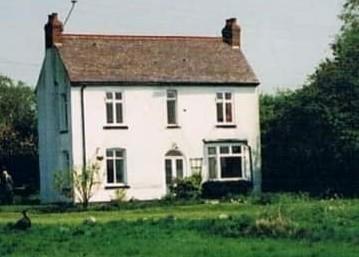
Grassholme
Charles Tomlinson (1873-1929) my great grandfather, was born in Wolverhampton in 1873. His father Charles Tomlinson (1847-1907) was a licensed victualler or publican, or alternatively a vet/castrator. He married Emma Grattidge (1853-1911) in 1872. On the 1881 census they were living at The Wheel in Wolverhampton.
Charles married Nellie Fisher (1877-1956) in Wolverhampton in 1896. In 1901 they were living next to the post office in Upper Penn, with children (Charles) Sidney Tomlinson (1896-1955), and Hilda Tomlinson (1898-1977) . Charles was a vet/castrator working on his own account.
In 1911 their address was 4, Wakely Hill, Penn, and living with them were their children Hilda, Frank Tomlinson (1901-1975), (Dorothy) Phyllis Tomlinson (1905-1982), Nellie Tomlinson (1906-1978) and May Tomlinson (1910-1983). Charles was a castrator working on his own account.
Charles and Nellie had a further four children: Charles Fisher Tomlinson (1911-1977), Margaret Tomlinson (1913-1989) (my grandmother Peggy), Major Tomlinson (1916-1984) and Norah Mary Tomlinson (1919-2010).
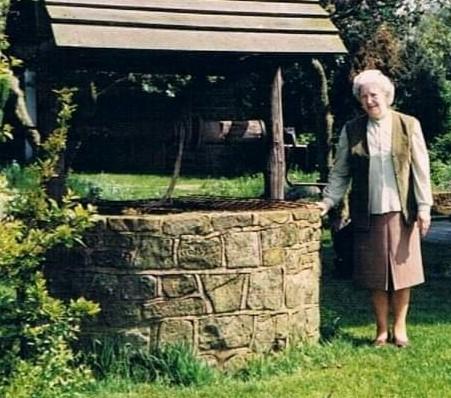
My father told me that my grandmother had fallen down the well at the house on Penn Common in 1915 when she was two years old, and sent me a photo of her standing next to the well when she revisted the house at a much later date.
Peggy next to the well on Penn Common:
My grandmother Peggy told me that her father had had a racehorse called Toi Fang. She remembered the racing colours were sky blue and orange, and had a set of racing silks made which she sent to my father.
Through a DNA match, I met Ian Tomlinson. Ian is the son of my fathers favourite cousin Roger, Frank’s son. Ian found some racing silks and sent a photo to my father (they are now in contact with each other as a result of my DNA match with Ian), wondering what they were.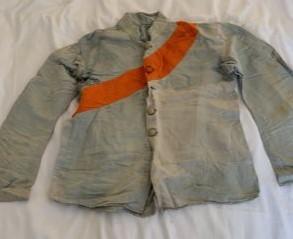
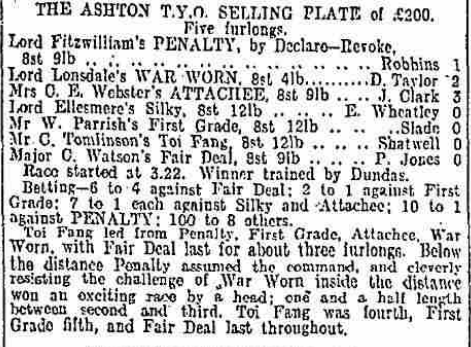
When Ian sent a photo of these racing silks, I had a look in the newspaper archives. In 1920 there are a number of mentions in the racing news of Mr C Tomlinson’s horse TOI FANG. I have not found any mention of Toi Fang in the newspapers in the following years.
The Scotsman – Monday 12 July 1920:
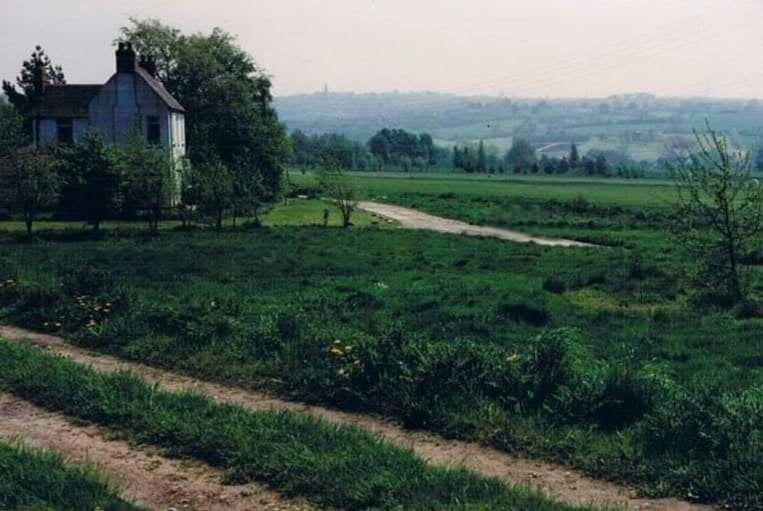
The other story that Ian Tomlinson recalled was about the house on Penn Common. Ian said he’d heard that the local titled person took Charles Tomlinson to court over building the house but that Tomlinson won the case because it was built on common land and was the first case of it’s kind.
Penn Common Right of Way Case:
Staffordshire Advertiser March 9, 1912In the chancery division, on Tuesday, before Mr Justice Joyce, it was announced that a settlement had been arrived at of the Penn Common Right of Way case, the hearing of which occupied several days last month. The action was brought by the Duke of Sutherland (as Lord of the Manor of Penn) and Mr Harry Sydney Pitt (on behalf of himself and other freeholders of the manor having a right to pasturage on Penn Common) to restrain Mr James Lakin, Carlton House, Penn; Mr Charles Tomlinson, Mayfield Villa, Wakely Hill, Penn; and Mr Joseph Harold Simpkin, Dudley Road, Wolverhampton, from drawing building materials across the common, or otherwise causing injury to the soil.
The real point in dispute was whether there was a public highway for all purposes running by the side of the defendants land from the Turf Tavern past the golf club to the Barley Mow.
Mr Hughes, KC for the plaintiffs, now stated that the parties had been in consultation, and had come to terms, the substance of which was that the defendants admitted that there was no public right of way, and that they were granted a private way. This, he thought, would involve the granting of some deed or deeds to express the rights of the parties, and he suggested that the documents should be be settled by some counsel to be mutually agreed upon.His lordship observed that the question of coal was probably the important point. Mr Younger said Mr Tomlinson was a freeholder, and the plaintiffs could not mine under him. Mr Hughes: The coal actually under his house is his, and, of course, subsidence might be produced by taking away coal some distance away. I think some document is required to determine his actual rights.
Mr Younger said he wanted to avoid anything that would increase the costs, but, after further discussion, it was agreed that Mr John Dixon (an expert on mineral rights), or failing him, another counsel satisfactory to both parties, should be invited to settle the terms scheduled in the agreement, in order to prevent any further dispute.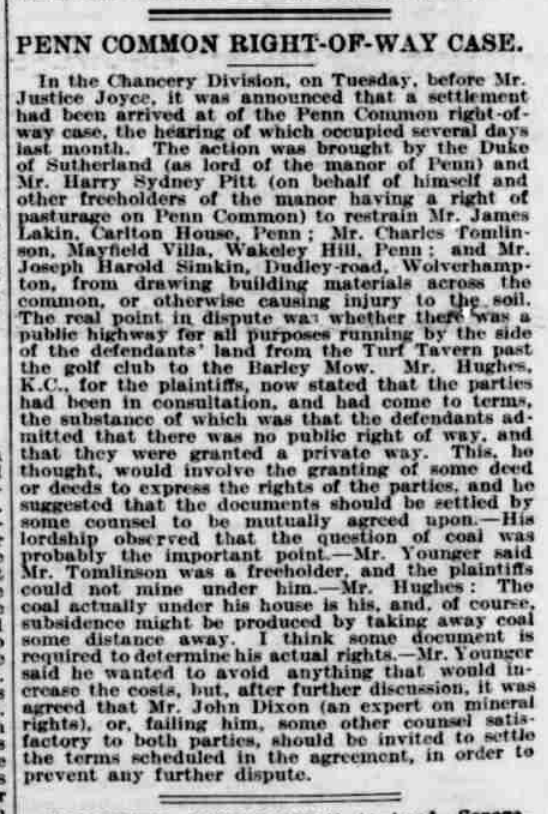
The name of the house is Grassholme. The address of Mayfield Villas is the house they were living in while building Grassholme, which I assume they had not yet moved in to at the time of the newspaper article in March 1912.
What my grandmother didn’t tell anyone was how her father died in 1929:
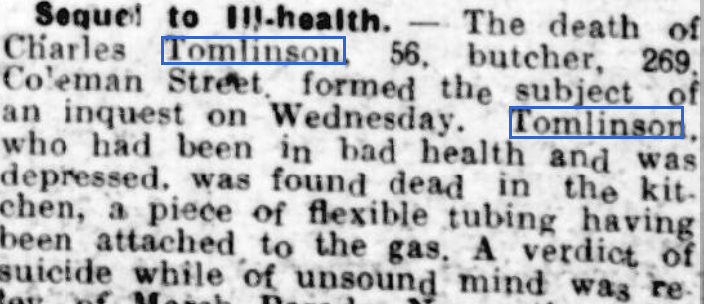
On the 1921 census, Charles, Nellie and eight of their children were living at 269 Coleman Street, Wolverhampton.
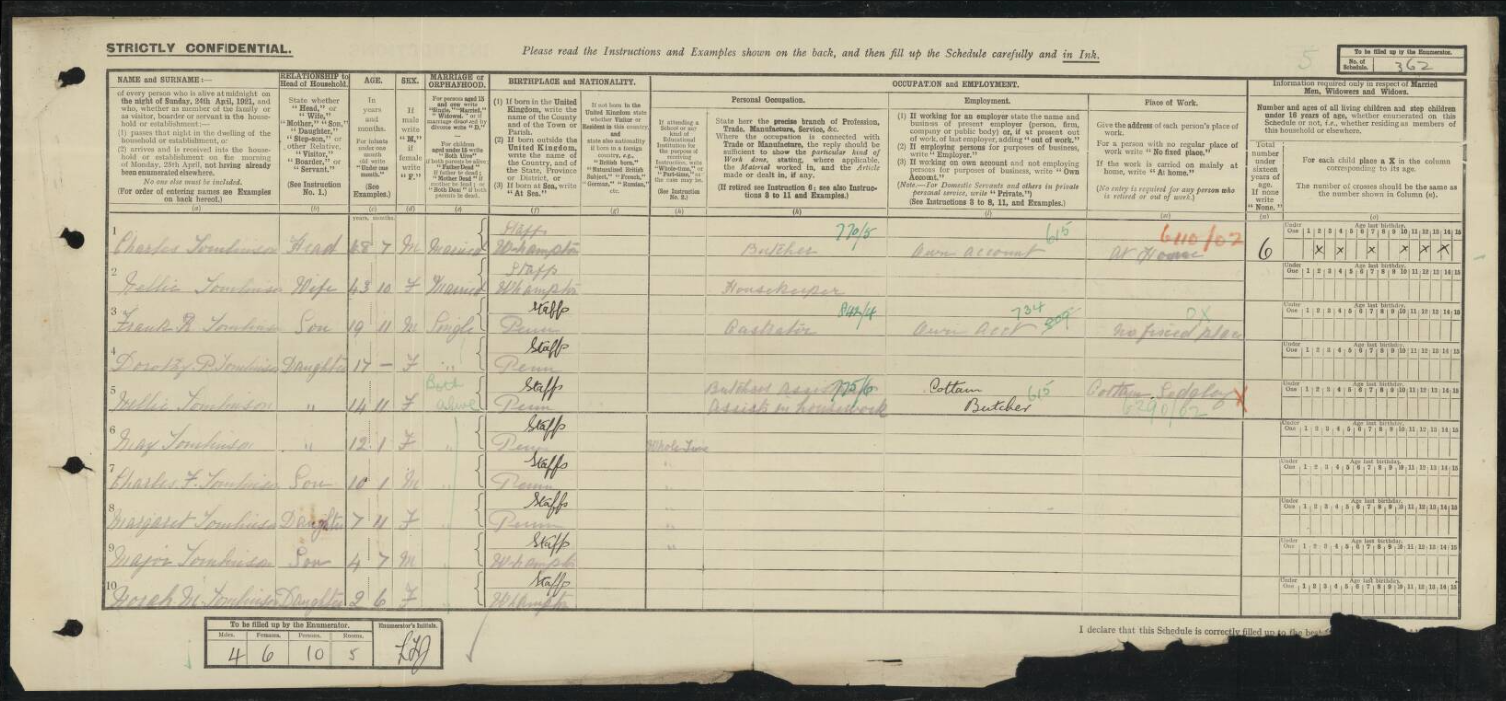
They were living on Coleman Street in 1915 when Charles was fined for staying open late.
Staffordshire Advertiser – Saturday 13 February 1915:

What is not yet clear is why they moved from the house on Penn Common sometime between 1912 and 1915. And why did he have a racehorse in 1920?
October 11, 2022 at 11:39 am #6333In reply to: Family Stories From The Other Side ~ Book Two
The Grattidge Family
The first Grattidge to appear in our tree was Emma Grattidge (1853-1911) who married Charles Tomlinson (1847-1907) in 1872.
Charles Tomlinson (1873-1929) was their son and he married my great grandmother Nellie Fisher. Their daughter Margaret (later Peggy Edwards) was my grandmother on my fathers side.
Emma Grattidge was born in Wolverhampton, the daughter and youngest child of William Grattidge (1820-1887) born in Foston, Derbyshire, and Mary Stubbs, born in Burton on Trent, daughter of Solomon Stubbs, a land carrier. William and Mary married at St Modwens church, Burton on Trent, in 1839. It’s unclear why they moved to Wolverhampton. On the 1841 census William was employed as an agent, and their first son William was nine months old. Thereafter, William was a licensed victuallar or innkeeper.
William Grattidge was born in Foston, Derbyshire in 1820. His parents were Thomas Grattidge, farmer (1779-1843) and Ann Gerrard (1789-1822) from Ellastone. Thomas and Ann married in 1813 in Ellastone. They had five children before Ann died at the age of 25:
Bessy was born in 1815, Thomas in 1818, William in 1820, and Daniel Augustus and Frederick were twins born in 1822. They were all born in Foston. (records say Foston, Foston and Scropton, or Scropton)
On the 1841 census Thomas had nine people additional to family living at the farm in Foston, presumably agricultural labourers and help.
After Ann died, Thomas had three children with Kezia Gibbs (30 years his junior) before marrying her in 1836, then had a further four with her before dying in 1843. Then Kezia married Thomas’s nephew Frederick Augustus Grattidge (born in 1816 in Stafford) in London in 1847 and had two more!
The siblings of William Grattidge (my 3x great grandfather):
Frederick Grattidge (1822-1872) was a schoolmaster and never married. He died at the age of 49 in Tamworth at his twin brother Daniels address.
Daniel Augustus Grattidge (1822-1903) was a grocer at Gungate in Tamworth.
Thomas Grattidge (1818-1871) married in Derby, and then emigrated to Illinois, USA.
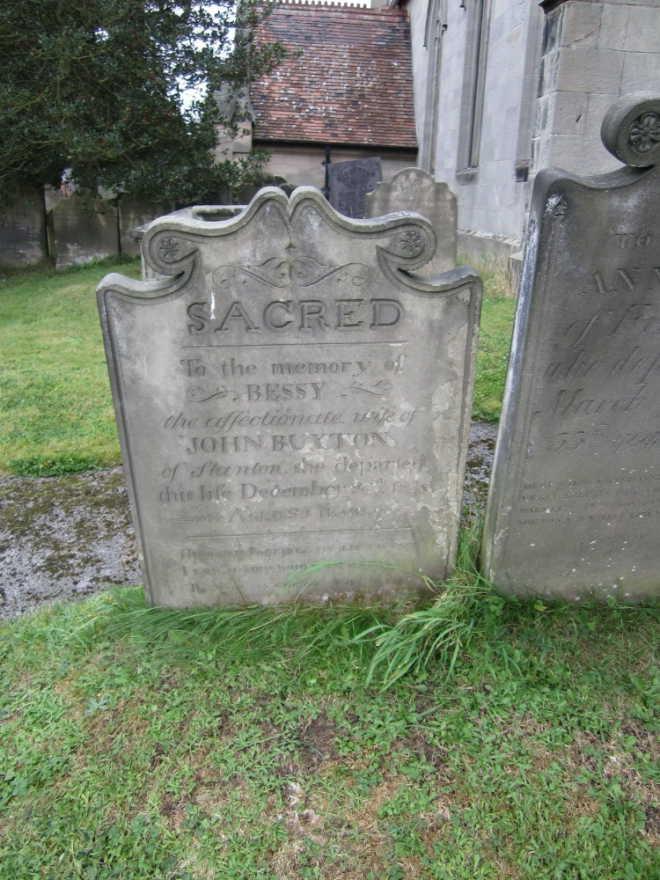
Bessy Grattidge (1815-1840) married John Buxton, farmer, in Ellastone in January 1838. They had three children before Bessy died in December 1840 at the age of 25: Henry in 1838, John in 1839, and Bessy Buxton in 1840. Bessy was baptised in January 1841. Presumably the birth of Bessy caused the death of Bessy the mother.
Bessy Buxton’s gravestone:
“Sacred to the memory of Bessy Buxton, the affectionate wife of John Buxton of Stanton She departed this life December 20th 1840, aged 25 years. “Husband, Farewell my life is Past, I loved you while life did last. Think on my children for my sake, And ever of them with I take.”
20 Dec 1840, Ellastone, Staffordshire
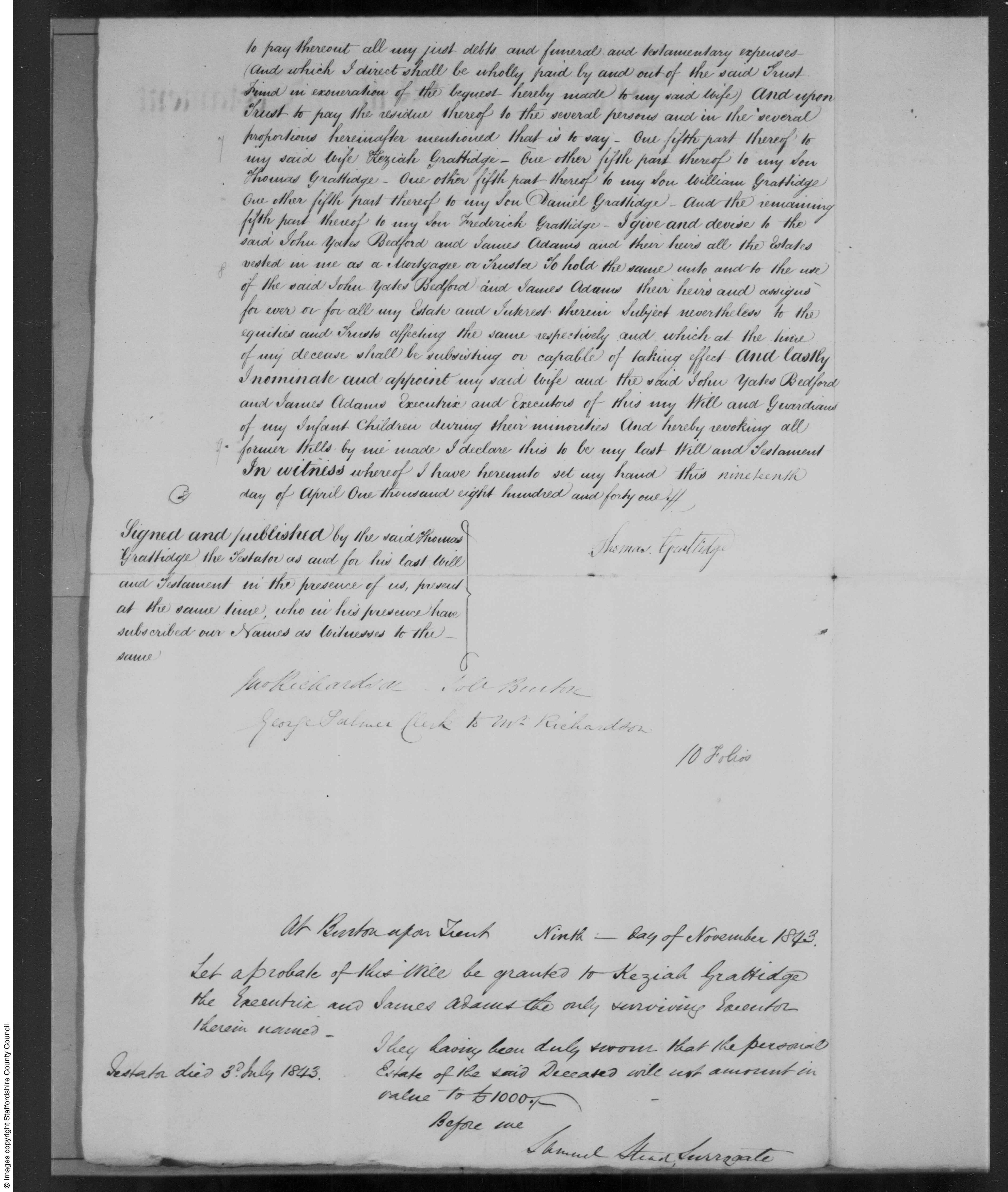
In the 1843 will of Thomas Grattidge, farmer of Foston, he leaves fifth shares of his estate, including freehold real estate at Findern, to his wife Kezia, and sons William, Daniel, Frederick and Thomas. He mentions that the children of his late daughter Bessy, wife of John Buxton, will be taken care of by their father. He leaves the farm to Keziah in confidence that she will maintain, support and educate his children with her.
An excerpt from the will:
I give and bequeath unto my dear wife Keziah Grattidge all my household goods and furniture, wearing apparel and plate and plated articles, linen, books, china, glass, and other household effects whatsoever, and also all my implements of husbandry, horses, cattle, hay, corn, crops and live and dead stock whatsoever, and also all the ready money that may be about my person or in my dwelling house at the time of my decease, …I also give my said wife the tenant right and possession of the farm in my occupation….
A page from the 1843 will of Thomas Grattidge:
William Grattidges half siblings (the offspring of Thomas Grattidge and Kezia Gibbs):
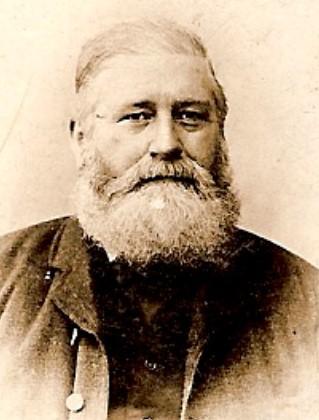
Albert Grattidge (1842-1914) was a railway engine driver in Derby. In 1884 he was driving the train when an unfortunate accident occured outside Ambergate. Three children were blackberrying and crossed the rails in front of the train, and one little girl died.
Albert Grattidge:
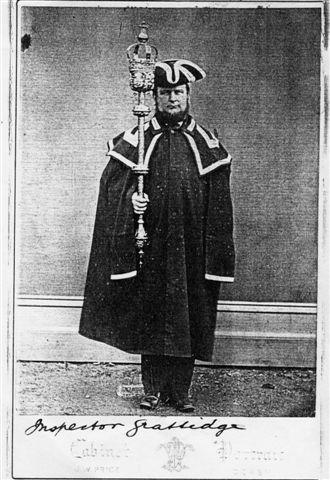
George Grattidge (1826-1876) was baptised Gibbs as this was before Thomas married Kezia. He was a police inspector in Derby.
George Grattidge:
Edwin Grattidge (1837-1852) died at just 15 years old.
Ann Grattidge (1835-) married Charles Fletcher, stone mason, and lived in Derby.
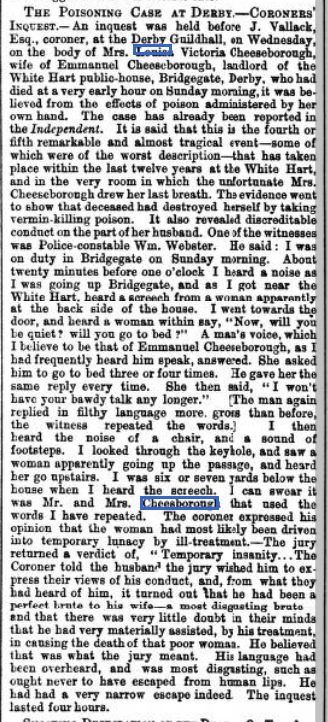
Louisa Victoria Grattidge (1840-1869) was sadly another Grattidge woman who died young. Louisa married Emmanuel Brunt Cheesborough in 1860 in Derby. In 1861 Louisa and Emmanuel were living with her mother Kezia in Derby, with their two children Frederick and Ann Louisa. Emmanuel’s occupation was sawyer. (Kezia Gibbs second husband Frederick Augustus Grattidge was a timber merchant in Derby)
At the time of her death in 1869, Emmanuel was the landlord of the White Hart public house at Bridgegate in Derby.
The Derby Mercury of 17th November 1869:
“On Wednesday morning Mr Coroner Vallack held an inquest in the Grand
Jury-room, Town-hall, on the body of Louisa Victoria Cheeseborough, aged
33, the wife of the landlord of the White Hart, Bridge-gate, who committed
suicide by poisoning at an early hour on Sunday morning. The following
evidence was taken:Mr Frederick Borough, surgeon, practising in Derby, deposed that he was
called in to see the deceased about four o’clock on Sunday morning last. He
accordingly examined the deceased and found the body quite warm, but dead.
He afterwards made enquiries of the husband, who said that he was afraid
that his wife had taken poison, also giving him at the same time the
remains of some blue material in a cup. The aunt of the deceased’s husband
told him that she had seen Mrs Cheeseborough put down a cup in the
club-room, as though she had just taken it from her mouth. The witness took
the liquid home with him, and informed them that an inquest would
necessarily have to be held on Monday. He had made a post mortem
examination of the body, and found that in the stomach there was a great
deal of congestion. There were remains of food in the stomach and, having
put the contents into a bottle, he took the stomach away. He also examined
the heart and found it very pale and flabby. All the other organs were
comparatively healthy; the liver was friable.Hannah Stone, aunt of the deceased’s husband, said she acted as a servant
in the house. On Saturday evening, while they were going to bed and whilst
witness was undressing, the deceased came into the room, went up to the
bedside, awoke her daughter, and whispered to her. but what she said the
witness did not know. The child jumped out of bed, but the deceased closed
the door and went away. The child followed her mother, and she also
followed them to the deceased’s bed-room, but the door being closed, they
then went to the club-room door and opening it they saw the deceased
standing with a candle in one hand. The daughter stayed with her in the
room whilst the witness went downstairs to fetch a candle for herself, and
as she was returning up again she saw the deceased put a teacup on the
table. The little girl began to scream, saying “Oh aunt, my mother is
going, but don’t let her go”. The deceased then walked into her bed-room,
and they went and stood at the door whilst the deceased undressed herself.
The daughter and the witness then returned to their bed-room. Presently
they went to see if the deceased was in bed, but she was sitting on the
floor her arms on the bedside. Her husband was sitting in a chair fast
asleep. The witness pulled her on the bed as well as she could.
Ann Louisa Cheesborough, a little girl, said that the deceased was her
mother. On Saturday evening last, about twenty minutes before eleven
o’clock, she went to bed, leaving her mother and aunt downstairs. Her aunt
came to bed as usual. By and bye, her mother came into her room – before
the aunt had retired to rest – and awoke her. She told the witness, in a
low voice, ‘that she should have all that she had got, adding that she
should also leave her her watch, as she was going to die’. She did not tell
her aunt what her mother had said, but followed her directly into the
club-room, where she saw her drink something from a cup, which she
afterwards placed on the table. Her mother then went into her own room and
shut the door. She screamed and called her father, who was downstairs. He
came up and went into her room. The witness then went to bed and fell
asleep. She did not hear any noise or quarrelling in the house after going
to bed.Police-constable Webster was on duty in Bridge-gate on Saturday evening
last, about twenty minutes to one o’clock. He knew the White Hart
public-house in Bridge-gate, and as he was approaching that place, he heard
a woman scream as though at the back side of the house. The witness went to
the door and heard the deceased keep saying ‘Will you be quiet and go to
bed’. The reply was most disgusting, and the language which the
police-constable said was uttered by the husband of the deceased, was
immoral in the extreme. He heard the poor woman keep pressing her husband
to go to bed quietly, and eventually he saw him through the keyhole of the
door pass and go upstairs. his wife having gone up a minute or so before.
Inspector Fearn deposed that on Sunday morning last, after he had heard of
the deceased’s death from supposed poisoning, he went to Cheeseborough’s
public house, and found in the club-room two nearly empty packets of
Battie’s Lincoln Vermin Killer – each labelled poison.Several of the Jury here intimated that they had seen some marks on the
deceased’s neck, as of blows, and expressing a desire that the surgeon
should return, and re-examine the body. This was accordingly done, after
which the following evidence was taken:Mr Borough said that he had examined the body of the deceased and observed
a mark on the left side of the neck, which he considered had come on since
death. He thought it was the commencement of decomposition.
This was the evidence, after which the jury returned a verdict “that the
deceased took poison whilst of unsound mind” and requested the Coroner to
censure the deceased’s husband.The Coroner told Cheeseborough that he was a disgusting brute and that the
jury only regretted that the law could not reach his brutal conduct.
However he had had a narrow escape. It was their belief that his poor
wife, who was driven to her own destruction by his brutal treatment, would
have been a living woman that day except for his cowardly conduct towards
her.The inquiry, which had lasted a considerable time, then closed.”
In this article it says:
“it was the “fourth or fifth remarkable and tragical event – some of which were of the worst description – that has taken place within the last twelve years at the White Hart and in the very room in which the unfortunate Louisa Cheesborough drew her last breath.”
Sheffield Independent – Friday 12 November 1869:
 September 21, 2022 at 1:16 pm #6330
Topic: Family Stories From The Other Side ~ Book Two
in forum TP’s Family BooksMy Fathers Family
Edwards ~ Tomlinson ~ Stokes ~ Fisher
Reginald Garnet Edwards was born on 2 April 1934 at the Worcester Cross pub in Kidderminster.
The X on right is the room he was born in:
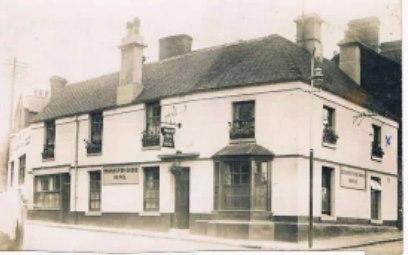
I hadn’t done much research on the Edwards family because my fathers cousin, Paul Weaver, had already done it and had an excellent website online. I decided to start from scratch and do it all myself because it’s so much more interesting to do the research myself than look at lists of names and dates that don’t really mean anything. Immediately after I decided to do this, I found that Paul’s family tree website was no longer online to refer to anyway!
I started with the Edwards family in Birmingham and immediately had a problem: there were far too many John Edwards in Birmingham at the time. I’ll return to the Edwards in a later chapter, and start with my fathers mothers mothers family, the Fishers.
June 6, 2022 at 12:58 pm #6303In reply to: The Elusive Samuel Housley and Other Family Stories
The Hollands of Barton under Needwood
Samuel Warren of Stapenhill married Catherine Holland of Barton under Needwood in 1795.
I joined a Barton under Needwood History group and found an incredible amount of information on the Holland family, but first I wanted to make absolutely sure that our Catherine Holland was one of them as there were also Hollands in Newhall. Not only that, on the marriage licence it says that Catherine Holland was from Bretby Park Gate, Stapenhill.
Then I noticed that one of the witnesses on Samuel’s brother Williams marriage to Ann Holland in 1796 was John Hair. Hannah Hair was the wife of Thomas Holland, and they were the Barton under Needwood parents of Catherine. Catherine was born in 1775, and Ann was born in 1767.
The 1851 census clinched it: Catherine Warren 74 years old, widow and formerly a farmers wife, was living in the household of her son John Warren, and her place of birth is listed as Barton under Needwood. In 1841 Catherine was a 64 year old widow, her husband Samuel having died in 1837, and she was living with her son Samuel, a farmer. The 1841 census did not list place of birth, however. Catherine died on 31 March 1861 and does not appear on the 1861 census.
Once I had established that our Catherine Holland was from Barton under Needwood, I had another look at the information available on the Barton under Needwood History group, compiled by local historian Steve Gardner.
Catherine’s parents were Thomas Holland 1737-1828 and Hannah Hair 1739-1822.
Steve Gardner had posted a long list of the dates, marriages and children of the Holland family. The earliest entries in parish registers were Thomae Holland 1562-1626 and his wife Eunica Edwardes 1565-1632. They married on 10th July 1582. They were born, married and died in Barton under Needwood. They were direct ancestors of Catherine Holland, and as such my direct ancestors too.
The known history of the Holland family in Barton under Needwood goes back to Richard De Holland. (Thanks once again to Steve Gardner of the Barton under Needwood History group for this information.)
“Richard de Holland was the first member of the Holland family to become resident in Barton under Needwood (in about 1312) having been granted lands by the Earl of Lancaster (for whom Richard served as Stud and Stock Keeper of the Peak District) The Holland family stemmed from Upholland in Lancashire and had many family connections working for the Earl of Lancaster, who was one of the biggest Barons in England. Lancaster had his own army and lived at Tutbury Castle, from where he ruled over most of the Midlands area. The Earl of Lancaster was one of the main players in the ‘Barons Rebellion’ and the ensuing Battle of Burton Bridge in 1322. Richard de Holland was very much involved in the proceedings which had so angered Englands King. Holland narrowly escaped with his life, unlike the Earl who was executed.
From the arrival of that first Holland family member, the Hollands were a mainstay family in the community, and were in Barton under Needwood for over 600 years.”Continuing with various items of information regarding the Hollands, thanks to Steve Gardner’s Barton under Needwood history pages:
“PART 6 (Final Part)
Some mentions of The Manor of Barton in the Ancient Staffordshire Rolls:
1330. A Grant was made to Herbert de Ferrars, at le Newland in the Manor of Barton.
1378. The Inquisitio bonorum – Johannis Holand — an interesting Inventory of his goods and their value and his debts.
1380. View of Frankpledge ; the Jury found that Richard Holland was feloniously murdered by his wife Joan and Thomas Graunger, who fled. The goods of the deceased were valued at iiij/. iijj. xid. ; one-third went to the dead man, one-third to his son, one- third to the Lord for the wife’s share. Compare 1 H. V. Indictments. (1413.)
That Thomas Graunger of Barton smyth and Joan the wife of Richard de Holond of Barton on the Feast of St. John the Baptist 10 H. II. (1387) had traitorously killed and murdered at night, at Barton, Richard, the husband of the said Joan. (m. 22.)
The names of various members of the Holland family appear constantly among the listed Jurors on the manorial records printed below : —
1539. Richard Holland and Richard Holland the younger are on the Muster Roll of Barton
1583. Thomas Holland and Unica his wife are living at Barton.
1663-4. Visitations. — Barton under Needword. Disclaimers. William Holland, Senior, William Holland, Junior.
1609. Richard Holland, Clerk and Alice, his wife.
1663-4. Disclaimers at the Visitation. William Holland, Senior, William Holland, Junior.”I was able to find considerably more information on the Hollands in the book “Some Records of the Holland Family (The Hollands of Barton under Needwood, Staffordshire, and the Hollands in History)” by William Richard Holland. Luckily the full text of this book can be found online.
William Richard Holland (Died 1915) An early local Historian and author of the book:
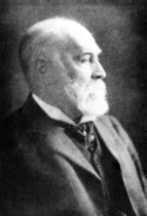
‘Holland House’ taken from the Gardens (sadly demolished in the early 60’s):
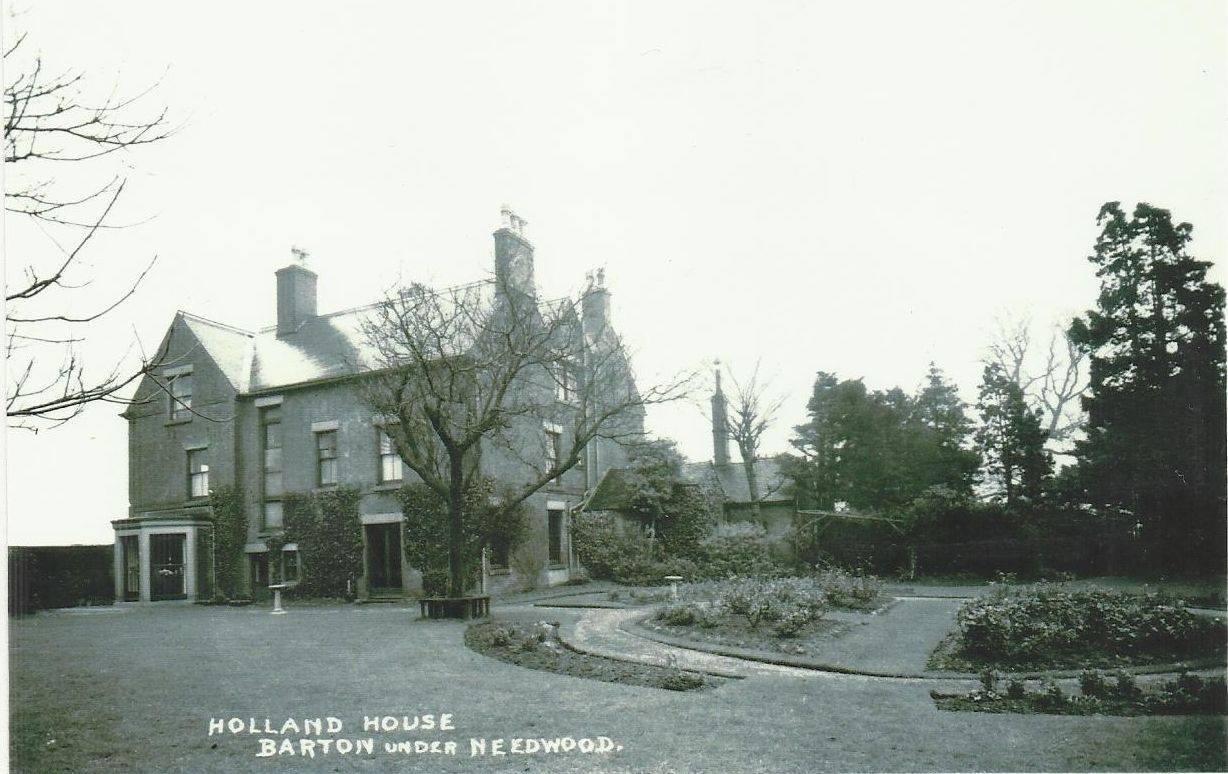
Excerpt from the book:
“The charter, dated 1314, granting Richard rights and privileges in Needwood Forest, reads as follows:
“Thomas Earl of Lancaster and Leicester, high-steward of England, to whom all these present shall come, greeting: Know ye, that we have given, &c., to Richard Holland of Barton, and his heirs, housboot, heyboot, and fireboot, and common of pasture, in our forest of Needwood, for all his beasts, as well in places fenced as lying open, with 40 hogs, quit of pawnage in our said forest at all times in the year (except hogs only in fence month). All which premises we will warrant, &c. to the said Richard and his heirs against all people for ever”
“The terms “housboot” “heyboot” and “fireboot” meant that Richard and his heirs were to have the privilege of taking from the Forest, wood needed for house repair and building, hedging material for the repairing of fences, and what was needful for purposes of fuel.”
Further excerpts from the book:
“It may here be mentioned that during the renovation of Barton Church, when the stone pillars were being stripped of the plaster which covered them, “William Holland 1617” was found roughly carved on a pillar near to the belfry gallery, obviously the work of a not too devout member of the family, who, seated in the gallery of that time, occupied himself thus during the service. The inscription can still be seen.”
“The earliest mention of a Holland of Upholland occurs in the reign of John in a Final Concord, made at the Lancashire Assizes, dated November 5th, 1202, in which Uchtred de Chryche, who seems to have had some right in the manor of Upholland, releases his right in fourteen oxgangs* of land to Matthew de Holland, in consideration of the sum of six marks of silver. Thus was planted the Holland Tree, all the early information of which is found in The Victoria County History of Lancaster.
As time went on, the family acquired more land, and with this, increased position. Thus, in the reign of Edward I, a Robert de Holland, son of Thurstan, son of Robert, became possessed of the manor of Orrell adjoining Upholland and of the lordship of Hale in the parish of Childwall, and, through marriage with Elizabeth de Samlesbury (co-heiress of Sir Wm. de Samlesbury of Samlesbury, Hall, near to Preston), of the moiety of that manor….
* An oxgang signified the amount of land that could be ploughed by one ox in one day”
“This Robert de Holland, son of Thurstan, received Knighthood in the reign of Edward I, as did also his brother William, ancestor of that branch of the family which later migrated to Cheshire. Belonging to this branch are such noteworthy personages as Mrs. Gaskell, the talented authoress, her mother being a Holland of this branch, Sir Henry Holland, Physician to Queen Victoria, and his two sons, the first Viscount Knutsford, and Canon Francis Holland ; Sir Henry’s grandson (the present Lord Knutsford), Canon Scott Holland, etc. Captain Frederick Holland, R.N., late of Ashbourne Hall, Derbyshire, may also be mentioned here.*”
Thanks to the Barton under Needwood history group for the following:
WALES END FARM:
In 1509 it was owned and occupied by Mr Johannes Holland De Wallass end who was a well to do Yeoman Farmer (the origin of the areas name – Wales End). Part of the building dates to 1490 making it probably the oldest building still standing in the Village: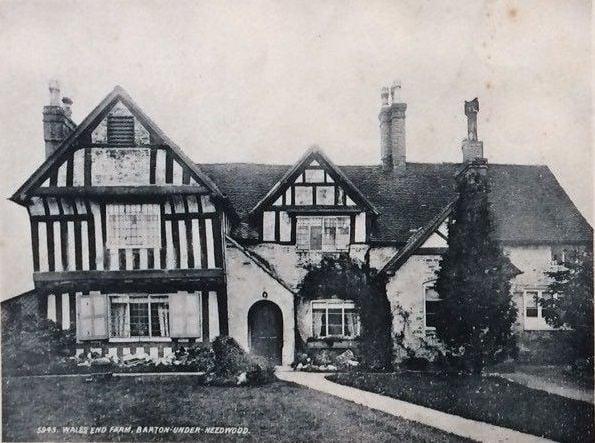
I found records for all of the Holland’s listed on the Barton under Needwood History group and added them to my ancestry tree. The earliest will I found was for Eunica Edwardes, then Eunica Holland, who died in 1632.
A page from the 1632 will and inventory of Eunica (Unice) Holland:
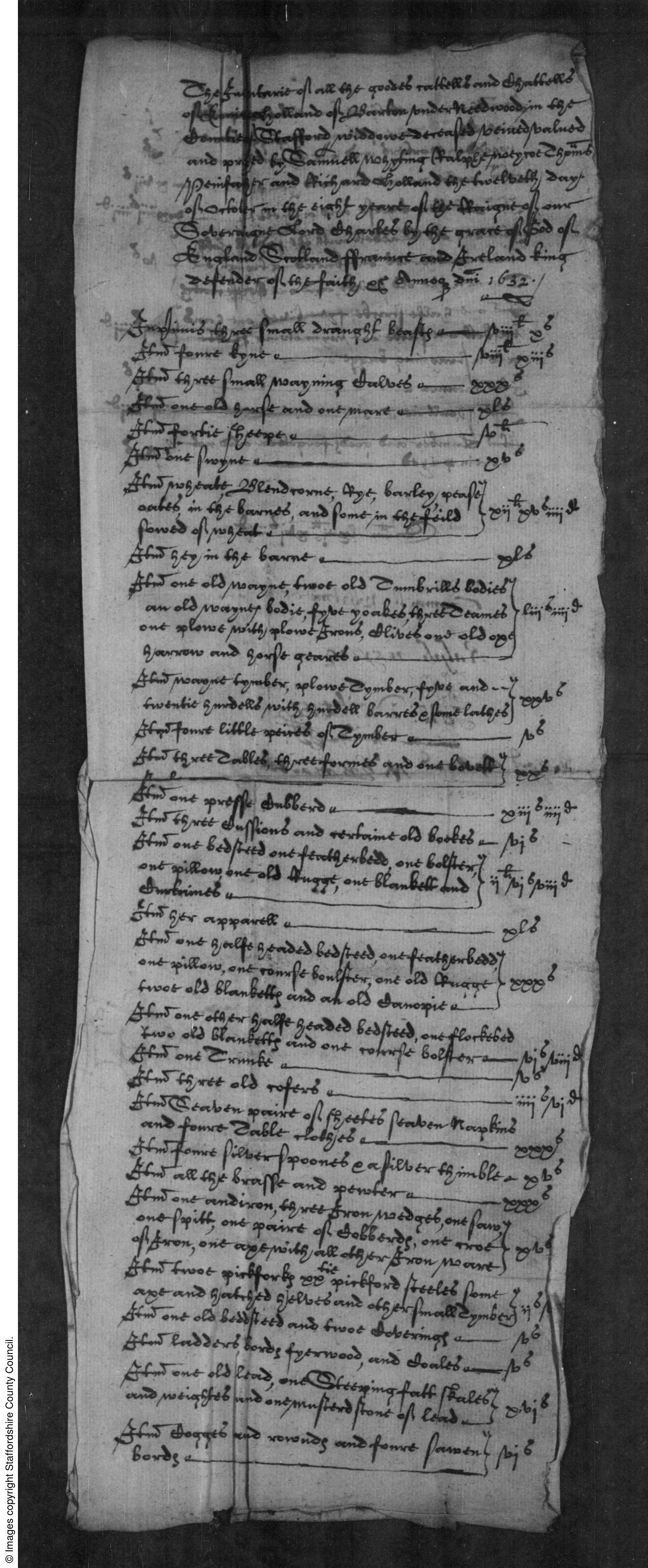
I’d been reading about “pedigree collapse” just before I found out her maiden name of Edwardes. Edwards is my own maiden name.
“In genealogy, pedigree collapse describes how reproduction between two individuals who knowingly or unknowingly share an ancestor causes the family tree of their offspring to be smaller than it would otherwise be.
Without pedigree collapse, a person’s ancestor tree is a binary tree, formed by the person, the parents, grandparents, and so on. However, the number of individuals in such a tree grows exponentially and will eventually become impossibly high. For example, a single individual alive today would, over 30 generations going back to the High Middle Ages, have roughly a billion ancestors, more than the total world population at the time. This apparent paradox occurs because the individuals in the binary tree are not distinct: instead, a single individual may occupy multiple places in the binary tree. This typically happens when the parents of an ancestor are cousins (sometimes unbeknownst to themselves). For example, the offspring of two first cousins has at most only six great-grandparents instead of the normal eight. This reduction in the number of ancestors is pedigree collapse. It collapses the binary tree into a directed acyclic graph with two different, directed paths starting from the ancestor who in the binary tree would occupy two places.” via wikipediaThere is nothing to suggest, however, that Eunica’s family were related to my fathers family, and the only evidence so far in my tree of pedigree collapse are the marriages of Orgill cousins, where two sets of grandparents are repeated.
A list of Holland ancestors:
Catherine Holland 1775-1861
her parents:
Thomas Holland 1737-1828 Hannah Hair 1739-1832
Thomas’s parents:
William Holland 1696-1756 Susannah Whiteing 1715-1752
William’s parents:
William Holland 1665- Elizabeth Higgs 1675-1720
William’s parents:
Thomas Holland 1634-1681 Katherine Owen 1634-1728
Thomas’s parents:
Thomas Holland 1606-1680 Margaret Belcher 1608-1664
Thomas’s parents:
Thomas Holland 1562-1626 Eunice Edwardes 1565- 1632June 6, 2022 at 9:17 am #6301In reply to: The Elusive Samuel Housley and Other Family Stories
The Warrens of Stapenhill
There were so many Warren’s in Stapenhill that it was complicated to work out who was who. I had gone back as far as Samuel Warren marrying Catherine Holland, and this was as far back as my cousin Ian Warren had gone in his research some decades ago as well. The Holland family from Barton under Needwood are particularly interesting, and will be a separate chapter.
Stapenhill village by John Harden:
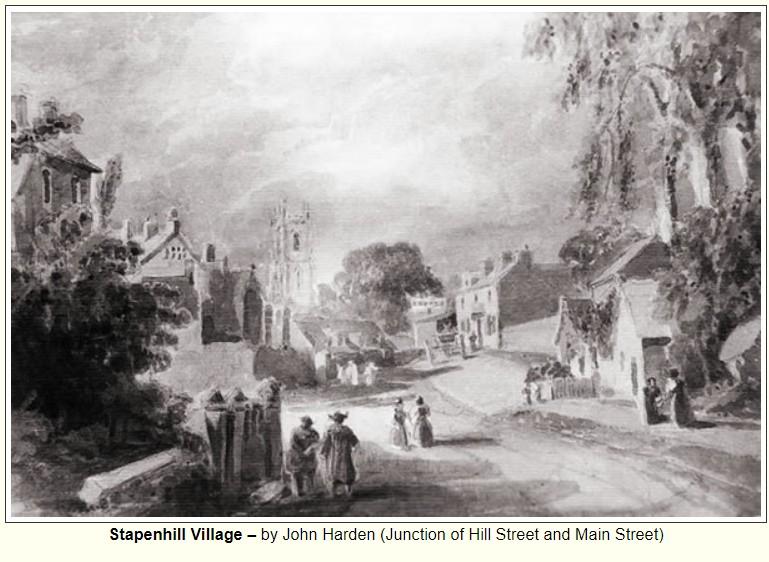
Resuming the research on the Warrens, Samuel Warren 1771-1837 married Catherine Holland 1775-1861 in 1795 and their son Samuel Warren 1800-1882 married Elizabeth Bridge, whose childless brother Benjamin Bridge left the Warren Brothers Boiler Works in Newhall to his nephews, the Warren brothers.
Samuel Warren and Catherine Holland marriage licence 1795:
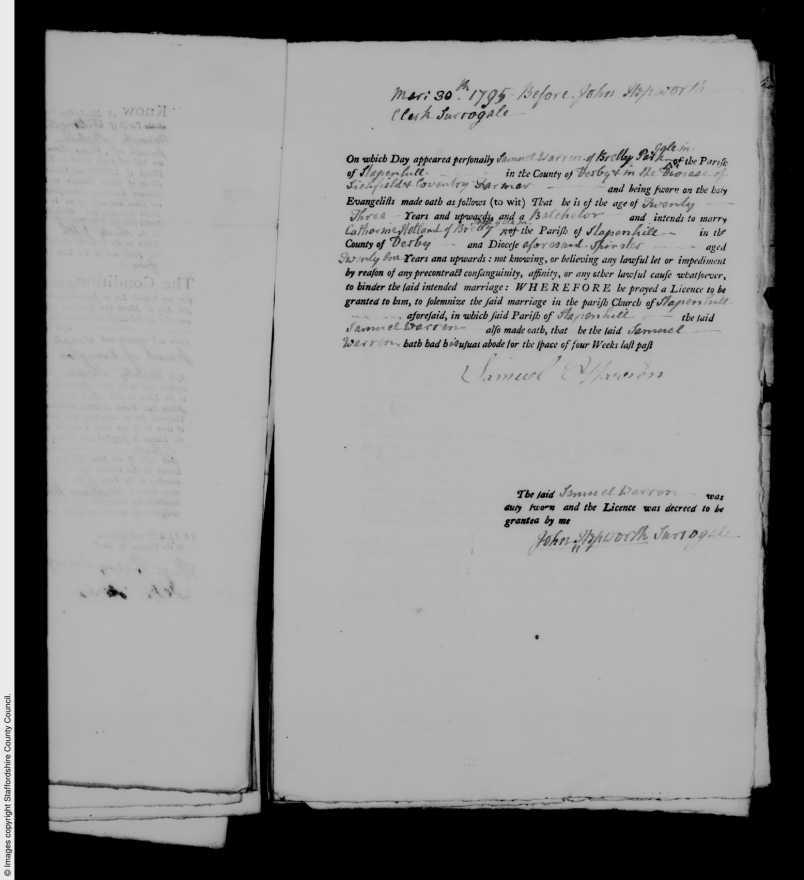
Samuel (born 1771) was baptised at Stapenhill St Peter and his parents were William and Anne Warren. There were at least three William and Ann Warrens in town at the time. One of those William’s was born in 1744, which would seem to be the right age to be Samuel’s father, and one was born in 1710, which seemed a little too old. Another William, Guiliamos Warren (Latin was often used in early parish registers) was baptised in Stapenhill in 1729.
Stapenhill St Peter:
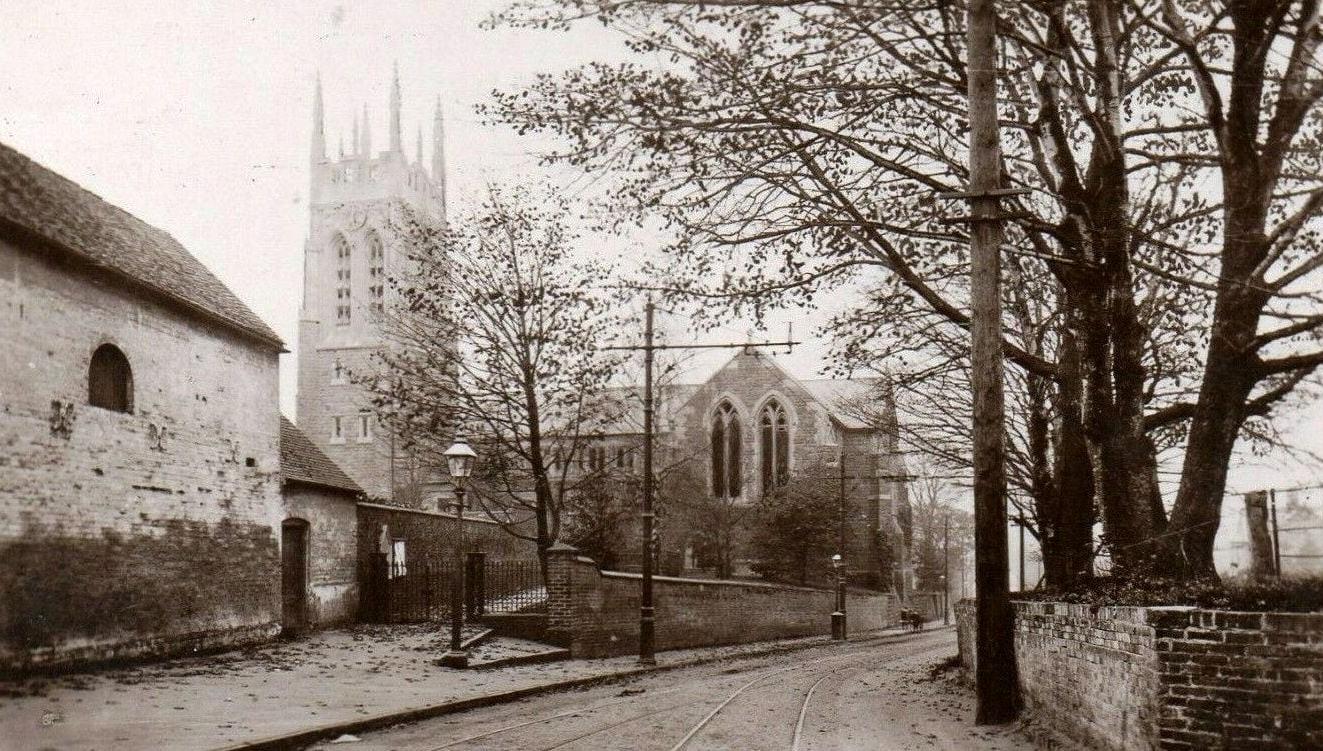
William Warren (born 1744) appeared to have been born several months before his parents wedding. William Warren and Ann Insley married 16 July 1744, but the baptism of William in 1744 was 24 February. This seemed unusual ~ children were often born less than nine months after a wedding, but not usually before the wedding! Then I remembered the change from the Julian calendar to the Gregorian calendar in 1752. Prior to 1752, the first day of the year was Lady Day, March 25th, not January 1st. This meant that the birth in February 1744 was actually after the wedding in July 1744. Now it made sense. The first son was named William, and he was born seven months after the wedding.
William born in 1744 died intestate in 1822, and his wife Ann made a legal claim to his estate. However he didn’t marry Ann Holland (Ann was Catherines Hollands sister, who married Samuel Warren the year before) until 1796, so this William and Ann were not the parents of Samuel.
It seemed likely that William born in 1744 was Samuels brother. William Warren and Ann Insley had at least eight children between 1744 and 1771, and it seems that Samuel was their last child, born when William the elder was 61 and his wife Ann was 47.
It seems it wasn’t unusual for the Warren men to marry rather late in life. William Warren’s (born 1710) parents were William Warren and Elizabeth Hatterton. On the marriage licence in 1702/1703 (it appears to say 1703 but is transcribed as 1702), William was a 40 year old bachelor from Stapenhill, which puts his date of birth at 1662. Elizabeth was considerably younger, aged 19.
William Warren and Elizabeth Hatterton marriage licence 1703:
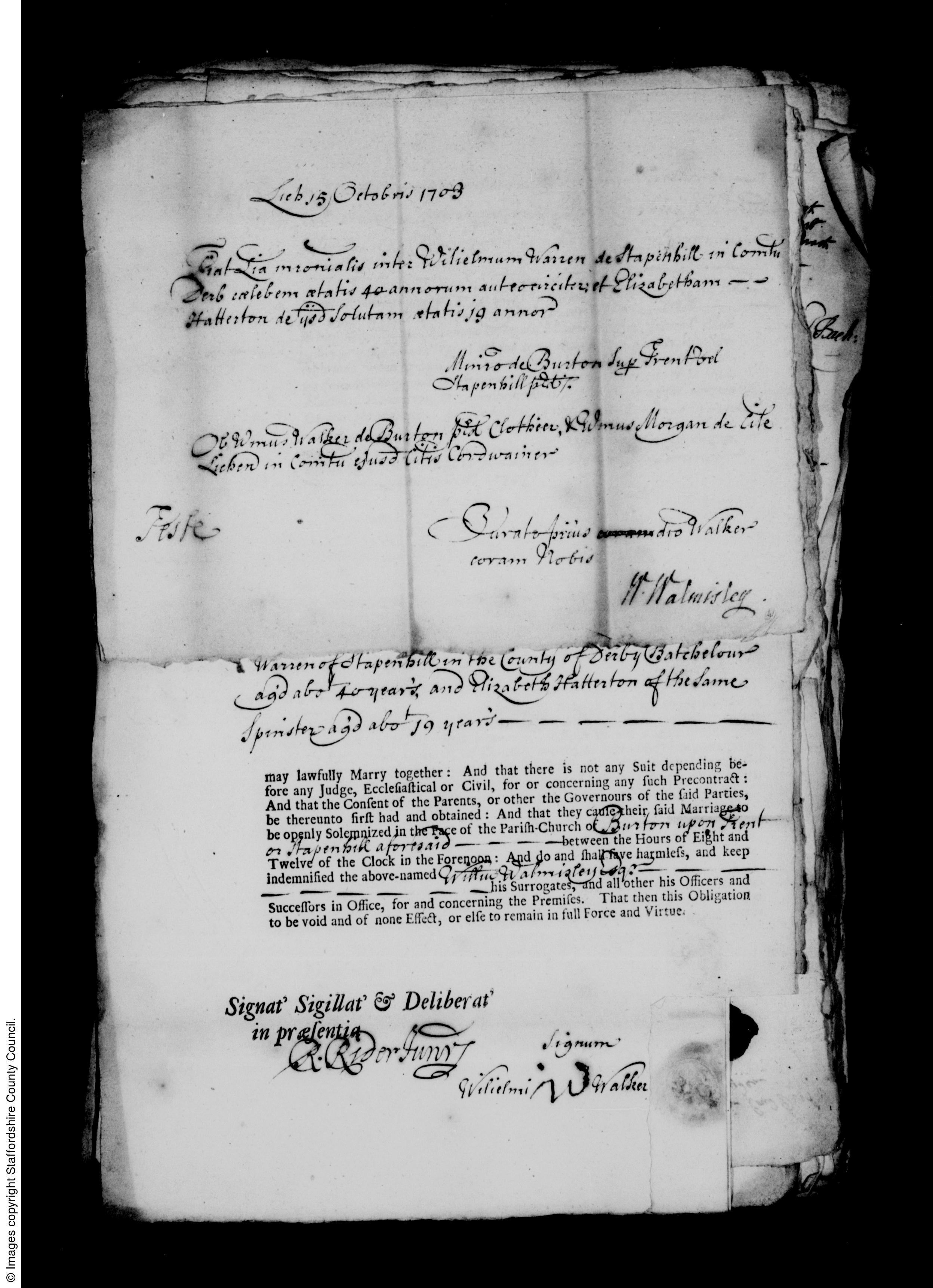
These Warren’s were farmers, and they were literate and able to sign their own names on various documents. This is worth noting, as most made the mark of an X.
I found three Warren and Holland marriages. One was Samuel Warren and Catherine Holland in 1795, then William Warren and Ann Holland in 1796. William Warren and Ann Hollands daughter born in 1799 married John Holland in 1824.
Elizabeth Hatterton (wife of William Warren who was born circa 1662) was born in Burton upon Trent in 1685. Her parents were Edward Hatterton 1655-1722, and Sara.
A page from the 1722 will of Edward Hatterton:
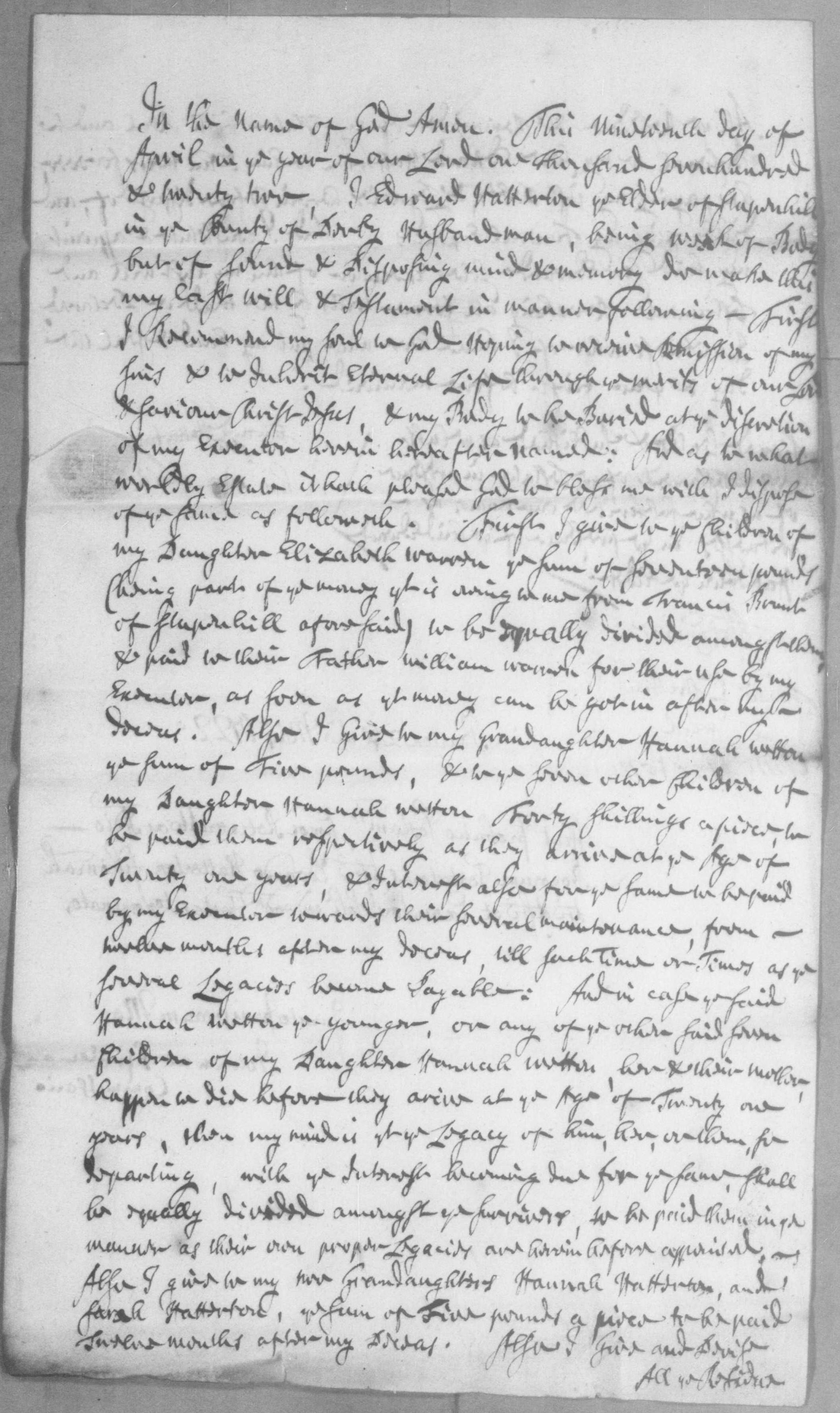
The earliest Warren I found records for was William Warren who married Elizabeth Hatterton in 1703. The marriage licence states his age as 40 and that he was from Stapenhill, but none of the Stapenhill parish records online go back as far as 1662. On other public trees on ancestry websites, a birth record from Suffolk has been chosen, probably because it was the only record to be found online with the right name and date. Once again, I don’t think that is correct, and perhaps one day I’ll find some earlier Stapenhill records to prove that he was born in locally.
Subsequently, I found a list of the 1662 Hearth Tax for Stapenhill. On it were a number of Warrens, three William Warrens including one who was a constable. One of those William Warrens had a son he named William (as they did, hence the number of William Warrens in the tree) the same year as this hearth tax list.
But was it the William Warren with 2 chimneys, the one with one chimney who was too poor to pay it, or the one who was a constable?
from the list:
Will. Warryn 2
Richard Warryn 1
William Warren Constable
These names are not payable by Act:
Will. Warryn 1
Richard Warren John Watson
over seers of the poore and churchwardensThe Hearth Tax:
via wiki:
In England, hearth tax, also known as hearth money, chimney tax, or chimney money, was a tax imposed by Parliament in 1662, to support the Royal Household of King Charles II. Following the Restoration of the monarchy in 1660, Parliament calculated that the Royal Household needed an annual income of £1,200,000. The hearth tax was a supplemental tax to make up the shortfall. It was considered easier to establish the number of hearths than the number of heads, hearths forming a more stationary subject for taxation than people. This form of taxation was new to England, but had precedents abroad. It generated considerable debate, but was supported by the economist Sir William Petty, and carried through the Commons by the influential West Country member Sir Courtenay Pole, 2nd Baronet (whose enemies nicknamed him “Sir Chimney Poll” as a result). The bill received Royal Assent on 19 May 1662, with the first payment due on 29 September 1662, Michaelmas.
One shilling was liable to be paid for every firehearth or stove, in all dwellings, houses, edifices or lodgings, and was payable at Michaelmas, 29 September and on Lady Day, 25 March. The tax thus amounted to two shillings per hearth or stove per year. The original bill contained a practical shortcoming in that it did not distinguish between owners and occupiers and was potentially a major burden on the poor as there were no exemptions. The bill was subsequently amended so that the tax was paid by the occupier. Further amendments introduced a range of exemptions that ensured that a substantial proportion of the poorer people did not have to pay the tax.Indeed it seems clear that William Warren the elder came from Stapenhill and not Suffolk, and one of the William Warrens paying hearth tax in 1662 was undoubtedly the father of William Warren who married Elizabeth Hatterton.
May 27, 2022 at 8:25 am #6300In reply to: The Elusive Samuel Housley and Other Family Stories
Looking for Carringtons
The Carringtons of Smalley, at least some of them, were Baptist ~ otherwise known as “non conformist”. Baptists don’t baptise at birth, believing it’s up to the person to choose when they are of an age to do so, although that appears to be fairly random in practice with small children being baptised. This makes it hard to find the birth dates registered as not every village had a Baptist church, and the baptisms would take place in another town. However some of the children were baptised in the village Anglican church as well, so they don’t seem to have been consistent. Perhaps at times a quick baptism locally for a sickly child was considered prudent, and preferable to no baptism at all. It’s impossible to know for sure and perhaps they were not strictly commited to a particular denomination.
Our Carrington’s start with Ellen Carrington who married William Housley in 1814. William Housley was previously married to Ellen’s older sister Mary Carrington. Ellen (born 1895 and baptised 1897) and her sister Nanny were baptised at nearby Ilkeston Baptist church but I haven’t found baptisms for Mary or siblings Richard and Francis. We know they were also children of William Carrington as he mentions them in his 1834 will. Son William was baptised at the local Smalley church in 1784, as was Thomas in 1896.
The absence of baptisms in Smalley with regard to Baptist influence was noted in the Smalley registers:
Smalley (chapelry of Morley) registers began in 1624, Morley registers began in 1540 with no obvious gaps in either. The gap with the missing registered baptisms would be 1786-1793. The Ilkeston Baptist register began in 1791. Information from the Smalley registers indicates that about a third of the children were not being baptised due to the Baptist influence.
William Housley son in law, daughter Mary Housley deceased, and daughter Eleanor (Ellen) Housley are all mentioned in William Housley’s 1834 will. On the marriage allegations and bonds for William Housley and Mary Carrington in 1806, her birth date is registered at 1787, her father William Carrington.
A Page from the will of William Carrington 1834:
William Carrington was baptised in nearby Horsley Woodhouse on 27 August 1758. His parents were William and Margaret Carrington “near the Hilltop”. He married Mary Malkin, also of Smalley, on the 27th August 1783.
When I started looking for Margaret Wright who married William Carrington the elder, I chanced upon the Smalley parish register micro fiche images wrongly labeled by the ancestry site as Longford. I subsequently found that the Derby Records office published a list of all the wrongly labeled Derbyshire towns that the ancestry site knew about for ten years at least but has not corrected!
Margaret Wright was baptised in Smalley (mislabeled as Longford although the register images clearly say Smalley!) on the 2nd March 1728. Her parents were John and Margaret Wright.
But I couldn’t find a birth or baptism anywhere for William Carrington. I found four sources for William and Margaret’s marriage and none of them suggested that William wasn’t local. On other public trees on ancestry sites, William’s father was Joshua Carrington from Chinley. Indeed, when doing a search for William Carrington born circa 1720 to 1725, this was the only one in Derbyshire. But why would a teenager move to the other side of the county? It wasn’t uncommon to be apprenticed in neighbouring villages or towns, but Chinley didn’t seem right to me. It seemed to me that it had been selected on the other trees because it was the only easily found result for the search, and not because it was the right one.
I spent days reading every page of the microfiche images of the parish registers locally looking for Carringtons, any Carringtons at all in the area prior to 1720. Had there been none at all, then the possibility of William being the first Carrington in the area having moved there from elsewhere would have been more reasonable.
But there were many Carringtons in Heanor, a mile or so from Smalley, in the 1600s and early 1700s, although they were often spelled Carenton, sometimes Carrianton in the parish registers. The earliest Carrington I found in the area was Alice Carrington baptised in Ilkeston in 1602. It seemed obvious that William’s parents were local and not from Chinley.
The Heanor parish registers of the time were not very clearly written. The handwriting was bad and the spelling variable, depending I suppose on what the name sounded like to the person writing in the registers at the time as the majority of the people were probably illiterate. The registers are also in a generally poor condition.
I found a burial of a child called William on the 16th January 1721, whose father was William Carenton of “Losko” (Loscoe is a nearby village also part of Heanor at that time). This looked promising! If a child died, a later born child would be given the same name. This was very common: in a couple of cases I’ve found three deceased infants with the same first name until a fourth one named the same survived. It seemed very likely that a subsequent son would be named William and he would be the William Carrington born circa 1720 to 1725 that we were looking for.
Heanor parish registers: William son of William Carenton of Losko buried January 19th 1721:
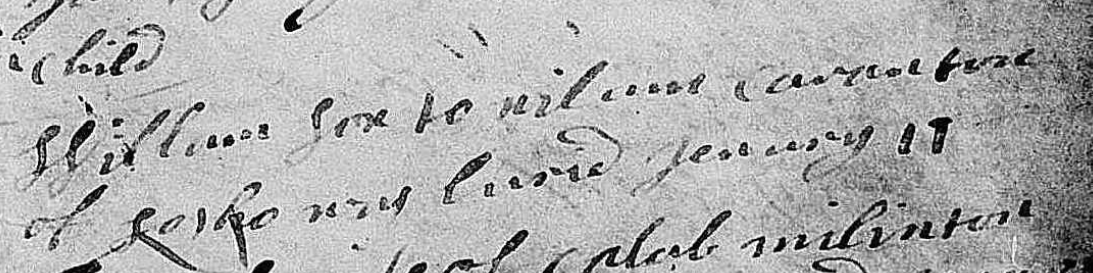
The Heanor parish registers between 1720 and 1729 are in many places illegible, however there are a couple of possibilities that could be the baptism of William in 1724 and 1725. A William son of William Carenton of Loscoe was buried in Jan 1721. In 1722 a Willian son of William Carenton (transcribed Tarenton) of Loscoe was buried. A subsequent son called William is likely. On 15 Oct 1724 a William son of William and Eliz (last name indecipherable) of Loscoe was baptised. A Mary, daughter of William Carrianton of Loscoe, was baptised in 1727.
I propose that William Carringtons was born in Loscoe and baptised in Heanor in 1724: if not 1724 then I would assume his baptism is one of the illegible or indecipherable entires within those few years. This falls short of absolute documented proof of course, but it makes sense to me.
In any case, if a William Carrington child died in Heanor in 1721 which we do have documented proof of, it further dismisses the case for William having arrived for no discernable reason from Chinley.
May 3, 2022 at 4:40 pm #6291In reply to: The Elusive Samuel Housley and Other Family Stories
Jane Eaton
The Nottingham Girl
Jane Eaton 1809-1879
Francis Purdy, the Beggarlea Bulldog and Methodist Minister, married Jane Eaton in 1837 in Nottingham. Jane was his second wife.
Jane Eaton, photo says “Grandma Purdy” on the back:
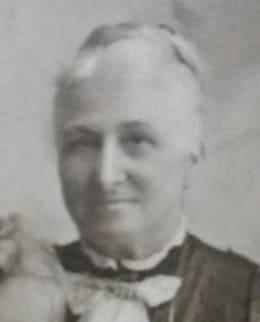
Jane is described as a “Nottingham girl” in a book excerpt sent to me by Jim Giles, a relation who shares the same 3x great grandparents, Francis and Jane Purdy.
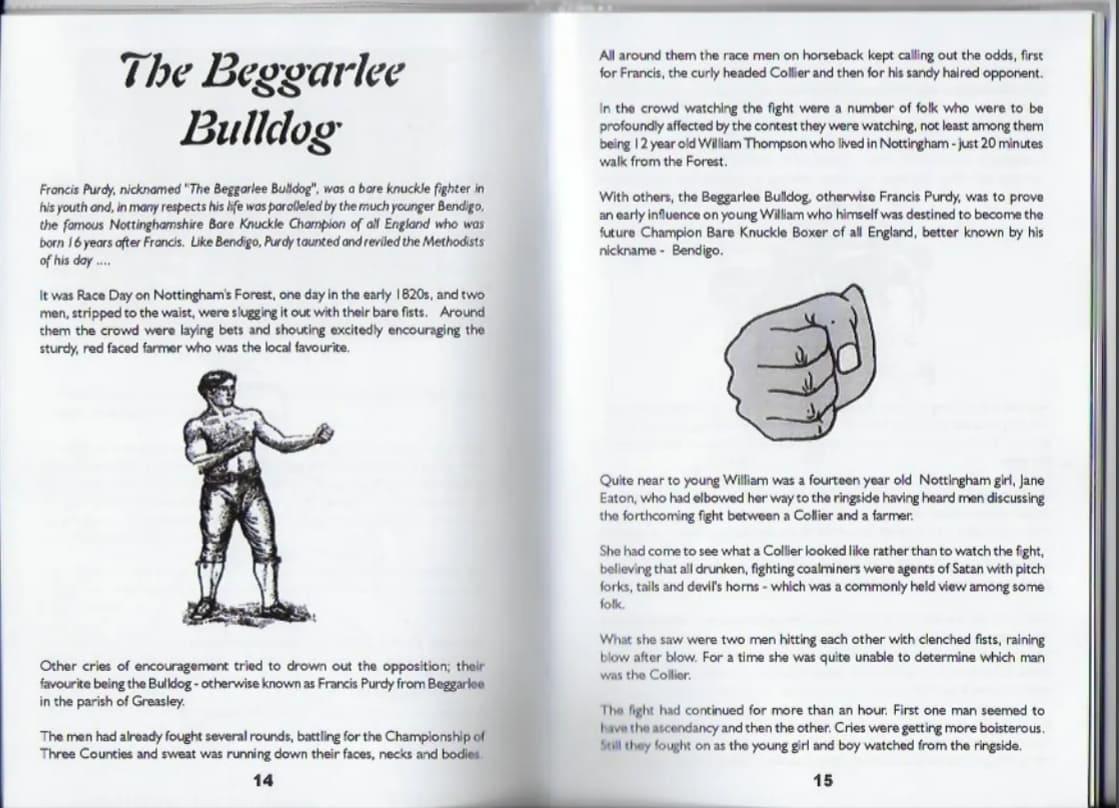
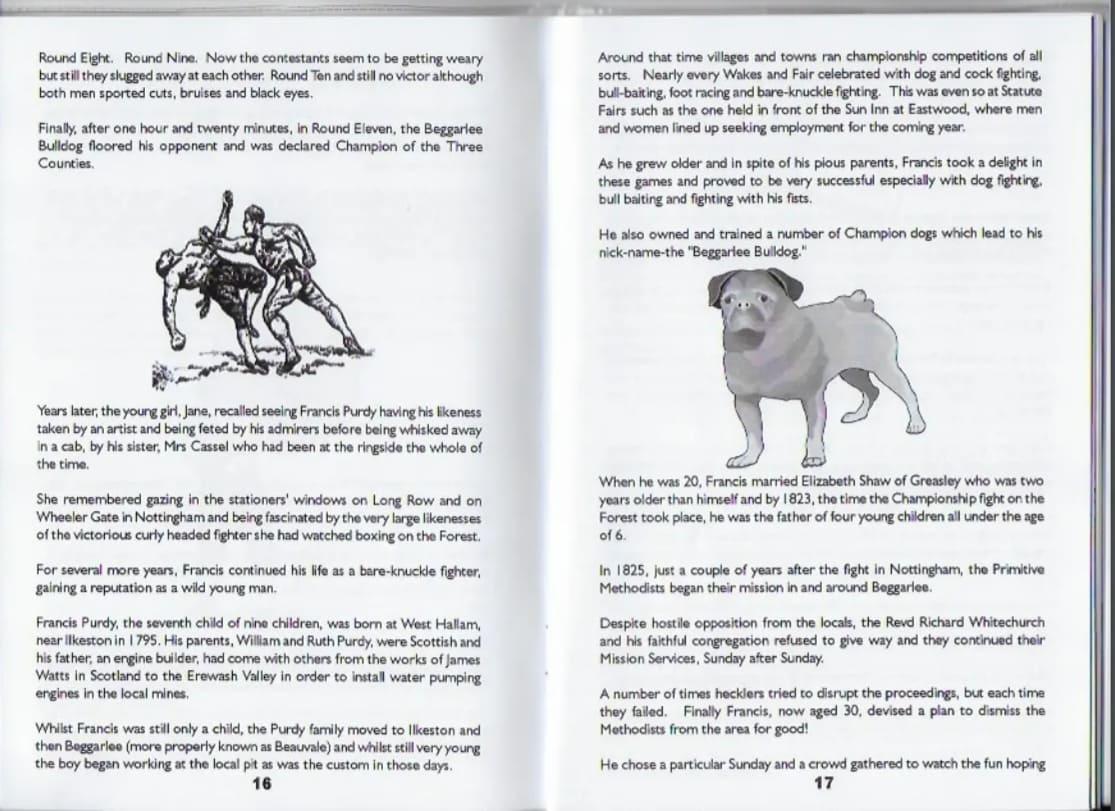
Elizabeth, Francis Purdy’s first wife, died suddenly at chapel in 1836, leaving nine children.
On Christmas day the following year Francis married Jane Eaton at St Peters church in Nottingham. Jane married a Methodist Minister, and didn’t realize she married the bare knuckle fighter she’d seen when she was fourteen until he undressed and she saw his scars.
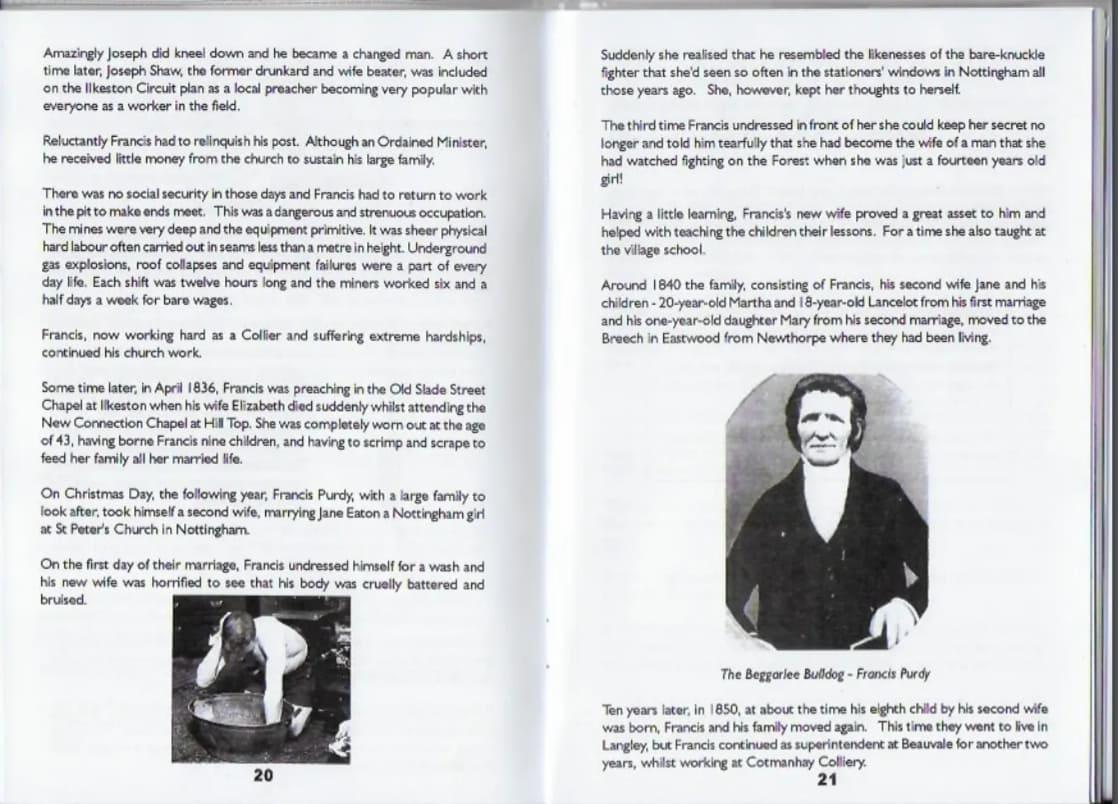
William Eaton 1767-1851
On the marriage certificate Jane’s father was William Eaton, occupation gardener. Francis’s father was William Purdy, engineer.
On the 1841 census living in Sollory’s Yard, Nottingham St Mary, William Eaton was a 70 year old gardener. It doesn’t say which county he was born in but indicates that it was not Nottinghamshire. Living with him were Mary Eaton, milliner, age 35, Mary Eaton, milliner, 15, and Elizabeth Rhodes age 35, a sempstress (another word for seamstress). The three women were born in Nottinghamshire.
But who was Elizabeth Rhodes?
Elizabeth Eaton was Jane’s older sister, born in 1797 in Nottingham. She married William Rhodes, a private in the 5th Dragoon Guards, in Leeds in October 1815.
I looked for Elizabeth Rhodes on the 1851 census, which stated that she was a widow. I was also trying to determine which William Eaton death was the right one, and found William Eaton was still living with Elizabeth in 1851 at Pilcher Gate in Nottingham, but his name had been entered backwards: Eaton William. I would not have found him on the 1851 census had I searched for Eaton as a last name.
Pilcher Gate gets its strange name from pilchers or fur dealers and was once a very narrow thoroughfare. At the lower end stood a pub called The Windmill – frequented by the notorious robber and murderer Charlie Peace.
This was a lucky find indeed, because William’s place of birth was listed as Grantham, Lincolnshire. There were a couple of other William Eaton’s born at the same time, both near to Nottingham. It was tricky to work out which was the right one, but as it turned out, neither of them were.
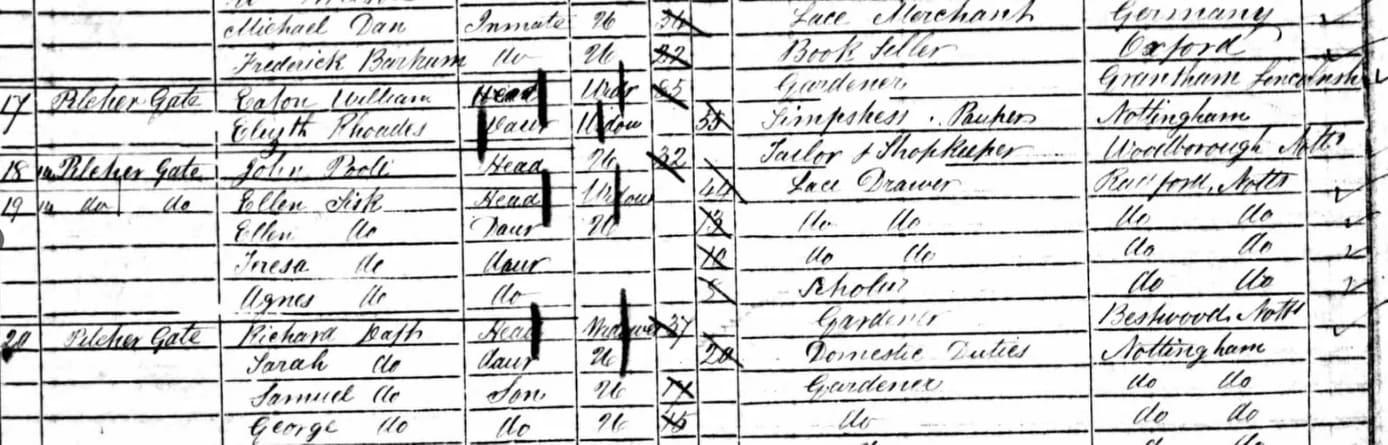
Now we had Nottinghamshire and Lincolnshire border straddlers, so the search moved to the Lincolnshire records.
But first, what of the two Mary Eatons living with William?William and his wife Mary had a daughter Mary in 1799 who died in 1801, and another daughter Mary Ann born in 1803. (It was common to name children after a previous infant who had died.) It seems that Mary Ann didn’t marry but had a daughter Mary Eaton born in 1822.
William and his wife Mary also had a son Richard Eaton born in 1801 in Nottingham.
Who was William Eaton’s wife Mary?
There are two possibilities: Mary Cresswell and a marriage in Nottingham in 1797, or Mary Dewey and a marriage at Grantham in 1795. If it’s Mary Cresswell, the first child Elizabeth would have been born just four or five months after the wedding. (This was far from unusual). However, no births in Grantham, or in Nottingham, were recorded for William and Mary in between 1795 and 1797.
We don’t know why William moved from Grantham to Nottingham or when he moved there. According to Dearden’s 1834 Nottingham directory, William Eaton was a “Gardener and Seedsman”.
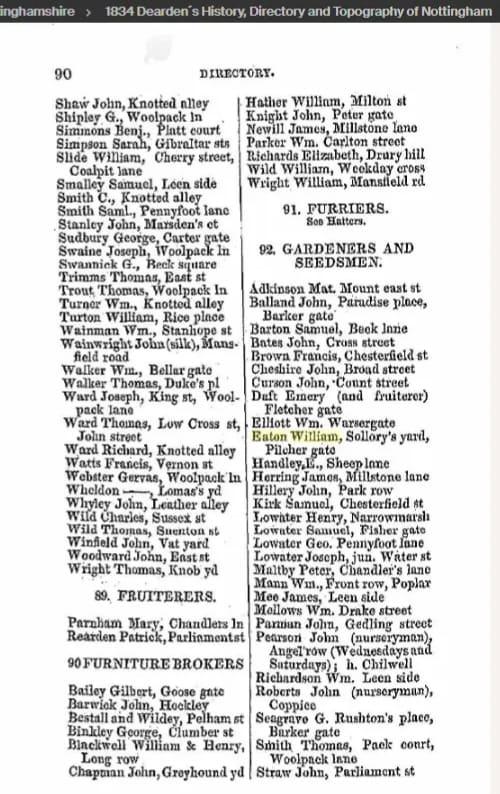
There was another William Eaton selling turnip seeds in the same part of Nottingham. At first I thought it must be the same William, but apparently not, as that William Eaton is recorded as a victualler, born in Ruddington. The turnip seeds were advertised in 1847 as being obtainable from William Eaton at the Reindeer Inn, Wheeler Gate. Perhaps he was related.
William lived in the Lace Market part of Nottingham. I wondered where a gardener would be working in that part of the city. According to CreativeQuarter website, “in addition to the trades and housing (sometimes under the same roof), there were a number of splendid mansions being built with extensive gardens and orchards. Sadly, these no longer exist as they were gradually demolished to make way for commerce…..The area around St Mary’s continued to develop as an elegant residential district during the seventeenth and eighteenth centuries, with buildings … being built for nobility and rich merchants.”
William Eaton died in Nottingham in September 1851, thankfully after the census was taken recording his place of birth.
April 12, 2022 at 8:13 am #6290In reply to: The Elusive Samuel Housley and Other Family Stories
Leicestershire Blacksmiths
The Orgill’s of Measham led me further into Leicestershire as I traveled back in time.
I also realized I had uncovered a direct line of women and their mothers going back ten generations:
myself, Tracy Edwards 1957-
my mother Gillian Marshall 1933-
my grandmother Florence Warren 1906-1988
her mother and my great grandmother Florence Gretton 1881-1927
her mother Sarah Orgill 1840-1910
her mother Elizabeth Orgill 1803-1876
her mother Sarah Boss 1783-1847
her mother Elizabeth Page 1749-
her mother Mary Potter 1719-1780
and her mother and my 7x great grandmother Mary 1680-You could say it leads us to the very heart of England, as these Leicestershire villages are as far from the coast as it’s possible to be. There are countless other maternal lines to follow, of course, but only one of mothers of mothers, and ours takes us to Leicestershire.
The blacksmiths
Sarah Boss was the daughter of Michael Boss 1755-1807, a blacksmith in Measham, and Elizabeth Page of nearby Hartshorn, just over the county border in Derbyshire.
An earlier Michael Boss, a blacksmith of Measham, died in 1772, and in his will he left the possession of the blacksmiths shop and all the working tools and a third of the household furniture to Michael, who he named as his nephew. He left his house in Appleby Magna to his wife Grace, and five pounds to his mother Jane Boss. As none of Michael and Grace’s children are mentioned in the will, perhaps it can be assumed that they were childless.
The will of Michael Boss, 1772, Measham:
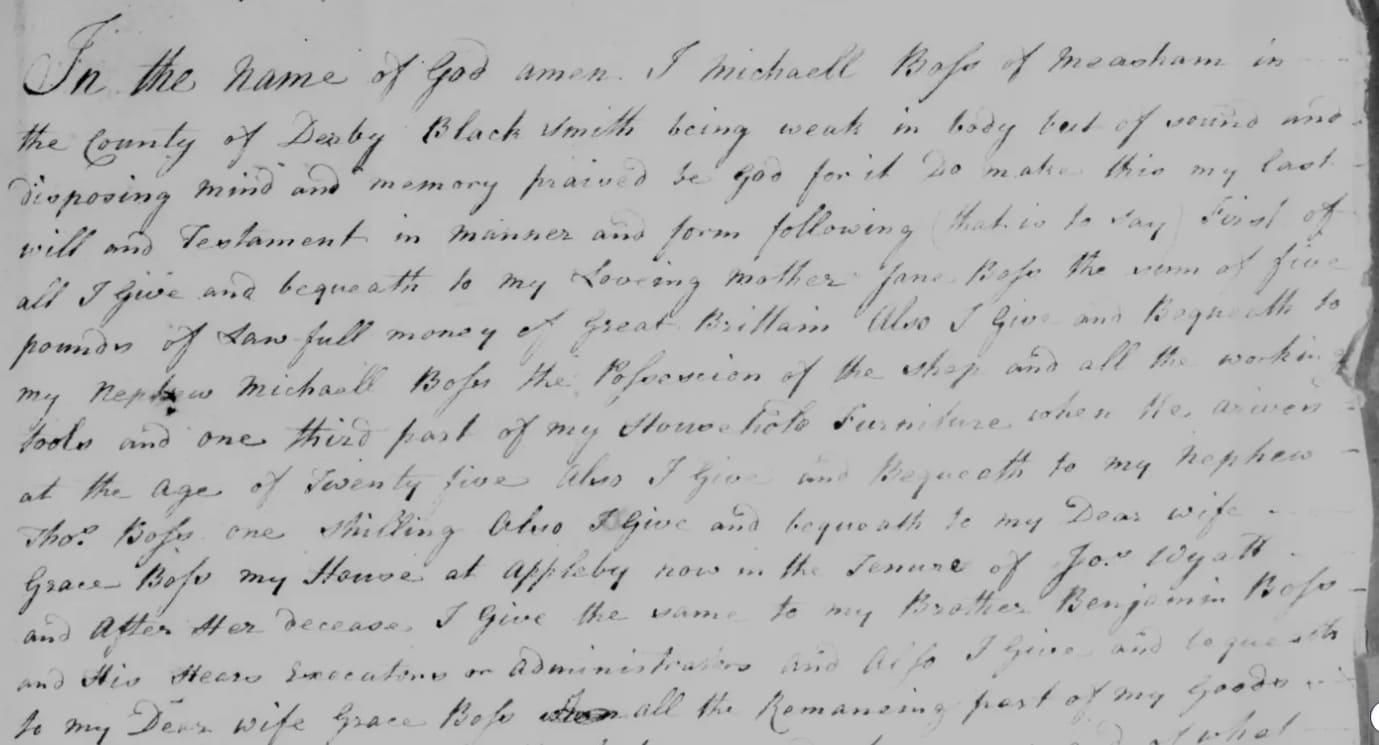
Michael Boss the uncle was born in Appleby Magna in 1724. His parents were Michael Boss of Nelson in the Thistles and Jane Peircivall of Appleby Magna, who were married in nearby Mancetter in 1720.
Information worth noting on the Appleby Magna website:
In 1752 the calendar in England was changed from the Julian Calendar to the Gregorian Calendar, as a result 11 days were famously “lost”. But for the recording of Church Registers another very significant change also took place, the start of the year was moved from March 25th to our more familiar January 1st.
Before 1752 the 1st day of each new year was March 25th, Lady Day (a significant date in the Christian calendar). The year number which we all now use for calculating ages didn’t change until March 25th. So, for example, the day after March 24th 1750 was March 25th 1751, and January 1743 followed December 1743.
This March to March recording can be seen very clearly in the Appleby Registers before 1752. Between 1752 and 1768 there appears slightly confused recording, so dates should be carefully checked. After 1768 the recording is more fully by the modern calendar year.Michael Boss the uncle married Grace Cuthbert. I haven’t yet found the birth or parents of Grace, but a blacksmith by the name of Edward Cuthbert is mentioned on an Appleby Magna history website:
An Eighteenth Century Blacksmith’s Shop in Little Appleby
by Alan RobertsCuthberts inventory
The inventory of Edward Cuthbert provides interesting information about the household possessions and living arrangements of an eighteenth century blacksmith. Edward Cuthbert (als. Cutboard) settled in Appleby after the Restoration to join the handful of blacksmiths already established in the parish, including the Wathews who were prominent horse traders. The blacksmiths may have all worked together in the same shop at one time. Edward and his wife Sarah recorded the baptisms of several of their children in the parish register. Somewhat sadly three of the boys named after their father all died either in infancy or as young children. Edward’s inventory which was drawn up in 1732, by which time he was probably a widower and his children had left home, suggests that they once occupied a comfortable two-storey house in Little Appleby with an attached workshop, well equipped with all the tools for repairing farm carts, ploughs and other implements, for shoeing horses and for general ironmongery.
Edward Cuthbert born circa 1660, married Joane Tuvenet in 1684 in Swepston cum Snarestone , and died in Appleby in 1732. Tuvenet is a French name and suggests a Huguenot connection, but this isn’t our family, and indeed this Edward Cuthbert is not likely to be Grace’s father anyway.
Michael Boss and Elizabeth Page appear to have married twice: once in 1776, and once in 1779. Both of the documents exist and appear correct. Both marriages were by licence. They both mention Michael is a blacksmith.
Their first daughter, Elizabeth, was baptized in February 1777, just nine months after the first wedding. It’s not known when she was born, however, and it’s possible that the marriage was a hasty one. But why marry again three years later?
But Michael Boss and Elizabeth Page did not marry twice.
Elizabeth Page from Smisby was born in 1752 and married Michael Boss on the 5th of May 1776 in Measham. On the marriage licence allegations and bonds, Michael is a bachelor.
Baby Elizabeth was baptised in Measham on the 9th February 1777. Mother Elizabeth died on the 18th February 1777, also in Measham.
In 1779 Michael Boss married another Elizabeth Page! She was born in 1749 in Hartshorn, and Michael is a widower on the marriage licence allegations and bonds.
Hartshorn and Smisby are neighbouring villages, hence the confusion. But a closer look at the documents available revealed the clues. Both Elizabeth Pages were literate, and indeed their signatures on the marriage registers are different:
Marriage of Michael Boss and Elizabeth Page of Smisby in 1776:
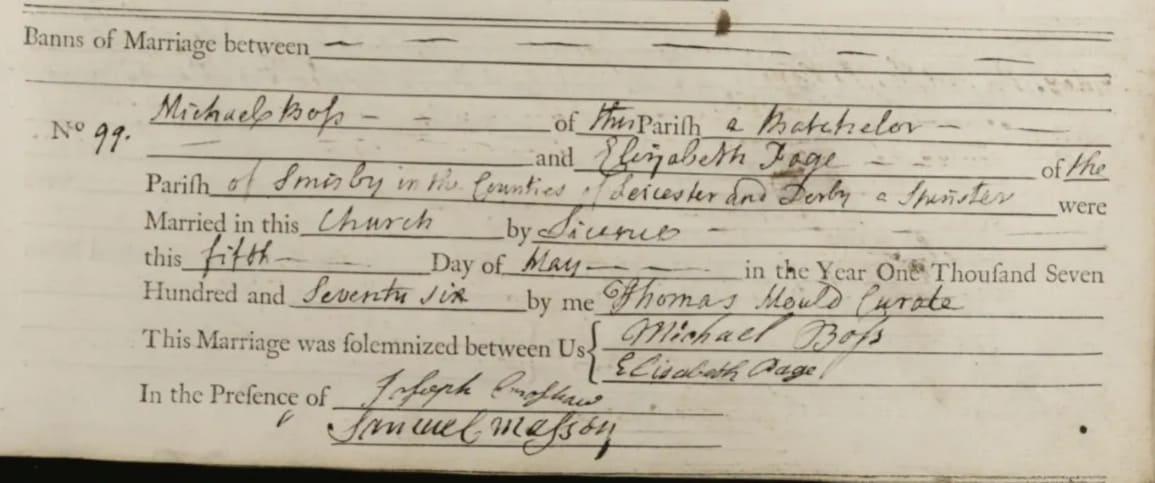
Marriage of Michael Boss and Elizabeth Page of Harsthorn in 1779:
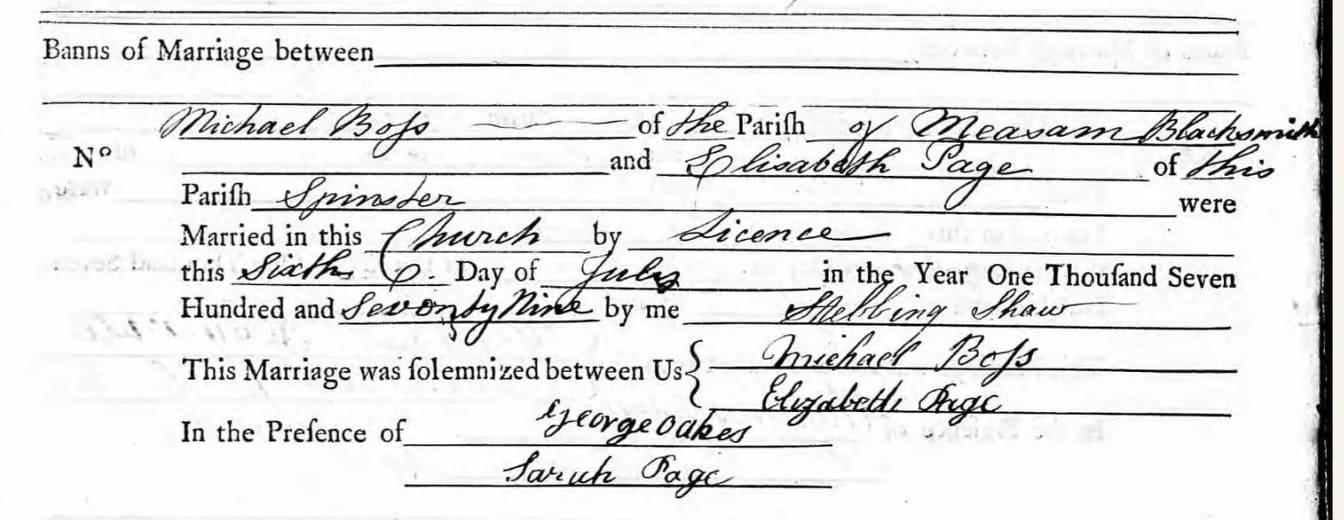
Not only did Michael Boss marry two women both called Elizabeth Page but he had an unusual start in life as well. His uncle Michael Boss left him the blacksmith business and a third of his furniture. This was all in the will. But which of Uncle Michaels brothers was nephew Michaels father?
The only Michael Boss born at the right time was in 1750 in Edingale, Staffordshire, about eight miles from Appleby Magna. His parents were Thomas Boss and Ann Parker, married in Edingale in 1747. Thomas died in August 1750, and his son Michael was baptised in the December, posthumus son of Thomas and his widow Ann. Both entries are on the same page of the register.
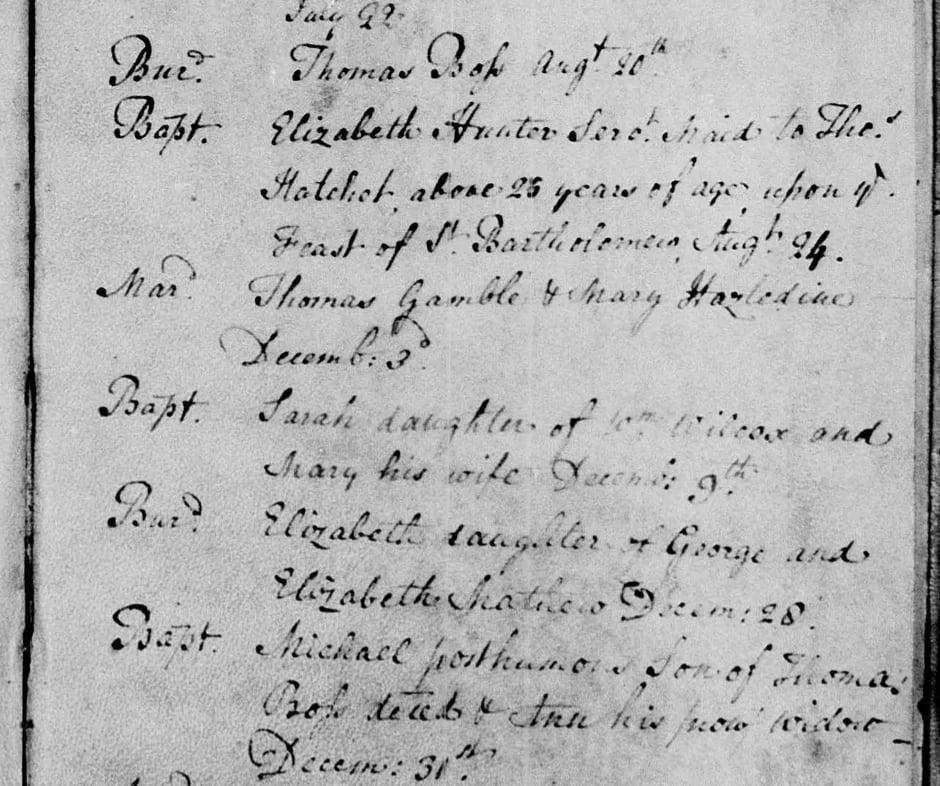
Ann Boss, the young widow, married again. But perhaps Michael and his brother went to live with their childless uncle and aunt, Michael Boss and Grace Cuthbert.
The great grandfather of Michael Boss (the Measham blacksmith born in 1850) was also Michael Boss, probably born in the 1660s. He died in Newton Regis in Warwickshire in 1724, four years after his son (also Michael Boss born 1693) married Jane Peircivall. The entry on the parish register states that Michael Boss was buried ye 13th Affadavit made.
I had not seen affadavit made on a parish register before, and this relates to the The Burying in Woollen Acts 1666–80. According to Wikipedia:
“Acts of the Parliament of England which required the dead, except plague victims and the destitute, to be buried in pure English woollen shrouds to the exclusion of any foreign textiles. It was a requirement that an affidavit be sworn in front of a Justice of the Peace (usually by a relative of the deceased), confirming burial in wool, with the punishment of a £5 fee for noncompliance. Burial entries in parish registers were marked with the word “affidavit” or its equivalent to confirm that affidavit had been sworn; it would be marked “naked” for those too poor to afford the woollen shroud. The legislation was in force until 1814, but was generally ignored after 1770.”
Michael Boss buried 1724 “Affadavit made”:
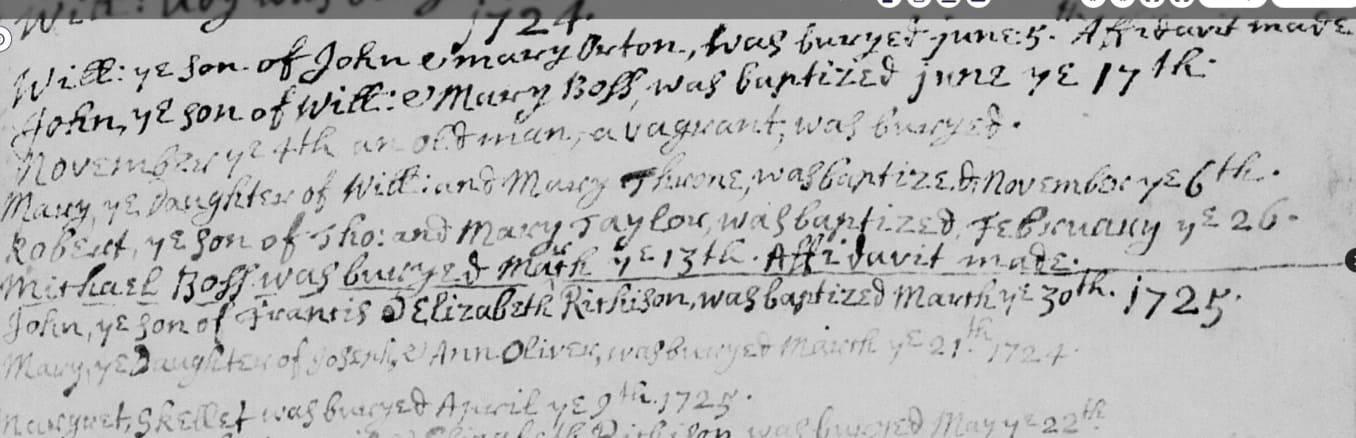
Elizabeth Page‘s father was William Page 1717-1783, a wheelwright in Hartshorn. (The father of the first wife Elizabeth was also William Page, but he was a husbandman in Smisby born in 1714. William Page, the father of the second wife, was born in Nailstone, Leicestershire, in 1717. His place of residence on his marriage to Mary Potter was spelled Nelson.)
Her mother was Mary Potter 1719- of nearby Coleorton. Mary’s father, Richard Potter 1677-1731, was a blacksmith in Coleorton.
A page of the will of Richard Potter 1731:
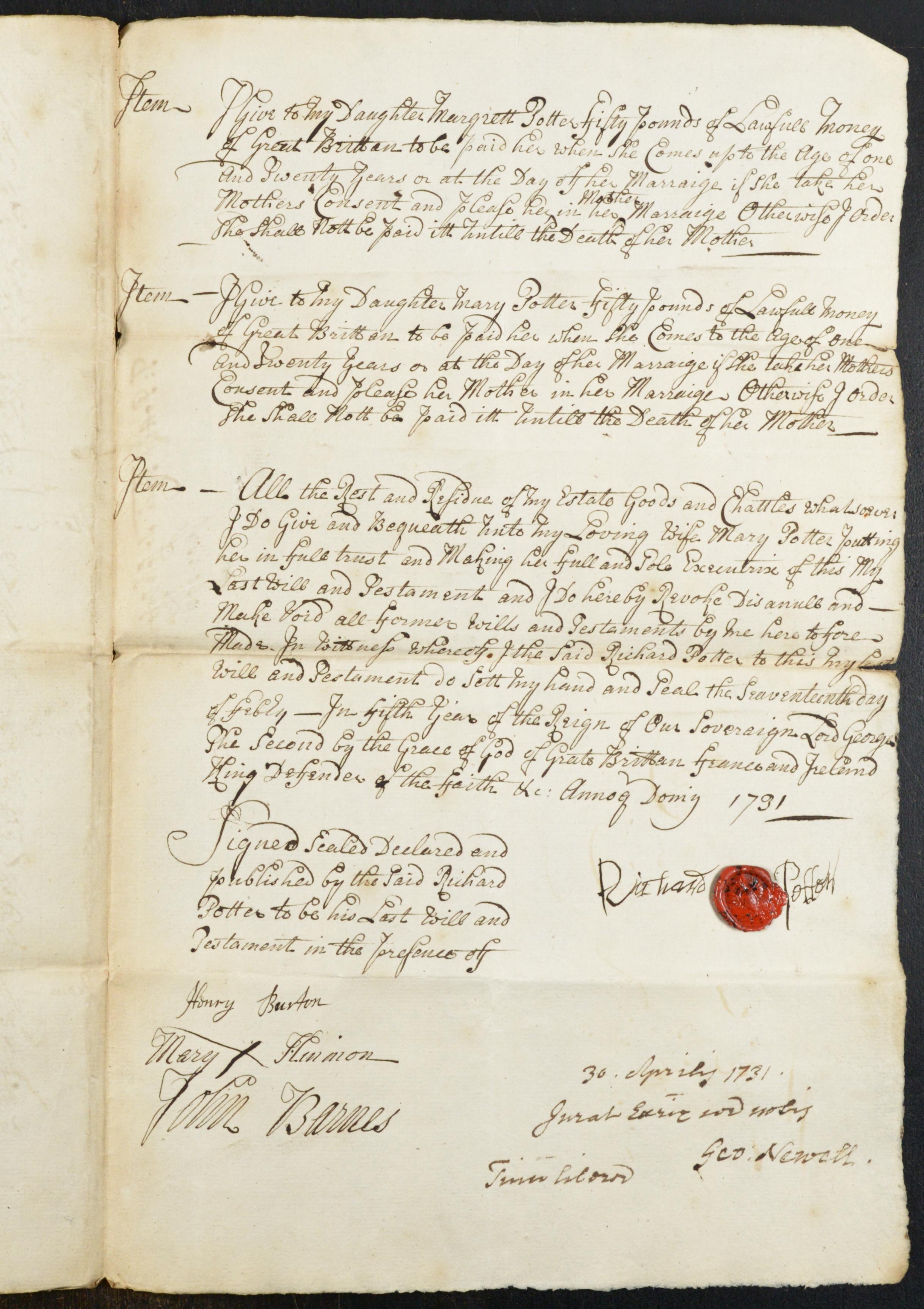
Richard Potter states: “I will and order that my son Thomas Potter shall after my decease have one shilling paid to him and no more.” As he left £50 to each of his daughters, one can’t help but wonder what Thomas did to displease his father.
Richard stipulated that his son Thomas should have one shilling paid to him and not more, for several good considerations, and left “the house and ground lying in the parish of Whittwick in a place called the Long Lane to my wife Mary Potter to dispose of as she shall think proper.”
His son Richard inherited the blacksmith business: “I will and order that my son Richard Potter shall live and be with his mother and serve her duly and truly in the business of a blacksmith, and obey and serve her in all lawful commands six years after my decease, and then I give to him and his heirs…. my house and grounds Coulson House in the Liberty of Thringstone”
Richard wanted his son John to be a blacksmith too: “I will and order that my wife bring up my son John Potter at home with her and teach or cause him to be taught the trade of a blacksmith and that he shall serve her duly and truly seven years after my decease after the manner of an apprentice and at the death of his mother I give him that house and shop and building and the ground belonging to it which I now dwell in to him and his heirs forever.”
To his daughters Margrett and Mary Potter, upon their reaching the age of one and twenty, or the day after their marriage, he leaves £50 each. All the rest of his goods are left to his loving wife Mary.
An inventory of the belongings of Richard Potter, 1731:
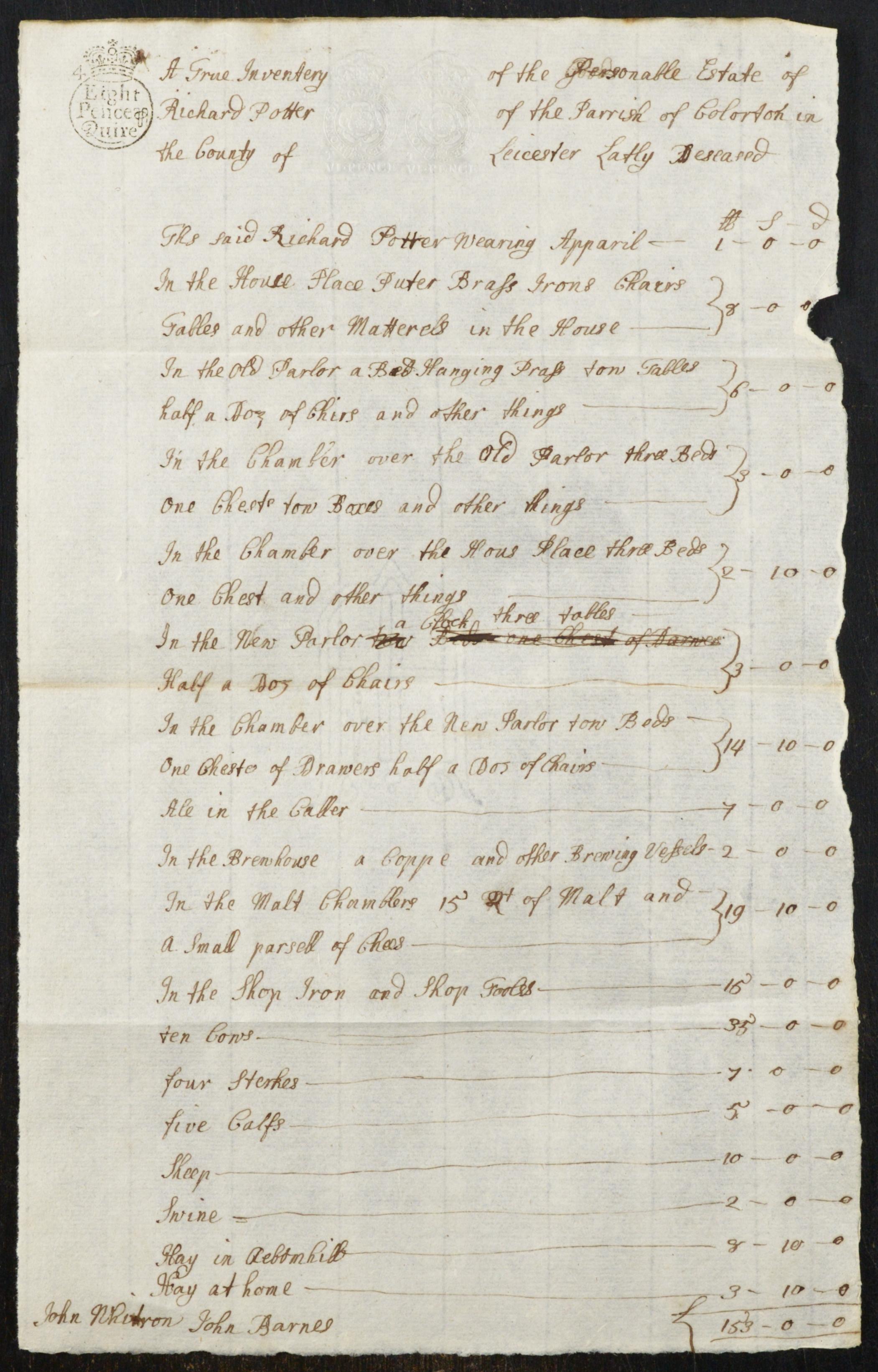
Richard Potters father was also named Richard Potter 1649-1719, and he too was a blacksmith.
Richard Potter of Coleorton in the county of Leicester, blacksmith, stated in his will: “I give to my son and daughter Thomas and Sarah Potter the possession of my house and grounds.”
He leaves ten pounds each to his daughters Jane and Alice, to his son Francis he gives five pounds, and five shillings to his son Richard. Sons Joseph and William also receive five shillings each. To his daughter Mary, wife of Edward Burton, and her daughter Elizabeth, he gives five shillings each. The rest of his good, chattels and wordly substance he leaves equally between his son and daugter Thomas and Sarah. As there is no mention of his wife, it’s assumed that she predeceased him.
The will of Richard Potter, 1719:
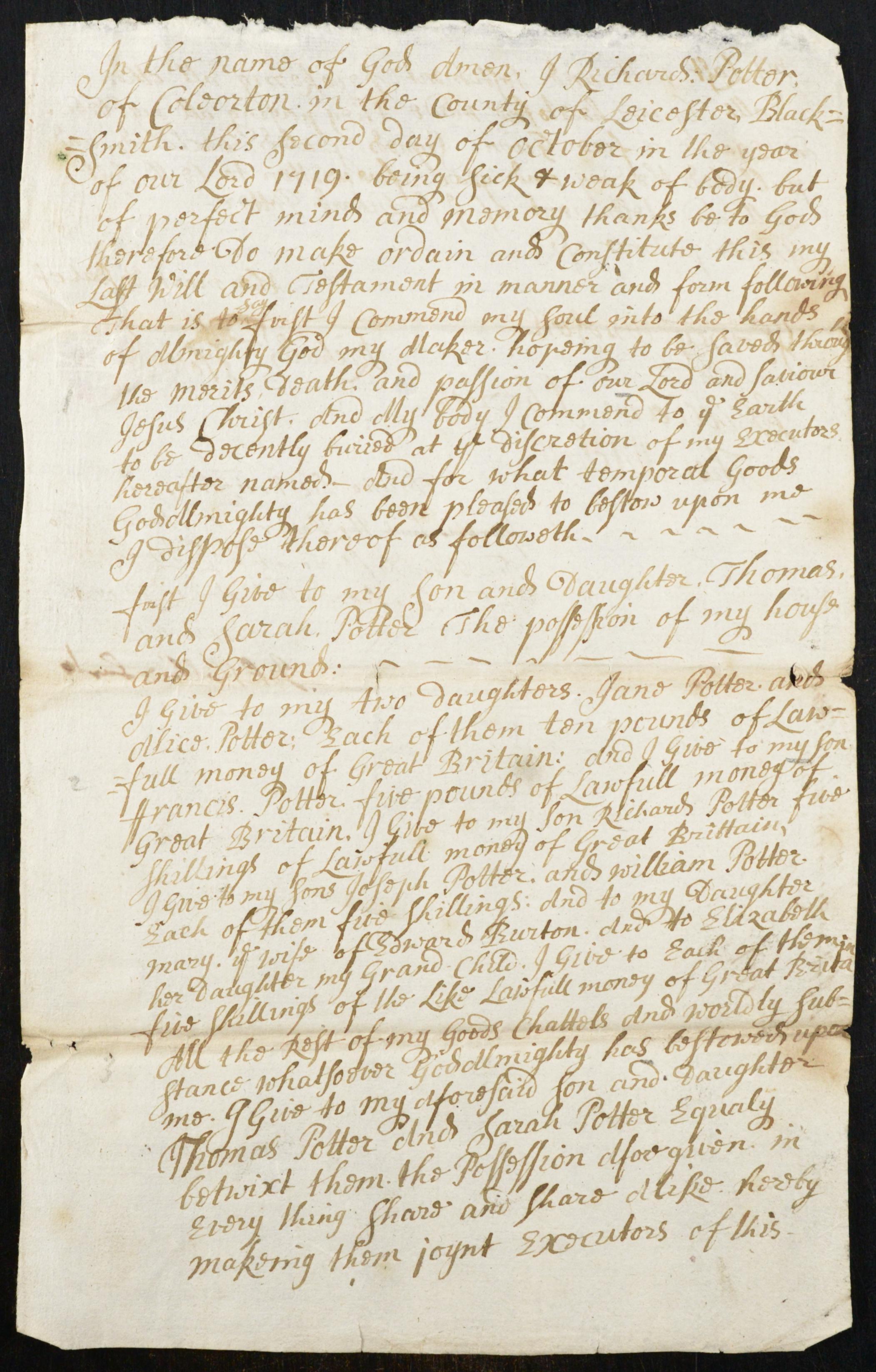
Richard Potter’s (1649-1719) parents were William Potter and Alse Huldin, both born in the early 1600s. They were married in 1646 at Breedon on the Hill, Leicestershire. The name Huldin appears to originate in Finland.
William Potter was a blacksmith. In the 1659 parish registers of Breedon on the Hill, William Potter of Breedon blacksmith buryed the 14th July.
March 17, 2022 at 10:37 am #6283In reply to: The Elusive Samuel Housley and Other Family Stories
Purdy Cousins
My great grandmother Mary Ann Gilman Purdy was one of five children. Her sister Ellen Purdy was a well traveled nurse, and her sister Kate Rushby was a publican whose son who went to Africa. But what of her eldest sister Elizabeth and her brother Richard?
Elizabeth Purdy 1869-1905 married Benjamin George Little in 1892 in Basford, Nottinghamshire. Their first child, Frieda Olive Little, was born in Eastwood in December 1896, and their second daughter Catherine Jane Little was born in Warrington, Cheshire, in 1898. A third daughter, Edna Francis Little was born in 1900, but died three months later.
When I noticed that this unidentified photograph in our family collection was taken by a photographer in Warrington, and as no other family has been found in Warrington, I concluded that these two little girls are Frieda and Catherine:
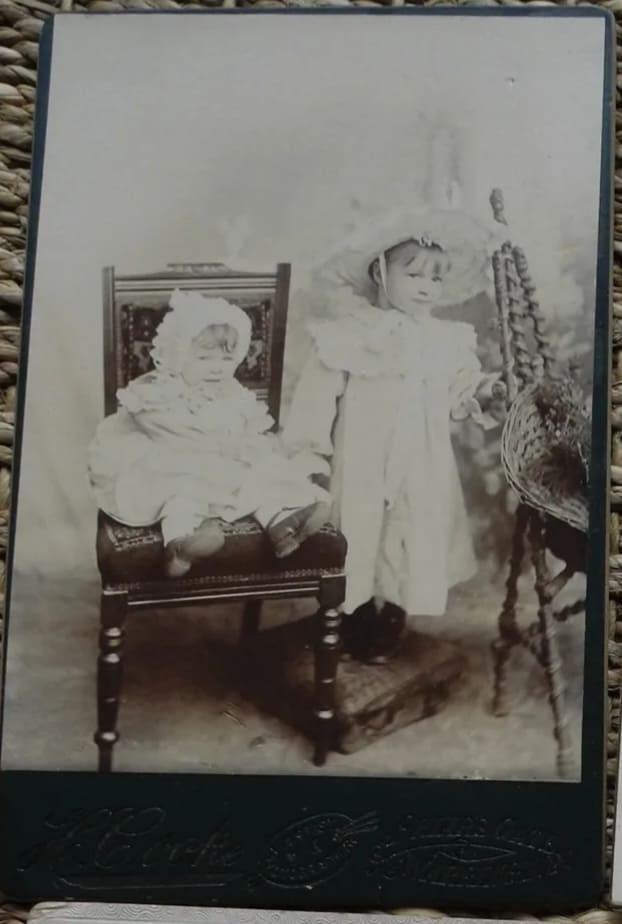
Benjamin Little, born in 1869, was the manager of a boot shop, according to the 1901 census, and a boot maker on the 1911 census. I found a photograph of Benjamin and Elizabeth Little on an ancestry website:
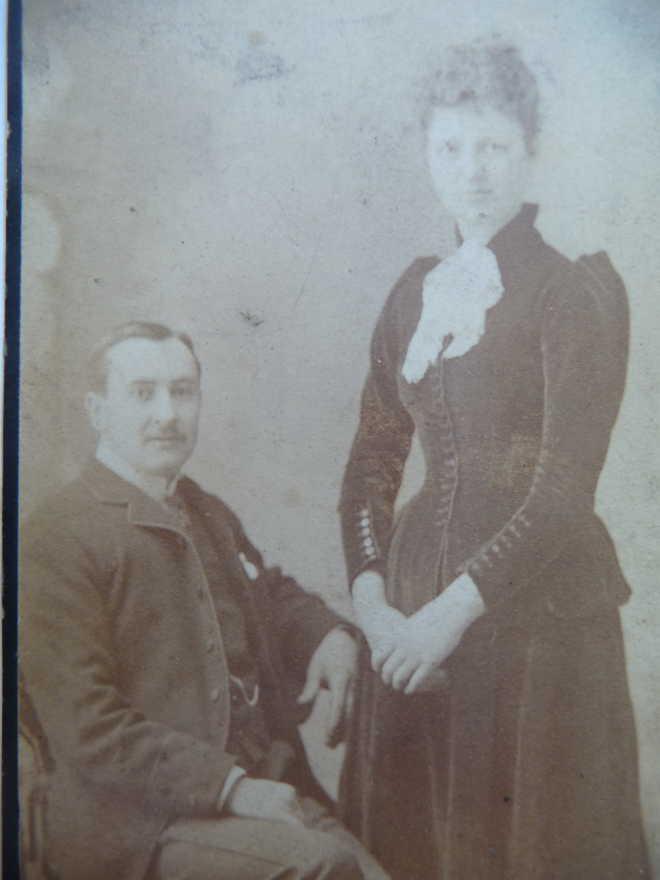
Frieda Olive Little 1896-1977 married Robert Warburton in 1924.
Frieda and Robert had two sons and a daughter, although one son died in infancy. They lived in Leominster, in Herefordshire, but Frieda died in 1977 at Enfield Farm in Warrington, four years after the death of her husband Robert.
Catherine Jane Little 1899-1975 married Llewelyn Robert Prince 1884-1950. They do not appear to have had any children. Llewelyn was manager of the National Provinical Bank at Eltham in London, but died at Brook Cottage in Kingsland, Herefordshire. His wifes aunt Ellen Purdy the nurse had also lived at Brook Cottage. Ellen died in 1947, but her husband Frank Garbett was at the funeral:
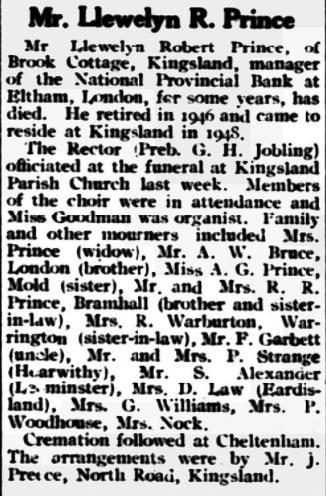
Richard Purdy 1877-1940
Richard was born in Eastwood, Nottinghamshire. When his mother Catherine died in 1884 Richard was six years old. My great grandmother Mary Ann and her sister Ellen went to live with the Gilman’s in Buxton, but Richard and the two older sisters, Elizabeth and Kate, stayed with their father George Purdy, who remarried soon afterwards.
Richard married Ada Elizabeth Clarke in 1899. In 1901 Richard was an earthenware packer at a pottery, and on the 1939 census he was a colliery dataller. A dataller was a day wage man, paid on a daily basis for work done as required.
Richard and Ada had four children: Richard Baden Purdy 1900-1945, Winifred Maude 1903-1974, John Frederick 1907-1945, and Violet Gertrude 1910-1974.
Richard Baden Purdy married Ethel May Potter in Mansfield, Nottinghamshire, in 1926. He was listed on the 1939 census as a colliery deputy. In 1945 Richard Baden Purdy died as a result of injuries in a mine explosion.
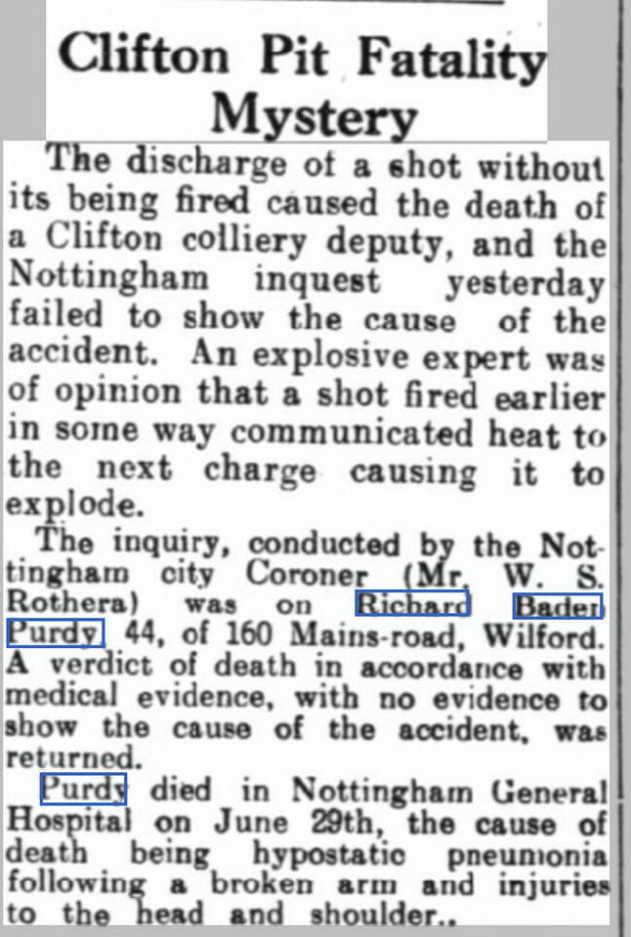
John Frederick Purdy married Iris Merryweather in 1938. On the 1939 census John and Iris live in Arnold, Nottinghamshire, and John’s occupation is a colliery hewer. Their daughter Barbara Elizabeth was born later that year. John died in 1945, the same year as his brother Richard Baden Purdy. It is not known without purchasing the death certificate what the cause of death was.
A memorial was posted in the Nottingham Evening Post on 29 June 1948:
PURDY, loving memories, Richard Baden, accidentally killed June 29th 1945; John Frederick, died 1 April 1945; Richard Purdy, father, died December 1940. Too dearly loved to be forgotten. Mother, families.
Violet Gertrude Purdy married Sidney Garland in 1932 in Southwell, Nottinghamshire. She died in Edwinstowe, Nottinghamshire, in 1974.
Winifred Maude Purdy married Bernard Fowler in Southwell in 1928. She also died in 1974, in Mansfield.
The two brothers died the same year, in 1945, and the two sisters died the same year, in 1974.
March 10, 2022 at 7:40 am #6281In reply to: The Elusive Samuel Housley and Other Family Stories
The Measham Thatchers
Orgills, Finches and Wards
Measham is a large village in north west Leicestershire, England, near the Derbyshire, Staffordshire and Warwickshire boundaries. Our family has a penchant for border straddling, and the Orgill’s of Measham take this a step further living on the boundaries of four counties. Historically it was in an exclave of Derbyshire absorbed into Leicestershire in 1897, so once again we have two sets of county records to search.
ORGILL
Richard Gretton, the baker of Swadlincote and my great grandmother Florence Nightingale Grettons’ father, married Sarah Orgill (1840-1910) in 1861.
(Incidentally, Florence Nightingale Warren nee Gretton’s first child Hildred born in 1900 had the middle name Orgill. Florence’s brother John Orgill Gretton emigrated to USA.)
When they first married, they lived with Sarah’s widowed mother Elizabeth in Measham. Elizabeth Orgill is listed on the 1861 census as a farmer of two acres.
Sarah Orgill’s father Matthew Orgill (1798-1859) was a thatcher, as was his father Matthew Orgill (1771-1852).
Matthew Orgill the elder left his property to his son Henry:
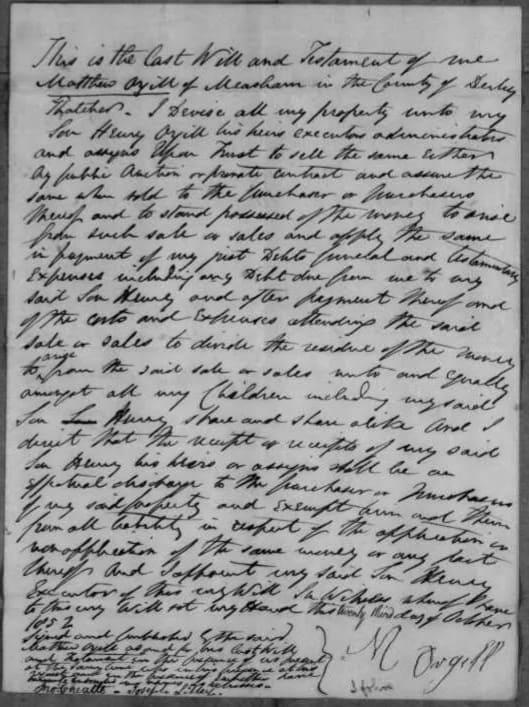
Sarah’s mother Elizabeth (1803-1876) was also an Orgill before her marriage to Matthew.
According to Pigot & Co’s Commercial Directory for Derbyshire, in Measham in 1835 Elizabeth Orgill was a straw bonnet maker, an ideal occupation for a thatchers wife.
Matthew Orgill, thatcher, is listed in White’s directory in 1857, and other Orgill’s are mentioned in Measham:
Mary Orgill, straw hat maker; Henry Orgill, grocer; Daniel Orgill, painter; another Matthew Orgill is a coal merchant and wheelwright. Likewise a number of Orgill’s are listed in the directories for Measham in the subsequent years, as farmers, plumbers, painters, grocers, thatchers, wheelwrights, coal merchants and straw bonnet makers.
Matthew and Elizabeth Orgill, Measham Baptist church:
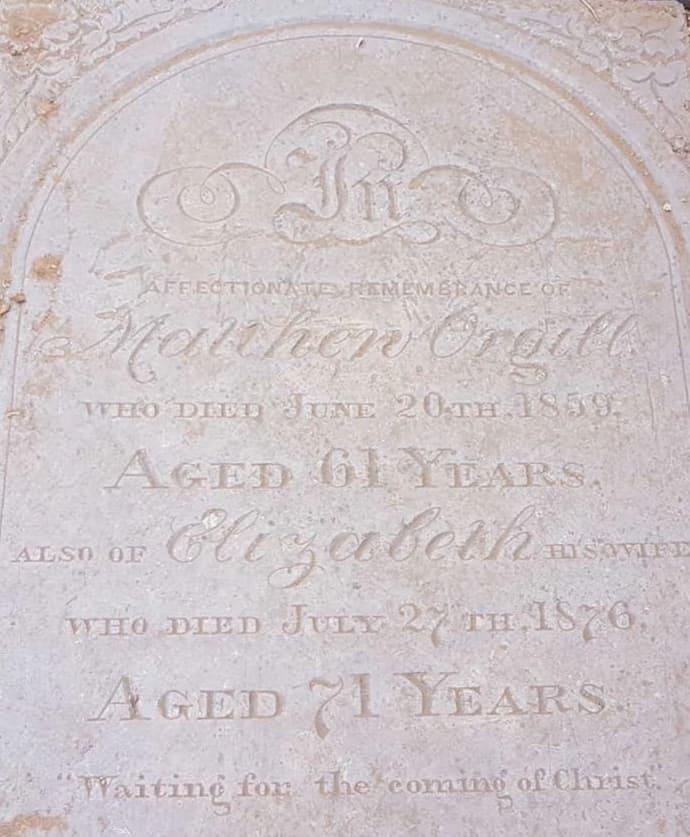
According to a history of thatching, for every six or seven thatchers appearing in the 1851 census there are now less than one. Another interesting fact in the history of thatched roofs (via thatchinginfo dot com):
The Watling Street Divide…
The biggest dividing line of all, that between the angular thatching of the Northern and Eastern traditions and the rounded Southern style, still roughly follows a very ancient line; the northern section of the old Roman road of Watling Street, the modern A5. Seemingly of little significance today; this was once the border between two peoples. Agreed in the peace treaty, between the Saxon King Alfred and Guthrum, the Danish Viking leader; over eleven centuries ago.
After making their peace, various Viking armies settled down, to the north and east of the old road; firstly, in what was known as The Danelaw and later in Norse kingdoms, based in York. They quickly formed a class of farmers and peasants. Although the Saxon kings soon regained this area; these people stayed put. Their influence is still seen, for example, in the widespread use of boarded gable ends, so common in Danish thatching.
Over time, the Southern and Northern traditions have slipped across the old road, by a few miles either way. But even today, travelling across the old highway will often bring the differing thatching traditions quickly into view.Pear Tree Cottage, Bosworth Road, Measham. 1900. Matthew Orgill was a thatcher living on Bosworth road.
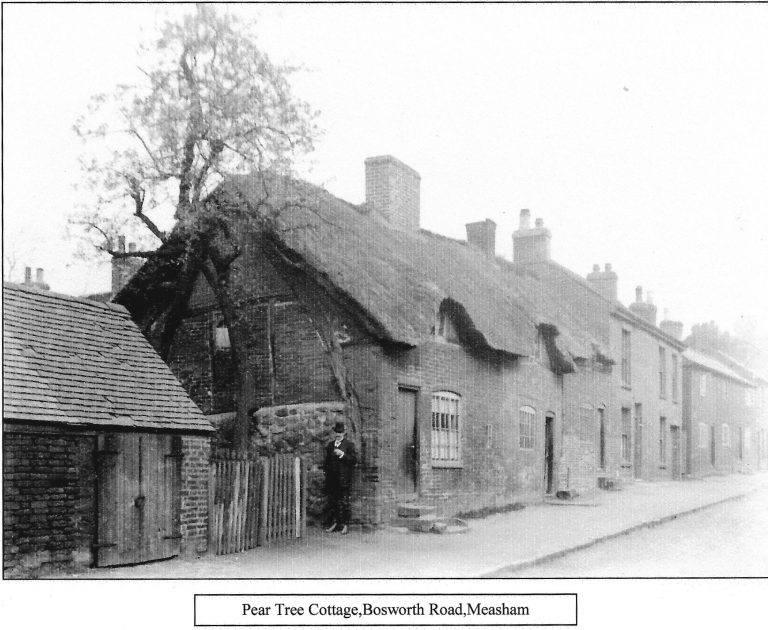
FINCH
Matthew the elder married Frances Finch 1771-1848, also of Measham. On the 1851 census Matthew is an 80 year old thatcher living with his daughter Mary and her husband Samuel Piner, a coal miner.
Henry Finch 1743- and Mary Dennis 1749- , both of Measham, were Frances parents. Henry’s father was also Henry Finch, born in 1707 in Measham, and he married Frances Ward, also born in 1707, and also from Measham.
WARD
The ancient boundary between the kingdom of Mercia and the Danelaw
I didn’t find much information on the history of Measham, but I did find a great deal of ancient history on the nearby village of Appleby Magna, two miles away. The parish records indicate that the Ward and Finch branches of our family date back to the 1500’s in the village, and we can assume that the ancient history of the neighbouring village would be relevant to our history.
There is evidence of human settlement in Appleby from the early Neolithic period, 6,000 years ago, and there are also Iron Age and Bronze Age sites in the vicinity. There is evidence of further activity within the village during the Roman period, including evidence of a villa or farm and a temple. Appleby is near three known Roman roads: Watling Street, 10 miles south of the village; Bath Lane, 5 miles north of the village; and Salt Street, which forms the parish’s south boundary.
But it is the Scandinavian invasions that are particularly intriguing, with regard to my 58% Scandinavian DNA (and virtually 100% Midlands England ancestry). Repton is 13 miles from Measham. In the early 10th century Chilcote, Measham and Willesley were part of the royal Derbyshire estate of Repton.
The arrival of Scandinavian invaders in the second half of the ninth century caused widespread havoc throughout northern England. By the AD 870s the Danish army was occupying Mercia and it spent the winter of 873-74 at Repton, the headquarters of the Mercian kings. The events are recorded in detail in the Peterborough manuscript of the Anglo-Saxon Chronicles…
Although the Danes held power for only 40 years, a strong, even subversive, Danish element remained in the population for many years to come.
A Scandinavian influence may also be detected among the field names of the parish. Although many fields have relatively modern names, some clearly have elements which reach back to the time of Danish incursion and control.
The Borders:
The name ‘aeppel byg’ is given in the will of Wulfic Spot of AD 1004……………..The decision at Domesday to include this land in Derbyshire, as one of Burton Abbey’s Derbyshire manors, resulted in the division of the village of Appleby Magna between the counties of Leicester and Derby for the next 800 years
Richard Dunmore’s Appleby Magma website.
This division of Appleby between Leicestershire and Derbyshire persisted from Domesday until 1897, when the recently created county councils (1889) simplified the administration of many villages in this area by a radical realignment of the boundary:
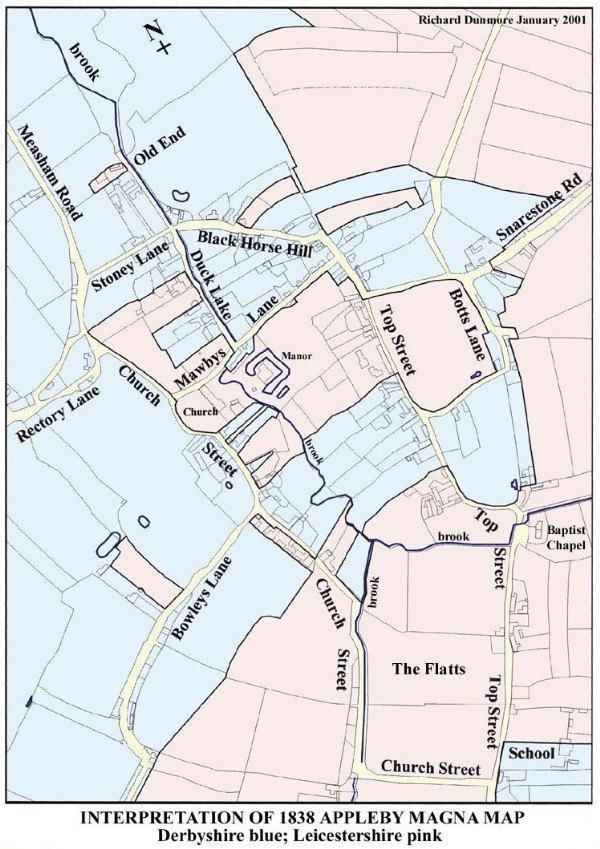
I would appear that our family not only straddle county borders, but straddle ancient kingdom borders as well. This particular branch of the family (we assume, given the absence of written records that far back) were living on the edge of the Danelaw and a strong element of the Danes survives to this day in my DNA.
March 4, 2022 at 2:58 pm #6280In reply to: The Whale’s Diaries Collection
I started reading a book. In fact I started reading it three weeks ago, and have read the first page of the preface every night and fallen asleep. But my neck aches from doing too much gardening so I went back to bed to read this morning. I still fell asleep six times but at least I finished the preface. It’s the story of the family , initiated by the family collection of netsuke (whatever that is. Tiny Japanese carvings) But this is what stopped me reading and made me think (and then fall asleep each time I re read it)
“And I’m not entitled to nostalgia about all that lost wealth and glamour from a century ago. And I am not interested in thin. I want to know what the relationship has been between this wooden object that I am rolling between my fingers – hard and tricky and Japanese – and where it has been. I want to be able to reach to the handle of the door and turn it and feel it open. I want to walk into each room where this object has lived, to feel the volume of the space, to know what pictures were on the walls, how the light fell from the windows. And I want to know whose hands it has been in, and what they felt about it and thought about it – if they thought about it. I want to know what it has witnessed.” ― Edmund de Waal, The Hare With Amber Eyes: A Family’s Century of Art and Loss
And I felt almost bereft that none of the records tell me which way the light fell in through the windows.
I know who lived in the house in which years, but I don’t know who sat in the sun streaming through the window and which painting upon the wall they looked at and what the material was that covered the chair they sat on.
Were his clothes confortable (or hers, likely not), did he have an old favourite pair of trousers that his mother hated?
There is one house in particular that I keep coming back to. Like I got on the Housley train at Smalley and I can’t get off. Kidsley Grange Farm, they turned it into a nursing home and built extensions, and now it’s for sale for five hundred thousand pounds. But is the ghost still under the back stairs? Is there still a stain somewhere when a carafe of port was dropped?
Did Anns writing desk survive? Does someone have that, polished, with a vase of spring tulips on it? (on a mat of course so it doesn’t make a ring, despite that there are layers of beeswaxed rings already)
Does the desk remember the letters, the weight of a forearm or elbow, perhaps a smeared teardrop, or a comsumptive cough stain?
Is there perhaps a folded bit of paper or card that propped an uneven leg that fell through the floorboards that might tear into little squares if you found it and opened it, and would it be a rough draft of a letter never sent, or just a receipt for five head of cattle the summer before?
Did he hate the curtain material, or not even think of it? Did he love the house, or want to get away to see something new ~ or both?
Did he have a favourite cup, a favourite food, did he hate liver or cabbage?
Did he like his image when the photograph came from the studio or did he think it made his nose look big or his hair too thin, or did he wish he’d worn his other waistcoat?
Did he love his wife so much he couldn’t bear to see her dying, was it neglect or was it the unbearableness of it all that made him go away and drink?
Did the sun slanting in through the dormer window of his tiny attic room where he lodged remind him of ~ well no perhaps he was never in the room in daylight hours at all. Work all day and pub all night, keeping busy working hard and drinking hard and perhaps laughing hard, and maybe he only thought of it all on Sunday mornings.
So many deaths, one after another, his father, his wife, his brother, his sister, and another and another, all the coughing, all the debility. Perhaps he never understood why he lived and they did not, what kind of justice was there in that?
Did he take a souvenir or two with him, a handkerchief or a shawl perhaps, tucked away at the bottom of a battered leather bag that had his 3 shirts and 2 waistcoats in and a spare cap,something embroidered perhaps.
The quote in that book started me off with the light coming in the window and the need to know the simplest things, something nobody ever wrote in a letter, maybe never even mentioned to anyone.
Light coming in windows. I remeber when I was a teenager I had a day off sick and spent the whole day laying on the couch in a big window with the winter sun on my face all day, and I read Bonjour Tristesse in one sitting, and I’ll never forget that afternoon. I don’t remember much about that book, but I remember being transported. But at the same time as being present in that sunny window.
“Stories and objects share something, a patina…Perhaps patina is a process of rubbing back so that the essential is revealed…But it also seems additive, in the way that a piece of oak furniture gains over years and years of polishing.”
“How objects are handed on is all about story-telling. I am giving you this because I love you. Or because it was given to me. Because I bought it somewhere special. Because you will care for it. Because it will complicate your life. Because it will make someone else envious. There is no easy story in legacy. What is remembered and what is forgotten? There can be a chain of forgetting, the rubbing away of previous ownership as much as the slow accretion of stories. What is being passed on to me with all these small Japanese objects?”
“There are things in this world that the children hear, but whose sounds oscillate below an adult’s sense of pitch.”
What did the children hear?
February 25, 2022 at 8:21 am #6277In reply to: The Elusive Samuel Housley and Other Family Stories
William Housley the Elder
Intestate
William Housley of Kidsley Grange Farm in Smalley, Derbyshire, was born in 1781 in Selston, just over the county border in Nottinghamshire. His father was also called William Housley, and he was born in Selston in 1735. It would appear from the records that William the father married late in life and only had one son (unless of course other records are missing or have not yet been found). Never the less, William Housley of Kidsley was the eldest son, or eldest surviving son, evident from the legal document written in 1816 regarding William the fathers’ estate.
William Housley died in Smalley in 1815, intestate. William the son claims that “he is the natural and lawful son of the said deceased and the person entitled to letters of administration of his goods and personal estate”.
Derby the 16th day of April 1816:
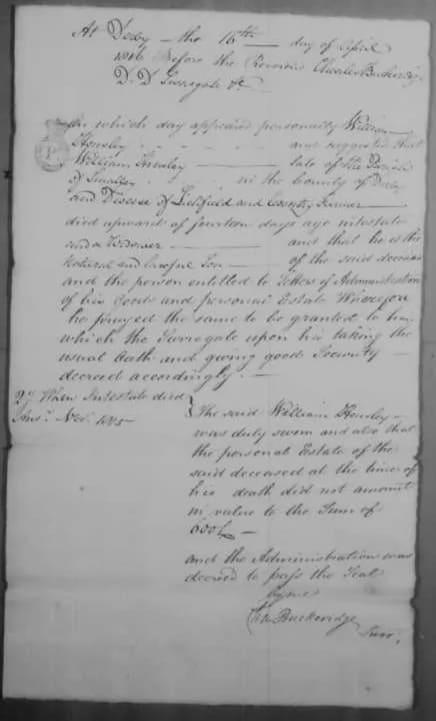
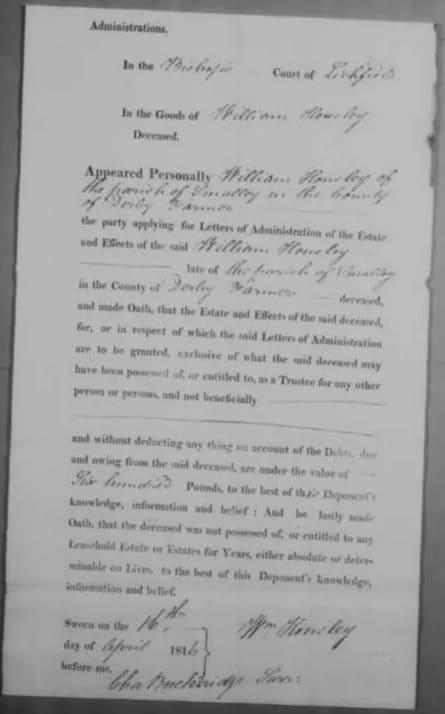
I transcribed three pages of this document, which was mostly repeated legal jargon. It appears that William Housley the elder died intestate, but that William the younger claimed that he was the sole heir. £1200 is mentioned to be held until the following year until such time that there is certainty than no will was found and so on. On the last page “no more than £600” is mentioned and I can’t quite make out why both figures are mentioned! However, either would have been a considerable sum in 1816.
I also found a land tax register in William Housley’s the elders name in Smalley (as William the son would have been too young at the time, in 1798). William the elder was an occupant of one of his properties, and paid tax on two others, with other occupants named, so presumably he owned three properties in Smalley.
The only likely marriage for William Housley was in Selston. William Housley married Elizabeth Woodhead in 1777. It was a miracle that I found it, because the transcription on the website said 1797, which would have been too late to be ours, as William the son was born in 1781, but for some reason I checked the image and found that it was clearly 1777, listed between entries for 1776 and 1778. (I reported the transcription error.) There were no other William Housley marriages recorded during the right time frame in Selston or in the vicinity.
I found a birth registered for William the elder in Selston in 1735. Notwithstanding there may be pages of the register missing or illegible, in the absence of any other baptism registration, we must assume this is our William, in which case he married rather late in his 40s. It would seem he didn’t have a previous wife, as William the younger claims to be the sole heir to his fathers estate. I haven’t found any other children registered to the couple, which is also unusual, and the only death I can find for an Elizabeth Housley prior to 1815 (as William the elder was a widower when he died) is in Selston in 1812. I’m not convinced that this is the death of William’s wife, however, as they were living in Smalley ~ at least, they were living in Smalley in 1798, according to the tax register, and William was living in Smalley when he died in 1815.
-
AuthorSearch Results
Search Results for 'cause'
-
Search Results
-
My Fathers Family
Edwards ~ Tomlinson ~ Stokes ~ Fisher
Reginald Garnet Edwards was born on 2 April 1934 at the Worcester Cross pub in Kidderminster.
The X on right is the room he was born in:
I hadn’t done much research on the Edwards family because my fathers cousin, Paul Weaver, had already done it and had an excellent website online. I decided to start from scratch and do it all myself because it’s so much more interesting to do the research myself than look at lists of names and dates that don’t really mean anything. Immediately after I decided to do this, I found that Paul’s family tree website was no longer online to refer to anyway!
I started with the Edwards family in Birmingham and immediately had a problem: there were far too many John Edwards in Birmingham at the time. I’ll return to the Edwards in a later chapter, and start with my fathers mothers mothers family, the Fishers.