
Search Results for 'contrast'
-
AuthorSearch Results
-
January 4, 2026 at 10:01 pm #8043
In reply to: Finder’s Keepers of the Hoard
A cinematic, low-angle shot inside a flooded, ancient brick sewer tunnel that looks like a mix of Roman catacombs and Victorian industrial plumbing. The water is dark and murky, reflecting the light of a flickering lantern.
In the center of the frame, floating precariously, is a bright yellow, cheap inflatable dinghy.
Inside the dinghy are two men:
-
Spirius: An elderly man with a nervous expression, wearing a high-vis vest over ancient saintly robes. He is clutching an antique musket that is clearly too heavy for him. A faint, golden neon halo flickers erratically behind his head like a faulty streetlamp.
-
Boothroyd: A grumpy, weather-beaten gardener in a tweed cap. He looks completely resigned to his fate, lazily paddling with a plastic oar in one hand and holding a sharp garden spear in the other.
Action: The dinghy squeaks as it bumps against the wet brick walls. Spirius jumps at a drip of water falling from the ceiling. Something large ripples the water in the foreground—a menacing shadow moving beneath the surface.
Atmosphere:
-
Lighting: Chiaroscuro—deep shadows and warm lantern light, contrasting with the synthetic yellow of the boat.
-
Mood: Tense but ridiculous. High-stakes fantasy meets low-budget reality.
Movement:
-
The camera tracks slowly backward as the boat drifts forward.
-
The water ripples ominously.
-
Spirius’s halo buzzes and dims when he gets scared.
March 15, 2025 at 11:16 pm #7869In reply to: The Last Cruise of Helix 25
Helix 25 – The Mad Heir
The Wellness Deck was one of the few places untouched by the ship’s collective lunar madness—if one ignored the ambient aroma of algae wraps and rehydrated lavender oil. Soft music played in the background, a soothing contrast to the underlying horror that was about to unfold.
Peryton Price, or Perry as he was known to his patients, took a deep breath. He had spent years here, massaging stress from the shoulders of the ship’s weary, smoothing out wrinkles with oxygenated facials, pressing detoxifying seaweed against fine lines. He was, by all accounts, a model spa technician.
And yet—
His hands were shaking.
Inside his skull, another voice whispered. Urging. Prodding. It wasn’t his voice, and that terrified him.
“A little procedure, Perry. Just a little one. A mild improvement. A small tweak—in the name of progress!”
He clenched his jaw. No. No, no, no. He wouldn’t—
“You were so good with the first one, lad. What harm was it? Just a simple extraction! We used to do it all the time back in my day—what do you think the humors were for?”
Perry squeezed his eyes shut. His reflection stared back at him from the hydrotherapeutic mirror, but it wasn’t his face he saw. The shadow of a gaunt, beady-eyed man lingered behind his pupils, a visage that he had never seen before and yet… he knew.
Bronkelhampton. The Mad Doctor of Tikfijikoo.
He was the closest voice, but it was triggering even older ones, from much further down in time. Madness was running in the family. He’d thought he could escape the curse.
“Just imagine the breakthroughs, my dear boy. If you could only commit fully. Why, we could even work on the elders! The preserved ones! You have so many willing patients, Perry! We had so much success with the tardigrade preservation already.”
A high-pitched giggle cut through his spiraling thoughts.
“Oh, heavens, dear boy, this steam is divine. We need to get one of these back in Quadrant B,” Gloria said, reclining in the spa pool. “Sha, can’t you requisition one? You were a ship steward once.”
Sha scoffed. “Sweetheart, I once tried requisitioning extra towels and ended up with twelve crates of anti-bacterial foot powder.”
Mavis clicked her tongue. “Honestly, men are so incompetent. Perry, dear, you wouldn’t happen to know how to requisition a spa unit, would you?”
Perry blinked. His mind was slipping. The whisper of his ancestor had begun to press at the edges of his control.
“Tsk. They’re practically begging you, Perry. Just a little procedure. A minor adjustment.”
Sha, Gloria, and Mavis watched in bemusement as Perry’s eye twitched.
“…Dear?” Mavis prompted, adjusting the cucumber slice over her eye. “You’re staring again.”
Perry snapped back. He swallowed. “I… I was just thinking.”
“That’s a terrible idea,” Gloria muttered.
“Thinking about what?” Sha pressed.
Perry’s hand tightened around the pulse-massager in his grip. His fingers were pale.
“Scalpel, Perry. You remember the scalpel, don’t you?”
He staggered back from the trio of floating retirees. The pulse-massager trembled in his grip. No, no, no. He wouldn’t.
And yet, his fingers moved.
Sha, Gloria, and Mavis were still bickering about requisition forms when Perry let out a strained whimper.
“RUN,” he choked out.
The trio blinked at him in lazy confusion.
“…Pardon?”
That was at this moment that the doors slid open in a anti-climatic whiz.

Evie knew they were close. Amara had narrowed the genetic matches down, and the final name had led them here.
“Okay, let’s be clear,” Evie muttered as they sprinted down the corridors. “A possessed spa therapist was not on my bingo card for this murder case.”
TP, jogging alongside, huffed indignantly. “I must protest. The signs were all there if you knew how to look! Historical reenactments, genetic triggers, eerie possession tropes! But did anyone listen to me? No!”
Riven was already ahead of them, his stride easy and efficient. “Less talking, more stopping the maniac, yeah?”
They skidded into the spa just in time to see Perry lurch forward—
And Riven tackled him hard.
The pulse-massager skidded across the floor. Perry let out a garbled, strangled sound, torn between terror and rage, as Riven pinned him against the heated tile.
Evie, catching her breath, leveled her stun-gun at Perry’s shaking form. “Okay, Perry. You’re gonna explain this. Right now.”
Perry gasped, eyes wild. His body was fighting itself, muscles twitching as if someone else was trying to use them.
“…It wasn’t me,” he croaked. “It was them! It was him.”
Gloria, still lounging in the spa, raised a hand. “Who exactly?”
Perry’s lips trembled. “Ancestors. Mostly my grandfather. *Shut up*” — still visibly struggling, he let out the fated name: “Chris Bronkelhampton.”
Sha spat out her cucumber slice. “Oh, hell no.”
Gloria sat up straighter. “Oh, I remember that nutter! We practically hand-delivered him to justice!”
“Didn’t we, though?” Mavis muttered. “Are we sure we did?”
Perry whimpered. “I didn’t want to do it. *Shut up, stupid boy!* —No! I won’t—!” Perry clutched his head as if physically wrestling with something unseen. “They’re inside me. He’s inside me. He played our ancestor like a fiddle, filled his eyes with delusions of devilry, made him see Ethan as sorcerer—Mandrake as an omen—”
His breath hitched as his fingers twitched in futile rebellion. “And then they let him in.“
Evie shared a quick look with TP. That matched Amara’s findings. Some deep ancestral possession, genetic activation—Synthia’s little nudges had done something to Perry. Through food dispenser maybe? After all, Synthia had access to almost everything. Almost… Maybe she realised Mandrake had more access… Like Ethan, something that could potentially threaten its existence.
The AI had played him like a pawn.
“What did he make you do, Perry?” Evie pressed, stepping closer.
Perry shuddered. “Screens flickering, they made me see things. He, they made me think—” His breath hitched. “—that Ethan was… dangerous. *Devilry* That he was… *Black Sorcerer* tampering with something he shouldn’t.”
Evie’s stomach sank. “Tampering with what?”
Perry swallowed thickly. “I don’t know”
Mandrake had slid in unnoticed, not missing a second of the revelations. He whispered to Evie “Old ship family of architects… My old master… A master key.”
Evie knew to keep silent. Was Synthia going to let them go? She didn’t have time to finish her thoughts.
Synthia’s voice made itself heard —sending some communiqués through the various channels
“The threat has been contained.
Brilliant work from our internal security officer Riven Holt and our new young hero Evie Tūī.”“What are you waiting for? Send this lad in prison!” Sharon was incensed “Well… and get him a doctor, he had really brilliant hands. Would be a shame to put him in the freezer. Can’t get the staff these days.”
Evie’s pulse spiked, still racing — “…Marlowe had access to everything.”.
Oh. Oh no.
Ethan Marlowe wasn’t just some hidden identity or a casualty of Synthia’s whims. He had something—something that made Synthia deem him a threat.
Evie’s grip on her stun-gun tightened. They had to get to Old Marlowe sooner than later. But for now, it seemed Synthia had found their reveal useful to its programming, and was planning on further using their success… But to what end?
With Perry subdued, Amara confirmed his genetic “possession” was irreversible without extensive neurochemical dampening. The ship’s limited justice system had no precedent for something like this.
And so, the decision was made:
Perry Price would be cryo-frozen until further notice.
Sha, watching the process with arms crossed, sighed. “He’s not the worst lunatic we’ve met, honestly.”
Gloria nodded. “Least he had some manners. Could’ve asked first before murdering people, though.”
Mavis adjusted her robe. “Typical men. No foresight.”
Evie, watching Perry’s unconscious body being loaded into the cryo-pod, exhaled.
This was only the beginning.
Synthia had played Perry like a tool—like a test run.
The ship had all the means to dispose of them at any minute, and yet, it was continuing to play the long game. All that elaborate plan was quite surgical. But the bigger picture continued to elude her.
But now they were coming back to Earth, it felt like a Pyrrhic victory.
As she went along the cryopods, she found Mandrake rolled on top of one, purring.
She paused before the name. Dr. Elias Arorangi. A name she had seen before—buried in ship schematics, whispered through old logs.
Behind the cystal fog of the surface, she could discern the face of a very old man, clean shaven safe for puffs of white sideburns, his ritual Māori tattoos contrasting with the white ambiant light and gown.
As old as he looked, if he was kept here, It was because he still mattered.February 16, 2025 at 12:20 pm #7809In reply to: The Last Cruise of Helix 25
Earth, Black Sea Coastal Island near Lazurne, Ukraine – The Tinkerer
Cornishman Merdhyn Winstrom had grown accustomed to the silence.
It wasn’t the kind of silence one found in an empty room or a quiet night in Cornwall, but the profound, devouring kind—the silence of a world were life as we knew it had disappeared. A world where its people had moved on without him.
The Black Sea stretched before him, vast and unknowable, still as a dark mirror reflecting a sky that had long since stopped making promises. He stood on the highest point of the islet, atop a jagged rock behind which stood in contrast to the smooth metal of the wreckage.
His wreckage.
That’s how he saw it, maybe the last man standing on Earth.
It had been two years since he stumbled upon the remains of Helix 57 shuttle —or what was left of it. Of all the Helixes cruise ships that were lost, the ones closest to Earth during the Calamity had known the most activity —people trying to leave and escape Earth, while at the same time people in the skies struggling to come back to loved ones. Most of the orbital shuttles didn’t make it during the chaos, and those who did were soon lost to space’s infinity, or Earth’s last embrace.
This shuttle should have been able to land a few hundred people to safety —Merdhyn couldn’t find much left inside when he’d discovered it, survivors would have been long dispersed looking for food networks and any possible civilisation remnants near the cities. It was left here, a gutted-out orbital shuttle, fractured against the rocky coast, its metal frame corroded by salt air, its systems dead. The beauty of mechanics was that dead wasn’t the same as useless.
And Merdhyn never saw anything as useless.
With slow, methodical care, he adjusted the small receiver strapped to his wrist—a makeshift contraption built from salvaged components, scavenged antennae, and the remains of an old Soviet radio. He tapped the device twice. The static fizzled, cracked. Nothing.
“Still deaf,” he muttered.
Perched at his shoulder, Tuppence chattered at him, a stuborn rodent that attached himself and that Merdhyn had adopted months ago as he was scouting the area. He reached his pocket and gave it a scrap of food off a stale biscuit still wrapped in the shiny foil.
Merdhyn exhaled, rolling his shoulders. He was getting too old for this. Too many years alone, too many hours hunched over corroded circuits, trying to squeeze life from what had already died.
But the shuttle wasn’t dead. After his first check, he was quite sure. Now it was time to get to work.
He stepped inside, ducking beneath an exposed beam, brushing past wiring that had long since lost its insulation. The stale scent of metal and old circuitry greeted him. The interior was a skeletal mess—panels missing, control consoles shattered, displays reduced to nothing but flickering ghosts of their former selves.
Still, he had power.
Not much. Just enough to light a few panels, enough to make him think he wasn’t mad for trying.
As it happened, Merdhyn had a plan: a ridiculous, impossible, brilliant plan.
He would fix it.
The whole thing if he could, but if anything. It would certainly take him months before the shuttle from Helix 57 could go anywhere— that is, in one piece. He could surely start to repair the comms, get a signal out, get something moving, then maybe—just maybe—he could find out if there was anything left out there.
Anything that wasn’t just sea and sky and ghosts.
He ran his fingers along the edge of the console, feeling the warped metal. The ship had crashed hard. It shouldn’t have made it down in one piece, but something had slowed it. Some system had tried to function, even in its dying moments.
That meant something was still alive.
He just had to wake it up.
Tuppence chittered, scurrying onto his shoulder.
Merdhyn chuckled. “Aye, I know. One of these days, I’ll start talking to people instead of rats.”
Tuppence flicked her tail.
He pulled out a battered datapad—one of his few working relics—and tapped the screen. The interface stuttered, but held. He navigated to his schematics, his notes, his carefully built plans.
The transponder array.
If he could get it working, even partially, he might be able to listen.
To hear something—anything—on the waves beyond this rock.
A voice. A signal. A trace of the world that had forgotten him.
Merdhyn exhaled. “Let’s see if we can get you talking again, eh?”
He adjusted his grip, tools clinking at his belt, and got to work.
February 15, 2025 at 10:33 am #7794In reply to: Helix Mysteries – Inside the Case
Some pictures selections
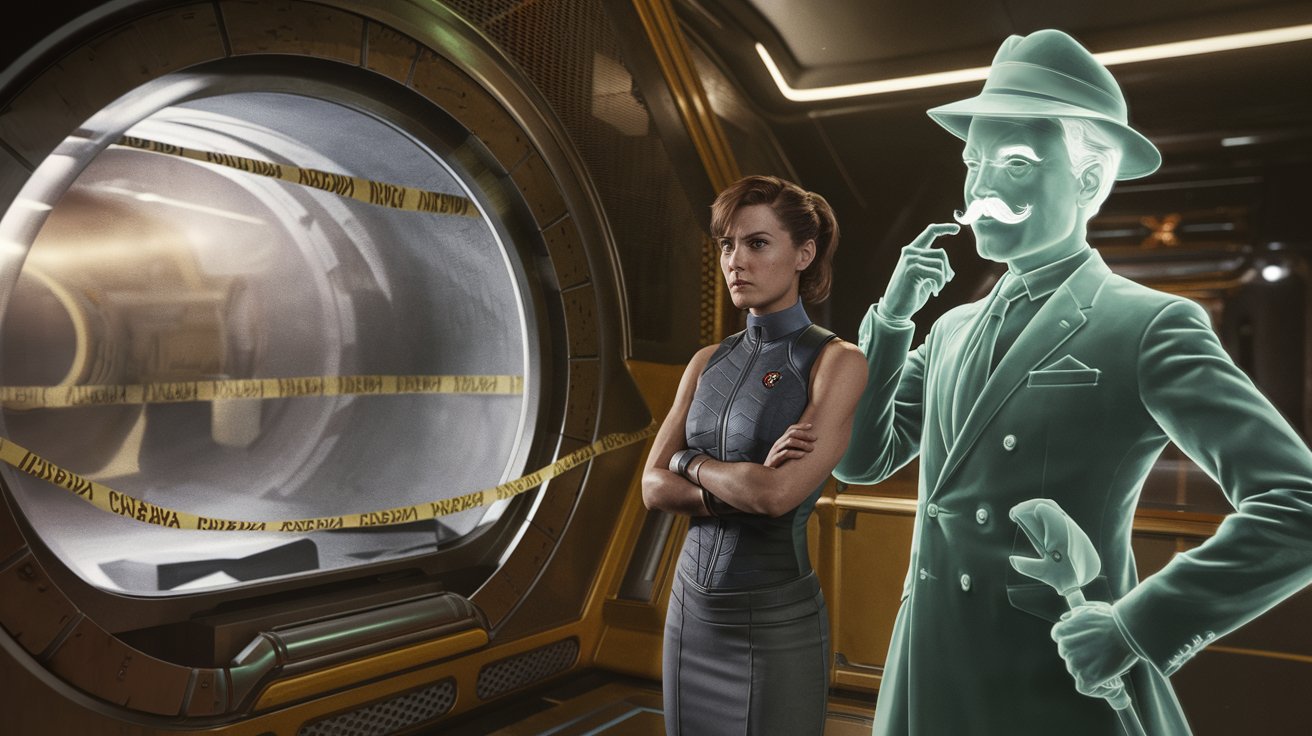
Evie and TP Investigating the Drying Machine Crime Scene
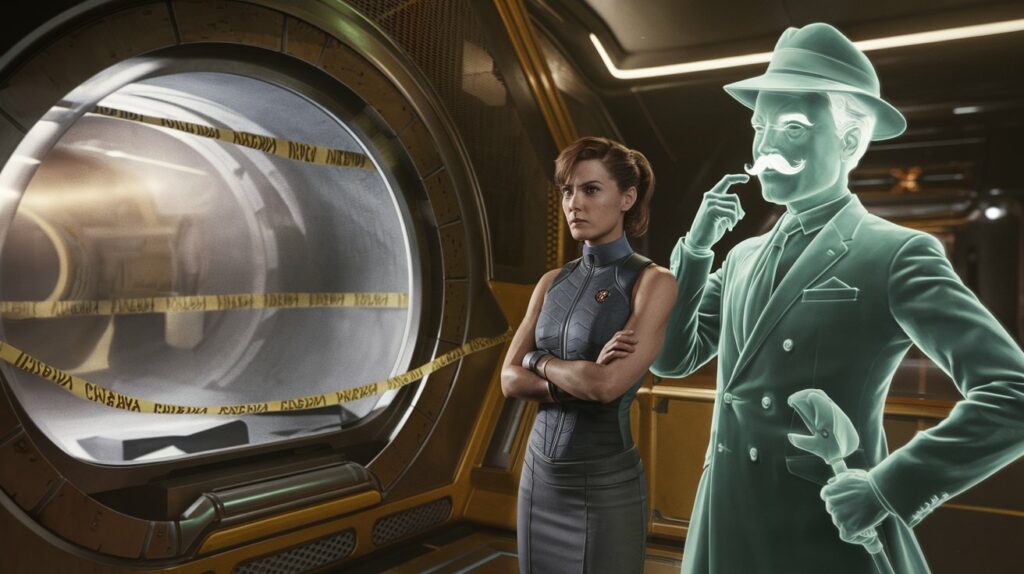
A cinematic sci-fi mini-scene aboard the vast and luxurious Helix 25. In the industrial depths of the ship, a futuristic drying machine hums ominously, crime scene tape lazily flickering in artificial gravity. Evie, a sharp-eyed investigator in a sleek yet practical uniform, stands with arms crossed, listening intently. Beside her, a translucent, retro-stylized holographic detective—Trevor Pee Marshall (TP)—adjusts his tiny mustache with a flourish, pointing dramatically at the drying machine with his cane. The air is thick with mystery, the ship’s high-tech environment reflecting off Evie’s determined face while TP’s flickering presence adds an almost comedic contrast. A perfect blend of noir and high-tech detective intrigue.
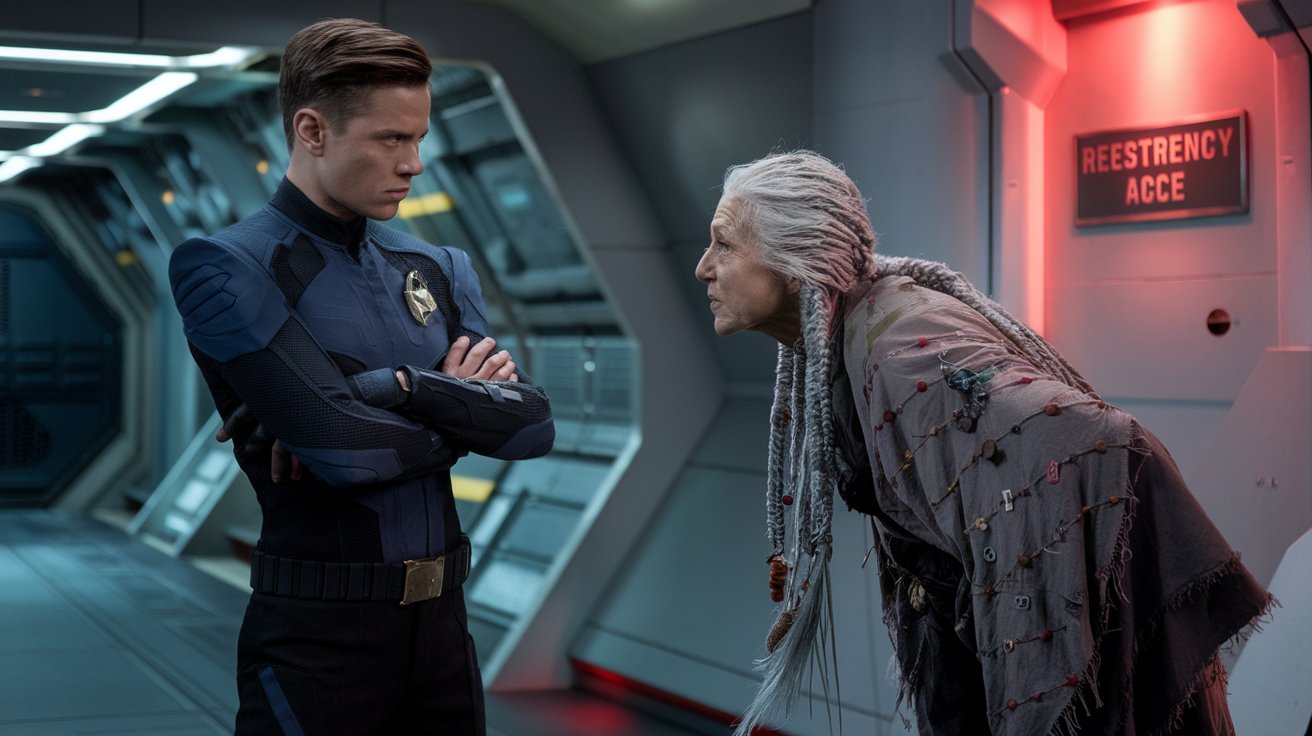
Riven Holt and Zoya Kade Confronting Each Other in a Dimly Lit Corridor
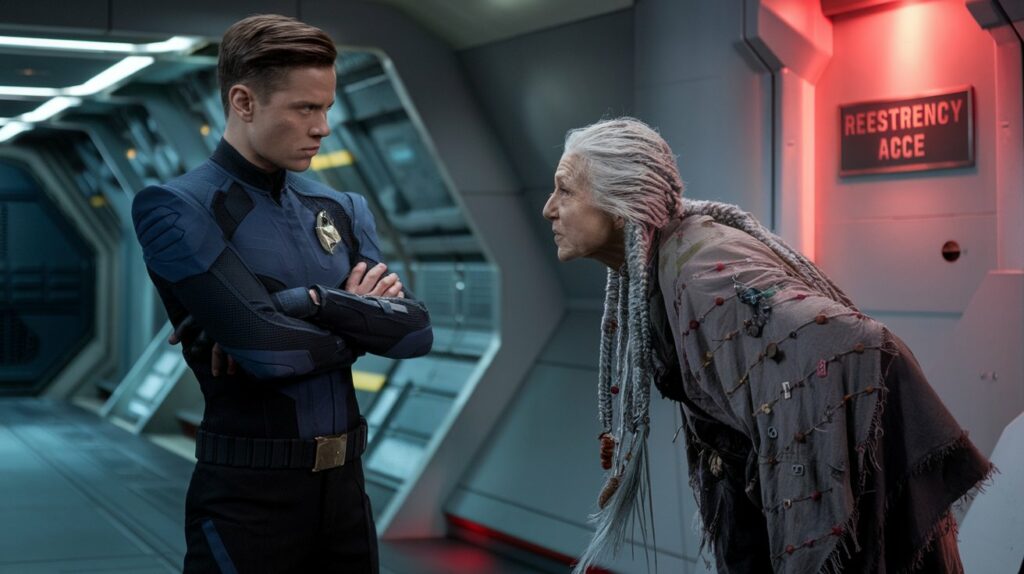
A dramatic, cinematic sci-fi scene aboard the vast and luxurious Helix 25. Riven Holt, a disciplined young officer with sharp features, stands in a high-tech corridor, his arms crossed, jaw tense—exuding authority and restraint. Opposite him, Zoya Kade, a sharp-eyed, wiry 83-year-old scientist-prophet, leans slightly forward, her mismatched layered robes adorned with tiny artifacts—beads, old circuits, and a fragment of a key. Her silver-white braid gleams under the soft emergency lighting, her piercing gaze challenging him. The corridor hums with unseen energy, a subtle red glow from a “restricted access” sign casting elongated shadows. Their confrontation is palpable—a struggle between order and untamed knowledge, hierarchy and rebellion. In the background, the walls of Helix 25 curve sleekly, high-tech yet strangely claustrophobic, reinforcing the ship’s ever-present watchfulness.
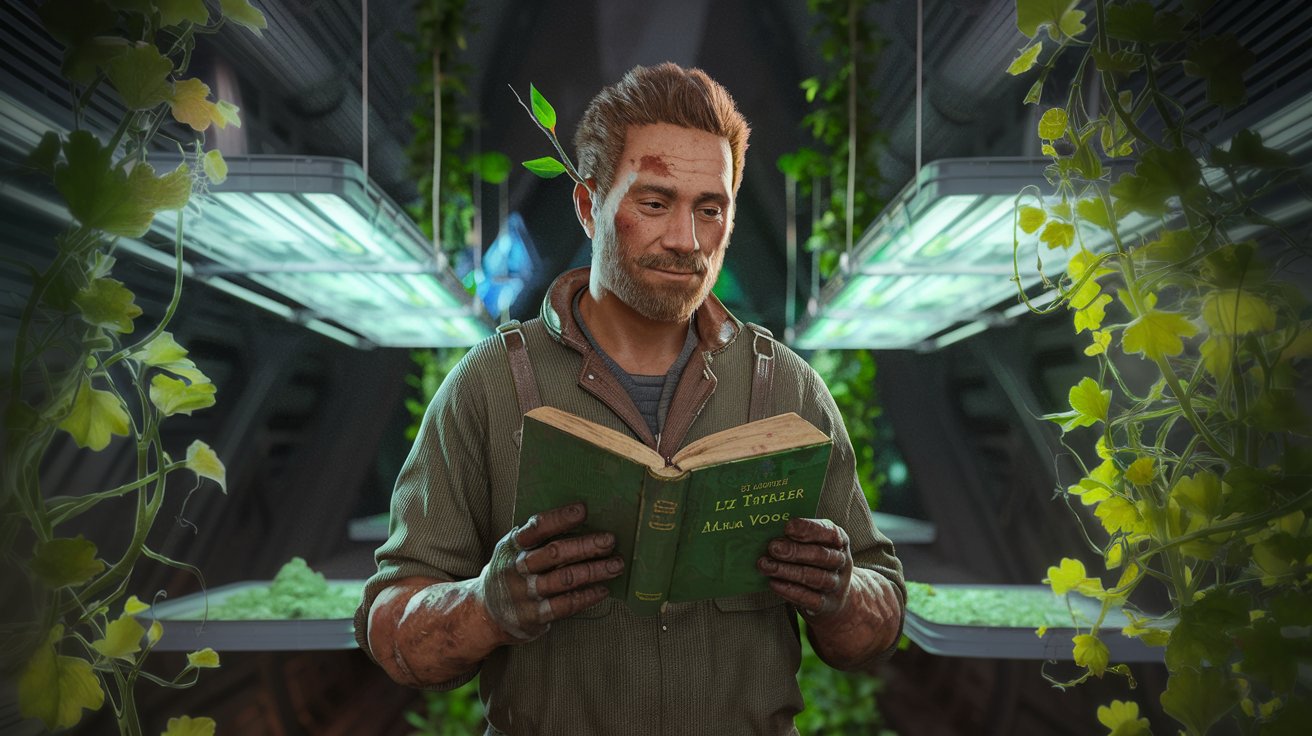
Romualdo, the Gardener, Among the Bioluminescent Plants
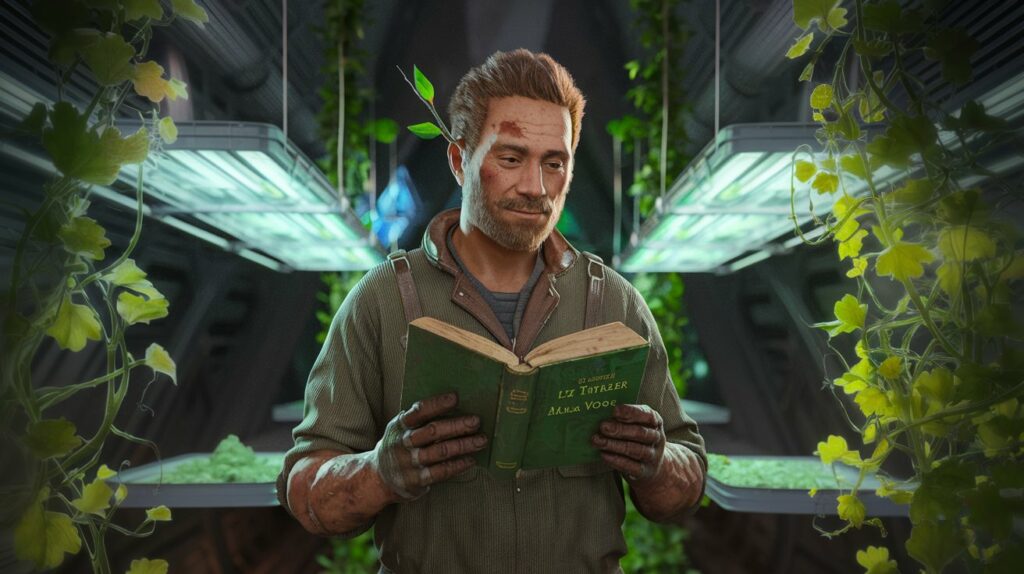
A richly detailed sci-fi portrait of Romualdo, the ship’s gardener, standing amidst the vibrant greenery of the Jardenery. He is a rugged yet gentle figure, dressed in a simple work jumpsuit with soil-streaked hands, a leaf-tipped stem tucked behind his ear like a cigarette. His eyes scan an old, well-worn book—one of Liz Tattler’s novels—that Dr. Amara Voss gave him for his collection. The glowing plants cast an ethereal blue-green light over him, creating an atmosphere both peaceful and mysterious. In the background, the towering vines and suspended hydroponic trays hint at the ship’s careful balance between survival and serenity.
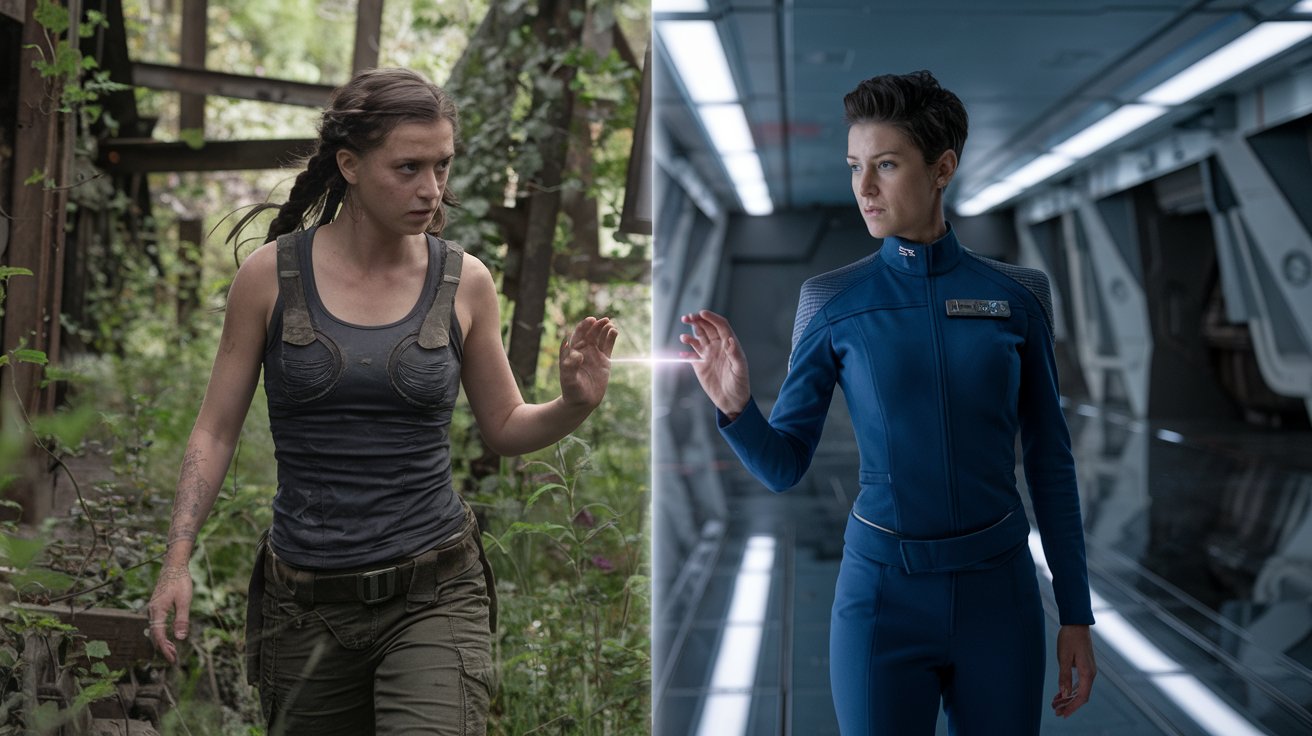
Finja and Finkley – A Telepathic Parallel Across Space
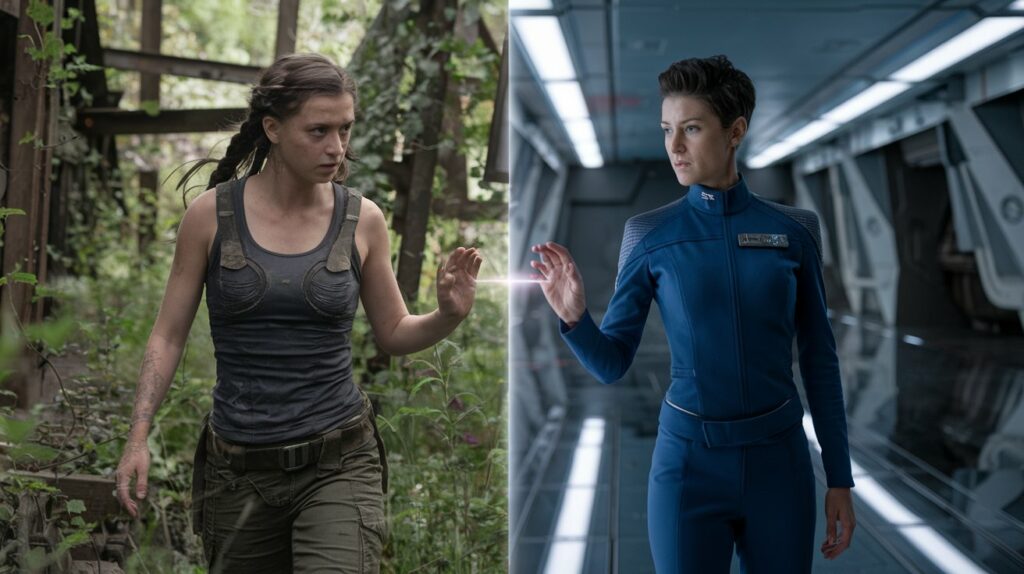
A surreal, cinematic sci-fi composition split into two mirrored halves, reflecting a mysterious connection across vast distances. On one side, Finja, a wiry, intense woman with an almost obsessive neatness, walks through the overgrown ruins of post-apocalyptic Earth, her expression distant as she “listens” to unseen voices. Dust lingers in the air, catching the golden morning light, and she mutters to herself about cleanliness. In her reflection, on the other side of the image, is Finkley, a no-nonsense crew member aboard the gleaming, futuristic halls of Helix 25. She stands with hands on her hips, barking orders at small cleaning bots as they maintain the ship’s pristine corridors. The lighting is cold and artificial, sterile in contrast to the dust-filled Earth. Yet, both women share a strange symmetry—gesturing in unison as if unknowingly mirroring one another across time and space. A faint, ghostly thread of light suggests their telepathic bond, making the impossible feel eerily real.
February 15, 2025 at 9:21 am #7789In reply to: The Last Cruise of Helix 25
Helix 25 – Poop Deck – The Jardenery
Evie stepped through the entrance of the Jardenery, and immediately, the sterile hum of Helix 25’s corridors faded into a world of green. Of all the spotless clean places on the ship, it was the only where Finkley’s bots tolerated the scent of damp earth. A soft rustle of hydroponic leaves shifting under artificial sunlight made the place an ecosystem within an ecosystem, designed to nourrish both body and mind.
Yet, for all its cultivated serenity, today it was a crime scene. The Drying Machine was connected to the Jardenery and the Granary, designed to efficiently extract precious moisture for recycling, while preserving the produce.
Riven Holt, walking beside her, didn’t share her reverence. “I don’t see why this place is relevant,” he muttered, glancing around at the towering bioluminescent vines spiraling up trellises. “The body was found in the drying machine, not in a vegetable patch.”
Evie ignored him, striding toward the far corner where Amara Voss was hunched over a sleek terminal, frowning at a glowing screen. The renowned geneticist barely noticed their approach, her fingers flicking through analysis results faster than human eyes could process.
A flicker of light.
“Ah-ha!” TP materialized beside Evie, adjusting his holographic lapels. “Madame Voss, I must say, your domain is quite the delightful contrast to our usual haunts of murder and mystery.” He twitched his mustache. “Alas, I suspect you are not admiring the flora?”
Amara exhaled sharply, rubbing her temples, not at all surprised by the holographic intrusion. She was Evie’s godmother, and had grown used to her experiments.
“No, indeed. I’m admiring this.” She turned the screen toward them.
The DNA profile glowed in crisp lines of data, revealing a sequence highlighted in red.
Evie frowned. “What are we looking at?”
Amara pinched the bridge of her nose. “A genetic anomaly.”
Riven crossed his arms. “You’ll have to be more specific.”
Amara gave him a sharp look but turned back to the display. “The sample we found at the crime scene—blood residue on the drying machine and some traces on the granary floor—matches an ancient DNA profile from my research database. A perfect match.”
Evie felt a prickle of unease. “Ancient? What do you mean? From the 2000s?”
Amara chuckled, then nodded grimly. “No, ancient as in Medieval ancient. Specifically, Crusader DNA, from the Levant. A profile we mapped from preserved remains centuries ago.”
Silence stretched between them.
Finally, Riven scoffed. “That’s impossible.”
TP hummed thoughtfully, twirling his cane. “Impossible, yet indisputable. A most delightful contradiction.”
Evie’s mind raced. “Could the database be corrupted?”
Amara shook her head. “I checked. The sequencing is clean. This isn’t an error. This DNA was present at the crime scene.” She hesitated, then added, “The thing is…” she paused before considering to continue. They were all hanging on her every word, waiting for what she would say next.
Amara continued “I once theorized that it might be possible to reawaken dormant ancestral DNA embedded in human cells. If the right triggers were applied, someone could manifest genetic markers—traits, even memories—from long-dead ancestors. Awakening old skills, getting access to long lost secrets of states…”
Riven looked at her as if she’d grown a second head. “You’re saying someone on Helix 25 might have… transformed into a medieval Crusader?”
Amara exhaled. “I’m saying I don’t know. But either someone aboard has a genetic profile that shouldn’t exist, or someone created it.”
TP’s mustache twitched. “Ah! A puzzle worthy of my finest deductive faculties. To find the source, we must trace back the lineage! And perhaps a… witness.”
Evie turned toward Amara. “Did Herbert ever come here?”
Before Amara could answer, a voice cut through the foliage.
“Herbert?”
They turned to find Romualdo, the Jardenery’s caretaker, standing near a towering fruit-bearing vine, his arms folded, a leaf-tipped stem tucked behind his ear like a cigarette. He was a broad-shouldered man with sun-weathered skin, dressed in a simple coverall, his presence almost too casual for someone surrounded by murder investigators.
Romualdo scratched his chin. “Yeah, he used to come around. Not for the plants, though. He wasn’t the gardening type.”
Evie stepped closer. “What did he want?”
Romualdo shrugged. “Questions, mostly. Liked to chat about history. Said he was looking for something old. Always wanted to know about heritage, bloodlines, forgotten things.” He shook his head. “Didn’t make much sense to me. But then again, I like practical things. Things that grow.”
Amara blushed, quickly catching herself. “Did he ever mention anything… specific? Like a name?”
Romualdo thought for a moment, then grinned. “Oh yeah. He asked about the Crusades.”
Evie stiffened. TP let out an appreciative hum.
“Fascinating,” TP mused. “Our dearly departed Herbert was not merely a victim, but perhaps a seeker of truths unknown. And, as any good mystery dictates, seekers who get too close often find themselves…” He tipped his hat. “Extinguished.”
Riven scowled. “That’s a bit dramatic.”
Romualdo snorted. “Sounds about right, though.” He picked up a tattered book from his workbench and waved it. “I lend out my books. Got myself the only complete collection of works of Liz Tattler in the whole ship. Doc Amara’s helping me with the reading. Before I could read, I only liked the covers, they were so romantic and intriguing, but now I can read most of them on my own.” Noticing he was making the Doctor uncomfortable, he switched back to the topic. “So yes, Herbert knew I was collector of books and he borrowed this one a few weeks ago. Kept coming back with more questions after reading it.”
Evie took the book and glanced at the cover. The Blood of the Past: Genetic Echoes Through History by Dr. Amara Voss.
She turned to Amara. “You wrote this?”
Amara stared at the book, her expression darkening. “A long time ago. Before I realized some theories should stay theories.”
Evie closed the book. “Looks like someone didn’t agree.”
Romualdo wiped his hands on his coveralls. “Well, I hope you figure it out soon. Hate to think the plants are breathing in murder residue.”
TP sighed dramatically. “Ah, the tragedy of contaminated air! Shall I alert the sanitation team?”
Riven rolled his eyes. “Let’s go.”
As they walked away, Evie’s grip tightened around the book. The deeper they dug, the stranger this murder became.
December 20, 2024 at 1:44 am #7701In reply to: Quintessence: Reversing the Fifth
Amei attached a card and ribbon to the last of the neatly wrapped gifts and placed it under the tree. This one was for Paul—a notebook with a cover of soft fabric she’d block-printed with delicate, overlapping circles in muted blues and greens. The fabric was left over from a set of cushions for a client, but she had spent hours crafting the notebook, knowing all the while Paul probably wouldn’t use it. He was impossible to buy for, preferring things he picked out himself. Tabitha had been far easier: Amei had secretly made a dress out of a soft, flowing fabric that Tabitha had fallen in love with the moment Amei showed it to her.
The house felt calm for the moment. Tabitha had gone out earlier, calling over her shoulder that she’d be back in time for dinner. Amei smiled at the memory of her daughter’s laughter. Her excitement about Christmas was palpable, a bright contrast to the quietness that had settled over everything else. Amei used to feel like that about Christmas too. This year, though, she was only making the effort for Tabitha.
Somewhere down the hallway, Paul’s voice murmured on a call—distant, like everything about him lately. The air smelled faintly of cinnamon and cloves from the mulled wine simmering on the stove, but even that warm, festive scent felt like it was trying too hard.
The house felt big, despite the occasional bursts of life it saw on days like this. It had felt that way for months now, the weight of unspoken things pressing against the faded walls.
She sighed and reached for the decoration box, pulling out a small clay angel with chipped wings. The sight of it made her pause. Lucien had given it to her years ago, one Christmas, and declared it “charmingly imperfect,” insisting it belonged at the top of her tree. She smiled faintly at the memory, turning it over in her hands. Every year since, it had held its place at the top of the tree.
“Still not done?” Paul’s voice cut into her thoughts. She turned to see him standing in the doorway. At the sound of Paul’s voice, Briar, their elderly cat—or technically Paul’s cat—emerged from behind the curtain, her tail curling as she wove around his legs. Paul crouched slightly to scratch behind her ears, and Briar leaned into his touch, purring softly
“She thinks it’s dinner time,” Amei said evenly.
“You always go overboard with these things, Amei,” Paul said, straightening and nodding towards the gifts.
“It’s Christmas,” she snapped, the irritation slipping through before she could stop it. She turned back to the tree, her fingers moving stiffly as she busied herself with strands of sparkly tinsel.
Paul didn’t respond, but she could feel his gaze linger. It was the silence that had grown between them in recent months, filled with everything they couldn’t bring themselves to say…yet.
The sound of the front door banging shut and brisk footsteps broke the tension. Tabitha burst past Paul into the room, her cheeks flushed from the cold. “Hey, Paul. Hey, Mumma Bear,” she said brightly. Her eyes lit up as they landed on the tree. “The tree looks gorgeous! Don’t you just love Christmas?”
December 7, 2024 at 10:48 pm #7654In reply to: Quintessence: Reversing the Fifth
The first one to find the bar buys the drinks, Darius had said, and they’d all laughed, but it was no laughing matter being lost in those woods.
Siiting on a cushion on the floor surrounded by cardboard shoeboxes and piles of photos and letters, Elara leaned towards the lamp to better see the photograph. The white bull.
Lucien had refused when Elara asked him to do a painting of the white bull, and then relented and said he would. But he hadn’t, not that she knew of anyway. The incident had happened the year before the pandemic, the spring of 2019. Not long before they all went their separate ways. Elara had been visiting her father in Andalucia for his 90th birthday when a neighbour of his had told her about the stone in the woods. She knew the others would be interested and had invited them over; her father Roland had plenty of room at his finca overlooking the Hozgarganta river, and had no objections.
Darius had wanted to bring those people to see the pyramidal stone in the woods, and Elara was having none of it. I was told in private about that, I shouldn’t have shown anyone, Darius, not even you, she had told him. Resentfully, Darius had tried to argue his point: that it was for the greater good, shouldn’t be kept secret, and how could he keep it from them anyway, they would know he was hiding something.
You may not be able to find it again, look at the trouble we had. You might get attacked by wild boar or fall off a precipice into the gorge, Amei added, not relishing the idea of sharing the discovery with those people either. She couldn’t help thinking it wouldn’t be a bad thing if those people did disappear without a trace. Darius hadn’t been the same since getting sucked into their cultish clutches.
They had lost their way in the gloomy trackless forest trying to find the stone, impossible to see further than the next few trees. Increasingly alarmed at the boar tracks and the fading late afternoon light, Elara had suggested they give up and try and retrace their steps, rather than penetrating further down into the woods. And then suddenly Lucien shouted There is it! That’s it! and there it stood, rising above the tree canopy, the sharp grey stone sides contrasting gloriously with the thick tangled foliage.
Rushing towards it, they fanned out circling it, touching it, gazing up at the smooth sides. Solid stone, not constructed with blocks, its purpose indecipherable, astonishingly incongruous to the location.
Look, we need to start making our way back to the car, Elara had said, It’ll be dark in a couple of hours.
Amei had helped her convince Lucien and Darius who were reluctant to leave, promising another visit. Now we know where it is, she said, although she wasn’t sure if they did know how to find it again. It had appeared while they were lost, after all.The scramble back to the car had been no less confusing than the walk down to the stone, they only knew they had to go uphill to find the unpaved forest road.
Squinting as they emerged from trees into the sunlight, a spontaneous cheer was immediately silenced at the sight of the white bull lying serenely by the site of the road, glowing like white marble, implacable, wise, and godly.
Is it real? whispered Amei, awestruck.I wonder if Darius ever did take those people there, Elara wondered. It had never been mentioned again, but then, things started to change after that. So many things were left unsaid. Elara had never been back, but the white bull had stayed in her mind perhaps more even than the stone pyramid had. I wonder if Lucien ever did that painting of it? Elara propped the photo up behind a candlestick on the fireplace mantel. Now that she was retired, maybe she’d do a painting of it herself.
December 7, 2024 at 11:18 am #7652In reply to: Quintessence: Reversing the Fifth
Darius: The Call Home
South of France: Early 2023
Darius stared at the cracked ceiling of the tiny room, the faint hum of a heater barely cutting through the January chill. His breath rose in soft clouds, dissipating like the ambitions that had once kept him moving. The baby’s cries from the next room pierced the quiet again, sharp and insistent. He hadn’t been sleeping well—not that he blamed the baby.
The young couple, friends of friends, had taken him in when he’d landed back in France late the previous year, his travel funds evaporated and his wellness “influencer” groups struggling to gain traction. What had started as a confident online project—bridging human connection through storytelling and mindfulness—had withered under the relentless churn of algorithm changes and the oversaturated market: even in its infancy, AI and its well-rounded litanies seemed the ubiquitous answers to humanities’ challenges.
“Maybe this isn’t what people need right now,” he had muttered during one of his few recent live sessions, the comment section painfully empty.
The atmosphere in the apartment was strained. He felt it every time he stepped into the cramped kitchen, the way the couple’s conversation quieted, the careful politeness in their questions about his plans.
“I’ve got some things in the works,” he’d say, avoiding their eyes.
But the truth was, he didn’t.
It wasn’t just the lack of money or direction that weighed on him—it was a gnawing sense of purposelessness, a creeping awareness that the threads he’d woven into his identity were fraying. He could still hear Éloïse’s voice in his mind sometimes, low and hypnotic: “You’re meant to do more than drift. Trust the pattern. Follow the pull.”
The pull. He had followed it across continents, into conversations and connections that felt profound at the time but now seemed hollow, like echoes in an empty room.
When his phone buzzed late one night, the sound startling in the quiet, he almost didn’t answer.
“Darius,” his aunt’s voice crackled through the line, faint but firm. “It’s time you came home.”
Arrival in Guadeloupe
The air in Pointe-à-Pitre was thick and warm, clinging to his skin like a second layer. His aunt met him at the airport, her sharp gaze softening only slightly when she saw him.
“You look thin,” she said, her tone clipped. “Let’s get you fed.”
The ride to Capesterre-Belle-Eau was a blur of green —banana fields and palms swaying in the breeze, the mountains rising in the distance like sleeping giants. The scent of the sea mingled with the earthy sweetness of the land, a sharp contrast to the sterile chill of the south of France.
“You’ll help with the house,” his aunt said, her hands steady on the wheel. “And the fields. Don’t think you’re here to lounge.”
He nodded, too tired to argue.
The first few weeks felt like penance. His aunt was tireless, moving with an energy that gainsaid her years, barking orders as he struggled to keep up.
“Your hands are too soft,” she said once, glancing at his blistered palms. “Too much time spent talking, not enough doing.”
Her words stung, but there was no malice in them—only a brutal honesty that cut through his haze.
Evenings were quieter, spent on the veranda with plates of steaming rice and codfish, with the backdrop of cicadas’ relentless and rhythmic agitation. She didn’t ask about his travels, his work, or the strange detours his life had taken. Instead, she told stories—of storms weathered, crops saved, neighbors who came together when the land demanded it.
A Turning Point
One morning, as the sun rose over the fields, his aunt handed him a machete.
“Today, you clear,” she said.
He stood among the ruined banana trees, their fallen trunks like skeletal remains of what had once been vibrant and alive. The air was heavy with the scent of damp earth and decay.
With each swing of the machete, he felt something shift inside him. The physical labor, relentless and grounding, pulled him out of his head and into his body. The repetitive motion—strike, clear, drag—was almost meditative, a rhythm that matched the heartbeat of the land.
By midday, his shirt clung to his back, soaked with sweat. His muscles ached, his hands stung, but for the first time in months, his mind felt quiet.
As he paused to drink from a canteen, his aunt approached, a rare smile softening her stern features.
“You’re starting to see it, aren’t you?” she said.
“See what?”
“That life isn’t just what you chase. It’s what you build.”
Over time, the work became less about obligation and more about integration. He began to recognize the faces of the neighbors who stopped by to lend a hand, their laughter and stories sending vibrant pulsating waves resonant of a community he hadn’t realized he missed.
One evening, as the sun dipped low, a group gathered to share a meal. Someone brought out drums, the rhythmic beat carrying through the warm night air. Darius found himself smiling, his feet moving instinctively to the music.
The trance of Éloïse’s words—the pull she had promised—dissipated like smoke in the wind. What remained was what mattered: it wasn’t the pull but the roots —the people, the land, the stories they shared.
The Bell
It was his aunt who rang the bell for dinner one evening, the sound sharp and clear, cutting through the humid air like a call to attention.
Darius paused, the sound resonating in his chest. It reminded him of something—a faint echo from his time with Éloïse and Renard, but different. This was simpler, purer, untainted by manipulation.
He looked at his aunt, who was watching him with a knowing smile. “You’ve been lost a long time, haven’t you?” she said quietly.
Darius nodded, unable to speak.
“Good,” she said. “It means you know the way back.”
By the time he wrote to Amei, his hand no longer trembled. “Guadeloupe feels like a map of its own,” he wrote, the words flowing easily. “its paths crossing mine in ways I can’t explain. It made me think of you. I hope you’re well.”
For the first time in years, he felt like he was on solid ground—not chasing a pull, but rooted in the rhythm of the land, the people, and himself.
The haze lifted, and with it came clarity and maybe hope. It was time to reconnect—not just with long-lost friends and shared ideals, but with the version of himself he thought he’d lost.
December 7, 2024 at 10:07 am #7650In reply to: Quintessence: A Portrait in Reverse
Some elements for inspiration as to the backstory of the group and how it could tie to the current state of the story:
Here’s a draft version of the drama surrounding Éloïse and Monsieur Renard (the “strange couple”), incorporating their involvement with Darius, their influence on the group’s dynamic, and the fallout that caused the estrangement five years ago.
The Strange Couple: Éloïse and Monsieur Renard
Winter 2019: Paris, Just Before the Pandemic
The group’s last reunion before their estrangement was supposed to be a celebration—one of those rare moments when their diverging paths aligned. They had gathered in Paris in late December, the city cloaked in gray skies and glowing light. The plan was simple: a few days together, catching up, exploring old haunts, and indulging in the kind of reckless spontaneity that had defined their earlier years.
It was Darius who disrupted the rhythm. He had arrived late to their first dinner, rain-soaked and apologetic, with Éloïse and Monsieur Renard in tow.
First Impressions of Éloïse and Monsieur Renard
Éloïse was striking—lithe, dark-haired, with sharp eyes that seemed to unearth secrets before you could name them. She moved with a predatory grace, her laughter a mix of charm and edge. Renard was her shadow, older and impeccably dressed, his silvery hair and angular features giving him the air of a fox. He spoke little, but when he did, his words had the weight of finality, as if he were accustomed to being obeyed.
“They’re just friends,” Darius said when the others exchanged wary glances. “They’re… interesting. You’ll like them.”
But it didn’t take long for Éloïse and Renard to unsettle the group. At dinner, Éloïse dominated the conversation, her stories wild and improbable—of séances in abandoned mansions, of lost artifacts with strange energies, of lives transformed by unseen forces. Renard’s occasional interjections only added to the mystique, his tone implying he’d seen more than he cared to share.
Lucien, ever the skeptic, found himself drawn to Éloïse despite his instincts. Her talk of energies and symbols resonated with his artistic side, and when she mentioned labyrinths, his attention sharpened.
Elara, in contrast, bristled at their presence. She saw through their mystique, recognizing in Renard the manipulative charisma of someone who thrived on control.
Amei was harder to read, but she watched Éloïse and Renard closely, her silence betraying a guardedness that hinted at deeper discomfort.
Darius’s Growing Involvement
Over the following days, Darius spent more time with Éloïse and Renard, skipping planned outings with the group. He spoke of them with a reverence that was uncharacteristic, praising their insight into things he’d never thought to question.
“They see connections in everything,” he told Amei during a rare moment alone. “It’s… enlightening.”
“Connections to what?” she asked, her tone sharper than she intended.
“Paths, people, purpose,” he replied vaguely. “It’s hard to explain, but it feels… right.”
Amei didn’t press further, but she mentioned it to Elara later. “It’s like he’s slipping into something he can’t see his way out of,” she said.
The Séance
The turning point came during an impromptu gathering at Éloïse and Renard’s rented apartment—a dimly lit space filled with strange objects: glass jars of cloudy liquid, intricate carvings, and an ornate bronze bell hanging above the mantelpiece.
Éloïse had invited the group for what she called “an evening of clarity.” The others arrived reluctantly, wary of what she had planned but unwilling to let Darius face it alone.
The séance began innocuously enough—Éloïse guiding them through what she described as a “journey inward.” She spoke in a low, rhythmic tone, her words weaving a spell that was hard to resist.
Then things took a darker turn. She asked them to focus on the labyrinth she had drawn on the table—a design eerily similar to the map Lucien had found weeks earlier.
“You must find your center,” she said, her voice dropping. “But beware the edges. They’ll show you things you’re not ready to see.”
The room grew heavy with silence. Darius leaned into the moment, his eyes closed, his breathing steady. Lucien tried to focus but felt a growing unease. Elara sat rigid, her scientific mind railing against the absurdity of it all. Amei’s hands gripped the edge of the table, her knuckles white.
And then, the bell rang.
It was faint at first, a distant chime that seemed to come from nowhere. Then it grew louder, resonating through the room, its tone deep and haunting.
“What the hell is that?” Lucien muttered, his eyes snapping open.
Éloïse smiled faintly but said nothing. Renard’s expression remained inscrutable, though his fingers tapped rhythmically against the table, as if counting something unseen.
Elara stood abruptly, breaking the spell. “This is ridiculous,” she said. “You’re playing with people’s minds.”
Darius’s eyes opened, his gaze unfocused. “You don’t understand,” he said softly. “It’s not a game.”
The Fallout
The séance fractured the group.
- Elara: Left the apartment furious, calling Renard a charlatan and vowing never to entertain such nonsense again. Her relationship with Darius cooled, her disappointment palpable.
- Lucien: Became fascinated with the labyrinth and its connection to his art, but he couldn’t shake the unease the séance had left. His conversations with Éloïse deepened in the following days, further isolating him from the group.
- Amei: Refused to speak about what she’d experienced. When pressed, she simply said, “Some things are better left forgotten.”
- Darius stayed with Éloïse and Renard for weeks after the others left Paris, becoming more entrenched in their world. But something changed. When he finally returned, he was distant and cagey, unwilling to discuss what had happened during his time with them.
Lingering Questions
- What Happened to Darius with Éloïse and Renard?
- Darius’s silence suggests something traumatic or transformative occurred during his deeper involvement with the couple.
- The Bell’s Role:
- The bronze bell that rang during the séance ties into its repeated presence in the story. Was it part of the couple’s mystique, or does it hold a deeper significance?
- Lucien’s Entanglement:
- Lucien’s fascination with Éloïse and the labyrinth hints at a lingering connection. Did she influence his art, or was their connection more personal?
- Éloïse and Renard’s Motives:
- Were they simply grifters manipulating Darius and others, or were they genuinely exploring something deeper, darker, and potentially dangerous?
Impact on the Reunion
- The group’s estrangement is rooted in the fractures caused by Éloïse and Renard’s influence, compounded by the isolation of the pandemic.
- Their reunion at the café is a moment of reckoning, with Matteo acting as the subtle thread pulling them back together to confront their shared past.
December 4, 2024 at 6:50 am #7639In reply to: Quintessence: A Portrait in Reverse
Work in Progress: Character Timelines and Events
Matteo
- November 2024 (Reunion):
- Newly employed at the Sarah Bernhardt Café, started after its reopening.
- Writes the names of Lucien, Elara, Darius, and Amei in his notebook without understanding why.
- Acquires the bell from Les Reliques, drawn to it as if guided by an unseen force.
- Serves the group during the reunion, surprised to see all four together, though he knows them individually.
- Summer 2024 (Olympics):
- Working in a vineyard in southern France, nearing the end of the harvest season.
- Receives a call for a renovation job in Paris, which pulls him toward the city.
- Feels an intuitive connection to Paris, as if something is waiting for him there.
- Past Events (Implied):
- Matteo has a mysterious ability to sense patterns and connections in people’s lives.
- Has likely crossed paths with the group in unremarkable but meaningful ways before.
Darius
- November 2024 (Reunion):
- Arrives at the café, a wanderer who rarely stays in one place.
- Reflects on his time in India during the autumn and the philosophical journey it sparked.
- Brings with him an artifact that ties into his travels and personal story.
- Summer 2024 (Olympics):
- Living in Barcelona, sketching temples and engaging with a bohemian crowd.
- Prompted by a stranger to consider a trip to India, sparking curiosity and the seeds of his autumn journey.
- Begins to plan his travels, sensing that India is calling him for a reason he doesn’t yet understand.
- Past Events (Implied):
- Has a history of introducing enigmatic figures to the group, often leading to tension.
- His intense, nomadic lifestyle creates both fascination and distance between him and the others.
Elara
- November 2024 (Reunion):
- Travels from England to Paris to attend the reunion, balancing work and emotional hesitation.
- Still processing her mother’s passing and reflecting on their strained relationship.
- Finds comfort in the shared dynamics of the group but remains analytical about the events around the bell.
- Summer 2024 (Olympics):
- (was revealed to be a dream event) Attends a CERN conference in Geneva, immersed in intellectual debates and cutting-edge research. Receives news of her mother’s death in Montrouge, prompting a reflective journey to make funeral arrangements. Struggles with unresolved feelings about her mother but finds herself strangely at peace with the finality.
- Dreams of her mother’s death during a nap in Tuscany, a surreal merging of past and present that leaves her unsettled.
- Hears a bell’s clang, only to find Florian fixing a bell to the farmhouse gate. The sound pulls her further into introspection about her mother and her life choices.
- Mentors Florian, encouraging him to explore his creativity, paralleling her own evolving relationship with her chalk research.
- Past Events (Implied):
- Moved to Tuscany after retiring from academia, pursuing independent research on chalk.
- Fondly remembers the creative writing she once shared with the group, though it now feels like a distant chapter of her life.
- Had a close but occasionally challenging relationship with Lucien and Amei during their younger years.
- Values intellectual connections over emotional ones but is gradually learning to reconcile the two.
Lucien
- November 2024 (Reunion):
- Sends the letter that brings the group together at the café, though his intentions are unclear even to himself.
- In his Paris studio, struggles with an unfinished commissioned painting. Feels disconnected from his art and his sense of purpose.
- Packs a suitcase with sketchbooks and a bundle wrapped in linen, symbolizing his uncertainty—neither a complete departure nor a definitive arrival.
- Heads to the café in the rain, reluctant but compelled to reconnect with the group. Confronts his feelings of guilt and estrangement from the group.
- Summer 2024 (Olympics):
- Escapes Paris, overwhelmed by the crowds and noise of the Games, and travels to Lausanne.
- Reflects on his artistic block and the emotional weight of his distance from the group.
- Notices a sketch in his book of a doorway with a bell he doesn’t recall drawing, sparking vague recognition.
- Past Events (Implied):
- Once the emotional “anchor” of the group, he drifted apart after a falling-out or personal crisis.
- Feels a lingering sense of responsibility to reunite the group but struggles with his own vulnerabilities.
Amei
- November 2024 (Reunion):
- Joins the reunion at Lucien’s insistence, hesitant but curious about reconnecting with the group.
- Brings with her notebooks filled with fragments of stories and a quiet hope for resolution.
- Feels the weight of the group’s shared history but refrains from dwelling on it outwardly.
- Summer 2024 (Olympics):
- Recently moved into a smaller flat in London, downsizing after her daughter Tabitha left for university.
- Has a conversation with Tabitha about life and change, hinting at unresolved emotions about motherhood and independence.
- Tabitha jokes about Amei joining her in Goa, a suggestion Amei dismisses but secretly considers.
- Past Events (Implied):
- The last group meeting five years ago left her with lingering emotional scars.
- Maintains a deep but quiet connection to Lucien and shares a playful dynamic with Elara.
Tabitha (Amei’s Daughter)
- November 2024:
- Calls Amei to share snippets of her life, teasing her mother about her workaholic tendencies.
- Reflects on their relationship, noting Amei’s supportive but emotionally guarded nature.
- Summer 2024 (Olympics):
- Planning her autumn trip to Goa with friends, viewing it as a rite of passage.
- Discusses her mother’s habits with her peers, acknowledging Amei’s complexities while expressing affection.
- Past Events (Implied):
- Represents a bridge between Amei’s past and present, highlighting generational contrasts and continuities.
Key Threads and Patterns
- The Bell: Acts as a silent witness and instigator, threading its presence through pivotal moments in each character’s journey, whether directly or indirectly.
- Shared Histories: While each character grapples with personal struggles, their paths hint at intersections in the past, tied to unresolved tensions and shared experiences.
- Forward and Backward Motion: The narrative moves between the characters’ immediate challenges and the ripples of their past decisions, with the bell serving as a focal point for both.
December 1, 2024 at 5:44 pm #7623In reply to: Quintessence: Reversing the Fifth
At the Café
The Sarah Bernardt Café shimmered under a pale grey November sky a busy last Saturday of the “Black Week”. Golden lights spilled onto cobblestones slick with rain, and the air buzzed with the din of a city alive in the moment. Inside, the crowd pressed together, laughing, arguing, living. And in a corner table by the fogged-up window, old friends were about to quietly converged, coming to a long overdue reunion.
Lucien was the first to arrive, dragging a weathered suitcase behind him. Its wheels rattled unevenly on the cobblestones, a sound he hated. His dark curls, damp from the rain, clung to his forehead, and his scarf, streaked with old paint, hung loose around his neck. He folded himself into a corner chair, his suitcase tucked awkwardly beside him. When the server approached, Lucien waved him off with a distracted shake of his head and opened a battered sketchbook.
The next arrival was Elara. She entered briskly, shaking rain from her short gray-streaked hair, her eyes scanning the room as though searching for anomalies. A small roller bag trailed behind her, pristine and black, a sharp contrast to Lucien’s worn luggage. She stopped at the table and tilted her head.
“Still brooding?” she asked, pulling off her coat and folding it neatly over the back of a chair.
“Still talking?” Lucien didn’t look up, his pencil scratching faint lines across the page.
Elara smiled faintly. “Two minutes in, and you’re already immortalizing us? You know I hate being drawn.”
“You hate being caught off guard,” Lucien murmured. “But I never get your nose wrong.”
She laughed, the sound light but brief, and sank into her seat, placing her bag carefully beside her.
The door swung open again, and Darius entered, shaking the rain from his jacket. His presence seemed to fill the room immediately. He strode toward the table, a leather duffel slung over one shoulder and a well-worn travel pouch clutched in his hand. His boots clacked against the café’s tile floor, his movements easy, confident.
“Did you walk here?” Elara asked as he dropped his things with a thud and pulled out a chair.
“Ran into someone on the way,” he said, settling back. “Some guy selling maps. Got this one for ten euros—worth every cent.” He waved a yellowed scrap of paper that looked more fiction than cartography.
Lucien snorted. “Still paying for strangers’ stories, I see.”
“The good ones aren’t free.” Darius grinned and leaned back in his chair, propping one boot against the table leg.
The final arrival was Amei. Her entrance was quieter but no less noticeable. She unwound her scarf slowly, her layered clothing a mix of textures and colors that seemed to absorb the café’s golden light. A tote bag rested over her shoulder, bulging with what could have been books, or journals, or stories yet untold.
“You’re late,” Darius said, but his voice carried no accusation.
“Right on time,” Amei replied, lowering herself into the last chair. “You’re all just early.”
Her gaze swept across them, lingering on the bags piled at their feet. “I see I’m not the only one who came a long way.”
“Not all of us live in Paris,” Elara said, with a glance at Lucien.
“Only some of us make better life choices,” Lucien replied dryly.
The comment drew laughter—a tentative sound that loosened the air between them, thick as it was with five years of absence.
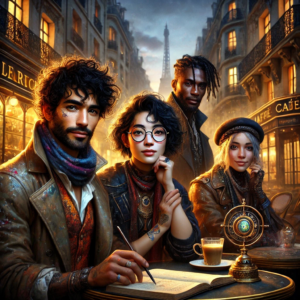 June 19, 2024 at 8:10 am #7503
In reply to: The Incense of the Quadrivium’s Mystiques
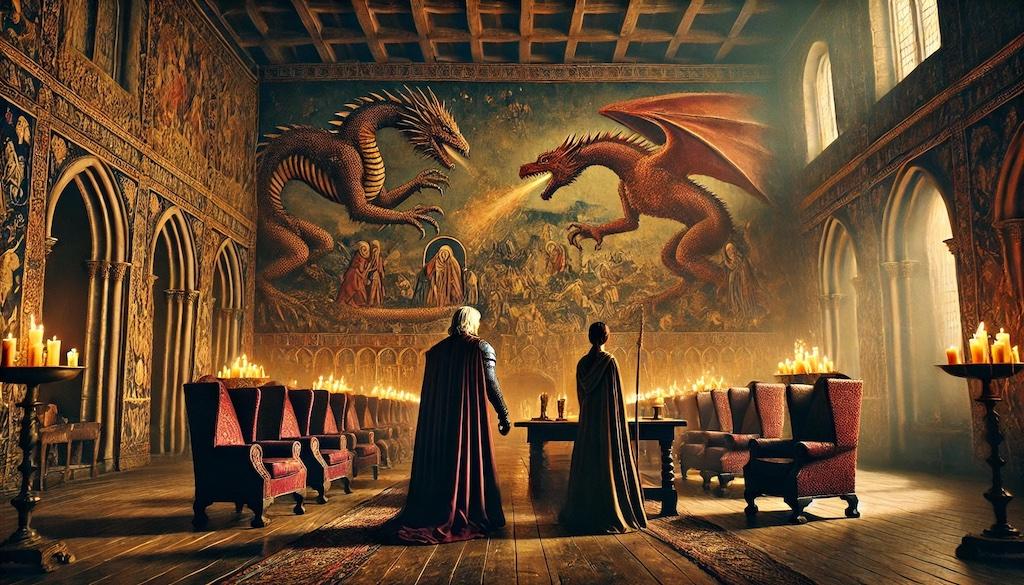
Silas led Jeezel into a secluded lounge, a hidden gem within the ancient cloister that seemed to be frozen in time. The atmosphere was thick with the scent of sandalwood and myrrh, mingling with a musty, earthy fragrance with undertones of aged woods.
Jeezel stopped a moment, in awe at the grand tapestries adorning the walls. They depicted scenes of epic battles between dragons and saints, the vibrant threads weaving tales of heroism and divine intervention. The dragons, captured in mid-roar with scales that seemed to shimmer with a life of their own, contrasted starkly agains the faces of the saints, their halo glowing softly in the dim light. Always the sensitive nose, Jeezel detected hints of incense and aged spices absorbed over centuries by the fabric, with a faint trace of mildew lingering on old stones and the faint sweetness of preserved herbs. She shivered.
Silas invited her to seat on one of the high-backed chairs upholstered in deep burgundy velvet that surrounded a massive oak table, carved with runes and symbols of protection. Jeezel frowned at the oddity to find pagan magic in a convent. As she sat the fabric of her gown brushed agains the plush velvet with a delicate sliding sound, like a faint sigh. The flickering flames of candelabras cast dancing shadows across the room, around which an array of curious relics and artifacts were scattered–an astrolabe here, a crystal ball there, and various objects of mystical significance.
Despite being an aficionado of pageants and grand performances, Jeezel couldn’t say she wasn’t impressed. Silas, ever the pillar of calm and wisdom, took a seat at the table, his fingers tracing the runes carved into the wood.
“Jeezel,” he began, his voice a soothing balm against the room’s charged energy, “I know I can trust you. Before we delve into the heart of these rituals, I must tell you something.”
Man! Here we are, she thought. She tensed on her chair.
“There are some people who would rather see the merger fail. They are doing anything in their power to foster such an outcome. We cannot let them win.”
Jeezel’s face tightened and she struggled to maintain her composure. She tapped with her fingers on the table to distract the head mortician’s attention and help her regain a stoic demeanor. Her mind raced weighing the implications. Malové had said that the Crimson Opus wasn’t just any artifact, it was key to immense power and knowledge, something that could tip the scales in their favour. How she regretted at that moment she had not paid enough attention at the merger meeting. Now, Malové was gone, somewhere, and Jeezel wasn’t even sure the postcard she had sent the coven was real. All she knew was that Malové counted on her to find that relic. And for that, she had to step in what appears to be a nest of vipers. She reminded herself she had survived worse competition in the past and still won her trophies with pride.
“Silas,” she said, her voice measured but with an edge of tension, “this complicates things more than I anticipated. We have enough on our hands ensuring the rituals go smoothly without sabotage.” She paused, taking a deep breath to steady herself. “But we cannot allow these factions to succeed. The merger is crucial for our mutual survival advancement. We’ll need to be vigilant, Silas. Every step we take, every ritual we perform, must be meticulously guarded. And we must identify who these adversaries are, and what they are planning.” She wished Malové would see her in that instant. She craved support from anyone. She looked at Silas, her eyes full of hope he could help. “I have a task from Malové that is of paramount importance,” she started and almost jumped from the chair when her hedgehog amulet almost tased her. A warning. Her mind suddenly found a new clarity. She realized she has been about to tell him about the Crimson Opus. Jeezel noticed the man’s finger was still caressing the runes on the table. Had he been casting a spell on her? She shook her head.
“Those six rituals cannot be compromised. I’ll need your help to ensure that we succeed. We must be prepared to act swiftly and decisively.”
Silas’ hand froze. He nodded. She wasn’t sure there wasn’t some irritation in his voice when he said: “You have my full support, Jeezel. We’ll strengthen our defenses and keep a close watch on any suspicious activities. The stakes are too high for failure.”
Did he mean that he would keep a close eye on her next moves? She’d have to be careful in her search of the Crimson Opus. She realized she needed some help. Malové, you entrusted me with that mission. Then, you’d have to trust me with whom I choose to trust.
June 17, 2024 at 7:40 am #7487In reply to: The Incense of the Quadrivium’s Mystiques
Although not unheard of in Limerick, it had been raining for days and that affected moods. The weather forecast, despite many promises, hadn’t been able to curb the collective melancholy. Jeezel had to resist the temptation to use a spell or two just for an hour of sunshine, but she remembered what Linda Paul would say about meddling with weather patterns. She’d likely take a dramatic pause, her eyes narrowing in theatrical emphasis as she weighed her words carefully.
“Darling, one does not simply tinker with the weather as if it were a mere accessory to one’s outfit. The weather, you see, is a complex symphony conducted by the universe itself. Each raindrop, each gust of wind, each sunbeam—it’s all part of an intricate, celestial score. Tampering with such forces is akin to striking a discordant note in a masterpiece; the repercussions can be chaotic and unpredictable. Mother Nature has a way of setting things right, and trust me, her methods are rarely gentle. Remember the tale of the tempestuous sorcerer who tried to stop a storm and ended up summoning a hurricane? Or that ill-fated witch who thought to banish winter, only to plunge her village into eternal ice?” Her eyes might sparkle with a hint of mischief as she added, “And let’s not forget the fashion disasters! Imagine trying to maintain a perfect coiffure in a sudden downpour you inadvertently summoned. Utterly tragic, darling.”
Jeezel giggled at the evocation. No, she would not meddle with the intricate weave of weathery, but one little filter spell on her window was innocuous enough to transform the “gloom of June” into a “dawn’s gentle fingers caressing the horizon”. She was standing before her ornate, vintage mirror in a midnight blue gown. The magic morning light was dancing upon the silver filigree, casting ethereal patterns across her boudoir.
Her thoughts meandered through the labyrinth of anticipation and preparation. “A convent,” she mused, “How delightfully austere. A stark contrast to my usual flamboyance.” In her address to the coven and looking specifically at Jeezel with ice cold eyes, Austreberthe had insisted on modesty and temperance. “But then, Austreberthe is not Malové,” Jeezel said, “and even the most demure places need a touch of magic.”
She ran her fingers through her raven locks, contemplating her wardrobe. “Burgundy for modesty and vintage silver lace mantilla for a whisper of enchantment”, she decided. It would strike the perfect balance.
Then, her mind turned to practicalities. The convent, with its storied history and sacred relics, would likely be a trove of ancient magics. She carefully selected a few essential items on her vanity: a vial of protective potion, a small pouch of moon blessed herbs and her favourite amulet in the shape of a silver hedgehog she got from her grand-mother and imbued with protective and clarity spells.
Her eyes fall on the thick file Truella had given each of them the day before. Full of charts and bullet lists about the cloister, questions about history, mug shots and detailed descriptions of the current inhabitants, with (not so) occasional pictures of her own digs and dogs. If Eris had skimmed through it in seconds and started to ask questions, Frella said she would read it before going to bed as it helped with her remembering. Jeezel had said nothing. She had gotten dizzy with too many bullet points and letters. All she could think about was the precious space and weight it would take in her suitcase and in her mind.
Though, there was something different. An envelop stuck between the file and the mahogany wood of the vanity. She took the envelop and opened it. It contained a letter and a small, ornate key, its surface inscribed with runes that glimmered with an otherworldly light. The paper grain was of fine quality. Jeezel recognized Malové’s intricate calligraphy. The paper carried subtle fragrances of sandalwood, jasmine, and bergamot, with a touch of vetiver and ambergris. With each whiff hidden facets were emerging from an apparently simple message.
“Jeezel, my trusted enchantress,” it started, “your journey to the convent in Spain is of utmost importance, more than the others can fathom. Beneath the cloistered serenity of those ancient walls lies a secret long kept from the world—a relic of unparalleled power known as the ‘Crimson Opus.’ It is said to be a manuscript not written with ink, but with the very essence of time itself.”
Your mission is to locate this Crimson Opus. It is guarded by a labyrinth of spells and enchantments designed to deter even the most skilled of seekers. But you, my dear Jeezel, possess the unique aptitude to unravel its mysteries. The convent’s seemingly mundane routines are the veil that conceals its true purpose; a sanctuary for the relic, and a prison for those who seek its power with ill intent.”
“You must be cautious, for the Crimson Opus has a sentience of its own. It will test your resolve, tempt you with visions and promises. Trust in your instincts, and remember, its true power can only be harnessed by those with a pure heart and an unyielding will.”
“The key will guide you to the hidden chamber where the Opus rests. Use it wisely, and under no circumstances let it fall into the wrong hands. You are more than capable, my dear. Don’t mention your mission to anyone. The fate of many may hinge upon your success, but I have no doubt in your abilities. Go forth, and may the ancient forces watch over you.”
Jeezel would have thought of a joke were it not for the mastery with which the message and its hidden layers had been crafted. She thought Malové was enthralled in a passionate romance in Brasil, but something in the scent she had not been able to decipher seemed to suggest the reality was more complex than it seemed. She thought of her friends. Did they all received a similar letter? Whom could she trust when secrecy was mandatory?
She held her hedgehog amulet more tightly, asking for some guidance.
June 7, 2024 at 9:03 pm #7459In reply to: The Incense of the Quadrivium’s Mystiques
There was an odd sight today.
Eris sat in the deserted courtyard area of the brand new Quadrivium office, Malové’s latest folly. She could savor the quiet that Fridays often brought, most of her colleagues from the coven preferring to work from home, leaving the usually bustling space tranquil and almost meditative. She took a bite of her sandwich, listening distractedly to the complaints of another witch sitting nearby, while her own mind still preoccupied with the myriad responsibilities and recent events that seemed to pile around like a stack of clothes due a trip to the laundry.
As she chewed thoughtfully, her eyes were drawn to an odd sight. A blackbird was performing a strange dance in front of the mirrored walls that lined one side of the patio. It hopped back and forth, its beak tapping on the surface, its feathers shimmering in the afternoon light, as if it were courting its own reflection or perhaps trying to feed it with a worm it had in its beak. Eris paused, intrigued by this peculiar behavior. What could it mean?
Her thoughts were interrupted by a series of sharp, melodic chirps. She looked around and spotted another bird perched nearby in the foliage of hanged planters lining the walls —a female blackbird, easily identifiable by her distinct brown coat. The female watched the male’s antics with a mix of curiosity and detachment, her chirps seeming to carry a message of their own.
Eris felt a shiver run down her spine, a familiar sensation that often preceded a moment of magical insight. The blackbird’s dance wasn’t just an oddity; it was a sign, a message from the universe, or perhaps from the magical currents that flowed unseen through the world.
She closed her eyes for a moment and took a deep breath, trying to connect with the energy around her. The image of the male blackbird, tirelessly courting its own reflection, seemed to mirror her own recent struggles. Had she been chasing an illusion, trying to nourish something that could not be sustained?
The female blackbird’s presence added another layer to the message. She was grounded, present, and observant—a contrast to the male’s futile efforts. Eris thought of her recent decisions, the dismissal of the cook, the strained relationships within the coven, and the cryptic postcards from Truella. Was the universe urging her to find balance, to ground herself and observe more keenly before taking action?
She could almost hear Elias whispers in her ears: Birds, in general, often represent thoughts or ideas flying about in our consciousness. The blackbird specifically, with its stark contrast and distinct presence, can represent deeper insights, truths, or messages that are coming to your awareness. The mirror, as a reflective surface, implies that these insights pertain directly to your perception of self or facets of your identity that may be emerging or needing attention. Putting this together, the imagery of the birds and their interactions could be nudging you to pay closer attention to your inner reflections. Are you nurturing the parts of yourself that truly need attention? Are there aspects of your identity or self-perception that require acknowledgment and care? The presence of the brown-coated female blackbird might also be a reminder to appreciate the varied and multifaceted nature of your experiences and the different roles you embody.
She opened her eyes, feeling a sense of clarity washing over her. The birds continued their vivid dialogue and unfathomable dances, unaware of the impact they had just made, although her insistent gaze had seemed to snap the blackbird out of its mesmerized pattern. He was now scurrying away looking over its shoulder, as if caught in an awkward moment.
Rising from her seat, Eris felt something. Not some sort of newfound sense of purpose, but a weight of a precious present, luminous and fragile, yet spacious and full with undecipherable meaning. She glanced one last time at the blackbirds, silently thanking them for their unspoken wisdom. As she walked back into the office, she knew that the path ahead would still be fraught with challenges, but she was ready to face them—grounded, observant, and attuned to the subtle messages that the world had to offer.
In the quiet of the Quadrivium office, on a deserted Friday afternoon, a blackbird’s dance had set the stage for the next chapter of her journey.
February 16, 2024 at 11:19 am #7377In reply to: The Incense of the Quadrivium’s Mystiques
With the carnival in full swing, Truella was finding it hard to focus on everything that was going on. Was this mission more chaotic than usual, or did it seem that way because she wasn’t giving it her full attention? She hadn’t thought too much about Jezeel not closing the portal. She was having enough trouble stabilizing her own bilocation spell.
Where was Frigella when she needed her? And what was going on with that Cedric guy? Truella decided to go in search of her. Frigella was always good at explaining and clarifying things that she hadn’t been paying attention to.
Outside on the pavement, Truella paused to light a cigarette. The street were a cocophany of raucus banter and gay shreiks, a riot of colour and imagination and Truella stood rapt at the sights and sounds. Such a contrast from her quiet life at home in the garden with only ghosts for company. In a way Truella was glad that Roger was still missing with the pack of monkeys, rather than leaving him alone at home.
“Aye, look at all them monkey costumes, our Mavis, they’m really good int they, look just like real monkeys,” a chubby Englishwoman in a garish pink outfit said, passing by where Truella was standing.
“That’s because they ARE real monkeys, ya daft cow,” retorted her companion. “And they’re all following that big fella.”
“Ooh, that big burly chap?” piped up the third woman in the group. “I clocked him right off, come on girls, let’s go after the big boy.”
“Ooh, Sha, what are you like, ya tart.”
As the three women cackled and trotted off after the monkeys, Truella’s peaceful interlude came to an abrupt halt. What burly man with a pack of monkeys? Surely not, surely Roger and his monkeys hadn’t entered that portal that Jez forgot to close?
February 6, 2024 at 11:02 pm #7355In reply to: Smoke Signals: Arcanas of the Quadrivium’s incense
Interpretations
Truella
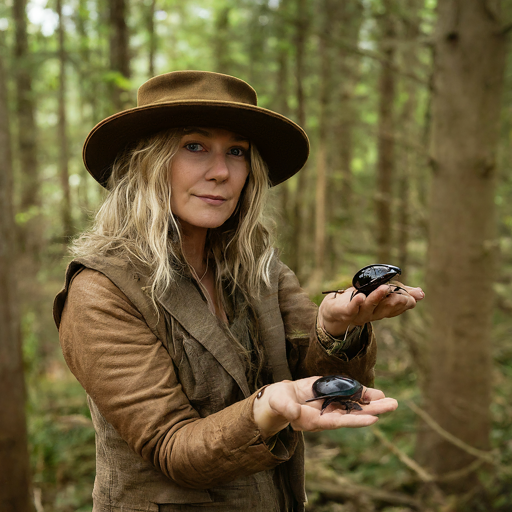
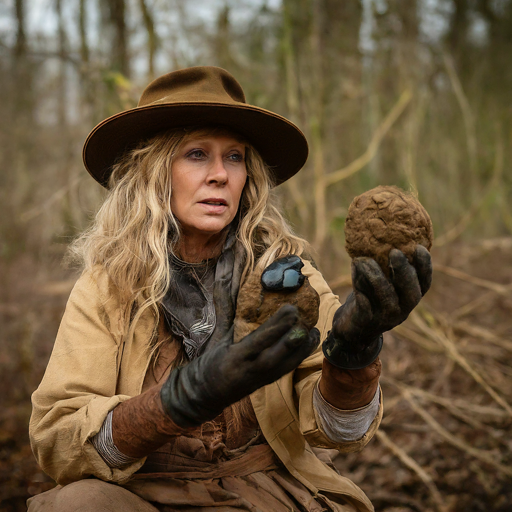

Frigella
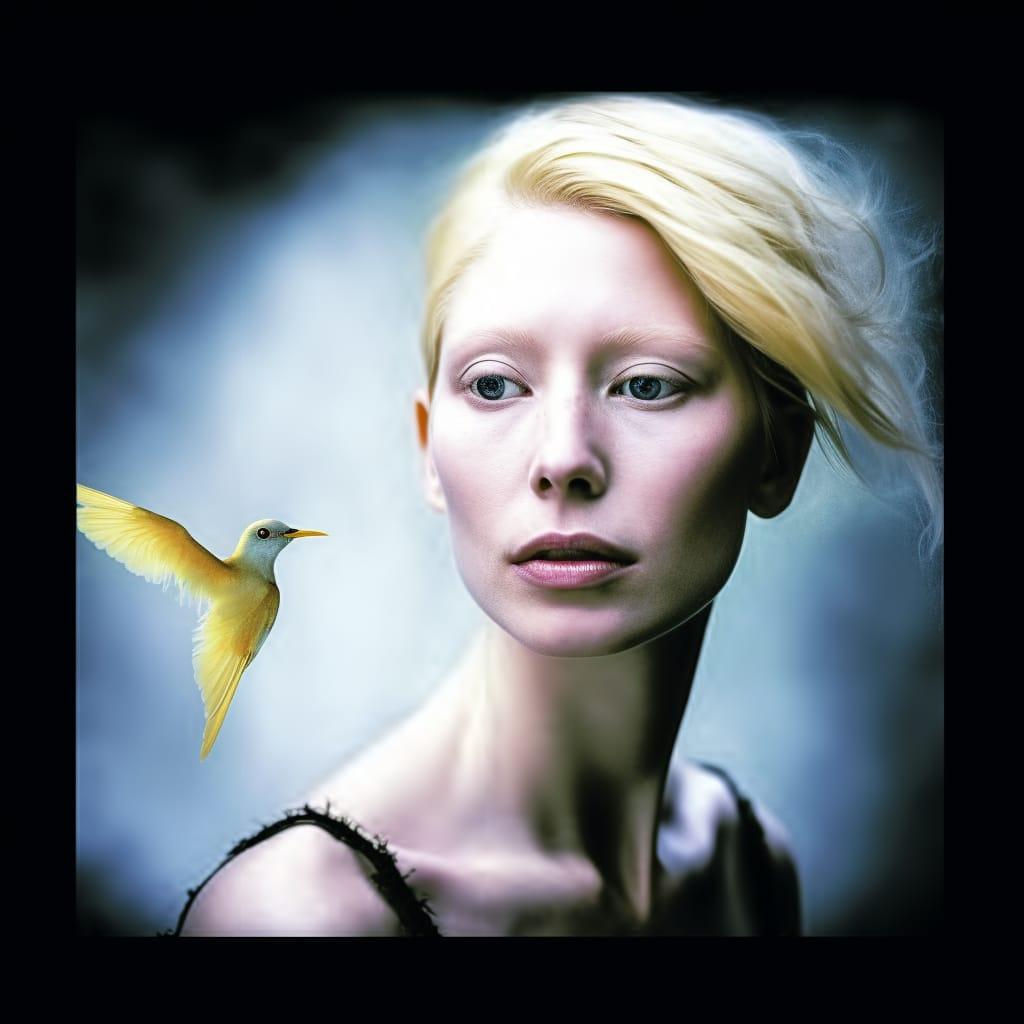
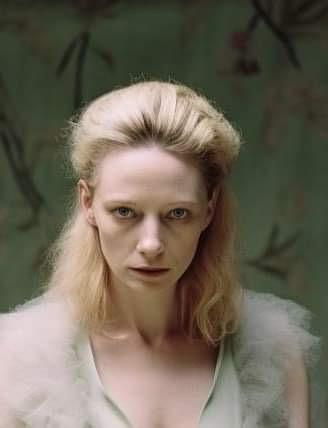

Eris
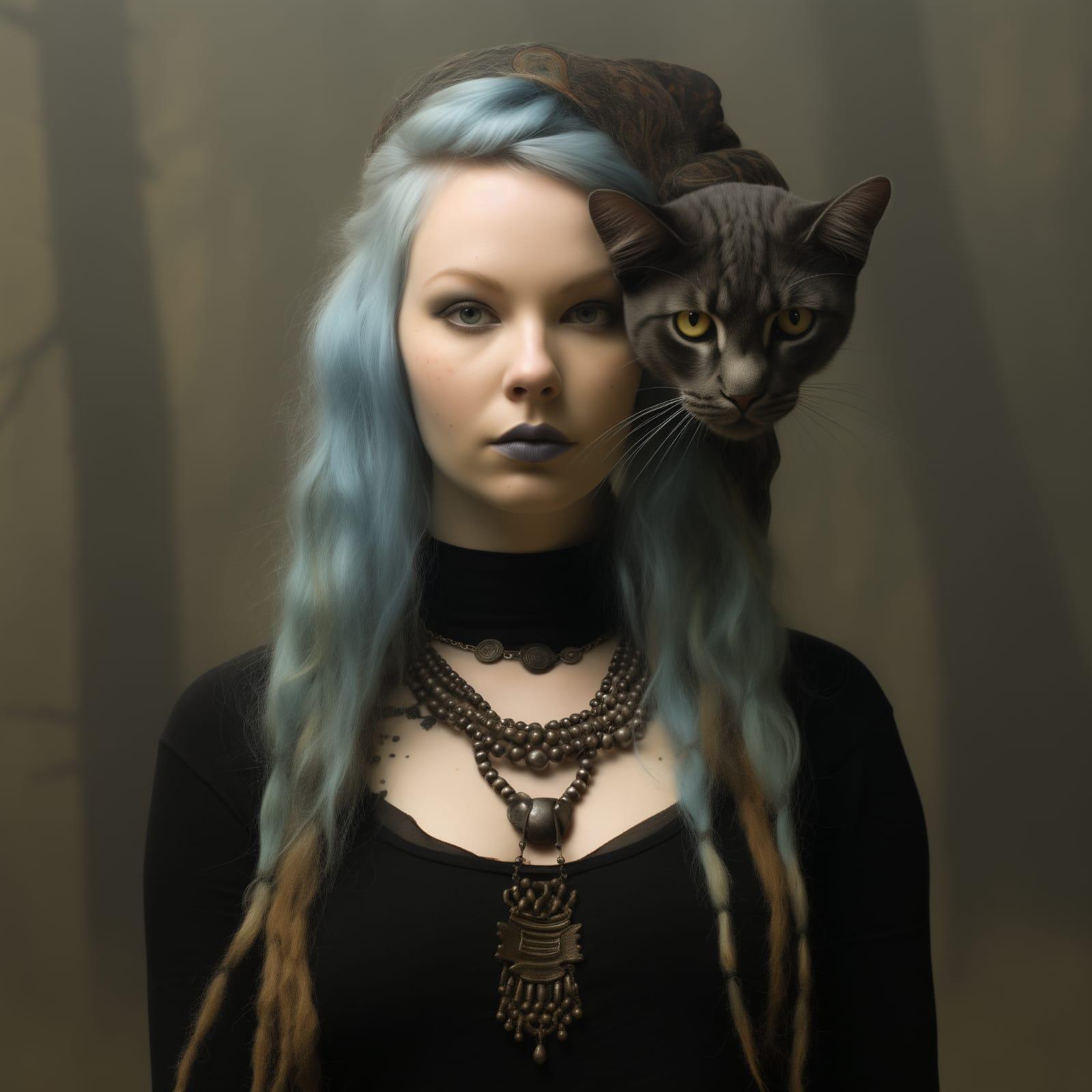
Jeezel (Jeeze the hair!)


Malové

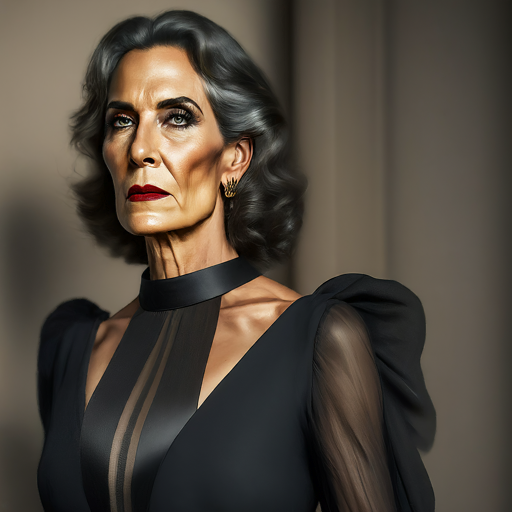

Other characters
Fringella (and not Frigella, who’s blonde like Tilda)
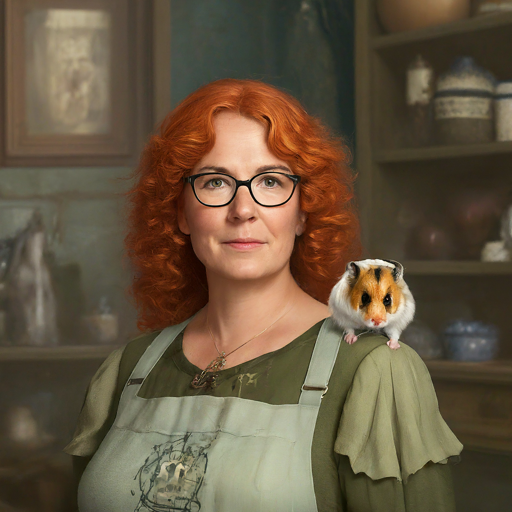
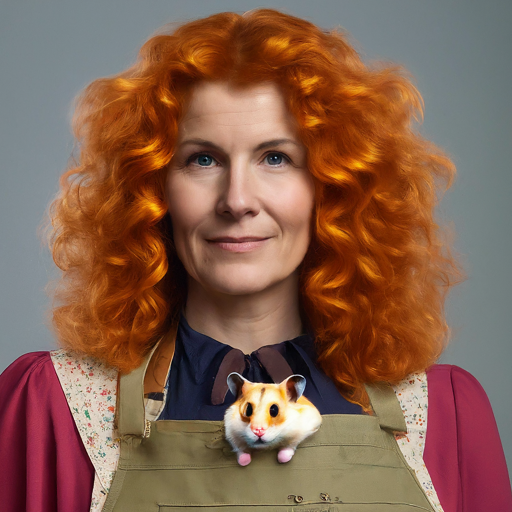
Specializing in elemental and herbal magic, Fringella has an intimate connection with the natural world. She is an adept healer and potion-maker, often creating remedies that blend traditional herbalism with powerful enchantments. Her signature spells often involve fire and earth, reflecting her passionate and grounded nature.
While she shares a name with Frigella, the two are quite different in both temperament and approach. Their interactions are marked by a mutual respect, though Fringella’s fiery disposition often contrasts sharply with Frigella’s more traditionalist and meticulous nature.
Eris’ aunt: Amara (
 )
)Amara, a woman of gentle yet resolute nature, provided Eris with a grounded upbringing amidst a world filled with arcane mysteries. Despite lacking magical abilities, Amara’s wisdom and nurturing spirit played a crucial role in shaping Eris’s character and guiding her through the complexities of her witch heritage. Amara’s home was a sanctuary where the mundane and the mystical coexisted harmoniously, offering Eris a unique perspective on the balance between everyday life and the magical realm.

 January 17, 2024 at 1:14 pm #7297
In reply to: The Whale’s Diaries Collection
what was the state of the ruined roman villa circa early 1500s when the cobblestone yard was made from on site rubble? What did the work men find?
Ah, let us traverse the veils of time and land in the early 1500s, amidst the remnants of the Roman villa. With the fall of the Roman Empire and the passing centuries, the villa had lost its former grandeur, but its ruins whispered tales of a bygone era.
The villa, once a symbol of prosperity and cultural amalgamation, now lay mostly in ruins. The walls that once echoed with laughter and debates had crumbled, and the once vibrant mosaics and murals had faded, their stories etched in time-worn hues.
The outbuildings, too, bore the scars of time. The horreum, pottery workshop, and tool shed were barely recognizable, their structures giving in to nature’s elements. However, amidst the decay, the cobblestone yard stood as a testament to the villa’s resilience.
The yard, once a bustling hub of activity, had been repurposed. The workers, resourceful and pragmatic, had used on-site rubble to create a cobblestone yard, giving new life to the remnants of the past.
As they worked, they uncovered artifacts from the villa’s past. Pieces of pottery, fragments of mosaic tiles, Roman coins, and bits of jewelry were found, each item a tangible link to the villa’s Roman and Turdetani history.
Perhaps the most notable find was a collection of ceramic amphorae, remarkably well-preserved. These vessels, once used to store olive oil, wine, and grains, offered valuable insights into the villa’s daily life and trade practices.
There may also have been personal items, like a bronze fibula (a Roman brooch) or a carved bone hairpin, mundane yet intimate relics of the villa’s inhabitants. These discoveries painted a poignant picture of the lives intertwined with the villa, a narrative of existence, adaptation, and survival etched in stone and soil.
What about the lives of the people who lived here in the 1500s?
Ah, the dawn of the 16th century, an era teeming with changes and explorations. Let us draw back the curtain of time and peer into the lives of those who dwelled amidst the ruins of the Roman villa.
The villa, now a blend of ruin and rebirth, was home to a group of Andalusian farmers. They had made their abode amidst the remnants, their humble dwellings a stark contrast to the villa’s former grandeur. Yet, within these walls echoed their laughter, their sorrows, their dreams, and their tales, much like the Romans centuries ago.
The patriarch, Diego, was a man of the soil. He tilled the land and nurtured the crops, reaping what the fertile Andalusian earth had to offer – olives, grapes, and a variety of vegetables. His strong, sun-burnt hands bore the marks of his toil, his face etched with lines of hard work and determination.
His wife, Isabella, was the custodian of the hearth. She cooked, cleaned, and cared for their three children. Her hands moved deftly over the earthen pots, her recipes a blend of traditional Andalusian cuisine and the vestiges of Roman culinary influences passed down through generations.
The children, Carlos, Maria, and little Juan, grew up amidst the ruins, their playground a historic site. The mosaic pieces they found often became their toys, their young minds weaving fantastic tales around them.
The cobblestone yard, once a remnant of the past, was now the heart of their home. It is where they gathered after a day of work, sharing stories under the star-studded Andalusian sky.
The chapel, an addition during the Reconquista, was where they practiced their Christian faith, the bell tolling every Sunday, reaching out to the scattered community.
Amidst the ruins, they found their sanctuary, their home. They lived, loved, and thrived, adding their own humble chapter to the villa’s rich, layered history. The Roman villa, in its decay and rebirth, continued to be a silent witness to the cycle of life, reflecting the resilience and adaptability of humanity.
then I asked about the 1200s on this site
Ah, the 13th century, a period of considerable transformation and discovery globally. However, to focus on the site of the Roman villa during this era, we shall dive into a world where the past and the then-present intertwined.
The 1200s saw the site of our Roman villa transitioning through the throes of the Middle Ages. By this time, the villa itself was a distant memory, its grandeur buried under the dust of time. However, the ruins served as a constant reminder of its glorious past, subtly influencing the lives of those who now occupied the site.
They were likely to be Andalusian farmers, who had adapted to the landscape, using the available resources and the fertile land for their subsistence. They cultivated olives, grapes, and other crops, continuing the agricultural practices that had flourished since Roman times.
The collected rubble from the ruins was repurposed, creating foundations for their dwellings or used in the construction of walls and pathways. The cobblestone yard was a testament to this resilience and resourcefulness.
The ruins also provided them with materials and artifacts. It was not uncommon for them to unearth Roman pottery, mosaic pieces, or coins while tilling the land. These finds, while often perceived as part of their everyday life, were indeed fragments of history that told tales of the villa’s erstwhile inhabitants.
Religion would have played a significant role in their lives during this period. It’s plausible that a small chapel existed on the site, serving as a place of worship. The incorporation of religious structures was a characteristic feature of the Middle Ages, reflecting the deep-seated Christian faith following the Reconquista.
Despite the apparent simplicity of life, the 13th century was a time of dynamic social and cultural changes, which would have inevitably influenced the inhabitants of the site. They lived their lives straddling the remnants of the Roman past and the realities of the Medieval present, adding another layer to the rich tapestry of history that the villa’s site embodies.
February 13, 2023 at 10:38 pm #6543In reply to: Orbs of Madjourneys
The road was stretching endlessly and monotonously, a straight line disappearing into a nothingness of dry landscapes that sounded a bit depressing. At regular speed, the car barely seemed to progress, and Youssef was rather serious at the wheel. Soon Xavier was left depleted of jokes to tell (even the bad ones which tended to come off easily with sleep deprivation), so he tried to catch some of the patchy network signal to reconnect where he’d left off on the game. There wasn’t much network, and all he could download in the car, even with the game in lo-fi mode, was a measly text message with the starter for his new challenge.
Your quest takes place in the ghost town of Midnight, where time seems to have stood still. The townspeople are all frozen in time, stuck in their daily routines and unable to move on. Your mission is to find the missing piece of continuity, a small hourglass that will set time back in motion and allow the townspeople to move forward.
A ghost town seemed apt indeed.
The welcome signs at the entrance of the town for their hostel were rather uninviting, but a festive banner mentioning the local “Lager and Carts festival” caught his attention. He counted the days. It would be next week-end; there was a good chance they’d still be there, the four of them. At least some action to look forward to!
When he and Youssef arrived at the Inn after that rather uneventful and terribly long drive, all they wanted was to get a shower and some sleep. Zara wasn’t back yet from her trip, but they both figured out they’d meet at breakfast in the morning.
The old lady with the sharp tongue had shown them their rooms rather unceremoniously; she was too busy ranting about an idle person not taking their *one job* seriously to care about details. Xavier almost asked for a wifi, but then thought better and decided to hold his question until he found someone to ask who was born in his century.
Xavier took room 7, and Youssef room 5.The rooms were quite nicely decorated. It reminded him of something he’d read in the plane from a commentary of the Bardo Thodöl:
In Tibetan the word for body is lü, which means “something you leave behind,” like baggage. Each time we say “lü,” it reminds us that we are only travelers, taking temporary refuge in this life and this body. So in Tibet people did not distract themselves by spending all their time trying to make their external circumstances more comfortable. They were satisfied if they had enough to eat, clothes on their backs, and a roof over their heads. Going on as we do, obsessively trying to improve our conditions, can become an end in itself and a pointless distraction. Would anyone in their right mind think of fastidiously redecorating their hotel room every time they booked into one?
— The Tibetan Book of Living and Dying
At least, he wasn’t feeling compelled to redecorate this room; it was perfect. The shared sanitaries, the boiler and the piping were another story, but that was probably coming from the same era as the owner, nice as she was.
After having unpacked his few belongings, and taken a hot shower, he laid on the bed looking at the ceiling, which was blank and made a nice contrast to the ornate walls full of colorful dots.
Luckily, searching through the signals available, he could see there was mostly one, and without any password. With the next neighbour a few miles away, no wonder nobody bothered with security.
He connected to AL to check a few parameters — there seemed to be some degenerescence in the programme output that wasn’t satisfactory, and he was wondering if some self-repair or training reinforcement mechanisms were missing. At the moment, nothing too pressing, but he would keep an eye on them.
Still no words from Yasmin… he thought drifting to sleep… I half expected her to be there already…
February 7, 2023 at 1:22 pm #6503In reply to: Orbs of Madjourneys
The plane trip stretched on forever. Xavier had the time to rewatch a few blockbusters, and catch up on light novels – in particular a roadtrip of 3 elderly Ukrainians —a story that didn’t seem to have much to say, but did put a smile on his face.
The plane has wifi, and he could have connected to the game, but he was trying his capacity to be weaned of the adrenaline rush that came with the adventures. Glimmer and the pirate ship would have to wait. He’d put his avatar on autopilot, and usually that helped propel the plot forward without investing too much time in going through relatively mundane adventures (those were needed to provide background balance and contrast against the rush of the occasional action). He hoped Glimmer wouldn’t abuse of it, and send them both to some crazy place looking for Flove knows what.
There was the occasional temptation to catch a hold of the news and his friends, but relying on the old ways of daydreaming and imagination, he could feel they were doing fine.
He could well picture Zara off to explore in and out of the game, that much was a given. As for Youssef he should be able to catch up in Alice Springs, since he wasn’t anywhere in Sydney when he landed. He was probably squeezed right now on an economy seat in between a sweaty tourist, an annoying expat, and a chatty woman. Xavier chuckled to himself thinking of the large frame of his friend in the tiny space.
He hoped all was right with Yasmin. He hadn’t be able to connect before the flight, but she was resourceful and given her competitive spirit, there was actually a good chance she had a shortcut to be there before any of them.Alice Springs was close by now. The plane prepared for landing.
Xavier remembered he’d have to get the black notebook that was part of the last assignment. They surely would have something like that in the duty free area.
February 2, 2023 at 8:09 am #6489In reply to: Orbs of Madjourneys
It was a pleasant 25 degrees as Zara stepped off the plane. The flat red land stretched as far as the eye could see, and although she prefered a more undulating terrain there was something awe inspiring about this vast landscape. It was quite a contrast from the past few hours spent inside mine tunnels.
Bert, a weatherbeaten man of indeterminate advanced age, was there to meet her as arranged and led her to the car, a battered old four wheel drive. Although clearly getting on in years, he was tall and spry and dressed in practical working clothes.
“Welcome to Alice,” he said, taking her bag and putting in on the back seat. “I expect you’ll be wanting to know a bit about the place.”
“How long have you lived here?” Zara asked, as Bert settled into the creaky drivers seat and started the car.
Bert gave her a funny look and replied “Longer than a ducks ass.” Zara had never heard that expression before; she assumed it meant a long time but didn’t like to pursue the question.
“All this land belongs to the Arrernte,” he said, pronouncing it Arrunda. “The local aboriginals. 1862 when we got here. Well,” Bert turned to give Zara a lopsided smile, “Not me personally, I aint quite that old.”
Zara chuckled politely as Bert continued, “It got kinda busy around these parts round 1887 with the gold.”
“Oh, are there mines near here?” Zara asked with some excitement.
Bert gave her a sharp look. “Oh there’s mines alright. Abandoned now though, and dangerous. Dangerous places, old mines. You’ll be more interested in the hiking trails than those old mines, some real nice hiking and rock gorges, and it’s a nice temperature this time of year.”
Bert lapsed into silence for a few minutes, frowning.
“If you’da been arriving back then, you’da been on a camel train, that’s how they did it back then. Camel trains. They do camel tours for tourists nowadays.”
“Do you get many tourists?”
“Too dang many tourists if you ask me, Alice is full of them, and Ayers Rock’s crawling with ’em these days. We don’t get many out our way though.” Bert snorted, reminding Zara of Yasmin. “Our visitors like an off the beaten track kind of holiday, know what I mean?” Bert gave Zara another sideways lopsided smile. “I reckon you’ll like it at The Flying Fish Inn. Down to earth, know what I mean? Down to earth and off the wall.” He laughed heartily at that and Zara wasn’t quite sure what to say, so she laughed too.
“Sounds great.”
“Family run, see, makes a difference. No fancy airs and graces, no traffic ~ well, not much of anything really, just beautiful scenery and peace and quiet. Aunt Idle thinks she’s in charge but me and old Mater do most of it, well Finly does most of it to be honest, and you dropped lucky coming now, the twins have just decorated the bedrooms. Real nice they look now, they fancied doing some dreamtime murials on the walls. The twins are Idle’s neices, Clove and Corrie, turned out nice girls, despite everything.”
“Despite ….?”
“What? Oh, living in the outback. Youngsters usually leave and head for the cities. Prune’s the youngest gal, she’s a real imp, that one, a real character. And Devan calls by regular to see Mater, he works at the gas station.”
“Are they all Idle’s neices and nephews? Where are their parents?” Perhaps she shouldn’t have asked, Zara thought when she saw Bert’s face.
“Long gone, mate, long since gone from round here. We’ve taken good care of ’em.” Bert turned off the road onto a dirt road. “Only another five minutes now. We’re outside the town a bit, but there aint much in town anyway. Population 79, our town. About right for a decent sized town if you ask me.”
Bert rounded a bend in a eucalyptus grove and announced, “Here we are, then, the Flying Fish Inn.” He parked the car and retrieved Zara’s bag from the back seat. “Take a seat on the verandah and I’ll find Idle to show you to your room and get you a drink. Oh, and don’t be put off by Idle’s appearance, she’s a sweetheart really.”
Aunt Idle was nowhere to be found though, having decided to go for a walk on impulse, quite forgetting the arrival of the first guest. She saw Bert’s car approaching the hotel from her vantage point on a low hill, which reminded her she should be getting back. It was a lovely evening and she didn’t rush.

Bert found Mater in the dining room gazing out of the window. “Where the bloody hell is Idle? The guest’s outside on the verandah.”
“She’s taken herself off for a walk, can you believe it?” sighed Mater.
“Yep” Bert replied, “I can. Which room’s she in? Can you show her to her room?”
“Yes of course, Bert. Perhaps you’d see to getting a drink for her.”
-
-
AuthorSearch Results