-
AuthorSearch Results
-
February 3, 2025 at 10:10 pm #7733
In reply to: The Last Cruise of Helix 25
Leaving the Asylum
They argued about whether to close the heavy gates behind them. In the end, they left them open. The metal groaned as it sat ajar, rust flaking from its hinges.
“Are we all here?” Anya asked. Now that they were leaving, she felt in charge again—or at least, she needed to be. If morale slipped, things would unravel fast. She scanned the group, counting them off.
“Mikhail,” she started, pointing. “Tala. Vera, our esteemed historian.”
Vera sniffed. “I prefer genealogist, thank you very much.”
“Petro,” Anya continued, “probably about to grumble.”
Petro scowled. “I was thinking.”
“Jian, our mystery man.”
Jian raised an eyebrow in acknowledgment.
Anya turned to the next two. “Ah, the twins. Even though you two have never spoken, I’ve always assumed you understood me. Don’t prove me wrong now.”
The twins—Luka and Lev—nodded and grinned at exactly the same time.
“Then we have Yulia… no, we don’t have Yulia. Where in God’s name is Yulia?”
“Here I am!” Yulia’s voice rang out as she jogged back toward them, breathless. “I just went to say goodbye to the cat.” She sighed dramatically. “I wish we could take him. Please, can we take him?”
Yulia was short and quick-moving, her restless hands always in motion, her thoughts spilling out just as fast.
“We can’t,” Mikhail said firmly. “And he can look after himself.”
She huffed. “Well, I expect we could if we tried.”
“And finally, old Gregor, who I gather would rather be taking a nap.”
Gregor, who was well past eighty, rubbed his face and yawned. “You say that like it’s a bad thing.”
Anya frowned, scanning the group again. “Wait. We’re missing Finja.”
A small scraping sound came from behind them.
Finja stood near the gate, furiously scrubbing the rusted metal with a rag she had pulled from her sleeve. “This place is disgusting,” she muttered. “Filth everywhere. The world may have ended, but that’s no excuse for grime.”
Anya sighed. “Finja, leave the gate alone.”
Finja gave it one last wipe before tucking the rag away with a huff. “Fine.”
Anya shook her head. “That’s eleven. No one’s run off or died yet. A promising start.”
They formed a motley crew, each carrying as much as they could manage. Mikhail pushed a battered cart, loaded with scavenged supplies—blankets, tools, whatever food they had left.
The road beneath their feet was cracked and uneven, roots breaking through in places. They followed it in silence for the most part. Even Yulia remained quiet. Some glanced back, but no one turned around.
The nearest village was more than fifty kilometers away. In all directions, there was only wilderness—fields long overtaken by weeds, trees pushing through cracks in forgotten roads. A skeletal signpost leaned at an odd angle, its lettering long since faded.
“It’s going to be dark soon,” Mikhail said. “And the old ones are tired. Aren’t you, Vera?”
“That’s enough of the old business,” puffed Vera, pulling her shoulders back.
Tala laughed. “Well, I must be an old one. I didn’t sleep a wink last night. And there’s a clearing over there.” She pointed.
The evening was cool, but they managed to build a small fire and scrape together a meal of vegetables they’d brought from their garden.
After their meal, they sat around the fire while Finja busied herself tidying up. “Dirty savages,” she muttered under her breath. Then, more loudly, “We should keep watch tonight.”
Vera, perched on a log, pulled her shawl tightly around her. The glow from the fire cast long shadows across her face.
“Vera, you look like a witch,” Yulia declared. “We should have brought the cat for you to ride on a broomstick together.”
“I’ll have you know I’m descended from witches,” Vera replied. “I know none of you think you’re related to me, but just imagine what your great-grandparents would say if they saw us now. Running into the wilderness like a band of exiled aristocrats.”
Jian, seated nearby, smirked slightly. “My great-grandparents were rice farmers.”
Vera brightened—Jian never talked about his past. She leaned in conspiratorially. “Do you know your full lineage? Because I do. I know mine back fourteen generations. You’d be amazed how many bloodlines cross without people realizing.”
Tala shook her head but smiled. Like Petro and Gregor, Vera had been at the asylum for many decades, a relic of another time. She claimed to have been a private investigator and genealogist in her former life.
Petro, hunched over and rubbing his hands by the fire, muttered, “We’re all ghosts now. Doesn’t matter where we came from.”
“Oh, stop that, Petro,” Anya admonished. “Remember our plan?”
“We go to the city,” Jian said. He rarely spoke unless he had something worth saying. “There will be things left behind. Maybe tech, maybe supplies. If I can get into an old server, I might even find something useful.”
“And if there’s nothing?” Petro moaned. “We should never have left.” He clasped his hands over his head.
Jian shrugged. “The world doesn’t erase itself overnight.”
Mikhail nodded. “We rest tonight. Tomorrow, we head for the city. And Finja’s right—tonight we take turns keeping watch.”
They sat in silence, watching the fire burn low. The evening stretched long and uneasy.
March 1, 2023 at 7:29 pm #6737In reply to: The Jorid’s Travels – 14 years on
I hear the greenhouse airlock open. I don’t look up and keep my focus on the alien sweat pea plant I have been working on. I’m trying to get it to bind itself to the carbon mesh I printed to help it spread instead of grow like a ball. My hands are precise and my movement efficient. I’ve been practicing everyday since I embarked on this ship some fourteen years ago. I don’t allow distraction when I’m in the greenhouse, and Georges was often one.
He plants himself on my left.
“I found the beast,” he says.
“One moment. I’m almost done.”
I have to be careful with the tendrils. An abrupt gesture would cause them to wind around my fingers and pierce my lab gloves with their myriad of teeth. As sharp and poisonous as black mamba teeth, I’d be dead in seconds.
“Here, little thing. That’s good,” I say, encouraging the plant.
After the first three tendrils find their bearing on the carbon mesh, the rest of the plant follows.
“That’s gross,” Georges says. “I don’t know why you always pick the most dangerous ones.”
I don’t answer and observe the plant wraps its tendrils around the carbon wires like it found a prey. I spent weeks trying to find the right combination of softness and tension for the alien plant to accept it.
“I’m done,” I say.
I look up and I see the creature in Georges’ hands.
“Isn’t she cute?” Georges asks.
“She? Should I worry next time you tell me I’m cute?”
The creature’s cute, as much as a rodent with protruding eyes can be. It’s clearly neither from Earth, nor from Alienor. The eyes are looking straight at me and its muzzle wiggles as if getting some information through its sense of smell. It isn’t dangerous, since Georges is still alive. He’s the opposite of careful and after all those years together, I have to wonder how he’s still alive.
December 6, 2022 at 2:17 pm #6350In reply to: Family Stories From The Other Side ~ Book Two
Transportation
Isaac Stokes 1804-1877
Isaac was born in Churchill, Oxfordshire in 1804, and was the youngest brother of my 4X great grandfather Thomas Stokes. The Stokes family were stone masons for generations in Oxfordshire and Gloucestershire, and Isaac’s occupation was a mason’s labourer in 1834 when he was sentenced at the Lent Assizes in Oxford to fourteen years transportation for stealing tools.
Churchill where the Stokes stonemasons came from: on 31 July 1684 a fire destroyed 20 houses and many other buildings, and killed four people. The village was rebuilt higher up the hill, with stone houses instead of the old timber-framed and thatched cottages. The fire was apparently caused by a baker who, to avoid chimney tax, had knocked through the wall from her oven to her neighbour’s chimney.
Isaac stole a pick axe, the value of 2 shillings and the property of Thomas Joyner of Churchill; a kibbeaux and a trowel value 3 shillings the property of Thomas Symms; a hammer and axe value 5 shillings, property of John Keen of Sarsden.
(The word kibbeaux seems to only exists in relation to Isaac Stokes sentence and whoever was the first to write it was perhaps being creative with the spelling of a kibbo, a miners or a metal bucket. This spelling is repeated in the criminal reports and the newspaper articles about Isaac, but nowhere else).
In March 1834 the Removal of Convicts was announced in the Oxford University and City Herald: Isaac Stokes and several other prisoners were removed from the Oxford county gaol to the Justitia hulk at Woolwich “persuant to their sentences of transportation at our Lent Assizes”.
via digitalpanopticon:
Hulks were decommissioned (and often unseaworthy) ships that were moored in rivers and estuaries and refitted to become floating prisons. The outbreak of war in America in 1775 meant that it was no longer possible to transport British convicts there. Transportation as a form of punishment had started in the late seventeenth century, and following the Transportation Act of 1718, some 44,000 British convicts were sent to the American colonies. The end of this punishment presented a major problem for the authorities in London, since in the decade before 1775, two-thirds of convicts at the Old Bailey received a sentence of transportation – on average 283 convicts a year. As a result, London’s prisons quickly filled to overflowing with convicted prisoners who were sentenced to transportation but had no place to go.
To increase London’s prison capacity, in 1776 Parliament passed the “Hulks Act” (16 Geo III, c.43). Although overseen by local justices of the peace, the hulks were to be directly managed and maintained by private contractors. The first contract to run a hulk was awarded to Duncan Campbell, a former transportation contractor. In August 1776, the Justicia, a former transportation ship moored in the River Thames, became the first prison hulk. This ship soon became full and Campbell quickly introduced a number of other hulks in London; by 1778 the fleet of hulks on the Thames held 510 prisoners.
Demand was so great that new hulks were introduced across the country. There were hulks located at Deptford, Chatham, Woolwich, Gosport, Plymouth, Portsmouth, Sheerness and Cork.The Justitia via rmg collections:
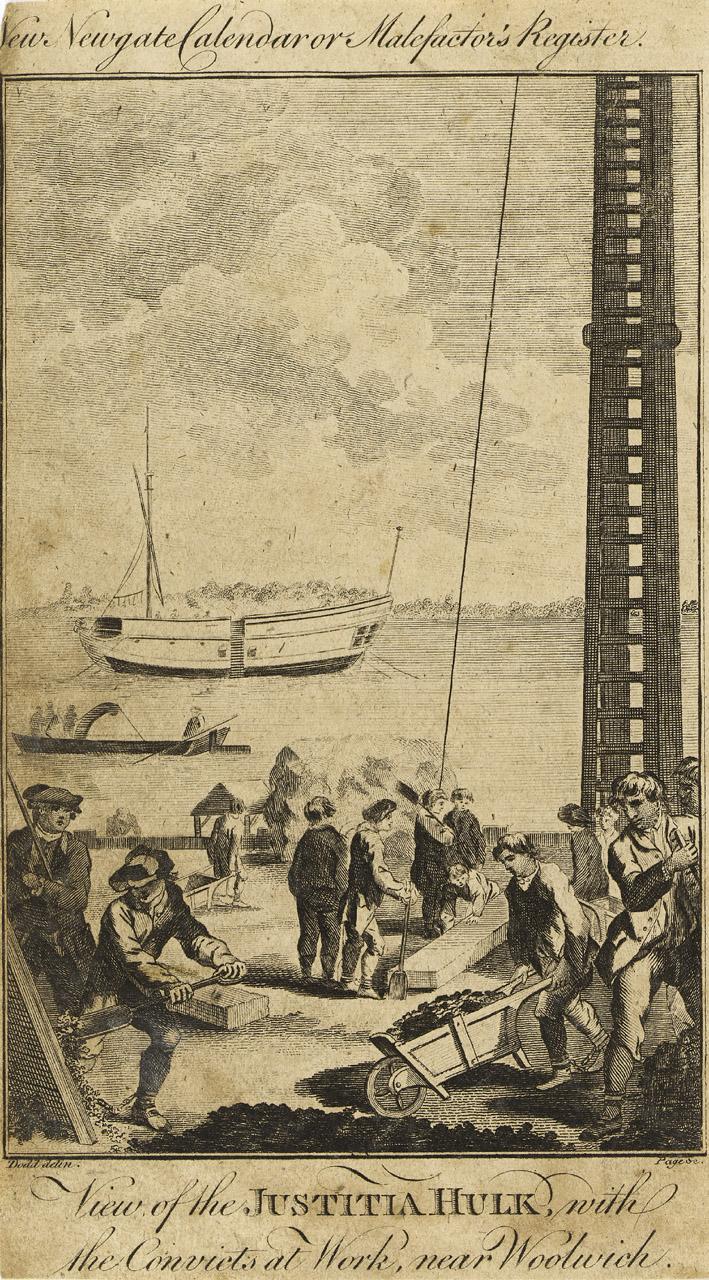
Convicts perform hard labour at the Woolwich Warren. The hulk on the river is the ‘Justitia’. Prisoners were kept on board such ships for months awaiting deportation to Australia. The ‘Justitia’ was a 260 ton prison hulk that had been originally moored in the Thames when the American War of Independence put a stop to the transportation of criminals to the former colonies. The ‘Justitia’ belonged to the shipowner Duncan Campbell, who was the Government contractor who organized the prison-hulk system at that time. Campbell was subsequently involved in the shipping of convicts to the penal colony at Botany Bay (in fact Port Jackson, later Sydney, just to the north) in New South Wales, the ‘first fleet’ going out in 1788.
While searching for records for Isaac Stokes I discovered that another Isaac Stokes was transported to New South Wales in 1835 as well. The other one was a butcher born in 1809, sentenced in London for seven years, and he sailed on the Mary Ann. Our Isaac Stokes sailed on the Lady Nugent, arriving in NSW in April 1835, having set sail from England in December 1834.
Lady Nugent was built at Bombay in 1813. She made four voyages under contract to the British East India Company (EIC). She then made two voyages transporting convicts to Australia, one to New South Wales and one to Van Diemen’s Land (Tasmania). (via Wikipedia)
via freesettlerorfelon website:
On 20 November 1834, 100 male convicts were transferred to the Lady Nugent from the Justitia Hulk and 60 from the Ganymede Hulk at Woolwich, all in apparent good health. The Lady Nugent departed Sheerness on 4 December 1834.
SURGEON OLIVER SPROULE
Oliver Sproule kept a Medical Journal from 7 November 1834 to 27 April 1835. He recorded in his journal the weather conditions they experienced in the first two weeks:
‘In the course of the first week or ten days at sea, there were eight or nine on the sick list with catarrhal affections and one with dropsy which I attribute to the cold and wet we experienced during that period beating down channel. Indeed the foremost berths in the prison at this time were so wet from leaking in that part of the ship, that I was obliged to issue dry beds and bedding to a great many of the prisoners to preserve their health, but after crossing the Bay of Biscay the weather became fine and we got the damp beds and blankets dried, the leaks partially stopped and the prison well aired and ventilated which, I am happy to say soon manifested a favourable change in the health and appearance of the men.
Besides the cases given in the journal I had a great many others to treat, some of them similar to those mentioned but the greater part consisted of boils, scalds, and contusions which would not only be too tedious to enter but I fear would be irksome to the reader. There were four births on board during the passage which did well, therefore I did not consider it necessary to give a detailed account of them in my journal the more especially as they were all favourable cases.
Regularity and cleanliness in the prison, free ventilation and as far as possible dry decks turning all the prisoners up in fine weather as we were lucky enough to have two musicians amongst the convicts, dancing was tolerated every afternoon, strict attention to personal cleanliness and also to the cooking of their victuals with regular hours for their meals, were the only prophylactic means used on this occasion, which I found to answer my expectations to the utmost extent in as much as there was not a single case of contagious or infectious nature during the whole passage with the exception of a few cases of psora which soon yielded to the usual treatment. A few cases of scurvy however appeared on board at rather an early period which I can attribute to nothing else but the wet and hardships the prisoners endured during the first three or four weeks of the passage. I was prompt in my treatment of these cases and they got well, but before we arrived at Sydney I had about thirty others to treat.’
The Lady Nugent arrived in Port Jackson on 9 April 1835 with 284 male prisoners. Two men had died at sea. The prisoners were landed on 27th April 1835 and marched to Hyde Park Barracks prior to being assigned. Ten were under the age of 14 years.
The Lady Nugent:
Isaac’s distinguishing marks are noted on various criminal registers and record books:
“Height in feet & inches: 5 4; Complexion: Ruddy; Hair: Light brown; Eyes: Hazel; Marks or Scars: Yes [including] DEVIL on lower left arm, TSIS back of left hand, WS lower right arm, MHDW back of right hand.”
Another includes more detail about Isaac’s tattoos:
“Two slight scars right side of mouth, 2 moles above right breast, figure of the devil and DEVIL and raised mole, lower left arm; anchor, seven dots half moon, TSIS and cross, back of left hand; a mallet, door post, A, mans bust, sun, WS, lower right arm; woman, MHDW and shut knife, back of right hand.”
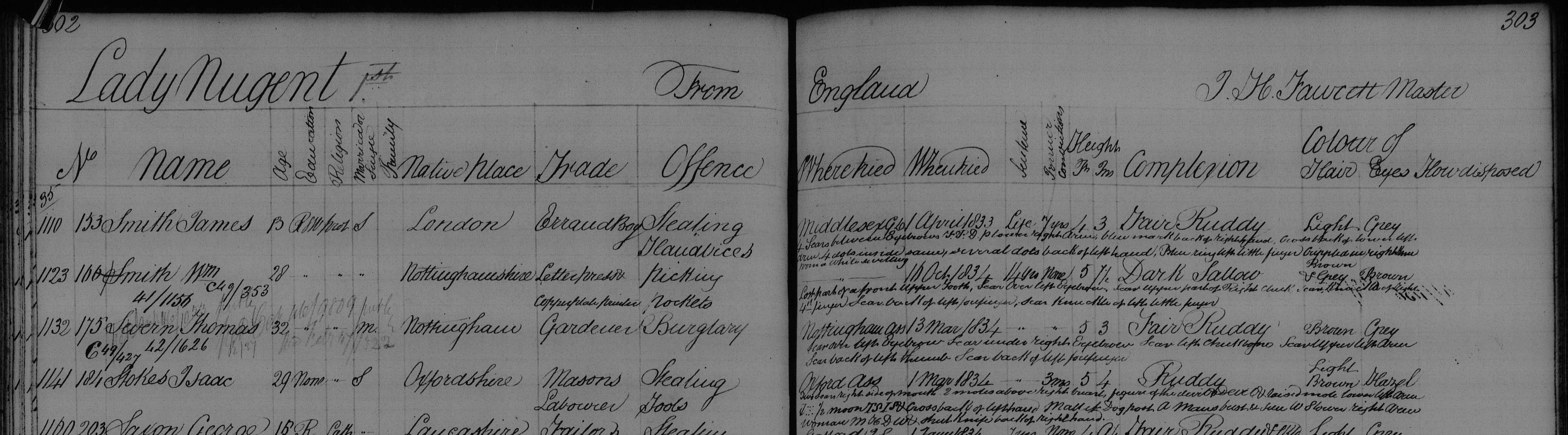
From How tattoos became fashionable in Victorian England (2019 article in TheConversation by Robert Shoemaker and Zoe Alkar):
“Historical tattooing was not restricted to sailors, soldiers and convicts, but was a growing and accepted phenomenon in Victorian England. Tattoos provide an important window into the lives of those who typically left no written records of their own. As a form of “history from below”, they give us a fleeting but intriguing understanding of the identities and emotions of ordinary people in the past.
As a practice for which typically the only record is the body itself, few systematic records survive before the advent of photography. One exception to this is the written descriptions of tattoos (and even the occasional sketch) that were kept of institutionalised people forced to submit to the recording of information about their bodies as a means of identifying them. This particularly applies to three groups – criminal convicts, soldiers and sailors. Of these, the convict records are the most voluminous and systematic.
Such records were first kept in large numbers for those who were transported to Australia from 1788 (since Australia was then an open prison) as the authorities needed some means of keeping track of them.”On the 1837 census Isaac was working for the government at Illiwarra, New South Wales. This record states that he arrived on the Lady Nugent in 1835. There are three other indent records for an Isaac Stokes in the following years, but the transcriptions don’t provide enough information to determine which Isaac Stokes it was. In April 1837 there was an abscondment, and an arrest/apprehension in May of that year, and in 1843 there was a record of convict indulgences.
From the Australian government website regarding “convict indulgences”:
“By the mid-1830s only six per cent of convicts were locked up. The vast majority worked for the government or free settlers and, with good behaviour, could earn a ticket of leave, conditional pardon or and even an absolute pardon. While under such orders convicts could earn their own living.”
In 1856 in Camden, NSW, Isaac Stokes married Catherine Daly. With no further information on this record it would be impossible to know for sure if this was the right Isaac Stokes. This couple had six children, all in the Camden area, but none of the records provided enough information. No occupation or place or date of birth recorded for Isaac Stokes.
I wrote to the National Library of Australia about the marriage record, and their reply was a surprise! Issac and Catherine were married on 30 September 1856, at the house of the Rev. Charles William Rigg, a Methodist minister, and it was recorded that Isaac was born in Edinburgh in 1821, to parents James Stokes and Sarah Ellis! The age at the time of the marriage doesn’t match Isaac’s age at death in 1877, and clearly the place of birth and parents didn’t match either. Only his fathers occupation of stone mason was correct. I wrote back to the helpful people at the library and they replied that the register was in a very poor condition and that only two and a half entries had survived at all, and that Isaac and Catherines marriage was recorded over two pages.
I searched for an Isaac Stokes born in 1821 in Edinburgh on the Scotland government website (and on all the other genealogy records sites) and didn’t find it. In fact Stokes was a very uncommon name in Scotland at the time. I also searched Australian immigration and other records for another Isaac Stokes born in Scotland or born in 1821, and found nothing. I was unable to find a single record to corroborate this mysterious other Isaac Stokes.
As the age at death in 1877 was correct, I assume that either Isaac was lying, or that some mistake was made either on the register at the home of the Methodist minster, or a subsequent mistranscription or muddle on the remnants of the surviving register. Therefore I remain convinced that the Camden stonemason Isaac Stokes was indeed our Isaac from Oxfordshire.
I found a history society newsletter article that mentioned Isaac Stokes, stone mason, had built the Glenmore church, near Camden, in 1859.

From the Wollondilly museum April 2020 newsletter:
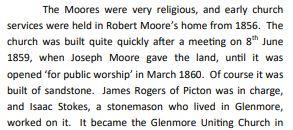
From the Camden History website:
“The stone set over the porch of Glenmore Church gives the date of 1860. The church was begun in 1859 on land given by Joseph Moore. James Rogers of Picton was given the contract to build and local builder, Mr. Stokes, carried out the work. Elizabeth Moore, wife of Edward, laid the foundation stone. The first service was held on 19th March 1860. The cemetery alongside the church contains the headstones and memorials of the areas early pioneers.”
Isaac died on the 3rd September 1877. The inquest report puts his place of death as Bagdelly, near to Camden, and another death register has put Cambelltown, also very close to Camden. His age was recorded as 71 and the inquest report states his cause of death was “rupture of one of the large pulmonary vessels of the lung”. His wife Catherine died in childbirth in 1870 at the age of 43.
Isaac and Catherine’s children:
William Stokes 1857-1928
Catherine Stokes 1859-1846
Sarah Josephine Stokes 1861-1931
Ellen Stokes 1863-1932
Rosanna Stokes 1865-1919
Louisa Stokes 1868-1844.
It’s possible that Catherine Daly was a transported convict from Ireland.
Some time later I unexpectedly received a follow up email from The Oaks Heritage Centre in Australia.
“The Gaudry papers which we have in our archive record him (Isaac Stokes) as having built: the church, the school and the teachers residence. Isaac is recorded in the General return of convicts: 1837 and in Grevilles Post Office directory 1872 as a mason in Glenmore.”
 November 18, 2022 at 4:47 pm #6348
In reply to: Family Stories From The Other Side ~ Book Two
Wong Sang
Wong Sang was born in China in 1884. In October 1916 he married Alice Stokes in Oxford.
Alice was the granddaughter of William Stokes of Churchill, Oxfordshire and William was the brother of Thomas Stokes the wheelwright (who was my 3X great grandfather). In other words Alice was my second cousin, three times removed, on my fathers paternal side.
Wong Sang was an interpreter, according to the baptism registers of his children and the Dreadnought Seamen’s Hospital admission registers in 1930. The hospital register also notes that he was employed by the Blue Funnel Line, and that his address was 11, Limehouse Causeway, E 14. (London)
“The Blue Funnel Line offered regular First-Class Passenger and Cargo Services From the UK to South Africa, Malaya, China, Japan, Australia, Java, and America. Blue Funnel Line was Owned and Operated by Alfred Holt & Co., Liverpool.
The Blue Funnel Line, so-called because its ships have a blue funnel with a black top, is more appropriately known as the Ocean Steamship Company.”Wong Sang and Alice’s daughter, Frances Eileen Sang, was born on the 14th July, 1916 and baptised in 1920 at St Stephen in Poplar, Tower Hamlets, London. The birth date is noted in the 1920 baptism register and would predate their marriage by a few months, although on the death register in 1921 her age at death is four years old and her year of birth is recorded as 1917.
Charles Ronald Sang was baptised on the same day in May 1920, but his birth is recorded as April of that year. The family were living on Morant Street, Poplar.
James William Sang’s birth is recorded on the 1939 census and on the death register in 2000 as being the 8th March 1913. This definitely would predate the 1916 marriage in Oxford.
William Norman Sang was born on the 17th October 1922 in Poplar.
Alice and the three sons were living at 11, Limehouse Causeway on the 1939 census, the same address that Wong Sang was living at when he was admitted to Dreadnought Seamen’s Hospital on the 15th January 1930. Wong Sang died in the hospital on the 8th March of that year at the age of 46.
Alice married John Patterson in 1933 in Stepney. John was living with Alice and her three sons on Limehouse Causeway on the 1939 census and his occupation was chef.
Via Old London Photographs:
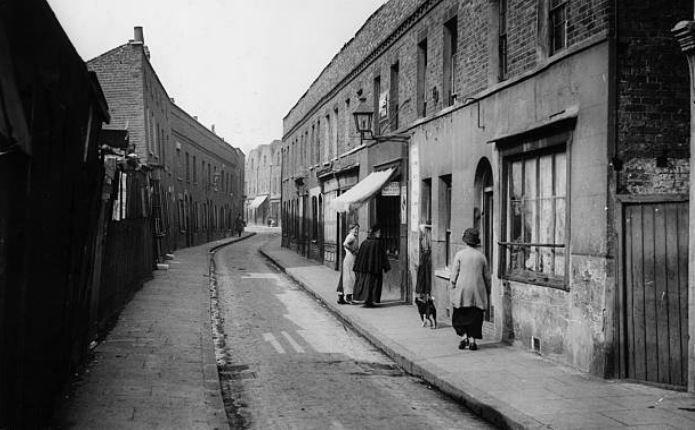
“Limehouse Causeway is a street in east London that was the home to the original Chinatown of London. A combination of bomb damage during the Second World War and later redevelopment means that almost nothing is left of the original buildings of the street.”
Limehouse Causeway in 1925:
From The Story of Limehouse’s Lost Chinatown, poplarlondon website:
“Limehouse was London’s first Chinatown, home to a tightly-knit community who were demonised in popular culture and eventually erased from the cityscape.
As recounted in the BBC’s ‘Our Greatest Generation’ series, Connie was born to a Chinese father and an English mother in early 1920s Limehouse, where she used to play in the street with other British and British-Chinese children before running inside for teatime at one of their houses.
Limehouse was London’s first Chinatown between the 1880s and the 1960s, before the current Chinatown off Shaftesbury Avenue was established in the 1970s by an influx of immigrants from Hong Kong.
Connie’s memories of London’s first Chinatown as an “urban village” paint a very different picture to the seedy area portrayed in early twentieth century novels.
The pyramid in St Anne’s church marked the entrance to the opium den of Dr Fu Manchu, a criminal mastermind who threatened Western society by plotting world domination in a series of novels by Sax Rohmer.
Thomas Burke’s Limehouse Nights cemented stereotypes about prostitution, gambling and violence within the Chinese community, and whipped up anxiety about sexual relationships between Chinese men and white women.
Though neither novelist was familiar with the Chinese community, their depictions made Limehouse one of the most notorious areas of London.
Travel agent Thomas Cook even organised tours of the area for daring visitors, despite the rector of Limehouse warning that “those who look for the Limehouse of Mr Thomas Burke simply will not find it.”
All that remains is a handful of Chinese street names, such as Ming Street, Pekin Street, and Canton Street — but what was Limehouse’s chinatown really like, and why did it get swept away?
Chinese migration to Limehouse
Chinese sailors discharged from East India Company ships settled in the docklands from as early as the 1780s.
By the late nineteenth century, men from Shanghai had settled around Pennyfields Lane, while a Cantonese community lived on Limehouse Causeway.
Chinese sailors were often paid less and discriminated against by dock hirers, and so began to diversify their incomes by setting up hand laundry services and restaurants.
Old photographs show shopfronts emblazoned with Chinese characters with horse-drawn carts idling outside or Chinese men in suits and hats standing proudly in the doorways.
In oral histories collected by Yat Ming Loo, Connie’s husband Leslie doesn’t recall seeing any Chinese women as a child, since male Chinese sailors settled in London alone and married working-class English women.
In the 1920s, newspapers fear-mongered about interracial marriages, crime and gambling, and described chinatown as an East End “colony.”
Ironically, Chinese opium-smoking was also demonised in the press, despite Britain waging war against China in the mid-nineteenth century for suppressing the opium trade to alleviate addiction amongst its people.
The number of Chinese people who settled in Limehouse was also greatly exaggerated, and in reality only totalled around 300.
The real Chinatown
Although the press sought to characterise Limehouse as a monolithic Chinese community in the East End, Connie remembers seeing people of all nationalities in the shops and community spaces in Limehouse.
She doesn’t remember feeling discriminated against by other locals, though Connie does recall having her face measured and IQ tested by a member of the British Eugenics Society who was conducting research in the area.
Some of Connie’s happiest childhood memories were from her time at Chung-Hua Club, where she learned about Chinese culture and language.
Why did Chinatown disappear?
The caricature of Limehouse’s Chinatown as a den of vice hastened its erasure.
Police raids and deportations fuelled by the alarmist media coverage threatened the Chinese population of Limehouse, and slum clearance schemes to redevelop low-income areas dispersed Chinese residents in the 1930s.
The Defence of the Realm Act imposed at the beginning of the First World War criminalised opium use, gave the authorities increased powers to deport Chinese people and restricted their ability to work on British ships.
Dwindling maritime trade during World War II further stripped Chinese sailors of opportunities for employment, and any remnants of Chinatown were destroyed during the Blitz or erased by postwar development schemes.”
Wong Sang 1884-1930
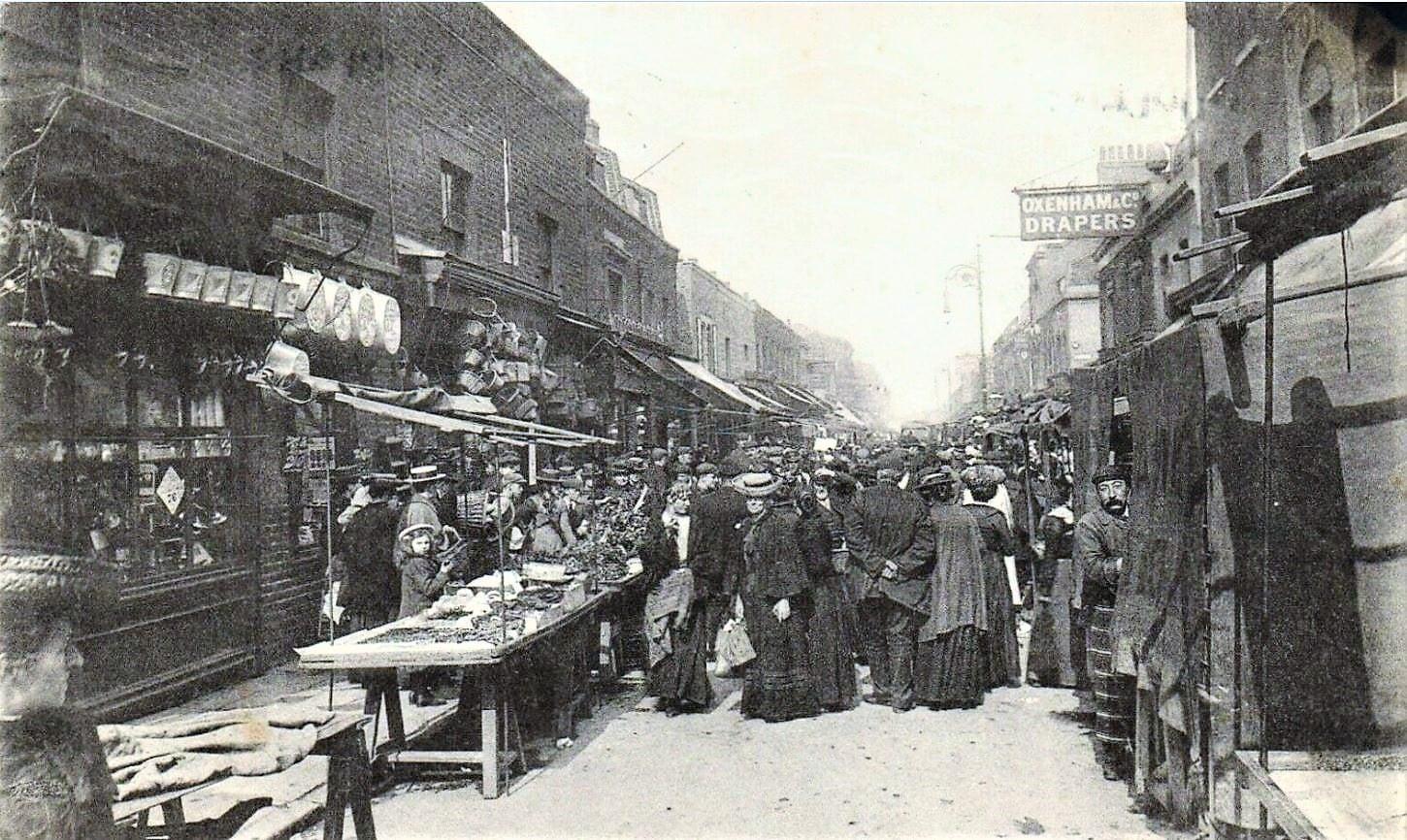
The year 1918 was a troublesome one for Wong Sang, an interpreter and shipping agent for Blue Funnel Line. The Sang family were living at 156, Chrisp Street.
Chrisp Street, Poplar, in 1913 via Old London Photographs:
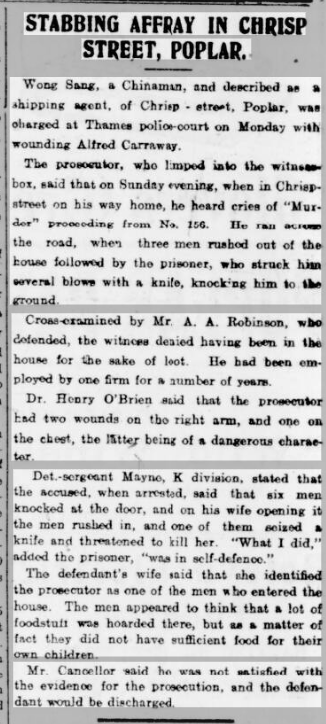
In February Wong Sang was discharged from a false accusation after defending his home from potential robbers.
East End News and London Shipping Chronicle – Friday 15 February 1918:
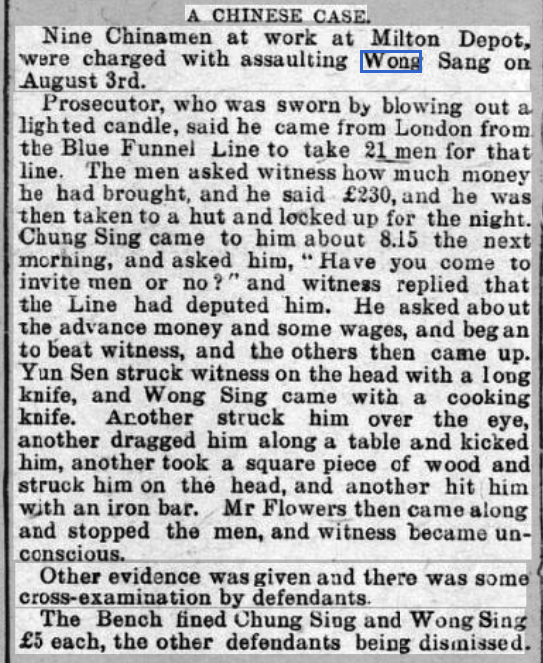
In August of that year he was involved in an incident that left him unconscious.
Faringdon Advertiser and Vale of the White Horse Gazette – Saturday 31 August 1918:
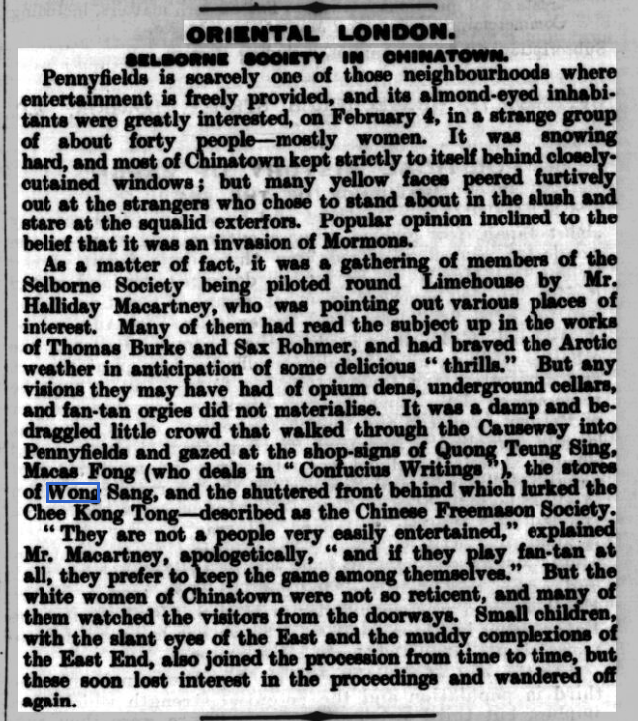
Wong Sang is mentioned in an 1922 article about “Oriental London”.
London and China Express – Thursday 09 February 1922:
A photograph of the Chee Kong Tong Chinese Freemason Society mentioned in the above article, via Old London Photographs:
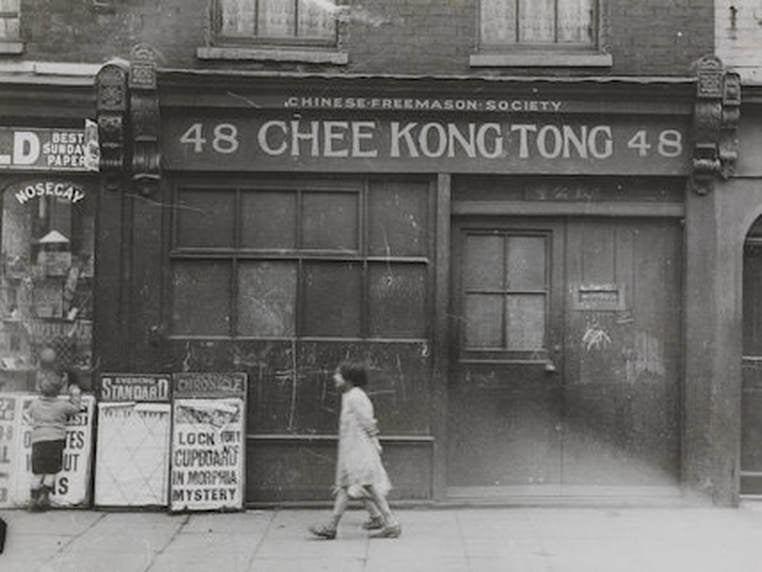
Wong Sang was recommended by the London Metropolitan Police in 1928 to assist in a case in Wellingborough, Northampton.
Difficulty of Getting an Interpreter: Northampton Mercury – Friday 16 March 1928:
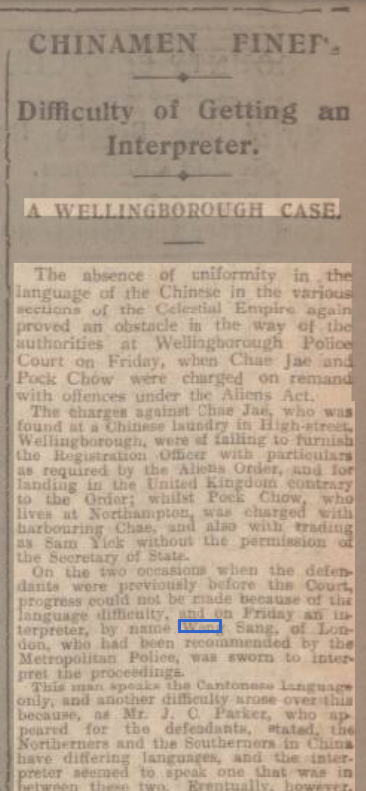
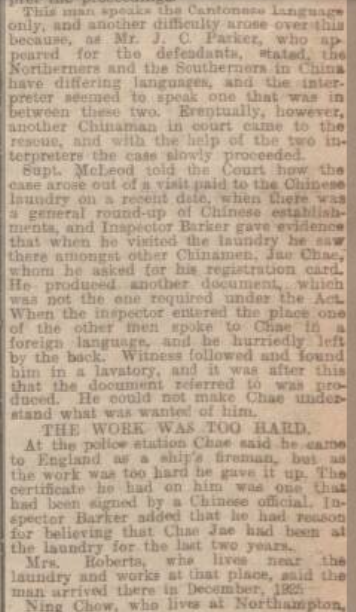
The difficulty was that “this man speaks the Cantonese language only…the Northeners and the Southerners in China have differing languages and the interpreter seemed to speak one that was in between these two.”
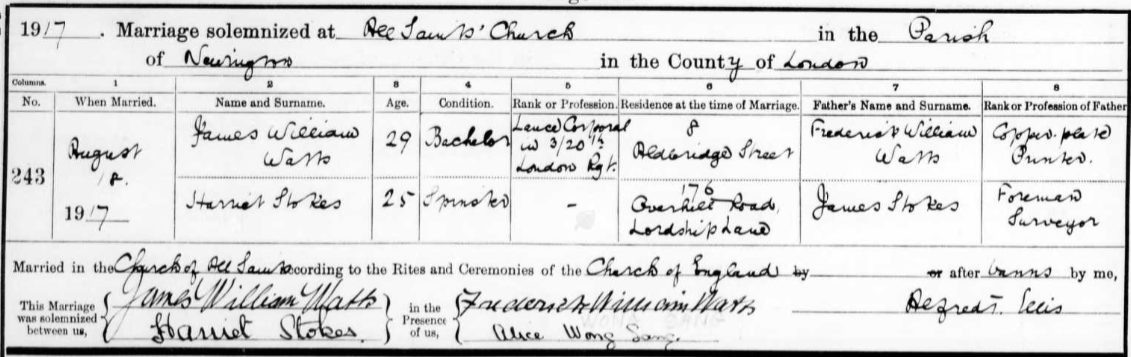
In 1917, Alice Wong Sang was a witness at her sister Harriet Stokes marriage to James William Watts in Southwark, London. Their father James Stokes occupation on the marriage register is foreman surveyor, but on the census he was a council roadman or labourer. (I initially rejected this as the correct marriage for Harriet because of the discrepancy with the occupations. Alice Wong Sang as a witness confirmed that it was indeed the correct one.)
James William Sang 1913-2000 was a clock fitter and watch assembler (on the 1939 census). He married Ivy Laura Fenton in 1963 in Sidcup, Kent. James died in Southwark in 2000.
Charles Ronald Sang 1920-1974 was a draughtsman (1939 census). He married Eileen Burgess in 1947 in Marylebone. Charles and Eileen had two sons: Keith born in 1951 and Roger born in 1952. He died in 1974 in Hertfordshire.
William Norman Sang 1922-2000 was a clerk and telephone operator (1939 census). William enlisted in the Royal Artillery in 1942. He married Lily Mullins in 1949 in Bethnal Green, and they had three daughters: Marion born in 1950, Christine in 1953, and Frances in 1959. He died in Redbridge in 2000.
I then found another two births registered in Poplar by Alice Sang, both daughters. Doris Winifred Sang was born in 1925, and Patricia Margaret Sang was born in 1933 ~ three years after Wong Sang’s death. Neither of the these daughters were on the 1939 census with Alice, John Patterson and the three sons. Margaret had presumably been evacuated because of the war to a family in Taunton, Somerset. Doris would have been fourteen and I have been unable to find her in 1939 (possibly because she died in 2017 and has not had the redaction removed yet on the 1939 census as only deceased people are viewable).
Doris Winifred Sang 1925-2017 was a nursing sister. She didn’t marry, and spent a year in USA between 1954 and 1955. She stayed in London, and died at the age of ninety two in 2017.
Patricia Margaret Sang 1933-1998 was also a nurse. She married Patrick L Nicely in Stepney in 1957. Patricia and Patrick had five children in London: Sharon born 1959, Donald in 1960, Malcolm was born and died in 1966, Alison was born in 1969 and David in 1971.
I was unable to find a birth registered for Alice’s first son, James William Sang (as he appeared on the 1939 census). I found Alice Stokes on the 1911 census as a 17 year old live in servant at a tobacconist on Pekin Street, Limehouse, living with Mr Sui Fong from Hong Kong and his wife Sarah Sui Fong from Berlin. I looked for a birth registered for James William Fong instead of Sang, and found it ~ mothers maiden name Stokes, and his date of birth matched the 1939 census: 8th March, 1913.
On the 1921 census, Wong Sang is not listed as living with them but it is mentioned that Mr Wong Sang was the person returning the census. Also living with Alice and her sons James and Charles in 1921 are two visitors: (Florence) May Stokes, 17 years old, born in Woodstock, and Charles Stokes, aged 14, also born in Woodstock. May and Charles were Alice’s sister and brother.
I found Sharon Nicely on social media and she kindly shared photos of Wong Sang and Alice Stokes:
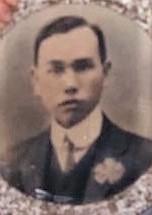
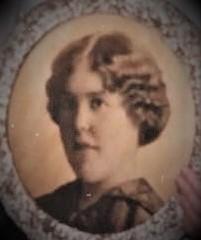 November 13, 2022 at 10:29 pm #6345
In reply to: Family Stories From The Other Side ~ Book Two
Crime and Punishment in Tetbury
I noticed that there were quite a number of Brownings of Tetbury in the newspaper archives involved in criminal activities while doing a routine newspaper search to supplement the information in the usual ancestry records. I expanded the tree to include cousins, and offsping of cousins, in order to work out who was who and how, if at all, these individuals related to our Browning family.
I was expecting to find some of our Brownings involved in the Swing Riots in Tetbury in 1830, but did not. Most of our Brownings (including cousins) were stone masons. Most of the rioters in 1830 were agricultural labourers.
The Browning crimes are varied, and by todays standards, not for the most part terribly serious ~ you would be unlikely to receive a sentence of hard labour for being found in an outhouse with the intent to commit an unlawful act nowadays, or for being drunk.
The central character in this chapter is Isaac Browning (my 4x great grandfather), who did not appear in any criminal registers, but the following individuals can be identified in the family structure through their relationship to him.
RICHARD LOCK BROWNING born in 1853 was Isaac’s grandson, his son George’s son. Richard was a mason. In 1879 he and Henry Browning of the same age were sentenced to one month hard labour for stealing two pigeons in Tetbury. Henry Browning was Isaac’s nephews son.
In 1883 Richard Browning, mason of Tetbury, was charged with obtaining food and lodging under false pretences, but was found not guilty and acquitted.
In 1884 Richard Browning, mason of Tetbury, was sentenced to one month hard labour for game trespass.Richard had been fined a number of times in Tetbury:
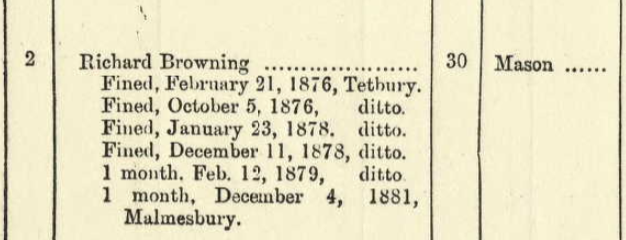
Richard Lock Browning was five feet eight inches tall, dark hair, grey eyes, an oval face and a dark complexion. He had two cuts on the back of his head (in February 1879) and a scar on his right eyebrow.
HENRY BROWNING, who was stealing pigeons with Richard Lock Browning in 1879, (Isaac’s brother Williams grandson, son of George Browning and his wife Charity) was charged with being drunk in 1882 and ordered to pay a fine of one shilling and costs of fourteen shillings, or seven days hard labour.
Henry was found guilty of gaming in the highway at Tetbury in 1872 and was sentenced to seven days hard labour. In 1882 Henry (who was also a mason) was charged with assault but discharged.
Henry was five feet five inches tall, brown hair and brown eyes, a long visage and a fresh complexion.
Henry emigrated with his daughter to Canada in 1913, and died in Vancouver in 1919.THOMAS BUCKINGHAM 1808-1846 (Isaacs daughter Janes husband) was charged with stealing a black gelding in Tetbury in 1838. No true bill. (A “no true bill” means the jury did not find probable cause to continue a case.)
Thomas did however neglect to pay his taxes in 1832:
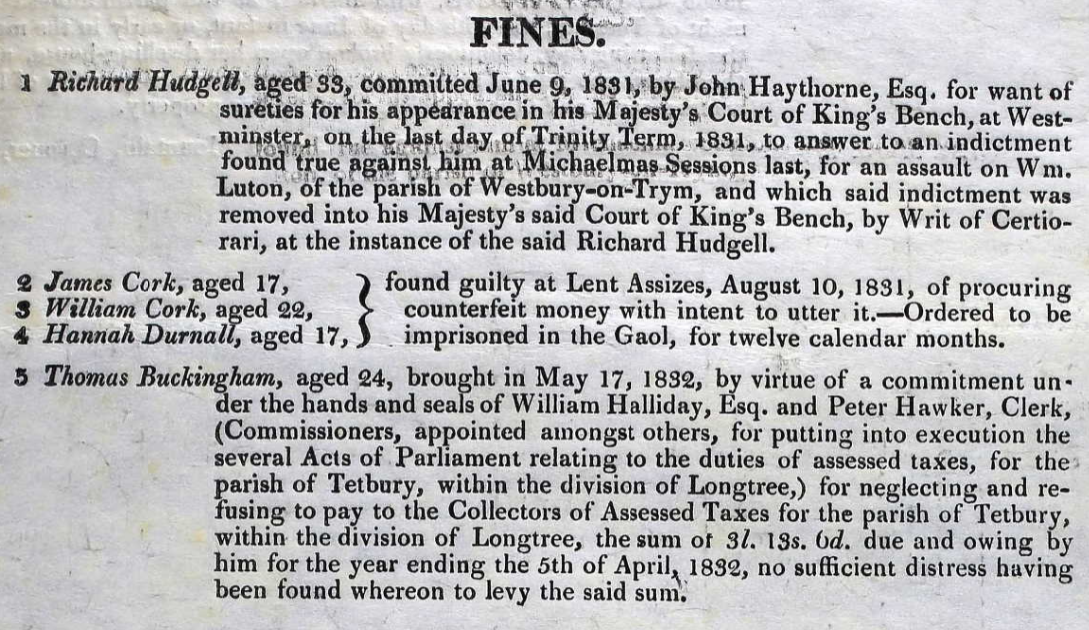
LEWIN BUCKINGHAM (grandson of Isaac, his daughter Jane’s son) was found guilty in 1846 stealing two fowls in Tetbury when he was sixteen years old.
In 1846 he was sentence to one month hard labour (or pay ten shillings fine and ten shillings costs) for loitering with the intent to trespass in search of conies.
A year later in 1847, he and three other young men were sentenced to four months hard labour for larceny.
Lewin was five feet three inches tall, with brown hair and brown eyes, long visage, sallow complexion, and had a scar on his left arm.JOHN BUCKINGHAM born circa 1832, a Tetbury labourer (Isaac’s grandson, Lewin’s brother) was sentenced to six weeks hard labour for larceny in 1855 for stealing a duck in Cirencester. The notes on the register mention that he had been employed by Mr LOCK, Angel Inn. (John’s grandmother was Mary Lock so this is likely a relative).
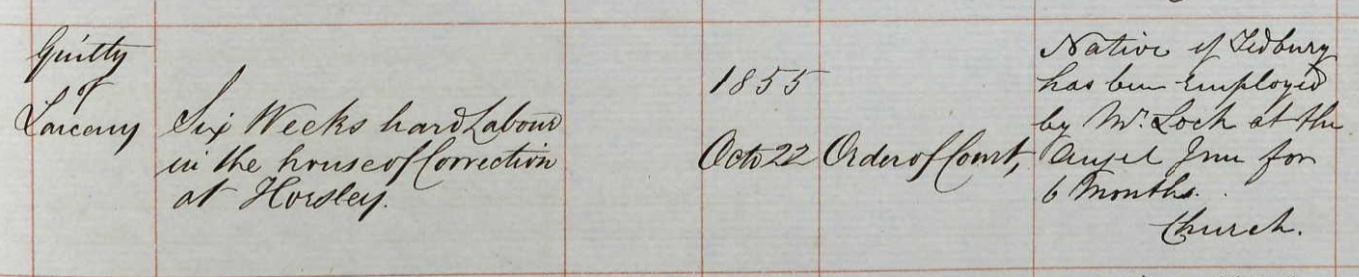
The previous year in 1854 John was sentenced to one month or a one pound fine for assaulting and beating W. Wood.
John was five feet eight and three quarter inches tall, light brown hair and grey eyes, an oval visage and a fresh complexion. He had a scar on his left arm and inside his right knee.JOSEPH PERRET was born circa 1831 and he was a Tetbury labourer. (He was Isaac’s granddaughter Charlotte Buckingham’s husband)
In 1855 he assaulted William Wood and was sentenced to one month or a two pound ten shilling fine. Was it the same W Wood that his wifes cousin John assaulted the year before?
In 1869 Joseph was sentenced to one month hard labour for feloniously receiving a cupboard known to be stolen.JAMES BUCKINGAM born circa 1822 in Tetbury was a shoemaker. (Isaac’s nephew, his sister Hannah’s son)
In 1854 the Tetbury shoemaker was sentenced to four months hard labour for stealing 30 lbs of lead off someones house.
In 1856 the Tetbury shoemaker received two months hard labour or pay £2 fine and 12 s costs for being found in pursuit of game.
In 1868 he was sentenced to two months hard labour for stealing a gander. A unspecified previous conviction is noted.
1871 the Tetbury shoemaker was found in an outhouse for an unlawful purpose and received ten days hard labour. The register notes that his sister is Mrs Cook, the Green, Tetbury. (James sister Prudence married Thomas Cook)
James sister Charlotte married a shoemaker and moved to UTAH.
James was five feet eight inches tall, dark hair and blue eyes, a long visage and a florid complexion. He had a scar on his forehead and a mole on the right side of his neck and abdomen, and a scar on the right knee.November 4, 2022 at 2:19 pm #6342In reply to: Family Stories From The Other Side ~ Book Two
Brownings of Tetbury
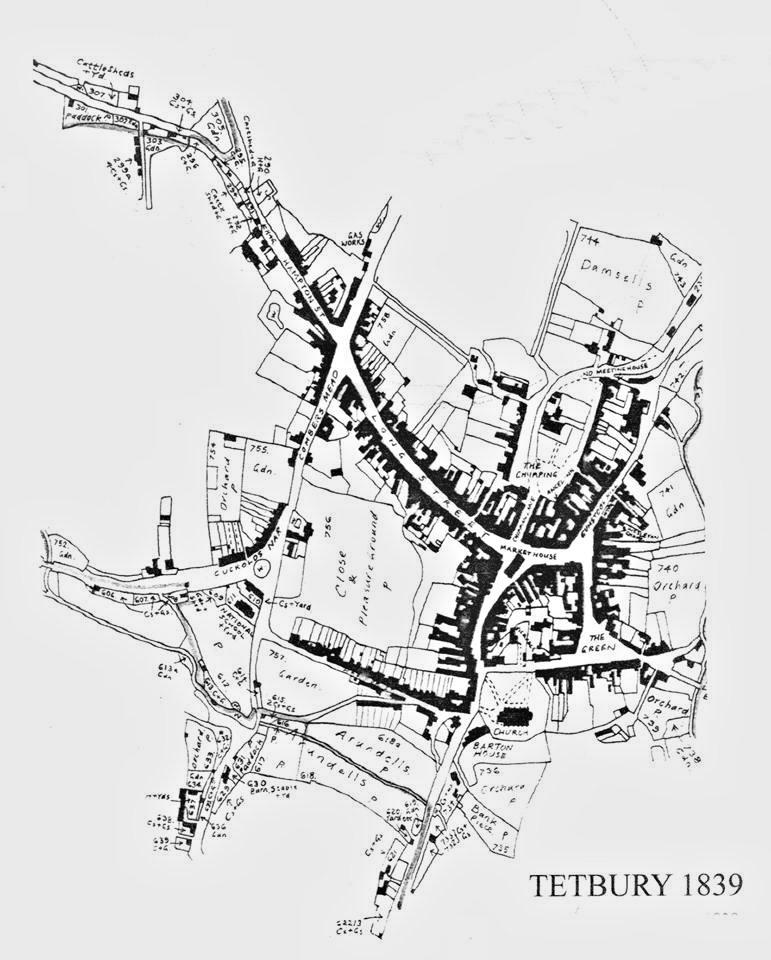
Isaac Browning (1784-1848) married Mary Lock (1787-1870) in Tetbury in 1806. Both of them were born in Tetbury, Gloucestershire. Isaac was a stone mason. Between 1807 and 1832 they baptised fourteen children in Tetbury, and on 8 Nov 1829 Isaac and Mary baptised five daughters all on the same day.
I considered that they may have been quintuplets, with only the last born surviving, which would have answered my question about the name of the house La Quinta in Broadway, the home of Eliza Browning and Thomas Stokes son Fred. However, the other four daughters were found in various records and they were not all born the same year. (So I still don’t know why the house in Broadway had such an unusual name).
Their son George was born and baptised in 1827, but Louisa born 1821, Susan born 1822, Hesther born 1823 and Mary born 1826, were not baptised until 1829 along with Charlotte born in 1828. (These birth dates are guesswork based on the age on later censuses.) Perhaps George was baptised promptly because he was sickly and not expected to survive. Isaac and Mary had a son George born in 1814 who died in 1823. Presumably the five girls were healthy and could wait to be done as a job lot on the same day later.
Eliza Browning (1814-1886), my great great great grandmother, had a baby six years before she married Thomas Stokes. Her name was Ellen Harding Browning, which suggests that her fathers name was Harding. On the 1841 census seven year old Ellen was living with her grandfather Isaac Browning in Tetbury. Ellen Harding Browning married William Dee in Tetbury in 1857, and they moved to Western Australia.
Ellen Harding Browning Dee: (photo found on ancestry website)
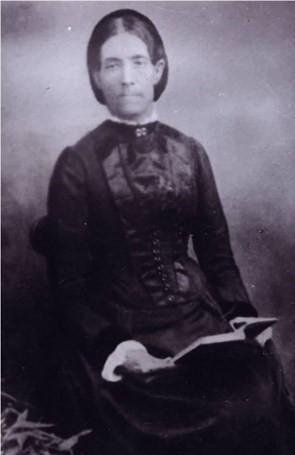
OBITUARY. MRS. ELLEN DEE.
A very old and respected resident of Dongarra, in the person of Mrs. Ellen Dee, passed peacefully away on Sept. 27, at the advanced age of 74 years.The deceased had been ailing for some time, but was about and actively employed until Wednesday, Sept. 20, whenn she was heard groaning by some neighbours, who immediately entered her place and found her lying beside the fireplace. Tho deceased had been to bed over night, and had evidently been in the act of lighting thc fire, when she had a seizure. For some hours she was conscious, but had lost the power of speech, and later on became unconscious, in which state she remained until her death.
The deceased was born in Gloucestershire, England, in 1833, was married to William Dee in Tetbury Church 23 years later. Within a month she left England with her husband for Western Australian in the ship City oí Bristol. She resided in Fremantle for six months, then in Greenough for a short time, and afterwards (for 42 years) in Dongarra. She was, therefore, a colonist of about 51 years. She had a family of four girls and three boys, and five of her children survive her, also 35 grandchildren, and eight great grandchildren. She was very highly respected, and her sudden collapse came as a great shock to many.
Eliza married Thomas Stokes (1816-1885) in September 1840 in Hempstead, Gloucestershire. On the 1841 census, Eliza and her mother Mary Browning (nee Lock) were staying with Thomas Lock and family in Cirencester. Strangely, Thomas Stokes has not been found thus far on the 1841 census, and Thomas and Eliza’s first child William James Stokes birth was registered in Witham, in Essex, on the 6th of September 1841.
I don’t know why William James was born in Witham, or where Thomas was at the time of the census in 1841. One possibility is that as Thomas Stokes did a considerable amount of work with circus waggons, circus shooting galleries and so on as a journeyman carpenter initially and then later wheelwright, perhaps he was working with a traveling circus at the time.
But back to the Brownings ~ more on William James Stokes to follow.
One of Isaac and Mary’s fourteen children died in infancy: Ann was baptised and died in 1811. Two of their children died at nine years old: the first George, and Mary who died in 1835. Matilda was 21 years old when she died in 1844.
Jane Browning (1808-) married Thomas Buckingham in 1830 in Tetbury. In August 1838 Thomas was charged with feloniously stealing a black gelding.
Susan Browning (1822-1879) married William Cleaver in November 1844 in Tetbury. Oddly thereafter they use the name Bowman on the census. On the 1851 census Mary Browning (Susan’s mother), widow, has grandson George Bowman born in 1844 living with her. The confusion with the Bowman and Cleaver names was clarified upon finding the criminal registers:
30 January 1834. Offender: William Cleaver alias Bowman, Richard Bunting alias Barnfield and Jeremiah Cox, labourers of Tetbury. Crime: Stealing part of a dead fence from a rick barton in Tetbury, the property of Robert Tanner, farmer.
And again in 1836:
29 March 1836 Bowman, William alias Cleaver, of Tetbury, labourer age 18; 5’2.5” tall, brown hair, grey eyes, round visage with fresh complexion; several moles on left cheek, mole on right breast. Charged on the oath of Ann Washbourn & others that on the morning of the 31 March at Tetbury feloniously stolen a lead spout affixed to the dwelling of the said Ann Washbourn, her property. Found guilty 31 March 1836; Sentenced to 6 months.
On the 1851 census Susan Bowman was a servant living in at a large drapery shop in Cheltenham. She was listed as 29 years old, married and born in Tetbury, so although it was unusual for a married woman not to be living with her husband, (or her son for that matter, who was living with his grandmother Mary Browning), perhaps her husband William Bowman alias Cleaver was in trouble again. By 1861 they are both living together in Tetbury: William was a plasterer, and they had three year old Isaac and Thomas, one year old. In 1871 William was still a plasterer in Tetbury, living with wife Susan, and sons Isaac and Thomas. Interestingly, a William Cleaver is living next door but one!
Susan was 56 when she died in Tetbury in 1879.
Three of the Browning daughters went to London.
Louisa Browning (1821-1873) married Robert Claxton, coachman, in 1848 in Bryanston Square, Westminster, London. Ester Browning was a witness.
Ester Browning (1823-1893)(or Hester) married Charles Hudson Sealey, cabinet maker, in Bethnal Green, London, in 1854. Charles was born in Tetbury. Charlotte Browning was a witness.
Charlotte Browning (1828-1867?) was admitted to St Marylebone workhouse in London for “parturition”, or childbirth, in 1860. She was 33 years old. A birth was registered for a Charlotte Browning, no mothers maiden name listed, in 1860 in Marylebone. A death was registered in Camden, buried in Marylebone, for a Charlotte Browning in 1867 but no age was recorded. As the age and parents were usually recorded for a childs death, I assume this was Charlotte the mother.
I found Charlotte on the 1851 census by chance while researching her mother Mary Lock’s siblings. Hesther Lock married Lewin Chandler, and they were living in Stepney, London. Charlotte is listed as a neice. Although Browning is mistranscribed as Broomey, the original page says Browning. Another mistranscription on this record is Hesthers birthplace which is transcribed as Yorkshire. The original image shows Gloucestershire.
Isaac and Mary’s first son was John Browning (1807-1860). John married Hannah Coates in 1834. John’s brother Charles Browning (1819-1853) married Eliza Coates in 1842. Perhaps they were sisters. On the 1861 census Hannah Browning, John’s wife, was a visitor in the Harding household in a village called Coates near Tetbury. Thomas Harding born in 1801 was the head of the household. Perhaps he was the father of Ellen Harding Browning.
George Browning (1828-1870) married Louisa Gainey in Tetbury, and died in Tetbury at the age of 42. Their son Richard Lock Browning, a 32 year old mason, was sentenced to one month hard labour for game tresspass in Tetbury in 1884.
Isaac Browning (1832-1857) was the youngest son of Isaac and Mary. He was just 25 years old when he died in Tetbury.
June 10, 2022 at 1:39 pm #6305In reply to: The Elusive Samuel Housley and Other Family Stories
The Hair’s and Leedham’s of Netherseal
Samuel Warren of Stapenhill married Catherine Holland of Barton under Needwood in 1795. Catherine’s father was Thomas Holland; her mother was Hannah Hair.
Hannah was born in Netherseal, Derbyshire, in 1739. Her parents were Joseph Hair 1696-1746 and Hannah.
Joseph’s parents were Isaac Hair and Elizabeth Leedham. Elizabeth was born in Netherseal in 1665. Isaac and Elizabeth were married in Netherseal in 1686.Marriage of Isaac Hair and Elizabeth Leedham: (variously spelled Ledom, Leedom, Leedham, and in one case mistranscribed as Sedom):
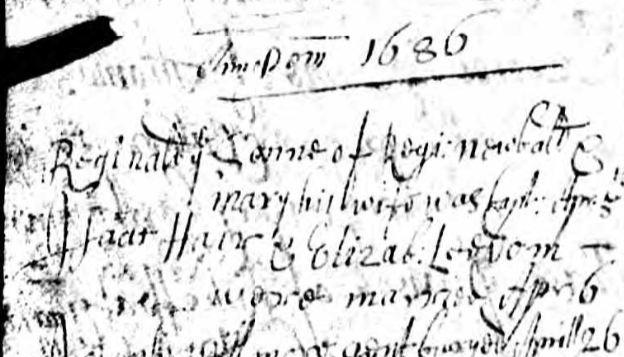
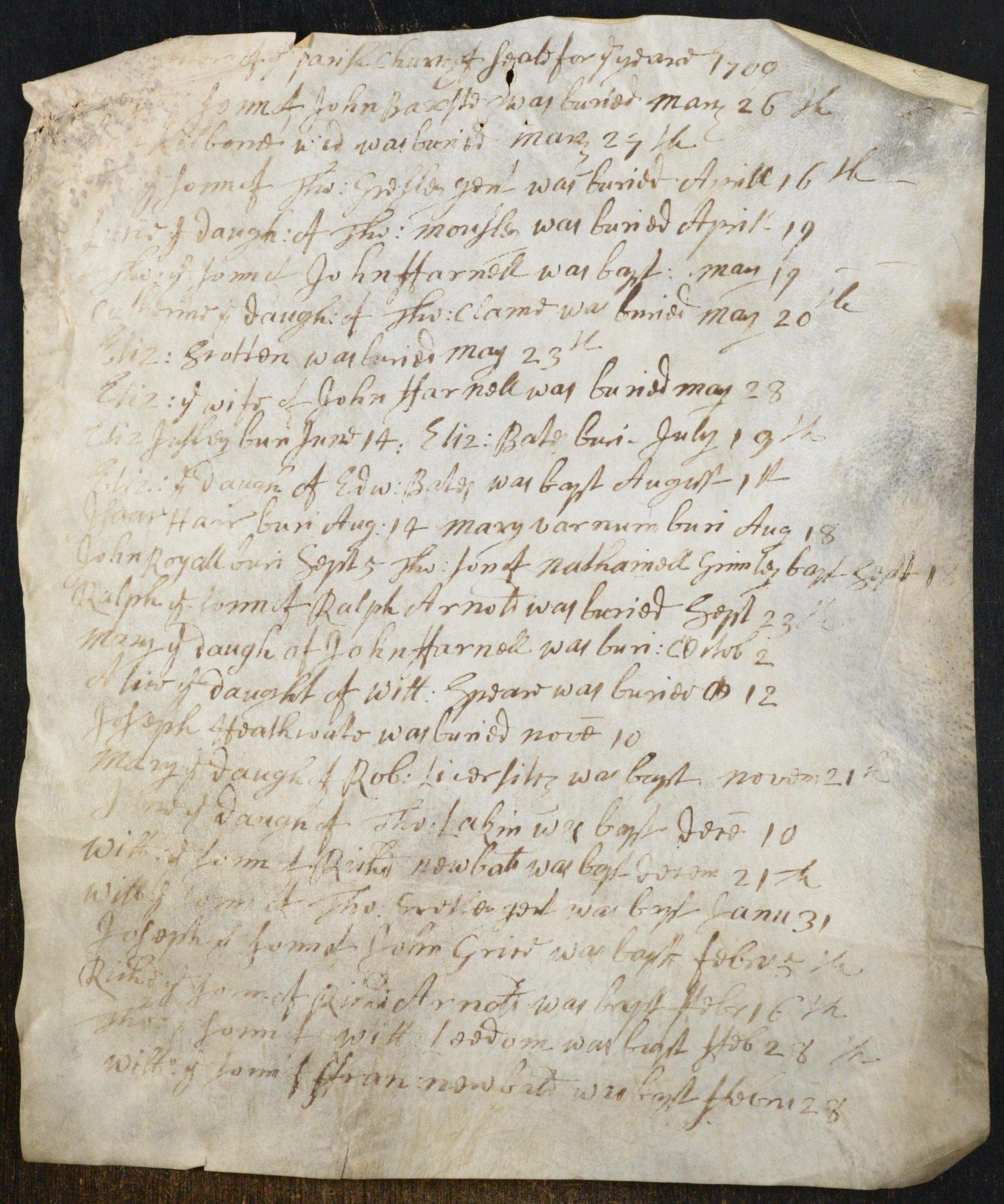
Isaac was buried in Netherseal on 14 August 1709 (the transcript says the 18th, but the microfiche image clearly says the 14th), but I have not been able to find a birth registered for him. On other public trees on an ancestry website, Isaac Le Haire was baptised in Canterbury and was a Huguenot, but I haven’t found any evidence to support this.
Isaac Hair’s death registered 14 August 1709 in Netherseal:
A search for the etymology of the surname Hair brings various suggestions, including:
“This surname is derived from a nickname. ‘the hare,’ probably affixed on some one fleet of foot. Naturally looked upon as a complimentary sobriquet, and retained in the family; compare Lightfoot. (for example) Hugh le Hare, Oxfordshire, 1273. Hundred Rolls.”
From this we may deduce that the name Hair (or Hare) is not necessarily from the French Le Haire, and existed in England for some considerable time before the arrival of the Huguenots.
Elizabeth Leedham was born in Netherseal in 1665. Her parents were Nicholas Leedham 1621-1670 and Dorothy. Nicholas Leedham was born in Church Gresley (Swadlincote) in 1621, and died in Netherseal in 1670.
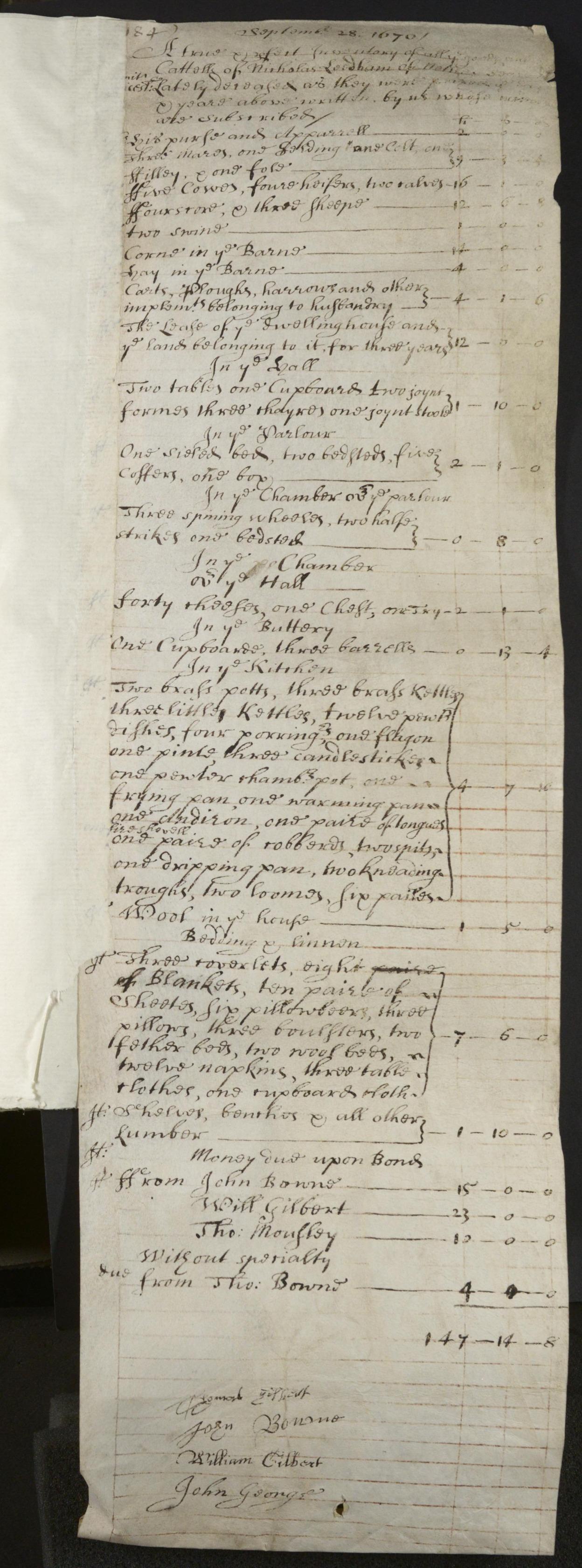
Nicholas was a Yeoman and left a will and inventory worth £147.14s.8d (one hundred and forty seven pounds fourteen shillings and eight pence).
The 1670 inventory of Nicholas Leedham:
According to local historian Mark Knight on the Netherseal History facebook group, the Seale (Netherseal and Overseal) parish registers from the year 1563 to 1724 were digitized during lockdown.
via Mark Knight:
“There are five entries for Nicholas Leedham.
On March 14th 1646 he and his wife buried an unnamed child, presumably the child died during childbirth or was stillborn.
On November 28th 1659 he buried his wife, Elizabeth. He remarried as on June 13th 1664 he had his son William baptised.
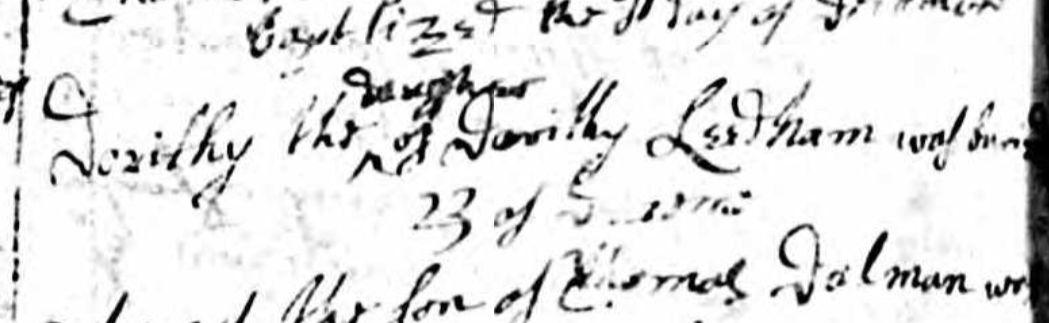
The following year, 1665, he baptised a daughter on November 12th. (Elizabeth) On December 23rd 1672 the parish record says that Dorithy daughter of Dorithy was buried. The Bishops Transcript has Dorithy a daughter of Nicholas. Nicholas’ second wife was called Dorithy and they named a daughter after her. Alas, the daughter died two years after Nicholas. No further Leedhams appear in the record until after 1724.”Dorothy daughter of Dorothy Leedham was buried 23 December 1672:
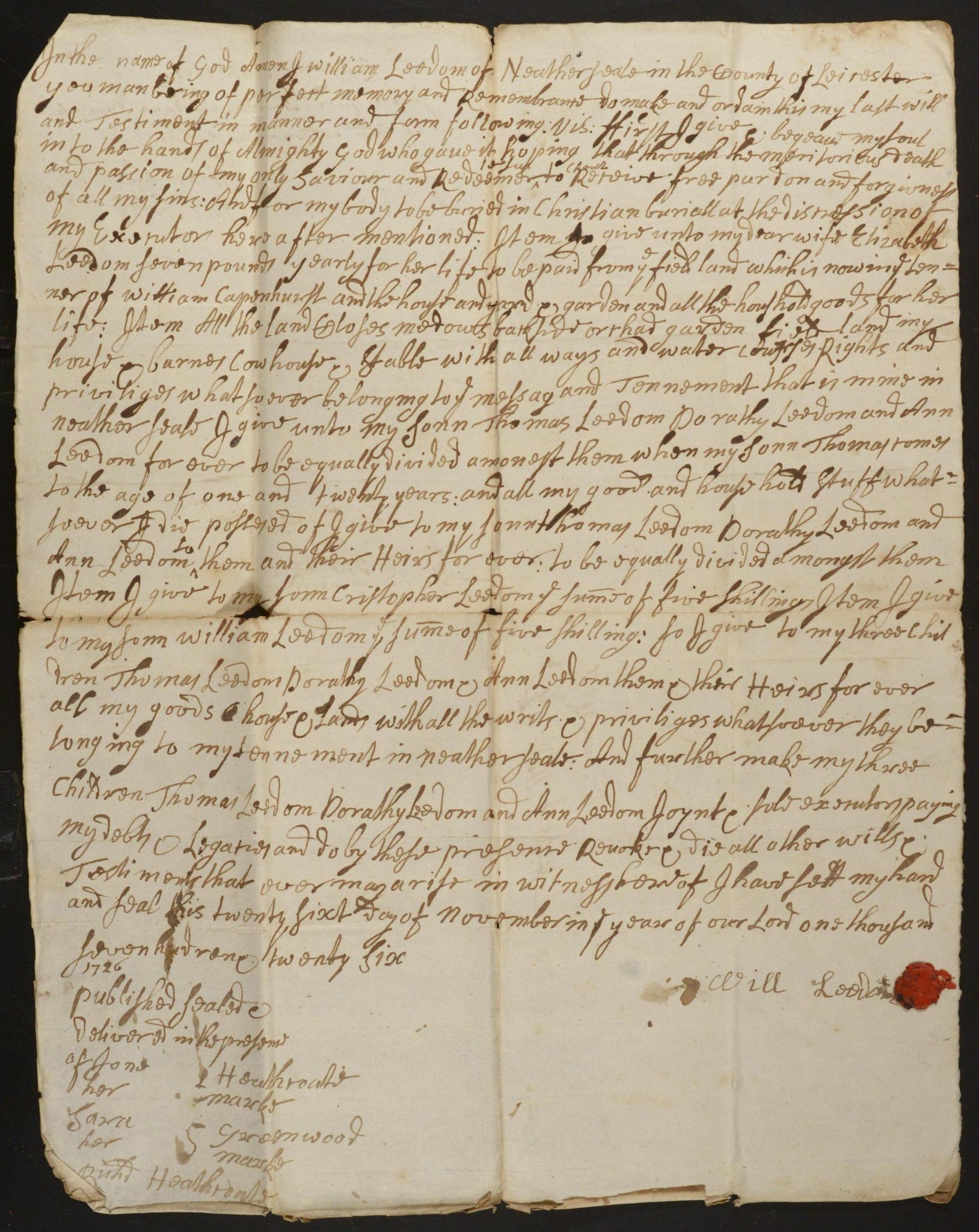
William, son of Nicholas and Dorothy also left a will. In it he mentions “My dear wife Elizabeth. My children Thomas Leedom, Dorothy Leedom , Ann Leedom, Christopher Leedom and William Leedom.”
1726 will of William Leedham:
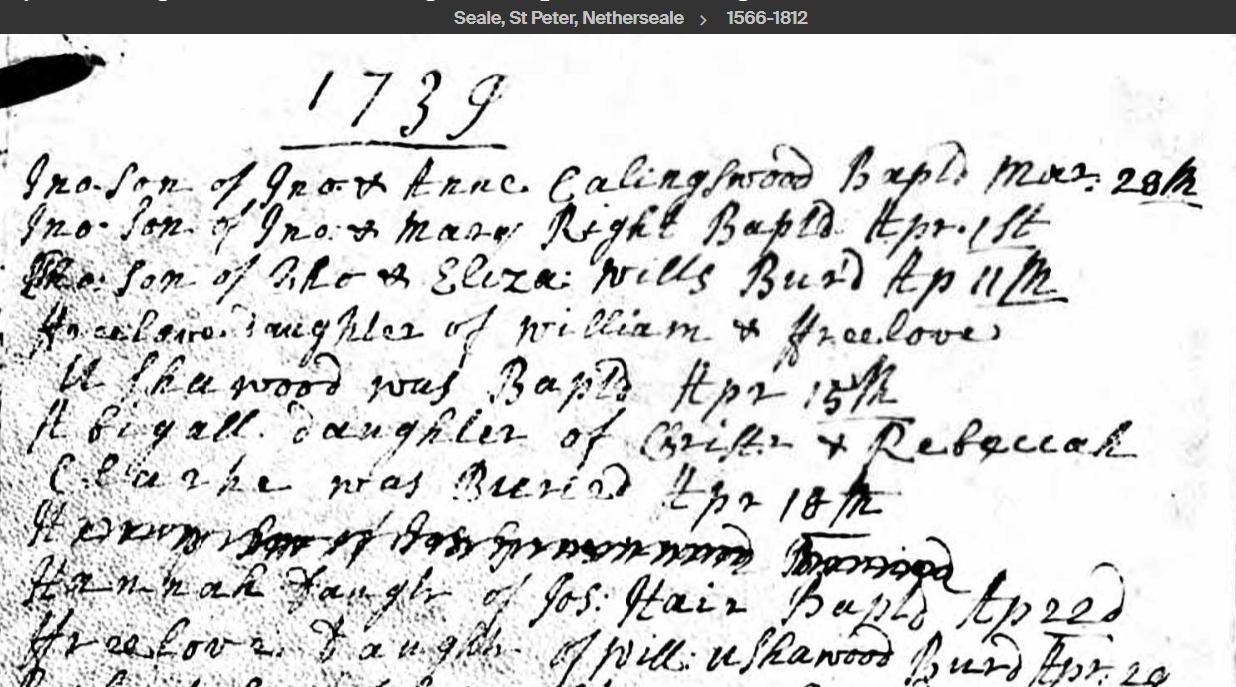
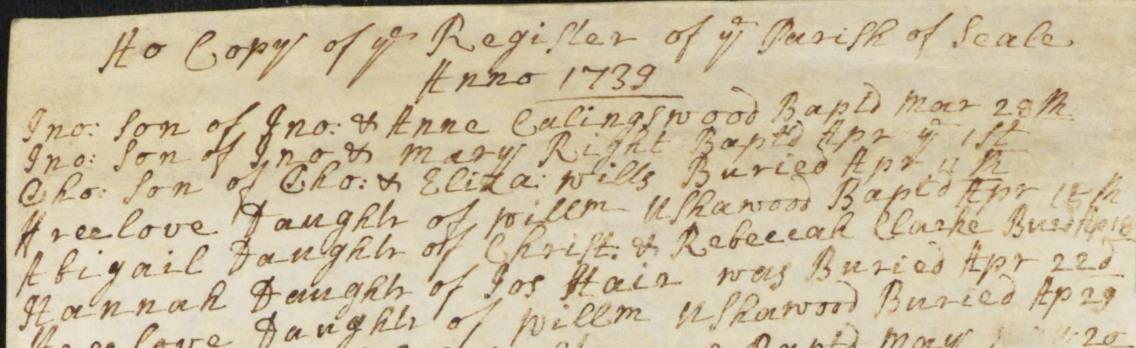
I found a curious error with the the parish register entries for Hannah Hair. It was a transcription error, but not a recent one. The original parish registers were copied: “HO Copy of ye register of Seale anno 1739.” I’m not sure when the copy was made, but it wasn’t recently. I found a burial for Hannah Hair on 22 April 1739 in the HO copy, which was the same day as her baptism registered on the original. I checked both registers name by name and they are exactly copied EXCEPT for Hannah Hairs. The rector, Richard Inge, put burial instead of baptism by mistake.
The original Parish register baptism of Hannah Hair:
The HO register copy incorrectly copied:
 June 6, 2022 at 12:58 pm #6303
In reply to: The Elusive Samuel Housley and Other Family Stories
The Hollands of Barton under Needwood
Samuel Warren of Stapenhill married Catherine Holland of Barton under Needwood in 1795.
I joined a Barton under Needwood History group and found an incredible amount of information on the Holland family, but first I wanted to make absolutely sure that our Catherine Holland was one of them as there were also Hollands in Newhall. Not only that, on the marriage licence it says that Catherine Holland was from Bretby Park Gate, Stapenhill.
Then I noticed that one of the witnesses on Samuel’s brother Williams marriage to Ann Holland in 1796 was John Hair. Hannah Hair was the wife of Thomas Holland, and they were the Barton under Needwood parents of Catherine. Catherine was born in 1775, and Ann was born in 1767.
The 1851 census clinched it: Catherine Warren 74 years old, widow and formerly a farmers wife, was living in the household of her son John Warren, and her place of birth is listed as Barton under Needwood. In 1841 Catherine was a 64 year old widow, her husband Samuel having died in 1837, and she was living with her son Samuel, a farmer. The 1841 census did not list place of birth, however. Catherine died on 31 March 1861 and does not appear on the 1861 census.
Once I had established that our Catherine Holland was from Barton under Needwood, I had another look at the information available on the Barton under Needwood History group, compiled by local historian Steve Gardner.
Catherine’s parents were Thomas Holland 1737-1828 and Hannah Hair 1739-1822.
Steve Gardner had posted a long list of the dates, marriages and children of the Holland family. The earliest entries in parish registers were Thomae Holland 1562-1626 and his wife Eunica Edwardes 1565-1632. They married on 10th July 1582. They were born, married and died in Barton under Needwood. They were direct ancestors of Catherine Holland, and as such my direct ancestors too.
The known history of the Holland family in Barton under Needwood goes back to Richard De Holland. (Thanks once again to Steve Gardner of the Barton under Needwood History group for this information.)
“Richard de Holland was the first member of the Holland family to become resident in Barton under Needwood (in about 1312) having been granted lands by the Earl of Lancaster (for whom Richard served as Stud and Stock Keeper of the Peak District) The Holland family stemmed from Upholland in Lancashire and had many family connections working for the Earl of Lancaster, who was one of the biggest Barons in England. Lancaster had his own army and lived at Tutbury Castle, from where he ruled over most of the Midlands area. The Earl of Lancaster was one of the main players in the ‘Barons Rebellion’ and the ensuing Battle of Burton Bridge in 1322. Richard de Holland was very much involved in the proceedings which had so angered Englands King. Holland narrowly escaped with his life, unlike the Earl who was executed.
From the arrival of that first Holland family member, the Hollands were a mainstay family in the community, and were in Barton under Needwood for over 600 years.”Continuing with various items of information regarding the Hollands, thanks to Steve Gardner’s Barton under Needwood history pages:
“PART 6 (Final Part)
Some mentions of The Manor of Barton in the Ancient Staffordshire Rolls:
1330. A Grant was made to Herbert de Ferrars, at le Newland in the Manor of Barton.
1378. The Inquisitio bonorum – Johannis Holand — an interesting Inventory of his goods and their value and his debts.
1380. View of Frankpledge ; the Jury found that Richard Holland was feloniously murdered by his wife Joan and Thomas Graunger, who fled. The goods of the deceased were valued at iiij/. iijj. xid. ; one-third went to the dead man, one-third to his son, one- third to the Lord for the wife’s share. Compare 1 H. V. Indictments. (1413.)
That Thomas Graunger of Barton smyth and Joan the wife of Richard de Holond of Barton on the Feast of St. John the Baptist 10 H. II. (1387) had traitorously killed and murdered at night, at Barton, Richard, the husband of the said Joan. (m. 22.)
The names of various members of the Holland family appear constantly among the listed Jurors on the manorial records printed below : —
1539. Richard Holland and Richard Holland the younger are on the Muster Roll of Barton
1583. Thomas Holland and Unica his wife are living at Barton.
1663-4. Visitations. — Barton under Needword. Disclaimers. William Holland, Senior, William Holland, Junior.
1609. Richard Holland, Clerk and Alice, his wife.
1663-4. Disclaimers at the Visitation. William Holland, Senior, William Holland, Junior.”I was able to find considerably more information on the Hollands in the book “Some Records of the Holland Family (The Hollands of Barton under Needwood, Staffordshire, and the Hollands in History)” by William Richard Holland. Luckily the full text of this book can be found online.
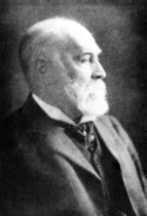
William Richard Holland (Died 1915) An early local Historian and author of the book:
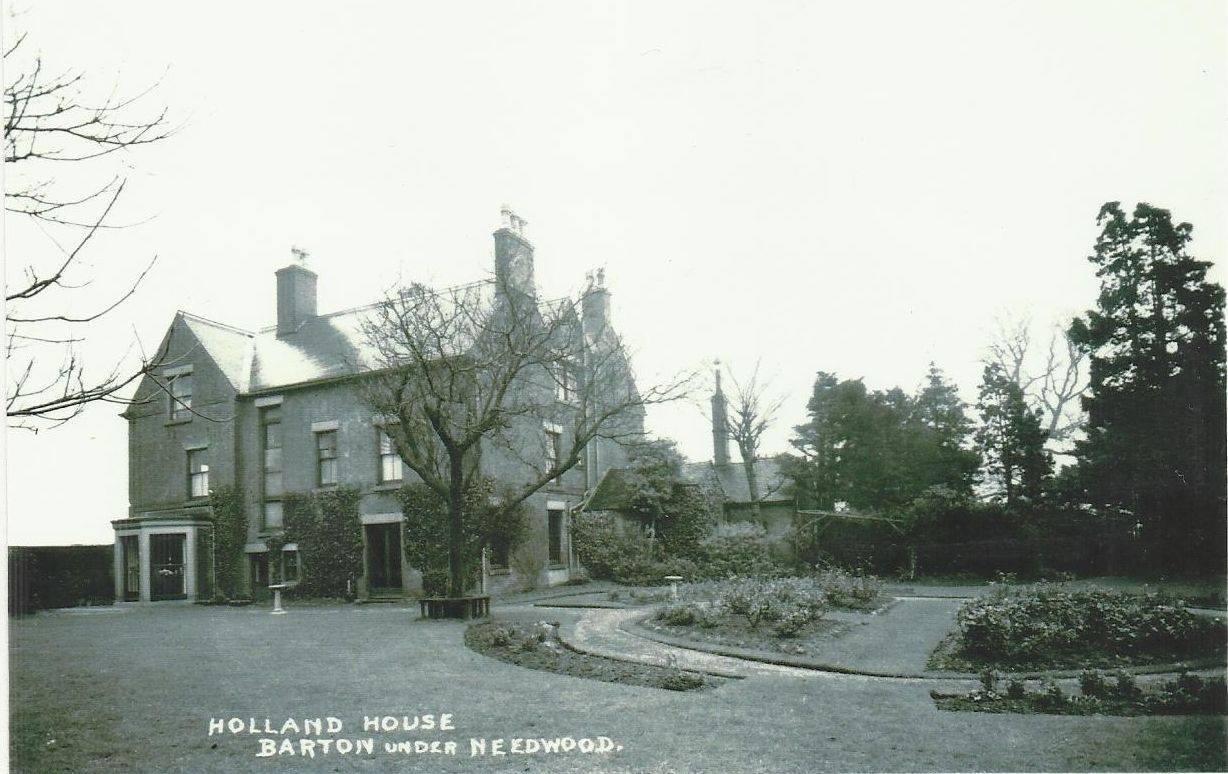
‘Holland House’ taken from the Gardens (sadly demolished in the early 60’s):
Excerpt from the book:
“The charter, dated 1314, granting Richard rights and privileges in Needwood Forest, reads as follows:
“Thomas Earl of Lancaster and Leicester, high-steward of England, to whom all these present shall come, greeting: Know ye, that we have given, &c., to Richard Holland of Barton, and his heirs, housboot, heyboot, and fireboot, and common of pasture, in our forest of Needwood, for all his beasts, as well in places fenced as lying open, with 40 hogs, quit of pawnage in our said forest at all times in the year (except hogs only in fence month). All which premises we will warrant, &c. to the said Richard and his heirs against all people for ever”
“The terms “housboot” “heyboot” and “fireboot” meant that Richard and his heirs were to have the privilege of taking from the Forest, wood needed for house repair and building, hedging material for the repairing of fences, and what was needful for purposes of fuel.”
Further excerpts from the book:
“It may here be mentioned that during the renovation of Barton Church, when the stone pillars were being stripped of the plaster which covered them, “William Holland 1617” was found roughly carved on a pillar near to the belfry gallery, obviously the work of a not too devout member of the family, who, seated in the gallery of that time, occupied himself thus during the service. The inscription can still be seen.”
“The earliest mention of a Holland of Upholland occurs in the reign of John in a Final Concord, made at the Lancashire Assizes, dated November 5th, 1202, in which Uchtred de Chryche, who seems to have had some right in the manor of Upholland, releases his right in fourteen oxgangs* of land to Matthew de Holland, in consideration of the sum of six marks of silver. Thus was planted the Holland Tree, all the early information of which is found in The Victoria County History of Lancaster.
As time went on, the family acquired more land, and with this, increased position. Thus, in the reign of Edward I, a Robert de Holland, son of Thurstan, son of Robert, became possessed of the manor of Orrell adjoining Upholland and of the lordship of Hale in the parish of Childwall, and, through marriage with Elizabeth de Samlesbury (co-heiress of Sir Wm. de Samlesbury of Samlesbury, Hall, near to Preston), of the moiety of that manor….
* An oxgang signified the amount of land that could be ploughed by one ox in one day”
“This Robert de Holland, son of Thurstan, received Knighthood in the reign of Edward I, as did also his brother William, ancestor of that branch of the family which later migrated to Cheshire. Belonging to this branch are such noteworthy personages as Mrs. Gaskell, the talented authoress, her mother being a Holland of this branch, Sir Henry Holland, Physician to Queen Victoria, and his two sons, the first Viscount Knutsford, and Canon Francis Holland ; Sir Henry’s grandson (the present Lord Knutsford), Canon Scott Holland, etc. Captain Frederick Holland, R.N., late of Ashbourne Hall, Derbyshire, may also be mentioned here.*”
Thanks to the Barton under Needwood history group for the following:
WALES END FARM:
In 1509 it was owned and occupied by Mr Johannes Holland De Wallass end who was a well to do Yeoman Farmer (the origin of the areas name – Wales End). Part of the building dates to 1490 making it probably the oldest building still standing in the Village: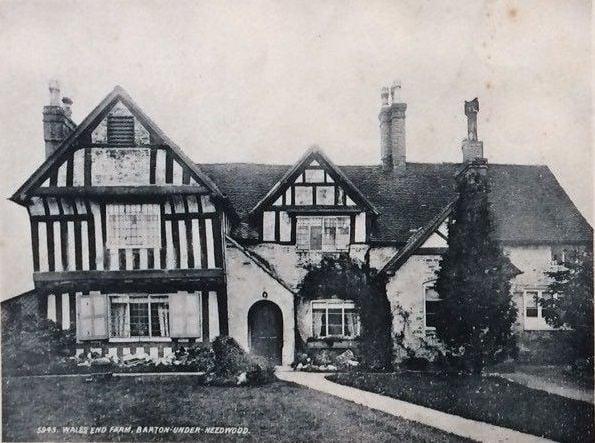
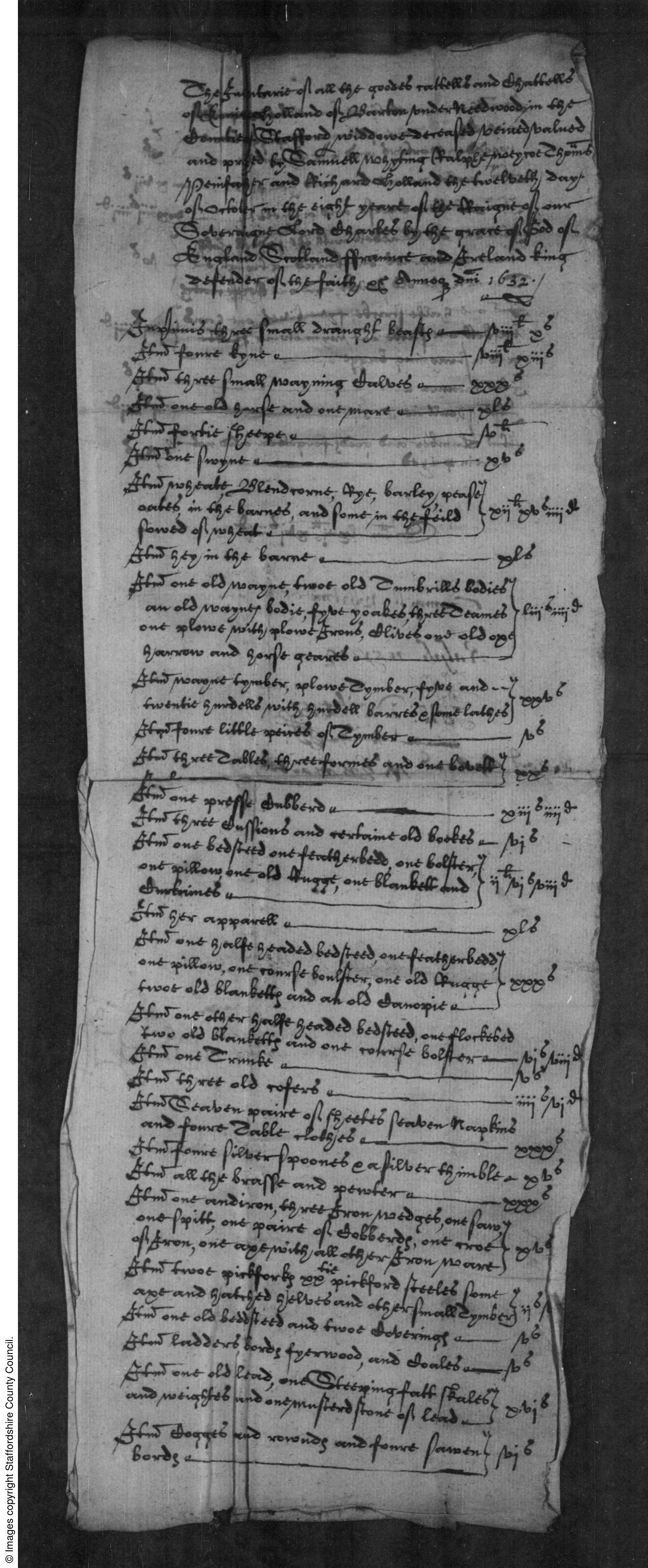
I found records for all of the Holland’s listed on the Barton under Needwood History group and added them to my ancestry tree. The earliest will I found was for Eunica Edwardes, then Eunica Holland, who died in 1632.
A page from the 1632 will and inventory of Eunica (Unice) Holland:
I’d been reading about “pedigree collapse” just before I found out her maiden name of Edwardes. Edwards is my own maiden name.
“In genealogy, pedigree collapse describes how reproduction between two individuals who knowingly or unknowingly share an ancestor causes the family tree of their offspring to be smaller than it would otherwise be.
Without pedigree collapse, a person’s ancestor tree is a binary tree, formed by the person, the parents, grandparents, and so on. However, the number of individuals in such a tree grows exponentially and will eventually become impossibly high. For example, a single individual alive today would, over 30 generations going back to the High Middle Ages, have roughly a billion ancestors, more than the total world population at the time. This apparent paradox occurs because the individuals in the binary tree are not distinct: instead, a single individual may occupy multiple places in the binary tree. This typically happens when the parents of an ancestor are cousins (sometimes unbeknownst to themselves). For example, the offspring of two first cousins has at most only six great-grandparents instead of the normal eight. This reduction in the number of ancestors is pedigree collapse. It collapses the binary tree into a directed acyclic graph with two different, directed paths starting from the ancestor who in the binary tree would occupy two places.” via wikipediaThere is nothing to suggest, however, that Eunica’s family were related to my fathers family, and the only evidence so far in my tree of pedigree collapse are the marriages of Orgill cousins, where two sets of grandparents are repeated.
A list of Holland ancestors:
Catherine Holland 1775-1861
her parents:
Thomas Holland 1737-1828 Hannah Hair 1739-1832
Thomas’s parents:
William Holland 1696-1756 Susannah Whiteing 1715-1752
William’s parents:
William Holland 1665- Elizabeth Higgs 1675-1720
William’s parents:
Thomas Holland 1634-1681 Katherine Owen 1634-1728
Thomas’s parents:
Thomas Holland 1606-1680 Margaret Belcher 1608-1664
Thomas’s parents:
Thomas Holland 1562-1626 Eunice Edwardes 1565- 1632May 3, 2022 at 4:40 pm #6291In reply to: The Elusive Samuel Housley and Other Family Stories
Jane Eaton
The Nottingham Girl
Jane Eaton 1809-1879
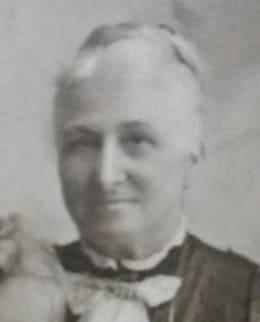
Francis Purdy, the Beggarlea Bulldog and Methodist Minister, married Jane Eaton in 1837 in Nottingham. Jane was his second wife.
Jane Eaton, photo says “Grandma Purdy” on the back:
Jane is described as a “Nottingham girl” in a book excerpt sent to me by Jim Giles, a relation who shares the same 3x great grandparents, Francis and Jane Purdy.
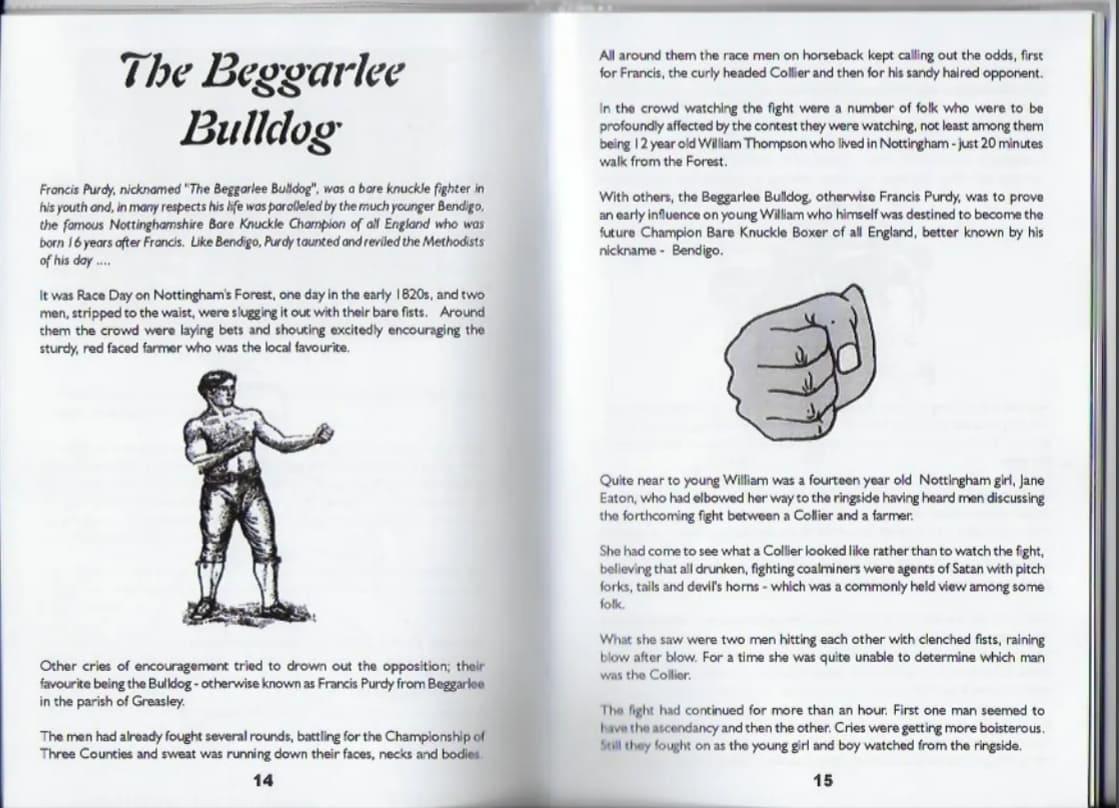
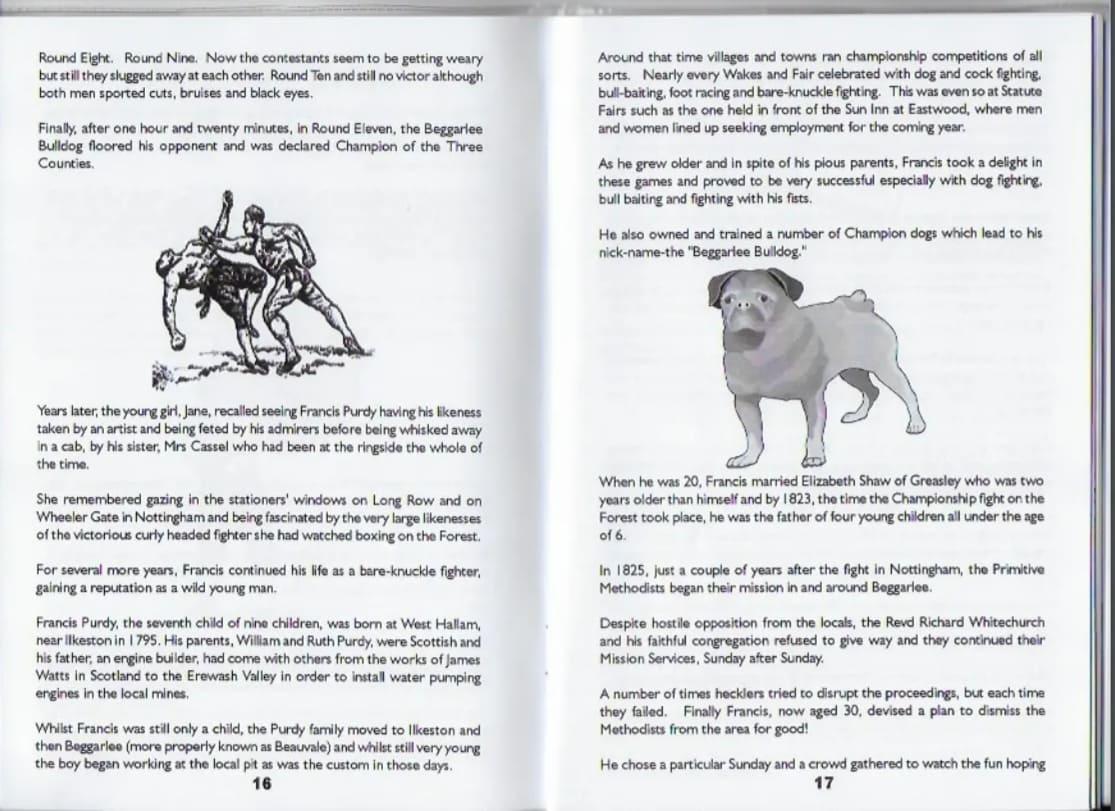
Elizabeth, Francis Purdy’s first wife, died suddenly at chapel in 1836, leaving nine children.
On Christmas day the following year Francis married Jane Eaton at St Peters church in Nottingham. Jane married a Methodist Minister, and didn’t realize she married the bare knuckle fighter she’d seen when she was fourteen until he undressed and she saw his scars.
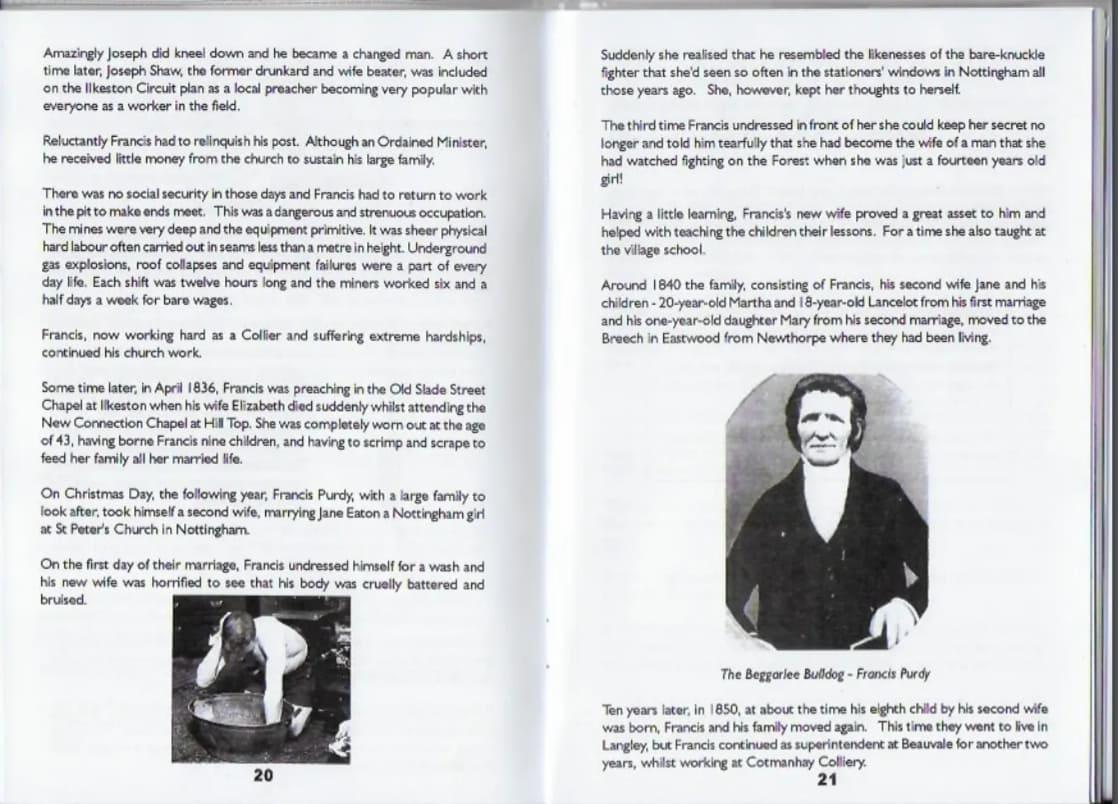
William Eaton 1767-1851
On the marriage certificate Jane’s father was William Eaton, occupation gardener. Francis’s father was William Purdy, engineer.
On the 1841 census living in Sollory’s Yard, Nottingham St Mary, William Eaton was a 70 year old gardener. It doesn’t say which county he was born in but indicates that it was not Nottinghamshire. Living with him were Mary Eaton, milliner, age 35, Mary Eaton, milliner, 15, and Elizabeth Rhodes age 35, a sempstress (another word for seamstress). The three women were born in Nottinghamshire.
But who was Elizabeth Rhodes?
Elizabeth Eaton was Jane’s older sister, born in 1797 in Nottingham. She married William Rhodes, a private in the 5th Dragoon Guards, in Leeds in October 1815.
I looked for Elizabeth Rhodes on the 1851 census, which stated that she was a widow. I was also trying to determine which William Eaton death was the right one, and found William Eaton was still living with Elizabeth in 1851 at Pilcher Gate in Nottingham, but his name had been entered backwards: Eaton William. I would not have found him on the 1851 census had I searched for Eaton as a last name.
Pilcher Gate gets its strange name from pilchers or fur dealers and was once a very narrow thoroughfare. At the lower end stood a pub called The Windmill – frequented by the notorious robber and murderer Charlie Peace.
This was a lucky find indeed, because William’s place of birth was listed as Grantham, Lincolnshire. There were a couple of other William Eaton’s born at the same time, both near to Nottingham. It was tricky to work out which was the right one, but as it turned out, neither of them were.
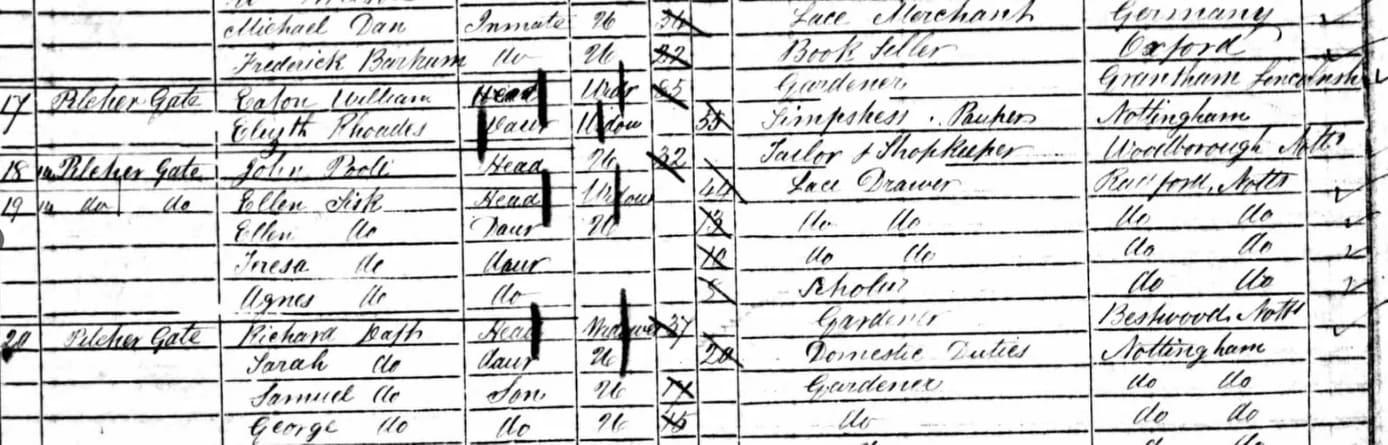
Now we had Nottinghamshire and Lincolnshire border straddlers, so the search moved to the Lincolnshire records.
But first, what of the two Mary Eatons living with William?William and his wife Mary had a daughter Mary in 1799 who died in 1801, and another daughter Mary Ann born in 1803. (It was common to name children after a previous infant who had died.) It seems that Mary Ann didn’t marry but had a daughter Mary Eaton born in 1822.
William and his wife Mary also had a son Richard Eaton born in 1801 in Nottingham.
Who was William Eaton’s wife Mary?
There are two possibilities: Mary Cresswell and a marriage in Nottingham in 1797, or Mary Dewey and a marriage at Grantham in 1795. If it’s Mary Cresswell, the first child Elizabeth would have been born just four or five months after the wedding. (This was far from unusual). However, no births in Grantham, or in Nottingham, were recorded for William and Mary in between 1795 and 1797.
We don’t know why William moved from Grantham to Nottingham or when he moved there. According to Dearden’s 1834 Nottingham directory, William Eaton was a “Gardener and Seedsman”.
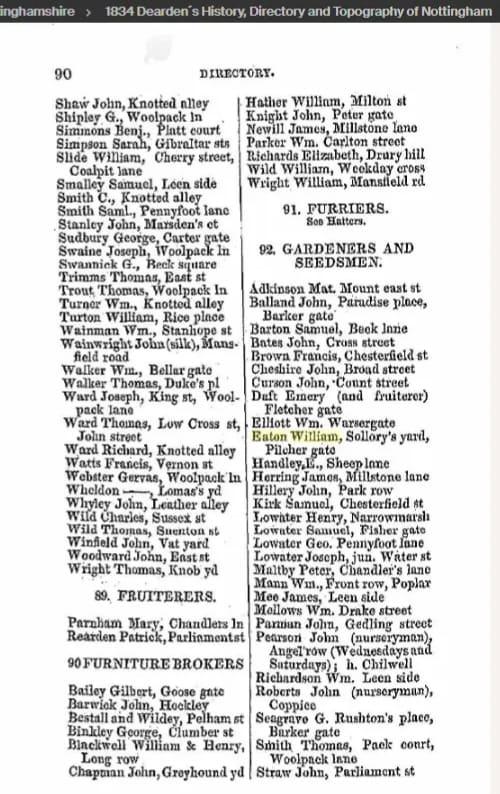
There was another William Eaton selling turnip seeds in the same part of Nottingham. At first I thought it must be the same William, but apparently not, as that William Eaton is recorded as a victualler, born in Ruddington. The turnip seeds were advertised in 1847 as being obtainable from William Eaton at the Reindeer Inn, Wheeler Gate. Perhaps he was related.
William lived in the Lace Market part of Nottingham. I wondered where a gardener would be working in that part of the city. According to CreativeQuarter website, “in addition to the trades and housing (sometimes under the same roof), there were a number of splendid mansions being built with extensive gardens and orchards. Sadly, these no longer exist as they were gradually demolished to make way for commerce…..The area around St Mary’s continued to develop as an elegant residential district during the seventeenth and eighteenth centuries, with buildings … being built for nobility and rich merchants.”
William Eaton died in Nottingham in September 1851, thankfully after the census was taken recording his place of birth.
February 2, 2022 at 1:15 pm #6268In reply to: The Elusive Samuel Housley and Other Family Stories
From Tanganyika with Love
continued part 9
With thanks to Mike Rushby.
Lyamungu 3rd January 1945
Dearest Family.
We had a novel Christmas this year. We decided to avoid the expense of
entertaining and being entertained at Lyamungu, and went off to spend Christmas
camping in a forest on the Western slopes of Kilimanjaro. George decided to combine
business with pleasure and in this way we were able to use Government transport.
We set out the day before Christmas day and drove along the road which skirts
the slopes of Kilimanjaro and first visited a beautiful farm where Philip Teare, the ex
Game Warden, and his wife Mary are staying. We had afternoon tea with them and then
drove on in to the natural forest above the estate and pitched our tent beside a small
clear mountain stream. We decorated the tent with paper streamers and a few small
balloons and John found a small tree of the traditional shape which we decorated where
it stood with tinsel and small ornaments.We put our beer, cool drinks for the children and bottles of fresh milk from Simba
Estate, in the stream and on Christmas morning they were as cold as if they had been in
the refrigerator all night. There were not many presents for the children, there never are,
but they do not seem to mind and are well satisfied with a couple of balloons apiece,
sweets, tin whistles and a book each.George entertain the children before breakfast. He can make a magical thing out
of the most ordinary balloon. The children watched entranced as he drew on his pipe
and then blew the smoke into the balloon. He then pinched the neck of the balloon
between thumb and forefinger and released the smoke in little puffs. Occasionally the
balloon ejected a perfect smoke ring and the forest rang with shouts of “Do it again
Daddy.” Another trick was to blow up the balloon to maximum size and then twist the
neck tightly before releasing. Before subsiding the balloon darted about in a crazy
fashion causing great hilarity. Such fun, at the cost of a few pence.After breakfast George went off to fish for trout. John and Jim decided that they
also wished to fish so we made rods out of sticks and string and bent pins and they
fished happily, but of course quite unsuccessfully, for hours. Both of course fell into the
stream and got soaked, but I was prepared for this, and the little stream was so shallow
that they could not come to any harm. Henry played happily in the sand and I had a
most peaceful morning.Hamisi roasted a chicken in a pot over the camp fire and the jelly set beautifully in the
stream. So we had grilled trout and chicken for our Christmas dinner. I had of course
taken an iced cake for the occasion and, all in all, it was a very successful Christmas day.
On Boxing day we drove down to the plains where George was to investigate a
report of game poaching near the Ngassari Furrow. This is a very long ditch which has
been dug by the Government for watering the Masai stock in the area. It is also used by
game and we saw herds of zebra and wildebeest, and some Grant’s Gazelle and
giraffe, all comparatively tame. At one point a small herd of zebra raced beside the lorry
apparently enjoying the fun of a gallop. They were all sleek and fat and looked wild and
beautiful in action.We camped a considerable distance from the water but this precaution did not
save us from the mosquitoes which launched a vicious attack on us after sunset, so that
we took to our beds unusually early. They were on the job again when we got up at
sunrise so I was very glad when we were once more on our way home.“I like Christmas safari. Much nicer that silly old party,” said John. I agree but I think
it is time that our children learned to play happily with others. There are no other young
children at Lyamungu though there are two older boys and a girl who go to boarding
school in Nairobi.On New Years Day two Army Officers from the military camp at Moshi, came for
tea and to talk game hunting with George. I think they rather enjoy visiting a home and
seeing children and pets around.Eleanor.
Lyamungu 14 May 1945
Dearest Family.
So the war in Europe is over at last. It is such marvellous news that I can hardly
believe it. To think that as soon as George can get leave we will go to England and
bring Ann and George home with us to Tanganyika. When we know when this leave can
be arranged we will want Kate to join us here as of course she must go with us to
England to meet George’s family. She has become so much a part of your lives that I
know it will be a wrench for you to give her up but I know that you will all be happy to
think that soon our family will be reunited.The V.E. celebrations passed off quietly here. We all went to Moshi to see the
Victory Parade of the King’s African Rifles and in the evening we went to a celebration
dinner at the Game Warden’s house. Besides ourselves the Moores had invited the
Commanding Officer from Moshi and a junior officer. We had a very good dinner and
many toasts including one to Mrs Moore’s brother, Oliver Milton who is fighting in Burma
and has recently been awarded the Military Cross.There was also a celebration party for the children in the grounds of the Moshi
Club. Such a spread! I think John and Jim sampled everything. We mothers were
having our tea separately and a friend laughingly told me to turn around and have a look.
I did, and saw the long tea tables now deserted by all the children but my two sons who
were still eating steadily, and finding the party more exciting than the game of Musical
Bumps into which all the other children had entered with enthusiasm.There was also an extremely good puppet show put on by the Italian prisoners
of war from the camp at Moshi. They had made all the puppets which included well
loved characters like Snow White and the Seven Dwarfs and the Babes in the Wood as
well as more sophisticated ones like an irritable pianist and a would be prima donna. The
most popular puppets with the children were a native askari and his family – a very
happy little scene. I have never before seen a puppet show and was as entranced as
the children. It is amazing what clever manipulation and lighting can do. I believe that the
Italians mean to take their puppets to Nairobi and am glad to think that there, they will
have larger audiences to appreciate their art.George has just come in, and I paused in my writing to ask him for the hundredth
time when he thinks we will get leave. He says I must be patient because it may be a
year before our turn comes. Shipping will be disorganised for months to come and we
cannot expect priority simply because we have been separated so long from our
children. The same situation applies to scores of other Government Officials.
I have decided to write the story of my childhood in South Africa and about our
life together in Tanganyika up to the time Ann and George left the country. I know you
will have told Kate these stories, but Ann and George were so very little when they left
home that I fear that they cannot remember much.My Mother-in-law will have told them about their father but she can tell them little
about me. I shall send them one chapter of my story each month in the hope that they
may be interested and not feel that I am a stranger when at last we meet again.Eleanor.
Lyamungu 19th September 1945
Dearest Family.
In a months time we will be saying good-bye to Lyamungu. George is to be
transferred to Mbeya and I am delighted, not only as I look upon Mbeya as home, but
because there is now a primary school there which John can attend. I feel he will make
much better progress in his lessons when he realises that all children of his age attend
school. At present he is putting up a strong resistance to learning to read and spell, but
he writes very neatly, does his sums accurately and shows a real talent for drawing. If
only he had the will to learn I feel he would do very well.Jim now just four, is too young for lessons but too intelligent to be interested in
the ayah’s attempts at entertainment. Yes I’ve had to engage a native girl to look after
Henry from 9 am to 12.30 when I supervise John’s Correspondence Course. She is
clean and amiable, but like most African women she has no initiative at all when it comes
to entertaining children. Most African men and youths are good at this.I don’t regret our stay at Lyamungu. It is a beautiful spot and the change to the
cooler climate after the heat of Morogoro has been good for all the children. John is still
tall for his age but not so thin as he was and much less pale. He is a handsome little lad
with his large brown eyes in striking contrast to his fair hair. He is wary of strangers but
very observant and quite uncanny in the way he sums up people. He seldom gets up
to mischief but I have a feeling he eggs Jim on. Not that Jim needs egging.Jim has an absolute flair for mischief but it is all done in such an artless manner that
it is not easy to punish him. He is a very sturdy child with a cap of almost black silky hair,
eyes brown, like mine, and a large mouth which is quick to smile and show most beautiful
white and even teeth. He is most popular with all the native servants and the Game
Scouts. The servants call Jim, ‘Bwana Tembo’ (Mr Elephant) because of his sturdy
build.Henry, now nearly two years old, is quite different from the other two in
appearance. He is fair complexioned and fair haired like Ann and Kate, with large, black
lashed, light grey eyes. He is a good child, not so merry as Jim was at his age, nor as
shy as John was. He seldom cries, does not care to be cuddled and is independent and
strong willed. The servants call Henry, ‘Bwana Ndizi’ (Mr Banana) because he has an
inexhaustible appetite for this fruit. Fortunately they are very inexpensive here. We buy
an entire bunch which hangs from a beam on the back verandah, and pluck off the
bananas as they ripen. This way there is no waste and the fruit never gets bruised as it
does in greengrocers shops in South Africa. Our three boys make a delightful and
interesting trio and I do wish you could see them for yourselves.We are delighted with the really beautiful photograph of Kate. She is an
extraordinarily pretty child and looks so happy and healthy and a great credit to you.
Now that we will be living in Mbeya with a school on the doorstep I hope that we will
soon be able to arrange for her return home.Eleanor.
c/o Game Dept. Mbeya. 30th October 1945
Dearest Family.
How nice to be able to write c/o Game Dept. Mbeya at the head of my letters.
We arrived here safely after a rather tiresome journey and are installed in a tiny house on
the edge of the township.We left Lyamungu early on the morning of the 22nd. Most of our goods had
been packed on the big Ford lorry the previous evening, but there were the usual
delays and farewells. Of our servants, only the cook, Hamisi, accompanied us to
Mbeya. Japhet, Tovelo and the ayah had to be paid off and largesse handed out.
Tovelo’s granny had come, bringing a gift of bananas, and she also brought her little
granddaughter to present a bunch of flowers. The child’s little scolded behind is now
completely healed. Gifts had to be found for them too.At last we were all aboard and what a squash it was! Our few pieces of furniture
and packing cases and trunks, the cook, his wife, the driver and the turney boy, who
were to take the truck back to Lyamungu, and all their bits and pieces, bunches of
bananas and Fanny the dog were all crammed into the body of the lorry. George, the
children and I were jammed together in the cab. Before we left George looked
dubiously at the tyres which were very worn and said gloomily that he thought it most
unlikely that we would make our destination, Dodoma.Too true! Shortly after midday, near Kwakachinja, we blew a back tyre and there
was a tedious delay in the heat whilst the wheel was changed. We were now without a
spare tyre and George said that he would not risk taking the Ford further than Babati,
which is less than half way to Dodoma. He drove very slowly and cautiously to Babati
where he arranged with Sher Mohammed, an Indian trader, for a lorry to take us to
Dodoma the next morning.It had been our intention to spend the night at the furnished Government
Resthouse at Babati but when we got there we found that it was already occupied by
several District Officers who had assembled for a conference. So, feeling rather
disgruntled, we all piled back into the lorry and drove on to a place called Bereku where
we spent an uncomfortable night in a tumbledown hut.Before dawn next morning Sher Mohammed’s lorry drove up, and there was a
scramble to dress by the light of a storm lamp. The lorry was a very dilapidated one and
there was already a native woman passenger in the cab. I felt so tired after an almost
sleepless night that I decided to sit between the driver and this woman with the sleeping
Henry on my knee. It was as well I did, because I soon found myself dosing off and
drooping over towards the woman. Had she not been there I might easily have fallen
out as the battered cab had no door. However I was alert enough when daylight came
and changed places with the woman to our mutual relief. She was now able to converse
with the African driver and I was able to enjoy the scenery and the fresh air!
George, John and Jim were less comfortable. They sat in the lorry behind the
cab hemmed in by packing cases. As the lorry was an open one the sun beat down
unmercifully upon them until George, ever resourceful, moved a table to the front of the
truck. The two boys crouched under this and so got shelter from the sun but they still had
to endure the dust. Fanny complicated things by getting car sick and with one thing and
another we were all jolly glad to get to Dodoma.We spent the night at the Dodoma Hotel and after hot baths, a good meal and a
good nights rest we cheerfully boarded a bus of the Tanganyika Bus Service next
morning to continue our journey to Mbeya. The rest of the journey was uneventful. We slept two nights on the road, the first at Iringa Hotel and the second at Chimala. We
reached Mbeya on the 27th.I was rather taken aback when I first saw the little house which has been allocated
to us. I had become accustomed to the spacious houses we had in Morogoro and
Lyamungu. However though the house is tiny it is secluded and has a long garden
sloping down to the road in front and another long strip sloping up behind. The front
garden is shaded by several large cypress and eucalyptus trees but the garden behind
the house has no shade and consists mainly of humpy beds planted with hundreds of
carnations sadly in need of debudding. I believe that the previous Game Ranger’s wife
cultivated the carnations and, by selling them, raised money for War Funds.
Like our own first home, this little house is built of sun dried brick. Its original
owners were Germans. It is now rented to the Government by the Custodian of Enemy
Property, and George has his office in another ex German house.This afternoon we drove to the school to arrange about enrolling John there. The
school is about four miles out of town. It was built by the German settlers in the late
1930’s and they were justifiably proud of it. It consists of a great assembly hall and
classrooms in one block and there are several attractive single storied dormitories. This
school was taken over by the Government when the Germans were interned on the
outbreak of war and many improvements have been made to the original buildings. The
school certainly looks very attractive now with its grassed playing fields and its lawns and
bright flower beds.The Union Jack flies from a tall flagpole in front of the Hall and all traces of the
schools German origin have been firmly erased. We met the Headmaster, Mr
Wallington, and his wife and some members of the staff. The school is co-educational
and caters for children from the age of seven to standard six. The leaving age is elastic
owing to the fact that many Tanganyika children started school very late because of lack
of educational facilities in this country.The married members of the staff have their own cottages in the grounds. The
Matrons have quarters attached to the dormitories for which they are responsible. I felt
most enthusiastic about the school until I discovered that the Headmaster is adamant
upon one subject. He utterly refuses to take any day pupils at the school. So now our
poor reserved Johnny will have to adjust himself to boarding school life.
We have arranged that he will start school on November 5th and I shall be very
busy trying to assemble his school uniform at short notice. The clothing list is sensible.
Boys wear khaki shirts and shorts on weekdays with knitted scarlet jerseys when the
weather is cold. On Sundays they wear grey flannel shorts and blazers with the silver
and scarlet school tie.Mbeya looks dusty, brown and dry after the lush evergreen vegetation of
Lyamungu, but I prefer this drier climate and there are still mountains to please the eye.
In fact the lower slopes of Lolesa Mountain rise at the upper end of our garden.Eleanor.
c/o Game Dept. Mbeya. 21st November 1945
Dearest Family.
We’re quite settled in now and I have got the little house fixed up to my
satisfaction. I have engaged a rather uncouth looking houseboy but he is strong and
capable and now that I am not tied down in the mornings by John’s lessons I am able to
go out occasionally in the mornings and take Jim and Henry to play with other children.
They do not show any great enthusiasm but are not shy by nature as John is.
I have had a good deal of heartache over putting John to boarding school. It
would have been different had he been used to the company of children outside his
own family, or if he had even known one child there. However he seems to be adjusting
himself to the life, though slowly. At least he looks well and tidy and I am quite sure that
he is well looked after.I must confess that when the time came for John to go to school I simply did not
have the courage to take him and he went alone with George, looking so smart in his
new uniform – but his little face so bleak. The next day, Sunday, was visiting day but the
Headmaster suggested that we should give John time to settle down and not visit him
until Wednesday.When we drove up to the school I spied John on the far side of the field walking
all alone. Instead of running up with glad greetings, as I had expected, he came almost
reluctently and had little to say. I asked him to show me his dormitory and classroom and
he did so politely as though I were a stranger. At last he volunteered some information.
“Mummy,” he said in an awed voice, Do you know on the night I came here they burnt a
man! They had a big fire and they burnt him.” After a blank moment the penny dropped.
Of course John had started school and November the fifth but it had never entered my
head to tell him about that infamous character, Guy Fawkes!I asked John’s Matron how he had settled down. “Well”, she said thoughtfully,
“John is very good and has not cried as many of the juniors do when they first come
here, but he seems to keep to himself all the time.” I went home very discouraged but
on the Sunday John came running up with another lad of about his own age.” This is my
friend Marks,” he announced proudly. I could have hugged Marks.Mbeya is very different from the small settlement we knew in the early 1930’s.
Gone are all the colourful characters from the Lupa diggings for the alluvial claims are all
worked out now, gone also are our old friends the Menzies from the Pub and also most
of the Government Officials we used to know. Mbeya has lost its character of a frontier
township and has become almost suburban.The social life revolves around two places, the Club and the school. The Club
which started out as a little two roomed building, has been expanded and the golf
course improved. There are also tennis courts and a good library considering the size of
the community. There are frequent parties and dances, though most of the club revenue
comes from Bar profits. The parties are relatively sober affairs compared with the parties
of the 1930’s.The school provides entertainment of another kind. Both Mr and Mrs Wallington
are good amateur actors and I am told that they run an Amateur Dramatic Society. Every
Wednesday afternoon there is a hockey match at the school. Mbeya town versus a
mixed team of staff and scholars. The match attracts almost the whole European
population of Mbeya. Some go to play hockey, others to watch, and others to snatch
the opportunity to visit their children. I shall have to try to arrange a lift to school when
George is away on safari.I have now met most of the local women and gladly renewed an old friendship
with Sheilagh Waring whom I knew two years ago at Morogoro. Sheilagh and I have
much in common, the same disregard for the trappings of civilisation, the same sense of
the ludicrous, and children. She has eight to our six and she has also been cut off by the
war from two of her children. Sheilagh looks too young and pretty to be the mother of so
large a family and is, in fact, several years younger than I am. her husband, Donald, is a
large quiet man who, as far as I can judge takes life seriously.Our next door neighbours are the Bank Manager and his wife, a very pleasant
couple though we seldom meet. I have however had correspondence with the Bank
Manager. Early on Saturday afternoon their houseboy brought a note. It informed me
that my son was disturbing his rest by precipitating a heart attack. Was I aware that my
son was about 30 feet up in a tree and balanced on a twig? I ran out and,sure enough,
there was Jim, right at the top of the tallest eucalyptus tree. It would be the one with the
mound of stones at the bottom! You should have heard me fluting in my most
wheedling voice. “Sweets, Jimmy, come down slowly dear, I’ve some nice sweets for
you.”I’ll bet that little story makes you smile. I remember how often you have told me
how, as a child, I used to make your hearts turn over because I had no fear of heights
and how I used to say, “But that is silly, I won’t fall.” I know now only too well, how you
must have felt.Eleanor.
c/o Game Dept. Mbeya. 14th January 1946
Dearest Family.
I hope that by now you have my telegram to say that Kate got home safely
yesterday. It was wonderful to have her back and what a beautiful child she is! Kate
seems to have enjoyed the train journey with Miss Craig, in spite of the tears she tells
me she shed when she said good-bye to you. She also seems to have felt quite at
home with the Hopleys at Salisbury. She flew from Salisbury in a small Dove aircraft
and they had a smooth passage though Kate was a little airsick.I was so excited about her home coming! This house is so tiny that I had to turn
out the little store room to make a bedroom for her. With a fresh coat of whitewash and
pretty sprigged curtains and matching bedspread, borrowed from Sheilagh Waring, the
tiny room looks most attractive. I had also iced a cake, made ice-cream and jelly and
bought crackers for the table so that Kate’s home coming tea could be a proper little
celebration.I was pleased with my preparations and then, a few hours before the plane was
due, my crowned front tooth dropped out, peg and all! When my houseboy wants to
describe something very tatty, he calls it “Second-hand Kabisa.” Kabisa meaning
absolutely. That is an apt description of how I looked and felt. I decided to try some
emergency dentistry. I think you know our nearest dentist is at Dar es Salaam five
hundred miles away.First I carefully dried the tooth and with a match stick covered the peg and base
with Durofix. I then took the infants rubber bulb enema, sucked up some heat from a
candle flame and pumped it into the cavity before filling that with Durofix. Then hopefully
I stuck the tooth in its former position and held it in place for several minutes. No good. I
sent the houseboy to a shop for Scotine and tried the whole process again. No good
either.When George came home for lunch I appealed to him for advice. He jokingly
suggested that a maize seed jammed into the space would probably work, but when
he saw that I really was upset he produced some chewing gum and suggested that I
should try that . I did and that worked long enough for my first smile anyway.
George and the three boys went to meet Kate but I remained at home to
welcome her there. I was afraid that after all this time away Kate might be reluctant to
rejoin the family but she threw her arms around me and said “Oh Mummy,” We both
shed a few tears and then we both felt fine.How gay Kate is, and what an infectious laugh she has! The boys follow her
around in admiration. John in fact asked me, “Is Kate a Princess?” When I said
“Goodness no, Johnny, she’s your sister,” he explained himself by saying, “Well, she
has such golden hair.” Kate was less complementary. When I tucked her in bed last night
she said, “Mummy, I didn’t expect my little brothers to be so yellow!” All three boys
have been taking a course of Atebrin, an anti-malarial drug which tinges skin and eyeballs
yellow.So now our tiny house is bursting at its seams and how good it feels to have one
more child under our roof. We are booked to sail for England in May and when we return
we will have Ann and George home too. Then I shall feel really content.Eleanor.
c/o Game Dept. Mbeya. 2nd March 1946
Dearest Family.
My life just now is uneventful but very busy. I am sewing hard and knitting fast to
try to get together some warm clothes for our leave in England. This is not a simple
matter because woollen materials are in short supply and very expensive, and now that
we have boarding school fees to pay for both Kate and John we have to budget very
carefully indeed.Kate seems happy at school. She makes friends easily and seems to enjoy
communal life. John also seems reconciled to school now that Kate is there. He no
longer feels that he is the only exile in the family. He seems to rub along with the other
boys of his age and has a couple of close friends. Although Mbeya School is coeducational
the smaller boys and girls keep strictly apart. It is considered extremely
cissy to play with girls.The local children are allowed to go home on Sundays after church and may bring
friends home with them for the day. Both John and Kate do this and Sunday is a very
busy day for me. The children come home in their Sunday best but bring play clothes to
change into. There is always a scramble to get them to bath and change again in time to
deliver them to the school by 6 o’clock.When George is home we go out to the school for the morning service. This is
taken by the Headmaster Mr Wallington, and is very enjoyable. There is an excellent
school choir to lead the singing. The service is the Church of England one, but is
attended by children of all denominations, except the Roman Catholics. I don’t think that
more than half the children are British. A large proportion are Greeks, some as old as
sixteen, and about the same number are Afrikaners. There are Poles and non-Nazi
Germans, Swiss and a few American children.All instruction is through the medium of English and it is amazing how soon all the
foreign children learn to chatter in English. George has been told that we will return to
Mbeya after our leave and for that I am very thankful as it means that we will still be living
near at hand when Jim and Henry start school. Because many of these children have to
travel many hundreds of miles to come to school, – Mbeya is a two day journey from the
railhead, – the school year is divided into two instead of the usual three terms. This
means that many of these children do not see their parents for months at a time. I think
this is a very sad state of affairs especially for the seven and eight year olds but the
Matrons assure me , that many children who live on isolated farms and stations are quite
reluctant to go home because they miss the companionship and the games and
entertainment that the school offers.My only complaint about the life here is that I see far too little of George. He is
kept extremely busy on this range and is hardly at home except for a few days at the
months end when he has to be at his office to check up on the pay vouchers and the
issue of ammunition to the Scouts. George’s Range takes in the whole of the Southern
Province and the Southern half of the Western Province and extends to the border with
Northern Rhodesia and right across to Lake Tanganyika. This vast area is patrolled by
only 40 Game Scouts because the Department is at present badly under staffed, due
partly to the still acute shortage of rifles, but even more so to the extraordinary reluctance
which the Government shows to allocate adequate funds for the efficient running of the
Department.The Game Scouts must see that the Game Laws are enforced, protect native
crops from raiding elephant, hippo and other game animals. Report disease amongst game and deal with stock raiding lions. By constantly going on safari and checking on
their work, George makes sure the range is run to his satisfaction. Most of the Game
Scouts are fine fellows but, considering they receive only meagre pay for dangerous
and exacting work, it is not surprising that occasionally a Scout is tempted into accepting
a bribe not to report a serious infringement of the Game Laws and there is, of course,
always the temptation to sell ivory illicitly to unscrupulous Indian and Arab traders.
Apart from supervising the running of the Range, George has two major jobs.
One is to supervise the running of the Game Free Area along the Rhodesia –
Tanganyika border, and the other to hunt down the man-eating lions which for years have
terrorised the Njombe District killing hundreds of Africans. Yes I know ‘hundreds’ sounds
fantastic, but this is perfectly true and one day, when the job is done and the official
report published I shall send it to you to prove it!I hate to think of the Game Free Area and so does George. All the game from
buffalo to tiny duiker has been shot out in a wide belt extending nearly two hundred
miles along the Northern Rhodesia -Tanganyika border. There are three Europeans in
widely spaced camps who supervise this slaughter by African Game Guards. This
horrible measure is considered necessary by the Veterinary Departments of
Tanganyika, Rhodesia and South Africa, to prevent the cattle disease of Rinderpest
from spreading South.When George is home however, we do relax and have fun. On the Saturday
before the school term started we took Kate and the boys up to the top fishing camp in
the Mporoto Mountains for her first attempt at trout fishing. There are three of these
camps built by the Mbeya Trout Association on the rivers which were first stocked with
the trout hatched on our farm at Mchewe. Of the three, the top camp is our favourite. The
scenery there is most glorious and reminds me strongly of the rivers of the Western
Cape which I so loved in my childhood.The river, the Kawira, flows from the Rungwe Mountain through a narrow valley
with hills rising steeply on either side. The water runs swiftly over smooth stones and
sometimes only a foot or two below the level of the banks. It is sparkling and shallow,
but in places the water is deep and dark and the banks high. I had a busy day keeping
an eye on the boys, especially Jim, who twice climbed out on branches which overhung
deep water. “Mummy, I was only looking for trout!”How those kids enjoyed the freedom of the camp after the comparative
restrictions of town. So did Fanny, she raced about on the hills like a mad dog chasing
imaginary rabbits and having the time of her life. To escape the noise and commotion
George had gone far upstream to fish and returned in the late afternoon with three good
sized trout and four smaller ones. Kate proudly showed George the two she had caught
with the assistance or our cook Hamisi. I fear they were caught in a rather unorthodox
manner but this I kept a secret from George who is a stickler for the orthodox in trout
fishing.Eleanor.
Jacksdale England 24th June 1946
Dearest Family.
Here we are all together at last in England. You cannot imagine how wonderful it
feels to have the whole Rushby family reunited. I find myself counting heads. Ann,
George, Kate, John, Jim, and Henry. All present and well. We had a very pleasant trip
on the old British India Ship Mantola. She was crowded with East Africans going home
for the first time since the war, many like us, eagerly looking forward to a reunion with their
children whom they had not seen for years. There was a great air of anticipation and
good humour but a little anxiety too.“I do hope our children will be glad to see us,” said one, and went on to tell me
about a Doctor from Dar es Salaam who, after years of separation from his son had
recently gone to visit him at his school. The Doctor had alighted at the railway station
where he had arranged to meet his son. A tall youth approached him and said, very
politely, “Excuse me sir. Are you my Father?” Others told me of children who had
become so attached to their relatives in England that they gave their parents a very cool
reception. I began to feel apprehensive about Ann and George but fortunately had no
time to mope.Oh, that washing and ironing for six! I shall remember for ever that steamy little
laundry in the heat of the Red Sea and queuing up for the ironing and the feeling of guilt
at the size of my bundle. We met many old friends amongst the passengers, and made
some new ones, so the voyage was a pleasant one, We did however have our
anxious moments.John was the first to disappear and we had an anxious search for him. He was
quite surprised that we had been concerned. “I was just talking to my friend Chinky
Chinaman in his workshop.” Could John have called him that? Then, when I returned to
the cabin from dinner one night I found Henry swigging Owbridge’s Lung Tonic. He had
drunk half the bottle neat and the label said ‘five drops in water’. Luckily it did not harm
him.Jim of course was forever risking his neck. George had forbidden him to climb on
the railings but he was forever doing things which no one had thought of forbidding him
to do, like hanging from the overhead pipes on the deck or standing on the sill of a
window and looking down at the well deck far below. An Officer found him doing this and
gave me the scolding.Another day he climbed up on a derrick used for hoisting cargo. George,
oblivious to this was sitting on the hatch cover with other passengers reading a book. I
was in the wash house aft on the same deck when Kate rushed in and said, “Mummy
come and see Jim.” Before I had time to more than gape, the butcher noticed Jim and
rushed out knife in hand. “Get down from there”, he bellowed. Jim got, and with such
speed that he caught the leg or his shorts on a projecting piece of metal. The cotton
ripped across the seam from leg to leg and Jim stood there for a humiliating moment in a
sort of revealing little kilt enduring the smiles of the passengers who had looked up from
their books at the butcher’s shout.That incident cured Jim of his urge to climb on the ship but he managed to give
us one more fright. He was lost off Dover. People from whom we enquired said, “Yes
we saw your little boy. He was by the railings watching that big aircraft carrier.” Now Jim,
though mischievous , is very obedient. It was not until George and I had conducted an
exhaustive search above and below decks that I really became anxious. Could he have
fallen overboard? Jim was returned to us by an unamused Officer. He had been found
in one of the lifeboats on the deck forbidden to children.Our ship passed Dover after dark and it was an unforgettable sight. Dover Castle
and the cliffs were floodlit for the Victory Celebrations. One of the men passengers sat
down at the piano and played ‘The White Cliffs of Dover’, and people sang and a few
wept. The Mantola docked at Tilbury early next morning in a steady drizzle.
There was a dockers strike on and it took literally hours for all the luggage to be
put ashore. The ships stewards simply locked the public rooms and went off leaving the
passengers shivering on the docks. Eventually damp and bedraggled, we arrived at St
Pancras Station and were given a warm welcome by George’s sister Cath and her
husband Reg Pears, who had come all the way from Nottingham to meet us.
As we had to spend an hour in London before our train left for Nottingham,
George suggested that Cath and I should take the children somewhere for a meal. So
off we set in the cold drizzle, the boys and I without coats and laden with sundry
packages, including a hand woven native basket full of shoes. We must have looked like
a bunch of refugees as we stood in the hall of The Kings Cross Station Hotel because a
supercilious waiter in tails looked us up and down and said, “I’m afraid not Madam”, in
answer to my enquiry whether the hotel could provide lunch for six.
Anyway who cares! We had lunch instead at an ABC tea room — horrible
sausage and a mound or rather sloppy mashed potatoes, but very good ice-cream.
After the train journey in a very grimy third class coach, through an incredibly green and
beautiful countryside, we eventually reached Nottingham and took a bus to Jacksdale,
where George’s mother and sisters live in large detached houses side by side.
Ann and George were at the bus stop waiting for us, and thank God, submitted
to my kiss as though we had been parted for weeks instead of eight years. Even now
that we are together again my heart aches to think of all those missed years. They have
not changed much and I would have picked them out of a crowd, but Ann, once thin and
pale, is now very rosy and blooming. She still has her pretty soft plaits and her eyes are
still a clear calm blue. Young George is very striking looking with sparkling brown eyes, a
ready, slightly lopsided smile, and charming manners.Mother, and George’s elder sister, Lottie Giles, welcomed us at the door with the
cheering news that our tea was ready. Ann showed us the way to mother’s lovely lilac
tiled bathroom for a wash before tea. Before I had even turned the tap, Jim had hung
form the glass towel rail and it lay in three pieces on the floor. There have since been
similar tragedies. I can see that life in civilisation is not without snags.I am most grateful that Ann and George have accepted us so naturally and
affectionately. Ann said candidly, “Mummy, it’s a good thing that you had Aunt Cath with
you when you arrived because, honestly, I wouldn’t have known you.”Eleanor.
Jacksdale England 28th August 1946
Dearest Family.
I am sorry that I have not written for some time but honestly, I don’t know whether
I’m coming or going. Mother handed the top floor of her house to us and the
arrangement was that I should tidy our rooms and do our laundry and Mother would
prepare the meals except for breakfast. It looked easy at first. All the rooms have wall to
wall carpeting and there was a large vacuum cleaner in the box room. I was told a
window cleaner would do the windows.Well the first time I used the Hoover I nearly died of fright. I pressed the switch
and immediately there was a roar and the bag filled with air to bursting point, or so I
thought. I screamed for Ann and she came at the run. I pointed to the bag and shouted
above the din, “What must I do? It’s going to burst!” Ann looked at me in astonishment
and said, “But Mummy that’s the way it works.” I couldn’t have her thinking me a
complete fool so I switched the current off and explained to Ann how it was that I had
never seen this type of equipment in action. How, in Tanganyika , I had never had a
house with electricity and that, anyway, electric equipment would be superfluous
because floors are of cement which the houseboy polishes by hand, one only has a
few rugs or grass mats on the floor. “But what about Granny’s house in South Africa?’”
she asked, so I explained about your Josephine who threatened to leave if you
bought a Hoover because that would mean that you did not think she kept the house
clean. The sad fact remains that, at fourteen, Ann knows far more about housework than I
do, or rather did! I’m learning fast.The older children all go to school at different times in the morning. Ann leaves first
by bus to go to her Grammar School at Sutton-in-Ashfield. Shortly afterwards George
catches a bus for Nottingham where he attends the High School. So they have
breakfast in relays, usually scrambled egg made from a revolting dried egg mixture.
Then there are beds to make and washing and ironing to do, so I have little time for
sightseeing, though on a few afternoons George has looked after the younger children
and I have gone on bus tours in Derbyshire. Life is difficult here with all the restrictions on
foodstuffs. We all have ration books so get our fair share but meat, fats and eggs are
scarce and expensive. The weather is very wet. At first I used to hang out the washing
and then rush to bring it in when a shower came. Now I just let it hang.We have left our imprint upon my Mother-in-law’s house for ever. Henry upset a
bottle of Milk of Magnesia in the middle of the pale fawn bedroom carpet. John, trying to
be helpful and doing some dusting, broke one of the delicate Dresden china candlesticks
which adorn our bedroom mantelpiece.Jim and Henry have wrecked the once
professionally landscaped garden and all the boys together bored a large hole through
Mother’s prized cherry tree. So now Mother has given up and gone off to Bournemouth
for a much needed holiday. Once a week I have the capable help of a cleaning woman,
called for some reason, ‘Mrs Two’, but I have now got all the cooking to do for eight. Mrs
Two is a godsend. She wears, of all things, a print mob cap with a hole in it. Says it
belonged to her Grandmother. Her price is far beyond Rubies to me, not so much
because she does, in a couple of hours, what it takes me all day to do, but because she
sells me boxes of fifty cigarettes. Some non-smoking relative, who works in Players
tobacco factory, passes on his ration to her. Until Mrs Two came to my rescue I had
been starved of cigarettes. Each time I asked for them at the shop the grocer would say,
“Are you registered with us?” Only very rarely would some kindly soul sell me a little
packet of five Woodbines.England is very beautiful but the sooner we go home to Tanganyika, the better.
On this, George and I and the children agree.Eleanor.
Jacksdale England 20th September 1946
Dearest Family.
Our return passages have now been booked on the Winchester Castle and we
sail from Southampton on October the sixth. I look forward to returning to Tanganyika but
hope to visit England again in a few years time when our children are older and when
rationing is a thing of the past.I have grown fond of my Sisters-in-law and admire my Mother-in-law very much.
She has a great sense of humour and has entertained me with stories of her very
eventful life, and told me lots of little stories of the children which did not figure in her
letters. One which amused me was about young George. During one of the air raids
early in the war when the sirens were screaming and bombers roaring overhead Mother
made the two children get into the cloak cupboard under the stairs. Young George
seemed quite unconcerned about the planes and the bombs but soon an anxious voice
asked in the dark, “Gran, what will I do if a spider falls on me?” I am afraid that Mother is
going to miss Ann and George very much.I had a holiday last weekend when Lottie and I went up to London on a spree. It
was a most enjoyable weekend, though very rushed. We placed ourselves in the
hands of Thos. Cook and Sons and saw most of the sights of London and were run off
our feet in the process. As you all know London I shall not describe what I saw but just
to say that, best of all, I enjoyed walking along the Thames embankment in the evening
and the changing of the Guard at Whitehall. On Sunday morning Lottie and I went to
Kew Gardens and in the afternoon walked in Kensington Gardens.We went to only one show, ‘The Skin of our Teeth’ starring Vivienne Leigh.
Neither of us enjoyed the performance at all and regretted having spent so much on
circle seats. The show was far too highbrow for my taste, a sort of satire on the survival
of the human race. Miss Leigh was unrecognisable in a blond wig and her voice strident.
However the night was not a dead loss as far as entertainment was concerned as we
were later caught up in a tragicomedy at our hotel.We had booked communicating rooms at the enormous Imperial Hotel in Russell
Square. These rooms were comfortably furnished but very high up, and we had a rather
terrifying and dreary view from the windows of the enclosed courtyard far below. We
had some snacks and a chat in Lottie’s room and then I moved to mine and went to bed.
I had noted earlier that there was a special lock on the outer door of my room so that
when the door was closed from the inside it automatically locked itself.
I was just dropping off to sleep when I heard a hammering which seemed to
come from my wardrobe. I got up, rather fearfully, and opened the wardrobe door and
noted for the first time that the wardrobe was set in an opening in the wall and that the
back of the wardrobe also served as the back of the wardrobe in the room next door. I
quickly shut it again and went to confer with Lottie.Suddenly a male voice was raised next door in supplication, “Mary Mother of
God, Help me! They’ve locked me in!” and the hammering resumed again, sometimes
on the door, and then again on the back of the wardrobe of the room next door. Lottie
had by this time joined me and together we listened to the prayers and to the
hammering. Then the voice began to threaten, “If you don’t let me out I’ll jump out of the
window.” Great consternation on our side of the wall. I went out into the passage and
called through the door, “You’re not locked in. Come to your door and I’ll tell you how to
open it.” Silence for a moment and then again the prayers followed by a threat. All the
other doors in the corridor remained shut.Luckily just then a young man and a woman came walking down the corridor and I
explained the situation. The young man hurried off for the night porter who went into the
next door room. In a matter of minutes there was peace next door. When the night
porter came out into the corridor again I asked for an explanation. He said quite casually,
“It’s all right Madam. He’s an Irish Gentleman in Show Business. He gets like this on a
Saturday night when he has had a drop too much. He won’t give any more trouble
now.” And he didn’t. Next morning at breakfast Lottie and I tried to spot the gentleman in
the Show Business, but saw no one who looked like the owner of that charming Irish
voice.George had to go to London on business last Monday and took the older
children with him for a few hours of sight seeing. They returned quite unimpressed.
Everything was too old and dirty and there were far too many people about, but they
had enjoyed riding on the escalators at the tube stations, and all agreed that the highlight
of the trip was, “Dad took us to lunch at the Chicken Inn.”Now that it is almost time to leave England I am finding the housework less of a
drudgery, Also, as it is school holiday time, Jim and Henry are able to go on walks with
the older children and so use up some of their surplus energy. Cath and I took the
children (except young George who went rabbit shooting with his uncle Reg, and
Henry, who stayed at home with his dad) to the Wakes at Selston, the neighbouring
village. There were the roundabouts and similar contraptions but the side shows had
more appeal for the children. Ann and Kate found a stall where assorted prizes were
spread out on a sloping table. Anyone who could land a penny squarely on one of
these objects was given a similar one as a prize.I was touched to see that both girls ignored all the targets except a box of fifty
cigarettes which they were determined to win for me. After numerous attempts, Kate
landed her penny successfully and you would have loved to have seen her radiant little
face.Eleanor.
Dar es Salaam 22nd October 1946
Dearest Family.
Back in Tanganyika at last, but not together. We have to stay in Dar es Salaam
until tomorrow when the train leaves for Dodoma. We arrived yesterday morning to find
all the hotels filled with people waiting to board ships for England. Fortunately some
friends came to the rescue and Ann, Kate and John have gone to stay with them. Jim,
Henry and I are sleeping in a screened corner of the lounge of the New Africa Hotel, and
George and young George have beds in the Palm Court of the same hotel.We travelled out from England in the Winchester Castle under troopship
conditions. We joined her at Southampton after a rather slow train journey from
Nottingham. We arrived after dark and from the station we could see a large ship in the
docks with a floodlit red funnel. “Our ship,” yelled the children in delight, but it was not the
Winchester Castle but the Queen Elizabeth, newly reconditioned.We had hoped to board our ship that evening but George made enquiries and
found that we would not be allowed on board until noon next day. Without much hope,
we went off to try to get accommodation for eight at a small hotel recommended by the
taxi driver. Luckily for us there was a very motherly woman at the reception desk. She
looked in amusement at the six children and said to me, “Goodness are all these yours,
ducks? Then she called over her shoulder, “Wilf, come and see this lady with lots of
children. We must try to help.” They settled the problem most satisfactorily by turning
two rooms into a dormitory.In the morning we had time to inspect bomb damage in the dock area of
Southampton. Most of the rubble had been cleared away but there are still numbers of
damaged buildings awaiting demolition. A depressing sight. We saw the Queen Mary
at anchor, still in her drab war time paint, but magnificent nevertheless.
The Winchester Castle was crammed with passengers and many travelled in
acute discomfort. We were luckier than most because the two girls, the three small boys
and I had a stateroom to ourselves and though it was stripped of peacetime comforts,
we had a private bathroom and toilet. The two Georges had bunks in a huge men-only
dormitory somewhere in the bowls of the ship where they had to share communal troop
ship facilities. The food was plentiful but unexciting and one had to queue for afternoon
tea. During the day the decks were crowded and there was squatting room only. The
many children on board got bored.Port Said provided a break and we were all entertained by the ‘Gully Gully’ man
and his conjuring tricks, and though we had no money to spend at Simon Artz, we did at
least have a chance to stretch our legs. Next day scores of passengers took ill with
sever stomach upsets, whether from food poisoning, or as was rumoured, from bad
water taken on at the Egyptian port, I don’t know. Only the two Georges in our family
were affected and their attacks were comparatively mild.As we neared the Kenya port of Mombassa, the passengers for Dar es Salaam
were told that they would have to disembark at Mombassa and continue their journey in
a small coaster, the Al Said. The Winchester Castle is too big for the narrow channel
which leads to Dar es Salaam harbour.From the wharf the Al Said looked beautiful. She was once the private yacht of
the Sultan of Zanzibar and has lovely lines. Our admiration lasted only until we were
shown our cabins. With one voice our children exclaimed, “Gosh they stink!” They did, of
a mixture of rancid oil and sweat and stale urine. The beds were not yet made and the
thin mattresses had ominous stains on them. John, ever fastidious, lifted his mattress and two enormous cockroaches scuttled for cover.We had a good homely lunch served by two smiling African stewards and
afterwards we sat on deck and that was fine too, though behind ones enjoyment there
was the thought of those stuffy and dirty cabins. That first night nearly everyone,
including George and our older children, slept on deck. Women occupied deck chairs
and men and children slept on the bare decks. Horrifying though the idea was, I decided
that, as Jim had a bad cough, he, Henry and I would sleep in our cabin.When I announced my intention of sleeping in the cabin one of the passengers
gave me some insecticide spray which I used lavishly, but without avail. The children
slept but I sat up all night with the light on, determined to keep at least their pillows clear
of the cockroaches which scurried about boldly regardless of the light. All the next day
and night we avoided the cabins. The Al Said stopped for some hours at Zanzibar to
offload her deck cargo of live cattle and packing cases from the hold. George and the
elder children went ashore for a walk but I felt too lazy and there was plenty to watch
from deck.That night I too occupied a deck chair and slept quite comfortably, and next
morning we entered the palm fringed harbour of Dar es Salaam and were home.Eleanor.
Mbeya 1st November 1946
Dearest Family.
Home at last! We are all most happily installed in a real family house about three
miles out of Mbeya and near the school. This house belongs to an elderly German and
has been taken over by the Custodian of Enemy Property and leased to the
Government.The owner, whose name is Shenkel, was not interned but is allowed to occupy a
smaller house on the Estate. I found him in the garden this morning lecturing the children
on what they may do and may not do. I tried to make it quite clear to him that he was not
our landlord, though he clearly thinks otherwise. After he had gone I had to take two
aspirin and lie down to recover my composure! I had been warned that he has this effect
on people.Mr Shenkel is a short and ugly man, his clothes are stained with food and he
wears steel rimmed glasses tied round his head with a piece of dirty elastic because
one earpiece is missing. He speaks with a thick German accent but his English is fluent
and I believe he is a cultured and clever man. But he is maddening. The children were
more amused than impressed by his exhortations and have happily Christened our
home, ‘Old Shenks’.The house has very large grounds as the place is really a derelict farm. It suits us
down to the ground. We had no sooner unpacked than George went off on safari after
those maneating lions in the Njombe District. he accounted for one, and a further two
jointly with a Game Scout, before we left for England. But none was shot during the five
months we were away as George’s relief is quite inexperienced in such work. George
thinks that there are still about a dozen maneaters at large. His theory is that a female
maneater moved into the area in 1938 when maneating first started, and brought up her
cubs to be maneaters, and those cubs in turn did the same. The three maneating lions
that have been shot were all in very good condition and not old and maimed as
maneaters usually are.George anticipates that it will be months before all these lions are accounted for
because they are constantly on the move and cover a very large area. The lions have to
be hunted on foot because they range over broken country covered by bush and fairly
dense thicket.I did a bit of shooting myself yesterday and impressed our African servants and
the children and myself. What a fluke! Our houseboy came to say that there was a snake
in the garden, the biggest he had ever seen. He said it was too big to kill with a stick and
would I shoot it. I had no gun but a heavy .450 Webley revolver and I took this and
hurried out with the children at my heels.The snake turned out to be an unusually large puff adder which had just shed its
skin. It looked beautiful in a repulsive way. So flanked by servants and children I took
aim and shot, not hitting the head as I had planned, but breaking the snake’s back with
the heavy bullet. The two native boys then rushed up with sticks and flattened the head.
“Ma you’re a crack shot,” cried the kids in delighted surprise. I hope to rest on my laurels
for a long, long while.Although there are only a few weeks of school term left the four older children will
start school on Monday. Not only am I pleased with our new home here but also with
the staff I have engaged. Our new houseboy, Reuben, (but renamed Robin by our
children) is not only cheerful and willing but intelligent too, and Jumbe, the wood and
garden boy, is a born clown and a source of great entertainment to the children.I feel sure that we are all going to be very happy here at ‘Old Shenks!.
Eleanor.
January 28, 2022 at 8:17 pm #6263In reply to: The Elusive Samuel Housley and Other Family Stories
From Tanganyika with Love
continued ~ part 4
With thanks to Mike Rushby.
Mchewe Estate. 31st January 1936
Dearest Family,
Life is very quiet just now. Our neighbours have left and I miss them all especially
Joni who was always a great bearer of news. We also grew fond of his Swedish
brother-in-law Max, whose loud ‘Hodi’ always brought a glad ‘Karibu’ from us. His wife,
Marion, I saw less often. She is not strong and seldom went visiting but has always
been friendly and kind and ready to share her books with me.Ann’s birthday is looming ahead and I am getting dreadfully anxious that her
parcels do not arrive in time. I am delighted that you were able to get a good head for
her doll, dad, but horrified to hear that it was so expensive. You would love your
‘Charming Ann’. She is a most responsible little soul and seems to have outgrown her
mischievous ways. A pity in a way, I don’t want her to grow too serious. You should see
how thoroughly Ann baths and towels herself. She is anxious to do Georgie and Kate
as well.I did not mean to teach Ann to write until after her fifth birthday but she has taught
herself by copying the large print in newspaper headlines. She would draw a letter and
ask me the name and now I find that at four Ann knows the whole alphabet. The front
cement steps is her favourite writing spot. She uses bits of white clay we use here for
whitewashing.Coffee prices are still very low and a lot of planters here and at Mbosi are in a
mess as they can no longer raise mortgages on their farms or get advances from the
Bank against their crops. We hear many are leaving their farms to try their luck on the
Diggings.George is getting fed up too. The snails are back on the shamba and doing
frightful damage. Talk of the plagues of Egypt! Once more they are being collected in
piles and bashed into pulp. The stench on the shamba is frightful! The greybeards in the
village tell George that the local Chief has put a curse on the farm because he is angry
that the Government granted George a small extension to the farm two years ago! As
the Chief was consulted at the time and was agreeable this talk of a curse is nonsense
but goes to show how the uneducated African put all disasters down to witchcraft.With much love,
Eleanor.Mchewe Estate. 9th February 1936
Dearest Family,
Ann’s birthday yesterday was not quite the gay occasion we had hoped. The
seventh was mail day so we sent a runner for the mail, hoping against hope that your
parcel containing the dolls head had arrived. The runner left for Mbeya at dawn but, as it
was a very wet day, he did not return with the mail bag until after dark by which time Ann
was fast asleep. My heart sank when I saw the parcel which contained the dolls new
head. It was squashed quite flat. I shed a few tears over that shattered head, broken
quite beyond repair, and George felt as bad about it as I did. The other parcel arrived in
good shape and Ann loves her little sewing set, especially the thimble, and the nursery
rhymes are a great success.Ann woke early yesterday and began to open her parcels. She said “But
Mummy, didn’t Barbara’s new head come?” So I had to show her the fragments.
Instead of shedding the flood of tears I expected, Ann just lifted the glass eyes in her
hand and said in a tight little voice “Oh poor Barbara.” George saved the situation. as
usual, by saying in a normal voice,”Come on Ann, get up and lets play your new
records.” So we had music and sweets before breakfast. Later I removed Barbara’s
faded old blond wig and gummed on the glossy new brown one and Ann seems quite
satisfied.Last night, after the children were tucked up in bed, we discussed our financial
situation. The coffee trees that have survived the plagues of borer beetle, mealie bugs
and snails look strong and fine, but George says it will be years before we make a living
out of the farm. He says he will simply have to make some money and he is leaving for
the Lupa on Saturday to have a look around on the Diggings. If he does decide to peg
a claim and work it he will put up a wattle and daub hut and the children and I will join him
there. But until such time as he strikes gold I shall have to remain here on the farm and
‘Keep the Home Fires Burning’.Now don’t go and waste pity on me. Women all over the country are having to
stay at home whilst their husbands search for a livelihood. I am better off than most
because I have a comfortable little home and loyal servants and we still have enough
capitol to keep the wolf from the door. Anyway this is the rainy season and hardly the
best time to drag three small children around the sodden countryside on prospecting
safaris.So I’ll stay here at home and hold thumbs that George makes a lucky strike.
Heaps of love to all,
Eleanor.Mchewe Estate. 27th February 1936
Dearest Family,
Well, George has gone but here we are quite safe and cosy. Kate is asleep and
Ann and Georgie are sprawled on the couch taking it in turns to enumerate the things
God has made. Every now and again Ann bothers me with an awkward question. “Did
God make spiders? Well what for? Did he make weeds? Isn’t He silly, mummy? She is
becoming a very practical person. She sews surprisingly well for a four year old and has
twice made cakes in the past week, very sweet and liberally coloured with cochineal and
much appreciated by Georgie.I have been without George for a fortnight and have adapted myself to my new
life. The children are great company during the day and I have arranged my evenings so
that they do not seem long. I am determined that when George comes home he will find
a transformed wife. I read an article entitled ‘Are you the girl he married?’ in a magazine
last week and took a good look in the mirror and decided that I certainly was not! Hair dry,
skin dry, and I fear, a faint shadow on the upper lip. So now I have blown the whole of
your Christmas Money Order on an order to a chemist in Dar es Salaam for hair tonic,
face cream and hair remover and am anxiously awaiting the parcel.In the meantime, after tucking the children into bed at night, I skip on the verandah
and do the series of exercises recommended in the magazine article. After this exertion I
have a leisurely bath followed by a light supper and then read or write letters to pass
the time until Kate’s ten o’clock feed. I have arranged for Janey to sleep in the house.
She comes in at 9.30 pm and makes up her bed on the living room floor by the fire.The days are by no means uneventful. The day before yesterday the biggest
troop of monkeys I have ever seen came fooling around in the trees and on the grass
only a few yards from the house. These monkeys were the common grey monkeys
with black faces. They came in all sizes and were most entertaining to watch. Ann and
Georgie had a great time copying their antics and pulling faces at the monkeys through
the bedroom windows which I hastily closed.Thomas, our headman, came running up and told me that this troop of monkeys
had just raided his maize shamba and asked me to shoot some of them. I would not of
course do this. I still cannot bear to kill any animal, but I fired a couple of shots in the air
and the monkeys just melted away. It was fantastic, one moment they were there and
the next they were not. Ann and Georgie thought I had been very unkind to frighten the
poor monkeys but honestly, when I saw what they had done to my flower garden, I
almost wished I had hardened my heart and shot one or two.The children are all well but Ann gave me a nasty fright last week. I left Ann and
Georgie at breakfast whilst I fed Fanny, our bull terrier on the back verandah. Suddenly I
heard a crash and rushed inside to find Ann’s chair lying on its back and Ann beside it on
the floor perfectly still and with a paper white face. I shouted for Janey to bring water and
laid Ann flat on the couch and bathed her head and hands. Soon she sat up with a wan
smile and said “I nearly knocked my head off that time, didn’t I.” She must have been
standing on the chair and leaning against the back. Our brick floors are so terribly hard that
she might have been seriously hurt.However she was none the worse for the fall, but Heavens, what an anxiety kids
are.Lots of love,
EleanorMchewe Estate. 12th March 1936
Dearest Family,
It was marvellous of you to send another money order to replace the one I spent
on cosmetics. With this one I intend to order boots for both children as a protection from
snake bite, though from my experience this past week the threat seems to be to the
head rather than the feet. I was sitting on the couch giving Kate her morning milk from a
cup when a long thin snake fell through the reed ceiling and landed with a thud just behind
the couch. I shouted “Nyoka, Nyoka!” (Snake,Snake!) and the houseboy rushed in with
a stick and killed the snake. I then held the cup to Kate’s mouth again but I suppose in
my agitation I tipped it too much because the baby choked badly. She gasped for
breath. I quickly gave her a sharp smack on the back and a stream of milk gushed
through her mouth and nostrils and over me. Janey took Kate from me and carried her
out into the fresh air on the verandah and as I anxiously followed her through the door,
another long snake fell from the top of the wall just missing me by an inch or so. Luckily
the houseboy still had the stick handy and dispatched this snake also.The snakes were a pair of ‘boomslangs’, not nice at all, and all day long I have
had shamba boys coming along to touch hands and say “Poli Memsahib” – “Sorry
madam”, meaning of course ‘Sorry you had a fright.’Apart from that one hectic morning this has been a quiet week. Before George
left for the Lupa he paid off most of the farm hands as we can now only afford a few
labourers for the essential work such as keeping the weeds down in the coffee shamba.
There is now no one to keep the grass on the farm roads cut so we cannot use the pram
when we go on our afternoon walks. Instead Janey carries Kate in a sling on her back.
Janey is a very clean slim woman, and her clothes are always spotless, so Kate keeps
cool and comfortable. Ann and Georgie always wear thick overalls on our walks as a
protection against thorns and possible snakes. We usually make our way to the
Mchewe River where Ann and Georgie paddle in the clear cold water and collect shiny
stones.The cosmetics parcel duly arrived by post from Dar es Salaam so now I fill the
evenings between supper and bed time attending to my face! The much advertised
cream is pink and thick and feels revolting. I smooth it on before bedtime and keep it on
all night. Just imagine if George could see me! The advertisements promise me a skin
like a rose in six weeks. What a surprise there is in store for George!You will have been wondering what has happened to George. Well on the Lupa
he heard rumours of a new gold strike somewhere in the Sumbawanga District. A couple
of hundred miles from here I think, though I am not sure where it is and have no one to
ask. You look it up on the map and tell me. John Molteno is also interested in this and
anxious to have it confirmed so he and George have come to an agreement. John
Molteno provided the porters for the journey together with prospecting tools and
supplies but as he cannot leave his claims, or his gold buying business, George is to go
on foot to the area of the rumoured gold strike and, if the strike looks promising will peg
claims in both their names.The rainy season is now at its height and the whole countryside is under water. All
roads leading to the area are closed to traffic and, as there are few Europeans who
would attempt the journey on foot, George proposes to get a head start on them by
making this uncomfortable safari. I have just had my first letter from George since he left
on this prospecting trip. It took ages to reach me because it was sent by runner to
Abercorn in Northern Rhodesia, then on by lorry to Mpika where it was put on a plane
for Mbeya. George writes the most charming letters which console me a little upon our
all too frequent separations.His letter was cheerful and optimistic, though reading between the lines I should
say he had a grim time. He has reached Sumbawanga after ‘a hell of a trip’, to find that
the rumoured strike was at Mpanda and he had a few more days of foot safari ahead.
He had found the trip from the Lupa even wetter than he had expected. The party had
three days of wading through swamps sometimes waist deep in water. Of his sixteen
porters, four deserted an the second day out and five others have had malaria and so
been unable to carry their loads. He himself is ‘thin but very fit’, and he sounds full of
beans and writes gaily of the marvellous holiday we will have if he has any decent luck! I
simply must get that mink and diamonds complexion.The frustrating thing is that I cannot write back as I have no idea where George is
now.With heaps of love,
Eleanor.Mchewe Estate. 24th March 1936
Dearest Family,
How kind you are. Another parcel from home. Although we are very short
of labourers I sent a special runner to fetch it as Ann simply couldn’t bear the suspense
of waiting to see Brenda, “My new little girl with plaits.” Thank goodness Brenda is
unbreakable. I could not have born another tragedy. She really is an exquisite little doll
and has hardly been out of Ann’s arms since arrival. She showed Brenda proudly to all
the staff. The kitchen boy’s face was a study. His eyes fairly came out on sticks when he
saw the dolls eyes not only opening and shutting, but moving from side to side in that
incredibly lifelike way. Georgie loves his little model cars which he carries around all day
and puts under his pillow at night.As for me, I am enchanted by my very smart new frock. Janey was so lavish with
her compliments when I tried the frock on, that in a burst of generosity I gave her that
rather tartish satin and lace trousseau nighty, and she was positively enthralled. She
wore it that very night when she appeared as usual to doss down by the fire.
By the way it was Janey’s turn to have a fright this week. She was in the
bathroom washing the children’s clothes in an outsize hand basin when it happened. As
she took Georgie’s overalls from the laundry basket a large centipede ran up her bare
arm. Luckily she managed to knock the centipede off into the hot water in the hand basin.
It was a brute, about six inches long of viciousness with a nasty sting. The locals say that
the bite is much worse than a scorpions so Janey had a lucky escape.Kate cut her first two teeth yesterday and will, I hope, sleep better now. I don’t
feel that pink skin food is getting a fair trial with all those broken nights. There is certainly
no sign yet of ‘The skin he loves to touch”. Kate, I may say, is rosy and blooming. She
can pull herself upright providing she has something solid to hold on to. She is so plump
I have horrible visions of future bow legs so I push her down, but she always bobs up
again.Both Ann and Georgie are mad on books. Their favourites are ‘Barbar and
Celeste” and, of all things, ‘Struvel Peter’ . They listen with absolute relish to the sad tale
of Harriet who played with matches.I have kept a laugh for the end. I am hoping that it will not be long before George
comes home and thought it was time to take the next step towards glamour, so last
Wednesday after lunch I settled the children on their beds and prepared to remove the ,
to me, obvious down on my upper lip. (George always loyally says that he can’t see
any.) Well I got out the tube of stuff and carefully followed the directions. I smoothed a
coating on my upper lip. All this was watched with great interest by the children, including
the baby, who stood up in her cot for a better view. Having no watch, I had propped
the bedroom door open so that I could time the operation by the cuckoo clock in the
living room. All the children’s surprised comments fell on deaf ears. I would neither talk
nor smile for fear of cracking the hair remover which had set hard. The set time was up
and I was just about to rinse the remover off when Kate slipped, knocking her head on
the corner of the cot. I rushed to the rescue and precious seconds ticked off whilst I
pacified her.So, my dears, when I rinsed my lip, not only the plaster and the hair came away
but the skin as well and now I really did have a Ronald Coleman moustache – a crimson
one. I bathed it, I creamed it, powdered it but all to no avail. Within half an hour my lip
had swollen until I looked like one of those Duckbilled West African women. Ann’s
comments, “Oh Mummy, you do look funny. Georgie, doesn’t Mummy look funny?”
didn’t help to soothe me and the last straw was that just then there was the sound of a car drawing up outside – the first car I had heard for months. Anyway, thank heaven, it
was not George, but the representative of a firm which sells agricultural machinery and
farm implements, looking for orders. He had come from Dar es Salaam and had not
heard that all the planters from this district had left their farms. Hospitality demanded that I
should appear and offer tea. I did not mind this man because he was a complete
stranger and fat, middle aged and comfortable. So I gave him tea, though I didn’t
attempt to drink any myself, and told him the whole sad tale.Fortunately much of the swelling had gone next day and only a brown dryness
remained. I find myself actually hoping that George is delayed a bit longer. Of one thing
I am sure. If ever I grow a moustache again, it stays!Heaps of love from a sadder but wiser,
EleanorMchewe Estate. 3rd April 1936
Dearest Family,
Sound the trumpets, beat the drums. George is home again. The safari, I am sad
to say, was a complete washout in more ways than one. Anyway it was lovely to be
together again and we don’t yet talk about the future. The home coming was not at all as
I had planned it. I expected George to return in our old A.C. car which gives ample
warning of its arrival. I had meant to wear my new frock and make myself as glamourous
as possible, with our beautiful babe on one arm and our other jewels by my side.
This however is what actually happened. Last Saturday morning at about 2 am , I
thought I heard someone whispering my name. I sat up in bed, still half asleep, and
there was George at the window. He was thin and unshaven and the tiredest looking
man I have ever seen. The car had bogged down twenty miles back along the old Lupa
Track, but as George had had no food at all that day, he decided to walk home in the
bright moonlight.This is where I should have served up a tasty hot meal but alas, there was only
the heal of a loaf and no milk because, before going to bed I had given the remaining
milk to the dog. However George seemed too hungry to care what he ate. He made a
meal off a tin of bully, a box of crustless cheese and the bread washed down with cup
after cup of black tea. Though George was tired we talked for hours and it was dawn
before we settled down to sleep.During those hours of talk George described his nightmarish journey. He started
up the flooded Rukwa Valley and there were days of wading through swamp and mud
and several swollen rivers to cross. George is a strong swimmer and the porters who
were recruited in that area, could also swim. There remained the problem of the stores
and of Kianda the houseboy who cannot swim. For these they made rough pole rafts
which they pulled across the rivers with ropes. Kianda told me later that he hopes never
to make such a journey again. He swears that the raft was submerged most of the time
and that he was dragged through the rivers underwater! You should see the state of
George’s clothes which were packed in a supposedly water tight uniform trunk. The
whole lot are mud stained and mouldy.To make matters more trying for George he was obliged to live mostly on
porters rations, rice and groundnut oil which he detests. As all the district roads were
closed the little Indian Sores in the remote villages he passed had been unable to
replenish their stocks of European groceries. George would have been thinner had it not
been for two Roman Catholic missions enroute where he had good meals and dry
nights. The Fathers are always wonderfully hospitable to wayfarers irrespective of
whether or not they are Roman Catholics. George of course is not a Catholic. One finds
the Roman Catholic missions right out in the ‘Blue’ and often on spots unhealthy to
Europeans. Most of the Fathers are German or Dutch but they all speak a little English
and in any case one can always fall back on Ki-Swahili.George reached his destination all right but it soon became apparent that reports
of the richness of the strike had been greatly exaggerated. George had decided that
prospects were brighter on the Lupa than on the new strike so he returned to the Lupa
by the way he had come and, having returned the borrowed equipment decided to
make his way home by the shortest route, the old and now rarely used road which
passes by the bottom of our farm.The old A.C. had been left for safe keeping at the Roman Catholic Galala
Mission 40 miles away, on George’s outward journey, and in this old car George, and
the houseboy Kianda , started for home. The road was indescribably awful. There were long stretches that were simply one big puddle, in others all the soil had been washed
away leaving the road like a rocky river bed. There were also patches where the tall
grass had sprung up head high in the middle of the road,
The going was slow because often the car bogged down because George had
no wheel chains and he and Kianda had the wearisome business of digging her out. It
was just growing dark when the old A.C. settled down determinedly in the mud for the
last time. They could not budge her and they were still twenty miles from home. George
decided to walk home in the moonlight to fetch help leaving Kianda in charge of the car
and its contents and with George’s shot gun to use if necessary in self defence. Kianda
was reluctant to stay but also not prepared to go for help whilst George remained with
the car as lions are plentiful in that area. So George set out unarmed in the moonlight.
Once he stopped to avoid a pride of lion coming down the road but he circled safely
around them and came home without any further alarms.Kianda said he had a dreadful night in the car, “With lions roaming around the car
like cattle.” Anyway the lions did not take any notice of the car or of Kianda, and the next
day George walked back with all our farm boys and dug and pushed the car out of the
mud. He brought car and Kianda back without further trouble but the labourers on their
way home were treed by the lions.The wet season is definitely the time to stay home.
Lots and lots of love,
EleanorMchewe Estate. 30th April 1936
Dearest Family,
Young George’s third birthday passed off very well yesterday. It started early in
the morning when he brought his pillow slip of presents to our bed. Kate was already
there and Ann soon joined us. Young George liked all the presents you sent, especially
the trumpet. It has hardly left his lips since and he is getting quite smart about the finger
action.We had quite a party. Ann and I decorated the table with Christmas tree tinsel
and hung a bunch of balloons above it. Ann also decorated young George’s chair with
roses and phlox from the garden. I had made and iced a fruit cake but Ann begged to
make a plain pink cake. She made it entirely by herself though I stood by to see that
she measured the ingredients correctly. When the cake was baked I mixed some soft
icing in a jug and she poured it carefully over the cake smoothing the gaps with her
fingers!During the party we had the gramophone playing and we pulled crackers and
wore paper hats and altogether had a good time. I forgot for a while that George is
leaving again for the Lupa tomorrow for an indefinite time. He was marvellous at making
young George’s party a gay one. You will have noticed the change from Georgie to
young George. Our son declares that he now wants to be called George, “Like Dad”.
He an Ann are a devoted couple and I am glad that there is only a fourteen
months difference in their ages. They play together extremely well and are very
independent which is just as well for little Kate now demands a lot of my attention. My
garden is a real cottage garden and looks very gay and colourful. There are hollyhocks
and Snapdragons, marigolds and phlox and of course the roses and carnations which, as
you know, are my favourites. The coffee shamba does not look so good because the
small labour force, which is all we can afford, cannot cope with all the weeds. You have
no idea how things grow during the wet season in the tropics.Nothing alarming ever seems to happen when George is home, so I’m afraid this
letter is rather dull. I wanted you to know though, that largely due to all your gifts of toys
and sweets, Georgie’s 3rd birthday party went with a bang.Your very affectionate,
EleanorMchewe Estate. 17th September 1936
Dearest Family,
I am sorry to hear that Mummy worries about me so much. “Poor Eleanor”,
indeed! I have a quite exceptional husband, three lovely children, a dear little home and
we are all well.It is true that I am in rather a rut but what else can we do? George comes
home whenever he can and what excitement there is when he does come. He cannot
give me any warning because he has to take advantage of chance lifts from the Diggings
to Mbeya, but now that he is prospecting nearer home he usually comes walking over
the hills. About 50 miles of rough going. Really and truly I am all right. Although our diet is
monotonous we have plenty to eat. Eggs and milk are cheap and fruit plentiful and I
have a good cook so can devote all my time to the children. I think it is because they are
my constant companions that Ann and Georgie are so grown up for their years.
I have no ayah at present because Janey has been suffering form rheumatism
and has gone home for one of her periodic rests. I manage very well without her except
in the matter of the afternoon walks. The outward journey is all right. George had all the
grass cut on his last visit so I am able to push the pram whilst Ann, George and Fanny
the dog run ahead. It is the uphill return trip that is so trying. Our walk back is always the
same, down the hill to the river where the children love to play and then along the car
road to the vegetable garden. I never did venture further since the day I saw a leopard
jump on a calf. I did not tell you at the time as I thought you might worry. The cattle were
grazing on a small knoll just off our land but near enough for me to have a clear view.
Suddenly the cattle scattered in all directions and we heard the shouts of the herd boys
and saw – or rather had the fleeting impression- of a large animal jumping on a calf. I
heard the herd boy shout “Chui, Chui!” (leopard) and believe me, we turned in our
tracks and made for home. To hasten things I picked up two sticks and told the children
that they were horses and they should ride them home which they did with
commendable speed.Ann no longer rides Joseph. He became increasingly bad tempered and a
nuisance besides. He took to rolling all over my flower beds though I had never seen
him roll anywhere else. Then one day he kicked Ann in the chest, not very hard but
enough to send her flying. Now George has given him to the native who sells milk to us
and he seems quite happy grazing with the cattle.With love to you all,
Eleanor.Mchewe Estate. 2nd October 1936
Dearest Family,
Since I last wrote George has been home and we had a lovely time as usual.
Whilst he was here the District Commissioner and his wife called. Mr Pollock told
George that there is to be a big bush clearing scheme in some part of the Mbeya
District to drive out Tsetse Fly. The game in the area will have to be exterminated and
there will probably be a job for George shooting out the buffalo. The pay would be
good but George says it is a beastly job. Although he is a professional hunter, he hates
slaughter.Mrs P’s real reason for visiting the farm was to invite me to stay at her home in
Mbeya whilst she and her husband are away in Tukuyu. Her English nanny and her small
daughter will remain in Mbeya and she thought it might be a pleasant change for us and
a rest for me as of course Nanny will do the housekeeping. I accepted the invitation and I
think I will go on from there to Tukuyu and visit my friend Lillian Eustace for a fortnight.
She has given us an open invitation to visit her at any time.I had a letter from Dr Eckhardt last week, telling me that at a meeting of all the
German Settlers from Mbeya, Tukuyu and Mbosi it had been decided to raise funds to
build a school at Mbeya. They want the British Settlers to co-operate in this and would
be glad of a subscription from us. I replied to say that I was unable to afford a
subscription at present but would probably be applying for a teaching job.
The Eckhardts are the leaders of the German community here and are ardent
Nazis. For this reason they are unpopular with the British community but he is the only
doctor here and I must say they have been very decent to us. Both of them admire
George. George has still not had any luck on the Lupa and until he makes a really
promising strike it is unlikely that the children and I will join him. There is no fresh milk there
and vegetables and fruit are imported from Mbeya and Iringa and are very expensive.
George says “You wouldn’t be happy on the diggings anyway with a lot of whores and
their bastards!”Time ticks away very pleasantly here. Young George and Kate are blooming
and I keep well. Only Ann does not look well. She is growing too fast and is listless and
pale. If I do go to Mbeya next week I shall take her to the doctor to be overhauled.
We do not go for our afternoon walks now that George has returned to the Lupa.
That leopard has been around again and has killed Tubbage that cowardly Alsatian. We
gave him to the village headman some months ago. There is no danger to us from the
leopard but I am terrified it might get Fanny, who is an excellent little watchdog and
dearly loved by all of us. Yesterday I sent a note to the Boma asking for a trap gun and
today the farm boys are building a trap with logs.I had a mishap this morning in the garden. I blundered into a nest of hornets and
got two stings in the left arm above the elbow. Very painful at the time and the place is
still red and swollen.Much love to you all,
Eleanor.Mchewe Estate. 10th October 1936
Dearest Family,
Well here we are at Mbeya, comfortably installed in the District Commissioner’s
house. It is one of two oldest houses in Mbeya and is a charming gabled place with tiled
roof. The garden is perfectly beautiful. I am enjoying the change very much. Nanny
Baxter is very entertaining. She has a vast fund of highly entertaining tales of the goings
on amongst the British Aristocracy, gleaned it seems over the nursery teacup in many a
Stately Home. Ann and Georgie are enjoying the company of other children.
People are very kind about inviting us out to tea and I gladly accept these
invitations but I have turned down invitations to dinner and one to a dance at the hotel. It
is no fun to go out at night without George. There are several grass widows at the pub
whose husbands are at the diggings. They have no inhibitions about parties.
I did have one night and day here with George, he got the chance of a lift and
knowing that we were staying here he thought the chance too good to miss. He was
also anxious to hear the Doctor’s verdict on Ann. I took Ann to hospital on my second
day here. Dr Eckhardt said there was nothing specifically wrong but that Ann is a highly
sensitive type with whom the tropics does not agree. He advised that Ann should
spend a year in a more temperate climate and that the sooner she goes the better. I felt
very discouraged to hear this and was most relieved when George turned up
unexpectedly that evening. He phoo-hood Dr Eckhardt’s recommendation and next
morning called in Dr Aitkin, the Government Doctor from Chunya and who happened to
be in Mbeya.Unfortunately Dr Aitkin not only confirmed Dr Eckhardt’s opinion but said that he
thought Ann should stay out of the tropics until she had passed adolescence. I just don’t
know what to do about Ann. She is a darling child, very sensitive and gentle and a
lovely companion to me. Also she and young George are inseparable and I just cannot
picture one without the other. I know that you would be glad to have Ann but how could
we bear to part with her?Your worried but affectionate,
Eleanor.Tukuyu. 23rd October 1936
Dearest Family,
As you see we have moved to Tukuyu and we are having a lovely time with
Lillian Eustace. She gave us such a warm welcome and has put herself out to give us
every comfort. She is a most capable housekeeper and I find her such a comfortable
companion because we have the same outlook in life. Both of us are strictly one man
women and that is rare here. She has a two year old son, Billy, who is enchanted with
our rolly polly Kate and there are other children on the station with whom Ann and
Georgie can play. Lillian engaged a temporary ayah for me so I am having a good rest.
All the children look well and Ann in particular seems to have benefited by the
change to a cooler climate. She has a good colour and looks so well that people all
exclaim when I tell them, that two doctors have advised us to send Ann out of the
country. Perhaps after all, this holiday in Tukuyu will set her up.We had a trying journey from Mbeya to Tukuyu in the Post Lorry. The three
children and I were squeezed together on the front seat between the African driver on
one side and a vast German on the other. Both men smoked incessantly – the driver
cigarettes, and the German cheroots. The cab was clouded with a blue haze. Not only
that! I suddenly felt a smarting sensation on my right thigh. The driver’s cigarette had
burnt a hole right through that new checked linen frock you sent me last month.
I had Kate on my lap all the way but Ann and Georgie had to stand against the
windscreen all the way. The fat German offered to take Ann on his lap but she gave him
a very cold “No thank you.” Nor did I blame her. I would have greatly enjoyed the drive
under less crowded conditions. The scenery is gorgeous. One drives through very high
country crossing lovely clear streams and at one point through rain forest. As it was I
counted the miles and how thankful I was to see the end of the journey.
In the days when Tanganyika belonged to the Germans, Tukuyu was the
administrative centre for the whole of the Southern Highlands Province. The old German
Fort is still in use as Government offices and there are many fine trees which were
planted by the Germans. There is a large prosperous native population in this area.
They go in chiefly for coffee and for bananas which form the basis of their diet.
There are five British married couples here and Lillian and I go out to tea most
mornings. In the afternoon there is tennis or golf. The gardens here are beautiful because
there is rain or at least drizzle all the year round. There are even hedge roses bordering
some of the district roads. When one walks across the emerald green golf course or
through the Boma gardens, it is hard to realise that this gentle place is Tropical Africa.
‘Such a green and pleasant land’, but I think I prefer our corner of Tanganyika.Much love,
Eleanor.Mchewe. 12th November 1936
Dearest Family,
We had a lovely holiday but it is so nice to be home again, especially as Laza,
the local Nimrod, shot that leopard whilst we were away (with his muzzleloader gun). He
was justly proud of himself, and I gave him a tip so that he could buy some native beer
for a celebration. I have never seen one of theses parties but can hear the drums and
sounds of merrymaking, especially on moonlight nights.Our house looks so fresh and uncluttered. Whilst I was away, the boys
whitewashed the house and my houseboy had washed all the curtains, bedspreads,
and loose covers and watered the garden. If only George were here it would be
heaven.Ann looked so bonny at Tukuyu that I took her to the Government Doctor there
hoping that he would find her perfectly healthy, but alas he endorsed the finding of the
other two doctors so, when an opportunity offers, I think I shall have to send Ann down
to you for a long holiday from the Tropics. Mother-in-law has offered to fetch her next
year but England seems so far away. With you she will at least be on the same
continent.I left the children for the first time ever, except for my stay in hospital when Kate
was born, to go on an outing to Lake Masoko in the Tukuyu district, with four friends.
Masoko is a beautiful, almost circular crater lake and very very deep. A detachment of
the King’s African Rifles are stationed there and occupy the old German barracks
overlooking the lake.We drove to Masoko by car and spent the afternoon there as guests of two
British Army Officers. We had a good tea and the others went bathing in the lake but i
could not as I did not have a costume. The Lake was as beautiful as I had been lead to
imagine and our hosts were pleasant but I began to grow anxious as the afternoon
advanced and my friends showed no signs of leaving. I was in agonies when they
accepted an invitation to stay for a sundowner. We had this in the old German beer
garden overlooking the Lake. It was beautiful but what did I care. I had promised the
children that I would be home to give them their supper and put them to bed. When I
did at length return to Lillian’s house I found the situation as I had expected. Ann, with her
imagination had come to the conclusion that I never would return. She had sobbed
herself into a state of exhaustion. Kate was screaming in sympathy and George 2 was
very truculent. He wouldn’t even speak to me. Poor Lillian had had a trying time.
We did not return to Mbeya by the Mail Lorry. Bill and Lillian drove us across to
Mbeya in their new Ford V8 car. The children chattered happily in the back of the car
eating chocolate and bananas all the way. I might have known what would happen! Ann
was dreadfully and messily car sick.I engaged the Mbeya Hotel taxi to drive us out to the farm the same afternoon
and I expect it will be a long time before we leave the farm again.Lots and lots of love to all,
Eleanor.Chunya 27th November 1936
Dearest Family,
You will be surprised to hear that we are all together now on the Lupa goldfields.
I have still not recovered from my own astonishment at being here. Until last Saturday
night I never dreamed of this move. At about ten o’clock I was crouched in the inglenook
blowing on the embers to make a fire so that I could heat some milk for Kate who is
cutting teeth and was very restless. Suddenly I heard a car outside. I knew it must be
George and rushed outside storm lamp in hand. Sure enough, there was George
standing by a strange car, and beaming all over his face. “Something for you my love,”
he said placing a little bundle in my hand. It was a knotted handkerchief and inside was a
fine gold nugget.George had that fire going in no time, Kate was given the milk and half an aspirin
and settles down to sleep, whilst George and I sat around for an hour chatting over our
tea. He told me that he had borrowed the car from John Molteno and had come to fetch
me and the children to join him on the diggings for a while. It seems that John, who has a
camp at Itewe, a couple of miles outside the township of Chunya, the new
Administrative Centre of the diggings, was off to the Cape to visit his family for a few
months. John had asked George to run his claims in his absence and had given us the
loan of his camp and his car.George had found the nugget on his own claim but he is not too elated because
he says that one good month on the diggings is often followed by several months of
dead loss. However, I feel hopeful, we have had such a run of bad luck that surely it is
time for the tide to change. George spent Sunday going over the farm with Thomas, the
headman, and giving him instructions about future work whilst I packed clothes and
kitchen equipment. I have brought our ex-kitchenboy Kesho Kutwa with me as cook and
also Janey, who heard that we were off to the Lupa and came to offer her services once
more as ayah. Janey’s ex-husband Abel is now cook to one of the more successful
diggers and I think she is hoping to team up with him again.The trip over the Mbeya-Chunya pass was new to me and I enjoyed it very
much indeed. The road winds over the mountains along a very high escarpment and
one looks down on the vast Usangu flats stretching far away to the horizon. At the
highest point the road rises to about 7000 feet, and this was too much for Ann who was
leaning against the back of my seat. She was very thoroughly sick, all over my hair.
This camp of John Molteno’s is very comfortable. It consists of two wattle and
daub buildings built end to end in a clearing in the miombo bush. The main building
consists of a large living room, a store and an office, and the other of one large bedroom
and a small one separated by an area for bathing. Both buildings are thatched. There are
no doors, and there are no windows, but these are not necessary because one wall of
each building is built up only a couple of feet leaving a six foot space for light and air. As
this is the dry season the weather is pleasant. The air is fresh and dry but not nearly so
hot as I expected.Water is a problem and must be carried long distances in kerosene tins.
vegetables and fresh butter are brought in a van from Iringa and Mbeya Districts about
once a fortnight. I have not yet visited Chunya but I believe it is as good a shopping
centre as Mbeya so we will be able to buy all the non perishable food stuffs we need.
What I do miss is the fresh milk. The children are accustomed to drinking at least a pint of
milk each per day but they do not care for the tinned variety.Ann and young George love being here. The camp is surrounded by old
prospecting trenches and they spend hours each day searching for gold in the heaps of gravel. Sometimes they find quartz pitted with little spots of glitter and they bring them
to me in great excitement. Alas it is only Mica. We have two neighbours. The one is a
bearded Frenchman and the other an Australian. I have not yet met any women.
George looks very sunburnt and extremely fit and the children also look well.
George and I have decided that we will keep Ann with us until my Mother-in-law comes
out next year. George says that in spite of what the doctors have said, he thinks that the
shock to Ann of being separated from her family will do her more harm than good. She
and young George are inseparable and George thinks it would be best if both
George and Ann return to England with my Mother-in-law for a couple of years. I try not
to think at all about the breaking up of the family.Much love to all,
Eleanor.January 28, 2022 at 2:29 pm #6261In reply to: The Elusive Samuel Housley and Other Family Stories
From Tanganyika with Love
continued
With thanks to Mike Rushby.
Mchewe Estate. 11th July 1931.
Dearest Family,
You say that you would like to know more about our neighbours. Well there is
not much to tell. Kath Wood is very good about coming over to see me. I admire her
very much because she is so capable as well as being attractive. She speaks very
fluent Ki-Swahili and I envy her the way she can carry on a long conversation with the
natives. I am very slow in learning the language possibly because Lamek and the
houseboy both speak basic English.I have very little to do with the Africans apart from the house servants, but I do
run a sort of clinic for the wives and children of our employees. The children suffer chiefly
from sore eyes and worms, and the older ones often have bad ulcers on their legs. All
farmers keep a stock of drugs and bandages.George also does a bit of surgery and last month sewed up the sole of the foot
of a boy who had trodden on the blade of a panga, a sort of sword the Africans use for
hacking down bush. He made an excellent job of it. George tells me that the Africans
have wonderful powers of recuperation. Once in his bachelor days, one of his men was
disembowelled by an elephant. George washed his “guts” in a weak solution of
pot.permang, put them back in the cavity and sewed up the torn flesh and he
recovered.But to get back to the neighbours. We see less of Hicky Wood than of Kath.
Hicky can be charming but is often moody as I believe Irishmen often are.
Major Jones is now at home on his shamba, which he leaves from time to time
for temporary jobs on the district roads. He walks across fairly regularly and we are
always glad to see him for he is a great bearer of news. In this part of Africa there is no
knocking or ringing of doorbells. Front doors are always left open and visitors always
welcome. When a visitor approaches a house he shouts “Hodi”, and the owner of the
house yells “Karibu”, which I believe means “Come near” or approach, and tea is
produced in a matter of minutes no matter what hour of the day it is.
The road that passes all our farms is the only road to the Gold Diggings and
diggers often drop in on the Woods and Major Jones and bring news of the Goldfields.
This news is sometimes about gold but quite often about whose wife is living with
whom. This is a great country for gossip.Major Jones now has his brother Llewyllen living with him. I drove across with
George to be introduced to him. Llewyllen’s health is poor and he looks much older than
his years and very like the portrait of Trader Horn. He has the same emaciated features,
burning eyes and long beard. He is proud of his Welsh tenor voice and often bursts into
song.Both brothers are excellent conversationalists and George enjoys walking over
sometimes on a Sunday for a bit of masculine company. The other day when George
walked across to visit the Joneses, he found both brothers in the shamba and Llew in a
great rage. They had been stooping to inspect a water furrow when Llew backed into a
hornets nest. One furious hornet stung him on the seat and another on the back of his
neck. Llew leapt forward and somehow his false teeth shot out into the furrow and were
carried along by the water. When George arrived Llew had retrieved his teeth but
George swears that, in the commotion, the heavy leather leggings, which Llew always
wears, had swivelled around on his thin legs and were calves to the front.
George has heard that Major Jones is to sell pert of his land to his Swedish brother-in-law, Max Coster, so we will soon have another couple in the neighbourhood.I’ve had a bit of a pantomime here on the farm. On the day we went to Tukuyu,
all our washing was stolen from the clothes line and also our new charcoal iron. George
reported the matter to the police and they sent out a plain clothes policeman. He wears
the long white Arab gown called a Kanzu much in vogue here amongst the African elite
but, alas for secrecy, huge black police boots protrude from beneath the Kanzu and, to
add to this revealing clue, the askari springs to attention and salutes each time I pass by.
Not much hope of finding out the identity of the thief I fear.George’s furrow was entirely successful and we now have water running behind
the kitchen. Our drinking water we get from a lovely little spring on the farm. We boil and
filter it for safety’s sake. I don’t think that is necessary. The furrow water is used for
washing pots and pans and for bath water.Lots of love,
EleanorMchewe Estate. 8th. August 1931
Dearest Family,
I think it is about time I told you that we are going to have a baby. We are both
thrilled about it. I have not seen a Doctor but feel very well and you are not to worry. I
looked it up in my handbook for wives and reckon that the baby is due about February
8th. next year.The announcement came from George, not me! I had been feeling queasy for
days and was waiting for the right moment to tell George. You know. Soft lights and
music etc. However when I was listlessly poking my food around one lunch time
George enquired calmly, “When are you going to tell me about the baby?” Not at all
according to the book! The problem is where to have the baby. February is a very wet
month and the nearest Doctor is over 50 miles away at Tukuyu. I cannot go to stay at
Tukuyu because there is no European accommodation at the hospital, no hotel and no
friend with whom I could stay.George thinks I should go South to you but Capetown is so very far away and I
love my little home here. Also George says he could not come all the way down with
me as he simply must stay here and get the farm on its feet. He would drive me as far
as the railway in Northern Rhodesia. It is a difficult decision to take. Write and tell me what
you think.The days tick by quietly here. The servants are very willing but have to be
supervised and even then a crisis can occur. Last Saturday I was feeling squeamish and
decided not to have lunch. I lay reading on the couch whilst George sat down to a
solitary curry lunch. Suddenly he gave an exclamation and pushed back his chair. I
jumped up to see what was wrong and there, on his plate, gleaming in the curry gravy
were small bits of broken glass. I hurried to the kitchen to confront Lamek with the plate.
He explained that he had dropped the new and expensive bottle of curry powder on
the brick floor of the kitchen. He did not tell me as he thought I would make a “shauri” so
he simply scooped up the curry powder, removed the larger pieces of glass and used
part of the powder for seasoning the lunch.The weather is getting warmer now. It was very cold in June and July and we had
fires in the daytime as well as at night. Now that much of the land has been cleared we
are able to go for pleasant walks in the weekends. My favourite spot is a waterfall on the
Mchewe River just on the boundary of our land. There is a delightful little pool below the
waterfall and one day George intends to stock it with trout.Now that there are more Europeans around to buy meat the natives find it worth
their while to kill an occasional beast. Every now and again a native arrives with a large
bowl of freshly killed beef for sale. One has no way of knowing whether the animal was
healthy and the meat is often still warm and very bloody. I hated handling it at first but am
becoming accustomed to it now and have even started a brine tub. There is no other
way of keeping meat here and it can only be kept in its raw state for a few hours before
going bad. One of the delicacies is the hump which all African cattle have. When corned
it is like the best brisket.See what a housewife I am becoming.
With much love,
Eleanor.Mchewe Estate. Sept.6th. 1931
Dearest Family,
I have grown to love the life here and am sad to think I shall be leaving
Tanganyika soon for several months. Yes I am coming down to have the baby in the
bosom of the family. George thinks it best and so does the doctor. I didn’t mention it
before but I have never recovered fully from the effects of that bad bout of malaria and
so I have been persuaded to leave George and our home and go to the Cape, in the
hope that I shall come back here as fit as when I first arrived in the country plus a really
healthy and bouncing baby. I am torn two ways, I long to see you all – but how I would
love to stay on here.George will drive me down to Northern Rhodesia in early October to catch a
South bound train. I’ll telegraph the date of departure when I know it myself. The road is
very, very bad and the car has been giving a good deal of trouble so, though the baby
is not due until early February, George thinks it best to get the journey over soon as
possible, for the rains break in November and the the roads will then be impassable. It
may take us five or six days to reach Broken Hill as we will take it slowly. I am looking
forward to the drive through new country and to camping out at night.
Our days pass quietly by. George is out on the shamba most of the day. He
goes out before breakfast on weekdays and spends most of the day working with the
men – not only supervising but actually working with his hands and beating the labourers
at their own jobs. He comes to the house for meals and tea breaks. I potter around the
house and garden, sew, mend and read. Lamek continues to be a treasure. he turns out
some surprising dishes. One of his specialities is stuffed chicken. He carefully skins the
chicken removing all bones. He then minces all the chicken meat and adds minced onion
and potatoes. He then stuffs the chicken skin with the minced meat and carefully sews it
together again. The resulting dish is very filling because the boned chicken is twice the
size of a normal one. It lies on its back as round as a football with bloated legs in the air.
Rather repulsive to look at but Lamek is most proud of his accomplishment.
The other day he produced another of his masterpieces – a cooked tortoise. It
was served on a dish covered with parsley and crouched there sans shell but, only too
obviously, a tortoise. I took one look and fled with heaving diaphragm, but George said
it tasted quite good. He tells me that he has had queerer dishes produced by former
cooks. He says that once in his hunting days his cook served up a skinned baby
monkey with its hands folded on its breast. He says it would take a cannibal to eat that
dish.And now for something sad. Poor old Llew died quite suddenly and it was a sad
shock to this tiny community. We went across to the funeral and it was a very simple and
dignified affair. Llew was buried on Joni’s farm in a grave dug by the farm boys. The
body was wrapped in a blanket and bound to some boards and lowered into the
ground. There was no service. The men just said “Good-bye Llew.” and “Sleep well
Llew”, and things like that. Then Joni and his brother-in-law Max, and George shovelled
soil over the body after which the grave was filled in by Joni’s shamba boys. It was a
lovely bright afternoon and I thought how simple and sensible a funeral it was.
I hope you will be glad to have me home. I bet Dad will be holding thumbs that
the baby will be a girl.Very much love,
Eleanor.Note
“There are no letters to my family during the period of Sept. 1931 to June 1932
because during these months I was living with my parents and sister in a suburb of
Cape Town. I had hoped to return to Tanganyika by air with my baby soon after her
birth in Feb.1932 but the doctor would not permit this.A month before my baby was born, a company called Imperial Airways, had
started the first passenger service between South Africa and England. One of the night
stops was at Mbeya near my husband’s coffee farm, and it was my intention to take the
train to Broken Hill in Northern Rhodesia and to fly from there to Mbeya with my month
old baby. In those days however, commercial flying was still a novelty and the doctor
was not sure that flying at a high altitude might not have an adverse effect upon a young
baby.He strongly advised me to wait until the baby was four months old and I did this
though the long wait was very trying to my husband alone on our farm in Tanganyika,
and to me, cherished though I was in my old home.My story, covering those nine long months is soon told. My husband drove me
down from Mbeya to Broken Hill in NorthernRhodesia. The journey was tedious as the
weather was very hot and dry and the road sandy and rutted, very different from the
Great North road as it is today. The wooden wheel spokes of the car became so dry
that they rattled and George had to bind wet rags around them. We had several
punctures and with one thing and another I was lucky to catch the train.
My parents were at Cape Town station to welcome me and I stayed
comfortably with them, living very quietly, until my baby was born. She arrived exactly
on the appointed day, Feb.8th.I wrote to my husband “Our Charmian Ann is a darling baby. She is very fair and
rather pale and has the most exquisite hands, with long tapering fingers. Daddy
absolutely dotes on her and so would you, if you were here. I can’t bear to think that you
are so terribly far away. Although Ann was born exactly on the day, I was taken quite by
surprise. It was awfully hot on the night before, and before going to bed I had a fancy for
some water melon. The result was that when I woke in the early morning with labour
pains and vomiting I thought it was just an attack of indigestion due to eating too much
melon. The result was that I did not wake Marjorie until the pains were pretty frequent.
She called our next door neighbour who, in his pyjamas, drove me to the nursing home
at breakneck speed. The Matron was very peeved that I had left things so late but all
went well and by nine o’clock, Mother, positively twittering with delight, was allowed to
see me and her first granddaughter . She told me that poor Dad was in such a state of
nerves that he was sick amongst the grapevines. He says that he could not bear to go
through such an anxious time again, — so we will have to have our next eleven in
Tanganyika!”The next four months passed rapidly as my time was taken up by the demands
of my new baby. Dr. Trudy King’s method of rearing babies was then the vogue and I
stuck fanatically to all the rules he laid down, to the intense exasperation of my parents
who longed to cuddle the child.As the time of departure drew near my parents became more and more reluctant
to allow me to face the journey alone with their adored grandchild, so my brother,
Graham, very generously offered to escort us on the train to Broken Hill where he could
put us on the plane for Mbeya.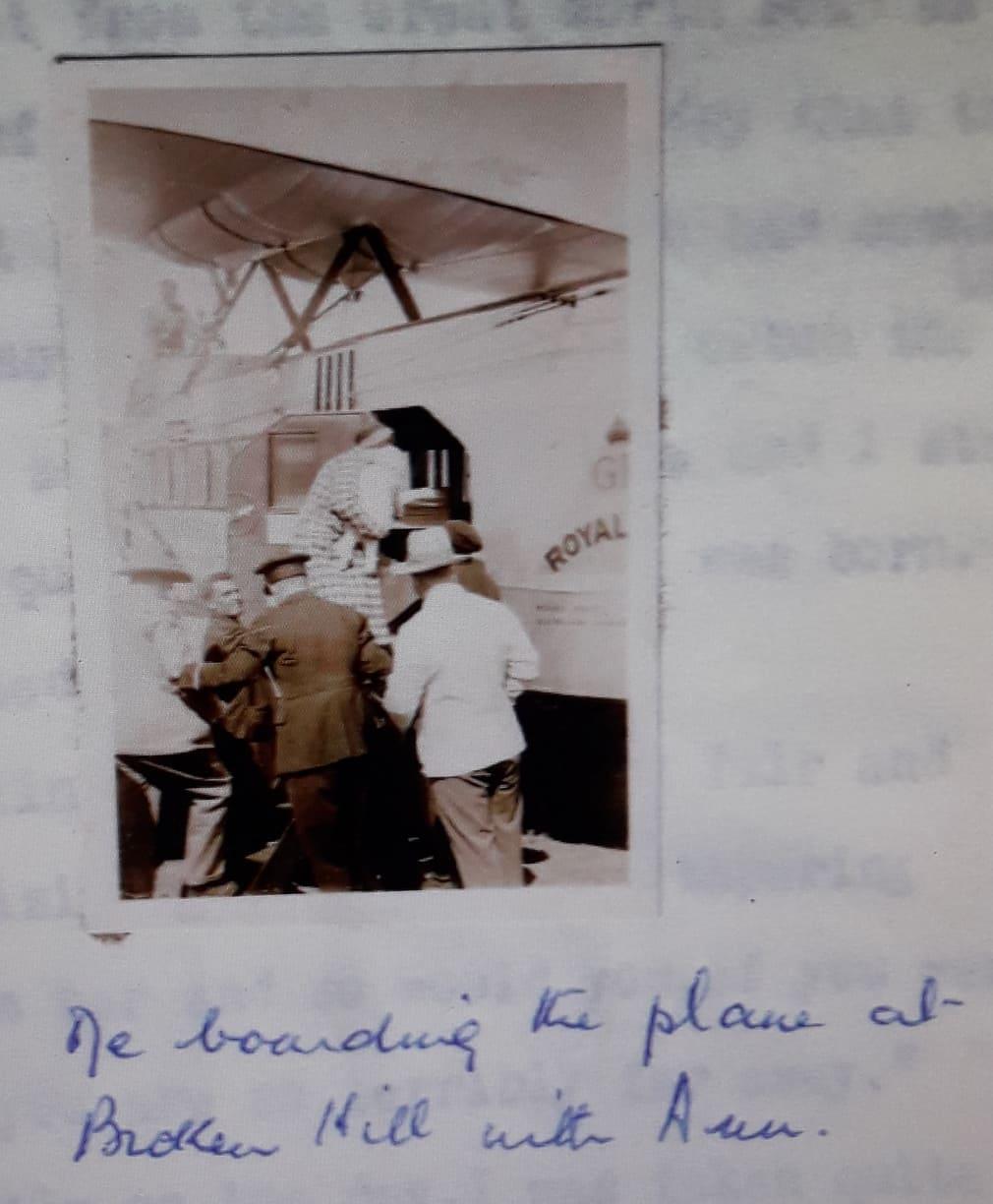
Mchewe Estate. June 15th 1932
Dearest Family,
You’ll be glad to know that we arrived quite safe and sound and very, very
happy to be home.The train Journey was uneventful. Ann slept nearly all the way.
Graham was very kind and saw to everything. He even sat with the baby whilst I went
to meals in the dining car.We were met at Broken Hill by the Thoms who had arranged accommodation for
us at the hotel for the night. They also drove us to the aerodrome in the morning where
the Airways agent told us that Ann is the first baby to travel by air on this section of the
Cape to England route. The plane trip was very bumpy indeed especially between
Broken Hill and Mpika. Everyone was ill including poor little Ann who sicked up her milk
all over the front of my new coat. I arrived at Mbeya looking a sorry caricature of Radiant
Motherhood. I must have been pale green and the baby was snow white. Under the
circumstances it was a good thing that George did not meet us. We were met instead
by Ken Menzies, the owner of the Mbeya Hotel where we spent the night. Ken was
most fatherly and kind and a good nights rest restored Ann and me to our usual robust
health.Mbeya has greatly changed. The hotel is now finished and can accommodate
fifty guests. It consists of a large main building housing a large bar and dining room and
offices and a number of small cottage bedrooms. It even has electric light. There are
several buildings out at the aerodrome and private houses going up in Mbeya.
After breakfast Ken Menzies drove us out to the farm where we had a warm
welcome from George, who looks well but rather thin. The house was spotless and the
new cook, Abel, had made light scones for tea. George had prepared all sorts of lovely
surprises. There is a new reed ceiling in the living room and a new dresser gay with
willow pattern plates which he had ordered from England. There is also a writing table
and a square table by the door for visitors hats. More personal is a lovely model ship
which George assembled from one of those Hobbie’s kits. It puts the finishing touch to
the rather old world air of our living room.In the bedroom there is a large double bed which George made himself. It has
strips of old car tyres nailed to a frame which makes a fine springy mattress and on top
of this is a thick mattress of kapok.In the kitchen there is a good wood stove which
George salvaged from a Mission dump. It looks a bit battered but works very well. The
new cook is excellent. The only blight is that he will wear rubber soled tennis shoes and
they smell awful. I daren’t hurt his feelings by pointing this out though. Opposite the
kitchen is a new laundry building containing a forty gallon hot water drum and a sink for
washing up. Lovely!George has been working very hard. He now has forty acres of coffee seedlings
planted out and has also found time to plant a rose garden and fruit trees. There are
orange and peach trees, tree tomatoes, paw paws, guavas and berries. He absolutely
adores Ann who has been very good and does not seem at all unsettled by the long
journey.It is absolutely heavenly to be back and I shall be happier than ever now that I
have a baby to play with during the long hours when George is busy on the farm,
Thank you for all your love and care during the many months I was with you. Ann
sends a special bubble for granddad.Your very loving,
Eleanor.Mchewe Estate Mbeya July 18th 1932
Dearest Family,
Ann at five months is enchanting. She is a very good baby, smiles readily and is
gaining weight steadily. She doesn’t sleep much during the day but that does not
matter, because, apart from washing her little things, I have nothing to do but attend to
her. She sleeps very well at night which is a blessing as George has to get up very
early to start work on the shamba and needs a good nights rest.
My nights are not so good, because we are having a plague of rats which frisk
around in the bedroom at night. Great big ones that come up out of the long grass in the
gorge beside the house and make cosy homes on our reed ceiling and in the thatch of
the roof.We always have a night light burning so that, if necessary, I can attend to Ann
with a minimum of fuss, and the things I see in that dim light! There are gaps between
the reeds and one night I heard, plop! and there, before my horrified gaze, lay a newly
born hairless baby rat on the floor by the bed, plop, plop! and there lay two more.
Quite dead, poor things – but what a careless mother.I have also seen rats scampering around on the tops of the mosquito nets and
sometimes we have them on our bed. They have a lovely game. They swarm down
the cord from which the mosquito net is suspended, leap onto the bed and onto the
floor. We do not have our net down now the cold season is here and there are few
mosquitoes.Last week a rat crept under Ann’s net which hung to the floor and bit her little
finger, so now I tuck the net in under the mattress though it makes it difficult for me to
attend to her at night. We shall have to get a cat somewhere. Ann’s pram has not yet
arrived so George carries her when we go walking – to her great content.
The native women around here are most interested in Ann. They come to see
her, bearing small gifts, and usually bring a child or two with them. They admire my child
and I admire theirs and there is an exchange of gifts. They produce a couple of eggs or
a few bananas or perhaps a skinny fowl and I hand over sugar, salt or soap as they
value these commodities. The most lavish gift went to the wife of Thomas our headman,
who produced twin daughters in the same week as I had Ann.Our neighbours have all been across to welcome me back and to admire the
baby. These include Marion Coster who came out to join her husband whilst I was in
South Africa. The two Hickson-Wood children came over on a fat old white donkey.
They made a pretty picture sitting astride, one behind the other – Maureen with her arms
around small Michael’s waist. A native toto led the donkey and the children’ s ayah
walked beside it.It is quite cold here now but the sun is bright and the air dry. The whole
countryside is beautifully green and we are a very happy little family.Lots and lots of love,
Eleanor.Mchewe Estate August 11th 1932
Dearest Family,
George has been very unwell for the past week. He had a nasty gash on his
knee which went septic. He had a swelling in the groin and a high temperature and could
not sleep at night for the pain in his leg. Ann was very wakeful too during the same
period, I think she is teething. I luckily have kept fit though rather harassed. Yesterday the
leg looked so inflamed that George decided to open up the wound himself. he made
quite a big cut in exactly the right place. You should have seen the blackish puss
pouring out.After he had thoroughly cleaned the wound George sewed it up himself. he has
the proper surgical needles and gut. He held the cut together with his left hand and
pushed the needle through the flesh with his right. I pulled the needle out and passed it
to George for the next stitch. I doubt whether a surgeon could have made a neater job
of it. He is still confined to the couch but today his temperature is normal. Some
husband!The previous week was hectic in another way. We had a visit from lions! George
and I were having supper about 8.30 on Tuesday night when the back verandah was
suddenly invaded by women and children from the servants quarters behind the kitchen.
They were all yelling “Simba, Simba.” – simba means lions. The door opened suddenly
and the houseboy rushed in to say that there were lions at the huts. George got up
swiftly, fetched gun and ammunition from the bedroom and with the houseboy carrying
the lamp, went off to investigate. I remained at the table, carrying on with my supper as I
felt a pioneer’s wife should! Suddenly something big leapt through the open window
behind me. You can imagine what I thought! I know now that it is quite true to say one’s
hair rises when one is scared. However it was only Kelly, our huge Irish wolfhound,
taking cover.George returned quite soon to say that apparently the commotion made by the
women and children had frightened the lions off. He found their tracks in the soft earth
round the huts and a bag of maize that had been playfully torn open but the lions had
moved on.Next day we heard that they had moved to Hickson-Wood’s shamba. Hicky
came across to say that the lions had jumped over the wall of his cattle boma and killed
both his white Muskat riding donkeys.
He and a friend sat up all next night over the remains but the lions did not return to
the kill.Apart from the little set back last week, Ann is blooming. She has a cap of very
fine fair hair and clear blue eyes under straight brow. She also has lovely dimples in both
cheeks. We are very proud of her.Our neighbours are picking coffee but the crops are small and the price is low. I
am amazed that they are so optimistic about the future. No one in these parts ever
seems to grouse though all are living on capital. They all say “Well if the worst happens
we can always go up to the Lupa Diggings.”Don’t worry about us, we have enough to tide us over for some time yet.
Much love to all,
Eleanor.Mchewe Estate. 28th Sept. 1932
Dearest Family,
News! News! I’m going to have another baby. George and I are delighted and I
hope it will be a boy this time. I shall be able to have him at Mbeya because things are
rapidly changing here. Several German families have moved to Mbeya including a
German doctor who means to build a hospital there. I expect he will make a very good
living because there must now be some hundreds of Europeans within a hundred miles
radius of Mbeya. The Europeans are mostly British or German but there are also
Greeks and, I believe, several other nationalities are represented on the Lupa Diggings.
Ann is blooming and developing according to the Book except that she has no
teeth yet! Kath Hickson-Wood has given her a very nice high chair and now she has
breakfast and lunch at the table with us. Everything within reach goes on the floor to her
amusement and my exasperation!You ask whether we have any Church of England missionaries in our part. No we
haven’t though there are Lutheran and Roman Catholic Missions. I have never even
heard of a visiting Church of England Clergyman to these parts though there are babies
in plenty who have not been baptised. Jolly good thing I had Ann Christened down
there.The R.C. priests in this area are called White Fathers. They all have beards and
wear white cassocks and sun helmets. One, called Father Keiling, calls around frequently.
Though none of us in this area is Catholic we take it in turn to put him up for the night. The
Catholic Fathers in their turn are most hospitable to travellers regardless of their beliefs.
Rather a sad thing has happened. Lucas our old chicken-boy is dead. I shall miss
his toothy smile. George went to the funeral and fired two farewell shots from his rifle
over the grave – a gesture much appreciated by the locals. Lucas in his day was a good
hunter.Several of the locals own muzzle loading guns but the majority hunt with dogs
and spears. The dogs wear bells which make an attractive jingle but I cannot bear the
idea of small antelope being run down until they are exhausted before being clubbed of
stabbed to death. We seldom eat venison as George does not care to shoot buck.
Recently though, he shot an eland and Abel rendered down the fat which is excellent for
cooking and very like beef fat.Much love to all,
Eleanor.Mchewe Estate. P.O.Mbeya 21st November 1932
Dearest Family,
George has gone off to the Lupa for a week with John Molteno. John came up
here with the idea of buying a coffee farm but he has changed his mind and now thinks of
staking some claims on the diggings and also setting up as a gold buyer.Did I tell you about his arrival here? John and George did some elephant hunting
together in French Equatorial Africa and when John heard that George had married and
settled in Tanganyika, he also decided to come up here. He drove up from Cape Town
in a Baby Austin and arrived just as our labourers were going home for the day. The little
car stopped half way up our hill and John got out to investigate. You should have heard
the astonished exclamations when John got out – all 6 ft 5 ins. of him! He towered over
the little car and even to me it seemed impossible for him to have made the long
journey in so tiny a car.Kath Wood has been over several times lately. She is slim and looks so right in
the shirt and corduroy slacks she almost always wears. She was here yesterday when
the shamba boy, digging in the front garden, unearthed a large earthenware cooking pot,
sealed at the top. I was greatly excited and had an instant mental image of fabulous
wealth. We made the boy bring the pot carefully on to the verandah and opened it in
happy anticipation. What do you think was inside? Nothing but a grinning skull! Such a
treat for a pregnant female.We have a tree growing here that had lovely straight branches covered by a
smooth bark. I got the garden boy to cut several of these branches of a uniform size,
peeled off the bark and have made Ann a playpen with the poles which are much like
broom sticks. Now I can leave her unattended when I do my chores. The other morning
after breakfast I put Ann in her playpen on the verandah and gave her a piece of toast
and honey to keep her quiet whilst I laundered a few of her things. When I looked out a
little later I was horrified to see a number of bees buzzing around her head whilst she
placidly concentrated on her toast. I made a rapid foray and rescued her but I still don’t
know whether that was the thing to do.We all send our love,
Eleanor.Mbeya Hospital. April 25th. 1933
Dearest Family,
Here I am, installed at the very new hospital, built by Dr Eckhardt, awaiting the
arrival of the new baby. George has gone back to the farm on foot but will walk in again
to spend the weekend with us. Ann is with me and enjoys the novelty of playing with
other children. The Eckhardts have two, a pretty little girl of two and a half and a very fair
roly poly boy of Ann’s age. Ann at fourteen months is very active. She is quite a little girl
now with lovely dimples. She walks well but is backward in teething.George, Ann and I had a couple of days together at the hotel before I moved in
here and several of the local women visited me and have promised to visit me in
hospital. The trip from farm to town was very entertaining if not very comfortable. There
is ten miles of very rough road between our farm and Utengule Mission and beyond the
Mission there is a fair thirteen or fourteen mile road to Mbeya.As we have no car now the doctor’s wife offered to drive us from the Mission to
Mbeya but she would not risk her car on the road between the Mission and our farm.
The upshot was that I rode in the Hickson-Woods machila for that ten mile stretch. The
machila is a canopied hammock, slung from a bamboo pole, in which I reclined, not too
comfortably in my unwieldy state, with Ann beside me or sometime straddling me. Four
of our farm boys carried the machila on their shoulders, two fore and two aft. The relief
bearers walked on either side. There must have been a dozen in all and they sang a sort
of sea shanty song as they walked. One man would sing a verse and the others took up
the chorus. They often improvise as they go. They moaned about my weight (at least
George said so! I don’t follow Ki-Swahili well yet) and expressed the hope that I would
have a son and that George would reward them handsomely.George and Kelly, the dog, followed close behind the machila and behind
George came Abel our cook and his wife and small daughter Annalie, all in their best
attire. The cook wore a palm beach suit, large Terai hat and sunglasses and two colour
shoes and quite lent a tone to the proceedings! Right at the back came the rag tag and
bobtail who joined the procession just for fun.Mrs Eckhardt was already awaiting us at the Mission when we arrived and we had
an uneventful trip to the Mbeya Hotel.During my last week at the farm I felt very tired and engaged the cook’s small
daughter, Annalie, to amuse Ann for an hour after lunch so that I could have a rest. They
played in the small verandah room which adjoins our bedroom and where I keep all my
sewing materials. One afternoon I was startled by a scream from Ann. I rushed to the
room and found Ann with blood steaming from her cheek. Annalie knelt beside her,
looking startled and frightened, with my embroidery scissors in her hand. She had cut off
half of the long curling golden lashes on one of Ann’s eyelids and, in trying to finish the
job, had cut off a triangular flap of skin off Ann’s cheek bone.I called Abel, the cook, and demanded that he should chastise his daughter there and
then and I soon heard loud shrieks from behind the kitchen. He spanked her with a
bamboo switch but I am sure not as well as she deserved. Africans are very tolerant
towards their children though I have seen husbands and wives fighting furiously.
I feel very well but long to have the confinement over.Very much love,
Eleanor.Mbeya Hospital. 2nd May 1933.
Dearest Family,
Little George arrived at 7.30 pm on Saturday evening 29 th. April. George was
with me at the time as he had walked in from the farm for news, and what a wonderful bit
of luck that was. The doctor was away on a case on the Diggings and I was bathing Ann
with George looking on, when the pains started. George dried Ann and gave her
supper and put her to bed. Afterwards he sat on the steps outside my room and a
great comfort it was to know that he was there.The confinement was short but pretty hectic. The Doctor returned to the Hospital
just in time to deliver the baby. He is a grand little boy, beautifully proportioned. The
doctor says he has never seen a better formed baby. He is however rather funny
looking just now as his head is, very temporarily, egg shaped. He has a shock of black
silky hair like a gollywog and believe it or not, he has a slight black moustache.
George came in, looked at the baby, looked at me, and we both burst out
laughing. The doctor was shocked and said so. He has no sense of humour and couldn’t
understand that we, though bursting with pride in our son, could never the less laugh at
him.Friends in Mbeya have sent me the most gorgeous flowers and my room is
transformed with delphiniums, roses and carnations. The room would be very austere
without the flowers. Curtains, bedspread and enamelware, walls and ceiling are all
snowy white.George hired a car and took Ann home next day. I have little George for
company during the day but he is removed at night. I am longing to get him home and
away from the German nurse who feeds him on black tea when he cries. She insists that
tea is a medicine and good for him.Much love from a proud mother of two.
Eleanor.Mchewe Estate 12May 1933
Dearest Family,
We are all together at home again and how lovely it feels. Even the house
servants seem pleased. The boy had decorated the lounge with sprays of
bougainvillaea and Abel had backed one of his good sponge cakes.Ann looked fat and rosy but at first was only moderately interested in me and the
new baby but she soon thawed. George is good with her and will continue to dress Ann
in the mornings and put her to bed until I am satisfied with Georgie.He, poor mite, has a nasty rash on face and neck. I am sure it is just due to that
tea the nurse used to give him at night. He has lost his moustache and is fast loosing his
wild black hair and emerging as quite a handsome babe. He is a very masculine looking
infant with much more strongly marked eyebrows and a larger nose that Ann had. He is
very good and lies quietly in his basket even when awake.George has been making a hatching box for brown trout ova and has set it up in
a small clear stream fed by a spring in readiness for the ova which is expected from
South Africa by next weeks plane. Some keen fishermen from Mbeya and the District
have clubbed together to buy the ova. The fingerlings are later to be transferred to
streams in Mbeya and Tukuyu Districts.I shall now have my hands full with the two babies and will not have much time for the
garden, or I fear, for writing very long letters. Remember though, that no matter how
large my family becomes, I shall always love you as much as ever.Your affectionate,
Eleanor.Mchewe Estate. 14th June 1933
Dearest Family,
The four of us are all well but alas we have lost our dear Kelly. He was rather a
silly dog really, although he grew so big he retained all his puppy ways but we were all
very fond of him, especially George because Kelly attached himself to George whilst I
was away having Ann and from that time on he was George’s shadow. I think he had
some form of biliary fever. He died stretched out on the living room couch late last night,
with George sitting beside him so that he would not feel alone.The children are growing fast. Georgie is a darling. He now has a fluff of pale
brown hair and his eyes are large and dark brown. Ann is very plump and fair.
We have had several visitors lately. Apart from neighbours, a car load of diggers
arrived one night and John Molteno and his bride were here. She is a very attractive girl
but, I should say, more suited to life in civilisation than in this back of beyond. She has
gone out to the diggings with her husband and will have to walk a good stretch of the fifty
or so miles.The diggers had to sleep in the living room on the couch and on hastily erected
camp beds. They arrived late at night and left after breakfast next day. One had half a
beard, the other side of his face had been forcibly shaved in the bar the night before.your affectionate,
EleanorMchewe Estate. August 10 th. 1933
Dearest Family,
George is away on safari with two Indian Army officers. The money he will get for
his services will be very welcome because this coffee growing is a slow business, and
our capitol is rapidly melting away. The job of acting as White Hunter was unexpected
or George would not have taken on the job of hatching the ova which duly arrived from
South Africa.George and the District Commissioner, David Pollock, went to meet the plane
by which the ova had been consigned but the pilot knew nothing about the package. It
came to light in the mail bag with the parcels! However the ova came to no harm. David
Pollock and George brought the parcel to the farm and carefully transferred the ova to
the hatching box. It was interesting to watch the tiny fry hatch out – a process which took
several days. Many died in the process and George removed the dead by sucking
them up in a glass tube.When hatched, the tiny fry were fed on ant eggs collected by the boys. I had to
take over the job of feeding and removing the dead when George left on safari. The fry
have to be fed every four hours, like the baby, so each time I have fed Georgie. I hurry
down to feed the trout.The children are very good but keep me busy. Ann can now say several words
and understands more. She adores Georgie. I long to show them off to you.Very much love
Eleanor.Mchewe Estate. October 27th 1933
Dear Family,
All just over flu. George and Ann were very poorly. I did not fare so badly and
Georgie came off best. He is on a bottle now.There was some excitement here last Wednesday morning. At 6.30 am. I called
for boiling water to make Georgie’s food. No water arrived but muffled shouting and the
sound of blows came from the kitchen. I went to investigate and found a fierce fight in
progress between the house boy and the kitchen boy. In my efforts to make them stop
fighting I went too close and got a sharp bang on the mouth with the edge of an
enamelled plate the kitchen boy was using as a weapon. My teeth cut my lip inside and
the plate cut it outside and blood flowed from mouth to chin. The boys were petrified.
By the time I had fed Georgie the lip was stiff and swollen. George went in wrath
to the kitchen and by breakfast time both house boy and kitchen boy had swollen faces
too. Since then I have a kettle of boiling water to hand almost before the words are out
of my mouth. I must say that the fight was because the house boy had clouted the
kitchen boy for keeping me waiting! In this land of piece work it is the job of the kitchen
boy to light the fire and boil the kettle but the houseboy’s job to carry the kettle to me.
I have seen little of Kath Wood or Marion Coster for the past two months. Major
Jones is the neighbour who calls most regularly. He has a wireless set and calls on all of
us to keep us up to date with world as well as local news. He often brings oranges for
Ann who adores him. He is a very nice person but no oil painting and makes no effort to
entertain Ann but she thinks he is fine. Perhaps his monocle appeals to her.George has bought a six foot long galvanised bath which is a great improvement
on the smaller oval one we have used until now. The smaller one had grown battered
from much use and leaks like a sieve. Fortunately our bathroom has a cement floor,
because one had to fill the bath to the brim and then bath extremely quickly to avoid
being left high and dry.Lots and lots of love,
Eleanor.Mchewe Estate. P.O. Mbeya 1st December 1933
Dearest Family,
Ann has not been well. We think she has had malaria. She has grown a good
deal lately and looks much thinner and rather pale. Georgie is thriving and has such
sparkling brown eyes and a ready smile. He and Ann make a charming pair, one so fair
and the other dark.The Moltenos’ spent a few days here and took Georgie and me to Mbeya so
that Georgie could be vaccinated. However it was an unsatisfactory trip because the
doctor had no vaccine.George went to the Lupa with the Moltenos and returned to the farm in their Baby
Austin which they have lent to us for a week. This was to enable me to go to Mbeya to
have a couple of teeth filled by a visiting dentist.We went to Mbeya in the car on Saturday. It was quite a squash with the four of
us on the front seat of the tiny car. Once George grabbed the babies foot instead of the
gear knob! We had Georgie vaccinated at the hospital and then went to the hotel where
the dentist was installed. Mr Dare, the dentist, had few instruments and they were very
tarnished. I sat uncomfortably on a kitchen chair whilst he tinkered with my teeth. He filled
three but two of the fillings came out that night. This meant another trip to Mbeya in the
Baby Austin but this time they seem all right.The weather is very hot and dry and the garden a mess. We are having trouble
with the young coffee trees too. Cut worms are killing off seedlings in the nursery and
there is a borer beetle in the planted out coffee.George bought a large grey donkey from some wandering Masai and we hope
the children will enjoy riding it later on.Very much love,
Eleanor.Mchewe Estate. 14th February 1934.
Dearest Family,
You will be sorry to hear that little Ann has been very ill, indeed we were terribly
afraid that we were going to lose her. She enjoyed her birthday on the 8th. All the toys
you, and her English granny, sent were unwrapped with such delight. However next
day she seemed listless and a bit feverish so I tucked her up in bed after lunch. I dosed
her with quinine and aspirin and she slept fitfully. At about eleven o’clock I was
awakened by a strange little cry. I turned up the night light and was horrified to see that
Ann was in a convulsion. I awakened George who, as always in an emergency, was
perfectly calm and practical. He filled the small bath with very warm water and emersed
Ann in it, placing a cold wet cloth on her head. We then wrapped her in blankets and
gave her an enema and she settled down to sleep. A few hours later we had the same
thing over again.At first light we sent a runner to Mbeya to fetch the doctor but waited all day in
vain and in the evening the runner returned to say that the doctor had gone to a case on
the diggings. Ann had been feverish all day with two or three convulsions. Neither
George or I wished to leave the bedroom, but there was Georgie to consider, and in
the afternoon I took him out in the garden for a while whilst George sat with Ann.
That night we both sat up all night and again Ann had those wretched attacks of
convulsions. George and I were worn out with anxiety by the time the doctor arrived the
next afternoon. Ann had not been able to keep down any quinine and had had only
small sips of water since the onset of the attack.The doctor at once diagnosed the trouble as malaria aggravated by teething.
George held Ann whilst the Doctor gave her an injection. At the first attempt the needle
bent into a bow, George was furious! The second attempt worked and after a few hours
Ann’s temperature dropped and though she was ill for two days afterwards she is now
up and about. She has also cut the last of her baby teeth, thank God. She looks thin and
white, but should soon pick up. It has all been a great strain to both of us. Georgie
behaved like an angel throughout. He played happily in his cot and did not seem to
sense any tension as people say, babies do. Our baby was cheerful and not at all
subdued.This is the rainy season and it is a good thing that some work has been done on
our road or the doctor might not have got through.Much love to all,
Eleanor.Mchewe Estate. 1st October 1934
Dearest Family,
We are all well now, thank goodness, but last week Georgie gave us such a
fright. I was sitting on the verandah, busy with some sewing and not watching Ann and
Georgie, who were trying to reach a bunch of bananas which hung on a rope from a
beam of the verandah. Suddenly I heard a crash, Georgie had fallen backward over the
edge of the verandah and hit the back of his head on the edge of the brick furrow which
carries away the rainwater. He lay flat on his back with his arms spread out and did not
move or cry. When I picked him up he gave a little whimper, I carried him to his cot and
bathed his face and soon he began sitting up and appeared quite normal. The trouble
began after he had vomited up his lunch. He began to whimper and bang his head
against the cot.George and I were very worried because we have no transport so we could not
take Georgie to the doctor and we could not bear to go through again what we had gone
through with Ann earlier in the year. Then, in the late afternoon, a miracle happened. Two
men George hardly knew, and complete strangers to me, called in on their way from the
diggings to Mbeya and they kindly drove Georgie and me to the hospital. The Doctor
allowed me to stay with Georgie and we spent five days there. Luckily he responded to
treatment and is now as alive as ever. Children do put years on one!There is nothing much else to report. We have a new vegetable garden which is
doing well but the earth here is strange. Gardens seem to do well for two years but by
that time the soil is exhausted and one must move the garden somewhere else. The
coffee looks well but it will be another year before we can expect even a few bags of
coffee and prices are still low. Anyway by next year George should have some good
return for all his hard work.Lots of love,
Eleanor.Mchewe Estate. November 4th 1934
Dearest Family,
George is home from his White Hunting safari looking very sunburnt and well.
The elderly American, who was his client this time, called in here at the farm to meet me
and the children. It is amazing what spirit these old lads have! This one looked as though
he should be thinking in terms of slippers and an armchair but no, he thinks in terms of
high powered rifles with telescopic sights.It is lovely being together again and the children are delighted to have their Dad
home. Things are always exciting when George is around. The day after his return
George said at breakfast, “We can’t go on like this. You and the kids never get off the
shamba. We’ll simply have to get a car.” You should have heard the excitement. “Get a
car Daddy?’” cried Ann jumping in her chair so that her plaits bounced. “Get a car
Daddy?” echoed Georgie his brown eyes sparkling. “A car,” said I startled, “However
can we afford one?”“Well,” said George, “on my way back from Safari I heard that a car is to be sold
this week at the Tukuyu Court, diseased estate or bankruptcy or something, I might get it
cheap and it is an A.C.” The name meant nothing to me, but George explained that an
A.C. is first cousin to a Rolls Royce.So off he went to the sale and next day the children and I listened all afternoon for
the sound of an approaching car. We had many false alarms but, towards evening we
heard what appeared to be the roar of an aeroplane engine. It was the A.C. roaring her
way up our steep hill with a long plume of steam waving gaily above her radiator.
Out jumped my beaming husband and in no time at all, he was showing off her
points to an admiring family. Her lines are faultless and seats though worn are most
comfortable. She has a most elegant air so what does it matter that the radiator leaks like
a sieve, her exhaust pipe has broken off, her tyres are worn almost to the canvas and
she has no windscreen. She goes, and she cost only five pounds.Next afternoon George, the kids and I piled into the car and drove along the road
on lookout for guinea fowl. All went well on the outward journey but on the homeward
one the poor A.C. simply gasped and died. So I carried the shot gun and George
carried both children and we trailed sadly home. This morning George went with a bunch
of farmhands and brought her home. Truly temperamental, she came home literally
under her own steam.George now plans to get a second hand engine and radiator for her but it won’t
be an A.C. engine. I think she is the only one of her kind in the country.
I am delighted to hear, dad, that you are sending a bridle for Joseph for
Christmas. I am busy making a saddle out of an old piece of tent canvas stuffed with
kapok, some webbing and some old rug straps. A car and a riding donkey! We’re
definitely carriage folk now.Lots of love to all,
Eleanor.Mchewe Estate. 28th December 1934
Dearest Family,
Thank you for the wonderful Christmas parcel. My frock is a splendid fit. George
declares that no one can knit socks like Mummy and the children love their toys and new
clothes.Joseph, the donkey, took his bit with an air of bored resignation and Ann now
rides proudly on his back. Joseph is a big strong animal with the looks and disposition of
a mule. he will not go at all unless a native ‘toto’ walks before him and when he does go
he wears a pained expression as though he were carrying fourteen stone instead of
Ann’s fly weight. I walk beside the donkey carrying Georgie and our cat, ‘Skinny Winnie’,
follows behind. Quite a cavalcade. The other day I got so exasperated with Joseph that
I took Ann off and I got on. Joseph tottered a few paces and sat down! to the huge
delight of our farm labourers who were going home from work. Anyway, one good thing,
the donkey is so lazy that there is little chance of him bolting with Ann.The Moltenos spent Christmas with us and left for the Lupa Diggings yesterday.
They arrived on the 22nd. with gifts for the children and chocolates and beer. That very
afternoon George and John Molteno left for Ivuna, near Lake Ruckwa, to shoot some
guinea fowl and perhaps a goose for our Christmas dinner. We expected the menfolk
back on Christmas Eve and Anne and I spent a busy day making mince pies and
sausage rolls. Why I don’t know, because I am sure Abel could have made them better.
We decorated the Christmas tree and sat up very late but no husbands turned up.
Christmas day passed but still no husbands came. Anne, like me, is expecting a baby
and we both felt pretty forlorn and cross. Anne was certain that they had been caught up
in a party somewhere and had forgotten all about us and I must say when Boxing Day
went by and still George and John did not show up I felt ready to agree with her.
They turned up towards evening and explained that on the homeward trip the car
had bogged down in the mud and that they had spent a miserable Christmas. Anne
refused to believe their story so George, to prove their case, got the game bag and
tipped the contents on to the dining room table. Out fell several guinea fowl, long past
being edible, followed by a large goose so high that it was green and blue where all the
feathers had rotted off.The stench was too much for two pregnant girls. I shot out of the front door
closely followed by Anne and we were both sick in the garden.I could not face food that evening but Anne is made of stronger stuff and ate her
belated Christmas dinner with relish.I am looking forward enormously to having Marjorie here with us. She will be able
to carry back to you an eyewitness account of our home and way of life.Much love to you all,
Eleanor.Mchewe Estate. 5th January 1935
Dearest Family,
You cannot imagine how lovely it is to have Marjorie here. She came just in time
because I have had pernicious vomiting and have lost a great deal of weight and she
took charge of the children and made me spend three days in hospital having treatment.
George took me to the hospital on the afternoon of New Years Eve and decided
to spend the night at the hotel and join in the New Years Eve celebrations. I had several
visitors at the hospital that evening and George actually managed to get some imported
grapes for me. He returned to the farm next morning and fetched me from the hospital
four days later. Of course the old A.C. just had to play up. About half way home the
back axle gave in and we had to send a passing native some miles back to a place
called Mbalizi to hire a lorry from a Greek trader to tow us home to the farm.
The children looked well and were full of beans. I think Marjorie was thankful to
hand them over to me. She is delighted with Ann’s motherly little ways but Georgie she
calls “a really wild child”. He isn’t, just has such an astonishing amount of energy and is
always up to mischief. Marjorie brought us all lovely presents. I am so thrilled with my
sewing machine. It may be an old model but it sews marvellously. We now have an
Alsatian pup as well as Joseph the donkey and the two cats.Marjorie had a midnight encounter with Joseph which gave her quite a shock but
we had a good laugh about it next day. Some months ago George replaced our wattle
and daub outside pit lavatory by a substantial brick one, so large that Joseph is being
temporarily stabled in it at night. We neglected to warn Marj about this and one night,
storm lamp in hand, she opened the door and Joseph walked out braying his thanks.
I am afraid Marjorie is having a quiet time, a shame when the journey from Cape
Town is so expensive. The doctor has told me to rest as much as I can, so it is
impossible for us to take Marj on sight seeing trips.I hate to think that she will be leaving in ten days time.
Much love,
Eleanor.Mchewe Estate. 18th February 1935
Dearest Family,
You must be able to visualise our life here quite well now that Marj is back and
has no doubt filled in all the details I forget to mention in my letters. What a journey we
had in the A.C. when we took her to the plane. George, the children and I sat in front and
Marj sat behind with numerous four gallon tins of water for the insatiable radiator. It was
raining and the canvas hood was up but part of the side flaps are missing and as there is
no glass in the windscreen the rain blew in on us. George got fed up with constantly
removing the hot radiator cap so simply stuffed a bit of rag in instead. When enough
steam had built up in the radiator behind the rag it blew out and we started all over again.
The car still roars like an aeroplane engine and yet has little power so that George sent
gangs of boys to the steep hills between the farm and the Mission to give us a push if
necessary. Fortunately this time it was not, and the boys cheered us on our way. We
needed their help on the homeward journey however.George has now bought an old Chev engine which he means to install before I
have to go to hospital to have my new baby. It will be quite an engineering feet as
George has few tools.I am sorry to say that I am still not well, something to do with kidneys or bladder.
George bought me some pills from one of the several small shops which have opened
in Mbeya and Ann is most interested in the result. She said seriously to Kath Wood,
“Oh my Mummy is a very clever Mummy. She can do blue wee and green wee as well
as yellow wee.” I simply can no longer manage the children without help and have
engaged the cook’s wife, Janey, to help. The children are by no means thrilled. I plead in
vain that I am not well enough to go for walks. Ann says firmly, “Ann doesn’t want to go
for a walk. Ann will look after you.” Funny, though she speaks well for a three year old,
she never uses the first person. Georgie say he would much rather walk with
Keshokutwa, the kitchen boy. His name by the way, means day-after-tomorrow and it
suits him down to the ground, Kath Wood walks over sometimes with offers of help and Ann will gladly go walking with her but Georgie won’t. He on the other hand will walk with Anne Molteno
and Ann won’t. They are obstinate kids. Ann has developed a very fertile imagination.
She has probably been looking at too many of those nice women’s magazines you
sent. A few days ago she said, “You are sick Mummy, but Ann’s got another Mummy.
She’s not sick, and my other mummy (very smugly) has lovely golden hair”. This
morning’ not ten minutes after I had dressed her, she came in with her frock wet and
muddy. I said in exasperation, “Oh Ann, you are naughty.” To which she instantly
returned, “My other Mummy doesn’t think I am naughty. She thinks I am very nice.” It
strikes me I shall have to get better soon so that I can be gay once more and compete
with that phantom golden haired paragon.We had a very heavy storm over the farm last week. There was heavy rain with
hail which stripped some of the coffee trees and the Mchewe River flooded and the
water swept through the lower part of the shamba. After the water had receded George
picked up a fine young trout which had been stranded. This was one of some he had
put into the river when Georgie was a few months old.The trials of a coffee farmer are legion. We now have a plague of snails. They
ring bark the young trees and leave trails of slime on the glossy leaves. All the ring
barked trees will have to be cut right back and this is heartbreaking as they are bearing
berries for the first time. The snails are collected by native children, piled upon the
ground and bashed to a pulp which gives off a sickening stench. I am sorry for the local
Africans. Locusts ate up their maize and now they are losing their bean crop to the snails.Lots of love, Eleanor
December 18, 2021 at 7:05 pm #6246In reply to: The Elusive Samuel Housley and Other Family Stories
Florence Nightingale Gretton
1881-1927
Florence’s father was Richard Gretton, a baker in Swadlincote, Derbyshire. When Richard married Sarah Orgill in 1861, they lived with her mother, a widow, in Measham, Ashby de la Zouch in Leicestershire. On the 1861 census Sarah’s mother, Elizabeth, is a farmer of two acres.
(Swadlincote and Ashby de la Zouch are on the Derbyshire Leicestershire border and not far from each other. Swadlincote is near to Burton upon Trent which is sometimes in Staffordshire, sometimes in Derbyshire. Newhall, Church Gresley, and Swadlincote are all very close to each other or districts in the same town.)
Ten years later in 1871 Richard and Sarah have their own place in Swadlincote, he is a baker, and they have four children. A fourteen year old apprentice or servant is living with them.
In the Ashby-de-la-Zouch Gazette on 28 February 1880, it was reported that Richard Gretton, baker, of Swadlincote, was charged by Captain Bandys with carrying bread in a cart for sale, the said cart not being provided with scales and weights, according to the requirements of the Act, on the 17th January last.—Defendant pleaded guilty, but urged in extenuation of the offence that in the hurry he had forgotten to put the scales in the cart before his son started.—The Bench took this view of the case, regarding it as an oversight, and fined him one shilling only and costs. This was not his only offence.
In 1883, he was fined twenty shillings, and ten shillings and sixpence costs.
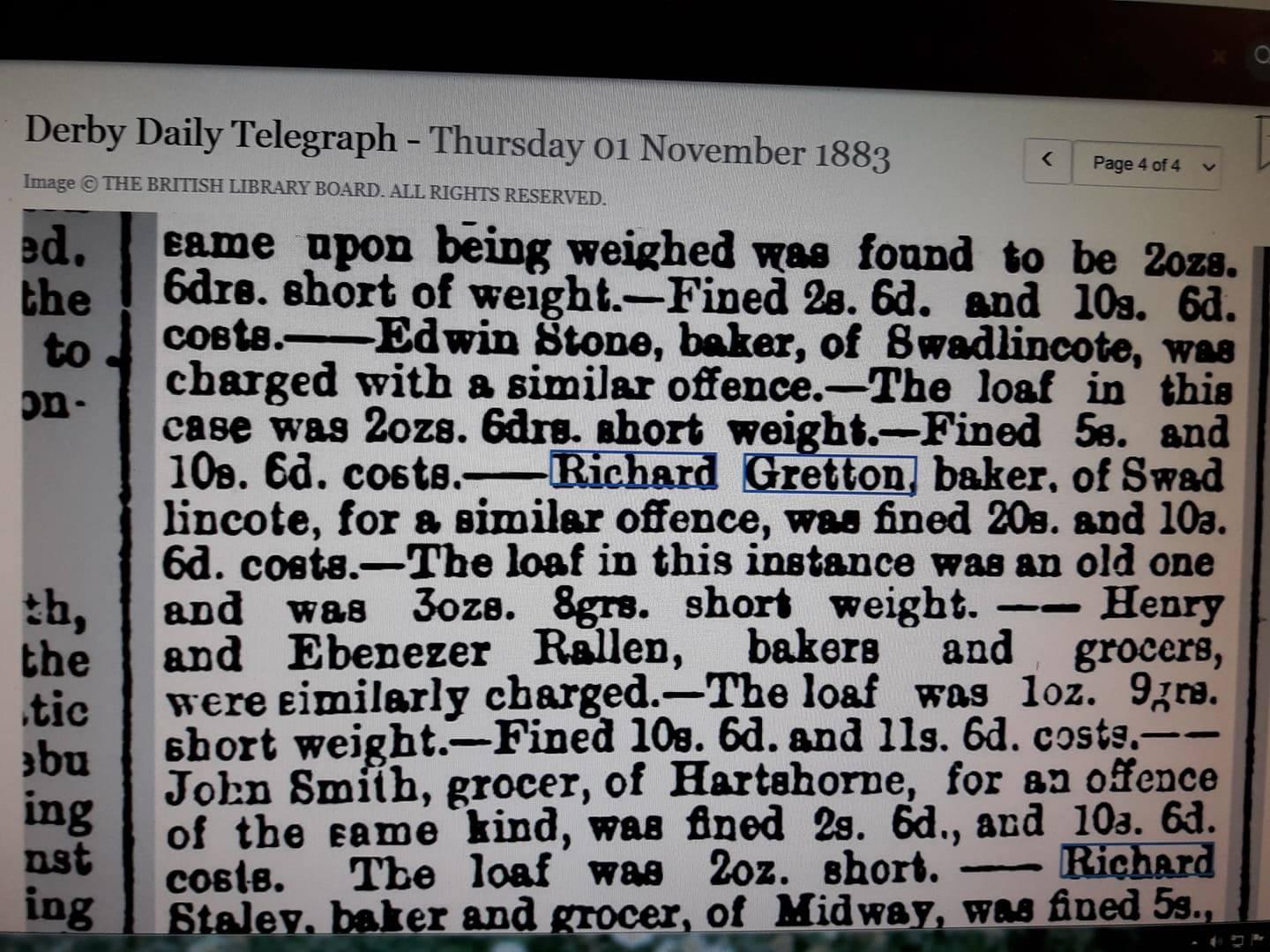
By 1881 they have 4 more children, and Florence Nightingale is the youngest at four months. Richard is 48 by now, and Sarah is 44. Florence’s older brother William is a blacksmith.
Interestingly on the same census page, two doors down Thomas and Selina Warren live at the Stanhope Arms. Richards son John Gretton lives at the pub, a 13 year old servant. Incidentally, I noticed on Thomas and Selena’s marriage register that Richard and Sarah Gretton were the witnesses at the wedding.
Ten years later in 1891, Florence Nightingale and her sister Clara are living with Selina Warren, widow, retired innkeeper, one door down from the Stanhope Arms. Florence is ten, Clara twelve and they are scholars.
Richard and Sarah are still living three doors up on the other side of the Stanhope Arms, with three of their sons. But the two girls lived up the road with the Warren widow!The Stanhope Arms, Swadlincote: it’s possible that the shop with the awning was Richard Gretton’s bakers shop (although not at the time of this later photo).
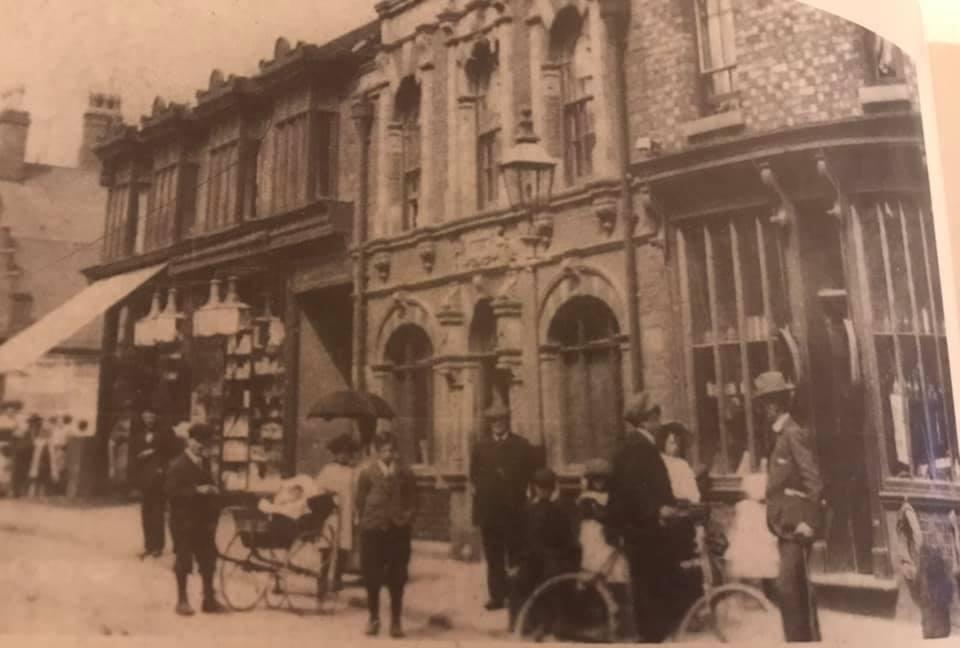
Richard died in 1898, a year before Florence married Samuel Warren.
Sarah is a widowed 60 year old baker on the 1901 census. Her son 26 year old son Alf, also a baker, lives at the same address, as does her 22 year old daughter Clara who is a district nurse.
Clara Gretton and family, photo found online:
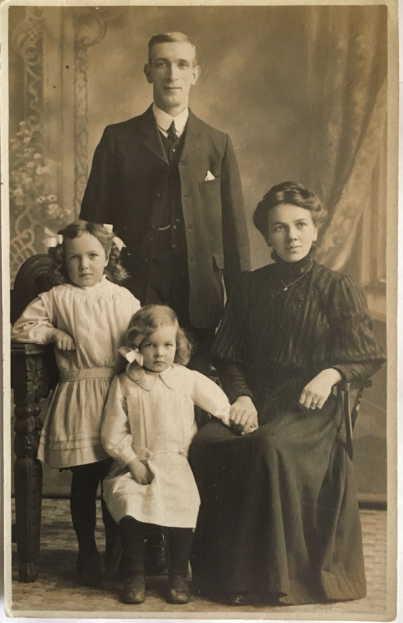
In 1901 Florence Nightingale (who we don’t have a photograph of!) is now married and is Florrie Warren on the census, and she, her husband Samuel, and their one year old daughter Hildred are visitors at the address of Elizabeth (Staley)Warren, 60 year old widow and Samuel’s mother, and Samuel’s 36 year old brother William. Samuel and William are engineers.
Samuel and Florrie had ten children between 1900 and 1925 (and all but two of them used their middle name and not first name: my mother and I had no idea until I found all the records. My grandmother Florence Noreen was known as Nora, which we knew of course, uncle Jack was actually Douglas John, and so on).
Hildred, Clara, Billy, and Nora were born in Swadlincote. Sometime between my grandmother’s birth in 1907 and Kay’s birth in 1911, the family moved to Oldswinford, in Stourbridge. Later they moved to Market Street.
1911 census, Oldswinford, Stourbridge:
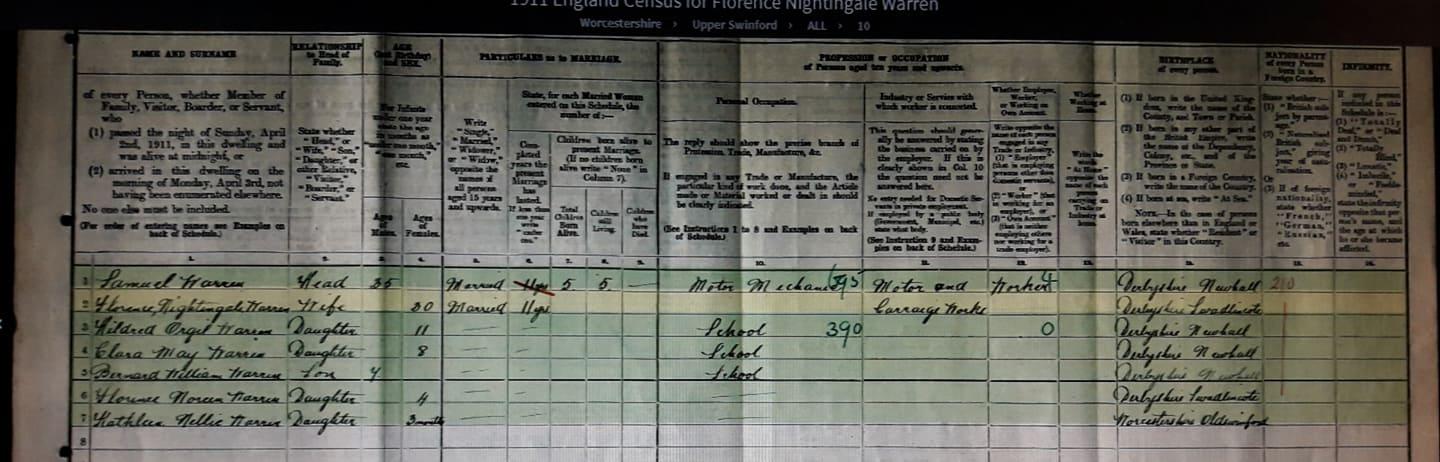
Oddly, nobody knew when Florrie Warren died. My mothers cousin Ian Warren researched the Warren family some years ago, while my grandmother was still alive. She contributed family stories and information, but couldn’t remember if her mother died in 1929 or 1927. A recent search of records confirmed that it was the 12th November 1927.
She was 46 years old. We were curious to know how she died, so my mother ordered a paper copy of her death certificate. It said she died at 31 Market Street, Stourbridge at the age of 47. Clara May Warren, her daughter, was in attendance. Her husband Samuel Warren was a motor mechanic. The Post mortem was by Percival Evans, coroner for Worcestershire, who clarified the cause of death as vascular disease of the heart. There was no inquest. The death was registered on 15 Nov 1927.
I looked for a photo of 31 Market Street in Stourbridge, and was astonished to see that it was the house next door to one I lived in breifly in the 1980s. We didn’t know that the Warren’s lived in Market Street until we started searching the records.
Market Street, Stourbridge. I lived in the one on the corner on the far right, my great grandmother died in the one next door.
I found some hitherto unknown emigrants in the family. Florence Nightingale Grettons eldest brother William 1861-1940 stayed in Swadlincote. John Orgill Gretton born in 1868 moved to Trenton New Jersey USA in 1888, married in 1892 and died in 1949 in USA. Michael Thomas born in 1870 married in New York in 1893 and died in Trenton in 1940. Alfred born 1875 stayed in Swadlincote. Charles Herbert born 1876 married locally and then moved to Australia in 1912, and died in Victoria in 1954. Clara Elizabeth was a district nurse, married locally and died at the age of 99.
April 29, 2009 at 11:45 am #2562In reply to: Strings of Nines
Yoland felt tired and deflated somehow. Weary, perhaps that was it, weary of the way she always felt when the animals were sick or dying. It was all very well to look at it logically, that with so many animals with such relatively short natural life spans that there would always be some coming, some going, but it was the way it made her feel that was so tiring. Responsible, as if she could have done more, or guilty that they were reflecting her energy somehow. It was all very well to say that the animals were creating their own reality, that would be easy enough to accept in some cases such as old age and diseases, but Yoland almost wished she’d never learned that they reflect her own energy, that always made her feel even more responsible than she already did.
The black cat was dying. Yoland had made up her mind to take her to the vets that morning. That was another dilemma she’d faced often enough, too ~ would the animal prefer to die naturally at home? Or was it in too much pain, and would it prefer to end it quickly? How could she know? Yoland supposed she did always know, in the end, which was to be the choice, but there was always the agonizing period of time beforehand when she wondered which decision to make. But the black cat had disappeared and she couldn’t find her to take her to the vets after all.
When she’d made the decision to take the black cat to the vet that morning, Dean accidentally knocked a photograph of her first dog, Joe, off the wall. He was the first of her dogs to go, and a good age for a big dog, fourteen years old, and Yoland had known all along that he would die at home, and sure enough, he had. One day Yoland knew he was close to the end, and less than 24 hours later, he lay on his bed, and just gradually stopped breathing. Yoland hadn’t even been quite sure of the moment in which he went, as she held his head, she asked Dean, Do you think he’s dead? Dean replied, If he’s not breathing he is. It was a silly question, really, of course Yoland knew that if you weren’t breathing you were dead. As deaths go, it was peaceful and easy. They took him in the car to a place in the woods and buried him, somewhere where the ground was soft enough to dig; it was high summer and the ground was hard and dry. It wasn’t until Joe was covered with earth that Yoland cried.
Yoland cried again as she remembered Joe, and then she wondered if perhaps his photograph falling off the wall that morning was a message ~ perhaps a message that the black cat was choosing to die at home too, her own little niche somewhere, wherever that might be, wherever the roof cats slept. Maybe Joe was reassuring her that he’d be there when the black cat got there, in that field of flowers where the animals played while they waited for us to join them.
It was a comforting thought. Yoland reached for the tissues.

-
AuthorSearch Results
Search Results for 'fourteen'
Viewing 14 results - 1 through 14 (of 14 total)
-
Search Results



Viewing 14 results - 1 through 14 (of 14 total)