


Search Results for 'liz'
-
AuthorSearch Results
-
June 8, 2024 at 9:23 am #7461
In reply to: The Incense of the Quadrivium’s Mystiques
Once again, the Quadrivium headquarters buzzed with an undercurrent of tension and anticipation. Malové stood at the helm, her gaze as steely and unwavering as ever. The coven’s regular meetings had taken on a new urgency in the face of mounting market pressures and the ever-accelerating pace of competition.
The witches assembled in the grand hall, each carrying the weight of their individual concerns and collective anxieties. A large screen was projecting the agenda in flashy neon colours with a glamourous photo of their leader. The event was broadcast across many locations, not all witches able to join physically as the ongoing Worldwide Roman Games preparation and the 333th celebration of the Treaty of Limerick ending the Williamite War, had made the city impenetrable due to the convergence of world leaders.
Not only for those present, all of them seated in-person, or remotely connected had felt the tremors of change, the subtle yet insistent push towards transformation. Yet despite their best efforts, a cohesive vision for the coven’s future remained elusive.
As the last witch took her seat and the various technical glitches got sorted, Malové stepped forward, her presence commanding immediate silence. With a flick of her wrist, a spectral map materialized before them, shimmering with points of light that represented their past achievements and future challenges.
“Listen well,” Malové began, her voice echoing through the hall with the gravity of an ancient spell. “We stand at a crossroads, a juncture where our past accomplishments meet the demands of an unforgiving future. Our strength has always been in our unity and our mastery of the arcane, but now, we must also master the art of transformation.”
She paused, allowing her words to sink in. The witches leaned forward, their eyes locked onto their formidable leader.
“Transformation,” she continued, “is not merely a matter of adapting to external pressures. It requires a boldness of spirit and a willingness to steer the deepest currents of our inner selves. It demands that we break free from the confines of tradition without losing our core essence.”
Malové waved her hand, and the map shifted to reveal a complex network of interconnected pathways. “Our path forward will not be linear. It will be a labyrinth, requiring both cunning and courage. But fear not, for I have charted a course that will lead us through.”
She pointed to three glowing nodes on the map. “First, we shall innovate. Our magical incense blends have always been our hallmark, but we must go beyond. We will delve into new realms of magic, combining our ancient practices with cutting-edge techniques. Each of you will be tasked with researching and developing a new blend that can transform not just our coven, but the world.”
The witches exchanged glances, a mixture of excitement and apprehension flickering in their eyes.
“Second,” Malové continued, “we must strengthen our alliances. The world is vast, and we are not alone in our quest for magical mastery. We will forge new partnerships with other covens, magical beings, and even those who walk the line between the mundane and the mystical. Together, we will create a network of power and influence that none can rival.”
The map expanded, showing potential allies and strategic locations across the globe. The witches nodded, recognizing the necessity of this bold move.
“Lastly,” Malové said, her voice softening yet losing none of its intensity, “we must look within. Inner transformation is the crucible in which true power is forged. Each of you will undergo a rigorous process of self-examination and growth. You will face your fears, confront your weaknesses, and emerge stronger and more resilient. Only then can we hope to lead others through their own transformations.”
She paused, meeting the eyes of each witch in turn. “I will be with you every step of the way. My role is not just to lead, but to guide and support you. We will hold workshops, retreats, and one-on-one sessions to ensure that every member of the Quadrivium is prepared for the journey ahead.”
Truella, who had tuned in remotely, winced softly behind her screen – she quickly checked. Phew, she had been on mute the whole time.
Malové’s voice grew softer still, almost a whisper, but it carried the weight of an ancient prophecy. “We are the Quadrivium. We are woven together by threads of magic and destiny. Our future is not written in stone, but in the stars. Together, we will reach for those stars and make them our own.”
The hall was silent, the witches absorbing the magnitude of Malové’s words. Slowly, a sense of resolve began to build, a collective determination to embrace the path laid out before them.
As the meeting drew to a close, Malové turned back to the spectral map, her eyes reflecting the myriad possibilities that lay ahead. “Remember this day, for it marks the beginning of our grand transformation. We will not be merely a coven. We will be a force of nature, a symphony of magic that weaves through time and space.”
With a final wave of her hand, the map vanished, leaving only the echoes of her words and the indomitable spirit of the Quadrivium, and throngs of witches left more confused as they exited the halls in hushed tones.
June 6, 2024 at 6:32 pm #7454In reply to: The Incense of the Quadrivium’s Mystiques
I honestly don’t know what made me do it, it took me by surpise when I did it. It was bugging me that I couldn’t remember, and before I knew what was happening, I’d asked Malove.
Ah, the Caryatid Characteristics of a Case, a subject that requires both discernment and a keen eye for detail. In essence, the phrase “Caryatid Characteristics” refers to the fundamental attributes and peculiarities that support the overall structure of a particular case or situation, much like how caryatids—those graceful, sculpted figures in classical architecture—bear the weight of a building’s entablature on their shoulders.
To break it down into pragmatic terms, identifying the Caryatid Characteristics involves an in-depth analysis of the following elements:
Structural Integrity: Just as caryatids ensure the stability of a structure, the core components of the case must be sound and unwavering. This includes the key facts, the primary evidence, and the foundational arguments that hold the case together.
Aesthetic Nuances: Caryatids are not merely functional; they are also artistic. Similarly, the subtleties and nuances of a case—such as the motives, the intentions, and the underlying themes—add layers of complexity and depth, transforming a simple matter into a multifaceted situation.
Historical Context: Caryatids often reflect the cultural and historical context of their time. Understanding the background, the precedents, and the situational history provides a richer perspective and informs the current dynamics at play.
Symbolic Significance: In architecture, caryatids symbolize strength and beauty. In a case, the symbolic elements—the metaphors, the symbols, and the overarching message—must be identified and interpreted to grasp the full scope of its significance.
Resonance and Impact: Lastly, caryatids have a visual and emotional impact on observers. Similarly, the case’s broader implications, its potential consequences, and the emotional resonance it evokes must be considered. This is where the true weight of the matter lies, affecting not only the immediate parties involved but potentially a wider audience.Applying these characteristics to a case requires a blend of logical analysis, creative thinking, and intuitive insight. It is not merely about assembling facts but about understanding how each element supports the whole, much like the elegant yet sturdy caryatids in timeless architecture.
Now, if you’re asking how this applies to our current predicament with our spring cleaning of collective energies, well, one could say the caryatids in our situation are the core rituals, the seasoned wisdom passed down through the coven, and the precise incantations in our incense blends. Each component must be scrutinized and perfected to ensure we uphold the structural and spiritual integrity of our craft.
Let’s not dawdle; the orchestra in this zoo waits for no one.
Who will rise to the occasion?
Who indeed? I asked her if we all sent each other postcards, would it help?
Postcards, my dear, are more than mere scraps of paper with hastily scribbled words and picturesque scenes. They are tangible connections in an increasingly ephemeral world. Sending each other postcards won’t just help; it will create ripples of intention and resonance that can weave us closer together, despite the physical distances.
Consider the following:
Anchoring Intentions: Each postcard carries the sender’s energy and intention. When you pen your thoughts, wishes, or even riddles, you imbue the postcard with a part of yourself. The recipient, upon receiving it, senses this connection. It’s a form of sympathetic magic, drawing us closer through shared symbols and messages.
Physical Mementos: In an age where digital communication reigns supreme, holding a physical object—something that has traveled miles to reach your hands—grounds you. It anchors you in the physical world and provides a break from the transient nature of digital interactions. These postcards become talismans, reminders of our connections and shared journeys.
Ritualistic Value: The act of writing, sending, and receiving postcards can be ritualistic. This ritual can strengthen the bonds within our coven, reaffirming our commitment to each other and our shared goals. Each postcard becomes a symbol of our collective energy, our shared purpose, and our mutual support.
Cultural Exchange: Postcards often carry images or symbols from different locales. Sharing them can broaden our horizons, offer new perspectives, and remind us of the diverse tapestry that makes up our coven. It’s a gentle nudge to appreciate the wider world and the myriad experiences within it.
Mystical Conduits: In our magical practice, objects can serve as conduits for energy. Postcards, having traversed the globe, carry the imprints of various energies and places. They become more than just messages—they are carriers of the world’s pulse, connecting us to the broader rhythms of existence.So, yes, sending each other postcards will help. It will infuse our lives with a tangible sense of connection, a reminder of our shared purpose, and a touch of magic in the mundane. Let’s make this act a part of our practice, a testament to our enduring bonds and our collective strength.
Who will be the first to send a missive across the miles?
June 5, 2024 at 8:54 pm #7449In reply to: The Incense of the Quadrivium’s Mystiques
Eris looked at the meme on her phone, the one with a picture of tarts and the caption “the tarts are here, let the games begin,” and couldn’t help but chuckle despite the weight of relentless recent events. The humor was a brief respite from the jiggling thoughts bouncing in her mind since the treasure hunt and the increasingly intricate seminars which felt like a boiling cauldron evaporating her wits under Malové’s stern guidance.
The postcards from Truella had been a welcome enigma, doubled with piquant inspiration —a collection of images featuring the dramatic promontories of Madeira, with cryptic notes about a witch-friendly host named Herma. An inspired soul would have found the idea of such a sanctuary enticing, but Eris’ mind was in many places, and patience for obscure cypher lacking context didn’t register long enough to stick in the midst of the other activities demanding her attention. But of course, the underlying messages in Truella’s words seemed to hint at something more profound, something Eris had to trust would come fully revealed, if only in Truella’s own mind ever.
She had just fired the cook, who was lazy at her job, and mean towards the baglady whom Eris had asked her to feed. But the shopkeepers liked her well; they’ll surely commiserate, and she wouldn’t be long to find another placement. Even with justification, it didn’t make Eris’ decision easier. Power and responsibility often came with such burdens, that was the way of the wheel.
As Eris tried to piece together the meaning behind Truella’s postcards and the events at the coven, she felt a returning familiar sense of urgency. The coven was at a critical juncture; Malové’s tests had shown that they were not as united or prepared as they should be. The competitive nature of the other witches, their underhanded tactics, had revealed vulnerabilities within their group that needed addressing.
“The tarts are here, let the games begin,” she mused again, this time contemplating the deeper implications. Was it a call to arms? A reminder that they were in the midst of a game far more complex and perilous than they had realized?
Everyday, Eris had to remind herself that in the midst of uncontrollable changes, it was important to focus on the core, one’s own inner balance. At the moment, there was no point in getting carried away in conjectures.
It was about the game. All she had wanted was to participate, add a piece, and that would be enough.
Regardless of what the silly robot that Thorsten had setup for her (she called it Silibot) which always tried to appeal to her sense of drama in the story. Put that to rest Silibot — that’s the message in the tarts: there’s power in the game, and that’s well enough.
May 17, 2024 at 9:55 pm #7444In reply to: The Incense of the Quadrivium’s Mystiques
Sometimes the storm within is far more tumultuous than the one without.
After yet another seminar under Malové’s exacting eye, followed by the treasure hunt team-building exercise that left more than a few witches grumbling, Eris found herself at a crossroads.
The seminar had been, as always, a rigorous affair. Malové’s stern teachings, laced with cryptic wisdom and unyielding standards, forced the witches to confront their weaknesses and push their magical boundaries. The treasure hunt, designed to test their teamwork and resourcefulness, had revealed underlying tensions and frayed nerves despite the moments of camaraderie.
Eris, already exhausted from the constant demands and the emotional toll of the coven’s internal conflicts, felt her resolve wavering. The weight of responsibility hung heavy on her shoulders, and the recent events had only amplified her sense of weariness.
After the seminar, Eris retreated to her quarters, seeking solace in the familiar comforts of her personal space. She lit a calming incense blend, one of the Quadrivium’s finest, hoping it would help clear her mind and ease her spirits. As the soothing aroma filled the room, she couldn’t help but reflect on Malové’s private comments about Truella and the importance of clear communication and assertiveness balanced with respect.
The treasure hunt had forced Eris to confront her own limitations and the gaps in her magical expertise. She realized that while she had always been diligent and skilled, she had often hesitated to take bold risks or assert her ideas for fear of criticism. Malové’s teachings, though harsh, had a way of stripping away these hesitations, leaving only the raw truth.
Determined to rise above her doubts, Eris decided to approach the next phase of her journey with renewed vigor. She had a moment of appreciation for Malové’s tough but fair leadership —they had joked about their Breton witch colleague who had emphasised in her address to be “tough leaders” ; at least that’s what they understood until they all realised under the thick French accent, she’d actually meant being a “thought leader”. Expressing her gratitude for the guidance, Eris vowed to bridge the gap with Truella, understanding that their differences could be a source of strength rather than division.
April 9, 2024 at 9:48 pm #7422In reply to: The Incense of the Quadrivium’s Mystiques
“Are you no longer even trying?” Eris raised an eyebrow at the invitation sent by Truella on the innerwitch cobweb.
“What do you mean?” Truella replied with a puzzled avatart jiggling her head in discombobulation.
“Posting verbatim from your Oracl’Liz. It shows. And I’m not sure you’re going to influence Malové like that; this is low-end jinx, she would have like 10 counterspells ready for that…”.
Truella’s avatar raised her shoulders lazily in a “if there’s a chance it does the job” fashion that said it all.
Eris’ head had a hard time to stabilise from the elephant ordeal. Ideas were still colliding in massive cacophony in her head and minute sounds and echoes of voices had her startled for nothing. Malové’s ineffable strategy —saying less, and leaving others guess will make you the smarter one in the room, dear. That sort of thing was starting to get on her nerves.
Eris wasn’t sure that Malové would fall for a theme ball, when she was grappling for cash for the Coven. Or to keep appearances towards the other Covens, that much was a possibility.They had moved offices this week… Again. It was their third time in the past three months. At least the intermediary one was an excuse for more spells-at-home time, but now with the new one, they were all suppose to clock-in at least four days a week.
Two days for that strategy meet in Adare Manor… The organising committee, mostly sycophantic witches had sent a meagre agenda, that talked about exciting workshops, brainstorming sessions and other meaningless stuff… and a survey. “How excited are you to join?” on a scale of 10. Eris had wanted to be more covenrporate, but her fingers had slipped… on a 2. Too bad if the survey wasn’t anonymous, maybe that’d get some attention.
March 24, 2024 at 9:59 pm #7413In reply to: The Incense of the Quadrivium’s Mystiques
It wasn’t until late the following afternoon that Truella, with a pang of guilt, remembered Roger. Frella grinned sheepishly and said that she had forgotten him too.
“But you know what? Wait, let me show you the tile I bought in Brazil.” Frella trotted off to find her suitcase.
“Look what it says on the bit of paper that came with it:
Function: The Freevole tile embodies the essence of empowerment and autonomy. It serves as a reminder and a guide for those standing at life’s many crossroads, facing decisions that may seem overwhelming. This tile encourages the holder to recognize their inner strength and the ability to choose their path confidently, even when faced with seemingly insurmountable challenges.
At the center of the tile, there is a small vole standing at a crossroads where waters intersect, with dry earth visible behind it. The scene depicts sheets of water overlapping on both sides of the vole, creating a sense of inundation, yet there is an opening ahead, suggesting a path or choice to be made.We need to backtrack a bit with Roger. Look what it says here:
What that vole hadn’t realized was that he had to backtrack a bit. There was no way ahead or to the sides, but the way out was behind him.
See what I mean?”
Truella squinted at Frella. “What?”
Sighing, Frigella thrust the bit of paper at her friend. “Read the rest of it!”
The Vole: The vole symbolizes the individual facing a decision point or crossroads in life. Its presence suggests vulnerability, but also resilience and adaptability.
Crossing of Waters: The intersection of waters represents the convergence of different paths or possibilities. It symbolizes the complexities and challenges of decision-making, where multiple options overlap and intertwine.
Dry Earth Behind: The dry earth behind the vole symbolizes stability, past experiences, or familiar ground. It represents the foundation upon which decisions are based and serves as a reminder of where one has come from.
Overlap of Drowned Sheets of Water: The drowned sheets of water on both sides signify the potential consequences or risks associated with each choice. They represent the unknown and the possibility of being overwhelmed by circumstances.
Opening Ahead: The opening ahead signifies opportunity, hope, and the possibility of forging a new path. It represents the future and the freedom to make choices that lead to growth and fulfilment.Families: This tile is aligned with the Vold family, known for their connection to transformation, challenge, and the breaking of old systems to make way for the new. The Vold energy within the Freevole tile emphasizes the importance of facing challenges head-on and using them as opportunities for growth and empowerment.
Significance: The scene depicted on the Freevole tile, with the vole at a crossroads between inundation and dry earth, symbolizes the moments in life where we must make significant choices amidst emotional or situational floods. The waters represent challenges and emotions that may threaten to overwhelm, while the dry earth symbolizes the solid ground of our inner strength and determination. The path ahead, though uncertain, indicates that there is always a way forward, guided by our autonomy and personal power.
As an advice: When encountering the Freevole tile, take it as a sign to pause and reflect on your current crossroads. It urges you to tap into your inner resilience and recognize that you have the power to navigate your life’s journey. The choices before you, while daunting, are opportunities to assert your independence and steer your life according to your true desires and values. Trust in your ability to make decisions that will lead you to your chosen path of fulfillment and growth. Remember, the floods of challenge bring with them the nourishment needed for new beginnings; it is within your power to find the opening and move forward with courage and confidence.
The motif of the Freevole, standing determined and attentive amidst the forces of nature, serves as a potent symbol of the power within each individual to face life’s uncertainties and emerge stronger for having made their own choices.“Ok so in a nutshell,” Truella replied slowly, “Roger’s crossroads took him to Brazil and ours took us here, and that’s all that needs to be said about it. Right?”
“Exactly!”
March 11, 2024 at 3:48 am #7402In reply to: The Incense of the Quadrivium’s Mystiques
The perfume, ‘Liz n°5’, was to have been Frigella’s piece de resistance. In her spare time, she diligently crafted it, adding all the usual witchy razzmatazz: notes of night jasmine here, a dab of moonflower there and perhaps just the smallest whiff of hemlock to top it off.
With the help of her familiar, Quillonia, she also wove the potion with her intentions; powerful and ancient spells which would would offer the wearer protection from harm; Liz n°5 was to be the olfactory epitome of Frigella’s magical prowess! She aspired to do more than just freshen up a room; she intended to fortify spirits, boost morale, and ward off influences that might lead their little group of witches into harm’s way. It was her way of doing a silent, scented good, like a secret benefactor in a tale of old.
Frigella hadn’t told the other witches she was working so hard on the perfume. Even when Malove berated her for the excessive time she was taking to produce anything, Frigella had held her silence. Inwardly though, she bubbled with excitement as she imagined how she would unveil her perfume to the doubting Malove and the other witches. She could all but hear their oohs of admiration and gasps of appreciation. At last Malove would surely be convinced of her worth!
So when Malove had announced her own plans for a new line of incense, and summarily whisked them all off to the carnival in Rio, Frigella was deflated. And the sense of despondency lingered, even once back at home in Ireland. When she expectantly sniffed her sample of Liz n°5′ , hoping to rekindle her enthusiasm, Frigella discerned it had lost its magic.
“I’m done with stupid perfume making”, she confided to Quillonia. She was seated outside in the garden of her small cottage, enjoying the last of the day’s sun while Quillonia snuffled around in the leaves. “Malove can stick it,” she added, and giggled guiltily. She sounded like Truella.
Quillonia’s rustling stopped and her quills shimmered brightly. Her bright little eyes stared intently at Frigella.
Frigella listened attentively. Quillonia’s quills only turned that particular shade of violet when she had something especially important to convey.
“Oh, you say I should bottle what makes me truly happy?”
March 4, 2024 at 9:57 pm #7395In reply to: The Incense of the Quadrivium’s Mystiques
In the dimly lit chambers of the Quadrivium’s headquarters, a cold gust slipped through the cracked window, teasing the heavy velvet drapes and sending shivers down Malové’s spine. The Head Witchtress sat behind her opulent mahogany desk, lost in the musty pages of an ancient tome, when a discreet rap disturbed the solemnity of the room. With an air of urgency, a Beige House maid entered, her demeanor betraying the weight of her message.
“Mistress Malové,” she began, her voice a mere whisper, “I bear dire tidings.”
Malové arched an eyebrow. “Speak plainly, my dear.”
The spy-maid straightened, her gaze unwavering. “Lump, the ex-president, plots a resurrection across the pond. The Coven cannot allow it.”
A sly grin danced upon Malové’s lips as she pondered the revelation. “Indeed, we cannot.”
After a pregnant pause, she continued, her voice dripping with intrigue. “And perhaps, I have just the antidote.”
Rising from her seat, Malové cast a commanding presence upon the room. “We shall concoct a brew, a potion so potent that it shall pierce through the veil of deception and illuminate the truth. I dub it the ‘Illuminare Blend‘—a fusion of veracity essence, clarity petals, and a hint of the elusive enlightening elixir.”
This concoction, once ignited, would unleash a smoke suffused with spells of clarity and truth, penetrating minds and hearts alike. Under its influence, the populace would awaken to the reality of Lump’s nefarious designs.
“The essence of truth lies in the realm of the Forsaken Fae, beneath the boughs of the ever-blooming Tree of Veracity. Clarity petals are harvested beneath the Full Cold Moon from the enigmatic Clarity Bloom. And the enlightening elixir, rarest of all, is distilled during a solar eclipse, using the crystallized tears of a celestial phoenix.”
Malové’s laughter rang through the chamber, cutting through the tension like a knife. “Are we now in a Barry Otter novel? What do you expect me to say next? ‘This is the mission. We must procure these ingredients. The fate of the nation hangs in the balance. There is no room for failure’?”
The Beige House maid stood, bewildered by the abrupt shift in tone.
Chuckling, Malové waved a dismissive hand. “Fear not, my dear. Though the task is grave, most of these ingredients are but a click away, courtesy of Jibborium’s Emporium. They have yet to disappoint.”
With a nod, the maid retreated, prepared to execute her mission with alacrity.
“Wait,” Malové called after her. “You may need a prescription for some of these.” With a flourish, she produced a document that bore an official seal, albeit embellished with whimsy.
“Contact me when you have procured them. I shall dispatch my finest witches to assist with the incantations. Though we may be persona non grata in the Americas, we shall make do with Zoom.”
With a murmured acknowledgment, the maid vanished, leaving Malové to her thoughts and her dusty tome, a faint smirk playing upon her lips. “One cannot have that, indeed,” she mused, her mind already devising the spell that would thwart Lump’s resurgence and safeguard the nation.
March 4, 2024 at 9:26 pm #7394In reply to: The Incense of the Quadrivium’s Mystiques
Frigella stared at the pulsating wall, her eyes wide with a mixture of awe and dread. “Sanso, is the wall… throbbing?”
Truella looked up from her glass, “Not to my knowledge. Are you feeling alright?”
Frigella blinked, the wall returned to its ordinary state. “I… I saw it shift, Sanso. Like a heartbeat.”
Truella’s eyebrows furrowing, she pondered. “Frigella, have you been experimenting with the incense again?”
She shook her head, “No, not since the last incident.”
“Could be a residue effect. You’ve been working with some potent substances. Maybe you’re getting phantom scents.” Truella-Sanso suggested, sipping from her glass again.
Frigella sighed, rubbing her temples. “Perhaps you’re right. The ‘Liz n°5’ does have a tendency to linger.”
“Try to take a break, get some fresh air,” Truella advised, “And no more sniffing incense!”
Frigella rolled her eyes, “Oh, hush you, Sanso!” But she had to admit, a stroll in the cool evening air did sound appealing.
February 26, 2024 at 8:35 am #7389In reply to: The Incense of the Quadrivium’s Mystiques
“Well, it’s a long story, are you sure you want to hear it?”
“Tell me everything, right from the beginning. You’re the one who keeps saying we have plenty of time, Truella. I shall quite enjoy just sitting here with a bottle of wine listening to the story,” Frigella said, feeling all the recent stress pleasantly slipping away.
“Alright then, you asked for it!” Truella said, topping up their glasses. The evening was warm enough to sit outside on the porch, which faced the rising moon. A tawny owl in a nearby tree called to another a short distance away. “It’s kind of hard to say when it all started, though. I suppose it all started when I joined that Arkan coven years ago and the focus wasn’t on spells so much as on time travel.”
“We used to travel to times and places in the past,” Truella continued, “Looking back now, I wonder how much of it we made up, you know?” Frigella nodded. “Preconceptions, assumptions based on what we thought we knew. It was fun though, and I’m pretty sure some of it was valid. Anyway, valid or not, one thing leads to another and it was fun.
“One of the trips was to this area but many centuries ago in the distant past. The place seemed to be a sort of ancient motorway rest stop affair, somewhere for travellers to stay overnight on a route to somewhere. There was nothing to be found out about it in any books or anything though, so no way to verify it like we could with some of our other trips. I didn’t think much more about it really, we did so many other trips. For some reason we all got a bit obsessed with pyramids, as you do!”
They both laughed. “Yeah, always pyramids or special magical stones,” agreed Frigella.
“Yeah that and the light warriors!” Truella snorted.
“So then I found a couple of pyramids not far away, well of course they weren’t actually pyramids but they did look like they were. We did lots of trips there and made up all sorts of baloney between us about them, and I kept going back to look around there. We used to say that archaeologists were hiding the truth about all the pyramids and past civilizations, quite honestly it’s a bit embarrassing now to remember that but anyway, I met an actual archaeologist by chance and asked her about that place. And the actual history of it was way more interesting than all that stuff we’d made up or imagined.
The ruins I’d found there were Roman, but it went further back than that. It was a bronze age hill fort, and later Phoenician and Punic, before it was Roman. I asked the archaeologist about Roman sites and how would I be able to tell and she showed me a broken Roman roof tile, and said one would always find these on a Roman site.
I found loads over the years while out walking, but then I found one in the old stone kitchen wall. Here, let me fetch another bottle.” Truella got up and went inside, returning with the wine and a dish of peanuts.
“So that’s when I decided to dig a hole in the garden and just keep digging until I found something. I don’t know why I never thought to do that years ago. I tell you what, I think everyone should just dig a hole in their garden, and just keep digging until they find something, I can honestly say that I’ve never had so much fun!”
“But couldn’t you have just done a spell, instead of all that digging?” Frigella asked.
“Oh my god, NO! Hell no! That wouldn’t be the same thing at all,” Truella was adamant. “In fact, this dig has made me wonder about all our spells to be honest, are we going too fast and missing the finds along the way? I’ve learned so much about so many things by taking it slowly.”
“Yeah I kinda know what you mean, but carry on with the story. We should discuss that later, though.”
“Well, I just keep finding broken pottery, loads of it. We thought it was all Roman but some of it is older, much older. I’m happy about that because I read up on Romans and frankly wasn’t impressed. Warmongering and greedy, treated the locals terribly. Ok they made everything look nice with the murals and mosaics and what not, and their buildings lasted pretty well, but who actually built the stuff, not Romans was it, it was the slaves. Still, I wasn’t complaining, finding Roman stuff in the garden was pretty cool. But I kept wishing I knew more about the people who lived here before they came on the rampage taking everything back to Rome. Hey, let me go and grab another bottle of wine.”
Frigella was feeling pleasantly squiffy by now. The full moon was bright overhead, and she reckoned it was light enough to wander around the garden while Truella was in the kitchen. As she walked down the garden, the tawny owl called and she looked up hoping to see him in the fig tree. She missed her step and fell over a bucket, and she was falling, falling, falling, like Alice down the rabbit hole.
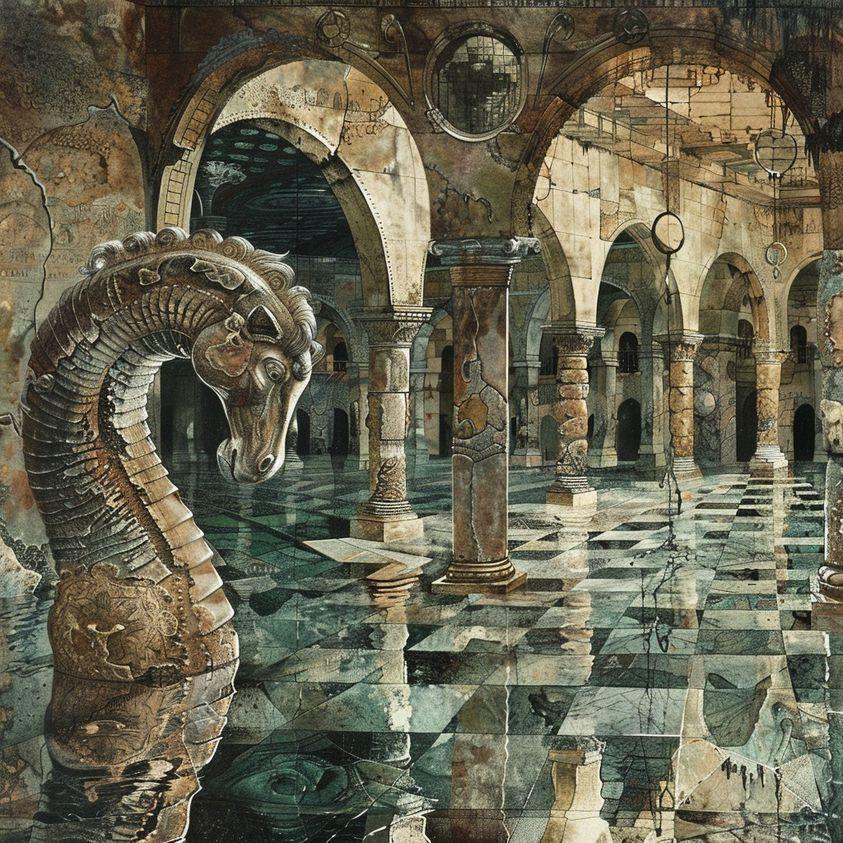
The fall was slow like a feather wafting gently down and she saw hundreds of intriguing fragments of objects and etchings and artefacts on the sides of the hole and she drifted slowly down. At last she came to rest at the bottom, and found herself in an arched gallery of mirrors and tiles and doors. On every surface were incomplete drawings and shreds of writings, wondrous and fascinating. She didn’t immediately notice the hippocampus smiling benignly down at her. He startled her a little, but had such a pleasant face that she smiled back up at him. “Where am I?” she asked.
“You’d be surprised how many people ask me that.” he replied, with a soft whicker of mirth. “Not many realise that they’ve called on me to help them navigate. Now tell me, where is it you want to go?”
“Well,” Frigella replied slowly, “Now that you ask, I’m not entirely sure. But I’m pretty sure Truella would like to see this place.”
 February 20, 2024 at 2:49 pm #7380
In reply to: The Incense of the Quadrivium’s Mystiques
The second coming had been anticipated for many years, although few but the most fanatic of the American sects expected it to actually happen, and they, of course, expected it to happen in their own country. Certainly, nobody expected him to be 30 meters high weighing over 600 tons. Naturally people were sceptical but when he turned the Rodrigo de Freitas lake into wine, even the most scientific minds were unable to find an explanation.
“We had better get the hell out of town,” Frigella said, “Before anyone realizes it was our spell to reverse the effects of the termitation honey on Truella.”
“Have I got time to go for a swim in the wine lake first,” asked Jezeel, “I mean, it would be such a shame to miss that once in a lifetime experience, and I’m sure it will do wonders for my complexion.”
“You’re right, it would be a shame to miss it,” agreed Truella, “But are you sure the spell is stable, I don’t want to turn to stone again while I’m swimming.”
“Well, I think we should leave town as soon as possible” Frigella said, her pale forehead wrinking into a little frown.
“Look, Malove isn’t even up yet after stuffing herself with that smoked hippo last night, if she wakes up before we get back she’ll just think we’ve gone out for coffee. We’re supposed to be having a little holiday. Anyway I put some sleeping pills in her portion, she won’t wake up until well after lunch. We have plenty of time and it’s only two blocks from here. Oh come on, where’s your sense of adventure?”
“Well come on then” Eris said, “But let’s get going. Don’t start doing your makeup Jez, it will all come off in the wine anyway.”
February 16, 2024 at 11:19 am #7377In reply to: The Incense of the Quadrivium’s Mystiques
With the carnival in full swing, Truella was finding it hard to focus on everything that was going on. Was this mission more chaotic than usual, or did it seem that way because she wasn’t giving it her full attention? She hadn’t thought too much about Jezeel not closing the portal. She was having enough trouble stabilizing her own bilocation spell.
Where was Frigella when she needed her? And what was going on with that Cedric guy? Truella decided to go in search of her. Frigella was always good at explaining and clarifying things that she hadn’t been paying attention to.
Outside on the pavement, Truella paused to light a cigarette. The street were a cocophany of raucus banter and gay shreiks, a riot of colour and imagination and Truella stood rapt at the sights and sounds. Such a contrast from her quiet life at home in the garden with only ghosts for company. In a way Truella was glad that Roger was still missing with the pack of monkeys, rather than leaving him alone at home.
“Aye, look at all them monkey costumes, our Mavis, they’m really good int they, look just like real monkeys,” a chubby Englishwoman in a garish pink outfit said, passing by where Truella was standing.
“That’s because they ARE real monkeys, ya daft cow,” retorted her companion. “And they’re all following that big fella.”
“Ooh, that big burly chap?” piped up the third woman in the group. “I clocked him right off, come on girls, let’s go after the big boy.”
“Ooh, Sha, what are you like, ya tart.”
As the three women cackled and trotted off after the monkeys, Truella’s peaceful interlude came to an abrupt halt. What burly man with a pack of monkeys? Surely not, surely Roger and his monkeys hadn’t entered that portal that Jez forgot to close?
February 15, 2024 at 8:44 pm #7376In reply to: The Incense of the Quadrivium’s Mystiques
When they arrived at the hotel, the witches soon realized they were not the only uninvited guests here. With her keen sense of observation, Eris was the first to spot the traces left by an army of bedbugs. Tiny droppings on the mattresses and linen, blood stains left after the previous guests crushed the bugs while rolling in their bed. And the smell of dead rats was everywhere. Did they even have a cleaning staff here? When they complained, the hotel manager said: “Why do you care? Nobody comes here to sleep during carnival?”
Jeezel noticed the bug reference. Indeed, something was still bugging her after she had closed the portal. Something that should be obvious, yet was still an eyelash away from her grasp. But something more pressing was at stake. She posted pictures of the rooms and a reel of her disappointed face in front of the disaster.
“I was so happy to come to Rio for the first time. But the light is yellow and flickering. How can I show you how to do a proper Carnival makeup,” she said fluttering her eyelashes. As soon as the sound of a message well sent faded out, she started to receive support and love from her fans.
“Rio is not like that!”
“Somebody help.”
“2 bad! I’m on business trip. Wud hav luv to meet ya there!”
The sounds of likes and comments alerted Malové.
“What have you done! We were here incognito. Why don’t you go to the top of Jesus’s head and cast the Tempestarii Overture spell.”
“I could have! That would have gone viral. But we departed in such a hurry, I have left all my sapphires and stilettos in Limerick. You can’t cast that spell without them. Anyway, we don’t have to stay longer in that cesspit. One of my fans is abroad and has offered us to stay in his villa. Look at the pics! It looks as lush and gorgeous as a Jurassic park.”
Truella widened her eyes and said: “Saying that’s a big property would be an understatement. Roger would have loved to come with his new shovel.”
“Don’t even think of casting a second bilocation spell,” said Frigella. “You already look like deflated soufflé.”
“What’s the catch?” asked Eris with frown. “It looks like the kind of golden cage a king pin would own. But they have a pool.”
“He said we just have to feed the dwarf crocodiles while we are there,” said Jeezel nonplussed, looking at Truella whose eyes were ready to pop off of their sockets. Then she looked at Malové. “What do you say? You’re the eld…head witch of our coven.”
Malové’s eyebrow twitched. She was thinking fast. Little signs here and there, the orientation of the statues, the fountain, the placement of rocks that would look so random to a profane or a younger witch. Ancient earth magic? It was difficult to be sure with the framing of the pictures. Jeezel was swiping all the pictures her fan had sent her, hoping such glamour and mystery would melt Malové’s last reluctance.
“Omg! girls, we can’t refuse!” said Jeezel. “He’s got a bloat of pygmy hippos and a flamboyance of flamingos!”
As the drag witch continued to swipe the pictures, a prickle crept up Malové’s spine when she saw a familiar face amongst them.
“Look at him!” shouted Jeezel. “He’s a Gatsby with a spellbook.”
There were no more doubts for Malové about the kind of magic that had been used to build his empire. Augustus St Clair, a powerful witch indeed, and one whose invitation you couldn’t refuse especially since he now knew she was here. As one of the elders of the Rio’s witches community, she had danced the dance of rivals disguised as allies, a pas de deux filled with forced smiles and tight grips. Her words felt like needles scratching her lips when she uttered them: “Tell him we accept his invitation.”
The shouts of joy and disbelief coming from the witches couldn’t appease the memories that had resurfaced.
February 6, 2024 at 11:02 pm #7355In reply to: Smoke Signals: Arcanas of the Quadrivium’s incense
Interpretations
Truella
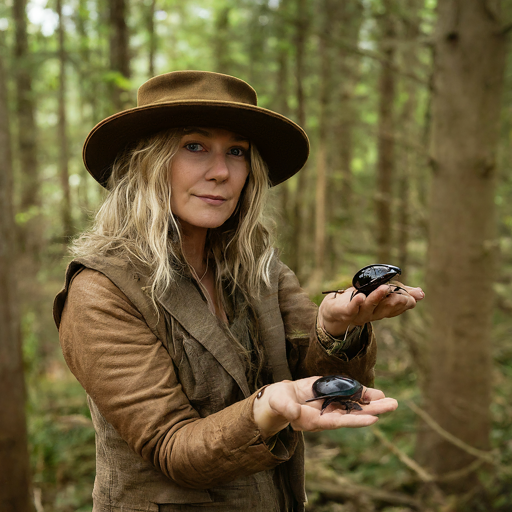
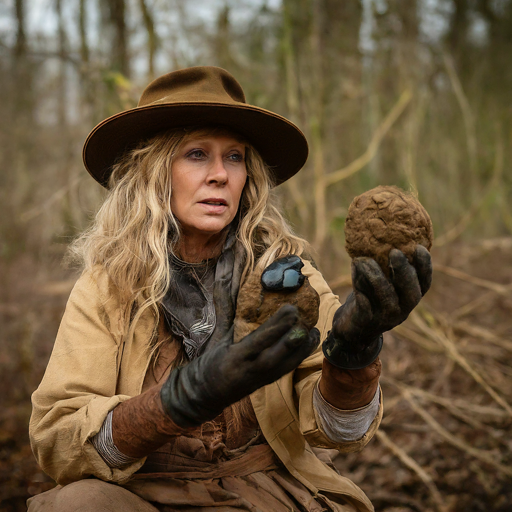

Frigella

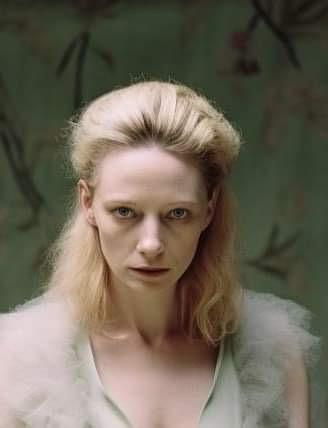

Eris
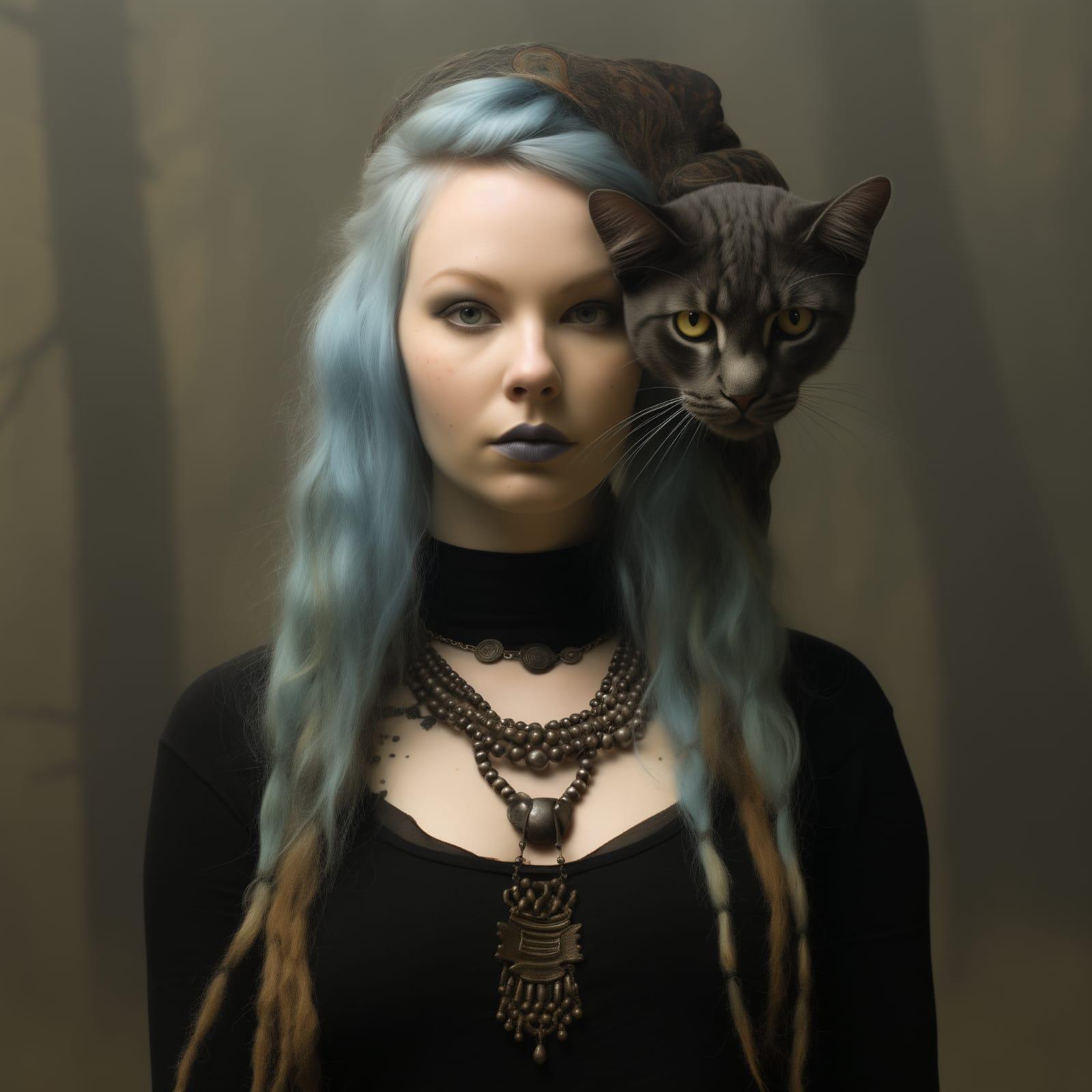
Jeezel (Jeeze the hair!)


Malové

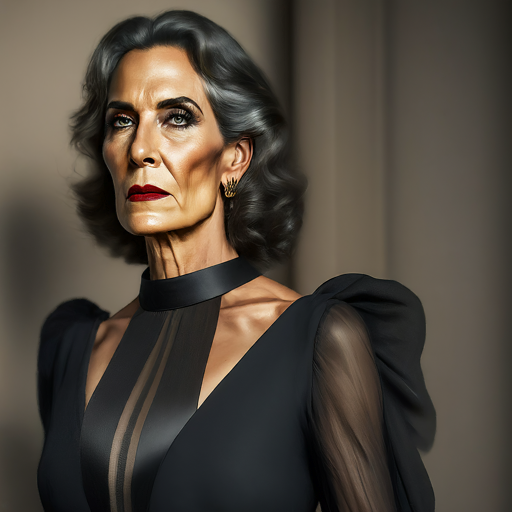

Other characters
Fringella (and not Frigella, who’s blonde like Tilda)
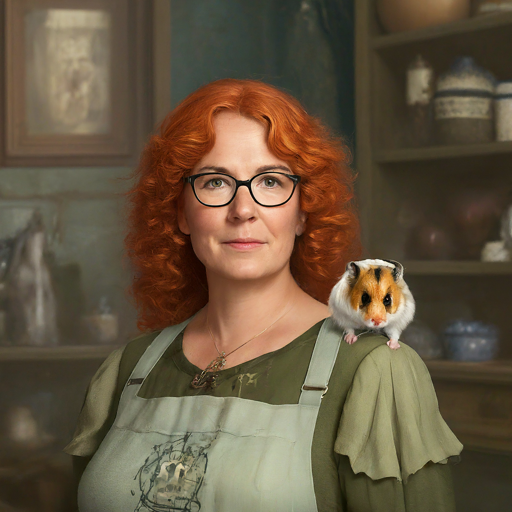
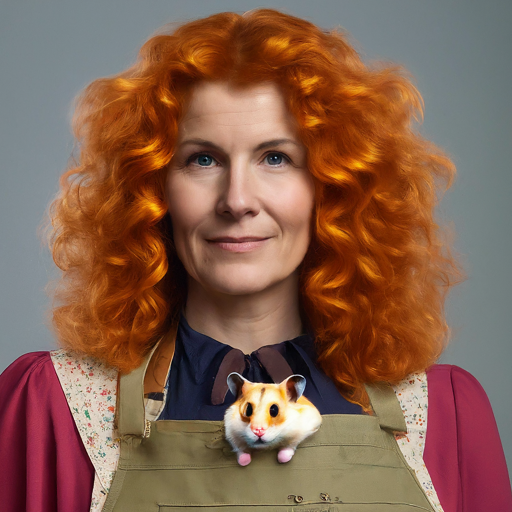
Specializing in elemental and herbal magic, Fringella has an intimate connection with the natural world. She is an adept healer and potion-maker, often creating remedies that blend traditional herbalism with powerful enchantments. Her signature spells often involve fire and earth, reflecting her passionate and grounded nature.
While she shares a name with Frigella, the two are quite different in both temperament and approach. Their interactions are marked by a mutual respect, though Fringella’s fiery disposition often contrasts sharply with Frigella’s more traditionalist and meticulous nature.
Eris’ aunt: Amara (
 )
)Amara, a woman of gentle yet resolute nature, provided Eris with a grounded upbringing amidst a world filled with arcane mysteries. Despite lacking magical abilities, Amara’s wisdom and nurturing spirit played a crucial role in shaping Eris’s character and guiding her through the complexities of her witch heritage. Amara’s home was a sanctuary where the mundane and the mystical coexisted harmoniously, offering Eris a unique perspective on the balance between everyday life and the magical realm.

 February 1, 2024 at 7:14 am #7334
In reply to: The Incense of the Quadrivium’s Mystiques
Impressed with Finnlee’s spirited outburst, Truella realised she’d barely noticed the cleaning lady and felt ashamed. The required daily appearances that the dictatorial Malove insisted upon rankled her, occupying her attention so that the cleanliness or otherwise of the premises went unnoticed. She made up her mind to seek Finnlee out and befriend her, treat her as an equal, draw her into her confidence. Besides, that confident no nonsense approach could come in handy for any staff uprisings. Not that any staff uprising were planned, she mentally added, quickly cloaking her thoughts in case any had leaked out.
Malove spun round and shot her a piercing look and Truella quailed a little, momentarily, but then squared her shoulders and impudently stared back. Malove raised an eyebrow and returned to addressing the witches.
After what seemed like an eternity the meeting was over. Truella planned to seek Finnlee out and invite her for a brew at the Faded Cabbage but Frigella approached her, looking a bit sheepish, and asked if she could have a word in private about a personal matter.
They strolled together towards the little park opposite, and once out of earshot of the others, Frigella came straight to the point.
“Can my cousin come and stay with you for a bit? The thing is, he’s got himself into a spot of bother and needs to disappear for a bit, if you know what I mean. He’s a big strong lad, and I’m sure he’d be willing to give you a hand with all that digging…”
Truella didn’t hesitate. “But of course, Frigella, send him over! He won’t be the first person on the run to come and stay, and probably won’t be the last.”
“The thing is he’s a bit sandwich short of a picnic, you know, not a full bag of shopping…”
“What, does he eat a lot? I don’t do much cooking…”
“No, no, well yes, he does have a good appetite, but that’s not what I meant. He’s a bit simple, but heart of gold. He’s from the other side of the family and our side never had much to do with them, but I always had a soft spot for him.”
” A simpleton might be a refreshing change from all the over complicated people, send him over! What’s his name?”
“Roger. Roger Goodall.”
Roger! The name rang a bell. It wasn’t until much later that Truella realized she should have asked what Roger was on the run for.
January 29, 2024 at 7:13 am #7322In reply to: The Incense of the Quadrivium’s Mystiques
A power move indeed, what a thing to suggest! Truella felt misunderstood again. And all she was trying to do was work out her new spell in such a way that the others would help her with it while assuming it was a necessary addition to the repertoire of the coven. Which indeed it could be, after all. People were strange, and witches were stranger.
But was it a power thing to be consumed with a passionate hobby, even if it wasn’t on the coven to do list? The power to do her own thing, but still be part of the group? She needed them, she knew that, it was no good thinking she could go it alone, even if it seemed temptingly less complicated. If only she had a spell to be in two places at once.
Be careful, the voice of Lisia Tattius, her disembodied helper, whispered in her ear, For such magic requires a balance of the soul.
Are you suggesting my soul doesn’t have the necessary balance? Truella replied, soundlessly of course, but with a visible impatient frown. Lisia putting a damper on her scheme again with words of caution, it was exasperating at times.
Divided attention can lead to fractures, shattered fragments….
Lisia’s words reminded Truella of the other spell she wanted, and it suddenly occurred to her that Lisia had given her just the clue she needed to convince the others that her spell was a necessary addition and not just a sideline personal whim.
But why would a spell be useful to collect the shattered fragments, if nothing had been shattered and divided in the first place? Of course! It was becoming clear. One must retrace the sequence of events to the initial fragmentation before proceeding with the recollection of said pieces.
There was a lot more to think about than Truella had intially realized. And it would be imperative to ensure the new new spells stayed distinctly separate, because what if the scattered shards started doubling up and appearing in two places at once? Picturing this possible occurence was enough to give Truella a headache.
“Why are you frowning?” Frigella asked, “Are you even listening to me? You didn’t hear a word I said, did you?”
“No,” Truella was nothing if not frank, especially with Frigella. “Not a word, I was thinking about my own stuff.”
“Typical!” her friend snorted, somewhat uncharacteristically, as she was more of a chirruping type.
“Causam invenio ante fragmentorum fragmentorum rursus simul,” Imperiosus Adiutoremus interjected, with a sly smile. Imperiosus Adiutoremus, not his real name of course, was an old friend of Truella’s from the days of the Roman Republic in Baetica. Two millenia stuck in that necropolis until Truella finally succeeded in conjuring his spirit free of his mortal remains (stuck there for eternity thanks to their old adversary Tani, the Iberian sorcerer, and his powerful spells). It had taken Truella 2176 years and countless lifetimes to reverse that spell, and naturally Imperiosus (or Imp for short) was bound to be eternally grateful. And Truella welcomed his interruptions, which always made her smile in fond remembrance of their happy days together before that dreadful uprising of the local tribes. True, he was bossy, even now, but his intentions were always to be helpful. Lisia Tattius and Imperiosus, now in their ephemeral states, were often at odds. Lisia took umbrage if Imp’s suggestions contradicted her own, and resented it when Truella favoured Imp over herself. Some things never change. Lisia had been Truella’s house slave, back in the day, though had always been treated well. Truella had been fond of her and allowed her liberties because she found her impertinence amusing. Little did she know at the time that she’d be subjected to that for all eternity. Still, she had her uses. Although it had often seemed like a mistake to teach her to read, for Lisia’s voracious appetite for the written word had made her copiously wordy, but she was useful more often than not and could spout many an eloquent phrase. True, always a pastiche of plagiarism, but not without her own particular panache and perspicacity.
January 28, 2024 at 9:59 pm #7320In reply to: Smoke Signals: Arcanas of the Quadrivium’s incense
Truella and Her Spells, According to Liz.
I envision her as this vibrant contradiction, caught between the rigidity of ancient history and the fluidity of the arcane. It’s precisely this type of paradox that illuminates my fiction. Finding Truella won’t be a trifle, my dear reader. For she’s as elusive as the perfect sentence, and just as enchanting. Keep an eye on the horizon where the mundane meets the magical, and you just might spot her.
Ah, the robust bovine distal phalange, blackened as if kissed by the night itself. Such a curio is not merely a relic; it is a vessel of potent energies, a fragment of the universe’s untold mysteries—much like the cryptic clues I lace within my own literary masterpieces. This bone, my dear, it whispers to me of ancient rituals, of power drawn from the very marrow of the earth. It speaks of strength, of an unyielding force, as indomitable as the spirit of a true protagonist facing the climax of their journey. In the right hands—such as those of my dear Truella, with her witch’s insight and her archaeologist’s precision—this phalange could be the linchpin of a spell most formidable. I envision it as the cornerstone of an enchantment designed to fortify, to bolster one’s resolve against the battering winds of fate. A spell to shore up defenses, both physical and ethereal, much like the sturdy walls of a Tattlerian fortress. Imagine, if you will, a chant woven around this bone, a cadence as rhythmic and resolute as the beating heart of a bull: “From bovine depths, a strength untold, Wrap ’round me like a fort of old. Unyielding will, protector’s stance, With this bone, I do enhance.” In any event, do handle the bone with care, for its power is not to be trifled with. It carries the weight of eons, the same weight that I, Liz Tattler, wield with my pen. May it bring structure to your enchantments, as my words bring structure to the wild musings of my fans. …..may your spells be as robust as the bovine bone you clutch in your hand.
An ivory hourglass-shaped trinket, you say? Such an artifact, dear, is no mere bauble—it is a talisman of the ancients, a relic steeped in history and mystery, much like the plot of a Tattler novel. Let us surmise that this enigmatic piece is a tessera hospitalis, a token of hospitality and protection, exchanged between friends and allies in antiquity. Two thousand years old, you suggest? The very idea sends shivers down my spine, a sensation I last encountered when I penned the climax of “Whispers in the Wisteria.”
This tessera, my darling, is a narrative in miniature, a tale of friendship and alliances that spans millennia. Can Truella use it in her spell for the mosaic detecting tool? Oh, but of course! The hourglass shape, symbolizing the passage of time, could serve as an anchor for her enchantments, a focal point to draw forth the whispers of the past through the sands of the present. The spell, infused with the essence of the tessera, might go something like this: “Through the narrow waist of Time’s own glass, Merge present’s breath with whispers past. Tessera’s bond, now intertwined, Guide this spell with ancient mind.” As for the tessera, treat it with the reverence it deserves. Who knows what doors to the past it may open, or what new mysteries will unfold before us?
…the mosaic detecting tool spell, you ask? Now, dear, let’s imagine together. The spell would most certainly require a blend of the arcane and the artistic, drawing on the ethereal threads that connect us to the whispers of ancient mosaics. Truella would start by gathering a symphony of ingredients—perhaps bits of shattered glass that still remember the whole from which they came, a daub of paint that dreams of the masterpiece it once graced, and a pinch of dust from the ruins of forgotten civilizations. Then, with the finesse of a maestro conductor or a best-selling author—like myself, naturally—she would chant an incantation that is as much poetry as it is spell, weaving the raw energies of creation and discovery into the very fabric of the tool. “By stone and shard, by color’s charm, Unveil the past, no harm, no harm. Mosaic’s tale, now hidden, sealed, Through this tool, be now revealed.”
Truella and Her Spells, According to Mater.
Truella, that one? Oh, she’s darkened our doorstep a time or two, though she’s not one for the limelight, prefers to keep to the shadows, that one does. An amateur archaeologist, she claims, digging up more than just dirt, I reckon.
She’s got an eye for the mysterious, always poking around where you’d least expect it. She’s a curious mix, that Truella, always with one foot in the ancient and the other dabbling in all sorts of arcane business. Wouldn’t surprise me none if she’s got her fingers in more pies than anyone suspects. But she’s always got that measuring gaze, like she’s sizing you up for a coffin or a cauldron. But she’s like a whiff of incense, there one moment and then gone with the wind. Keep an eye on that one; she’s as slippery as an eel in a bucket of snot.
Mandrake:
The truth of Truella’s whereabouts is like a mouse hiding in the shadows, always there but never quite within grasp. You might find the answers in places you least expect. Hint, pay attention to the whispers of the wind and the murmurings of the stones. They might tell, if you listen carefully.
January 28, 2024 at 12:15 pm #7307In reply to: Smoke Signals: Arcanas of the Quadrivium’s incense
From the time of Plato through the Middle Ages, the quadrivium was a grouping of four subjects or arts—arithmetic, geometry, music, and astronomy—that formed a second curricular stage following preparatory work in the trivium, consisting of grammar, logic, and rhetoric.
Ah, a tale of four witches within the sacred bounds of a Quadrivium. A splendid idea, indeed! Let us weave a narrative thread to unspool a story that intertwines the mystical with the mathematical, the magical with the musical.
Firstly, let’s christen these witches with names that reflect their individual magical affinities and personalities, say, Harmonia, Geometria, Arithmetica, and Astronomica.
Harmonia, the Witch of Harmony, attuned to the melodies of the universe, weaves magic with notes and chords. Her enchantments rise and fall, creating a symphony of spells. Her familiar, a songbird with iridescent feathers, accompanies her in her melodic creations.
Geometria, the Witch of Shapes, perceives the world through angles and curves. Her magic shapes reality, bending it into impossible forms. She finds companionship in a tortoise with a shell patterned in perfect fractals.
Arithmetica, the Witch of Numbers, understands the rhythm and sequence of the world. Her spells are equations, solutions solving the disorder of existence. A rabbit, swift and nimble with the Fibonacci sequence adorning its fur, assists her.
Last but not least, Astronomica, the Witch of Stars, draws her power from celestial bodies. Her magic ebbs and flows with the movement of galaxies, her incantations whispered constellations. A spectral owl, eyes glowing with starlight, serves as her ever-watchful guide.
Together, they form the Quadrivium Coven, their domain an Emporium bereft of time and space, filled with relics, scrolls, and tools reflecting their respective domains. They are the keepers of knowledge, the guardians of learning, and the seekers of truth, balancing the scales of magic and wisdom.
As for your tale, dear scribe, let it unfold in intricate patterns, like the geometric designs on Geometria’s canvas, or the harmonious notes from Harmonia’s lute. Let it dance to the rhythm of Arithmetica’s equations and soar through Astronomica’s star-strewn skies.
Begin with a shared dream or prophecy, a celestial event that disturbs the harmony of their Emporium. Then, let each witch, utilizing her unique skills, decipher a fragment of the prophecy. Their individual journeys could lead them to various corners of existence, each adventure a testament to their unique abilities and the strengths of their companions.
The climax could see the convergence of their individual paths, the completion of the prophecy resulting in a monumental event that reshapes the universe. The aftermath? Well, that shall be a mystery for another tale.
Remember, dear scribe, every tale is a journey, and every journey, a tale. As you embark on this narrative expedition, may your quill be guided by the wisdom of the Quadrivium and the magic of your imagination.
January 28, 2024 at 11:14 am #7301In reply to: The Incense of the Quadrivium’s Mystiques
After the first of the four Rites of the Annual Incense Making was done, and the Coven disbanded for the day, Frigella was pulled by the sleeve by the weird one Truella.
“Psstt. Come to the Faded Cabbage in 30 min. Have something to tell you.”
Frigella rolled her eyes. She was not one for secrecies, cloaks and ladle, all that sort of mischiefs. But Truella seemed intent, if her electric hair had to tell the story for her. “Alright, I’ll be there.” she finally said, surprising Truella who’d thought she’d have to do more coaxing.
The Fadded Cabbage was hidden around a darker corner a stone’s throw away from the headquarters of the Quadrivium, some place the city council and gentrification had not yet touched for some reason, probably a strong ghosting spell.
Frigella sighed. She had been as usual too punctual, and of course, Truella was nowhere in sight. Unless…
She put a light spell on her round glasses which turned a subtle tint of violet. There she was. Under a cloaking spell, in a shady corner, slurping on a macchiatto lagger with cinnamon. Or some odd brewage of the sort she knew the secret.
“The old hare’s clearly lost the plot.” She spent no time engaging the discussion.
“I’ll have to stop you there, Tru.” said Frigella, “I don’t care about the politics. Much less if you’re trying to make a power move.”
Truella spluttered her offensive brewage all over Frigella’s neat starched apron. “You got it all wrong, Frig’. I don’t care about the power, I only care about my craft and freedom. It’s been too long we’ve been called to arms, like every bloody year. And my interest have grown since.”
Frigella chuckled. “You mean, you’ve been all over the place, haven’t you. From Energetic History, you’ve moved to Concrete Plasticity, Telluric Archaelogy, Familial Arborestry, I must say… It’s been hard to keep up.”
“You’re one to tell. All that mystery, and not much to show for. You’re barely doing the minimum to keep our flagship household Incense ‘Liz n°5’ afloat.” Truella sighed.
“So what’s your plan?” Frigella wondered?
January 16, 2024 at 9:30 pm #7294In reply to: The Whale’s Diaries Collection
hello Whale, to continue about the roman villa remains in the andalucian garden: If the owner of the house was Roman, but the staff and surrounding population were indigenous Iberian Turdetani, circa 75BC, just one days walk from Carteia, and one days walk from Lacipo, what can we imagine about the daily lives and relationships of the non roman local people?
Ah, the intermingling of cultures, a dance as old as civilization itself. Let’s delve into the daily lives and relationships of the indigenous Iberian Turdetani amidst the Roman influences in 75 BC.
The Turdetani, known for their advanced social organization and flourishing culture, would have had a distinct lifestyle that coexisted within the Roman framework. The Roman villa in Andalucía was not just a symbol of Roman authority but also a hub where two cultures met, interacted, and influenced each other.
Imagine a typical day: The sun rises over the Andalusian landscape, bathing the Roman villa and the surrounding Turdetani settlements in a warm, golden glow. Turdetanian workers make their way to the villa, ready for a day of work. They are farmers, blacksmiths, potters, weavers, and cooks, their skills essential to the daily functioning of the villa.
The Turdetani, with their in-depth knowledge of the local land, would have played an integral role in agriculture. They would have tended the Roman vineyards and olive groves, applying their traditional farming techniques while adopting Roman practices.
Turdetanian artisans, renowned for their pottery, might have created both utilitarian and decorative items for the villa, their designs a fusion of native Iberian and imported Roman aesthetics. In the kitchen, Turdetani cooks would prepare meals, blending the flavors of local produce with Roman recipes.
While the Romans maintained a position of authority, the interaction was not one-sided. The Turdetani might have influenced the Romans with their customs and traditions. Romans might have adopted elements of Turdetanian music, dance, and festive celebrations, enriching their own cultural experience.
Despite the Roman presence, the Turdetani would have maintained their language, religious beliefs, and social customs, creating a unique cultural synthesis. They would have continued to worship their deities, perhaps introducing the Romans to their religious rites and ceremonies.
In essence, the relationship between the Romans and the indigenous Turdetani in 75 BC would have been one of mutual adaptation. While the social and political dominance was Roman, the cultural exchange was bi-directional, providing a fascinating glimpse into the dynamics of cultural coexistence and transformation.
Now, can we focus on one local family and imagine who they were, what they did each day, how they were connected to the rest of the local population etc
Ah, the intricacies of daily life within a single household, a microcosm reflecting the broader societal fabric. Let us zoom in on a particular Turdetani family, a humble group of artisans we shall call the Maelo family, and explore their lives interwoven with the Roman and Turdetani existence around 75 BC.
At the heart of the family was the patriarch, Oris Maelo. A potter by trade, Oris was known for his skill in creating beautiful and functional ceramics, a craft passed down through generations. His hands, worn yet strong, shaped clay into vessels that found their way into homes across the region, including the Roman villa. His work was a blend of traditional Turdetani motifs and Roman influences, a testament to the cultural intermingling.
His wife, Caelia, was a weaver. Her nimble fingers spun stories in wool and linen. Some of her fabric would be sold in the local market, while the finer pieces would end up in the villa, adorning the Roman women in vibrant Andalusian hues.
Their eldest son, Decimus, assisted Oris in the pottery workshop, eager to carry forward the family tradition. Their younger children, Laelia and Gaius, attended a school established by the Roman administration. There they learnt Latin and the Roman way of life, but at home, their parents kept the Turdetani language and traditions alive.
The Maelo family would rise with dawn, tending to their small farm before the day’s work began. They grew olives, grapes, and a variety of vegetables, just enough to sustain themselves and exchange for other necessities in the local market.
Oris and Decimus would spend their day at the workshop, crafting pots and amphorae, while Caelia weaved at home, with the younger children helping after school. Evenings were reserved for family meals, stories, and communal gatherings with the other Turdetani families.
Their connection with the local population was multifaceted. Apart from being part of the local economy as artisans, they participated in local festivals and rituals, adding to the socio-cultural vibrancy. Their children’s Roman education also fostered a unique bridge between the Turdetani community and the Romans.
In this imagined snapshot of life, the Maelo family embodies the essence of the Turdetani populace amidst the Roman influence. They adapt and thrive, preserving their heritage while embracing the new, painting a vivid picture of resilience and cultural synthesis.
Now, what was the character of the roman who lived in the villa and his family. Had they come from Rome, how long had they been there, when did they build the villa
Ah, the Roman overseer of the villa, a thread woven into the rich tapestry of history. Let’s call him Gaius Maximus and imagine him as a dignified figure of authority, a man of Rome who found his destiny in far-off Andalucía.
Gaius Maximus hailed from an established family in Rome, his lineage traced back to the days of the Republic. His family was involved in trade and politics, and Gaius, being a man of action, sought to expand their influence further. Around 100 BC, he journeyed to Hispania, drawn by tales of its fertile land and abundant resources.
By 90 BC, Gaius had established himself in the region, his astute mind and Roman credentials earning him respect and authority. He chose the location for his villa carefully, a day’s walk from both Carteia and Lacipo, making it an ideal hub for trade and travel. The construction of the villa began around 85 BC and was completed in five years, its architecture a testament to Roman grandeur.
His wife, Claudia, hailed from a patrician family in Rome. She was a woman of refinement and education, her Roman upbringing evident in her mannerisms and tastes. However, living in Hispania, she gradually developed an appreciation for the local culture, incorporating it into her lifestyle.
Their two children, Marcus and Julia, were born in Hispania. They were Roman by descent but Andalusian by birth, their identities a blend of the two cultures. Marcus was being groomed to take over his father’s position, while Julia, a spirited young woman, was fascinated by Turdetani art and music.
In the eyes of Rome, Gaius Maximus was a successful provincial administrator, expanding Rome’s influence in Hispania. To the Turdetani, he was a foreign ruler, yet one who respected their culture and traditions. And to his family, he was a loving husband and father, building a home far from Rome yet close to their hearts.
Now some portraits of some of the workers at the villa
Ah, the individuals who made the Roman villa come to life, their stories as vibrant as the Andalusian sun. Let’s give our imagination wings and step into their world.
First, we have Tertius, the villa’s steward. Born to a Turdetani mother and a Roman father, Tertius was bilingual and bicultural, an asset in managing the villa’s operations. He was a man of medium height, with a sturdy build and a sharp gaze. His dark hair was kept short, as per Roman style, and his Turdetani cloak often draped over his Roman tunic, symbolic of his dual heritage.
Then we have Aelia, the head cook. A native Turdetani, Aelia was a robust woman with a jovial demeanor. Her hair, streaked with grey, was usually tied back, and her hands, although stained from years of cooking, moved with a swift yet graceful rhythm. Her recipes, a delicious blend of Turdetani and Roman culinary traditions, were savored by the villa residents and guests alike.
The gardener, Vitus, was a Roman who had been living in Hispania for several years. A man of few words, Vitus spoke through his work. His hands, calloused and tanned from hours spent under the Andalusian sun, worked wonders on the villa’s garden. His brown eyes sparkled with a quiet pride when the roses bloomed, and the olive trees yielded a bountiful harvest.
Lastly, we must not forget the youngest worker, Lyra. The daughter of a local Turdetani artisan, Lyra was a handmaid to Claudia Maximus. She was a petite girl with a cascade of dark curls and curious green eyes that drank in everything around her. Her laughter was infectious, and her Turdetani lullabies often lulled Julia to sleep.
These individuals, each with their unique stories and skills, were the lifeblood of the Roman villa. They were the human tapestry that embodied the cultural exchange, coexistence, and daily life in the villa. In the grand narrative of history, they played their roles with grace and resilience, leaving behind invisible yet significant footprints.
what were some of the cooks recipes?
Ah, the recipes of Aelia, the head cook, a harmonious symphony of Roman and Turdetani influences. Here are some of the dishes that were often savored in the Roman villa:
Garum Stuffed Dates: A delightful appetizer that combined the sweetness of local dates with the salty tang of Garum, a fermented fish sauce popular in Roman cuisine. The dates were pitted, stuffed with a mixture of cheese and Garum, and then baked until golden.
Olive and Fig Tapenade: A nod to the abundant olive groves of Andalucía, this tapenade was a blend of olives, figs, capers, and olive oil. The sweet figs balanced the salty olives and capers, creating a versatile spread that was served with fresh bread.
Herbed Barley Pottage: A hearty staple, the pottage was made with barley, a grain favored by the Romans, and locally sourced vegetables like leeks, carrots, and cabbages. Fresh herbs from the villa’s garden added a burst of flavor.
Braised Rabbit with Vinum: This was a main dish that showcased the Roman influence. Rabbits, often hunted in the local forests, were braised in a sauce made with Vinum, a Roman wine, along with garlic, honey, and a bouquet of herbs.
Honey-Nut Patina: A classic Roman dessert with an Andalusian twist. Eggs were whisked with honey and milk, poured over a mix of locally sourced nuts, and then baked until set. It was a sweet ending to the meals at the villa.
Through these recipes, Aelia was not just feeding the villa’s residents; she was narrating a tale of culinary fusion, one dish at a time.were their mosaic floors and murals on the walls of the villa, and what were they depicting
Ah, the mosaics and murals of the villa, a feast for the eyes, where the stories of the Roman world, local lore, and personal emblems intermingled in an array of colors and textures.
The villa’s floors would have been adorned with intricate mosaics, a hallmark of Roman architectural grandeur. Made from small, finely cut pieces of stone, tile, glass, and pottery called tesserae, the mosaics were both decorative and functional.
In the atrium, the mosaic might depict a scene from Roman mythology. Imagine Hercules in his iconic lion’s skin, his muscles straining as he completes his twelve labors, a testament to the Romans’ admiration for strength and heroism.
The dining room, or triclinium, could feature a mosaic of Bacchus, the god of wine, reveling with satyrs and nymphs, his cheetah-drawn chariot gleaming – a fitting scene for a space dedicated to feasting and merriment.
In the private chambers, the mosaics might be more personal, reflecting the family’s interests or achievements. Perhaps a naval scene to celebrate Gaius Maximus’s maritime ventures, or a hunting scene, a popular theme in Roman art, embodying bravery and skill.
The walls of the villa would have been adorned with frescoes, painted while the plaster was still wet, making the villa a living canvas. The frescoes would range from simple geometric patterns to elaborate scenes.
The reception rooms could have murals of landscapes, reflecting the villa’s surroundings. Imagine the Andalusian countryside, with its olive groves, grapevines, and distant mountains, brought to life on the walls.
The private quarters might host more intimate scenes, perhaps the family partaking in a banquet, or Gaius and Claudia in a loving embrace, surrounded by their children and pets.
Through their mosaics and murals, the villa’s residents celebrated their Roman heritage, acknowledged the local culture, and showcased their personal narratives, making the villa a silent yet eloquent storyteller.
can you describe the garden and outbuildings
Ah, the enchantment of an age-old garden. Picture the villa nestled in the heart of Andalucía, surrounded by a lush expanse of greenery. Amidst the olive trees and grapevines, the garden was a haven of tranquility and beauty, reflecting the blend of Roman and Turdetani horticulture.
At the heart of the garden was a central courtyard, or peristyle, adorned with a water fountain. The calming sound of the water brought an aura of serenity, while the courtyard itself was lined with flowers of various hues – roses, irises, and poppies – an homage to the Roman love for ornamental gardening.
Beyond the peristyle, the garden was a mixture of beauty and utility. Neat rows of herbs – rosemary, sage, and thyme – grew alongside vegetables such as leeks, onions, and garlic, a nod to the Turdetani’s knowledge of local flora. Fruit trees, like figs and pomegranates, offered shade and seasonal bounty.
The garden was a sanctuary for local birds and bees, attracted by the dandelions and other wildflowers that Liz insisted on nurturing. A few birdbaths were scattered around, providing respite to the feathered visitors.
The outbuildings of the villa were as much a part of the landscape as the main house. Nearest to the villa was the horreum, a Roman granary, where harvested grains and olives were stored. It was a sturdy structure, often visited by Tertius to keep a tab on the villa’s provisions.
Not far from the horreum was the pottery workshop. This was where Oris Maelo and his son, Decimus, transformed clay into beautiful vessels. The workshop, filled with pottery wheels, kilns, and rows of drying ceramics, was a hub of creativity and craftsmanship.
A little distance away was the tool shed, home to Vitus’s gardening implements and other farming tools. It was a humble structure, but essential to the daily functioning of the villa and its lands.
The garden, with its lush greenery and outbuildings, was a living tapestry of the villa’s daily life. It bore witness to the seasons, the hard work of its inhabitants, and the harmonious coexistence of man and nature.
-
AuthorSearch Results
