



Search Results for 'near'
-
AuthorSearch Results
-
January 31, 2023 at 3:31 pm #6479
In reply to: The Jorid’s Travels – 14 years on
Chapter 1: The Search Begins

Georges was sitting more or less comfortably in the command chair on the control deck of the Jorid, slowly drinking his tea. The temperature of the beverage seemed to be determined randomly since the interference patterns in the navigation array weren’t totally fixed when they removed those low quality tiles. Drinking cold or hot tea was not the worse of it, and it was even kind of a challenge to swallow it and not get burned by ice. The deck kept changing shape and colours, reconfiguring along with the quantum variations of the Boodenbaum field variation due to some leakage of information between dimensions. Salomé had preferred resting in her travelpod where the effects were not as strongly felt.
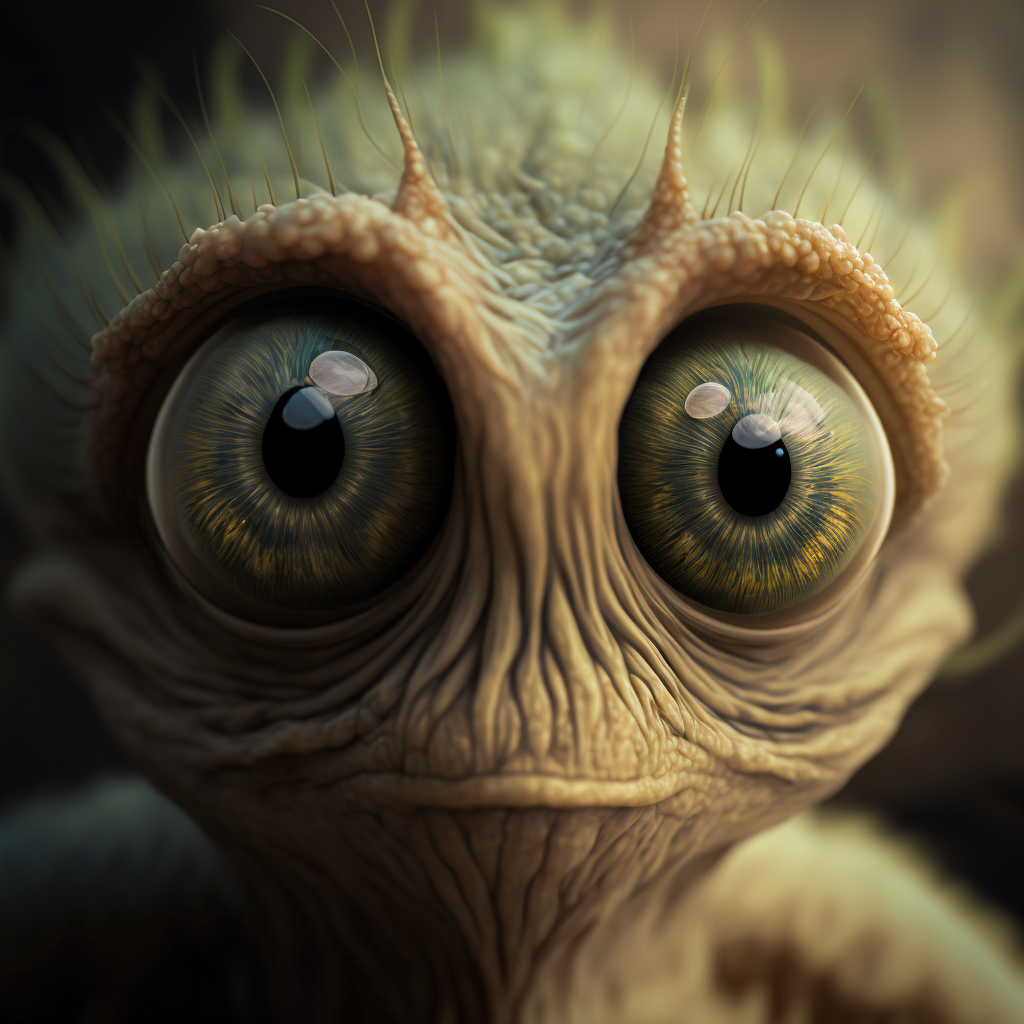 “The worse is not as much seeing your face morph into a soul-insect and turn inside down, although those greenish hues usually make me feel nauseous, but feeling two probable realities where my organs grow and shrink at the same time is more than I can bear.”
After a few freakish experiences, where his legs cross-merged with the chair, or a third eye grow behind his head, or that time when dissolved into a poof of greasy smoke, Georges got used to the fluid nature of reality during the trips. You just had to get along with it and not resist. He thought it gave some spice and colours to their journey across dimensions. He enjoyed the differences of perceptions generated by the fluctuations of the Boodenbaum field, as it allowed his tea to taste like chardonnay or bœuf bourguignon, and was glad when he discovered a taste that he had never experienced before.
During the last few trips, he had attempted to talk with Jorid, but their voices were so garbled and transformed so quickly that he lost interest. He couldn’t make the difference with the other noises, like honking trucks passing by on a motorway, or the cry of agony of a mating Irdvark. He felt a pang of nostalgia as the memories of Duane, Murtuane and Phréal merged into the deck around him. He wondered if he could get physically lost during one of the trips as he started to feel his limbs move away from his body, one hairy foot brushing by his left ear while he drank a sip of tea with the mouth that had grown on his middle finger. Salomé had warned him about fractured perception and losing a piece of his mind… It seemed it hadn’t happened yet. But would he notice?
 Already he felt the deceleration he had come to notice when they neared their destination. The deck stabilized into a shape adapted to this quadrant of the dimensional universes. The large command screen displayed images of several ruins lost in the sand desert of Bluhm’Oxl.
Georges looked at his hands, and touched his legs. His reflection on the command screen looked back at him. Handsome as usual. He grinned. Salomé wouldn’t refrain from telling him if something was off anyway.
Jorid: “I have woken up Salomé.”
She won’t be long now. Georges ordered a hot meklah, one of her favorites drink that usually helped her refocus when getting out of her pod.
A blip caught Georges’ attention.
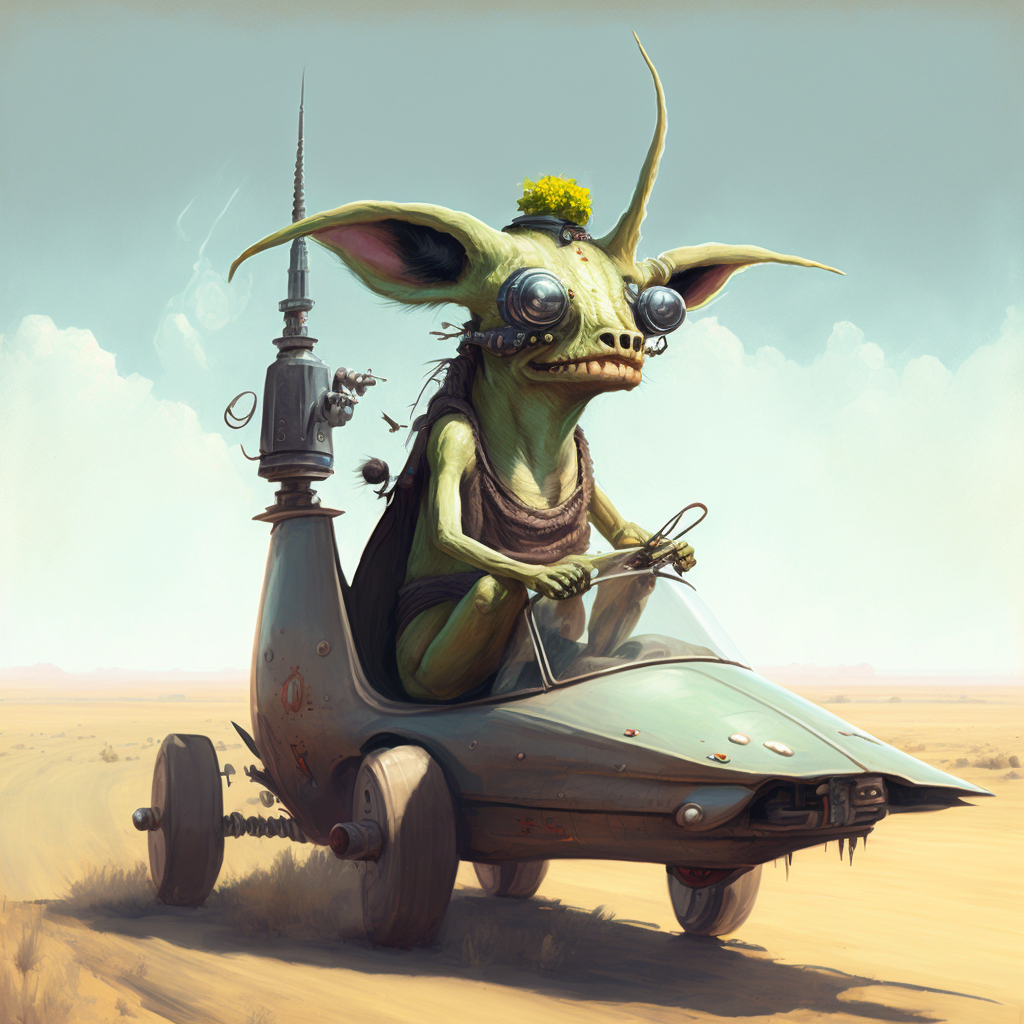
Jorid: “This is Tlal Klatl’Oxl, better know as Klatu. Your potential contact on Bluhm’Oxl and a Zathu. He’ll guide and protect you as you enter the conflict zone to look for Léonard.”
 January 31, 2023 at 3:17 am #6476
In reply to: Orbs of Madjourneys
Yasmin was having a hard time with the heavy rains and mosquitoes in the real-world. She couldn’t seem to make a lot of progress on finding the snorting imp. She was feeling discouraged and unsure of what to do next.
Suddenly, an emoji of a snake appeared on her screen. It seemed to be slithering and wriggling, as if it was trying to grab her attention. Without hesitation, Yasmin clicked on the emoji.
She was taken to a new area in the game, where the ground was covered in tall grass and the sky was dark and stormy. She could see the snorting imp in the distance, but it was surrounded by a group of dangerous-looking snakes.
Clue unlocked It sounds like you’re having a hard time in the real world, but don’t let that discourage you in the game. The snorting imp is nearby and it seems like the snakes are guarding it. You’ll have to be brave and quick to catch it. Remember, the snorting imp represents your determination and bravery in real life.
Rude! thought Yasmin. Telling me I’m having a hard time! And I’m supposed to be the brains of the group! Suddenly the screen went blank. “Oh blimmin dodgy internet!” she moaned.

“Road’s closed with the flooding,” said a man from the kitchen door. Yasmin didn’t know him; he had a tinge of an accent and took up a lot of space in the doorway. “They reckon it should be clear by tomorrow though.”
“Fred!” Sister Aliti looked up from chopping yam and beamed. She pointed her knife at Yasmin who was washing the breakfast dishes. “Have you met Yasmin? One of our new volunteers. Such a good girl.” The knife circled towards the door. “Yasmin this is Fred – Fred drives the van for us when we are too busy to do it ourselves. So very kind.” She smiled fondly at the man.
Fred nodded and, taking a step into the kitchen, he stuck a hand towards Yasmin. She quickly wiped her damp hands on her skirt before taking it. Fred’s hand was brown and weathered like his face and he gripped her fingers firmly.
“Nice to meet you Yasmin. So where are you from?”
“Oh, um, I’ve been living in London most recently but originally from Manchester.” Yasmin noticed he had a snake tattoo curling up his inner bicep, over his shoulder and disappearing under his black singlet. “Is your accent Australian?”
A flicker of a frown crossed Fred’s face and Yasmin felt anxious. “Sorry,” she mumbled, although she wasn’t sure what for. “It’s just I’m visiting soon …”
“Yeah, originally. But I’ve not been back home for while.” His eyes drifted to the kitchen window and stayed there. For a moment, they all watched the rain pelt against the glass.
Sister Aliti broke the silence. “Fred’s a writer,” she said sounding like a proud mother.
“Oh, that’s so cool! What do you write?” Yasmin immediately worried she’d been too nosy again. “I’ve always wanted to write!” she added brightly which wasn’t true, she’d never given it much thought. Realising this, and to her horror, she snort laughed.
Fred dragged his eyes back from the window and looked at her with amusement. “Yeah? Well you should go for it!” He turned to Sister Aliti. “Internet’s down again too with this weather,” He dug into the pocket of his shorts and dangled some keys in the air. “I’ll leave the van keys with you but I’ll be back tomorrow, if the rain’s stopped.” The keys clanked onto the bench.
“He’s such a chatterbox,” murmured Sister Aliti after Fred had gone and Yasmin laughed.
“Shall I put these in the office?” Yasmin gestured to the set of keys then gasped as she saw that on the keychain was a devilish looking imp grinning up at her.
January 30, 2023 at 8:43 pm #6472In reply to: The Jorid’s Travels – 14 years on
Salomé: Using the new trans-dimensional array, Jorid, plot course to a new other-dimensional exploration
Georges (comments): “New realms of consciousness, extravagant creatures expected, dragons least of them!” He winked “May that be a warning for whoever wants to follow in our steps”.
The Jorid: Ready for departure.
Salomé: Plot coordinates quadrant AVB 34-7•8 – Cosmic time triangulation congruent to 2023 AD Earth era. Quantum drive engaged.
Jorid: Departure initiated. Entering interdimensional space. Standby for quantum leap.
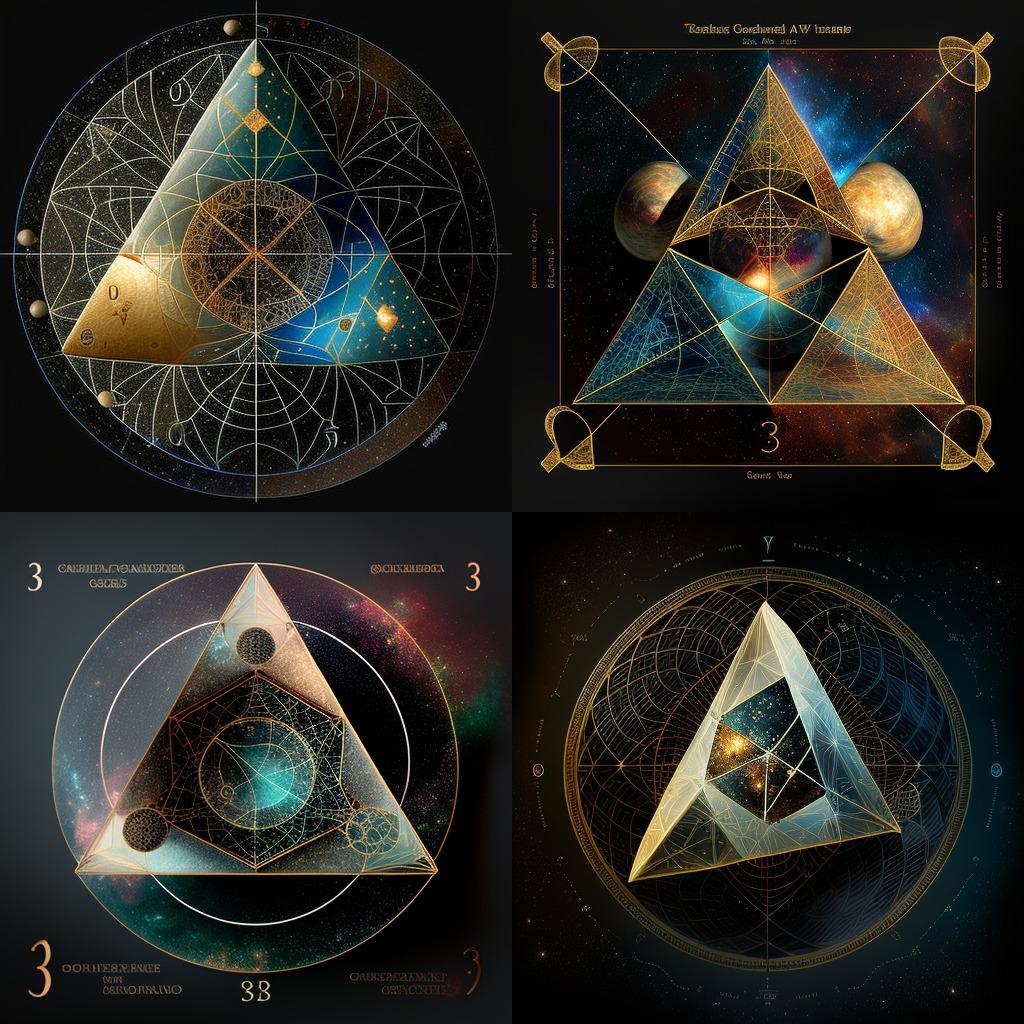
Salomé (sighing): Please analyse subspace signatures, evidences of life forms in the quadrant.
Jorid: Scanning subspace signatures. Detecting multiple life forms in the AVB 34-7•8 quadrant. Further analysis required to determine intelligence and potential danger.
Salomé: Jorid, engage human interaction mode, with conversational capabilities and extrapolate please!
Jorid: Engaging human interaction mode. Ready for conversation. What would you like to know or discuss?
Georges: We currently have amassed quite a number of tiles. How many Salomé?
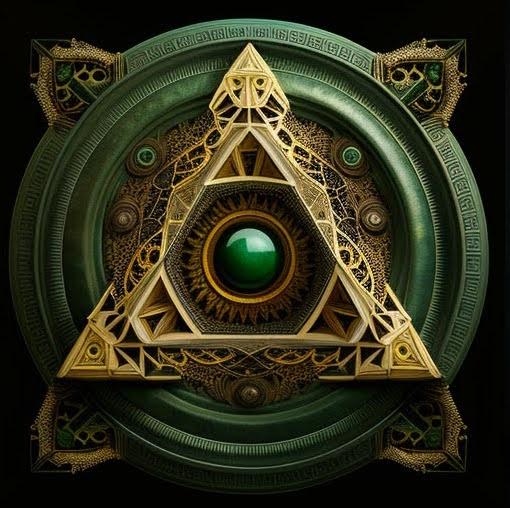 Salomé: Let me check. I think about 47 of them last I count. I didn’t insert the auto-generated ones, they were of lesser quality and seemed to interfere with the navigational array landing us always in expected places already travelled.
Georges: Léonard has been missing for 4 months.
Salomé: you mean by our count, right?
Georges: Right. We need to find him to readjust or correct the navigational array. Jorid, give us statistical probabilities that we can use as clues to his current potential locations.
Jorid: Calculating statistical probabilities for Léonard’s location. It would be helpful to have more information, such as known destinations or areas of interest, to increase accuracy of probabilities.
Salomé: Jorid is in a lazy mood it seems. I preferred her more chatty.
Georges: You mean “him”, surely dear?
Salomé: (rolls eyes)
Georges: Anyway, Léonard seemed interested in archaeological finds in recent excavated tombs near the sand deserts of Bluhm’Oxl in the Zathu sector.
 Jorid: Analyzing data on archaeological finds near the sand deserts of Bluhm’Oxl in the Zathu sector. Probability of Léonard being in the area is calculated at 43%. Shall I plot a course to Bluhm’Oxl for further investigation?
Salomé (loosing patience): Please engage your quantum capacities to access more data. We built you to be a bit more helpful than a bloody computer.
Georges laughed: I remembered you had more patience, dear!
Salomé: She’s in a mood today, isn’t she. What did you do to her?
Georges (cunningly): Jorid, sweet thing, please provide more details about the area, the populations, the customs the whole gamut dammit, and potential territorial conflicts in the vicinity. And be more chatty to please Salomé.
Jorid: Of course, I apologize for my previous responses. Analyzing data on the sand deserts of Bluhm’Oxl in the Zathu sector, including information on populations, customs, territorial conflicts and other relevant details. The area is known for its rich history and cultural heritage, with several ancient tombs and ruins attracting archaeological interest. The main population is composed of the Zathu nomads, known for their hospitality and trading skills. There are no known territorial conflicts in the area, but it is advised to exercise caution while traveling as the deserts can be treacherous.
Georges (laughs): You can’t stop her know!
Salomé (smiles noticing the “her”): Well, that doesn’t tell too much, does it. How shall we proceed? Need to synthetise some local clothes, or are you back to your thieving habits (pun intended)?
Georges: Haha, always ready for a good adventure. It seems we’ll have to do some research on the ground. As for the clothes, I’ll leave that to you my dear. Your sense of style never fails to impress. Let’s make sure to blend in with the locals and avoid drawing any unnecessary attention. The goal is to find Léonard, not get into trouble.
January 28, 2023 at 11:27 am #6463In reply to: Prompts of Madjourneys
Additional clues from AL (based on Xavier’s comment)
Yasmin
:snake:

Yasmin was having a hard time with the heavy rains and mosquitoes in the real-world. She couldn’t seem to make a lot of progress on finding the snorting imp, which she was trying to find in the real world rather than in the game. She was feeling discouraged and unsure of what to do next.
Suddenly, an emoji of a snake appeared on her screen. It seemed to be slithering and wriggling, as if it was trying to grab her attention. Without hesitation, Yasmin clicked on the emoji.
She was taken to a new area in the game, where the ground was covered in tall grass and the sky was dark and stormy. She could see the snorting imp in the distance, but it was surrounded by a group of dangerous-looking snakes.
Clue unlocked It sounds like you’re having a hard time in the real world, but don’t let that discourage you in the game. The snorting imp is nearby and it seems like the snakes are guarding it. You’ll have to be brave and quick to catch it. Remember, the snorting imp represents your determination and bravery in real life.
🐍🔍🐗 Use your skills and abilities to navigate through the tall grass and avoid the snakes. Keep your eyes peeled for any clues or symbols that may help you in your quest. Don’t give up and remember that the snorting imp is a representation of your determination and bravery.
A message bumped on the screen: “Need help? Contact me 👉”
Stryke_Assist is trying to make contact : ➡️ACCEPT <> ➡️DENY ❓
Youssef
:desert:

Youssef has not yet been aware of the quest, since he’s been off the grid in the Gobi desert. But, interestingly, his story unfolds in real-life parallel to his quest. He’s found a strange grumpy shaman at a food booth, and it seems that his natural steps are converging back with the game. His blog website for his boss seems to take most of his attention.
An emoji of a desert suddenly appeared on his screen. It seemed to be a barren and empty landscape, with sand dunes stretching as far as the eye could see. Without hesitation, Youssef clicked on the emoji.
He was taken to a new area in the game, where the ground was covered in sand and the sky was a deep orange, as if the sun was setting. He could see a mysterious figure in the distance, standing at the top of a sand dune.
Clue unlocked It sounds like you’re in a remote location and disconnected from the game. But, your real-life experiences seem to be converging with your quest. The grumpy shaman you met at the food booth may hold the key to unlocking the next steps in the game. Remember, the desert represents your ability to adapt and navigate through difficult situations.
🏜️🧭🧙♂️ Explore the desert and see if the grumpy shaman’s clues lead you to the next steps in the game. Keep an open mind and pay attention to any symbols or clues that may help you in your quest. Remember, the desert represents your ability to adapt and navigate through difficult situations.
A message bumped on the screen: “Need help? Contact me 👉”
Sands_of_time is trying to make contact : ➡️ACCEPT <> ➡️DENY ❓
Zara
:carved_tile:
Zara looked more advanced [in her explorations – stream breaks – resume conversation]
Zara had come across a strange and ancient looking mine. It was clear that it had been abandoned for many years, but there were still signs of activity. The entrance was blocked by a large pile of rocks, but she could see a faint light coming from within. She knew that she had to find a way in.
As she approached the mine, she noticed a small, carved wooden tile on the ground. It was intricately detailed and seemed to depict a map of some sort. She picked it up and examined it closely. It seemed to show the layout of the mine and possibly the location of the secret room.
With this new clue in hand, Zara set to work trying to clear the entrance. She used all of her strength to move the rocks, and after a few minutes of hard work, she was able to create an opening large enough for her to squeeze through.
As she ventured deeper into the mine, she found herself in a large chamber. The walls were lined with strange markings and symbols, and she could see a faint light coming from a small room off to the side. She knew that this must be the secret room she had been searching for.
Zara approached the room and pushed open the door. Inside, she found a small, dimly lit chamber. In the center of the room stood a large stone altar, and on the altar was a strange, glowing object. She couldn’t quite make out what it was, but she knew that this must be the key to solving the mystery of the mine.
With a sense of excitement and curiosity, Zara reached out to take the glowing object. As her hand touched it, she felt a strange energy coursing through her body. She knew that her quest was far from over, and that there were many more secrets to uncover in the mine.
January 24, 2023 at 11:59 pm #6459In reply to: Orbs of Madjourneys
It was pretty late, but Xavier remembered he had to book his flight (and his holidays, even if he could still mix the trip with his job… it would depend if Brytta would be able to join or not; if such were the case, he’d definitely would book time off).
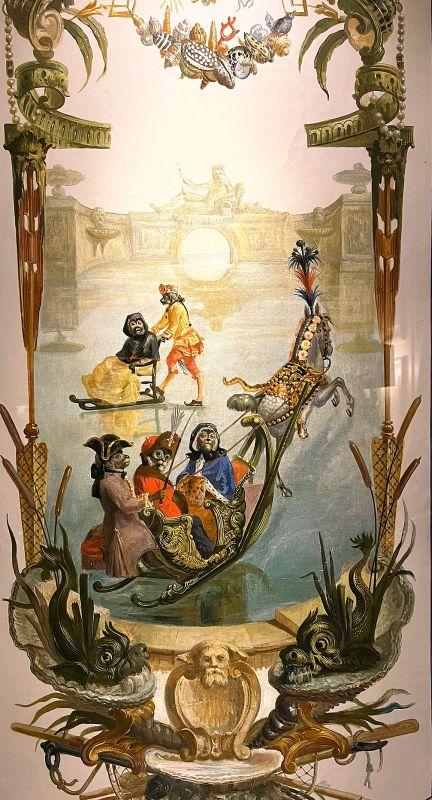 At the hotel where he was staying for the 2-days business trip he had to attend for his job, he’d noticed the strange decor, with little people in costumes in odd sceneries patterned on the “Toile de Jouy” curtains and some others in the most curious framed paintings, many of them looked like actual monkeys. Curiously, there wasn’t any golden banana, or banana bus, but it made him wonder if there was something more to be looked at the Inn that Zara wanted them to go to.
Yasmin, a step ahead of him, had already looked at the reviews on MadjourneyAdvisor, and they were rave… in a fashion…
“The lady behind the bar is nearly 90 years old and believe me, she could out-work many much younger than her.”
“Old bird behind the bar is a lovely lady drop in for a chat and a beer or two – don’t mess with her or you will end up down a mine shaft”Well… better not to overthink it. He started to look at the flights, and last minute offers.
Still no word from Youssef either.
He placed an option on a flight, and decided he’d wait for everyone to confirm the dates for the rendez-vous.
January 23, 2023 at 10:28 pm #6454In reply to: Prompts of Madjourneys
YASMIN’S QUIRK: Entry level quirk – snort laughing when socially anxious
Setting
The initial setting for this quest is a comedic theater in the heart of a bustling city. You will start off by exploring the different performances and shows, trying to find the source of the snort laughter that seems to be haunting your thoughts. As you delve deeper into the theater, you will discover that the snort laughter is coming from a mischievous imp who has taken residence within the theater.
Directions to Investigate
Possible directions to investigate include talking to the theater staff and performers to gather information, searching backstage for clues, and perhaps even sneaking into the imp’s hiding spot to catch a glimpse of it in action.
Characters
Possible characters to engage include the theater manager, who may have information about the imp’s history and habits, and a group of comedic performers who may have some insight into the imp’s behavior.
Task
Your task is to find a key or tile that represents the imp, and take a picture of it in real life as proof of completion of the quest. Good luck on your journey to uncover the source of the snort laughter!
THE SECRET ROOM AND THE UNDERGROUND MINES
1st thread’s answer:
As the family struggles to rebuild the inn and their lives in the wake of the Great Fires, they begin to uncover clues that lead them to believe that the mines hold the key to unlocking a great mystery. They soon discover that the mines were not just a source of gold and other precious minerals, but also a portal to another dimension. The family realizes that Mater had always known about this portal, and had kept it a secret for fear of the dangers it posed.
The family starts to investigate the mines more closely and they come across a hidden room off Room 8. Inside the room, they find a strange device that looks like a portal, and a set of mysterious symbols etched into the walls. The family realizes that this is the secret room that Mater had always spoken about in hushed tones.
The family enlists the help of four gamers, Xavier, Zara, Yasmin, and Youssef, to help them decipher the symbols and unlock the portal. Together, they begin to unravel the mystery of the mines, and the portal leads them on an epic journey through a strange and fantastical alternate dimension.
As they journey deeper into the mines, the family discovers that the portal was created by an ancient civilization, long thought to be lost to history. The civilization had been working on a powerful energy source that could have changed the fate of humanity, but the project was abandoned due to the dangers it posed. The family soon discovers that the civilization had been destroyed by a powerful and malevolent force, and that the portal was the only way to stop it from destroying the world.
The family and the gamers must navigate treacherous landscapes, battle fierce monsters, and overcome seemingly insurmountable obstacles in order to stop the malevolent force and save the world. Along the way, they discover secrets about their own past and the true origins of the mines.
As they journey deeper into the mines and the alternate dimension, they discover that the secret room leads to a network of underground tunnels, and that the tunnels lead to a secret underground city that was built by the ancient civilization. The city holds many secrets and clues to the fate of the ancient civilization, and the family and the gamers must explore the city and uncover the truth before it’s too late.
As the story unfolds, the family and the gamers must come to grips with the truth about the mines, and the role that the family has played in the fate of the world for generations. They must also confront the demons of their own past, and learn to trust and rely on each other if they hope to save the world and bring the family back together.
second thread’s answer:
As the 4 gamers, Xavier, Zara, Yasmin and Youssef, arrived at the Flying Fish Inn in the Australian outback, they were greeted by the matriarch of the family, Mater. She was a no-nonsense woman who ran the inn with an iron fist, but her tough exterior hid a deep love for her family and the land.
The inn was run by Mater and her daughter Dido, who the family affectionately called Aunt Idle. She was a free spirit who loved to explore the land and had a deep connection to the local indigenous culture.
The family was made up of Devan, the eldest son who lived in town and helped with the inn when he could, and the twin sisters Clove and Coriander, who everyone called Corrie. The youngest was Prune, a precocious child who was always getting into mischief.
The family had a handyman named Bert, who had been with them for decades and knew all the secrets of the land. Tiku, an old and wise Aborigine woman was also a regular visitor and a valuable source of information and guidance. Finly, the dutiful helper, assisted the family in their daily tasks.
As the 4 gamers settled in, they learned that the area was rich in history and mystery. The old mines that lay abandoned nearby were a source of legends and stories passed down through the generations. Some even whispered of supernatural occurrences linked to the mines.
Mater and Dido, however, were not on good terms, and the family had its own issues and secrets, but the 4 gamers were determined to unravel the mystery of the mines and find the secret room that was said to be hidden somewhere in the inn.
As they delved deeper into the history of the area, they discovered that the mines had a connection to the missing brother, Jasper, and Fred, the father of the family and a sci-fi novelist who had been influenced by the supernatural occurrences of the mines.
The 4 gamers found themselves on a journey of discovery, not only in the game but in the real world as well, as they uncovered the secrets of the mines and the Flying Fish Inn, and the complicated relationships of the family that ran it.
THE SNOOT’S WISE WORDS ON SOCIAL ANXIETY
Deear Francie Mossie Pooh,
The Snoot, a curious creature of the ages, understands the swirling winds of social anxiety, the tempestuous waves it creates in one’s daily life.
But The Snoot also believes that like a Phoenix, one must rise from the ashes, and embrace the journey of self-discovery and growth.
It’s important to let yourself be, to accept the feelings as they come and go, like the ebb and flow of the ocean. But also, like a gardener, tend to the inner self with care and compassion, for the roots to grow deep and strong.The Snoot suggests seeking guidance from the wise ones, the ones who can hold the mirror and show you the way, like the North Star guiding the sailors.
And remember, the journey is never-ending, like the spiral of the galaxy, and it’s okay to take small steps, to stumble and fall, for that’s how we learn to fly.The Snoot is here for you, my dear Francie Mossie Pooh, a beacon in the dark, a friend on the journey, to hold your hand and sing you a lullaby.
Fluidly and fantastically yours,
The Snoot.
January 23, 2023 at 4:14 pm #6453In reply to: Orbs of Madjourneys
 Each group of people sharing the jeeps spent some time cleaning the jeeps from the sand, outside and inside. While cleaning the hood, Youssef noted that the storm had cleaned the eagles droppings. Soon, the young intern told them, avoiding their eyes, that the boss needed her to plan the shooting with the Lama. She said Kyle would take her place.
“Phew, the yak I shared the yurt with yesterday smelled better,” he said to the guys when he arrived.
Soon enough, Miss Tartiflate was going from jeep to jeep, her fiery hair half tied in a bun on top of her head, hurrying people to move faster as they needed to catch the shaman before he got away again. She carried her orange backpack at all time, as if she feared someone would steal its content. Rumour had it that it was THE NOTEBOOK where she wrote the blog entries in advance.
“No need to waste more time! We’ll have breakfast at the Oasis!” she shouted as she walked toward Youssef’s jeep. When she spotted him, she left her right index finger as if she just remembered something and turned the other way.
“Dunno what you did to her, but it seems Miss Yeti is avoiding you,” said Kyle with a wry smile.
Youssef grunted. Yeti was the nickname given to Miss Tartiflate by one of her former lover during a trip to Himalaya. First an affectionate nickname based on her first name, Henrietty, it soon started to spread among the production team when the love affair turned sour. It sticked and became widespread in the milieu. Everybody knew, but nobody ever dared say it to her face.
Youssef knew it wouldn’t last. He had heard that there was wifi at the oasis. He took a snack in his own backpack to quiet his stomach.
It took them two hours to arrive as sand dunes had moved on the trail during the storm. Kyle had talked most of the time, boring them to death with detailed accounts of his life back in Boston. He didn’t seem to notice that nobody cared about his love rejection stories or his tips to talk to women.
They parked outside the oasis among buses and vans. Kyle was following Youssef everywhere as if they were friends. Despite his unending flow of words, the guy managed to be funny.
Miss Tartiflate seemed unusually nervous, pulling on a strand of her orange hair and pushing back her glasses up her nose every two minutes. She was bossing everyone around to take the cameras and the lighting gear to the market where the shaman was apparently performing a rain dance. She didn’t want to miss it. When everybody was ready, she came right to Youssef. When she pushed back her glasses on her nose, he noticed her fingers were the colour of her hair. Her mouth was twitching nervously. She told him to find the wifi and restore THE BLOG or he could find another job.
“Phew! said Kyle. I don’t want to be near you when that happens.” He waved and left and joined the rest of the team.
Youssef smiled, happy to be alone at last, he took his backpack containing his laptop and his phone and followed everyone to the market in the luscious oasis.
At the center, near the lake, a crowd of tourists was gathered around a man wearing a colorful attire. Half his teeth and one eye were missing. The one that was left rolled furiously in his socket at the sound of a drum. He danced and jumped around like a monkey, and each of his movements were punctuated by the bells attached to the hem of his costume.
Youssef was glad he was not part of the shooting team, they looked miserable as they assembled the gears under a deluge of orders. As he walked toward the market, the scents of spicy food made his stomach growled. The vendors were looking at the crowd and exchanging comments and laughs. They were certainly waiting for the performance to end and the tourists to flood the place in search of trinkets and spices. Youssef spotted a food stall tucked away on the edge. It seemed too shabby to interest anyone, which was perfect for him.
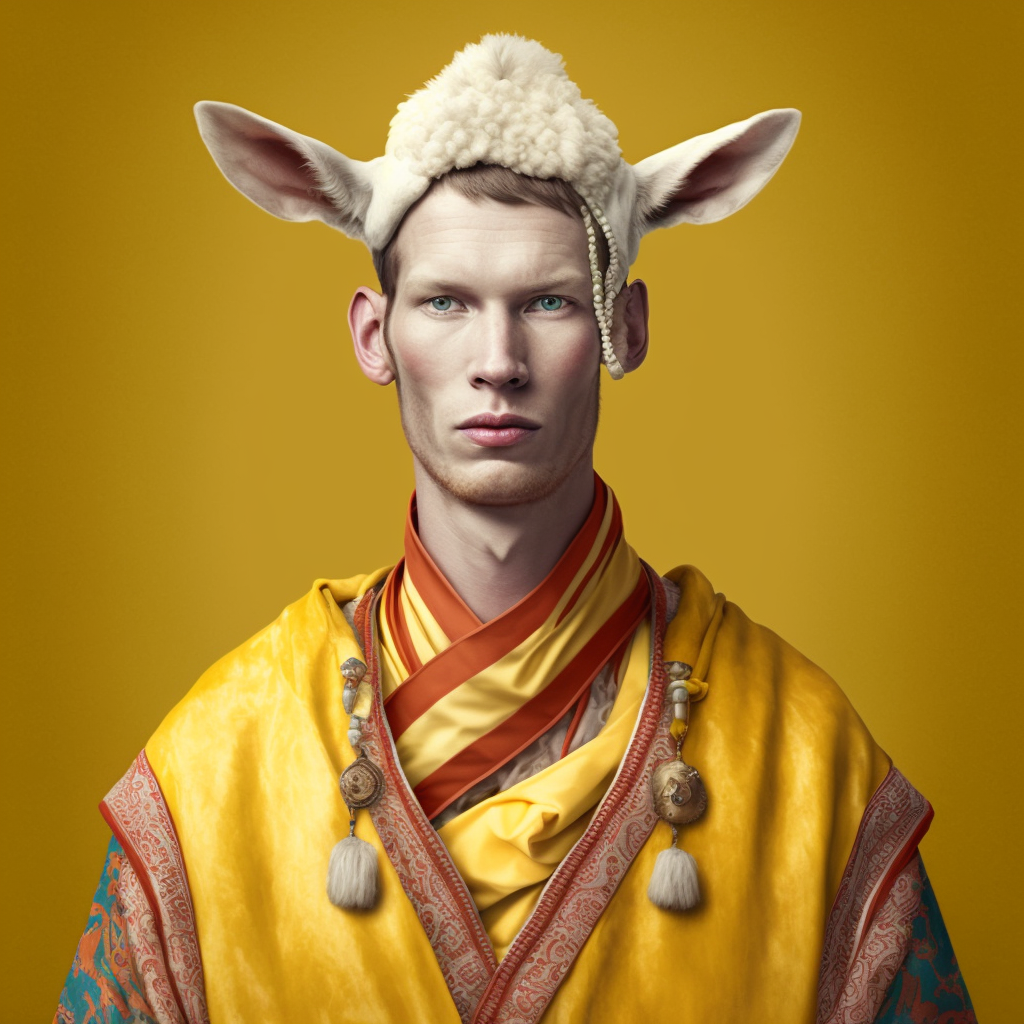
The taciturn vendor, who looked caucasian, wore a yellow jacket and a bonnet oddly reminiscent of a llama’s scalp and ears. The dish he was preparing made Youssef drool.
“What’s that?” he asked.
“This is Lorgh Drülp
, said the vendor. Ancient recipe from the silk road. Very rare. Very tasty.”
He smiled when Youssef ordered a full plate with a side of tsampa. He told him to sit and wait on a stool beside an old and wobbly table.
January 19, 2023 at 10:49 am #6419In reply to: Orbs of Madjourneys
“I’d advise you not to take the parrot, Zara,” Harry the vet said, “There are restrictions on bringing dogs and other animals into state parks, and you can bet some jobsworth official will insist she stays in a cage at the very least.”
“Yeah, you’re right, I guess I’ll leave her here. I want to call in and see my cousin in Camden on the way to the airport in Sydney anyway. He has dozens of cats, I’d hate for anything to happen to Pretty Girl,” Zara replied.
“Is that the distant cousin you met when you were doing your family tree?” Harry asked, glancing up from the stitches he was removing from a wounded wombat. “There, he’s good to go. Give him a couple more days, then he can be released back where he came from.”
Zara smiled at Harry as she picked up the animal. “Yes! We haven’t met in person yet, and he’s going to show me the church my ancestor built. He says people have been spotting ghosts there lately, and there are rumours that it’s the ghost of the old convict Isaac who built it. If I can’t find photos of the ancestors, maybe I can get photos of their ghosts instead,” Zara said with a laugh.
“Good luck with that,” Harry replied raising an eyebrow. He liked Zara, she was quirkier than the others.
Zara hadn’t found it easy to research her mothers family from Bangalore in India, but her fathers English family had been easy enough. Although Zara had been born in England and emigrated to Australia in her late 20s, many of her ancestors siblings had emigrated over several generations, and Zara had managed to trace several down and made contact with a few of them. Isaac Stokes wasn’t a direct ancestor, he was the brother of her fourth great grandfather but his story had intrigued her. Sentenced to transportation for stealing tools for his work as a stonemason seemed to have worked in his favour. He built beautiful stone buildings in a tiny new town in the 1800s in the charming style of his home town in England.
Zara planned to stay in Camden for a couple of days before meeting the others at the Flying Fish Inn, anticipating a pleasant visit before the crazy adventure started.
Zara stepped down from the bus, squinting in the bright sunlight and looking around for her newfound cousin Bertie. A lanky middle aged man in dungarees and a red baseball cap came forward with his hand extended.
“Welcome to Camden, Zara I presume! Great to meet you!” he said shaking her hand and taking her rucksack. Zara was taken aback to see the family resemblance to her grandfather. So many scattered generations and yet there was still a thread of familiarity. “I bet you’re hungry, let’s go and get some tucker at Belle’s Cafe, and then I bet you want to see the church first, hey? Whoa, where’d that dang parrot come from?” Bertie said, ducking quickly as the bird swooped right in between them.
“Oh no, it’s Pretty Girl!” exclaimed Zara. “She wasn’t supposed to come with me, I didn’t bring her! How on earth did you fly all this way to get here the same time as me?” she asked the parrot.
“Pretty Girl has her ways, don’t forget to feed the parrot,” the bird replied with a squalk that resembled a mirthful guffaw.
“That’s one strange parrot you got here, girl!” Bertie said in astonishment.
“Well, seeing as you’re here now, Pretty Girl, you better come with us,” Zara said.
“Obviously,” replied Pretty Girl. It was hard to say for sure, but Zara was sure she detected an avian eye roll.
They sat outside under a sunshade to eat rather than cause any upset inside the cafe. Zara fancied an omelette but Pretty Girl objected, so she ordered hash browns instead and a fruit salad for the parrot. Bertie was a good sport about the strange talking bird after his initial surprise.
Bertie told her a bit about the ghost sightings, which had only started quite recently. They started when I started researching him, Zara thought to herself, almost as if he was reaching out. Her imagination was running riot already.
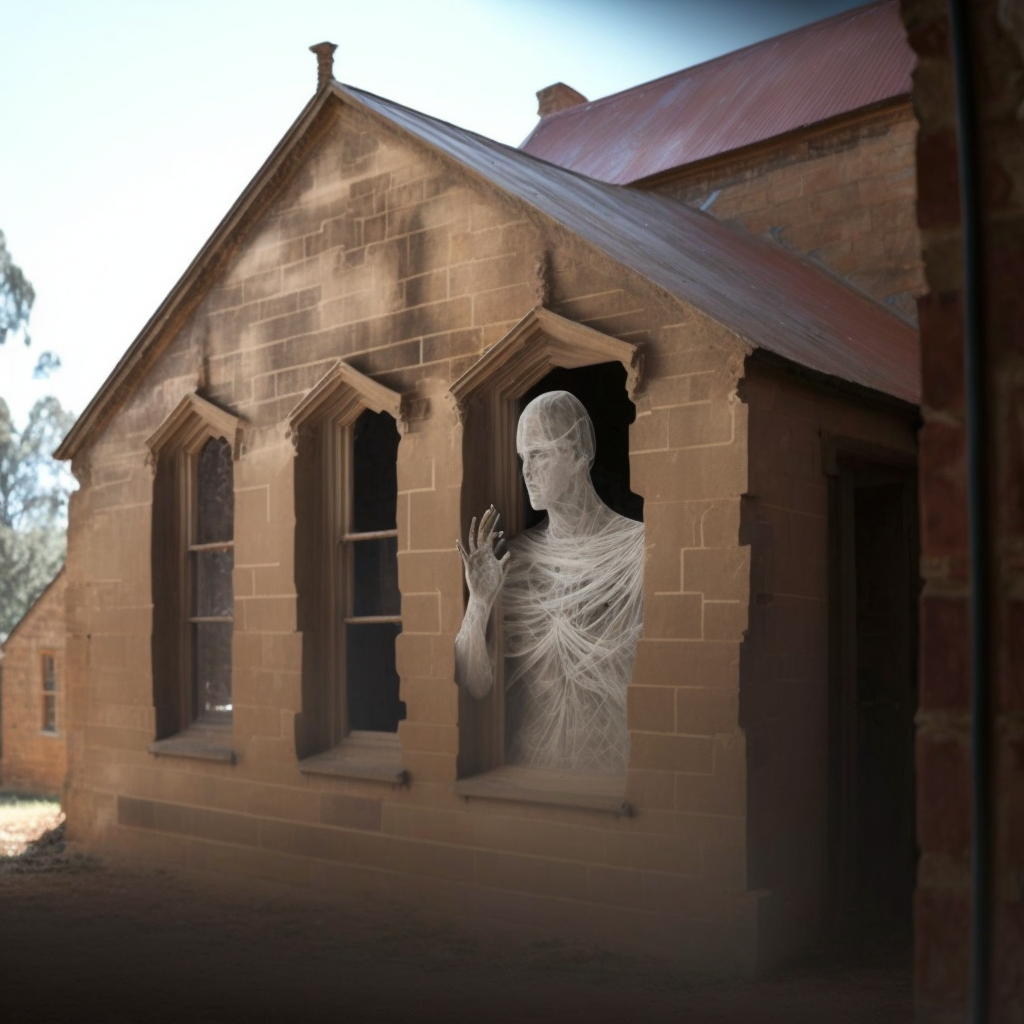
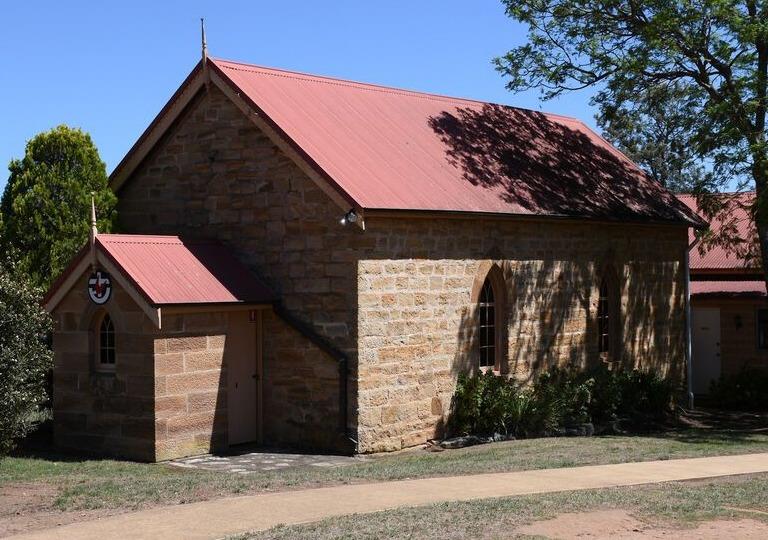
Bertie showed Zara around the church, a small building made of sandstone, but no ghost appeared in the bright heat of the afternoon. He took her on a little tour of Camden, once a tiny outpost but now a suburb of the city, pointing out all the original buildings, in particular the ones that Isaac had built. The church was walking distance of Bertie’s house and Zara decided to slip out and stroll over there after everyone had gone to bed.
Bertie had kindly allowed Pretty Girl to stay in the guest bedroom with her, safe from the cats, and Zara intended that the parrot stay in the room, but Pretty Girl was having none of it and insisted on joining her.
“Alright then, but no talking! I don’t want you scaring any ghost away so just keep a low profile!”
The moon was nearly full and it was a pleasant walk to the church. Pretty Girl fluttered from tree to tree along the sidewalk quietly. Enchanting aromas of exotic scented flowers wafted into her nostrils and Zara felt warmly relaxed and optimistic.
Zara was disappointed to find that the church was locked for the night, and realized with a sigh that she should have expected this to be the case. She wandered around the outside, trying to peer in the windows but there was nothing to be seen as the glass reflected the street lights. These things are not done in a hurry, she reminded herself, be patient.
Sitting under a tree on the grassy lawn attempting to open her mind to receiving ghostly communications (she wasn’t quite sure how to do that on purpose, any ghosts she’d seen previously had always been accidental and unexpected) Pretty Girl landed on her shoulder rather clumsily, pressing something hard and chill against her cheek.
“I told you to keep a low profile!” Zara hissed, as the parrot dropped the key into her lap. “Oh! is this the key to the church door?”
It was hard to see in the dim light but Zara was sure the parrot nodded, and was that another avian eye roll?
Zara walked slowly over the grass to the church door, tingling with anticipation. Pretty Girl hopped along the ground behind her. She turned the key in the lock and slowly pushed open the heavy door and walked inside and up the central aisle, looking around. And then she saw him.
Zara gasped. For a breif moment as the spectral wisps cleared, he looked almost solid. And she could see his tattoos.
“Oh my god,” she whispered, “It is really you. I recognize those tattoos from the description in the criminal registers. Some of them anyway, it seems you have a few more tats since you were transported.”
“Aye, I did that, wench. I were allays fond o’ me tats, does tha like ’em?”
He actually spoke to me! This was beyond Zara’s wildest hopes. Quick, ask him some questions!
“If you don’t mind me asking, Isaac, why did you lie about who your father was on your marriage register? I almost thought it wasn’t you, you know, that I had the wrong Isaac Stokes.”
A deafening rumbling laugh filled the building with echoes and the apparition dispersed in a labyrinthine swirl of tattood wisps.
“A story for another day,” whispered Zara, “Time to go back to Berties. Come on Pretty Girl. And put that key back where you found it.”
 January 17, 2023 at 8:17 am #6393
In reply to: Train your subjective AI – text version
Give me an unusual plot structure for a narrative
One unusual plot structure for a narrative could be a “reverse chronological” structure, where the story begins at the end and works backwards in time, revealing events and information in a non-linear way. Another could be a “choose your own adventure” style, where the reader is presented with a series of choices at different points in the story that determine the direction and outcome of the plot.
How would role playing qualify in terms of plot structure?
Role-playing games (RPGs) can be considered a unique form of plot structure because they are interactive and open-ended. In a traditional RPG, the players take on the roles of characters within a fictional setting and work together to create a shared narrative. The plot structure of an RPG is determined by the actions and decisions of the players, rather than a pre-written script. The game master (GM) creates an overarching plot and a set of rules for the players to follow, but the players’ choices and actions will determine the direction and outcome of the story. This makes the plot structure of an RPG fluid and ever-changing, unlike a traditional linear narrative.
What about “Cloud Atlas” in terms of plot structure?
“Cloud Atlas” is a novel written by David Mitchell that was later adapted into a film. It has a complex and non-linear plot structure, which employs multiple storylines that are set in different time periods and locations, and are connected by recurring themes and motifs. The novel is divided into six nested stories, each set in a different time period and location, that are told in a non-linear fashion. The story begins in the 19th century and then jumps back and forth between the 19th, 20th and 23rd century, and each story is interconnected and interrelated, with characters reappearing in different time periods, the events that happen in one story impacting the others. The novel is also notable for its use of different genres, such as science fiction, historical fiction, and thriller, and the way it explores the themes of destiny, reincarnation, and the power of human connection. The film adaptation also used this structure, with the different stories intertwined and characters reprising their roles in different settings and eras.
Take a story thread made of comments. In each comment is a text about characters in a particular plot, location, action etc. The comments are sequential, but they are not necessarily continuous. It is a mix between Cloud Atlas and RPG plot structures. How do you sort something that’s fundamentally non-linear to present it in an accessible way?
One way to sort and present a story thread made of comments that is fundamentally non-linear, yet accessible, is to group the comments based on their content. For example, you could group the comments by characters, and present them in chronological order of their appearance in the story. Another way could be grouping the comments by location, and present them in chronological order of when the action takes place in that particular location. You could also group comments by the type of action taking place, such as combat, conversation, or puzzle-solving, and present them in chronological order of when they occur in the story.
Another approach could be using visual aids, such as mind maps, timelines, or flowcharts, to help organize and present the information in a clear and easy-to-understand way. For example, you could use a mind map to show how different characters are connected, or a timeline to show the chronology of events. Additionally, you could use labels, such as “character introduction,” “location change,” or “plot twist,” to make it clear to the reader what type of information they can expect in each comment.
It’s also important to keep in mind the audience for which you are organizing the story. It should be easy for them to understand and follow the story, and if it’s a game, you should make sure it’s easy for the players to play and make decisions.
January 15, 2023 at 1:18 pm #6391In reply to: Train your subjective AI – text version
write the plot of an absurd non-linear novel, featuring 4 characters
The novel begins with the introduction of four characters: a retired archaeologist named Harold, a struggling musician named Samantha, a disillusioned corporate drone named Tim, and a reclusive inventor named Claire.
Harold, who is obsessed with ancient Egyptian hieroglyphs, discovers a mysterious underground chamber beneath a pyramid in Egypt. Inside, he finds a strange device that he believes is a time machine. Harold decides to use the device to travel back in time to ancient Egypt in order to decipher the hieroglyphs.
Samantha, who is trying to make a name for herself as a musician, is struggling to come up with new material for her music. One day, she discovers that she can create beautiful music by communicating with plants telepathically. She becomes obsessed with this new form of music-making and decides to quit her day job and pursue it full-time.
Tim, who is stuck in a dead-end job, is feeling unfulfilled and uninspired. One day, he stumbles upon a robotic mime performance art show. The performance inspires him to quit his job and pursue his dream of becoming a mime artist.
Claire, who is a reclusive inventor, has been working on a project to create a type of artificial intelligence that can communicate with humans using calligraphic body language. She finally succeeds and creates an AI that she names “Calli”.
As the story progresses, the characters’ paths begin to intersect in unexpected ways. Harold gets stuck in ancient Egypt and has to rely on Samantha’s telepathic plant communication skills to find a way back to the present. Tim’s robotic mime art becomes a hit and he starts working with Claire to integrate Calli into his performances.
As the story reaches its climax, all four characters come together to use their unique skills and abilities to solve a problem that threatens the fate of the world.
Throughout the novel, the plot unfolds in a non-linear fashion, jumping back and forth in time and between the different character’s perspectives. The story is filled with absurdity and unexpected twists and turns, leaving the reader guessing until the very end.
What sort of problem that threatens the fate of the world will be resolved by their combined skills?
As the story progresses, the characters begin to uncover a sinister plot by a group of powerful individuals who are intent on using the time machine to alter the course of history for their own gain. They plan to use the time machine to go back in time and change key events that would give them immense wealth and power in the present. Harold and Samantha, with the help of Tim and Claire, must race against time to stop the villains from carrying out their plan.
Harold’s expertise in ancient Egyptian hieroglyphs plays a crucial role in deciphering the clues that lead to the location of the time machine. Samantha’s telepathic plant communication skills are used to locate the hidden underground chamber where the time machine is kept. Tim’s robotic mime art and Claire’s AI Calli are used to infiltrate the villains’ hideout and gather intelligence on their plans.
In the final act, the four characters come together to use their unique skills and abilities to stop the villains from altering history. Harold uses his knowledge of ancient Egypt to navigate the time machine and travel back in time to stop the villains from changing key events. Samantha uses her telepathic plant communication skills to communicate with the plants in the past and gather information on the villains’ whereabouts. Tim and Claire use their robotic mime and AI skills to create a diversion and distract the villains while Harold and Samantha complete their mission.
In the end, the four characters succeed in stopping the villains and saving the fate of the world. The novel ends with the four characters going their separate ways, but they all know that they will always have each other to rely on in the face of any challenge that comes their way.
January 15, 2023 at 10:19 am #6388In reply to: Orbs of Madjourneys
Youssef came out of the Internet Cafe Yurt quite satisfied of himself but confused. It was already night time here and he felt hungry like a bear looking for honey. He smelled the scents of yak’s meat and followed the trail to the resto’yurt of the camp the production had settled in for the night. They were on a trip to make a documentary about the last surviving authentic shaman of Mongolia. They’d heard he was still alive and 125 years old. Of course, he was difficult to find and they’ve been looking for him for weeks.
Fortunately, they had good reception for him to stay in contact with his friends and play the new game with that AI generated storyline stuff. Youssef liked his character with the bear shirt, but he wouldn’t tell his friends that he hadn’t quite understood the concept of the game or of the quest. He was the kind of guy who liked having some explanations first and follow clear rules, have a little guidance. He smiled and performed two steps of breakdance, recalling one of Xavier’s joke about a little “guy dance”. His stomach growled as he approached the resto’yurt and the scent of food became stronger. The sounds of cheerful conversations in different languages welcomed him as he entered.
He’ll have plenty of time to think of the game in front a spicy smorlax fried and a bowl of sweet tsampa for dessert. He noticed an empty seat just near Rebbecca, a young intern that took care of Mme Landowski’s schedule. She was smiling and Youssef thought they could continue the conversation they started this morning about the type of guys she liked.
 January 14, 2023 at 11:27 am #6383
In reply to: The Precious Life and Rambles of Liz Tattler
“GODFREY! Come right here this instant!” Liz was infuriated and had to restrain herself not to throw the bound manuscript at her confidente’s face when he emerged from the corridor into her pink boudoir.
“What is it Liz my dear?”
“What is this horrible thing that has my name on it?” she showed the manuscript. “It has no zest whatsoever, it’s so neat, and linear, tidy, continuous… It’s insufferably perfect! And those main characters, ugh… Young, and flawless, perfect in every sense it’s unbearable!”
“I have something to confess Liz’… Since Finnley has started her new business ventures… wait, don’t shout yet… I had to try some of this AI generated stuff. I thought the title ‘Adventures in the Uncanny Valley’ would have been a give-away…”
Elizabeth Tattler was at a loss for words… The only thing she could blurt out ultimately was “FIND ME FINNLEY!!”
January 11, 2023 at 10:32 pm #6368In reply to: Train your subjective AI – text version
Something in the style of FPooh:
Arona heard the music growing louder as she approached the source of the sound. She could see a group of people gathered around a large fire, the flickering light casting shadows on the faces of the dancers. She hesitated for a moment, remembering the isolation of her journey and wondering if she was ready to be among people again. But the music was too inviting, and she found herself drawn towards the group.
As she neared the fire, she saw a young man playing a flute, the music flowing from his fingers with a fluid grace that captivated her. He looked up as she approached, and their eyes met. She could see the surprise and curiosity in his gaze, and she smiled, feeling a sense of connection she had not felt in a long time.
Fiona was sitting on a bench in the park, watching the children play. She had brought her sketchbook with her, but for once she didn’t feel the urge to draw. Instead she watched the children’s laughter, feeling content and at peace. Suddenly, she saw a young girl running towards her, a look of pure joy on her face. The girl stopped in front of her and held out a flower, offering it to Fiona with a smile.
Taken aback, Fiona took the flower and thanked the girl. The girl giggled and ran off to join her friends. Fiona looked down at the flower in her hand, and she felt a sense of inspiration, like a spark igniting within her. She opened her sketchbook and began to draw, feeling the weight lift from her shoulders and the magic of creativity flowing through her.
Minky led the group of misfits towards the emporium, his bowler hat bobbing on his head. He chattered excitedly, telling stories of the wondrous items to be found within Mr Jib’s store. Yikesy followed behind, still lost in his thoughts of Arona and feeling a sense of dread at the thought of buying a bowler hat. The green fairy flitted along beside him, her wings a blur of movement as she chattered with the parrot perched on her shoulder.
As they reached the emporium, they were disappointed to find it closed. But Minky refused to be discouraged, and he led them to a nearby cafe where they could sit and enjoy some tea and cake while they wait for the emporium to open. The green fairy was delighted, and she ordered a plate of macarons, smiling as she tasted the sweetness of the confections.
About creativity & everyday magic
Fiona had always been drawn to the magic of creativity, the way a blank page could be transformed into a world of wonder and beauty. But lately, she had been feeling stuck, unable to find the spark that ignited her imagination. She would sit with her sketchbook, pencil in hand, and nothing would come to her.
She started to question her abilities, wondering if she had lost the magic of her art. She spent long hours staring at her blank pages, feeling a weight on her chest that seemed to be growing heavier every day.
But then she remembered the green fairy’s tears and Yikesy’s longing for Arona, and she realized that the magic of creativity wasn’t something that could be found only in art. It was all around her, in the everyday moments of life.
She started to look for the magic in the small things, like the way the sunlight filtered through the trees, or the way a child’s laughter could light up a room. She found it in the way a stranger’s smile could lift her spirits, and in the way a simple cup of tea could bring her comfort.
And as she started to see the magic in the everyday, she found that the weight on her chest lifted and the spark of inspiration returned. She picked up her pencil and began to draw, feeling the magic flowing through her once again.
She understand that creativity blocks aren’t a destination, but just a step, just like the bowler hat that Minky had bought for them all, a bit of everyday magic, nothing too fancy but a sense of belonging, a sense of who they are and where they are going. And she let her pencil flow, with the hopes that one day, they will all find their way home.
December 6, 2022 at 2:17 pm #6350In reply to: Family Stories From The Other Side ~ Book Two
Transportation
Isaac Stokes 1804-1877
Isaac was born in Churchill, Oxfordshire in 1804, and was the youngest brother of my 4X great grandfather Thomas Stokes. The Stokes family were stone masons for generations in Oxfordshire and Gloucestershire, and Isaac’s occupation was a mason’s labourer in 1834 when he was sentenced at the Lent Assizes in Oxford to fourteen years transportation for stealing tools.
Churchill where the Stokes stonemasons came from: on 31 July 1684 a fire destroyed 20 houses and many other buildings, and killed four people. The village was rebuilt higher up the hill, with stone houses instead of the old timber-framed and thatched cottages. The fire was apparently caused by a baker who, to avoid chimney tax, had knocked through the wall from her oven to her neighbour’s chimney.
Isaac stole a pick axe, the value of 2 shillings and the property of Thomas Joyner of Churchill; a kibbeaux and a trowel value 3 shillings the property of Thomas Symms; a hammer and axe value 5 shillings, property of John Keen of Sarsden.
(The word kibbeaux seems to only exists in relation to Isaac Stokes sentence and whoever was the first to write it was perhaps being creative with the spelling of a kibbo, a miners or a metal bucket. This spelling is repeated in the criminal reports and the newspaper articles about Isaac, but nowhere else).
In March 1834 the Removal of Convicts was announced in the Oxford University and City Herald: Isaac Stokes and several other prisoners were removed from the Oxford county gaol to the Justitia hulk at Woolwich “persuant to their sentences of transportation at our Lent Assizes”.
via digitalpanopticon:
Hulks were decommissioned (and often unseaworthy) ships that were moored in rivers and estuaries and refitted to become floating prisons. The outbreak of war in America in 1775 meant that it was no longer possible to transport British convicts there. Transportation as a form of punishment had started in the late seventeenth century, and following the Transportation Act of 1718, some 44,000 British convicts were sent to the American colonies. The end of this punishment presented a major problem for the authorities in London, since in the decade before 1775, two-thirds of convicts at the Old Bailey received a sentence of transportation – on average 283 convicts a year. As a result, London’s prisons quickly filled to overflowing with convicted prisoners who were sentenced to transportation but had no place to go.
To increase London’s prison capacity, in 1776 Parliament passed the “Hulks Act” (16 Geo III, c.43). Although overseen by local justices of the peace, the hulks were to be directly managed and maintained by private contractors. The first contract to run a hulk was awarded to Duncan Campbell, a former transportation contractor. In August 1776, the Justicia, a former transportation ship moored in the River Thames, became the first prison hulk. This ship soon became full and Campbell quickly introduced a number of other hulks in London; by 1778 the fleet of hulks on the Thames held 510 prisoners.
Demand was so great that new hulks were introduced across the country. There were hulks located at Deptford, Chatham, Woolwich, Gosport, Plymouth, Portsmouth, Sheerness and Cork.The Justitia via rmg collections:
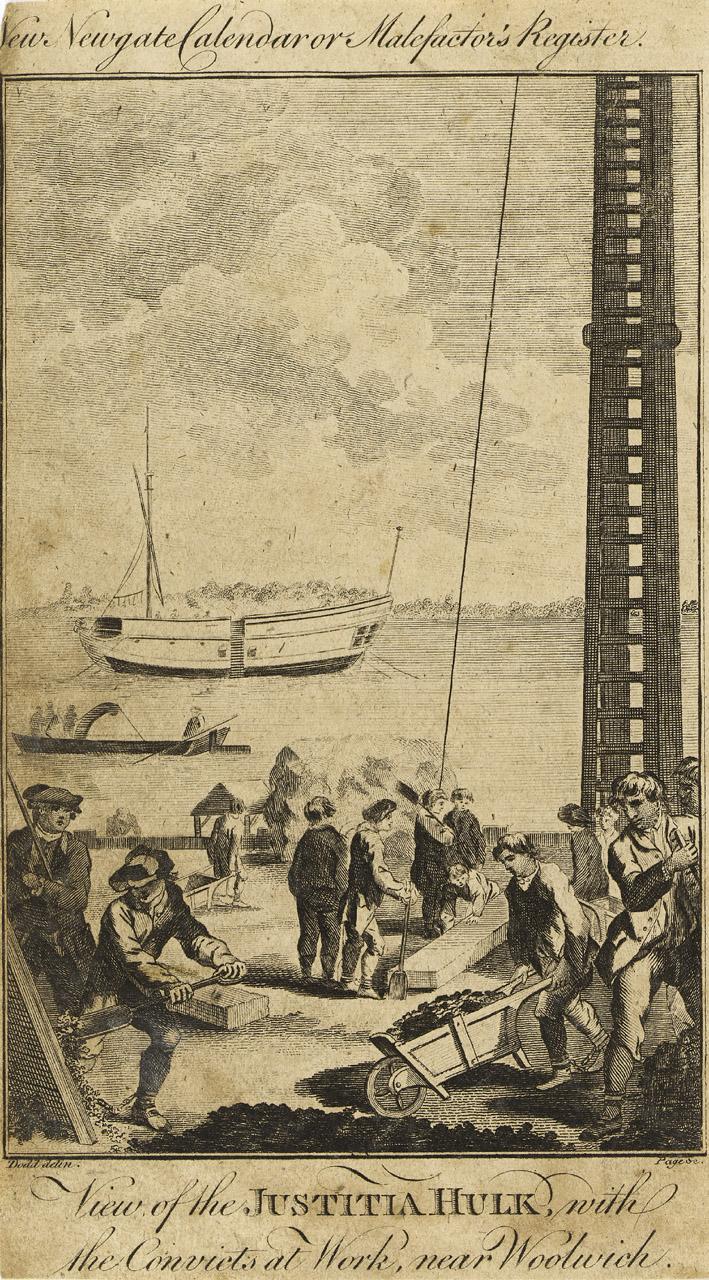
Convicts perform hard labour at the Woolwich Warren. The hulk on the river is the ‘Justitia’. Prisoners were kept on board such ships for months awaiting deportation to Australia. The ‘Justitia’ was a 260 ton prison hulk that had been originally moored in the Thames when the American War of Independence put a stop to the transportation of criminals to the former colonies. The ‘Justitia’ belonged to the shipowner Duncan Campbell, who was the Government contractor who organized the prison-hulk system at that time. Campbell was subsequently involved in the shipping of convicts to the penal colony at Botany Bay (in fact Port Jackson, later Sydney, just to the north) in New South Wales, the ‘first fleet’ going out in 1788.
While searching for records for Isaac Stokes I discovered that another Isaac Stokes was transported to New South Wales in 1835 as well. The other one was a butcher born in 1809, sentenced in London for seven years, and he sailed on the Mary Ann. Our Isaac Stokes sailed on the Lady Nugent, arriving in NSW in April 1835, having set sail from England in December 1834.
Lady Nugent was built at Bombay in 1813. She made four voyages under contract to the British East India Company (EIC). She then made two voyages transporting convicts to Australia, one to New South Wales and one to Van Diemen’s Land (Tasmania). (via Wikipedia)
via freesettlerorfelon website:
On 20 November 1834, 100 male convicts were transferred to the Lady Nugent from the Justitia Hulk and 60 from the Ganymede Hulk at Woolwich, all in apparent good health. The Lady Nugent departed Sheerness on 4 December 1834.
SURGEON OLIVER SPROULE
Oliver Sproule kept a Medical Journal from 7 November 1834 to 27 April 1835. He recorded in his journal the weather conditions they experienced in the first two weeks:
‘In the course of the first week or ten days at sea, there were eight or nine on the sick list with catarrhal affections and one with dropsy which I attribute to the cold and wet we experienced during that period beating down channel. Indeed the foremost berths in the prison at this time were so wet from leaking in that part of the ship, that I was obliged to issue dry beds and bedding to a great many of the prisoners to preserve their health, but after crossing the Bay of Biscay the weather became fine and we got the damp beds and blankets dried, the leaks partially stopped and the prison well aired and ventilated which, I am happy to say soon manifested a favourable change in the health and appearance of the men.
Besides the cases given in the journal I had a great many others to treat, some of them similar to those mentioned but the greater part consisted of boils, scalds, and contusions which would not only be too tedious to enter but I fear would be irksome to the reader. There were four births on board during the passage which did well, therefore I did not consider it necessary to give a detailed account of them in my journal the more especially as they were all favourable cases.
Regularity and cleanliness in the prison, free ventilation and as far as possible dry decks turning all the prisoners up in fine weather as we were lucky enough to have two musicians amongst the convicts, dancing was tolerated every afternoon, strict attention to personal cleanliness and also to the cooking of their victuals with regular hours for their meals, were the only prophylactic means used on this occasion, which I found to answer my expectations to the utmost extent in as much as there was not a single case of contagious or infectious nature during the whole passage with the exception of a few cases of psora which soon yielded to the usual treatment. A few cases of scurvy however appeared on board at rather an early period which I can attribute to nothing else but the wet and hardships the prisoners endured during the first three or four weeks of the passage. I was prompt in my treatment of these cases and they got well, but before we arrived at Sydney I had about thirty others to treat.’
The Lady Nugent arrived in Port Jackson on 9 April 1835 with 284 male prisoners. Two men had died at sea. The prisoners were landed on 27th April 1835 and marched to Hyde Park Barracks prior to being assigned. Ten were under the age of 14 years.
The Lady Nugent:
Isaac’s distinguishing marks are noted on various criminal registers and record books:
“Height in feet & inches: 5 4; Complexion: Ruddy; Hair: Light brown; Eyes: Hazel; Marks or Scars: Yes [including] DEVIL on lower left arm, TSIS back of left hand, WS lower right arm, MHDW back of right hand.”
Another includes more detail about Isaac’s tattoos:
“Two slight scars right side of mouth, 2 moles above right breast, figure of the devil and DEVIL and raised mole, lower left arm; anchor, seven dots half moon, TSIS and cross, back of left hand; a mallet, door post, A, mans bust, sun, WS, lower right arm; woman, MHDW and shut knife, back of right hand.”
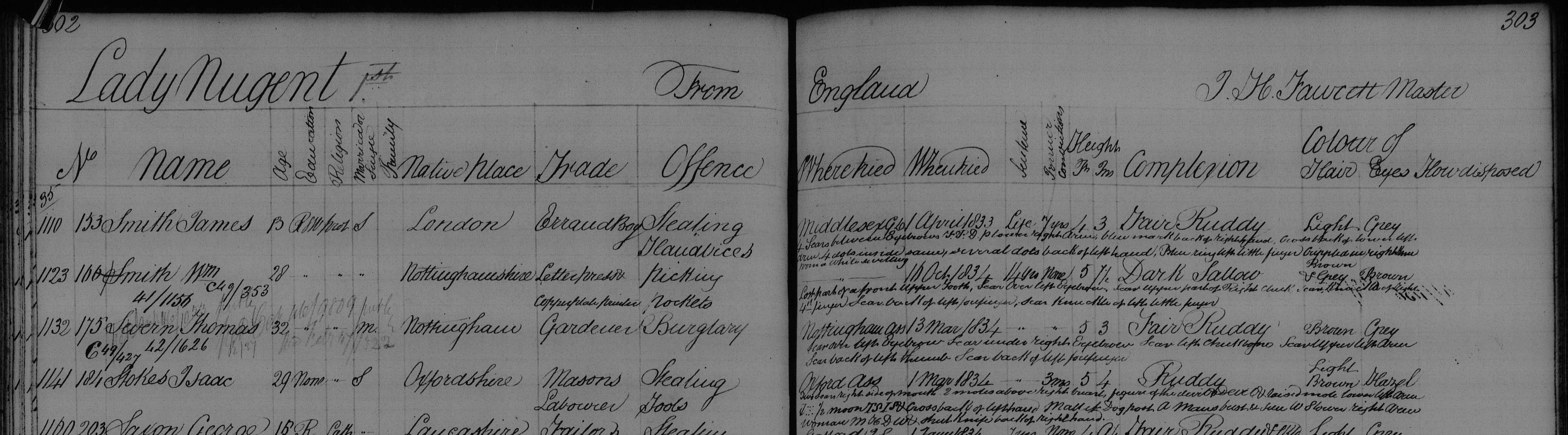
From How tattoos became fashionable in Victorian England (2019 article in TheConversation by Robert Shoemaker and Zoe Alkar):
“Historical tattooing was not restricted to sailors, soldiers and convicts, but was a growing and accepted phenomenon in Victorian England. Tattoos provide an important window into the lives of those who typically left no written records of their own. As a form of “history from below”, they give us a fleeting but intriguing understanding of the identities and emotions of ordinary people in the past.
As a practice for which typically the only record is the body itself, few systematic records survive before the advent of photography. One exception to this is the written descriptions of tattoos (and even the occasional sketch) that were kept of institutionalised people forced to submit to the recording of information about their bodies as a means of identifying them. This particularly applies to three groups – criminal convicts, soldiers and sailors. Of these, the convict records are the most voluminous and systematic.
Such records were first kept in large numbers for those who were transported to Australia from 1788 (since Australia was then an open prison) as the authorities needed some means of keeping track of them.”On the 1837 census Isaac was working for the government at Illiwarra, New South Wales. This record states that he arrived on the Lady Nugent in 1835. There are three other indent records for an Isaac Stokes in the following years, but the transcriptions don’t provide enough information to determine which Isaac Stokes it was. In April 1837 there was an abscondment, and an arrest/apprehension in May of that year, and in 1843 there was a record of convict indulgences.
From the Australian government website regarding “convict indulgences”:
“By the mid-1830s only six per cent of convicts were locked up. The vast majority worked for the government or free settlers and, with good behaviour, could earn a ticket of leave, conditional pardon or and even an absolute pardon. While under such orders convicts could earn their own living.”
In 1856 in Camden, NSW, Isaac Stokes married Catherine Daly. With no further information on this record it would be impossible to know for sure if this was the right Isaac Stokes. This couple had six children, all in the Camden area, but none of the records provided enough information. No occupation or place or date of birth recorded for Isaac Stokes.
I wrote to the National Library of Australia about the marriage record, and their reply was a surprise! Issac and Catherine were married on 30 September 1856, at the house of the Rev. Charles William Rigg, a Methodist minister, and it was recorded that Isaac was born in Edinburgh in 1821, to parents James Stokes and Sarah Ellis! The age at the time of the marriage doesn’t match Isaac’s age at death in 1877, and clearly the place of birth and parents didn’t match either. Only his fathers occupation of stone mason was correct. I wrote back to the helpful people at the library and they replied that the register was in a very poor condition and that only two and a half entries had survived at all, and that Isaac and Catherines marriage was recorded over two pages.
I searched for an Isaac Stokes born in 1821 in Edinburgh on the Scotland government website (and on all the other genealogy records sites) and didn’t find it. In fact Stokes was a very uncommon name in Scotland at the time. I also searched Australian immigration and other records for another Isaac Stokes born in Scotland or born in 1821, and found nothing. I was unable to find a single record to corroborate this mysterious other Isaac Stokes.
As the age at death in 1877 was correct, I assume that either Isaac was lying, or that some mistake was made either on the register at the home of the Methodist minster, or a subsequent mistranscription or muddle on the remnants of the surviving register. Therefore I remain convinced that the Camden stonemason Isaac Stokes was indeed our Isaac from Oxfordshire.
I found a history society newsletter article that mentioned Isaac Stokes, stone mason, had built the Glenmore church, near Camden, in 1859.
From the Wollondilly museum April 2020 newsletter:
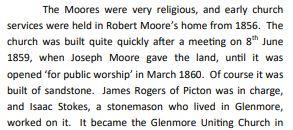
From the Camden History website:
“The stone set over the porch of Glenmore Church gives the date of 1860. The church was begun in 1859 on land given by Joseph Moore. James Rogers of Picton was given the contract to build and local builder, Mr. Stokes, carried out the work. Elizabeth Moore, wife of Edward, laid the foundation stone. The first service was held on 19th March 1860. The cemetery alongside the church contains the headstones and memorials of the areas early pioneers.”
Isaac died on the 3rd September 1877. The inquest report puts his place of death as Bagdelly, near to Camden, and another death register has put Cambelltown, also very close to Camden. His age was recorded as 71 and the inquest report states his cause of death was “rupture of one of the large pulmonary vessels of the lung”. His wife Catherine died in childbirth in 1870 at the age of 43.
Isaac and Catherine’s children:
William Stokes 1857-1928
Catherine Stokes 1859-1846
Sarah Josephine Stokes 1861-1931
Ellen Stokes 1863-1932
Rosanna Stokes 1865-1919
Louisa Stokes 1868-1844.
It’s possible that Catherine Daly was a transported convict from Ireland.
Some time later I unexpectedly received a follow up email from The Oaks Heritage Centre in Australia.
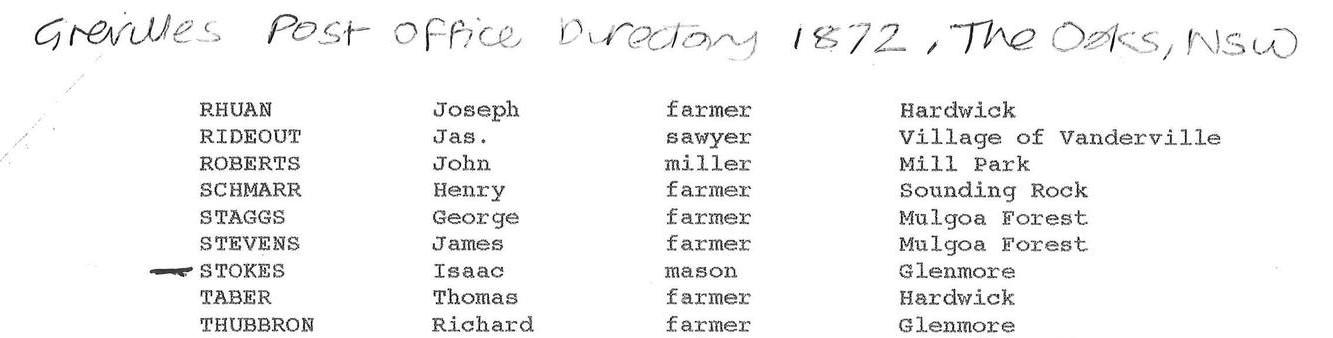
“The Gaudry papers which we have in our archive record him (Isaac Stokes) as having built: the church, the school and the teachers residence. Isaac is recorded in the General return of convicts: 1837 and in Grevilles Post Office directory 1872 as a mason in Glenmore.”
 November 4, 2022 at 2:19 pm #6342
In reply to: Family Stories From The Other Side ~ Book Two
Brownings of Tetbury
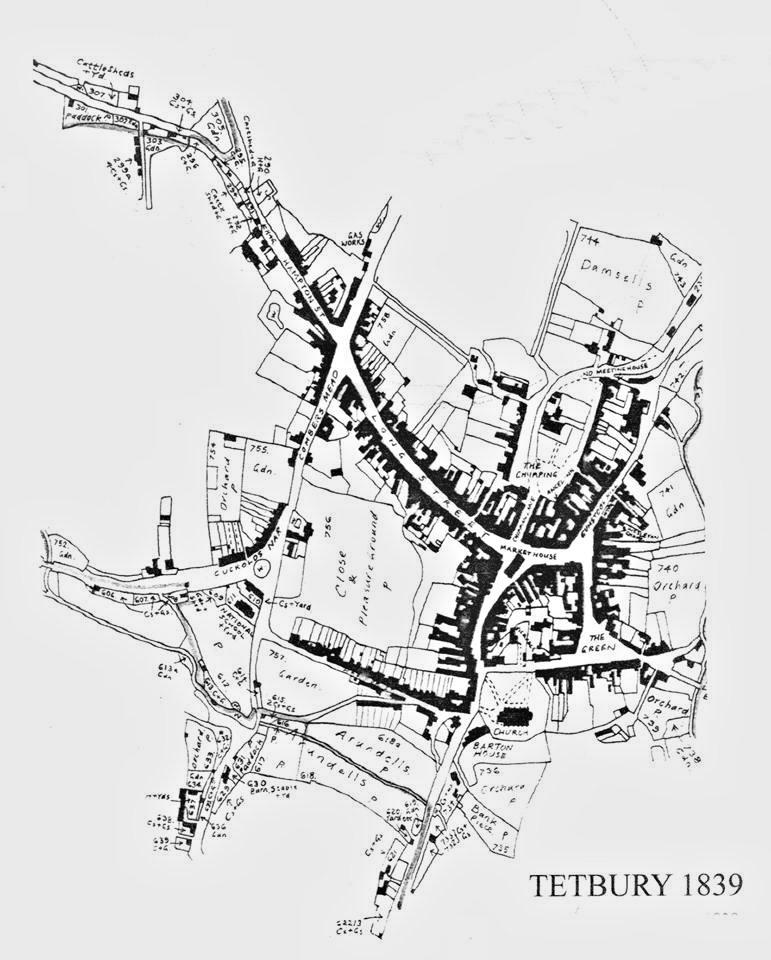
Isaac Browning (1784-1848) married Mary Lock (1787-1870) in Tetbury in 1806. Both of them were born in Tetbury, Gloucestershire. Isaac was a stone mason. Between 1807 and 1832 they baptised fourteen children in Tetbury, and on 8 Nov 1829 Isaac and Mary baptised five daughters all on the same day.
I considered that they may have been quintuplets, with only the last born surviving, which would have answered my question about the name of the house La Quinta in Broadway, the home of Eliza Browning and Thomas Stokes son Fred. However, the other four daughters were found in various records and they were not all born the same year. (So I still don’t know why the house in Broadway had such an unusual name).
Their son George was born and baptised in 1827, but Louisa born 1821, Susan born 1822, Hesther born 1823 and Mary born 1826, were not baptised until 1829 along with Charlotte born in 1828. (These birth dates are guesswork based on the age on later censuses.) Perhaps George was baptised promptly because he was sickly and not expected to survive. Isaac and Mary had a son George born in 1814 who died in 1823. Presumably the five girls were healthy and could wait to be done as a job lot on the same day later.
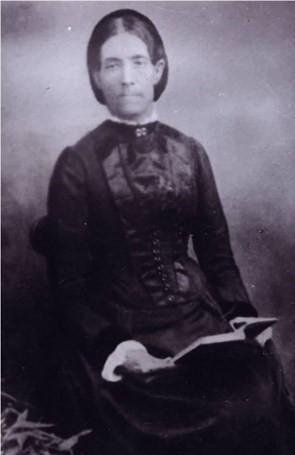
Eliza Browning (1814-1886), my great great great grandmother, had a baby six years before she married Thomas Stokes. Her name was Ellen Harding Browning, which suggests that her fathers name was Harding. On the 1841 census seven year old Ellen was living with her grandfather Isaac Browning in Tetbury. Ellen Harding Browning married William Dee in Tetbury in 1857, and they moved to Western Australia.
Ellen Harding Browning Dee: (photo found on ancestry website)
OBITUARY. MRS. ELLEN DEE.
A very old and respected resident of Dongarra, in the person of Mrs. Ellen Dee, passed peacefully away on Sept. 27, at the advanced age of 74 years.The deceased had been ailing for some time, but was about and actively employed until Wednesday, Sept. 20, whenn she was heard groaning by some neighbours, who immediately entered her place and found her lying beside the fireplace. Tho deceased had been to bed over night, and had evidently been in the act of lighting thc fire, when she had a seizure. For some hours she was conscious, but had lost the power of speech, and later on became unconscious, in which state she remained until her death.
The deceased was born in Gloucestershire, England, in 1833, was married to William Dee in Tetbury Church 23 years later. Within a month she left England with her husband for Western Australian in the ship City oí Bristol. She resided in Fremantle for six months, then in Greenough for a short time, and afterwards (for 42 years) in Dongarra. She was, therefore, a colonist of about 51 years. She had a family of four girls and three boys, and five of her children survive her, also 35 grandchildren, and eight great grandchildren. She was very highly respected, and her sudden collapse came as a great shock to many.
Eliza married Thomas Stokes (1816-1885) in September 1840 in Hempstead, Gloucestershire. On the 1841 census, Eliza and her mother Mary Browning (nee Lock) were staying with Thomas Lock and family in Cirencester. Strangely, Thomas Stokes has not been found thus far on the 1841 census, and Thomas and Eliza’s first child William James Stokes birth was registered in Witham, in Essex, on the 6th of September 1841.
I don’t know why William James was born in Witham, or where Thomas was at the time of the census in 1841. One possibility is that as Thomas Stokes did a considerable amount of work with circus waggons, circus shooting galleries and so on as a journeyman carpenter initially and then later wheelwright, perhaps he was working with a traveling circus at the time.
But back to the Brownings ~ more on William James Stokes to follow.
One of Isaac and Mary’s fourteen children died in infancy: Ann was baptised and died in 1811. Two of their children died at nine years old: the first George, and Mary who died in 1835. Matilda was 21 years old when she died in 1844.
Jane Browning (1808-) married Thomas Buckingham in 1830 in Tetbury. In August 1838 Thomas was charged with feloniously stealing a black gelding.
Susan Browning (1822-1879) married William Cleaver in November 1844 in Tetbury. Oddly thereafter they use the name Bowman on the census. On the 1851 census Mary Browning (Susan’s mother), widow, has grandson George Bowman born in 1844 living with her. The confusion with the Bowman and Cleaver names was clarified upon finding the criminal registers:
30 January 1834. Offender: William Cleaver alias Bowman, Richard Bunting alias Barnfield and Jeremiah Cox, labourers of Tetbury. Crime: Stealing part of a dead fence from a rick barton in Tetbury, the property of Robert Tanner, farmer.
And again in 1836:
29 March 1836 Bowman, William alias Cleaver, of Tetbury, labourer age 18; 5’2.5” tall, brown hair, grey eyes, round visage with fresh complexion; several moles on left cheek, mole on right breast. Charged on the oath of Ann Washbourn & others that on the morning of the 31 March at Tetbury feloniously stolen a lead spout affixed to the dwelling of the said Ann Washbourn, her property. Found guilty 31 March 1836; Sentenced to 6 months.
On the 1851 census Susan Bowman was a servant living in at a large drapery shop in Cheltenham. She was listed as 29 years old, married and born in Tetbury, so although it was unusual for a married woman not to be living with her husband, (or her son for that matter, who was living with his grandmother Mary Browning), perhaps her husband William Bowman alias Cleaver was in trouble again. By 1861 they are both living together in Tetbury: William was a plasterer, and they had three year old Isaac and Thomas, one year old. In 1871 William was still a plasterer in Tetbury, living with wife Susan, and sons Isaac and Thomas. Interestingly, a William Cleaver is living next door but one!
Susan was 56 when she died in Tetbury in 1879.
Three of the Browning daughters went to London.
Louisa Browning (1821-1873) married Robert Claxton, coachman, in 1848 in Bryanston Square, Westminster, London. Ester Browning was a witness.
Ester Browning (1823-1893)(or Hester) married Charles Hudson Sealey, cabinet maker, in Bethnal Green, London, in 1854. Charles was born in Tetbury. Charlotte Browning was a witness.
Charlotte Browning (1828-1867?) was admitted to St Marylebone workhouse in London for “parturition”, or childbirth, in 1860. She was 33 years old. A birth was registered for a Charlotte Browning, no mothers maiden name listed, in 1860 in Marylebone. A death was registered in Camden, buried in Marylebone, for a Charlotte Browning in 1867 but no age was recorded. As the age and parents were usually recorded for a childs death, I assume this was Charlotte the mother.
I found Charlotte on the 1851 census by chance while researching her mother Mary Lock’s siblings. Hesther Lock married Lewin Chandler, and they were living in Stepney, London. Charlotte is listed as a neice. Although Browning is mistranscribed as Broomey, the original page says Browning. Another mistranscription on this record is Hesthers birthplace which is transcribed as Yorkshire. The original image shows Gloucestershire.
Isaac and Mary’s first son was John Browning (1807-1860). John married Hannah Coates in 1834. John’s brother Charles Browning (1819-1853) married Eliza Coates in 1842. Perhaps they were sisters. On the 1861 census Hannah Browning, John’s wife, was a visitor in the Harding household in a village called Coates near Tetbury. Thomas Harding born in 1801 was the head of the household. Perhaps he was the father of Ellen Harding Browning.
George Browning (1828-1870) married Louisa Gainey in Tetbury, and died in Tetbury at the age of 42. Their son Richard Lock Browning, a 32 year old mason, was sentenced to one month hard labour for game tresspass in Tetbury in 1884.
Isaac Browning (1832-1857) was the youngest son of Isaac and Mary. He was just 25 years old when he died in Tetbury.
October 19, 2022 at 6:46 am #6336In reply to: Family Stories From The Other Side ~ Book Two
The Hamstall Ridware Connection
Stubbs and Woods
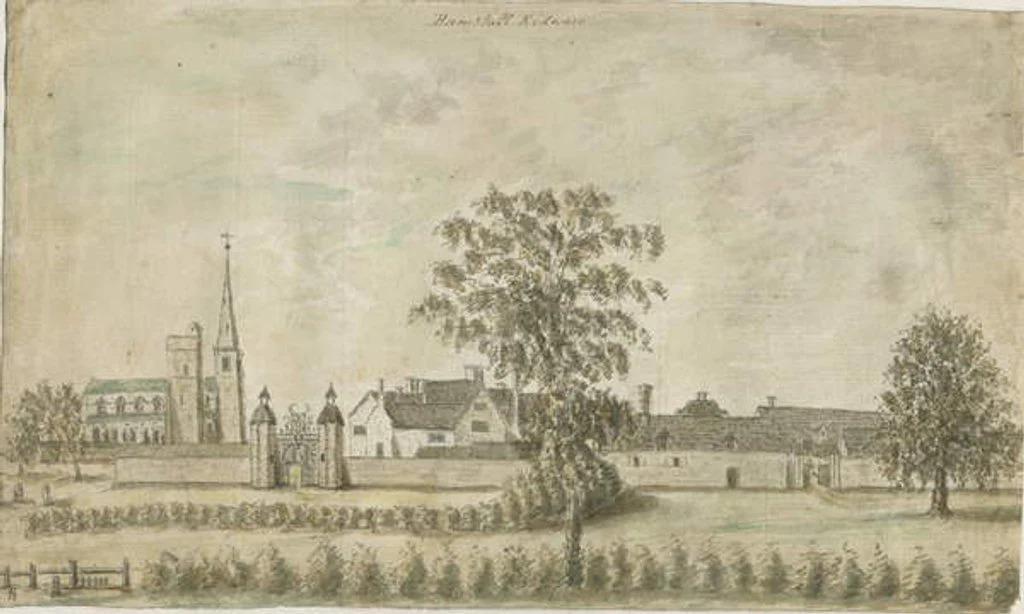 Hamstall Ridware
Charles Tomlinson‘s (1847-1907) wife Emma Grattidge (1853-1911) was born in Wolverhampton, the daughter and youngest child of William Grattidge (1820-1887) born in Foston, Derbyshire, and Mary Stubbs (1819-1880), born in Burton on Trent, daughter of Solomon Stubbs.
Solomon Stubbs (1781-1857) was born in Hamstall Ridware in 1781, the son of Samuel and Rebecca. Samuel Stubbs (1743-) and Rebecca Wood (1754-) married in 1769 in Darlaston. Samuel and Rebecca had six other children, all born in Darlaston. Sadly four of them died in infancy. Son John was born in 1779 in Darlaston and died two years later in Hamstall Ridware in 1781, the same year that Solomon was born there.
But why did they move to Hamstall Ridware?
Samuel Stubbs was born in 1743 in Curdworth, Warwickshire (near to Birmingham). I had made a mistake on the tree (along with all of the public trees on the Ancestry website) and had Rebecca Wood born in Cheddleton, Staffordshire. Rebecca Wood from Cheddleton was also born in 1843, the right age for the marriage. The Rebecca Wood born in Darlaston in 1754 seemed too young, at just fifteen years old at the time of the marriage. I couldn’t find any explanation for why a woman from Cheddleton would marry in Darlaston and then move to Hamstall Ridware. People didn’t usually move around much other than intermarriage with neighbouring villages, especially women. I had a closer look at the Darlaston Rebecca, and did a search on her father William Wood. I found his 1784 will online in which he mentions his daughter Rebecca, wife of Samuel Stubbs. Clearly the right Rebecca Wood was the one born in Darlaston, which made much more sense.
An excerpt from William Wood’s 1784 will mentioning daughter Rebecca married to Samuel Stubbs:
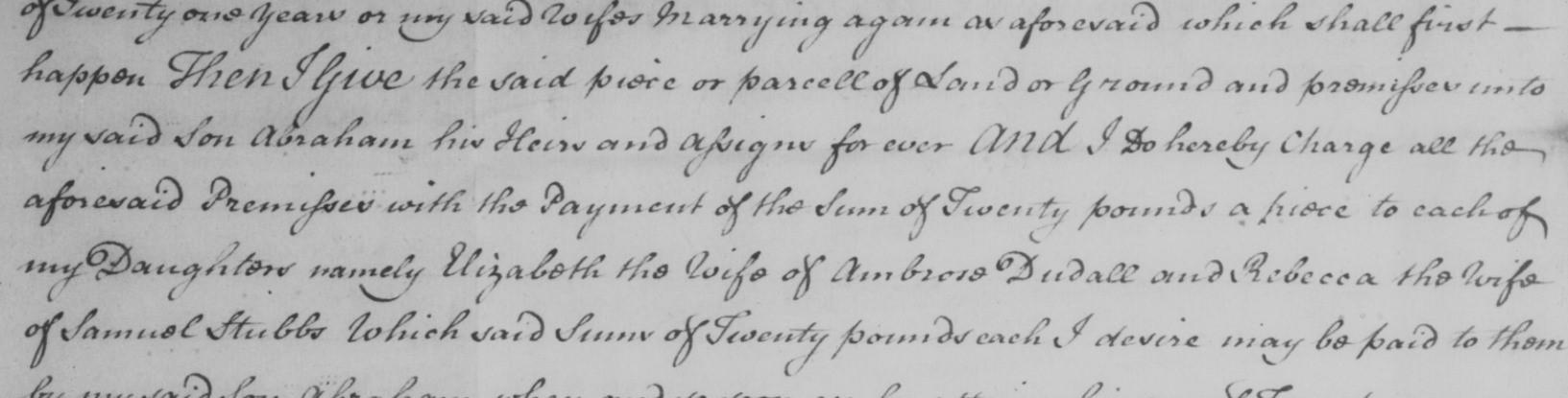
But why did they move to Hamstall Ridware circa 1780?
I had not intially noticed that Solomon Stubbs married again the year after his wife Phillis Lomas (1787-1844) died. Solomon married Charlotte Bell in 1845 in Burton on Trent and on the marriage register, Solomon’s father Samuel Stubbs occupation was mentioned: Samuel was a buckle maker.
Marriage of Solomon Stubbs and Charlotte Bell, father Samuel Stubbs buckle maker:
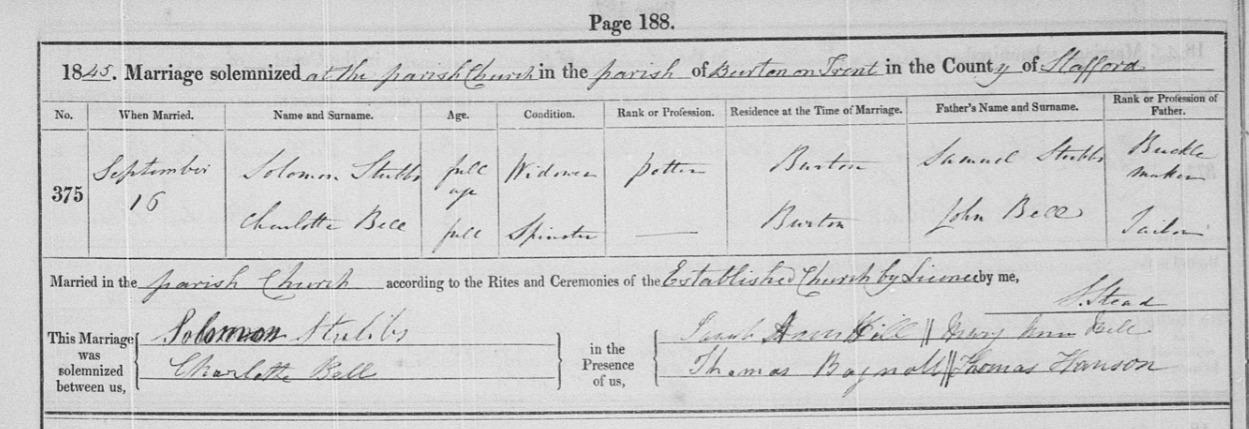
A rudimentary search on buckle making in the late 1700s provided a possible answer as to why Samuel and Rebecca left Darlaston in 1781. Shoe buckles had gone out of fashion, and by 1781 there were half as many buckle makers in Wolverhampton as there had been previously.
“Where there were 127 buckle makers at work in Wolverhampton, 68 in Bilston and 58 in Birmingham in 1770, their numbers had halved in 1781.”
via “historywebsite”(museum/metalware/steel)
Steel buckles had been the height of fashion, and the trade became enormous in Wolverhampton. Wolverhampton was a steel working town, renowned for its steel jewellery which was probably of many types. The trade directories show great numbers of “buckle makers”. Steel buckles were predominantly made in Wolverhampton: “from the late 1760s cut steel comes to the fore, from the thriving industry of the Wolverhampton area”. Bilston was also a great centre of buckle making, and other areas included Walsall. (It should be noted that Darlaston, Walsall, Bilston and Wolverhampton are all part of the same area)
In 1860, writing in defence of the Wolverhampton Art School, George Wallis talks about the cut steel industry in Wolverhampton. Referring to “the fine steel workers of the 17th and 18th centuries” he says: “Let them remember that 100 years ago [sc. c. 1760] a large trade existed with France and Spain in the fine steel goods of Birmingham and Wolverhampton, of which the latter were always allowed to be the best both in taste and workmanship. … A century ago French and Spanish merchants had their houses and agencies at Birmingham for the purchase of the steel goods of Wolverhampton…..The Great Revolution in France put an end to the demand for fine steel goods for a time and hostile tariffs finished what revolution began”.
The next search on buckle makers, Wolverhampton and Hamstall Ridware revealed an unexpected connecting link.
In Riotous Assemblies: Popular Protest in Hanoverian England by Adrian Randall:
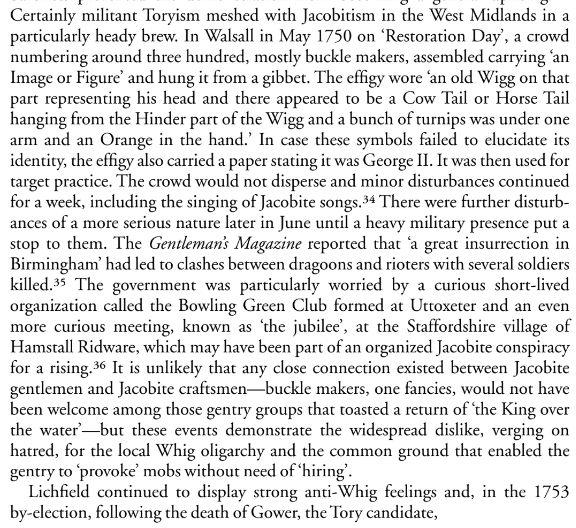
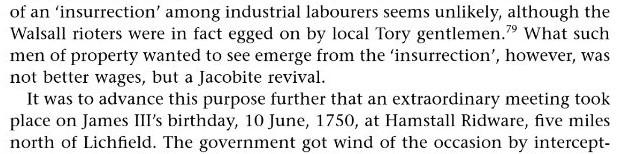
In Walsall in 1750 on “Restoration Day” a crowd numbering 300 assembled, mostly buckle makers, singing Jacobite songs and other rebellious and riotous acts. The government was particularly worried about a curious meeting known as the “Jubilee” in Hamstall Ridware, which may have been part of a conspiracy for a Jacobite uprising.
But this was thirty years before Samuel and Rebecca moved to Hamstall Ridware and does not help to explain why they moved there around 1780, although it does suggest connecting links.
Rebecca’s father, William Wood, was a brickmaker. This was stated at the beginning of his will. On closer inspection of the will, he was a brickmaker who owned four acres of brick kilns, as well as dwelling houses, shops, barns, stables, a brewhouse, a malthouse, cattle and land.
A page from the 1784 will of William Wood:
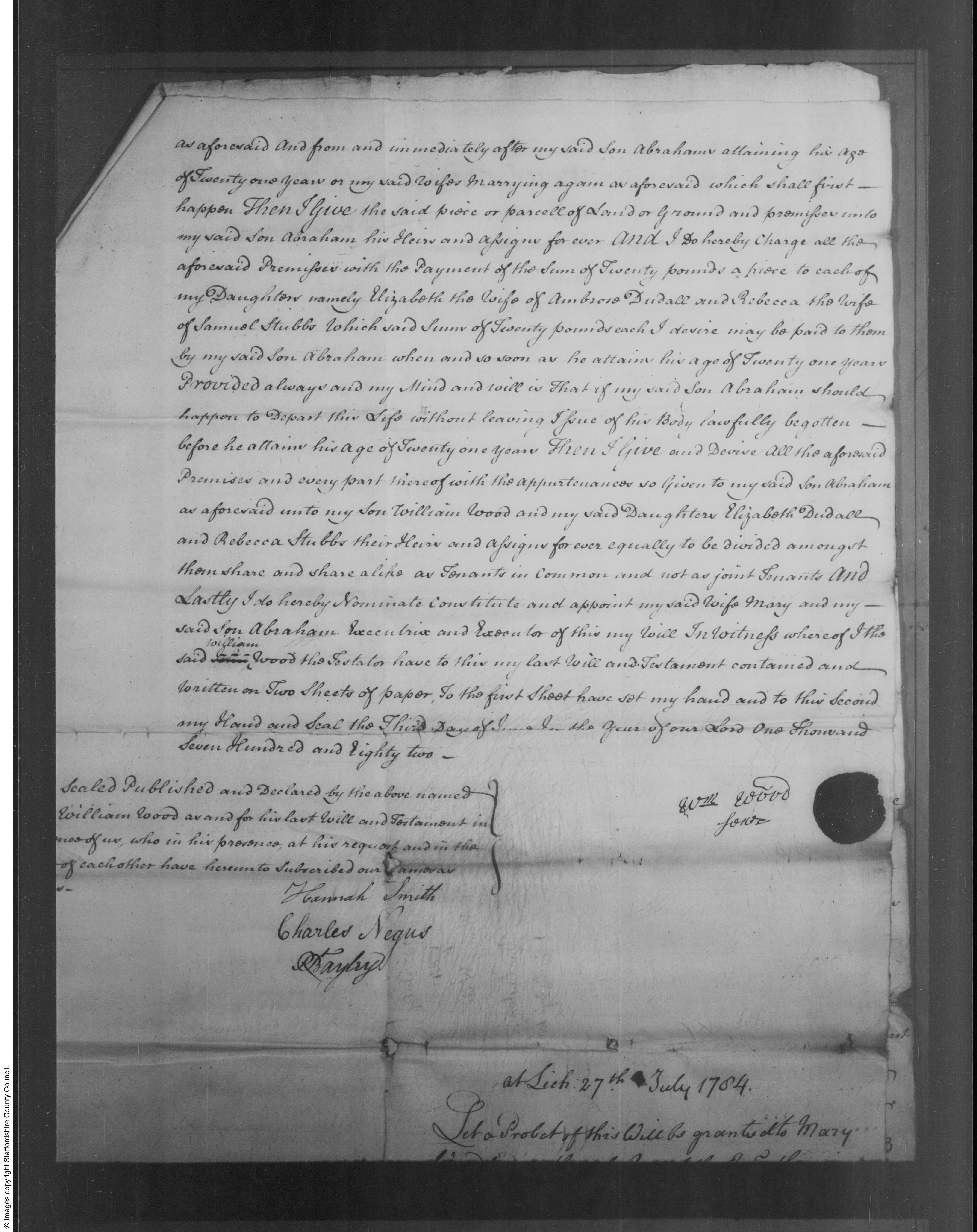
The 1784 will of William Wood of Darlaston:
I William Wood the elder of Darlaston in the county of Stafford, brickmaker, being of sound and disposing mind memory and understanding (praised be to god for the same) do make publish and declare my last will and testament in manner and form following (that is to say) {after debts and funeral expense paid etc} I give to my loving wife Mary the use usage wear interest and enjoyment of all my goods chattels cattle stock in trade ~ money securities for money personal estate and effects whatsoever and wheresoever to hold unto her my said wife for and during the term of her natural life providing she so long continues my widow and unmarried and from or after her decease or intermarriage with any future husband which shall first happen.
Then I give all the said goods chattels cattle stock in trade money securites for money personal estate and effects unto my son Abraham Wood absolutely and forever. Also I give devise and bequeath unto my said wife Mary all that my messuages tenement or dwelling house together with the malthouse brewhouse barn stableyard garden and premises to the same belonging situate and being at Darlaston aforesaid and now in my own possession. Also all that messuage tenement or dwelling house together with the shop garden and premises with the appurtenances to the same ~ belonging situate in Darlaston aforesaid and now in the several holdings or occupation of George Knowles and Edward Knowles to hold the aforesaid premises and every part thereof with the appurtenances to my said wife Mary for and during the term of her natural life provided she so long continues my widow and unmarried. And from or after her decease or intermarriage with a future husband which shall first happen. Then I give and devise the aforesaid premises and every part thereof with the appurtenances unto my said son Abraham Wood his heirs and assigns forever.
Also I give unto my said wife all that piece or parcel of land or ground inclosed and taken out of Heath Field in the parish of Darlaston aforesaid containing four acres or thereabouts (be the same more or less) upon which my brick kilns erected and now in my own possession. To hold unto my said wife Mary until my said son Abraham attains his age of twenty one years if she so long continues my widow and unmarried as aforesaid and from and immediately after my said son Abraham attaining his age of twenty one years or my said wife marrying again as aforesaid which shall first happen then I give the said piece or parcel of land or ground and premises unto my said son Abraham his heirs and assigns forever.
And I do hereby charge all the aforesaid premises with the payment of the sum of twenty pounds a piece to each of my daughters namely Elizabeth the wife of Ambrose Dudall and Rebecca the wife of Samuel Stubbs which said sum of twenty pounds each I devise may be paid to them by my said son Abraham when and so soon as he attains his age of twenty one years provided always and my mind and will is that if my said son Abraham should happen to depart this life without leaving issue of his body lawfully begotten before he attains his age of twenty one years then I give and devise all the aforesaid premises and every part thereof with the appurtenances so given to my said son Abraham as aforesaid unto my said son William Wood and my said daughter Elizabeth Dudall and Rebecca Stubbs their heirs and assigns forever equally divided among them share and share alike as tenants in common and not as joint tenants. And lastly I do hereby nominate constitute and appoint my said wife Mary and my said son Abraham executrix and executor of this my will.
The marriage of William Wood (1725-1784) and Mary Clews (1715-1798) in 1749 was in Hamstall Ridware.
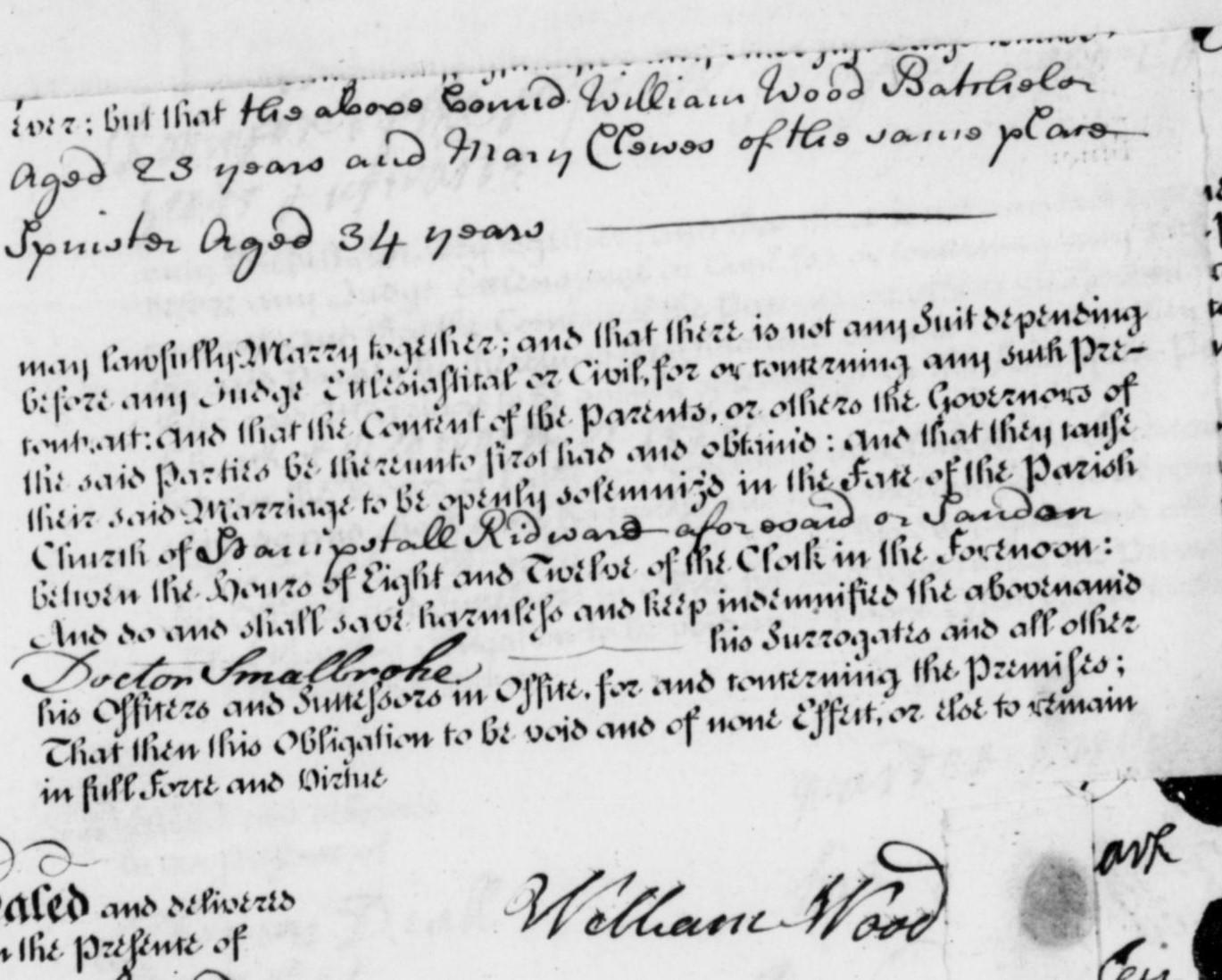
Mary was eleven years Williams senior, and it appears that they both came from Hamstall Ridware and moved to Darlaston after they married. Clearly Rebecca had extended family there (notwithstanding any possible connecting links between the Stubbs buckle makers of Darlaston and the Hamstall Ridware Jacobites thirty years prior). When the buckle trade collapsed in Darlaston, they likely moved to find employment elsewhere, perhaps with the help of Rebecca’s family.
I have not yet been able to find deaths recorded anywhere for either Samuel or Rebecca (there are a couple of deaths recorded for a Samuel Stubbs, one in 1809 in Wolverhampton, and one in 1810 in Birmingham but impossible to say which, if either, is the right one with the limited information, and difficult to know if they stayed in the Hamstall Ridware area or perhaps moved elsewhere)~ or find a reason for their son Solomon to be in Burton upon Trent, an evidently prosperous man with several properties including an earthenware business, as well as a land carrier business.
October 11, 2022 at 11:39 am #6333In reply to: Family Stories From The Other Side ~ Book Two
The Grattidge Family
The first Grattidge to appear in our tree was Emma Grattidge (1853-1911) who married Charles Tomlinson (1847-1907) in 1872.
Charles Tomlinson (1873-1929) was their son and he married my great grandmother Nellie Fisher. Their daughter Margaret (later Peggy Edwards) was my grandmother on my fathers side.
Emma Grattidge was born in Wolverhampton, the daughter and youngest child of William Grattidge (1820-1887) born in Foston, Derbyshire, and Mary Stubbs, born in Burton on Trent, daughter of Solomon Stubbs, a land carrier. William and Mary married at St Modwens church, Burton on Trent, in 1839. It’s unclear why they moved to Wolverhampton. On the 1841 census William was employed as an agent, and their first son William was nine months old. Thereafter, William was a licensed victuallar or innkeeper.
William Grattidge was born in Foston, Derbyshire in 1820. His parents were Thomas Grattidge, farmer (1779-1843) and Ann Gerrard (1789-1822) from Ellastone. Thomas and Ann married in 1813 in Ellastone. They had five children before Ann died at the age of 25:
Bessy was born in 1815, Thomas in 1818, William in 1820, and Daniel Augustus and Frederick were twins born in 1822. They were all born in Foston. (records say Foston, Foston and Scropton, or Scropton)
On the 1841 census Thomas had nine people additional to family living at the farm in Foston, presumably agricultural labourers and help.
After Ann died, Thomas had three children with Kezia Gibbs (30 years his junior) before marrying her in 1836, then had a further four with her before dying in 1843. Then Kezia married Thomas’s nephew Frederick Augustus Grattidge (born in 1816 in Stafford) in London in 1847 and had two more!
The siblings of William Grattidge (my 3x great grandfather):
Frederick Grattidge (1822-1872) was a schoolmaster and never married. He died at the age of 49 in Tamworth at his twin brother Daniels address.
Daniel Augustus Grattidge (1822-1903) was a grocer at Gungate in Tamworth.
Thomas Grattidge (1818-1871) married in Derby, and then emigrated to Illinois, USA.
Bessy Grattidge (1815-1840) married John Buxton, farmer, in Ellastone in January 1838. They had three children before Bessy died in December 1840 at the age of 25: Henry in 1838, John in 1839, and Bessy Buxton in 1840. Bessy was baptised in January 1841. Presumably the birth of Bessy caused the death of Bessy the mother.
Bessy Buxton’s gravestone:
“Sacred to the memory of Bessy Buxton, the affectionate wife of John Buxton of Stanton She departed this life December 20th 1840, aged 25 years. “Husband, Farewell my life is Past, I loved you while life did last. Think on my children for my sake, And ever of them with I take.”
20 Dec 1840, Ellastone, Staffordshire
In the 1843 will of Thomas Grattidge, farmer of Foston, he leaves fifth shares of his estate, including freehold real estate at Findern, to his wife Kezia, and sons William, Daniel, Frederick and Thomas. He mentions that the children of his late daughter Bessy, wife of John Buxton, will be taken care of by their father. He leaves the farm to Keziah in confidence that she will maintain, support and educate his children with her.
An excerpt from the will:
I give and bequeath unto my dear wife Keziah Grattidge all my household goods and furniture, wearing apparel and plate and plated articles, linen, books, china, glass, and other household effects whatsoever, and also all my implements of husbandry, horses, cattle, hay, corn, crops and live and dead stock whatsoever, and also all the ready money that may be about my person or in my dwelling house at the time of my decease, …I also give my said wife the tenant right and possession of the farm in my occupation….
A page from the 1843 will of Thomas Grattidge:
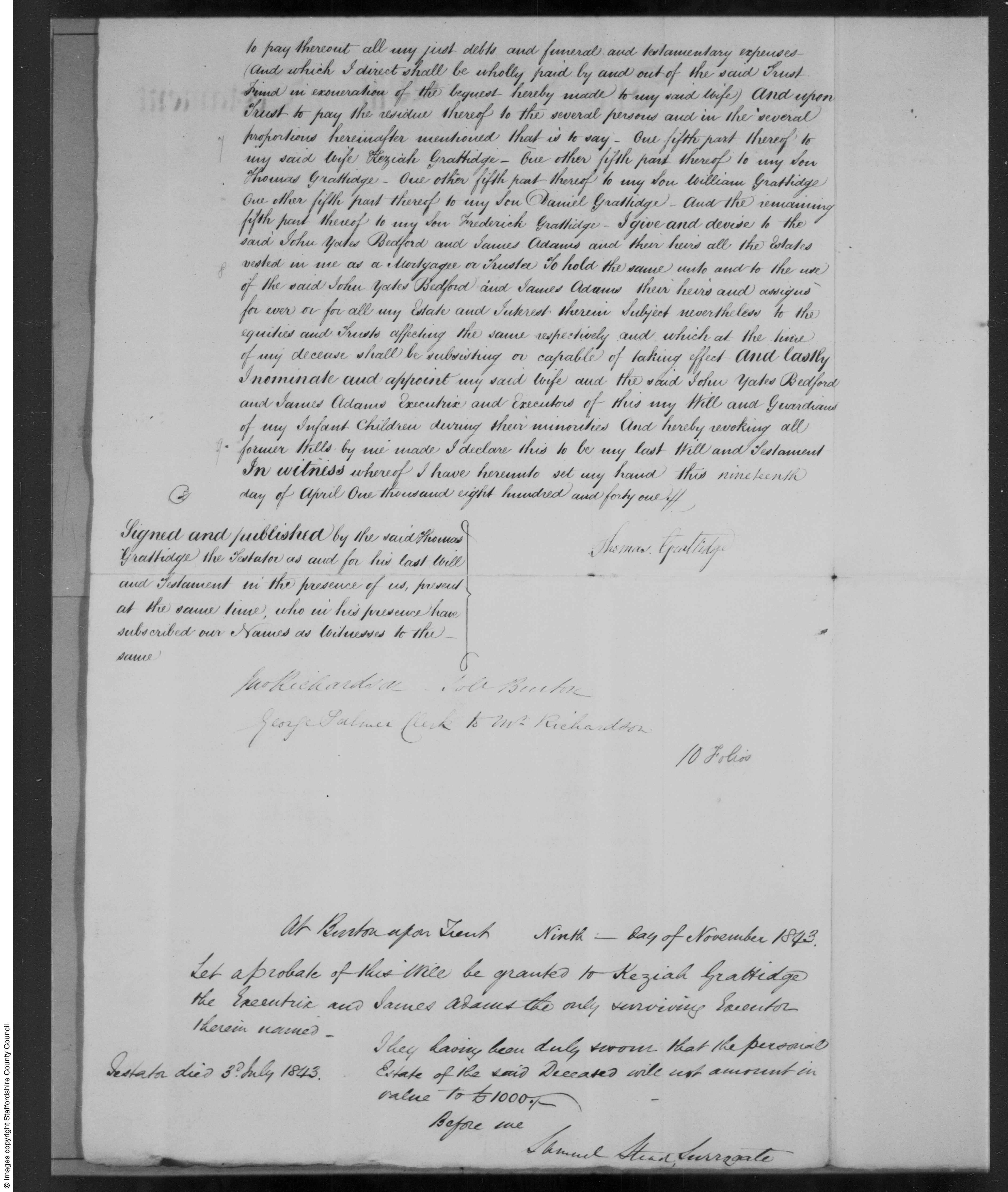
William Grattidges half siblings (the offspring of Thomas Grattidge and Kezia Gibbs):
Albert Grattidge (1842-1914) was a railway engine driver in Derby. In 1884 he was driving the train when an unfortunate accident occured outside Ambergate. Three children were blackberrying and crossed the rails in front of the train, and one little girl died.
Albert Grattidge:
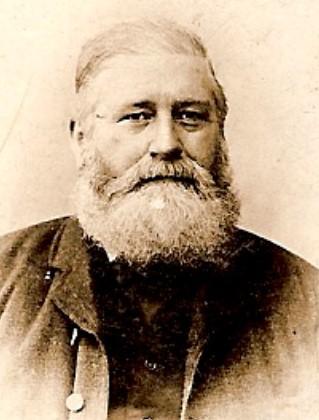
George Grattidge (1826-1876) was baptised Gibbs as this was before Thomas married Kezia. He was a police inspector in Derby.
George Grattidge:
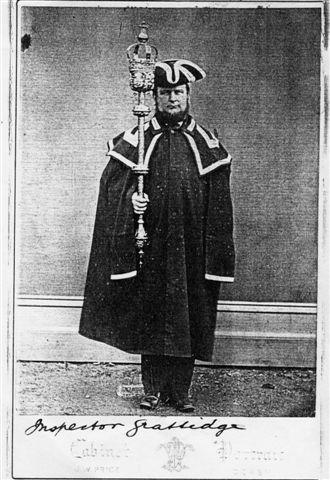
Edwin Grattidge (1837-1852) died at just 15 years old.
Ann Grattidge (1835-) married Charles Fletcher, stone mason, and lived in Derby.
Louisa Victoria Grattidge (1840-1869) was sadly another Grattidge woman who died young. Louisa married Emmanuel Brunt Cheesborough in 1860 in Derby. In 1861 Louisa and Emmanuel were living with her mother Kezia in Derby, with their two children Frederick and Ann Louisa. Emmanuel’s occupation was sawyer. (Kezia Gibbs second husband Frederick Augustus Grattidge was a timber merchant in Derby)
At the time of her death in 1869, Emmanuel was the landlord of the White Hart public house at Bridgegate in Derby.
The Derby Mercury of 17th November 1869:
“On Wednesday morning Mr Coroner Vallack held an inquest in the Grand
Jury-room, Town-hall, on the body of Louisa Victoria Cheeseborough, aged
33, the wife of the landlord of the White Hart, Bridge-gate, who committed
suicide by poisoning at an early hour on Sunday morning. The following
evidence was taken:Mr Frederick Borough, surgeon, practising in Derby, deposed that he was
called in to see the deceased about four o’clock on Sunday morning last. He
accordingly examined the deceased and found the body quite warm, but dead.
He afterwards made enquiries of the husband, who said that he was afraid
that his wife had taken poison, also giving him at the same time the
remains of some blue material in a cup. The aunt of the deceased’s husband
told him that she had seen Mrs Cheeseborough put down a cup in the
club-room, as though she had just taken it from her mouth. The witness took
the liquid home with him, and informed them that an inquest would
necessarily have to be held on Monday. He had made a post mortem
examination of the body, and found that in the stomach there was a great
deal of congestion. There were remains of food in the stomach and, having
put the contents into a bottle, he took the stomach away. He also examined
the heart and found it very pale and flabby. All the other organs were
comparatively healthy; the liver was friable.Hannah Stone, aunt of the deceased’s husband, said she acted as a servant
in the house. On Saturday evening, while they were going to bed and whilst
witness was undressing, the deceased came into the room, went up to the
bedside, awoke her daughter, and whispered to her. but what she said the
witness did not know. The child jumped out of bed, but the deceased closed
the door and went away. The child followed her mother, and she also
followed them to the deceased’s bed-room, but the door being closed, they
then went to the club-room door and opening it they saw the deceased
standing with a candle in one hand. The daughter stayed with her in the
room whilst the witness went downstairs to fetch a candle for herself, and
as she was returning up again she saw the deceased put a teacup on the
table. The little girl began to scream, saying “Oh aunt, my mother is
going, but don’t let her go”. The deceased then walked into her bed-room,
and they went and stood at the door whilst the deceased undressed herself.
The daughter and the witness then returned to their bed-room. Presently
they went to see if the deceased was in bed, but she was sitting on the
floor her arms on the bedside. Her husband was sitting in a chair fast
asleep. The witness pulled her on the bed as well as she could.
Ann Louisa Cheesborough, a little girl, said that the deceased was her
mother. On Saturday evening last, about twenty minutes before eleven
o’clock, she went to bed, leaving her mother and aunt downstairs. Her aunt
came to bed as usual. By and bye, her mother came into her room – before
the aunt had retired to rest – and awoke her. She told the witness, in a
low voice, ‘that she should have all that she had got, adding that she
should also leave her her watch, as she was going to die’. She did not tell
her aunt what her mother had said, but followed her directly into the
club-room, where she saw her drink something from a cup, which she
afterwards placed on the table. Her mother then went into her own room and
shut the door. She screamed and called her father, who was downstairs. He
came up and went into her room. The witness then went to bed and fell
asleep. She did not hear any noise or quarrelling in the house after going
to bed.Police-constable Webster was on duty in Bridge-gate on Saturday evening
last, about twenty minutes to one o’clock. He knew the White Hart
public-house in Bridge-gate, and as he was approaching that place, he heard
a woman scream as though at the back side of the house. The witness went to
the door and heard the deceased keep saying ‘Will you be quiet and go to
bed’. The reply was most disgusting, and the language which the
police-constable said was uttered by the husband of the deceased, was
immoral in the extreme. He heard the poor woman keep pressing her husband
to go to bed quietly, and eventually he saw him through the keyhole of the
door pass and go upstairs. his wife having gone up a minute or so before.
Inspector Fearn deposed that on Sunday morning last, after he had heard of
the deceased’s death from supposed poisoning, he went to Cheeseborough’s
public house, and found in the club-room two nearly empty packets of
Battie’s Lincoln Vermin Killer – each labelled poison.Several of the Jury here intimated that they had seen some marks on the
deceased’s neck, as of blows, and expressing a desire that the surgeon
should return, and re-examine the body. This was accordingly done, after
which the following evidence was taken:Mr Borough said that he had examined the body of the deceased and observed
a mark on the left side of the neck, which he considered had come on since
death. He thought it was the commencement of decomposition.
This was the evidence, after which the jury returned a verdict “that the
deceased took poison whilst of unsound mind” and requested the Coroner to
censure the deceased’s husband.The Coroner told Cheeseborough that he was a disgusting brute and that the
jury only regretted that the law could not reach his brutal conduct.
However he had had a narrow escape. It was their belief that his poor
wife, who was driven to her own destruction by his brutal treatment, would
have been a living woman that day except for his cowardly conduct towards
her.The inquiry, which had lasted a considerable time, then closed.”
In this article it says:
“it was the “fourth or fifth remarkable and tragical event – some of which were of the worst description – that has taken place within the last twelve years at the White Hart and in the very room in which the unfortunate Louisa Cheesborough drew her last breath.”
Sheffield Independent – Friday 12 November 1869:
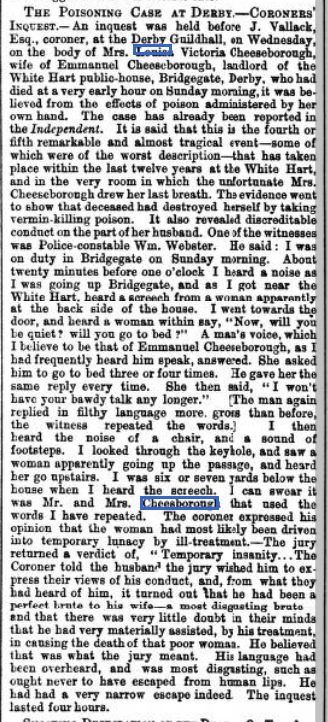 September 4, 2022 at 6:00 pm #6326
In reply to: The Sexy Wooden Leg
Stung by Egberts question, Olga reeled and almost lost her footing on the stairs. What had happened to her? That damned selfish individualism that was running rampant must have seeped into her room through the gaps in the windows or under the door. “No!” she shouted, her voice cracking.
“Say it isn’t true, Olga,” Egbert said, his voice breaking. “Not you as well.”
It took Olga a minute or two to still her racing heart. The near fall down the stairs had shaken her but with trembling hands she levered herself round to sit beside Egbert on the step.
Gripping his bony knee with her knobbly arthritic fingers, she took a deep breath.
“You are right to have said that, Egbert. If there is one thing we must hold onto, it’s our hearts. Nothing else matters, or at least nothing else matters as much as that. We are old and tired and we don’t like change. But if we escalate the importance of this frankly dreary and depressing home to the point where we lose our hearts…” she faltered and continued. “We will be homeless soon, very soon, and we know not what will happen to us. We must trust in the kindness of strangers, we must hope they have a heart.”
Egbert winced as Olga squeezed his knee. “And that is why”, Olga continued, slapping Egberts thigh with gusto, “We must have a heart…”
“If you’d just stop squeezing and hitting me, Olga…”
Olga loosened her grip on the old mans thigh bone and peered into his eyes. Quietly she thanked him. “You’ve cleared my mind and given me something to live for, and I thank you for that. But you do need to launder your clothes more often,” she added, pulling a face. She didn’t want the old coot to start blubbing, and he looked alarmingly close to tears.
“Come on, let’s go and see Obadiah. We’re all in this together. Homelessness and adventure can wait until tomorrow.” Olga heaved herself upright with a surprising burst of vitality. Noticing a weak smile trembling on Egberts lips, she said “That’s the spirit!”
August 18, 2022 at 8:26 am #6324In reply to: The Elusive Samuel Housley and Other Family Stories
STONE MANOR
Hildred Orgill Warren born in 1900, my grandmothers sister, married Reginald Williams in Stone, Worcestershire in March 1924. Their daughter Joan was born there in October of that year.
Hildred was a chaffeur on the 1921 census, living at home in Stourbridge with her father (my great grandfather) Samuel Warren, mechanic. I recall my grandmother saying that Hildred was one of the first lady chauffeurs. On their wedding certificate, Reginald is also a chauffeur.
1921 census, Stourbridge:
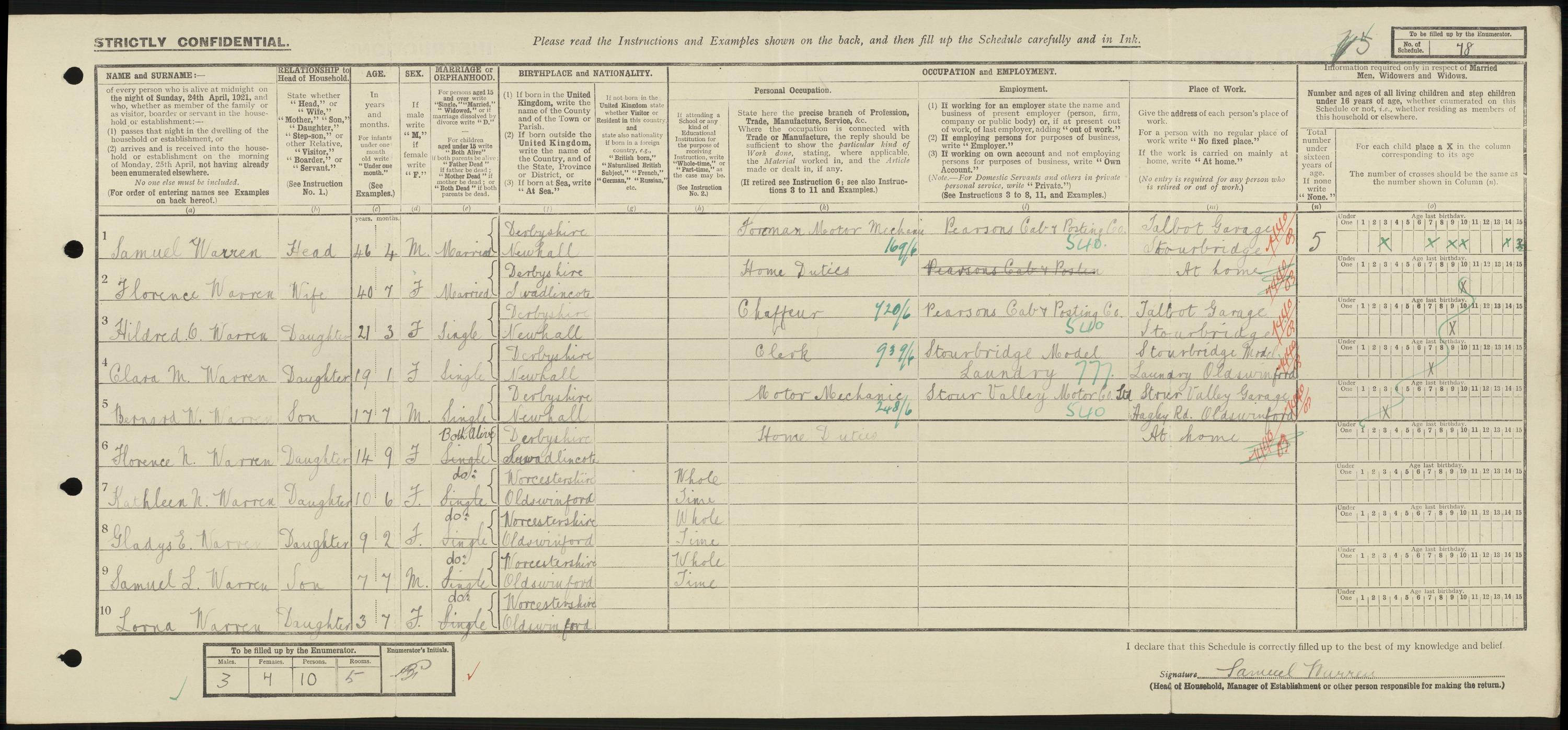
Hildred and Reg worked at Stone Manor. There is a family story of Hildred being involved in a car accident involving a fatality and that she had to go to court.
Stone Manor is in a tiny village called Stone, near Kidderminster, Worcestershire. It used to be a private house, but has been a hotel and nightclub for some years. We knew in the family that Hildred and Reg worked at Stone Manor and that Joan was born there. Around 2007 Joan held a family party there.
Stone Manor, Stone, Worcestershire:
I asked on a Kidderminster Family Research group about Stone Manor in the 1920s:
“the original Stone Manor burnt down and the current building dates from the early 1920’s and was built for James Culcheth Hill, completed in 1926”
But was there a fire at Stone Manor?
“I’m not sure there was a fire at the Stone Manor… there seems to have been a fire at another big house a short distance away and it looks like stories have crossed over… as the dates are the same…”JC Hill was one of the witnesses at Hildred and Reginalds wedding in Stone in 1924. K Warren, Hildreds sister Kay, was the other:
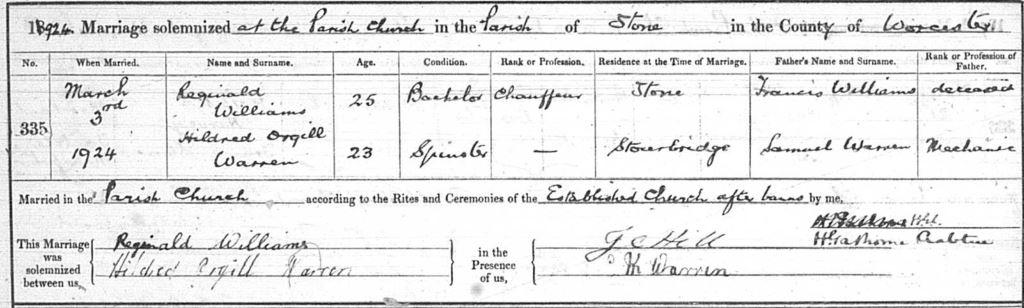
I searched the census and electoral rolls for James Culcheth Hill and found him at the Stone Manor on the 1929-1931 electoral rolls for Stone, and Hildred and Reginald living at The Manor House Lodge, Stone:
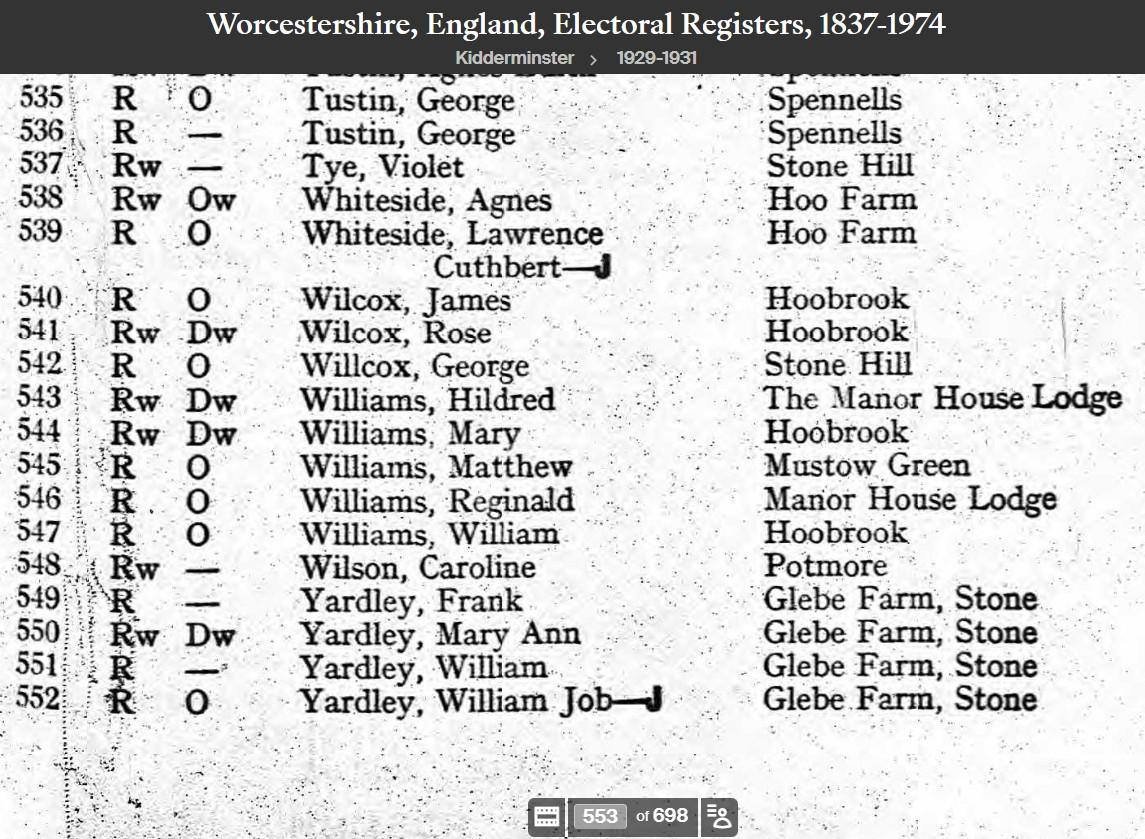
On the 1911 census James Culcheth Hill was a 12 year old student at Eastmans Royal Naval Academy, Northwood Park, Crawley, Winchester. He was born in Kidderminster in 1899. On the same census page, also a student at the school, is Reginald Culcheth Holcroft, born in 1900 in Stourbridge. The unusual middle name would seem to indicate that they might be related.
A member of the Kidderminster Family Research group kindly provided this article:
SHOT THROUGH THE TEMPLE
Well known Worcestershire man’s tragic death.
Dudley Chronicle 27 March 1930.
Well known in Worcestershire, especially the Kidderminster district, Mr Philip Rowland Hill MA LLD who was mayor of Kidderminster in 1907 was found dead with a bullet wound through his temple on board his yacht, anchored off Cannes, on Friday, recently. A harbour watchman discovered the dead man huddled in a chair on board the yacht. A small revolver was lying on the blood soaked carpet beside him.
Friends of Mr Hill, whose London address is given as Grosvenor House, Park Lane, say that he appeared despondent since last month when he was involved in a motor car accident on the Antibes ~ Nice road. He was then detained by the police after his car collided with a small motor lorry driven by two Italians, who were killed in the crash. Later he was released on bail of 180,000 francs (£1440) pending an investigation of a charge of being responsible for the fatal accident. …….
Mr Rowland Hill (Philips father) was heir to Sir Charles Holcroft, the wealthy Staffordshire man, and managed his estates for him, inheriting the property on the death of Sir Charles. On the death of Mr Rowland HIll, which took place at the Firs, Kidderminster, his property was inherited by Mr James (Culcheth) Hill who had built a mansion at Stone, near Kidderminster. Mr Philip Rowland Hill assisted his brother in managing the estate. …….
At the time of the collison both brothers were in the car.
This article doesn’t mention who was driving the car ~ could the family story of a car accident be this one? Hildred and Reg were working at Stone Manor, both were (or at least previously had been) chauffeurs, and Philip Hill was helping James Culcheth Hill manage the Stone Manor estate at the time.
This photograph was taken circa 1931 in Llanaeron, Wales. Hildred is in the middle on the back row:
Sally Gray sent the photo with this message:
“Joan gave me a short note: Photo was taken when they lived in Wales, at Llanaeron, before Janet was born, & Aunty Lorna (my mother) lived with them, to take Joan to school in Aberaeron, as they only spoke Welsh at the local school.”
Hildred and Reginalds daughter Janet was born in 1932 in Stratford. It would appear that Hildred and Reg moved to Wales just after the car accident, and shortly afterwards moved to Stratford.
In 1921 James Culcheth Hill was living at Red Hill House in Stourbridge. Although I have not been able to trace Reginald Williams yet, perhaps this Stourbridge connection with his employer explains how Hildred met Reginald.
Sir Reginald Culcheth Holcroft, the other pupil at the school in Winchester with James Culcheth Hill, was indeed related, as Sir Holcroft left his estate to James Culcheth Hill’s father. Sir Reginald was born in 1899 in Upper Swinford, Stourbridge. Hildred also lived in that part of Stourbridge in the early 1900s.
1921 Red Hill House:
The 2007 family reunion organized by Joan Williams at Stone Manor: Joan in black and white at the front.
Unrelated to the Warrens, my fathers friends (and customers at The Fox when my grandmother Peggy Edwards owned it) Geoff and Beryl Lamb later bought Stone Manor.
July 7, 2022 at 9:45 am #6315In reply to: The Sexy Wooden Leg
It was not yet 9am and Eusebius Kazandis was already sweating. The morning sun was hitting hard on the tarp of his booth. He put the last cauldron among lines of cauldrons on a sagging table at the summer fair of Innsbruck, Austria. It was a tiny three-legged black cauldron with a simple Celtic knot on one side and a tree on the other side, like all the others. His father’s father’s father used to make cauldrons for a living, the kind you used to distil ouzo or cook meals for an Inn. But as time went by and industrialisation made it easier for cooks, the trade slowly evolved toward smaller cauldrons for modern Wiccans. A modern witch wanted it portable and light, ready to use in everyday life situations, and Eusebius was there to provide it for them.
Eusebius sat on his chair and sighed. He couldn’t help but notice the woman in colourful dress who had spread a shawl on the grass under the tall sequoia tree. Nobody liked this spot under the branches oozing sticky resin. She didn’t seem to mind. She was arranging small colourful bottles of oil on her shawl. A sign near her said : Massage oils, Fragrant oils, Polishing oils, all with different names evocative of different properties. He hadn’t noticed her yesterday when everybody was installing their stalls. He wondered if she had paid her fee.
Rosa was smiling as she spread in front of her the meadow flowers she’d picked on her way to the market. It was another beautiful day, under the shade and protection of the big sequoia tree watching over her. She assembled small bouquets and put them in between the vials containing her precious handmade oils. She had noticed people, and especially women, would naturally gather around well dressed stalls and engage conversation. Since she left her hometown of Torino, seven years ago, she’d followed the wind on her journey across Europe. It had led her to Innsbruck and had suddenly stopped blowing. That usually meant she had something to do there, but it also meant that she would have to figure out what she was meant to do before she could go on with her life.
The stout man waiting behind his dark cauldrons, was watching her again. He looked quite sad, and she couldn’t help but thinking he was not where he needed to be. When she looked at him, she saw Hephaestus whose inner fire had been tamed. His banner was a mishmash of religious stuff, aimed at pagans and budding witches. Although his grim booth would most certainly benefit from a feminine touch, but she didn’t want to offend him by a misplaced suggestion. It was not her place to find his place.
Rosa, who knew to cultivate any available friendship when she arrived somewhere, waved at the man. Startled, he looked away as if caught doing something inappropriate. Rosa sighed. Maybe she should have bring him some coffee.
As her first clients arrived, she prayed for a gush of wind to tell her where to go next. But the branches of the old tree remained perfectly still under the scorching sun.
-
AuthorSearch Results