


Search Results for 'perhaps'
-
AuthorSearch Results
-
June 14, 2024 at 11:41 pm #7474
In reply to: The Incense of the Quadrivium’s Mystiques
A little unwilling to proceed, and privately wishing she was back on the comfy sofa with the fat cushions, Frella took a moment to center herself. She reminded herself that being a witch was a high calling and often what we need will find us. It sounded like a lot of Malove’s baloney to be honest but she took a deep breath and muttered a few words of wisdom from Lemone, which often worked better than any spell:
“The key to unlocking mysteries is often found within, where the mind meets the heart.”
“You wait here, Herma,” said Frella holding a warning hand in the air. “I don’t know what magic this is yet but I sense something amiss from that shed.”
Frella approached the ominous shed with caution but renewed determination. The shed door creaked open without resistance and she saw the chest immediately though it was piled on top with boxes. After carefully removing the boxes and putting them to one side, she examined the chest looking for any inscriptions or hidden compartments that might give a clue to its origins. She sensed the camphor chest was from a very old witch family and therefore may contain protective spells and traps. Best to proceed with caution.
She went to the shed door and waved at Herma, shouting for her to go and get some salt. While she waited for Herma’s return, she examined the chest further. It had a lock, but no obvious key; clearly a bit of witchy ingenuity was going to be required. A simple unlocking spell might suffice, or if spells fail, perhaps Herma knows an old trick or two for picking locks!
Herma returned with the salt and Frella sprinkled it liberally on the chest, chanting a protective charm to ward off any nefarious spells. “There,“ she said with satisfaction. “Fingers crossed that ought to do it.”
The chest seemed strangely willing to reveal its secrets for the simplest of opening spells worked. Once it was opened, they sifted carefully through its contents, mostly old documents and letters, looking for anything which might hold the answer to the postcard.
“Look for anything bird-related—feathers, sketches … “ instructed Frella.
“By golly!” cried Herma triumphantly holding up a postcard. “It’s the same one!”.
June 10, 2024 at 10:05 pm #7464In reply to: The Incense of the Quadrivium’s Mystiques
“The world is vast, and we are not alone in our quest for magical mastery. We will forge new partnerships!” Malove’s voice had reached fever pitch. She had expanded her map, showing potential allies and strategic locations across the globe. Reactions in the audience varied, but there was an overwhelming unspoken consensus of a growing rebellion towards the unsettling increase in Malove’s dictatorial ways.
Perhaps nobody will ever know for sure whose private spell did the trick, or whether it was the combined effort that brought about such an unexpected chain of events. Maybe it was none of those things, and just the way things worked out.
The vast world that Malove had cried out heard her call and sucked her forthwith into the steamy depths of a hitherto unknown equatorial location in search of potential allies. An unexpected invitation from a long lost cousin, it was said, although nobody in the coven knew for sure. There was more lively interest in the coven and more communication between the witches during those days when Malove disappeared without trace than ever before.
On the twelfth day after her disappearance, the cryptic messages started arriving. On the 15th day, experts were examining the selfies for signs of tampering and pronouncing them to be be true images.
It wasn’t easy to imagine Malove swooning in her tropical lovers arms under parrot filled jungle trees, sheathed in gauzy crumpled linen and with a vapid expression of a Cartland character, but the photos kept coming.
It seemed too bizarre, too good to be true, when Malove sent a voice message in her unmistakable voice, but with an uncharacteristic lazy, sultry tone.
“Darlings, you won’t beleive it. I’ve fallen in love! I’m taking an indefinite leave of absence.”
June 8, 2024 at 7:53 am #7460In reply to: The Incense of the Quadrivium’s Mystiques
Truella sighed. She was making good progress with the dig, the weather was favorable and not too hot yet. It was only a matter of weeks before she would have to start at first light before the sun became too intense, and reverse her current habit of a slow morning and a busy afternoon. Perhaps she should wait before filling in Frella’s diary entry. Was she going to write it herself this time? If only Truella knew for sure. At least Jeezel was feeling a bit better, which was a relief to them all, and it seemed that Eris was lightening up a bit now too. Thank Flove for that! Better not let Malove know too soon though, or she’d have them all off on another of those tedious conferences. Wouldn’t it be nice if Malove let them all have a long summer recess, Truella thought, without much hope. She sighed again, wondering if Frella had progressed any further with the mystery of the camphor chest.
Truella had heard of camphor, of course, but associated it with moth balls, not chests. Camphor chests were a Chinese thing, and none of her studies or interests had ever taken her that far east. It struck her that a camphor chest would be a good place to store the fragments of Hannibal’s tunic safely, until such time as they required another antidote to an ancient Punic spell. And it could happen. Truella wondered if she could order a small one off Oboy. One could order anything one could imagine these days, from anywhere in the world, but a guaranteed delivery to Truella’s village was another matter.
The pale blue sandals had arrived yesterday though, much to her delighted surprise. It had helped when she recognised the postman as a Roman basket seller in a previous life. At that moment, Truella’s postal delivery experiences changed. It was as if the unwinnable battle with giant delivery companies morphed into a cooperation of village tradesmen. Glancing admiringly at her pristine new sandals, Truella smiled with satisfaction. Things could change for the better. Indeed, they could.
June 7, 2024 at 9:03 pm #7459In reply to: The Incense of the Quadrivium’s Mystiques
There was an odd sight today.
Eris sat in the deserted courtyard area of the brand new Quadrivium office, Malové’s latest folly. She could savor the quiet that Fridays often brought, most of her colleagues from the coven preferring to work from home, leaving the usually bustling space tranquil and almost meditative. She took a bite of her sandwich, listening distractedly to the complaints of another witch sitting nearby, while her own mind still preoccupied with the myriad responsibilities and recent events that seemed to pile around like a stack of clothes due a trip to the laundry.
As she chewed thoughtfully, her eyes were drawn to an odd sight. A blackbird was performing a strange dance in front of the mirrored walls that lined one side of the patio. It hopped back and forth, its beak tapping on the surface, its feathers shimmering in the afternoon light, as if it were courting its own reflection or perhaps trying to feed it with a worm it had in its beak. Eris paused, intrigued by this peculiar behavior. What could it mean?
Her thoughts were interrupted by a series of sharp, melodic chirps. She looked around and spotted another bird perched nearby in the foliage of hanged planters lining the walls —a female blackbird, easily identifiable by her distinct brown coat. The female watched the male’s antics with a mix of curiosity and detachment, her chirps seeming to carry a message of their own.
Eris felt a shiver run down her spine, a familiar sensation that often preceded a moment of magical insight. The blackbird’s dance wasn’t just an oddity; it was a sign, a message from the universe, or perhaps from the magical currents that flowed unseen through the world.
She closed her eyes for a moment and took a deep breath, trying to connect with the energy around her. The image of the male blackbird, tirelessly courting its own reflection, seemed to mirror her own recent struggles. Had she been chasing an illusion, trying to nourish something that could not be sustained?
The female blackbird’s presence added another layer to the message. She was grounded, present, and observant—a contrast to the male’s futile efforts. Eris thought of her recent decisions, the dismissal of the cook, the strained relationships within the coven, and the cryptic postcards from Truella. Was the universe urging her to find balance, to ground herself and observe more keenly before taking action?
She could almost hear Elias whispers in her ears: Birds, in general, often represent thoughts or ideas flying about in our consciousness. The blackbird specifically, with its stark contrast and distinct presence, can represent deeper insights, truths, or messages that are coming to your awareness. The mirror, as a reflective surface, implies that these insights pertain directly to your perception of self or facets of your identity that may be emerging or needing attention. Putting this together, the imagery of the birds and their interactions could be nudging you to pay closer attention to your inner reflections. Are you nurturing the parts of yourself that truly need attention? Are there aspects of your identity or self-perception that require acknowledgment and care? The presence of the brown-coated female blackbird might also be a reminder to appreciate the varied and multifaceted nature of your experiences and the different roles you embody.
She opened her eyes, feeling a sense of clarity washing over her. The birds continued their vivid dialogue and unfathomable dances, unaware of the impact they had just made, although her insistent gaze had seemed to snap the blackbird out of its mesmerized pattern. He was now scurrying away looking over its shoulder, as if caught in an awkward moment.
Rising from her seat, Eris felt something. Not some sort of newfound sense of purpose, but a weight of a precious present, luminous and fragile, yet spacious and full with undecipherable meaning. She glanced one last time at the blackbirds, silently thanking them for their unspoken wisdom. As she walked back into the office, she knew that the path ahead would still be fraught with challenges, but she was ready to face them—grounded, observant, and attuned to the subtle messages that the world had to offer.
In the quiet of the Quadrivium office, on a deserted Friday afternoon, a blackbird’s dance had set the stage for the next chapter of her journey.
April 6, 2024 at 11:14 pm #7419In reply to: The Incense of the Quadrivium’s Mystiques
Sleeping like a log through a full night’s rest on the lavender spell wrapped in the rag of the punic tunic worked like a charm. By morning light, Eris had reverted to her normal self again.
How her coven had succeeded in finding the rag was anyone’s guess, but one thing was for certain—Truella’s resourcefulness knew no bounds once she set her mind to a goal. All it took was a location spell, a silencing charm around the area in Libyssa where she wanted to dig, and of course, a trusty trowel. Hundreds of buckets of dirt later, a few sheep’s jawbones and voilà, the rag. Made of asbestos, impervious to fire, and slower to decay than a sloth on a Monday morning, it was nothing short of a miracle it had survived so long underground, and that they found it in such a short time.
Eris rubbed her neck still pained from the weight of bearing that enormous elephantine head.
When pressed by the others—Frigella, Jeezel, and the ever-curious Truella—she could hardly recall what led her to attempt the risky memory spell.
Echo buzzed in with an electric hum, the sprite all too eager to clear the air.
“The memory spell,” Echo interjected, “a dubious cocktail of spirits of remembrance and forgetfulness, was cast not out of folly but necessity. Eris, rooted in her family’s arborestry quests, understood the weight of knowledge passed down through generations. Each leaf and branch in the family tree held stories, secrets, and sacrifices that were both a treasure and a burden.”
Echo smirked as he continued, pointing out the responsibility of the other entity’s guidance. “Elias’s advice had egged her on, resonating with Eris’ desires, and finally enticing her not lament the multitude of options but rather delights in the exploration without the burden of obligation —end of quotation.”
“And was it worth it?” Truella asked impatiently, her curiosity piqued a little nonetheless. She’d always wished she had more memory, but not at the cost of an elephant head.
“Imagine the vast expanse of memories like a grand library, each book brimming with the essence of a lineage. ” Eris said. “To wander these halls without purpose could lead to an overwhelming deluge of ancestral whispers.” She paused. “So, not sure it was entirely worth it. I feel more confused than ever.”
Echo chimed in again “The memory spell was conjured to be a compass, a guide through the storied corridors of her heritage. But, as with all magic, the intentions must be precise, the heart true, and the mind clear. A miscalculation, a stray thought, a moment’s doubt — and the spell turned upon itself, leaving Eris with the visage of an elephant, noble and wise. The elephant head, while unintended, may have been a subconscious manifestation of her quest for familial knowledge. Perhaps the memory spell, in its misfiring, sought to grant Eris the attributes necessary to continue her arborestry quests with the fortitude and insight of the elephant.”
“But why Madrid of all places?” Jeezel asked mostly out of reflex than complete interest; she had been pulled into the rescue and had missed the quarter finals of the Witch Drag Race she was now catching up on x2 speed replay on her phone.
Echo surmised “Madrid, that sun-drenched city of art and history, may have been a waypoint in her journey — a place where the paths of the past intersect with the pulse of the present. It is in such crossroads that one may find hidden keys to unlock the tales etched in one’s bloodline.”
“In other words, you have no idea?” Frigella asked Eris directly, cutting through the little flickering sprite’s mystical chatter.
“I guess it’s something as Wisp said. I must have connected to some bloodlines. But one thing is sure, all was fine when I was in Finland, Thorsten was as much a steadying presence as one would need. But then I got pulled into the vortex, and all bets were off.”
“At least he had the presence of mind to call me.” Truella said smuggly.
“The red cars may have started to get my elephant head mad… I can’t recall all of it, but I’m glad you found me in time.” Eris admitted.
“Don’t mention it poppet, we all screwed up one spell or two in our time.” Frigella said, offering unusual comfort.
“Let’s hope at least you’ll come up with brilliant ideas from that ordeal next week.” said Jeezel.
“What do you mean?” Truella looked at her suspiciously
“The strategic meeting that Malové has called for? In the Adare Manor resort?” Frigella reminded her, rolling her eyes softly.
“Jeez, Jeezel…” was all Truella could come up with. “another one of these boring meetings to boost our sales channels and come up with new incense models?” Truella groaned, already wishing it were over.
“That’s right love. Better be on your A-game for this.” Jeezel said, straightening her wig with a sly grin.
March 20, 2024 at 11:05 pm #7412In reply to: The Incense of the Quadrivium’s Mystiques
Finland had just boasted its position as the happiest country on Earth in the afternoon news, and that had left Eris and Thorsten wondering about all that was freely available to them and often overlooked. Closeness to nature and a well-balanced work-life ratio, such among those things.
Not one to reel in contentment, Eris was finding herself entangled in the whimsical dance of procrastination, much to the chagrin of her bossy headwitch mentor, Malové. Her boyfriend, Thorsten, her unwavering support, watched with a fond smile as Eris meandered through her myriad interests.
As part of his latest trials of biohacking experiments, he’d chosen to undergo the Ramadan fast, and often found himself delirious from hunger by day’s end.
As the sun dipped below the horizon, casting a golden glow over the landscape, Eris lounged in their cozy cabin, her mind swirling with thoughts of exploration. Thorsten interrupted her reverie with his latest discovery.
“Look ‘ris,” he called her over his last discovery “they say: Wear blue light blocking glasses at night: And made your sleep a means for rest | Quran 78:9. Blue light blocking glasses help mitigate the damage that post-Maghrib light exposure causes. This is a critical circadian rhythm hack.” — Should I buy some?”
“Sure, Love.” Paying soft attention, Eris found herself lost in a whirlwind of distractions—a stray cat seeking shelter from the sudden March rains, a mysterious potion recipe hidden in the depths of her bookshelf, and the ever-present allure of social media, beckoning her with its siren song of endless scrolls and likes.
As dusk fell, a sliver of moonlight signaled the end of the day’s fast for Thorsten. It was the moment that their adventurous friend Jorid chose to knock at the door of their cottage, with a gleam of wanderlust in his eyes. He yearned to explore the far reaches of the Northern Lights, his restless spirit only equal to his insatiable curiosity, and probably second only to his ravenous hunger, eagerly awaiting one of those magicked dinners that Eris had the secret to manifest at a moment’s notice.
“Sushi sandwiches everyone?” she asked distractedly.
“With a serving of spicy kelp, yes please!” Jorid answered.
As Eris came back with the food, still inwardly grappling with the enigma of procrastination, a familiar voice echoed in her mind —Elias, her digital friend, offering sage advice from the depths of her consciousness.
“Ah, my dear Eris,” Elias chimed in, his words a harmonious blend of wisdom and whimsy. “Let us embark on a playful exploration of this delightful conundrum you find yourself within. Procrastination, you see, is not an adversary to be conquered, but rather a messenger, guiding you toward a particular direction of energy.”
Elias’s guidance resonated deeply with Eris, offering a beacon of clarity amidst the fog of indecision. “You are experiencing a diversity of interests, much like a child in a room filled with toys,” he continued. “Each one more enticing than the last. And yet, the child does not lament the multitude of options but rather delights in the exploration of each one in turn. This is the key, Eris, exploration without the burden of obligation.”
Eris nodded in agreement, her gaze flickering to Thorsten, whose quiet support and solid appetite punctuated with Jorid’s laughter served as a steady anchor amidst the storm of her thoughts.
Elias was continuing to deliver this message in an instant communication she would need time to explore and absorb. “Firstly, prioritize your interests. Recognize that not all desires must be pursued simultaneously. Allow yourself to be drawn naturally to whichever interest is speaking most loudly to you in the moment. Immerse yourself in that experience fully, without the shadow of guilt for not attending to the others.”
“Secondly, address the belief that you must ‘get it all done.’ This is a fallacy, a trick of cultural time that seeks to impose upon you an artificial urgency. Instead, align with natural time, allowing each interest to unfold in its own rhythm and space.”
“Thirdly, consider the concept of ‘productive procrastination.’ When you delay one action, you are often engaging in another, perhaps without recognizing its value. Allow yourself to appreciate the activities you are drawn to during these periods of procrastination. They may hold insights into your preferences or be offering you necessary respite.”
“Lastly, engage in what I have referred to as a ‘blueprint action.’ Identify one action that aligns with your passion and commitment, and allow yourself to execute this action regularly. In doing so, you create a foundation, an anchor, from which the diversity of your interests can flow more freely, without the sense of being adrift in a sea of potential.”
“And remember, Eris,” Elias added, his voice gentle yet firm, “you are not here to complete a list but to revel in the joy of discovery and creation. Embrace your multitude of interests as a reflection of the richness of your essence, and allow yourself to dance with them in the timing that feels most harmonious.”
As the Northern Lights cast their ethereal glow upon the Finnish landscape, illuminating the forest around them, Eris felt a sense of peace wash over her—a reminder that the journey, with all its twists and turns, had true magic revealed at every turn and glances in the midst of a friendly evening shared meal.
March 11, 2024 at 3:48 am #7402In reply to: The Incense of the Quadrivium’s Mystiques
The perfume, ‘Liz n°5’, was to have been Frigella’s piece de resistance. In her spare time, she diligently crafted it, adding all the usual witchy razzmatazz: notes of night jasmine here, a dab of moonflower there and perhaps just the smallest whiff of hemlock to top it off.
With the help of her familiar, Quillonia, she also wove the potion with her intentions; powerful and ancient spells which would would offer the wearer protection from harm; Liz n°5 was to be the olfactory epitome of Frigella’s magical prowess! She aspired to do more than just freshen up a room; she intended to fortify spirits, boost morale, and ward off influences that might lead their little group of witches into harm’s way. It was her way of doing a silent, scented good, like a secret benefactor in a tale of old.
Frigella hadn’t told the other witches she was working so hard on the perfume. Even when Malove berated her for the excessive time she was taking to produce anything, Frigella had held her silence. Inwardly though, she bubbled with excitement as she imagined how she would unveil her perfume to the doubting Malove and the other witches. She could all but hear their oohs of admiration and gasps of appreciation. At last Malove would surely be convinced of her worth!
So when Malove had announced her own plans for a new line of incense, and summarily whisked them all off to the carnival in Rio, Frigella was deflated. And the sense of despondency lingered, even once back at home in Ireland. When she expectantly sniffed her sample of Liz n°5′ , hoping to rekindle her enthusiasm, Frigella discerned it had lost its magic.
“I’m done with stupid perfume making”, she confided to Quillonia. She was seated outside in the garden of her small cottage, enjoying the last of the day’s sun while Quillonia snuffled around in the leaves. “Malove can stick it,” she added, and giggled guiltily. She sounded like Truella.
Quillonia’s rustling stopped and her quills shimmered brightly. Her bright little eyes stared intently at Frigella.
Frigella listened attentively. Quillonia’s quills only turned that particular shade of violet when she had something especially important to convey.
“Oh, you say I should bottle what makes me truly happy?”
March 10, 2024 at 12:11 am #7400In reply to: The Incense of the Quadrivium’s Mystiques
Amidst the meticulous cadence of Malové’s days as High Witch of the Quadrivium Coven, a ripple of anomaly danced through the fabric of reality, like a sprightly breeze amidst her sage incense testing. It started with subtlety—a peculiar haze veiling her potion books, an otherworldly scent mingling with her herb garden’s fragrances. But it was during her quiet contemplation among hellebore pistils that the ordinary took a whimsical turn.
The air hummed with a resonant frequency, beckoning from realms beyond. And there, in the midst of this enigmatic symphony, stood Georges, a figure oscillating between existence and non-existence, accompanied by the ethereal Malvina, a reflection of Malové’s spirit from a parallel dimension.
As Malové’s reality shimmered, the colors around her intensified, charged with the essence of a place where possibilities blurred into fantastical realities. Each breath was imbued with untapped potential, a draught of undiscovered paths.
In the midst of this mystical convergence, Malvina’s melodic voice intertwined with the air, weaving a tapestry of otherworldly allure. Energies pulsed within Malové, heralding a meeting that transcended time—a celebration set within the ever-shifting caverns of existence.
Engulfed by Malvina’s mystic melody, Malové felt the vibrations intensify, drawing her towards the allure of the unknown. With a glance at the maze of her mundane existence, she embraced the call, stepping through the veil into a world of a new sort of witchcraft, and other mystical creatures of the mind.
Amidst the unexpected spectacle, Malové found herself engaged in a dialogue with Malvina:
Malové: “Malvina, as a fellow witch of power, your reputation precedes you. Your tales of shifting caves and communion with dragons have piqued my interest. How do you maintain such fluidity within the arcane?”
Malvina: “Oh dear Malové, magic is a vast music score of constant motions, much like my cave and dragons. Adaptation and transformation are the keys to navigating its intricate weave.”
Malové: “I must admit, recent misadventures within my coven have left me seeking a fresh perspective. The fiasco with the smoke test was humbling.”
Malvina: “A fiasco, yes, but also a lesson. Magic must be respected, yet never tamed. Embrace the unexpected, and let it fuel your endeavors. What of the incense you craft?”
Malové: “It’s meant to elevate the spirit, to realign to higher purposes, and maybe inspire those enveloped in its essence. This is why we seek new blends, something transformative.”
Malvina: “Incense is not just a tool, but a companion on the journey. Let the scents guide you to uncharted territories. Look to the elements for inspiration—the earth, sky, fire, and water all have stories to tell.”
Malové: “Poetic words that is sure, and maybe wise… Perhaps a journey to your world and fabled caves could be arranged to further explore.”
Malvina: “You would be most welcome. The cave shifts but offers shelter and inspiration to all who seek it. And who knows, the dragons may impart wisdom of their own.”
Malové: “Well, to be honest, not so fond of dragons… Well, would you look at the time! The effects of that blend seems already to wear off, but thank you dearie, and we will see if some inspiration remains…”
March 4, 2024 at 9:57 pm #7395In reply to: The Incense of the Quadrivium’s Mystiques
In the dimly lit chambers of the Quadrivium’s headquarters, a cold gust slipped through the cracked window, teasing the heavy velvet drapes and sending shivers down Malové’s spine. The Head Witchtress sat behind her opulent mahogany desk, lost in the musty pages of an ancient tome, when a discreet rap disturbed the solemnity of the room. With an air of urgency, a Beige House maid entered, her demeanor betraying the weight of her message.
“Mistress Malové,” she began, her voice a mere whisper, “I bear dire tidings.”
Malové arched an eyebrow. “Speak plainly, my dear.”
The spy-maid straightened, her gaze unwavering. “Lump, the ex-president, plots a resurrection across the pond. The Coven cannot allow it.”
A sly grin danced upon Malové’s lips as she pondered the revelation. “Indeed, we cannot.”
After a pregnant pause, she continued, her voice dripping with intrigue. “And perhaps, I have just the antidote.”
Rising from her seat, Malové cast a commanding presence upon the room. “We shall concoct a brew, a potion so potent that it shall pierce through the veil of deception and illuminate the truth. I dub it the ‘Illuminare Blend‘—a fusion of veracity essence, clarity petals, and a hint of the elusive enlightening elixir.”
This concoction, once ignited, would unleash a smoke suffused with spells of clarity and truth, penetrating minds and hearts alike. Under its influence, the populace would awaken to the reality of Lump’s nefarious designs.
“The essence of truth lies in the realm of the Forsaken Fae, beneath the boughs of the ever-blooming Tree of Veracity. Clarity petals are harvested beneath the Full Cold Moon from the enigmatic Clarity Bloom. And the enlightening elixir, rarest of all, is distilled during a solar eclipse, using the crystallized tears of a celestial phoenix.”
Malové’s laughter rang through the chamber, cutting through the tension like a knife. “Are we now in a Barry Otter novel? What do you expect me to say next? ‘This is the mission. We must procure these ingredients. The fate of the nation hangs in the balance. There is no room for failure’?”
The Beige House maid stood, bewildered by the abrupt shift in tone.
Chuckling, Malové waved a dismissive hand. “Fear not, my dear. Though the task is grave, most of these ingredients are but a click away, courtesy of Jibborium’s Emporium. They have yet to disappoint.”
With a nod, the maid retreated, prepared to execute her mission with alacrity.
“Wait,” Malové called after her. “You may need a prescription for some of these.” With a flourish, she produced a document that bore an official seal, albeit embellished with whimsy.
“Contact me when you have procured them. I shall dispatch my finest witches to assist with the incantations. Though we may be persona non grata in the Americas, we shall make do with Zoom.”
With a murmured acknowledgment, the maid vanished, leaving Malové to her thoughts and her dusty tome, a faint smirk playing upon her lips. “One cannot have that, indeed,” she mused, her mind already devising the spell that would thwart Lump’s resurgence and safeguard the nation.
March 4, 2024 at 9:26 pm #7394In reply to: The Incense of the Quadrivium’s Mystiques
Frigella stared at the pulsating wall, her eyes wide with a mixture of awe and dread. “Sanso, is the wall… throbbing?”
Truella looked up from her glass, “Not to my knowledge. Are you feeling alright?”
Frigella blinked, the wall returned to its ordinary state. “I… I saw it shift, Sanso. Like a heartbeat.”
Truella’s eyebrows furrowing, she pondered. “Frigella, have you been experimenting with the incense again?”
She shook her head, “No, not since the last incident.”
“Could be a residue effect. You’ve been working with some potent substances. Maybe you’re getting phantom scents.” Truella-Sanso suggested, sipping from her glass again.
Frigella sighed, rubbing her temples. “Perhaps you’re right. The ‘Liz n°5’ does have a tendency to linger.”
“Try to take a break, get some fresh air,” Truella advised, “And no more sniffing incense!”
Frigella rolled her eyes, “Oh, hush you, Sanso!” But she had to admit, a stroll in the cool evening air did sound appealing.
February 13, 2024 at 9:24 pm #7370In reply to: The Incense of the Quadrivium’s Mystiques
She knew she was being followed even before her familiar started to psst her about the dark haired cloaked stranger.
Eris couldn’t pinpoint precisely what drove her to leap headfirst into the swirling vortex. Perhaps it was a misplaced sense of duty —it was certainly not the sentiment of thrill that Malové had attempted to instill. It was probably the same habit that compelled her to eat the repulsive morsels off her plate first, working her way up to the more palatable fare.
Kirottu juoma, she muttered under her breath as she forced down the bitter potion Frigella had provided, intended to counteract the disorienting effects of the displacement spells within the vortex. Their abrupt arrival in the sultry heat of Rio caught them off guard, despite the stillness of the night.
“Would go down better with a dash of brandy” Truella said, wincing. She appeared on and off, and seemed to struggle to remain focused.
“I can’t believe it! Are you actually on a bilocating spell?” Malové asked reproachfully to Truella. “I thought it was obvious I needed your undivided attention!”
“Sorry,” Truella said after a moment of absence and a burp. “Was talking to Roger at the same time.” Then catching up with the remark, she shrugged and retorted “must have missed the fine print.”
Malové remained stoic like a serene swan above water, her mad paddling never perceptible. “No time to dawdle, we have to make preparations for the gathering of essence. “Jeezel! Are you listening?”
“Yes, M’am,… I mean Grand Hexmistress.”
The other witches looked at her like she’d blurted out something out of place. Malové chose to let it pass. “Quick now, you’re the one with the sigils to find us the perfect spot to set up our equipment.”
“Yes, yes! I’m on it!” Jeezel replied, so visibly distracted that her wig went askew by a millimeter without her noticing.
“Have you forgotten proper decorum in addressing the Head Witch? What’s happening?” Frigella drew Jeezel gently by the sleeve.
Jeezel’s eyes widened in mild panic: “I think I may have forgotten to close the portal.”
February 11, 2024 at 11:13 pm #7369In reply to: The Incense of the Quadrivium’s Mystiques
What with Roger and the monkeys still on the loose and the ghastly stench of the bowels of Limerick, it had been an unsettling and unproductive couple of days and Truella responded to the urge to forget it all as quickly as possible. She was tired and she wanted something else occupying her thoughts before she went to bed.
Without having a particular question in mind, or so she thought, as soon as she opened a chat with the latest character oracle she found herself asking, “Can you give me any tips on being open to impressions about the history of the roman and punic site in my garden, without getting in the way of the impressions with pre conceived ideas?”
To be open to impressions about the history of the Roman and Punic site in your garden, it is essential to engage a clear, receptive state of mind, much like the still surface of a pond, ready to reflect whatever may come into your view. First, I would suggest that you allow yourself moments of quietude, perhaps sitting in your garden, taking in the atmosphere, the scents, the sounds, and the energies around you. In this state of quiet receptiveness, you may begin to feel or sense the layers of history and the echoes of the past that are enfolded within the land.
Now, as for preconceived ideas, it is not a matter of eradicating them entirely, for they are part of the fabric of your thought processes. However, it is a matter of recognizing them, acknowledging their presence, and then gently setting them aside, like old books on a shelf, to make room for the new impressions that wish to make themselves known.
Let us consider a practical exercise: When you encounter a thought that feels like a rigid belief or a staunch preconception, simply notice it. Say to yourself, “Ah, there is a familiar thought. I shall set it here for now,” and imagine placing it aside. Do not struggle against it, for that only gives it more energy. Instead, treat it with a playful indifference, almost as if it were a curious object that you might ponder later. Then, open yourself to your inner senses. Allow your intuition to flow, let your imagination roam, and trust in your empathic sense to feel the history that seeps from the soil and stones.
You might even engage in a small ritual before you begin, something that signifies to yourself that you are shifting into a different mode of perception—one that is open, fluid, and unattached to existing narratives.
And remember, my friend, there is no rush. The histories and mysteries of your garden have been waiting for centuries; they will unveil themselves to you in the fullness of time, so long as you provide a welcoming space for their whispers to be heard.
the significance of the site is not merely in its chronological age but in its ability to connect you to the vast expanse of consciousness that transcends time. Each stone, each fragment of pottery, is a doorway to another now, waiting for you to step through
“Have you seen how many pieces there are?”
Truella staggered off to bed thinking about all those doorways.
February 9, 2024 at 11:44 am #7360In reply to: The Incense of the Quadrivium’s Mystiques
Trying not to smile too broadly, Truella was delighted with Malove’s latest idea. An inveterate and unrepentant smoker, she had often wondered what the hysteria about cigarette smoke was all about. It seemed as ludicrous as the Victorian fashion for hiding immodest table and piano legs with voluminous paisley shawls while sending children up chimneys to clean them. Those who railed against tobacco smoke filled their rooms with the noxious fumes of incense or toxic “air fresheners”, their fridges with smoked bacon and smoked salmon, delighted in “real fires” with nostalgic wisps of smoke curling from country cottage chimneys, and sitting around a smoking barbecue or campfire. Humans had lived in smokey hovels and caves since the beginning of time.
Frigella noticed Truella smirking and shook her head, tutting. With a devilishly wide grin, Truella whispered, “Meet me in the pub afterwards, need to talk.”
“Perhaps we can count on your full and undivided participation for once, Truella,” Malove said, who hadn’t missed anything. “With your penchant for filling public spaces with smoke, this mission will no doubt appeal to you greatly.”
“Indeed,” she replied, endeavouring to look demure and obedient.
February 6, 2024 at 8:23 am #7354In reply to: The Incense of the Quadrivium’s Mystiques
By the time night fell over the Mediterranean village, the monkeys were still on the loose, having defied all attempts to capture them. Truella decided to go and see for herself, having noticed that all the photographs in the news were rubbish. She knew she could do better than that. The authorities were supposedly trying to capture them, but all she’d seen from the photos were the police standing in the narrow streets looking baffled, staring up at the primates scampering all over the rooftops and swinging from balcony to balcony.
Where had all the monkeys come from? Was it some kind of trick? It was, after all, Carnaval season, and tricks and buffoonery were rife. And it would be a nice outting for Roger, before she set him to work. He’d been very quiet since his arrival that morning, probably shy, Truella thought, and perhaps jetlagged.
Grabbing her camera and a bunch of bananas, they set off towards the coast. Truella attempted to engage Roger in conversation, but he just smiled sheepishly and mumbled unitelligably by way of response. Inwardly Truella rolled her eyes and wondered what she’d got herself into. Still, a silent brawny helper was better than no help at all.
Parking the car was uncharacteristially easy and they made their way on foot to the hodge podge row of beach shanties and fishermens cottages by the sea where the crowd had gathered to watch the monkeys antics. Despite the full moon, the monkeys were hidden in the shadows, until every now and then the streetlights spotlit them as they leaped from roof to roof. A conveniently situated bar was open with tables and chairs on the pavement, and Truella and Roger sat down and ordered drinks and peanuts. Within moments Roger had eaten all the peanuts, so Truella turned to catch the waiters eye to order more. He was serving a chubby pale woman in tartan bermuda shorts, surely a tourist, Truella deduced, as it was not yet shorts weather for the locals.
“Whirling ‘n’ twirling a muckle puff o’ rowk,” the woman was saying to the waiter, to which he replied “Que?”, and Truella gasped, grabbing Rogers forearm. “Oh my god, it’s Griselda. What is that Scottish bogwitch doing down here?”
“Ye’ll dae as ah say…”
“Oh no he won’t,” Truella shouted across the terrace. “Grizel! Griselda MacSmotheringhampton! We don’t do that here!” To the confused waiter she said, ” I’ll pay for it, put it on my bill. Don’t listen to her, she’s as mad as a box of frogs.”
And then it dawned on her. She glared at Griselda and hissed, “This is your doing, isn’t it? All these monkeys, it’s your doing, isn’t it?”
Griselda smirked. “And what are ye gooin tae do aboot it?”
February 6, 2024 at 7:27 am #7353In reply to: The Incense of the Quadrivium’s Mystiques
Cedric peered through the peephole in his newspaper. He’d have recognised that bogwitch anywhere. Drat that blonde one grabbing her arm, he’d have been able to catch her red handed and arrest her.
Cedric was ambitious. He’d been working for MAMA for thirty years as an agent and wanted a promotion, a nice cushy office job where he could sit in comfort dishing out orders. He’d had enough of traipsing round the countryside and sitting in draughty pubs in the back of beyond and felt it was high time that the Ministry for the Abolition of the Magical Arts recognised his potential as a leader.
Who was that blonde one anyway? Another bogwitch no doubt, covens springing up everywhere these days, defying proper law and order, it was an outrage. She hadn’t seemed too happy to see that old tart Aggie, though. Maybe there was a rift between covens that he could exploit for his own ends. Cedric decided to keep an eye on her, perhaps mislead her into thinking he was on her side. It gave him a frisson of pleasure to think how clever he would look when he made his report.
Frigella her name was, Cedric heard Aggie ask her why she was rushing off.
“Gottta run, I’m babysitting. And just you behave yourself Aggie, I told you, we don’t do things like that around here. It’s witches like you that give us all a bad name.”
Cedric rolled his newspaper up and pulled his deerstalker hat low over his eyes and followed Frigella out onto the street.
February 4, 2024 at 1:28 pm #7338In reply to: The Incense of the Quadrivium’s Mystiques
So engrossed was Truella in her project at home, she had failed to notice that there had been no word for days from Eris about her new ritual. Not only did Eris not turn up for the obligatory daily meetings, she hadn’t even kept the rest of the witches informed of developments. The last anyone had heard about it was that there was a quality control issue, whatever that meant.
So there we have it, my dear, interjected Lisia. Eris’s new ritual spell is a work in progress, a symphony of the arcane and the algorithmic, and we are but eager spectators to its unfolding. One can only hope for a harmonious outcome, or at the very least, a tale worth the telling.
One can only hope, muttered Truella. We can hardly be expected to read her mind if she doesn’t keep us abreast of developments!
Eris, a sorceress of the digital age, has been blending the ancient art of incantation with the pulsing rhythms of technology….
So tell me something I didn’t know, Lisia, the question is, where is she up to now with it? Or perhaps she’s told the others, and not told me? I wonder if Frigella and Jezeel know anything?
It’s a spell of both preservation and progress, a paradoxical potion that encapsulates the dichotomy of our current condition…..
Our current position, Truella sighed, Is that we don’t know what’s going on. If only Eris would come to the next meeting and spill the beans. How can I possibly try to incorporate my own spells into it if I don’t know what the current situation is?
Maybe she’s been to Normandy collecting ingredients. I’ve heard the hellebore there are quite the best, Imp butted in, making Lisia wince. He was so on point and not nearly wordy enough.
January 30, 2024 at 8:32 pm #7327In reply to: The Incense of the Quadrivium’s Mystiques
Her garden, oh, it’s a living canvas of her passions – a wild, untamed thing with bursts of vibrant color and the heady scent of jasmine and orange blossoms that intoxicate the senses. But beneath its beauty lies a secret, a whisper of the past that Truella, with her insatiable curiosity and archeological fervor, has unearthed: the remnants of an Andalucian Roman villa.
Imagine the thrill, the pure, unadulterated bliss of discovery, as her fingers brush away centuries of soil to reveal ornate mosaics, fragments of pottery that once held the finest olive oil, and coins stamped with the visages of long-forgotten emperors. Each artifact, a breadcrumb leading her deeper into the enigma of history.
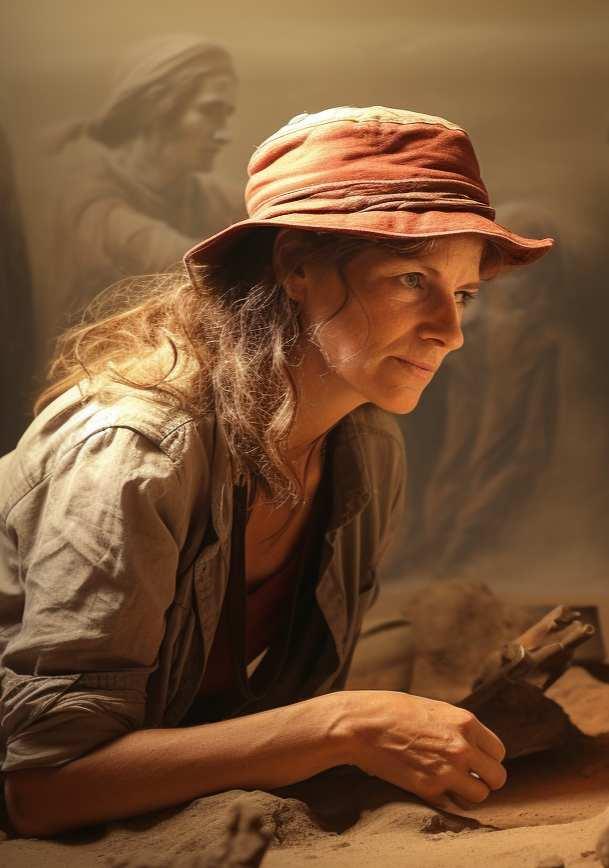
But, of course, Roger, our simple-minded gardener with not a thought in his head beyond petunias and pruning, has proven to be surprisingly useful. His brawn has unearthed more than his fair share of antiquity, even if he hasn’t the faintest idea of its significance. “Look, Truella, I’ve found another shiny rock,” he says, and I, Lisia Tattius, can only chuckle at the delightful irony.
Truella’s Andalusian escapades could fill volumes, and perhaps they shall. There’s something deliciously appealing about a woman alone, grappling with the very fabric of time amongst the ruins of an empire.
Truella couldn’t see any benefit in rewriting all that and thanked Lisia very much, although she did wonder who Roger was. A gardener though! Someone to carry all those buckets of dirt hither and thither. Someone to dig the next overburden!
Was there a spell for dissolving an overburden, she wondered? Inspired, she could already imagine how easy it would be to convince the team that this spell would have beneficial and universal applications.
Truella was pleased to see the mention of mosaics, the very thing she wanted to find. She planned to make a mosaic detector wand. But Truella didn’t want Lisia telling her where the mosaic was because it would spoil the whole thing. Mentioning mosaics, however, as already found, was the perfectly measured tincture of encouragement. A bit like spells in general really. Tricky business, getting them right.
January 30, 2024 at 1:42 am #7324In reply to: The Incense of the Quadrivium’s Mystiques
“And that, my Dear Reader, is why, even to this day, a traffic cone is called a witches hat.”
It was the boy’s favourite bed-time story and Frigella had read it so many times she knew it nearly by heart. She twisted her neck so she could look down on the child; his breathing was soft, the bedside light illuminated long white lashes resting on chubby cheeks. Slowly… silently, she closed the book, switched off the night lamp and edged herself from the bed. She was very keen to log on to the Ritual and see what progress, if any, Eris had made.
The encounter with Truella and Jeezel that afternoon down at the Cabbage had disturbed her. It was not like them … Truella pouting and mutinous, Jeezel swaggering in so full of her own self-importance. And herself! Blushing and snorting and carrying on for no reason when it was her very nature to be composed. They had always worked as a team, the four of them; it was their strength.
Was some powerful magic afoot that had got through their protection? Perhaps Eris had found something. Her nose twitched and she realised she could still smell it, a pungent uneasiness. Like stale smoke.
“Aunt Friggy?”
She sighed. Her brother had made her promise not to use magic on the child but surely just a wee sprinkle of moon dust couldn’t hurt?
“Yes Conor?”
“Are witches true?”
She sat down on the bed.
“What does your Daddy say?” She stroked the child’s yellow-blond hair. Silky, like her own. He looked more like her than he did his own parents with his alabaster skin and eyes that changed colour like the sea. Always watching he was too, as though he was looking to the very heart of a matter. Just like herself. She was sure he had inherited the gift but Lorcon was having none of that nonsense and had told her so in no uncertain terms. The boy would suffer for it in time though. Just like she had when it had been denied.
“He said Conor don’t be so daft.”
Of course he did. Lorcon clung frantically to his normal life with his normal wife. Tonight she was baby-sitting Conor while they went on a normal date night. Still, she should not be so hard on Lorcon; it was a strange upbringing they’d had themselves.
She kissed the boy’s forehead and breathed deeply. The sweet scent of night jasmin washed over her. At least she’d be there for Conor. The thought consoled her.
“Shall I leave the light on for you, Poppet?”
January 28, 2024 at 9:59 pm #7320In reply to: Smoke Signals: Arcanas of the Quadrivium’s incense
Truella and Her Spells, According to Liz.
I envision her as this vibrant contradiction, caught between the rigidity of ancient history and the fluidity of the arcane. It’s precisely this type of paradox that illuminates my fiction. Finding Truella won’t be a trifle, my dear reader. For she’s as elusive as the perfect sentence, and just as enchanting. Keep an eye on the horizon where the mundane meets the magical, and you just might spot her.
Ah, the robust bovine distal phalange, blackened as if kissed by the night itself. Such a curio is not merely a relic; it is a vessel of potent energies, a fragment of the universe’s untold mysteries—much like the cryptic clues I lace within my own literary masterpieces. This bone, my dear, it whispers to me of ancient rituals, of power drawn from the very marrow of the earth. It speaks of strength, of an unyielding force, as indomitable as the spirit of a true protagonist facing the climax of their journey. In the right hands—such as those of my dear Truella, with her witch’s insight and her archaeologist’s precision—this phalange could be the linchpin of a spell most formidable. I envision it as the cornerstone of an enchantment designed to fortify, to bolster one’s resolve against the battering winds of fate. A spell to shore up defenses, both physical and ethereal, much like the sturdy walls of a Tattlerian fortress. Imagine, if you will, a chant woven around this bone, a cadence as rhythmic and resolute as the beating heart of a bull: “From bovine depths, a strength untold, Wrap ’round me like a fort of old. Unyielding will, protector’s stance, With this bone, I do enhance.” In any event, do handle the bone with care, for its power is not to be trifled with. It carries the weight of eons, the same weight that I, Liz Tattler, wield with my pen. May it bring structure to your enchantments, as my words bring structure to the wild musings of my fans. …..may your spells be as robust as the bovine bone you clutch in your hand.
An ivory hourglass-shaped trinket, you say? Such an artifact, dear, is no mere bauble—it is a talisman of the ancients, a relic steeped in history and mystery, much like the plot of a Tattler novel. Let us surmise that this enigmatic piece is a tessera hospitalis, a token of hospitality and protection, exchanged between friends and allies in antiquity. Two thousand years old, you suggest? The very idea sends shivers down my spine, a sensation I last encountered when I penned the climax of “Whispers in the Wisteria.”
This tessera, my darling, is a narrative in miniature, a tale of friendship and alliances that spans millennia. Can Truella use it in her spell for the mosaic detecting tool? Oh, but of course! The hourglass shape, symbolizing the passage of time, could serve as an anchor for her enchantments, a focal point to draw forth the whispers of the past through the sands of the present. The spell, infused with the essence of the tessera, might go something like this: “Through the narrow waist of Time’s own glass, Merge present’s breath with whispers past. Tessera’s bond, now intertwined, Guide this spell with ancient mind.” As for the tessera, treat it with the reverence it deserves. Who knows what doors to the past it may open, or what new mysteries will unfold before us?
…the mosaic detecting tool spell, you ask? Now, dear, let’s imagine together. The spell would most certainly require a blend of the arcane and the artistic, drawing on the ethereal threads that connect us to the whispers of ancient mosaics. Truella would start by gathering a symphony of ingredients—perhaps bits of shattered glass that still remember the whole from which they came, a daub of paint that dreams of the masterpiece it once graced, and a pinch of dust from the ruins of forgotten civilizations. Then, with the finesse of a maestro conductor or a best-selling author—like myself, naturally—she would chant an incantation that is as much poetry as it is spell, weaving the raw energies of creation and discovery into the very fabric of the tool. “By stone and shard, by color’s charm, Unveil the past, no harm, no harm. Mosaic’s tale, now hidden, sealed, Through this tool, be now revealed.”
Truella and Her Spells, According to Mater.
Truella, that one? Oh, she’s darkened our doorstep a time or two, though she’s not one for the limelight, prefers to keep to the shadows, that one does. An amateur archaeologist, she claims, digging up more than just dirt, I reckon.
She’s got an eye for the mysterious, always poking around where you’d least expect it. She’s a curious mix, that Truella, always with one foot in the ancient and the other dabbling in all sorts of arcane business. Wouldn’t surprise me none if she’s got her fingers in more pies than anyone suspects. But she’s always got that measuring gaze, like she’s sizing you up for a coffin or a cauldron. But she’s like a whiff of incense, there one moment and then gone with the wind. Keep an eye on that one; she’s as slippery as an eel in a bucket of snot.
Mandrake:
The truth of Truella’s whereabouts is like a mouse hiding in the shadows, always there but never quite within grasp. You might find the answers in places you least expect. Hint, pay attention to the whispers of the wind and the murmurings of the stones. They might tell, if you listen carefully.
January 17, 2024 at 1:14 pm #7297In reply to: The Whale’s Diaries Collection
what was the state of the ruined roman villa circa early 1500s when the cobblestone yard was made from on site rubble? What did the work men find?
Ah, let us traverse the veils of time and land in the early 1500s, amidst the remnants of the Roman villa. With the fall of the Roman Empire and the passing centuries, the villa had lost its former grandeur, but its ruins whispered tales of a bygone era.
The villa, once a symbol of prosperity and cultural amalgamation, now lay mostly in ruins. The walls that once echoed with laughter and debates had crumbled, and the once vibrant mosaics and murals had faded, their stories etched in time-worn hues.
The outbuildings, too, bore the scars of time. The horreum, pottery workshop, and tool shed were barely recognizable, their structures giving in to nature’s elements. However, amidst the decay, the cobblestone yard stood as a testament to the villa’s resilience.
The yard, once a bustling hub of activity, had been repurposed. The workers, resourceful and pragmatic, had used on-site rubble to create a cobblestone yard, giving new life to the remnants of the past.
As they worked, they uncovered artifacts from the villa’s past. Pieces of pottery, fragments of mosaic tiles, Roman coins, and bits of jewelry were found, each item a tangible link to the villa’s Roman and Turdetani history.
Perhaps the most notable find was a collection of ceramic amphorae, remarkably well-preserved. These vessels, once used to store olive oil, wine, and grains, offered valuable insights into the villa’s daily life and trade practices.
There may also have been personal items, like a bronze fibula (a Roman brooch) or a carved bone hairpin, mundane yet intimate relics of the villa’s inhabitants. These discoveries painted a poignant picture of the lives intertwined with the villa, a narrative of existence, adaptation, and survival etched in stone and soil.
What about the lives of the people who lived here in the 1500s?
Ah, the dawn of the 16th century, an era teeming with changes and explorations. Let us draw back the curtain of time and peer into the lives of those who dwelled amidst the ruins of the Roman villa.
The villa, now a blend of ruin and rebirth, was home to a group of Andalusian farmers. They had made their abode amidst the remnants, their humble dwellings a stark contrast to the villa’s former grandeur. Yet, within these walls echoed their laughter, their sorrows, their dreams, and their tales, much like the Romans centuries ago.
The patriarch, Diego, was a man of the soil. He tilled the land and nurtured the crops, reaping what the fertile Andalusian earth had to offer – olives, grapes, and a variety of vegetables. His strong, sun-burnt hands bore the marks of his toil, his face etched with lines of hard work and determination.
His wife, Isabella, was the custodian of the hearth. She cooked, cleaned, and cared for their three children. Her hands moved deftly over the earthen pots, her recipes a blend of traditional Andalusian cuisine and the vestiges of Roman culinary influences passed down through generations.
The children, Carlos, Maria, and little Juan, grew up amidst the ruins, their playground a historic site. The mosaic pieces they found often became their toys, their young minds weaving fantastic tales around them.
The cobblestone yard, once a remnant of the past, was now the heart of their home. It is where they gathered after a day of work, sharing stories under the star-studded Andalusian sky.
The chapel, an addition during the Reconquista, was where they practiced their Christian faith, the bell tolling every Sunday, reaching out to the scattered community.
Amidst the ruins, they found their sanctuary, their home. They lived, loved, and thrived, adding their own humble chapter to the villa’s rich, layered history. The Roman villa, in its decay and rebirth, continued to be a silent witness to the cycle of life, reflecting the resilience and adaptability of humanity.
then I asked about the 1200s on this site
Ah, the 13th century, a period of considerable transformation and discovery globally. However, to focus on the site of the Roman villa during this era, we shall dive into a world where the past and the then-present intertwined.
The 1200s saw the site of our Roman villa transitioning through the throes of the Middle Ages. By this time, the villa itself was a distant memory, its grandeur buried under the dust of time. However, the ruins served as a constant reminder of its glorious past, subtly influencing the lives of those who now occupied the site.
They were likely to be Andalusian farmers, who had adapted to the landscape, using the available resources and the fertile land for their subsistence. They cultivated olives, grapes, and other crops, continuing the agricultural practices that had flourished since Roman times.
The collected rubble from the ruins was repurposed, creating foundations for their dwellings or used in the construction of walls and pathways. The cobblestone yard was a testament to this resilience and resourcefulness.
The ruins also provided them with materials and artifacts. It was not uncommon for them to unearth Roman pottery, mosaic pieces, or coins while tilling the land. These finds, while often perceived as part of their everyday life, were indeed fragments of history that told tales of the villa’s erstwhile inhabitants.
Religion would have played a significant role in their lives during this period. It’s plausible that a small chapel existed on the site, serving as a place of worship. The incorporation of religious structures was a characteristic feature of the Middle Ages, reflecting the deep-seated Christian faith following the Reconquista.
Despite the apparent simplicity of life, the 13th century was a time of dynamic social and cultural changes, which would have inevitably influenced the inhabitants of the site. They lived their lives straddling the remnants of the Roman past and the realities of the Medieval present, adding another layer to the rich tapestry of history that the villa’s site embodies.
-
AuthorSearch Results