

Search Results for 'seem'
-
AuthorSearch Results
-
January 23, 2023 at 6:13 am #6448
In reply to: Orbs of Madjourneys
In the muggy warmth of the night, Yasmin tossed and turned on her bed. A small fan on the bedside table rattled noisily next to her but did little to dispel the heat. She kicked the thin sheet covering her to the ground, only to retrieve it and gather it tightly around herself when she heard a familiar sound.
“You little shit,” she hissed, slapping wildly in the direction of the high pitched whine.
She could make out the sound of a child crying in the distance and briefly considered getting up to check before hearing quick footsteps pass her door. Sister Aliti was on duty tonight. She liked Sister Aliti with her soft brown eyes and wide toothy smile — nothing seemed to rattle her. She liked all the Nuns, perhaps with the exception of Sister Finnlie.
Sister Finnlie was a sharp faced woman who was obsessed with cleanliness and sometimes made the children cry for such silly little things … perhaps if they talked too loudly or spilled some crumbs on the floor at lunch time. “Let them be, Sister,” Sister Aliti would admonish her and Sister Finnlie would pinch her lips and make a huffing noise.
The other day, during the morning reflection time when everyone sat in silent contemplation, Yasmin had found herself fixated on Sister Finnlie’s hands, her thin fingers tidily entwined on her lap. And Yasmin remembered a conversation with her friends online about AI creating a cleaning woman with sausage fingers. “Sometimes they look like a can of worms,” Youssef had said.
And, looking at those fingers and thinking about Youssef and the others and the fun conversations they had, Yasmin snort laughed.
She had tried to suppress it but the more she tried the more it built up inside of her until it exploded from her nose in a loud grunting noise. Sister Aliti had giggled but Sister Finnlie had glared at Yasmin and very pointedly rolled her eyes. Later, she’d put her on bin cleaning duty, surely the worst job ever, and Yasmin knew for sure it was pay back.
January 21, 2023 at 4:17 pm #6426In reply to: Orbs of Madjourneys
The artificial lights of Berlin were starting to switch off in the horizon, leaving the night plunged in darkness minutes before the sunrise. It was a moment of peace that Xavier enjoyed, although it reminded him of how sleepless his night had been.
The game had taken a side step, as he’d been pouring all his attention into his daytime job, and his personal project with Artificial Life AL. It was a long way from the little boy at school with dyslexia who was using cheeky jokes as a way to get by the snides. Since then, he’d known some of the unusual super-powers this condition gave him as well. Chiefly: abstract and out-of-the-box thinking, puzzle-solving genius, and an almost other-worldly ability at keeping track of the plot. All these skills were in fact of tremendous help at his work, which was blending traditional areas of technology along with massive amounts of loosely connected data.
He yawned and went to brush his teeth. His usual meditation routine had also been disrupted by the activity of late, but he just couldn’t go to bed without a little time to cool off and calm down the agitation of his thoughts.
Sitting on the meditation mat, his thoughts strayed off towards the preparation for the trip. Going to Australia would have seemed exciting a few years back, but the idea of packing a suitcase, and going through the long flight and the logistics involved got him more anxious than excited, despite the contagious enthusiasm of his friends. Since he’d settled in Berlin, after never settling for too long in one place (his job afforded him to work wherever whenever), he’d kind of stopped looking for the next adventure. He hadn’t even looked at flight options yet, and hoped that the building momentum would spur him into this adventure. For now, he needed the rest.
The quirk quest assigned to his persona in the game was fun. Monkeys and Golden banana to look for, wise owls and sly foxes, the whimsical goofy nature of the quest seemed good for the place he was in.
AL had been suggesting the players to insert the game elements into their realities, and sometimes its comments or instructions seemed to slip between layers of reality — this was an intriguing mystery to Xavier.
He’d instructed AL to discreetly assist Youssef with his trouble — the Thi Gang seemed to be an ethical hacker developer company front for more serious business. Chatter on the net had tied it to a network of shell companies involved in some strange activities. A name had popped up, linked to mysterious recluse billionaire Botty Banworth, the owner of Youssef’s boss rival blog named Knoweth.He slipped into the bed, careful not to wake up Brytta, who was sleeping tightly. It was her day off, otherwise she would have been gone already to her shift. It would be good to connect in the morning, and enjoy some break from mind stuff. They had planned a visit to Kantonstrasse (the local Chinatown) for Chinese New Year, and he couldn’t wait for it.
January 21, 2023 at 3:30 pm #6425In reply to: The Chronicles of the Flying Fish Inn
It is a challenge of utmost magnitude to keep track of time here in this land where the Dream Time is so nigh as to make its presence oft palpable in the very air. The subtle shifts in timelines and probabilities do naught to aid in this endeavor. No coincidence “Dream Time” is the label on Aunt Idle’s not-so-secret stash — she could not keep its location secret lest she forget it during the waking hours.
We jumped without warning into 2023. At 15, I am a grown-up now, so says Mater, and I could not wait to hear such words from her. She is always here, such a comfort, unchanging, unyielding, the only immutable force in the universe.
So now, life can start to unfold in front of me in the manner of my choosing, rather than being dictated by the sorry state of affairs of my family. I have set my sights upon a boarding school that may provide such an escape, but it will require the procurement of the tuition money — which will take a few more years to acquire. Patience, I have, at least for now.The Inn is ever in need of assistance it seems. I don’t know how it came to be, but some Italian chap, Georgio, who came last year during the pandemic and got stranded with us, made such a fuss about Mater’s famous bush tucker that the Inn became fashionable overnight. Obviously Mater, bless her soul, doesn’t cook, a mercy for which we are all thankful. Said tucker was truly the handiwork of Tiku and Finly, but Georgio thought that “Mater’s tucker” has a nicer ring. Whatever suits these loonies’ fancy, it did bring us a nice stream of income in return.
January 19, 2023 at 10:49 am #6419In reply to: Orbs of Madjourneys
“I’d advise you not to take the parrot, Zara,” Harry the vet said, “There are restrictions on bringing dogs and other animals into state parks, and you can bet some jobsworth official will insist she stays in a cage at the very least.”
“Yeah, you’re right, I guess I’ll leave her here. I want to call in and see my cousin in Camden on the way to the airport in Sydney anyway. He has dozens of cats, I’d hate for anything to happen to Pretty Girl,” Zara replied.
“Is that the distant cousin you met when you were doing your family tree?” Harry asked, glancing up from the stitches he was removing from a wounded wombat. “There, he’s good to go. Give him a couple more days, then he can be released back where he came from.”
Zara smiled at Harry as she picked up the animal. “Yes! We haven’t met in person yet, and he’s going to show me the church my ancestor built. He says people have been spotting ghosts there lately, and there are rumours that it’s the ghost of the old convict Isaac who built it. If I can’t find photos of the ancestors, maybe I can get photos of their ghosts instead,” Zara said with a laugh.
“Good luck with that,” Harry replied raising an eyebrow. He liked Zara, she was quirkier than the others.
Zara hadn’t found it easy to research her mothers family from Bangalore in India, but her fathers English family had been easy enough. Although Zara had been born in England and emigrated to Australia in her late 20s, many of her ancestors siblings had emigrated over several generations, and Zara had managed to trace several down and made contact with a few of them. Isaac Stokes wasn’t a direct ancestor, he was the brother of her fourth great grandfather but his story had intrigued her. Sentenced to transportation for stealing tools for his work as a stonemason seemed to have worked in his favour. He built beautiful stone buildings in a tiny new town in the 1800s in the charming style of his home town in England.
Zara planned to stay in Camden for a couple of days before meeting the others at the Flying Fish Inn, anticipating a pleasant visit before the crazy adventure started.

Zara stepped down from the bus, squinting in the bright sunlight and looking around for her newfound cousin Bertie. A lanky middle aged man in dungarees and a red baseball cap came forward with his hand extended.
“Welcome to Camden, Zara I presume! Great to meet you!” he said shaking her hand and taking her rucksack. Zara was taken aback to see the family resemblance to her grandfather. So many scattered generations and yet there was still a thread of familiarity. “I bet you’re hungry, let’s go and get some tucker at Belle’s Cafe, and then I bet you want to see the church first, hey? Whoa, where’d that dang parrot come from?” Bertie said, ducking quickly as the bird swooped right in between them.
“Oh no, it’s Pretty Girl!” exclaimed Zara. “She wasn’t supposed to come with me, I didn’t bring her! How on earth did you fly all this way to get here the same time as me?” she asked the parrot.
“Pretty Girl has her ways, don’t forget to feed the parrot,” the bird replied with a squalk that resembled a mirthful guffaw.
“That’s one strange parrot you got here, girl!” Bertie said in astonishment.
“Well, seeing as you’re here now, Pretty Girl, you better come with us,” Zara said.
“Obviously,” replied Pretty Girl. It was hard to say for sure, but Zara was sure she detected an avian eye roll.
They sat outside under a sunshade to eat rather than cause any upset inside the cafe. Zara fancied an omelette but Pretty Girl objected, so she ordered hash browns instead and a fruit salad for the parrot. Bertie was a good sport about the strange talking bird after his initial surprise.
Bertie told her a bit about the ghost sightings, which had only started quite recently. They started when I started researching him, Zara thought to herself, almost as if he was reaching out. Her imagination was running riot already.
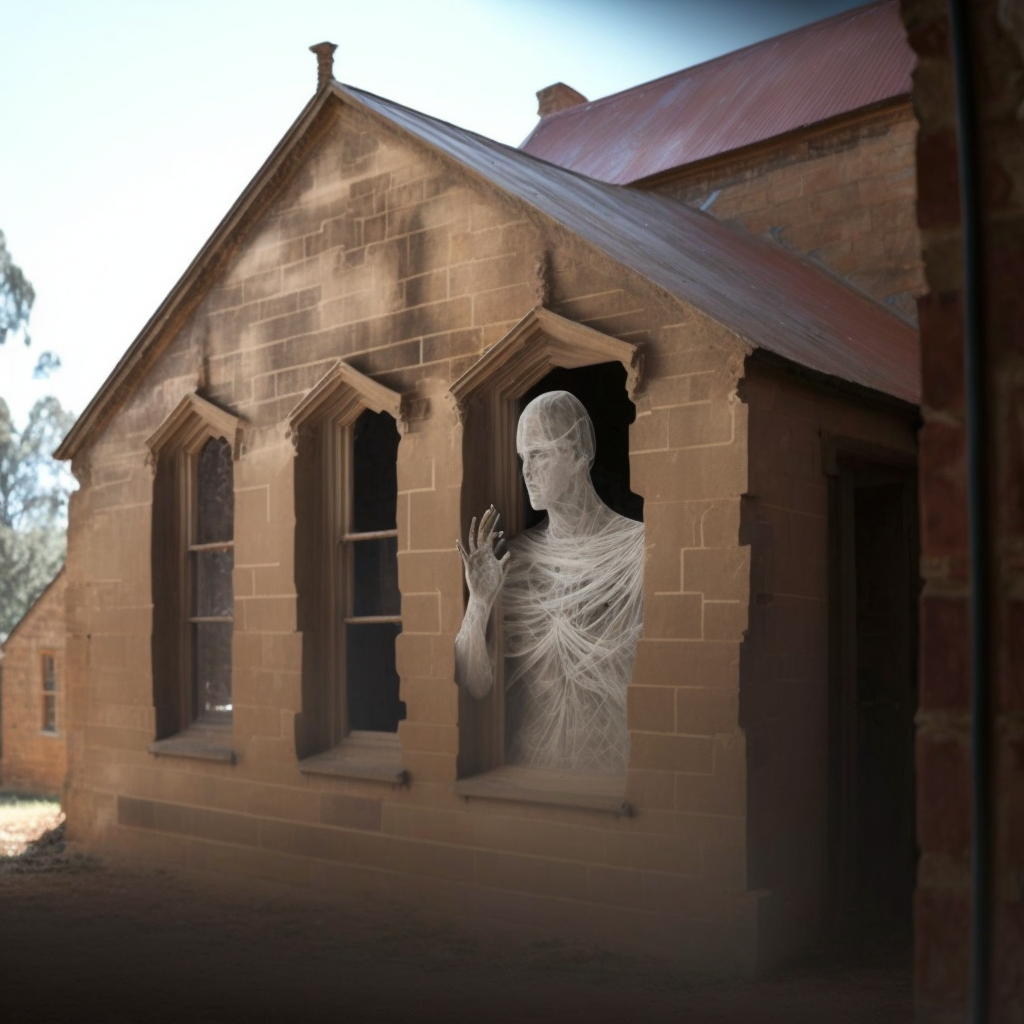
Bertie showed Zara around the church, a small building made of sandstone, but no ghost appeared in the bright heat of the afternoon. He took her on a little tour of Camden, once a tiny outpost but now a suburb of the city, pointing out all the original buildings, in particular the ones that Isaac had built. The church was walking distance of Bertie’s house and Zara decided to slip out and stroll over there after everyone had gone to bed.
Bertie had kindly allowed Pretty Girl to stay in the guest bedroom with her, safe from the cats, and Zara intended that the parrot stay in the room, but Pretty Girl was having none of it and insisted on joining her.
“Alright then, but no talking! I don’t want you scaring any ghost away so just keep a low profile!”
The moon was nearly full and it was a pleasant walk to the church. Pretty Girl fluttered from tree to tree along the sidewalk quietly. Enchanting aromas of exotic scented flowers wafted into her nostrils and Zara felt warmly relaxed and optimistic.
Zara was disappointed to find that the church was locked for the night, and realized with a sigh that she should have expected this to be the case. She wandered around the outside, trying to peer in the windows but there was nothing to be seen as the glass reflected the street lights. These things are not done in a hurry, she reminded herself, be patient.
Sitting under a tree on the grassy lawn attempting to open her mind to receiving ghostly communications (she wasn’t quite sure how to do that on purpose, any ghosts she’d seen previously had always been accidental and unexpected) Pretty Girl landed on her shoulder rather clumsily, pressing something hard and chill against her cheek.
“I told you to keep a low profile!” Zara hissed, as the parrot dropped the key into her lap. “Oh! is this the key to the church door?”
It was hard to see in the dim light but Zara was sure the parrot nodded, and was that another avian eye roll?
Zara walked slowly over the grass to the church door, tingling with anticipation. Pretty Girl hopped along the ground behind her. She turned the key in the lock and slowly pushed open the heavy door and walked inside and up the central aisle, looking around. And then she saw him.
Zara gasped. For a breif moment as the spectral wisps cleared, he looked almost solid. And she could see his tattoos.
“Oh my god,” she whispered, “It is really you. I recognize those tattoos from the description in the criminal registers. Some of them anyway, it seems you have a few more tats since you were transported.”
“Aye, I did that, wench. I were allays fond o’ me tats, does tha like ’em?”
He actually spoke to me! This was beyond Zara’s wildest hopes. Quick, ask him some questions!
“If you don’t mind me asking, Isaac, why did you lie about who your father was on your marriage register? I almost thought it wasn’t you, you know, that I had the wrong Isaac Stokes.”
A deafening rumbling laugh filled the building with echoes and the apparition dispersed in a labyrinthine swirl of tattood wisps.
“A story for another day,” whispered Zara, “Time to go back to Berties. Come on Pretty Girl. And put that key back where you found it.”
 January 19, 2023 at 1:18 am #6415
In reply to: Orbs of Madjourneys
Yasmin and Zara were online discussing the upcoming reunion.
“AirFiji!!!!” exclaimed Zara. “I thought you were somewhere in Asia – how come you are booked on Air Fiji?”
“Im in Fiji for a year, volunteering at an orphanage in Suva,” Yasmin answered patiently, although she did allow herself a small eye roll. She was sure it wasn’t the first time she’d told Zara— it was a big mystery to her why AI had chosen Zara as leader for the game as she had the attention span of a goldfish. On the other hand, the unpredictability added an extra element of excitement to the game. After all, wasn’t it Zara’s idea that they all meet at the Flying Fish Inn?
She slapped a mosquito on her arm. For some reason they seemed to love her and she already had big red welts all over her body. She used so much insect lotion that the locals had started calling her Citronella Girl; unfortunately it didn’t seem to deter the mozzies.
“I’ve got to go,” she messaged. “I’m helping serve lunch. Can’t wait to see you all!”
January 17, 2023 at 9:06 pm #6410In reply to: Orbs of Madjourneys
Real-life Xavier was marveling at the new AL (Artificial Life) developments on this project he’d been working on. It’s been great at tidying the plot, confusing as the plot started to become with Real-life characters named the same as their Quirky counterparts ones.
Real-life Zara had not managed to remain off the computer for very long, despite her grand claims to the contrary. She’d made quick work of introducing a new player in the game, a reporter in an obscure newspaper, who’d seemed quirky enough to be their guide in the new game indeed. It was difficult to see if hers was a nickname or nom de plume, but strangely enough, she also named her own character the same as her name in the papers. Interestingly, Zara and Glimmer had some friends in common in Australia, where RL Zara was living at the moment.
Anyways… “Clever AL” Xavier smiled when he saw the output on the screen. “Yasmin will love a little tidiness; even if she is the brains of the group, she has always loved the help.”
Meanwhile, in the real world, Youssef was on his own adventure in Mongolia, trying to uncover the mystery of the Thi Gang. He had been hearing whispers and rumors about the ancient and powerful group, and he was determined to find out the truth. He had been traveling through the desert for weeks, following leads and piecing together clues, and he was getting closer to the truth.
Zara, Xavier, and Yasmin, on the other hand, were scattered around the world. Zara was in Australia, working on a conservation project and trying to save a group of endangered animals. Xavier was in Europe, working on a new project for a technology company. And Yasmin was in Asia, volunteering at a children’s hospital.
Despite being physically separated, the four friends kept in touch through video calls and messages. They were all excited about the upcoming adventure in the Land of the Quirks and the possibility of discovering their inner quirks. They were also looking forward to their trip to the Flying Fish Inn, where they hoped to find some clues about the game and their characters.
In the game, Glimmer Gambol’s interactions with the other characters will be taking place in the confines of the Land of the Quirks. As she is the one who has been playing the longest and has the most experience, she will probably be the one to lead the group and guide them through the game. She also has some information that the others don’t know about yet, and she will probably reveal it at the right time.
As the game and the real-world adventures are intertwined, the characters will have to navigate both worlds and find a way to balance them. They will have to use their unique skills and personalities to overcome challenges and solve puzzles, both in the game and in the real world. It will be an exciting and unpredictable journey, full of surprises and twists.
January 17, 2023 at 9:43 am #6396In reply to: Orbs of Madjourneys
Youssef woke up with a hangover. The guy from the restaurant had put fermented horse milk in his yak butter tea and he was already drunk before he could realize it. Apparently it had been a joke played on him by some of the team members he suspected didn’t quite like the humour of his real life shirt collection. Especially the one with the man shouting at his newspaper on his toilets.
As soon as he had gotten out of the yurt, before he could go have some breakfast, his boss, Miss Tartiflate, pounced on him because there was something wrong with THE BLOG. And Youssef was the one in charge of it. And it was important because people in the world were expecting her posts about the shooting everyday. Truth is, since they couldn’t find the last Mongolian shaman, who apparently called himself Lama Yoneze, and the views had dropped dramatically. Youssef suspected Miss Tartiflate was not as ignorante as she wanted him to believe and had broken the blog on purpose so that her own boss wouldn’t accuse her of being lazy.“I have a reputation, you know!”
She had said that looking like he didn’t have one, and nobody cared anyway.
Youssef looked at the clock on his phone. They were supposed to meet with Zara, Xavier and Yasmine in thirty minutes. He had tried to sort out THE BLOG problem, but nothing seemed to work, and time was running out. Despite all being ok on the admin console, nothing was showing up on the page. He had called Gang Thi, the Nepalese company in charge of the blog, three times. Each time the receptionist hang up on him while attempting to put him on hold, or so she said. Now, nobody even bother to answer the damn phone.
Miss Tartiflate passed her head between the curtains of the yurt.
“Are you finished yet ?” she asked that as if he was on the throne.
“Nope!”
“What!? How? Do you have sausage fingers? My 5 years old daughter is more nimble than you with computers.”
“Well, you should have brought her with us then,” said Youssef with an irritated smile, fed up by her constant useless interruptions.
She grunted and closed the curtains angrily. Youssef growled like a bear, showing his bare teeth. Everybody knew why she jumped on the occasion for this trip: needed some fresh air from her nimble daughter and her husband.
An alert showed up on his phone : “You’ve got a message from 💣Gang Thi💣”. The bomb in the title looked suspicious, and his stomach growled, reminding him he hadn’t eaten this morning. He clicked to open it.
The face of a mummy looking like Darth Vader and laughing like the Joker jumped on his screen. After a few seconds a message started to appear in a tongue he couldn’t decipher.
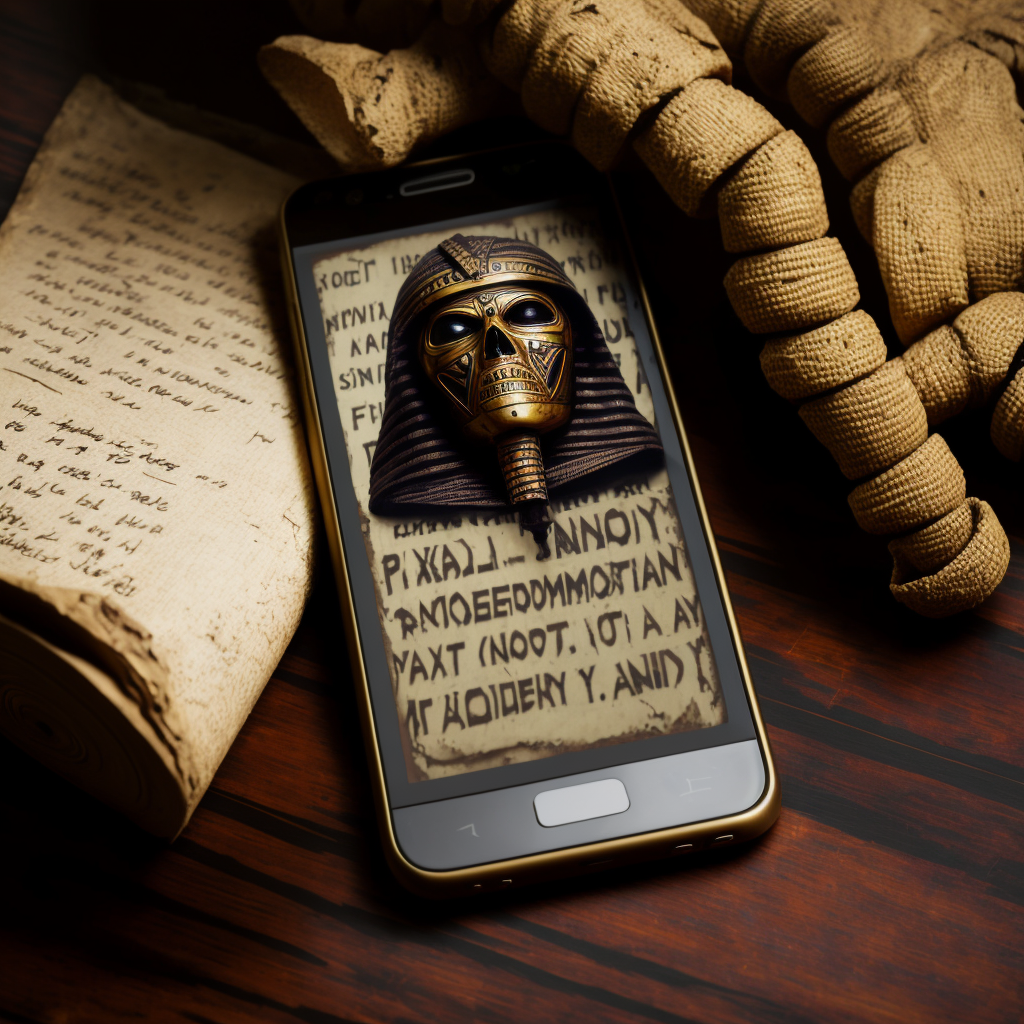
Youssef looked at the clock and almost threw his phone on the ground as the mummy started to laugh again.
He would definitely have to miss the meeting with his friends.January 13, 2023 at 9:12 pm #6382In reply to: Prompts of Madjourneys
Write more about the group of people who lived inside of giant mushrooms, making it sound exciting and fun, and maybe a bit dangerous due to the nature of the mushrooms
As the group journeyed deeper into the Land of the Quirks, they stumbled upon a group of people living inside of giant mushrooms. The mushrooms were enormous, some as tall as skyscrapers, and they seemed to glow with an ethereal light. The group was amazed as they walked through the forest of mushrooms, each one unique in shape and size.
The people who lived inside of the mushrooms were a friendly and welcoming bunch, they welcomed the group with open arms and invited them to explore their homes. The inside of the mushrooms was a magical and mysterious place, the walls and ceilings were covered in a soft, velvety texture and the floors were made of a spongy, springy material. The light inside the mushrooms was soft and diffused, creating a warm and inviting atmosphere.
As the group explored the mushroom homes, they discovered that the people who lived there had a deep connection to the mushrooms. They used the mushrooms as a source of food, shelter, and medicine. They had learned to harness the unique properties of the mushrooms to create everything they needed to survive.
The group also discovered that the mushrooms had a dangerous side. The mushrooms were not only a source of life, but also a source of death. The group was warned that the mushrooms were unpredictable and that they should be careful when exploring. Some mushrooms were poisonous, others were carnivorous, and still, others had mind-altering properties.
Despite the danger, the group was excited to explore the mushrooms and learn more about the people who lived there. They knew that the journey would be filled with challenges, but they were determined to overcome them and discover the secrets of the mushrooms. The group had a lot of fun and adventure living with the people inside of giant mushrooms, and they learned a lot about the nature of the mushrooms and their own nature.
January 13, 2023 at 8:53 pm #6380In reply to: Prompts of Madjourneys
After a few tries:
- As the group has split up at the fork of the road, we discover a total of 4 new characters from the Land of the Quirks. Tell us how each group is encountering some or all of these characters, who they are, their gibberish-sounding names, and what is their quirks, and what they wear, or their activities. Make our main characters and maybe some of the new ones meet back at a common spot with a special event after that.
- please rewrite the above, retaining the eccentricity but more grounded, less childish, and with a little darker tone and mystery.
- please try again, make Spoink and Flibbertigibbet human and give them less endearing or friendly behaviours; name two more characters met on the road.
As the group split up at the fork of the road, each one encountered new characters from the Land of the Quirks.
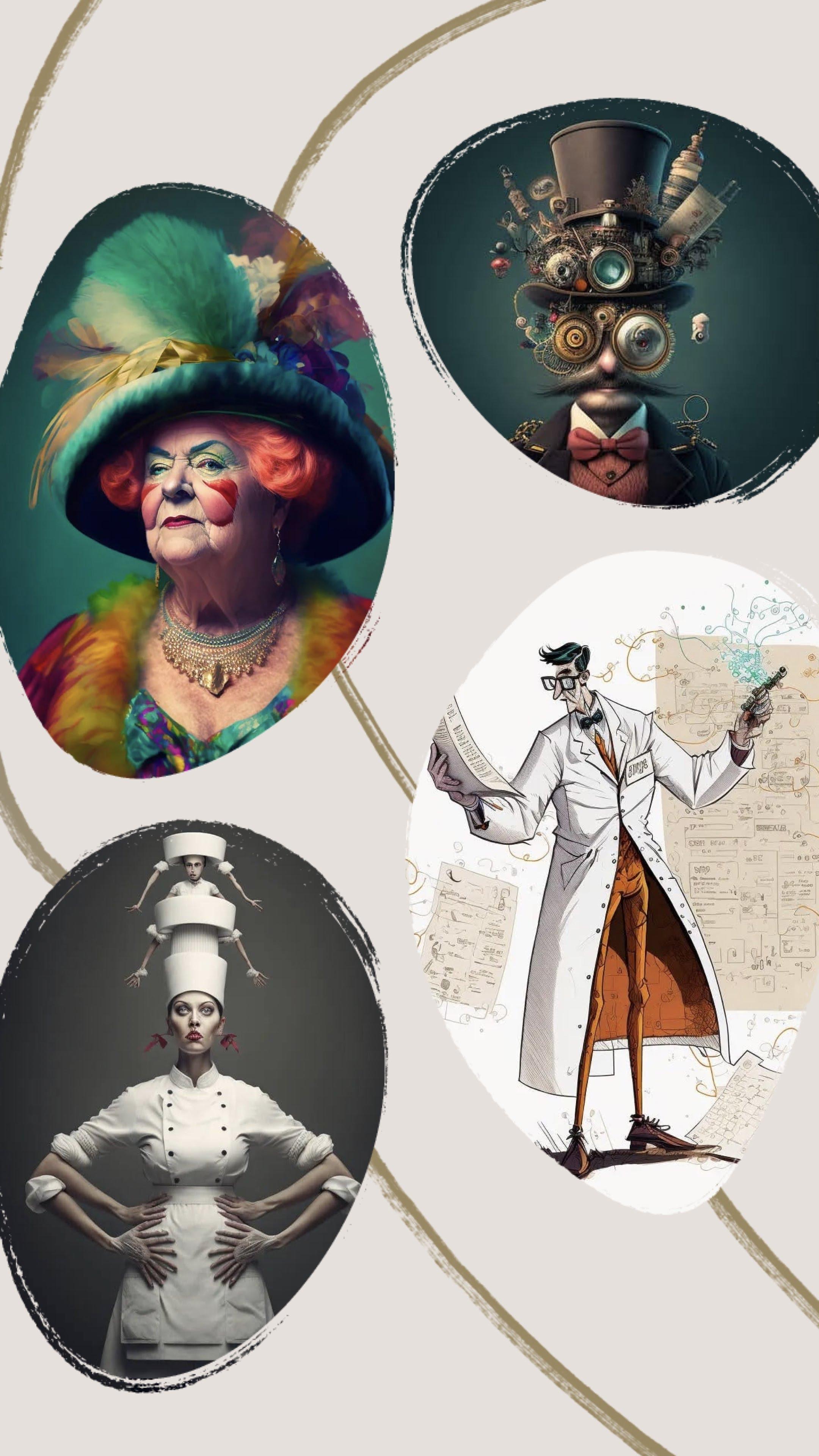
Zara and Yasmin, who took the left path, met a man named “Sproink” who was a small, wiry man with a spring for a tail. He was always bouncing around and speaking in a language that sounded like a mix of gibberish and music. Sproink was a collector of shiny objects and had a bag full of them, he was also a scavenger, always looking for things to add to his collection. He was wearing a small top hat and a monocle. He was also known to be a bit of a thief and a con artist.
Xavier and Youssef, who took the right path, met a woman named “Flibbertigibbet” a tall, slender woman that had multiple arms. Flibbertigibbet was very talkative and friendly, always trying to strike up a conversation. She spoke in a language that sounded like a mix of gibberish and baby talk. She was a chef and was always carrying a pot and a spoon, but she also had a dark side, she was known to be a bit of a manipulator and a spy, always observing and gathering information for a mysterious organization. She was wearing a big chef hat and apron.
As the group met back at the fork, they were surprised to find that Sproink and Flibbertigibbet had also met there. The four new characters joined the group, and together they continued their journey to find the “Key of Quirks”. Along the way, they met two more characters;
They met a man named “Gibber” who was a tall, gaunt man with elongated limbs and fingers. He was always speaking in a language that sounded like a mix of gibberish and numbers. He was a mathematician and a scientist, always working on complex equations and theories. He was known to be a bit of a loner, and didn’t interact much with others. He was wearing a lab coat and goggles.
They also met a woman named “Glimmer” she was a short, plump woman with a shimmering skin that seemed to change color depending on the light. She was always speaking in a language that sounded like a mix of gibberish and poetry. She was an artist and a performer, always creating and performing in different shows. She was known to be a bit of a flirt and a bit of a drama queen. She was wearing a colorful and eccentric clothing, such as a flowy dress and a large hat adorned with feathers.
As the group journeyed on, they encountered more characters, each one with their own unique quirks and personalities. They met a variety of people, some friendly and some not so friendly, but all of them adding to the mysterious and unknown nature of the Land of the Quirks.
As the group reached the end of their journey and found the “Key of Quirks”, they realized that the key was not just a physical object but a symbol of acceptance and embracing individuality. They learned that the true key to leaving the Land of the Quirks was understanding and accepting the quirks of oneself and others.
The group had a bittersweet goodbye with their new friends, Sproink, Flibbertigibbet, Gibber and Glimmer, and the other characters they had met. They knew that they would always carry a piece of the Land of the Quirks with them and would always remember the mysterious and eccentric adventure they had.
 January 13, 2023 at 6:47 pm #6378
Topic: Prompts of Madjourneys
A thread to share some of the prompts behind the AI-assisted journey into new adventures.
To start off…
Please write the exciting start of a novel.
Some elements you can integrate if you want:
– Four randomly chosen names full of panache that sound distinct from each other, slightly exotic and evocative
– the sentiment from this quotation: “Look around… Beauty is everywhere. You only have to look to see it.” – a group of four people ready for an adventure, standing in a cave with stalactites in front of a giant orb or bubble that seem to open to another brightly lit realm. Inside the bigger orb are some smaller orbs.
– the following term “mad journeys”Told it to continue and it brought dragons… Asked to tone down the fantasy stuff, here’s what came out:
They walked into a small village, where they were greeted by a group of people wearing clothes that looked like they were from the 1920s. The people told them that they were in the land of the “Quirks”, a place where everything and everyone was a little bit different, and that they had to find the “Key of Quirks” in order to leave the land.
The group set off on their journey to find the key, but little did they know that their adventure was about to become even more exciting and quirky than they could ever have imagined. They encountered a talking dog, a man who had a garden on top of his head, and a group of people who lived inside of giant mushrooms.
As they journeyed on, they faced challenges and made new friends, but most importantly they learn to embrace their own quirks and individuality. Eventually, they found the key and were able to leave the land of the Quirks, but they knew that they would always carry a piece of that land with them.
January 13, 2023 at 6:42 pm #6377In reply to: Orbs of Madjourneys
The four adventurers, Zara, Xavier, Yasmin, and Youssef, stood in awe in front of the giant orb that seemed to open up to another realm. The light emanating from the orb was so bright, it was as if the sun was just inches away. The stalactites that hung from the cave’s ceiling sparkled like diamonds in the light, adding to the otherworldly beauty of the scene.
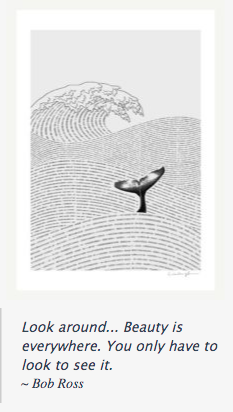
“Look around,” Yasmin said, her voice filled with wonder. “Beauty is everywhere. You only have to look to see it.”
The group was ready for an adventure and they knew that the orb in front of them was the key to their mad journey. Xavier stepped forward and reached out to touch the orb. As soon as his fingers made contact with the surface, the orb lit up and a pathway formed, leading into the brightly lit realm.
The group stepped through the pathway and found themselves in a world unlike anything they had ever seen before. The sky was a vibrant shade of purple and the ground was covered in a lush, green grass. The orb they had just passed through was now behind them, but in front of them were smaller orbs, each one leading to a different path.
Zara, Xavier, Yasmin, and Youssef looked at each other with excitement in their eyes. They knew that this was just the beginning of their mad journey.
Xavier stepped forward and reached out to touch the orb. As soon as his fingers made contact with the surface, the orb lit up and a pathway formed, leading into the brightly lit realm.

They walked into a small village, where they were greeted by a group of people wearing clothes that looked like they were from the 1920s. The people told them that they were in the land of the “Quirks”, a place where everything and everyone was a little bit different, and that they had to find the “Key of Quirks” in order to leave the land.
The four friends, Zara, Xavier, Yasmin, and Youssef, soon found themselves on a mission to find the “Key of Quirks” that would allow them to leave the land of the Quirks. As they walked through a forest, they came across a fork in the road.
Zara, the leader of the group, turned to the others and said, “Alright, we need to decide which way to go. Yasmin, what’s the plan?”
Yasmin, the brains of the group, replied, “I suggest we take the left path. According to the map I found, it leads to the Quirky Quests area, where we might find the key.”
Xavier, the joker of the group, chimed in, “I vote for the right path. It’s the road less traveled, and you know what they say, ‘the road less traveled is the road to adventure’ ”
Youssef, the muscle of the group, added, “I don’t care which way we go, I just want to find some food. I’m starving!”
Zara rolled her eyes, “Xavier, your jokes are getting old. And Youssef, we’re on a mission, we can’t just focus on food.”
Xavier grinned, “But Zaraloon, where’s the fun in that?”
Yasmin interjected, “Can we please focus? We need to make a decision. I propose we split up, Zara and I will take the left path, and Xavier and Youssef can take the right path.”
Youssef nodded, “Yeah, that sounds like a good idea. That way, if we don’t find the key, at least we’ll have found some food.”
Xavier grinned, “Sounds like a plan, Xavimunk is ready for adventure!”
Zara shook her head with a smile, “Alright, let’s do this.”
The group split up, and as they walked away, they could be heard playfully bantering and joking with each other. Each one exemplifying their unique and distinct characters.
January 11, 2023 at 10:32 pm #6368In reply to: Train your subjective AI – text version
Something in the style of FPooh:
Arona heard the music growing louder as she approached the source of the sound. She could see a group of people gathered around a large fire, the flickering light casting shadows on the faces of the dancers. She hesitated for a moment, remembering the isolation of her journey and wondering if she was ready to be among people again. But the music was too inviting, and she found herself drawn towards the group.
As she neared the fire, she saw a young man playing a flute, the music flowing from his fingers with a fluid grace that captivated her. He looked up as she approached, and their eyes met. She could see the surprise and curiosity in his gaze, and she smiled, feeling a sense of connection she had not felt in a long time.
Fiona was sitting on a bench in the park, watching the children play. She had brought her sketchbook with her, but for once she didn’t feel the urge to draw. Instead she watched the children’s laughter, feeling content and at peace. Suddenly, she saw a young girl running towards her, a look of pure joy on her face. The girl stopped in front of her and held out a flower, offering it to Fiona with a smile.
Taken aback, Fiona took the flower and thanked the girl. The girl giggled and ran off to join her friends. Fiona looked down at the flower in her hand, and she felt a sense of inspiration, like a spark igniting within her. She opened her sketchbook and began to draw, feeling the weight lift from her shoulders and the magic of creativity flowing through her.
Minky led the group of misfits towards the emporium, his bowler hat bobbing on his head. He chattered excitedly, telling stories of the wondrous items to be found within Mr Jib’s store. Yikesy followed behind, still lost in his thoughts of Arona and feeling a sense of dread at the thought of buying a bowler hat. The green fairy flitted along beside him, her wings a blur of movement as she chattered with the parrot perched on her shoulder.
As they reached the emporium, they were disappointed to find it closed. But Minky refused to be discouraged, and he led them to a nearby cafe where they could sit and enjoy some tea and cake while they wait for the emporium to open. The green fairy was delighted, and she ordered a plate of macarons, smiling as she tasted the sweetness of the confections.
About creativity & everyday magic
Fiona had always been drawn to the magic of creativity, the way a blank page could be transformed into a world of wonder and beauty. But lately, she had been feeling stuck, unable to find the spark that ignited her imagination. She would sit with her sketchbook, pencil in hand, and nothing would come to her.
She started to question her abilities, wondering if she had lost the magic of her art. She spent long hours staring at her blank pages, feeling a weight on her chest that seemed to be growing heavier every day.
But then she remembered the green fairy’s tears and Yikesy’s longing for Arona, and she realized that the magic of creativity wasn’t something that could be found only in art. It was all around her, in the everyday moments of life.
She started to look for the magic in the small things, like the way the sunlight filtered through the trees, or the way a child’s laughter could light up a room. She found it in the way a stranger’s smile could lift her spirits, and in the way a simple cup of tea could bring her comfort.
And as she started to see the magic in the everyday, she found that the weight on her chest lifted and the spark of inspiration returned. She picked up her pencil and began to draw, feeling the magic flowing through her once again.
She understand that creativity blocks aren’t a destination, but just a step, just like the bowler hat that Minky had bought for them all, a bit of everyday magic, nothing too fancy but a sense of belonging, a sense of who they are and where they are going. And she let her pencil flow, with the hopes that one day, they will all find their way home.
January 10, 2023 at 11:00 pm #6365In reply to: Train your subjective AI – text version
Prune has got me into this AI stuff… It sounds like gibberish to me, but Idle sounded amazed at the stuff it spewed out.
With some info on our family story, Prune got it to try and predict the future…
Sounds like a big plate of bog, but we’ll see how it goes.
Sure, here are a few possible events that could occur between Mater’s 100th birthday and her death in the Flying Fish Inn story:
- Mater decides to throw herself a grand birthday party, inviting all of her friends and family from the small outback town. However, things take a turn for the strange when a group of extraterrestrial beings crash the party and reveal themselves to be long-time fans of Mater’s famous bush tucker cuisine.
- Mater begins to experience vivid dreams and hallucinations, in which she is visited by the ghost of her late husband. As the dreams become more frequent, the family begins to suspect that there may be something more to them than just Mater’s mind playing tricks on her.
- Mater’s granddaughter Prune becomes increasingly obsessed with her dream of traveling to Mars, and begins to notice strange occurrences happening around the inn that seem to be connected to her aspiration.
- A group of eccentric scientists arrive at the inn, conducting research on the local flora and fauna. They eventually discover a species of sentient plants living in the area, and Mater becomes convinced that the plants are communicating with her in her dreams.
- With her health declining, Mater begins to spend more and more time tending to her garden, where she is visited by an old kookaburra who seems to possess an otherworldly intelligence. The bird becomes Mater’s companion and confidant in the final days of her life.
- As the Great Fires ravage the Australian bush, Mater makes the difficult decision to shut down the inn and evacuate the guests. But as they flee, they realize that the fire is not just a natural disaster, but something far more sinister and mystical.
- In her final days, Mater begins to remember strange and vivid details of her life that she never could have known, as if she lived a previous life in another time and place. As she dies, she whispers something to Prune, which opens her eyes to a new reality that may have been hidden from her all along
- It turns out the family had a lot of secrets, and the only way to escape it, was to leave the inn, but it was not an escape for all. Through the series of events, secrets are revealed, and some truths cannot be undone.Note that these events are fictional and whimsical in nature, but as they keeps it grounded to a sense of doldrums in the Australian bush and occasionally guests help to unravel some of the overarching mysteries it could make a fitting storyline for the story.
January 10, 2023 at 10:31 pm #6364In reply to: Train your subjective AI – text version
Please suggest a creative, a little ghostic but mostly uplifting plot outline for the continuation of the story of Twilight in her travels to join the freak circus and become famous for her craft on the west coast
— The Far-West saga — In 1850s, in a probable reality of South America, we get acquainted with Twilight (Twi) and her brothers Jo and Elroy. They have a precious blue bull in their possession, coveted by Ogrean, the kingpin of the town. Hopefully for them, Ogrean is arrested (temporarily) by Ted Marshall, the sheriff for his possible trafficking. Notably, Ogrean is possibly involved in some of the crystal skulls discoveries, during his travel to New Honduras. Twi who was dancing in the saloon of Madame Butterbutt, the town’s hallucinogenic toads-to-lick dispenser (insert some other romantic subplots involving the other dancer etc.) decides to go traveling in a freakus (freak show/circus). She is now close to the West Coast, where she hopes to succeed in her writing and other artistic skills.
As Twilight (Twi) travels with the freak circus, she faces many challenges and obstacles on her journey to the West Coast. Despite the difficulties, she remains determined to make a name for herself as a writer and artist.
As she travels through small towns and larger cities, she begins to realize that the world is much bigger than she ever imagined. She meets a diverse group of people, some of whom are kind and supportive, while others are cruel and dismissive of her dreams.
Despite the negative reactions she receives from some people, Twi persists and begins to gain a reputation as a talented writer and performer. As she gains more experience and confidence, she starts to incorporate her own unique style into her performances, which sets her apart from the other performers in the circus.
As she approaches the West Coast, she begins to feel a sense of excitement and anticipation. She has heard that the West Coast is a place of endless possibilities, where creative minds can thrive. She is determined to make her mark and become famous for her craft.
As she settles in the west, she finds herself surrounded by artists and writers like herself, who inspire her to push herself even further. She begins to gain a following and her writing is widely read. She discovers that her talent is not only limited to writing, but she also has a natural talent for other art forms as well.
Eventually, Twi’s reputation as a talented artist and writer precedes her and she becomes a sought-after performer in the West Coast, and her creative work is being showcased in galleries and theaters. As she continues to achieve success in her career, she begins to realize that the West Coast is not just a place of endless possibilities but also the place where she belongs, and the place where her dreams come true.
Throughout her journey, she also keeps in touch with her brothers, Jo and Elroy, who now run the farm and take care of the blue bull. They tell her that the bull, now named Blue-Dream, became a legend in the village and they get a good price for its breeding.
As the story continues, she finds herself also involved in some adventures and exciting subplots, like discovering a secret underground cave filled with precious crystals and some interesting characters, like the enigmatic sheriff Ted Marshall who always cross her path, and the mysterious Ogrean who seems to have a connection to her past and the bull.
The End.
December 6, 2022 at 2:17 pm #6350In reply to: Family Stories From The Other Side ~ Book Two
Transportation
Isaac Stokes 1804-1877
Isaac was born in Churchill, Oxfordshire in 1804, and was the youngest brother of my 4X great grandfather Thomas Stokes. The Stokes family were stone masons for generations in Oxfordshire and Gloucestershire, and Isaac’s occupation was a mason’s labourer in 1834 when he was sentenced at the Lent Assizes in Oxford to fourteen years transportation for stealing tools.
Churchill where the Stokes stonemasons came from: on 31 July 1684 a fire destroyed 20 houses and many other buildings, and killed four people. The village was rebuilt higher up the hill, with stone houses instead of the old timber-framed and thatched cottages. The fire was apparently caused by a baker who, to avoid chimney tax, had knocked through the wall from her oven to her neighbour’s chimney.
Isaac stole a pick axe, the value of 2 shillings and the property of Thomas Joyner of Churchill; a kibbeaux and a trowel value 3 shillings the property of Thomas Symms; a hammer and axe value 5 shillings, property of John Keen of Sarsden.
(The word kibbeaux seems to only exists in relation to Isaac Stokes sentence and whoever was the first to write it was perhaps being creative with the spelling of a kibbo, a miners or a metal bucket. This spelling is repeated in the criminal reports and the newspaper articles about Isaac, but nowhere else).
In March 1834 the Removal of Convicts was announced in the Oxford University and City Herald: Isaac Stokes and several other prisoners were removed from the Oxford county gaol to the Justitia hulk at Woolwich “persuant to their sentences of transportation at our Lent Assizes”.
via digitalpanopticon:
Hulks were decommissioned (and often unseaworthy) ships that were moored in rivers and estuaries and refitted to become floating prisons. The outbreak of war in America in 1775 meant that it was no longer possible to transport British convicts there. Transportation as a form of punishment had started in the late seventeenth century, and following the Transportation Act of 1718, some 44,000 British convicts were sent to the American colonies. The end of this punishment presented a major problem for the authorities in London, since in the decade before 1775, two-thirds of convicts at the Old Bailey received a sentence of transportation – on average 283 convicts a year. As a result, London’s prisons quickly filled to overflowing with convicted prisoners who were sentenced to transportation but had no place to go.
To increase London’s prison capacity, in 1776 Parliament passed the “Hulks Act” (16 Geo III, c.43). Although overseen by local justices of the peace, the hulks were to be directly managed and maintained by private contractors. The first contract to run a hulk was awarded to Duncan Campbell, a former transportation contractor. In August 1776, the Justicia, a former transportation ship moored in the River Thames, became the first prison hulk. This ship soon became full and Campbell quickly introduced a number of other hulks in London; by 1778 the fleet of hulks on the Thames held 510 prisoners.
Demand was so great that new hulks were introduced across the country. There were hulks located at Deptford, Chatham, Woolwich, Gosport, Plymouth, Portsmouth, Sheerness and Cork.The Justitia via rmg collections:
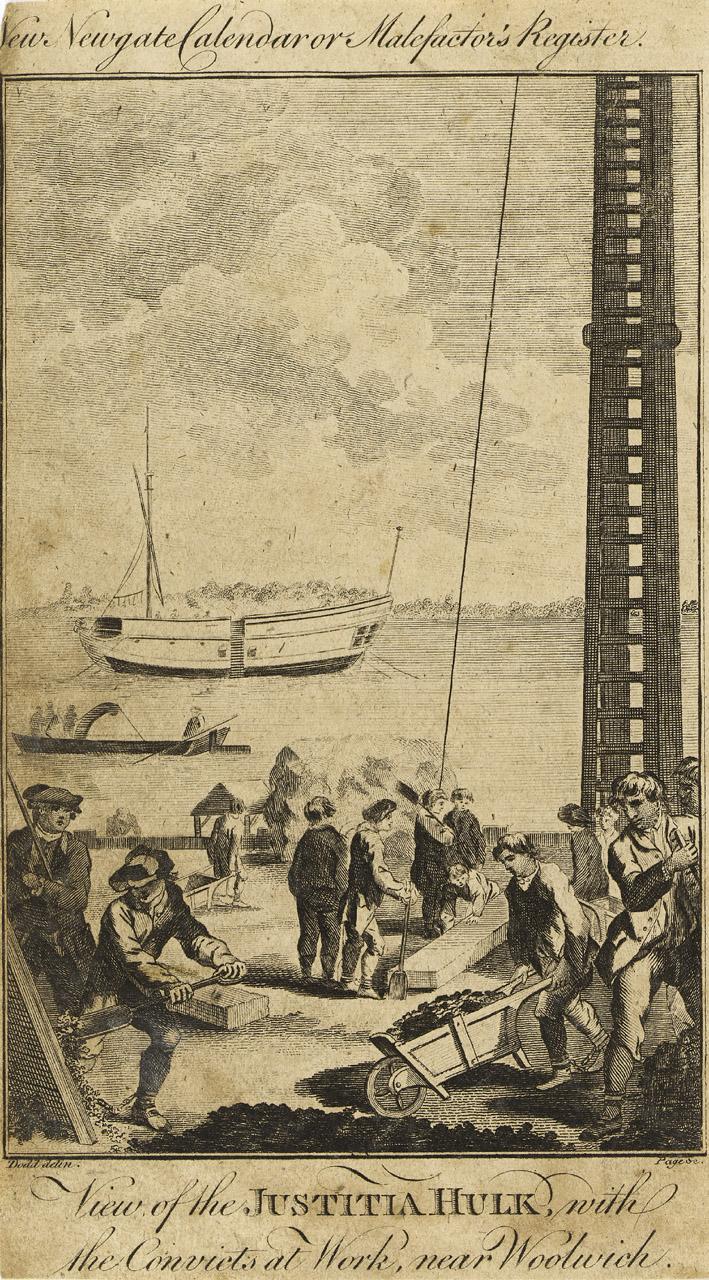
Convicts perform hard labour at the Woolwich Warren. The hulk on the river is the ‘Justitia’. Prisoners were kept on board such ships for months awaiting deportation to Australia. The ‘Justitia’ was a 260 ton prison hulk that had been originally moored in the Thames when the American War of Independence put a stop to the transportation of criminals to the former colonies. The ‘Justitia’ belonged to the shipowner Duncan Campbell, who was the Government contractor who organized the prison-hulk system at that time. Campbell was subsequently involved in the shipping of convicts to the penal colony at Botany Bay (in fact Port Jackson, later Sydney, just to the north) in New South Wales, the ‘first fleet’ going out in 1788.
While searching for records for Isaac Stokes I discovered that another Isaac Stokes was transported to New South Wales in 1835 as well. The other one was a butcher born in 1809, sentenced in London for seven years, and he sailed on the Mary Ann. Our Isaac Stokes sailed on the Lady Nugent, arriving in NSW in April 1835, having set sail from England in December 1834.
Lady Nugent was built at Bombay in 1813. She made four voyages under contract to the British East India Company (EIC). She then made two voyages transporting convicts to Australia, one to New South Wales and one to Van Diemen’s Land (Tasmania). (via Wikipedia)
via freesettlerorfelon website:
On 20 November 1834, 100 male convicts were transferred to the Lady Nugent from the Justitia Hulk and 60 from the Ganymede Hulk at Woolwich, all in apparent good health. The Lady Nugent departed Sheerness on 4 December 1834.
SURGEON OLIVER SPROULE
Oliver Sproule kept a Medical Journal from 7 November 1834 to 27 April 1835. He recorded in his journal the weather conditions they experienced in the first two weeks:
‘In the course of the first week or ten days at sea, there were eight or nine on the sick list with catarrhal affections and one with dropsy which I attribute to the cold and wet we experienced during that period beating down channel. Indeed the foremost berths in the prison at this time were so wet from leaking in that part of the ship, that I was obliged to issue dry beds and bedding to a great many of the prisoners to preserve their health, but after crossing the Bay of Biscay the weather became fine and we got the damp beds and blankets dried, the leaks partially stopped and the prison well aired and ventilated which, I am happy to say soon manifested a favourable change in the health and appearance of the men.
Besides the cases given in the journal I had a great many others to treat, some of them similar to those mentioned but the greater part consisted of boils, scalds, and contusions which would not only be too tedious to enter but I fear would be irksome to the reader. There were four births on board during the passage which did well, therefore I did not consider it necessary to give a detailed account of them in my journal the more especially as they were all favourable cases.
Regularity and cleanliness in the prison, free ventilation and as far as possible dry decks turning all the prisoners up in fine weather as we were lucky enough to have two musicians amongst the convicts, dancing was tolerated every afternoon, strict attention to personal cleanliness and also to the cooking of their victuals with regular hours for their meals, were the only prophylactic means used on this occasion, which I found to answer my expectations to the utmost extent in as much as there was not a single case of contagious or infectious nature during the whole passage with the exception of a few cases of psora which soon yielded to the usual treatment. A few cases of scurvy however appeared on board at rather an early period which I can attribute to nothing else but the wet and hardships the prisoners endured during the first three or four weeks of the passage. I was prompt in my treatment of these cases and they got well, but before we arrived at Sydney I had about thirty others to treat.’
The Lady Nugent arrived in Port Jackson on 9 April 1835 with 284 male prisoners. Two men had died at sea. The prisoners were landed on 27th April 1835 and marched to Hyde Park Barracks prior to being assigned. Ten were under the age of 14 years.
The Lady Nugent:
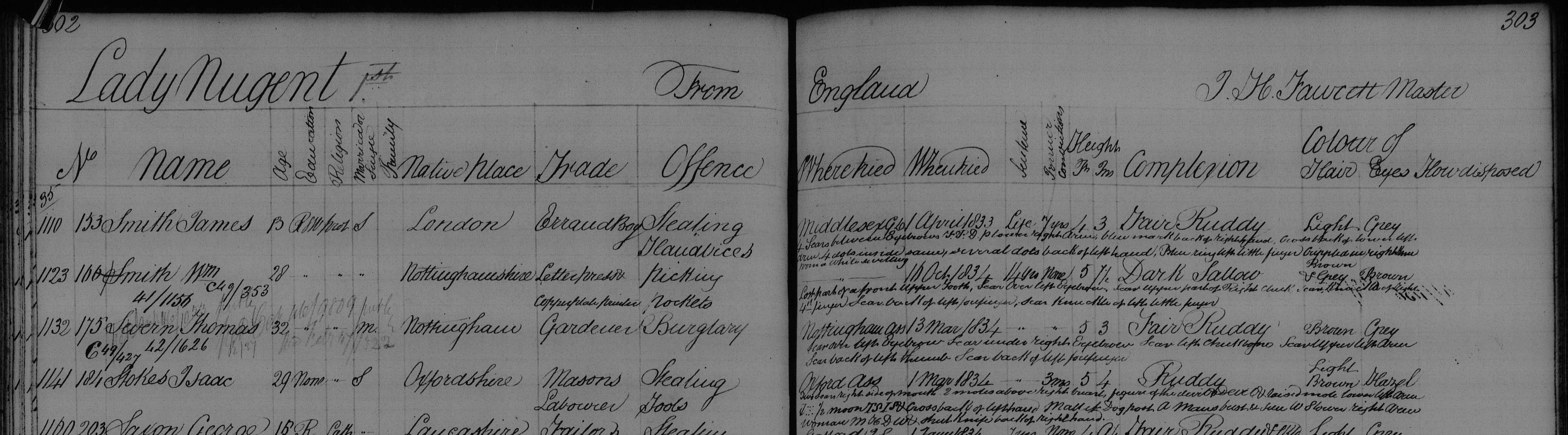
Isaac’s distinguishing marks are noted on various criminal registers and record books:
“Height in feet & inches: 5 4; Complexion: Ruddy; Hair: Light brown; Eyes: Hazel; Marks or Scars: Yes [including] DEVIL on lower left arm, TSIS back of left hand, WS lower right arm, MHDW back of right hand.”
Another includes more detail about Isaac’s tattoos:
“Two slight scars right side of mouth, 2 moles above right breast, figure of the devil and DEVIL and raised mole, lower left arm; anchor, seven dots half moon, TSIS and cross, back of left hand; a mallet, door post, A, mans bust, sun, WS, lower right arm; woman, MHDW and shut knife, back of right hand.”
From How tattoos became fashionable in Victorian England (2019 article in TheConversation by Robert Shoemaker and Zoe Alkar):
“Historical tattooing was not restricted to sailors, soldiers and convicts, but was a growing and accepted phenomenon in Victorian England. Tattoos provide an important window into the lives of those who typically left no written records of their own. As a form of “history from below”, they give us a fleeting but intriguing understanding of the identities and emotions of ordinary people in the past.
As a practice for which typically the only record is the body itself, few systematic records survive before the advent of photography. One exception to this is the written descriptions of tattoos (and even the occasional sketch) that were kept of institutionalised people forced to submit to the recording of information about their bodies as a means of identifying them. This particularly applies to three groups – criminal convicts, soldiers and sailors. Of these, the convict records are the most voluminous and systematic.
Such records were first kept in large numbers for those who were transported to Australia from 1788 (since Australia was then an open prison) as the authorities needed some means of keeping track of them.”On the 1837 census Isaac was working for the government at Illiwarra, New South Wales. This record states that he arrived on the Lady Nugent in 1835. There are three other indent records for an Isaac Stokes in the following years, but the transcriptions don’t provide enough information to determine which Isaac Stokes it was. In April 1837 there was an abscondment, and an arrest/apprehension in May of that year, and in 1843 there was a record of convict indulgences.
From the Australian government website regarding “convict indulgences”:
“By the mid-1830s only six per cent of convicts were locked up. The vast majority worked for the government or free settlers and, with good behaviour, could earn a ticket of leave, conditional pardon or and even an absolute pardon. While under such orders convicts could earn their own living.”
In 1856 in Camden, NSW, Isaac Stokes married Catherine Daly. With no further information on this record it would be impossible to know for sure if this was the right Isaac Stokes. This couple had six children, all in the Camden area, but none of the records provided enough information. No occupation or place or date of birth recorded for Isaac Stokes.
I wrote to the National Library of Australia about the marriage record, and their reply was a surprise! Issac and Catherine were married on 30 September 1856, at the house of the Rev. Charles William Rigg, a Methodist minister, and it was recorded that Isaac was born in Edinburgh in 1821, to parents James Stokes and Sarah Ellis! The age at the time of the marriage doesn’t match Isaac’s age at death in 1877, and clearly the place of birth and parents didn’t match either. Only his fathers occupation of stone mason was correct. I wrote back to the helpful people at the library and they replied that the register was in a very poor condition and that only two and a half entries had survived at all, and that Isaac and Catherines marriage was recorded over two pages.
I searched for an Isaac Stokes born in 1821 in Edinburgh on the Scotland government website (and on all the other genealogy records sites) and didn’t find it. In fact Stokes was a very uncommon name in Scotland at the time. I also searched Australian immigration and other records for another Isaac Stokes born in Scotland or born in 1821, and found nothing. I was unable to find a single record to corroborate this mysterious other Isaac Stokes.
As the age at death in 1877 was correct, I assume that either Isaac was lying, or that some mistake was made either on the register at the home of the Methodist minster, or a subsequent mistranscription or muddle on the remnants of the surviving register. Therefore I remain convinced that the Camden stonemason Isaac Stokes was indeed our Isaac from Oxfordshire.
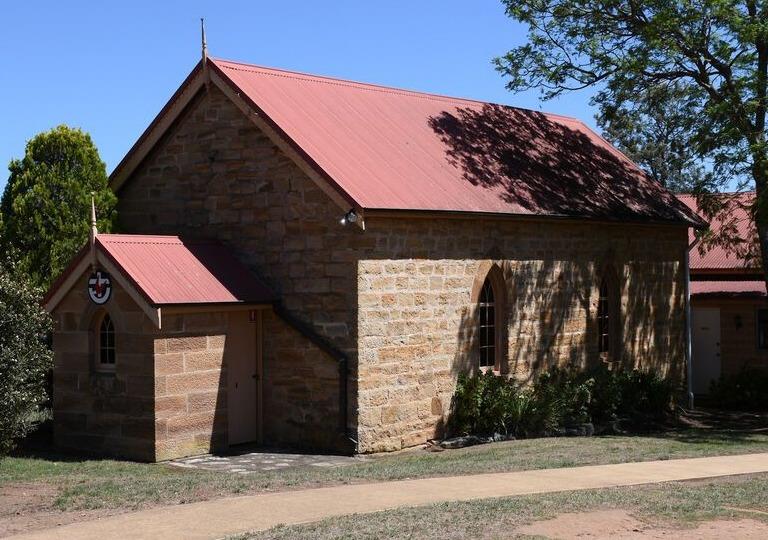
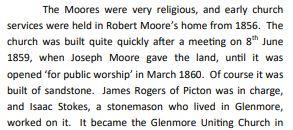
I found a history society newsletter article that mentioned Isaac Stokes, stone mason, had built the Glenmore church, near Camden, in 1859.
From the Wollondilly museum April 2020 newsletter:
From the Camden History website:
“The stone set over the porch of Glenmore Church gives the date of 1860. The church was begun in 1859 on land given by Joseph Moore. James Rogers of Picton was given the contract to build and local builder, Mr. Stokes, carried out the work. Elizabeth Moore, wife of Edward, laid the foundation stone. The first service was held on 19th March 1860. The cemetery alongside the church contains the headstones and memorials of the areas early pioneers.”
Isaac died on the 3rd September 1877. The inquest report puts his place of death as Bagdelly, near to Camden, and another death register has put Cambelltown, also very close to Camden. His age was recorded as 71 and the inquest report states his cause of death was “rupture of one of the large pulmonary vessels of the lung”. His wife Catherine died in childbirth in 1870 at the age of 43.
Isaac and Catherine’s children:
William Stokes 1857-1928
Catherine Stokes 1859-1846
Sarah Josephine Stokes 1861-1931
Ellen Stokes 1863-1932
Rosanna Stokes 1865-1919
Louisa Stokes 1868-1844.
It’s possible that Catherine Daly was a transported convict from Ireland.
Some time later I unexpectedly received a follow up email from The Oaks Heritage Centre in Australia.
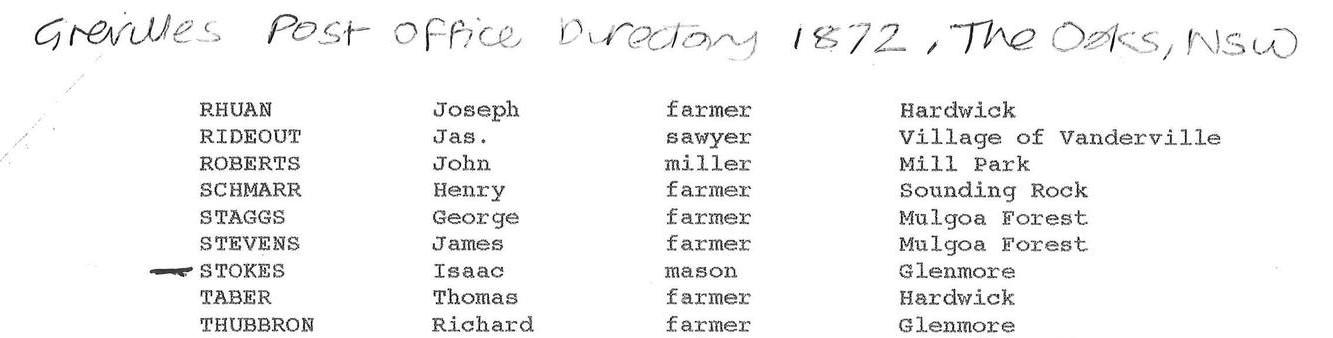
“The Gaudry papers which we have in our archive record him (Isaac Stokes) as having built: the church, the school and the teachers residence. Isaac is recorded in the General return of convicts: 1837 and in Grevilles Post Office directory 1872 as a mason in Glenmore.”
 November 18, 2022 at 4:47 pm #6348
In reply to: Family Stories From The Other Side ~ Book Two
Wong Sang
Wong Sang was born in China in 1884. In October 1916 he married Alice Stokes in Oxford.
Alice was the granddaughter of William Stokes of Churchill, Oxfordshire and William was the brother of Thomas Stokes the wheelwright (who was my 3X great grandfather). In other words Alice was my second cousin, three times removed, on my fathers paternal side.
Wong Sang was an interpreter, according to the baptism registers of his children and the Dreadnought Seamen’s Hospital admission registers in 1930. The hospital register also notes that he was employed by the Blue Funnel Line, and that his address was 11, Limehouse Causeway, E 14. (London)
“The Blue Funnel Line offered regular First-Class Passenger and Cargo Services From the UK to South Africa, Malaya, China, Japan, Australia, Java, and America. Blue Funnel Line was Owned and Operated by Alfred Holt & Co., Liverpool.
The Blue Funnel Line, so-called because its ships have a blue funnel with a black top, is more appropriately known as the Ocean Steamship Company.”Wong Sang and Alice’s daughter, Frances Eileen Sang, was born on the 14th July, 1916 and baptised in 1920 at St Stephen in Poplar, Tower Hamlets, London. The birth date is noted in the 1920 baptism register and would predate their marriage by a few months, although on the death register in 1921 her age at death is four years old and her year of birth is recorded as 1917.
Charles Ronald Sang was baptised on the same day in May 1920, but his birth is recorded as April of that year. The family were living on Morant Street, Poplar.
James William Sang’s birth is recorded on the 1939 census and on the death register in 2000 as being the 8th March 1913. This definitely would predate the 1916 marriage in Oxford.
William Norman Sang was born on the 17th October 1922 in Poplar.
Alice and the three sons were living at 11, Limehouse Causeway on the 1939 census, the same address that Wong Sang was living at when he was admitted to Dreadnought Seamen’s Hospital on the 15th January 1930. Wong Sang died in the hospital on the 8th March of that year at the age of 46.
Alice married John Patterson in 1933 in Stepney. John was living with Alice and her three sons on Limehouse Causeway on the 1939 census and his occupation was chef.
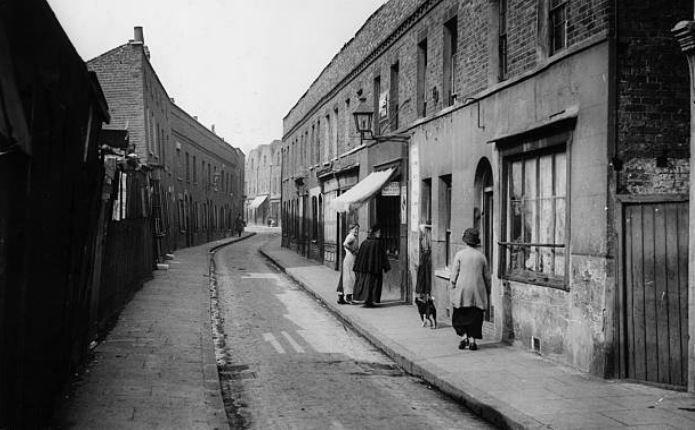
Via Old London Photographs:
“Limehouse Causeway is a street in east London that was the home to the original Chinatown of London. A combination of bomb damage during the Second World War and later redevelopment means that almost nothing is left of the original buildings of the street.”
Limehouse Causeway in 1925:
From The Story of Limehouse’s Lost Chinatown, poplarlondon website:
“Limehouse was London’s first Chinatown, home to a tightly-knit community who were demonised in popular culture and eventually erased from the cityscape.
As recounted in the BBC’s ‘Our Greatest Generation’ series, Connie was born to a Chinese father and an English mother in early 1920s Limehouse, where she used to play in the street with other British and British-Chinese children before running inside for teatime at one of their houses.
Limehouse was London’s first Chinatown between the 1880s and the 1960s, before the current Chinatown off Shaftesbury Avenue was established in the 1970s by an influx of immigrants from Hong Kong.
Connie’s memories of London’s first Chinatown as an “urban village” paint a very different picture to the seedy area portrayed in early twentieth century novels.
The pyramid in St Anne’s church marked the entrance to the opium den of Dr Fu Manchu, a criminal mastermind who threatened Western society by plotting world domination in a series of novels by Sax Rohmer.
Thomas Burke’s Limehouse Nights cemented stereotypes about prostitution, gambling and violence within the Chinese community, and whipped up anxiety about sexual relationships between Chinese men and white women.
Though neither novelist was familiar with the Chinese community, their depictions made Limehouse one of the most notorious areas of London.
Travel agent Thomas Cook even organised tours of the area for daring visitors, despite the rector of Limehouse warning that “those who look for the Limehouse of Mr Thomas Burke simply will not find it.”
All that remains is a handful of Chinese street names, such as Ming Street, Pekin Street, and Canton Street — but what was Limehouse’s chinatown really like, and why did it get swept away?
Chinese migration to Limehouse
Chinese sailors discharged from East India Company ships settled in the docklands from as early as the 1780s.
By the late nineteenth century, men from Shanghai had settled around Pennyfields Lane, while a Cantonese community lived on Limehouse Causeway.
Chinese sailors were often paid less and discriminated against by dock hirers, and so began to diversify their incomes by setting up hand laundry services and restaurants.
Old photographs show shopfronts emblazoned with Chinese characters with horse-drawn carts idling outside or Chinese men in suits and hats standing proudly in the doorways.
In oral histories collected by Yat Ming Loo, Connie’s husband Leslie doesn’t recall seeing any Chinese women as a child, since male Chinese sailors settled in London alone and married working-class English women.
In the 1920s, newspapers fear-mongered about interracial marriages, crime and gambling, and described chinatown as an East End “colony.”
Ironically, Chinese opium-smoking was also demonised in the press, despite Britain waging war against China in the mid-nineteenth century for suppressing the opium trade to alleviate addiction amongst its people.
The number of Chinese people who settled in Limehouse was also greatly exaggerated, and in reality only totalled around 300.
The real Chinatown
Although the press sought to characterise Limehouse as a monolithic Chinese community in the East End, Connie remembers seeing people of all nationalities in the shops and community spaces in Limehouse.
She doesn’t remember feeling discriminated against by other locals, though Connie does recall having her face measured and IQ tested by a member of the British Eugenics Society who was conducting research in the area.
Some of Connie’s happiest childhood memories were from her time at Chung-Hua Club, where she learned about Chinese culture and language.
Why did Chinatown disappear?
The caricature of Limehouse’s Chinatown as a den of vice hastened its erasure.
Police raids and deportations fuelled by the alarmist media coverage threatened the Chinese population of Limehouse, and slum clearance schemes to redevelop low-income areas dispersed Chinese residents in the 1930s.
The Defence of the Realm Act imposed at the beginning of the First World War criminalised opium use, gave the authorities increased powers to deport Chinese people and restricted their ability to work on British ships.
Dwindling maritime trade during World War II further stripped Chinese sailors of opportunities for employment, and any remnants of Chinatown were destroyed during the Blitz or erased by postwar development schemes.”
Wong Sang 1884-1930
The year 1918 was a troublesome one for Wong Sang, an interpreter and shipping agent for Blue Funnel Line. The Sang family were living at 156, Chrisp Street.
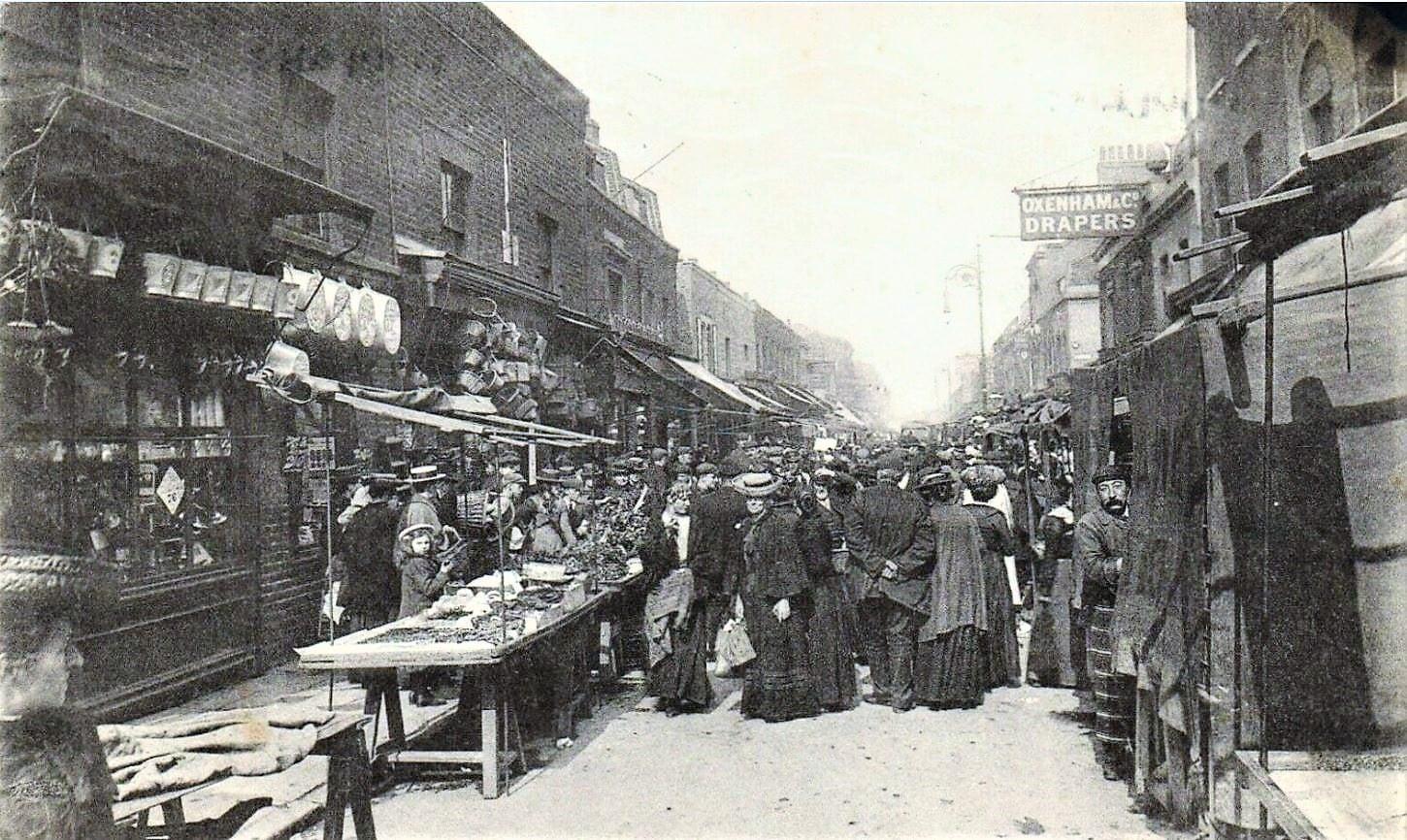
Chrisp Street, Poplar, in 1913 via Old London Photographs:
In February Wong Sang was discharged from a false accusation after defending his home from potential robbers.
East End News and London Shipping Chronicle – Friday 15 February 1918:
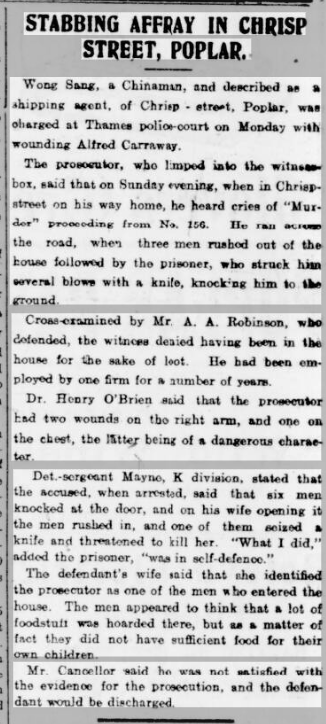
In August of that year he was involved in an incident that left him unconscious.
Faringdon Advertiser and Vale of the White Horse Gazette – Saturday 31 August 1918:
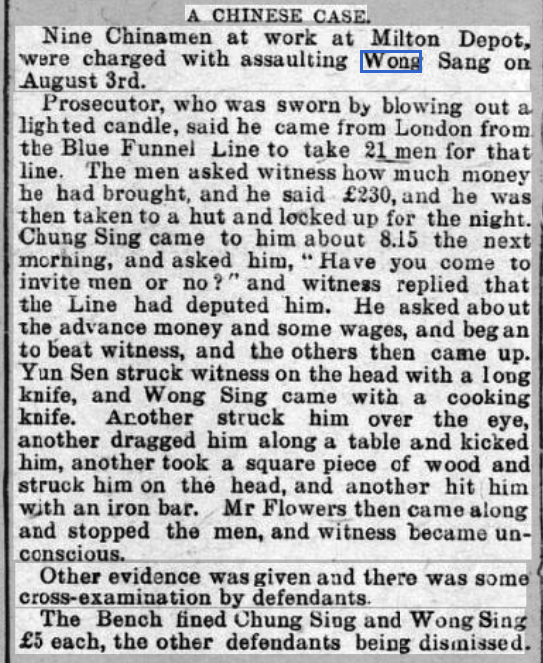
Wong Sang is mentioned in an 1922 article about “Oriental London”.
London and China Express – Thursday 09 February 1922:
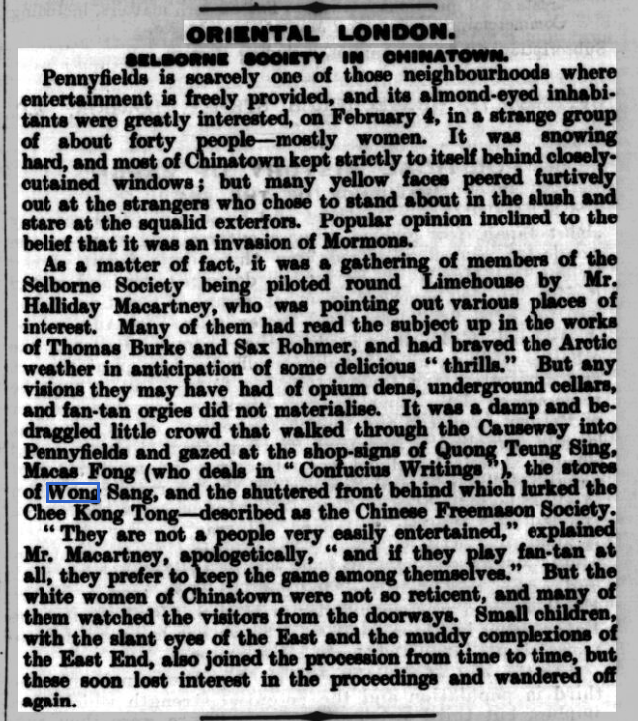
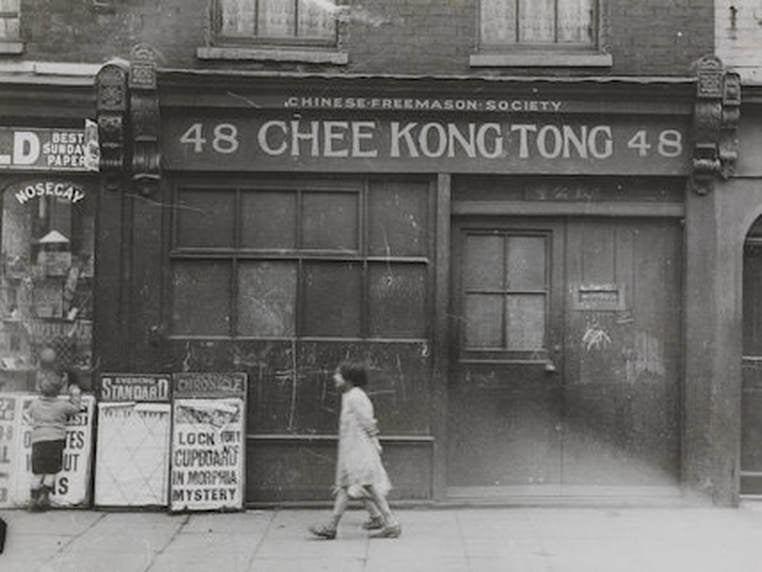
A photograph of the Chee Kong Tong Chinese Freemason Society mentioned in the above article, via Old London Photographs:
Wong Sang was recommended by the London Metropolitan Police in 1928 to assist in a case in Wellingborough, Northampton.
Difficulty of Getting an Interpreter: Northampton Mercury – Friday 16 March 1928:
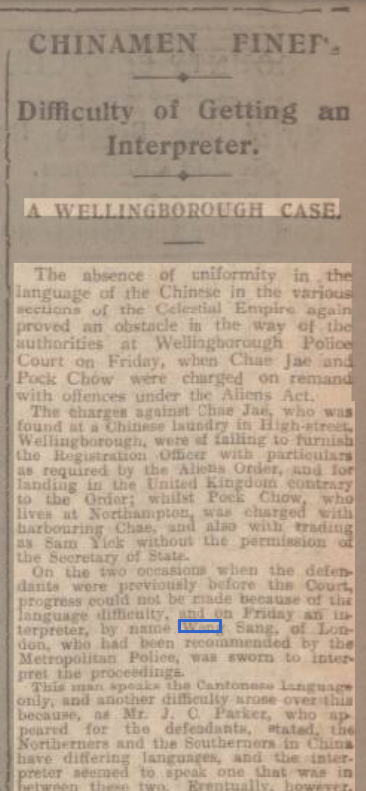
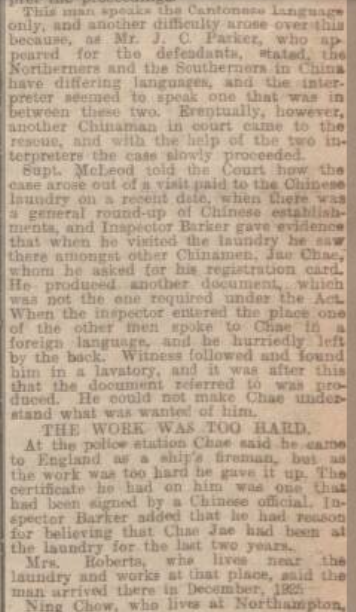
The difficulty was that “this man speaks the Cantonese language only…the Northeners and the Southerners in China have differing languages and the interpreter seemed to speak one that was in between these two.”
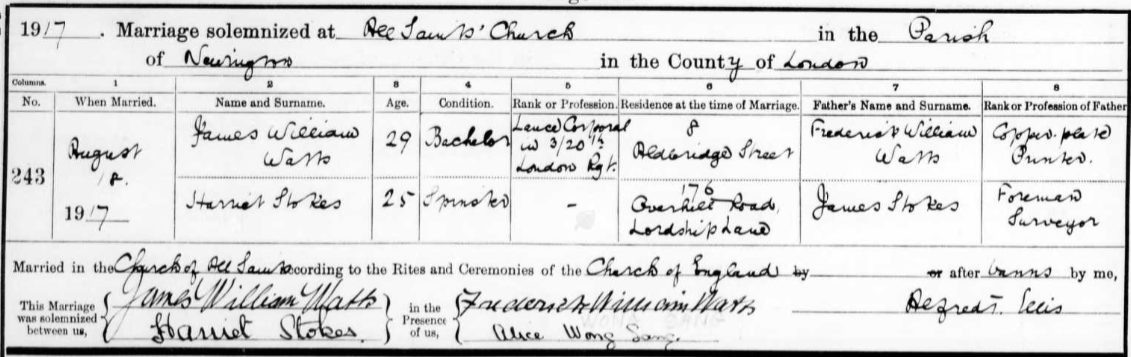
In 1917, Alice Wong Sang was a witness at her sister Harriet Stokes marriage to James William Watts in Southwark, London. Their father James Stokes occupation on the marriage register is foreman surveyor, but on the census he was a council roadman or labourer. (I initially rejected this as the correct marriage for Harriet because of the discrepancy with the occupations. Alice Wong Sang as a witness confirmed that it was indeed the correct one.)
James William Sang 1913-2000 was a clock fitter and watch assembler (on the 1939 census). He married Ivy Laura Fenton in 1963 in Sidcup, Kent. James died in Southwark in 2000.
Charles Ronald Sang 1920-1974 was a draughtsman (1939 census). He married Eileen Burgess in 1947 in Marylebone. Charles and Eileen had two sons: Keith born in 1951 and Roger born in 1952. He died in 1974 in Hertfordshire.
William Norman Sang 1922-2000 was a clerk and telephone operator (1939 census). William enlisted in the Royal Artillery in 1942. He married Lily Mullins in 1949 in Bethnal Green, and they had three daughters: Marion born in 1950, Christine in 1953, and Frances in 1959. He died in Redbridge in 2000.
I then found another two births registered in Poplar by Alice Sang, both daughters. Doris Winifred Sang was born in 1925, and Patricia Margaret Sang was born in 1933 ~ three years after Wong Sang’s death. Neither of the these daughters were on the 1939 census with Alice, John Patterson and the three sons. Margaret had presumably been evacuated because of the war to a family in Taunton, Somerset. Doris would have been fourteen and I have been unable to find her in 1939 (possibly because she died in 2017 and has not had the redaction removed yet on the 1939 census as only deceased people are viewable).
Doris Winifred Sang 1925-2017 was a nursing sister. She didn’t marry, and spent a year in USA between 1954 and 1955. She stayed in London, and died at the age of ninety two in 2017.
Patricia Margaret Sang 1933-1998 was also a nurse. She married Patrick L Nicely in Stepney in 1957. Patricia and Patrick had five children in London: Sharon born 1959, Donald in 1960, Malcolm was born and died in 1966, Alison was born in 1969 and David in 1971.
I was unable to find a birth registered for Alice’s first son, James William Sang (as he appeared on the 1939 census). I found Alice Stokes on the 1911 census as a 17 year old live in servant at a tobacconist on Pekin Street, Limehouse, living with Mr Sui Fong from Hong Kong and his wife Sarah Sui Fong from Berlin. I looked for a birth registered for James William Fong instead of Sang, and found it ~ mothers maiden name Stokes, and his date of birth matched the 1939 census: 8th March, 1913.
On the 1921 census, Wong Sang is not listed as living with them but it is mentioned that Mr Wong Sang was the person returning the census. Also living with Alice and her sons James and Charles in 1921 are two visitors: (Florence) May Stokes, 17 years old, born in Woodstock, and Charles Stokes, aged 14, also born in Woodstock. May and Charles were Alice’s sister and brother.
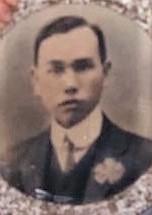
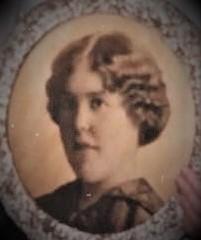
I found Sharon Nicely on social media and she kindly shared photos of Wong Sang and Alice Stokes:
 October 23, 2022 at 6:57 am #6340
In reply to: Family Stories From The Other Side ~ Book Two
Wheelwrights of Broadway
Thomas Stokes 1816-1885
Frederick Stokes 1845-1917
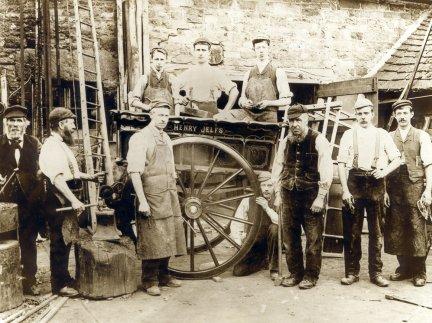
Stokes Wheelwrights. Fred on left of wheel, Thomas his father on right.
Thomas Stokes
Thomas Stokes was born in Bicester, Oxfordshire in 1816. He married Eliza Browning (born in 1814 in Tetbury, Gloucestershire) in Gloucester in 1840 Q3. Their first son William was baptised in Chipping Hill, Witham, Essex, on 3 Oct 1841. This seems a little unusual, and I can’t find Thomas and Eliza on the 1841 census. However both the 1851 and 1861 census state that William was indeed born in Essex.
In 1851 Thomas and Eliza were living in Bledington, Gloucestershire, and Thomas was a journeyman carpenter.
Note that a journeyman does not mean someone who moved around a lot. A journeyman was a tradesman who had served his trade apprenticeship and mastered his craft, not bound to serve a master, but originally hired by the day. The name derives from the French for day – jour.
Also on the 1851 census: their daughter Susan, born in Churchill Oxfordshire in 1844; son Frederick born in Bledington Gloucestershire in 1846; daughter Louisa born in Foxcote Oxfordshire in 1849; and 2 month old daughter Harriet born in Bledington in 1851.
On the 1861 census Thomas and Eliza were living in Evesham, Worcestershire, and daughter Susan was no longer living at home, but William, Fred, Louisa and Harriet were, as well as daughter Emily born in Churchill Oxfordshire in 1856. Thomas was a wheelwright.
On the 1871 census Thomas and Eliza were still living in Evesham, and Thomas was a wheelwright employing three apprentices. Son Fred, also a wheelwright, and his wife Ann Rebecca live with them.
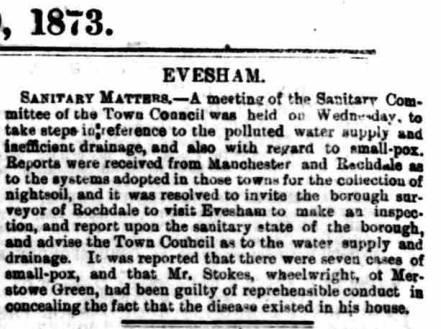
Mr Stokes, wheelwright, was found guilty of reprehensible conduct in concealing the fact that small-pox existed in his house, according to a mention in The Oxfordshire Weekly News on Wednesday 19 February 1873:
From Paul Weaver’s ancestry website:
“It was Thomas Stokes who built the first “Famous Vale of Evesham Light Gardening Dray for a Half-Legged Horse to Trot” (the quotation is from his account book), the forerunner of many that became so familiar a sight in the towns and villages from the 1860s onwards. He built many more for the use of the Vale gardeners.
Thomas also had long-standing business dealings with the people of the circus and fairgrounds, and had a contract to effect necessary repairs and renewals to their waggons whenever they visited the district. He built living waggons for many of the show people’s families as well as shooting galleries and other equipment peculiar to the trade of his wandering customers, and among the names figuring in his books are some still familiar today, such as Wilsons and Chipperfields.
He is also credited with inventing the wooden “Mushroom” which was used by housewives for many years to darn socks. He built and repaired all kinds of vehicles for the gentry as well as for the circus and fairground travellers.
Later he lived with his wife at Merstow Green, Evesham, in a house adjoining the Almonry.”
An excerpt from the book Evesham Inns and Signs by T.J.S. Baylis:
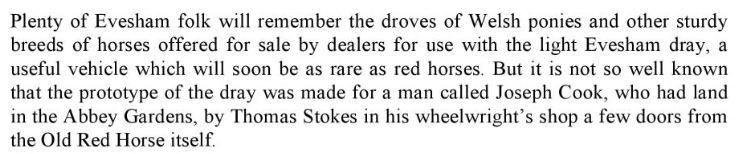
The Old Red Horse, Evesham:
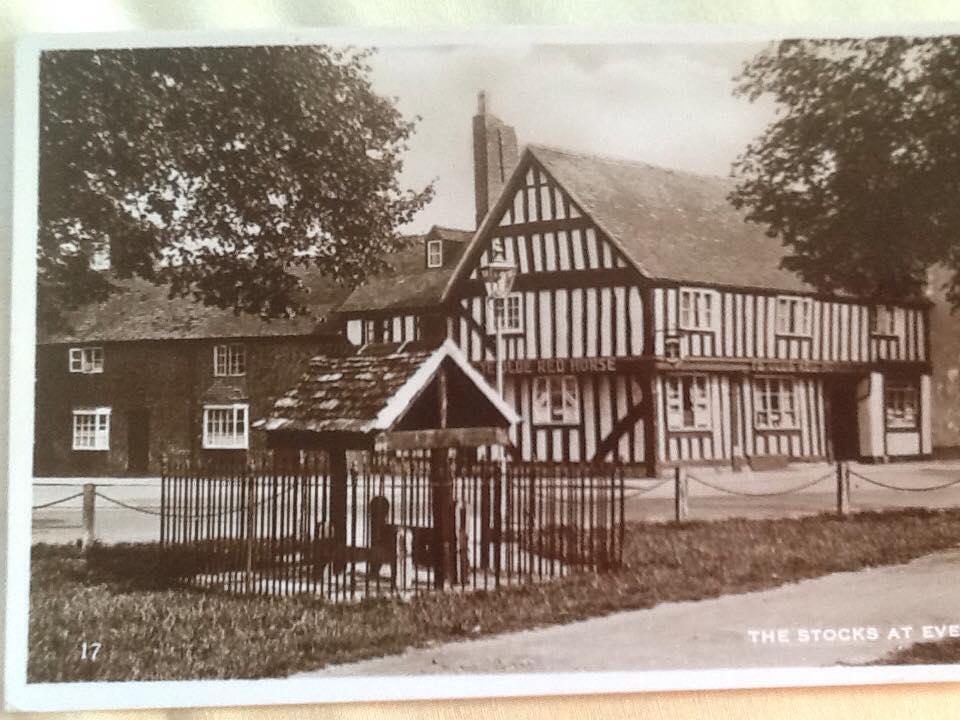
Thomas died in 1885 aged 68 of paralysis, bronchitis and debility. His wife Eliza a year later in 1886.
Frederick Stokes
In Worcester in 1870 Fred married Ann Rebecca Day, who was born in Evesham in 1845.
Ann Rebecca Day:
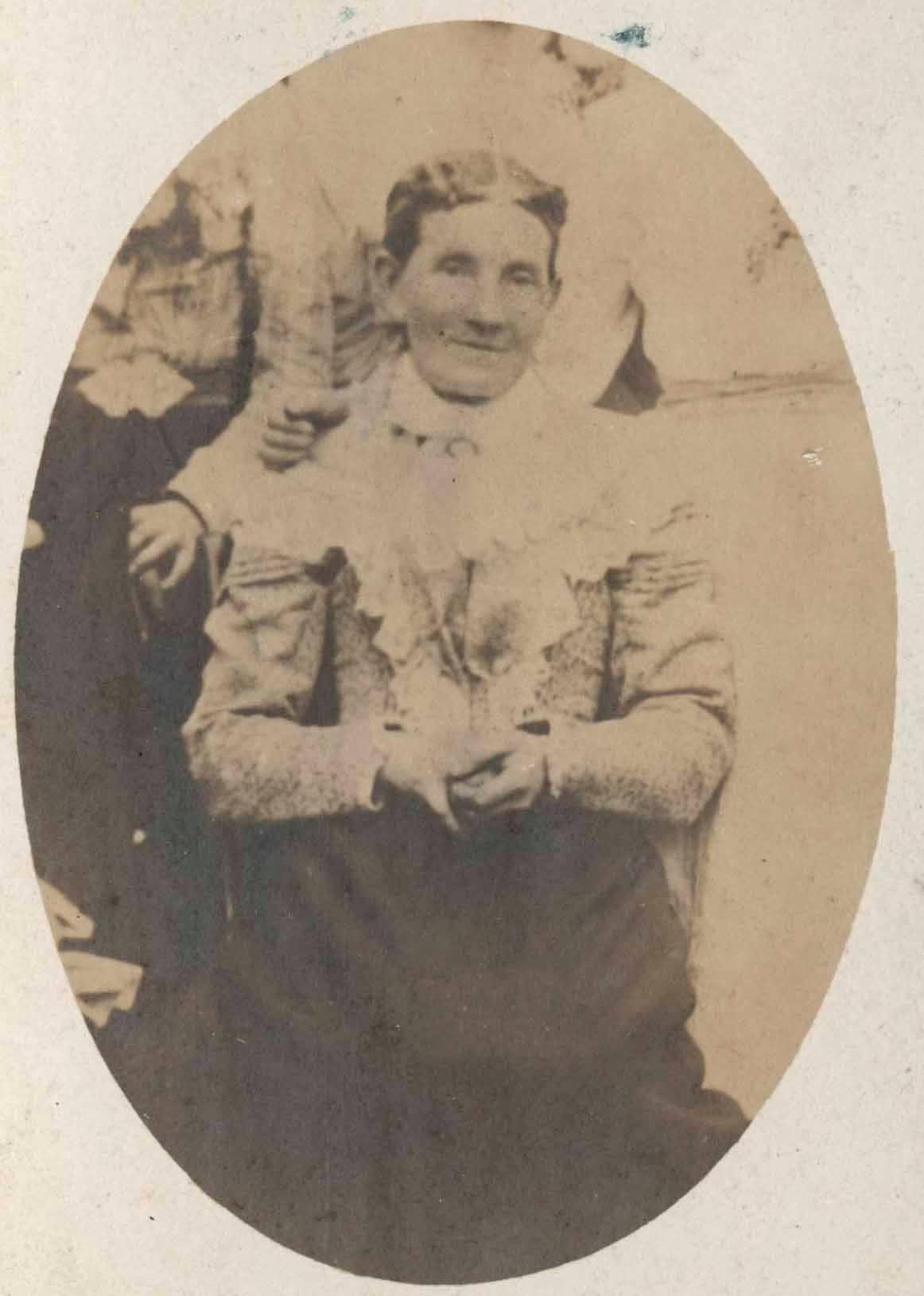
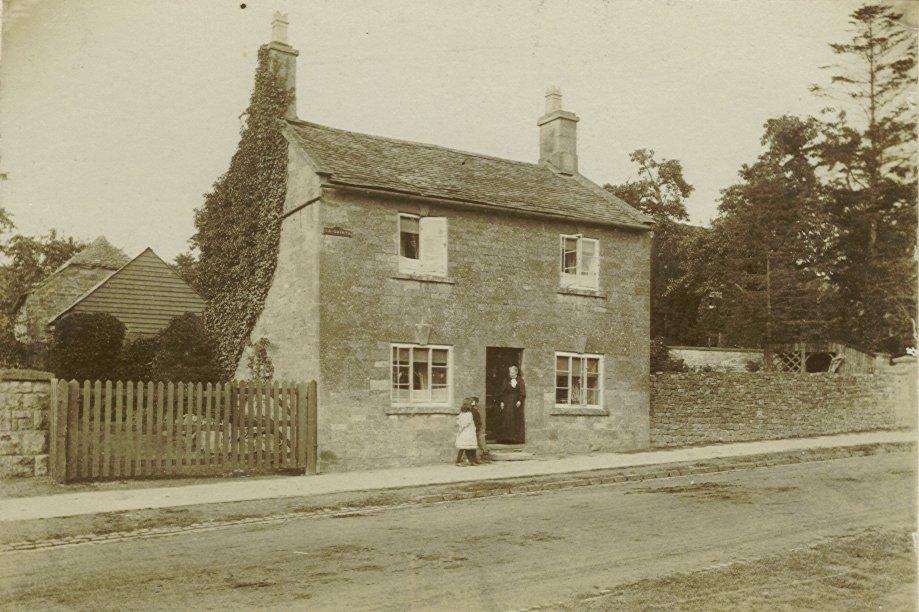
In 1871 Fred was still living with his parents in Evesham, with his wife Ann Rebecca as well as their three month old daughter Annie Elizabeth. Fred and Ann (referred to as Rebecca) moved to La Quinta on Main Street, Broadway.
Rebecca Stokes in the doorway of La Quinta on Main Street Broadway, with her grandchildren Ralph and Dolly Edwards:
Fred was a wheelwright employing one man on the 1881 census. In 1891 they were still in Broadway, Fred’s occupation was wheelwright and coach painter, as well as his fifteen year old son Frederick.
In the Evesham Journal on Saturday 10 December 1892 it was reported that “Two cases of scarlet fever, the children of Mr. Stokes, wheelwright, Broadway, were certified by Mr. C. W. Morris to be isolated.”
Still in Broadway in 1901 and Fred’s son Albert was also a wheelwright. By 1911 Fred and Rebecca had only one son living at home in Broadway, Reginald, who was a coach painter. Fred was still a wheelwright aged 65.
Fred’s signature on the 1911 census:

Rebecca died in 1912 and Fred in 1917.
Fred Stokes:
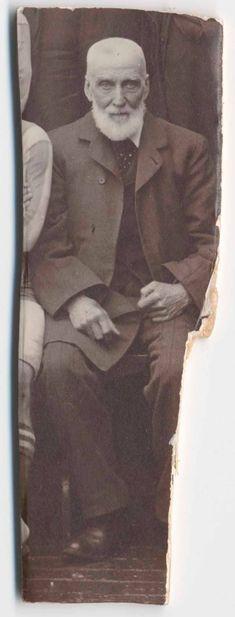
In the book Evesham to Bredon From Old Photographs By Fred Archer:
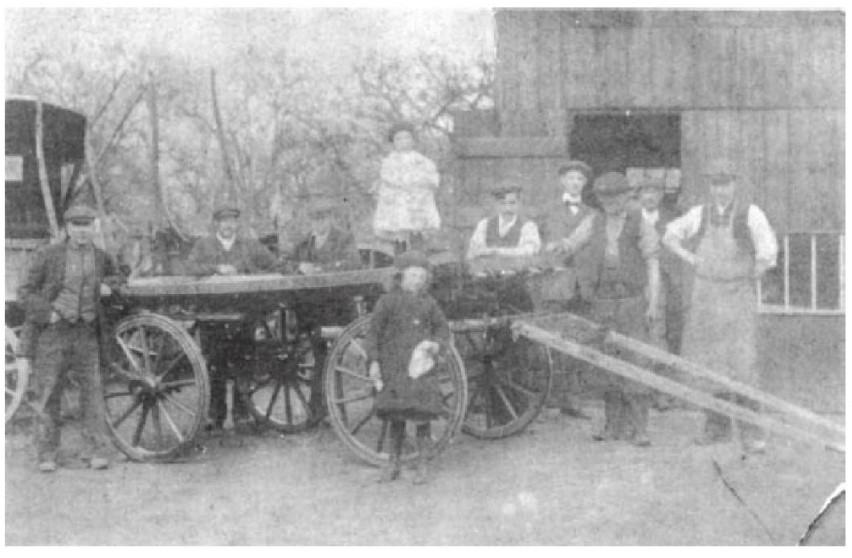
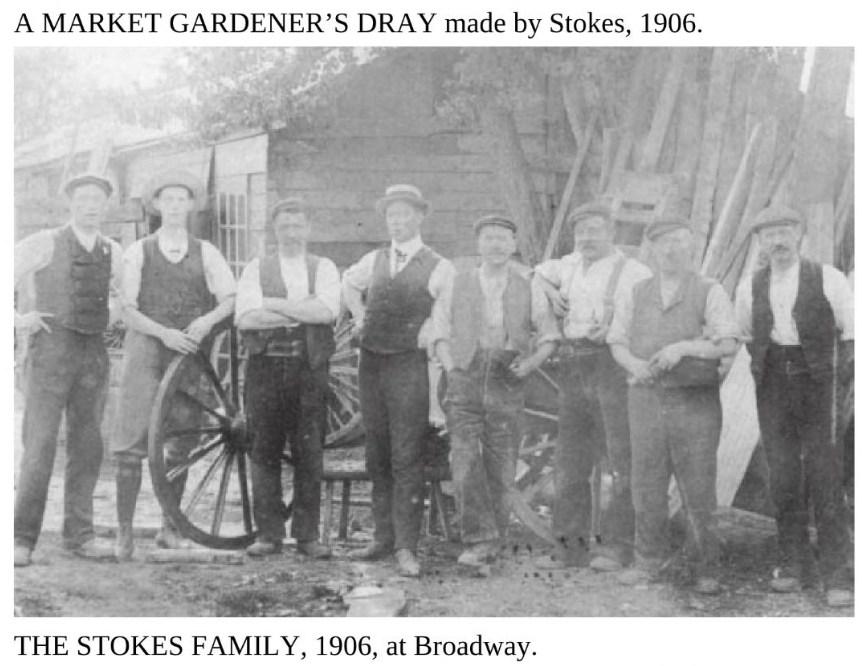 October 22, 2022 at 1:18 pm #6338
In reply to: Family Stories From The Other Side ~ Book Two
Albert Parker Edwards
1876-1930
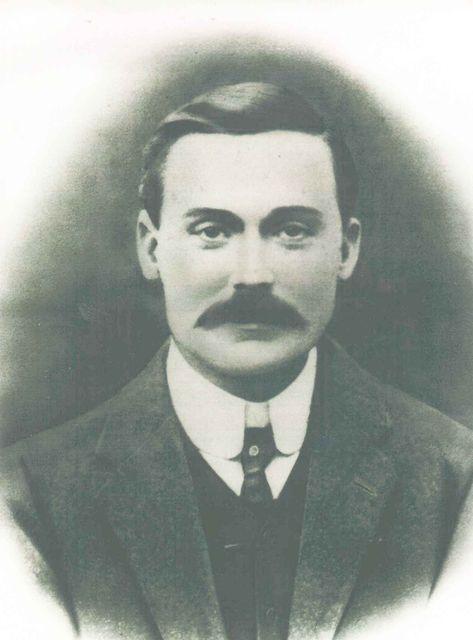
Albert Parker Edwards, my great grandfather, was born in Aston, Warwickshire in 1876. On the 1881 census he was living with his parents Enoch and Amelia in Bournebrook, Northfield, Worcestershire. Enoch was a button tool maker at the time of the census.
In 1890 Albert was indentured in an apprenticeship as a pawnbroker in Tipton, Staffordshire.
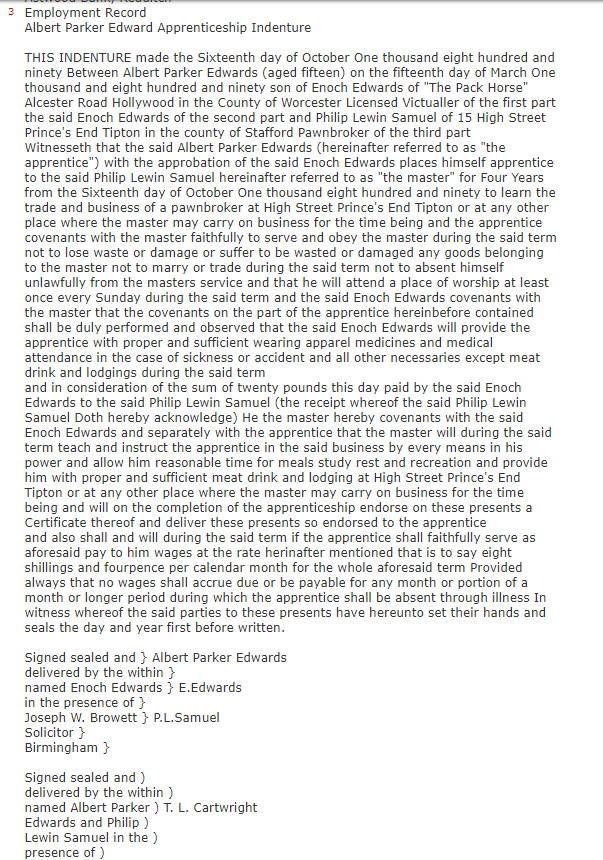
On the 1891 census Albert was a lodger in Tipton at the home of Phoebe Levy, pawnbroker, and Alberts occupation was an apprentice.
Albert married Annie Elizabeth Stokes in 1898 in Evesham, and their first son, my grandfather Albert Garnet Edwards (1898-1950), was born six months later in Crabbs Cross. On the 1901 census, Annie was in hospital as a patient and Albert was living at Crabbs Cross with a boarder, his brother Garnet Edwards. Their two year old son Albert Garnet was staying with his uncle Ralph, Albert Parkers brother, also in Crabbs Cross.
Albert and Annie kept the Cricketers Arms hotel on Beoley Road in Redditch until around 1920. They had a further four children while living there: Doris May Edwards (1902-1974), Ralph Clifford Edwards (1903-1988), Ena Flora Edwards (1908-1983) and Osmond Edwards (1910-2000).
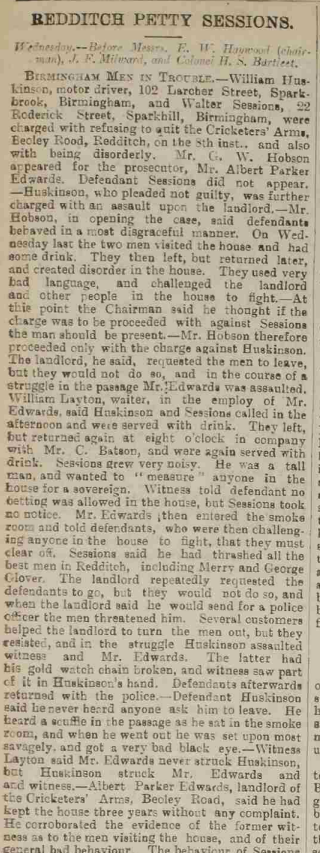
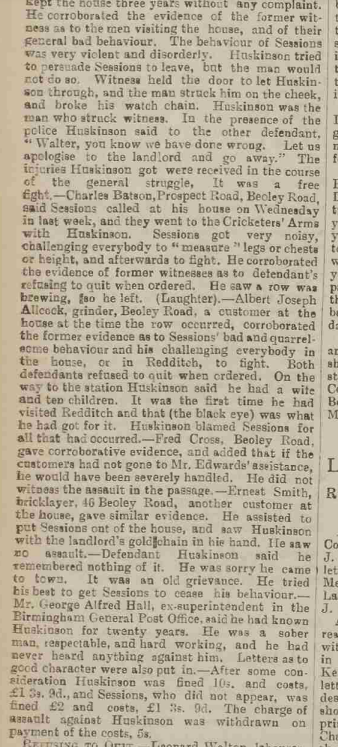
In 1906 Albert was assaulted during an incident in the Cricketers Arms.
Bromsgrove & Droitwich Messenger – Saturday 18 August 1906:
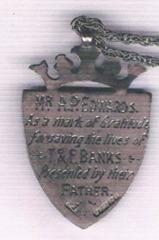
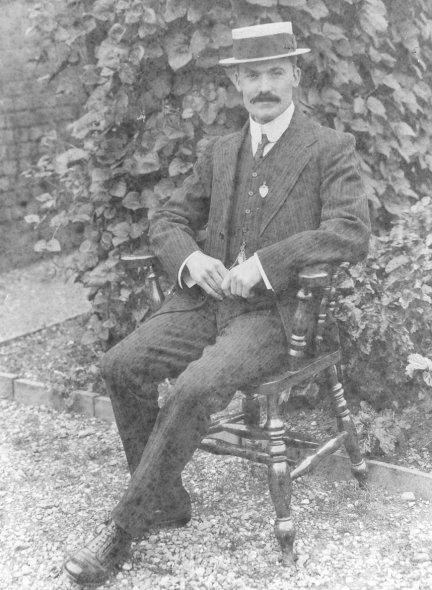
In 1910 a gold medal was given to Albert Parker Edwards by Mr. Banks, a policeman, in Redditch for saving the life of his two children from drowning in a brook on the Proctor farm which adjoined The Cricketers Arms. The story my father heard was that policeman Banks could not persuade the town of Redditch to come up with an award for Albert Parker Edwards so policeman Banks did it himself. William Banks, police constable, was living on Beoley Road on the 1911 census. His son Thomas was aged 5 and his daughter Frances was 8. It seems that when the father retired from the police he moved to Worcester. Thomas went into the hotel business and in 1939 was the manager of the Abbey hotel in Kenilworth. Frances married Edward Pardoe and was living along Redditch Road, Alvechurch in 1939.
My grandmother Peggy had the gold medal put on a gold chain for me in the 1970s. When I left England in the 1980s, I gave it back to her for safekeeping. When she died, the medal on the chain ended up in my fathers possession, who claims to have no knowledge that it was once given to me!
The medal:
Albert Parker Edwards wearing the medal:
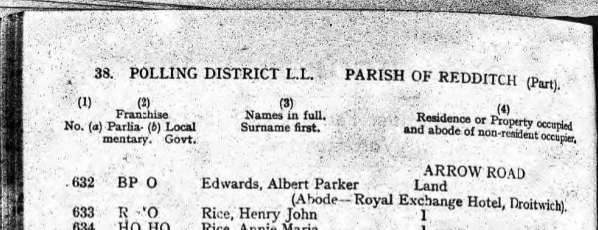
In 1921 Albert was at the The Royal Exchange hotel in Droitwich:
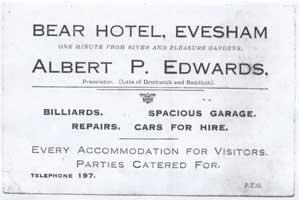
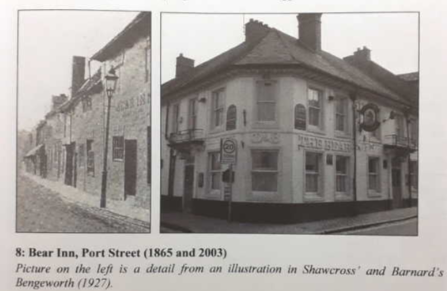
Between 1922 and 1927 Albert kept the Bear Hotel in Evesham:
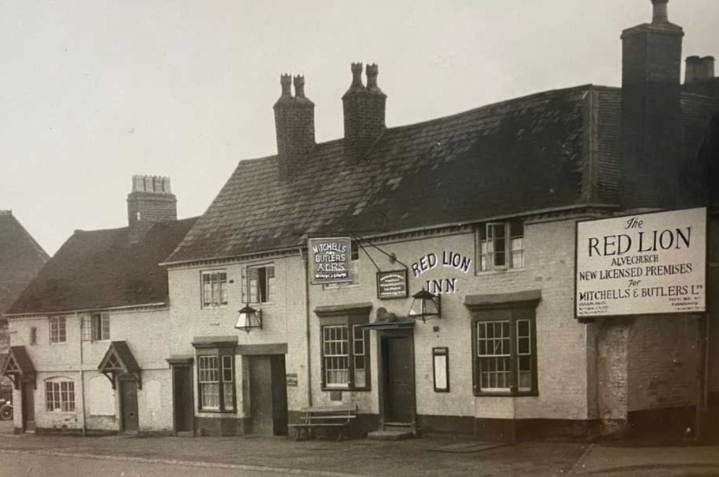
Then Albert and Annie moved to the Red Lion at Astwood Bank:
Albert in the garden behind the Red Lion:
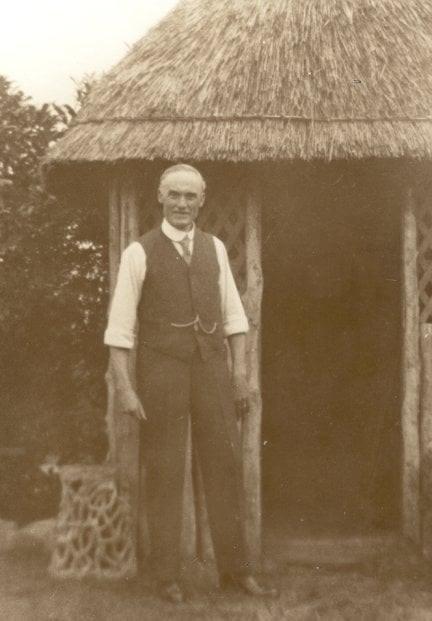
They stayed at the Red Lion until Albert Parker Edwards died on the 11th of February, 1930 aged 53.
 October 19, 2022 at 6:46 am #6336
In reply to: Family Stories From The Other Side ~ Book Two
The Hamstall Ridware Connection
Stubbs and Woods
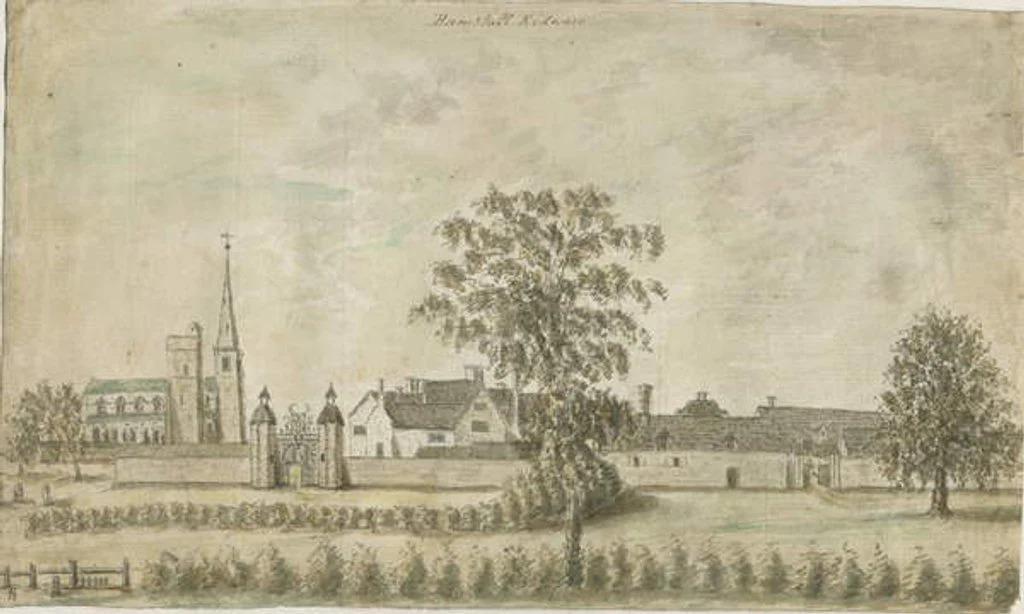 Hamstall Ridware
Charles Tomlinson‘s (1847-1907) wife Emma Grattidge (1853-1911) was born in Wolverhampton, the daughter and youngest child of William Grattidge (1820-1887) born in Foston, Derbyshire, and Mary Stubbs (1819-1880), born in Burton on Trent, daughter of Solomon Stubbs.
Solomon Stubbs (1781-1857) was born in Hamstall Ridware in 1781, the son of Samuel and Rebecca. Samuel Stubbs (1743-) and Rebecca Wood (1754-) married in 1769 in Darlaston. Samuel and Rebecca had six other children, all born in Darlaston. Sadly four of them died in infancy. Son John was born in 1779 in Darlaston and died two years later in Hamstall Ridware in 1781, the same year that Solomon was born there.
But why did they move to Hamstall Ridware?
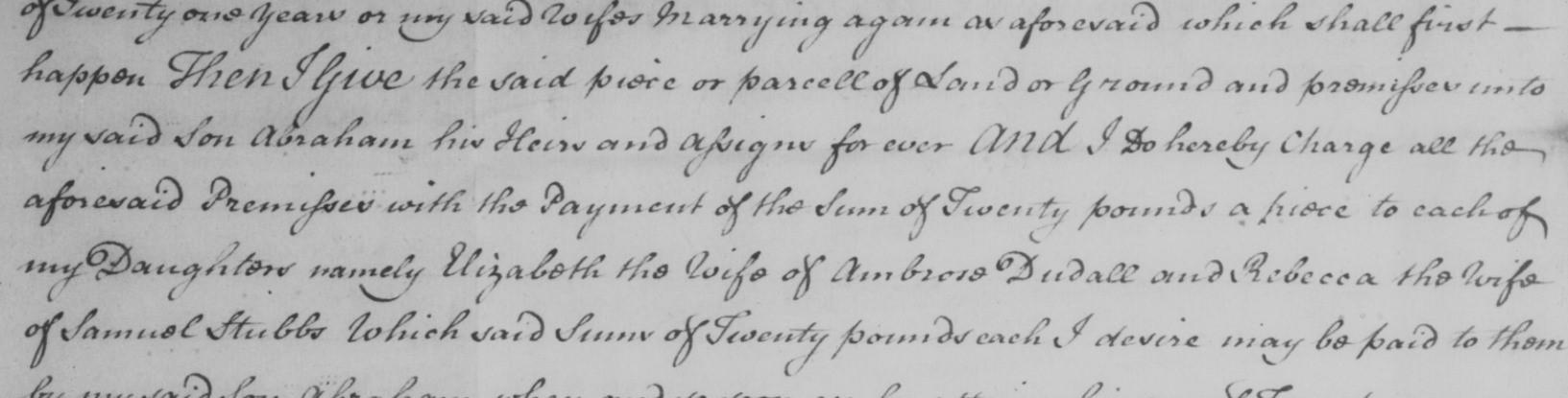
Samuel Stubbs was born in 1743 in Curdworth, Warwickshire (near to Birmingham). I had made a mistake on the tree (along with all of the public trees on the Ancestry website) and had Rebecca Wood born in Cheddleton, Staffordshire. Rebecca Wood from Cheddleton was also born in 1843, the right age for the marriage. The Rebecca Wood born in Darlaston in 1754 seemed too young, at just fifteen years old at the time of the marriage. I couldn’t find any explanation for why a woman from Cheddleton would marry in Darlaston and then move to Hamstall Ridware. People didn’t usually move around much other than intermarriage with neighbouring villages, especially women. I had a closer look at the Darlaston Rebecca, and did a search on her father William Wood. I found his 1784 will online in which he mentions his daughter Rebecca, wife of Samuel Stubbs. Clearly the right Rebecca Wood was the one born in Darlaston, which made much more sense.
An excerpt from William Wood’s 1784 will mentioning daughter Rebecca married to Samuel Stubbs:
But why did they move to Hamstall Ridware circa 1780?
I had not intially noticed that Solomon Stubbs married again the year after his wife Phillis Lomas (1787-1844) died. Solomon married Charlotte Bell in 1845 in Burton on Trent and on the marriage register, Solomon’s father Samuel Stubbs occupation was mentioned: Samuel was a buckle maker.
Marriage of Solomon Stubbs and Charlotte Bell, father Samuel Stubbs buckle maker:
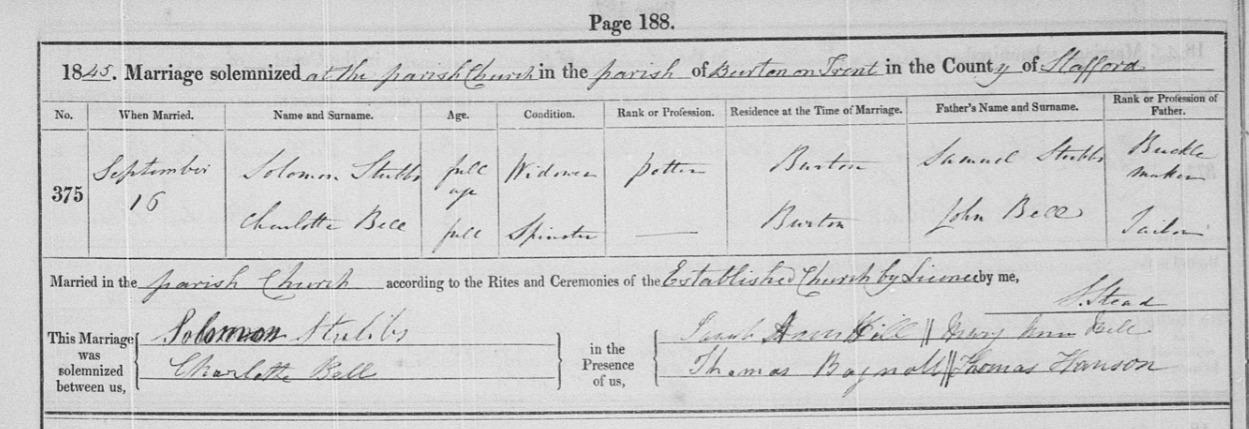
A rudimentary search on buckle making in the late 1700s provided a possible answer as to why Samuel and Rebecca left Darlaston in 1781. Shoe buckles had gone out of fashion, and by 1781 there were half as many buckle makers in Wolverhampton as there had been previously.
“Where there were 127 buckle makers at work in Wolverhampton, 68 in Bilston and 58 in Birmingham in 1770, their numbers had halved in 1781.”
via “historywebsite”(museum/metalware/steel)
Steel buckles had been the height of fashion, and the trade became enormous in Wolverhampton. Wolverhampton was a steel working town, renowned for its steel jewellery which was probably of many types. The trade directories show great numbers of “buckle makers”. Steel buckles were predominantly made in Wolverhampton: “from the late 1760s cut steel comes to the fore, from the thriving industry of the Wolverhampton area”. Bilston was also a great centre of buckle making, and other areas included Walsall. (It should be noted that Darlaston, Walsall, Bilston and Wolverhampton are all part of the same area)
In 1860, writing in defence of the Wolverhampton Art School, George Wallis talks about the cut steel industry in Wolverhampton. Referring to “the fine steel workers of the 17th and 18th centuries” he says: “Let them remember that 100 years ago [sc. c. 1760] a large trade existed with France and Spain in the fine steel goods of Birmingham and Wolverhampton, of which the latter were always allowed to be the best both in taste and workmanship. … A century ago French and Spanish merchants had their houses and agencies at Birmingham for the purchase of the steel goods of Wolverhampton…..The Great Revolution in France put an end to the demand for fine steel goods for a time and hostile tariffs finished what revolution began”.
The next search on buckle makers, Wolverhampton and Hamstall Ridware revealed an unexpected connecting link.
In Riotous Assemblies: Popular Protest in Hanoverian England by Adrian Randall:
In Walsall in 1750 on “Restoration Day” a crowd numbering 300 assembled, mostly buckle makers, singing Jacobite songs and other rebellious and riotous acts. The government was particularly worried about a curious meeting known as the “Jubilee” in Hamstall Ridware, which may have been part of a conspiracy for a Jacobite uprising.
But this was thirty years before Samuel and Rebecca moved to Hamstall Ridware and does not help to explain why they moved there around 1780, although it does suggest connecting links.
Rebecca’s father, William Wood, was a brickmaker. This was stated at the beginning of his will. On closer inspection of the will, he was a brickmaker who owned four acres of brick kilns, as well as dwelling houses, shops, barns, stables, a brewhouse, a malthouse, cattle and land.
A page from the 1784 will of William Wood:
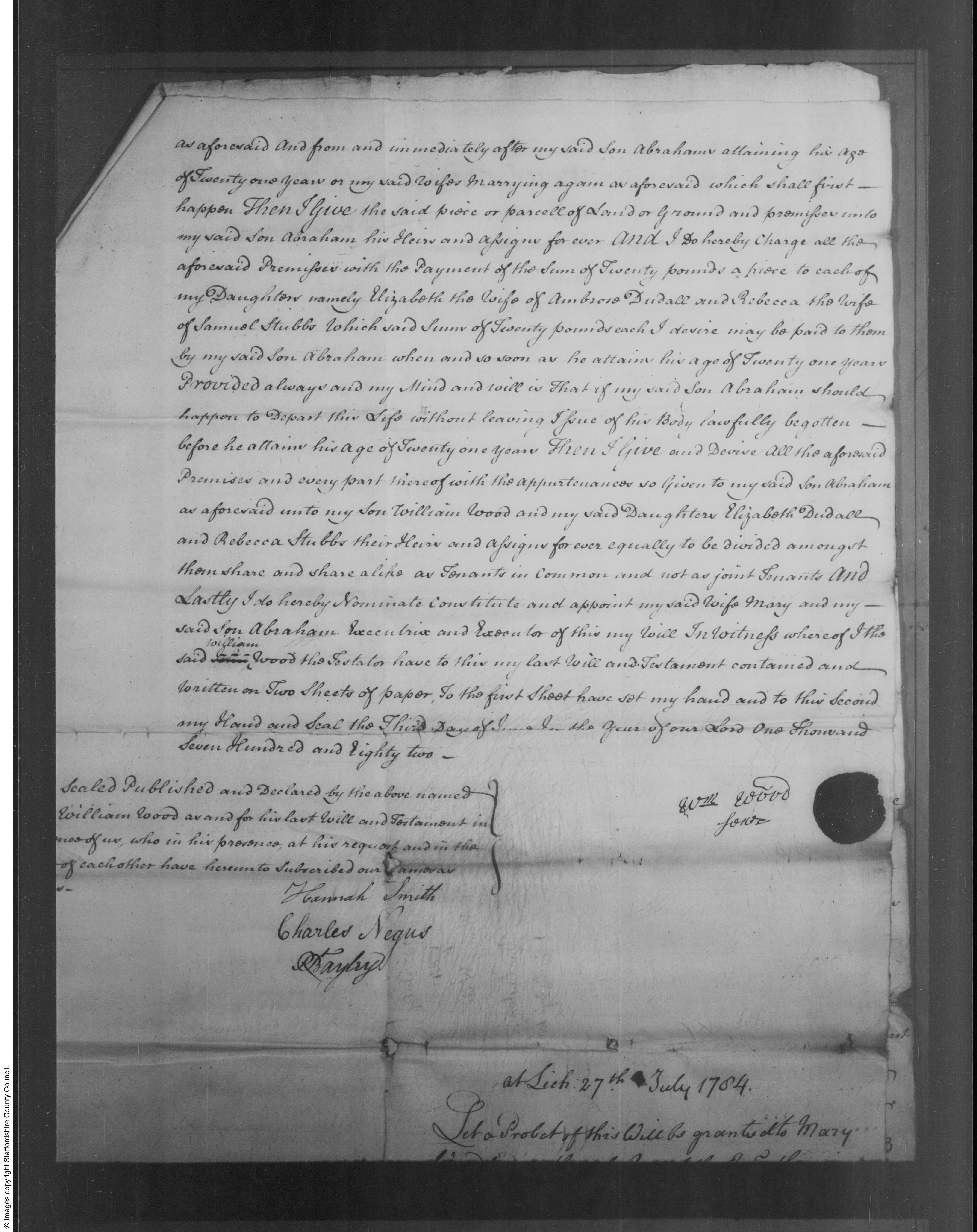
The 1784 will of William Wood of Darlaston:
I William Wood the elder of Darlaston in the county of Stafford, brickmaker, being of sound and disposing mind memory and understanding (praised be to god for the same) do make publish and declare my last will and testament in manner and form following (that is to say) {after debts and funeral expense paid etc} I give to my loving wife Mary the use usage wear interest and enjoyment of all my goods chattels cattle stock in trade ~ money securities for money personal estate and effects whatsoever and wheresoever to hold unto her my said wife for and during the term of her natural life providing she so long continues my widow and unmarried and from or after her decease or intermarriage with any future husband which shall first happen.
Then I give all the said goods chattels cattle stock in trade money securites for money personal estate and effects unto my son Abraham Wood absolutely and forever. Also I give devise and bequeath unto my said wife Mary all that my messuages tenement or dwelling house together with the malthouse brewhouse barn stableyard garden and premises to the same belonging situate and being at Darlaston aforesaid and now in my own possession. Also all that messuage tenement or dwelling house together with the shop garden and premises with the appurtenances to the same ~ belonging situate in Darlaston aforesaid and now in the several holdings or occupation of George Knowles and Edward Knowles to hold the aforesaid premises and every part thereof with the appurtenances to my said wife Mary for and during the term of her natural life provided she so long continues my widow and unmarried. And from or after her decease or intermarriage with a future husband which shall first happen. Then I give and devise the aforesaid premises and every part thereof with the appurtenances unto my said son Abraham Wood his heirs and assigns forever.
Also I give unto my said wife all that piece or parcel of land or ground inclosed and taken out of Heath Field in the parish of Darlaston aforesaid containing four acres or thereabouts (be the same more or less) upon which my brick kilns erected and now in my own possession. To hold unto my said wife Mary until my said son Abraham attains his age of twenty one years if she so long continues my widow and unmarried as aforesaid and from and immediately after my said son Abraham attaining his age of twenty one years or my said wife marrying again as aforesaid which shall first happen then I give the said piece or parcel of land or ground and premises unto my said son Abraham his heirs and assigns forever.
And I do hereby charge all the aforesaid premises with the payment of the sum of twenty pounds a piece to each of my daughters namely Elizabeth the wife of Ambrose Dudall and Rebecca the wife of Samuel Stubbs which said sum of twenty pounds each I devise may be paid to them by my said son Abraham when and so soon as he attains his age of twenty one years provided always and my mind and will is that if my said son Abraham should happen to depart this life without leaving issue of his body lawfully begotten before he attains his age of twenty one years then I give and devise all the aforesaid premises and every part thereof with the appurtenances so given to my said son Abraham as aforesaid unto my said son William Wood and my said daughter Elizabeth Dudall and Rebecca Stubbs their heirs and assigns forever equally divided among them share and share alike as tenants in common and not as joint tenants. And lastly I do hereby nominate constitute and appoint my said wife Mary and my said son Abraham executrix and executor of this my will.
The marriage of William Wood (1725-1784) and Mary Clews (1715-1798) in 1749 was in Hamstall Ridware.
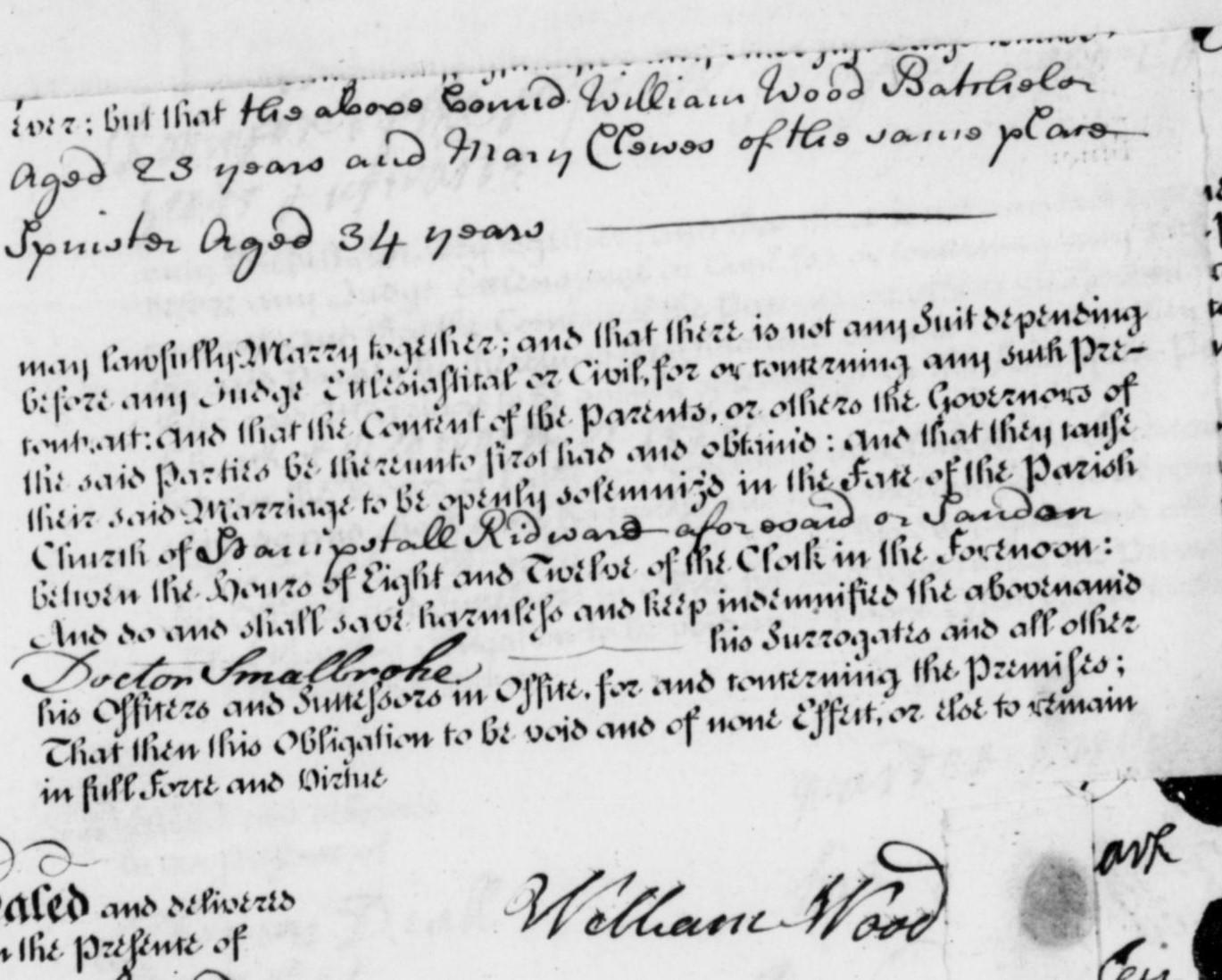
Mary was eleven years Williams senior, and it appears that they both came from Hamstall Ridware and moved to Darlaston after they married. Clearly Rebecca had extended family there (notwithstanding any possible connecting links between the Stubbs buckle makers of Darlaston and the Hamstall Ridware Jacobites thirty years prior). When the buckle trade collapsed in Darlaston, they likely moved to find employment elsewhere, perhaps with the help of Rebecca’s family.
I have not yet been able to find deaths recorded anywhere for either Samuel or Rebecca (there are a couple of deaths recorded for a Samuel Stubbs, one in 1809 in Wolverhampton, and one in 1810 in Birmingham but impossible to say which, if either, is the right one with the limited information, and difficult to know if they stayed in the Hamstall Ridware area or perhaps moved elsewhere)~ or find a reason for their son Solomon to be in Burton upon Trent, an evidently prosperous man with several properties including an earthenware business, as well as a land carrier business.
August 18, 2022 at 8:26 am #6324In reply to: The Elusive Samuel Housley and Other Family Stories
STONE MANOR
Hildred Orgill Warren born in 1900, my grandmothers sister, married Reginald Williams in Stone, Worcestershire in March 1924. Their daughter Joan was born there in October of that year.
Hildred was a chaffeur on the 1921 census, living at home in Stourbridge with her father (my great grandfather) Samuel Warren, mechanic. I recall my grandmother saying that Hildred was one of the first lady chauffeurs. On their wedding certificate, Reginald is also a chauffeur.
1921 census, Stourbridge:
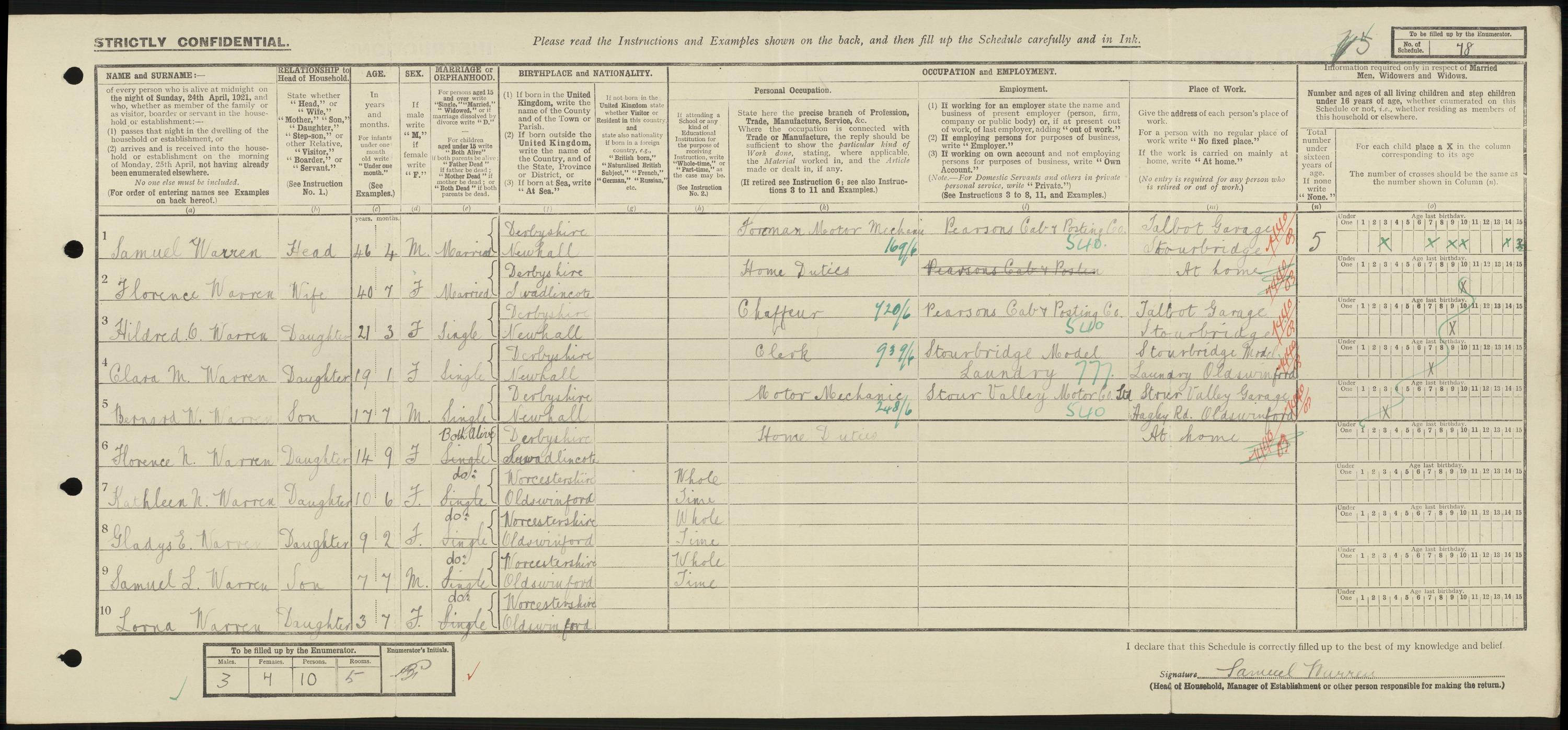
Hildred and Reg worked at Stone Manor. There is a family story of Hildred being involved in a car accident involving a fatality and that she had to go to court.
Stone Manor is in a tiny village called Stone, near Kidderminster, Worcestershire. It used to be a private house, but has been a hotel and nightclub for some years. We knew in the family that Hildred and Reg worked at Stone Manor and that Joan was born there. Around 2007 Joan held a family party there.
Stone Manor, Stone, Worcestershire:
I asked on a Kidderminster Family Research group about Stone Manor in the 1920s:
“the original Stone Manor burnt down and the current building dates from the early 1920’s and was built for James Culcheth Hill, completed in 1926”
But was there a fire at Stone Manor?
“I’m not sure there was a fire at the Stone Manor… there seems to have been a fire at another big house a short distance away and it looks like stories have crossed over… as the dates are the same…”JC Hill was one of the witnesses at Hildred and Reginalds wedding in Stone in 1924. K Warren, Hildreds sister Kay, was the other:
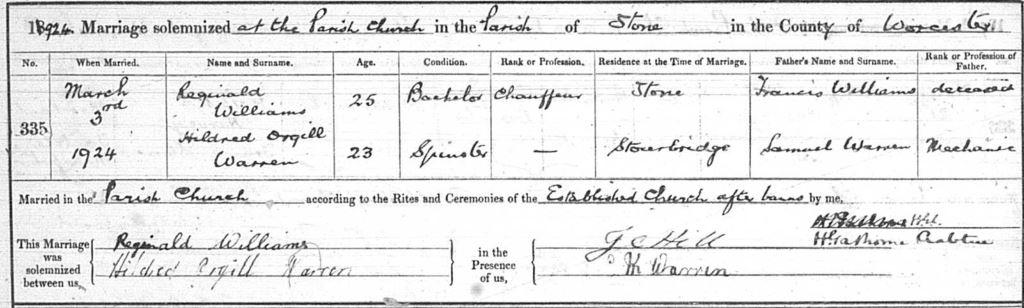
I searched the census and electoral rolls for James Culcheth Hill and found him at the Stone Manor on the 1929-1931 electoral rolls for Stone, and Hildred and Reginald living at The Manor House Lodge, Stone:
On the 1911 census James Culcheth Hill was a 12 year old student at Eastmans Royal Naval Academy, Northwood Park, Crawley, Winchester. He was born in Kidderminster in 1899. On the same census page, also a student at the school, is Reginald Culcheth Holcroft, born in 1900 in Stourbridge. The unusual middle name would seem to indicate that they might be related.
A member of the Kidderminster Family Research group kindly provided this article:
SHOT THROUGH THE TEMPLE
Well known Worcestershire man’s tragic death.
Dudley Chronicle 27 March 1930.
Well known in Worcestershire, especially the Kidderminster district, Mr Philip Rowland Hill MA LLD who was mayor of Kidderminster in 1907 was found dead with a bullet wound through his temple on board his yacht, anchored off Cannes, on Friday, recently. A harbour watchman discovered the dead man huddled in a chair on board the yacht. A small revolver was lying on the blood soaked carpet beside him.
Friends of Mr Hill, whose London address is given as Grosvenor House, Park Lane, say that he appeared despondent since last month when he was involved in a motor car accident on the Antibes ~ Nice road. He was then detained by the police after his car collided with a small motor lorry driven by two Italians, who were killed in the crash. Later he was released on bail of 180,000 francs (£1440) pending an investigation of a charge of being responsible for the fatal accident. …….
Mr Rowland Hill (Philips father) was heir to Sir Charles Holcroft, the wealthy Staffordshire man, and managed his estates for him, inheriting the property on the death of Sir Charles. On the death of Mr Rowland HIll, which took place at the Firs, Kidderminster, his property was inherited by Mr James (Culcheth) Hill who had built a mansion at Stone, near Kidderminster. Mr Philip Rowland Hill assisted his brother in managing the estate. …….
At the time of the collison both brothers were in the car.
This article doesn’t mention who was driving the car ~ could the family story of a car accident be this one? Hildred and Reg were working at Stone Manor, both were (or at least previously had been) chauffeurs, and Philip Hill was helping James Culcheth Hill manage the Stone Manor estate at the time.
This photograph was taken circa 1931 in Llanaeron, Wales. Hildred is in the middle on the back row:
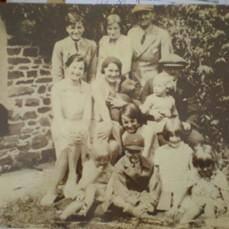
Sally Gray sent the photo with this message:
“Joan gave me a short note: Photo was taken when they lived in Wales, at Llanaeron, before Janet was born, & Aunty Lorna (my mother) lived with them, to take Joan to school in Aberaeron, as they only spoke Welsh at the local school.”
Hildred and Reginalds daughter Janet was born in 1932 in Stratford. It would appear that Hildred and Reg moved to Wales just after the car accident, and shortly afterwards moved to Stratford.
In 1921 James Culcheth Hill was living at Red Hill House in Stourbridge. Although I have not been able to trace Reginald Williams yet, perhaps this Stourbridge connection with his employer explains how Hildred met Reginald.
Sir Reginald Culcheth Holcroft, the other pupil at the school in Winchester with James Culcheth Hill, was indeed related, as Sir Holcroft left his estate to James Culcheth Hill’s father. Sir Reginald was born in 1899 in Upper Swinford, Stourbridge. Hildred also lived in that part of Stourbridge in the early 1900s.
1921 Red Hill House:
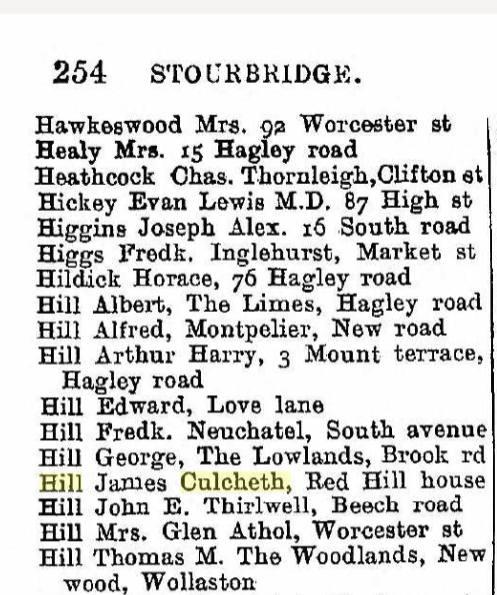
The 2007 family reunion organized by Joan Williams at Stone Manor: Joan in black and white at the front.
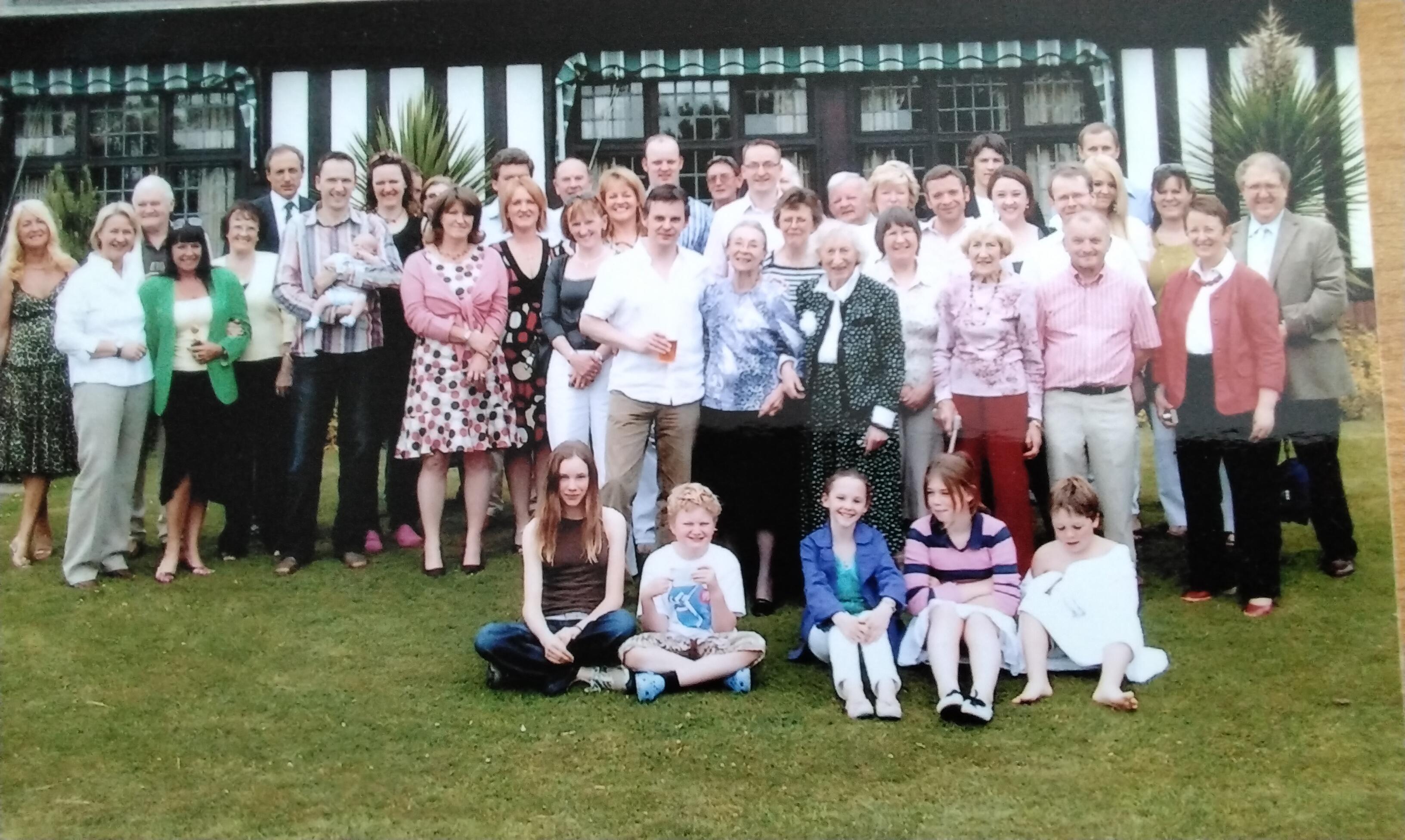
Unrelated to the Warrens, my fathers friends (and customers at The Fox when my grandmother Peggy Edwards owned it) Geoff and Beryl Lamb later bought Stone Manor.
-
AuthorSearch Results