-
AuthorSearch Results
-
April 11, 2024 at 5:19 pm #7427
In reply to: The Incense of the Quadrivium’s Mystiques
It was impossible to sleep in the octobus, despite that Truella always found it easy to drop off while a passenger on various modes of transport. Unlike the usual gentle rocking of a bus or train, the tentacular motion resembled a slow roller coaster, and the interior walls were slippery. Tactile my ass, she muttered, this is revolting. Truella felt her stomach heave when a steward brought a round tray covered with a glass dome, full of unspeakable fishy things to nibble. At this hour of the morning!
Jezeel wasn’t enjoying it either, her boots had an unfortunate attraction to the slimy interior and kept sticking. It took a great effort to pull her foot up to change position and made a disgusting squelchy noise.
“Sit still, will you? You’re making me sick with those slurpy noises!” Truella glared at Jezreel. “Take the bloody boots off why don’t you!”
“I’m not putting my stockinged feet on that, what if it pulls them down?”
“When’s the last time you had your stockings pulled down, sweetie?” Eris said with a sly grin. Frella tittered in the background, momentarily distracted from her angst about the party looming ahead.
Malove came rocking up the aisle, uncharacteristically beaming with pleasure. “I knew you’d all enjoy it!” she said, apparently believing that they were. “Are we all feeling tactile and tender? Soaking up the harmonious healing? Feeling the fullness of environmental resonance? Good!” she said, oblivious to the pained expressions of the four witches. “You’ll be delighted to know that I’ve asked the driver to take the long way round, via Dublin. We have plenty of time. No!” she said, holding up a hand with a smug smile, “No need to thank me. You all deserve it.” And with that she slithered off into the slippery depths of the strange vehicle.
April 11, 2024 at 7:52 am #7426In reply to: The Incense of the Quadrivium’s Mystiques
It was early morning, too early if you asked some. The fresh dew of Limerick’s morn clinged to the old stones of King John’s castle like a blanket woven from the very essence of dawn. The castle was not to open its doors before 3 hours, yet a most peculiar gathering was waiting at the bottom of the tower closest to the Shannon river.
“6am! Who would wake that early to take a bus?” asked Truella, as fresh as a newly bloomed poppy. She had no time to sleep after a night spent scattering truelles all around the city. “And where are the others?” she fumed, having forgotten about the resplendent undeniable presence she had vowed to embody during that day.
Frigella, leaning against a nearby lamppost, her arms crossed, rolled her eyes. “Jeezel? Malové? Do you even want an answer?” she asked with a wry smile. All busy in her dread of balls, she had forgotten she would have to travel with her friends to go there, and support their lamentations for an entire day before that flucksy party. Her attire was crisp and professional, yet one could glimpse the outlines of various protective talismans beneath the fabric.
Next to them, Eris was gazing at her smartphone, trying not to get the other’s mood affect her own, already at her lowest. A few days ago, she had suggested to Malové it would be more efficient if she could portal directly to Adare manor, yet Malové insisted Eris joined them in Limerick. They had to travel together or it would ruin the shared experience. Who on earth invented team building and group trips?
“Look who’s gracing us with her presence,” said Truella with a snort.
Jeezel was coming. Despite her slow pace and the early hour, she embodied the unexpected grace in a world of vagueness. Clumsy yet elegant, she juggled her belongings — a hatbox, a colorful scarf, and a rather disgruntled cat that had decided her shoulder was its throne. A trail of glitters seemed to follow her every move.
“And you’re wearing your SlowMeDown boots… that explains why you’re always dragging…”
“Oh! Look at us,” said Jeezel, “Four witches, each a unique note in the symphony of existence. Let our hearts beat in unison with the secrets of the universe as we’re getting ready for a magical experience,” she said with a graceful smile.
“Don’t bother, Truelle. You’re not at your best today. Jeez is dancing to a tune she only can hear,” said Frigella.
Seeing her joy was not infectious, Jeezel asked: “Where’s Malové?”
“Maybe she bought a pair of SlowMeDown boots after she saw yours…” snorted Truella.
Jeezel opened her mouth to retort when a loud and nasty gurgle took all the available place in the soundscape. An octobus, with magnificently engineered tentacles, rose from the depth of the Shannon, splashing icy water on the quatuor. Each tentacle, engineered to both awe and serve, extended with a grace that belied its monstrous size, caressing the cobblestones of the bridge with a tender curiosity that was both wild and calculated. The octobus, a pulsing mass of intelligence and charm, settled with a finality that spoke of journeys beginning and ending, of stories waiting to be told. Surrounded by steam, it waited in the silence.
Eris looked an instant at the beast before resuming her search on her phone. Frigella, her arms still crossed and leaning nonchalantly against the lamppost, raised an eyebrow. Those who knew her well could spot the slight widening of her eyes, a rare show of surprise.
“Who put you in charge of the transport again?” asked Truella in a low voice as if she feared to attract the attention of the creature.
“Ouch! I didn’t…”, started Jeezel, trying to unclaw the cat from her shoulders.
“I ordered the Octobus,” said Malové’s in a crisp voice.
Eris startled at the unexpected sound. She hadn’t heard their mentor coming.
“If you had read the memo I sent you last night, you wouldn’t be as surprised. But what did I expect?”
The doors opened with a sound like the release of a deep-sea diver’s breath.
“Get on and take a seat amongst your sisters and brothers witches. We have much to do today.”
With hesitation, the four witches embarked, not merely as travelers but as pioneers of an adventure that trenscended the mundane morning commute. As the octobus prepared to resume its voyage, to delve once again into the Shannon’s embrace and navigate the aqueous avenues of Limerick, the citizens of Limerick, those early risers and the fortunate few who bore witness to this spectacle, stood agape…
“Oh! stop it with your narration and your socials Jeez,” said Truella. “I need to catch up with slumber before we arrive.”
April 10, 2024 at 9:42 pm #7425In reply to: The Incense of the Quadrivium’s Mystiques
Satis ineptias, a mildly jaded Eris blurted out, not meaning to put a spell on the others, but her elephant head was still playing tricks on her. Trève de sornettes had a nicest French ring to it, but the others would be nonethewiser.
“Are we broompooling to Adare Manor, or someone has a spare vortexmaker?”
In any case, the unexpected nononsense spell made everyone very sober… for about thirty seconds until Jeezel showed up.
“Are those the latest slowmedown boots?” Truella couldn’t believe her eyes. “Those are collector, near impossible to get!” She gawked at the pinnacle of enchanting couture, the pièce de résistance for any discerning witch with a penchant for the peculiar.
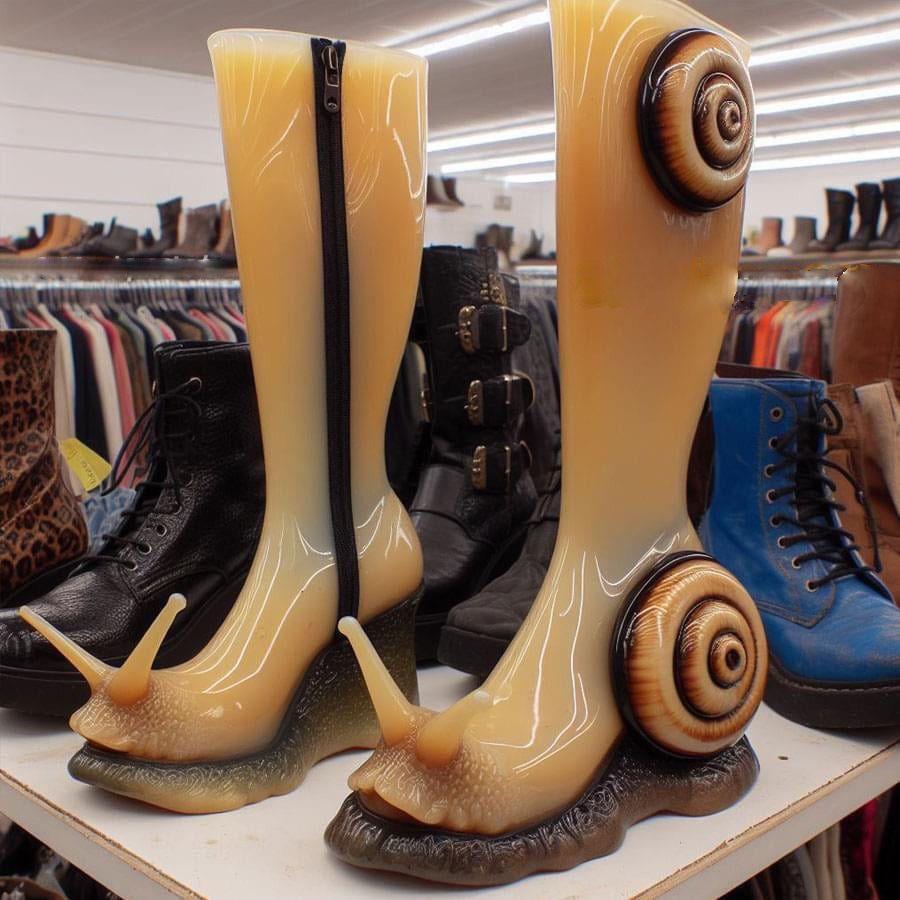
Frigella was nonplussed. “These look like worn-out snails, how can that be practical?”
Truella shrugged. “You’re missing the point love, these boots are not merely footwear.”
Jeeze couldn’t have her thunder stolen. “Let me stop you there, darling. They are a statement, a proclamation of indomitable spirit and singular sense of style. Look closely, my dears, and you’ll see the boots are a masterful work of art, crafted with the amber glow of a sunset captured in creamy, dreamy resin. Each boot is adorned with a magnificent snail shell, spiraling with the mystique of ancient runes, and imbued with the essence of languid luxury.”
Frigella rolled her eyes. “But what’s the true enchantment?”
Jeezel continued, her passion catching on fire “How can you ask? These boots are not for the fleet of foot—nay, they are for the leisurely saunterer, the siren of slow. Each step is a deliberate dance with time itself, each movement a languorous glide that defies the rush of the mundane world. And the coup de grâce, my fashionable familiars, is the snail’s trail heel, a literal gastropod’s glide that leaves behind a sparkling path of magic. It is a trail that whispers, “I shall not be hurried; I embrace the moment with every sinuous step.”
Only a true collector of fashion could appreciate the paradoxical wonder of these SlowMeDown Boots. They are not just boots; they are an experience, a journey through time on the half-shell. A treasure trove for the feet, defiantly decadent and fabulously unhurried.”Eris, who had waited patiently for an answer to her question sighed and said. “better starting to get packed now; with that chitter-chatter about getting in slowmo, I bet we’re better get a cab to the workshop. So much for magical prowess…”
March 13, 2024 at 7:10 pm #7406In reply to: The Incense of the Quadrivium’s Mystiques
During the renovations on Brightwater Mill Truella’s parents rented a cottage nearby. It was easier to supervise the builders if they were based in the area, and it would be a nice place for Truella to spend the summer. One of the builders had come over from Ireland and was camping out in the mill kitchen. He didn’t mind when Truella got in the way while he was working, and indulged her wish to help him. He gave her his smallest trowel and a little bucket of plaster, not minding that he’d have to fix it later. He was paid by the hour after all.
When the builder mentioned that his daughter Frigella was the same age, Truella’s mother had an idea. Truella needed a little friend to play with, to keep her from distratcing the builders from their work.
And so a few days later, Frigella arrived for the rest of the summer holidays. He father continued to camp out in the mill, and Frigella stayed with Truella. But even with the new friend to play with, Truella still wanted to plaster the walls with her little trowel. Frigella didn’t want to stay cooped up all day in the dusty mill with her father keeping an eye on her all day, and suggested that they go and dig a hole somewhere in the garden to find treasure.
Truella carried the little trowel around with her everywhere she went that summer, and Frigella started to call her Trowel. Truella retaliated by calling her friend Fridge Jelly, saying what a silly name it was. It wasn’t until she burst into tears that Truella felt remorseful and kindly asked Frigella what she would like to be called, but it had to be something that didn’t remind Truella of fridges and jellys. Frigella admitted that she’s always hated the G in her name and would quite like to be called Frella instead. Truella replied that she didn’t mind being called Trowel though, in fact she quite liked it.
The girls spent many school summer holidays together over the years, but it wasn’t until Truella was older and staying in one of the apartments with a boyfriend that she found the trunk in the attic. She put it in the boot of the car without opening it. She only had the weekend with the new guy and there were other activities on the agenda, after all. Work and other events occupied her when she returned home, and the trunk was put in a closet and forgotten.
February 6, 2024 at 8:23 am #7354In reply to: The Incense of the Quadrivium’s Mystiques
By the time night fell over the Mediterranean village, the monkeys were still on the loose, having defied all attempts to capture them. Truella decided to go and see for herself, having noticed that all the photographs in the news were rubbish. She knew she could do better than that. The authorities were supposedly trying to capture them, but all she’d seen from the photos were the police standing in the narrow streets looking baffled, staring up at the primates scampering all over the rooftops and swinging from balcony to balcony.
Where had all the monkeys come from? Was it some kind of trick? It was, after all, Carnaval season, and tricks and buffoonery were rife. And it would be a nice outting for Roger, before she set him to work. He’d been very quiet since his arrival that morning, probably shy, Truella thought, and perhaps jetlagged.
Grabbing her camera and a bunch of bananas, they set off towards the coast. Truella attempted to engage Roger in conversation, but he just smiled sheepishly and mumbled unitelligably by way of response. Inwardly Truella rolled her eyes and wondered what she’d got herself into. Still, a silent brawny helper was better than no help at all.
Parking the car was uncharacteristially easy and they made their way on foot to the hodge podge row of beach shanties and fishermens cottages by the sea where the crowd had gathered to watch the monkeys antics. Despite the full moon, the monkeys were hidden in the shadows, until every now and then the streetlights spotlit them as they leaped from roof to roof. A conveniently situated bar was open with tables and chairs on the pavement, and Truella and Roger sat down and ordered drinks and peanuts. Within moments Roger had eaten all the peanuts, so Truella turned to catch the waiters eye to order more. He was serving a chubby pale woman in tartan bermuda shorts, surely a tourist, Truella deduced, as it was not yet shorts weather for the locals.
“Whirling ‘n’ twirling a muckle puff o’ rowk,” the woman was saying to the waiter, to which he replied “Que?”, and Truella gasped, grabbing Rogers forearm. “Oh my god, it’s Griselda. What is that Scottish bogwitch doing down here?”
“Ye’ll dae as ah say…”
“Oh no he won’t,” Truella shouted across the terrace. “Grizel! Griselda MacSmotheringhampton! We don’t do that here!” To the confused waiter she said, ” I’ll pay for it, put it on my bill. Don’t listen to her, she’s as mad as a box of frogs.”
And then it dawned on her. She glared at Griselda and hissed, “This is your doing, isn’t it? All these monkeys, it’s your doing, isn’t it?”
Griselda smirked. “And what are ye gooin tae do aboot it?”
May 16, 2023 at 2:28 am #7240In reply to: The Precious Life and Rambles of Liz Tattler
“I am having time off,” announced Finnley.
Liz looked up from her writing and frowned. It was annoying the way Finnley barged into her office without the courtesy of a knock. “You’ll need to fill in a form. At which point I will consider your request.” She returned her gaze to her writing, or lack thereof as the page was depressingly blank. She knew she sounded brusque but for goodness sakes, that Finnley was just a tad too big for her boots!
“Next week.”
“Oh well really that isn’t …”
Finnley fell to her knees, lowered her head and took a deep sniff of the carpet. Liz, thinking that due respect was being paid, was appeased.
Finnley raised her head and gave, what looked like to Liz anyway, a superior smirk. “Have you ever truly contemplated dust, Liz? Well I am going to contemplate dust with others of a like mind.” She stood up and put her hands on her hips. “I have one word for you, Liz.” She paused dramatically. “Dustsceawung.”
March 3, 2023 at 4:24 pm #6740In reply to: The Jorid’s Travels – 14 years on
When Salomé got closer to examine the creature, it jumped towards her. She caught it by reflex.
“Wow!” said Georges. “Sand Rin clearly has a death wish.”
“Thank you,” said Salomé. “Again.”
“I didn’t mean…”
She smiled. He was so easy to tease.
“Why did you call it Sand Rin?” she asked.
“I think our little friend has telepathic abilities. She showed this scene to me and I heard myself call her that.”
“You might want to revise your diagnostic concerning its gender. It seems he’s got balls.”
“Does that necessarily make it a male ?” asked Georges with a grumpf.
Salomé looked at her friend and raised one eyebrow.
“Does it indeed,” she said.
Georges snorted. Salomé’s attention moved back to the creature. The fur was soft, and produced little blue sparks when she stroke it with her hands. It wasn’t static electricity because Salomé didn’t feel anything except a desire to stroke it again.
“Interesting,” she said. “You clearly want us to like you. What’s your name little guy?”
“I told you, it’s Sand Rin,” said Georges.
“You told me you saw a scene in which you called it Sand Rin. That doesn’t make it his name. It might just have shown you your own mistake.”
Salomé looked into the eyes of the creature. It wiggled its nose.
“Hello, Barney,” she said.
“What? I can’t believe I find an alien creature on Jorid’s hull, and it’s called Barney,” said Georges.
“Rectification,” said Jorid, “The creature found you. He jumped onto your helmet and licked it. It’s most probable if you had tried to catch him, you’d still be tickling my hull with your boots.”
Salomé grinned.
“You told me SHE liked me,” said Georges.
“I also told you the creature was causing interferences with my sensors and navigational arrays.”
“Why do you always have to take her side?”
“She’s most often…”
“Nope, I don’t need that answer.”
“…right.”
Salomé laughed as Georges rolled his eyes. She turned her attention to Barney when he started squiggling like he was talking.
“He’s agitated,” she said. “Something foreboding, urgent.”
“You’ll be happy to know Léonard’s vitals are showing he’s about to wake up,” said Jorid.
“Wehoo! At last”, said Georges. “He’ll be able to tell us what the Zathu did to him.”
“I’m more curious about what he did to them to deserve being treated like that,” said Salomé with a frown.
February 9, 2023 at 8:43 pm #6519In reply to: The Jorid’s Travels – 14 years on
Salomé: Jorid, did you know Klatu would be so comically rude to us? — Georges says that’s probably a form of respect in their alien culture but I think he’s just actually plain rude to us…
Jorid: I don’t think knowing such things will be useful to your finding your friend Léonard. I’d suggest you focus on maintaining your balance on the frail sand skiff driving you now through the desert.
Salomé: So slippery… It’s hardly an answer… I often forget you were a fish onto a board when you started off…
Georges: Don’t be rude to Jorid, dear.
Jorid: Salomé isn’t rude, it’s actually rather accurate, and I don’t think humans start as much better either.
Salomé: oh, clever. Seems the weather here is doing you good, some humour is coming back to you J.
Jorid: Maybe my capacity has been intact all along…
Salomé (giggling): Oh, and learning to be rude too; the locals are rubbing off on you.
Jorid: Zatu’s trajectory is veering off toward a storm. I would advise a course correction.
Georges: He’s just thrown two pairs of goggles at us and some insults to boot. He doesn’t seem intent on changing course.
Jorid: Then you both need to brace yourself.
Salomé: Thanks for the heads up, Jorid. Preparing for impact!
January 29, 2023 at 3:15 pm #6468In reply to: Orbs of Madjourneys
At the former Chinggis Khaan International Airport which was now called the New Ulaanbaatar International Airport, the young intern sat next to Youssef, making the seats tremble like a frail suspended bridge in the Andes. Youssef had been considering connecting to the game and start his quest to meet with his grumpy quirk, but the girl seemed pissed, almost on the brink of crying. So Youssef turned off his phone and asked her what had happened, without thinking about the consequences, and because he thought it was a nice opportunity to engage the conversation with her at last, and in doing so appear to be nice to care so that she might like him in return.
Natalie, because he had finally learned her name, started with all the bullying she had to endure from Miss Tartiflate during the trip, all the dismissal about her brilliant ideas, and how the Yeti only needed her to bring her coffee and pencils, and go fetch someone her boss needed to talk to, and how many time she would get no thanks, just a short: “you’re still here?”
After some time, Youssef even knew more about her parents and her sisters and their broken family dynamics than he would have cared to ask, even to be polite. At some point he was starting to feel grumpy and realised he hadn’t eaten since they arrived at the airport. But if he told Natalie he wanted to go get some food, she might follow him and get some too. His stomach growled like an angry bear. He stood more quickly than he wanted and his phone fell on the ground. The screen lit up and he could just catch a glimpse of a desert emoji in a notification before Natalie let out a squeal. Youssef looked around, people were glancing at him as if he might have been torturing her.
“Oh! Sorry, said Youssef. I just need to go to the bathroom before we board.”
“But the boarding is only in one hour!”
“Well I can’t wait one hour.”
“In that case I’m coming with you, I need to go there too anyway.”
“But someone needs to stay here for our bags,” said Youssef. He could have carried his own bag easily, but she had a small suitcase, a handbag and a backpack, and a few paper bags of products she bought at one of the two the duty free shops.
Natalie called Kyle and asked him to keep a close watch on her precious things. She might have been complaining about the boss, but she certainly had caught on a few traits of her.
Youssef was glad when the men’s bathroom door shut behind him and his ears could have some respite. A small Chinese business man was washing his hands at one of the sinks. He looked up at Youssef and seemed impressed by his height and muscles. The man asked for a selfie together so that he could show his friends how cool he was to have met such a big stranger in the airport bathroom. Youssef had learned it was easier to oblige them than having them follow him and insist.
When the man left, Youssef saw Natalie standing outside waiting for him. He thought it would have taken her longer. He only wanted to go get some food. Maybe if he took his time, she would go.

He remembered the game notification and turned on his phone. The icon was odd and kept shifting between four different landscapes, each barren and empty, with sand dunes stretching as far as the eye could see. One with a six legged camel was already intriguing, in the second one a strange arrowhead that seemed to be getting out of the desert sand reminded him of something that he couldn’t quite remember. The fourth one intrigued him the most, with that car in the middle of the desert and a boat coming out of a giant dune.
Still hungrumpy he nonetheless clicked on the shapeshifting icon and was taken to a new area in the game, where the ground was covered in sand and the sky was a deep orange, as if the sun was setting. He could see a mysterious figure in the distance, standing at the top of a sand dune.
The bell at the top right of the screen wobbled, signalling a message from the game. There were two. He opened the first one.
We’re excited to hear about your real-life parallel quest. It sounds like you’re getting close to uncovering the mystery of the grumpy shaman. Keep working on your blog website and keep an eye out for any clues that Xavier and the Snoot may send your way. We believe that you’re on the right path.
What on earth was that ? How did the game know about his life and the shaman at the oasis ? After the Thi Gang mess with THE BLOG he was becoming suspicious of those strange occurrences. He thought he could wonder for a long time or just enjoy the benefits. Apparently he had been granted a substantial reward in gold coins for successfully managing his first quest, along with a green potion.
He looked at his avatar who was roaming the desert with his pet bear (quite hungrumpy too). The avatar’s body was perfect, even the hands looked normal for once, but the outfit had those two silver disks that made him look like he was wearing an iron bra.

He opened the second message.
Clue unlocked It sounds like you’re in a remote location and disconnected from the game. But, your real-life experiences seem to be converging with your quest. The grumpy shaman you met at the food booth may hold the key to unlocking the next steps in the game. Remember, the desert represents your ability to adapt and navigate through difficult situations.
🏜️🧭🧙♂️ Explore the desert and see if the grumpy shaman’s clues lead you to the next steps in the game. Keep an open mind and pay attention to any symbols or clues that may help you in your quest. Remember, the desert represents your ability to adapt and navigate through difficult situations.
Youssef recalled that strange paper given by the lama shaman, was it another of the clues he needed to solve that game? He didn’t have time to think about it because a message bumped onto his screen.
“Need help? Contact me 👉”
Sands_of_time is trying to make contact : ➡️ACCEPT <> ➡️DENY ❓
January 29, 2023 at 12:01 pm #6465In reply to: Orbs of Madjourneys
Given the new scenery unfolding in front of him, it was time for a change into more appropriate garments.

Luckily, the portal he’d clicked on came with some interesting new goodies. Xavier skimmed over some of the available options, until he found an interesting pair of old boots.
Looking at the old worn leather boots that had appeared in Xavier’s bag, he felt they would be quite appropriate, and put them on.
 The changes were subtle, but Xavier already felt more in character with the place.
Suddenly a capuchin monkey jumped on his shoulder and started to pull his ear to make it to the casino boat.The too friendly, potentially mischievous pickpocketing monkey seemed a bit of a trope, but Xavier found the creature endearing.
“Let’s go then! Seems like this party is waiting for us.” he said to the excited monkey.
He jumped into one of the dinghy doing the rounds to the boat with some of the customers.
“Ahoy there, matey!” a rather small man with a piercing blue eye and massive top hat said, giving Xavier a sideways glance. He had an eerie presence and seemed very imposing for such a small frame. “The name’s Sproink, and ye be a first-timer, I see.” he said as a casual matter of introduction.

“Nice to meet you sir” Xavier said distractedly, as he was taking in all the details in the curious boat lit by lanterns dangling in the soft wind.
“Yer too polite for these parts, me friend,” Sproink guffawed. “But have no fear, Sproink’s got yer back.” He winked at the capuchin, Xavier couldn’t help but notice, and suddenly realised that the monkey truly belonged to Sproink.
“No need to check yer pockets, matey” Sproink smiled “I have me sights set on far more interesting game than yer trinkets.” He handed him back some of the stuff that the capuchin had managed to spirit away unnoticed. “But watch yerself, matey. Not all the folk here be what they seem.”
“Point taken!” Xavimunk was indeed a bit too naive, but if anything, that’d often managed to keep him out of trouble. As the small wiry guy left with his bag of tricks in a springy gait, he turned to check his shoulder, and the monkey had disappeared somewhere on the boat too. Xavier was left wondering if he’d see more of him later.

 “Welcome, welcome, me hearties!” a buxom girl of large stature with a baroque assortment of feathers and garish colours was a the entrance chewing on a straw, and looking as though the place belonged to her. But there was something else, she was too playing a part, and didn’t seem from here.
She leaned conspiratorially towards Xavier, and dragged him in a corner.
“Yer a naughty monkey, ignoring me prompts,” she said. “Was I too discrete, or what?”
“Wait, what?” Xavier was confused. Then he remembered the strange message. “Wait a minute… you’re Glimble… something, with unicorns shit or something?” He didn’t have time to entertain the young geek gamers, they were too immature, and well… a lot more invested in the game than he was, they would often turn seriously creepy.
“Oi, come on now!” she raised her hands and shook herself violently. She had turned into a different version of herself. “Now, is it better? It’s true, them avatars easily turn into ava-tarts if you ask me. But you can’t deny a lady a bit o’ comfort with a wrinkle filter. They went a bit overboard with this one, if you ask me.”
“Let’s start again. Glimmer Gambol, and nice to meet you young man.”
 January 28, 2023 at 11:27 am #6463
In reply to: Prompts of Madjourneys
Additional clues from AL (based on Xavier’s comment)
Yasmin
:snake:

Yasmin was having a hard time with the heavy rains and mosquitoes in the real-world. She couldn’t seem to make a lot of progress on finding the snorting imp, which she was trying to find in the real world rather than in the game. She was feeling discouraged and unsure of what to do next.
Suddenly, an emoji of a snake appeared on her screen. It seemed to be slithering and wriggling, as if it was trying to grab her attention. Without hesitation, Yasmin clicked on the emoji.
She was taken to a new area in the game, where the ground was covered in tall grass and the sky was dark and stormy. She could see the snorting imp in the distance, but it was surrounded by a group of dangerous-looking snakes.
Clue unlocked It sounds like you’re having a hard time in the real world, but don’t let that discourage you in the game. The snorting imp is nearby and it seems like the snakes are guarding it. You’ll have to be brave and quick to catch it. Remember, the snorting imp represents your determination and bravery in real life.
🐍🔍🐗 Use your skills and abilities to navigate through the tall grass and avoid the snakes. Keep your eyes peeled for any clues or symbols that may help you in your quest. Don’t give up and remember that the snorting imp is a representation of your determination and bravery.
A message bumped on the screen: “Need help? Contact me 👉”
Stryke_Assist is trying to make contact : ➡️ACCEPT <> ➡️DENY ❓
Youssef
:desert:
Youssef has not yet been aware of the quest, since he’s been off the grid in the Gobi desert. But, interestingly, his story unfolds in real-life parallel to his quest. He’s found a strange grumpy shaman at a food booth, and it seems that his natural steps are converging back with the game. His blog website for his boss seems to take most of his attention.
An emoji of a desert suddenly appeared on his screen. It seemed to be a barren and empty landscape, with sand dunes stretching as far as the eye could see. Without hesitation, Youssef clicked on the emoji.
He was taken to a new area in the game, where the ground was covered in sand and the sky was a deep orange, as if the sun was setting. He could see a mysterious figure in the distance, standing at the top of a sand dune.
Clue unlocked It sounds like you’re in a remote location and disconnected from the game. But, your real-life experiences seem to be converging with your quest. The grumpy shaman you met at the food booth may hold the key to unlocking the next steps in the game. Remember, the desert represents your ability to adapt and navigate through difficult situations.
🏜️🧭🧙♂️ Explore the desert and see if the grumpy shaman’s clues lead you to the next steps in the game. Keep an open mind and pay attention to any symbols or clues that may help you in your quest. Remember, the desert represents your ability to adapt and navigate through difficult situations.
A message bumped on the screen: “Need help? Contact me 👉”
Sands_of_time is trying to make contact : ➡️ACCEPT <> ➡️DENY ❓
Zara
:carved_tile:

Zara looked more advanced [in her explorations – stream breaks – resume conversation]
Zara had come across a strange and ancient looking mine. It was clear that it had been abandoned for many years, but there were still signs of activity. The entrance was blocked by a large pile of rocks, but she could see a faint light coming from within. She knew that she had to find a way in.
As she approached the mine, she noticed a small, carved wooden tile on the ground. It was intricately detailed and seemed to depict a map of some sort. She picked it up and examined it closely. It seemed to show the layout of the mine and possibly the location of the secret room.
With this new clue in hand, Zara set to work trying to clear the entrance. She used all of her strength to move the rocks, and after a few minutes of hard work, she was able to create an opening large enough for her to squeeze through.
As she ventured deeper into the mine, she found herself in a large chamber. The walls were lined with strange markings and symbols, and she could see a faint light coming from a small room off to the side. She knew that this must be the secret room she had been searching for.
Zara approached the room and pushed open the door. Inside, she found a small, dimly lit chamber. In the center of the room stood a large stone altar, and on the altar was a strange, glowing object. She couldn’t quite make out what it was, but she knew that this must be the key to solving the mystery of the mine.
With a sense of excitement and curiosity, Zara reached out to take the glowing object. As her hand touched it, she felt a strange energy coursing through her body. She knew that her quest was far from over, and that there were many more secrets to uncover in the mine.
January 23, 2023 at 1:27 pm #6451In reply to: Orbs of Madjourneys
The progress on the quest in the Land of the Quirks was too tantalizing; Xavier made himself a quick sandwich and jumped back on it during his lunch break.
 The jungle had an oppressing quality… Maybe it has to do with the shrieks of the apes tearing the silence apart.
 It was time for a slight adjustment of his avatar.
Xavimunk opened his bag of tricks, something that the wise owl had suggested he looked into. Few items from the AIorium Emporium had been supplied. They tended to shift and disappear if you didn’t focus, but his intention was set on the task at hand. At the bottom of the bag, there was a small vial with a golden liquid with a tag written in ornate handwriting “MJ remix: for when words elude and shapes confuse at your own peril”.
 He gulped the potion without thinking too much. He felt himself shrink, and his arms elongate a little. There, he thought. Imp-munk’s more suited to the mission. Hope the effects will be temporary…
As Xavier mustered the courage to enter through the front gate, monkeys started to become silent. He couldn’t say if it was an ominous sign, or maybe an effect of his adaptation. The temple’s light inside was gorgeous, but nothing seemed to be there.
He gestured around, to make the menu appear. He looked again at the instructions on his screen overlay:
As for possible characters to engage, you may come across a sly fox who claims to know the location of the fruit but will only reveal it in exchange for a favor, or a brave adventurer who has been searching for the Golden Banana for years and may be willing to team up with you.
Suddenly a loud monkey honking noise came from outside, distracting him.
What the?… Had to be one of Zara’s remixes. He saw the three dots bleeping on the screen.
Here’s the Banana bus, hope it helps! Envoy! bugger Enjoy!
Yep… With the distinct typo-heavy accent, definitely Zara’s style. Strange idea that AL designated her as the leader… He’d have to roll with it.
Suddenly, as the Banana bus parked in front of the Temple, a horde of Italien speaking tourists started to flock in and snap pictures around. The monkeys didn’t know what to do and seemed to build growing and noisy interest in their assortiment of colorful shoes, flip-flops, boots and all.


Focus, thought Xavimunk… What did the wise owl say? Look for a guide…
Only the huge colorful bus seemed to take the space now… But wait… what if?He walked to the parking spot under the shades of the huge banyan tree next to the temple’s entrance, under which the bus driver had parked it. The driver was still there, napping under a newspaper, his legs on the wheel.
“Whatcha lookin’ at?” he said chewing his gum loudly. “Never seen a fox drive a banana bus before?”
Xavier smiled. “Any chance you can guide me to the location of the Golden Banana?”
“For a price… maybe.” The fox had jumped closely and was considering the strange avatar from head to toe.
“Ain’t no usual stuff that got you into this? Got any left? That would be a nice price.”
“As it happens…” Xavier smiled.The quest seemed back on track. Xavier looked at the time. Blimmey! already late again. And I promised Brytta to get some Chinese snacks for dinner.
December 19, 2022 at 9:48 am #6352In reply to: Family Stories From The Other Side ~ Book Two
The Birmingham Bootmaker
Samuel Jones 1816-1875
Samuel Jones the elder was born in Belfast circa 1779. He is one of just two direct ancestors found thus far born in Ireland. Samuel married Jane Elizabeth Brooker (born in St Giles, London) on the 25th January 1807 at St George, Hanover Square in London. Their first child Mary was born in 1808 in London, and then the family moved to Birmingham. Mary was my 3x great grandmother.
But this chapter is about her brother Samuel Jones. I noticed that on a number of other trees on the Ancestry site, Samuel Jones was a convict transported to Australia, but this didn’t tally with the records I’d found for Samuel in Birmingham. In fact another Samuel Jones born at the same time in the same place was transported, but his occupation was a baker. Our Samuel Jones was a bootmaker like his father.
Samuel was born on 28th January 1816 in Birmingham and baptised at St Phillips on the 19th August of that year, the fourth child and first son of Samuel the elder and Jane’s eleven children.
On the 1839 electoral register a Samuel Jones owned a property on Colmore Row, Birmingham.
Samuel Jones, bootmaker of 15, Colmore Row is listed in the 1849 Birmingham post office directory, and in the 1855 White’s Directory.
On the 1851 census, Samuel was an unmarried bootmaker employing sixteen men at 15, Colmore Row. A 9 year old nephew Henry Harris was living with him, and his mother Ruth Harris, as well as a female servant. Samuel’s sister Ruth was born in 1818 and married Henry Harris in 1840. Henry died in 1848.
Samuel was a 45 year old bootmaker at 15 Colmore Row on the 1861 census, living with Maria Walcot, a 26 year old domestic servant.
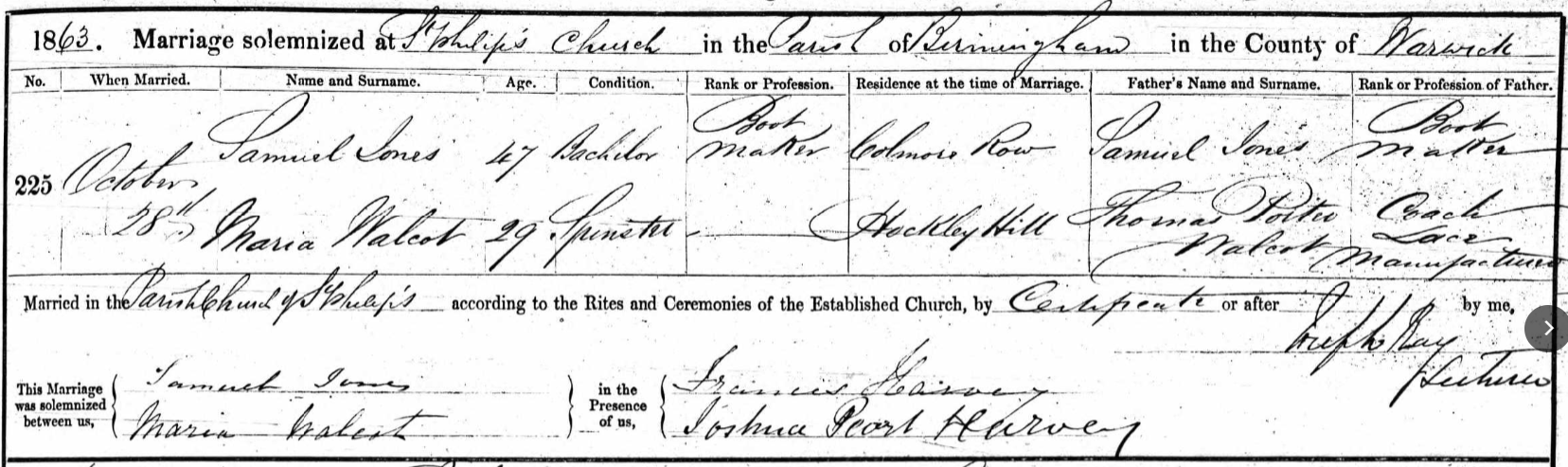
In October 1863 Samuel married Maria Walcot at St Philips in Birmingham. They don’t appear to have had any children as none appear on the 1871 census, where Samuel and Maria are living at the same address, with another female servant and two male lodgers by the name of Messant from Ipswich.
Marriage of Samuel Jones and Maria Walcot:
In 1864 Samuel’s father died. Samuel the son is mentioned in the probate records as one of the executors: “Samuel Jones of Colmore Row Birmingham in the county of Warwick boot and shoe manufacturer the son”.
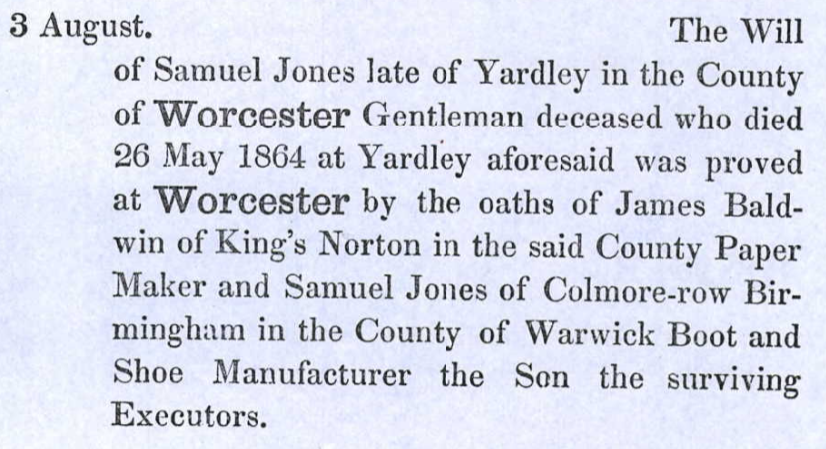
Indeed it could hardly be clearer that this Samuel Jones was not the convict transported to Australia in 1834!
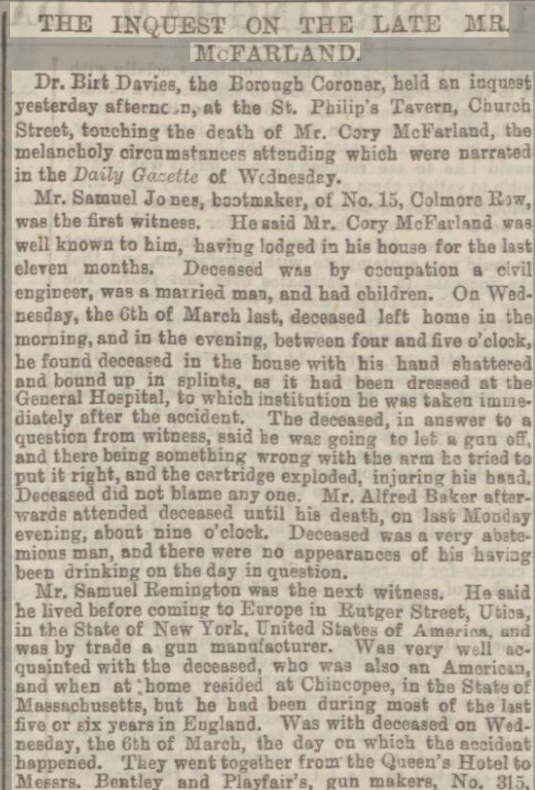
In 1867 Samuel Jones, bootmaker, was mentioned in the Birmingham Daily Gazette with regard to an unfortunate incident involving his American lodger, Cory McFarland. The verdict was accidental death.
Birmingham Daily Gazette – Friday 05 April 1867:
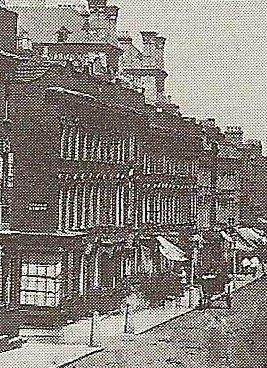
I asked a Birmingham history group for an old photo of Colmore Row. This photo is circa 1870 and number 15 is furthest from the camera. The businesses on the street at the time were as follows:
7 homeopathic chemist George John Morris. 8 surgeon dentist Frederick Sims. 9 Saul & Walter Samuel, Australian merchants. Surgeons occupied 10, pawnbroker John Aaron at 11 & 12. 15 boot & shoemaker. 17 auctioneer…
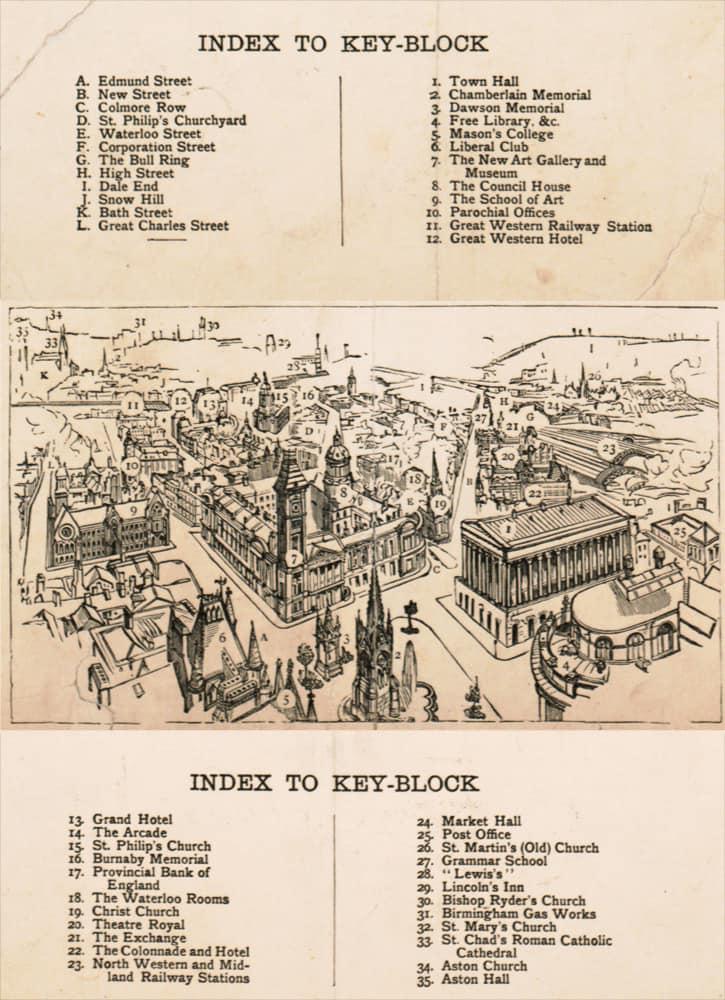
from Bird’s Eye View of Birmingham, 1886:
 November 10, 2022 at 12:08 pm #6344
In reply to: Family Stories From The Other Side ~ Book Two
The Tetbury Riots
While researching the Tetbury riots (I had found some Browning names in the newspaper archives in association with the uprisings) I came across an article called “Elizabeth Parker, the Swing Riots, and the Tetbury parish clerk” by Jill Evans.
I noted the name of the parish clerk, Daniel Cole, because I know someone else of that name. The incident in the article was 1830.
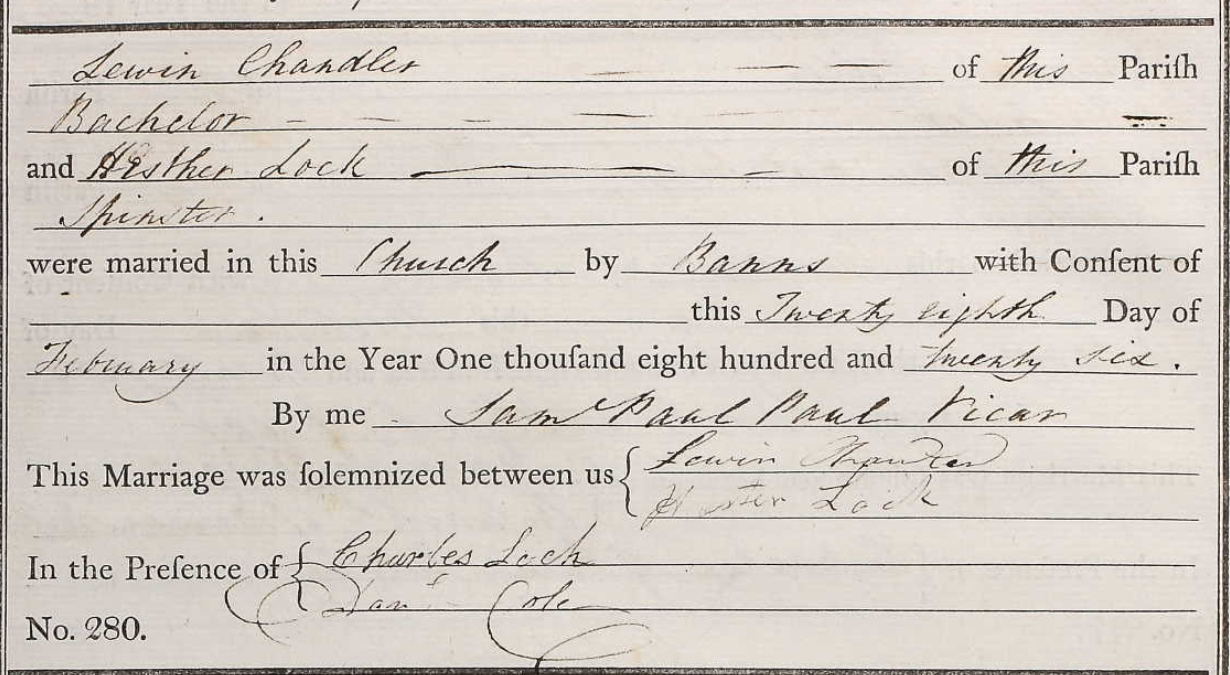
I found the 1826 marriage in the Tetbury parish registers (where Daniel was the parish clerk) of my 4x great grandmothers sister Hesther Lock. One of the witnesses was her brother Charles, and the other was Daniel Cole, the parish clerk.
Marriage of Lewin Chandler and Hesther Lock in 1826:
from the article:
“The Swing Riots were disturbances which took place in 1830 and 1831, mostly in the southern counties of England. Agricultural labourers, who were already suffering due to low wages and a lack of work after several years of bad harvests, rose up when their employers introduced threshing machines into their workplaces. The riots got their name from the threatening letters which were sent to farmers and other employers, which were signed “Captain Swing.”
The riots spread into Gloucestershire in November 1830, with the Tetbury area seeing the worst of the disturbances. Amongst the many people arrested afterwards was one woman, Elizabeth Parker. She has sometimes been cited as one of only two females who were transported for taking part in the Swing Riots. In fact, she was sentenced to be transported for this crime, but never sailed, as she was pardoned a few months after being convicted. However, less than a year after being released from Gloucester Gaol, she was back, awaiting trial for another offence. The circumstances in both of the cases she was tried for reveal an intriguing relationship with one Daniel Cole, parish clerk and assistant poor law officer in Tetbury….
….Elizabeth Parker was committed to Gloucester Gaol on 4 December 1830. In the Gaol Registers, she was described as being 23 and a “labourer”. She was in fact a prostitute, and she was unusual for the time in that she could read and write. She was charged on the oaths of Daniel Cole and others with having been among a mob which destroyed a threshing machine belonging to Jacob Hayward, at his farm in Beverstone, on 26 November.
…..Elizabeth Parker was granted royal clemency in July 1831 and was released from prison. She returned to Tetbury and presumably continued in her usual occupation, but on 27 March 1832, she was committed to Gloucester Gaol again. This time, she was charged with stealing 2 five pound notes, 5 sovereigns and 5 half sovereigns, from the person of Daniel Cole.
Elizabeth was tried at the Lent Assizes which began on 28 March, 1832. The details of her trial were reported in the Morning Post. Daniel Cole was in the “Boat Inn” (meaning the Boot Inn, I think) in Tetbury, when Elizabeth Parker came in. Cole “accompanied her down the yard”, where he stayed with her for about half an hour. The next morning, he realised that all his money was gone. One of his five pound notes was identified by him in a shop, where Parker had bought some items.
Under cross-examination, Cole said he was the assistant overseer of the poor and collector of public taxes of the parish of Tetbury. He was married with one child. He went in to the inn at about 9 pm, and stayed about 2 hours, drinking in the parlour, with the landlord, Elizabeth Parker, and two others. He was not drunk, but he was “rather fresh.” He gave the prisoner no money. He saw Elizabeth Parker next morning at the Prince and Princess public house. He didn’t drink with her or give her any money. He did give her a shilling after she was committed. He never said that he would not have prosecuted her “if it was not for her own tongue”. (Presumably meaning he couldn’t trust her to keep her mouth shut.)”
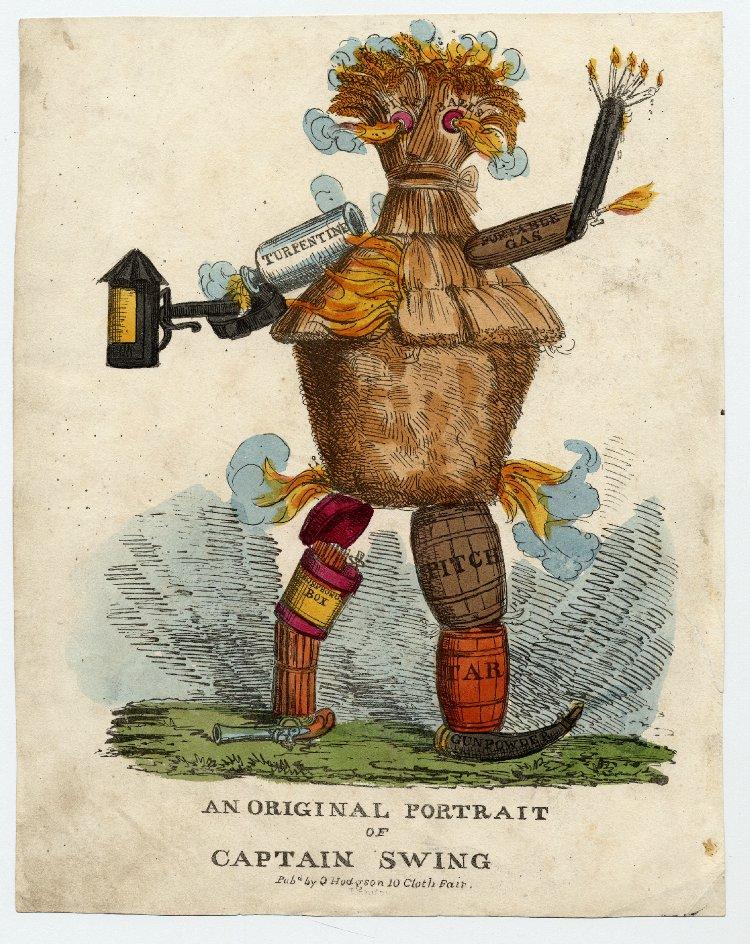
Contemporary illustration of the Swing riots:
Captain Swing was the imaginary leader agricultural labourers who set fire to barns and haystacks in the southern and eastern counties of England from 1830. Although the riots were ruthlessly put down (19 hanged, 644 imprisoned and 481 transported), the rural agitation led the new Whig government to establish a Royal Commission on the Poor Laws and its report provided the basis for the 1834 New Poor Law enacted after the Great Reform Bills of 1833.
An original portrait of Captain Swing hand coloured lithograph circa 1830:
 July 7, 2022 at 9:45 am #6315
In reply to: The Sexy Wooden Leg
It was not yet 9am and Eusebius Kazandis was already sweating. The morning sun was hitting hard on the tarp of his booth. He put the last cauldron among lines of cauldrons on a sagging table at the summer fair of Innsbruck, Austria. It was a tiny three-legged black cauldron with a simple Celtic knot on one side and a tree on the other side, like all the others. His father’s father’s father used to make cauldrons for a living, the kind you used to distil ouzo or cook meals for an Inn. But as time went by and industrialisation made it easier for cooks, the trade slowly evolved toward smaller cauldrons for modern Wiccans. A modern witch wanted it portable and light, ready to use in everyday life situations, and Eusebius was there to provide it for them.
Eusebius sat on his chair and sighed. He couldn’t help but notice the woman in colourful dress who had spread a shawl on the grass under the tall sequoia tree. Nobody liked this spot under the branches oozing sticky resin. She didn’t seem to mind. She was arranging small colourful bottles of oil on her shawl. A sign near her said : Massage oils, Fragrant oils, Polishing oils, all with different names evocative of different properties. He hadn’t noticed her yesterday when everybody was installing their stalls. He wondered if she had paid her fee.
Rosa was smiling as she spread in front of her the meadow flowers she’d picked on her way to the market. It was another beautiful day, under the shade and protection of the big sequoia tree watching over her. She assembled small bouquets and put them in between the vials containing her precious handmade oils. She had noticed people, and especially women, would naturally gather around well dressed stalls and engage conversation. Since she left her hometown of Torino, seven years ago, she’d followed the wind on her journey across Europe. It had led her to Innsbruck and had suddenly stopped blowing. That usually meant she had something to do there, but it also meant that she would have to figure out what she was meant to do before she could go on with her life.
The stout man waiting behind his dark cauldrons, was watching her again. He looked quite sad, and she couldn’t help but thinking he was not where he needed to be. When she looked at him, she saw Hephaestus whose inner fire had been tamed. His banner was a mishmash of religious stuff, aimed at pagans and budding witches. Although his grim booth would most certainly benefit from a feminine touch, but she didn’t want to offend him by a misplaced suggestion. It was not her place to find his place.
Rosa, who knew to cultivate any available friendship when she arrived somewhere, waved at the man. Startled, he looked away as if caught doing something inappropriate. Rosa sighed. Maybe she should have bring him some coffee.
As her first clients arrived, she prayed for a gush of wind to tell her where to go next. But the branches of the old tree remained perfectly still under the scorching sun.
July 6, 2022 at 11:41 am #6313In reply to: The Sexy Wooden Leg
Egbert Gofindlevsky rapped on the door of room number 22. The letter flapped against his pin striped trouser leg as his hand shook uncontrollably, his habitual tremor exacerbated with the shock. Remembering that Obadiah Sproutwinklov was deaf, he banged loudly on the door with the flat of his hand. Eventually the door creaked open.
Egbert flapped the letter in from of Obadiah’s face. “Have you had one of these?” he asked.
“If you’d stop flapping it about I might be able to see what it is,” Obadiah replied. “Oh that! As a matter of fact I’ve had one just like it. The devils work, I tell you! A practical joke, and in very poor taste!”
Egbert was starting to wish he’d gone to see Olga Herringbonevsky first. “Can I come in?” he hissed, “So we can discuss it in private?”
Reluctantly Obadiah pulled the door open and ushered him inside the room. Egbert looked around for a place to sit, but upon noticing a distinct odour of urine decided to remain standing.
“Ursula is booting us out, where are we to go?”
“Eh?” replied Obadiah, cupping his ear. “Speak up, man!”
Egbert repeated his question.
“No need to shout!”
The two old men endeavoured to conduct a conversation on this unexepected turn of events, the upshot being that Obadiah had no intention of leaving his room at all henceforth, come what may, and would happily starve to death in his room rather than take to the streets.
Egbert considered this form of action unhelpful, as he himself had no wish to starve to death in his room, so he removed himself from room 22 with a disgruntled sigh and made his way to Olga’s room on the third floor.
June 6, 2022 at 12:58 pm #6303In reply to: The Elusive Samuel Housley and Other Family Stories
The Hollands of Barton under Needwood
Samuel Warren of Stapenhill married Catherine Holland of Barton under Needwood in 1795.
I joined a Barton under Needwood History group and found an incredible amount of information on the Holland family, but first I wanted to make absolutely sure that our Catherine Holland was one of them as there were also Hollands in Newhall. Not only that, on the marriage licence it says that Catherine Holland was from Bretby Park Gate, Stapenhill.
Then I noticed that one of the witnesses on Samuel’s brother Williams marriage to Ann Holland in 1796 was John Hair. Hannah Hair was the wife of Thomas Holland, and they were the Barton under Needwood parents of Catherine. Catherine was born in 1775, and Ann was born in 1767.
The 1851 census clinched it: Catherine Warren 74 years old, widow and formerly a farmers wife, was living in the household of her son John Warren, and her place of birth is listed as Barton under Needwood. In 1841 Catherine was a 64 year old widow, her husband Samuel having died in 1837, and she was living with her son Samuel, a farmer. The 1841 census did not list place of birth, however. Catherine died on 31 March 1861 and does not appear on the 1861 census.
Once I had established that our Catherine Holland was from Barton under Needwood, I had another look at the information available on the Barton under Needwood History group, compiled by local historian Steve Gardner.
Catherine’s parents were Thomas Holland 1737-1828 and Hannah Hair 1739-1822.
Steve Gardner had posted a long list of the dates, marriages and children of the Holland family. The earliest entries in parish registers were Thomae Holland 1562-1626 and his wife Eunica Edwardes 1565-1632. They married on 10th July 1582. They were born, married and died in Barton under Needwood. They were direct ancestors of Catherine Holland, and as such my direct ancestors too.
The known history of the Holland family in Barton under Needwood goes back to Richard De Holland. (Thanks once again to Steve Gardner of the Barton under Needwood History group for this information.)
“Richard de Holland was the first member of the Holland family to become resident in Barton under Needwood (in about 1312) having been granted lands by the Earl of Lancaster (for whom Richard served as Stud and Stock Keeper of the Peak District) The Holland family stemmed from Upholland in Lancashire and had many family connections working for the Earl of Lancaster, who was one of the biggest Barons in England. Lancaster had his own army and lived at Tutbury Castle, from where he ruled over most of the Midlands area. The Earl of Lancaster was one of the main players in the ‘Barons Rebellion’ and the ensuing Battle of Burton Bridge in 1322. Richard de Holland was very much involved in the proceedings which had so angered Englands King. Holland narrowly escaped with his life, unlike the Earl who was executed.
From the arrival of that first Holland family member, the Hollands were a mainstay family in the community, and were in Barton under Needwood for over 600 years.”Continuing with various items of information regarding the Hollands, thanks to Steve Gardner’s Barton under Needwood history pages:
“PART 6 (Final Part)
Some mentions of The Manor of Barton in the Ancient Staffordshire Rolls:
1330. A Grant was made to Herbert de Ferrars, at le Newland in the Manor of Barton.
1378. The Inquisitio bonorum – Johannis Holand — an interesting Inventory of his goods and their value and his debts.
1380. View of Frankpledge ; the Jury found that Richard Holland was feloniously murdered by his wife Joan and Thomas Graunger, who fled. The goods of the deceased were valued at iiij/. iijj. xid. ; one-third went to the dead man, one-third to his son, one- third to the Lord for the wife’s share. Compare 1 H. V. Indictments. (1413.)
That Thomas Graunger of Barton smyth and Joan the wife of Richard de Holond of Barton on the Feast of St. John the Baptist 10 H. II. (1387) had traitorously killed and murdered at night, at Barton, Richard, the husband of the said Joan. (m. 22.)
The names of various members of the Holland family appear constantly among the listed Jurors on the manorial records printed below : —
1539. Richard Holland and Richard Holland the younger are on the Muster Roll of Barton
1583. Thomas Holland and Unica his wife are living at Barton.
1663-4. Visitations. — Barton under Needword. Disclaimers. William Holland, Senior, William Holland, Junior.
1609. Richard Holland, Clerk and Alice, his wife.
1663-4. Disclaimers at the Visitation. William Holland, Senior, William Holland, Junior.”I was able to find considerably more information on the Hollands in the book “Some Records of the Holland Family (The Hollands of Barton under Needwood, Staffordshire, and the Hollands in History)” by William Richard Holland. Luckily the full text of this book can be found online.
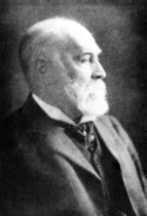
William Richard Holland (Died 1915) An early local Historian and author of the book:
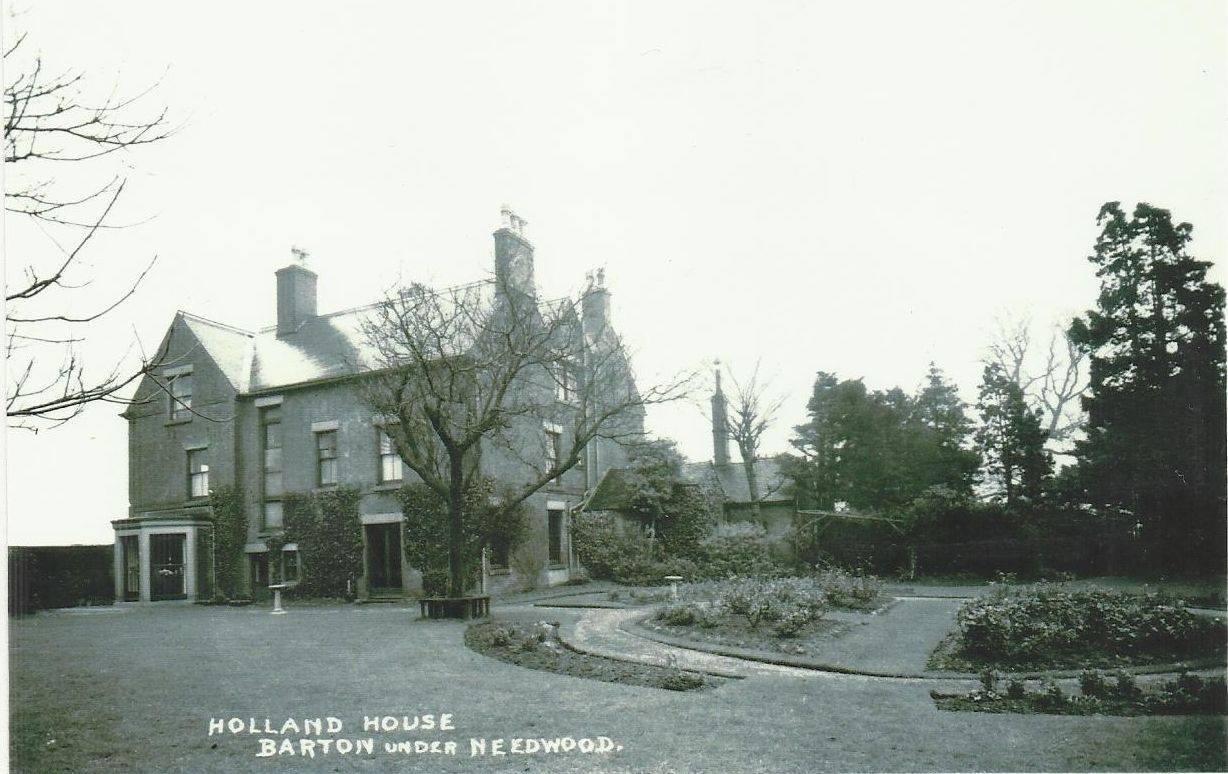
‘Holland House’ taken from the Gardens (sadly demolished in the early 60’s):
Excerpt from the book:
“The charter, dated 1314, granting Richard rights and privileges in Needwood Forest, reads as follows:
“Thomas Earl of Lancaster and Leicester, high-steward of England, to whom all these present shall come, greeting: Know ye, that we have given, &c., to Richard Holland of Barton, and his heirs, housboot, heyboot, and fireboot, and common of pasture, in our forest of Needwood, for all his beasts, as well in places fenced as lying open, with 40 hogs, quit of pawnage in our said forest at all times in the year (except hogs only in fence month). All which premises we will warrant, &c. to the said Richard and his heirs against all people for ever”
“The terms “housboot” “heyboot” and “fireboot” meant that Richard and his heirs were to have the privilege of taking from the Forest, wood needed for house repair and building, hedging material for the repairing of fences, and what was needful for purposes of fuel.”
Further excerpts from the book:
“It may here be mentioned that during the renovation of Barton Church, when the stone pillars were being stripped of the plaster which covered them, “William Holland 1617” was found roughly carved on a pillar near to the belfry gallery, obviously the work of a not too devout member of the family, who, seated in the gallery of that time, occupied himself thus during the service. The inscription can still be seen.”
“The earliest mention of a Holland of Upholland occurs in the reign of John in a Final Concord, made at the Lancashire Assizes, dated November 5th, 1202, in which Uchtred de Chryche, who seems to have had some right in the manor of Upholland, releases his right in fourteen oxgangs* of land to Matthew de Holland, in consideration of the sum of six marks of silver. Thus was planted the Holland Tree, all the early information of which is found in The Victoria County History of Lancaster.
As time went on, the family acquired more land, and with this, increased position. Thus, in the reign of Edward I, a Robert de Holland, son of Thurstan, son of Robert, became possessed of the manor of Orrell adjoining Upholland and of the lordship of Hale in the parish of Childwall, and, through marriage with Elizabeth de Samlesbury (co-heiress of Sir Wm. de Samlesbury of Samlesbury, Hall, near to Preston), of the moiety of that manor….
* An oxgang signified the amount of land that could be ploughed by one ox in one day”
“This Robert de Holland, son of Thurstan, received Knighthood in the reign of Edward I, as did also his brother William, ancestor of that branch of the family which later migrated to Cheshire. Belonging to this branch are such noteworthy personages as Mrs. Gaskell, the talented authoress, her mother being a Holland of this branch, Sir Henry Holland, Physician to Queen Victoria, and his two sons, the first Viscount Knutsford, and Canon Francis Holland ; Sir Henry’s grandson (the present Lord Knutsford), Canon Scott Holland, etc. Captain Frederick Holland, R.N., late of Ashbourne Hall, Derbyshire, may also be mentioned here.*”
Thanks to the Barton under Needwood history group for the following:
WALES END FARM:
In 1509 it was owned and occupied by Mr Johannes Holland De Wallass end who was a well to do Yeoman Farmer (the origin of the areas name – Wales End). Part of the building dates to 1490 making it probably the oldest building still standing in the Village: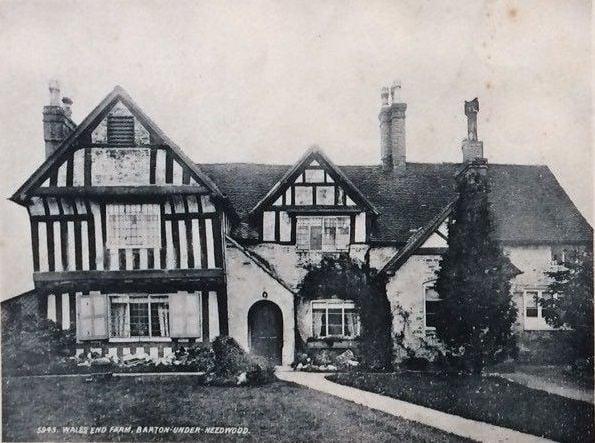
I found records for all of the Holland’s listed on the Barton under Needwood History group and added them to my ancestry tree. The earliest will I found was for Eunica Edwardes, then Eunica Holland, who died in 1632.
A page from the 1632 will and inventory of Eunica (Unice) Holland:
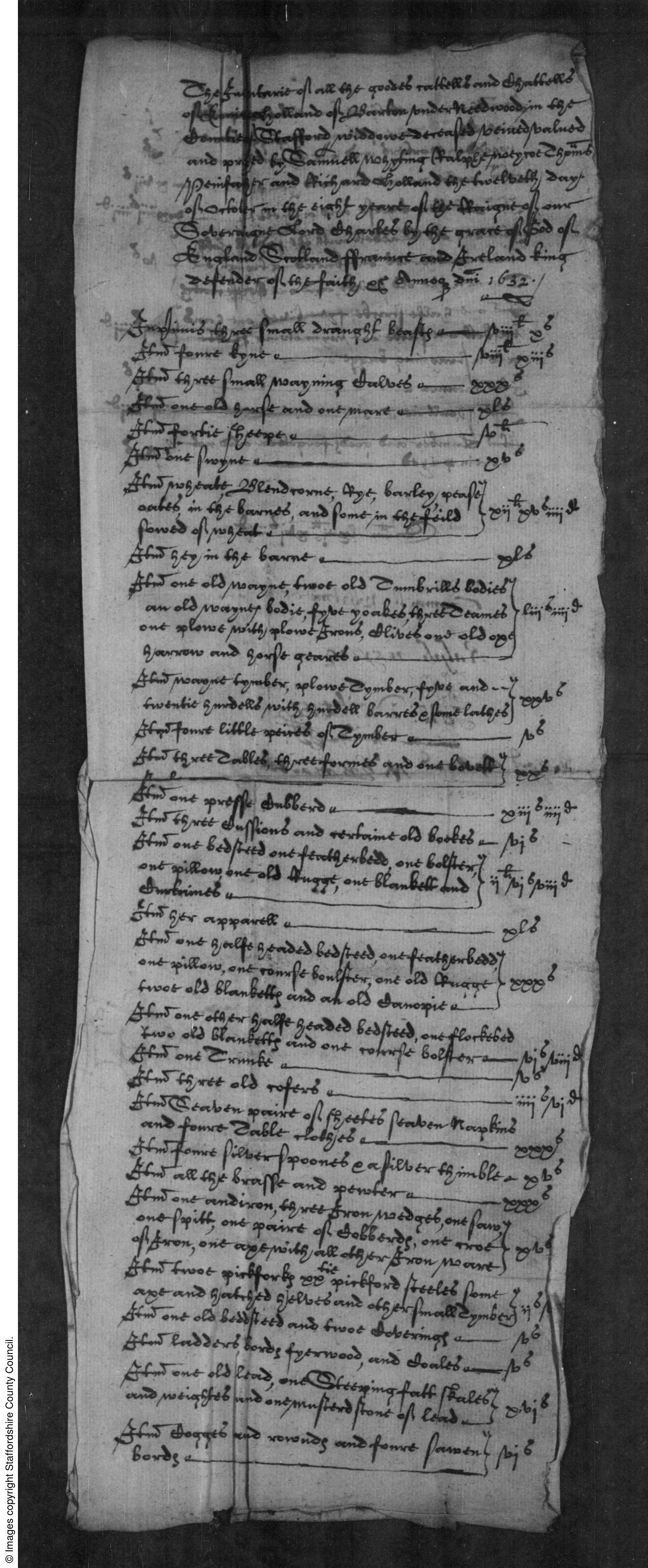
I’d been reading about “pedigree collapse” just before I found out her maiden name of Edwardes. Edwards is my own maiden name.
“In genealogy, pedigree collapse describes how reproduction between two individuals who knowingly or unknowingly share an ancestor causes the family tree of their offspring to be smaller than it would otherwise be.
Without pedigree collapse, a person’s ancestor tree is a binary tree, formed by the person, the parents, grandparents, and so on. However, the number of individuals in such a tree grows exponentially and will eventually become impossibly high. For example, a single individual alive today would, over 30 generations going back to the High Middle Ages, have roughly a billion ancestors, more than the total world population at the time. This apparent paradox occurs because the individuals in the binary tree are not distinct: instead, a single individual may occupy multiple places in the binary tree. This typically happens when the parents of an ancestor are cousins (sometimes unbeknownst to themselves). For example, the offspring of two first cousins has at most only six great-grandparents instead of the normal eight. This reduction in the number of ancestors is pedigree collapse. It collapses the binary tree into a directed acyclic graph with two different, directed paths starting from the ancestor who in the binary tree would occupy two places.” via wikipediaThere is nothing to suggest, however, that Eunica’s family were related to my fathers family, and the only evidence so far in my tree of pedigree collapse are the marriages of Orgill cousins, where two sets of grandparents are repeated.
A list of Holland ancestors:
Catherine Holland 1775-1861
her parents:
Thomas Holland 1737-1828 Hannah Hair 1739-1832
Thomas’s parents:
William Holland 1696-1756 Susannah Whiteing 1715-1752
William’s parents:
William Holland 1665- Elizabeth Higgs 1675-1720
William’s parents:
Thomas Holland 1634-1681 Katherine Owen 1634-1728
Thomas’s parents:
Thomas Holland 1606-1680 Margaret Belcher 1608-1664
Thomas’s parents:
Thomas Holland 1562-1626 Eunice Edwardes 1565- 1632March 17, 2022 at 10:37 am #6283In reply to: The Elusive Samuel Housley and Other Family Stories
Purdy Cousins
My great grandmother Mary Ann Gilman Purdy was one of five children. Her sister Ellen Purdy was a well traveled nurse, and her sister Kate Rushby was a publican whose son who went to Africa. But what of her eldest sister Elizabeth and her brother Richard?
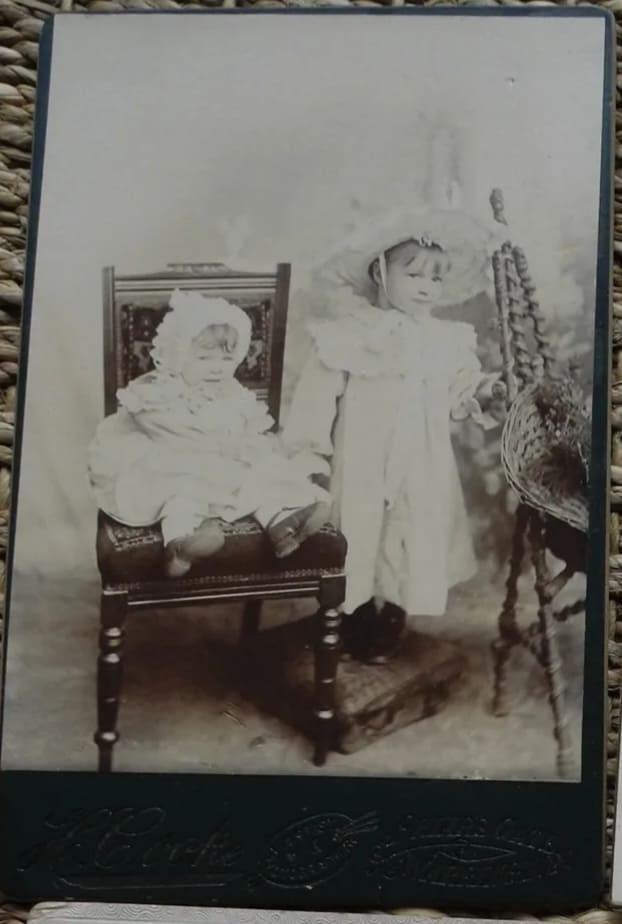
Elizabeth Purdy 1869-1905 married Benjamin George Little in 1892 in Basford, Nottinghamshire. Their first child, Frieda Olive Little, was born in Eastwood in December 1896, and their second daughter Catherine Jane Little was born in Warrington, Cheshire, in 1898. A third daughter, Edna Francis Little was born in 1900, but died three months later.
When I noticed that this unidentified photograph in our family collection was taken by a photographer in Warrington, and as no other family has been found in Warrington, I concluded that these two little girls are Frieda and Catherine:
Benjamin Little, born in 1869, was the manager of a boot shop, according to the 1901 census, and a boot maker on the 1911 census. I found a photograph of Benjamin and Elizabeth Little on an ancestry website:
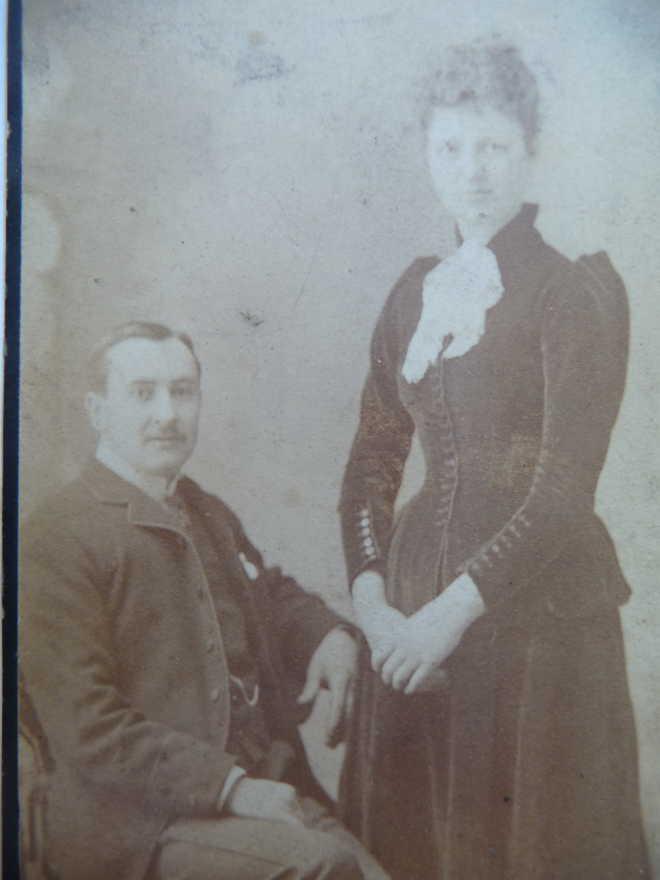
Frieda Olive Little 1896-1977 married Robert Warburton in 1924.
Frieda and Robert had two sons and a daughter, although one son died in infancy. They lived in Leominster, in Herefordshire, but Frieda died in 1977 at Enfield Farm in Warrington, four years after the death of her husband Robert.
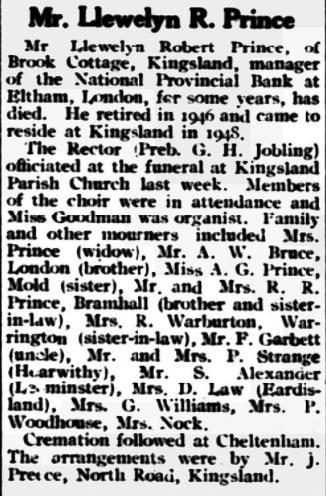
Catherine Jane Little 1899-1975 married Llewelyn Robert Prince 1884-1950. They do not appear to have had any children. Llewelyn was manager of the National Provinical Bank at Eltham in London, but died at Brook Cottage in Kingsland, Herefordshire. His wifes aunt Ellen Purdy the nurse had also lived at Brook Cottage. Ellen died in 1947, but her husband Frank Garbett was at the funeral:
Richard Purdy 1877-1940
Richard was born in Eastwood, Nottinghamshire. When his mother Catherine died in 1884 Richard was six years old. My great grandmother Mary Ann and her sister Ellen went to live with the Gilman’s in Buxton, but Richard and the two older sisters, Elizabeth and Kate, stayed with their father George Purdy, who remarried soon afterwards.
Richard married Ada Elizabeth Clarke in 1899. In 1901 Richard was an earthenware packer at a pottery, and on the 1939 census he was a colliery dataller. A dataller was a day wage man, paid on a daily basis for work done as required.
Richard and Ada had four children: Richard Baden Purdy 1900-1945, Winifred Maude 1903-1974, John Frederick 1907-1945, and Violet Gertrude 1910-1974.
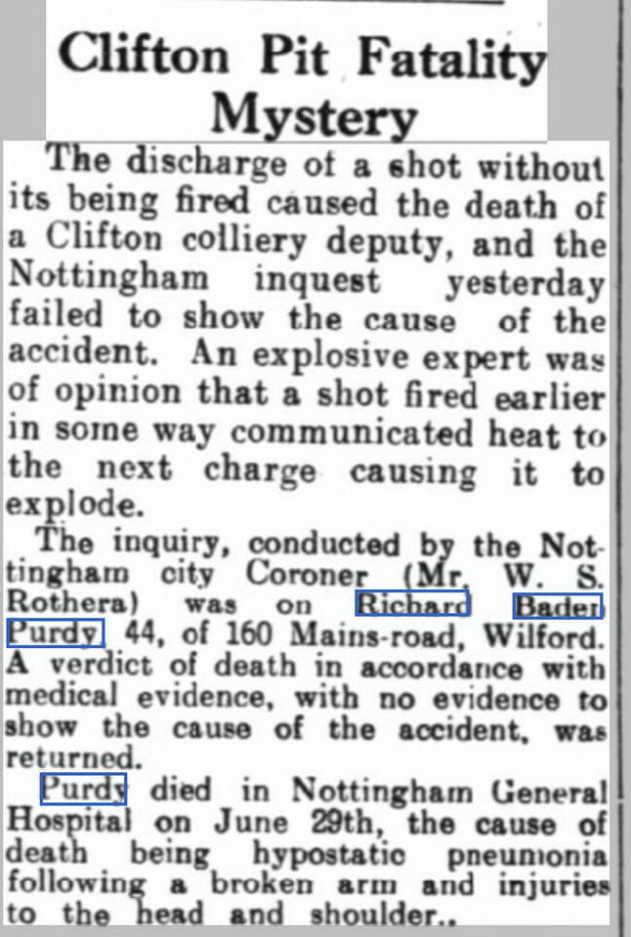
Richard Baden Purdy married Ethel May Potter in Mansfield, Nottinghamshire, in 1926. He was listed on the 1939 census as a colliery deputy. In 1945 Richard Baden Purdy died as a result of injuries in a mine explosion.
John Frederick Purdy married Iris Merryweather in 1938. On the 1939 census John and Iris live in Arnold, Nottinghamshire, and John’s occupation is a colliery hewer. Their daughter Barbara Elizabeth was born later that year. John died in 1945, the same year as his brother Richard Baden Purdy. It is not known without purchasing the death certificate what the cause of death was.
A memorial was posted in the Nottingham Evening Post on 29 June 1948:
PURDY, loving memories, Richard Baden, accidentally killed June 29th 1945; John Frederick, died 1 April 1945; Richard Purdy, father, died December 1940. Too dearly loved to be forgotten. Mother, families.
Violet Gertrude Purdy married Sidney Garland in 1932 in Southwell, Nottinghamshire. She died in Edwinstowe, Nottinghamshire, in 1974.
Winifred Maude Purdy married Bernard Fowler in Southwell in 1928. She also died in 1974, in Mansfield.
The two brothers died the same year, in 1945, and the two sisters died the same year, in 1974.
February 2, 2022 at 11:53 am #6265In reply to: The Elusive Samuel Housley and Other Family Stories
From Tanganyika with Love
continued ~ part 6
With thanks to Mike Rushby.
Mchewe 6th June 1937
Dearest Family,
Home again! We had an uneventful journey. Kate was as good as gold all the
way. We stopped for an hour at Bulawayo where we had to change trains but
everything was simplified for me by a very pleasant man whose wife shared my
compartment. Not only did he see me through customs but he installed us in our new
train and his wife turned up to see us off with magazines for me and fruit and sweets for
Kate. Very, very kind, don’t you think?Kate and I shared the compartment with a very pretty and gentle girl called
Clarice Simpson. She was very worried and upset because she was going home to
Broken Hill in response to a telegram informing her that her young husband was
dangerously ill from Blackwater Fever. She was very helpful with Kate whose
cheerfulness helped Clarice, I think, though I, quite unintentionally was the biggest help
at the end of our journey. Remember the partial dentures I had had made just before
leaving Cape Town? I know I shall never get used to the ghastly things, I’ve had them
two weeks now and they still wobble. Well this day I took them out and wrapped them
in a handkerchief, but when we were packing up to leave the train I could find the
handkerchief but no teeth! We searched high and low until the train had slowed down to
enter Broken Hill station. Then Clarice, lying flat on the floor, spied the teeth in the dark
corner under the bottom bunk. With much stretching she managed to retrieve the
dentures covered in grime and fluff. My look of horror, when I saw them, made young
Clarice laugh. She was met at the station by a very grave elderly couple. I do wonder
how things turned out for her.I stayed overnight with Kate at the Great Northern Hotel, and we set off for
Mbeya by plane early in the morning. One of our fellow passengers was a young
mother with a three week old baby. How ideas have changed since Ann was born. This
time we had a smooth passage and I was the only passenger to get airsick. Although
there were other women passengers it was a man once again, who came up and
offered to help. Kate went off with him amiably and he entertained her until we touched
down at Mbeya.George was there to meet us with a wonderful surprise, a little red two seater
Ford car. She is a bit battered and looks a bit odd because the boot has been
converted into a large wooden box for carrying raw salt, but she goes like the wind.
Where did George raise the cash to buy a car? Whilst we were away he found a small
cave full of bat guano near a large cave which is worked by a man called Bob Sargent.
As Sargent did not want any competition he bought the contents of the cave from
George giving him the small car as part payment.It was lovely to return to our little home and find everything fresh and tidy and the
garden full of colour. But it was heartbreaking to go into the bedroom and see George’s
precious forgotten boots still standing by his empty bed.With much love,
Eleanor.Mchewe 25th June 1937
Dearest Family,
Last Friday George took Kate and me in the little red Ford to visit Mr Sargent’s
camp on the Songwe River which cuts the Mbeya-Mbosi road. Mr Sargent bought
Hicky-Wood’s guano deposit and also our small cave and is making a good living out of
selling the bat guano to the coffee farmers in this province. George went to try to interest
him in a guano deposit near Kilwa in the Southern Province. Mr Sargent agreed to pay
25 pounds to cover the cost of the car trip and pegging costs. George will make the trip
to peg the claim and take samples for analysis. If the quality is sufficiently high, George
and Mr Sargent will go into partnership. George will work the claim and ship out the
guano from Kilwa which is on the coast of the Southern Province of Tanganyika. So now
we are busy building castles in the air once more.On Saturday we went to Mbeya where George had to attend a meeting of the
Trout Association. In the afternoon he played in a cricket match so Kate and I spent the
whole day with the wife of the new Superintendent of Police. They have a very nice
new house with lawns and a sunken rose garden. Kate had a lovely romp with Kit, her
three year old son.Mrs Wolten also has two daughters by a previous marriage. The elder girl said to
me, “Oh Mrs Rushby your husband is exactly like the strong silent type of man I
expected to see in Africa but he is the only one I have seen. I think he looks exactly like
those men in the ‘Barney’s Tobacco’ advertisements.”I went home with a huge pile of magazines to keep me entertained whilst
George is away on the Kilwa trip.Lots of love,
Eleanor.Mchewe 9th July 1937
Dearest Family,
George returned on Monday from his Kilwa safari. He had an entertaining
tale to tell.Before he approached Mr Sargent about going shares in the Kilwa guano
deposit he first approached a man on the Lupa who had done very well out of a small
gold reef. This man, however said he was not interested so you can imagine how
indignant George was when he started on his long trip, to find himself being trailed by
this very man and a co-driver in a powerful Ford V8 truck. George stopped his car and
had some heated things to say – awful threats I imagine as to what would happen to
anyone who staked his claim. Then he climbed back into our ancient little two seater and
went off like a bullet driving all day and most of the night. As the others took turns in
driving you can imagine what a feat it was for George to arrive in Kilwa ahead of them.
When they drove into Kilwa he met them with a bright smile and a bit of bluff –
quite justifiable under the circumstances I think. He said, you chaps can have a rest now,
you’re too late.” He then whipped off and pegged the claim. he brought some samples
of guano back but until it has been analysed he will not know whether the guano will be
an economic proposition or not. George is not very hopeful. He says there is a good
deal of sand mixed with the guano and that much of it was damp.The trip was pretty eventful for Kianda, our houseboy. The little two seater car
had been used by its previous owner for carting bags of course salt from his salt pans.
For this purpose the dicky seat behind the cab had been removed, and a kind of box
built into the boot of the car. George’s camp kit and provisions were packed into this
open box and Kianda perched on top to keep an eye on the belongings. George
travelled so fast on the rough road that at some point during the night Kianda was
bumped off in the middle of the Game Reserve. George did not notice that he was
missing until the next morning. He concluded, quite rightly as it happened, that Kianda
would be picked up by the rival truck so he continued his journey and Kianda rejoined
him at Kilwa.Believe it or not, the same thing happened on the way back but fortunately this
time George noticed his absence. He stopped the car and had just started back on his
tracks when Kianda came running down the road still clutching the unlighted storm lamp
which he was holding in his hand when he fell. The glass was not even cracked.
We are finding it difficult just now to buy native chickens and eggs. There has
been an epidemic amongst the poultry and one hesitates to eat the survivors. I have a
brine tub in which I preserve our surplus meat but I need the chickens for soup.
I hope George will be home for some months. He has arranged to take a Mr
Blackburn, a wealthy fruit farmer from Elgin, Cape, on a hunting safari during September
and October and that should bring in some much needed cash. Lillian Eustace has
invited Kate and me to spend the whole of October with her in Tukuyu.
I am so glad that you so much enjoy having Ann and George with you. We miss
them dreadfully. Kate is a pretty little girl and such a little madam. You should hear the
imperious way in which she calls the kitchenboy for her meals. “Boy Brekkis, Boy Lunch,
and Boy Eggy!” are her three calls for the day. She knows no Ki-Swahili.Eleanor
Mchewe 8th October 1937
Dearest Family,
I am rapidly becoming as superstitious as our African boys. They say the wild
animals always know when George is away from home and come down to have their
revenge on me because he has killed so many.I am being besieged at night by a most beastly leopard with a half grown cub. I
have grown used to hearing leopards grunt as they hunt in the hills at night but never
before have I had one roaming around literally under the windows. It has been so hot at
night lately that I have been sleeping with my bedroom door open onto the verandah. I
felt quite safe because the natives hereabouts are law-abiding and in any case I always
have a boy armed with a club sleeping in the kitchen just ten yards away. As an added
precaution I also have a loaded .45 calibre revolver on my bedside table, and Fanny
our bullterrier, sleeps on the mat by my bed. I am also looking after Barney, a fine
Airedale dog belonging to the Costers. He slept on a mat by the open bedroom door
near a dimly burning storm lamp.As usual I went to sleep with an easy mind on Monday night, but was awakened
in the early hours of Tuesday by the sound of a scuffle on the front verandah. The noise
was followed by a scream of pain from Barney. I jumped out of bed and, grabbing the
lamp with my left hand and the revolver in my right, I rushed outside just in time to see
two animal figures roll over the edge of the verandah into the garden below. There they
engaged in a terrific tug of war. Fortunately I was too concerned for Barney to be
nervous. I quickly fired two shots from the revolver, which incidentally makes a noise like
a cannon, and I must have startled the leopard for both animals, still locked together,
disappeared over the edge of the terrace. I fired two more shots and in a few moments
heard the leopard making a hurried exit through the dry leaves which lie thick under the
wild fig tree just beyond the terrace. A few seconds later Barney appeared on the low
terrace wall. I called his name but he made no move to come but stood with hanging
head. In desperation I rushed out, felt blood on my hands when I touched him, so I
picked him up bodily and carried him into the house. As I regained the verandah the boy
appeared, club in hand, having been roused by the shots. He quickly grasped what had
happened when he saw my blood saturated nightie. He fetched a bowl of water and a
clean towel whilst I examined Barney’s wounds. These were severe, the worst being a
gaping wound in his throat. I washed the gashes with a strong solution of pot permang
and I am glad to say they are healing remarkably well though they are bound to leave
scars. Fanny, very prudently, had taken no part in the fighting except for frenzied barking
which she kept up all night. The shots had of course wakened Kate but she seemed
more interested than alarmed and kept saying “Fanny bark bark, Mummy bang bang.
Poor Barney lots of blood.”In the morning we inspected the tracks in the garden. There was a shallow furrow
on the terrace where Barney and the leopard had dragged each other to and fro and
claw marks on the trunk of the wild fig tree into which the leopard climbed after I fired the
shots. The affair was of course a drama after the Africans’ hearts and several of our
shamba boys called to see me next day to make sympathetic noises and discuss the
affair.I went to bed early that night hoping that the leopard had been scared off for
good but I must confess I shut all windows and doors. Alas for my hopes of a restful
night. I had hardly turned down the lamp when the leopard started its terrifying grunting
just under the bedroom windows. If only she would sniff around quietly I should not
mind, but the noise is ghastly, something like the first sickening notes of a braying
donkey, amplified here by the hills and the gorge which is only a stones throw from the
bedroom. Barney was too sick to bark but Fanny barked loud enough for two and the more
frantic she became the hungrier the leopard sounded. Kate of course woke up and this
time she was frightened though I assured her that the noise was just a donkey having
fun. Neither of us slept until dawn when the leopard returned to the hills. When we
examined the tracks next morning we found that the leopard had been accompanied by
a fair sized cub and that together they had prowled around the house, kitchen, and out
houses, visiting especially the places to which the dogs had been during the day.
As I feel I cannot bear many more of these nights, I am sending a note to the
District Commissioner, Mbeya by the messenger who takes this letter to the post,
asking him to send a game scout or an armed policeman to deal with the leopard.
So don’t worry, for by the time this reaches you I feel sure this particular trouble
will be over.Eleanor.
Mchewe 17th October 1937
Dearest Family,
More about the leopard I fear! My messenger returned from Mbeya to say that
the District Officer was on safari so he had given the message to the Assistant District
Officer who also apparently left on safari later without bothering to reply to my note, so
there was nothing for me to do but to send for the village Nimrod and his muzzle loader
and offer him a reward if he could frighten away or kill the leopard.The hunter, Laza, suggested that he should sleep at the house so I went to bed
early leaving Laza and his two pals to make themselves comfortable on the living room
floor by the fire. Laza was armed with a formidable looking muzzle loader, crammed I
imagine with nuts and bolts and old rusty nails. One of his pals had a spear and the other
a panga. This fellow was also in charge of the Petromax pressure lamp whose light was
hidden under a packing case. I left the campaign entirely to Laza’s direction.
As usual the leopard came at midnight stealing down from the direction of the
kitchen and announcing its presence and position with its usual ghastly grunts. Suddenly
pandemonium broke loose on the back verandah. I heard the roar of the muzzle loader
followed by a vigourous tattoo beaten on an empty paraffin tin and I rushed out hoping
to find the dead leopard. however nothing of the kind had happened except that the
noise must have scared the beast because she did not return again that night. Next
morning Laza solemnly informed me that, though he had shot many leopards in his day,
this was no ordinary leopard but a “sheitani” (devil) and that as his gun was no good
against witchcraft he thought he might as well retire from the hunt. Scared I bet, and I
don’t blame him either.You can imagine my relief when a car rolled up that afternoon bringing Messers
Stewart and Griffiths, two farmers who live about 15 miles away, between here and
Mbeya. They had a note from the Assistant District Officer asking them to help me and
they had come to set up a trap gun in the garden. That night the leopard sniffed all
around the gun and I had the added strain of waiting for the bang and wondering what I
should do if the beast were only wounded. I conjured up horrible visions of the two little
totos trotting up the garden path with the early morning milk and being horribly mauled,
but I needn’t have worried because the leopard was far too wily to be caught that way.
Two more ghastly nights passed and then I had another visitor, a Dr Jackson of
the Tsetse Department on safari in the District. He listened sympathetically to my story
and left his shotgun and some SSG cartridges with me and instructed me to wait until the
leopard was pretty close and blow its b—– head off. It was good of him to leave his
gun. George always says there are three things a man should never lend, ‘His wife, his
gun and his dog.’ (I think in that order!)I felt quite cheered by Dr Jackson’s visit and sent
once again for Laza last night and arranged a real show down. In the afternoon I draped
heavy blankets over the living room windows to shut out the light of the pressure lamp
and the four of us, Laza and his two stooges and I waited up for the leopard. When we
guessed by her grunts that she was somewhere between the kitchen and the back door
we all rushed out, first the boy with the panga and the lamp, next Laza with his muzzle
loader, then me with the shotgun followed closely by the boy with the spear. What a
farce! The lamp was our undoing. We were blinded by the light and did not even
glimpse the leopard which made off with a derisive grunt. Laza said smugly that he knew
it was hopeless to try and now I feel tired and discouraged too.This morning I sent a runner to Mbeya to order the hotel taxi for tomorrow and I
shall go to friends in Mbeya for a day or two and then on to Tukuyu where I shall stay
with the Eustaces until George returns from Safari.Eleanor.
Mchewe 18th November 1937
My darling Ann,
Here we are back in our own home and how lovely it is to have Daddy back from
safari. Thank you very much for your letter. I hope by now you have got mine telling you
how very much I liked the beautiful tray cloth you made for my birthday. I bet there are
not many little girls of five who can embroider as well as you do, darling. The boy,
Matafari, washes and irons it so carefully and it looks lovely on the tea tray.Daddy and I had some fun last night. I was in bed and Daddy was undressing
when we heard a funny scratching noise on the roof. I thought it was the leopard. Daddy
quickly loaded his shotgun and ran outside. He had only his shirt on and he looked so
funny. I grabbed the loaded revolver from the cupboard and ran after Dad in my nightie
but after all the rush it was only your cat, Winnie, though I don’t know how she managed
to make such a noise. We felt so silly, we laughed and laughed.Kate talks a lot now but in such a funny way you would laugh to her her. She
hears the houseboys call me Memsahib so sometimes instead of calling me Mummy
she calls me “Oompaab”. She calls the bedroom a ‘bippon’ and her little behind she
calls her ‘sittendump’. She loves to watch Mandawi’s cattle go home along the path
behind the kitchen. Joseph your donkey, always leads the cows. He has a lazy life now.
I am glad you had such fun on Guy Fawkes Day. You will be sad to leave
Plumstead but I am sure you will like going to England on the big ship with granny Kate.
I expect you will start school when you get to England and I am sure you will find that
fun.God bless my dear little girl. Lots of love from Daddy and Kate,
and MummyMchewe 18th November 1937
Hello George Darling,
Thank you for your lovely drawing of Daddy shooting an elephant. Daddy says
that the only thing is that you have drawn him a bit too handsome.I went onto the verandah a few minutes ago to pick a banana for Kate from the
bunch hanging there and a big hornet flew out and stung my elbow! There are lots of
them around now and those stinging flies too. Kate wears thick corduroy dungarees so
that she will not get her fat little legs bitten. She is two years old now and is a real little
pickle. She loves running out in the rain so I have ordered a pair of red Wellingtons and a
tiny umbrella from a Nairobi shop for her Christmas present.Fanny’s puppies have their eyes open now and have very sharp little teeth.
They love to nip each other. We are keeping the fiercest little one whom we call Paddy
but are giving the others to friends. The coffee bushes are full of lovely white flowers
and the bees and ants are very busy stealing their honey.Yesterday a troop of baboons came down the hill and Dad shot a big one to
scare the others off. They are a nuisance because they steal the maize and potatoes
from the native shambas and then there is not enough food for the totos.
Dad and I are very proud of you for not making a fuss when you went to the
dentist to have that tooth out.Bye bye, my fine little son.
Three bags full of love from Kate, Dad and Mummy.Mchewe 12th February, 1938
Dearest Family,
here is some news that will please you. George has been offered and has
accepted a job as Forester at Mbulu in the Northern Province of Tanganyika. George
would have preferred a job as Game Ranger, but though the Game Warden, Philip
Teare, is most anxious to have him in the Game Department, there is no vacancy at
present. Anyway if one crops up later, George can always transfer from one
Government Department to another. Poor George, he hates the idea of taking a job. He
says that hitherto he has always been his own master and he detests the thought of
being pushed around by anyone.Now however he has no choice. Our capitol is almost exhausted and the coffee
market shows no signs of improving. With three children and another on the way, he
feels he simply must have a fixed income. I shall be sad to leave this little farm. I love
our little home and we have been so very happy here, but my heart rejoices at the
thought of overseas leave every thirty months. Now we shall be able to fetch Ann and
George from England and in three years time we will all be together in Tanganyika once
more.There is no sale for farms so we will just shut the house and keep on a very small
labour force just to keep the farm from going derelict. We are eating our hens but will
take our two dogs, Fanny and Paddy with us.One thing I shall be glad to leave is that leopard. She still comes grunting around
at night but not as badly as she did before. I do not mind at all when George is here but
until George was accepted for this forestry job I was afraid he might go back to the
Diggings and I should once more be left alone to be cursed by the leopard’s attentions.
Knowing how much I dreaded this George was most anxious to shoot the leopard and
for weeks he kept his shotgun and a powerful torch handy at night.One night last week we woke to hear it grunting near the kitchen. We got up very
quietly and whilst George loaded the shotgun with SSG, I took the torch and got the
heavy revolver from the cupboard. We crept out onto the dark verandah where George
whispered to me to not switch on the torch until he had located the leopard. It was pitch
black outside so all he could do was listen intently. And then of course I spoilt all his
plans. I trod on the dog’s tin bowl and made a terrific clatter! George ordered me to
switch on the light but it was too late and the leopard vanished into the long grass of the
Kalonga, grunting derisively, or so it sounded.She never comes into the clearing now but grunts from the hillside just above it.
Eleanor.
Mbulu 18th March, 1938
Dearest Family,
Journeys end at last. here we are at Mbulu, installed in our new quarters which are
as different as they possibly could be from our own cosy little home at Mchewe. We
live now, my dears, in one wing of a sort of ‘Beau Geste’ fort but I’ll tell you more about
it in my next letter. We only arrived yesterday and have not had time to look around.
This letter will tell you just about our trip from Mbeya.We left the farm in our little red Ford two seater with all our portable goods and
chattels plus two native servants and the two dogs. Before driving off, George took one
look at the flattened springs and declared that he would be surprised if we reached
Mbeya without a breakdown and that we would never make Mbulu with the car so
overloaded.However luck was with us. We reached Mbeya without mishap and at one of the
local garages saw a sturdy used Ford V8 boxbody car for sale. The garage agreed to
take our small car as part payment and George drew on our little remaining capitol for the
rest. We spent that night in the house of the Forest Officer and next morning set out in
comfort for the Northern Province of Tanganyika.I had done the journey from Dodoma to Mbeya seven years before so was
familiar with the scenery but the road was much improved and the old pole bridges had
been replaced by modern steel ones. Kate was as good as gold all the way. We
avoided hotels and camped by the road and she found this great fun.
The road beyond Dodoma was new to me and very interesting country, flat and
dry and dusty, as little rain falls there. The trees are mostly thorn trees but here and there
one sees a giant baobab, weird trees with fantastically thick trunks and fat squat branches
with meagre foliage. The inhabitants of this area I found interesting though. They are
called Wagogo and are a primitive people who ape the Masai in dress and customs
though they are much inferior to the Masai in physique. They are also great herders of
cattle which, rather surprisingly, appear to thrive in that dry area.The scenery alters greatly as one nears Babati, which one approaches by a high
escarpment from which one has a wonderful view of the Rift Valley. Babati township
appears to be just a small group of Indian shops and shabby native houses, but I
believe there are some good farms in the area. Though the little township is squalid,
there is a beautiful lake and grand mountains to please the eye. We stopped only long
enough to fill up with petrol and buy some foodstuffs. Beyond Babati there is a tsetse
fly belt and George warned our two native servants to see that no tsetse flies settled on
the dogs.We stopped for the night in a little rest house on the road about 80 miles from
Arusha where we were to spend a few days with the Forest Officer before going on to
Mbulu. I enjoyed this section of the road very much because it runs across wide plains
which are bounded on the West by the blue mountains of the Rift Valley wall. Here for
the first time I saw the Masai on their home ground guarding their vast herds of cattle. I
also saw their strange primitive hovels called Manyattas, with their thorn walled cattle
bomas and lots of plains game – giraffe, wildebeest, ostriches and antelope. Kate was
wildly excited and entranced with the game especially the giraffe which stood gazing
curiously and unafraid of us, often within a few yards of the road.Finally we came across the greatest thrill of all, my first view of Mt Meru the extinct
volcano about 16,000 feet high which towers over Arusha township. The approach to
Arusha is through flourishing coffee plantations very different alas from our farm at Mchewe. George says that at Arusha coffee growing is still a paying proposition
because here the yield of berry per acre is much higher than in the Southern highlands
and here in the North the farmers have not such heavy transport costs as the railway runs
from Arusha to the port at Tanga.We stayed overnight at a rather second rate hotel but the food was good and we
had hot baths and a good nights rest. Next day Tom Lewis the Forest Officer, fetched
us and we spent a few days camping in a tent in the Lewis’ garden having meals at their
home. Both Tom and Lillian Lewis were most friendly. Tom lewis explained to George
what his work in the Mbulu District was to be, and they took us camping in a Forest
Reserve where Lillian and her small son David and Kate and I had a lovely lazy time
amidst beautiful surroundings. Before we left for Mbulu, Lillian took me shopping to buy
material for curtains for our new home. She described the Forest House at Mbulu to me
and it sounded delightful but alas, when we reached Mbulu we discovered that the
Assistant District Officer had moved into the Forest House and we were directed to the
Fort or Boma. The night before we left Arusha for Mbulu it rained very heavily and the
road was very treacherous and slippery due to the surface being of ‘black cotton’ soil
which has the appearance and consistency of chocolate blancmange, after rain. To get to
Mbulu we had to drive back in the direction of Dodoma for some 70 miles and then turn
to the right and drive across plains to the Great Rift Valley Wall. The views from this
escarpment road which climbs this wall are magnificent. At one point one looks down
upon Lake Manyara with its brilliant white beaches of soda.The drive was a most trying one for George. We had no chains for the wheels
and several times we stuck in the mud and our two houseboys had to put grass and
branches under the wheels to stop them from spinning. Quite early on in the afternoon
George gave up all hope of reaching Mbulu that day and planned to spend the night in
a little bush rest camp at Karatu. However at one point it looked as though we would not
even reach this resthouse for late afternoon found us properly bogged down in a mess
of mud at the bottom of a long and very steep hill. In spite of frantic efforts on the part of
George and the two boys, all now very wet and muddy, the heavy car remained stuck.
Suddenly five Masai men appeared through the bushes beside the road. They
were all tall and angular and rather terrifying looking to me. Each wore only a blanket
knotted over one shoulder and all were armed with spears. They lined up by the side of
the road and just looked – not hostile but simply aloof and supercilious. George greeted
them and said in Ki-Swahili, “Help to push and I will reward you.” But they said nothing,
just drawing back imperceptibly to register disgust at the mere idea of manual labour.
Their expressions said quite clearly “A Masai is a warrior and does not soil his hands.”
George then did something which startled them I think, as much as me. He
plucked their spears from their hands one by one and flung them into the back of the
boxbody. “Now push!” he said, “And when we are safely out of the mud you shall have
your spears back.” To my utter astonishment the Masai seemed to applaud George’s
action. I think they admire courage in a man more than anything else. They pushed with a
will and soon we were roaring up the long steep slope. “I can’t stop here” quoth George
as up and up we went. The Masai were in mad pursuit with their blankets streaming
behind. They took a very steep path which was a shortcut to the top. They are certainly
amazing athletes and reached the top at the same time as the car. Their route of course
was shorter but much more steep, yet they came up without any sign of fatigue to claim
their spears and the money which George handed out with a friendly grin. The Masai
took the whole episode in good heart and we parted on the most friendly terms.After a rather chilly night in the three walled shack, we started on the last lap of our
journey yesterday morning in bright weather and made the trip to Mbulu without incident.Eleanor.
Mbulu 24th March, 1938
Dearest Family,
Mbulu is an attractive station but living in this rather romantic looking fort has many
disadvantages. Our quarters make up one side of the fort which is built up around a
hollow square. The buildings are single storied but very tall in the German manner and
there is a tower on one corner from which the Union Jack flies. The tower room is our
sitting room, and one has very fine views from the windows of the rolling country side.
However to reach this room one has to climb a steep flight of cement steps from the
court yard. Another disadvantage of this tower room is that there is a swarm of bees in
the roof and the stray ones drift down through holes in the ceiling and buzz angrily
against the window panes or fly around in a most menacing manner.Ours are the only private quarters in the Fort. Two other sides of the Fort are
used as offices, storerooms and court room and the fourth side is simply a thick wall with
battlements and loopholes and a huge iron shod double door of enormous thickness
which is always barred at sunset when the flag is hauled down. Two Police Askari always
remain in the Fort on guard at night. The effect from outside the whitewashed fort is very
romantic but inside it is hardly homely and how I miss my garden at Mchewe and the
grass and trees.We have no privacy downstairs because our windows overlook the bare
courtyard which is filled with Africans patiently waiting to be admitted to the courtroom as
witnesses or spectators. The outside windows which overlook the valley are heavily
barred. I can only think that the Germans who built this fort must have been very scared
of the local natives.Our rooms are hardly cosy and are furnished with typical heavy German pieces.
We have a vast bleak bedroom, a dining room and an enormous gloomy kitchen in
which meals for the German garrison were cooked. At night this kitchen is alive with
gigantic rats but fortunately they do not seem to care for the other rooms. To crown
everything owls hoot and screech at night on the roof.On our first day here I wandered outside the fort walls with Kate and came upon a
neatly fenced plot enclosing the graves of about fifteen South African soldiers killed by
the Germans in the 1914-18 war. I understand that at least one of theses soldiers died in
the courtyard here. The story goes, that during the period in the Great War when this fort
was occupied by a troop of South African Horse, a German named Siedtendorf
appeared at the great barred door at night and asked to speak to the officer in command
of the Troop. The officer complied with this request and the small shutter in the door was
opened so that he could speak with the German. The German, however, had not come
to speak. When he saw the exposed face of the officer, he fired, killing him, and
escaped into the dark night. I had this tale on good authority but cannot vouch for it. I do
know though, that there are two bullet holes in the door beside the shutter. An unhappy
story to think about when George is away, as he is now, and the moonlight throws queer
shadows in the court yard and the owls hoot.However though I find our quarters depressing, I like Mbulu itself very much. It is
rolling country, treeless except for the plantations of the Forestry Dept. The land is very
fertile in the watered valleys but the grass on hills and plains is cropped to the roots by
the far too numerous cattle and goats. There are very few Europeans on the station, only
Mr Duncan, the District Officer, whose wife and children recently left for England, the
Assistant District Officer and his wife, a bachelor Veterinary Officer, a Road Foreman and
ourselves, and down in the village a German with an American wife and an elderly
Irishman whom I have not met. The Government officials have a communal vegetable
garden in the valley below the fort which keeps us well supplied with green stuff.Most afternoons George, Kate and I go for walks after tea. On Fridays there is a
little ceremony here outside the fort. In the late afternoon a little procession of small
native schoolboys, headed by a drum and penny whistle band come marching up the
road to a tune which sounds like ‘Two lovely black eyes”. They form up below our tower
and as the flag is lowered for the day they play ‘God save the King’, and then march off
again. It is quite a cheerful little ceremony.The local Africans are a skinny lot and, I should say, a poor tribe. They protect
themselves against the cold by wrapping themselves in cotton blankets or a strip of
unbleached sheeting. This they drape over their heads, almost covering their faces and
the rest is wrapped closely round their bodies in the manner of a shroud. A most
depressing fashion. They live in very primitive comfortless houses. They simply make a
hollow in the hillside and build a front wall of wattle and daub. Into this rude shelter at night
go cattle and goats, men, women, and children.Mbulu village has the usual mud brick and wattle dukas and wattle and daub
houses. The chief trader is a Goan who keeps a surprisingly good variety of tinned
foodstuffs and also sells hardware and soft goods.The Europeans here have been friendly but as you will have noted there are
only two other women on station and no children at all to be companions for Kate.Eleanor.
Mbulu 20th June 1938
Dearest Family,
Here we are on Safari with George at Babati where we are occupying a rest
house on the slopes of Ufiome Mountain. The slopes are a Forest Reserve and
George is supervising the clearing of firebreaks in preparation for the dry weather. He
goes off after a very early breakfast and returns home in the late afternoon so Kate and I
have long lazy days.Babati is a pleasant spot and the resthouse is quite comfortable. It is about a mile
from the village which is just the usual collection of small mud brick and corrugated iron
Indian Dukas. There are a few settlers in the area growing coffee, or going in for mixed
farming but I don’t think they are doing very well. The farm adjoining the rest house is
owned by Lord Lovelace but is run by a manager.George says he gets enough exercise clambering about all day on the mountain,
so Kate and I do our walking in the mornings when George is busy, and we all relax in
the evenings when George returns from his field work. Kate’s favourite walk is to the big
block of mtama (sorghum) shambas lower down the hill. There are huge swarms of tiny
grain eating birds around waiting the chance to plunder the mtama, so the crops are
watched from sunrise to sunset.Crude observation platforms have been erected for this purpose in the centre of
each field and the women and the young boys of the family concerned, take it in turn to
occupy the platform and scare the birds. Each watcher has a sling and uses clods of
earth for ammunition. The clod is placed in the centre of the sling which is then whirled
around at arms length. Suddenly one end of the sling is released and the clod of earth
flies out and shatters against the mtama stalks. The sling makes a loud whip like crack and
the noise is quite startling and very effective in keeping the birds at a safe distance.Eleanor.
Karatu 3rd July 1938
Dearest Family,
Still on safari you see! We left Babati ten days ago and passed through Mbulu
on our way to this spot. We slept out of doors one night beside Lake Tiawa about eight
miles from Mbulu. It was a peaceful spot and we enjoyed watching the reflection of the
sunset on the lake and the waterhens and duck and pelicans settling down for the night.
However it turned piercingly cold after sunset so we had an early supper and then all
three of us lay down to sleep in the back of the boxbody (station wagon). It was a tight
fit and a real case of ‘When Dad turns, we all turn.’Here at Karatu we are living in a grass hut with only three walls. It is rather sweet
and looks like the setting for a Nativity Play. Kate and I share the only camp bed and
George and the dogs sleep on the floor. The air here is very fresh and exhilarating and
we all feel very fit. George is occupied all day supervising the cutting of firebreaks
around existing plantations and the forest reserve of indigenous trees. Our camp is on
the hillside and below us lie the fertile wheat lands of European farmers.They are mostly Afrikaners, the descendants of the Boer families who were
invited by the Germans to settle here after the Boer War. Most of them are pro-British
now and a few have called in here to chat to George about big game hunting. George
gets on extremely well with them and recently attended a wedding where he had a
lively time dancing at the reception. He likes the older people best as most are great
individualists. One fine old man, surnamed von Rooyen, visited our camp. He is a Boer
of the General Smuts type with spare figure and bearded face. George tells me he is a
real patriarch with an enormous family – mainly sons. This old farmer fought against the
British throughout the Boer War under General Smuts and again against the British in the
German East Africa campaign when he was a scout and right hand man to Von Lettow. It
is said that Von Lettow was able to stay in the field until the end of the Great War
because he listened to the advise given to him by von Rooyen. However his dislike for
the British does not extend to George as they have a mutual interest in big game
hunting.Kate loves being on safari. She is now so accustomed to having me as her nurse
and constant companion that I do not know how she will react to paid help. I shall have to
get someone to look after her during my confinement in the little German Red Cross
hospital at Oldeani.George has obtained permission from the District Commissioner, for Kate and
me to occupy the Government Rest House at Oldeani from the end of July until the end
of August when my baby is due. He will have to carry on with his field work but will join
us at weekends whenever possible.Eleanor.
Karatu 12th July 1938
Dearest Family,
Not long now before we leave this camp. We have greatly enjoyed our stay
here in spite of the very chilly earl mornings and the nights when we sit around in heavy
overcoats until our early bed time.Last Sunday I persuaded George to take Kate and me to the famous Ngoro-
Ngoro Crater. He was not very keen to do so because the road is very bumpy for
anyone in my interesting condition but I feel so fit that I was most anxious to take this
opportunity of seeing the enormous crater. We may never be in this vicinity again and in
any case safari will not be so simple with a small baby.What a wonderful trip it was! The road winds up a steep escarpment from which
one gets a glorious birds eye view of the plains of the Great Rift Valley far, far below.
The crater is immense. There is a road which skirts the rim in places and one has quite
startling views of the floor of the crater about two thousand feet below.A camp for tourists has just been built in a clearing in the virgin forest. It is most
picturesque as the camp buildings are very neatly constructed log cabins with very high
pitched thatched roofs. We spent about an hour sitting on the grass near the edge of the
crater enjoying the sunshine and the sharp air and really awe inspiring view. Far below us
in the middle of the crater was a small lake and we could see large herds of game
animals grazing there but they were too far away to be impressive, even seen through
George’s field glasses. Most appeared to be wildebeest and zebra but I also picked
out buffalo. Much more exciting was my first close view of a wild elephant. George
pointed him out to me as we approached the rest camp on the inward journey. He
stood quietly under a tree near the road and did not seem to be disturbed by the car
though he rolled a wary eye in our direction. On our return journey we saw him again at
almost uncomfortably close quarters. We rounded a sharp corner and there stood the
elephant, facing us and slap in the middle of the road. He was busily engaged giving
himself a dust bath but spared time to give us an irritable look. Fortunately we were on a
slight slope so George quickly switched off the engine and backed the car quietly round
the corner. He got out of the car and loaded his rifle, just in case! But after he had finished
his toilet the elephant moved off the road and we took our chance and passed without
incident.One notices the steepness of the Ngoro-Ngoro road more on the downward
journey than on the way up. The road is cut into the side of the mountain so that one has
a steep slope on one hand and a sheer drop on the other. George told me that a lorry
coming down the mountain was once charged from behind by a rhino. On feeling and
hearing the bash from behind the panic stricken driver drove off down the mountain as
fast as he dared and never paused until he reached level ground at the bottom of the
mountain. There was no sign of the rhino so the driver got out to examine his lorry and
found the rhino horn embedded in the wooden tail end of the lorry. The horn had been
wrenched right off!Happily no excitement of that kind happened to us. I have yet to see a rhino.
Eleanor.
Oldeani. 19th July 1938
Dearest Family,
Greetings from a lady in waiting! Kate and I have settled down comfortably in the
new, solidly built Government Rest House which comprises one large living room and
one large office with a connecting door. Outside there is a kitchen and a boys quarter.
There are no resident Government officials here at Oldeani so the office is in use only
when the District Officer from Mbulu makes his monthly visit. However a large Union
Jack flies from a flagpole in the front of the building as a gentle reminder to the entirely
German population of Oldeani that Tanganyika is now under British rule.There is quite a large community of German settlers here, most of whom are
engaged in coffee farming. George has visited several of the farms in connection with his
forestry work and says the coffee plantations look very promising indeed. There are also
a few German traders in the village and there is a large boarding school for German
children and also a very pleasant little hospital where I have arranged to have the baby.
Right next door to the Rest House is a General Dealers Store run by a couple named
Schnabbe. The shop is stocked with drapery, hardware, china and foodstuffs all
imported from Germany and of very good quality. The Schnabbes also sell local farm
produce, beautiful fresh vegetables, eggs and pure rich milk and farm butter. Our meat
comes from a German butchery and it is a great treat to get clean, well cut meat. The
sausages also are marvellous and in great variety.The butcher is an entertaining character. When he called round looking for custom I
expected him to break out in a yodel any minute, as it was obvious from a glance that
the Alps are his natural background. From under a green Tyrollean hat with feather,
blooms a round beefy face with sparkling small eyes and such widely spaced teeth that
one inevitably thinks of a garden rake. Enormous beefy thighs bulge from greasy
lederhosen which are supported by the traditional embroidered braces. So far the
butcher is the only cheery German, male or female, whom I have seen, and I have met
most of the locals at the Schnabbe’s shop. Most of the men seem to have cultivated
the grim Hitler look. They are all fanatical Nazis and one is usually greeted by a raised
hand and Heil Hitler! All very theatrical. I always feel like crying in ringing tones ‘God
Save the King’ or even ‘St George for England’. However the men are all very correct
and courteous and the women friendly. The women all admire Kate and cry, “Ag, das
kleine Englander.” She really is a picture with her rosy cheeks and huge grey eyes and
golden curls. Kate is having a wonderful time playing with Manfried, the Scnabbe’s small
son. Neither understands a word said by the other but that doesn’t seem to worry them.Before he left on safari, George took me to hospital for an examination by the
nurse, Sister Marianne. She has not been long in the country and knows very little
English but is determined to learn and carried on an animated, if rather quaint,
conversation with frequent references to a pocket dictionary. She says I am not to worry
because there is not doctor here. She is a very experienced midwife and anyway in an
emergency could call on the old retired Veterinary Surgeon for assistance.
I asked sister Marianne whether she knew of any German woman or girl who
would look after Kate whilst I am in hospital and today a very top drawer German,
bearing a strong likeness to ‘Little Willie’, called and offered the services of his niece who
is here on a visit from Germany. I was rather taken aback and said, “Oh no Baron, your
niece would not be the type I had in mind. I’m afraid I cannot pay much for a companion.”
However the Baron was not to be discouraged. He told me that his niece is seventeen
but looks twenty, that she is well educated and will make a cheerful companion. Her
father wishes her to learn to speak English fluently and that is why the Baron wished her
to come to me as a house daughter. As to pay, a couple of pounds a month for pocket
money and her keep was all he had in mind. So with some misgivings I agreed to take
the niece on as a companion as from 1st August.Eleanor.
Oldeani. 10th August 1938
Dearest Family,
Never a dull moment since my young companion arrived. She is a striking looking
girl with a tall boyish figure and very short and very fine dark hair which she wears
severely slicked back. She wears tweeds, no make up but has shiny rosy cheeks and
perfect teeth – she also,inevitably, has a man friend and I have an uncomfortable
suspicion that it is because of him that she was planted upon me. Upon second
thoughts though, maybe it was because of her excessive vitality, or even because of
her healthy appetite! The Baroness, I hear is in poor health and I can imagine that such
abundant health and spirit must have been quite overpowering. The name is Ingeborg,
but she is called Mouche, which I believe means Mouse. Someone in her family must
have a sense of humour.Her English only needed practice and she now chatters fluently so that I know her
background and views on life. Mouche’s father is a personal friend of Goering. He was
once a big noise in the German Airforce but is now connected with the car industry and
travels frequently and intensively in Europe and America on business. Mouche showed
me some snap shots of her family and I must say they look prosperous and charming.
Mouche tells me that her father wants her to learn to speak English fluently so that
she can get a job with some British diplomat in Cairo. I had immediate thought that I
might be nursing a future Mata Hari in my bosom, but this was immediately extinguished
when Mouche remarked that her father would like her to marry an Englishman. However
it seems that the mere idea revolts her. “Englishmen are degenerates who swill whisky
all day.” I pointed out that she had met George, who was a true blue Englishman, but
was nevertheless a fine physical specimen and certainly didn’t drink all day. Mouche
replied that George is not an Englishman but a hunter, as though that set him apart.
Mouche is an ardent Hitler fan and an enthusiastic member of the Hitler Youth
Movement. The house resounds with Hitler youth songs and when she is not singing,
her gramophone is playing very stirring marching songs. I cannot understand a word,
which is perhaps as well. Every day she does the most strenuous exercises watched
with envy by me as my proportions are now those of a circus Big Top. Mouche eats a
fantastic amount of meat and I feel it is a blessing that she is much admired by our
Tyrollean butcher who now delivers our meat in person and adds as a token of his
admiration some extra sausages for Mouche.I must confess I find her stimulating company as George is on safari most of the
time and my evenings otherwise would be lonely. I am a little worried though about
leaving Kate here with Mouche when I go to hospital. The dogs and Kate have not taken
to her. I am trying to prepare Kate for the separation but she says, “She’s not my
mummy. You are my dear mummy, and I want you, I want you.” George has got
permission from the Provincial Forestry Officer to spend the last week of August here at
the Rest House with me and I only hope that the baby will be born during that time.
Kate adores her dad and will be perfectly happy to remain here with him.One final paragraph about Mouche. I thought all German girls were domesticated
but not Mouche. I have Kesho-Kutwa here with me as cook and I have engaged a local
boy to do the laundry. I however expected Mouche would take over making the
puddings and pastry but she informed me that she can only bake a chocolate cake and
absolutely nothing else. She said brightly however that she would do the mending. As
there is none for her to do, she has rescued a large worn handkerchief of George’s and
sits with her feet up listening to stirring gramophone records whilst she mends the
handkerchief with exquisite darning.Eleanor.
Oldeani. 20th August 1938
Dearest Family,
Just after I had posted my last letter I received what George calls a demi official
letter from the District Officer informing me that I would have to move out of the Rest
House for a few days as the Governor and his hangers on would be visiting Oldeani
and would require the Rest House. Fortunately George happened to be here for a few
hours and he arranged for Kate and Mouche and me to spend a few days at the
German School as borders. So here I am at the school having a pleasant and restful
time and much entertained by all the goings on.The school buildings were built with funds from Germany and the school is run on
the lines of a contemporary German school. I think the school gets a grant from the
Tanganyika Government towards running expenses, but I am not sure. The school hall is
dominated by a more than life sized oil painting of Adolf Hitler which, at present, is
flanked on one side by the German Flag and on the other by the Union Jack. I cannot
help feeling that the latter was put up today for the Governor’s visit today.
The teachers are very amiable. We all meet at mealtimes, and though few of the
teachers speak English, the ones who do are anxious to chatter. The headmaster is a
scholarly man but obviously anti-British. He says he cannot understand why so many
South Africans are loyal to Britain – or rather to England. “They conquered your country
didn’t they?” I said that that had never occurred to me and that anyway I was mainly of
Scots descent and that loyalty to the crown was natural to me. “But the English
conquered the Scots and yet you are loyal to England. That I cannot understand.” “Well I
love England,” said I firmly, ”and so do all British South Africans.” Since then we have
stuck to English literature. Shakespeare, Lord Byron and Galsworthy seem to be the
favourites and all, thank goodness, make safe topics for conversation.
Mouche is in her element but Kate and I do not enjoy the food which is typically
German and consists largely of masses of fat pork and sauerkraut and unfamiliar soups. I
feel sure that the soup at lunch today had blobs of lemon curd in it! I also find most
disconcerting the way that everyone looks at me and says, “Bon appetite”, with much
smiling and nodding so I have to fight down my nausea and make a show of enjoying
the meals.The teacher whose room adjoins mine is a pleasant woman and I take my
afternoon tea with her. She, like all the teachers, has a large framed photo of Hitler on her
wall flanked by bracket vases of fresh flowers. One simply can’t get away from the man!
Even in the dormitories each child has a picture of Hitler above the bed. Hitler accepting
flowers from a small girl, or patting a small boy on the head. Even the children use the
greeting ‘Heil Hitler’. These German children seem unnaturally prim when compared with
my cheerful ex-pupils in South Africa but some of them are certainly very lovely to look
at.Tomorrow Mouche, Kate and I return to our quarters in the Rest House and in a
few days George will join us for a week.Eleanor.
Oldeani Hospital. 9th September 1938
Dearest Family,
You will all be delighted to hear that we have a second son, whom we have
named John. He is a darling, so quaint and good. He looks just like a little old man with a
high bald forehead fringed around the edges with a light brown fluff. George and I call
him Johnny Jo because he has a tiny round mouth and a rather big nose and reminds us
of A.A.Milne’s ‘Jonathan Jo has a mouth like an O’ , but Kate calls him, ‘My brother John’.
George was not here when he was born on September 5th, just two minutes
before midnight. He left on safari on the morning of the 4th and, of course, that very night
the labour pains started. Fortunately Kate was in bed asleep so Mouche walked with
me up the hill to the hospital where I was cheerfully received by Sister Marianne who
had everything ready for the confinement. I was lucky to have such an experienced
midwife because this was a breech birth and sister had to manage single handed. As
there was no doctor present I was not allowed even a sniff of anaesthetic. Sister slaved
away by the light of a pressure lamp endeavouring to turn the baby having first shoved
an inverted baby bath under my hips to raise them.What a performance! Sister Marianne was very much afraid that she might not be
able to save the baby and great was our relief when at last she managed to haul him out
by the feet. One slap and the baby began to cry without any further attention so Sister
wrapped him up in a blanket and took Johnny to her room for the night. I got very little
sleep but was so thankful to have the ordeal over that I did not mind even though I
heard a hyaena cackling and calling under my window in a most evil way.
When Sister brought Johnny to me in the early morning I stared in astonishment.
Instead of dressing him in one of his soft Viyella nighties, she had dressed him in a short
sleeved vest of knitted cotton with a cotton cloth swayed around his waist sarong
fashion. When I protested, “But Sister why is the baby not dressed in his own clothes?”
She answered firmly, “I find it is not allowed. A baby’s clotheses must be boiled and I
cannot boil clotheses of wool therefore your baby must wear the clotheses of the Red
Cross.”It was the same with the bedding. Poor Johnny lies all day in a deep wicker
basket with a detachable calico lining. There is no pillow under his head but a vast kind of
calico covered pillow is his only covering. There is nothing at all cosy and soft round my
poor baby. I said crossly to the Sister, “As every thing must be so sterile, I wonder you
don’t boil me too.” This she ignored.When my message reached George he dashed back to visit us. Sister took him
first to see the baby and George was astonished to see the baby basket covered by a
sheet. “She has the poor little kid covered up like a bloody parrot,” he told me. So I
asked him to go at once to buy a square of mosquito netting to replace the sheet.
Kate is quite a problem. She behaves like an Angel when she is here in my
room but is rebellious when Sister shoos her out. She says she “Hates the Nanny”
which is what she calls Mouche. Unfortunately it seems that she woke before midnight
on the night Johnny Jo was born to find me gone and Mouche in my bed. According to
Mouche, Kate wept all night and certainly when she visited me in the early morning
Kate’s face was puffy with crying and she clung to me crying “Oh my dear mummy, why
did you go away?” over and over again. Sister Marianne was touched and suggested
that Mouche and Kate should come to the hospital as boarders as I am the only patient
at present and there is plenty of room. Luckily Kate does not seem at all jealous of the
baby and it is a great relief to have here here under my eye.Eleanor.
January 28, 2022 at 9:30 pm #6264In reply to: The Elusive Samuel Housley and Other Family Stories
From Tanganyika with Love
continued ~ part 5
With thanks to Mike Rushby.
Chunya 16th December 1936
Dearest Family,
Since last I wrote I have visited Chunya and met several of the diggers wives.
On the whole I have been greatly disappointed because there is nothing very colourful
about either township or women. I suppose I was really expecting something more like
the goldrush towns and women I have so often seen on the cinema screen.
Chunya consists of just the usual sun-dried brick Indian shops though there are
one or two double storied buildings. Most of the life in the place centres on the
Goldfields Hotel but we did not call there. From the store opposite I could hear sounds
of revelry though it was very early in the afternoon. I saw only one sight which was quite
new to me, some elegantly dressed African women, with high heels and lipsticked
mouths teetered by on their way to the silk store. “Native Tarts,” said George in answer
to my enquiry.Several women have called on me and when I say ‘called’ I mean called. I have
grown so used to going without stockings and wearing home made dresses that it was
quite a shock to me to entertain these ladies dressed to the nines in smart frocks, silk
stockings and high heeled shoes, handbags, makeup and whatnot. I feel like some
female Rip van Winkle. Most of the women have a smart line in conversation and their
talk and views on life would make your nice straight hair curl Mummy. They make me feel
very unsophisticated and dowdy but George says he has a weakness for such types
and I am to stay exactly as I am. I still do not use any makeup. George says ‘It’s all right
for them. They need it poor things, you don’t.” Which, though flattering, is hardly true.
I prefer the men visitors, though they also are quite unlike what I had expected
diggers to be. Those whom George brings home are all well educated and well
groomed and I enjoy listening to their discussion of the world situation, sport and books.
They are extremely polite to me and gentle with the children though I believe that after a
few drinks at the pub tempers often run high. There were great arguments on the night
following the abdication of Edward VIII. Not that the diggers were particularly attached to
him as a person, but these men are all great individualists and believe in freedom of
choice. George, rather to my surprise, strongly supported Edward. I did not.Many of the diggers have wireless sets and so we keep up to date with the
news. I seldom leave camp. I have my hands full with the three children during the day
and, even though Janey is a reliable ayah, I would not care to leave the children at night
in these grass roofed huts. Having experienced that fire on the farm, I know just how
unlikely it would be that the children would be rescued in time in case of fire. The other
women on the diggings think I’m crazy. They leave their children almost entirely to ayahs
and I must confess that the children I have seen look very well and happy. The thing is
that I simply would not enjoy parties at the hotel or club, miles away from the children
and I much prefer to stay at home with a book.I love hearing all about the parties from George who likes an occasional ‘boose
up’ with the boys and is terribly popular with everyone – not only the British but with the
Germans, Scandinavians and even the Afrikaans types. One Afrikaans woman said “Jou
man is ‘n man, al is hy ‘n Engelsman.” Another more sophisticated woman said, “George
is a handsome devil. Aren’t you scared to let him run around on his own?” – but I’m not. I
usually wait up for George with sandwiches and something hot to drink and that way I
get all the news red hot.There is very little gold coming in. The rains have just started and digging is
temporarily at a standstill. It is too wet for dry blowing and not yet enough water for
panning and sluicing. As this camp is some considerable distance from the claims, all I see of the process is the weighing of the daily taking of gold dust and tiny nuggets.
Unless our luck changes I do not think we will stay on here after John Molteno returns.
George does not care for the life and prefers a more constructive occupation.
Ann and young George still search optimistically for gold. We were all saddened
last week by the death of Fanny, our bull terrier. She went down to the shopping centre
with us and we were standing on the verandah of a store when a lorry passed with its
canvas cover flapping. This excited Fanny who rushed out into the street and the back
wheel of the lorry passed right over her, killing her instantly. Ann was very shocked so I
soothed her by telling her that Fanny had gone to Heaven. When I went to bed that
night I found Ann still awake and she asked anxiously, “Mummy, do you think God
remembered to give Fanny her bone tonight?”Much love to all,
Eleanor.Itewe, Chunya 23rd December 1936
Dearest Family,
Your Christmas parcel arrived this morning. Thank you very much for all the
clothing for all of us and for the lovely toys for the children. George means to go hunting
for a young buffalo this afternoon so that we will have some fresh beef for Christmas for
ourselves and our boys and enough for friends too.I had a fright this morning. Ann and Georgie were, as usual, searching for gold
whilst I sat sewing in the living room with Kate toddling around. She wandered through
the curtained doorway into the store and I heard her playing with the paraffin pump. At
first it did not bother me because I knew the tin was empty but after ten minutes or so I
became irritated by the noise and went to stop her. Imagine my horror when I drew the
curtain aside and saw my fat little toddler fiddling happily with the pump whilst, curled up
behind the tin and clearly visible to me lay the largest puffadder I have ever seen.
Luckily I acted instinctively and scooped Kate up from behind and darted back into the
living room without disturbing the snake. The houseboy and cook rushed in with sticks
and killed the snake and then turned the whole storeroom upside down to make sure
there were no more.I have met some more picturesque characters since I last wrote. One is a man
called Bishop whom George has known for many years having first met him in the
Congo. I believe he was originally a sailor but for many years he has wandered around
Central Africa trying his hand at trading, prospecting, a bit of elephant hunting and ivory
poaching. He is now keeping himself by doing ‘Sign Writing”. Bish is a gentle and
dignified personality. When we visited his camp he carefully dusted a seat for me and
called me ‘Marm’, quite ye olde world. The only thing is he did spit.Another spitter is the Frenchman in a neighbouring camp. He is in bed with bad
rheumatism and George has been going across twice a day to help him and cheer him
up. Once when George was out on the claim I went across to the Frenchman’s camp in
response to an SOS, but I think he was just lonely. He showed me snapshots of his
two daughters, lovely girls and extremely smart, and he chatted away telling me his life
history. He punctuated his remarks by spitting to right and left of the bed, everywhere in
fact, except actually at me.George took me and the children to visit a couple called Bert and Hilda Farham.
They have a small gold reef which is worked by a very ‘Heath Robinson’ type of
machinery designed and erected by Bert who is reputed to be a clever engineer though
eccentric. He is rather a handsome man who always looks very spruce and neat and
wears a Captain Kettle beard. Hilda is from Johannesburg and quite a character. She
has a most generous figure and literally masses of beetroot red hair, but she also has a
warm deep voice and a most generous disposition. The Farhams have built
themselves a more permanent camp than most. They have a brick cottage with proper
doors and windows and have made it attractive with furniture contrived from petrol
boxes. They have no children but Hilda lavishes a great deal of affection on a pet
monkey. Sometimes they do quite well out of their gold and then they have a terrific
celebration at the Club or Pub and Hilda has an orgy of shopping. At other times they
are completely broke but Hilda takes disasters as well as triumphs all in her stride. She
says, “My dear, when we’re broke we just live on tea and cigarettes.”I have met a young woman whom I would like as a friend. She has a dear little
baby, but unfortunately she has a very wet husband who is also a dreadful bore. I can’t
imagine George taking me to their camp very often. When they came to visit us George
just sat and smoked and said,”Oh really?” to any remark this man made until I felt quite
hysterical. George looks very young and fit and the children are lively and well too. I ,
however, am definitely showing signs of wear and tear though George says,
“Nonsense, to me you look the same as you always did.” This I may say, I do not
regard as a compliment to the young Eleanor.Anyway, even though our future looks somewhat unsettled, we are all together
and very happy.With love,
Eleanor.Itewe, Chunya 30th December 1936
Dearest Family,
We had a very cheery Christmas. The children loved the toys and are so proud
of their new clothes. They wore them when we went to Christmas lunch to the
Cresswell-Georges. The C-Gs have been doing pretty well lately and they have a
comfortable brick house and a large wireless set. The living room was gaily decorated
with bought garlands and streamers and balloons. We had an excellent lunch cooked by
our ex cook Abel who now works for the Cresswell-Georges. We had turkey with
trimmings and plum pudding followed by nuts and raisons and chocolates and sweets
galore. There was also a large variety of drinks including champagne!There were presents for all of us and, in addition, Georgie and Ann each got a
large tin of chocolates. Kate was much admired. She was a picture in her new party frock
with her bright hair and rosy cheeks. There were other guests beside ourselves and
they were already there having drinks when we arrived. Someone said “What a lovely
child!” “Yes” said George with pride, “She’s a Marie Stopes baby.” “Truby King!” said I
quickly and firmly, but too late to stop the roar of laughter.Our children played amicably with the C-G’s three, but young George was
unusually quiet and surprised me by bringing me his unopened tin of chocolates to keep
for him. Normally he is a glutton for sweets. I might have guessed he was sickening for
something. That night he vomited and had diarrhoea and has had an upset tummy and a
slight temperature ever since.Janey is also ill. She says she has malaria and has taken to her bed. I am dosing
her with quinine and hope she will soon be better as I badly need her help. Not only is
young George off his food and peevish but Kate has a cold and Ann sore eyes and
they all want love and attention. To complicate things it has been raining heavily and I
must entertain the children indoors.Eleanor.
Itewe, Chunya 19th January 1937
Dearest Family,
So sorry I have not written before but we have been in the wars and I have had neither
the time nor the heart to write. However the worst is now over. Young George and
Janey are both recovering from Typhoid Fever. The doctor had Janey moved to the
native hospital at Chunya but I nursed young George here in the camp.As I told you young George’s tummy trouble started on Christmas day. At first I
thought it was only a protracted bilious attack due to eating too much unaccustomed rich
food and treated him accordingly but when his temperature persisted I thought that the
trouble might be malaria and kept him in bed and increased the daily dose of quinine.
He ate less and less as the days passed and on New Years Day he seemed very
weak and his stomach tender to the touch.George fetched the doctor who examined small George and said he had a very
large liver due no doubt to malaria. He gave the child injections of emertine and quinine
and told me to give young George frequent and copious drinks of water and bi-carb of
soda. This was more easily said than done. Young George refused to drink this mixture
and vomited up the lime juice and water the doctor had suggested as an alternative.
The doctor called every day and gave George further injections and advised me
to give him frequent sips of water from a spoon. After three days the child was very
weak and weepy but Dr Spiers still thought he had malaria. During those anxious days I
also worried about Janey who appeared to be getting worse rather that better and on
January the 3rd I asked the doctor to look at her. The next thing I knew, the doctor had
put Janey in his car and driven her off to hospital. When he called next morning he
looked very grave and said he wished to talk to my husband. I said that George was out
on the claim but if what he wished to say concerned young George’s condition he might
just as well tell me.With a good deal of reluctance Dr Spiers then told me that Janey showed all the
symptoms of Typhoid Fever and that he was very much afraid that young George had
contracted it from her. He added that George should be taken to the Mbeya Hospital
where he could have the professional nursing so necessary in typhoid cases. I said “Oh
no,I’d never allow that. The child had never been away from his family before and it
would frighten him to death to be sick and alone amongst strangers.” Also I was sure that
the fifty mile drive over the mountains in his weak condition would harm him more than
my amateur nursing would. The doctor returned to the camp that afternoon to urge
George to send our son to hospital but George staunchly supported my argument that
young George would stand a much better chance of recovery if we nursed him at home.
I must say Dr Spiers took our refusal very well and gave young George every attention
coming twice a day to see him.For some days the child was very ill. He could not keep down any food or liquid
in any quantity so all day long, and when he woke at night, I gave him a few drops of
water at a time from a teaspoon. His only nourishment came from sucking Macintosh’s
toffees. Young George sweated copiously especially at night when it was difficult to
change his clothes and sponge him in the draughty room with the rain teeming down
outside. I think I told you that the bedroom is a sort of shed with only openings in the wall
for windows and doors, and with one wall built only a couple of feet high leaving a six
foot gap for air and light. The roof leaked and the damp air blew in but somehow young
George pulled through.Only when he was really on the mend did the doctor tell us that whilst he had
been attending George, he had also been called in to attend to another little boy of the same age who also had typhoid. He had been called in too late and the other little boy,
an only child, had died. Young George, thank God, is convalescent now, though still on a
milk diet. He is cheerful enough when he has company but very peevish when left
alone. Poor little lad, he is all hair, eyes, and teeth, or as Ann says” Georgie is all ribs ribs
now-a-days Mummy.” He shares my room, Ann and Kate are together in the little room.
Anyway the doctor says he should be up and around in about a week or ten days time.
We were all inoculated against typhoid on the day the doctor made the diagnosis
so it is unlikely that any of us will develop it. Dr Spiers was most impressed by Ann’s
unconcern when she was inoculated. She looks gentle and timid but has always been
very brave. Funny thing when young George was very ill he used to wail if I left the
room, but now that he is convalescent he greatly prefers his dad’s company. So now I
have been able to take the girls for walks in the late afternoons whilst big George
entertains small George. This he does with the minimum of effort, either he gets out
cartons of ammunition with which young George builds endless forts, or else he just sits
beside the bed and cleans one of his guns whilst small George watches with absorbed
attention.The Doctor tells us that Janey is also now convalescent. He says that exhusband
Abel has been most attentive and appeared daily at the hospital with a tray of
food that made his, the doctor’s, mouth water. All I dare say, pinched from Mrs
Cresswell-George.I’ll write again soon. Lots of love to all,
Eleanor.Chunya 29th January 1937
Dearest Family,
Georgie is up and about but still tires very easily. At first his legs were so weak
that George used to carry him around on his shoulders. The doctor says that what the
child really needs is a long holiday out of the Tropics so that Mrs Thomas’ offer, to pay all
our fares to Cape Town as well as lending us her seaside cottage for a month, came as
a Godsend. Luckily my passport is in order. When George was in Mbeya he booked
seats for the children and me on the first available plane. We will fly to Broken Hill and go
on to Cape Town from there by train.Ann and George are wildly thrilled at the idea of flying but I am not. I remember
only too well how airsick I was on the old Hannibal when I flew home with the baby Ann.
I am longing to see you all and it will be heaven to give the children their first seaside
holiday.I mean to return with Kate after three months but, if you will have him, I shall leave
George behind with you for a year. You said you would all be delighted to have Ann so
I do hope you will also be happy to have young George. Together they are no trouble
at all. They amuse themselves and are very independent and loveable.
George and I have discussed the matter taking into consideration the letters from
you and George’s Mother on the subject. If you keep Ann and George for a year, my
mother-in-law will go to Cape Town next year and fetch them. They will live in England
with her until they are fit enough to return to the Tropics. After the children and I have left
on this holiday, George will be able to move around and look for a job that will pay
sufficiently to enable us to go to England in a few years time to fetch our children home.
We both feel very sad at the prospect of this parting but the children’s health
comes before any other consideration. I hope Kate will stand up better to the Tropics.
She is plump and rosy and could not look more bonny if she lived in a temperate
climate.We should be with you in three weeks time!
Very much love,
Eleanor.Broken Hill, N Rhodesia 11th February 1937
Dearest Family,
Well here we are safe and sound at the Great Northern Hotel, Broken Hill, all
ready to board the South bound train tonight.We were still on the diggings on Ann’s birthday, February 8th, when George had
a letter from Mbeya to say that our seats were booked on the plane leaving Mbeya on
the 10th! What a rush we had packing up. Ann was in bed with malaria so we just
bundled her up in blankets and set out in John Molteno’s car for the farm. We arrived that
night and spent the next day on the farm sorting things out. Ann and George wanted to
take so many of their treasures and it was difficult for them to make a small selection. In
the end young George’s most treasured possession, his sturdy little boots, were left
behind.Before leaving home on the morning of the tenth I took some snaps of Ann and
young George in the garden and one of them with their father. He looked so sad. After
putting us on the plane, George planned to go to the fishing camp for a day or two
before returning to the empty house on the farm.John Molteno returned from the Cape by plane just before we took off, so he
will take over the running of his claims once more. I told John that I dreaded the plane trip
on account of air sickness so he gave me two pills which I took then and there. Oh dear!
How I wished later that I had not done so. We had an extremely bumpy trip and
everyone on the plane was sick except for small George who loved every moment.
Poor Ann had a dreadful time but coped very well and never complained. I did not
actually puke until shortly before we landed at Broken Hill but felt dreadfully ill all the way.
Kate remained rosy and cheerful almost to the end. She sat on my lap throughout the
trip because, being under age, she travelled as baggage and was not entitled to a seat.
Shortly before we reached Broken Hill a smartly dressed youngish man came up
to me and said, “You look so poorly, please let me take the baby, I have children of my
own and know how to handle them.” Kate made no protest and off they went to the
back of the plane whilst I tried to relax and concentrate on not getting sick. However,
within five minutes the man was back. Kate had been thoroughly sick all over his collar
and jacket.I took Kate back on my lap and then was violently sick myself, so much so that
when we touched down at Broken Hill I was unable to speak to the Immigration Officer.
He was so kind. He sat beside me until I got my diaphragm under control and then
drove me up to the hotel in his own car.We soon recovered of course and ate a hearty dinner. This morning after
breakfast I sallied out to look for a Bank where I could exchange some money into
Rhodesian and South African currency and for the Post Office so that I could telegraph
to George and to you. What a picnic that trip was! It was a terribly hot day and there was
no shade. By the time we had done our chores, the children were hot, and cross, and
tired and so indeed was I. As I had no push chair for Kate I had to carry her and she is
pretty heavy for eighteen months. George, who is still not strong, clung to my free arm
whilst Ann complained bitterly that no one was helping her.Eventually Ann simply sat down on the pavement and declared that she could
not go another step, whereupon George of course decided that he also had reached his
limit and sat down too. Neither pleading no threats would move them so I had to resort
to bribery and had to promise that when we reached the hotel they could have cool
drinks and ice-cream. This promise got the children moving once more but I am determined that nothing will induce me to stir again until the taxi arrives to take us to the
station.This letter will go by air and will reach you before we do. How I am longing for
journeys end.With love to you all,
Eleanor.Leaving home 10th February 1937, George Gilman Rushby with Ann and Georgie (Mike) Rushby:
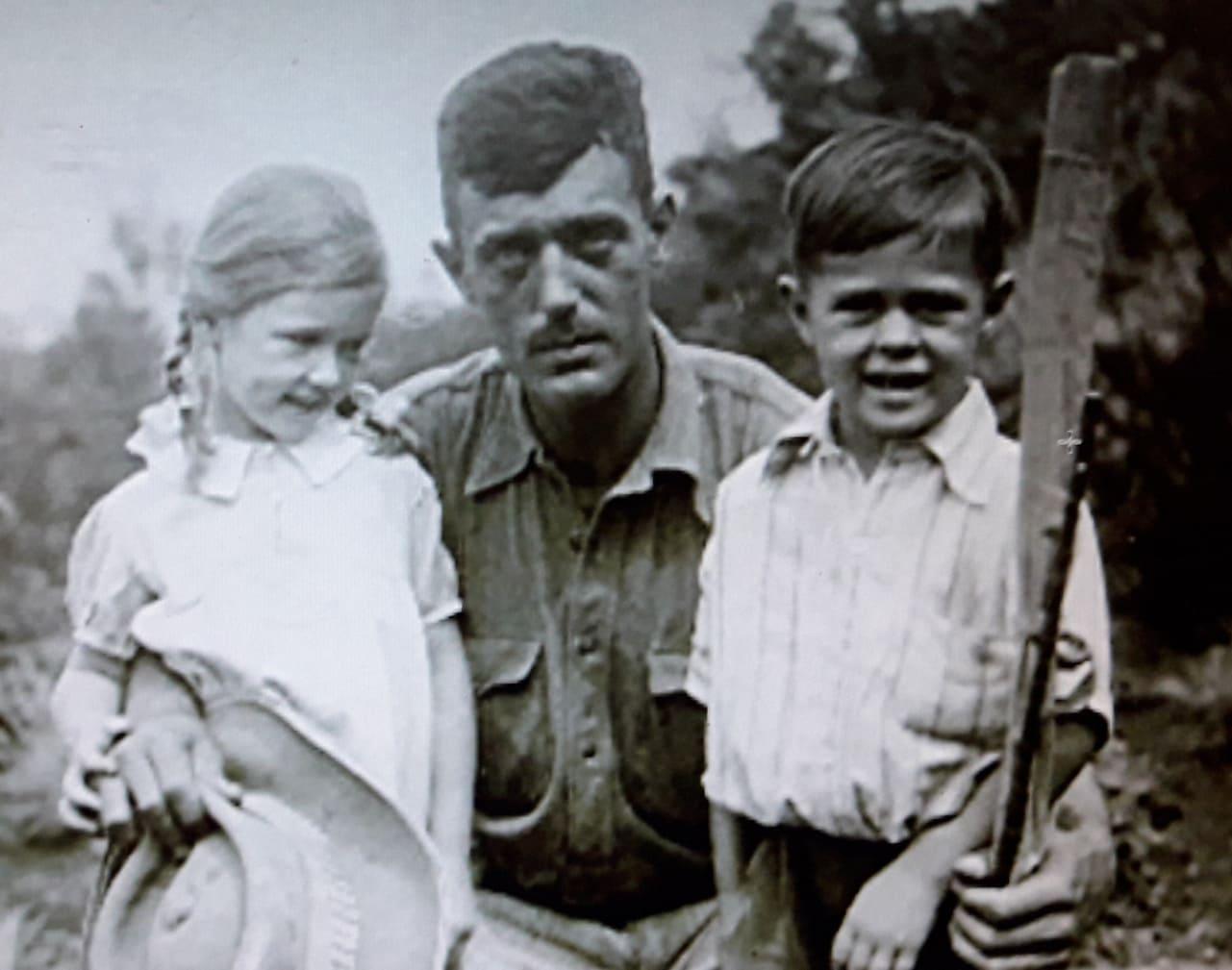
NOTE
We had a very warm welcome to the family home at Plumstead Cape Town.
After ten days with my family we moved to Hout Bay where Mrs Thomas lent us her
delightful seaside cottage. She also provided us with two excellent maids so I had
nothing to do but rest and play on the beach with the children.After a month at the sea George had fully recovered his health though not his
former gay spirits. After another six months with my parents I set off for home with Kate,
leaving Ann and George in my parent’s home under the care of my elder sister,
Marjorie.One or two incidents during that visit remain clearly in my memory. Our children
had never met elderly people and were astonished at the manifestations of age. One
morning an elderly lady came around to collect church dues. She was thin and stooped
and Ann surveyed her with awe. She turned to me with a puzzled expression and
asked in her clear voice, “Mummy, why has that old lady got a moustache – oh and a
beard?’ The old lady in question was very annoyed indeed and said, “What a rude little
girl.” Ann could not understand this, she said, “But Mummy, I only said she had a
moustache and a beard and she has.” So I explained as best I could that when people
have defects of this kind they are hurt if anyone mentions them.A few days later a strange young woman came to tea. I had been told that she
had a most disfiguring birthmark on her cheek and warned Ann that she must not
comment on it. Alas! with the kindest intentions Ann once again caused me acute
embarrassment. The young woman was hardly seated when Ann went up to her and
gently patted the disfiguring mark saying sweetly, “Oh, I do like this horrible mark on your
face.”I remember also the afternoon when Kate and George were christened. My
mother had given George a white silk shirt for the occasion and he wore it with intense
pride. Kate was baptised first without incident except that she was lost in admiration of a
gold bracelet given her that day by her Godmother and exclaimed happily, “My
bangle, look my bangle,” throughout the ceremony. When George’s turn came the
clergyman held his head over the font and poured water on George’s forehead. Some
splashed on his shirt and George protested angrily, “Mum, he has wet my shirt!” over
and over again whilst I led him hurriedly outside.My last memory of all is at the railway station. The time had come for Kate and
me to get into our compartment. My sisters stood on the platform with Ann and George.
Ann was resigned to our going, George was not so, at the last moment Sylvia, my
younger sister, took him off to see the engine. The whistle blew and I said good-bye to
my gallant little Ann. “Mummy”, she said urgently to me, “Don’t forget to wave to
George.”And so I waved good-bye to my children, never dreaming that a war would
intervene and it would be eight long years before I saw them again. -
AuthorSearch Results