-
AuthorSearch Results
-
December 18, 2021 at 7:05 pm #6246
In reply to: The Elusive Samuel Housley and Other Family Stories
Florence Nightingale Gretton
1881-1927
Florence’s father was Richard Gretton, a baker in Swadlincote, Derbyshire. When Richard married Sarah Orgill in 1861, they lived with her mother, a widow, in Measham, Ashby de la Zouch in Leicestershire. On the 1861 census Sarah’s mother, Elizabeth, is a farmer of two acres.
(Swadlincote and Ashby de la Zouch are on the Derbyshire Leicestershire border and not far from each other. Swadlincote is near to Burton upon Trent which is sometimes in Staffordshire, sometimes in Derbyshire. Newhall, Church Gresley, and Swadlincote are all very close to each other or districts in the same town.)
Ten years later in 1871 Richard and Sarah have their own place in Swadlincote, he is a baker, and they have four children. A fourteen year old apprentice or servant is living with them.
In the Ashby-de-la-Zouch Gazette on 28 February 1880, it was reported that Richard Gretton, baker, of Swadlincote, was charged by Captain Bandys with carrying bread in a cart for sale, the said cart not being provided with scales and weights, according to the requirements of the Act, on the 17th January last.—Defendant pleaded guilty, but urged in extenuation of the offence that in the hurry he had forgotten to put the scales in the cart before his son started.—The Bench took this view of the case, regarding it as an oversight, and fined him one shilling only and costs. This was not his only offence.
In 1883, he was fined twenty shillings, and ten shillings and sixpence costs.
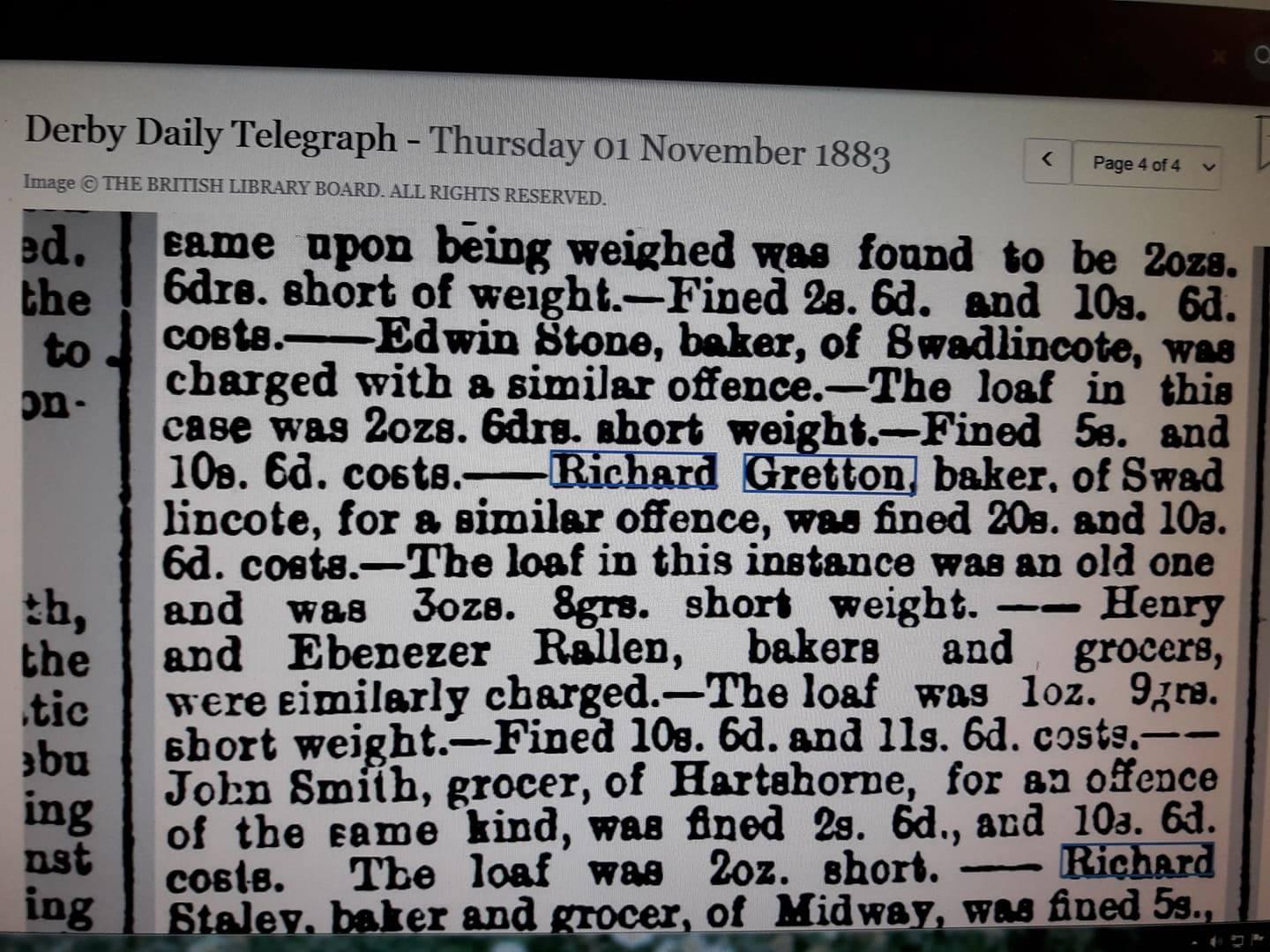
By 1881 they have 4 more children, and Florence Nightingale is the youngest at four months. Richard is 48 by now, and Sarah is 44. Florence’s older brother William is a blacksmith.
Interestingly on the same census page, two doors down Thomas and Selina Warren live at the Stanhope Arms. Richards son John Gretton lives at the pub, a 13 year old servant. Incidentally, I noticed on Thomas and Selena’s marriage register that Richard and Sarah Gretton were the witnesses at the wedding.
Ten years later in 1891, Florence Nightingale and her sister Clara are living with Selina Warren, widow, retired innkeeper, one door down from the Stanhope Arms. Florence is ten, Clara twelve and they are scholars.
Richard and Sarah are still living three doors up on the other side of the Stanhope Arms, with three of their sons. But the two girls lived up the road with the Warren widow!The Stanhope Arms, Swadlincote: it’s possible that the shop with the awning was Richard Gretton’s bakers shop (although not at the time of this later photo).
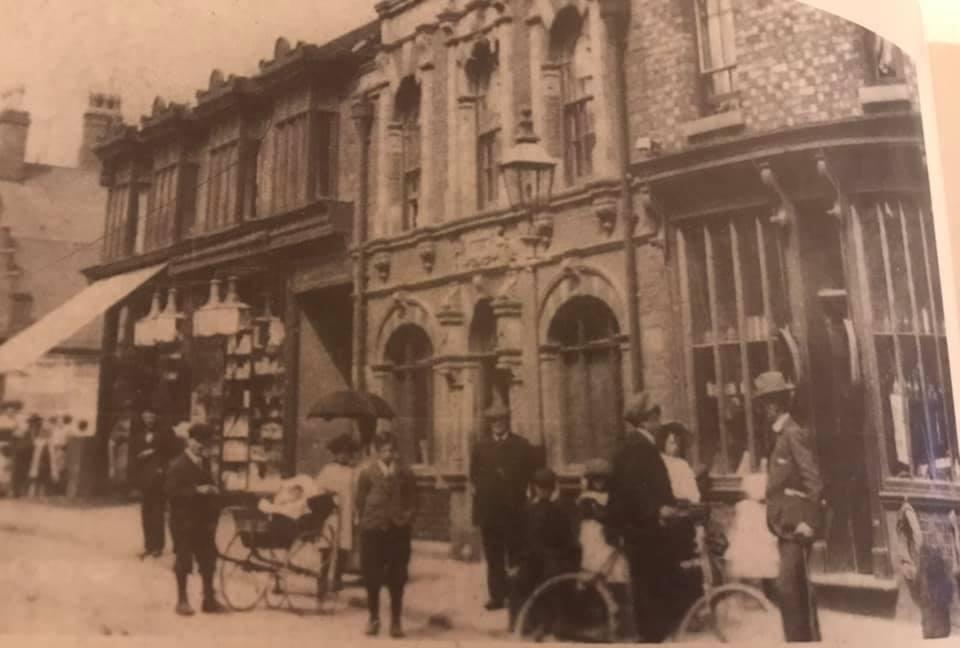
Richard died in 1898, a year before Florence married Samuel Warren.
Sarah is a widowed 60 year old baker on the 1901 census. Her son 26 year old son Alf, also a baker, lives at the same address, as does her 22 year old daughter Clara who is a district nurse.
Clara Gretton and family, photo found online:
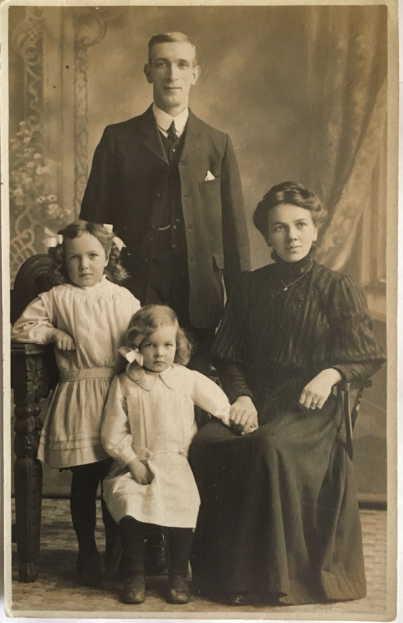
In 1901 Florence Nightingale (who we don’t have a photograph of!) is now married and is Florrie Warren on the census, and she, her husband Samuel, and their one year old daughter Hildred are visitors at the address of Elizabeth (Staley)Warren, 60 year old widow and Samuel’s mother, and Samuel’s 36 year old brother William. Samuel and William are engineers.
Samuel and Florrie had ten children between 1900 and 1925 (and all but two of them used their middle name and not first name: my mother and I had no idea until I found all the records. My grandmother Florence Noreen was known as Nora, which we knew of course, uncle Jack was actually Douglas John, and so on).
Hildred, Clara, Billy, and Nora were born in Swadlincote. Sometime between my grandmother’s birth in 1907 and Kay’s birth in 1911, the family moved to Oldswinford, in Stourbridge. Later they moved to Market Street.
1911 census, Oldswinford, Stourbridge:
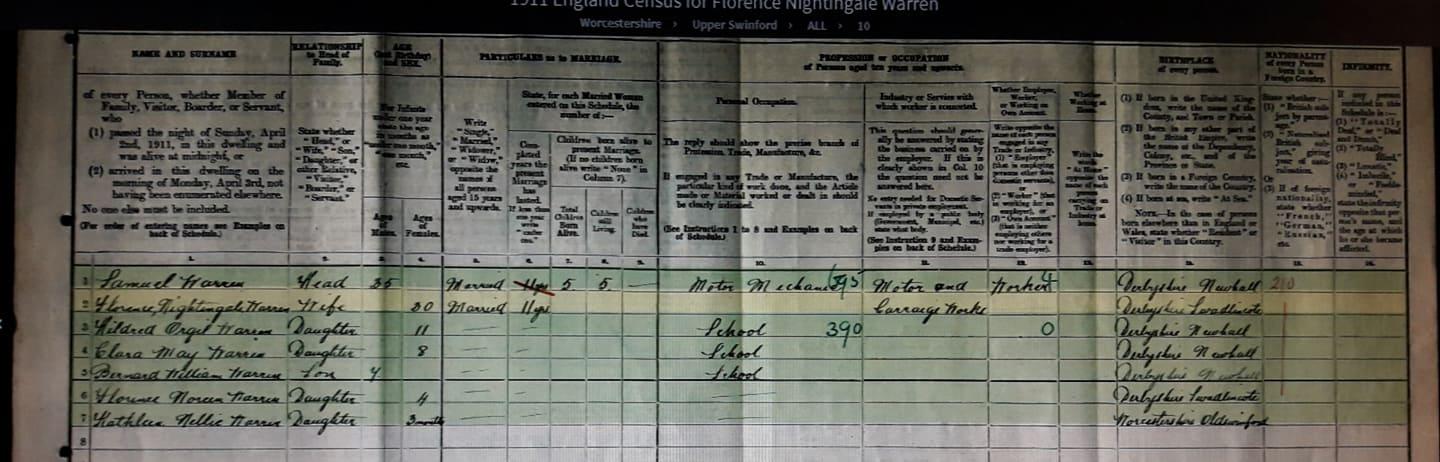
Oddly, nobody knew when Florrie Warren died. My mothers cousin Ian Warren researched the Warren family some years ago, while my grandmother was still alive. She contributed family stories and information, but couldn’t remember if her mother died in 1929 or 1927. A recent search of records confirmed that it was the 12th November 1927.
She was 46 years old. We were curious to know how she died, so my mother ordered a paper copy of her death certificate. It said she died at 31 Market Street, Stourbridge at the age of 47. Clara May Warren, her daughter, was in attendance. Her husband Samuel Warren was a motor mechanic. The Post mortem was by Percival Evans, coroner for Worcestershire, who clarified the cause of death as vascular disease of the heart. There was no inquest. The death was registered on 15 Nov 1927.
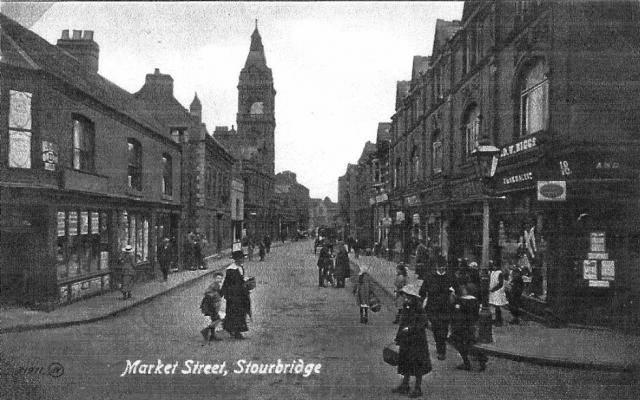
I looked for a photo of 31 Market Street in Stourbridge, and was astonished to see that it was the house next door to one I lived in breifly in the 1980s. We didn’t know that the Warren’s lived in Market Street until we started searching the records.
Market Street, Stourbridge. I lived in the one on the corner on the far right, my great grandmother died in the one next door.
I found some hitherto unknown emigrants in the family. Florence Nightingale Grettons eldest brother William 1861-1940 stayed in Swadlincote. John Orgill Gretton born in 1868 moved to Trenton New Jersey USA in 1888, married in 1892 and died in 1949 in USA. Michael Thomas born in 1870 married in New York in 1893 and died in Trenton in 1940. Alfred born 1875 stayed in Swadlincote. Charles Herbert born 1876 married locally and then moved to Australia in 1912, and died in Victoria in 1954. Clara Elizabeth was a district nurse, married locally and died at the age of 99.
December 13, 2021 at 11:29 am #6222In reply to: The Elusive Samuel Housley and Other Family Stories
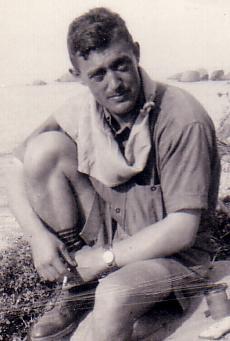
George Gilman Rushby: The Cousin Who Went To Africa
The portrait of the woman has “mother of Catherine Housley, Smalley” written on the back, and one of the family photographs has “Francis Purdy” written on the back. My first internet search was “Catherine Housley Smalley Francis Purdy”. Easily found was the family tree of George (Mike) Rushby, on one of the genealogy websites. It seemed that it must be our family, but the African lion hunter seemed unlikely until my mother recalled her father had said that he had a cousin who went to Africa. I also noticed that the lion hunter’s middle name was Gilman ~ the name that Catherine Housley’s daughter ~ my great grandmother, Mary Ann Gilman Purdy ~ adopted, from her aunt and uncle who brought her up.
I tried to contact George (Mike) Rushby via the ancestry website, but got no reply. I searched for his name on Facebook and found a photo of a wildfire in a place called Wardell, in Australia, and he was credited with taking the photograph. A comment on the photo, which was a few years old, got no response, so I found a Wardell Community group on Facebook, and joined it. A very small place, population some 700 or so, and I had an immediate response on the group to my question. They knew Mike, exchanged messages, and we were able to start emailing. I was in the chair at the dentist having an exceptionally long canine root canal at the time that I got the message with his email address, and at that moment the song Down in Africa started playing.
Mike said it was clever of me to track him down which amused me, coming from the son of an elephant and lion hunter. He didn’t know why his father’s middle name was Gilman, and was not aware that Catherine Housley’s sister married a Gilman.
Mike Rushby kindly gave me permission to include his family history research in my book. This is the story of my grandfather George Marshall’s cousin. A detailed account of George Gilman Rushby’s years in Africa can be found in another chapter called From Tanganyika With Love; the letters Eleanor wrote to her family.
George Gilman Rushby:
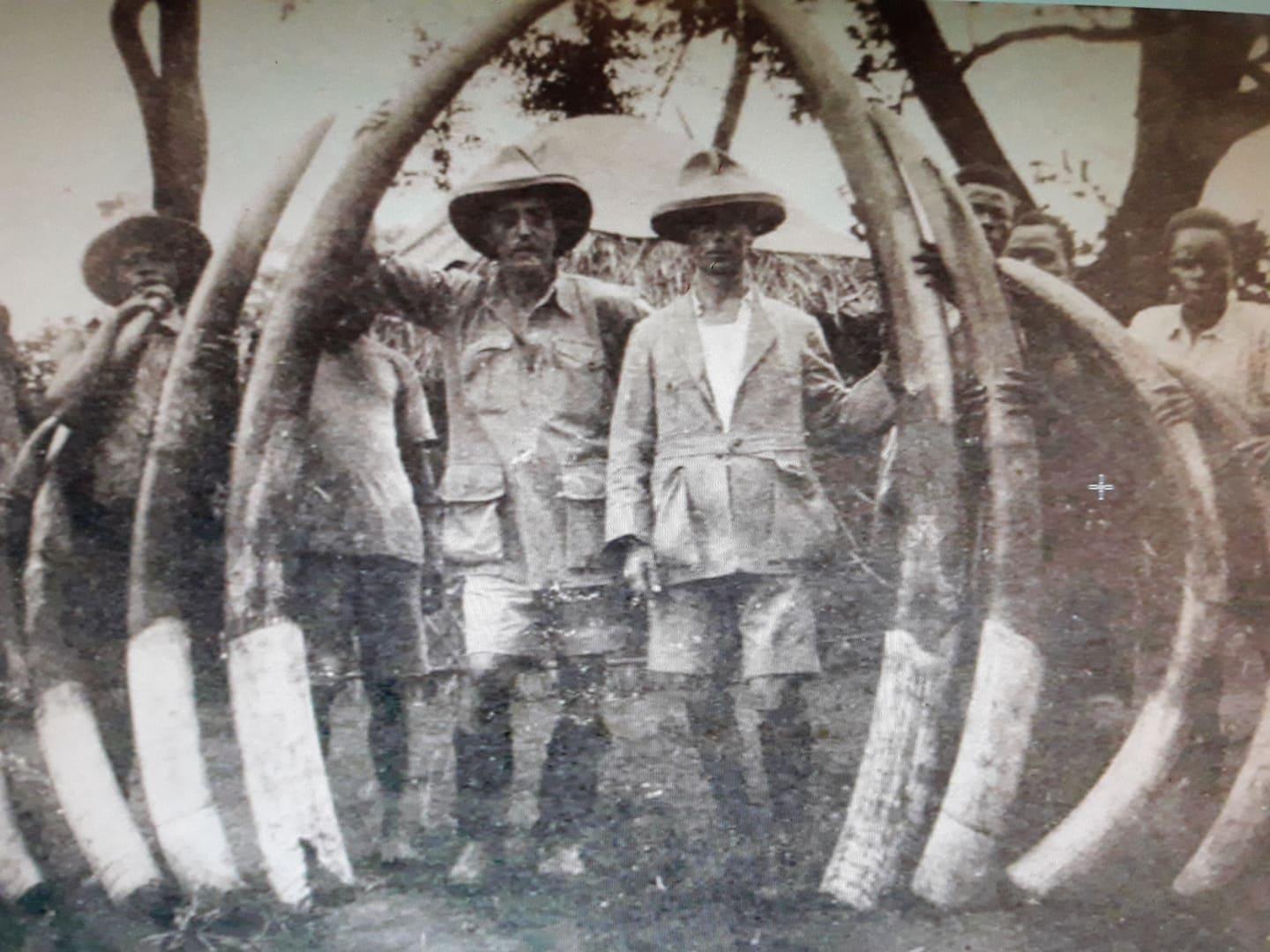
The story of George Gilman Rushby 1900-1969, as told by his son Mike:
George Gilman Rushby:
Elephant hunter,poacher, prospector, farmer, forestry officer, game ranger, husband to Eleanor, and father of 6 children who now live around the world.George Gilman Rushby was born in Nottingham on 28 Feb 1900 the son of Catherine Purdy and John Henry Payling Rushby. But John Henry died when his son was only one and a half years old, and George shunned his drunken bullying stepfather Frank Freer and was brought up by Gypsies who taught him how to fight and took him on regular poaching trips. His love of adventure and his ability to hunt were nurtured at an early stage of his life.
The family moved to Eastwood, where his mother Catherine owned and managed The Three Tuns Inn, but when his stepfather died in mysterious circumstances, his mother married a wealthy bookmaker named Gregory Simpson. He could afford to send George to Worksop College and to Rugby School. This was excellent schooling for George, but the boarding school environment, and the lack of a stable home life, contributed to his desire to go out in the world and do his own thing. When he finished school his first job was as a trainee electrician with Oaks & Co at Pye Bridge. He also worked part time as a motor cycle mechanic and as a professional boxer to raise the money for a voyage to South Africa.In May 1920 George arrived in Durban destitute and, like many others, living on the beach and dependant upon the Salvation Army for a daily meal. However he soon got work as an electrical mechanic, and after a couple of months had earned enough money to make the next move North. He went to Lourenco Marques where he was appointed shift engineer for the town’s power station. However he was still restless and left the comfort of Lourenco Marques for Beira in August 1921.
Beira was the start point of the new railway being built from the coast to Nyasaland. George became a professional hunter providing essential meat for the gangs of construction workers building the railway. He was a self employed contractor with his own support crew of African men and began to build up a satisfactory business. However, following an incident where he had to shoot and kill a man who attacked him with a spear in middle of the night whilst he was sleeping, George left the lower Zambezi and took a paddle steamer to Nyasaland (Malawi). On his arrival in Karongo he was encouraged to shoot elephant which had reached plague proportions in the area – wrecking African homes and crops, and threatening the lives of those who opposed them.
His next move was to travel by canoe the five hundred kilometre length of Lake Nyasa to Tanganyika, where he hunted for a while in the Lake Rukwa area, before walking through Northern Rhodesia (Zambia) to the Congo. Hunting his way he overachieved his quota of ivory resulting in his being charged with trespass, the confiscation of his rifles, and a fine of one thousand francs. He hunted his way through the Congo to Leopoldville then on to the Portuguese enclave, near the mouth of the mighty river, where he worked as a barman in a rough and tough bar until he received a message that his old friend Lumb had found gold at Lupa near Chunya. George set sail on the next boat for Antwerp in Belgium, then crossed to England and spent a few weeks with his family in Jacksdale before returning by sea to Dar es Salaam. Arriving at the gold fields he pegged his claim and almost immediately went down with blackwater fever – an illness that used to kill three out of four within a week.
When he recovered from his fever, George exchanged his gold lease for a double barrelled .577 elephant rifle and took out a special elephant control licence with the Tanganyika Government. He then headed for the Congo again and poached elephant in Northern Rhodesia from a base in the Congo. He was known by the Africans as “iNyathi”, or the Buffalo, because he was the most dangerous in the long grass. After a profitable hunting expedition in his favourite hunting ground of the Kilombera River he returned to the Congo via Dar es Salaam and Mombassa. He was after the Kabalo district elephant, but hunting was restricted, so he set up his base in The Central African Republic at a place called Obo on the Congo tributary named the M’bomu River. From there he could make poaching raids into the Congo and the Upper Nile regions of the Sudan. He hunted there for two and a half years. He seldom came across other Europeans; hunters kept their own districts and guarded their own territories. But they respected one another and he made good and lasting friendships with members of that small select band of adventurers.
Leaving for Europe via the Congo, George enjoyed a short holiday in Jacksdale with his mother. On his return trip to East Africa he met his future bride in Cape Town. She was 24 year old Eleanor Dunbar Leslie; a high school teacher and daughter of a magistrate who spent her spare time mountaineering, racing ocean yachts, and riding horses. After a whirlwind romance, they were betrothed within 36 hours.
On 25 July 1930 George landed back in Dar es Salaam. He went directly to the Mbeya district to find a home. For one hundred pounds he purchased the Waizneker’s farm on the banks of the Mntshewe Stream. Eleanor, who had been delayed due to her contract as a teacher, followed in November. Her ship docked in Dar es Salaam on 7 Nov 1930, and they were married that day. At Mchewe Estate, their newly acquired farm, they lived in a tent whilst George with some help built their first home – a lovely mud-brick cottage with a thatched roof. George and Eleanor set about developing a coffee plantation out of a bush block. It was a very happy time for them. There was no electricity, no radio, and no telephone. Newspapers came from London every two months. There were a couple of neighbours within twenty miles, but visitors were seldom seen. The farm was a haven for wild life including snakes, monkeys and leopards. Eleanor had to go South all the way to Capetown for the birth of her first child Ann, but with the onset of civilisation, their first son George was born at a new German Mission hospital that had opened in Mbeya.
Occasionally George had to leave the farm in Eleanor’s care whilst he went off hunting to make his living. Having run the coffee plantation for five years with considerable establishment costs and as yet no return, George reluctantly started taking paying clients on hunting safaris as a “white hunter”. This was an occupation George didn’t enjoy. but it brought him an income in the days when social security didn’t exist. Taking wealthy clients on hunting trips to kill animals for trophies and for pleasure didn’t amuse George who hunted for a business and for a way of life. When one of George’s trackers was killed by a leopard that had been wounded by a careless client, George was particularly upset.
The coffee plantation was approaching the time of its first harvest when it was suddenly attacked by plagues of borer beetles and ring barking snails. At the same time severe hail storms shredded the crop. The pressure of the need for an income forced George back to the Lupa gold fields. He was unlucky in his gold discoveries, but luck came in a different form when he was offered a job with the Forestry Department. The offer had been made in recognition of his initiation and management of Tanganyika’s rainbow trout project. George spent most of his short time with the Forestry Department encouraging the indigenous people to conserve their native forests.In November 1938 he transferred to the Game Department as Ranger for the Eastern Province of Tanganyika, and over several years was based at Nzasa near Dar es Salaam, at the old German town of Morogoro, and at lovely Lyamungu on the slopes of Kilimanjaro. Then the call came for him to be transferred to Mbeya in the Southern Province for there was a serious problem in the Njombe district, and George was selected by the Department as the only man who could possibly fix the problem.
Over a period of several years, people were being attacked and killed by marauding man-eating lions. In the Wagingombe area alone 230 people were listed as having been killed. In the Njombe district, which covered an area about 200 km by 300 km some 1500 people had been killed. Not only was the rural population being decimated, but the morale of the survivors was so low, that many of them believed that the lions were not real. Many thought that evil witch doctors were controlling the lions, or that lion-men were changing form to kill their enemies. Indeed some wichdoctors took advantage of the disarray to settle scores and to kill for reward.
By hunting down and killing the man-eaters, and by showing the flesh and blood to the doubting tribes people, George was able to instil some confidence into the villagers. However the Africans attributed the return of peace and safety, not to the efforts of George Rushby, but to the reinstallation of their deposed chief Matamula Mangera who had previously been stood down for corruption. It was Matamula , in their eyes, who had called off the lions.
Soon after this adventure, George was appointed Deputy Game Warden for Tanganyika, and was based in Arusha. He retired in 1956 to the Njombe district where he developed a coffee plantation, and was one of the first in Tanganyika to plant tea as a major crop. However he sensed a swing in the political fortunes of his beloved Tanganyika, and so sold the plantation and settled in a cottage high on a hill overlooking the Navel Base at Simonstown in the Cape. It was whilst he was there that TV Bulpin wrote his biography “The Hunter is Death” and George wrote his book “No More The Tusker”. He died in the Cape, and his youngest son Henry scattered his ashes at the Southern most tip of Africa where the currents of the Atlantic and Indian Oceans meet .
George Gilman Rushby:
 April 18, 2020 at 10:23 am #6026
In reply to: The Whale’s Diaries Collection
Dear Jorid Whale,
My hands are shaking while I type this on the keyboard.
I’m not sure which of last night’s dreams is the bizarrest. Bizarre in a fantastic way, although for certain people it might be called grotesque. I’m certain it has something to do with that book I ordered online last week. I don’t usually read books and certainly not like this one. But the confinement, it makes you consider making things out of your ordinary.
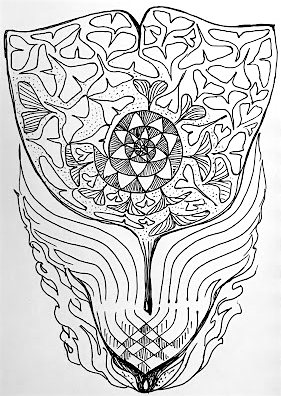
It’s called The Enchanted Forest of Changes, by a Chinese artist Níngméng (柠檬). They say his artist name means lemon, but that some of his friends call him Níng mèng 凝梦 (curdle dreams), which to my ears sound exactly the same except a little bit angrier. I found out about him on a forum about creepy dolls abandoned in forests all around the world. Yeah exactly, the confinement effect again. Apparently it started with a few dolls in a forest in Michigan, and then suddenly people started to find them everywhere. I wonder if some people are really into the confinement thing or if it’s just me using that as a reason to stay home.
Anyway, someone on that forum posted one of the picture of that book and it caught my eye. So much so that I dreamt of it the following night. So I bought the book and it’s mostly ink drawings, but they seem to speak directly to some part of you that you were not even aware you had. I almost hear whispers when I look at the drawings. And then I have those dreams.
Last night I dreamt of a cat that had been raised as a boy. He even had the shape of one, but shorter maybe. He had learned to talk and use his paws as hands, his claws had grown into fingers, had lost most of his fur and he was wearing clothes. If I was amazed by such a feat, it kinda seemed normal for the people I met in that dream. It just took a lot of efforts, love and dedication to raise this kind of children.
And Whale, I feel tingling in my arms. This morning you showed me the picture of a kitten! That’s not a mere coincidence. I’m feeling so excited, my hands are too slow to type what I want to write. I fear I’m going to forget an important detail.
About the second dream. The world was in shock, there was this giant… thing that looked like a pistil and that had grown during the night in some arid area. It was taller than the tallest human made tower. Its extremity was cone shaped, and I confess that the whole thing looked like some kind of dick to me.
Plants and trees had followed in the following days as if the pistil had changed the climatic conditions (autocorrect wanted to write climactic, is that you playing around?).
The pistil was protected by some kind of field and it couldn’t be approached by everyone. Governments had tried, pharmaceutical companies had tried. People who wanted to make gold out of it, they were all rejected. But for some reason some people could approach. Anyone, not just the pure of hearts or the noble ones. Actually a whole bunch of weirdoes started to take their chances. Some were allowed in and some where not. Nobody knew what was the deciding factor.
A friend of mine that I have not seen in years during my waking life, she came back and asked me to come with her. So we went and were allowed in. My recall of the events after that is fuzzy. But I get the strange impression that I will spend more time in there later on.
[Edited in the afternoon]
I don’t believe it! It’s on the news everywhere. It has even replaced the news about the virus and the confinement.
Giant pistils have appeared around the world, but it seems only people who had been infected can see them.
Crazy rumours run on the internet. Giant mass hallucination caused by the virus. Some people say it’s alien technology, spores engineered to control our brains.
There is one not so far from where I live. Should I wait for Kady to call me?
August 8, 2019 at 8:05 am #4761In reply to: Newsreel from the Rim of the Realm
Barbara’s office was dead silent apart from the regular bips of the machines. The whiteness of the painted walls made it feel like a psych ward. She shivered away the memories that were trying to catch her attention.
It’s been two hours since the Doctor had locked himself up in his rage-release room, a spacious soundproofed room with padded walls. Not even a small window to look inside and check if his anger had subsided. Barbara clearly preferred the trauma of the shouts and cries and the broken plates that were hidden here and there for him to use when he needed most. But when he started his therapy with the AI psych module, the damn bot suggested he built that room in order to release his rage in a more intimate framework.
Now the plates collected dust and the sessions in the room tended to last longer and longer.Today’s burst of rage had been triggered by the unexpected gathering of the guests at the Inn. The Doctor was drinking his columbian cocoa, a blend of melted dark chocolate with cheddar cheese, when the old hag in that bloody gabardine started her speech. The camera hidden in the eye of the fish by their agent, gave them a fisheye view of the room. It was very practical and they could see everything. The AI engineer module could recreate a 3D view of the room and anticipate the moves of all the attendees.
When that girl with the fishnet handed out the keys for all to see and the other girl got the doll out, the Doctor had his attention hyper-focused. He wanted to see it all.
Except there had been a glitch and images of granola cookies superimposed on the items.“Send the magpies to retrieve the items,” he said, nervousness making his voice louder.
“Ahem,” had answered Barbara.
“What?” The Doctor turned towards her. His eye twitched when he expected the worst, and it had been twitching fast.
She had been trying to hide the fact that the magpies had been distracted lately, as she had clearly been herself since she had found that goldminer game on facebush.
No need to delay the inevitable, she had thought. “The magpies are not in the immediate vicinity of the Inn.” In fact, just as their imprinting mother was busy digging digital gold during her work time, the magpies had found a new vein of gold while going to the Inn and Barbara had thought it could be a nice addition to her meager salary… to make ends meet at the end of the month.It obviously wasn’t the right time to do so. And she was worried about the Doctor now.
To trump her anxiety, she was surfing the internet. Too guilty to play the gold miner, she was looking around for solutions to her boss’s stress. The variety and abundance of advertisement was deafening her eyes, and somewhere in a gold mine she was sure the magpies were going berserk too. She had to find a solution quickly.
Barbara hesitated to ask the AI. But there were obviously too many solutions to choose from. Her phone buzzed. It was her mother.
“I finally found the white jade masks. Bought one for you 2. It helps chase the mental stress away. You clearly need it.” Her mother had joined a picture of her wearing the mask on top of a beauty mask which gave her the look of a mummy. Her mother was too much into the woowoo stuffs and Barbara was about to send her a polite but firm no she didn’t want the mask. But the door of the rage-room opened and the Doctor went out. He had such a blissful look on his face. It was unnatural. Barbara had been suspecting the AI to brainwash the Doctor with subliminal messages during those therapy sessions. Maybe it also happened in the rage-room. The AI was using tech to control the Doctor. Barbara would use some other means to win him back.OK. SEND IT TO ME QUICK. she sent to her mother.
June 3, 2017 at 5:24 pm #4345In reply to: The Precious Life and Rambles of Liz Tattler
“Finnley, go and tell Roberto to bring the ladder. I can’t possibly climb up through that trap door with those rickety steps, I want a proper ladder. And proper gardener to hold it steady. I wouldn’t trust any of you lot,” she said, glaring at them each in turn.
Finnley made a rude sign behind Elizabeth’s back, and clumped back down the stairs. Increasingly heated bickering between Liz and the Inspector ensued. Godfrey wandered off down the hallway tutting and shaking his head, and then darted into a spare bedroom and fell sound asleep on the bed.
Expecting a tongue lashing from Liz for being so long, Finnley was surprised that nobody noticed her return. She cleared her throat a few times trying to get their attention.
“Go and get yourself a spoonful of honey and stop making that ghastly croaking noise, Finnley!”
“The thing is, Liz,” replied the maid, “He’s gone.”
“Who?”
Exasperated, Finnley’s voice rose to an alarming falsetto. “The gardener! Roberto! He’s gone, and what’s more, he’s taken the sack with him!”
“Do get a grip, Finnley, he’s probably just taking the rubbish out. Now then, Walter, if you think I’ve forgiven you for that day when you….he’s taken what? What did you say?”
Elizabeth blanched, waving her arms around wildly as if she was drowning.
“I know a good gardener who’s looking for a job,” the Inspector said helpfully.
“You utter fool!” Elizabeth rounded on him. “My babies have been stolen and you talk about gardening! Never mind that German, or whatever it was you said you’re doing here, go and catch that thief!”
Raising an eyebrow, Finnley wondered if this was just another fiasco, or was it really a cleverly engineered plot?
September 29, 2015 at 5:50 am #3791In reply to: The Hosts of Mars
Before he retired and made cave carving his hobby, Pádraig was an IT engineer. That was a few years back, and not long after, most of them became redundant with the rise of new generations of NI (near-intelligent) phones and computers. He’d happily taken an early retirement, so that he could enjoy a simple life and get to reacquaint with his daughter. He’d succeeded at least on the first objective.
It was twilight when he’d left his cave, and looking at the horizon, he’d noticed strange shimmering, and a lone bird of prey circling the area in the direction of the restricted area of the desert.
It’d given him an idea.
He still had the old drone in his garage, from the time when they were all the furor. You could buy them on online stores very easily back then, even print them in your house. But then, some do-gooders became concerned, about privacy, security or all that bullshit, and they were banned. Actually, the only ones still flying where from the army, and they would tear down any unidentified hobbyist’s drone, and likely give them some jail time if they had the chance.It was exciting to do something on the fringe of what was authorized. Pádraig couldn’t wait to see if he could make his old drone fly over the area, check what happened there.
He was a bit lost in his thoughts when the dog’s barking made him notice the white car parked in front of his aluminium trailer, which had triggered all his spotlights.
He had a moment of panic before he realized that the car wasn’t from the men in black or aliens, but worse. It was Imelda, his do-gooder of a daughter.June 13, 2014 at 6:24 am #3215In reply to: The Time-Dragglers’ Extravaganzas
So this is 2222, thought Sadie, relaxing back in the warm sand. Not bad so far! I wonder where we are. Further along the beach she could hear the sound of laughter and bickering as the boys and Sanso practised their moves for the upcoming show—the details of which were still under wraps. Linda Paul, now she had sobered up, seemed to have forgotten her strange request for Sadie to take on a drag queen identity. ”Thank Flove!” Sanso, however, with unexpected enthusiasm had taken on the non de plume “Miss Titters” and insisted that he was going to join the 3 divas on stage for their closing number.
“Miss Titters! A bit childish,” Sadie rolled her eyes, then noticing that it did not feel good to be judgemental, chastised herself. That didn’t feel good either so she chastised herself for chastising herself. Fortunately at that moment a
Juicy Lemoncame through on her e-zapper interrupting her rampage of chastisement with perfect synchronicity.Oh just release that little bird

Irina perched on the edge of her antique Rocchetti sofa—a beautiful piece of furniture over 200 years old, made from faux fur and crafted in the shape of a cartoon bull—and looked critically at the hologram of her mermaid outfit rotating in the centre of the room.
“What do you think, Mr R?”
”It is an exquisite piece of design engineering, Ma’am. The organ you see in the chest cavity can operate as a lung or a gill enabling you breathe as a human or to extract oxygen from the water. The circulatory system has been engineered to withstand different water pressures. The skeletal system is light and pliable and designed for speed and agility under the water. The eyes have been designed to ensure you will be able to correctly focus both above and under water. The intricate design of the ears means that you will be able to hear as a human above water or use sonar communication under water.”
”Yes, yes, most interesting, Mr R. But do you think my bum looks fat in that tail?”
”Not at all, Ma’am. Your figure is beautifully proportioned and the tail only accentuates your womanly curves.”
”I think that shade of pink is much better. What do you think, Mr R?”
”The carmine pink suits the undertones of your skin most favourably, ma’am. It is preferable to the cerise pink you chose earlier. Although that was an excellent choice too, of course”.
”Wonderful! Print it out then, Mr R. And print out your Octopus suit at the same time. I feel an unusual emotion which may even be excitement. Hawaii, here we come”
January 13, 2008 at 2:42 am #658In reply to: Circle of Eights, Stories
The new shop was splendiferous. It had all people could imagine about pets and stuff, pets most people wouldn’t have imagined existed. There was even a whole division for the pets health, with permanent vets…
The “Rent’a Pet Shop, Boy!” was taking a whole building, with no less than thirteen storeys, and when Sidonie entered the huge hall at the ground floor, which was slightly above the waters’ level, she was awed by the quantity of animals which where stored in the facility.
She didn’t know what she wanted for a start and now she was beginning to feel lost.A beautiful tall black woman, with short hair and wearing an ample avocado-coloured boubou and carrying a little dog close to her chest passed by her and Sidonie could hear her muttering apparently incoherent bits to herself
— Come on Chumpy, the doctor said it will be alright after that surgery, here, here little thing, breathe, breathe and say YES… Oh Lordy, I’m gonna be late, and Sam will be bugged if I make him wait in his friend’s flying car…Sidonie was mesmerized by the woman, who suddenly turned to face her and said winkingly “I’d rather not go for a squawking parrot if I were you, they can’t keep quiet… and not a magpie either… Al said this new breeds of nine-tailed foxes are great, but I can’t really get used to anything else but dogs… Oh, I must go, need to have the last alterations done on my wedding gown… How can they expect that I remember all of this!”
And the woman went running out of the shop…
Sidonie was baffled… A nine-tailed fox… Why not, sounded like a nice idea. At least, she could start by renting it, and if it was a nice companion and Tonio was OK with it, she would adopt it…
She asked a vendor where was the fox section. The vendor took a very professional look to ask her if she meant the new genetically engineered breed of foxes, or the classical breeds, desert, arctic or continental…
Sidonie was lost for a moment, then remember the lady had said they were new breeds, so she asked for the new ones in an intimidated voice.— Upstairs, thirteenth floor, on your right after the jump said the vendor and beware of the shrimpigators
-
AuthorSearch Results