


Search Results for 'exist'
-
AuthorSearch Results
-
February 2, 2022 at 12:33 pm #6266
In reply to: The Elusive Samuel Housley and Other Family Stories
From Tanganyika with Love
continued part 7
With thanks to Mike Rushby.
Oldeani Hospital. 19th September 1938
Dearest Family,
George arrived today to take us home to Mbulu but Sister Marianne will not allow
me to travel for another week as I had a bit of a set back after baby’s birth. At first I was
very fit and on the third day Sister stripped the bed and, dictionary in hand, started me
off on ante natal exercises. “Now make a bridge Mrs Rushby. So. Up down, up down,’
whilst I obediently hoisted myself aloft on heels and head. By the sixth day she
considered it was time for me to be up and about but alas, I soon had to return to bed
with a temperature and a haemorrhage. I got up and walked outside for the first time this
morning.I have had lots of visitors because the local German settlers seem keen to see
the first British baby born in the hospital. They have been most kind, sending flowers
and little German cards of congratulations festooned with cherubs and rather sweet. Most
of the women, besides being pleasant, are very smart indeed, shattering my illusion that
German matrons are invariably fat and dowdy. They are all much concerned about the
Czecko-Slovakian situation, especially Sister Marianne whose home is right on the
border and has several relations who are Sudentan Germans. She is ant-Nazi and
keeps on asking me whether I think England will declare war if Hitler invades Czecko-
Slovakia, as though I had inside information.George tells me that he has had a grass ‘banda’ put up for us at Mbulu as we are
both determined not to return to those prison-like quarters in the Fort. Sister Marianne is
horrified at the idea of taking a new baby to live in a grass hut. She told George,
“No,No,Mr Rushby. I find that is not to be allowed!” She is an excellent Sister but rather
prim and George enjoys teasing her. This morning he asked with mock seriousness,
“Sister, why has my wife not received her medal?” Sister fluttered her dictionary before
asking. “What medal Mr Rushby”. “Why,” said George, “The medal that Hitler gives to
women who have borne four children.” Sister started a long and involved explanation
about the medal being only for German mothers whilst George looked at me and
grinned.Later. Great Jubilation here. By the noise in Sister Marianne’s sitting room last night it
sounded as though the whole German population had gathered to listen to the wireless
news. I heard loud exclamations of joy and then my bedroom door burst open and
several women rushed in. “Thank God “, they cried, “for Neville Chamberlain. Now there
will be no war.” They pumped me by the hand as though I were personally responsible
for the whole thing.George on the other hand is disgusted by Chamberlain’s lack of guts. Doesn’t
know what England is coming to these days. I feel too content to concern myself with
world affairs. I have a fine husband and four wonderful children and am happy, happy,
happy.Eleanor.
Mbulu. 30th September 1938
Dearest Family,
Here we are, comfortably installed in our little green house made of poles and
rushes from a nearby swamp. The house has of course, no doors or windows, but
there are rush blinds which roll up in the day time. There are two rooms and a little porch
and out at the back there is a small grass kitchen.Here we have the privacy which we prize so highly as we are screened on one
side by a Forest Department plantation and on the other three sides there is nothing but
the rolling countryside cropped bare by the far too large herds of cattle and goats of the
Wambulu. I have a lovely lazy time. I still have Kesho-Kutwa and the cook we brought
with us from the farm. They are both faithful and willing souls though not very good at
their respective jobs. As one of these Mbeya boys goes on safari with George whose
job takes him from home for three weeks out of four, I have taken on a local boy to cut
firewood and heat my bath water and generally make himself useful. His name is Saa,
which means ‘Clock’We had an uneventful but very dusty trip from Oldeani. Johnny Jo travelled in his
pram in the back of the boxbody and got covered in dust but seems none the worst for
it. As the baby now takes up much of my time and Kate was showing signs of
boredom, I have engaged a little African girl to come and play with Kate every morning.
She is the daughter of the head police Askari and a very attractive and dignified little
person she is. Her name is Kajyah. She is scrupulously clean, as all Mohammedan
Africans seem to be. Alas, Kajyah, though beautiful, is a bore. She simply does not
know how to play, so they just wander around hand in hand.There are only two drawbacks to this little house. Mbulu is a very windy spot so
our little reed house is very draughty. I have made a little tent of sheets in one corner of
the ‘bedroom’ into which I can retire with Johnny when I wish to bathe or sponge him.
The other drawback is that many insects are attracted at night by the lamp and make it
almost impossible to read or sew and they have a revolting habit of falling into the soup.
There are no dangerous wild animals in this area so I am not at all nervous in this
flimsy little house when George is on safari. Most nights hyaenas come around looking
for scraps but our dogs, Fanny and Paddy, soon see them off.Eleanor.
Mbulu. 25th October 1938
Dearest Family,
Great news! a vacancy has occurred in the Game Department. George is to
transfer to it next month. There will be an increase in salary and a brighter prospect for
the future. It will mean a change of scene and I shall be glad of that. We like Mbulu and
the people here but the rains have started and our little reed hut is anything but water
tight.Before the rain came we had very unpleasant dust storms. I think I told you that
this is a treeless area and the grass which normally covers the veldt has been cropped
to the roots by the hungry native cattle and goats. When the wind blows the dust
collects in tall black columns which sweep across the country in a most spectacular
fashion. One such dust devil struck our hut one day whilst we were at lunch. George
swept Kate up in a second and held her face against his chest whilst I rushed to Johnny
Jo who was asleep in his pram, and stooped over the pram to protect him. The hut
groaned and creaked and clouds of dust blew in through the windows and walls covering
our persons, food, and belongings in a black pall. The dogs food bowls and an empty
petrol tin outside the hut were whirled up and away. It was all over in a moment but you
should have seen what a family of sweeps we looked. George looked at our blackened
Johnny and mimicked in Sister Marianne’s primmest tones, “I find that this is not to be
allowed.”The first rain storm caught me unprepared when George was away on safari. It
was a terrific thunderstorm. The quite violent thunder and lightening were followed by a
real tropical downpour. As the hut is on a slight slope, the storm water poured through
the hut like a river, covering the entire floor, and the roof leaked like a lawn sprinkler.
Johnny Jo was snug enough in the pram with the hood raised, but Kate and I had a
damp miserable night. Next morning I had deep drains dug around the hut and when
George returned from safari he managed to borrow an enormous tarpaulin which is now
lashed down over the roof.It did not rain during the next few days George was home but the very next night
we were in trouble again. I was awakened by screams from Kate and hurriedly turned up
the lamp to see that we were in the midst of an invasion of siafu ants. Kate’s bed was
covered in them. Others appeared to be raining down from the thatch. I quickly stripped
Kate and carried her across to my bed, whilst I rushed to the pram to see whether
Johnny Jo was all right. He was fast asleep, bless him, and slept on through all the
commotion, whilst I struggled to pick all the ants out of Kate’s hair, stopping now and
again to attend to my own discomfort. These ants have a painful bite and seem to
choose all the most tender spots. Kate fell asleep eventually but I sat up for the rest of
the night to make sure that the siafu kept clear of the children. Next morning the servants
dispersed them by laying hot ash.In spite of the dampness of the hut both children are blooming. Kate has rosy
cheeks and Johnny Jo now has a fuzz of fair hair and has lost his ‘old man’ look. He
reminds me of Ann at his age.Eleanor.
Iringa. 30th November 1938
Dearest Family,
Here we are back in the Southern Highlands and installed on the second floor of
another German Fort. This one has been modernised however and though not so
romantic as the Mbulu Fort from the outside, it is much more comfortable.We are all well
and I am really proud of our two safari babies who stood up splendidly to a most trying
journey North from Mbulu to Arusha and then South down the Great North Road to
Iringa where we expect to stay for a month.At Arusha George reported to the headquarters of the Game Department and
was instructed to come on down here on Rinderpest Control. There is a great flap on in
case the rinderpest spread to Northern Rhodesia and possibly onwards to Southern
Rhodesia and South Africa. Extra veterinary officers have been sent to this area to
inoculate all the cattle against the disease whilst George and his African game Scouts will
comb the bush looking for and destroying diseased game. If the rinderpest spreads,
George says it may be necessary to shoot out all the game in a wide belt along the
border between the Southern Highlands of Tanganyika and Northern Rhodesia, to
prevent the disease spreading South. The very idea of all this destruction sickens us
both.George left on a foot safari the day after our arrival and I expect I shall be lucky if I
see him occasionally at weekends until this job is over. When rinderpest is under control
George is to be stationed at a place called Nzassa in the Eastern Province about 18
miles from Dar es Salaam. George’s orderly, who is a tall, cheerful Game Scout called
Juma, tells me that he has been stationed at Nzassa and it is a frightful place! However I
refuse to be depressed. I now have the cheering prospect of leave to England in thirty
months time when we will be able to fetch Ann and George and be a proper family
again. Both Ann and George look happy in the snapshots which mother-in-law sends
frequently. Ann is doing very well at school and loves it.To get back to our journey from Mbulu. It really was quite an experience. It
poured with rain most of the way and the road was very slippery and treacherous the
120 miles between Mbulu and Arusha. This is a little used earth road and the drains are
so blocked with silt as to be practically non existent. As usual we started our move with
the V8 loaded to capacity. I held Johnny on my knee and Kate squeezed in between
George and me. All our goods and chattels were in wooden boxes stowed in the back
and the two houseboys and the two dogs had to adjust themselves to the space that
remained. We soon ran into trouble and it took us all day to travel 47 miles. We stuck
several times in deep mud and had some most nasty skids. I simply clutched Kate in
one hand and Johnny Jo in the other and put my trust in George who never, under any
circumstances, loses his head. Poor Johnny only got his meals when circumstances
permitted. Unfortunately I had put him on a bottle only a few days before we left Mbulu
and, as I was unable to buy either a primus stove or Thermos flask there we had to
make a fire and boil water for each meal. Twice George sat out in the drizzle with a rain
coat rapped over his head to protect a miserable little fire of wet sticks drenched with
paraffin. Whilst we waited for the water to boil I pacified John by letting him suck a cube
of Tate and Lyles sugar held between my rather grubby fingers. Not at all according to
the book.That night George, the children and I slept in the car having dumped our boxes
and the two servants in a deserted native hut. The rain poured down relentlessly all night
and by morning the road was more of a morass than ever. We swerved and skidded
alarmingly till eventually one of the wheel chains broke and had to be tied together with
string which constantly needed replacing. George was so patient though he was wet
and muddy and tired and both children were very good. Shortly before reaching the Great North Road we came upon Jack Gowan, the Stock Inspector from Mbulu. His car
was bogged down to its axles in black mud. He refused George’s offer of help saying
that he had sent his messenger to a nearby village for help.I hoped that conditions would be better on the Great North Road but how over
optimistic I was. For miles the road runs through a belt of ‘black cotton soil’. which was
churned up into the consistency of chocolate blancmange by the heavy lorry traffic which
runs between Dodoma and Arusha. Soon the car was skidding more fantastically than
ever. Once it skidded around in a complete semi circle so George decided that it would
be safer for us all to walk whilst he negotiated the very bad patches. You should have
seen me plodding along in the mud and drizzle with the baby in one arm and Kate
clinging to the other. I was terrified of slipping with Johnny. Each time George reached
firm ground he would return on foot to carry Kate and in this way we covered many bad
patches.We were more fortunate than many other travellers. We passed several lorries
ditched on the side of the road and one car load of German men, all elegantly dressed in
lounge suits. One was busy with his camera so will have a record of their plight to laugh
over in the years to come. We spent another night camping on the road and next day
set out on the last lap of the journey. That also was tiresome but much better than the
previous day and we made the haven of the Arusha Hotel before dark. What a picture
we made as we walked through the hall in our mud splattered clothes! Even Johnny was
well splashed with mud but no harm was done and both he and Kate are blooming.
We rested for two days at Arusha and then came South to Iringa. Luckily the sun
came out and though for the first day the road was muddy it was no longer so slippery
and the second day found us driving through parched country and along badly
corrugated roads. The further South we came, the warmer the sun which at times blazed
through the windscreen and made us all uncomfortably hot. I have described the country
between Arusha and Dodoma before so I shan’t do it again. We reached Iringa without
mishap and after a good nights rest all felt full of beans.Eleanor.
Mchewe Estate, Mbeya. 7th January 1939.
Dearest Family,
You will be surprised to note that we are back on the farm! At least the children
and I are here. George is away near the Rhodesian border somewhere, still on
Rinderpest control.I had a pleasant time at Iringa, lots of invitations to morning tea and Kate had a
wonderful time enjoying the novelty of playing with children of her own age. She is not
shy but nevertheless likes me to be within call if not within sight. It was all very suburban
but pleasant enough. A few days before Christmas George turned up at Iringa and
suggested that, as he would be working in the Mbeya area, it might be a good idea for
the children and me to move to the farm. I agreed enthusiastically, completely forgetting
that after my previous trouble with the leopard I had vowed to myself that I would never
again live alone on the farm.Alas no sooner had we arrived when Thomas, our farm headman, brought the
news that there were now two leopards terrorising the neighbourhood, and taking dogs,
goats and sheep and chickens. Traps and poisoned bait had been tried in vain and he
was sure that the female was the same leopard which had besieged our home before.
Other leopards said Thomas, came by stealth but this one advertised her whereabouts
in the most brazen manner.George stayed with us on the farm over Christmas and all was quiet at night so I
cheered up and took the children for walks along the overgrown farm paths. However on
New Years Eve that darned leopard advertised her presence again with the most blood
chilling grunts and snarls. Horrible! Fanny and Paddy barked and growled and woke up
both children. Kate wept and kept saying, “Send it away mummy. I don’t like it.” Johnny
Jo howled in sympathy. What a picnic. So now the whole performance of bodyguards
has started again and ‘till George returns we confine our exercise to the garden.
Our little house is still cosy and sweet but the coffee plantation looks very
neglected. I wish to goodness we could sell it.Eleanor.
Nzassa 14th February 1939.
Dearest Family,
After three months of moving around with two small children it is heavenly to be
settled in our own home, even though Nzassa is an isolated spot and has the reputation
of being unhealthy.We travelled by car from Mbeya to Dodoma by now a very familiar stretch of
country, but from Dodoma to Dar es Salaam by train which made a nice change. We
spent two nights and a day in the Splendid Hotel in Dar es Salaam, George had some
official visits to make and I did some shopping and we took the children to the beach.
The bay is so sheltered that the sea is as calm as a pond and the water warm. It is
wonderful to see the sea once more and to hear tugs hooting and to watch the Arab
dhows putting out to sea with their oddly shaped sails billowing. I do love the bush, but
I love the sea best of all, as you know.We made an early start for Nzassa on the 3rd. For about four miles we bowled
along a good road. This brought us to a place called Temeke where George called on
the District Officer. His house appears to be the only European type house there. The
road between Temeke and the turn off to Nzassa is quite good, but the six mile stretch
from the turn off to Nzassa is a very neglected bush road. There is nothing to be seen
but the impenetrable bush on both sides with here and there a patch of swampy
ground where rice is planted in the wet season.After about six miles of bumpy road we reached Nzassa which is nothing more
than a sandy clearing in the bush. Our house however is a fine one. It was originally built
for the District Officer and there is a small court house which is now George’s office. The
District Officer died of blackwater fever so Nzassa was abandoned as an administrative
station being considered too unhealthy for Administrative Officers but suitable as
Headquarters for a Game Ranger. Later a bachelor Game Ranger was stationed here
but his health also broke down and he has been invalided to England. So now the
healthy Rushbys are here and we don’t mean to let the place get us down. So don’t
worry.The house consists of three very large and airy rooms with their doors opening
on to a wide front verandah which we shall use as a living room. There is also a wide
back verandah with a store room at one end and a bathroom at the other. Both
verandahs and the end windows of the house are screened my mosquito gauze wire
and further protected by a trellis work of heavy expanded metal. Hasmani, the Game
Scout, who has been acting as caretaker, tells me that the expanded metal is very
necessary because lions often come out of the bush at night and roam around the
house. Such a comforting thought!On our very first evening we discovered how necessary the mosquito gauze is.
After sunset the air outside is thick with mosquitos from the swamps. About an acre of
land has been cleared around the house. This is a sandy waste because there is no
water laid on here and absolutely nothing grows here except a rather revolting milky
desert bush called ‘Manyara’, and a few acacia trees. A little way from the house there is
a patch of citrus trees, grape fruit, I think, but whether they ever bear fruit I don’t know.
The clearing is bordered on three sides by dense dusty thorn bush which is
‘lousy with buffalo’ according to George. The open side is the road which leads down to
George’s office and the huts for the Game Scouts. Only Hasmani and George’s orderly
Juma and their wives and families live there, and the other huts provide shelter for the
Game Scouts from the bush who come to Nzassa to collect their pay and for a short
rest. I can see that my daily walk will always be the same, down the road to the huts and
back! However I don’t mind because it is far too hot to take much exercise.The climate here is really tropical and worse than on the coast because the thick
bush cuts us off from any sea breeze. George says it will be cooler when the rains start
but just now we literally drip all day. Kate wears nothing but a cotton sun suit, and Johnny
a napkin only, but still their little bodies are always moist. I have shorn off all Kate’s lovely
shoulder length curls and got George to cut my hair very short too.We simply must buy a refrigerator. The butter, and even the cheese we bought
in Dar. simply melted into pools of oil overnight, and all our meat went bad, so we are
living out of tins. However once we get organised I shall be quite happy here. I like this
spacious house and I have good servants. The cook, Hamisi Issa, is a Swahili from Lindi
whom we engaged in Dar es Salaam. He is a very dignified person, and like most
devout Mohammedan Cooks, keeps both his person and the kitchen spotless. I
engaged the house boy here. He is rather a timid little body but is very willing and quite
capable. He has an excessively plain but cheerful wife whom I have taken on as ayah. I
do not really need help with the children but feel I must have a woman around just in
case I go down with malaria when George is away on safari.Eleanor.
Nzassa 28th February 1939.
Dearest Family,
George’s birthday and we had a special tea party this afternoon which the
children much enjoyed. We have our frig now so I am able to make jellies and provide
them with really cool drinks.Our very first visitor left this morning after spending only one night here. He is Mr
Ionides, the Game Ranger from the Southern Province. He acted as stand in here for a
short while after George’s predecessor left for England on sick leave, and where he has
since died. Mr Ionides returned here to hand over the range and office formally to
George. He seems a strange man and is from all accounts a bit of a hermit. He was at
one time an Officer in the Regular Army but does not look like a soldier, he wears the
most extraordinary clothes but nevertheless contrives to look top-drawer. He was
educated at Rugby and Sandhurst and is, I should say, well read. Ionides told us that he
hated Nzassa, particularly the house which he thinks sinister and says he always slept
down in the office.The house, or at least one bedroom, seems to have the same effect on Kate.
She has been very nervous at night ever since we arrived. At first the children occupied
the bedroom which is now George’s. One night, soon after our arrival, Kate woke up
screaming to say that ‘something’ had looked at her through the mosquito net. She was
in such a hysterical state that inspite of the heat and discomfort I was obliged to crawl into
her little bed with her and remained there for the rest of the night.Next night I left a night lamp burning but even so I had to sit by her bed until she
dropped off to sleep. Again I was awakened by ear-splitting screams and this time
found Kate standing rigid on her bed. I lifted her out and carried her to a chair meaning to
comfort her but she screeched louder than ever, “Look Mummy it’s under the bed. It’s
looking at us.” In vain I pointed out that there was nothing at all there. By this time
George had joined us and he carried Kate off to his bed in the other room whilst I got into
Kate’s bed thinking she might have been frightened by a rat which might also disturb
Johnny.Next morning our houseboy remarked that he had heard Kate screaming in the
night from his room behind the kitchen. I explained what had happened and he must
have told the old Scout Hasmani who waylaid me that afternoon and informed me quite
seriously that that particular room was haunted by a ‘sheitani’ (devil) who hates children.
He told me that whilst he was acting as caretaker before our arrival he one night had his
wife and small daughter in the room to keep him company. He said that his small
daughter woke up and screamed exactly as Kate had done! Silly coincidence I
suppose, but such strange things happen in Africa that I decided to move the children
into our room and George sleeps in solitary state in the haunted room! Kate now sleeps
peacefully once she goes to sleep but I have to stay with her until she does.I like this house and it does not seem at all sinister to me. As I mentioned before,
the rooms are high ceilinged and airy, and have cool cement floors. We have made one
end of the enclosed verandah into the living room and the other end is the playroom for
the children. The space in between is a sort of no-mans land taken over by the dogs as
their special territory.Eleanor.
Nzassa 25th March 1939.
Dearest Family,
George is on safari down in the Rufigi River area. He is away for about three
weeks in the month on this job. I do hate to see him go and just manage to tick over until
he comes back. But what fun and excitement when he does come home.
Usually he returns after dark by which time the children are in bed and I have
settled down on the verandah with a book. The first warning is usually given by the
dogs, Fanny and her son Paddy. They stir, sit up, look at each other and then go and sit
side by side by the door with their noses practically pressed to the mosquito gauze and
ears pricked. Soon I can hear the hum of the car, and so can Hasmani, the old Game
Scout who sleeps on the back verandah with rifle and ammunition by his side when
George is away. When he hears the car he turns up his lamp and hurries out to rouse
Juma, the houseboy. Juma pokes up the fire and prepares tea which George always
drinks whist a hot meal is being prepared. In the meantime I hurriedly comb my hair and
powder my nose so that when the car stops I am ready to rush out and welcome
George home. The boy and Hasmani and the garden boy appear to help with the
luggage and to greet George and the cook, who always accompanies George on
Safari. The home coming is always a lively time with much shouting of greetings.
‘Jambo’, and ‘Habari ya safari’, whilst the dogs, beside themselves with excitement,
rush around like lunatics.As though his return were not happiness enough, George usually collects the
mail on his way home so there is news of Ann and young George and letters from you
and bundles of newspapers and magazines. On the day following his return home,
George has to deal with official mail in the office but if the following day is a weekday we
all, the house servants as well as ourselves, pile into the boxbody and go to Dar es
Salaam. To us this means a mornings shopping followed by an afternoon on the beach.
It is a bit cooler now that the rains are on but still very humid. Kate keeps chubby
and rosy in spite of the climate but Johnny is too pale though sturdy enough. He is such
a good baby which is just as well because Kate is a very demanding little girl though
sunny tempered and sweet. I appreciate her company very much when George is
away because we are so far off the beaten track that no one ever calls.Eleanor.
Nzassa 28th April 1939.
Dearest Family,
You all seem to wonder how I can stand the loneliness and monotony of living at
Nzassa when George is on safari, but really and truly I do not mind. Hamisi the cook
always goes on safari with George and then the houseboy Juma takes over the cooking
and I do the lighter housework. the children are great company during the day, and when
they are settled for the night I sit on the verandah and read or write letters or I just dream.
The verandah is entirely enclosed with both wire mosquito gauze and a trellis
work of heavy expanded metal, so I am safe from all intruders be they human, animal, or
insect. Outside the air is alive with mosquitos and the cicadas keep up their monotonous
singing all night long. My only companions on the verandah are the pale ghecco lizards
on the wall and the two dogs. Fanny the white bull terrier, lies always near my feet
dozing happily, but her son Paddy, who is half Airedale has a less phlegmatic
disposition. He sits alert and on guard by the metal trellis work door. Often a lion grunts
from the surrounding bush and then his hackles rise and he stands up stiffly with his nose
pressed to the door. Old Hasmani from his bedroll on the back verandah, gives a little
cough just to show he is awake. Sometimes the lions are very close and then I hear the
click of a rifle bolt as Hasmani loads his rifle – but this is usually much later at night when
the lights are out. One morning I saw large pug marks between the wall of my bedroom
and the garage but I do not fear lions like I did that beastly leopard on the farm.
A great deal of witchcraft is still practiced in the bush villages in the
neighbourhood. I must tell you about old Hasmani’s baby in connection with this. Last
week Hasmani came to me in great distress to say that his baby was ‘Ngongwa sana ‘
(very ill) and he thought it would die. I hurried down to the Game Scouts quarters to see
whether I could do anything for the child and found the mother squatting in the sun
outside her hut with the baby on her lap. The mother was a young woman but not an
attractive one. She appeared sullen and indifferent compared with old Hasmani who
was very distressed. The child was very feverish and breathing with difficulty and
seemed to me to be suffering from bronchitis if not pneumonia. I rubbed his back and
chest with camphorated oil and dosed him with aspirin and liquid quinine. I repeated the
treatment every four hours, but next day there was no apparent improvement.
In the afternoon Hasmani begged me to give him that night off duty and asked for
a loan of ten shillings. He explained to me that it seemed to him that the white man’s
medicine had failed to cure his child and now he wished to take the child to the local witch
doctor. “For ten shillings” said Hasmani, “the Maganga will drive the devil out of my
child.” “How?” asked I. “With drums”, said Hasmani confidently. I did not know what to
do. I thought the child was too ill to be exposed to the night air, yet I knew that if I
refused his request and the child were to die, Hasmani and all the other locals would hold
me responsible. I very reluctantly granted his request. I was so troubled by the matter
that I sent for George’s office clerk. Daniel, and asked him to accompany Hasmani to the
ceremony and to report to me the next morning. It started to rain after dark and all night
long I lay awake in bed listening to the drums and the light rain. Next morning when I
went out to the kitchen to order breakfast I found a beaming Hasmani awaiting me.
“Memsahib”, he said. “My child is well, the fever is now quite gone, the Maganga drove
out the devil just as I told you.” Believe it or not, when I hurried to his quarters after
breakfast I found the mother suckling a perfectly healthy child! It may be my imagination
but I thought the mother looked pretty smug.The clerk Daniel told me that after Hasmani
had presented gifts of money and food to the ‘Maganga’, the naked baby was placed
on a goat skin near the drums. Most of the time he just lay there but sometimes the witch
doctor picked him up and danced with the child in his arms. Daniel seemed reluctant to
talk about it. Whatever mumbo jumbo was used all this happened a week ago and the
baby has never looked back.Eleanor.
Nzassa 3rd July 1939.
Dearest Family,
Did I tell you that one of George’s Game Scouts was murdered last month in the
Maneromango area towards the Rufigi border. He was on routine patrol, with a porter
carrying his bedding and food, when they suddenly came across a group of African
hunters who were busy cutting up a giraffe which they had just killed. These hunters were
all armed with muzzle loaders, spears and pangas, but as it is illegal to kill giraffe without
a permit, the Scout went up to the group to take their names. Some argument ensued
and the Scout was stabbed.The District Officer went to the area to investigate and decided to call in the Police
from Dar es Salaam. A party of police went out to search for the murderers but after
some days returned without making any arrests. George was on an elephant control
safari in the Bagamoyo District and on his return through Dar es Salaam he heard of the
murder. George was furious and distressed to hear the news and called in here for an
hour on his way to Maneromango to search for the murderers himself.After a great deal of strenuous investigation he arrested three poachers, put them
in jail for the night at Maneromango and then brought them to Dar es Salaam where they
are all now behind bars. George will now have to prosecute in the Magistrate’s Court
and try and ‘make a case’ so that the prisoners may be committed to the High Court to
be tried for murder. George is convinced of their guilt and justifiably proud to have
succeeded where the police failed.George had to borrow handcuffs for the prisoners from the Chief at
Maneromango and these he brought back to Nzassa after delivering the prisoners to
Dar es Salaam so that he may return them to the Chief when he revisits the area next
week.I had not seen handcuffs before and picked up a pair to examine them. I said to
George, engrossed in ‘The Times’, “I bet if you were arrested they’d never get
handcuffs on your wrist. Not these anyway, they look too small.” “Standard pattern,”
said George still concentrating on the newspaper, but extending an enormous relaxed
left wrist. So, my dears, I put a bracelet round his wrist and as there was a wide gap I
gave a hard squeeze with both hands. There was a sharp click as the handcuff engaged
in the first notch. George dropped the paper and said, “Now you’ve done it, my love,
one set of keys are in the Dar es Salaam Police Station, and the others with the Chief at
Maneromango.” You can imagine how utterly silly I felt but George was an angel about it
and said as he would have to go to Dar es Salaam we might as well all go.So we all piled into the car, George, the children and I in the front, and the cook
and houseboy, immaculate in snowy khanzus and embroidered white caps, a Game
Scout and the ayah in the back. George never once complain of the discomfort of the
handcuff but I was uncomfortably aware that it was much too tight because his arm
above the cuff looked red and swollen and the hand unnaturally pale. As the road is so
bad George had to use both hands on the wheel and all the time the dangling handcuff
clanked against the dashboard in an accusing way.We drove straight to the Police Station and I could hear the roars of laughter as
George explained his predicament. Later I had to put up with a good deal of chaffing
and congratulations upon putting the handcuffs on George.Eleanor.
Nzassa 5th August 1939
Dearest Family,
George made a point of being here for Kate’s fourth birthday last week. Just
because our children have no playmates George and I always do all we can to make
birthdays very special occasions. We went to Dar es Salaam the day before the
birthday and bought Kate a very sturdy tricycle with which she is absolutely delighted.
You will be glad to know that your parcels arrived just in time and Kate loved all your
gifts especially the little shop from Dad with all the miniature tins and packets of
groceries. The tea set was also a great success and is much in use.We had a lively party which ended with George and me singing ‘Happy
Birthday to you’, and ended with a wild game with balloons. Kate wore her frilly white net
party frock and looked so pretty that it seemed a shame that there was no one but us to
see her. Anyway it was a good party. I wish so much that you could see the children.
Kate keeps rosy and has not yet had malaria. Johnny Jo is sturdy but pale. He
runs a temperature now and again but I am not sure whether this is due to teething or
malaria. Both children of course take quinine every day as George and I do. George
quite frequently has malaria in spite of prophylactic quinine but this is not surprising as he
got the germ thoroughly established in his system in his early elephant hunting days. I
get it too occasionally but have not been really ill since that first time a month after my
arrival in the country.Johnny is such a good baby. His chief claim to beauty is his head of soft golden
curls but these are due to come off on his first birthday as George considers them too
girlish. George left on safari the day after the party and the very next morning our wood
boy had a most unfortunate accident. He was chopping a rather tough log when a chip
flew up and split his upper lip clean through from mouth to nostril exposing teeth and
gums. A truly horrible sight and very bloody. I cleaned up the wound as best I could
and sent him off to the hospital at Dar es Salaam on the office bicycle. He wobbled
away wretchedly down the road with a white cloth tied over his mouth to keep off the
dust. He returned next day with his lip stitched and very swollen and bearing a
resemblance to my lip that time I used the hair remover.Eleanor.
Splendid Hotel. Dar es Salaam 7th September 1939
Dearest Family,
So now another war has started and it has disrupted even our lives. We have left
Nzassa for good. George is now a Lieutenant in the King’s African Rifles and the children
and I are to go to a place called Morogoro to await further developments.
I was glad to read in today’s paper that South Africa has declared war on
Germany. I would have felt pretty small otherwise in this hotel which is crammed full of
men who have been called up for service in the Army. George seems exhilarated by
the prospect of active service. He is bursting out of his uniform ( at the shoulders only!)
and all too ready for the fray.The war came as a complete surprise to me stuck out in the bush as I was without
wireless or mail. George had been away for a fortnight so you can imagine how
surprised I was when a messenger arrived on a bicycle with a note from George. The
note informed me that war had been declared and that George, as a Reserve Officer in
the KAR had been called up. I was to start packing immediately and be ready by noon
next day when George would arrive with a lorry for our goods and chattels. I started to
pack immediately with the help of the houseboy and by the time George arrived with
the lorry only the frig remained to be packed and this was soon done.Throughout the morning Game Scouts had been arriving from outlying parts of
the District. I don’t think they had the least idea where they were supposed to go or
whom they were to fight but were ready to fight anybody, anywhere, with George.
They all looked very smart in well pressed uniforms hung about with water bottles and
ammunition pouches. The large buffalo badge on their round pill box hats absolutely
glittered with polish. All of course carried rifles and when George arrived they all lined up
and they looked most impressive. I took some snaps but unfortunately it was drizzling
and they may not come out well.We left Nzassa without a backward glance. We were pretty fed up with it by
then. The children and I are spending a few days here with George but our luggage, the
dogs, and the houseboys have already left by train for Morogoro where a small house
has been found for the children and me.George tells me that all the German males in this Territory were interned without a
hitch. The whole affair must have been very well organised. In every town and
settlement special constables were sworn in to do the job. It must have been a rather
unpleasant one but seems to have gone without incident. There is a big transit camp
here at Dar for the German men. Later they are to be sent out of the country, possibly to
Rhodesia.The Indian tailors in the town are all terribly busy making Army uniforms, shorts
and tunics in khaki drill. George swears that they have muddled their orders and he has
been given the wrong things. Certainly the tunic is far too tight. His hat, a khaki slouch hat
like you saw the Australians wearing in the last war, is also too small though it is the
largest they have in stock. We had a laugh over his other equipment which includes a
small canvas haversack and a whistle on a black cord. George says he feels like he is
back in his Boy Scouting boyhood.George has just come in to say the we will be leaving for Morogoro tomorrow
afternoon.Eleanor.
Morogoro 14th September 1939
Dearest Family,
Morogoro is a complete change from Nzassa. This is a large and sprawling
township. The native town and all the shops are down on the flat land by the railway but
all the European houses are away up the slope of the high Uluguru Mountains.
Morogoro was a flourishing town in the German days and all the streets are lined with
trees for coolness as is the case in other German towns. These trees are the flamboyant
acacia which has an umbrella top and throws a wide but light shade.Most of the houses have large gardens so they cover a considerable area and it
is quite a safari for me to visit friends on foot as our house is on the edge of this area and
the furthest away from the town. Here ones house is in accordance with ones seniority in
Government service. Ours is a simple affair, just three lofty square rooms opening on to
a wide enclosed verandah. Mosquitoes are bad here so all doors and windows are
screened and we will have to carry on with our daily doses of quinine.George came up to Morogoro with us on the train. This was fortunate because I
went down with a sharp attack of malaria at the hotel on the afternoon of our departure
from Dar es Salaam. George’s drastic cure of vast doses of quinine, a pillow over my
head, and the bed heaped with blankets soon brought down the temperature so I was
fit enough to board the train but felt pretty poorly on the trip. However next day I felt
much better which was a good thing as George had to return to Dar es Salaam after two
days. His train left late at night so I did not see him off but said good-bye at home
feeling dreadful but trying to keep the traditional stiff upper lip of the wife seeing her
husband off to the wars. He hopes to go off to Abyssinia but wrote from Dar es Salaam
to say that he is being sent down to Rhodesia by road via Mbeya to escort the first
detachment of Rhodesian white troops.First he will have to select suitable camping sites for night stops and arrange for
supplies of food. I am very pleased as it means he will be safe for a while anyway. We
are both worried about Ann and George in England and wonder if it would be safer to
have them sent out.Eleanor.
Morogoro 4th November 1939
Dearest Family,
My big news is that George has been released from the Army. He is very
indignant and disappointed because he hoped to go to Abyssinia but I am terribly,
terribly glad. The Chief Secretary wrote a very nice letter to George pointing out that he
would be doing a greater service to his country by his work of elephant control, giving
crop protection during the war years when foodstuffs are such a vital necessity, than by
doing a soldiers job. The Government plan to start a huge rice scheme in the Rufiji area,
and want George to control the elephant and hippo there. First of all though. he must go
to the Southern Highlands Province where there is another outbreak of Rinderpest, to
shoot out diseased game especially buffalo, which might spread the disease.So off we go again on our travels but this time we are leaving the two dogs
behind in the care of Daniel, the Game Clerk. Fanny is very pregnant and I hate leaving
her behind but the clerk has promised to look after her well. We are taking Hamisi, our
dignified Swahili cook and the houseboy Juma and his wife whom we brought with us
from Nzassa. The boy is not very good but his wife makes a cheerful and placid ayah
and adores Johnny.Eleanor.
Iringa 8th December 1939
Dearest Family,
The children and I are staying in a small German house leased from the
Custodian of Enemy Property. I can’t help feeling sorry for the owners who must be in
concentration camps somewhere.George is away in the bush dealing with the
Rinderpest emergency and the cook has gone with him. Now I have sent the houseboy
and the ayah away too. Two days ago my houseboy came and told me that he felt
very ill and asked me to write a ‘chit’ to the Indian Doctor. In the note I asked the Doctor
to let me know the nature of his complaint and to my horror I got a note from him to say
that the houseboy had a bad case of Venereal Disease. Was I horrified! I took it for
granted that his wife must be infected too and told them both that they would have to
return to their home in Nzassa. The boy shouted and the ayah wept but I paid them in
lieu of notice and gave them money for the journey home. So there I was left servant
less with firewood to chop, a smokey wood burning stove to control, and of course, the
two children.To add to my troubles Johnny had a temperature so I sent for the European
Doctor. He diagnosed malaria and was astonished at the size of Johnny’s spleen. He
said that he must have had suppressed malaria over a long period and the poor child
must now be fed maximum doses of quinine for a long time. The Doctor is a fatherly
soul, he has been recalled from retirement to do this job as so many of the young
doctors have been called up for service with the army.I told him about my houseboy’s complaint and the way I had sent him off
immediately, and he was very amused at my haste, saying that it is most unlikely that
they would have passed the disease onto their employers. Anyway I hated the idea. I
mean to engage a houseboy locally, but will do without an ayah until we return to
Morogoro in February.Something happened today to cheer me up. A telegram came from Daniel which
read, “FLANNEL HAS FIVE CUBS.”Eleanor.
Morogoro 10th March 1940
Dearest Family,
We are having very heavy rain and the countryside is a most beautiful green. In
spite of the weather George is away on safari though it must be very wet and
unpleasant. He does work so hard at his elephant hunting job and has got very thin. I
suppose this is partly due to those stomach pains he gets and the doctors don’t seem
to diagnose the trouble.Living in Morogoro is much like living in a country town in South Africa, particularly
as there are several South African women here. I go out quite often to morning teas. We
all take our war effort knitting, and natter, and are completely suburban.
I sometimes go and see an elderly couple who have been interred here. They
are cold shouldered by almost everyone else but I cannot help feeling sorry for them.
Usually I go by invitation because I know Mrs Ruppel prefers to be prepared and
always has sandwiches and cake. They both speak English but not fluently and
conversation is confined to talking about my children and theirs. Their two sons were
students in Germany when war broke out but are now of course in the German Army.
Such nice looking chaps from their photographs but I suppose thorough Nazis. As our
conversation is limited I usually ask to hear a gramophone record or two. They have a
large collection.Janet, the ayah whom I engaged at Mbeya, is proving a great treasure. She is a
trained hospital ayah and is most dependable and capable. She is, perhaps, a little strict
but the great thing is that I can trust her with the children out of my sight.
Last week I went out at night for the first time without George. The occasion was
a farewell sundowner given by the Commissioner of Prisoners and his wife. I was driven
home by the District Officer and he stopped his car by the back door in a large puddle.
Ayah came to the back door, storm lamp in hand, to greet me. My escort prepared to
drive off but the car stuck. I thought a push from me might help, so without informing the
driver, I pushed as hard as I could on the back of the car. Unfortunately the driver
decided on other tactics. He put the engine in reverse and I was knocked flat on my back
in the puddle. The car drove forward and away without the driver having the least idea of
what happened. The ayah was in quite a state, lifting me up and scolding me for my
stupidity as though I were Kate. I was a bit shaken but non the worse and will know
better next time.Eleanor.
Morogoro 14th July 1940
Dearest Family,
How good it was of Dad to send that cable to Mother offering to have Ann and
George to live with you if they are accepted for inclusion in the list of children to be
evacuated to South Africa. It would be wonderful to know that they are safely out of the
war zone and so much nearer to us but I do dread the thought of the long sea voyage
particularly since we heard the news of the sinking of that liner carrying child evacuees to
Canada. I worry about them so much particularly as George is so often away on safari.
He is so comforting and calm and I feel brave and confident when he is home.
We have had no news from England for five weeks but, when she last wrote,
mother said the children were very well and that she was sure they would be safe in the
country with her.Kate and John are growing fast. Kate is such a pretty little girl, rosy in spite of the
rather trying climate. I have allowed her hair to grow again and it hangs on her shoulders
in shiny waves. John is a more slightly built little boy than young George was, and quite
different in looks. He has Dad’s high forehead and cleft chin, widely spaced brown eyes
that are not so dark as mine and hair that is still fair and curly though ayah likes to smooth it
down with water every time she dresses him. He is a shy child, and although he plays
happily with Kate, he does not care to play with other children who go in the late
afternoons to a lawn by the old German ‘boma’.Kate has playmates of her own age but still rather clings to me. Whilst she loves
to have friends here to play with her, she will not go to play at their houses unless I go
too and stay. She always insists on accompanying me when I go out to morning tea
and always calls Janet “John’s ayah”. One morning I went to a knitting session at a
neighbours house. We are all knitting madly for the troops. As there were several other
women in the lounge and no other children, I installed Kate in the dining room with a
colouring book and crayons. My hostess’ black dog was chained to the dining room
table leg, but as he and Kate are on friendly terms I was not bothered by this.
Some time afterwards, during a lull in conversation, I heard a strange drumming
noise coming from the dining room. I went quickly to investigate and, to my horror, found
Kate lying on her back with the dog chain looped around her neck. The frightened dog
was straining away from her as far as he could get and the chain was pulled so tightly
around her throat that she could not scream. The drumming noise came from her heels
kicking in a panic on the carpet.Even now I do not know how Kate got herself into this predicament. Luckily no
great harm was done but I think I shall do my knitting at home in future.Eleanor.
Morogoro 16th November 1940
Dearest Family,
I much prefer our little house on the hillside to the larger one we had down below.
The only disadvantage is that the garden is on three levels and both children have had
some tumbles down the steps on the tricycle. John is an extremely stoical child. He
never cries when he hurts himself.I think I have mentioned ‘Morningside’ before. It is a kind of Resthouse high up in
the Uluguru Mountains above Morogoro. Jess Howe-Browne, who runs the large
house as a Guest House, is a wonderful woman. Besides running the boarding house
she also grows vegetables, flowers and fruit for sale in Morogoro and Dar es Salaam.
Her guests are usually women and children from Dar es Salaam who come in the hot
season to escape the humidity on the coast. Often the mothers leave their children for
long periods in Jess Howe-Browne’s care. There is a road of sorts up the mountain side
to Morningside, but this is so bad that cars do not attempt it and guests are carried up
the mountain in wicker chairs lashed to poles. Four men carry an adult, and two a child,
and there are of course always spare bearers and they work in shifts.Last week the children and I went to Morningside for the day as guests. John
rode on my lap in one chair and Kate in a small chair on her own. This did not please
Kate at all. The poles are carried on the bearers shoulders and one is perched quite high.
The motion is a peculiar rocking one. The bearers chant as they go and do not seem
worried by shortness of breath! They are all hillmen of course and are, I suppose, used
to trotting up and down to the town.Morningside is well worth visiting and we spent a delightful day there. The fresh
cool air is a great change from the heavy air of the valley. A river rushes down the
mountain in a series of cascades, and the gardens are shady and beautiful. Behind the
property is a thick indigenous forest which stretches from Morningside to the top of the
mountain. The house is an old German one, rather in need of repair, but Jess has made
it comfortable and attractive, with some of her old family treasures including a fine old
Grandfather clock. We had a wonderful lunch which included large fresh strawberries and
cream. We made the return journey again in the basket chairs and got home before dark.
George returned home at the weekend with a baby elephant whom we have
called Winnie. She was rescued from a mud hole by some African villagers and, as her
mother had abandoned her, they took her home and George was informed. He went in
the truck to fetch her having first made arrangements to have her housed in a shed on the
Agriculture Department Experimental Farm here. He has written to the Game Dept
Headquarters to inform the Game Warden and I do not know what her future will be, but
in the meantime she is our pet. George is afraid she will not survive because she has
had a very trying time. She stands about waist high and is a delightful creature and quite
docile. Asian and African children as well as Europeans gather to watch her and George
encourages them to bring fruit for her – especially pawpaws which she loves.
Whilst we were there yesterday one of the local ladies came, very smartly
dressed in a linen frock, silk stockings, and high heeled shoes. She watched fascinated
whilst Winnie neatly split a pawpaw and removed the seeds with her trunk, before
scooping out the pulp and putting it in her mouth. It was a particularly nice ripe pawpaw
and Winnie enjoyed it so much that she stretched out her trunk for more. The lady took
fright and started to run with Winnie after her, sticky trunk outstretched. Quite an
entertaining sight. George managed to stop Winnie but not before she had left a gooey
smear down the back of the immaculate frock.Eleanor.
February 2, 2022 at 11:53 am #6265In reply to: The Elusive Samuel Housley and Other Family Stories
From Tanganyika with Love
continued ~ part 6
With thanks to Mike Rushby.
Mchewe 6th June 1937
Dearest Family,
Home again! We had an uneventful journey. Kate was as good as gold all the
way. We stopped for an hour at Bulawayo where we had to change trains but
everything was simplified for me by a very pleasant man whose wife shared my
compartment. Not only did he see me through customs but he installed us in our new
train and his wife turned up to see us off with magazines for me and fruit and sweets for
Kate. Very, very kind, don’t you think?Kate and I shared the compartment with a very pretty and gentle girl called
Clarice Simpson. She was very worried and upset because she was going home to
Broken Hill in response to a telegram informing her that her young husband was
dangerously ill from Blackwater Fever. She was very helpful with Kate whose
cheerfulness helped Clarice, I think, though I, quite unintentionally was the biggest help
at the end of our journey. Remember the partial dentures I had had made just before
leaving Cape Town? I know I shall never get used to the ghastly things, I’ve had them
two weeks now and they still wobble. Well this day I took them out and wrapped them
in a handkerchief, but when we were packing up to leave the train I could find the
handkerchief but no teeth! We searched high and low until the train had slowed down to
enter Broken Hill station. Then Clarice, lying flat on the floor, spied the teeth in the dark
corner under the bottom bunk. With much stretching she managed to retrieve the
dentures covered in grime and fluff. My look of horror, when I saw them, made young
Clarice laugh. She was met at the station by a very grave elderly couple. I do wonder
how things turned out for her.I stayed overnight with Kate at the Great Northern Hotel, and we set off for
Mbeya by plane early in the morning. One of our fellow passengers was a young
mother with a three week old baby. How ideas have changed since Ann was born. This
time we had a smooth passage and I was the only passenger to get airsick. Although
there were other women passengers it was a man once again, who came up and
offered to help. Kate went off with him amiably and he entertained her until we touched
down at Mbeya.George was there to meet us with a wonderful surprise, a little red two seater
Ford car. She is a bit battered and looks a bit odd because the boot has been
converted into a large wooden box for carrying raw salt, but she goes like the wind.
Where did George raise the cash to buy a car? Whilst we were away he found a small
cave full of bat guano near a large cave which is worked by a man called Bob Sargent.
As Sargent did not want any competition he bought the contents of the cave from
George giving him the small car as part payment.It was lovely to return to our little home and find everything fresh and tidy and the
garden full of colour. But it was heartbreaking to go into the bedroom and see George’s
precious forgotten boots still standing by his empty bed.With much love,
Eleanor.Mchewe 25th June 1937
Dearest Family,
Last Friday George took Kate and me in the little red Ford to visit Mr Sargent’s
camp on the Songwe River which cuts the Mbeya-Mbosi road. Mr Sargent bought
Hicky-Wood’s guano deposit and also our small cave and is making a good living out of
selling the bat guano to the coffee farmers in this province. George went to try to interest
him in a guano deposit near Kilwa in the Southern Province. Mr Sargent agreed to pay
25 pounds to cover the cost of the car trip and pegging costs. George will make the trip
to peg the claim and take samples for analysis. If the quality is sufficiently high, George
and Mr Sargent will go into partnership. George will work the claim and ship out the
guano from Kilwa which is on the coast of the Southern Province of Tanganyika. So now
we are busy building castles in the air once more.On Saturday we went to Mbeya where George had to attend a meeting of the
Trout Association. In the afternoon he played in a cricket match so Kate and I spent the
whole day with the wife of the new Superintendent of Police. They have a very nice
new house with lawns and a sunken rose garden. Kate had a lovely romp with Kit, her
three year old son.Mrs Wolten also has two daughters by a previous marriage. The elder girl said to
me, “Oh Mrs Rushby your husband is exactly like the strong silent type of man I
expected to see in Africa but he is the only one I have seen. I think he looks exactly like
those men in the ‘Barney’s Tobacco’ advertisements.”I went home with a huge pile of magazines to keep me entertained whilst
George is away on the Kilwa trip.Lots of love,
Eleanor.Mchewe 9th July 1937
Dearest Family,
George returned on Monday from his Kilwa safari. He had an entertaining
tale to tell.Before he approached Mr Sargent about going shares in the Kilwa guano
deposit he first approached a man on the Lupa who had done very well out of a small
gold reef. This man, however said he was not interested so you can imagine how
indignant George was when he started on his long trip, to find himself being trailed by
this very man and a co-driver in a powerful Ford V8 truck. George stopped his car and
had some heated things to say – awful threats I imagine as to what would happen to
anyone who staked his claim. Then he climbed back into our ancient little two seater and
went off like a bullet driving all day and most of the night. As the others took turns in
driving you can imagine what a feat it was for George to arrive in Kilwa ahead of them.
When they drove into Kilwa he met them with a bright smile and a bit of bluff –
quite justifiable under the circumstances I think. He said, you chaps can have a rest now,
you’re too late.” He then whipped off and pegged the claim. he brought some samples
of guano back but until it has been analysed he will not know whether the guano will be
an economic proposition or not. George is not very hopeful. He says there is a good
deal of sand mixed with the guano and that much of it was damp.The trip was pretty eventful for Kianda, our houseboy. The little two seater car
had been used by its previous owner for carting bags of course salt from his salt pans.
For this purpose the dicky seat behind the cab had been removed, and a kind of box
built into the boot of the car. George’s camp kit and provisions were packed into this
open box and Kianda perched on top to keep an eye on the belongings. George
travelled so fast on the rough road that at some point during the night Kianda was
bumped off in the middle of the Game Reserve. George did not notice that he was
missing until the next morning. He concluded, quite rightly as it happened, that Kianda
would be picked up by the rival truck so he continued his journey and Kianda rejoined
him at Kilwa.Believe it or not, the same thing happened on the way back but fortunately this
time George noticed his absence. He stopped the car and had just started back on his
tracks when Kianda came running down the road still clutching the unlighted storm lamp
which he was holding in his hand when he fell. The glass was not even cracked.
We are finding it difficult just now to buy native chickens and eggs. There has
been an epidemic amongst the poultry and one hesitates to eat the survivors. I have a
brine tub in which I preserve our surplus meat but I need the chickens for soup.
I hope George will be home for some months. He has arranged to take a Mr
Blackburn, a wealthy fruit farmer from Elgin, Cape, on a hunting safari during September
and October and that should bring in some much needed cash. Lillian Eustace has
invited Kate and me to spend the whole of October with her in Tukuyu.
I am so glad that you so much enjoy having Ann and George with you. We miss
them dreadfully. Kate is a pretty little girl and such a little madam. You should hear the
imperious way in which she calls the kitchenboy for her meals. “Boy Brekkis, Boy Lunch,
and Boy Eggy!” are her three calls for the day. She knows no Ki-Swahili.Eleanor
Mchewe 8th October 1937
Dearest Family,
I am rapidly becoming as superstitious as our African boys. They say the wild
animals always know when George is away from home and come down to have their
revenge on me because he has killed so many.I am being besieged at night by a most beastly leopard with a half grown cub. I
have grown used to hearing leopards grunt as they hunt in the hills at night but never
before have I had one roaming around literally under the windows. It has been so hot at
night lately that I have been sleeping with my bedroom door open onto the verandah. I
felt quite safe because the natives hereabouts are law-abiding and in any case I always
have a boy armed with a club sleeping in the kitchen just ten yards away. As an added
precaution I also have a loaded .45 calibre revolver on my bedside table, and Fanny
our bullterrier, sleeps on the mat by my bed. I am also looking after Barney, a fine
Airedale dog belonging to the Costers. He slept on a mat by the open bedroom door
near a dimly burning storm lamp.As usual I went to sleep with an easy mind on Monday night, but was awakened
in the early hours of Tuesday by the sound of a scuffle on the front verandah. The noise
was followed by a scream of pain from Barney. I jumped out of bed and, grabbing the
lamp with my left hand and the revolver in my right, I rushed outside just in time to see
two animal figures roll over the edge of the verandah into the garden below. There they
engaged in a terrific tug of war. Fortunately I was too concerned for Barney to be
nervous. I quickly fired two shots from the revolver, which incidentally makes a noise like
a cannon, and I must have startled the leopard for both animals, still locked together,
disappeared over the edge of the terrace. I fired two more shots and in a few moments
heard the leopard making a hurried exit through the dry leaves which lie thick under the
wild fig tree just beyond the terrace. A few seconds later Barney appeared on the low
terrace wall. I called his name but he made no move to come but stood with hanging
head. In desperation I rushed out, felt blood on my hands when I touched him, so I
picked him up bodily and carried him into the house. As I regained the verandah the boy
appeared, club in hand, having been roused by the shots. He quickly grasped what had
happened when he saw my blood saturated nightie. He fetched a bowl of water and a
clean towel whilst I examined Barney’s wounds. These were severe, the worst being a
gaping wound in his throat. I washed the gashes with a strong solution of pot permang
and I am glad to say they are healing remarkably well though they are bound to leave
scars. Fanny, very prudently, had taken no part in the fighting except for frenzied barking
which she kept up all night. The shots had of course wakened Kate but she seemed
more interested than alarmed and kept saying “Fanny bark bark, Mummy bang bang.
Poor Barney lots of blood.”In the morning we inspected the tracks in the garden. There was a shallow furrow
on the terrace where Barney and the leopard had dragged each other to and fro and
claw marks on the trunk of the wild fig tree into which the leopard climbed after I fired the
shots. The affair was of course a drama after the Africans’ hearts and several of our
shamba boys called to see me next day to make sympathetic noises and discuss the
affair.I went to bed early that night hoping that the leopard had been scared off for
good but I must confess I shut all windows and doors. Alas for my hopes of a restful
night. I had hardly turned down the lamp when the leopard started its terrifying grunting
just under the bedroom windows. If only she would sniff around quietly I should not
mind, but the noise is ghastly, something like the first sickening notes of a braying
donkey, amplified here by the hills and the gorge which is only a stones throw from the
bedroom. Barney was too sick to bark but Fanny barked loud enough for two and the more
frantic she became the hungrier the leopard sounded. Kate of course woke up and this
time she was frightened though I assured her that the noise was just a donkey having
fun. Neither of us slept until dawn when the leopard returned to the hills. When we
examined the tracks next morning we found that the leopard had been accompanied by
a fair sized cub and that together they had prowled around the house, kitchen, and out
houses, visiting especially the places to which the dogs had been during the day.
As I feel I cannot bear many more of these nights, I am sending a note to the
District Commissioner, Mbeya by the messenger who takes this letter to the post,
asking him to send a game scout or an armed policeman to deal with the leopard.
So don’t worry, for by the time this reaches you I feel sure this particular trouble
will be over.Eleanor.
Mchewe 17th October 1937
Dearest Family,
More about the leopard I fear! My messenger returned from Mbeya to say that
the District Officer was on safari so he had given the message to the Assistant District
Officer who also apparently left on safari later without bothering to reply to my note, so
there was nothing for me to do but to send for the village Nimrod and his muzzle loader
and offer him a reward if he could frighten away or kill the leopard.The hunter, Laza, suggested that he should sleep at the house so I went to bed
early leaving Laza and his two pals to make themselves comfortable on the living room
floor by the fire. Laza was armed with a formidable looking muzzle loader, crammed I
imagine with nuts and bolts and old rusty nails. One of his pals had a spear and the other
a panga. This fellow was also in charge of the Petromax pressure lamp whose light was
hidden under a packing case. I left the campaign entirely to Laza’s direction.
As usual the leopard came at midnight stealing down from the direction of the
kitchen and announcing its presence and position with its usual ghastly grunts. Suddenly
pandemonium broke loose on the back verandah. I heard the roar of the muzzle loader
followed by a vigourous tattoo beaten on an empty paraffin tin and I rushed out hoping
to find the dead leopard. however nothing of the kind had happened except that the
noise must have scared the beast because she did not return again that night. Next
morning Laza solemnly informed me that, though he had shot many leopards in his day,
this was no ordinary leopard but a “sheitani” (devil) and that as his gun was no good
against witchcraft he thought he might as well retire from the hunt. Scared I bet, and I
don’t blame him either.You can imagine my relief when a car rolled up that afternoon bringing Messers
Stewart and Griffiths, two farmers who live about 15 miles away, between here and
Mbeya. They had a note from the Assistant District Officer asking them to help me and
they had come to set up a trap gun in the garden. That night the leopard sniffed all
around the gun and I had the added strain of waiting for the bang and wondering what I
should do if the beast were only wounded. I conjured up horrible visions of the two little
totos trotting up the garden path with the early morning milk and being horribly mauled,
but I needn’t have worried because the leopard was far too wily to be caught that way.
Two more ghastly nights passed and then I had another visitor, a Dr Jackson of
the Tsetse Department on safari in the District. He listened sympathetically to my story
and left his shotgun and some SSG cartridges with me and instructed me to wait until the
leopard was pretty close and blow its b—– head off. It was good of him to leave his
gun. George always says there are three things a man should never lend, ‘His wife, his
gun and his dog.’ (I think in that order!)I felt quite cheered by Dr Jackson’s visit and sent
once again for Laza last night and arranged a real show down. In the afternoon I draped
heavy blankets over the living room windows to shut out the light of the pressure lamp
and the four of us, Laza and his two stooges and I waited up for the leopard. When we
guessed by her grunts that she was somewhere between the kitchen and the back door
we all rushed out, first the boy with the panga and the lamp, next Laza with his muzzle
loader, then me with the shotgun followed closely by the boy with the spear. What a
farce! The lamp was our undoing. We were blinded by the light and did not even
glimpse the leopard which made off with a derisive grunt. Laza said smugly that he knew
it was hopeless to try and now I feel tired and discouraged too.This morning I sent a runner to Mbeya to order the hotel taxi for tomorrow and I
shall go to friends in Mbeya for a day or two and then on to Tukuyu where I shall stay
with the Eustaces until George returns from Safari.Eleanor.
Mchewe 18th November 1937
My darling Ann,
Here we are back in our own home and how lovely it is to have Daddy back from
safari. Thank you very much for your letter. I hope by now you have got mine telling you
how very much I liked the beautiful tray cloth you made for my birthday. I bet there are
not many little girls of five who can embroider as well as you do, darling. The boy,
Matafari, washes and irons it so carefully and it looks lovely on the tea tray.Daddy and I had some fun last night. I was in bed and Daddy was undressing
when we heard a funny scratching noise on the roof. I thought it was the leopard. Daddy
quickly loaded his shotgun and ran outside. He had only his shirt on and he looked so
funny. I grabbed the loaded revolver from the cupboard and ran after Dad in my nightie
but after all the rush it was only your cat, Winnie, though I don’t know how she managed
to make such a noise. We felt so silly, we laughed and laughed.Kate talks a lot now but in such a funny way you would laugh to her her. She
hears the houseboys call me Memsahib so sometimes instead of calling me Mummy
she calls me “Oompaab”. She calls the bedroom a ‘bippon’ and her little behind she
calls her ‘sittendump’. She loves to watch Mandawi’s cattle go home along the path
behind the kitchen. Joseph your donkey, always leads the cows. He has a lazy life now.
I am glad you had such fun on Guy Fawkes Day. You will be sad to leave
Plumstead but I am sure you will like going to England on the big ship with granny Kate.
I expect you will start school when you get to England and I am sure you will find that
fun.God bless my dear little girl. Lots of love from Daddy and Kate,
and MummyMchewe 18th November 1937
Hello George Darling,
Thank you for your lovely drawing of Daddy shooting an elephant. Daddy says
that the only thing is that you have drawn him a bit too handsome.I went onto the verandah a few minutes ago to pick a banana for Kate from the
bunch hanging there and a big hornet flew out and stung my elbow! There are lots of
them around now and those stinging flies too. Kate wears thick corduroy dungarees so
that she will not get her fat little legs bitten. She is two years old now and is a real little
pickle. She loves running out in the rain so I have ordered a pair of red Wellingtons and a
tiny umbrella from a Nairobi shop for her Christmas present.Fanny’s puppies have their eyes open now and have very sharp little teeth.
They love to nip each other. We are keeping the fiercest little one whom we call Paddy
but are giving the others to friends. The coffee bushes are full of lovely white flowers
and the bees and ants are very busy stealing their honey.Yesterday a troop of baboons came down the hill and Dad shot a big one to
scare the others off. They are a nuisance because they steal the maize and potatoes
from the native shambas and then there is not enough food for the totos.
Dad and I are very proud of you for not making a fuss when you went to the
dentist to have that tooth out.Bye bye, my fine little son.
Three bags full of love from Kate, Dad and Mummy.Mchewe 12th February, 1938
Dearest Family,
here is some news that will please you. George has been offered and has
accepted a job as Forester at Mbulu in the Northern Province of Tanganyika. George
would have preferred a job as Game Ranger, but though the Game Warden, Philip
Teare, is most anxious to have him in the Game Department, there is no vacancy at
present. Anyway if one crops up later, George can always transfer from one
Government Department to another. Poor George, he hates the idea of taking a job. He
says that hitherto he has always been his own master and he detests the thought of
being pushed around by anyone.Now however he has no choice. Our capitol is almost exhausted and the coffee
market shows no signs of improving. With three children and another on the way, he
feels he simply must have a fixed income. I shall be sad to leave this little farm. I love
our little home and we have been so very happy here, but my heart rejoices at the
thought of overseas leave every thirty months. Now we shall be able to fetch Ann and
George from England and in three years time we will all be together in Tanganyika once
more.There is no sale for farms so we will just shut the house and keep on a very small
labour force just to keep the farm from going derelict. We are eating our hens but will
take our two dogs, Fanny and Paddy with us.One thing I shall be glad to leave is that leopard. She still comes grunting around
at night but not as badly as she did before. I do not mind at all when George is here but
until George was accepted for this forestry job I was afraid he might go back to the
Diggings and I should once more be left alone to be cursed by the leopard’s attentions.
Knowing how much I dreaded this George was most anxious to shoot the leopard and
for weeks he kept his shotgun and a powerful torch handy at night.One night last week we woke to hear it grunting near the kitchen. We got up very
quietly and whilst George loaded the shotgun with SSG, I took the torch and got the
heavy revolver from the cupboard. We crept out onto the dark verandah where George
whispered to me to not switch on the torch until he had located the leopard. It was pitch
black outside so all he could do was listen intently. And then of course I spoilt all his
plans. I trod on the dog’s tin bowl and made a terrific clatter! George ordered me to
switch on the light but it was too late and the leopard vanished into the long grass of the
Kalonga, grunting derisively, or so it sounded.She never comes into the clearing now but grunts from the hillside just above it.
Eleanor.
Mbulu 18th March, 1938
Dearest Family,
Journeys end at last. here we are at Mbulu, installed in our new quarters which are
as different as they possibly could be from our own cosy little home at Mchewe. We
live now, my dears, in one wing of a sort of ‘Beau Geste’ fort but I’ll tell you more about
it in my next letter. We only arrived yesterday and have not had time to look around.
This letter will tell you just about our trip from Mbeya.We left the farm in our little red Ford two seater with all our portable goods and
chattels plus two native servants and the two dogs. Before driving off, George took one
look at the flattened springs and declared that he would be surprised if we reached
Mbeya without a breakdown and that we would never make Mbulu with the car so
overloaded.However luck was with us. We reached Mbeya without mishap and at one of the
local garages saw a sturdy used Ford V8 boxbody car for sale. The garage agreed to
take our small car as part payment and George drew on our little remaining capitol for the
rest. We spent that night in the house of the Forest Officer and next morning set out in
comfort for the Northern Province of Tanganyika.I had done the journey from Dodoma to Mbeya seven years before so was
familiar with the scenery but the road was much improved and the old pole bridges had
been replaced by modern steel ones. Kate was as good as gold all the way. We
avoided hotels and camped by the road and she found this great fun.
The road beyond Dodoma was new to me and very interesting country, flat and
dry and dusty, as little rain falls there. The trees are mostly thorn trees but here and there
one sees a giant baobab, weird trees with fantastically thick trunks and fat squat branches
with meagre foliage. The inhabitants of this area I found interesting though. They are
called Wagogo and are a primitive people who ape the Masai in dress and customs
though they are much inferior to the Masai in physique. They are also great herders of
cattle which, rather surprisingly, appear to thrive in that dry area.The scenery alters greatly as one nears Babati, which one approaches by a high
escarpment from which one has a wonderful view of the Rift Valley. Babati township
appears to be just a small group of Indian shops and shabby native houses, but I
believe there are some good farms in the area. Though the little township is squalid,
there is a beautiful lake and grand mountains to please the eye. We stopped only long
enough to fill up with petrol and buy some foodstuffs. Beyond Babati there is a tsetse
fly belt and George warned our two native servants to see that no tsetse flies settled on
the dogs.We stopped for the night in a little rest house on the road about 80 miles from
Arusha where we were to spend a few days with the Forest Officer before going on to
Mbulu. I enjoyed this section of the road very much because it runs across wide plains
which are bounded on the West by the blue mountains of the Rift Valley wall. Here for
the first time I saw the Masai on their home ground guarding their vast herds of cattle. I
also saw their strange primitive hovels called Manyattas, with their thorn walled cattle
bomas and lots of plains game – giraffe, wildebeest, ostriches and antelope. Kate was
wildly excited and entranced with the game especially the giraffe which stood gazing
curiously and unafraid of us, often within a few yards of the road.Finally we came across the greatest thrill of all, my first view of Mt Meru the extinct
volcano about 16,000 feet high which towers over Arusha township. The approach to
Arusha is through flourishing coffee plantations very different alas from our farm at Mchewe. George says that at Arusha coffee growing is still a paying proposition
because here the yield of berry per acre is much higher than in the Southern highlands
and here in the North the farmers have not such heavy transport costs as the railway runs
from Arusha to the port at Tanga.We stayed overnight at a rather second rate hotel but the food was good and we
had hot baths and a good nights rest. Next day Tom Lewis the Forest Officer, fetched
us and we spent a few days camping in a tent in the Lewis’ garden having meals at their
home. Both Tom and Lillian Lewis were most friendly. Tom lewis explained to George
what his work in the Mbulu District was to be, and they took us camping in a Forest
Reserve where Lillian and her small son David and Kate and I had a lovely lazy time
amidst beautiful surroundings. Before we left for Mbulu, Lillian took me shopping to buy
material for curtains for our new home. She described the Forest House at Mbulu to me
and it sounded delightful but alas, when we reached Mbulu we discovered that the
Assistant District Officer had moved into the Forest House and we were directed to the
Fort or Boma. The night before we left Arusha for Mbulu it rained very heavily and the
road was very treacherous and slippery due to the surface being of ‘black cotton’ soil
which has the appearance and consistency of chocolate blancmange, after rain. To get to
Mbulu we had to drive back in the direction of Dodoma for some 70 miles and then turn
to the right and drive across plains to the Great Rift Valley Wall. The views from this
escarpment road which climbs this wall are magnificent. At one point one looks down
upon Lake Manyara with its brilliant white beaches of soda.The drive was a most trying one for George. We had no chains for the wheels
and several times we stuck in the mud and our two houseboys had to put grass and
branches under the wheels to stop them from spinning. Quite early on in the afternoon
George gave up all hope of reaching Mbulu that day and planned to spend the night in
a little bush rest camp at Karatu. However at one point it looked as though we would not
even reach this resthouse for late afternoon found us properly bogged down in a mess
of mud at the bottom of a long and very steep hill. In spite of frantic efforts on the part of
George and the two boys, all now very wet and muddy, the heavy car remained stuck.
Suddenly five Masai men appeared through the bushes beside the road. They
were all tall and angular and rather terrifying looking to me. Each wore only a blanket
knotted over one shoulder and all were armed with spears. They lined up by the side of
the road and just looked – not hostile but simply aloof and supercilious. George greeted
them and said in Ki-Swahili, “Help to push and I will reward you.” But they said nothing,
just drawing back imperceptibly to register disgust at the mere idea of manual labour.
Their expressions said quite clearly “A Masai is a warrior and does not soil his hands.”
George then did something which startled them I think, as much as me. He
plucked their spears from their hands one by one and flung them into the back of the
boxbody. “Now push!” he said, “And when we are safely out of the mud you shall have
your spears back.” To my utter astonishment the Masai seemed to applaud George’s
action. I think they admire courage in a man more than anything else. They pushed with a
will and soon we were roaring up the long steep slope. “I can’t stop here” quoth George
as up and up we went. The Masai were in mad pursuit with their blankets streaming
behind. They took a very steep path which was a shortcut to the top. They are certainly
amazing athletes and reached the top at the same time as the car. Their route of course
was shorter but much more steep, yet they came up without any sign of fatigue to claim
their spears and the money which George handed out with a friendly grin. The Masai
took the whole episode in good heart and we parted on the most friendly terms.After a rather chilly night in the three walled shack, we started on the last lap of our
journey yesterday morning in bright weather and made the trip to Mbulu without incident.Eleanor.
Mbulu 24th March, 1938
Dearest Family,
Mbulu is an attractive station but living in this rather romantic looking fort has many
disadvantages. Our quarters make up one side of the fort which is built up around a
hollow square. The buildings are single storied but very tall in the German manner and
there is a tower on one corner from which the Union Jack flies. The tower room is our
sitting room, and one has very fine views from the windows of the rolling country side.
However to reach this room one has to climb a steep flight of cement steps from the
court yard. Another disadvantage of this tower room is that there is a swarm of bees in
the roof and the stray ones drift down through holes in the ceiling and buzz angrily
against the window panes or fly around in a most menacing manner.Ours are the only private quarters in the Fort. Two other sides of the Fort are
used as offices, storerooms and court room and the fourth side is simply a thick wall with
battlements and loopholes and a huge iron shod double door of enormous thickness
which is always barred at sunset when the flag is hauled down. Two Police Askari always
remain in the Fort on guard at night. The effect from outside the whitewashed fort is very
romantic but inside it is hardly homely and how I miss my garden at Mchewe and the
grass and trees.We have no privacy downstairs because our windows overlook the bare
courtyard which is filled with Africans patiently waiting to be admitted to the courtroom as
witnesses or spectators. The outside windows which overlook the valley are heavily
barred. I can only think that the Germans who built this fort must have been very scared
of the local natives.Our rooms are hardly cosy and are furnished with typical heavy German pieces.
We have a vast bleak bedroom, a dining room and an enormous gloomy kitchen in
which meals for the German garrison were cooked. At night this kitchen is alive with
gigantic rats but fortunately they do not seem to care for the other rooms. To crown
everything owls hoot and screech at night on the roof.On our first day here I wandered outside the fort walls with Kate and came upon a
neatly fenced plot enclosing the graves of about fifteen South African soldiers killed by
the Germans in the 1914-18 war. I understand that at least one of theses soldiers died in
the courtyard here. The story goes, that during the period in the Great War when this fort
was occupied by a troop of South African Horse, a German named Siedtendorf
appeared at the great barred door at night and asked to speak to the officer in command
of the Troop. The officer complied with this request and the small shutter in the door was
opened so that he could speak with the German. The German, however, had not come
to speak. When he saw the exposed face of the officer, he fired, killing him, and
escaped into the dark night. I had this tale on good authority but cannot vouch for it. I do
know though, that there are two bullet holes in the door beside the shutter. An unhappy
story to think about when George is away, as he is now, and the moonlight throws queer
shadows in the court yard and the owls hoot.However though I find our quarters depressing, I like Mbulu itself very much. It is
rolling country, treeless except for the plantations of the Forestry Dept. The land is very
fertile in the watered valleys but the grass on hills and plains is cropped to the roots by
the far too numerous cattle and goats. There are very few Europeans on the station, only
Mr Duncan, the District Officer, whose wife and children recently left for England, the
Assistant District Officer and his wife, a bachelor Veterinary Officer, a Road Foreman and
ourselves, and down in the village a German with an American wife and an elderly
Irishman whom I have not met. The Government officials have a communal vegetable
garden in the valley below the fort which keeps us well supplied with green stuff.Most afternoons George, Kate and I go for walks after tea. On Fridays there is a
little ceremony here outside the fort. In the late afternoon a little procession of small
native schoolboys, headed by a drum and penny whistle band come marching up the
road to a tune which sounds like ‘Two lovely black eyes”. They form up below our tower
and as the flag is lowered for the day they play ‘God save the King’, and then march off
again. It is quite a cheerful little ceremony.The local Africans are a skinny lot and, I should say, a poor tribe. They protect
themselves against the cold by wrapping themselves in cotton blankets or a strip of
unbleached sheeting. This they drape over their heads, almost covering their faces and
the rest is wrapped closely round their bodies in the manner of a shroud. A most
depressing fashion. They live in very primitive comfortless houses. They simply make a
hollow in the hillside and build a front wall of wattle and daub. Into this rude shelter at night
go cattle and goats, men, women, and children.Mbulu village has the usual mud brick and wattle dukas and wattle and daub
houses. The chief trader is a Goan who keeps a surprisingly good variety of tinned
foodstuffs and also sells hardware and soft goods.The Europeans here have been friendly but as you will have noted there are
only two other women on station and no children at all to be companions for Kate.Eleanor.
Mbulu 20th June 1938
Dearest Family,
Here we are on Safari with George at Babati where we are occupying a rest
house on the slopes of Ufiome Mountain. The slopes are a Forest Reserve and
George is supervising the clearing of firebreaks in preparation for the dry weather. He
goes off after a very early breakfast and returns home in the late afternoon so Kate and I
have long lazy days.Babati is a pleasant spot and the resthouse is quite comfortable. It is about a mile
from the village which is just the usual collection of small mud brick and corrugated iron
Indian Dukas. There are a few settlers in the area growing coffee, or going in for mixed
farming but I don’t think they are doing very well. The farm adjoining the rest house is
owned by Lord Lovelace but is run by a manager.George says he gets enough exercise clambering about all day on the mountain,
so Kate and I do our walking in the mornings when George is busy, and we all relax in
the evenings when George returns from his field work. Kate’s favourite walk is to the big
block of mtama (sorghum) shambas lower down the hill. There are huge swarms of tiny
grain eating birds around waiting the chance to plunder the mtama, so the crops are
watched from sunrise to sunset.Crude observation platforms have been erected for this purpose in the centre of
each field and the women and the young boys of the family concerned, take it in turn to
occupy the platform and scare the birds. Each watcher has a sling and uses clods of
earth for ammunition. The clod is placed in the centre of the sling which is then whirled
around at arms length. Suddenly one end of the sling is released and the clod of earth
flies out and shatters against the mtama stalks. The sling makes a loud whip like crack and
the noise is quite startling and very effective in keeping the birds at a safe distance.Eleanor.
Karatu 3rd July 1938
Dearest Family,
Still on safari you see! We left Babati ten days ago and passed through Mbulu
on our way to this spot. We slept out of doors one night beside Lake Tiawa about eight
miles from Mbulu. It was a peaceful spot and we enjoyed watching the reflection of the
sunset on the lake and the waterhens and duck and pelicans settling down for the night.
However it turned piercingly cold after sunset so we had an early supper and then all
three of us lay down to sleep in the back of the boxbody (station wagon). It was a tight
fit and a real case of ‘When Dad turns, we all turn.’Here at Karatu we are living in a grass hut with only three walls. It is rather sweet
and looks like the setting for a Nativity Play. Kate and I share the only camp bed and
George and the dogs sleep on the floor. The air here is very fresh and exhilarating and
we all feel very fit. George is occupied all day supervising the cutting of firebreaks
around existing plantations and the forest reserve of indigenous trees. Our camp is on
the hillside and below us lie the fertile wheat lands of European farmers.They are mostly Afrikaners, the descendants of the Boer families who were
invited by the Germans to settle here after the Boer War. Most of them are pro-British
now and a few have called in here to chat to George about big game hunting. George
gets on extremely well with them and recently attended a wedding where he had a
lively time dancing at the reception. He likes the older people best as most are great
individualists. One fine old man, surnamed von Rooyen, visited our camp. He is a Boer
of the General Smuts type with spare figure and bearded face. George tells me he is a
real patriarch with an enormous family – mainly sons. This old farmer fought against the
British throughout the Boer War under General Smuts and again against the British in the
German East Africa campaign when he was a scout and right hand man to Von Lettow. It
is said that Von Lettow was able to stay in the field until the end of the Great War
because he listened to the advise given to him by von Rooyen. However his dislike for
the British does not extend to George as they have a mutual interest in big game
hunting.Kate loves being on safari. She is now so accustomed to having me as her nurse
and constant companion that I do not know how she will react to paid help. I shall have to
get someone to look after her during my confinement in the little German Red Cross
hospital at Oldeani.George has obtained permission from the District Commissioner, for Kate and
me to occupy the Government Rest House at Oldeani from the end of July until the end
of August when my baby is due. He will have to carry on with his field work but will join
us at weekends whenever possible.Eleanor.
Karatu 12th July 1938
Dearest Family,
Not long now before we leave this camp. We have greatly enjoyed our stay
here in spite of the very chilly earl mornings and the nights when we sit around in heavy
overcoats until our early bed time.Last Sunday I persuaded George to take Kate and me to the famous Ngoro-
Ngoro Crater. He was not very keen to do so because the road is very bumpy for
anyone in my interesting condition but I feel so fit that I was most anxious to take this
opportunity of seeing the enormous crater. We may never be in this vicinity again and in
any case safari will not be so simple with a small baby.What a wonderful trip it was! The road winds up a steep escarpment from which
one gets a glorious birds eye view of the plains of the Great Rift Valley far, far below.
The crater is immense. There is a road which skirts the rim in places and one has quite
startling views of the floor of the crater about two thousand feet below.A camp for tourists has just been built in a clearing in the virgin forest. It is most
picturesque as the camp buildings are very neatly constructed log cabins with very high
pitched thatched roofs. We spent about an hour sitting on the grass near the edge of the
crater enjoying the sunshine and the sharp air and really awe inspiring view. Far below us
in the middle of the crater was a small lake and we could see large herds of game
animals grazing there but they were too far away to be impressive, even seen through
George’s field glasses. Most appeared to be wildebeest and zebra but I also picked
out buffalo. Much more exciting was my first close view of a wild elephant. George
pointed him out to me as we approached the rest camp on the inward journey. He
stood quietly under a tree near the road and did not seem to be disturbed by the car
though he rolled a wary eye in our direction. On our return journey we saw him again at
almost uncomfortably close quarters. We rounded a sharp corner and there stood the
elephant, facing us and slap in the middle of the road. He was busily engaged giving
himself a dust bath but spared time to give us an irritable look. Fortunately we were on a
slight slope so George quickly switched off the engine and backed the car quietly round
the corner. He got out of the car and loaded his rifle, just in case! But after he had finished
his toilet the elephant moved off the road and we took our chance and passed without
incident.One notices the steepness of the Ngoro-Ngoro road more on the downward
journey than on the way up. The road is cut into the side of the mountain so that one has
a steep slope on one hand and a sheer drop on the other. George told me that a lorry
coming down the mountain was once charged from behind by a rhino. On feeling and
hearing the bash from behind the panic stricken driver drove off down the mountain as
fast as he dared and never paused until he reached level ground at the bottom of the
mountain. There was no sign of the rhino so the driver got out to examine his lorry and
found the rhino horn embedded in the wooden tail end of the lorry. The horn had been
wrenched right off!Happily no excitement of that kind happened to us. I have yet to see a rhino.
Eleanor.
Oldeani. 19th July 1938
Dearest Family,
Greetings from a lady in waiting! Kate and I have settled down comfortably in the
new, solidly built Government Rest House which comprises one large living room and
one large office with a connecting door. Outside there is a kitchen and a boys quarter.
There are no resident Government officials here at Oldeani so the office is in use only
when the District Officer from Mbulu makes his monthly visit. However a large Union
Jack flies from a flagpole in the front of the building as a gentle reminder to the entirely
German population of Oldeani that Tanganyika is now under British rule.There is quite a large community of German settlers here, most of whom are
engaged in coffee farming. George has visited several of the farms in connection with his
forestry work and says the coffee plantations look very promising indeed. There are also
a few German traders in the village and there is a large boarding school for German
children and also a very pleasant little hospital where I have arranged to have the baby.
Right next door to the Rest House is a General Dealers Store run by a couple named
Schnabbe. The shop is stocked with drapery, hardware, china and foodstuffs all
imported from Germany and of very good quality. The Schnabbes also sell local farm
produce, beautiful fresh vegetables, eggs and pure rich milk and farm butter. Our meat
comes from a German butchery and it is a great treat to get clean, well cut meat. The
sausages also are marvellous and in great variety.The butcher is an entertaining character. When he called round looking for custom I
expected him to break out in a yodel any minute, as it was obvious from a glance that
the Alps are his natural background. From under a green Tyrollean hat with feather,
blooms a round beefy face with sparkling small eyes and such widely spaced teeth that
one inevitably thinks of a garden rake. Enormous beefy thighs bulge from greasy
lederhosen which are supported by the traditional embroidered braces. So far the
butcher is the only cheery German, male or female, whom I have seen, and I have met
most of the locals at the Schnabbe’s shop. Most of the men seem to have cultivated
the grim Hitler look. They are all fanatical Nazis and one is usually greeted by a raised
hand and Heil Hitler! All very theatrical. I always feel like crying in ringing tones ‘God
Save the King’ or even ‘St George for England’. However the men are all very correct
and courteous and the women friendly. The women all admire Kate and cry, “Ag, das
kleine Englander.” She really is a picture with her rosy cheeks and huge grey eyes and
golden curls. Kate is having a wonderful time playing with Manfried, the Scnabbe’s small
son. Neither understands a word said by the other but that doesn’t seem to worry them.Before he left on safari, George took me to hospital for an examination by the
nurse, Sister Marianne. She has not been long in the country and knows very little
English but is determined to learn and carried on an animated, if rather quaint,
conversation with frequent references to a pocket dictionary. She says I am not to worry
because there is not doctor here. She is a very experienced midwife and anyway in an
emergency could call on the old retired Veterinary Surgeon for assistance.
I asked sister Marianne whether she knew of any German woman or girl who
would look after Kate whilst I am in hospital and today a very top drawer German,
bearing a strong likeness to ‘Little Willie’, called and offered the services of his niece who
is here on a visit from Germany. I was rather taken aback and said, “Oh no Baron, your
niece would not be the type I had in mind. I’m afraid I cannot pay much for a companion.”
However the Baron was not to be discouraged. He told me that his niece is seventeen
but looks twenty, that she is well educated and will make a cheerful companion. Her
father wishes her to learn to speak English fluently and that is why the Baron wished her
to come to me as a house daughter. As to pay, a couple of pounds a month for pocket
money and her keep was all he had in mind. So with some misgivings I agreed to take
the niece on as a companion as from 1st August.Eleanor.
Oldeani. 10th August 1938
Dearest Family,
Never a dull moment since my young companion arrived. She is a striking looking
girl with a tall boyish figure and very short and very fine dark hair which she wears
severely slicked back. She wears tweeds, no make up but has shiny rosy cheeks and
perfect teeth – she also,inevitably, has a man friend and I have an uncomfortable
suspicion that it is because of him that she was planted upon me. Upon second
thoughts though, maybe it was because of her excessive vitality, or even because of
her healthy appetite! The Baroness, I hear is in poor health and I can imagine that such
abundant health and spirit must have been quite overpowering. The name is Ingeborg,
but she is called Mouche, which I believe means Mouse. Someone in her family must
have a sense of humour.Her English only needed practice and she now chatters fluently so that I know her
background and views on life. Mouche’s father is a personal friend of Goering. He was
once a big noise in the German Airforce but is now connected with the car industry and
travels frequently and intensively in Europe and America on business. Mouche showed
me some snap shots of her family and I must say they look prosperous and charming.
Mouche tells me that her father wants her to learn to speak English fluently so that
she can get a job with some British diplomat in Cairo. I had immediate thought that I
might be nursing a future Mata Hari in my bosom, but this was immediately extinguished
when Mouche remarked that her father would like her to marry an Englishman. However
it seems that the mere idea revolts her. “Englishmen are degenerates who swill whisky
all day.” I pointed out that she had met George, who was a true blue Englishman, but
was nevertheless a fine physical specimen and certainly didn’t drink all day. Mouche
replied that George is not an Englishman but a hunter, as though that set him apart.
Mouche is an ardent Hitler fan and an enthusiastic member of the Hitler Youth
Movement. The house resounds with Hitler youth songs and when she is not singing,
her gramophone is playing very stirring marching songs. I cannot understand a word,
which is perhaps as well. Every day she does the most strenuous exercises watched
with envy by me as my proportions are now those of a circus Big Top. Mouche eats a
fantastic amount of meat and I feel it is a blessing that she is much admired by our
Tyrollean butcher who now delivers our meat in person and adds as a token of his
admiration some extra sausages for Mouche.I must confess I find her stimulating company as George is on safari most of the
time and my evenings otherwise would be lonely. I am a little worried though about
leaving Kate here with Mouche when I go to hospital. The dogs and Kate have not taken
to her. I am trying to prepare Kate for the separation but she says, “She’s not my
mummy. You are my dear mummy, and I want you, I want you.” George has got
permission from the Provincial Forestry Officer to spend the last week of August here at
the Rest House with me and I only hope that the baby will be born during that time.
Kate adores her dad and will be perfectly happy to remain here with him.One final paragraph about Mouche. I thought all German girls were domesticated
but not Mouche. I have Kesho-Kutwa here with me as cook and I have engaged a local
boy to do the laundry. I however expected Mouche would take over making the
puddings and pastry but she informed me that she can only bake a chocolate cake and
absolutely nothing else. She said brightly however that she would do the mending. As
there is none for her to do, she has rescued a large worn handkerchief of George’s and
sits with her feet up listening to stirring gramophone records whilst she mends the
handkerchief with exquisite darning.Eleanor.
Oldeani. 20th August 1938
Dearest Family,
Just after I had posted my last letter I received what George calls a demi official
letter from the District Officer informing me that I would have to move out of the Rest
House for a few days as the Governor and his hangers on would be visiting Oldeani
and would require the Rest House. Fortunately George happened to be here for a few
hours and he arranged for Kate and Mouche and me to spend a few days at the
German School as borders. So here I am at the school having a pleasant and restful
time and much entertained by all the goings on.The school buildings were built with funds from Germany and the school is run on
the lines of a contemporary German school. I think the school gets a grant from the
Tanganyika Government towards running expenses, but I am not sure. The school hall is
dominated by a more than life sized oil painting of Adolf Hitler which, at present, is
flanked on one side by the German Flag and on the other by the Union Jack. I cannot
help feeling that the latter was put up today for the Governor’s visit today.
The teachers are very amiable. We all meet at mealtimes, and though few of the
teachers speak English, the ones who do are anxious to chatter. The headmaster is a
scholarly man but obviously anti-British. He says he cannot understand why so many
South Africans are loyal to Britain – or rather to England. “They conquered your country
didn’t they?” I said that that had never occurred to me and that anyway I was mainly of
Scots descent and that loyalty to the crown was natural to me. “But the English
conquered the Scots and yet you are loyal to England. That I cannot understand.” “Well I
love England,” said I firmly, ”and so do all British South Africans.” Since then we have
stuck to English literature. Shakespeare, Lord Byron and Galsworthy seem to be the
favourites and all, thank goodness, make safe topics for conversation.
Mouche is in her element but Kate and I do not enjoy the food which is typically
German and consists largely of masses of fat pork and sauerkraut and unfamiliar soups. I
feel sure that the soup at lunch today had blobs of lemon curd in it! I also find most
disconcerting the way that everyone looks at me and says, “Bon appetite”, with much
smiling and nodding so I have to fight down my nausea and make a show of enjoying
the meals.The teacher whose room adjoins mine is a pleasant woman and I take my
afternoon tea with her. She, like all the teachers, has a large framed photo of Hitler on her
wall flanked by bracket vases of fresh flowers. One simply can’t get away from the man!
Even in the dormitories each child has a picture of Hitler above the bed. Hitler accepting
flowers from a small girl, or patting a small boy on the head. Even the children use the
greeting ‘Heil Hitler’. These German children seem unnaturally prim when compared with
my cheerful ex-pupils in South Africa but some of them are certainly very lovely to look
at.Tomorrow Mouche, Kate and I return to our quarters in the Rest House and in a
few days George will join us for a week.Eleanor.
Oldeani Hospital. 9th September 1938
Dearest Family,
You will all be delighted to hear that we have a second son, whom we have
named John. He is a darling, so quaint and good. He looks just like a little old man with a
high bald forehead fringed around the edges with a light brown fluff. George and I call
him Johnny Jo because he has a tiny round mouth and a rather big nose and reminds us
of A.A.Milne’s ‘Jonathan Jo has a mouth like an O’ , but Kate calls him, ‘My brother John’.
George was not here when he was born on September 5th, just two minutes
before midnight. He left on safari on the morning of the 4th and, of course, that very night
the labour pains started. Fortunately Kate was in bed asleep so Mouche walked with
me up the hill to the hospital where I was cheerfully received by Sister Marianne who
had everything ready for the confinement. I was lucky to have such an experienced
midwife because this was a breech birth and sister had to manage single handed. As
there was no doctor present I was not allowed even a sniff of anaesthetic. Sister slaved
away by the light of a pressure lamp endeavouring to turn the baby having first shoved
an inverted baby bath under my hips to raise them.What a performance! Sister Marianne was very much afraid that she might not be
able to save the baby and great was our relief when at last she managed to haul him out
by the feet. One slap and the baby began to cry without any further attention so Sister
wrapped him up in a blanket and took Johnny to her room for the night. I got very little
sleep but was so thankful to have the ordeal over that I did not mind even though I
heard a hyaena cackling and calling under my window in a most evil way.
When Sister brought Johnny to me in the early morning I stared in astonishment.
Instead of dressing him in one of his soft Viyella nighties, she had dressed him in a short
sleeved vest of knitted cotton with a cotton cloth swayed around his waist sarong
fashion. When I protested, “But Sister why is the baby not dressed in his own clothes?”
She answered firmly, “I find it is not allowed. A baby’s clotheses must be boiled and I
cannot boil clotheses of wool therefore your baby must wear the clotheses of the Red
Cross.”It was the same with the bedding. Poor Johnny lies all day in a deep wicker
basket with a detachable calico lining. There is no pillow under his head but a vast kind of
calico covered pillow is his only covering. There is nothing at all cosy and soft round my
poor baby. I said crossly to the Sister, “As every thing must be so sterile, I wonder you
don’t boil me too.” This she ignored.When my message reached George he dashed back to visit us. Sister took him
first to see the baby and George was astonished to see the baby basket covered by a
sheet. “She has the poor little kid covered up like a bloody parrot,” he told me. So I
asked him to go at once to buy a square of mosquito netting to replace the sheet.
Kate is quite a problem. She behaves like an Angel when she is here in my
room but is rebellious when Sister shoos her out. She says she “Hates the Nanny”
which is what she calls Mouche. Unfortunately it seems that she woke before midnight
on the night Johnny Jo was born to find me gone and Mouche in my bed. According to
Mouche, Kate wept all night and certainly when she visited me in the early morning
Kate’s face was puffy with crying and she clung to me crying “Oh my dear mummy, why
did you go away?” over and over again. Sister Marianne was touched and suggested
that Mouche and Kate should come to the hospital as boarders as I am the only patient
at present and there is plenty of room. Luckily Kate does not seem at all jealous of the
baby and it is a great relief to have here here under my eye.Eleanor.
January 28, 2022 at 3:13 pm #6262In reply to: The Elusive Samuel Housley and Other Family Stories
From Tanganyika with Love
continued ~ part 3
With thanks to Mike Rushby.
Mchewe Estate. 22nd March 1935
Dearest Family,
I am feeling much better now that I am five months pregnant and have quite got
my appetite back. Once again I go out with “the Mchewe Hunt” which is what George
calls the procession made up of the donkey boy and donkey with Ann confidently riding
astride, me beside the donkey with Georgie behind riding the stick which he much
prefers to the donkey. The Alsatian pup, whom Ann for some unknown reason named
‘Tubbage’, and the two cats bring up the rear though sometimes Tubbage rushes
ahead and nearly knocks me off my feet. He is not the loveable pet that Kelly was.
It is just as well that I have recovered my health because my mother-in-law has
decided to fly out from England to look after Ann and George when I am in hospital. I am
very grateful for there is no one lse to whom I can turn. Kath Hickson-Wood is seldom on
their farm because Hicky is working a guano claim and is making quite a good thing out of
selling bat guano to the coffee farmers at Mbosi. They camp out at the claim, a series of
caves in the hills across the valley and visit the farm only occasionally. Anne Molteno is
off to Cape Town to have her baby at her mothers home and there are no women in
Mbeya I know well. The few women are Government Officials wives and they come
and go. I make so few trips to the little town that there is no chance to get on really
friendly terms with them.Janey, the ayah, is turning into a treasure. She washes and irons well and keeps
the children’s clothes cupboard beautifully neat. Ann and George however are still
reluctant to go for walks with her. They find her dull because, like all African ayahs, she
has no imagination and cannot play with them. She should however be able to help with
the baby. Ann is very excited about the new baby. She so loves all little things.
Yesterday she went into ecstasies over ten newly hatched chicks.She wants a little sister and perhaps it would be a good thing. Georgie is so very
active and full of mischief that I feel another wild little boy might be more than I can
manage. Although Ann is older, it is Georgie who always thinks up the mischief. They
have just been having a fight. Georgie with the cooks umbrella versus Ann with her frilly
pink sunshade with the inevitable result that the sunshade now has four broken ribs.
Any way I never feel lonely now during the long hours George is busy on the
shamba. The children keep me on my toes and I have plenty of sewing to do for the
baby. George is very good about amusing the children before their bedtime and on
Sundays. In the afternoons when it is not wet I take Ann and Georgie for a walk down
the hill. George meets us at the bottom and helps me on the homeward journey. He
grabs one child in each hand by the slack of their dungarees and they do a sort of giant
stride up the hill, half walking half riding.Very much love,
Eleanor.Mchewe Estate. 14th June 1935
Dearest Family,
A great flap here. We had a letter yesterday to say that mother-in-law will be
arriving in four days time! George is very amused at my frantic efforts at spring cleaning
but he has told me before that she is very house proud so I feel I must make the best
of what we have.George is very busy building a store for the coffee which will soon be ripening.
This time he is doing the bricklaying himself. It is quite a big building on the far end of the
farm and close to the river. He is also making trays of chicken wire nailed to wooden
frames with cheap calico stretched over the wire.Mother will have to sleep in the verandah room which leads off the bedroom
which we share with the children. George will have to sleep in the outside spare room as
there is no door between the bedroom and the verandah room. I am sewing frantically
to make rose coloured curtains and bedspread out of material mother-in-law sent for
Christmas and will have to make a curtain for the doorway. The kitchen badly needs
whitewashing but George says he cannot spare the labour so I hope mother won’t look.
To complicate matters, George has been invited to lunch with the Governor on the day
of Mother’s arrival. After lunch they are to visit the newly stocked trout streams in the
Mporotos. I hope he gets back to Mbeya in good time to meet mother’s plane.
Ann has been off colour for a week. She looks very pale and her pretty fair hair,
normally so shiny, is dull and lifeless. It is such a pity that mother should see her like this
because first impressions do count so much and I am looking to the children to attract
attention from me. I am the size of a circus tent and hardly a dream daughter-in-law.
Georgie, thank goodness, is blooming but he has suddenly developed a disgusting
habit of spitting on the floor in the manner of the natives. I feel he might say “Gran, look
how far I can spit and give an enthusiastic demonstration.Just hold thumbs that all goes well.
your loving but anxious,
Eleanor.Mchewe Estate. 28th June 1935
Dearest Family,
Mother-in-law duly arrived in the District Commissioner’s car. George did not dare
to use the A.C. as she is being very temperamental just now. They also brought the
mail bag which contained a parcel of lovely baby clothes from you. Thank you very
much. Mother-in-law is very put out because the large parcel she posted by surface
mail has not yet arrived.Mother arrived looking very smart in an ankle length afternoon frock of golden
brown crepe and smart hat, and wearing some very good rings. She is a very
handsome woman with the very fair complexion that goes with red hair. The hair, once
Titan, must now be grey but it has been very successfully tinted and set. I of course,
was shapeless in a cotton maternity frock and no credit to you. However, so far, motherin-
law has been uncritical and friendly and charmed with the children who have taken to
her. Mother does not think that the children resemble me in any way. Ann resembles her
family the Purdys and Georgie is a Morley, her mother’s family. She says they had the
same dark eyes and rather full mouths. I say feebly, “But Georgie has my colouring”, but
mother won’t hear of it. So now you know! Ann is a Purdy and Georgie a Morley.
Perhaps number three will be a Leslie.What a scramble I had getting ready for mother. Her little room really looks pretty
and fresh, but the locally woven grass mats arrived only minutes before mother did. I
also frantically overhauled our clothes and it a good thing that I did so because mother
has been going through all the cupboards looking for mending. Mother is kept so busy
in her own home that I think she finds time hangs on her hands here. She is very good at
entertaining the children and has even tried her hand at picking coffee a couple of times.
Mother cannot get used to the native boy servants but likes Janey, so Janey keeps her
room in order. Mother prefers to wash and iron her own clothes.I almost lost our cook through mother’s surplus energy! Abel our previous cook
took a new wife last month and, as the new wife, and Janey the old, were daggers
drawn, Abel moved off to a job on the Lupa leaving Janey and her daughter here.
The new cook is capable, but he is a fearsome looking individual called Alfani. He has a
thick fuzz of hair which he wears long, sometimes hidden by a dingy turban, and he
wears big brass earrings. I think he must be part Somali because he has a hawk nose
and a real Brigand look. His kitchen is never really clean but he is an excellent cook and
as cooks are hard to come by here I just keep away from the kitchen. Not so mother!
A few days after her arrival she suggested kindly that I should lie down after lunch
so I rested with the children whilst mother, unknown to me, went out to the kitchen and
not only scrubbed the table and shelves but took the old iron stove to pieces and
cleaned that. Unfortunately in her zeal she poked a hole through the stove pipe.
Had I known of these activities I would have foreseen the cook’s reaction when
he returned that evening to cook the supper. he was furious and wished to leave on the
spot and demanded his wages forthwith. The old Memsahib had insulted him by
scrubbing his already spotless kitchen and had broken his stove and made it impossible
for him to cook. This tirade was accompanied by such waving of hands and rolling of
eyes that I longed to sack him on the spot. However I dared not as I might not get
another cook for weeks. So I smoothed him down and he patched up the stove pipe
with a bit of tin and some wire and produced a good meal. I am wondering what
transformations will be worked when I am in hospital.Our food is really good but mother just pecks at it. No wonder really, because
she has had some shocks. One day she found the kitchen boy diligently scrubbing the box lavatory seat with a scrubbing brush which he dipped into one of my best large
saucepans! No one can foresee what these boys will do. In these remote areas house
servants are usually recruited from the ranks of the very primitive farm labourers, who first
come to the farm as naked savages, and their notions of hygiene simply don’t exist.
One day I said to mother in George’s presence “When we were newly married,
mother, George used to brag about your cooking and say that you would run a home
like this yourself with perhaps one ‘toto’. Mother replied tartly, “That was very bad of
George and not true. If my husband had brought me out here I would not have stayed a
month. I think you manage very well.” Which reply made me warm to mother a lot.
To complicate things we have a new pup, a little white bull terrier bitch whom
George has named Fanny. She is tiny and not yet house trained but seems a plucky
and attractive little animal though there is no denying that she does look like a piglet.Very much love to all,
Eleanor.Mchewe Estate. 3rd August 1935
Dearest Family,
Here I am in hospital, comfortably in bed with our new daughter in her basket
beside me. She is a lovely little thing, very plump and cuddly and pink and white and
her head is covered with tiny curls the colour of Golden Syrup. We meant to call her
Margery Kate, after our Marj and my mother-in-law whose name is Catherine.
I am enjoying the rest, knowing that George and mother will be coping
successfully on the farm. My room is full of flowers, particularly with the roses and
carnations which grow so well here. Kate was not due until August 5th but the doctor
wanted me to come in good time in view of my tiresome early pregnancy.For weeks beforehand George had tinkered with the A.C. and we started for
Mbeya gaily enough on the twenty ninth, however, after going like a dream for a couple
of miles, she simply collapsed from exhaustion at the foot of a hill and all the efforts of
the farm boys who had been sent ahead for such an emergency failed to start her. So
George sent back to the farm for the machila and I sat in the shade of a tree, wondering
what would happen if I had the baby there and then, whilst George went on tinkering
with the car. Suddenly she sprang into life and we roared up that hill and all the way into
Mbeya. The doctor welcomed us pleasantly and we had tea with his family before I
settled into my room. Later he examined me and said that it was unlikely that the baby
would be born for several days. The new and efficient German nurse said, “Thank
goodness for that.” There was a man in hospital dying from a stomach cancer and she
had not had a decent nights sleep for three nights.Kate however had other plans. I woke in the early morning with labour pains but
anxious not to disturb the nurse, I lay and read or tried to read a book, hoping that I
would not have to call the nurse until daybreak. However at four a.m., I went out into the
wind which was howling along the open verandah and knocked on the nurse’s door. She
got up and very crossly informed me that I was imagining things and should get back to
bed at once. She said “It cannot be so. The Doctor has said it.” I said “Of course it is,”
and then and there the water broke and clinched my argument. She then went into a flat
spin. “But the bed is not ready and my instruments are not ready,” and she flew around
to rectify this and also sent an African orderly to call the doctor. I paced the floor saying
warningly “Hurry up with that bed. I am going to have the baby now!” She shrieked
“Take off your dressing gown.” But I was passed caring. I flung myself on the bed and
there was Kate. The nurse had done all that was necessary by the time the doctor
arrived.A funny thing was, that whilst Kate was being born on the bed, a black cat had
kittens under it! The doctor was furious with the nurse but the poor thing must have crept
in out of the cold wind when I went to call the nurse. A happy omen I feel for the baby’s
future. George had no anxiety this time. He stayed at the hospital with me until ten
o’clock when he went down to the hotel to sleep and he received the news in a note
from me with his early morning tea. He went to the farm next morning but will return on
the sixth to fetch me home.I do feel so happy. A very special husband and three lovely children. What
more could anyone possibly want.Lots and lots of love,
Eleanor.Mchewe Estate. 20th August 1935
Dearest Family,
Well here we are back at home and all is very well. The new baby is very placid
and so pretty. Mother is delighted with her and Ann loved her at sight but Georgie is not
so sure. At first he said, “Your baby is no good. Chuck her in the kalonga.” The kalonga
being the ravine beside the house , where, I regret to say, much of the kitchen refuse is
dumped. he is very jealous when I carry Kate around or feed her but is ready to admire
her when she is lying alone in her basket.George walked all the way from the farm to fetch us home. He hired a car and
native driver from the hotel, but drove us home himself going with such care over ruts
and bumps. We had a great welcome from mother who had had the whole house
spring cleaned. However George loyally says it looks just as nice when I am in charge.
Mother obviously, had had more than enough of the back of beyond and
decided to stay on only one week after my return home. She had gone into the kitchen
one day just in time to see the houseboy scooping the custard he had spilt on the table
back into the jug with the side of his hand. No doubt it would have been served up
without a word. On another occasion she had walked in on the cook’s daily ablutions. He
was standing in a small bowl of water in the centre of the kitchen, absolutely naked,
enjoying a slipper bath. She left last Wednesday and gave us a big laugh before she
left. She never got over her horror of eating food prepared by our cook and used to
push it around her plate. Well, when the time came for mother to leave for the plane, she
put on the very smart frock in which she had arrived, and then came into the sitting room
exclaiming in dismay “Just look what has happened, I must have lost a stone!’ We
looked, and sure enough, the dress which had been ankle deep before, now touched
the floor. “Good show mother.” said George unfeelingly. “You ought to be jolly grateful,
you needed to lose weight and it would have cost you the earth at a beauty parlour to
get that sylph-like figure.”When mother left she took, in a perforated matchbox, one of the frilly mantis that
live on our roses. She means to keep it in a goldfish bowl in her dining room at home.
Georgie and Ann filled another matchbox with dead flies for food for the mantis on the
journey.Now that mother has left, Georgie and Ann attach themselves to me and firmly
refuse to have anything to do with the ayah,Janey. She in any case now wishes to have
a rest. Mother tipped her well and gave her several cotton frocks so I suspect she wants
to go back to her hometown in Northern Rhodesia to show off a bit.
Georgie has just sidled up with a very roguish look. He asked “You like your
baby?” I said “Yes indeed I do.” He said “I’ll prick your baby with a velly big thorn.”Who would be a mother!
EleanorMchewe Estate. 20th September 1935
Dearest Family,
I have been rather in the wars with toothache and as there is still no dentist at
Mbeya to do the fillings, I had to have four molars extracted at the hospital. George
says it is fascinating to watch me at mealtimes these days because there is such a gleam
of satisfaction in my eye when I do manage to get two teeth to meet on a mouthful.
About those scissors Marj sent Ann. It was not such a good idea. First she cut off tufts of
George’s hair so that he now looks like a bad case of ringworm and then she cut a scalp
lock, a whole fist full of her own shining hair, which George so loves. George scolded
Ann and she burst into floods of tears. Such a thing as a scolding from her darling daddy
had never happened before. George immediately made a long drooping moustache
out of the shorn lock and soon had her smiling again. George is always very gentle with
Ann. One has to be , because she is frightfully sensitive to criticism.I am kept pretty busy these days, Janey has left and my houseboy has been ill
with pneumonia. I now have to wash all the children’s things and my own, (the cook does
George’s clothes) and look after the three children. Believe me, I can hardly keep awake
for Kate’s ten o’clock feed.I do hope I shall get some new servants next month because I also got George
to give notice to the cook. I intercepted him last week as he was storming down the hill
with my large kitchen knife in his hand. “Where are you going with my knife?” I asked.
“I’m going to kill a man!” said Alfani, rolling his eyes and looking extremely ferocious. “He
has taken my wife.” “Not with my knife”, said I reaching for it. So off Alfani went, bent on
vengeance and I returned the knife to the kitchen. Dinner was served and I made no
enquiries but I feel that I need someone more restful in the kitchen than our brigand
Alfani.George has been working on the car and has now fitted yet another radiator. This
is a lorry one and much too tall to be covered by the A.C.’s elegant bonnet which is
secured by an old strap. The poor old A.C. now looks like an ancient shoe with a turned
up toe. It only needs me in it with the children to make a fine illustration to the old rhyme!
Ann and Georgie are going through a climbing phase. They practically live in
trees. I rushed out this morning to investigate loud screams and found Georgie hanging
from a fork in a tree by one ankle, whilst Ann stood below on tiptoe with hands stretched
upwards to support his head.Do I sound as though I have straws in my hair? I have.
Lots of love,
Eleanor.Mchewe Estate. 11th October 1935
Dearest Family,
Thank goodness! I have a new ayah name Mary. I had heard that there was a
good ayah out of work at Tukuyu 60 miles away so sent a messenger to fetch her. She
arrived after dark wearing a bright dress and a cheerful smile and looked very suitable by
the light of a storm lamp. I was horrified next morning to see her in daylight. She was
dressed all in black and had a rather sinister look. She reminds me rather of your old maid
Candace who overheard me laughing a few days before Ann was born and croaked
“Yes , Miss Eleanor, today you laugh but next week you might be dead.” Remember
how livid you were, dad?I think Mary has the same grim philosophy. Ann took one look at her and said,
“What a horrible old lady, mummy.” Georgie just said “Go away”, both in English and Ki-
Swahili. Anyway Mary’s references are good so I shall keep her on to help with Kate
who is thriving and bonny and placid.Thank you for the offer of toys for Christmas but, if you don’t mind, I’d rather have
some clothing for the children. Ann is quite contented with her dolls Barbara and Yvonne.
Barbara’s once beautiful face is now pieced together like a jigsaw puzzle having come
into contact with Georgie’s ever busy hammer. However Ann says she will love her for
ever and she doesn’t want another doll. Yvonne’s hay day is over too. She
disappeared for weeks and we think Fanny, the pup, was the culprit. Ann discovered
Yvonne one morning in some long wet weeds. Poor Yvonne is now a ghost of her
former self. All the sophisticated make up was washed off her papier-mâché face and
her hair is decidedly bedraggled, but Ann was radiant as she tucked her back into bed
and Yvonne is as precious to Ann as she ever was.Georgie simply does not care for toys. His paint box, hammer and the trenching
hoe George gave him for his second birthday are all he wants or needs. Both children
love books but I sometimes wonder whether they stimulate Ann’s imagination too much.
The characters all become friends of hers and she makes up stories about them to tell
Georgie. She adores that illustrated children’s Bible Mummy sent her but you would be
astonished at the yarns she spins about “me and my friend Jesus.” She also will call
Moses “Old Noses”, and looking at a picture of Jacob’s dream, with the shining angels
on the ladder between heaven and earth, she said “Georgie, if you see an angel, don’t
touch it, it’s hot.”Eleanor.
Mchewe Estate. 17th October 1935
Dearest Family,
I take back the disparaging things I said about my new Ayah, because she has
proved her worth in an unexpected way. On Wednesday morning I settled Kate in he
cot after her ten o’clock feed and sat sewing at the dining room table with Ann and
Georgie opposite me, both absorbed in painting pictures in identical seed catalogues.
Suddenly there was a terrific bang on the back door, followed by an even heavier blow.
The door was just behind me and I got up and opened it. There, almost filling the door
frame, stood a huge native with staring eyes and his teeth showing in a mad grimace. In
his hand he held a rolled umbrella by the ferrule, the shaft I noticed was unusually long
and thick and the handle was a big round knob.I was terrified as you can imagine, especially as, through the gap under the
native’s raised arm, I could see the new cook and the kitchen boy running away down to
the shamba! I hastily tried to shut and lock the door but the man just brushed me aside.
For a moment he stood over me with the umbrella raised as though to strike. Rather
fortunately, I now think, I was too petrified to say a word. The children never moved but
Tubbage, the Alsatian, got up and jumped out of the window!Then the native turned away and still with the same fixed stare and grimace,
began to attack the furniture with his umbrella. Tables and chairs were overturned and
books and ornaments scattered on the floor. When the madman had his back turned and
was busily bashing the couch, I slipped round the dining room table, took Ann and
Georgie by the hand and fled through the front door to the garage where I hid the
children in the car. All this took several minutes because naturally the children were
terrified. I was worried to death about the baby left alone in the bedroom and as soon
as I had Ann and Georgie settled I ran back to the house.I reached the now open front door just as Kianda the houseboy opened the back
door of the lounge. He had been away at the river washing clothes but, on hearing of the
madman from the kitchen boy he had armed himself with a stout stick and very pluckily,
because he is not a robust boy, had returned to the house to eject the intruder. He
rushed to attack immediately and I heard a terrific exchange of blows behind me as I
opened our bedroom door. You can imagine what my feelings were when I was
confronted by an empty cot! Just then there was an uproar inside as all the farm
labourers armed with hoes and pangas and sticks, streamed into the living room from the
shamba whence they had been summoned by the cook. In no time at all the huge
native was hustled out of the house, flung down the front steps, and securely tied up
with strips of cloth.In the lull that followed I heard a frightened voice calling from the bathroom.
”Memsahib is that you? The child is here with me.” I hastily opened the bathroom door
to find Mary couched in a corner by the bath, shielding Kate with her body. Mary had
seen the big native enter the house and her first thought had been for her charge. I
thanked her and promised her a reward for her loyalty, and quickly returned to the garage
to reassure Ann and Georgie. I met George who looked white and exhausted as well
he might having run up hill all the way from the coffee store. The kitchen boy had led him
to expect the worst and he was most relieved to find us all unhurt if a bit shaken.
We returned to the house by the back way whilst George went to the front and
ordered our labourers to take their prisoner and lock him up in the store. George then
discussed the whole affair with his Headman and all the labourers after which he reported
to me. “The boys say that the bastard is an ex-Askari from Nyasaland. He is not mad as
you thought but he smokes bhang and has these attacks. I suppose I should take him to
Mbeya and have him up in court. But if I do that you’ll have to give evidence and that will be a nuisance as the car won’t go and there is also the baby to consider.”Eventually we decided to leave the man to sleep off the effects of the Bhang
until evening when he would be tried before an impromptu court consisting of George,
the local Jumbe(Headman) and village Elders, and our own farm boys and any other
interested spectators. It was not long before I knew the verdict because I heard the
sound of lashes. I was not sorry at all because I felt the man deserved his punishment
and so did all the Africans. They love children and despise anyone who harms or
frightens them. With great enthusiasm they frog-marched him off our land, and I sincerely
hope that that is the last we see or him. Ann and Georgie don’t seem to brood over this
affair at all. The man was naughty and he was spanked, a quite reasonable state of
affairs. This morning they hid away in the small thatched chicken house. This is a little brick
building about four feet square which Ann covets as a dolls house. They came back
covered in stick fleas which I had to remove with paraffin. My hens are laying well but
they all have the ‘gapes’! I wouldn’t run a chicken farm for anything, hens are such fussy,
squawking things.Now don’t go worrying about my experience with the native. Such things
happen only once in a lifetime. We are all very well and happy, and life, apart from the
children’s pranks is very tranquil.Lots and lots of love,
Eleanor.Mchewe Estate. 25th October 1935
Dearest Family,
The hot winds have dried up the shamba alarmingly and we hope every day for
rain. The prices for coffee, on the London market, continue to be low and the local
planters are very depressed. Coffee grows well enough here but we are over 400
miles from the railway and transport to the railhead by lorry is very expensive. Then, as
there is no East African Marketing Board, the coffee must be shipped to England for
sale. Unless the coffee fetches at least 90 pounds a ton it simply doesn’t pay to grow it.
When we started planting in 1931 coffee was fetching as much as 115 pounds a ton but
prices this year were between 45 and 55 pounds. We have practically exhausted our
capitol and so have all our neighbours. The Hickson -Woods have been keeping their
pot boiling by selling bat guano to the coffee farmers at Mbosi but now everyone is
broke and there is not a market for fertilisers. They are offering their farm for sale at a very
low price.Major Jones has got a job working on the district roads and Max Coster talks of
returning to his work as a geologist. George says he will have to go gold digging on the
Lupa unless there is a big improvement in the market. Luckily we can live quite cheaply
here. We have a good vegetable garden, milk is cheap and we have plenty of fruit.
There are mulberries, pawpaws, grenadillas, peaches, and wine berries. The wine
berries are very pretty but insipid though Ann and Georgie love them. Each morning,
before breakfast, the old garden boy brings berries for Ann and Georgie. With a thorn
the old man pins a large leaf from a wild fig tree into a cone which he fills with scarlet wine
berries. There is always a cone for each child and they wait eagerly outside for the daily
ceremony of presentation.The rats are being a nuisance again. Both our cats, Skinny Winnie and Blackboy
disappeared a few weeks ago. We think they made a meal for a leopard. I wrote last
week to our grocer at Mbalizi asking him whether he could let us have a couple of kittens
as I have often seen cats in his store. The messenger returned with a nailed down box.
The kitchen boy was called to prize up the lid and the children stood by in eager
anticipation. Out jumped two snarling and spitting creatures. One rushed into the kalonga
and the other into the house and before they were captured they had drawn blood from
several boys. I told the boys to replace the cats in the box as I intended to return them
forthwith. They had the colouring, stripes and dispositions of wild cats and I certainly
didn’t want them as pets, but before the boys could replace the lid the cats escaped
once more into the undergrowth in the kalonga. George fetched his shotgun and said he
would shoot the cats on sight or they would kill our chickens. This was more easily said
than done because the cats could not be found. However during the night the cats
climbed up into the loft af the house and we could hear them moving around on the reed
ceiling.I said to George,”Oh leave the poor things. At least they might frighten the rats
away.” That afternoon as we were having tea a thin stream of liquid filtered through the
ceiling on George’s head. Oh dear!!! That of course was the end. Some raw meat was
put on the lawn for bait and yesterday George shot both cats.I regret to end with the sad story of Mary, heroine in my last letter and outcast in
this. She came to work quite drunk two days running and I simply had to get rid of her. I
have heard since from Kath Wood that Mary lost her last job at Tukuyu for the same
reason. She was ayah to twin girls and one day set their pram on fire.So once again my hands are more than full with three lively children. I did say
didn’t I, when Ann was born that I wanted six children?Very much love from us all, Eleanor.
Mchewe Estate. 8th November 1935
Dearest Family,
To set your minds at rest I must tell you that the native who so frightened me and
the children is now in jail for attacking a Greek at Mbalizi. I hear he is to be sent back to
Rhodesia when he has finished his sentence.Yesterday we had one of our rare trips to Mbeya. George managed to get a couple of
second hand tyres for the old car and had again got her to work so we are celebrating our
wedding anniversary by going on an outing. I wore the green and fawn striped silk dress
mother bought me and the hat and shoes you sent for my birthday and felt like a million
dollars, for a change. The children all wore new clothes too and I felt very proud of them.
Ann is still very fair and with her refined little features and straight silky hair she
looks like Alice in Wonderland. Georgie is dark and sturdy and looks best in khaki shirt
and shorts and sun helmet. Kate is a pink and gold baby and looks good enough to eat.
We went straight to the hotel at Mbeya and had the usual warm welcome from
Ken and Aunty May Menzies. Aunty May wears her hair cut short like a mans and
usually wears shirt and tie and riding breeches and boots. She always looks ready to go
on safari at a moments notice as indeed she is. She is often called out to a case of illness
at some remote spot.There were lots of people at the hotel from farms in the district and from the
diggings. I met women I had not seen for four years. One, a Mrs Masters from Tukuyu,
said in the lounge, “My God! Last time I saw you , you were just a girl and here you are
now with two children.” To which I replied with pride, “There is another one in a pram on
the verandah if you care to look!” Great hilarity in the lounge. The people from the
diggings seem to have plenty of money to throw around. There was a big party on the
go in the bar.One of our shamba boys died last Friday and all his fellow workers and our
house boys had the day off to attend the funeral. From what I can gather the local
funerals are quite cheery affairs. The corpse is dressed in his best clothes and laid
outside his hut and all who are interested may view the body and pay their respects.
The heir then calls upon anyone who had a grudge against the dead man to say his say
and thereafter hold his tongue forever. Then all the friends pay tribute to the dead man
after which he is buried to the accompaniment of what sounds from a distance, very
cheerful keening.Most of our workmen are pagans though there is a Lutheran Mission nearby and
a big Roman Catholic Mission in the area too. My present cook, however, claims to be
a Christian. He certainly went to a mission school and can read and write and also sing
hymns in Ki-Swahili. When I first engaged him I used to find a large open Bible
prominently displayed on the kitchen table. The cook is middle aged and arrived here
with a sensible matronly wife. To my surprise one day he brought along a young girl,
very plump and giggly and announced proudly that she was his new wife, I said,”But I
thought you were a Christian Jeremiah? Christians don’t have two wives.” To which he
replied, “Oh Memsahib, God won’t mind. He knows an African needs two wives – one
to go with him when he goes away to work and one to stay behind at home to cultivate
the shamba.Needles to say, it is the old wife who has gone to till the family plot.
With love to all,
Eleanor.Mchewe Estate. 21st November 1935
Dearest Family,
The drought has broken with a bang. We had a heavy storm in the hills behind
the house. Hail fell thick and fast. So nice for all the tiny new berries on the coffee! The
kids loved the excitement and three times Ann and Georgie ran out for a shower under
the eaves and had to be changed. After the third time I was fed up and made them both
lie on their beds whilst George and I had lunch in peace. I told Ann to keep the
casement shut as otherwise the rain would drive in on her bed. Half way through lunch I
heard delighted squeals from Georgie and went into the bedroom to investigate. Ann
was standing on the outer sill in the rain but had shut the window as ordered. “Well
Mummy , you didn’t say I mustn’t stand on the window sill, and I did shut the window.”
George is working so hard on the farm. I have a horrible feeling however that it is
what the Africans call ‘Kazi buri’ (waste of effort) as there seems no chance of the price of
coffee improving as long as this world depression continues. The worry is that our capitol
is nearly exhausted. Food is becoming difficult now that our neighbours have left. I used
to buy delicious butter from Kath Hickson-Wood and an African butcher used to kill a
beast once a week. Now that we are his only European customers he very rarely kills
anything larger than a goat, and though we do eat goat, believe me it is not from choice.
We have of course got plenty to eat, but our diet is very monotonous. I was
delighted when George shot a large bushbuck last week. What we could not use I cut
into strips and the salted strips are now hanging in the open garage to dry.With love to all,
Eleanor.Mchewe Estate. 6th December 1935
Dearest Family,
We have had a lot of rain and the countryside is lovely and green. Last week
George went to Mbeya taking Ann with him. This was a big adventure for Ann because
never before had she been anywhere without me. She was in a most blissful state as
she drove off in the old car clutching a little basket containing sandwiches and half a bottle
of milk. She looked so pretty in a new blue frock and with her tiny plaits tied with
matching blue ribbons. When Ann is animated she looks charming because her normally
pale cheeks become rosy and she shows her pretty dimples.As I am still without an ayah I rather looked forward to a quiet morning with only
Georgie and Margery Kate to care for, but Georgie found it dull without Ann and wanted
to be entertained and even the normally placid baby was peevish. Then in mid morning
the rain came down in torrents, the result of a cloudburst in the hills directly behind our
house. The ravine next to our house was a terrifying sight. It appeared to be a great
muddy, roaring waterfall reaching from the very top of the hill to a point about 30 yards
behind our house and then the stream rushed on down the gorge in an angry brown
flood. The roar of the water was so great that we had to yell at one another to be heard.
By lunch time the rain had stopped and I anxiously awaited the return of Ann and
George. They returned on foot, drenched and hungry at about 2.30pm . George had
had to abandon the car on the main road as the Mchewe River had overflowed and
turned the road into a muddy lake. The lower part of the shamba had also been flooded
and the water receded leaving branches and driftwood amongst the coffee. This was my
first experience of a real tropical storm. I am afraid that after the battering the coffee has
had there is little hope of a decent crop next year.Anyway Christmas is coming so we don’t dwell on these mishaps. The children
have already chosen their tree from amongst the young cypresses in the vegetable
garden. We all send our love and hope that you too will have a Happy Christmas.Eleanor
Mchewe Estate. 22nd December 1935
Dearest Family,
I’ve been in the wars with my staff. The cook has been away ill for ten days but is
back today though shaky and full of self pity. The houseboy, who really has been a brick
during the cooks absence has now taken to his bed and I feel like taking to Mine! The
children however have the Christmas spirit and are making weird and wonderful paper
decorations. George’s contribution was to have the house whitewashed throughout and
it looks beautifully fresh.My best bit of news is that my old ayah Janey has been to see me and would
like to start working here again on Jan 1st. We are all very well. We meant to give
ourselves an outing to Mbeya as a Christmas treat but here there is an outbreak of
enteric fever there so will now not go. We have had two visitors from the Diggings this
week. The children see so few strangers that they were fascinated and hung around
staring. Ann sat down on the arm of the couch beside one and studied his profile.
Suddenly she announced in her clear voice, “Mummy do you know, this man has got
wax in his ears!” Very awkward pause in the conversation. By the way when I was
cleaning out little Kate’s ears with a swab of cotton wool a few days ago, Ann asked
“Mummy, do bees have wax in their ears? Well, where do you get beeswax from
then?”I meant to keep your Christmas parcel unopened until Christmas Eve but could
not resist peeping today. What lovely things! Ann so loves pretties and will be
delighted with her frocks. My dress is just right and I love Georgie’s manly little flannel
shorts and blue shirt. We have bought them each a watering can. I suppose I shall
regret this later. One of your most welcome gifts is the album of nursery rhyme records. I
am so fed up with those that we have. Both children love singing. I put a record on the
gramophone geared to slow and off they go . Georgie sings more slowly than Ann but
much more tunefully. Ann sings in a flat monotone but Georgie with great expression.
You ought to hear him render ‘Sing a song of sixpence’. He cannot pronounce an R or
an S. Mother has sent a large home made Christmas pudding and a fine Christmas
cake and George will shoot some partridges for Christmas dinner.
Think of us as I shall certainly think of you.Your very loving,
Eleanor.Mchewe Estate. 2nd January 1936
Dearest Family,
Christmas was fun! The tree looked very gay with its load of tinsel, candles and
red crackers and the coloured balloons you sent. All the children got plenty of toys
thanks to Grandparents and Aunts. George made Ann a large doll’s bed and I made
some elegant bedding, Barbara, the big doll is now permanently bed ridden. Her poor
shattered head has come all unstuck and though I have pieced it together again it is a sad
sight. If you have not yet chosen a present for her birthday next month would you
please get a new head from the Handy House. I enclose measurements. Ann does so
love the doll. She always calls her, “My little girl”, and she keeps the doll’s bed beside
her own and never fails to kiss her goodnight.We had no guests for Christmas this year but we were quite festive. Ann
decorated the dinner table with small pink roses and forget-me-knots and tinsel and the
crackers from the tree. It was a wet day but we played the new records and both
George and I worked hard to make it a really happy day for the children. The children
were hugely delighted when George made himself a revolting set of false teeth out of
plasticine and a moustache and beard of paper straw from a chocolate box. “Oh Daddy
you look exactly like Father Christmas!” cried an enthralled Ann. Before bedtime we lit
all the candles on the tree and sang ‘Away in a Manger’, and then we opened the box of
starlights you sent and Ann and Georgie had their first experience of fireworks.
After the children went to bed things deteriorated. First George went for his bath
and found and killed a large black snake in the bathroom. It must have been in the
bathroom when I bathed the children earlier in the evening. Then I developed bad
toothache which kept me awake all night and was agonising next day. Unfortunately the
bridge between the farm and Mbeya had been washed away and the water was too
deep for the car to ford until the 30th when at last I was able to take my poor swollen
face to Mbeya. There is now a young German woman dentist working at the hospital.
She pulled out the offending molar which had a large abscess attached to it.
Whilst the dentist attended to me, Ann and Georgie played happily with the
doctor’s children. I wish they could play more often with other children. Dr Eckhardt was
very pleased with Margery Kate who at seven months weighs 17 lbs and has lovely
rosy cheeks. He admired Ann and told her that she looked just like a German girl. “No I
don’t”, cried Ann indignantly, “I’m English!”We were caught in a rain storm going home and as the old car still has no
windscreen or side curtains we all got soaked except for the baby who was snugly
wrapped in my raincoat. The kids thought it great fun. Ann is growing up fast now. She
likes to ‘help mummy’. She is a perfectionist at four years old which is rather trying. She
gets so discouraged when things do not turn out as well as she means them to. Sewing
is constantly being unpicked and paintings torn up. She is a very sensitive child.
Georgie is quite different. He is a man of action, but not silent. He talks incessantly
but lisps and stumbles over some words. At one time Ann and Georgie often
conversed in Ki-Swahili but they now scorn to do so. If either forgets and uses a Swahili
word, the other points a scornful finger and shouts “You black toto”.With love to all,
Eleanor.December 25, 2021 at 10:47 am #6248In reply to: The Elusive Samuel Housley and Other Family Stories
Bakewell Not Eyam
The Elton Marshalls
Some years ago I read a book about Eyam, the Derbyshire village devastated by the plague in 1665, and about how the villagers quarantined themselves to prevent further spread. It was quite a story. Each year on ‘Plague Sunday’, at the end of August, residents of Eyam mark the bubonic plague epidemic that devastated their small rural community in the years 1665–6. They wear the traditional costume of the day and attend a memorial service to remember how half the village sacrificed themselves to avoid spreading the disease further.
My 4X great grandfather James Marshall married Ann Newton in 1792 in Elton. On a number of other people’s trees on an online ancestry site, Ann Newton was from Eyam. Wouldn’t that have been interesting, to find ancestors from Eyam, perhaps going back to the days of the plague. Perhaps that is what the people who put Ann Newton’s birthplace as Eyam thought, without a proper look at the records.
But I didn’t think Ann Newton was from Eyam. I found she was from Over Haddon, near Bakewell ~ much closer to Elton than Eyam. On the marriage register, it says that James was from Elton parish, and she was from Darley parish. Her birth in 1770 says Bakewell, which was the registration district for the villages of Over Haddon and Darley. Her parents were George Newton and Dorothy Wipperley of Over Haddon,which is incidentally very near to Nether Haddon, and Haddon Hall. I visited Haddon Hall many years ago, as well as Chatsworth (and much preferred Haddon Hall).
I looked in the Eyam registers for Ann Newton, and found a couple of them around the time frame, but the men they married were not James Marshall.
Ann died in 1806 in Elton (a small village just outside Matlock) at the age of 36 within days of her newborn twins, Ann and James. James and Ann had two sets of twins. John and Mary were twins as well, but Mary died in 1799 at the age of three.
1796 baptism of twins John and Mary of James and Ann Marshall
Ann’s husband James died 42 years later at the age of eighty, in Elton in 1848. It was noted in the parish register that he was for years parish clerk.
On the 1851 census John Marshall born in 1796, the son of James Marshall the parish clerk, was a lead miner occupying six acres in Elton, Derbyshire.
His son, also John, was registered on the census as a lead miner at just eight years old.
The mining of lead was the most important industry in the Peak district of Derbyshire from Roman times until the 19th century – with only agriculture being more important for the livelihood of local people. The height of lead mining in Derbyshire came in the 17th and 18th centuries, and the evidence is still visible today – most obviously in the form of lines of hillocks from the more than 25,000 mineshafts which once existed.
Peak District Mines Historical Society
Smelting, or extracting the lead from the ore by melting it, was carried out in a small open hearth. Lead was cast in layers as each batch of ore was smelted; the blocks of lead thus produced were referred to as “pigs”. Examples of early smelting-hearths found within the county were stone lined, with one side open facing the prevailing wind to create the draught needed. The hilltops of the Matlocks would have provided very suitable conditions.
The miner used a tool called a mattock or a pick, and hammers and iron wedges in harder veins, to loosen the ore. They threw the ore onto ridges on each side of the vein, going deeper where the ore proved richer.
Many mines were very shallow and, once opened, proved too poor to develop. Benjamin Bryan cited the example of “Ember Hill, on the shoulder of Masson, above Matlock Bath” where there are hollows in the surface showing where there had been fruitless searches for lead.
There were small buildings, called “coes”, near each mine shaft which were used for tool storage, to provide shelter and as places for changing into working clothes. It was here that the lead was smelted and stored until ready for sale.
Lead is, of course, very poisonous. As miners washed lead-bearing material, great care was taken with the washing vats, which had to be covered. If cattle accidentally drank the poisoned water they would die from something called “belland”.
Cornish and Welsh miners introduced the practice of buddling for ore into Derbyshire about 1747. Buddling involved washing the heaps of rubbish in the slag heaps, the process of separating the very small particles from the dirt and spar with which they are mixed, by means of a small stream of water. This method of extraction was a major pollutant, affecting farmers and their animals (poisoned by Belland from drinking the waste water), the brooks and streams and even the River Derwent.
Women also worked in the mines. An unattributed account from 1829, says: “The head is much enwrapped, and the features nearly hidden in a muffling of handkerchiefs, over which is put a man’s hat, in the manner of the paysannes of Wales”. He also describes their gowns, usually red, as being “tucked up round the waist in a sort of bag, and set off by a bright green petticoat”. They also wore a man’s grey or dark blue coat and shoes with 3″ thick soles that were tied round with cords. The 1829 writer called them “complete harridans!”
Lead Mining in Matlock & Matlock Bath, The Andrews Pages
John’s wife Margaret died at the age of 42 in 1847. I don’t know the cause of death, but perhaps it was lead poisoning. John’s son John, despite a very early start in the lead mine, became a carter and lived to the ripe old age of 88.
The Pig of Lead pub, 1904:
The earliest Marshall I’ve found so far is Charles, born in 1742. Charles married Rebecca Knowles, 1775-1823. I don’t know what his occupation was but when he died in 1819 he left a not inconsiderable sum to his wife.
1819 Charles Marshall probate:
There are still Marshall’s living in Elton and Matlock, not our immediate known family, but probably distantly related. I asked a Matlock group on facebook:
“…there are Marshall’s still in the village. There are certainly families who live here who have done generation after generation & have many memories & stories to tell. Visit The Duke on a Friday night…”
The Duke, Elton:
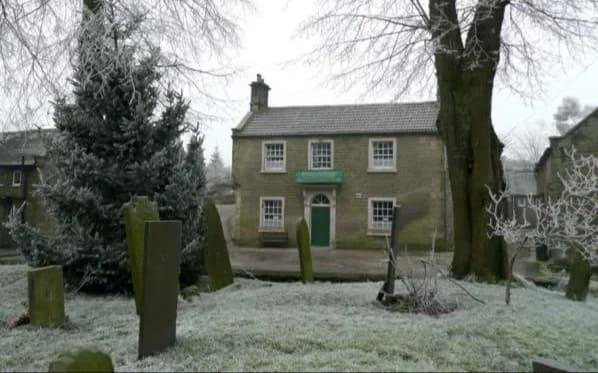 December 15, 2021 at 8:14 am #6235
In reply to: The Elusive Samuel Housley and Other Family Stories
Sydney Smith and Lawrence of Arabia
Hannah Warren 1865-1946 was my great grandfather Samuel’s sister. Hannah married Charles Smith, and their son was Sydney Smith 1888-1971, Lawrence of Arabia’s commanding officer. Sydney’s wife, Clare Sydney Smith, wrote a book about their friendship with Lawrence of Arabia called The Golden Reign.
This photograph of Sydney Smith and Clare is in our collection of family photos. Written on the back: Sydney Smith son of Hannah Smith sister of Samuel Warren married Clare Eustace Jameson, niece of Earl Haig.
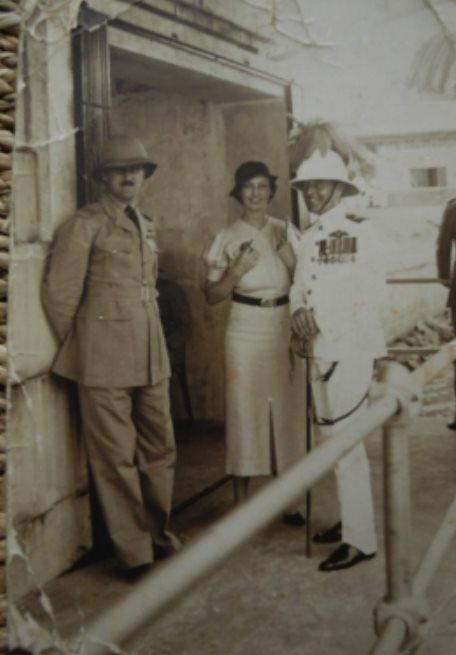
The Burton Observer and Chronicle – Thursday 19 September 1940:
BURTONIANS’ FRIENDSHIP WITH EX-ARAB LEADER. By Clare Sydney Smith (Cassell, 12s. 6d.). general interest as an intimate study of the most romantic personality on the Allied side… this volume has distinctly local appeal, for the authoress, who is a niece of the late Earl Haig, is the wife of Mr Commodore Sydney Smith, eldest son of Mr. Charles Smith (former joint managing director of Allsopp’s). Her volume, on the whole, is a fascinating record of the devoted friendship which existed between Colonel Lawrence of Arabia, her husband and herself during the latter years of the one-time Arab leader’s life. Their acquaintance with Lawrence, alias Aircraftman T. E. Shaw, commenced with the Cairo Conference in 1920.
A photograph from the book: From left to right: Lord Astor, Wing-Commander Sydney Smith, Lady Astor, George Bernard Shaw, Charlotte Shaw (hiding behind GBS’s shoulder), Sydney’s daughter Maureen Sydney Smith, an unknown man, Clare Sydney Smith, and on the ladder, T.E.’s feet.
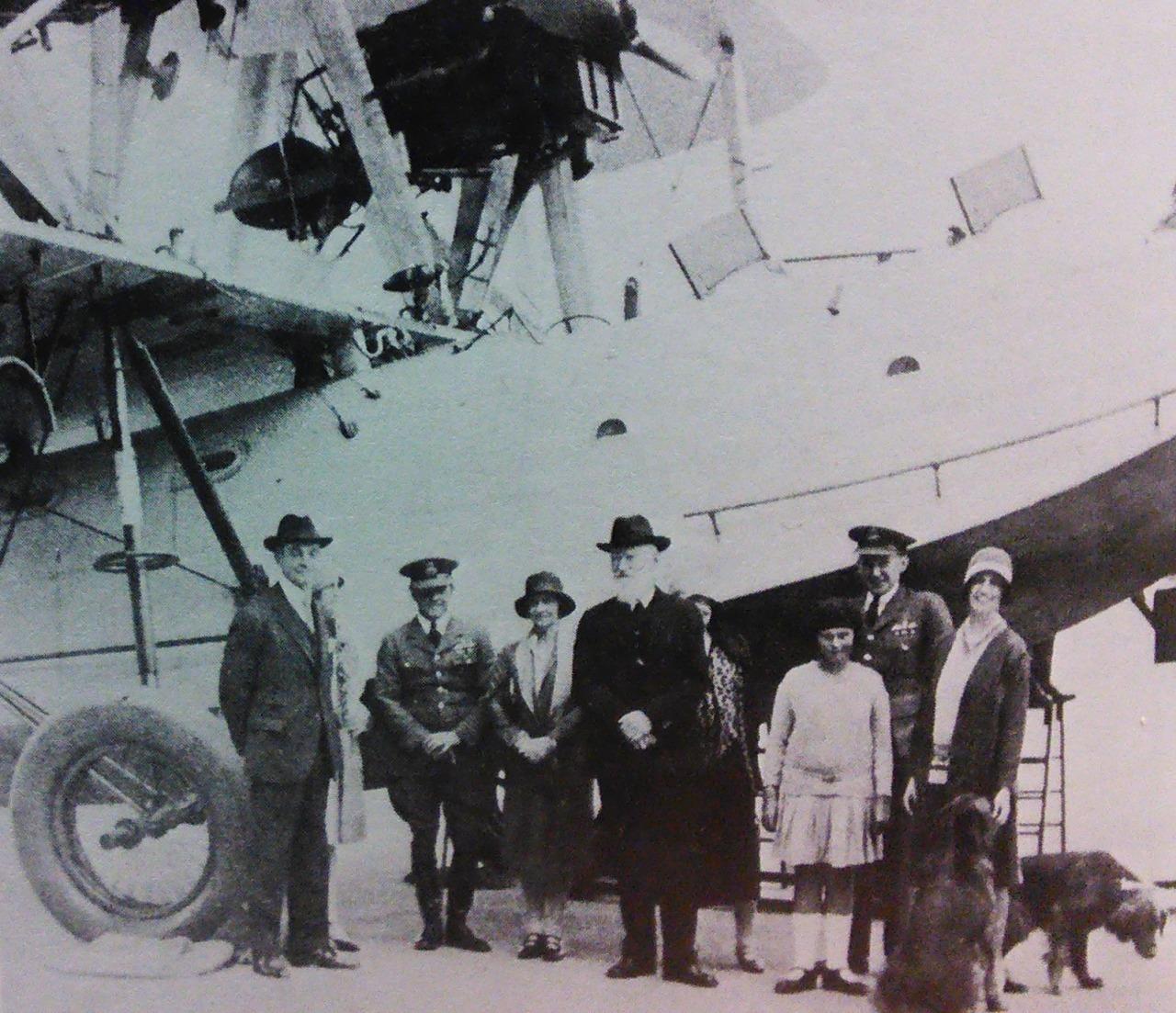
Also from Clare’s book:
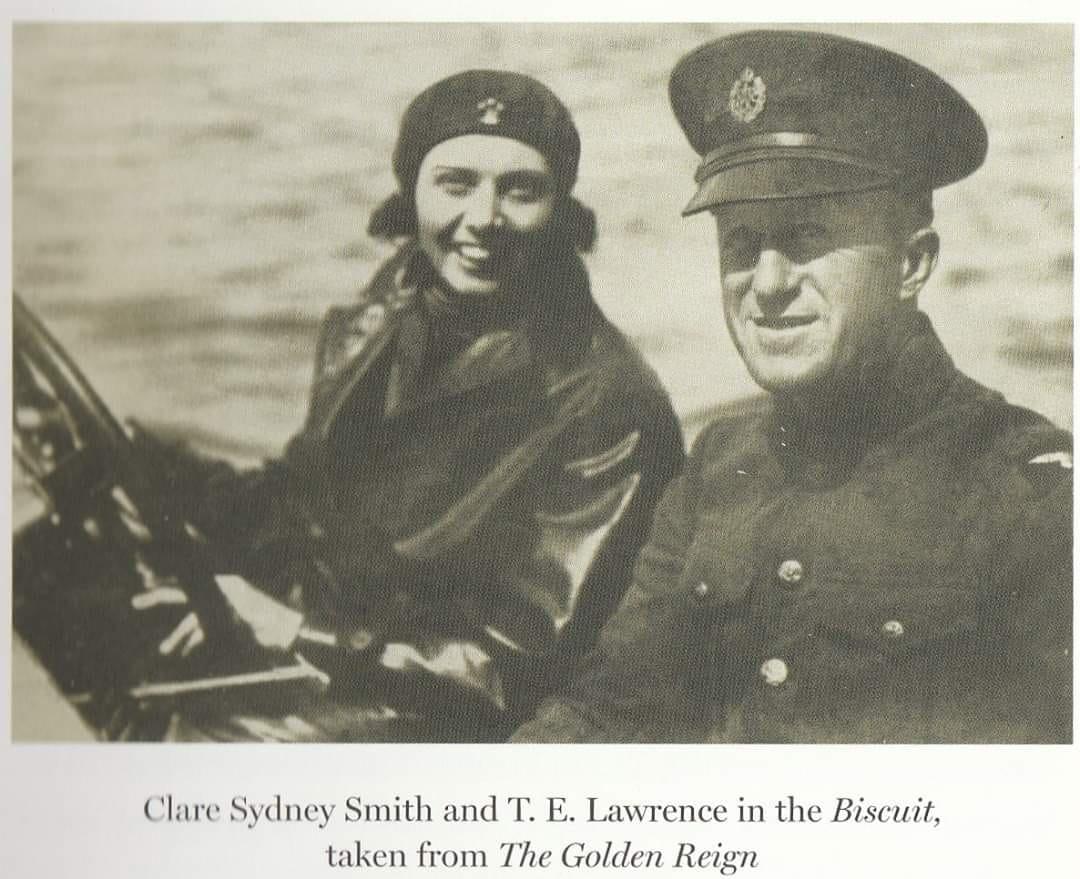
Sydney Smith with Lawrence of Arabia:
 December 13, 2021 at 11:29 am #6222
In reply to: The Elusive Samuel Housley and Other Family Stories
George Gilman Rushby: The Cousin Who Went To Africa
The portrait of the woman has “mother of Catherine Housley, Smalley” written on the back, and one of the family photographs has “Francis Purdy” written on the back. My first internet search was “Catherine Housley Smalley Francis Purdy”. Easily found was the family tree of George (Mike) Rushby, on one of the genealogy websites. It seemed that it must be our family, but the African lion hunter seemed unlikely until my mother recalled her father had said that he had a cousin who went to Africa. I also noticed that the lion hunter’s middle name was Gilman ~ the name that Catherine Housley’s daughter ~ my great grandmother, Mary Ann Gilman Purdy ~ adopted, from her aunt and uncle who brought her up.
I tried to contact George (Mike) Rushby via the ancestry website, but got no reply. I searched for his name on Facebook and found a photo of a wildfire in a place called Wardell, in Australia, and he was credited with taking the photograph. A comment on the photo, which was a few years old, got no response, so I found a Wardell Community group on Facebook, and joined it. A very small place, population some 700 or so, and I had an immediate response on the group to my question. They knew Mike, exchanged messages, and we were able to start emailing. I was in the chair at the dentist having an exceptionally long canine root canal at the time that I got the message with his email address, and at that moment the song Down in Africa started playing.
Mike said it was clever of me to track him down which amused me, coming from the son of an elephant and lion hunter. He didn’t know why his father’s middle name was Gilman, and was not aware that Catherine Housley’s sister married a Gilman.
Mike Rushby kindly gave me permission to include his family history research in my book. This is the story of my grandfather George Marshall’s cousin. A detailed account of George Gilman Rushby’s years in Africa can be found in another chapter called From Tanganyika With Love; the letters Eleanor wrote to her family.
George Gilman Rushby:
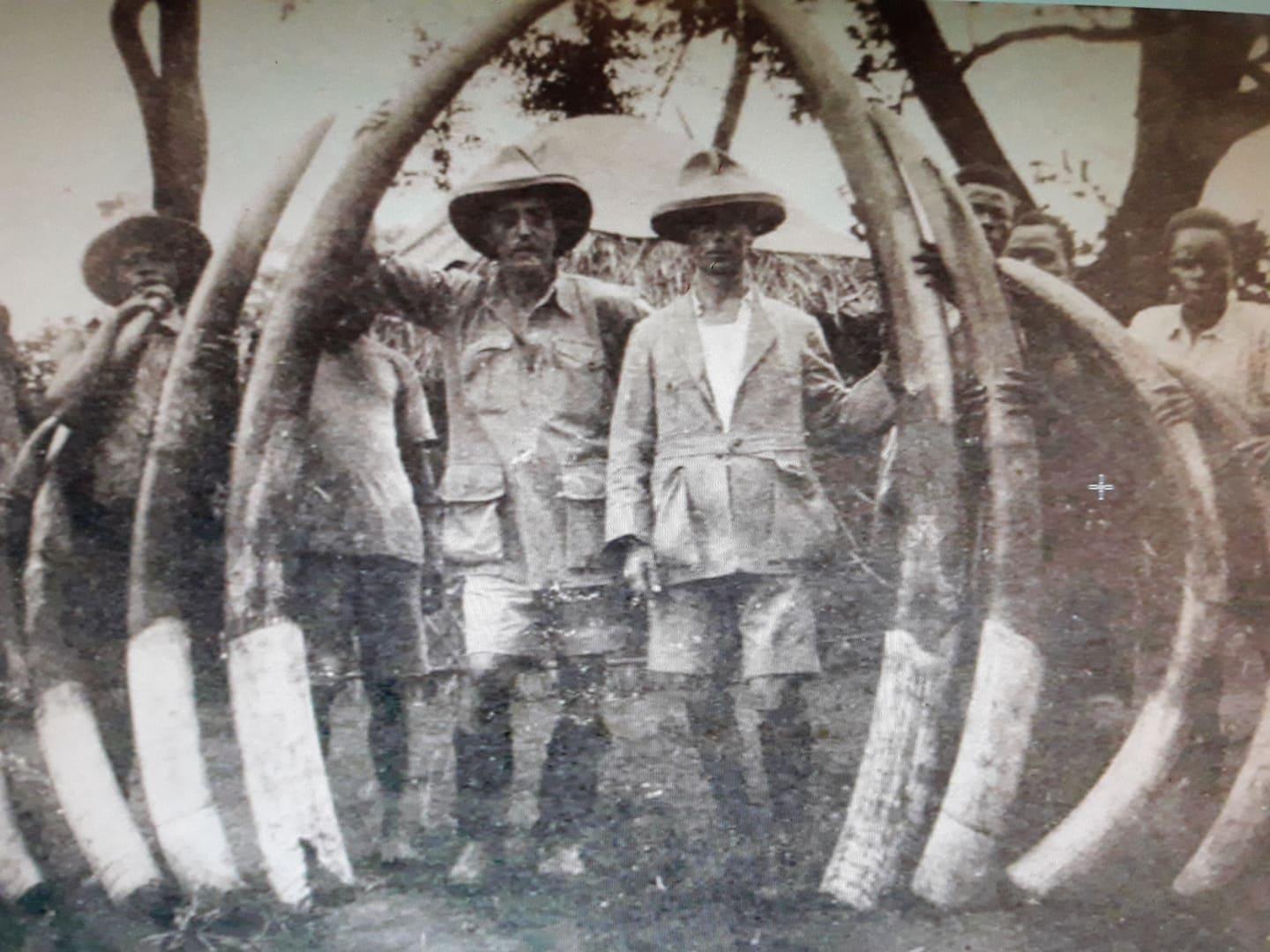
The story of George Gilman Rushby 1900-1969, as told by his son Mike:
George Gilman Rushby:
Elephant hunter,poacher, prospector, farmer, forestry officer, game ranger, husband to Eleanor, and father of 6 children who now live around the world.George Gilman Rushby was born in Nottingham on 28 Feb 1900 the son of Catherine Purdy and John Henry Payling Rushby. But John Henry died when his son was only one and a half years old, and George shunned his drunken bullying stepfather Frank Freer and was brought up by Gypsies who taught him how to fight and took him on regular poaching trips. His love of adventure and his ability to hunt were nurtured at an early stage of his life.
The family moved to Eastwood, where his mother Catherine owned and managed The Three Tuns Inn, but when his stepfather died in mysterious circumstances, his mother married a wealthy bookmaker named Gregory Simpson. He could afford to send George to Worksop College and to Rugby School. This was excellent schooling for George, but the boarding school environment, and the lack of a stable home life, contributed to his desire to go out in the world and do his own thing. When he finished school his first job was as a trainee electrician with Oaks & Co at Pye Bridge. He also worked part time as a motor cycle mechanic and as a professional boxer to raise the money for a voyage to South Africa.In May 1920 George arrived in Durban destitute and, like many others, living on the beach and dependant upon the Salvation Army for a daily meal. However he soon got work as an electrical mechanic, and after a couple of months had earned enough money to make the next move North. He went to Lourenco Marques where he was appointed shift engineer for the town’s power station. However he was still restless and left the comfort of Lourenco Marques for Beira in August 1921.
Beira was the start point of the new railway being built from the coast to Nyasaland. George became a professional hunter providing essential meat for the gangs of construction workers building the railway. He was a self employed contractor with his own support crew of African men and began to build up a satisfactory business. However, following an incident where he had to shoot and kill a man who attacked him with a spear in middle of the night whilst he was sleeping, George left the lower Zambezi and took a paddle steamer to Nyasaland (Malawi). On his arrival in Karongo he was encouraged to shoot elephant which had reached plague proportions in the area – wrecking African homes and crops, and threatening the lives of those who opposed them.
His next move was to travel by canoe the five hundred kilometre length of Lake Nyasa to Tanganyika, where he hunted for a while in the Lake Rukwa area, before walking through Northern Rhodesia (Zambia) to the Congo. Hunting his way he overachieved his quota of ivory resulting in his being charged with trespass, the confiscation of his rifles, and a fine of one thousand francs. He hunted his way through the Congo to Leopoldville then on to the Portuguese enclave, near the mouth of the mighty river, where he worked as a barman in a rough and tough bar until he received a message that his old friend Lumb had found gold at Lupa near Chunya. George set sail on the next boat for Antwerp in Belgium, then crossed to England and spent a few weeks with his family in Jacksdale before returning by sea to Dar es Salaam. Arriving at the gold fields he pegged his claim and almost immediately went down with blackwater fever – an illness that used to kill three out of four within a week.
When he recovered from his fever, George exchanged his gold lease for a double barrelled .577 elephant rifle and took out a special elephant control licence with the Tanganyika Government. He then headed for the Congo again and poached elephant in Northern Rhodesia from a base in the Congo. He was known by the Africans as “iNyathi”, or the Buffalo, because he was the most dangerous in the long grass. After a profitable hunting expedition in his favourite hunting ground of the Kilombera River he returned to the Congo via Dar es Salaam and Mombassa. He was after the Kabalo district elephant, but hunting was restricted, so he set up his base in The Central African Republic at a place called Obo on the Congo tributary named the M’bomu River. From there he could make poaching raids into the Congo and the Upper Nile regions of the Sudan. He hunted there for two and a half years. He seldom came across other Europeans; hunters kept their own districts and guarded their own territories. But they respected one another and he made good and lasting friendships with members of that small select band of adventurers.
Leaving for Europe via the Congo, George enjoyed a short holiday in Jacksdale with his mother. On his return trip to East Africa he met his future bride in Cape Town. She was 24 year old Eleanor Dunbar Leslie; a high school teacher and daughter of a magistrate who spent her spare time mountaineering, racing ocean yachts, and riding horses. After a whirlwind romance, they were betrothed within 36 hours.
On 25 July 1930 George landed back in Dar es Salaam. He went directly to the Mbeya district to find a home. For one hundred pounds he purchased the Waizneker’s farm on the banks of the Mntshewe Stream. Eleanor, who had been delayed due to her contract as a teacher, followed in November. Her ship docked in Dar es Salaam on 7 Nov 1930, and they were married that day. At Mchewe Estate, their newly acquired farm, they lived in a tent whilst George with some help built their first home – a lovely mud-brick cottage with a thatched roof. George and Eleanor set about developing a coffee plantation out of a bush block. It was a very happy time for them. There was no electricity, no radio, and no telephone. Newspapers came from London every two months. There were a couple of neighbours within twenty miles, but visitors were seldom seen. The farm was a haven for wild life including snakes, monkeys and leopards. Eleanor had to go South all the way to Capetown for the birth of her first child Ann, but with the onset of civilisation, their first son George was born at a new German Mission hospital that had opened in Mbeya.
Occasionally George had to leave the farm in Eleanor’s care whilst he went off hunting to make his living. Having run the coffee plantation for five years with considerable establishment costs and as yet no return, George reluctantly started taking paying clients on hunting safaris as a “white hunter”. This was an occupation George didn’t enjoy. but it brought him an income in the days when social security didn’t exist. Taking wealthy clients on hunting trips to kill animals for trophies and for pleasure didn’t amuse George who hunted for a business and for a way of life. When one of George’s trackers was killed by a leopard that had been wounded by a careless client, George was particularly upset.
The coffee plantation was approaching the time of its first harvest when it was suddenly attacked by plagues of borer beetles and ring barking snails. At the same time severe hail storms shredded the crop. The pressure of the need for an income forced George back to the Lupa gold fields. He was unlucky in his gold discoveries, but luck came in a different form when he was offered a job with the Forestry Department. The offer had been made in recognition of his initiation and management of Tanganyika’s rainbow trout project. George spent most of his short time with the Forestry Department encouraging the indigenous people to conserve their native forests.In November 1938 he transferred to the Game Department as Ranger for the Eastern Province of Tanganyika, and over several years was based at Nzasa near Dar es Salaam, at the old German town of Morogoro, and at lovely Lyamungu on the slopes of Kilimanjaro. Then the call came for him to be transferred to Mbeya in the Southern Province for there was a serious problem in the Njombe district, and George was selected by the Department as the only man who could possibly fix the problem.
Over a period of several years, people were being attacked and killed by marauding man-eating lions. In the Wagingombe area alone 230 people were listed as having been killed. In the Njombe district, which covered an area about 200 km by 300 km some 1500 people had been killed. Not only was the rural population being decimated, but the morale of the survivors was so low, that many of them believed that the lions were not real. Many thought that evil witch doctors were controlling the lions, or that lion-men were changing form to kill their enemies. Indeed some wichdoctors took advantage of the disarray to settle scores and to kill for reward.
By hunting down and killing the man-eaters, and by showing the flesh and blood to the doubting tribes people, George was able to instil some confidence into the villagers. However the Africans attributed the return of peace and safety, not to the efforts of George Rushby, but to the reinstallation of their deposed chief Matamula Mangera who had previously been stood down for corruption. It was Matamula , in their eyes, who had called off the lions.
Soon after this adventure, George was appointed Deputy Game Warden for Tanganyika, and was based in Arusha. He retired in 1956 to the Njombe district where he developed a coffee plantation, and was one of the first in Tanganyika to plant tea as a major crop. However he sensed a swing in the political fortunes of his beloved Tanganyika, and so sold the plantation and settled in a cottage high on a hill overlooking the Navel Base at Simonstown in the Cape. It was whilst he was there that TV Bulpin wrote his biography “The Hunter is Death” and George wrote his book “No More The Tusker”. He died in the Cape, and his youngest son Henry scattered his ashes at the Southern most tip of Africa where the currents of the Atlantic and Indian Oceans meet .
George Gilman Rushby:
 February 6, 2021 at 1:23 pm #6185
In reply to: Twists and One Return From the Time Capsule
“I’ll be right back!” Nora told Will, who was stirring a big bubbling pot on the stove. “Need to wash my hands.”
She had a quick look around the bedroom she’d slept in for her missing phone. Nowhere to be found! Maybe she could find Will’s phone when he went out to feed the donkey, and call her phone to try and locate it. Damn, that wouldn’t work either. Will had said there was no network here. That would explain why her phone stopped working when she was alone in the dark woods.
“Smells delicious!” she said brightly, scraping a chair back across the brick floor and seating herself at the kitchen table.
The home made soup was chock full of vegetables and looked and smelled wonderful, but it had a peculiar acrid aftertaste. Nora tried to ignore it, taking gulps of wine in between each mouthful to eliminate the bitterness. She wished it wasn’t soup in a way, so that she’d be able to surreptitiously palm some of it off onto the dogs that were waiting hopefully under the table. If only Will would leave the room for a minute, but he seemed to be watching her every move.
“Very tasty, but I can’t manage another mouthful, it’s so filling,” she said, but Will looked so offended that she sighed and carried on eating. He topped up her wine glass.
By the time Nora had finished the soup, she felt quite nauseous and stood up quickly to head for the bathroom. The room started to spin and she held on to the edge of the table, but it was no good. The spinning didn’t stop and she crashed to the floor, unconscious.
Smiling with satisfaction, Will stood up and walked around the table to where she lay. Shame he’d had to put her to sleep, really she was quite a nice woman and cute, too, in a funny elfin way. He’d started to like her. Plenty of time to get to know her now, anyway. She wouldn’t be going anywhere for awhile.
He picked her up and carried her to the secret room behind his workshop on the other side of the patio. The walls and floor were thick stone, and there were no windows. He laid her on the bench, locked the door, and went back in the house to fetch blankets and bedding and a pile of books for her to read when she came round. Probably not for a good 24 hours he reckoned, somehow she’d managed to eat all the soup. He would put much less in the next batch, just enough to keep her docile and sleepy.
It would only be for a few days, just long enough for him to find that box and move it to a safer location. He’d been entrusted to make sure the contents of the box were preserved for the people in the future, and he was a man of his word.
If they had listened to him in the first place this would never have happened. Burying a box was a risk: all kinds of possibilities existed for a buried box to be accidentally unearthed. He had suggested encasing the contents inside a concrete statue, but they’d ignored him. Well, now was his chance. He was looking forward to making a new statue.
August 30, 2020 at 12:52 am #6107In reply to: Tart Wreck Repackage
Star paused in the lobby. “I need some more persuading,” she said. “What if she dies in that wardrobe? What will we do with the body? Or, worse, what if she doesn’t die and sues us?”
Tara decided to ignore Star’s dubious reasoning; after all it was late. “She’s probably going to sue anyway,” said Tara morosely. “Another night won’t make any difference.”
“I’m going back. I can’t leave Rosamund to face the consequences of our drunken stupidity.” Star headed defiantly towards the stairs; the lift was out of order, again. “We would have to be on the eight bloody floor,” she muttered. “You do what you like,” she flung over her shoulder to Tara.
Tara sighed. “Wait up,” she shouted.
Star was relieved that Tara decided to follow. The building was scary at night – the few tenants who did lease office space, were, much like themselves, dodgy start-ups that couldn’t afford anything better. Missing bulbs meant the lighting in the stairwell was dim, and, on some floors, non-existent.
“I’m amazed they managed to bring that wardrobe up,” puffed Tara. “Just slow down and let me get my breath will you, Star.”
“My gym membership is really paying off,” said Star proudly. “Come on,Tara! just one floor to go!”
As they approached the door to their office, they paused to listen. “Can you hear something … ?” whispered Star.
“Is it … singing?”
“That’s never Rosamund singing. She’s got a voice like … well let’s just say you wouldn’t wish it on your worst enemy.”
“I’m going in,” hissed Tara and flung open the door.
“Don’t come any closer!” cried a woman in a mink coat; she did make a peculiar sight, surrounded by empty pizza boxes and brandishing a broom. “And you, shut up!” she said reaching out to bang the wardrobe with her broom. There were muffled cries from within, and then silence.
“Was that you singing?” asked Star in her most polite voice.
“Yes, what’s it to you?”
“It was rather… lovely.”
The woman smirked. “I was rehearsing.”
“We are awfully sorry about locking you in the wardrobe. We thought you were a masked intruder.”
“Well, I’m not. I am Rosamund’s Aunt April, and you …” she glowered at Star … “should have recognised me, seeing as how I am your cousin.”
“Oh!” Star put her hand to her head. “Silly me! Of course, Cousin April! But I have not seen you for so many years. Not since I was a child and you were off to Europe to study music!”
Tara groaned. “Really, Star, you are hopeless.”
Loud banging emanated from the wardrobe followed by mostly unintelligible shouting but it went something like: “Bloody-let-me-out-or-I-will-friggin-kill-you-stupid-bloody-tarts!”
“It wasn’t really Rosamund’s fault,” said Star. “I don’t suppose we could …?”
April nodded. “Go on then, little fool’s learnt her lesson. The cheek of her not letting me have pineapple on my pizza.”
“About bloody time,” sniffed Rosamund when the door was opened. She made a sorry sight, mascara streaked under her eyes and her red fingernails broken from where she had tried to force the door.
“Now, then,” said Tara decisively, “now we’ve said our sorries and whatnot, what’s all this really about, April?”
April crinkled her brow.”Well, as I may of mentioned on the phone, my husband, Albert — that’s your Uncle Albie,” she said to Rosamund, “is cheating on me. He denies it vehemently of course, but I found this note in his pocket.” She reached into her Louis Vuitton hand-bag and pulled out a sheet of paper. “That’s his handwriting and the paper is from the Royal Albert Hotel. He was there on a business trip last month.” Her face crumpled.
“Chin up,” said Tara quickly, handing April a tissue from the desk. “What does the note say?”. Really, this case did seem a bit beneath them, a straightforward occurrence of adultery from the sounds.
April sniffed. “It says, meet you at the usual place. Bring the money and the suitcase and I will make it worth your while.”
“Let me see that,” said Rosamund, snatching the note from April. She reached into the front of her tee-shirt and pulled out another crumpled note which had been stuffed into her bra. She smirked. “I found this in the wardrobe. I was keeping it secret to pay you back but … ” She brandished both notes triumphantly. “The handwriting is the same!”
“What does your note say, Rosamund?” asked Star.
“It says, If you find this note, please help me. All is not what it seems..”
“Wow, cool!” said Tara, her face lit up. This was more like it!
Star, noticing April’s wretched face, frowned warningly at Tara. “So,” she mused, “I suggest we explore this wardrobe further and see what we can find out.”
January 29, 2020 at 3:57 am #5659In reply to: The Precious Life and Rambles of Liz Tattler
“You know, I wasn’t initially fond of this idea, Godfrey” Elizabeth said, while looking at Roberto doing the dishes. A bit unusual of her to spend time in the kitchen, probably her least favourite room in the house, but she was keen to revise her judgment as the view was never as entertaining.
Godfrey was finishing a goblet full of cashews while leafing through the “Plot like it’s hot” new book from the publishing house that Bronkel had sent autographed and dedicated to Liz “without whom this book may have never seen the light of day”.
“Godfrey, are you listening to me? You can’t be distracted when I talk to you, I may say something important, and don’t count on me to remember it afterwards. Besides, what’s with the cashews anyway?”
“Oh, I read they’re good natural anti-depressant… Anyway, you were saying?”
“You see, like I just said, you made me lose my stream of thought! And no… the view is for nothing in that.” She winked at Roberto who was blissfully unaware of the attention. “Yes! I was saying. About that idea to write Finnley in the new novel. Completely rash, if you’ve had asked before. But now I see the benefit. At least some of it.”
“Wait, what?”
“Why are you never paying attention?”
“No, no, I heard you. But I never… wait a minute.” The pushy ghostwriting ghostediting, and most probably ghostcleaning maid (though never actually seen a proof of that last one) had surely taken some new brazen initiative. Well, at least Liz wasn’t taking it too badly. There maybe even was a good possibility she was trying hard to stay on continuity track about it. Godfrey continued “Benefit, you said?”
“Yes, don’t make me repeat myself, I’ll sound like a daft old person if ever a biopic is made of me, which by the way according to Bronkel is quite a probability. He’s heard it from a screenwriter friend of his, although his speciality is on more racy things, but don’t get me carried away. The benefit you see, and I’ve been reading Bronkel’s stupid book, yes. The benefit is… it moves the plot forward, with ‘but therefore’ instead of ‘and then’. It adds a bit of spice, if you get what I mean. Adds beats into the story. Might be useful for my next whydunit.”
Godfrey was finding her indeed lingering a tad too obviously on the ‘but‘ and their beats, but abstained from saying anything, and nodded silently, his mouth full of the last of the cashews.
Liz pursed her lips “Well, all this literature theory is a great deal of nonsense, you know my stance on it; I made my success without a shred of it…”
“Maybe you’re a natural” Godfrey ventured.
“Maybe… but then, they’ve got some points, although none as profound as Lemone’s. His last one got me pondering: finckleways is not a way in, delete it or it’ll get you locked out; only flove exists now. “
January 15, 2020 at 10:02 pm #5585In reply to: The Chronicles of the Flying Fish Inn
Aunt Idle:
The more they hounded me to open the letter, the less I wanted to. I just wanted to dig my heels in at first, honestly when nothing ever happens for months and years on end, any little thing out of the ordinary is worth making a meal of. But the longer it went on, the more uneasy I got. What if it was disappointing, somehow? What if there was bad news, or news we didn’t want to hear that we wouldn’t be able to unhear, once we knew? What if it was none of those things and just a few scribbles the child had done, or a hand print? It was like opening a Christmas present with a dozen people looking at your reaction when you open it. What if it was something that didn’t tell you anything? Maybe something quickly tied together in a rush with no particular meaning? Of course that would be a treasure to receive, what with communications being so non existent, but still, it would be an anti climax after all this anticipation. What I wanted, I realized, was the complete story of everything that had happened since we last saw them. I wanted to know all about it.
January 9, 2020 at 3:10 pm #5376In reply to: The Chronicles of the Flying Fish Inn
Aunt Idle:
I don’t know how I restrained myself from throttling Finly when she finally handed me the letter from Corrie. A whole week she’d had it, and wouldn’t share it until she’d cleaned every last window. Some peoples priorities, I ask you! The funny thing was that even when I had it in my hand I didn’t open it right away. Even with Mater and Bert breathing down my neck.
It was something to savour, the feeling of having an unopened letter in ones hand. Not that this looked like the letters we used to get years ago, all crisp and slim on white paper, addressed in fine blue ink. This was a bundle tied with a bit of wool pulled out of an old jumper by the look of it, all squiggly, holding together several layers of yellowed thin cardboard and written on with a beetroot colour dye and a makeshift brush by the look of it. The kind of thing that used to be considered natural and artistic, long ago, when such things were the fashion. I suppose the fashion now, in such places where fashion still exists, is for retro plastic. They said plastic litter wouldn’t decompose for hundreds of years, how wrong they were! I’d give my right arm now for a cupboard full of tupperware with lids. Or even without lids. Plastic bottles and shopping bags ~ when I think back to how we used to hate them, and they’re like gold now. Better than gold, nobody has any interest in gold nowadays, but people would sell their soul for a plastic bucket.
I waited until the sun was going down, and sat on the porch with the golden rays of the lowering sun slanting across the yard. I clasped the bundle to my heart and squinted into the sun and sighed with joyful anticipation.
“For the love of god, will you get on with it!” said Bert, rudely interrupting the moment.
Gently I pulled the faded red woolen string, and stopped for a moment, imaging the old cardigan that it might have been.
I didn’t have to look at Mater to know what the expression on her face was, but I wasn’t going to be rushed. The string fell into my lap and I turned the first piece of card over.
There was a washed out picture of a rooster on it and a big fancy K.
“Cornflakes!” I started to weep. “Look, cornflakes!”
“You always hated cornflakes,” Mater said, missing the point as usual. “You never liked packet cereal.”
The look I gave her was withering, although she didn’t seem to wither, not one bit.
“I used to like rice krispies,” Bert said.
By the time we’d finished discussing cereal, the sun had gone down and it was too dark to read the letter.
August 2, 2019 at 8:17 am #4747In reply to: The Stories So Near
WHERE ARE THEY ALL NOW ? 🗻
a.k.a. the map thread, and because everything happens now anyway.
POP-IN THREAD (Maeve, Lucinda, Shawn-Paul, Jerk, [Granola])
🌀 [map link] – KELOWNA, B.C., CANADA
It looks like our group of friends live in Canada, Kelowna.
 Kelowna is a city on Okanagan Lake in the Okanagan Valley in the southern interior of British Columbia, Canada. The name Kelowna derives from an Okanagan language term for “grizzly bear”. The city’s motto: “Fruitful in Unity”
Interestingly, Leörmn the dragon from the Doline may have visited from time to time : Ogopogo / Oggie / Naitaka
FLYING FISH INN THREAD (Mater/Finly, Idle/Coriander/Clove, Devan, Prune, [Tiku])
Though very off the beaten track, the Flying Fish Inn may be located near a location that was a clue left as a prank by Corrie & Clove on the social media to lure conspiracy theorists to the Inn.
🔑 ///digger.unusually.playfullyIt seems to link to a place near documented old abandoned mines.
🌀 [map link] – SOME PLACE IN THE MIDDLE OF AUSTRALIA, OFF ARLTUNGA ROAD
- Tiku, the local bush lady is living around the place.
- The local shaman who rented the Jeep to Arona & her friends was nearby Uluru ‘s closest airport (Ayer’s Rock, Yulara). 🌀 [map link] : AYER’S ROCK, ULURU
DOLINE THREAD (Arona, Sanso/Lottie, Ugo, Albie)
This one is a tricky geographical conundrum, since the Doline is a multi-dimensional hub. It connects multiple realities and places though bodies of water, with the cave structure (the Doline) at its center, a world on its own right, where talking animals and unusual creatures are not uncommon.
It has shown to connect places in the Bayou in Louisiana, where Albie & Mandrake went to see the witch, as well as the coastal area of Australia, where they emerged next in their search for Arona.
At the center of the Doline is a mysterious dragon named Leörmn, purveyor of precious traveling pearls and impossible riddles. We thus may infer possible intersection points in our dimension, such as 🔑 ///mysterious.dragon.riddle a little North of Hawaii, in the middle of the Pacific Ocean.
However, the inside of the Doline would look rather like Phong Nha-Ke Bang gigantic cave in Vietnam.
NEWSREEL THREAD (Ms Bossy, Hilda/Connie, Sophie, Ricardo)
It is not very clear where our favourite investigative team is located. They are likely to be near an urban area with a well-connected international airport, given their propensity for impromptu traveling, such as in Iceland and Australia.
For all we know, they could be settled in Germany: 🔑 ///newspapers.gone.crazy
or Denmark 🔑 ///publish.odds.newsAs for the Doctor, we strongly suspect his current hideout to be also revealed when searching from his signature beautification prescription that has made him famous in connoisseur circles: 🔑 ///beauty.treatment.shot at the frontier of Sweden and Finland.
LIZ THREAD (Finnley, Liz, Roberto, Godfrey)
We don’t really know where the story happens; for that, one would need to dive into Liz’s turbulent past, and that would confound the most sane individual, starting with keeping count of her past husbands.
As a self-made powerful best-selling writer, we could guess she would take herself to be the JK Rowling of the Unplotted Booker Prize, and thus would be a well-traveled British uptart, sorry upstart, with a fondness for mansions with character and gardeners with toned glutes. Of course, one would need the staff.
DRAGON 💚 WOOD THREAD (Glynnis, Eleri, Fox/Gorrash, Rukshan)
This story happens in another completely different dimension, but it can be interesting to explore some of its unusual geography.
The World revolved around a central axis, and different worlds stacked one upon the other, with the central axis like an elevator.
We know of
- the World of Humans, where most of the story takes place
- the world of Gods, above it, which has been sealed off, and where most Gods disappeared in the old ages
- Under these two, the world of Giants exists, still to be explored.
At the intersection of the central axis of the world and the human world, radiates the Heartwood, a mystical forest powered by the Gem of Creation which has been here since the Dawn of Times, and is a intricate maze, and a dimension in itself. It had grown around itself different woods and glades and forests, with various level of magical properties meant to repel intruders or lesser than Godlike beings.
The Fae dimension is a particular dimension which exists parallel to the Human World, accessible only to Elder Faes, and where the race originated, and is now mostly deserted, as Faes’ magic waning with the encroachment of humans into the Forest, most have chosen to live in the Forests and try and protect them.
July 16, 2019 at 6:33 am #4676In reply to: Newsreel from the Rim of the Realm
When Hilda received the message from her old friend Lucinda her first thought was Miss Bossy Pants award for the “Most Stylistic Synchronistic Article”. There was already a synchronicity because she’s also had a tip off from some guy calling himself “Superjerk”, which was also about dolls. If she followed the lead about the doll stories, and managed to connect them together, it could be the scoop of the year ~ whether or not there was an actual connection between them.
Hilda had made copious notes from the long and garbled telephone conversation with Lucinda about everything she knew thus far, and where she was stuck. Clearly the poor dear needed Hilda’s special expertise in following a lead and putting the clues together to form a picture. Admittedly Hilda didn’t always stick to facts ~ who did in journalism these days anyway! But she had an intuition that this was just what she needed to get her teeth into. It had been a boring year in the extreme reportage department. Extremely boring.
It had been years since Hilda had been in contact with Lucinda, and that had been on a remote viewing forum. Neither of them had been much good at it, but some of the other members had been brilliant, so it came in useful at times to use their expertise. Hilda made a mental note to rejoin that forum, if it still existed, or find another one. She changed her mind about the mental note, and jotted it down in her notebook. It was a good idea and could come in handy.
The short and cryptic note from the guy calling himself Superjerk didn’t provide much information other than the synchronicity, which was of course noteworthy. And he had provided the link to that website “findmydolls.com”. The story was already starting to show promising signs of weaving together.
Not wanting any of the other staff to cotton on to her new thread, Hilda told Miss Bossy Pants that she was going to investigate the “hum” in Cadiz. That peculiar Horns of Gabriel phenomenon that occurred randomly around the world had been heard over a wide area of Cadiz and Seville. Hilda had another old friend in that neck of the woods; so she could easily pretend she was there covering that story, with a bit of collaboration from her friend, while she embarked on the real journey to the Flying Fish Inn, in some godforsaken outpost of the outback.
That nosy Connie had somehow managed to find out about the whole thing, eavesdropping again no doubt, and Hilda had no option but to come clean with her and ask her to join her in ironing out the story. They would have to deal with Miss Bossy Pants later. If the scoop was the success that Hilda anticipated, then they would be getting an award, not a reprimand.
It was worth it. Hilda felt more alive than she had done in a long time.
April 23, 2019 at 10:16 am #4584In reply to: Pop﹡in People Tribulations
“Funny how time goes or seem to not exist at all, when you are popping in and out” mused Granola.
It felt a few seconds since she’d left the sheen of Ferrore wrappings, but with her mind racing in all sorts of places, she’d somehow would appear in another tranche of life months apart from the last sequence she was in.
Truth be told, she had almost forgotten about the past circumstances, or how the story was unfolding, like waking up from a dream, and barely remembering the threads of the night’s activity all the while knowing you were totally absorbed by them a few blips of consciousness ago.
If she’d learnt something, that was to go with the flow, and start from where she was. Clues would light the way…
Since they’d moved him (promoted, they said) to the new store in the posh suburbs, Jerk’s job had taken a turn for the worse. One thing was clear, they put him in charge because they had clearly no idea who to put there.
He’d liked enough that the thing basically was running itself, and he didn’t have much pressure to perform for now. But honestly, these parts of the city were much less exotic to say the least. More drones consumers, bored mums, noisy kids, all day long…With the new schedules and the commute, it wasn’t as easy to have a social life; not that he cared too much, but he’d started to bond a bit with the funny neighbors some time ago. With the return of summer, he was thinking of having a rooftop party at their appartment’s building, but for some mysterious reason, time was passing without having even set a day for the event.
“Less planning, more doing”, something said in his ear, or so he thought.
“Couldn’t agree more” he said, taking his bag discreetly as he made an early exit for the day.
March 21, 2019 at 6:48 am #4582In reply to: The Precious Life and Rambles of Liz Tattler
“There it is” he pointed at the worn-out dusty book he’d found after turning around the whole library. “Techromancers appear at the seams between realities. They possess technologies to divine outcomes beyond conventional means of the place in which they appear — in a word, they are from the futures, always, whenever the period they were found in — a reason for which scholars have surmised they come from a unique convergence point of the infinite lines of time in a real projective space of time, hinting at the nature of an all-connected roundabout timeline. Although them popping in existence at awkward places is not unheard of, they tend to stay discrete for fear of the Timeline Riots Impeachment Police.
“T’isn’t that helpful now, is it” he said dusting a peanut from the floor before cracking the shell open. “And doesn’t tell us why Finnley is so emotional now. Or where is Roberto. If I were to worry, that would worry me more…”
November 19, 2018 at 1:42 pm #4551In reply to: Seven Twines and the Dragon Heartwoods
Fox popped back into existence, blind, after what felt like a very long black out. He heard a thud on the ground as he let go of the ice flute. A strong smell of decay and cold ash rendered him dizzy. He fell on his knees, threw up and cursed when the pain caused by a little stone reached his brain. It hurt.
He rolled on the side and banged his head on a tree trunk. He cursed, grabbing his head in an attempt to contain the pain that threatened to make him faint.
Where is the hellishcopter? he thought, confused as his hands touched the sandy ground. He tried to control a wave of panic.
“Rukshan? Lhamom?”Maybe I fell off the carpet during the transfer, Fox thought. But why am I blind?
“Olli?..” he tried. His voice broke off. _Where is everyone?”He remained prostrated. He would have been glad to hear any noise other than his heartbeat and his quick breath.
After some time his sight came back. He would have preferred it did not. Everything was grey. The forest had burnt, and so had the cottage.
He looked around what remained of the kitchen. His heart sank when he saw what looked like a burnt body trying to escape. He went back out and found Gorrash, broken into pieces scattered near the pergola. The stones were covered in a thin layer of grey ash. Fox cried and sobbed. He couldn’t believe what had happened.
Where was everyone? Wasn’t he supposed to have the power of miracles? His heart ached.A black silhouette slid between the burnt trees.
“Glynis! You’re aliv…” Fox’s voice trailed off. He could now see the dead trees through the burka. It was only a ghost.She came and met him with a sad smile.
“You were not there,” she said more as a constatation than an accusation. Still Fox felt the guilt weigh on his shoulders. He wasn’t there for his friends. The people he had grown to love. The people he called family in his heart.“What happened?”
“You were not there. The monster came right after the others came through the portal. I wasn’t prepared. They counted on you and the flute. But it was too quick. It escaped and went to the village where it merged with Leroway. Eleri tried to cast her stone spell but it bounced back and she met the same end as Gorrash.”
Fox looked at the scattered stones on the ground.
“Once it controlled Leroway, it went into a frenzy and burnt everything. Everything. Only ashes remain.”
Fox remained silent, unable to speak. It was his fault.“You have to go back,” said Glynis’s shadow. “They count on you.”
“What?”
The breeze blew. The ghost flickered, a surprised expression on her face.
“Under the ashes in the kitchen, the last potion,” she said quickly. “It can turn back time. Bring the sh…” A cold breeze blew her off before she could finish.January 18, 2018 at 10:45 pm #4430In reply to: Eight Turns of the Wheel
One spring day in 1822, so the story goes, Emerald Huntingford was walking the family dog on the extensive family estate, when the dog ran into a densely wooded area in hot pursuit of a rabbit. This was not uncommon, however on this occasion Emerald whistled and called but the dog did not return to her. She ran back to the house and shouted for her brother, Nigel, to help her find the it.
After several hours of frantic searching, for it was a much loved family pet, and just as they were beginning to despair, they heard whimpering coming from a hole in the ground. They cleared away the brush covering the entrance to the hole and saw it went some way into the ground and it was here the unfortunate dog had fallen. It was too deep for them to enter unaided, so while Emerald sat with the dog and called reassuringly down to it, Nigel ran for assistance. With the help of ropes and several strong farm workers, Nigel descended into the space. To his amazement, he found himself in a clay filled dome with shallow entrances going off to other underground galleries. At that time, with his focus on the injured dog, he had no inkling of the extent of it. It was later on, after they had time to explore, that the Huntingfords started to comprehend the amazing world which existed under their land.
Word spread, and they were offered a substantial amount of money by a mining company to mine the land. Locals, and others from further afield, wanted to visit the doline and many would try and do so, with or without seeking permission from the Huntingfords first. Some argued that if you don’t own the sky above your land, why should you have claim to the ground beneath?
The Huntingfords were wealthy and had no need or desire to sell the rights to their land. Eventually, their patience worn thin by the aggressive mining company and invasive tourists, they decided to defend their claim to the doline in court; a claim which they won. From that time on, as one generation of the family passed the secrets of the doline to another, guards were employed to keep watch over the entrance, that none may enter the underground world without the approval of the family.
And it seems none had, until now.
May 10, 2017 at 2:24 am #4314In reply to: Seven Twines and the Dragon Heartwoods
After days and days, there was no signs of the others.
Rukshan had hoped they would manifest as easily as the Hermit had, without much effort on his part.
But they had remained silent, and even the ghosts seemed to have subsided in another dimension. He couldn’t feel them any longer. It was as though his realisation had made them disappear, or change course for a while.He hadn’t come any closer to the inner ring of trees though, and he’d come to the conclusion that there was surely some piece missing. He was reminded of the map that the cluster of seven had found at the beginning of the story, so they could reach the magic Gem inside the Gods’ Heartswood. There was no telling if such a map existed or if it did, what form it had —after all, the story seemed to be a little too simplified.
He was trying to figure out which was his character, and which of the curse he had inherited. The curse was rather easy he’d thought… Knowledge. It had always been his motivation, and the encounter with the Queen and the taking of the potion had keenly reminded him that for all his accumulated knowledge, he was missing the biggest part. The knowledge of himself, and who he really was. It was constantly eluding him, and he was starting to doubt even his own memories at times.
For the past few days, having finished the last morsel of fay bread in his bag, he was subsisting on roots, mushrooms and fresh rainwater cupped in leaves and last bits of snow in treeholes. It was time to get moving, as the weather had started to change. The snow was receding too.
Even if his quest wasn’t as sure as before, he knew he had to find a way to reach these six others, and try to figure out what they could do, or undo.
He had a strong suspicion that the potion maker was linked to this story. Her potion had activated something deep in him, and it seemed to share the same source of power.
With that resolution in mind, he took the path retracing his steps back to the cottage and the outside world.
January 6, 2017 at 7:06 am #4272In reply to: Seven Twines and the Dragon Heartwoods
Kumihimo was rummaging through the content of a wooden chest at the back of the cave. According to the smell it had spent too much time in the dark and humid environment. She might have to do some spring cleaning one day. But the chest was now too heavy for her to carry. I need an apprentice for this, she thought not knowing if if was a wish or a regret.
In that chest, she had her many tools of the thread. Some were made of bones and she had carved them herself under the direction of her spirit guides. Each one had a specific purpose, either to catch, to extract, to guide, or to dissipate, and many more usages that even she had forgotten after so many years spent in that place.
She had accumulated so many things in that chest. Fortunately she liked miniature, and most of her creations were seldom bigger than her little finger. However that made it difficult to keep things in order and finding something was often a real challenge. So she sang lullabies to lure the object she was looking for out of their sanctuary.
Victory! she exulted in the ancient tongue, which would translate also as ‘I have done all that is necessary to harvest the benefits of the next crop’. Kumihimo liked simple things and she liked when one word could signify a very complex meaning. Under an old donkey skin that she often used to camouflage herself when she was going down in the valley, she had found the loom she had been looking for.
The loom was made from the right shoulder blade of a bear. It was one of the first objects she had carved when she arrived in the vicinity. It had a yellowish patina and felt very smooth in her hands. Its shape was octagonal and each side had seven notches under which were three rows of symbols, some of the ink was gone after so many years, but she could still feel the groove where she had carved them. She smiled at the fond memories and at the dear friend who allowed her to take his bone when he died of old age.
In the centre of the loom was a heart with a circular hole in it. It was where the braid would emerge.Holding the precious object, Kumihimo could feel all the braids she had already made and all the potential braids that waited to come into existence. She felt warmth bloom in her heart at the task at hand.
Each notch corresponded at the same time to a time of the year, to a direction on earth and in the sky, and some rather obscure references to many other phenomenon and concepts. The weaving depended on very complex rules that she had discovered from experience. Actually the meaning weaved itself into the braid through a subtle interaction between her and Spirit. That way she didn’t have to bother about what to do or what notch to use as it would all unfold during the weaving.
She stood up and walked outside. The day was still young and she had a lot to do. The weaving ceremony was an act of spontaneity, but it required some preparation. She put the loom on a round rock to dry in the Sun and went to examine the hanging threads. She had to choose carefully.
July 11, 2016 at 9:57 am #4111In reply to: Mandala of Ascensions
It has been a few days he had felt this inexplicable urge to do something about the dullness of his everyday routine.
Overall, Edward had never complained about his simple life, and the System’s technical upgrades did keep him rather busy fixing things when boredom threatened to settle in.
Usually, browsing through social media, enjoying a few cute fluffy bunnies videos (all very safe for work, no need to worry about him) was all that he needed to fill the gaps of the long shift hours.
Of course, the largest part of his days was spent monitoring the Program, and the pods. He had developed quite surreptitiously a basic visual neuronal interface that let him connect with the Virtual Reality of the pod occupants, and somehow share the progress of their Enlightenment Mission.
For a while he had even created an avatar for himself. In the Great Simulation, he would then try to have some fun with the Ascended Masters, see what they would enlighten him about.
It was all quite ironic, considering, they were considering themselves free and evolved, where in truth they were the prisoners of their own bodies in the pods, hooked to the virtual reality REYE program.
But they were accurate in a way, that he was also trapped and a prisoner of his existence within the program.In between cats and bunnies, a link attracted him. “Rich Sacks’ Online Master Program of Enlightenment”. The more he scrolled down, the more alumnis raved and extolled the Program. What was for him to lose, the first course was free.
On a whim, he decided to enroll. -
AuthorSearch Results
