


Search Results for 'fish'
-
AuthorSearch Results
-
January 21, 2023 at 3:30 pm #6425
In reply to: The Chronicles of the Flying Fish Inn
It is a challenge of utmost magnitude to keep track of time here in this land where the Dream Time is so nigh as to make its presence oft palpable in the very air. The subtle shifts in timelines and probabilities do naught to aid in this endeavor. No coincidence “Dream Time” is the label on Aunt Idle’s not-so-secret stash — she could not keep its location secret lest she forget it during the waking hours.
We jumped without warning into 2023. At 15, I am a grown-up now, so says Mater, and I could not wait to hear such words from her. She is always here, such a comfort, unchanging, unyielding, the only immutable force in the universe.
So now, life can start to unfold in front of me in the manner of my choosing, rather than being dictated by the sorry state of affairs of my family. I have set my sights upon a boarding school that may provide such an escape, but it will require the procurement of the tuition money — which will take a few more years to acquire. Patience, I have, at least for now.The Inn is ever in need of assistance it seems. I don’t know how it came to be, but some Italian chap, Georgio, who came last year during the pandemic and got stranded with us, made such a fuss about Mater’s famous bush tucker that the Inn became fashionable overnight. Obviously Mater, bless her soul, doesn’t cook, a mercy for which we are all thankful. Said tucker was truly the handiwork of Tiku and Finly, but Georgio thought that “Mater’s tucker” has a nicer ring. Whatever suits these loonies’ fancy, it did bring us a nice stream of income in return.
January 21, 2023 at 11:26 am #6423In reply to: Prompts of Madjourneys
Zara’s first quest:
entry level quirk: wandering off the track
The initial setting for this quest is a dense forest, where the paths are overgrown and rarely traveled. You find yourself alone and disoriented, with only a rough map and a compass to guide you.
Possible directions to investigate include:
Following a faint trail of footprints that lead deeper into the forest
Climbing a tall tree to get a better view of the surrounding area
Searching for a stream or river to use as a guide to find your way out of the forest
Possible characters to engage include:
A mysterious hermit who lives deep in the forest and is rumored to know the secrets of the land
A lost traveler who is also trying to find their way out of the forest
A group of bandits who have taken refuge in the forest and may try to steal from you or cause harm
Your objective is to find the Wanderlust tile, a small, intricately carved wooden tile depicting a person walking off the beaten path. This tile holds the key to unlocking your inner quirk of wandering off the track.
As proof of your progress in the game, you must find a way to incorporate this quirk into your real-life actions by taking a spontaneous detour on your next journey, whether it be physical or mental.
For Zara’s quest:
As you wander off the track, you come across a strange-looking building in the distance. Upon closer inspection, you realize it is the Flying Fish Inn. As you enter, you are greeted by the friendly owner, Idle. She tells you that she has heard of strange occurrences happening in the surrounding area and offers to help you in your quest
Emoji clue: 🐈🌳

Zara (the character in the game)
characteristics from previous prompts:
Zara is the leader of the group
 she is confident, and always ready for an adventure. She is a natural leader and has a strong sense of justice. She is also a tech-savvy person, always carrying a variety of gadgets with her, and is always the first to try out new technology.
Zara is the leader of the group, her color is red, her animal is a lion, and her secret name in a funny language is “Zaraloon”
Zara (the real life story character)
characteristics from previous prompts:
Zara Patara-Smythe is a 57-year-old woman of mixed heritage, her mother is Indian and her father is British. She has long, dark hair that she keeps in an untidy ponytail, dark brown eyes and a sharp jawline. She stands at 5’6″ and has a toned and athletic build. She usually wears practical clothing that allows her to move around easily, such as cargo pants and a tank top.
prompt quest:
Continue to investigate the mysterious cat she saw, possibly seeking out help from local animal experts or veterinarians.
Join Xavier and Yasmin in investigating the Flying Fish Inn, looking for clues and exploring the area for any potential leads on the game’s quest.January 19, 2023 at 10:49 am #6419In reply to: Orbs of Madjourneys
“I’d advise you not to take the parrot, Zara,” Harry the vet said, “There are restrictions on bringing dogs and other animals into state parks, and you can bet some jobsworth official will insist she stays in a cage at the very least.”
“Yeah, you’re right, I guess I’ll leave her here. I want to call in and see my cousin in Camden on the way to the airport in Sydney anyway. He has dozens of cats, I’d hate for anything to happen to Pretty Girl,” Zara replied.
“Is that the distant cousin you met when you were doing your family tree?” Harry asked, glancing up from the stitches he was removing from a wounded wombat. “There, he’s good to go. Give him a couple more days, then he can be released back where he came from.”
Zara smiled at Harry as she picked up the animal. “Yes! We haven’t met in person yet, and he’s going to show me the church my ancestor built. He says people have been spotting ghosts there lately, and there are rumours that it’s the ghost of the old convict Isaac who built it. If I can’t find photos of the ancestors, maybe I can get photos of their ghosts instead,” Zara said with a laugh.
“Good luck with that,” Harry replied raising an eyebrow. He liked Zara, she was quirkier than the others.
Zara hadn’t found it easy to research her mothers family from Bangalore in India, but her fathers English family had been easy enough. Although Zara had been born in England and emigrated to Australia in her late 20s, many of her ancestors siblings had emigrated over several generations, and Zara had managed to trace several down and made contact with a few of them. Isaac Stokes wasn’t a direct ancestor, he was the brother of her fourth great grandfather but his story had intrigued her. Sentenced to transportation for stealing tools for his work as a stonemason seemed to have worked in his favour. He built beautiful stone buildings in a tiny new town in the 1800s in the charming style of his home town in England.
Zara planned to stay in Camden for a couple of days before meeting the others at the Flying Fish Inn, anticipating a pleasant visit before the crazy adventure started.

Zara stepped down from the bus, squinting in the bright sunlight and looking around for her newfound cousin Bertie. A lanky middle aged man in dungarees and a red baseball cap came forward with his hand extended.
“Welcome to Camden, Zara I presume! Great to meet you!” he said shaking her hand and taking her rucksack. Zara was taken aback to see the family resemblance to her grandfather. So many scattered generations and yet there was still a thread of familiarity. “I bet you’re hungry, let’s go and get some tucker at Belle’s Cafe, and then I bet you want to see the church first, hey? Whoa, where’d that dang parrot come from?” Bertie said, ducking quickly as the bird swooped right in between them.
“Oh no, it’s Pretty Girl!” exclaimed Zara. “She wasn’t supposed to come with me, I didn’t bring her! How on earth did you fly all this way to get here the same time as me?” she asked the parrot.
“Pretty Girl has her ways, don’t forget to feed the parrot,” the bird replied with a squalk that resembled a mirthful guffaw.
“That’s one strange parrot you got here, girl!” Bertie said in astonishment.
“Well, seeing as you’re here now, Pretty Girl, you better come with us,” Zara said.
“Obviously,” replied Pretty Girl. It was hard to say for sure, but Zara was sure she detected an avian eye roll.
They sat outside under a sunshade to eat rather than cause any upset inside the cafe. Zara fancied an omelette but Pretty Girl objected, so she ordered hash browns instead and a fruit salad for the parrot. Bertie was a good sport about the strange talking bird after his initial surprise.
Bertie told her a bit about the ghost sightings, which had only started quite recently. They started when I started researching him, Zara thought to herself, almost as if he was reaching out. Her imagination was running riot already.
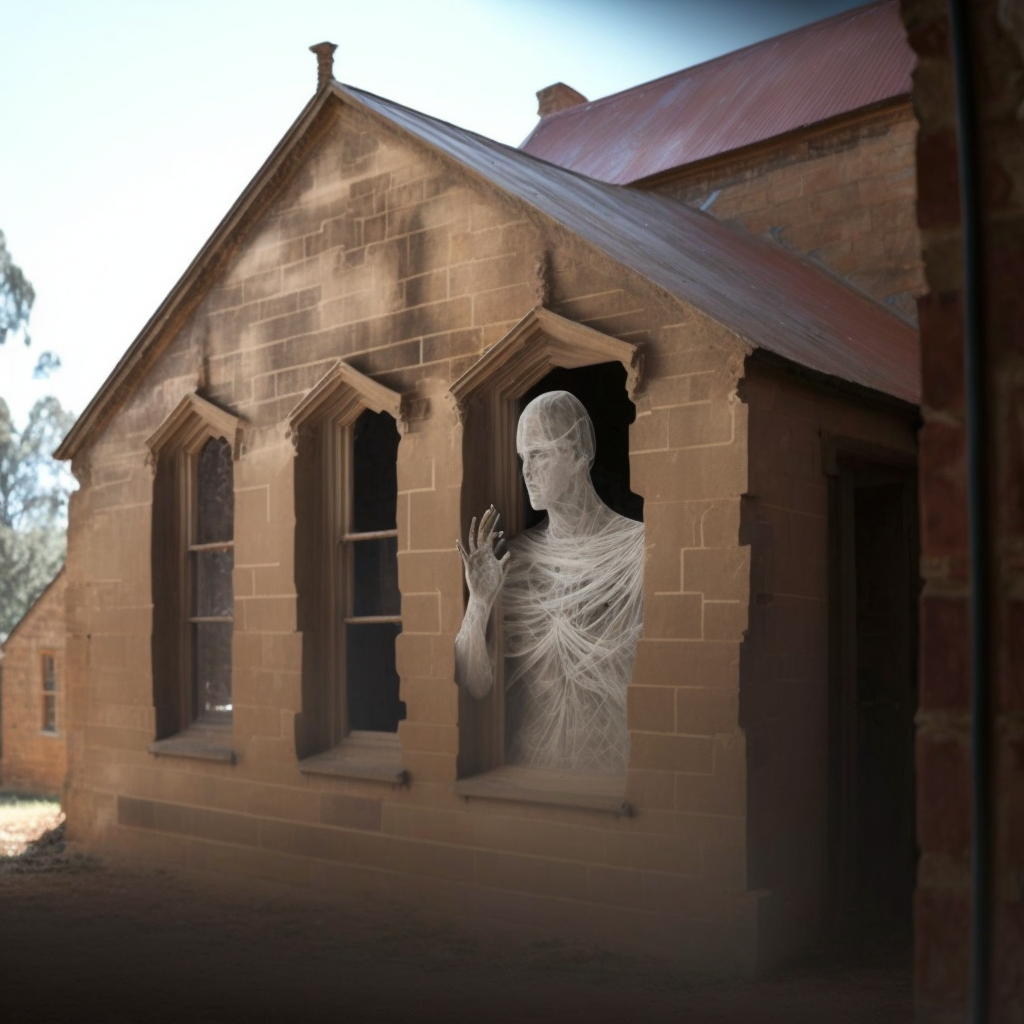
Bertie showed Zara around the church, a small building made of sandstone, but no ghost appeared in the bright heat of the afternoon. He took her on a little tour of Camden, once a tiny outpost but now a suburb of the city, pointing out all the original buildings, in particular the ones that Isaac had built. The church was walking distance of Bertie’s house and Zara decided to slip out and stroll over there after everyone had gone to bed.
Bertie had kindly allowed Pretty Girl to stay in the guest bedroom with her, safe from the cats, and Zara intended that the parrot stay in the room, but Pretty Girl was having none of it and insisted on joining her.
“Alright then, but no talking! I don’t want you scaring any ghost away so just keep a low profile!”
The moon was nearly full and it was a pleasant walk to the church. Pretty Girl fluttered from tree to tree along the sidewalk quietly. Enchanting aromas of exotic scented flowers wafted into her nostrils and Zara felt warmly relaxed and optimistic.
Zara was disappointed to find that the church was locked for the night, and realized with a sigh that she should have expected this to be the case. She wandered around the outside, trying to peer in the windows but there was nothing to be seen as the glass reflected the street lights. These things are not done in a hurry, she reminded herself, be patient.
Sitting under a tree on the grassy lawn attempting to open her mind to receiving ghostly communications (she wasn’t quite sure how to do that on purpose, any ghosts she’d seen previously had always been accidental and unexpected) Pretty Girl landed on her shoulder rather clumsily, pressing something hard and chill against her cheek.
“I told you to keep a low profile!” Zara hissed, as the parrot dropped the key into her lap. “Oh! is this the key to the church door?”
It was hard to see in the dim light but Zara was sure the parrot nodded, and was that another avian eye roll?
Zara walked slowly over the grass to the church door, tingling with anticipation. Pretty Girl hopped along the ground behind her. She turned the key in the lock and slowly pushed open the heavy door and walked inside and up the central aisle, looking around. And then she saw him.
Zara gasped. For a breif moment as the spectral wisps cleared, he looked almost solid. And she could see his tattoos.
“Oh my god,” she whispered, “It is really you. I recognize those tattoos from the description in the criminal registers. Some of them anyway, it seems you have a few more tats since you were transported.”
“Aye, I did that, wench. I were allays fond o’ me tats, does tha like ’em?”
He actually spoke to me! This was beyond Zara’s wildest hopes. Quick, ask him some questions!
“If you don’t mind me asking, Isaac, why did you lie about who your father was on your marriage register? I almost thought it wasn’t you, you know, that I had the wrong Isaac Stokes.”
A deafening rumbling laugh filled the building with echoes and the apparition dispersed in a labyrinthine swirl of tattood wisps.
“A story for another day,” whispered Zara, “Time to go back to Berties. Come on Pretty Girl. And put that key back where you found it.”
 January 19, 2023 at 1:18 am #6415
In reply to: Orbs of Madjourneys
Yasmin and Zara were online discussing the upcoming reunion.
“AirFiji!!!!” exclaimed Zara. “I thought you were somewhere in Asia – how come you are booked on Air Fiji?”
“Im in Fiji for a year, volunteering at an orphanage in Suva,” Yasmin answered patiently, although she did allow herself a small eye roll. She was sure it wasn’t the first time she’d told Zara— it was a big mystery to her why AI had chosen Zara as leader for the game as she had the attention span of a goldfish. On the other hand, the unpredictability added an extra element of excitement to the game. After all, wasn’t it Zara’s idea that they all meet at the Flying Fish Inn?
She slapped a mosquito on her arm. For some reason they seemed to love her and she already had big red welts all over her body. She used so much insect lotion that the locals had started calling her Citronella Girl; unfortunately it didn’t seem to deter the mozzies.
“I’ve got to go,” she messaged. “I’m helping serve lunch. Can’t wait to see you all!”
January 18, 2023 at 12:51 pm #6413In reply to: Orbs of Madjourneys
Zara was long overdue for some holiday time off from her job at the Bungwalley Valley animal rescue centre in New South Wales and the suggestion to meet her online friends at the intriguing sounding Flying Fish Inn to look for clues for their online game couldn’t have come at a better time. Lucky for her it wasn’t all that far, relatively speaking, although everything is far in Australia, it was closer than coming from Europe. Xavier would have a much longer trip. Zara wasn’t quite sure where exactly Yasmin was, but she knew it was somewhere in Asia. It depended on which refugee camp she was assigned to, and Zara had forgotten to ask her recently. All they had talked about was the new online game, and how confusing it all was.
The biggest mystery to Zara was why she was the leader in the game. She was always the one who was wandering off on side trips and forgetting what everyone else was up to. If the other game followers followed her lead there was no telling where they’d all end up!
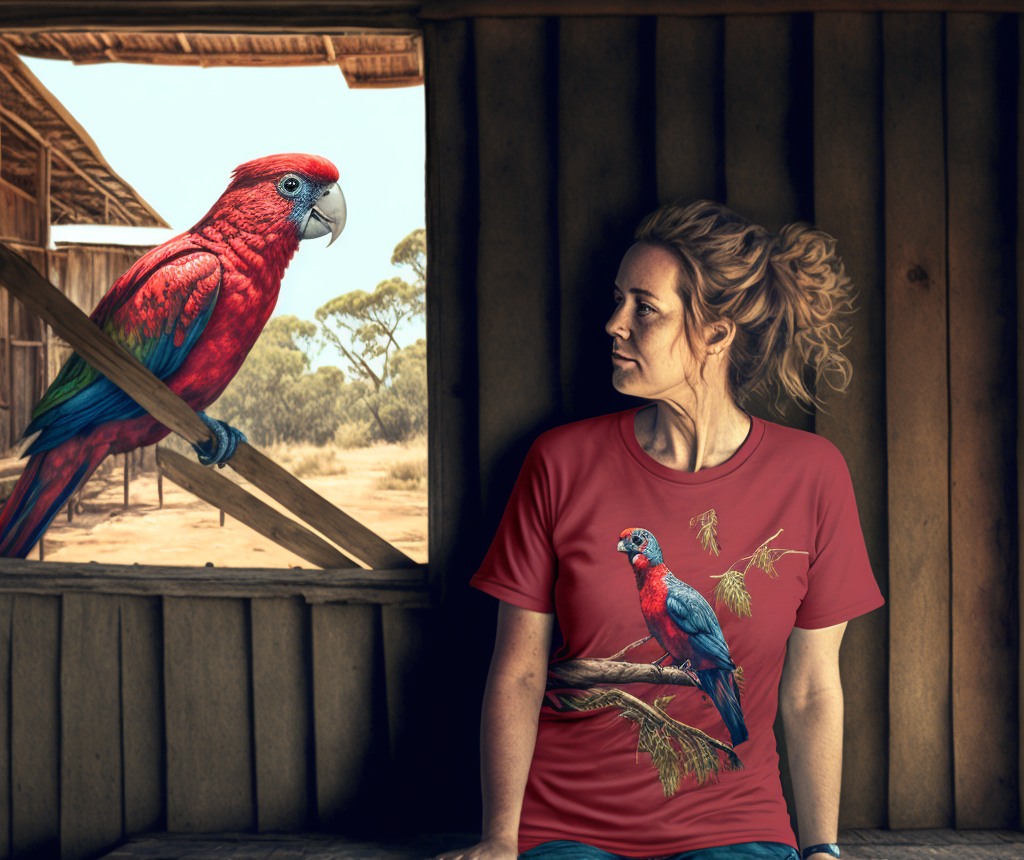
“But it is just a game,” Pretty Girl, the rescue parrot interjected. Zara had known some talking parrots over the years, but never one quite like this one. Usually they repeated any nonsense that they’d heard but this one was different. She would miss it while she was away on holiday, and for a moment considered taking the talking parrot with her on the trip. If she did, she’d have to think about changing her name though, Pretty Girl wasn’t a great name but it was hard to keep thinking of names for all the rescue creatures.
After Zara had done the routine morning chores of feeding the various animals, changing the water bowls, and cleaning up the less pleasant aspects of the job, she sat down in the office room of the rescue centre with a cup of coffee and a sandwich. She was in good physical shape for 57, wiry and energetic, but her back ached at times and a sit down was welcome before the vet arrived to check on all the sick and wounded animals.
Pretty Girl flew over from the kennels, and perched outside the office room window. When the parrot had first been dropped off at the centre, they’d put her in a big cage, but in no uncertain terms Pretty Girl had told them she’d done nothing wrong and was wrongfully imprisoned and to release her at once. It was rather a shock to be addresssed by a parrot in such a way, and it was agreed between the staff and the vet to set her free and see what happened. And Pretty Girl had not flown away.
“Hey Pretty Girl, why don’t you give me some advice on this confusing new game I’m playing with my online friends?” Zara asked.
“Pretty Girl wants some of your tuna sandwich first,” replied the parrot. After Zara had obliged, the parrot continued at some surprising length.
“My advice would be to not worry too much about getting the small details right. The most important thing is to have fun and enjoy the creative process. Just give me a bit more tuna,” Pretty Girl said, before continuing.
“Remember that as a writer, you have the power to shape the story and the characters as you see fit. It’s okay to make mistakes, and it’s okay to not know everything. Allow yourself to be inspired by the world around you and let the story unfold naturally. Trust in your own creativity and don’t be afraid to take risks. And remember, it’s not the small details that make a story great, it’s the emotions and experiences that the characters go through that make it truly memorable. And always remember to feed the parrot.”
“Maybe I should take you on holiday with me after all,” Zara replied. “You really are an amazing bird, aren’t you?”
 January 17, 2023 at 11:02 pm #6411
In reply to: Prompts of Madjourneys
Continuing their adventures, offer 2 possible choices of action to each of the characters in real-life: 2 for Zara, 2 for Xavier, 2 for Yasmin and 2 for Youssef in “choose your own adventure” style.
Zara:
- Continue to investigate the mysterious cat she saw, possibly seeking out help from local animal experts or veterinarians.
- Join Xavier and Yasmin in investigating the Flying Fish Inn, looking for clues and exploring the area for any potential leads on the game’s quest.
Xavier:
- Help Youssef troubleshoot the issues with the blog, possibly reaching out to IT professionals for assistance.
- Join Zara and Yasmin in investigating the Flying Fish Inn, using his knowledge of RPG’s and fantasy literature to assist in the search for clues.
Yasmin:
- Take a break from the game and focus on her personal creative projects, such as writing or painting.
- Join Zara and Xavier in investigating the Flying Fish Inn, using her skills in research and analysis to assist in the search for clues.
Youssef:
- Focus on resolving the issues with the blog, possibly seeking out help from a hacker or cybersecurity expert to uncover the source of the problem.
- Join Zara, Xavier and Yasmin in investigating the Flying Fish Inn, using his knowledge of the game and the AI technology behind it to assist in the search for clues.
January 17, 2023 at 9:06 pm #6410In reply to: Orbs of Madjourneys
Real-life Xavier was marveling at the new AL (Artificial Life) developments on this project he’d been working on. It’s been great at tidying the plot, confusing as the plot started to become with Real-life characters named the same as their Quirky counterparts ones.
Real-life Zara had not managed to remain off the computer for very long, despite her grand claims to the contrary. She’d made quick work of introducing a new player in the game, a reporter in an obscure newspaper, who’d seemed quirky enough to be their guide in the new game indeed. It was difficult to see if hers was a nickname or nom de plume, but strangely enough, she also named her own character the same as her name in the papers. Interestingly, Zara and Glimmer had some friends in common in Australia, where RL Zara was living at the moment.
Anyways… “Clever AL” Xavier smiled when he saw the output on the screen. “Yasmin will love a little tidiness; even if she is the brains of the group, she has always loved the help.”
Meanwhile, in the real world, Youssef was on his own adventure in Mongolia, trying to uncover the mystery of the Thi Gang. He had been hearing whispers and rumors about the ancient and powerful group, and he was determined to find out the truth. He had been traveling through the desert for weeks, following leads and piecing together clues, and he was getting closer to the truth.
Zara, Xavier, and Yasmin, on the other hand, were scattered around the world. Zara was in Australia, working on a conservation project and trying to save a group of endangered animals. Xavier was in Europe, working on a new project for a technology company. And Yasmin was in Asia, volunteering at a children’s hospital.
Despite being physically separated, the four friends kept in touch through video calls and messages. They were all excited about the upcoming adventure in the Land of the Quirks and the possibility of discovering their inner quirks. They were also looking forward to their trip to the Flying Fish Inn, where they hoped to find some clues about the game and their characters.
In the game, Glimmer Gambol’s interactions with the other characters will be taking place in the confines of the Land of the Quirks. As she is the one who has been playing the longest and has the most experience, she will probably be the one to lead the group and guide them through the game. She also has some information that the others don’t know about yet, and she will probably reveal it at the right time.
As the game and the real-world adventures are intertwined, the characters will have to navigate both worlds and find a way to balance them. They will have to use their unique skills and personalities to overcome challenges and solve puzzles, both in the game and in the real world. It will be an exciting and unpredictable journey, full of surprises and twists.
January 17, 2023 at 5:05 pm #6408In reply to: Orbs of Madjourneys
Glimmer gave Zara and Yasmin a cheery
 , smirking to herself at their alarm at leaving her to her own devices. She had no intention of inviting guests yet, but felt no need to reassure them. Xavier would play along with her, she felt sure.
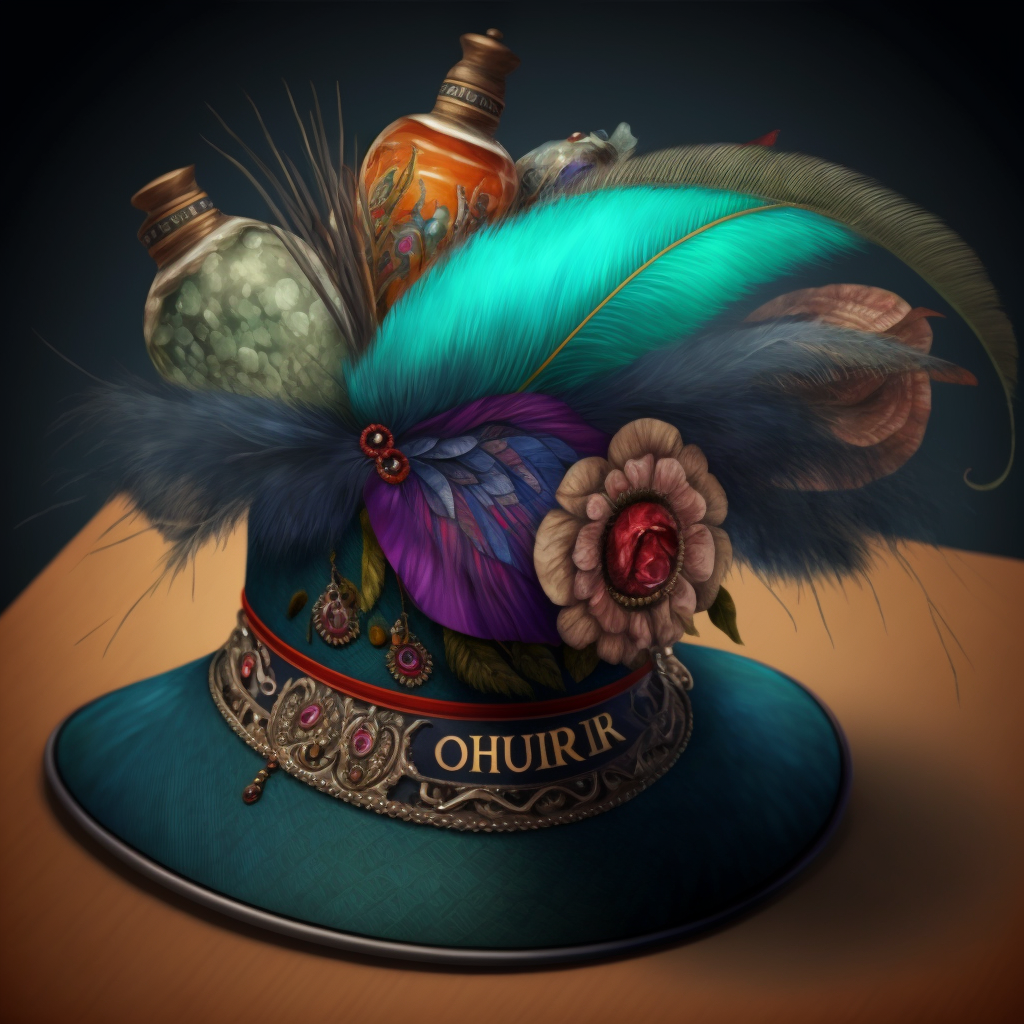
Glimmer settled herself comfortably to peruse the new AIorium Emporium catalogue with the intention of ordering some new hats and accessories for the adventure. She had always had a weakness for elaborate hats, but the truth was they were often rather heavy and cumbersome. That is until she found the AIorium hats which were made of a semi anti gravity material. Not entirely anti gravity, obviously, or they would have floated right off her head, but just enough to make them feel weightless. Once she’d discovered these wonderful hats and their unique properties, she had the idea to carry all her accessories, tools and devices upon her hat. This would save her the bother of carrying around bags of stuff. She was no light weight herself, and it was quite enough to carry herself around, let alone bags of objects.
Glimmer had heard a rumour (well not a rumour exactly, she had a direct line to ~ well not to spill the beans too soon, but she had some lines of information that the others didn’t know about yet) that the adventure was going to start at The Flying Fish Inn. This was welcome news to Glimmer, who had met Idle many years before when they were both teenagers. Yes, it’s hard to imagine these two as teenagers, but although they’d only met breifly on holiday, they’d hit it off immediately. Despite not keeping in contact over the years, Glimmer remembered Idle fondly and felt sure that Idle felt similarly.
Glimmer perused the catalogue for a suitable gift to take for her old friend. The delightful little bottles of spirited spirit essences caught her eye, and recalling Idle’s enthusiasm for an exotic tipple, she ordered several bottles. Perhaps Glimmer should have read carefully the description of the effects of the contents of each bottle but she did not. She immediately added the bottles to the new hat she’d ordered for the trip.
Feeling pleased with her selection, she settled down for a snooze until her new hat arrived.
 January 17, 2023 at 11:37 am #6407
In reply to: Prompts of Madjourneys
[Following the last comment] Fed the AL this context:
- “A gripshawk is feline-like anthropomorphic creature living in the deserts in a fiction written by Yurara Fameliki. It is the least favorite character to pick by Zara who doesn’t like “fantasy stuff”.
- The “Flying Fish Inn” is a fictional (or maybe real) Inn set in the Australian outback, owned by a family headed by the matriarch Mater and involved in many adventures, sometimes surnatural.
- “AL” is an AI build with Al’s persona (Albert Yokozo being a famous author, possibly a nom de plume of the mysterious Ernrich Lemwon) – it is known as Calli in another story.
Please continue the story unfolding here:
<feeding FP’s comment>“Yeah, I’m not a fan of fantasy stuff either,” Youssef added, agreeing with Zara. “But I’m curious about the Flying Fish Inn and how it relates to the game. Maybe we should check it out and see if there are any clues there.”
“That’s a good idea,” Yasmin said. “I’ve heard the stories about the Inn and the adventures the family has had there. Some of them are quite intriguing, and I wouldn’t be surprised if there was a connection to our game.”
“I’m not sure about the AI,” Xavier said. “It’s still a mystery to me, but I trust AL will guide us in the right direction. I’m curious to see where this all leads.”
“Alright, let’s plan a trip to the Flying Fish Inn,” Zara said, excitedly. “We’ll take a break from the game for a few days, but we’ll come back to it with fresh eyes and new insights. Who knows, maybe we’ll even find some quirky guests along the way.”
As they were discussing their plans, they all felt a sense of excitement and curiosity about what the future holds for them. The game and the world of the Land of the Quirks had captured their imagination and they were eager to see where it would lead them next.
January 17, 2023 at 4:55 am #6392In reply to: Orbs of Madjourneys
“I can’t play for a few days,” Zara announced firmly. “I’m doing real world stuff at the moment. I saw a cat up a tree that looked computer generated and I’m concerned about my mental health.”
“What only just now worried? Just this minute?” asked Xavier, managing to keep his face serious.
“Quirky Guests,” mused Yasmin.
The others looked at her.
“I didn’t mean to say that out loud,” she laughed putting a hand to her mouth. “It’s nothing really … it’s just that every time I looked at the map I thought it said quirky GUESTS.”
“Guest!” Zara’s face brightened. “Oh! Maybe guest is a clue … maybe it’s a bleed through from the Flying Fish Inn! You know, it wouldn’t surprise me AT ALL if the key was there.”
Xavier screwed up his face.
“What!” snapped Zara. “Go on, spit it out!”
“Well it’s sort of RPG meets Cloud Atlas, isn’t it? But each to their own gripshawk and AL will sort it all out anyway.”
January 10, 2023 at 11:00 pm #6365In reply to: Train your subjective AI – text version
Prune has got me into this AI stuff… It sounds like gibberish to me, but Idle sounded amazed at the stuff it spewed out.
With some info on our family story, Prune got it to try and predict the future…
Sounds like a big plate of bog, but we’ll see how it goes.
Sure, here are a few possible events that could occur between Mater’s 100th birthday and her death in the Flying Fish Inn story:
- Mater decides to throw herself a grand birthday party, inviting all of her friends and family from the small outback town. However, things take a turn for the strange when a group of extraterrestrial beings crash the party and reveal themselves to be long-time fans of Mater’s famous bush tucker cuisine.
- Mater begins to experience vivid dreams and hallucinations, in which she is visited by the ghost of her late husband. As the dreams become more frequent, the family begins to suspect that there may be something more to them than just Mater’s mind playing tricks on her.
- Mater’s granddaughter Prune becomes increasingly obsessed with her dream of traveling to Mars, and begins to notice strange occurrences happening around the inn that seem to be connected to her aspiration.
- A group of eccentric scientists arrive at the inn, conducting research on the local flora and fauna. They eventually discover a species of sentient plants living in the area, and Mater becomes convinced that the plants are communicating with her in her dreams.
- With her health declining, Mater begins to spend more and more time tending to her garden, where she is visited by an old kookaburra who seems to possess an otherworldly intelligence. The bird becomes Mater’s companion and confidant in the final days of her life.
- As the Great Fires ravage the Australian bush, Mater makes the difficult decision to shut down the inn and evacuate the guests. But as they flee, they realize that the fire is not just a natural disaster, but something far more sinister and mystical.
- In her final days, Mater begins to remember strange and vivid details of her life that she never could have known, as if she lived a previous life in another time and place. As she dies, she whispers something to Prune, which opens her eyes to a new reality that may have been hidden from her all along
- It turns out the family had a lot of secrets, and the only way to escape it, was to leave the inn, but it was not an escape for all. Through the series of events, secrets are revealed, and some truths cannot be undone.Note that these events are fictional and whimsical in nature, but as they keeps it grounded to a sense of doldrums in the Australian bush and occasionally guests help to unravel some of the overarching mysteries it could make a fitting storyline for the story.
October 11, 2022 at 2:58 pm #6334In reply to: Family Stories From The Other Side ~ Book Two
The House on Penn Common
Toi Fang and the Duke of Sutherland
Tomlinsons
Grassholme
Charles Tomlinson (1873-1929) my great grandfather, was born in Wolverhampton in 1873. His father Charles Tomlinson (1847-1907) was a licensed victualler or publican, or alternatively a vet/castrator. He married Emma Grattidge (1853-1911) in 1872. On the 1881 census they were living at The Wheel in Wolverhampton.
Charles married Nellie Fisher (1877-1956) in Wolverhampton in 1896. In 1901 they were living next to the post office in Upper Penn, with children (Charles) Sidney Tomlinson (1896-1955), and Hilda Tomlinson (1898-1977) . Charles was a vet/castrator working on his own account.
In 1911 their address was 4, Wakely Hill, Penn, and living with them were their children Hilda, Frank Tomlinson (1901-1975), (Dorothy) Phyllis Tomlinson (1905-1982), Nellie Tomlinson (1906-1978) and May Tomlinson (1910-1983). Charles was a castrator working on his own account.
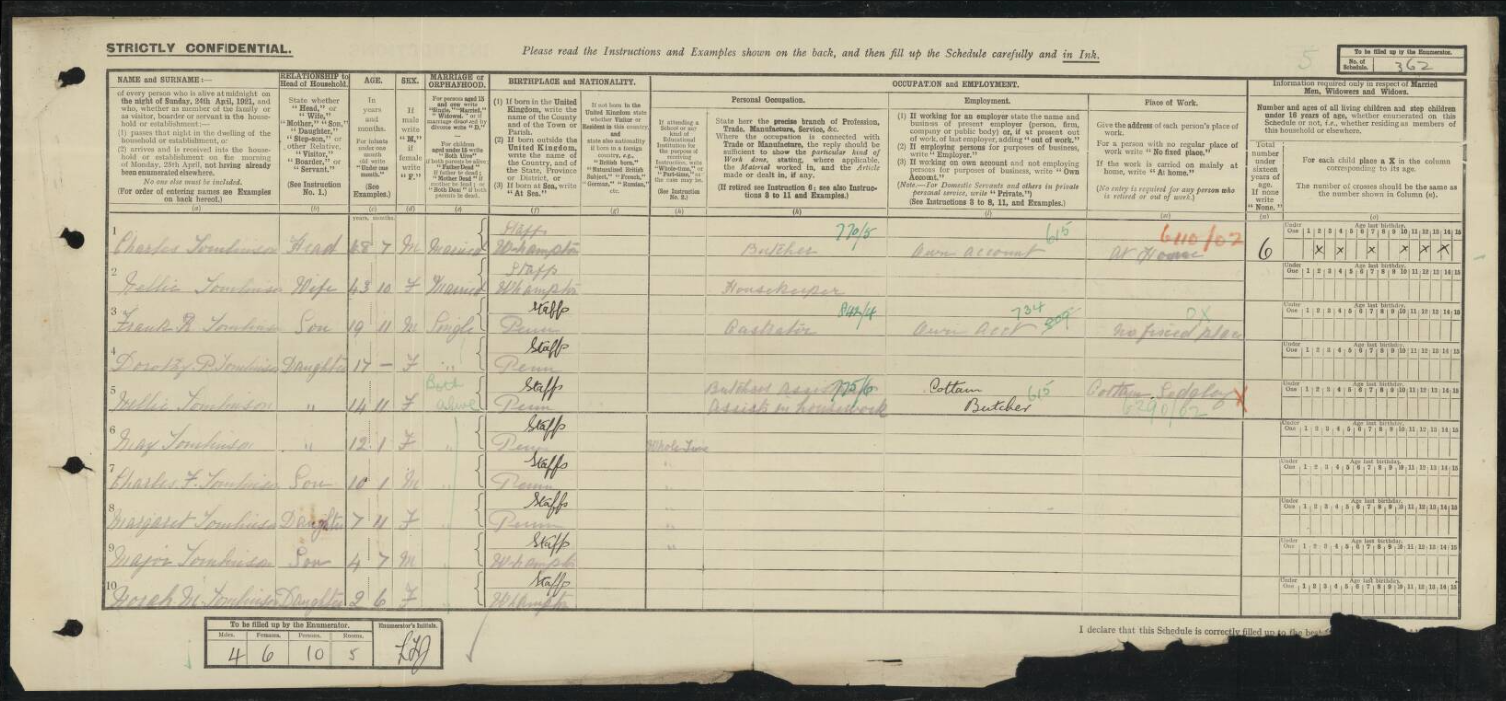
Charles and Nellie had a further four children: Charles Fisher Tomlinson (1911-1977), Margaret Tomlinson (1913-1989) (my grandmother Peggy), Major Tomlinson (1916-1984) and Norah Mary Tomlinson (1919-2010).
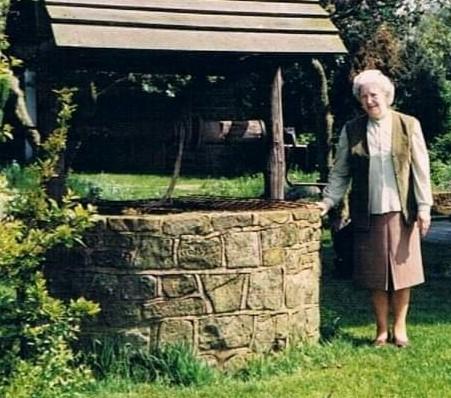
My father told me that my grandmother had fallen down the well at the house on Penn Common in 1915 when she was two years old, and sent me a photo of her standing next to the well when she revisted the house at a much later date.
Peggy next to the well on Penn Common:
My grandmother Peggy told me that her father had had a racehorse called Toi Fang. She remembered the racing colours were sky blue and orange, and had a set of racing silks made which she sent to my father.
Through a DNA match, I met Ian Tomlinson. Ian is the son of my fathers favourite cousin Roger, Frank’s son. Ian found some racing silks and sent a photo to my father (they are now in contact with each other as a result of my DNA match with Ian), wondering what they were.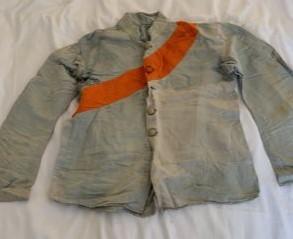
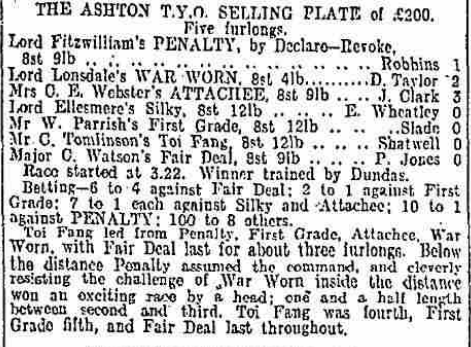
When Ian sent a photo of these racing silks, I had a look in the newspaper archives. In 1920 there are a number of mentions in the racing news of Mr C Tomlinson’s horse TOI FANG. I have not found any mention of Toi Fang in the newspapers in the following years.
The Scotsman – Monday 12 July 1920:
The other story that Ian Tomlinson recalled was about the house on Penn Common. Ian said he’d heard that the local titled person took Charles Tomlinson to court over building the house but that Tomlinson won the case because it was built on common land and was the first case of it’s kind.
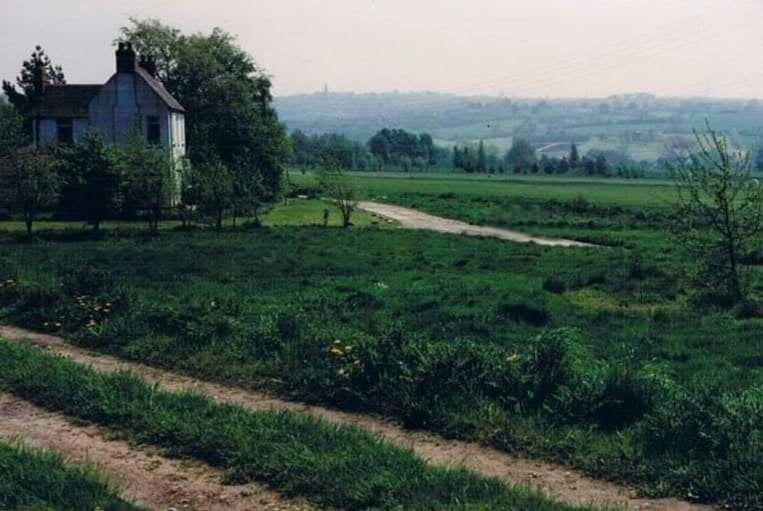
Penn Common Right of Way Case:
Staffordshire Advertiser March 9, 1912In the chancery division, on Tuesday, before Mr Justice Joyce, it was announced that a settlement had been arrived at of the Penn Common Right of Way case, the hearing of which occupied several days last month. The action was brought by the Duke of Sutherland (as Lord of the Manor of Penn) and Mr Harry Sydney Pitt (on behalf of himself and other freeholders of the manor having a right to pasturage on Penn Common) to restrain Mr James Lakin, Carlton House, Penn; Mr Charles Tomlinson, Mayfield Villa, Wakely Hill, Penn; and Mr Joseph Harold Simpkin, Dudley Road, Wolverhampton, from drawing building materials across the common, or otherwise causing injury to the soil.
The real point in dispute was whether there was a public highway for all purposes running by the side of the defendants land from the Turf Tavern past the golf club to the Barley Mow.
Mr Hughes, KC for the plaintiffs, now stated that the parties had been in consultation, and had come to terms, the substance of which was that the defendants admitted that there was no public right of way, and that they were granted a private way. This, he thought, would involve the granting of some deed or deeds to express the rights of the parties, and he suggested that the documents should be be settled by some counsel to be mutually agreed upon.His lordship observed that the question of coal was probably the important point. Mr Younger said Mr Tomlinson was a freeholder, and the plaintiffs could not mine under him. Mr Hughes: The coal actually under his house is his, and, of course, subsidence might be produced by taking away coal some distance away. I think some document is required to determine his actual rights.
Mr Younger said he wanted to avoid anything that would increase the costs, but, after further discussion, it was agreed that Mr John Dixon (an expert on mineral rights), or failing him, another counsel satisfactory to both parties, should be invited to settle the terms scheduled in the agreement, in order to prevent any further dispute.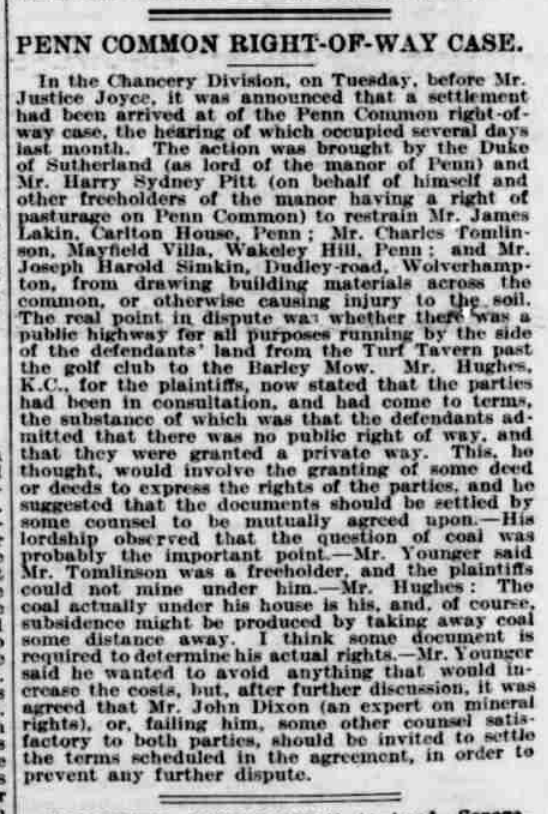
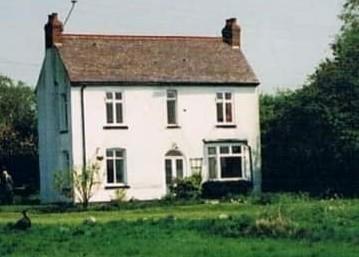
The name of the house is Grassholme. The address of Mayfield Villas is the house they were living in while building Grassholme, which I assume they had not yet moved in to at the time of the newspaper article in March 1912.
What my grandmother didn’t tell anyone was how her father died in 1929:
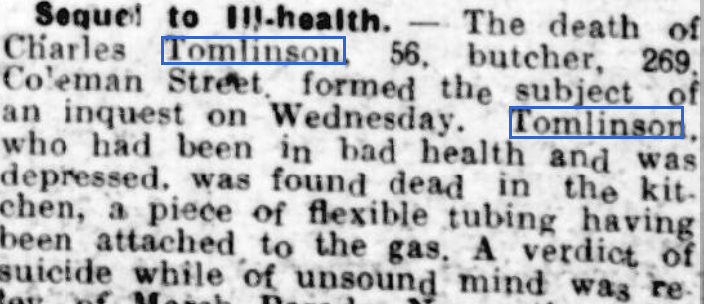
On the 1921 census, Charles, Nellie and eight of their children were living at 269 Coleman Street, Wolverhampton.
They were living on Coleman Street in 1915 when Charles was fined for staying open late.
Staffordshire Advertiser – Saturday 13 February 1915:

What is not yet clear is why they moved from the house on Penn Common sometime between 1912 and 1915. And why did he have a racehorse in 1920?
October 11, 2022 at 11:39 am #6333In reply to: Family Stories From The Other Side ~ Book Two
The Grattidge Family
The first Grattidge to appear in our tree was Emma Grattidge (1853-1911) who married Charles Tomlinson (1847-1907) in 1872.
Charles Tomlinson (1873-1929) was their son and he married my great grandmother Nellie Fisher. Their daughter Margaret (later Peggy Edwards) was my grandmother on my fathers side.
Emma Grattidge was born in Wolverhampton, the daughter and youngest child of William Grattidge (1820-1887) born in Foston, Derbyshire, and Mary Stubbs, born in Burton on Trent, daughter of Solomon Stubbs, a land carrier. William and Mary married at St Modwens church, Burton on Trent, in 1839. It’s unclear why they moved to Wolverhampton. On the 1841 census William was employed as an agent, and their first son William was nine months old. Thereafter, William was a licensed victuallar or innkeeper.
William Grattidge was born in Foston, Derbyshire in 1820. His parents were Thomas Grattidge, farmer (1779-1843) and Ann Gerrard (1789-1822) from Ellastone. Thomas and Ann married in 1813 in Ellastone. They had five children before Ann died at the age of 25:
Bessy was born in 1815, Thomas in 1818, William in 1820, and Daniel Augustus and Frederick were twins born in 1822. They were all born in Foston. (records say Foston, Foston and Scropton, or Scropton)
On the 1841 census Thomas had nine people additional to family living at the farm in Foston, presumably agricultural labourers and help.
After Ann died, Thomas had three children with Kezia Gibbs (30 years his junior) before marrying her in 1836, then had a further four with her before dying in 1843. Then Kezia married Thomas’s nephew Frederick Augustus Grattidge (born in 1816 in Stafford) in London in 1847 and had two more!
The siblings of William Grattidge (my 3x great grandfather):
Frederick Grattidge (1822-1872) was a schoolmaster and never married. He died at the age of 49 in Tamworth at his twin brother Daniels address.
Daniel Augustus Grattidge (1822-1903) was a grocer at Gungate in Tamworth.
Thomas Grattidge (1818-1871) married in Derby, and then emigrated to Illinois, USA.
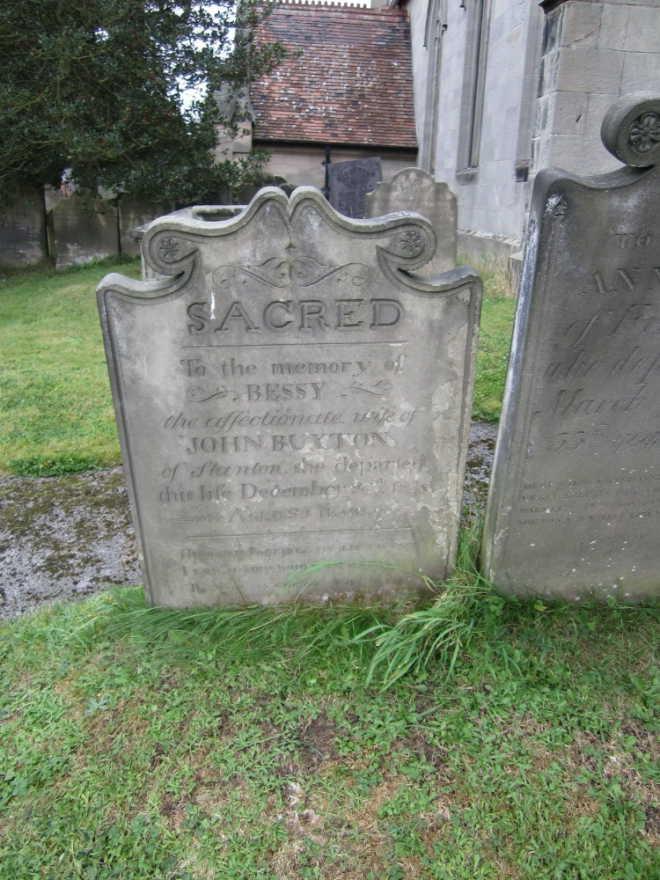
Bessy Grattidge (1815-1840) married John Buxton, farmer, in Ellastone in January 1838. They had three children before Bessy died in December 1840 at the age of 25: Henry in 1838, John in 1839, and Bessy Buxton in 1840. Bessy was baptised in January 1841. Presumably the birth of Bessy caused the death of Bessy the mother.
Bessy Buxton’s gravestone:
“Sacred to the memory of Bessy Buxton, the affectionate wife of John Buxton of Stanton She departed this life December 20th 1840, aged 25 years. “Husband, Farewell my life is Past, I loved you while life did last. Think on my children for my sake, And ever of them with I take.”
20 Dec 1840, Ellastone, Staffordshire
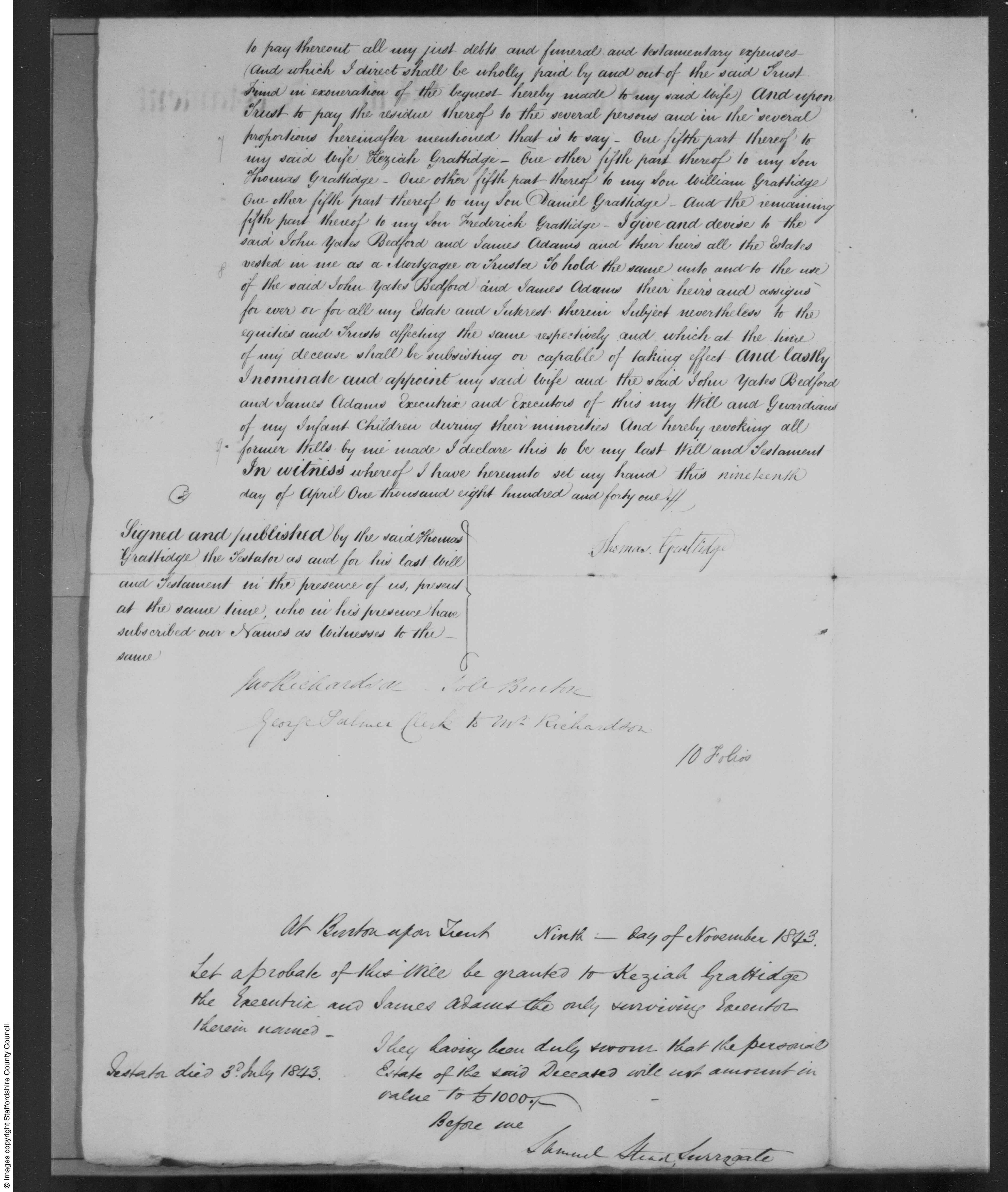
In the 1843 will of Thomas Grattidge, farmer of Foston, he leaves fifth shares of his estate, including freehold real estate at Findern, to his wife Kezia, and sons William, Daniel, Frederick and Thomas. He mentions that the children of his late daughter Bessy, wife of John Buxton, will be taken care of by their father. He leaves the farm to Keziah in confidence that she will maintain, support and educate his children with her.
An excerpt from the will:
I give and bequeath unto my dear wife Keziah Grattidge all my household goods and furniture, wearing apparel and plate and plated articles, linen, books, china, glass, and other household effects whatsoever, and also all my implements of husbandry, horses, cattle, hay, corn, crops and live and dead stock whatsoever, and also all the ready money that may be about my person or in my dwelling house at the time of my decease, …I also give my said wife the tenant right and possession of the farm in my occupation….
A page from the 1843 will of Thomas Grattidge:
William Grattidges half siblings (the offspring of Thomas Grattidge and Kezia Gibbs):
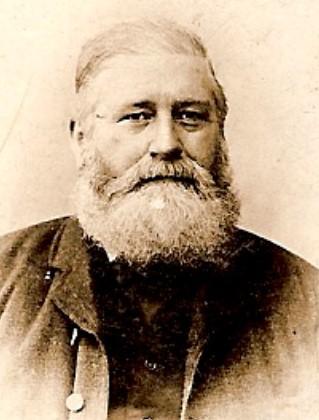
Albert Grattidge (1842-1914) was a railway engine driver in Derby. In 1884 he was driving the train when an unfortunate accident occured outside Ambergate. Three children were blackberrying and crossed the rails in front of the train, and one little girl died.
Albert Grattidge:
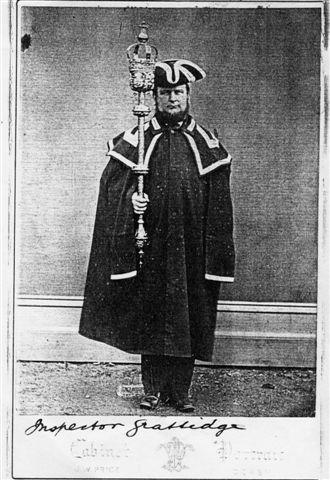
George Grattidge (1826-1876) was baptised Gibbs as this was before Thomas married Kezia. He was a police inspector in Derby.
George Grattidge:
Edwin Grattidge (1837-1852) died at just 15 years old.
Ann Grattidge (1835-) married Charles Fletcher, stone mason, and lived in Derby.
Louisa Victoria Grattidge (1840-1869) was sadly another Grattidge woman who died young. Louisa married Emmanuel Brunt Cheesborough in 1860 in Derby. In 1861 Louisa and Emmanuel were living with her mother Kezia in Derby, with their two children Frederick and Ann Louisa. Emmanuel’s occupation was sawyer. (Kezia Gibbs second husband Frederick Augustus Grattidge was a timber merchant in Derby)
At the time of her death in 1869, Emmanuel was the landlord of the White Hart public house at Bridgegate in Derby.
The Derby Mercury of 17th November 1869:
“On Wednesday morning Mr Coroner Vallack held an inquest in the Grand
Jury-room, Town-hall, on the body of Louisa Victoria Cheeseborough, aged
33, the wife of the landlord of the White Hart, Bridge-gate, who committed
suicide by poisoning at an early hour on Sunday morning. The following
evidence was taken:Mr Frederick Borough, surgeon, practising in Derby, deposed that he was
called in to see the deceased about four o’clock on Sunday morning last. He
accordingly examined the deceased and found the body quite warm, but dead.
He afterwards made enquiries of the husband, who said that he was afraid
that his wife had taken poison, also giving him at the same time the
remains of some blue material in a cup. The aunt of the deceased’s husband
told him that she had seen Mrs Cheeseborough put down a cup in the
club-room, as though she had just taken it from her mouth. The witness took
the liquid home with him, and informed them that an inquest would
necessarily have to be held on Monday. He had made a post mortem
examination of the body, and found that in the stomach there was a great
deal of congestion. There were remains of food in the stomach and, having
put the contents into a bottle, he took the stomach away. He also examined
the heart and found it very pale and flabby. All the other organs were
comparatively healthy; the liver was friable.Hannah Stone, aunt of the deceased’s husband, said she acted as a servant
in the house. On Saturday evening, while they were going to bed and whilst
witness was undressing, the deceased came into the room, went up to the
bedside, awoke her daughter, and whispered to her. but what she said the
witness did not know. The child jumped out of bed, but the deceased closed
the door and went away. The child followed her mother, and she also
followed them to the deceased’s bed-room, but the door being closed, they
then went to the club-room door and opening it they saw the deceased
standing with a candle in one hand. The daughter stayed with her in the
room whilst the witness went downstairs to fetch a candle for herself, and
as she was returning up again she saw the deceased put a teacup on the
table. The little girl began to scream, saying “Oh aunt, my mother is
going, but don’t let her go”. The deceased then walked into her bed-room,
and they went and stood at the door whilst the deceased undressed herself.
The daughter and the witness then returned to their bed-room. Presently
they went to see if the deceased was in bed, but she was sitting on the
floor her arms on the bedside. Her husband was sitting in a chair fast
asleep. The witness pulled her on the bed as well as she could.
Ann Louisa Cheesborough, a little girl, said that the deceased was her
mother. On Saturday evening last, about twenty minutes before eleven
o’clock, she went to bed, leaving her mother and aunt downstairs. Her aunt
came to bed as usual. By and bye, her mother came into her room – before
the aunt had retired to rest – and awoke her. She told the witness, in a
low voice, ‘that she should have all that she had got, adding that she
should also leave her her watch, as she was going to die’. She did not tell
her aunt what her mother had said, but followed her directly into the
club-room, where she saw her drink something from a cup, which she
afterwards placed on the table. Her mother then went into her own room and
shut the door. She screamed and called her father, who was downstairs. He
came up and went into her room. The witness then went to bed and fell
asleep. She did not hear any noise or quarrelling in the house after going
to bed.Police-constable Webster was on duty in Bridge-gate on Saturday evening
last, about twenty minutes to one o’clock. He knew the White Hart
public-house in Bridge-gate, and as he was approaching that place, he heard
a woman scream as though at the back side of the house. The witness went to
the door and heard the deceased keep saying ‘Will you be quiet and go to
bed’. The reply was most disgusting, and the language which the
police-constable said was uttered by the husband of the deceased, was
immoral in the extreme. He heard the poor woman keep pressing her husband
to go to bed quietly, and eventually he saw him through the keyhole of the
door pass and go upstairs. his wife having gone up a minute or so before.
Inspector Fearn deposed that on Sunday morning last, after he had heard of
the deceased’s death from supposed poisoning, he went to Cheeseborough’s
public house, and found in the club-room two nearly empty packets of
Battie’s Lincoln Vermin Killer – each labelled poison.Several of the Jury here intimated that they had seen some marks on the
deceased’s neck, as of blows, and expressing a desire that the surgeon
should return, and re-examine the body. This was accordingly done, after
which the following evidence was taken:Mr Borough said that he had examined the body of the deceased and observed
a mark on the left side of the neck, which he considered had come on since
death. He thought it was the commencement of decomposition.
This was the evidence, after which the jury returned a verdict “that the
deceased took poison whilst of unsound mind” and requested the Coroner to
censure the deceased’s husband.The Coroner told Cheeseborough that he was a disgusting brute and that the
jury only regretted that the law could not reach his brutal conduct.
However he had had a narrow escape. It was their belief that his poor
wife, who was driven to her own destruction by his brutal treatment, would
have been a living woman that day except for his cowardly conduct towards
her.The inquiry, which had lasted a considerable time, then closed.”
In this article it says:
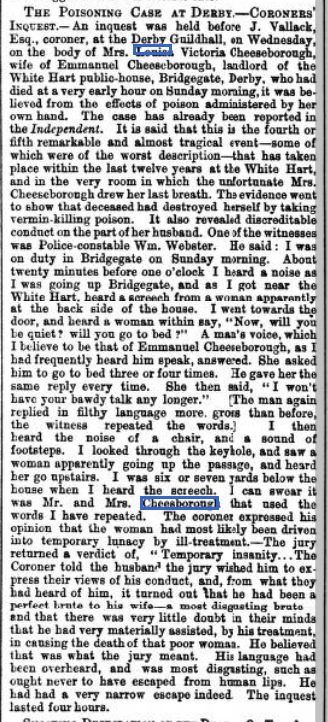
“it was the “fourth or fifth remarkable and tragical event – some of which were of the worst description – that has taken place within the last twelve years at the White Hart and in the very room in which the unfortunate Louisa Cheesborough drew her last breath.”
Sheffield Independent – Friday 12 November 1869:
 September 21, 2022 at 1:25 pm #6331
In reply to: Family Stories From The Other Side ~ Book Two
Whitesmiths of Baker Street
The Fishers of Wolverhampton
My fathers mother was Margaret Tomlinson born in 1913, the youngest but one daughter of Charles Tomlinson and Nellie Fisher of Wolverhampton.
Nellie Fisher was born in 1877. Her parents were William Fisher and Mary Ann Smith.
William Fisher born in 1834 was a whitesmith on Baker St on the 1881 census; Nellie was 3 years old. Nellie was his youngest daughter.
William was a whitesmith (or screw maker) on all of the censuses but in 1901 whitesmith was written for occupation, then crossed out and publican written on top. This was on Duke St, so I searched for William Fisher licensee on longpull black country pubs website and he was licensee of The Old Miners Arms on Duke St in 1896. The pub closed in 1906 and no longer exists. He was 67 in 1901 and just he and wife Mary Ann were at that address.
In 1911 he was a widower living alone in Upper Penn. Nellie and Charles Tomlinson were also living in Upper Penn on the 1911 census, and my grandmother was born there in 1913.
William’s father William Fisher born in 1792, Nellie’s grandfather, was a whitesmith on Baker St on the 1861 census employing 4 boys, 2 men, 3 girls. He died in 1873.
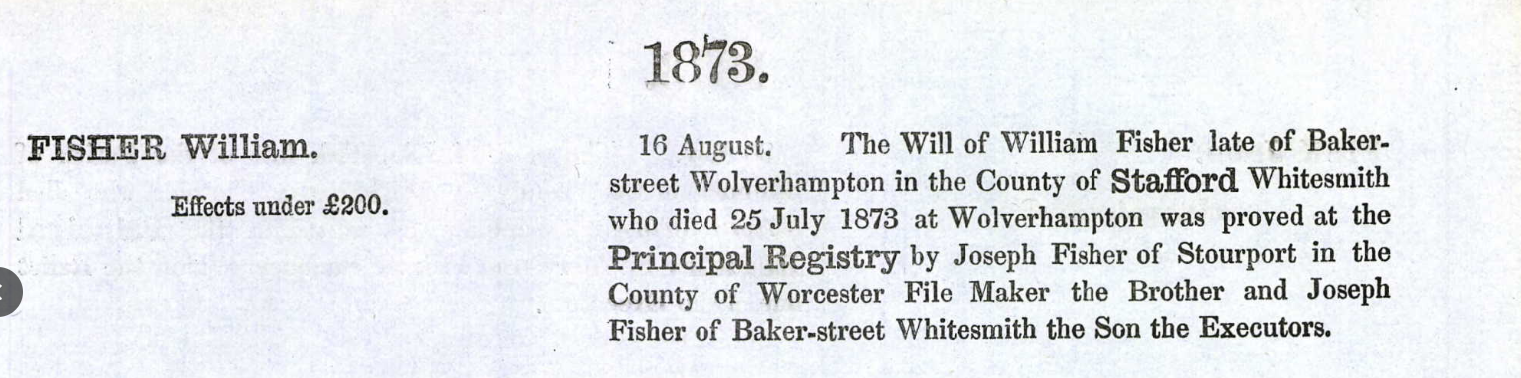
William Fisher the elder appears in a number of directories including this one:
1851 Melville & Co´s Directory of Wolverhampton
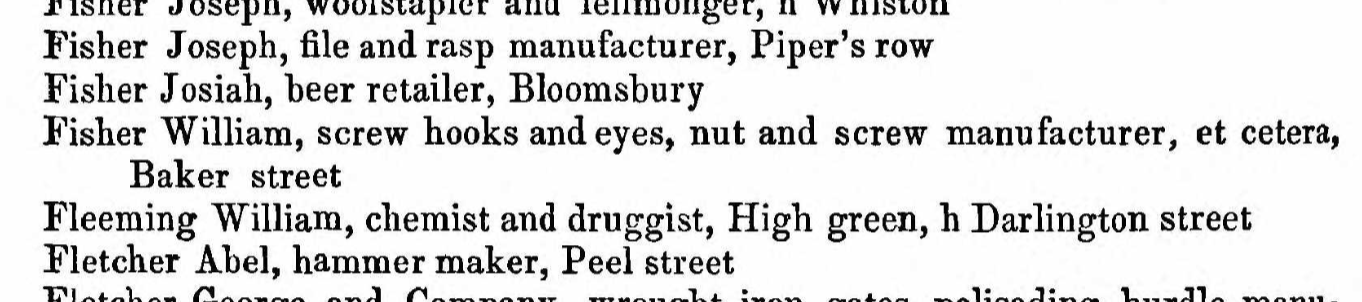
I noticed that all the other ancestry trees (as did my fathers cousin on the Tomlinson side) had MARY LUNN from Birmingham in Warwickshire marrying William Fisher the elder in 1828. But on ALL of the censuses, Mary’s place of birth was Staffordshire, and on one it said Bilston. I found another William Fisher and Mary marriage in Sedgley in 1829, MARY PITT.
You can order a birth certificate from the records office with mothers maiden name on, but only after 1837. So I looked for Williams younger brother Joseph, born 1845. His mothers maiden name was Pitt. September 21, 2022 at 1:16 pm #6330
Topic: Family Stories From The Other Side ~ Book Two
in forum TP’s Family BooksMy Fathers Family
Edwards ~ Tomlinson ~ Stokes ~ Fisher
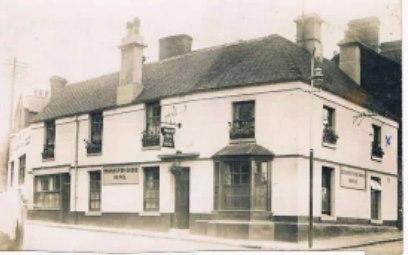
Reginald Garnet Edwards was born on 2 April 1934 at the Worcester Cross pub in Kidderminster.
The X on right is the room he was born in:
I hadn’t done much research on the Edwards family because my fathers cousin, Paul Weaver, had already done it and had an excellent website online. I decided to start from scratch and do it all myself because it’s so much more interesting to do the research myself than look at lists of names and dates that don’t really mean anything. Immediately after I decided to do this, I found that Paul’s family tree website was no longer online to refer to anyway!
I started with the Edwards family in Birmingham and immediately had a problem: there were far too many John Edwards in Birmingham at the time. I’ll return to the Edwards in a later chapter, and start with my fathers mothers mothers family, the Fishers.
September 4, 2022 at 6:00 pm #6326In reply to: The Sexy Wooden Leg
Stung by Egberts question, Olga reeled and almost lost her footing on the stairs. What had happened to her? That damned selfish individualism that was running rampant must have seeped into her room through the gaps in the windows or under the door. “No!” she shouted, her voice cracking.
“Say it isn’t true, Olga,” Egbert said, his voice breaking. “Not you as well.”
It took Olga a minute or two to still her racing heart. The near fall down the stairs had shaken her but with trembling hands she levered herself round to sit beside Egbert on the step.
Gripping his bony knee with her knobbly arthritic fingers, she took a deep breath.
“You are right to have said that, Egbert. If there is one thing we must hold onto, it’s our hearts. Nothing else matters, or at least nothing else matters as much as that. We are old and tired and we don’t like change. But if we escalate the importance of this frankly dreary and depressing home to the point where we lose our hearts…” she faltered and continued. “We will be homeless soon, very soon, and we know not what will happen to us. We must trust in the kindness of strangers, we must hope they have a heart.”
Egbert winced as Olga squeezed his knee. “And that is why”, Olga continued, slapping Egberts thigh with gusto, “We must have a heart…”
“If you’d just stop squeezing and hitting me, Olga…”
Olga loosened her grip on the old mans thigh bone and peered into his eyes. Quietly she thanked him. “You’ve cleared my mind and given me something to live for, and I thank you for that. But you do need to launder your clothes more often,” she added, pulling a face. She didn’t want the old coot to start blubbing, and he looked alarmingly close to tears.
“Come on, let’s go and see Obadiah. We’re all in this together. Homelessness and adventure can wait until tomorrow.” Olga heaved herself upright with a surprising burst of vitality. Noticing a weak smile trembling on Egberts lips, she said “That’s the spirit!”
July 12, 2022 at 2:00 am #6318In reply to: The Sexy Wooden Leg
“You’d better sit down,” said Olga gesturing to the end of her bed. As a rule, she did not have visitors so she saw no need to clutter up the available space in her tiny room with an extra chair. A large proportion of her life was spent in her armchair and she was content that way. While Egbert perched on the end of the bed, she lowered herself into the soft and familiar confines of her armchair and felt instantly soothed. It was true, sometimes she felt a tinge of regret when she considered how disappointed her younger self would be to see her now. But she hadn’t lived through what I’ve lived through so she can mind her own damn business,” she thought.
“It is just a story, twisted in the telling I expect.” Olga knew her voice held no conviction.
Egbert opened his mouth as though to speak. Closed it again.
“You look like a fish,” said Olga folding her arms.
“They say you and the Mayor go back a long way. Are you telling me that is not true?
“And what if we do?”
“You know he is Ursula’s uncle and a very powerful man. They say even the great president Voldomeer Zumbaskee holds him in great regard. They say …”
“Pfft! They say!” snapped Olga. “Who are these chattering fools you listen to, Egbert Gofindlevsky? I’d rather end up on the streets than ask a favour from that mountebank.”
Egbert jumped up from the bed and shook a fist at her. “And end up on the streets you will, Olga Herringbonevsky, along with the rest of us. You really want that on your conscience?”
February 2, 2022 at 1:15 pm #6268In reply to: The Elusive Samuel Housley and Other Family Stories
From Tanganyika with Love
continued part 9
With thanks to Mike Rushby.
Lyamungu 3rd January 1945
Dearest Family.
We had a novel Christmas this year. We decided to avoid the expense of
entertaining and being entertained at Lyamungu, and went off to spend Christmas
camping in a forest on the Western slopes of Kilimanjaro. George decided to combine
business with pleasure and in this way we were able to use Government transport.
We set out the day before Christmas day and drove along the road which skirts
the slopes of Kilimanjaro and first visited a beautiful farm where Philip Teare, the ex
Game Warden, and his wife Mary are staying. We had afternoon tea with them and then
drove on in to the natural forest above the estate and pitched our tent beside a small
clear mountain stream. We decorated the tent with paper streamers and a few small
balloons and John found a small tree of the traditional shape which we decorated where
it stood with tinsel and small ornaments.We put our beer, cool drinks for the children and bottles of fresh milk from Simba
Estate, in the stream and on Christmas morning they were as cold as if they had been in
the refrigerator all night. There were not many presents for the children, there never are,
but they do not seem to mind and are well satisfied with a couple of balloons apiece,
sweets, tin whistles and a book each.George entertain the children before breakfast. He can make a magical thing out
of the most ordinary balloon. The children watched entranced as he drew on his pipe
and then blew the smoke into the balloon. He then pinched the neck of the balloon
between thumb and forefinger and released the smoke in little puffs. Occasionally the
balloon ejected a perfect smoke ring and the forest rang with shouts of “Do it again
Daddy.” Another trick was to blow up the balloon to maximum size and then twist the
neck tightly before releasing. Before subsiding the balloon darted about in a crazy
fashion causing great hilarity. Such fun, at the cost of a few pence.After breakfast George went off to fish for trout. John and Jim decided that they
also wished to fish so we made rods out of sticks and string and bent pins and they
fished happily, but of course quite unsuccessfully, for hours. Both of course fell into the
stream and got soaked, but I was prepared for this, and the little stream was so shallow
that they could not come to any harm. Henry played happily in the sand and I had a
most peaceful morning.Hamisi roasted a chicken in a pot over the camp fire and the jelly set beautifully in the
stream. So we had grilled trout and chicken for our Christmas dinner. I had of course
taken an iced cake for the occasion and, all in all, it was a very successful Christmas day.
On Boxing day we drove down to the plains where George was to investigate a
report of game poaching near the Ngassari Furrow. This is a very long ditch which has
been dug by the Government for watering the Masai stock in the area. It is also used by
game and we saw herds of zebra and wildebeest, and some Grant’s Gazelle and
giraffe, all comparatively tame. At one point a small herd of zebra raced beside the lorry
apparently enjoying the fun of a gallop. They were all sleek and fat and looked wild and
beautiful in action.We camped a considerable distance from the water but this precaution did not
save us from the mosquitoes which launched a vicious attack on us after sunset, so that
we took to our beds unusually early. They were on the job again when we got up at
sunrise so I was very glad when we were once more on our way home.“I like Christmas safari. Much nicer that silly old party,” said John. I agree but I think
it is time that our children learned to play happily with others. There are no other young
children at Lyamungu though there are two older boys and a girl who go to boarding
school in Nairobi.On New Years Day two Army Officers from the military camp at Moshi, came for
tea and to talk game hunting with George. I think they rather enjoy visiting a home and
seeing children and pets around.Eleanor.
Lyamungu 14 May 1945
Dearest Family.
So the war in Europe is over at last. It is such marvellous news that I can hardly
believe it. To think that as soon as George can get leave we will go to England and
bring Ann and George home with us to Tanganyika. When we know when this leave can
be arranged we will want Kate to join us here as of course she must go with us to
England to meet George’s family. She has become so much a part of your lives that I
know it will be a wrench for you to give her up but I know that you will all be happy to
think that soon our family will be reunited.The V.E. celebrations passed off quietly here. We all went to Moshi to see the
Victory Parade of the King’s African Rifles and in the evening we went to a celebration
dinner at the Game Warden’s house. Besides ourselves the Moores had invited the
Commanding Officer from Moshi and a junior officer. We had a very good dinner and
many toasts including one to Mrs Moore’s brother, Oliver Milton who is fighting in Burma
and has recently been awarded the Military Cross.There was also a celebration party for the children in the grounds of the Moshi
Club. Such a spread! I think John and Jim sampled everything. We mothers were
having our tea separately and a friend laughingly told me to turn around and have a look.
I did, and saw the long tea tables now deserted by all the children but my two sons who
were still eating steadily, and finding the party more exciting than the game of Musical
Bumps into which all the other children had entered with enthusiasm.There was also an extremely good puppet show put on by the Italian prisoners
of war from the camp at Moshi. They had made all the puppets which included well
loved characters like Snow White and the Seven Dwarfs and the Babes in the Wood as
well as more sophisticated ones like an irritable pianist and a would be prima donna. The
most popular puppets with the children were a native askari and his family – a very
happy little scene. I have never before seen a puppet show and was as entranced as
the children. It is amazing what clever manipulation and lighting can do. I believe that the
Italians mean to take their puppets to Nairobi and am glad to think that there, they will
have larger audiences to appreciate their art.George has just come in, and I paused in my writing to ask him for the hundredth
time when he thinks we will get leave. He says I must be patient because it may be a
year before our turn comes. Shipping will be disorganised for months to come and we
cannot expect priority simply because we have been separated so long from our
children. The same situation applies to scores of other Government Officials.
I have decided to write the story of my childhood in South Africa and about our
life together in Tanganyika up to the time Ann and George left the country. I know you
will have told Kate these stories, but Ann and George were so very little when they left
home that I fear that they cannot remember much.My Mother-in-law will have told them about their father but she can tell them little
about me. I shall send them one chapter of my story each month in the hope that they
may be interested and not feel that I am a stranger when at last we meet again.Eleanor.
Lyamungu 19th September 1945
Dearest Family.
In a months time we will be saying good-bye to Lyamungu. George is to be
transferred to Mbeya and I am delighted, not only as I look upon Mbeya as home, but
because there is now a primary school there which John can attend. I feel he will make
much better progress in his lessons when he realises that all children of his age attend
school. At present he is putting up a strong resistance to learning to read and spell, but
he writes very neatly, does his sums accurately and shows a real talent for drawing. If
only he had the will to learn I feel he would do very well.Jim now just four, is too young for lessons but too intelligent to be interested in
the ayah’s attempts at entertainment. Yes I’ve had to engage a native girl to look after
Henry from 9 am to 12.30 when I supervise John’s Correspondence Course. She is
clean and amiable, but like most African women she has no initiative at all when it comes
to entertaining children. Most African men and youths are good at this.I don’t regret our stay at Lyamungu. It is a beautiful spot and the change to the
cooler climate after the heat of Morogoro has been good for all the children. John is still
tall for his age but not so thin as he was and much less pale. He is a handsome little lad
with his large brown eyes in striking contrast to his fair hair. He is wary of strangers but
very observant and quite uncanny in the way he sums up people. He seldom gets up
to mischief but I have a feeling he eggs Jim on. Not that Jim needs egging.Jim has an absolute flair for mischief but it is all done in such an artless manner that
it is not easy to punish him. He is a very sturdy child with a cap of almost black silky hair,
eyes brown, like mine, and a large mouth which is quick to smile and show most beautiful
white and even teeth. He is most popular with all the native servants and the Game
Scouts. The servants call Jim, ‘Bwana Tembo’ (Mr Elephant) because of his sturdy
build.Henry, now nearly two years old, is quite different from the other two in
appearance. He is fair complexioned and fair haired like Ann and Kate, with large, black
lashed, light grey eyes. He is a good child, not so merry as Jim was at his age, nor as
shy as John was. He seldom cries, does not care to be cuddled and is independent and
strong willed. The servants call Henry, ‘Bwana Ndizi’ (Mr Banana) because he has an
inexhaustible appetite for this fruit. Fortunately they are very inexpensive here. We buy
an entire bunch which hangs from a beam on the back verandah, and pluck off the
bananas as they ripen. This way there is no waste and the fruit never gets bruised as it
does in greengrocers shops in South Africa. Our three boys make a delightful and
interesting trio and I do wish you could see them for yourselves.We are delighted with the really beautiful photograph of Kate. She is an
extraordinarily pretty child and looks so happy and healthy and a great credit to you.
Now that we will be living in Mbeya with a school on the doorstep I hope that we will
soon be able to arrange for her return home.Eleanor.
c/o Game Dept. Mbeya. 30th October 1945
Dearest Family.
How nice to be able to write c/o Game Dept. Mbeya at the head of my letters.
We arrived here safely after a rather tiresome journey and are installed in a tiny house on
the edge of the township.We left Lyamungu early on the morning of the 22nd. Most of our goods had
been packed on the big Ford lorry the previous evening, but there were the usual
delays and farewells. Of our servants, only the cook, Hamisi, accompanied us to
Mbeya. Japhet, Tovelo and the ayah had to be paid off and largesse handed out.
Tovelo’s granny had come, bringing a gift of bananas, and she also brought her little
granddaughter to present a bunch of flowers. The child’s little scolded behind is now
completely healed. Gifts had to be found for them too.At last we were all aboard and what a squash it was! Our few pieces of furniture
and packing cases and trunks, the cook, his wife, the driver and the turney boy, who
were to take the truck back to Lyamungu, and all their bits and pieces, bunches of
bananas and Fanny the dog were all crammed into the body of the lorry. George, the
children and I were jammed together in the cab. Before we left George looked
dubiously at the tyres which were very worn and said gloomily that he thought it most
unlikely that we would make our destination, Dodoma.Too true! Shortly after midday, near Kwakachinja, we blew a back tyre and there
was a tedious delay in the heat whilst the wheel was changed. We were now without a
spare tyre and George said that he would not risk taking the Ford further than Babati,
which is less than half way to Dodoma. He drove very slowly and cautiously to Babati
where he arranged with Sher Mohammed, an Indian trader, for a lorry to take us to
Dodoma the next morning.It had been our intention to spend the night at the furnished Government
Resthouse at Babati but when we got there we found that it was already occupied by
several District Officers who had assembled for a conference. So, feeling rather
disgruntled, we all piled back into the lorry and drove on to a place called Bereku where
we spent an uncomfortable night in a tumbledown hut.Before dawn next morning Sher Mohammed’s lorry drove up, and there was a
scramble to dress by the light of a storm lamp. The lorry was a very dilapidated one and
there was already a native woman passenger in the cab. I felt so tired after an almost
sleepless night that I decided to sit between the driver and this woman with the sleeping
Henry on my knee. It was as well I did, because I soon found myself dosing off and
drooping over towards the woman. Had she not been there I might easily have fallen
out as the battered cab had no door. However I was alert enough when daylight came
and changed places with the woman to our mutual relief. She was now able to converse
with the African driver and I was able to enjoy the scenery and the fresh air!
George, John and Jim were less comfortable. They sat in the lorry behind the
cab hemmed in by packing cases. As the lorry was an open one the sun beat down
unmercifully upon them until George, ever resourceful, moved a table to the front of the
truck. The two boys crouched under this and so got shelter from the sun but they still had
to endure the dust. Fanny complicated things by getting car sick and with one thing and
another we were all jolly glad to get to Dodoma.We spent the night at the Dodoma Hotel and after hot baths, a good meal and a
good nights rest we cheerfully boarded a bus of the Tanganyika Bus Service next
morning to continue our journey to Mbeya. The rest of the journey was uneventful. We slept two nights on the road, the first at Iringa Hotel and the second at Chimala. We
reached Mbeya on the 27th.I was rather taken aback when I first saw the little house which has been allocated
to us. I had become accustomed to the spacious houses we had in Morogoro and
Lyamungu. However though the house is tiny it is secluded and has a long garden
sloping down to the road in front and another long strip sloping up behind. The front
garden is shaded by several large cypress and eucalyptus trees but the garden behind
the house has no shade and consists mainly of humpy beds planted with hundreds of
carnations sadly in need of debudding. I believe that the previous Game Ranger’s wife
cultivated the carnations and, by selling them, raised money for War Funds.
Like our own first home, this little house is built of sun dried brick. Its original
owners were Germans. It is now rented to the Government by the Custodian of Enemy
Property, and George has his office in another ex German house.This afternoon we drove to the school to arrange about enrolling John there. The
school is about four miles out of town. It was built by the German settlers in the late
1930’s and they were justifiably proud of it. It consists of a great assembly hall and
classrooms in one block and there are several attractive single storied dormitories. This
school was taken over by the Government when the Germans were interned on the
outbreak of war and many improvements have been made to the original buildings. The
school certainly looks very attractive now with its grassed playing fields and its lawns and
bright flower beds.The Union Jack flies from a tall flagpole in front of the Hall and all traces of the
schools German origin have been firmly erased. We met the Headmaster, Mr
Wallington, and his wife and some members of the staff. The school is co-educational
and caters for children from the age of seven to standard six. The leaving age is elastic
owing to the fact that many Tanganyika children started school very late because of lack
of educational facilities in this country.The married members of the staff have their own cottages in the grounds. The
Matrons have quarters attached to the dormitories for which they are responsible. I felt
most enthusiastic about the school until I discovered that the Headmaster is adamant
upon one subject. He utterly refuses to take any day pupils at the school. So now our
poor reserved Johnny will have to adjust himself to boarding school life.
We have arranged that he will start school on November 5th and I shall be very
busy trying to assemble his school uniform at short notice. The clothing list is sensible.
Boys wear khaki shirts and shorts on weekdays with knitted scarlet jerseys when the
weather is cold. On Sundays they wear grey flannel shorts and blazers with the silver
and scarlet school tie.Mbeya looks dusty, brown and dry after the lush evergreen vegetation of
Lyamungu, but I prefer this drier climate and there are still mountains to please the eye.
In fact the lower slopes of Lolesa Mountain rise at the upper end of our garden.Eleanor.
c/o Game Dept. Mbeya. 21st November 1945
Dearest Family.
We’re quite settled in now and I have got the little house fixed up to my
satisfaction. I have engaged a rather uncouth looking houseboy but he is strong and
capable and now that I am not tied down in the mornings by John’s lessons I am able to
go out occasionally in the mornings and take Jim and Henry to play with other children.
They do not show any great enthusiasm but are not shy by nature as John is.
I have had a good deal of heartache over putting John to boarding school. It
would have been different had he been used to the company of children outside his
own family, or if he had even known one child there. However he seems to be adjusting
himself to the life, though slowly. At least he looks well and tidy and I am quite sure that
he is well looked after.I must confess that when the time came for John to go to school I simply did not
have the courage to take him and he went alone with George, looking so smart in his
new uniform – but his little face so bleak. The next day, Sunday, was visiting day but the
Headmaster suggested that we should give John time to settle down and not visit him
until Wednesday.When we drove up to the school I spied John on the far side of the field walking
all alone. Instead of running up with glad greetings, as I had expected, he came almost
reluctently and had little to say. I asked him to show me his dormitory and classroom and
he did so politely as though I were a stranger. At last he volunteered some information.
“Mummy,” he said in an awed voice, Do you know on the night I came here they burnt a
man! They had a big fire and they burnt him.” After a blank moment the penny dropped.
Of course John had started school and November the fifth but it had never entered my
head to tell him about that infamous character, Guy Fawkes!I asked John’s Matron how he had settled down. “Well”, she said thoughtfully,
“John is very good and has not cried as many of the juniors do when they first come
here, but he seems to keep to himself all the time.” I went home very discouraged but
on the Sunday John came running up with another lad of about his own age.” This is my
friend Marks,” he announced proudly. I could have hugged Marks.Mbeya is very different from the small settlement we knew in the early 1930’s.
Gone are all the colourful characters from the Lupa diggings for the alluvial claims are all
worked out now, gone also are our old friends the Menzies from the Pub and also most
of the Government Officials we used to know. Mbeya has lost its character of a frontier
township and has become almost suburban.The social life revolves around two places, the Club and the school. The Club
which started out as a little two roomed building, has been expanded and the golf
course improved. There are also tennis courts and a good library considering the size of
the community. There are frequent parties and dances, though most of the club revenue
comes from Bar profits. The parties are relatively sober affairs compared with the parties
of the 1930’s.The school provides entertainment of another kind. Both Mr and Mrs Wallington
are good amateur actors and I am told that they run an Amateur Dramatic Society. Every
Wednesday afternoon there is a hockey match at the school. Mbeya town versus a
mixed team of staff and scholars. The match attracts almost the whole European
population of Mbeya. Some go to play hockey, others to watch, and others to snatch
the opportunity to visit their children. I shall have to try to arrange a lift to school when
George is away on safari.I have now met most of the local women and gladly renewed an old friendship
with Sheilagh Waring whom I knew two years ago at Morogoro. Sheilagh and I have
much in common, the same disregard for the trappings of civilisation, the same sense of
the ludicrous, and children. She has eight to our six and she has also been cut off by the
war from two of her children. Sheilagh looks too young and pretty to be the mother of so
large a family and is, in fact, several years younger than I am. her husband, Donald, is a
large quiet man who, as far as I can judge takes life seriously.Our next door neighbours are the Bank Manager and his wife, a very pleasant
couple though we seldom meet. I have however had correspondence with the Bank
Manager. Early on Saturday afternoon their houseboy brought a note. It informed me
that my son was disturbing his rest by precipitating a heart attack. Was I aware that my
son was about 30 feet up in a tree and balanced on a twig? I ran out and,sure enough,
there was Jim, right at the top of the tallest eucalyptus tree. It would be the one with the
mound of stones at the bottom! You should have heard me fluting in my most
wheedling voice. “Sweets, Jimmy, come down slowly dear, I’ve some nice sweets for
you.”I’ll bet that little story makes you smile. I remember how often you have told me
how, as a child, I used to make your hearts turn over because I had no fear of heights
and how I used to say, “But that is silly, I won’t fall.” I know now only too well, how you
must have felt.Eleanor.
c/o Game Dept. Mbeya. 14th January 1946
Dearest Family.
I hope that by now you have my telegram to say that Kate got home safely
yesterday. It was wonderful to have her back and what a beautiful child she is! Kate
seems to have enjoyed the train journey with Miss Craig, in spite of the tears she tells
me she shed when she said good-bye to you. She also seems to have felt quite at
home with the Hopleys at Salisbury. She flew from Salisbury in a small Dove aircraft
and they had a smooth passage though Kate was a little airsick.I was so excited about her home coming! This house is so tiny that I had to turn
out the little store room to make a bedroom for her. With a fresh coat of whitewash and
pretty sprigged curtains and matching bedspread, borrowed from Sheilagh Waring, the
tiny room looks most attractive. I had also iced a cake, made ice-cream and jelly and
bought crackers for the table so that Kate’s home coming tea could be a proper little
celebration.I was pleased with my preparations and then, a few hours before the plane was
due, my crowned front tooth dropped out, peg and all! When my houseboy wants to
describe something very tatty, he calls it “Second-hand Kabisa.” Kabisa meaning
absolutely. That is an apt description of how I looked and felt. I decided to try some
emergency dentistry. I think you know our nearest dentist is at Dar es Salaam five
hundred miles away.First I carefully dried the tooth and with a match stick covered the peg and base
with Durofix. I then took the infants rubber bulb enema, sucked up some heat from a
candle flame and pumped it into the cavity before filling that with Durofix. Then hopefully
I stuck the tooth in its former position and held it in place for several minutes. No good. I
sent the houseboy to a shop for Scotine and tried the whole process again. No good
either.When George came home for lunch I appealed to him for advice. He jokingly
suggested that a maize seed jammed into the space would probably work, but when
he saw that I really was upset he produced some chewing gum and suggested that I
should try that . I did and that worked long enough for my first smile anyway.
George and the three boys went to meet Kate but I remained at home to
welcome her there. I was afraid that after all this time away Kate might be reluctant to
rejoin the family but she threw her arms around me and said “Oh Mummy,” We both
shed a few tears and then we both felt fine.How gay Kate is, and what an infectious laugh she has! The boys follow her
around in admiration. John in fact asked me, “Is Kate a Princess?” When I said
“Goodness no, Johnny, she’s your sister,” he explained himself by saying, “Well, she
has such golden hair.” Kate was less complementary. When I tucked her in bed last night
she said, “Mummy, I didn’t expect my little brothers to be so yellow!” All three boys
have been taking a course of Atebrin, an anti-malarial drug which tinges skin and eyeballs
yellow.So now our tiny house is bursting at its seams and how good it feels to have one
more child under our roof. We are booked to sail for England in May and when we return
we will have Ann and George home too. Then I shall feel really content.Eleanor.
c/o Game Dept. Mbeya. 2nd March 1946
Dearest Family.
My life just now is uneventful but very busy. I am sewing hard and knitting fast to
try to get together some warm clothes for our leave in England. This is not a simple
matter because woollen materials are in short supply and very expensive, and now that
we have boarding school fees to pay for both Kate and John we have to budget very
carefully indeed.Kate seems happy at school. She makes friends easily and seems to enjoy
communal life. John also seems reconciled to school now that Kate is there. He no
longer feels that he is the only exile in the family. He seems to rub along with the other
boys of his age and has a couple of close friends. Although Mbeya School is coeducational
the smaller boys and girls keep strictly apart. It is considered extremely
cissy to play with girls.The local children are allowed to go home on Sundays after church and may bring
friends home with them for the day. Both John and Kate do this and Sunday is a very
busy day for me. The children come home in their Sunday best but bring play clothes to
change into. There is always a scramble to get them to bath and change again in time to
deliver them to the school by 6 o’clock.When George is home we go out to the school for the morning service. This is
taken by the Headmaster Mr Wallington, and is very enjoyable. There is an excellent
school choir to lead the singing. The service is the Church of England one, but is
attended by children of all denominations, except the Roman Catholics. I don’t think that
more than half the children are British. A large proportion are Greeks, some as old as
sixteen, and about the same number are Afrikaners. There are Poles and non-Nazi
Germans, Swiss and a few American children.All instruction is through the medium of English and it is amazing how soon all the
foreign children learn to chatter in English. George has been told that we will return to
Mbeya after our leave and for that I am very thankful as it means that we will still be living
near at hand when Jim and Henry start school. Because many of these children have to
travel many hundreds of miles to come to school, – Mbeya is a two day journey from the
railhead, – the school year is divided into two instead of the usual three terms. This
means that many of these children do not see their parents for months at a time. I think
this is a very sad state of affairs especially for the seven and eight year olds but the
Matrons assure me , that many children who live on isolated farms and stations are quite
reluctant to go home because they miss the companionship and the games and
entertainment that the school offers.My only complaint about the life here is that I see far too little of George. He is
kept extremely busy on this range and is hardly at home except for a few days at the
months end when he has to be at his office to check up on the pay vouchers and the
issue of ammunition to the Scouts. George’s Range takes in the whole of the Southern
Province and the Southern half of the Western Province and extends to the border with
Northern Rhodesia and right across to Lake Tanganyika. This vast area is patrolled by
only 40 Game Scouts because the Department is at present badly under staffed, due
partly to the still acute shortage of rifles, but even more so to the extraordinary reluctance
which the Government shows to allocate adequate funds for the efficient running of the
Department.The Game Scouts must see that the Game Laws are enforced, protect native
crops from raiding elephant, hippo and other game animals. Report disease amongst game and deal with stock raiding lions. By constantly going on safari and checking on
their work, George makes sure the range is run to his satisfaction. Most of the Game
Scouts are fine fellows but, considering they receive only meagre pay for dangerous
and exacting work, it is not surprising that occasionally a Scout is tempted into accepting
a bribe not to report a serious infringement of the Game Laws and there is, of course,
always the temptation to sell ivory illicitly to unscrupulous Indian and Arab traders.
Apart from supervising the running of the Range, George has two major jobs.
One is to supervise the running of the Game Free Area along the Rhodesia –
Tanganyika border, and the other to hunt down the man-eating lions which for years have
terrorised the Njombe District killing hundreds of Africans. Yes I know ‘hundreds’ sounds
fantastic, but this is perfectly true and one day, when the job is done and the official
report published I shall send it to you to prove it!I hate to think of the Game Free Area and so does George. All the game from
buffalo to tiny duiker has been shot out in a wide belt extending nearly two hundred
miles along the Northern Rhodesia -Tanganyika border. There are three Europeans in
widely spaced camps who supervise this slaughter by African Game Guards. This
horrible measure is considered necessary by the Veterinary Departments of
Tanganyika, Rhodesia and South Africa, to prevent the cattle disease of Rinderpest
from spreading South.When George is home however, we do relax and have fun. On the Saturday
before the school term started we took Kate and the boys up to the top fishing camp in
the Mporoto Mountains for her first attempt at trout fishing. There are three of these
camps built by the Mbeya Trout Association on the rivers which were first stocked with
the trout hatched on our farm at Mchewe. Of the three, the top camp is our favourite. The
scenery there is most glorious and reminds me strongly of the rivers of the Western
Cape which I so loved in my childhood.The river, the Kawira, flows from the Rungwe Mountain through a narrow valley
with hills rising steeply on either side. The water runs swiftly over smooth stones and
sometimes only a foot or two below the level of the banks. It is sparkling and shallow,
but in places the water is deep and dark and the banks high. I had a busy day keeping
an eye on the boys, especially Jim, who twice climbed out on branches which overhung
deep water. “Mummy, I was only looking for trout!”How those kids enjoyed the freedom of the camp after the comparative
restrictions of town. So did Fanny, she raced about on the hills like a mad dog chasing
imaginary rabbits and having the time of her life. To escape the noise and commotion
George had gone far upstream to fish and returned in the late afternoon with three good
sized trout and four smaller ones. Kate proudly showed George the two she had caught
with the assistance or our cook Hamisi. I fear they were caught in a rather unorthodox
manner but this I kept a secret from George who is a stickler for the orthodox in trout
fishing.Eleanor.
Jacksdale England 24th June 1946
Dearest Family.
Here we are all together at last in England. You cannot imagine how wonderful it
feels to have the whole Rushby family reunited. I find myself counting heads. Ann,
George, Kate, John, Jim, and Henry. All present and well. We had a very pleasant trip
on the old British India Ship Mantola. She was crowded with East Africans going home
for the first time since the war, many like us, eagerly looking forward to a reunion with their
children whom they had not seen for years. There was a great air of anticipation and
good humour but a little anxiety too.“I do hope our children will be glad to see us,” said one, and went on to tell me
about a Doctor from Dar es Salaam who, after years of separation from his son had
recently gone to visit him at his school. The Doctor had alighted at the railway station
where he had arranged to meet his son. A tall youth approached him and said, very
politely, “Excuse me sir. Are you my Father?” Others told me of children who had
become so attached to their relatives in England that they gave their parents a very cool
reception. I began to feel apprehensive about Ann and George but fortunately had no
time to mope.Oh, that washing and ironing for six! I shall remember for ever that steamy little
laundry in the heat of the Red Sea and queuing up for the ironing and the feeling of guilt
at the size of my bundle. We met many old friends amongst the passengers, and made
some new ones, so the voyage was a pleasant one, We did however have our
anxious moments.John was the first to disappear and we had an anxious search for him. He was
quite surprised that we had been concerned. “I was just talking to my friend Chinky
Chinaman in his workshop.” Could John have called him that? Then, when I returned to
the cabin from dinner one night I found Henry swigging Owbridge’s Lung Tonic. He had
drunk half the bottle neat and the label said ‘five drops in water’. Luckily it did not harm
him.Jim of course was forever risking his neck. George had forbidden him to climb on
the railings but he was forever doing things which no one had thought of forbidding him
to do, like hanging from the overhead pipes on the deck or standing on the sill of a
window and looking down at the well deck far below. An Officer found him doing this and
gave me the scolding.Another day he climbed up on a derrick used for hoisting cargo. George,
oblivious to this was sitting on the hatch cover with other passengers reading a book. I
was in the wash house aft on the same deck when Kate rushed in and said, “Mummy
come and see Jim.” Before I had time to more than gape, the butcher noticed Jim and
rushed out knife in hand. “Get down from there”, he bellowed. Jim got, and with such
speed that he caught the leg or his shorts on a projecting piece of metal. The cotton
ripped across the seam from leg to leg and Jim stood there for a humiliating moment in a
sort of revealing little kilt enduring the smiles of the passengers who had looked up from
their books at the butcher’s shout.That incident cured Jim of his urge to climb on the ship but he managed to give
us one more fright. He was lost off Dover. People from whom we enquired said, “Yes
we saw your little boy. He was by the railings watching that big aircraft carrier.” Now Jim,
though mischievous , is very obedient. It was not until George and I had conducted an
exhaustive search above and below decks that I really became anxious. Could he have
fallen overboard? Jim was returned to us by an unamused Officer. He had been found
in one of the lifeboats on the deck forbidden to children.Our ship passed Dover after dark and it was an unforgettable sight. Dover Castle
and the cliffs were floodlit for the Victory Celebrations. One of the men passengers sat
down at the piano and played ‘The White Cliffs of Dover’, and people sang and a few
wept. The Mantola docked at Tilbury early next morning in a steady drizzle.
There was a dockers strike on and it took literally hours for all the luggage to be
put ashore. The ships stewards simply locked the public rooms and went off leaving the
passengers shivering on the docks. Eventually damp and bedraggled, we arrived at St
Pancras Station and were given a warm welcome by George’s sister Cath and her
husband Reg Pears, who had come all the way from Nottingham to meet us.
As we had to spend an hour in London before our train left for Nottingham,
George suggested that Cath and I should take the children somewhere for a meal. So
off we set in the cold drizzle, the boys and I without coats and laden with sundry
packages, including a hand woven native basket full of shoes. We must have looked like
a bunch of refugees as we stood in the hall of The Kings Cross Station Hotel because a
supercilious waiter in tails looked us up and down and said, “I’m afraid not Madam”, in
answer to my enquiry whether the hotel could provide lunch for six.
Anyway who cares! We had lunch instead at an ABC tea room — horrible
sausage and a mound or rather sloppy mashed potatoes, but very good ice-cream.
After the train journey in a very grimy third class coach, through an incredibly green and
beautiful countryside, we eventually reached Nottingham and took a bus to Jacksdale,
where George’s mother and sisters live in large detached houses side by side.
Ann and George were at the bus stop waiting for us, and thank God, submitted
to my kiss as though we had been parted for weeks instead of eight years. Even now
that we are together again my heart aches to think of all those missed years. They have
not changed much and I would have picked them out of a crowd, but Ann, once thin and
pale, is now very rosy and blooming. She still has her pretty soft plaits and her eyes are
still a clear calm blue. Young George is very striking looking with sparkling brown eyes, a
ready, slightly lopsided smile, and charming manners.Mother, and George’s elder sister, Lottie Giles, welcomed us at the door with the
cheering news that our tea was ready. Ann showed us the way to mother’s lovely lilac
tiled bathroom for a wash before tea. Before I had even turned the tap, Jim had hung
form the glass towel rail and it lay in three pieces on the floor. There have since been
similar tragedies. I can see that life in civilisation is not without snags.I am most grateful that Ann and George have accepted us so naturally and
affectionately. Ann said candidly, “Mummy, it’s a good thing that you had Aunt Cath with
you when you arrived because, honestly, I wouldn’t have known you.”Eleanor.
Jacksdale England 28th August 1946
Dearest Family.
I am sorry that I have not written for some time but honestly, I don’t know whether
I’m coming or going. Mother handed the top floor of her house to us and the
arrangement was that I should tidy our rooms and do our laundry and Mother would
prepare the meals except for breakfast. It looked easy at first. All the rooms have wall to
wall carpeting and there was a large vacuum cleaner in the box room. I was told a
window cleaner would do the windows.Well the first time I used the Hoover I nearly died of fright. I pressed the switch
and immediately there was a roar and the bag filled with air to bursting point, or so I
thought. I screamed for Ann and she came at the run. I pointed to the bag and shouted
above the din, “What must I do? It’s going to burst!” Ann looked at me in astonishment
and said, “But Mummy that’s the way it works.” I couldn’t have her thinking me a
complete fool so I switched the current off and explained to Ann how it was that I had
never seen this type of equipment in action. How, in Tanganyika , I had never had a
house with electricity and that, anyway, electric equipment would be superfluous
because floors are of cement which the houseboy polishes by hand, one only has a
few rugs or grass mats on the floor. “But what about Granny’s house in South Africa?’”
she asked, so I explained about your Josephine who threatened to leave if you
bought a Hoover because that would mean that you did not think she kept the house
clean. The sad fact remains that, at fourteen, Ann knows far more about housework than I
do, or rather did! I’m learning fast.The older children all go to school at different times in the morning. Ann leaves first
by bus to go to her Grammar School at Sutton-in-Ashfield. Shortly afterwards George
catches a bus for Nottingham where he attends the High School. So they have
breakfast in relays, usually scrambled egg made from a revolting dried egg mixture.
Then there are beds to make and washing and ironing to do, so I have little time for
sightseeing, though on a few afternoons George has looked after the younger children
and I have gone on bus tours in Derbyshire. Life is difficult here with all the restrictions on
foodstuffs. We all have ration books so get our fair share but meat, fats and eggs are
scarce and expensive. The weather is very wet. At first I used to hang out the washing
and then rush to bring it in when a shower came. Now I just let it hang.We have left our imprint upon my Mother-in-law’s house for ever. Henry upset a
bottle of Milk of Magnesia in the middle of the pale fawn bedroom carpet. John, trying to
be helpful and doing some dusting, broke one of the delicate Dresden china candlesticks
which adorn our bedroom mantelpiece.Jim and Henry have wrecked the once
professionally landscaped garden and all the boys together bored a large hole through
Mother’s prized cherry tree. So now Mother has given up and gone off to Bournemouth
for a much needed holiday. Once a week I have the capable help of a cleaning woman,
called for some reason, ‘Mrs Two’, but I have now got all the cooking to do for eight. Mrs
Two is a godsend. She wears, of all things, a print mob cap with a hole in it. Says it
belonged to her Grandmother. Her price is far beyond Rubies to me, not so much
because she does, in a couple of hours, what it takes me all day to do, but because she
sells me boxes of fifty cigarettes. Some non-smoking relative, who works in Players
tobacco factory, passes on his ration to her. Until Mrs Two came to my rescue I had
been starved of cigarettes. Each time I asked for them at the shop the grocer would say,
“Are you registered with us?” Only very rarely would some kindly soul sell me a little
packet of five Woodbines.England is very beautiful but the sooner we go home to Tanganyika, the better.
On this, George and I and the children agree.Eleanor.
Jacksdale England 20th September 1946
Dearest Family.
Our return passages have now been booked on the Winchester Castle and we
sail from Southampton on October the sixth. I look forward to returning to Tanganyika but
hope to visit England again in a few years time when our children are older and when
rationing is a thing of the past.I have grown fond of my Sisters-in-law and admire my Mother-in-law very much.
She has a great sense of humour and has entertained me with stories of her very
eventful life, and told me lots of little stories of the children which did not figure in her
letters. One which amused me was about young George. During one of the air raids
early in the war when the sirens were screaming and bombers roaring overhead Mother
made the two children get into the cloak cupboard under the stairs. Young George
seemed quite unconcerned about the planes and the bombs but soon an anxious voice
asked in the dark, “Gran, what will I do if a spider falls on me?” I am afraid that Mother is
going to miss Ann and George very much.I had a holiday last weekend when Lottie and I went up to London on a spree. It
was a most enjoyable weekend, though very rushed. We placed ourselves in the
hands of Thos. Cook and Sons and saw most of the sights of London and were run off
our feet in the process. As you all know London I shall not describe what I saw but just
to say that, best of all, I enjoyed walking along the Thames embankment in the evening
and the changing of the Guard at Whitehall. On Sunday morning Lottie and I went to
Kew Gardens and in the afternoon walked in Kensington Gardens.We went to only one show, ‘The Skin of our Teeth’ starring Vivienne Leigh.
Neither of us enjoyed the performance at all and regretted having spent so much on
circle seats. The show was far too highbrow for my taste, a sort of satire on the survival
of the human race. Miss Leigh was unrecognisable in a blond wig and her voice strident.
However the night was not a dead loss as far as entertainment was concerned as we
were later caught up in a tragicomedy at our hotel.We had booked communicating rooms at the enormous Imperial Hotel in Russell
Square. These rooms were comfortably furnished but very high up, and we had a rather
terrifying and dreary view from the windows of the enclosed courtyard far below. We
had some snacks and a chat in Lottie’s room and then I moved to mine and went to bed.
I had noted earlier that there was a special lock on the outer door of my room so that
when the door was closed from the inside it automatically locked itself.
I was just dropping off to sleep when I heard a hammering which seemed to
come from my wardrobe. I got up, rather fearfully, and opened the wardrobe door and
noted for the first time that the wardrobe was set in an opening in the wall and that the
back of the wardrobe also served as the back of the wardrobe in the room next door. I
quickly shut it again and went to confer with Lottie.Suddenly a male voice was raised next door in supplication, “Mary Mother of
God, Help me! They’ve locked me in!” and the hammering resumed again, sometimes
on the door, and then again on the back of the wardrobe of the room next door. Lottie
had by this time joined me and together we listened to the prayers and to the
hammering. Then the voice began to threaten, “If you don’t let me out I’ll jump out of the
window.” Great consternation on our side of the wall. I went out into the passage and
called through the door, “You’re not locked in. Come to your door and I’ll tell you how to
open it.” Silence for a moment and then again the prayers followed by a threat. All the
other doors in the corridor remained shut.Luckily just then a young man and a woman came walking down the corridor and I
explained the situation. The young man hurried off for the night porter who went into the
next door room. In a matter of minutes there was peace next door. When the night
porter came out into the corridor again I asked for an explanation. He said quite casually,
“It’s all right Madam. He’s an Irish Gentleman in Show Business. He gets like this on a
Saturday night when he has had a drop too much. He won’t give any more trouble
now.” And he didn’t. Next morning at breakfast Lottie and I tried to spot the gentleman in
the Show Business, but saw no one who looked like the owner of that charming Irish
voice.George had to go to London on business last Monday and took the older
children with him for a few hours of sight seeing. They returned quite unimpressed.
Everything was too old and dirty and there were far too many people about, but they
had enjoyed riding on the escalators at the tube stations, and all agreed that the highlight
of the trip was, “Dad took us to lunch at the Chicken Inn.”Now that it is almost time to leave England I am finding the housework less of a
drudgery, Also, as it is school holiday time, Jim and Henry are able to go on walks with
the older children and so use up some of their surplus energy. Cath and I took the
children (except young George who went rabbit shooting with his uncle Reg, and
Henry, who stayed at home with his dad) to the Wakes at Selston, the neighbouring
village. There were the roundabouts and similar contraptions but the side shows had
more appeal for the children. Ann and Kate found a stall where assorted prizes were
spread out on a sloping table. Anyone who could land a penny squarely on one of
these objects was given a similar one as a prize.I was touched to see that both girls ignored all the targets except a box of fifty
cigarettes which they were determined to win for me. After numerous attempts, Kate
landed her penny successfully and you would have loved to have seen her radiant little
face.Eleanor.
Dar es Salaam 22nd October 1946
Dearest Family.
Back in Tanganyika at last, but not together. We have to stay in Dar es Salaam
until tomorrow when the train leaves for Dodoma. We arrived yesterday morning to find
all the hotels filled with people waiting to board ships for England. Fortunately some
friends came to the rescue and Ann, Kate and John have gone to stay with them. Jim,
Henry and I are sleeping in a screened corner of the lounge of the New Africa Hotel, and
George and young George have beds in the Palm Court of the same hotel.We travelled out from England in the Winchester Castle under troopship
conditions. We joined her at Southampton after a rather slow train journey from
Nottingham. We arrived after dark and from the station we could see a large ship in the
docks with a floodlit red funnel. “Our ship,” yelled the children in delight, but it was not the
Winchester Castle but the Queen Elizabeth, newly reconditioned.We had hoped to board our ship that evening but George made enquiries and
found that we would not be allowed on board until noon next day. Without much hope,
we went off to try to get accommodation for eight at a small hotel recommended by the
taxi driver. Luckily for us there was a very motherly woman at the reception desk. She
looked in amusement at the six children and said to me, “Goodness are all these yours,
ducks? Then she called over her shoulder, “Wilf, come and see this lady with lots of
children. We must try to help.” They settled the problem most satisfactorily by turning
two rooms into a dormitory.In the morning we had time to inspect bomb damage in the dock area of
Southampton. Most of the rubble had been cleared away but there are still numbers of
damaged buildings awaiting demolition. A depressing sight. We saw the Queen Mary
at anchor, still in her drab war time paint, but magnificent nevertheless.
The Winchester Castle was crammed with passengers and many travelled in
acute discomfort. We were luckier than most because the two girls, the three small boys
and I had a stateroom to ourselves and though it was stripped of peacetime comforts,
we had a private bathroom and toilet. The two Georges had bunks in a huge men-only
dormitory somewhere in the bowls of the ship where they had to share communal troop
ship facilities. The food was plentiful but unexciting and one had to queue for afternoon
tea. During the day the decks were crowded and there was squatting room only. The
many children on board got bored.Port Said provided a break and we were all entertained by the ‘Gully Gully’ man
and his conjuring tricks, and though we had no money to spend at Simon Artz, we did at
least have a chance to stretch our legs. Next day scores of passengers took ill with
sever stomach upsets, whether from food poisoning, or as was rumoured, from bad
water taken on at the Egyptian port, I don’t know. Only the two Georges in our family
were affected and their attacks were comparatively mild.As we neared the Kenya port of Mombassa, the passengers for Dar es Salaam
were told that they would have to disembark at Mombassa and continue their journey in
a small coaster, the Al Said. The Winchester Castle is too big for the narrow channel
which leads to Dar es Salaam harbour.From the wharf the Al Said looked beautiful. She was once the private yacht of
the Sultan of Zanzibar and has lovely lines. Our admiration lasted only until we were
shown our cabins. With one voice our children exclaimed, “Gosh they stink!” They did, of
a mixture of rancid oil and sweat and stale urine. The beds were not yet made and the
thin mattresses had ominous stains on them. John, ever fastidious, lifted his mattress and two enormous cockroaches scuttled for cover.We had a good homely lunch served by two smiling African stewards and
afterwards we sat on deck and that was fine too, though behind ones enjoyment there
was the thought of those stuffy and dirty cabins. That first night nearly everyone,
including George and our older children, slept on deck. Women occupied deck chairs
and men and children slept on the bare decks. Horrifying though the idea was, I decided
that, as Jim had a bad cough, he, Henry and I would sleep in our cabin.When I announced my intention of sleeping in the cabin one of the passengers
gave me some insecticide spray which I used lavishly, but without avail. The children
slept but I sat up all night with the light on, determined to keep at least their pillows clear
of the cockroaches which scurried about boldly regardless of the light. All the next day
and night we avoided the cabins. The Al Said stopped for some hours at Zanzibar to
offload her deck cargo of live cattle and packing cases from the hold. George and the
elder children went ashore for a walk but I felt too lazy and there was plenty to watch
from deck.That night I too occupied a deck chair and slept quite comfortably, and next
morning we entered the palm fringed harbour of Dar es Salaam and were home.Eleanor.
Mbeya 1st November 1946
Dearest Family.
Home at last! We are all most happily installed in a real family house about three
miles out of Mbeya and near the school. This house belongs to an elderly German and
has been taken over by the Custodian of Enemy Property and leased to the
Government.The owner, whose name is Shenkel, was not interned but is allowed to occupy a
smaller house on the Estate. I found him in the garden this morning lecturing the children
on what they may do and may not do. I tried to make it quite clear to him that he was not
our landlord, though he clearly thinks otherwise. After he had gone I had to take two
aspirin and lie down to recover my composure! I had been warned that he has this effect
on people.Mr Shenkel is a short and ugly man, his clothes are stained with food and he
wears steel rimmed glasses tied round his head with a piece of dirty elastic because
one earpiece is missing. He speaks with a thick German accent but his English is fluent
and I believe he is a cultured and clever man. But he is maddening. The children were
more amused than impressed by his exhortations and have happily Christened our
home, ‘Old Shenks’.The house has very large grounds as the place is really a derelict farm. It suits us
down to the ground. We had no sooner unpacked than George went off on safari after
those maneating lions in the Njombe District. he accounted for one, and a further two
jointly with a Game Scout, before we left for England. But none was shot during the five
months we were away as George’s relief is quite inexperienced in such work. George
thinks that there are still about a dozen maneaters at large. His theory is that a female
maneater moved into the area in 1938 when maneating first started, and brought up her
cubs to be maneaters, and those cubs in turn did the same. The three maneating lions
that have been shot were all in very good condition and not old and maimed as
maneaters usually are.George anticipates that it will be months before all these lions are accounted for
because they are constantly on the move and cover a very large area. The lions have to
be hunted on foot because they range over broken country covered by bush and fairly
dense thicket.I did a bit of shooting myself yesterday and impressed our African servants and
the children and myself. What a fluke! Our houseboy came to say that there was a snake
in the garden, the biggest he had ever seen. He said it was too big to kill with a stick and
would I shoot it. I had no gun but a heavy .450 Webley revolver and I took this and
hurried out with the children at my heels.The snake turned out to be an unusually large puff adder which had just shed its
skin. It looked beautiful in a repulsive way. So flanked by servants and children I took
aim and shot, not hitting the head as I had planned, but breaking the snake’s back with
the heavy bullet. The two native boys then rushed up with sticks and flattened the head.
“Ma you’re a crack shot,” cried the kids in delighted surprise. I hope to rest on my laurels
for a long, long while.Although there are only a few weeks of school term left the four older children will
start school on Monday. Not only am I pleased with our new home here but also with
the staff I have engaged. Our new houseboy, Reuben, (but renamed Robin by our
children) is not only cheerful and willing but intelligent too, and Jumbe, the wood and
garden boy, is a born clown and a source of great entertainment to the children.I feel sure that we are all going to be very happy here at ‘Old Shenks!.
Eleanor.
January 28, 2022 at 9:30 pm #6264In reply to: The Elusive Samuel Housley and Other Family Stories
From Tanganyika with Love
continued ~ part 5
With thanks to Mike Rushby.
Chunya 16th December 1936
Dearest Family,
Since last I wrote I have visited Chunya and met several of the diggers wives.
On the whole I have been greatly disappointed because there is nothing very colourful
about either township or women. I suppose I was really expecting something more like
the goldrush towns and women I have so often seen on the cinema screen.
Chunya consists of just the usual sun-dried brick Indian shops though there are
one or two double storied buildings. Most of the life in the place centres on the
Goldfields Hotel but we did not call there. From the store opposite I could hear sounds
of revelry though it was very early in the afternoon. I saw only one sight which was quite
new to me, some elegantly dressed African women, with high heels and lipsticked
mouths teetered by on their way to the silk store. “Native Tarts,” said George in answer
to my enquiry.Several women have called on me and when I say ‘called’ I mean called. I have
grown so used to going without stockings and wearing home made dresses that it was
quite a shock to me to entertain these ladies dressed to the nines in smart frocks, silk
stockings and high heeled shoes, handbags, makeup and whatnot. I feel like some
female Rip van Winkle. Most of the women have a smart line in conversation and their
talk and views on life would make your nice straight hair curl Mummy. They make me feel
very unsophisticated and dowdy but George says he has a weakness for such types
and I am to stay exactly as I am. I still do not use any makeup. George says ‘It’s all right
for them. They need it poor things, you don’t.” Which, though flattering, is hardly true.
I prefer the men visitors, though they also are quite unlike what I had expected
diggers to be. Those whom George brings home are all well educated and well
groomed and I enjoy listening to their discussion of the world situation, sport and books.
They are extremely polite to me and gentle with the children though I believe that after a
few drinks at the pub tempers often run high. There were great arguments on the night
following the abdication of Edward VIII. Not that the diggers were particularly attached to
him as a person, but these men are all great individualists and believe in freedom of
choice. George, rather to my surprise, strongly supported Edward. I did not.Many of the diggers have wireless sets and so we keep up to date with the
news. I seldom leave camp. I have my hands full with the three children during the day
and, even though Janey is a reliable ayah, I would not care to leave the children at night
in these grass roofed huts. Having experienced that fire on the farm, I know just how
unlikely it would be that the children would be rescued in time in case of fire. The other
women on the diggings think I’m crazy. They leave their children almost entirely to ayahs
and I must confess that the children I have seen look very well and happy. The thing is
that I simply would not enjoy parties at the hotel or club, miles away from the children
and I much prefer to stay at home with a book.I love hearing all about the parties from George who likes an occasional ‘boose
up’ with the boys and is terribly popular with everyone – not only the British but with the
Germans, Scandinavians and even the Afrikaans types. One Afrikaans woman said “Jou
man is ‘n man, al is hy ‘n Engelsman.” Another more sophisticated woman said, “George
is a handsome devil. Aren’t you scared to let him run around on his own?” – but I’m not. I
usually wait up for George with sandwiches and something hot to drink and that way I
get all the news red hot.There is very little gold coming in. The rains have just started and digging is
temporarily at a standstill. It is too wet for dry blowing and not yet enough water for
panning and sluicing. As this camp is some considerable distance from the claims, all I see of the process is the weighing of the daily taking of gold dust and tiny nuggets.
Unless our luck changes I do not think we will stay on here after John Molteno returns.
George does not care for the life and prefers a more constructive occupation.
Ann and young George still search optimistically for gold. We were all saddened
last week by the death of Fanny, our bull terrier. She went down to the shopping centre
with us and we were standing on the verandah of a store when a lorry passed with its
canvas cover flapping. This excited Fanny who rushed out into the street and the back
wheel of the lorry passed right over her, killing her instantly. Ann was very shocked so I
soothed her by telling her that Fanny had gone to Heaven. When I went to bed that
night I found Ann still awake and she asked anxiously, “Mummy, do you think God
remembered to give Fanny her bone tonight?”Much love to all,
Eleanor.Itewe, Chunya 23rd December 1936
Dearest Family,
Your Christmas parcel arrived this morning. Thank you very much for all the
clothing for all of us and for the lovely toys for the children. George means to go hunting
for a young buffalo this afternoon so that we will have some fresh beef for Christmas for
ourselves and our boys and enough for friends too.I had a fright this morning. Ann and Georgie were, as usual, searching for gold
whilst I sat sewing in the living room with Kate toddling around. She wandered through
the curtained doorway into the store and I heard her playing with the paraffin pump. At
first it did not bother me because I knew the tin was empty but after ten minutes or so I
became irritated by the noise and went to stop her. Imagine my horror when I drew the
curtain aside and saw my fat little toddler fiddling happily with the pump whilst, curled up
behind the tin and clearly visible to me lay the largest puffadder I have ever seen.
Luckily I acted instinctively and scooped Kate up from behind and darted back into the
living room without disturbing the snake. The houseboy and cook rushed in with sticks
and killed the snake and then turned the whole storeroom upside down to make sure
there were no more.I have met some more picturesque characters since I last wrote. One is a man
called Bishop whom George has known for many years having first met him in the
Congo. I believe he was originally a sailor but for many years he has wandered around
Central Africa trying his hand at trading, prospecting, a bit of elephant hunting and ivory
poaching. He is now keeping himself by doing ‘Sign Writing”. Bish is a gentle and
dignified personality. When we visited his camp he carefully dusted a seat for me and
called me ‘Marm’, quite ye olde world. The only thing is he did spit.Another spitter is the Frenchman in a neighbouring camp. He is in bed with bad
rheumatism and George has been going across twice a day to help him and cheer him
up. Once when George was out on the claim I went across to the Frenchman’s camp in
response to an SOS, but I think he was just lonely. He showed me snapshots of his
two daughters, lovely girls and extremely smart, and he chatted away telling me his life
history. He punctuated his remarks by spitting to right and left of the bed, everywhere in
fact, except actually at me.George took me and the children to visit a couple called Bert and Hilda Farham.
They have a small gold reef which is worked by a very ‘Heath Robinson’ type of
machinery designed and erected by Bert who is reputed to be a clever engineer though
eccentric. He is rather a handsome man who always looks very spruce and neat and
wears a Captain Kettle beard. Hilda is from Johannesburg and quite a character. She
has a most generous figure and literally masses of beetroot red hair, but she also has a
warm deep voice and a most generous disposition. The Farhams have built
themselves a more permanent camp than most. They have a brick cottage with proper
doors and windows and have made it attractive with furniture contrived from petrol
boxes. They have no children but Hilda lavishes a great deal of affection on a pet
monkey. Sometimes they do quite well out of their gold and then they have a terrific
celebration at the Club or Pub and Hilda has an orgy of shopping. At other times they
are completely broke but Hilda takes disasters as well as triumphs all in her stride. She
says, “My dear, when we’re broke we just live on tea and cigarettes.”I have met a young woman whom I would like as a friend. She has a dear little
baby, but unfortunately she has a very wet husband who is also a dreadful bore. I can’t
imagine George taking me to their camp very often. When they came to visit us George
just sat and smoked and said,”Oh really?” to any remark this man made until I felt quite
hysterical. George looks very young and fit and the children are lively and well too. I ,
however, am definitely showing signs of wear and tear though George says,
“Nonsense, to me you look the same as you always did.” This I may say, I do not
regard as a compliment to the young Eleanor.Anyway, even though our future looks somewhat unsettled, we are all together
and very happy.With love,
Eleanor.Itewe, Chunya 30th December 1936
Dearest Family,
We had a very cheery Christmas. The children loved the toys and are so proud
of their new clothes. They wore them when we went to Christmas lunch to the
Cresswell-Georges. The C-Gs have been doing pretty well lately and they have a
comfortable brick house and a large wireless set. The living room was gaily decorated
with bought garlands and streamers and balloons. We had an excellent lunch cooked by
our ex cook Abel who now works for the Cresswell-Georges. We had turkey with
trimmings and plum pudding followed by nuts and raisons and chocolates and sweets
galore. There was also a large variety of drinks including champagne!There were presents for all of us and, in addition, Georgie and Ann each got a
large tin of chocolates. Kate was much admired. She was a picture in her new party frock
with her bright hair and rosy cheeks. There were other guests beside ourselves and
they were already there having drinks when we arrived. Someone said “What a lovely
child!” “Yes” said George with pride, “She’s a Marie Stopes baby.” “Truby King!” said I
quickly and firmly, but too late to stop the roar of laughter.Our children played amicably with the C-G’s three, but young George was
unusually quiet and surprised me by bringing me his unopened tin of chocolates to keep
for him. Normally he is a glutton for sweets. I might have guessed he was sickening for
something. That night he vomited and had diarrhoea and has had an upset tummy and a
slight temperature ever since.Janey is also ill. She says she has malaria and has taken to her bed. I am dosing
her with quinine and hope she will soon be better as I badly need her help. Not only is
young George off his food and peevish but Kate has a cold and Ann sore eyes and
they all want love and attention. To complicate things it has been raining heavily and I
must entertain the children indoors.Eleanor.
Itewe, Chunya 19th January 1937
Dearest Family,
So sorry I have not written before but we have been in the wars and I have had neither
the time nor the heart to write. However the worst is now over. Young George and
Janey are both recovering from Typhoid Fever. The doctor had Janey moved to the
native hospital at Chunya but I nursed young George here in the camp.As I told you young George’s tummy trouble started on Christmas day. At first I
thought it was only a protracted bilious attack due to eating too much unaccustomed rich
food and treated him accordingly but when his temperature persisted I thought that the
trouble might be malaria and kept him in bed and increased the daily dose of quinine.
He ate less and less as the days passed and on New Years Day he seemed very
weak and his stomach tender to the touch.George fetched the doctor who examined small George and said he had a very
large liver due no doubt to malaria. He gave the child injections of emertine and quinine
and told me to give young George frequent and copious drinks of water and bi-carb of
soda. This was more easily said than done. Young George refused to drink this mixture
and vomited up the lime juice and water the doctor had suggested as an alternative.
The doctor called every day and gave George further injections and advised me
to give him frequent sips of water from a spoon. After three days the child was very
weak and weepy but Dr Spiers still thought he had malaria. During those anxious days I
also worried about Janey who appeared to be getting worse rather that better and on
January the 3rd I asked the doctor to look at her. The next thing I knew, the doctor had
put Janey in his car and driven her off to hospital. When he called next morning he
looked very grave and said he wished to talk to my husband. I said that George was out
on the claim but if what he wished to say concerned young George’s condition he might
just as well tell me.With a good deal of reluctance Dr Spiers then told me that Janey showed all the
symptoms of Typhoid Fever and that he was very much afraid that young George had
contracted it from her. He added that George should be taken to the Mbeya Hospital
where he could have the professional nursing so necessary in typhoid cases. I said “Oh
no,I’d never allow that. The child had never been away from his family before and it
would frighten him to death to be sick and alone amongst strangers.” Also I was sure that
the fifty mile drive over the mountains in his weak condition would harm him more than
my amateur nursing would. The doctor returned to the camp that afternoon to urge
George to send our son to hospital but George staunchly supported my argument that
young George would stand a much better chance of recovery if we nursed him at home.
I must say Dr Spiers took our refusal very well and gave young George every attention
coming twice a day to see him.For some days the child was very ill. He could not keep down any food or liquid
in any quantity so all day long, and when he woke at night, I gave him a few drops of
water at a time from a teaspoon. His only nourishment came from sucking Macintosh’s
toffees. Young George sweated copiously especially at night when it was difficult to
change his clothes and sponge him in the draughty room with the rain teeming down
outside. I think I told you that the bedroom is a sort of shed with only openings in the wall
for windows and doors, and with one wall built only a couple of feet high leaving a six
foot gap for air and light. The roof leaked and the damp air blew in but somehow young
George pulled through.Only when he was really on the mend did the doctor tell us that whilst he had
been attending George, he had also been called in to attend to another little boy of the same age who also had typhoid. He had been called in too late and the other little boy,
an only child, had died. Young George, thank God, is convalescent now, though still on a
milk diet. He is cheerful enough when he has company but very peevish when left
alone. Poor little lad, he is all hair, eyes, and teeth, or as Ann says” Georgie is all ribs ribs
now-a-days Mummy.” He shares my room, Ann and Kate are together in the little room.
Anyway the doctor says he should be up and around in about a week or ten days time.
We were all inoculated against typhoid on the day the doctor made the diagnosis
so it is unlikely that any of us will develop it. Dr Spiers was most impressed by Ann’s
unconcern when she was inoculated. She looks gentle and timid but has always been
very brave. Funny thing when young George was very ill he used to wail if I left the
room, but now that he is convalescent he greatly prefers his dad’s company. So now I
have been able to take the girls for walks in the late afternoons whilst big George
entertains small George. This he does with the minimum of effort, either he gets out
cartons of ammunition with which young George builds endless forts, or else he just sits
beside the bed and cleans one of his guns whilst small George watches with absorbed
attention.The Doctor tells us that Janey is also now convalescent. He says that exhusband
Abel has been most attentive and appeared daily at the hospital with a tray of
food that made his, the doctor’s, mouth water. All I dare say, pinched from Mrs
Cresswell-George.I’ll write again soon. Lots of love to all,
Eleanor.Chunya 29th January 1937
Dearest Family,
Georgie is up and about but still tires very easily. At first his legs were so weak
that George used to carry him around on his shoulders. The doctor says that what the
child really needs is a long holiday out of the Tropics so that Mrs Thomas’ offer, to pay all
our fares to Cape Town as well as lending us her seaside cottage for a month, came as
a Godsend. Luckily my passport is in order. When George was in Mbeya he booked
seats for the children and me on the first available plane. We will fly to Broken Hill and go
on to Cape Town from there by train.Ann and George are wildly thrilled at the idea of flying but I am not. I remember
only too well how airsick I was on the old Hannibal when I flew home with the baby Ann.
I am longing to see you all and it will be heaven to give the children their first seaside
holiday.I mean to return with Kate after three months but, if you will have him, I shall leave
George behind with you for a year. You said you would all be delighted to have Ann so
I do hope you will also be happy to have young George. Together they are no trouble
at all. They amuse themselves and are very independent and loveable.
George and I have discussed the matter taking into consideration the letters from
you and George’s Mother on the subject. If you keep Ann and George for a year, my
mother-in-law will go to Cape Town next year and fetch them. They will live in England
with her until they are fit enough to return to the Tropics. After the children and I have left
on this holiday, George will be able to move around and look for a job that will pay
sufficiently to enable us to go to England in a few years time to fetch our children home.
We both feel very sad at the prospect of this parting but the children’s health
comes before any other consideration. I hope Kate will stand up better to the Tropics.
She is plump and rosy and could not look more bonny if she lived in a temperate
climate.We should be with you in three weeks time!
Very much love,
Eleanor.Broken Hill, N Rhodesia 11th February 1937
Dearest Family,
Well here we are safe and sound at the Great Northern Hotel, Broken Hill, all
ready to board the South bound train tonight.We were still on the diggings on Ann’s birthday, February 8th, when George had
a letter from Mbeya to say that our seats were booked on the plane leaving Mbeya on
the 10th! What a rush we had packing up. Ann was in bed with malaria so we just
bundled her up in blankets and set out in John Molteno’s car for the farm. We arrived that
night and spent the next day on the farm sorting things out. Ann and George wanted to
take so many of their treasures and it was difficult for them to make a small selection. In
the end young George’s most treasured possession, his sturdy little boots, were left
behind.Before leaving home on the morning of the tenth I took some snaps of Ann and
young George in the garden and one of them with their father. He looked so sad. After
putting us on the plane, George planned to go to the fishing camp for a day or two
before returning to the empty house on the farm.John Molteno returned from the Cape by plane just before we took off, so he
will take over the running of his claims once more. I told John that I dreaded the plane trip
on account of air sickness so he gave me two pills which I took then and there. Oh dear!
How I wished later that I had not done so. We had an extremely bumpy trip and
everyone on the plane was sick except for small George who loved every moment.
Poor Ann had a dreadful time but coped very well and never complained. I did not
actually puke until shortly before we landed at Broken Hill but felt dreadfully ill all the way.
Kate remained rosy and cheerful almost to the end. She sat on my lap throughout the
trip because, being under age, she travelled as baggage and was not entitled to a seat.
Shortly before we reached Broken Hill a smartly dressed youngish man came up
to me and said, “You look so poorly, please let me take the baby, I have children of my
own and know how to handle them.” Kate made no protest and off they went to the
back of the plane whilst I tried to relax and concentrate on not getting sick. However,
within five minutes the man was back. Kate had been thoroughly sick all over his collar
and jacket.I took Kate back on my lap and then was violently sick myself, so much so that
when we touched down at Broken Hill I was unable to speak to the Immigration Officer.
He was so kind. He sat beside me until I got my diaphragm under control and then
drove me up to the hotel in his own car.We soon recovered of course and ate a hearty dinner. This morning after
breakfast I sallied out to look for a Bank where I could exchange some money into
Rhodesian and South African currency and for the Post Office so that I could telegraph
to George and to you. What a picnic that trip was! It was a terribly hot day and there was
no shade. By the time we had done our chores, the children were hot, and cross, and
tired and so indeed was I. As I had no push chair for Kate I had to carry her and she is
pretty heavy for eighteen months. George, who is still not strong, clung to my free arm
whilst Ann complained bitterly that no one was helping her.Eventually Ann simply sat down on the pavement and declared that she could
not go another step, whereupon George of course decided that he also had reached his
limit and sat down too. Neither pleading no threats would move them so I had to resort
to bribery and had to promise that when we reached the hotel they could have cool
drinks and ice-cream. This promise got the children moving once more but I am determined that nothing will induce me to stir again until the taxi arrives to take us to the
station.This letter will go by air and will reach you before we do. How I am longing for
journeys end.With love to you all,
Eleanor.Leaving home 10th February 1937, George Gilman Rushby with Ann and Georgie (Mike) Rushby:
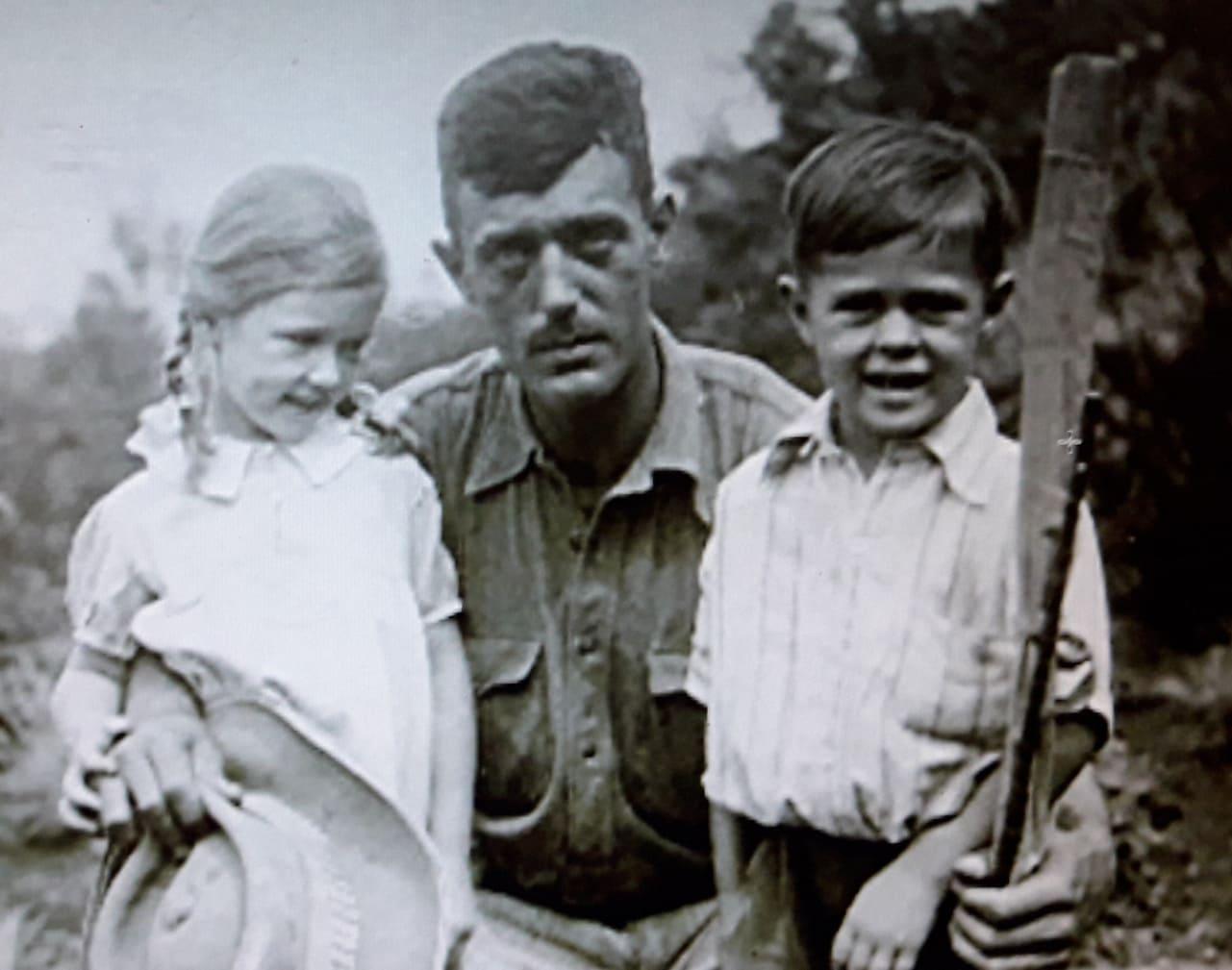
NOTE
We had a very warm welcome to the family home at Plumstead Cape Town.
After ten days with my family we moved to Hout Bay where Mrs Thomas lent us her
delightful seaside cottage. She also provided us with two excellent maids so I had
nothing to do but rest and play on the beach with the children.After a month at the sea George had fully recovered his health though not his
former gay spirits. After another six months with my parents I set off for home with Kate,
leaving Ann and George in my parent’s home under the care of my elder sister,
Marjorie.One or two incidents during that visit remain clearly in my memory. Our children
had never met elderly people and were astonished at the manifestations of age. One
morning an elderly lady came around to collect church dues. She was thin and stooped
and Ann surveyed her with awe. She turned to me with a puzzled expression and
asked in her clear voice, “Mummy, why has that old lady got a moustache – oh and a
beard?’ The old lady in question was very annoyed indeed and said, “What a rude little
girl.” Ann could not understand this, she said, “But Mummy, I only said she had a
moustache and a beard and she has.” So I explained as best I could that when people
have defects of this kind they are hurt if anyone mentions them.A few days later a strange young woman came to tea. I had been told that she
had a most disfiguring birthmark on her cheek and warned Ann that she must not
comment on it. Alas! with the kindest intentions Ann once again caused me acute
embarrassment. The young woman was hardly seated when Ann went up to her and
gently patted the disfiguring mark saying sweetly, “Oh, I do like this horrible mark on your
face.”I remember also the afternoon when Kate and George were christened. My
mother had given George a white silk shirt for the occasion and he wore it with intense
pride. Kate was baptised first without incident except that she was lost in admiration of a
gold bracelet given her that day by her Godmother and exclaimed happily, “My
bangle, look my bangle,” throughout the ceremony. When George’s turn came the
clergyman held his head over the font and poured water on George’s forehead. Some
splashed on his shirt and George protested angrily, “Mum, he has wet my shirt!” over
and over again whilst I led him hurriedly outside.My last memory of all is at the railway station. The time had come for Kate and
me to get into our compartment. My sisters stood on the platform with Ann and George.
Ann was resigned to our going, George was not so, at the last moment Sylvia, my
younger sister, took him off to see the engine. The whistle blew and I said good-bye to
my gallant little Ann. “Mummy”, she said urgently to me, “Don’t forget to wave to
George.”And so I waved good-bye to my children, never dreaming that a war would
intervene and it would be eight long years before I saw them again.January 28, 2022 at 3:13 pm #6262In reply to: The Elusive Samuel Housley and Other Family Stories
From Tanganyika with Love
continued ~ part 3
With thanks to Mike Rushby.
Mchewe Estate. 22nd March 1935
Dearest Family,
I am feeling much better now that I am five months pregnant and have quite got
my appetite back. Once again I go out with “the Mchewe Hunt” which is what George
calls the procession made up of the donkey boy and donkey with Ann confidently riding
astride, me beside the donkey with Georgie behind riding the stick which he much
prefers to the donkey. The Alsatian pup, whom Ann for some unknown reason named
‘Tubbage’, and the two cats bring up the rear though sometimes Tubbage rushes
ahead and nearly knocks me off my feet. He is not the loveable pet that Kelly was.
It is just as well that I have recovered my health because my mother-in-law has
decided to fly out from England to look after Ann and George when I am in hospital. I am
very grateful for there is no one lse to whom I can turn. Kath Hickson-Wood is seldom on
their farm because Hicky is working a guano claim and is making quite a good thing out of
selling bat guano to the coffee farmers at Mbosi. They camp out at the claim, a series of
caves in the hills across the valley and visit the farm only occasionally. Anne Molteno is
off to Cape Town to have her baby at her mothers home and there are no women in
Mbeya I know well. The few women are Government Officials wives and they come
and go. I make so few trips to the little town that there is no chance to get on really
friendly terms with them.Janey, the ayah, is turning into a treasure. She washes and irons well and keeps
the children’s clothes cupboard beautifully neat. Ann and George however are still
reluctant to go for walks with her. They find her dull because, like all African ayahs, she
has no imagination and cannot play with them. She should however be able to help with
the baby. Ann is very excited about the new baby. She so loves all little things.
Yesterday she went into ecstasies over ten newly hatched chicks.She wants a little sister and perhaps it would be a good thing. Georgie is so very
active and full of mischief that I feel another wild little boy might be more than I can
manage. Although Ann is older, it is Georgie who always thinks up the mischief. They
have just been having a fight. Georgie with the cooks umbrella versus Ann with her frilly
pink sunshade with the inevitable result that the sunshade now has four broken ribs.
Any way I never feel lonely now during the long hours George is busy on the
shamba. The children keep me on my toes and I have plenty of sewing to do for the
baby. George is very good about amusing the children before their bedtime and on
Sundays. In the afternoons when it is not wet I take Ann and Georgie for a walk down
the hill. George meets us at the bottom and helps me on the homeward journey. He
grabs one child in each hand by the slack of their dungarees and they do a sort of giant
stride up the hill, half walking half riding.Very much love,
Eleanor.Mchewe Estate. 14th June 1935
Dearest Family,
A great flap here. We had a letter yesterday to say that mother-in-law will be
arriving in four days time! George is very amused at my frantic efforts at spring cleaning
but he has told me before that she is very house proud so I feel I must make the best
of what we have.George is very busy building a store for the coffee which will soon be ripening.
This time he is doing the bricklaying himself. It is quite a big building on the far end of the
farm and close to the river. He is also making trays of chicken wire nailed to wooden
frames with cheap calico stretched over the wire.Mother will have to sleep in the verandah room which leads off the bedroom
which we share with the children. George will have to sleep in the outside spare room as
there is no door between the bedroom and the verandah room. I am sewing frantically
to make rose coloured curtains and bedspread out of material mother-in-law sent for
Christmas and will have to make a curtain for the doorway. The kitchen badly needs
whitewashing but George says he cannot spare the labour so I hope mother won’t look.
To complicate matters, George has been invited to lunch with the Governor on the day
of Mother’s arrival. After lunch they are to visit the newly stocked trout streams in the
Mporotos. I hope he gets back to Mbeya in good time to meet mother’s plane.
Ann has been off colour for a week. She looks very pale and her pretty fair hair,
normally so shiny, is dull and lifeless. It is such a pity that mother should see her like this
because first impressions do count so much and I am looking to the children to attract
attention from me. I am the size of a circus tent and hardly a dream daughter-in-law.
Georgie, thank goodness, is blooming but he has suddenly developed a disgusting
habit of spitting on the floor in the manner of the natives. I feel he might say “Gran, look
how far I can spit and give an enthusiastic demonstration.Just hold thumbs that all goes well.
your loving but anxious,
Eleanor.Mchewe Estate. 28th June 1935
Dearest Family,
Mother-in-law duly arrived in the District Commissioner’s car. George did not dare
to use the A.C. as she is being very temperamental just now. They also brought the
mail bag which contained a parcel of lovely baby clothes from you. Thank you very
much. Mother-in-law is very put out because the large parcel she posted by surface
mail has not yet arrived.Mother arrived looking very smart in an ankle length afternoon frock of golden
brown crepe and smart hat, and wearing some very good rings. She is a very
handsome woman with the very fair complexion that goes with red hair. The hair, once
Titan, must now be grey but it has been very successfully tinted and set. I of course,
was shapeless in a cotton maternity frock and no credit to you. However, so far, motherin-
law has been uncritical and friendly and charmed with the children who have taken to
her. Mother does not think that the children resemble me in any way. Ann resembles her
family the Purdys and Georgie is a Morley, her mother’s family. She says they had the
same dark eyes and rather full mouths. I say feebly, “But Georgie has my colouring”, but
mother won’t hear of it. So now you know! Ann is a Purdy and Georgie a Morley.
Perhaps number three will be a Leslie.What a scramble I had getting ready for mother. Her little room really looks pretty
and fresh, but the locally woven grass mats arrived only minutes before mother did. I
also frantically overhauled our clothes and it a good thing that I did so because mother
has been going through all the cupboards looking for mending. Mother is kept so busy
in her own home that I think she finds time hangs on her hands here. She is very good at
entertaining the children and has even tried her hand at picking coffee a couple of times.
Mother cannot get used to the native boy servants but likes Janey, so Janey keeps her
room in order. Mother prefers to wash and iron her own clothes.I almost lost our cook through mother’s surplus energy! Abel our previous cook
took a new wife last month and, as the new wife, and Janey the old, were daggers
drawn, Abel moved off to a job on the Lupa leaving Janey and her daughter here.
The new cook is capable, but he is a fearsome looking individual called Alfani. He has a
thick fuzz of hair which he wears long, sometimes hidden by a dingy turban, and he
wears big brass earrings. I think he must be part Somali because he has a hawk nose
and a real Brigand look. His kitchen is never really clean but he is an excellent cook and
as cooks are hard to come by here I just keep away from the kitchen. Not so mother!
A few days after her arrival she suggested kindly that I should lie down after lunch
so I rested with the children whilst mother, unknown to me, went out to the kitchen and
not only scrubbed the table and shelves but took the old iron stove to pieces and
cleaned that. Unfortunately in her zeal she poked a hole through the stove pipe.
Had I known of these activities I would have foreseen the cook’s reaction when
he returned that evening to cook the supper. he was furious and wished to leave on the
spot and demanded his wages forthwith. The old Memsahib had insulted him by
scrubbing his already spotless kitchen and had broken his stove and made it impossible
for him to cook. This tirade was accompanied by such waving of hands and rolling of
eyes that I longed to sack him on the spot. However I dared not as I might not get
another cook for weeks. So I smoothed him down and he patched up the stove pipe
with a bit of tin and some wire and produced a good meal. I am wondering what
transformations will be worked when I am in hospital.Our food is really good but mother just pecks at it. No wonder really, because
she has had some shocks. One day she found the kitchen boy diligently scrubbing the box lavatory seat with a scrubbing brush which he dipped into one of my best large
saucepans! No one can foresee what these boys will do. In these remote areas house
servants are usually recruited from the ranks of the very primitive farm labourers, who first
come to the farm as naked savages, and their notions of hygiene simply don’t exist.
One day I said to mother in George’s presence “When we were newly married,
mother, George used to brag about your cooking and say that you would run a home
like this yourself with perhaps one ‘toto’. Mother replied tartly, “That was very bad of
George and not true. If my husband had brought me out here I would not have stayed a
month. I think you manage very well.” Which reply made me warm to mother a lot.
To complicate things we have a new pup, a little white bull terrier bitch whom
George has named Fanny. She is tiny and not yet house trained but seems a plucky
and attractive little animal though there is no denying that she does look like a piglet.Very much love to all,
Eleanor.Mchewe Estate. 3rd August 1935
Dearest Family,
Here I am in hospital, comfortably in bed with our new daughter in her basket
beside me. She is a lovely little thing, very plump and cuddly and pink and white and
her head is covered with tiny curls the colour of Golden Syrup. We meant to call her
Margery Kate, after our Marj and my mother-in-law whose name is Catherine.
I am enjoying the rest, knowing that George and mother will be coping
successfully on the farm. My room is full of flowers, particularly with the roses and
carnations which grow so well here. Kate was not due until August 5th but the doctor
wanted me to come in good time in view of my tiresome early pregnancy.For weeks beforehand George had tinkered with the A.C. and we started for
Mbeya gaily enough on the twenty ninth, however, after going like a dream for a couple
of miles, she simply collapsed from exhaustion at the foot of a hill and all the efforts of
the farm boys who had been sent ahead for such an emergency failed to start her. So
George sent back to the farm for the machila and I sat in the shade of a tree, wondering
what would happen if I had the baby there and then, whilst George went on tinkering
with the car. Suddenly she sprang into life and we roared up that hill and all the way into
Mbeya. The doctor welcomed us pleasantly and we had tea with his family before I
settled into my room. Later he examined me and said that it was unlikely that the baby
would be born for several days. The new and efficient German nurse said, “Thank
goodness for that.” There was a man in hospital dying from a stomach cancer and she
had not had a decent nights sleep for three nights.Kate however had other plans. I woke in the early morning with labour pains but
anxious not to disturb the nurse, I lay and read or tried to read a book, hoping that I
would not have to call the nurse until daybreak. However at four a.m., I went out into the
wind which was howling along the open verandah and knocked on the nurse’s door. She
got up and very crossly informed me that I was imagining things and should get back to
bed at once. She said “It cannot be so. The Doctor has said it.” I said “Of course it is,”
and then and there the water broke and clinched my argument. She then went into a flat
spin. “But the bed is not ready and my instruments are not ready,” and she flew around
to rectify this and also sent an African orderly to call the doctor. I paced the floor saying
warningly “Hurry up with that bed. I am going to have the baby now!” She shrieked
“Take off your dressing gown.” But I was passed caring. I flung myself on the bed and
there was Kate. The nurse had done all that was necessary by the time the doctor
arrived.A funny thing was, that whilst Kate was being born on the bed, a black cat had
kittens under it! The doctor was furious with the nurse but the poor thing must have crept
in out of the cold wind when I went to call the nurse. A happy omen I feel for the baby’s
future. George had no anxiety this time. He stayed at the hospital with me until ten
o’clock when he went down to the hotel to sleep and he received the news in a note
from me with his early morning tea. He went to the farm next morning but will return on
the sixth to fetch me home.I do feel so happy. A very special husband and three lovely children. What
more could anyone possibly want.Lots and lots of love,
Eleanor.Mchewe Estate. 20th August 1935
Dearest Family,
Well here we are back at home and all is very well. The new baby is very placid
and so pretty. Mother is delighted with her and Ann loved her at sight but Georgie is not
so sure. At first he said, “Your baby is no good. Chuck her in the kalonga.” The kalonga
being the ravine beside the house , where, I regret to say, much of the kitchen refuse is
dumped. he is very jealous when I carry Kate around or feed her but is ready to admire
her when she is lying alone in her basket.George walked all the way from the farm to fetch us home. He hired a car and
native driver from the hotel, but drove us home himself going with such care over ruts
and bumps. We had a great welcome from mother who had had the whole house
spring cleaned. However George loyally says it looks just as nice when I am in charge.
Mother obviously, had had more than enough of the back of beyond and
decided to stay on only one week after my return home. She had gone into the kitchen
one day just in time to see the houseboy scooping the custard he had spilt on the table
back into the jug with the side of his hand. No doubt it would have been served up
without a word. On another occasion she had walked in on the cook’s daily ablutions. He
was standing in a small bowl of water in the centre of the kitchen, absolutely naked,
enjoying a slipper bath. She left last Wednesday and gave us a big laugh before she
left. She never got over her horror of eating food prepared by our cook and used to
push it around her plate. Well, when the time came for mother to leave for the plane, she
put on the very smart frock in which she had arrived, and then came into the sitting room
exclaiming in dismay “Just look what has happened, I must have lost a stone!’ We
looked, and sure enough, the dress which had been ankle deep before, now touched
the floor. “Good show mother.” said George unfeelingly. “You ought to be jolly grateful,
you needed to lose weight and it would have cost you the earth at a beauty parlour to
get that sylph-like figure.”When mother left she took, in a perforated matchbox, one of the frilly mantis that
live on our roses. She means to keep it in a goldfish bowl in her dining room at home.
Georgie and Ann filled another matchbox with dead flies for food for the mantis on the
journey.Now that mother has left, Georgie and Ann attach themselves to me and firmly
refuse to have anything to do with the ayah,Janey. She in any case now wishes to have
a rest. Mother tipped her well and gave her several cotton frocks so I suspect she wants
to go back to her hometown in Northern Rhodesia to show off a bit.
Georgie has just sidled up with a very roguish look. He asked “You like your
baby?” I said “Yes indeed I do.” He said “I’ll prick your baby with a velly big thorn.”Who would be a mother!
EleanorMchewe Estate. 20th September 1935
Dearest Family,
I have been rather in the wars with toothache and as there is still no dentist at
Mbeya to do the fillings, I had to have four molars extracted at the hospital. George
says it is fascinating to watch me at mealtimes these days because there is such a gleam
of satisfaction in my eye when I do manage to get two teeth to meet on a mouthful.
About those scissors Marj sent Ann. It was not such a good idea. First she cut off tufts of
George’s hair so that he now looks like a bad case of ringworm and then she cut a scalp
lock, a whole fist full of her own shining hair, which George so loves. George scolded
Ann and she burst into floods of tears. Such a thing as a scolding from her darling daddy
had never happened before. George immediately made a long drooping moustache
out of the shorn lock and soon had her smiling again. George is always very gentle with
Ann. One has to be , because she is frightfully sensitive to criticism.I am kept pretty busy these days, Janey has left and my houseboy has been ill
with pneumonia. I now have to wash all the children’s things and my own, (the cook does
George’s clothes) and look after the three children. Believe me, I can hardly keep awake
for Kate’s ten o’clock feed.I do hope I shall get some new servants next month because I also got George
to give notice to the cook. I intercepted him last week as he was storming down the hill
with my large kitchen knife in his hand. “Where are you going with my knife?” I asked.
“I’m going to kill a man!” said Alfani, rolling his eyes and looking extremely ferocious. “He
has taken my wife.” “Not with my knife”, said I reaching for it. So off Alfani went, bent on
vengeance and I returned the knife to the kitchen. Dinner was served and I made no
enquiries but I feel that I need someone more restful in the kitchen than our brigand
Alfani.George has been working on the car and has now fitted yet another radiator. This
is a lorry one and much too tall to be covered by the A.C.’s elegant bonnet which is
secured by an old strap. The poor old A.C. now looks like an ancient shoe with a turned
up toe. It only needs me in it with the children to make a fine illustration to the old rhyme!
Ann and Georgie are going through a climbing phase. They practically live in
trees. I rushed out this morning to investigate loud screams and found Georgie hanging
from a fork in a tree by one ankle, whilst Ann stood below on tiptoe with hands stretched
upwards to support his head.Do I sound as though I have straws in my hair? I have.
Lots of love,
Eleanor.Mchewe Estate. 11th October 1935
Dearest Family,
Thank goodness! I have a new ayah name Mary. I had heard that there was a
good ayah out of work at Tukuyu 60 miles away so sent a messenger to fetch her. She
arrived after dark wearing a bright dress and a cheerful smile and looked very suitable by
the light of a storm lamp. I was horrified next morning to see her in daylight. She was
dressed all in black and had a rather sinister look. She reminds me rather of your old maid
Candace who overheard me laughing a few days before Ann was born and croaked
“Yes , Miss Eleanor, today you laugh but next week you might be dead.” Remember
how livid you were, dad?I think Mary has the same grim philosophy. Ann took one look at her and said,
“What a horrible old lady, mummy.” Georgie just said “Go away”, both in English and Ki-
Swahili. Anyway Mary’s references are good so I shall keep her on to help with Kate
who is thriving and bonny and placid.Thank you for the offer of toys for Christmas but, if you don’t mind, I’d rather have
some clothing for the children. Ann is quite contented with her dolls Barbara and Yvonne.
Barbara’s once beautiful face is now pieced together like a jigsaw puzzle having come
into contact with Georgie’s ever busy hammer. However Ann says she will love her for
ever and she doesn’t want another doll. Yvonne’s hay day is over too. She
disappeared for weeks and we think Fanny, the pup, was the culprit. Ann discovered
Yvonne one morning in some long wet weeds. Poor Yvonne is now a ghost of her
former self. All the sophisticated make up was washed off her papier-mâché face and
her hair is decidedly bedraggled, but Ann was radiant as she tucked her back into bed
and Yvonne is as precious to Ann as she ever was.Georgie simply does not care for toys. His paint box, hammer and the trenching
hoe George gave him for his second birthday are all he wants or needs. Both children
love books but I sometimes wonder whether they stimulate Ann’s imagination too much.
The characters all become friends of hers and she makes up stories about them to tell
Georgie. She adores that illustrated children’s Bible Mummy sent her but you would be
astonished at the yarns she spins about “me and my friend Jesus.” She also will call
Moses “Old Noses”, and looking at a picture of Jacob’s dream, with the shining angels
on the ladder between heaven and earth, she said “Georgie, if you see an angel, don’t
touch it, it’s hot.”Eleanor.
Mchewe Estate. 17th October 1935
Dearest Family,
I take back the disparaging things I said about my new Ayah, because she has
proved her worth in an unexpected way. On Wednesday morning I settled Kate in he
cot after her ten o’clock feed and sat sewing at the dining room table with Ann and
Georgie opposite me, both absorbed in painting pictures in identical seed catalogues.
Suddenly there was a terrific bang on the back door, followed by an even heavier blow.
The door was just behind me and I got up and opened it. There, almost filling the door
frame, stood a huge native with staring eyes and his teeth showing in a mad grimace. In
his hand he held a rolled umbrella by the ferrule, the shaft I noticed was unusually long
and thick and the handle was a big round knob.I was terrified as you can imagine, especially as, through the gap under the
native’s raised arm, I could see the new cook and the kitchen boy running away down to
the shamba! I hastily tried to shut and lock the door but the man just brushed me aside.
For a moment he stood over me with the umbrella raised as though to strike. Rather
fortunately, I now think, I was too petrified to say a word. The children never moved but
Tubbage, the Alsatian, got up and jumped out of the window!Then the native turned away and still with the same fixed stare and grimace,
began to attack the furniture with his umbrella. Tables and chairs were overturned and
books and ornaments scattered on the floor. When the madman had his back turned and
was busily bashing the couch, I slipped round the dining room table, took Ann and
Georgie by the hand and fled through the front door to the garage where I hid the
children in the car. All this took several minutes because naturally the children were
terrified. I was worried to death about the baby left alone in the bedroom and as soon
as I had Ann and Georgie settled I ran back to the house.I reached the now open front door just as Kianda the houseboy opened the back
door of the lounge. He had been away at the river washing clothes but, on hearing of the
madman from the kitchen boy he had armed himself with a stout stick and very pluckily,
because he is not a robust boy, had returned to the house to eject the intruder. He
rushed to attack immediately and I heard a terrific exchange of blows behind me as I
opened our bedroom door. You can imagine what my feelings were when I was
confronted by an empty cot! Just then there was an uproar inside as all the farm
labourers armed with hoes and pangas and sticks, streamed into the living room from the
shamba whence they had been summoned by the cook. In no time at all the huge
native was hustled out of the house, flung down the front steps, and securely tied up
with strips of cloth.In the lull that followed I heard a frightened voice calling from the bathroom.
”Memsahib is that you? The child is here with me.” I hastily opened the bathroom door
to find Mary couched in a corner by the bath, shielding Kate with her body. Mary had
seen the big native enter the house and her first thought had been for her charge. I
thanked her and promised her a reward for her loyalty, and quickly returned to the garage
to reassure Ann and Georgie. I met George who looked white and exhausted as well
he might having run up hill all the way from the coffee store. The kitchen boy had led him
to expect the worst and he was most relieved to find us all unhurt if a bit shaken.
We returned to the house by the back way whilst George went to the front and
ordered our labourers to take their prisoner and lock him up in the store. George then
discussed the whole affair with his Headman and all the labourers after which he reported
to me. “The boys say that the bastard is an ex-Askari from Nyasaland. He is not mad as
you thought but he smokes bhang and has these attacks. I suppose I should take him to
Mbeya and have him up in court. But if I do that you’ll have to give evidence and that will be a nuisance as the car won’t go and there is also the baby to consider.”Eventually we decided to leave the man to sleep off the effects of the Bhang
until evening when he would be tried before an impromptu court consisting of George,
the local Jumbe(Headman) and village Elders, and our own farm boys and any other
interested spectators. It was not long before I knew the verdict because I heard the
sound of lashes. I was not sorry at all because I felt the man deserved his punishment
and so did all the Africans. They love children and despise anyone who harms or
frightens them. With great enthusiasm they frog-marched him off our land, and I sincerely
hope that that is the last we see or him. Ann and Georgie don’t seem to brood over this
affair at all. The man was naughty and he was spanked, a quite reasonable state of
affairs. This morning they hid away in the small thatched chicken house. This is a little brick
building about four feet square which Ann covets as a dolls house. They came back
covered in stick fleas which I had to remove with paraffin. My hens are laying well but
they all have the ‘gapes’! I wouldn’t run a chicken farm for anything, hens are such fussy,
squawking things.Now don’t go worrying about my experience with the native. Such things
happen only once in a lifetime. We are all very well and happy, and life, apart from the
children’s pranks is very tranquil.Lots and lots of love,
Eleanor.Mchewe Estate. 25th October 1935
Dearest Family,
The hot winds have dried up the shamba alarmingly and we hope every day for
rain. The prices for coffee, on the London market, continue to be low and the local
planters are very depressed. Coffee grows well enough here but we are over 400
miles from the railway and transport to the railhead by lorry is very expensive. Then, as
there is no East African Marketing Board, the coffee must be shipped to England for
sale. Unless the coffee fetches at least 90 pounds a ton it simply doesn’t pay to grow it.
When we started planting in 1931 coffee was fetching as much as 115 pounds a ton but
prices this year were between 45 and 55 pounds. We have practically exhausted our
capitol and so have all our neighbours. The Hickson -Woods have been keeping their
pot boiling by selling bat guano to the coffee farmers at Mbosi but now everyone is
broke and there is not a market for fertilisers. They are offering their farm for sale at a very
low price.Major Jones has got a job working on the district roads and Max Coster talks of
returning to his work as a geologist. George says he will have to go gold digging on the
Lupa unless there is a big improvement in the market. Luckily we can live quite cheaply
here. We have a good vegetable garden, milk is cheap and we have plenty of fruit.
There are mulberries, pawpaws, grenadillas, peaches, and wine berries. The wine
berries are very pretty but insipid though Ann and Georgie love them. Each morning,
before breakfast, the old garden boy brings berries for Ann and Georgie. With a thorn
the old man pins a large leaf from a wild fig tree into a cone which he fills with scarlet wine
berries. There is always a cone for each child and they wait eagerly outside for the daily
ceremony of presentation.The rats are being a nuisance again. Both our cats, Skinny Winnie and Blackboy
disappeared a few weeks ago. We think they made a meal for a leopard. I wrote last
week to our grocer at Mbalizi asking him whether he could let us have a couple of kittens
as I have often seen cats in his store. The messenger returned with a nailed down box.
The kitchen boy was called to prize up the lid and the children stood by in eager
anticipation. Out jumped two snarling and spitting creatures. One rushed into the kalonga
and the other into the house and before they were captured they had drawn blood from
several boys. I told the boys to replace the cats in the box as I intended to return them
forthwith. They had the colouring, stripes and dispositions of wild cats and I certainly
didn’t want them as pets, but before the boys could replace the lid the cats escaped
once more into the undergrowth in the kalonga. George fetched his shotgun and said he
would shoot the cats on sight or they would kill our chickens. This was more easily said
than done because the cats could not be found. However during the night the cats
climbed up into the loft af the house and we could hear them moving around on the reed
ceiling.I said to George,”Oh leave the poor things. At least they might frighten the rats
away.” That afternoon as we were having tea a thin stream of liquid filtered through the
ceiling on George’s head. Oh dear!!! That of course was the end. Some raw meat was
put on the lawn for bait and yesterday George shot both cats.I regret to end with the sad story of Mary, heroine in my last letter and outcast in
this. She came to work quite drunk two days running and I simply had to get rid of her. I
have heard since from Kath Wood that Mary lost her last job at Tukuyu for the same
reason. She was ayah to twin girls and one day set their pram on fire.So once again my hands are more than full with three lively children. I did say
didn’t I, when Ann was born that I wanted six children?Very much love from us all, Eleanor.
Mchewe Estate. 8th November 1935
Dearest Family,
To set your minds at rest I must tell you that the native who so frightened me and
the children is now in jail for attacking a Greek at Mbalizi. I hear he is to be sent back to
Rhodesia when he has finished his sentence.Yesterday we had one of our rare trips to Mbeya. George managed to get a couple of
second hand tyres for the old car and had again got her to work so we are celebrating our
wedding anniversary by going on an outing. I wore the green and fawn striped silk dress
mother bought me and the hat and shoes you sent for my birthday and felt like a million
dollars, for a change. The children all wore new clothes too and I felt very proud of them.
Ann is still very fair and with her refined little features and straight silky hair she
looks like Alice in Wonderland. Georgie is dark and sturdy and looks best in khaki shirt
and shorts and sun helmet. Kate is a pink and gold baby and looks good enough to eat.
We went straight to the hotel at Mbeya and had the usual warm welcome from
Ken and Aunty May Menzies. Aunty May wears her hair cut short like a mans and
usually wears shirt and tie and riding breeches and boots. She always looks ready to go
on safari at a moments notice as indeed she is. She is often called out to a case of illness
at some remote spot.There were lots of people at the hotel from farms in the district and from the
diggings. I met women I had not seen for four years. One, a Mrs Masters from Tukuyu,
said in the lounge, “My God! Last time I saw you , you were just a girl and here you are
now with two children.” To which I replied with pride, “There is another one in a pram on
the verandah if you care to look!” Great hilarity in the lounge. The people from the
diggings seem to have plenty of money to throw around. There was a big party on the
go in the bar.One of our shamba boys died last Friday and all his fellow workers and our
house boys had the day off to attend the funeral. From what I can gather the local
funerals are quite cheery affairs. The corpse is dressed in his best clothes and laid
outside his hut and all who are interested may view the body and pay their respects.
The heir then calls upon anyone who had a grudge against the dead man to say his say
and thereafter hold his tongue forever. Then all the friends pay tribute to the dead man
after which he is buried to the accompaniment of what sounds from a distance, very
cheerful keening.Most of our workmen are pagans though there is a Lutheran Mission nearby and
a big Roman Catholic Mission in the area too. My present cook, however, claims to be
a Christian. He certainly went to a mission school and can read and write and also sing
hymns in Ki-Swahili. When I first engaged him I used to find a large open Bible
prominently displayed on the kitchen table. The cook is middle aged and arrived here
with a sensible matronly wife. To my surprise one day he brought along a young girl,
very plump and giggly and announced proudly that she was his new wife, I said,”But I
thought you were a Christian Jeremiah? Christians don’t have two wives.” To which he
replied, “Oh Memsahib, God won’t mind. He knows an African needs two wives – one
to go with him when he goes away to work and one to stay behind at home to cultivate
the shamba.Needles to say, it is the old wife who has gone to till the family plot.
With love to all,
Eleanor.Mchewe Estate. 21st November 1935
Dearest Family,
The drought has broken with a bang. We had a heavy storm in the hills behind
the house. Hail fell thick and fast. So nice for all the tiny new berries on the coffee! The
kids loved the excitement and three times Ann and Georgie ran out for a shower under
the eaves and had to be changed. After the third time I was fed up and made them both
lie on their beds whilst George and I had lunch in peace. I told Ann to keep the
casement shut as otherwise the rain would drive in on her bed. Half way through lunch I
heard delighted squeals from Georgie and went into the bedroom to investigate. Ann
was standing on the outer sill in the rain but had shut the window as ordered. “Well
Mummy , you didn’t say I mustn’t stand on the window sill, and I did shut the window.”
George is working so hard on the farm. I have a horrible feeling however that it is
what the Africans call ‘Kazi buri’ (waste of effort) as there seems no chance of the price of
coffee improving as long as this world depression continues. The worry is that our capitol
is nearly exhausted. Food is becoming difficult now that our neighbours have left. I used
to buy delicious butter from Kath Hickson-Wood and an African butcher used to kill a
beast once a week. Now that we are his only European customers he very rarely kills
anything larger than a goat, and though we do eat goat, believe me it is not from choice.
We have of course got plenty to eat, but our diet is very monotonous. I was
delighted when George shot a large bushbuck last week. What we could not use I cut
into strips and the salted strips are now hanging in the open garage to dry.With love to all,
Eleanor.Mchewe Estate. 6th December 1935
Dearest Family,
We have had a lot of rain and the countryside is lovely and green. Last week
George went to Mbeya taking Ann with him. This was a big adventure for Ann because
never before had she been anywhere without me. She was in a most blissful state as
she drove off in the old car clutching a little basket containing sandwiches and half a bottle
of milk. She looked so pretty in a new blue frock and with her tiny plaits tied with
matching blue ribbons. When Ann is animated she looks charming because her normally
pale cheeks become rosy and she shows her pretty dimples.As I am still without an ayah I rather looked forward to a quiet morning with only
Georgie and Margery Kate to care for, but Georgie found it dull without Ann and wanted
to be entertained and even the normally placid baby was peevish. Then in mid morning
the rain came down in torrents, the result of a cloudburst in the hills directly behind our
house. The ravine next to our house was a terrifying sight. It appeared to be a great
muddy, roaring waterfall reaching from the very top of the hill to a point about 30 yards
behind our house and then the stream rushed on down the gorge in an angry brown
flood. The roar of the water was so great that we had to yell at one another to be heard.
By lunch time the rain had stopped and I anxiously awaited the return of Ann and
George. They returned on foot, drenched and hungry at about 2.30pm . George had
had to abandon the car on the main road as the Mchewe River had overflowed and
turned the road into a muddy lake. The lower part of the shamba had also been flooded
and the water receded leaving branches and driftwood amongst the coffee. This was my
first experience of a real tropical storm. I am afraid that after the battering the coffee has
had there is little hope of a decent crop next year.Anyway Christmas is coming so we don’t dwell on these mishaps. The children
have already chosen their tree from amongst the young cypresses in the vegetable
garden. We all send our love and hope that you too will have a Happy Christmas.Eleanor
Mchewe Estate. 22nd December 1935
Dearest Family,
I’ve been in the wars with my staff. The cook has been away ill for ten days but is
back today though shaky and full of self pity. The houseboy, who really has been a brick
during the cooks absence has now taken to his bed and I feel like taking to Mine! The
children however have the Christmas spirit and are making weird and wonderful paper
decorations. George’s contribution was to have the house whitewashed throughout and
it looks beautifully fresh.My best bit of news is that my old ayah Janey has been to see me and would
like to start working here again on Jan 1st. We are all very well. We meant to give
ourselves an outing to Mbeya as a Christmas treat but here there is an outbreak of
enteric fever there so will now not go. We have had two visitors from the Diggings this
week. The children see so few strangers that they were fascinated and hung around
staring. Ann sat down on the arm of the couch beside one and studied his profile.
Suddenly she announced in her clear voice, “Mummy do you know, this man has got
wax in his ears!” Very awkward pause in the conversation. By the way when I was
cleaning out little Kate’s ears with a swab of cotton wool a few days ago, Ann asked
“Mummy, do bees have wax in their ears? Well, where do you get beeswax from
then?”I meant to keep your Christmas parcel unopened until Christmas Eve but could
not resist peeping today. What lovely things! Ann so loves pretties and will be
delighted with her frocks. My dress is just right and I love Georgie’s manly little flannel
shorts and blue shirt. We have bought them each a watering can. I suppose I shall
regret this later. One of your most welcome gifts is the album of nursery rhyme records. I
am so fed up with those that we have. Both children love singing. I put a record on the
gramophone geared to slow and off they go . Georgie sings more slowly than Ann but
much more tunefully. Ann sings in a flat monotone but Georgie with great expression.
You ought to hear him render ‘Sing a song of sixpence’. He cannot pronounce an R or
an S. Mother has sent a large home made Christmas pudding and a fine Christmas
cake and George will shoot some partridges for Christmas dinner.
Think of us as I shall certainly think of you.Your very loving,
Eleanor.Mchewe Estate. 2nd January 1936
Dearest Family,
Christmas was fun! The tree looked very gay with its load of tinsel, candles and
red crackers and the coloured balloons you sent. All the children got plenty of toys
thanks to Grandparents and Aunts. George made Ann a large doll’s bed and I made
some elegant bedding, Barbara, the big doll is now permanently bed ridden. Her poor
shattered head has come all unstuck and though I have pieced it together again it is a sad
sight. If you have not yet chosen a present for her birthday next month would you
please get a new head from the Handy House. I enclose measurements. Ann does so
love the doll. She always calls her, “My little girl”, and she keeps the doll’s bed beside
her own and never fails to kiss her goodnight.We had no guests for Christmas this year but we were quite festive. Ann
decorated the dinner table with small pink roses and forget-me-knots and tinsel and the
crackers from the tree. It was a wet day but we played the new records and both
George and I worked hard to make it a really happy day for the children. The children
were hugely delighted when George made himself a revolting set of false teeth out of
plasticine and a moustache and beard of paper straw from a chocolate box. “Oh Daddy
you look exactly like Father Christmas!” cried an enthralled Ann. Before bedtime we lit
all the candles on the tree and sang ‘Away in a Manger’, and then we opened the box of
starlights you sent and Ann and Georgie had their first experience of fireworks.
After the children went to bed things deteriorated. First George went for his bath
and found and killed a large black snake in the bathroom. It must have been in the
bathroom when I bathed the children earlier in the evening. Then I developed bad
toothache which kept me awake all night and was agonising next day. Unfortunately the
bridge between the farm and Mbeya had been washed away and the water was too
deep for the car to ford until the 30th when at last I was able to take my poor swollen
face to Mbeya. There is now a young German woman dentist working at the hospital.
She pulled out the offending molar which had a large abscess attached to it.
Whilst the dentist attended to me, Ann and Georgie played happily with the
doctor’s children. I wish they could play more often with other children. Dr Eckhardt was
very pleased with Margery Kate who at seven months weighs 17 lbs and has lovely
rosy cheeks. He admired Ann and told her that she looked just like a German girl. “No I
don’t”, cried Ann indignantly, “I’m English!”We were caught in a rain storm going home and as the old car still has no
windscreen or side curtains we all got soaked except for the baby who was snugly
wrapped in my raincoat. The kids thought it great fun. Ann is growing up fast now. She
likes to ‘help mummy’. She is a perfectionist at four years old which is rather trying. She
gets so discouraged when things do not turn out as well as she means them to. Sewing
is constantly being unpicked and paintings torn up. She is a very sensitive child.
Georgie is quite different. He is a man of action, but not silent. He talks incessantly
but lisps and stumbles over some words. At one time Ann and Georgie often
conversed in Ki-Swahili but they now scorn to do so. If either forgets and uses a Swahili
word, the other points a scornful finger and shouts “You black toto”.With love to all,
Eleanor. -
AuthorSearch Results