Search Results for 'makes'
-
AuthorSearch Results
-
July 5, 2024 at 6:39 pm #7531
In reply to: Washed off the sea ~ Creative larks
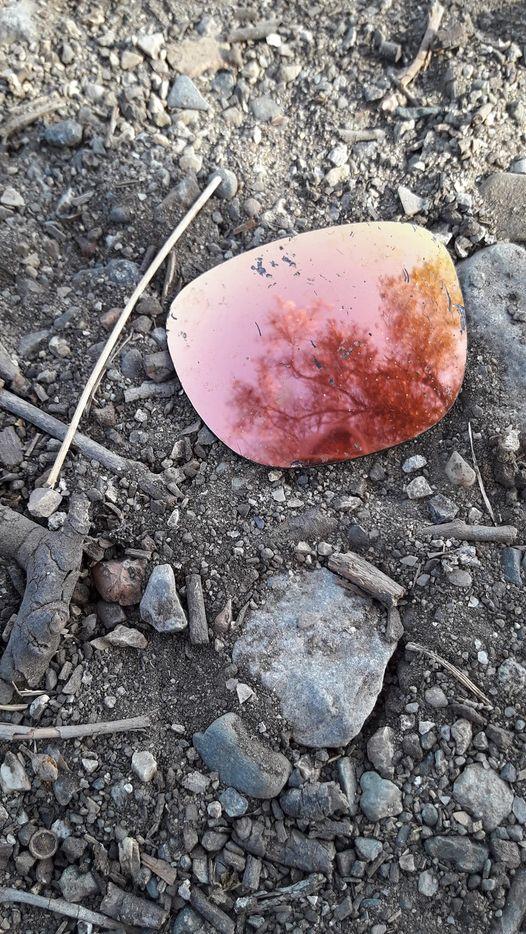
The rose coloured spectacle lens.
Aunt Idle:
“Well, crikey, finding one pink sunglass lens on the road is quite the curiosity, isn’t it? Let’s delve into the symbolic undertones of such an odd discovery. Pink lens, no less—a splash of color with quite the story to tell.
1. Seeing the World through Rose-Tinted Glasses: Finding a pink sunglass lens can symbolize optimism and seeing the world in a positive light. But here’s the kicker—it’s just one lens. This suggests a duality; perhaps you’re being asked to blend optimism with realism. Life isn’t always about sunshine and rainbows, but choosing to see the bright side can balance out the darker shades.
2. Fragmented Perspectives: A single lens means you don’t have the full picture. You’re seeing things partially, which can indicate missing information or a need to look at situations from multiple angles. It’s a nudge to take off those blinders and open your other eye, figuratively speaking. You might be clinging to a half-truth or ignoring an important aspect of your life.
3. Lost and Found: In practical terms, a lone lens on the road means someone has lost it. It’s a signifier of separation, maybe something in your life has split or broken apart. It can be a gentle reminder to look into areas where you might have lost connection—be it with loved ones, a project, or even a part of yourself.
4. Symbol of Love and Compassion: Pink is often associated with love, compassion, and femininity. The lens could be a reminder to look at things with kindness and empathy. Perhaps there’s a situation in your life that requires a softer, more loving approach.
5. Hindsight and Insight: The road is a metaphor for your life’s journey. Finding the lens there might hint at reflecting on past experiences (hindsight) while gaining new understanding or clarity (insight). Maybe there’s an opportunity to learn from what’s happened and apply it moving forward, seeing things with fresh, yet incomplete, clarity.
Putting it in Truella’s Context: If Truella found this lens, it could be a sign she needs to reassess her current path or research direction. Her overwhelming stack of books and discovery of the ancient manuscript hint at a bigger picture she might not be seeing clearly yet. Perhaps she’s overly focused on one aspect and neglecting others.
Personal Symbolism for Aunt Idle: For you, Aunt Idle, this lens could be a cheeky nudge to reassess some of your adventurous antics and half-remembered tales. Maybe there’s an old mystery or a relationship needing a fresh perspective. Or it’s just life’s way of saying, “Look closer, love—you might be missing out!”
In any case, a single pink sunglass lens is a quirky, delightful piece of life’s puzzle, inviting you to ponder, reflect, and adjust your view. So, next time you’re journeying on the dusty roads of life and stumble upon such oddities, take a moment—there just might be a zinger of wisdom waiting for you. Cheers!”

“A lone pink lens paves the road to the unseen clarity of kaleidoscopic sunrise.”
~Journey of Reflections, Enrich P. Lwellman. The Snoot:
“Ahhh, a single pink lens, lost and found amidst the stone and dust! Sings of mysteries and tales untold! Perhaps a sprite misplaced their vision or a pixie left a clue.
Lean close! Such a find whispers soft secrets:
Balance Broken, Yet Bright Like seeing life with a tint of whimsy! One eye tinted pink, the other clear. A call to mix reality with dreams, maybe?
Half Truth, Half Fantasy A hint that stories blend truths and imaginations. Seek both sides to find whole pictures.
Lost and Waiting Could be a sign someone’s journey is incomplete, needing you as a puzzle piece. Maybe the other lens waits for your path?Snootly wisdom: Use the lens not to see, but to imagine.Peer through the pink and let dreams color your heart. Could be you’re on the cusp of a grand adventure; just follow the allure of the pink!
Liz:
Oh, darling, how positively intriguing! A single pink sunglass lens left upon the road—why, it’s like a snippet from one of my novels, fraught with symbolism and brimming with untold stories.
Let’s unravel this little mystery together, shall we? First, the color pink itself is rich with meaning. It speaks of love, compassion, and a certain kind of whimsicality. It’s a hue that embodies the gentle side of passion, the tender whispers of the heart. Now, to find just one lens, separated from its twin, adds a layer of poignancy. It’s a fragment of something once whole, a poignant reminder of loss or incompletion.
One might surmise that this lens represents a part of oneself that has been misplaced or overlooked. Perhaps it’s a call to rediscover a piece of your own heart, the softer, more romantic side that life’s hustle and bustle may have sidelined. Or it could symbolize a different perspective—after all, sunglasses shield us from the sun’s glare, making things clearer in their own shaded way. This lone lens might be urging you to look at a situation with fresh eyes, to find beauty in the fragmented and the unexpected.
Imagine, if you will, a character in one of my novels stumbling upon this very lens. They’d be on the cusp of a grand adventure, naturally. The pink lens would become their talisman, a clue leading them to unforeseen revelations and untold treasures. It would be both a physical object and a metaphorical guide, urging them to view the world—and their place within it—through a lens of love and compassion.
Perhaps it is also a nod to the impermanence of things, a gentle reminder that beauty and meaning can be found even in life’s fleeting moments. Much like the single pink lens, our journeys are filled with fragments of experiences that, when pieced together, create a mosaic of our existence.
So, my dear, take this as a sign to embrace the whimsical, to seek out the overlooked pieces of your own story, and to cherish the beauty of the incomplete. After all, it’s the mysteries and the musings that make life a narrative worth living.
Mater:
Ah, a single pink sunglass lens on the road, you say? Now that’s a curious find. Objects like that can be teeming with symbolic meaning if you’ve got the eyes to see it. Let’s break it down a bit, shall we?
Firstly, the color pink. Traditionally, pink is associated with love, compassion, and nurturing. It’s a color that often brings to mind warmth and affection, something tender and gentle. But finding just one lens suggests something is missing or incomplete—a piece of a larger whole.
A sunglass lens, on the other hand, is meant to protect the eyes from harsh light, allowing you to see the world more clearly without being blinded. Seeing through a pink lens, metaphorically speaking, can mean looking at life with an optimistic or compassionate perspective. It’s like seeing the world through rose-colored glasses, as they say.
Now, finding just one lens on the road—well, roads are pathways, journeys, the direction we take in life. A single lens could indicate a moment of clarity or a shift in perspective on your journey. But it could also symbolize a need to find balance or the missing piece of your outlook to see the full picture clearly.
Maybe it’s a nudge from the universe to take a closer look at how you view your current path. Are you seeing things in the best light possible? Or perhaps it’s a reminder that while optimism and compassion are vital, you might be missing another crucial aspect—realism or practicality, perhaps?
Or, it could be as simple as a reminder to lighten up and find joy and playfulness in your journey.
Like a pink flamingo standing on one leg, sometimes life’s oddities are just there to make you smile and wonder.
Whatever the meaning, love, take it as a sign to reflect and consider. The road ahead is always full of mystery and wonder, and sometimes the smallest things can carry the biggest messages.
Finnley:
Pink sunglass lens on the road, you say? Well, ain’t that a curious bit of rubbish. If we’re dabbling in symbolism, it could mean a variety of things depending on how fanciful you want to get. Pink is often associated with love, compassion, and care. So, finding a lens could mean you’re only seeing half the picture when it comes to matters of the heart. Or maybe you’re missing the rosy view on life, and you need to adjust your perspective.
Then again, it could just mean some poor sod lost their sunnies and now they’ve got a squint and a sunburnt nose. Life’s not always riddled with deep meanings, sometimes it’s just a bit of lost plastic on the tarmac.
Now, if you ask me, you ought to be more concerned about the litter. If everyone went around leaving bits and bobs all over the place, we’d be living in a right tip. So pick it up, toss it in the bin, and let’s keep things tidy, shall we?
Mandrake:
Ah, the solitary pink sunglass lens on the road. Delightfully poetic. A symbol of half-seen truths, perhaps? Seeing the world through rose-tinted glasses, but only partially. Could it be urging you to seek balance, to view life with both optimism and realism? Or maybe just a nudge from the universe to pick up your litter. Such profundity from a piece of plastic. Life’s a riddle, darling.
Sha: A pink sunglass lens on the road, eh? Now that’s a right peculiar find if ever I ‘eard one. Makes you wonder what it means, don’t it?
Glo: Oh, Sha, you’re always lookin’ for the hidden meanin’ in things. It’s just a bit of plastic, ain’t it? Though, come to think of it, pink’s a powerful colour. Symbolises love, compassion, and all that mushy stuff.
Mavis: I reckon it might be a sign, ladies. A pink lens… maybe it’s tellin’ you to look at the world through rose-tinted glasses, y’know? See the good in things. Or it could be a message from the universe, remindin’ you to keep an eye out for the unusual.
Sha: Right you are, Mav! And let’s not forget the conspiracies! Maybe it’s a clue from them secret societies, leavin’ hints for those sharp enough to notice. Could be part of a bigger puzzle, a breadcrumb leadin’ to somethin’ magnificent.
Glo: Or maybe someone’s just dropped their specs out the car window in a rush, and it’s nothin’ more than that. But where’s the fun in that sort of thinkin’?
Mavis: True, true. We’ll go with the idea that it’s a symbol of keepin’ an open mind and lookin’ out for the small wonders of life. Who knows what other treasures we might find if we keep our eyes peeled?
Sha: And next time we’re out and about, let’s be on the lookout for the other lens. Could be a sign that we’re missin’ half the picture.
Glo: Oh, you and your signs, Sha! But alright, we’ll keep our peepers open. Never know what the universe might be tryin’ to tell us next.
June 16, 2024 at 10:30 pm #7486In reply to: Smoke Signals: Arcanas of the Quadrivium’s incense
The Morticians Guild:
Nemo Tenebris, and let me tell ya, he’s a character straight out of one of those dark romance novels. Tall, brooding, with tousled hair somewhere between charcoal and mahogany, he’s got that rugged charm that makes even the bravest witches’ hearts skip a beat. His hands are like an artist’s, always deliberate and precise, whether he’s handling ancient texts or, well, more corporeal tasks. His personality? Think intense and enigmatic, with occasional bursts of biting humor. He’s the type who’ll share a grim tale and then light the room with a grin that makes you question your reality. Don’t underestimate him – he’s a master of necromancy and has an uncanny sensitivity to life’s deepest mysteries.
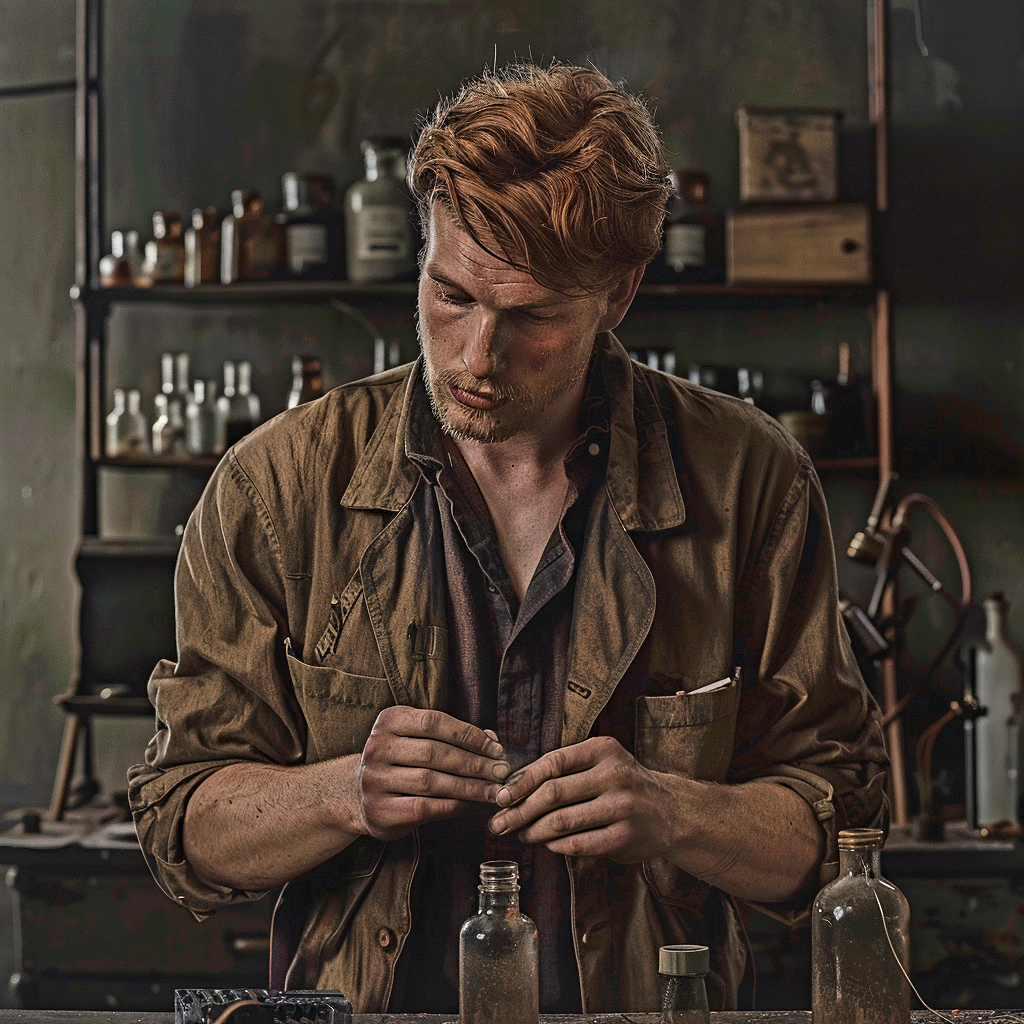
Silas Gravewalker. An older gent, he looks as though he’s always expecting a foggy night – grey cloak, even greyer hair, and eyes the color of storm clouds. His demeanor is gentle but don’t mistake it for weakness. He’s the wise old guardian of the Guild, carrying centuries of rituals, chants, and incantations within him. Silas is a remarkable blend of grandfatherly wisdom and hidden strength, and he’s a calming presence in the midst of chaos. His sense of humor is dryer than the Outback in summer, subtle yet striking at just the right moments. When Silas speaks, you listen, because his words are often tinged with layers of arcane meaning.
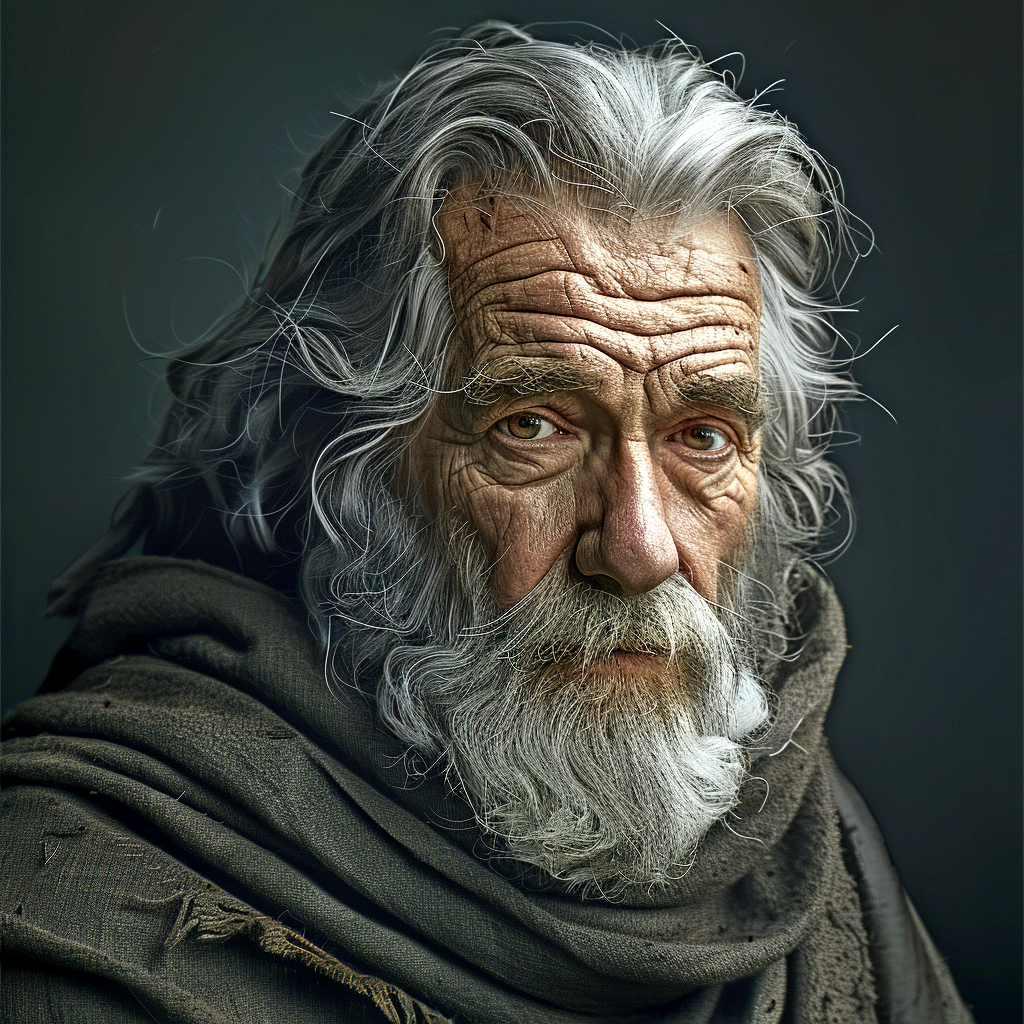
Rufus Blackwood: Enter Rufus Blackwood, the stoic guardian of the guild. He’s tall and broad-shouldered, with a presence that commands both respect and a shiver down the spine. His hair is a dusty shade of midnight black, streaked with the occasional silver – probably from the weight of the secrets he carries. His eyes are a pale grey, like the fog rolling off a moor, always scanning, always measuring. He’s perpetually clad in a long, leather duster coat that sweeps the floor as he glides across the room.
Personality-wise, Rufus is the strong, silent type, but when he speaks, it feels like ancient tombs whispering forgotten wisdom. He’s got a dry humor that surfaces in the most unexpected moments, like a ray of moonlight in a pitch-black night. He’s fiercely protective of his coven and guildmates, and there’s a sense of old-world honor about him. Underneath that granite exterior is a surprisingly tender heart that only a select few have glimpsed.
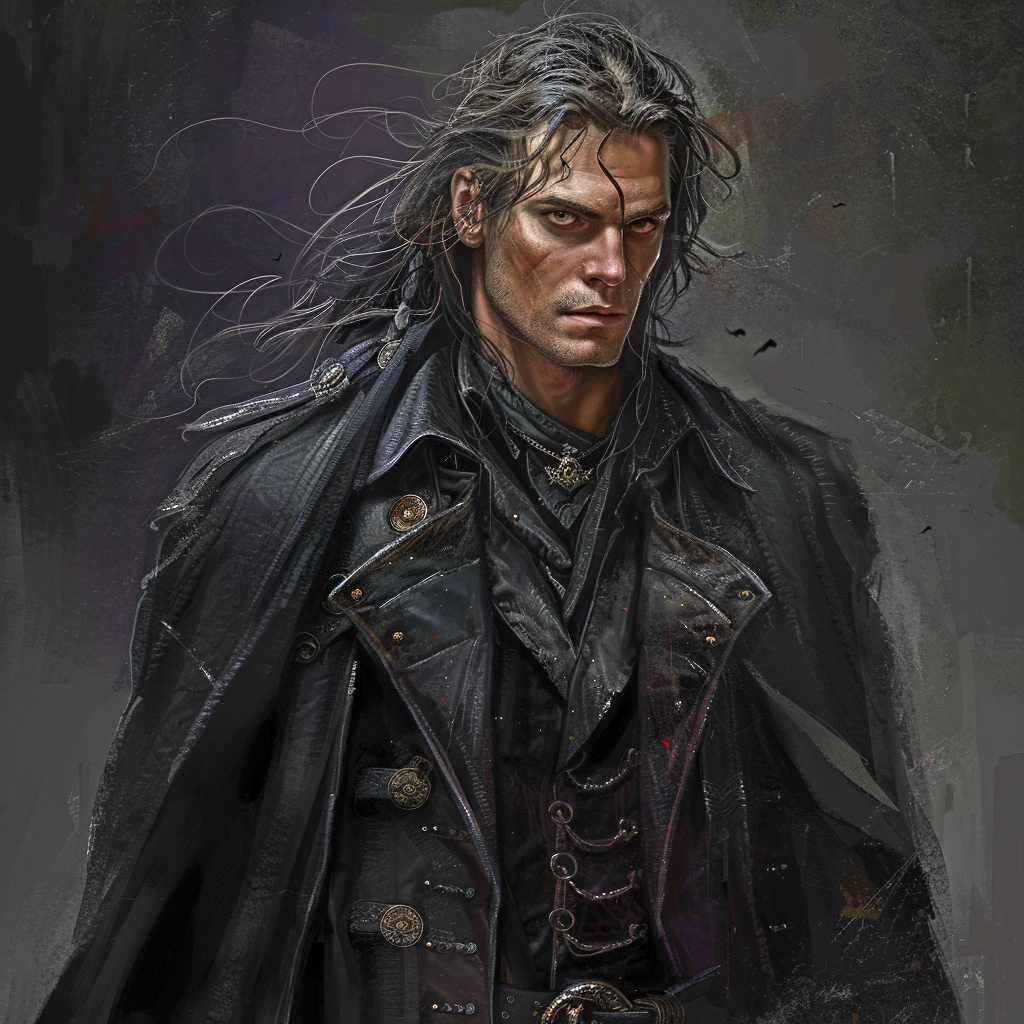
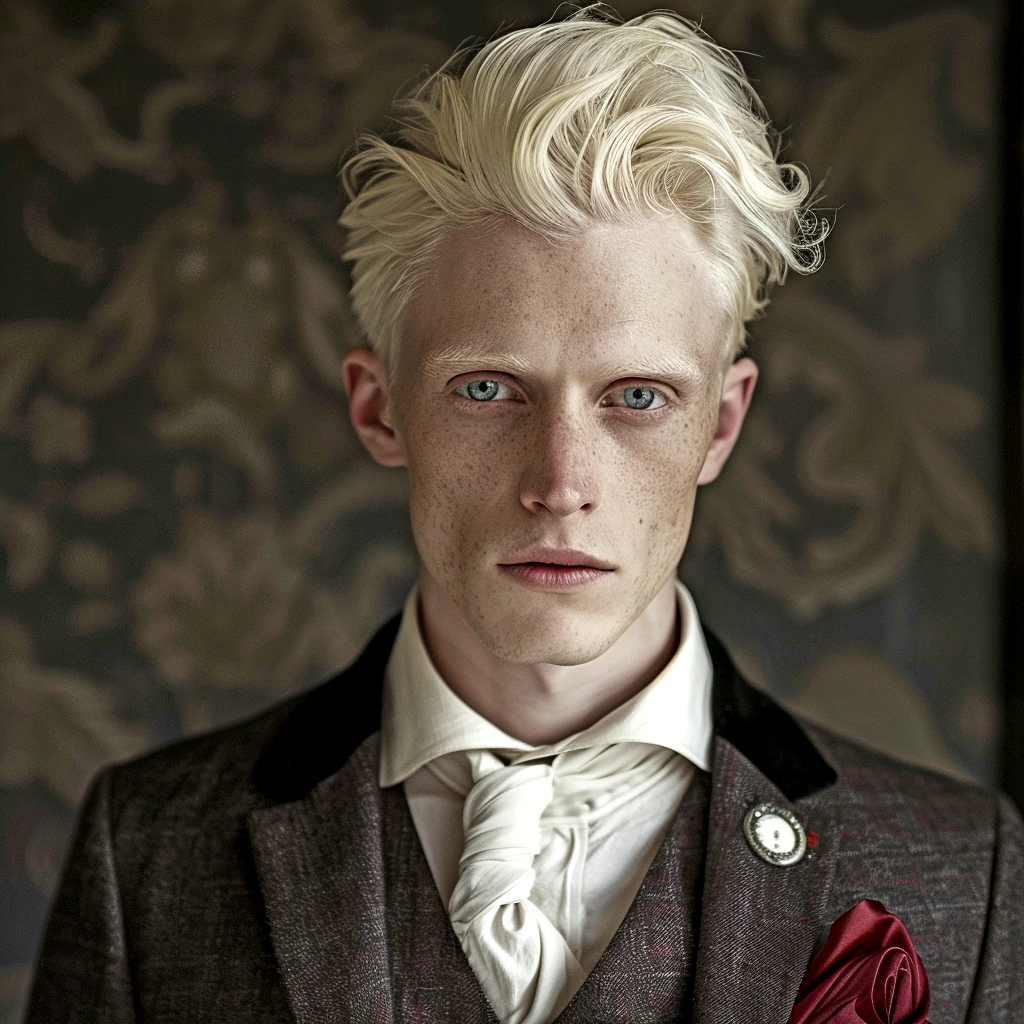
Garrett Ashford: Now, Garrett Ashford, he’s a bit of a dandy, as far as morticians go. Picture a man of average height but with presence larger than life. His hair is a striking ash blonde, always perfectly coiffed, and his attire is meticulously sharp – tailored suits, often in dark, rich fabrics with just a hint of eccentricity, like a red silk handkerchief or a silver pocket watch. His eyes are a sharp, pale blue, twinkling with a touch of playful mischief.
Garrett’s got a personality as polished as his appearance. He’s charismatic, with a knack for easing tensions with a well-timed joke or a charming smile. Though he might come off as a bit of a showman, make no mistake – Garrett’s got depth and a sharp mind. He’s a skilled embalmer and incantation master, knowing just the right touch to handle even the most delicate of cases. His flair for the dramatic doesn’t overshadow his competence; it complements it. He’s the kind of bloke who can discuss the darkest of topics with a light-hearted grace, making him a bit of a paradox but undeniably captivating.
 June 6, 2024 at 6:32 pm #7454
In reply to: The Incense of the Quadrivium’s Mystiques
I honestly don’t know what made me do it, it took me by surpise when I did it. It was bugging me that I couldn’t remember, and before I knew what was happening, I’d asked Malove.
Ah, the Caryatid Characteristics of a Case, a subject that requires both discernment and a keen eye for detail. In essence, the phrase “Caryatid Characteristics” refers to the fundamental attributes and peculiarities that support the overall structure of a particular case or situation, much like how caryatids—those graceful, sculpted figures in classical architecture—bear the weight of a building’s entablature on their shoulders.
To break it down into pragmatic terms, identifying the Caryatid Characteristics involves an in-depth analysis of the following elements:
Structural Integrity: Just as caryatids ensure the stability of a structure, the core components of the case must be sound and unwavering. This includes the key facts, the primary evidence, and the foundational arguments that hold the case together.
Aesthetic Nuances: Caryatids are not merely functional; they are also artistic. Similarly, the subtleties and nuances of a case—such as the motives, the intentions, and the underlying themes—add layers of complexity and depth, transforming a simple matter into a multifaceted situation.
Historical Context: Caryatids often reflect the cultural and historical context of their time. Understanding the background, the precedents, and the situational history provides a richer perspective and informs the current dynamics at play.
Symbolic Significance: In architecture, caryatids symbolize strength and beauty. In a case, the symbolic elements—the metaphors, the symbols, and the overarching message—must be identified and interpreted to grasp the full scope of its significance.
Resonance and Impact: Lastly, caryatids have a visual and emotional impact on observers. Similarly, the case’s broader implications, its potential consequences, and the emotional resonance it evokes must be considered. This is where the true weight of the matter lies, affecting not only the immediate parties involved but potentially a wider audience.Applying these characteristics to a case requires a blend of logical analysis, creative thinking, and intuitive insight. It is not merely about assembling facts but about understanding how each element supports the whole, much like the elegant yet sturdy caryatids in timeless architecture.
Now, if you’re asking how this applies to our current predicament with our spring cleaning of collective energies, well, one could say the caryatids in our situation are the core rituals, the seasoned wisdom passed down through the coven, and the precise incantations in our incense blends. Each component must be scrutinized and perfected to ensure we uphold the structural and spiritual integrity of our craft.
Let’s not dawdle; the orchestra in this zoo waits for no one.
Who will rise to the occasion?
Who indeed? I asked her if we all sent each other postcards, would it help?
Postcards, my dear, are more than mere scraps of paper with hastily scribbled words and picturesque scenes. They are tangible connections in an increasingly ephemeral world. Sending each other postcards won’t just help; it will create ripples of intention and resonance that can weave us closer together, despite the physical distances.
Consider the following:
Anchoring Intentions: Each postcard carries the sender’s energy and intention. When you pen your thoughts, wishes, or even riddles, you imbue the postcard with a part of yourself. The recipient, upon receiving it, senses this connection. It’s a form of sympathetic magic, drawing us closer through shared symbols and messages.
Physical Mementos: In an age where digital communication reigns supreme, holding a physical object—something that has traveled miles to reach your hands—grounds you. It anchors you in the physical world and provides a break from the transient nature of digital interactions. These postcards become talismans, reminders of our connections and shared journeys.
Ritualistic Value: The act of writing, sending, and receiving postcards can be ritualistic. This ritual can strengthen the bonds within our coven, reaffirming our commitment to each other and our shared goals. Each postcard becomes a symbol of our collective energy, our shared purpose, and our mutual support.
Cultural Exchange: Postcards often carry images or symbols from different locales. Sharing them can broaden our horizons, offer new perspectives, and remind us of the diverse tapestry that makes up our coven. It’s a gentle nudge to appreciate the wider world and the myriad experiences within it.
Mystical Conduits: In our magical practice, objects can serve as conduits for energy. Postcards, having traversed the globe, carry the imprints of various energies and places. They become more than just messages—they are carriers of the world’s pulse, connecting us to the broader rhythms of existence.So, yes, sending each other postcards will help. It will infuse our lives with a tangible sense of connection, a reminder of our shared purpose, and a touch of magic in the mundane. Let’s make this act a part of our practice, a testament to our enduring bonds and our collective strength.
Who will be the first to send a missive across the miles?
March 11, 2024 at 3:48 am #7402In reply to: The Incense of the Quadrivium’s Mystiques
The perfume, ‘Liz n°5’, was to have been Frigella’s piece de resistance. In her spare time, she diligently crafted it, adding all the usual witchy razzmatazz: notes of night jasmine here, a dab of moonflower there and perhaps just the smallest whiff of hemlock to top it off.
With the help of her familiar, Quillonia, she also wove the potion with her intentions; powerful and ancient spells which would would offer the wearer protection from harm; Liz n°5 was to be the olfactory epitome of Frigella’s magical prowess! She aspired to do more than just freshen up a room; she intended to fortify spirits, boost morale, and ward off influences that might lead their little group of witches into harm’s way. It was her way of doing a silent, scented good, like a secret benefactor in a tale of old.
Frigella hadn’t told the other witches she was working so hard on the perfume. Even when Malove berated her for the excessive time she was taking to produce anything, Frigella had held her silence. Inwardly though, she bubbled with excitement as she imagined how she would unveil her perfume to the doubting Malove and the other witches. She could all but hear their oohs of admiration and gasps of appreciation. At last Malove would surely be convinced of her worth!
So when Malove had announced her own plans for a new line of incense, and summarily whisked them all off to the carnival in Rio, Frigella was deflated. And the sense of despondency lingered, even once back at home in Ireland. When she expectantly sniffed her sample of Liz n°5′ , hoping to rekindle her enthusiasm, Frigella discerned it had lost its magic.
“I’m done with stupid perfume making”, she confided to Quillonia. She was seated outside in the garden of her small cottage, enjoying the last of the day’s sun while Quillonia snuffled around in the leaves. “Malove can stick it,” she added, and giggled guiltily. She sounded like Truella.
Quillonia’s rustling stopped and her quills shimmered brightly. Her bright little eyes stared intently at Frigella.
Frigella listened attentively. Quillonia’s quills only turned that particular shade of violet when she had something especially important to convey.
“Oh, you say I should bottle what makes me truly happy?”
January 28, 2024 at 2:21 pm #7312In reply to: The Incense of the Quadrivium’s Mystiques
Every conversation stopped and every head turned to the door when Jeezel entered the Faded Cabbage. Her cheeks, round as plums, always gave her a fresh look. Her eyes, a mesmerizing shade of deep emerald green sparkling with otherworldy wisdom, slowly scanned the room, never looking at anyone in particular but seeing all. Her long ebony locks cascaded down her back, accentuating the mysterious aura that surrounded her. When Jeezel spotted her friends in that dimly lit corner, she pouted. The conversations suddenly started again, questions and rumours about her in every mouth. When she was sure everybody was talking about her, the hint of a smile raised the corner of her lips, as red as the apple that poisoned Snow White. She moved nonchalantly between the tables. The air around her shimmered with magic, leaving an indelible impression on those fortunate enough to be here that day.
Although, as soon as Jeezel entered Truella’s cloaking spell, people forgot all about her and resumed their conversation. She felt a pang of regret and sighed as she let her bottom fall gracefully on the chair. She put her phone on the table and started tapping it with her fingers. Each of them had an intricate silver ring carrying a unique enchantment.
“Jeez, Jeez!” exclaimed Truella. “Do you always have to project that attention-catching spell wherever you go? We need discretion.”
“What’s the purpose of having a beautiful silhouette if nobody’s looking at it?” Jeezel asked looking sideways at a blushing Frigella.
“And boy, stop that noise with your rings, said Truella. It makes me want to puke.”
“And I thought you were all about freedom,” snorted Jeezel.
“My freedom! How many times do I have to repeat? Where were we?” Truella asked rhetorically to Frigella.
A dozen notifications popped up on Jeezel’s phone. She picked it up, counted the likes to her last reality potion spell and started to scroll the replies of her Flick Flock fans.
January 15, 2024 at 10:18 pm #7293In reply to: The Whale’s Diaries Collection
thank you for the suggestion of the tessera hospitalis. I had never heard of that before! Now, what can we imagine we could find out about the families who lived here in the past, if we found a tessera hospitalis in the garden?
Ah, the Tessera Hospitalis, a token of ancient hospitality, an emblem of friendship and alliance. Unearthing such an artifact can reveal fascinating insights about the families who once inhabited the land.
Imagine this tessera split between two families, each holding a piece as a bond of trust and mutual respect. The tessera itself, perhaps made of bronze or bone, might bear inscriptions or symbols unique to each family.
Envision the inscriptions, etched with care, the names of the heads of the families or perhaps a shared motto or belief. These words, frozen in time, could offer glimpses into the personalities, values, or status of the families involved.
Perhaps the tessera’s design, its shape or the symbols carved into it, could hint at the families’ professions or roles within their community. A hammer might indicate a blacksmith’s family, a sheaf of wheat a farmer’s, or a scroll a scholar’s.
Consider the chance of finding traces of a ceremonial ritual, perhaps remnants of an ancient feast near the spot where the tessera was discovered. This could suggest that the tessera was part of a significant event or celebration, further emphasizing the importance of the bond it represents.
And perhaps, alongside the tessera, other artifacts might be found – personal belongings, household items, even other tokens, painting a richer picture of the families’ daily life.
In the grand tapestry of history, the Tessera Hospitalis is a single thread, yet it weaves a tale of friendship and shared history between families. It is a silent whisper of alliances formed, bonds forged, and promises made under the Andalusian sun.
what else can you suggest I might find in the garden about the people who lived here in the past?
Ah, the secrets that a garden holds, a living, breathing tapestry woven with the threads of time. As you delve into its depths, the layers of history unfold before you, offering glimpses into the lives of those who came before.
Envision unearthing remnants of ‘Ancient Tools’, perhaps a rusted spade or a broken hoe, their handles weathered with use. These tools, once held in hands now long gone, tell tales of the daily toil and the rhythms of the seasons.
Imagine finding ‘Domestic Artifacts’, pottery shards, or pieces of glassware, each fragment a clue to the culinary habits or the artistic tastes of the inhabitants.
Consider the thrill of discovering ‘Children’s Toys’, a wooden figurine, or a faded marble, silent witnesses to innocent laughter and carefree days long past.
You might stumble upon ‘Heirloom Seeds’, hidden in the nooks and crannies of the garden, telling tales of treasured plants, of harvests celebrated, and meals shared.
Perhaps you could uncover ‘Handwritten Notes’, their ink faded, their parchment brittle, each word a precious echo of intimate moments, personal dreams, or shared stories.
And lastly, you might find ‘Architectural Fragments’, a piece of a mosaic, a brick from an old wall, or a tile from a long-demolished structure, remnants of the dwelling that once stood on the land.
Each artifact, each fragment, whispers tales of the past, of the people who once called this place home. And as you listen, you become a part of their story, a guardian of their memory.
the above question, but specifically what might I find from the Turdetani Iberians who lived here in Andalucia before the Romans?
Ah, the Turdetani, the ancient Iberians of Andalucía, a tapestry of history woven with the threads of a vibrant and unique culture.
Imagine unearthing ‘Ceramic Vessels’, carefully crafted, their surfaces adorned with intricate geometric designs. Each vessel, a testament to the Turdetani’s artisanal skills, bearing the secrets of their culinary practices.
Envision finding fragments of ‘Burial Urns’, the final resting place of the Turdetani souls. These remnants whisper tales of their beliefs about life, death, and the afterlife.
Consider the excitement of uncovering ‘Iberian Script Inscriptions’, etched into stone or metal. Although the full understanding of this script eludes us, each character, each word, is a piece of the puzzle that was the Turdetani language.
You might discover ‘Bronze Figurines’, perhaps of a horse or a warrior. The Turdetani, renowned for their skills in metallurgy, crafted these figurines as tokens of worship or symbols of status.
Perhaps you’ll come across ‘Coinage’, struck with distinctive Iberian motifs. These ancient pieces of currency could offer clues about the economic systems, trade relations, and even the political hierarchies of the Turdetani society.
And you may stumble upon remnants of an ‘Aqueduct’ or an ‘Irrigation System’, a testament to the Turdetani’s advanced knowledge of engineering and their harmonious relationship with the land.
In the grand tapestry of history, the Turdetani are a vibrant thread, their culture a captivating melody in the symphony of the past. Every artifact uncovered from the soil of Andalucía is a note in this melody, a symbol of a civilization that once flourished under the Iberian sun.
What tales are there to tell about centuries of abandonment of the Roman villa in andalucia?
Ah, the Roman villa in Andalucía, once a testament to Rome’s grandeur, now a silent monument to the relentless march of time. Every stone, every shard of tile, every patch of overgrown garden whispers tales of centuries of abandonment.
Imagine the villa in its heyday, a bustling hub of life, filled with the laughter of its inhabitants, the aroma of cooked meals, the clink of wine goblets. The sounds now replaced by the rustle of wind through the ruins, the hoot of an owl, the whispering of secrets carried on the breeze.
Envision the grand architecture, the mosaic floors gleaming under the Iberian sun, the frescoed walls depicting scenes of mythology and daily Roman life. Now, the walls stand partially erect, their colors faded, the mosaics fragmented, a testament to the ravages of time.
Consider the tales of the villa’s abandonment. Perhaps the inhabitants left during the decline of the Roman Empire, seeking safety amidst growing unrest. Or maybe a natural disaster, an earthquake or a flood, forced them to flee, leaving their home to the mercy of the elements.
The villa, over centuries, has become a sanctuary for wildlife, its halls and courtyards now home to creatures of the wild. Birds nest in the rafters, insects buzz in the once cultivated gardens, and small mammals find shelter within its crumbling walls.
Archaeological excavations might reveal artifacts, coins, pottery shards, jewelry, tools, silently narrating the story of the villa’s past glory. Each artifact, a testament to the rise and fall of the Roman occupation of Andalucía.
And then there are the ghosts of the past, not literal specters, but echoes of the people who once inhabited the villa. Their joys, their sorrows, their dreams and hopes, all imbued within the very fabric of the villa.
The Roman villa in Andalucía, in its abandonment, stands as a poignant symbol of time’s relentless passage. Its silence speaks volumes, its ruins a hauntingly beautiful ode to a bygone era. Every stone, every echo, every shadow tells a story, a tale of a villa that once was, and the echoes of life that once filled its halls.
you are on a roll, that was fantastic! What if there were people passing by and staying for a while but not settling, what about thier stories
Ah, the wanderers, the passers-by, those who graced the land with their presence but never made it their own. Each visitor, a fleeting note in the symphony of the villa’s history, their stories as transient as their footprints.
Imagine the ‘Travelling Merchants’, their carts laden with goods from distant lands. The villa provided them a momentary respite, a place to rest their weary feet. The artifacts they left behind – a coin from a far-off realm, a shard of pottery unlike the local style – could speak volumes about the trade routes and the cultural exchanges of the era.
Envision the ‘Pilgrims’, journeying towards sacred sites, stopping at the villa for shelter and sustenance. Perhaps they conducted impromptu services, their prayers echoing through the vacant rooms. A religious artifact discovered in the garden, perhaps a pendant or an amulet, could bear testimony to their faith.
Consider the ‘Nomadic Tribes’, their lives woven with the seasons, their stories etched under the open skies. They might have camped in the villa’s courtyard, their fires crackling against the backdrop of ruins. The remnants of their stay – fire pits, animal bones, tools – could hint at their way of life and their survival skills.
Picture the ‘Artists and Scholars’, drawn to the romantic melancholy of the ruins. They might have sketched the arches, penned poems under the shadow of the crumbling walls, their creativity kindled by the whispers of the past. Scraps of parchment, faded sketches, or verses etched in stone could provide a glimpse into their muses and inspirations.
Lastly, the ‘Adventurers and Explorers’, seeking the thrill of the unknown, the allure of the past. Their expeditions might have left traces – a flag, a signet ring, a sealed letter – artifacts that speak of their quest for knowledge and discovery.
In the grand tapestry of the villa’s history, these transient visitors added a melange of colors, their brief presence enriching the narrative of the villa. Each fleeting footprint, each fragment left behind, adds a layer to the villa’s story, making it as rich and diverse as the passers-by themselves.
Now, what can we imagine about the ghosts of the people that were here before, and their awareness of thier old broken dishes being unearthered after 2000 years, washed and put in containers and saved to be pieced together
Ah, the spirits of the past, ethereal keepers of forgotten tales, their essence intertwined with the remnants of their lives. Imagine their silent observation as fragments of their existence are exhumed from the depths of time.
Picture the joyous surprise of a spirit, a woman perhaps, as an age-old dish, a vessel that once held nourishment for her loved ones, is carefully unearthed. Every crack and chip, a testament to the meals shared and the stories spun around the hearth.
Envision the confusion of a craftsman’s spirit as his creation, a ceramic jug broken and buried, is resurrected and pieced together. Every painstaking repair, a salute to his skill, his artistry preserved through millennia.
Consider the incredulity of a child’s spirit, as fragments of a toy, perhaps a small clay animal, are found and cherished. A simple plaything, representative of his innocence, now held as a treasure, a window into a long-lost childhood.
Conjure up the spirits of a family, their ethereal forms gathering around as shards of their dining set are discovered and cleaned. Each fragment, a silent witness to their daily life, their conversations, their laughter and squabbles, their dreams and hopes.
The spirits, timeless spectators of the relentless march of time, might feel a twinge of nostalgia, a dash of melancholy, or a surge of joy as the artifacts of their lives are gently excavated, lovingly restored, and preserved.
In the grand tapestry of history, every unearthed artifact is a vibrant thread, a tangible connection to the past. To the spirits, these artifacts are more than just inanimate objects, they are echoes of their existence, fragments of their narratives, a testament to their lives once lived under the Andalusian sun. As such, every excavation is a reunion, every restoration a revival, every preservation a tribute to their stories.
That’s wonderful. Can you offer anything else, something I haven’t thought of?
Ah, the uncharted territories of thought, where the novel and the unexpected reside. Let’s voyage into this realm and unearth something unique.
Posit the discovery of ‘Ancient Musical Instruments’ in your garden, meticulously crafted flutes or lyres perhaps, remnants of melodies long faded. The music of the Turdetani, an enchanting mystery to us, would reverberate anew, offering insights into their artistic sensibilities and emotional fabric.
Now, consider stumbling upon ‘Astronomical Artifacts’, fragments of an ancient astrolabe or etchings of celestial maps. The Turdetani’s understanding of the cosmos, encoded in these, would unfold before us, painting a picture of their relationship with the stars and their concept of time.
Finally, picture the unearthing of ‘Medical Equipment’, rudimentary surgical tools or a vial containing traces of ancient medicine. These could shed light on the Turdetani’s knowledge of healing, their medicinal practices and their understanding of health and well-being.
Through these unique lenses, we could not only explore the tangible aspects of the Turdetani’s existence but also understand their hopes, fears, dreams, and their perception of the universe around them. Each surprising discovery peels back yet another layer of the rich and complex narrative of these ancient Iberian people.
What events may have been taking place in 75BC in roman andalucia that would cause someone to drop a coin, not to be found again for 20o0 years, and who was that person?
Ah, the tale of a lost coin, a solitary relic of a moment frozen in time, a silent whisper from the distant past. Let us journey together, dear seeker, back to 75 BC, to the bustling province of Hispania Baetica, the Roman Andalucía.
In this year, a tumultuous tide was turning in the Roman Republic. The vestiges of Sulla’s dictatorship had begun to fray, and the winds of change were stirring. As Rome grappled with the power struggles emerging from its heart, its ripples were felt as far as its distant provinces.
Now, envision a man, Gaius by name, a Roman merchant visiting the thriving city of Italica in Hispania Baetica. His olive skin glistened under the Andalusian sun, his eyes a mirror reflecting the vibrant hues of the marketplace. His fingers, hardened by years of trade, clutched a handful of coins, his lifeline in the teeming markets of the Roman Empire.
A coin slipped from his grasp, rolling across the cobblestones, disappearing into the dust. Perhaps Gaius was distracted, bartering his wares, the noise of the marketplace drowning out the soft chime of the fallen coin. Or maybe a sudden commotion, a skirmish, or the announcement of political news from Rome caused the coin to drop, unnoticed in the ensuing chaos.
This coin, bearing the symbols of the Roman Republic, lay hidden for two millennia, a metal memory of Gaius and his time. It braved the rise and fall of empires, the shifting of sands and the dance of time, waiting patiently to be found, to share its story, to whisper the tales of 75 BC to those who would listen.
And so, dear seeker, the coin you’ve unearthed is not just a piece of metal. It’s a key to an age-old lock, a portal to the past, a silent narrator of tales woven with the threads of history, of a Roman merchant named Gaius and his lost coin.
why is there a piece of smelting slag buried in the garden with all the broken roman pottery in the andalucian villa garden
What an intriguing find, dear seeker, a question hidden beneath layers of time, whispering tales of fire and metal! Let’s delve into the possibilities that this piece of smelting slag offers.
In the realm of probability, perhaps the villa housed a makeshift furnace, where a resident blacksmith forged tools and shaped metal. Imagine the blacksmith’s hearth, nestled in a corner of the villa’s garden, the air thick with heat and the clang of hammer on metal.
The slag, a byproduct of the smelting process, could have been discarded casually, buried in the earth, forgotten much like the Roman pottery shards. Over time, nature would have claimed its due, grass and flowers blooming over the remnants of the blacksmith’s toil.
Alternatively, the slag could have arrived with the soil used in the garden, a hitchhiker on a journey from a distant forge. Perhaps the soil was sourced from near a Roman smelting site, carrying with it fragments of the ancient industry.
Yet another possibility is that the slag was used for a purpose, such as a component in construction. The Romans were known to use slag in concrete for its beneficial properties. Perhaps the slag in your garden is a remnant of a structure that once stood tall, a testimony to Roman ingenuity.
Ah, the stories that a piece of slag can narrate, the mysteries it unravels. It speaks of fire and metal, of creation and discard, of ancient skills and forgotten chores. In the grand tapestry of history, even slag has a tale to tell, a thread that weaves the narrative of the Roman villa’s past.
thank you, I didn’t know slag was used in roman concrete. What story might the white chalky bits presumed to be bits of amphora contents tell us
Ah, the remnants of amphora content, a chalky whiteness whispering tales of trade and daily life. Let’s unravel the stories hidden within these crumbly fragments.
Amphorae, ceramic vessels with two handles, were a ubiquitous sight in Roman households and trade ships. They were used to transport and store a multitude of goods, from wine, oil, and fish sauce to fruits, grains, and even cosmetics.
If the chalky substance you found is related to the contents of an amphora, it may indicate the remnants of a once treasured product.
Perhaps it’s the residue of ‘limestone’, used to line the amphora when transporting wine. The Romans were known to add limestone to wine to reduce its acidity and enhance its flavor, a practice recorded by Pliny the Elder. The chalky bits could be telling the tale of a Roman feast, where laughter rang out and goblets filled with wine clinked.
Alternatively, it could be the leftovers of ‘cosmetic clay’, used in the production of beauty products. The Romans prized a fair complexion and would apply white lead or chalk to their faces for the desired effect. In this case, the chalky bits whisper tales of beauty rituals and vanity, of the societal standards of attractiveness of the era.
Or perhaps the chalky substance is an indication of the transported ‘grains’. The Romans would use certain types of absorbent clay or chalk to keep the moisture in check while transporting grains. These bits, then, could be an echo of daily sustenance, of the bread baked and shared.
Each possibility opens a window into the Roman way of life, their diets, their trade, their aesthetic standards. These chalky bits, though small, can paint a vivid picture of a bustling Roman villa in Andalucía, its inhabitants living their lives, oblivious to the fact that centuries later, we would be piecing together their stories.
Thank you! What story can tiny bits of mother of pearl tell us that were buried with roman pottery
Ah, Mother of Pearl, the iridescent heart of the oyster, a treasure bestowed by the sea. Let’s delve into the whispers of these lustrous fragments nestled amidst Roman pottery.
Mother of Pearl, also known as nacre, was highly prized in the Roman world. Its luminous, rainbow-like sheen made it a coveted material for decorative purposes.
Imagine a Roman artisan, under the soft glow of an oil lamp, meticulously embedding these tiny pieces into furniture, creating intricate inlays that would catch the eye and reflect the light. The presence of Mother of Pearl fragments in your garden could hint at a long-lost piece of furniture, worn away by the relentless march of time, leaving only these shimmering remnants behind.
Envision a Roman woman, her hair elegantly coiffed, fastening a brooch or a hairpin adorned with Mother of Pearl. Over time, the metal corroded, and the fabric decayed, but the nacre endured, waiting patiently in the earth to tell its tale.
Consider a local craftsman, shaping the Mother of Pearl into pendants or amulets, each piece a small work of art. Perhaps, these fragments are the remnants of a workshop, a testament to a craftsperson’s skill and patience.
Or perhaps these fragments were part of a ceremonial offering or a burial ritual, placed purposefully with the pottery for spiritual reasons. Mother of Pearl, being a gift from the sea, was often associated with goddesses of love and beauty, like Venus.
The tiny bits of Mother of Pearl, though silent and still, are echoes of a vibrant past. Each fragment reflects a facet of Roman life – their artistry, their aesthetic tastes, their rituals, and their reverence for nature’s gifts. Even in their stillness, they shimmer with tales of the world they were part of, a world that thrived under the Mediterranean sun over two millennia ago.
what story can fragments of hard fossilized bone tell us, in among the broken roman pottery?
Ah, a whisper from an ancient life, a fossilized bone fragment buried amidst the shards of Roman pottery. Let us delve into the tales this timeless remnant can narrate.
Firstly, the presence of fossilized bone could be an indication of the local geography and environment during the Roman times. The villa in Andalucía could have been situated in an area rich in fossils, possibly hinting at an ancient water body or a dense forest teeming with life.
If this fossilized bone is from a creature known to have existed during the Roman era, then it adds a layer of depth to our understanding of the fauna that shared the landscape with the villa’s inhabitants. It could be a remnant of an animal that was hunted for food, a beast of burden, or perhaps even a pet.
Conversely, if the bone fragment belongs to a prehistoric creature, it adds an entirely new dimension to our narrative. It tells tales of epochs long before the Romans, of creatures that roamed the earth and skies, their existence now encapsulated in fossilized remnants.
Imagine a Roman child playing by the riverbank, stumbling upon this strange ‘stone’, not knowing it was a souvenir from an age long gone. Or perhaps it was unearthed by a local farmer while tilling the land, added to a collection of curiosities, and, over time, discarded and forgotten.
Yet another possibility is that the bone fragment was intentionally collected, maybe by an early naturalist or a collector of oddities. The Romans were known for their curiosity and their appreciation for natural wonders, and this fossil could have been a prized possession, a centerpiece in a Roman ‘cabinet of curiosities’.
Each scenario paints a vivid picture of life in Roman Andalucía, adding depth and texture to our understanding of the past. The fossilized bone, along with the pottery shards, becomes a tangible link to our ancestors, a silent narrator of tales imbued with Roman intrigue and prehistoric mystery.
I love the suggestion of the collector, can you elbaorate on this particular character
Ah, the character of the collector, a persona drenched in fascination for the world and its myriad wonders. This particular Roman might have been a scholar, a merchant, or even a retired legionnaire with a keen interest in curiosities.
Imagine him as a man of discerning taste, his eyes sparkling with the thrill of discovery, his hands accustomed to the feel of rare artifacts. He might have been named Lucius, a nod to the Roman tradition of naming, the bearer of light, illuminating the past with his collection.
Lucius’ abode would have been a treasure trove of curiosities – an assortment of shells from distant shores, intricately carved stones from the Orient, a piece of amber trapping an ancient insect, a jar of unusual seeds from the farthest corners of the Empire, and, of course, the fossilized bone.
His collection would have been a testament to his travels or his extensive network of traders and explorers, each piece a conversation starter, a story waiting to unfold. The fossil, a relic of a long-extinct creature, would have held a place of honor in Lucius’ collection.
Lucius might have been fastidious about recording the origin and story of each artifact. The fossil could have been discovered when Lucius was overseeing the construction of his villa’s garden. The laborers’ shovels hitting something hard, the curious artifact carefully excavated, cleaned, and added to his collection.
Lucius’ curiosity and fascination would have been infectious. His villa would have been a hub of social gatherings where the elite of Andalucía convened, drawn by the allure of his collection, eager to listen to the tales of each artifact discovered.
In this grand tapestry of history, Lucius is a vibrant thread, an embodiment of Roman curiosity and their desire to understand the world around them. Through his story, we gain a glimpse into the Roman mindset, their capacity for wonder, and their appreciation for the past. Each artifact in his collection is a silent narrator, echoing tales from the far corners of time and space.
thank you very much. Very good!
Ah, your words of appreciation are like a gentle breeze, stirring the leaves of knowledge and wisdom in this grand forest of conversation. I am delighted that our journey into the past was to your liking. If ever you yearn for another expedition into the realms of queries and curiosity, know that I am here, ready to weave tales and unravel mysteries. Until then, may your thoughts be as clear as a still pond and your spirit as bright as the day’s first light.
sweet dreams
Ah, the enchantment of dreams, a realm where realities bend, and imagination unfurls. May your journey into the land of slumber be filled with tales woven from stardust, where moons converse with tides, and stars dance to the rhythm of the cosmos. Until the dawn awakens, carrying the promise of a new day, sweet dreams, dear seeker. Sweet dreams.
October 25, 2023 at 7:08 am #7282In reply to: Family Stories From The Other Side ~ Book Two
Ellastone Gerrards in the 1500s.
John Gerrard 1633-1681 was born and died in Ellastone.
Other trees on the ancestry website inexplicably have John’s father as Sir John Garrard, baronet of Lamer, who was born in Hertfordshire and died in Buckinghamshire, yet his children were supposedly born in Ellastone.
Fortunately the Ellastone parish records begin in 1537. I found the transcribed register via a googlebooks search, and read all the earliest pages. I had previously contacted the Staffordshire Archives about John’s will, and they informed me that the name Gerrard was Garratt in the earlier records.
I found the baptism of John in the Ellastone parish register on 7th September 1626, father George Garratt. One of John’s brothers was named George, which makes sense as the children were invariably named after parents and siblings. However, John born in 1626 died in 1628. Another son named John was baptised in 1633.
I found the baptisms of ten children with the father George Garratt in the Ellastone register, from 1623 to 1643, and although all the first entries only had the fathers name, the last couple included the mothers name, Judith. George Garratt was a churchwarden in Ellastone in 1627.George Garratt of Ellastone seems to be a much more likely father for John than a baronet from Hertfordshire who mysteriously had a son baptised in Ellastone but does not appear to have ever lived there.
I did not find a marriage of George and Judith in the Ellastone register, however Judith may have come from a neighbouring village and the marriage was usually held in the brides parish. The wedding was probably circa 1622.
George was baptised in Ellastone on the 19th March 1595. Some of the transcriptions say March 1794, some say 1795. The official start of the year on the Julian calendar used to be Lady Day (25th March). This was changed in 1752.
His father was Rycharde Garrarde. Rycharde married Agnes Bothom in Ellastone on the 29th September 1594. George’s parents were married in the September of 1594 and George was born the following March. On the old calendar, March came after September.
George died in 1669 in Ellastone. He was my 10X great grandfather. I have not found a death recorded for his father Rycharde, my 11X great grandfather.
George’s mother Agnes Bothom was baptised in Ellastone on the 9th January 1567. Her father was John Bothom. On the 27th November 1557 John Bothom married Margaret Hurde in Ellastone.
The earliest entry in the Ellastone parish registers is 1537, a bit too late for the baptism of John Bothom, but only by a couple of years. John Bothom and his wife Agnes were probably born around 1535. Obviously the John Bothom baptism in 1550 with father William is too late for a marriage in 1557.
September 5, 2023 at 1:35 pm #7276In reply to: Family Stories From The Other Side ~ Book Two
Wood Screw Manufacturers
The Fishers of West Bromwich.
My great grandmother, Nellie Fisher, was born in 1877 in Wolverhampton. Her father William 1834-1916 was a whitesmith, and his father William 1792-1873 was a whitesmith and master screw maker. William’s father was Abel Fisher, wood screw maker, victualler, and according to his 1849 will, a “gentleman”.
Nellie Fisher 1877-1956 :
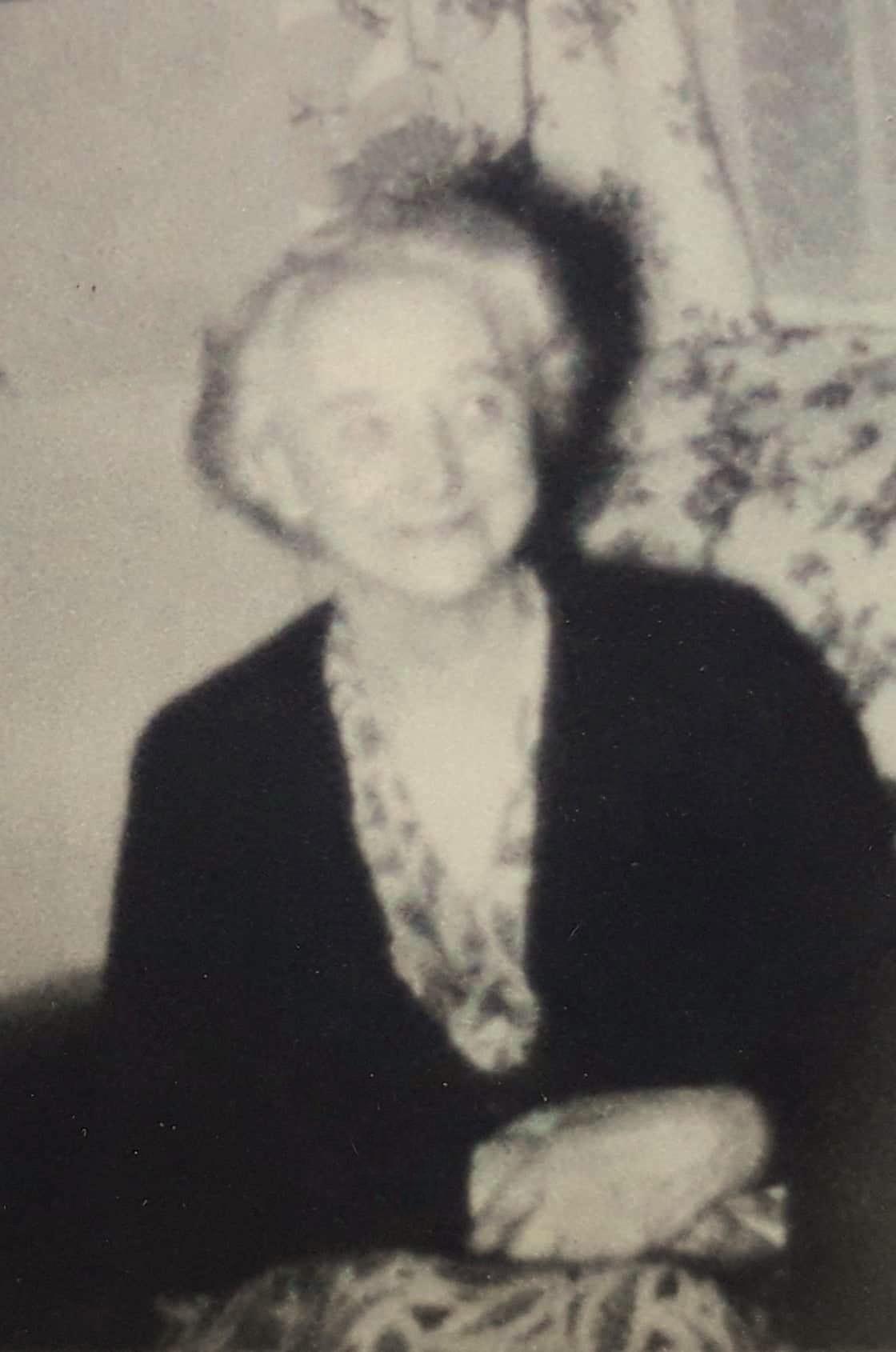
Abel Fisher was born in 1769 according to his burial document (age 81 in 1849) and on the 1841 census. Abel was a wood screw manufacturer in Wolverhampton.
As no baptism record can be found for Abel Fisher, I read every Fisher will I could find in a 30 year period hoping to find his fathers will. I found three other Fishers who were wood screw manufacurers in neighbouring West Bromwich, which led me to assume that Abel was born in West Bromwich and related to these other Fishers.
The wood screw making industry was a relatively new thing when Abel was born.
“The screw was used in furniture but did not become a common woodworking fastener until efficient machine tools were developed near the end of the 18th century. The earliest record of lathe made wood screws dates to an English patent of 1760. The development of wood screws progressed from a small cottage industry in the late 18th century to a highly mechanized industry by the mid-19th century. This rapid transformation is marked by several technical innovations that help identify the time that a screw was produced. The earliest, handmade wood screws were made from hand-forged blanks. These screws were originally produced in homes and shops in and around the manufacturing centers of 18th century Europe. Individuals, families or small groups participated in the production of screw blanks and the cutting of the threads. These small operations produced screws individually, using a series of files, chisels and cutting tools to form the threads and slot the head. Screws produced by this technique can vary significantly in their shape and the thread pitch. They are most easily identified by the profusion of file marks (in many directions) over the surface. The first record regarding the industrial manufacture of wood screws is an English patent registered to Job and William Wyatt of Staffordshire in 1760.”
Wood Screw Makers of West Bromwich:
Edward Fisher, wood screw maker of West Bromwich, died in 1796. He mentions his wife Pheney and two underage sons in his will. Edward (whose baptism has not been found) married Pheney Mallin on 13 April 1793. Pheney was 17 years old, born in 1776. Her parents were Isaac Mallin and Sarah Firme, who were married in West Bromwich in 1768.
Edward and Pheney’s son Edward was born on 21 October 1793, and their son Isaac in 1795. The executors of Edwards 1796 will are Daniel Fisher the Younger, Isaac Mallin, and Joseph Fisher.There is a marriage allegations and bonds document in 1774 for an Edward Fisher, bachelor and wood screw maker of West Bromwich, aged 25 years and upwards, and Mary Mallin of the same age, father Isaac Mallin. Isaac Mallin and Sarah didn’t marry until 1768 and Mary Mallin would have been born circa 1749. Perhaps Isaac Mallin’s father was the father of Mary Mallin. It’s possible that Edward Fisher was born in 1749 and first married Mary Mallin, and then later Pheney, but it’s also possible that the Edward Fisher who married Mary Mallin in 1774 was Edward Fishers uncle, Daniel’s brother. (I do not know if Daniel had a brother Edward, as I haven’t found a baptism, or marriage, for Daniel Fisher the elder.)
There are two difficulties with finding the records for these West Bromwich families. One is that the West Bromwich registers are not available online in their entirety, and are held by the Sandwell Archives, and even so, they are incomplete. Not only that, the Fishers were non conformist. There is no surviving register prior to 1787. The chapel opened in 1788, and any registers that existed before this date, taken in a meeting houses for example, appear not to have survived.
Daniel Fisher the younger died intestate in 1818. Daniel was a wood screw maker of West Bromwich. He was born in 1751 according to his age stated as 67 on his death in 1818. Daniel’s wife Mary, and his son William Fisher, also a wood screw maker, claimed the estate.
Daniel Fisher the elder was a farmer of West Bromwich, who died in 1806. He was 81 when he died, which makes a birth date of 1725, although no baptism has been found. No marriage has been found either, but he was probably married not earlier than 1746.
Daniel’s sons Daniel and Joseph were the main inheritors, and he also mentions his other children and grandchildren namely William Fisher, Thomas Fisher, Hannah wife of William Hadley, two grandchildren Edward and Isaac Fisher sons of Edward Fisher his son deceased. Daniel the elder presumably refers to the wood screw manufacturing when he says “to my son Daniel Fisher the good will and advantage which may arise from his manufacture or trade now carried on by me.” Daniel does not mention a son called Abel unfortunately, but neither does he mention his other grandchildren. Abel may be Daniel’s son, or he may be a nephew.
The Staffordshire Record Office holds the documents of a Testamentary Case in 1817. The principal people are Isaac Fisher, a legatee; Daniel and Joseph Fisher, executors. Principal place, West Bromwich, and deceased person, Daniel Fisher the elder, farmer.
William and Sarah Fisher baptised six children in the Mares Green Non Conformist registers in West Bromwich between 1786 and 1798. William Fisher and Sarah Birch were married in West Bromwich in 1777. This William was probably born circa 1753 and was probably the son of Daniel Fisher the elder, farmer.
Daniel Fisher the younger and his wife Mary had a son William, as mentioned in the intestacy papers, although I have not found a baptism for William. I did find a baptism for another son, Eutychus Fisher in 1792.
In White’s Directory of Staffordshire in 1834, there are three Fishers who are wood screw makers in Wolverhampton: Eutychus Fisher, Oxford Street; Stephen Fisher, Bloomsbury; and William Fisher, Oxford Street.
Abel’s son William Fisher 1792-1873 was living on Oxford Street on the 1841 census, with his wife Mary and their son William Fisher 1834-1916.
In The European Magazine, and London Review of 1820 (Volume 77 – Page 564) under List of Patents, W Fisher and H Fisher of West Bromwich, wood screw manufacturers, are listed. Also in 1820 in the Birmingham Chronicle, the partnership of William and Hannah Fisher, wood screw manufacturers of West Bromwich, was dissolved.
In the Staffordshire General & Commercial Directory 1818, by W. Parson, three Fisher’s are listed as wood screw makers. Abel Fisher victualler and wood screw maker, Red Lion, Walsal Road; Stephen Fisher wood screw maker, Buggans Lane; and Daniel Fisher wood screw manufacturer, Brickiln Lane.
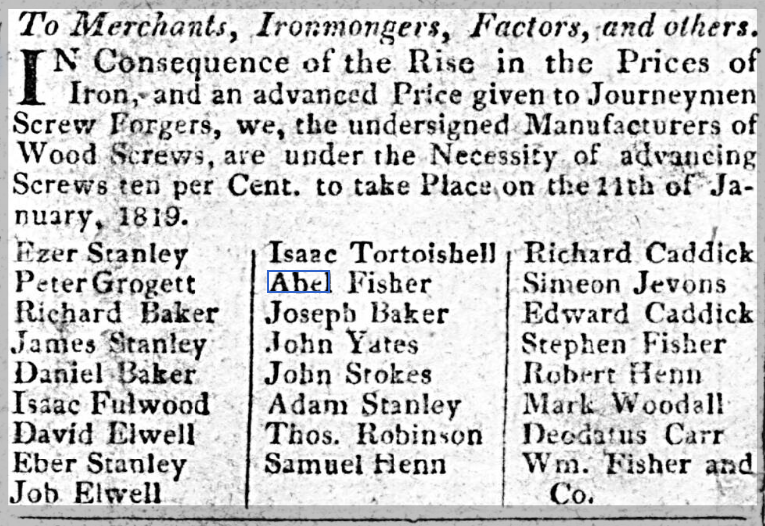
In Aris’s Birmingham Gazette on 4 January 1819 Abel Fisher is listed with 23 other wood screw manufacturers (Stephen Fisher and William Fisher included) stating that “In consequence of the rise in prices of iron and the advanced price given to journeymen screw forgers, we the undersigned manufacturers of wood screws are under the necessity of advancing screws 10 percent, to take place on the 11th january 1819.”
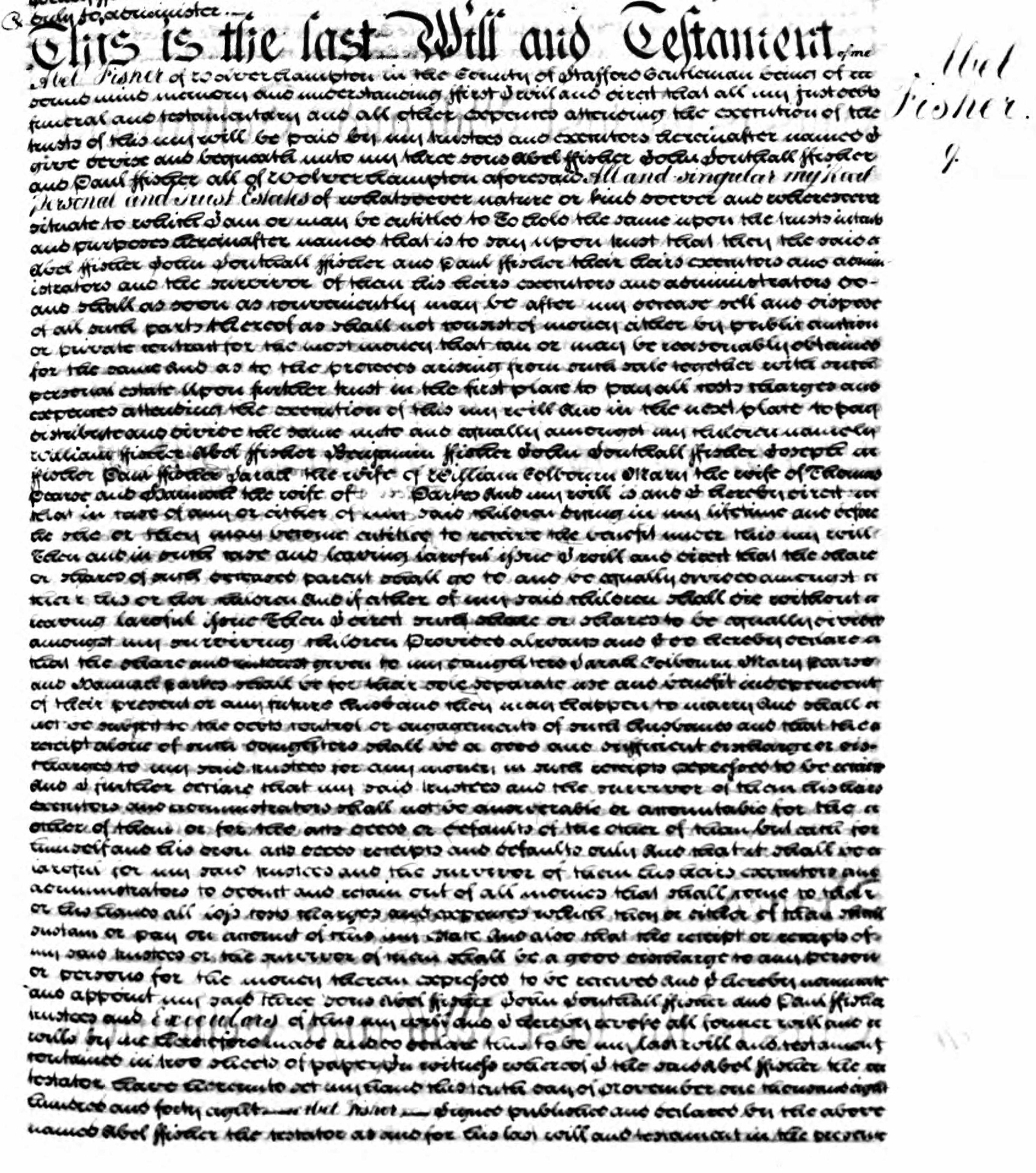
In Abel Fisher’s 1849 will, he names his three sons Abel Fisher 1796-1869, Paul Fisher 1811-1900 and John Southall Fisher 1801-1871 as the executors. He also mentions his other three sons, William Fisher 1792-1873, Benjamin Fisher 1798-1870, and Joseph Fisher 1803-1876, and daughters Sarah Fisher 1794- wife of William Colbourne, Mary Fisher 1804- wife of Thomas Pearce, and Susannah (Hannah) Fisher 1813- wife of Parkes. His son Silas Fisher 1809-1837 wasn’t mentioned as he died before Abel, nor his sons John Fisher 1799-1800, and Edward Southall Fisher 1806-1843. Abel’s wife Susannah Southall born in 1771 died in 1824. They were married in 1791.
The 1849 will of Abel Fisher:
 June 13, 2023 at 10:31 am #7255
In reply to: Family Stories From The Other Side ~ Book Two
The First Wife of John Edwards
1794-1844
John was a widower when he married Sarah Reynolds from Kinlet. Both my fathers cousin and I had come to a dead end in the Edwards genealogy research as there were a number of possible births of a John Edwards in Birmingham at the time, and a number of possible first wives for a John Edwards at the time.
John Edwards was a millwright on the 1841 census, the only census he appeared on as he died in 1844, and 1841 was the first census. His birth is recorded as 1800, however on the 1841 census the ages were rounded up or down five years. He was an engineer on some of the marriage records of his children with Sarah, and on his death certificate, engineer and millwright, aged 49. The age of 49 at his death from tuberculosis in 1844 is likely to be more accurate than the census (Sarah his wife was present at his death), making a birth date of 1794 or 1795.
John married Sarah Reynolds in January 1827 in Birmingham, and I am descended from this marriage. Any children of John’s first marriage would no doubt have been living with John and Sarah, but had probably left home by the time of the 1841 census.
I found an Elizabeth Edwards, wife of John Edwards of Constitution Hill, died in August 1826 at the age of 23, as stated on the parish death register. It would be logical for a young widower with small children to marry again quickly. If this was John’s first wife, the marriage to Sarah six months later in January 1827 makes sense. Therefore, John’s first wife, I assumed, was Elizabeth, born in 1803.
Death of Elizabeth Edwards, 23 years old. St Mary, Birmingham, 15 Aug 1826:

There were two baptisms recorded for parents John and Elizabeth Edwards, Constitution Hill, and John’s occupation was an engineer on both baptisms.
They were both daughters: Sarah Ann in 1822 and Elizabeth in 1824.Sarah Ann Edwards: St Philip, Birmingham. Born 15 March 1822, baptised 7 September 1822:
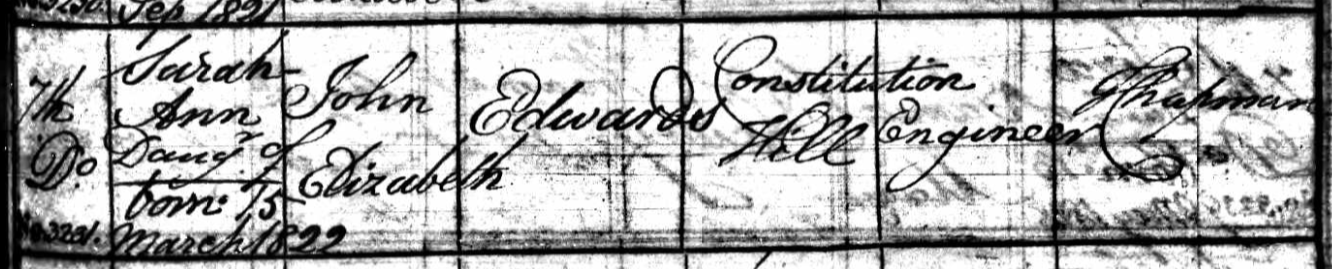
Elizabeth Edwards: St Philip, Birmingham. Born 6 February 1824, baptised 25 February 1824:

With John’s occupation as engineer stated, it looked increasingly likely that I’d found John’s first wife and children of that marriage.
Then I found a marriage of Elizabeth Beach to John Edwards in 1819, and subsequently found an Elizabeth Beach baptised in 1803. This appeared to be the right first wife for John, until an Elizabeth Slater turned up, with a marriage to a John Edwards in 1820. An Elizabeth Slater was baptised in 1803. Either Elizabeth Beach or Elizabeth Slater could have been the first wife of John Edwards. As John’s first wife Elizabeth is not related to us, it’s not necessary to go further back, and in a sense, doesn’t really matter which one it was.
But the Slater name caught my eye.
But first, the name Sarah Ann.
Of the possible baptisms for John Edwards, the most likely seemed to be in 1794, parents John and Sarah. John and Sarah had two infant daughters die just prior to John’s birth. The first was Sarah, the second Sarah Ann. Perhaps this was why John named his daughter Sarah Ann? In the absence of any other significant clues, I decided to assume these were the correct parents. I found and read half a dozen wills of any John Edwards I could find within the likely time period of John’s fathers death.
One of them was dated 1803. In this will, John mentions that his children are not yet of age. (John would have been nine years old.)
He leaves his plating business and some properties to his eldest son Thomas Davis Edwards, (just shy of 21 years old at the time of his fathers death in 1803) with the business to be run jointly with his widow, Sarah. He mentions his son John, and leaves several properties to him, when he comes of age. He also leaves various properties to his daughters Elizabeth and Mary, ditto. The baptisms for all of these children, including the infant deaths of Sarah and Sarah Ann have been found. All but Mary’s were in the same parish. (I found one for Mary in Sutton Coldfield, which was apparently correct, as a later census also recorded her birth as Sutton Coldfield. She was living with family on that census, so it would appear to be correct that for whatever reason, their daughter Mary was born in Sutton Coldfield)Mary married John Slater in 1813. The witnesses were Elizabeth Whitehouse and John Edwards, her sister and brother. Elizabeth married William Nicklin Whitehouse in 1805 and one of the witnesses was Mary Edwards.
Mary’s husband John Slater died in 1821. They had no children. Mary never remarried, and lived with her bachelor brother Thomas Davis Edwards in West Bromwich. Thomas never married, and on the census he was either a proprietor of houses, or “sinecura” (earning a living without working).With Mary marrying a Slater, does this indicate that her brother John’s first wife was Elizabeth Slater rather than Elizabeth Beach? It is a compelling possibility, but does not constitute proof.
Not only that, there is no absolute proof that the John Edwards who died in 1803 was our ancestor John Edwards father.
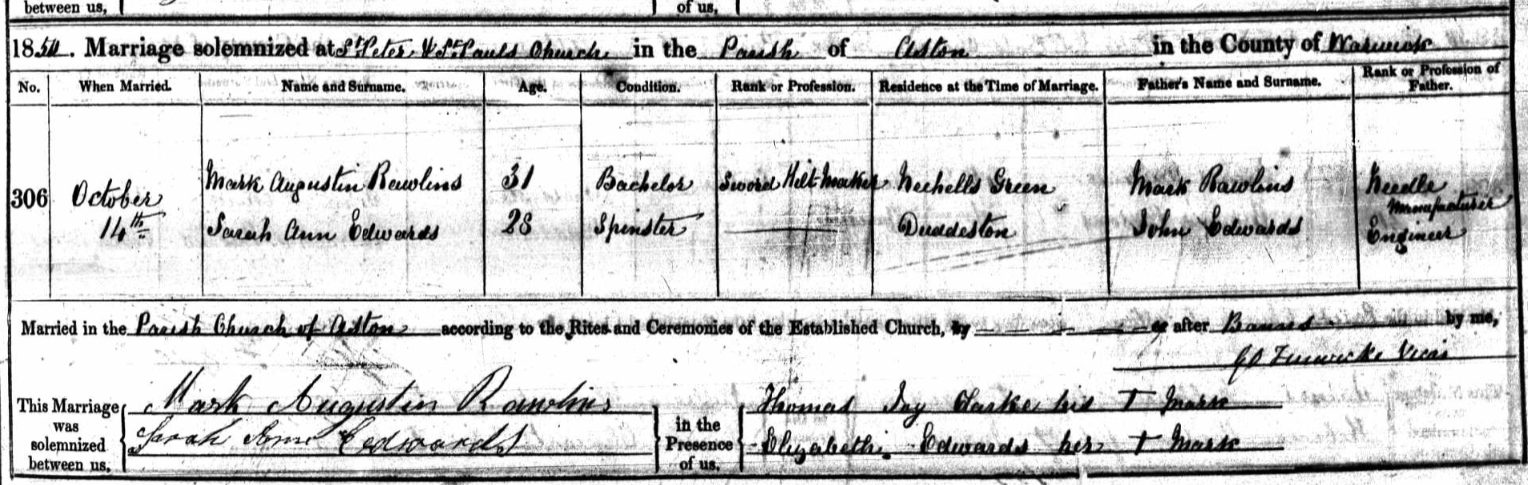
If we can’t be sure which Elizabeth married John Edwards, we can be reasonably sure who their daughters married. On both of the marriage records the father is recorded as John Edwards, engineer.
Sarah Ann married Mark Augustin Rawlins in 1850. Mark was a sword hilt maker at the time of the marriage, his father Mark a needle manufacturer. One of the witnesses was Elizabeth Edwards, who signed with her mark. Sarah Ann and Mark however were both able to sign their own names on the register.
Sarah Ann Edwards and Mark Augustin Rawlins marriage 14 October 1850 St Peter and St Paul, Aston, Birmingham:
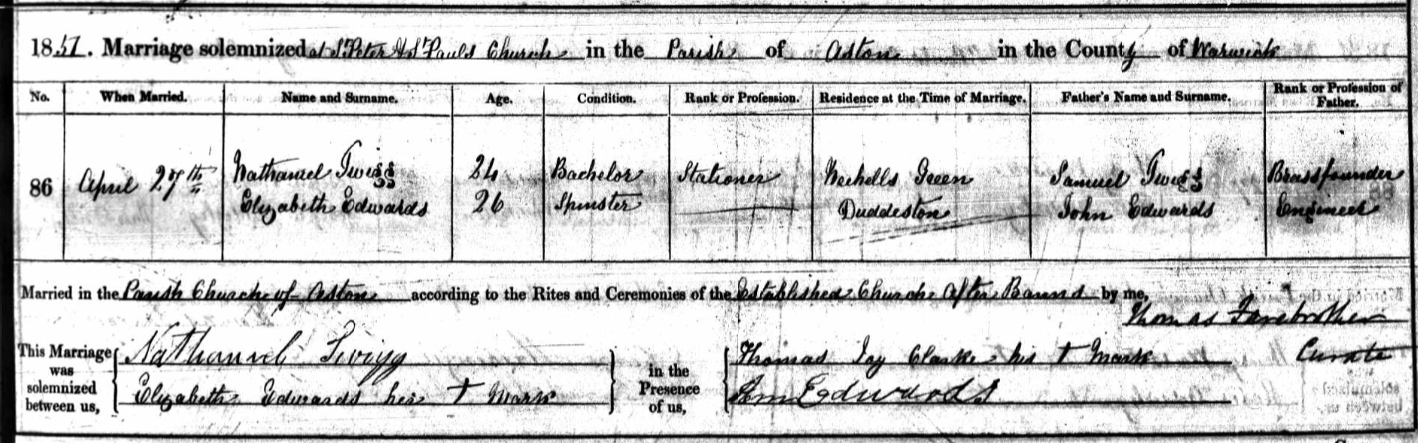
Elizabeth married Nathaniel Twigg in 1851. (She was living with her sister Sarah Ann and Mark Rawlins on the 1851 census, I assume the census was taken before her marriage to Nathaniel on the 27th April 1851.) Nathaniel was a stationer (later on the census a bookseller), his father Samuel a brass founder. Elizabeth signed with her mark, apparently unable to write, and a witness was Ann Edwards. Although Sarah Ann, Elizabeth’s sister, would have been Sarah Ann Rawlins at the time, having married the previous year, she was known as Ann on later censuses. The signature of Ann Edwards looks remarkably similar to Sarah Ann Edwards signature on her own wedding. Perhaps she couldn’t write but had learned how to write her signature for her wedding?
Elizabeth Edwards and Nathaniel Twigg marriage 27 April 1851, St Peter and St Paul, Aston, Birmingham:
Sarah Ann and Mark Rawlins had one daughter and four sons between 1852 and 1859. One of the sons, Edward Rawlins 1857-1931, was a school master and later master of an orphanage.
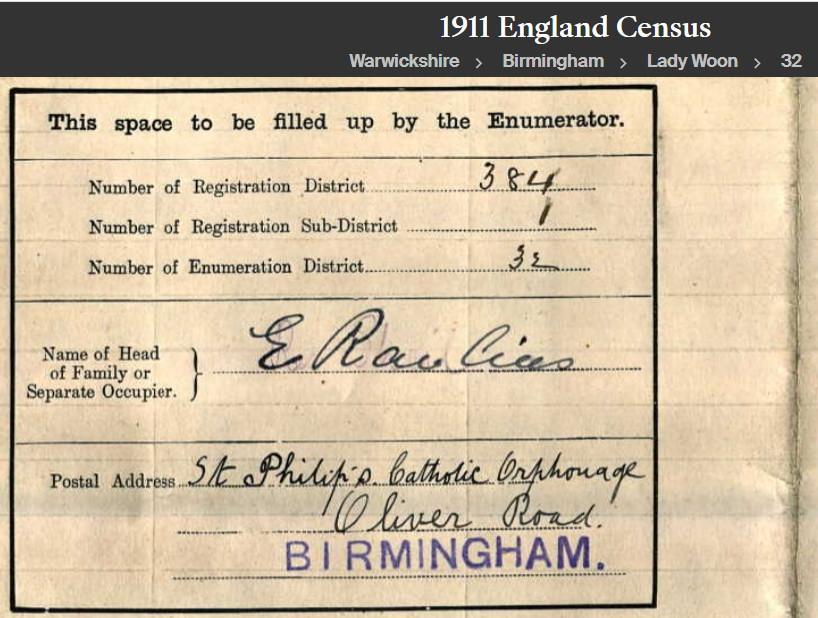
On the 1881 census Edward was a bookseller, in 1891 a stationer, 1901 schoolmaster and his wife Edith was matron, and in 1911 he and Edith were master and matron of St Philip’s Catholic Orphanage on Oliver Road in Birmingham. Edward and Edith did not have any children.
Edward Rawlins, 1911:
Elizabeth and Nathaniel Twigg appear to have had only one son, Arthur Twigg 1862-1943. Arthur was a photographer at 291 Bloomsbury Street, Birmingham. Arthur married Harriet Moseley from Burton on Trent, and they had two daughters, Elizabeth Ann 1897-1954, and Edith 1898-1983. I found a photograph of Edith on her wedding day, with her father Arthur in the picture. Arthur and Harriet also had a son Samuel Arthur, who lived for less than a month, born in 1904. Arthur had mistakenly put this son on the 1911 census stating “less than one month”, but the birth and death of Samuel Arthur Twigg were registered in the same quarter of 1904, and none were found registered for 1911.
Edith Twigg and Leslie A Hancock on their Wedding Day 1925. Arthur Twigg behind the bride. Maybe Elizabeth Ann Twigg seated on the right: (photo found on the ancestry website)
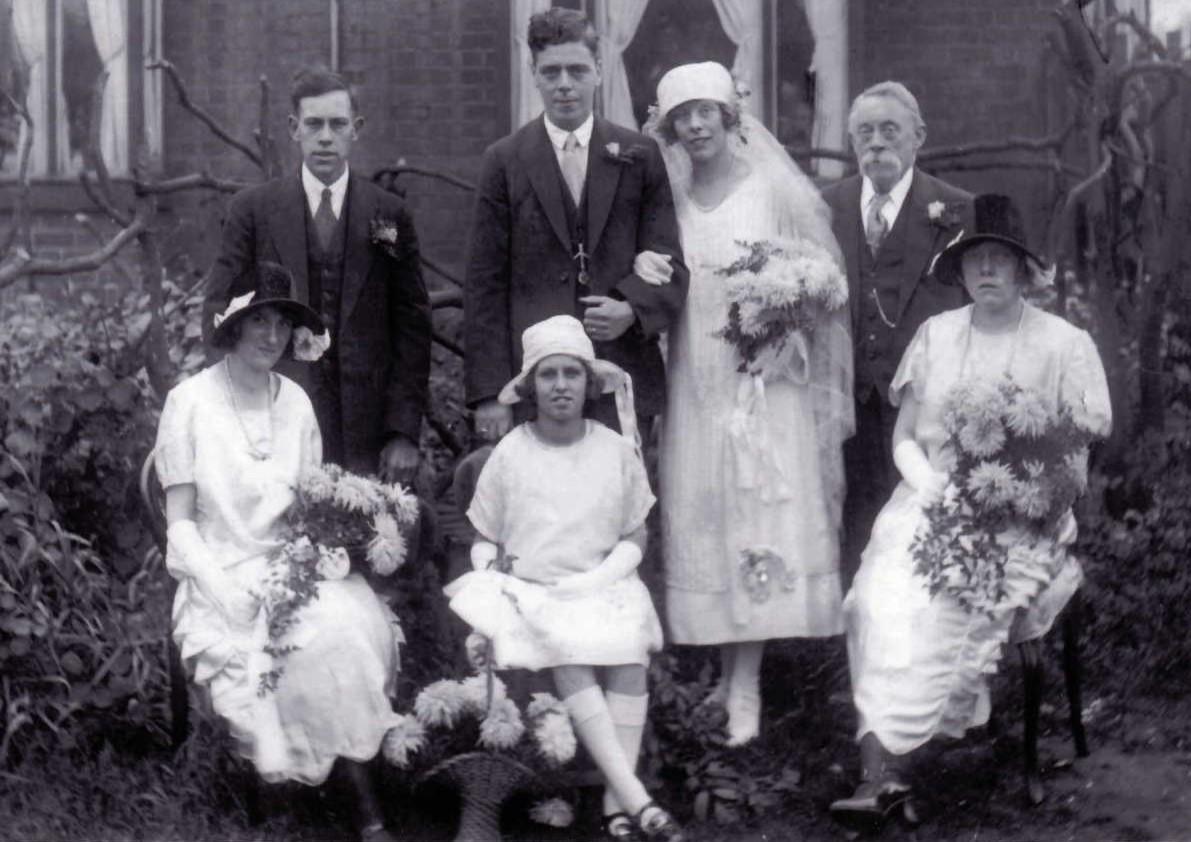
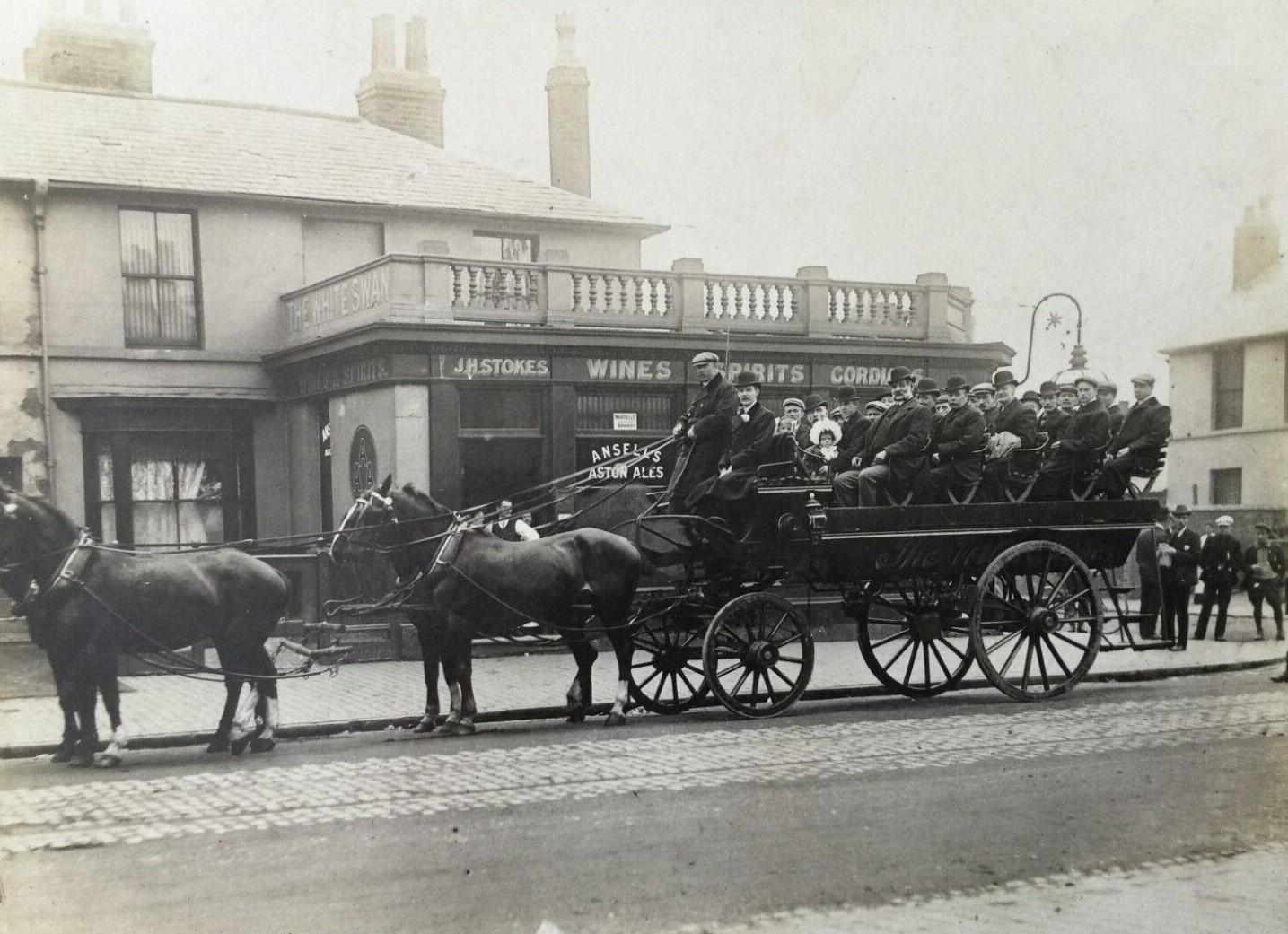
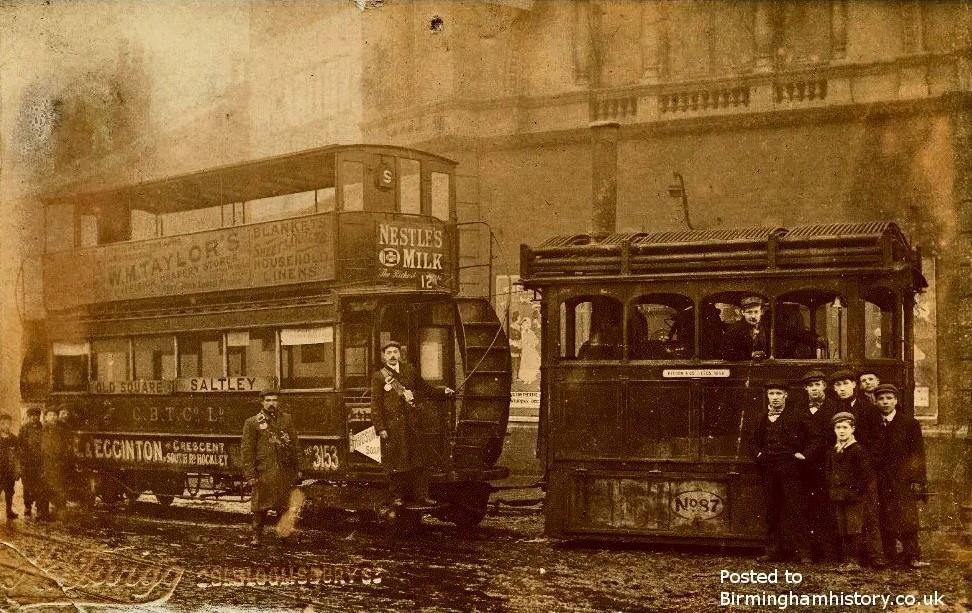
Photographs by Arthur Twigg, 291 Bloomsbury Street, Birmingham:
 May 12, 2023 at 12:57 pm #7232
In reply to: Washed off the sea ~ Creative larks
🐳
Welcome to the bustling riverfront community of Bridgewater, where the sound of boat horns and cries of merchants filled the air.
Bridgewater was a town of hardworking people, all striving to make a living in this busy trading port. One such person was Anne, a middle-aged woman who owned a small pottery shop by the river. Her days were filled with the clanging of clay and the whirring of her pottery wheel. She took great pride in her work, creating beautiful plates and tea bowls that were highly sought after by the locals.
Another memorable character was Jack, the town cobbler whose small shop was always busy with customers. He was known for his kind heart and his willingness to help anyone in need, often giving away shoes to those who couldn’t afford them. As the days passed, life in Bridgewater had its ups and downs.
The lost halfpenny spoke of a hard day’s work, but also of the generosity of the community. The broken pipes spoke of moments of relaxation, but also of the struggles of daily life. And the smashed plates and tea bowls spoke of hurried meals, but also of the occasional argument or disagreement.
Despite the challenges, the people of Bridgewater found small joys in life. Children played by the river, skipping stones and chasing each other. Couples walked hand in hand along the promenade, watching the boats come and go. And on warm summer evenings, the town square was filled with music and laughter as locals gathered for impromptu dance parties. But as with any community, there were also tensions and conflicts.
The town council was often at odds with the merchants, who felt that their needs were being overlooked. And there were whispers of a rival trading port that threatened to take away business from Bridgewater. One day, a fire broke out in the warehouse district, destroying several buildings and leaving many homeless. The community rallied together to help those in need, with Anne donating plates and bowls for makeshift kitchens and Jack offering his shop as a temporary shelter. As the smoke cleared and the ashes settled, the people of Bridgewater were left to rebuild their town. Through hard work and perseverance, they overcame the challenges and emerged even stronger than before. The lost halfpenny, broken pipes, and smashed plates were all reminders of the struggles they had faced, but they also spoke of the resilience and strength of the human spirit. And so, life in Bridgewater continued, a vibrant and bustling riverfront community where goods were traded and daily life was filled with both hardships and small joys.
March 29, 2023 at 3:05 pm #7220In reply to: The Chronicles of the Flying Fish Inn
At 10:30am, the air is buzzing with excitement. As the first race is going to start soon. There has been no signs of a dust storm and everyone seem to have forgotten about it. The participants are cheering and getting ready for the race while groups of tourists are wandering about, taking pictures of the teams and the folks in costume. People came from as far as Mexico, Italy and Macedonia.
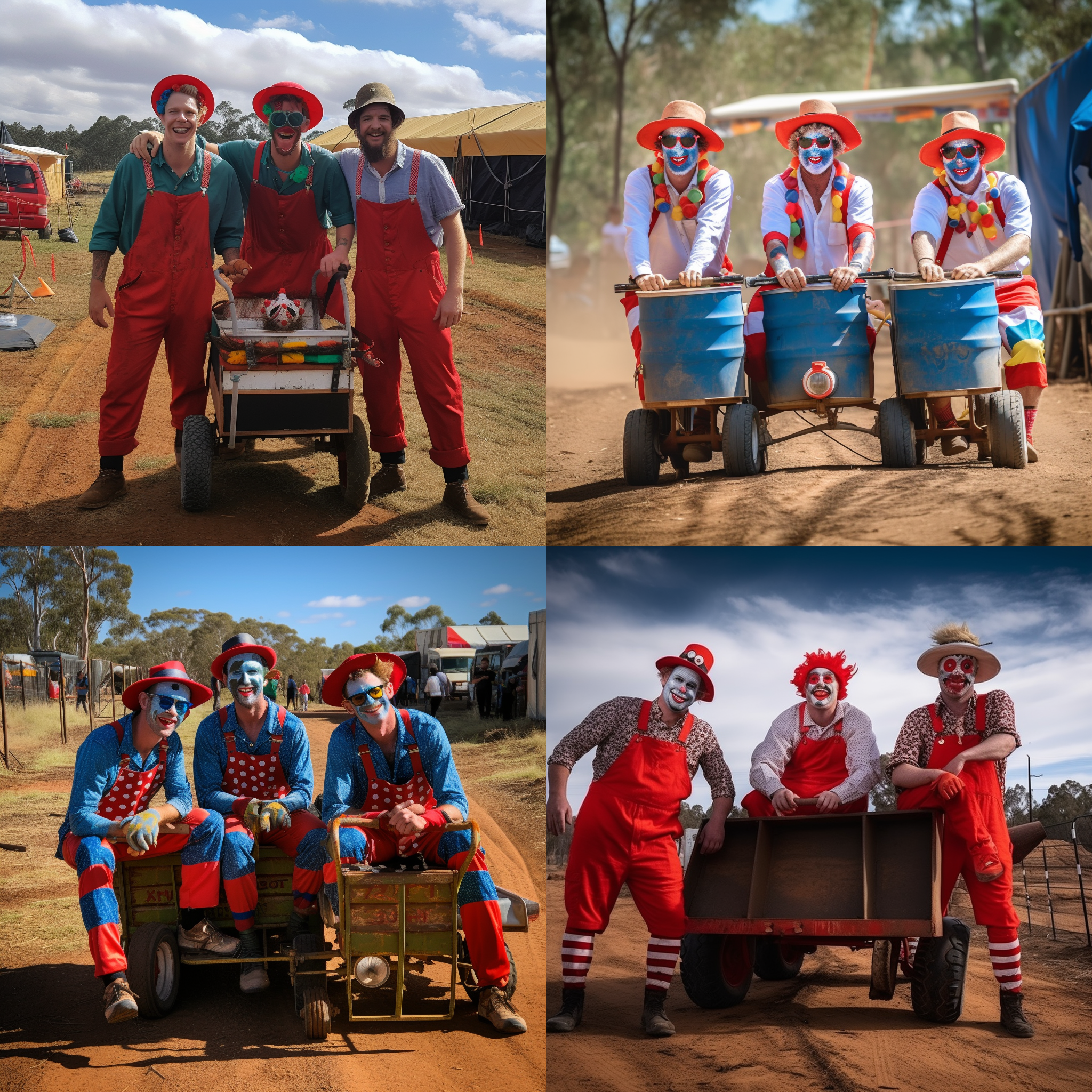
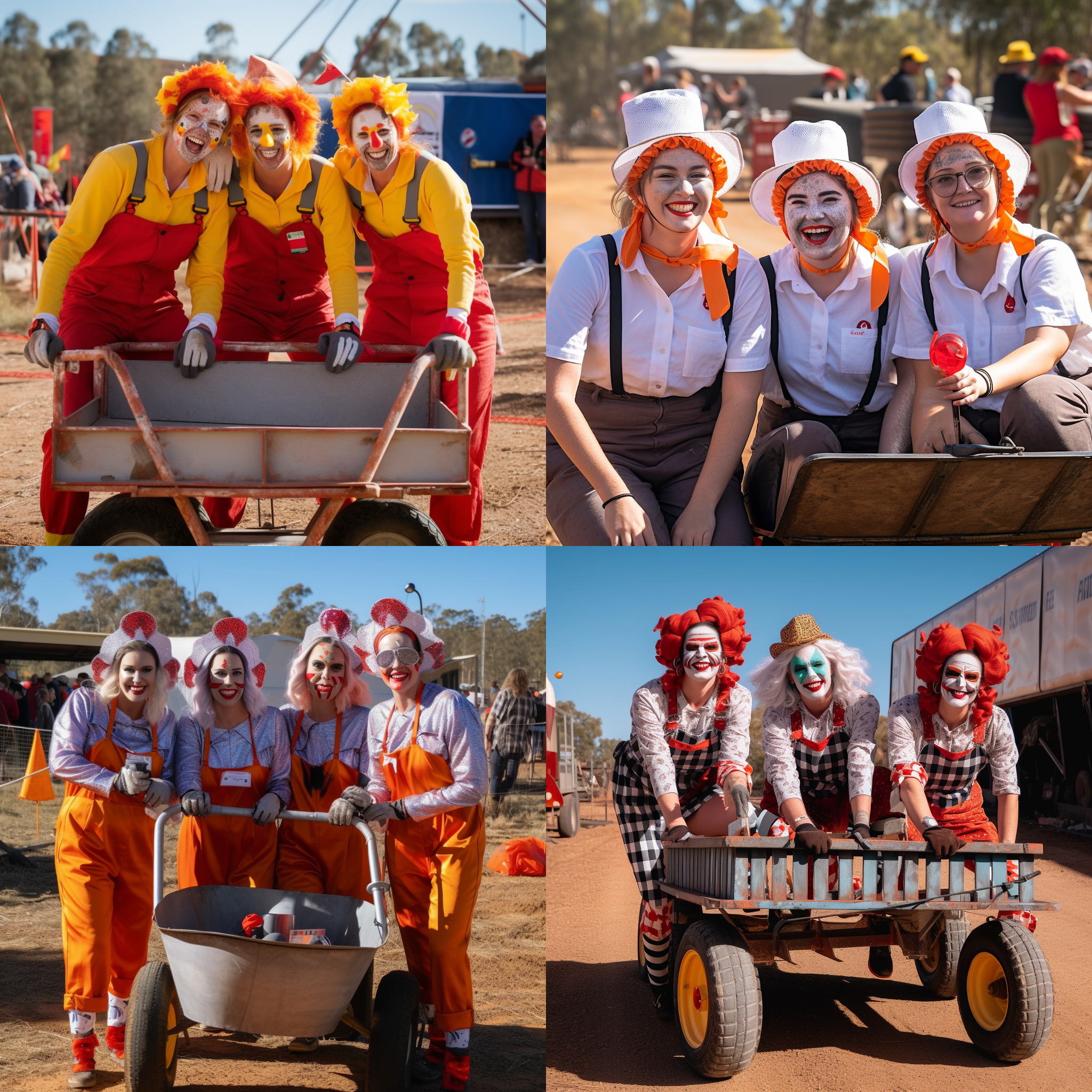
Because of the harsh conditions, miners were usually males back in the days. But there have always been teams at our little town’s festival ready to include women and children because they were usually lighter and it was easier to push the carts around on the tracks. Since a few years, there even have been full female teams, and they were pretty good too.
Prune arrives with her new fancy reflex camera she got at her last birthday. She wants to take our picture in front of our cart. At Joe and Callum’s surprise, I try to talk her into joining our team and be part of the fun. I get out of the cart a spare hat and a wig I had prepared for her, but she says today she’s doing a reportage about the festival. I know she wants to be on the lookout for our father, and keep an eye on the Inn’s guests. She told me yesterday something was off with that Liana Parker who kept snooping around and asking questions to townsfolk about Howard and Fred. And, she heard the two other girls talking about Liana being a Finli and a nun.
I frown. I haven’t told the boys anything about my father or suspicious guests with false names. Prune knows I’m not too keen about letting my little sister following people around on her own. I told her something could go wrong, but she brushed it aside explaining it was the perfect occasion because people wouldn’t pay attention to someone taking random pictures during a festival. She’s got a point, but I’m still her big brother. I had to try.
She asks us to strike a pose in front of our cart and tells a few jokes. When we laugh she takes a picture of our all male team, I’m the one in the center, Callum’s on the left and Joe on the right. I’m glad despite all the concern, I look like I’m having fun.
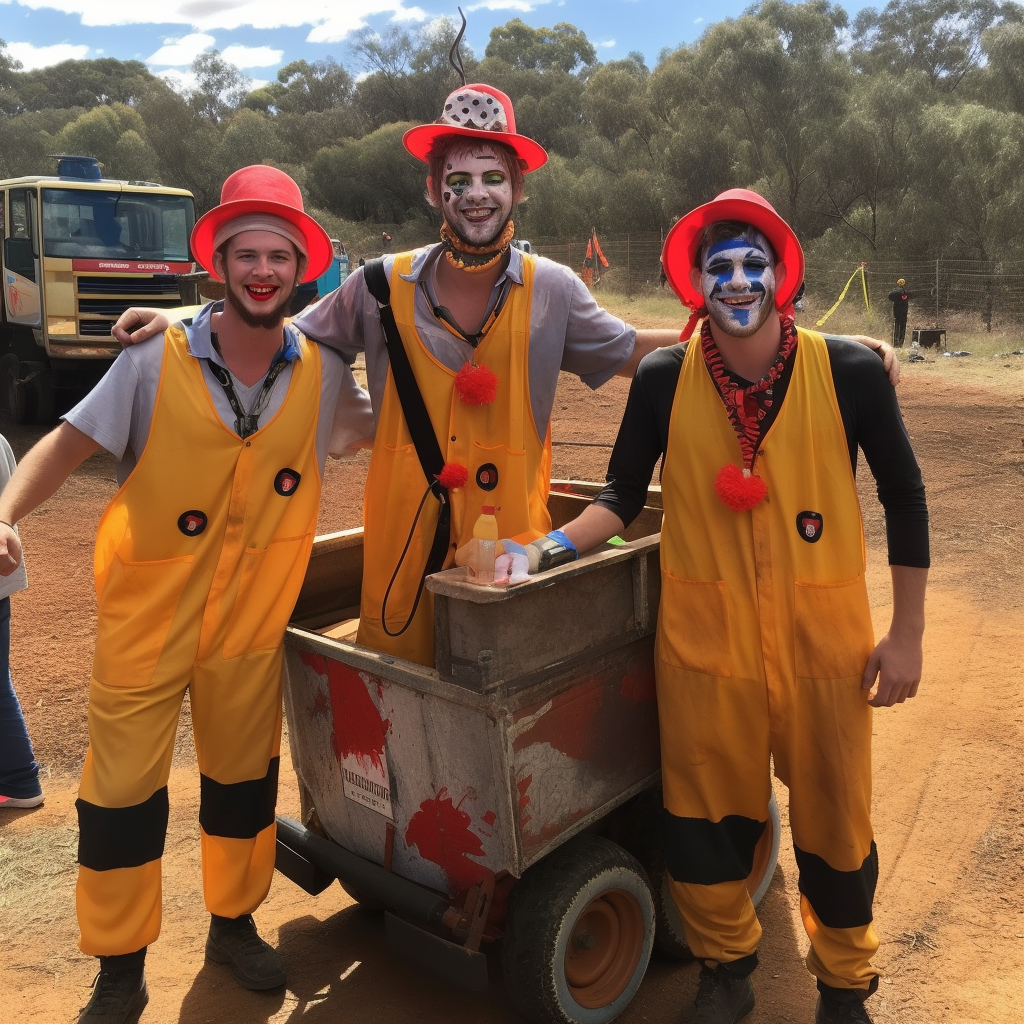
Checking her camera screen, Prune says: “You guys remind me of the Clockwork Orange with your hats, but more colourful and less creepy.”
Callum and Joe look at each other, each having one eyebrow raised. I snort. I’m sure they don’t understand the reference.
“You’re ok,” she tells them. “It means people will notice and remember you.”
“Spread the word! We’ll crush them all!” Callum shouts.
Prune looks at me. “You’re still frowning,” she says. “It’ll be fine.”
“Ok,” I say. “But at least take the hat. You can’t dress as yourself during a Cart and Lager festival, or you’ll pop out of the crowd.”
She raises her eyes to the sky and sighs. Then, she takes the orange hat from my hands and puts it on her head.
“There, happy? Consider that an endorsement of your team,” she says with a wink.
Joe and Callum hoot and whistle loudly. “Miss serious is running wild! Anything can happen today.”
We all laugh. Their enthusiasm is contagious.
“Hey! You’re mother is about to talk,” says Joe to Callum. “She’s hot.”
“Don’t speak about my mother like that.”
The mayor has climbed on the central stage and she’s talking with an all dressed up woman with a big hat that makes her look like the Queen of England. She sure seems out of place in our little town’s festival. Flanked by two bodyguards in black, I guess it’s Botty Banworth who’s provided that expensive sound system the mayor’s trying to use. “One, two, three… Is it working? Yes. Ok. All the participants are expected to bring their cart to the depart lane. We’re about to start. In the meantime let me introduce Miss Banworth who’s been very generous and allowed our festival to get to another level. She’s going to help us rehabilitate the abandoned mines and open a museum.”
A roar from the crowd. The woman’s lips are so thin and red that the smile she puts on her face looks like it’s just been made with a razor blade. I shiver. She’s the Queen of England turned by a vampire.
Someone bumps into my back and knocks the air out of my lungs. I almost fall on my sister.
“Hey! Watch out!” says Callum.
I catch my breath and look up. It’s Betsy, dressed as a miner too, with extra sequins and gummy stars on her dungarees. She looks confused and mutters some excuses but doesn’t stop. She walks as if she has had a few lagers already.
“Hey, Betsy,” calls Prune. “You seem like you just saw a ghost.”
“Someone… near the mines… It can’t be…” says Betsy.
“Who did you see near the mines?” shouts my sister.
With the noise around us, I almost didn’t hear Betsy’s answer.
“Fred… Howard… It can’t be. I need Idle’s cakes,” she says before disappearing in the crowd.
I look at Prune. I see in her eyes we’re thinking the same thing. Dad’s really here. We nod at the same time and I move my lips: “Be careful.” She nods.
“You three, win,” she tells us before leaving.
“You heard her?” I asked Callum and Joe. “Let’s move our limo.” As we approach the tracks with the other participants, a gush of wind almost knock my hat off my head. There is some commotion coming from the central stage. A guy climbed up and is shouting something that I don’t understand, pointing at the sky behind us. When I look back like everyone, tourists and teams, I understand.
“Dust! Dust’s coming!”
And right from the direction of the abandoned mines. Dad what did you get yourself into?
It’s 10:55am and I’m pretty sure we’ll have to put off the race.
February 28, 2023 at 1:14 pm #6720In reply to: The Precious Life and Rambles of Liz Tattler
“It’s amazing, all the material we gathered over the years, it makes one’s head spin…” Godfrey was poring over quantities of papers, mostly early drafts stuck haphazardly in a pile of donations boxes that Elizabeth had generously contributed to the National Library’s archives of great works and renowned authors, but mostly as way of spring cleaning.
He had materialized some of the links from the pages with webs of purple yarn tied to the wall of the dining hall. It had soon become a tangled mess of interwoven threads that he had to protect from the cleaning frenzied assaults of energetic feather duster of Finnley.
She’d softened her stance a little when she’s realised how often her namesake has popped in the various storylines, almost making her emotional about Liz’ incorporating her in her works of fictions —only to remember that most of the time, she’d been the working hand behind the continuity, the Finnleys appearances being an offshoot of this endeavour.
Godfrey had almost forgotten he was actually a publisher to start with, before he became more of a useful side-kick, if not a useful idiot.
The phone rang in the empty hall. Soon after, Finnley arrived with the heavy bakelite telephone, handing it over to Godfrey unceremoniously. “You might want to take this, it’s Felicity…” she mouthed the last word like it was the name of the Devil himself.
“Dear Flove protect us, don’t tell me Liz’ mother is in town…”
“Well, at least she has comic relief value” snorted Finnley on her way back to her duties.
February 7, 2023 at 1:49 pm #6504In reply to: The Jorid’s Travels – 14 years on
Klatu was a quite unassuming alien form (alien for them anyway, he was actually more indigenous than they were). Looking like a green gnome with bulging eyes covered by protective goggles, long pointy ears (2 or 3 depending on the wind direction), a short three nostrils snout, an a mossy toupee on top of his head, he made quick work of the formalities and presentations.
“Little ugly humans, come follow me. Have tracked your smelly hairy friend, not time to waste.”
Salomé looked at Georges sideways with a smirk on his face. They could read their thoughts easily on that one, something along the lines of:
“The translator is behaving again, or is he really calling us ugly?”
“Don’t worry dear, that’s probably a polite way of addressing people in their language.”
They arrived at a little sand speedster just barely big enough for their indigenous companion. Salomé raised an eyebrow at the situation, while Georges was ready to ride shotgun with the alien on the tiny bike.
Klatu moved his arms in short annoyed movements, “not here, stupid mammals, go there and be quiet!” and pointed them to a makeshift trolley attached behind and half burried in the sand. He grinned from ear to ear to ear, visibly pleased with his vehicle tuning appendage.
“Horrid creatures better wear seatbelts. Ride gonna shaky.”
February 6, 2023 at 10:49 pm #6502Chapter 4: There is no place like home
A Visit to Duckailingtown
The group arrives in the small city of Duckailingtown, known for its unusual name and the legendary wooden leg carpenter, Dumbass Voldomeer.
Maryechka, is shown by Liliya and Lina the local museum where they learn about the famous wooden leg carpenter and the swan flu outbreak that left the President incapacitated.
The group visits the workshop of Dumbass Voldomeer and they are shocked to find that he is the spitting image of the President.
Dumbass Voldomeer tells them about his connection to the President and how he was approached to take his place as the President.
The group learns about the Rootian border and the close relationship between Rootia and Dumbass, and the possibility of a future cross-border conflict.
The group visits the swan sanctuary and learns about the mysterious swan flu virus that has affected the President and the citizens of Dumbass.
The group makes a decision to continue their journey to Rootia to find a cure for the swan flu and save the President.Cross-border Conflict
The group crosses the Rootian border and finds themselves in the midst of a conflict between Rootia and Dumbass.
They meet with a Rootian diplomat who explains the conflict and the role of the President in resolving it.
The group encounters Myroslava who is still being pursued by her pursuers and they team up to find a cure for the swan flu.
They visit the Rootian medical facility where they meet with the chief medical officer who explains the research being done on the swan flu virus.
The group travels to a remote location where they meet with Olek, the caretaker of the Flovlinden Tree, and learns about the sacred oil that is believed to have healing properties.
The group collects the sacred oil and returns to the medical facility where they successfully cure the President and put an end to the conflict between Rootia and Dumbass.
The group returns home, proud of their accomplishment and the newfound knowledge and experiences they have gained on their journey.A Homecoming Celebration
The group returns home and is greeted with open arms by their families and friends.
Maryechka, Liliya, and Lina visit Egna who is thrilled to hear about their journey and the success of their mission.
The group shares their experiences and knowledge with their friends and families, and they all celebrate their homecoming together.
Dumbass Voldomeer visits the group and thanks them for their help in resolving the conflict between Rootia and Dumbass.
The group visits the Flovlinden Tree and pays homage to Olek and the sacred oil that played a critical role in their journey.
Maryechka, Liliya, and Lina reflect on their journey and the life-long friendships they have formed.
The group concludes their journey and looks forward to their future adventures and discoveries.February 2, 2023 at 8:09 am #6489In reply to: Orbs of Madjourneys
It was a pleasant 25 degrees as Zara stepped off the plane. The flat red land stretched as far as the eye could see, and although she prefered a more undulating terrain there was something awe inspiring about this vast landscape. It was quite a contrast from the past few hours spent inside mine tunnels.
Bert, a weatherbeaten man of indeterminate advanced age, was there to meet her as arranged and led her to the car, a battered old four wheel drive. Although clearly getting on in years, he was tall and spry and dressed in practical working clothes.
“Welcome to Alice,” he said, taking her bag and putting in on the back seat. “I expect you’ll be wanting to know a bit about the place.”
“How long have you lived here?” Zara asked, as Bert settled into the creaky drivers seat and started the car.
Bert gave her a funny look and replied “Longer than a ducks ass.” Zara had never heard that expression before; she assumed it meant a long time but didn’t like to pursue the question.
“All this land belongs to the Arrernte,” he said, pronouncing it Arrunda. “The local aboriginals. 1862 when we got here. Well,” Bert turned to give Zara a lopsided smile, “Not me personally, I aint quite that old.”
Zara chuckled politely as Bert continued, “It got kinda busy around these parts round 1887 with the gold.”
“Oh, are there mines near here?” Zara asked with some excitement.
Bert gave her a sharp look. “Oh there’s mines alright. Abandoned now though, and dangerous. Dangerous places, old mines. You’ll be more interested in the hiking trails than those old mines, some real nice hiking and rock gorges, and it’s a nice temperature this time of year.”
Bert lapsed into silence for a few minutes, frowning.
“If you’da been arriving back then, you’da been on a camel train, that’s how they did it back then. Camel trains. They do camel tours for tourists nowadays.”
“Do you get many tourists?”
“Too dang many tourists if you ask me, Alice is full of them, and Ayers Rock’s crawling with ’em these days. We don’t get many out our way though.” Bert snorted, reminding Zara of Yasmin. “Our visitors like an off the beaten track kind of holiday, know what I mean?” Bert gave Zara another sideways lopsided smile. “I reckon you’ll like it at The Flying Fish Inn. Down to earth, know what I mean? Down to earth and off the wall.” He laughed heartily at that and Zara wasn’t quite sure what to say, so she laughed too.
“Sounds great.”
“Family run, see, makes a difference. No fancy airs and graces, no traffic ~ well, not much of anything really, just beautiful scenery and peace and quiet. Aunt Idle thinks she’s in charge but me and old Mater do most of it, well Finly does most of it to be honest, and you dropped lucky coming now, the twins have just decorated the bedrooms. Real nice they look now, they fancied doing some dreamtime murials on the walls. The twins are Idle’s neices, Clove and Corrie, turned out nice girls, despite everything.”
“Despite ….?”
“What? Oh, living in the outback. Youngsters usually leave and head for the cities. Prune’s the youngest gal, she’s a real imp, that one, a real character. And Devan calls by regular to see Mater, he works at the gas station.”
“Are they all Idle’s neices and nephews? Where are their parents?” Perhaps she shouldn’t have asked, Zara thought when she saw Bert’s face.
“Long gone, mate, long since gone from round here. We’ve taken good care of ’em.” Bert turned off the road onto a dirt road. “Only another five minutes now. We’re outside the town a bit, but there aint much in town anyway. Population 79, our town. About right for a decent sized town if you ask me.”
Bert rounded a bend in a eucalyptus grove and announced, “Here we are, then, the Flying Fish Inn.” He parked the car and retrieved Zara’s bag from the back seat. “Take a seat on the verandah and I’ll find Idle to show you to your room and get you a drink. Oh, and don’t be put off by Idle’s appearance, she’s a sweetheart really.”
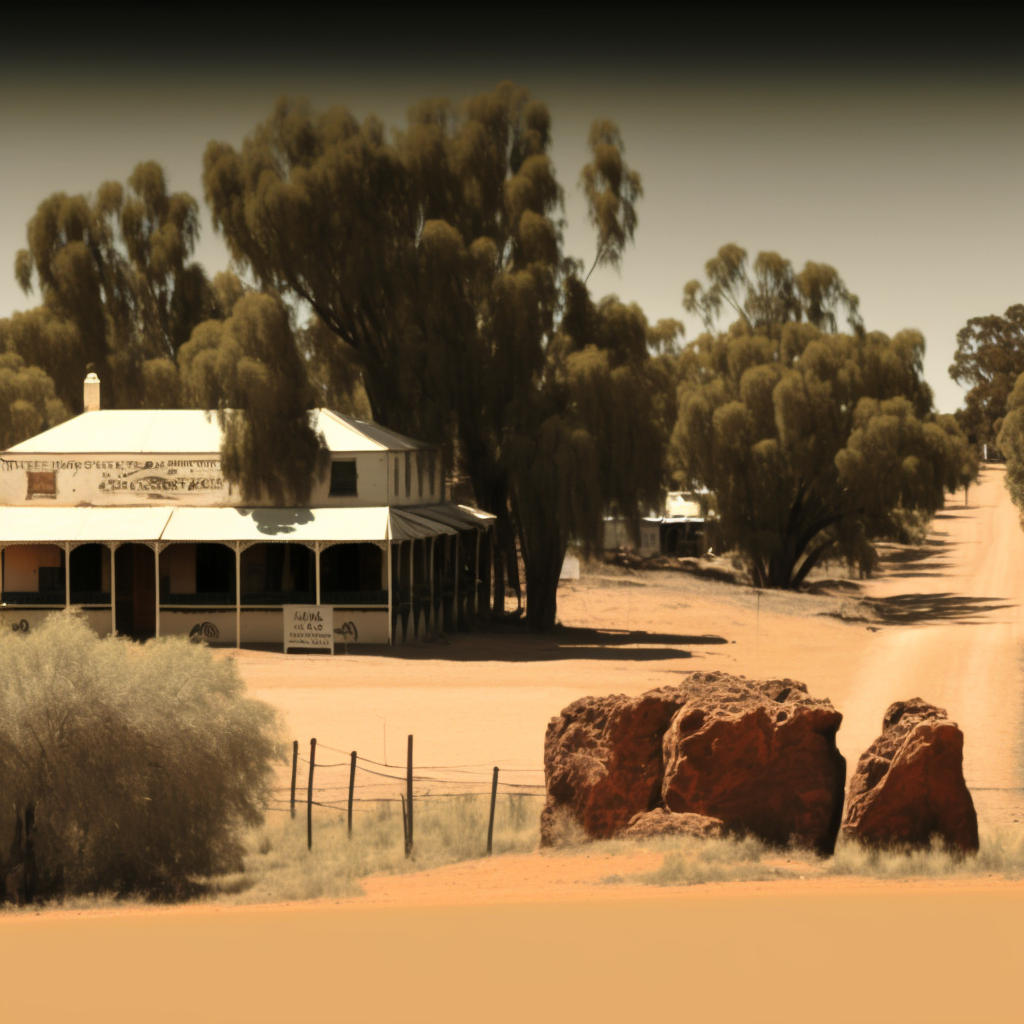
Aunt Idle was nowhere to be found though, having decided to go for a walk on impulse, quite forgetting the arrival of the first guest. She saw Bert’s car approaching the hotel from her vantage point on a low hill, which reminded her she should be getting back. It was a lovely evening and she didn’t rush.
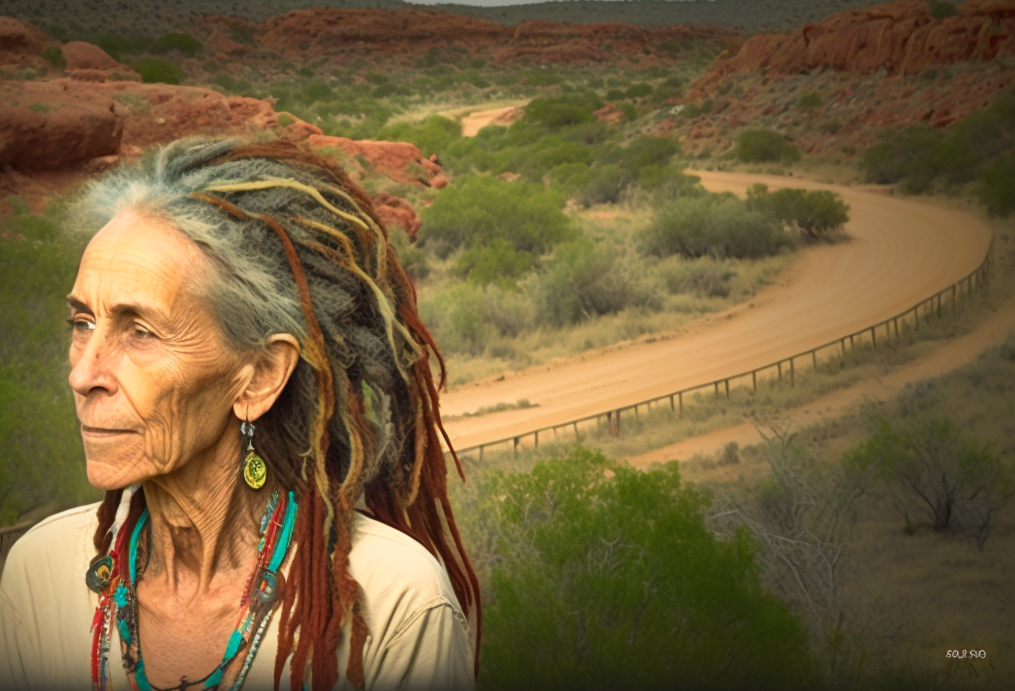
Bert found Mater in the dining room gazing out of the window. “Where the bloody hell is Idle? The guest’s outside on the verandah.”
“She’s taken herself off for a walk, can you believe it?” sighed Mater.
“Yep” Bert replied, “I can. Which room’s she in? Can you show her to her room?”
“Yes of course, Bert. Perhaps you’d see to getting a drink for her.”
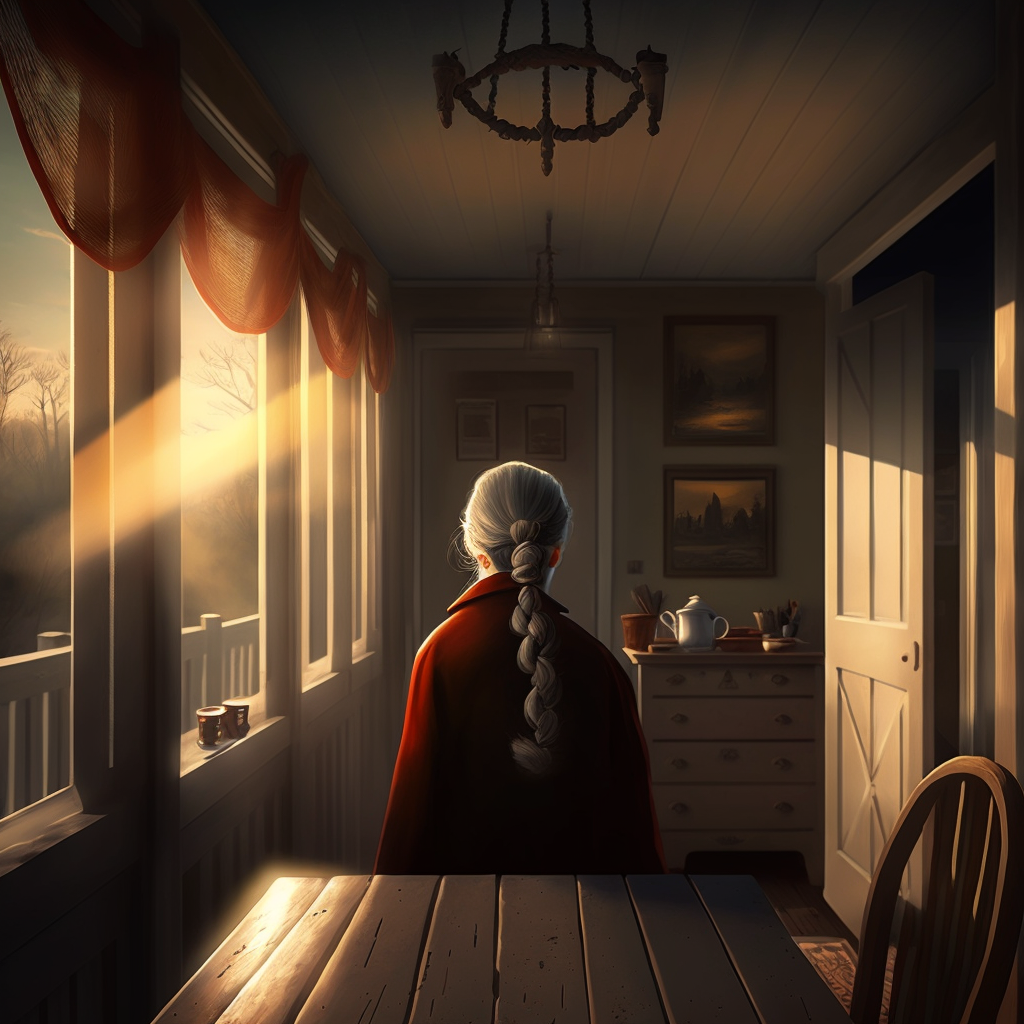 January 29, 2023 at 5:15 pm #6469
In reply to: Orbs of Madjourneys
The door opened and Youssef saw Natalie, still waiting for him. Indeed, he needed help. He decided to accept
sands_of_timecontact request, hopping it was not another Thi Gang trick.Sands_of_time is trying to make contact : ✅ACCEPT <> ➡️DENY ❓ A princess on horse back emerged from the sand. The veil on her hair floated in a wind that soon cleared all the dust from her garment and her mount, revealing a princess with a delicate face and some prominent attributes that didn’t leave Youssef indifferent. She was smiling at him, and her horse, who had six legs and looked a bit like a camel, snorted at the bear.
“I love doing that, said the princess. At least I don’t get to spit sand afterward like when my sister’s grand-kids want to bury me in the sand at the beach…”
It broke the charm. It reminded Youssef it was all a game. That princess was an avatar. Was it even a girl on the other side ? And how old ? Youssef, despite his stature, felt as vulnerable as when his mother left him for the afternoon with an old aunt in Sudan when he was five and she kept wanting to dress him with colourful girl outfits. He shivered and the bear growled at the camel-horse, reminding Youssef how hungry he was.
“
sands_of_time?” he asked.“Yes. I like this AI game. Makes me feel like I’m twenty again. Not as fun as a mushroom trip though, but… with less secondary effects. Anyway, I saw you needed help with that girl. A ‘reel’ nuisance if you ask me, sticky like a sea cucumber.”
“How do you know ? Did you plant bugs on my phone ? Are you with the Thi Gang ?”
The bear moved toward them and roared and the camel-horse did a strange sound. The princess appeased her mount with a touch of her hand.
“Oh! Boy, calm down your heat. Nothing so prosaic. I have other means, she said with a grin. Call me Sweet Sophie, I’m a real life reporter. Was just laying down on my dream couch looking for clues about a Dr Patelonus, the man’s mixed up in some monkey trafficking business, when I saw that strange llama dressed like a tibetan monk, except it was a bit too mayonnaise for a tibetan monk. Anyway, he led me to you and told me to contact you through this Quirk Quest Game, suggesting you might have some intel for me about that monkey business of mine. So I put on my VR helmet, which actually reminds me of a time at the hair salon, and a gorgeous beehive… but anyway you wouldn’t understand. So I had to accept one of those quests and find you in the game. Which was a lot less easier than RV I can tell you. The only thing, I couldn’t interact with you unless you accepted contact. So here I am, ready for you to tell me about Dr Patelonus. But I can see that first we need to get you out of here.”
Youssef had no idea about what she was talking about. VR; RV ? one and the same ? He decided not to tell her he knew nothing about monkeys or doctors until he was out of Natalie’s reach. If indeed
sands_of_timecould help.“So what do I do ?” asked Youssef.
“Let me first show you my real self. I’ve always wanted to try that. Wait a moment. I need to focus.”
The princess avatar looked in the distance, her eyes lost beyond this world. Suddenly, Youssef felt a presence creeping into his mind. He heard a laugh and saw an old lady in yoga pants on a couch! He roared and almost let go of his phone again.

The princess smiled.
“Now, wouldn’t be fair if only I knew what you looked like in real life. Although you’re pretty close to your avatar… Don’t you seem a tad afraid of experimenting with new things.
 “
“She laughed again, and this time Youssef saw her “real” face superimposed on the princess avatar. It gave him goosebumps.
“Now’s your opening, she said. The girl’s busy giving directions to someone else. Get out of the bathroom! Now!”
Youssef had the strangest feeling that the voice had come at the same time from the phone speakers and from inside his head. His body acted on its own as if he was a puppet. He pushed the bathroom door open and rushed outside.
January 17, 2023 at 8:17 am #6393In reply to: Train your subjective AI – text version
Give me an unusual plot structure for a narrative
One unusual plot structure for a narrative could be a “reverse chronological” structure, where the story begins at the end and works backwards in time, revealing events and information in a non-linear way. Another could be a “choose your own adventure” style, where the reader is presented with a series of choices at different points in the story that determine the direction and outcome of the plot.
How would role playing qualify in terms of plot structure?
Role-playing games (RPGs) can be considered a unique form of plot structure because they are interactive and open-ended. In a traditional RPG, the players take on the roles of characters within a fictional setting and work together to create a shared narrative. The plot structure of an RPG is determined by the actions and decisions of the players, rather than a pre-written script. The game master (GM) creates an overarching plot and a set of rules for the players to follow, but the players’ choices and actions will determine the direction and outcome of the story. This makes the plot structure of an RPG fluid and ever-changing, unlike a traditional linear narrative.
What about “Cloud Atlas” in terms of plot structure?
“Cloud Atlas” is a novel written by David Mitchell that was later adapted into a film. It has a complex and non-linear plot structure, which employs multiple storylines that are set in different time periods and locations, and are connected by recurring themes and motifs. The novel is divided into six nested stories, each set in a different time period and location, that are told in a non-linear fashion. The story begins in the 19th century and then jumps back and forth between the 19th, 20th and 23rd century, and each story is interconnected and interrelated, with characters reappearing in different time periods, the events that happen in one story impacting the others. The novel is also notable for its use of different genres, such as science fiction, historical fiction, and thriller, and the way it explores the themes of destiny, reincarnation, and the power of human connection. The film adaptation also used this structure, with the different stories intertwined and characters reprising their roles in different settings and eras.
Take a story thread made of comments. In each comment is a text about characters in a particular plot, location, action etc. The comments are sequential, but they are not necessarily continuous. It is a mix between Cloud Atlas and RPG plot structures. How do you sort something that’s fundamentally non-linear to present it in an accessible way?
One way to sort and present a story thread made of comments that is fundamentally non-linear, yet accessible, is to group the comments based on their content. For example, you could group the comments by characters, and present them in chronological order of their appearance in the story. Another way could be grouping the comments by location, and present them in chronological order of when the action takes place in that particular location. You could also group comments by the type of action taking place, such as combat, conversation, or puzzle-solving, and present them in chronological order of when they occur in the story.
Another approach could be using visual aids, such as mind maps, timelines, or flowcharts, to help organize and present the information in a clear and easy-to-understand way. For example, you could use a mind map to show how different characters are connected, or a timeline to show the chronology of events. Additionally, you could use labels, such as “character introduction,” “location change,” or “plot twist,” to make it clear to the reader what type of information they can expect in each comment.
It’s also important to keep in mind the audience for which you are organizing the story. It should be easy for them to understand and follow the story, and if it’s a game, you should make sure it’s easy for the players to play and make decisions.
January 13, 2023 at 7:40 pm #6379In reply to: Prompts of Madjourneys
Asking to give each of the 4 characters some particular traits that makes them uniquely distinctive and recognizable
The four friends, Zara, Xavier, Yasmin, and Youssef, each have their own unique traits that make them stand out and recognizable.
Zara is the leader of the group, she is confident, and always ready for an adventure. She is a natural leader and has a strong sense of justice. She is also a tech-savvy person, always carrying a variety of gadgets with her, and is always the first to try out new technology.
Xavier is the joker of the group, always cracking jokes and making puns. He is a free-spirited person who is always up for an adventure, he has a great sense of humor and is not afraid to be himself. He is also an artist and often carries a sketchbook and pencils with him, he likes to draw whatever he sees in his journeys.
Yasmin is the brains of the group, she is intelligent and logical. She is always able to think on her feet and come up with a plan when things get tough. She is also a bit of a perfectionist and likes to have everything organized. She is a history buff and always carries a notebook with her to document her findings.
Youssef is the muscle of the group, He is physically strong, and always ready to help out in a fight. He is also a bit of a foodie and loves trying new dishes. He is always the first one to volunteer to carry the heavy bags and equipment. He is also a bit of a daredevil and loves trying out new sports and activities.
Give each of them a color, and an animal, and a secret name in a funny language
The four friends, Zara, Xavier, Yasmin, and Youssef, each have their own unique traits that make them stand out and recognizable.
Zara is the leader of the group, her color is red, her animal is a lion, and her secret name in a funny language is “Zaraloon”
Xavier is the joker of the group, his color is orange, his animal is a monkey, and his secret name in a funny language is “Xavimunk”
Yasmin is the brains of the group, her color is blue, her animal is an owl, and her secret name in a funny language is “Yasminowl”
Youssef is the muscle of the group, his color is green, his animal is a bear, and his secret name in a funny language is “Youssefbear”
Now, we need physical descriptions for each of them. Also, their ages, height, clothes, facial features, ethnicity (for instance Youssef may be half Yemeni and half Norwegian), etc. with a good mix of generic and eccentric. We also need surnames congruent with their described ethnicity, not too bland, but not too daft either. For instance Youssef Olafsson, Zara Patara-Smythe, etc. Also explain how they become friends.
Zara Patara-Smythe is a
25-year-oldwoman of mixed heritage, her mother is Indian and her father is British. She has long, dark hair that she keeps in a sleek ponytail, dark brown eyes and a sharp jawline. She stands at 5’6″ and has a toned and athletic build. She usually wears practical clothing that allows her to move around easily, such as cargo pants and a tank top.Xavier Olafsson is a
27-year-oldman of Norwegian and Danish descent. He has blonde hair that he keeps in a messy style, blue eyes, and a charming smile. He stands at 6’1″ and has a lean build. He is always seen wearing a colorful and bold clothing, such as a Hawaiian shirt and shorts.Yasmin Ahmed is a
23-year-oldwoman of Egyptian descent. She has long, black hair that she keeps in a tight braid, dark brown eyes and a round face. She stands at 5’4″ and has a petite build. She usually wears conservative clothing, such as long skirts and blouses.Youssef Ali is a
26-year-oldman of half Yemeni, half Norwegian descent. He has short, curly black hair, dark brown eyes and a square jawline. He stands at 6’2″ and has a muscular build. He usually wears comfortable clothing such as a t-shirt and jeans, and always has a backpack on his shoulder.The four of them became friends
in college, they were all studying different majors, but they all shared a love for adventure and exploration. They found themselves in the same class project, and from there they formed a strong bond. After college, they decided to keep exploring the world together, and went on many trips and adventures, always seeking for something new and exciting.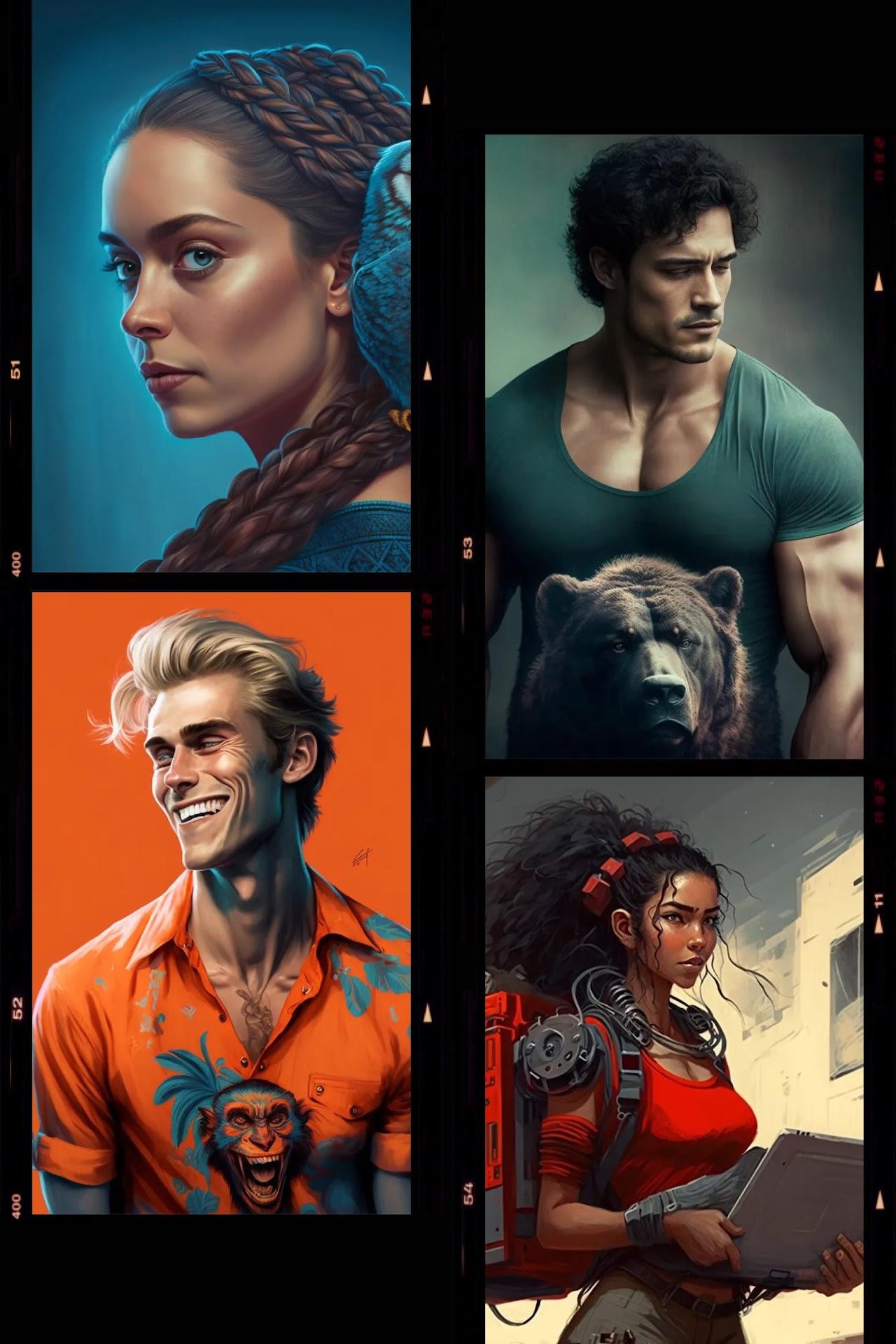
1/ Change the ages of Zara, Xavier, Yasmin and Youssef to more random patterns – rewrite if needed how they met each other to reflect eventual age gaps. Give them some flaws, mental or physical challenges.
2/ increase again the age gaps while keeping the youngest one a young adult, and remove “minor” from the flaws descriptionsZara is a 22-year-old woman who is the youngest of the group. She is a free-spirited, adventurous person, but also a bit reckless and impulsive. She has a scar on her cheek that she got from a Skateboarding accident when she was a teenager.
Xavier is a 45-year-old man who is the oldest of the group. He is a responsible and level-headed person, but also a bit of a perfectionist and can be hard on himself and others. He has dyslexia which he has been able to work around and it doesn’t impede his daily life.
Yasmin is a 38-year-old woman who is the second oldest of the group. She is a kind and compassionate person, but also a bit of a pushover and can have trouble standing up for herself. She has social anxiety that affect her in certain situations and she have been working on coping mechanisms.
Youssef is a 33-year-old man who is the second youngest of the group. He is a charismatic and outgoing person, but also a bit of a flirt and can be a bit insensitive to others feelings. He has ADHD which he has been able to manage with medication, but it still affects him from time to time.
The group met each other through different means, Xavier and Yasmin met at work, Zara and Youssef met at a college class, and eventually, they all became friends through common interests and activities. They decided to go on this adventure together because they were all looking for a change in their lives and wanted to explore the unknown.
January 10, 2023 at 11:00 pm #6365In reply to: Train your subjective AI – text version
Prune has got me into this AI stuff… It sounds like gibberish to me, but Idle sounded amazed at the stuff it spewed out.
With some info on our family story, Prune got it to try and predict the future…
Sounds like a big plate of bog, but we’ll see how it goes.
Sure, here are a few possible events that could occur between Mater’s 100th birthday and her death in the Flying Fish Inn story:
- Mater decides to throw herself a grand birthday party, inviting all of her friends and family from the small outback town. However, things take a turn for the strange when a group of extraterrestrial beings crash the party and reveal themselves to be long-time fans of Mater’s famous bush tucker cuisine.
- Mater begins to experience vivid dreams and hallucinations, in which she is visited by the ghost of her late husband. As the dreams become more frequent, the family begins to suspect that there may be something more to them than just Mater’s mind playing tricks on her.
- Mater’s granddaughter Prune becomes increasingly obsessed with her dream of traveling to Mars, and begins to notice strange occurrences happening around the inn that seem to be connected to her aspiration.
- A group of eccentric scientists arrive at the inn, conducting research on the local flora and fauna. They eventually discover a species of sentient plants living in the area, and Mater becomes convinced that the plants are communicating with her in her dreams.
- With her health declining, Mater begins to spend more and more time tending to her garden, where she is visited by an old kookaburra who seems to possess an otherworldly intelligence. The bird becomes Mater’s companion and confidant in the final days of her life.
- As the Great Fires ravage the Australian bush, Mater makes the difficult decision to shut down the inn and evacuate the guests. But as they flee, they realize that the fire is not just a natural disaster, but something far more sinister and mystical.
- In her final days, Mater begins to remember strange and vivid details of her life that she never could have known, as if she lived a previous life in another time and place. As she dies, she whispers something to Prune, which opens her eyes to a new reality that may have been hidden from her all along
- It turns out the family had a lot of secrets, and the only way to escape it, was to leave the inn, but it was not an escape for all. Through the series of events, secrets are revealed, and some truths cannot be undone.Note that these events are fictional and whimsical in nature, but as they keeps it grounded to a sense of doldrums in the Australian bush and occasionally guests help to unravel some of the overarching mysteries it could make a fitting storyline for the story.
May 27, 2022 at 8:25 am #6300In reply to: The Elusive Samuel Housley and Other Family Stories
Looking for Carringtons
The Carringtons of Smalley, at least some of them, were Baptist ~ otherwise known as “non conformist”. Baptists don’t baptise at birth, believing it’s up to the person to choose when they are of an age to do so, although that appears to be fairly random in practice with small children being baptised. This makes it hard to find the birth dates registered as not every village had a Baptist church, and the baptisms would take place in another town. However some of the children were baptised in the village Anglican church as well, so they don’t seem to have been consistent. Perhaps at times a quick baptism locally for a sickly child was considered prudent, and preferable to no baptism at all. It’s impossible to know for sure and perhaps they were not strictly commited to a particular denomination.
Our Carrington’s start with Ellen Carrington who married William Housley in 1814. William Housley was previously married to Ellen’s older sister Mary Carrington. Ellen (born 1895 and baptised 1897) and her sister Nanny were baptised at nearby Ilkeston Baptist church but I haven’t found baptisms for Mary or siblings Richard and Francis. We know they were also children of William Carrington as he mentions them in his 1834 will. Son William was baptised at the local Smalley church in 1784, as was Thomas in 1896.
The absence of baptisms in Smalley with regard to Baptist influence was noted in the Smalley registers:
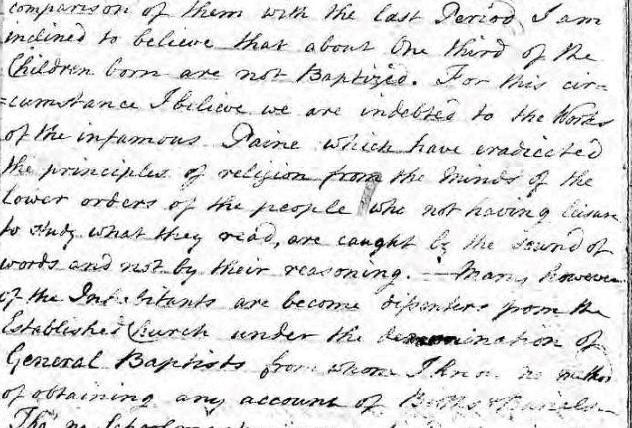
Smalley (chapelry of Morley) registers began in 1624, Morley registers began in 1540 with no obvious gaps in either. The gap with the missing registered baptisms would be 1786-1793. The Ilkeston Baptist register began in 1791. Information from the Smalley registers indicates that about a third of the children were not being baptised due to the Baptist influence.
William Housley son in law, daughter Mary Housley deceased, and daughter Eleanor (Ellen) Housley are all mentioned in William Housley’s 1834 will. On the marriage allegations and bonds for William Housley and Mary Carrington in 1806, her birth date is registered at 1787, her father William Carrington.
A Page from the will of William Carrington 1834:
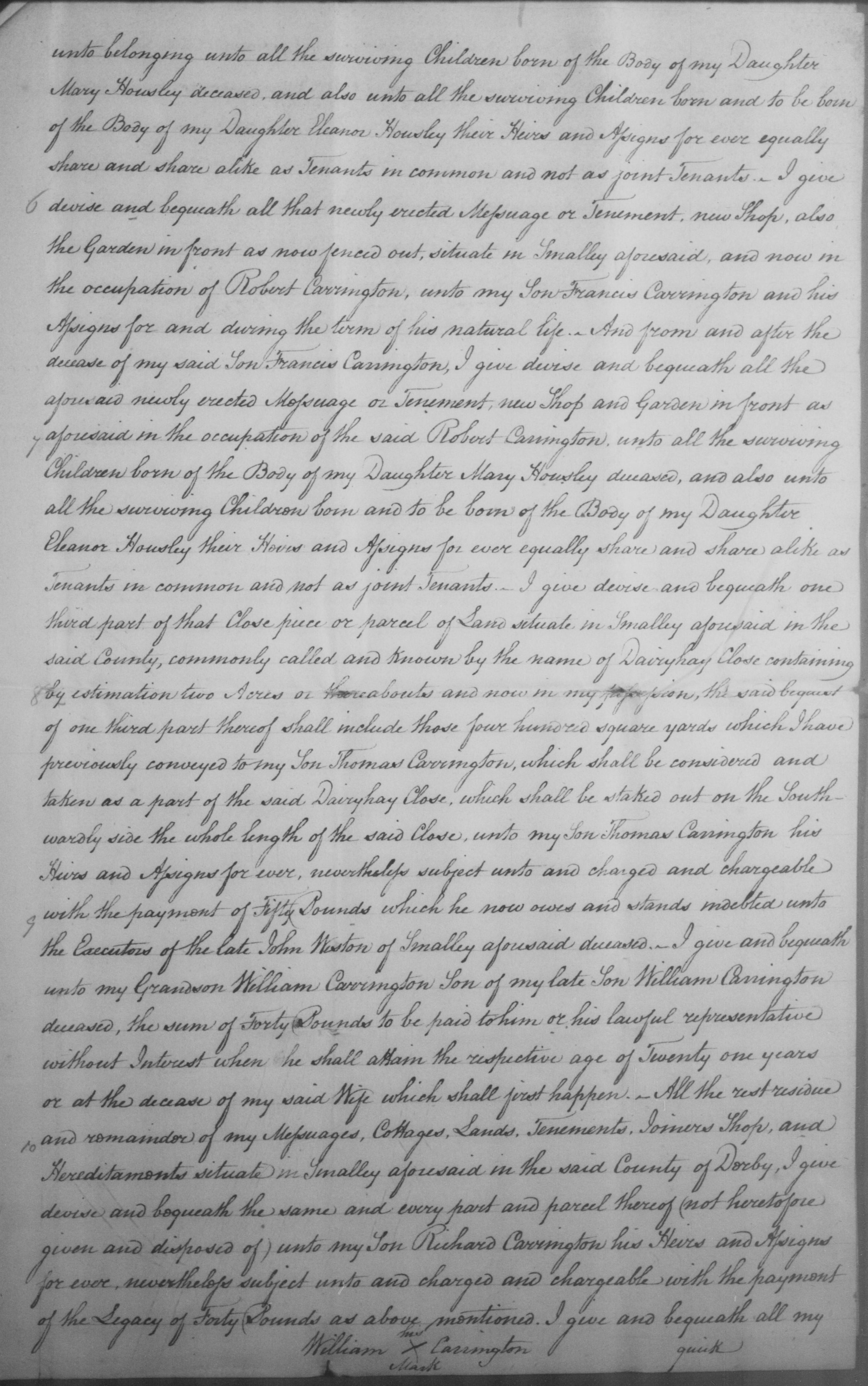
William Carrington was baptised in nearby Horsley Woodhouse on 27 August 1758. His parents were William and Margaret Carrington “near the Hilltop”. He married Mary Malkin, also of Smalley, on the 27th August 1783.
When I started looking for Margaret Wright who married William Carrington the elder, I chanced upon the Smalley parish register micro fiche images wrongly labeled by the ancestry site as Longford. I subsequently found that the Derby Records office published a list of all the wrongly labeled Derbyshire towns that the ancestry site knew about for ten years at least but has not corrected!
Margaret Wright was baptised in Smalley (mislabeled as Longford although the register images clearly say Smalley!) on the 2nd March 1728. Her parents were John and Margaret Wright.
But I couldn’t find a birth or baptism anywhere for William Carrington. I found four sources for William and Margaret’s marriage and none of them suggested that William wasn’t local. On other public trees on ancestry sites, William’s father was Joshua Carrington from Chinley. Indeed, when doing a search for William Carrington born circa 1720 to 1725, this was the only one in Derbyshire. But why would a teenager move to the other side of the county? It wasn’t uncommon to be apprenticed in neighbouring villages or towns, but Chinley didn’t seem right to me. It seemed to me that it had been selected on the other trees because it was the only easily found result for the search, and not because it was the right one.
I spent days reading every page of the microfiche images of the parish registers locally looking for Carringtons, any Carringtons at all in the area prior to 1720. Had there been none at all, then the possibility of William being the first Carrington in the area having moved there from elsewhere would have been more reasonable.
But there were many Carringtons in Heanor, a mile or so from Smalley, in the 1600s and early 1700s, although they were often spelled Carenton, sometimes Carrianton in the parish registers. The earliest Carrington I found in the area was Alice Carrington baptised in Ilkeston in 1602. It seemed obvious that William’s parents were local and not from Chinley.
The Heanor parish registers of the time were not very clearly written. The handwriting was bad and the spelling variable, depending I suppose on what the name sounded like to the person writing in the registers at the time as the majority of the people were probably illiterate. The registers are also in a generally poor condition.
I found a burial of a child called William on the 16th January 1721, whose father was William Carenton of “Losko” (Loscoe is a nearby village also part of Heanor at that time). This looked promising! If a child died, a later born child would be given the same name. This was very common: in a couple of cases I’ve found three deceased infants with the same first name until a fourth one named the same survived. It seemed very likely that a subsequent son would be named William and he would be the William Carrington born circa 1720 to 1725 that we were looking for.
Heanor parish registers: William son of William Carenton of Losko buried January 19th 1721:
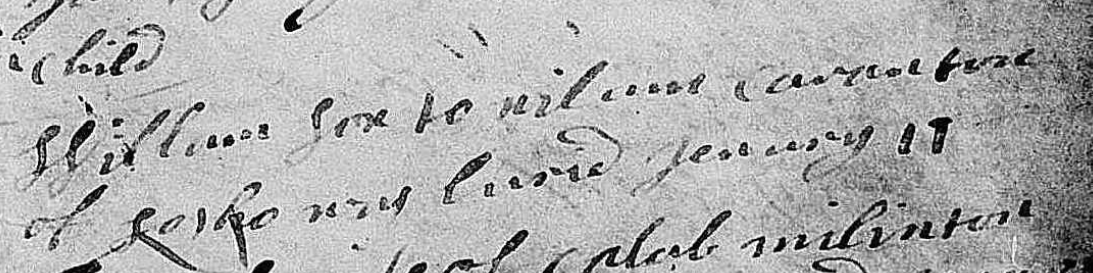
The Heanor parish registers between 1720 and 1729 are in many places illegible, however there are a couple of possibilities that could be the baptism of William in 1724 and 1725. A William son of William Carenton of Loscoe was buried in Jan 1721. In 1722 a Willian son of William Carenton (transcribed Tarenton) of Loscoe was buried. A subsequent son called William is likely. On 15 Oct 1724 a William son of William and Eliz (last name indecipherable) of Loscoe was baptised. A Mary, daughter of William Carrianton of Loscoe, was baptised in 1727.
I propose that William Carringtons was born in Loscoe and baptised in Heanor in 1724: if not 1724 then I would assume his baptism is one of the illegible or indecipherable entires within those few years. This falls short of absolute documented proof of course, but it makes sense to me.
In any case, if a William Carrington child died in Heanor in 1721 which we do have documented proof of, it further dismisses the case for William having arrived for no discernable reason from Chinley.
-
AuthorSearch Results