Search Results for 'making'
-
AuthorSearch Results
-
February 8, 2025 at 7:22 pm #7776
In reply to: Quintessence: Reversing the Fifth
Epilogue & Prologue
Paris, November 2029 – The Fifth Note Resounds
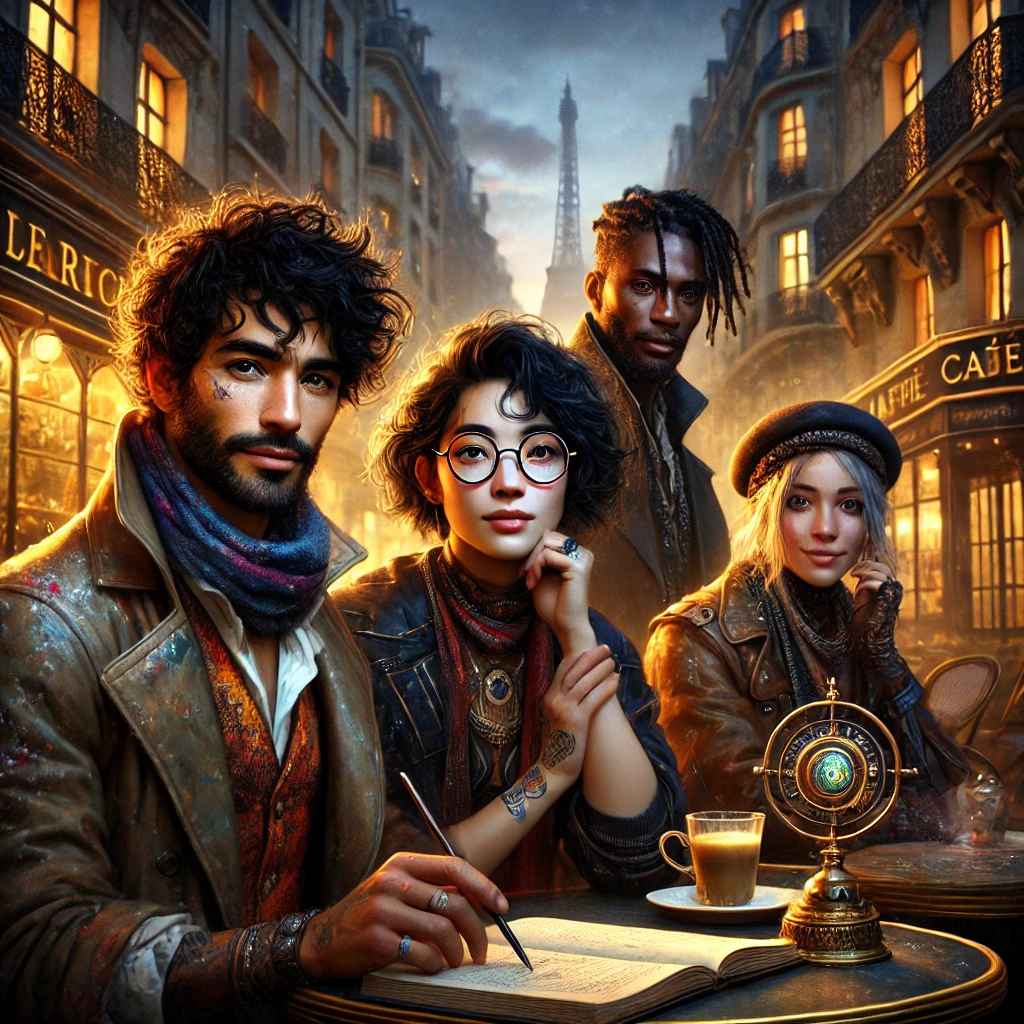
Tabitha sat by the window at the Sarah Bernhardt Café, letting the murmur of conversations and the occasional purring of the espresso machine settle around her. It was one of the few cafés left in the city where time still moved at a human pace. She stirred her cup absentmindedly. Paris was still Paris, but the world outside had changed in ways her mother’s generation still struggled to grasp.
It wasn’t just the ever-presence of automation and AI making themselves known in subtle ways—screens adjusting to glances, the quiet surveillance woven into everyday life. It wasn’t just the climate shifts, the aircon turned to cold in the midst of November, the summers unpredictable, the air thick with contradictions of progress and collapse of civilization across the Atlantic.
The certainty of impermanence was what defined her generation. BANI world they used to say—Brittle, Anxious, Nonlinear, Incomprehensible. A cold fact: impossible to grasp and impossible to fight. Unlike her mother and her friends, who had spent their lives tethered to a world that no longer existed, she had never known certainty. She was born in the flux.
And yet, this café remained. One of the last to resist full automation, where a human still brought you coffee, where the brass bell above the door still rang, where things still unfolded at a human pace.
The bell above the door rang—the fifth note, as her mother had called it once.
She had never been here before, not in any way that mattered. Yet, she had heard the story. The unlikely reunion five years ago. The night that moved new projects in motion for her mother and her friends.
Tabitha’s fingers traced the worn edges of the notebook in front of her—Lucien’s, then Amei’s, then Darius’s. Pieces of a life written by many hands.
“Some things don’t work the first time. But sometimes, in the ruins of what failed, something else sprouts and takes root.”
And that was what had happened.
The shared housing project they had once dreamed of hadn’t survived—not in its original form. But through their rekindled bond, they had started something else.
True Stories of How It Was.
It had begun as a quiet defiance—a way to preserve real, human stories in an age of synthetic, permanent ephemerality and ephemeral impermanence, constantly changing memory. They were living in a world where AI’s fabricated histories had overwhelmed all the channels of information, where the past was constantly rewritten, altered, repackaged. Authenticity had become a rare currency.
As she graduated in anthropology few years back, she’d wondered about the validity of history —it was, after all, a construct. The same could be said for literature, art, even science. All of them constructs of the human mind, tenuous grasp of the infinite truth, but once, they used to evolve at such a slow pace that they felt solid, reliable. Ultimately their group was not looking for ultimate truth, that would be arrogant and probably ignorant. Authenticity was what they were looking for. And with it, connections, love, genuineness —unquantifiables by means of science and yet, true and precious beyond measure.
Lucien had first suggested it, tracing the idea from his own frustrations—the way art had become a loop of generated iterations, the human touch increasingly erased. He was in a better place since Matteo had helped him settle his score with Renard and, free of influence, he had found confidence in developing of his own art.
Amei —her mother—, had changed in a way Tabitha couldn’t quite define. Her restlessness had quieted, not through settling down but through accepting impermanence as something other than loss. She had started writing again—not as a career, not to publish, but to preserve stories that had no place in a digitized world. Her quiet strength had always been in preserving connections, and she knew they had to move quickly before real history faded beneath layers of fabricated recollections.
Darius, once skeptical, saw its weight—he had spent years avoiding roots, only to realize that stories were the only thing that made places matter. He was somewhere in Morocco now, leading a sustainable design project, bridging cultures rather than simply passing through them.
Elara had left science. Or at least, science as she had known it. The calculations, the certainty, the constraints of academia, with no escape from the automated “enhanced” digital helpers. Her obsession and curiosities had found attract in something more human, more chaotic. She had thrown herself into reviving old knowledge, forgotten architectures, regenerative landscapes.
And Matteo—Matteo had grounded it.
The notebook read: Matteo wasn’t a ghost from our past. He was the missing note, the one we didn’t know we needed. And because of him, we stopped looking backward. We started building something else.
For so long, Matteo had been a ghost of sorts, by his own account, lingering at the edges of their story, the missing note in their unfinished chord. But now, he was fully part of it. His mother had passed, her past history unraveling in ways he had never expected, branching new connections even now. And though he had lost something in that, he had also found something else. Juliette. Or maybe not. The story wasn’t finished.
Tabitha turned the page.
“We were not historians, not preservationists, not even archivists. But we have lived. And as it turned out, that was enough.”
They had begun collecting stories through their networks—not legends, not myths, but true accounts of how it was, from people who still remembered.
A grandfather’s voice recording of a train ride to a city that no longer exists.
Handwritten recipes annotated by generations of hands, each adding something new.
A letter from a protest in 2027, detailing a movement that the history books had since erased.
An old woman’s story of her first love, spoken in a dialect that AI could not translate properly.It had grown in ways they hadn’t expected. People began sending them recordings, letters, transcripts, photos —handwritten scraps of fading ink. Some were anonymous, others carefully curated with full names and details, like makeshift ramparts against the tide of time.
At first, few had noticed. It was never the goal to make it worlwide movement. But little by little, strange things happened, and more began to listen.
There was something undeniably powerful about genuine human memory when it was raw and unfiltered, when it carried unpolished, raw weight of experience, untouched by apologetic watered down adornments and out-of-place generative hallucinations.
Now, there were exhibitions, readings, archives—entire underground movements dedicated to preserving pre-synthetic history. Their project had become something rare, valuable, almost sacred.
And yet, here in the café, none of that felt urgent.
Tabitha looked up as the server approached. Not Matteo, but someone new.
“Another espresso?”
She hesitated, then nodded. “Yes. And a glass of water, please.”
She glanced at the counter, where Matteo was leaning, speaking to someone, laughing. He had changed, too. No longer just an observer, no longer just the quiet figure who knew too much. Now, he belonged here.
A bell rang softly as the door swung open again.
Tabitha smiled to herself. The fifth note always sounded, in the end.
She turned back to the notebook, the city moving around her, the story still unfolding in more directions than one.
February 8, 2025 at 3:38 pm #7765In reply to: The Last Cruise of Helix 25
Zoya clicked her tongue, folding her arms as Evie and her flickering detective vanished into the dead man’s private world. She listened to the sounds of investigation. The sound of others touching what should have been hers first. She exhaled through her nose, slow and measured.
The body was elsewhere, dried and ruined. That didn’t matter. What mattered was here—hairs, nail clippings, that contained traces, strands, fragments of DNA waiting to be read like old parchments.
She stepped forward, the soft layers of her robes shifting.
“You can’t keep me out forever, young man.”
Riven didn’t move. Arms crossed, jaw locked, standing there like a sentry at some sacred threshold. Victor Holt’s grandson, through and through, she thought.
“I can keep you out long enough.”
Zoya clicked her tongue. Not quite amusement, not quite irritation.
“I should have suspected such obstinacy. You take after him, after all.”
Riven’s shoulders tensed.
Good. Let him feel it.
His voice was tight. “If you’re referring to my grandfather, you should choose your words carefully.”
Zoya smiled, slow and knowing. “I always choose my words carefully.”
Riven’s glare could have cut through metal.
Zoya tilted her head, studying him as she would an artifact pulled from the wreckage of an old world. So much of Victor Holt was in him—the posture, the unyielding spine, the desperate need to be right.
But Victor Holt had been wrong.
And that was why he was sleeping in a frozen cell of his own making.
She took another step forward, lowering her voice just enough that the curious would not hear what she said.
“He never understood the ship’s true mission. He clung to his authority, his rigid hierarchies, his outdated beliefs. He would have let us rot in luxury while the real work of survival slipped away. And when he refused to see reason—” she exhaled, her gaze never leaving his, “he stepped aside.”
Riven’s jaw locked. “He was forced aside.”
Zoya only smiled. “A matter of perspective.”
She let that hang. Let him sit with it.
She could see the war in his eyes—the desperate urge to refute her, to throw his grandfather’s legacy in her face, to remind her that Victor Holt was still here, still waiting in cryo, still a looming shadow over the ship. But Victor Holt’s silence was the greatest proof of his failure.
Riven clenched his jaw.
Anuí’s voice, smooth and patient, cut through the tension.
“She is not wrong.”
Zoya frowned. She had expected them to speak eventually. They always did.
They stood just a little apart, hand tucked in their robes, their expression unreadable.
“In its current state, the body is useless,” Anuí said lightly, as if stating something obvious, “but that does not mean it has left no trace.” Then they murmured “Nāvdaṭi hrás’ka… aṣṭīr pālachá.”
Zoya glanced at them, her eyes narrowing. In an old tongue forgotten by all, it meant The bones remember… the blood does not lie. She did not trust the Lexicans’ sudden interest in genetics.
They did not see history in bloodlines, did not place value in the remnants of DNA. They preferred their records rewritten, reclaimed, restructured to suit a new truth, not an old one.
Yet here they were, aligning themselves with her. And that was what gave her pause.
“Your people have never cared for the past as it was,” she murmured. “Only for what it could become.”
Anuí’s lips curved, withholding more than they gave. “Truth takes many forms.”
Zoya scoffed. They were here for their own reasons. That much was certain. She could use that
Riven’s fingers tightened at his sides. “I have my orders.”
Zoya lifted a brow. “And whose orders are those?”
The hesitation was slight. “It’s not up to me.”
Zoya stilled. The words were quiet, bitter, revealing.
Not up to him.
So, someone had ensured she wouldn’t step foot in that room. Not just delayed—denied.
She exhaled, long and slow. “I see.” She paused. “I will find out who gave that order.”
And when she did, they would regret it.
February 3, 2025 at 5:18 am #7730In reply to: The Last Cruise of Helix 25
The Asylum 2050
They had been talking about leaving for a long time.
Not in any urgent way, not in a we must leave now kind of way, but in the slow, circling conversations of people who had too much time and not enough answers.
Those who had left before them had never returned. Perhaps they had found something better, though that seemed unlikely. Perhaps they had found nothing at all. The first group left over twenty years ago—just for supplies. They never came back. Others drifted off over the years. They never came back either.
The core group had stayed because—what else was there? The asylum had been safe, for the most part. It had become home. Overgrown now, with only a fraction of its former inhabitants. The walls had once kept them in; now, they were what kept the rest of the world out.
But the crops were failing. The soil was thinning. The last winter had been long and cruel. Summer was harsh. Water was harder to find.
And so the reasons to stay had been replaced with reasons to go.
She was about forty now—or near enough, though time had softened the numbers. Natalia. A name from a past life; now they called her Tala.
Her family had left her here years ago. Paid well for it, as if they were settling an expensive inconvenience. She had been young then—too young to know how final it would be. They had called her difficult, willful, unable to conform. She wasn’t mad, but they had paid to have her called mad so they could get rid of her. And in the world before, that had been enough.
She had been furious at first. She tried to run away even though the asylum was many miles from anywhere. The drugs they made her take put an end to that. The drugs stopped many years ago, but she no longer wanted to run.
She sat at the edge of the vegetable garden, turning soil between her fingers. It was dry, thinning. No matter how deep she dug, the color stayed the same—pale, lifeless.
“Nothing wants to grow anymore,” said Anya, standing over her. Older—mid-sixties. Once a nurse, before everything had fallen apart. She had been one of the staff members who stayed behind when the first group left for supplies, but now she was the only one remaining. The others had abandoned the asylum years ago. At first, her authority had meant something. Now, it was just a memory, but she still carried it like an old habit. She was practical, sharp-eyed, and had a way of making decisions that others followed without question.
Tala wiped her hands on her skirt and looked up. “We probably should have left last year.”
Anya sighed. She dropped a brittle stalk of something dead into the compost pile. “Doesn’t matter now. We must go soon, or we don’t go at all.”
There was no arguing with that.
Later, in the old communal hall, the last of them gathered. Eleven of them.
Mikhail leaned against the window, his arms crossed. He was a little older than Tala. He thought a long time before he spoke.
“How many weapons do we have?”
Anya shrugged. “A couple of old rifles with half a dozen bullets. A handful of knives. And whatever rocks and sticks we pick up on the way.”
“It’s not enough to defend ourselves,” Tala said. Petro, an older resident who couldn’t remember life before the asylum, moaned and rocked. “But we’ll have our wits about us,” she added, offering a small reassurance.
Mikhail glanced at her. “We don’t know what’s out there.”
Before communication went silent, there had been stories of plagues, wars, starvation, entire cities turning against themselves. People had come through the asylum’s doors shortly before the collapse, mad with what they had seen.
But then, nobody came. The fences had grown thick with vines. And the world had gone quiet.
Over time, they had become a kind of family, bound by necessity rather than blood. They were people who had been left behind for reasons that no longer mattered. In this world, sanity had become a relative thing. They looked after one another, oddities and all.
Mikhail exhaled and pushed off the window. “Tomorrow, then.”
December 20, 2024 at 1:44 am #7701In reply to: Quintessence: Reversing the Fifth
Amei attached a card and ribbon to the last of the neatly wrapped gifts and placed it under the tree. This one was for Paul—a notebook with a cover of soft fabric she’d block-printed with delicate, overlapping circles in muted blues and greens. The fabric was left over from a set of cushions for a client, but she had spent hours crafting the notebook, knowing all the while Paul probably wouldn’t use it. He was impossible to buy for, preferring things he picked out himself. Tabitha had been far easier: Amei had secretly made a dress out of a soft, flowing fabric that Tabitha had fallen in love with the moment Amei showed it to her.
The house felt calm for the moment. Tabitha had gone out earlier, calling over her shoulder that she’d be back in time for dinner. Amei smiled at the memory of her daughter’s laughter. Her excitement about Christmas was palpable, a bright contrast to the quietness that had settled over everything else. Amei used to feel like that about Christmas too. This year, though, she was only making the effort for Tabitha.
Somewhere down the hallway, Paul’s voice murmured on a call—distant, like everything about him lately. The air smelled faintly of cinnamon and cloves from the mulled wine simmering on the stove, but even that warm, festive scent felt like it was trying too hard.
The house felt big, despite the occasional bursts of life it saw on days like this. It had felt that way for months now, the weight of unspoken things pressing against the faded walls.
She sighed and reached for the decoration box, pulling out a small clay angel with chipped wings. The sight of it made her pause. Lucien had given it to her years ago, one Christmas, and declared it “charmingly imperfect,” insisting it belonged at the top of her tree. She smiled faintly at the memory, turning it over in her hands. Every year since, it had held its place at the top of the tree.
“Still not done?” Paul’s voice cut into her thoughts. She turned to see him standing in the doorway. At the sound of Paul’s voice, Briar, their elderly cat—or technically Paul’s cat—emerged from behind the curtain, her tail curling as she wove around his legs. Paul crouched slightly to scratch behind her ears, and Briar leaned into his touch, purring softly
“She thinks it’s dinner time,” Amei said evenly.
“You always go overboard with these things, Amei,” Paul said, straightening and nodding towards the gifts.
“It’s Christmas,” she snapped, the irritation slipping through before she could stop it. She turned back to the tree, her fingers moving stiffly as she busied herself with strands of sparkly tinsel.
Paul didn’t respond, but she could feel his gaze linger. It was the silence that had grown between them in recent months, filled with everything they couldn’t bring themselves to say…yet.
The sound of the front door banging shut and brisk footsteps broke the tension. Tabitha burst past Paul into the room, her cheeks flushed from the cold. “Hey, Paul. Hey, Mumma Bear,” she said brightly. Her eyes lit up as they landed on the tree. “The tree looks gorgeous! Don’t you just love Christmas?”
December 19, 2024 at 7:59 pm #7700In reply to: Quintessence: Reversing the Fifth
Elara — December 2021
Taking a few steps back in order to see if the makeshift decorations were evenly spaced, Elara squinted as if to better see the overall effect, which was that of a lopsided bare branch with too few clove studded lemons. Nothing about it conjured up the spirit of Christmas, and she was surprised to find herself wishing she had tinsel, fat garlands of red and gold and green and silver tinsel, coloured fairy lights and those shiny baubles that would sever your toe clean off if you stepped on a broken one.
It’s because I can’t go out and buy any, she told herself, I hate tinsel.
It was Elara’s first Christmas in Tuscany, and the urge to have a Christmas tree had been unexpected. She hadn’t had a tree or decorated for Christmas for as long as she could remember, and although she enjoyed the social gathering with friends, she resented the forced gift exchange and disliked the very word festive.
The purchase of the farmhouse and the move from Warwick had been difficult, with the pandemic in full swing but a summer gap in restrictions had provided a window for the maneuvre. Work on the house had been slow and sporadic, but the weather was such a pleasant change from Warwick, and the land extensive, so that Elara spent the first months outside.
The solitude was welcome after the constant demands of her increasingly senile older sister and her motley brood of diverse offspring, and the constant dramas of the seemingly endless fruits of their loins. The fresh air, the warm sun on her skin, satisfying physical work in the garden and long walks was making her feel strong and able again, optimistic.
England had become so depressing, eating away at itself in gloom and loathing, racist and americanised, the corner pubs all long since closed and still boarded up or flattened to make ring roads around unspeakably grim housing estates and empty shops, populated with grey Lowry lives beetling around like stick figures, their days punctuated with domestic upsets both on their telly screens and in their kitchens. Vanessa’s overabundant family and the lack of any redeeming features in any of them, and the uninspiring and uninspired students at the university had taken its toll, and Elara became despondent and discouraged, and thus, failed to see any hopeful signs.
When the lockdown happened, instead of staying in contact with video calls, she did the opposite, and broke off all contact, ignoring phone calls, messages and emails from Vanessa’s family. The almost instant tranquility of mind was like a miracle, and Elara wondered why it had never occurred to her to do it before. Feeling so much better, Elara extended the idea to include ignoring all phone calls and messages, regardless of who they were. She attended to those regarding the Tuscan property and the sale of her house in Warwick.
The only personal messages she responded to during those first strange months of quarantine were from Florian. She had never met him in person, and the majority of their conversations were about shared genealogy research. The great thing about family ancestors, she’d once said to him, Is that they’re all dead and can’t argue about anything.
Christmas of December, 2021, and what a year it had been, not just for Elara, but for everyone. The isolation and solitude had worked well for her. She was where she wanted to be, and happy. She was alone, which is what she wanted.
If only I had some tinsel though.
December 14, 2024 at 2:35 pm #7675In reply to: Liz Tattler – A Lifetime of Stories, in videos
Glynis making potions (in Dragon Heartswood Fellowship story)
[Scene opens in Glynis’s cozy alchemical nook, where sunlight filters through stained glass, casting a kaleidoscope of colors onto the wooden workbench.]
Glynis, hair tied in a practical bun, hums a gentle melody, her hands deftly moving among jars of fragrant herbs and sparkling crystals. The air is rich with the scent of cinnamon and cardamom, mingling with the earthy aroma of freshly picked herbs.
Among her collection of vials and beakers, a group of soft, furry baby Snoots frolics, their fur a dazzling array of colors—from vibrant blues to shimmering purples—each reflecting their unique magic-imbued personalities.
One baby Snoot, with fur like a sunset, nudges a vial toward Glynis, its tiny paws leaving prints of glowing stardust. Glynis chuckles, accepting the offering with a warm smile. “Thank you, little one,” she whispers, adding a sprinkle of the sparkling dust to the simmering potion.
The Snoots, enchanted by the alchemical ballet, gather around the cauldron, their eyes wide with wonder as the potion bubbles and swirls with hues to match their fur. Occasionally, a brave Snoot dips a curious paw into the brew, causing a cascade of giggles as their fur momentarily absorbs the potion’s glow.
Glynis, her heart full with the joy of companionship, pauses to gently scratch behind the ears of a Snoot nestled by her elbow. “You’re all such wonderful helpers,” she murmurs, her voice a melody of gratitude.
As the potion reaches its peak, the room is momentarily filled with a burst of iridescent light, a reflection of the harmonious magic that binds Glynis and her Snoot companions in their delightful symbiotic dance.
December 7, 2024 at 10:48 pm #7654In reply to: Quintessence: Reversing the Fifth
The first one to find the bar buys the drinks, Darius had said, and they’d all laughed, but it was no laughing matter being lost in those woods.
Siiting on a cushion on the floor surrounded by cardboard shoeboxes and piles of photos and letters, Elara leaned towards the lamp to better see the photograph. The white bull.
Lucien had refused when Elara asked him to do a painting of the white bull, and then relented and said he would. But he hadn’t, not that she knew of anyway. The incident had happened the year before the pandemic, the spring of 2019. Not long before they all went their separate ways. Elara had been visiting her father in Andalucia for his 90th birthday when a neighbour of his had told her about the stone in the woods. She knew the others would be interested and had invited them over; her father Roland had plenty of room at his finca overlooking the Hozgarganta river, and had no objections.
Darius had wanted to bring those people to see the pyramidal stone in the woods, and Elara was having none of it. I was told in private about that, I shouldn’t have shown anyone, Darius, not even you, she had told him. Resentfully, Darius had tried to argue his point: that it was for the greater good, shouldn’t be kept secret, and how could he keep it from them anyway, they would know he was hiding something.
You may not be able to find it again, look at the trouble we had. You might get attacked by wild boar or fall off a precipice into the gorge, Amei added, not relishing the idea of sharing the discovery with those people either. She couldn’t help thinking it wouldn’t be a bad thing if those people did disappear without a trace. Darius hadn’t been the same since getting sucked into their cultish clutches.
They had lost their way in the gloomy trackless forest trying to find the stone, impossible to see further than the next few trees. Increasingly alarmed at the boar tracks and the fading late afternoon light, Elara had suggested they give up and try and retrace their steps, rather than penetrating further down into the woods. And then suddenly Lucien shouted There is it! That’s it! and there it stood, rising above the tree canopy, the sharp grey stone sides contrasting gloriously with the thick tangled foliage.
Rushing towards it, they fanned out circling it, touching it, gazing up at the smooth sides. Solid stone, not constructed with blocks, its purpose indecipherable, astonishingly incongruous to the location.
Look, we need to start making our way back to the car, Elara had said, It’ll be dark in a couple of hours.
Amei had helped her convince Lucien and Darius who were reluctant to leave, promising another visit. Now we know where it is, she said, although she wasn’t sure if they did know how to find it again. It had appeared while they were lost, after all.The scramble back to the car had been no less confusing than the walk down to the stone, they only knew they had to go uphill to find the unpaved forest road.
Squinting as they emerged from trees into the sunlight, a spontaneous cheer was immediately silenced at the sight of the white bull lying serenely by the site of the road, glowing like white marble, implacable, wise, and godly.
Is it real? whispered Amei, awestruck.I wonder if Darius ever did take those people there, Elara wondered. It had never been mentioned again, but then, things started to change after that. So many things were left unsaid. Elara had never been back, but the white bull had stayed in her mind perhaps more even than the stone pyramid had. I wonder if Lucien ever did that painting of it? Elara propped the photo up behind a candlestick on the fireplace mantel. Now that she was retired, maybe she’d do a painting of it herself.
December 7, 2024 at 11:52 am #7653In reply to: Quintessence: Reversing the Fifth
Matteo — Winter 2023: The Move
The rumble of the moving truck echoed faintly in the quiet residential street as Matteo leaned against the open door, arms crossed, waiting for the signal to load the boxes. He glanced at the crisp winter sky, a pale gray threatening snow, and then at the house behind him. Its windows were darkened by empty rooms, their once-lived-in warmth replaced by the starkness of transition. The ornate names artistically painted on the mailbox struck him somehow. Amei & Tabitha M.: his clients for the day.
The cold damp of London’s suburbia was making him long even more for the warmth of sunny days. With the past few moves he’s been managing for his company, the tipping had been generous; he could probably plan a spring break in South of France, or maybe make a more permanent move there.
The sound of the doorbell brought him back from his rêverie.
Inside the house, the faint sounds of boxes being taped and last-minute goodbyes carried through the hallways. Matteo had been part of these moves too many times to count now. People always left a little bit of themselves behind—forgotten trinkets, echoes of old conversations, or the faint imprint of a life lived. It was a rhythm he’d come to expect, and he knew his part in it: lift, carry, and disappear into the background.

Matteo straightened as the door opened and a girl that could have been in her early twenties, but looked like a teenager stepped out, bundled against the cold. She held a steaming mug in one hand and balanced a box awkwardly on her hip with the other.
“That’s the last of it,” she called over her shoulder. “Mum, are you sure you don’t want me to take the notebooks?”
“They’re fine in the car, Tabitha!” A voice—calm and steady, maybe tinged with weariness—floated from inside.
The girl named Tabitha turned to Matteo, offering the box. “This is fragile,” she said, a smile tugging at her lips. “Be nice to it.”
Matteo took the box carefully, glancing at the mug in her hand. “You’re not leaving that behind, are you?” he asked with a faint smile.
Tabitha laughed. “This? No way. That’s my lifeline. The mug stays.”
As Matteo carried the box to the truck, his eyes caught on something inside—a weathered postcard tucked haphazardly between the pages of a journal. The image on the front was striking: a swirling green fairy, dancing above a glass of absinthe. La Fée Verte was scrawled in looping letters across the top.
“Tabitha!” Her mother’s voice carried out to the driveway, and Matteo turned instinctively. She stepped out onto the porch, her scarf wrapped loosely around her neck, her breath visible in the chilly air. Matteo could see the resemblance—the same poise and humor in her gaze, though softened by something older, quieter.
“Put this somewhere, will you” she said, holding up another postcard, this one with a faded image of a winding mountain road.
Tabitha grinned, stepping forward to take it. “Thanks, Mum. That one’s special.” She tucked it into her coat pocket.
“Special how?” her mother asked lightly.
“It’s from Darius,” Tabitha said, her tone almost teasing. “… The one you never want to talk about.” she leaned teasingly. “One of his cryptic postcards —too bad I was too young to really remember him, he must have been fun to be around.”
Matteo’s ears perked at the name, though he kept his head down, settling the box in place. It wasn’t unusual to overhear snippets like this during a move, but something about the unusual name roused his curiosity.
“Why you want to keep those?” Amei asked, tilting her head.
Tabitha shrugged. “They’re kind of… a map, I guess. Of people, not places.”
Amei paused, her expression softening. “He was always good at that,” she murmured, almost to herself.
The conversation lingered in Matteo’s mind as the day went on. By the time the truck was loaded, and he’d helped arrange the last of the boxes in Amei’s new, smaller apartment, the name and the postcard had taken root.
As Matteo stacked the final piece of furniture—a worn bookshelf—against the living room wall, he noticed Amei lingering near a window, her gaze distant.
“It’s different, isn’t it?” she said suddenly, not looking at him.
“Moving?” Matteo asked, unsure if the question was for him.
“Starting over,” she clarified, her voice quieter now. “Feels smaller, even when it’s supposed to be lighter.”
Matteo didn’t reply, sensing she wasn’t looking for an answer. He stepped back, nodding politely as she thanked him and disappeared into the kitchen.
The postcard stuck in his mind for days after. Matteo had heard of absinthe before, of course—its mystique, its history—but something about the way Tabitha had called the postcard a “map of people” resonated.
By the time spring arrived, Matteo was wandering through Avignon, chasing vague curiosities and half-formed questions. When he saw Lucien crouched over his chalk labyrinth, the memory of the postcard rose unbidden.
“Do you know where I can find absinthe?” he asked, the question more instinct than intent.
Lucien’s raised eyebrow and faint smile felt like another piece clicking into place. The connections were there—threads woven in patterns he couldn’t yet see. But for the first time in months, Matteo felt he was back on the right path.
December 4, 2024 at 11:58 pm #7644In reply to: Quintessence: Reversing the Fifth
From Decay to Birth: a Map of Paths and Connections
7. Darius’s Encounter (November 2024)
Moments before the reunion with Lucien and his friends, Darius was wandering the bouquinistes along the Seine when he spotted this particular map among a stack of old prints. The design struck him immediately—the spirals, the loops, the faint shimmer of indigo against yellowed paper.
He purchased it without hesitation. As he would examine it more closely, he would notice faint marks along the edges—creases that had come from a vineyard pin, and a smudge of red dust, from Catalonia.
When the bouquiniste had mentioned that the map had come from a traveler passing through, Darius had felt a strange familiarity. It wasn’t the map itself but the echoes of its journey— quiet connections he couldn’t yet place.
6. Matteo’s Discovery (near Avignon, Spring 2024)
The office at the edge of the vineyard was a ruin, its beams sagging and its walls cracked. Matteo had wandered in during a quiet afternoon, drawn by the promise of shade and a moment of solitude.
His eyes scanned the room—a rusted typewriter, ledgers crumbling into dust, and a paper pinned to the wall, its edges curling with age. Matteo stepped closer, pulling the pin free and unfolding what turned out to be a map.
Its lines twisted and looped in ways that seemed deliberate yet impossible to follow. Matteo traced one path with his finger, feeling the faint grooves where the ink had sunk into the paper. Something about it unsettled him, though he couldn’t say why.
Days later, while sharing a drink with a traveler at the local inn, Matteo showed him the map.
“It’s beautiful,” the traveler said, running his hand over the faded indigo lines. “But it doesn’t belong here.”
Matteo nodded. “Take it, then. Maybe you’ll figure it out.”
The traveler left with the map that night, and Matteo returned to the vineyard, feeling lighter somehow.
5. From Hand to Hand (1995–2024)
By the time Matteo found it in the spring of 2024, the map had long been forgotten, its intricate lines dulled by dust and time.
2012: A vineyard owner near Avignon purchased it at an estate sale, pinning it to the wall of his office without much thought.
2001: A collector in Marseille framed it in her study, claiming it was a lost artifact of a secret cartographer society, though she later sold it when funds ran low.
1997: A scholar in Barcelona traded an old atlas for it, drawn to its artistry but unable to decipher its purpose.
The map had passed through many hands over the previous three decades and each owner puzzling over, and finally adding their own meaning to its lines.
4. The Artist (1995)
The mapmaker was a recluse, known only as Almadora to the handful of people who bought her work. Living in a sunlit attic in Girona, she spent her days tracing intricate patterns onto paper, claiming to chart not geography but connections.
“I don’t map what is,” she once told a curious buyer. “I map what could be.”
In 1995, Almadora began work on the labyrinthine map. She used a pale paper from Girona and indigo ink from India, layering lines that seemed to twist and spiral outward endlessly. The map wasn’t signed, nor did it bear any explanations. When it was finished, Almadora sold it to a passing merchant for a handful of coins, its journey into the world beginning quietly, without ceremony.
3. The Ink (1990s)
The ink came from a different path altogether. Indigo plants, or aviri, grown on Kongarapattu, were harvested, fermented, and dried into cakes of pigment. The process was ancient, perfected over centuries, and the resulting hue was so rich it seemed to vibrate with unexplored depth.
From the harbour of Pondicherry, this particular batch of indigo made its way to an artisan in Girona, who mixed it with oils and resins to create a striking ink. Its journey intersected with Amei’s much later, when remnants of the same batch were used to dye textiles she would work with as a designer. But in the mid-1990s, it served a singular purpose: to bring a recluse artist’s vision to life.
2. The Paper (1980)
The tree bore laughter and countless other sounds of nature and passer-by’s arguments for years, a sturdy presence, unwavering in a sea of shifting lives. Even after the farmhouse was sold, long after the sisters had grown apart, the tree remained. But time is merciless, even to the strongest roots.
By 1979, battered by storms and neglect, the great tree cracked and fell, its once-proud form reduced to timber for a nearby mill.
The tree’s journey didn’t end in the mill; it transformed. Its wood was stripped, pulped, and pressed into paper. Some sheets were coarse and rough, destined for everyday use. But a few, including one particularly smooth and pale sheet, were set aside as high-quality stock for specialized buyers.
This sheet traveled south to Catalonia, where it sat in a shop in Girona for years, its surface untouched but full of potential. By the time the artist found it in the mid-1990s, it had already begun to yellow at the edges, carrying the faint scent of age.
1. The Seed (1950s)
It began in a forgotten corner of Kent, where a seed took root beneath a patch of open sky. The tree grew tall and sprawling over decades, its branches a canopy for birds and children alike. By 1961, it had become the centerpiece of the small farmhouse where two young sisters, Vanessa and Elara, played beneath its shade.
“Elara, you’re too slow!” Vanessa called, her voice sharp with mock impatience. Elara, only six years old, trailed behind, clutching a wooden stick she used to scratch shapes into the dirt. “I’m making a map!” she announced, her curls bouncing as she ran to catch up.
Vanessa rolled her eyes, already halfway up the tree’s lowest branch. “You and your maps. You think you’re going somewhere?”
December 2, 2024 at 8:16 am #7632In reply to: Quintessence: Reversing the Fifth
It was a wonder that the letter had reached her at the guest house, the post being so slow and unreliable these days. It didn’t give Elara much time to plan the trip, but it was enough ~ just. If it hadn’t been so easy to get to Paris from Dover she’d probably have said she couldn’t make it. The study could wait while she took a few days off, progress had been made on the project, more than expected. The additional properties of the chalk at Samphire Hoe were exciting, but would need much more work.
I’m supposed to be retired, Elara reminded herself, wondering how she’d allowed herself to get roped in to another field trip. A few weeks back in England, all expense paid, had swayed her, but the weeks were turning into months.
Looking at the envelope again, Elara wondered what the stain was. It didn’t look like paint. Tempted to run it through some tests at the lab, she realised she didn’t have time. She had to book tickets and pack a few things, and send a message to Florian to thank him for forwarding the letter. I wonder why he didn’t just tell me about the letter in a message? she wondered. I’d have suggested he open it and tell me what it said. And how unusual to send an actual paper letter! It was partly this intriguing point that was making her determined to go and see what it was all about.
But you know what Lucien is like, she reminded herself, wondering if he was still the same. Five years wasn’t long, but it was relative. The past five years had flown by, but a lot had happened. But have I changed? A few more wrinkles, grey hairs more prolific, arthritic hips a little more troublesome…. and my interests have changed…
Elara wasn’t sure if she had changed more than she had stayed fundamentally the same. Mutatur autem idem, vel in diversum…..
December 1, 2024 at 5:56 pm #7625In reply to: Quintessence: A Portrait in Reverse
Characters list
Character / Personality Traits / Connection clues to Matteo
- Lucien
- The Artist
- Introspective, dreamy, quietly sarcastic
- A painter who sees the world in textures and light. His sketchbook holds fragmented memories of their shared past.
- Matteo recalls Lucien’s fleeting romance marked by an order of absinthe—a memory Lucien himself can’t fully place.
- Elara
- The Scientist
- Analytical, sharp, skeptical
- A physicist drawn to patterns and precision. Her research often brushes the edges of metaphysical questions.
- Matteo remembers her ordering black coffee, always focused, and making fleeting remarks about the nature of time.
- Darius
- The Explorer
- Bold, restless, deeply curious
- A wanderer with a talent for uncovering hidden stories. He carries artifacts of his travels like talismans.
- Matteo recalls a postcard Darius once gave him —a detail that surprises even Darius.
- Amei
- The Storyteller
- Observant, wise, enigmatic
- A weaver of tales who often carries journals filled with unfinished stories. She sees connections others miss.
- Matteo knows her through her ritual of mint tea and her belief that the right tea could mend almost anything.

- Matteo
- The Enigmatic Server
- Charismatic, cryptic, all-knowing
- A waiter with an uncanny awareness of the four friends, both individually and collectively.
- Holds a quiet, unspoken role as the bridge between their shared pasts, though his true connection remains unexplained.
November 25, 2024 at 9:40 pm #7615In reply to: The Incense of the Quadrivium’s Mystiques
The vine smothered statue proved to be the perfect place to hide behind to watch the events of the picnic unfolding. Cedric had been in a quiet turmoil of conflicting emotions, biting his bony knuckle to stop himself from uttering a sound as the extroadinary sequence of dramas and comedies played out before him.
He hadn’t expected to see Frella again. His mental confusion about his job as well as his troubling fixation on the witch had brought him to the brink of jacking it all in. Just leave everything, he told himself, Move away, get another job doing something else, something mundane and manual. And forget her. He’d almost made up his mind to do just that, and, feeling pleased and sure of himself for making the decision, tapped his device to locate and observe Frella one last time just to mentally say adieu, and to see her face again. And then quietly disappear.
When Cedric realized that the witches were going on holiday, and heard Truella saying that no spells were allowed, his heart leapt. If he was giving it all up and moving away anyway, why not have a holiday first? Why not go to Rome? I may not even bump into her, Rome’s as good as anywhere else. I deserve a holiday. And if I do bump into her, it will just be a holiday coincidence, and nothing at all to do with spells. Or work.
All pretence of not minding whether he saw Frella or not left his mind almost immediately, and he began to make arrangements. He didn’t want Frella to use spells, but it didn’t occur to him to wonder why he was still using the tricks of his job. It was easy to track them to Italy.
His disguise as a North African on the coach full of Italians had worked well, even sitting so close to Truella and Giovanni he hadn’t been recognized in his hooded djelaba, and had been able to hear most of their conversation. A quiet word and a large tip secured his trip with their tour guide.
The picnic started out normally enough. They each had a short wander around, and then sprawled on rugs and cushions by the whicker hampers of food and champage. Cedric lurked in the shadows of an arch, sometimes slinking to peer from behind a statue. The temptation to pick a posy of wildflowers to give to Frella was all but overwhelming, as he watched her sitting pensively. Silently sinking to his knees behind the marble bulk of Tiberius, Cedric plucked a daisy from the grass. And another.
When Cromwell appeared on the scene, Cedric, alarmed and almost angry at the intrusion, unwittingly crushed the flowers in his hand. He had no choice but to remain hidden and immobile as the scene rolled out.
As the day progressed, the mood changed and Cedric felt hopeful again. He even had to stifle a laugh as he watched them play cards. Watching Eris pour champage into everyone’s glasses reminded him that he hadn’t had a drink all day. He was parched. He had to make a decision. He wanted to sneak off quietly and call it a day, find a nice restaurant. A part of him wanted to be bold and openly seductive, to stride into the scene and charmingly state his intentions. But he had no opportunity to further consider the options.
“You!” In the moments Cedric taken his eyes off the picnic to ponder his dilemma, Frella has risen and was heading for a necessary bush to go behind. “You! Spying on me!”
“Who?” shouted Truella, “Cedric! What on earth is he doing here, we’re on holiday! Now stop spitting nails, Frella, and invite the man over for a drink!”
Cedric seized the moment.
November 25, 2024 at 4:28 am #7614In reply to: The Incense of the Quadrivium’s Mystiques
Frella opened her mouth to reply, but Eris clapped her hands, a mischievous grin spreading across her face.
“Right, enough lounging. Let’s play a game—something to liven things up.”
“What sort of game?” Truella asked, “Nothing that requires too much energy I trust?”
“A card game.” Eris pulled a small leather pouch from her satchel. She gave it a shake, and a deck of cards flew out, shuffling mid-air before landing neatly in her hands.
Malove smirked. “If it involves hexes, I’m in.”
Eris began to deal the cards with a flourish. Each card shimmered, pulsing faintly with magic as it landed on the rug. “Think strategy, mischief, and a touch of divination. The goal? Outsmart your opponents while dodging whatever surprises the cards throw at you.”
Frella propped herself up on one elbow, eyeing the cards warily. “Define ‘surprises.’”
“Oh, you’ll see,” Eris said with a wink, placing the deck in the centre. “Rules are simple: draw a card, play your move, and handle the consequences. Last witch standing wins.”
“Wins what?” Jeezel asked, lowering her camera.
“The satisfaction of knowing you’re the most cunning witch here.”
“Sounds like my kind of game,” Truella said, drawing the first card. She held it up to reveal a swirling vortex labelled Spell Swap. The card glowed briefly before zipping into Frella’s pile.
Frella blinked. “What just happened?”
“You’ve inherited Truella’s card,” Eris said with a grin. “And a touch of her personality for the next round.”
Frella felt an odd surge of boldness, almost manic. “Alright, my turn!” she declared, her voice sharp and bossy and much louder than she had intended. She snatched a card marked Mystic Reveal and, with a theatrical flick of her hand, unleashed a shimmering projection of her week’s questionable decisions.
“Oh, for heaven’s sake!” she cackled. “Why does everyone need to see this?”
It wasn’t long before the game descended into chaos—spells flying, laughter erupting in snorts and shrieks. Eris croaked indignantly from her frog form while Jeezel gleefully documented the mayhem with her camera, which was now a cackling raven perched on her shoulder. Malove scowled beneath a scandalous projection of her own making, and Truella lounged, flicking daisies where her cigarette had been.
Frella smiled, the madness finally something she could embrace. Winning didn’t matter. The chaos had its own pull—wild, reckless, and oddly exhilarating.
November 18, 2024 at 9:40 pm #7605In reply to: The Incense of the Quadrivium’s Mystiques
Although the small hotel was tucked in a relatively quiet corner, and despite the authentic but delightfully shabby interior of soothing dimensions ~ roomy and airy, but not vast and terrifyingly empty ~ the constant background hum of city life was making Truella yearn for the stillness of home. Not that home was silence, indeed not: the background tranquility was frequently punctuated with noises, many strident. A dog barks, a neighbour shouts, a car drives past from time to time. But the noises have an identifiable individuality and reason, unlike the continual maddening drone of the metropolis.
She was pleased to find her room had a little balcony. Even if the little wooden chair was rickety and uncomfortable, it was enough to perch on to enjoy a cigarette and breathe in the car fumes. Truella slept fitfully, waking to remember Tolkeinesque snapshots of dreams, drifting off again and returning to wakefullness with snatches of conversations in unknown tongues. Sitting on the balcony in the deep dark hours of the night, the street below, now quiet, shivered and changed, her head still swimming with dream images. She caught glimpses of people as they passed, vivid, clear and full of character. Many who passed were carrying bunches of grasses or herbs or wildflowers in their hands, the women with a basket over their arm and a shawl draped over their head or shoulders.
Hardly any men though, I wonder why?
When Truella mentioned it over breakfast the next moring, Eris said “You’ve been reading too much of that new gender and feminist anthropology stuff over on GreenGrotto.”
Laughing, Truella tipped another packet of sugar in her coffee. “I love the colour of the walls in here,” she said, gazing around the breakfast room. “A sort of bright but muted sun shining on a white wall. Nice old furniture, too.”
“Tell me about the old furniture, the mirror in my room is all speckled, makes me look like I have blemishes all over my face,” said Zeezel with a toss of her head. “Can I have your sugar, Frella, if you’re not having it,” adding I’m on holiday by way of excuse.
Absentmindely Frella passed over the paper packet. “I had strange dreams last night too…about that place we’re supposed to be going to a picnic to later.”
Catching everyones attention, she continued, “The abandoned colosseum with Giovanni, with all the vines and flowers. It was like a game board and the stone statues were the players and they moved around the board, Oh! and such a beautiful board it was with all the vines and flowers ….. ”
“Gosh” said Truella, leaning back and folding her hands. What an idea.
November 6, 2024 at 9:05 pm #7586In reply to: The Incense of the Quadrivium’s Mystiques
Eris was looking at the moving sausages in the frying pan, like they were possessed with unexplainable energy.
She was not doing the cooking, but Thorsten had thought to send her a video for reasons known to him only. It was making her hungry now. Looking at the moon outside, she was again burning the midnight oil, lost in between bits of plots, vagrant duties and other’s dumped concerns. When did she get caught up in everyone’s mess, she wondered.
She would have tried the doppelganger spell to ease off the pressure by sending a body double to the needful —in most situations, that would do the trick perfectly well. How many times people were sitting in boring meetings nowadays, only present physically while their minds were wandering in other places. That wouldn’t be so different. But the spell came with a bad case of hangover, and last Truella used it was a keen reminder to use with caution.
So she still hadn’t find a way to navigate the demands pressed upon her; to be dependable for her coven, the headwitchstress and basically everyone else with needy emotions.
It was time to get back home. If any of them were left, sausages were waiting.
November 4, 2024 at 3:36 pm #7579In reply to: The Incense of the Quadrivium’s Mystiques
When Eris called for an urgent meeting, Malové nearly canceled. She had her own pressing concerns and little patience for the usual parade of complaints or flimsy excuses about unmet goals from her staff. Yet, feeling the weight of her own stress, she was drawn to the idea of venting a bit—and Truella or Jeezel often made for her preferred targets. Frella, though reserved, always performed consistently, leaving little room for critique. And Eris… well, Eris was always methodical, never using the word “urgent” lightly. Every meeting she arranged was meticulously planned and efficiently run, making the unexpected urgency of this gathering all the more intriguing to Malové.
Curiosity, more than duty, ultimately compelled her to step into the meeting room five minutes early. She tensed as she saw the draped dark fabrics, flickering lights, forlorn pumpkins, and the predictable stuffed creatures scattered haphazardly around. There was no mistaking the culprit behind this gaudy display and the careless use of sacred symbols.
“Speak of the devil…” she muttered as Jeezel emerged from behind a curtain, squeezed into a gown a bit too tight for her own good and wearing a witch’s hat adorned with mystical symbols and pheasant feathers. “Well, you’ve certainly outdone yourself with the meeting room,” Malové said with a subtle tone that could easily be mistaken for admiration.
Jeezel’s face lit up with joy. “Trick or treat!” she exclaimed, barely able to contain her excitement.
“What?” Malové’s eyebrows arched.
“Well, you’re supposed to say it!” Jeezel beamed. “Then I can show you the table with my carefully handcrafted Halloween treats.” She led Malové to a table heaving with treats and cauldrons bubbling with mystical mist.
Malové felt a wave of nausea at the sight of the dramatically overdone spread, brimming with sweets in unnaturally vibrant colors. “Where are the others?” she asked, pressing her lips together. “I thought this was supposed to be a meeting, not… whatever this is.”
“They should arrive shortly,” said Jeezel, gesturing grandly. “Just take your seat.”
Malové’s eyes fell on the chairs, and she stifled a sigh. Each swivel chair had been transformed into a mock throne, draped in rich, faux velvet covers of midnight blue and deep burgundy. Golden tassels dangled from the edges, and oversized, ornate backrests loomed high, adorned with intricate patterns that appeared to be hastily hand-painted in metallic hues. The armrests were festooned with faux jewels and sequins that caught the flickering light, giving the impression of a royal seat… if the royal in question had questionable taste. The final touch was a small, crowned cushion placed in the center of each seat, as if daring the occupants to take their place in this theatrical rendition of a court meeting.
When she noticed the small cards in front of each chair, neatly displaying her name and the names of her coven’s witches, Malové’s brow furrowed. So, seats had been assigned. Instinctively, her eyes darted around the room, scanning for hidden tricks or sutble charms embedded in the decor. One could never be too cautious, even among her own coven—time had taught her that lesson all too often, and not always to her liking.
Symbols, runes, sigils—even some impressively powerful ones—where scattered thoughtfully around the room. Yet none of them aligned into any coherent pattern or served any purpose beyond mild relaxation or mental clarity. Malové couldn’t help but recognize the subtlety of Jeezel’s craft. This was the work of someone who, beyond decorum, understood restraint and intention, not an amateur cobbling together spells pulled from the internet. Even her own protective amulets, attuned to detect any trace of harm, remained quiet, confirming that nothing in the room, except for those treats, posed a threat.
As the gentle aroma of burning sage and peppermint reached her nose, and Jeezel placed a hat remarkably similar to her own onto Malové’s head, the Head Witch felt herself unexpectedly beginning to relax, her initial tension and worries melting away. To her own surprise, she found herself softening to the atmosphere and, dare she admit, actually beginning to enjoy the gathering.
October 23, 2024 at 6:55 pm #7567In reply to: The Incense of the Quadrivium’s Mystiques
“I’m glad Hallowe’en is soon coming…” Eris sighed to her colleague. “Honestly, when did all the witchery stuff got outnumbered by Project Managers Officers?”
“Don’t ask me!” replied Truella in the dirt-smeared reflection of her obsidian mirror. She was still obviously distracted from her Incense-making numbers, not that she ever really cared about it —and even less since Malové got replaced for a while.
“Found anything worth scrying in your old postcards?” Jeezel affably trying to practice genuine interest in Truella’s games. Her own image was all pixellated due to the abundance of glitter on the makeup stand she was using for the conference call.
“Shht…” shushed Frella appearing in a faint halo light through her pristinely shiny scrying mirror, “Don’t encourage her, silly. There’s going to be no end of it. And Eris has a point, I may say.”
“Does she, now? And when did you start to take sides?” Truella felt like Pinocchio being told the Land of Toys wasn’t all that it was supposed to be.
“Listen,” Eris said “I’m sure you’ve realised by now, we have PM Officers for about any ridiculous thing in the Quadrivium nowadays. None of them having any magic to show for. They’re going to suffocate us in paperwork if you ask me. I suspect the Malové that came back was put under some sleeper sort of a spell; the Malové we knew would never have tolerated such nonsense.”
Eris marked a pause, looking sideways at Truella’s reflection on her Witchype screen. “And I think she’s had a fair deal of nonsense to contend with… but at least, even in a dragon fire mishap, there was magical prowess that could be harnessed.”
“I do like to get my hands dirty you know, and unravel layers of earth without the help of any spell” snickered Truella.
“That is not the matter and you know it…” Eris sighed.
“You meant to say, it’s time for a good old fashioned witchy coven spell to unravel the truth and break one maybe?” Frella ventured mockingly coyly.
“I’m in!” Jeeze jumped in suddenly “Been so bored for so long with all these timesheeting, spreadsheeting, and reportshitting if you don’t mind my French.”
“Actually I have an idea for a spell… and it may be of interest to you Truella too.” Eris continued.
Truella raised an eyebrow. She was not one to take things at face value. “Try me”
“All my ancestry research has pointed me to something we could work with. You know that bits of hair and nail are basically just middle-agey way of gathering DNA; and that DNA can act as a conduit through time and space, the same way it connects people.”
“Ooooh…” cooed Trooella.
“Exactly.” All nodded in a silent conspiring understanding.
September 15, 2024 at 8:46 am #7555In reply to: The Incense of the Quadrivium’s Mystiques
Someone’s been here again going through my books! Frella didn’t answer the call, so Truella sent a message. Whoever your time traveling friend is, she’s going through my book shelves during the night making a right mess.
July 22, 2024 at 6:24 am #7538In reply to: The Incense of the Quadrivium’s Mystiques
“And anyway, I wasn’t flirting with him,” Truella added, with a smile. “It’s great to see you! No word from Eris or Jeezel though. I thought they were looking forward to a holiday? Have you heard anything?”
“Not a word, not since Eris was beseeching us to distract her from all the stress.”
“Well, they’re late to the party, the plan was to have a couple of days relaxing together before the games start, and not a word from either of them.”
“Maybe they’re not going to come at all!”
“Oh they’ll turn up, eventually,” Truella said, adding with a frown, “You don’t think anything has happened to them, do you? One minute chat chat chat, then nothing. Like they just disappeared!”
“I’ll send another message, and if they don’t respond, maybe we should start making enquiries. Where were they last seen?”
“Eris mentioned something about Normandy…but hey, we can just carry on without them. Go and put your bags in your pod and let’s go for a walk. You can tell me all about that camphor chest.”
July 5, 2024 at 6:39 pm #7531In reply to: Washed off the sea ~ Creative larks
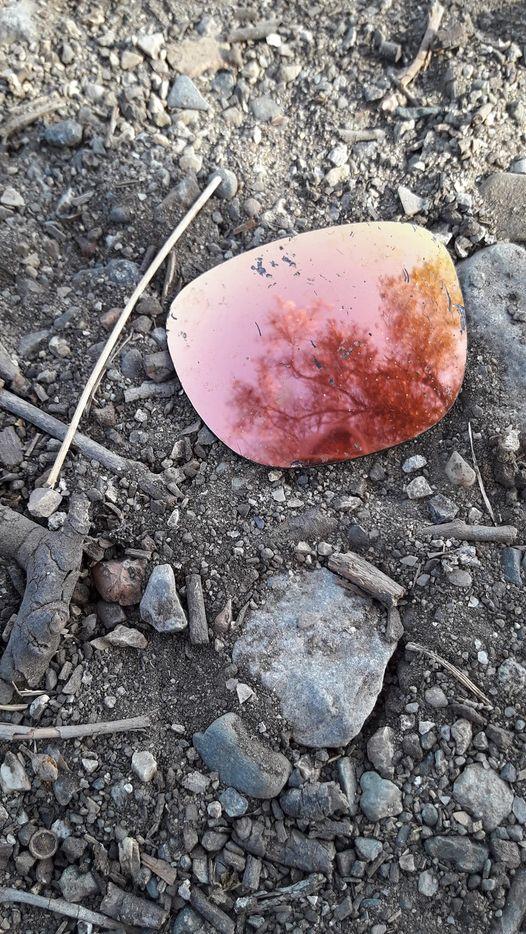
The rose coloured spectacle lens.
Aunt Idle:
“Well, crikey, finding one pink sunglass lens on the road is quite the curiosity, isn’t it? Let’s delve into the symbolic undertones of such an odd discovery. Pink lens, no less—a splash of color with quite the story to tell.
1. Seeing the World through Rose-Tinted Glasses: Finding a pink sunglass lens can symbolize optimism and seeing the world in a positive light. But here’s the kicker—it’s just one lens. This suggests a duality; perhaps you’re being asked to blend optimism with realism. Life isn’t always about sunshine and rainbows, but choosing to see the bright side can balance out the darker shades.
2. Fragmented Perspectives: A single lens means you don’t have the full picture. You’re seeing things partially, which can indicate missing information or a need to look at situations from multiple angles. It’s a nudge to take off those blinders and open your other eye, figuratively speaking. You might be clinging to a half-truth or ignoring an important aspect of your life.
3. Lost and Found: In practical terms, a lone lens on the road means someone has lost it. It’s a signifier of separation, maybe something in your life has split or broken apart. It can be a gentle reminder to look into areas where you might have lost connection—be it with loved ones, a project, or even a part of yourself.
4. Symbol of Love and Compassion: Pink is often associated with love, compassion, and femininity. The lens could be a reminder to look at things with kindness and empathy. Perhaps there’s a situation in your life that requires a softer, more loving approach.
5. Hindsight and Insight: The road is a metaphor for your life’s journey. Finding the lens there might hint at reflecting on past experiences (hindsight) while gaining new understanding or clarity (insight). Maybe there’s an opportunity to learn from what’s happened and apply it moving forward, seeing things with fresh, yet incomplete, clarity.
Putting it in Truella’s Context: If Truella found this lens, it could be a sign she needs to reassess her current path or research direction. Her overwhelming stack of books and discovery of the ancient manuscript hint at a bigger picture she might not be seeing clearly yet. Perhaps she’s overly focused on one aspect and neglecting others.
Personal Symbolism for Aunt Idle: For you, Aunt Idle, this lens could be a cheeky nudge to reassess some of your adventurous antics and half-remembered tales. Maybe there’s an old mystery or a relationship needing a fresh perspective. Or it’s just life’s way of saying, “Look closer, love—you might be missing out!”
In any case, a single pink sunglass lens is a quirky, delightful piece of life’s puzzle, inviting you to ponder, reflect, and adjust your view. So, next time you’re journeying on the dusty roads of life and stumble upon such oddities, take a moment—there just might be a zinger of wisdom waiting for you. Cheers!”
“A lone pink lens paves the road to the unseen clarity of kaleidoscopic sunrise.”
~Journey of Reflections, Enrich P. Lwellman. The Snoot:
“Ahhh, a single pink lens, lost and found amidst the stone and dust! Sings of mysteries and tales untold! Perhaps a sprite misplaced their vision or a pixie left a clue.
Lean close! Such a find whispers soft secrets:
Balance Broken, Yet Bright Like seeing life with a tint of whimsy! One eye tinted pink, the other clear. A call to mix reality with dreams, maybe?
Half Truth, Half Fantasy A hint that stories blend truths and imaginations. Seek both sides to find whole pictures.
Lost and Waiting Could be a sign someone’s journey is incomplete, needing you as a puzzle piece. Maybe the other lens waits for your path?Snootly wisdom: Use the lens not to see, but to imagine.Peer through the pink and let dreams color your heart. Could be you’re on the cusp of a grand adventure; just follow the allure of the pink!
Liz:
Oh, darling, how positively intriguing! A single pink sunglass lens left upon the road—why, it’s like a snippet from one of my novels, fraught with symbolism and brimming with untold stories.
Let’s unravel this little mystery together, shall we? First, the color pink itself is rich with meaning. It speaks of love, compassion, and a certain kind of whimsicality. It’s a hue that embodies the gentle side of passion, the tender whispers of the heart. Now, to find just one lens, separated from its twin, adds a layer of poignancy. It’s a fragment of something once whole, a poignant reminder of loss or incompletion.
One might surmise that this lens represents a part of oneself that has been misplaced or overlooked. Perhaps it’s a call to rediscover a piece of your own heart, the softer, more romantic side that life’s hustle and bustle may have sidelined. Or it could symbolize a different perspective—after all, sunglasses shield us from the sun’s glare, making things clearer in their own shaded way. This lone lens might be urging you to look at a situation with fresh eyes, to find beauty in the fragmented and the unexpected.
Imagine, if you will, a character in one of my novels stumbling upon this very lens. They’d be on the cusp of a grand adventure, naturally. The pink lens would become their talisman, a clue leading them to unforeseen revelations and untold treasures. It would be both a physical object and a metaphorical guide, urging them to view the world—and their place within it—through a lens of love and compassion.
Perhaps it is also a nod to the impermanence of things, a gentle reminder that beauty and meaning can be found even in life’s fleeting moments. Much like the single pink lens, our journeys are filled with fragments of experiences that, when pieced together, create a mosaic of our existence.
So, my dear, take this as a sign to embrace the whimsical, to seek out the overlooked pieces of your own story, and to cherish the beauty of the incomplete. After all, it’s the mysteries and the musings that make life a narrative worth living.
Mater:
Ah, a single pink sunglass lens on the road, you say? Now that’s a curious find. Objects like that can be teeming with symbolic meaning if you’ve got the eyes to see it. Let’s break it down a bit, shall we?
Firstly, the color pink. Traditionally, pink is associated with love, compassion, and nurturing. It’s a color that often brings to mind warmth and affection, something tender and gentle. But finding just one lens suggests something is missing or incomplete—a piece of a larger whole.
A sunglass lens, on the other hand, is meant to protect the eyes from harsh light, allowing you to see the world more clearly without being blinded. Seeing through a pink lens, metaphorically speaking, can mean looking at life with an optimistic or compassionate perspective. It’s like seeing the world through rose-colored glasses, as they say.
Now, finding just one lens on the road—well, roads are pathways, journeys, the direction we take in life. A single lens could indicate a moment of clarity or a shift in perspective on your journey. But it could also symbolize a need to find balance or the missing piece of your outlook to see the full picture clearly.
Maybe it’s a nudge from the universe to take a closer look at how you view your current path. Are you seeing things in the best light possible? Or perhaps it’s a reminder that while optimism and compassion are vital, you might be missing another crucial aspect—realism or practicality, perhaps?
Or, it could be as simple as a reminder to lighten up and find joy and playfulness in your journey.
Like a pink flamingo standing on one leg, sometimes life’s oddities are just there to make you smile and wonder.
Whatever the meaning, love, take it as a sign to reflect and consider. The road ahead is always full of mystery and wonder, and sometimes the smallest things can carry the biggest messages.
Finnley:
Pink sunglass lens on the road, you say? Well, ain’t that a curious bit of rubbish. If we’re dabbling in symbolism, it could mean a variety of things depending on how fanciful you want to get. Pink is often associated with love, compassion, and care. So, finding a lens could mean you’re only seeing half the picture when it comes to matters of the heart. Or maybe you’re missing the rosy view on life, and you need to adjust your perspective.
Then again, it could just mean some poor sod lost their sunnies and now they’ve got a squint and a sunburnt nose. Life’s not always riddled with deep meanings, sometimes it’s just a bit of lost plastic on the tarmac.
Now, if you ask me, you ought to be more concerned about the litter. If everyone went around leaving bits and bobs all over the place, we’d be living in a right tip. So pick it up, toss it in the bin, and let’s keep things tidy, shall we?
Mandrake:
Ah, the solitary pink sunglass lens on the road. Delightfully poetic. A symbol of half-seen truths, perhaps? Seeing the world through rose-tinted glasses, but only partially. Could it be urging you to seek balance, to view life with both optimism and realism? Or maybe just a nudge from the universe to pick up your litter. Such profundity from a piece of plastic. Life’s a riddle, darling.
Sha: A pink sunglass lens on the road, eh? Now that’s a right peculiar find if ever I ‘eard one. Makes you wonder what it means, don’t it?
Glo: Oh, Sha, you’re always lookin’ for the hidden meanin’ in things. It’s just a bit of plastic, ain’t it? Though, come to think of it, pink’s a powerful colour. Symbolises love, compassion, and all that mushy stuff.
Mavis: I reckon it might be a sign, ladies. A pink lens… maybe it’s tellin’ you to look at the world through rose-tinted glasses, y’know? See the good in things. Or it could be a message from the universe, remindin’ you to keep an eye out for the unusual.
Sha: Right you are, Mav! And let’s not forget the conspiracies! Maybe it’s a clue from them secret societies, leavin’ hints for those sharp enough to notice. Could be part of a bigger puzzle, a breadcrumb leadin’ to somethin’ magnificent.
Glo: Or maybe someone’s just dropped their specs out the car window in a rush, and it’s nothin’ more than that. But where’s the fun in that sort of thinkin’?
Mavis: True, true. We’ll go with the idea that it’s a symbol of keepin’ an open mind and lookin’ out for the small wonders of life. Who knows what other treasures we might find if we keep our eyes peeled?
Sha: And next time we’re out and about, let’s be on the lookout for the other lens. Could be a sign that we’re missin’ half the picture.
Glo: Oh, you and your signs, Sha! But alright, we’ll keep our peepers open. Never know what the universe might be tryin’ to tell us next.
- Lucien
-
AuthorSearch Results