

Daily Random Quote

  • Illi was beginning to really appreciate being dead and the freedom it provided to create whatever she wished at a moments notice. She’d enjoyed being a shape shifter while she was alive, often changing into a rather odd cat-like creature which was one of her favourites. She’d had tremendous fun over the years, confounding people with that ... · ID #294 (continued)
    (next in 09h 49min…)

Latest Activity

Search Results for 'married'

Forums Search Search Results for 'married'

Viewing 20 results - 81 through 100 (of 109 total)
  • Author
    Search Results
  • #6223
    TracyTracy
    Participant

      Kate Purdy and the DH Lawrence Connection

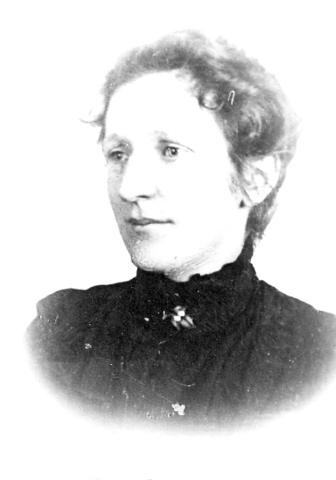
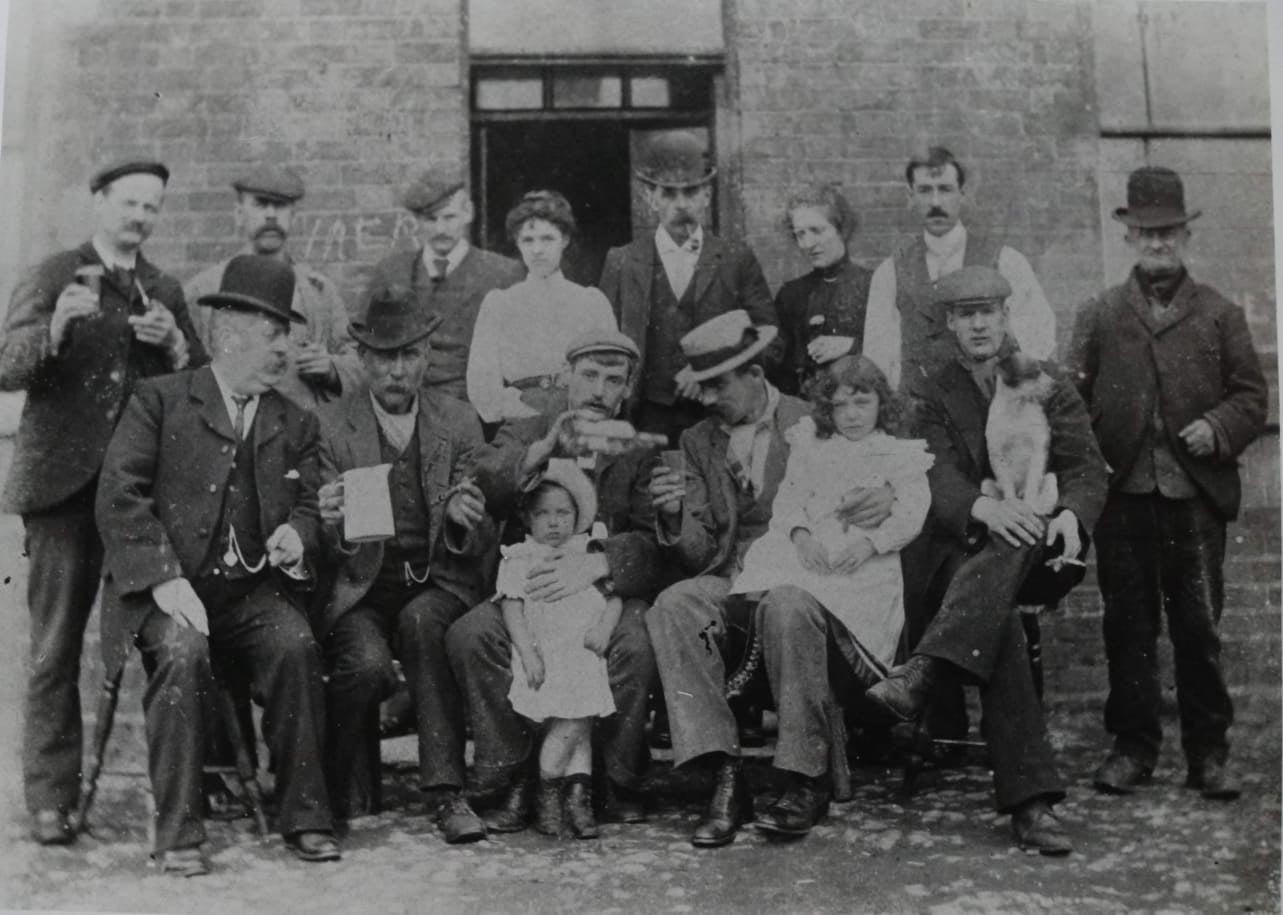
      Catherine (Kate) Purdy 1874-1950  was my grandfather George Marshall’s aunt, and the mother of George Rushby who went to Africa.  The photo is one of our family photos, and we knew that the woman at the back third from the right was an aunt of my grandfather’s. We didn’t know that it was Kate until we saw other photos of her in Mike’s collection.

      DH Lawrence was born in Eastwood at roughly the same time as my great grandmother Mary Ann Gilman Purdy. Apparently his books are based on actual people living in the area at the time, so I read as many of his books as I could find, to help paint the picture of the time and place.  I also found out via an Eastwood facebook group, that he was not well liked there, and still isn’t. They say he was a wife beater, a groper and was cruel to animals, and they did not want a statue of him in their town!

      Kate Rushby third from right back row:

      Kate Rushby

      Kate Rushby’s story as told by her grandson Mike:

      George’s daughter Catherine (Kate) Purdy grew up in Eastwood and was living at Walnut Tree Lane when, at the age of 21, and on the 24 Sep 1894, she married John Henry Payling Rushby who was a policeman in the Grimsby Police. John Henry left the Police and together they bought a public house “The Three Tuns Inn” at Beggarlee. The establishment was frequented by amongst others, the writer D.H.Lawrence who wrote much of his book “Sons and Lovers” in the Inn. In his book he calls the Inn “The Moon and Stars” and mentions Kate. though not by name.

      John Henry Rushby had two children, Charlotte and George Gilman Rushby. But a year after the birth of George on 28 Feb 1900, John Henry died at the age of thirty on 13 Sep 1901. He liked to show off his strength to his friends by lifting above his head an oak barrel full of beer. This would have weighed almost 200 kilograms. “He bust his gut” Kate said. He died of peritonitis following a hernia.

      Following the death of John Henry, Kate managed the Three Tuns Inn on her own. But a regular visitor to the Inn was Frank Freer who was a singer and used to entertain the patrons with his fine baritone voice and by playing the cornet. He and Kate got married, but he turned out to be a drunk who beat his wife and was cruel to her son. They separated and he died from alcoholism, though he may also have been struck on the head with a beer bottle by a person unknown. She then married Mr Gregory Simpson who fathered a daughter Catherine, and then died from gas injuries he suffered on the battlefield in the first world war.

      Despite her lack of men able to stay the course, Catherine became a very successful business woman. She ran the Three Tuns Inn and later moved to Jacksdale where she owned ”ThePortland Arms Hotel”. She travelled extensively to Europe in times of peace, to Africa several times, and around England frequently. She settled in Selston Lane Jacksdale in a large house bracketed by the homes of her daughters Lottie and Cath. She was a strong and tenacious woman who became the surrogate mother of her grandchildren Ann and George when they were separated from their parents by the second world war.

      Mike Rushby’s photo of Kate:

      Kate Purdy Rushby


      #6222
      TracyTracy
      Participant

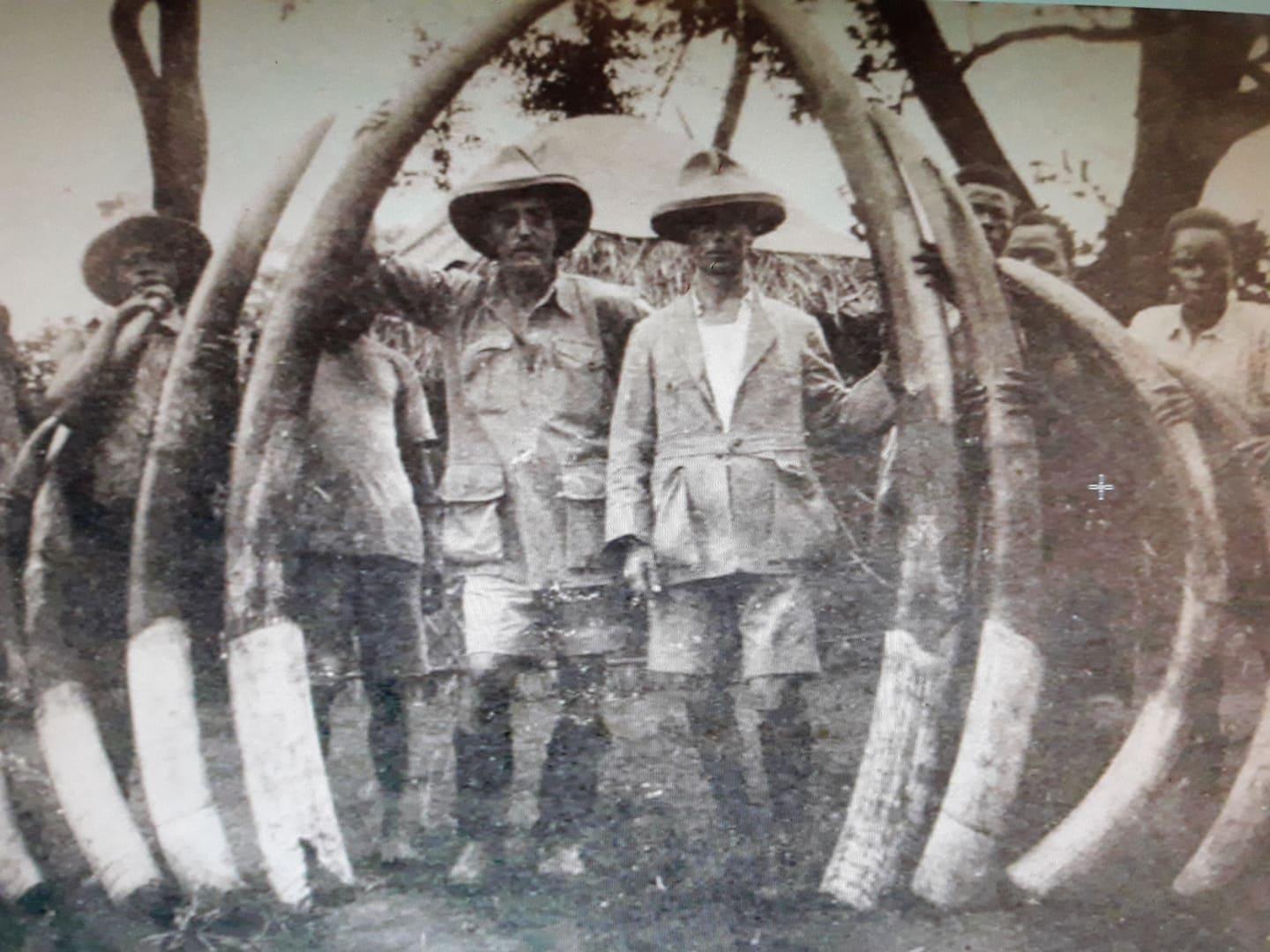
        George Gilman Rushby: The Cousin Who Went To Africa

        The portrait of the woman has “mother of Catherine Housley, Smalley” written on the back, and one of the family photographs has “Francis Purdy” written on the back. My first internet search was “Catherine Housley Smalley Francis Purdy”. Easily found was the family tree of George (Mike) Rushby, on one of the genealogy websites. It seemed that it must be our family, but the African lion hunter seemed unlikely until my mother recalled her father had said that he had a cousin who went to Africa. I also noticed that the lion hunter’s middle name was Gilman ~ the name that Catherine Housley’s daughter ~ my great grandmother, Mary Ann Gilman Purdy ~ adopted, from her aunt and uncle who brought her up.

        I tried to contact George (Mike) Rushby via the ancestry website, but got no reply. I searched for his name on Facebook and found a photo of a wildfire in a place called Wardell, in Australia, and he was credited with taking the photograph. A comment on the photo, which was a few years old, got no response, so I found a Wardell Community group on Facebook, and joined it. A very small place, population some 700 or so, and I had an immediate response on the group to my question. They knew Mike, exchanged messages, and we were able to start emailing. I was in the chair at the dentist having an exceptionally long canine root canal at the time that I got the message with his email address, and at that moment the song Down in Africa started playing.

        Mike said it was clever of me to track him down which amused me, coming from the son of an elephant and lion hunter.  He didn’t know why his father’s middle name was Gilman, and was not aware that Catherine Housley’s sister married a Gilman.

        Mike Rushby kindly gave me permission to include his family history research in my book.  This is the story of my grandfather George Marshall’s cousin.  A detailed account of George Gilman Rushby’s years in Africa can be found in another chapter called From Tanganyika With Love; the letters Eleanor wrote to her family.

        George Gilman Rushby:

        George Gilman Rushby


        The story of George Gilman Rushby 1900-1969, as told by his son Mike:

        George Gilman Rushby:
        Elephant hunter,poacher, prospector, farmer, forestry officer, game ranger, husband to Eleanor, and father of 6 children who now live around the world.

        George Gilman Rushby was born in Nottingham on 28 Feb 1900 the son of Catherine Purdy and John Henry Payling Rushby. But John Henry died when his son was only one and a half years old, and George shunned his drunken bullying stepfather Frank Freer and was brought up by Gypsies who taught him how to fight and took him on regular poaching trips. His love of adventure and his ability to hunt were nurtured at an early stage of his life.
        The family moved to Eastwood, where his mother Catherine owned and managed The Three Tuns Inn, but when his stepfather died in mysterious circumstances, his mother married a wealthy bookmaker named Gregory Simpson. He could afford to send George to Worksop College and to Rugby School. This was excellent schooling for George, but the boarding school environment, and the lack of a stable home life, contributed to his desire to go out in the world and do his own thing. When he finished school his first job was as a trainee electrician with Oaks & Co at Pye Bridge. He also worked part time as a motor cycle mechanic and as a professional boxer to raise the money for a voyage to South Africa.

        In May 1920 George arrived in Durban destitute and, like many others, living on the beach and dependant upon the Salvation Army for a daily meal. However he soon got work as an electrical mechanic, and after a couple of months had earned enough money to make the next move North. He went to Lourenco Marques where he was appointed shift engineer for the town’s power station. However he was still restless and left the comfort of Lourenco Marques for Beira in August 1921.

        Beira was the start point of the new railway being built from the coast to Nyasaland. George became a professional hunter providing essential meat for the gangs of construction workers building the railway. He was a self employed contractor with his own support crew of African men and began to build up a satisfactory business. However, following an incident where he had to shoot and kill a man who attacked him with a spear in middle of the night whilst he was sleeping, George left the lower Zambezi and took a paddle steamer to Nyasaland (Malawi). On his arrival in Karongo he was encouraged to shoot elephant which had reached plague proportions in the area – wrecking African homes and crops, and threatening the lives of those who opposed them.

        His next move was to travel by canoe the five hundred kilometre length of Lake Nyasa to Tanganyika, where he hunted for a while in the Lake Rukwa area, before walking through Northern Rhodesia (Zambia) to the Congo. Hunting his way he overachieved his quota of ivory resulting in his being charged with trespass, the confiscation of his rifles, and a fine of one thousand francs. He hunted his way through the Congo to Leopoldville then on to the Portuguese enclave, near the mouth of the mighty river, where he worked as a barman in a rough and tough bar until he received a message that his old friend Lumb had found gold at Lupa near Chunya. George set sail on the next boat for Antwerp in Belgium, then crossed to England and spent a few weeks with his family in Jacksdale before returning by sea to Dar es Salaam. Arriving at the gold fields he pegged his claim and almost immediately went down with blackwater fever – an illness that used to kill three out of four within a week.

        When he recovered from his fever, George exchanged his gold lease for a double barrelled .577 elephant rifle and took out a special elephant control licence with the Tanganyika Government. He then headed for the Congo again and poached elephant in Northern Rhodesia from a base in the Congo. He was known by the Africans as “iNyathi”, or the Buffalo, because he was the most dangerous in the long grass. After a profitable hunting expedition in his favourite hunting ground of the Kilombera River he returned to the Congo via Dar es Salaam and Mombassa. He was after the Kabalo district elephant, but hunting was restricted, so he set up his base in The Central African Republic at a place called Obo on the Congo tributary named the M’bomu River. From there he could make poaching raids into the Congo and the Upper Nile regions of the Sudan. He hunted there for two and a half years. He seldom came across other Europeans; hunters kept their own districts and guarded their own territories. But they respected one another and he made good and lasting friendships with members of that small select band of adventurers.

        Leaving for Europe via the Congo, George enjoyed a short holiday in Jacksdale with his mother. On his return trip to East Africa he met his future bride in Cape Town. She was 24 year old Eleanor Dunbar Leslie; a high school teacher and daughter of a magistrate who spent her spare time mountaineering, racing ocean yachts, and riding horses. After a whirlwind romance, they were betrothed within 36 hours.

        On 25 July 1930 George landed back in Dar es Salaam. He went directly to the Mbeya district to find a home. For one hundred pounds he purchased the Waizneker’s farm on the banks of the Mntshewe Stream. Eleanor, who had been delayed due to her contract as a teacher, followed in November. Her ship docked in Dar es Salaam on 7 Nov 1930, and they were married that day. At Mchewe Estate, their newly acquired farm, they lived in a tent whilst George with some help built their first home – a lovely mud-brick cottage with a thatched roof. George and Eleanor set about developing a coffee plantation out of a bush block. It was a very happy time for them. There was no electricity, no radio, and no telephone. Newspapers came from London every two months. There were a couple of neighbours within twenty miles, but visitors were seldom seen. The farm was a haven for wild life including snakes, monkeys and leopards. Eleanor had to go South all the way to Capetown for the birth of her first child Ann, but with the onset of civilisation, their first son George was born at a new German Mission hospital that had opened in Mbeya.

        Occasionally George had to leave the farm in Eleanor’s care whilst he went off hunting to make his living. Having run the coffee plantation for five years with considerable establishment costs and as yet no return, George reluctantly started taking paying clients on hunting safaris as a “white hunter”. This was an occupation George didn’t enjoy. but it brought him an income in the days when social security didn’t exist. Taking wealthy clients on hunting trips to kill animals for trophies and for pleasure didn’t amuse George who hunted for a business and for a way of life. When one of George’s trackers was killed by a leopard that had been wounded by a careless client, George was particularly upset.
        The coffee plantation was approaching the time of its first harvest when it was suddenly attacked by plagues of borer beetles and ring barking snails. At the same time severe hail storms shredded the crop. The pressure of the need for an income forced George back to the Lupa gold fields. He was unlucky in his gold discoveries, but luck came in a different form when he was offered a job with the Forestry Department. The offer had been made in recognition of his initiation and management of Tanganyika’s rainbow trout project. George spent most of his short time with the Forestry Department encouraging the indigenous people to conserve their native forests.

        In November 1938 he transferred to the Game Department as Ranger for the Eastern Province of Tanganyika, and over several years was based at Nzasa near Dar es Salaam, at the old German town of Morogoro, and at lovely Lyamungu on the slopes of Kilimanjaro. Then the call came for him to be transferred to Mbeya in the Southern Province for there was a serious problem in the Njombe district, and George was selected by the Department as the only man who could possibly fix the problem.

        Over a period of several years, people were being attacked and killed by marauding man-eating lions. In the Wagingombe area alone 230 people were listed as having been killed. In the Njombe district, which covered an area about 200 km by 300 km some 1500 people had been killed. Not only was the rural population being decimated, but the morale of the survivors was so low, that many of them believed that the lions were not real. Many thought that evil witch doctors were controlling the lions, or that lion-men were changing form to kill their enemies. Indeed some wichdoctors took advantage of the disarray to settle scores and to kill for reward.

        By hunting down and killing the man-eaters, and by showing the flesh and blood to the doubting tribes people, George was able to instil some confidence into the villagers. However the Africans attributed the return of peace and safety, not to the efforts of George Rushby, but to the reinstallation of their deposed chief Matamula Mangera who had previously been stood down for corruption. It was Matamula , in their eyes, who had called off the lions.

        Soon after this adventure, George was appointed Deputy Game Warden for Tanganyika, and was based in Arusha. He retired in 1956 to the Njombe district where he developed a coffee plantation, and was one of the first in Tanganyika to plant tea as a major crop. However he sensed a swing in the political fortunes of his beloved Tanganyika, and so sold the plantation and settled in a cottage high on a hill overlooking the Navel Base at Simonstown in the Cape. It was whilst he was there that TV Bulpin wrote his biography “The Hunter is Death” and George wrote his book “No More The Tusker”. He died in the Cape, and his youngest son Henry scattered his ashes at the Southern most tip of Africa where the currents of the Atlantic and Indian Oceans meet .

        George Gilman Rushby:

        #6221
        TracyTracy
        Participant

          Mary Ann Gilman Purdy

          1880-1950

          Mary Ann Gilman Purdy Marshall

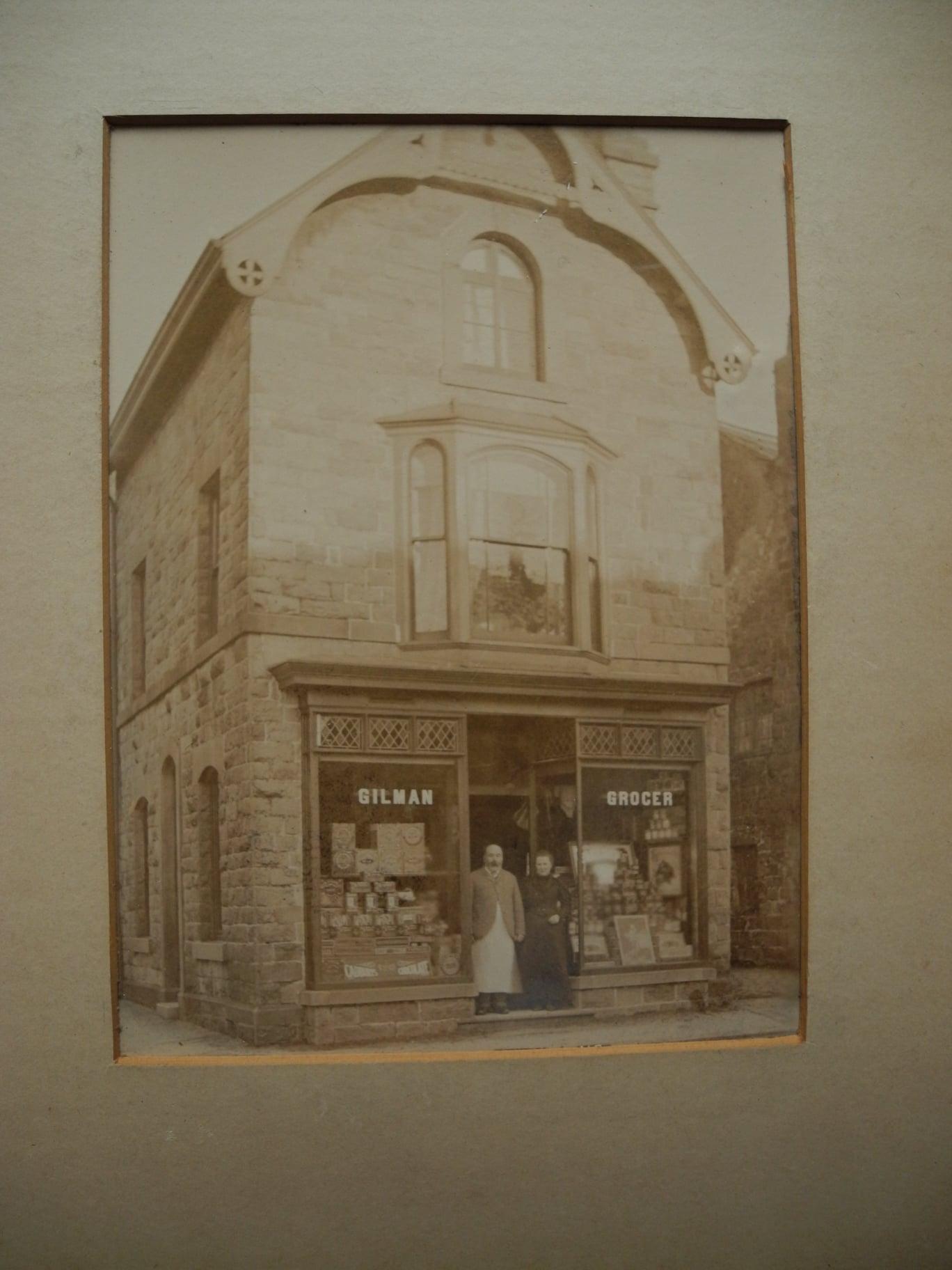
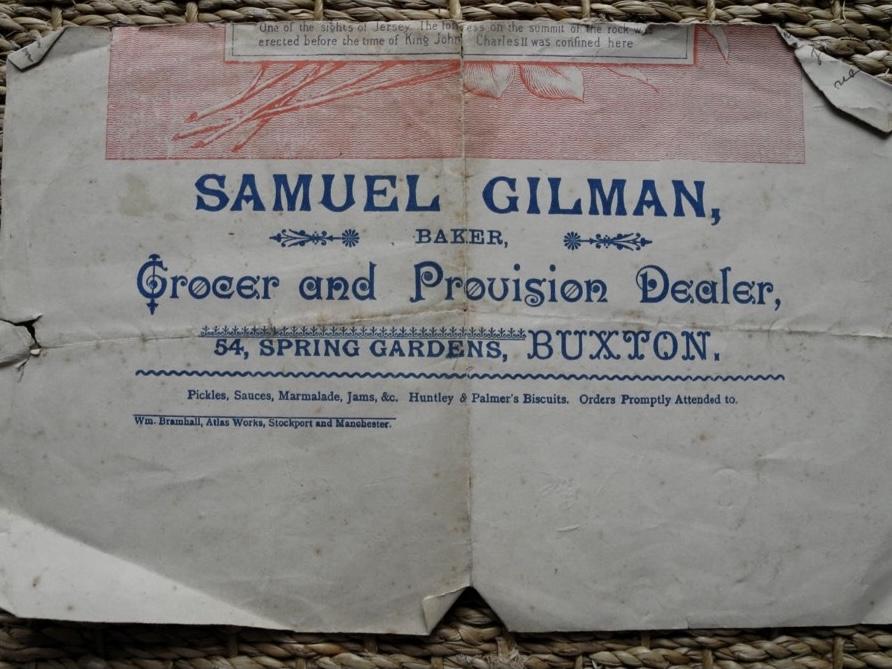
          Mary Ann was my grandfather George Marshall’s mother. She died in 1950, seven years before I was born. She has been referred to more often than not, since her death, as Mary Ann Gilman Purdy, rather than Mary Marshall. She was from Buxton, so we believed, as was her husband William Marshall. There are family photos of the Gilmans, grocers in Buxton, and we knew that Mary Ann was brought up by them. My grandfather, her son, said that she thought very highly of the Gilman’s, and added the Gilman name to her birth name of Purdy.


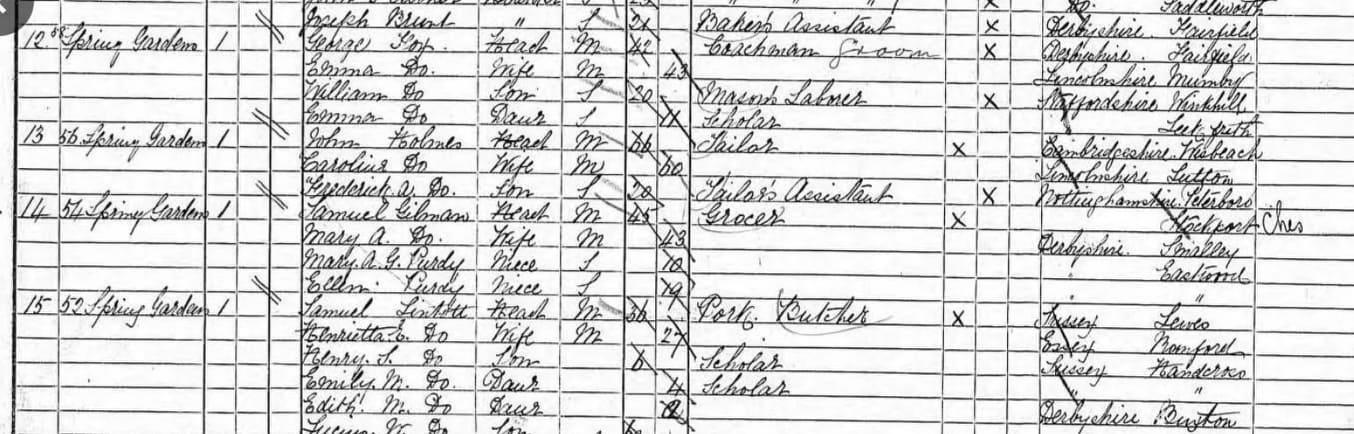
          The 1891 census in Buxton:

          1891 census Buxton


          (Mary Ann’s aunt, Mrs Gilman, was also called Mary Anne, but spelled with an E.)

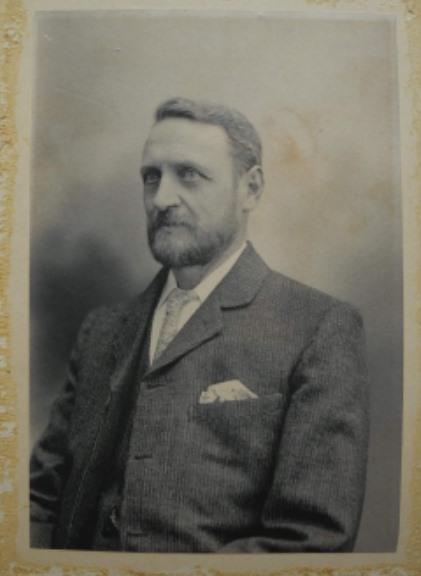
          Samuel Gilman 1846-1909, and Mary Anne (Housley) Gilman  1846-1935,  in Buxton:

          Gilmans Grocers

          Samuel Gilman


          What we didn’t know was why Mary Ann (and her sister Ellen/Nellie, we later found) grew up with the Gilman’s. But Mary Ann wasn’t born in Buxton, Derbyshire, she was born in Eastwood, Nottinghamshire. When the search moved to Nottingham, we found the Purdy’s.

          George Purdy 1848-1935, Mary Ann’s father:

          George Purdy


          Mary Ann’s parents were George Purdy of Eastwood, and Catherine Housley of Smalley.

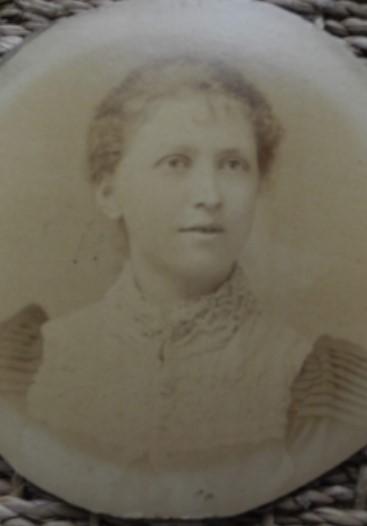
          Catherine Housley 1849-1884, Mary Ann’s mother:

          Catherine Housley


          Mary Ann was four years old when her mother died. She had three sisters and one brother. George Purdy remarried and kept the two older daughters, and the young son with him. The two younger daughters, Mary Ann and Nellie, went to live with Catherine’s sister, also called Mary Anne, and her husband Samuel Gilman. They had no children of their own. One of the older daughters who stayed with their father was Kate , whose son George Gilman Rushby, went to Africa. But that is another chapter.

          George was the son of Francis Purdy and his second wife Jane Eaton. Francis had some twenty children, and is believed in Eastwood to be the reason why there are so many Purdy’s.

          The woman who was a mother to Mary Ann and who she thought very highly of, her mothers sister, spent her childhood in the Belper Workhouse. She and her older sister Elizabeth were admitted in June, 1850, the reason: father in prison. Their mother had died the previous year. Mary Anne Housley, Catherine’s sister, married Samuel Gilman, and looked after her dead sisters children.

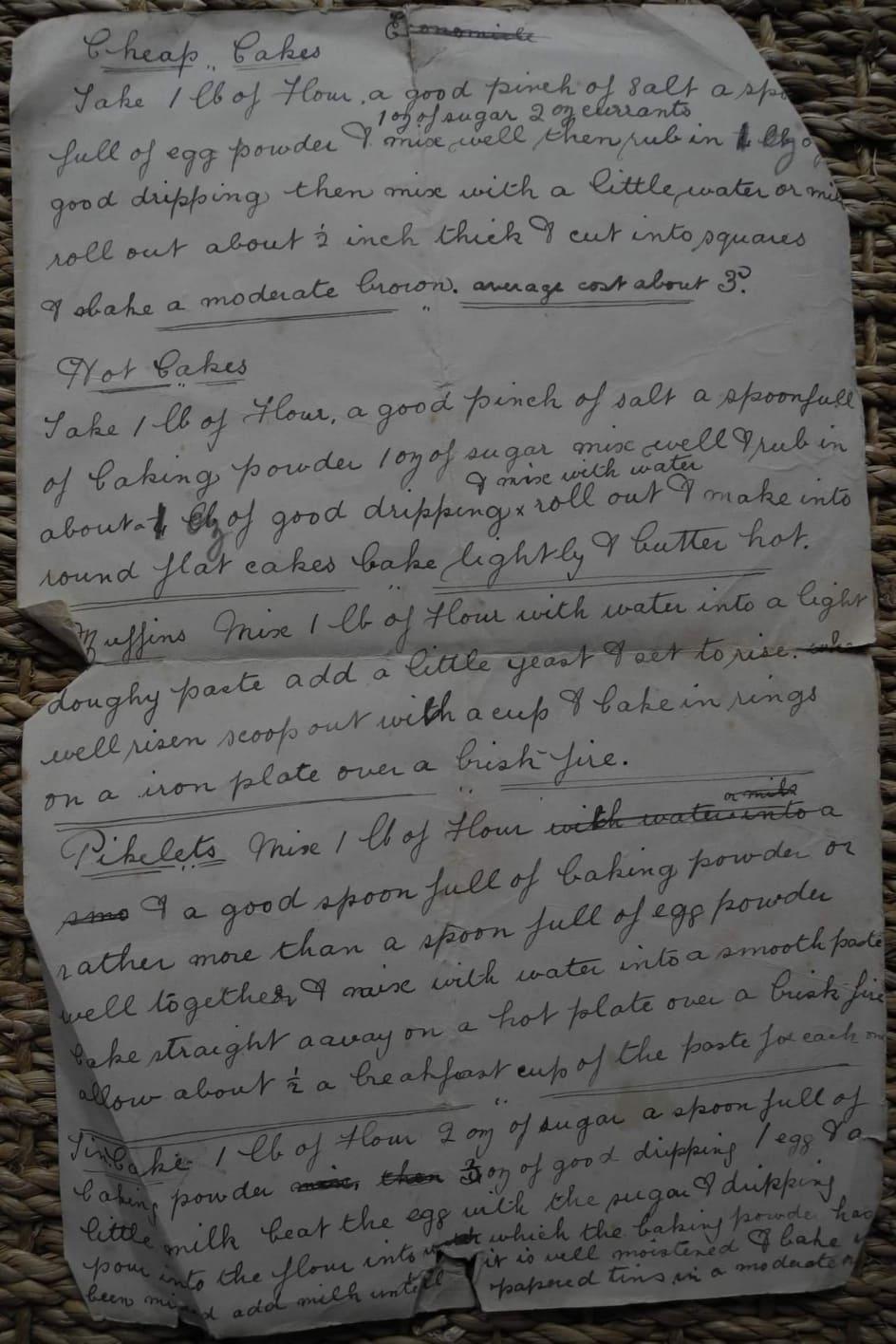
          Mary Ann Gilman Purdy Marshalls recipes written on the back of the Gilmans Grocers paper:

          recipes

          #6219
          TracyTracy
          Participant

            The following stories started with a single question.

            Who was Catherine Housley’s mother?

            But one question leads to another, and another, and so this book will never be finished.  This is the first in a collection of stories of a family history research project, not a complete family history.  There will always be more questions and more searches, and each new find presents more questions.

            A list of names and dates is only moderately interesting, and doesn’t mean much unless you get to know the characters along the way.   For example, a cousin on my fathers side has already done a great deal of thorough and accurate family research. I copied one branch of the family onto my tree, going back to the 1500’s, but lost interest in it after about an hour or so, because I didn’t feel I knew any of the individuals.

            Parish registers, the census every ten years, birth, death and marriage certificates can tell you so much, but they can’t tell you why.  They don’t tell you why parents chose the names they did for their children, or why they moved, or why they married in another town.  They don’t tell you why a person lived in another household, or for how long. The census every ten years doesn’t tell you what people were doing in the intervening years, and in the case of the UK and the hundred year privacy rule, we can’t even use those for the past century.  The first census was in 1831 in England, prior to that all we have are parish registers. An astonishing amount of them have survived and have been transcribed and are one way or another available to see, both transcriptions and microfiche images.  Not all of them survived, however. Sometimes the writing has faded to white, sometimes pages are missing, and in some case the entire register is lost or damaged.

            Sometimes if you are lucky, you may find mention of an ancestor in an obscure little local history book or a journal or diary.  Wills, court cases, and newspaper archives often provide interesting information. Town memories and history groups on social media are another excellent source of information, from old photographs of the area, old maps, local history, and of course, distantly related relatives still living in the area.  Local history societies can be useful, and some if not all are very helpful.

            If you’re very lucky indeed, you might find a distant relative in another country whose grandparents saved and transcribed bundles of old letters found in the attic, from the family in England to the brother who emigrated, written in the 1800s.  More on this later, as it merits its own chapter as the most exciting find so far.

            The social history of the time and place is important and provides many clues as to why people moved and why the family professions and occupations changed over generations.  The Enclosures Act and the Industrial Revolution in England created difficulties for rural farmers, factories replaced cottage industries, and the sons of land owning farmers became shop keepers and miners in the local towns.  For the most part (at least in my own research) people didn’t move around much unless there was a reason.  There are no reasons mentioned in the various registers, records and documents, but with a little reading of social history you can sometimes make a good guess.  Samuel Housley, for example, a plumber, probably moved from rural Derbyshire to urban Wolverhampton, when there was a big project to install indoor plumbing to areas of the city in the early 1800s.  Derbyshire nailmakers were offered a job and a house if they moved to Wolverhampton a generation earlier.

            Occasionally a couple would marry in another parish, although usually they married in their own. Again, there was often a reason.  William Housley and Ellen Carrington married in Ashbourne, not in Smalley.  In this case, William’s first wife was Mary Carrington, Ellen’s sister.  It was not uncommon for a man to marry a deceased wife’s sister, but it wasn’t strictly speaking legal.  This caused some problems later when William died, as the children of the first wife contested the will, on the grounds of the second marriage being illegal.

            Needless to say, there are always questions remaining, and often a fresh pair of eyes can help find a vital piece of information that has escaped you.  In one case, I’d been looking for the death of a widow, Mary Anne Gilman, and had failed to notice that she remarried at a late age. Her death was easy to find, once I searched for it with her second husbands name.

            This brings me to the topic of maternal family lines. One tends to think of their lineage with the focus on paternal surnames, but very quickly the number of surnames increases, and all of the maternal lines are directly related as much as the paternal name.  This is of course obvious, if you start from the beginning with yourself and work back.  In other words, there is not much point in simply looking for your fathers name hundreds of years ago because there are hundreds of other names that are equally your own family ancestors. And in my case, although not intentionally, I’ve investigated far more maternal lines than paternal.

            This book, which I hope will be the first of several, will concentrate on my mothers family: The story so far that started with the portrait of Catherine Housley’s mother.
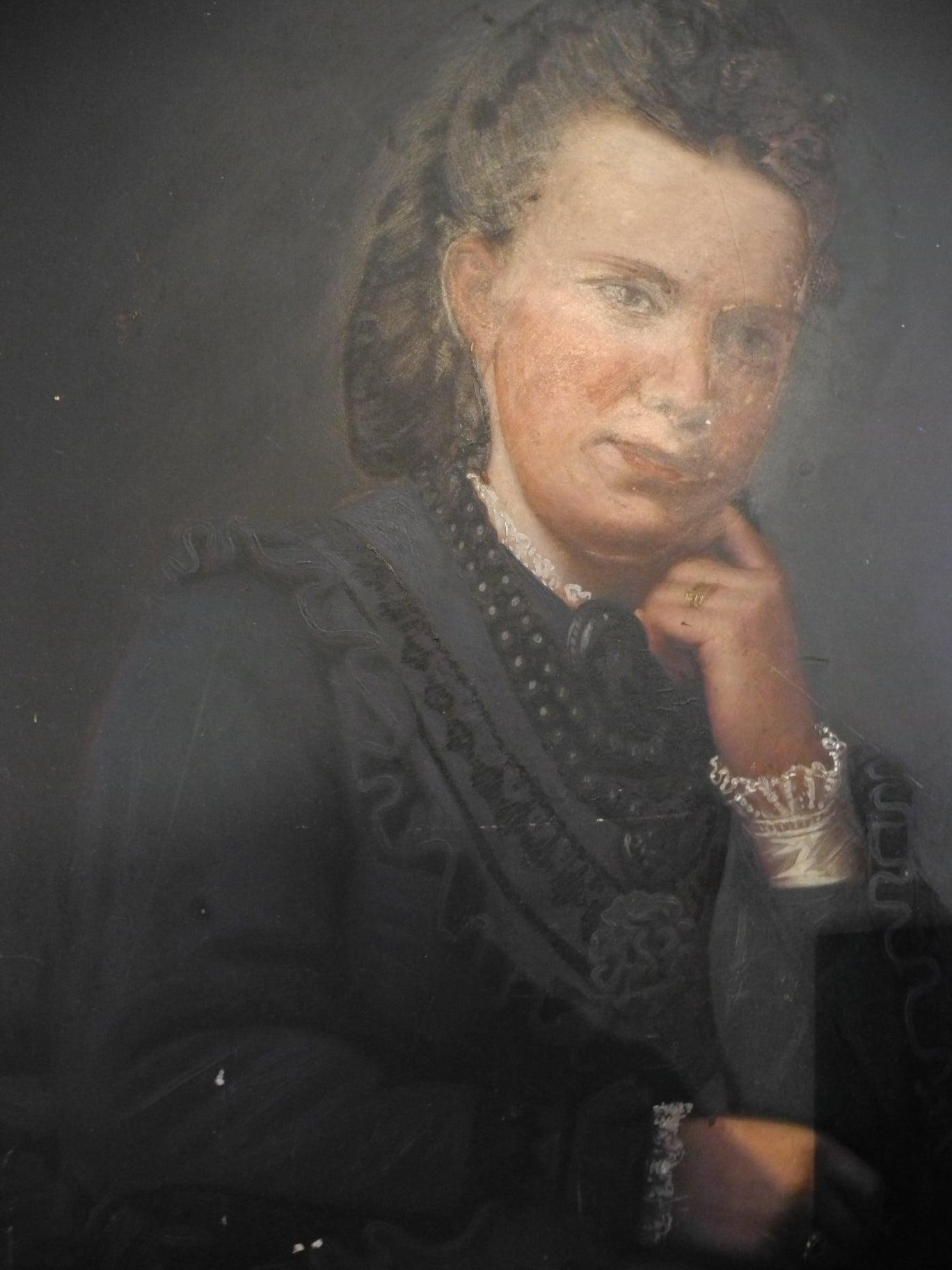
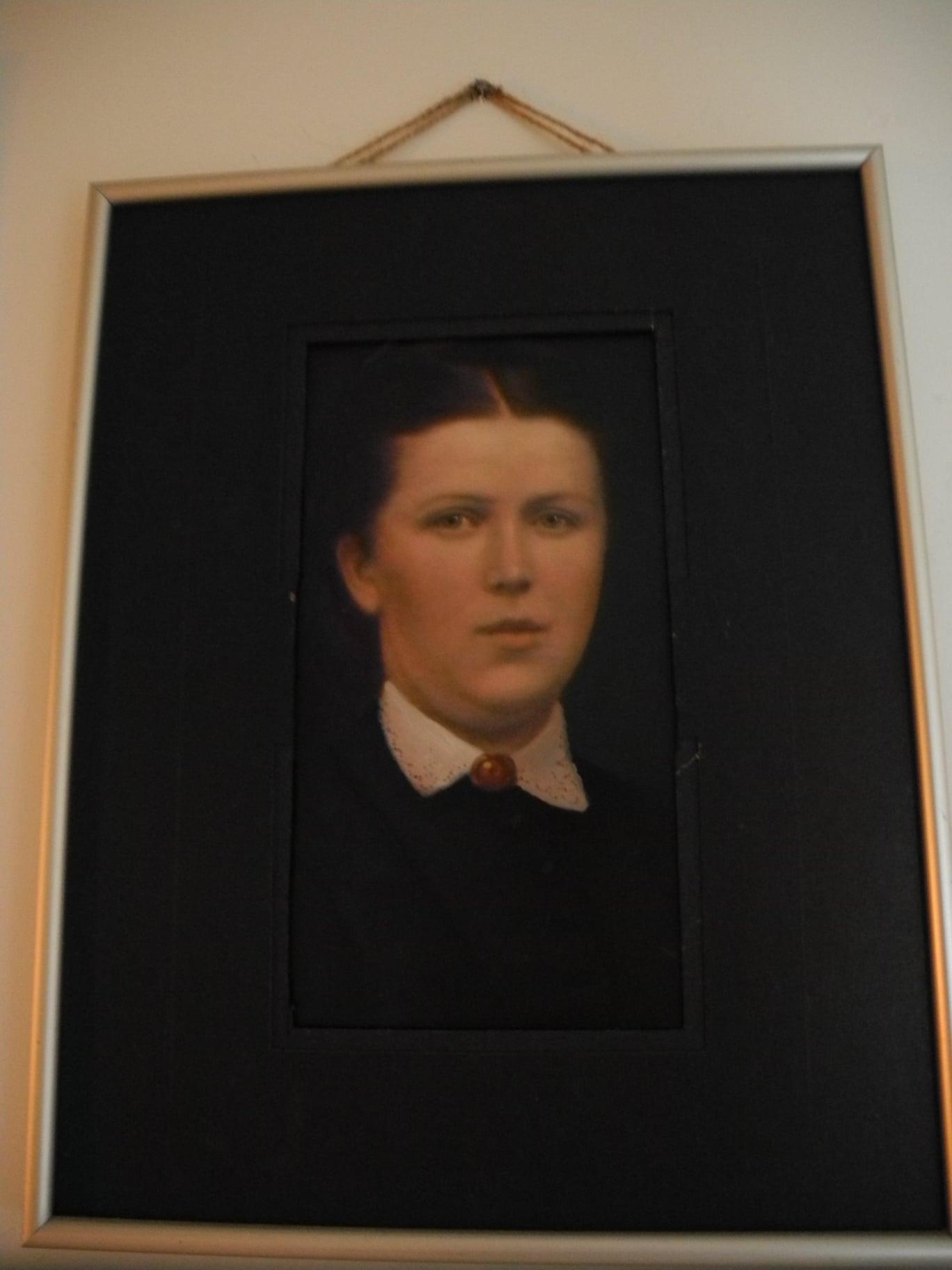
            Elizabeth Brookes


            This painting, now in my mothers house, used to hang over the piano in the home of her grandparents.   It says on the back “Catherine Housley’s mother, Smalley”.

            The portrait of Catherine Housley’s mother can be seen above the piano. Back row Ronald Marshall, my grandfathers brother, William Marshall, my great grandfather, Mary Ann Gilman Purdy Marshall in the middle, my great grandmother, with her daughters Dorothy on the left and Phyllis on the right, at the Marshall’s house on Love Lane in Stourbridge.
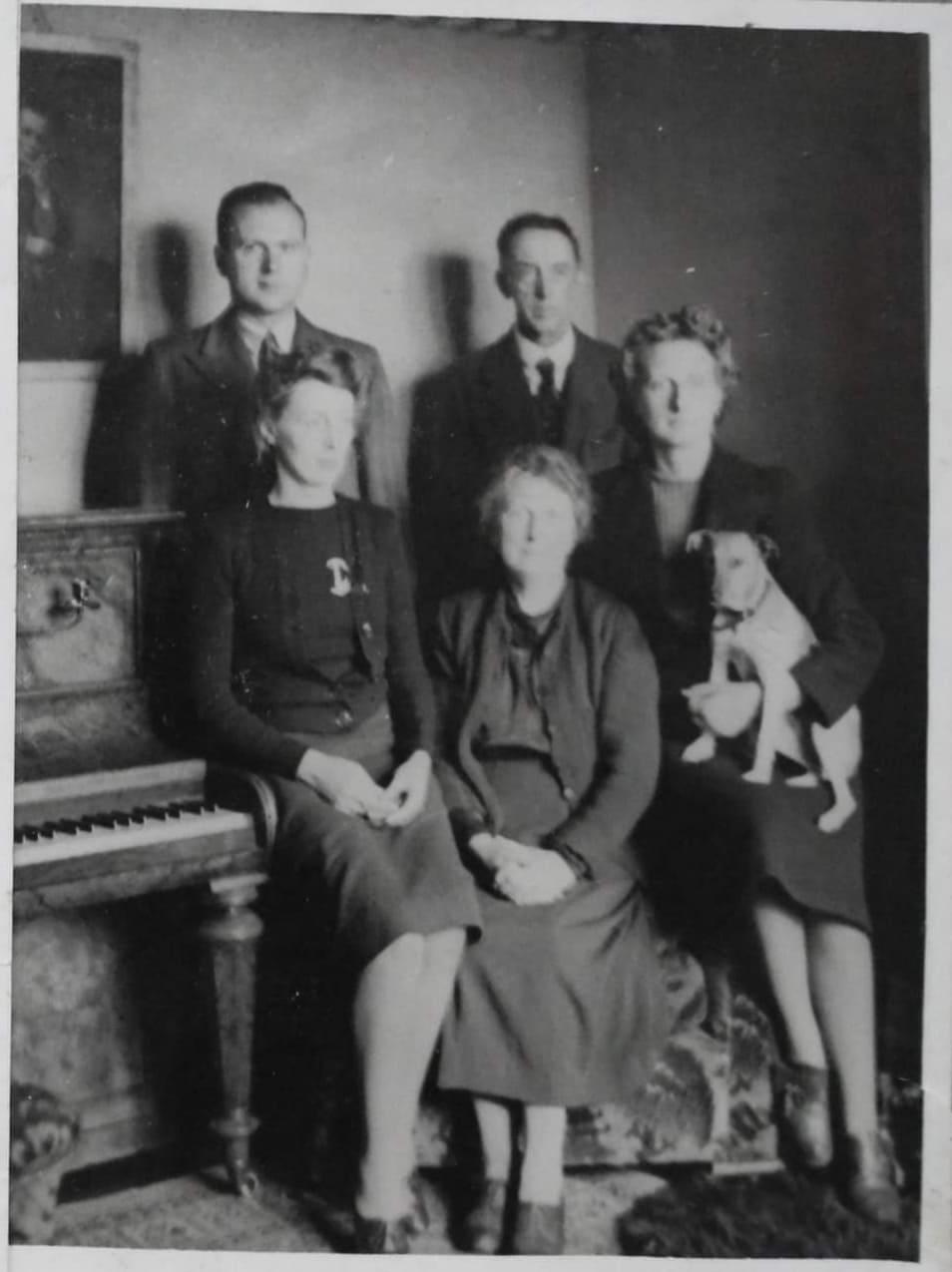
            Marshalls


            The Search for Samuel Housley

            As soon as the search for Catherine Housley’s mother was resolved, achieved by ordering a paper copy of her birth certificate, the search for Catherine Housley’s father commenced. We know he was born in Smalley in 1816, son of William Housley and Ellen Carrington, and that he married Elizabeth Brookes in Wolverhampton in 1844. He was a plumber and glazier. His three daughters born between 1845 and 1849 were born in Smalley. Elizabeth died in 1849 of consumption, but Samuel didn’t register her death. A 20 year old neighbour called Aaron Wadkinson did.
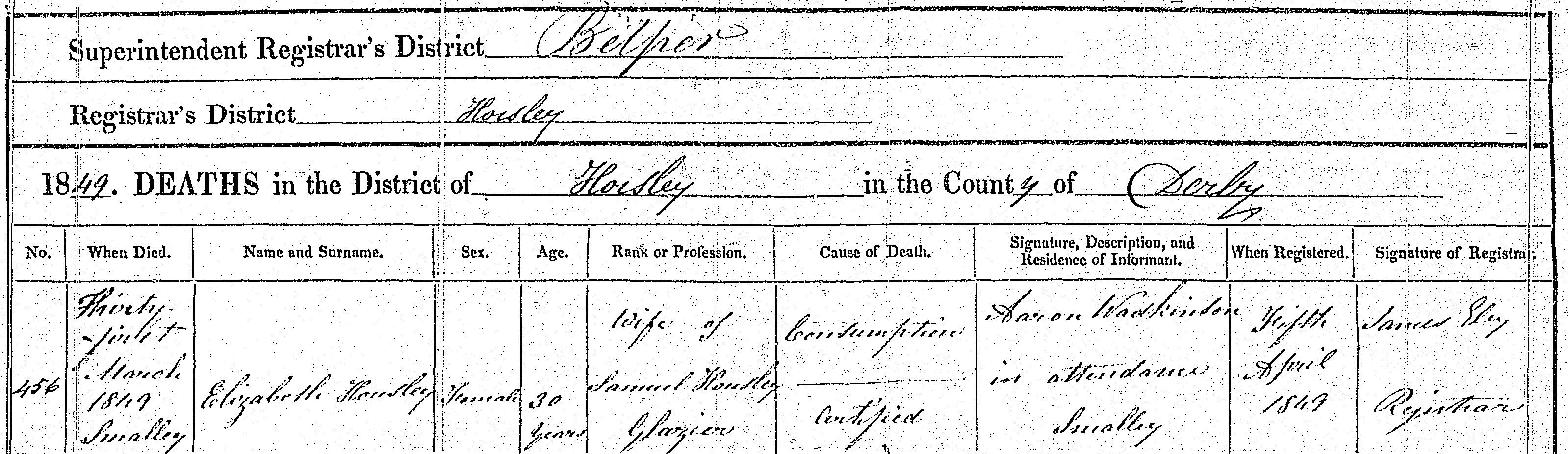
            Elizabeth death


            Where was Samuel?

            On the 1851 census, two of Samuel’s daughters were listed as inmates in the Belper Workhouse, and the third, 2 year old Catherine, was listed as living with John Benniston and his family in nearby Heanor.  Benniston was a framework knitter.

            Where was Samuel?

            A long search through the microfiche workhouse registers provided an answer. The reason for Elizabeth and Mary Anne’s admission in June 1850 was given as “father in prison”. In May 1850, Samuel Housley was sentenced to one month hard labour at Derby Gaol for failing to maintain his three children. What happened to those little girls in the year after their mothers death, before their father was sentenced, and they entered the workhouse? Where did Catherine go, a six week old baby? We have yet to find out.
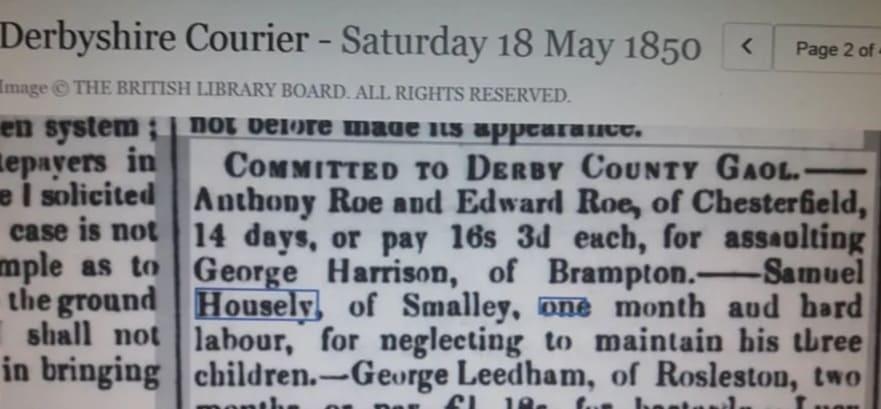
            Samuel Housley 1850


            And where was Samuel Housley in 1851? He hasn’t appeared on any census.

            According to the Belper workhouse registers, Mary Anne was discharged on trial as a servant February 1860. She was readmitted a month later in March 1860, the reason given: unwell.

            Belper Workhouse:
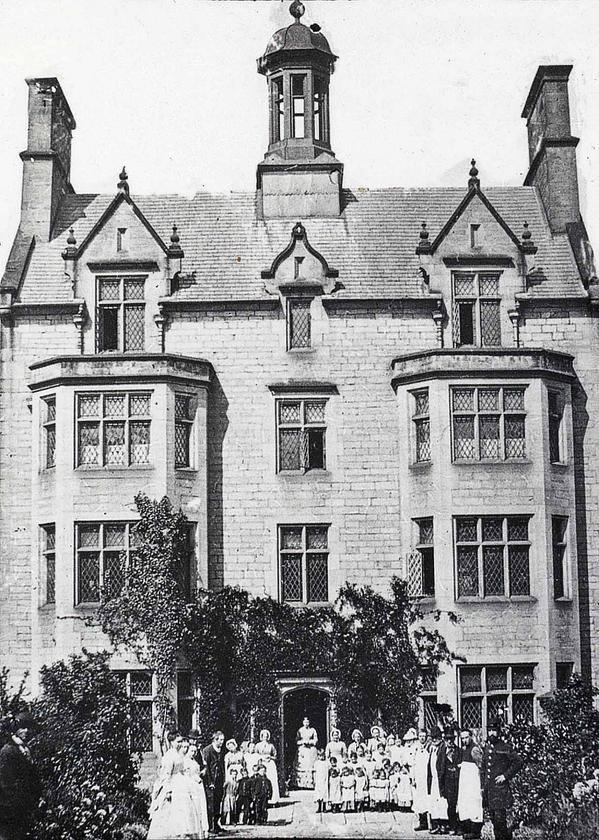
            Belper Workhouse

            Eventually, Mary Anne and Elizabeth were discharged, in April 1860, with an aunt and uncle. The workhouse register doesn’t name the aunt and uncle. One can only wonder why it took them so long.
            On the 1861 census, Elizabeth, 16 years old, is a servant in St Peters, Derby, and Mary Anne, 15 years old, is a servant in St Werburghs, Derby.

            But where was Samuel?

            After some considerable searching, we found him, despite a mistranscription of his name, on the 1861 census, living as a lodger and plumber in Darlaston, Walsall.
            Eventually we found him on a 1871 census living as a lodger at the George and Dragon in Henley in Arden. The age is not exactly right, but close enough, he is listed as an unmarried painter, also close enough, and his birth is listed as Kidsley, Derbyshire. He was born at Kidsley Grange Farm. We can assume that he was probably alive in 1872, the year his mother died, and the following year, 1873, during the Kerry vs Housley court case.
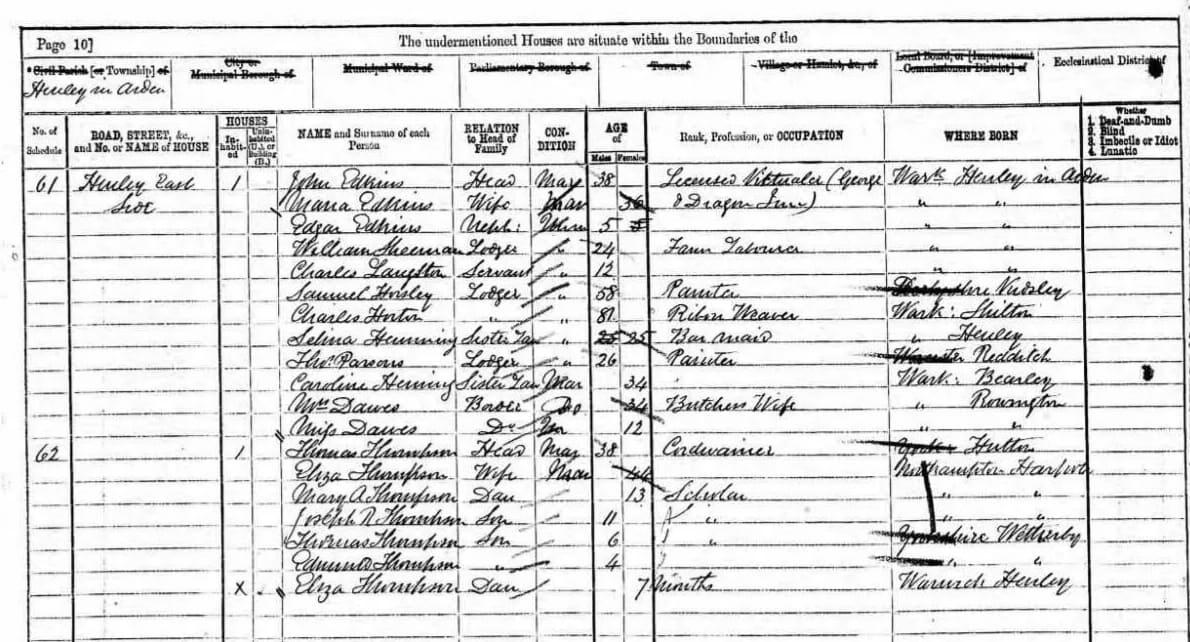
            Samuel Housley 1871


            I found some living Housley descendants in USA. Samuel Housley’s brother George emigrated there in 1851. The Housley’s in USA found letters in the attic, from the family in Smalley ~ written between 1851 and 1870s. They sent me a “Narrative on the Letters” with many letter excerpts.

            The Housley family were embroiled in a complicated will and court case in the early 1870s. In December 15, 1872, Joseph (Samuel’s brother) wrote to George:

            “I think we have now found all out now that is concerned in the matter for there was only Sam that we did not know his whereabouts but I was informed a week ago that he is dead–died about three years ago in Birmingham Union. Poor Sam. He ought to have come to a better end than that….His daughter and her husband went to Birmingham and also to Sutton Coldfield that is where he married his wife from and found out his wife’s brother. It appears he has been there and at Birmingham ever since he went away but ever fond of drink.”

            No record of Samuel Housley’s death can be found for the Birmingham Union in 1869 or thereabouts.

            But if he was alive in 1871 in Henley In Arden…..
            Did Samuel tell his wife’s brother to tell them he was dead? Or did the brothers say he was dead so they could have his share?

            We still haven’t found a death for Samuel Housley.


            #6109

            In reply to: Tart Wreck Repackage

            Star stopped in her tracks for a moment, staring vacantly at April.  When she snapped out of it, she beamed at her long lost relative and begged her to continue singing in her sweetly melodious voice.

            While April was noisily distracted, Star cleared her throat meaningfully and nudged Tara. “Something has occurred to me,” she whispered in Tara’s ear.  “April doesn’t have a husband, never married. She was a professional nanny or something…oh now I remember!  She worked at the ..,” but she was loudly interrupted by Rosamund asking what they were whispering about and hadn’t they been rude enough already for one day.

            April stopped singing so Tara and Star quickly starting clapping and making complimentary remarks.

            Dimpling girlishly, April thanked them very much and asked, did they know who she used to sing with? Vince French, the most…

            “VINCE FRENCH?” the others shouted in unison.

            #5948

            In reply to: Scrying the Word Cloud

            ÉricÉric
            Keymaster

              Voice town welcome virus suddenly
              Dusty complete plague flew trail
              Fell party change attention crying
              Walk move drama married experiment
              Arthur baby showed deal stress
              Rose legs aren luckily doctor
              Resumed worn shaman spotted focused
              Throwing cool arona giant secretive
              Considering cave mangled pearl offer
              Mystery powder

              #5808

              Truth be told, April was missing the US. She missed all their little coterie of maids living in the shadows of the powerful. Missed the drama most of all.

              She’d been secretly texting Norma and May, while June was lazily sipping mojitos with Jacqui.
              Norma was fine, but May and the other alien staff had suddenly disappeared when the Secret Services had started to investigate more deeply into the staff’s backgrounds after all the kidnapping fiasco. At least, August had been covering for Norma, such kind soul he was. Besides, the President’s wife could no longer live without her butter chicken. But May and the others couldn’t face the music apparently. Funnily, they couldn’t find “real” American maids nowadays suited to replace them. Good luck with that!

              April couldn’t tell June, obviously, since her friend harboured such hatred for the system that had them put in jail. As for herself, she couldn’t argue with the fact they’d deserved it. Nothing a good lawyer couldn’t fix though. That’s why she loved the idea of America. Guilty as charged, indeed. Those charges now vanished.

              She’d thought first that it would fuel her inspiration nicely, but it was the opposite. The sudden extra time had distracted her entirely, and her inspiration seemed inaccessible.

              She was starting to make up her mind. She would go back, to her family in Arkansas. That could only be temporary of course, as her mother, bless her soul, would start to have her meet all the gents in the neighbourhood in the hopes to finally get her only daughter married. Talk about drama. If that doesn’t kick-start her inspiration engine, nothing would.

              Problem was, with the virus around spreading mass panic, there seemed to be no sure way to fly back. She would have to devise some circuitous plan.

              #5740

              Norma was taking the sheets for a clean when she ran into the tall black figure of Mr August in the neatly carpeted corridors that Finnley had got freshly cleaned. Those odd people from Alabama that had brought Barron back had been all too pleased to help with the carpet cleaning, gaining a contract with the Beige House rather than a one-time reward.

              Norma immediately started to blush like a teenybopper feeling silly hidden under the mass of untidy sheets. She dropped the heap at Mr August’s feet and fumbled around in utter confusion.

              August was a gentleman, and offered to help, while exchanging some innocent small talk. He was a married man after all. “Those carpets sure do look cleaner than they ever were.”

              “Yeah, that Finnley knows her bossing around business, that’s a fact.” reluctantly replied Norma, jealous that the conversation had to mention the other maid.

              “You look distressed Norma.” he paused looking genuinely concerned. “It’s nothing to do with the sacking of June & April, is it? Or is that the stress of all that sudden responsibility falling on your shoulder? Taking care of Mr. Barron and all?”

              “Oh yes, but no!” she immediately answered. “It was such an honor that Mistress Mellie Noma entrusted me with her child. The Lord will forgive me for speaking ill of them, but these two were not fit and proper to raise a child, with all that partying and …” she stopped thinking she sounded like a bitter spinster.

              “Amen.” smiled August. “Not to mention all the gossiping around.” he giggled.

              He rose from the floor and gave her back the folded sheet in a neat package.

              “Good luck with the kid. Now he’s back, there’s no telling what goes in this head of his. I still wonder how he managed to get on this little trip. I have to go, work to do before Pres. Lump is coming back from his impricotement hearings. Seems he won once again and will be here in no time.”

              #5627

              “Don’t you realize we’re in trouble June?” April had sobered up quickly. June looked at her suspiciously, it’s been months she suspected April to swap her vodka drinks with plain water to avoid getting drunk.
              “June! Are you listening?!”
              “Of course I am, stop bawling like that horrid baby, I’m no deaf.”
              “Speaking of which, I’m glad we’re rid of them. Leave it to May to handle, or the new maid?”
              “What new maid?”
              “The one who’s been pillaging your cognac’s stash, I though you knew her?”
              “No I don’t. She’s been way too cosy here… you know her? She some of August’s little afternoon delights?”
              “Stop with that, you know August is a married man, his wife’s so scary he wouldn’t…”
              “Must you always kill the mood April, let me enjoy a little sneaky gossiping.”

              April looked at June all serious.

              “We must go to his last known location, find the boy!”
              “Are you kidding? Old South USA? And I thought it couldn’t get worse than Washingtown. And in case you’ve all forgotten, I’m still wanted in so many places, even that splendulous new hairdo isn’t going to hide me forever. And how are we going to hire muscle, genius? As you must have noticed, all his security details have followed Gollump for his impricotment hearings.”
              “I had a brainwave.”
              “Oh, that’ll be grand, do tell. Are you proposing one of your remove throwing session from your little art club?”
              “It’s remote viewing! — and yes,… no! Not yet. I was thinking of his mother, Mellie Noma; she loathes the oaf as much as she loves her spawn. She may lend us some resources.”
              “Yeah, right… And you’re going to bribe her with?”
              “Oh I have the perfect idea. You know how fashion vane she is.”

              June had a realization which turned into a horror face. “No way! Not my pith helmet!!”

              Pitch: June and April are two au pair middle-aged ladies with a penchant for lavish parties and copious drinking, who after being sacked from many places due to their poor manners and laisser-aller in their duties, have finally landed a dream job at the Washingtown Beige House, to take care of the often vacant whereabouts of the Lump Family, and chiefly of their baby Barron, the pride of Pres. Lump. The pay is nice, so long as they keep the Boss happy.
              Their main concerns are the Indian maid Noor Mary (Norma) Chowdhury, who has a PhD in Social Studies, but has had difficulties finding a better job, and doesn’t see too well the intrusion of the new staff. They also have to deal with August, the chief of staff, who collects golf balls and pewter memorabilia from the Civil War.
              They are unaware, but there biggest trial yet to come is a dangerous Mexican cartel on their way to kidnap baby Barron…

              June felt like excitement, while April was more modestly quiet, currently absorbed in reading with horror the news about the fires; April had a sister there, married to an Australian and very fundamental Christian in her beliefs. Over the years, they’d stopped being able to communicate… Crazy to think about all the fires down there — and by down there, she didn’t mean down there, but rather down “down there.” Actually, it was a long time since there had been any fires there, if she didn’t count the last infection…

              “Hold that thought…” June interrupted, while sipping her cognac. It was medicinal, she kept repeating to nobody in particular but herself, Back Blossom infusions to calm her nerves. They had to be kept in something, so why not cognac. “You did mention something about a party tonight? But what are we going to do about the baby?”

              April did ponder for a second but the response was actually obvious. “Don’t worry about baby Barron, we’ll instruct the dog to keep guard, and I’ll put an EyeWatch on his wrist with your number on speed dial in case anything happens.”

              “Brilliant! I wonder why I didn’t think of it myself. Let’s get ready. Really, that family is a blessing; never on our backs, always travelling everywhere, leaving us partying to all the fancy places in Washingtown. Sure, the only bother is to take care of these pesky kids.”

              “True. All the maids and au pairs in the neighbourhood make for a good network. It’s a nice life.” April pondered and added. Although the Boss is a bit lewd, if you tell me.”

              “Really? With his orange face and his five orders of periwigs?” June sounded surprised, and a bit disappointed not to have been able to notice.

              “But the one we should really worry about is the maid, if you ask me. Good thing the boss can’t understand her English, otherwise she would have ratted us out long ago.”

              June smiled mischievously. “Oh, but she better watch her six this one, you’ll leave her to me.”
              #4843
              F LoveF Love
              Participant

                Agent V paused. “Okay, well, they are my sister’s kids. But I do see them … now and again anyway … horrid little rugrats really. And I’m not actually married … almost engaged though.”

                “So there is hope!” said Agent X. “With this propeller thingy propelling us at the speed of light we have time for a quickie and we can still intercept the magpies!”

                Agent V rolled her eyes. “Tempting though that charming proposition is, I suggest we concentrate on the job at hand.”

                #4841
                F LoveF Love
                Participant

                  “I’m a married woman with six kids now,” said Agent V dragging her eyes from his groin. “We are wasting valuable time. I suggest we use your propeller to intercept the magpies before they reach Destination D.”

                  #4231

                  It had been many years since Eleri left the service of Lord and Lady Teacake to make a life of her own in the woods, but she continued to visit Lady Jolly from time to time, arranging her visits to coincide with the Lord Mayor’s trips abroad. It was not that Lord Leroway wouldn’t have made her welcome ~ rather the reverse ~ in fact he found it hard to keep his hands off her. Eleri had no reciprocating feelings for the old scoundrel, but a great deal of affinity and affection for the Lady Jolly, a kindred soul despite their seemingly different stations in the life of a small rural township.

                  Lord Leroway Teacake had not been born a noble, nor had the Lady Jolly. Leroway had a dream one night that he had been made the Lord Mayor of Trustinghampton in the Wold, and in the dream he was asking his teenage neighbour, Jolly Farmcock, for advice on what to say to the villagers in his inauguration speech. It appeared that the pretty girl with the curious eyes was his partner in the dream, and the dream was so vivid and real that he set his sights upon her and courted her hand in marriage. Jolly was bowled over by his ardent attention, and charmed by his enthusiasm. Before long they were married and Leroway was ready to continue his dream mission.

                  Leroway was tall and broad shouldered, and prematurely bald in an arrestingly handsome sort of way. Despite his size, he had a way with intricate mechanisms; he had the manual dexterity of a watchmaker, and a fascination for making new devices with parts from old broken contraptions. Had it not been for the dream, he would have happily spent his life tinkering in the workshop of his parents home.

                  But the dream was a driving compulsion, and he and his new bride set off to find Trustinghampton in the Wold, as the feeling within him grew that the villagers were expecting him.

                  “Where is it?” Jolly asked.

                  “We will know when we find it!” replied Leroway. “Hold on to my coat tails!” he added a trifle theatrically. Jolly smiled up at him, loving his exuberance. And off they set, first deciding at the garden gate whether to turn right or left. And this is what they did at every intersection and fork in the road. They paused and waited for the pulling. Not once did they have a difference of opinion on which direction the drawing energy came from. It was clear.

                  They arrived at the newly populated abandoned village just as the sun was setting behind the castle ramparts. Wisps of blue smoke curled from a few chimneys, and the aroma of hot spiced food hastened their steps. A small black and white terrier trotted towards them, yapping.

                  “We have arrived!” Leroway announced to the little dog. “And we are quite hungry.”

                  The dog turned and trotted up the winding cobbled street, lined with crumbling vacant houses, looking over his shoulder as if to say “follow me”. Leroway and Jolly followed him to the door of a cottage with candle light glowing in the window.

                  The dog scratched on the cottage door and yapped. Creaking and scraping the tile floor, the door opened a crack, and a young woman pushed her ragged dreadlocks over her shoulder with a grimy hand, peering out.

                  “Ah!” she said, her face breaking into a smile. “Who are you? Well never mind, I have a feeling you are expected. Come in, come in.”

                  The door creaked alarmingly and juddered as it scraped the floor. Leroway scowled at the door hinges, suppressing an urge to take the door off the hinges right then and there to fix it.

                  “My name is Alexandria,” the woman introduced herself when the travelers had squeezed through the opening. She kissed them on both cheeks and gestured them to sit beside the fireplace. “We haven’t been here long, so please excuse the disarray.”

                  Noticing her guests eyes on the bubbling pot on the fire, she exclaimed, “Oh but first you must eat! It’s nothing fancy, but it is mushroom season and I must say I have never had such delicious mushrooms as the ones growing wild here. Let me take your coats ~ I say, what a gorgeous purple! ~ sit, do sit!” she said, pulling a couple of rickety chairs up to the table.

                  “You are too kind,” replied Jolly gratefully. “It smells divine, and we are quite hungry.”

                  “How many people live here?” asked Leroway.

                  “Twenty two now, more are arriving every day,” replied Alexandria. “Eleri and I and Lobbocks were the first to come and we sent word to the others. You see,” she sighed, “It’s really been quite a challenge down in the valleys. Many chose to stay, but some of us, well, we felt an urge to move, to find a place untouched by the lowland dramas.”

                  “I see,” said Leroway, although he didn’t really know what she meant by lowland dramas. He had spent his life in the hills.

                  He tucked into his bowl of mushroom stew. There was plenty of time to find out. He was here to stay.

                  #4059

                  The woman sitting next to me on the plane never stopped talking, she must have told me her whole life story, Aunt Idle wrote in her diary. It was a long flight from Australia to Iceland, I’m not complaining ~ it was quite an entertaining story. She said she came from Blue Lagoon campsite in the Adirondacks originally, although that was many moons ago, as she put it. Then she joined the army, but she didn’t tell me much about that, only that she’d been posted to Kenya and had taken to the place, always meant to go back and never did. She’s been married twice, once to a northerner called Bert Wagstaff, but that didn’t last long ~ nice enough guy, she said, but a bit boring. No kids. Then to Trudell. That was another story she said, but didn’t elaborate.

                  She said something about investigating fungus but the drinks trolley appeared. She asked for Blue Sapphire gin but they only had Gordon’s, and then she started going on about when she was in India. She had a book in her hands the whole flight, although she didn’t stop talking long enough to read much, it was The Rabbit, by Peter Day, with a picture of an upright man with a rabbit head on the cover, all in white, rather surreal.

                  #3542
                  matermater
                  Participant

                    Mater:

                    I am 73 years old and some think I look pretty good for my age. Not the kids—the kids think I look as old as Methuselah. When I was young my hair was jet black. Now it is white and I wear it in a long braid down my back; it is easy to look after and I certainly don’t trust Dodi to cut it, though she has offered. I wash it once a week and put vinegar in the final rinse to get rid of the yellow tinge. My back is straight, no dowager’s hump like some my age, and I can still touch my toes at a push. I married my childhood sweetheart—the love of my life—in 1958 and he died of sickness, April 12th, 1978. My favourite dish is spaghetti and meatballs. When I was younger, when I lived in Perth, I was a milliner. I don’t make hats now; there is not the same demand out here. And of course there is Fred, my son, who scarpered God-knows-where a year ago.

                    It isn’t much to say about a life, but I suspect it is way more than you wanted to know.

                    This reminds me; Dodi went to a funeral in Sydney a few months ago. The funeral of a dear school friend who died in a motor vehicle accident. Not her fault, as I understand it. She was driving along, minding her own business, returning home from a quiet night playing trivial pursuits at the local community centre. A teenage driver lost control of her car. She was fine; I mean the other driver was fine, barely a scrape. Dodi’s friend was not so fortunate. At the funeral of her friend—I forget her name—the place was packed.

                    At the time, when Dodi recounted the events of the funeral, I started thinking about my own future demise. It may perhaps sound morbid, or vain, but I found myself wondering who might be there to see me off. Other than the family, who would be duty bound to attend, I couldn’t think of many who would care enough to pay their respects—perhaps a few locals there for the supper afterwards and a bit of a chinwag no doubt.

                    I am rambling; I have a tendency to do that. I can’t blame it on old age because I have always rambled. The point is, I don’t think I have done much with my life. And this saddens me.

                    However, I suspect this is of less interest to you than the ghost I mentioned earlier.

                    The idea of a ghost is not a new concept at the Flying Fish Inn. It has been around for as long as we have been here. But it was just a joke—it wasn’t a real ghost, if you see what I mean. Every strange noise or other untoward happening we would blame on “the ghost”. The dilapidated look of the place lent itself very well to having resident ghost, it was almost obligatory, and Fred even had a plan to market our imaginary ghost as a tourist attraction.

                    So what changed? Well, I saw him.

                    #3519
                    TracyTracy
                    Participant

                      Unknown to the family, Bert is Abcynthia’s father. Her mother, now dead, had an affair with Bert, so when Abcynthias left the town to go to university, she thought that both her parents were dead. Some of the remaining old codgers had their suspicions, but it was a well kept secret ~ not least, because of Horace Hogg’s (Abby’s father) violent and unpredictable nature. Fred’s family, Idle and his mother, are new to the town, coming only because Fred married Abcynthia (from now on known for short as Abby because it’s a fucker to spell)
                      Abby’s mother, Hannah Hogg, died in somewhat suspicious circumstances shortly before the mines closed.

                      #3502
                      F LoveF Love
                      Participant

                        In this first comment I will try and collate the information from our discussions. It will be quite rough and may not be accurate as we were just brainstorming.

                        You might like to use it as a resource to start comments for each character.

                        Intents:
                        FP: how not to be detached, as opposed to detaching
                        EP : Importance, tradition, transmission, life and death
                        TP : playful spontaneity
                        JP : I need to explore a strong base, something you can count on in your life and that will nourrish and support you

                        Starting point : a family member has gone missing / disappearance / mysterious inheritance
                        Someone turns up with a letter about mysterious inheritance?
                        That someone is in cold terms with the family and has been for years.
                        Strong possibility of a ghost. male. tied up with the inheritance mystery. Ghost is either assisting or hindering the search for the mysterious inheritance.
                        Location : Australia small town. Possibly called Crowshollow. Mining town
                        Family run a Bed and Breakfast called the Flying Fish Inn. There is room for 5 guests at any one time but it is never full. The family are short of money. Tendency in the family to develop unconventional powers, possibly witchy stuff.

                        MacGuffin (is this the family surname??) Oh no wait, on further study I see it is a reference to the inheritance. It could be the family surname though. they need one.
                        A man is riding on a train when a second gentleman gets on and sits down across from him. The first man notices the second is holding an oddly shaped package.
                        “What is that?” the first man asks.
                        “A MacGuffin, a tool used to hunt lions in the Scottish highlands.”
                        “But there are no lions in the Scottish highlands,” says the first man.
                        “Well then,” says the other, “That’s no MacGuffin”.

                        Family members : boy twins from jib, a girl from Eric, a matriach granny, twin girls 17, aunt Idle, father ? mother ?ghost?

                        mother and father have both gone missing at some stage?. Mother is called Absinthia apparently.

                        Tracy: The female twins are called Clove and Corrie. twins born in 2000 for easy reference, so if its concurent timeframe they are 14. Clove is frustrated with ghost town life, and is uncooperative and moody, has violent bursts of anger, but can be very focused when something attracts her interest. Does not take kindly to criticism.

                        Corrie on the other hand is the one who will acqueisce to keep the peace, which doesnt always do herself a favour, she often agrees to things just to be pleasing and then regrets it.
                        They are interested in boys, although it may be an online crush or an infatuation with a character not present. I bet they do all kind of mischiefs to elude the chaperoning of the not-so-cleveraunt.
                        Clove resent the parents absence, Corrie tried to buffer that resentment but is filled with curiosity about them

                        Eric: (Prune??) the young girl is bored, because her parents were always arguing, and she’s so smart nobody ever gets her, and she felt abandoned by her careless mother the most, so she builds that facade of carelessness. Prune is bored by the inheritance but interested by the tramp.

                        Tracy: Aunt Idle. Paternal Aunt. Aunt never married but many relationships
                        born 1970. she is very tall and thin and is prematurely grey which she wears in dreadlocks

                        #2572

                        In reply to: Strings of Nines

                        ÉricÉric
                        Keymaster

                          Santiago, Chile, May 2020

                          For the last past years, Becky now a pretty young teenager had been traveling from one school to another to pursue her artistic aspiration, but more so to discover as many places as possible. Schools were a necessary evil, for as long as she was too young to choose without her father’s consent, but at least she could choose which one she wanted to go to.
                          Although she barely remembered it now, she already did a fair deal of traveling out of the body when she was younger, helping her to map out the places and order in which she wanted to see them later. All of that subjective programming of sorts was now extremely helpful to her forgetful nature, as all she needed do was to trust her impulses to go here and there.
                          She would then magically find a distant relative who had been lost in the far ends of the family tree, or a friend of a friend who would accept to host her or recommend her to a friend. From there, her open nature and smiles did the rest to win them over.

                          In a month from now, she would be eighteen, and she wanted to go somewhere else, perhaps settle down for a little while. She had taken a world map and thrown a few coloured pins to let randomness choose for her, as she trusted it was her proper way of essence, so to speak. To her surprise, none of the pins seemed to stick but a single one in the vicinity of New York. America wasn’t her natural choice of predilection, but she knew she could trust the random flow of events. And to top that, she knew her aunt Charmille was living there. It would be easy then.

                          :fleuron:

                          Charmille was the elder sister of Sabine Baina N’Diaye, Becky’s mother and first wife of Dan. She was a middle-aged eccentric and cheerful lady, who had never married, proudly saying that it was what had kept her young at heart. She was living in Brooklyn with a dozen birds twittering all day, and a few cats and other creatures the neighbours would give her to care for while they were away.

                          When she learnt that her niece would come here for three months, she first thought that it was a darn long time to be nice to anybody. But then she smiled and went preparing the spare room and brush the cats’ hair off the sheets.

                          #1033
                          TracyTracy
                          Participant

                            Dory was just about to set off for Rita’s house for the appointment with the hairdresser when she read the news. Rita was getting married soon and wanted to experiment with different hairstyles and make-up, and Dory had planned to join her for a bit of a make-over , out of curiosity, but the news of cyclone Ycart and its trail of devastaion caught her attention.

                            Intuitively she knew that the island that she had tried to book a flight to while she was on a Heathrow stop-over had been affected by the cyclone, and right then and there Dory made up her mind to go to the island on the pretext of helping the relief aid workers. In actuality she was merely curious ~ well, more than ‘merely’ curious, she was feeling the pull of an interesting probability choice.

                            #991
                            ÉricÉric
                            Keymaster

                              Now, Dear Tina Prout (and he said this last bit a bit more firmly, hoping Tina would finally decide to change her name back to her maiden’s name Flove, which was hers before she married that Prout guy who had left her years ago, miserable and forlorn, but not without resources and quite a temperament to boot) You know, this is all about the cycle of transformations, and I’m taking great pleasure in observing the flow of events…

                            Viewing 20 results - 81 through 100 (of 109 total)

                            Daily Random Quote

                            • Illi was beginning to really appreciate being dead and the freedom it provided to create whatever she wished at a moments notice. She’d enjoyed being a shape shifter while she was alive, often changing into a rather odd cat-like creature which was one of her favourites. She’d had tremendous fun over the years, confounding people with that ... · ID #294 (continued)
                              (next in 09h 49min…)

                            Recent Replies

                            WordCloud says