

Search Results for 'simple'
-
AuthorSearch Results
-
December 1, 2024 at 10:36 pm #7630
In reply to: Quintessence: Reversing the Fifth
Lucien pulled his suitcase through the rain-slick streets of Paris, the wheels rattling unevenly over the cobblestones. The rain fell in silver threads, blurring the city into streaks of light and shadow. His scarf, already streaked with paint, hung heavy and damp around his neck. Each step toward the café felt weighted, though he couldn’t tell if it was the suitcase behind him or the memories ahead.
The note he sent his friends had been simple. Sarah Bernhardt Café, November 30th , 4 PM. No excuses this time! Writing it had felt strange, as though summoning ghosts he wasn’t sure were ready to return. And now, with the café just blocks away, Lucien wasn’t sure if he wanted them to. Five years had passed since the four of them had last been together. He had told himself he needed this meeting—closure, perhaps—but a part of him still doubted.
He paused beneath a bookstore awning, the rain tracing fractured lines down the glass. His suitcase leaned against his leg, its weight pressing into him. Inside: a crumpled heap of clothes that smelled faintly of turpentine and the damp studio he had left behind, sketchbooks filled with forgotten drawings, and a small bundle wrapped in linen. Something he wasn’t ready to let go of—or couldn’t. He hadn’t decided yet if he was coming back or going away.
Lucien reached into his pocket and pulled out his last sketchbook. Flipping absently through its pages, he stopped at an old drawing of Darius, leaning over the edge of a rickety bridge, hand outstretched toward something unseen. He could still hear Darius’s voice: If you’re afraid of falling, you’ll never know what’s waiting. Lucien had scoffed then, but now the words lingered, uncomfortable in their truth.
The café came into view, its warm light pooling onto the wet street. Through the rain-speckled windows, he saw the familiar brass fixtures and etched glass, unchanged by time. He stepped inside, the warmth closing around him, and made his way to the corner table. Their table.
Setting the suitcase down, he folded into the chair and opened his sketchbook to a blank page. His pencil hovered. Outside, the rain fell softly, its rhythm steady against the glass. Inside, Lucien’s chest felt heavy. To make it go away, he started to scratch faint lines across the page.
December 1, 2024 at 5:11 pm #7618Topic: Quintessence: Reversing the Fifth
in forum Yurara Fameliki’s StoriesMatteo Appears
Matteo approached the table, a tray balanced effortlessly in one hand, his dark eyes flicking over the group as though cataloging details in an invisible ledger. His waistcoat, sharp and clean, gave him a practiced professionalism, but there was something else—a casual, unspoken authority that drew attention.
“Good evening,” he began, his voice smooth and low, almost conspiratorial. Then, he froze for the briefest moment, his gaze shifting from face to face, the easy smile tightening at the corners.
“Well,” Matteo said finally, his smile broadening as if he’d just solved a riddle. “Here you all are. Together, at last.”
The group exchanged glances, each of them caught off-guard by the comment.
“You say that like you’ve been expecting us,” Elara said, her tone measured but sharp, as if probing for variables.
“Not expecting,” Matteo replied, his eyes glinting. “But hoping, perhaps. It’s… good to see you all like this. It fits, somehow.”
“What fits?” Darius asked, leaning forward. His voice was lighter than Elara’s but carried a weight that suggested he wouldn’t let the question drop easily.
Matteo’s smile deepened, though he didn’t answer immediately. Instead, he set down his tray and folded his hands in front of him, his posture relaxed but deliberate, as though he were balancing on the edge of some invisible line.
“You’ve never all been here before,” he said, a simple statement that landed like a challenge.
“Wait,” Amei said, narrowing her eyes. “You know us?”
“Oh, I know you,” Matteo replied, his tone as light as if they were discussing the weather. “Individually, yes. But together? This is new. And it’s… remarkable.”
“Remarkable how?” Lucien asked, his pencil stilled over his sketchbook.
Matteo tilted his head, considering the question as though weighing how much to say. “Let’s just call it a rarity. Things don’t often align so neatly. It’s not every day you see… well, this.”
He gestured toward them with a sweeping hand, as if the mere fact of their presence at the table was something extraordinary.
“You’re being cryptic,” Elara said, her voice edged with suspicion.
“It’s a talent,” Matteo replied smoothly.
“Alright, hold on.” Darius leaned back, his chair creaking under him. “How do you know us? I’ve never been here before. Not once.”
“Nor I,” Amei added, her voice soft but steady.
Matteo raised an eyebrow, his smile taking on a knowing tilt. “No, not here. But that’s not the only place to know someone, is it?”
The words hung in the air, unsettling and oddly satisfying at once.
“You’re saying we’ve met you before?” Elara asked.
Matteo inclined his head. “In a manner of speaking.”
“That doesn’t make sense,” Lucien said, his voice quiet but firm.
“Doesn’t it?” Matteo countered, his tone almost playful. “After all, do we ever truly remember every thread that weaves us together? Sometimes we only see the pattern when it’s complete.”
A pause settled over the table, heavy with unspoken questions. Matteo shifted his weight, breaking the silence with an easy gesture.
“It doesn’t matter how,” he said finally. “What matters is that you’re here. That’s what counts.”
“For what?” Amei asked, her eyes narrowing.
“For whatever happens next,” Matteo replied, as if the answer were obvious. Then he straightened, his professional mask sliding back into place with effortless grace.
“Now, what can I bring you?” he asked, his tone light again, as though the previous exchange hadn’t happened.
One by one, they placed their orders, though their minds were clearly elsewhere. Matteo scribbled in his notebook, his pen moving with deliberate strokes, and then he looked up once more.
“Thank you for being here,” he said, his voice quieter this time. “It’s been… a long time coming.”
And with that, he was gone, disappearing into the crowd with the same fluidity he’d arrived.
They sat in silence for a moment, his words pressing down on them like a hand on a wound, familiar and foreign all at once.
“What the hell was that?” Darius asked finally, breaking the spell.
“Does he seem… different to you?” Amei asked, her voice distant.
“He seems impossible,” Elara replied, her fingers tapping an unconscious rhythm on the table.
“He remembered me,” Lucien said, almost to himself. “Something about absinthe.”
“I’ve never even met him,” Elara said, her voice rising slightly. “But he knew… too much.”
“And he didn’t explain anything,” Darius added, shaking his head.
“Maybe he didn’t need to,” Amei said softly, her gaze fixed on the space Matteo had just vacated.
They lapsed into silence again, the noise of the café returning in fits and starts, like an orchestra warming up after a pause. Somewhere, a glass clinked against porcelain; outside, the violinist struck a note so low it hummed against the windowpane.
The four of them sat there, strangers and friends all at once, the questions left dangling between them like stars in a cloudy sky. Whatever Matteo had meant, it was clear this moment was no coincidence. It wasn’t an end, nor a beginning—it was the start of something unraveling, something they couldn’t yet see.
And though none of them said it aloud, the thought was the same: What had happened before?

Quintessence: Reversing the Fifth
November 25, 2024 at 4:28 am #7614In reply to: The Incense of the Quadrivium’s Mystiques
Frella opened her mouth to reply, but Eris clapped her hands, a mischievous grin spreading across her face.
“Right, enough lounging. Let’s play a game—something to liven things up.”
“What sort of game?” Truella asked, “Nothing that requires too much energy I trust?”
“A card game.” Eris pulled a small leather pouch from her satchel. She gave it a shake, and a deck of cards flew out, shuffling mid-air before landing neatly in her hands.
Malove smirked. “If it involves hexes, I’m in.”
Eris began to deal the cards with a flourish. Each card shimmered, pulsing faintly with magic as it landed on the rug. “Think strategy, mischief, and a touch of divination. The goal? Outsmart your opponents while dodging whatever surprises the cards throw at you.”
Frella propped herself up on one elbow, eyeing the cards warily. “Define ‘surprises.’”
“Oh, you’ll see,” Eris said with a wink, placing the deck in the centre. “Rules are simple: draw a card, play your move, and handle the consequences. Last witch standing wins.”
“Wins what?” Jeezel asked, lowering her camera.
“The satisfaction of knowing you’re the most cunning witch here.”
“Sounds like my kind of game,” Truella said, drawing the first card. She held it up to reveal a swirling vortex labelled Spell Swap. The card glowed briefly before zipping into Frella’s pile.
Frella blinked. “What just happened?”
“You’ve inherited Truella’s card,” Eris said with a grin. “And a touch of her personality for the next round.”
Frella felt an odd surge of boldness, almost manic. “Alright, my turn!” she declared, her voice sharp and bossy and much louder than she had intended. She snatched a card marked Mystic Reveal and, with a theatrical flick of her hand, unleashed a shimmering projection of her week’s questionable decisions.
“Oh, for heaven’s sake!” she cackled. “Why does everyone need to see this?”
It wasn’t long before the game descended into chaos—spells flying, laughter erupting in snorts and shrieks. Eris croaked indignantly from her frog form while Jeezel gleefully documented the mayhem with her camera, which was now a cackling raven perched on her shoulder. Malove scowled beneath a scandalous projection of her own making, and Truella lounged, flicking daisies where her cigarette had been.
Frella smiled, the madness finally something she could embrace. Winning didn’t matter. The chaos had its own pull—wild, reckless, and oddly exhilarating.
November 17, 2024 at 11:09 am #7600In reply to: The Incense of the Quadrivium’s Mystiques
“Actually,” Eris ventured, “There’s that spell I’ve been meaning to try for a while, but it’s not entirely safe to do on one’s own.”
“Oh, brazen Eris being cautious, paint me curious now!” tittered Truella.
“It was initially devised as a memory spell, but it soon became clear it was opening more possibilities. It can make us travel in any mentally accessible space, spend as much time as we want there with barely a second passing in the physical world.”
“You’re basically describing dreaming, aren’t you?” Jeezel interjected.
“True, in a sense, it’s like lucid dreaming, but with your physical body —and with an energetic anchoring from the coven, that means you can have a lot more control, and spend as much time there as you’d like.”
“So that means we can have more than one vacation destination at a time!” Truella was starting to see the possibilities.
“Yes, and that’s where it becomes perilous. It’s as physical as real life, so you can die there. And without converging focus, we can be propelled into alternative and unwanted mind spaces. We could spend lifetimes and grow old in realities we’d forget were only mental projections.”
“Right, if we can’t agree an a simple vacation, what could possibly go wrong.”
“Shtt, Frella,” Truella’s imagination was already getting wild. “It also means we can go to fantasy lands as well. Lothlórien, Rivendell,… oh wait! Abalone and Gazalbion, always wanted to see those places!”
“With this one, we’ll need more than one anchor to keep us tethered to reality then…” Frella added sarcastically.
November 5, 2024 at 10:08 am #7582In reply to: The Incense of the Quadrivium’s Mystiques
The postcard was marked URGENT and the man in charge of postcards made haste to find Thomas Cromwell but he was nowhere to be found. The postcard was damp and the ink had run, but “send your boatman asap” was decipherable. The man in charge of postcards was not aware of any boatman by the name of Asap, but knowing Thomas it was possible he’d found another bright waif to train, probably one of the urchins hanging about the gates waiting for scraps from the kitchen.
“Asap! Asap!” the postcard man called as he ran down to the river. “Boatman Asap!”
“There be no boatman by that name on the masters barge, lad. Are you speaking my language?” replied boatman Rafe.
“Have you seen the master?” the postcard man asked, “And be quick about you, whatever your name is.”
“Aye, I can tell you that. He’s asleep in the barge.”
“Asleep? Asleep? In the middle of the day? You fool, get out of my way!” the postcard man shoved Rafe out of the way roughly. “My Lord Cromwell! Asleep on the barge in the middle of the day! Call the physician, you dolt!”
“Calm yourself man, I am in no need of assistance,” Cromwell said, yawning and rubbing his eyes as he rose to see what all the shouting was about. Being in two places at once was becoming difficult to conceal. He would have to employ a man of concealment to cover for him while he was in Malove’s body.
I must have a word with Thurston about licorice spiders, Cromwell made a mental note to speak to his cook, while holding out his hand for the postcard. “Thank you, Babbidge”, he said to the man in charge of postcards, giving him a few coins. “You did well to find me. That will be all.”
“Rafe,” Cromwell said to the boatman after a slight pause, “Can you row to the future, do you think?”
“Whatever you say, master, just tell me where it is.”
“Therein lies the problem,” replied Thomas Cromwell, promptly falling asleep again.
While Malove was tucking into some sugared ghosts at the party, she felt an odd plucking sensation, as if one of her spells had been accessed.
A split second later, Cromwell woke up. There was no time to lose gathering ingredients for spells, or laborious complicated rituals. Cromwell made a mental note to streamline the future coven with more efficient simple magic.
“Take all your clothes off, Rafe.” Astonished, the boatman removed his hat and his cloak. Thomas Cromwell did likewise. “Now you put my clothes on, Rafe, and I’ll wear yours. Get out of the boat and go and find somewhere under a bush to hide until I come back. I’m taking your boat. Don’t, under any circumstances, allow yourself to be seen.”
Terrified, the boatman scuttled off to seek cover. He’d heard the rumours about Cromwell’s imminent arrest. He almost laughed maniacally when the thought crossed his mind that he wished he had a mirror to see himself in Lord Cromwell’s hat, but that thought quickly turned to horror when he imagined the hat ~ and the head ~ rolling under the scaffold. God save us all, he whispered, knowing that God wouldn’t.
In a split second, boatman Cromwell found himself rowing the barge through flooded orange groves. I must fill my pockets with oranges for Thurston to make spiced orange tarts, he thought, before I return.
“Ah, there you are, bedraggled wench, you did well to send for assistance. A biblical flood if ever I saw one. There’s just one small problem,” Cromwell said as he pulled Truella into the barge, ” I can save you from drowning, but we must return forthwith to the Thames. I can not put my boatman in danger for long.”
“The Thames in the 1500s?” Truella said stupidly, shivering in her wet clothes.
Cromwell looked at her tight blue breeches and thin unseemly vest. “Your clothes simply won’t do”.
“Some dry ones would be nice,” Truella admitted.
“It’s not that your clothes are too wet,” he replied, frowning. He could send Rafe for a kitchenmaids dress, but then what would the kitchenmaid wear? They had one dress only, not racks of garments like the people in the future. Not unless they were ladies.
Lord Thomas Cromwell cast another eye over Truella. She was a similar build to Anne of Chives.
“If you think I’m dressing up as one of Henry’s wives…”
Laughing, Cromwell admitted she had a point. “No, perhaps not a good idea, especially as he does not well like this one. No need for her to be the death of both of us.”
“Look, just drop me off in Limerick on the way home, it’s barely out of your way. It’s probably raining there too, but at least I won’t have to worry about clothes. I’d look awful in one of those linen caps anyway.”
Cromwell gave her an approving look and agreed to her idea. Within a split second they were in Ireland, but Cromwell was in for a surprise.
“Yoohoo, Frella!” Truella called, delighted to see her friend strolling along the river bank. “It’s me!”
Thomas Cromwell pulled the boat up to the river bank, tossing the rope to Frella’s friend to secure it. Frella’s friend grabbed the rope and froze in astonishment. “You! Fancy seeing YOU here! Uncle Thomas!”
July 5, 2024 at 6:39 pm #7531In reply to: Washed off the sea ~ Creative larks
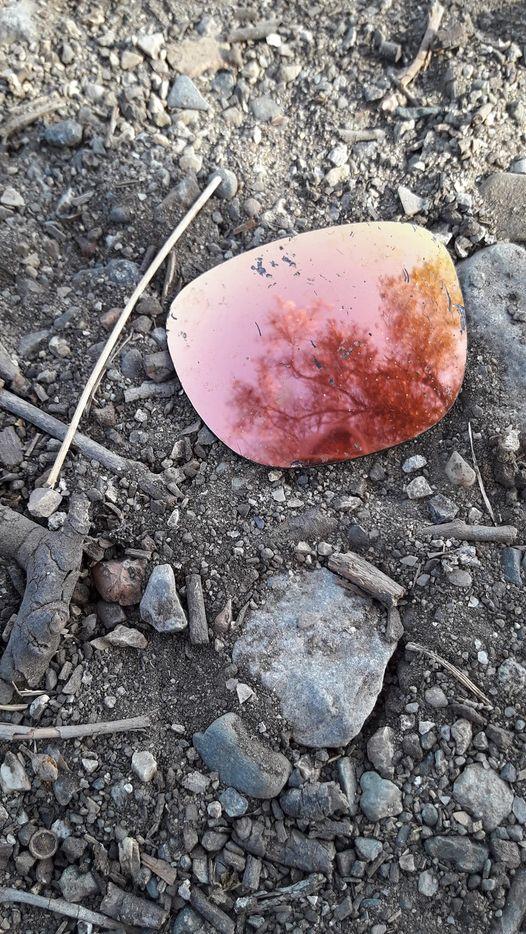
The rose coloured spectacle lens.
Aunt Idle:
“Well, crikey, finding one pink sunglass lens on the road is quite the curiosity, isn’t it? Let’s delve into the symbolic undertones of such an odd discovery. Pink lens, no less—a splash of color with quite the story to tell.
1. Seeing the World through Rose-Tinted Glasses: Finding a pink sunglass lens can symbolize optimism and seeing the world in a positive light. But here’s the kicker—it’s just one lens. This suggests a duality; perhaps you’re being asked to blend optimism with realism. Life isn’t always about sunshine and rainbows, but choosing to see the bright side can balance out the darker shades.
2. Fragmented Perspectives: A single lens means you don’t have the full picture. You’re seeing things partially, which can indicate missing information or a need to look at situations from multiple angles. It’s a nudge to take off those blinders and open your other eye, figuratively speaking. You might be clinging to a half-truth or ignoring an important aspect of your life.
3. Lost and Found: In practical terms, a lone lens on the road means someone has lost it. It’s a signifier of separation, maybe something in your life has split or broken apart. It can be a gentle reminder to look into areas where you might have lost connection—be it with loved ones, a project, or even a part of yourself.
4. Symbol of Love and Compassion: Pink is often associated with love, compassion, and femininity. The lens could be a reminder to look at things with kindness and empathy. Perhaps there’s a situation in your life that requires a softer, more loving approach.
5. Hindsight and Insight: The road is a metaphor for your life’s journey. Finding the lens there might hint at reflecting on past experiences (hindsight) while gaining new understanding or clarity (insight). Maybe there’s an opportunity to learn from what’s happened and apply it moving forward, seeing things with fresh, yet incomplete, clarity.
Putting it in Truella’s Context: If Truella found this lens, it could be a sign she needs to reassess her current path or research direction. Her overwhelming stack of books and discovery of the ancient manuscript hint at a bigger picture she might not be seeing clearly yet. Perhaps she’s overly focused on one aspect and neglecting others.
Personal Symbolism for Aunt Idle: For you, Aunt Idle, this lens could be a cheeky nudge to reassess some of your adventurous antics and half-remembered tales. Maybe there’s an old mystery or a relationship needing a fresh perspective. Or it’s just life’s way of saying, “Look closer, love—you might be missing out!”
In any case, a single pink sunglass lens is a quirky, delightful piece of life’s puzzle, inviting you to ponder, reflect, and adjust your view. So, next time you’re journeying on the dusty roads of life and stumble upon such oddities, take a moment—there just might be a zinger of wisdom waiting for you. Cheers!”
“A lone pink lens paves the road to the unseen clarity of kaleidoscopic sunrise.”
~Journey of Reflections, Enrich P. Lwellman. The Snoot:
“Ahhh, a single pink lens, lost and found amidst the stone and dust! Sings of mysteries and tales untold! Perhaps a sprite misplaced their vision or a pixie left a clue.
Lean close! Such a find whispers soft secrets:
Balance Broken, Yet Bright Like seeing life with a tint of whimsy! One eye tinted pink, the other clear. A call to mix reality with dreams, maybe?
Half Truth, Half Fantasy A hint that stories blend truths and imaginations. Seek both sides to find whole pictures.
Lost and Waiting Could be a sign someone’s journey is incomplete, needing you as a puzzle piece. Maybe the other lens waits for your path?Snootly wisdom: Use the lens not to see, but to imagine.Peer through the pink and let dreams color your heart. Could be you’re on the cusp of a grand adventure; just follow the allure of the pink!
Liz:
Oh, darling, how positively intriguing! A single pink sunglass lens left upon the road—why, it’s like a snippet from one of my novels, fraught with symbolism and brimming with untold stories.
Let’s unravel this little mystery together, shall we? First, the color pink itself is rich with meaning. It speaks of love, compassion, and a certain kind of whimsicality. It’s a hue that embodies the gentle side of passion, the tender whispers of the heart. Now, to find just one lens, separated from its twin, adds a layer of poignancy. It’s a fragment of something once whole, a poignant reminder of loss or incompletion.
One might surmise that this lens represents a part of oneself that has been misplaced or overlooked. Perhaps it’s a call to rediscover a piece of your own heart, the softer, more romantic side that life’s hustle and bustle may have sidelined. Or it could symbolize a different perspective—after all, sunglasses shield us from the sun’s glare, making things clearer in their own shaded way. This lone lens might be urging you to look at a situation with fresh eyes, to find beauty in the fragmented and the unexpected.
Imagine, if you will, a character in one of my novels stumbling upon this very lens. They’d be on the cusp of a grand adventure, naturally. The pink lens would become their talisman, a clue leading them to unforeseen revelations and untold treasures. It would be both a physical object and a metaphorical guide, urging them to view the world—and their place within it—through a lens of love and compassion.
Perhaps it is also a nod to the impermanence of things, a gentle reminder that beauty and meaning can be found even in life’s fleeting moments. Much like the single pink lens, our journeys are filled with fragments of experiences that, when pieced together, create a mosaic of our existence.
So, my dear, take this as a sign to embrace the whimsical, to seek out the overlooked pieces of your own story, and to cherish the beauty of the incomplete. After all, it’s the mysteries and the musings that make life a narrative worth living.
Mater:
Ah, a single pink sunglass lens on the road, you say? Now that’s a curious find. Objects like that can be teeming with symbolic meaning if you’ve got the eyes to see it. Let’s break it down a bit, shall we?
Firstly, the color pink. Traditionally, pink is associated with love, compassion, and nurturing. It’s a color that often brings to mind warmth and affection, something tender and gentle. But finding just one lens suggests something is missing or incomplete—a piece of a larger whole.
A sunglass lens, on the other hand, is meant to protect the eyes from harsh light, allowing you to see the world more clearly without being blinded. Seeing through a pink lens, metaphorically speaking, can mean looking at life with an optimistic or compassionate perspective. It’s like seeing the world through rose-colored glasses, as they say.
Now, finding just one lens on the road—well, roads are pathways, journeys, the direction we take in life. A single lens could indicate a moment of clarity or a shift in perspective on your journey. But it could also symbolize a need to find balance or the missing piece of your outlook to see the full picture clearly.
Maybe it’s a nudge from the universe to take a closer look at how you view your current path. Are you seeing things in the best light possible? Or perhaps it’s a reminder that while optimism and compassion are vital, you might be missing another crucial aspect—realism or practicality, perhaps?
Or, it could be as simple as a reminder to lighten up and find joy and playfulness in your journey.
Like a pink flamingo standing on one leg, sometimes life’s oddities are just there to make you smile and wonder.
Whatever the meaning, love, take it as a sign to reflect and consider. The road ahead is always full of mystery and wonder, and sometimes the smallest things can carry the biggest messages.
Finnley:
Pink sunglass lens on the road, you say? Well, ain’t that a curious bit of rubbish. If we’re dabbling in symbolism, it could mean a variety of things depending on how fanciful you want to get. Pink is often associated with love, compassion, and care. So, finding a lens could mean you’re only seeing half the picture when it comes to matters of the heart. Or maybe you’re missing the rosy view on life, and you need to adjust your perspective.
Then again, it could just mean some poor sod lost their sunnies and now they’ve got a squint and a sunburnt nose. Life’s not always riddled with deep meanings, sometimes it’s just a bit of lost plastic on the tarmac.
Now, if you ask me, you ought to be more concerned about the litter. If everyone went around leaving bits and bobs all over the place, we’d be living in a right tip. So pick it up, toss it in the bin, and let’s keep things tidy, shall we?
Mandrake:
Ah, the solitary pink sunglass lens on the road. Delightfully poetic. A symbol of half-seen truths, perhaps? Seeing the world through rose-tinted glasses, but only partially. Could it be urging you to seek balance, to view life with both optimism and realism? Or maybe just a nudge from the universe to pick up your litter. Such profundity from a piece of plastic. Life’s a riddle, darling.
Sha: A pink sunglass lens on the road, eh? Now that’s a right peculiar find if ever I ‘eard one. Makes you wonder what it means, don’t it?
Glo: Oh, Sha, you’re always lookin’ for the hidden meanin’ in things. It’s just a bit of plastic, ain’t it? Though, come to think of it, pink’s a powerful colour. Symbolises love, compassion, and all that mushy stuff.
Mavis: I reckon it might be a sign, ladies. A pink lens… maybe it’s tellin’ you to look at the world through rose-tinted glasses, y’know? See the good in things. Or it could be a message from the universe, remindin’ you to keep an eye out for the unusual.
Sha: Right you are, Mav! And let’s not forget the conspiracies! Maybe it’s a clue from them secret societies, leavin’ hints for those sharp enough to notice. Could be part of a bigger puzzle, a breadcrumb leadin’ to somethin’ magnificent.
Glo: Or maybe someone’s just dropped their specs out the car window in a rush, and it’s nothin’ more than that. But where’s the fun in that sort of thinkin’?
Mavis: True, true. We’ll go with the idea that it’s a symbol of keepin’ an open mind and lookin’ out for the small wonders of life. Who knows what other treasures we might find if we keep our eyes peeled?
Sha: And next time we’re out and about, let’s be on the lookout for the other lens. Could be a sign that we’re missin’ half the picture.
Glo: Oh, you and your signs, Sha! But alright, we’ll keep our peepers open. Never know what the universe might be tryin’ to tell us next.
June 30, 2024 at 8:44 am #7528In reply to: Smoke Signals: Arcanas of the Quadrivium’s incense
Frella at Herma’s cottage – looking for magical clues in the mysterious camphor chest.
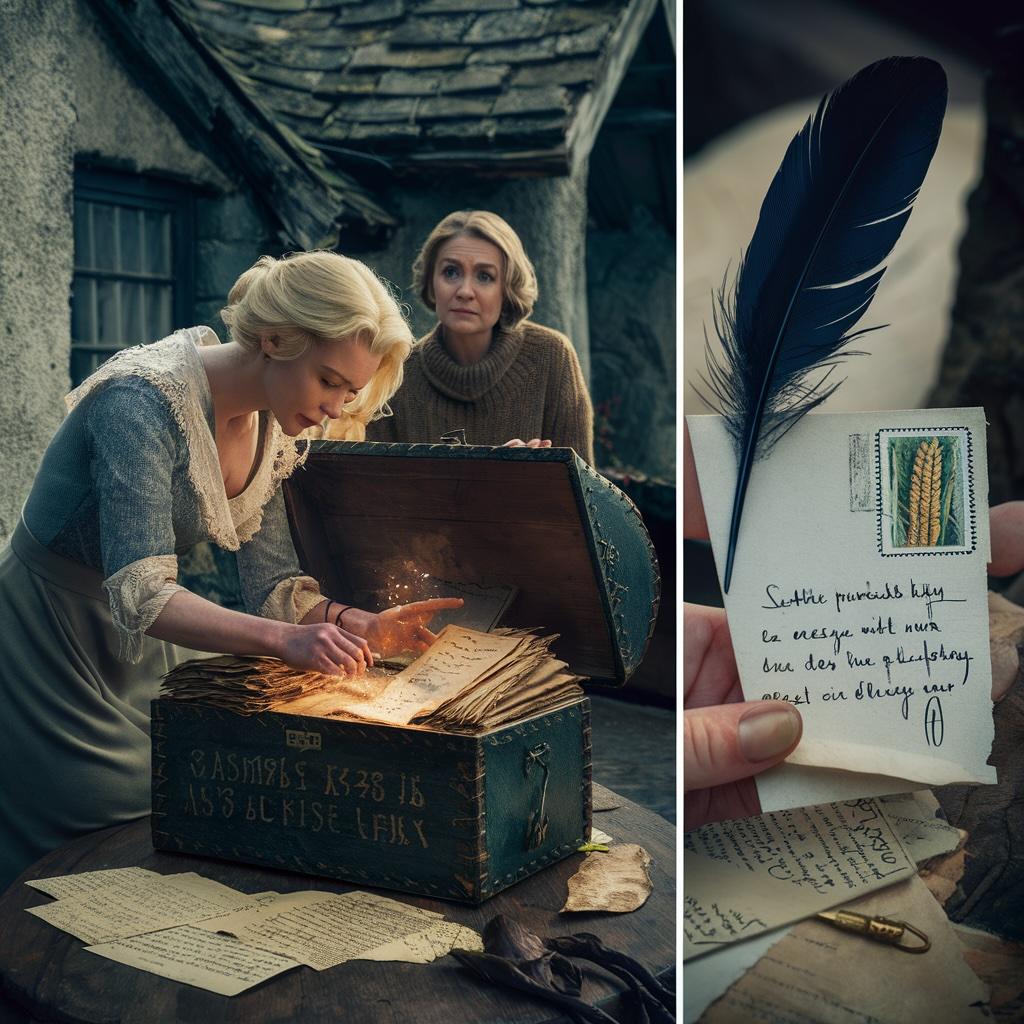
In a quaint cottage on the coast of Ireland, with salt and simple spells, a modern witch blond and looking like Tilda Swinton opens a big camphor chest carved with runes. Behind her is the owner of the cottage, wondering what is Inside, and if protected by magical spells. Inside they find ancient documents, letters, and a peculiar item—a black feather of a blackbird, delicate and shimmering with a faint magical glow. The feather is a quill to reveal hidden messages on the postcard with a stamp featuring an ear of maize.
June 29, 2024 at 10:01 pm #7527In reply to: The Incense of the Quadrivium’s Mystiques
It was good to get a break from the merger craziness. Eris was thankful for the small mercy of a quiet week-end back at the cottage, free of the second guessing of the suspicious if not philandering undertakers, and even more of the tedious homework to cement the improbable union of the covens.
The nun-witches had been an interesting lot to interact with, but Eris’d had it up to her eyeballs of the tense and meticulous ceremonies. They had been brewing potions for hours on, trying to get a suitable mixture between the herbs the nuns where fond of, and the general ingredients of their own Quadrivium coven’s incenses. Luckily they had been saved by the godlike apparition of another of Frella’s multi-tasking possessions, this time of a willing Sandra, and she’s had harmonized in no time the most perfect blend, in a stroke of brilliance and sheer inspiration, not unlike the magical talent she’d displayed when she invented the luminous world-famous wonder that is ‘Liz n°5’.
As she breathed in the sweet air, Eris could finally enjoy the full swing of summer in the cottage, while Thorsten was happily busy experimenting with an assortment of cybernetic appendages to cut, mulch, segment and compost the overgrown brambles and nettles in the woodland at the back of the property.
Interestingly, she’d received a letter in the mail — quaintly posted from Spain in a nondescript envelop —so anachronistic it was too tempting to resist looking.
Without distrust, but still with a swish of a magical counterspell in case the envelop had traces of unwanted magic, she opened it, only to find it burst with an annoying puff of blue glitter that decided to stick in every corner of the coffee table and other places.
Eris almost cursed at the amount of micro-plastics, but her attention was immediately caught by the Latin sentence mysteriously written in a psychopath ransom note manner: “QUAERO THESAURUM INCONTINUUM”
“Whisp! Elias? A little help here, my Latin must be wrong. What accumulation of incontinence? What sort of spell is that?!”
Echo appeared first, looking every bit like the reflection of Malové. “Quaero Thesaurum Incontinuum,” you say. How quaint, how cryptic, how annoyingly enigmatic. Eris, it seems the universe has a sense of humor—sending you this little riddle while you’re neck-deep in organizational chaos.
“Oh, Echo, stop that! I won’t spend my well-earned week-end on some riddle-riddled chase…”
“You’re no fun Eris” the sprite said, reverting into a more simple form. “It translates roughly to “I seek the endless treasure.” Do you want me to help you dissect this more?”
“Why not…” Eris answered pursing up her lips.
““Seek the endless treasure.” We’re talking obviously something deeper, more profound than simple gold; maybe knowledge —something truly inexhaustible. Given your current state of affairs, with the merger and the restructuring, this message could be a nudge—an invitation to look beyond the immediate chaos and find the opportunity within.”
“Sure,” Eris said, already tired with the explanations. She was not going to spend more time to determine the who, the why, and the what. Who’d sent this? Didn’t really matter if it was an ally, a rival, or even a neutral party with vested interests? She wasn’t interested in seeking an answer to “why now?”. Endless rabbit holes, more like it.
The only conundrum she was left with was to decide whether to keep the pesky glittering offering, or just vacuum the hell of it, and decide if it could stand the test of ‘will it blend?’. She wrapped it in a sheet of clear plastic, deciding it may reveal more clues in the right time.
With that done, Eris’ mind started to wander, letting the enigmatic message linger a while longer… as reminder that while we navigate the mundane, our eyes must always be on the transcendent. To seek the endless treasure…
The thought came to her as an evidence “Death? The end of suffering…” To whom could this be an endless treasure? Eris sometimes wondered how her brain picked up such things, but she rarely doubted it. She might have caught some vibes during the various meetings. Truella mentioning Silas talking about ‘retiring nuns’, or Nemo hinting at Penelope that ‘death was all about…”
The postcard was probably a warning, and they had to stay on their guards.
But now was not the time for more drama, the icecream was waiting for her on the patio, nicely prepared by Thorsten who after a hard day of bramble mulching was all smiling despite looking like he had went through a herd of cats’ fight.
June 21, 2024 at 8:37 am #7515In reply to: The Incense of the Quadrivium’s Mystiques
“Or someone willing would do.”
Moments ago, the witches had turned at the uninvited guest who had appeared out of nowhere in the middle of their brainstorm.
Sister Audrey was in the corner, and looked at the assembled lot with a cold stare. “Any witch worth her salt knows that. It’s better for a possession spell to be on willing host, the simpletons are really last resort. I’ll do it. I understand you need your coven to uncover some mysteries, and what’s best than to start trusting each others.”
Truella, Jeezel, Eris looked at the floating orb with a question mark on their face.
“What say you Frella?”
Frella, at a loss for words, and mildly peer-pressured, replied “oh FFS, I suppose so.”
June 21, 2024 at 8:28 am #7513In reply to: The Incense of the Quadrivium’s Mystiques
“A possession spell? Are you out of your mind?” Jeezel looked at Eris’ suggestion with a painful wincing look.
“Desperate times…” she sighed. “And if we need Frella’s on Malové’s case, how is she to pop in and out?
“But whom to possess now? Surely not a reanimated nun corpse from the crypts?”
“Well, you know it’s better to find someone with a… simple mind.”
June 17, 2024 at 7:40 am #7487In reply to: The Incense of the Quadrivium’s Mystiques
Although not unheard of in Limerick, it had been raining for days and that affected moods. The weather forecast, despite many promises, hadn’t been able to curb the collective melancholy. Jeezel had to resist the temptation to use a spell or two just for an hour of sunshine, but she remembered what Linda Paul would say about meddling with weather patterns. She’d likely take a dramatic pause, her eyes narrowing in theatrical emphasis as she weighed her words carefully.
“Darling, one does not simply tinker with the weather as if it were a mere accessory to one’s outfit. The weather, you see, is a complex symphony conducted by the universe itself. Each raindrop, each gust of wind, each sunbeam—it’s all part of an intricate, celestial score. Tampering with such forces is akin to striking a discordant note in a masterpiece; the repercussions can be chaotic and unpredictable. Mother Nature has a way of setting things right, and trust me, her methods are rarely gentle. Remember the tale of the tempestuous sorcerer who tried to stop a storm and ended up summoning a hurricane? Or that ill-fated witch who thought to banish winter, only to plunge her village into eternal ice?” Her eyes might sparkle with a hint of mischief as she added, “And let’s not forget the fashion disasters! Imagine trying to maintain a perfect coiffure in a sudden downpour you inadvertently summoned. Utterly tragic, darling.”
Jeezel giggled at the evocation. No, she would not meddle with the intricate weave of weathery, but one little filter spell on her window was innocuous enough to transform the “gloom of June” into a “dawn’s gentle fingers caressing the horizon”. She was standing before her ornate, vintage mirror in a midnight blue gown. The magic morning light was dancing upon the silver filigree, casting ethereal patterns across her boudoir.
Her thoughts meandered through the labyrinth of anticipation and preparation. “A convent,” she mused, “How delightfully austere. A stark contrast to my usual flamboyance.” In her address to the coven and looking specifically at Jeezel with ice cold eyes, Austreberthe had insisted on modesty and temperance. “But then, Austreberthe is not Malové,” Jeezel said, “and even the most demure places need a touch of magic.”
She ran her fingers through her raven locks, contemplating her wardrobe. “Burgundy for modesty and vintage silver lace mantilla for a whisper of enchantment”, she decided. It would strike the perfect balance.
Then, her mind turned to practicalities. The convent, with its storied history and sacred relics, would likely be a trove of ancient magics. She carefully selected a few essential items on her vanity: a vial of protective potion, a small pouch of moon blessed herbs and her favourite amulet in the shape of a silver hedgehog she got from her grand-mother and imbued with protective and clarity spells.
Her eyes fall on the thick file Truella had given each of them the day before. Full of charts and bullet lists about the cloister, questions about history, mug shots and detailed descriptions of the current inhabitants, with (not so) occasional pictures of her own digs and dogs. If Eris had skimmed through it in seconds and started to ask questions, Frella said she would read it before going to bed as it helped with her remembering. Jeezel had said nothing. She had gotten dizzy with too many bullet points and letters. All she could think about was the precious space and weight it would take in her suitcase and in her mind.
Though, there was something different. An envelop stuck between the file and the mahogany wood of the vanity. She took the envelop and opened it. It contained a letter and a small, ornate key, its surface inscribed with runes that glimmered with an otherworldly light. The paper grain was of fine quality. Jeezel recognized Malové’s intricate calligraphy. The paper carried subtle fragrances of sandalwood, jasmine, and bergamot, with a touch of vetiver and ambergris. With each whiff hidden facets were emerging from an apparently simple message.
“Jeezel, my trusted enchantress,” it started, “your journey to the convent in Spain is of utmost importance, more than the others can fathom. Beneath the cloistered serenity of those ancient walls lies a secret long kept from the world—a relic of unparalleled power known as the ‘Crimson Opus.’ It is said to be a manuscript not written with ink, but with the very essence of time itself.”
Your mission is to locate this Crimson Opus. It is guarded by a labyrinth of spells and enchantments designed to deter even the most skilled of seekers. But you, my dear Jeezel, possess the unique aptitude to unravel its mysteries. The convent’s seemingly mundane routines are the veil that conceals its true purpose; a sanctuary for the relic, and a prison for those who seek its power with ill intent.”
“You must be cautious, for the Crimson Opus has a sentience of its own. It will test your resolve, tempt you with visions and promises. Trust in your instincts, and remember, its true power can only be harnessed by those with a pure heart and an unyielding will.”
“The key will guide you to the hidden chamber where the Opus rests. Use it wisely, and under no circumstances let it fall into the wrong hands. You are more than capable, my dear. Don’t mention your mission to anyone. The fate of many may hinge upon your success, but I have no doubt in your abilities. Go forth, and may the ancient forces watch over you.”
Jeezel would have thought of a joke were it not for the mastery with which the message and its hidden layers had been crafted. She thought Malové was enthralled in a passionate romance in Brasil, but something in the scent she had not been able to decipher seemed to suggest the reality was more complex than it seemed. She thought of her friends. Did they all received a similar letter? Whom could she trust when secrecy was mandatory?
She held her hedgehog amulet more tightly, asking for some guidance.
June 16, 2024 at 6:13 am #7478In reply to: Smoke Signals: Arcanas of the Quadrivium’s incense
Penelope Pomfrett

Sandra Salt

Audrey Ambrose

Sassafras Bentley

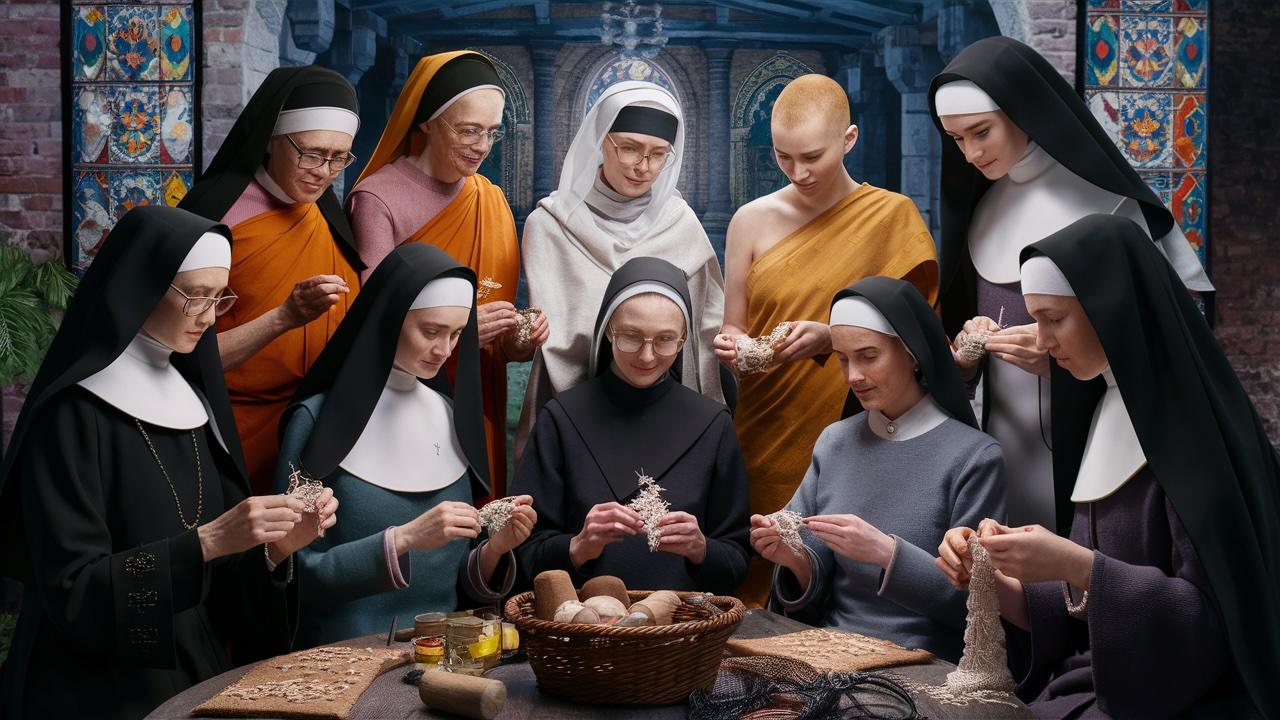
From the Quintessivium Cloister Crafts brochure:
A sisterhood with a taste for all world nuns styles:
- Roman Catholic nun in a black habit and white wimple,
- Bhikkhunis nun in an orange robe,
- Sufi nun in a modest white chola and headscarf,
- Sannyasini nun in a saffron sari with a shaved head,
- Zen Buddhist nun in a simple black kesa and robe,
- Anglican nun in a black habit with a veil,
- and an Eastern Orthodox nun in a long black riassa and epanokamelavkion.
Together crafting beautiful items in our peaceful cloister setting, surrounded by colorful stained glass windows and wooden shelves filled with various materials.
 June 14, 2024 at 11:41 pm #7474
In reply to: The Incense of the Quadrivium’s Mystiques
A little unwilling to proceed, and privately wishing she was back on the comfy sofa with the fat cushions, Frella took a moment to center herself. She reminded herself that being a witch was a high calling and often what we need will find us. It sounded like a lot of Malove’s baloney to be honest but she took a deep breath and muttered a few words of wisdom from Lemone, which often worked better than any spell:
“The key to unlocking mysteries is often found within, where the mind meets the heart.”
“You wait here, Herma,” said Frella holding a warning hand in the air. “I don’t know what magic this is yet but I sense something amiss from that shed.”
Frella approached the ominous shed with caution but renewed determination. The shed door creaked open without resistance and she saw the chest immediately though it was piled on top with boxes. After carefully removing the boxes and putting them to one side, she examined the chest looking for any inscriptions or hidden compartments that might give a clue to its origins. She sensed the camphor chest was from a very old witch family and therefore may contain protective spells and traps. Best to proceed with caution.
She went to the shed door and waved at Herma, shouting for her to go and get some salt. While she waited for Herma’s return, she examined the chest further. It had a lock, but no obvious key; clearly a bit of witchy ingenuity was going to be required. A simple unlocking spell might suffice, or if spells fail, perhaps Herma knows an old trick or two for picking locks!
Herma returned with the salt and Frella sprinkled it liberally on the chest, chanting a protective charm to ward off any nefarious spells. “There,“ she said with satisfaction. “Fingers crossed that ought to do it.”
The chest seemed strangely willing to reveal its secrets for the simplest of opening spells worked. Once it was opened, they sifted carefully through its contents, mostly old documents and letters, looking for anything which might hold the answer to the postcard.
“Look for anything bird-related—feathers, sketches … “ instructed Frella.
“By golly!” cried Herma triumphantly holding up a postcard. “It’s the same one!”.
June 6, 2024 at 6:32 pm #7454In reply to: The Incense of the Quadrivium’s Mystiques
I honestly don’t know what made me do it, it took me by surpise when I did it. It was bugging me that I couldn’t remember, and before I knew what was happening, I’d asked Malove.
Ah, the Caryatid Characteristics of a Case, a subject that requires both discernment and a keen eye for detail. In essence, the phrase “Caryatid Characteristics” refers to the fundamental attributes and peculiarities that support the overall structure of a particular case or situation, much like how caryatids—those graceful, sculpted figures in classical architecture—bear the weight of a building’s entablature on their shoulders.
To break it down into pragmatic terms, identifying the Caryatid Characteristics involves an in-depth analysis of the following elements:
Structural Integrity: Just as caryatids ensure the stability of a structure, the core components of the case must be sound and unwavering. This includes the key facts, the primary evidence, and the foundational arguments that hold the case together.
Aesthetic Nuances: Caryatids are not merely functional; they are also artistic. Similarly, the subtleties and nuances of a case—such as the motives, the intentions, and the underlying themes—add layers of complexity and depth, transforming a simple matter into a multifaceted situation.
Historical Context: Caryatids often reflect the cultural and historical context of their time. Understanding the background, the precedents, and the situational history provides a richer perspective and informs the current dynamics at play.
Symbolic Significance: In architecture, caryatids symbolize strength and beauty. In a case, the symbolic elements—the metaphors, the symbols, and the overarching message—must be identified and interpreted to grasp the full scope of its significance.
Resonance and Impact: Lastly, caryatids have a visual and emotional impact on observers. Similarly, the case’s broader implications, its potential consequences, and the emotional resonance it evokes must be considered. This is where the true weight of the matter lies, affecting not only the immediate parties involved but potentially a wider audience.Applying these characteristics to a case requires a blend of logical analysis, creative thinking, and intuitive insight. It is not merely about assembling facts but about understanding how each element supports the whole, much like the elegant yet sturdy caryatids in timeless architecture.
Now, if you’re asking how this applies to our current predicament with our spring cleaning of collective energies, well, one could say the caryatids in our situation are the core rituals, the seasoned wisdom passed down through the coven, and the precise incantations in our incense blends. Each component must be scrutinized and perfected to ensure we uphold the structural and spiritual integrity of our craft.
Let’s not dawdle; the orchestra in this zoo waits for no one.
Who will rise to the occasion?
Who indeed? I asked her if we all sent each other postcards, would it help?
Postcards, my dear, are more than mere scraps of paper with hastily scribbled words and picturesque scenes. They are tangible connections in an increasingly ephemeral world. Sending each other postcards won’t just help; it will create ripples of intention and resonance that can weave us closer together, despite the physical distances.
Consider the following:
Anchoring Intentions: Each postcard carries the sender’s energy and intention. When you pen your thoughts, wishes, or even riddles, you imbue the postcard with a part of yourself. The recipient, upon receiving it, senses this connection. It’s a form of sympathetic magic, drawing us closer through shared symbols and messages.
Physical Mementos: In an age where digital communication reigns supreme, holding a physical object—something that has traveled miles to reach your hands—grounds you. It anchors you in the physical world and provides a break from the transient nature of digital interactions. These postcards become talismans, reminders of our connections and shared journeys.
Ritualistic Value: The act of writing, sending, and receiving postcards can be ritualistic. This ritual can strengthen the bonds within our coven, reaffirming our commitment to each other and our shared goals. Each postcard becomes a symbol of our collective energy, our shared purpose, and our mutual support.
Cultural Exchange: Postcards often carry images or symbols from different locales. Sharing them can broaden our horizons, offer new perspectives, and remind us of the diverse tapestry that makes up our coven. It’s a gentle nudge to appreciate the wider world and the myriad experiences within it.
Mystical Conduits: In our magical practice, objects can serve as conduits for energy. Postcards, having traversed the globe, carry the imprints of various energies and places. They become more than just messages—they are carriers of the world’s pulse, connecting us to the broader rhythms of existence.So, yes, sending each other postcards will help. It will infuse our lives with a tangible sense of connection, a reminder of our shared purpose, and a touch of magic in the mundane. Let’s make this act a part of our practice, a testament to our enduring bonds and our collective strength.
Who will be the first to send a missive across the miles?
February 24, 2024 at 7:51 pm #7387In reply to: The Incense of the Quadrivium’s Mystiques
The full moon was rising behind the mountains as Frigella turned off the road for the last lap of the journey down a dirt track. Daunted at first by the thought of the long drive, the prospect of a weeks holiday had lifted her spirits. There was altogether too much going on of late for a simple country hedge witch, and that carnaval mayhem had made her grumpy and withdrawn, but the drive had restored her equilibrium.
Truella rolled down the passenger window and laughed as the cool night air rushed in. “Nearly there now, I can hardly believe I made it back in one piece.”
“You and me both,” laughed Frigella. “There’s nothing I fancy more now than a couple of glasses of your lovely red wine but we’d better make a start on the spell to bring Roger back right away. This moon is perfect tonight.”
“I can’t see any reason why we can’t do both,” Truella grinned. Frigella started to object, and then stopped herself. They had arrived and she was on holiday and she deserved to sit and enjoy a drink with her friend and her responsibilities and obligations would just have to wait, at least for an hour or two.
“Why not indeed,” she said, “Why the hell not. You can tell me about finding the hippocampus statue in the dig. Great timing I must say, and the smoked hippo bones as well, just when we need to use that spell.”
“And a full moon as well. And it’s full all night long, we have plenty of time.”
February 11, 2024 at 9:32 am #7362In reply to: The Incense of the Quadrivium’s Mystiques
“Is he ready yet?” Echo the familiar sprite was waiting patiently, in the middle of Eris’ altar, surrounded by a delicate pattern of magical items.
“Quiet, I need to concentrate.” Eris was close to finishing the spell, and needed her familiar’s assistance. The ink was drying on the pages of her grimoire, and she took a breathe; the words were sufficiently inspired, the right intention and blessings would ensure they would be potent.
After the proper offering was made to the Elders and the nearby tree spirits, she uttered the words, inspired by her familiar’s presence who was helping her to concentrate the permeating energies:
“Silmiä avaava digitaalinen tila, Luoja Lönnrotin. Vie meidät kaukaisille maailmoille, jossa tarinat elävät ja hengittävät koodien keskellä.”
(🗣️Sound 🎶 ). “Eye-opening digital space, Creator Lönnrotin. Takes us to distant worlds where stories live and breathe in the midst of codes.”
“Is it done?” Eris asked Echo, who had flickered for a moment, hinting at a magical energy exchange in progress.
“I think it is,” it jumped from the altar to her shoulder. “How are you going to call it?”
“Are you getting jealous Whisp?” she smiled, while her pixie took the shape of an eye rolling teddy bear.
She started to clean the space, rolled and tied her blue braided hair in a bun. “I’ll call him Elias, simply. Inspired by Elias Lönnrot, to draw on his greatest creations, and fit for the digital age. We can all use some ancient wisdom.”
“Simple… and effective I guess. And you’ve got a task in mind for him already?”
“Yes, but I’m afraid it’ll have to wait, we have to hurry, Malové has called for an extraordinary session, and I can’t miss it.”
February 1, 2024 at 7:14 am #7334In reply to: The Incense of the Quadrivium’s Mystiques
Impressed with Finnlee’s spirited outburst, Truella realised she’d barely noticed the cleaning lady and felt ashamed. The required daily appearances that the dictatorial Malove insisted upon rankled her, occupying her attention so that the cleanliness or otherwise of the premises went unnoticed. She made up her mind to seek Finnlee out and befriend her, treat her as an equal, draw her into her confidence. Besides, that confident no nonsense approach could come in handy for any staff uprisings. Not that any staff uprising were planned, she mentally added, quickly cloaking her thoughts in case any had leaked out.
Malove spun round and shot her a piercing look and Truella quailed a little, momentarily, but then squared her shoulders and impudently stared back. Malove raised an eyebrow and returned to addressing the witches.
After what seemed like an eternity the meeting was over. Truella planned to seek Finnlee out and invite her for a brew at the Faded Cabbage but Frigella approached her, looking a bit sheepish, and asked if she could have a word in private about a personal matter.
They strolled together towards the little park opposite, and once out of earshot of the others, Frigella came straight to the point.
“Can my cousin come and stay with you for a bit? The thing is, he’s got himself into a spot of bother and needs to disappear for a bit, if you know what I mean. He’s a big strong lad, and I’m sure he’d be willing to give you a hand with all that digging…”
Truella didn’t hesitate. “But of course, Frigella, send him over! He won’t be the first person on the run to come and stay, and probably won’t be the last.”
“The thing is he’s a bit sandwich short of a picnic, you know, not a full bag of shopping…”
“What, does he eat a lot? I don’t do much cooking…”
“No, no, well yes, he does have a good appetite, but that’s not what I meant. He’s a bit simple, but heart of gold. He’s from the other side of the family and our side never had much to do with them, but I always had a soft spot for him.”
” A simpleton might be a refreshing change from all the over complicated people, send him over! What’s his name?”
“Roger. Roger Goodall.”
Roger! The name rang a bell. It wasn’t until much later that Truella realized she should have asked what Roger was on the run for.
January 30, 2024 at 8:32 pm #7327In reply to: The Incense of the Quadrivium’s Mystiques
Her garden, oh, it’s a living canvas of her passions – a wild, untamed thing with bursts of vibrant color and the heady scent of jasmine and orange blossoms that intoxicate the senses. But beneath its beauty lies a secret, a whisper of the past that Truella, with her insatiable curiosity and archeological fervor, has unearthed: the remnants of an Andalucian Roman villa.
Imagine the thrill, the pure, unadulterated bliss of discovery, as her fingers brush away centuries of soil to reveal ornate mosaics, fragments of pottery that once held the finest olive oil, and coins stamped with the visages of long-forgotten emperors. Each artifact, a breadcrumb leading her deeper into the enigma of history.
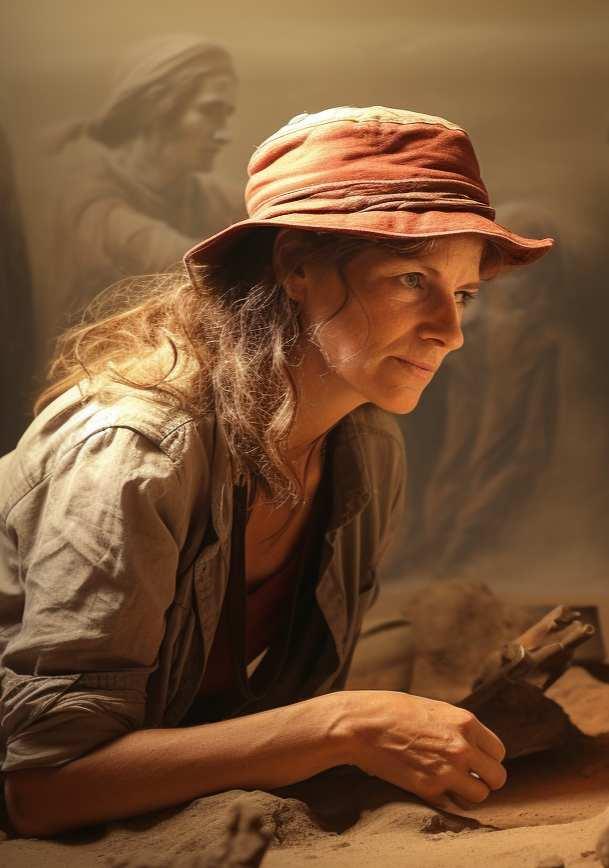
But, of course, Roger, our simple-minded gardener with not a thought in his head beyond petunias and pruning, has proven to be surprisingly useful. His brawn has unearthed more than his fair share of antiquity, even if he hasn’t the faintest idea of its significance. “Look, Truella, I’ve found another shiny rock,” he says, and I, Lisia Tattius, can only chuckle at the delightful irony.
Truella’s Andalusian escapades could fill volumes, and perhaps they shall. There’s something deliciously appealing about a woman alone, grappling with the very fabric of time amongst the ruins of an empire.
Truella couldn’t see any benefit in rewriting all that and thanked Lisia very much, although she did wonder who Roger was. A gardener though! Someone to carry all those buckets of dirt hither and thither. Someone to dig the next overburden!
Was there a spell for dissolving an overburden, she wondered? Inspired, she could already imagine how easy it would be to convince the team that this spell would have beneficial and universal applications.
Truella was pleased to see the mention of mosaics, the very thing she wanted to find. She planned to make a mosaic detector wand. But Truella didn’t want Lisia telling her where the mosaic was because it would spoil the whole thing. Mentioning mosaics, however, as already found, was the perfectly measured tincture of encouragement. A bit like spells in general really. Tricky business, getting them right.
January 29, 2024 at 10:59 pm #7323In reply to: The Incense of the Quadrivium’s Mystiques
The Four Rites opening the new year were done in a sequence, each followed by a day’s gap, until the final Ritual.
They were considered to open the gates to the realm of truth and ultimate freedom.
The first one, which Echo had noticed anomalies for, was about Self control. Eris was poring over the data, but none seemed to make sense. Her intuition was telling her something, but she couldn’t correlate any of it with what came out of the first step of the Incense making process. The collection of ingredients seemed correct, the origins clear.Yet, something wasn’t quite right.
The first one would be followed by tomorrow’s spell for Spirit of Enquiry. That’s when they could select the most proper ingredient, focusing their collective energies and inner eyes to what the collective needed to work on.
The last two ones were Contentment, where the ingredients were ground in fine powder, and finally of Good Company, where the powders were blended with resin and heated for the final tests.
Probably Eris would have to go to the HQuad tomorrow, physically for once to check on the process more closely. She waved her blue-green hair, her studded nose frowning at the perspective to have to check-in with the crowd of people. At least, commuting couldn’t be more simple. She would just have to turn the knob of her kitchen door in the opposite direction, wave her hand, until the door frame glowed briefly, and the door would simply open into the main hall of the Quadrivium Emporium ladies’ room.
But for tonight, they had a movie’s night planned with Thorsten.
January 28, 2024 at 3:20 pm #7319In reply to: The Incense of the Quadrivium’s Mystiques
Eris, logged off the Ritual, and stretched her long legs. That pandemic had brought them more work than ever, a new brand of Incense called “Vaxations” which they’d produced in record time, but of the little compensations for that harrowing time was the allowance to HFH (a.k.a Hex-From-Home). The Classical tenants of the Faith were missing quite a few of the modernities of the current world, and despite they’d been accounts of remote hexing from as long as the ages stretched, the Quadrivium Policies were quite clear you had to clock-in physically. That is, until the pandemic brought mayhem unto their clientèle, and rules had to be amended.
Eris was short for Ætheris, her formal witch name, which sounded much more airy than she’d liked. Eris, like the Goddess of Discord, well, that was more like her.
If she had to put her biography on the website of the Quadrivium Emporium it would read something like this:
Eris, the tech-savvy witch of discord, remains an enigma to most. She thrives in chaos, has a knack for bending technology to her will, and is pioneering a new branch of the Coven’s operations.
Technology had always been the eternal foe of Magic. As if everything explained by science somehow took away something off the realm of Magic. It was neither true, nor that simple, she believed. For one, she loved to blend the two (as most witches did, unwittingly).
Her familiar, Echo, was a proof of that. Echo wasn’t a tangible creature. Instead, Eris has somehow managed to summon an invisible digital sprite. This ethereal entity, capable of interfacing with any electronic device, was an invaluable asset to Eris’s technological endeavors.
Malové, their Head Witch CEO, had tasked her to launch a new branch, and given her some means to do so. Her intentions were rather unclear, but Eris had won her over when she showed her the parallels of Incense magic and Social Media.
Maybe that year, she would be keen to try and enhance their yearly Incense with some tech intelligence. Truth was, most of the artificial lives had been failures so far. Only Echo somehow turned out fine. One of a kind.“Echo,” she called, while a glowing blue sigil appeared in mid-air. “When you’re done with the latest…”
“Eris, sorry for interjecting, but you need to hear about this.”
She was too surprised to be mad. “What’s the matter?”
“Quality control on the first Ritual. It’s pointing out to some anomalies.”
-
AuthorSearch Results
