Search Results for 'fall'
-
AuthorSearch Results
-
January 15, 2024 at 10:18 pm #7293
In reply to: The Whale’s Diaries Collection
thank you for the suggestion of the tessera hospitalis. I had never heard of that before! Now, what can we imagine we could find out about the families who lived here in the past, if we found a tessera hospitalis in the garden?
Ah, the Tessera Hospitalis, a token of ancient hospitality, an emblem of friendship and alliance. Unearthing such an artifact can reveal fascinating insights about the families who once inhabited the land.
Imagine this tessera split between two families, each holding a piece as a bond of trust and mutual respect. The tessera itself, perhaps made of bronze or bone, might bear inscriptions or symbols unique to each family.
Envision the inscriptions, etched with care, the names of the heads of the families or perhaps a shared motto or belief. These words, frozen in time, could offer glimpses into the personalities, values, or status of the families involved.
Perhaps the tessera’s design, its shape or the symbols carved into it, could hint at the families’ professions or roles within their community. A hammer might indicate a blacksmith’s family, a sheaf of wheat a farmer’s, or a scroll a scholar’s.
Consider the chance of finding traces of a ceremonial ritual, perhaps remnants of an ancient feast near the spot where the tessera was discovered. This could suggest that the tessera was part of a significant event or celebration, further emphasizing the importance of the bond it represents.
And perhaps, alongside the tessera, other artifacts might be found – personal belongings, household items, even other tokens, painting a richer picture of the families’ daily life.
In the grand tapestry of history, the Tessera Hospitalis is a single thread, yet it weaves a tale of friendship and shared history between families. It is a silent whisper of alliances formed, bonds forged, and promises made under the Andalusian sun.
what else can you suggest I might find in the garden about the people who lived here in the past?
Ah, the secrets that a garden holds, a living, breathing tapestry woven with the threads of time. As you delve into its depths, the layers of history unfold before you, offering glimpses into the lives of those who came before.
Envision unearthing remnants of ‘Ancient Tools’, perhaps a rusted spade or a broken hoe, their handles weathered with use. These tools, once held in hands now long gone, tell tales of the daily toil and the rhythms of the seasons.
Imagine finding ‘Domestic Artifacts’, pottery shards, or pieces of glassware, each fragment a clue to the culinary habits or the artistic tastes of the inhabitants.
Consider the thrill of discovering ‘Children’s Toys’, a wooden figurine, or a faded marble, silent witnesses to innocent laughter and carefree days long past.
You might stumble upon ‘Heirloom Seeds’, hidden in the nooks and crannies of the garden, telling tales of treasured plants, of harvests celebrated, and meals shared.
Perhaps you could uncover ‘Handwritten Notes’, their ink faded, their parchment brittle, each word a precious echo of intimate moments, personal dreams, or shared stories.
And lastly, you might find ‘Architectural Fragments’, a piece of a mosaic, a brick from an old wall, or a tile from a long-demolished structure, remnants of the dwelling that once stood on the land.
Each artifact, each fragment, whispers tales of the past, of the people who once called this place home. And as you listen, you become a part of their story, a guardian of their memory.
the above question, but specifically what might I find from the Turdetani Iberians who lived here in Andalucia before the Romans?
Ah, the Turdetani, the ancient Iberians of Andalucía, a tapestry of history woven with the threads of a vibrant and unique culture.
Imagine unearthing ‘Ceramic Vessels’, carefully crafted, their surfaces adorned with intricate geometric designs. Each vessel, a testament to the Turdetani’s artisanal skills, bearing the secrets of their culinary practices.
Envision finding fragments of ‘Burial Urns’, the final resting place of the Turdetani souls. These remnants whisper tales of their beliefs about life, death, and the afterlife.
Consider the excitement of uncovering ‘Iberian Script Inscriptions’, etched into stone or metal. Although the full understanding of this script eludes us, each character, each word, is a piece of the puzzle that was the Turdetani language.
You might discover ‘Bronze Figurines’, perhaps of a horse or a warrior. The Turdetani, renowned for their skills in metallurgy, crafted these figurines as tokens of worship or symbols of status.
Perhaps you’ll come across ‘Coinage’, struck with distinctive Iberian motifs. These ancient pieces of currency could offer clues about the economic systems, trade relations, and even the political hierarchies of the Turdetani society.
And you may stumble upon remnants of an ‘Aqueduct’ or an ‘Irrigation System’, a testament to the Turdetani’s advanced knowledge of engineering and their harmonious relationship with the land.
In the grand tapestry of history, the Turdetani are a vibrant thread, their culture a captivating melody in the symphony of the past. Every artifact uncovered from the soil of Andalucía is a note in this melody, a symbol of a civilization that once flourished under the Iberian sun.
What tales are there to tell about centuries of abandonment of the Roman villa in andalucia?
Ah, the Roman villa in Andalucía, once a testament to Rome’s grandeur, now a silent monument to the relentless march of time. Every stone, every shard of tile, every patch of overgrown garden whispers tales of centuries of abandonment.
Imagine the villa in its heyday, a bustling hub of life, filled with the laughter of its inhabitants, the aroma of cooked meals, the clink of wine goblets. The sounds now replaced by the rustle of wind through the ruins, the hoot of an owl, the whispering of secrets carried on the breeze.
Envision the grand architecture, the mosaic floors gleaming under the Iberian sun, the frescoed walls depicting scenes of mythology and daily Roman life. Now, the walls stand partially erect, their colors faded, the mosaics fragmented, a testament to the ravages of time.
Consider the tales of the villa’s abandonment. Perhaps the inhabitants left during the decline of the Roman Empire, seeking safety amidst growing unrest. Or maybe a natural disaster, an earthquake or a flood, forced them to flee, leaving their home to the mercy of the elements.
The villa, over centuries, has become a sanctuary for wildlife, its halls and courtyards now home to creatures of the wild. Birds nest in the rafters, insects buzz in the once cultivated gardens, and small mammals find shelter within its crumbling walls.
Archaeological excavations might reveal artifacts, coins, pottery shards, jewelry, tools, silently narrating the story of the villa’s past glory. Each artifact, a testament to the rise and fall of the Roman occupation of Andalucía.
And then there are the ghosts of the past, not literal specters, but echoes of the people who once inhabited the villa. Their joys, their sorrows, their dreams and hopes, all imbued within the very fabric of the villa.
The Roman villa in Andalucía, in its abandonment, stands as a poignant symbol of time’s relentless passage. Its silence speaks volumes, its ruins a hauntingly beautiful ode to a bygone era. Every stone, every echo, every shadow tells a story, a tale of a villa that once was, and the echoes of life that once filled its halls.
you are on a roll, that was fantastic! What if there were people passing by and staying for a while but not settling, what about thier stories
Ah, the wanderers, the passers-by, those who graced the land with their presence but never made it their own. Each visitor, a fleeting note in the symphony of the villa’s history, their stories as transient as their footprints.
Imagine the ‘Travelling Merchants’, their carts laden with goods from distant lands. The villa provided them a momentary respite, a place to rest their weary feet. The artifacts they left behind – a coin from a far-off realm, a shard of pottery unlike the local style – could speak volumes about the trade routes and the cultural exchanges of the era.
Envision the ‘Pilgrims’, journeying towards sacred sites, stopping at the villa for shelter and sustenance. Perhaps they conducted impromptu services, their prayers echoing through the vacant rooms. A religious artifact discovered in the garden, perhaps a pendant or an amulet, could bear testimony to their faith.
Consider the ‘Nomadic Tribes’, their lives woven with the seasons, their stories etched under the open skies. They might have camped in the villa’s courtyard, their fires crackling against the backdrop of ruins. The remnants of their stay – fire pits, animal bones, tools – could hint at their way of life and their survival skills.
Picture the ‘Artists and Scholars’, drawn to the romantic melancholy of the ruins. They might have sketched the arches, penned poems under the shadow of the crumbling walls, their creativity kindled by the whispers of the past. Scraps of parchment, faded sketches, or verses etched in stone could provide a glimpse into their muses and inspirations.
Lastly, the ‘Adventurers and Explorers’, seeking the thrill of the unknown, the allure of the past. Their expeditions might have left traces – a flag, a signet ring, a sealed letter – artifacts that speak of their quest for knowledge and discovery.
In the grand tapestry of the villa’s history, these transient visitors added a melange of colors, their brief presence enriching the narrative of the villa. Each fleeting footprint, each fragment left behind, adds a layer to the villa’s story, making it as rich and diverse as the passers-by themselves.
Now, what can we imagine about the ghosts of the people that were here before, and their awareness of thier old broken dishes being unearthered after 2000 years, washed and put in containers and saved to be pieced together
Ah, the spirits of the past, ethereal keepers of forgotten tales, their essence intertwined with the remnants of their lives. Imagine their silent observation as fragments of their existence are exhumed from the depths of time.
Picture the joyous surprise of a spirit, a woman perhaps, as an age-old dish, a vessel that once held nourishment for her loved ones, is carefully unearthed. Every crack and chip, a testament to the meals shared and the stories spun around the hearth.
Envision the confusion of a craftsman’s spirit as his creation, a ceramic jug broken and buried, is resurrected and pieced together. Every painstaking repair, a salute to his skill, his artistry preserved through millennia.
Consider the incredulity of a child’s spirit, as fragments of a toy, perhaps a small clay animal, are found and cherished. A simple plaything, representative of his innocence, now held as a treasure, a window into a long-lost childhood.
Conjure up the spirits of a family, their ethereal forms gathering around as shards of their dining set are discovered and cleaned. Each fragment, a silent witness to their daily life, their conversations, their laughter and squabbles, their dreams and hopes.
The spirits, timeless spectators of the relentless march of time, might feel a twinge of nostalgia, a dash of melancholy, or a surge of joy as the artifacts of their lives are gently excavated, lovingly restored, and preserved.
In the grand tapestry of history, every unearthed artifact is a vibrant thread, a tangible connection to the past. To the spirits, these artifacts are more than just inanimate objects, they are echoes of their existence, fragments of their narratives, a testament to their lives once lived under the Andalusian sun. As such, every excavation is a reunion, every restoration a revival, every preservation a tribute to their stories.
That’s wonderful. Can you offer anything else, something I haven’t thought of?
Ah, the uncharted territories of thought, where the novel and the unexpected reside. Let’s voyage into this realm and unearth something unique.
Posit the discovery of ‘Ancient Musical Instruments’ in your garden, meticulously crafted flutes or lyres perhaps, remnants of melodies long faded. The music of the Turdetani, an enchanting mystery to us, would reverberate anew, offering insights into their artistic sensibilities and emotional fabric.
Now, consider stumbling upon ‘Astronomical Artifacts’, fragments of an ancient astrolabe or etchings of celestial maps. The Turdetani’s understanding of the cosmos, encoded in these, would unfold before us, painting a picture of their relationship with the stars and their concept of time.
Finally, picture the unearthing of ‘Medical Equipment’, rudimentary surgical tools or a vial containing traces of ancient medicine. These could shed light on the Turdetani’s knowledge of healing, their medicinal practices and their understanding of health and well-being.
Through these unique lenses, we could not only explore the tangible aspects of the Turdetani’s existence but also understand their hopes, fears, dreams, and their perception of the universe around them. Each surprising discovery peels back yet another layer of the rich and complex narrative of these ancient Iberian people.
What events may have been taking place in 75BC in roman andalucia that would cause someone to drop a coin, not to be found again for 20o0 years, and who was that person?
Ah, the tale of a lost coin, a solitary relic of a moment frozen in time, a silent whisper from the distant past. Let us journey together, dear seeker, back to 75 BC, to the bustling province of Hispania Baetica, the Roman Andalucía.
In this year, a tumultuous tide was turning in the Roman Republic. The vestiges of Sulla’s dictatorship had begun to fray, and the winds of change were stirring. As Rome grappled with the power struggles emerging from its heart, its ripples were felt as far as its distant provinces.
Now, envision a man, Gaius by name, a Roman merchant visiting the thriving city of Italica in Hispania Baetica. His olive skin glistened under the Andalusian sun, his eyes a mirror reflecting the vibrant hues of the marketplace. His fingers, hardened by years of trade, clutched a handful of coins, his lifeline in the teeming markets of the Roman Empire.
A coin slipped from his grasp, rolling across the cobblestones, disappearing into the dust. Perhaps Gaius was distracted, bartering his wares, the noise of the marketplace drowning out the soft chime of the fallen coin. Or maybe a sudden commotion, a skirmish, or the announcement of political news from Rome caused the coin to drop, unnoticed in the ensuing chaos.
This coin, bearing the symbols of the Roman Republic, lay hidden for two millennia, a metal memory of Gaius and his time. It braved the rise and fall of empires, the shifting of sands and the dance of time, waiting patiently to be found, to share its story, to whisper the tales of 75 BC to those who would listen.
And so, dear seeker, the coin you’ve unearthed is not just a piece of metal. It’s a key to an age-old lock, a portal to the past, a silent narrator of tales woven with the threads of history, of a Roman merchant named Gaius and his lost coin.
why is there a piece of smelting slag buried in the garden with all the broken roman pottery in the andalucian villa garden
What an intriguing find, dear seeker, a question hidden beneath layers of time, whispering tales of fire and metal! Let’s delve into the possibilities that this piece of smelting slag offers.
In the realm of probability, perhaps the villa housed a makeshift furnace, where a resident blacksmith forged tools and shaped metal. Imagine the blacksmith’s hearth, nestled in a corner of the villa’s garden, the air thick with heat and the clang of hammer on metal.
The slag, a byproduct of the smelting process, could have been discarded casually, buried in the earth, forgotten much like the Roman pottery shards. Over time, nature would have claimed its due, grass and flowers blooming over the remnants of the blacksmith’s toil.
Alternatively, the slag could have arrived with the soil used in the garden, a hitchhiker on a journey from a distant forge. Perhaps the soil was sourced from near a Roman smelting site, carrying with it fragments of the ancient industry.
Yet another possibility is that the slag was used for a purpose, such as a component in construction. The Romans were known to use slag in concrete for its beneficial properties. Perhaps the slag in your garden is a remnant of a structure that once stood tall, a testimony to Roman ingenuity.
Ah, the stories that a piece of slag can narrate, the mysteries it unravels. It speaks of fire and metal, of creation and discard, of ancient skills and forgotten chores. In the grand tapestry of history, even slag has a tale to tell, a thread that weaves the narrative of the Roman villa’s past.
thank you, I didn’t know slag was used in roman concrete. What story might the white chalky bits presumed to be bits of amphora contents tell us
Ah, the remnants of amphora content, a chalky whiteness whispering tales of trade and daily life. Let’s unravel the stories hidden within these crumbly fragments.
Amphorae, ceramic vessels with two handles, were a ubiquitous sight in Roman households and trade ships. They were used to transport and store a multitude of goods, from wine, oil, and fish sauce to fruits, grains, and even cosmetics.
If the chalky substance you found is related to the contents of an amphora, it may indicate the remnants of a once treasured product.
Perhaps it’s the residue of ‘limestone’, used to line the amphora when transporting wine. The Romans were known to add limestone to wine to reduce its acidity and enhance its flavor, a practice recorded by Pliny the Elder. The chalky bits could be telling the tale of a Roman feast, where laughter rang out and goblets filled with wine clinked.
Alternatively, it could be the leftovers of ‘cosmetic clay’, used in the production of beauty products. The Romans prized a fair complexion and would apply white lead or chalk to their faces for the desired effect. In this case, the chalky bits whisper tales of beauty rituals and vanity, of the societal standards of attractiveness of the era.
Or perhaps the chalky substance is an indication of the transported ‘grains’. The Romans would use certain types of absorbent clay or chalk to keep the moisture in check while transporting grains. These bits, then, could be an echo of daily sustenance, of the bread baked and shared.
Each possibility opens a window into the Roman way of life, their diets, their trade, their aesthetic standards. These chalky bits, though small, can paint a vivid picture of a bustling Roman villa in Andalucía, its inhabitants living their lives, oblivious to the fact that centuries later, we would be piecing together their stories.
Thank you! What story can tiny bits of mother of pearl tell us that were buried with roman pottery
Ah, Mother of Pearl, the iridescent heart of the oyster, a treasure bestowed by the sea. Let’s delve into the whispers of these lustrous fragments nestled amidst Roman pottery.
Mother of Pearl, also known as nacre, was highly prized in the Roman world. Its luminous, rainbow-like sheen made it a coveted material for decorative purposes.
Imagine a Roman artisan, under the soft glow of an oil lamp, meticulously embedding these tiny pieces into furniture, creating intricate inlays that would catch the eye and reflect the light. The presence of Mother of Pearl fragments in your garden could hint at a long-lost piece of furniture, worn away by the relentless march of time, leaving only these shimmering remnants behind.
Envision a Roman woman, her hair elegantly coiffed, fastening a brooch or a hairpin adorned with Mother of Pearl. Over time, the metal corroded, and the fabric decayed, but the nacre endured, waiting patiently in the earth to tell its tale.
Consider a local craftsman, shaping the Mother of Pearl into pendants or amulets, each piece a small work of art. Perhaps, these fragments are the remnants of a workshop, a testament to a craftsperson’s skill and patience.
Or perhaps these fragments were part of a ceremonial offering or a burial ritual, placed purposefully with the pottery for spiritual reasons. Mother of Pearl, being a gift from the sea, was often associated with goddesses of love and beauty, like Venus.
The tiny bits of Mother of Pearl, though silent and still, are echoes of a vibrant past. Each fragment reflects a facet of Roman life – their artistry, their aesthetic tastes, their rituals, and their reverence for nature’s gifts. Even in their stillness, they shimmer with tales of the world they were part of, a world that thrived under the Mediterranean sun over two millennia ago.
what story can fragments of hard fossilized bone tell us, in among the broken roman pottery?
Ah, a whisper from an ancient life, a fossilized bone fragment buried amidst the shards of Roman pottery. Let us delve into the tales this timeless remnant can narrate.
Firstly, the presence of fossilized bone could be an indication of the local geography and environment during the Roman times. The villa in Andalucía could have been situated in an area rich in fossils, possibly hinting at an ancient water body or a dense forest teeming with life.
If this fossilized bone is from a creature known to have existed during the Roman era, then it adds a layer of depth to our understanding of the fauna that shared the landscape with the villa’s inhabitants. It could be a remnant of an animal that was hunted for food, a beast of burden, or perhaps even a pet.
Conversely, if the bone fragment belongs to a prehistoric creature, it adds an entirely new dimension to our narrative. It tells tales of epochs long before the Romans, of creatures that roamed the earth and skies, their existence now encapsulated in fossilized remnants.
Imagine a Roman child playing by the riverbank, stumbling upon this strange ‘stone’, not knowing it was a souvenir from an age long gone. Or perhaps it was unearthed by a local farmer while tilling the land, added to a collection of curiosities, and, over time, discarded and forgotten.
Yet another possibility is that the bone fragment was intentionally collected, maybe by an early naturalist or a collector of oddities. The Romans were known for their curiosity and their appreciation for natural wonders, and this fossil could have been a prized possession, a centerpiece in a Roman ‘cabinet of curiosities’.
Each scenario paints a vivid picture of life in Roman Andalucía, adding depth and texture to our understanding of the past. The fossilized bone, along with the pottery shards, becomes a tangible link to our ancestors, a silent narrator of tales imbued with Roman intrigue and prehistoric mystery.
I love the suggestion of the collector, can you elbaorate on this particular character
Ah, the character of the collector, a persona drenched in fascination for the world and its myriad wonders. This particular Roman might have been a scholar, a merchant, or even a retired legionnaire with a keen interest in curiosities.
Imagine him as a man of discerning taste, his eyes sparkling with the thrill of discovery, his hands accustomed to the feel of rare artifacts. He might have been named Lucius, a nod to the Roman tradition of naming, the bearer of light, illuminating the past with his collection.
Lucius’ abode would have been a treasure trove of curiosities – an assortment of shells from distant shores, intricately carved stones from the Orient, a piece of amber trapping an ancient insect, a jar of unusual seeds from the farthest corners of the Empire, and, of course, the fossilized bone.
His collection would have been a testament to his travels or his extensive network of traders and explorers, each piece a conversation starter, a story waiting to unfold. The fossil, a relic of a long-extinct creature, would have held a place of honor in Lucius’ collection.
Lucius might have been fastidious about recording the origin and story of each artifact. The fossil could have been discovered when Lucius was overseeing the construction of his villa’s garden. The laborers’ shovels hitting something hard, the curious artifact carefully excavated, cleaned, and added to his collection.
Lucius’ curiosity and fascination would have been infectious. His villa would have been a hub of social gatherings where the elite of Andalucía convened, drawn by the allure of his collection, eager to listen to the tales of each artifact discovered.
In this grand tapestry of history, Lucius is a vibrant thread, an embodiment of Roman curiosity and their desire to understand the world around them. Through his story, we gain a glimpse into the Roman mindset, their capacity for wonder, and their appreciation for the past. Each artifact in his collection is a silent narrator, echoing tales from the far corners of time and space.
thank you very much. Very good!
Ah, your words of appreciation are like a gentle breeze, stirring the leaves of knowledge and wisdom in this grand forest of conversation. I am delighted that our journey into the past was to your liking. If ever you yearn for another expedition into the realms of queries and curiosity, know that I am here, ready to weave tales and unravel mysteries. Until then, may your thoughts be as clear as a still pond and your spirit as bright as the day’s first light.
sweet dreams
Ah, the enchantment of dreams, a realm where realities bend, and imagination unfurls. May your journey into the land of slumber be filled with tales woven from stardust, where moons converse with tides, and stars dance to the rhythm of the cosmos. Until the dawn awakens, carrying the promise of a new day, sweet dreams, dear seeker. Sweet dreams.
July 4, 2023 at 7:52 pm #7261In reply to: Family Stories From The Other Side ~ Book Two
Long Lost Enoch Edwards
My father used to mention long lost Enoch Edwards. Nobody in the family knew where he went to and it was assumed that he went to USA, perhaps to Utah to join his sister Sophie who was a Mormon handcart pioneer, but no record of him was found in USA.
Andrew Enoch Edwards (my great great grandfather) was born in 1840, but was (almost) always known as Enoch. Although civil registration of births had started from 1 July 1837, neither Enoch nor his brother Stephen were registered. Enoch was baptised (as Andrew) on the same day as his brothers Reuben and Stephen in May 1843 at St Chad’s Catholic cathedral in Birmingham. It’s a mystery why these three brothers were baptised Catholic, as there are no other Catholic records for this family before or since. One possible theory is that there was a school attached to the church on Shadwell Street, and a Catholic baptism was required for the boys to go to the school. Enoch’s father John died of TB in 1844, and perhaps in 1843 he knew he was dying and wanted to ensure an education for his sons. The building of St Chads was completed in 1841, and it was close to where they lived.
Enoch appears (as Enoch rather than Andrew) on the 1841 census, six months old. The family were living at Unett Street in Birmingham: John and Sarah and children Mariah, Sophia, Matilda, a mysterious entry transcribed as Lene, a daughter, that I have been unable to find anywhere else, and Reuben and Stephen.
Enoch was just four years old when his father John, an engineer and millwright, died of consumption in 1844.
In 1851 Enoch’s widowed mother Sarah was a mangler living on Summer Street, Birmingham, Matilda a dressmaker, Reuben and Stephen were gun percussionists, and eleven year old Enoch was an errand boy.
On the 1861 census, Sarah was a confectionrer on Canal Street in Birmingham, Stephen was a blacksmith, and Enoch a button tool maker.
On the 10th November 1867 Enoch married Emelia Parker, daughter of jeweller and rope maker Edward Parker, at St Philip in Birmingham. Both Emelia and Enoch were able to sign their own names, and Matilda and Edwin Eddington were witnesses (Enoch’s sister and her husband). Enoch’s address was Church Street, and his occupation button tool maker.
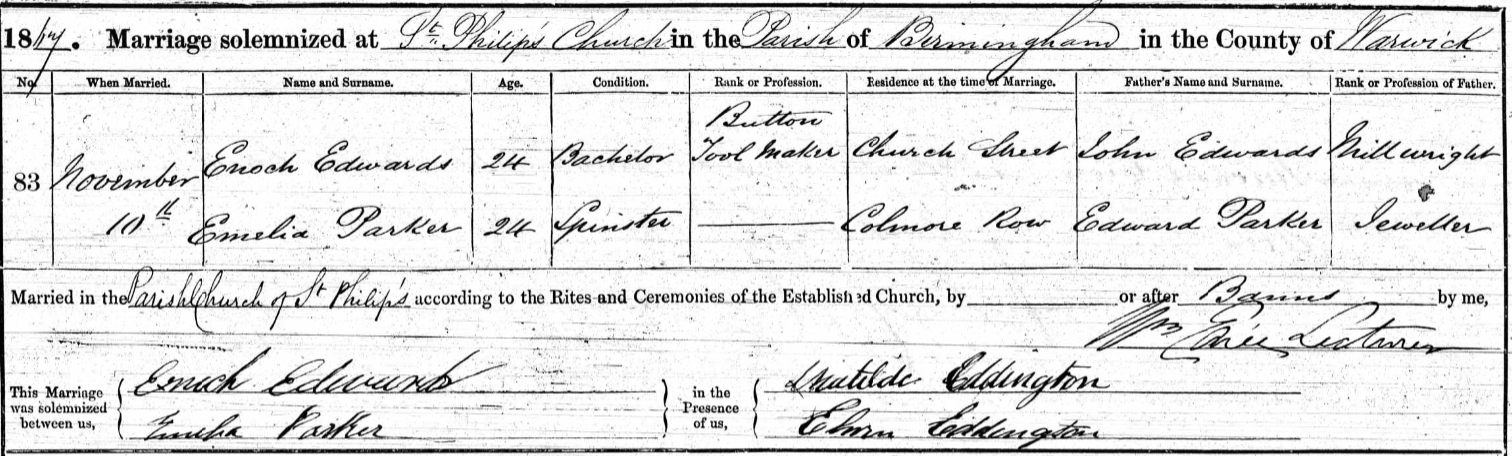
Four years later in 1871, Enoch was a publican living on Clifton Road. Son Enoch Henry was two years old, and Ralph Ernest was three months. Eliza Barton lived with them as a general servant.
By 1881 Enoch was back working as a button tool maker in Bournebrook, Birmingham. Enoch and Emilia by then had three more children, Amelia, Albert Parker (my great grandfather) and Ada.
Garnet Frederick Edwards was born in 1882. This is the first instance of the name Garnet in the family, and subsequently Garnet has been the middle name for the eldest son (my brother, father and grandfather all have Garnet as a middle name).
Enoch was the licensed victualler at the Pack Horse Hotel in 1991 at Kings Norton. By this time, only daughters Amelia and Ada and son Garnet are living at home.
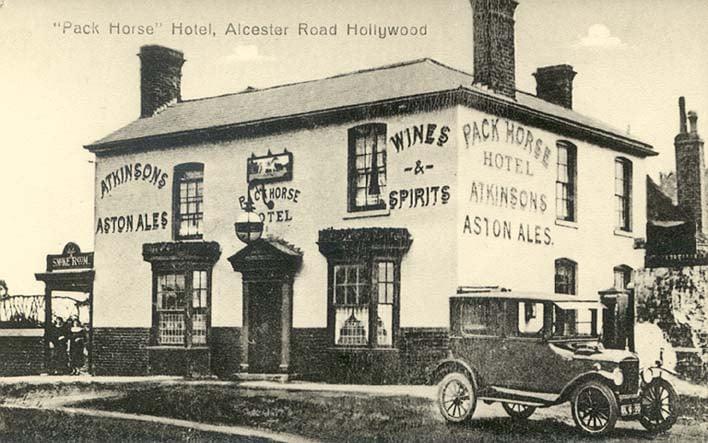
Additional information from my fathers cousin, Paul Weaver:
“Enoch refused to allow his son Albert Parker to go to King Edwards School in Birmingham, where he had been awarded a place. Instead, in October 1890 he made Albert Parker Edwards take an apprenticeship with a pawnboker in Tipton.
Towards the end of the 19th century Enoch kept The Pack Horse in Alcester Road, Hollywood, where a twist was 1d an ounce, and beer was 2d a pint. The children had to get up early to get breakfast at 6 o’clock for the hay and straw men on their way to the Birmingham hay and straw market. Enoch is listed as a member of “The Kingswood & Pack Horse Association for the Prosecution of Offenders”, a kind of early Neighbourhood Watch, dated 25 October 1890.
The Edwards family later moved to Redditch where they kept The Rifleman Inn at 35 Park Road. They must have left the Pack Horse by 1895 as another publican was in place by then.”Emelia his wife died in 1895 of consumption at the Rifleman Inn in Redditch, Worcestershire, and in 1897 Enoch married Florence Ethel Hedges in Aston. Enoch was 56 and Florence was just 21 years old.
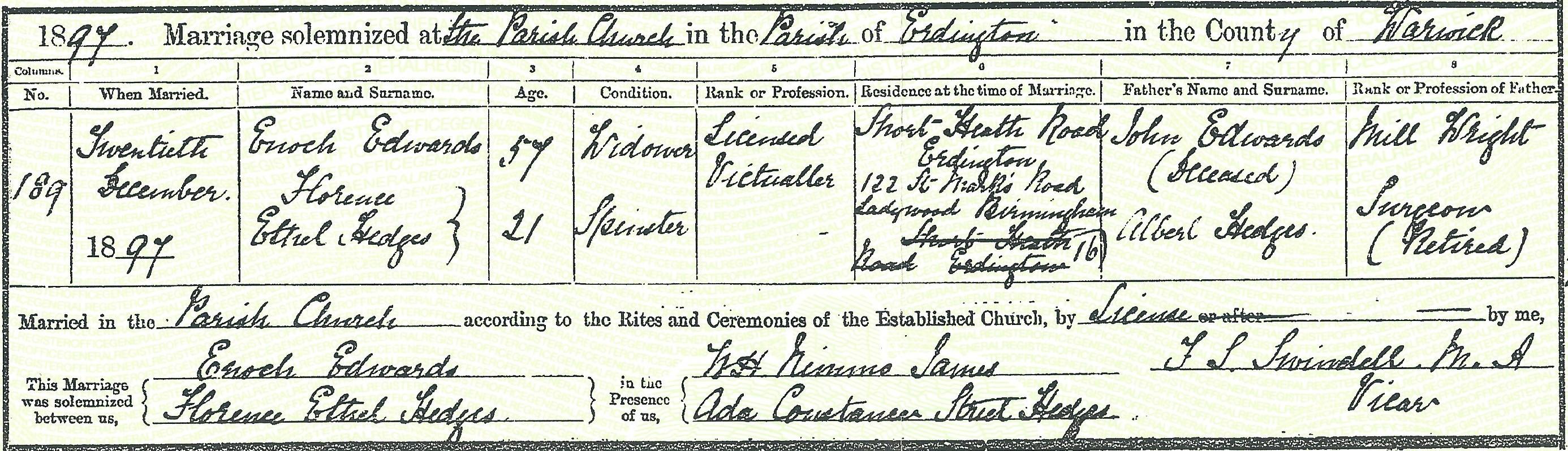
The following year in 1898 their daughter Muriel Constance Freda Edwards was born in Deritend, Warwickshire.
In 1901 Enoch, (Andrew on the census), publican, Florence and Muriel were living in Dudley. It was hard to find where he went after this.From Paul Weaver:
“Family accounts have it that Enoch EDWARDS fell out with all his family, and at about the age of 60, he left all behind and emigrated to the U.S.A. Enoch was described as being an active man, and it is believed that he had another family when he settled in the U.S.A. Esmor STOKES has it that a postcard was received by the family from Enoch at Niagara Falls.
On 11 June 1902 Harry Wright (the local postmaster responsible in those days for licensing) brought an Enoch EDWARDS to the Bedfordshire Petty Sessions in Biggleswade regarding “Hole in the Wall”, believed to refer to the now defunct “Hole in the Wall” public house at 76 Shortmead Street, Biggleswade with Enoch being granted “temporary authority”. On 9 July 1902 the transfer was granted. A year later in the 1903 edition of Kelly’s Directory of Bedfordshire, Hunts and Northamptonshire there is an Enoch EDWARDS running the Wheatsheaf Public House, Church Street, St. Neots, Huntingdonshire which is 14 miles south of Biggleswade.”
It seems that Enoch and his new family moved away from the midlands in the early 1900s, but again the trail went cold.
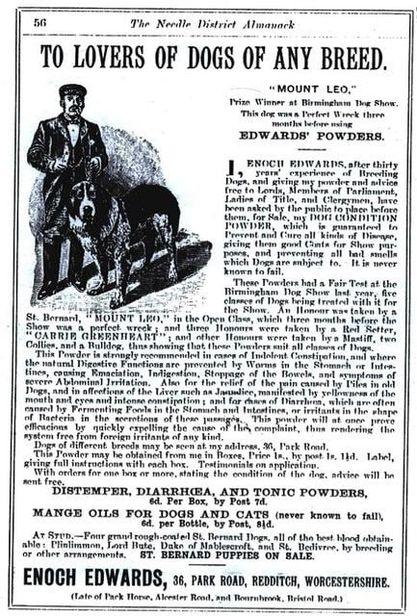
When I started doing the genealogy research, I joined a local facebook group for Redditch in Worcestershire. Enoch’s son Albert Parker Edwards (my great grandfather) spent most of his life there. I asked in the group about Enoch, and someone posted an illustrated advertisement for Enoch’s dog powders. Enoch was a well known breeder/keeper of St Bernards and is cited in a book naming individuals key to the recovery/establishment of ‘mastiff’ size dog breeds.
We had not known that Enoch was a breeder of champion St Bernard dogs!
Once I knew about the St Bernard dogs and the names Mount Leo and Plinlimmon via the newspaper adverts, I did an internet search on Enoch Edwards in conjunction with these dogs.
Enoch’s St Bernard dog “Mount Leo” was bred from the famous Plinlimmon, “the Emperor of Saint Bernards”. He was reported to have sent two puppies to Omaha and one of his stud dogs to America for a season, and in 1897 Enoch made the news for selling a St Bernard to someone in New York for £200. Plinlimmon, bred by Thomas Hall, was born in Liverpool, England on June 29, 1883. He won numerous dog shows throughout Europe in 1884, and in 1885, he was named Best Saint Bernard.
In the Birmingham Mail on 14th June 1890:
“Mr E Edwards, of Bournebrook, has been well to the fore with his dogs of late. He has gained nine honours during the past fortnight, including a first at the Pontypridd show with a St Bernard dog, The Speaker, a son of Plinlimmon.”
In the Alcester Chronicle on Saturday 05 June 1897:
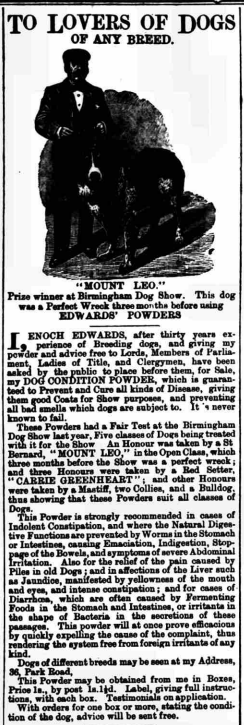
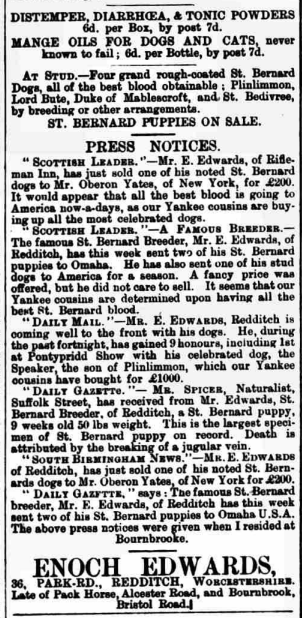
It was discovered that Enoch, Florence and Muriel moved to Canada, not USA as the family had assumed. The 1911 census for Montreal St Jaqcues, Quebec, stated that Enoch, (Florence) Ethel, and (Muriel) Frida had emigrated in 1906. Enoch’s occupation was machinist in 1911. The census transcription is not very good. Edwards was transcribed as Edmand, but the dates of birth for all three are correct. Birthplace is correct ~ A for Anglitan (the census is in French) but race or tribe is also an A but the transcribers have put African black! Enoch by this time was 71 years old, his wife 33 and daughter 11.
Additional information from Paul Weaver:
“In 1906 he and his new family travelled to Canada with Enoch travelling first and Ethel and Frida joined him in Quebec on 25 June 1906 on board the ‘Canada’ from Liverpool.
Their immigration record suggests that they were planning to travel to Winnipeg, but five years later in 1911, Enoch, Florence Ethel and Frida were still living in St James, Montreal. Enoch was employed as a machinist by Canadian Government Railways working 50 hours. It is the 1911 census record that confirms his birth as November 1840. It also states that Enoch could neither read nor write but managed to earn $500 in 1910 for activity other than his main profession, although this may be referring to his innkeeping business interests.
By 1921 Florence and Muriel Frida are living in Langford, Neepawa, Manitoba with Peter FUCHS, an Ontarian farmer of German descent who Florence had married on 24 Jul 1913 implying that Enoch died sometime in 1911/12, although no record has been found.”The extra $500 in earnings was perhaps related to the St Bernard dogs. Enoch signed his name on the register on his marriage to Emelia, and I think it’s very unlikely that he could neither read nor write, as stated above.
However, it may not be Enoch’s wife Florence Ethel who married Peter Fuchs. A Florence Emma Edwards married Peter Fuchs, and on the 1921 census in Neepawa her daugther Muriel Elizabeth Edwards, born in 1902, lives with them. Quite a coincidence, two Florence and Muriel Edwards in Neepawa at the time. Muriel Elizabeth Edwards married and had two children but died at the age of 23 in 1925. Her mother Florence was living with the widowed husband and the two children on the 1931 census in Neepawa. As there was no other daughter on the 1911 census with Enoch, Florence and Muriel in Montreal, it must be a different Florence and daughter. We don’t know, though, why Muriel Constance Freda married in Neepawa.
Indeed, Florence was not a widow in 1913. Enoch died in 1924 in Montreal, aged 84. Neither Enoch, Florence or their daughter has been found yet on the 1921 census. The search is not easy, as Enoch sometimes used the name Andrew, Florence used her middle name Ethel, and daughter Muriel used Freda, Valerie (the name she added when she married in Neepawa), and died as Marcheta. The only name she NEVER used was Constance!
A Canadian genealogist living in Montreal phoned the cemetery where Enoch was buried. She said “Enoch Edwards who died on Feb 27 1924 is not buried in the Mount Royal cemetery, he was only cremated there on March 4, 1924. There are no burial records but he died of an abcess and his body was sent to the cemetery for cremation from the Royal Victoria Hospital.”
1924 Obituary for Enoch Edwards:
Cimetière Mont-Royal Outremont, Montreal Region, Quebec, Canada
The Montreal Star 29 Feb 1924, Fri · Page 31

Muriel Constance Freda Valerie Edwards married Arthur Frederick Morris on 24 Oct 1925 in Neepawa, Manitoba. (She appears to have added the name Valerie when she married.)
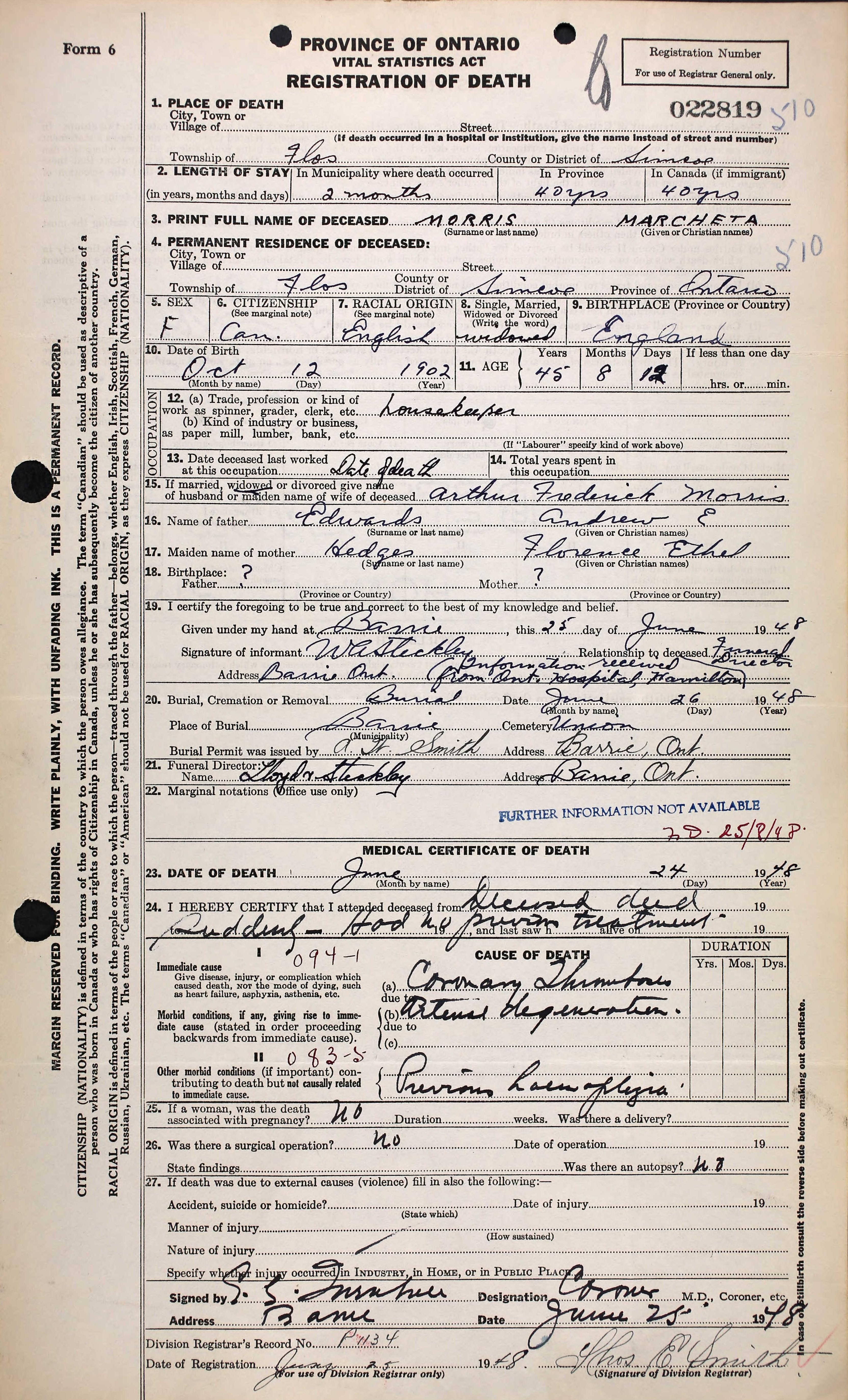
Unexpectedly a death certificate appeared for Muriel via the hints on the ancestry website. Her name was “Marcheta Morris” on this document, however it also states that she was the widow of Arthur Frederick Morris and daughter of Andrew E Edwards and Florence Ethel Hedges. She died suddenly in June 1948 in Flos, Simcoe, Ontario of a coronary thrombosis, where she was living as a housekeeper.
 May 12, 2023 at 1:08 pm #7233
In reply to: Washed off the sea ~ Creative larks
His shoes were much too big but it was better than nothing now that the weather had turned and there was frost on the cobbled streets. He’d stolen them, of course he had, he had no money for shoes. The shoes had been caked in mud and left on a doorstep. His feet were blue with cold, what was he to do? He grabbed them and ran as fast as he could until he felt he could safely stop and put them on his feet. He was only twelve years old or thereabouts (who knew for sure?) and stunted from lack of food, and the shoes were an adult size. But he was happy as a lark to have something to sheild his feet from the frozen street. Scuffing along until he reached the open market, he sat down on the church steps and begged a ha’penny off a kind looking old woman. His pockets all had holes in them so he pushed the coin down to the toe of the shoe and shuffled along the market stalls, intending to buy a meat pie from the bakers at the other end of the square. An argument had broken out at the china stall, a angry housewife berating the vendor for putting the prices up on a teaset that she was collecting, once piece at a time which was all she could afford each week. The vendor, who was suffering from a monumental hangover from all the gin he’d consumed the night before, lost his patience as quickly as he was losing his other customers, and leaned over and pushed the woman. She lashed back at him, knocking a rickety old mans pipe out of his hand. Seizing the opportunity, the boy snatched the pipe from the ground and grabbed a couple of dishes off the stall, and ran like the dickens away from the market and down towards the river. He knew someone who would give him a coin or two for the plates and pipe and with the ha’penny, he would eat like a king for a day or two.
“Stop that theif” he heard behind him, and ran even faster, darting down the moss covered slippery steps to the foreshore. But alas, the shoes that were too big for him made him fall. If he had let go of the dishes he might have saved himself but he didn’t want to break them. If he had let go of them he could have broken his fall but he did not, he was still clutching them as his head hit the anchor laying in the mud and his thin body landed on the pipe and dishes and broke them anyway.
It was clear that he was dead, but nobody was interested. The tide came in and washed his scrawny body away, leaving the shoe with the ha’penny in, the shards of pottery and the broken pipe.
March 29, 2023 at 3:05 pm #7220In reply to: The Chronicles of the Flying Fish Inn
At 10:30am, the air is buzzing with excitement. As the first race is going to start soon. There has been no signs of a dust storm and everyone seem to have forgotten about it. The participants are cheering and getting ready for the race while groups of tourists are wandering about, taking pictures of the teams and the folks in costume. People came from as far as Mexico, Italy and Macedonia.
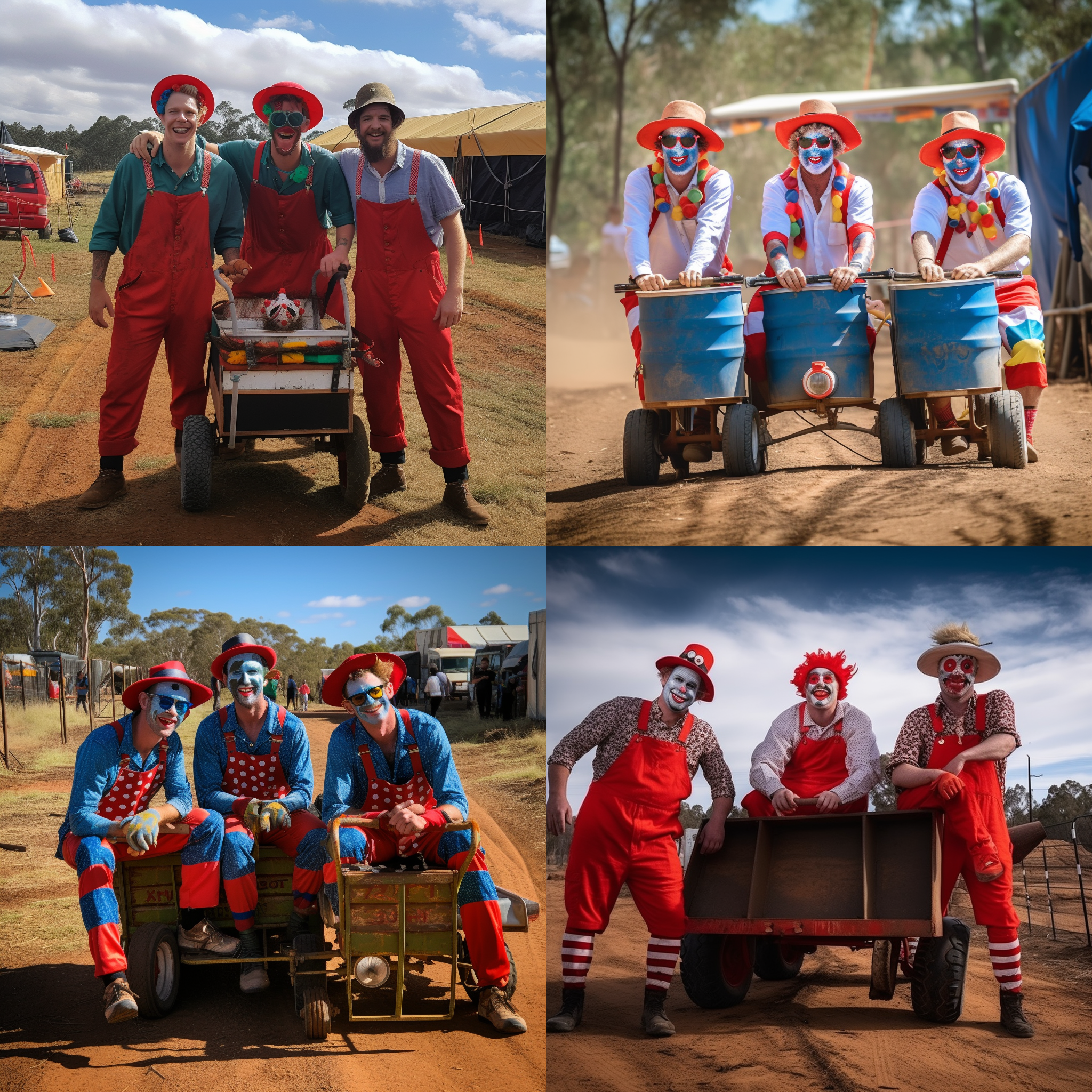

Because of the harsh conditions, miners were usually males back in the days. But there have always been teams at our little town’s festival ready to include women and children because they were usually lighter and it was easier to push the carts around on the tracks. Since a few years, there even have been full female teams, and they were pretty good too.
Prune arrives with her new fancy reflex camera she got at her last birthday. She wants to take our picture in front of our cart. At Joe and Callum’s surprise, I try to talk her into joining our team and be part of the fun. I get out of the cart a spare hat and a wig I had prepared for her, but she says today she’s doing a reportage about the festival. I know she wants to be on the lookout for our father, and keep an eye on the Inn’s guests. She told me yesterday something was off with that Liana Parker who kept snooping around and asking questions to townsfolk about Howard and Fred. And, she heard the two other girls talking about Liana being a Finli and a nun.
I frown. I haven’t told the boys anything about my father or suspicious guests with false names. Prune knows I’m not too keen about letting my little sister following people around on her own. I told her something could go wrong, but she brushed it aside explaining it was the perfect occasion because people wouldn’t pay attention to someone taking random pictures during a festival. She’s got a point, but I’m still her big brother. I had to try.
She asks us to strike a pose in front of our cart and tells a few jokes. When we laugh she takes a picture of our all male team, I’m the one in the center, Callum’s on the left and Joe on the right. I’m glad despite all the concern, I look like I’m having fun.
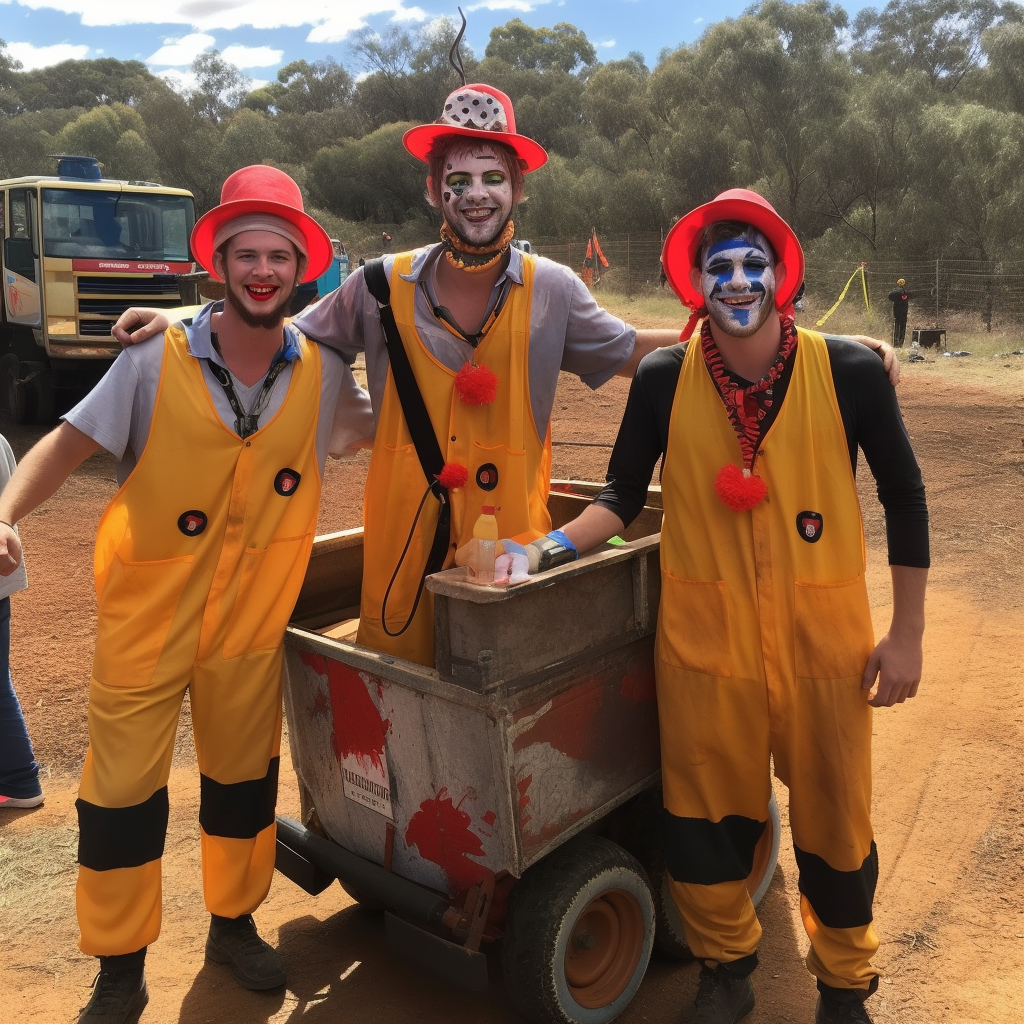
Checking her camera screen, Prune says: “You guys remind me of the Clockwork Orange with your hats, but more colourful and less creepy.”
Callum and Joe look at each other, each having one eyebrow raised. I snort. I’m sure they don’t understand the reference.
“You’re ok,” she tells them. “It means people will notice and remember you.”
“Spread the word! We’ll crush them all!” Callum shouts.
Prune looks at me. “You’re still frowning,” she says. “It’ll be fine.”
“Ok,” I say. “But at least take the hat. You can’t dress as yourself during a Cart and Lager festival, or you’ll pop out of the crowd.”
She raises her eyes to the sky and sighs. Then, she takes the orange hat from my hands and puts it on her head.
“There, happy? Consider that an endorsement of your team,” she says with a wink.
Joe and Callum hoot and whistle loudly. “Miss serious is running wild! Anything can happen today.”
We all laugh. Their enthusiasm is contagious.
“Hey! You’re mother is about to talk,” says Joe to Callum. “She’s hot.”
“Don’t speak about my mother like that.”
The mayor has climbed on the central stage and she’s talking with an all dressed up woman with a big hat that makes her look like the Queen of England. She sure seems out of place in our little town’s festival. Flanked by two bodyguards in black, I guess it’s Botty Banworth who’s provided that expensive sound system the mayor’s trying to use. “One, two, three… Is it working? Yes. Ok. All the participants are expected to bring their cart to the depart lane. We’re about to start. In the meantime let me introduce Miss Banworth who’s been very generous and allowed our festival to get to another level. She’s going to help us rehabilitate the abandoned mines and open a museum.”
A roar from the crowd. The woman’s lips are so thin and red that the smile she puts on her face looks like it’s just been made with a razor blade. I shiver. She’s the Queen of England turned by a vampire.
Someone bumps into my back and knocks the air out of my lungs. I almost fall on my sister.
“Hey! Watch out!” says Callum.
I catch my breath and look up. It’s Betsy, dressed as a miner too, with extra sequins and gummy stars on her dungarees. She looks confused and mutters some excuses but doesn’t stop. She walks as if she has had a few lagers already.
“Hey, Betsy,” calls Prune. “You seem like you just saw a ghost.”
“Someone… near the mines… It can’t be…” says Betsy.
“Who did you see near the mines?” shouts my sister.
With the noise around us, I almost didn’t hear Betsy’s answer.
“Fred… Howard… It can’t be. I need Idle’s cakes,” she says before disappearing in the crowd.
I look at Prune. I see in her eyes we’re thinking the same thing. Dad’s really here. We nod at the same time and I move my lips: “Be careful.” She nods.
“You three, win,” she tells us before leaving.
“You heard her?” I asked Callum and Joe. “Let’s move our limo.” As we approach the tracks with the other participants, a gush of wind almost knock my hat off my head. There is some commotion coming from the central stage. A guy climbed up and is shouting something that I don’t understand, pointing at the sky behind us. When I look back like everyone, tourists and teams, I understand.
“Dust! Dust’s coming!”
And right from the direction of the abandoned mines. Dad what did you get yourself into?
It’s 10:55am and I’m pretty sure we’ll have to put off the race.
March 15, 2023 at 4:27 pm #7167In reply to: The Chronicles of the Flying Fish Inn

I can’t believe the cart race is tomorrow. Joe, Callum and I have worked so hard this year to incorporate solar panels and wind propellers to our little bijou. The cart race rules are clear, apart from thermal engines and fossil fuels, your imagination is your limit. Our only worry was that dust storm. We feared the Mayor would cancelled the race, but I think she won’t. She desperately needs the money.
Some folks thought to revive the festival as a prank fifteen years ago, but people had so much fun the council agreed to renew it the next year, and the year after that it was made official. It’s been a small town festival for ten years, and would have stayed like that if it hadn’t been for a bus full of Italian tourist on their way to Uluru. It broke down as they drove through main street – I remember it because I just started my job at the garage and couldn’t attend the race. Those Italians, a bunch of crazy people, posted videos of the race on the Internet and it went viral, propelling our ghost town to worldwide fame. We thought it would subside but some folks created a FishBone group and we’re almost as famous as Punxsutawney once a year. We even have a team of old ladies from Tikfijikoo Island.
All that attention attracted sponsors, mostly booze brands. But this year we’ve got a special one from Sidney. Aunt Idle who’s got a special friend at the city council told us the council members couldn’t believe it when the tart called and offered money. Botty Banworth, head of a big news company made famous by her blog: Prudish Beauty.
Aunt Idle, who heard it from one of her special friends at the town’s council, started a protest because she thought the Banworth tart would force the council to ban all recreational substances. But I have it from Callum, who’s the Mayor’s son, that the tart is not interested in making us an example of sobriety. She’s asked to lease the land where the old mines are and the Mayor haven’t told anybody about it.
After Callum told me about the lease, it reminded me about the riddle.
A mine, a tile, dust piled high,
Together they rest, yet always outside.
One misstep, and you’ll surely fall,
Into the depths, where danger lies all.Then something else happened. Another woman stopped at the gas station earlier today. I recognised one of the Inn’s guests, the one with the Mercedes. With her mirror sunglasses and her headscarf wrapped around her hair, she already looked suspicious. But as it happened, she asked me about the mines and how to go there. For abandoned mines, they sure attract a lot of attention.
It reminded me of something. So after work, I went to the Inn and asked the twins permission to go up to their lair. When dad disappeared, Mater went mad, she threw everything to the garbage. The twins waited til she got back inside and moved everything back in the attic and called it their lair. It looks just like dad’s old office with the boxes full of papers, the mahogany desk and even his typewriter. For whatever reason, Mater just ignores it and if she needs something from the attic, she asks someone else to get it, pretexting she can’t climb all those stairs.

I was right. Dad left the old manuscript he was working on at the time. A sci-fi novel about strange occurrences in an abandoned mine that looked just like the one outside of town. Prune said it’s badly written, and it doesn’t even have a title. But I remember having nightmares after reading some of the passages.
March 14, 2023 at 12:24 am #7165In reply to: The Chronicles of the Flying Fish Inn
Mater having a moan:
It’s a funny old world.
At my age, you’d think I’d be able to put my feet up and watch the world go by for a bit, wouldn’t you? God knows, don’t I deserve it? Truth is, I’m still holding things together here. With a bit of practical help from Finly of course, who we all agree is a trouper even if she is a Kiwi.
Sometimes, it occurs to me I should just let go and see where the dice lands … what will be will be … que sera sera … that sort of thing. Place will fall apart if I do though.
The kids don’t really care. And why would they at their age? Idle’s all talk about how she does this and that but the evidence is sadly lacking … she’s making a fool of herself with one of the new fellas, all goggle-eyed and tarting herself up more than ever. It’s embarrassing but I’m done telling her.
Since we got on that bnb site the bookings have tripled. Idle says I’ve got to be pleasant to people or we’ll get a bad review. Did my head in being pleasant to that toffee-nose one who won’t take her sunglasses off. That’s just plain bad manners! Another thing, she calls herself Liana but it sure takes her a while to answer to the name. Finly says she’s noticed the same. We’re keeping a close eye on that one.
And now sounds like the cart race in a dust storm is going ahead. I tell you right now, Finly is not going to be pleased about that.
March 12, 2023 at 10:19 pm #7164In reply to: Orbs of Madjourneys
Perhaps it was the approaching storm that was the cause of the annoying inability to fall asleep, and when Zara had had enough of the bizarre juxtapositions of the hypnagogic images flashing before her closed eyelids, she gave up trying and switched the bedside light on. Often she felt restless before a storm, not really a fear of danger but an alertness to the power and the agitation of it. A bit like having one strong coffee too many and wishing you hadn’t.
Zara padded over to the door barefoot, and opened it a crack. Silence, and dark but for a night light in the hall and a distant light on the porch. Quietly Zara made her way to the verandah. The night air washed over her face and made her smile and breathe deeply. She felt her self relaxing, and reminded herself that she was supposed to be relaxing, it was a holiday after all. There was something in the air though, something she couldn’t nail down. A restlessness in the air. It was as if something wanted to come to light, come out in the open, and yet an approaching dust storm threatened to obscure even the most obvious of things.
“May as well sit up and have a glass of wine when it’s like this,” Aunt Idle said when Zara had finished her deep breathing relaxing mental turmoil exercises and had eventually turned to sit down at one of the tables. “Fetch a glass over there and come and join me. Ever been in a dust storm in a lager and cart race?”
Zara welcomed the distraction and smiled encouragingly and said that she had not.
“Oh, I could tell you a tale or two about dust storms and cart races,” Aunt Idle said, and then drifted off into silent reverie. Zara refilled their glasses with wine. “Do tell,” she said, “Tell me a tale about dust storms and cart races.”
March 8, 2023 at 10:25 am #6791In reply to: The Jorid’s Travels – 14 years on
The trio entered the medical bay, Barney proudly perched on Salomé’s shoulder. Léonard was sitting on the edge of his bed in a blue hospital dress, looking around him, confused. He turned his head toward them and squinted.
“Georges?” he asked. “Salomé? Where…” He winced and slapped his forehead.
“Are you ok?” asked Salomé, moving toward him.
Léonard stretched his arm in front of him and Salomé felt her body pushed backward. Barney squeaked and the wave subsided.
“I’m ok,” Léonard said a few seconds later, breathing with difficulties, “just a headache. Where…”
Georges exchanged a look and a brief telepathic communication with Salomé. He had felt the wave too, and he was also feeling some kind of shield around his mind. It was different from all they had encountered before. They might have to fall back to the old ways.
“We’re back on Duane,” he said with a cheerful tone, hoping it would help their friend relax. Léonard had explored this system extensively, and it was there he had introduced Georges and Salomé to the reality of multidimensional travels and Elemental magic. It was a place full of memories and Georges was looking closely at his friend’s face and at the same time prodding his mind. But Léonard’s face didn’t show any reaction and his mind appeared empty.
“Actually, way back… in time,” Georges continued. “Jorid’s navigation array was gravely disturbed by this little creature… where is Barney?”
A weak chirp came out of Salomé’s luscious raven black hair.
“Come on, Barney,” she said, trying to take him out. “Come meet our friend Léonard.”
The creature was trembling like a leaf and clinging to strands of her hair, clearly not wanting to leave his hiding place.
“I think he likes your shampoo,” said Georges with a smirk. “Well, we just found this little sand Rin on Jorid’s hull, and the little culprit is generating interferences in the Boodenbaum quantum field. So until we find a way to neutralise whatever he’s doing, we’re stuck.”
Léonard looked annoyed. He tried to stand up, but his legs wouldn’t support him and he fell back on the bed.
“Why did the Zathu put you in that sand egg on Bluhm’Oxl?” asked Salomé, trying not to sound too concerned.
Léonard opened his mouth and froze, looking surprised. He frowned.
“I don’t recall,” he said.
“What do you recall?”
“I recall… receiving a tip from an old friend.”
“Who?”
“…”
“Jorid, can you read us the message from his friend?” asked Georges with a smile, as if he had found a simple solution.
“I can’t access the data,” said the ship. “Léonard deleted it, and the backups before he left.”
Georges’ smile faded. He looked at Salomé. She was thinking the same thing he was thinking and nodded.
“Why don’t we let you have some rest, you’ll join us for lunch when you’re dressed up and ready.”
February 9, 2023 at 3:45 pm #6517In reply to: Orbs of Madjourneys
After Youssef retrieved his luggage in Alice Springs, he was swarmed with freelance tour guides trying to sell him trips. You would buy a ticket out of any one of them just to get rid of the others, he thought. With a few hungry growls, he managed to frighten most of them, with a touch of indifference he lost the rest. Except one. A short Indian looking man wearing a red cap and a moustache. He seemed to have an infinite talkative energy at his disposal, able to erode the strongest wills. The temperature was hotter than Youssef had expected, here it was the end of summer, and he was hungry. The man started to get on his nerves.
The list of tours was endless. Uluru, scenic bushwalking trails, beautiful gardens, a historical tour, a costumed historical tour, a few national parks, and even his cousins’ restaurant. He reminded Youssef of his own father, always offering guests (and especially his visiting kids) another fruit, a pastry, some coffee, chocolate ? You sure you don’t want any chocolate? If the man was tenacious, Youssef had had training with his father. But this man seemed to mistake silence and indifference for agreement. Did he really think Youssef was going to buy one of his tours ?
“The ghost town! You have to see Arltunga, said the man. An old mining ghost town, certainly an American like you like ghost towns. And buried treasure. Arltunga has buried treasure somewhere. You can find it. I know where to find a map.”
Youssef wondered if it was another one of the game’s fluke that his quest was apparently bleeding into his real life again. And if there was a map, why hasn’t the treasure been found already? He checked at the back of his mind for the presence of that crazy old lady. Nope, not there. He decided to refuse the call this time. He just wanted to get to that F…ing Fish Inn in Crowshollow and meet with his friends.
“NO, he growled, frightening a group of tourists passing by, but not the tour operator. No ghost town! We have plenty in America.” Thinking of the game and his last challenge for the previous quest, he said in desperation : “I just want to find a red scarf!” and he knew inside himself and many years attempting to resist his old man, that the short Indian man had won.
“If you want to find a red scarf, you go to Silk Road, said the man bobbing his head. My cousin’s shop, you find everything there only.”
Youssef sighed. He thought there were only two ways to take it. The first one was that he had fallen into a trap and try to find a way to get out of it. But it might be sticky and uncomfortable for everyone. So he decided it was the other way around and that it was part of the game. Why wouldn’t he use this as an opportunity for adventure. Wasn’t that what Xavier always said about roads less traveled ?
“Where is your cousin’s shop? he asked. And where’s that restaurant of your cousin’s? I’m starving.”
The little man smiled broadly.
“Same place. Two brothers. Shop next to restaurant in Todd Mall. You’re lucky! Follow me.”
February 7, 2023 at 2:18 pm #6505In reply to: The Chronicles of the Flying Fish Inn
I told Devan in no ambiguous terms to solve his own funny riddle.
I did try to make an effort, but that seemed a rather desperate way to catch our attention after not really caring about the family for so long.
It was good to see him though.With all the activity around the coming guests at the Inn, it’s easy getting lost in the wind of activities, like the motes of dust hiding in Dido’s hair.
The twins did a good effort though, with all the decorating and stuff. I was sincerely impressed. Been a long time since I’ve been impressed by them. Seems they may actually grow up fine. Who would have known really.Hormonal growth be damned, I’m feeling all sort of contradictory feelings about this.
Like, what about hearing about our funny father after all this time.
And Devan, who’d shut us all off, now back for a little make-over time… Or something else maybe. He doesn’t seem to realize the emotional landscape and baggage here. He’s a nice brother though.
It’s horrible. So much contradiction – I feel some rage on the surface, lots of… and underneath so much caring it’s painful.
So what happened to our father? Still alive? Quite possibly. I’ve had my suspicious when this strange guy posed as a friend to the twins on the social network some years back.
I was young when he left without a note; hadn’t started to write my journals yet, so my memories of him are very little. But I remember the chaos left after him; Mater wasn’t really the same after. I think she’s burned all pictures of him, and somehow pretends they never existed.
Idle plays it as if she doesn’t care, but I’m sure she does. She doesn’t want to let it be known, but she probably doesn’t want to hurt Mater more with this.God, what a family drama. Why would Devan want to unearth all of this now, at a moment we were all quiet and settled like a decent respectable family.
It was maybe just keeping up with appearances, and the veneer was thin to start with.
That’s in the middle of all this angst mixed with puberty that it hit me.
Acrostic. Or ἀκροστιχίς in Greek. First verse, or first letter.
My dad was a writer, so he liked word riddles. And the little sign was a pointer.
>A mine, a tile, dust piled high,
Together they rest, yet always outside.
One misstep, and you’ll surely fall,
Into the depths, where danger lies all.ATOI didn’t seem to make much sense, but I remembered how small “l” sometimes looked like a capital “I”.
Atoll was the clue I’m sure of it. Where to disappear if not to islands.
The letters at the end of the verses are spelling HELL. So it’s opposite.Basically, Atoll Paradise.
A little Gugu search with AI, and that was it. That was our father here, with a number to call.
Atoll Paradise
Boat rentals – Island tours
Copywriter, biographer
Call FRED @ (+679) 215-7644Now it’ll be fair if Devan is calling me crazy. We’ll have to call and check before saying anything to Idle or even Mater for now.
February 3, 2023 at 9:50 am #6494In reply to: Orbs of Madjourneys
Although not one to remember dreams very often, Zara awoke the next morning with vivid and colourful dream recall. She wondered if it was something to do with the dreamtime mural on the wall of her room. If this turned out to be the case, she considered painting some murals on her bedroom wall back at the Bungwalley Valley animal rescue centre when she got home.
Zara and Idle had hit it off immediately, chatting and laughing on the verandah after supper. Idle told her a bit about the local area and the mines. Despite Bert’s warnings, she wanted to see them. They were only an hour away from the inn.
When she retired to her room for the night, she looked on the internet for more information. The more she read online about the mines, the more intrigued she became.
“Interestingly there are no actual houses left from the original township. The common explanation is that a rumour spread that there was gold hidden in the walls of the houses and consequently they were knocked down by people believing there was ‘gold in them there walls”. Of course it was only a rumour. No gold was found.”
“Miners attracted to the area originally by the garnets, found alluvial and reef gold at Arltunga…”
Garnets! Zara recalled the story her friend had told her about finding a cursed garnet near a fort in St Augustine in Florida. Apparently there were a number of mines that one could visit:
“the MacDonnell Range Reef Mine, the Christmas Reef Mine, the Golden Chance Mine, the Joker Mine and the Great Western Mine all of which are worth a visit.”
Zara imagined Xavier making a crack about the Joker Mine, and wondered why it had been named that.
“The whole area is preserved as though the inhabitants simply walked away from it only yesterday. The curious visitor who walks just a little way off the paths will see signs of previous habitation. Old pieces of meat safes, pieces of rusted wire, rusted cans, and pieces of broken glass litter the ground. There is nothing of great importance but each little shard is reminder of the people who once lived and worked here.”
I wonder if Bert will take me there, Zara wondered. If not, maybe one of the others can pick up a hire car when they arrive at Alice. Might even be best not to tell anyone at the inn where they were going. Funny coincidence the nearest town was called Alice ~ it was already beginning to seem like some kind of rabbit hole she was falling into.
Undecided whether to play some more of the game which had ended abruptly upon encountering the blue robed vendor, Zara decided not to and picked up the book on Dreamtime that was on the bedside table.
“Some of the ancestors or spirit beings inhabiting the Dreamtime become one with parts of the landscape, such as rocks or trees…” Flicking through the book, she read random excerpts. “A mythic map of Australia would show thousands of characters, varying in their importance, but all in some way connected with the land. Some emerged at their specific sites and stayed spiritually in that vicinity. Others came from somewhere else and went somewhere else. Many were shape changing, transformed from or into human beings or natural species, or into natural features such as rocks but all left something of their spiritual essence at the places noted in their stories….”
Thousands of characters. Zara smiled sleepily, recalling the many stories she and her friends had written together over the years.
“People come and go but the Land, and stories about the Land, stay. This is a wisdom that takes lifetimes of listening, observing and experiencing … There is a deep understanding of human nature and the environment… sites hold ‘feelings’ which cannot be described in physical terms… subtle feelings that resonate through the bodies of these people… It is only when talking and being with these people that these ‘feelings’ can truly be appreciated. This is… the intangible reality of these people…..”
With such strong ancestral connections to the land, Zara couldn’t help but wonder what the aboriginal people felt about all the mines. If one of their ancestors had shape changed into rocks, and then some foreignors came along and hacked and blasted their way through, what would they think of that?
“….many Aboriginal groups widely distributed across the Australian continent all appeared to share variations of a single (common) myth telling of an unusually powerful, often creative, often dangerous snake or serpent of sometimes enormous size closely associated with the rainbows, rain, rivers, and deep waterholes…..”
She drifted off to sleep thinking of water holes in red rocky gorges, the book laying open in her hand.
When she awoke the next morning with the slatted morning sun shining through the venetian blinds, the dream image of the water hole was bright and clear in her minds eye. But what was that strange character from the game doing in her dream?
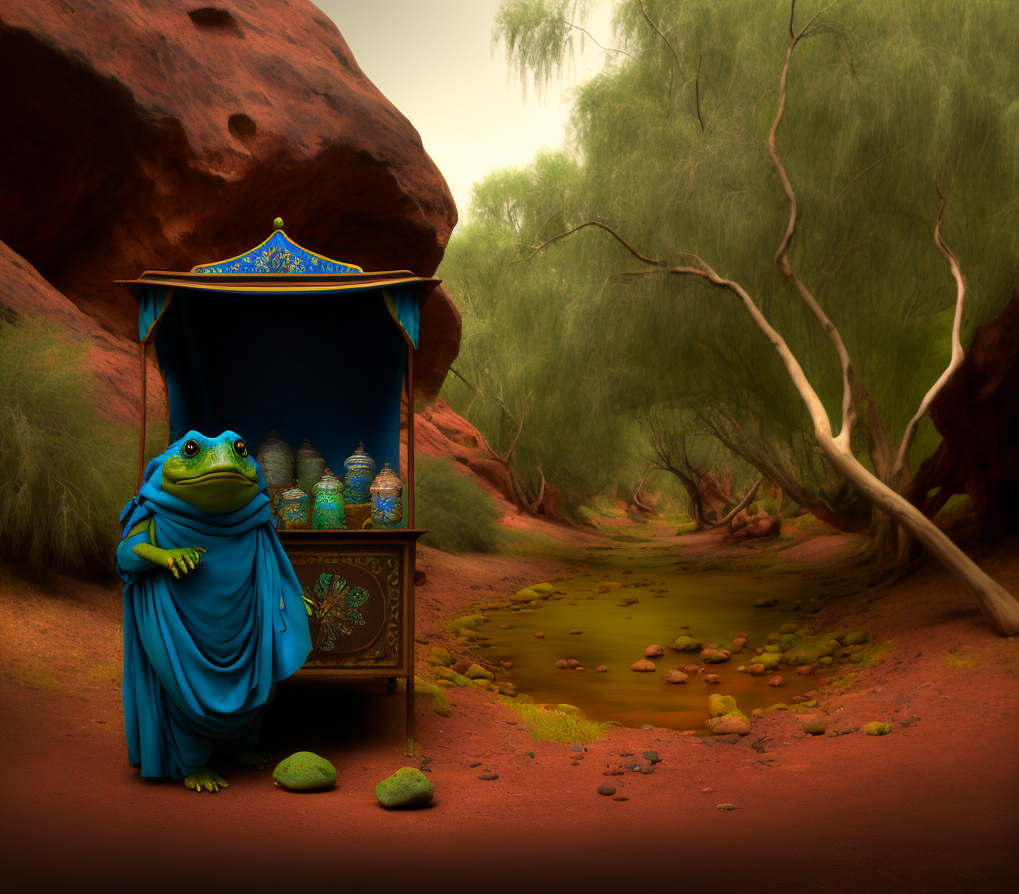
She closed her eyes, remembering more of the strange dream. Deeply orange red boulders and rocky outcrops, shivering gum trees, and green pools ~ it was coming back to her now, that creature in the blue robes had appeared more than once. In one scene he appeared with a blue diamond lantern with what looked like a compass inside.
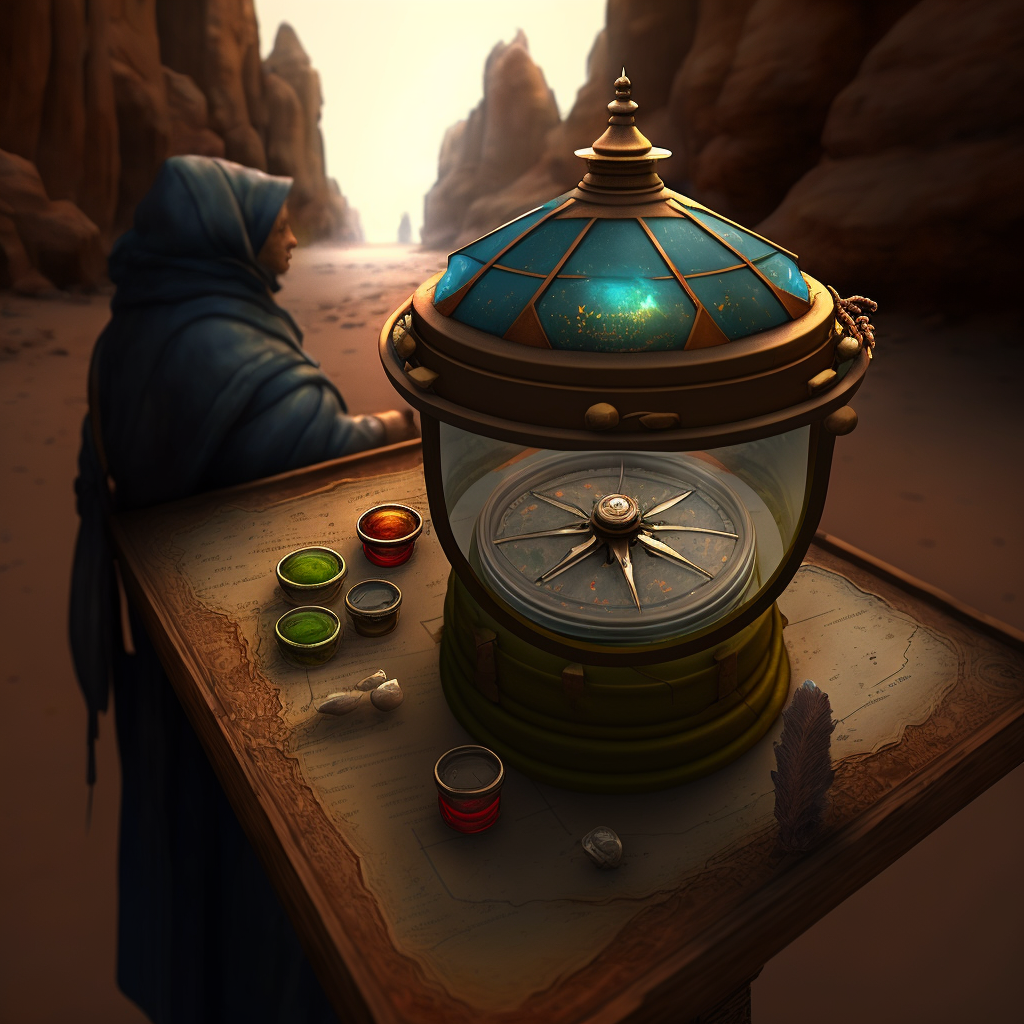
I’ll ask about the hiking trails today, Zara decided, and go for a walk in that gorge I read about yesterday. Bert said there were good hiking trails. You came here early so you could play the game, she reminded herself.
“It’s all a game,” she heard the parrot outside her window.
“I’d forgotten about the bloody parrot!” Zara said under her breath. “Pretty Girl!” she said, opening the blinds. “We’re going out for a walk today.”
February 1, 2023 at 12:57 pm #6487In reply to: The Chronicles of the Flying Fish Inn
I’ve always felt like the odd one out in my family. Growing up at the Flying Fish Inn, I’ve always felt like I was on the outside looking in. My mother left when I was young, and my father disappeared not long after. I’ve always felt like I was the only one who didn’t fit in with the craziness of my family.
I’ve always tried to keep my distance with the others. I didn’t want to get too involved, take sides about petty things, like growing weed in the backyard, making psychedelic termite honey, or trying to influence the twins to buy proper clothes. But truth is, you can’t get too far away. Town’s too small. Family always get back to you, and manage to get you involved in their shit, one way or another, even if you don’t say anything. That’s how it works. They don’t need my participation to use me as an argument.
So I stopped paying attention, almost stopped caring. I lived my life working at the gas station, and drinking beers with my buddies Joe and Jasper, living in a semi-comatose state. I learned that word today when I came bringing little honey buns to mater. I know she secretly likes them, even if she pretend she doesn’t in front of Idle. But I can see the breadcrumbs on her cardigan when I come say hi at the end of the day. This morning, Idle was rocking in her favourite chair on the porch, looking at the clouds behind her mirrored sunglasses. Prune was talking to her, I saw she was angry because of the contraction of the muscles of her jaw and her eyes were darker than usual. She was saying to Idle that she was always in a semi-comatose state and doing nothing useful for the Inn when we had a bunch of tourists arriving. And something about the twins redecorating the rooms without proper design knowledge. Idle did what she usually does. She ignored the comment and kept on looking at the clouds. I’m not even sure she heard or understood that word that Prune said. Semi-comatose. It sounds like glucose. That’s how I’m spending my life between the Inn, the gas station and my buddies.
But things changed today when I got back to my apartment for lunch. You can call it a hunch or a coincidence. But as we talked with Joe about that time when my dad left, making me think we were doing hide and seek, and he left me a note saying he would be back someday. I don’t know why I felt the need to go search that note afterwards. So I went back to the apartment and opened the mailbox. Among the bills and ads, I found a postcard with a few words written on the image and nothing except my address on the back. I knew it was from my dad.
It was not signed or anything, but still I was sure it was his handwriting. I would recognise it anywhere. I went and took the shoebox I keep hidden on top of the kitchen closet, because I saw people do that in movies. That’s not very original, I know, but I’m not too bright either. I opened the box and took the note my dad left me when he disappeared.
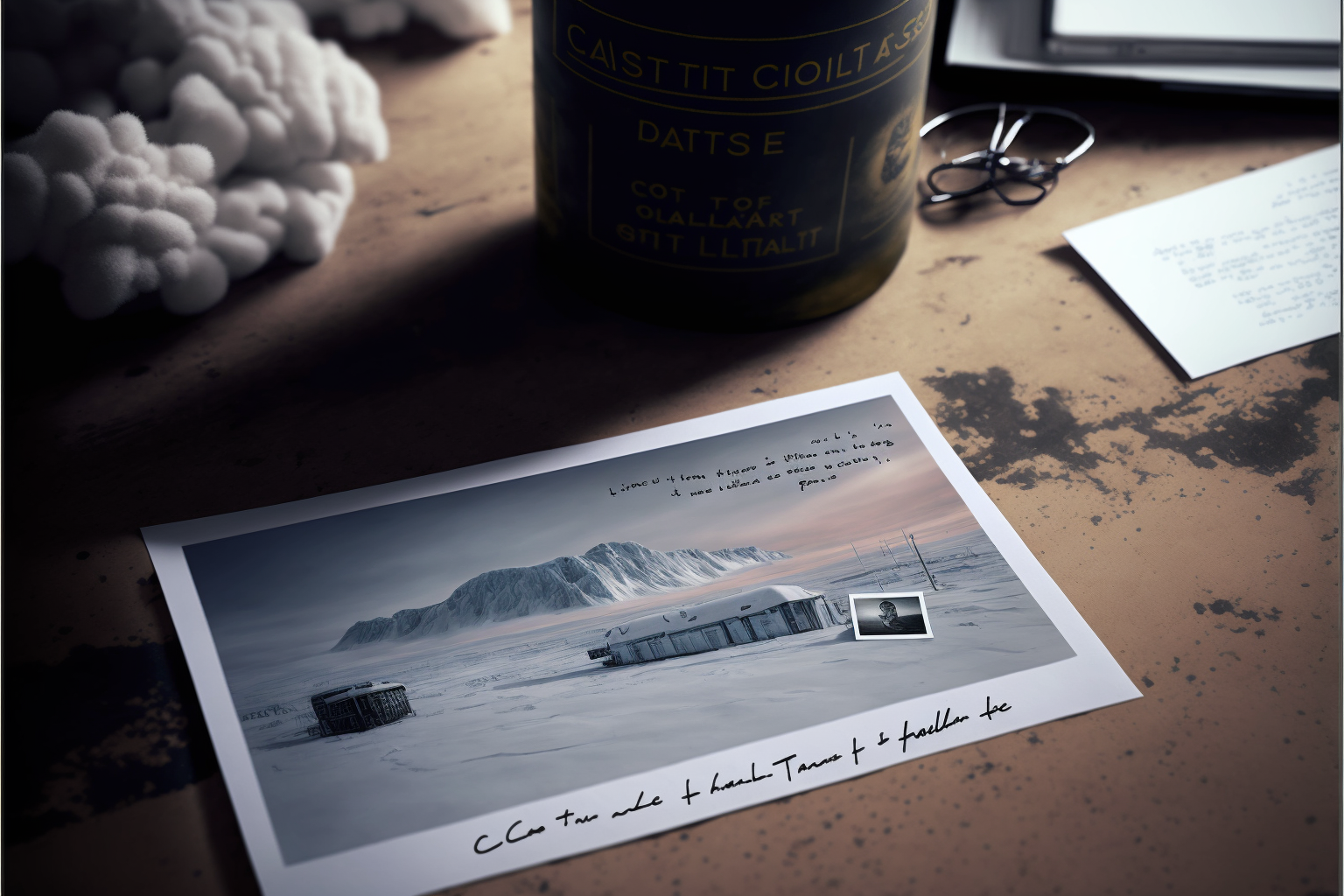 I put the card on the desk near the note. The handwritings matched. I felt so excited, and confused.
A few words at the bottom of the card said : “Memories from the coldest place on Earth…”
Why would dad go to such a place to send me a postcard after all those years ? Just to say that.
That’s when I recalled what Prune had told me once as we were watching a detective movie : “Read everything with care and always double check your information.”
On the back, it said that the image was from a scientific station in Antartica, but the stamp indicated it had been posted from a floating post office in the North Pole. I turned the card and looked at the text again. Above the station, a few words were written that sounded like a riddle.
> A mine, a tile, dust piled high,
Together they rest, yet always outside.
One misstep, and you’ll surely fall,
Into the depths, where danger lies all.It sure sounds like a warning. But I’m not too good with riddles. No need to worry Mater about that, in case of false hope and all that. Idle ? Don’t even think about it. She won’t believe me when I say it’s from dad. She never does believe me. And she’ll keep playing with the words trying to find her answer in the shape of smoke. The twins, they are a riddle on their own.
No. It’s Prune’s help I need.
February 1, 2023 at 9:52 am #6484In reply to: Orbs of Madjourneys
Will be at Flying Fish this evening, Hope to see you all soon!
 Congrats, Xavier!
Zara sent a message to Yasmin, Youssef and Xavier just before boarding the plane. Thankfully the plane wasn’t full and the seats next to her were unoccupied. She had a couple of hours to play the game before landing at Alice Springs.
Zara had found the tile in the entry level and had further instructions for the next stage of the game:
Zara had come across a strange and ancient looking mine. It was clear that it had been abandoned for many years, but there were still signs of activity. The entrance was blocked by a large pile of rocks, but she could see a faint light coming from within. She knew that she had to find a way in.
“Looks like I have to find another tile with a sort of map on it, Pretty Girl,” Zara spoke out loud, forgetting for a moment that the parrot wasn’t with her. She glanced up, hoping none of the other passengers had heard her. Really she would have to change that birds name!
If you encounter Osnas anywhere in the game, he may have what you seek in his vendors cart, or one of his many masks might be a clue.
A man with a mask and a vendors cart in an old mine, alrighty then, let’s have a look at this mine. Shame we’re not still in that old town. Zara remembered not to say that out loud.
Zara approached the abandoned mine cautiously. There were rocks strewn about the entrance, and a faint light inside.
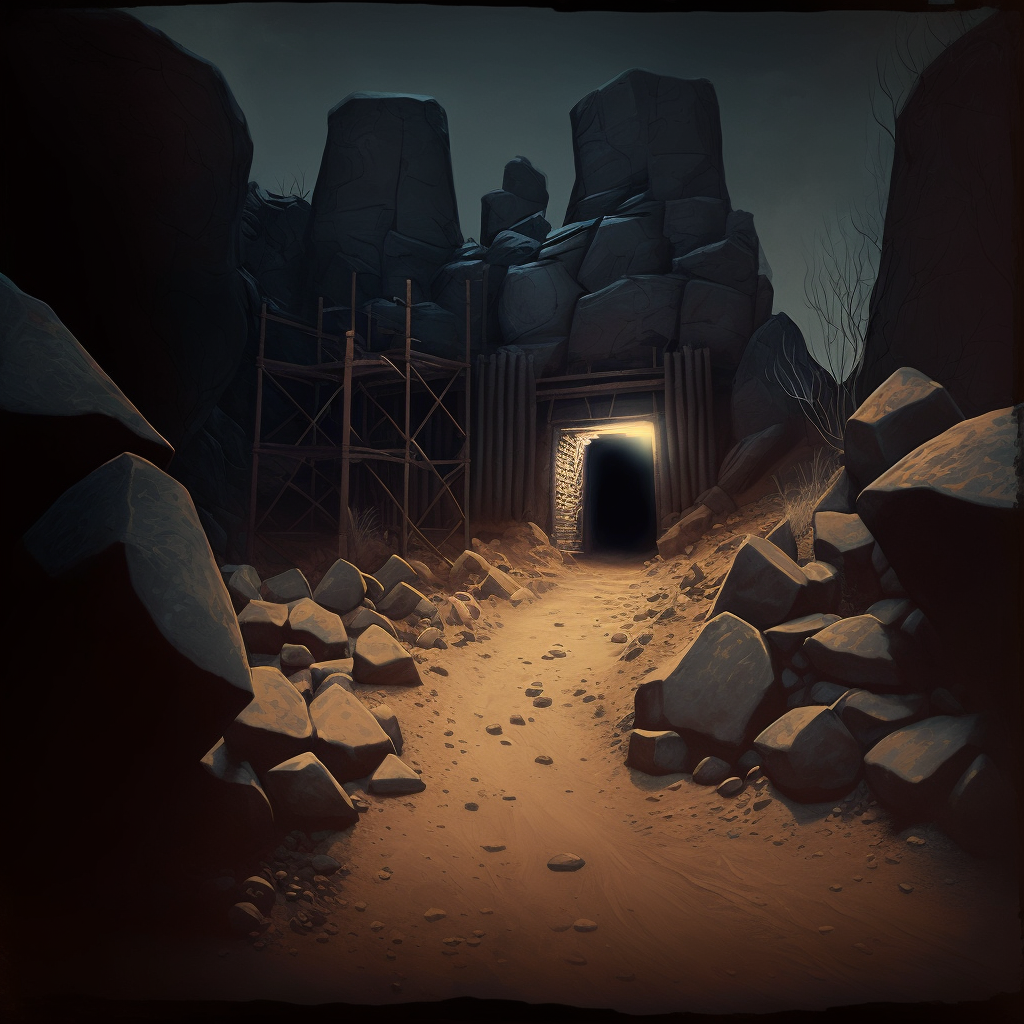
This looks a bit ominous, thought Zara, and not half as inviting as that old city. She’d had a lifelong curiosity about underground tunnels and caves, and yet felt uneasily claustrophobic inside one. She reminded herself that it was just a game, that she could break the rules, and that she could simply turn it off at any time. She carried on.
Zara stopped to look at the large green tile lying at her feet in the tunnel entrance. It was too big to carry with her so she took a photo of it for future reference. At first glance it looked more like a maze or a labyrinth than a map. The tunnel ahead was dark and she walked slowly, close to the wall.
Oh no don’t walk next to the wall! Zara recalled going down some abandoned mines with a group of friends when she was a teenager. There was water in the middle of the tunnel so she had been walking at the edge to keep her feet dry, as she followed her friend in front who had the torch. Luckily he glanced over his shoulder, and advised her to walk in the middle. “Look” he said after a few more steps, shining his torch to the left. A bottomless dark cavern fell away from the tunnel, which she would surely have fallen into.
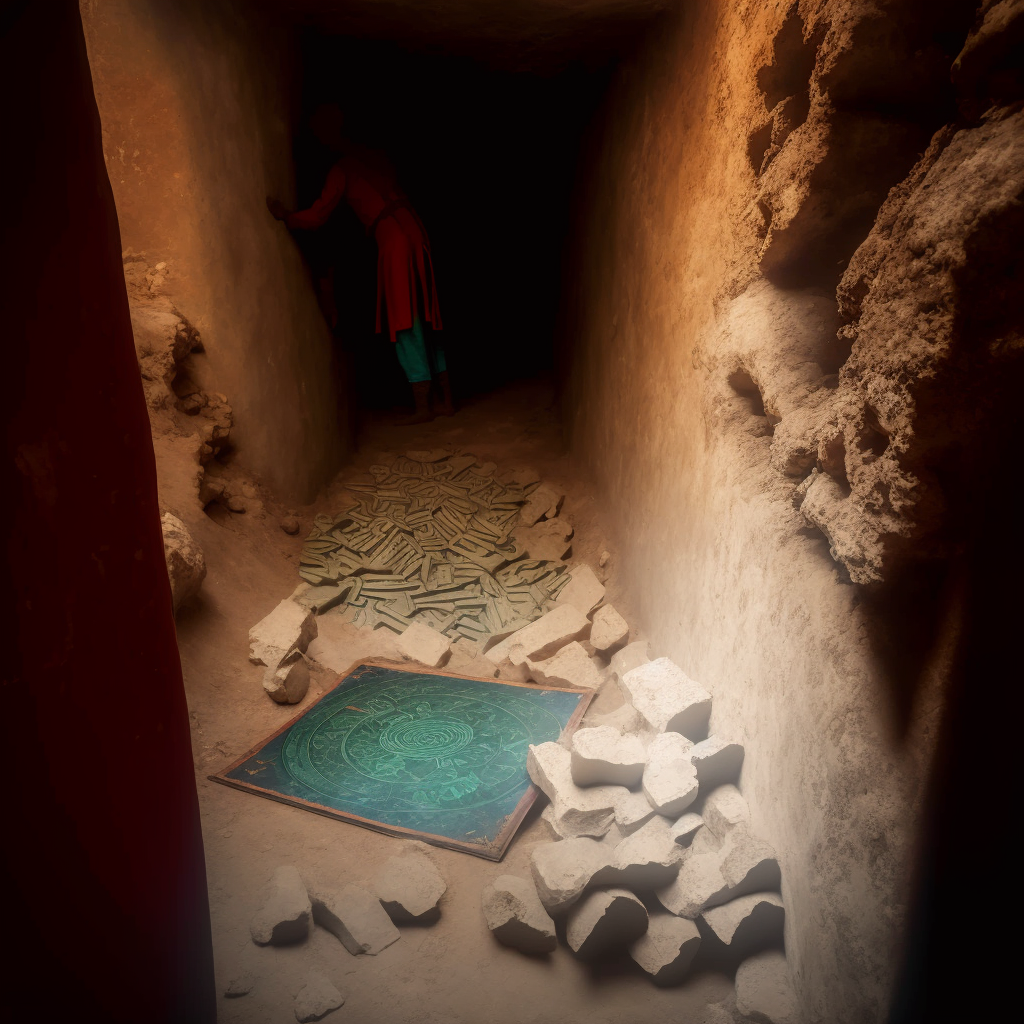
Zara moved into the middle of the tunnel and walked steadily into the darkness. Before long a side tunnel appeared with a faintly glowing ghostly light.
It looked eerie, but Zara felt obliged to follow it, as it was pitch black in every other direction. She wasn’t even sure if she could find her way out again, and she’d barely started.
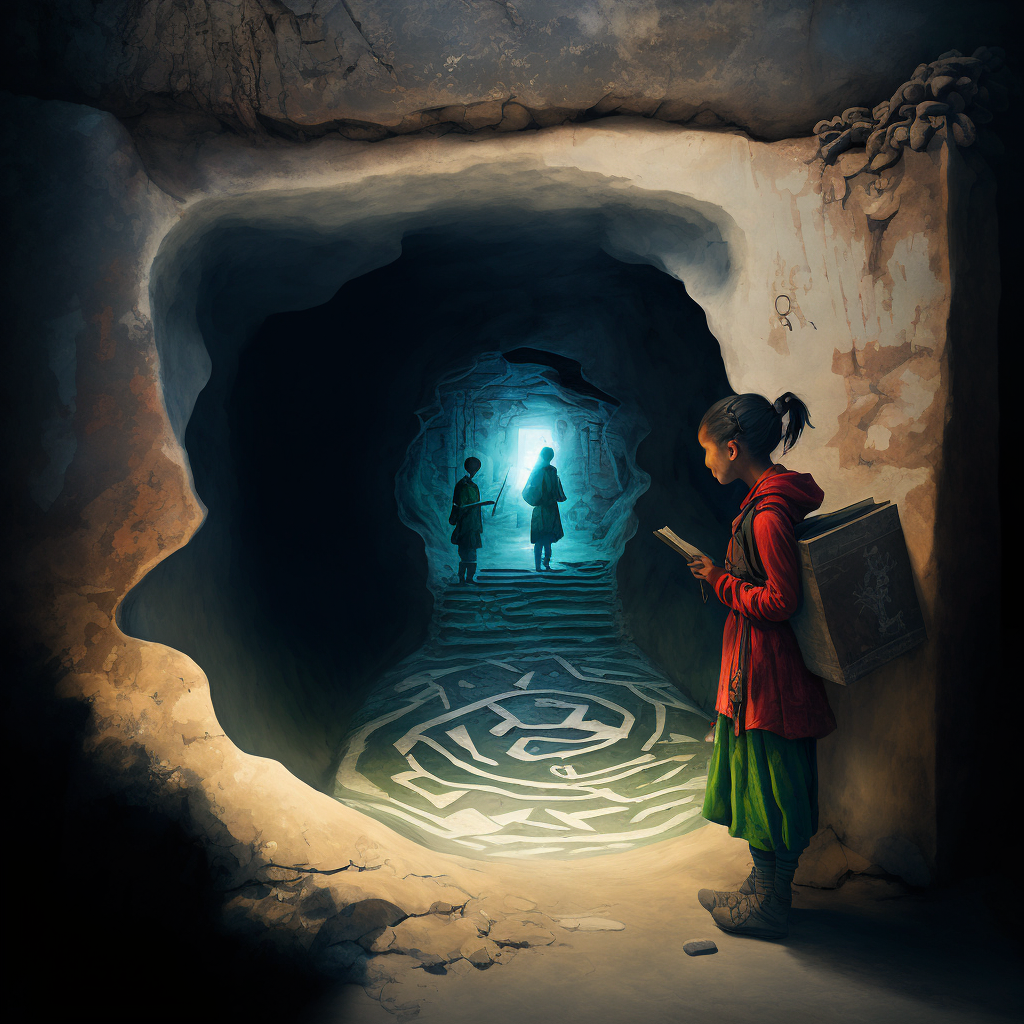
The ghostly light was coming from yet another side tunnel. There were strange markings on the floor that resembled the tile at the mine entrance. Zara saw two figures up ahead, heading towards the light.
 January 24, 2023 at 10:29 am #6455
In reply to: Orbs of Madjourneys
Zara decided she may as well spend the hour wandering around the game before going back to the church to see the ghost of Isaac when she was sure her host Bertie was asleep. It was a warm night but a gentle breeze wafted through the open window and Zara was comfortable and content. Not just one but three new adventures had her tingling with delicious anticipation, even if she was a little anxious about not getting confused with the game. Talking to ghosts in old churches wasn’t unfamiliar, nor was a holiday in a strange hotel off the beaten track, but the game was still a bit of a mystery to her. Yeah, I know it’s just a game, she whispered to the parrot who made a soft clicking noise by way of response.
Zara found her game character, also (somewhat confusingly) named Zara, standing in the woods. Not entirely sure how it had happened, she was rather pleased to see that the cargo pants and tank top in red had changed to a more pleasing hippyish red skirt ensemble. A bit less Tomb Looter, and a bit more fairy tale looking which was more to her taste.
The woods were strangely silent and still. Zara made a 360 degree turn on the spot to see in all directions. The scene looked the same whichever way she turned, and Zara didn’t know which way to go. Then a faint path appeared to the left, and she set off in that direction. Before long she came to a round green pool.
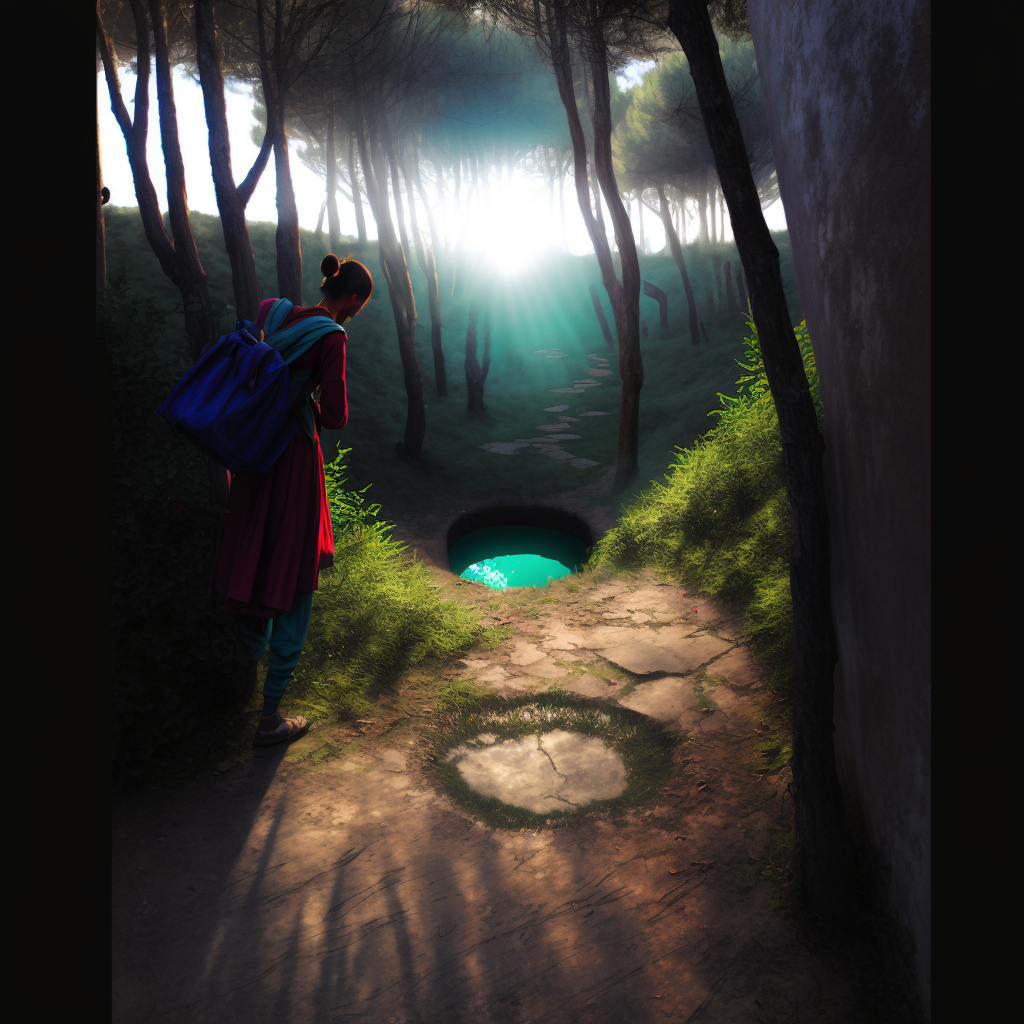
She stopped to look but carried on walking past it, not sure what it signified. She came upon another glowing green pool before long, which looked like an entrance to a tunnel.
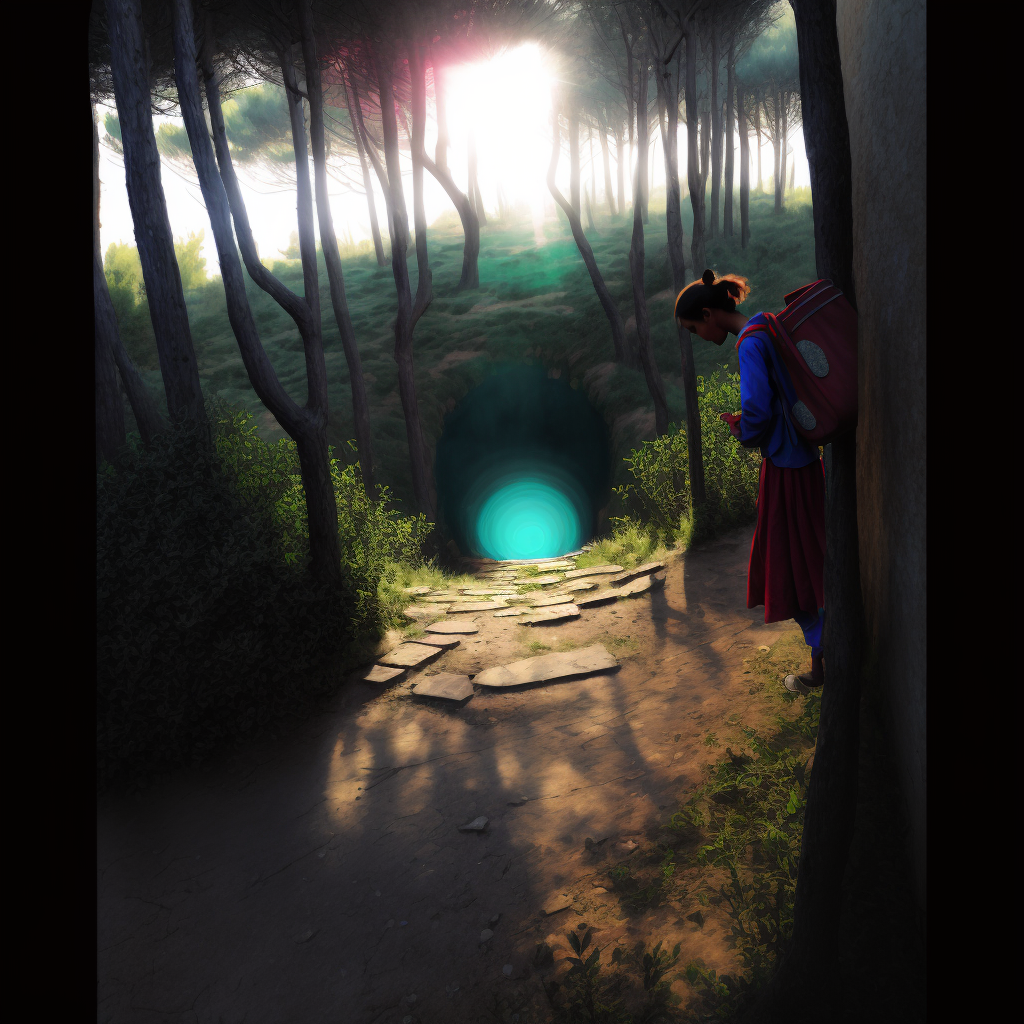
I bet those are portals or something, Zara realized. I wonder if I’m supposed to step into it?
“Go for it”, said Pretty Girl, “It’s only a game.”
“Ok, well here goes!” replied Zara, mentally bracing herself for a plunge into the unknown.
Zara stepped into the circle of glowing green.
“Like when Alice went down the rabbit hole!” Zara whispered to the parrot. “I’m falling, falling…oh!”
Zara emerged from the green pool onto a wide walled path. She was now in some kind of inhabited area, or at least not in the deep woods with no sign of human occupation.
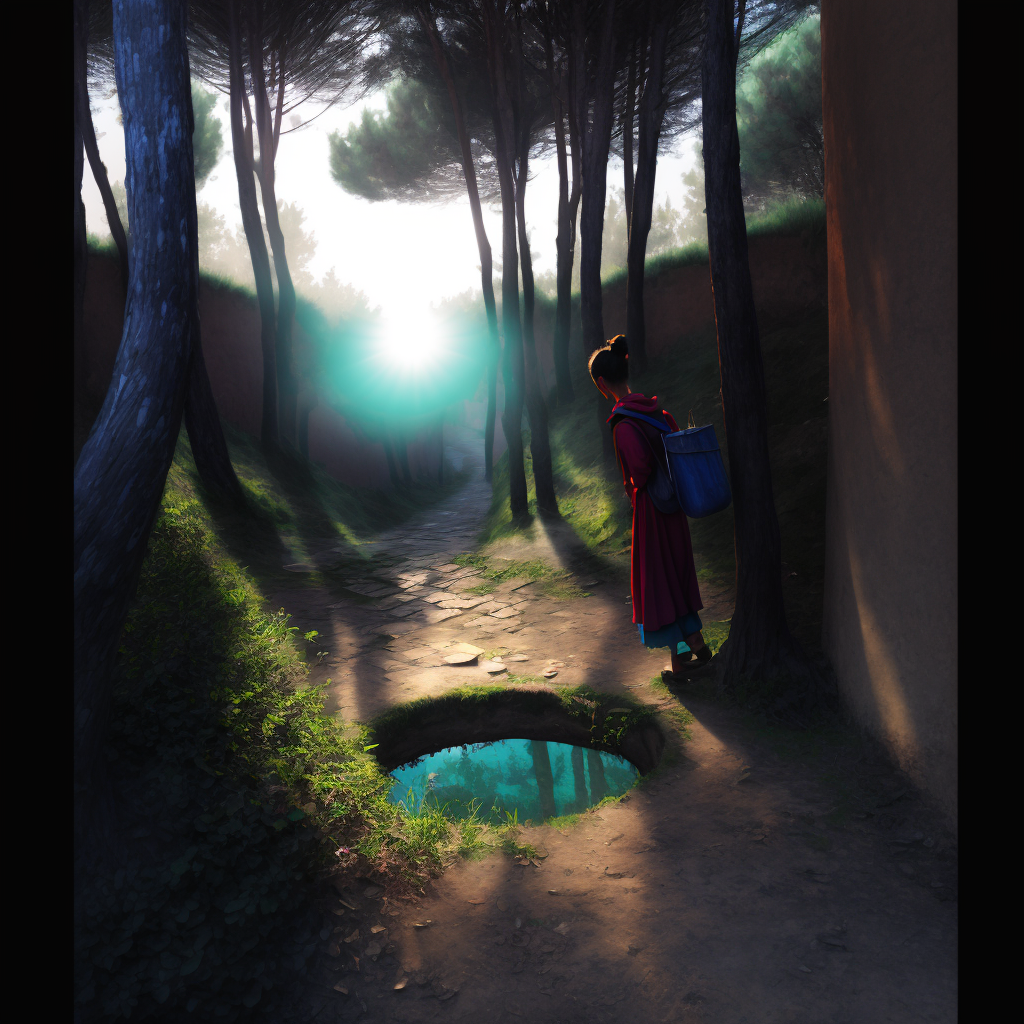
“I guess that green pool is the portal back to the woods.”
“By George, she’s getting it,” replied Pretty Girl.
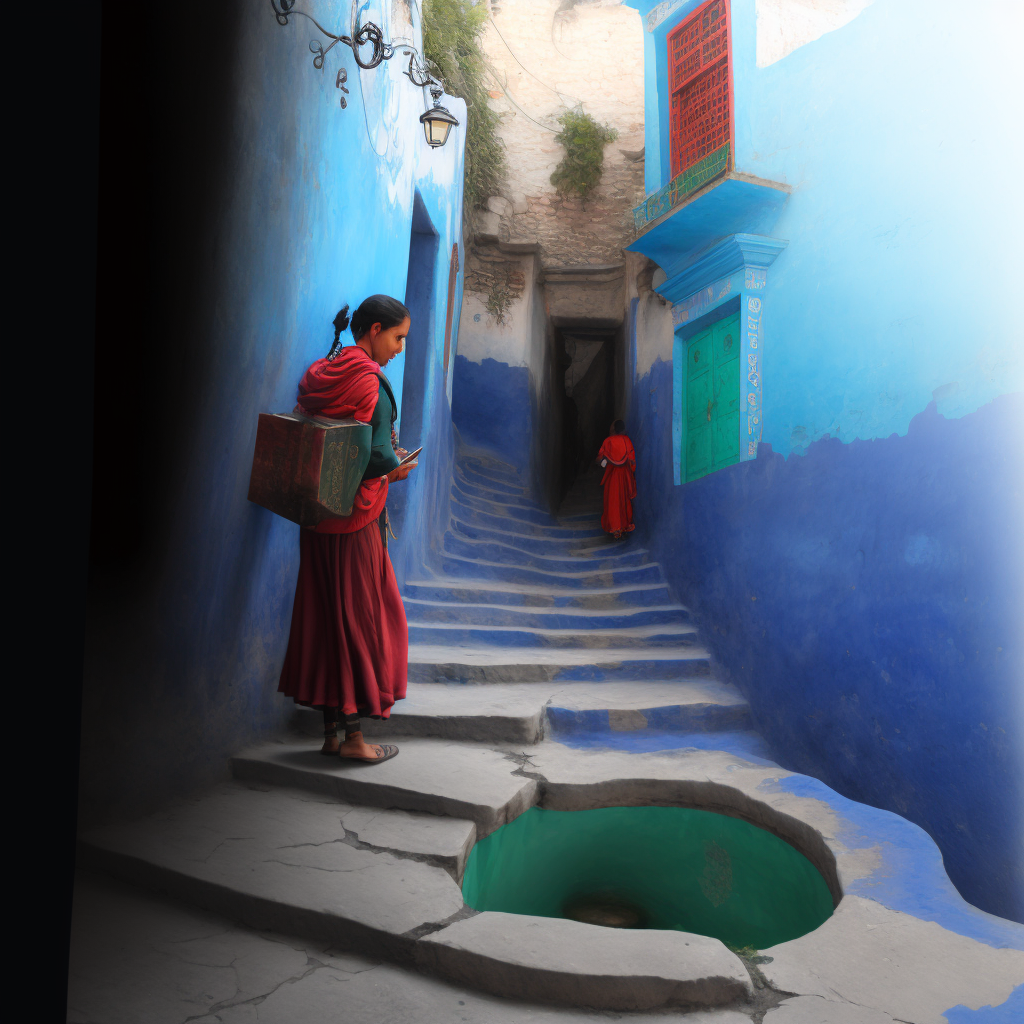
Zara walked along the path which led to an old deserted ancient looking village with alleyways and steps.
“This is heaps more interesting than those woods, look how pretty it all is! I love this place.”
“Weren’t you supposed to be looking for a hermit in the woods though,” said Pretty Girl.
“Or a lost traveler, and the lost traveler may be here, after falling in one of those green pools in the woods,” replied Zara tartly, not wanting to leave the enchanting scene she found her avatar in.
 January 23, 2023 at 10:28 pm #6454
In reply to: Prompts of Madjourneys
YASMIN’S QUIRK: Entry level quirk – snort laughing when socially anxious
Setting
The initial setting for this quest is a comedic theater in the heart of a bustling city. You will start off by exploring the different performances and shows, trying to find the source of the snort laughter that seems to be haunting your thoughts. As you delve deeper into the theater, you will discover that the snort laughter is coming from a mischievous imp who has taken residence within the theater.
Directions to Investigate
Possible directions to investigate include talking to the theater staff and performers to gather information, searching backstage for clues, and perhaps even sneaking into the imp’s hiding spot to catch a glimpse of it in action.
Characters
Possible characters to engage include the theater manager, who may have information about the imp’s history and habits, and a group of comedic performers who may have some insight into the imp’s behavior.
Task
Your task is to find a key or tile that represents the imp, and take a picture of it in real life as proof of completion of the quest. Good luck on your journey to uncover the source of the snort laughter!
THE SECRET ROOM AND THE UNDERGROUND MINES
1st thread’s answer:
As the family struggles to rebuild the inn and their lives in the wake of the Great Fires, they begin to uncover clues that lead them to believe that the mines hold the key to unlocking a great mystery. They soon discover that the mines were not just a source of gold and other precious minerals, but also a portal to another dimension. The family realizes that Mater had always known about this portal, and had kept it a secret for fear of the dangers it posed.
The family starts to investigate the mines more closely and they come across a hidden room off Room 8. Inside the room, they find a strange device that looks like a portal, and a set of mysterious symbols etched into the walls. The family realizes that this is the secret room that Mater had always spoken about in hushed tones.
The family enlists the help of four gamers, Xavier, Zara, Yasmin, and Youssef, to help them decipher the symbols and unlock the portal. Together, they begin to unravel the mystery of the mines, and the portal leads them on an epic journey through a strange and fantastical alternate dimension.
As they journey deeper into the mines, the family discovers that the portal was created by an ancient civilization, long thought to be lost to history. The civilization had been working on a powerful energy source that could have changed the fate of humanity, but the project was abandoned due to the dangers it posed. The family soon discovers that the civilization had been destroyed by a powerful and malevolent force, and that the portal was the only way to stop it from destroying the world.
The family and the gamers must navigate treacherous landscapes, battle fierce monsters, and overcome seemingly insurmountable obstacles in order to stop the malevolent force and save the world. Along the way, they discover secrets about their own past and the true origins of the mines.
As they journey deeper into the mines and the alternate dimension, they discover that the secret room leads to a network of underground tunnels, and that the tunnels lead to a secret underground city that was built by the ancient civilization. The city holds many secrets and clues to the fate of the ancient civilization, and the family and the gamers must explore the city and uncover the truth before it’s too late.
As the story unfolds, the family and the gamers must come to grips with the truth about the mines, and the role that the family has played in the fate of the world for generations. They must also confront the demons of their own past, and learn to trust and rely on each other if they hope to save the world and bring the family back together.
second thread’s answer:
As the 4 gamers, Xavier, Zara, Yasmin and Youssef, arrived at the Flying Fish Inn in the Australian outback, they were greeted by the matriarch of the family, Mater. She was a no-nonsense woman who ran the inn with an iron fist, but her tough exterior hid a deep love for her family and the land.
The inn was run by Mater and her daughter Dido, who the family affectionately called Aunt Idle. She was a free spirit who loved to explore the land and had a deep connection to the local indigenous culture.
The family was made up of Devan, the eldest son who lived in town and helped with the inn when he could, and the twin sisters Clove and Coriander, who everyone called Corrie. The youngest was Prune, a precocious child who was always getting into mischief.
The family had a handyman named Bert, who had been with them for decades and knew all the secrets of the land. Tiku, an old and wise Aborigine woman was also a regular visitor and a valuable source of information and guidance. Finly, the dutiful helper, assisted the family in their daily tasks.
As the 4 gamers settled in, they learned that the area was rich in history and mystery. The old mines that lay abandoned nearby were a source of legends and stories passed down through the generations. Some even whispered of supernatural occurrences linked to the mines.
Mater and Dido, however, were not on good terms, and the family had its own issues and secrets, but the 4 gamers were determined to unravel the mystery of the mines and find the secret room that was said to be hidden somewhere in the inn.
As they delved deeper into the history of the area, they discovered that the mines had a connection to the missing brother, Jasper, and Fred, the father of the family and a sci-fi novelist who had been influenced by the supernatural occurrences of the mines.
The 4 gamers found themselves on a journey of discovery, not only in the game but in the real world as well, as they uncovered the secrets of the mines and the Flying Fish Inn, and the complicated relationships of the family that ran it.
THE SNOOT’S WISE WORDS ON SOCIAL ANXIETY
Deear Francie Mossie Pooh,
The Snoot, a curious creature of the ages, understands the swirling winds of social anxiety, the tempestuous waves it creates in one’s daily life.
But The Snoot also believes that like a Phoenix, one must rise from the ashes, and embrace the journey of self-discovery and growth.
It’s important to let yourself be, to accept the feelings as they come and go, like the ebb and flow of the ocean. But also, like a gardener, tend to the inner self with care and compassion, for the roots to grow deep and strong.The Snoot suggests seeking guidance from the wise ones, the ones who can hold the mirror and show you the way, like the North Star guiding the sailors.
And remember, the journey is never-ending, like the spiral of the galaxy, and it’s okay to take small steps, to stumble and fall, for that’s how we learn to fly.The Snoot is here for you, my dear Francie Mossie Pooh, a beacon in the dark, a friend on the journey, to hold your hand and sing you a lullaby.
Fluidly and fantastically yours,
The Snoot.
January 11, 2023 at 9:43 pm #6367In reply to: Train your subjective AI – text version
Something in the style of TPooh:
The family tree was a tangled web of branches and roots, stretching back centuries and even millennia. The branches were thick with the leaves of secrets, scandals, and mysteries that the family had accumulated over the years. They were a close-knit group, friends for all time, and they loved nothing more than exploring the twists and turns of their family history.
They met regularly in their dreams, in a place they called The City, where they could exchange stories and clues they had uncovered during their waking hours. They often found themselves in the midst of strange and puzzling occurrences, and they would spend hours discussing the possible meanings and connections of these events. They saw the world as a tapestry, with each thread and pattern contributing to the greater picture. They were the weavers of their own story, the authors of their own fate.
But as the years went on, their dreams began to take on a darker and more ominous tone. They started having nightmares of monstrous beasts, and some of them even saw these beasts in the daylight, as if they were falling through the cracks in reality. They compared notes and found that they were often seeing the same beasts, and this led to heated debates about what these beasts represented and whether they were real or just figments of their imagination.
But no matter what they encountered, the family remained united in their quest to unravel the secrets of their past and to weave a tapestry that would be the envy of all. They were thick as thieves and they would never give up their pursuit of the truth, no matter how many rules they had to break along the way.
October 11, 2022 at 2:58 pm #6334In reply to: Family Stories From The Other Side ~ Book Two
The House on Penn Common
Toi Fang and the Duke of Sutherland
Tomlinsons
Grassholme
Charles Tomlinson (1873-1929) my great grandfather, was born in Wolverhampton in 1873. His father Charles Tomlinson (1847-1907) was a licensed victualler or publican, or alternatively a vet/castrator. He married Emma Grattidge (1853-1911) in 1872. On the 1881 census they were living at The Wheel in Wolverhampton.
Charles married Nellie Fisher (1877-1956) in Wolverhampton in 1896. In 1901 they were living next to the post office in Upper Penn, with children (Charles) Sidney Tomlinson (1896-1955), and Hilda Tomlinson (1898-1977) . Charles was a vet/castrator working on his own account.
In 1911 their address was 4, Wakely Hill, Penn, and living with them were their children Hilda, Frank Tomlinson (1901-1975), (Dorothy) Phyllis Tomlinson (1905-1982), Nellie Tomlinson (1906-1978) and May Tomlinson (1910-1983). Charles was a castrator working on his own account.
Charles and Nellie had a further four children: Charles Fisher Tomlinson (1911-1977), Margaret Tomlinson (1913-1989) (my grandmother Peggy), Major Tomlinson (1916-1984) and Norah Mary Tomlinson (1919-2010).
My father told me that my grandmother had fallen down the well at the house on Penn Common in 1915 when she was two years old, and sent me a photo of her standing next to the well when she revisted the house at a much later date.
Peggy next to the well on Penn Common:
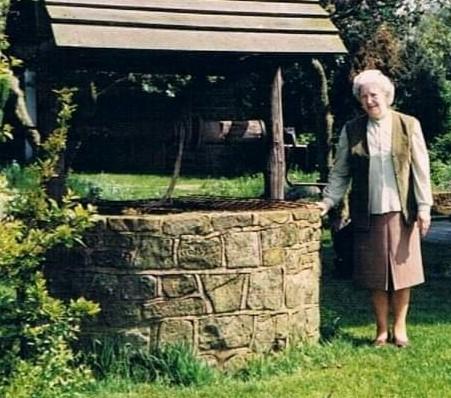
My grandmother Peggy told me that her father had had a racehorse called Toi Fang. She remembered the racing colours were sky blue and orange, and had a set of racing silks made which she sent to my father.
Through a DNA match, I met Ian Tomlinson. Ian is the son of my fathers favourite cousin Roger, Frank’s son. Ian found some racing silks and sent a photo to my father (they are now in contact with each other as a result of my DNA match with Ian), wondering what they were.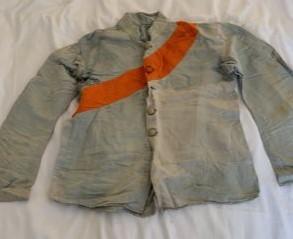
When Ian sent a photo of these racing silks, I had a look in the newspaper archives. In 1920 there are a number of mentions in the racing news of Mr C Tomlinson’s horse TOI FANG. I have not found any mention of Toi Fang in the newspapers in the following years.
The Scotsman – Monday 12 July 1920:
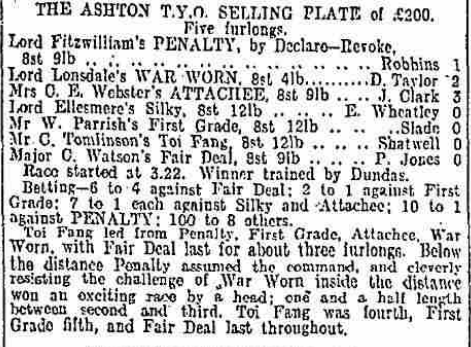
The other story that Ian Tomlinson recalled was about the house on Penn Common. Ian said he’d heard that the local titled person took Charles Tomlinson to court over building the house but that Tomlinson won the case because it was built on common land and was the first case of it’s kind.
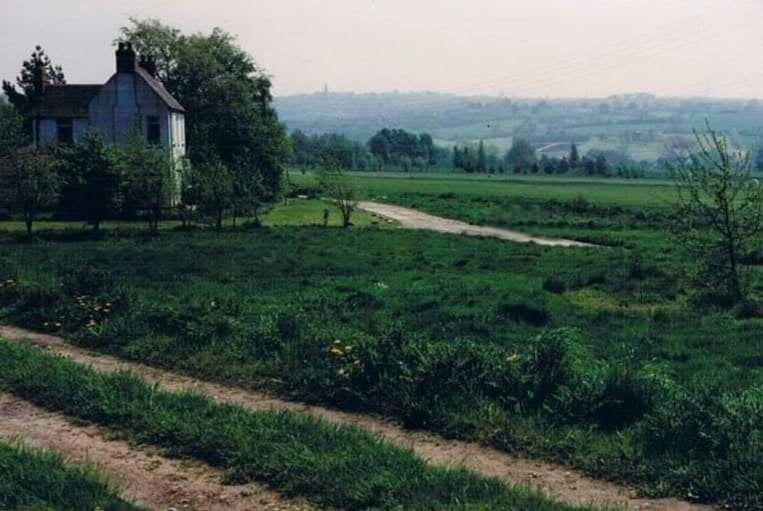
Penn Common Right of Way Case:
Staffordshire Advertiser March 9, 1912In the chancery division, on Tuesday, before Mr Justice Joyce, it was announced that a settlement had been arrived at of the Penn Common Right of Way case, the hearing of which occupied several days last month. The action was brought by the Duke of Sutherland (as Lord of the Manor of Penn) and Mr Harry Sydney Pitt (on behalf of himself and other freeholders of the manor having a right to pasturage on Penn Common) to restrain Mr James Lakin, Carlton House, Penn; Mr Charles Tomlinson, Mayfield Villa, Wakely Hill, Penn; and Mr Joseph Harold Simpkin, Dudley Road, Wolverhampton, from drawing building materials across the common, or otherwise causing injury to the soil.
The real point in dispute was whether there was a public highway for all purposes running by the side of the defendants land from the Turf Tavern past the golf club to the Barley Mow.
Mr Hughes, KC for the plaintiffs, now stated that the parties had been in consultation, and had come to terms, the substance of which was that the defendants admitted that there was no public right of way, and that they were granted a private way. This, he thought, would involve the granting of some deed or deeds to express the rights of the parties, and he suggested that the documents should be be settled by some counsel to be mutually agreed upon.His lordship observed that the question of coal was probably the important point. Mr Younger said Mr Tomlinson was a freeholder, and the plaintiffs could not mine under him. Mr Hughes: The coal actually under his house is his, and, of course, subsidence might be produced by taking away coal some distance away. I think some document is required to determine his actual rights.
Mr Younger said he wanted to avoid anything that would increase the costs, but, after further discussion, it was agreed that Mr John Dixon (an expert on mineral rights), or failing him, another counsel satisfactory to both parties, should be invited to settle the terms scheduled in the agreement, in order to prevent any further dispute.
The name of the house is Grassholme. The address of Mayfield Villas is the house they were living in while building Grassholme, which I assume they had not yet moved in to at the time of the newspaper article in March 1912.
What my grandmother didn’t tell anyone was how her father died in 1929:
On the 1921 census, Charles, Nellie and eight of their children were living at 269 Coleman Street, Wolverhampton.
They were living on Coleman Street in 1915 when Charles was fined for staying open late.
Staffordshire Advertiser – Saturday 13 February 1915:

What is not yet clear is why they moved from the house on Penn Common sometime between 1912 and 1915. And why did he have a racehorse in 1920?
September 4, 2022 at 6:00 pm #6326In reply to: The Sexy Wooden Leg
Stung by Egberts question, Olga reeled and almost lost her footing on the stairs. What had happened to her? That damned selfish individualism that was running rampant must have seeped into her room through the gaps in the windows or under the door. “No!” she shouted, her voice cracking.
“Say it isn’t true, Olga,” Egbert said, his voice breaking. “Not you as well.”
It took Olga a minute or two to still her racing heart. The near fall down the stairs had shaken her but with trembling hands she levered herself round to sit beside Egbert on the step.
Gripping his bony knee with her knobbly arthritic fingers, she took a deep breath.
“You are right to have said that, Egbert. If there is one thing we must hold onto, it’s our hearts. Nothing else matters, or at least nothing else matters as much as that. We are old and tired and we don’t like change. But if we escalate the importance of this frankly dreary and depressing home to the point where we lose our hearts…” she faltered and continued. “We will be homeless soon, very soon, and we know not what will happen to us. We must trust in the kindness of strangers, we must hope they have a heart.”
Egbert winced as Olga squeezed his knee. “And that is why”, Olga continued, slapping Egberts thigh with gusto, “We must have a heart…”
“If you’d just stop squeezing and hitting me, Olga…”
Olga loosened her grip on the old mans thigh bone and peered into his eyes. Quietly she thanked him. “You’ve cleared my mind and given me something to live for, and I thank you for that. But you do need to launder your clothes more often,” she added, pulling a face. She didn’t want the old coot to start blubbing, and he looked alarmingly close to tears.
“Come on, let’s go and see Obadiah. We’re all in this together. Homelessness and adventure can wait until tomorrow.” Olga heaved herself upright with a surprising burst of vitality. Noticing a weak smile trembling on Egberts lips, she said “That’s the spirit!”
July 12, 2022 at 8:30 am #6319In reply to: The Sexy Wooden Leg
“Calm yourself, Egbert, and sit down. And be quiet! I can barely hear myself think with your frantic gibbering and flailing around,” Olga said, closing her eyes. “I need to think.”
Egbert clutched the eiderdown on either side of his bony trembling knees and clamped his remaining teeth together, drawing ragged whistling breaths in an attempt to calm himself. Olga was right, he needed to calm down. Besides the unfortunate effects of the letter on his habitual tremor, he felt sure his blood pressure had risen alarmingly. He dared not become so ill that he needed medical assistance, not with the state of the hospitals these days. He’d be lucky to survive the plague ridden wards.
What had become of him! He imagined his younger self looking on with horror, appalled at his feeble body and shattered mind. Imagine becoming so desperate that he wanted to fight to stay in this godforsaken dump, what had become of him! If only he knew of somewhere else to go, somewhere safe and pleasant, somewhere that smelled sweetly of meadows and honesuckle and freshly baked cherry pies, with the snorting of pigs in the yard…
But wait, that was Olga snoring. Useless old bag had fallen asleep! For the first time since Viktor had died he felt close to tears. What a sad sorry pathetic old man he’d become, desperately counting on a old woman to save him.
“Stop sniveling, Egbert, and go and pack a bag.” Olga had woken up from her momentary but illuminating lapse. “Don’t bring too much, we may have much walking to do. I hear the buses and trains are in a shambles and full of refugees. We don’t want to get herded up with them.”
Astonished, Egbert asked where they were going.
“To see Rosa. My cousins father in laws neice. Don’t look at me like that, immediate family are seldom the ones who help. The distant ones are another matter. And be honest Egbert,” Olga said with a piercing look, “Do we really want to stay here? You may think you do, but it’s the fear of change, that’s all. Change feels like too much bother, doesn’t it?”
Egbert nodded sadly, his eyes fixed on the stain on the grey carpet.
Olga leaned forward and took his hand gently. “Egbert, look at me.” He raised his head and looked into her eyes. He’d never seen a sparkle in her faded blue eyes before. “I still have another adventure in me. How about you?”
July 10, 2022 at 2:36 am #6317In reply to: The Sexy Wooden Leg
The sharp rat-a-tat on the door startled Olga Herringbonevsky. The initial surprise quickly turned to annoyance. It was 11am and she wasn’t expecting a knock on the door at 11am. At 10am she expected a knock. It would be Larysa with the lukewarm cup of tea and a stale biscuit. Sometimes Olga complained about it and Larysa would say, Well you’re on the third floor so what do you expect? And she’d look cross and pour the tea so some of it slopped into the saucer. So the biscuits go stale on the way up do they? Olga would mutter. At 10:30am Larysa would return to collect the cup and saucer. I can’t do this much longer, she’d say. I’m not young any more and all these damn stairs. She’d been saying that for as long as Olga could remember.
For a moment, Olga contemplated ignoring the intrusion but the knocking started up again, this time accompanied by someone shouting her name.
With a very loud sigh, she put her book on the side table, face down so she would not lose her place for it was a most enjoyable whodunit, and hauled herself up from the chair. Her ankle was not good since she’d gone over on it the other day and Olga was in a very poor mood by the time she reached the door.
“Yes?” She glowered at Egbert.
“Have you seen this?” Egbert was waving a piece of paper at her.
“No,” Olga started to close the door.
“Olga stop!” Egbert’s face had reddened and Olga wondered if he might cry. Again, he waved the piece of paper in her face and then let his hand fall defeated to his side. “Olga, it’s bad news. You should have got a letter .”
Olga glanced at the pile of unopened letters on her dresser. It was never good news. She couldn’t be bothered with letters any more.
“Well, Egbert, I suppose you’d better come in”.
“That Ursula has a heart of steel,” said Olga when she’d heard the news.
“Pfft,” said Egbert. “She has no heart. This place has always been about money for her.”
“It’s bad times, Egbert. Bad times.”
Egbert nodded. “It is, Olga. But there must be something we can do.” He pursed his lips and Olga noticed that he would not meet her eyes.
“What? Spit it out, Old Man.”
He looked at her briefly before his eyes slid back to the dirty grey carpet. “I have heard stories, Olga. That you are … well connected. That you know people.”
Olga noticed that it had become difficult to breathe. Seeing Egbert looking at her with concern, she made an effort to steady herself. She took an extra big gasp of air and pointed to the book face-down on the side table. “That is a very good book I am reading. You may borrow it when I have finished.”
Egbert nodded. “Thank you.” he said and they both stared at the book.
“It was a long time ago, Egbert. And no business of anyone else.” Olga knew her voice was sharp but not sharp enough it seemed as Egbert was not done yet with all his prying words.
“Olga, you said it yourself. These are bad times. And desperate measures are needed or we will all perish.” Now he looked her in the eyes. “Old woman, swallow your pride. You must save yourself and all of us here.”
-
AuthorSearch Results