Search Results for 'lower'
-
AuthorSearch Results
-
December 14, 2024 at 1:40 pm #7669
In reply to: Quintessence: A Portrait in Reverse
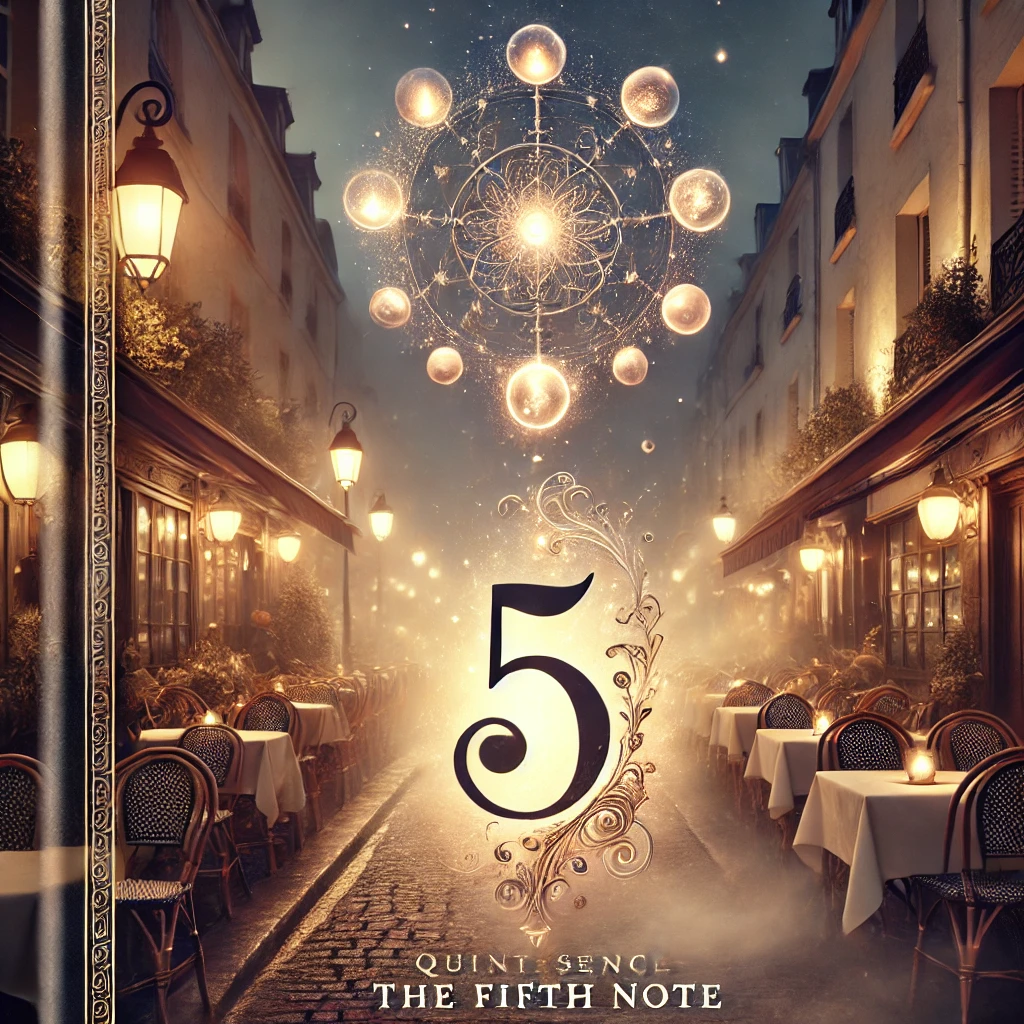
Quintessence – Looking for the 5th — A concept film trailer…
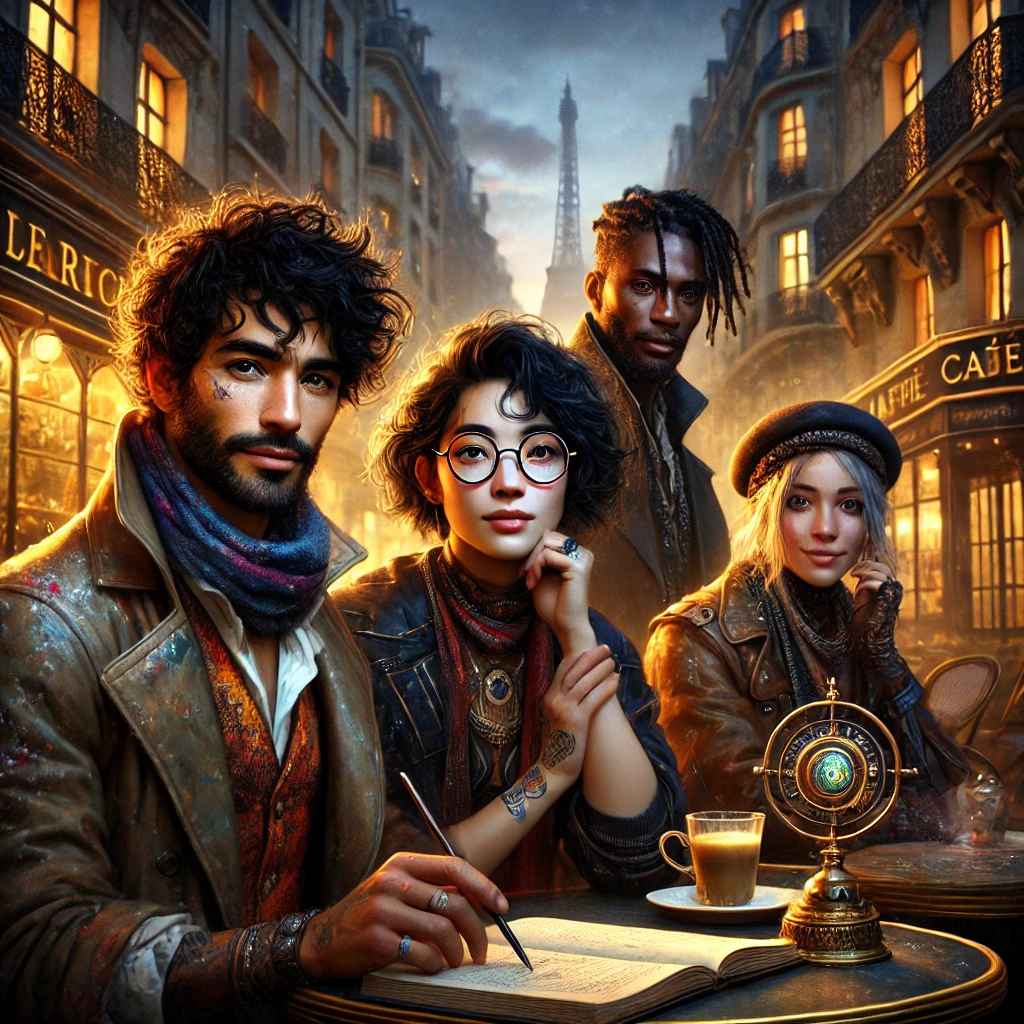
The scene begins in reverse motion at the Parisian café at dusk, vibrant with life as four friends sit together, laughter and connection tangible. The scenes fades backward into a flashback sequence, unraveling across time and space. Brief flashes rewind through their lives:
- Lucien, the artist, sketching furiously in his studio, charcoal dust flying as he creates a labyrinth of faces.
- Darius, a traveler, striding through sunlit banana trees in Guadeloupe, the dappled light casting moving patterns on his determined face.
- Amei, the fabric artist, flipping through a stack of vibrant postcards at her cluttered desk, her fingers brushing over familiar textures.
- Elara, the rebel scientist, chalking spiraling equations and shapes on a blackboard, her eyes alight with discovery.
The threads coil faster, converging in reverse at a vibrant field in the verdant South of France. The sun streams across open land dotted with wildflowers, a faint outline of a shared dream—a co-housing project—lingering in the golden light. The scene ends on an empty but inviting promise, the land glowing with warmth and possibility.
December 11, 2024 at 4:41 am #7662In reply to: Quintessence: Reversing the Fifth
The Waking
Lucien – Early 2024 Darius – Dec 2022 Amei – 2022-2023 Elara – 2022 Matteo – Halloween 2023 Aversion/Reflection Jealousy/Accomplishment Pride/Equanimity Attachment/Discernment Ignorance/Wisdom The sky outside Lucien’s studio window was still dark, the faint glow of dawn breaking on the horizon. He woke suddenly, the echo of footsteps chasing him out of sleep. Renard’s shadow loomed in his mind like a smudge he couldn’t erase. He sat up, rubbing his temples, the remnants of the dream slipping away like water through his fingers. The chase felt endless, but this time, something had shifted. There was no fear in his chest—only a whisper of resolve. “Time to stop running.” The hum of the airplane’s engine filled Darius’s ears as he opened his eyes, the cabin lights dimmed for landing. He glanced at the blinking seatbelt sign and adjusted his scarf. The dream still lingered, faint and elusive, like smoke curling away before he could grasp it. He wasn’t sure where he’d been in his mind, but he felt a pull—something calling him back. South of France was just the next stop. Beyond that,… Beyond that? He didn’t know. Amei sat cross-legged on her living room floor, the guided meditation app still playing its soft tones through her headphones. Her breathing steadied, but her thoughts drifted. Images danced at the edges of her mind—threads weaving together, faces she couldn’t place, a labyrinth spiraling endlessly. The meditation always seemed to end with these fragments, leaving her both unsettled and curious. What was she trying to find? Elara woke with a start, the unfamiliar sensation of a dream etched vividly in her mind. Her dreams usually dissolved the moment she opened her eyes, but this one lingered, sharp and bright. She reached for her notebook on the bedside table, fumbling for the pen. The details spilled out onto the page—a white bull, a labyrinth of light, faces shifting like water. “I never remember my dreams,” she thought, “but this one… this one feels important.” Matteo woke to the sound of children laughing outside, their voices echoing through the streets of Avignon. Halloween wasn’t as big a deal here as elsewhere, but it had its charm. He stretched and sat up, the weight of a restless sleep hanging over him. His dreams had been strange—familiar faces, glowing patterns, a sense of something unfinished. The room seemed to glow for a moment. “Strange,” he thought, brushing it off as a trick of the light. “No resentment, only purpose.” “You’re not lost. You’re walking your own path.” “Messy patterns are still patterns.” “Let go. The beauty is in the flow.” “Everything is connected. Even the smallest light adds to the whole.” The Endless Chase –
Lucien ran through a labyrinth, its walls shifting and alive, made of tangled roots and flickering light. Behind him, the echo of footsteps and Renard’s voice calling his name, mocking him. But as he turned a corner, the walls parted to reveal a still lake, its surface reflecting the stars. He stopped, breathless, staring at his reflection in the water. It wasn’t him—it was a younger boy, wide-eyed and unafraid. The boy reached out, and Lucien felt a calm ripple through him. The chase wasn’t real. It never was. The walls dissolved, leaving him standing under a vast, open sky.The Wandering Maze –
Darius wandered through a green field, the tall grass brushing against his hands. The horizon seemed endless, but each step revealed new paths, twisting and turning like a living map. He saw figures ahead—people he thought he recognized—but when he reached them, they vanished, leaving only their footprints. Frustration welled up in his chest, but then he heard laughter—a clear, joyful sound. A child ran past him, leaving a trail of flowers in their wake. Darius followed, the path opening into a vibrant garden. There, he saw his own footprints, weaving among the flowers. “You’re not lost,” a voice said. “You’re walking your own path.”The Woven Tapestry –
Amei found herself in a dim room, lit only by the soft glow of a loom. Threads of every color stretched across the space, intertwining in intricate patterns. She sat before the loom, her hands moving instinctively, weaving the threads together. Faces appeared in the fabric—Tabitha, her estranged friends, even strangers she didn’t recognize. The threads wove tighter, forming a brilliant tapestry that seemed to hum with life. She saw herself in the center, not separate from the others but connected. This time she heard clearly “Messy patterns are still patterns,” a voice whispered, and she smiled.The Scattered Grains –
Elara stood on a beach, the sand slipping through her fingers as she tried to gather it. The harder she grasped, the more it escaped. A wave rolled in, sweeping the sand into intricate patterns that glowed under the moonlight. She knelt, watching the designs shift and shimmer, each one unique and fleeting. “Let go,” the wind seemed to say. “The beauty is in the flow.” Elara let the sand fall, and as it scattered, it transformed into light, rising like fireflies into the night sky.The Mandala of Light –
Matteo stood in a darkened room, the only light coming from a glowing mandala etched on the floor. As he stepped closer, the patterns began to move, spinning and shifting. Faces appeared—his mother, the friends he hadn’t yet met, and even his own reflection. The mandala expanded, encompassing the room, then the city, then the world. “Everything is connected,” a voice said, low and resonant. “Even the smallest light adds to the whole.” Matteo reached out, touching the edge of the mandala, and felt its warmth spread through him.

Dreamtime
It begins with running—feet pounding against the earth, my breath sharp in my chest. The path twists endlessly, the walls of the labyrinth curling like roots, closing tighter with each turn. I know I’m being chased, though I never see who or what is behind me. The air thickens as I round a corner and come to a halt before a still lake. Its surface gleams under a canopy of stars, too perfect, too quiet. I kneel to look closer, and the face that stares back isn’t mine. A boy gazes up with wide, curious eyes, unafraid. He smiles as though he knows something I don’t, and my breath steadies. The walls of the labyrinth crumble, their roots receding into the earth. Around me, the horizon stretches wide and infinite, and I wonder if I’ve always been here.
The grass is soft under my feet, swaying with a breeze that hums like a song I almost recognize. I walk, though I don’t know where I’m going. Figures appear ahead—shadowy forms I think I know—but as I approach, they dissolve into mist. I call out, but my voice is swallowed by the wind. Laughter ripples through the air, and a child darts past me, their feet leaving trails of flowers in the earth. I follow, unable to stop myself. The path unfolds into a garden, vibrant and alive, every bloom humming with its own quiet song. At the center, I find myself again—my own footprints weaving among the flowers. The laughter returns, soft and knowing. A voice says, “You’re not lost. You’re walking your own path.” But whose voice is it? My own? Someone else’s? I can’t tell.
The scene shifts, or maybe it’s always been this way. Threads of light stretch across the horizon, forming a vast loom. My hands move instinctively, weaving the threads into patterns I don’t understand but feel compelled to create. Faces emerge in the fabric—some I know, others I only feel. Each thread hums with life, vibrating with its own story. The patterns grow more intricate, their colors blending into something breathtaking. At the center, my own face appears, not solitary but connected to all the others. The threads seem to breathe, their rhythm matching my own heartbeat. A voice whispers, teasing but kind: “Messy patterns are still patterns.” I want to laugh, or cry, or maybe both, but my hands keep weaving as the threads dissolve into light.
I’m on the beach now, though I don’t remember how I got here. The sand is cool under my hands, slipping through my fingers no matter how tightly I try to hold it. A wave rolls in, its foam glowing under a pale moon. Where the water touches the sand, intricate patterns bloom—spirals, mandalas, fleeting images that shift with the tide. I try to gather them, to keep them, but the harder I hold on, the faster they fade. A breeze lifts the patterns into the air, scattering them like fireflies. I watch them go, feeling both loss and wonder. “Let go,” a voice says, carried by the wind. “The beauty is in the flow.” I let the sand fall from my hands, and for the first time, I see the patterns clearly, etched not on the ground but in the sky.
The room is dark, yet I see everything. A mandala of light spreads across the floor, its intricate shapes pulsing with a rhythm I recognize but can’t place. I step closer, and the mandala begins to spin, its patterns expanding to fill the room, then the city, then the world. Faces appear within the light—my mother’s, a child’s, strangers I know but have never met. The mandala connects everything it touches, its warmth spreading through me like a flame. I reach out, my hand trembling, and the moment I touch it, a voice echoes in the air: “Everything is connected. Even the smallest light adds to the whole.” The mandala slows, its light softening, and I find myself standing at its center, whole and unafraid.
I feel the labyrinth’s walls returning, but they’re no longer enclosing me—they’re part of the loom, their roots weaving into the threads. The flowers of the garden bloom within the mandala’s light, their petals scattering like sand into the tide. The waves carry them to the horizon, where they rise into the sky, forming constellations I feel I’ve always known.
I wake—or do I? The dream lingers, its light and rhythm threading through my thoughts. It feels like a map, a guide, a story unfinished. I see the faces again—yours, mine, ours—and wonder where the path leads next.
December 7, 2024 at 10:16 am #7651In reply to: Quintessence: A Portrait in Reverse
Exploring further potential backstory for the characters – to be explored further…
This thread beautifully connects to the lingering themes of fractured ideals, missed opportunities, and the pull of reconnection. Here’s an expanded exploration of the “habitats participatifs” (co-housing communities) and how they tie the characters together while weaving in subtle links to their estrangement and Matteo’s role as the fifth element.
Backstory: The Co-Housing Dream
Habitat Participatif: A Shared Vision
The group’s initial bond, forged through shared values and late-night conversations, had coalesced around a dream: buying land in the Drôme region of France to create a co-housing community. The French term habitat participatif—intergenerational, eco-conscious, and collaborative living—perfectly encapsulated their ideals.
What Drew Them In:
- Amei: Longing for a sense of rootedness and community after years of drifting.
- Elara: Intrigued by the participatory aspect, where decisions were made collectively, blending science and sustainability.
- Darius: Enchanted by the idea of shared creative spaces and a slower, more intentional way of living.
- Lucien: Inspired by the communal energy, imagining workshops where art could flourish outside the constraints of traditional galleries.
The Land in Drôme
They had narrowed their options to a specific site near the village of Crest, not far from Lyon. The land, sprawling and sun-drenched, had an old farmhouse that could serve as a communal hub, surrounded by fields and woods. A nearby river threaded through the valley, and the faint outline of mountains painted the horizon.
The traboules of Lyon, labyrinthine passageways, had captivated Amei during an earlier visit, leaving her wondering if their metaphorical weaving through life could mirror the paths their group sought to create.
The Role of Monsieur Renard
When it came to financing, the group faced challenges. None of them were particularly wealthy, and pooling their resources fell short. Enter Monsieur Renard, whose interest in supporting “projects with potential” brought him into their orbit through Éloïse.
Initial Promise:
- Renard presented himself as a patron of innovation, sustainability, and community projects, offering seed funding in exchange for a minor share in the enterprise.
- His charisma and Éloïse’s insistence made him seem like the perfect ally—until his controlling tendencies emerged.
The Split: Fractured Trust
Renard’s involvement—and Éloïse’s increasing influence on Darius—created fault lines in the group.
- Darius’s Drift:
- Darius became entranced by Renard and Éloïse’s vision of community as something deeper, bordering on spiritual. Renard spoke of “energetic alignment” and the importance of a guiding vision, which resonated with Darius’s creative side.
- He began advocating for Renard’s deeper involvement, insisting the project couldn’t succeed without external backing.
- Elara’s Resistance:
- Elara, ever the pragmatist, saw Renard as manipulative, his promises too vague and his influence too broad. Her resistance created tension with Darius, whom she accused of being naive.
- “This isn’t about community for him,” she had said. “It’s about control.”
- Lucien’s Hesitation:
- Lucien, torn between loyalty to his friends and his own fascination with Éloïse, wavered. Her talk of labyrinths and collective energy intrigued him, but he grew wary of her sway over Darius.
- When Renard offered to fund Lucien’s art, he hesitated, sensing a price he couldn’t articulate.
- Amei’s Silence:
- Amei, haunted by her own experiences with manipulation in past relationships, withdrew. She saw the dream slipping away but couldn’t bring herself to fight for it.
Matteo’s Unseen Role
Unbeknownst to the others, Matteo had been invited to join as a fifth partner—a practical addition to balance their idealism. His background in construction and agriculture, coupled with his easygoing nature, made him a perfect fit.
The Missed Connection:
- Matteo had visited the Drôme site briefly, a stranger to the group but intrigued by their vision. His presence was meant to ground their plans, to bring practicality to their shared dream.
- By the time he arrived, however, the group’s fractures were deepening. Renard’s shadow loomed too large, and the guru-like influence of Éloïse had soured the collaborative energy. Matteo left quietly, sensing the dream unraveling before it could take root.
The Fallout: A Fractured Dream
The group dissolved after a final argument about Renard’s involvement:
- Elara refused to move forward with his funding. “I’m not selling my future to him,” she said bluntly.
- Darius, feeling betrayed, accused her of sabotaging the dream out of stubbornness.
- Lucien, caught in the middle, tried to mediate but ultimately sided with Elara.
- Amei, already pulling away, suggested they put the project on hold.
The land was never purchased. The group scattered soon after, their estrangement compounded by the pandemic. Matteo drifted in a different direction, their connection lost before it could form.
Amei’s Perspective: Post-Split Reflection
In the scene where Amei buys candles :
- The shopkeeper’s comments about “seeking something greater” resonate with Amei’s memory of the co-housing dream and how it became entangled with Éloïse and Renard’s influence.
- Her sharper-than-usual reply reflects her lingering bitterness over the way “seeking” led to manipulation and betrayal.
Reunion at the Café: A New Beginning
When the group reunites, the dream of the co-housing project lingers as a symbol of what was lost—but also of what could still be reclaimed. Matteo’s presence at the café bridges the gap between their fractured past and a potential new path.
Matteo’s Role:
- His unspoken connection to the co-housing plan becomes a point of quiet irony: he was meant to be part of their story all along but arrived too late. Now, at the café, he steps into the role he missed years ago—the one who helps them see the threads that still bind them.
December 6, 2024 at 8:44 am #7648In reply to: Quintessence: Reversing the Fifth
Spring 2024
Matteo was wandering through the streets of Avignon, the spring air heavy with the scent of blooming flowers and sun-warmed stone. The hum of activity surrounded him—shopkeepers arranging displays, the occasional burst of laughter from a café terrace. He walked with no particular destination, drawn more by instinct than intent, until a splash of colour caught his eye.
On the cobblestones ahead, an artist crouched over a sprawling chalk drawing. It was a labyrinthine map, its intricate paths winding across the ground with deliberate precision. Matteo froze, his breath catching. The resemblance to the map he’d found at the vineyard office was uncanny—the same loops and spirals, the same sense of motion and stillness intertwined. But it wasn’t the map itself that held him in place. It was the faces.
Four of them, scattered in different corners of the design, each rendered with surprising detail. Beneath them were names. Matteo felt a shiver crawl up his spine. He knew three of those faces. Amei, Elara, Darius… he had met each of them once, in moments that now felt distant and fragmented. Strangers to him, but not quite.
The artist shifted, brushing dark, rain-damp curls from his forehead. His scarf, streaked faintly with paint, hung loosely around his neck. Matteo stepped closer, his curiosity overpowering any hesitation. “Is that your name?” he asked, gesturing toward the face labeled Lucien.
The artist straightened, his hand resting lightly on a piece of green chalk. He studied Matteo for a moment, his expression unreadable. “Yes,” he said simply, his voice low but clear.
Matteo crouched beside him, tracing the edge of the map with his eyes. “It’s incredible,” he said. “The detail, the connections. Why the faces?”
Lucien hesitated, glancing at the names scattered across his work. “Because that’s how it is,” he said softly. “We’re all here, but… not together.”
Matteo tilted his head, intrigued. “You mean you’ve drifted?”
Lucien nodded, his gaze dropping to the chalk in his hand. “Something like that. Paths cross, then they don’t. People take their turns.”
Matteo studied the map again, its intertwining lines seeming both chaotic and deliberate. The faces stared back at him, and he felt the pull of the map he no longer carried. “Do you think paths can lead back?” he asked, his voice thoughtful.
Lucien glanced at him, something flickering briefly in his eyes. “Sometimes. If you follow them long enough.”
Matteo smiled faintly, standing. His curiosity shifted as he turned his attention to the artist himself. “Do you know where I can find absinthe?” he asked.
Lucien raised an eyebrow. “Absinthe? Haven’t heard anyone ask for that in a while.”
“Just something I’ve been chasing,” Matteo replied lightly, his tone almost playful.
Lucien gestured vaguely toward a café down the street. “You might try there. They keep the old things alive.”
“Thanks,” Matteo said, offering a nod. He took a few steps away but paused, turning back to the artist still crouched over his map. “It’s a good drawing,” he said. “Hope your paths cross again.”
Lucien didn’t reply, but his hand moved back to the chalk, drawing a faint line that connected two of the faces. Matteo watched for a moment longer before continuing down the street, the memory of the map and the names lingering in his mind like an unanswered question. Paths crossed, he thought, but maybe they didn’t always stay apart.
For the first time in days, Matteo felt a strange sense of possibility. The map was gone, but perhaps it had done what it was meant to do—leave its mark.
December 5, 2024 at 11:01 pm #7647In reply to: Quintessence: Reversing the Fifth
Darius: A Map of People
June 2023 – Capesterre-Belle-Eau, Guadeloupe
The air in Capesterre-Belle-Eau was thick with humidity, the kind that clung to your skin and made every movement slow and deliberate. Darius leaned against the railing of the veranda, his gaze fixed on the horizon where the sky blends into the sea. The scent of wet earth and banana leaves filling the air. He was home.
It had been nearly a year since hurricane Fiona swept through Guadeloupe, its winds blowing a trail of destruction across homes, plantations, and lives. Capesterre-Belle-Eau had been among the hardest hit, its banana plantations reduced to ruin and its roads washed away in torrents of mud.
Darius hadn’t been here when it happened. He’d read about it from across the Atlantic, the news filtering through headlines and phone calls from his aunt, her voice brittle with worry.
“Darius, you should come back,” she’d said. “The land remembers everyone who’s left it.”
It was an unusual thing for her to say, but the words lingered. By the time he arrived in early 2023 to join the relief efforts, the worst of the crisis had passed, but the scars remained—on the land, on the people, and somewhere deep inside himself.
Home, and Not — Now, passing days having turned into quick six months, Darius was still here, though he couldn’t say why. He had thrown himself into the work, helped to rebuild homes, clear debris, and replant crops. But it wasn’t just the physical labor that kept him—it was the strange sensation of being rooted in a place he’d once fled.
Capesterre-Belle-Eau wasn’t just home; it was bones-deep memories of childhood. The long walks under the towering banana trees, the smell of frying codfish and steaming rice from his aunt’s kitchen, the rhythm of gwoka drums carrying through the evening air.
“Tu reviens pour rester cette fois ?” Come back to stay? a neighbor had asked the day he returned, her eyes sharp with curiosity.
He had laughed, brushing off the question. “On verra,” he’d replied. We’ll see.
But deep down, he knew the answer. He wasn’t back for good. He was here to make amends—not just to the land that had raised him but to himself.
A Map of Travels — On the veranda that afternoon, Darius opened his phone and scrolled through his photo gallery. Each image was pinned to a digital map, marking all the places he’d been since he got the phone. Of all places, it was Budapest which popped out, a poor snapshot of Buda Castle.
He found it a funny thought — just like where he was now, he hadn’t planned to stay so long there. He remembered the date: 2020, in the midst of the pandemic. He’d spent in Budapest most of it, sketching the empty streets.
Five years ago, their little group of four had all been reconnecting in Paris, full of plans that never came to fruition. By late 2019, the group had scattered, each of them drawn into their own orbits, until the first whispers of the pandemic began to ripple across the world.
Funding his travels had never been straightforward. He’d tried his hand at dozens of odd jobs over the years—bartending in Lisbon, teaching English in Marrakech, sketching portraits in tourist squares across Europe. He lived frugally, keeping his possessions light and his plans loose. Yet, his confidence had a way of opening doors; people trusted him without knowing why, offering him opportunities that always seemed to arrive at just the right time.
Even during the pandemic, when the world seemed to fold in on itself, he had found a way.
Darius had already arrived in Budapest by then, living cheaply in a rented studio above a bakery. The city had remained open longer than most in Europe or the world, its streets still alive with muted activity even as the rest of Europe closed down. He’d wandered freely for months, sketching graffiti-covered bridges, quiet cafes, and the crumbling facades of buildings that seemed to echo his own restlessness.
When the lockdowns finally came like everywhere else, it was just before winter, he’d stayed, uncertain of where else to go. His days became a rhythm of sketching, reading, and sending postcards. Amei was one of the few who replied—but never ostentatiously. It was enough to know she was still there, even if the distance between them felt greater than ever.
But the map didn’t tell the whole story. It didn’t show the faces, the laughter, the fleeting connections that had made those places matter.
Swatting at a buzzing mosquito, he reached for the small leather-bound folio on the table beside him. Inside was a collection of fragments: ticket stubs, pressed flowers, a frayed string bracelet gifted by a child in Guatemala, and a handful of postcards he’d sent to Amei but had never been sure she received.
One of them, yellowed at the edges, showed a labyrinth carved into stone. He turned it over, his own handwriting staring back at him.
“Amei,” it read. “I thought of you today. Of maps and paths and the people who make them worth walking. Wherever you are, I hope you’re well. —D.”
He hadn’t sent it. Amei’s responses had always been brief—a quick WhatsApp message, a thumbs-up on his photos, or a blue tick showing she’d read his posts. But they’d never quite managed to find their way back to the conversations they used to have.
The Market — The next morning, Darius wandered through the market in Trois-Rivières, a smaller town nestled between the sea and the mountains. The vendors called out their wares—bunches of golden bananas, pyramids of vibrant mangoes, bags of freshly ground cassava flour.
“Tiens, Darius!” called a woman selling baskets woven from dried palm fronds. “You’re not at work today?”
“Day off,” he said, smiling as he leaned against her stall. “Figured I’d treat myself.”
She handed him a small woven bracelet, her eyes twinkling. “A gift. For luck, wherever you go next.”
Darius accepted it with a quiet laugh. “Merci, tatie.”
As he turned to leave, he noticed a couple at the next stall—tourists, by the look of them, their backpacks and wide-eyed curiosity marking them as outsiders. They made him suddenly realise how much he missed the lifestyle.
The woman wore an orange scarf, its boldness standing out as if the color orange itself had disappeared from the spectrum, and only a single precious dash could be seen into all the tones of the market. Something else about them caught his attention. Maybe it was the way they moved together, or the way the man gestured as he spoke, as if every word carried weight.
“Nice scarf,” Darius said casually as he passed.
The woman smiled, adjusting the fabric. “Thanks. Picked it up in Rajasthan. It’s been with me everywhere since.”
Her partner added, “It’s funny, isn’t it? The things we carry. Sometimes it feels like they know more about where we’ve been than we do.”
Darius tilted his head, intrigued. “Do you ever think about maps? Not the ones that lead to places, but the ones that lead to people. Paths crossing because they’re meant to.”
The man grinned. “Maybe it’s not about the map itself,” he said. “Maybe it’s about being open to seeing the connections.”
A Letter to Amei — That evening, as the sun dipped below the horizon, Darius sat at the edge of the bay, his feet dangling above the water. The leather-bound folio sat open beside him, its contents spread out in the fading light.
He picked up the labyrinth postcard again, tracing its worn edges with his thumb.
“Amei,” he wrote on the back just under the previous message a second one —the words flowing easily this time. “Guadeloupe feels like a map of its own, its paths crossing mine in ways I can’t explain. It made me think of you. I hope you’re well. —D.”
He folded the card into an envelope and tucked it into his bag, resolving to send it the next day.
As he watched the waves lap against the rocks, he felt a sense of motion rolling like waves asking to be surfed. He didn’t know where the next path would lead next, but he felt it was time to move on again.
December 4, 2024 at 6:22 am #7638In reply to: Quintessence: Reversing the Fifth
The Bell’s Moment: Paris, Summer 2024 – Olympic Games
The bell was dangling unassumingly from the side pocket of a sports bag, its small brass frame swinging lightly with the jostle of the crowd. The bag belonged to an American tourist, a middle-aged man in a rumpled USA Basketball T-shirt, hustling through the Olympic complex with his family in tow. They were here to cheer for his niece, a rising star on the team, and the bell—a strange little heirloom from his grandmother—had been an afterthought, clipped to the bag for luck. It seemed to fit right in with the bright chaos of the Games, blending into the swirl of flags, chants, and the hum of summer excitement.
1st Ring of the Bell: Matteo
The vineyard was quiet except for the hum of cicadas and the soft rustle of leaves. Matteo leaned against the tractor, wiping sweat from his brow with the back of his hand.
“You’ve done good work,” the supervisor said, clapping Matteo on the shoulder. “We’ll be finishing this batch by Friday.”
Matteo nodded. “And after that?”
The older man shrugged. “Some go north, some go south. You? You’ve got that look—like you already know where you’re headed.”
Matteo offered a half-smile, but he couldn’t deny it. He’d felt the tug for days, like a thread pulling him toward something undefined. The idea of returning to Paris had slipped into his thoughts quietly, as if it had been waiting for the right moment.
When his phone buzzed later that evening with a job offer to do renovation work in Paris, it wasn’t a surprise. He poured himself a small glass of wine, toasting the stars overhead.
Somewhere, miles away, the bell rang its first note.
2nd Ring of the Bell: Darius
In a shaded square in Barcelona, the air was thick with the scent of jasmine and the echo of a street performer’s flamenco guitar. Darius sprawled on a wrought-iron bench, his leather-bound journal open on his lap. He sketched absentmindedly, the lines of a temple taking shape on the page.
A man wearing a scarf of brilliant orange sat down beside him, his energy magnetic. “You’re an artist,” the man said without preamble, his voice carrying the cadence of Kolkata.
“Sometimes,” Darius replied, his pen still moving.
“Then you should come to India,” the man said, grinning. “There’s art everywhere. In the streets, in the temples, even in the food.”
Darius chuckled. “You recruiting me?”
“India doesn’t need recruiters,” the man replied. “It calls people when it’s time.”
The bell rang again in Paris, its chime faint and melodic, as Darius scribbled the words “India, autumn” in the corner of his page.
3rd Ring of the Bell: Elara
The crowd at CERN’s conference hall buzzed as physicists exchanged ideas, voices overlapping like equations scribbled on whiteboards. Elara sat at a corner table, sipping lukewarm coffee and scrolling through her messages.
The voicemail notification glared at her, and she tapped it reluctantly.
“Elara, it’s Florian. I… I’m sorry to tell you this over a message, but your mother passed away last night.”
Her coffee cup trembled slightly as she set it down.
Her relationship with her mother had been fraught, full of alternating period of silences and angry reunions, and had settled lately into careful politeness that masked deeper fractures. Years of therapy had softened the edges of her resentment but hadn’t erased it. She had come to accept that they would never truly understand each other, but the finality of death still struck her with a peculiar weight.
Her mother had been living alone in Montrouge, France, refusing to leave the little house Elara had begged her to sell for years. They had drifted apart, their conversations perfunctory and strained, like the ritual of winding a clock that no longer worked.
She would have to travel to Montrouge for the funeral arrangements.
In that moment, the bell in Les Reliques rang a third time.
4th Ring of the Bell: Lucien
The train to Lausanne glided through fields of dried up sunflowers, too early for the season, but the heat had been relentless. He could imagine the golden blooms swaying with a cracking sound in the summer breeze. Lucien stared out the window, the strap of his duffel bag wrapped tightly around his wrist.
Paris had been suffocating. The tourists swarmed the city like ants, turning every café into a photo opportunity and every quiet street into a backdrop. He hadn’t needed much convincing to take his friend up on the offer of a temporary studio in Lausanne.
He reached into his bag and pulled out a sketchbook. The pages were filled with half-finished drawings, but one in particular caught his eye: a simple doorway with an ornate bell hanging above it.
He didn’t remember drawing it, but the image felt familiar, like a memory from a dream.
The bell rang again in Paris, its resonance threading through the quiet hum of the train.
5th Ring of the Bell: …. Tabitha
In the courtyard of her university residence, Tabitha swung lazily in a hammock, her phone propped precariously on her chest.
“Goa, huh?” one of her friends asked, leaning against the tree holding up the hammock. “Think your mum will freak out?”
“She’ll probably worry herself into knots,” Tabitha replied, laughing. “But she won’t say no. She’s good at the whole supportive parent thing. Or at least pretending to be.”
Her friend raised an eyebrow. “Pretending?”
“Don’t get me wrong, I love her,” Tabitha said. “But she’s got her own stuff. You know, things she never really talks about. I think it’s why she works so much. Keeps her distracted.”
The bell rang faintly in Paris, though neither of them could hear it.
“Maybe you should tell her to come with you,” the friend suggested.
Tabitha grinned. “Now that would be a trip.”
Last Ring: The Pawn
It was now sitting on the counter at Les Reliques. Its brass surface gleamed faintly in the dim shop light, polished by the waves of time. Small and unassuming, its ring held something inexplicably magnetic.
Time seemed to settle heavily around it. In the heat of the Olympic summer, it rang six times. Each chime marked a moment that mattered, though none of the characters whose lives it touched understood why. Not yet.
“Where’d you get this?” the shopkeeper asked as the American tourist placed it down.
“It was my grandma’s,” he said, shrugging. “She said it was lucky. I just think it’s old.”
The shopkeeper ran her fingers over the brass surface, her expression unreadable. “And you’re selling it?”
“Need cash to get tickets for the USA basketball game tomorrow,” the man replied. “Quarterfinals. You follow basketball?”
“Not anymore,” the shopkeeper murmured, handing him a stack of bills.
The bell rang softly as she placed it on the velvet cloth, its sound settling into the space like a secret waiting to be uncovered.
And so it sat, quiet but full of presence, waiting for someone to claim it maybe months later, drawn by invisible threads woven through the magnetic field of lives, indifferent to the heat and chaos of the Parisian streets.
December 1, 2024 at 5:44 pm #7623In reply to: Quintessence: Reversing the Fifth
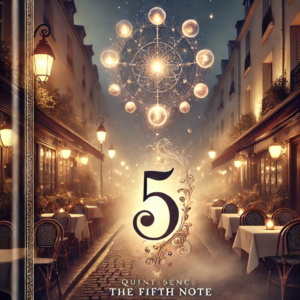
At the Café
The Sarah Bernardt Café shimmered under a pale grey November sky a busy last Saturday of the “Black Week”. Golden lights spilled onto cobblestones slick with rain, and the air buzzed with the din of a city alive in the moment. Inside, the crowd pressed together, laughing, arguing, living. And in a corner table by the fogged-up window, old friends were about to quietly converged, coming to a long overdue reunion.
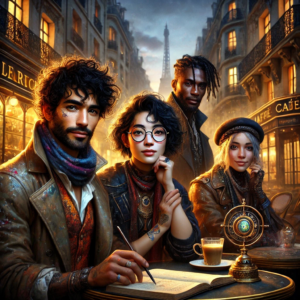
Lucien was the first to arrive, dragging a weathered suitcase behind him. Its wheels rattled unevenly on the cobblestones, a sound he hated. His dark curls, damp from the rain, clung to his forehead, and his scarf, streaked with old paint, hung loose around his neck. He folded himself into a corner chair, his suitcase tucked awkwardly beside him. When the server approached, Lucien waved him off with a distracted shake of his head and opened a battered sketchbook.
The next arrival was Elara. She entered briskly, shaking rain from her short gray-streaked hair, her eyes scanning the room as though searching for anomalies. A small roller bag trailed behind her, pristine and black, a sharp contrast to Lucien’s worn luggage. She stopped at the table and tilted her head.
“Still brooding?” she asked, pulling off her coat and folding it neatly over the back of a chair.
“Still talking?” Lucien didn’t look up, his pencil scratching faint lines across the page.
Elara smiled faintly. “Two minutes in, and you’re already immortalizing us? You know I hate being drawn.”
“You hate being caught off guard,” Lucien murmured. “But I never get your nose wrong.”
She laughed, the sound light but brief, and sank into her seat, placing her bag carefully beside her.
The door swung open again, and Darius entered, shaking the rain from his jacket. His presence seemed to fill the room immediately. He strode toward the table, a leather duffel slung over one shoulder and a well-worn travel pouch clutched in his hand. His boots clacked against the café’s tile floor, his movements easy, confident.
“Did you walk here?” Elara asked as he dropped his things with a thud and pulled out a chair.
“Ran into someone on the way,” he said, settling back. “Some guy selling maps. Got this one for ten euros—worth every cent.” He waved a yellowed scrap of paper that looked more fiction than cartography.
Lucien snorted. “Still paying for strangers’ stories, I see.”
“The good ones aren’t free.” Darius grinned and leaned back in his chair, propping one boot against the table leg.
The final arrival was Amei. Her entrance was quieter but no less noticeable. She unwound her scarf slowly, her layered clothing a mix of textures and colors that seemed to absorb the café’s golden light. A tote bag rested over her shoulder, bulging with what could have been books, or journals, or stories yet untold.
“You’re late,” Darius said, but his voice carried no accusation.
“Right on time,” Amei replied, lowering herself into the last chair. “You’re all just early.”
Her gaze swept across them, lingering on the bags piled at their feet. “I see I’m not the only one who came a long way.”
“Not all of us live in Paris,” Elara said, with a glance at Lucien.
“Only some of us make better life choices,” Lucien replied dryly.
The comment drew laughter—a tentative sound that loosened the air between them, thick as it was with five years of absence.
 November 25, 2024 at 9:40 pm #7615
In reply to: The Incense of the Quadrivium’s Mystiques
The vine smothered statue proved to be the perfect place to hide behind to watch the events of the picnic unfolding. Cedric had been in a quiet turmoil of conflicting emotions, biting his bony knuckle to stop himself from uttering a sound as the extroadinary sequence of dramas and comedies played out before him.
He hadn’t expected to see Frella again. His mental confusion about his job as well as his troubling fixation on the witch had brought him to the brink of jacking it all in. Just leave everything, he told himself, Move away, get another job doing something else, something mundane and manual. And forget her. He’d almost made up his mind to do just that, and, feeling pleased and sure of himself for making the decision, tapped his device to locate and observe Frella one last time just to mentally say adieu, and to see her face again. And then quietly disappear.
When Cedric realized that the witches were going on holiday, and heard Truella saying that no spells were allowed, his heart leapt. If he was giving it all up and moving away anyway, why not have a holiday first? Why not go to Rome? I may not even bump into her, Rome’s as good as anywhere else. I deserve a holiday. And if I do bump into her, it will just be a holiday coincidence, and nothing at all to do with spells. Or work.
All pretence of not minding whether he saw Frella or not left his mind almost immediately, and he began to make arrangements. He didn’t want Frella to use spells, but it didn’t occur to him to wonder why he was still using the tricks of his job. It was easy to track them to Italy.
His disguise as a North African on the coach full of Italians had worked well, even sitting so close to Truella and Giovanni he hadn’t been recognized in his hooded djelaba, and had been able to hear most of their conversation. A quiet word and a large tip secured his trip with their tour guide.
The picnic started out normally enough. They each had a short wander around, and then sprawled on rugs and cushions by the whicker hampers of food and champage. Cedric lurked in the shadows of an arch, sometimes slinking to peer from behind a statue. The temptation to pick a posy of wildflowers to give to Frella was all but overwhelming, as he watched her sitting pensively. Silently sinking to his knees behind the marble bulk of Tiberius, Cedric plucked a daisy from the grass. And another.
When Cromwell appeared on the scene, Cedric, alarmed and almost angry at the intrusion, unwittingly crushed the flowers in his hand. He had no choice but to remain hidden and immobile as the scene rolled out.
As the day progressed, the mood changed and Cedric felt hopeful again. He even had to stifle a laugh as he watched them play cards. Watching Eris pour champage into everyone’s glasses reminded him that he hadn’t had a drink all day. He was parched. He had to make a decision. He wanted to sneak off quietly and call it a day, find a nice restaurant. A part of him wanted to be bold and openly seductive, to stride into the scene and charmingly state his intentions. But he had no opportunity to further consider the options.
“You!” In the moments Cedric taken his eyes off the picnic to ponder his dilemma, Frella has risen and was heading for a necessary bush to go behind. “You! Spying on me!”
“Who?” shouted Truella, “Cedric! What on earth is he doing here, we’re on holiday! Now stop spitting nails, Frella, and invite the man over for a drink!”
Cedric seized the moment.
November 25, 2024 at 4:28 am #7614In reply to: The Incense of the Quadrivium’s Mystiques
Frella opened her mouth to reply, but Eris clapped her hands, a mischievous grin spreading across her face.
“Right, enough lounging. Let’s play a game—something to liven things up.”
“What sort of game?” Truella asked, “Nothing that requires too much energy I trust?”
“A card game.” Eris pulled a small leather pouch from her satchel. She gave it a shake, and a deck of cards flew out, shuffling mid-air before landing neatly in her hands.
Malove smirked. “If it involves hexes, I’m in.”
Eris began to deal the cards with a flourish. Each card shimmered, pulsing faintly with magic as it landed on the rug. “Think strategy, mischief, and a touch of divination. The goal? Outsmart your opponents while dodging whatever surprises the cards throw at you.”
Frella propped herself up on one elbow, eyeing the cards warily. “Define ‘surprises.’”
“Oh, you’ll see,” Eris said with a wink, placing the deck in the centre. “Rules are simple: draw a card, play your move, and handle the consequences. Last witch standing wins.”
“Wins what?” Jeezel asked, lowering her camera.
“The satisfaction of knowing you’re the most cunning witch here.”
“Sounds like my kind of game,” Truella said, drawing the first card. She held it up to reveal a swirling vortex labelled Spell Swap. The card glowed briefly before zipping into Frella’s pile.
Frella blinked. “What just happened?”
“You’ve inherited Truella’s card,” Eris said with a grin. “And a touch of her personality for the next round.”
Frella felt an odd surge of boldness, almost manic. “Alright, my turn!” she declared, her voice sharp and bossy and much louder than she had intended. She snatched a card marked Mystic Reveal and, with a theatrical flick of her hand, unleashed a shimmering projection of her week’s questionable decisions.
“Oh, for heaven’s sake!” she cackled. “Why does everyone need to see this?”
It wasn’t long before the game descended into chaos—spells flying, laughter erupting in snorts and shrieks. Eris croaked indignantly from her frog form while Jeezel gleefully documented the mayhem with her camera, which was now a cackling raven perched on her shoulder. Malove scowled beneath a scandalous projection of her own making, and Truella lounged, flicking daisies where her cigarette had been.
Frella smiled, the madness finally something she could embrace. Winning didn’t matter. The chaos had its own pull—wild, reckless, and oddly exhilarating.
November 20, 2024 at 10:44 pm #7610In reply to: The Incense of the Quadrivium’s Mystiques
Thanks to Eris’s undeniable aptitude and professionalism for choosing the most efficacious spells and implementing them perfectly, and before Truella had got to grips with the first layer of the costumes undergarments, Cromwell was back at Austin Friars, and Malove stood before them, quivering with rage. Or was it panic?
“Fancy some of this cheese and some olives? The bread’s amazing, we’re having a picnic, and there’s some champers if Jeezel hasn’t guzzled it all,” Truella thought a casual nothing is wrong approach was worth a shot, however futile. It might delay the inevitable.
“Thanks,” replied Malove, sinking down on to the tartan picnic rug with a grateful if shuddering sigh. “That was awful, don’t even ask! I will never complain about anything ever again!”
“Really?” Truella wasn’t convinced. “What was it like?”
“No iboprufen. It was just awful. So damp, and no iboprufen.” Malove shivered. “My arthritis played me up something rotten.”
“Well, why on earth didn’t you just magic some up then?” Truella blurted out.
“Do you remember to just magic up a spell for your arthritis?” Truella quaked under the force of Malove’s terrifying glare.
“She doesn’t, but I do,” interjected Jeezel, scrolling through the images she’d just captured of the ongoing scenario and capturing a few more.
Does this mean I’m on holiday now too? Malove wondered. Jeezel caught the pensive but hopeful expression, Malove’s harsh profile softened with a fortuitous wisp of Truella’s cigarette smoke against a backdrop of bramble and vine covered ruins, an exotic foreign flower dangling lanquidly beside her ~ what a picture!
November 19, 2024 at 6:12 pm #7607In reply to: The Incense of the Quadrivium’s Mystiques
Jeezel tilted her head, scrutinizing the frame with the practiced eye of a social media sorceress. The lighting was perfect—each flickering hue of orange and blue cast an ethereal glow over the witches’ relaxed forms. It was the kind of aesthetic her followers adored: ancient mysticism meets futuristic chic. The “techno-witch” hashtag would trend for weeks.
She whispered a quick spell under her breath—just a touch of glamour magic to ensure the shadows curved flatteringly across their faces. Never leave it all to filters, she reminded herself. Technology might be powerful, but spells were eternal.
As the camera hovered over Eris, Jeezel panned dramatically, emphasizing the stiff pose that made her friend look like an extra from an undead fashion campaign. “Timeless and terrifying,” Jeezel murmured approvingly. Frella’s melancholic pout came next, her expression so perfectly tragic it might summon a thousand sympathetic comments. #WitchSadGirlAesthetic.
And Truella—oh, Truella. Jeezel stifled a laugh as she zoomed in on the haphazard limbs sprawled across the pod, her fingers angled like she was trying to signal something in a forgotten language. Maybe a plea for help from the gods of symmetry.
“Goddess-tier content,” Jeezel whispered as she adjusted the selfie stick for the final shot: a dramatic sweep across the room, showing the full ambiance of their enchanted retreat. The subtle hum of spells harmonizing with the VR pods’ whirring was audible in the background. She imagined the caption now:
“Modern coven vibes; Ancient spells, virtual worlds, and one unforgettable vacation. #TechnoWitchLife #VacationMagic #TimeTravelGoals”
Perfect. Another masterpiece to feed the algorithm.
With a satisfied smirk, she hit “post” and leaned back into her own pod. Her followers would marvel at the blend of mystique and modernity—and probably try to copy the look themselves. As the first comments rolled in, Jeezel couldn’t help but think, The real magic these days isn’t just in the spells we cast—it’s in the stories we tell.
November 18, 2024 at 10:02 pm #7606In reply to: The Precious Life and Rambles of Liz Tattler
“Roberto,” the vista of the waterlogged garden had given Liz an idea, “Let’s turn it into an oriental garden with pools and rills and fountains, gazebos and temples, floating pontoons bedecked with tropical flowers and exotic cocktails, holy wells, tiled nooks and whispering cloisters, and vines, lots of vines, and wine. Imagine it! Roberto, we can do it!
“We?” replied Roberto weakly.
November 18, 2024 at 9:40 pm #7605In reply to: The Incense of the Quadrivium’s Mystiques
Although the small hotel was tucked in a relatively quiet corner, and despite the authentic but delightfully shabby interior of soothing dimensions ~ roomy and airy, but not vast and terrifyingly empty ~ the constant background hum of city life was making Truella yearn for the stillness of home. Not that home was silence, indeed not: the background tranquility was frequently punctuated with noises, many strident. A dog barks, a neighbour shouts, a car drives past from time to time. But the noises have an identifiable individuality and reason, unlike the continual maddening drone of the metropolis.
She was pleased to find her room had a little balcony. Even if the little wooden chair was rickety and uncomfortable, it was enough to perch on to enjoy a cigarette and breathe in the car fumes. Truella slept fitfully, waking to remember Tolkeinesque snapshots of dreams, drifting off again and returning to wakefullness with snatches of conversations in unknown tongues. Sitting on the balcony in the deep dark hours of the night, the street below, now quiet, shivered and changed, her head still swimming with dream images. She caught glimpses of people as they passed, vivid, clear and full of character. Many who passed were carrying bunches of grasses or herbs or wildflowers in their hands, the women with a basket over their arm and a shawl draped over their head or shoulders.
Hardly any men though, I wonder why?
When Truella mentioned it over breakfast the next moring, Eris said “You’ve been reading too much of that new gender and feminist anthropology stuff over on GreenGrotto.”
Laughing, Truella tipped another packet of sugar in her coffee. “I love the colour of the walls in here,” she said, gazing around the breakfast room. “A sort of bright but muted sun shining on a white wall. Nice old furniture, too.”
“Tell me about the old furniture, the mirror in my room is all speckled, makes me look like I have blemishes all over my face,” said Zeezel with a toss of her head. “Can I have your sugar, Frella, if you’re not having it,” adding I’m on holiday by way of excuse.
Absentmindely Frella passed over the paper packet. “I had strange dreams last night too…about that place we’re supposed to be going to a picnic to later.”
Catching everyones attention, she continued, “The abandoned colosseum with Giovanni, with all the vines and flowers. It was like a game board and the stone statues were the players and they moved around the board, Oh! and such a beautiful board it was with all the vines and flowers ….. ”
“Gosh” said Truella, leaning back and folding her hands. What an idea.
November 18, 2024 at 8:46 am #7603In reply to: The Incense of the Quadrivium’s Mystiques
“That was such a pleasant trip!” Truella said with a happy sigh, “First time I’ve ever been on a coach full of Italians, but weren’t they fun! Especially that Ravioli dude.”
“I think you mean Giovanni,” Frella said with her usual eye roll.
“Giovanni, yeah, he said he’d take me on a time travel tour of the Colosseum.”
“That sounds awful! You can’t be serious!” Jeezel said with a look of horror.
“No, not back to when it was in use, but back through the ages of its abandonment. It sounds ever so interesting. Apparently there were flowers and plants growing in there that nobody had seen before, they reckoned the seeds must have come in with the exotic animals.”
“Now that does sound interesting,” Eris said, “I wonder if we could time travel back and collect some herbs and seeds to use in our spells.”
“Well we’re supposed to be on holiday, not thinking about work,” Truella glared at Eris, “But I don’t see why not. Giovanni said there was a hermitage for pilgrims inside the colosseum, and it was covered in vines, a botanical paradise in the midst of the city, he said. We could take a picnic!”
“Yeah, that does sound good,” Frella was warming to the idea.
November 6, 2024 at 12:03 am #7584In reply to: The Incense of the Quadrivium’s Mystiques
Frella considered the box of props, Truella’s request still echoing in her mind. Or perhaps “command” was more accurate? She had been tempted to tell Tru to put together her own prop box. Regardless, Frella, being uncommonly good-natured, decided to indulge her friend. After all, poor Truella deserved a bit of indulgence after her recent ordeal.
It was curious, even ironic, that a witch as formidable as Truella had found herself spirited away by Thomas Cromwell. The incident left Frella baffled, but Truella, true to form, had been vague about the whole affair, refusing to provide even a brief synopsis. And any hope of clarification had been swallowed by Truella’s recent hobby: deleting gifs on her phone—a pastime that Frella was convinced had reached the level of an obsession.
Shaking her head, Frella returned to her task. The box needed to be extraordinary, full of magic tailored to delight, surprise, and assist even the most accomplished witch. With a whispered spell, she conjured a feather-light coat woven from shimmering starlight, and folded it carefully into the box. Depending on the moon’s phase, the coat could cloak its wearer in illusions or make them vanish entirely.
Next came a pair of Ug Boots enchanted with swiftness, rendering the wearer light as air and nearly impossible to catch. Beside them, she placed a midnight-blue satchel with a mind of its own—returning lost items to their rightful owners, whether or not they wanted to be found.
Frella paused, her hands hovering above the box. What else? After some thought, she conjured a delicate chemise spun from moonlight, its diaphanous fabric especially created to ward off hexes. “Truella should get plenty of use out of this one,” Frella mused, remembering past escapades. “Not that I’m calling her a tart or anything.”
She followed it with iridescent sunglasses. The lenses could decode ancient texts or, failing that, soften a cutting glare. A golden phoenix brooch came next. Pinned to fabric, it could either blaze into a protective flame or summon a fiery companion to light the way.
With a snigger, Frella crafted a magical moustache—a silky, distinguished creation. It granted the wearer an air of nobility, perfect for moments when one needed gravitas, especially if Truella found herself back in the 16th century (or whenever it was).
A string of enchanted pearls nestled into the box, each bead holding a spell: one for charm, another to quell hunger, and a third to lower prices at the supermarket. Truella was always banging on about her budget.
Frella added three wigs: a flaming red one for irresistible allure, a sleek black bob for perfect recall, and a powdered peruke for communing with spirits of the past.
For good measure, she added a selection of headgear: a knitted beanie for quick thinking and to keep warm, a velvet-trimmed bonnet to ward off insults, and a silk turban that blocked eavesdropping and mind-reading.
Finally, she included a pretty peacock-feathered fan. A mere flick of the wrist could shift the weather or create a gust strong enough to fend off any ill intentions.
The box now brimmed with marvels; would these treasures aid Truella and perhaps shield her from whatever tangled fate had ensnared her with Thomas Cromwell?
Frella could only hope so.
September 20, 2024 at 10:13 pm #7557In reply to: The Incense of the Quadrivium’s Mystiques
The whole summer had been a blur. So much so it felt at times to Eris she’d woken up from a dream to enter another one; carefully crafted illusions as heavy as an obfuscating spell.
She could remember the fair, vaguely the Games too —each event felt like another layer of enchantment, casting a surreal pallor over everything. Indeed, the summer was a blur of fleeting images and half-remembered events, like how everyone quickly disbanded to go for a respite and a salutary holiday. Truth be told, the witches of the Quadrivium all needed it after the utter chaotic year they’d been through.
The resurgence of Malové at the fair, left unexplained, had appeared as an evidence. They all needed the tough love that only she as a head of Coven could provide, rather than the micro-management of the well-meaning but people-inapt Austreberthe. To be fair, Eris wasn’t sure Malové was still in charge or not —Eris had never as much struggled with continuity as now; she could feel they were all flipping through and sliding into potential realities opened by the incoming Samhain doorways on the horizons.
Standing on the cusp of autumn, Eris décided to prepare herself for a clarity spell under the iridescent harvest moon.
As the leaves began to turn and the air grew crisp, Eris stood poised to harness the energies of the propitious harvest moon. Preparation for a clarity spell required ascertained precision and intention waved into the elements.
Eris began by setting her space. The clearing near Lake Saimaa was her sanctum, a place where the natural energies converged seamlessly with her own. She laid out a circle of stones, each one representing a different aspect of clarity—vision, truth, focus, and discernment. In the center, she placed a mirror, a symbolic portal to the inner self and higher understanding.
Mandrake, her Norwegian Forest cat, watched with a knowing gaze, his presence grounding her as she moved through the rituals. Echo, the familiar sprite, flitted about, ensuring everything was in place.
“Mandrake, guard the perimeter,” Eris instructed. The cat slinked off into the shadows, his eyes glowing with an otherworldly light.
Eris took a deep breath and began to chant, her voice steady and resonant:
“By the light of the harvest moon,
I call forth clarity, swift and soon.
Let fog disperse and shadows flee,
Reveal the truth, illuminate me.”She sprinkled dried hellebores around the mirror, their protective and healing properties amplifying the spell’s potency. The hellebores, collected from Normandy, held within them the strength of her Viking ancestors and the promise of Imbolc’s rebirth. They were not just flowers; they were talismans of resilience and transformation.
As the moon reached its zenith, Eris held a vial of enchanted water. She poured it over the mirror, watching as the surface shimmered and rippled, reflecting the moonlight with an ethereal glow. The water, drawn from the depths of Lake Saimaa, was imbued with the ancient magic of the land.
Eris closed her eyes and focused on her intentions. She saw the faces of her sisters at the Quadrivium Emporium, each one struggling with their own burdens. Stalkers, postcards, camphor chests, ever prancing reindeers high on mushrooms. She saw the chaotic energies of early spring, swirling, and the potential and peril they carried. She saw Malové’s stern visage, a reminder of the standards they were meant to uphold, and a reminder to make more magical rejuvenating cream.
“Show me the path,” she whispered. “Guide me through the haze.”
The mirror began to clear, the ripples settling into a smooth, reflective surface. Images started to form—visions of the future, hints of what lay ahead. She saw herself within the coven with renewed purpose, her objectives clear and her drive rekindled. She saw her sisters working in harmony, each one contributing their unique strengths to the collective power.
The clarity spell was working, the fog lifting to reveal the roadmap she needed. Decisions that once seemed insurmountable now appeared manageable, their resolutions within grasp. The inefficiencies plaguing their organization were laid bare, offering a blueprint for the reforms necessary to streamline their efforts.
Eris opened her eyes, the vision fading yet leaving an indelible mark on her mind. She felt a surge of confidence, a sense of direction that had been sorely lacking.
“Thank you,” she murmured to the moon, to the elements, to the spirits that had guided her.
As she began to dismantle the circle, Echo fluttered down to her shoulder, a small smile on her ethereal face. Mandrake emerged from the shadows, his eyes reflecting the calm and order Eris had sought to instill.
“Well done, Eris,” Echo said softly. “The road ahead is clearer now. The harvest moon has gifted you its wisdom.”
Eris nodded, feeling ready as autumn would be a season of action, of turning vision into reality.
August 28, 2024 at 6:26 am #7548In reply to: The Elusive Samuel Housley and Other Family Stories
Elton Marshall’s
Early Quaker Emigrants to USA.
The earliest Marshall in my tree is Charles Marshall (my 5x great grandfather), Overseer of the Poor and Churchwarden of Elton. His 1819 gravestone in Elton says he was 77 years old when he died, indicating a birth in 1742, however no baptism can be found.
According to the Derbyshire records office, Elton was a chapelry of Youlgreave until 1866. The Youlgreave registers date back to the mid 1500s, and there are many Marshalls in the registers from 1559 onwards. The Elton registers however are incomplete due to fire damage.
While doing a google books search for Marshall’s of Elton, I found many American family history books mentioning Abraham Marshall of Gratton born in 1667, who became a Quaker aged 16, and emigrated to Pennsylvania USA in 1700. Some of these books say that Abraham’s parents were Humphrey Marshall and his wife Hannah Turner. (Gratton is a tiny village next to Elton, also in Youlgreave parish.)
Abraham’s son born in USA was also named Humphrey. He was a well known botanist.
Abraham’s cousin John Marshall, also a Quaker, emigrated from Elton to USA in 1687, according to these books.
(There are a number of books on Colonial Families in Pennsylvania that repeat each other so impossible to cite the original source)
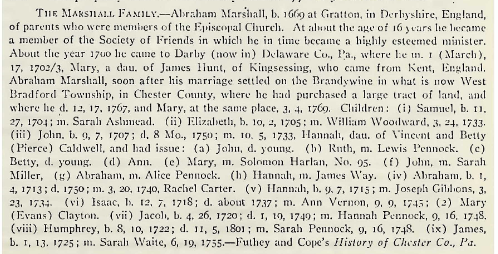
In the Youlgreave parish registers I found a baptism in 1667 for Humphrey Marshall son of Humphrey and Hannah. I didn’t find a baptism for Abraham, but it looks as though it could be correct. Abraham had a son he named Humphrey. But did it just look logical to whoever wrote the books, or do they know for sure? Did the famous botanist Humphrey Marshall have his own family records? The books don’t say where they got this information.
An earlier Humphrey Marshall was baptised in Youlgreave in 1559, his father Edmund. And in 1591 another Humphrey Marshall was baptised, his father George.
But can we connect these Marshall’s to ours? We do have an Abraham Marshall, grandson of Charles, born in 1792. The name isn’t all that common, so may indicate a family connection. The villages of Elton, Gratton and Youlgreave are all very small and it would seem very likely that the Marshall’s who went the USA are related to ours, if not brothers, then probably cousins.
Derbyshire Quakers
In “Derbyshire Quakers 1650-1761” by Helen Forde:
“… Friends lived predominantly in the northern half of the country during this first century of existence. Numbers may have been reduced by emigration to America and migration to other parts of the country but were never high and declined in the early eighteenth century. Predominantly a middle to lower class group economically, Derbyshire Friends numbered very few wealthy members. Many were yeoman farmers or wholesalers and it was these groups who dominated the business meetings having time to devote themselves to the Society. Only John Gratton of Monyash combined an outstanding ministry together with an organising ability which brought him recognition amongst London Friends as well as locally. Derbyshire Friends enjoyed comparatively harmonious relations with civil and Anglican authorities, though prior to the Toleration Act of 1639 the priests were their worst persecutors…..”
Also mentioned in this book: There were monthly meetings in Elton, as well as a number of other nearby places.
John Marshall of Elton 1682/3 appears in a list of Quaker emigrants from Derbyshire.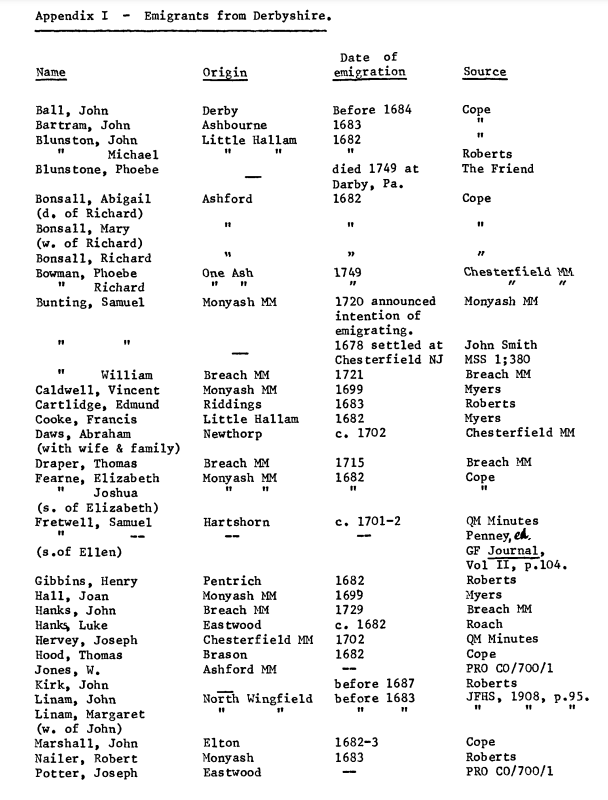
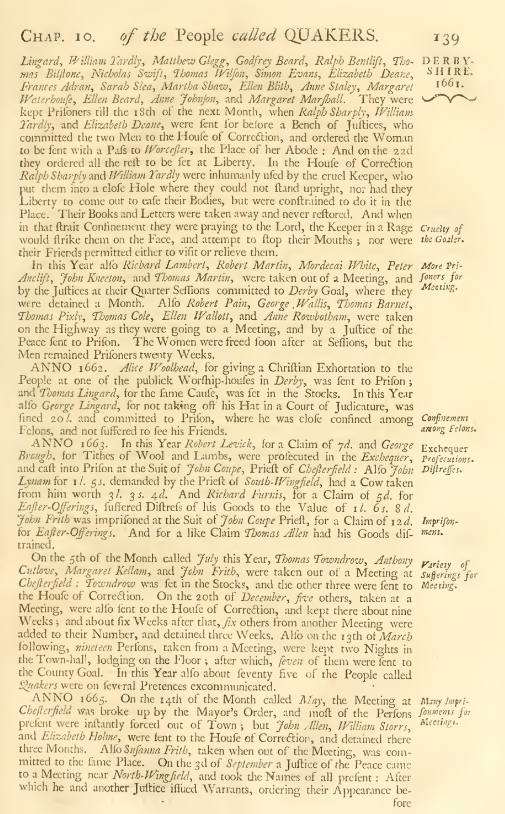
The following image is a page from the 1753 book on the sufferings of Quakers by Joseph Besse as an example of some of the persecutions of Quakers in Derbyshire in the 1600s:
A collection of the sufferings of the people called Quakers, for the testimony of a good conscience from the time of their being first distinguished by that name in the year 1650 to the time of the act commonly called the Act of toleration granted to Protestant dissenters in the first year of the reign of King William the Third and Queen Mary in the year 1689 (Volume 1)
Besse, Joseph. 1753Note the names Margaret Marshall and Anne Staley. This book would appear to contradict Helen Forde’s statement above about the harmonious relations with Anglican authority.
The Botanist
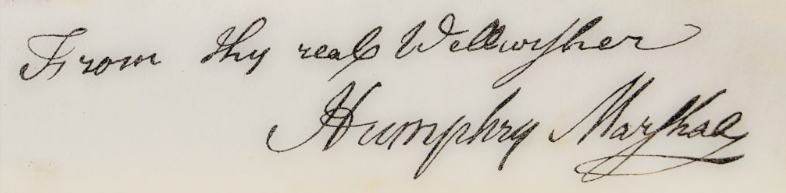
Humphry Marshall 1722-1801 was born in Marshallton, Pennsylvania, the son of the immigrant from Elton, Abraham Marshall. He was the cousin of botanists John Bartram and William Bartram. Like many early American botanists, he was a Quaker. He wrote his first book, A Few Observations Concerning Christ, in 1755.
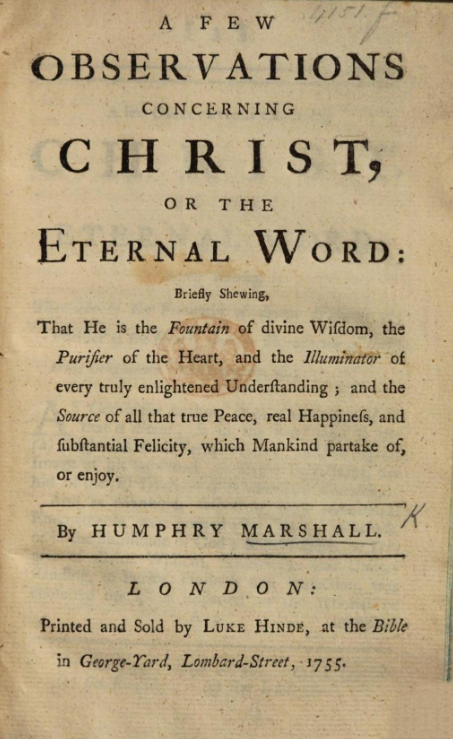
In 1785, Marshall published Arbustrum Americanum: The American Grove, an Alphabetical Catalogue of Forest Trees and Shrubs, Natives of the American United States (Philadelphia).
Marshall has been called the “Father of American Dendrology”.
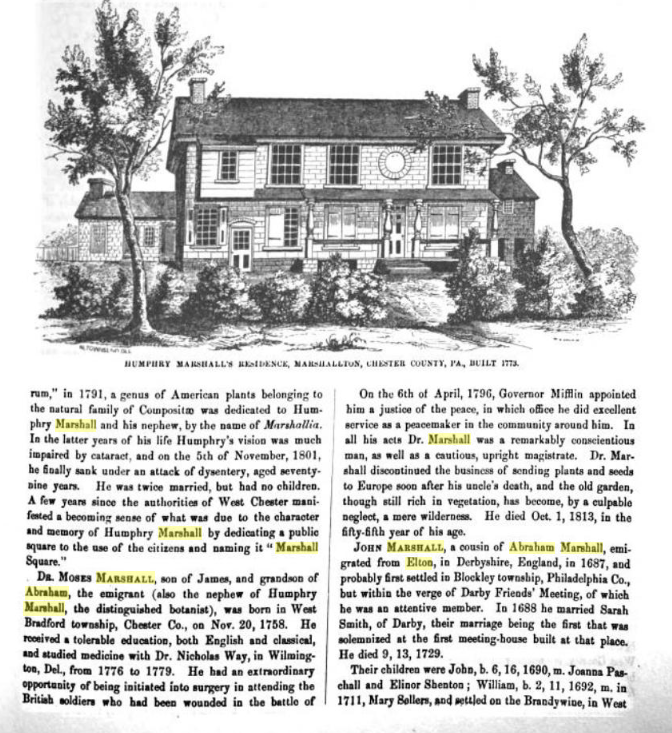
A genus of plants, Marshallia, was named in honor of Humphry Marshall and his nephew Moses Marshall, also a botanist.
In 1848 the Borough of West Chester established the Marshall Square Park in his honor. Marshall Square Park is four miles east of Marshallton.
via Wikipedia.
From The History of Chester County Pennsylvania, 1881, by J Smith Futhey and Gilbert Cope:
From The Chester Country History Center:
“Immediately on the Receipt of your Letter, I ordered a Reflecting Telescope for you which was made accordingly. Dr. Fothergill had since desired me to add a Microscope and Thermometer, and will
pay for the whole.’– Benjamin Franklin to Humphry, March 18, 1770
“In his lifetime, Humphry Marshall made his living as a stonemason, farmer, and miller, but eventually became known for his contributions to astronomy, meteorology, agriculture, and the natural sciences.
In 1773, Marshall built a stone house with a hothouse, a botanical laboratory, and an observatory for astronomical studies. He established an arboretum of native trees on the property and the second botanical garden in the nation (John Bartram, his cousin, had the first). From his home base, Humphry expanded his botanical plant exchange business and increased his overseas contacts. With the help of men like Benjamin Franklin and the English botanist Dr. John Fothergill, they eventually included German, Dutch, Swedish, and Irish plant collectors and scientists. Franklin, then living in London, introduced Marshall’s writings to the Royal Society in London and both men encouraged Marshall’s astronomical and botanical studies by supplying him with books and instruments including the latest telescope and microscope.
Marshall’s scientific work earned him honorary memberships to the American Philosophical Society and the Philadelphia Society for Promoting Agriculture, where he shared his ground-breaking ideas on scientific farming methods. In the years before the American Revolution, Marshall’s correspondence was based on his extensive plant and seed exchanges, which led to further studies and publications. In 1785, he authored his magnum opus, Arbustum Americanum: The American Grove. It is a catalog of American trees and shrubs that followed the Linnaean system of plant classification and was the first publication of its kind.”
 July 1, 2024 at 6:37 am #7530
In reply to: The Incense of the Quadrivium’s Mystiques
At last the weekend was over. What had been acheived was anyones guess, certainly Truella couldn’t have said if it had been a success from the organizers point of view or not. One thing was abundantly clear: the witches were not cut from the same cloth as the nuns and the pious gravity of some of them had been anathema to the witches. But not all of them, it had to be said.
When Truella had wandered into the library, ostensibly to look for material on the frog sisters, but in reality just wanting a break from the constant presence of so many others, she was initially disheartened to find someone else had the same idea. Sassafras was curled up in an armchair poring over an old journal. She started guiltily when Truella walked in and quickly closed the leather bound volume.
“Oh please, don’t mind me. Carry on reading,” Truella reassured her, “I just came in here for a break. Point me in the direction of the local history section and I’ll not bother you.”
“Are you interested in the local history?” Sassafras asked, genuinely curious.
“Obsessed, more like!” Truella laughed, and proceeded to tell the story of the dig in her garden. She hadn’t intended to go into such detail and at such length, but Sassafras was interested and asked all the right questions.
“You seem very knowledgable about the history of the area,” Truella was prompted to invite Sassafras to come to her house to see what she’d uncovered. “I assume they let you out of here sometimes.”
Sassafras laughed. “Not very often, but I escape. I tell them I’m collecting herbs in the woods. Want to know a secret?” she leaned forward and lowered her voice. “I’m not really a nun, I’m only here because of the place. This place,” she sighed and her eyes had a faraway look, “This place, the history, oh my dear you have no idea, it’s rich beyond imagining for ancient history.”
The conversation that ensued had been illuminating for both of them, and they had agreed to keep in contact. Sassafras had given Truella a bundle of old journals to smuggle out of the Cloisters, written in the early 16th century.
Now all Truella had to do was get the journals home without being detected. It would require an effective cloaking spell, and she wished she had more confidence in her own magic.
June 25, 2024 at 9:06 pm #7524In reply to: The Incense of the Quadrivium’s Mystiques
The obvious place to start with investigations into the history of the Morticians Guild was to question Rufus. But first she needed to think. Truella made her way to her room, and locked the door. At least now that Eris was back so soon, Truella was free to let Eris get on with whatever she was doing. After lowering the blinds at the windows, she lay back on the bed and closed her eyes. As she started to drift off to sleep, an imaginary conversation ran through her head.
Rufus: “The Morticians’ Guild, originally known as the ‘Necro-Keepers,’ trace their lineage back to ancient Egypt. They were the guardians of rites that ensured the safe passage of souls to the afterlife. Over millennia, they adapted and evolved, absorbing arcane knowledge from various cultures—the Greeks with their Eleusinian Mysteries, the Romans with their burial rites, even the Celtic traditions of Samhain.”
Truella: “That’s fascinating. So, this ancient craft has been handed down through generations?”
Rufus: “Precisely. While Hildegarde von Bingen brought enlightenment and medicinal wisdom to her nuns in the 12th century, the Morticians’ practices were already etched in the annals of history. They operated in silence, often in the shadows, perfecting the skills of embalming, necromancy, and spirit communication.”
Truella: “And what about their presence here, in this coven merger?”
Rufus: “We’ve been called upon at times of great need, when balance must be maintained between the living and the dead. Our presence here isn’t coincidental. The dragons and ancient spirits awaken, and we, the keepers, ensure that not all realms collide irreversibly.”
Truella: “So, would you say the Guild has played a role in significant historical events?”
Rufus: “Indeed. We’ve been the unsung heroes, the silent watchers. From plagues to wars, ensuring the dead find peace and don’t linger to disrupt the world of the living. Our methods may have modernized, but our core purpose remains unchanged. The knowledge, the rituals—they are our legacy.”
Truella: “Thank you, Rufus. That’s more fascinating than a year’s worth of ancient spellbooks.”
Rufus: “You’re welcome, Truella. Just remember, history isn’t merely dates and names; it’s living through us, weaving its magic continuously.”
June 23, 2024 at 6:00 pm #7520In reply to: The Incense of the Quadrivium’s Mystiques
“Why has Frella gone so soon?” asked Truella, when the beastly morality prayers were finished. “She was supposed to accompany us down the cellars tonight. I tell you what,” Truella rubbed her eyes and pushed her hair back, “This has been the longest day I’ve ever known. And it’s not over yet. Maybe we should leave the exploration of the cellars until tomorrow night.”
“Suits me,” said Zeezel, “I didn’t want to go down there anyway. The thought of going down there would ruin my evening, and I’ve got a gorgeous little cocktail dress picked out for tonight.”
“Jeezel, ” Eris said warningly, “We’re here on business.”
“Oh, lighten up, Eris! None of us even knows what we’re really here for! One minute it’s a boring merger or even a takeover, the next minute it’s all cloak and dagger mystery, then it’s a morality play, what’s it gonna be next?”
“A Barbara Cartland novel? Or 50 shades of undertakers?” Eris said with scowl.
“You don’t want to go down the cellar either, do you, Eris?” Truella asked, knowing the answer. “Never mind. You go and say some more prayers with Audrey. Jez, enjoy your evening to the hilt,” Truella wiggled her eyebrows. “I’ll go on my own.”
The others looked at her open mouthed. “You can’t be serious!”
“She isn’t going on her own,” Eric said darkly.
“I don’t know what you mean,” Truella pretended innocence. Of course she wasn’t going on her own. Rufus would go with her, and she even had an idea to invite Sassafras and Sandra. “Oh, alright then, I won’t go,” she lied. ” I’ll wait for you and we’ll go tomorrow night. But only if Frella comes back so she can come with us.”
Eris wasn’t stupid, she knew exactly what Truella was planning. She had to rein Truella in, but how? Suddenly, inspiration struck.
“We’d better go and get ready for dinner,” Eris said, “See you all later in the dining hall.” And with that she stalked out of the room.
As soon as she was out of the door, Eris sprinted up the hallway. She had to get to him before Truella got there. Crashing into Brother Bartolo as she careered round a corner, she apologised hurriedly and asked if he knew where Rufus was. Bartolo informed her that he’d seen Rufus by the fountain. Eris resisted the temptation to remark snidely about him needing to cool down.
He was still there when Eris reached the courtyard, sitting on the side of the water feature, trailing his hand in the water and looking gloweringly pensive. Eris took a deep breath.
“Mind if I join you?” she asked pleasantly, sitting down beside him. “We’re so grateful to you guys for coming to help us out, it’s all quite a lot for us to take in, you know?” Eris smiled disarmingly. “We’d feel so much better if Frella was here with us. We did manage to get her here, but something went wrong and she didn’t stay as long as we hoped she would. She’s on a mission in Ireland, and couldn’t come over, but Sister Audrey kindly offered to let Frella posess her for 24 hours, and then I don’t know what happened but Frella was called back abruptly to her own body.” Eris knew she was garbling semi incoherently, which was most unlike her normally, but she thought this approach would appeal. Rufus seemed to be the type to be a sucker for a damsel in distress. “If only someone else would offer to let Frella possess his body for 24 hours so that she can come and join us…”
Eris’s little spell must have worked a treat, as Rufus promptly agreed. “I can help you with this. I offer my body for Frella to possess, if you think it will assist you.”
Eris beamed at him. “What a charming gentleman you are!” she gushed, surprisingly both of them as she leaned forward and impulsively kissed his cheek. “I must go,” she said. Horrified, her face crimson, she fled back inside the cloisters.
-
AuthorSearch Results