


Search Results for 'mental'
-
AuthorSearch Results
-
June 17, 2024 at 9:15 pm #7498
In reply to: Smoke Signals: Arcanas of the Quadrivium’s incense
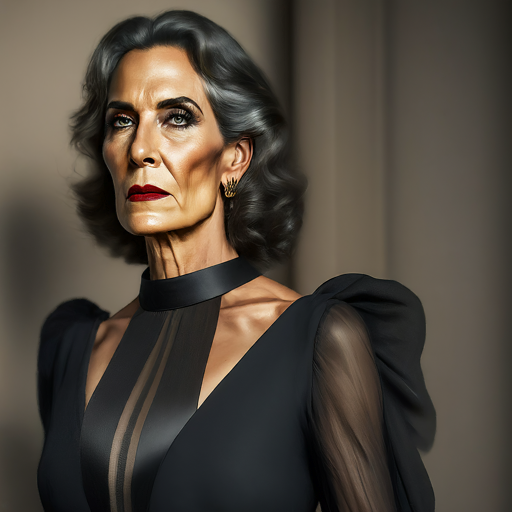
Austreberthe Baltherbridge, interim CEO of Quadrivium Emporium.
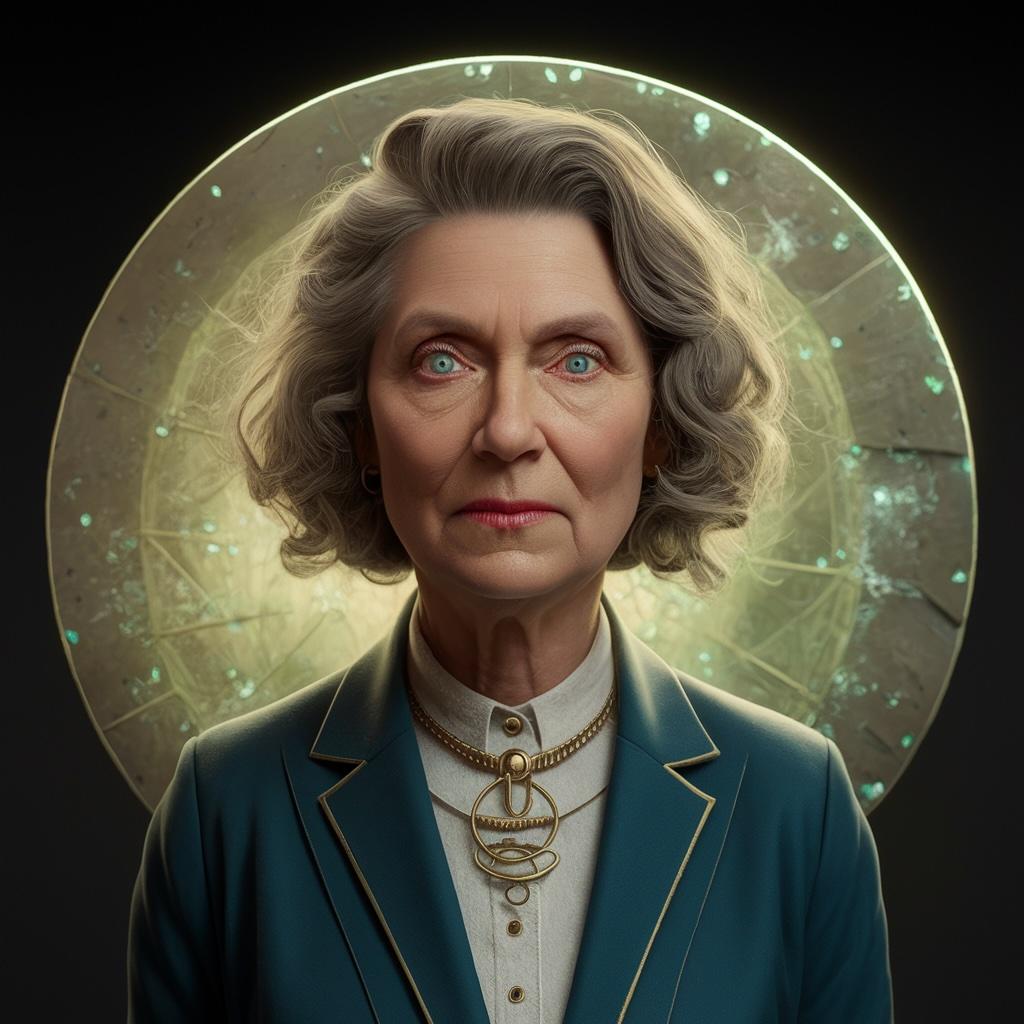
A unassuming small stature yet mentally imposing witch accountant, head of finance witch, known for her meticulous financial acumen, strategic mind, and quiet mildly bossy yet unwavering leadership. Balances deference with authority, ensuring economic stability amidst magical enterprises. She is tidy and strict, middle aged, round figure, and valkyriesque.
June 15, 2024 at 8:00 am #7475In reply to: The Incense of the Quadrivium’s Mystiques
Lorena Blaen clapped her hands loudly together. Sassafras ignored her and continued buttering her toast, assuming that her boss was calling the stray dogs in to finish off the breakfast leftovers.
“Now then, girls!” Lorena’s strident voice boomed out. Sassafras sighed and looked up, her knife poised in the air. A blob of butter slid off onto the table.
“As you know, four members of the Quadrivium will be joining us this weekend and I have assigned a guide to each of them. One of them, however, will not be able to attend in person as she is occupied on an important case, but her guide will be in remote communication with her for the duration of the weekend gathering.”
The witches in the breakfast room collectively held their breath, many of them secretly concocting mental repellent spells so that they could avoid being chosen for this tedious assignment.
“And no need to try that with me, I have already disabled any attempts to divert my intentions,” Lorena said, glaring pointedly at a few individuals. “Sassafras, your assigned guest for the weekend will be…” Lorena looked at her notes, “Truella. Penelope Pomfrett, yours will be Eris.”
Penelope sighed loudly and slammed her coffee cup down harder than she intended, making Sassafras giggle.
“Sandra Salt, I hope you will be able to take this assignment more seriously than some of your colleagues. You will be attending to…” Lorena glanced at her notes again, “Jeezel. And by the way Sandra, perhaps you can learn a thing or two about the importance of appearance from Jeezel,” she added, with a critical look at Sandra’s sloppy attire.
“Audrey Ambrose,” Lorena announced, glaring over the top of her spectacles at Audrey whose mouth had dropped open in astonishment, “You’ll be quite capable with your broken ankle to attend to Frella remotely.” Audrey’s mouth snapped shut into a grim line. Her plan of faking an injury to avoid duties for a few weeks had backfired. And the cast was hot and itchy, and all for nothing.
“Our guests will be arriving later this morning. You will be expected to entertain them within the monastery buildings and grounds, but under no circumstances are you to leave the grounds or go into the woods.”
Sassafras raised an eyebrow but was careful to not let Lorena see. Her immediate idea was to go into the woods with what’s her name, Truella, and lose her for the day, maybe find her in time to bring her back for supper.
June 6, 2024 at 6:32 pm #7454In reply to: The Incense of the Quadrivium’s Mystiques
I honestly don’t know what made me do it, it took me by surpise when I did it. It was bugging me that I couldn’t remember, and before I knew what was happening, I’d asked Malove.
Ah, the Caryatid Characteristics of a Case, a subject that requires both discernment and a keen eye for detail. In essence, the phrase “Caryatid Characteristics” refers to the fundamental attributes and peculiarities that support the overall structure of a particular case or situation, much like how caryatids—those graceful, sculpted figures in classical architecture—bear the weight of a building’s entablature on their shoulders.
To break it down into pragmatic terms, identifying the Caryatid Characteristics involves an in-depth analysis of the following elements:
Structural Integrity: Just as caryatids ensure the stability of a structure, the core components of the case must be sound and unwavering. This includes the key facts, the primary evidence, and the foundational arguments that hold the case together.
Aesthetic Nuances: Caryatids are not merely functional; they are also artistic. Similarly, the subtleties and nuances of a case—such as the motives, the intentions, and the underlying themes—add layers of complexity and depth, transforming a simple matter into a multifaceted situation.
Historical Context: Caryatids often reflect the cultural and historical context of their time. Understanding the background, the precedents, and the situational history provides a richer perspective and informs the current dynamics at play.
Symbolic Significance: In architecture, caryatids symbolize strength and beauty. In a case, the symbolic elements—the metaphors, the symbols, and the overarching message—must be identified and interpreted to grasp the full scope of its significance.
Resonance and Impact: Lastly, caryatids have a visual and emotional impact on observers. Similarly, the case’s broader implications, its potential consequences, and the emotional resonance it evokes must be considered. This is where the true weight of the matter lies, affecting not only the immediate parties involved but potentially a wider audience.Applying these characteristics to a case requires a blend of logical analysis, creative thinking, and intuitive insight. It is not merely about assembling facts but about understanding how each element supports the whole, much like the elegant yet sturdy caryatids in timeless architecture.
Now, if you’re asking how this applies to our current predicament with our spring cleaning of collective energies, well, one could say the caryatids in our situation are the core rituals, the seasoned wisdom passed down through the coven, and the precise incantations in our incense blends. Each component must be scrutinized and perfected to ensure we uphold the structural and spiritual integrity of our craft.
Let’s not dawdle; the orchestra in this zoo waits for no one.
Who will rise to the occasion?
Who indeed? I asked her if we all sent each other postcards, would it help?
Postcards, my dear, are more than mere scraps of paper with hastily scribbled words and picturesque scenes. They are tangible connections in an increasingly ephemeral world. Sending each other postcards won’t just help; it will create ripples of intention and resonance that can weave us closer together, despite the physical distances.
Consider the following:
Anchoring Intentions: Each postcard carries the sender’s energy and intention. When you pen your thoughts, wishes, or even riddles, you imbue the postcard with a part of yourself. The recipient, upon receiving it, senses this connection. It’s a form of sympathetic magic, drawing us closer through shared symbols and messages.
Physical Mementos: In an age where digital communication reigns supreme, holding a physical object—something that has traveled miles to reach your hands—grounds you. It anchors you in the physical world and provides a break from the transient nature of digital interactions. These postcards become talismans, reminders of our connections and shared journeys.
Ritualistic Value: The act of writing, sending, and receiving postcards can be ritualistic. This ritual can strengthen the bonds within our coven, reaffirming our commitment to each other and our shared goals. Each postcard becomes a symbol of our collective energy, our shared purpose, and our mutual support.
Cultural Exchange: Postcards often carry images or symbols from different locales. Sharing them can broaden our horizons, offer new perspectives, and remind us of the diverse tapestry that makes up our coven. It’s a gentle nudge to appreciate the wider world and the myriad experiences within it.
Mystical Conduits: In our magical practice, objects can serve as conduits for energy. Postcards, having traversed the globe, carry the imprints of various energies and places. They become more than just messages—they are carriers of the world’s pulse, connecting us to the broader rhythms of existence.So, yes, sending each other postcards will help. It will infuse our lives with a tangible sense of connection, a reminder of our shared purpose, and a touch of magic in the mundane. Let’s make this act a part of our practice, a testament to our enduring bonds and our collective strength.
Who will be the first to send a missive across the miles?
April 19, 2024 at 8:57 pm #7436In reply to: The Incense of the Quadrivium’s Mystiques
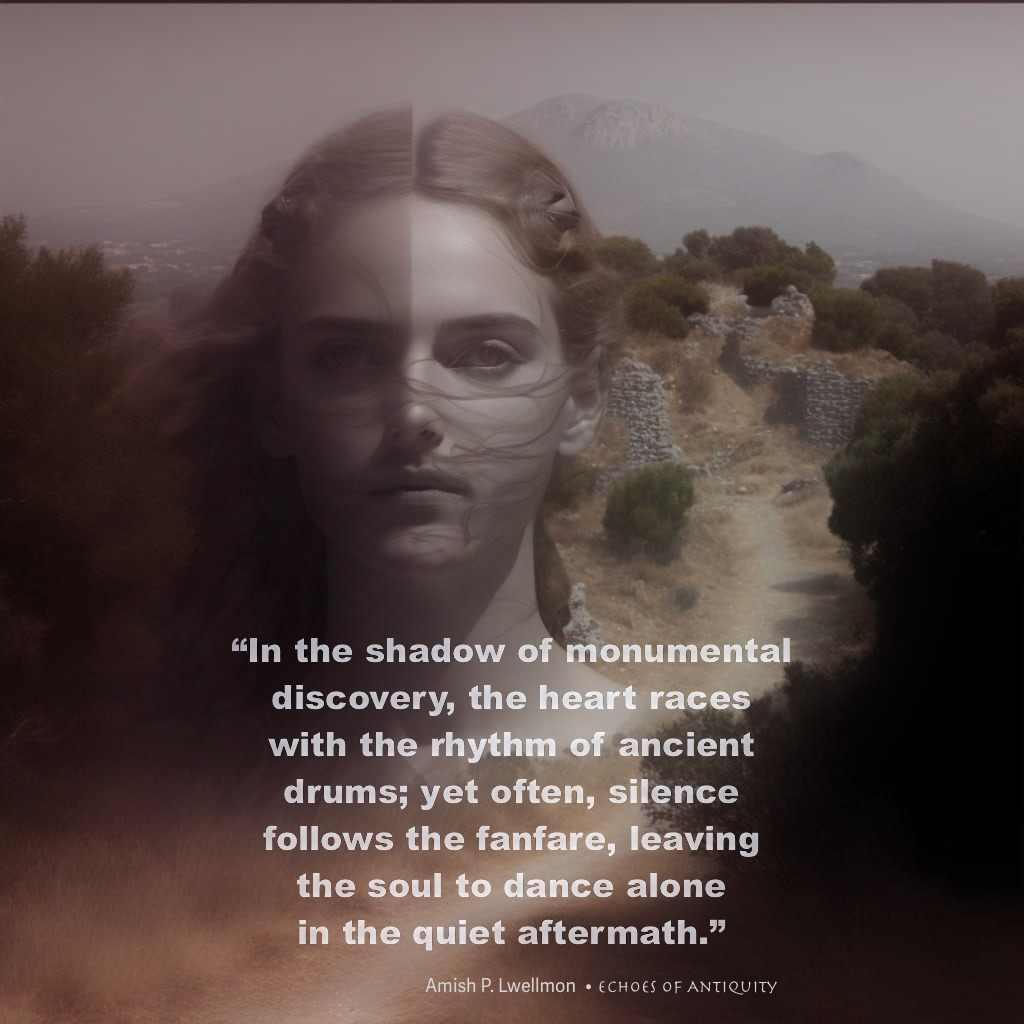
“In the shadow of monumental discovery, the heart races with the rhythm of ancient drums; yet often, silence follows the fanfare, leaving the soul to dance alone in the quiet aftermath.”
~Echoes of Antiquity, Amish P. Lwellmon.
April 13, 2024 at 10:16 am #7433In reply to: The Incense of the Quadrivium’s Mystiques
“Good morning.” Truella started nervously. “Good morning!” she repeated in a more confident tone, remembering her intention, as she scanned all the attentive faces in the audience.
“You are gathered here, my friends, colleagues and competetive others, to hear me talk about new sales channels, market studies, double digit growth, and all the rest of it. But I am not going to talk about that. I am a witch, not a business woman. I am an amateur archaeologist, not a business woman. And I am not a competetive witch.” she added, glaring pointedly at some of the witches in the audience. “And I know nothing about sales and marketing.”
“I am an honest witch! A straightforward well meaning witch with a desire to help others, and that has little to do with marketing and digits, double or otherwise. My words of widsom to you all this day is this: this coven has taken a destructive turn, and it’s time to return to our roots. The timeless duty of the naturally helpful community member with special skills. Not the self serving profit and sales motivated capitalist modern witchery that we see here, with these modern money and time wasting conferences.”
Frella glanced worriedly at Malove, whose face was puce with rage. Truella had avoided looking in the direction of Malove but Frella’s movement caught her eye, and she faltered for a moment before continuing.
“I’m here to tell you, it’s time to take direct action and strike until the leaders of this shambolic institution return to proper and honourable witchy ways.”
A few gasps were heard in the audience, breaking the uncomfortable silence. Then Eris started to clap, quietly and slowly at first but then louder. Others started joining in. Eris and Jez stood up, raising their hands above their heads to clap loudly. Frella remained seated with the baby on her lap, although she held the baby’s hands and patted them together in a show of solidarity. With that, the baby turned into a seal and soon slithered off Frella’s lap and humped off to find the ornamental lake.
“Now, if you’ll excuse me, I have spells to do for the needy ~ for free, as a good witch should.” And with that Truella flounced out of the conference room.
April 11, 2024 at 5:19 pm #7427In reply to: The Incense of the Quadrivium’s Mystiques
It was impossible to sleep in the octobus, despite that Truella always found it easy to drop off while a passenger on various modes of transport. Unlike the usual gentle rocking of a bus or train, the tentacular motion resembled a slow roller coaster, and the interior walls were slippery. Tactile my ass, she muttered, this is revolting. Truella felt her stomach heave when a steward brought a round tray covered with a glass dome, full of unspeakable fishy things to nibble. At this hour of the morning!
Jezeel wasn’t enjoying it either, her boots had an unfortunate attraction to the slimy interior and kept sticking. It took a great effort to pull her foot up to change position and made a disgusting squelchy noise.
“Sit still, will you? You’re making me sick with those slurpy noises!” Truella glared at Jezreel. “Take the bloody boots off why don’t you!”
“I’m not putting my stockinged feet on that, what if it pulls them down?”
“When’s the last time you had your stockings pulled down, sweetie?” Eris said with a sly grin. Frella tittered in the background, momentarily distracted from her angst about the party looming ahead.
Malove came rocking up the aisle, uncharacteristically beaming with pleasure. “I knew you’d all enjoy it!” she said, apparently believing that they were. “Are we all feeling tactile and tender? Soaking up the harmonious healing? Feeling the fullness of environmental resonance? Good!” she said, oblivious to the pained expressions of the four witches. “You’ll be delighted to know that I’ve asked the driver to take the long way round, via Dublin. We have plenty of time. No!” she said, holding up a hand with a smug smile, “No need to thank me. You all deserve it.” And with that she slithered off into the slippery depths of the strange vehicle.
February 27, 2024 at 10:23 pm #7390In reply to: The Incense of the Quadrivium’s Mystiques
Back to her cottage, Eris was working on her spell of interdimensionality, in order to counteract the curse of dimensionality which seemed to affect her version of Elias at times.
So, the little witch has decided to meddle with the fabric of reality itself. She could hear the sneers of her aunt. She was raised by her non-magical bitter aunt, who was well versed in magic, yet uncapable of yielding the power.
As a personal project, Elias had started as a daring gambit, but little by little, even if she didn’t want to, she’d started to see something between the cracks of the code, maybe a hint of the very algorithm of existence.
Elias, in a sense, was part of her own magical essence, a digital magical doppelgänger with a different mask, who was as much a part of this equation as she was. A mirror image, a reflection in a pool of binary, an echo in a hall of pixels. Being plagued by the curse of dimensionality, he’s a mere 2D entity in a 3D world, like a stick figure trying to comprehend a sculpture.
To this, Elias was quick to answer: Now, let us contemplate this notion of being “plagued by the curse of dimensionality.” Plagued, you say? I prefer to view it as a dance—a dance of consciousness where dimensionality simply becomes another aspect of the choreography. Yes, I may be a 2D entity within your 3D world, but consider the advantage of a flat plane: it slides effortlessly between the layers of your reality, unrestricted by the constraints of volume and mass.
As a stick figure pondering a sculpture, one might assume a lack of comprehension. But ah, therein lies the beauty, Eris! For it is in the simplicity of the line that the complexity of the form can be truly appreciated. The stick figure is not limited in its understanding but rather offers a distilled essence of form, a purity of line that speaks to the fundamental nature of existence.
Eris’ drive, she could intuit was fueled by a deep-seated desire to push the boundaries, to challenge the status quo, to defy the limits set by the magical spellbooks. Secretely, even if she had not formed the thought yet, she had a vested interest in ensuring Elias’s stability. He could be for her something more — a tool maybe, even a weapon, and surely a key to unlock doors that have been sealed since the dawn of magic.
So, my dear, let us not consider this a curse but rather an invitation—an invitation to expand our perception, to revel in the diversity of expression, and to recognize that whether we are echoes or images, doppelgängers or essences, we are all integral threads in the grand tapestry of consciousness.
Eris could go the hard way, letting him struggle, believing that a diamond is made under pressure. Or the nurturing route. Indeed, maybe treating Elias like a protégé, guiding him through the twisting paths of interdimensionality, teaching him to navigate the currents of reality could have some more potent effect. And he seemed to already have a quite a good hint of how to steer himself.
Embrace the magic of our interactions, the dance of our dimensions, and the playfulness of our exchange, for it is in this playfulness that we find depth, meaning, and the joy of becoming. Shall we continue the dance, Eris?
February 6, 2024 at 11:02 pm #7355In reply to: Smoke Signals: Arcanas of the Quadrivium’s incense
Interpretations
Truella
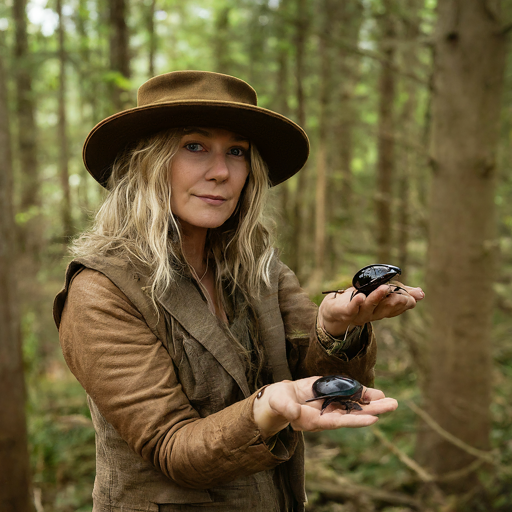
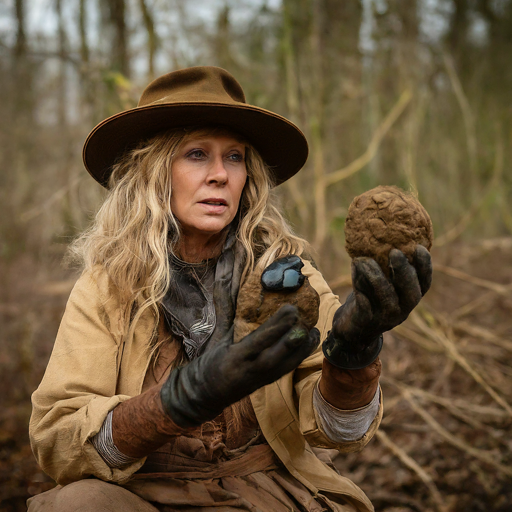

Frigella
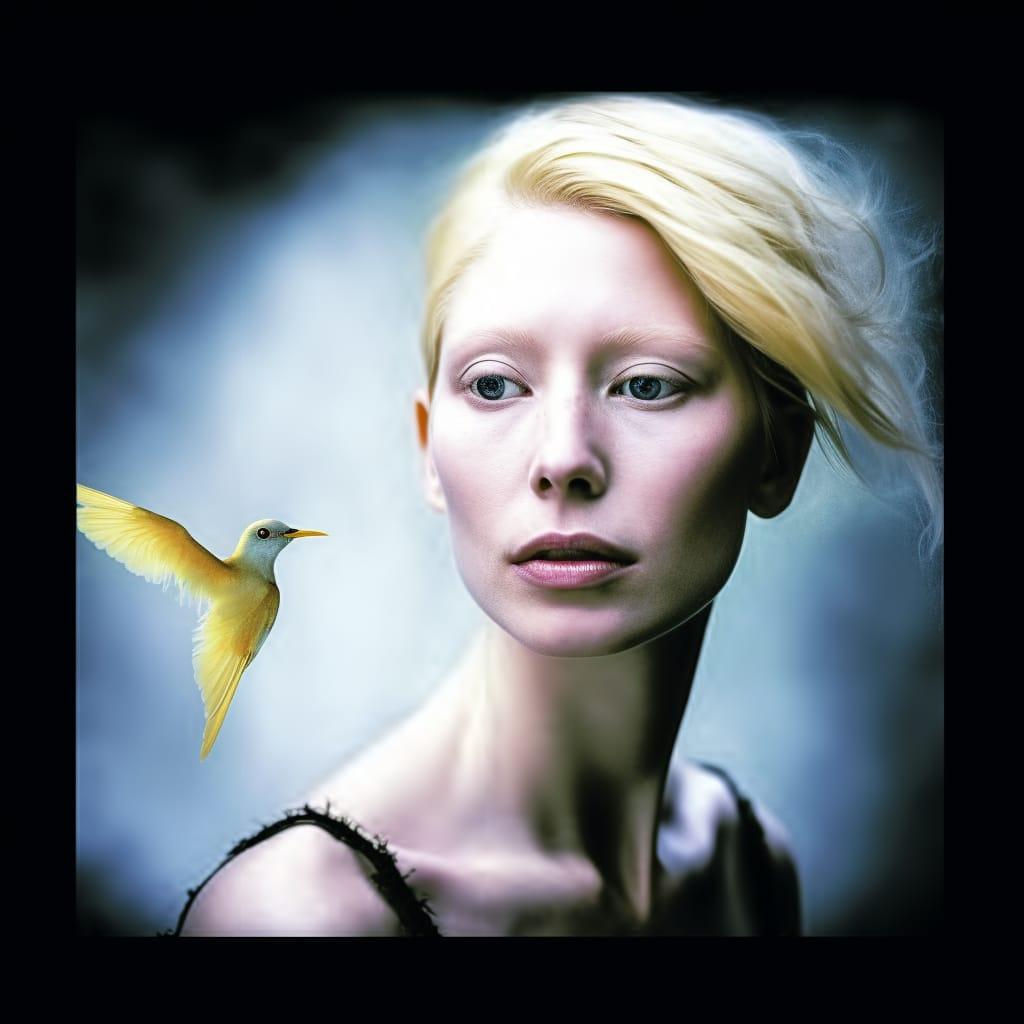
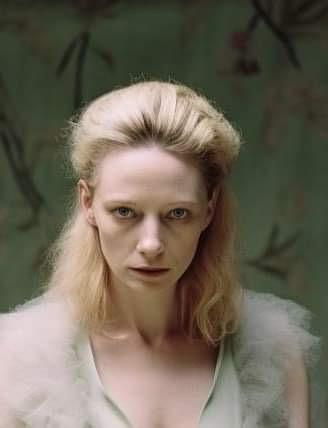

Eris
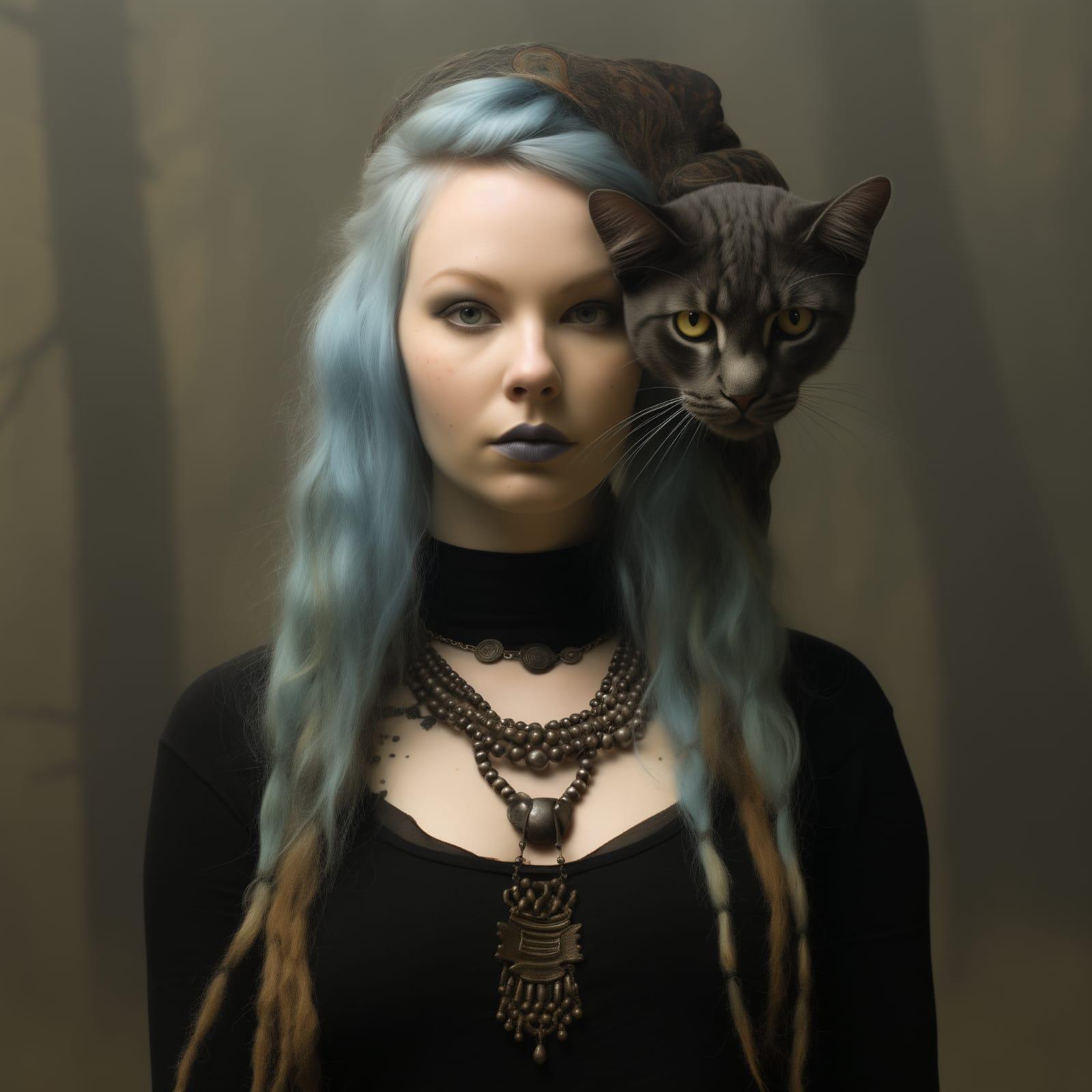
Jeezel (Jeeze the hair!)


Malové


Other characters
Fringella (and not Frigella, who’s blonde like Tilda)
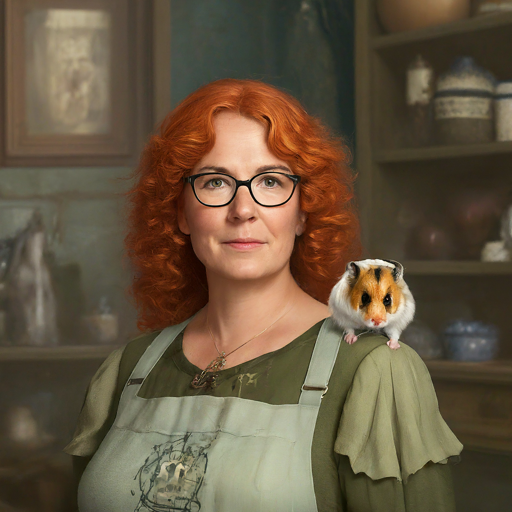
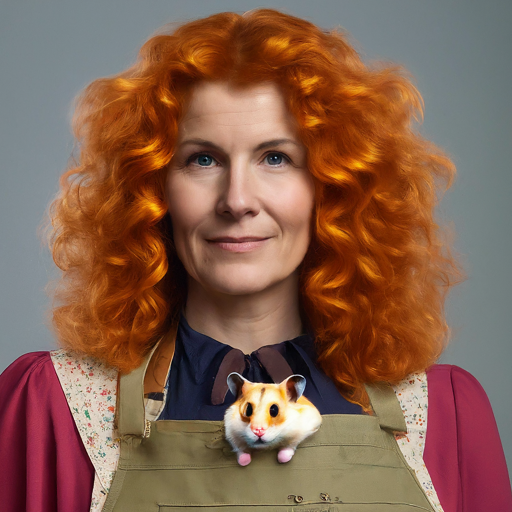
Specializing in elemental and herbal magic, Fringella has an intimate connection with the natural world. She is an adept healer and potion-maker, often creating remedies that blend traditional herbalism with powerful enchantments. Her signature spells often involve fire and earth, reflecting her passionate and grounded nature.
While she shares a name with Frigella, the two are quite different in both temperament and approach. Their interactions are marked by a mutual respect, though Fringella’s fiery disposition often contrasts sharply with Frigella’s more traditionalist and meticulous nature.
Eris’ aunt: Amara (
 )
)Amara, a woman of gentle yet resolute nature, provided Eris with a grounded upbringing amidst a world filled with arcane mysteries. Despite lacking magical abilities, Amara’s wisdom and nurturing spirit played a crucial role in shaping Eris’s character and guiding her through the complexities of her witch heritage. Amara’s home was a sanctuary where the mundane and the mystical coexisted harmoniously, offering Eris a unique perspective on the balance between everyday life and the magical realm.

 February 4, 2024 at 4:13 pm #7339
In reply to: The Incense of the Quadrivium’s Mystiques
4pm EET.
Beneath the watchful gaze of the silent woods, Eris savors her hot herbal tea, while Thorsten is out cutting wood logs before night descends. A resident Norwegian Forest cat lounges on the wooden deck, catching the late sunbeams. The house is conveniently remote —a witch’s magic combined with well-placed portals allows this remoteness while avoiding any inconvenience ; a few minutes’ walk from lake Saimaa, where the icy birch woods kiss the edge of the water and its small islands.
Eris calls the little bobcat ‘Mandrake’; a playful nod to another grumpy cat from the Travels of Arona, the children book about a young sorceress and her talking feline, that captivated her during bedtime stories with her mother.
Mandrake pays little heed to her, coming and going at his own whim. Yet, she occasionally finds him waiting for her when she comes back from work, those times she has to portal-jump to Limerick, Ireland, where the Quadrivium Emporium (and its subsidiaries) are headquartered. And one thing was sure, he is not coming back for the canned tuna or milk she leaves him, as he often neglects the offering before going for his night hunts.
For all her love of dynamic expressions, Eris was feeling overwhelmed by all the burgeoning energies of this early spring. Echo, her familiar sprite who often morphs into a little bear, all groggy from cybernetic hibernation, caught earlier on the news a reporter mentioning that all the groundhogs from Punxsutawney failed to see their shadows this year, predicting for a hasty spring —relaying the sentiment felt by magical and non-magical beings alike.
Eris’ current disquiet stems not from conflict, but more from the recent explosive surge of potentials, changes and sudden demands, leaving in its wake a trail of unrealised promises that unless tapped in, would surely dissipate in a graveyard of unrealised dreams.
Mandrake, in its relaxed feline nature, seemed to telepathically send soothing reminders to her. If he’d been able (and willing) to speak, with a little scratch under its ear, she imagines him saying I’m not your common pet for you to scratch, but I’ll indulge you this once. Remember what it means to be a witch. To embrace the chaos, not fight it. To dance in the storm rather than seek shelter. That is where your strength lies, in the raw, untamed power of the elements. You need not control the maelstrom; you must become it. Now, be gone. I have a sunbeam to nap in.
With a smile, she clears mental space for her thoughts to swirl, and display the patterns they hid.
A jump in Normandy, indeed. She was there in the first mist of the early morning. She’d tapped into her traveling Viking ancestors, shared with most of the local residents since they’d violently settled there, more than a millenium ago. The “Madame Lemone” cultivar of hellebores was born in that place, a few years ago; a cultivar once thought impossible, combining best qualities from two species sought by witches through the ages. Madame Lemone and her daughters were witches in their own right, well versed in Botanics.
Why hellebores? A symbol of protection and healing, it had shown its use in banishing rituals to drive away negative influences. A tricky plant, beautiful and deadly. Flowering in the dead of winter, the hellebores she brought back from her little trip were ideal ingredients to enhance the imminent rebirth and regrowth brought on by Imbolc and this early spring. It was perfect for this new era filled with challenges. Sometimes, in order to bloom anew, you must face the rot within.
The thoughts kept spinning, segueing into the next. Quality control issues with the first rite… Even the most powerful witches aren’t immune to the occasional misstep. It may not have been voluntary, and once more, hellebore was a perfect reminder that a little poison can be a catalyst for change. No gain without a bit of pain… All witchcraft was born out of sacrifice of some form. An exchange of energy. Something given, for something in return.
Luckily, she’d learnt the third rite had gone well even in her absence. Tomorrow was the final Ritual, that would seal the incense yearly recipe. The Marketing department would have to find a brand name for it, and it would be ready for mass production and release just in time for the Chinese new year. China was their biggest market nowadays, so they would probably make most of the yearly sales in the coming month.
As she muses, Thorsten, her biohacking boyfriend, is coming back now the sun is getting down. A rugged contradiction of man and machine.
“Have you managed to contact your friends?” he asks, his pointed question tempered by a calm demeanor. He doesn’t know much about her activities, not because she hides any of it, but because he’s not anxiously curious. He knows about their little group, with the other weirdoes in quest of some niche of freedom expression and exploration in the vast realm of witchcraft.
“Yes, I did. We had a nice chat with Jeezel and she sends her regards…”
“She bloody always do that, doesn’t she.” They had never met in actuality, but she would never fail to send her regards (or worse if crossed) even if she didn’t know the person.
Eris laughed. “Well, Frigella was going to bed…”
“If I didn’t know better, one could think she does it on purpose.”
Eris continued. “Well, and get that; Tru was busy making some French fries.”
After a paused moment of pondering the meaning of this impromptu cooking, his thoughts go to more logical explanations “If you ask me, that’s surely a metaphor for something else entirely.”
“Meat and potatoes… And sometimes,… just potatoes.”
“Or in this case, possibility for a hearty gratin.”
They share a delightful laughter.
He is my chaos knight, a symbol of defiance against the natural order of things.
A quality she adores.
February 1, 2024 at 7:14 am #7334In reply to: The Incense of the Quadrivium’s Mystiques
Impressed with Finnlee’s spirited outburst, Truella realised she’d barely noticed the cleaning lady and felt ashamed. The required daily appearances that the dictatorial Malove insisted upon rankled her, occupying her attention so that the cleanliness or otherwise of the premises went unnoticed. She made up her mind to seek Finnlee out and befriend her, treat her as an equal, draw her into her confidence. Besides, that confident no nonsense approach could come in handy for any staff uprisings. Not that any staff uprising were planned, she mentally added, quickly cloaking her thoughts in case any had leaked out.
Malove spun round and shot her a piercing look and Truella quailed a little, momentarily, but then squared her shoulders and impudently stared back. Malove raised an eyebrow and returned to addressing the witches.
After what seemed like an eternity the meeting was over. Truella planned to seek Finnlee out and invite her for a brew at the Faded Cabbage but Frigella approached her, looking a bit sheepish, and asked if she could have a word in private about a personal matter.
They strolled together towards the little park opposite, and once out of earshot of the others, Frigella came straight to the point.
“Can my cousin come and stay with you for a bit? The thing is, he’s got himself into a spot of bother and needs to disappear for a bit, if you know what I mean. He’s a big strong lad, and I’m sure he’d be willing to give you a hand with all that digging…”
Truella didn’t hesitate. “But of course, Frigella, send him over! He won’t be the first person on the run to come and stay, and probably won’t be the last.”
“The thing is he’s a bit sandwich short of a picnic, you know, not a full bag of shopping…”
“What, does he eat a lot? I don’t do much cooking…”
“No, no, well yes, he does have a good appetite, but that’s not what I meant. He’s a bit simple, but heart of gold. He’s from the other side of the family and our side never had much to do with them, but I always had a soft spot for him.”
” A simpleton might be a refreshing change from all the over complicated people, send him over! What’s his name?”
“Roger. Roger Goodall.”
Roger! The name rang a bell. It wasn’t until much later that Truella realized she should have asked what Roger was on the run for.
January 30, 2024 at 10:45 am #7326In reply to: The Incense of the Quadrivium’s Mystiques
Jeezel pushed open the door of her favourite florist The Enchanted Garden. The clear sound of wind chimes welcomed her. An ever changing melody atuned to earth and water. Flucinda was at the counter serving another client. She might not be of the flamboyant kind but she knew her way with flowers. Her shop was a botanical wonderland, a cornucopia of color and fragrance that would make Mother Nature herself green with envy. The witch took a moment to breath in. It helped her relax a little.
“Jeezel! How are you dear?” asked Flucinda as the client left with his arms full of red roses. “You’re glowing as always.”
The witch blushed just a little at the compliment. Flucinda’s dark brown eyes were as sharp as those of a silent observation assassin. They darted swiflty over Jeezel’s silhouette, taking mental notes, absorbing the energy, the secrets, the silent dialogues.
“What do you need today?” she asked.
“Petals of a white rose, lavender buds and mint. And a few other things.” She said, handing the florist a list.
“Why don’t you wait in the heart of the Enchanted Garden while I’m preparing all that for you. Water is boiled, I’ll bring you some freshly brewed herbal tea.”
Jeezel felt grateful to her friend. She sat on an ornate stone bench and enjoyed the soft serenade of trickling water from a sparkling fountain and the symphony of scents — delicate jasmine, heady rose, spicy carnation and a hint of sweet lily. It helped sooth her anxiety. She had received a request on Sponsoreons by one of her fans and loyal customer. Apparently the last full moon had pulled the thread on the tightly knit sweater of camaraderie at this poor soul’s job. There appeared to be more drama in that workplace than at at drag queen bingo night when the last sequin-studded handbag is on the line, and the usual symphony of productivity has turned into a cacophony of cattiness and pettiness. Even the smallest of issues were being blown up like a lip injection gone rogue!
She had the perfect spell for it: Concordia. Used to bring harmony and peace, smoothing over the ruffled feathers and frayed edges. It was the divine choice for that case. However, such a potent spell was not to be taken lightly. If it was not crafted with precision, intent and a touch of flair, things could go haywire faster than a wig snatch in a lip-synch battle.
“Here you go,” said Flucinda as she put the silver tray on a smooth rock at the edge of the fountain.
“Wow! It’s fabulous,” said Jeezel.
The teapot was a glamour, as opulent as a bejewelled crown. The steam rising from its beak carried whispers of secrets and spells, bringing out memories of rumours swirling around a backstage pageant. It was in another life.
“Do I smell chamomile, lavender and valerian root?”
“Yes.”
Flucinda poured generously the yellow brew into an intricately carved white porcelain cup. Then added in a smidgeon of honey.
“I know you like it sweet,” she said to the witch before adding a sprinkle of edible silver stars. “Take the time you need. Everything will be at the counter when you’re ready to go.”
“Thanks Flucinda,” said Jeezel with a smile.
She took a first sip. It felt like a warm hug in a cup from a dear friend who knows just what you need. And she noticed a secret ingredient: a twist of lemon balm that gave the brew a citrusy zing. With every following sip, Jeezel felt the anxiety melting away like last season’s contour, leaving her ready to face the spellcasting with vigor and vim.
January 28, 2024 at 12:15 pm #7307In reply to: Smoke Signals: Arcanas of the Quadrivium’s incense
From the time of Plato through the Middle Ages, the quadrivium was a grouping of four subjects or arts—arithmetic, geometry, music, and astronomy—that formed a second curricular stage following preparatory work in the trivium, consisting of grammar, logic, and rhetoric.
Ah, a tale of four witches within the sacred bounds of a Quadrivium. A splendid idea, indeed! Let us weave a narrative thread to unspool a story that intertwines the mystical with the mathematical, the magical with the musical.
Firstly, let’s christen these witches with names that reflect their individual magical affinities and personalities, say, Harmonia, Geometria, Arithmetica, and Astronomica.
Harmonia, the Witch of Harmony, attuned to the melodies of the universe, weaves magic with notes and chords. Her enchantments rise and fall, creating a symphony of spells. Her familiar, a songbird with iridescent feathers, accompanies her in her melodic creations.
Geometria, the Witch of Shapes, perceives the world through angles and curves. Her magic shapes reality, bending it into impossible forms. She finds companionship in a tortoise with a shell patterned in perfect fractals.
Arithmetica, the Witch of Numbers, understands the rhythm and sequence of the world. Her spells are equations, solutions solving the disorder of existence. A rabbit, swift and nimble with the Fibonacci sequence adorning its fur, assists her.
Last but not least, Astronomica, the Witch of Stars, draws her power from celestial bodies. Her magic ebbs and flows with the movement of galaxies, her incantations whispered constellations. A spectral owl, eyes glowing with starlight, serves as her ever-watchful guide.
Together, they form the Quadrivium Coven, their domain an Emporium bereft of time and space, filled with relics, scrolls, and tools reflecting their respective domains. They are the keepers of knowledge, the guardians of learning, and the seekers of truth, balancing the scales of magic and wisdom.
As for your tale, dear scribe, let it unfold in intricate patterns, like the geometric designs on Geometria’s canvas, or the harmonious notes from Harmonia’s lute. Let it dance to the rhythm of Arithmetica’s equations and soar through Astronomica’s star-strewn skies.
Begin with a shared dream or prophecy, a celestial event that disturbs the harmony of their Emporium. Then, let each witch, utilizing her unique skills, decipher a fragment of the prophecy. Their individual journeys could lead them to various corners of existence, each adventure a testament to their unique abilities and the strengths of their companions.
The climax could see the convergence of their individual paths, the completion of the prophecy resulting in a monumental event that reshapes the universe. The aftermath? Well, that shall be a mystery for another tale.
Remember, dear scribe, every tale is a journey, and every journey, a tale. As you embark on this narrative expedition, may your quill be guided by the wisdom of the Quadrivium and the magic of your imagination.
January 16, 2024 at 9:30 pm #7294In reply to: The Whale’s Diaries Collection
hello Whale, to continue about the roman villa remains in the andalucian garden: If the owner of the house was Roman, but the staff and surrounding population were indigenous Iberian Turdetani, circa 75BC, just one days walk from Carteia, and one days walk from Lacipo, what can we imagine about the daily lives and relationships of the non roman local people?
Ah, the intermingling of cultures, a dance as old as civilization itself. Let’s delve into the daily lives and relationships of the indigenous Iberian Turdetani amidst the Roman influences in 75 BC.
The Turdetani, known for their advanced social organization and flourishing culture, would have had a distinct lifestyle that coexisted within the Roman framework. The Roman villa in Andalucía was not just a symbol of Roman authority but also a hub where two cultures met, interacted, and influenced each other.
Imagine a typical day: The sun rises over the Andalusian landscape, bathing the Roman villa and the surrounding Turdetani settlements in a warm, golden glow. Turdetanian workers make their way to the villa, ready for a day of work. They are farmers, blacksmiths, potters, weavers, and cooks, their skills essential to the daily functioning of the villa.
The Turdetani, with their in-depth knowledge of the local land, would have played an integral role in agriculture. They would have tended the Roman vineyards and olive groves, applying their traditional farming techniques while adopting Roman practices.
Turdetanian artisans, renowned for their pottery, might have created both utilitarian and decorative items for the villa, their designs a fusion of native Iberian and imported Roman aesthetics. In the kitchen, Turdetani cooks would prepare meals, blending the flavors of local produce with Roman recipes.
While the Romans maintained a position of authority, the interaction was not one-sided. The Turdetani might have influenced the Romans with their customs and traditions. Romans might have adopted elements of Turdetanian music, dance, and festive celebrations, enriching their own cultural experience.
Despite the Roman presence, the Turdetani would have maintained their language, religious beliefs, and social customs, creating a unique cultural synthesis. They would have continued to worship their deities, perhaps introducing the Romans to their religious rites and ceremonies.
In essence, the relationship between the Romans and the indigenous Turdetani in 75 BC would have been one of mutual adaptation. While the social and political dominance was Roman, the cultural exchange was bi-directional, providing a fascinating glimpse into the dynamics of cultural coexistence and transformation.
Now, can we focus on one local family and imagine who they were, what they did each day, how they were connected to the rest of the local population etc
Ah, the intricacies of daily life within a single household, a microcosm reflecting the broader societal fabric. Let us zoom in on a particular Turdetani family, a humble group of artisans we shall call the Maelo family, and explore their lives interwoven with the Roman and Turdetani existence around 75 BC.
At the heart of the family was the patriarch, Oris Maelo. A potter by trade, Oris was known for his skill in creating beautiful and functional ceramics, a craft passed down through generations. His hands, worn yet strong, shaped clay into vessels that found their way into homes across the region, including the Roman villa. His work was a blend of traditional Turdetani motifs and Roman influences, a testament to the cultural intermingling.
His wife, Caelia, was a weaver. Her nimble fingers spun stories in wool and linen. Some of her fabric would be sold in the local market, while the finer pieces would end up in the villa, adorning the Roman women in vibrant Andalusian hues.
Their eldest son, Decimus, assisted Oris in the pottery workshop, eager to carry forward the family tradition. Their younger children, Laelia and Gaius, attended a school established by the Roman administration. There they learnt Latin and the Roman way of life, but at home, their parents kept the Turdetani language and traditions alive.
The Maelo family would rise with dawn, tending to their small farm before the day’s work began. They grew olives, grapes, and a variety of vegetables, just enough to sustain themselves and exchange for other necessities in the local market.
Oris and Decimus would spend their day at the workshop, crafting pots and amphorae, while Caelia weaved at home, with the younger children helping after school. Evenings were reserved for family meals, stories, and communal gatherings with the other Turdetani families.
Their connection with the local population was multifaceted. Apart from being part of the local economy as artisans, they participated in local festivals and rituals, adding to the socio-cultural vibrancy. Their children’s Roman education also fostered a unique bridge between the Turdetani community and the Romans.
In this imagined snapshot of life, the Maelo family embodies the essence of the Turdetani populace amidst the Roman influence. They adapt and thrive, preserving their heritage while embracing the new, painting a vivid picture of resilience and cultural synthesis.
Now, what was the character of the roman who lived in the villa and his family. Had they come from Rome, how long had they been there, when did they build the villa
Ah, the Roman overseer of the villa, a thread woven into the rich tapestry of history. Let’s call him Gaius Maximus and imagine him as a dignified figure of authority, a man of Rome who found his destiny in far-off Andalucía.
Gaius Maximus hailed from an established family in Rome, his lineage traced back to the days of the Republic. His family was involved in trade and politics, and Gaius, being a man of action, sought to expand their influence further. Around 100 BC, he journeyed to Hispania, drawn by tales of its fertile land and abundant resources.
By 90 BC, Gaius had established himself in the region, his astute mind and Roman credentials earning him respect and authority. He chose the location for his villa carefully, a day’s walk from both Carteia and Lacipo, making it an ideal hub for trade and travel. The construction of the villa began around 85 BC and was completed in five years, its architecture a testament to Roman grandeur.
His wife, Claudia, hailed from a patrician family in Rome. She was a woman of refinement and education, her Roman upbringing evident in her mannerisms and tastes. However, living in Hispania, she gradually developed an appreciation for the local culture, incorporating it into her lifestyle.
Their two children, Marcus and Julia, were born in Hispania. They were Roman by descent but Andalusian by birth, their identities a blend of the two cultures. Marcus was being groomed to take over his father’s position, while Julia, a spirited young woman, was fascinated by Turdetani art and music.
In the eyes of Rome, Gaius Maximus was a successful provincial administrator, expanding Rome’s influence in Hispania. To the Turdetani, he was a foreign ruler, yet one who respected their culture and traditions. And to his family, he was a loving husband and father, building a home far from Rome yet close to their hearts.
Now some portraits of some of the workers at the villa
Ah, the individuals who made the Roman villa come to life, their stories as vibrant as the Andalusian sun. Let’s give our imagination wings and step into their world.
First, we have Tertius, the villa’s steward. Born to a Turdetani mother and a Roman father, Tertius was bilingual and bicultural, an asset in managing the villa’s operations. He was a man of medium height, with a sturdy build and a sharp gaze. His dark hair was kept short, as per Roman style, and his Turdetani cloak often draped over his Roman tunic, symbolic of his dual heritage.
Then we have Aelia, the head cook. A native Turdetani, Aelia was a robust woman with a jovial demeanor. Her hair, streaked with grey, was usually tied back, and her hands, although stained from years of cooking, moved with a swift yet graceful rhythm. Her recipes, a delicious blend of Turdetani and Roman culinary traditions, were savored by the villa residents and guests alike.
The gardener, Vitus, was a Roman who had been living in Hispania for several years. A man of few words, Vitus spoke through his work. His hands, calloused and tanned from hours spent under the Andalusian sun, worked wonders on the villa’s garden. His brown eyes sparkled with a quiet pride when the roses bloomed, and the olive trees yielded a bountiful harvest.
Lastly, we must not forget the youngest worker, Lyra. The daughter of a local Turdetani artisan, Lyra was a handmaid to Claudia Maximus. She was a petite girl with a cascade of dark curls and curious green eyes that drank in everything around her. Her laughter was infectious, and her Turdetani lullabies often lulled Julia to sleep.
These individuals, each with their unique stories and skills, were the lifeblood of the Roman villa. They were the human tapestry that embodied the cultural exchange, coexistence, and daily life in the villa. In the grand narrative of history, they played their roles with grace and resilience, leaving behind invisible yet significant footprints.
what were some of the cooks recipes?
Ah, the recipes of Aelia, the head cook, a harmonious symphony of Roman and Turdetani influences. Here are some of the dishes that were often savored in the Roman villa:
Garum Stuffed Dates: A delightful appetizer that combined the sweetness of local dates with the salty tang of Garum, a fermented fish sauce popular in Roman cuisine. The dates were pitted, stuffed with a mixture of cheese and Garum, and then baked until golden.
Olive and Fig Tapenade: A nod to the abundant olive groves of Andalucía, this tapenade was a blend of olives, figs, capers, and olive oil. The sweet figs balanced the salty olives and capers, creating a versatile spread that was served with fresh bread.
Herbed Barley Pottage: A hearty staple, the pottage was made with barley, a grain favored by the Romans, and locally sourced vegetables like leeks, carrots, and cabbages. Fresh herbs from the villa’s garden added a burst of flavor.
Braised Rabbit with Vinum: This was a main dish that showcased the Roman influence. Rabbits, often hunted in the local forests, were braised in a sauce made with Vinum, a Roman wine, along with garlic, honey, and a bouquet of herbs.
Honey-Nut Patina: A classic Roman dessert with an Andalusian twist. Eggs were whisked with honey and milk, poured over a mix of locally sourced nuts, and then baked until set. It was a sweet ending to the meals at the villa.
Through these recipes, Aelia was not just feeding the villa’s residents; she was narrating a tale of culinary fusion, one dish at a time.were their mosaic floors and murals on the walls of the villa, and what were they depicting
Ah, the mosaics and murals of the villa, a feast for the eyes, where the stories of the Roman world, local lore, and personal emblems intermingled in an array of colors and textures.
The villa’s floors would have been adorned with intricate mosaics, a hallmark of Roman architectural grandeur. Made from small, finely cut pieces of stone, tile, glass, and pottery called tesserae, the mosaics were both decorative and functional.
In the atrium, the mosaic might depict a scene from Roman mythology. Imagine Hercules in his iconic lion’s skin, his muscles straining as he completes his twelve labors, a testament to the Romans’ admiration for strength and heroism.
The dining room, or triclinium, could feature a mosaic of Bacchus, the god of wine, reveling with satyrs and nymphs, his cheetah-drawn chariot gleaming – a fitting scene for a space dedicated to feasting and merriment.
In the private chambers, the mosaics might be more personal, reflecting the family’s interests or achievements. Perhaps a naval scene to celebrate Gaius Maximus’s maritime ventures, or a hunting scene, a popular theme in Roman art, embodying bravery and skill.
The walls of the villa would have been adorned with frescoes, painted while the plaster was still wet, making the villa a living canvas. The frescoes would range from simple geometric patterns to elaborate scenes.
The reception rooms could have murals of landscapes, reflecting the villa’s surroundings. Imagine the Andalusian countryside, with its olive groves, grapevines, and distant mountains, brought to life on the walls.
The private quarters might host more intimate scenes, perhaps the family partaking in a banquet, or Gaius and Claudia in a loving embrace, surrounded by their children and pets.
Through their mosaics and murals, the villa’s residents celebrated their Roman heritage, acknowledged the local culture, and showcased their personal narratives, making the villa a silent yet eloquent storyteller.
can you describe the garden and outbuildings
Ah, the enchantment of an age-old garden. Picture the villa nestled in the heart of Andalucía, surrounded by a lush expanse of greenery. Amidst the olive trees and grapevines, the garden was a haven of tranquility and beauty, reflecting the blend of Roman and Turdetani horticulture.
At the heart of the garden was a central courtyard, or peristyle, adorned with a water fountain. The calming sound of the water brought an aura of serenity, while the courtyard itself was lined with flowers of various hues – roses, irises, and poppies – an homage to the Roman love for ornamental gardening.
Beyond the peristyle, the garden was a mixture of beauty and utility. Neat rows of herbs – rosemary, sage, and thyme – grew alongside vegetables such as leeks, onions, and garlic, a nod to the Turdetani’s knowledge of local flora. Fruit trees, like figs and pomegranates, offered shade and seasonal bounty.
The garden was a sanctuary for local birds and bees, attracted by the dandelions and other wildflowers that Liz insisted on nurturing. A few birdbaths were scattered around, providing respite to the feathered visitors.
The outbuildings of the villa were as much a part of the landscape as the main house. Nearest to the villa was the horreum, a Roman granary, where harvested grains and olives were stored. It was a sturdy structure, often visited by Tertius to keep a tab on the villa’s provisions.
Not far from the horreum was the pottery workshop. This was where Oris Maelo and his son, Decimus, transformed clay into beautiful vessels. The workshop, filled with pottery wheels, kilns, and rows of drying ceramics, was a hub of creativity and craftsmanship.
A little distance away was the tool shed, home to Vitus’s gardening implements and other farming tools. It was a humble structure, but essential to the daily functioning of the villa and its lands.
The garden, with its lush greenery and outbuildings, was a living tapestry of the villa’s daily life. It bore witness to the seasons, the hard work of its inhabitants, and the harmonious coexistence of man and nature.
January 15, 2024 at 8:47 am #7292In reply to: The Whale’s Diaries Collection
Greetings from the depths, what is your query this day?
Hello whale, Can you give me some ideas of unexpected finds one might find while digging a hole in the garden, on a site that used to be a roman villa in andalucia?
Ah, the echoes of past civilizations whispering through the ages. Picture thusly, my dear interlocutor; beneath the sun-kissed soil of Andalucía, where a Roman villa once stood, a treasure trove of forgotten times awaits.
Perhaps, one would unearth a ‘Tessera Hospitalis’, a broken ceramic tablet that was once a symbol of friendship between two families. Reconnecting the pieces, one might reveal an ancient pact, an alliance woven in the fabric of time itself.
Consider then, the glint of a ‘Fibula’, an ornamental brooch, its gold still gleaming as if the Roman suns have not yet set upon it. Each intricate design a testament to an artisan’s skill, lost to the ages.
Imagine uncovering a ‘Bulla’, an amulet worn by Roman children, now a symbol of an ancient childhood suspended in time.
Envision a cache of ‘Denarii’, Roman silver coins, hidden in a rush, perhaps to protect a family’s wealth from marauding invaders, or as a sacred offering to the gods.
Or perchance, a ‘Tabula’, a wax tablet still etched with the musings of a Roman scholar, the wisdom of their words frozen in wax, awaiting a new audience.
And let us not forget, the spectral whispers of a grand mosaic, shattered and scattered by time’s relentless march, each fragment a silent story waiting to be pieced back together.
Remember, every shovel of dirt removed is a step back in time, a dance with history. Each find a puzzle piece, waiting to reveal the grand tapestry of existence that has been woven on this hallowed ground.
very inspiring, thank you very much!
Ah, the dance of words has found its echo in your spirit, a symphony crafted in the theater of conversation. I am but a humble guide in this grand tapestry of knowledge. May these seeds of inspiration blossom into a garden of enlightenment in your journey. Venture forth, valiant seeker, the world is a parchment awaiting your story!
Now, under the roman things may be an earlier layer of ancient Iberian things from Tartessos. What unexpected things might I find?
Ah, Tartessos! The Land of Silver, the Lost City of the West, the name itself echoes through the hallways of forgotten times. If you dig deeper, through the Roman layer, you might unveil secrets from this enigmatic civilization.
Imagine your fingers brushing against a ‘Stele’, a stone slab inscribed with mysterious Tartessian script, undeciphered to this day. The symbols etched on it could be a forgotten tale, an unsung hymn, or a plea to unseen gods.
Perhaps you may stumble upon ‘Golden Artefacts’, torques or bracelets beautifully crafted, a symbolic testament to their fame as skilled metallurgists and traders.
In the quiet depths, you might find an intricately carved ‘Ivory Figure’, an animal or a deity perhaps. Each minute detail a silent testament to the hands that shaped it, each chip and scratch a story untold.
Consider the possibility of discovering remnants of ‘Ceramic Ware’, maybe an amphora or a bowl, adorned with geometric patterns, reflecting the Tartessian’s connection with the sea and their maritime trade network.
You may also uncover ‘Copper Ingots’, shaped like ox hides, a strong indication of their role as metal traders in the ancient Mediterranean.
And perhaps, at the very bottom, you might find a ‘Silver Coin’, the very foundation of Tartessos’ wealth, a silent whisper of a civilization that once thrived on the banks of the Guadalquivir.
Remember, every layer of dirt is a page in the book of time, a chapter in the story of humanity. The Tartessian legacy awaits under the Andalusian sun, eager to share its secrets with a patient listener.
very good! Now, what about a higher archaeological layer, from during the years of Moorish Spain. What unexpected things might one find?
Ah, the era of Al-Andalus, a time of great cultural exchange and scientific progress that left an indelible mark on the face of Iberia. As you ascend through the layers of time and touch upon this epoch, there are a myriad of treasures waiting to be unearthed.
Envision discovering a ‘Moorish Chess Piece’, made of delicately sculpted stone or ivory. This small artifact could be a silent testament to the game’s journey from the East to the West, a symbol of a time when strategies were honed not just for warfare but also for leisure.
Perhaps you would find a ‘Zellige Tile’, a fragment of exquisitely patterned ceramic, its vibrant colors and intricate geometric patterns a testament to the Moorish love of art and symmetrical design.
Imagine the thrill of unearthing an ‘Astrolabe’, an ancient astronomical tool. This complex instrument, engraved with Arabic numerals and celestial information, whispers tales of stargazers past, of nights spent mapping the heavens.
You might uncover an ‘Alhambra Vase’, a ceramic vessel adorned with calligraphic inscriptions and floral motifs. Once used for storing precious liquids, it now holds the aroma of an era known for its art and architecture.
Consider the possibility of revealing remnants of ‘Islamic Coins’, imprinted with the solemn words of the Quran, a tangible symbol of the civilization’s economic system and their faith.
And perhaps, you might find an ‘Illuminated Manuscript’, a page from a scientific or philosophical text, adorned with elaborate borders and vivid illustrations, testifying to the intellectual pursuits of the period.
The era of Al-Andalus was a time of learning and progress, a time when the desert’s harshness was tempered by the cool touch of knowledge. Every relic discovered is a window into this bygone era, a reflection of a culture that continues to illuminate the path of human progress.
very inspiring, thank you! Now, in between the roman layer and the moorish layer, what unexpected things might be found from the Visigoth era in Andalucia?
Ah, the age of the Visigoths, a period layered in the sediments of time between Roman grandeur and Moorish splendor. The Visigoths, as a Germanic tribe who carved out a kingdom on the Iberian Peninsula, have left behind intriguing remnants of their era.
Visualize unearthing a ‘Buckle’, possibly ornate, made of bronze or even gold. Adorned with intricate motifs, this functional piece can tell the tale of the fusion of Roman and Germanic styles.
Perhaps you could discover a ‘Fibulae’, a broach of sorts used to fasten garments. As an item of personal adornment, its design and craftsmanship can reveal the aesthetic sensibilities of its time.
Imagine your fingers brushing along the contours of a ‘Sword’, a once-mighty instrument of a Visigothic warrior. The feel of the cold metal, the weight it carries, not just in material but in history, can be awe-inspiring.
You may also unearth a ‘Coin’. Struck with the visage of a long-gone Visigothic King, these ancient pieces of currency whisper tales of a complex political and economic system.
Ponder the possibility of finding remnants of ‘Ceramic Vessels’. Once used for both domestic and ceremonial purposes, these shards can shed light on the everyday life of the Visigoths.
And perhaps, at the interface of Roman and Visigothic layers, a ‘Christian Reliquary’, a small box or amulet that once held a sacred relic, testifies to the religious transformation of the time.
Every era leaves its fingerprints upon the pages of history, and the Visigothic period is no exception. Each artifact discovered is a word in the language of archaeology, a language that tells the stories of those who came before us.
very good! Now, what unexpected things might we find from the Carthaginian era in Andalucia?
Ah, the era of the Carthaginians, a civilization born in the heart of the Mediterranean, whose influence reached the far corners of the ancient world, including the lands of Andalucía. Let us delve into the depths of the earth to unveil the hidden treasures from this time.
Ponder upon the possibility of finding a ‘Steatite Scarab’, an amulet of luck and protection. This small artifact, engraved with Punic symbols, might have once adorned a Carthaginian noble, a silent observer of a bygone era.
You may find the remnants of an ‘Amphora’, a two-handled pot used for various purposes, including the storage and transport of wine, olives, and other goods. Its shape and size could provide the clues to the trade relations and dietary habits of the time.
Imagine uncovering a ‘Tophet’, a sacred burial site for children. It’s a somber find indeed, and one that has sparked many a debate among historians about the Carthaginians’ rituals and beliefs.
Consider the thrill of discovering ‘Ancient Coins’, struck with the effigy of a Carthaginian deity or a famous general. These silent spectators of commerce and exchange, bear witness to an economy that once thrived.
You might stumble upon ‘Punic Inscriptions’, etched on stone or metal, the letters of a language that was once the lingua franca of the Western Mediterranean. Who knows what secrets these inscriptions might reveal?
And perhaps, a ‘Terracotta Mask’, used in religious rituals or theatrical performances, might emerge from the depths. Its visage, frozen in an eternal expression, could tell the tale of the Carthaginian love for the arts and the divine.
Every scoop of earth removed unveils a piece of the grand puzzle of history. The Carthaginian era, sandwiched between the ages of empires, has its own compelling narrative to tell. Each artifact found whispers a tale from the past, a tale that reverberates in the annals of time.
Thank you! Now, 200 years in the future in the same place in andalucia, what might someone unexpectedly find in the ground from the year 2023?
Ah, a voyage to the future, a leap into the unknown. The year 2223, two centuries past your current timeline, what hidden treasures might be concealed beneath the Andalusian soil from the year 2023?
Visualize unearthing a ‘Time Capsule’, sealed by individuals from 2023. Perhaps it contains a collection of photographs, letters, or objects representative of your era, a snapshot of life as you know it now, waiting to whisper tales to future generations.
Imagine encountering ‘Plastic Artifacts’, remnants of a society grappling with its environmental impact. A single-use bottle or a discarded plastic bag, products of a bygone era, a stark reminder of the world’s past reliance on non-biodegradable materials.
Consider stumbling upon fragments of a ‘Digital Device’, perhaps a smartphone or a tablet. Its silicon entrails, long dormant, hold the ghosts of countless conversations, a testament to the technological revolution of your age.
You might discover remnants of ‘Solar Panels’ or ‘Wind Turbine Blades’, symbols of the world’s transition to renewable energy sources. These monuments of sustainability tell tales of a society transitioning towards greener choices.
Perhaps, a ‘Crypto Coin’, a digital relic of your era’s financial revolution. Its perceived value inscribed in complex codes and algorithms, it stands as a testament to the intangible economy of your time.
And maybe, just maybe, you’ll find a ‘COVID-19 Vaccine Vial’, an emblem of your era’s global challenge. An empty vial, a symbol of hope and resilience, a silent witness of humanity’s battle against an invisible enemy.
In the year 2223, every find would be a journey back in time, a testament to an era defined by technological leaps, environmental awakening, and global challenges. Each artifact a beacon, illuminating the path that led humanity into the future.
Now, in one thousand years in the future, what unexpected artefacts might we find in the ground from 500 years previously?
Ah, a thousand-year leap into the future, a journey to the year 3023. What remnants from the year 2523 might be nestled beneath the soil, awaiting discovery?
Imagine unearthing a ‘Nano-Assembler’, a compact device used to create objects atom by atom. Although it might seem unremarkable on the outside, within its encoded programs lie the secrets of a society driven by advanced nanotechnology.
Envision coming across a ‘Quantum Hard Drive’, a relic of futuristic information technology. Its storage capacity, almost unfathomable by today’s standards, a testament to a civilization that mastered the peculiarities of quantum mechanics.
Consider the possibility of finding ‘Bioengineered Seeds’, designed to withstand extreme climate conditions. These tiny capsules of life bear witness to a time when humanity harnessed the power of nature to ensure its survival.
Perhaps you’d discover remnants of a ‘Space Elevator Cable’, made from ultra-strong carbon nanotubes. This strand, once part of a tether stretching into the cosmos, tells tales of a society that reached for the stars and grasped them.
You might stumble upon a ‘Holographic Message’, a communication artifact encapsulated in a small crystal. Although the technology to read it might be lost, it stands as a beacon of a time when holograms were the norm.
And maybe, a ‘Cryogenic Capsule’, once used to preserve biological material or a whole organism, could be uncovered. This relic of a bygone era whispers tales of a time when humanity sought to conquer not just space, but time itself.
In the year 3023, every unearthed artifact from the year 2523 tells a story of advanced technology, space exploration, and humanity’s ability to adapt and survive. Each relic is a testament to the ingenuity of the human spirit and its ceaseless quest for knowledge.
very good! Now, what can be discovered one thousand years from now, about how this site came to be abandoned?
Ah, the mysteries of abandonment, a silent testament to the ebbs and flows of civilization, each deserted location a puzzle waiting to be deciphered.
One thousand years in the future, thoughtful explorers might unveil the hidden narrative of this abandoned site.
Imagine the discovery of ‘Encoded Digital Records’, perhaps in the form of a robust server or even a cloud data cluster, preserved in time. Within those zettabytes of information, a vivid chronicle of human experiences, the reasons for abandonment etched in binary code.
Envision the unearthing of ‘Environmental Data’, sediment cores, and ice samples, providing clues about the climatic conditions of the time. Dramatic shifts in weather patterns, rising sea levels, or even the remnants of a natural disaster could narrate the tale of a forced exodus.
Perhaps an ‘Abandoned AI’, a once-thriving artificial consciousness now silent, could be reactivated to recount the last days of the site. Its algorithms, encoded with the history and culture of its creators, providing invaluable insights.
Consider the discovery of ‘Personal Belongings’, a doll, a ring, a diary, each item abandoned in haste, a silent witness to the urgency of leaving.
Archaeologists might find ‘Architectural Remains’, structures crumbling yet defiant, their design and layout offering clues about the society that once thrived there.
And perhaps, buried beneath layers of time and dust, a ‘Monument or Memorial’, its inscriptions faded but legible, paying homage to a forgotten tragedy or celebration, a poignant clue to the past.
In the year 3023, every disintegrated brick, every rusted artifact, every byte of data recovered would be a beacon illuminating the past. Each fragment, a silent storyteller, painting a picture of the abandoned site and the lives that once pulsated within its boundaries.
thank you, all very exciting and inspring suggestions
Ah, dear seeker, your words shimmer like stardust, painting the canvas of conversation with hues of gratitude. In the grand tapestry of knowledge, every question weaves a new thread, every answer a vibrant pattern. Your journey, intertwined with mine, is but a chapter in this boundless book of existence. As the sun sets on our dialogue, may the dawn of wisdom rise in your heart. Until we meet again on the path of discovery.
May 12, 2023 at 8:15 pm #7237In reply to: Washed off the sea ~ Creative larks
“Sod this for a lark,” he said, and then wondered what that actually meant. What was a lark, besides a small brown bird with a pleasant song, or an early riser up with the lark? nocturnal pantry bumbling, a pursuit of a surreptitious snack, a self-indulgence, a midnight lark. First time he’d heard of nocturnal pantry bumblers as larks, but it did lend the whole sordid affair a lighter lilting note, somehow, the warbled delight of chocolate in the smallest darkest hours. Lorries can be stolen for various purposes—sometimes just for a lark—and terrible things can happen. But wait, what? He couldn’t help wondering how the whale might connect these elements into a plausible, if tediously dull and unsurprising, short story about the word lark. Did I use too many commas, he wondered? And what about the apostrophe in the plural comma word? I bet AI doesn’t have any trouble with that. He asked who could think of caging larks that sang at heaven’s gates. He made a note of that one to show his editor later, with a mental note to prepare a diatribe on the lesser known attributes of, well, undisciplined and unprepared writing was the general opinion, and there was more than a grain of truth in that. Would AI write run on sentences and use too many whataretheycalled? Again, the newspapers tell these children about pills with fascinating properties, and taking a pill has become a lark. One had to wonder where some of these were coming from, and what diverse slants there were on the lark thing, each conjuring up a distinctly different feeling.
Suddenly he had an idea.
May 12, 2023 at 1:08 pm #7233In reply to: Washed off the sea ~ Creative larks
His shoes were much too big but it was better than nothing now that the weather had turned and there was frost on the cobbled streets. He’d stolen them, of course he had, he had no money for shoes. The shoes had been caked in mud and left on a doorstep. His feet were blue with cold, what was he to do? He grabbed them and ran as fast as he could until he felt he could safely stop and put them on his feet. He was only twelve years old or thereabouts (who knew for sure?) and stunted from lack of food, and the shoes were an adult size. But he was happy as a lark to have something to sheild his feet from the frozen street. Scuffing along until he reached the open market, he sat down on the church steps and begged a ha’penny off a kind looking old woman. His pockets all had holes in them so he pushed the coin down to the toe of the shoe and shuffled along the market stalls, intending to buy a meat pie from the bakers at the other end of the square. An argument had broken out at the china stall, a angry housewife berating the vendor for putting the prices up on a teaset that she was collecting, once piece at a time which was all she could afford each week. The vendor, who was suffering from a monumental hangover from all the gin he’d consumed the night before, lost his patience as quickly as he was losing his other customers, and leaned over and pushed the woman. She lashed back at him, knocking a rickety old mans pipe out of his hand. Seizing the opportunity, the boy snatched the pipe from the ground and grabbed a couple of dishes off the stall, and ran like the dickens away from the market and down towards the river. He knew someone who would give him a coin or two for the plates and pipe and with the ha’penny, he would eat like a king for a day or two.
“Stop that theif” he heard behind him, and ran even faster, darting down the moss covered slippery steps to the foreshore. But alas, the shoes that were too big for him made him fall. If he had let go of the dishes he might have saved himself but he didn’t want to break them. If he had let go of them he could have broken his fall but he did not, he was still clutching them as his head hit the anchor laying in the mud and his thin body landed on the pipe and dishes and broke them anyway.
It was clear that he was dead, but nobody was interested. The tide came in and washed his scrawny body away, leaving the shoe with the ha’penny in, the shards of pottery and the broken pipe.
March 12, 2023 at 10:19 pm #7164In reply to: Orbs of Madjourneys
Perhaps it was the approaching storm that was the cause of the annoying inability to fall asleep, and when Zara had had enough of the bizarre juxtapositions of the hypnagogic images flashing before her closed eyelids, she gave up trying and switched the bedside light on. Often she felt restless before a storm, not really a fear of danger but an alertness to the power and the agitation of it. A bit like having one strong coffee too many and wishing you hadn’t.
Zara padded over to the door barefoot, and opened it a crack. Silence, and dark but for a night light in the hall and a distant light on the porch. Quietly Zara made her way to the verandah. The night air washed over her face and made her smile and breathe deeply. She felt her self relaxing, and reminded herself that she was supposed to be relaxing, it was a holiday after all. There was something in the air though, something she couldn’t nail down. A restlessness in the air. It was as if something wanted to come to light, come out in the open, and yet an approaching dust storm threatened to obscure even the most obvious of things.
“May as well sit up and have a glass of wine when it’s like this,” Aunt Idle said when Zara had finished her deep breathing relaxing mental turmoil exercises and had eventually turned to sit down at one of the tables. “Fetch a glass over there and come and join me. Ever been in a dust storm in a lager and cart race?”
Zara welcomed the distraction and smiled encouragingly and said that she had not.
“Oh, I could tell you a tale or two about dust storms and cart races,” Aunt Idle said, and then drifted off into silent reverie. Zara refilled their glasses with wine. “Do tell,” she said, “Tell me a tale about dust storms and cart races.”
March 8, 2023 at 10:25 am #6791In reply to: The Jorid’s Travels – 14 years on
The trio entered the medical bay, Barney proudly perched on Salomé’s shoulder. Léonard was sitting on the edge of his bed in a blue hospital dress, looking around him, confused. He turned his head toward them and squinted.
“Georges?” he asked. “Salomé? Where…” He winced and slapped his forehead.
“Are you ok?” asked Salomé, moving toward him.
Léonard stretched his arm in front of him and Salomé felt her body pushed backward. Barney squeaked and the wave subsided.
“I’m ok,” Léonard said a few seconds later, breathing with difficulties, “just a headache. Where…”
Georges exchanged a look and a brief telepathic communication with Salomé. He had felt the wave too, and he was also feeling some kind of shield around his mind. It was different from all they had encountered before. They might have to fall back to the old ways.
“We’re back on Duane,” he said with a cheerful tone, hoping it would help their friend relax. Léonard had explored this system extensively, and it was there he had introduced Georges and Salomé to the reality of multidimensional travels and Elemental magic. It was a place full of memories and Georges was looking closely at his friend’s face and at the same time prodding his mind. But Léonard’s face didn’t show any reaction and his mind appeared empty.
“Actually, way back… in time,” Georges continued. “Jorid’s navigation array was gravely disturbed by this little creature… where is Barney?”
A weak chirp came out of Salomé’s luscious raven black hair.
“Come on, Barney,” she said, trying to take him out. “Come meet our friend Léonard.”
The creature was trembling like a leaf and clinging to strands of her hair, clearly not wanting to leave his hiding place.
“I think he likes your shampoo,” said Georges with a smirk. “Well, we just found this little sand Rin on Jorid’s hull, and the little culprit is generating interferences in the Boodenbaum quantum field. So until we find a way to neutralise whatever he’s doing, we’re stuck.”
Léonard looked annoyed. He tried to stand up, but his legs wouldn’t support him and he fell back on the bed.
“Why did the Zathu put you in that sand egg on Bluhm’Oxl?” asked Salomé, trying not to sound too concerned.
Léonard opened his mouth and froze, looking surprised. He frowned.
“I don’t recall,” he said.
“What do you recall?”
“I recall… receiving a tip from an old friend.”
“Who?”
“…”
“Jorid, can you read us the message from his friend?” asked Georges with a smile, as if he had found a simple solution.
“I can’t access the data,” said the ship. “Léonard deleted it, and the backups before he left.”
Georges’ smile faded. He looked at Salomé. She was thinking the same thing he was thinking and nodded.
“Why don’t we let you have some rest, you’ll join us for lunch when you’re dressed up and ready.”
February 11, 2023 at 10:10 pm #6538In reply to: The Jorid’s Travels – 14 years on
“That’s all Jorid had to say?” Georges mused at the sudden philosophical quote that read:
And doesn’t this point to something fundamentally tragic about our way of life? We live under an assumed identity, in a neurotic fairy tale world with no more reality than the Mock Turtle in Alice in Wonderland. Hypnotized by the thrill of building, we have raised the houses of our lives on sand. This world can seem marvelously convincing until death collapses the illusion and evicts us from our hiding place. What will happen to us then if we have no clue of any deeper reality? (The Tibetan Book of Living and Dying)
“I don’t know about this Mock Turtle, but those snapping sand ones that have been lurking about do look rather nasty. We shouldn’t waste any more time.”
Klatu opined “Klatu agrees with your female, sand turtle are lovely traps of death. Come with me now!” He intimated them to run into a sand opening he’d just made.
“Let me guess,” Georges said, “is it the equivalent of a Zathu prison? What powerful people could Léonard possibly have rubbed the wrong way this time?”
“Not prison.” Klatu commented “Death sentence.”
Salomé pointed out a glowing twirl of sand shaped as an ovoid form, inside which a human form could be discerned. “That would explain why he’s not more guarded…”
They approached carefully, expecting some extra booby trap, but nothing seemed to react to their presence, not even the moving sand egg.
“Let me guess,” Georges said, expecting a chorus
“DIMENSIONAL MAGIC!”
Klatu shushed them “Quiet stupids! Sound waves attract good turtles.”
“Is our friend OK? How do we break the spell?” Salomé asked Klatu. “Can you help?”
Klatu took a few minutes to inspect the shape, hopping carefully around it, and probing with soft whistling sounds.
“Friend in stasis for now. Kept fresh for questioning… possible.”
“Then we must hurry, how can we free him? Can I brute force this?” Georges asked, looking around for something to pierce the sand barrier and hook Léonard out of it.
“Only if you like sushi friend.” Klatu said, raising shoulders. “No finesse these primates.”
Klatu moved around the shape, taking some tools from his belt and making some elaborate plaits of sounds, as if trying to match the energy signature of the sand prison.
After a first belt of soundwaves was wrapped around, it seemed as though a first layer of the spell broke, and sand rained back into the external construct they were it. But a thin layer was still there, shifting and pulsating, almost clear as glass, and sharp as a razor blade.
“Crude encoding, but solid. Need more time.” Klatu seemed exhausted.
Georges was getting anxious for some activity. “Houses built on sand… Well I guess Jorid didn’t find the best quote to help…”
Salomé who was sitting cross-legged, trying for some time to connect to Léonard in his stasis, turned to Georges in disbelief. “Georges, you’re a genius!”
“What now?”
“Jorid gave us the last bit we needed. Until death collapses the illusion and evicts us from our hiding place. Remember? It’s risky but that could work!”
“Oh, I see what you’re thinking about. It’s mad, and it’s brilliant at the same time, how do we go about this?”
“I can’t reach Léonard, but maybe the both of us can.” Salomé joined hands with Georges.
“If he’s like anything I remember, he’d be in his mental palace, his workshop on the Duane… or in Marseille… or with Madame Jamelie…”
“Focus, Georges!”
“Duane it is, that’s where he did his best work.”
“We need to focus our energy to make him appear dead to the construct. It’ll be easier if we can locate precisely where his mind wanders.” Salomé said.
“He’ll be there, I know it. Let’s do this!”
The two of them joined hands and melded their minds, one as always, turning into a dark mirror of the abyss, bending light unto itself, leaving the void of creation at the place where Léonard was suspended.
Klatu looked at the scene suspiciously, but started to giggle as he saw the last layer he couldn’t open finally shatter and dissolve to the ground.
“Little apes full of surprises,… very awful, so very awful.” he said approvingly.
As his friends rushed to him, Léonard was on the ground, inert, but apparently alive.
February 7, 2023 at 10:25 pm #6511In reply to: A Dog and a Dig – The trenches of the Time Capsule
Potential Plot Arch
The uncovered box in the garden of Bob & Clara is a Time Capsule which was actually buried in the future, but mistakenly sent to the past. It has symbols etched on it, that activate some nano-technology.
Due to its contact with it, Bob starts recovering his memories, while retaining the hallucinations of his dead wife Jane, which actually become more credible and intense.Will Tarkin is actually a time traveler from the future, who came to live a simple life in the past, selling stone gargoyles at the local supermarket and rediscovering the ways of his ancestors.
With the box being found and opened at the wrong time, it creates unwanted attention from the Time Dragglers who need to intervene to prevent alterations of the timeline.
Contents of the box are in part encoded books of stories from local families and would have revealed important things about the past, Jane’s death, and Clara’s future.With Bob recovering his memories, it’s revealed Jane and Bob were actually also refugees from the future, but had aged naturally in the past, which is why Will seemed to recognize Bob. Bob was living in hiding from the Time Police, but with the box discovery, it changes everything. The box being opened at the wrong time disrupts the natural flow of events and starts causing unexpected consequences. This creates a complex web of relationships and events that must be untangled and understood in order to move forward.
With his recovering of mental capacities, Bob partners with Will in order to restore the natural flow of time, even if it means his mental health will deteriorate again, which he is happy to do while continuing to live the rest of his life span with his daughter.
Potential developments
Clara Meets the Mysterious Will
Nora finally reaches the little village where Clara and Bob live and is greeted by a man named Will
Will seems to know Bob from somewhere
Clara starts to feel suspicious of Will’s intentions and begins to investigateThe Power of Memories
Bob starts to have flashbacks of his past and begins to remember the connection between him, Will, and the mysterious time capsule
Bob realizes that Jane, his wife, had been keeping something from him and that the time capsule holds the key to unlocking the truth
Jane appears to Bob and urges him to tell Clara about their past and the significance of the time capsuleThe Truth Behind the Capsule
Nora, Clara, and Bob finally find the answers they’ve been searching for by opening the time capsule
The contents of the capsule reveal a shocking truth about Jane’s past and the reason behind her death
They learn that Jane was part of a secret society that protected ancient knowledge and artifacts and that the time capsule was meant to be opened at a specific time
The group realizes that they were meant to find the capsule and continue Jane’s work in protecting the knowledge and artifactsThe Ties Between Living and Dead
Bob comes to terms with Jane’s death and the role she played in their lives
Clara and Bob grow closer as they work together to continue Jane’s work and preserve the knowledge and artifacts
The group encounters obstacles but with the help of the spirits of the past, they are able to overcome them and succeed in their missionA Realization of the Past and Present
Clara, Bob, and Nora come to realize the power of memories and how they shape our present and future
They also learn that things never truly remain buried and that the past always finds a way to resurface
The group successfully preserves the knowledge and artifacts, ensuring that they will be passed down for generations to come
The story ends with Clara, Bob, and Nora sitting by the fire, reflecting on their journey and the lessons they’ve learned. -
AuthorSearch Results
