-
AuthorSearch Results
-
January 29, 2023 at 5:15 pm #6469
In reply to: Orbs of Madjourneys
The door opened and Youssef saw Natalie, still waiting for him. Indeed, he needed help. He decided to accept
sands_of_timecontact request, hopping it was not another Thi Gang trick.Sands_of_time is trying to make contact : ✅ACCEPT <> ➡️DENY ❓ A princess on horse back emerged from the sand. The veil on her hair floated in a wind that soon cleared all the dust from her garment and her mount, revealing a princess with a delicate face and some prominent attributes that didn’t leave Youssef indifferent. She was smiling at him, and her horse, who had six legs and looked a bit like a camel, snorted at the bear.
“I love doing that, said the princess. At least I don’t get to spit sand afterward like when my sister’s grand-kids want to bury me in the sand at the beach…”
It broke the charm. It reminded Youssef it was all a game. That princess was an avatar. Was it even a girl on the other side ? And how old ? Youssef, despite his stature, felt as vulnerable as when his mother left him for the afternoon with an old aunt in Sudan when he was five and she kept wanting to dress him with colourful girl outfits. He shivered and the bear growled at the camel-horse, reminding Youssef how hungry he was.
“
sands_of_time?” he asked.“Yes. I like this AI game. Makes me feel like I’m twenty again. Not as fun as a mushroom trip though, but… with less secondary effects. Anyway, I saw you needed help with that girl. A ‘reel’ nuisance if you ask me, sticky like a sea cucumber.”
“How do you know ? Did you plant bugs on my phone ? Are you with the Thi Gang ?”
The bear moved toward them and roared and the camel-horse did a strange sound. The princess appeased her mount with a touch of her hand.
“Oh! Boy, calm down your heat. Nothing so prosaic. I have other means, she said with a grin. Call me Sweet Sophie, I’m a real life reporter. Was just laying down on my dream couch looking for clues about a Dr Patelonus, the man’s mixed up in some monkey trafficking business, when I saw that strange llama dressed like a tibetan monk, except it was a bit too mayonnaise for a tibetan monk. Anyway, he led me to you and told me to contact you through this Quirk Quest Game, suggesting you might have some intel for me about that monkey business of mine. So I put on my VR helmet, which actually reminds me of a time at the hair salon, and a gorgeous beehive… but anyway you wouldn’t understand. So I had to accept one of those quests and find you in the game. Which was a lot less easier than RV I can tell you. The only thing, I couldn’t interact with you unless you accepted contact. So here I am, ready for you to tell me about Dr Patelonus. But I can see that first we need to get you out of here.”
Youssef had no idea about what she was talking about. VR; RV ? one and the same ? He decided not to tell her he knew nothing about monkeys or doctors until he was out of Natalie’s reach. If indeed
sands_of_timecould help.“So what do I do ?” asked Youssef.
“Let me first show you my real self. I’ve always wanted to try that. Wait a moment. I need to focus.”
The princess avatar looked in the distance, her eyes lost beyond this world. Suddenly, Youssef felt a presence creeping into his mind. He heard a laugh and saw an old lady in yoga pants on a couch! He roared and almost let go of his phone again.

The princess smiled.
“Now, wouldn’t be fair if only I knew what you looked like in real life. Although you’re pretty close to your avatar… Don’t you seem a tad afraid of experimenting with new things.
 “
“She laughed again, and this time Youssef saw her “real” face superimposed on the princess avatar. It gave him goosebumps.
“Now’s your opening, she said. The girl’s busy giving directions to someone else. Get out of the bathroom! Now!”
Youssef had the strangest feeling that the voice had come at the same time from the phone speakers and from inside his head. His body acted on its own as if he was a puppet. He pushed the bathroom door open and rushed outside.
January 29, 2023 at 2:30 pm #6467In reply to: Newsreel from the Rim of the Realm
“Ricardo, my dear, those new reporters are quite the catch.”
Miss Bossy Pants remarked as she handed him the printed report. “Imagine that, if you can. A preliminary report sent, even before asking, AND with useful details. It’s as though they’re a new generation with improbable traits definitely not inherited from their forebearers…”
Ricardo scanned the document, a look of intrigue on his face. “Indeed, they seem to have a knack for getting things done. I can’t help but notice that our boy Sproink omitted that Sweet Sophie had used her remote viewing skills to point out something was of interest on the Rock of Gibraltar. I wonder how much that influenced his decision to seek out Dr. Patelonus.”
Miss Bossy Pants leaned back in her chair, a sly smile creeping across her lips. “Well, don’t quote me later on this, but some level of initiative is a valuable trait in a journalist. We can’t have drones regurgitating soothing nonsense. We need real, we need grit.” She paused in mid sentence. “By the way, heard anything from Hilda & Connie? I do hope they’re getting something back from this terribly long detour in the Nordics.”
Dear Miss Bossy Pants,
I am writing to give you a preliminary report on my investigation into the strange occurrences of Barbary macaques in Cartagena, Spain.
Taking some initiative and straying from your initial instructions, I first traveled to Gibraltar to meet with Dr. Patelonus, an expert in simiantics (the study of ape languages). Dr. Patelonus provided me with valuable insights into the behavior of Barbary macaques, including their typical range and habits and what they may be after. He also mentioned that the recent reports of Barbary macaques venturing further away from their usual habitat in coastal towns like Cartagena is highly unusual, and that he suspects something else is influencing them. He mentioned chatter on the simian news netwoke, that his secretary, a lovely female gorilla by the name of Barbara was kind enough to get translated for us.
I managed to find a wifi spot to send you this report before I board the next bus to Cartagena, where I plan to collect samples and observe the local macaque population. I have spoken with several tourists in Gib’ who have reported being assaulted and having their shoes stolen by the apes. It is again, a highly unusual behaviour for Barbary macaques, who seem untempted by the food left to appease them as a distraction, and I am currently trying to find out the reason behind this.
As soon as I gather them, I will send samples collected in situ without delay to my colleague Giles Gibber at the newspaper for analysis. Hopefully, his findings will shed some light on the situation.
I will continue my investigation and keep you appraised on any new developments.
Sincerely,
Samuel Sproink
Rim of the Realm Newspaper.January 26, 2023 at 12:16 am #6460In reply to: Orbs of Madjourneys
The vendor was preparing the Lorgh Drülp with the dexterity of a Japanese sushi chef. A piece of yak, tons of spices, minced vegetables, and some other ingredients that Youssef couldn’t recognise. He turned his attention to the shaman’s performance. The team was trying to follow the man’s erratic moves under Miss Tartiflate’s supervision. Youssef could hear her shouting to Kyle to get closer shots. It reminded him that he had to get an internet connection.
“Is there a wifi?” asked Youssef to the vendor. The man bobbed his head and pointed at the table with a knife just as big as a machete. Impressed by the size of the blade, Youssef almost didn’t see the tattoo on the vendor’s forearm. The man resumed his cooking swiftly and his long yellow sleeve hid the tattoo. Youssef touched his screen to look at his exchange with Xavier. He searched for the screenshot he had taken of the Thi Gang’s message. There it was. The mummy skull with Darth Vador’s helmet. The same as the man’s tattoo. Xavier’s last message was about the translation being an ancient silk road recipe. They had thought it a fluke in AL’s algorithm. Youssef glanced at the vendor and his knife. Could he be part of Thi Gang?
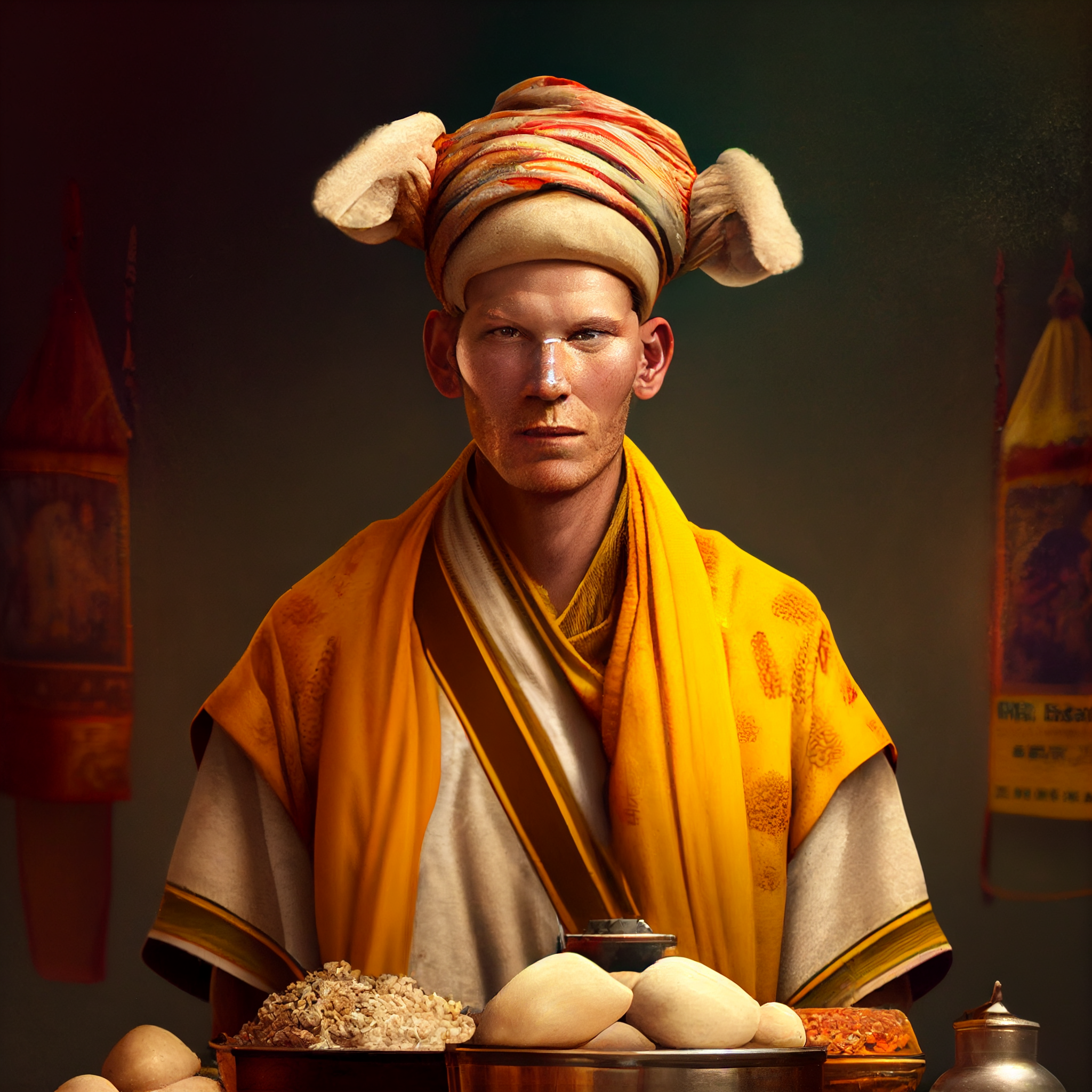
Youssef didn’t have time to think of a plan when the vendor put a tray with the Lorgh Drülp and little balls of tsampa on the table. The man pointed with his finger at the menu on the table, uncovering his forearm, it was the same as the Thi Gang logo.
“Wifi on menu,” the man said. “Tsampa, good for you…”
A commotion at the market place interrupted them. Apparently Kyle had gone too close and the shaman had crashed into him and the rest of the team. The man was cursing every one of them and Miss Tartiflate was apparently trying to calm him down by offering him snack bars. But the shaman kept brandishing an ugly sceptre that looked like a giant chicken foot covered in greasy fur, while cursing them with broken english. The tourists were all brandishing their phones, not missing a thing, ready to send their videos on TrickTruck. The shaman left angrily, ignoring all attempts at conciliation. There would be no reportage.
“Hahaha, tourists, they believe anything they see,” said the vendor before returning to his stove and his knife.

Despite his hunger, Youssef thought he’d better hurry with the wifi, now that the crew was out of work, he would be the target of Miss Tartiflate’s frustration. Furthermore, he wanted to lay low and not attract the vendor’s attention.
3235 messages from his friends. How would he ever catch up?
Among them, messages from Xavier. Youssef sighed of relief when he read that his friend had regained full access of the website and updated the system to fix a security flaw that allowed Thi Gang to gain access in the first place. But he growled when his friend continued with the bad news. There was some damage done to the content of THE BLOG.To console himself, Youssef started to eat a ball of tsampa. It was sweet and tasted like rose. He took a second and spit it out almost immediately. There was a piece of paper inside. He smoothed it and discovered a series of five pictograms.
🧔🌮🔍🔑🏞️
The first one was like a hologram and kept changing into six horizontal bars. The second one, looking like a tako bell, kept reversing side. Youssef raised his head to call the vendor and nobody was there. He got up and looked for the guy, Thi Gang or not, he needed some answers. Voices came from behind the curtain at the back of the stall. Youssef walked around the stall and saw the shaman and the vendor exchanging clothes. The caucasian man was now wearing the colourful costume and the drum. When he saw Youssef, he smiled and waved his hand, making the bells from the hem ring. Then he turned around and left, whistling an air that sounded strangely like the music of the Game. Youssef was about to run after him when a hand grasped his shirt.
“Please! Tell me at least that THE BLOG is up and running!” said an angry voice.
January 22, 2023 at 11:35 am #6447In reply to: Newsreel from the Rim of the Realm
Miss Bossy sat at her desk, scanning through the stack of papers on her desk. She was searching for the perfect reporter to send on a mission to investigate a mysterious story that had been brought to her attention. Suddenly, her eyes landed on the name of Samuel Sproink. He was new to the Rim of the Realm Newspaper and had a reputation for being a tenacious and resourceful reporter.
She picked up the phone and dialed his number. “Sproink, I have a job for you,” she said in her gruff voice.
“Yes, Miss Bossy, what can I do for you?” Samuel replied, his voice full of excitement.
“I want you to go down to Cartagena, Spain, in the Golden Banana off the Mediterranean coast. There have been sightings of Barbary macaques happening there and tourists being assaulted and stolen only their shoes, which is odd of course, and also obviously unusual for the apes to be seen so far off the Strait of Gibraltar. I want you to get to the bottom of it. I need you to find out what’s really going on and report back to me with your findings.”
“Consider it done, Miss Bossy,” Samuel said confidently. He had always been interested in wildlife and the idea of investigating a mystery involving monkeys was too good to pass up.
He hang up the phone to go and pack his bags and head to the airport, apparently eager to start his investigation.
“Apes again?” Ricardo who’s been eavesdropping what surprised at the sudden interest. After that whole story about the orangutan man, he thought they’d be done with the menagerie, but apparently, Miss Bossy had something in mind. He would have to quiz Sweet Sophie to remote view on that and anticipate possible links and knots in the plot.
January 17, 2023 at 9:06 pm #6410In reply to: Orbs of Madjourneys
Real-life Xavier was marveling at the new AL (Artificial Life) developments on this project he’d been working on. It’s been great at tidying the plot, confusing as the plot started to become with Real-life characters named the same as their Quirky counterparts ones.
Real-life Zara had not managed to remain off the computer for very long, despite her grand claims to the contrary. She’d made quick work of introducing a new player in the game, a reporter in an obscure newspaper, who’d seemed quirky enough to be their guide in the new game indeed. It was difficult to see if hers was a nickname or nom de plume, but strangely enough, she also named her own character the same as her name in the papers. Interestingly, Zara and Glimmer had some friends in common in Australia, where RL Zara was living at the moment.
Anyways… “Clever AL” Xavier smiled when he saw the output on the screen. “Yasmin will love a little tidiness; even if she is the brains of the group, she has always loved the help.”
Meanwhile, in the real world, Youssef was on his own adventure in Mongolia, trying to uncover the mystery of the Thi Gang. He had been hearing whispers and rumors about the ancient and powerful group, and he was determined to find out the truth. He had been traveling through the desert for weeks, following leads and piecing together clues, and he was getting closer to the truth.
Zara, Xavier, and Yasmin, on the other hand, were scattered around the world. Zara was in Australia, working on a conservation project and trying to save a group of endangered animals. Xavier was in Europe, working on a new project for a technology company. And Yasmin was in Asia, volunteering at a children’s hospital.
Despite being physically separated, the four friends kept in touch through video calls and messages. They were all excited about the upcoming adventure in the Land of the Quirks and the possibility of discovering their inner quirks. They were also looking forward to their trip to the Flying Fish Inn, where they hoped to find some clues about the game and their characters.
In the game, Glimmer Gambol’s interactions with the other characters will be taking place in the confines of the Land of the Quirks. As she is the one who has been playing the longest and has the most experience, she will probably be the one to lead the group and guide them through the game. She also has some information that the others don’t know about yet, and she will probably reveal it at the right time.
As the game and the real-world adventures are intertwined, the characters will have to navigate both worlds and find a way to balance them. They will have to use their unique skills and personalities to overcome challenges and solve puzzles, both in the game and in the real world. It will be an exciting and unpredictable journey, full of surprises and twists.
January 10, 2023 at 10:15 pm #6363In reply to: Train your subjective AI – text version
try another short story, with a bit of drama with the following words:
road form charlton smooth everyone cottage hanging rush offer agree subject district included appear sha returning grattidge nottingham 848 tetbury chicken
It was a cold and gloomy day in the small village of Tetbury, nestled in the picturesque Cotswolds district. A young woman named Sha was returning home to her cottage after a long and tiring journey. She had been away visiting her family in Nottingham and was looking forward to relaxing in her cozy home.
As she walked down the dirt road that led to her cottage, she couldn’t help but notice that something was off. Her neighbor, Mr. Charlton, was outside hanging laundry and he didn’t acknowledge her as she walked by. Sha thought it was strange, as he was usually a friendly and sociable person.
When Sha arrived at her cottage, she was shocked to find that it had been broken into. The front door was ajar and the inside of her home had been ransacked. Sha immediately panicked and called the police, who arrived on the scene shortly thereafter.
The police officers, including Inspector Grattidge, took Sha’s statement and began to investigate the crime. They discovered that a group of burglars had been operating in the area, targeting homes and businesses in the district. The burglars had been known for their smooth operations and their ability to strike quickly, which led to their nickname “The Smooth Operators”.
As Sha waited for the police to finish their investigation, she couldn’t shake the feeling that something was not right. She had always thought of Tetbury as a safe and friendly place, and she couldn’t believe that something like this could happen in her community.
As the investigation went on, the police found out that the Smooth operators have been targeting houses with no security cameras, but Sha’s cottage was an exception, the police were able to find out that the group offered to pay a considerable sum of money to the people who reported the locations of the houses that had no cameras, and it was Mr. Charlton who was the informant and he even rushed to Sha’s cottage as soon as he knew the police was investigating the case, He was arrested for the crime and Sha was heartbroken to find out that her once friendly neighbor had betrayed her.
Feeling violated and betrayed, Sha decided that she could no longer stay in the village and she put her cottage up for sale. She packed up her belongings and moved away, leaving behind the memories of her peaceful home and the community she had once thought of as her own. The end.
December 6, 2022 at 2:17 pm #6350In reply to: Family Stories From The Other Side ~ Book Two
Transportation
Isaac Stokes 1804-1877
Isaac was born in Churchill, Oxfordshire in 1804, and was the youngest brother of my 4X great grandfather Thomas Stokes. The Stokes family were stone masons for generations in Oxfordshire and Gloucestershire, and Isaac’s occupation was a mason’s labourer in 1834 when he was sentenced at the Lent Assizes in Oxford to fourteen years transportation for stealing tools.
Churchill where the Stokes stonemasons came from: on 31 July 1684 a fire destroyed 20 houses and many other buildings, and killed four people. The village was rebuilt higher up the hill, with stone houses instead of the old timber-framed and thatched cottages. The fire was apparently caused by a baker who, to avoid chimney tax, had knocked through the wall from her oven to her neighbour’s chimney.
Isaac stole a pick axe, the value of 2 shillings and the property of Thomas Joyner of Churchill; a kibbeaux and a trowel value 3 shillings the property of Thomas Symms; a hammer and axe value 5 shillings, property of John Keen of Sarsden.
(The word kibbeaux seems to only exists in relation to Isaac Stokes sentence and whoever was the first to write it was perhaps being creative with the spelling of a kibbo, a miners or a metal bucket. This spelling is repeated in the criminal reports and the newspaper articles about Isaac, but nowhere else).
In March 1834 the Removal of Convicts was announced in the Oxford University and City Herald: Isaac Stokes and several other prisoners were removed from the Oxford county gaol to the Justitia hulk at Woolwich “persuant to their sentences of transportation at our Lent Assizes”.
via digitalpanopticon:
Hulks were decommissioned (and often unseaworthy) ships that were moored in rivers and estuaries and refitted to become floating prisons. The outbreak of war in America in 1775 meant that it was no longer possible to transport British convicts there. Transportation as a form of punishment had started in the late seventeenth century, and following the Transportation Act of 1718, some 44,000 British convicts were sent to the American colonies. The end of this punishment presented a major problem for the authorities in London, since in the decade before 1775, two-thirds of convicts at the Old Bailey received a sentence of transportation – on average 283 convicts a year. As a result, London’s prisons quickly filled to overflowing with convicted prisoners who were sentenced to transportation but had no place to go.
To increase London’s prison capacity, in 1776 Parliament passed the “Hulks Act” (16 Geo III, c.43). Although overseen by local justices of the peace, the hulks were to be directly managed and maintained by private contractors. The first contract to run a hulk was awarded to Duncan Campbell, a former transportation contractor. In August 1776, the Justicia, a former transportation ship moored in the River Thames, became the first prison hulk. This ship soon became full and Campbell quickly introduced a number of other hulks in London; by 1778 the fleet of hulks on the Thames held 510 prisoners.
Demand was so great that new hulks were introduced across the country. There were hulks located at Deptford, Chatham, Woolwich, Gosport, Plymouth, Portsmouth, Sheerness and Cork.The Justitia via rmg collections:
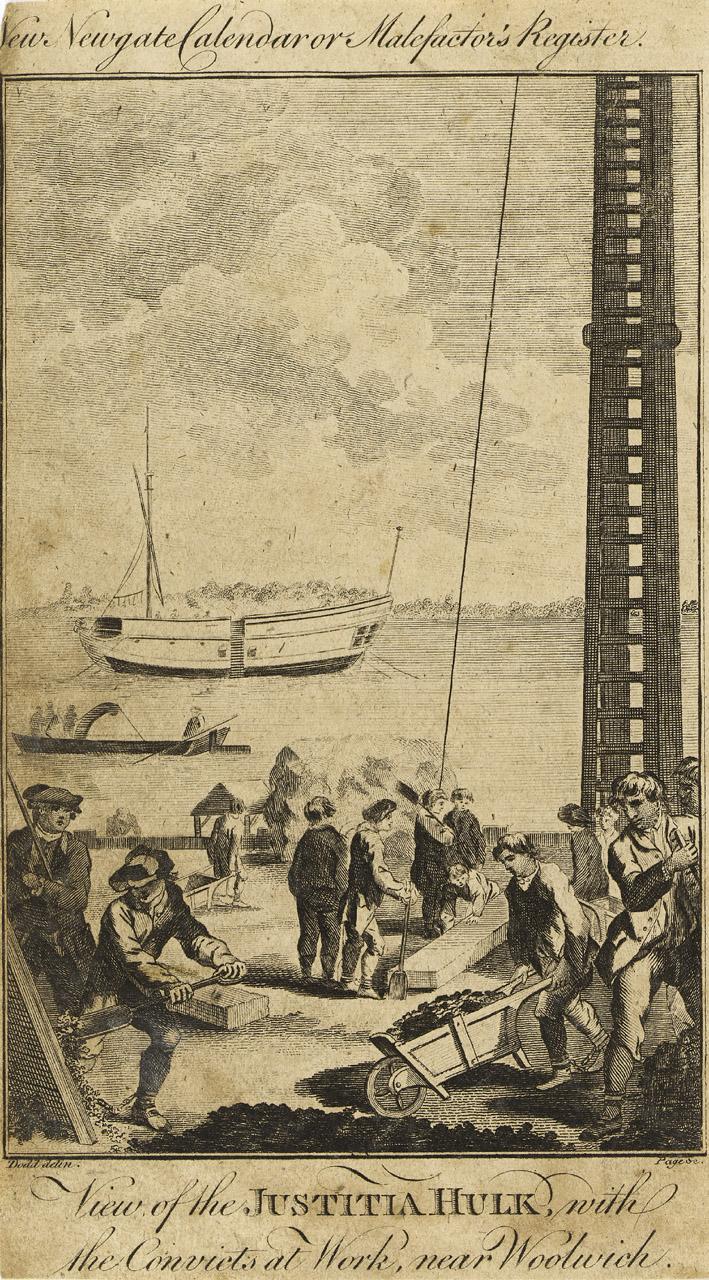
Convicts perform hard labour at the Woolwich Warren. The hulk on the river is the ‘Justitia’. Prisoners were kept on board such ships for months awaiting deportation to Australia. The ‘Justitia’ was a 260 ton prison hulk that had been originally moored in the Thames when the American War of Independence put a stop to the transportation of criminals to the former colonies. The ‘Justitia’ belonged to the shipowner Duncan Campbell, who was the Government contractor who organized the prison-hulk system at that time. Campbell was subsequently involved in the shipping of convicts to the penal colony at Botany Bay (in fact Port Jackson, later Sydney, just to the north) in New South Wales, the ‘first fleet’ going out in 1788.
While searching for records for Isaac Stokes I discovered that another Isaac Stokes was transported to New South Wales in 1835 as well. The other one was a butcher born in 1809, sentenced in London for seven years, and he sailed on the Mary Ann. Our Isaac Stokes sailed on the Lady Nugent, arriving in NSW in April 1835, having set sail from England in December 1834.
Lady Nugent was built at Bombay in 1813. She made four voyages under contract to the British East India Company (EIC). She then made two voyages transporting convicts to Australia, one to New South Wales and one to Van Diemen’s Land (Tasmania). (via Wikipedia)
via freesettlerorfelon website:
On 20 November 1834, 100 male convicts were transferred to the Lady Nugent from the Justitia Hulk and 60 from the Ganymede Hulk at Woolwich, all in apparent good health. The Lady Nugent departed Sheerness on 4 December 1834.
SURGEON OLIVER SPROULE
Oliver Sproule kept a Medical Journal from 7 November 1834 to 27 April 1835. He recorded in his journal the weather conditions they experienced in the first two weeks:
‘In the course of the first week or ten days at sea, there were eight or nine on the sick list with catarrhal affections and one with dropsy which I attribute to the cold and wet we experienced during that period beating down channel. Indeed the foremost berths in the prison at this time were so wet from leaking in that part of the ship, that I was obliged to issue dry beds and bedding to a great many of the prisoners to preserve their health, but after crossing the Bay of Biscay the weather became fine and we got the damp beds and blankets dried, the leaks partially stopped and the prison well aired and ventilated which, I am happy to say soon manifested a favourable change in the health and appearance of the men.
Besides the cases given in the journal I had a great many others to treat, some of them similar to those mentioned but the greater part consisted of boils, scalds, and contusions which would not only be too tedious to enter but I fear would be irksome to the reader. There were four births on board during the passage which did well, therefore I did not consider it necessary to give a detailed account of them in my journal the more especially as they were all favourable cases.
Regularity and cleanliness in the prison, free ventilation and as far as possible dry decks turning all the prisoners up in fine weather as we were lucky enough to have two musicians amongst the convicts, dancing was tolerated every afternoon, strict attention to personal cleanliness and also to the cooking of their victuals with regular hours for their meals, were the only prophylactic means used on this occasion, which I found to answer my expectations to the utmost extent in as much as there was not a single case of contagious or infectious nature during the whole passage with the exception of a few cases of psora which soon yielded to the usual treatment. A few cases of scurvy however appeared on board at rather an early period which I can attribute to nothing else but the wet and hardships the prisoners endured during the first three or four weeks of the passage. I was prompt in my treatment of these cases and they got well, but before we arrived at Sydney I had about thirty others to treat.’
The Lady Nugent arrived in Port Jackson on 9 April 1835 with 284 male prisoners. Two men had died at sea. The prisoners were landed on 27th April 1835 and marched to Hyde Park Barracks prior to being assigned. Ten were under the age of 14 years.
The Lady Nugent:
Isaac’s distinguishing marks are noted on various criminal registers and record books:
“Height in feet & inches: 5 4; Complexion: Ruddy; Hair: Light brown; Eyes: Hazel; Marks or Scars: Yes [including] DEVIL on lower left arm, TSIS back of left hand, WS lower right arm, MHDW back of right hand.”
Another includes more detail about Isaac’s tattoos:
“Two slight scars right side of mouth, 2 moles above right breast, figure of the devil and DEVIL and raised mole, lower left arm; anchor, seven dots half moon, TSIS and cross, back of left hand; a mallet, door post, A, mans bust, sun, WS, lower right arm; woman, MHDW and shut knife, back of right hand.”
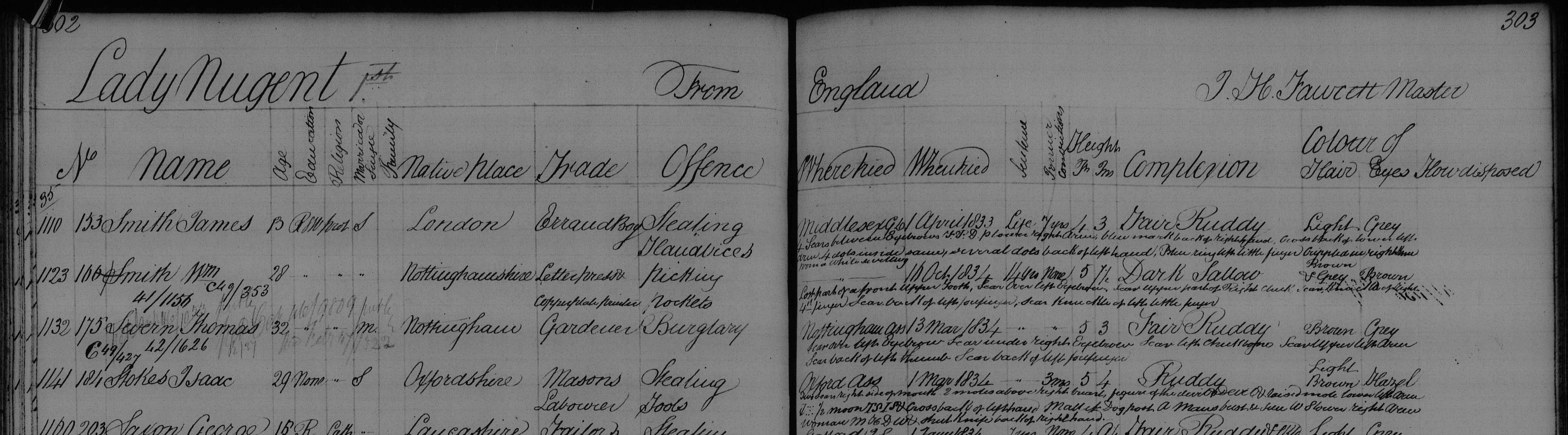
From How tattoos became fashionable in Victorian England (2019 article in TheConversation by Robert Shoemaker and Zoe Alkar):
“Historical tattooing was not restricted to sailors, soldiers and convicts, but was a growing and accepted phenomenon in Victorian England. Tattoos provide an important window into the lives of those who typically left no written records of their own. As a form of “history from below”, they give us a fleeting but intriguing understanding of the identities and emotions of ordinary people in the past.
As a practice for which typically the only record is the body itself, few systematic records survive before the advent of photography. One exception to this is the written descriptions of tattoos (and even the occasional sketch) that were kept of institutionalised people forced to submit to the recording of information about their bodies as a means of identifying them. This particularly applies to three groups – criminal convicts, soldiers and sailors. Of these, the convict records are the most voluminous and systematic.
Such records were first kept in large numbers for those who were transported to Australia from 1788 (since Australia was then an open prison) as the authorities needed some means of keeping track of them.”On the 1837 census Isaac was working for the government at Illiwarra, New South Wales. This record states that he arrived on the Lady Nugent in 1835. There are three other indent records for an Isaac Stokes in the following years, but the transcriptions don’t provide enough information to determine which Isaac Stokes it was. In April 1837 there was an abscondment, and an arrest/apprehension in May of that year, and in 1843 there was a record of convict indulgences.
From the Australian government website regarding “convict indulgences”:
“By the mid-1830s only six per cent of convicts were locked up. The vast majority worked for the government or free settlers and, with good behaviour, could earn a ticket of leave, conditional pardon or and even an absolute pardon. While under such orders convicts could earn their own living.”
In 1856 in Camden, NSW, Isaac Stokes married Catherine Daly. With no further information on this record it would be impossible to know for sure if this was the right Isaac Stokes. This couple had six children, all in the Camden area, but none of the records provided enough information. No occupation or place or date of birth recorded for Isaac Stokes.
I wrote to the National Library of Australia about the marriage record, and their reply was a surprise! Issac and Catherine were married on 30 September 1856, at the house of the Rev. Charles William Rigg, a Methodist minister, and it was recorded that Isaac was born in Edinburgh in 1821, to parents James Stokes and Sarah Ellis! The age at the time of the marriage doesn’t match Isaac’s age at death in 1877, and clearly the place of birth and parents didn’t match either. Only his fathers occupation of stone mason was correct. I wrote back to the helpful people at the library and they replied that the register was in a very poor condition and that only two and a half entries had survived at all, and that Isaac and Catherines marriage was recorded over two pages.
I searched for an Isaac Stokes born in 1821 in Edinburgh on the Scotland government website (and on all the other genealogy records sites) and didn’t find it. In fact Stokes was a very uncommon name in Scotland at the time. I also searched Australian immigration and other records for another Isaac Stokes born in Scotland or born in 1821, and found nothing. I was unable to find a single record to corroborate this mysterious other Isaac Stokes.
As the age at death in 1877 was correct, I assume that either Isaac was lying, or that some mistake was made either on the register at the home of the Methodist minster, or a subsequent mistranscription or muddle on the remnants of the surviving register. Therefore I remain convinced that the Camden stonemason Isaac Stokes was indeed our Isaac from Oxfordshire.
I found a history society newsletter article that mentioned Isaac Stokes, stone mason, had built the Glenmore church, near Camden, in 1859.
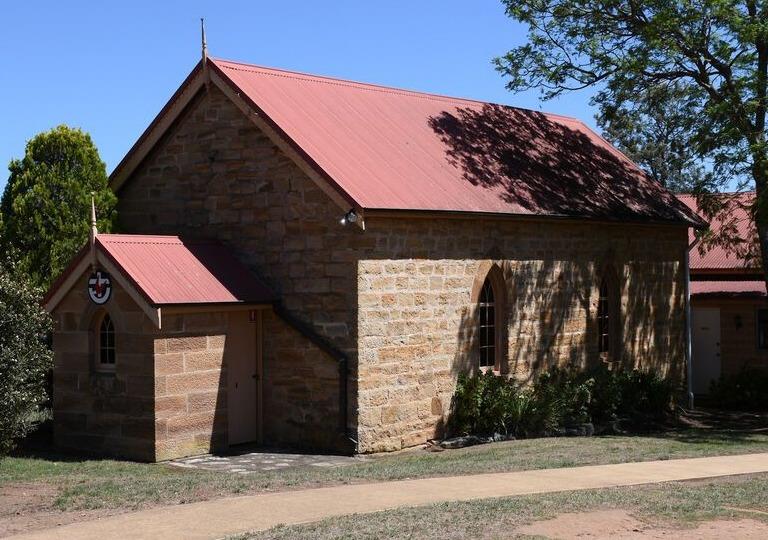
From the Wollondilly museum April 2020 newsletter:
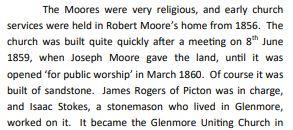
From the Camden History website:
“The stone set over the porch of Glenmore Church gives the date of 1860. The church was begun in 1859 on land given by Joseph Moore. James Rogers of Picton was given the contract to build and local builder, Mr. Stokes, carried out the work. Elizabeth Moore, wife of Edward, laid the foundation stone. The first service was held on 19th March 1860. The cemetery alongside the church contains the headstones and memorials of the areas early pioneers.”
Isaac died on the 3rd September 1877. The inquest report puts his place of death as Bagdelly, near to Camden, and another death register has put Cambelltown, also very close to Camden. His age was recorded as 71 and the inquest report states his cause of death was “rupture of one of the large pulmonary vessels of the lung”. His wife Catherine died in childbirth in 1870 at the age of 43.
Isaac and Catherine’s children:
William Stokes 1857-1928
Catherine Stokes 1859-1846
Sarah Josephine Stokes 1861-1931
Ellen Stokes 1863-1932
Rosanna Stokes 1865-1919
Louisa Stokes 1868-1844.
It’s possible that Catherine Daly was a transported convict from Ireland.
Some time later I unexpectedly received a follow up email from The Oaks Heritage Centre in Australia.
“The Gaudry papers which we have in our archive record him (Isaac Stokes) as having built: the church, the school and the teachers residence. Isaac is recorded in the General return of convicts: 1837 and in Grevilles Post Office directory 1872 as a mason in Glenmore.”
 November 10, 2022 at 12:08 pm #6344
In reply to: Family Stories From The Other Side ~ Book Two
The Tetbury Riots
While researching the Tetbury riots (I had found some Browning names in the newspaper archives in association with the uprisings) I came across an article called “Elizabeth Parker, the Swing Riots, and the Tetbury parish clerk” by Jill Evans.
I noted the name of the parish clerk, Daniel Cole, because I know someone else of that name. The incident in the article was 1830.
I found the 1826 marriage in the Tetbury parish registers (where Daniel was the parish clerk) of my 4x great grandmothers sister Hesther Lock. One of the witnesses was her brother Charles, and the other was Daniel Cole, the parish clerk.
Marriage of Lewin Chandler and Hesther Lock in 1826:
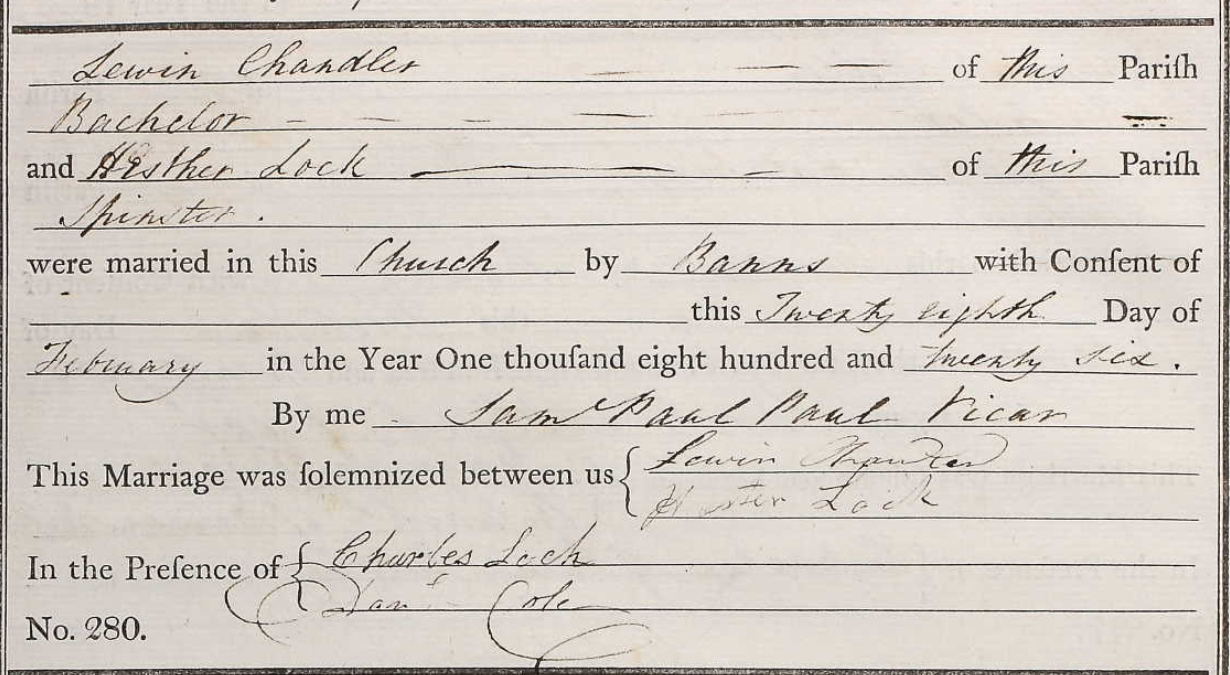
from the article:
“The Swing Riots were disturbances which took place in 1830 and 1831, mostly in the southern counties of England. Agricultural labourers, who were already suffering due to low wages and a lack of work after several years of bad harvests, rose up when their employers introduced threshing machines into their workplaces. The riots got their name from the threatening letters which were sent to farmers and other employers, which were signed “Captain Swing.”
The riots spread into Gloucestershire in November 1830, with the Tetbury area seeing the worst of the disturbances. Amongst the many people arrested afterwards was one woman, Elizabeth Parker. She has sometimes been cited as one of only two females who were transported for taking part in the Swing Riots. In fact, she was sentenced to be transported for this crime, but never sailed, as she was pardoned a few months after being convicted. However, less than a year after being released from Gloucester Gaol, she was back, awaiting trial for another offence. The circumstances in both of the cases she was tried for reveal an intriguing relationship with one Daniel Cole, parish clerk and assistant poor law officer in Tetbury….
….Elizabeth Parker was committed to Gloucester Gaol on 4 December 1830. In the Gaol Registers, she was described as being 23 and a “labourer”. She was in fact a prostitute, and she was unusual for the time in that she could read and write. She was charged on the oaths of Daniel Cole and others with having been among a mob which destroyed a threshing machine belonging to Jacob Hayward, at his farm in Beverstone, on 26 November.
…..Elizabeth Parker was granted royal clemency in July 1831 and was released from prison. She returned to Tetbury and presumably continued in her usual occupation, but on 27 March 1832, she was committed to Gloucester Gaol again. This time, she was charged with stealing 2 five pound notes, 5 sovereigns and 5 half sovereigns, from the person of Daniel Cole.
Elizabeth was tried at the Lent Assizes which began on 28 March, 1832. The details of her trial were reported in the Morning Post. Daniel Cole was in the “Boat Inn” (meaning the Boot Inn, I think) in Tetbury, when Elizabeth Parker came in. Cole “accompanied her down the yard”, where he stayed with her for about half an hour. The next morning, he realised that all his money was gone. One of his five pound notes was identified by him in a shop, where Parker had bought some items.
Under cross-examination, Cole said he was the assistant overseer of the poor and collector of public taxes of the parish of Tetbury. He was married with one child. He went in to the inn at about 9 pm, and stayed about 2 hours, drinking in the parlour, with the landlord, Elizabeth Parker, and two others. He was not drunk, but he was “rather fresh.” He gave the prisoner no money. He saw Elizabeth Parker next morning at the Prince and Princess public house. He didn’t drink with her or give her any money. He did give her a shilling after she was committed. He never said that he would not have prosecuted her “if it was not for her own tongue”. (Presumably meaning he couldn’t trust her to keep her mouth shut.)”
Contemporary illustration of the Swing riots:
Captain Swing was the imaginary leader agricultural labourers who set fire to barns and haystacks in the southern and eastern counties of England from 1830. Although the riots were ruthlessly put down (19 hanged, 644 imprisoned and 481 transported), the rural agitation led the new Whig government to establish a Royal Commission on the Poor Laws and its report provided the basis for the 1834 New Poor Law enacted after the Great Reform Bills of 1833.
An original portrait of Captain Swing hand coloured lithograph circa 1830:
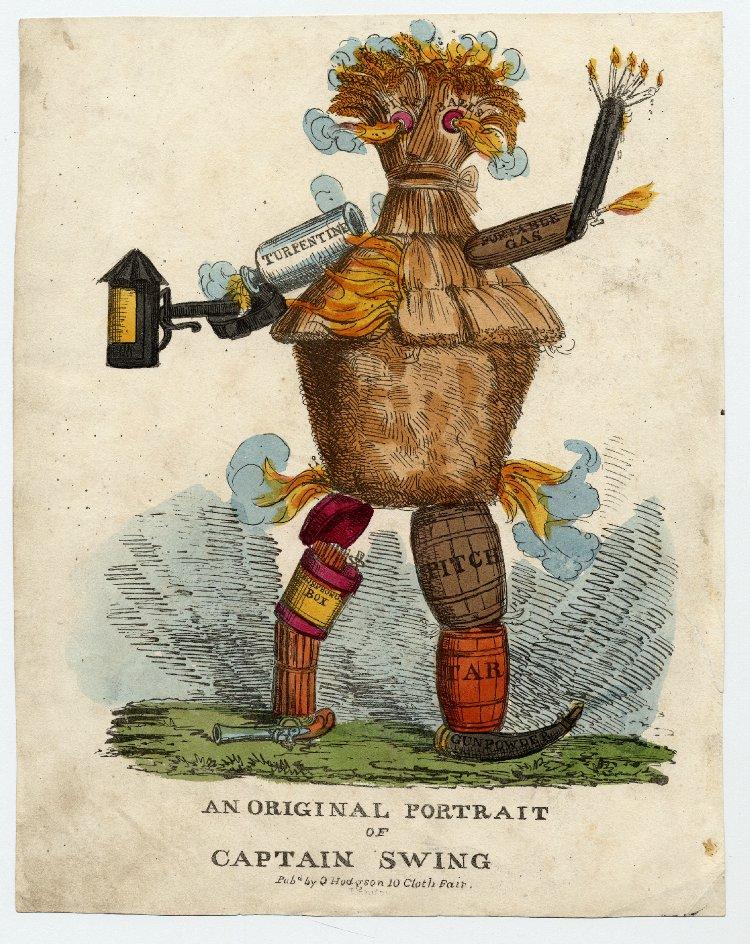 November 10, 2022 at 10:59 am #6343
In reply to: Family Stories From The Other Side ~ Book Two
Colney Hatch Lunatic Asylum
William James Stokes
William James Stokes was the first son of Thomas Stokes and Eliza Browning. Oddly, his birth was registered in Witham in Essex, on the 6th September 1841.
Birth certificate of William James Stokes:
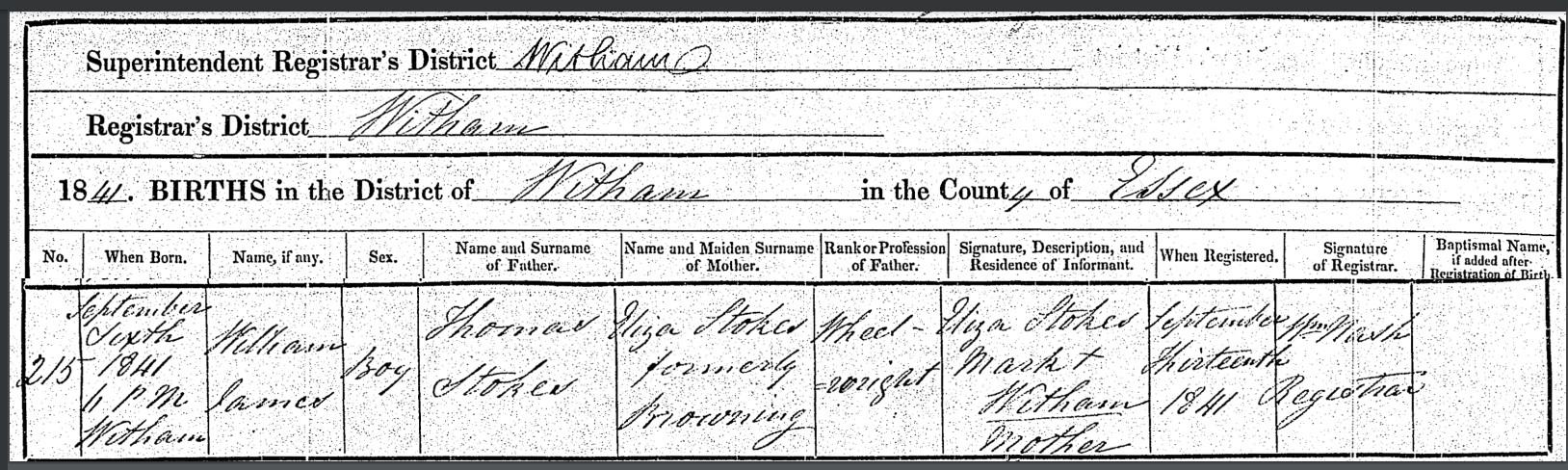
His father Thomas Stokes has not yet been found on the 1841 census, and his mother Eliza was staying with her uncle Thomas Lock in Cirencester in 1841. Eliza’s mother Mary Browning (nee Lock) was staying there too. Thomas and Eliza were married in September 1840 in Hempstead in Gloucestershire.
It’s a mystery why William was born in Essex but one possibility is that his father Thomas, who later worked with the Chipperfields making circus wagons, was staying with the Chipperfields who were wheelwrights in Witham in 1841. Or perhaps even away with a traveling circus at the time of the census, learning the circus waggon wheelwright trade. But this is a guess and it’s far from clear why Eliza would make the journey to Witham to have the baby when she was staying in Cirencester a few months prior.
In 1851 Thomas and Eliza, William and four younger siblings were living in Bledington in Oxfordshire.
William was a 19 year old wheelwright living with his parents in Evesham in 1861. He married Elizabeth Meldrum in December 1867 in Hackney, London. He and his father are both wheelwrights on the marriage register.
Marriage of William James Stokes and Elizabeth Meldrum in 1867:
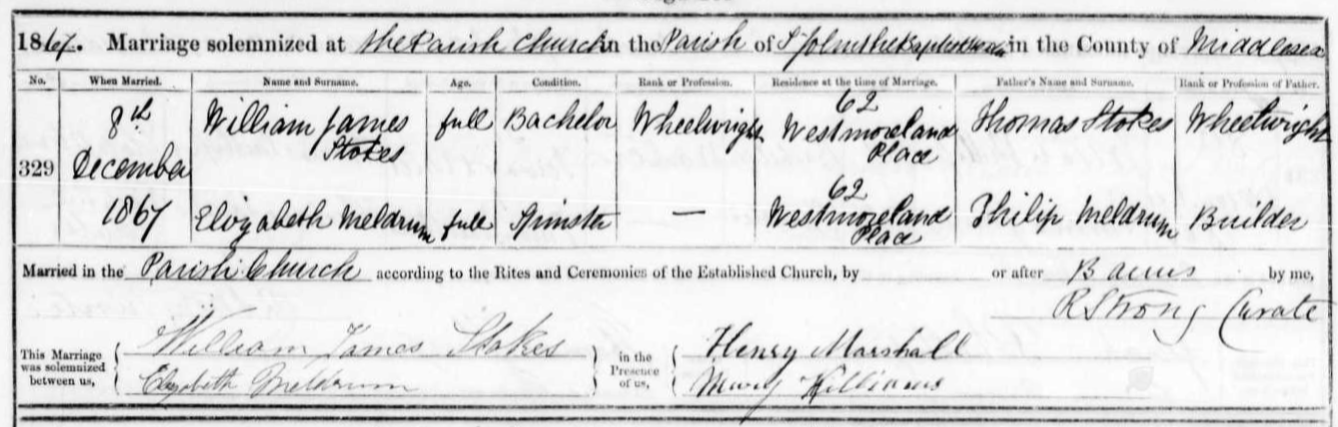
William and Elizabeth had a daughter, Elizabeth Emily Stokes, in 1868 in Shoreditch, London.
On the 3rd of December 1870, William James Stokes was admitted to Colney Hatch Lunatic Asylum. One week later on the 10th of December, he was dead.
On his death certificate the cause of death was “general paralysis and exhaustion, certified. MD Edgar Sheppard in attendance.” William was just 29 years old.
Death certificate William James Stokes:
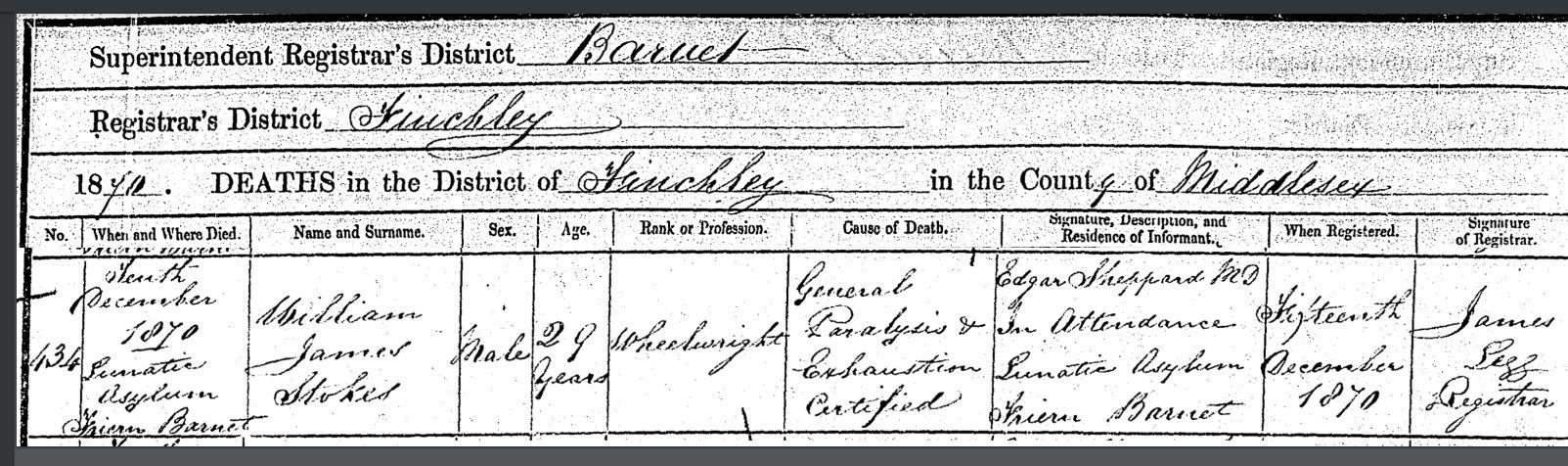
I asked on a genealogy forum what could possibly have caused this death at such a young age. A retired pathology professor replied that “in medicine the term General Paralysis is only used in one context – that of Tertiary Syphilis.”
“Tertiary syphilis is the third and final stage of syphilis, a sexually transmitted disease that unfolds in stages when the individual affected doesn’t receive appropriate treatment.”From the article “Looking back: This fascinating and fatal disease” by Jennifer Wallis:
“……in asylums across Britain in the late 19th century, with hundreds of people receiving the diagnosis of general paralysis of the insane (GPI). The majority of these were men in their 30s and 40s, all exhibiting one or more of the disease’s telltale signs: grandiose delusions, a staggering gait, disturbed reflexes, asymmetrical pupils, tremulous voice, and muscular weakness. Their prognosis was bleak, most dying within months, weeks, or sometimes days of admission.
The fatal nature of GPI made it of particular concern to asylum superintendents, who became worried that their institutions were full of incurable cases requiring constant care. The social effects of the disease were also significant, attacking men in the prime of life whose admission to the asylum frequently left a wife and children at home. Compounding the problem was the erratic behaviour of the general paralytic, who might get themselves into financial or legal difficulties. Delusions about their vast wealth led some to squander scarce family resources on extravagant purchases – one man’s wife reported he had bought ‘a quantity of hats’ despite their meagre income – and doctors pointed to the frequency of thefts by general paralytics who imagined that everything belonged to them.”
The London Archives hold the records for Colney Hatch, but they informed me that the particular records for the dates that William was admitted and died were in too poor a condition to be accessed without causing further damage.
Colney Hatch Lunatic Asylum gained such notoriety that the name “Colney Hatch” appeared in various terms of abuse associated with the concept of madness. Infamous inmates that were institutionalized at Colney Hatch (later called Friern Hospital) include Jack the Ripper suspect Aaron Kosminski from 1891, and from 1911 the wife of occultist Aleister Crowley. In 1993 the hospital grounds were sold and the exclusive apartment complex called Princess Park Manor was built.
Colney Hatch:
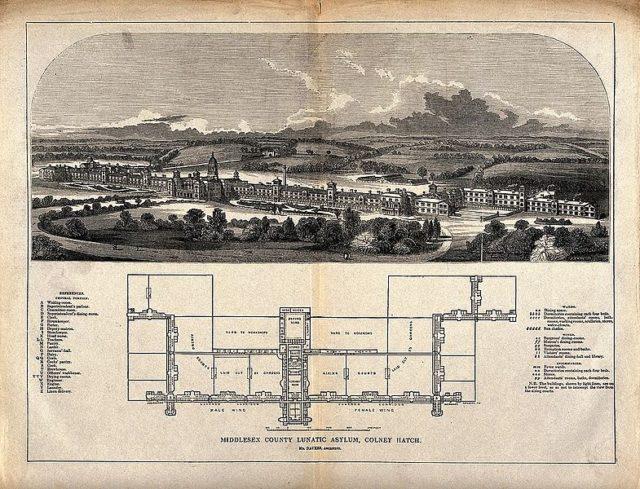
In 1873 Williams widow married William Hallam in Limehouse in London. Elizabeth died in 1930, apparently unaffected by her first husbands ailment.
October 23, 2022 at 6:57 am #6340In reply to: Family Stories From The Other Side ~ Book Two
Wheelwrights of Broadway
Thomas Stokes 1816-1885
Frederick Stokes 1845-1917
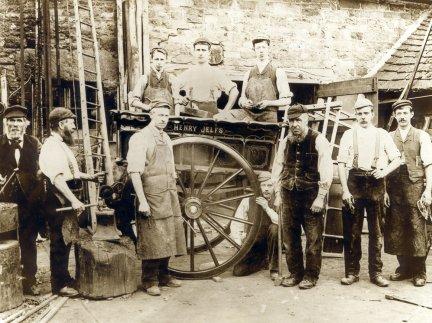
Stokes Wheelwrights. Fred on left of wheel, Thomas his father on right.
Thomas Stokes
Thomas Stokes was born in Bicester, Oxfordshire in 1816. He married Eliza Browning (born in 1814 in Tetbury, Gloucestershire) in Gloucester in 1840 Q3. Their first son William was baptised in Chipping Hill, Witham, Essex, on 3 Oct 1841. This seems a little unusual, and I can’t find Thomas and Eliza on the 1841 census. However both the 1851 and 1861 census state that William was indeed born in Essex.
In 1851 Thomas and Eliza were living in Bledington, Gloucestershire, and Thomas was a journeyman carpenter.
Note that a journeyman does not mean someone who moved around a lot. A journeyman was a tradesman who had served his trade apprenticeship and mastered his craft, not bound to serve a master, but originally hired by the day. The name derives from the French for day – jour.
Also on the 1851 census: their daughter Susan, born in Churchill Oxfordshire in 1844; son Frederick born in Bledington Gloucestershire in 1846; daughter Louisa born in Foxcote Oxfordshire in 1849; and 2 month old daughter Harriet born in Bledington in 1851.
On the 1861 census Thomas and Eliza were living in Evesham, Worcestershire, and daughter Susan was no longer living at home, but William, Fred, Louisa and Harriet were, as well as daughter Emily born in Churchill Oxfordshire in 1856. Thomas was a wheelwright.
On the 1871 census Thomas and Eliza were still living in Evesham, and Thomas was a wheelwright employing three apprentices. Son Fred, also a wheelwright, and his wife Ann Rebecca live with them.
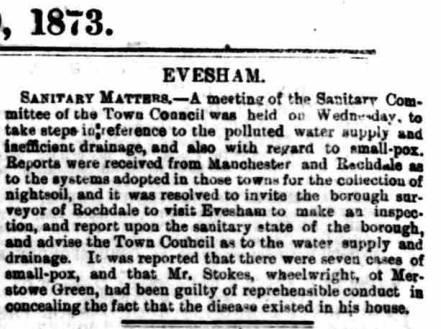
Mr Stokes, wheelwright, was found guilty of reprehensible conduct in concealing the fact that small-pox existed in his house, according to a mention in The Oxfordshire Weekly News on Wednesday 19 February 1873:
From Paul Weaver’s ancestry website:
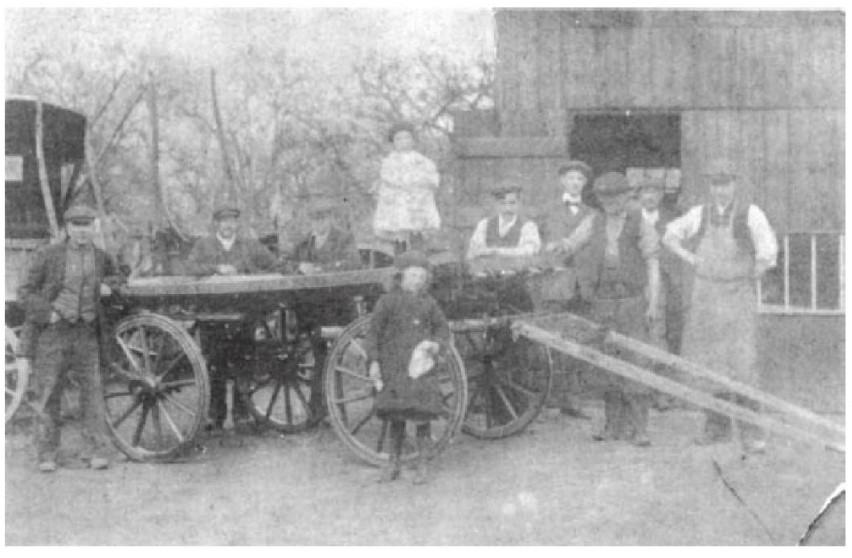
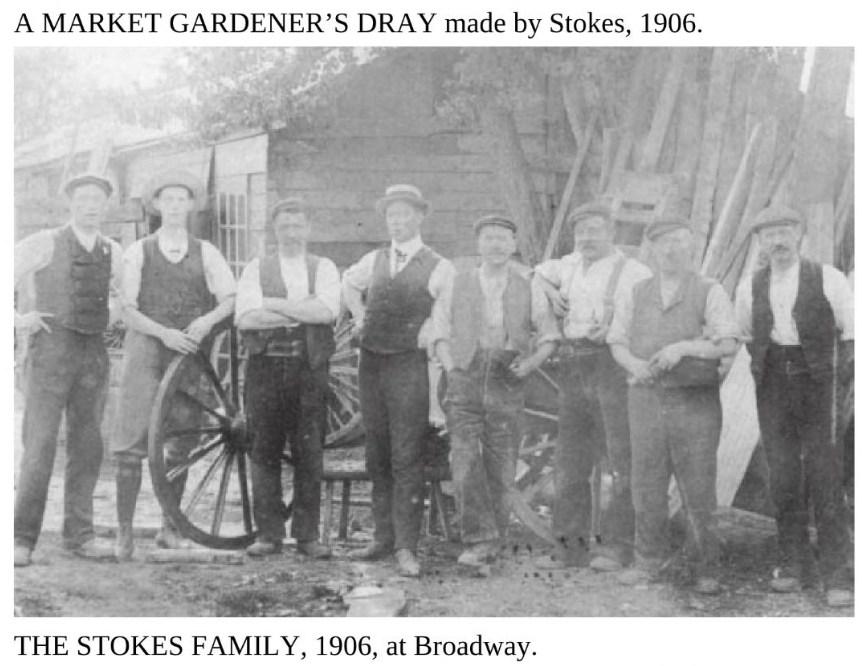
“It was Thomas Stokes who built the first “Famous Vale of Evesham Light Gardening Dray for a Half-Legged Horse to Trot” (the quotation is from his account book), the forerunner of many that became so familiar a sight in the towns and villages from the 1860s onwards. He built many more for the use of the Vale gardeners.
Thomas also had long-standing business dealings with the people of the circus and fairgrounds, and had a contract to effect necessary repairs and renewals to their waggons whenever they visited the district. He built living waggons for many of the show people’s families as well as shooting galleries and other equipment peculiar to the trade of his wandering customers, and among the names figuring in his books are some still familiar today, such as Wilsons and Chipperfields.
He is also credited with inventing the wooden “Mushroom” which was used by housewives for many years to darn socks. He built and repaired all kinds of vehicles for the gentry as well as for the circus and fairground travellers.
Later he lived with his wife at Merstow Green, Evesham, in a house adjoining the Almonry.”
An excerpt from the book Evesham Inns and Signs by T.J.S. Baylis:
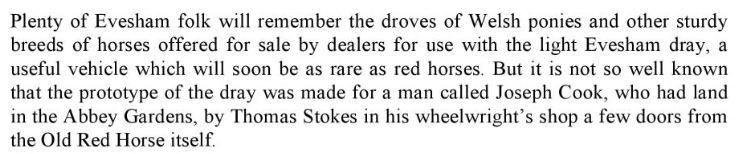
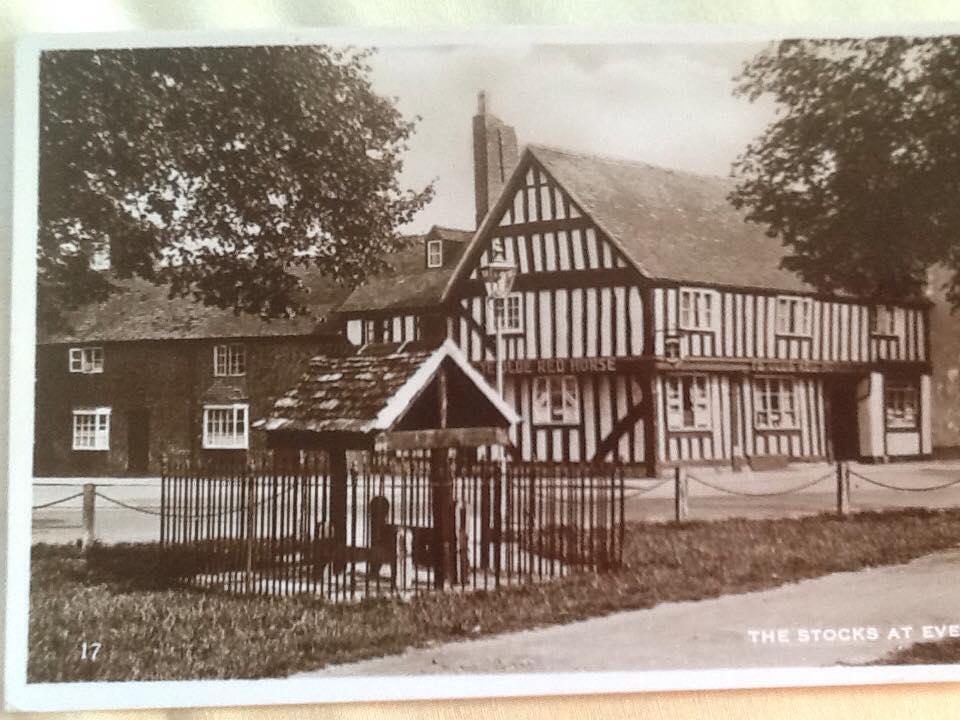
The Old Red Horse, Evesham:
Thomas died in 1885 aged 68 of paralysis, bronchitis and debility. His wife Eliza a year later in 1886.
Frederick Stokes
In Worcester in 1870 Fred married Ann Rebecca Day, who was born in Evesham in 1845.
Ann Rebecca Day:
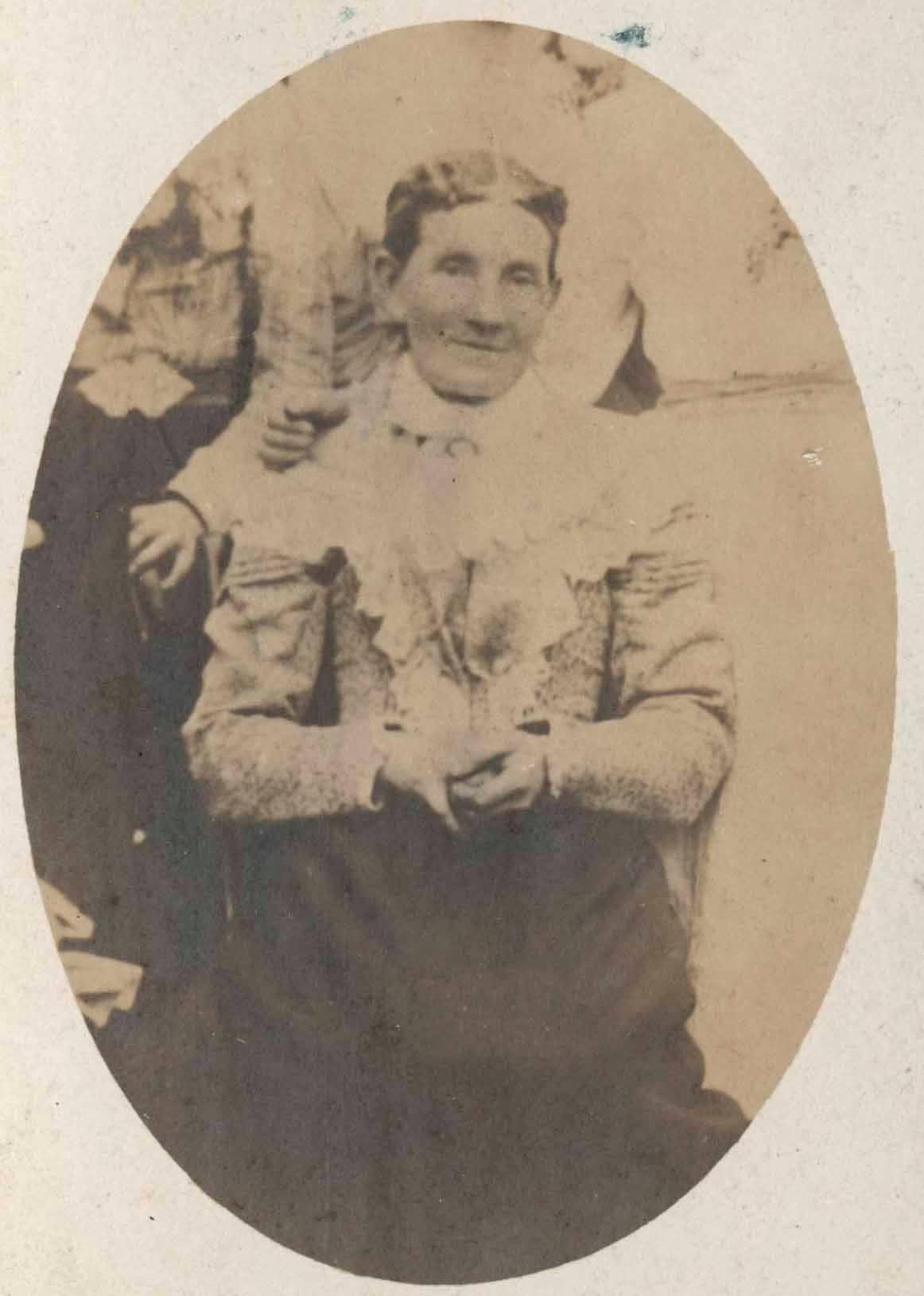
In 1871 Fred was still living with his parents in Evesham, with his wife Ann Rebecca as well as their three month old daughter Annie Elizabeth. Fred and Ann (referred to as Rebecca) moved to La Quinta on Main Street, Broadway.
Rebecca Stokes in the doorway of La Quinta on Main Street Broadway, with her grandchildren Ralph and Dolly Edwards:
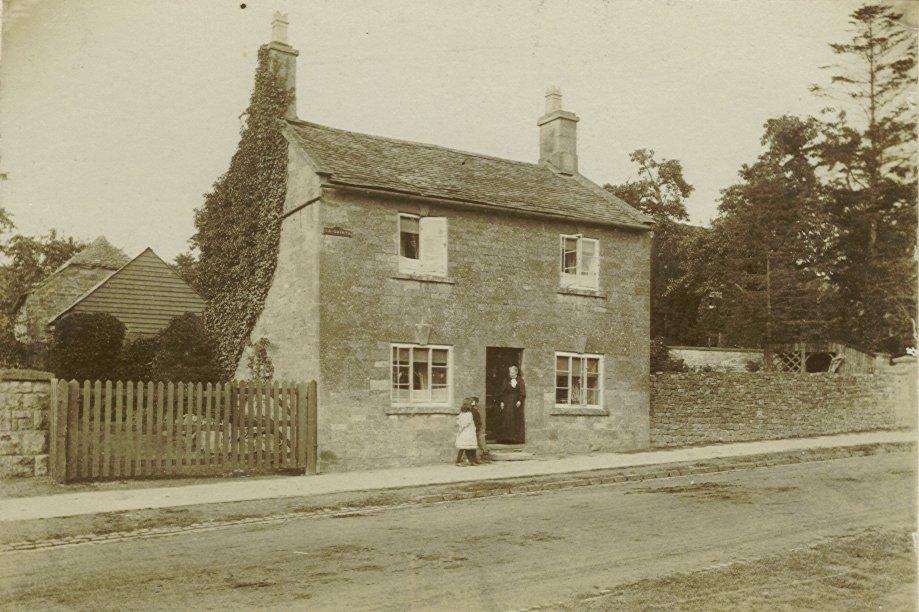
Fred was a wheelwright employing one man on the 1881 census. In 1891 they were still in Broadway, Fred’s occupation was wheelwright and coach painter, as well as his fifteen year old son Frederick.
In the Evesham Journal on Saturday 10 December 1892 it was reported that “Two cases of scarlet fever, the children of Mr. Stokes, wheelwright, Broadway, were certified by Mr. C. W. Morris to be isolated.”
Still in Broadway in 1901 and Fred’s son Albert was also a wheelwright. By 1911 Fred and Rebecca had only one son living at home in Broadway, Reginald, who was a coach painter. Fred was still a wheelwright aged 65.
Fred’s signature on the 1911 census:

Rebecca died in 1912 and Fred in 1917.
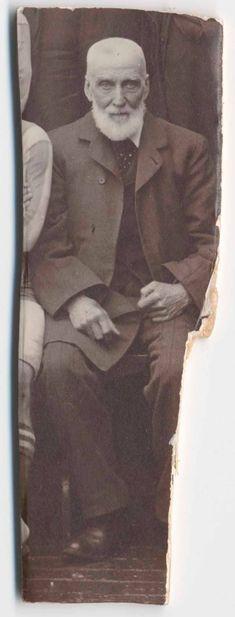
Fred Stokes:
In the book Evesham to Bredon From Old Photographs By Fred Archer:
 July 12, 2022 at 3:57 pm #6322
In reply to: Scrying the Word Cloud
numerous cats fear sounds
lawrence contents joined sister melbourne
high african nonsense reported
andrew dear kianda derbyshire
black class bucks secondJuly 7, 2022 at 5:31 pm #6316In reply to: The Sexy Wooden Leg
Myroslava was hungry. She saw ducks flying in the sky and realised she wasn’t too far from the Kal’mius river, south of Dantesk. She took out her sling and hit one with a stone she just picked on the floor. She smiled and said in a low voice : “You see father, I haven’t lost my touch.”
She had traveled several days with a group of reportourists, as she called them. A bunch of war reporters who thought it entertaining to take pictures of bombed areas, going about like peacocks as if they wore a plot armour against Rootian bullets and missiles and discourse at night on the tactics of the different armies. She was glad when she crossed the Rootian lines two days ago. Even if it meant no more dehydrated food and no more plot armour, she was certainly better off without the inane discussions.
She picked the duck and looked for a freshly bombarded place where there was still smoke. She could make some fire without being noticed too much. She didn’t like raw meat that much.
Soon after leaving the group or reportourists, without all the noise they made, she became certain she was being followed. She tried once to surprise them, but they were good at hiding and camouflaging their tracks. She wondered how long it had lasted. She cursed the noisy reporters and cursed her lack of good vodka. Cursing without alcohol was like boxing without fists.
May 13, 2022 at 10:50 am #6293In reply to: The Elusive Samuel Housley and Other Family Stories
Lincolnshire Families
Thanks to the 1851 census, we know that William Eaton was born in Grantham, Lincolnshire. He was baptised on 29 November 1768 at St Wulfram’s church; his father was William Eaton and his mother Elizabeth.
St Wulfram’s in Grantham painted by JMW Turner in 1797:
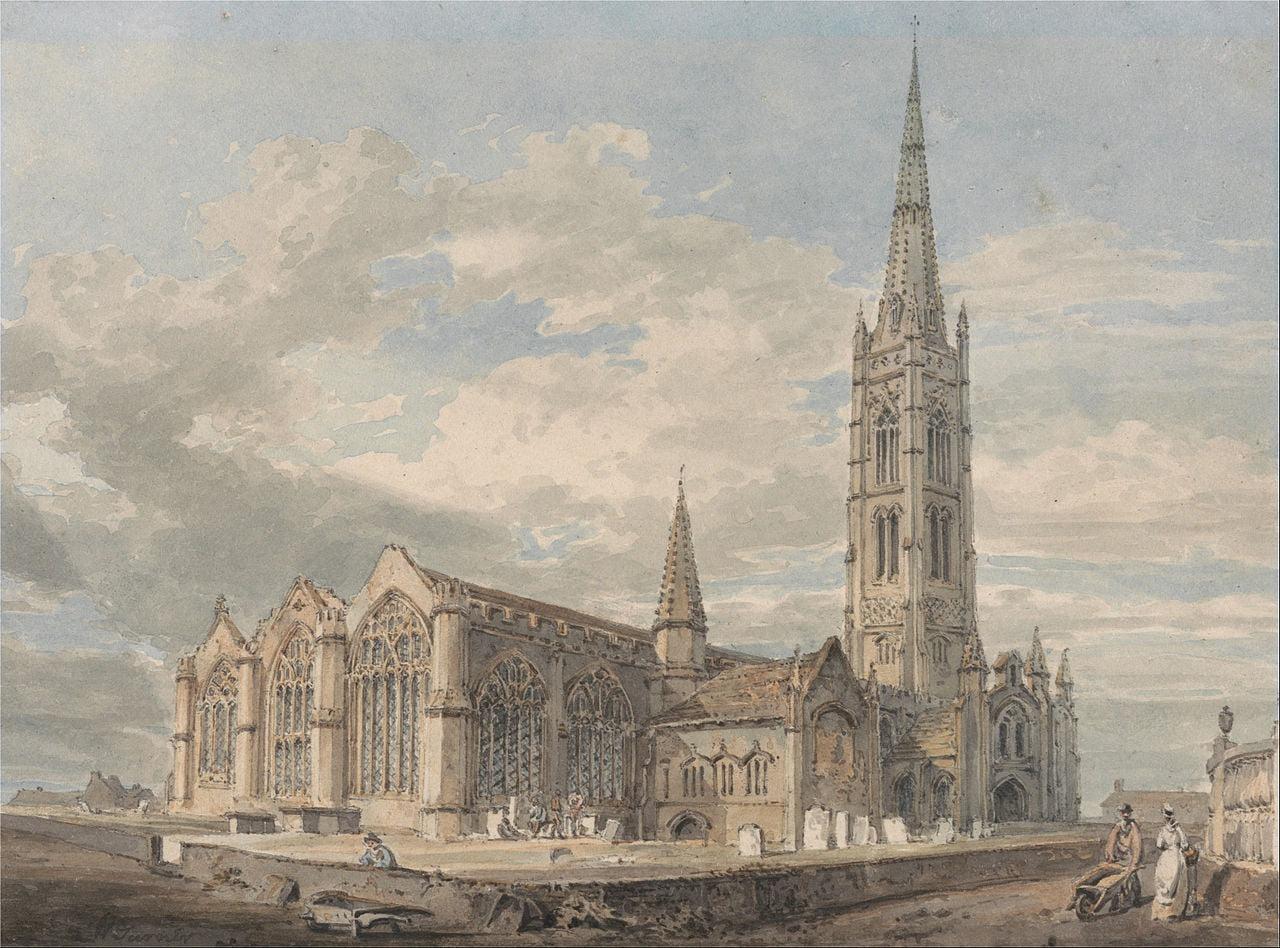
I found a marriage for a William Eaton and Elizabeth Rose in the city of Lincoln in 1761, but it seemed unlikely as they were both of that parish, and with no discernable links to either Grantham or Nottingham.
But there were two marriages registered for William Eaton and Elizabeth Rose: one in Lincoln in 1761 and one in Hawkesworth Nottinghamshire in 1767, the year before William junior was baptised in Grantham. Hawkesworth is between Grantham and Nottingham, and this seemed much more likely.
Elizabeth’s name is spelled Rose on her marriage records, but spelled Rouse on her baptism. It’s not unusual for spelling variations to occur, as the majority of people were illiterate and whoever was recording the event wrote what it sounded like.
Elizabeth Rouse was baptised on 26th December 1746 in Gunby St Nicholas (there is another Gunby in Lincolnshire), a short distance from Grantham. Her father was Richard Rouse; her mother Cave Pindar. Cave is a curious name and I wondered if it had been mistranscribed, but it appears to be correct and clearly says Cave on several records.
Richard Rouse married Cave Pindar 21 July 1744 in South Witham, not far from Grantham.
Richard was born in 1716 in North Witham. His father was William Rouse; his mothers name was Jane.
Cave Pindar was born in 1719 in Gunby St Nicholas, near Grantham. Her father was William Pindar, but sadly her mothers name is not recorded in the parish baptism register. However a marriage was registered between William Pindar and Elizabeth Holmes in Gunby St Nicholas in October 1712.
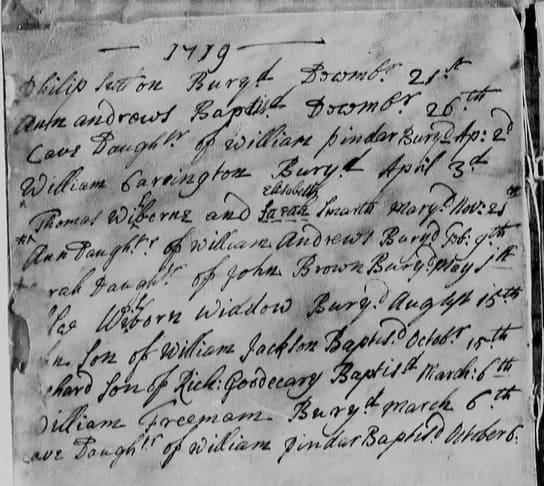
William Pindar buried a daughter Cave on 2 April 1719 and baptised a daughter Cave on 6 Oct 1719:
Elizabeth Holmes was baptised in Gunby St Nicholas on 6th December 1691. Her father was John Holmes; her mother Margaret Hod.
Margaret Hod would have been born circa 1650 to 1670 and I haven’t yet found a baptism record for her. According to several other public trees on an ancestry website, she was born in 1654 in Essenheim, Germany. This was surprising! According to these trees, her father was Johannes Hod (Blodt|Hoth) (1609–1677) and her mother was Maria Appolonia Witters (1620–1656).
I did not think it very likely that a young woman born in Germany would appear in Gunby St Nicholas in the late 1600’s, and did a search for Hod’s in and around Grantham. Indeed there were Hod’s living in the area as far back as the 1500’s, (a Robert Hod was baptised in Grantham in 1552), and no doubt before, but the parish records only go so far back. I think it’s much more likely that her parents were local, and that the page with her baptism recorded on the registers is missing.
Of the many reasons why parish registers or some of the pages would be destroyed or lost, this is another possibility. Lincolnshire is on the east coast of England:
“All of England suffered from a “monster” storm in November of 1703 that killed a reported 8,000 people. Seaside villages suffered greatly and their church and civil records may have been lost.”
A Margeret Hod, widow, died in Gunby St Nicholas in 1691, the same year that Elizabeth Holmes was born. Elizabeth’s mother was Margaret Hod. Perhaps the widow who died was Margaret Hod’s mother? I did wonder if Margaret Hod had died shortly after her daughter’s birth, and that her husband had died sometime between the conception and birth of his child. The Black Death or Plague swept through Lincolnshire in 1680 through 1690; such an eventually would be possible. But Margaret’s name would have been registered as Holmes, not Hod.
Cave Pindar’s father William was born in Swinstead, Lincolnshire, also near to Grantham, on the 28th December, 1690, and he died in Gunby St Nicholas in 1756. William’s father is recorded as Thomas Pinder; his mother Elizabeth.
GUNBY: The village name derives from a “farmstead or village of a man called Gunni”, from the Old Scandinavian person name, and ‘by’, a farmstead, village or settlement.
Gunby Grade II listed Anglican church is dedicated to St Nicholas. Of 15th-century origin, it was rebuilt by Richard Coad in 1869, although the Perpendicular tower remained. March 26, 2022 at 11:36 am #6285
In reply to: The Elusive Samuel Housley and Other Family Stories
Harriet Compton
Harriet Comptom is not directly related to us, but her portrait is in our family collection.
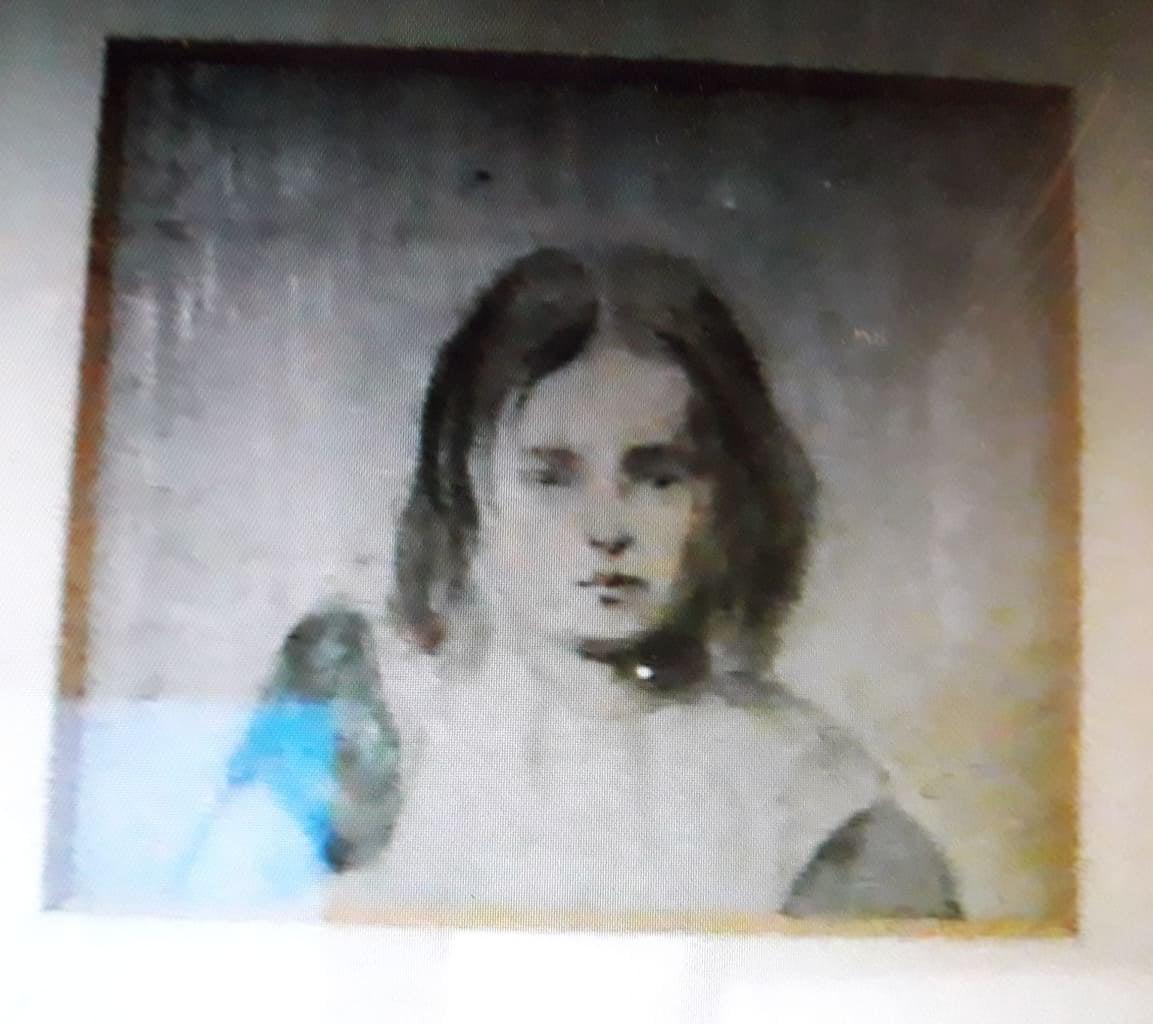
Alfred Julius Eugene Compton painted this portrait of his daughter, Harriet Compton, when she was six. Harriet Compton was Charles Tooby’s mothers mother, and Charles married my mothers aunt Dorothy Marshall. They lived on High Park Ave in Wollaston, and his parents lived on Park Road, Wollaston, opposite my grandparents, George and Nora Marshall. Harriet married Thomas Thornburgh, they had a daughter Florence who married Sydney Tooby. Florence and Sydney were Charles Tooby’s parents.
Charles and Dorothy Tooby didn’t have any children. Charles died before his wife, and this is how the picture ended up in my mothers possession.
I attempted to find a direct descendant of Harriet Compton, but have not been successful so far, although I did find a relative on a Stourbridge facebook group. Bryan Thornburgh replied: “Francis George was my grandfather.He had two sons George & my father Thomas and two daughters Cissie & Edith. I can remember visiting my fathers Uncle Charles and Aunt Dorothy in Wollaston.”
Francis George Thornburgh was Florence Tooby’s brother.
The watercolour portrait was framed by Hughes of Enville St, Stourbridge.
Alfred Julius Eugene Compton was born in 1826 Paris, France, and died on 6 February 1917 in Chelsea, London.
Harriet Compton his daughter was born in 1853 in Islington, London, and died in December 1926 in Stourbridge.Without going too far down an unrelated rabbit hole, a member of the facebook group Family Treasures Reinstated shared this:
“Will reported in numerous papers in Dec 1886.
Harriet’s father Alfred appears to be beneficiary but Harriet’s brother, Percy is specifically excluded .
“The will (dated March 6, 1876) of the Hon. Mrs. Fanny Stanhope, late of No. 24, Carlyle-square, Chelsea, who died on August 9 last, was proved on the 1st ult. by Alfred Julius Eugene Compton, the value of the personal estate amounting to over £8000.
The testatrix, after giving & few legacies, leaves one moiety of the residue of her personal estate, upon trust, for John Auguste Alexandre Compton, for life, and then, subject to an annuity to his wife, for the children (except Percy) of Alfred Julius Eugene Compton, and the other moiety, upon trust, for the said Alfred Julius Eugene Compton, for life, and at his death for his children, except Percy.”
-Illustrated London News.Harriet Compton:
 February 25, 2022 at 8:21 am #6277
In reply to: The Elusive Samuel Housley and Other Family Stories
William Housley the Elder
Intestate
William Housley of Kidsley Grange Farm in Smalley, Derbyshire, was born in 1781 in Selston, just over the county border in Nottinghamshire. His father was also called William Housley, and he was born in Selston in 1735. It would appear from the records that William the father married late in life and only had one son (unless of course other records are missing or have not yet been found). Never the less, William Housley of Kidsley was the eldest son, or eldest surviving son, evident from the legal document written in 1816 regarding William the fathers’ estate.
William Housley died in Smalley in 1815, intestate. William the son claims that “he is the natural and lawful son of the said deceased and the person entitled to letters of administration of his goods and personal estate”.
Derby the 16th day of April 1816:
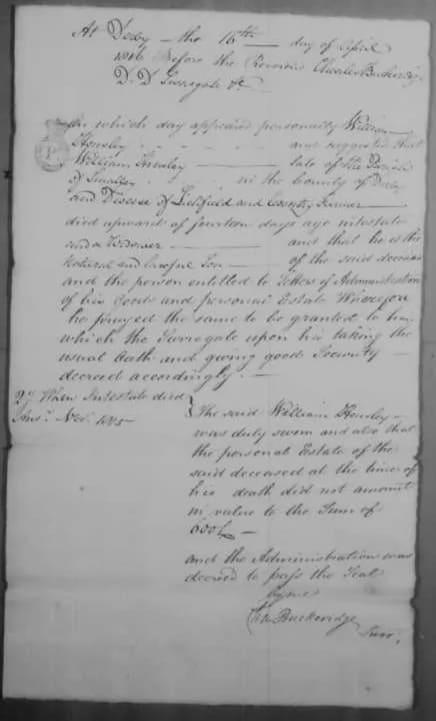
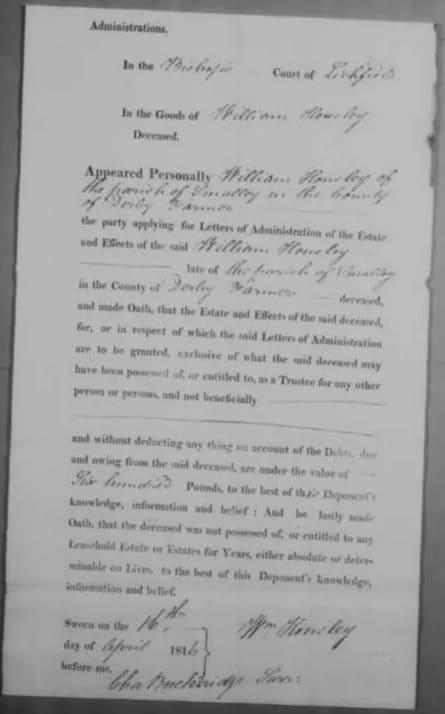
I transcribed three pages of this document, which was mostly repeated legal jargon. It appears that William Housley the elder died intestate, but that William the younger claimed that he was the sole heir. £1200 is mentioned to be held until the following year until such time that there is certainty than no will was found and so on. On the last page “no more than £600” is mentioned and I can’t quite make out why both figures are mentioned! However, either would have been a considerable sum in 1816.
I also found a land tax register in William Housley’s the elders name in Smalley (as William the son would have been too young at the time, in 1798). William the elder was an occupant of one of his properties, and paid tax on two others, with other occupants named, so presumably he owned three properties in Smalley.
The only likely marriage for William Housley was in Selston. William Housley married Elizabeth Woodhead in 1777. It was a miracle that I found it, because the transcription on the website said 1797, which would have been too late to be ours, as William the son was born in 1781, but for some reason I checked the image and found that it was clearly 1777, listed between entries for 1776 and 1778. (I reported the transcription error.) There were no other William Housley marriages recorded during the right time frame in Selston or in the vicinity.
I found a birth registered for William the elder in Selston in 1735. Notwithstanding there may be pages of the register missing or illegible, in the absence of any other baptism registration, we must assume this is our William, in which case he married rather late in his 40s. It would seem he didn’t have a previous wife, as William the younger claims to be the sole heir to his fathers estate. I haven’t found any other children registered to the couple, which is also unusual, and the only death I can find for an Elizabeth Housley prior to 1815 (as William the elder was a widower when he died) is in Selston in 1812. I’m not convinced that this is the death of William’s wife, however, as they were living in Smalley ~ at least, they were living in Smalley in 1798, according to the tax register, and William was living in Smalley when he died in 1815.
February 5, 2022 at 1:59 pm #6272In reply to: The Elusive Samuel Housley and Other Family Stories
The Housley Letters
The Carringtons
Carrington Farm, Smalley:
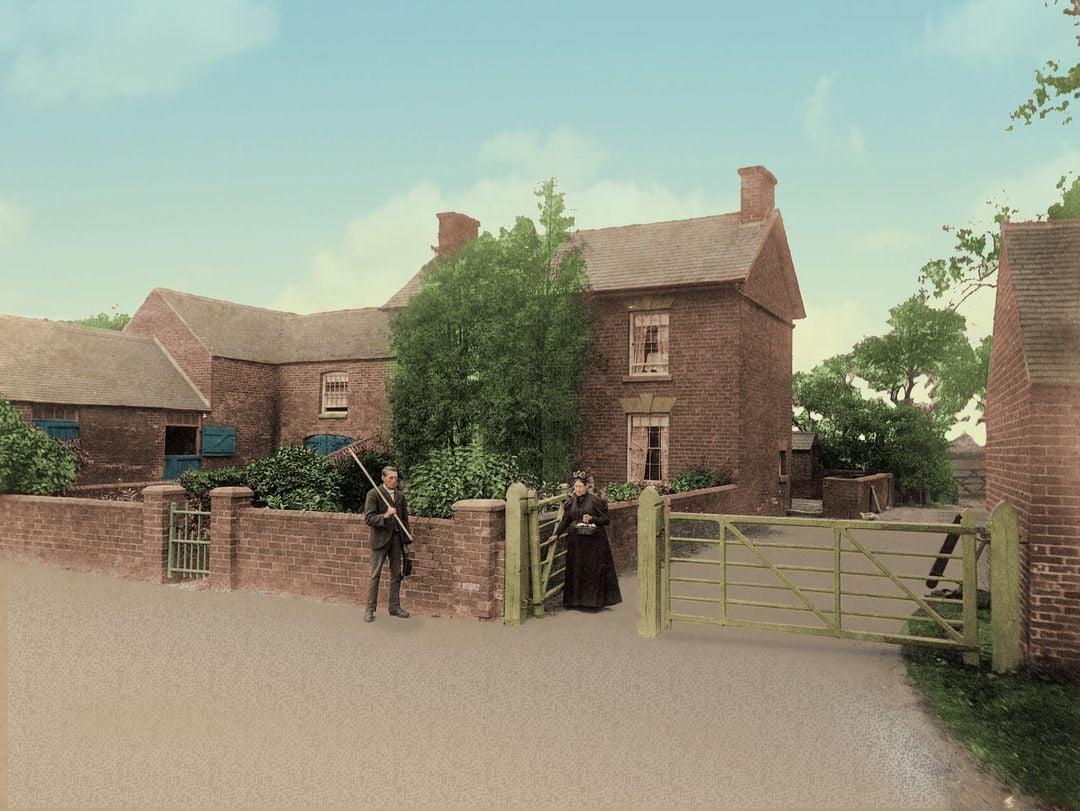
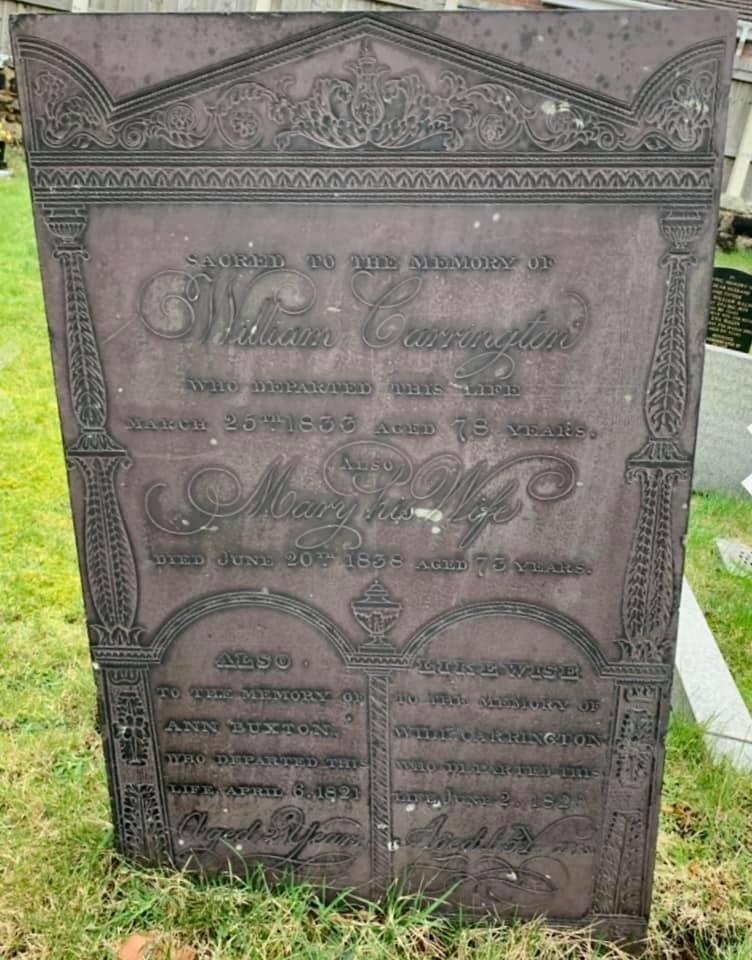
Ellen Carrington was born in 1795. Her father William Carrington 1755-1833 was from Smalley. Her mother Mary Malkin 1765-1838 was from Ellastone, in Staffordshire. Ellastone is on the Derbyshire border and very close to Ashboure, where Ellen married William Housley.
From Barbara Housley’s Narrative on the Letters:
Ellen’s family was evidently rather prominant in Smalley. Two Carringtons (John and William) served on the Parish Council in 1794. Parish records are full of Carrington marriages and christenings.
The letters refer to a variety of “uncles” who were probably Ellen’s brothers, but could be her uncles. These include:
RICHARD
Probably the youngest Uncle, and certainly the most significant, is Richard. He was a trustee for some of the property which needed to be settled following Ellen’s death. Anne wrote in 1854 that Uncle Richard “has got a new house built” and his daughters are “fine dashing young ladies–the belles of Smalley.” Then she added, “Aunt looks as old as my mother.”
Richard was born somewhere between 1808 and 1812. Since Richard was a contemporary of the older Housley children, “Aunt,” who was three years younger, should not look so old!
Richard Carrington and Harriet Faulkner were married in Repton in 1833. A daughter Elizabeth was baptised March 24, 1834. In July 1872, Joseph wrote: “Elizabeth is married too and a large family and is living in Uncle Thomas’s house for he is dead.” Elizabeth married Ayres (Eyres) Clayton of Lascoe. His occupation was listed as joiner and shopkeeper. They were married before 1864 since Elizabeth Clayton witnessed her sister’s marriage. Their children in April 1871 were Selina (1863), Agnes Maria (1866) and Elizabeth Ann (1868). A fourth daughter, Alice Augusta, was born in 1872 or 1873, probably by July 1872 to fit Joseph’s description “large family”! A son Charles Richard was born in 1880.
An Elizabeth Ann Clayton married John Arthur Woodhouse on May 12, 1913. He was a carpenter. His father was a miner. Elizabeth Ann’s father, Ayres, was also a carpenter. John Arthur’s age was given as 25. Elizabeth Ann’s age was given as 33 or 38. However, if she was born in 1868, her age would be 45. Possibly this is another case of a child being named for a deceased sibling. If she were 38 and born in 1875, she would fill the gap between Alice Augusta and Charles Richard.
Selina Clayton, who would have been 18, is not listed in the household in 1881. She died on June 11, 1914 at age 51. Agnes Maria Clayton died at the age of 25 and was buried March 31, 1891. Charles Richard died at the age of 5 and was buried on February 4, 1886. A Charles James Clayton, 18 months, was buried June 8, 1889 in Heanor.
Richard Carrington’s second daughter, Selina, born in 1837, married Walker Martin (b.1835) on February 11, 1864 and they were living at Kidsley Park Farm in 1872, according to a letter from Joseph, and, according to the census, were still there in 1881. This 100 acre farm was formerly the home of Daniel Smith and his daughter Elizabeth Davy Barber. Selina and Walker had at least five children: Elizabeth Ann (1865), Harriet Georgianna (1866/7), Alice Marian (September 6, 1868), Philip Richard (1870), and Walker (1873). In December 1972, Joseph mentioned the death of Philip Walker, a farmer of Prospect Farm, Shipley. This was probably Walker Martin’s grandfather, since Walker was born in Shipley. The stock was to be sold the following Monday, but his daughter (Walker’s mother?) died the next day. Walker’s father was named Thomas. An Annie Georgianna Martin age 13 of Shipley died in April of 1859.
Selina Martin died on October 29, 1906 but her estate was not settled until November 14, 1910. Her gross estate was worth L223.56. Her son Walker and her daughter Harriet Georgiana were her trustees and executers. Walker was to get Selina’s half of Richard’s farm. Harriet Georgiana and Alice Marian were to be allowed to live with him. Philip Richard received L25. Elizabeth Ann was already married to someone named Smith.
Richard and Harriet may also have had a son George. In 1851 a Harriet Carrington and her three year old son George were living with her step-father John Benniston in Heanor. John may have been recently widowed and needed her help. Or, the Carrington home may have been inadequate since Anne reported a new one was built by 1854. Selina’s second daughter’s name testifies to the presence of a “George” in the family! Could the death of this son account for the haggard appearance Anne described when she wrote: “Aunt looks as old as my mother?”
Harriet was buried May 19, 1866. She was 55 when she died.In 1881, Georgianna then 14, was living with her grandfather and his niece, Zilpah Cooper, age 38–who lived with Richard on his 63 acre farm as early as 1871. A Zilpah, daughter of William and Elizabeth, was christened October 1843. Her brother, William Walter, was christened in 1846 and married Anna Maria Saint in 1873. There are four Selina Coopers–one had a son William Thomas Bartrun Cooper christened in 1864; another had a son William Cooper christened in 1873.
Our Zilpah was born in Bretley 1843. She died at age 49 and was buried on September 24, 1892. In her will, which was witnessed by Selina Martin, Zilpah’s sister, Frances Elizabeth Cleave, wife of Horatio Cleave of Leicester is mentioned. James Eley and Francis Darwin Huish (Richard’s soliciter) were executers.
Richard died June 10, 1892, and was buried on June 13. He was 85. As might be expected, Richard’s will was complicated. Harriet Georgiana Martin and Zilpah Cooper were to share his farm. If neither wanted to live there it was to go to Georgiana’s cousin Selina Clayton. However, Zilpah died soon after Richard. Originally, he left his piano, parlor and best bedroom furniture to his daughter Elizabeth Clayton. Then he revoked everything but the piano. He arranged for the payment of £150 which he owed. Later he added a codicil explaining that the debt was paid but he had borrowed £200 from someone else to do it!
Richard left a good deal of property including: The house and garden in Smalley occupied by Eyres Clayton with four messuages and gardens adjoining and large garden below and three messuages at the south end of the row with the frame work knitters shop and garden adjoining; a dwelling house used as a public house with a close of land; a small cottage and garden and four cottages and shop and gardens.
THOMAS
In August 1854, Anne wrote “Uncle Thomas is about as usual.” A Thomas Carrington married a Priscilla Walker in 1810.
Their children were baptised in August 1830 at the same time as the Housley children who at that time ranged in age from 3 to 17. The oldest of Thomas and Priscilla’s children, Henry, was probably at least 17 as he was married by 1836. Their youngest son, William Thomas, born 1830, may have been Mary Ellen Weston’s beau. However, the only Richard whose christening is recorded (1820), was the son of Thomas and Lucy. In 1872 Joseph reported that Richard’s daughter Elizabeth was married and living in Uncle Thomas’s house. In 1851, Alfred Smith lived in house 25, Foulks lived in 26, Thomas and Priscilla lived in 27, Bennetts lived in 28, Allard lived in 29 and Day lived in 30. Thomas and Priscilla do not appear in 1861. In 1871 Elizabeth Ann and Ayres Clayton lived in House 54. None of the families listed as neighbors in 1851 remained. However, Joseph Carrington, who lived in house 19 in 1851, lived in house 51 in 1871.
JOHN
In August 1854, Anne wrote: “Uncle John is with Will and Frank has been home in a comfortable place in Cotmanhay.” Although John and William are two of the most popular Carrington names, only two John’s have sons named William. John and Rachel Buxton Carrington had a son William christened in 1788. At the time of the letters this John would have been over 100 years old. Their son John and his wife Ann had a son William who was born in 1805. However, this William age 46 was living with his widowed mother in 1851. A Robert Carrington and his wife Ann had a son John born 1n 1805. He would be the right age to be a brother to Francis Carrington discussed below. This John was living with his widowed mother in 1851 and was unmarried. There are no known Williams in this family grouping. A William Carrington of undiscovered parentage was born in 1821. It is also possible that the Will in question was Anne’s brother Will Housley.
–Two Francis Carringtons appear in the 1841 census both of them aged 35. One is living with Richard and Harriet Carrington. The other is living next door to Samuel and Ellen Carrington Kerry (the trustee for “father’s will”!). The next name in this sequence is John Carrington age 15 who does not seem to live with anyone! but may be part of the Kerry household.
FRANK (see above)
While Anne did not preface her mention of the name Frank with an “Uncle,” Joseph referred to Uncle Frank and James Carrington in the same sentence. A James Carrington was born in 1814 and had a wife Sarah. He worked as a framework knitter. James may have been a son of William and Anne Carrington. He lived near Richard according to the 1861 census. Other children of William and Anne are Hannah (1811), William (1815), John (1816), and Ann (1818). An Ann Carrington married a Frank Buxton in 1819. This might be “Uncle Frank.”
An Ellen Carrington was born to John and Rachel Carrington in 1785. On October 25, 1809, a Samuel Kerry married an Ellen Carrington. However this Samuel Kerry is not the trustee involved in settling Ellen’s estate. John Carrington died July 1815.
William and Mary Carrington:
 February 5, 2022 at 10:50 am #6271
In reply to: The Elusive Samuel Housley and Other Family Stories
The Housley Letters
FRIENDS AND NEIGHBORS
from Barbara Housley’s Narrative on the Letters:
George apparently asked about old friends and acquaintances and the family did their best to answer although Joseph wrote in 1873: “There is very few of your old cronies that I know of knocking about.”
In Anne’s first letter she wrote about a conversation which Robert had with EMMA LYON before his death and added “It (his death) was a great trouble to Lyons.” In her second letter Anne wrote: “Emma Lyon is to be married September 5. I am going the Friday before if all is well. There is every prospect of her being comfortable. MRS. L. always asks after you.” In 1855 Emma wrote: “Emma Lyon now Mrs. Woolhouse has got a fine boy and a pretty fuss is made with him. They call him ALFRED LYON WOOLHOUSE.”
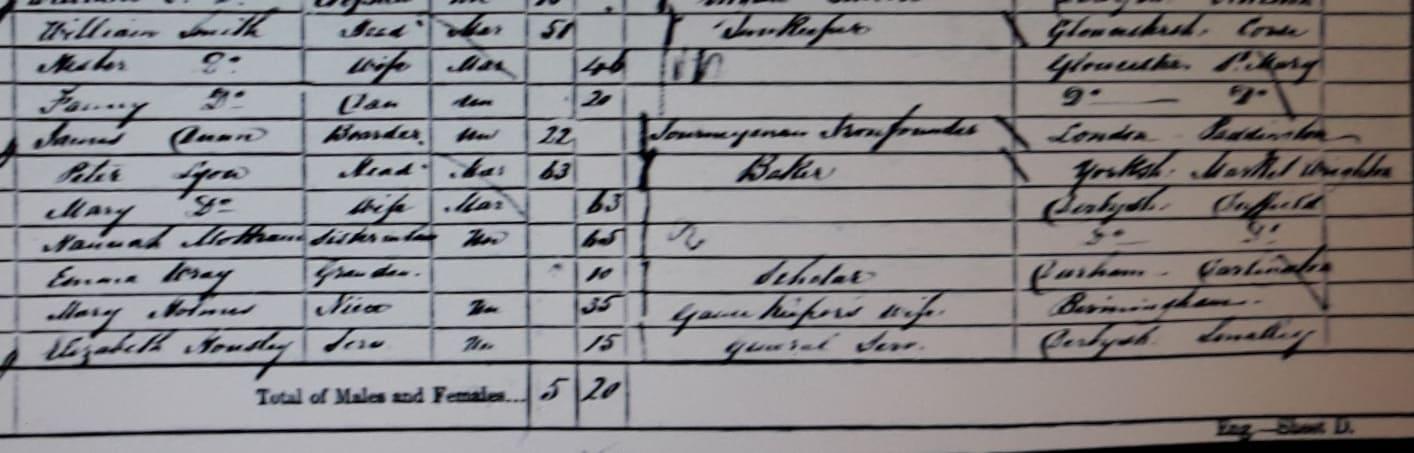
(Interesting to note that Elizabeth Housley, the eldest daughter of Samuel and Elizabeth, was living with a Lyon family in Derby in 1861, after she left Belper workhouse. The Emma listed on the census in 1861 was 10 years old, and so can not be the Emma Lyon mentioned here, but it’s possible, indeed likely, that Peter Lyon the baker was related to the Lyon’s who were friends of the Housley’s. The mention of a sea captain in the Lyon family begs the question did Elizabeth Housley meet her husband, George William Stafford, a seaman, through some Lyon connections, but to date this remains a mystery.)
Elizabeth Housley living with Peter Lyon and family in Derby St Peters in 1861:
A Henrietta Lyon was married in 1860. Her father was Matthew, a Navy Captain. The 1857 Derby Directory listed a Richard Woolhouse, plumber, glazier, and gas fitter on St. Peter’s Street. Robert lived in St. Peter’s parish at the time of his death. An Alfred Lyon, son of Alfred and Jemima Lyon 93 Friargate, Derby was baptised on December 4, 1877. An Allen Hewley Lyon, born February 1, 1879 was baptised June 17 1879.
Anne wrote in August 1854: “KERRY was married three weeks since to ELIZABETH EATON. He has left Smith some time.” Perhaps this was the same person referred to by Joseph: “BILL KERRY, the blacksmith for DANIEL SMITH, is working for John Fletcher lace manufacturer.” According to the 1841 census, Elizabeth age 12, was the oldest daughter of Thomas and Rebecca Eaton. She would certainly have been of marriagable age in 1854. A William Kerry, age 14, was listed as a blacksmith’s apprentice in the 1851 census; but another William Kerry who was 29 in 1851 was already working for Daniel Smith as a blacksmith. REBECCA EATON was listed in the 1851 census as a widow serving as a nurse in the John Housley household. The 1881 census lists the family of William Kerry, blacksmith, as Jane, 19; William 13; Anne, 7; and Joseph, 4. Elizabeth is not mentioned but Bill is not listed as a widower.
Anne also wrote in 1854 that she had not seen or heard anything of DICK HANSON for two years. Joseph wrote that he did not know Old BETTY HANSON’S son. A Richard Hanson, age 24 in 1851, lived with a family named Moore. His occupation was listed as “journeyman knitter.” An Elizabeth Hanson listed as 24 in 1851 could hardly be “Old Betty.” Emma wrote in June 1856 that JOE OLDKNOW age 27 had married Mrs. Gribble’s servant age 17.
Anne wrote that “JOHN SPENCER had not been since father died.” The only John Spencer in Smalley in 1841 was four years old. He would have been 11 at the time of William Housley’s death. Certainly, the two could have been friends, but perhaps young John was named for his grandfather who was a crony of William’s living in a locality not included in the Smalley census.
TAILOR ALLEN had lost his wife and was still living in the old house in 1872. JACK WHITE had died very suddenly, and DR. BODEN had died also. Dr. Boden’s first name was Robert. He was 53 in 1851, and was probably the Robert, son of Richard and Jane, who was christened in Morely in 1797. By 1861, he had married Catherine, a native of Smalley, who was at least 14 years his junior–18 according to the 1871 census!
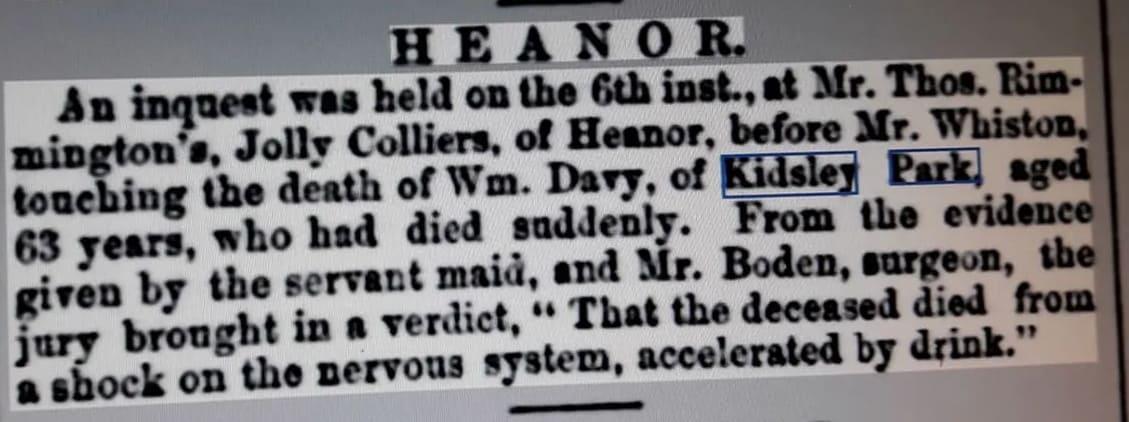
Among the family’s dearest friends were JOSEPH AND ELIZABETH DAVY, who were married some time after 1841. Mrs. Davy was born in 1812 and her husband in 1805. In 1841, the Kidsley Park farm household included DANIEL SMITH 72, Elizabeth 29 and 5 year old Hannah Smith. In 1851, Mr. Davy’s brother William and 10 year old Emma Davy were visiting from London. Joseph reported the death of both Davy brothers in 1872; Joseph apparently died first.
Mrs. Davy’s father, was a well known Quaker. In 1856, Emma wrote: “Mr. Smith is very hearty and looks much the same.” He died in December 1863 at the age of 94. George Fox, the founder of the Quakers visited Kidsley Park in 1650 and 1654.
Mr. Davy died in 1863, but in 1854 Anne wrote how ill he had been for two years. “For two last winters we never thought he would live. He is now able to go out a little on the pony.” In March 1856, his wife wrote, “My husband is in poor health and fell.” Later in 1856, Emma wrote, “Mr. Davy is living which is a great wonder. Mrs. Davy is very delicate but as good a friend as ever.”
In The Derbyshire Advertiser and Journal, 15 May 1863:
Whenever the girls sent greetings from Mrs. Davy they used her Quaker speech pattern of “thee and thy.” Mrs. Davy wrote to George on March 21 1856 sending some gifts from his sisters and a portrait of their mother–“Emma is away yet and A is so much worse.” Mrs. Davy concluded: “With best wishes for thy health and prosperity in this world and the next I am thy sincere friend.”
Mrs. Davy later remarried. Her new husband was W.T. BARBER. The 1861 census lists William Barber, 35, Bachelor of Arts, Cambridge, living with his 82 year old widowed mother on an 135 acre farm with three servants. One of these may have been the Ann who, according to Joseph, married Jack Oldknow. By 1871 the farm, now occupied by William, 47 and Elizabeth, 57, had grown to 189 acres. Meanwhile, Kidsley Park Farm became the home of the Housleys’ cousin Selina Carrington and her husband Walker Martin. Both Barbers were still living in 1881.
Mrs. Davy was described in Kerry’s History of Smalley as “an accomplished and exemplary lady.” A piece of her poetry “Farewell to Kidsley Park” was published in the history. It was probably written when Elizabeth moved to the Barber farm. Emma sent one of her poems to George. It was supposed to be about their house. “We have sent you a piece of poetry that Mrs. Davy composed about our ‘Old House.’ I am sure you will like it though you may not understand all the allusions she makes use of as well as we do.”
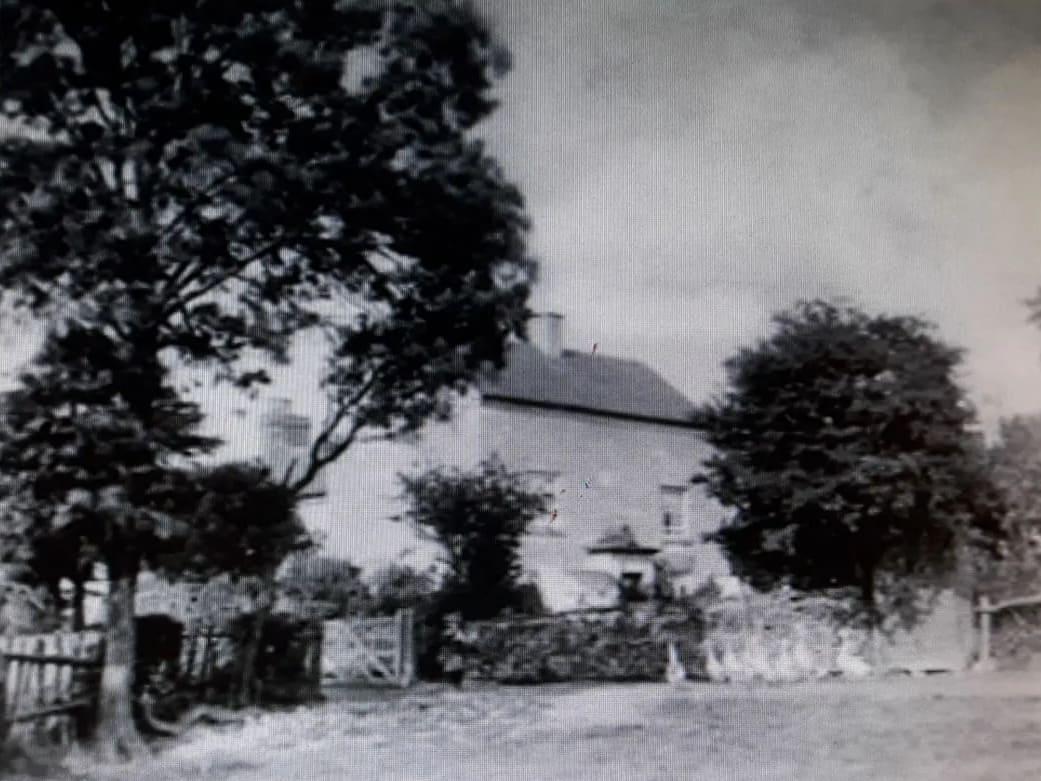
Kiddsley Park Farm, Smalley, in 1898. (note that the Housley’s lived at Kiddsley Grange Farm, and the Davy’s at neighbouring Kiddsley Park Farm)
Emma was not sure if George wanted to hear the local gossip (“I don’t know whether such little particulars will interest you”), but shared it anyway. In November 1855: “We have let the house to Mr. Gribble. I dare say you know who he married, Matilda Else. They came from Lincoln here in March. Mrs. Gribble gets drunk nearly every day and there are such goings on it is really shameful. So you may be sure we have not very pleasant neighbors but we have very little to do with them.”
John Else and his wife Hannah and their children John and Harriet (who were born in Smalley) lived in Tag Hill in 1851. With them lived a granddaughter Matilda Gribble age 3 who was born in Lincoln. A Matilda, daughter of John and Hannah, was christened in 1815. (A Sam Else died when he fell down the steps of a bar in 1855.)
February 2, 2022 at 1:15 pm #6268In reply to: The Elusive Samuel Housley and Other Family Stories
From Tanganyika with Love
continued part 9
With thanks to Mike Rushby.
Lyamungu 3rd January 1945
Dearest Family.
We had a novel Christmas this year. We decided to avoid the expense of
entertaining and being entertained at Lyamungu, and went off to spend Christmas
camping in a forest on the Western slopes of Kilimanjaro. George decided to combine
business with pleasure and in this way we were able to use Government transport.
We set out the day before Christmas day and drove along the road which skirts
the slopes of Kilimanjaro and first visited a beautiful farm where Philip Teare, the ex
Game Warden, and his wife Mary are staying. We had afternoon tea with them and then
drove on in to the natural forest above the estate and pitched our tent beside a small
clear mountain stream. We decorated the tent with paper streamers and a few small
balloons and John found a small tree of the traditional shape which we decorated where
it stood with tinsel and small ornaments.We put our beer, cool drinks for the children and bottles of fresh milk from Simba
Estate, in the stream and on Christmas morning they were as cold as if they had been in
the refrigerator all night. There were not many presents for the children, there never are,
but they do not seem to mind and are well satisfied with a couple of balloons apiece,
sweets, tin whistles and a book each.George entertain the children before breakfast. He can make a magical thing out
of the most ordinary balloon. The children watched entranced as he drew on his pipe
and then blew the smoke into the balloon. He then pinched the neck of the balloon
between thumb and forefinger and released the smoke in little puffs. Occasionally the
balloon ejected a perfect smoke ring and the forest rang with shouts of “Do it again
Daddy.” Another trick was to blow up the balloon to maximum size and then twist the
neck tightly before releasing. Before subsiding the balloon darted about in a crazy
fashion causing great hilarity. Such fun, at the cost of a few pence.After breakfast George went off to fish for trout. John and Jim decided that they
also wished to fish so we made rods out of sticks and string and bent pins and they
fished happily, but of course quite unsuccessfully, for hours. Both of course fell into the
stream and got soaked, but I was prepared for this, and the little stream was so shallow
that they could not come to any harm. Henry played happily in the sand and I had a
most peaceful morning.Hamisi roasted a chicken in a pot over the camp fire and the jelly set beautifully in the
stream. So we had grilled trout and chicken for our Christmas dinner. I had of course
taken an iced cake for the occasion and, all in all, it was a very successful Christmas day.
On Boxing day we drove down to the plains where George was to investigate a
report of game poaching near the Ngassari Furrow. This is a very long ditch which has
been dug by the Government for watering the Masai stock in the area. It is also used by
game and we saw herds of zebra and wildebeest, and some Grant’s Gazelle and
giraffe, all comparatively tame. At one point a small herd of zebra raced beside the lorry
apparently enjoying the fun of a gallop. They were all sleek and fat and looked wild and
beautiful in action.We camped a considerable distance from the water but this precaution did not
save us from the mosquitoes which launched a vicious attack on us after sunset, so that
we took to our beds unusually early. They were on the job again when we got up at
sunrise so I was very glad when we were once more on our way home.“I like Christmas safari. Much nicer that silly old party,” said John. I agree but I think
it is time that our children learned to play happily with others. There are no other young
children at Lyamungu though there are two older boys and a girl who go to boarding
school in Nairobi.On New Years Day two Army Officers from the military camp at Moshi, came for
tea and to talk game hunting with George. I think they rather enjoy visiting a home and
seeing children and pets around.Eleanor.
Lyamungu 14 May 1945
Dearest Family.
So the war in Europe is over at last. It is such marvellous news that I can hardly
believe it. To think that as soon as George can get leave we will go to England and
bring Ann and George home with us to Tanganyika. When we know when this leave can
be arranged we will want Kate to join us here as of course she must go with us to
England to meet George’s family. She has become so much a part of your lives that I
know it will be a wrench for you to give her up but I know that you will all be happy to
think that soon our family will be reunited.The V.E. celebrations passed off quietly here. We all went to Moshi to see the
Victory Parade of the King’s African Rifles and in the evening we went to a celebration
dinner at the Game Warden’s house. Besides ourselves the Moores had invited the
Commanding Officer from Moshi and a junior officer. We had a very good dinner and
many toasts including one to Mrs Moore’s brother, Oliver Milton who is fighting in Burma
and has recently been awarded the Military Cross.There was also a celebration party for the children in the grounds of the Moshi
Club. Such a spread! I think John and Jim sampled everything. We mothers were
having our tea separately and a friend laughingly told me to turn around and have a look.
I did, and saw the long tea tables now deserted by all the children but my two sons who
were still eating steadily, and finding the party more exciting than the game of Musical
Bumps into which all the other children had entered with enthusiasm.There was also an extremely good puppet show put on by the Italian prisoners
of war from the camp at Moshi. They had made all the puppets which included well
loved characters like Snow White and the Seven Dwarfs and the Babes in the Wood as
well as more sophisticated ones like an irritable pianist and a would be prima donna. The
most popular puppets with the children were a native askari and his family – a very
happy little scene. I have never before seen a puppet show and was as entranced as
the children. It is amazing what clever manipulation and lighting can do. I believe that the
Italians mean to take their puppets to Nairobi and am glad to think that there, they will
have larger audiences to appreciate their art.George has just come in, and I paused in my writing to ask him for the hundredth
time when he thinks we will get leave. He says I must be patient because it may be a
year before our turn comes. Shipping will be disorganised for months to come and we
cannot expect priority simply because we have been separated so long from our
children. The same situation applies to scores of other Government Officials.
I have decided to write the story of my childhood in South Africa and about our
life together in Tanganyika up to the time Ann and George left the country. I know you
will have told Kate these stories, but Ann and George were so very little when they left
home that I fear that they cannot remember much.My Mother-in-law will have told them about their father but she can tell them little
about me. I shall send them one chapter of my story each month in the hope that they
may be interested and not feel that I am a stranger when at last we meet again.Eleanor.
Lyamungu 19th September 1945
Dearest Family.
In a months time we will be saying good-bye to Lyamungu. George is to be
transferred to Mbeya and I am delighted, not only as I look upon Mbeya as home, but
because there is now a primary school there which John can attend. I feel he will make
much better progress in his lessons when he realises that all children of his age attend
school. At present he is putting up a strong resistance to learning to read and spell, but
he writes very neatly, does his sums accurately and shows a real talent for drawing. If
only he had the will to learn I feel he would do very well.Jim now just four, is too young for lessons but too intelligent to be interested in
the ayah’s attempts at entertainment. Yes I’ve had to engage a native girl to look after
Henry from 9 am to 12.30 when I supervise John’s Correspondence Course. She is
clean and amiable, but like most African women she has no initiative at all when it comes
to entertaining children. Most African men and youths are good at this.I don’t regret our stay at Lyamungu. It is a beautiful spot and the change to the
cooler climate after the heat of Morogoro has been good for all the children. John is still
tall for his age but not so thin as he was and much less pale. He is a handsome little lad
with his large brown eyes in striking contrast to his fair hair. He is wary of strangers but
very observant and quite uncanny in the way he sums up people. He seldom gets up
to mischief but I have a feeling he eggs Jim on. Not that Jim needs egging.Jim has an absolute flair for mischief but it is all done in such an artless manner that
it is not easy to punish him. He is a very sturdy child with a cap of almost black silky hair,
eyes brown, like mine, and a large mouth which is quick to smile and show most beautiful
white and even teeth. He is most popular with all the native servants and the Game
Scouts. The servants call Jim, ‘Bwana Tembo’ (Mr Elephant) because of his sturdy
build.Henry, now nearly two years old, is quite different from the other two in
appearance. He is fair complexioned and fair haired like Ann and Kate, with large, black
lashed, light grey eyes. He is a good child, not so merry as Jim was at his age, nor as
shy as John was. He seldom cries, does not care to be cuddled and is independent and
strong willed. The servants call Henry, ‘Bwana Ndizi’ (Mr Banana) because he has an
inexhaustible appetite for this fruit. Fortunately they are very inexpensive here. We buy
an entire bunch which hangs from a beam on the back verandah, and pluck off the
bananas as they ripen. This way there is no waste and the fruit never gets bruised as it
does in greengrocers shops in South Africa. Our three boys make a delightful and
interesting trio and I do wish you could see them for yourselves.We are delighted with the really beautiful photograph of Kate. She is an
extraordinarily pretty child and looks so happy and healthy and a great credit to you.
Now that we will be living in Mbeya with a school on the doorstep I hope that we will
soon be able to arrange for her return home.Eleanor.
c/o Game Dept. Mbeya. 30th October 1945
Dearest Family.
How nice to be able to write c/o Game Dept. Mbeya at the head of my letters.
We arrived here safely after a rather tiresome journey and are installed in a tiny house on
the edge of the township.We left Lyamungu early on the morning of the 22nd. Most of our goods had
been packed on the big Ford lorry the previous evening, but there were the usual
delays and farewells. Of our servants, only the cook, Hamisi, accompanied us to
Mbeya. Japhet, Tovelo and the ayah had to be paid off and largesse handed out.
Tovelo’s granny had come, bringing a gift of bananas, and she also brought her little
granddaughter to present a bunch of flowers. The child’s little scolded behind is now
completely healed. Gifts had to be found for them too.At last we were all aboard and what a squash it was! Our few pieces of furniture
and packing cases and trunks, the cook, his wife, the driver and the turney boy, who
were to take the truck back to Lyamungu, and all their bits and pieces, bunches of
bananas and Fanny the dog were all crammed into the body of the lorry. George, the
children and I were jammed together in the cab. Before we left George looked
dubiously at the tyres which were very worn and said gloomily that he thought it most
unlikely that we would make our destination, Dodoma.Too true! Shortly after midday, near Kwakachinja, we blew a back tyre and there
was a tedious delay in the heat whilst the wheel was changed. We were now without a
spare tyre and George said that he would not risk taking the Ford further than Babati,
which is less than half way to Dodoma. He drove very slowly and cautiously to Babati
where he arranged with Sher Mohammed, an Indian trader, for a lorry to take us to
Dodoma the next morning.It had been our intention to spend the night at the furnished Government
Resthouse at Babati but when we got there we found that it was already occupied by
several District Officers who had assembled for a conference. So, feeling rather
disgruntled, we all piled back into the lorry and drove on to a place called Bereku where
we spent an uncomfortable night in a tumbledown hut.Before dawn next morning Sher Mohammed’s lorry drove up, and there was a
scramble to dress by the light of a storm lamp. The lorry was a very dilapidated one and
there was already a native woman passenger in the cab. I felt so tired after an almost
sleepless night that I decided to sit between the driver and this woman with the sleeping
Henry on my knee. It was as well I did, because I soon found myself dosing off and
drooping over towards the woman. Had she not been there I might easily have fallen
out as the battered cab had no door. However I was alert enough when daylight came
and changed places with the woman to our mutual relief. She was now able to converse
with the African driver and I was able to enjoy the scenery and the fresh air!
George, John and Jim were less comfortable. They sat in the lorry behind the
cab hemmed in by packing cases. As the lorry was an open one the sun beat down
unmercifully upon them until George, ever resourceful, moved a table to the front of the
truck. The two boys crouched under this and so got shelter from the sun but they still had
to endure the dust. Fanny complicated things by getting car sick and with one thing and
another we were all jolly glad to get to Dodoma.We spent the night at the Dodoma Hotel and after hot baths, a good meal and a
good nights rest we cheerfully boarded a bus of the Tanganyika Bus Service next
morning to continue our journey to Mbeya. The rest of the journey was uneventful. We slept two nights on the road, the first at Iringa Hotel and the second at Chimala. We
reached Mbeya on the 27th.I was rather taken aback when I first saw the little house which has been allocated
to us. I had become accustomed to the spacious houses we had in Morogoro and
Lyamungu. However though the house is tiny it is secluded and has a long garden
sloping down to the road in front and another long strip sloping up behind. The front
garden is shaded by several large cypress and eucalyptus trees but the garden behind
the house has no shade and consists mainly of humpy beds planted with hundreds of
carnations sadly in need of debudding. I believe that the previous Game Ranger’s wife
cultivated the carnations and, by selling them, raised money for War Funds.
Like our own first home, this little house is built of sun dried brick. Its original
owners were Germans. It is now rented to the Government by the Custodian of Enemy
Property, and George has his office in another ex German house.This afternoon we drove to the school to arrange about enrolling John there. The
school is about four miles out of town. It was built by the German settlers in the late
1930’s and they were justifiably proud of it. It consists of a great assembly hall and
classrooms in one block and there are several attractive single storied dormitories. This
school was taken over by the Government when the Germans were interned on the
outbreak of war and many improvements have been made to the original buildings. The
school certainly looks very attractive now with its grassed playing fields and its lawns and
bright flower beds.The Union Jack flies from a tall flagpole in front of the Hall and all traces of the
schools German origin have been firmly erased. We met the Headmaster, Mr
Wallington, and his wife and some members of the staff. The school is co-educational
and caters for children from the age of seven to standard six. The leaving age is elastic
owing to the fact that many Tanganyika children started school very late because of lack
of educational facilities in this country.The married members of the staff have their own cottages in the grounds. The
Matrons have quarters attached to the dormitories for which they are responsible. I felt
most enthusiastic about the school until I discovered that the Headmaster is adamant
upon one subject. He utterly refuses to take any day pupils at the school. So now our
poor reserved Johnny will have to adjust himself to boarding school life.
We have arranged that he will start school on November 5th and I shall be very
busy trying to assemble his school uniform at short notice. The clothing list is sensible.
Boys wear khaki shirts and shorts on weekdays with knitted scarlet jerseys when the
weather is cold. On Sundays they wear grey flannel shorts and blazers with the silver
and scarlet school tie.Mbeya looks dusty, brown and dry after the lush evergreen vegetation of
Lyamungu, but I prefer this drier climate and there are still mountains to please the eye.
In fact the lower slopes of Lolesa Mountain rise at the upper end of our garden.Eleanor.
c/o Game Dept. Mbeya. 21st November 1945
Dearest Family.
We’re quite settled in now and I have got the little house fixed up to my
satisfaction. I have engaged a rather uncouth looking houseboy but he is strong and
capable and now that I am not tied down in the mornings by John’s lessons I am able to
go out occasionally in the mornings and take Jim and Henry to play with other children.
They do not show any great enthusiasm but are not shy by nature as John is.
I have had a good deal of heartache over putting John to boarding school. It
would have been different had he been used to the company of children outside his
own family, or if he had even known one child there. However he seems to be adjusting
himself to the life, though slowly. At least he looks well and tidy and I am quite sure that
he is well looked after.I must confess that when the time came for John to go to school I simply did not
have the courage to take him and he went alone with George, looking so smart in his
new uniform – but his little face so bleak. The next day, Sunday, was visiting day but the
Headmaster suggested that we should give John time to settle down and not visit him
until Wednesday.When we drove up to the school I spied John on the far side of the field walking
all alone. Instead of running up with glad greetings, as I had expected, he came almost
reluctently and had little to say. I asked him to show me his dormitory and classroom and
he did so politely as though I were a stranger. At last he volunteered some information.
“Mummy,” he said in an awed voice, Do you know on the night I came here they burnt a
man! They had a big fire and they burnt him.” After a blank moment the penny dropped.
Of course John had started school and November the fifth but it had never entered my
head to tell him about that infamous character, Guy Fawkes!I asked John’s Matron how he had settled down. “Well”, she said thoughtfully,
“John is very good and has not cried as many of the juniors do when they first come
here, but he seems to keep to himself all the time.” I went home very discouraged but
on the Sunday John came running up with another lad of about his own age.” This is my
friend Marks,” he announced proudly. I could have hugged Marks.Mbeya is very different from the small settlement we knew in the early 1930’s.
Gone are all the colourful characters from the Lupa diggings for the alluvial claims are all
worked out now, gone also are our old friends the Menzies from the Pub and also most
of the Government Officials we used to know. Mbeya has lost its character of a frontier
township and has become almost suburban.The social life revolves around two places, the Club and the school. The Club
which started out as a little two roomed building, has been expanded and the golf
course improved. There are also tennis courts and a good library considering the size of
the community. There are frequent parties and dances, though most of the club revenue
comes from Bar profits. The parties are relatively sober affairs compared with the parties
of the 1930’s.The school provides entertainment of another kind. Both Mr and Mrs Wallington
are good amateur actors and I am told that they run an Amateur Dramatic Society. Every
Wednesday afternoon there is a hockey match at the school. Mbeya town versus a
mixed team of staff and scholars. The match attracts almost the whole European
population of Mbeya. Some go to play hockey, others to watch, and others to snatch
the opportunity to visit their children. I shall have to try to arrange a lift to school when
George is away on safari.I have now met most of the local women and gladly renewed an old friendship
with Sheilagh Waring whom I knew two years ago at Morogoro. Sheilagh and I have
much in common, the same disregard for the trappings of civilisation, the same sense of
the ludicrous, and children. She has eight to our six and she has also been cut off by the
war from two of her children. Sheilagh looks too young and pretty to be the mother of so
large a family and is, in fact, several years younger than I am. her husband, Donald, is a
large quiet man who, as far as I can judge takes life seriously.Our next door neighbours are the Bank Manager and his wife, a very pleasant
couple though we seldom meet. I have however had correspondence with the Bank
Manager. Early on Saturday afternoon their houseboy brought a note. It informed me
that my son was disturbing his rest by precipitating a heart attack. Was I aware that my
son was about 30 feet up in a tree and balanced on a twig? I ran out and,sure enough,
there was Jim, right at the top of the tallest eucalyptus tree. It would be the one with the
mound of stones at the bottom! You should have heard me fluting in my most
wheedling voice. “Sweets, Jimmy, come down slowly dear, I’ve some nice sweets for
you.”I’ll bet that little story makes you smile. I remember how often you have told me
how, as a child, I used to make your hearts turn over because I had no fear of heights
and how I used to say, “But that is silly, I won’t fall.” I know now only too well, how you
must have felt.Eleanor.
c/o Game Dept. Mbeya. 14th January 1946
Dearest Family.
I hope that by now you have my telegram to say that Kate got home safely
yesterday. It was wonderful to have her back and what a beautiful child she is! Kate
seems to have enjoyed the train journey with Miss Craig, in spite of the tears she tells
me she shed when she said good-bye to you. She also seems to have felt quite at
home with the Hopleys at Salisbury. She flew from Salisbury in a small Dove aircraft
and they had a smooth passage though Kate was a little airsick.I was so excited about her home coming! This house is so tiny that I had to turn
out the little store room to make a bedroom for her. With a fresh coat of whitewash and
pretty sprigged curtains and matching bedspread, borrowed from Sheilagh Waring, the
tiny room looks most attractive. I had also iced a cake, made ice-cream and jelly and
bought crackers for the table so that Kate’s home coming tea could be a proper little
celebration.I was pleased with my preparations and then, a few hours before the plane was
due, my crowned front tooth dropped out, peg and all! When my houseboy wants to
describe something very tatty, he calls it “Second-hand Kabisa.” Kabisa meaning
absolutely. That is an apt description of how I looked and felt. I decided to try some
emergency dentistry. I think you know our nearest dentist is at Dar es Salaam five
hundred miles away.First I carefully dried the tooth and with a match stick covered the peg and base
with Durofix. I then took the infants rubber bulb enema, sucked up some heat from a
candle flame and pumped it into the cavity before filling that with Durofix. Then hopefully
I stuck the tooth in its former position and held it in place for several minutes. No good. I
sent the houseboy to a shop for Scotine and tried the whole process again. No good
either.When George came home for lunch I appealed to him for advice. He jokingly
suggested that a maize seed jammed into the space would probably work, but when
he saw that I really was upset he produced some chewing gum and suggested that I
should try that . I did and that worked long enough for my first smile anyway.
George and the three boys went to meet Kate but I remained at home to
welcome her there. I was afraid that after all this time away Kate might be reluctant to
rejoin the family but she threw her arms around me and said “Oh Mummy,” We both
shed a few tears and then we both felt fine.How gay Kate is, and what an infectious laugh she has! The boys follow her
around in admiration. John in fact asked me, “Is Kate a Princess?” When I said
“Goodness no, Johnny, she’s your sister,” he explained himself by saying, “Well, she
has such golden hair.” Kate was less complementary. When I tucked her in bed last night
she said, “Mummy, I didn’t expect my little brothers to be so yellow!” All three boys
have been taking a course of Atebrin, an anti-malarial drug which tinges skin and eyeballs
yellow.So now our tiny house is bursting at its seams and how good it feels to have one
more child under our roof. We are booked to sail for England in May and when we return
we will have Ann and George home too. Then I shall feel really content.Eleanor.
c/o Game Dept. Mbeya. 2nd March 1946
Dearest Family.
My life just now is uneventful but very busy. I am sewing hard and knitting fast to
try to get together some warm clothes for our leave in England. This is not a simple
matter because woollen materials are in short supply and very expensive, and now that
we have boarding school fees to pay for both Kate and John we have to budget very
carefully indeed.Kate seems happy at school. She makes friends easily and seems to enjoy
communal life. John also seems reconciled to school now that Kate is there. He no
longer feels that he is the only exile in the family. He seems to rub along with the other
boys of his age and has a couple of close friends. Although Mbeya School is coeducational
the smaller boys and girls keep strictly apart. It is considered extremely
cissy to play with girls.The local children are allowed to go home on Sundays after church and may bring
friends home with them for the day. Both John and Kate do this and Sunday is a very
busy day for me. The children come home in their Sunday best but bring play clothes to
change into. There is always a scramble to get them to bath and change again in time to
deliver them to the school by 6 o’clock.When George is home we go out to the school for the morning service. This is
taken by the Headmaster Mr Wallington, and is very enjoyable. There is an excellent
school choir to lead the singing. The service is the Church of England one, but is
attended by children of all denominations, except the Roman Catholics. I don’t think that
more than half the children are British. A large proportion are Greeks, some as old as
sixteen, and about the same number are Afrikaners. There are Poles and non-Nazi
Germans, Swiss and a few American children.All instruction is through the medium of English and it is amazing how soon all the
foreign children learn to chatter in English. George has been told that we will return to
Mbeya after our leave and for that I am very thankful as it means that we will still be living
near at hand when Jim and Henry start school. Because many of these children have to
travel many hundreds of miles to come to school, – Mbeya is a two day journey from the
railhead, – the school year is divided into two instead of the usual three terms. This
means that many of these children do not see their parents for months at a time. I think
this is a very sad state of affairs especially for the seven and eight year olds but the
Matrons assure me , that many children who live on isolated farms and stations are quite
reluctant to go home because they miss the companionship and the games and
entertainment that the school offers.My only complaint about the life here is that I see far too little of George. He is
kept extremely busy on this range and is hardly at home except for a few days at the
months end when he has to be at his office to check up on the pay vouchers and the
issue of ammunition to the Scouts. George’s Range takes in the whole of the Southern
Province and the Southern half of the Western Province and extends to the border with
Northern Rhodesia and right across to Lake Tanganyika. This vast area is patrolled by
only 40 Game Scouts because the Department is at present badly under staffed, due
partly to the still acute shortage of rifles, but even more so to the extraordinary reluctance
which the Government shows to allocate adequate funds for the efficient running of the
Department.The Game Scouts must see that the Game Laws are enforced, protect native
crops from raiding elephant, hippo and other game animals. Report disease amongst game and deal with stock raiding lions. By constantly going on safari and checking on
their work, George makes sure the range is run to his satisfaction. Most of the Game
Scouts are fine fellows but, considering they receive only meagre pay for dangerous
and exacting work, it is not surprising that occasionally a Scout is tempted into accepting
a bribe not to report a serious infringement of the Game Laws and there is, of course,
always the temptation to sell ivory illicitly to unscrupulous Indian and Arab traders.
Apart from supervising the running of the Range, George has two major jobs.
One is to supervise the running of the Game Free Area along the Rhodesia –
Tanganyika border, and the other to hunt down the man-eating lions which for years have
terrorised the Njombe District killing hundreds of Africans. Yes I know ‘hundreds’ sounds
fantastic, but this is perfectly true and one day, when the job is done and the official
report published I shall send it to you to prove it!I hate to think of the Game Free Area and so does George. All the game from
buffalo to tiny duiker has been shot out in a wide belt extending nearly two hundred
miles along the Northern Rhodesia -Tanganyika border. There are three Europeans in
widely spaced camps who supervise this slaughter by African Game Guards. This
horrible measure is considered necessary by the Veterinary Departments of
Tanganyika, Rhodesia and South Africa, to prevent the cattle disease of Rinderpest
from spreading South.When George is home however, we do relax and have fun. On the Saturday
before the school term started we took Kate and the boys up to the top fishing camp in
the Mporoto Mountains for her first attempt at trout fishing. There are three of these
camps built by the Mbeya Trout Association on the rivers which were first stocked with
the trout hatched on our farm at Mchewe. Of the three, the top camp is our favourite. The
scenery there is most glorious and reminds me strongly of the rivers of the Western
Cape which I so loved in my childhood.The river, the Kawira, flows from the Rungwe Mountain through a narrow valley
with hills rising steeply on either side. The water runs swiftly over smooth stones and
sometimes only a foot or two below the level of the banks. It is sparkling and shallow,
but in places the water is deep and dark and the banks high. I had a busy day keeping
an eye on the boys, especially Jim, who twice climbed out on branches which overhung
deep water. “Mummy, I was only looking for trout!”How those kids enjoyed the freedom of the camp after the comparative
restrictions of town. So did Fanny, she raced about on the hills like a mad dog chasing
imaginary rabbits and having the time of her life. To escape the noise and commotion
George had gone far upstream to fish and returned in the late afternoon with three good
sized trout and four smaller ones. Kate proudly showed George the two she had caught
with the assistance or our cook Hamisi. I fear they were caught in a rather unorthodox
manner but this I kept a secret from George who is a stickler for the orthodox in trout
fishing.Eleanor.
Jacksdale England 24th June 1946
Dearest Family.
Here we are all together at last in England. You cannot imagine how wonderful it
feels to have the whole Rushby family reunited. I find myself counting heads. Ann,
George, Kate, John, Jim, and Henry. All present and well. We had a very pleasant trip
on the old British India Ship Mantola. She was crowded with East Africans going home
for the first time since the war, many like us, eagerly looking forward to a reunion with their
children whom they had not seen for years. There was a great air of anticipation and
good humour but a little anxiety too.“I do hope our children will be glad to see us,” said one, and went on to tell me
about a Doctor from Dar es Salaam who, after years of separation from his son had
recently gone to visit him at his school. The Doctor had alighted at the railway station
where he had arranged to meet his son. A tall youth approached him and said, very
politely, “Excuse me sir. Are you my Father?” Others told me of children who had
become so attached to their relatives in England that they gave their parents a very cool
reception. I began to feel apprehensive about Ann and George but fortunately had no
time to mope.Oh, that washing and ironing for six! I shall remember for ever that steamy little
laundry in the heat of the Red Sea and queuing up for the ironing and the feeling of guilt
at the size of my bundle. We met many old friends amongst the passengers, and made
some new ones, so the voyage was a pleasant one, We did however have our
anxious moments.John was the first to disappear and we had an anxious search for him. He was
quite surprised that we had been concerned. “I was just talking to my friend Chinky
Chinaman in his workshop.” Could John have called him that? Then, when I returned to
the cabin from dinner one night I found Henry swigging Owbridge’s Lung Tonic. He had
drunk half the bottle neat and the label said ‘five drops in water’. Luckily it did not harm
him.Jim of course was forever risking his neck. George had forbidden him to climb on
the railings but he was forever doing things which no one had thought of forbidding him
to do, like hanging from the overhead pipes on the deck or standing on the sill of a
window and looking down at the well deck far below. An Officer found him doing this and
gave me the scolding.Another day he climbed up on a derrick used for hoisting cargo. George,
oblivious to this was sitting on the hatch cover with other passengers reading a book. I
was in the wash house aft on the same deck when Kate rushed in and said, “Mummy
come and see Jim.” Before I had time to more than gape, the butcher noticed Jim and
rushed out knife in hand. “Get down from there”, he bellowed. Jim got, and with such
speed that he caught the leg or his shorts on a projecting piece of metal. The cotton
ripped across the seam from leg to leg and Jim stood there for a humiliating moment in a
sort of revealing little kilt enduring the smiles of the passengers who had looked up from
their books at the butcher’s shout.That incident cured Jim of his urge to climb on the ship but he managed to give
us one more fright. He was lost off Dover. People from whom we enquired said, “Yes
we saw your little boy. He was by the railings watching that big aircraft carrier.” Now Jim,
though mischievous , is very obedient. It was not until George and I had conducted an
exhaustive search above and below decks that I really became anxious. Could he have
fallen overboard? Jim was returned to us by an unamused Officer. He had been found
in one of the lifeboats on the deck forbidden to children.Our ship passed Dover after dark and it was an unforgettable sight. Dover Castle
and the cliffs were floodlit for the Victory Celebrations. One of the men passengers sat
down at the piano and played ‘The White Cliffs of Dover’, and people sang and a few
wept. The Mantola docked at Tilbury early next morning in a steady drizzle.
There was a dockers strike on and it took literally hours for all the luggage to be
put ashore. The ships stewards simply locked the public rooms and went off leaving the
passengers shivering on the docks. Eventually damp and bedraggled, we arrived at St
Pancras Station and were given a warm welcome by George’s sister Cath and her
husband Reg Pears, who had come all the way from Nottingham to meet us.
As we had to spend an hour in London before our train left for Nottingham,
George suggested that Cath and I should take the children somewhere for a meal. So
off we set in the cold drizzle, the boys and I without coats and laden with sundry
packages, including a hand woven native basket full of shoes. We must have looked like
a bunch of refugees as we stood in the hall of The Kings Cross Station Hotel because a
supercilious waiter in tails looked us up and down and said, “I’m afraid not Madam”, in
answer to my enquiry whether the hotel could provide lunch for six.
Anyway who cares! We had lunch instead at an ABC tea room — horrible
sausage and a mound or rather sloppy mashed potatoes, but very good ice-cream.
After the train journey in a very grimy third class coach, through an incredibly green and
beautiful countryside, we eventually reached Nottingham and took a bus to Jacksdale,
where George’s mother and sisters live in large detached houses side by side.
Ann and George were at the bus stop waiting for us, and thank God, submitted
to my kiss as though we had been parted for weeks instead of eight years. Even now
that we are together again my heart aches to think of all those missed years. They have
not changed much and I would have picked them out of a crowd, but Ann, once thin and
pale, is now very rosy and blooming. She still has her pretty soft plaits and her eyes are
still a clear calm blue. Young George is very striking looking with sparkling brown eyes, a
ready, slightly lopsided smile, and charming manners.Mother, and George’s elder sister, Lottie Giles, welcomed us at the door with the
cheering news that our tea was ready. Ann showed us the way to mother’s lovely lilac
tiled bathroom for a wash before tea. Before I had even turned the tap, Jim had hung
form the glass towel rail and it lay in three pieces on the floor. There have since been
similar tragedies. I can see that life in civilisation is not without snags.I am most grateful that Ann and George have accepted us so naturally and
affectionately. Ann said candidly, “Mummy, it’s a good thing that you had Aunt Cath with
you when you arrived because, honestly, I wouldn’t have known you.”Eleanor.
Jacksdale England 28th August 1946
Dearest Family.
I am sorry that I have not written for some time but honestly, I don’t know whether
I’m coming or going. Mother handed the top floor of her house to us and the
arrangement was that I should tidy our rooms and do our laundry and Mother would
prepare the meals except for breakfast. It looked easy at first. All the rooms have wall to
wall carpeting and there was a large vacuum cleaner in the box room. I was told a
window cleaner would do the windows.Well the first time I used the Hoover I nearly died of fright. I pressed the switch
and immediately there was a roar and the bag filled with air to bursting point, or so I
thought. I screamed for Ann and she came at the run. I pointed to the bag and shouted
above the din, “What must I do? It’s going to burst!” Ann looked at me in astonishment
and said, “But Mummy that’s the way it works.” I couldn’t have her thinking me a
complete fool so I switched the current off and explained to Ann how it was that I had
never seen this type of equipment in action. How, in Tanganyika , I had never had a
house with electricity and that, anyway, electric equipment would be superfluous
because floors are of cement which the houseboy polishes by hand, one only has a
few rugs or grass mats on the floor. “But what about Granny’s house in South Africa?’”
she asked, so I explained about your Josephine who threatened to leave if you
bought a Hoover because that would mean that you did not think she kept the house
clean. The sad fact remains that, at fourteen, Ann knows far more about housework than I
do, or rather did! I’m learning fast.The older children all go to school at different times in the morning. Ann leaves first
by bus to go to her Grammar School at Sutton-in-Ashfield. Shortly afterwards George
catches a bus for Nottingham where he attends the High School. So they have
breakfast in relays, usually scrambled egg made from a revolting dried egg mixture.
Then there are beds to make and washing and ironing to do, so I have little time for
sightseeing, though on a few afternoons George has looked after the younger children
and I have gone on bus tours in Derbyshire. Life is difficult here with all the restrictions on
foodstuffs. We all have ration books so get our fair share but meat, fats and eggs are
scarce and expensive. The weather is very wet. At first I used to hang out the washing
and then rush to bring it in when a shower came. Now I just let it hang.We have left our imprint upon my Mother-in-law’s house for ever. Henry upset a
bottle of Milk of Magnesia in the middle of the pale fawn bedroom carpet. John, trying to
be helpful and doing some dusting, broke one of the delicate Dresden china candlesticks
which adorn our bedroom mantelpiece.Jim and Henry have wrecked the once
professionally landscaped garden and all the boys together bored a large hole through
Mother’s prized cherry tree. So now Mother has given up and gone off to Bournemouth
for a much needed holiday. Once a week I have the capable help of a cleaning woman,
called for some reason, ‘Mrs Two’, but I have now got all the cooking to do for eight. Mrs
Two is a godsend. She wears, of all things, a print mob cap with a hole in it. Says it
belonged to her Grandmother. Her price is far beyond Rubies to me, not so much
because she does, in a couple of hours, what it takes me all day to do, but because she
sells me boxes of fifty cigarettes. Some non-smoking relative, who works in Players
tobacco factory, passes on his ration to her. Until Mrs Two came to my rescue I had
been starved of cigarettes. Each time I asked for them at the shop the grocer would say,
“Are you registered with us?” Only very rarely would some kindly soul sell me a little
packet of five Woodbines.England is very beautiful but the sooner we go home to Tanganyika, the better.
On this, George and I and the children agree.Eleanor.
Jacksdale England 20th September 1946
Dearest Family.
Our return passages have now been booked on the Winchester Castle and we
sail from Southampton on October the sixth. I look forward to returning to Tanganyika but
hope to visit England again in a few years time when our children are older and when
rationing is a thing of the past.I have grown fond of my Sisters-in-law and admire my Mother-in-law very much.
She has a great sense of humour and has entertained me with stories of her very
eventful life, and told me lots of little stories of the children which did not figure in her
letters. One which amused me was about young George. During one of the air raids
early in the war when the sirens were screaming and bombers roaring overhead Mother
made the two children get into the cloak cupboard under the stairs. Young George
seemed quite unconcerned about the planes and the bombs but soon an anxious voice
asked in the dark, “Gran, what will I do if a spider falls on me?” I am afraid that Mother is
going to miss Ann and George very much.I had a holiday last weekend when Lottie and I went up to London on a spree. It
was a most enjoyable weekend, though very rushed. We placed ourselves in the
hands of Thos. Cook and Sons and saw most of the sights of London and were run off
our feet in the process. As you all know London I shall not describe what I saw but just
to say that, best of all, I enjoyed walking along the Thames embankment in the evening
and the changing of the Guard at Whitehall. On Sunday morning Lottie and I went to
Kew Gardens and in the afternoon walked in Kensington Gardens.We went to only one show, ‘The Skin of our Teeth’ starring Vivienne Leigh.
Neither of us enjoyed the performance at all and regretted having spent so much on
circle seats. The show was far too highbrow for my taste, a sort of satire on the survival
of the human race. Miss Leigh was unrecognisable in a blond wig and her voice strident.
However the night was not a dead loss as far as entertainment was concerned as we
were later caught up in a tragicomedy at our hotel.We had booked communicating rooms at the enormous Imperial Hotel in Russell
Square. These rooms were comfortably furnished but very high up, and we had a rather
terrifying and dreary view from the windows of the enclosed courtyard far below. We
had some snacks and a chat in Lottie’s room and then I moved to mine and went to bed.
I had noted earlier that there was a special lock on the outer door of my room so that
when the door was closed from the inside it automatically locked itself.
I was just dropping off to sleep when I heard a hammering which seemed to
come from my wardrobe. I got up, rather fearfully, and opened the wardrobe door and
noted for the first time that the wardrobe was set in an opening in the wall and that the
back of the wardrobe also served as the back of the wardrobe in the room next door. I
quickly shut it again and went to confer with Lottie.Suddenly a male voice was raised next door in supplication, “Mary Mother of
God, Help me! They’ve locked me in!” and the hammering resumed again, sometimes
on the door, and then again on the back of the wardrobe of the room next door. Lottie
had by this time joined me and together we listened to the prayers and to the
hammering. Then the voice began to threaten, “If you don’t let me out I’ll jump out of the
window.” Great consternation on our side of the wall. I went out into the passage and
called through the door, “You’re not locked in. Come to your door and I’ll tell you how to
open it.” Silence for a moment and then again the prayers followed by a threat. All the
other doors in the corridor remained shut.Luckily just then a young man and a woman came walking down the corridor and I
explained the situation. The young man hurried off for the night porter who went into the
next door room. In a matter of minutes there was peace next door. When the night
porter came out into the corridor again I asked for an explanation. He said quite casually,
“It’s all right Madam. He’s an Irish Gentleman in Show Business. He gets like this on a
Saturday night when he has had a drop too much. He won’t give any more trouble
now.” And he didn’t. Next morning at breakfast Lottie and I tried to spot the gentleman in
the Show Business, but saw no one who looked like the owner of that charming Irish
voice.George had to go to London on business last Monday and took the older
children with him for a few hours of sight seeing. They returned quite unimpressed.
Everything was too old and dirty and there were far too many people about, but they
had enjoyed riding on the escalators at the tube stations, and all agreed that the highlight
of the trip was, “Dad took us to lunch at the Chicken Inn.”Now that it is almost time to leave England I am finding the housework less of a
drudgery, Also, as it is school holiday time, Jim and Henry are able to go on walks with
the older children and so use up some of their surplus energy. Cath and I took the
children (except young George who went rabbit shooting with his uncle Reg, and
Henry, who stayed at home with his dad) to the Wakes at Selston, the neighbouring
village. There were the roundabouts and similar contraptions but the side shows had
more appeal for the children. Ann and Kate found a stall where assorted prizes were
spread out on a sloping table. Anyone who could land a penny squarely on one of
these objects was given a similar one as a prize.I was touched to see that both girls ignored all the targets except a box of fifty
cigarettes which they were determined to win for me. After numerous attempts, Kate
landed her penny successfully and you would have loved to have seen her radiant little
face.Eleanor.
Dar es Salaam 22nd October 1946
Dearest Family.
Back in Tanganyika at last, but not together. We have to stay in Dar es Salaam
until tomorrow when the train leaves for Dodoma. We arrived yesterday morning to find
all the hotels filled with people waiting to board ships for England. Fortunately some
friends came to the rescue and Ann, Kate and John have gone to stay with them. Jim,
Henry and I are sleeping in a screened corner of the lounge of the New Africa Hotel, and
George and young George have beds in the Palm Court of the same hotel.We travelled out from England in the Winchester Castle under troopship
conditions. We joined her at Southampton after a rather slow train journey from
Nottingham. We arrived after dark and from the station we could see a large ship in the
docks with a floodlit red funnel. “Our ship,” yelled the children in delight, but it was not the
Winchester Castle but the Queen Elizabeth, newly reconditioned.We had hoped to board our ship that evening but George made enquiries and
found that we would not be allowed on board until noon next day. Without much hope,
we went off to try to get accommodation for eight at a small hotel recommended by the
taxi driver. Luckily for us there was a very motherly woman at the reception desk. She
looked in amusement at the six children and said to me, “Goodness are all these yours,
ducks? Then she called over her shoulder, “Wilf, come and see this lady with lots of
children. We must try to help.” They settled the problem most satisfactorily by turning
two rooms into a dormitory.In the morning we had time to inspect bomb damage in the dock area of
Southampton. Most of the rubble had been cleared away but there are still numbers of
damaged buildings awaiting demolition. A depressing sight. We saw the Queen Mary
at anchor, still in her drab war time paint, but magnificent nevertheless.
The Winchester Castle was crammed with passengers and many travelled in
acute discomfort. We were luckier than most because the two girls, the three small boys
and I had a stateroom to ourselves and though it was stripped of peacetime comforts,
we had a private bathroom and toilet. The two Georges had bunks in a huge men-only
dormitory somewhere in the bowls of the ship where they had to share communal troop
ship facilities. The food was plentiful but unexciting and one had to queue for afternoon
tea. During the day the decks were crowded and there was squatting room only. The
many children on board got bored.Port Said provided a break and we were all entertained by the ‘Gully Gully’ man
and his conjuring tricks, and though we had no money to spend at Simon Artz, we did at
least have a chance to stretch our legs. Next day scores of passengers took ill with
sever stomach upsets, whether from food poisoning, or as was rumoured, from bad
water taken on at the Egyptian port, I don’t know. Only the two Georges in our family
were affected and their attacks were comparatively mild.As we neared the Kenya port of Mombassa, the passengers for Dar es Salaam
were told that they would have to disembark at Mombassa and continue their journey in
a small coaster, the Al Said. The Winchester Castle is too big for the narrow channel
which leads to Dar es Salaam harbour.From the wharf the Al Said looked beautiful. She was once the private yacht of
the Sultan of Zanzibar and has lovely lines. Our admiration lasted only until we were
shown our cabins. With one voice our children exclaimed, “Gosh they stink!” They did, of
a mixture of rancid oil and sweat and stale urine. The beds were not yet made and the
thin mattresses had ominous stains on them. John, ever fastidious, lifted his mattress and two enormous cockroaches scuttled for cover.We had a good homely lunch served by two smiling African stewards and
afterwards we sat on deck and that was fine too, though behind ones enjoyment there
was the thought of those stuffy and dirty cabins. That first night nearly everyone,
including George and our older children, slept on deck. Women occupied deck chairs
and men and children slept on the bare decks. Horrifying though the idea was, I decided
that, as Jim had a bad cough, he, Henry and I would sleep in our cabin.When I announced my intention of sleeping in the cabin one of the passengers
gave me some insecticide spray which I used lavishly, but without avail. The children
slept but I sat up all night with the light on, determined to keep at least their pillows clear
of the cockroaches which scurried about boldly regardless of the light. All the next day
and night we avoided the cabins. The Al Said stopped for some hours at Zanzibar to
offload her deck cargo of live cattle and packing cases from the hold. George and the
elder children went ashore for a walk but I felt too lazy and there was plenty to watch
from deck.That night I too occupied a deck chair and slept quite comfortably, and next
morning we entered the palm fringed harbour of Dar es Salaam and were home.Eleanor.
Mbeya 1st November 1946
Dearest Family.
Home at last! We are all most happily installed in a real family house about three
miles out of Mbeya and near the school. This house belongs to an elderly German and
has been taken over by the Custodian of Enemy Property and leased to the
Government.The owner, whose name is Shenkel, was not interned but is allowed to occupy a
smaller house on the Estate. I found him in the garden this morning lecturing the children
on what they may do and may not do. I tried to make it quite clear to him that he was not
our landlord, though he clearly thinks otherwise. After he had gone I had to take two
aspirin and lie down to recover my composure! I had been warned that he has this effect
on people.Mr Shenkel is a short and ugly man, his clothes are stained with food and he
wears steel rimmed glasses tied round his head with a piece of dirty elastic because
one earpiece is missing. He speaks with a thick German accent but his English is fluent
and I believe he is a cultured and clever man. But he is maddening. The children were
more amused than impressed by his exhortations and have happily Christened our
home, ‘Old Shenks’.The house has very large grounds as the place is really a derelict farm. It suits us
down to the ground. We had no sooner unpacked than George went off on safari after
those maneating lions in the Njombe District. he accounted for one, and a further two
jointly with a Game Scout, before we left for England. But none was shot during the five
months we were away as George’s relief is quite inexperienced in such work. George
thinks that there are still about a dozen maneaters at large. His theory is that a female
maneater moved into the area in 1938 when maneating first started, and brought up her
cubs to be maneaters, and those cubs in turn did the same. The three maneating lions
that have been shot were all in very good condition and not old and maimed as
maneaters usually are.George anticipates that it will be months before all these lions are accounted for
because they are constantly on the move and cover a very large area. The lions have to
be hunted on foot because they range over broken country covered by bush and fairly
dense thicket.I did a bit of shooting myself yesterday and impressed our African servants and
the children and myself. What a fluke! Our houseboy came to say that there was a snake
in the garden, the biggest he had ever seen. He said it was too big to kill with a stick and
would I shoot it. I had no gun but a heavy .450 Webley revolver and I took this and
hurried out with the children at my heels.The snake turned out to be an unusually large puff adder which had just shed its
skin. It looked beautiful in a repulsive way. So flanked by servants and children I took
aim and shot, not hitting the head as I had planned, but breaking the snake’s back with
the heavy bullet. The two native boys then rushed up with sticks and flattened the head.
“Ma you’re a crack shot,” cried the kids in delighted surprise. I hope to rest on my laurels
for a long, long while.Although there are only a few weeks of school term left the four older children will
start school on Monday. Not only am I pleased with our new home here but also with
the staff I have engaged. Our new houseboy, Reuben, (but renamed Robin by our
children) is not only cheerful and willing but intelligent too, and Jumbe, the wood and
garden boy, is a born clown and a source of great entertainment to the children.I feel sure that we are all going to be very happy here at ‘Old Shenks!.
Eleanor.
February 2, 2022 at 12:33 pm #6266In reply to: The Elusive Samuel Housley and Other Family Stories
From Tanganyika with Love
continued part 7
With thanks to Mike Rushby.
Oldeani Hospital. 19th September 1938
Dearest Family,
George arrived today to take us home to Mbulu but Sister Marianne will not allow
me to travel for another week as I had a bit of a set back after baby’s birth. At first I was
very fit and on the third day Sister stripped the bed and, dictionary in hand, started me
off on ante natal exercises. “Now make a bridge Mrs Rushby. So. Up down, up down,’
whilst I obediently hoisted myself aloft on heels and head. By the sixth day she
considered it was time for me to be up and about but alas, I soon had to return to bed
with a temperature and a haemorrhage. I got up and walked outside for the first time this
morning.I have had lots of visitors because the local German settlers seem keen to see
the first British baby born in the hospital. They have been most kind, sending flowers
and little German cards of congratulations festooned with cherubs and rather sweet. Most
of the women, besides being pleasant, are very smart indeed, shattering my illusion that
German matrons are invariably fat and dowdy. They are all much concerned about the
Czecko-Slovakian situation, especially Sister Marianne whose home is right on the
border and has several relations who are Sudentan Germans. She is ant-Nazi and
keeps on asking me whether I think England will declare war if Hitler invades Czecko-
Slovakia, as though I had inside information.George tells me that he has had a grass ‘banda’ put up for us at Mbulu as we are
both determined not to return to those prison-like quarters in the Fort. Sister Marianne is
horrified at the idea of taking a new baby to live in a grass hut. She told George,
“No,No,Mr Rushby. I find that is not to be allowed!” She is an excellent Sister but rather
prim and George enjoys teasing her. This morning he asked with mock seriousness,
“Sister, why has my wife not received her medal?” Sister fluttered her dictionary before
asking. “What medal Mr Rushby”. “Why,” said George, “The medal that Hitler gives to
women who have borne four children.” Sister started a long and involved explanation
about the medal being only for German mothers whilst George looked at me and
grinned.Later. Great Jubilation here. By the noise in Sister Marianne’s sitting room last night it
sounded as though the whole German population had gathered to listen to the wireless
news. I heard loud exclamations of joy and then my bedroom door burst open and
several women rushed in. “Thank God “, they cried, “for Neville Chamberlain. Now there
will be no war.” They pumped me by the hand as though I were personally responsible
for the whole thing.George on the other hand is disgusted by Chamberlain’s lack of guts. Doesn’t
know what England is coming to these days. I feel too content to concern myself with
world affairs. I have a fine husband and four wonderful children and am happy, happy,
happy.Eleanor.
Mbulu. 30th September 1938
Dearest Family,
Here we are, comfortably installed in our little green house made of poles and
rushes from a nearby swamp. The house has of course, no doors or windows, but
there are rush blinds which roll up in the day time. There are two rooms and a little porch
and out at the back there is a small grass kitchen.Here we have the privacy which we prize so highly as we are screened on one
side by a Forest Department plantation and on the other three sides there is nothing but
the rolling countryside cropped bare by the far too large herds of cattle and goats of the
Wambulu. I have a lovely lazy time. I still have Kesho-Kutwa and the cook we brought
with us from the farm. They are both faithful and willing souls though not very good at
their respective jobs. As one of these Mbeya boys goes on safari with George whose
job takes him from home for three weeks out of four, I have taken on a local boy to cut
firewood and heat my bath water and generally make himself useful. His name is Saa,
which means ‘Clock’We had an uneventful but very dusty trip from Oldeani. Johnny Jo travelled in his
pram in the back of the boxbody and got covered in dust but seems none the worst for
it. As the baby now takes up much of my time and Kate was showing signs of
boredom, I have engaged a little African girl to come and play with Kate every morning.
She is the daughter of the head police Askari and a very attractive and dignified little
person she is. Her name is Kajyah. She is scrupulously clean, as all Mohammedan
Africans seem to be. Alas, Kajyah, though beautiful, is a bore. She simply does not
know how to play, so they just wander around hand in hand.There are only two drawbacks to this little house. Mbulu is a very windy spot so
our little reed house is very draughty. I have made a little tent of sheets in one corner of
the ‘bedroom’ into which I can retire with Johnny when I wish to bathe or sponge him.
The other drawback is that many insects are attracted at night by the lamp and make it
almost impossible to read or sew and they have a revolting habit of falling into the soup.
There are no dangerous wild animals in this area so I am not at all nervous in this
flimsy little house when George is on safari. Most nights hyaenas come around looking
for scraps but our dogs, Fanny and Paddy, soon see them off.Eleanor.
Mbulu. 25th October 1938
Dearest Family,
Great news! a vacancy has occurred in the Game Department. George is to
transfer to it next month. There will be an increase in salary and a brighter prospect for
the future. It will mean a change of scene and I shall be glad of that. We like Mbulu and
the people here but the rains have started and our little reed hut is anything but water
tight.Before the rain came we had very unpleasant dust storms. I think I told you that
this is a treeless area and the grass which normally covers the veldt has been cropped
to the roots by the hungry native cattle and goats. When the wind blows the dust
collects in tall black columns which sweep across the country in a most spectacular
fashion. One such dust devil struck our hut one day whilst we were at lunch. George
swept Kate up in a second and held her face against his chest whilst I rushed to Johnny
Jo who was asleep in his pram, and stooped over the pram to protect him. The hut
groaned and creaked and clouds of dust blew in through the windows and walls covering
our persons, food, and belongings in a black pall. The dogs food bowls and an empty
petrol tin outside the hut were whirled up and away. It was all over in a moment but you
should have seen what a family of sweeps we looked. George looked at our blackened
Johnny and mimicked in Sister Marianne’s primmest tones, “I find that this is not to be
allowed.”The first rain storm caught me unprepared when George was away on safari. It
was a terrific thunderstorm. The quite violent thunder and lightening were followed by a
real tropical downpour. As the hut is on a slight slope, the storm water poured through
the hut like a river, covering the entire floor, and the roof leaked like a lawn sprinkler.
Johnny Jo was snug enough in the pram with the hood raised, but Kate and I had a
damp miserable night. Next morning I had deep drains dug around the hut and when
George returned from safari he managed to borrow an enormous tarpaulin which is now
lashed down over the roof.It did not rain during the next few days George was home but the very next night
we were in trouble again. I was awakened by screams from Kate and hurriedly turned up
the lamp to see that we were in the midst of an invasion of siafu ants. Kate’s bed was
covered in them. Others appeared to be raining down from the thatch. I quickly stripped
Kate and carried her across to my bed, whilst I rushed to the pram to see whether
Johnny Jo was all right. He was fast asleep, bless him, and slept on through all the
commotion, whilst I struggled to pick all the ants out of Kate’s hair, stopping now and
again to attend to my own discomfort. These ants have a painful bite and seem to
choose all the most tender spots. Kate fell asleep eventually but I sat up for the rest of
the night to make sure that the siafu kept clear of the children. Next morning the servants
dispersed them by laying hot ash.In spite of the dampness of the hut both children are blooming. Kate has rosy
cheeks and Johnny Jo now has a fuzz of fair hair and has lost his ‘old man’ look. He
reminds me of Ann at his age.Eleanor.
Iringa. 30th November 1938
Dearest Family,
Here we are back in the Southern Highlands and installed on the second floor of
another German Fort. This one has been modernised however and though not so
romantic as the Mbulu Fort from the outside, it is much more comfortable.We are all well
and I am really proud of our two safari babies who stood up splendidly to a most trying
journey North from Mbulu to Arusha and then South down the Great North Road to
Iringa where we expect to stay for a month.At Arusha George reported to the headquarters of the Game Department and
was instructed to come on down here on Rinderpest Control. There is a great flap on in
case the rinderpest spread to Northern Rhodesia and possibly onwards to Southern
Rhodesia and South Africa. Extra veterinary officers have been sent to this area to
inoculate all the cattle against the disease whilst George and his African game Scouts will
comb the bush looking for and destroying diseased game. If the rinderpest spreads,
George says it may be necessary to shoot out all the game in a wide belt along the
border between the Southern Highlands of Tanganyika and Northern Rhodesia, to
prevent the disease spreading South. The very idea of all this destruction sickens us
both.George left on a foot safari the day after our arrival and I expect I shall be lucky if I
see him occasionally at weekends until this job is over. When rinderpest is under control
George is to be stationed at a place called Nzassa in the Eastern Province about 18
miles from Dar es Salaam. George’s orderly, who is a tall, cheerful Game Scout called
Juma, tells me that he has been stationed at Nzassa and it is a frightful place! However I
refuse to be depressed. I now have the cheering prospect of leave to England in thirty
months time when we will be able to fetch Ann and George and be a proper family
again. Both Ann and George look happy in the snapshots which mother-in-law sends
frequently. Ann is doing very well at school and loves it.To get back to our journey from Mbulu. It really was quite an experience. It
poured with rain most of the way and the road was very slippery and treacherous the
120 miles between Mbulu and Arusha. This is a little used earth road and the drains are
so blocked with silt as to be practically non existent. As usual we started our move with
the V8 loaded to capacity. I held Johnny on my knee and Kate squeezed in between
George and me. All our goods and chattels were in wooden boxes stowed in the back
and the two houseboys and the two dogs had to adjust themselves to the space that
remained. We soon ran into trouble and it took us all day to travel 47 miles. We stuck
several times in deep mud and had some most nasty skids. I simply clutched Kate in
one hand and Johnny Jo in the other and put my trust in George who never, under any
circumstances, loses his head. Poor Johnny only got his meals when circumstances
permitted. Unfortunately I had put him on a bottle only a few days before we left Mbulu
and, as I was unable to buy either a primus stove or Thermos flask there we had to
make a fire and boil water for each meal. Twice George sat out in the drizzle with a rain
coat rapped over his head to protect a miserable little fire of wet sticks drenched with
paraffin. Whilst we waited for the water to boil I pacified John by letting him suck a cube
of Tate and Lyles sugar held between my rather grubby fingers. Not at all according to
the book.That night George, the children and I slept in the car having dumped our boxes
and the two servants in a deserted native hut. The rain poured down relentlessly all night
and by morning the road was more of a morass than ever. We swerved and skidded
alarmingly till eventually one of the wheel chains broke and had to be tied together with
string which constantly needed replacing. George was so patient though he was wet
and muddy and tired and both children were very good. Shortly before reaching the Great North Road we came upon Jack Gowan, the Stock Inspector from Mbulu. His car
was bogged down to its axles in black mud. He refused George’s offer of help saying
that he had sent his messenger to a nearby village for help.I hoped that conditions would be better on the Great North Road but how over
optimistic I was. For miles the road runs through a belt of ‘black cotton soil’. which was
churned up into the consistency of chocolate blancmange by the heavy lorry traffic which
runs between Dodoma and Arusha. Soon the car was skidding more fantastically than
ever. Once it skidded around in a complete semi circle so George decided that it would
be safer for us all to walk whilst he negotiated the very bad patches. You should have
seen me plodding along in the mud and drizzle with the baby in one arm and Kate
clinging to the other. I was terrified of slipping with Johnny. Each time George reached
firm ground he would return on foot to carry Kate and in this way we covered many bad
patches.We were more fortunate than many other travellers. We passed several lorries
ditched on the side of the road and one car load of German men, all elegantly dressed in
lounge suits. One was busy with his camera so will have a record of their plight to laugh
over in the years to come. We spent another night camping on the road and next day
set out on the last lap of the journey. That also was tiresome but much better than the
previous day and we made the haven of the Arusha Hotel before dark. What a picture
we made as we walked through the hall in our mud splattered clothes! Even Johnny was
well splashed with mud but no harm was done and both he and Kate are blooming.
We rested for two days at Arusha and then came South to Iringa. Luckily the sun
came out and though for the first day the road was muddy it was no longer so slippery
and the second day found us driving through parched country and along badly
corrugated roads. The further South we came, the warmer the sun which at times blazed
through the windscreen and made us all uncomfortably hot. I have described the country
between Arusha and Dodoma before so I shan’t do it again. We reached Iringa without
mishap and after a good nights rest all felt full of beans.Eleanor.
Mchewe Estate, Mbeya. 7th January 1939.
Dearest Family,
You will be surprised to note that we are back on the farm! At least the children
and I are here. George is away near the Rhodesian border somewhere, still on
Rinderpest control.I had a pleasant time at Iringa, lots of invitations to morning tea and Kate had a
wonderful time enjoying the novelty of playing with children of her own age. She is not
shy but nevertheless likes me to be within call if not within sight. It was all very suburban
but pleasant enough. A few days before Christmas George turned up at Iringa and
suggested that, as he would be working in the Mbeya area, it might be a good idea for
the children and me to move to the farm. I agreed enthusiastically, completely forgetting
that after my previous trouble with the leopard I had vowed to myself that I would never
again live alone on the farm.Alas no sooner had we arrived when Thomas, our farm headman, brought the
news that there were now two leopards terrorising the neighbourhood, and taking dogs,
goats and sheep and chickens. Traps and poisoned bait had been tried in vain and he
was sure that the female was the same leopard which had besieged our home before.
Other leopards said Thomas, came by stealth but this one advertised her whereabouts
in the most brazen manner.George stayed with us on the farm over Christmas and all was quiet at night so I
cheered up and took the children for walks along the overgrown farm paths. However on
New Years Eve that darned leopard advertised her presence again with the most blood
chilling grunts and snarls. Horrible! Fanny and Paddy barked and growled and woke up
both children. Kate wept and kept saying, “Send it away mummy. I don’t like it.” Johnny
Jo howled in sympathy. What a picnic. So now the whole performance of bodyguards
has started again and ‘till George returns we confine our exercise to the garden.
Our little house is still cosy and sweet but the coffee plantation looks very
neglected. I wish to goodness we could sell it.Eleanor.
Nzassa 14th February 1939.
Dearest Family,
After three months of moving around with two small children it is heavenly to be
settled in our own home, even though Nzassa is an isolated spot and has the reputation
of being unhealthy.We travelled by car from Mbeya to Dodoma by now a very familiar stretch of
country, but from Dodoma to Dar es Salaam by train which made a nice change. We
spent two nights and a day in the Splendid Hotel in Dar es Salaam, George had some
official visits to make and I did some shopping and we took the children to the beach.
The bay is so sheltered that the sea is as calm as a pond and the water warm. It is
wonderful to see the sea once more and to hear tugs hooting and to watch the Arab
dhows putting out to sea with their oddly shaped sails billowing. I do love the bush, but
I love the sea best of all, as you know.We made an early start for Nzassa on the 3rd. For about four miles we bowled
along a good road. This brought us to a place called Temeke where George called on
the District Officer. His house appears to be the only European type house there. The
road between Temeke and the turn off to Nzassa is quite good, but the six mile stretch
from the turn off to Nzassa is a very neglected bush road. There is nothing to be seen
but the impenetrable bush on both sides with here and there a patch of swampy
ground where rice is planted in the wet season.After about six miles of bumpy road we reached Nzassa which is nothing more
than a sandy clearing in the bush. Our house however is a fine one. It was originally built
for the District Officer and there is a small court house which is now George’s office. The
District Officer died of blackwater fever so Nzassa was abandoned as an administrative
station being considered too unhealthy for Administrative Officers but suitable as
Headquarters for a Game Ranger. Later a bachelor Game Ranger was stationed here
but his health also broke down and he has been invalided to England. So now the
healthy Rushbys are here and we don’t mean to let the place get us down. So don’t
worry.The house consists of three very large and airy rooms with their doors opening
on to a wide front verandah which we shall use as a living room. There is also a wide
back verandah with a store room at one end and a bathroom at the other. Both
verandahs and the end windows of the house are screened my mosquito gauze wire
and further protected by a trellis work of heavy expanded metal. Hasmani, the Game
Scout, who has been acting as caretaker, tells me that the expanded metal is very
necessary because lions often come out of the bush at night and roam around the
house. Such a comforting thought!On our very first evening we discovered how necessary the mosquito gauze is.
After sunset the air outside is thick with mosquitos from the swamps. About an acre of
land has been cleared around the house. This is a sandy waste because there is no
water laid on here and absolutely nothing grows here except a rather revolting milky
desert bush called ‘Manyara’, and a few acacia trees. A little way from the house there is
a patch of citrus trees, grape fruit, I think, but whether they ever bear fruit I don’t know.
The clearing is bordered on three sides by dense dusty thorn bush which is
‘lousy with buffalo’ according to George. The open side is the road which leads down to
George’s office and the huts for the Game Scouts. Only Hasmani and George’s orderly
Juma and their wives and families live there, and the other huts provide shelter for the
Game Scouts from the bush who come to Nzassa to collect their pay and for a short
rest. I can see that my daily walk will always be the same, down the road to the huts and
back! However I don’t mind because it is far too hot to take much exercise.The climate here is really tropical and worse than on the coast because the thick
bush cuts us off from any sea breeze. George says it will be cooler when the rains start
but just now we literally drip all day. Kate wears nothing but a cotton sun suit, and Johnny
a napkin only, but still their little bodies are always moist. I have shorn off all Kate’s lovely
shoulder length curls and got George to cut my hair very short too.We simply must buy a refrigerator. The butter, and even the cheese we bought
in Dar. simply melted into pools of oil overnight, and all our meat went bad, so we are
living out of tins. However once we get organised I shall be quite happy here. I like this
spacious house and I have good servants. The cook, Hamisi Issa, is a Swahili from Lindi
whom we engaged in Dar es Salaam. He is a very dignified person, and like most
devout Mohammedan Cooks, keeps both his person and the kitchen spotless. I
engaged the house boy here. He is rather a timid little body but is very willing and quite
capable. He has an excessively plain but cheerful wife whom I have taken on as ayah. I
do not really need help with the children but feel I must have a woman around just in
case I go down with malaria when George is away on safari.Eleanor.
Nzassa 28th February 1939.
Dearest Family,
George’s birthday and we had a special tea party this afternoon which the
children much enjoyed. We have our frig now so I am able to make jellies and provide
them with really cool drinks.Our very first visitor left this morning after spending only one night here. He is Mr
Ionides, the Game Ranger from the Southern Province. He acted as stand in here for a
short while after George’s predecessor left for England on sick leave, and where he has
since died. Mr Ionides returned here to hand over the range and office formally to
George. He seems a strange man and is from all accounts a bit of a hermit. He was at
one time an Officer in the Regular Army but does not look like a soldier, he wears the
most extraordinary clothes but nevertheless contrives to look top-drawer. He was
educated at Rugby and Sandhurst and is, I should say, well read. Ionides told us that he
hated Nzassa, particularly the house which he thinks sinister and says he always slept
down in the office.The house, or at least one bedroom, seems to have the same effect on Kate.
She has been very nervous at night ever since we arrived. At first the children occupied
the bedroom which is now George’s. One night, soon after our arrival, Kate woke up
screaming to say that ‘something’ had looked at her through the mosquito net. She was
in such a hysterical state that inspite of the heat and discomfort I was obliged to crawl into
her little bed with her and remained there for the rest of the night.Next night I left a night lamp burning but even so I had to sit by her bed until she
dropped off to sleep. Again I was awakened by ear-splitting screams and this time
found Kate standing rigid on her bed. I lifted her out and carried her to a chair meaning to
comfort her but she screeched louder than ever, “Look Mummy it’s under the bed. It’s
looking at us.” In vain I pointed out that there was nothing at all there. By this time
George had joined us and he carried Kate off to his bed in the other room whilst I got into
Kate’s bed thinking she might have been frightened by a rat which might also disturb
Johnny.Next morning our houseboy remarked that he had heard Kate screaming in the
night from his room behind the kitchen. I explained what had happened and he must
have told the old Scout Hasmani who waylaid me that afternoon and informed me quite
seriously that that particular room was haunted by a ‘sheitani’ (devil) who hates children.
He told me that whilst he was acting as caretaker before our arrival he one night had his
wife and small daughter in the room to keep him company. He said that his small
daughter woke up and screamed exactly as Kate had done! Silly coincidence I
suppose, but such strange things happen in Africa that I decided to move the children
into our room and George sleeps in solitary state in the haunted room! Kate now sleeps
peacefully once she goes to sleep but I have to stay with her until she does.I like this house and it does not seem at all sinister to me. As I mentioned before,
the rooms are high ceilinged and airy, and have cool cement floors. We have made one
end of the enclosed verandah into the living room and the other end is the playroom for
the children. The space in between is a sort of no-mans land taken over by the dogs as
their special territory.Eleanor.
Nzassa 25th March 1939.
Dearest Family,
George is on safari down in the Rufigi River area. He is away for about three
weeks in the month on this job. I do hate to see him go and just manage to tick over until
he comes back. But what fun and excitement when he does come home.
Usually he returns after dark by which time the children are in bed and I have
settled down on the verandah with a book. The first warning is usually given by the
dogs, Fanny and her son Paddy. They stir, sit up, look at each other and then go and sit
side by side by the door with their noses practically pressed to the mosquito gauze and
ears pricked. Soon I can hear the hum of the car, and so can Hasmani, the old Game
Scout who sleeps on the back verandah with rifle and ammunition by his side when
George is away. When he hears the car he turns up his lamp and hurries out to rouse
Juma, the houseboy. Juma pokes up the fire and prepares tea which George always
drinks whist a hot meal is being prepared. In the meantime I hurriedly comb my hair and
powder my nose so that when the car stops I am ready to rush out and welcome
George home. The boy and Hasmani and the garden boy appear to help with the
luggage and to greet George and the cook, who always accompanies George on
Safari. The home coming is always a lively time with much shouting of greetings.
‘Jambo’, and ‘Habari ya safari’, whilst the dogs, beside themselves with excitement,
rush around like lunatics.As though his return were not happiness enough, George usually collects the
mail on his way home so there is news of Ann and young George and letters from you
and bundles of newspapers and magazines. On the day following his return home,
George has to deal with official mail in the office but if the following day is a weekday we
all, the house servants as well as ourselves, pile into the boxbody and go to Dar es
Salaam. To us this means a mornings shopping followed by an afternoon on the beach.
It is a bit cooler now that the rains are on but still very humid. Kate keeps chubby
and rosy in spite of the climate but Johnny is too pale though sturdy enough. He is such
a good baby which is just as well because Kate is a very demanding little girl though
sunny tempered and sweet. I appreciate her company very much when George is
away because we are so far off the beaten track that no one ever calls.Eleanor.
Nzassa 28th April 1939.
Dearest Family,
You all seem to wonder how I can stand the loneliness and monotony of living at
Nzassa when George is on safari, but really and truly I do not mind. Hamisi the cook
always goes on safari with George and then the houseboy Juma takes over the cooking
and I do the lighter housework. the children are great company during the day, and when
they are settled for the night I sit on the verandah and read or write letters or I just dream.
The verandah is entirely enclosed with both wire mosquito gauze and a trellis
work of heavy expanded metal, so I am safe from all intruders be they human, animal, or
insect. Outside the air is alive with mosquitos and the cicadas keep up their monotonous
singing all night long. My only companions on the verandah are the pale ghecco lizards
on the wall and the two dogs. Fanny the white bull terrier, lies always near my feet
dozing happily, but her son Paddy, who is half Airedale has a less phlegmatic
disposition. He sits alert and on guard by the metal trellis work door. Often a lion grunts
from the surrounding bush and then his hackles rise and he stands up stiffly with his nose
pressed to the door. Old Hasmani from his bedroll on the back verandah, gives a little
cough just to show he is awake. Sometimes the lions are very close and then I hear the
click of a rifle bolt as Hasmani loads his rifle – but this is usually much later at night when
the lights are out. One morning I saw large pug marks between the wall of my bedroom
and the garage but I do not fear lions like I did that beastly leopard on the farm.
A great deal of witchcraft is still practiced in the bush villages in the
neighbourhood. I must tell you about old Hasmani’s baby in connection with this. Last
week Hasmani came to me in great distress to say that his baby was ‘Ngongwa sana ‘
(very ill) and he thought it would die. I hurried down to the Game Scouts quarters to see
whether I could do anything for the child and found the mother squatting in the sun
outside her hut with the baby on her lap. The mother was a young woman but not an
attractive one. She appeared sullen and indifferent compared with old Hasmani who
was very distressed. The child was very feverish and breathing with difficulty and
seemed to me to be suffering from bronchitis if not pneumonia. I rubbed his back and
chest with camphorated oil and dosed him with aspirin and liquid quinine. I repeated the
treatment every four hours, but next day there was no apparent improvement.
In the afternoon Hasmani begged me to give him that night off duty and asked for
a loan of ten shillings. He explained to me that it seemed to him that the white man’s
medicine had failed to cure his child and now he wished to take the child to the local witch
doctor. “For ten shillings” said Hasmani, “the Maganga will drive the devil out of my
child.” “How?” asked I. “With drums”, said Hasmani confidently. I did not know what to
do. I thought the child was too ill to be exposed to the night air, yet I knew that if I
refused his request and the child were to die, Hasmani and all the other locals would hold
me responsible. I very reluctantly granted his request. I was so troubled by the matter
that I sent for George’s office clerk. Daniel, and asked him to accompany Hasmani to the
ceremony and to report to me the next morning. It started to rain after dark and all night
long I lay awake in bed listening to the drums and the light rain. Next morning when I
went out to the kitchen to order breakfast I found a beaming Hasmani awaiting me.
“Memsahib”, he said. “My child is well, the fever is now quite gone, the Maganga drove
out the devil just as I told you.” Believe it or not, when I hurried to his quarters after
breakfast I found the mother suckling a perfectly healthy child! It may be my imagination
but I thought the mother looked pretty smug.The clerk Daniel told me that after Hasmani
had presented gifts of money and food to the ‘Maganga’, the naked baby was placed
on a goat skin near the drums. Most of the time he just lay there but sometimes the witch
doctor picked him up and danced with the child in his arms. Daniel seemed reluctant to
talk about it. Whatever mumbo jumbo was used all this happened a week ago and the
baby has never looked back.Eleanor.
Nzassa 3rd July 1939.
Dearest Family,
Did I tell you that one of George’s Game Scouts was murdered last month in the
Maneromango area towards the Rufigi border. He was on routine patrol, with a porter
carrying his bedding and food, when they suddenly came across a group of African
hunters who were busy cutting up a giraffe which they had just killed. These hunters were
all armed with muzzle loaders, spears and pangas, but as it is illegal to kill giraffe without
a permit, the Scout went up to the group to take their names. Some argument ensued
and the Scout was stabbed.The District Officer went to the area to investigate and decided to call in the Police
from Dar es Salaam. A party of police went out to search for the murderers but after
some days returned without making any arrests. George was on an elephant control
safari in the Bagamoyo District and on his return through Dar es Salaam he heard of the
murder. George was furious and distressed to hear the news and called in here for an
hour on his way to Maneromango to search for the murderers himself.After a great deal of strenuous investigation he arrested three poachers, put them
in jail for the night at Maneromango and then brought them to Dar es Salaam where they
are all now behind bars. George will now have to prosecute in the Magistrate’s Court
and try and ‘make a case’ so that the prisoners may be committed to the High Court to
be tried for murder. George is convinced of their guilt and justifiably proud to have
succeeded where the police failed.George had to borrow handcuffs for the prisoners from the Chief at
Maneromango and these he brought back to Nzassa after delivering the prisoners to
Dar es Salaam so that he may return them to the Chief when he revisits the area next
week.I had not seen handcuffs before and picked up a pair to examine them. I said to
George, engrossed in ‘The Times’, “I bet if you were arrested they’d never get
handcuffs on your wrist. Not these anyway, they look too small.” “Standard pattern,”
said George still concentrating on the newspaper, but extending an enormous relaxed
left wrist. So, my dears, I put a bracelet round his wrist and as there was a wide gap I
gave a hard squeeze with both hands. There was a sharp click as the handcuff engaged
in the first notch. George dropped the paper and said, “Now you’ve done it, my love,
one set of keys are in the Dar es Salaam Police Station, and the others with the Chief at
Maneromango.” You can imagine how utterly silly I felt but George was an angel about it
and said as he would have to go to Dar es Salaam we might as well all go.So we all piled into the car, George, the children and I in the front, and the cook
and houseboy, immaculate in snowy khanzus and embroidered white caps, a Game
Scout and the ayah in the back. George never once complain of the discomfort of the
handcuff but I was uncomfortably aware that it was much too tight because his arm
above the cuff looked red and swollen and the hand unnaturally pale. As the road is so
bad George had to use both hands on the wheel and all the time the dangling handcuff
clanked against the dashboard in an accusing way.We drove straight to the Police Station and I could hear the roars of laughter as
George explained his predicament. Later I had to put up with a good deal of chaffing
and congratulations upon putting the handcuffs on George.Eleanor.
Nzassa 5th August 1939
Dearest Family,
George made a point of being here for Kate’s fourth birthday last week. Just
because our children have no playmates George and I always do all we can to make
birthdays very special occasions. We went to Dar es Salaam the day before the
birthday and bought Kate a very sturdy tricycle with which she is absolutely delighted.
You will be glad to know that your parcels arrived just in time and Kate loved all your
gifts especially the little shop from Dad with all the miniature tins and packets of
groceries. The tea set was also a great success and is much in use.We had a lively party which ended with George and me singing ‘Happy
Birthday to you’, and ended with a wild game with balloons. Kate wore her frilly white net
party frock and looked so pretty that it seemed a shame that there was no one but us to
see her. Anyway it was a good party. I wish so much that you could see the children.
Kate keeps rosy and has not yet had malaria. Johnny Jo is sturdy but pale. He
runs a temperature now and again but I am not sure whether this is due to teething or
malaria. Both children of course take quinine every day as George and I do. George
quite frequently has malaria in spite of prophylactic quinine but this is not surprising as he
got the germ thoroughly established in his system in his early elephant hunting days. I
get it too occasionally but have not been really ill since that first time a month after my
arrival in the country.Johnny is such a good baby. His chief claim to beauty is his head of soft golden
curls but these are due to come off on his first birthday as George considers them too
girlish. George left on safari the day after the party and the very next morning our wood
boy had a most unfortunate accident. He was chopping a rather tough log when a chip
flew up and split his upper lip clean through from mouth to nostril exposing teeth and
gums. A truly horrible sight and very bloody. I cleaned up the wound as best I could
and sent him off to the hospital at Dar es Salaam on the office bicycle. He wobbled
away wretchedly down the road with a white cloth tied over his mouth to keep off the
dust. He returned next day with his lip stitched and very swollen and bearing a
resemblance to my lip that time I used the hair remover.Eleanor.
Splendid Hotel. Dar es Salaam 7th September 1939
Dearest Family,
So now another war has started and it has disrupted even our lives. We have left
Nzassa for good. George is now a Lieutenant in the King’s African Rifles and the children
and I are to go to a place called Morogoro to await further developments.
I was glad to read in today’s paper that South Africa has declared war on
Germany. I would have felt pretty small otherwise in this hotel which is crammed full of
men who have been called up for service in the Army. George seems exhilarated by
the prospect of active service. He is bursting out of his uniform ( at the shoulders only!)
and all too ready for the fray.The war came as a complete surprise to me stuck out in the bush as I was without
wireless or mail. George had been away for a fortnight so you can imagine how
surprised I was when a messenger arrived on a bicycle with a note from George. The
note informed me that war had been declared and that George, as a Reserve Officer in
the KAR had been called up. I was to start packing immediately and be ready by noon
next day when George would arrive with a lorry for our goods and chattels. I started to
pack immediately with the help of the houseboy and by the time George arrived with
the lorry only the frig remained to be packed and this was soon done.Throughout the morning Game Scouts had been arriving from outlying parts of
the District. I don’t think they had the least idea where they were supposed to go or
whom they were to fight but were ready to fight anybody, anywhere, with George.
They all looked very smart in well pressed uniforms hung about with water bottles and
ammunition pouches. The large buffalo badge on their round pill box hats absolutely
glittered with polish. All of course carried rifles and when George arrived they all lined up
and they looked most impressive. I took some snaps but unfortunately it was drizzling
and they may not come out well.We left Nzassa without a backward glance. We were pretty fed up with it by
then. The children and I are spending a few days here with George but our luggage, the
dogs, and the houseboys have already left by train for Morogoro where a small house
has been found for the children and me.George tells me that all the German males in this Territory were interned without a
hitch. The whole affair must have been very well organised. In every town and
settlement special constables were sworn in to do the job. It must have been a rather
unpleasant one but seems to have gone without incident. There is a big transit camp
here at Dar for the German men. Later they are to be sent out of the country, possibly to
Rhodesia.The Indian tailors in the town are all terribly busy making Army uniforms, shorts
and tunics in khaki drill. George swears that they have muddled their orders and he has
been given the wrong things. Certainly the tunic is far too tight. His hat, a khaki slouch hat
like you saw the Australians wearing in the last war, is also too small though it is the
largest they have in stock. We had a laugh over his other equipment which includes a
small canvas haversack and a whistle on a black cord. George says he feels like he is
back in his Boy Scouting boyhood.George has just come in to say the we will be leaving for Morogoro tomorrow
afternoon.Eleanor.
Morogoro 14th September 1939
Dearest Family,
Morogoro is a complete change from Nzassa. This is a large and sprawling
township. The native town and all the shops are down on the flat land by the railway but
all the European houses are away up the slope of the high Uluguru Mountains.
Morogoro was a flourishing town in the German days and all the streets are lined with
trees for coolness as is the case in other German towns. These trees are the flamboyant
acacia which has an umbrella top and throws a wide but light shade.Most of the houses have large gardens so they cover a considerable area and it
is quite a safari for me to visit friends on foot as our house is on the edge of this area and
the furthest away from the town. Here ones house is in accordance with ones seniority in
Government service. Ours is a simple affair, just three lofty square rooms opening on to
a wide enclosed verandah. Mosquitoes are bad here so all doors and windows are
screened and we will have to carry on with our daily doses of quinine.George came up to Morogoro with us on the train. This was fortunate because I
went down with a sharp attack of malaria at the hotel on the afternoon of our departure
from Dar es Salaam. George’s drastic cure of vast doses of quinine, a pillow over my
head, and the bed heaped with blankets soon brought down the temperature so I was
fit enough to board the train but felt pretty poorly on the trip. However next day I felt
much better which was a good thing as George had to return to Dar es Salaam after two
days. His train left late at night so I did not see him off but said good-bye at home
feeling dreadful but trying to keep the traditional stiff upper lip of the wife seeing her
husband off to the wars. He hopes to go off to Abyssinia but wrote from Dar es Salaam
to say that he is being sent down to Rhodesia by road via Mbeya to escort the first
detachment of Rhodesian white troops.First he will have to select suitable camping sites for night stops and arrange for
supplies of food. I am very pleased as it means he will be safe for a while anyway. We
are both worried about Ann and George in England and wonder if it would be safer to
have them sent out.Eleanor.
Morogoro 4th November 1939
Dearest Family,
My big news is that George has been released from the Army. He is very
indignant and disappointed because he hoped to go to Abyssinia but I am terribly,
terribly glad. The Chief Secretary wrote a very nice letter to George pointing out that he
would be doing a greater service to his country by his work of elephant control, giving
crop protection during the war years when foodstuffs are such a vital necessity, than by
doing a soldiers job. The Government plan to start a huge rice scheme in the Rufiji area,
and want George to control the elephant and hippo there. First of all though. he must go
to the Southern Highlands Province where there is another outbreak of Rinderpest, to
shoot out diseased game especially buffalo, which might spread the disease.So off we go again on our travels but this time we are leaving the two dogs
behind in the care of Daniel, the Game Clerk. Fanny is very pregnant and I hate leaving
her behind but the clerk has promised to look after her well. We are taking Hamisi, our
dignified Swahili cook and the houseboy Juma and his wife whom we brought with us
from Nzassa. The boy is not very good but his wife makes a cheerful and placid ayah
and adores Johnny.Eleanor.
Iringa 8th December 1939
Dearest Family,
The children and I are staying in a small German house leased from the
Custodian of Enemy Property. I can’t help feeling sorry for the owners who must be in
concentration camps somewhere.George is away in the bush dealing with the
Rinderpest emergency and the cook has gone with him. Now I have sent the houseboy
and the ayah away too. Two days ago my houseboy came and told me that he felt
very ill and asked me to write a ‘chit’ to the Indian Doctor. In the note I asked the Doctor
to let me know the nature of his complaint and to my horror I got a note from him to say
that the houseboy had a bad case of Venereal Disease. Was I horrified! I took it for
granted that his wife must be infected too and told them both that they would have to
return to their home in Nzassa. The boy shouted and the ayah wept but I paid them in
lieu of notice and gave them money for the journey home. So there I was left servant
less with firewood to chop, a smokey wood burning stove to control, and of course, the
two children.To add to my troubles Johnny had a temperature so I sent for the European
Doctor. He diagnosed malaria and was astonished at the size of Johnny’s spleen. He
said that he must have had suppressed malaria over a long period and the poor child
must now be fed maximum doses of quinine for a long time. The Doctor is a fatherly
soul, he has been recalled from retirement to do this job as so many of the young
doctors have been called up for service with the army.I told him about my houseboy’s complaint and the way I had sent him off
immediately, and he was very amused at my haste, saying that it is most unlikely that
they would have passed the disease onto their employers. Anyway I hated the idea. I
mean to engage a houseboy locally, but will do without an ayah until we return to
Morogoro in February.Something happened today to cheer me up. A telegram came from Daniel which
read, “FLANNEL HAS FIVE CUBS.”Eleanor.
Morogoro 10th March 1940
Dearest Family,
We are having very heavy rain and the countryside is a most beautiful green. In
spite of the weather George is away on safari though it must be very wet and
unpleasant. He does work so hard at his elephant hunting job and has got very thin. I
suppose this is partly due to those stomach pains he gets and the doctors don’t seem
to diagnose the trouble.Living in Morogoro is much like living in a country town in South Africa, particularly
as there are several South African women here. I go out quite often to morning teas. We
all take our war effort knitting, and natter, and are completely suburban.
I sometimes go and see an elderly couple who have been interred here. They
are cold shouldered by almost everyone else but I cannot help feeling sorry for them.
Usually I go by invitation because I know Mrs Ruppel prefers to be prepared and
always has sandwiches and cake. They both speak English but not fluently and
conversation is confined to talking about my children and theirs. Their two sons were
students in Germany when war broke out but are now of course in the German Army.
Such nice looking chaps from their photographs but I suppose thorough Nazis. As our
conversation is limited I usually ask to hear a gramophone record or two. They have a
large collection.Janet, the ayah whom I engaged at Mbeya, is proving a great treasure. She is a
trained hospital ayah and is most dependable and capable. She is, perhaps, a little strict
but the great thing is that I can trust her with the children out of my sight.
Last week I went out at night for the first time without George. The occasion was
a farewell sundowner given by the Commissioner of Prisoners and his wife. I was driven
home by the District Officer and he stopped his car by the back door in a large puddle.
Ayah came to the back door, storm lamp in hand, to greet me. My escort prepared to
drive off but the car stuck. I thought a push from me might help, so without informing the
driver, I pushed as hard as I could on the back of the car. Unfortunately the driver
decided on other tactics. He put the engine in reverse and I was knocked flat on my back
in the puddle. The car drove forward and away without the driver having the least idea of
what happened. The ayah was in quite a state, lifting me up and scolding me for my
stupidity as though I were Kate. I was a bit shaken but non the worse and will know
better next time.Eleanor.
Morogoro 14th July 1940
Dearest Family,
How good it was of Dad to send that cable to Mother offering to have Ann and
George to live with you if they are accepted for inclusion in the list of children to be
evacuated to South Africa. It would be wonderful to know that they are safely out of the
war zone and so much nearer to us but I do dread the thought of the long sea voyage
particularly since we heard the news of the sinking of that liner carrying child evacuees to
Canada. I worry about them so much particularly as George is so often away on safari.
He is so comforting and calm and I feel brave and confident when he is home.
We have had no news from England for five weeks but, when she last wrote,
mother said the children were very well and that she was sure they would be safe in the
country with her.Kate and John are growing fast. Kate is such a pretty little girl, rosy in spite of the
rather trying climate. I have allowed her hair to grow again and it hangs on her shoulders
in shiny waves. John is a more slightly built little boy than young George was, and quite
different in looks. He has Dad’s high forehead and cleft chin, widely spaced brown eyes
that are not so dark as mine and hair that is still fair and curly though ayah likes to smooth it
down with water every time she dresses him. He is a shy child, and although he plays
happily with Kate, he does not care to play with other children who go in the late
afternoons to a lawn by the old German ‘boma’.Kate has playmates of her own age but still rather clings to me. Whilst she loves
to have friends here to play with her, she will not go to play at their houses unless I go
too and stay. She always insists on accompanying me when I go out to morning tea
and always calls Janet “John’s ayah”. One morning I went to a knitting session at a
neighbours house. We are all knitting madly for the troops. As there were several other
women in the lounge and no other children, I installed Kate in the dining room with a
colouring book and crayons. My hostess’ black dog was chained to the dining room
table leg, but as he and Kate are on friendly terms I was not bothered by this.
Some time afterwards, during a lull in conversation, I heard a strange drumming
noise coming from the dining room. I went quickly to investigate and, to my horror, found
Kate lying on her back with the dog chain looped around her neck. The frightened dog
was straining away from her as far as he could get and the chain was pulled so tightly
around her throat that she could not scream. The drumming noise came from her heels
kicking in a panic on the carpet.Even now I do not know how Kate got herself into this predicament. Luckily no
great harm was done but I think I shall do my knitting at home in future.Eleanor.
Morogoro 16th November 1940
Dearest Family,
I much prefer our little house on the hillside to the larger one we had down below.
The only disadvantage is that the garden is on three levels and both children have had
some tumbles down the steps on the tricycle. John is an extremely stoical child. He
never cries when he hurts himself.I think I have mentioned ‘Morningside’ before. It is a kind of Resthouse high up in
the Uluguru Mountains above Morogoro. Jess Howe-Browne, who runs the large
house as a Guest House, is a wonderful woman. Besides running the boarding house
she also grows vegetables, flowers and fruit for sale in Morogoro and Dar es Salaam.
Her guests are usually women and children from Dar es Salaam who come in the hot
season to escape the humidity on the coast. Often the mothers leave their children for
long periods in Jess Howe-Browne’s care. There is a road of sorts up the mountain side
to Morningside, but this is so bad that cars do not attempt it and guests are carried up
the mountain in wicker chairs lashed to poles. Four men carry an adult, and two a child,
and there are of course always spare bearers and they work in shifts.Last week the children and I went to Morningside for the day as guests. John
rode on my lap in one chair and Kate in a small chair on her own. This did not please
Kate at all. The poles are carried on the bearers shoulders and one is perched quite high.
The motion is a peculiar rocking one. The bearers chant as they go and do not seem
worried by shortness of breath! They are all hillmen of course and are, I suppose, used
to trotting up and down to the town.Morningside is well worth visiting and we spent a delightful day there. The fresh
cool air is a great change from the heavy air of the valley. A river rushes down the
mountain in a series of cascades, and the gardens are shady and beautiful. Behind the
property is a thick indigenous forest which stretches from Morningside to the top of the
mountain. The house is an old German one, rather in need of repair, but Jess has made
it comfortable and attractive, with some of her old family treasures including a fine old
Grandfather clock. We had a wonderful lunch which included large fresh strawberries and
cream. We made the return journey again in the basket chairs and got home before dark.
George returned home at the weekend with a baby elephant whom we have
called Winnie. She was rescued from a mud hole by some African villagers and, as her
mother had abandoned her, they took her home and George was informed. He went in
the truck to fetch her having first made arrangements to have her housed in a shed on the
Agriculture Department Experimental Farm here. He has written to the Game Dept
Headquarters to inform the Game Warden and I do not know what her future will be, but
in the meantime she is our pet. George is afraid she will not survive because she has
had a very trying time. She stands about waist high and is a delightful creature and quite
docile. Asian and African children as well as Europeans gather to watch her and George
encourages them to bring fruit for her – especially pawpaws which she loves.
Whilst we were there yesterday one of the local ladies came, very smartly
dressed in a linen frock, silk stockings, and high heeled shoes. She watched fascinated
whilst Winnie neatly split a pawpaw and removed the seeds with her trunk, before
scooping out the pulp and putting it in her mouth. It was a particularly nice ripe pawpaw
and Winnie enjoyed it so much that she stretched out her trunk for more. The lady took
fright and started to run with Winnie after her, sticky trunk outstretched. Quite an
entertaining sight. George managed to stop Winnie but not before she had left a gooey
smear down the back of the immaculate frock.Eleanor.
January 28, 2022 at 8:17 pm #6263In reply to: The Elusive Samuel Housley and Other Family Stories
From Tanganyika with Love
continued ~ part 4
With thanks to Mike Rushby.
Mchewe Estate. 31st January 1936
Dearest Family,
Life is very quiet just now. Our neighbours have left and I miss them all especially
Joni who was always a great bearer of news. We also grew fond of his Swedish
brother-in-law Max, whose loud ‘Hodi’ always brought a glad ‘Karibu’ from us. His wife,
Marion, I saw less often. She is not strong and seldom went visiting but has always
been friendly and kind and ready to share her books with me.Ann’s birthday is looming ahead and I am getting dreadfully anxious that her
parcels do not arrive in time. I am delighted that you were able to get a good head for
her doll, dad, but horrified to hear that it was so expensive. You would love your
‘Charming Ann’. She is a most responsible little soul and seems to have outgrown her
mischievous ways. A pity in a way, I don’t want her to grow too serious. You should see
how thoroughly Ann baths and towels herself. She is anxious to do Georgie and Kate
as well.I did not mean to teach Ann to write until after her fifth birthday but she has taught
herself by copying the large print in newspaper headlines. She would draw a letter and
ask me the name and now I find that at four Ann knows the whole alphabet. The front
cement steps is her favourite writing spot. She uses bits of white clay we use here for
whitewashing.Coffee prices are still very low and a lot of planters here and at Mbosi are in a
mess as they can no longer raise mortgages on their farms or get advances from the
Bank against their crops. We hear many are leaving their farms to try their luck on the
Diggings.George is getting fed up too. The snails are back on the shamba and doing
frightful damage. Talk of the plagues of Egypt! Once more they are being collected in
piles and bashed into pulp. The stench on the shamba is frightful! The greybeards in the
village tell George that the local Chief has put a curse on the farm because he is angry
that the Government granted George a small extension to the farm two years ago! As
the Chief was consulted at the time and was agreeable this talk of a curse is nonsense
but goes to show how the uneducated African put all disasters down to witchcraft.With much love,
Eleanor.Mchewe Estate. 9th February 1936
Dearest Family,
Ann’s birthday yesterday was not quite the gay occasion we had hoped. The
seventh was mail day so we sent a runner for the mail, hoping against hope that your
parcel containing the dolls head had arrived. The runner left for Mbeya at dawn but, as it
was a very wet day, he did not return with the mail bag until after dark by which time Ann
was fast asleep. My heart sank when I saw the parcel which contained the dolls new
head. It was squashed quite flat. I shed a few tears over that shattered head, broken
quite beyond repair, and George felt as bad about it as I did. The other parcel arrived in
good shape and Ann loves her little sewing set, especially the thimble, and the nursery
rhymes are a great success.Ann woke early yesterday and began to open her parcels. She said “But
Mummy, didn’t Barbara’s new head come?” So I had to show her the fragments.
Instead of shedding the flood of tears I expected, Ann just lifted the glass eyes in her
hand and said in a tight little voice “Oh poor Barbara.” George saved the situation. as
usual, by saying in a normal voice,”Come on Ann, get up and lets play your new
records.” So we had music and sweets before breakfast. Later I removed Barbara’s
faded old blond wig and gummed on the glossy new brown one and Ann seems quite
satisfied.Last night, after the children were tucked up in bed, we discussed our financial
situation. The coffee trees that have survived the plagues of borer beetle, mealie bugs
and snails look strong and fine, but George says it will be years before we make a living
out of the farm. He says he will simply have to make some money and he is leaving for
the Lupa on Saturday to have a look around on the Diggings. If he does decide to peg
a claim and work it he will put up a wattle and daub hut and the children and I will join him
there. But until such time as he strikes gold I shall have to remain here on the farm and
‘Keep the Home Fires Burning’.Now don’t go and waste pity on me. Women all over the country are having to
stay at home whilst their husbands search for a livelihood. I am better off than most
because I have a comfortable little home and loyal servants and we still have enough
capitol to keep the wolf from the door. Anyway this is the rainy season and hardly the
best time to drag three small children around the sodden countryside on prospecting
safaris.So I’ll stay here at home and hold thumbs that George makes a lucky strike.
Heaps of love to all,
Eleanor.Mchewe Estate. 27th February 1936
Dearest Family,
Well, George has gone but here we are quite safe and cosy. Kate is asleep and
Ann and Georgie are sprawled on the couch taking it in turns to enumerate the things
God has made. Every now and again Ann bothers me with an awkward question. “Did
God make spiders? Well what for? Did he make weeds? Isn’t He silly, mummy? She is
becoming a very practical person. She sews surprisingly well for a four year old and has
twice made cakes in the past week, very sweet and liberally coloured with cochineal and
much appreciated by Georgie.I have been without George for a fortnight and have adapted myself to my new
life. The children are great company during the day and I have arranged my evenings so
that they do not seem long. I am determined that when George comes home he will find
a transformed wife. I read an article entitled ‘Are you the girl he married?’ in a magazine
last week and took a good look in the mirror and decided that I certainly was not! Hair dry,
skin dry, and I fear, a faint shadow on the upper lip. So now I have blown the whole of
your Christmas Money Order on an order to a chemist in Dar es Salaam for hair tonic,
face cream and hair remover and am anxiously awaiting the parcel.In the meantime, after tucking the children into bed at night, I skip on the verandah
and do the series of exercises recommended in the magazine article. After this exertion I
have a leisurely bath followed by a light supper and then read or write letters to pass
the time until Kate’s ten o’clock feed. I have arranged for Janey to sleep in the house.
She comes in at 9.30 pm and makes up her bed on the living room floor by the fire.The days are by no means uneventful. The day before yesterday the biggest
troop of monkeys I have ever seen came fooling around in the trees and on the grass
only a few yards from the house. These monkeys were the common grey monkeys
with black faces. They came in all sizes and were most entertaining to watch. Ann and
Georgie had a great time copying their antics and pulling faces at the monkeys through
the bedroom windows which I hastily closed.Thomas, our headman, came running up and told me that this troop of monkeys
had just raided his maize shamba and asked me to shoot some of them. I would not of
course do this. I still cannot bear to kill any animal, but I fired a couple of shots in the air
and the monkeys just melted away. It was fantastic, one moment they were there and
the next they were not. Ann and Georgie thought I had been very unkind to frighten the
poor monkeys but honestly, when I saw what they had done to my flower garden, I
almost wished I had hardened my heart and shot one or two.The children are all well but Ann gave me a nasty fright last week. I left Ann and
Georgie at breakfast whilst I fed Fanny, our bull terrier on the back verandah. Suddenly I
heard a crash and rushed inside to find Ann’s chair lying on its back and Ann beside it on
the floor perfectly still and with a paper white face. I shouted for Janey to bring water and
laid Ann flat on the couch and bathed her head and hands. Soon she sat up with a wan
smile and said “I nearly knocked my head off that time, didn’t I.” She must have been
standing on the chair and leaning against the back. Our brick floors are so terribly hard that
she might have been seriously hurt.However she was none the worse for the fall, but Heavens, what an anxiety kids
are.Lots of love,
EleanorMchewe Estate. 12th March 1936
Dearest Family,
It was marvellous of you to send another money order to replace the one I spent
on cosmetics. With this one I intend to order boots for both children as a protection from
snake bite, though from my experience this past week the threat seems to be to the
head rather than the feet. I was sitting on the couch giving Kate her morning milk from a
cup when a long thin snake fell through the reed ceiling and landed with a thud just behind
the couch. I shouted “Nyoka, Nyoka!” (Snake,Snake!) and the houseboy rushed in with
a stick and killed the snake. I then held the cup to Kate’s mouth again but I suppose in
my agitation I tipped it too much because the baby choked badly. She gasped for
breath. I quickly gave her a sharp smack on the back and a stream of milk gushed
through her mouth and nostrils and over me. Janey took Kate from me and carried her
out into the fresh air on the verandah and as I anxiously followed her through the door,
another long snake fell from the top of the wall just missing me by an inch or so. Luckily
the houseboy still had the stick handy and dispatched this snake also.The snakes were a pair of ‘boomslangs’, not nice at all, and all day long I have
had shamba boys coming along to touch hands and say “Poli Memsahib” – “Sorry
madam”, meaning of course ‘Sorry you had a fright.’Apart from that one hectic morning this has been a quiet week. Before George
left for the Lupa he paid off most of the farm hands as we can now only afford a few
labourers for the essential work such as keeping the weeds down in the coffee shamba.
There is now no one to keep the grass on the farm roads cut so we cannot use the pram
when we go on our afternoon walks. Instead Janey carries Kate in a sling on her back.
Janey is a very clean slim woman, and her clothes are always spotless, so Kate keeps
cool and comfortable. Ann and Georgie always wear thick overalls on our walks as a
protection against thorns and possible snakes. We usually make our way to the
Mchewe River where Ann and Georgie paddle in the clear cold water and collect shiny
stones.The cosmetics parcel duly arrived by post from Dar es Salaam so now I fill the
evenings between supper and bed time attending to my face! The much advertised
cream is pink and thick and feels revolting. I smooth it on before bedtime and keep it on
all night. Just imagine if George could see me! The advertisements promise me a skin
like a rose in six weeks. What a surprise there is in store for George!You will have been wondering what has happened to George. Well on the Lupa
he heard rumours of a new gold strike somewhere in the Sumbawanga District. A couple
of hundred miles from here I think, though I am not sure where it is and have no one to
ask. You look it up on the map and tell me. John Molteno is also interested in this and
anxious to have it confirmed so he and George have come to an agreement. John
Molteno provided the porters for the journey together with prospecting tools and
supplies but as he cannot leave his claims, or his gold buying business, George is to go
on foot to the area of the rumoured gold strike and, if the strike looks promising will peg
claims in both their names.The rainy season is now at its height and the whole countryside is under water. All
roads leading to the area are closed to traffic and, as there are few Europeans who
would attempt the journey on foot, George proposes to get a head start on them by
making this uncomfortable safari. I have just had my first letter from George since he left
on this prospecting trip. It took ages to reach me because it was sent by runner to
Abercorn in Northern Rhodesia, then on by lorry to Mpika where it was put on a plane
for Mbeya. George writes the most charming letters which console me a little upon our
all too frequent separations.His letter was cheerful and optimistic, though reading between the lines I should
say he had a grim time. He has reached Sumbawanga after ‘a hell of a trip’, to find that
the rumoured strike was at Mpanda and he had a few more days of foot safari ahead.
He had found the trip from the Lupa even wetter than he had expected. The party had
three days of wading through swamps sometimes waist deep in water. Of his sixteen
porters, four deserted an the second day out and five others have had malaria and so
been unable to carry their loads. He himself is ‘thin but very fit’, and he sounds full of
beans and writes gaily of the marvellous holiday we will have if he has any decent luck! I
simply must get that mink and diamonds complexion.The frustrating thing is that I cannot write back as I have no idea where George is
now.With heaps of love,
Eleanor.Mchewe Estate. 24th March 1936
Dearest Family,
How kind you are. Another parcel from home. Although we are very short
of labourers I sent a special runner to fetch it as Ann simply couldn’t bear the suspense
of waiting to see Brenda, “My new little girl with plaits.” Thank goodness Brenda is
unbreakable. I could not have born another tragedy. She really is an exquisite little doll
and has hardly been out of Ann’s arms since arrival. She showed Brenda proudly to all
the staff. The kitchen boy’s face was a study. His eyes fairly came out on sticks when he
saw the dolls eyes not only opening and shutting, but moving from side to side in that
incredibly lifelike way. Georgie loves his little model cars which he carries around all day
and puts under his pillow at night.As for me, I am enchanted by my very smart new frock. Janey was so lavish with
her compliments when I tried the frock on, that in a burst of generosity I gave her that
rather tartish satin and lace trousseau nighty, and she was positively enthralled. She
wore it that very night when she appeared as usual to doss down by the fire.
By the way it was Janey’s turn to have a fright this week. She was in the
bathroom washing the children’s clothes in an outsize hand basin when it happened. As
she took Georgie’s overalls from the laundry basket a large centipede ran up her bare
arm. Luckily she managed to knock the centipede off into the hot water in the hand basin.
It was a brute, about six inches long of viciousness with a nasty sting. The locals say that
the bite is much worse than a scorpions so Janey had a lucky escape.Kate cut her first two teeth yesterday and will, I hope, sleep better now. I don’t
feel that pink skin food is getting a fair trial with all those broken nights. There is certainly
no sign yet of ‘The skin he loves to touch”. Kate, I may say, is rosy and blooming. She
can pull herself upright providing she has something solid to hold on to. She is so plump
I have horrible visions of future bow legs so I push her down, but she always bobs up
again.Both Ann and Georgie are mad on books. Their favourites are ‘Barbar and
Celeste” and, of all things, ‘Struvel Peter’ . They listen with absolute relish to the sad tale
of Harriet who played with matches.I have kept a laugh for the end. I am hoping that it will not be long before George
comes home and thought it was time to take the next step towards glamour, so last
Wednesday after lunch I settled the children on their beds and prepared to remove the ,
to me, obvious down on my upper lip. (George always loyally says that he can’t see
any.) Well I got out the tube of stuff and carefully followed the directions. I smoothed a
coating on my upper lip. All this was watched with great interest by the children, including
the baby, who stood up in her cot for a better view. Having no watch, I had propped
the bedroom door open so that I could time the operation by the cuckoo clock in the
living room. All the children’s surprised comments fell on deaf ears. I would neither talk
nor smile for fear of cracking the hair remover which had set hard. The set time was up
and I was just about to rinse the remover off when Kate slipped, knocking her head on
the corner of the cot. I rushed to the rescue and precious seconds ticked off whilst I
pacified her.So, my dears, when I rinsed my lip, not only the plaster and the hair came away
but the skin as well and now I really did have a Ronald Coleman moustache – a crimson
one. I bathed it, I creamed it, powdered it but all to no avail. Within half an hour my lip
had swollen until I looked like one of those Duckbilled West African women. Ann’s
comments, “Oh Mummy, you do look funny. Georgie, doesn’t Mummy look funny?”
didn’t help to soothe me and the last straw was that just then there was the sound of a car drawing up outside – the first car I had heard for months. Anyway, thank heaven, it
was not George, but the representative of a firm which sells agricultural machinery and
farm implements, looking for orders. He had come from Dar es Salaam and had not
heard that all the planters from this district had left their farms. Hospitality demanded that I
should appear and offer tea. I did not mind this man because he was a complete
stranger and fat, middle aged and comfortable. So I gave him tea, though I didn’t
attempt to drink any myself, and told him the whole sad tale.Fortunately much of the swelling had gone next day and only a brown dryness
remained. I find myself actually hoping that George is delayed a bit longer. Of one thing
I am sure. If ever I grow a moustache again, it stays!Heaps of love from a sadder but wiser,
EleanorMchewe Estate. 3rd April 1936
Dearest Family,
Sound the trumpets, beat the drums. George is home again. The safari, I am sad
to say, was a complete washout in more ways than one. Anyway it was lovely to be
together again and we don’t yet talk about the future. The home coming was not at all as
I had planned it. I expected George to return in our old A.C. car which gives ample
warning of its arrival. I had meant to wear my new frock and make myself as glamourous
as possible, with our beautiful babe on one arm and our other jewels by my side.
This however is what actually happened. Last Saturday morning at about 2 am , I
thought I heard someone whispering my name. I sat up in bed, still half asleep, and
there was George at the window. He was thin and unshaven and the tiredest looking
man I have ever seen. The car had bogged down twenty miles back along the old Lupa
Track, but as George had had no food at all that day, he decided to walk home in the
bright moonlight.This is where I should have served up a tasty hot meal but alas, there was only
the heal of a loaf and no milk because, before going to bed I had given the remaining
milk to the dog. However George seemed too hungry to care what he ate. He made a
meal off a tin of bully, a box of crustless cheese and the bread washed down with cup
after cup of black tea. Though George was tired we talked for hours and it was dawn
before we settled down to sleep.During those hours of talk George described his nightmarish journey. He started
up the flooded Rukwa Valley and there were days of wading through swamp and mud
and several swollen rivers to cross. George is a strong swimmer and the porters who
were recruited in that area, could also swim. There remained the problem of the stores
and of Kianda the houseboy who cannot swim. For these they made rough pole rafts
which they pulled across the rivers with ropes. Kianda told me later that he hopes never
to make such a journey again. He swears that the raft was submerged most of the time
and that he was dragged through the rivers underwater! You should see the state of
George’s clothes which were packed in a supposedly water tight uniform trunk. The
whole lot are mud stained and mouldy.To make matters more trying for George he was obliged to live mostly on
porters rations, rice and groundnut oil which he detests. As all the district roads were
closed the little Indian Sores in the remote villages he passed had been unable to
replenish their stocks of European groceries. George would have been thinner had it not
been for two Roman Catholic missions enroute where he had good meals and dry
nights. The Fathers are always wonderfully hospitable to wayfarers irrespective of
whether or not they are Roman Catholics. George of course is not a Catholic. One finds
the Roman Catholic missions right out in the ‘Blue’ and often on spots unhealthy to
Europeans. Most of the Fathers are German or Dutch but they all speak a little English
and in any case one can always fall back on Ki-Swahili.George reached his destination all right but it soon became apparent that reports
of the richness of the strike had been greatly exaggerated. George had decided that
prospects were brighter on the Lupa than on the new strike so he returned to the Lupa
by the way he had come and, having returned the borrowed equipment decided to
make his way home by the shortest route, the old and now rarely used road which
passes by the bottom of our farm.The old A.C. had been left for safe keeping at the Roman Catholic Galala
Mission 40 miles away, on George’s outward journey, and in this old car George, and
the houseboy Kianda , started for home. The road was indescribably awful. There were long stretches that were simply one big puddle, in others all the soil had been washed
away leaving the road like a rocky river bed. There were also patches where the tall
grass had sprung up head high in the middle of the road,
The going was slow because often the car bogged down because George had
no wheel chains and he and Kianda had the wearisome business of digging her out. It
was just growing dark when the old A.C. settled down determinedly in the mud for the
last time. They could not budge her and they were still twenty miles from home. George
decided to walk home in the moonlight to fetch help leaving Kianda in charge of the car
and its contents and with George’s shot gun to use if necessary in self defence. Kianda
was reluctant to stay but also not prepared to go for help whilst George remained with
the car as lions are plentiful in that area. So George set out unarmed in the moonlight.
Once he stopped to avoid a pride of lion coming down the road but he circled safely
around them and came home without any further alarms.Kianda said he had a dreadful night in the car, “With lions roaming around the car
like cattle.” Anyway the lions did not take any notice of the car or of Kianda, and the next
day George walked back with all our farm boys and dug and pushed the car out of the
mud. He brought car and Kianda back without further trouble but the labourers on their
way home were treed by the lions.The wet season is definitely the time to stay home.
Lots and lots of love,
EleanorMchewe Estate. 30th April 1936
Dearest Family,
Young George’s third birthday passed off very well yesterday. It started early in
the morning when he brought his pillow slip of presents to our bed. Kate was already
there and Ann soon joined us. Young George liked all the presents you sent, especially
the trumpet. It has hardly left his lips since and he is getting quite smart about the finger
action.We had quite a party. Ann and I decorated the table with Christmas tree tinsel
and hung a bunch of balloons above it. Ann also decorated young George’s chair with
roses and phlox from the garden. I had made and iced a fruit cake but Ann begged to
make a plain pink cake. She made it entirely by herself though I stood by to see that
she measured the ingredients correctly. When the cake was baked I mixed some soft
icing in a jug and she poured it carefully over the cake smoothing the gaps with her
fingers!During the party we had the gramophone playing and we pulled crackers and
wore paper hats and altogether had a good time. I forgot for a while that George is
leaving again for the Lupa tomorrow for an indefinite time. He was marvellous at making
young George’s party a gay one. You will have noticed the change from Georgie to
young George. Our son declares that he now wants to be called George, “Like Dad”.
He an Ann are a devoted couple and I am glad that there is only a fourteen
months difference in their ages. They play together extremely well and are very
independent which is just as well for little Kate now demands a lot of my attention. My
garden is a real cottage garden and looks very gay and colourful. There are hollyhocks
and Snapdragons, marigolds and phlox and of course the roses and carnations which, as
you know, are my favourites. The coffee shamba does not look so good because the
small labour force, which is all we can afford, cannot cope with all the weeds. You have
no idea how things grow during the wet season in the tropics.Nothing alarming ever seems to happen when George is home, so I’m afraid this
letter is rather dull. I wanted you to know though, that largely due to all your gifts of toys
and sweets, Georgie’s 3rd birthday party went with a bang.Your very affectionate,
EleanorMchewe Estate. 17th September 1936
Dearest Family,
I am sorry to hear that Mummy worries about me so much. “Poor Eleanor”,
indeed! I have a quite exceptional husband, three lovely children, a dear little home and
we are all well.It is true that I am in rather a rut but what else can we do? George comes
home whenever he can and what excitement there is when he does come. He cannot
give me any warning because he has to take advantage of chance lifts from the Diggings
to Mbeya, but now that he is prospecting nearer home he usually comes walking over
the hills. About 50 miles of rough going. Really and truly I am all right. Although our diet is
monotonous we have plenty to eat. Eggs and milk are cheap and fruit plentiful and I
have a good cook so can devote all my time to the children. I think it is because they are
my constant companions that Ann and Georgie are so grown up for their years.
I have no ayah at present because Janey has been suffering form rheumatism
and has gone home for one of her periodic rests. I manage very well without her except
in the matter of the afternoon walks. The outward journey is all right. George had all the
grass cut on his last visit so I am able to push the pram whilst Ann, George and Fanny
the dog run ahead. It is the uphill return trip that is so trying. Our walk back is always the
same, down the hill to the river where the children love to play and then along the car
road to the vegetable garden. I never did venture further since the day I saw a leopard
jump on a calf. I did not tell you at the time as I thought you might worry. The cattle were
grazing on a small knoll just off our land but near enough for me to have a clear view.
Suddenly the cattle scattered in all directions and we heard the shouts of the herd boys
and saw – or rather had the fleeting impression- of a large animal jumping on a calf. I
heard the herd boy shout “Chui, Chui!” (leopard) and believe me, we turned in our
tracks and made for home. To hasten things I picked up two sticks and told the children
that they were horses and they should ride them home which they did with
commendable speed.Ann no longer rides Joseph. He became increasingly bad tempered and a
nuisance besides. He took to rolling all over my flower beds though I had never seen
him roll anywhere else. Then one day he kicked Ann in the chest, not very hard but
enough to send her flying. Now George has given him to the native who sells milk to us
and he seems quite happy grazing with the cattle.With love to you all,
Eleanor.Mchewe Estate. 2nd October 1936
Dearest Family,
Since I last wrote George has been home and we had a lovely time as usual.
Whilst he was here the District Commissioner and his wife called. Mr Pollock told
George that there is to be a big bush clearing scheme in some part of the Mbeya
District to drive out Tsetse Fly. The game in the area will have to be exterminated and
there will probably be a job for George shooting out the buffalo. The pay would be
good but George says it is a beastly job. Although he is a professional hunter, he hates
slaughter.Mrs P’s real reason for visiting the farm was to invite me to stay at her home in
Mbeya whilst she and her husband are away in Tukuyu. Her English nanny and her small
daughter will remain in Mbeya and she thought it might be a pleasant change for us and
a rest for me as of course Nanny will do the housekeeping. I accepted the invitation and I
think I will go on from there to Tukuyu and visit my friend Lillian Eustace for a fortnight.
She has given us an open invitation to visit her at any time.I had a letter from Dr Eckhardt last week, telling me that at a meeting of all the
German Settlers from Mbeya, Tukuyu and Mbosi it had been decided to raise funds to
build a school at Mbeya. They want the British Settlers to co-operate in this and would
be glad of a subscription from us. I replied to say that I was unable to afford a
subscription at present but would probably be applying for a teaching job.
The Eckhardts are the leaders of the German community here and are ardent
Nazis. For this reason they are unpopular with the British community but he is the only
doctor here and I must say they have been very decent to us. Both of them admire
George. George has still not had any luck on the Lupa and until he makes a really
promising strike it is unlikely that the children and I will join him. There is no fresh milk there
and vegetables and fruit are imported from Mbeya and Iringa and are very expensive.
George says “You wouldn’t be happy on the diggings anyway with a lot of whores and
their bastards!”Time ticks away very pleasantly here. Young George and Kate are blooming
and I keep well. Only Ann does not look well. She is growing too fast and is listless and
pale. If I do go to Mbeya next week I shall take her to the doctor to be overhauled.
We do not go for our afternoon walks now that George has returned to the Lupa.
That leopard has been around again and has killed Tubbage that cowardly Alsatian. We
gave him to the village headman some months ago. There is no danger to us from the
leopard but I am terrified it might get Fanny, who is an excellent little watchdog and
dearly loved by all of us. Yesterday I sent a note to the Boma asking for a trap gun and
today the farm boys are building a trap with logs.I had a mishap this morning in the garden. I blundered into a nest of hornets and
got two stings in the left arm above the elbow. Very painful at the time and the place is
still red and swollen.Much love to you all,
Eleanor.Mchewe Estate. 10th October 1936
Dearest Family,
Well here we are at Mbeya, comfortably installed in the District Commissioner’s
house. It is one of two oldest houses in Mbeya and is a charming gabled place with tiled
roof. The garden is perfectly beautiful. I am enjoying the change very much. Nanny
Baxter is very entertaining. She has a vast fund of highly entertaining tales of the goings
on amongst the British Aristocracy, gleaned it seems over the nursery teacup in many a
Stately Home. Ann and Georgie are enjoying the company of other children.
People are very kind about inviting us out to tea and I gladly accept these
invitations but I have turned down invitations to dinner and one to a dance at the hotel. It
is no fun to go out at night without George. There are several grass widows at the pub
whose husbands are at the diggings. They have no inhibitions about parties.
I did have one night and day here with George, he got the chance of a lift and
knowing that we were staying here he thought the chance too good to miss. He was
also anxious to hear the Doctor’s verdict on Ann. I took Ann to hospital on my second
day here. Dr Eckhardt said there was nothing specifically wrong but that Ann is a highly
sensitive type with whom the tropics does not agree. He advised that Ann should
spend a year in a more temperate climate and that the sooner she goes the better. I felt
very discouraged to hear this and was most relieved when George turned up
unexpectedly that evening. He phoo-hood Dr Eckhardt’s recommendation and next
morning called in Dr Aitkin, the Government Doctor from Chunya and who happened to
be in Mbeya.Unfortunately Dr Aitkin not only confirmed Dr Eckhardt’s opinion but said that he
thought Ann should stay out of the tropics until she had passed adolescence. I just don’t
know what to do about Ann. She is a darling child, very sensitive and gentle and a
lovely companion to me. Also she and young George are inseparable and I just cannot
picture one without the other. I know that you would be glad to have Ann but how could
we bear to part with her?Your worried but affectionate,
Eleanor.Tukuyu. 23rd October 1936
Dearest Family,
As you see we have moved to Tukuyu and we are having a lovely time with
Lillian Eustace. She gave us such a warm welcome and has put herself out to give us
every comfort. She is a most capable housekeeper and I find her such a comfortable
companion because we have the same outlook in life. Both of us are strictly one man
women and that is rare here. She has a two year old son, Billy, who is enchanted with
our rolly polly Kate and there are other children on the station with whom Ann and
Georgie can play. Lillian engaged a temporary ayah for me so I am having a good rest.
All the children look well and Ann in particular seems to have benefited by the
change to a cooler climate. She has a good colour and looks so well that people all
exclaim when I tell them, that two doctors have advised us to send Ann out of the
country. Perhaps after all, this holiday in Tukuyu will set her up.We had a trying journey from Mbeya to Tukuyu in the Post Lorry. The three
children and I were squeezed together on the front seat between the African driver on
one side and a vast German on the other. Both men smoked incessantly – the driver
cigarettes, and the German cheroots. The cab was clouded with a blue haze. Not only
that! I suddenly felt a smarting sensation on my right thigh. The driver’s cigarette had
burnt a hole right through that new checked linen frock you sent me last month.
I had Kate on my lap all the way but Ann and Georgie had to stand against the
windscreen all the way. The fat German offered to take Ann on his lap but she gave him
a very cold “No thank you.” Nor did I blame her. I would have greatly enjoyed the drive
under less crowded conditions. The scenery is gorgeous. One drives through very high
country crossing lovely clear streams and at one point through rain forest. As it was I
counted the miles and how thankful I was to see the end of the journey.
In the days when Tanganyika belonged to the Germans, Tukuyu was the
administrative centre for the whole of the Southern Highlands Province. The old German
Fort is still in use as Government offices and there are many fine trees which were
planted by the Germans. There is a large prosperous native population in this area.
They go in chiefly for coffee and for bananas which form the basis of their diet.
There are five British married couples here and Lillian and I go out to tea most
mornings. In the afternoon there is tennis or golf. The gardens here are beautiful because
there is rain or at least drizzle all the year round. There are even hedge roses bordering
some of the district roads. When one walks across the emerald green golf course or
through the Boma gardens, it is hard to realise that this gentle place is Tropical Africa.
‘Such a green and pleasant land’, but I think I prefer our corner of Tanganyika.Much love,
Eleanor.Mchewe. 12th November 1936
Dearest Family,
We had a lovely holiday but it is so nice to be home again, especially as Laza,
the local Nimrod, shot that leopard whilst we were away (with his muzzleloader gun). He
was justly proud of himself, and I gave him a tip so that he could buy some native beer
for a celebration. I have never seen one of theses parties but can hear the drums and
sounds of merrymaking, especially on moonlight nights.Our house looks so fresh and uncluttered. Whilst I was away, the boys
whitewashed the house and my houseboy had washed all the curtains, bedspreads,
and loose covers and watered the garden. If only George were here it would be
heaven.Ann looked so bonny at Tukuyu that I took her to the Government Doctor there
hoping that he would find her perfectly healthy, but alas he endorsed the finding of the
other two doctors so, when an opportunity offers, I think I shall have to send Ann down
to you for a long holiday from the Tropics. Mother-in-law has offered to fetch her next
year but England seems so far away. With you she will at least be on the same
continent.I left the children for the first time ever, except for my stay in hospital when Kate
was born, to go on an outing to Lake Masoko in the Tukuyu district, with four friends.
Masoko is a beautiful, almost circular crater lake and very very deep. A detachment of
the King’s African Rifles are stationed there and occupy the old German barracks
overlooking the lake.We drove to Masoko by car and spent the afternoon there as guests of two
British Army Officers. We had a good tea and the others went bathing in the lake but i
could not as I did not have a costume. The Lake was as beautiful as I had been lead to
imagine and our hosts were pleasant but I began to grow anxious as the afternoon
advanced and my friends showed no signs of leaving. I was in agonies when they
accepted an invitation to stay for a sundowner. We had this in the old German beer
garden overlooking the Lake. It was beautiful but what did I care. I had promised the
children that I would be home to give them their supper and put them to bed. When I
did at length return to Lillian’s house I found the situation as I had expected. Ann, with her
imagination had come to the conclusion that I never would return. She had sobbed
herself into a state of exhaustion. Kate was screaming in sympathy and George 2 was
very truculent. He wouldn’t even speak to me. Poor Lillian had had a trying time.
We did not return to Mbeya by the Mail Lorry. Bill and Lillian drove us across to
Mbeya in their new Ford V8 car. The children chattered happily in the back of the car
eating chocolate and bananas all the way. I might have known what would happen! Ann
was dreadfully and messily car sick.I engaged the Mbeya Hotel taxi to drive us out to the farm the same afternoon
and I expect it will be a long time before we leave the farm again.Lots and lots of love to all,
Eleanor.Chunya 27th November 1936
Dearest Family,
You will be surprised to hear that we are all together now on the Lupa goldfields.
I have still not recovered from my own astonishment at being here. Until last Saturday
night I never dreamed of this move. At about ten o’clock I was crouched in the inglenook
blowing on the embers to make a fire so that I could heat some milk for Kate who is
cutting teeth and was very restless. Suddenly I heard a car outside. I knew it must be
George and rushed outside storm lamp in hand. Sure enough, there was George
standing by a strange car, and beaming all over his face. “Something for you my love,”
he said placing a little bundle in my hand. It was a knotted handkerchief and inside was a
fine gold nugget.George had that fire going in no time, Kate was given the milk and half an aspirin
and settles down to sleep, whilst George and I sat around for an hour chatting over our
tea. He told me that he had borrowed the car from John Molteno and had come to fetch
me and the children to join him on the diggings for a while. It seems that John, who has a
camp at Itewe, a couple of miles outside the township of Chunya, the new
Administrative Centre of the diggings, was off to the Cape to visit his family for a few
months. John had asked George to run his claims in his absence and had given us the
loan of his camp and his car.George had found the nugget on his own claim but he is not too elated because
he says that one good month on the diggings is often followed by several months of
dead loss. However, I feel hopeful, we have had such a run of bad luck that surely it is
time for the tide to change. George spent Sunday going over the farm with Thomas, the
headman, and giving him instructions about future work whilst I packed clothes and
kitchen equipment. I have brought our ex-kitchenboy Kesho Kutwa with me as cook and
also Janey, who heard that we were off to the Lupa and came to offer her services once
more as ayah. Janey’s ex-husband Abel is now cook to one of the more successful
diggers and I think she is hoping to team up with him again.The trip over the Mbeya-Chunya pass was new to me and I enjoyed it very
much indeed. The road winds over the mountains along a very high escarpment and
one looks down on the vast Usangu flats stretching far away to the horizon. At the
highest point the road rises to about 7000 feet, and this was too much for Ann who was
leaning against the back of my seat. She was very thoroughly sick, all over my hair.
This camp of John Molteno’s is very comfortable. It consists of two wattle and
daub buildings built end to end in a clearing in the miombo bush. The main building
consists of a large living room, a store and an office, and the other of one large bedroom
and a small one separated by an area for bathing. Both buildings are thatched. There are
no doors, and there are no windows, but these are not necessary because one wall of
each building is built up only a couple of feet leaving a six foot space for light and air. As
this is the dry season the weather is pleasant. The air is fresh and dry but not nearly so
hot as I expected.Water is a problem and must be carried long distances in kerosene tins.
vegetables and fresh butter are brought in a van from Iringa and Mbeya Districts about
once a fortnight. I have not yet visited Chunya but I believe it is as good a shopping
centre as Mbeya so we will be able to buy all the non perishable food stuffs we need.
What I do miss is the fresh milk. The children are accustomed to drinking at least a pint of
milk each per day but they do not care for the tinned variety.Ann and young George love being here. The camp is surrounded by old
prospecting trenches and they spend hours each day searching for gold in the heaps of gravel. Sometimes they find quartz pitted with little spots of glitter and they bring them
to me in great excitement. Alas it is only Mica. We have two neighbours. The one is a
bearded Frenchman and the other an Australian. I have not yet met any women.
George looks very sunburnt and extremely fit and the children also look well.
George and I have decided that we will keep Ann with us until my Mother-in-law comes
out next year. George says that in spite of what the doctors have said, he thinks that the
shock to Ann of being separated from her family will do her more harm than good. She
and young George are inseparable and George thinks it would be best if both
George and Ann return to England with my Mother-in-law for a couple of years. I try not
to think at all about the breaking up of the family.Much love to all,
Eleanor. -
AuthorSearch Results