


Search Results for 'roman'
-
AuthorSearch Results
-
January 28, 2022 at 1:10 pm #6260
In reply to: The Elusive Samuel Housley and Other Family Stories
From Tanganyika with Love
With thanks to Mike Rushby.
- “The letters of Eleanor Dunbar Leslie to her parents and her sister in South Africa
concerning her life with George Gilman Rushby of Tanganyika, and the trials and
joys of bringing up a family in pioneering conditions.
These letters were transcribed from copies of letters typed by Eleanor Rushby from
the originals which were in the estate of Marjorie Leslie, Eleanor’s sister. Eleanor
kept no diary of her life in Tanganyika, so these letters were the living record of an
important part of her life.Prelude
Having walked across Africa from the East coast to Ubangi Shauri Chad
in French Equatorial Africa, hunting elephant all the way, George Rushby
made his way down the Congo to Leopoldville. He then caught a ship to
Europe and had a holiday in Brussels and Paris before visiting his family
in England. He developed blackwater fever and was extremely ill for a
while. When he recovered he went to London to arrange his return to
Africa.Whilst staying at the Overseas Club he met Eileen Graham who had come
to England from Cape Town to study music. On hearing that George was
sailing for Cape Town she arranged to introduce him to her friend
Eleanor Dunbar Leslie. “You’ll need someone lively to show you around,”
she said. “She’s as smart as paint, a keen mountaineer, a very good school
teacher, and she’s attractive. You can’t miss her, because her father is a
well known Cape Town Magistrate. And,” she added “I’ve already written
and told her what ship you are arriving on.”Eleanor duly met the ship. She and George immediately fell in love.
Within thirty six hours he had proposed marriage and was accepted
despite the misgivings of her parents. As she was under contract to her
High School, she remained in South Africa for several months whilst
George headed for Tanganyika looking for a farm where he could build
their home.These details are a summary of chapter thirteen of the Biography of
George Gilman Rushby ‘The Hunter is Death “ by T.V.Bulpin.Dearest Marj,
Terrifically exciting news! I’ve just become engaged to an Englishman whom I
met last Monday. The result is a family upheaval which you will have no difficulty in
imagining!!The Aunts think it all highly romantic and cry in delight “Now isn’t that just like our
El!” Mummy says she doesn’t know what to think, that anyway I was always a harum
scarum and she rather expected something like this to happen. However I know that
she thinks George highly attractive. “Such a nice smile and gentle manner, and such
good hands“ she murmurs appreciatively. “But WHY AN ELEPHANT HUNTER?” she
ends in a wail, as though elephant hunting was an unmentionable profession.
Anyway I don’t think so. Anyone can marry a bank clerk or a lawyer or even a
millionaire – but whoever heard of anyone marrying anyone as exciting as an elephant
hunter? I’m thrilled to bits.Daddy also takes a dim view of George’s profession, and of George himself as
a husband for me. He says that I am so impulsive and have such wild enthusiasms that I
need someone conservative and steady to give me some serenity and some ballast.
Dad says George is a handsome fellow and a good enough chap he is sure, but
he is obviously a man of the world and hints darkly at a possible PAST. George says
he has nothing of the kind and anyway I’m the first girl he has asked to marry him. I don’t
care anyway, I’d gladly marry him tomorrow, but Dad has other ideas.He sat in his armchair to deliver his verdict, wearing the same look he must wear
on the bench. If we marry, and he doesn’t think it would be a good thing, George must
buy a comfortable house for me in Central Africa where I can stay safely when he goes
hunting. I interrupted to say “But I’m going too”, but dad snubbed me saying that in no
time at all I’ll have a family and one can’t go dragging babies around in the African Bush.”
George takes his lectures with surprising calm. He says he can see Dad’s point of
view much better than I can. He told the parents today that he plans to buy a small
coffee farm in the Southern Highlands of Tanganyika and will build a cosy cottage which
will be a proper home for both of us, and that he will only hunt occasionally to keep the
pot boiling.Mummy, of course, just had to spill the beans. She said to George, “I suppose
you know that Eleanor knows very little about house keeping and can’t cook at all.” a fact
that I was keeping a dark secret. But George just said, “Oh she won’t have to work. The
boys do all that sort of thing. She can lie on a couch all day and read if she likes.” Well
you always did say that I was a “Lily of the field,” and what a good thing! If I were one of
those terribly capable women I’d probably die of frustration because it seems that
African house boys feel that they have lost face if their Memsahibs do anything but the
most gracious chores.George is absolutely marvellous. He is strong and gentle and awfully good
looking too. He is about 5 ft 10 ins tall and very broad. He wears his curly brown hair cut
very short and has a close clipped moustache. He has strongly marked eyebrows and
very striking blue eyes which sometimes turn grey or green. His teeth are strong and
even and he has a quiet voice.I expect all this sounds too good to be true, but come home quickly and see for
yourself. George is off to East Africa in three weeks time to buy our farm. I shall follow as
soon as he has bought it and we will be married in Dar es Salaam.Dad has taken George for a walk “to get to know him” and that’s why I have time
to write such a long screed. They should be back any minute now and I must fly and
apply a bit of glamour.Much love my dear,
your jubilant
EleanorS.S.Timavo. Durban. 28th.October. 1930.
Dearest Family,
Thank you for the lovely send off. I do wish you were all on board with me and
could come and dance with me at my wedding. We are having a very comfortable
voyage. There were only four of the passengers as far as Durban, all of them women,
but I believe we are taking on more here. I have a most comfortable deck cabin to
myself and the use of a sumptuous bathroom. No one is interested in deck games and I
am having a lazy time, just sunbathing and reading.I sit at the Captain’s table and the meals are delicious – beautifully served. The
butter for instance, is moulded into sprays of roses, most exquisitely done, and as for
the ice-cream, I’ve never tasted anything like them.The meals are continental type and we have hors d’oeuvre in a great variety
served on large round trays. The Italians souse theirs with oil, Ugh! We also of course
get lots of spaghetti which I have some difficulty in eating. However this presents no
problem to the Chief Engineer who sits opposite to me. He simply rolls it around his
fork and somehow the spaghetti flows effortlessly from fork to mouth exactly like an
ascending escalator. Wine is served at lunch and dinner – very mild and pleasant stuff.
Of the women passengers the one i liked best was a young German widow
from South west Africa who left the ship at East London to marry a man she had never
met. She told me he owned a drapers shop and she was very happy at the prospect
of starting a new life, as her previous marriage had ended tragically with the death of her
husband and only child in an accident.I was most interested to see the bridegroom and stood at the rail beside the gay
young widow when we docked at East London. I picked him out, without any difficulty,
from the small group on the quay. He was a tall thin man in a smart grey suit and with a
grey hat perched primly on his head. You can always tell from hats can’t you? I wasn’t
surprised to see, when this German raised his head, that he looked just like the Kaiser’s
“Little Willie”. Long thin nose and cold grey eyes and no smile of welcome on his tight
mouth for the cheery little body beside me. I quite expected him to jerk his thumb and
stalk off, expecting her to trot at his heel.However she went off blithely enough. Next day before the ship sailed, she
was back and I saw her talking to the Captain. She began to cry and soon after the
Captain patted her on the shoulder and escorted her to the gangway. Later the Captain
told me that the girl had come to ask him to allow her to work her passage back to
Germany where she had some relations. She had married the man the day before but
she disliked him because he had deceived her by pretending that he owned a shop
whereas he was only a window dresser. Bad show for both.The Captain and the Chief Engineer are the only officers who mix socially with
the passengers. The captain seems rather a melancholy type with, I should say, no
sense of humour. He speaks fair English with an American accent. He tells me that he
was on the San Francisco run during Prohibition years in America and saw many Film
Stars chiefly “under the influence” as they used to flock on board to drink. The Chief
Engineer is big and fat and cheerful. His English is anything but fluent but he makes up
for it in mime.I visited the relations and friends at Port Elizabeth and East London, and here at
Durban. I stayed with the Trotters and Swans and enjoyed myself very much at both
places. I have collected numerous wedding presents, china and cutlery, coffee
percolator and ornaments, and where I shall pack all these things I don’t know. Everyone has been terribly kind and I feel extremely well and happy.At the start of the voyage I had a bit of bad luck. You will remember that a
perfectly foul South Easter was blowing. Some men were busy working on a deck
engine and I stopped to watch and a tiny fragment of steel blew into my eye. There is
no doctor on board so the stewardess put some oil into the eye and bandaged it up.
The eye grew more and more painful and inflamed and when when we reached Port
Elizabeth the Captain asked the Port Doctor to look at it. The Doctor said it was a job for
an eye specialist and telephoned from the ship to make an appointment. Luckily for me,
Vincent Tofts turned up at the ship just then and took me off to the specialist and waited
whilst he extracted the fragment with a giant magnet. The specialist said that I was very
lucky as the thing just missed the pupil of my eye so my sight will not be affected. I was
temporarily blinded by the Belladona the eye-man put in my eye so he fitted me with a
pair of black goggles and Vincent escorted me back to the ship. Don’t worry the eye is
now as good as ever and George will not have to take a one-eyed bride for better or
worse.I have one worry and that is that the ship is going to be very much overdue by
the time we reach Dar es Salaam. She is taking on a big wool cargo and we were held
up for three days in East london and have been here in Durban for five days.
Today is the ninth Anniversary of the Fascist Movement and the ship was
dressed with bunting and flags. I must now go and dress for the gala dinner.Bless you all,
Eleanor.S.S.Timavo. 6th. November 1930
Dearest Family,
Nearly there now. We called in at Lourenco Marques, Beira, Mozambique and
Port Amelia. I was the only one of the original passengers left after Durban but there we
took on a Mrs Croxford and her mother and two men passengers. Mrs C must have
something, certainly not looks. She has a flat figure, heavily mascared eyes and crooked
mouth thickly coated with lipstick. But her rather sweet old mother-black-pearls-type tells
me they are worn out travelling around the world trying to shake off an admirer who
pursues Mrs C everywhere.The one male passenger is very quiet and pleasant. The old lady tells me that he
has recently lost his wife. The other passenger is a horribly bumptious type.
I had my hair beautifully shingled at Lourenco Marques, but what an experience it
was. Before we docked I asked the Captain whether he knew of a hairdresser, but he
said he did not and would have to ask the agent when he came aboard. The agent was
a very suave Asian. He said “Sure he did” and offered to take me in his car. I rather
doubtfully agreed — such a swarthy gentleman — and was driven, not to a hairdressing
establishment, but to his office. Then he spoke to someone on the telephone and in no
time at all a most dago-y type arrived carrying a little black bag. He was all patent
leather, hair, and flashing smile, and greeted me like an old and valued friend.
Before I had collected my scattered wits tthe Agent had flung open a door and
ushered me through, and I found myself seated before an ornate mirror in what was only
too obviously a bedroom. It was a bedroom with a difference though. The unmade bed
had no legs but hung from the ceiling on brass chains.The agent beamingly shut the door behind him and I was left with my imagination
and the afore mentioned oily hairdresser. He however was very business like. Before I
could say knife he had shingled my hair with a cut throat razor and then, before I could
protest, had smothered my neck in stinking pink powder applied with an enormous and
filthy swansdown powder puff. He held up a mirror for me to admire his handiwork but I
was aware only of the enormous bed reflected in it, and hurriedly murmuring “very nice,
very nice” I made my escape to the outer office where, to my relief, I found the Chief
Engineer who escorted me back to the ship.In the afternoon Mrs Coxford and the old lady and I hired a taxi and went to the
Polana Hotel for tea. Very swish but I like our Cape Peninsula beaches better.
At Lorenco Marques we took on more passengers. The Governor of
Portuguese Nyasaland and his wife and baby son. He was a large middle aged man,
very friendly and unassuming and spoke perfect English. His wife was German and
exquisite, as fragile looking and with the delicate colouring of a Dresden figurine. She
looked about 18 but she told me she was 28 and showed me photographs of two
other sons – hefty youngsters, whom she had left behind in Portugal and was missing
very much.It was frightfully hot at Beira and as I had no money left I did not go up to the
town, but Mrs Croxford and I spent a pleasant hour on the beach under the Casurina
trees.The Governor and his wife left the ship at Mozambique. He looked very
imposing in his starched uniform and she more Dresden Sheperdish than ever in a
flowered frock. There was a guard of honour and all the trimmings. They bade me a warm farewell and invited George and me to stay at any time.The German ship “Watussi” was anchored in the Bay and I decided to visit her
and try and have my hair washed and set. I had no sooner stepped on board when a
lady came up to me and said “Surely you are Beeba Leslie.” It was Mrs Egan and she
had Molly with her. Considering Mrs Egan had not seen me since I was five I think it was
jolly clever of her to recognise me. Molly is charming and was most friendly. She fixed
things with the hairdresser and sat with me until the job was done. Afterwards I had tea
with them.Port Amelia was our last stop. In fact the only person to go ashore was Mr
Taylor, the unpleasant man, and he returned at sunset very drunk indeed.
We reached Port Amelia on the 3rd – my birthday. The boat had anchored by
the time I was dressed and when I went on deck I saw several row boats cluttered
around the gangway and in them were natives with cages of wild birds for sale. Such tiny
crowded cages. I was furious, you know me. I bought three cages, carried them out on
to the open deck and released the birds. I expected them to fly to the land but they flew
straight up into the rigging.The quiet male passenger wandered up and asked me what I was doing. I said
“I’m giving myself a birthday treat, I hate to see caged birds.” So next thing there he
was buying birds which he presented to me with “Happy Birthday.” I gladly set those
birds free too and they joined the others in the rigging.Then a grinning steward came up with three more cages. “For the lady with
compliments of the Captain.” They lost no time in joining their friends.
It had given me so much pleasure to free the birds that I was only a little
discouraged when the quiet man said thoughtfully “This should encourage those bird
catchers you know, they are sold out. When evening came and we were due to sail I
was sure those birds would fly home, but no, they are still there and they will probably
remain until we dock at Dar es Salaam.During the morning the Captain came up and asked me what my Christian name
is. He looked as grave as ever and I couldn’t think why it should interest him but said “the
name is Eleanor.” That night at dinner there was a large iced cake in the centre of the
table with “HELENA” in a delicate wreath of pink icing roses on the top. We had
champagne and everyone congratulated me and wished me good luck in my marriage.
A very nice gesture don’t you think. The unpleasant character had not put in an
appearance at dinner which made the party all the nicerI sat up rather late in the lounge reading a book and by the time I went to bed
there was not a soul around. I bathed and changed into my nighty,walked into my cabin,
shed my dressing gown, and pottered around. When I was ready for bed I put out my
hand to draw the curtains back and a hand grasped my wrist. It was that wretched
creature outside my window on the deck, still very drunk. Luckily I was wearing that
heavy lilac silk nighty. I was livid. “Let go at once”, I said, but he only grinned stupidly.
“I’m not hurting you” he said, “only looking”. “I’ll ring for the steward” said I, and by
stretching I managed to press the bell with my free hand. I rang and rang but no one
came and he just giggled. Then I said furiously, “Remember this name, George
Rushby, he is a fine boxer and he hates specimens like you. When he meets me at Dar
es Salaam I shall tell him about this and I bet you will be sorry.” However he still held on
so I turned and knocked hard on the adjoining wall which divided my cabin from Mrs
Croxfords. Soon Mrs Croxford and the old lady appeared in dressing gowns . This
seemed to amuse the drunk even more though he let go my wrist. So whilst the old
lady stayed with me, Mrs C fetched the quiet passenger who soon hustled him off. He has kept out of my way ever since. However I still mean to tell George because I feel
the fellow got off far too lightly. I reported the matter to the Captain but he just remarked
that he always knew the man was low class because he never wears a jacket to meals.
This is my last night on board and we again had free champagne and I was given
some tooled leather work by the Captain and a pair of good paste earrings by the old
lady. I have invited them and Mrs Croxford, the Chief Engineer, and the quiet
passenger to the wedding.This may be my last night as Eleanor Leslie and I have spent this long while
writing to you just as a little token of my affection and gratitude for all the years of your
love and care. I shall post this letter on the ship and must turn now and get some beauty
sleep. We have been told that we shall be in Dar es Salaam by 9 am. I am so excited
that I shall not sleep.Very much love, and just for fun I’ll sign my full name for the last time.
with my “bes respeks”,Eleanor Leslie.
Eleanor and George Rushby:
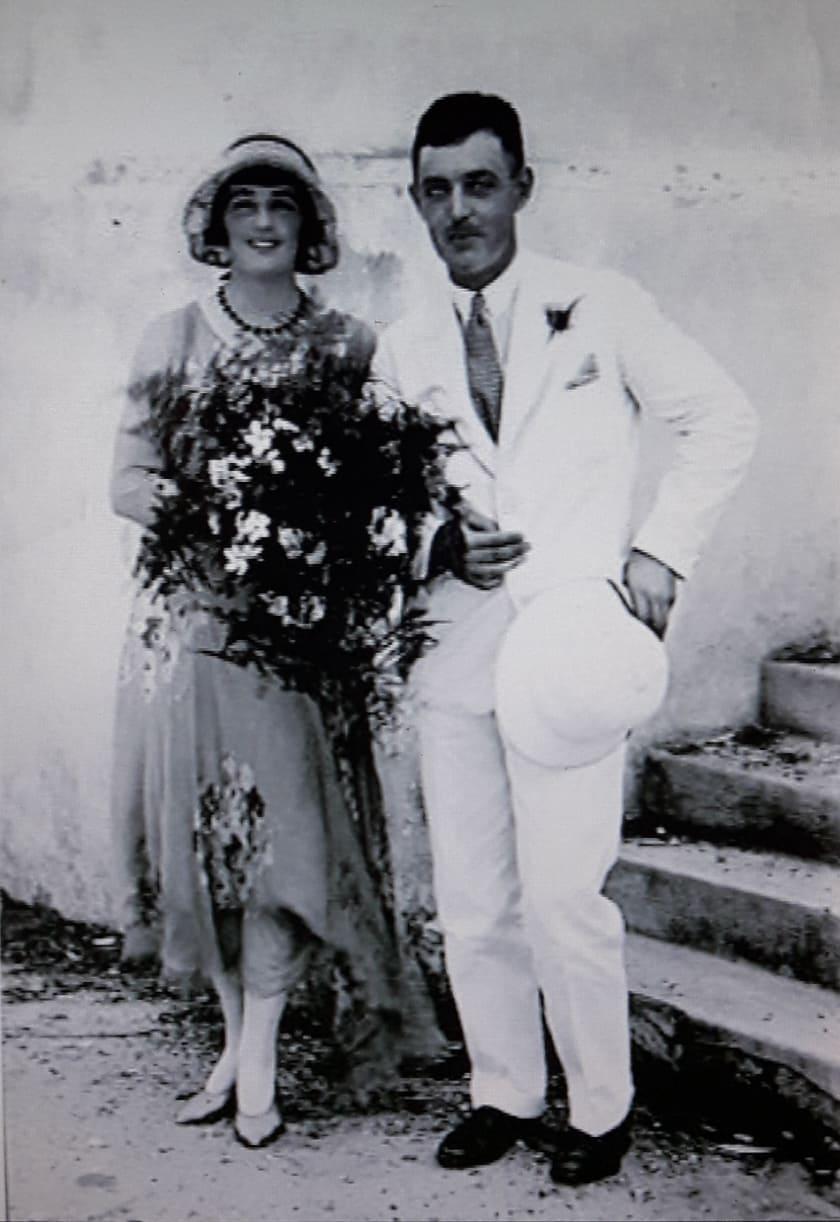
Splendid Hotel, Dar es Salaam 11th November 1930
Dearest Family,
I’m writing this in the bedroom whilst George is out buying a tin trunk in which to
pack all our wedding presents. I expect he will be gone a long time because he has
gone out with Hicky Wood and, though our wedding was four days ago, it’s still an
excuse for a party. People are all very cheery and friendly here.
I am wearing only pants and slip but am still hot. One swelters here in the
mornings, but a fresh sea breeze blows in the late afternoons and then Dar es Salaam is
heavenly.We arrived in Dar es Salaam harbour very early on Friday morning (7 th Nov).
The previous night the Captain had said we might not reach Dar. until 9 am, and certainly
no one would be allowed on board before 8 am. So I dawdled on the deck in my
dressing gown and watched the green coastline and the islands slipping by. I stood on
the deck outside my cabin and was not aware that I was looking out at the wrong side of
the landlocked harbour. Quite unknown to me George and some friends, the Hickson
Woods, were standing on the Gymkhana Beach on the opposite side of the channel
anxiously scanning the ship for a sign of me. George says he had a horrible idea I had
missed the ship. Blissfully unconscious of his anxiety I wandered into the bathroom
prepared for a good soak. The anchor went down when I was in the bath and suddenly
there was a sharp wrap on the door and I heard Mrs Croxford say “There’s a man in a
boat outside. He is looking out for someone and I’m sure it’s your George. I flung on
some clothes and rushed on deck with tousled hair and bare feet and it was George.
We had a marvellous reunion. George was wearing shorts and bush shirt and
looked just like the strong silent types one reads about in novels. I finished dressing then
George helped me bundle all the wedding presents I had collected en route into my
travelling rug and we went into the bar lounge to join the Hickson Woods. They are the
couple from whom George bought the land which is to be our coffee farm Hicky-Wood
was laughing when we joined them. he said he had called a chap to bring a couple of
beers thinking he was the steward but it turned out to be the Captain. He does wear
such a very plain uniform that I suppose it was easy to make the mistake, but Hicky
says he was not amused.Anyway as the H-W’s are to be our neighbours I’d better describe them. Kath
Wood is very attractive, dark Irish, with curly black hair and big brown eyes. She was
married before to Viv Lumb a great friend of George’s who died some years ago of
blackwater fever. They had one little girl, Maureen, and Kath and Hicky have a small son
of three called Michael. Hicky is slightly below average height and very neat and dapper
though well built. He is a great one for a party and good fun but George says he can be
bad tempered.Anyway we all filed off the ship and Hicky and Cath went on to the hotel whilst
George and I went through customs. Passing the customs was easy. Everyone
seemed to know George and that it was his wedding day and I just sailed through,
except for the little matter of the rug coming undone when George and I had to scramble
on the floor for candlesticks and fruit knives and a wooden nut bowl.
Outside the customs shed we were mobbed by a crowd of jabbering Africans
offering their services as porters, and soon my luggage was piled in one rickshaw whilst
George and I climbed into another and we were born smoothly away on rubber shod
wheels to the Splendid Hotel. The motion was pleasing enough but it seemed weird to
be pulled along by one human being whilst another pushed behind. We turned up a street called Acacia Avenue which, as its name implies, is lined
with flamboyant acacia trees now in the full glory of scarlet and gold. The rickshaw
stopped before the Splendid Hotel and I was taken upstairs into a pleasant room which
had its own private balcony overlooking the busy street.Here George broke the news that we were to be married in less than an hours
time. He would have to dash off and change and then go straight to the church. I would
be quite all right, Kath would be looking in and friends would fetch me.
I started to dress and soon there was a tap at the door and Mrs Hickson-Wood
came in with my bouquet. It was a lovely bunch of carnations and frangipani with lots of
asparagus fern and it went well with my primrose yellow frock. She admired my frock
and Leghorn hat and told me that her little girl Maureen was to be my flower girl. Then
she too left for the church.I was fully dressed when there was another knock on the door and I opened it to
be confronted by a Police Officer in a starched white uniform. I’m McCallum”, he said,
“I’ve come to drive you to the church.” Downstairs he introduced me to a big man in a
tussore silk suit. “This is Dr Shicore”, said McCallum, “He is going to give you away.”
Honestly, I felt exactly like Alice in Wonderland. Wouldn’t have been at all surprised if
the White Rabbit had popped up and said he was going to be my page.I walked out of the hotel and across the pavement in a dream and there, by the
curb, was a big dark blue police car decorated with white ribbons and with a tall African
Police Ascari holding the door open for me. I had hardly time to wonder what next when
the car drew up before a tall German looking church. It was in fact the Lutheran Church in
the days when Tanganyika was German East Africa.Mrs Hickson-Wood, very smart in mushroom coloured georgette and lace, and
her small daughter were waiting in the porch, so in we went. I was glad to notice my
friends from the boat sitting behind George’s friends who were all complete strangers to
me. The aisle seemed very long but at last I reached George waiting in the chancel with
Hicky-Wood, looking unfamiliar in a smart tussore suit. However this feeling of unreality
passed when he turned his head and smiled at me.In the vestry after the ceremony I was kissed affectionately by several complete
strangers and I felt happy and accepted by George’s friends. Outside the church,
standing apart from the rest of the guests, the Italian Captain and Chief Engineer were
waiting. They came up and kissed my hand, and murmured felicitations, but regretted
they could not spare the time to come to the reception. Really it was just as well
because they would not have fitted in at all well.Dr Shircore is the Director of Medical Services and he had very kindly lent his
large house for the reception. It was quite a party. The guests were mainly men with a
small sprinkling of wives. Champagne corks popped and there was an enormous cake
and soon voices were raised in song. The chief one was ‘Happy Days Are Here Again’
and I shall remember it for ever.The party was still in full swing when George and I left. The old lady from the ship
enjoyed it hugely. She came in an all black outfit with a corsage of artificial Lily-of-the-
Valley. Later I saw one of the men wearing the corsage in his buttonhole and the old
lady was wearing a carnation.When George and I got back to the hotel,I found that my luggage had been
moved to George’s room by his cook Lamek, who was squatting on his haunches and
clapped his hands in greeting. My dears, you should see Lamek – exactly like a
chimpanzee – receding forehead, wide flat nose, and long lip, and such splayed feet. It was quite a strain not to laugh, especially when he produced a gift for me. I have not yet
discovered where he acquired it. It was a faded mauve straw toque of the kind worn by
Queen Mary. I asked George to tell Lamek that I was touched by his generosity but felt
that I could not accept his gift. He did not mind at all especially as George gave him a
generous tip there and then.I changed into a cotton frock and shady straw hat and George changed into shorts
and bush shirt once more. We then sneaked into the dining room for lunch avoiding our
wedding guests who were carrying on the party in the lounge.After lunch we rejoined them and they all came down to the jetty to wave goodbye
as we set out by motor launch for Honeymoon Island. I enjoyed the launch trip very
much. The sea was calm and very blue and the palm fringed beaches of Dar es Salaam
are as romantic as any bride could wish. There are small coral islands dotted around the
Bay of which Honeymoon Island is the loveliest. I believe at one time it bore the less
romantic name of Quarantine Island. Near the Island, in the shallows, the sea is brilliant
green and I saw two pink jellyfish drifting by.There is no jetty on the island so the boat was stopped in shallow water and
George carried me ashore. I was enchanted with the Island and in no hurry to go to the
bungalow, so George and I took our bathing costumes from our suitcases and sent the
luggage up to the house together with a box of provisions.We bathed and lazed on the beach and suddenly it was sunset and it began to
get dark. We walked up the beach to the bungalow and began to unpack the stores,
tea, sugar, condensed milk, bread and butter, sardines and a large tin of ham. There
were also cups and saucers and plates and cutlery.We decided to have an early meal and George called out to the caretaker, “Boy
letta chai”. Thereupon the ‘boy’ materialised and jabbered to George in Ki-Swaheli. It
appeared he had no utensil in which to boil water. George, ever resourceful, removed
the ham from the tin and gave him that. We had our tea all right but next day the ham
was bad.Then came bed time. I took a hurricane lamp in one hand and my suitcase in the
other and wandered into the bedroom whilst George vanished into the bathroom. To
my astonishment I saw two perfectly bare iron bedsteads – no mattress or pillows. We
had brought sheets and mosquito nets but, believe me, they are a poor substitute for a
mattress.Anyway I arrayed myself in my pale yellow satin nightie and sat gingerly down
on the iron edge of the bed to await my groom who eventually appeared in a
handsome suit of silk pyjamas. His expression, as he took in the situation, was too much
for me and I burst out laughing and so did he.Somewhere in the small hours I woke up. The breeze had dropped and the
room was unbearably stuffy. I felt as dry as a bone. The lamp had been turned very
low and had gone out, but I remembered seeing a water tank in the yard and I decided
to go out in the dark and drink from the tap. In the dark I could not find my slippers so I
slipped my feet into George’s shoes, picked up his matches and groped my way out
of the room. I found the tank all right and with one hand on the tap and one cupped for
water I stooped to drink. Just then I heard a scratchy noise and sensed movements
around my feet. I struck a match and oh horrors! found that the damp spot on which I was
standing was alive with white crabs. In my hurry to escape I took a clumsy step, put
George’s big toe on the hem of my nightie and down I went on top of the crabs. I need
hardly say that George was awakened by an appalling shriek and came rushing to my
aid like a knight of old. Anyway, alarms and excursions not withstanding, we had a wonderful weekend on the island and I was sorry to return to the heat of Dar es Salaam, though the evenings
here are lovely and it is heavenly driving along the coast road by car or in a rickshaw.
I was surprised to find so many Indians here. Most of the shops, large and small,
seem to be owned by Indians and the place teems with them. The women wear
colourful saris and their hair in long black plaits reaching to their waists. Many wear baggy
trousers of silk or satin. They give a carnival air to the sea front towards sunset.
This long letter has been written in instalments throughout the day. My first break
was when I heard the sound of a band and rushed to the balcony in time to see The
Kings African Rifles band and Askaris march down the Avenue on their way to an
Armistice Memorial Service. They looked magnificent.I must end on a note of most primitive pride. George returned from his shopping
expedition and beamingly informed me that he had thrashed the man who annoyed me
on the ship. I felt extremely delighted and pressed for details. George told me that
when he went out shopping he noticed to his surprise that the ‘Timavo” was still in the
harbour. He went across to the Agents office and there saw a man who answered to the
description I had given. George said to him “Is your name Taylor?”, and when he said
“yes”, George said “Well my name is George Rushby”, whereupon he hit Taylor on the
jaw so that he sailed over the counter and down the other side. Very satisfactory, I feel.
With much love to all.Your cave woman
Eleanor.Mchewe Estate. P.O. Mbeya 22 November 1930
Dearest Family,
Well here we are at our Country Seat, Mchewe Estate. (pronounced
Mn,-che’-we) but I will start at the beginning of our journey and describe the farm later.
We left the hotel at Dar es Salaam for the station in a taxi crowded with baggage
and at the last moment Keith Wood ran out with the unwrapped bottom layer of our
wedding cake. It remained in its naked state from there to here travelling for two days in
the train on the luggage rack, four days in the car on my knee, reposing at night on the
roof of the car exposed to the winds of Heaven, and now rests beside me in the tent
looking like an old old tombstone. We have no tin large enough to hold it and one
simply can’t throw away ones wedding cake so, as George does not eat cake, I can see
myself eating wedding cake for tea for months to come, ants permitting.We travelled up by train from Dar to Dodoma, first through the lush vegetation of
the coastal belt to Morogoro, then through sisal plantations now very overgrown with
weeds owing to the slump in prices, and then on to the arid area around Dodoma. This
part of the country is very dry at this time of the year and not unlike parts of our Karoo.
The train journey was comfortable enough but slow as the engines here are fed with
wood and not coal as in South Africa.Dodoma is the nearest point on the railway to Mbeya so we left the train there to
continue our journey by road. We arrived at the one and only hotel in the early hours and
whilst someone went to rout out the night watchman the rest of us sat on the dismal
verandah amongst a litter of broken glass. Some bright spark remarked on the obvious –
that there had been a party the night before.When we were shown to a room I thought I rather preferred the verandah,
because the beds had not yet been made up and there was a bucket of vomit beside
the old fashioned washstand. However George soon got the boys to clean up the
room and I fell asleep to be awakened by George with an invitation to come and see
our car before breakfast.Yes, we have our own car. It is a Chev, with what is called a box body. That
means that sides, roof and doors are made by a local Indian carpenter. There is just the
one front seat with a kapok mattress on it. The tools are kept in a sort of cupboard fixed
to the side so there is a big space for carrying “safari kit” behind the cab seat.
Lamek, who had travelled up on the same train, appeared after breakfast, and
helped George to pack all our luggage into the back of the car. Besides our suitcases
there was a huge bedroll, kitchen utensils and a box of provisions, tins of petrol and
water and all Lamek’s bits and pieces which included three chickens in a wicker cage and
an enormous bunch of bananas about 3 ft long.When all theses things were packed there remained only a small space between
goods and ceiling and into this Lamek squeezed. He lay on his back with his horny feet a
mere inch or so from the back of my head. In this way we travelled 400 miles over
bumpy earth roads and crude pole bridges, but whenever we stopped for a meal
Lamek wriggled out and, like Aladdin’s genie, produced good meals in no time at all.
In the afternoon we reached a large river called the Ruaha. Workmen were busy
building a large bridge across it but it is not yet ready so we crossed by a ford below
the bridge. George told me that the river was full of crocodiles but though I looked hard, I
did not see any. This is also elephant country but I did not see any of those either, only
piles of droppings on the road. I must tell you that the natives around these parts are called Wahehe and the river is Ruaha – enough to make a cat laugh. We saw some Wahehe out hunting with spears
and bows and arrows. They live in long low houses with the tiniest shuttered windows
and rounded roofs covered with earth.Near the river we also saw a few Masai herding cattle. They are rather terrifying to
look at – tall, angular, and very aloof. They wear nothing but a blanket knotted on one
shoulder, concealing nothing, and all carried one or two spears.
The road climbs steeply on the far side of the Ruaha and one has the most
tremendous views over the plains. We spent our first night up there in the high country.
Everything was taken out of the car, the bed roll opened up and George and I slept
comfortably in the back of the car whilst Lamek, rolled in a blanket, slept soundly by a
small fire nearby. Next morning we reached our first township, Iringa, and put up at the
Colonist Hotel. We had a comfortable room in the annex overlooking the golf course.
our room had its own little dressing room which was also the bathroom because, when
ordered to do so, the room boy carried in an oval galvanised bath and filled it with hot
water which he carried in a four gallon petrol tin.When we crossed to the main building for lunch, George was immediately hailed
by several men who wanted to meet the bride. I was paid some handsome
compliments but was not sure whether they were sincere or the result of a nice alcoholic
glow. Anyhow every one was very friendly.After lunch I went back to the bedroom leaving George chatting away. I waited and
waited – no George. I got awfully tired of waiting and thought I’d give him a fright so I
walked out onto the deserted golf course and hid behind some large boulders. Soon I
saw George returning to the room and the boy followed with a tea tray. Ah, now the hue
and cry will start, thought I, but no, no George appeared nor could I hear any despairing
cry. When sunset came I trailed crossly back to our hotel room where George lay
innocently asleep on his bed, hands folded on his chest like a crusader on his tomb. In a
moment he opened his eyes, smiled sleepily and said kindly, “Did you have a nice walk
my love?” So of course I couldn’t play the neglected wife as he obviously didn’t think
me one and we had a very pleasant dinner and party in the hotel that evening.
Next day we continued our journey but turned aside to visit the farm of a sprightly
old man named St.Leger Seaton whom George had known for many years, so it was
after dark before George decided that we had covered our quota of miles for the day.
Whilst he and Lamek unpacked I wandered off to a stream to cool my hot feet which had
baked all day on the floor boards of the car. In the rather dim moonlight I sat down on the
grassy bank and gratefully dabbled my feet in the cold water. A few minutes later I
started up with a shriek – I had the sensation of red hot pins being dug into all my most
sensitive parts. I started clawing my clothes off and, by the time George came to the
rescue with the lamp, I was practically in the nude. “Only Siafu ants,” said George calmly.
Take off all your clothes and get right in the water.” So I had a bathe whilst George
picked the ants off my clothes by the light of the lamp turned very low for modesty’s
sake. Siafu ants are beastly things. They are black ants with outsized heads and
pinchers. I shall be very, very careful where I sit in future.The next day was even hotter. There was no great variety in the scenery. Most
of the country was covered by a tree called Miombo, which is very ordinary when the
foliage is a mature deep green, but when in new leaf the trees look absolutely beautiful
as the leaves,surprisingly, are soft pastel shades of red and yellow.Once again we turned aside from the main road to visit one of George’s friends.
This man Major Hugh Jones MC, has a farm only a few miles from ours but just now he is supervising the making of an airstrip. Major Jones is quite a character. He is below
average height and skinny with an almost bald head and one nearly blind eye into which
he screws a monocle. He is a cultured person and will, I am sure, make an interesting
neighbour. George and Major Jones’ friends call him ‘Joni’ but he is generally known in
this country as ‘Ropesoles’ – as he is partial to that type of footwear.
We passed through Mbeya township after dark so I have no idea what the place
is like. The last 100 miles of our journey was very dusty and the last 15 miles extremely
bumpy. The road is used so little that in some places we had to plow our way through
long grass and I was delighted when at last George turned into a side road and said
“This is our place.” We drove along the bank of the Mchewe River, then up a hill and
stopped at a tent which was pitched beside the half built walls of our new home. We
were expected so there was hot water for baths and after a supper of tinned food and
good hot tea, I climbed thankfully into bed.Next morning I was awakened by the chattering of the African workmen and was
soon out to inspect the new surroundings. Our farm was once part of Hickson Wood’s
land and is separated from theirs by a river. Our houses cannot be more than a few
hundred yards apart as the crow flies but as both are built on the slopes of a long range
of high hills, and one can only cross the river at the foot of the slopes, it will be quite a
safari to go visiting on foot . Most of our land is covered with shoulder high grass but it
has been partly cleared of trees and scrub. Down by the river George has made a long
coffee nursery and a large vegetable garden but both coffee and vegetable seedlings
are too small to be of use.George has spared all the trees that will make good shade for the coffee later on.
There are several huge wild fig trees as big as oaks but with smooth silvery-green trunks
and branches and there are lots of acacia thorn trees with flat tops like Japanese sun
shades. I’ve seen lovely birds in the fig trees, Louries with bright plumage and crested
heads, and Blue Rollers, and in the grasslands there are widow birds with incredibly long
black tail feathers.There are monkeys too and horrible but fascinating tree lizards with blue bodies
and orange heads. There are so many, many things to tell you but they must wait for
another time as James, the house boy, has been to say “Bafu tiari” and if I don’t go at
once, the bath will be cold.I am very very happy and terribly interested in this new life so please don’t
worry about me.Much love to you all,
Eleanor.Mchewe Estate 29th. November 1930
Dearest Family,
I’ve lots of time to write letters just now because George is busy supervising the
building of the house from early morning to late afternoon – with a break for lunch of
course.On our second day here our tent was moved from the house site to a small
clearing further down the slope of our hill. Next to it the labourers built a ‘banda’ , which is
a three sided grass hut with thatched roof – much cooler than the tent in this weather.
There is also a little grass lav. so you see we have every convenience. I spend most of
my day in the banda reading or writing letters. Occasionally I wander up to the house site
and watch the building, but mostly I just sit.I did try exploring once. I wandered down a narrow path towards the river. I
thought I might paddle and explore the river a little but I came round a bend and there,
facing me, was a crocodile. At least for a moment I thought it was and my adrenaline
glands got very busy indeed. But it was only an enormous monitor lizard, four or five
feet long. It must have been as scared as I was because it turned and rushed off through
the grass. I turned and walked hastily back to the camp and as I passed the house site I
saw some boys killing a large puff adder. Now I do my walking in the evenings with
George. Nothing alarming ever seems to happen when he is around.It is interesting to watch the boys making bricks for the house. They make a pile
of mud which they trample with their feet until it is the right consistency. Then they fill
wooden moulds with the clayey mud, and press it down well and turn out beautiful shiny,
dark brown bricks which are laid out in rows and covered with grass to bake slowly in the
sun.Most of the materials for the building are right here at hand. The walls will be sun
dried bricks and there is a white clay which will make a good whitewash for the inside
walls. The chimney and walls will be of burnt brick and tiles and George is now busy
building a kiln for this purpose. Poles for the roof are being cut in the hills behind the
house and every day women come along with large bundles of thatching grass on their
heads. Our windows are modern steel casement ones and the doors have been made
at a mission in the district. George does some of the bricklaying himself. The other
bricklayer is an African from Northern Rhodesia called Pedro. It makes me perspire just
to look at Pedro who wears an overcoat all day in the very hot sun.
Lamek continues to please. He turns out excellent meals, chicken soup followed
by roast chicken, vegetables from the Hickson-Woods garden and a steamed pudding
or fruit to wind up the meal. I enjoy the chicken but George is fed up with it and longs for
good red meat. The chickens are only about as large as a partridge but then they cost
only sixpence each.I had my first visit to Mbeya two days ago. I put on my very best trousseau frock
for the occasion- that yellow striped silk one – and wore my wedding hat. George didn’t
comment, but I saw later that I was dreadfully overdressed.
Mbeya at the moment is a very small settlement consisting of a bundle of small
Indian shops – Dukas they call them, which stock European tinned foods and native soft
goods which seem to be mainly of Japanese origin. There is a one storied Government
office called the Boma and two attractive gabled houses of burnt brick which house the
District Officer and his Assistant. Both these houses have lovely gardens but i saw them
only from the outside as we did not call. After buying our stores George said “Lets go to the pub, I want you to meet Mrs Menzies.” Well the pub turned out to be just three or four grass rondavels on a bare
plot. The proprietor, Ken Menzies, came out to welcome us. I took to him at once
because he has the same bush sandy eyebrows as you have Dad. He told me that
unfortunately his wife is away at the coast, and then he ushered me through the door
saying “Here’s George with his bride.” then followed the Iringa welcome all over again,
only more so, because the room was full of diggers from the Lupa Goldfields about fifty
miles away.Champagne corks popped as I shook hands all around and George was
clapped on the back. I could see he was a favourite with everyone and I tried not to be
gauche and let him down. These men were all most kind and most appeared to be men
of more than average education. However several were unshaven and looked as
though they had slept in their clothes as I suppose they had. When they have a little luck
on the diggings they come in here to Menzies pub and spend the lot. George says
they bring their gold dust and small nuggets in tobacco tins or Kruschen salts jars and
hand them over to Ken Menzies saying “Tell me when I’ve spent the lot.” Ken then
weighs the gold and estimates its value and does exactly what the digger wants.
However the Diggers get good value for their money because besides the drink
they get companionship and good food and nursing if they need it. Mrs Menzies is a
trained nurse and most kind and capable from what I was told. There is no doctor or
hospital here so her experience as a nursing sister is invaluable.
We had lunch at the Hotel and afterwards I poured tea as I was the only female
present. Once the shyness had worn off I rather enjoyed myself.Now to end off I must tell you a funny story of how I found out that George likes
his women to be feminine. You will remember those dashing black silk pyjamas Aunt
Mary gave me, with flowered “happy coat” to match. Well last night I thought I’d give
George a treat and when the boy called me for my bath I left George in the ‘banda’
reading the London Times. After my bath I put on my Japanese pyjamas and coat,
peered into the shaving mirror which hangs from the tent pole and brushed my hair until it
shone. I must confess that with my fringe and shingled hair I thought I made quite a
glamourous Japanese girl. I walked coyly across to the ‘banda’. Alas no compliment.
George just glanced up from the Times and went on reading.
He was away rather a long time when it came to his turn to bath. I glanced up
when he came back and had a slight concussion. George, if you please, was arrayed in
my very best pale yellow satin nightie. The one with the lace and ribbon sash and little
bows on the shoulder. I knew exactly what he meant to convey. I was not to wear the
trousers in the family. I seethed inwardly, but pretending not to notice, I said calmly “shall
I call for food?” In this garb George sat down to dinner and it says a great deal for African
phlegm that the boy did not drop the dishes.We conversed politely about this and that, and then, as usual, George went off
to bed. I appeared to be engrossed in my book and did not stir. When I went to the
tent some time later George lay fast asleep still in my nightie, though all I could see of it
was the little ribbon bows looking farcically out of place on his broad shoulders.
This morning neither of us mentioned the incident, George was up and dressed
by the time I woke up but I have been smiling all day to think what a ridiculous picture
we made at dinner. So farewell to pyjamas and hey for ribbons and bows.Your loving
Eleanor.Mchewe Estate. Mbeya. 8th December 1930
Dearest Family,
A mere shadow of her former buxom self lifts a languid pen to write to you. I’m
convalescing after my first and I hope my last attack of malaria. It was a beastly
experience but all is now well and I am eating like a horse and will soon regain my
bounce.I took ill on the evening of the day I wrote my last letter to you. It started with a
splitting headache and fits of shivering. The symptoms were all too familiar to George
who got me into bed and filled me up with quinine. He then piled on all the available
blankets and packed me in hot water bottles. I thought I’d explode and said so and
George said just to lie still and I’d soon break into a good sweat. However nothing of the
kind happened and next day my temperature was 105 degrees. Instead of feeling
miserable as I had done at the onset, I now felt very merry and most chatty. George
now tells me I sang the most bawdy songs but I hardly think it likely. Do you?
You cannot imagine how tenderly George nursed me, not only that day but
throughout the whole eight days I was ill. As we do not employ any African house
women, and there are no white women in the neighbourhood at present to whom we
could appeal for help, George had to do everything for me. It was unbearably hot in the
tent so George decided to move me across to the Hickson-Woods vacant house. They
have not yet returned from the coast.George decided I was too weak to make the trip in the car so he sent a
messenger over to the Woods’ house for their Machila. A Machila is a canopied canvas
hammock slung from a bamboo pole and carried by four bearers. The Machila duly
arrived and I attempted to walk to it, clinging to George’s arm, but collapsed in a faint so
the trip was postponed to the next morning when I felt rather better. Being carried by
Machila is quite pleasant but I was in no shape to enjoy anything and got thankfully into
bed in the Hickson-Woods large, cool and rather dark bedroom. My condition did not
improve and George decided to send a runner for the Government Doctor at Tukuyu
about 60 miles away. Two days later Dr Theis arrived by car and gave me two
injections of quinine which reduced the fever. However I still felt very weak and had to
spend a further four days in bed.We have now decided to stay on here until the Hickson-Woods return by which
time our own house should be ready. George goes off each morning and does not
return until late afternoon. However don’t think “poor Eleanor” because I am very
comfortable here and there are lots of books to read and the days seem to pass very
quickly.The Hickson-Wood’s house was built by Major Jones and I believe the one on
his shamba is just like it. It is a square red brick building with a wide verandah all around
and, rather astonishingly, a conical thatched roof. There is a beautiful view from the front
of the house and a nice flower garden. The coffee shamba is lower down on the hill.
Mrs Wood’s first husband, George’s friend Vi Lumb, is buried in the flower
garden. He died of blackwater fever about five years ago. I’m told that before her
second marriage Kath lived here alone with her little daughter, Maureen, and ran the farm
entirely on her own. She must be quite a person. I bet she didn’t go and get malaria
within a few weeks of her marriage.The native tribe around here are called Wasafwa. They are pretty primitive but
seem amiable people. Most of the men, when they start work, wear nothing but some
kind of sheet of unbleached calico wrapped round their waists and hanging to mid calf. As soon as they have drawn their wages they go off to a duka and buy a pair of khaki
shorts for five or six shillings. Their women folk wear very short beaded skirts. I think the
base is goat skin but have never got close enough for a good look. They are very shy.
I hear from George that they have started on the roof of our house but I have not
seen it myself since the day I was carried here by Machila. My letters by the way go to
the Post Office by runner. George’s farm labourers take it in turn to act in this capacity.
The mail bag is given to them on Friday afternoon and by Saturday evening they are
back with our very welcome mail.Very much love,
Eleanor.Mbeya 23rd December 1930
Dearest Family,
George drove to Mbeya for stores last week and met Col. Sherwood-Kelly VC.
who has been sent by the Government to Mbeya as Game Ranger. His job will be to
protect native crops from raiding elephants and hippo etc., and to protect game from
poachers. He has had no training for this so he has asked George to go with him on his
first elephant safari to show him the ropes.George likes Col. Kelly and was quite willing to go on safari but not willing to
leave me alone on the farm as I am still rather shaky after malaria. So it was arranged that
I should go to Mbeya and stay with Mrs Harmer, the wife of the newly appointed Lands
and Mines Officer, whose husband was away on safari.So here I am in Mbeya staying in the Harmers temporary wattle and daub
house. Unfortunately I had a relapse of the malaria and stayed in bed for three days with
a temperature. Poor Mrs Harmer had her hands full because in the room next to mine
she was nursing a digger with blackwater fever. I could hear his delirious babble through
the thin wall – very distressing. He died poor fellow , and leaves a wife and seven
children.I feel better than I have done for weeks and this afternoon I walked down to the
store. There are great signs of activity and people say that Mbeya will grow rapidly now
owing to the boom on the gold fields and also to the fact that a large aerodrome is to be
built here. Mbeya is to be a night stop on the proposed air service between England
and South Africa. I seem to be the last of the pioneers. If all these schemes come about
Mbeya will become quite suburban.26th December 1930
George, Col. Kelly and Mr Harmer all returned to Mbeya on Christmas Eve and
it was decided that we should stay and have midday Christmas dinner with the
Harmers. Col. Kelly and the Assistant District Commissioner came too and it was quite a
festive occasion, We left Mbeya in the early afternoon and had our evening meal here at
Hickson-Wood’s farm. I wore my wedding dress.I went across to our house in the car this morning. George usually walks across to
save petrol which is very expensive here. He takes a short cut and wades through the
river. The distance by road is very much longer than the short cut. The men are now
thatching the roof of our cottage and it looks charming. It consists of a very large living
room-dinning room with a large inglenook fireplace at one end. The bedroom is a large
square room with a smaller verandah room adjoining it. There is a wide verandah in the
front, from which one has a glorious view over a wide valley to the Livingstone
Mountains on the horizon. Bathroom and storeroom are on the back verandah and the
kitchen is some distance behind the house to minimise the risk of fire.You can imagine how much I am looking forward to moving in. We have some
furniture which was made by an Indian carpenter at Iringa, refrectory dining table and
chairs, some small tables and two armchairs and two cupboards and a meatsafe. Other
things like bookshelves and extra cupboards we will have to make ourselves. George
has also bought a portable gramophone and records which will be a boon.
We also have an Irish wolfhound puppy, a skinny little chap with enormous feet
who keeps me company all day whilst George is across at our farm working on the
house.Lots and lots of love,
Eleanor.Mchewe Estate 8th Jan 1931
Dearest Family,
Alas, I have lost my little companion. The Doctor called in here on Boxing night
and ran over and killed Paddy, our pup. It was not his fault but I was very distressed
about it and George has promised to try and get another pup from the same litter.
The Hickson-Woods returned home on the 29th December so we decided to
move across to our nearly finished house on the 1st January. Hicky Wood decided that
we needed something special to mark the occasion so he went off and killed a sucking
pig behind the kitchen. The piglet’s screams were terrible and I felt that I would not be
able to touch any dinner. Lamek cooked and served sucking pig up in the traditional way
but it was high and quite literally, it stank. Our first meal in our own home was not a
success.However next day all was forgotten and I had something useful to do. George
hung doors and I held the tools and I also planted rose cuttings I had brought from
Mbeya and sowed several boxes with seeds.Dad asked me about the other farms in the area. I haven’t visited any but there
are five besides ours. One belongs to the Lutheran Mission at Utengule, a few miles
from here. The others all belong to British owners. Nearest to Mbeya, at the foot of a
very high peak which gives Mbeya its name, are two farms, one belonging to a South
African mining engineer named Griffiths, the other to I.G.Stewart who was an officer in the
Kings African Rifles. Stewart has a young woman called Queenie living with him. We are
some miles further along the range of hills and are some 23 miles from Mbeya by road.
The Mchewe River divides our land from the Hickson-Woods and beyond their farm is
Major Jones.All these people have been away from their farms for some time but have now
returned so we will have some neighbours in future. However although the houses are
not far apart as the crow flies, they are all built high in the foothills and it is impossible to
connect the houses because of the rivers and gorges in between. One has to drive right
down to the main road and then up again so I do not suppose we will go visiting very
often as the roads are very bumpy and eroded and petrol is so expensive that we all
save it for occasional trips to Mbeya.The rains are on and George has started to plant out some coffee seedlings. The
rains here are strange. One can hear the rain coming as it moves like a curtain along the
range of hills. It comes suddenly, pours for a little while and passes on and the sun
shines again.I do like it here and I wish you could see or dear little home.
Your loving,
Eleanor.Mchewe Estate. 1st April 1931
Dearest Family,
Everything is now running very smoothly in our home. Lamek continues to
produce palatable meals and makes wonderful bread which he bakes in a four gallon
petrol tin as we have no stove yet. He puts wood coals on the brick floor of the kitchen,
lays the tin lengh-wise on the coals and heaps more on top. The bread tins are then put
in the petrol tin, which has one end cut away, and the open end is covered by a flat
piece of tin held in place by a brick. Cakes are also backed in this make-shift oven and I
have never known Lamek to have a failure yet.Lamek has a helper, known as the ‘mpishi boy’ , who does most of the hard
work, cleans pots and pans and chops the firewood etc. Another of the mpishi boy’s
chores is to kill the two chickens we eat each day. The chickens run wild during the day
but are herded into a small chicken house at night. One of the kitchen boy’s first duties is
to let the chickens out first thing in the early morning. Some time after breakfast it dawns
on Lamek that he will need a chicken for lunch. he informs the kitchen boy who selects a
chicken and starts to chase it in which he is enthusiastically joined by our new Irish
wolfhound pup, Kelly. Together they race after the frantic fowl, over the flower beds and
around the house until finally the chicken collapses from sheer exhaustion. The kitchen
boy then hands it over to Lamek who murders it with the kitchen knife and then pops the
corpse into boiling water so the feathers can be stripped off with ease.I pointed out in vain, that it would be far simpler if the doomed chickens were kept
in the chicken house in the mornings when the others were let out and also that the correct
way to pluck chickens is when they are dry. Lamek just smiled kindly and said that that
may be so in Europe but that his way is the African way and none of his previous
Memsahibs has complained.My houseboy, named James, is clean and capable in the house and also a
good ‘dhobi’ or washboy. He takes the washing down to the river and probably
pounds it with stones, but I prefer not to look. The ironing is done with a charcoal iron
only we have no charcoal and he uses bits of wood from the kitchen fire but so far there
has not been a mishap.It gets dark here soon after sunset and then George lights the oil lamps and we
have tea and toast in front of the log fire which burns brightly in our inglenook. This is my
favourite hour of the day. Later George goes for his bath. I have mine in the mornings
and we have dinner at half past eight. Then we talk a bit and read a bit and sometimes
play the gramophone. I expect it all sounds pretty unexciting but it doesn’t seem so to
me.Very much love,
Eleanor.Mchewe Estate 20th April 1931
Dearest Family,
It is still raining here and the countryside looks very lush and green, very different
from the Mbeya district I first knew, when plains and hills were covered in long brown
grass – very course stuff that grows shoulder high.Most of the labourers are hill men and one can see little patches of cultivation in
the hills. Others live in small villages near by, each consisting of a cluster of thatched huts
and a few maize fields and perhaps a patch of bananas. We do not have labour lines on
the farm because our men all live within easy walking distance. Each worker has a labour
card with thirty little squares on it. One of these squares is crossed off for each days work
and when all thirty are marked in this way the labourer draws his pay and hies himself off
to the nearest small store and blows the lot. The card system is necessary because
these Africans are by no means slaves to work. They work only when they feel like it or
when someone in the family requires a new garment, or when they need a few shillings
to pay their annual tax. Their fields, chickens and goats provide them with the food they
need but they draw rations of maize meal beans and salt. Only our headman is on a
salary. His name is Thomas and he looks exactly like the statues of Julius Caesar, the
same bald head and muscular neck and sardonic expression. He comes from Northern
Rhodesia and is more intelligent than the locals.We still live mainly on chickens. We have a boy whose job it is to scour the
countryside for reasonable fat ones. His name is Lucas and he is quite a character. He
has such long horse teeth that he does not seem able to close his mouth and wears a
perpetual amiable smile. He brings his chickens in beehive shaped wicker baskets
which are suspended on a pole which Lucas carries on his shoulder.We buy our groceries in bulk from Mbeya, our vegetables come from our
garden by the river and our butter from Kath Wood. Our fresh milk we buy from the
natives. It is brought each morning by three little totos each carrying one bottle on his
shaven head. Did I tell you that the local Wasafwa file their teeth to points. These kids
grin at one with their little sharks teeth – quite an “all-ready-to-eat-you-with-my-dear” look.
A few nights ago a message arrived from Kath Wood to say that Queenie
Stewart was very ill and would George drive her across to the Doctor at Tukuyu. I
wanted George to wait until morning because it was pouring with rain, and the mountain
road to Tukuyu is tricky even in dry weather, but he said it is dangerous to delay with any
kind of fever in Africa and he would have to start at once. So off he drove in the rain and I
did not see him again until the following night.George said that it had been a nightmare trip. Queenie had a high temperature
and it was lucky that Kath was able to go to attend to her. George needed all his
attention on the road which was officially closed to traffic, and very slippery, and in some
places badly eroded. In some places the decking of bridges had been removed and
George had to get out in the rain and replace it. As he had nothing with which to fasten
the decking to the runners it was a dangerous undertaking to cross the bridges especially
as the rivers are now in flood and flowing strongly. However they reached Tukuyu safely
and it was just as well they went because the Doctor diagnosed Queenies illness as
Spirillium Tick Fever which is a very nasty illness indeed.Eleanor.
Mchewe Estate. 20th May 1931
Dear Family,
I’m feeling fit and very happy though a bit lonely sometimes because George
spends much of his time away in the hills cutting a furrow miles long to bring water to the
house and to the upper part of the shamba so that he will be able to irrigate the coffee
during the dry season.It will be quite an engineering feat when it is done as George only has makeshift
surveying instruments. He has mounted an ordinary cheap spirit level on an old camera
tripod and has tacked two gramophone needles into the spirit level to give him a line.
The other day part of a bank gave way and practically buried two of George’s labourers
but they were quickly rescued and no harm was done. However he will not let them
work unless he is there to supervise.I keep busy so that the days pass quickly enough. I am delighted with the
material you sent me for curtains and loose covers and have hired a hand sewing
machine from Pedro-of-the-overcoat and am rattling away all day. The machine is an
ancient German one and when I say rattle, I mean rattle. It is a most cumbersome, heavy
affair of I should say, the same vintage as George Stevenson’s Rocket locomotive.
Anyway it sews and I am pleased with my efforts. We made a couch ourselves out of a
native bed, a mattress and some planks but all this is hidden under the chintz cover and
it looks quite the genuine bought article. I have some diversions too. Small black faced
monkeys sit in the trees outside our bedroom window and they are most entertaining to
watch. They are very mischievous though. When I went out into the garden this morning
before breakfast I found that the monkeys had pulled up all my carnations. There they
lay, roots in the air and whether they will take again I don’t know.I like the monkeys but hate the big mountain baboons that come and hang
around our chicken house. I am terrified that they will tear our pup into bits because he is
a plucky young thing and will rush out to bark at the baboons.George usually returns for the weekends but last time he did not because he had
a touch of malaria. He sent a boy down for the mail and some fresh bread. Old Lucas
arrived with chickens just as the messenger was setting off with mail and bread in a
haversack on his back. I thought it might be a good idea to send a chicken to George so
I selected a spry young rooster which I handed to the messenger. He, however,
complained that he needed both hands for climbing. I then had one of my bright ideas
and, putting a layer of newspaper over the bread, I tucked the rooster into the haversack
and buckled down the flap so only his head protruded.I thought no more about it until two days later when the messenger again
appeared for fresh bread. He brought a rather terse note from George saying that the
previous bread was uneatable as the rooster had eaten some of it and messed on the
rest. Ah me!The previous weekend the Hickson-Woods, Stewarts and ourselves, went
across to Tukuyu to attend a dance at the club there. the dance was very pleasant. All
the men wore dinner jackets and the ladies wore long frocks. As there were about
twenty men and only seven ladies we women danced every dance whilst the surplus
men got into a huddle around the bar. George and I spent the night with the Agricultural
Officer, Mr Eustace, and I met his fiancee, Lillian Austin from South Africa, to whom I took
a great liking. She is Governess to the children of Major Masters who has a farm in the
Tukuyu district.On the Sunday morning we had a look at the township. The Boma was an old German one and was once fortified as the Africans in this district are a very warlike tribe.
They are fine looking people. The men wear sort of togas and bands of cloth around
their heads and look like Roman Senators, but the women go naked except for a belt
from which two broad straps hang down, one in front and another behind. Not a graceful
garb I assure you.We also spent a pleasant hour in the Botanical Gardens, laid out during the last
war by the District Commissioner, Major Wells, with German prisoner of war labour.
There are beautiful lawns and beds of roses and other flowers and shady palm lined
walks and banana groves. The gardens are terraced with flights of brick steps connecting
the different levels and there is a large artificial pond with little islands in it. I believe Major
Wells designed the lake to resemble in miniature, the Lakes of Killarney.
I enjoyed the trip very much. We got home at 8 pm to find the front door locked
and the kitchen boy fast asleep on my newly covered couch! I hastily retreated to the
bedroom whilst George handled the situation.Eleanor.
December 25, 2021 at 10:47 am #6248In reply to: The Elusive Samuel Housley and Other Family Stories
Bakewell Not Eyam
The Elton Marshalls
Some years ago I read a book about Eyam, the Derbyshire village devastated by the plague in 1665, and about how the villagers quarantined themselves to prevent further spread. It was quite a story. Each year on ‘Plague Sunday’, at the end of August, residents of Eyam mark the bubonic plague epidemic that devastated their small rural community in the years 1665–6. They wear the traditional costume of the day and attend a memorial service to remember how half the village sacrificed themselves to avoid spreading the disease further.
My 4X great grandfather James Marshall married Ann Newton in 1792 in Elton. On a number of other people’s trees on an online ancestry site, Ann Newton was from Eyam. Wouldn’t that have been interesting, to find ancestors from Eyam, perhaps going back to the days of the plague. Perhaps that is what the people who put Ann Newton’s birthplace as Eyam thought, without a proper look at the records.
But I didn’t think Ann Newton was from Eyam. I found she was from Over Haddon, near Bakewell ~ much closer to Elton than Eyam. On the marriage register, it says that James was from Elton parish, and she was from Darley parish. Her birth in 1770 says Bakewell, which was the registration district for the villages of Over Haddon and Darley. Her parents were George Newton and Dorothy Wipperley of Over Haddon,which is incidentally very near to Nether Haddon, and Haddon Hall. I visited Haddon Hall many years ago, as well as Chatsworth (and much preferred Haddon Hall).
I looked in the Eyam registers for Ann Newton, and found a couple of them around the time frame, but the men they married were not James Marshall.
Ann died in 1806 in Elton (a small village just outside Matlock) at the age of 36 within days of her newborn twins, Ann and James. James and Ann had two sets of twins. John and Mary were twins as well, but Mary died in 1799 at the age of three.
1796 baptism of twins John and Mary of James and Ann Marshall
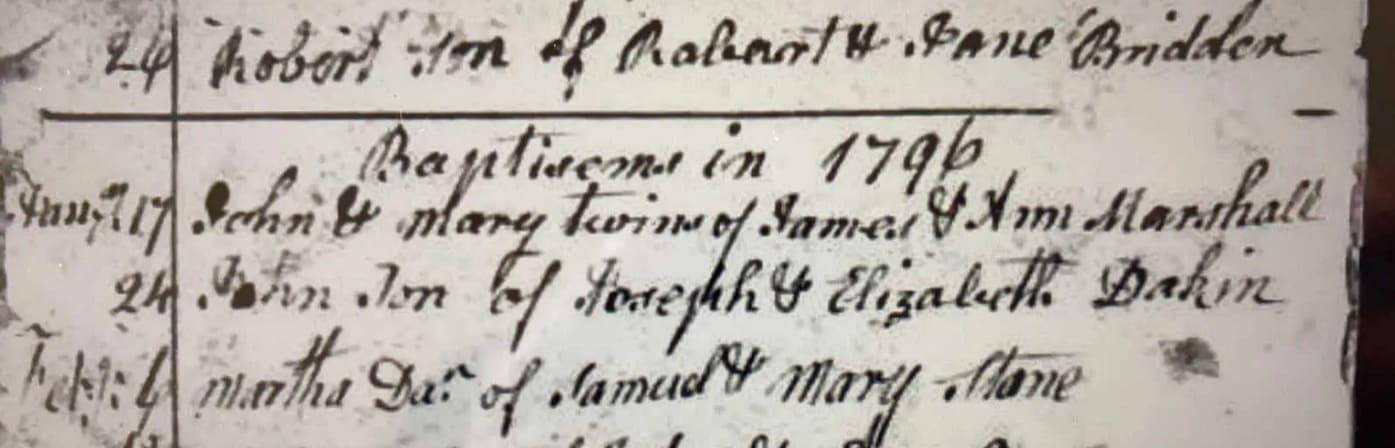
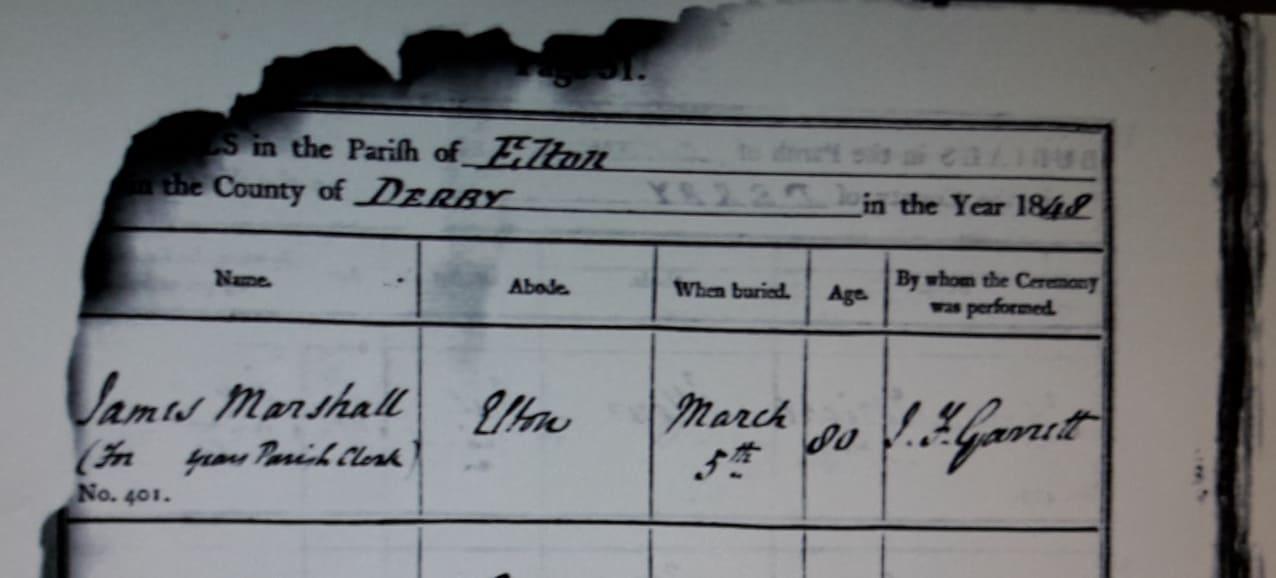
Ann’s husband James died 42 years later at the age of eighty, in Elton in 1848. It was noted in the parish register that he was for years parish clerk.
On the 1851 census John Marshall born in 1796, the son of James Marshall the parish clerk, was a lead miner occupying six acres in Elton, Derbyshire.
His son, also John, was registered on the census as a lead miner at just eight years old.
The mining of lead was the most important industry in the Peak district of Derbyshire from Roman times until the 19th century – with only agriculture being more important for the livelihood of local people. The height of lead mining in Derbyshire came in the 17th and 18th centuries, and the evidence is still visible today – most obviously in the form of lines of hillocks from the more than 25,000 mineshafts which once existed.
Peak District Mines Historical Society
Smelting, or extracting the lead from the ore by melting it, was carried out in a small open hearth. Lead was cast in layers as each batch of ore was smelted; the blocks of lead thus produced were referred to as “pigs”. Examples of early smelting-hearths found within the county were stone lined, with one side open facing the prevailing wind to create the draught needed. The hilltops of the Matlocks would have provided very suitable conditions.
The miner used a tool called a mattock or a pick, and hammers and iron wedges in harder veins, to loosen the ore. They threw the ore onto ridges on each side of the vein, going deeper where the ore proved richer.
Many mines were very shallow and, once opened, proved too poor to develop. Benjamin Bryan cited the example of “Ember Hill, on the shoulder of Masson, above Matlock Bath” where there are hollows in the surface showing where there had been fruitless searches for lead.
There were small buildings, called “coes”, near each mine shaft which were used for tool storage, to provide shelter and as places for changing into working clothes. It was here that the lead was smelted and stored until ready for sale.
Lead is, of course, very poisonous. As miners washed lead-bearing material, great care was taken with the washing vats, which had to be covered. If cattle accidentally drank the poisoned water they would die from something called “belland”.
Cornish and Welsh miners introduced the practice of buddling for ore into Derbyshire about 1747. Buddling involved washing the heaps of rubbish in the slag heaps, the process of separating the very small particles from the dirt and spar with which they are mixed, by means of a small stream of water. This method of extraction was a major pollutant, affecting farmers and their animals (poisoned by Belland from drinking the waste water), the brooks and streams and even the River Derwent.
Women also worked in the mines. An unattributed account from 1829, says: “The head is much enwrapped, and the features nearly hidden in a muffling of handkerchiefs, over which is put a man’s hat, in the manner of the paysannes of Wales”. He also describes their gowns, usually red, as being “tucked up round the waist in a sort of bag, and set off by a bright green petticoat”. They also wore a man’s grey or dark blue coat and shoes with 3″ thick soles that were tied round with cords. The 1829 writer called them “complete harridans!”
Lead Mining in Matlock & Matlock Bath, The Andrews Pages
John’s wife Margaret died at the age of 42 in 1847. I don’t know the cause of death, but perhaps it was lead poisoning. John’s son John, despite a very early start in the lead mine, became a carter and lived to the ripe old age of 88.
The Pig of Lead pub, 1904:
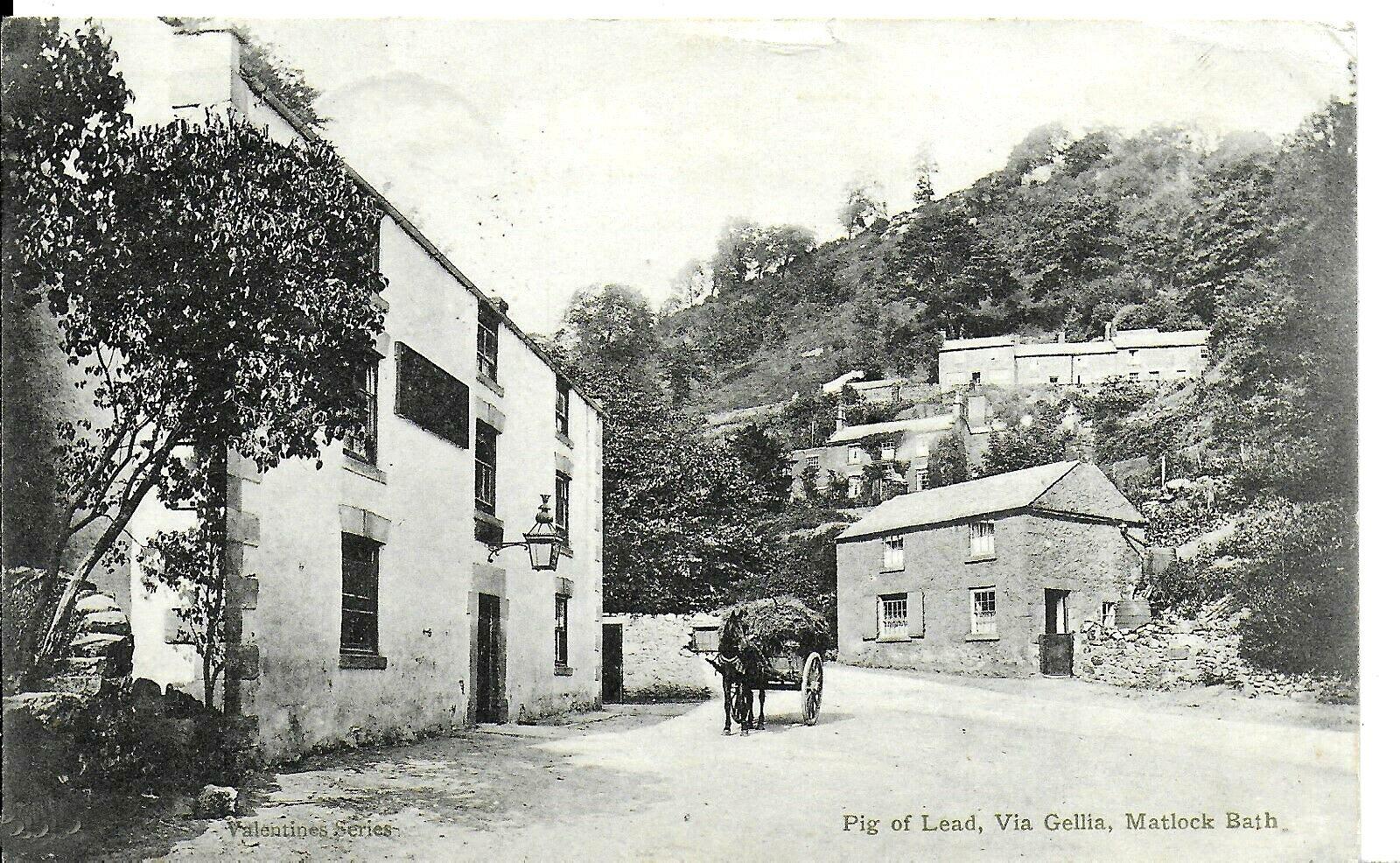
The earliest Marshall I’ve found so far is Charles, born in 1742. Charles married Rebecca Knowles, 1775-1823. I don’t know what his occupation was but when he died in 1819 he left a not inconsiderable sum to his wife.
1819 Charles Marshall probate:
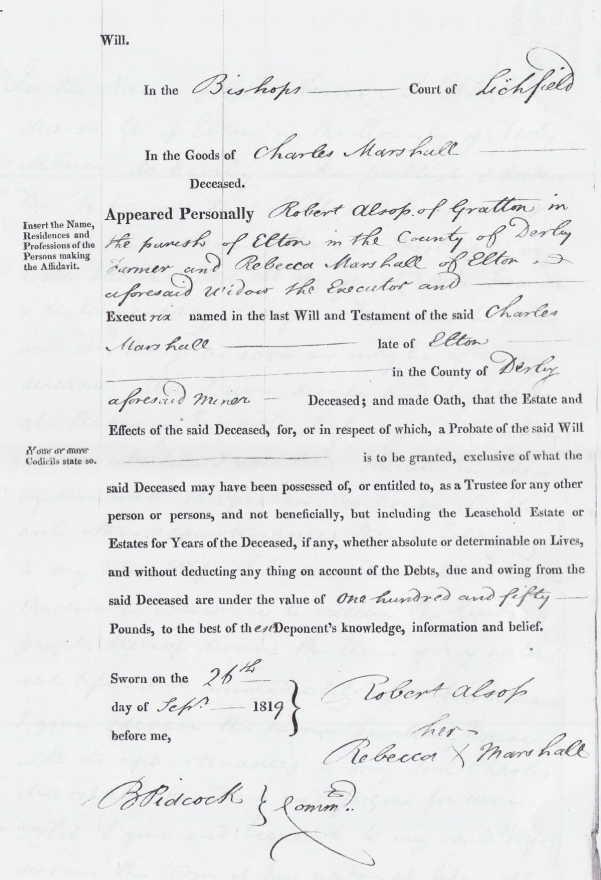
There are still Marshall’s living in Elton and Matlock, not our immediate known family, but probably distantly related. I asked a Matlock group on facebook:
“…there are Marshall’s still in the village. There are certainly families who live here who have done generation after generation & have many memories & stories to tell. Visit The Duke on a Friday night…”
The Duke, Elton:
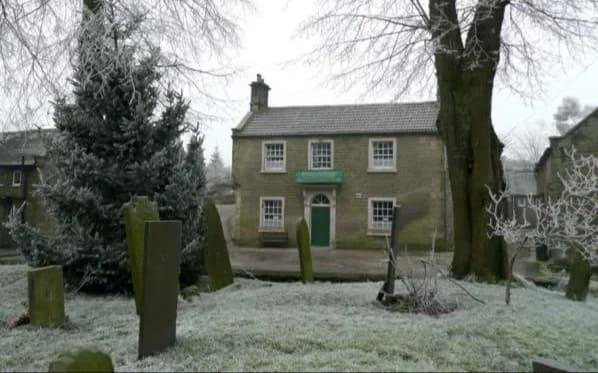 December 15, 2021 at 8:14 am #6235
In reply to: The Elusive Samuel Housley and Other Family Stories
Sydney Smith and Lawrence of Arabia
Hannah Warren 1865-1946 was my great grandfather Samuel’s sister. Hannah married Charles Smith, and their son was Sydney Smith 1888-1971, Lawrence of Arabia’s commanding officer. Sydney’s wife, Clare Sydney Smith, wrote a book about their friendship with Lawrence of Arabia called The Golden Reign.
This photograph of Sydney Smith and Clare is in our collection of family photos. Written on the back: Sydney Smith son of Hannah Smith sister of Samuel Warren married Clare Eustace Jameson, niece of Earl Haig.
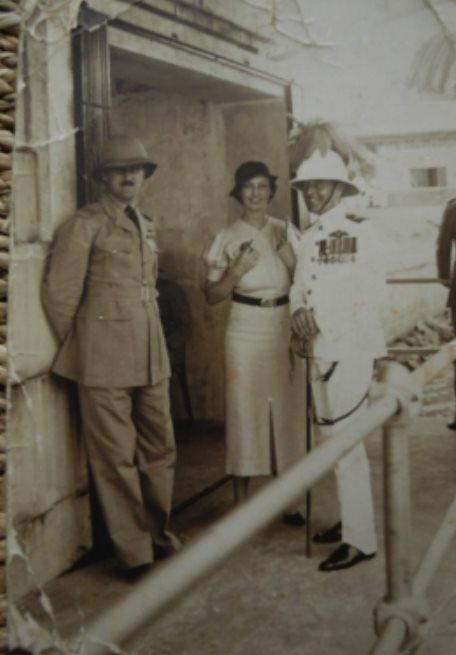
The Burton Observer and Chronicle – Thursday 19 September 1940:
BURTONIANS’ FRIENDSHIP WITH EX-ARAB LEADER. By Clare Sydney Smith (Cassell, 12s. 6d.). general interest as an intimate study of the most romantic personality on the Allied side… this volume has distinctly local appeal, for the authoress, who is a niece of the late Earl Haig, is the wife of Mr Commodore Sydney Smith, eldest son of Mr. Charles Smith (former joint managing director of Allsopp’s). Her volume, on the whole, is a fascinating record of the devoted friendship which existed between Colonel Lawrence of Arabia, her husband and herself during the latter years of the one-time Arab leader’s life. Their acquaintance with Lawrence, alias Aircraftman T. E. Shaw, commenced with the Cairo Conference in 1920.
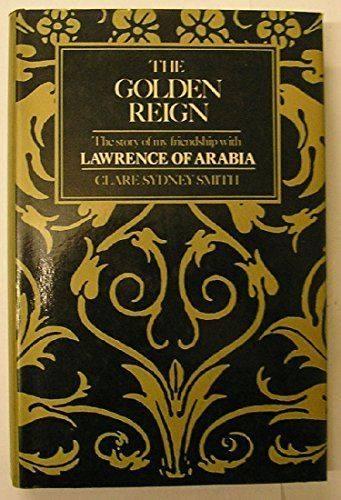
A photograph from the book: From left to right: Lord Astor, Wing-Commander Sydney Smith, Lady Astor, George Bernard Shaw, Charlotte Shaw (hiding behind GBS’s shoulder), Sydney’s daughter Maureen Sydney Smith, an unknown man, Clare Sydney Smith, and on the ladder, T.E.’s feet.
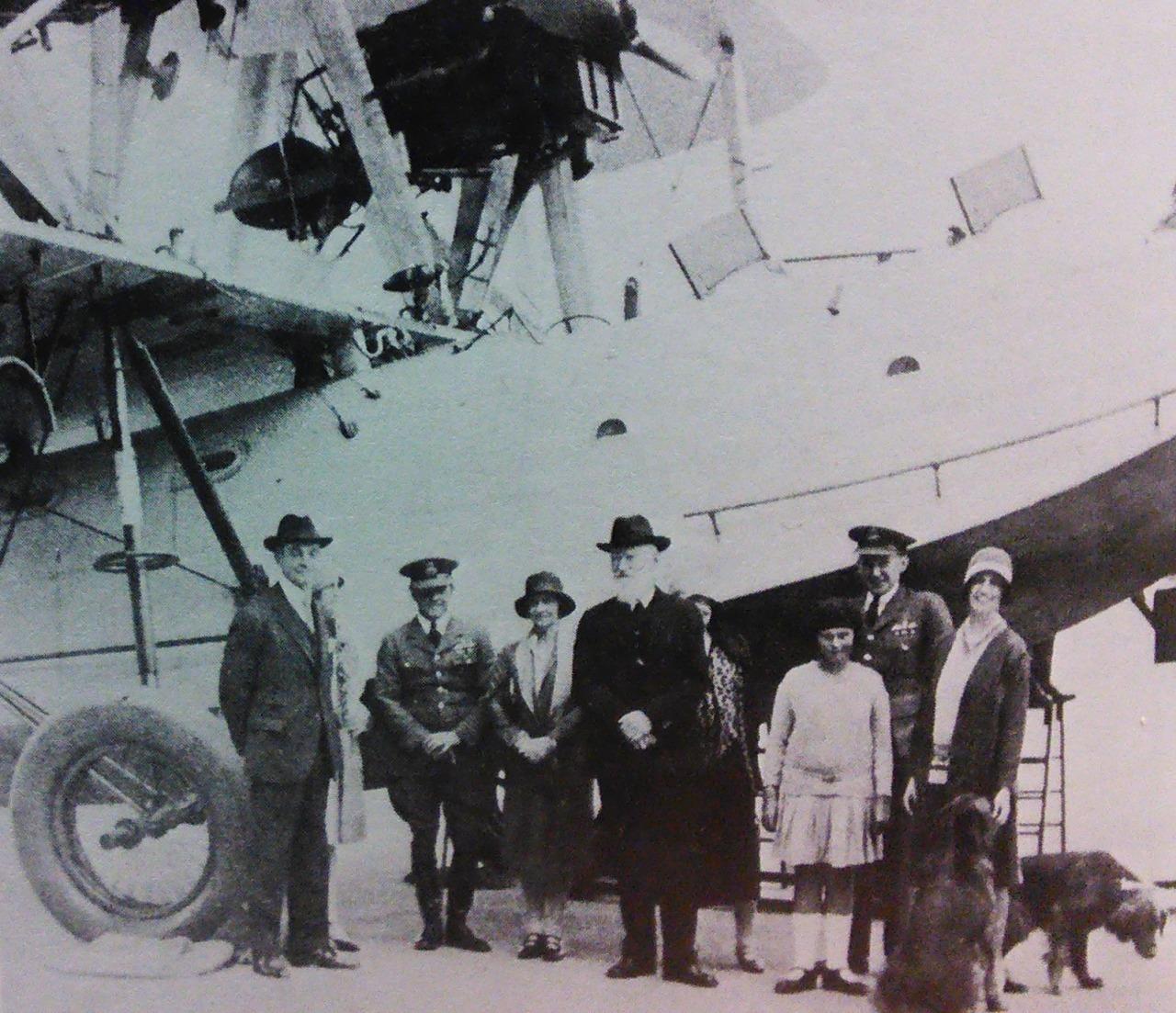
Also from Clare’s book:
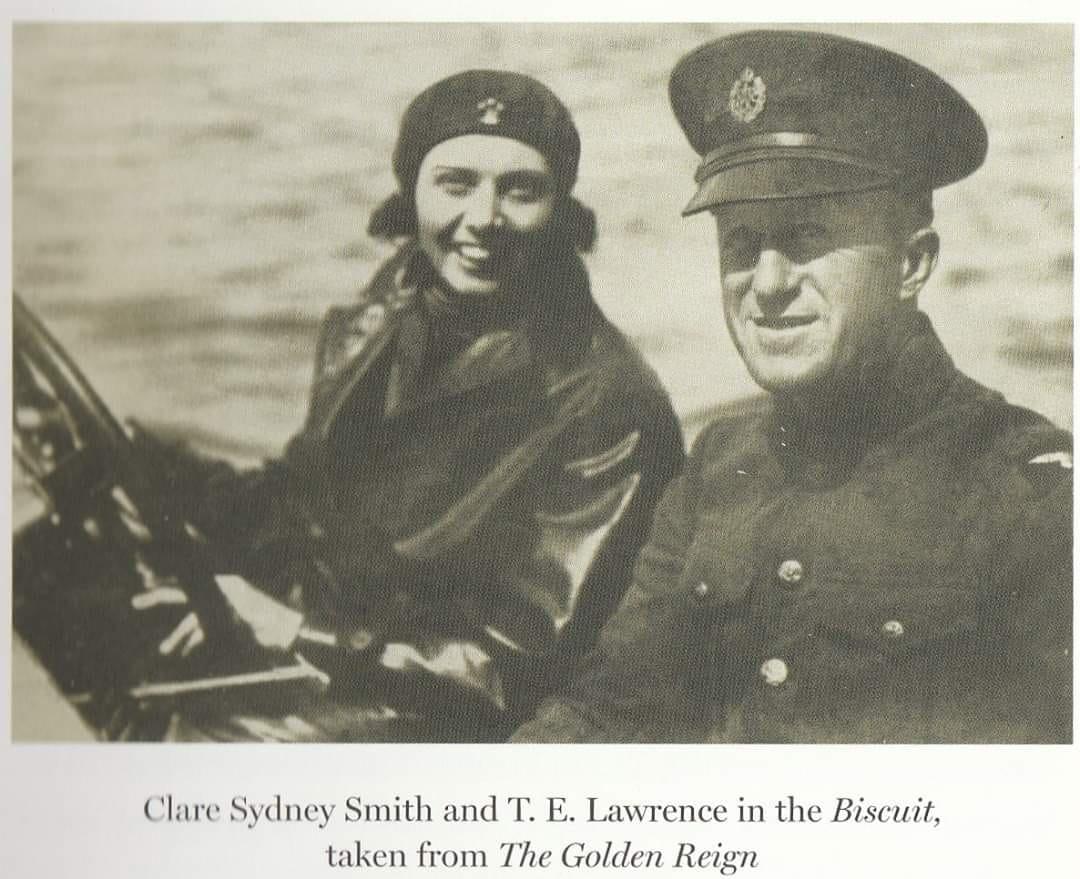
Sydney Smith with Lawrence of Arabia:
 December 13, 2021 at 11:29 am #6222
In reply to: The Elusive Samuel Housley and Other Family Stories
George Gilman Rushby: The Cousin Who Went To Africa
The portrait of the woman has “mother of Catherine Housley, Smalley” written on the back, and one of the family photographs has “Francis Purdy” written on the back. My first internet search was “Catherine Housley Smalley Francis Purdy”. Easily found was the family tree of George (Mike) Rushby, on one of the genealogy websites. It seemed that it must be our family, but the African lion hunter seemed unlikely until my mother recalled her father had said that he had a cousin who went to Africa. I also noticed that the lion hunter’s middle name was Gilman ~ the name that Catherine Housley’s daughter ~ my great grandmother, Mary Ann Gilman Purdy ~ adopted, from her aunt and uncle who brought her up.
I tried to contact George (Mike) Rushby via the ancestry website, but got no reply. I searched for his name on Facebook and found a photo of a wildfire in a place called Wardell, in Australia, and he was credited with taking the photograph. A comment on the photo, which was a few years old, got no response, so I found a Wardell Community group on Facebook, and joined it. A very small place, population some 700 or so, and I had an immediate response on the group to my question. They knew Mike, exchanged messages, and we were able to start emailing. I was in the chair at the dentist having an exceptionally long canine root canal at the time that I got the message with his email address, and at that moment the song Down in Africa started playing.
Mike said it was clever of me to track him down which amused me, coming from the son of an elephant and lion hunter. He didn’t know why his father’s middle name was Gilman, and was not aware that Catherine Housley’s sister married a Gilman.
Mike Rushby kindly gave me permission to include his family history research in my book. This is the story of my grandfather George Marshall’s cousin. A detailed account of George Gilman Rushby’s years in Africa can be found in another chapter called From Tanganyika With Love; the letters Eleanor wrote to her family.
George Gilman Rushby:
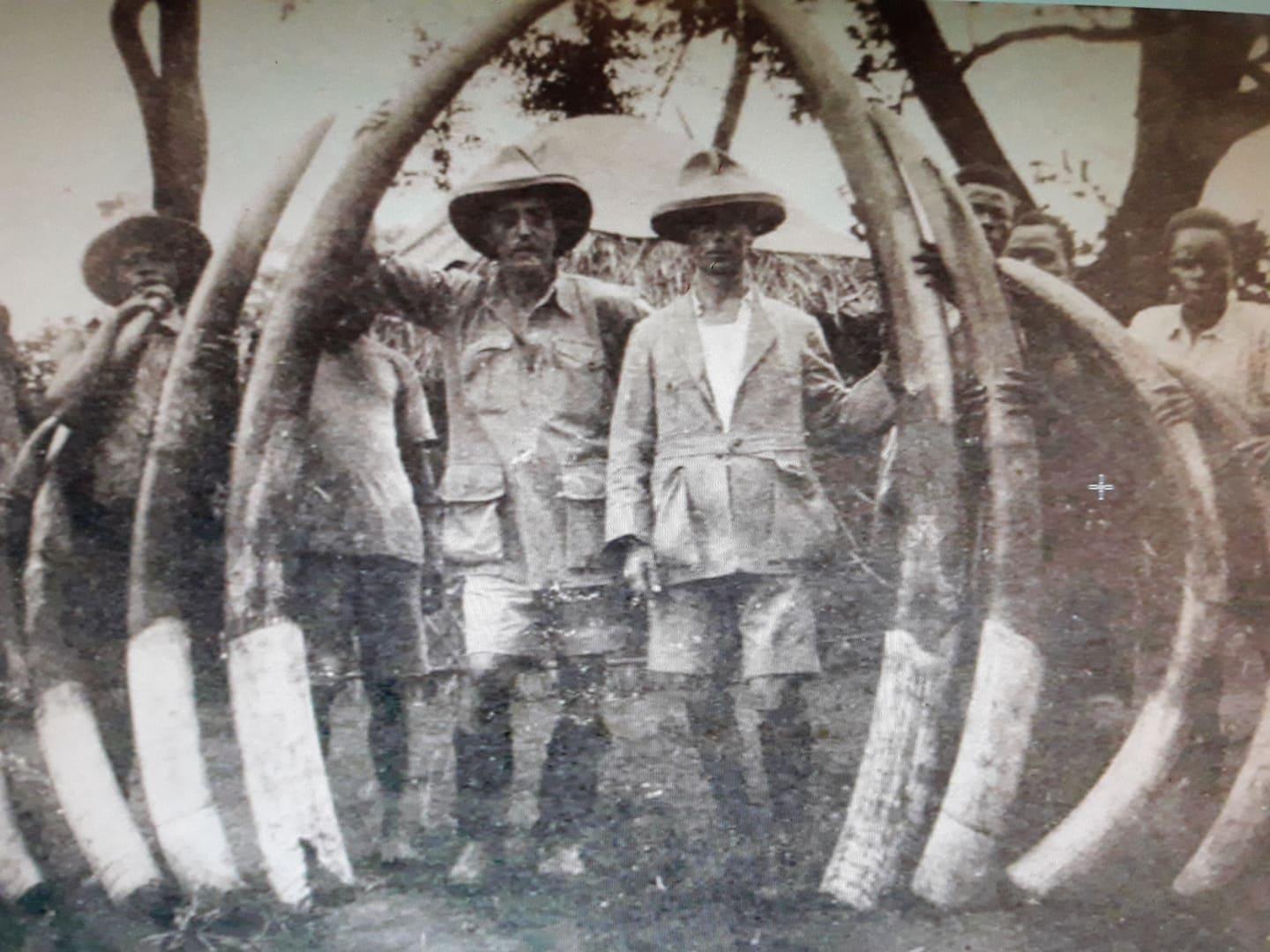
The story of George Gilman Rushby 1900-1969, as told by his son Mike:
George Gilman Rushby:
Elephant hunter,poacher, prospector, farmer, forestry officer, game ranger, husband to Eleanor, and father of 6 children who now live around the world.George Gilman Rushby was born in Nottingham on 28 Feb 1900 the son of Catherine Purdy and John Henry Payling Rushby. But John Henry died when his son was only one and a half years old, and George shunned his drunken bullying stepfather Frank Freer and was brought up by Gypsies who taught him how to fight and took him on regular poaching trips. His love of adventure and his ability to hunt were nurtured at an early stage of his life.
The family moved to Eastwood, where his mother Catherine owned and managed The Three Tuns Inn, but when his stepfather died in mysterious circumstances, his mother married a wealthy bookmaker named Gregory Simpson. He could afford to send George to Worksop College and to Rugby School. This was excellent schooling for George, but the boarding school environment, and the lack of a stable home life, contributed to his desire to go out in the world and do his own thing. When he finished school his first job was as a trainee electrician with Oaks & Co at Pye Bridge. He also worked part time as a motor cycle mechanic and as a professional boxer to raise the money for a voyage to South Africa.In May 1920 George arrived in Durban destitute and, like many others, living on the beach and dependant upon the Salvation Army for a daily meal. However he soon got work as an electrical mechanic, and after a couple of months had earned enough money to make the next move North. He went to Lourenco Marques where he was appointed shift engineer for the town’s power station. However he was still restless and left the comfort of Lourenco Marques for Beira in August 1921.
Beira was the start point of the new railway being built from the coast to Nyasaland. George became a professional hunter providing essential meat for the gangs of construction workers building the railway. He was a self employed contractor with his own support crew of African men and began to build up a satisfactory business. However, following an incident where he had to shoot and kill a man who attacked him with a spear in middle of the night whilst he was sleeping, George left the lower Zambezi and took a paddle steamer to Nyasaland (Malawi). On his arrival in Karongo he was encouraged to shoot elephant which had reached plague proportions in the area – wrecking African homes and crops, and threatening the lives of those who opposed them.
His next move was to travel by canoe the five hundred kilometre length of Lake Nyasa to Tanganyika, where he hunted for a while in the Lake Rukwa area, before walking through Northern Rhodesia (Zambia) to the Congo. Hunting his way he overachieved his quota of ivory resulting in his being charged with trespass, the confiscation of his rifles, and a fine of one thousand francs. He hunted his way through the Congo to Leopoldville then on to the Portuguese enclave, near the mouth of the mighty river, where he worked as a barman in a rough and tough bar until he received a message that his old friend Lumb had found gold at Lupa near Chunya. George set sail on the next boat for Antwerp in Belgium, then crossed to England and spent a few weeks with his family in Jacksdale before returning by sea to Dar es Salaam. Arriving at the gold fields he pegged his claim and almost immediately went down with blackwater fever – an illness that used to kill three out of four within a week.
When he recovered from his fever, George exchanged his gold lease for a double barrelled .577 elephant rifle and took out a special elephant control licence with the Tanganyika Government. He then headed for the Congo again and poached elephant in Northern Rhodesia from a base in the Congo. He was known by the Africans as “iNyathi”, or the Buffalo, because he was the most dangerous in the long grass. After a profitable hunting expedition in his favourite hunting ground of the Kilombera River he returned to the Congo via Dar es Salaam and Mombassa. He was after the Kabalo district elephant, but hunting was restricted, so he set up his base in The Central African Republic at a place called Obo on the Congo tributary named the M’bomu River. From there he could make poaching raids into the Congo and the Upper Nile regions of the Sudan. He hunted there for two and a half years. He seldom came across other Europeans; hunters kept their own districts and guarded their own territories. But they respected one another and he made good and lasting friendships with members of that small select band of adventurers.
Leaving for Europe via the Congo, George enjoyed a short holiday in Jacksdale with his mother. On his return trip to East Africa he met his future bride in Cape Town. She was 24 year old Eleanor Dunbar Leslie; a high school teacher and daughter of a magistrate who spent her spare time mountaineering, racing ocean yachts, and riding horses. After a whirlwind romance, they were betrothed within 36 hours.
On 25 July 1930 George landed back in Dar es Salaam. He went directly to the Mbeya district to find a home. For one hundred pounds he purchased the Waizneker’s farm on the banks of the Mntshewe Stream. Eleanor, who had been delayed due to her contract as a teacher, followed in November. Her ship docked in Dar es Salaam on 7 Nov 1930, and they were married that day. At Mchewe Estate, their newly acquired farm, they lived in a tent whilst George with some help built their first home – a lovely mud-brick cottage with a thatched roof. George and Eleanor set about developing a coffee plantation out of a bush block. It was a very happy time for them. There was no electricity, no radio, and no telephone. Newspapers came from London every two months. There were a couple of neighbours within twenty miles, but visitors were seldom seen. The farm was a haven for wild life including snakes, monkeys and leopards. Eleanor had to go South all the way to Capetown for the birth of her first child Ann, but with the onset of civilisation, their first son George was born at a new German Mission hospital that had opened in Mbeya.
Occasionally George had to leave the farm in Eleanor’s care whilst he went off hunting to make his living. Having run the coffee plantation for five years with considerable establishment costs and as yet no return, George reluctantly started taking paying clients on hunting safaris as a “white hunter”. This was an occupation George didn’t enjoy. but it brought him an income in the days when social security didn’t exist. Taking wealthy clients on hunting trips to kill animals for trophies and for pleasure didn’t amuse George who hunted for a business and for a way of life. When one of George’s trackers was killed by a leopard that had been wounded by a careless client, George was particularly upset.
The coffee plantation was approaching the time of its first harvest when it was suddenly attacked by plagues of borer beetles and ring barking snails. At the same time severe hail storms shredded the crop. The pressure of the need for an income forced George back to the Lupa gold fields. He was unlucky in his gold discoveries, but luck came in a different form when he was offered a job with the Forestry Department. The offer had been made in recognition of his initiation and management of Tanganyika’s rainbow trout project. George spent most of his short time with the Forestry Department encouraging the indigenous people to conserve their native forests.In November 1938 he transferred to the Game Department as Ranger for the Eastern Province of Tanganyika, and over several years was based at Nzasa near Dar es Salaam, at the old German town of Morogoro, and at lovely Lyamungu on the slopes of Kilimanjaro. Then the call came for him to be transferred to Mbeya in the Southern Province for there was a serious problem in the Njombe district, and George was selected by the Department as the only man who could possibly fix the problem.
Over a period of several years, people were being attacked and killed by marauding man-eating lions. In the Wagingombe area alone 230 people were listed as having been killed. In the Njombe district, which covered an area about 200 km by 300 km some 1500 people had been killed. Not only was the rural population being decimated, but the morale of the survivors was so low, that many of them believed that the lions were not real. Many thought that evil witch doctors were controlling the lions, or that lion-men were changing form to kill their enemies. Indeed some wichdoctors took advantage of the disarray to settle scores and to kill for reward.
By hunting down and killing the man-eaters, and by showing the flesh and blood to the doubting tribes people, George was able to instil some confidence into the villagers. However the Africans attributed the return of peace and safety, not to the efforts of George Rushby, but to the reinstallation of their deposed chief Matamula Mangera who had previously been stood down for corruption. It was Matamula , in their eyes, who had called off the lions.
Soon after this adventure, George was appointed Deputy Game Warden for Tanganyika, and was based in Arusha. He retired in 1956 to the Njombe district where he developed a coffee plantation, and was one of the first in Tanganyika to plant tea as a major crop. However he sensed a swing in the political fortunes of his beloved Tanganyika, and so sold the plantation and settled in a cottage high on a hill overlooking the Navel Base at Simonstown in the Cape. It was whilst he was there that TV Bulpin wrote his biography “The Hunter is Death” and George wrote his book “No More The Tusker”. He died in the Cape, and his youngest son Henry scattered his ashes at the Southern most tip of Africa where the currents of the Atlantic and Indian Oceans meet .
George Gilman Rushby:
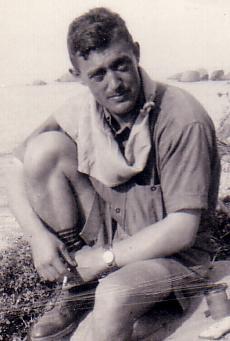 December 14, 2020 at 9:10 pm #6161
In reply to: Twists and One Return From the Time Capsule
Dispersee sat on a fallen tree trunk, lost in thought. A long walk in the woods had seemed just the ticket……
Nora wasn’t surprised to encounter a fallen tree trunk no more than 22 seconds after the random thought wafted through her mind ~ if thought was was the word for it ~ about Dispersee sitting on a fallen tree trunk. Nora sat on the tree trunk ~ of course she had to sit on it; how could she not ~ simultaneously stretching her aching back and wondering who Dispersee might be. Was it a Roman name? Something to do with the garum on the shopping receipt?
Nora knew she wasn’t going to get to the little village before night fall. Her attempts to consult the map failed. It was like a black hole. No signal, no connection, just a blank screen. She looked up at the sky. The lowering dark clouds were turning orange and red as the sun went down behind the mountains, etching the tree skeletons in charcoal black in the middle distance.
In a sudden flash of wordless alarm, Nora realized she was going to be out alone in the woods at night and wild boars are nocturnal and a long challenging walk in broad daylight was one thing but alone at night in the woods with the wild boars was quite another, and in a very short time indeed had worked herself up into a state approaching panic, and then had another flash of alarm when she realized she felt she would swoon in any moment and fall off the fallen trunk. The pounding of her, by then racing, heartbeats was yet further cause for alarm, and as is often the case, the combination of factors was sufficiently noteworthy to initiate a thankfully innate ability to re establish a calm lucidity, and pragmatic attention to soothe the beating physical heart as a matter of priority.
It was at the blessed moment of restored equilibrium and curiosity (and the dissipation of the alarm and associated malfunctions) that the man appeared with the white donkey.
December 13, 2020 at 8:14 am #6159In reply to: Twists and One Return From the Time Capsule
Nora moves silently along the path, placing her feet with care. It is more overgrown in the wood than she remembers, but then it is such a long time since she came this way. She can see in the distance something small and pale. A gentle gust of wind and It seems to stir, as if shivering, as if caught.
Nora feels strange, there is a strong sense of deja vu now that she has entered the forest.
She comes to a halt. The trees are still now, not a leaf stirs. She can hear nothing other than the sound of her own breathing. She can’t see the clearing yet either, but she remembers it’s further on, beyond the next winding of the path. She can see it in her mind’s eye though, a rough circle of random stones, with a greenish liquid light filtering through. The air smells of leaf mould and it is spongy underfoot. There’s a wooden bench, a grassy bank, and a circular area of emerald green moss. Finn thinks of it as place of enchantment, a fairy ring.
Wait! Who is Finn? Where is this story coming from that whispers in her ear as she makes her way through the woods to her destination, the halfway point of her clandestine journey? Who is Finn?
She reaches the tiny shivering thing and sees that it is a scrap of paper, impaled on a broken branch. She reaches out gently and touches it, then eases if off the branch, taking care not to rip it further. There is a message scribbled on the paper, incomplete. meet me, is all it says now
The crumpled up paper among the dead leaves beside the path catches her eye. No, not impaled on a branch but still, a bit of paper catches her eye as the mysterious ~ ephemeral, invisible ~ story teller continues softly telling her tale
Finn feels dreamy and floaty. She smiles to herself, thinking of the purpose of her mission, feeling as though it is a message to her from the past. She is overwhelmed for a moment with a sense of love and acceptance towards her younger self. Yes, she whispers softly to the younger Finn, I will meet you at the fairy ring. We will talk a bit. Maybe I can help
But wait, there is no meaningful message on the crumpled paper that Nora picks up and opens out. It’s nothing but a shopping receipt. Disappointed, she screws it back up and aims to toss it into the undergrowth, but she hesitates. Surely it can’t have no meaning at all, she thinks, not after the strange whispered story and the synchronicity of finding it just at that moment. She opens it back up again, and reads the list of items.
Olive oil, wine, wheat, garum…. wait, what? Garum? She looks at the date on the receipt ~ a common enough looking till roll receipt, the kind you find in any supermarket ~ but what is this date? 57BC? How can that be? Even if she had mistranslated BC ~ perhaps it means British Cooperative, or Better Compare or some such supermarket name ~ the year of 57 makes little sense anyway. And garum, how to explain that! Nora only knows of garum in relation to Romans, there is no garum on the shelves between the mayonaisse and the ketchup these days, after all.
Nora smooths the receipt and folds it neatly in half and puts it in her pocket. The shadows are long now and she still has some distance to walk before the halfway village. As she resumes her journey, she hears whispered in her ear: You unlocked the blue diamond mode. You’re on a quest now!
Smiling now, she accelerates her pace. The lowering sun is casting a golden light, and she feels fortified.
January 31, 2020 at 9:47 pm #5677In reply to: The Precious Life and Rambles of Liz Tattler
“You’re back just in time for the fancy dress party, Finnley. Roberto,” she gave him a piercing look as if to say don’t contradict me, “Roberto is going to come as Falla Partland, the well known writer of romances..”
Finnley snorted. “And what are you coming as? One of your long forgotten characters, a neglected thread jumper? A fraught character left dangling on a cliff hanger for months on end? A confused character, wondering what happened to linear time? A frantic character with the still undelivered urgent message?”
“No need to go on so, Finnley. Do try and get a grip. Roberto and I would like a bottle of something, see to it please.”
“I’ll come as a downtrodden but surprisingly resilient and mouthy subordinate character, who secretly rules the roost,” replied the recurring character with a characteristic smirk.
Roberto turned away to hide his smile, pretending to dust the giraffe bookends. He had been lucky so far in his role as one of her characters. He loved gardening, and had always had a weakness for pink. It could be worse. Much worse.
January 18, 2020 at 8:18 am #5611In reply to: The Precious Life and Rambles of Liz Tattler
“I have nothing against outrageous clothes,” Liz said, feeling the unspoken murmurs of “we noticed” from the others. She smoothed down the voluminous pink satin of her floor length gown, batting her false eyelashes. “Life is one long fancy dress party, and one should dress accordingly. Today I am Barbara Tartland,” Liz flashed her long pink nails. “Otherwise known as the Pink Thing.”
Godfrey replied with some alarm, “You’re not planning on writing soppy romances are you, all with identical plots and predictable characters?”
“Why Godfrey, I thought you’d be pleased,” Liz said. “You know how they fly off the shelves.”
“That’s because the characters are trying to commit suicide,” said Finnley.
January 18, 2020 at 1:12 am #5609In reply to: Two Aunties au Pair and Their Pert Carouses
Finnley
Finding the baby makes me believe there might be a god after all.
The maid was playing it cool but I could tell she’d been quaking in her beaded slippers. The baby was not so happy to be found, screaming fit to bust.
I have to shout over the racket. “Where can I find Mr August?”
She looks down her long nose at me. “Mr August does not see you without an appointment.”
You would think that, seeing as I had found the baby and all, she could be a little more accommodating. I resist an urge to grab the brat from her and chuck it out on the street again. I console myself with the thought that, if I get the job, I am going to be Miss Fancy-Slipper’s boss, so it’s no wonder she’s a little frosty.
What am I saying? If?
Acutally, I’m feeling pretty confident. I’m wearing my lucky knickers and I’ve got enough faked references to fill a suitcase. You could say I am oozing confidence. I probably need to tone it down a notch; that’s one thing I learned at my last job working for a crazy romance writer with delusions of grandeur: People don’t like competition.
And I’m competition.
“Thanks,” I say when she finally deigns to point me in the right direction. “Oh, and I think you’ll find his nappies need changing.”
September 9, 2019 at 12:04 pm #4804In reply to: The Precious Life and Rambles of Liz Tattler
“What if she’s bluffing and it’s a ploy to bargain for a raise…” Godfrey said to Elizabeth keeping his voice down “or even more devious, to get you to write in spite…” he added, slightly concerned about Liz reaction.
“Say it bloody loud Godfrey! She wants to sexy up all my stuff, that derelinquant! Caught her doing so waaaay before, she’s never stopped trying. I’m sure her bloody novels are all sentimental romantic rubbish.”
Godfrey looked surprised “Funny you say that. She never really struck me as the sentimental type. Are you sure it’s not all jealousy or holding grudge for her disparate appreciation of your taste in art. That rope-snake is very… philosophical.”
September 2, 2019 at 4:01 pm #4787In reply to: The Precious Life and Rambles of Liz Tattler
The sun was high in the sky and birds were chirping in the trees by the pool. Roberto was facing a conundrum as the biseasonal pool had started acting strangely. Well even more strangely than one part being frozen in winter and one part stuck in the dog days of who knew what year.
It had already been hard to manage an even level between the iced layer, which tended to get brittle near the seasonal line, and the warm waters evaporating too quickly. When it first happened the water pump had been stuck in winter and they had to break some ice to move it to the summer part. Everything had been fine until the last Roman party and they could enjoy ice skating and warm spring like pool in any season. Roberto especially liked the winter season when the steam would create a nice and cozy mist, conducive to some intimate bathing together.
Now, after that party, something weird…er was happening. The line between winter and summer had started to shift around the center of the pool. -ish. And now the pump was stuck in ice again and the summer pool was being evaporated too quickly. Roberto had to save two mandarin ducks who had their legs caught in by the ice while bathing in the warm pool. Breaking the ice layer without hurting the tiny bird legs had been quite a challenge, but Roberto was proud to say that they were now safe and sound. One of the unforeseen consequences was that they had been following him everywhere ever since and he had to install two boxes for them to sleep near his bed.
Roberto and the ducks were looking at the summer half-pool. It was half empty, even if Ma’am Liz would certainly entertain the idea that it was half full, it was certainly not going stay that way very long if nothing was done.
What had happened was some mystery and Roberto was not very good at solving mysteries. He wished that that inspector with the melon hat had not left in such a hurry during the party, he could have asked him some advice.
“You want some French pastries?” It was the new French maid, Mirabelle. Roberto had been calling her Marbella and she seemed to like it. She held a silver plate of what she called creamy nuns and chocolate eclairs.
“Thanks,” he said.August 28, 2019 at 1:44 pm #4769In reply to: The Chronicles of the Flying Fish Inn
Aunt Idle:
I bet you were expecting reports of action and adventure, a fast paced tale of risks and rescues, with perhaps a little romance. Hah! It’s been like a morgue around here after that fluster of activity and new arrivals. Like everyone lost the wind out of their sails and wondered what they were doing here.
Sanso took to his room with no explanation, other than he needed to rest. He wouldn’t let anyone in except Finly with food and drinks (quite an extraordinary amount for just one man, I must say, and not a crumb or a drop left over on the trays Finly carried back to the kitchen.) I told Finly to quiz him, find out if he was sick or needed a doctor, or perhaps a bit of company, but the only thing she said was that he was fine, and it was none of our business, he’d paid up front hadn’t he? So what was the problem. Bit rude if you ask me.
Mater had taken to her room with a pile of those trashy romance novels, complaining of her arthritis. She’d gone into a sulk ever since I ruined her red pantsuit in a boil wash, and dyed all the table linen pink in the process. The other guests lounged around listlessly in the sitting room or the porch, flicking through magazines or scrolling their gadgets, mostly with bored vacant expressions, and little conversation beyond a cursory reply to any attempt to chat.
Bert was nowhere to be seen most of the time, and even when he was around, he was as uncommunicative as the rest of them, and Devan, what was he up to, always down the cellar? Checking the rat traps was all he said when I asked him. But we haven’t got rats, I told him, not down the cellar anyway. He gave me a look that was unreadable, to put it politely. Maybe he’s got a crack lab going on down there, planning on selling it to the bored guests. God knows, maybe that’d liven us all up a bit.
I did get to wondering about those two women who wandered off down the mine, but whenever I mentioned them to anyone, all I got was a blank stare. I even banged on Sanso’s door a time or two, but he didn’t answer. I made Finly ask him, and she said all he would say is Not to worry, it would be sorted out. I mean, really! He hadn’t left that room all week, how was he going to sort it out? Bert said the same thing when I eventually managed to collar him, he said just wait, it will get sorted out, and then that glazed look came over his face again.
It’s weird, I tell you. We’re like a cast of characters with nobody writing the story, waiting. Waiting to start again on whatever comes next.
July 16, 2019 at 3:43 pm #4684In reply to: Seven Twines and the Dragon Heartwoods
It was done. The spell was lifted and Rukshan could see the path ahead.
Some memories remained trapped in inaccessible places yet, but he wouldn’t need those; they were remnants from a different past.
Now his mission was clear, he was to go back to the Forest, to gain passage to Jötunheimr, the land of Giants, and find the Master, that powerful Alchemist able to imbue life into stone. The ones that some had called Necromancer, or Dark Lord.
July 14, 2019 at 10:14 am #4663In reply to: The Precious Life and Rambles of Liz Tattler
The plants seemed even more alive since Roberto had put on his new loincloth. The gardener’s joy was communicative and spreading rapidly. It had been a revelation to him, a newly found freedom and discovery of his sculptural body. Not that the gardener himself was aware of what was happening, but he enjoyed the effects of this new uniform. Knowing that it would lead to another great party was an even greater incentive for him to show it around.
He always fancied himself as a healer of souls through his expertise of gardening, and seeing how his newly found joy in his work seemed to have awaken the desire of his landlady to get out more was a step in this direction.
The poor woman was always staying inside, except for the big occasional parties, wearing pink night gowns. The house was too big and dark compared to the huge garden at her disposal.Roberto had been watering the begonias, and he also had been thinking. He thought Mistress Liz needed a man. He remembered he had kept the name card of that inspector with a fruity name. Inspector Melon. He could invite him to the Roman party and organise a little incident to have them alone for some time.
What a marvellous idea, he thought with his latin accent.He went on watering the gardenias. He might be dressed up as a slave, but he had put himself in charge of the organisation of the Roman party. He would send the invitations and order the necessary props and costumes. It would be the perfect occasion also to find someone for Godfrey and Finnley.
Although it should remain a surprise.
July 12, 2019 at 6:09 pm #4651In reply to: The Precious Life and Rambles of Liz Tattler
“Take a look at the nude old fart? Godfrey’s not cavorting about naked again, is he? Go and cover him up quickly, before anyone sees him. That kitchen towel won’t be big enough, you better get a sheet.”
“He’s not going to let me cover him up though is he, Liz?” Finnley replied. “You know what he’s like when he gets these urges!” Finnley was about to clarify that she hadn’t said Godfrey was prancing about the place naked anyway, but was rendered speechless when Liz replied.
“You’re right,” admitted Liz, reluctantly. Then she had an idea. “Tell him it’s a toga for the Romans party.”
“What Romans party?” asked Roberto, popping his head in the French windows. “I’ve always wanted to dress up as a Roman slave.”
“You mean mostly naked? Give him that kitchen towel Finnley to use as a loin cloth.” Turning back to the strapping gardener, she said, “Show me your costume, young man!”
“But Liz” Finnley started to say that there was no Romans party really, that it was just a ruse to cover up Godfrey, (who the reader if not the writer will remember wasn’t naked in the first place) and what was she doing getting the gardener to strip… and then she decided to just say “Oh never mind” and make a hasty retreat, mumbling something about dishes to wash.
July 12, 2019 at 5:28 pm #4650In reply to: Pop﹡in People Tribulations
Distraction always worked best when one was trying hard not to try too hard, and luckily for Lucinda, it came easy. She was a natural. It wasn’t that she’d forgotten her mission to find out more about those mysterious dolls and the twelve addresses, but the Roman themed birthday party was today, and that gave her plenty to occupy herself.
The costume was easy, just a folded white sheet and a number of nappy pins. The birthday gift was another matter. She still hadn’t bought one, and had left herself no option but to buy something on the way to the party on the other side of the city. Counting the money left in her purse, she decided to travel by bus rather than taxi. She would have to change at the central bus station, which conveniently had a craft and antique market on in the nearby park. If she left home a couple of hours early, she could have a look around the market.
Not to look for dolls! she reminded herself, her mind already imagining unlikely scenes.
Checking the mirror one last time to make sure her toga was securely arranged, Lucinda left the flat and made her way to the bus stop on the other side of the park. She had debated whether to take her costume in a bag and change when she got there, and decided to just wear the toga. It was a diverse multicultural city, and there were often people dressed as if they were going to a fancy dress party, in biblical looking robes and scarves, or exotic coloured sari’s. If anyone wondered about her outfit, they’d probably just think she was from one of those foreign middle eastern places.
July 6, 2019 at 2:49 pm #4624In reply to: Pop﹡in People Tribulations
The light in the apartment darkened and Lucida glanced up from her book and noticed the gathering clouds visible through the glass doors that opened onto her balcony. Frowning, she reached for her phone to check tomorrows weather forecast. The weekly outdoor market was one of the highlights of her week. With a sigh of relief she noted that there was no expectation of rain. Clouds perhaps, which wasn’t a bad thing. It wouldn’t be too hot, and the glare of the sun wouldn’t make it difficult to see all the the things laid out to entice a potential buyer on trestle tables and blankets.
Lucinda had made a list ~ the usual things, like fruit and vegetables from the farms outside the city; perhaps she’d find a second hand cake tin to try out the new recipe, and some white sheets for the costumes for the Roman themed party she’d been invited to, maybe some more books. But what excited her most was the chance of finding something unexpected, or something unusual. And more often than not, she did.
She added birthday present to the list, not having any idea what that might be. Lucinda found choosing gifts extraordinarily difficult, and had tried all manner of tactics to change her irrational angst about the whole thing. One Christmas she’d tried just picking one shop and choosing as many random things as people on her gift list. In fact that had worked as well as any other method, but still felt unsettling and unsatisfactory. The next year she informed everyone that she wouldn’t be buying presents at all, and asked friends and family to reciprocate likewise. Some had and some hadn’t, resulting in yet more confusion. Was she to be grateful for the gifts, despite the lack of her own reciprocation? Or peeved that they had ignored her wishes?
Birthdays were different though. A personal individual celebration was not the same thing as Christmas with all it’s stifling traditions and expectations. It would be churlish to refuse to buy a birthday gift. And so birthday gift remained on the shopping list, as it had been last week, and the week before.
A birthday gift had already been purchased the previous week. Lucinda glanced up at the top shelf of the bookcase where the doll sat, languidly looking down at her. She felt a pang of emotion, as she did each time she looked at that doll. She loved the doll and wanted to keep it for herself, that was one thing. That was one of the things that always happened when she chose a gift that she liked herself: she talked herself into keeping it; that it was her taste and not the recipients. That it would be obvious that she’d chosen it because SHE liked it, not keeping the other person in mind.
But that wasn’t the only thing confounding her this time. The doll wanted to stay with her, she was sure of it. It wasn’t just her wanting to keep the doll. It wasn’t any old doll, either. That was the other thing. It seemed very clear that it was one of Maeve’s dolls. It had to be, she was sure of it.
When she got home with her purchases the week before, her intention had been to go and show Maeve what she’d found. Then something stopped her: what if it made her sad that one of her creations had been discarded, put up for sale at a market along with old cake tins and second hand sheets? No, she couldn’t possibly risk it, and luckily Maeve didn’t know the birthday girl who was the doll was intended for, so she’d never know.
But then Lucinda realized she had to keep the strange gaunt doll with the grey dreadlocks and patchwork dress. She couldn’t possibly give her away.
I hope I don’t find another doll at the market tomorrow, and have to keep that as well! thought Lucinda, and immediately felt goosebumps rise as an errant breeze ruffled the dolls dreadlocks.
March 21, 2019 at 6:48 am #4582In reply to: The Precious Life and Rambles of Liz Tattler
“There it is” he pointed at the worn-out dusty book he’d found after turning around the whole library. “Techromancers appear at the seams between realities. They possess technologies to divine outcomes beyond conventional means of the place in which they appear — in a word, they are from the futures, always, whenever the period they were found in — a reason for which scholars have surmised they come from a unique convergence point of the infinite lines of time in a real projective space of time, hinting at the nature of an all-connected roundabout timeline. Although them popping in existence at awkward places is not unheard of, they tend to stay discrete for fear of the Timeline Riots Impeachment Police.
“T’isn’t that helpful now, is it” he said dusting a peanut from the floor before cracking the shell open. “And doesn’t tell us why Finnley is so emotional now. Or where is Roberto. If I were to worry, that would worry me more…”
March 10, 2019 at 9:05 am #4581In reply to: The Precious Life and Rambles of Liz Tattler
“Techromancers shouldn’t be in bathrooms. Like murderers, they don’t belong there,” said Finnley, surreptitiously wiping the tears from her eyes.
“You aren’t being very surreptitious and I do detest it when you get emotional, Finnley. It is unsettling. Nor are you being helpful in your explanation of techromancer. Godfrey! Where are you?”March 7, 2019 at 5:53 pm #4580In reply to: The Precious Life and Rambles of Liz Tattler
“Would somebody please explain to me what a techromancer is, and what is he doing in my bathroom?”
- “The letters of Eleanor Dunbar Leslie to her parents and her sister in South Africa
-
AuthorSearch Results
