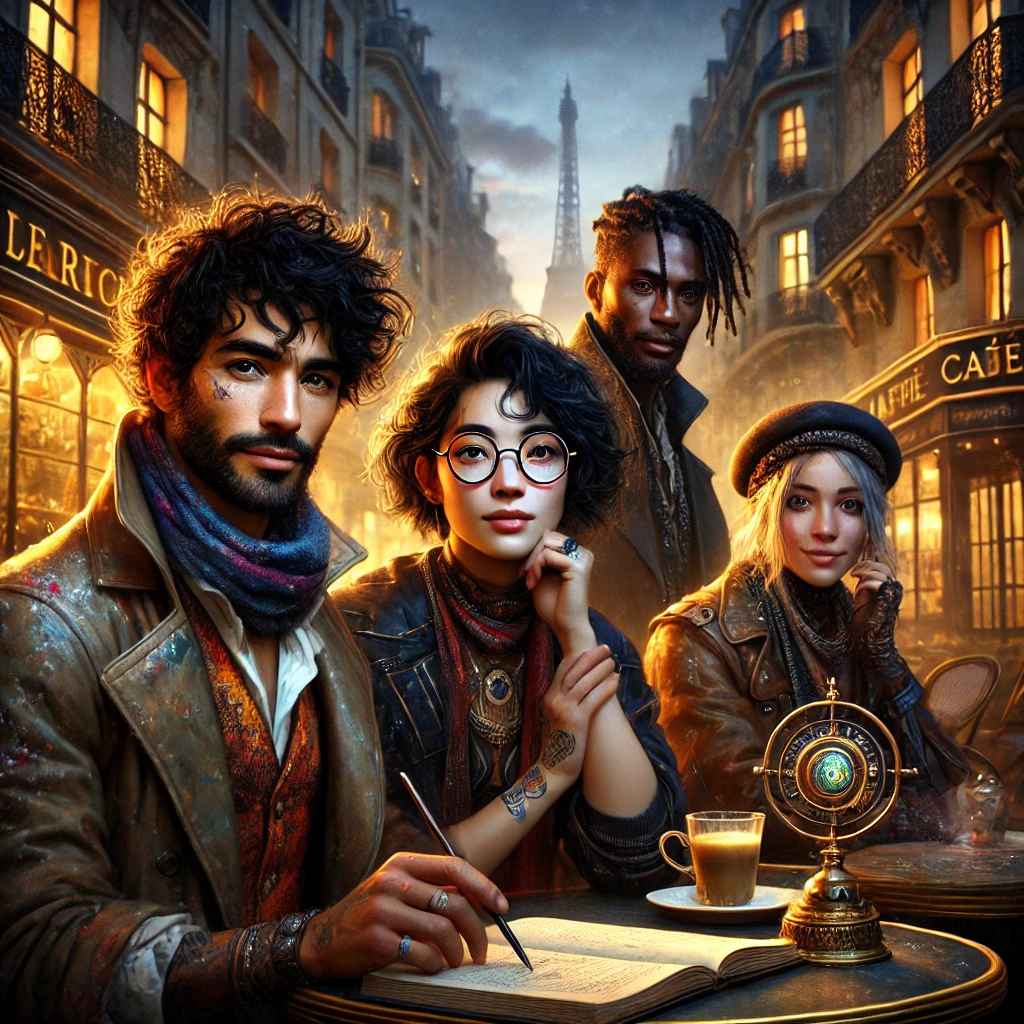
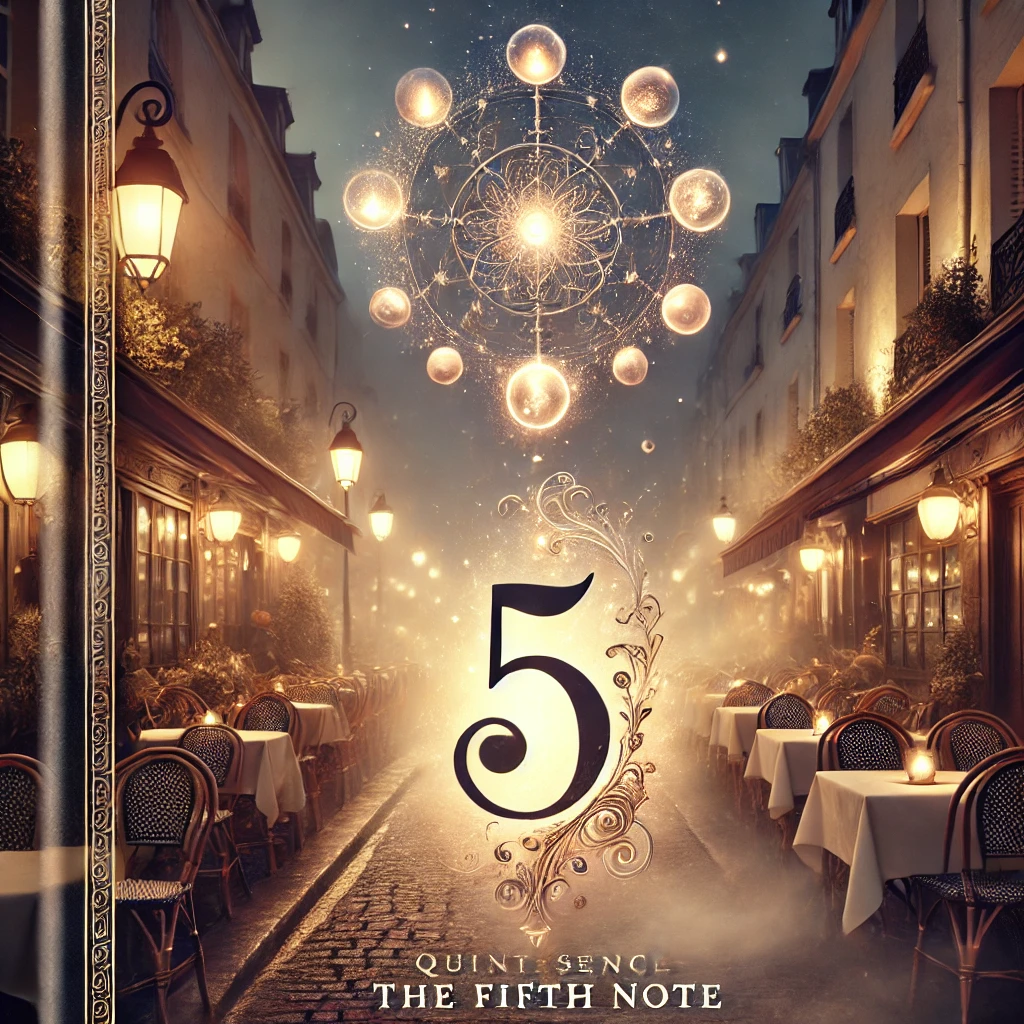
Search Results for 'sea'
-
AuthorSearch Results
-
December 7, 2024 at 11:18 am #7652
In reply to: Quintessence: Reversing the Fifth
Darius: The Call Home
South of France: Early 2023
Darius stared at the cracked ceiling of the tiny room, the faint hum of a heater barely cutting through the January chill. His breath rose in soft clouds, dissipating like the ambitions that had once kept him moving. The baby’s cries from the next room pierced the quiet again, sharp and insistent. He hadn’t been sleeping well—not that he blamed the baby.
The young couple, friends of friends, had taken him in when he’d landed back in France late the previous year, his travel funds evaporated and his wellness “influencer” groups struggling to gain traction. What had started as a confident online project—bridging human connection through storytelling and mindfulness—had withered under the relentless churn of algorithm changes and the oversaturated market: even in its infancy, AI and its well-rounded litanies seemed the ubiquitous answers to humanities’ challenges.
“Maybe this isn’t what people need right now,” he had muttered during one of his few recent live sessions, the comment section painfully empty.
The atmosphere in the apartment was strained. He felt it every time he stepped into the cramped kitchen, the way the couple’s conversation quieted, the careful politeness in their questions about his plans.
“I’ve got some things in the works,” he’d say, avoiding their eyes.
But the truth was, he didn’t.
It wasn’t just the lack of money or direction that weighed on him—it was a gnawing sense of purposelessness, a creeping awareness that the threads he’d woven into his identity were fraying. He could still hear Éloïse’s voice in his mind sometimes, low and hypnotic: “You’re meant to do more than drift. Trust the pattern. Follow the pull.”
The pull. He had followed it across continents, into conversations and connections that felt profound at the time but now seemed hollow, like echoes in an empty room.
When his phone buzzed late one night, the sound startling in the quiet, he almost didn’t answer.
“Darius,” his aunt’s voice crackled through the line, faint but firm. “It’s time you came home.”
Arrival in Guadeloupe
The air in Pointe-à-Pitre was thick and warm, clinging to his skin like a second layer. His aunt met him at the airport, her sharp gaze softening only slightly when she saw him.
“You look thin,” she said, her tone clipped. “Let’s get you fed.”
The ride to Capesterre-Belle-Eau was a blur of green —banana fields and palms swaying in the breeze, the mountains rising in the distance like sleeping giants. The scent of the sea mingled with the earthy sweetness of the land, a sharp contrast to the sterile chill of the south of France.
“You’ll help with the house,” his aunt said, her hands steady on the wheel. “And the fields. Don’t think you’re here to lounge.”
He nodded, too tired to argue.

The first few weeks felt like penance. His aunt was tireless, moving with an energy that gainsaid her years, barking orders as he struggled to keep up.
“Your hands are too soft,” she said once, glancing at his blistered palms. “Too much time spent talking, not enough doing.”
Her words stung, but there was no malice in them—only a brutal honesty that cut through his haze.
Evenings were quieter, spent on the veranda with plates of steaming rice and codfish, with the backdrop of cicadas’ relentless and rhythmic agitation. She didn’t ask about his travels, his work, or the strange detours his life had taken. Instead, she told stories—of storms weathered, crops saved, neighbors who came together when the land demanded it.
A Turning Point
One morning, as the sun rose over the fields, his aunt handed him a machete.
“Today, you clear,” she said.
He stood among the ruined banana trees, their fallen trunks like skeletal remains of what had once been vibrant and alive. The air was heavy with the scent of damp earth and decay.
With each swing of the machete, he felt something shift inside him. The physical labor, relentless and grounding, pulled him out of his head and into his body. The repetitive motion—strike, clear, drag—was almost meditative, a rhythm that matched the heartbeat of the land.
By midday, his shirt clung to his back, soaked with sweat. His muscles ached, his hands stung, but for the first time in months, his mind felt quiet.
As he paused to drink from a canteen, his aunt approached, a rare smile softening her stern features.
“You’re starting to see it, aren’t you?” she said.
“See what?”
“That life isn’t just what you chase. It’s what you build.”
Over time, the work became less about obligation and more about integration. He began to recognize the faces of the neighbors who stopped by to lend a hand, their laughter and stories sending vibrant pulsating waves resonant of a community he hadn’t realized he missed.
One evening, as the sun dipped low, a group gathered to share a meal. Someone brought out drums, the rhythmic beat carrying through the warm night air. Darius found himself smiling, his feet moving instinctively to the music.
The trance of Éloïse’s words—the pull she had promised—dissipated like smoke in the wind. What remained was what mattered: it wasn’t the pull but the roots —the people, the land, the stories they shared.
The Bell
It was his aunt who rang the bell for dinner one evening, the sound sharp and clear, cutting through the humid air like a call to attention.
Darius paused, the sound resonating in his chest. It reminded him of something—a faint echo from his time with Éloïse and Renard, but different. This was simpler, purer, untainted by manipulation.
He looked at his aunt, who was watching him with a knowing smile. “You’ve been lost a long time, haven’t you?” she said quietly.
Darius nodded, unable to speak.
“Good,” she said. “It means you know the way back.”
By the time he wrote to Amei, his hand no longer trembled. “Guadeloupe feels like a map of its own,” he wrote, the words flowing easily. “its paths crossing mine in ways I can’t explain. It made me think of you. I hope you’re well.”
For the first time in years, he felt like he was on solid ground—not chasing a pull, but rooted in the rhythm of the land, the people, and himself.
The haze lifted, and with it came clarity and maybe hope. It was time to reconnect—not just with long-lost friends and shared ideals, but with the version of himself he thought he’d lost.
December 7, 2024 at 10:07 am #7650In reply to: Quintessence: A Portrait in Reverse
Some elements for inspiration as to the backstory of the group and how it could tie to the current state of the story:
Here’s a draft version of the drama surrounding Éloïse and Monsieur Renard (the “strange couple”), incorporating their involvement with Darius, their influence on the group’s dynamic, and the fallout that caused the estrangement five years ago.
The Strange Couple: Éloïse and Monsieur Renard
Winter 2019: Paris, Just Before the Pandemic
The group’s last reunion before their estrangement was supposed to be a celebration—one of those rare moments when their diverging paths aligned. They had gathered in Paris in late December, the city cloaked in gray skies and glowing light. The plan was simple: a few days together, catching up, exploring old haunts, and indulging in the kind of reckless spontaneity that had defined their earlier years.
It was Darius who disrupted the rhythm. He had arrived late to their first dinner, rain-soaked and apologetic, with Éloïse and Monsieur Renard in tow.
First Impressions of Éloïse and Monsieur Renard
Éloïse was striking—lithe, dark-haired, with sharp eyes that seemed to unearth secrets before you could name them. She moved with a predatory grace, her laughter a mix of charm and edge. Renard was her shadow, older and impeccably dressed, his silvery hair and angular features giving him the air of a fox. He spoke little, but when he did, his words had the weight of finality, as if he were accustomed to being obeyed.
“They’re just friends,” Darius said when the others exchanged wary glances. “They’re… interesting. You’ll like them.”
But it didn’t take long for Éloïse and Renard to unsettle the group. At dinner, Éloïse dominated the conversation, her stories wild and improbable—of séances in abandoned mansions, of lost artifacts with strange energies, of lives transformed by unseen forces. Renard’s occasional interjections only added to the mystique, his tone implying he’d seen more than he cared to share.
Lucien, ever the skeptic, found himself drawn to Éloïse despite his instincts. Her talk of energies and symbols resonated with his artistic side, and when she mentioned labyrinths, his attention sharpened.
Elara, in contrast, bristled at their presence. She saw through their mystique, recognizing in Renard the manipulative charisma of someone who thrived on control.
Amei was harder to read, but she watched Éloïse and Renard closely, her silence betraying a guardedness that hinted at deeper discomfort.
Darius’s Growing Involvement
Over the following days, Darius spent more time with Éloïse and Renard, skipping planned outings with the group. He spoke of them with a reverence that was uncharacteristic, praising their insight into things he’d never thought to question.
“They see connections in everything,” he told Amei during a rare moment alone. “It’s… enlightening.”
“Connections to what?” she asked, her tone sharper than she intended.
“Paths, people, purpose,” he replied vaguely. “It’s hard to explain, but it feels… right.”
Amei didn’t press further, but she mentioned it to Elara later. “It’s like he’s slipping into something he can’t see his way out of,” she said.
The Séance
The turning point came during an impromptu gathering at Éloïse and Renard’s rented apartment—a dimly lit space filled with strange objects: glass jars of cloudy liquid, intricate carvings, and an ornate bronze bell hanging above the mantelpiece.
Éloïse had invited the group for what she called “an evening of clarity.” The others arrived reluctantly, wary of what she had planned but unwilling to let Darius face it alone.
The séance began innocuously enough—Éloïse guiding them through what she described as a “journey inward.” She spoke in a low, rhythmic tone, her words weaving a spell that was hard to resist.
Then things took a darker turn. She asked them to focus on the labyrinth she had drawn on the table—a design eerily similar to the map Lucien had found weeks earlier.
“You must find your center,” she said, her voice dropping. “But beware the edges. They’ll show you things you’re not ready to see.”
The room grew heavy with silence. Darius leaned into the moment, his eyes closed, his breathing steady. Lucien tried to focus but felt a growing unease. Elara sat rigid, her scientific mind railing against the absurdity of it all. Amei’s hands gripped the edge of the table, her knuckles white.
And then, the bell rang.
It was faint at first, a distant chime that seemed to come from nowhere. Then it grew louder, resonating through the room, its tone deep and haunting.
“What the hell is that?” Lucien muttered, his eyes snapping open.
Éloïse smiled faintly but said nothing. Renard’s expression remained inscrutable, though his fingers tapped rhythmically against the table, as if counting something unseen.
Elara stood abruptly, breaking the spell. “This is ridiculous,” she said. “You’re playing with people’s minds.”
Darius’s eyes opened, his gaze unfocused. “You don’t understand,” he said softly. “It’s not a game.”
The Fallout
The séance fractured the group.
- Elara: Left the apartment furious, calling Renard a charlatan and vowing never to entertain such nonsense again. Her relationship with Darius cooled, her disappointment palpable.
- Lucien: Became fascinated with the labyrinth and its connection to his art, but he couldn’t shake the unease the séance had left. His conversations with Éloïse deepened in the following days, further isolating him from the group.
- Amei: Refused to speak about what she’d experienced. When pressed, she simply said, “Some things are better left forgotten.”
- Darius stayed with Éloïse and Renard for weeks after the others left Paris, becoming more entrenched in their world. But something changed. When he finally returned, he was distant and cagey, unwilling to discuss what had happened during his time with them.
Lingering Questions
- What Happened to Darius with Éloïse and Renard?
- Darius’s silence suggests something traumatic or transformative occurred during his deeper involvement with the couple.
- The Bell’s Role:
- The bronze bell that rang during the séance ties into its repeated presence in the story. Was it part of the couple’s mystique, or does it hold a deeper significance?
- Lucien’s Entanglement:
- Lucien’s fascination with Éloïse and the labyrinth hints at a lingering connection. Did she influence his art, or was their connection more personal?
- Éloïse and Renard’s Motives:
- Were they simply grifters manipulating Darius and others, or were they genuinely exploring something deeper, darker, and potentially dangerous?
Impact on the Reunion
- The group’s estrangement is rooted in the fractures caused by Éloïse and Renard’s influence, compounded by the isolation of the pandemic.
- Their reunion at the café is a moment of reckoning, with Matteo acting as the subtle thread pulling them back together to confront their shared past.
December 5, 2024 at 11:01 pm #7647In reply to: Quintessence: Reversing the Fifth
Darius: A Map of People
June 2023 – Capesterre-Belle-Eau, Guadeloupe
The air in Capesterre-Belle-Eau was thick with humidity, the kind that clung to your skin and made every movement slow and deliberate. Darius leaned against the railing of the veranda, his gaze fixed on the horizon where the sky blends into the sea. The scent of wet earth and banana leaves filling the air. He was home.
It had been nearly a year since hurricane Fiona swept through Guadeloupe, its winds blowing a trail of destruction across homes, plantations, and lives. Capesterre-Belle-Eau had been among the hardest hit, its banana plantations reduced to ruin and its roads washed away in torrents of mud.
Darius hadn’t been here when it happened. He’d read about it from across the Atlantic, the news filtering through headlines and phone calls from his aunt, her voice brittle with worry.
“Darius, you should come back,” she’d said. “The land remembers everyone who’s left it.”
It was an unusual thing for her to say, but the words lingered. By the time he arrived in early 2023 to join the relief efforts, the worst of the crisis had passed, but the scars remained—on the land, on the people, and somewhere deep inside himself.
Home, and Not — Now, passing days having turned into quick six months, Darius was still here, though he couldn’t say why. He had thrown himself into the work, helped to rebuild homes, clear debris, and replant crops. But it wasn’t just the physical labor that kept him—it was the strange sensation of being rooted in a place he’d once fled.
Capesterre-Belle-Eau wasn’t just home; it was bones-deep memories of childhood. The long walks under the towering banana trees, the smell of frying codfish and steaming rice from his aunt’s kitchen, the rhythm of gwoka drums carrying through the evening air.
“Tu reviens pour rester cette fois ?” Come back to stay? a neighbor had asked the day he returned, her eyes sharp with curiosity.
He had laughed, brushing off the question. “On verra,” he’d replied. We’ll see.
But deep down, he knew the answer. He wasn’t back for good. He was here to make amends—not just to the land that had raised him but to himself.
A Map of Travels — On the veranda that afternoon, Darius opened his phone and scrolled through his photo gallery. Each image was pinned to a digital map, marking all the places he’d been since he got the phone. Of all places, it was Budapest which popped out, a poor snapshot of Buda Castle.
He found it a funny thought — just like where he was now, he hadn’t planned to stay so long there. He remembered the date: 2020, in the midst of the pandemic. He’d spent in Budapest most of it, sketching the empty streets.
Five years ago, their little group of four had all been reconnecting in Paris, full of plans that never came to fruition. By late 2019, the group had scattered, each of them drawn into their own orbits, until the first whispers of the pandemic began to ripple across the world.
Funding his travels had never been straightforward. He’d tried his hand at dozens of odd jobs over the years—bartending in Lisbon, teaching English in Marrakech, sketching portraits in tourist squares across Europe. He lived frugally, keeping his possessions light and his plans loose. Yet, his confidence had a way of opening doors; people trusted him without knowing why, offering him opportunities that always seemed to arrive at just the right time.
Even during the pandemic, when the world seemed to fold in on itself, he had found a way.
Darius had already arrived in Budapest by then, living cheaply in a rented studio above a bakery. The city had remained open longer than most in Europe or the world, its streets still alive with muted activity even as the rest of Europe closed down. He’d wandered freely for months, sketching graffiti-covered bridges, quiet cafes, and the crumbling facades of buildings that seemed to echo his own restlessness.
When the lockdowns finally came like everywhere else, it was just before winter, he’d stayed, uncertain of where else to go. His days became a rhythm of sketching, reading, and sending postcards. Amei was one of the few who replied—but never ostentatiously. It was enough to know she was still there, even if the distance between them felt greater than ever.
But the map didn’t tell the whole story. It didn’t show the faces, the laughter, the fleeting connections that had made those places matter.
Swatting at a buzzing mosquito, he reached for the small leather-bound folio on the table beside him. Inside was a collection of fragments: ticket stubs, pressed flowers, a frayed string bracelet gifted by a child in Guatemala, and a handful of postcards he’d sent to Amei but had never been sure she received.
One of them, yellowed at the edges, showed a labyrinth carved into stone. He turned it over, his own handwriting staring back at him.
“Amei,” it read. “I thought of you today. Of maps and paths and the people who make them worth walking. Wherever you are, I hope you’re well. —D.”
He hadn’t sent it. Amei’s responses had always been brief—a quick WhatsApp message, a thumbs-up on his photos, or a blue tick showing she’d read his posts. But they’d never quite managed to find their way back to the conversations they used to have.
The Market — The next morning, Darius wandered through the market in Trois-Rivières, a smaller town nestled between the sea and the mountains. The vendors called out their wares—bunches of golden bananas, pyramids of vibrant mangoes, bags of freshly ground cassava flour.
“Tiens, Darius!” called a woman selling baskets woven from dried palm fronds. “You’re not at work today?”
“Day off,” he said, smiling as he leaned against her stall. “Figured I’d treat myself.”
She handed him a small woven bracelet, her eyes twinkling. “A gift. For luck, wherever you go next.”
Darius accepted it with a quiet laugh. “Merci, tatie.”
As he turned to leave, he noticed a couple at the next stall—tourists, by the look of them, their backpacks and wide-eyed curiosity marking them as outsiders. They made him suddenly realise how much he missed the lifestyle.
The woman wore an orange scarf, its boldness standing out as if the color orange itself had disappeared from the spectrum, and only a single precious dash could be seen into all the tones of the market. Something else about them caught his attention. Maybe it was the way they moved together, or the way the man gestured as he spoke, as if every word carried weight.
“Nice scarf,” Darius said casually as he passed.
The woman smiled, adjusting the fabric. “Thanks. Picked it up in Rajasthan. It’s been with me everywhere since.”
Her partner added, “It’s funny, isn’t it? The things we carry. Sometimes it feels like they know more about where we’ve been than we do.”
Darius tilted his head, intrigued. “Do you ever think about maps? Not the ones that lead to places, but the ones that lead to people. Paths crossing because they’re meant to.”
The man grinned. “Maybe it’s not about the map itself,” he said. “Maybe it’s about being open to seeing the connections.”
A Letter to Amei — That evening, as the sun dipped below the horizon, Darius sat at the edge of the bay, his feet dangling above the water. The leather-bound folio sat open beside him, its contents spread out in the fading light.
He picked up the labyrinth postcard again, tracing its worn edges with his thumb.
“Amei,” he wrote on the back just under the previous message a second one —the words flowing easily this time. “Guadeloupe feels like a map of its own, its paths crossing mine in ways I can’t explain. It made me think of you. I hope you’re well. —D.”
He folded the card into an envelope and tucked it into his bag, resolving to send it the next day.
As he watched the waves lap against the rocks, he felt a sense of motion rolling like waves asking to be surfed. He didn’t know where the next path would lead next, but he felt it was time to move on again.
December 5, 2024 at 8:45 am #7646In reply to: Quintessence: Reversing the Fifth
Mon. November 25th, 10am.
The bell sat on the stool near Lucien’s workbench, its bronze surface polished to a faint glow. He had spent the last ten minutes running a soft cloth over its etched patterns, tracing the curves and grooves he’d never fully understood. It wasn’t the first time he had picked it up, and it wouldn’t be the last. Something about the bell kept him tethered to it, even after all these years. He could still remember the day he’d found it—a cold morning at a flea market in the north of Paris, the stalls cramped and overflowing with gaudy trinkets, antiques, and forgotten relics.
He’d spotted it on a cluttered table, nestled between a rusted lamp and a cracked porcelain dish. As he reached for it, she had appeared, her dark eyes sharp with curiosity and mischief. Éloïse. The bell had been their first conversation, its strange beauty sparking a connection that quickly spiraled into something far more dangerous. Her charm masking the shadows she moved in. Slowly she became the reason he distanced himself from Amei, Elara, and Darius. It hadn’t been intentional, at least not at first. But by the time he realized what was happening, it was already too late.
A sharp knock at the door yanked him from the memory. Lucien’s hand froze mid-polish, the cloth resting against the bell. The knock came again, louder this time, impatient. He knew who it would be, though the name on the patron’s lips changed depending on who was asking. Most called him “Monsieur Renard.” The Fox. A nickname as smooth and calculating as the man himself.
Lucien opened the door, and Monsieur Renard stepped in, his gray suit immaculate and his air of quiet authority as sharp as ever. His eyes swept the studio, frowning as they landed on the unfinished painting on the easel—a lavish banquet scene, rich with silver and velvet.
“Lucien,” Renard said smoothly, his voice cutting through the silence. “I trust you’ll be ready to deliver on this commission.”
Lucien stiffened. “I need more time.”
“Of course,” Renard replied with a small smile that didn’t reach his eyes. “We all need something we can’t have. You have until the end of the week. Don’t make her regret recommending you.”
As Renard spoke, his gaze fell on the bell perched on the stool. “What’s this?” he asked, stepping closer. He picked it up, his long and strong fingers brushing the polished surface. “Charming,” he murmured, turning it over. “A flea market find, I suppose?”
Lucien said nothing, his jaw tightening as Renard tipped the bell slightly, the etched patterns catching the faint light from the window. Without care, Renard dropped it back onto the stool, the force of the motion knocking it over. The bell struck the wood with a resonant tone that lingered in the air, low and haunting.
Renard didn’t even glance at it. “You’ve always had a weakness for the past,” he remarked lightly, turning his attention back to the painting. “I’ll leave you to it. Don’t disappoint.”
With that, he was gone, his polished shoes clicking against the floor as he disappeared down the hall.
Lucien stood in the silence, staring at the bell where it had fallen, its soft tone still reverberating in his mind. Slowly, he bent down and picked it up, cradling it in his hands. The polished bronze felt warm, almost alive, as if it were vibrating faintly beneath his fingertips. He wrapped it carefully in a piece of linen and placed it inside his suitcase, alongside his sketchbooks and a few hastily folded clothes. The suitcase had been half-packed for weeks, a quiet reflection of his own uncertainty—leaving or staying, running or standing still, he hadn’t known.
Crossing the room, he sat at his desk, staring at the blank paper in front of him. The pen felt heavy in his hand as he began to write: Sarah Bernhardt Cafe, November 30th , 4 PM. No excuses this time!
He paused, rereading the words, then wrote them again and again, folding each note with care. He didn’t know what he expected from his friends—Amei, Elara, Darius—but they were the only ones who might still know him, who might still see something in him worth saving. If there was a way out of the shadows Éloïse and Monsieur Renard had drawn him into, it lay with them.
As he sealed the last envelope, the low tone of the bell still hummed faintly in his memory, echoing like a call he couldn’t ignore.
December 4, 2024 at 11:58 pm #7644In reply to: Quintessence: Reversing the Fifth
From Decay to Birth: a Map of Paths and Connections
7. Darius’s Encounter (November 2024)
Moments before the reunion with Lucien and his friends, Darius was wandering the bouquinistes along the Seine when he spotted this particular map among a stack of old prints. The design struck him immediately—the spirals, the loops, the faint shimmer of indigo against yellowed paper.
He purchased it without hesitation. As he would examine it more closely, he would notice faint marks along the edges—creases that had come from a vineyard pin, and a smudge of red dust, from Catalonia.
When the bouquiniste had mentioned that the map had come from a traveler passing through, Darius had felt a strange familiarity. It wasn’t the map itself but the echoes of its journey— quiet connections he couldn’t yet place.
6. Matteo’s Discovery (near Avignon, Spring 2024)
The office at the edge of the vineyard was a ruin, its beams sagging and its walls cracked. Matteo had wandered in during a quiet afternoon, drawn by the promise of shade and a moment of solitude.
His eyes scanned the room—a rusted typewriter, ledgers crumbling into dust, and a paper pinned to the wall, its edges curling with age. Matteo stepped closer, pulling the pin free and unfolding what turned out to be a map.
Its lines twisted and looped in ways that seemed deliberate yet impossible to follow. Matteo traced one path with his finger, feeling the faint grooves where the ink had sunk into the paper. Something about it unsettled him, though he couldn’t say why.
Days later, while sharing a drink with a traveler at the local inn, Matteo showed him the map.
“It’s beautiful,” the traveler said, running his hand over the faded indigo lines. “But it doesn’t belong here.”
Matteo nodded. “Take it, then. Maybe you’ll figure it out.”
The traveler left with the map that night, and Matteo returned to the vineyard, feeling lighter somehow.
5. From Hand to Hand (1995–2024)
By the time Matteo found it in the spring of 2024, the map had long been forgotten, its intricate lines dulled by dust and time.
2012: A vineyard owner near Avignon purchased it at an estate sale, pinning it to the wall of his office without much thought.
2001: A collector in Marseille framed it in her study, claiming it was a lost artifact of a secret cartographer society, though she later sold it when funds ran low.
1997: A scholar in Barcelona traded an old atlas for it, drawn to its artistry but unable to decipher its purpose.
The map had passed through many hands over the previous three decades and each owner puzzling over, and finally adding their own meaning to its lines.
4. The Artist (1995)
The mapmaker was a recluse, known only as Almadora to the handful of people who bought her work. Living in a sunlit attic in Girona, she spent her days tracing intricate patterns onto paper, claiming to chart not geography but connections.
“I don’t map what is,” she once told a curious buyer. “I map what could be.”
In 1995, Almadora began work on the labyrinthine map. She used a pale paper from Girona and indigo ink from India, layering lines that seemed to twist and spiral outward endlessly. The map wasn’t signed, nor did it bear any explanations. When it was finished, Almadora sold it to a passing merchant for a handful of coins, its journey into the world beginning quietly, without ceremony.
3. The Ink (1990s)
The ink came from a different path altogether. Indigo plants, or aviri, grown on Kongarapattu, were harvested, fermented, and dried into cakes of pigment. The process was ancient, perfected over centuries, and the resulting hue was so rich it seemed to vibrate with unexplored depth.
From the harbour of Pondicherry, this particular batch of indigo made its way to an artisan in Girona, who mixed it with oils and resins to create a striking ink. Its journey intersected with Amei’s much later, when remnants of the same batch were used to dye textiles she would work with as a designer. But in the mid-1990s, it served a singular purpose: to bring a recluse artist’s vision to life.
2. The Paper (1980)
The tree bore laughter and countless other sounds of nature and passer-by’s arguments for years, a sturdy presence, unwavering in a sea of shifting lives. Even after the farmhouse was sold, long after the sisters had grown apart, the tree remained. But time is merciless, even to the strongest roots.
By 1979, battered by storms and neglect, the great tree cracked and fell, its once-proud form reduced to timber for a nearby mill.
The tree’s journey didn’t end in the mill; it transformed. Its wood was stripped, pulped, and pressed into paper. Some sheets were coarse and rough, destined for everyday use. But a few, including one particularly smooth and pale sheet, were set aside as high-quality stock for specialized buyers.
This sheet traveled south to Catalonia, where it sat in a shop in Girona for years, its surface untouched but full of potential. By the time the artist found it in the mid-1990s, it had already begun to yellow at the edges, carrying the faint scent of age.
1. The Seed (1950s)
It began in a forgotten corner of Kent, where a seed took root beneath a patch of open sky. The tree grew tall and sprawling over decades, its branches a canopy for birds and children alike. By 1961, it had become the centerpiece of the small farmhouse where two young sisters, Vanessa and Elara, played beneath its shade.
“Elara, you’re too slow!” Vanessa called, her voice sharp with mock impatience. Elara, only six years old, trailed behind, clutching a wooden stick she used to scratch shapes into the dirt. “I’m making a map!” she announced, her curls bouncing as she ran to catch up.
Vanessa rolled her eyes, already halfway up the tree’s lowest branch. “You and your maps. You think you’re going somewhere?”
December 4, 2024 at 3:22 pm #7642In reply to: Quintessence: Reversing the Fifth
It was the chalkapocalypse, which in actual fact occurred so close to Elara’s coming retirement that it hardly need have bothered her in the slightest, that had sparked her interest. She, like many of her colleagues, had quickly stockpiled the Japanese chalk, and she had more than enough to see out the remaining term of her employment at the university. Not that she wanted to stay at Warwick, she’d had enough of university politics and funding cuts, not to mention the dreary midlands weather.
When at last the day had come, she’d sold her mediocre semi detached suburban house with its, more often than not, dripping shrubbery and rarely if ever used white metal patio table and chairs, and made the move, with the intention of pursuing her research at her leisure. In the warmth of a Tuscan sun.
Often the words of her friend and colleague Tom came to her, as she settled into the farmhouse and familiarised herself with the land and the locals.
Physics is a process of getting stuck. Blackboards are the best tool for getting unstuck. You do most of your calculations on paper. Then, when you reach a dead end, you go to the blackboard and share the problem with a colleague. But here’s the funny thing. You often solve the problem yourself in the process of writing it out. You don’t imagine something first and then write it down. It’s through the act of writing that ideas make themselves known. Scientists at blackboards have thoughts that wouldn’t come if they just stood there, with their arms folded.
It was entirely down to Tom’s words that Elara had painted the walls of the barn with blackboard paint, and stocked it with the remains of her Hagoromo chalk hoard, as well as samples of every other available chalk. She had also purchased a number of books on the history of chalk. She’d had no intention of rushing, and retirement provided a relaxed environment for going at her own pace, unfettered by the relentless demands of students and classes. It was a project to savour, luxuriate in, amuse herself with.
When Florian had arrived, she was occupied with showing him around, and before long setting him to tasks that needed doing, and her chalk project had remained on a back burner. He’d asked her about the blackboards in the barn, and wondered if she was planning on giving lectures.
Laughing, Elara said no, that was the last thing she ever wanted to do again. She shared with him what Tom had said, about the ideas flowing during the process of writing.
“And while that makes perfect sense in any medium, not just chalk, it’s the chalk itself ….” Elara smiled. “Well, you don’t want to hear all the technical details. And I wouldn’t want to spill the beans before I’m sure.”
“It does make sense,” Florian replied, “To just write and then the ideas will flow. I’ve been wanting to write a book, but I never know how to start, and I’m not even sure what I want to write about. But perhaps I should just start writing.” Grinning, he added, “Probably not with chalk, though.”
“That’s the spirit, just make a start. You never know what may come of it. And it can be fun, you know, and illuminating in ways you didn’t expect. I used to write stories with a few friends….” Elara’s voice trailed off uncomfortably, as if a cloud had obscured the sun.
Florian noticed her unexpected discomfiture, and tactfully changed the subject. We all have pasts we don’t want to talk about. “Is the sun sufficiently past the yard arm for a glass of wine?” he asked. “What is a yard arm, anyway?”
“A yard is a spar on a mast from which sails are set. It may be constructed of timber or steel or from more modern materials such as aluminium or carbon fibre. Although some types of fore and aft rigs have yards, the term is usually used to describe the horizontal spars used on square rigged sails…”
“Once a lecturer, always a lecturer, eh?” Florian teased.
“Sorry!” Elara said with a rueful look. ” I’d love a glass of wine.”
December 4, 2024 at 6:50 am #7639In reply to: Quintessence: A Portrait in Reverse
Work in Progress: Character Timelines and Events
Matteo
- November 2024 (Reunion):
- Newly employed at the Sarah Bernhardt Café, started after its reopening.
- Writes the names of Lucien, Elara, Darius, and Amei in his notebook without understanding why.
- Acquires the bell from Les Reliques, drawn to it as if guided by an unseen force.
- Serves the group during the reunion, surprised to see all four together, though he knows them individually.
- Summer 2024 (Olympics):
- Working in a vineyard in southern France, nearing the end of the harvest season.
- Receives a call for a renovation job in Paris, which pulls him toward the city.
- Feels an intuitive connection to Paris, as if something is waiting for him there.
- Past Events (Implied):
- Matteo has a mysterious ability to sense patterns and connections in people’s lives.
- Has likely crossed paths with the group in unremarkable but meaningful ways before.
Darius
- November 2024 (Reunion):
- Arrives at the café, a wanderer who rarely stays in one place.
- Reflects on his time in India during the autumn and the philosophical journey it sparked.
- Brings with him an artifact that ties into his travels and personal story.
- Summer 2024 (Olympics):
- Living in Barcelona, sketching temples and engaging with a bohemian crowd.
- Prompted by a stranger to consider a trip to India, sparking curiosity and the seeds of his autumn journey.
- Begins to plan his travels, sensing that India is calling him for a reason he doesn’t yet understand.
- Past Events (Implied):
- Has a history of introducing enigmatic figures to the group, often leading to tension.
- His intense, nomadic lifestyle creates both fascination and distance between him and the others.
Elara
- November 2024 (Reunion):
- Travels from England to Paris to attend the reunion, balancing work and emotional hesitation.
- Still processing her mother’s passing and reflecting on their strained relationship.
- Finds comfort in the shared dynamics of the group but remains analytical about the events around the bell.
- Summer 2024 (Olympics):
- (was revealed to be a dream event) Attends a CERN conference in Geneva, immersed in intellectual debates and cutting-edge research. Receives news of her mother’s death in Montrouge, prompting a reflective journey to make funeral arrangements. Struggles with unresolved feelings about her mother but finds herself strangely at peace with the finality.
- Dreams of her mother’s death during a nap in Tuscany, a surreal merging of past and present that leaves her unsettled.
- Hears a bell’s clang, only to find Florian fixing a bell to the farmhouse gate. The sound pulls her further into introspection about her mother and her life choices.
- Mentors Florian, encouraging him to explore his creativity, paralleling her own evolving relationship with her chalk research.
- Past Events (Implied):
- Moved to Tuscany after retiring from academia, pursuing independent research on chalk.
- Fondly remembers the creative writing she once shared with the group, though it now feels like a distant chapter of her life.
- Had a close but occasionally challenging relationship with Lucien and Amei during their younger years.
- Values intellectual connections over emotional ones but is gradually learning to reconcile the two.
Lucien
- November 2024 (Reunion):
- Sends the letter that brings the group together at the café, though his intentions are unclear even to himself.
- In his Paris studio, struggles with an unfinished commissioned painting. Feels disconnected from his art and his sense of purpose.
- Packs a suitcase with sketchbooks and a bundle wrapped in linen, symbolizing his uncertainty—neither a complete departure nor a definitive arrival.
- Heads to the café in the rain, reluctant but compelled to reconnect with the group. Confronts his feelings of guilt and estrangement from the group.
- Summer 2024 (Olympics):
- Escapes Paris, overwhelmed by the crowds and noise of the Games, and travels to Lausanne.
- Reflects on his artistic block and the emotional weight of his distance from the group.
- Notices a sketch in his book of a doorway with a bell he doesn’t recall drawing, sparking vague recognition.
- Past Events (Implied):
- Once the emotional “anchor” of the group, he drifted apart after a falling-out or personal crisis.
- Feels a lingering sense of responsibility to reunite the group but struggles with his own vulnerabilities.
Amei
- November 2024 (Reunion):
- Joins the reunion at Lucien’s insistence, hesitant but curious about reconnecting with the group.
- Brings with her notebooks filled with fragments of stories and a quiet hope for resolution.
- Feels the weight of the group’s shared history but refrains from dwelling on it outwardly.
- Summer 2024 (Olympics):
- Recently moved into a smaller flat in London, downsizing after her daughter Tabitha left for university.
- Has a conversation with Tabitha about life and change, hinting at unresolved emotions about motherhood and independence.
- Tabitha jokes about Amei joining her in Goa, a suggestion Amei dismisses but secretly considers.
- Past Events (Implied):
- The last group meeting five years ago left her with lingering emotional scars.
- Maintains a deep but quiet connection to Lucien and shares a playful dynamic with Elara.
Tabitha (Amei’s Daughter)
- November 2024:
- Calls Amei to share snippets of her life, teasing her mother about her workaholic tendencies.
- Reflects on their relationship, noting Amei’s supportive but emotionally guarded nature.
- Summer 2024 (Olympics):
- Planning her autumn trip to Goa with friends, viewing it as a rite of passage.
- Discusses her mother’s habits with her peers, acknowledging Amei’s complexities while expressing affection.
- Past Events (Implied):
- Represents a bridge between Amei’s past and present, highlighting generational contrasts and continuities.
Key Threads and Patterns
- The Bell: Acts as a silent witness and instigator, threading its presence through pivotal moments in each character’s journey, whether directly or indirectly.
- Shared Histories: While each character grapples with personal struggles, their paths hint at intersections in the past, tied to unresolved tensions and shared experiences.
- Forward and Backward Motion: The narrative moves between the characters’ immediate challenges and the ripples of their past decisions, with the bell serving as a focal point for both.
December 4, 2024 at 6:22 am #7638In reply to: Quintessence: Reversing the Fifth
The Bell’s Moment: Paris, Summer 2024 – Olympic Games
The bell was dangling unassumingly from the side pocket of a sports bag, its small brass frame swinging lightly with the jostle of the crowd. The bag belonged to an American tourist, a middle-aged man in a rumpled USA Basketball T-shirt, hustling through the Olympic complex with his family in tow. They were here to cheer for his niece, a rising star on the team, and the bell—a strange little heirloom from his grandmother—had been an afterthought, clipped to the bag for luck. It seemed to fit right in with the bright chaos of the Games, blending into the swirl of flags, chants, and the hum of summer excitement.
1st Ring of the Bell: Matteo
The vineyard was quiet except for the hum of cicadas and the soft rustle of leaves. Matteo leaned against the tractor, wiping sweat from his brow with the back of his hand.
“You’ve done good work,” the supervisor said, clapping Matteo on the shoulder. “We’ll be finishing this batch by Friday.”
Matteo nodded. “And after that?”
The older man shrugged. “Some go north, some go south. You? You’ve got that look—like you already know where you’re headed.”
Matteo offered a half-smile, but he couldn’t deny it. He’d felt the tug for days, like a thread pulling him toward something undefined. The idea of returning to Paris had slipped into his thoughts quietly, as if it had been waiting for the right moment.
When his phone buzzed later that evening with a job offer to do renovation work in Paris, it wasn’t a surprise. He poured himself a small glass of wine, toasting the stars overhead.
Somewhere, miles away, the bell rang its first note.
2nd Ring of the Bell: Darius
In a shaded square in Barcelona, the air was thick with the scent of jasmine and the echo of a street performer’s flamenco guitar. Darius sprawled on a wrought-iron bench, his leather-bound journal open on his lap. He sketched absentmindedly, the lines of a temple taking shape on the page.
A man wearing a scarf of brilliant orange sat down beside him, his energy magnetic. “You’re an artist,” the man said without preamble, his voice carrying the cadence of Kolkata.
“Sometimes,” Darius replied, his pen still moving.
“Then you should come to India,” the man said, grinning. “There’s art everywhere. In the streets, in the temples, even in the food.”
Darius chuckled. “You recruiting me?”
“India doesn’t need recruiters,” the man replied. “It calls people when it’s time.”
The bell rang again in Paris, its chime faint and melodic, as Darius scribbled the words “India, autumn” in the corner of his page.
3rd Ring of the Bell: Elara
The crowd at CERN’s conference hall buzzed as physicists exchanged ideas, voices overlapping like equations scribbled on whiteboards. Elara sat at a corner table, sipping lukewarm coffee and scrolling through her messages.
The voicemail notification glared at her, and she tapped it reluctantly.
“Elara, it’s Florian. I… I’m sorry to tell you this over a message, but your mother passed away last night.”
Her coffee cup trembled slightly as she set it down.
Her relationship with her mother had been fraught, full of alternating period of silences and angry reunions, and had settled lately into careful politeness that masked deeper fractures. Years of therapy had softened the edges of her resentment but hadn’t erased it. She had come to accept that they would never truly understand each other, but the finality of death still struck her with a peculiar weight.
Her mother had been living alone in Montrouge, France, refusing to leave the little house Elara had begged her to sell for years. They had drifted apart, their conversations perfunctory and strained, like the ritual of winding a clock that no longer worked.
She would have to travel to Montrouge for the funeral arrangements.
In that moment, the bell in Les Reliques rang a third time.
4th Ring of the Bell: Lucien
The train to Lausanne glided through fields of dried up sunflowers, too early for the season, but the heat had been relentless. He could imagine the golden blooms swaying with a cracking sound in the summer breeze. Lucien stared out the window, the strap of his duffel bag wrapped tightly around his wrist.
Paris had been suffocating. The tourists swarmed the city like ants, turning every café into a photo opportunity and every quiet street into a backdrop. He hadn’t needed much convincing to take his friend up on the offer of a temporary studio in Lausanne.
He reached into his bag and pulled out a sketchbook. The pages were filled with half-finished drawings, but one in particular caught his eye: a simple doorway with an ornate bell hanging above it.
He didn’t remember drawing it, but the image felt familiar, like a memory from a dream.
The bell rang again in Paris, its resonance threading through the quiet hum of the train.
5th Ring of the Bell: …. Tabitha
In the courtyard of her university residence, Tabitha swung lazily in a hammock, her phone propped precariously on her chest.
“Goa, huh?” one of her friends asked, leaning against the tree holding up the hammock. “Think your mum will freak out?”
“She’ll probably worry herself into knots,” Tabitha replied, laughing. “But she won’t say no. She’s good at the whole supportive parent thing. Or at least pretending to be.”
Her friend raised an eyebrow. “Pretending?”
“Don’t get me wrong, I love her,” Tabitha said. “But she’s got her own stuff. You know, things she never really talks about. I think it’s why she works so much. Keeps her distracted.”
The bell rang faintly in Paris, though neither of them could hear it.
“Maybe you should tell her to come with you,” the friend suggested.
Tabitha grinned. “Now that would be a trip.”
Last Ring: The Pawn
It was now sitting on the counter at Les Reliques. Its brass surface gleamed faintly in the dim shop light, polished by the waves of time. Small and unassuming, its ring held something inexplicably magnetic.
Time seemed to settle heavily around it. In the heat of the Olympic summer, it rang six times. Each chime marked a moment that mattered, though none of the characters whose lives it touched understood why. Not yet.
“Where’d you get this?” the shopkeeper asked as the American tourist placed it down.
“It was my grandma’s,” he said, shrugging. “She said it was lucky. I just think it’s old.”
The shopkeeper ran her fingers over the brass surface, her expression unreadable. “And you’re selling it?”
“Need cash to get tickets for the USA basketball game tomorrow,” the man replied. “Quarterfinals. You follow basketball?”
“Not anymore,” the shopkeeper murmured, handing him a stack of bills.
The bell rang softly as she placed it on the velvet cloth, its sound settling into the space like a secret waiting to be uncovered.
And so it sat, quiet but full of presence, waiting for someone to claim it maybe months later, drawn by invisible threads woven through the magnetic field of lives, indifferent to the heat and chaos of the Parisian streets.
December 3, 2024 at 7:51 am #7636In reply to: Quintessence: Reversing the Fifth
It was cold in Kent, much colder than Elara was used to at home in the Tuscan olive groves, but Mrs Lovejoy kept the guest house warm enough. On site at Samphire Hoe was another matter, the wind off the sea biting into her despite the many layers of clothing. It had been Florian’s idea to take the Mongolian hat with her. Laughing, she’d replied that it might come in handy if there was a costume party. Trust me, you’re going to need it, he’d said, and he was right. It had been a present from Amei, many years ago, but Elara had barely worn it. It wasn’t often that she found herself in a place cold enough to warrant it.
In a fortuitous twist of fate, Florian had asked if he could come and stay with her for awhile to find his feet after the tumultuous end of a disastrous relationship. It came at a time when Elara was starting to realise that there was too much work for her alone keeping the old farmhouse in order. Everyone wants to retire to the country but nobody thinks of all the work involved, at an age when one prefers to potter about, read books, and take naps.
Florian was a long lost (or more correctly never known) distant relative, a seventh cousin four times removed on her paternal side. They had come into contact while researching the family, comparing notes and photographs and family anecdotes. They became friends, finding they had much in common, and Elara was pleased to have him come to stay with her. Likewise, Florian was more than willing to help around the beautiful old place, and found it conducive to his writing. He spent the mornings gardening, decorating or running errands, and the afternoons tapping away at the novel he’d been inspired to start, sitting at the old desk in front of the French windows.
If it hadn’t been for Florian, Elara wouldn’t have accepted the invitation to join the chalk project. He had settled in so well, already had a working grasp of Italian, and got on well with her neighbours. She could leave him to look after everything and not worry about a thing.
Pulling the hat down over her ears, Elara ventured out into the early November chill. Mrs Lovejoy was coming up the path to the guesthouse, having been out to the corner shop. “I say, that’s a fine hat you have there, that’ll keep your cockles warm!” Mrs Lovejoy was bareheaded, wearing only a cardigan.
“It was a gift,” Elara told her, “I haven’t worn it much. A friend bought it for me years ago when we were in Mongolia.”
“Very nice, I’m sure,” replied the landlady, trying to remember where Mongolia was.
“Yes, she was nice,” Elara said wistfully. “We lost contact somehow.”
“Ah yes, well these things happen,” Mrs Lovejoy said. “People come into your life and then they go. Like my Bert…”
“Must go or I’ll be late!” Elara had already heard all about Bert a number of times.
December 2, 2024 at 10:50 pm #7635In reply to: Quintessence: Reversing the Fifth
Sat. Nov. 30, 2024 5:55am — Matteo’s morning
Matteo’s mornings began the same way, no matter the city, no matter the season. A pot of strong coffee brewed slowly on the stove, filling his small apartment with its familiar, sense-sharpening scent. Outside, Paris was waking up, its streets already alive with the sound of delivery trucks and the murmurs of shopkeepers rolling open shutters.
He sipped his coffee by the window, gazing down at the cobblestones glistening from last night’s rain. The new brass sign above the Sarah Bernhardt Café caught the morning light, its sheen too pristine, too new. He’d started the server job there less than a week ago, stepping into a rhythm he already knew instinctively, though he wasn’t sure why.
Matteo had always been good at fitting in. Jobs like this were placeholders—ways to blend into the scenery while he waited for whatever it was that kept pulling him forward. The café had reopened just days ago after months of being closed for renovations, but to Matteo, it felt like it had always been waiting for him.
He set his coffee mug on the counter, reaching absently for the notebook he kept nearby. The act was automatic, as natural as breathing. Flipping open to a blank page, Matteo wrote down four names without hesitation:
Lucien. Elara. Darius. Amei.
He stared at the list, his pen hovering over the page. He didn’t know why he wrote it. The names had come unbidden, as though they were whispered into his ear from somewhere just beyond his reach. He ran his thumb along the edge of the page, feeling the faint indentation of his handwriting.
The strangest part wasn’t the names— it was the certainty that he’d see them that day.
Matteo glanced at the clock. He still had time before his shift. He grabbed his jacket, tucked the notebook into the inside pocket, and stepped out into the cool Parisian air.
Matteo’s feet carried him to a side street near the Seine, one he hadn’t consciously decided to visit. The narrow alley smelled of damp stone and dogs piss. Halfway down the alley, he stopped in front of a small shop he hadn’t noticed before. The sign above the door was worn, its painted letters faded: Les Reliques. The display in the window was an eclectic mix—a chessboard missing pieces, a cracked mirror, a wooden kaleidoscope—but Matteo’s attention was drawn to a brass bell sitting alone on a velvet cloth.
The door creaked as he stepped inside, the distinctive scent of freshly burnt papier d’Arménie and old dust enveloping him. A woman emerged from the back, wiry and pale, with sharp eyes that seemed to size Matteo up in an instant.
“You’ve never come inside,” she said, her voice soft but certain.
“I’ve never had a reason to,” Matteo replied, though even as he spoke, the door closed shut the outside sounds.
“Today, you might,” the woman said, stepping forward. “Looking for something specific?”
“Not exactly,” Matteo replied. His gaze shifted back to the bell, its smooth surface gleaming faintly in the dim light.
“Ah.” The shopkeeper followed his eyes and smiled faintly. “You’re drawn to it. Not uncommon.”
“What’s uncommon about a bell?”
The woman chuckled. “It’s not the bell itself. It’s what it represents. It calls attention to what already exists—patterns you might not notice otherwise.”
Matteo frowned, stepping closer. The bell was unremarkable, small enough to fit in the palm of his hand, with a simple handle and no visible markings.
“How much?”
“For you?” The shopkeeper tilted his head. “A trade.”
Matteo raised an eyebrow. “A trade for what?”
“Your time,” the woman said cryptically, before waving her hand. “But don’t worry. You’ve already paid it.”
It didn’t make sense, but then again, it didn’t need to. Matteo handed over a few coins anyway, and the woman wrapped the bell in a square of linen.
Back on the street, Matteo slipped the bell into his pocket, its weight unfamiliar but strangely comforting. The list in his notebook felt heavier now, as though connected to the bell in a way he couldn’t quite articulate.
Walking back toward the café, Matteo’s mind wandered. The names. The bell. The shopkeeper’s words about patterns. They felt like pieces of something larger, though the shape of it remained elusive.
The day had begun to align itself, its pieces sliding into place. Matteo stepped inside, the familiar hum of the café greeting him like an old friend. He stowed his coat, slipped the bell into his bag, and picked up a tray.
Later that day, he noticed a figure standing by the window, suitcase in hand. Lucien. Matteo didn’t know how he recognized him, but the instant he saw the man’s rain-damp curls and paint-streaked scarf, he knew.
By the time Lucien settled into his seat, Matteo was already moving toward him, notebook in hand, his practiced smile masking the faint hum of inevitability coursing through him.
He didn’t need to check the list. He knew the others would come. And when they did, he’d be ready. Or so he hoped.
December 1, 2024 at 8:26 pm #7628In reply to: Quintessence: Reversing the Fifth
The train rattled on, its rhythm almost hypnotic. Amei rested her forehead against the cool glass, watching the countryside blur into a smudge of grey fields and skeletal trees. The rain had not let up the entire trip, each station bringing her closer to Paris—and to the friends she had once thought she would never lose.
She unfolded a letter in her lap, its creased edges softened by too many readings. So old-school to have sent a letter, and yet so typical of Lucien. The message was brief, just a handful of words in his familiar scrawl: Sarah Bernhardt Cafe, November 30th , 4 PM. No excuses this time! Below the terse instruction, there was an ink smudge. Perhaps, she imagined, a moment of second-guessing himself before sealing the envelope? Vulnerability had never been Lucien’s strength.
Catching her reflection in the window, Amei frowned at her hair, unruly from the long journey. She reached for the scarf draped loosely around her neck—a gift from Elara, given years ago. It had been a token from one of their countless shared adventures, and despite everything that had unfolded since, she had never been able to let it go. She twisted the soft fabric around her fingers, its familiar texture reassuring her, before tying it over her hair.
At her feet sat a well-worn tote bag, weighed down with notebooks. It was madness to have brought so many. Maybe it was reflexive, a habit ingrained from years of recording her travels, as though every journey demanded she tell the story of her life. Or perhaps it was a subconscious offering—she couldn’t show up empty-handed, not after five years of silence.
Five years had slipped by quickly! What had started as the odd missed call or unanswered email, and one too many postponed plans had snowballed into a silence none of them seemed to know how to bridge.
Darius had tried. His postcards arrived sporadically, cryptic glimpses of his nomadic life. Amei had never written back, though she had saved the postcards, tucking them between the pages of her notebooks like fragments of a lost map.
Lucien, on the other hand, had faded into obscurity, his absence feeling strangely like betrayal. Amei had always believed he’d remain their anchor, the unspoken glue holding them together. When he didn’t, the silence felt personal, even though she knew it wasn’t. And yet, it was Lucien who had insisted on this reunion.
The train hissed into the station, jolting Amei from her thoughts. The platform was a flurry of umbrellas and hurried footsteps. Hoisting her bag onto her shoulder, she navigated the throng, letting the rhythm of the city wash over her. Paris felt foreign and familiar all at once.
By the time she reached her hotel, the rain had seeped through her boots. She stood for a long moment in the tiny room—the best she could find on her budget—and gazed at her reflection in the cracked mirror. A quiet sense of inevitability settled over her. They would have all changed, of course. How could they not? Yet there was something undeniably comforting about the fact that their paths, no matter how far they had strayed, had led them back here—to Paris, to the Sarah Bernhardt Café.
December 1, 2024 at 5:56 pm #7625In reply to: Quintessence: A Portrait in Reverse
Characters list
Character / Personality Traits / Connection clues to Matteo
- Lucien
- The Artist
- Introspective, dreamy, quietly sarcastic
- A painter who sees the world in textures and light. His sketchbook holds fragmented memories of their shared past.
- Matteo recalls Lucien’s fleeting romance marked by an order of absinthe—a memory Lucien himself can’t fully place.
- Elara
- The Scientist
- Analytical, sharp, skeptical
- A physicist drawn to patterns and precision. Her research often brushes the edges of metaphysical questions.
- Matteo remembers her ordering black coffee, always focused, and making fleeting remarks about the nature of time.
- Darius
- The Explorer
- Bold, restless, deeply curious
- A wanderer with a talent for uncovering hidden stories. He carries artifacts of his travels like talismans.
- Matteo recalls a postcard Darius once gave him —a detail that surprises even Darius.
- Amei
- The Storyteller
- Observant, wise, enigmatic
- A weaver of tales who often carries journals filled with unfinished stories. She sees connections others miss.
- Matteo knows her through her ritual of mint tea and her belief that the right tea could mend almost anything.

- Matteo
- The Enigmatic Server
- Charismatic, cryptic, all-knowing
- A waiter with an uncanny awareness of the four friends, both individually and collectively.
- Holds a quiet, unspoken role as the bridge between their shared pasts, though his true connection remains unexplained.
December 1, 2024 at 5:44 pm #7623In reply to: Quintessence: Reversing the Fifth
At the Café
The Sarah Bernardt Café shimmered under a pale grey November sky a busy last Saturday of the “Black Week”. Golden lights spilled onto cobblestones slick with rain, and the air buzzed with the din of a city alive in the moment. Inside, the crowd pressed together, laughing, arguing, living. And in a corner table by the fogged-up window, old friends were about to quietly converged, coming to a long overdue reunion.
Lucien was the first to arrive, dragging a weathered suitcase behind him. Its wheels rattled unevenly on the cobblestones, a sound he hated. His dark curls, damp from the rain, clung to his forehead, and his scarf, streaked with old paint, hung loose around his neck. He folded himself into a corner chair, his suitcase tucked awkwardly beside him. When the server approached, Lucien waved him off with a distracted shake of his head and opened a battered sketchbook.
The next arrival was Elara. She entered briskly, shaking rain from her short gray-streaked hair, her eyes scanning the room as though searching for anomalies. A small roller bag trailed behind her, pristine and black, a sharp contrast to Lucien’s worn luggage. She stopped at the table and tilted her head.
“Still brooding?” she asked, pulling off her coat and folding it neatly over the back of a chair.
“Still talking?” Lucien didn’t look up, his pencil scratching faint lines across the page.
Elara smiled faintly. “Two minutes in, and you’re already immortalizing us? You know I hate being drawn.”
“You hate being caught off guard,” Lucien murmured. “But I never get your nose wrong.”
She laughed, the sound light but brief, and sank into her seat, placing her bag carefully beside her.
The door swung open again, and Darius entered, shaking the rain from his jacket. His presence seemed to fill the room immediately. He strode toward the table, a leather duffel slung over one shoulder and a well-worn travel pouch clutched in his hand. His boots clacked against the café’s tile floor, his movements easy, confident.
“Did you walk here?” Elara asked as he dropped his things with a thud and pulled out a chair.
“Ran into someone on the way,” he said, settling back. “Some guy selling maps. Got this one for ten euros—worth every cent.” He waved a yellowed scrap of paper that looked more fiction than cartography.
Lucien snorted. “Still paying for strangers’ stories, I see.”
“The good ones aren’t free.” Darius grinned and leaned back in his chair, propping one boot against the table leg.
The final arrival was Amei. Her entrance was quieter but no less noticeable. She unwound her scarf slowly, her layered clothing a mix of textures and colors that seemed to absorb the café’s golden light. A tote bag rested over her shoulder, bulging with what could have been books, or journals, or stories yet untold.
“You’re late,” Darius said, but his voice carried no accusation.
“Right on time,” Amei replied, lowering herself into the last chair. “You’re all just early.”
Her gaze swept across them, lingering on the bags piled at their feet. “I see I’m not the only one who came a long way.”
“Not all of us live in Paris,” Elara said, with a glance at Lucien.
“Only some of us make better life choices,” Lucien replied dryly.
The comment drew laughter—a tentative sound that loosened the air between them, thick as it was with five years of absence.
December 1, 2024 at 5:08 pm #7617“Who sees that the habit-energy of the projections of the beginningless past is the cause of the three realms and who understands that the tathagata stage is free from projections or anything that arises, attains the personal realisation of buddha knowledge and effortless mastery over their own minds” —The Lankavatara Sutra, 2.8 (trans. Red Pine).
“To trace the ripples of a beginningless sea is to chase a horizon that vanishes with each step; only by stilling the waves does the ocean reveal its boundless, unbroken clarity.”
~Echoes of the Vanished Shore, Selwyn Lemone.
What if the story would unfold in reverse this time? Would the struggle subsist, to remember the past events written comment after comment? Rather than writing towards a future, and —maybe— an elusive ending, would remembering layer after layers of events from the past change our outlook on why we write at all?
Let’s just have ourselves a new playground, a new experiment as this year draws to a close.
Four friends meet unexpectedly in a busy café, after five years not having seen each other.
Matteo, the server arrives, like a resonant fifth, bringing resolution to the root note —they all seem to know him, but why.
Answers are in their pasts. And story has to unfold backwards, a step at a time, to a beginningless past.
November 6, 2024 at 9:35 pm #7588In reply to: The Incense of the Quadrivium’s Mystiques
All their owls screeched at the same time across the vast distances separating them.
Malové’s voice on them. “I just got off the phone with the Headwitch of Salem. Witch hunting season is back on, can you believe it? Didn’t we have countermeasures in place? Who was in charge of the Lump thwarting warting spell? Come at once!”
In Limerick, Finnley snickered, only mildly annoyed at the sound of all the parked owls in the mostly empty Quadrivium building. Oh, I see. It’s all gone pear-shaped, has it? Witch hunting season indeed! You’d think by now they’d have sorted their spells and counter-spells like a proper orderly lot. Honestly, if it were up to me, I’d have those countermeasures filed, organized, and triple-checked like my cleaning supplies. As for whoever’s in charge of the “Lump thwarting warting spell”—sounds like someone needs a good talking-to. Probably spent too much time nattering about and not enough focusing on their spellwork. Typical, isn’t it?
Elsewhere in the Northern forest, Eris shrugged at the sound hooting echoing. “When I told them something was wrong with Malové, it was her charge all along. Now, let’s wait and see to find someone brave enough to say it to her face.”
Somewhere and somewhen else, Truella and Frella and Jeezel were probably thinking the same, unless they got lost themselves in the Well of Crom, a surefire way to stay clear of Malové’s screeching owls.
November 5, 2024 at 3:36 am #7581In reply to: The Incense of the Quadrivium’s Mystiques
After leaving the clamour of her fellow witches behind, Frella took a moment to ground herself after the whirlwind of ideas and plans discussed during their meeting.
As she walked home, her thoughts drifted back to Herma’s cottage. The treasure trove of curiosities in the camphor chest had captivated her imagination, but the trips had grown tiresome, each journey stretching her time and energy. Instead, she gathered a few items to keep at her own cottage—an ever growing collection of mysterious postcards, a brass spyglass, some aged papers hinting at forgotten histories, and of course, the mirror. Each object hummed with potential, calling to her in quiet moments, urging her to dig deeper.
The treasures from Herma’s chest were scattered across her kitchen table; each object felt like a piece of a larger puzzle, and she was determined to fit them together.
As Frella settled into a chair, she felt a sudden urge to inspect the mirror; the thought of its secrets sent a thrill through her, albeit tinged with trepidation.
It was exquisite, its opalescent sheen casting soft reflections across the room. She held it up to the light, watching colours shift within the glass, swirling like a living entity.
“What do you wish to show me this time?” she whispered.
As she gazed into the mirror, her reflection blurred, and she felt a pull—a connection to the past. Images began to form, and Frella found herself once more staring at the same elderly woman, her silver hair wild and glistening.
As the vision settled around her, Frella felt the air shimmer with energy, and the scene began to shift again. She focused intently, eager to grasp every detail.
Oliver Cromwell sat at a grand wooden desk piled high with scrolls and papers, his quill poised in his hand and brow furrowed in concentration. The room bustled with activity—servants hurried to and fro, and shrill laughter floated in from outside, where a gathering seemed to be taking place.
“By the King’s beard, where is the ink?” Cromwell muttered, his voice a deep rumble. With a flourish, he dipped the quill into a small inkwell that looked suspiciously like it had been made from a goat’s hoof.
With great care, he began to write on a piece of parchment. The ornate script flowed from his quill, remarkably elegant despite the chaos around him.
“To my dearest friend,” he wrote, brow twitching with the effort of being both eloquent and succinct. “I trust this missive finds you well, though your ears may be ringing from the ruckus outside. We’ve recently triumphed over the King, and while my duties as Lord Protector keep me occupied, I have stolen a moment to compose this note.”
He paused, casting a wary glance around the room as if expecting eavesdroppers. “I must admit, I have developed a curious fondness for a young lady who claims she can commune with spirits. I suspect she may know a thing or two about the secret lives of witches. If you find yourself in town, perhaps we could investigate together? Bring wine. And if you can manage it, a decent snack. One can hardly strategise on an empty stomach.”
Cromwell’s mouth twitched into a wry smile as he added, “P.S. If you happen to encounter Seraphina, do inform her that I’ll return her mirror just as soon as I’m done with my… experiments. I fear she may not appreciate the ‘creative applications’ I’ve discovered for it.”
With a sigh of resignation, he sealed the parchment with an ornate wax stamp shaped like a owl. “Now, where did I see that errant messenger?” he grumbled, scanning the room irritably.
Frella placed the mirror gently back on the table, her heart pounding. She needed to unravel the mysteries linking her to Seraphina and Cromwell. The time for discovery was upon her, and with each passing moment, she felt the call of her ancestors echoing through the very fabric of her being.
But could she untangle the mystery before her fellow witches set off on yet another ill-fated adventure? She would have to make haste.
November 4, 2024 at 3:36 pm #7579In reply to: The Incense of the Quadrivium’s Mystiques
When Eris called for an urgent meeting, Malové nearly canceled. She had her own pressing concerns and little patience for the usual parade of complaints or flimsy excuses about unmet goals from her staff. Yet, feeling the weight of her own stress, she was drawn to the idea of venting a bit—and Truella or Jeezel often made for her preferred targets. Frella, though reserved, always performed consistently, leaving little room for critique. And Eris… well, Eris was always methodical, never using the word “urgent” lightly. Every meeting she arranged was meticulously planned and efficiently run, making the unexpected urgency of this gathering all the more intriguing to Malové.
Curiosity, more than duty, ultimately compelled her to step into the meeting room five minutes early. She tensed as she saw the draped dark fabrics, flickering lights, forlorn pumpkins, and the predictable stuffed creatures scattered haphazardly around. There was no mistaking the culprit behind this gaudy display and the careless use of sacred symbols.
“Speak of the devil…” she muttered as Jeezel emerged from behind a curtain, squeezed into a gown a bit too tight for her own good and wearing a witch’s hat adorned with mystical symbols and pheasant feathers. “Well, you’ve certainly outdone yourself with the meeting room,” Malové said with a subtle tone that could easily be mistaken for admiration.
Jeezel’s face lit up with joy. “Trick or treat!” she exclaimed, barely able to contain her excitement.
“What?” Malové’s eyebrows arched.
“Well, you’re supposed to say it!” Jeezel beamed. “Then I can show you the table with my carefully handcrafted Halloween treats.” She led Malové to a table heaving with treats and cauldrons bubbling with mystical mist.
Malové felt a wave of nausea at the sight of the dramatically overdone spread, brimming with sweets in unnaturally vibrant colors. “Where are the others?” she asked, pressing her lips together. “I thought this was supposed to be a meeting, not… whatever this is.”
“They should arrive shortly,” said Jeezel, gesturing grandly. “Just take your seat.”
Malové’s eyes fell on the chairs, and she stifled a sigh. Each swivel chair had been transformed into a mock throne, draped in rich, faux velvet covers of midnight blue and deep burgundy. Golden tassels dangled from the edges, and oversized, ornate backrests loomed high, adorned with intricate patterns that appeared to be hastily hand-painted in metallic hues. The armrests were festooned with faux jewels and sequins that caught the flickering light, giving the impression of a royal seat… if the royal in question had questionable taste. The final touch was a small, crowned cushion placed in the center of each seat, as if daring the occupants to take their place in this theatrical rendition of a court meeting.
When she noticed the small cards in front of each chair, neatly displaying her name and the names of her coven’s witches, Malové’s brow furrowed. So, seats had been assigned. Instinctively, her eyes darted around the room, scanning for hidden tricks or sutble charms embedded in the decor. One could never be too cautious, even among her own coven—time had taught her that lesson all too often, and not always to her liking.
Symbols, runes, sigils—even some impressively powerful ones—where scattered thoughtfully around the room. Yet none of them aligned into any coherent pattern or served any purpose beyond mild relaxation or mental clarity. Malové couldn’t help but recognize the subtlety of Jeezel’s craft. This was the work of someone who, beyond decorum, understood restraint and intention, not an amateur cobbling together spells pulled from the internet. Even her own protective amulets, attuned to detect any trace of harm, remained quiet, confirming that nothing in the room, except for those treats, posed a threat.
As the gentle aroma of burning sage and peppermint reached her nose, and Jeezel placed a hat remarkably similar to her own onto Malové’s head, the Head Witch felt herself unexpectedly beginning to relax, her initial tension and worries melting away. To her own surprise, she found herself softening to the atmosphere and, dare she admit, actually beginning to enjoy the gathering.
November 4, 2024 at 2:01 pm #7578In reply to: The Incense of the Quadrivium’s Mystiques
When Eris gave Jeezel carte blanche to decorate the meeting room, Frella and Truella looked at her as if she’d handed fireworks to a dragon. They protested immediately, arguing that giving Jeezel that much freedom was like inviting a storm draped in sequins and velvet. After all, Jeezel was a queen diva—a master of flair and excess, ready to transform any ordinary space into a grand stage for her dramatic vision. In their eyes, it would defeat the whole purpose! But Eris raised a firm hand, silencing her sister’s objections.
“Let’s be honest, Malové is no ordinary witch,” she began, addressing Truella, Frella, and even Jeezel, who was still stung by her sisters’ criticism of her decorating skills. “We don’t know how many centuries that witch has been roaming the world, gathering knowledge and sharpening her mind. But what we do know is that she’d detect any concealing spell in a heartbeat.”
“Yeah, you’re right,” Truella agreed. “I think that’s the smell…”
“You mean based on your last potion experiment?” snorted Frella.
“Girls, focus,” Eris said. “This meeting is long overdue, and we need to conceal the truth-revealing spell’s elements. Jeezel’s flair may be our best distraction. Malové has always dismissed her grandiosity as harmless extravagance, so for once, let’s use that to our advantage.”
While Eris spoke, Jeezel’s brow furrowed as she engaged in an animated dialogue with her inner diva, picturing every details. Frella rolled her eyes subtly, glancing off-camera as though for dramatic effect.
“Isn’t that a bit much for a meeting?” Truella groaned. “You already assigned us topics to prepare. Now we’re adding decorations?”
“You won’t have to lift a finger,” Jeezel declared. “I’ve got it all under control—and I already have everything we need. Here’s my vision: Halloween is coming, so the decor should be both elegant and enchanting. I’ll start by draping the room in velvet curtains in deep purples and midnight blacks—straight from my own bedroom.”
Truella’s jaw dropped, while Jeezel’s grin only widened.
“Oh! I love those,” Frella murmured approvingly.
“Next, delicate cobweb accents with a touch of silver thread to catch the light,” Jeezel continued. “Truella, we’ll need your excavation lamps with a few colored gels. They’ll cast a warm, inviting glow—a perfect mix of relaxation and intrigue, with shadows in just the right places. And for the season, a few glowing pumpkins tucked around the room will complete the scene.”
Jeezel’s inner diva briefly entertained the idea of mystical fog, but she discarded it—after all, this was a meeting, not a sabbat. Instead, she proposed a more subtle touch: “To conceal the spell’s elements, I’ll bring in a few charming critters. Faux ravens perched on shelves, bats hanging from the ceiling…a whimsical, creepy-cute vibe. We’ll adorn them with runes and sigils in an insconpicuous way and Frella can cast a gentle animation spell to make them shift ever so slightly. The movement will be just enough to escape Malové’s notice as she stays focused on the meeting. That way she’ll be oblivious to the spell being woven around her.”
“Are you starting to see where this is going?” Eris asked, looking at her sisters.
Frella nodded, and before Truella could chime in with any objections, Jeezel added, “And no Halloween gathering would be complete without wickedly delightful treats! Picture a grand table with themed snacks and drinks on polished silver trays and cauldrons. Caramel apples, spiced cider, chocolates shaped like magic potions—tempting enough to charm even a disciplined witch.”
“Now you’re talking my language,” Truella admitted, finally warming up to the idea.
“Perfect, then it’s settled,” Eris said, pleased. “You all have your tasks. They’ll help us reveal her hidden agenda and how the spell is influencing her. Truella, you’l handle Historical Artifacts and Lore. Frella, with your talent for connections, you’ll cover Coven Alliances and Mutual Interests. Jeezel, you’re in charge of Telluric and Cosmic Energies—it shouldn’t be hard with your endless videos on the subject. I’ll handle the rest: Magical Incense Innovations, Leadership Philosophy, and Coven Dynamics.”
October 29, 2024 at 7:17 am #7572In reply to: The Incense of the Quadrivium’s Mystiques
“Don’t mind me” said Eris, “I’m letting Echo check our connection to the ancestors’ wisdom. There seems to be a strange thing happening since the last energetic update. We can’t do the spell safely if this isn’t fixed I’m afraid. I have a theory this happens whenever one of us posts a new idea on our board. Suddenly it loses the plot and the ancestral wisdom of the lots gets lost.”
“Oh go on,” Truella said “I’m searching, but I’ve run out of fucks to give.”
Everyone looked at her shocked and offended. She started to giggle and replied with a smile. “Oh stop with the looks, I’ve always wanted to say that.”
October 24, 2024 at 7:23 pm #7569In reply to: The Incense of the Quadrivium’s Mystiques
After Truella had gone, happily clutching her carefully contained droplets (in an unusual but eminently practical miniature container, the likes of which he had never before seen), he realised that he should have asked her to tell him when. When? If he knew when, armed with the knowledge, he could disappear in the nick of time and teleport with Truella to her time in the future, and organise all their paperwork. He would be in charge of everything, obviously.
The possibilities of being able to time travel began to unfold in his minds eye. He wondered how he had not thus far entertained the idea of taking over a future coven, it made so much more sense than sending reluctant men on tortuous journeys across land and stormy seas to spy for him.
-
AuthorSearch Results