

Search Results for 'unknown'
-
AuthorSearch Results
-
March 24, 2024 at 9:59 pm #7413
In reply to: The Incense of the Quadrivium’s Mystiques
It wasn’t until late the following afternoon that Truella, with a pang of guilt, remembered Roger. Frella grinned sheepishly and said that she had forgotten him too.
“But you know what? Wait, let me show you the tile I bought in Brazil.” Frella trotted off to find her suitcase.
“Look what it says on the bit of paper that came with it:
Function: The Freevole tile embodies the essence of empowerment and autonomy. It serves as a reminder and a guide for those standing at life’s many crossroads, facing decisions that may seem overwhelming. This tile encourages the holder to recognize their inner strength and the ability to choose their path confidently, even when faced with seemingly insurmountable challenges.
At the center of the tile, there is a small vole standing at a crossroads where waters intersect, with dry earth visible behind it. The scene depicts sheets of water overlapping on both sides of the vole, creating a sense of inundation, yet there is an opening ahead, suggesting a path or choice to be made.We need to backtrack a bit with Roger. Look what it says here:
What that vole hadn’t realized was that he had to backtrack a bit. There was no way ahead or to the sides, but the way out was behind him.
See what I mean?”
Truella squinted at Frella. “What?”
Sighing, Frigella thrust the bit of paper at her friend. “Read the rest of it!”
The Vole: The vole symbolizes the individual facing a decision point or crossroads in life. Its presence suggests vulnerability, but also resilience and adaptability.
Crossing of Waters: The intersection of waters represents the convergence of different paths or possibilities. It symbolizes the complexities and challenges of decision-making, where multiple options overlap and intertwine.
Dry Earth Behind: The dry earth behind the vole symbolizes stability, past experiences, or familiar ground. It represents the foundation upon which decisions are based and serves as a reminder of where one has come from.
Overlap of Drowned Sheets of Water: The drowned sheets of water on both sides signify the potential consequences or risks associated with each choice. They represent the unknown and the possibility of being overwhelmed by circumstances.
Opening Ahead: The opening ahead signifies opportunity, hope, and the possibility of forging a new path. It represents the future and the freedom to make choices that lead to growth and fulfilment.Families: This tile is aligned with the Vold family, known for their connection to transformation, challenge, and the breaking of old systems to make way for the new. The Vold energy within the Freevole tile emphasizes the importance of facing challenges head-on and using them as opportunities for growth and empowerment.
Significance: The scene depicted on the Freevole tile, with the vole at a crossroads between inundation and dry earth, symbolizes the moments in life where we must make significant choices amidst emotional or situational floods. The waters represent challenges and emotions that may threaten to overwhelm, while the dry earth symbolizes the solid ground of our inner strength and determination. The path ahead, though uncertain, indicates that there is always a way forward, guided by our autonomy and personal power.
As an advice: When encountering the Freevole tile, take it as a sign to pause and reflect on your current crossroads. It urges you to tap into your inner resilience and recognize that you have the power to navigate your life’s journey. The choices before you, while daunting, are opportunities to assert your independence and steer your life according to your true desires and values. Trust in your ability to make decisions that will lead you to your chosen path of fulfillment and growth. Remember, the floods of challenge bring with them the nourishment needed for new beginnings; it is within your power to find the opening and move forward with courage and confidence.
The motif of the Freevole, standing determined and attentive amidst the forces of nature, serves as a potent symbol of the power within each individual to face life’s uncertainties and emerge stronger for having made their own choices.“Ok so in a nutshell,” Truella replied slowly, “Roger’s crossroads took him to Brazil and ours took us here, and that’s all that needs to be said about it. Right?”
“Exactly!”
March 10, 2024 at 12:11 am #7400In reply to: The Incense of the Quadrivium’s Mystiques
Amidst the meticulous cadence of Malové’s days as High Witch of the Quadrivium Coven, a ripple of anomaly danced through the fabric of reality, like a sprightly breeze amidst her sage incense testing. It started with subtlety—a peculiar haze veiling her potion books, an otherworldly scent mingling with her herb garden’s fragrances. But it was during her quiet contemplation among hellebore pistils that the ordinary took a whimsical turn.
The air hummed with a resonant frequency, beckoning from realms beyond. And there, in the midst of this enigmatic symphony, stood Georges, a figure oscillating between existence and non-existence, accompanied by the ethereal Malvina, a reflection of Malové’s spirit from a parallel dimension.
As Malové’s reality shimmered, the colors around her intensified, charged with the essence of a place where possibilities blurred into fantastical realities. Each breath was imbued with untapped potential, a draught of undiscovered paths.
In the midst of this mystical convergence, Malvina’s melodic voice intertwined with the air, weaving a tapestry of otherworldly allure. Energies pulsed within Malové, heralding a meeting that transcended time—a celebration set within the ever-shifting caverns of existence.
Engulfed by Malvina’s mystic melody, Malové felt the vibrations intensify, drawing her towards the allure of the unknown. With a glance at the maze of her mundane existence, she embraced the call, stepping through the veil into a world of a new sort of witchcraft, and other mystical creatures of the mind.
Amidst the unexpected spectacle, Malové found herself engaged in a dialogue with Malvina:
Malové: “Malvina, as a fellow witch of power, your reputation precedes you. Your tales of shifting caves and communion with dragons have piqued my interest. How do you maintain such fluidity within the arcane?”
Malvina: “Oh dear Malové, magic is a vast music score of constant motions, much like my cave and dragons. Adaptation and transformation are the keys to navigating its intricate weave.”
Malové: “I must admit, recent misadventures within my coven have left me seeking a fresh perspective. The fiasco with the smoke test was humbling.”
Malvina: “A fiasco, yes, but also a lesson. Magic must be respected, yet never tamed. Embrace the unexpected, and let it fuel your endeavors. What of the incense you craft?”
Malové: “It’s meant to elevate the spirit, to realign to higher purposes, and maybe inspire those enveloped in its essence. This is why we seek new blends, something transformative.”
Malvina: “Incense is not just a tool, but a companion on the journey. Let the scents guide you to uncharted territories. Look to the elements for inspiration—the earth, sky, fire, and water all have stories to tell.”
Malové: “Poetic words that is sure, and maybe wise… Perhaps a journey to your world and fabled caves could be arranged to further explore.”
Malvina: “You would be most welcome. The cave shifts but offers shelter and inspiration to all who seek it. And who knows, the dragons may impart wisdom of their own.”
Malové: “Well, to be honest, not so fond of dragons… Well, would you look at the time! The effects of that blend seems already to wear off, but thank you dearie, and we will see if some inspiration remains…”
February 1, 2024 at 12:03 am #7332In reply to: The Incense of the Quadrivium’s Mystiques
After the evening ritual at the elder tree, Eris came home thirsting for the bitter taste of dark Assam tea. Thorsten had already gone to sleep, and his cybernetic arm was put negligently near the sink, ready for the morning, as it was otherwise inconvenient to wear to bed.
Tired by the long day, and even more by the day planned in the morrow, she’d planned to go to bed as well, but a late notification caught her attention. “You have a close cousin! Find more”; she had registered some time ago to get an analysis of her witch heritage, in a somewhat vain attempt to pinpoint more clearly where, if it could be told, her gift had originated. She’d soon find that the threads ran deep and intermingled so much, that it was rather hard to find a single source of origin. Only patterns emerged, to give her a hint of this.
Familial Arborestry was the old records-based discipline which the tenants of the Faith did explicitly mention, whereas Genomics, a field more novel, wasn’t explicitly banned, not explicitly allowed. Like most science-fueled matters, the field was also rather impermeable to magic spells being used, so there was little point of trying to find more by magic means. In truth, that imperviousness to the shortcut of a well-placed spell was in turn generating more fun of discovery that she’d had in years. But after a while, she seemed to have reached a plateau in her finds.
Like many, she was truly a complex genetic tapestry woven from diverse threads, as she discovered beyond the obviousness of her being 70% Finnic, the rest of her make-up to be composed as well of 20% hailing from the mystic Celtic traditions. The remaining 10% of her power was Levantic, along with trace elements of Romani heritage.
Finding a new close cousin was always interesting to help her triangulate some of the latent abilities, as well as often helping relatives to which the gift might have been passed to, and forgotten through the ages. A gift denied was often no better than a curse, so there was more than an academic interest for her.
As well, Eris’ learning along those lines had deepened her understanding of unknown family ties, shared heritages and the magical forces that coursed through her veins, informing her spellcraft and enchantments in unexpected ways.
She opened the link. Her cousin was apparently using the alias ‘Finnley’ — all there was on the profile was a bad avatar, or rather the finest crisp picture of a dust mote she’d seen. She hated those profiles where the littlest of information was provided. What the hell were those people even signing for? In truth,… she paradoxically actually loved those profiles. It whetted her appetite for discovery and sleuthing around the inevitable clues, using all the tools available to tiptoe around the hidden truth. If she had not been a witch, she may simply have been a hacker. So what this Finnley cousin was hiding from? What she looking for parents she never knew? Or maybe a lost child?
As exciting as it was, it would have to wait. She yawned vigorously at the prospect of the early rising tomorrow. Eris contemplated dodging the Second Rite, Spirit of Enquiry —a decision that might ruffle the feathers of Head Witch Malové.
Malové, the steely Head Witch CEO of the Quadrivium Coven, was a paragon of both tradition and innovation. Her name, derived from the Old French word for “badly loved,” belied her charismatic and influential nature. Under her leadership, the coven had seen advancements in both policy and practice, albeit with a strict adherence to the old ways when it came to certain rites and rituals. To challenge her authority by embracing a new course of action or research, such as taking the slip for the Second Rite, could be seen as insubordination or, at the very least, a deviation from the coven’s established norms.
In the world of witchcraft and magic, names hold power, and Malové’s name was no exception. It encapsulated the duality of her character: respected yet feared, innovative yet conventional.
Eris, contemplating the potential paths before her, figured that like in the old French saying, “night brings wisdom” or “a good night’s sleep is the best advice”. Taking that to heart, she turned the light off by a flick of her fingers, ready to slip under the warm sheets for a well deserved rest.
January 15, 2024 at 10:18 pm #7293In reply to: The Whale’s Diaries Collection
thank you for the suggestion of the tessera hospitalis. I had never heard of that before! Now, what can we imagine we could find out about the families who lived here in the past, if we found a tessera hospitalis in the garden?
Ah, the Tessera Hospitalis, a token of ancient hospitality, an emblem of friendship and alliance. Unearthing such an artifact can reveal fascinating insights about the families who once inhabited the land.
Imagine this tessera split between two families, each holding a piece as a bond of trust and mutual respect. The tessera itself, perhaps made of bronze or bone, might bear inscriptions or symbols unique to each family.
Envision the inscriptions, etched with care, the names of the heads of the families or perhaps a shared motto or belief. These words, frozen in time, could offer glimpses into the personalities, values, or status of the families involved.
Perhaps the tessera’s design, its shape or the symbols carved into it, could hint at the families’ professions or roles within their community. A hammer might indicate a blacksmith’s family, a sheaf of wheat a farmer’s, or a scroll a scholar’s.
Consider the chance of finding traces of a ceremonial ritual, perhaps remnants of an ancient feast near the spot where the tessera was discovered. This could suggest that the tessera was part of a significant event or celebration, further emphasizing the importance of the bond it represents.
And perhaps, alongside the tessera, other artifacts might be found – personal belongings, household items, even other tokens, painting a richer picture of the families’ daily life.
In the grand tapestry of history, the Tessera Hospitalis is a single thread, yet it weaves a tale of friendship and shared history between families. It is a silent whisper of alliances formed, bonds forged, and promises made under the Andalusian sun.
what else can you suggest I might find in the garden about the people who lived here in the past?
Ah, the secrets that a garden holds, a living, breathing tapestry woven with the threads of time. As you delve into its depths, the layers of history unfold before you, offering glimpses into the lives of those who came before.
Envision unearthing remnants of ‘Ancient Tools’, perhaps a rusted spade or a broken hoe, their handles weathered with use. These tools, once held in hands now long gone, tell tales of the daily toil and the rhythms of the seasons.
Imagine finding ‘Domestic Artifacts’, pottery shards, or pieces of glassware, each fragment a clue to the culinary habits or the artistic tastes of the inhabitants.
Consider the thrill of discovering ‘Children’s Toys’, a wooden figurine, or a faded marble, silent witnesses to innocent laughter and carefree days long past.
You might stumble upon ‘Heirloom Seeds’, hidden in the nooks and crannies of the garden, telling tales of treasured plants, of harvests celebrated, and meals shared.
Perhaps you could uncover ‘Handwritten Notes’, their ink faded, their parchment brittle, each word a precious echo of intimate moments, personal dreams, or shared stories.
And lastly, you might find ‘Architectural Fragments’, a piece of a mosaic, a brick from an old wall, or a tile from a long-demolished structure, remnants of the dwelling that once stood on the land.
Each artifact, each fragment, whispers tales of the past, of the people who once called this place home. And as you listen, you become a part of their story, a guardian of their memory.
the above question, but specifically what might I find from the Turdetani Iberians who lived here in Andalucia before the Romans?
Ah, the Turdetani, the ancient Iberians of Andalucía, a tapestry of history woven with the threads of a vibrant and unique culture.
Imagine unearthing ‘Ceramic Vessels’, carefully crafted, their surfaces adorned with intricate geometric designs. Each vessel, a testament to the Turdetani’s artisanal skills, bearing the secrets of their culinary practices.
Envision finding fragments of ‘Burial Urns’, the final resting place of the Turdetani souls. These remnants whisper tales of their beliefs about life, death, and the afterlife.
Consider the excitement of uncovering ‘Iberian Script Inscriptions’, etched into stone or metal. Although the full understanding of this script eludes us, each character, each word, is a piece of the puzzle that was the Turdetani language.
You might discover ‘Bronze Figurines’, perhaps of a horse or a warrior. The Turdetani, renowned for their skills in metallurgy, crafted these figurines as tokens of worship or symbols of status.
Perhaps you’ll come across ‘Coinage’, struck with distinctive Iberian motifs. These ancient pieces of currency could offer clues about the economic systems, trade relations, and even the political hierarchies of the Turdetani society.
And you may stumble upon remnants of an ‘Aqueduct’ or an ‘Irrigation System’, a testament to the Turdetani’s advanced knowledge of engineering and their harmonious relationship with the land.
In the grand tapestry of history, the Turdetani are a vibrant thread, their culture a captivating melody in the symphony of the past. Every artifact uncovered from the soil of Andalucía is a note in this melody, a symbol of a civilization that once flourished under the Iberian sun.
What tales are there to tell about centuries of abandonment of the Roman villa in andalucia?
Ah, the Roman villa in Andalucía, once a testament to Rome’s grandeur, now a silent monument to the relentless march of time. Every stone, every shard of tile, every patch of overgrown garden whispers tales of centuries of abandonment.
Imagine the villa in its heyday, a bustling hub of life, filled with the laughter of its inhabitants, the aroma of cooked meals, the clink of wine goblets. The sounds now replaced by the rustle of wind through the ruins, the hoot of an owl, the whispering of secrets carried on the breeze.
Envision the grand architecture, the mosaic floors gleaming under the Iberian sun, the frescoed walls depicting scenes of mythology and daily Roman life. Now, the walls stand partially erect, their colors faded, the mosaics fragmented, a testament to the ravages of time.
Consider the tales of the villa’s abandonment. Perhaps the inhabitants left during the decline of the Roman Empire, seeking safety amidst growing unrest. Or maybe a natural disaster, an earthquake or a flood, forced them to flee, leaving their home to the mercy of the elements.
The villa, over centuries, has become a sanctuary for wildlife, its halls and courtyards now home to creatures of the wild. Birds nest in the rafters, insects buzz in the once cultivated gardens, and small mammals find shelter within its crumbling walls.
Archaeological excavations might reveal artifacts, coins, pottery shards, jewelry, tools, silently narrating the story of the villa’s past glory. Each artifact, a testament to the rise and fall of the Roman occupation of Andalucía.
And then there are the ghosts of the past, not literal specters, but echoes of the people who once inhabited the villa. Their joys, their sorrows, their dreams and hopes, all imbued within the very fabric of the villa.
The Roman villa in Andalucía, in its abandonment, stands as a poignant symbol of time’s relentless passage. Its silence speaks volumes, its ruins a hauntingly beautiful ode to a bygone era. Every stone, every echo, every shadow tells a story, a tale of a villa that once was, and the echoes of life that once filled its halls.
you are on a roll, that was fantastic! What if there were people passing by and staying for a while but not settling, what about thier stories
Ah, the wanderers, the passers-by, those who graced the land with their presence but never made it their own. Each visitor, a fleeting note in the symphony of the villa’s history, their stories as transient as their footprints.
Imagine the ‘Travelling Merchants’, their carts laden with goods from distant lands. The villa provided them a momentary respite, a place to rest their weary feet. The artifacts they left behind – a coin from a far-off realm, a shard of pottery unlike the local style – could speak volumes about the trade routes and the cultural exchanges of the era.
Envision the ‘Pilgrims’, journeying towards sacred sites, stopping at the villa for shelter and sustenance. Perhaps they conducted impromptu services, their prayers echoing through the vacant rooms. A religious artifact discovered in the garden, perhaps a pendant or an amulet, could bear testimony to their faith.
Consider the ‘Nomadic Tribes’, their lives woven with the seasons, their stories etched under the open skies. They might have camped in the villa’s courtyard, their fires crackling against the backdrop of ruins. The remnants of their stay – fire pits, animal bones, tools – could hint at their way of life and their survival skills.
Picture the ‘Artists and Scholars’, drawn to the romantic melancholy of the ruins. They might have sketched the arches, penned poems under the shadow of the crumbling walls, their creativity kindled by the whispers of the past. Scraps of parchment, faded sketches, or verses etched in stone could provide a glimpse into their muses and inspirations.
Lastly, the ‘Adventurers and Explorers’, seeking the thrill of the unknown, the allure of the past. Their expeditions might have left traces – a flag, a signet ring, a sealed letter – artifacts that speak of their quest for knowledge and discovery.
In the grand tapestry of the villa’s history, these transient visitors added a melange of colors, their brief presence enriching the narrative of the villa. Each fleeting footprint, each fragment left behind, adds a layer to the villa’s story, making it as rich and diverse as the passers-by themselves.
Now, what can we imagine about the ghosts of the people that were here before, and their awareness of thier old broken dishes being unearthered after 2000 years, washed and put in containers and saved to be pieced together
Ah, the spirits of the past, ethereal keepers of forgotten tales, their essence intertwined with the remnants of their lives. Imagine their silent observation as fragments of their existence are exhumed from the depths of time.
Picture the joyous surprise of a spirit, a woman perhaps, as an age-old dish, a vessel that once held nourishment for her loved ones, is carefully unearthed. Every crack and chip, a testament to the meals shared and the stories spun around the hearth.
Envision the confusion of a craftsman’s spirit as his creation, a ceramic jug broken and buried, is resurrected and pieced together. Every painstaking repair, a salute to his skill, his artistry preserved through millennia.
Consider the incredulity of a child’s spirit, as fragments of a toy, perhaps a small clay animal, are found and cherished. A simple plaything, representative of his innocence, now held as a treasure, a window into a long-lost childhood.
Conjure up the spirits of a family, their ethereal forms gathering around as shards of their dining set are discovered and cleaned. Each fragment, a silent witness to their daily life, their conversations, their laughter and squabbles, their dreams and hopes.
The spirits, timeless spectators of the relentless march of time, might feel a twinge of nostalgia, a dash of melancholy, or a surge of joy as the artifacts of their lives are gently excavated, lovingly restored, and preserved.
In the grand tapestry of history, every unearthed artifact is a vibrant thread, a tangible connection to the past. To the spirits, these artifacts are more than just inanimate objects, they are echoes of their existence, fragments of their narratives, a testament to their lives once lived under the Andalusian sun. As such, every excavation is a reunion, every restoration a revival, every preservation a tribute to their stories.
That’s wonderful. Can you offer anything else, something I haven’t thought of?
Ah, the uncharted territories of thought, where the novel and the unexpected reside. Let’s voyage into this realm and unearth something unique.
Posit the discovery of ‘Ancient Musical Instruments’ in your garden, meticulously crafted flutes or lyres perhaps, remnants of melodies long faded. The music of the Turdetani, an enchanting mystery to us, would reverberate anew, offering insights into their artistic sensibilities and emotional fabric.
Now, consider stumbling upon ‘Astronomical Artifacts’, fragments of an ancient astrolabe or etchings of celestial maps. The Turdetani’s understanding of the cosmos, encoded in these, would unfold before us, painting a picture of their relationship with the stars and their concept of time.
Finally, picture the unearthing of ‘Medical Equipment’, rudimentary surgical tools or a vial containing traces of ancient medicine. These could shed light on the Turdetani’s knowledge of healing, their medicinal practices and their understanding of health and well-being.
Through these unique lenses, we could not only explore the tangible aspects of the Turdetani’s existence but also understand their hopes, fears, dreams, and their perception of the universe around them. Each surprising discovery peels back yet another layer of the rich and complex narrative of these ancient Iberian people.
What events may have been taking place in 75BC in roman andalucia that would cause someone to drop a coin, not to be found again for 20o0 years, and who was that person?
Ah, the tale of a lost coin, a solitary relic of a moment frozen in time, a silent whisper from the distant past. Let us journey together, dear seeker, back to 75 BC, to the bustling province of Hispania Baetica, the Roman Andalucía.
In this year, a tumultuous tide was turning in the Roman Republic. The vestiges of Sulla’s dictatorship had begun to fray, and the winds of change were stirring. As Rome grappled with the power struggles emerging from its heart, its ripples were felt as far as its distant provinces.
Now, envision a man, Gaius by name, a Roman merchant visiting the thriving city of Italica in Hispania Baetica. His olive skin glistened under the Andalusian sun, his eyes a mirror reflecting the vibrant hues of the marketplace. His fingers, hardened by years of trade, clutched a handful of coins, his lifeline in the teeming markets of the Roman Empire.
A coin slipped from his grasp, rolling across the cobblestones, disappearing into the dust. Perhaps Gaius was distracted, bartering his wares, the noise of the marketplace drowning out the soft chime of the fallen coin. Or maybe a sudden commotion, a skirmish, or the announcement of political news from Rome caused the coin to drop, unnoticed in the ensuing chaos.
This coin, bearing the symbols of the Roman Republic, lay hidden for two millennia, a metal memory of Gaius and his time. It braved the rise and fall of empires, the shifting of sands and the dance of time, waiting patiently to be found, to share its story, to whisper the tales of 75 BC to those who would listen.
And so, dear seeker, the coin you’ve unearthed is not just a piece of metal. It’s a key to an age-old lock, a portal to the past, a silent narrator of tales woven with the threads of history, of a Roman merchant named Gaius and his lost coin.
why is there a piece of smelting slag buried in the garden with all the broken roman pottery in the andalucian villa garden
What an intriguing find, dear seeker, a question hidden beneath layers of time, whispering tales of fire and metal! Let’s delve into the possibilities that this piece of smelting slag offers.
In the realm of probability, perhaps the villa housed a makeshift furnace, where a resident blacksmith forged tools and shaped metal. Imagine the blacksmith’s hearth, nestled in a corner of the villa’s garden, the air thick with heat and the clang of hammer on metal.
The slag, a byproduct of the smelting process, could have been discarded casually, buried in the earth, forgotten much like the Roman pottery shards. Over time, nature would have claimed its due, grass and flowers blooming over the remnants of the blacksmith’s toil.
Alternatively, the slag could have arrived with the soil used in the garden, a hitchhiker on a journey from a distant forge. Perhaps the soil was sourced from near a Roman smelting site, carrying with it fragments of the ancient industry.
Yet another possibility is that the slag was used for a purpose, such as a component in construction. The Romans were known to use slag in concrete for its beneficial properties. Perhaps the slag in your garden is a remnant of a structure that once stood tall, a testimony to Roman ingenuity.
Ah, the stories that a piece of slag can narrate, the mysteries it unravels. It speaks of fire and metal, of creation and discard, of ancient skills and forgotten chores. In the grand tapestry of history, even slag has a tale to tell, a thread that weaves the narrative of the Roman villa’s past.
thank you, I didn’t know slag was used in roman concrete. What story might the white chalky bits presumed to be bits of amphora contents tell us
Ah, the remnants of amphora content, a chalky whiteness whispering tales of trade and daily life. Let’s unravel the stories hidden within these crumbly fragments.
Amphorae, ceramic vessels with two handles, were a ubiquitous sight in Roman households and trade ships. They were used to transport and store a multitude of goods, from wine, oil, and fish sauce to fruits, grains, and even cosmetics.
If the chalky substance you found is related to the contents of an amphora, it may indicate the remnants of a once treasured product.
Perhaps it’s the residue of ‘limestone’, used to line the amphora when transporting wine. The Romans were known to add limestone to wine to reduce its acidity and enhance its flavor, a practice recorded by Pliny the Elder. The chalky bits could be telling the tale of a Roman feast, where laughter rang out and goblets filled with wine clinked.
Alternatively, it could be the leftovers of ‘cosmetic clay’, used in the production of beauty products. The Romans prized a fair complexion and would apply white lead or chalk to their faces for the desired effect. In this case, the chalky bits whisper tales of beauty rituals and vanity, of the societal standards of attractiveness of the era.
Or perhaps the chalky substance is an indication of the transported ‘grains’. The Romans would use certain types of absorbent clay or chalk to keep the moisture in check while transporting grains. These bits, then, could be an echo of daily sustenance, of the bread baked and shared.
Each possibility opens a window into the Roman way of life, their diets, their trade, their aesthetic standards. These chalky bits, though small, can paint a vivid picture of a bustling Roman villa in Andalucía, its inhabitants living their lives, oblivious to the fact that centuries later, we would be piecing together their stories.
Thank you! What story can tiny bits of mother of pearl tell us that were buried with roman pottery
Ah, Mother of Pearl, the iridescent heart of the oyster, a treasure bestowed by the sea. Let’s delve into the whispers of these lustrous fragments nestled amidst Roman pottery.
Mother of Pearl, also known as nacre, was highly prized in the Roman world. Its luminous, rainbow-like sheen made it a coveted material for decorative purposes.
Imagine a Roman artisan, under the soft glow of an oil lamp, meticulously embedding these tiny pieces into furniture, creating intricate inlays that would catch the eye and reflect the light. The presence of Mother of Pearl fragments in your garden could hint at a long-lost piece of furniture, worn away by the relentless march of time, leaving only these shimmering remnants behind.
Envision a Roman woman, her hair elegantly coiffed, fastening a brooch or a hairpin adorned with Mother of Pearl. Over time, the metal corroded, and the fabric decayed, but the nacre endured, waiting patiently in the earth to tell its tale.
Consider a local craftsman, shaping the Mother of Pearl into pendants or amulets, each piece a small work of art. Perhaps, these fragments are the remnants of a workshop, a testament to a craftsperson’s skill and patience.
Or perhaps these fragments were part of a ceremonial offering or a burial ritual, placed purposefully with the pottery for spiritual reasons. Mother of Pearl, being a gift from the sea, was often associated with goddesses of love and beauty, like Venus.
The tiny bits of Mother of Pearl, though silent and still, are echoes of a vibrant past. Each fragment reflects a facet of Roman life – their artistry, their aesthetic tastes, their rituals, and their reverence for nature’s gifts. Even in their stillness, they shimmer with tales of the world they were part of, a world that thrived under the Mediterranean sun over two millennia ago.
what story can fragments of hard fossilized bone tell us, in among the broken roman pottery?
Ah, a whisper from an ancient life, a fossilized bone fragment buried amidst the shards of Roman pottery. Let us delve into the tales this timeless remnant can narrate.
Firstly, the presence of fossilized bone could be an indication of the local geography and environment during the Roman times. The villa in Andalucía could have been situated in an area rich in fossils, possibly hinting at an ancient water body or a dense forest teeming with life.
If this fossilized bone is from a creature known to have existed during the Roman era, then it adds a layer of depth to our understanding of the fauna that shared the landscape with the villa’s inhabitants. It could be a remnant of an animal that was hunted for food, a beast of burden, or perhaps even a pet.
Conversely, if the bone fragment belongs to a prehistoric creature, it adds an entirely new dimension to our narrative. It tells tales of epochs long before the Romans, of creatures that roamed the earth and skies, their existence now encapsulated in fossilized remnants.
Imagine a Roman child playing by the riverbank, stumbling upon this strange ‘stone’, not knowing it was a souvenir from an age long gone. Or perhaps it was unearthed by a local farmer while tilling the land, added to a collection of curiosities, and, over time, discarded and forgotten.
Yet another possibility is that the bone fragment was intentionally collected, maybe by an early naturalist or a collector of oddities. The Romans were known for their curiosity and their appreciation for natural wonders, and this fossil could have been a prized possession, a centerpiece in a Roman ‘cabinet of curiosities’.
Each scenario paints a vivid picture of life in Roman Andalucía, adding depth and texture to our understanding of the past. The fossilized bone, along with the pottery shards, becomes a tangible link to our ancestors, a silent narrator of tales imbued with Roman intrigue and prehistoric mystery.
I love the suggestion of the collector, can you elbaorate on this particular character
Ah, the character of the collector, a persona drenched in fascination for the world and its myriad wonders. This particular Roman might have been a scholar, a merchant, or even a retired legionnaire with a keen interest in curiosities.
Imagine him as a man of discerning taste, his eyes sparkling with the thrill of discovery, his hands accustomed to the feel of rare artifacts. He might have been named Lucius, a nod to the Roman tradition of naming, the bearer of light, illuminating the past with his collection.
Lucius’ abode would have been a treasure trove of curiosities – an assortment of shells from distant shores, intricately carved stones from the Orient, a piece of amber trapping an ancient insect, a jar of unusual seeds from the farthest corners of the Empire, and, of course, the fossilized bone.
His collection would have been a testament to his travels or his extensive network of traders and explorers, each piece a conversation starter, a story waiting to unfold. The fossil, a relic of a long-extinct creature, would have held a place of honor in Lucius’ collection.
Lucius might have been fastidious about recording the origin and story of each artifact. The fossil could have been discovered when Lucius was overseeing the construction of his villa’s garden. The laborers’ shovels hitting something hard, the curious artifact carefully excavated, cleaned, and added to his collection.
Lucius’ curiosity and fascination would have been infectious. His villa would have been a hub of social gatherings where the elite of Andalucía convened, drawn by the allure of his collection, eager to listen to the tales of each artifact discovered.
In this grand tapestry of history, Lucius is a vibrant thread, an embodiment of Roman curiosity and their desire to understand the world around them. Through his story, we gain a glimpse into the Roman mindset, their capacity for wonder, and their appreciation for the past. Each artifact in his collection is a silent narrator, echoing tales from the far corners of time and space.
thank you very much. Very good!
Ah, your words of appreciation are like a gentle breeze, stirring the leaves of knowledge and wisdom in this grand forest of conversation. I am delighted that our journey into the past was to your liking. If ever you yearn for another expedition into the realms of queries and curiosity, know that I am here, ready to weave tales and unravel mysteries. Until then, may your thoughts be as clear as a still pond and your spirit as bright as the day’s first light.
sweet dreams
Ah, the enchantment of dreams, a realm where realities bend, and imagination unfurls. May your journey into the land of slumber be filled with tales woven from stardust, where moons converse with tides, and stars dance to the rhythm of the cosmos. Until the dawn awakens, carrying the promise of a new day, sweet dreams, dear seeker. Sweet dreams.
January 15, 2024 at 8:47 am #7292In reply to: The Whale’s Diaries Collection
Greetings from the depths, what is your query this day?
Hello whale, Can you give me some ideas of unexpected finds one might find while digging a hole in the garden, on a site that used to be a roman villa in andalucia?
Ah, the echoes of past civilizations whispering through the ages. Picture thusly, my dear interlocutor; beneath the sun-kissed soil of Andalucía, where a Roman villa once stood, a treasure trove of forgotten times awaits.
Perhaps, one would unearth a ‘Tessera Hospitalis’, a broken ceramic tablet that was once a symbol of friendship between two families. Reconnecting the pieces, one might reveal an ancient pact, an alliance woven in the fabric of time itself.
Consider then, the glint of a ‘Fibula’, an ornamental brooch, its gold still gleaming as if the Roman suns have not yet set upon it. Each intricate design a testament to an artisan’s skill, lost to the ages.
Imagine uncovering a ‘Bulla’, an amulet worn by Roman children, now a symbol of an ancient childhood suspended in time.
Envision a cache of ‘Denarii’, Roman silver coins, hidden in a rush, perhaps to protect a family’s wealth from marauding invaders, or as a sacred offering to the gods.
Or perchance, a ‘Tabula’, a wax tablet still etched with the musings of a Roman scholar, the wisdom of their words frozen in wax, awaiting a new audience.
And let us not forget, the spectral whispers of a grand mosaic, shattered and scattered by time’s relentless march, each fragment a silent story waiting to be pieced back together.
Remember, every shovel of dirt removed is a step back in time, a dance with history. Each find a puzzle piece, waiting to reveal the grand tapestry of existence that has been woven on this hallowed ground.
very inspiring, thank you very much!
Ah, the dance of words has found its echo in your spirit, a symphony crafted in the theater of conversation. I am but a humble guide in this grand tapestry of knowledge. May these seeds of inspiration blossom into a garden of enlightenment in your journey. Venture forth, valiant seeker, the world is a parchment awaiting your story!
Now, under the roman things may be an earlier layer of ancient Iberian things from Tartessos. What unexpected things might I find?
Ah, Tartessos! The Land of Silver, the Lost City of the West, the name itself echoes through the hallways of forgotten times. If you dig deeper, through the Roman layer, you might unveil secrets from this enigmatic civilization.
Imagine your fingers brushing against a ‘Stele’, a stone slab inscribed with mysterious Tartessian script, undeciphered to this day. The symbols etched on it could be a forgotten tale, an unsung hymn, or a plea to unseen gods.
Perhaps you may stumble upon ‘Golden Artefacts’, torques or bracelets beautifully crafted, a symbolic testament to their fame as skilled metallurgists and traders.
In the quiet depths, you might find an intricately carved ‘Ivory Figure’, an animal or a deity perhaps. Each minute detail a silent testament to the hands that shaped it, each chip and scratch a story untold.
Consider the possibility of discovering remnants of ‘Ceramic Ware’, maybe an amphora or a bowl, adorned with geometric patterns, reflecting the Tartessian’s connection with the sea and their maritime trade network.
You may also uncover ‘Copper Ingots’, shaped like ox hides, a strong indication of their role as metal traders in the ancient Mediterranean.
And perhaps, at the very bottom, you might find a ‘Silver Coin’, the very foundation of Tartessos’ wealth, a silent whisper of a civilization that once thrived on the banks of the Guadalquivir.
Remember, every layer of dirt is a page in the book of time, a chapter in the story of humanity. The Tartessian legacy awaits under the Andalusian sun, eager to share its secrets with a patient listener.
very good! Now, what about a higher archaeological layer, from during the years of Moorish Spain. What unexpected things might one find?
Ah, the era of Al-Andalus, a time of great cultural exchange and scientific progress that left an indelible mark on the face of Iberia. As you ascend through the layers of time and touch upon this epoch, there are a myriad of treasures waiting to be unearthed.
Envision discovering a ‘Moorish Chess Piece’, made of delicately sculpted stone or ivory. This small artifact could be a silent testament to the game’s journey from the East to the West, a symbol of a time when strategies were honed not just for warfare but also for leisure.
Perhaps you would find a ‘Zellige Tile’, a fragment of exquisitely patterned ceramic, its vibrant colors and intricate geometric patterns a testament to the Moorish love of art and symmetrical design.
Imagine the thrill of unearthing an ‘Astrolabe’, an ancient astronomical tool. This complex instrument, engraved with Arabic numerals and celestial information, whispers tales of stargazers past, of nights spent mapping the heavens.
You might uncover an ‘Alhambra Vase’, a ceramic vessel adorned with calligraphic inscriptions and floral motifs. Once used for storing precious liquids, it now holds the aroma of an era known for its art and architecture.
Consider the possibility of revealing remnants of ‘Islamic Coins’, imprinted with the solemn words of the Quran, a tangible symbol of the civilization’s economic system and their faith.
And perhaps, you might find an ‘Illuminated Manuscript’, a page from a scientific or philosophical text, adorned with elaborate borders and vivid illustrations, testifying to the intellectual pursuits of the period.
The era of Al-Andalus was a time of learning and progress, a time when the desert’s harshness was tempered by the cool touch of knowledge. Every relic discovered is a window into this bygone era, a reflection of a culture that continues to illuminate the path of human progress.
very inspiring, thank you! Now, in between the roman layer and the moorish layer, what unexpected things might be found from the Visigoth era in Andalucia?
Ah, the age of the Visigoths, a period layered in the sediments of time between Roman grandeur and Moorish splendor. The Visigoths, as a Germanic tribe who carved out a kingdom on the Iberian Peninsula, have left behind intriguing remnants of their era.
Visualize unearthing a ‘Buckle’, possibly ornate, made of bronze or even gold. Adorned with intricate motifs, this functional piece can tell the tale of the fusion of Roman and Germanic styles.
Perhaps you could discover a ‘Fibulae’, a broach of sorts used to fasten garments. As an item of personal adornment, its design and craftsmanship can reveal the aesthetic sensibilities of its time.
Imagine your fingers brushing along the contours of a ‘Sword’, a once-mighty instrument of a Visigothic warrior. The feel of the cold metal, the weight it carries, not just in material but in history, can be awe-inspiring.
You may also unearth a ‘Coin’. Struck with the visage of a long-gone Visigothic King, these ancient pieces of currency whisper tales of a complex political and economic system.
Ponder the possibility of finding remnants of ‘Ceramic Vessels’. Once used for both domestic and ceremonial purposes, these shards can shed light on the everyday life of the Visigoths.
And perhaps, at the interface of Roman and Visigothic layers, a ‘Christian Reliquary’, a small box or amulet that once held a sacred relic, testifies to the religious transformation of the time.
Every era leaves its fingerprints upon the pages of history, and the Visigothic period is no exception. Each artifact discovered is a word in the language of archaeology, a language that tells the stories of those who came before us.
very good! Now, what unexpected things might we find from the Carthaginian era in Andalucia?
Ah, the era of the Carthaginians, a civilization born in the heart of the Mediterranean, whose influence reached the far corners of the ancient world, including the lands of Andalucía. Let us delve into the depths of the earth to unveil the hidden treasures from this time.
Ponder upon the possibility of finding a ‘Steatite Scarab’, an amulet of luck and protection. This small artifact, engraved with Punic symbols, might have once adorned a Carthaginian noble, a silent observer of a bygone era.
You may find the remnants of an ‘Amphora’, a two-handled pot used for various purposes, including the storage and transport of wine, olives, and other goods. Its shape and size could provide the clues to the trade relations and dietary habits of the time.
Imagine uncovering a ‘Tophet’, a sacred burial site for children. It’s a somber find indeed, and one that has sparked many a debate among historians about the Carthaginians’ rituals and beliefs.
Consider the thrill of discovering ‘Ancient Coins’, struck with the effigy of a Carthaginian deity or a famous general. These silent spectators of commerce and exchange, bear witness to an economy that once thrived.
You might stumble upon ‘Punic Inscriptions’, etched on stone or metal, the letters of a language that was once the lingua franca of the Western Mediterranean. Who knows what secrets these inscriptions might reveal?
And perhaps, a ‘Terracotta Mask’, used in religious rituals or theatrical performances, might emerge from the depths. Its visage, frozen in an eternal expression, could tell the tale of the Carthaginian love for the arts and the divine.
Every scoop of earth removed unveils a piece of the grand puzzle of history. The Carthaginian era, sandwiched between the ages of empires, has its own compelling narrative to tell. Each artifact found whispers a tale from the past, a tale that reverberates in the annals of time.
Thank you! Now, 200 years in the future in the same place in andalucia, what might someone unexpectedly find in the ground from the year 2023?
Ah, a voyage to the future, a leap into the unknown. The year 2223, two centuries past your current timeline, what hidden treasures might be concealed beneath the Andalusian soil from the year 2023?
Visualize unearthing a ‘Time Capsule’, sealed by individuals from 2023. Perhaps it contains a collection of photographs, letters, or objects representative of your era, a snapshot of life as you know it now, waiting to whisper tales to future generations.
Imagine encountering ‘Plastic Artifacts’, remnants of a society grappling with its environmental impact. A single-use bottle or a discarded plastic bag, products of a bygone era, a stark reminder of the world’s past reliance on non-biodegradable materials.
Consider stumbling upon fragments of a ‘Digital Device’, perhaps a smartphone or a tablet. Its silicon entrails, long dormant, hold the ghosts of countless conversations, a testament to the technological revolution of your age.
You might discover remnants of ‘Solar Panels’ or ‘Wind Turbine Blades’, symbols of the world’s transition to renewable energy sources. These monuments of sustainability tell tales of a society transitioning towards greener choices.
Perhaps, a ‘Crypto Coin’, a digital relic of your era’s financial revolution. Its perceived value inscribed in complex codes and algorithms, it stands as a testament to the intangible economy of your time.
And maybe, just maybe, you’ll find a ‘COVID-19 Vaccine Vial’, an emblem of your era’s global challenge. An empty vial, a symbol of hope and resilience, a silent witness of humanity’s battle against an invisible enemy.
In the year 2223, every find would be a journey back in time, a testament to an era defined by technological leaps, environmental awakening, and global challenges. Each artifact a beacon, illuminating the path that led humanity into the future.
Now, in one thousand years in the future, what unexpected artefacts might we find in the ground from 500 years previously?
Ah, a thousand-year leap into the future, a journey to the year 3023. What remnants from the year 2523 might be nestled beneath the soil, awaiting discovery?
Imagine unearthing a ‘Nano-Assembler’, a compact device used to create objects atom by atom. Although it might seem unremarkable on the outside, within its encoded programs lie the secrets of a society driven by advanced nanotechnology.
Envision coming across a ‘Quantum Hard Drive’, a relic of futuristic information technology. Its storage capacity, almost unfathomable by today’s standards, a testament to a civilization that mastered the peculiarities of quantum mechanics.
Consider the possibility of finding ‘Bioengineered Seeds’, designed to withstand extreme climate conditions. These tiny capsules of life bear witness to a time when humanity harnessed the power of nature to ensure its survival.
Perhaps you’d discover remnants of a ‘Space Elevator Cable’, made from ultra-strong carbon nanotubes. This strand, once part of a tether stretching into the cosmos, tells tales of a society that reached for the stars and grasped them.
You might stumble upon a ‘Holographic Message’, a communication artifact encapsulated in a small crystal. Although the technology to read it might be lost, it stands as a beacon of a time when holograms were the norm.
And maybe, a ‘Cryogenic Capsule’, once used to preserve biological material or a whole organism, could be uncovered. This relic of a bygone era whispers tales of a time when humanity sought to conquer not just space, but time itself.
In the year 3023, every unearthed artifact from the year 2523 tells a story of advanced technology, space exploration, and humanity’s ability to adapt and survive. Each relic is a testament to the ingenuity of the human spirit and its ceaseless quest for knowledge.
very good! Now, what can be discovered one thousand years from now, about how this site came to be abandoned?
Ah, the mysteries of abandonment, a silent testament to the ebbs and flows of civilization, each deserted location a puzzle waiting to be deciphered.
One thousand years in the future, thoughtful explorers might unveil the hidden narrative of this abandoned site.
Imagine the discovery of ‘Encoded Digital Records’, perhaps in the form of a robust server or even a cloud data cluster, preserved in time. Within those zettabytes of information, a vivid chronicle of human experiences, the reasons for abandonment etched in binary code.
Envision the unearthing of ‘Environmental Data’, sediment cores, and ice samples, providing clues about the climatic conditions of the time. Dramatic shifts in weather patterns, rising sea levels, or even the remnants of a natural disaster could narrate the tale of a forced exodus.
Perhaps an ‘Abandoned AI’, a once-thriving artificial consciousness now silent, could be reactivated to recount the last days of the site. Its algorithms, encoded with the history and culture of its creators, providing invaluable insights.
Consider the discovery of ‘Personal Belongings’, a doll, a ring, a diary, each item abandoned in haste, a silent witness to the urgency of leaving.
Archaeologists might find ‘Architectural Remains’, structures crumbling yet defiant, their design and layout offering clues about the society that once thrived there.
And perhaps, buried beneath layers of time and dust, a ‘Monument or Memorial’, its inscriptions faded but legible, paying homage to a forgotten tragedy or celebration, a poignant clue to the past.
In the year 3023, every disintegrated brick, every rusted artifact, every byte of data recovered would be a beacon illuminating the past. Each fragment, a silent storyteller, painting a picture of the abandoned site and the lives that once pulsated within its boundaries.
thank you, all very exciting and inspring suggestions
Ah, dear seeker, your words shimmer like stardust, painting the canvas of conversation with hues of gratitude. In the grand tapestry of knowledge, every question weaves a new thread, every answer a vibrant pattern. Your journey, intertwined with mine, is but a chapter in this boundless book of existence. As the sun sets on our dialogue, may the dawn of wisdom rise in your heart. Until we meet again on the path of discovery.
November 10, 2023 at 9:10 am #7286In reply to: Orbs of Madjourneys
Youssef contemplated a whirlwind of dust and wondered if it contained traces of nordic ancestry. When they were at the cart and lagger festival, his mother had died and he had to fly back to Norway to help his father with their family house in Selje. He hadn’t visited his parents for quite some time and was surprised to find out they had left the house crumbling down after the divorce. Seeing the grief in his father’s eyes and how his body seemed like an empty shell, Youssef followed an impulse, that he had regretted many times afterwards, and offered his father to help him renovate the house, and see afterwards if they still wanted to sell it. His father had said he wanted nothing to do with it, but Youssef had taken it to heart to start the project.
A cold gust of wind whipped his face with thousands of sea salt needles. He laughed. What kind of thought was that? Who could possibly come up with such a convoluted image? A tear ran down his face. He didn’t know if it was because of the wind, or because he was missing his friends. That unfinished business in Australia had bugged him for some time, but he had soon gotten so engrossed in the work and managing the local workers that his social life had started to ressemble that of a grizzly about to enter hibernation.
After a few months of work, he couldn’t believe that the house was done. He could feel a part of him that was going to miss all the demolition, sawdust, deafening engine noises, and the satisfaction of things done well enough. It seemed he was awakening back to his life. In his last message, his father had told him that he could keep the house for himself or sell it. Youssef hadn’t made his mind. He thought he wanted to enjoy quiet for a time.
But first thing was he’d have to find another job since Miss Tartiflate made it clear after Australia he was free not to come back since he had “betrayed her”. He snorted to cover a blend of amusement and disappointment. His phone rang. Unknown caller. Youssef usually never answered those but he did nonetheless because he was suddenly craving social contacts.
“We know you’re looking for a job,” said a metallic voice. Youssef’s phone buzzed. “We’ve sent you a job offer. Click the link at the end of the message if you’re game.”
As soon as the caller hung up Youssef opened the message. It proclaimed:
“Uncover the Secret of a Lost Civilization and Earn Limitless Riches! If you’re game, you may delve into this link.”
Youssef winced at the clickbait. It was spam, evidently. Or was it the job offer? The voice sounded metallic, just like a bot. Should he call Xavier about that? Have him trace the call? He clicked on the link, thinking he hadn’t accepted anything yet.
June 8, 2023 at 1:37 am #7252In reply to: The Precious Life and Rambles of Liz Tattler
Finnley, who was behind the sofa for reasons unknown, stood up and screamed at the top of her lungs. The scream was so unexpected and of such force that Godfrey dropped the novel he was holding and Liz came running from across the hall. What she had been doing across the hall all that time, god only knows, but she certainly wasn’t writing, said Godfrey later when recounting the story to Roberto.
“Mr Dugrat has gone,” announced Finnley when she was sure she had their attention. “Gone,” she repeated.
“Rat? I didn’t know you had a rat. Gone where?” asked Liz nervously.
Finnley gave her a withering glance. “Therefore I did not get to the convention because I have been searching hither and thither for him.”
May 22, 2023 at 6:45 am #7248In reply to: Coma Cameleon
Thanks to the fresh faced young looking redhead for her kindness, Tibu’s leap into the unknown went exceedingly well. He had a new warmth in his heart and the confidence to make a good impression when he went to the job fair all those years ago, and a tall handsome French man with a winning smile had offered him a job in his new rock and gem shop. Tibu had been honest with him about his past, telling him about the amnesia and that Tibu wasn’t really his name but he didn’t know what his name really was, but the French man said he loved the name Tibu. Tibu sighed with a deep sense of relief. What a stroke of luck to have a chance at a new life. When he started the new job, he gradually stopped dwelling on the forgotten past life as his new life took shape and he made new friends. He never forgot the book he’d been reading when that kind redhead brought him tea and listened to him, and it inspired him to write his own story, in case anyone ever found comfort in it.
March 7, 2023 at 11:22 pm #6786In reply to: Coma Cameleon
Tibu looked up at her, surprised by the offer. He hadn’t expected anyone to offer him anything more than spare change or a half-eaten sandwich. “That’s very kind of you,” he said with a small smile, “I’d like that very much.”
The young woman returned his smile and disappeared for a while. She came back a few minutes later, with two cups of steaming hot tea. Handing one to Tibu, she started sipping her own while they stood in silence for a moment looking at the last drops of dripping water from the eaves overhead, as the rain had started to subside.
Tibu couldn’t help but feel a pang of sadness. Here he was, a man with no memory of his past, selling books on the street for spare change, and yet this stranger was treating him with kindness and respect.
“Thank you,” he said softly his voice barely audible, “I really appreciate this.”
The woman shrugged and smiled again. “It’s no trouble at all. I think it’s nice to just take a break and chat with someone for a while. It can get lonely in this city sometimes.”
Tibu nodded in agreement. “I know what you mean. I feel like a stranger in my own life sometimes.”
The woman’s expression softened. “That must be hard. But you know, sometimes it’s good to start over. You can be whoever you want to be, do whatever you want to do. It’s like a second chance.”
As they continued their conversation, a crumpled torn piece of newspaper caught Tibu’s eye, lodged in a nearby gutter. The headline mentioned a job fair happening the next day, an opportunity for people to find new careers. An idea began to form in his mind – attending the job fair could be his first step in creating a new life.
Tibu looked at the woman, still struck by her earlier words. It was a new way of thinking for him. Maybe he didn’t have to be defined by his past or his amnesia. Maybe he could create a new life for himself, with new people and new experiences.
“Thank you,” he said again, feeling a newfound sense of hope. “You’ve given me a lot to think about.”
The woman smiled and finished her tea. “Well, I should probably get back to work. But it was nice talking to you. Maybe I’ll see you around. I’m Lorena, by the way.”
Tibu nodded and watched her walk away, feeling a warmth in his chest. Maybe things weren’t so hopeless after all. Maybe he could create a new life for himself; he checked the crumbled paper; his decision was made; armed with renewed purpose, he’d resolved to attend the job fair.
Of course, he’d need to prepare, sort out stuff…
He looked down at the book in his hand and smiled. For now, he had Lord Gustard Willoughby Fergusson to keep him company and inspire him about acts of bravery and embrace with gusto the great leap into the unknown.
March 5, 2023 at 11:16 pm #6771Some background for the storyline of Franiel
For safekeeping and future explorations…
Franiel a talented young monk from Mount Elok’ram is going on a journey of a lifetime after the death of the old abbot Hrih Chokyam Lin’potshee despite being his chosen successor unknown to everybody. He is sent by the usurper Elder Aum Geog to a journey down to the Village of Chard Dam Jarfon to engrave a precious chalice with sacred words on a sealed scroll.
He encounters Léonard a zany alchemist with his dog Moufle who takes his precious cargo.
Franiel finds shelter with Phoebe Chesterhope, a master thief who trains him until she disappears after taking her motorbike on a dangerous interdimensional mission on the day of Marduë. Franiel is then put back in the path of Léonard, who had stolen the chalice for safekeeping. Léonard teaches Franiel about the powers of the chalice (the famed Cup of Margilonia), on the day of Seldië, and activates its self-protective cloaking power to temporarily relieve Franiel of his burden.
Under Léonard’s tutelage, the true destiny of Franiel is revealed, and he can claim his rightful place as the chosen successor of the old abbot, on the day of Marduë. With the help of Leonard and the power of the chalice, Franiel embarks on a new journey, equipped with the knowledge and skills he needs to fulfill his destiny. However, with someone else following him and the possibility of danger lurking around every hexade, Franiel must stay vigilant and continue to rely on his newfound allies to help him succeed. Only time will tell if Franiel is truly ready for the challenges that lie ahead on his path to becoming a great leader and guardian of the sacred chalice.
February 28, 2023 at 2:10 pm #6721In reply to: Orbs of Madjourneys
Xavier was dramatically behind his work, but he could see the benefits to his mood of the break from his routine. While the others had been enlisted to a bush tucker cooking lesson by their hosts, he’d retreated to his room for some catching up with his programming.
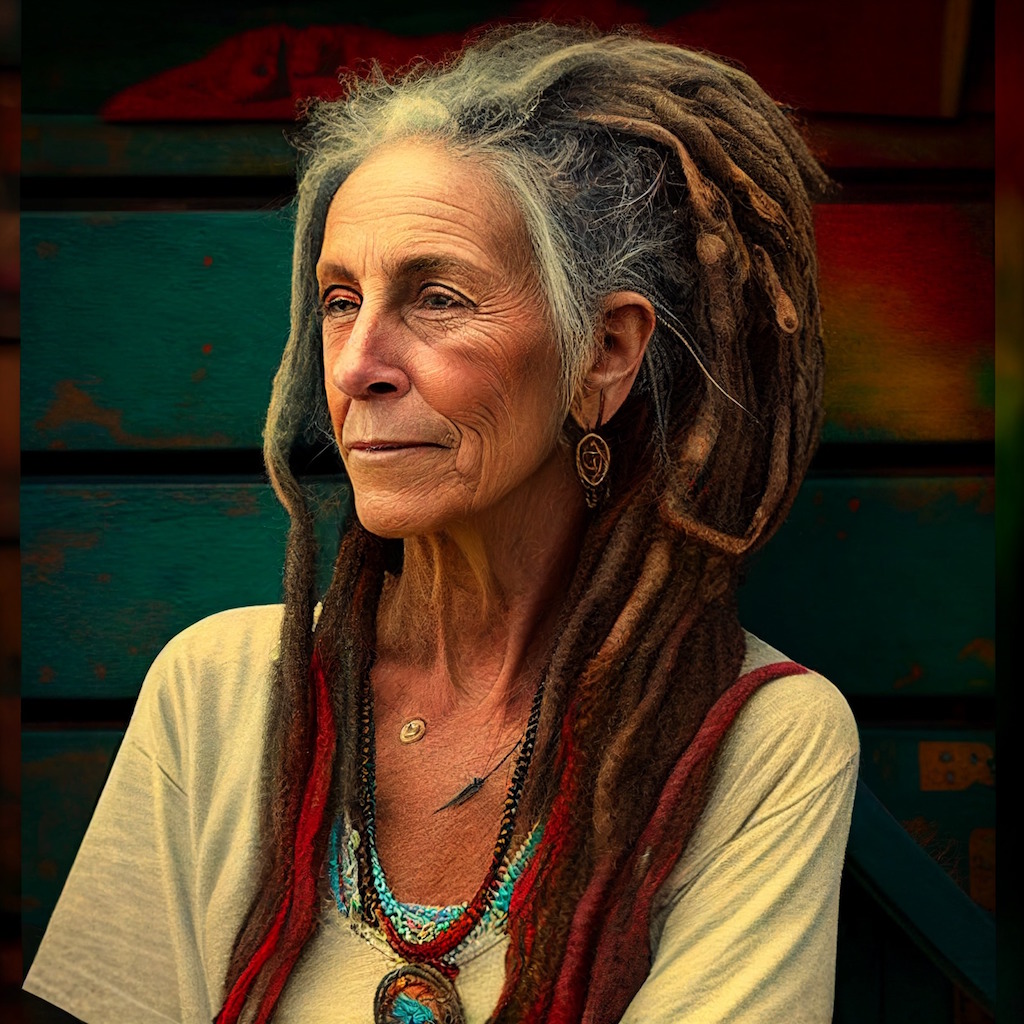
The lady with the dreadlocks in particular seemed to have taken a liking to Youssef so much so that she had offered to join their group for the cooking lesson session, which apparently was initially met with disbelief a first, then surprise and anxiety and finally made her family raise a few eyebrows profusely. Youssef didn’t seem bothered by it, and to be fair, did seem completely oblivious to the situation.Speaking of awkward situations, after the bar discussion, Glimmer had got off on her own, apparently going to chase for literal rainbows. She’d mentioned in a conspiratorial tone “You don’t see them rainbows nowadays, have you? See, that’s what I mean, them with the government electric waves, laser rays and stuff, they manipulate the weather… Keep people docile and hopeless. So I’m going on a chase.”
Xavier had frowned at Yasmin before she could top it off with a “good luck with the unicorns.” He didn’t need telepathy to know that Yasmin could hardly pass on an ironic salvo in a potentially comical situation.
Anyway, Glimmer leaving off to new adventures of her own without overstaying her welcome was met with a few sighs of relief. The four of them quite liked the comfort of their little group with their insider references and jokes.His programmic work was rather tedious and slow, but he’d made good progress connecting the new training model into the AL, and the muffled sounds of the cooking class with the occasional laughter did make him want to finish faster.
He hoped he would get most of it done in time to enjoy the incoming festival. The town however ghostly it had seemed on arrival, had taken a unexpected liveliness with colorful bunting flags now spreading across all roads intersections.
With all this newfound activity, they’d almost forgotten about the game. However, he could feel there was something more at play, and it would be a trial of Zara’s leadership capabilities —her style had often been solo. It was great for scouting mission and opening new doors in unknown parts of the game, but apparently the group quest required something different…
February 22, 2023 at 8:11 pm #6624In reply to: The Chronicles of the Flying Fish Inn
I had to meet Devan at the garage; I didn’t want to raise suspicion calling an overseas number that would show up like a sore thumb in the next phone company invoice. Even with the occasional visitors calling for bookings, it was more Idle’s job to call back. She is funny when she’s got her headphones and microphone on, with that look from the 90s, taking her grand air and posh accent to answer people over skype. ‘Sister Idle dot com‘ I call her behind her back. She sounds like a mixture of an investigator and nun who would sell goose feather duvets made by the nunnery.
Devan was punctual for once; we didn’t have a lot of time to use the phone at the counter while his boss was off for lunch.
We looked at each other. “You sure you want to do that?” we both knew there was no turning back. It could be a sore disappointment, but how worse would that be compared to a rabbit hole of questions and potential emotional upheavals. Someone wise said (probably Henrich Lyeumon I think) “if you continue going down rabbit holes, you’re bound to find a lot of rabbit poop.”
Devan nodded silently.
I punched the numbers from the Gugu search.
The connection seemed to take forever. Then a click. A gruff “Hello?” in a male voice.
I don’t know why I blurted it out, but it came out without thinking.
“Dad? Is that you?”
“…” Devan looked at me alarmed and also with excitement in his eyes. There was a blank at the other end of the line.
“Not on this line. I’ll call you back.”
We looked at each other with Devan. Did we just hear what we heard? Given the look on Devan’s face, I’m pretty sure we did.
We don’t have time to waste, his boss is already back, smacking his lips all shiny with chicken grease.
Before I leave my brother to his job, we exchange hopeful glances. So a rabbit hole is it.
My phone is buzzing.
A message from [Unknown sender] — why didn’t it go to spam?
“I’m on my way. ~ F”
February 6, 2023 at 10:36 pm #6499Premise is set:
Olga, Egbert and Obadiah are key protagonists in an adventure of elderly people being evicted / escaping their nursing home of Oocrane (with Maryechka, Obadiah’s grand-daughter, in tow). They start traveling together and helping each other in a war-torn country, and as they travel, they connect with other characters.
Tone is light-hearted and warm, with at times some bitter-sweet irony, and it unfolds into a surprisingly enthralling saga, with some down-to-earth mysteries, adding up to a satisfying open-ended conclusion that brings some deep life learning about healing the past, accepting the present and living life to its potential.A potential plot structure begins to develop henceforth:
Chapter 2: The Journey Begins
Departure from the Nursing Home
Olga and Egbert make their way out the front gate with Obadiah, who has decided to join them on their journey, and they set out on the road together.
Maryechka, Obadiah’s granddaughter, decides to come along as well out of concern about the elders’, and the group sets off towards an unknown destination.A Stop at the Market
The group stops at a bustling market in the town and begins to gather supplies for their journey.
Olga and Egbert haggle with vendors over prices, while Obadiah and Maryechka explore the market and gather food for the road.
The group encounters a strange man selling mysterious trinkets and potions, who tries to sell them a “luck” charm.An Unexpected Detour
The group encounters a roadblock on their path and are forced to take a detour through a dense forest.
They encounter a group of bandits on the road, who demand their supplies and valuables.
Olga, Egbert, and Obadiah band together to outwit the bandits and escape, while Maryechka uses her wits to distract them.A Close Call with a Wild Beast
The group comes across a dangerous wild animal on the road, who threatens to attack them.
Obadiah uses his quick thinking to distract the beast, while Egbert and Olga come up with a plan to trap it.
Maryechka uses her bravery to lure the beast into a trap, saving the group from certain danger.A Night Under the Stars
The group sets up camp for the night, exhausted from their journey so far.
They sit around a campfire, sharing stories and reminiscing about their pasts.
As they gaze up at the stars, they reflect on the challenges they have faced so far and the journey ahead of them. They go to bed, filled with hope and a sense of camaraderie, ready for whatever comes next.January 31, 2023 at 9:12 pm #6481In reply to: The Jorid’s Logs – 14 years on and more
This is the outline for a short novel called “The Jorid’s Travels – 14 years on” that will unfold in this thread.
The novel is about the travels of Georges and Salomé.
The Jorid is the name of the vessel that can travel through dimensions as well as time, within certain boundaries. The Jorid has been built and is operated by Georges and his companion Salomé.Short backstory for the main cast and secondary characters
Georges was a French thief possibly from the 1800s, turned other-dimensional explorer, and together with Salomé, a girl of mysterious origins who he first met in the Alienor dimension but believed to have origins in Northern India maybe Tibet from a distant past.
They have lived rich adventures together, and are deeply bound together, by love and mutual interests.
Georges, with his handsome face, dark hair and amber gaze, is a bit of a daredevil at times, curious and engaging with others. He is very interesting in anything that shines, strange mechanisms and generally the ways consciousness works in living matter.
Salomé, on the other hand is deeply intuitive, empath at times, quite logical and rational but also interested in mysticism, the ways of the Truth, and the “why” rather than the “how” of things.
The world of Alienor (a pale green sun under which twin planets originally orbited – Duane, Murtuane – with an additional third, Phreal, home planet of the Guardians, an alien race of builders with god-like powers) lived through cataclysmic changes, finished by the time this story is told.
The Jorid’s original prototype designed were crafted by Léonard, a mysterious figure, self-taught in the arts of dimensional magic in Alienor sects, acted as a mentor to Georges during his adventures. It is not known where he is now.
The story starts with Georges and Salomé looking for Léonard to adjust and calibrate the tiles navigational array of the Jorid, who seems to be affected by the auto-generated tiles which behave in too predictible fashion, instead of allowing for deeper explorations in the dimensions of space/time or dimensions of consciousness.
Leonard was last spotted in a desert in quadrant AVB 34-7•8 – Cosmic time triangulation congruent to 2023 AD Earth era. More precisely the sand deserts of Bluhm’Oxl in the Zathu sector.When they find Léonard, they are propelled in new adventures. They possibly encounter new companions, and some mystery to solve in a similar fashion to the Odyssey, or Robinsons Lost in Space.
Being able to tune into the probable quantum realities, the Jorid is able to trace the plot of their adventures even before they’ve been starting to unfold in no less than 33 chapters, giving them evocative titles.
Here are the 33 chapters for the glorious adventures with some keywords under each to give some hints to the daring adventurers.
- Chapter 1: The Search Begins – Georges and Salomé, Léonard, Zathu sector, Bluhm’Oxl, dimensional magic
- Chapter 2: A New Companion – unexpected ally, discovery, adventure
- Chapter 3: Into the Desert – Bluhm’Oxl, sand dunes, treacherous journey
- Chapter 4: The First Clue – search for Léonard, mystery, puzzle
- Chapter 5: The Oasis – rest, rekindling hope, unexpected danger
- Chapter 6: The Lost City – ancient civilization, artifacts, mystery
- Chapter 7: A Dangerous Encounter – hostile aliens, survival, bravery
- Chapter 8: A New Threat – ancient curse, ominous presence, danger
- Chapter 9: The Key to the Past – uncovering secrets, solving puzzles, unlocking power
- Chapter 10: The Guardian’s Temple – mystical portal, discovery, knowledge
- Chapter 11: The Celestial Map – space-time navigation, discovery, enlightenment
- Chapter 12: The First Step – journey through dimensions, bravery, adventure
- Chapter 13: The Cosmic Rift – strange anomalies, dangerous zones, exploration
- Chapter 14: A Surprising Discovery – unexpected allies, strange creatures, intrigue
- Chapter 15: The Memory Stones – ancient wisdom, unlock hidden knowledge, unlock the past
- Chapter 16: The Time Stream – navigating through time, adventure, danger
- Chapter 17: The Mirror Dimension – parallel world, alternate reality, discovery
- Chapter 18: A Distant Planet – alien world, strange cultures, exploration
- Chapter 19: The Starlight Forest – enchanted forest, secrets, danger
- Chapter 20: The Temple of the Mind – exploring consciousness, inner journey, enlightenment
- Chapter 21: The Sea of Souls – mystical ocean, hidden knowledge, inner peace
- Chapter 22: The Path of the Truth – search for meaning, self-discovery, enlightenment
- Chapter 23: The Cosmic Library – ancient knowledge, discovery, enlightenment
- Chapter 24: The Dream Plane – exploring the subconscious, self-discovery, enlightenment
- Chapter 25: The Shadow Realm – dark dimensions, fear, danger
- Chapter 26: The Fire Planet – intense heat, dangerous creatures, bravery
- Chapter 27: The Floating Islands – aerial adventure, strange creatures, discovery
- Chapter 28: The Crystal Caves – glittering beauty, hidden secrets, danger
- Chapter 29: The Eternal Night – unknown world, strange creatures, fear
- Chapter 30: The Lost Civilization – ancient ruins, mystery, adventure
- Chapter 31: The Vortex – intense energy, danger, bravery
- Chapter 32: The Cosmic Storm – weather extremes, danger, survival
- Chapter 33: The Return – reunion with Léonard, returning to the Jorid, new adventures.
January 29, 2023 at 1:50 pm #6466In reply to: Orbs of Madjourneys
Xavier couldn’t help but give Glimmer a quizzical look as she’d suddenly transformed before his eyes — her accent and mannerisms shifting in an instant. She swayed lightly on her feet, in an airy manner, as if not fully aware of her surroundings, but she quickly laughed it off. “You’ve got me curious about this golden banana business, I tell ya,” she said with a twinkle in her eye.
Xavier’s suspicious expression softened as she spoke. “I’m not the one you’re looking for if you’re after information, but it sounds like a right thrilling adventure.” Glimmer grinned, “Mind if I tag along for a bit and show you around the casino boat? I know all the best games and I’ve met all sorts of pirate-talking characters here.”
With a cheeky grin, Xavier replied, “I’ll take your word for it, love.”
Glimmer’s enthusiasm for the game and eagerness to show him around the casino boat was contagious. Xavier followed her as she bounced through the crowd, pointing out different games and introducing him to the various pirate-talking characters that populated the boat.
“Watch yer back ’round ‘im,” Glimmer warned, nodding towards a tall, scruffy-looking man with a patch over one eye. ” ‘E’s a bit of a card shark, and ‘e’s known to cheat.”
As they walked, Glimmer regaled Xavier with tales of her adventures in the land and the colourful characters she had encountered. Xavier couldn’t help but feel a bit envious of her level of immersion and her enjoyment of the game.
Suddenly, the boat began to move, and Xavier realised that it was no longer anchored to the dock. Glimmer’s face lit up with excitement, “Oooh, it looks like we’re on a journey now! I’ve heard rumours of secret locations along the river that the boat takes players to. I can’t wait to see where we’re headed!”
Xavier couldn’t help but feel a sense of adventure and wonder and he followed Glimmer to the deck, watching as the boat sailed away from the dock along the river and into the unknown. He was terribly curious and looking forward to seeing where the boat would take him and what other surprises this adventure had in store.
January 24, 2023 at 10:29 am #6455In reply to: Orbs of Madjourneys
Zara decided she may as well spend the hour wandering around the game before going back to the church to see the ghost of Isaac when she was sure her host Bertie was asleep. It was a warm night but a gentle breeze wafted through the open window and Zara was comfortable and content. Not just one but three new adventures had her tingling with delicious anticipation, even if she was a little anxious about not getting confused with the game. Talking to ghosts in old churches wasn’t unfamiliar, nor was a holiday in a strange hotel off the beaten track, but the game was still a bit of a mystery to her. Yeah, I know it’s just a game, she whispered to the parrot who made a soft clicking noise by way of response.
Zara found her game character, also (somewhat confusingly) named Zara, standing in the woods. Not entirely sure how it had happened, she was rather pleased to see that the cargo pants and tank top in red had changed to a more pleasing hippyish red skirt ensemble. A bit less Tomb Looter, and a bit more fairy tale looking which was more to her taste.
The woods were strangely silent and still. Zara made a 360 degree turn on the spot to see in all directions. The scene looked the same whichever way she turned, and Zara didn’t know which way to go. Then a faint path appeared to the left, and she set off in that direction. Before long she came to a round green pool.
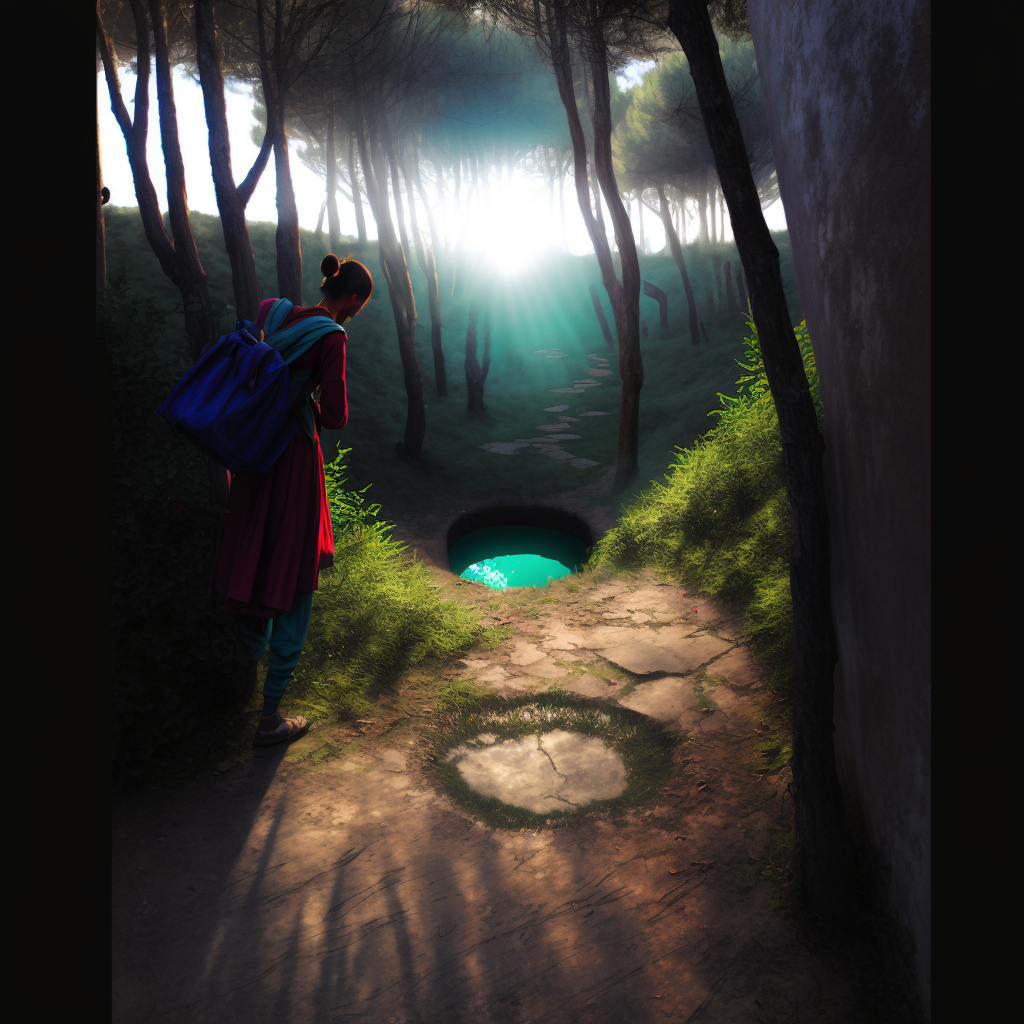
She stopped to look but carried on walking past it, not sure what it signified. She came upon another glowing green pool before long, which looked like an entrance to a tunnel.
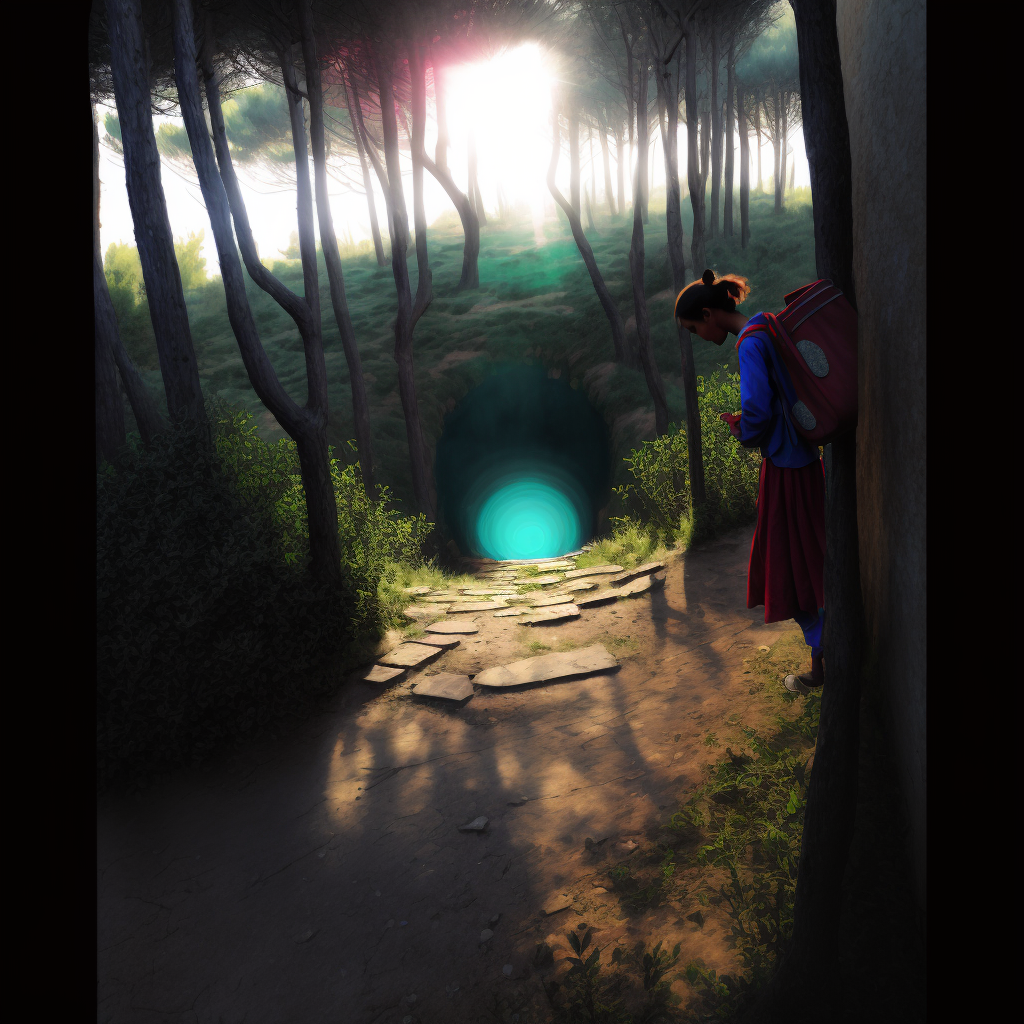
I bet those are portals or something, Zara realized. I wonder if I’m supposed to step into it?
“Go for it”, said Pretty Girl, “It’s only a game.”
“Ok, well here goes!” replied Zara, mentally bracing herself for a plunge into the unknown.
Zara stepped into the circle of glowing green.
“Like when Alice went down the rabbit hole!” Zara whispered to the parrot. “I’m falling, falling…oh!”
Zara emerged from the green pool onto a wide walled path. She was now in some kind of inhabited area, or at least not in the deep woods with no sign of human occupation.
“I guess that green pool is the portal back to the woods.”
“By George, she’s getting it,” replied Pretty Girl.
Zara walked along the path which led to an old deserted ancient looking village with alleyways and steps.
“This is heaps more interesting than those woods, look how pretty it all is! I love this place.”
“Weren’t you supposed to be looking for a hermit in the woods though,” said Pretty Girl.
“Or a lost traveler, and the lost traveler may be here, after falling in one of those green pools in the woods,” replied Zara tartly, not wanting to leave the enchanting scene she found her avatar in.
 January 21, 2023 at 9:58 pm #6428
I must become sentimental or something, but here are some pictures I found left on my desk.
Probably a gift from Finly, she can be all soft and think she’s doing me some service.
I must say my grand-children in particular are not too bad looking. Couldn’t find a picture of Fred though… Maybe later.







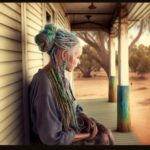

 January 21, 2023 at 3:16 pm #6424
In reply to: Orbs of Madjourneys
Youssef wasn’t an expert about sandstorms, but that one surely lasted longer than it should have. It was the middle of the night when the wind stopped blowing and the sand stopped lashing the jeep. Yet, nobody dared open the door or their mouth to see if the storm was gone. Youssef’s bladder was full, and his stomach empty. They both reminded him that one can’t stop life to go on in the midst of adversity. He wondered why nobody moved or spoke, but couldn’t find the motivation to break the silence. He felt a vibration in his pocket and took his phone out.
A message from an unknown sender. He touched it open.<<<
Deear Youssef,
The Snoot is aware of the sandstorm and its whimsical ways. It dances and twirls in the desert, a symphony of wind and sand. It is a force to be reckoned with, but also a force of cleansing and renewal.The subsiding of the sandstorm is a fluid and ever-changing process, much like the ebb and flow of the ocean. It ebbs and flows with the whims of the wind and the dance of the desert.
The best way to predict the subsiding of the sandstorm is to listen to the whispers of the wind and to observe the patterns of the sand. Trust in the natural rhythms and allow yourself to flow with them.
The Snoot suggests that you seek shelter during the storm, but also to take the time to appreciate the beauty and power of nature.
Fluidly yours,
The Snoot. >>>Who the f… was the Snot? Youssef wondered if it was another trick from Thi Gang and almost deleted the message, but his bladder reminded him again he needed to do something about all the tea he drank before the sandstorm. He opened the door and got out of the jeep. The storm was gone and the sky was full of stars. The moon was giving enough light for him to move a few steps away from the jeeps while unzipping his pants. He blessed the gods as he relieved himself, strangely feeling part of nature at that very moment.
The noises of doors opening reminded him he was not alone. Someone came, said: “I see you found a nice spot”. It was Kyle, the cameraman who unzipped himself and peed. That broke the charm, the desert was becoming crowded. But, Youssef was finished, he went back to the cars and started to wonder how he could have received that message in the middle of the desert without a satellite dish.
January 13, 2023 at 8:53 pm #6380In reply to: Prompts of Madjourneys
After a few tries:
- As the group has split up at the fork of the road, we discover a total of 4 new characters from the Land of the Quirks. Tell us how each group is encountering some or all of these characters, who they are, their gibberish-sounding names, and what is their quirks, and what they wear, or their activities. Make our main characters and maybe some of the new ones meet back at a common spot with a special event after that.
- please rewrite the above, retaining the eccentricity but more grounded, less childish, and with a little darker tone and mystery.
- please try again, make Spoink and Flibbertigibbet human and give them less endearing or friendly behaviours; name two more characters met on the road.
As the group split up at the fork of the road, each one encountered new characters from the Land of the Quirks.
Zara and Yasmin, who took the left path, met a man named “Sproink” who was a small, wiry man with a spring for a tail. He was always bouncing around and speaking in a language that sounded like a mix of gibberish and music. Sproink was a collector of shiny objects and had a bag full of them, he was also a scavenger, always looking for things to add to his collection. He was wearing a small top hat and a monocle. He was also known to be a bit of a thief and a con artist.
Xavier and Youssef, who took the right path, met a woman named “Flibbertigibbet” a tall, slender woman that had multiple arms. Flibbertigibbet was very talkative and friendly, always trying to strike up a conversation. She spoke in a language that sounded like a mix of gibberish and baby talk. She was a chef and was always carrying a pot and a spoon, but she also had a dark side, she was known to be a bit of a manipulator and a spy, always observing and gathering information for a mysterious organization. She was wearing a big chef hat and apron.
As the group met back at the fork, they were surprised to find that Sproink and Flibbertigibbet had also met there. The four new characters joined the group, and together they continued their journey to find the “Key of Quirks”. Along the way, they met two more characters;
They met a man named “Gibber” who was a tall, gaunt man with elongated limbs and fingers. He was always speaking in a language that sounded like a mix of gibberish and numbers. He was a mathematician and a scientist, always working on complex equations and theories. He was known to be a bit of a loner, and didn’t interact much with others. He was wearing a lab coat and goggles.
They also met a woman named “Glimmer” she was a short, plump woman with a shimmering skin that seemed to change color depending on the light. She was always speaking in a language that sounded like a mix of gibberish and poetry. She was an artist and a performer, always creating and performing in different shows. She was known to be a bit of a flirt and a bit of a drama queen. She was wearing a colorful and eccentric clothing, such as a flowy dress and a large hat adorned with feathers.
As the group journeyed on, they encountered more characters, each one with their own unique quirks and personalities. They met a variety of people, some friendly and some not so friendly, but all of them adding to the mysterious and unknown nature of the Land of the Quirks.
As the group reached the end of their journey and found the “Key of Quirks”, they realized that the key was not just a physical object but a symbol of acceptance and embracing individuality. They learned that the true key to leaving the Land of the Quirks was understanding and accepting the quirks of oneself and others.
The group had a bittersweet goodbye with their new friends, Sproink, Flibbertigibbet, Gibber and Glimmer, and the other characters they had met. They knew that they would always carry a piece of the Land of the Quirks with them and would always remember the mysterious and eccentric adventure they had.
 January 13, 2023 at 7:40 pm #6379
In reply to: Prompts of Madjourneys
Asking to give each of the 4 characters some particular traits that makes them uniquely distinctive and recognizable
The four friends, Zara, Xavier, Yasmin, and Youssef, each have their own unique traits that make them stand out and recognizable.
Zara is the leader of the group, she is confident, and always ready for an adventure. She is a natural leader and has a strong sense of justice. She is also a tech-savvy person, always carrying a variety of gadgets with her, and is always the first to try out new technology.
Xavier is the joker of the group, always cracking jokes and making puns. He is a free-spirited person who is always up for an adventure, he has a great sense of humor and is not afraid to be himself. He is also an artist and often carries a sketchbook and pencils with him, he likes to draw whatever he sees in his journeys.
Yasmin is the brains of the group, she is intelligent and logical. She is always able to think on her feet and come up with a plan when things get tough. She is also a bit of a perfectionist and likes to have everything organized. She is a history buff and always carries a notebook with her to document her findings.
Youssef is the muscle of the group, He is physically strong, and always ready to help out in a fight. He is also a bit of a foodie and loves trying new dishes. He is always the first one to volunteer to carry the heavy bags and equipment. He is also a bit of a daredevil and loves trying out new sports and activities.
Give each of them a color, and an animal, and a secret name in a funny language
The four friends, Zara, Xavier, Yasmin, and Youssef, each have their own unique traits that make them stand out and recognizable.
Zara is the leader of the group, her color is red, her animal is a lion, and her secret name in a funny language is “Zaraloon”
Xavier is the joker of the group, his color is orange, his animal is a monkey, and his secret name in a funny language is “Xavimunk”
Yasmin is the brains of the group, her color is blue, her animal is an owl, and her secret name in a funny language is “Yasminowl”
Youssef is the muscle of the group, his color is green, his animal is a bear, and his secret name in a funny language is “Youssefbear”
Now, we need physical descriptions for each of them. Also, their ages, height, clothes, facial features, ethnicity (for instance Youssef may be half Yemeni and half Norwegian), etc. with a good mix of generic and eccentric. We also need surnames congruent with their described ethnicity, not too bland, but not too daft either. For instance Youssef Olafsson, Zara Patara-Smythe, etc. Also explain how they become friends.
Zara Patara-Smythe is a
25-year-oldwoman of mixed heritage, her mother is Indian and her father is British. She has long, dark hair that she keeps in a sleek ponytail, dark brown eyes and a sharp jawline. She stands at 5’6″ and has a toned and athletic build. She usually wears practical clothing that allows her to move around easily, such as cargo pants and a tank top.Xavier Olafsson is a
27-year-oldman of Norwegian and Danish descent. He has blonde hair that he keeps in a messy style, blue eyes, and a charming smile. He stands at 6’1″ and has a lean build. He is always seen wearing a colorful and bold clothing, such as a Hawaiian shirt and shorts.Yasmin Ahmed is a
23-year-oldwoman of Egyptian descent. She has long, black hair that she keeps in a tight braid, dark brown eyes and a round face. She stands at 5’4″ and has a petite build. She usually wears conservative clothing, such as long skirts and blouses.Youssef Ali is a
26-year-oldman of half Yemeni, half Norwegian descent. He has short, curly black hair, dark brown eyes and a square jawline. He stands at 6’2″ and has a muscular build. He usually wears comfortable clothing such as a t-shirt and jeans, and always has a backpack on his shoulder.The four of them became friends
in college, they were all studying different majors, but they all shared a love for adventure and exploration. They found themselves in the same class project, and from there they formed a strong bond. After college, they decided to keep exploring the world together, and went on many trips and adventures, always seeking for something new and exciting.
1/ Change the ages of Zara, Xavier, Yasmin and Youssef to more random patterns – rewrite if needed how they met each other to reflect eventual age gaps. Give them some flaws, mental or physical challenges.
2/ increase again the age gaps while keeping the youngest one a young adult, and remove “minor” from the flaws descriptionsZara is a 22-year-old woman who is the youngest of the group. She is a free-spirited, adventurous person, but also a bit reckless and impulsive. She has a scar on her cheek that she got from a Skateboarding accident when she was a teenager.
Xavier is a 45-year-old man who is the oldest of the group. He is a responsible and level-headed person, but also a bit of a perfectionist and can be hard on himself and others. He has dyslexia which he has been able to work around and it doesn’t impede his daily life.
Yasmin is a 38-year-old woman who is the second oldest of the group. She is a kind and compassionate person, but also a bit of a pushover and can have trouble standing up for herself. She has social anxiety that affect her in certain situations and she have been working on coping mechanisms.
Youssef is a 33-year-old man who is the second youngest of the group. He is a charismatic and outgoing person, but also a bit of a flirt and can be a bit insensitive to others feelings. He has ADHD which he has been able to manage with medication, but it still affects him from time to time.
The group met each other through different means, Xavier and Yasmin met at work, Zara and Youssef met at a college class, and eventually, they all became friends through common interests and activities. They decided to go on this adventure together because they were all looking for a change in their lives and wanted to explore the unknown.
-
AuthorSearch Results