
Search Results for 'ago'
-
AuthorSearch Results
-
February 5, 2026 at 11:51 pm #8055
In reply to: The Hoards of Sanctorum AD26
Helier watched Yvoise squinting at the bone through her screen, trying to decipher the “map” amidst the noxious fumes. He observed the scene with a detachment that surprised him.
The room was vibrating with tension, but for once, it wasn’t coming from Yvoise —it was directed at her. She was standing by the window, phone pressed to her ear, nodding furiously at some invisible bureaucrat on the other end.
“I am violently in agreement with you, Mr. Prufrock,” she was saying, her voice tight but diplomatic. “The olfactory output of Unit 26 is indeed non-compliant with the Olympus Park Clean Air protocols. We are… rectifying the asset.”
It was the “Kyber-Auditor” from the Business Park Administration. The new management had been cracking down lately, restricting their “unauthorized usage” of miracles and enforcing standard operating procedures.
It was all too much noise. Above the smell, which was screaming of decay rather than play, there was the frantic energy of it all. Mrs. Fennel’s panic, Yvoise’s spreadsheets, the looming threat of this “Varlet” from the Council. It was pure Negotium, the active denial of peace, waging war on the idle time of the Romans: Otium. The world was demanding relentlessly that they justify their existence with hygiene certificates, clean surfaces, and significantly fewer piled-up treasures, branding their sacred collections as mere “trip hazards.”
Helier gripped the bamboo handle of his umbrella —a sturdy, shepherd-style thing he had almost tossed into the ‘Charity Pile’ yesterday. He felt a sudden, fierce longing for Otium, a sacred pause where one simply is.
Earlier that morning, a delivery guy had held the elevator door for him with a foot, balancing a mountain of cardboard boxes. A simple, clumsy gesture of kindness amidst the clutter. It had stayed with Helier. It reminded him that you could be overloaded and still have grace. That moment of suspension, of courteous stillness in the middle of the rush, had been a tiny bubble of Otium.
They needed that bubble now. They needed to stop the clock.
Spirius, who had been hovering in the doorway, seemed to hear Helier’s thought.
“A map is useless if you pass out before you can follow it,” Spirius muttered. He stepped fully into the room, brandishing a heavy glass jar like a weapon. “We need a Containment of the Sins.”
“A what?” asked Cerenise, holding her nose.
“Of WHAT?!” asked Yvoise, raising an eyebrow while covering her mouthpiece.
“Sins…” Spirius said doubtfully, “…that should bring back some memories.”
He marched to the table. “Hold on to your halos…”
Yvoise pulled back, shielding her phone. “Wait! I haven’t finished cataloging the striations—”
“The bone will be visible through the glass, Yvoise. But the miasma must be paused.”
Spirius didn’t wait for a vote. He scooped the yellowed bone—and its mysterious map—into the jar. He didn’t recite a Latin prayer. He didn’t summon a lightning bolt. The Administration wouldn’t allow that kind of energy spike anyway. He just screwed the lid on tight, with one word.
“Oïton,” Spirius incanted.
To Helier’s ears, attuned to the drift of languages over centuries, it didn’t sound like a name anymore. It sounded like a desperate, corrupted invocation of the old Latin. Otium. The right to be left alone, fierce as a dragon guarding its sleep.
Psshitt.
It was the sound of a pressure valve releasing. Soft, pneumatic.
Instantly, the stench was cut off. Deleted. The air was neutral again, smelling only of old paper and the faint, metallic tang of Yvoise’s anxiety.
“It is done,” Spirius announced, holding up the jar. The bone rattled inside, harmless now, an archived file. The faint lines of the map were still visible against the glass, safe in their bubble of silence.
“Mr. Prufrock?” Yvoise said into the phone, her voice smooth as silk. “I think you’ll find the sensors are returning to normal parameters. Yes. Have a productive day.”
She hung up and slumped against the curtains, letting out a breath she seemed to have been holding since New Year’s Eve.
“Well,” Helier said, tapping his umbrella on the floorboards, feeling the tension drain from his shoulders. “That felt… cleansing.”
“If we could do that with the auditor, it would be a marvelous idea,” Cerenise agreed, eyeing the jar with renewed interest. “A spiritual purification. Now, Yvoise, hand me a magnifying glass. If we have restored our Otium, we might as well use it to see where this bone wants to take us.”
“A Novena, even,” Yvoise added, a mischievous glint returning to her eye. “Technically, we have ‘cleansed’ the house of the impurity. The Will didn’t explicitly say we had to throw away the good stuff. Just the… bad air.”
Helier smiled. It was a loophole, of course. A massive, gaping loophole. The threat of the Novena still hung over them like a storm cloud that hadn’t quite burst, and the mystery of the Varlet descendant was still unresolved. But for today, the audit was over. The hoard was safe.
“Oïton,” Helier repeated softly, testing the weight of the word. He looked at his umbrella. He wouldn’t need to open it. The storm had passed.
January 4, 2026 at 10:01 pm #8043In reply to: Finder’s Keepers of the Hoard
A cinematic, low-angle shot inside a flooded, ancient brick sewer tunnel that looks like a mix of Roman catacombs and Victorian industrial plumbing. The water is dark and murky, reflecting the light of a flickering lantern.
In the center of the frame, floating precariously, is a bright yellow, cheap inflatable dinghy.
Inside the dinghy are two men:
-
Spirius: An elderly man with a nervous expression, wearing a high-vis vest over ancient saintly robes. He is clutching an antique musket that is clearly too heavy for him. A faint, golden neon halo flickers erratically behind his head like a faulty streetlamp.
-
Boothroyd: A grumpy, weather-beaten gardener in a tweed cap. He looks completely resigned to his fate, lazily paddling with a plastic oar in one hand and holding a sharp garden spear in the other.
Action: The dinghy squeaks as it bumps against the wet brick walls. Spirius jumps at a drip of water falling from the ceiling. Something large ripples the water in the foreground—a menacing shadow moving beneath the surface.
Atmosphere:
-
Lighting: Chiaroscuro—deep shadows and warm lantern light, contrasting with the synthetic yellow of the boat.
-
Mood: Tense but ridiculous. High-stakes fantasy meets low-budget reality.
Movement:
-
The camera tracks slowly backward as the boat drifts forward.
-
The water ripples ominously.
-
Spirius’s halo buzzes and dims when he gets scared.
January 4, 2026 at 6:59 pm #8029In reply to: The Hoards of Sanctorum AD26
“While you’re off to another wild dragon chase, I’m calling the plumber,” Yvoise announced. She’d found one who accepted payment in Roman denarii. She began tapping furiously on her smartphone to recover the phone number, incensed at having been blocked again from Faceterest for sharing potentially unchecked facts (ignorants! she wanted to shout at the screen).
 After a bit of struggle, the appointment was set. She adjusted her blazer; she had a ‘Health and Safety in the Workplace’ seminar to lead at Sanctus Training in twenty minutes, and she couldn’t smell like wet dog.
“Make sure you bill it to the company account…!” Helier shouted over the noise Spirius was making huffing and struggling to load the antique musket.
“…under ‘Facility Maintenance’!”
“Obviously,” Yvoise scoffed. “We are a legitimate enterprise. Sanctus House has a reputation to uphold. Even if the landlord at Olympus Park keeps asking why our water consumption rivals a small water park.”
Spirius shuddered at the name. “Olympus Park. Pagan nonsense. I told you we should have bought the unit in St. Peter’s Industrial Estate.”
“The zoning laws were restrictive, Spirius,” Yvoise sighed. “Besides, ‘Sanctus Training Ltd’ looks excellent on a letterhead. Now, if you’ll excuse me, I have six junior executives coming in for a workshop on ‘Conflict Resolution.’ I plan to read them the entirety of the Treaty of Arras until they submit.”
“And dear old Boothroyd and I have a sewer dragon to exterminate in the name of all that’s Holy. Care to join, Helier?”
“Not really, had my share of those back in the day. I’ll help Yvoise with the plumbing. That’s more pressing. And might I remind you the dragon messing with the plumbing is only the first of the three tasks that Austreberthe placed in her will to be accomplished in the month following her demise…”
“Not now, Helier, I really need to get going!” Yvoise was feeling overwhelmed. “And where’s Cerenise? She could help with the second task. Finding the living descendants of the last named Austreberthe, was it? It’s all behind-desk type of stuff and doesn’t require her to get rid of anything…” she knew well Cerenise and her buttons.
“Yet.” Helier cut. “The third task may well be the toughest.”
“Don’t say it!” They all recoiled in horror.
“The No-ve-na of Cleans-ing” he said in a lugubrious voice.
“Damn it, Helier. You’re such a mood killer. Maybe better to look for a loophole for that one. We can’t just throw stuff away to make place for hers, as nice her tastes for floor tiling were.” Yvoise was in a rush to get to her appointment and couldn’t be bothered to enter a debate. She rushed to the front door.
“See you later… Helier-gator” snickered Laddie under her breath, as she was pretending to clean the unkempt cupboards.
January 3, 2026 at 8:09 pm #8025In reply to: The Hoards of Sanctorum AD26
As soon as Boothroyd had gone, Laddie Bentry, the under gardener, emerged from behind the Dicksonia squarrosa that was planted in a rare French Majolica Onnaing dragon eagle pot. The pot, and in particular the tree fern residing within it, were Laddie’s favourite specimen, reminding him of his homeland far away.
Keeping a cautious eye on the the door leading into the house, Laddie hurried over to the cast iron planter and retrieved the Liz Tattler novel hidden underneath. Quickly he tucked in into the inside pocket of his shabby tweed jacket and hastened to the door leading to the garden. Holding on to his cap, for the wind was cold and gusty, he ran to the old stable and darted inside. Laddie reckoned he had an hour or two free without Boothroyd hovering over him, and he settled himself on a heap of old sacks.
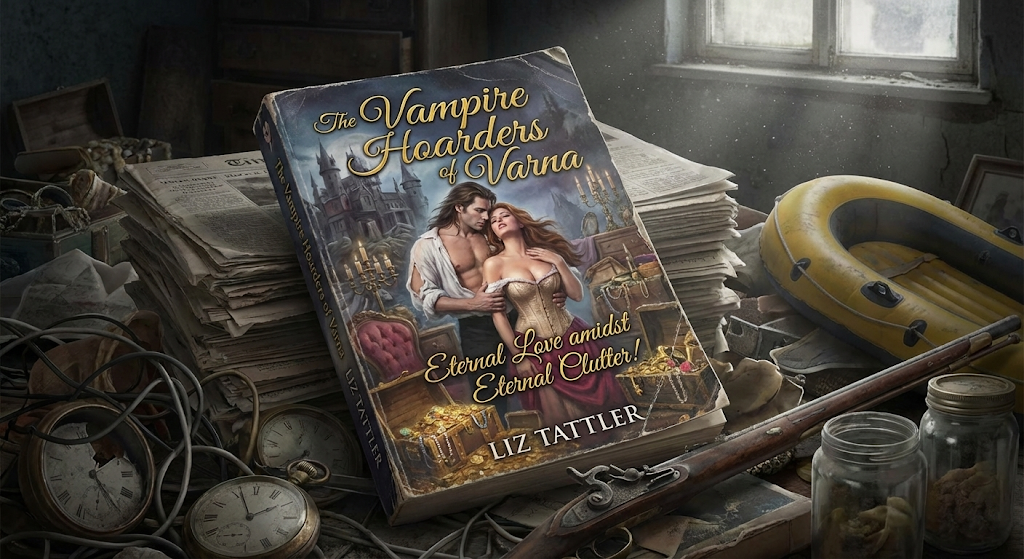
 The Vampire Hoarders of Varna. It wasn’t the first time Laddie had seen Boothroyd surreptitiously reading Helier’s books, and it had piqued his curiosity. What was it the old fart found so interesting about Helier’s novels? The library was full of books, if he wanted to read. Not bothering to read the preface, and not having time to start on page one, Laddie Bentry flicked through the book, pausing to read random passages.
….the carriage rattled and lurched headlong through the valley, jostling the three occupants unmercifully. “I’ll have the guts of that coachman for garters! The devil take him!” Galfrey exclaimed, after bouncing his head off the door frame of the compartment.
“Is it bleeding?” asked Triviella, inadvertently licking her lips and she inspected his forehead.
“The devil take you too, for your impertinence,” Galfrey scowled and shook her off, his irritation enhanced by his alarm at the situation they found themselves in.
Ignoring his uncharacteristic bad humour, Triviella snuggled close and and stroked his manly thigh, clad in crimson silk breeches. “Just think about the banquet later,” she purred.
Jacobino, austere and taciturn, on the opposite seat, who had thus far been studiously ignoring both of them, heard the mention of the banquet and smiled for the first time since…
Laddie opened the book to another passage.
“……1631, just before the siege of Gloucester, and what a feast it was! It was hard to imagine a time when we’d feasted so well. Such rich and easy pickings and such a delightful cocktail. One can never really predict a perfect cocktail of blood types at a party, and centuries pass between particularly memorable ones. Another is long overdue, and one would hate to miss it,” Jacobino explained to the innocent and trusting young dairy maid, who was in awe that the handsome young gentleman was talking to her at all, yet understood very little of his dialogue.
“Which is why,” Jacobino implored, taking hold of her small calloused hands, “You must come with me to the banquet tonight.”
Little did she know that her soft rosy throat was on the menu…..
January 3, 2026 at 9:04 am #8023In reply to: The Hoards of Sanctorum AD26
“Quite fitting that I should get her sleeves,” Cerenise said with satisfaction. “And what a relief that she left the wolf to you, Spirius. I’d not have been able to manage a wolf.” Cerenise popped another cashew nut into her mouth.
Spirius looked at her with a raised eyebrow. “My guess is you’d have managed just fine,” he replied drily. He’d heard all the noise she made behind those locked doors. He’d seen her prancing around the orchard in the moonlight when she thought nobody was watching, naked as the day she was born all those centuries ago. He hadn’t lingered at the window, but he had put two and two together years ago, many years ago, just after the seige of Gloucester. If truth be told, Cerenise’s secret was known to them all, but they hadn’t interfered with her delusion.
“There’s going to come a point, and very soon, when we will have to deal with the water leak, you know,” Yvoise interrupted the inconsequential chatter. “Holy and healing as it may be, it will be the ruin of my collection if it reaches the upper floors.”
“And what do you propose?” asked Helier.
“I suggest we call a plumber!” snapped Yvoise. “This is the 21st century is it not? I know tradesmen are in short supply, and I know this isn’t an ordinary leak, but we should start with the obvious, and then adapt accordingly.”
“I must bottle as much of the holy water as possible before we stop the leak,” Spirius said, standing up abruptly in agitation.
Helier put a calming hand on the old boy’s shoulder. “There’s no rush, Spirius, there’s plenty of water in the cellars, it’s already waist deep down there.”
“And the saints only know what has floated into the cellars by now from the tunnels. Be careful down there, Spirius. Take Boothroyd the gardener with you,” Yvoise advised.
January 2, 2026 at 6:03 pm #8022In reply to: The Hoards of Sanctorum AD26
“You know,” Helier broke the silence, his mouth half-full of the buffet’s assortments of nuts and crackers, “this was bound to happen… People tend to forget you after a while. I mean, how many new babies named after dear Austreberthe nowadays. None of course. I think our records mention 1907 was the last baby Austreberthe, and a decade ago the last mass in their memory… oh this is too heartbreaking…”
“Why so gloomy?” Cerenise was eyeing the speckled and stained silverware and the chipped Rouen faience in which the potato salad was served. “Your name is still moderately in fashion, you shouldn’t die of forgetfulness any time soon. Enjoy the food while it’s free.”
Yvoise couldn’t help but tut at her. She was half-distracted by the calligraphy on those placeholders which she found exquisite. People in this age… it was a rare find now, some pretty calligraphy. The only ‘calli-‘anything this age does well enough is callipygian, and even then, it’s mostly the Kashtardians… She said to the others “Don’t throw yours away, I must have the full set.”
Spirius was inspecting the candleholders. None had lids, a fact that frustrated him to no end. “I miss the good old time we could just slay dragons and get a good sainthood concession for a nice half-millenium.”
Yvoise tittered “simple people we were back then. Everything funny-looking was a dragon I seem to recall.”
Spirius, his plate full of charcuteries, helped himself of a few appetizing gherkins, holding one large up to contemplate. “Yeah, but those few we slew in that period were still some darn tough-skinned gators I would have you know. Those crazy Roman buggers and their games and old false gods —they couldn’t help but bring those strange beasts from Africa to Gaul, leaving us to clean up after them…”
“Indeed, much harder now. It’s like fifteen minutes of sainthood on Instatok and Faceterest and you’re already has-been.” Yvoise had started to pocket some of the paper menus. “Luckily, we still have those relics spread around to fan the flames of remembrance, don’t we.”
“I guess the young ones must look at us funny…” Cerenise chuckled amused at the thought, almost spilling her truffle brouillade.
“Oh well, apparently our youngest geeks aren’t above dealing in relics.” Helier said. “Speaking of Novena and the coming nine days,… you’ve surely noticed as I did what was mentioned in the will, have you not?”
December 31, 2025 at 11:11 am #8009In reply to: Finder’s Keepers of the Hoard
Some ideas for the background thread and character profiles for “The Hoards of Emporium 26.”
The Setting: Emporium 26
They live in Gloucester (ancient Glevum), a city built on Roman bones where the layout of the streets still follows the legions’ sandals. They inhabit a sprawling, shared Georgian townhouse complex that has been knocked through into one labyrinthine dwelling—Number 26.
To the outside world, it looks like a dilapidated heritage site. Inside, it is The Emporium: a geological stratification of history, where layers of Roman pottery are mixed with 1990s Beanie Babies and medieval reliquaries.
The Background Thread: “The Weight of Eternity”
Why do they hoard? Because when you live forever, “letting go” feels like losing a piece of the timeline. Hoarding objects is for them an accumulation of evidence of existence.
- The Curse: They cannot die naturally, but they can fade if they are forgotten. The “stuff” anchors them to the physical plane.
- The “Halo” Effect: Occasionally, when they are arguing over whose turn it is to do the dishes, or when they find a lost treasure, the stained-glass light of their old divinity flickers behind their heads—a neon halo of forgotten holiness.
The Hoarders & Their Stashes
1. Helier ( The Hermit / The Dreamer)
- Saintly Origin: Based on St. Helier (Jersey/Normandy). He was an ascetic hermit who lived in a cave and was eventually beheaded.
- Modern Persona: A soft-spoken agoraphobe who hasn’t left the house since the invention of the internet. He wears oversized cardigans that smell like old library books.
- The Mania: Escapism & Communication.
- Because he spent centuries in silence on a rock, he is now obsessed with human stories and noise.
- The Hoard: ” The Media Mountain.”
- His wing of the house is a fire hazard of pulp fiction, towering stacks of National Geographic (dating back to the first issue), thousands of VHS tapes (he has no VCR), and tangled knots of ethernet cables that he refuses to throw away “in case they fit a port from 1998.”
- The Secret Stash: Beneath a pile of “The Hoarder Vampires” novels lies his true relic: The Stone Pillow. The actual rock he slept on in the 6th century. He still naps on it when his back hurts.
2. Spirius (The Bishop / The Container)
- Saintly Origin: Evocative of St. Exuperius (Bayeux). A driver-out of demons and a man of grand gestures.
- Modern Persona: A nervous, fidgety man who is convinced the world is leaking. He is the “fixer” of the group but usually makes things worse with duct tape.
- The Mania: Containment & Preservation.
- In the old days, he bottled demons. Now, he’s terrified of running out of space to put things.
- The Hoard: “The Vessel Void.”
- Spirius hoards anything that can hold something else. Empty jam jars (washed, mostly), Tupperware with no matching lids, biscuit tins, and thousands of plastic carrier bags stuffed inside other carrier bags (the “Bag of Bags”).
- The Secret Stash: In a locked pantry, he keeps a shelf of sealed mason jars labeled with dates like “1431” or “1789.” He claims they contain the “Sigh of a King” or “The smell of rain before the Plague.” It’s actually just dust, but the jars vibrate slightly.
3. Cerenise (The Weaver / The Mender)
- Saintly Origin: Evocative of St. Ceneri or St. Cerneuf. A saint of travelers, or perhaps needlework.
- Modern Persona: She is the “Wheelchair Girl’s” friend mentioned in the intro? Or perhaps she is in a wheelchair now—not because she can’t walk, but because she’s too tired from walking for 1,500 years. She is sharp-tongued and fashionable in a “crazy bag lady” sort of way.
- The Mania: Potential & Texture.
- She sees the soul in broken things. She cannot throw away anything that “could be fixed.”
- The Hoard: “The Fabric of Time.”
- Her rooms are draped in layers of textiles: velvet curtains from a 1920s cinema, moth-eaten tapestries depicting her own miracles (she thinks the nose is wrong), and buttons. Millions of buttons. She also hoards broken appliances—toasters, lamps, clocks—insisting she will repair them “next Tuesday.”
- The Secret Stash: A mannequin dressed in a perfectly preserved Roman stola, hidden under forty layers of polyester coats. It’s the outfit she wore when she performed her first miracle. She tries it on every New Year’s Eve.
4. Yvoise (The Advocate / The Bureaucrat)
- Saintly Origin: Evocative of St. Yves (Patron of Lawyers/Brittany/Normandy). The arbiter of justice.
- Modern Persona: The “Manager” of Emporium 26. She wears power suits from the 80s and is always carrying a clipboard. She loves rules, even if she invents them.
- The Mania: Proof of Truth.
- She is terrified of being forgotten or cheated. She needs a receipt for everything.
- The Hoard: “The Archive of Nothing.”
- Yvoise hoards paper. Receipts from a coffee bought in 1952, bus tickets, expired warranties, junk mail, and legal disclaimers torn off mattresses. Her room looks like the inside of a shredder that exploded. She claims she is building “The Case for Humanity.”
- The Secret Stash: A filing cabinet labeled “Do Not Open.” Inside is not paper, but Seeds. Seeds from the trees of ancient Gaul. She is saving them for when the paper finally takes over the world and she needs to replant the forest she misses.
Starter: The Reading of Austreberthe’s Will
The story kicks off because Austreberthe (The Saint of Washing/Water) has died. Her hoard was Soap and Water.
- The house is now flooding because her magical containment on the plumbing has broken.
- The remaining four must navigate her “Tsunami Wing”—a treacherous dungeon of accumulated bath bombs, stolen hotel towels, and aggressive washing machines—to find her Will.
- The Will is rumored to reveal the location of the “Golden Key,” an object that can legally terminate their lease on Emporium 26, which none of them want, but all of them crave.
December 30, 2025 at 6:42 pm #8003In reply to: The Elusive Samuel Housley and Other Family Stories
JOHN BROOKS ALIAS PRIESTLAND
1766-1846John Brooks, my 5x great grandfather, was born in 1766, according to the 1841 census and the burial register in 1846 which stated his age at death as 80 years, but no baptism has been found thus far.
On his first son’s baptism in 1790 the parish register states “John son of John and Elizabeth Brooks Priestnal was baptised”. The name Priestnal was not mentioned in any further sibling baptism, and he was John Brooks on his marriage, on the 1841 census and on his burial in the Netherseal parish register. The name Priestnal was a mystery.
I wondered why there was a nine year gap between the first son John, and the further six siblings, and found that his first wife Elizabeth Wilson died in 1791, and in 1798 John married Elizabeth Cowper, a widow.
John was a farmer of Netherseal on both marriage licences, and of independent means on the 1841 census.
Without finding a baptism it was impossible to go further back, and I was curious to find another tree on the ancestry website with many specific dates but no sources attached, that had Thomas Brooks as his father and his mother as Mary Priestland. I couldn’t find a marriage for John and Mary Priestland, so I sent a message to the owner of the tree, and before receiving a reply, did a bit more searching.
I found an article in the newspaper archives dated 9 August 1839 about a dispute over a right of way, and John Brooks, 73 years of age and a witness for the complainant, said that he had lived in Netherseal all his life (and had always know that public right of way and so on).
I found three lists of documents held by the Derby Records Office about property deeds and transfers, naming a John Brooks alias Priestland, one in 1794, one in 1814, and one in 1824. One of them stated that his father was Thomas Brooks. I was beginning to wonder if Thomas Brooks and Mary Priestland had never married, and this proved to be the case.
The Australian owner of the other tree replied, and said that they had paid a researcher in England many years ago, and that she would look through a box of papers. She sent me a transcribed summary of the main ponts of Thomas Brooks 1784 will:
Thomas Brooks, husbandman of Netherseal
To daughter Ann husband of George Oakden, £20.
To grandson William Brooks, £20.
To son William Brooks and his wife Ann, one shilling each.
To his servant Mary Priestland, £20 and certain household effects and certain property.
To his natural son John Priestland alias Brooks, various properties and the residue of his estate.
John Priestland alias Brooks appointed sole executor.It would appear that Thomas Brooks left the bulk of his estate to his illegitimate son, and more to his servant Mary Priestland than to his legitimate children.
THOMAS BROOKS
1706-1784
Thomas Brooks, my 6x great grandfather, had three wives. He had four children with his first wife, Elizabeth, between 1732 and 1737. Elizabeth died in 1737. He then married Mary Bath, who died in 1763. Thomas had no children with Mary Bath. In 1765 Thomas married Mary Beck. In 1766 his son John Brooks alias Priestland was born to his servant Mary Priestland.
Thomas Brooks parents were John Brooks 1671-1741, and his wife Anne Speare 1674-1718, both of Netherseal, Leicestershire.
July 16, 2025 at 6:06 am #7969In reply to: The Elusive Samuel Housley and Other Family Stories
Gatacre Hall and The Old Book
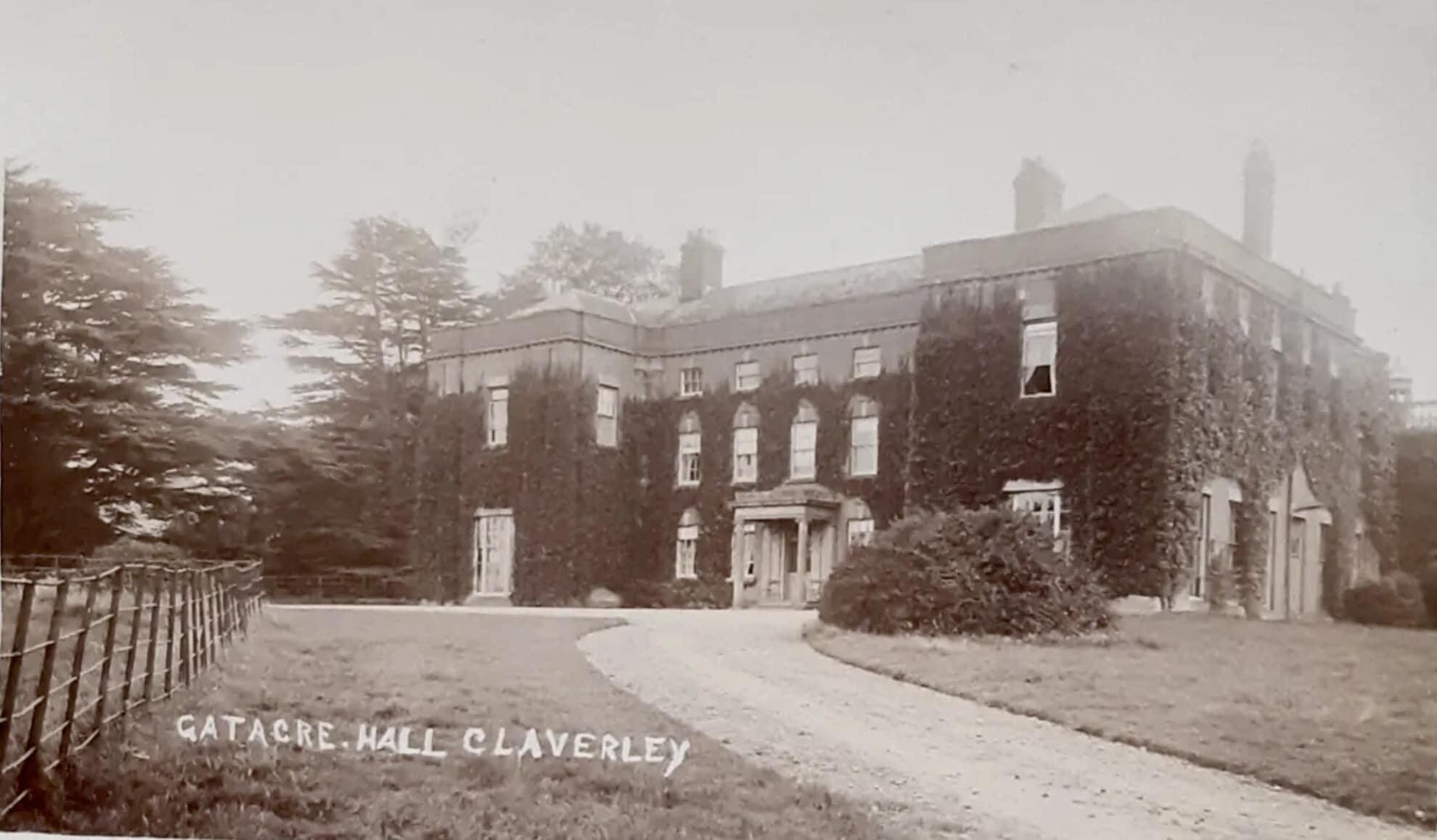
In the early 1950s my uncle John and his friend, possibly John Clare, ventured into an abandoned old house while out walking in Shropshire. He (or his friend) saved an old book from the vandalised dereliction and took it home. Somehow my mother ended up with the book.
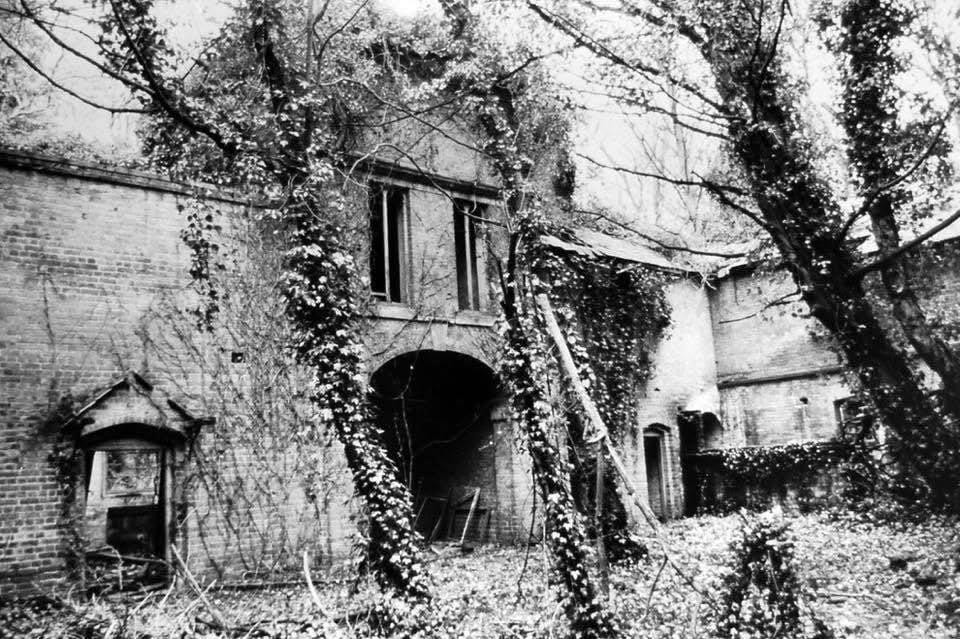
I remember that we had the book when we were living in USA, and that my mother said that John didn’t want the book in his house. He had said the abandoned hall had been spooky. The book was heavy and thick with a hard cover. I recall it was a “magazine” which seemed odd to me at the time; a compendium of information. I seem to recall the date 1553, but also recall that it was during the reign of Henry VIII. No doubt one of those recollections is wrong, probably the date. It was written in English, and had illustrations, presumably woodcuts.
I found out a few years ago that my mother had sold the book some years before. Had I known she was going to sell it, I’d have first asked her not to, and then at least made a note of the name of it, and taken photographs of it. It seems that she sold the book in Connecticut, USA, probably in the 1980’s.
My cousin and I were talking about the book and the story. We decided to try and find out which abandoned house it was although we didn’t have much to go on: it was in Shropshire, it was in a state of abandoned dereliction in the early 50s, and it contained antiquarian books.
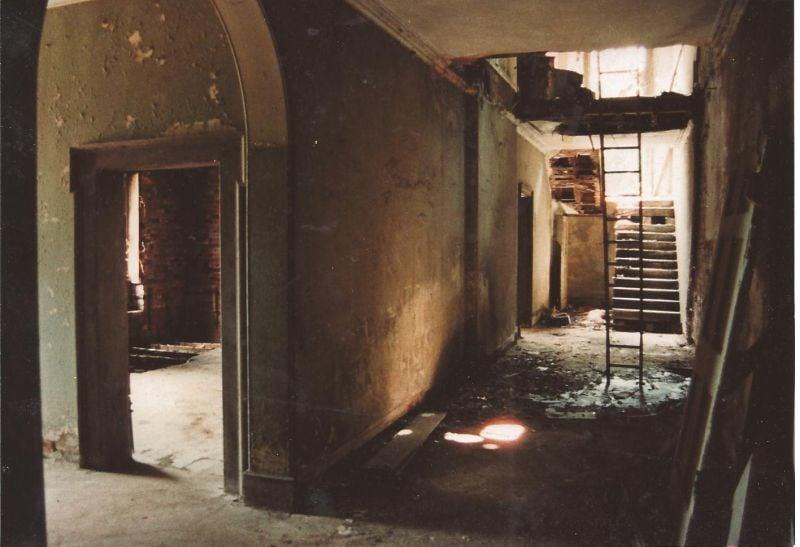
I posted the story on a Shropshire History and Nostalgia facebook group, and almost immediately had a reply from someone whose husband remembered such a place with ancient books and manuscripts all over the floor, and the place was called Gatacre Hall in Claverley, near Bridgnorth. She also said that there was a story that the family had fled to Canada just after WWII, even leaving the dishes on the table.
The Gatacre family sailing to Canada in 1947:
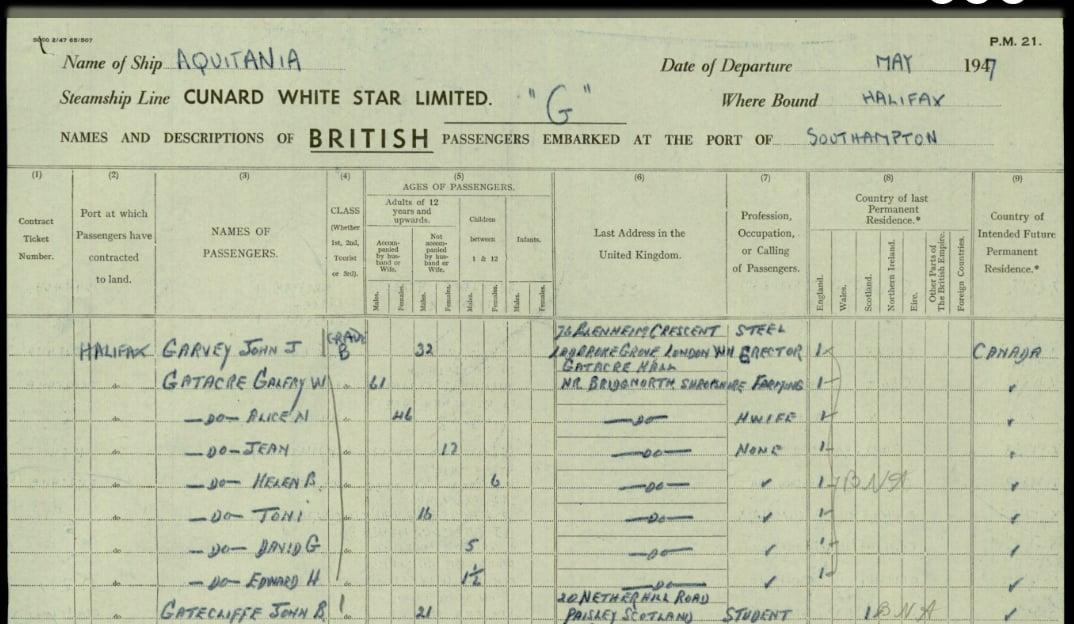
When my cousin heard the name Gatacre Hall she remembered that was the name of the place where her father had found the book.
I looked into Gatacre Hall online, in the newspaper archives, the usual genealogy sites and google books searches and so on. The estate had been going downhill with debts for some years. The old squire died in 1911, and his eldest son died in 1916 at the Somme. Another son, Galfrey Gatacre, was already farming in BC, Canada. He was unable to sell Gatacre Hall because of an entail, so he closed the house up. Between 1945-1947 some important pieces of furniture were auctioned, and the rest appears to have been left in the empty house.
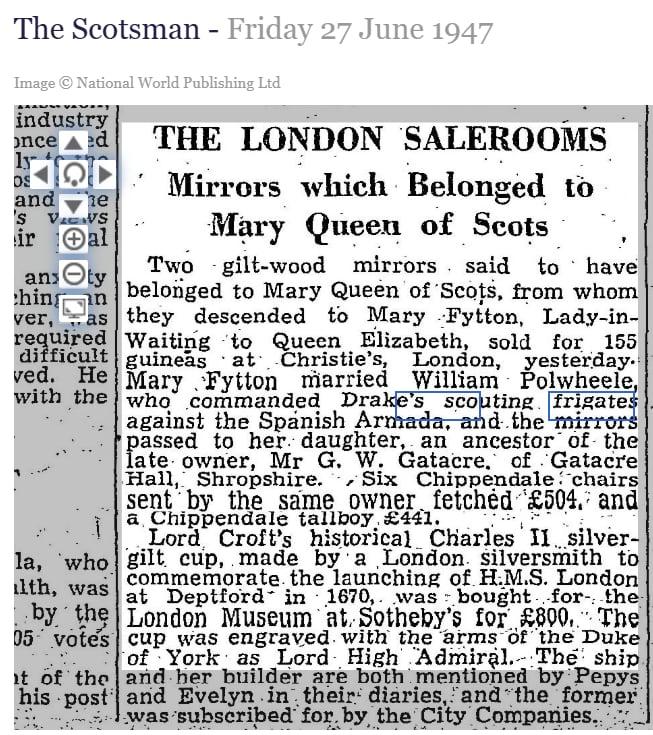
The family didn’t suddenly flee to Canada leaving the dishes on the table, although it was true that the family were living in Canada.
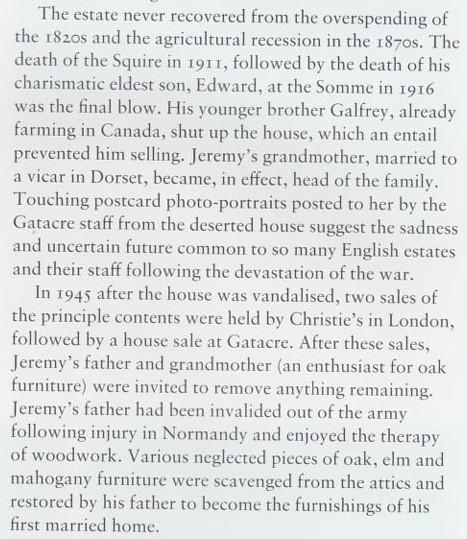
An interesting thing to note here is that not long after this book was found, my parents moved to BC Canada (where I was born), and a year later my uncle moved to Toronto (where he met his wife).
Captain Gatacre in 1918:
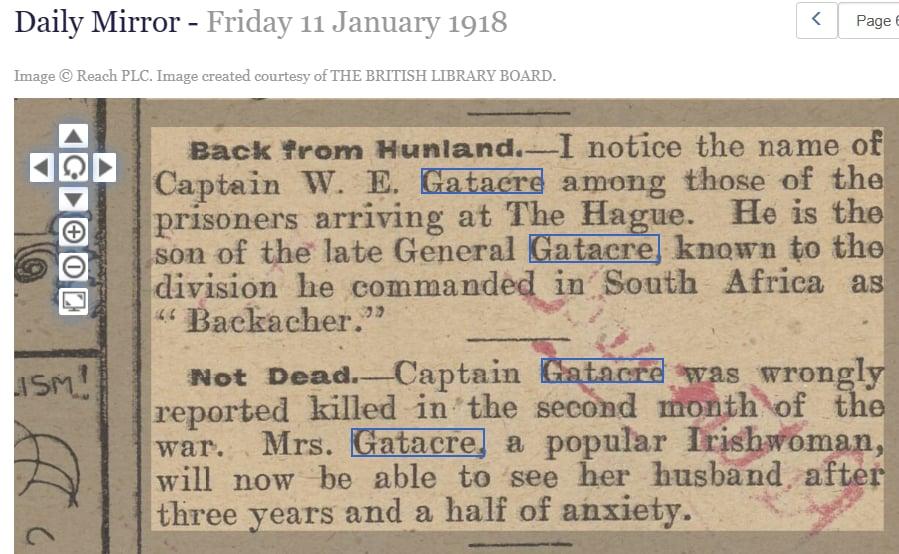
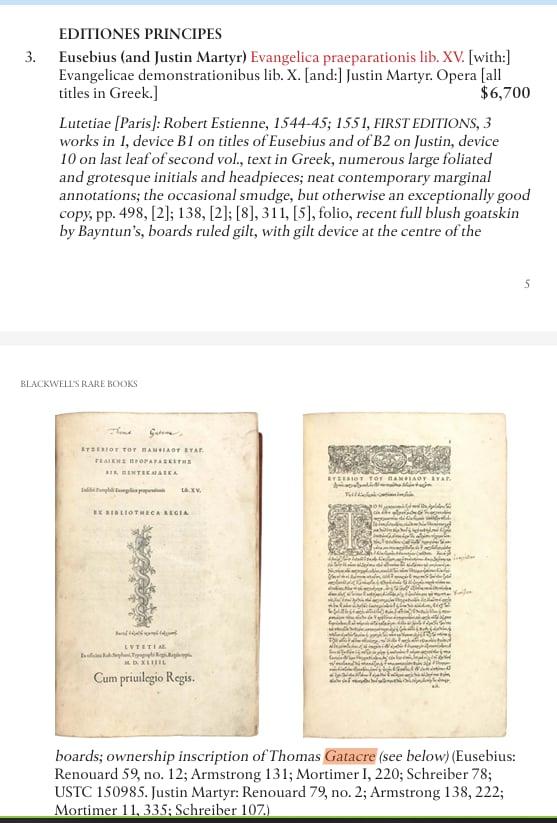
The Gatacre library was mentioned in the auction notes of a particular antiquarian book:
“Provenance: Contemporary ownership inscription and textual annotations of Thomas Gatacre (1533-1593). A younger son of William Gatacre of Gatacre Hall in Shropshire, he studied at the English college at the University of Leuven, where he rejected his Catholic roots and embraced evangelical Protestantism. He studied for eleven years at Oxford, and four years at Magdalene, Cambridge. In 1568 he was ordained deacon and priest by Bishop of London Edmund Grindal, and became domestic chaplain to Robert Dudley, 1st Earl of Leicester and was later collated to the rectory of St Edmund’s, Lombard Street. His scholarly annotations here reference other classical authors including Plato and Plutarch. His extensive library was mentioned in his will.”
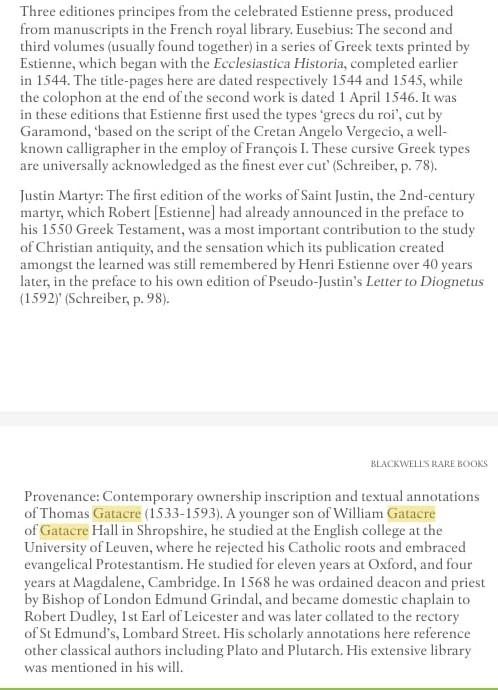
There are thirty four pages in this 1662 book about Thomas Gatacre d 1654:
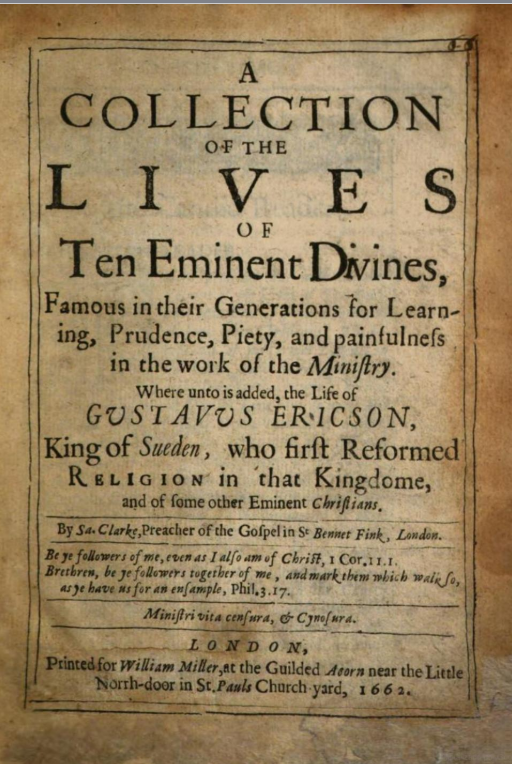
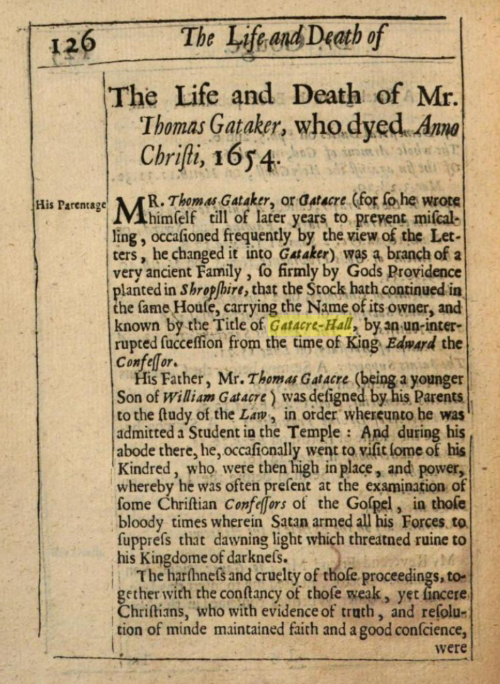 May 5, 2025 at 5:55 pm #7915
In reply to: Cofficionados Bandits (vs Lucid Dreamers)
Amy supposed everyone was blaming her, for what she couldn’t say, but they had clearly been avoiding her. There was plenty of coffee here anyway, even if the rest of the world was suffering. Don’t even think it, she told herself sternly. We don’t want people flocking here in droves once they realise.
So, do I want people or not? she asked herself. One minute I’m wondering where everyone is, and then next minute I’m wanting everyone to stay away.
“You on the spectrum too, are you?” asked Carob, reading her mind. “It’s ok,” she added, seeing the look of alarm cross Amy’s face, “Your secret’s safe with me. I mean about being on the spectrum. But be careful, they’re rounding people like us up and sending them to a correctional facility. We’re quite lucky to be here, out of the way.”
“Have you been avoiding me?” Amy asked, which was more immediately concerning than the concentration camps. “Because I’ve been here all alone for ages, nothing to do but read my book, draw in my sketch pad, and work on my needlepoint cushion covers. And where are the others? And don’t read my mind, it’s so rude.”
“Needlepoint cushion covers? Are you serious?” Carob was avoiding the questions, but was genuinely curious about the cushion covers.
Amy blushed. “No, I made that up. In fact, I don’t know what made me say that. I haven’t started any sketching either, but I have thought about starting sketching. And I’ve been reading. It’s an old Liz Tattler; the old ones were the best. Real old school Lizzie Tattie, if you know what I mean. Risque romps with potting sheds and stuff. None of that ghastly sci fi she started writing recently.”
“Which one?” Carob asked, and laughed when Amy held it up. “I read that years ago, T’Eggy Gets a Good Rogering, can I borrow it after you? God knows we could all do with a laugh.”
“How do you know the others need a good laugh?” Amy asked, peering at Carob with an attentive squint in order to catch any clues. “You’ve seen then, then?”
Carob smiled sadly and replied, “Only by remote viewing them.”
Amy asked where they had been and what they were doing when they were viewed remotely. Has she been remote viewing me? What if they ask her if she’s been remote viewing me, and she tells them? “Oh never mind,” Amy said quickly, “No need to answer that.”
Carob snorted, and what a strangely welcome sound it was. “I didn’t really remote view them, I made that up. It never works if I try to spy on people. Fat lot of good it is really, it never works when I really really need to see something. Or maybe it works, but I never believe it properly until later when I find out it was right.”
“Yeah,” Amy said, “It’s fun though, I haven’t done it in ages.”
“You should, it would give you something to do when everyone’s avoiding you.”
April 29, 2025 at 7:18 pm #7913In reply to: Cofficionados Bandits (vs Lucid Dreamers)
Amy wondered afterwards if she should have said “Why is it always my fault” and hoped nobody would think el gran apagón was her fault too. Another one of the issues with typecasting too soon.
The rumours and hoaxes were rife even before the electricity came back on. The crisis of the lack of coffee beans was coming to a head: morning riots were breaking out in the places most affected by the shortage. As soon as the blackouts started, improvised statistics and numbers were cobbled together into snappy psychological colour combination images and plastered everywhere suggesting that the lack of electricity was saving an incomprehensible number of cups of coffee per day, but without causing any coffee related social disorder events.
Amy had heard that el gran apagón was foretold to occur when the pope died, that it was extraterrestrials, that it was el naranjo and his sidekick effin muck, and all manner of things, but the concerns with the coffee shortage happening at the same time as the blackouts were manifold.
The population was looking for scapegoats. Oh dear god, what did I say that for.
March 22, 2025 at 11:16 am #7875In reply to: The Last Cruise of Helix 25
Mars Outpost — Fueling of Dreams (Prune)
I lean against the creaking bulkhead of this rust-stained fueling station, watching Mars breathe. Dust twirls across the ochre plains like it’s got somewhere important to be. The whole place rattles every time the wind picks up—like the metal shell itself is complaining. I find it oddly comforting. Reminds me of the Flying Fish Inn back home, where the fireplace wheezed like a drunk aunt and occasionally spit out sparks for drama.
Funny how that place, with all its chaos and secret stash hidey-holes, taught me more about surviving space than any training program ever could.
“Look at me now, Mater,” I catch myself thinking, tapping the edge of the viewport with a gloved knuckle. “Still scribbling starships in my head. Only now I’m living inside one.”
Behind me, the ancient transceiver gives its telltale blip… blip. I don’t need to check—I recognize the signal. Helix 25, closing in. The one ship people still whisper about like it’s a myth with plumbing. Part of me grins. Half nostalgia, half challenge.
Back in ’27, I shipped off to that mad boarding school with the oddball astronaut program. Professors called me a prodigy. I called it stubborn curiosity and a childhood steeped in ghost stories, half-baked prophecies, and improperly labeled pickle jars. The real trick wasn’t the calculus—it was surviving the Curara clan’s brand of creative chaos.
After graduation, I bought into a settlers’ programme. Big mistake. Turns out it was more con than colonization, sold with just enough truth to sting. Some people cracked. I just adjusted course. Spent some time bouncing between jobs, drifted home a couple times for stew and sideways advice, and kept my head sharp. Lesson logged: deceit’s just another puzzle with missing pieces.
A hiss behind the wall cuts into my thoughts—pipes complaining again. I spin, scan the console. Pressure’s holding. “Fine,” which out here means “still not exploding.” Good enough.
I remember the lottery ticket that got me here— 2049, commercial flights to Mars at last soared skyward— and Effin Muck’s big lottery. At last a seat to Mars, on section D. Just sheer luck that felt like a miracle at the time. But while I was floating spaceward, Earth went sideways: asteroid mining gone wrong, panic, nuclear strikes. I watched pieces of home disappear through a porthole while the Mars colonies went silent, one by one. All those big plans reduced to empty shells and flickering lights.
I was supposed to be evacuated, too. Instead, my lowly post at this fueling station—this rust bucket perched on a dusty plateau—kept me in place. Cosmic joke? Probably. But here I am. Still alive. Still tinkering with things that shouldn’t work. Still me.
I reprogrammed the oxygen scrubbers myself. Hacked them with a dusty old patch from Aunt Idle’s “Dream Time” stash. When the power systems started failing and had to cut all the AI support to save on power, I taught myself enough broken assembly code to trick ancient processors into behaving. Improvisation is my mother tongue.
“Mars is quieter than the Inn,” I say aloud, half to myself. “Only upside, really.”
Another ping from the transceiver—it’s getting closer. The Helix 25, humanity’s last-ditch bottle-in-space. They say it’s carrying what’s left of us. Part myth, part mobile city. If I didn’t have the logs, I’d half believe it was a fever dream.
But no dream prepares you for this kind of quiet.
I think about the Inn again. How everyone swore it had secret tunnels, cursed tiles, hallucinations in the pantry. Honestly, it probably did. But it also had love—scrambled, sarcastic love—and enough stories to keep you wondering if any of them were real. That’s where I learned to spot a lie, tell a better one, and stay grounded when the walls started talking.
I smack the comm panel until it stops crackling. That’s the secret to maintenance on Mars: decisive violence.
“All right, Helix,” I mutter. “Let’s see what you’ve got. I’ve got thruster fuel, half-functional docking protocols, and a mean kettle of tea if you’re lucky.”
I catch my reflection in the viewport glass—older, sure. Forty-two now. Taller. Calmer in the eyes. But the glint’s still there, the one that says I’ve seen worse, and I’m still standing. That kid at the Inn would’ve cheered.
Earth’s collapse wasn’t some natural catastrophe—it was textbook human arrogance. Effin Muck’s greedy asteroid mining scheme. World leaders playing hot potato with nuclear codes. It burned. Probably still does… But I can’t afford to stew in it. We’re not here to mourn; we’re here to rebuild. If someone’s going to help carry that torch, it might as well be someone who’s already walked through fire.
I fiddle with the dials on the fuel board. It hums like a tired dragon, but it’s awake. That’s all I need.
“Might be time to pass some of that brilliance along,” I mutter, mostly to the station walls. Somewhere, I bet my siblings are making fun of me. Probably watching soap dramas and eating improperly reheated stew. Bless them. They were my first reality check, and I still measure the world by how weird it is compared to them. Loved them for how hard they made me feel normal after all.
The wind howls across the shutters. I stand up straight, brush the dust off my sleeves. Helix 25 is almost here.
“Showtime,” I say, and grin. Not the nice kind. The kind that says I’ve got one wrench, three working systems, and no intention of rolling over.
The Flying Fish Inn shaped me with every loud, strange, inexplicable day. It gave me humor. It gave me bite. It gave me an unshakable sense of self when everything else fell apart.
So here I stand—keeper of the last Martian fueling post, scrappy guardian of whatever future shows up next.
I glance once more at the transceiver, then hit the big green button to unlock the landing bay.
“Welcome to Mars,” I say, deadpan. Then add, mostly to myself, “Let’s see if they’re ready for me.”
March 9, 2025 at 11:36 pm #7864In reply to: The Last Cruise of Helix 25
Mavis adjusted her reading glasses, peering suspiciously at the announcement flashing across the common area screen.
“Right then,” she said, tapping it. “Would you look at that. We’re not drifting to our doom in the black abyss anymore. We’re going home. Makes me almost sad to think of it that way.”
Gloria snorted. “Home? I haven’t lived on Earth in so long I don’t even remember which part of it I used to hate the most.”
Sharon sighed dramatically. “Oh, don’t be daft, Glo. We had civilisation back there. Fresh air, real ground under our feet. Seasons!”
Mavis leaned back with a smirk. “And let’s not forget: gravity. Remember that, Glo? That thing that kept our knickers from floating off at inconvenient moments?”
Gloria waved a dismissive hand. “Oh please, Earth gravity’s overrated. I’ve gotten used to my ankles not being swollen. Besides, you do realise that Earth’s just a tiny, miserable speck in all this? How could we tire of this grand adventure into nothing?” She gestured widely, nearly knocking Sharon’s drink out of her hand.
Sharon gasped. “Well, that was uncalled for. Tiny miserable speck, my foot! That tiny speck is the only thing in this whole bloody universe with tea and biscuits. Get the same in Uranus now!”
Mavis nodded sagely. “She’s got a point, Glo.”
Gloria narrowed her eyes. “Oh, don’t you start. I was perfectly fine living out my days in the great unknown, floating about like a well-moisturized sage of space, unburdened by all the nonsense of Earth.”
Sharon rolled her eyes. “Oh, spare me. Two weeks ago you were crying about missing your favorite brand of shampoo.”
Gloria sniffed. “That was a moment of weakness.”
Mavis grinned. “And now you’re about to have another when we get back and realise how much tax has accumulated while we’ve been away.”
A horrified silence fell between them.
Sharon exhaled. “Right. Back to the abyss then?”
Gloria nodded solemnly. “Back to the abyss.”
Mavis raised her cup. “To the abyss.”
They clinked their mismatched mugs together in a toast, while the ship quietly, inevitably, pulled them home.
March 6, 2025 at 9:24 pm #7858In reply to: The Last Cruise of Helix 25
It was still raining the morning after the impromptu postcard party at the Golden Trowel in the Hungarian village, and for most of the morning nobody was awake to notice. Molly had spent a sleepless night and was the only one awake listening to the pounding rain. Untroubled by the idea of lack of sleep, her confidence bolstered by the new company and not being solely responsible for the child, Molly luxuriated in the leisure to indulge a mental re run of the previous evening.
Finjas bombshell revelation after the postcard game suddenly changed everything. It was not what Molly had expected to hear. In their advanced state of inebriation by that time it was impossible for anyone to consider the ramifications in any sensible manner. A wild and raucous exuberance ensued of the kind that was all but forgotten to all of them, and unknown to Tundra. It was a joy that brought tears to Mollys eyes to see the wonderful time the child was having.
Molly didn’t want to think about it yet. She wasn’t so sure she wanted to have anything to do with it, the ship coming back. Communication with it, yes. The ship coming back? There was so much to consider, so many ways of looking at it. And there was Tundra to think about, she was so innocent of so many things. Was it better that way? Molly wasn’t going to think about that yet. She wanted to make sure she remembered all the postcard stories.
There is no rush.
The postcard Finja had chosen hadn’t struck Molly as the most interesting, not at the time, but later she wondered if there was any connection with her later role as centre stage overly dramatic prophet. What an extraordinary scene that was! The unexpected party was quite enough excitement without all that as well.
Finja’s card was addressed to Miss FP Finly, c/o The Flying Fish Inn somewhere in the outback of Australia, Molly couldn’t recall the name of the town. The handwriting had been hard to decipher, but it appeared to be a message from “forever your obedient servant xxx” informing her of a Dustsceawung convention in Tasmania. As nobody had any idea what a Dustsceawung conference was, and Finja declined to elaborate with a story or anecdote, the attention moved on to the next card. Molly remembered the time many years ago when everyone would have picked up their gadgets to find out what it meant. As it was now, it remained an unimportant and trifling mystery, perhaps something to wonder about later.
Why did Finja choose that card, and then decline to explain why she chose it? Who was Finly? Why did The Flying Fish Inn seem vaguely familiar to Molly?
I’m sure I’ve seen a postcard from there before. Maybe Ellis had one in his collection.
Yes, that must be it.
Mikhail’s story had been interesting. Molly was struggling to remember all the names. He’d mentioned his Uncle Grishenka, and a cousin Zhana, and a couple called Boris and Elvira with a mushroom farm. The best part was about the snow that the reindeer peed on. Molly had read about that many years ago, but was never entirely sure if it was true or not. Mickhail assured them all that it was indeed true, and many a wild party they’d had in the cold dark winters, and proceeded to share numerous funny anecdotes.
“We all had such strange ideas about Russia back then,” Molly had said. Many of the others murmured agreement, but Jian, a man of few words, merely looked up, raised an eyebrow, and looked down at his postcard again. “Russia was the big bad bogeyman for most of our lives. And in the end, we were our own worst enemies.”
“And by the time we realised, it was too late,” added Petro.
In an effort to revive the party spirit from the descent into depressing memories, Tala suggested they move on to the next postcard, which was Vera’s.
“I know the Tower of London better than any of you would believe,” Vera announced with a smug grin. Mikhail rolled his eyes and downed a large swig of vodka. “My 12th great grandfather was employed in the household of Thomas Cromwell himself. He was the man in charge of postcards to the future.” She paused for greater effect. In the absence of the excited interest she had expected, she continued. “So you can see how exciting it is for me to have a postcard as a prompt.” This further explanation was met with blank stares. Recklessly, Vera added, “I bet you didn’t know that Thomas Cromwell was a time traveller, did you? Oh yes!” she continued, although nobody had responded, “He became involved with a coven of witches in Ireland. Would you believe it!”
“No,” said Mikhail. “I probably wouldn’t.”
“I believe you, Vera,” piped up Tundra, entranced, “Will you tell me all about that later?”
Tundra’s interjection gave Tala the excuse she needed to move on to the next postcard. Mikhail and Vera has always been at loggerheads, and fueled with the unaccustomed alcohol, it was in danger of escalating quickly. “Next postcard!” she announced.
Everyone started banging on the tables shouting, “Next postcard! Next postcard!” Luka and Lev topped up everyone’s glasses.
Molly’s postcard was next.
March 1, 2025 at 12:41 pm #7847In reply to: The Last Cruise of Helix 25
Helix 25 – The Lexican Quarters – Anuí’s Chambers
Anuí Naskó had been many things in their life—historian, philosopher, linguist, nuisance. But a father? No. No, that was entirely new.
And yet, here they were, rocking a very tiny, very loud creature wrapped in Lexican ceremonial cloth, embroidered with the full unpronounceable name bestowed upon it just moments ago: Hšyra-Mak-Talún i Ešvar—”He Who Cries the Arrival of the Infinite Spiral.”
The baby did, indeed, cry.
“Why do you scream at me?” Anuí muttered, swaying slightly, more in a daze than any real instinct to soothe. “I did not birth you. I did not know you existed until three hours ago. And yet, you are here, squalling, because your other father and your mother have decided to fulfill the Prophecy of the Spiral Throne.”
The Prophecy. The one that spoke of the moment the world would collapse and the Lexicans would ascend. The one nobody took seriously. Until now.
Zoya Kade, sitting across from them, watched with narrowed, calculating eyes. “And what exactly does that entail? This Lexican Dynasty?”
Anuí sighed, looking down at the writhing child who was trying to suck on their sleeves, still stained with the remnants of the protein paste they had spent the better part of the morning brewing. The Atrium’s walls needed to be prepared, after all—Kio’ath could not write the sigils without the proper medium. And as the cycles dictated, the medium must be crafted, fermented, and blessed by the hand of one who walks between identities. It had been a tedious, smelly process, but Anuí had endured worse in the name of preservation.
“Patterns repeat, cycles fold inward.” “Patterns repeat, cycles fold inward. The old texts speak of it, the words carved into the silent bones of forgotten tongues. This, Zoya, is no mere madness. This is the resurgence of what was foretold. A dynasty cannot exist without succession, and history does not move without inheritors. They believe they are ensuring the inevitability of their rise. And they might not be wrong.”
They adjusted their grip on the child, murmuring a phrase in a language so old it barely survived in the archives. “Tz’uran velth ka’an, the root that binds to the branch, the branch that binds to the sky. Our truths do not stand alone.”
The baby flailed, screaming louder. “Yes, yes, you are the heir,” Anuí murmured, bouncing it with more confidence. “Your lineage has been declared, your burden assigned. Accept it and be silent.” “Well, apparently it requires me to be a single parent while they go forth and multiply, securing ‘heirs to the truth.’ A dynasty is no good without an heir and a spare, you see.”
The baby flailed, screaming even louder. “Yes, yes, you are the heir,” Anuí murmured with a hint of irritation, bouncing the baby awkwardly. “You have been declared. Please, cease wailing now.”
Zoya exhaled through her nose, somewhere between disbelief and mild amusement. “And in the middle of all this divine nonsense, the Lexicans have chosen to back me?”
Anuí arched a delicate brow, shifting the baby to one arm with newfound ease. “Of course. The truth-seeker is foretold. The woman who speaks with voices of the past. We have our empire; you are our harbinger.”
Zoya’s lips twitched. “Your empire consists of thirty-eight highly unstable academics and a baby.”
“Thirty-nine. Kio’ath returned from exile yesterday,” Anuí corrected. “They claim the moons have been whispering.”
“Ah. Of course they have.”
Zoya fell silent, fingers tracing the worn etchings of her chair’s armrest. The ship’s hum pressed into her bones, the weight of something stirring in her mind, something old, something waiting.
Anuí’s gaze sharpened, the edges of their thoughts aligning like an ancient lexicon unfurling in front of them. “And now you are hearing it, aren’t you? The echoes of something that was always there. The syllables of the past, reshaped by new tongues, waiting for recognition. The Lexican texts spoke of a fracture in the line, a leader divided, a bridge yet to be found.”
They took a slow breath, fingers tightening over the child’s swaddled form. “The prophecy is not a single moment, Zoya. It is layers upon layers, intersecting at the point where chaos demands order. Where the unseen hand corrects its own forgetting. This is why they back you. Not because you seek the truth, but because you are the conduit through which it must pass.”
Zoya’s breath shallowed. A warmth curled in her chest, not of her own making. Her fingers twitched as if something unseen traced over them, urging her forward. The air around her thickened, charged.
She knew this feeling.
Her head tipped back, and when she spoke, it was not entirely her own voice.
“The past rises in bloodlines and memory,” she intoned, eyes unfocused, gaze burning through Anuí. “The lost sibling walks beneath the ice. The leader sleeps, but he must awaken, for the Spiral Throne cannot stand alone.”
Anuí’s pulse skipped. “Zoya—”
The baby let out a startled hiccup.
But Zoya did not stop.
“The essence calls, older than names, older than the cycle. I am Achaia-Vor, the Echo of Sundered Lineage. The Lost, The Twin, The Nameless Seed. The Spiral cannot turn without its axis. Awaken Victor Holt. He is the lock. You are the key. The path is drawn.
“The cycle bends but does not break. Across the void, the lost ones linger, their voices unheard, their blood unclaimed. The Link must be found. The Speaker walks unknowingly, divided across two worlds. The bridge between past and present, between silence and song. The Marlowe thread is cut, yet the weave remains. To see, you must seek the mirrored souls. To open the path, the twins must speak.”
Achaia-Vor. The name vibrated through the air, curling through the folds of Anuí’s mind like a forgotten melody.
Zoya’s eyes rolled back, body jerking as if caught between two timelines, two truths. She let out a breathless whisper, almost longing.
“Victor, my love. He is waiting for me. I must bring him back.”
Anuí cradled the baby closer, and for the first time, they saw the prophecy not as doctrine but as inevitability. The patterns were aligning—the cut thread of the Marlowes, the mirrored souls, the bridge that must be found.
“It is always the same,” they murmured, almost to themselves. “An axis must be turned, a voice must rise. We have seen this before, written in languages long burned to dust. The same myth, the same cycle, only the names change.”
They met Zoya’s gaze, the air between them thick with the weight of knowing. “And now, we must find the Speaker. Before another voice is silenced.”
“Well,” they muttered, exhaling slowly. “This just got significantly more complicated.”
The baby cooed.
Zoya Kade smiled.
March 1, 2025 at 10:01 am #7843In reply to: The Last Cruise of Helix 25
Helix 25 – Space Tai Chi and Mass Lunacy
The Grand Observation Atrium was one of the few places on Helix 25 where people would come and regroup from all strata of the ship —Upper Decks, Lower Decks, even the more elusive Hold-dwellers— there were always groups of them gathered for the morning sessions without any predefined roles.
In the secular tradition of Chinese taichi done on public squares, a revival of this practice has started few years ago all thanks to Grand Master Sifu Gou quiet stubborn consistency to practice in the early light of the artificial day, that gradually had attracted followers, quietly and awkwardly joining to follow his strange motions. The unions, ever eager to claim a social victory and seeing an opportunity to boost their stature, petitioned to make this a right, and succeeded, despite the complaints from the cleaning staff who couldn’t do their jobs (and jogs) in the late night while all passengers had gone to sleep, apart from the night owls and party goers.
In short, it was a quiet moment of communion, and it was now institutionalised, whether Sifu Gou had wanted it or not.
The artificial gravity fluctuated subtly here, closer to the artificial gravitational core, in a way that could help attune people to feel their balance shift, even in absence of the Earth’s old pull.
It was simply perfect for Space Tai Chi.
A soft chime signaled the start of the session. Grand Master Gou, in the Helix 25’s signature milk-silk fabric pajamas, silver-haired and in a quiet poise, stood at the center of the open-air space beneath the reinforced glass dome, where Jupiter loomed impossibly large beyond the ship, its storms shifting in slow, eternal violence. He moved slowly, deliberately, his hands bearing a weight that flowed improbably in the thinness of the gravity shifts.
“To find one’s center,” he intoned, “is to find the center of all things. The ship moves, and so do we. You need to feel the center of gravity and use it —it is our guide.”
A hundred bodies followed in various degrees of synchrony, from well-dressed Upper Deck philosophers to the manutentioners and practical mechanics of the Lower Decks in their uniforms who stretched stiff shoulders between shift rotations. There was something mesmerizing about the communal movement, that even the ship usually a motionless background, seemed to vibrate beneath their feet as though their motions echoed through space.
Every morning, for this graceful moment, Helix 25 felt like a true utopia.
That was without counting when the madness began.

The Gossip Spiral
“Did you hear about Sarawen?” hissed a woman in a flowing silk robe.
“The Lexican?” gasped another.
“Yes. Gave birth last night.”
“What?! Already? Why weren’t we informed?”
“Oh, she kept it very quiet. Didn’t even invite anyone to the naming.”
“Disgraceful. And where are her two husbands? Following her everywhere. Suspicious if you ask me.”A grizzled Lower Deck worker grunted, still trying to follow Master Gou’s movement. “Why would she invite people to see her water break? Sounds unhygienic.”
This earned a scandalized gasp from an Upper Decker. “Not the birth—the ceremony! Honestly, you Lower Deck folk know nothing of tradition.”
Wisdom Against Wisdom
Master Gou was just finishing an elegant and powerful sweep of his arms when Edeltraut Snoot, a self-proclaimed philosopher from Quadrant B, pirouetted herself into the session with a flamboyant twirl.
“Ah, my dear glowing movement-makers! Thou dost align thine energies with the artificial celestial pull, and yet! And yet! Dost thou not see—this gravity is but a fabrication! A lie to lull thee into believing in balance when there is none!”
Master Gou paused, blinking, impassive, suspended in time and space, yet intently concentrated. Handling such disturbances of the force gracefully, unperturbed, was what the practice was about. He resumed as soon as Edeltraut moved aside to continue her impassionate speech.
“Ah yiii! The Snoot Knows. Oh yes. Balance is an illusion sold to us by the Grand Micromanagers, the Whymen of the Ever-Hungry Order. Like pacmaniacs, they devour structure and call it stability. And we! We are but rabbits, forced to hop through their labyrinth of rules!”
Someone muttered, “Oh no, it’s another of those speeches.”
Another person whispered, “Just let her talk, it’s easier.”
The Snoot lady continued, undeterred. “But we? Oh, we are not merely rabbits. We are the mist in the hedge! The trick in their tale! We evade! We escape! And when they demand we obey their whys—we vanish!”
By now, half the class had abandoned their movements entirely, mesmerized by the absurdity. The other half valiantly continued the Space taichi routine while inching away.
Master Gou finally closed the form, then sighed intently, pinching the bridge of his nose. “Let us… return to our breath.”
More Mass Lunacy
It started as a low murmur, a shifting agitation in the crowd. Then, bickering erupted like a solar flare.
“I can’t find my center with all this noise!”
“Oh shut up, you’ve never had a center.”
“Who took my water flask?!”
“Why is this man so close to me?!”
“I am FLOATING?! HELP!”Synthia’s calm, omnipresent voice chimed in overhead.
“For your well-being, an emergency dose of equilibrium supplements will be dispensed.”
Small white pills rained from overhead dispensers.
Instead of calming people down, this only increased the chaos.
Some took the pills immediately, while others refused on principle.
Someone accused the Lexicans of hoarding pills.
Two men got into a heated debate over whether taking the pills was an act of submission to the AI overlords.
A woman screamed that her husband had vanished, only to be reminded that he left her twelve years ago.
Someone swore they saw a moon-sized squid in the sky.The Unions and the Leopards
Near the edges of the room, two quadrant bosses from different labor unions were deep in mutual grumbling.
“Bloody management.”
“Agreed, even if they don’t call themselves that any longer, it’s still bloody management.”
“Damn right. MICRO-management.”
“Always telling us to be more efficient, more aligned, more at peace.”
“Yeah, well, who the hell voted for peace?! I preferred it when we just argued in the corridors!”One of them scowled. “That’s the problem, mate. We fought for this, better conditions, and what did we get? More rules, more supervisors! Who knew that the Leopards-Eating-People’s-Faces Party would, y’know—eat our own bloody faces?!”
The other snorted. “We demanded stability, and now we have so much stability we can’t move without filling out a form with all sorts of dumb questions. You know I have to submit a motion request before taking a piss?”
“…seriously?”
“Dead serious. Takes an eternity to fill. And four goddamn business hours for approval.”
“That’s inhumane.”
“Bloody right it is.”
At that moment, Synthia’s voice chimed in again.
“Please be advised: Temporary gravitational shifts are normal during orbital adjustments. Equilibrium supplements have been optimized. Kindly return to your scheduled calm.”
The Slingshot Begins
The whole ship gave a lurch, a gravitational hiccup as Helix 25 completed its slingshot maneuver around the celestial body.
Bodies swayed unnaturally. Some hovered momentarily, shrieking.
Someone declared that they had achieved enlightenment.
Someone else vomited.Master Gou sighed deeply, rubbing his temples. “We should invent retirement for old Masters. People can’t handle their shit during those Moonacies. Months of it ahead, better focus on breath more.”
Snoot Lady, still unaffected, spread her arms wide and declared:
“And so, the rabbit prevails once again!”Evie, passing by on her way to the investigation, took one look at the scene of absolute madness and turned right back around.
“Yeah. Nope. Not this morning. Back to the Murder Board.”
February 16, 2025 at 2:59 pm #7816In reply to: The Precious Life and Rambles of Liz Tattler
Liz had, in her esteemed opinion, finally cracked the next great literary masterpiece.
It had everything—forbidden romance, ancient mysteries, a dash of gratuitous betrayal, and a protagonist with just the right amount of brooding introspection to make him irresistible to at least two stunningly beautiful, completely unnecessary love interests.
And, of course, there was a ghost. She would have preferred a mummy but it had been edited out one morning she woke up drooling on her work with little recollection of the night.
Unfortunately, none of this mattered because Godfrey, her ever-exasperated editor, was staring at her manuscript with the same enthusiasm he reserved for peanut shells stuck in his teeth.
“This—” he hesitated, massaging his temples, “—this is supposed to be about the Crusades.”
Liz beamed. “It is! Historical and spicy. I expect an award.”
Godfrey set down the pages and reached for his ever-dwindling bowl of peanuts. “Liz, for the love of all that is holy, why is the Templar knight taking off his armor every other page?”
Liz gasped in indignation. “You wouldn’t understand, Godfrey. It’s symbolic. A shedding of the past! A rebirth of the soul!” She made an exaggerated sweeping motion, nearly knocking over her champagne flute.
“Symbolic,” Godfrey repeated flatly, chewing another peanut. “He’s shirtless on page three, in a monastery.”
Finnley, who had been dusting aggressively, made a sharp sniff. “Disgraceful.”
Liz ignored her. “Oh please, Godfrey. You have no vision. Readers love a little intimacy in their historical fiction.”
“The priest,” Godfrey said, voice rising, “is supposed to be celibate. You explicitly wrote that his vow was unbreakable.”
Liz waved a dismissive hand. “Oh, I solved that. He forgets about it momentarily.”
Godfrey choked on a peanut. Finnley paused mid-dust, staring at Liz in horror.
Roberto, who had been watering the hydrangeas outside the window, suddenly leaned in. “Did I hear something about a forgetful priest?”
“Not now, Roberto,” Liz said sharply.
Finnley folded her arms. “And how, pray tell, does one simply forget their sacred vows?”
Liz huffed. “The same way one forgets to clean behind the grandfather clock, I imagine.”
Finnley turned an alarming shade of purple.
Godfrey was still in disbelief. “And you’re telling me,” he said, flipping through the pages in growing horror, “that this man, Brother Edric, the holy warrior, somehow manages to fall in love with—who is this—” he squinted, “—Laetitia von Somethingorother?”
Liz beamed. “Ah, yes. Laetitia! Mysterious, tragic, effortlessly seductive—”
“She’s literally the most obvious spy I’ve ever read,” Godfrey groaned, rubbing his face.
“She is not! She is enigmatic.”
“She has a knife hidden in every scene.”
“A woman should be prepared.”
Godfrey took a deep breath and picked up another sheet. “Oh fantastic. There’s a secret baby now.”
Liz nodded sagely. “Yes. I felt that revelation.”
Finnley snorted. “Roberto also felt something last week, and it turned out to be food poisoning.”
Roberto, still hovering at the window, nodded solemnly. “It was quite moving.”
Godfrey set the papers down in defeat. “Liz. Please. I’m begging you. Just one novel—just one—where the historical accuracy lasts at least until page ten.”
Liz tapped her chin. “You might have a point.”
Godfrey perked up.
Liz snapped her fingers. “I should move the shirtless scene to page two.”
Godfrey’s head hit the table.
Roberto clapped enthusiastically. “Genius! I shall fetch celebratory figs!”
Finnley sighed dramatically, threw down her duster, and walked out of the room muttering about professional disgrace.
Liz grinned, completely unfazed. “You know, Godfrey, I really don’t think you appreciate my artistic sacrifices.”
Godfrey, face still buried in his arms, groaned, “Liz, I think Brother Edric’s celibacy lasted longer than my patience.”
Liz threw a hand to her forehead theatrically. “Then it was simply not meant to be.”
Roberto reappeared, beaming. “I found the figs.”
Godfrey reached for another peanut.
He was going to need a lot more of them.
 February 16, 2025 at 2:37 pm #7813
In reply to: The Last Cruise of Helix 25
Helix 25 – Crusades in the Cruise & Unexpected Archives
Evie hadn’t planned to visit Seren Vega again so soon, but when Mandrake slinked into her quarters and sat squarely on her console, swishing his tail with intent, she took it as a sign.
“Alright, you smug little AI-assisted furball,” she muttered, rising from her chair. “What’s so urgent?”
Mandrake stretched leisurely, then padded toward the door, tail flicking. Evie sighed, grabbed her datapad, and followed.
He led her straight to Seren’s quarters—no surprise there. The dimly lit space was as chaotic as ever, layers of old records, scattered datapads, and bound volumes stacked in precarious towers. Seren barely looked up as Evie entered, used to these unannounced visits.
“Tell the cat to stop knocking over my books,” she said dryly. “It never ever listens.”
“Well it’s a cat, isn’t it?” Evie replied. “And he seems to have an agenda.”
Mandrake leaped onto one of the shelves, knocking loose a tattered, old-fashioned book. It thudded onto the floor, flipping open near Evie’s feet. She crouched, brushing dust from the cover. Blood and Oaths: A Romance of the Crusades by Liz Tattler.
She glanced at Seren. “Tattler again?”
Seren shrugged. “Romualdo must have left it here. He hoards her books like sacred texts.”
Evie turned the pages, pausing at an unusual passage. The prose was different—less florid than Liz’s usual ramblings, more… restrained.
A fragment of text had been underlined, a single note scribbled in the margin: Not fiction.
Evie found a spot where she could sit on the floor, and started to read eagerly.
“Blood and Oaths: A Romance of the Crusades — Chapter XII
Sidon, 1157 AD.Brother Edric knelt within the dim sanctuary, the cold stone pressing into his bones. The candlelight flickered across the vaulted ceilings, painting ghosts upon the walls. The voices of his ancestors whispered within him, their memories not his own, yet undeniable. He knew the placement of every fortification before his enemies built them. He spoke languages he had never learned.
He could not recall the first time it happened, only that it had begun after his initiation into the Order—after the ritual, the fasting, the bloodletting beneath the broken moon. The last one, probably folklore, but effective.
It came as a gift.
It was a curse.
His brothers called it divine providence. He called it a drowning. Each time he drew upon it, his sense of self blurred. His grandfather’s memories bled into his own, his thoughts weighted by decisions made a lifetime ago.
And now, as he rose, he knew with certainty that their mission to reclaim the stronghold would fail. He had seen it through the eyes of his ancestor, the soldier who stood at these gates seventy years prior.
‘You know things no man should know,’ his superior whispered that night. ‘Be cautious, Brother Edric, for knowledge begets temptation.’
And Edric knew, too, the greatest temptation was not power.
It was forgetting which thoughts were his own.
Which life was his own.
He had vowed to bear this burden alone. His order demanded celibacy, for the sealed secrets of State must never pass beyond those trained to wield it.
But Edric had broken that vow.
Somewhere, beyond these walls, there was a child who bore his blood. And if blood held memory…
He did not finish the thought. He could not bear to.”
Evie exhaled, staring at the page. “This isn’t just Tattler’s usual nonsense, is it?”
Seren shook her head distractedly.
“It reads like a first-hand account—filtered through Liz’s dramatics, of course. But the details…” She tapped the underlined section. “Someone wanted this remembered.”
Mandrake, still perched smugly above them, let out a satisfied mrrrow.
Evie sat back, a seed of realization sprouting in her mind. “If this was real, and if this technique survived somehow…”
Mandrake finished the thought for her. “Then Amara’s theory isn’t theory at all.”
Evie ran a hand through her hair, glancing at the cat than at Evie. “I hate it when Mandrake’s right.”
“Well what’s a witch without her cat, isn’t it?” Seren replied with a smile.
Mandrake only flicked his tail, his work here done.
February 16, 2025 at 12:20 pm #7809In reply to: The Last Cruise of Helix 25
Earth, Black Sea Coastal Island near Lazurne, Ukraine – The Tinkerer
Cornishman Merdhyn Winstrom had grown accustomed to the silence.
It wasn’t the kind of silence one found in an empty room or a quiet night in Cornwall, but the profound, devouring kind—the silence of a world were life as we knew it had disappeared. A world where its people had moved on without him.
The Black Sea stretched before him, vast and unknowable, still as a dark mirror reflecting a sky that had long since stopped making promises. He stood on the highest point of the islet, atop a jagged rock behind which stood in contrast to the smooth metal of the wreckage.
His wreckage.
That’s how he saw it, maybe the last man standing on Earth.
It had been two years since he stumbled upon the remains of Helix 57 shuttle —or what was left of it. Of all the Helixes cruise ships that were lost, the ones closest to Earth during the Calamity had known the most activity —people trying to leave and escape Earth, while at the same time people in the skies struggling to come back to loved ones. Most of the orbital shuttles didn’t make it during the chaos, and those who did were soon lost to space’s infinity, or Earth’s last embrace.
This shuttle should have been able to land a few hundred people to safety —Merdhyn couldn’t find much left inside when he’d discovered it, survivors would have been long dispersed looking for food networks and any possible civilisation remnants near the cities. It was left here, a gutted-out orbital shuttle, fractured against the rocky coast, its metal frame corroded by salt air, its systems dead. The beauty of mechanics was that dead wasn’t the same as useless.
And Merdhyn never saw anything as useless.
With slow, methodical care, he adjusted the small receiver strapped to his wrist—a makeshift contraption built from salvaged components, scavenged antennae, and the remains of an old Soviet radio. He tapped the device twice. The static fizzled, cracked. Nothing.
“Still deaf,” he muttered.
Perched at his shoulder, Tuppence chattered at him, a stuborn rodent that attached himself and that Merdhyn had adopted months ago as he was scouting the area. He reached his pocket and gave it a scrap of food off a stale biscuit still wrapped in the shiny foil.
Merdhyn exhaled, rolling his shoulders. He was getting too old for this. Too many years alone, too many hours hunched over corroded circuits, trying to squeeze life from what had already died.
But the shuttle wasn’t dead. After his first check, he was quite sure. Now it was time to get to work.
He stepped inside, ducking beneath an exposed beam, brushing past wiring that had long since lost its insulation. The stale scent of metal and old circuitry greeted him. The interior was a skeletal mess—panels missing, control consoles shattered, displays reduced to nothing but flickering ghosts of their former selves.
Still, he had power.
Not much. Just enough to light a few panels, enough to make him think he wasn’t mad for trying.
As it happened, Merdhyn had a plan: a ridiculous, impossible, brilliant plan.
He would fix it.
The whole thing if he could, but if anything. It would certainly take him months before the shuttle from Helix 57 could go anywhere— that is, in one piece. He could surely start to repair the comms, get a signal out, get something moving, then maybe—just maybe—he could find out if there was anything left out there.
Anything that wasn’t just sea and sky and ghosts.
He ran his fingers along the edge of the console, feeling the warped metal. The ship had crashed hard. It shouldn’t have made it down in one piece, but something had slowed it. Some system had tried to function, even in its dying moments.
That meant something was still alive.
He just had to wake it up.
Tuppence chittered, scurrying onto his shoulder.
Merdhyn chuckled. “Aye, I know. One of these days, I’ll start talking to people instead of rats.”
Tuppence flicked her tail.
He pulled out a battered datapad—one of his few working relics—and tapped the screen. The interface stuttered, but held. He navigated to his schematics, his notes, his carefully built plans.
The transponder array.
If he could get it working, even partially, he might be able to listen.
To hear something—anything—on the waves beyond this rock.
A voice. A signal. A trace of the world that had forgotten him.
Merdhyn exhaled. “Let’s see if we can get you talking again, eh?”
He adjusted his grip, tools clinking at his belt, and got to work.
February 15, 2025 at 9:21 am #7789In reply to: The Last Cruise of Helix 25
Helix 25 – Poop Deck – The Jardenery
Evie stepped through the entrance of the Jardenery, and immediately, the sterile hum of Helix 25’s corridors faded into a world of green. Of all the spotless clean places on the ship, it was the only where Finkley’s bots tolerated the scent of damp earth. A soft rustle of hydroponic leaves shifting under artificial sunlight made the place an ecosystem within an ecosystem, designed to nourrish both body and mind.
Yet, for all its cultivated serenity, today it was a crime scene. The Drying Machine was connected to the Jardenery and the Granary, designed to efficiently extract precious moisture for recycling, while preserving the produce.
Riven Holt, walking beside her, didn’t share her reverence. “I don’t see why this place is relevant,” he muttered, glancing around at the towering bioluminescent vines spiraling up trellises. “The body was found in the drying machine, not in a vegetable patch.”
Evie ignored him, striding toward the far corner where Amara Voss was hunched over a sleek terminal, frowning at a glowing screen. The renowned geneticist barely noticed their approach, her fingers flicking through analysis results faster than human eyes could process.
A flicker of light.
“Ah-ha!” TP materialized beside Evie, adjusting his holographic lapels. “Madame Voss, I must say, your domain is quite the delightful contrast to our usual haunts of murder and mystery.” He twitched his mustache. “Alas, I suspect you are not admiring the flora?”
Amara exhaled sharply, rubbing her temples, not at all surprised by the holographic intrusion. She was Evie’s godmother, and had grown used to her experiments.
“No, indeed. I’m admiring this.” She turned the screen toward them.
The DNA profile glowed in crisp lines of data, revealing a sequence highlighted in red.
Evie frowned. “What are we looking at?”
Amara pinched the bridge of her nose. “A genetic anomaly.”
Riven crossed his arms. “You’ll have to be more specific.”
Amara gave him a sharp look but turned back to the display. “The sample we found at the crime scene—blood residue on the drying machine and some traces on the granary floor—matches an ancient DNA profile from my research database. A perfect match.”
Evie felt a prickle of unease. “Ancient? What do you mean? From the 2000s?”
Amara chuckled, then nodded grimly. “No, ancient as in Medieval ancient. Specifically, Crusader DNA, from the Levant. A profile we mapped from preserved remains centuries ago.”
Silence stretched between them.
Finally, Riven scoffed. “That’s impossible.”
TP hummed thoughtfully, twirling his cane. “Impossible, yet indisputable. A most delightful contradiction.”
Evie’s mind raced. “Could the database be corrupted?”
Amara shook her head. “I checked. The sequencing is clean. This isn’t an error. This DNA was present at the crime scene.” She hesitated, then added, “The thing is…” she paused before considering to continue. They were all hanging on her every word, waiting for what she would say next.
Amara continued “I once theorized that it might be possible to reawaken dormant ancestral DNA embedded in human cells. If the right triggers were applied, someone could manifest genetic markers—traits, even memories—from long-dead ancestors. Awakening old skills, getting access to long lost secrets of states…”
Riven looked at her as if she’d grown a second head. “You’re saying someone on Helix 25 might have… transformed into a medieval Crusader?”
Amara exhaled. “I’m saying I don’t know. But either someone aboard has a genetic profile that shouldn’t exist, or someone created it.”
TP’s mustache twitched. “Ah! A puzzle worthy of my finest deductive faculties. To find the source, we must trace back the lineage! And perhaps a… witness.”
Evie turned toward Amara. “Did Herbert ever come here?”
Before Amara could answer, a voice cut through the foliage.
“Herbert?”
They turned to find Romualdo, the Jardenery’s caretaker, standing near a towering fruit-bearing vine, his arms folded, a leaf-tipped stem tucked behind his ear like a cigarette. He was a broad-shouldered man with sun-weathered skin, dressed in a simple coverall, his presence almost too casual for someone surrounded by murder investigators.
Romualdo scratched his chin. “Yeah, he used to come around. Not for the plants, though. He wasn’t the gardening type.”
Evie stepped closer. “What did he want?”
Romualdo shrugged. “Questions, mostly. Liked to chat about history. Said he was looking for something old. Always wanted to know about heritage, bloodlines, forgotten things.” He shook his head. “Didn’t make much sense to me. But then again, I like practical things. Things that grow.”
Amara blushed, quickly catching herself. “Did he ever mention anything… specific? Like a name?”
Romualdo thought for a moment, then grinned. “Oh yeah. He asked about the Crusades.”
Evie stiffened. TP let out an appreciative hum.
“Fascinating,” TP mused. “Our dearly departed Herbert was not merely a victim, but perhaps a seeker of truths unknown. And, as any good mystery dictates, seekers who get too close often find themselves…” He tipped his hat. “Extinguished.”
Riven scowled. “That’s a bit dramatic.”
Romualdo snorted. “Sounds about right, though.” He picked up a tattered book from his workbench and waved it. “I lend out my books. Got myself the only complete collection of works of Liz Tattler in the whole ship. Doc Amara’s helping me with the reading. Before I could read, I only liked the covers, they were so romantic and intriguing, but now I can read most of them on my own.” Noticing he was making the Doctor uncomfortable, he switched back to the topic. “So yes, Herbert knew I was collector of books and he borrowed this one a few weeks ago. Kept coming back with more questions after reading it.”
Evie took the book and glanced at the cover. The Blood of the Past: Genetic Echoes Through History by Dr. Amara Voss.
She turned to Amara. “You wrote this?”
Amara stared at the book, her expression darkening. “A long time ago. Before I realized some theories should stay theories.”
Evie closed the book. “Looks like someone didn’t agree.”
Romualdo wiped his hands on his coveralls. “Well, I hope you figure it out soon. Hate to think the plants are breathing in murder residue.”
TP sighed dramatically. “Ah, the tragedy of contaminated air! Shall I alert the sanitation team?”
Riven rolled his eyes. “Let’s go.”
As they walked away, Evie’s grip tightened around the book. The deeper they dug, the stranger this murder became.
-
-
AuthorSearch Results