

Search Results for 'event'
-
AuthorSearch Results
-
March 19, 2023 at 10:39 pm #7204
Some handy references for the timelines of the Flying Fish Inn are here…
Year Date Event 1935 March 1, 1935 Birth of Mater 1958 March 13, 1958 Mater marries her childhood sweetheart 1965 August 17, 1965 Birth of Fred 1968 June 8, 1968 Birth of Abcynthia Hogg 1970 July 7, 1970 Birth of Aunt Idle 1978 April 12, 1978 Mater’s husband dies 1987 March 19, 1987 Mines close down – Carts & Lager Festival 1988 December 12, 1988 Idle gives birth to a child in Fiji (Liana) 1989 December 20, 1989 Horace Hogg death – Inn passes down to Abby 1990 May 7, 1990 Fred marries Abcynthia 1998 November 11, 1998 Birth of Devan 2000 November 11, 2000 Birth of Clove and Coriander 2007 March 7, 2007 Hannah Hogg’s death, the Inn passes to Abcynthia 2008 March 10, 2008 Carts and Lager Festival revival 2008 August 20, 2008 Birth of Prune 2009 February 2, 2009 Abcynthia leaves 2009 September 11, 2009 Strange incidents at the mines, Idle sets up the Inn 2010 May 27, 2010 Fred leaves his family, goes into hiding 2014 September 10, 2014 Start of Prune’s journal 2017 March 21, 2017 Visitors from Elsewheres 2020 December 22, 2020 The year of the Great Fires 2021 August 8, 2021 Italian tourists saved the Inn 2023 March 1, 2023 Orbs gamers visitors 2027 September 1, 2027 Prune going to a boarding school 2035 March 21, 2035 Mater 100 and twins on a Waterlark adventure 2049 March 17, 2049 Prune arrives with a commercial flight on Mars, Mater is deceased (would have been 114) March 12, 2023 at 10:19 pm #7164In reply to: Orbs of Madjourneys
Perhaps it was the approaching storm that was the cause of the annoying inability to fall asleep, and when Zara had had enough of the bizarre juxtapositions of the hypnagogic images flashing before her closed eyelids, she gave up trying and switched the bedside light on. Often she felt restless before a storm, not really a fear of danger but an alertness to the power and the agitation of it. A bit like having one strong coffee too many and wishing you hadn’t.
Zara padded over to the door barefoot, and opened it a crack. Silence, and dark but for a night light in the hall and a distant light on the porch. Quietly Zara made her way to the verandah. The night air washed over her face and made her smile and breathe deeply. She felt her self relaxing, and reminded herself that she was supposed to be relaxing, it was a holiday after all. There was something in the air though, something she couldn’t nail down. A restlessness in the air. It was as if something wanted to come to light, come out in the open, and yet an approaching dust storm threatened to obscure even the most obvious of things.
“May as well sit up and have a glass of wine when it’s like this,” Aunt Idle said when Zara had finished her deep breathing relaxing mental turmoil exercises and had eventually turned to sit down at one of the tables. “Fetch a glass over there and come and join me. Ever been in a dust storm in a lager and cart race?”
Zara welcomed the distraction and smiled encouragingly and said that she had not.
“Oh, I could tell you a tale or two about dust storms and cart races,” Aunt Idle said, and then drifted off into silent reverie. Zara refilled their glasses with wine. “Do tell,” she said, “Tell me a tale about dust storms and cart races.”
March 12, 2023 at 6:53 pm #7163In reply to: The Chronicles of the Flying Fish Inn
Aunt Idle
Contention
Endless legal squabbling,
Eventually it comes to blows.
Zhang Ji has a speech defect,
Hair loose, turning northward.I don’t know what the dickens that I Ching is supposed to mean, I was hoping it would give me a clue about that new guest. There’s something about her but I can’t put my finger on it. I must remember to ask Bert about her, see if he’s noticed anything funny. Not that she’s acting funny, not unusual for a guest who’s travelled far to get here ~ and anyone getting here has travelled, let’s face it ~ to stay in their room catching up on sleep, but I don’t know, there is something niggling me about her. I barely caught a glimpse of her but she seemed familiar somehow. I’ll ask Bert, but we’re all so busy now what with the lager and cart race coming up, and those four friends staying, and god only knows when that dust storm comes what we’re supposed to do to entertain them all when they can’t go outside, and they’ll be expecting poor old Finly to keep the place dusted and the windows cleaned. I sometimes think I prefered it here when nobody hardly came.
Hardly got a moment to myself and our Prune is up to something but god knows I don’t have time to follow her around, and there’s no weaseling anything out of her when she’s got one of her secret missions going on. Mater’s pulled her finger out, it has to be said, she’s been as good as gold with the guests, she can turn the old dear charm on when she wants to, and she’s pulled out all the stops playing the gracious hostess, and I can’t say a word against good old Finly. She’s a cheeky minx when we’re not busy but she’s been a real trooper. I think I’ll speak to Mater about a little bonus for her. Yes, I think that might sweeten her up for when I ask her to do my roots tomorrow which reminds me to put pink dye on Berts list for when he goes to Alice in the morning.
Honestly there’s too much to think about, I haven’t had a minute to get a costume ready for the cart race, maybe I’ll ask the twins. Gotta say it, they’ve been brilliant organizing the cart decorating with the four friends. They’re a lovely group, I just wish I had more time to hang out with them, especially the big guy, oh my. Maybe after the cart race, anything can happen after a cart race, lord knows ~ it was after a cart race in a dust storm that Howard and I had a fling and thank god Betsy never found out, she’s have had my guts for garters and nobody would have blamed her. I still wonder what happened to Howard. We always had a soft spot for each other, but he felt so guilty he never strayed from Betsy again. I’d have been game, I’ll be honest, but I didn’t push it. Betsy was a big girl back in those days, but nowhere near as big as she is now. Must be hard for her wondering what happened to her husband all these years, no wonder she got sucked into all that mumbo jumbo and stuffing her chops all day long.
And not being able to claim the inheritance that would have been Howards, that must have been hard. They could have lived in the lap of luxury for the rest of their lives when Howard’s father died, and he hasn’t died yet, must be pushing 90 by now. I know she’s hoping Howard didn’t die in the mines ~ obviously ~ and that he’ll come back one day somehow, and you can bet your bottom dollar she’s hoping he comes back before the old man dies and it all gets left to someone else.
That new guest went in Betsy’s before she even checked in here, Corrie saw her, I guess she’s into mumbo jumbo in a big way if she had to get supplies of crystals or amulets or whatever they sell in there, before checking in to the hotel.
March 10, 2023 at 7:13 am #6798In reply to: The Precious Life and Rambles of Liz Tattler
“Think, Finnley, think,” Liz grabbed her arm as the bad tempered cleaning lady tried to make her escape.
“Ouch! You’ll pull my arm off, then who will clean the windows? And anyway you said I didn’t have time to think”, Finnley retorted.
“You don’t have time to waste on your own thoughts, frittering them away on stuff and nonsense. I need you to think about the new story characters. If we don’t get a move on they’ll get disgruntled and start turning up on other stories, and it’s bad enough as it is.”
“Not my problem,” Finnley muttered, trying in vain to twist her arm out of Liz’s vicelike grip.
“It’ll be your problem if I write lots of big new windows into the bedrooms and you have to clean them all,” Liz snapped. “I’ve half a mind to write a dust storm into the story.”
“Half witted mind more like,” Finnley snorted rudely. “Why, so you can hide all the loose ends in dust?”
“So Finly can find out all the secrets when she dusts. I can picture it now: All was eventually revealed about the secrets of the mines, when Finly had a jolly good spring clean after the sand storm. And then you’ll have to think of something.”
February 22, 2023 at 8:54 am #6621In reply to: Orbs of Madjourneys
As the four of them walked into the tavern, having walked the mile or so from the Flying Fish Inn to the main street of the tiny town, Zara noticed the black BMW that she and Yasmin had seen parked outside the Piggly supermarket on the way back from the airport in Alice. She elbowed Yasmin in the ribs to point it out, but there was no need as Yasmin was already snorting nervously at the sight of it.

Sister Finli caught sight of them as she was just about to leave Betsy’s gem shop and paused until they’d disappeared into the bar before leaving the shop. It was the first time that Finli had seen Betsy in the flesh, and what a lot of flesh there was to see. Finli was horrifed, comparing her own elegant thin fingers with the fat sausage like digits of Betsy. She would never have expected Betsy to look this way. Still, it had thrown her, and she lost her usual efficient composure and quickly purchased a pink speckled gummy bear necklace. Annoyingly, this transaction reminded her that she seemed to have lost her crucifix.
Finli was an orphan. The nuns had named her Finean Lisa. Finean meant beautiful daughter, and Lisa meant devoted to god. Later they shortened it to Finli. She’d spent all her life at the orphanage in Suva, having been deposited there at birth, and although she had no particular calling to be a nun, she had not known what else to do with her life. It was the only family she’d ever known, and so she stayed on. It was only in the past year or two that she’d had any curiosity about who her real parents were, when she read about DNA tests and ancestry research. She’d been told in the past that no records existed as she had been found on the doorstep of the orphanage one morning 43 years ago. The knowledge had filled her with comtempt for her parents, whoever they were, and for the most part she pushed them from her mind, not caring to know. But when she read about all the successes of adopted people finding their real parents, she was consumed with curiosity. At first she just wanted to know who they were. But once she had found their names, she wanted to know more. She wanted to know why. One thing led to another.
Her real father had disappeared, lost down some mines although the story there was far from clear. Indeed, that particular story was a darn sight more than unclear, it was downright fishy. Her real mother was was alive and kicking, and living near to the mines where Howard had disappeared. Finli deduced that she must have been born, or at least conceived, in this godforsaken place in the outback. What an ignominous start to her uneventful life.
She knew that Fred was her uncle, but she had not told him she knew that. Did Fred know who she was? He’d always been kind to her, but then, he was affable to everyone. When it came to her knowledge that Fred had given that tiresome snorting volunteer girl a parcel to take with her, to, of all places! that very town in the outback, Finli simply had to know what was in it. But she didn’t want to spill the beans too soon, in case it hindered her attempts to find the truth about Howard, her father. She decided to travel to the town incognito. But how was she going to find the money for it? Well, she knew she was burning her bridges, but she had to do it. She stole the golden chalice from the church and sold it on Ubay. She was suprised at how much money it fetched. Not only could she afford the trip, she could do it in style.
It was an exciting adventure, but Finli was not accustomed to travel and adventure. In fact, she was dreading meeting her mother. At times she wished she’d just stayed at the orphanage. But it was too late now. She was here.
 February 15, 2023 at 10:54 am #6547
In reply to: Orbs of Madjourneys
On her way back to her room Zara picked up a leaflet off the hall table about the upcoming lager and cart race. Before starting the game she had a look through it.
The leaflet also mentioned the competition held annually each January in Port Lincoln. The Tunarama Festival was a competition to determine just how far a person could chuck a frozen tuna. A full-fledged celebration was centered around the event, complete with a wide array of arts and cultural displays, other participation events, local market stalls, and some of the freshest seafood in the world.
There was unlikely to be any fresh seafood at the local lager and cart races, but judging from the photos of previous events, it looked colourful and well worth sticking around for, just for the photo opportunities.
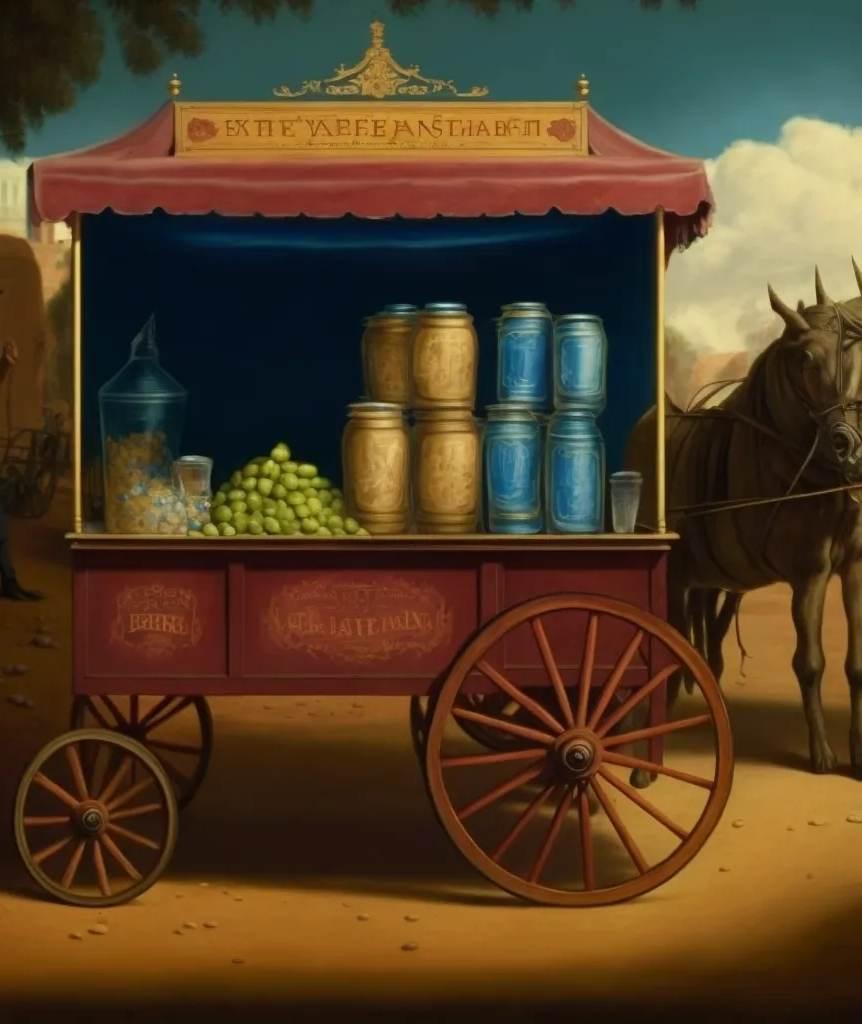
Apparently the lager and cart races had started during the early days of the settler mining, and most of the carts used were relics from that era. Competitors dressed up in costumes and colourful wigs, many of which were found in the abandoned houses of the local area.
“The miners were a strange breed of men, but not all cut from the same cloth ~ they were daring outsiders, game for anything, adventurous rule breakers and outlaws with a penchant for extreme experience. Thus, outlandish and adventurous women ~ and men who were not interested in mining for gold in the usual sense ~ were magnetically drawn to the isolated outpost. After a long dark day of restriction and confinement in the mines, the evenings were a time of colour and wild abandon; bright, garish, bizarre Burlesque events were popular. Strange though it may seem, the town had one of the most extensive wig and corset emporiums in the country, although it was discretely tucked away in the barn behind a mundane haberdashery shop.”
The idea was to fill as many different receptacles with lager as possible, piling them onto the gaily decorated carts pulled by the costume clad participants. As the carts were raced along the track, onlookers ran alongside to catch any jars or bottles that fell off the carts before they hit the ground. Many crashed to the ground and were broken, but if anyone caught one, they were obliged to drink the contents there and then before running after the carts to catch another one.
Members of the public were encouraged to attend in fancy dress costumes and wigs. There were plenty of stationary food vendors carts at the lager and cart races as well, and stalls and tents set up to sell trinkets.
February 13, 2023 at 10:38 pm #6543In reply to: Orbs of Madjourneys
The road was stretching endlessly and monotonously, a straight line disappearing into a nothingness of dry landscapes that sounded a bit depressing. At regular speed, the car barely seemed to progress, and Youssef was rather serious at the wheel. Soon Xavier was left depleted of jokes to tell (even the bad ones which tended to come off easily with sleep deprivation), so he tried to catch some of the patchy network signal to reconnect where he’d left off on the game. There wasn’t much network, and all he could download in the car, even with the game in lo-fi mode, was a measly text message with the starter for his new challenge.
Your quest takes place in the ghost town of Midnight, where time seems to have stood still. The townspeople are all frozen in time, stuck in their daily routines and unable to move on. Your mission is to find the missing piece of continuity, a small hourglass that will set time back in motion and allow the townspeople to move forward.
A ghost town seemed apt indeed.
The welcome signs at the entrance of the town for their hostel were rather uninviting, but a festive banner mentioning the local “Lager and Carts festival” caught his attention. He counted the days. It would be next week-end; there was a good chance they’d still be there, the four of them. At least some action to look forward to!
When he and Youssef arrived at the Inn after that rather uneventful and terribly long drive, all they wanted was to get a shower and some sleep. Zara wasn’t back yet from her trip, but they both figured out they’d meet at breakfast in the morning.
The old lady with the sharp tongue had shown them their rooms rather unceremoniously; she was too busy ranting about an idle person not taking their *one job* seriously to care about details. Xavier almost asked for a wifi, but then thought better and decided to hold his question until he found someone to ask who was born in his century.
Xavier took room 7, and Youssef room 5.The rooms were quite nicely decorated. It reminded him of something he’d read in the plane from a commentary of the Bardo Thodöl:
In Tibetan the word for body is lü, which means “something you leave behind,” like baggage. Each time we say “lü,” it reminds us that we are only travelers, taking temporary refuge in this life and this body. So in Tibet people did not distract themselves by spending all their time trying to make their external circumstances more comfortable. They were satisfied if they had enough to eat, clothes on their backs, and a roof over their heads. Going on as we do, obsessively trying to improve our conditions, can become an end in itself and a pointless distraction. Would anyone in their right mind think of fastidiously redecorating their hotel room every time they booked into one?
— The Tibetan Book of Living and Dying
At least, he wasn’t feeling compelled to redecorate this room; it was perfect. The shared sanitaries, the boiler and the piping were another story, but that was probably coming from the same era as the owner, nice as she was.
After having unpacked his few belongings, and taken a hot shower, he laid on the bed looking at the ceiling, which was blank and made a nice contrast to the ornate walls full of colorful dots.
Luckily, searching through the signals available, he could see there was mostly one, and without any password. With the next neighbour a few miles away, no wonder nobody bothered with security.
He connected to AL to check a few parameters — there seemed to be some degenerescence in the programme output that wasn’t satisfactory, and he was wondering if some self-repair or training reinforcement mechanisms were missing. At the moment, nothing too pressing, but he would keep an eye on them.
Still no words from Yasmin… he thought drifting to sleep… I half expected her to be there already…
February 11, 2023 at 9:16 am #6536In reply to: Orbs of Madjourneys
Youssef hadn’t changed a bit since they last met in real life. He definitely brought the bear in the bear hug he gave Xavier after Xavier had entered the soft sandal wood scented atmosphere of the Indian restaurant.
It was like there’d seen each other the day before, and conversation naturally flew without a thought on the few years’ hiatus between their last trip.
As they inquired about each other’s lives and events on the trip to get to Alice Springs, they ordered cheese nan, salted and mango lassi, a fish biryani and chicken tikka masala and a side thali for Youssef who was again ravenous after the jumpy ride. Soon after, the discussion turned to the road ahead.
“How long to the hostel?” asked Youssef, his mouth full of buns.
Xavier looked at his connected watch “It’s about 1 and half hour drive apparently. I called the number to check when to arrive, they told me to arrive before sunset… which I guess gives us 2-3 hours to visit around… I mean,” he looked at his friend “… we can also go straight there.”
Youssef nodded. He seemed to have had already enough of interactions in the past day.
Xavier continued “so it’s settled, we leave after we finish here. According to the landlady, it looks like Zara went off trekking, she didn’t seem too sure about Zara’s whereabouts. That would explain why we heard so little from her.”
Youssef laughed “If they don’t know Zara, I can bet they’ll be running around searching for her in the middle of the night.”
Xavier looked though the large window facing the street pensively. “I’m not sure I would want to get lost away from the beaten tracks here. There’s something so alien to the scale of it, and the dryness. Have you noticed we’re next to a river? I tried to have a look when I arrived, but it’s mostly dried up. And it’s supposed to be the wet season…”
Youssef didn’t reply, and turned to the leftovers of the biryani.
Despite the offering to top it off with gulab jamun and rose ice cream, it didn’t take too long to finish the healthy meal at the Indian restaurant. Youssef and Xavier went for the car.
“Here, catch!” Xavier threw the keys to Youssef. He knew his friend would have liked to drive; meanwhile he’d be able to catch on some emails and work stuff. After all, he was supposed to remote work for some days.
February 7, 2023 at 10:25 pm #6511In reply to: A Dog and a Dig – The trenches of the Time Capsule
Potential Plot Arch
The uncovered box in the garden of Bob & Clara is a Time Capsule which was actually buried in the future, but mistakenly sent to the past. It has symbols etched on it, that activate some nano-technology.
Due to its contact with it, Bob starts recovering his memories, while retaining the hallucinations of his dead wife Jane, which actually become more credible and intense.Will Tarkin is actually a time traveler from the future, who came to live a simple life in the past, selling stone gargoyles at the local supermarket and rediscovering the ways of his ancestors.
With the box being found and opened at the wrong time, it creates unwanted attention from the Time Dragglers who need to intervene to prevent alterations of the timeline.
Contents of the box are in part encoded books of stories from local families and would have revealed important things about the past, Jane’s death, and Clara’s future.With Bob recovering his memories, it’s revealed Jane and Bob were actually also refugees from the future, but had aged naturally in the past, which is why Will seemed to recognize Bob. Bob was living in hiding from the Time Police, but with the box discovery, it changes everything. The box being opened at the wrong time disrupts the natural flow of events and starts causing unexpected consequences. This creates a complex web of relationships and events that must be untangled and understood in order to move forward.
With his recovering of mental capacities, Bob partners with Will in order to restore the natural flow of time, even if it means his mental health will deteriorate again, which he is happy to do while continuing to live the rest of his life span with his daughter.
Potential developments
Clara Meets the Mysterious Will
Nora finally reaches the little village where Clara and Bob live and is greeted by a man named Will
Will seems to know Bob from somewhere
Clara starts to feel suspicious of Will’s intentions and begins to investigateThe Power of Memories
Bob starts to have flashbacks of his past and begins to remember the connection between him, Will, and the mysterious time capsule
Bob realizes that Jane, his wife, had been keeping something from him and that the time capsule holds the key to unlocking the truth
Jane appears to Bob and urges him to tell Clara about their past and the significance of the time capsuleThe Truth Behind the Capsule
Nora, Clara, and Bob finally find the answers they’ve been searching for by opening the time capsule
The contents of the capsule reveal a shocking truth about Jane’s past and the reason behind her death
They learn that Jane was part of a secret society that protected ancient knowledge and artifacts and that the time capsule was meant to be opened at a specific time
The group realizes that they were meant to find the capsule and continue Jane’s work in protecting the knowledge and artifactsThe Ties Between Living and Dead
Bob comes to terms with Jane’s death and the role she played in their lives
Clara and Bob grow closer as they work together to continue Jane’s work and preserve the knowledge and artifacts
The group encounters obstacles but with the help of the spirits of the past, they are able to overcome them and succeed in their missionA Realization of the Past and Present
Clara, Bob, and Nora come to realize the power of memories and how they shape our present and future
They also learn that things never truly remain buried and that the past always finds a way to resurface
The group successfully preserves the knowledge and artifacts, ensuring that they will be passed down for generations to come
The story ends with Clara, Bob, and Nora sitting by the fire, reflecting on their journey and the lessons they’ve learned.January 24, 2023 at 11:34 am #6457In reply to: Orbs of Madjourneys
“Look, Pretty Girl! That must be the lost traveler walking up those steps!”
Zara followed the mysterious man in red robes up the steps. She lost sight of him and wondered which way he’d gone in the many side alleys. She wandered up a few of them but they all came to a dead end in a courtyard with closed doors. Eventually she saw him disappearing into a manhole that looked like a labyrinth.
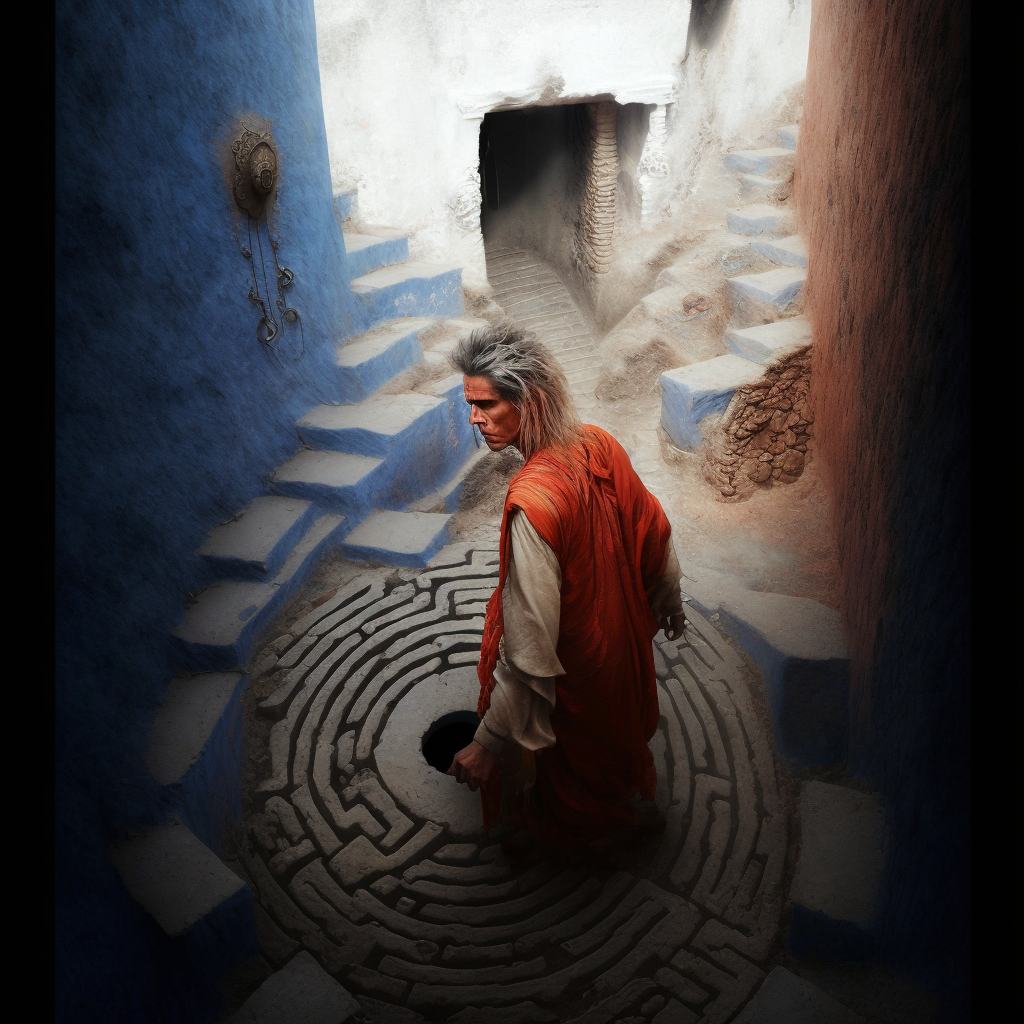
Zara followed him, and stepped onto the labyrinth manhole that the man in the red robes had disappeared into.
“That must be another portal,” Zara said to the parrot. “I wonder where we’ll end up now.”
The labyrinth manhole led Zara to another portal, this time a round hole in the wall. She knew she should follow the man, who must be the lost traveler, but she couldn’t resist exploring the starlit night scene first.

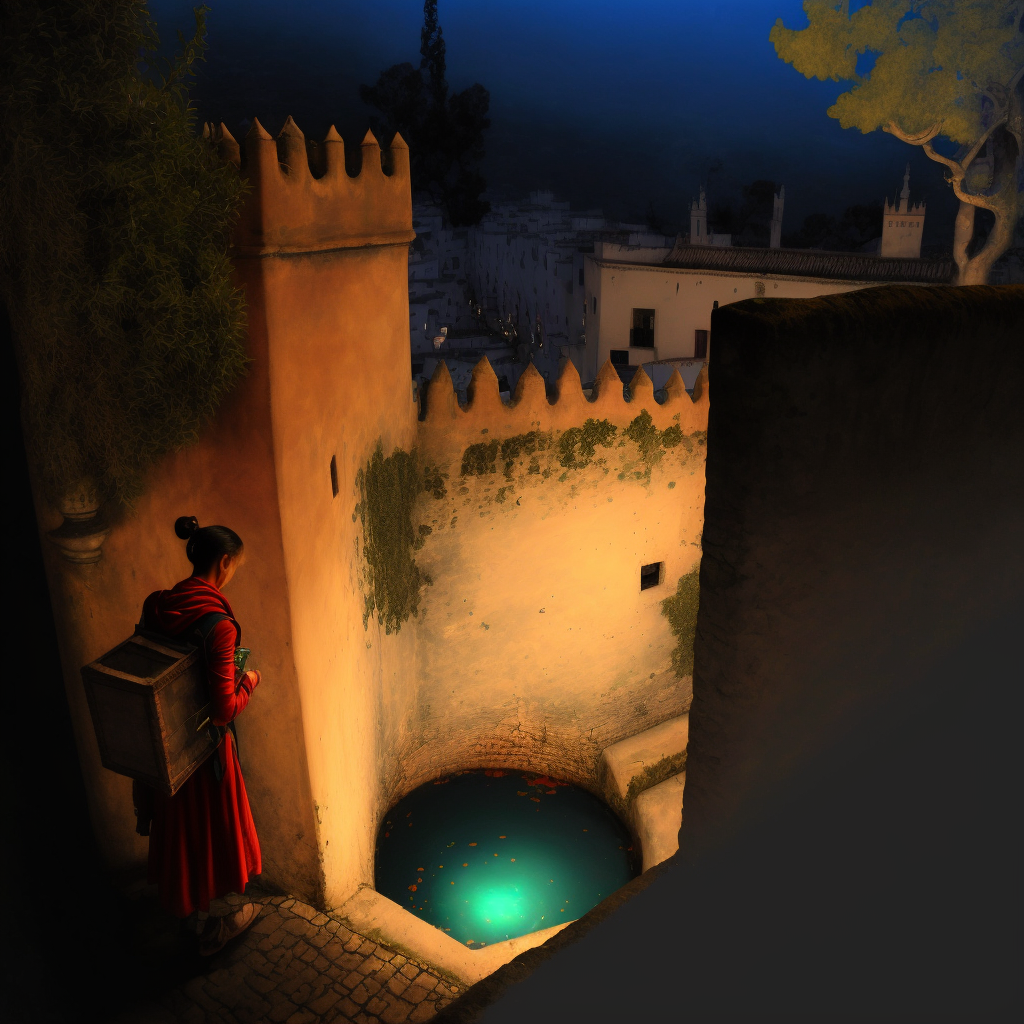
She found herself in a castle, its sand coloured walls glowing in the moonlight. There was another round green pool inside the castle. Should she jump into the pool, or go back and follow the man in red through the hole in the wall? Zara walked around the castle first, exploring the many courtyards and stairs and the enchanting views from the parapets. She noticed that there were several green pools and wondered if they each led to different places.
 January 17, 2023 at 8:17 am #6393
In reply to: Train your subjective AI – text version
Give me an unusual plot structure for a narrative
One unusual plot structure for a narrative could be a “reverse chronological” structure, where the story begins at the end and works backwards in time, revealing events and information in a non-linear way. Another could be a “choose your own adventure” style, where the reader is presented with a series of choices at different points in the story that determine the direction and outcome of the plot.
How would role playing qualify in terms of plot structure?
Role-playing games (RPGs) can be considered a unique form of plot structure because they are interactive and open-ended. In a traditional RPG, the players take on the roles of characters within a fictional setting and work together to create a shared narrative. The plot structure of an RPG is determined by the actions and decisions of the players, rather than a pre-written script. The game master (GM) creates an overarching plot and a set of rules for the players to follow, but the players’ choices and actions will determine the direction and outcome of the story. This makes the plot structure of an RPG fluid and ever-changing, unlike a traditional linear narrative.
What about “Cloud Atlas” in terms of plot structure?
“Cloud Atlas” is a novel written by David Mitchell that was later adapted into a film. It has a complex and non-linear plot structure, which employs multiple storylines that are set in different time periods and locations, and are connected by recurring themes and motifs. The novel is divided into six nested stories, each set in a different time period and location, that are told in a non-linear fashion. The story begins in the 19th century and then jumps back and forth between the 19th, 20th and 23rd century, and each story is interconnected and interrelated, with characters reappearing in different time periods, the events that happen in one story impacting the others. The novel is also notable for its use of different genres, such as science fiction, historical fiction, and thriller, and the way it explores the themes of destiny, reincarnation, and the power of human connection. The film adaptation also used this structure, with the different stories intertwined and characters reprising their roles in different settings and eras.
Take a story thread made of comments. In each comment is a text about characters in a particular plot, location, action etc. The comments are sequential, but they are not necessarily continuous. It is a mix between Cloud Atlas and RPG plot structures. How do you sort something that’s fundamentally non-linear to present it in an accessible way?
One way to sort and present a story thread made of comments that is fundamentally non-linear, yet accessible, is to group the comments based on their content. For example, you could group the comments by characters, and present them in chronological order of their appearance in the story. Another way could be grouping the comments by location, and present them in chronological order of when the action takes place in that particular location. You could also group comments by the type of action taking place, such as combat, conversation, or puzzle-solving, and present them in chronological order of when they occur in the story.
Another approach could be using visual aids, such as mind maps, timelines, or flowcharts, to help organize and present the information in a clear and easy-to-understand way. For example, you could use a mind map to show how different characters are connected, or a timeline to show the chronology of events. Additionally, you could use labels, such as “character introduction,” “location change,” or “plot twist,” to make it clear to the reader what type of information they can expect in each comment.
It’s also important to keep in mind the audience for which you are organizing the story. It should be easy for them to understand and follow the story, and if it’s a game, you should make sure it’s easy for the players to play and make decisions.
January 15, 2023 at 1:18 pm #6391In reply to: Train your subjective AI – text version
write the plot of an absurd non-linear novel, featuring 4 characters
The novel begins with the introduction of four characters: a retired archaeologist named Harold, a struggling musician named Samantha, a disillusioned corporate drone named Tim, and a reclusive inventor named Claire.
Harold, who is obsessed with ancient Egyptian hieroglyphs, discovers a mysterious underground chamber beneath a pyramid in Egypt. Inside, he finds a strange device that he believes is a time machine. Harold decides to use the device to travel back in time to ancient Egypt in order to decipher the hieroglyphs.
Samantha, who is trying to make a name for herself as a musician, is struggling to come up with new material for her music. One day, she discovers that she can create beautiful music by communicating with plants telepathically. She becomes obsessed with this new form of music-making and decides to quit her day job and pursue it full-time.
Tim, who is stuck in a dead-end job, is feeling unfulfilled and uninspired. One day, he stumbles upon a robotic mime performance art show. The performance inspires him to quit his job and pursue his dream of becoming a mime artist.
Claire, who is a reclusive inventor, has been working on a project to create a type of artificial intelligence that can communicate with humans using calligraphic body language. She finally succeeds and creates an AI that she names “Calli”.
As the story progresses, the characters’ paths begin to intersect in unexpected ways. Harold gets stuck in ancient Egypt and has to rely on Samantha’s telepathic plant communication skills to find a way back to the present. Tim’s robotic mime art becomes a hit and he starts working with Claire to integrate Calli into his performances.
As the story reaches its climax, all four characters come together to use their unique skills and abilities to solve a problem that threatens the fate of the world.
Throughout the novel, the plot unfolds in a non-linear fashion, jumping back and forth in time and between the different character’s perspectives. The story is filled with absurdity and unexpected twists and turns, leaving the reader guessing until the very end.
What sort of problem that threatens the fate of the world will be resolved by their combined skills?
As the story progresses, the characters begin to uncover a sinister plot by a group of powerful individuals who are intent on using the time machine to alter the course of history for their own gain. They plan to use the time machine to go back in time and change key events that would give them immense wealth and power in the present. Harold and Samantha, with the help of Tim and Claire, must race against time to stop the villains from carrying out their plan.
Harold’s expertise in ancient Egyptian hieroglyphs plays a crucial role in deciphering the clues that lead to the location of the time machine. Samantha’s telepathic plant communication skills are used to locate the hidden underground chamber where the time machine is kept. Tim’s robotic mime art and Claire’s AI Calli are used to infiltrate the villains’ hideout and gather intelligence on their plans.
In the final act, the four characters come together to use their unique skills and abilities to stop the villains from altering history. Harold uses his knowledge of ancient Egypt to navigate the time machine and travel back in time to stop the villains from changing key events. Samantha uses her telepathic plant communication skills to communicate with the plants in the past and gather information on the villains’ whereabouts. Tim and Claire use their robotic mime and AI skills to create a diversion and distract the villains while Harold and Samantha complete their mission.
In the end, the four characters succeed in stopping the villains and saving the fate of the world. The novel ends with the four characters going their separate ways, but they all know that they will always have each other to rely on in the face of any challenge that comes their way.
January 13, 2023 at 8:53 pm #6380In reply to: Prompts of Madjourneys
After a few tries:
- As the group has split up at the fork of the road, we discover a total of 4 new characters from the Land of the Quirks. Tell us how each group is encountering some or all of these characters, who they are, their gibberish-sounding names, and what is their quirks, and what they wear, or their activities. Make our main characters and maybe some of the new ones meet back at a common spot with a special event after that.
- please rewrite the above, retaining the eccentricity but more grounded, less childish, and with a little darker tone and mystery.
- please try again, make Spoink and Flibbertigibbet human and give them less endearing or friendly behaviours; name two more characters met on the road.
As the group split up at the fork of the road, each one encountered new characters from the Land of the Quirks.
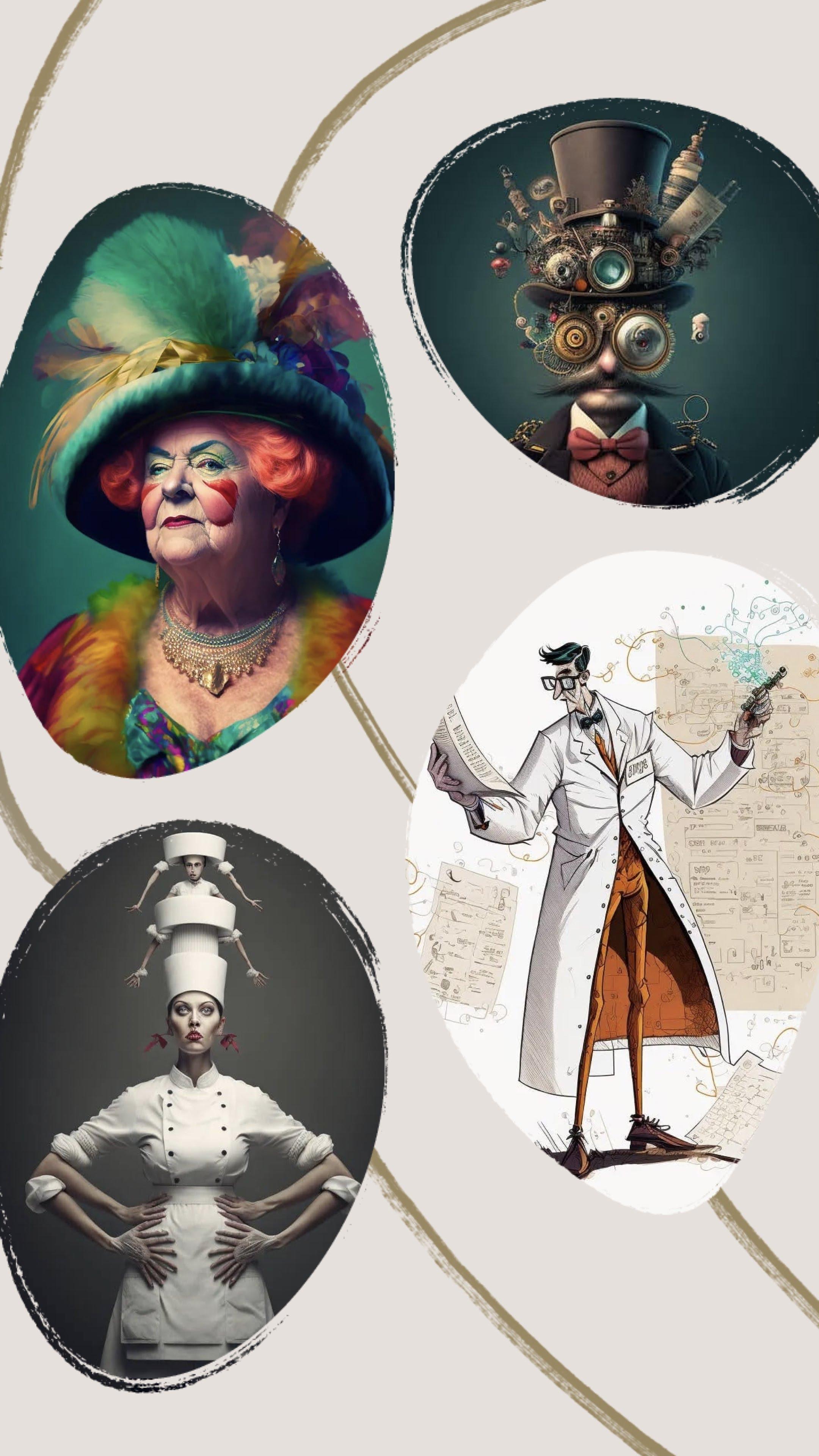
Zara and Yasmin, who took the left path, met a man named “Sproink” who was a small, wiry man with a spring for a tail. He was always bouncing around and speaking in a language that sounded like a mix of gibberish and music. Sproink was a collector of shiny objects and had a bag full of them, he was also a scavenger, always looking for things to add to his collection. He was wearing a small top hat and a monocle. He was also known to be a bit of a thief and a con artist.
Xavier and Youssef, who took the right path, met a woman named “Flibbertigibbet” a tall, slender woman that had multiple arms. Flibbertigibbet was very talkative and friendly, always trying to strike up a conversation. She spoke in a language that sounded like a mix of gibberish and baby talk. She was a chef and was always carrying a pot and a spoon, but she also had a dark side, she was known to be a bit of a manipulator and a spy, always observing and gathering information for a mysterious organization. She was wearing a big chef hat and apron.
As the group met back at the fork, they were surprised to find that Sproink and Flibbertigibbet had also met there. The four new characters joined the group, and together they continued their journey to find the “Key of Quirks”. Along the way, they met two more characters;
They met a man named “Gibber” who was a tall, gaunt man with elongated limbs and fingers. He was always speaking in a language that sounded like a mix of gibberish and numbers. He was a mathematician and a scientist, always working on complex equations and theories. He was known to be a bit of a loner, and didn’t interact much with others. He was wearing a lab coat and goggles.
They also met a woman named “Glimmer” she was a short, plump woman with a shimmering skin that seemed to change color depending on the light. She was always speaking in a language that sounded like a mix of gibberish and poetry. She was an artist and a performer, always creating and performing in different shows. She was known to be a bit of a flirt and a bit of a drama queen. She was wearing a colorful and eccentric clothing, such as a flowy dress and a large hat adorned with feathers.
As the group journeyed on, they encountered more characters, each one with their own unique quirks and personalities. They met a variety of people, some friendly and some not so friendly, but all of them adding to the mysterious and unknown nature of the Land of the Quirks.
As the group reached the end of their journey and found the “Key of Quirks”, they realized that the key was not just a physical object but a symbol of acceptance and embracing individuality. They learned that the true key to leaving the Land of the Quirks was understanding and accepting the quirks of oneself and others.
The group had a bittersweet goodbye with their new friends, Sproink, Flibbertigibbet, Gibber and Glimmer, and the other characters they had met. They knew that they would always carry a piece of the Land of the Quirks with them and would always remember the mysterious and eccentric adventure they had.
 January 13, 2023 at 7:40 pm #6379
In reply to: Prompts of Madjourneys
Asking to give each of the 4 characters some particular traits that makes them uniquely distinctive and recognizable
The four friends, Zara, Xavier, Yasmin, and Youssef, each have their own unique traits that make them stand out and recognizable.
Zara is the leader of the group, she is confident, and always ready for an adventure. She is a natural leader and has a strong sense of justice. She is also a tech-savvy person, always carrying a variety of gadgets with her, and is always the first to try out new technology.
Xavier is the joker of the group, always cracking jokes and making puns. He is a free-spirited person who is always up for an adventure, he has a great sense of humor and is not afraid to be himself. He is also an artist and often carries a sketchbook and pencils with him, he likes to draw whatever he sees in his journeys.
Yasmin is the brains of the group, she is intelligent and logical. She is always able to think on her feet and come up with a plan when things get tough. She is also a bit of a perfectionist and likes to have everything organized. She is a history buff and always carries a notebook with her to document her findings.
Youssef is the muscle of the group, He is physically strong, and always ready to help out in a fight. He is also a bit of a foodie and loves trying new dishes. He is always the first one to volunteer to carry the heavy bags and equipment. He is also a bit of a daredevil and loves trying out new sports and activities.
Give each of them a color, and an animal, and a secret name in a funny language
The four friends, Zara, Xavier, Yasmin, and Youssef, each have their own unique traits that make them stand out and recognizable.
Zara is the leader of the group, her color is red, her animal is a lion, and her secret name in a funny language is “Zaraloon”
Xavier is the joker of the group, his color is orange, his animal is a monkey, and his secret name in a funny language is “Xavimunk”
Yasmin is the brains of the group, her color is blue, her animal is an owl, and her secret name in a funny language is “Yasminowl”
Youssef is the muscle of the group, his color is green, his animal is a bear, and his secret name in a funny language is “Youssefbear”
Now, we need physical descriptions for each of them. Also, their ages, height, clothes, facial features, ethnicity (for instance Youssef may be half Yemeni and half Norwegian), etc. with a good mix of generic and eccentric. We also need surnames congruent with their described ethnicity, not too bland, but not too daft either. For instance Youssef Olafsson, Zara Patara-Smythe, etc. Also explain how they become friends.
Zara Patara-Smythe is a
25-year-oldwoman of mixed heritage, her mother is Indian and her father is British. She has long, dark hair that she keeps in a sleek ponytail, dark brown eyes and a sharp jawline. She stands at 5’6″ and has a toned and athletic build. She usually wears practical clothing that allows her to move around easily, such as cargo pants and a tank top.Xavier Olafsson is a
27-year-oldman of Norwegian and Danish descent. He has blonde hair that he keeps in a messy style, blue eyes, and a charming smile. He stands at 6’1″ and has a lean build. He is always seen wearing a colorful and bold clothing, such as a Hawaiian shirt and shorts.Yasmin Ahmed is a
23-year-oldwoman of Egyptian descent. She has long, black hair that she keeps in a tight braid, dark brown eyes and a round face. She stands at 5’4″ and has a petite build. She usually wears conservative clothing, such as long skirts and blouses.Youssef Ali is a
26-year-oldman of half Yemeni, half Norwegian descent. He has short, curly black hair, dark brown eyes and a square jawline. He stands at 6’2″ and has a muscular build. He usually wears comfortable clothing such as a t-shirt and jeans, and always has a backpack on his shoulder.The four of them became friends
in college, they were all studying different majors, but they all shared a love for adventure and exploration. They found themselves in the same class project, and from there they formed a strong bond. After college, they decided to keep exploring the world together, and went on many trips and adventures, always seeking for something new and exciting.
1/ Change the ages of Zara, Xavier, Yasmin and Youssef to more random patterns – rewrite if needed how they met each other to reflect eventual age gaps. Give them some flaws, mental or physical challenges.
2/ increase again the age gaps while keeping the youngest one a young adult, and remove “minor” from the flaws descriptionsZara is a 22-year-old woman who is the youngest of the group. She is a free-spirited, adventurous person, but also a bit reckless and impulsive. She has a scar on her cheek that she got from a Skateboarding accident when she was a teenager.
Xavier is a 45-year-old man who is the oldest of the group. He is a responsible and level-headed person, but also a bit of a perfectionist and can be hard on himself and others. He has dyslexia which he has been able to work around and it doesn’t impede his daily life.
Yasmin is a 38-year-old woman who is the second oldest of the group. She is a kind and compassionate person, but also a bit of a pushover and can have trouble standing up for herself. She has social anxiety that affect her in certain situations and she have been working on coping mechanisms.
Youssef is a 33-year-old man who is the second youngest of the group. He is a charismatic and outgoing person, but also a bit of a flirt and can be a bit insensitive to others feelings. He has ADHD which he has been able to manage with medication, but it still affects him from time to time.
The group met each other through different means, Xavier and Yasmin met at work, Zara and Youssef met at a college class, and eventually, they all became friends through common interests and activities. They decided to go on this adventure together because they were all looking for a change in their lives and wanted to explore the unknown.
January 13, 2023 at 6:47 pm #6378Topic: Prompts of Madjourneys
A thread to share some of the prompts behind the AI-assisted journey into new adventures.
To start off…
Please write the exciting start of a novel.
Some elements you can integrate if you want:
– Four randomly chosen names full of panache that sound distinct from each other, slightly exotic and evocative
– the sentiment from this quotation: “Look around… Beauty is everywhere. You only have to look to see it.” – a group of four people ready for an adventure, standing in a cave with stalactites in front of a giant orb or bubble that seem to open to another brightly lit realm. Inside the bigger orb are some smaller orbs.
– the following term “mad journeys”Told it to continue and it brought dragons… Asked to tone down the fantasy stuff, here’s what came out:
They walked into a small village, where they were greeted by a group of people wearing clothes that looked like they were from the 1920s. The people told them that they were in the land of the “Quirks”, a place where everything and everyone was a little bit different, and that they had to find the “Key of Quirks” in order to leave the land.
The group set off on their journey to find the key, but little did they know that their adventure was about to become even more exciting and quirky than they could ever have imagined. They encountered a talking dog, a man who had a garden on top of his head, and a group of people who lived inside of giant mushrooms.
As they journeyed on, they faced challenges and made new friends, but most importantly they learn to embrace their own quirks and individuality. Eventually, they found the key and were able to leave the land of the Quirks, but they knew that they would always carry a piece of that land with them.
January 11, 2023 at 9:43 pm #6367In reply to: Train your subjective AI – text version
Something in the style of TPooh:
The family tree was a tangled web of branches and roots, stretching back centuries and even millennia. The branches were thick with the leaves of secrets, scandals, and mysteries that the family had accumulated over the years. They were a close-knit group, friends for all time, and they loved nothing more than exploring the twists and turns of their family history.
They met regularly in their dreams, in a place they called The City, where they could exchange stories and clues they had uncovered during their waking hours. They often found themselves in the midst of strange and puzzling occurrences, and they would spend hours discussing the possible meanings and connections of these events. They saw the world as a tapestry, with each thread and pattern contributing to the greater picture. They were the weavers of their own story, the authors of their own fate.
But as the years went on, their dreams began to take on a darker and more ominous tone. They started having nightmares of monstrous beasts, and some of them even saw these beasts in the daylight, as if they were falling through the cracks in reality. They compared notes and found that they were often seeing the same beasts, and this led to heated debates about what these beasts represented and whether they were real or just figments of their imagination.
But no matter what they encountered, the family remained united in their quest to unravel the secrets of their past and to weave a tapestry that would be the envy of all. They were thick as thieves and they would never give up their pursuit of the truth, no matter how many rules they had to break along the way.
January 10, 2023 at 11:00 pm #6365In reply to: Train your subjective AI – text version
Prune has got me into this AI stuff… It sounds like gibberish to me, but Idle sounded amazed at the stuff it spewed out.
With some info on our family story, Prune got it to try and predict the future…
Sounds like a big plate of bog, but we’ll see how it goes.
Sure, here are a few possible events that could occur between Mater’s 100th birthday and her death in the Flying Fish Inn story:
- Mater decides to throw herself a grand birthday party, inviting all of her friends and family from the small outback town. However, things take a turn for the strange when a group of extraterrestrial beings crash the party and reveal themselves to be long-time fans of Mater’s famous bush tucker cuisine.
- Mater begins to experience vivid dreams and hallucinations, in which she is visited by the ghost of her late husband. As the dreams become more frequent, the family begins to suspect that there may be something more to them than just Mater’s mind playing tricks on her.
- Mater’s granddaughter Prune becomes increasingly obsessed with her dream of traveling to Mars, and begins to notice strange occurrences happening around the inn that seem to be connected to her aspiration.
- A group of eccentric scientists arrive at the inn, conducting research on the local flora and fauna. They eventually discover a species of sentient plants living in the area, and Mater becomes convinced that the plants are communicating with her in her dreams.
- With her health declining, Mater begins to spend more and more time tending to her garden, where she is visited by an old kookaburra who seems to possess an otherworldly intelligence. The bird becomes Mater’s companion and confidant in the final days of her life.
- As the Great Fires ravage the Australian bush, Mater makes the difficult decision to shut down the inn and evacuate the guests. But as they flee, they realize that the fire is not just a natural disaster, but something far more sinister and mystical.
- In her final days, Mater begins to remember strange and vivid details of her life that she never could have known, as if she lived a previous life in another time and place. As she dies, she whispers something to Prune, which opens her eyes to a new reality that may have been hidden from her all along
- It turns out the family had a lot of secrets, and the only way to escape it, was to leave the inn, but it was not an escape for all. Through the series of events, secrets are revealed, and some truths cannot be undone.Note that these events are fictional and whimsical in nature, but as they keeps it grounded to a sense of doldrums in the Australian bush and occasionally guests help to unravel some of the overarching mysteries it could make a fitting storyline for the story.
January 10, 2023 at 10:31 pm #6364In reply to: Train your subjective AI – text version
Please suggest a creative, a little ghostic but mostly uplifting plot outline for the continuation of the story of Twilight in her travels to join the freak circus and become famous for her craft on the west coast
— The Far-West saga — In 1850s, in a probable reality of South America, we get acquainted with Twilight (Twi) and her brothers Jo and Elroy. They have a precious blue bull in their possession, coveted by Ogrean, the kingpin of the town. Hopefully for them, Ogrean is arrested (temporarily) by Ted Marshall, the sheriff for his possible trafficking. Notably, Ogrean is possibly involved in some of the crystal skulls discoveries, during his travel to New Honduras. Twi who was dancing in the saloon of Madame Butterbutt, the town’s hallucinogenic toads-to-lick dispenser (insert some other romantic subplots involving the other dancer etc.) decides to go traveling in a freakus (freak show/circus). She is now close to the West Coast, where she hopes to succeed in her writing and other artistic skills.
As Twilight (Twi) travels with the freak circus, she faces many challenges and obstacles on her journey to the West Coast. Despite the difficulties, she remains determined to make a name for herself as a writer and artist.
As she travels through small towns and larger cities, she begins to realize that the world is much bigger than she ever imagined. She meets a diverse group of people, some of whom are kind and supportive, while others are cruel and dismissive of her dreams.
Despite the negative reactions she receives from some people, Twi persists and begins to gain a reputation as a talented writer and performer. As she gains more experience and confidence, she starts to incorporate her own unique style into her performances, which sets her apart from the other performers in the circus.
As she approaches the West Coast, she begins to feel a sense of excitement and anticipation. She has heard that the West Coast is a place of endless possibilities, where creative minds can thrive. She is determined to make her mark and become famous for her craft.
As she settles in the west, she finds herself surrounded by artists and writers like herself, who inspire her to push herself even further. She begins to gain a following and her writing is widely read. She discovers that her talent is not only limited to writing, but she also has a natural talent for other art forms as well.
Eventually, Twi’s reputation as a talented artist and writer precedes her and she becomes a sought-after performer in the West Coast, and her creative work is being showcased in galleries and theaters. As she continues to achieve success in her career, she begins to realize that the West Coast is not just a place of endless possibilities but also the place where she belongs, and the place where her dreams come true.
Throughout her journey, she also keeps in touch with her brothers, Jo and Elroy, who now run the farm and take care of the blue bull. They tell her that the bull, now named Blue-Dream, became a legend in the village and they get a good price for its breeding.
As the story continues, she finds herself also involved in some adventures and exciting subplots, like discovering a secret underground cave filled with precious crystals and some interesting characters, like the enigmatic sheriff Ted Marshall who always cross her path, and the mysterious Ogrean who seems to have a connection to her past and the bull.
The End.
December 6, 2022 at 2:17 pm #6350In reply to: Family Stories From The Other Side ~ Book Two
Transportation
Isaac Stokes 1804-1877
Isaac was born in Churchill, Oxfordshire in 1804, and was the youngest brother of my 4X great grandfather Thomas Stokes. The Stokes family were stone masons for generations in Oxfordshire and Gloucestershire, and Isaac’s occupation was a mason’s labourer in 1834 when he was sentenced at the Lent Assizes in Oxford to fourteen years transportation for stealing tools.
Churchill where the Stokes stonemasons came from: on 31 July 1684 a fire destroyed 20 houses and many other buildings, and killed four people. The village was rebuilt higher up the hill, with stone houses instead of the old timber-framed and thatched cottages. The fire was apparently caused by a baker who, to avoid chimney tax, had knocked through the wall from her oven to her neighbour’s chimney.
Isaac stole a pick axe, the value of 2 shillings and the property of Thomas Joyner of Churchill; a kibbeaux and a trowel value 3 shillings the property of Thomas Symms; a hammer and axe value 5 shillings, property of John Keen of Sarsden.
(The word kibbeaux seems to only exists in relation to Isaac Stokes sentence and whoever was the first to write it was perhaps being creative with the spelling of a kibbo, a miners or a metal bucket. This spelling is repeated in the criminal reports and the newspaper articles about Isaac, but nowhere else).
In March 1834 the Removal of Convicts was announced in the Oxford University and City Herald: Isaac Stokes and several other prisoners were removed from the Oxford county gaol to the Justitia hulk at Woolwich “persuant to their sentences of transportation at our Lent Assizes”.
via digitalpanopticon:
Hulks were decommissioned (and often unseaworthy) ships that were moored in rivers and estuaries and refitted to become floating prisons. The outbreak of war in America in 1775 meant that it was no longer possible to transport British convicts there. Transportation as a form of punishment had started in the late seventeenth century, and following the Transportation Act of 1718, some 44,000 British convicts were sent to the American colonies. The end of this punishment presented a major problem for the authorities in London, since in the decade before 1775, two-thirds of convicts at the Old Bailey received a sentence of transportation – on average 283 convicts a year. As a result, London’s prisons quickly filled to overflowing with convicted prisoners who were sentenced to transportation but had no place to go.
To increase London’s prison capacity, in 1776 Parliament passed the “Hulks Act” (16 Geo III, c.43). Although overseen by local justices of the peace, the hulks were to be directly managed and maintained by private contractors. The first contract to run a hulk was awarded to Duncan Campbell, a former transportation contractor. In August 1776, the Justicia, a former transportation ship moored in the River Thames, became the first prison hulk. This ship soon became full and Campbell quickly introduced a number of other hulks in London; by 1778 the fleet of hulks on the Thames held 510 prisoners.
Demand was so great that new hulks were introduced across the country. There were hulks located at Deptford, Chatham, Woolwich, Gosport, Plymouth, Portsmouth, Sheerness and Cork.The Justitia via rmg collections:
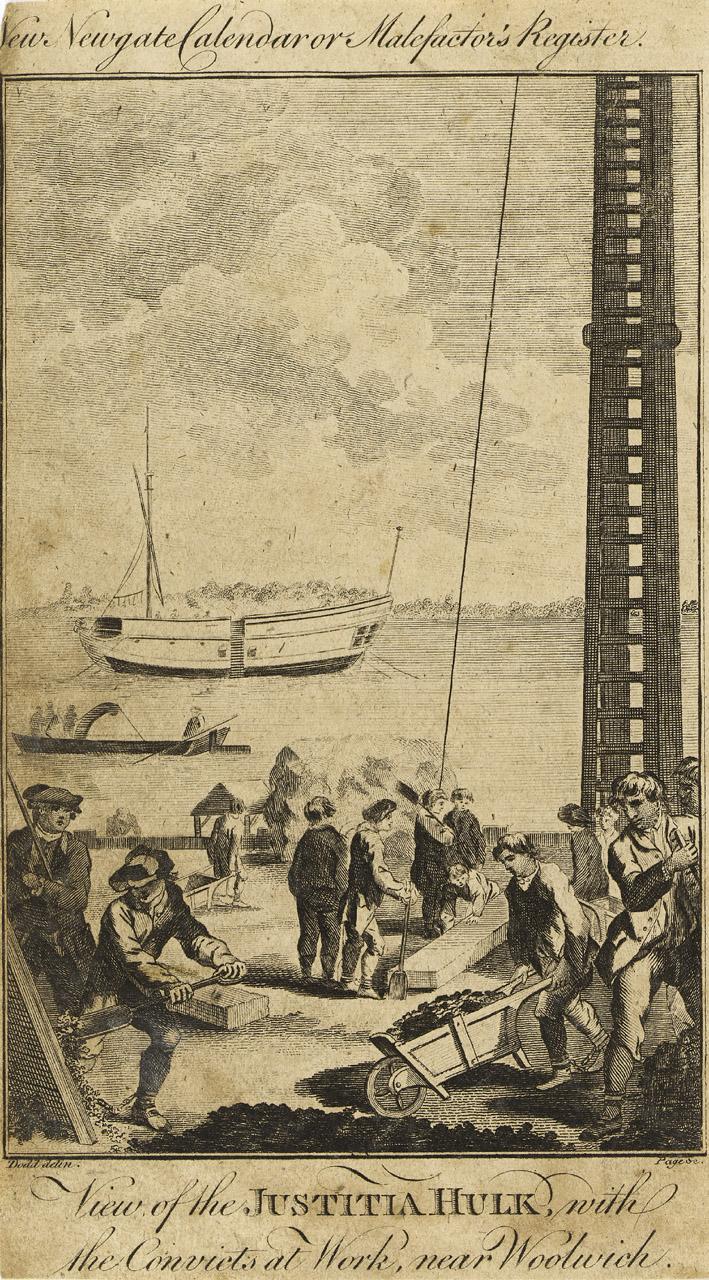
Convicts perform hard labour at the Woolwich Warren. The hulk on the river is the ‘Justitia’. Prisoners were kept on board such ships for months awaiting deportation to Australia. The ‘Justitia’ was a 260 ton prison hulk that had been originally moored in the Thames when the American War of Independence put a stop to the transportation of criminals to the former colonies. The ‘Justitia’ belonged to the shipowner Duncan Campbell, who was the Government contractor who organized the prison-hulk system at that time. Campbell was subsequently involved in the shipping of convicts to the penal colony at Botany Bay (in fact Port Jackson, later Sydney, just to the north) in New South Wales, the ‘first fleet’ going out in 1788.
While searching for records for Isaac Stokes I discovered that another Isaac Stokes was transported to New South Wales in 1835 as well. The other one was a butcher born in 1809, sentenced in London for seven years, and he sailed on the Mary Ann. Our Isaac Stokes sailed on the Lady Nugent, arriving in NSW in April 1835, having set sail from England in December 1834.
Lady Nugent was built at Bombay in 1813. She made four voyages under contract to the British East India Company (EIC). She then made two voyages transporting convicts to Australia, one to New South Wales and one to Van Diemen’s Land (Tasmania). (via Wikipedia)
via freesettlerorfelon website:
On 20 November 1834, 100 male convicts were transferred to the Lady Nugent from the Justitia Hulk and 60 from the Ganymede Hulk at Woolwich, all in apparent good health. The Lady Nugent departed Sheerness on 4 December 1834.
SURGEON OLIVER SPROULE
Oliver Sproule kept a Medical Journal from 7 November 1834 to 27 April 1835. He recorded in his journal the weather conditions they experienced in the first two weeks:
‘In the course of the first week or ten days at sea, there were eight or nine on the sick list with catarrhal affections and one with dropsy which I attribute to the cold and wet we experienced during that period beating down channel. Indeed the foremost berths in the prison at this time were so wet from leaking in that part of the ship, that I was obliged to issue dry beds and bedding to a great many of the prisoners to preserve their health, but after crossing the Bay of Biscay the weather became fine and we got the damp beds and blankets dried, the leaks partially stopped and the prison well aired and ventilated which, I am happy to say soon manifested a favourable change in the health and appearance of the men.
Besides the cases given in the journal I had a great many others to treat, some of them similar to those mentioned but the greater part consisted of boils, scalds, and contusions which would not only be too tedious to enter but I fear would be irksome to the reader. There were four births on board during the passage which did well, therefore I did not consider it necessary to give a detailed account of them in my journal the more especially as they were all favourable cases.
Regularity and cleanliness in the prison, free ventilation and as far as possible dry decks turning all the prisoners up in fine weather as we were lucky enough to have two musicians amongst the convicts, dancing was tolerated every afternoon, strict attention to personal cleanliness and also to the cooking of their victuals with regular hours for their meals, were the only prophylactic means used on this occasion, which I found to answer my expectations to the utmost extent in as much as there was not a single case of contagious or infectious nature during the whole passage with the exception of a few cases of psora which soon yielded to the usual treatment. A few cases of scurvy however appeared on board at rather an early period which I can attribute to nothing else but the wet and hardships the prisoners endured during the first three or four weeks of the passage. I was prompt in my treatment of these cases and they got well, but before we arrived at Sydney I had about thirty others to treat.’
The Lady Nugent arrived in Port Jackson on 9 April 1835 with 284 male prisoners. Two men had died at sea. The prisoners were landed on 27th April 1835 and marched to Hyde Park Barracks prior to being assigned. Ten were under the age of 14 years.
The Lady Nugent:
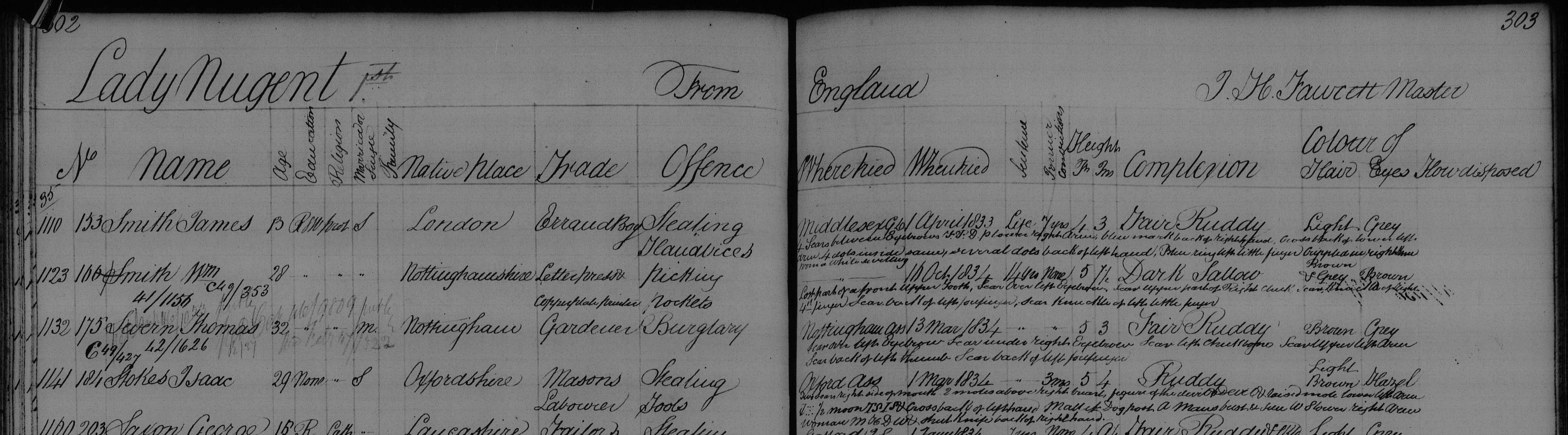
Isaac’s distinguishing marks are noted on various criminal registers and record books:
“Height in feet & inches: 5 4; Complexion: Ruddy; Hair: Light brown; Eyes: Hazel; Marks or Scars: Yes [including] DEVIL on lower left arm, TSIS back of left hand, WS lower right arm, MHDW back of right hand.”
Another includes more detail about Isaac’s tattoos:
“Two slight scars right side of mouth, 2 moles above right breast, figure of the devil and DEVIL and raised mole, lower left arm; anchor, seven dots half moon, TSIS and cross, back of left hand; a mallet, door post, A, mans bust, sun, WS, lower right arm; woman, MHDW and shut knife, back of right hand.”
From How tattoos became fashionable in Victorian England (2019 article in TheConversation by Robert Shoemaker and Zoe Alkar):
“Historical tattooing was not restricted to sailors, soldiers and convicts, but was a growing and accepted phenomenon in Victorian England. Tattoos provide an important window into the lives of those who typically left no written records of their own. As a form of “history from below”, they give us a fleeting but intriguing understanding of the identities and emotions of ordinary people in the past.
As a practice for which typically the only record is the body itself, few systematic records survive before the advent of photography. One exception to this is the written descriptions of tattoos (and even the occasional sketch) that were kept of institutionalised people forced to submit to the recording of information about their bodies as a means of identifying them. This particularly applies to three groups – criminal convicts, soldiers and sailors. Of these, the convict records are the most voluminous and systematic.
Such records were first kept in large numbers for those who were transported to Australia from 1788 (since Australia was then an open prison) as the authorities needed some means of keeping track of them.”On the 1837 census Isaac was working for the government at Illiwarra, New South Wales. This record states that he arrived on the Lady Nugent in 1835. There are three other indent records for an Isaac Stokes in the following years, but the transcriptions don’t provide enough information to determine which Isaac Stokes it was. In April 1837 there was an abscondment, and an arrest/apprehension in May of that year, and in 1843 there was a record of convict indulgences.
From the Australian government website regarding “convict indulgences”:
“By the mid-1830s only six per cent of convicts were locked up. The vast majority worked for the government or free settlers and, with good behaviour, could earn a ticket of leave, conditional pardon or and even an absolute pardon. While under such orders convicts could earn their own living.”
In 1856 in Camden, NSW, Isaac Stokes married Catherine Daly. With no further information on this record it would be impossible to know for sure if this was the right Isaac Stokes. This couple had six children, all in the Camden area, but none of the records provided enough information. No occupation or place or date of birth recorded for Isaac Stokes.
I wrote to the National Library of Australia about the marriage record, and their reply was a surprise! Issac and Catherine were married on 30 September 1856, at the house of the Rev. Charles William Rigg, a Methodist minister, and it was recorded that Isaac was born in Edinburgh in 1821, to parents James Stokes and Sarah Ellis! The age at the time of the marriage doesn’t match Isaac’s age at death in 1877, and clearly the place of birth and parents didn’t match either. Only his fathers occupation of stone mason was correct. I wrote back to the helpful people at the library and they replied that the register was in a very poor condition and that only two and a half entries had survived at all, and that Isaac and Catherines marriage was recorded over two pages.
I searched for an Isaac Stokes born in 1821 in Edinburgh on the Scotland government website (and on all the other genealogy records sites) and didn’t find it. In fact Stokes was a very uncommon name in Scotland at the time. I also searched Australian immigration and other records for another Isaac Stokes born in Scotland or born in 1821, and found nothing. I was unable to find a single record to corroborate this mysterious other Isaac Stokes.
As the age at death in 1877 was correct, I assume that either Isaac was lying, or that some mistake was made either on the register at the home of the Methodist minster, or a subsequent mistranscription or muddle on the remnants of the surviving register. Therefore I remain convinced that the Camden stonemason Isaac Stokes was indeed our Isaac from Oxfordshire.
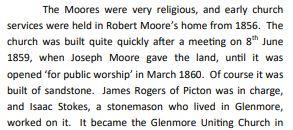
I found a history society newsletter article that mentioned Isaac Stokes, stone mason, had built the Glenmore church, near Camden, in 1859.

From the Wollondilly museum April 2020 newsletter:
From the Camden History website:
“The stone set over the porch of Glenmore Church gives the date of 1860. The church was begun in 1859 on land given by Joseph Moore. James Rogers of Picton was given the contract to build and local builder, Mr. Stokes, carried out the work. Elizabeth Moore, wife of Edward, laid the foundation stone. The first service was held on 19th March 1860. The cemetery alongside the church contains the headstones and memorials of the areas early pioneers.”
Isaac died on the 3rd September 1877. The inquest report puts his place of death as Bagdelly, near to Camden, and another death register has put Cambelltown, also very close to Camden. His age was recorded as 71 and the inquest report states his cause of death was “rupture of one of the large pulmonary vessels of the lung”. His wife Catherine died in childbirth in 1870 at the age of 43.
Isaac and Catherine’s children:
William Stokes 1857-1928
Catherine Stokes 1859-1846
Sarah Josephine Stokes 1861-1931
Ellen Stokes 1863-1932
Rosanna Stokes 1865-1919
Louisa Stokes 1868-1844.
It’s possible that Catherine Daly was a transported convict from Ireland.
Some time later I unexpectedly received a follow up email from The Oaks Heritage Centre in Australia.
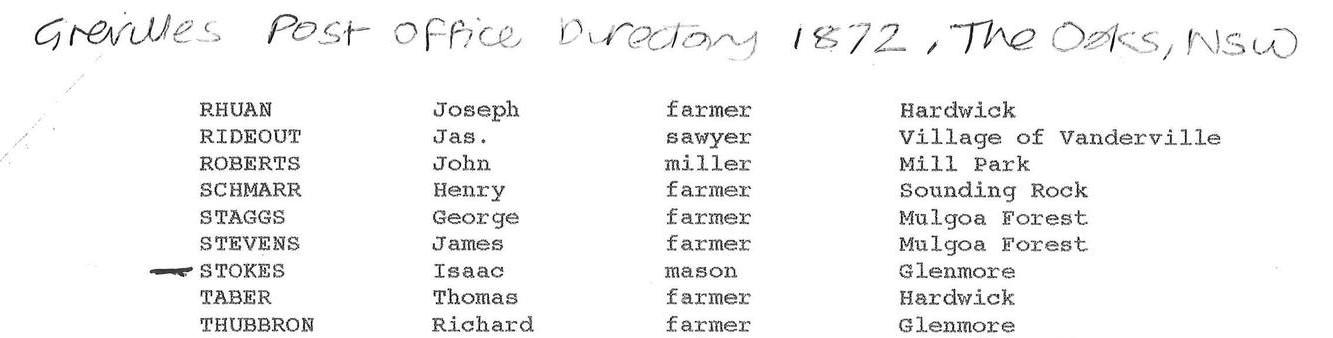
“The Gaudry papers which we have in our archive record him (Isaac Stokes) as having built: the church, the school and the teachers residence. Isaac is recorded in the General return of convicts: 1837 and in Grevilles Post Office directory 1872 as a mason in Glenmore.”
 November 18, 2022 at 4:47 pm #6348
In reply to: Family Stories From The Other Side ~ Book Two
Wong Sang
Wong Sang was born in China in 1884. In October 1916 he married Alice Stokes in Oxford.
Alice was the granddaughter of William Stokes of Churchill, Oxfordshire and William was the brother of Thomas Stokes the wheelwright (who was my 3X great grandfather). In other words Alice was my second cousin, three times removed, on my fathers paternal side.
Wong Sang was an interpreter, according to the baptism registers of his children and the Dreadnought Seamen’s Hospital admission registers in 1930. The hospital register also notes that he was employed by the Blue Funnel Line, and that his address was 11, Limehouse Causeway, E 14. (London)
“The Blue Funnel Line offered regular First-Class Passenger and Cargo Services From the UK to South Africa, Malaya, China, Japan, Australia, Java, and America. Blue Funnel Line was Owned and Operated by Alfred Holt & Co., Liverpool.
The Blue Funnel Line, so-called because its ships have a blue funnel with a black top, is more appropriately known as the Ocean Steamship Company.”Wong Sang and Alice’s daughter, Frances Eileen Sang, was born on the 14th July, 1916 and baptised in 1920 at St Stephen in Poplar, Tower Hamlets, London. The birth date is noted in the 1920 baptism register and would predate their marriage by a few months, although on the death register in 1921 her age at death is four years old and her year of birth is recorded as 1917.
Charles Ronald Sang was baptised on the same day in May 1920, but his birth is recorded as April of that year. The family were living on Morant Street, Poplar.
James William Sang’s birth is recorded on the 1939 census and on the death register in 2000 as being the 8th March 1913. This definitely would predate the 1916 marriage in Oxford.
William Norman Sang was born on the 17th October 1922 in Poplar.
Alice and the three sons were living at 11, Limehouse Causeway on the 1939 census, the same address that Wong Sang was living at when he was admitted to Dreadnought Seamen’s Hospital on the 15th January 1930. Wong Sang died in the hospital on the 8th March of that year at the age of 46.
Alice married John Patterson in 1933 in Stepney. John was living with Alice and her three sons on Limehouse Causeway on the 1939 census and his occupation was chef.
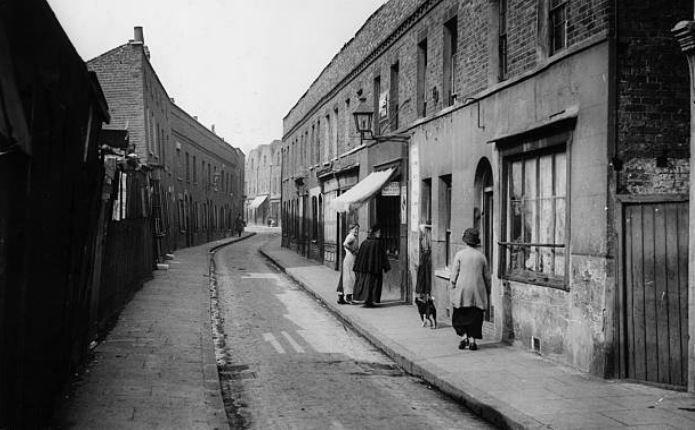
Via Old London Photographs:
“Limehouse Causeway is a street in east London that was the home to the original Chinatown of London. A combination of bomb damage during the Second World War and later redevelopment means that almost nothing is left of the original buildings of the street.”
Limehouse Causeway in 1925:
From The Story of Limehouse’s Lost Chinatown, poplarlondon website:
“Limehouse was London’s first Chinatown, home to a tightly-knit community who were demonised in popular culture and eventually erased from the cityscape.
As recounted in the BBC’s ‘Our Greatest Generation’ series, Connie was born to a Chinese father and an English mother in early 1920s Limehouse, where she used to play in the street with other British and British-Chinese children before running inside for teatime at one of their houses.
Limehouse was London’s first Chinatown between the 1880s and the 1960s, before the current Chinatown off Shaftesbury Avenue was established in the 1970s by an influx of immigrants from Hong Kong.
Connie’s memories of London’s first Chinatown as an “urban village” paint a very different picture to the seedy area portrayed in early twentieth century novels.
The pyramid in St Anne’s church marked the entrance to the opium den of Dr Fu Manchu, a criminal mastermind who threatened Western society by plotting world domination in a series of novels by Sax Rohmer.
Thomas Burke’s Limehouse Nights cemented stereotypes about prostitution, gambling and violence within the Chinese community, and whipped up anxiety about sexual relationships between Chinese men and white women.
Though neither novelist was familiar with the Chinese community, their depictions made Limehouse one of the most notorious areas of London.
Travel agent Thomas Cook even organised tours of the area for daring visitors, despite the rector of Limehouse warning that “those who look for the Limehouse of Mr Thomas Burke simply will not find it.”
All that remains is a handful of Chinese street names, such as Ming Street, Pekin Street, and Canton Street — but what was Limehouse’s chinatown really like, and why did it get swept away?
Chinese migration to Limehouse
Chinese sailors discharged from East India Company ships settled in the docklands from as early as the 1780s.
By the late nineteenth century, men from Shanghai had settled around Pennyfields Lane, while a Cantonese community lived on Limehouse Causeway.
Chinese sailors were often paid less and discriminated against by dock hirers, and so began to diversify their incomes by setting up hand laundry services and restaurants.
Old photographs show shopfronts emblazoned with Chinese characters with horse-drawn carts idling outside or Chinese men in suits and hats standing proudly in the doorways.
In oral histories collected by Yat Ming Loo, Connie’s husband Leslie doesn’t recall seeing any Chinese women as a child, since male Chinese sailors settled in London alone and married working-class English women.
In the 1920s, newspapers fear-mongered about interracial marriages, crime and gambling, and described chinatown as an East End “colony.”
Ironically, Chinese opium-smoking was also demonised in the press, despite Britain waging war against China in the mid-nineteenth century for suppressing the opium trade to alleviate addiction amongst its people.
The number of Chinese people who settled in Limehouse was also greatly exaggerated, and in reality only totalled around 300.
The real Chinatown
Although the press sought to characterise Limehouse as a monolithic Chinese community in the East End, Connie remembers seeing people of all nationalities in the shops and community spaces in Limehouse.
She doesn’t remember feeling discriminated against by other locals, though Connie does recall having her face measured and IQ tested by a member of the British Eugenics Society who was conducting research in the area.
Some of Connie’s happiest childhood memories were from her time at Chung-Hua Club, where she learned about Chinese culture and language.
Why did Chinatown disappear?
The caricature of Limehouse’s Chinatown as a den of vice hastened its erasure.
Police raids and deportations fuelled by the alarmist media coverage threatened the Chinese population of Limehouse, and slum clearance schemes to redevelop low-income areas dispersed Chinese residents in the 1930s.
The Defence of the Realm Act imposed at the beginning of the First World War criminalised opium use, gave the authorities increased powers to deport Chinese people and restricted their ability to work on British ships.
Dwindling maritime trade during World War II further stripped Chinese sailors of opportunities for employment, and any remnants of Chinatown were destroyed during the Blitz or erased by postwar development schemes.”
Wong Sang 1884-1930
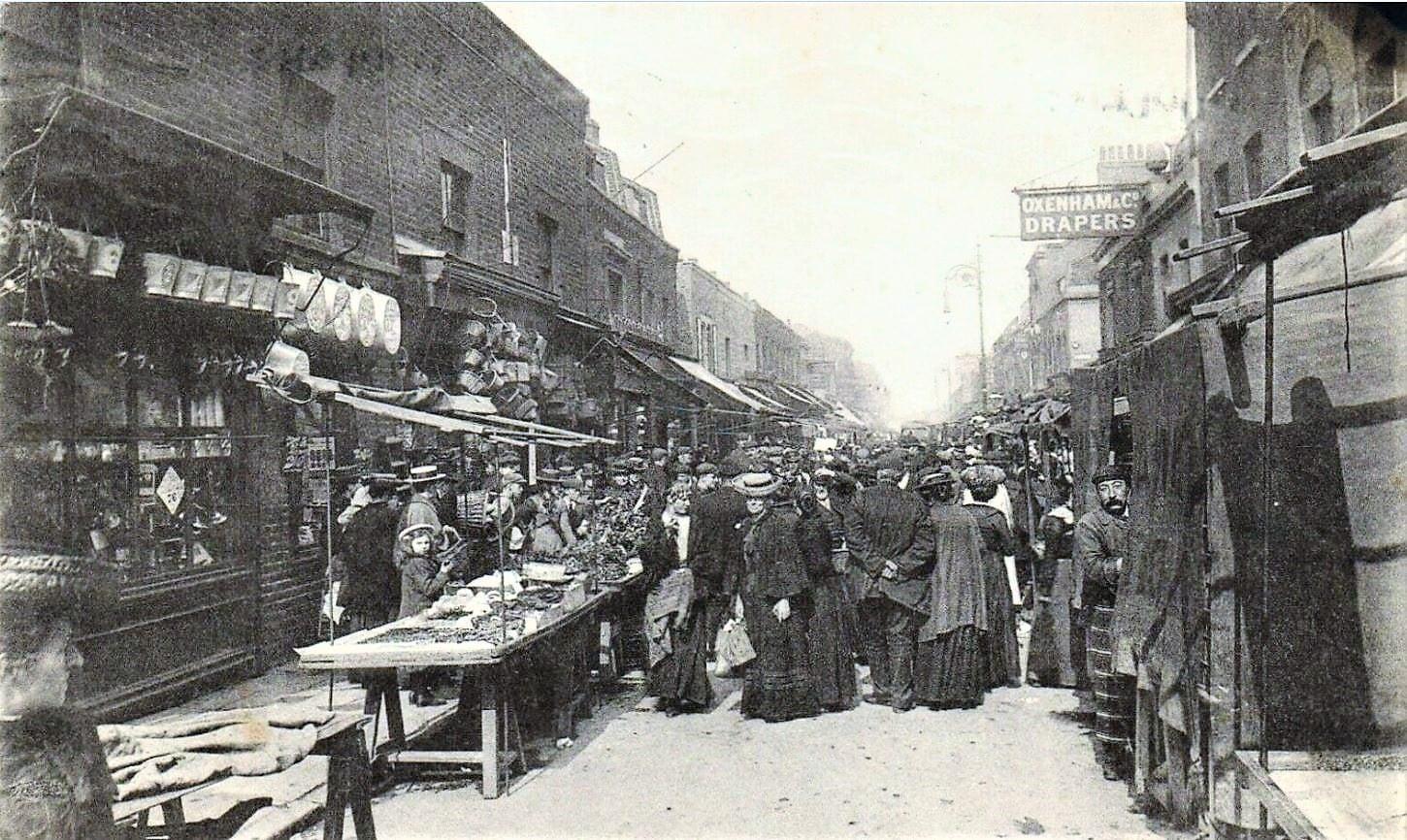
The year 1918 was a troublesome one for Wong Sang, an interpreter and shipping agent for Blue Funnel Line. The Sang family were living at 156, Chrisp Street.
Chrisp Street, Poplar, in 1913 via Old London Photographs:
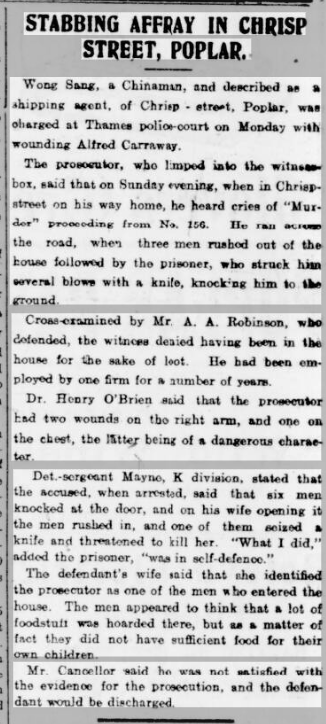
In February Wong Sang was discharged from a false accusation after defending his home from potential robbers.
East End News and London Shipping Chronicle – Friday 15 February 1918:
In August of that year he was involved in an incident that left him unconscious.
Faringdon Advertiser and Vale of the White Horse Gazette – Saturday 31 August 1918:
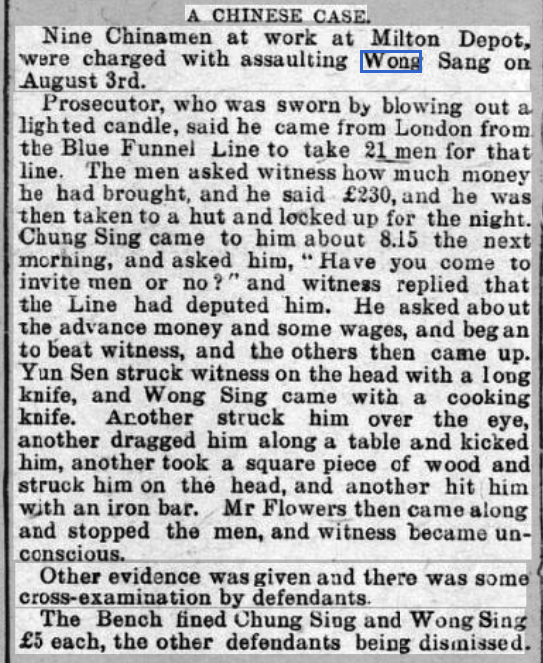
Wong Sang is mentioned in an 1922 article about “Oriental London”.
London and China Express – Thursday 09 February 1922:
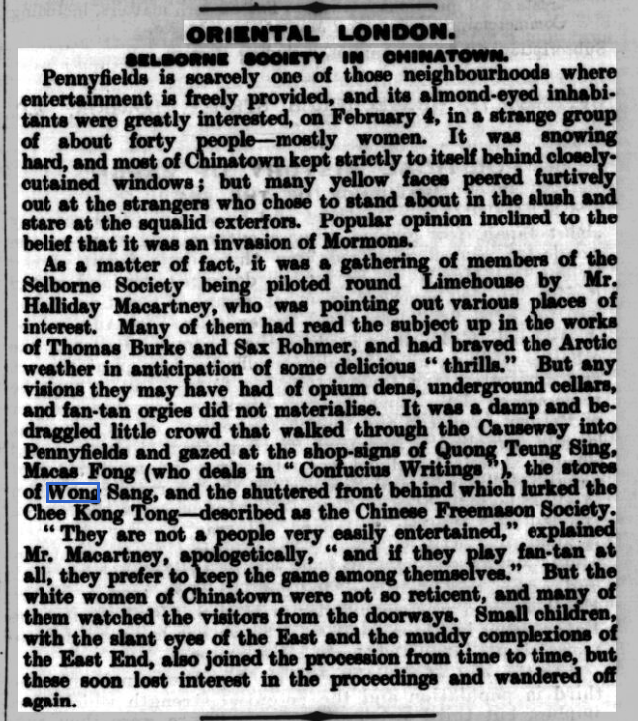
A photograph of the Chee Kong Tong Chinese Freemason Society mentioned in the above article, via Old London Photographs:
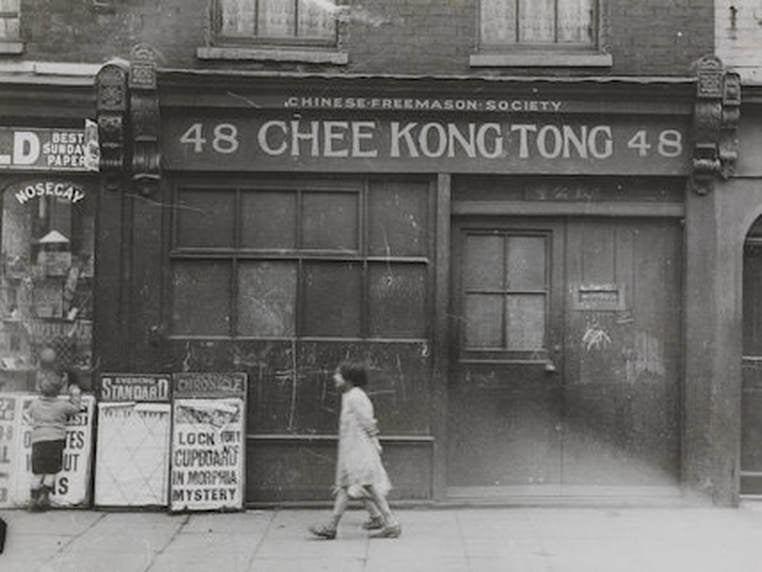
Wong Sang was recommended by the London Metropolitan Police in 1928 to assist in a case in Wellingborough, Northampton.
Difficulty of Getting an Interpreter: Northampton Mercury – Friday 16 March 1928:
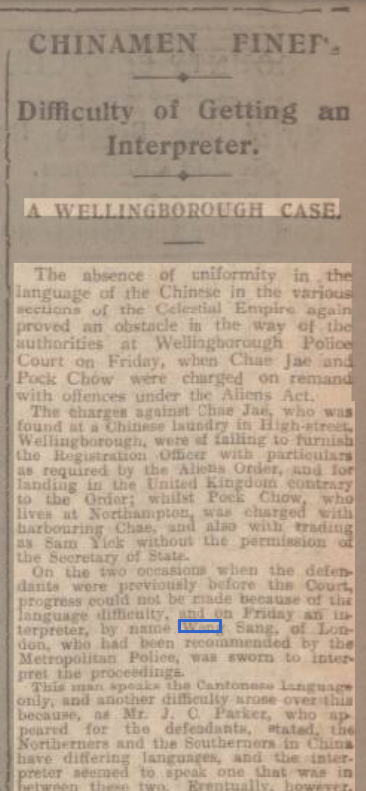
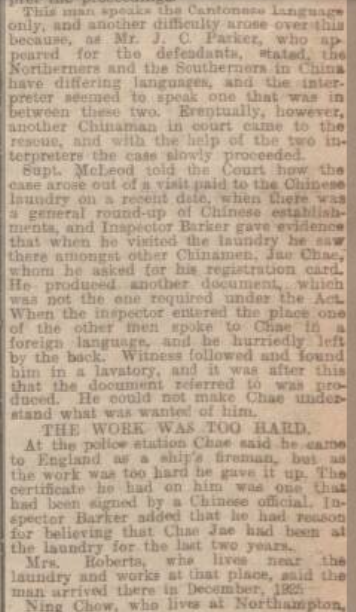
The difficulty was that “this man speaks the Cantonese language only…the Northeners and the Southerners in China have differing languages and the interpreter seemed to speak one that was in between these two.”
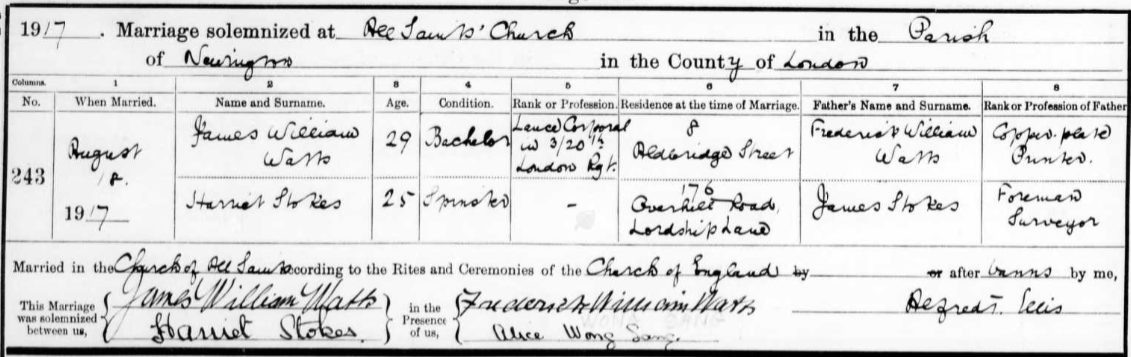
In 1917, Alice Wong Sang was a witness at her sister Harriet Stokes marriage to James William Watts in Southwark, London. Their father James Stokes occupation on the marriage register is foreman surveyor, but on the census he was a council roadman or labourer. (I initially rejected this as the correct marriage for Harriet because of the discrepancy with the occupations. Alice Wong Sang as a witness confirmed that it was indeed the correct one.)
James William Sang 1913-2000 was a clock fitter and watch assembler (on the 1939 census). He married Ivy Laura Fenton in 1963 in Sidcup, Kent. James died in Southwark in 2000.
Charles Ronald Sang 1920-1974 was a draughtsman (1939 census). He married Eileen Burgess in 1947 in Marylebone. Charles and Eileen had two sons: Keith born in 1951 and Roger born in 1952. He died in 1974 in Hertfordshire.
William Norman Sang 1922-2000 was a clerk and telephone operator (1939 census). William enlisted in the Royal Artillery in 1942. He married Lily Mullins in 1949 in Bethnal Green, and they had three daughters: Marion born in 1950, Christine in 1953, and Frances in 1959. He died in Redbridge in 2000.
I then found another two births registered in Poplar by Alice Sang, both daughters. Doris Winifred Sang was born in 1925, and Patricia Margaret Sang was born in 1933 ~ three years after Wong Sang’s death. Neither of the these daughters were on the 1939 census with Alice, John Patterson and the three sons. Margaret had presumably been evacuated because of the war to a family in Taunton, Somerset. Doris would have been fourteen and I have been unable to find her in 1939 (possibly because she died in 2017 and has not had the redaction removed yet on the 1939 census as only deceased people are viewable).
Doris Winifred Sang 1925-2017 was a nursing sister. She didn’t marry, and spent a year in USA between 1954 and 1955. She stayed in London, and died at the age of ninety two in 2017.
Patricia Margaret Sang 1933-1998 was also a nurse. She married Patrick L Nicely in Stepney in 1957. Patricia and Patrick had five children in London: Sharon born 1959, Donald in 1960, Malcolm was born and died in 1966, Alison was born in 1969 and David in 1971.
I was unable to find a birth registered for Alice’s first son, James William Sang (as he appeared on the 1939 census). I found Alice Stokes on the 1911 census as a 17 year old live in servant at a tobacconist on Pekin Street, Limehouse, living with Mr Sui Fong from Hong Kong and his wife Sarah Sui Fong from Berlin. I looked for a birth registered for James William Fong instead of Sang, and found it ~ mothers maiden name Stokes, and his date of birth matched the 1939 census: 8th March, 1913.
On the 1921 census, Wong Sang is not listed as living with them but it is mentioned that Mr Wong Sang was the person returning the census. Also living with Alice and her sons James and Charles in 1921 are two visitors: (Florence) May Stokes, 17 years old, born in Woodstock, and Charles Stokes, aged 14, also born in Woodstock. May and Charles were Alice’s sister and brother.
I found Sharon Nicely on social media and she kindly shared photos of Wong Sang and Alice Stokes:
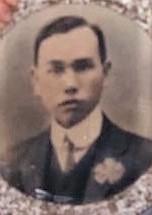
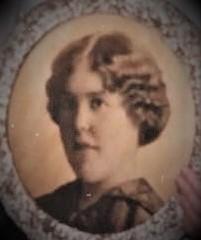
-
AuthorSearch Results