


Search Results for 'hear'
-
AuthorSearch Results
-
January 10, 2023 at 10:31 pm #6364
In reply to: Train your subjective AI – text version
Please suggest a creative, a little ghostic but mostly uplifting plot outline for the continuation of the story of Twilight in her travels to join the freak circus and become famous for her craft on the west coast
— The Far-West saga — In 1850s, in a probable reality of South America, we get acquainted with Twilight (Twi) and her brothers Jo and Elroy. They have a precious blue bull in their possession, coveted by Ogrean, the kingpin of the town. Hopefully for them, Ogrean is arrested (temporarily) by Ted Marshall, the sheriff for his possible trafficking. Notably, Ogrean is possibly involved in some of the crystal skulls discoveries, during his travel to New Honduras. Twi who was dancing in the saloon of Madame Butterbutt, the town’s hallucinogenic toads-to-lick dispenser (insert some other romantic subplots involving the other dancer etc.) decides to go traveling in a freakus (freak show/circus). She is now close to the West Coast, where she hopes to succeed in her writing and other artistic skills.
As Twilight (Twi) travels with the freak circus, she faces many challenges and obstacles on her journey to the West Coast. Despite the difficulties, she remains determined to make a name for herself as a writer and artist.
As she travels through small towns and larger cities, she begins to realize that the world is much bigger than she ever imagined. She meets a diverse group of people, some of whom are kind and supportive, while others are cruel and dismissive of her dreams.
Despite the negative reactions she receives from some people, Twi persists and begins to gain a reputation as a talented writer and performer. As she gains more experience and confidence, she starts to incorporate her own unique style into her performances, which sets her apart from the other performers in the circus.
As she approaches the West Coast, she begins to feel a sense of excitement and anticipation. She has heard that the West Coast is a place of endless possibilities, where creative minds can thrive. She is determined to make her mark and become famous for her craft.
As she settles in the west, she finds herself surrounded by artists and writers like herself, who inspire her to push herself even further. She begins to gain a following and her writing is widely read. She discovers that her talent is not only limited to writing, but she also has a natural talent for other art forms as well.
Eventually, Twi’s reputation as a talented artist and writer precedes her and she becomes a sought-after performer in the West Coast, and her creative work is being showcased in galleries and theaters. As she continues to achieve success in her career, she begins to realize that the West Coast is not just a place of endless possibilities but also the place where she belongs, and the place where her dreams come true.
Throughout her journey, she also keeps in touch with her brothers, Jo and Elroy, who now run the farm and take care of the blue bull. They tell her that the bull, now named Blue-Dream, became a legend in the village and they get a good price for its breeding.
As the story continues, she finds herself also involved in some adventures and exciting subplots, like discovering a secret underground cave filled with precious crystals and some interesting characters, like the enigmatic sheriff Ted Marshall who always cross her path, and the mysterious Ogrean who seems to have a connection to her past and the bull.
The End.
January 10, 2023 at 10:15 pm #6363In reply to: Train your subjective AI – text version
try another short story, with a bit of drama with the following words:
road form charlton smooth everyone cottage hanging rush offer agree subject district included appear sha returning grattidge nottingham 848 tetbury chicken
It was a cold and gloomy day in the small village of Tetbury, nestled in the picturesque Cotswolds district. A young woman named Sha was returning home to her cottage after a long and tiring journey. She had been away visiting her family in Nottingham and was looking forward to relaxing in her cozy home.
As she walked down the dirt road that led to her cottage, she couldn’t help but notice that something was off. Her neighbor, Mr. Charlton, was outside hanging laundry and he didn’t acknowledge her as she walked by. Sha thought it was strange, as he was usually a friendly and sociable person.
When Sha arrived at her cottage, she was shocked to find that it had been broken into. The front door was ajar and the inside of her home had been ransacked. Sha immediately panicked and called the police, who arrived on the scene shortly thereafter.
The police officers, including Inspector Grattidge, took Sha’s statement and began to investigate the crime. They discovered that a group of burglars had been operating in the area, targeting homes and businesses in the district. The burglars had been known for their smooth operations and their ability to strike quickly, which led to their nickname “The Smooth Operators”.
As Sha waited for the police to finish their investigation, she couldn’t shake the feeling that something was not right. She had always thought of Tetbury as a safe and friendly place, and she couldn’t believe that something like this could happen in her community.
As the investigation went on, the police found out that the Smooth operators have been targeting houses with no security cameras, but Sha’s cottage was an exception, the police were able to find out that the group offered to pay a considerable sum of money to the people who reported the locations of the houses that had no cameras, and it was Mr. Charlton who was the informant and he even rushed to Sha’s cottage as soon as he knew the police was investigating the case, He was arrested for the crime and Sha was heartbroken to find out that her once friendly neighbor had betrayed her.
Feeling violated and betrayed, Sha decided that she could no longer stay in the village and she put her cottage up for sale. She packed up her belongings and moved away, leaving behind the memories of her peaceful home and the community she had once thought of as her own. The end.
November 4, 2022 at 2:19 pm #6342In reply to: Family Stories From The Other Side ~ Book Two
Brownings of Tetbury
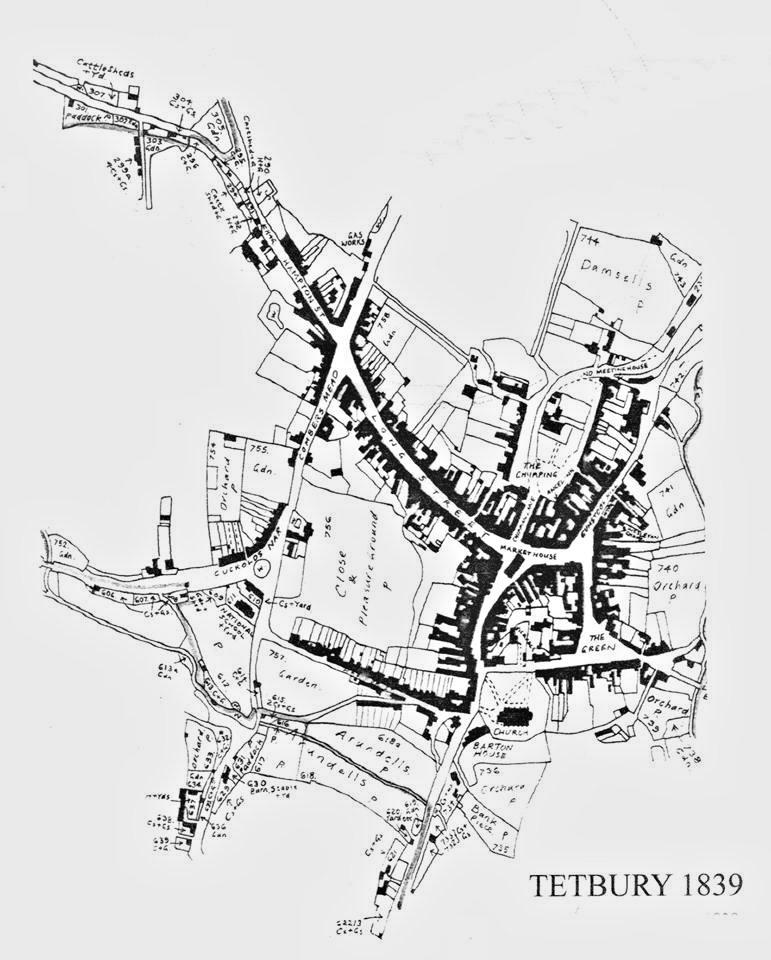
Isaac Browning (1784-1848) married Mary Lock (1787-1870) in Tetbury in 1806. Both of them were born in Tetbury, Gloucestershire. Isaac was a stone mason. Between 1807 and 1832 they baptised fourteen children in Tetbury, and on 8 Nov 1829 Isaac and Mary baptised five daughters all on the same day.
I considered that they may have been quintuplets, with only the last born surviving, which would have answered my question about the name of the house La Quinta in Broadway, the home of Eliza Browning and Thomas Stokes son Fred. However, the other four daughters were found in various records and they were not all born the same year. (So I still don’t know why the house in Broadway had such an unusual name).
Their son George was born and baptised in 1827, but Louisa born 1821, Susan born 1822, Hesther born 1823 and Mary born 1826, were not baptised until 1829 along with Charlotte born in 1828. (These birth dates are guesswork based on the age on later censuses.) Perhaps George was baptised promptly because he was sickly and not expected to survive. Isaac and Mary had a son George born in 1814 who died in 1823. Presumably the five girls were healthy and could wait to be done as a job lot on the same day later.
Eliza Browning (1814-1886), my great great great grandmother, had a baby six years before she married Thomas Stokes. Her name was Ellen Harding Browning, which suggests that her fathers name was Harding. On the 1841 census seven year old Ellen was living with her grandfather Isaac Browning in Tetbury. Ellen Harding Browning married William Dee in Tetbury in 1857, and they moved to Western Australia.
Ellen Harding Browning Dee: (photo found on ancestry website)
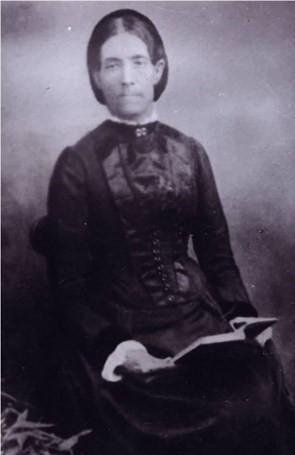
OBITUARY. MRS. ELLEN DEE.
A very old and respected resident of Dongarra, in the person of Mrs. Ellen Dee, passed peacefully away on Sept. 27, at the advanced age of 74 years.The deceased had been ailing for some time, but was about and actively employed until Wednesday, Sept. 20, whenn she was heard groaning by some neighbours, who immediately entered her place and found her lying beside the fireplace. Tho deceased had been to bed over night, and had evidently been in the act of lighting thc fire, when she had a seizure. For some hours she was conscious, but had lost the power of speech, and later on became unconscious, in which state she remained until her death.
The deceased was born in Gloucestershire, England, in 1833, was married to William Dee in Tetbury Church 23 years later. Within a month she left England with her husband for Western Australian in the ship City oí Bristol. She resided in Fremantle for six months, then in Greenough for a short time, and afterwards (for 42 years) in Dongarra. She was, therefore, a colonist of about 51 years. She had a family of four girls and three boys, and five of her children survive her, also 35 grandchildren, and eight great grandchildren. She was very highly respected, and her sudden collapse came as a great shock to many.
Eliza married Thomas Stokes (1816-1885) in September 1840 in Hempstead, Gloucestershire. On the 1841 census, Eliza and her mother Mary Browning (nee Lock) were staying with Thomas Lock and family in Cirencester. Strangely, Thomas Stokes has not been found thus far on the 1841 census, and Thomas and Eliza’s first child William James Stokes birth was registered in Witham, in Essex, on the 6th of September 1841.
I don’t know why William James was born in Witham, or where Thomas was at the time of the census in 1841. One possibility is that as Thomas Stokes did a considerable amount of work with circus waggons, circus shooting galleries and so on as a journeyman carpenter initially and then later wheelwright, perhaps he was working with a traveling circus at the time.
But back to the Brownings ~ more on William James Stokes to follow.
One of Isaac and Mary’s fourteen children died in infancy: Ann was baptised and died in 1811. Two of their children died at nine years old: the first George, and Mary who died in 1835. Matilda was 21 years old when she died in 1844.
Jane Browning (1808-) married Thomas Buckingham in 1830 in Tetbury. In August 1838 Thomas was charged with feloniously stealing a black gelding.
Susan Browning (1822-1879) married William Cleaver in November 1844 in Tetbury. Oddly thereafter they use the name Bowman on the census. On the 1851 census Mary Browning (Susan’s mother), widow, has grandson George Bowman born in 1844 living with her. The confusion with the Bowman and Cleaver names was clarified upon finding the criminal registers:
30 January 1834. Offender: William Cleaver alias Bowman, Richard Bunting alias Barnfield and Jeremiah Cox, labourers of Tetbury. Crime: Stealing part of a dead fence from a rick barton in Tetbury, the property of Robert Tanner, farmer.
And again in 1836:
29 March 1836 Bowman, William alias Cleaver, of Tetbury, labourer age 18; 5’2.5” tall, brown hair, grey eyes, round visage with fresh complexion; several moles on left cheek, mole on right breast. Charged on the oath of Ann Washbourn & others that on the morning of the 31 March at Tetbury feloniously stolen a lead spout affixed to the dwelling of the said Ann Washbourn, her property. Found guilty 31 March 1836; Sentenced to 6 months.
On the 1851 census Susan Bowman was a servant living in at a large drapery shop in Cheltenham. She was listed as 29 years old, married and born in Tetbury, so although it was unusual for a married woman not to be living with her husband, (or her son for that matter, who was living with his grandmother Mary Browning), perhaps her husband William Bowman alias Cleaver was in trouble again. By 1861 they are both living together in Tetbury: William was a plasterer, and they had three year old Isaac and Thomas, one year old. In 1871 William was still a plasterer in Tetbury, living with wife Susan, and sons Isaac and Thomas. Interestingly, a William Cleaver is living next door but one!
Susan was 56 when she died in Tetbury in 1879.
Three of the Browning daughters went to London.
Louisa Browning (1821-1873) married Robert Claxton, coachman, in 1848 in Bryanston Square, Westminster, London. Ester Browning was a witness.
Ester Browning (1823-1893)(or Hester) married Charles Hudson Sealey, cabinet maker, in Bethnal Green, London, in 1854. Charles was born in Tetbury. Charlotte Browning was a witness.
Charlotte Browning (1828-1867?) was admitted to St Marylebone workhouse in London for “parturition”, or childbirth, in 1860. She was 33 years old. A birth was registered for a Charlotte Browning, no mothers maiden name listed, in 1860 in Marylebone. A death was registered in Camden, buried in Marylebone, for a Charlotte Browning in 1867 but no age was recorded. As the age and parents were usually recorded for a childs death, I assume this was Charlotte the mother.
I found Charlotte on the 1851 census by chance while researching her mother Mary Lock’s siblings. Hesther Lock married Lewin Chandler, and they were living in Stepney, London. Charlotte is listed as a neice. Although Browning is mistranscribed as Broomey, the original page says Browning. Another mistranscription on this record is Hesthers birthplace which is transcribed as Yorkshire. The original image shows Gloucestershire.
Isaac and Mary’s first son was John Browning (1807-1860). John married Hannah Coates in 1834. John’s brother Charles Browning (1819-1853) married Eliza Coates in 1842. Perhaps they were sisters. On the 1861 census Hannah Browning, John’s wife, was a visitor in the Harding household in a village called Coates near Tetbury. Thomas Harding born in 1801 was the head of the household. Perhaps he was the father of Ellen Harding Browning.
George Browning (1828-1870) married Louisa Gainey in Tetbury, and died in Tetbury at the age of 42. Their son Richard Lock Browning, a 32 year old mason, was sentenced to one month hard labour for game tresspass in Tetbury in 1884.
Isaac Browning (1832-1857) was the youngest son of Isaac and Mary. He was just 25 years old when he died in Tetbury.
October 22, 2022 at 1:18 pm #6338In reply to: Family Stories From The Other Side ~ Book Two
Albert Parker Edwards
1876-1930
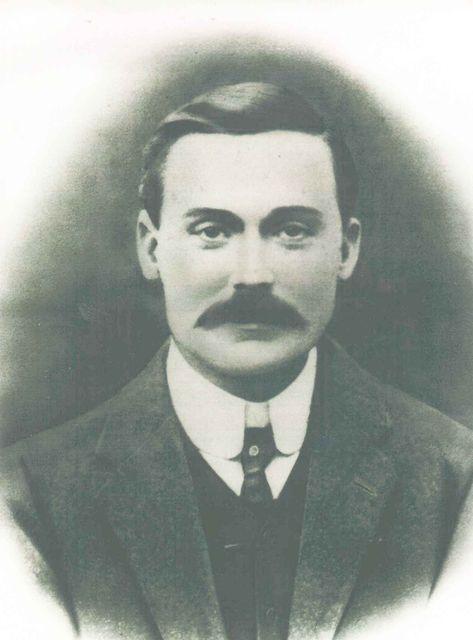
Albert Parker Edwards, my great grandfather, was born in Aston, Warwickshire in 1876. On the 1881 census he was living with his parents Enoch and Amelia in Bournebrook, Northfield, Worcestershire. Enoch was a button tool maker at the time of the census.
In 1890 Albert was indentured in an apprenticeship as a pawnbroker in Tipton, Staffordshire.
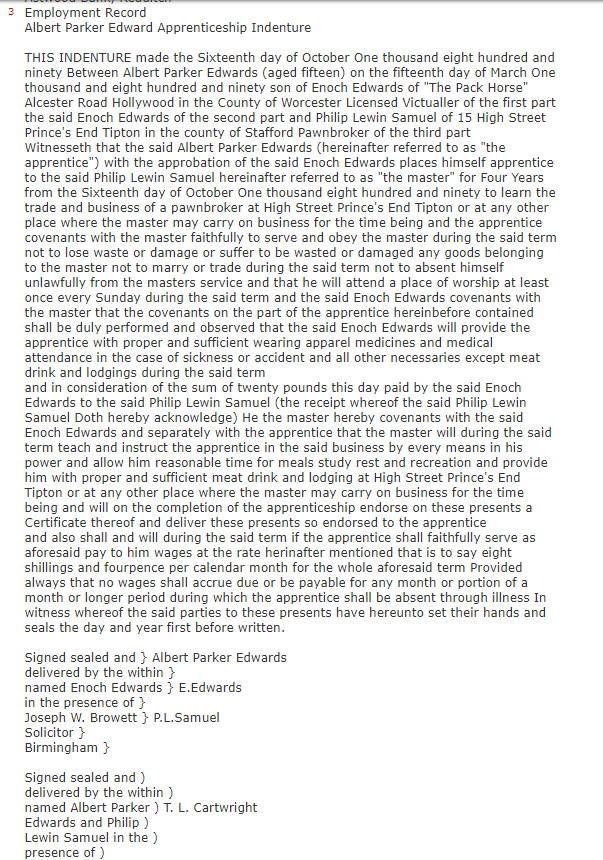
On the 1891 census Albert was a lodger in Tipton at the home of Phoebe Levy, pawnbroker, and Alberts occupation was an apprentice.
Albert married Annie Elizabeth Stokes in 1898 in Evesham, and their first son, my grandfather Albert Garnet Edwards (1898-1950), was born six months later in Crabbs Cross. On the 1901 census, Annie was in hospital as a patient and Albert was living at Crabbs Cross with a boarder, his brother Garnet Edwards. Their two year old son Albert Garnet was staying with his uncle Ralph, Albert Parkers brother, also in Crabbs Cross.
Albert and Annie kept the Cricketers Arms hotel on Beoley Road in Redditch until around 1920. They had a further four children while living there: Doris May Edwards (1902-1974), Ralph Clifford Edwards (1903-1988), Ena Flora Edwards (1908-1983) and Osmond Edwards (1910-2000).
In 1906 Albert was assaulted during an incident in the Cricketers Arms.
Bromsgrove & Droitwich Messenger – Saturday 18 August 1906:
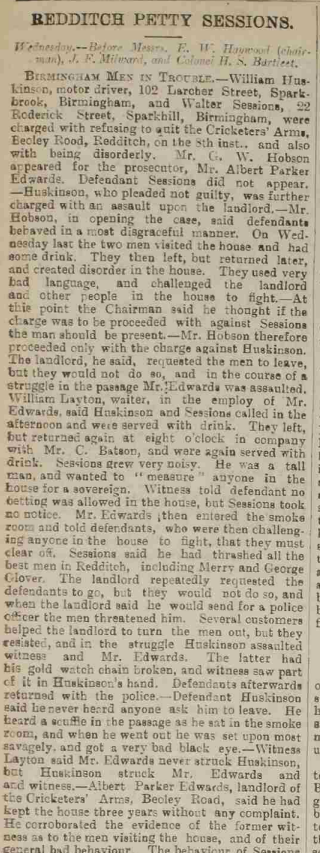
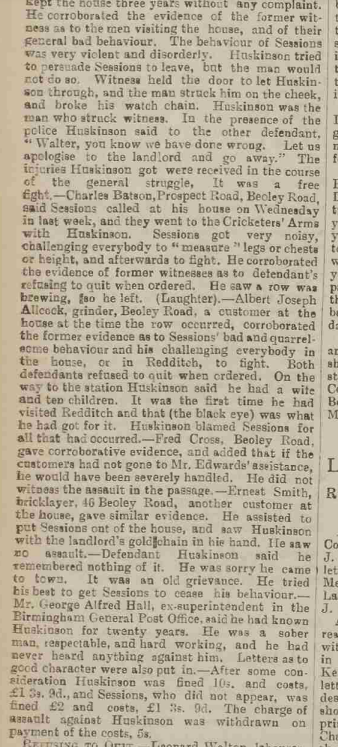
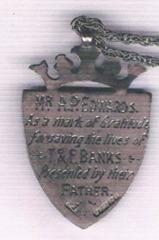
In 1910 a gold medal was given to Albert Parker Edwards by Mr. Banks, a policeman, in Redditch for saving the life of his two children from drowning in a brook on the Proctor farm which adjoined The Cricketers Arms. The story my father heard was that policeman Banks could not persuade the town of Redditch to come up with an award for Albert Parker Edwards so policeman Banks did it himself. William Banks, police constable, was living on Beoley Road on the 1911 census. His son Thomas was aged 5 and his daughter Frances was 8. It seems that when the father retired from the police he moved to Worcester. Thomas went into the hotel business and in 1939 was the manager of the Abbey hotel in Kenilworth. Frances married Edward Pardoe and was living along Redditch Road, Alvechurch in 1939.
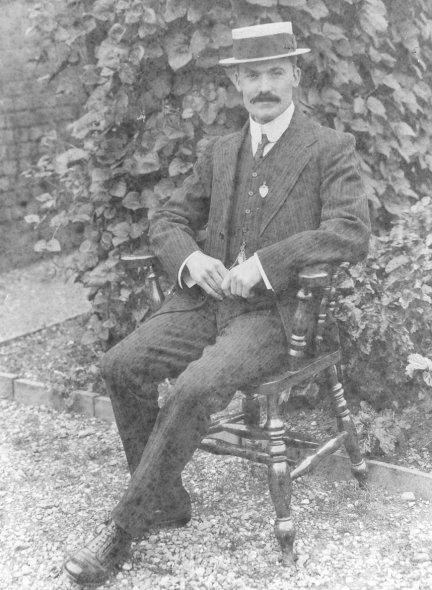
My grandmother Peggy had the gold medal put on a gold chain for me in the 1970s. When I left England in the 1980s, I gave it back to her for safekeeping. When she died, the medal on the chain ended up in my fathers possession, who claims to have no knowledge that it was once given to me!
The medal:
Albert Parker Edwards wearing the medal:
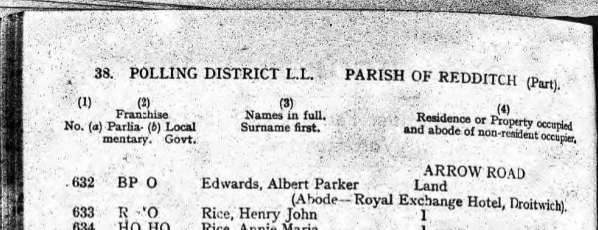
In 1921 Albert was at the The Royal Exchange hotel in Droitwich:
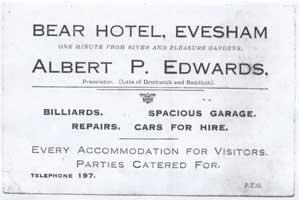
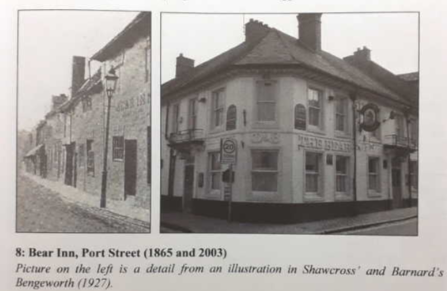
Between 1922 and 1927 Albert kept the Bear Hotel in Evesham:
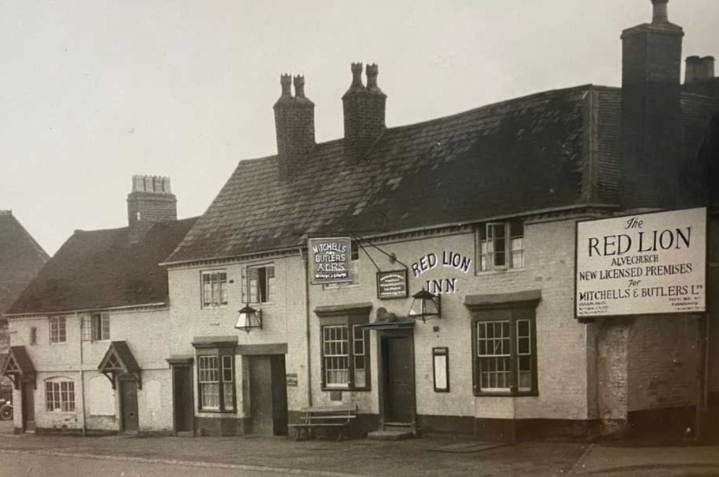
Then Albert and Annie moved to the Red Lion at Astwood Bank:
Albert in the garden behind the Red Lion:
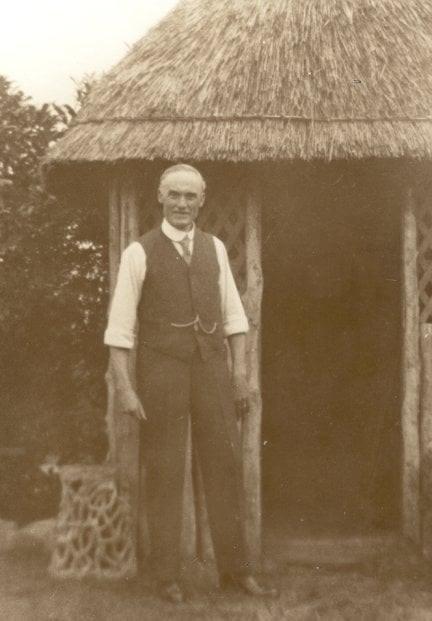
They stayed at the Red Lion until Albert Parker Edwards died on the 11th of February, 1930 aged 53.
 October 11, 2022 at 2:58 pm #6334
In reply to: Family Stories From The Other Side ~ Book Two
The House on Penn Common
Toi Fang and the Duke of Sutherland
Tomlinsons
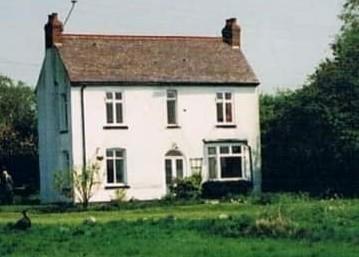
Grassholme
Charles Tomlinson (1873-1929) my great grandfather, was born in Wolverhampton in 1873. His father Charles Tomlinson (1847-1907) was a licensed victualler or publican, or alternatively a vet/castrator. He married Emma Grattidge (1853-1911) in 1872. On the 1881 census they were living at The Wheel in Wolverhampton.
Charles married Nellie Fisher (1877-1956) in Wolverhampton in 1896. In 1901 they were living next to the post office in Upper Penn, with children (Charles) Sidney Tomlinson (1896-1955), and Hilda Tomlinson (1898-1977) . Charles was a vet/castrator working on his own account.
In 1911 their address was 4, Wakely Hill, Penn, and living with them were their children Hilda, Frank Tomlinson (1901-1975), (Dorothy) Phyllis Tomlinson (1905-1982), Nellie Tomlinson (1906-1978) and May Tomlinson (1910-1983). Charles was a castrator working on his own account.
Charles and Nellie had a further four children: Charles Fisher Tomlinson (1911-1977), Margaret Tomlinson (1913-1989) (my grandmother Peggy), Major Tomlinson (1916-1984) and Norah Mary Tomlinson (1919-2010).
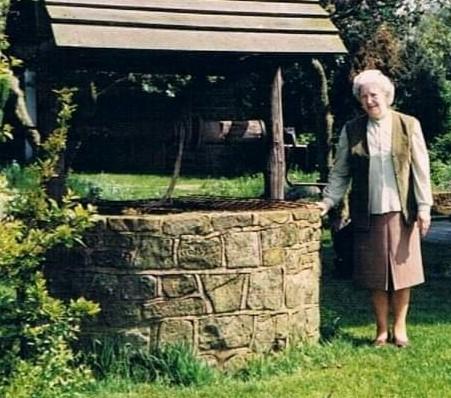
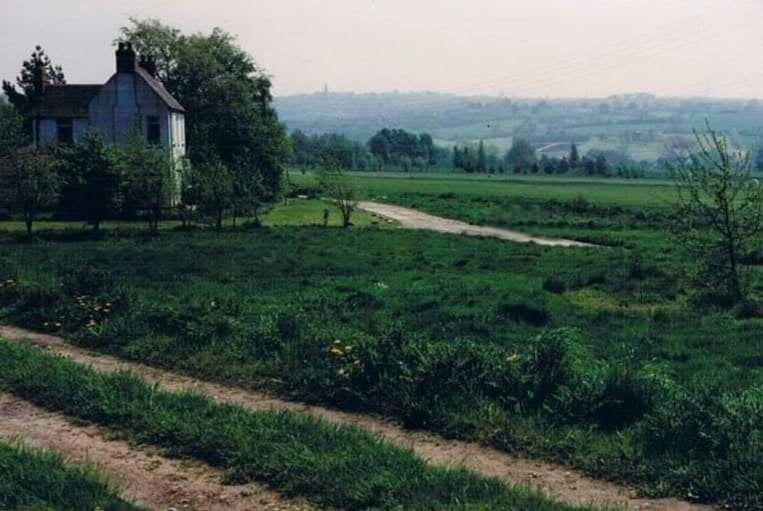
My father told me that my grandmother had fallen down the well at the house on Penn Common in 1915 when she was two years old, and sent me a photo of her standing next to the well when she revisted the house at a much later date.
Peggy next to the well on Penn Common:
My grandmother Peggy told me that her father had had a racehorse called Toi Fang. She remembered the racing colours were sky blue and orange, and had a set of racing silks made which she sent to my father.
Through a DNA match, I met Ian Tomlinson. Ian is the son of my fathers favourite cousin Roger, Frank’s son. Ian found some racing silks and sent a photo to my father (they are now in contact with each other as a result of my DNA match with Ian), wondering what they were.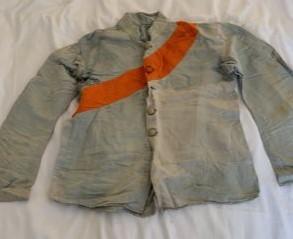
When Ian sent a photo of these racing silks, I had a look in the newspaper archives. In 1920 there are a number of mentions in the racing news of Mr C Tomlinson’s horse TOI FANG. I have not found any mention of Toi Fang in the newspapers in the following years.
The Scotsman – Monday 12 July 1920:
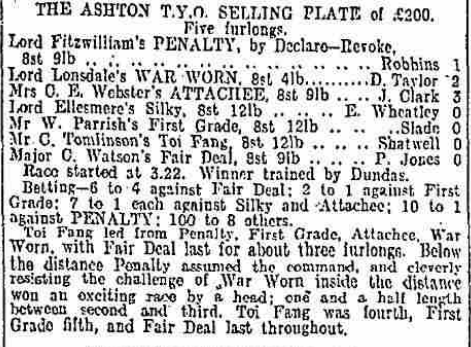
The other story that Ian Tomlinson recalled was about the house on Penn Common. Ian said he’d heard that the local titled person took Charles Tomlinson to court over building the house but that Tomlinson won the case because it was built on common land and was the first case of it’s kind.
Penn Common Right of Way Case:
Staffordshire Advertiser March 9, 1912In the chancery division, on Tuesday, before Mr Justice Joyce, it was announced that a settlement had been arrived at of the Penn Common Right of Way case, the hearing of which occupied several days last month. The action was brought by the Duke of Sutherland (as Lord of the Manor of Penn) and Mr Harry Sydney Pitt (on behalf of himself and other freeholders of the manor having a right to pasturage on Penn Common) to restrain Mr James Lakin, Carlton House, Penn; Mr Charles Tomlinson, Mayfield Villa, Wakely Hill, Penn; and Mr Joseph Harold Simpkin, Dudley Road, Wolverhampton, from drawing building materials across the common, or otherwise causing injury to the soil.
The real point in dispute was whether there was a public highway for all purposes running by the side of the defendants land from the Turf Tavern past the golf club to the Barley Mow.
Mr Hughes, KC for the plaintiffs, now stated that the parties had been in consultation, and had come to terms, the substance of which was that the defendants admitted that there was no public right of way, and that they were granted a private way. This, he thought, would involve the granting of some deed or deeds to express the rights of the parties, and he suggested that the documents should be be settled by some counsel to be mutually agreed upon.His lordship observed that the question of coal was probably the important point. Mr Younger said Mr Tomlinson was a freeholder, and the plaintiffs could not mine under him. Mr Hughes: The coal actually under his house is his, and, of course, subsidence might be produced by taking away coal some distance away. I think some document is required to determine his actual rights.
Mr Younger said he wanted to avoid anything that would increase the costs, but, after further discussion, it was agreed that Mr John Dixon (an expert on mineral rights), or failing him, another counsel satisfactory to both parties, should be invited to settle the terms scheduled in the agreement, in order to prevent any further dispute.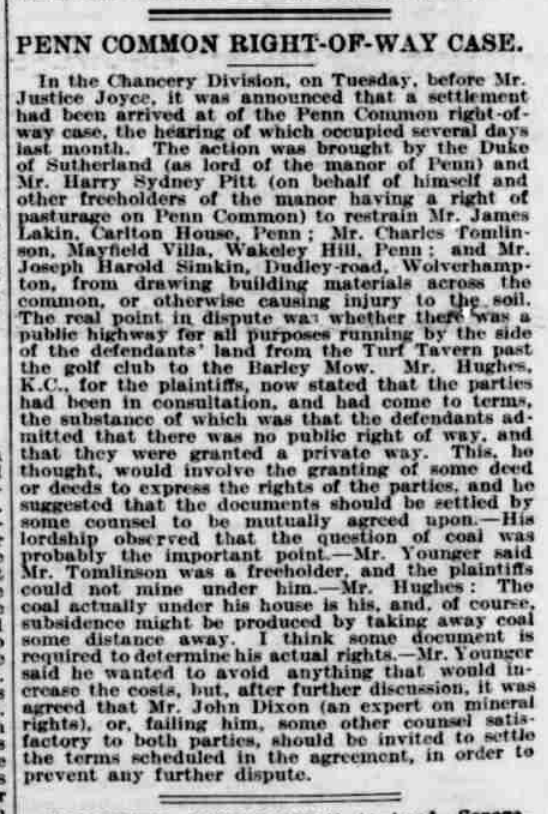
The name of the house is Grassholme. The address of Mayfield Villas is the house they were living in while building Grassholme, which I assume they had not yet moved in to at the time of the newspaper article in March 1912.
What my grandmother didn’t tell anyone was how her father died in 1929:
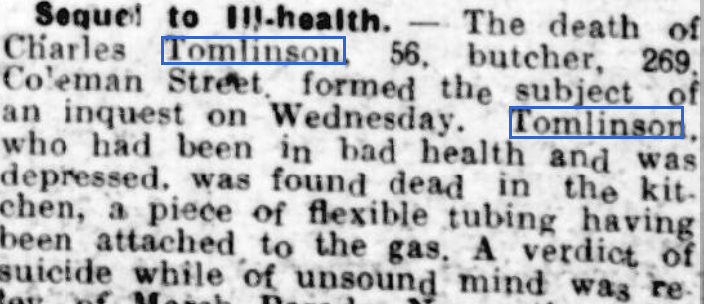
On the 1921 census, Charles, Nellie and eight of their children were living at 269 Coleman Street, Wolverhampton.
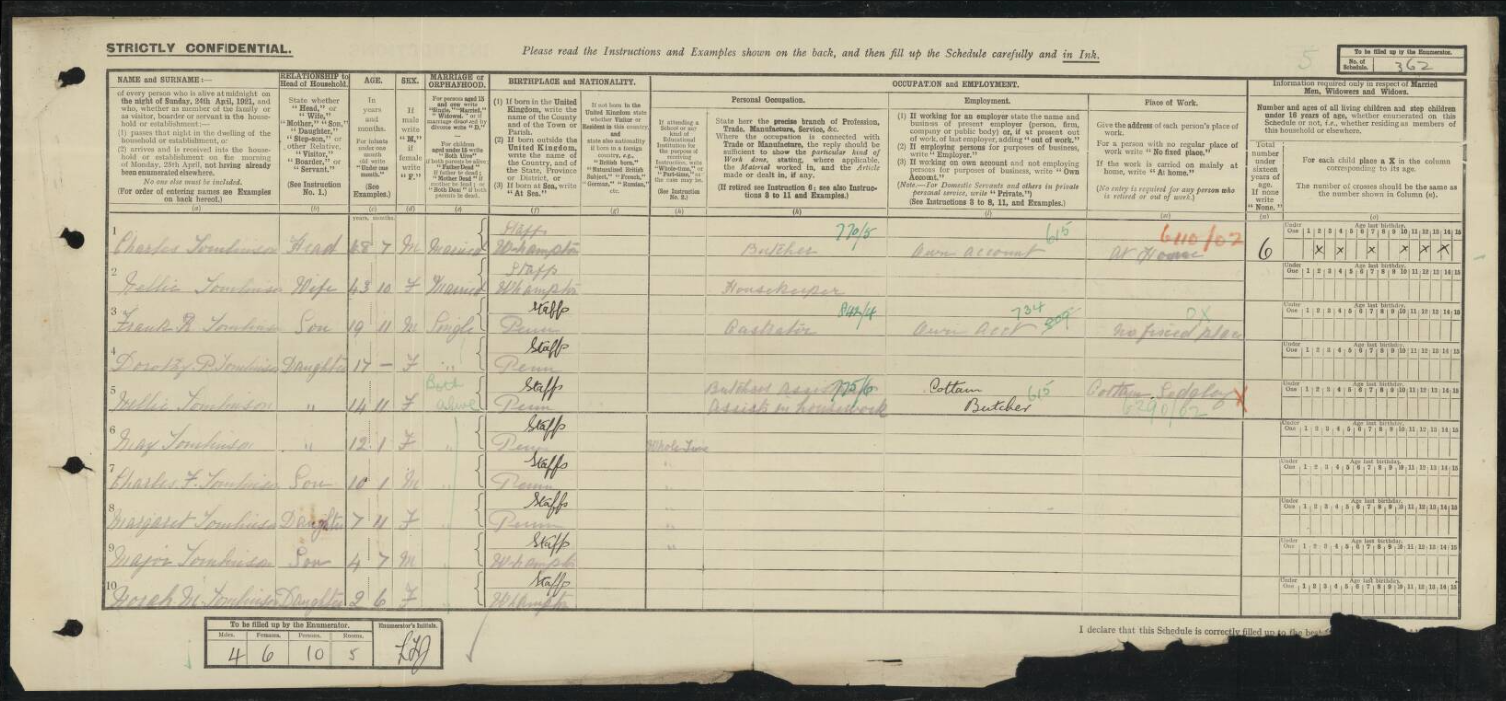
They were living on Coleman Street in 1915 when Charles was fined for staying open late.
Staffordshire Advertiser – Saturday 13 February 1915:

What is not yet clear is why they moved from the house on Penn Common sometime between 1912 and 1915. And why did he have a racehorse in 1920?
October 11, 2022 at 11:39 am #6333In reply to: Family Stories From The Other Side ~ Book Two
The Grattidge Family
The first Grattidge to appear in our tree was Emma Grattidge (1853-1911) who married Charles Tomlinson (1847-1907) in 1872.
Charles Tomlinson (1873-1929) was their son and he married my great grandmother Nellie Fisher. Their daughter Margaret (later Peggy Edwards) was my grandmother on my fathers side.
Emma Grattidge was born in Wolverhampton, the daughter and youngest child of William Grattidge (1820-1887) born in Foston, Derbyshire, and Mary Stubbs, born in Burton on Trent, daughter of Solomon Stubbs, a land carrier. William and Mary married at St Modwens church, Burton on Trent, in 1839. It’s unclear why they moved to Wolverhampton. On the 1841 census William was employed as an agent, and their first son William was nine months old. Thereafter, William was a licensed victuallar or innkeeper.
William Grattidge was born in Foston, Derbyshire in 1820. His parents were Thomas Grattidge, farmer (1779-1843) and Ann Gerrard (1789-1822) from Ellastone. Thomas and Ann married in 1813 in Ellastone. They had five children before Ann died at the age of 25:
Bessy was born in 1815, Thomas in 1818, William in 1820, and Daniel Augustus and Frederick were twins born in 1822. They were all born in Foston. (records say Foston, Foston and Scropton, or Scropton)
On the 1841 census Thomas had nine people additional to family living at the farm in Foston, presumably agricultural labourers and help.
After Ann died, Thomas had three children with Kezia Gibbs (30 years his junior) before marrying her in 1836, then had a further four with her before dying in 1843. Then Kezia married Thomas’s nephew Frederick Augustus Grattidge (born in 1816 in Stafford) in London in 1847 and had two more!
The siblings of William Grattidge (my 3x great grandfather):
Frederick Grattidge (1822-1872) was a schoolmaster and never married. He died at the age of 49 in Tamworth at his twin brother Daniels address.
Daniel Augustus Grattidge (1822-1903) was a grocer at Gungate in Tamworth.
Thomas Grattidge (1818-1871) married in Derby, and then emigrated to Illinois, USA.
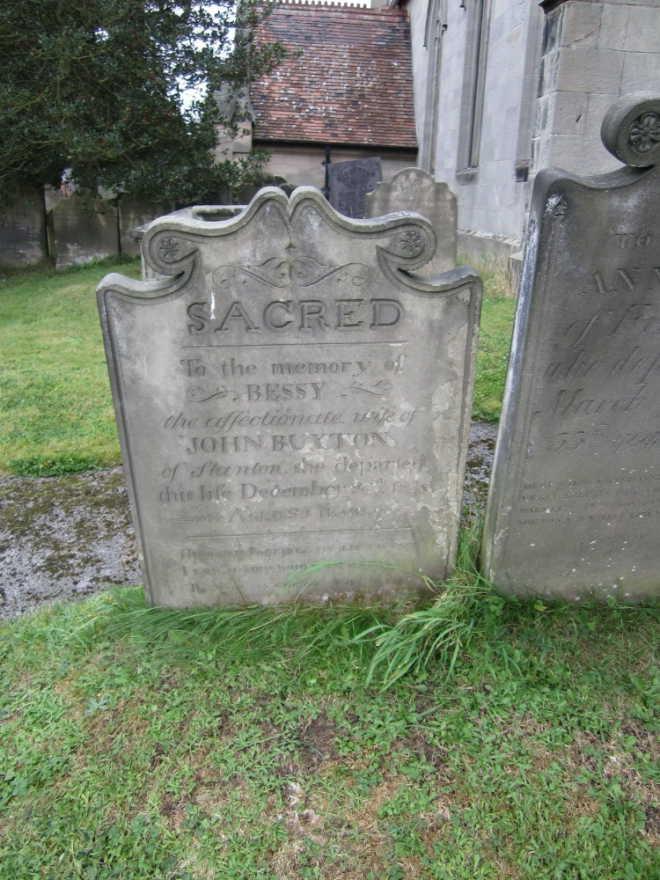
Bessy Grattidge (1815-1840) married John Buxton, farmer, in Ellastone in January 1838. They had three children before Bessy died in December 1840 at the age of 25: Henry in 1838, John in 1839, and Bessy Buxton in 1840. Bessy was baptised in January 1841. Presumably the birth of Bessy caused the death of Bessy the mother.
Bessy Buxton’s gravestone:
“Sacred to the memory of Bessy Buxton, the affectionate wife of John Buxton of Stanton She departed this life December 20th 1840, aged 25 years. “Husband, Farewell my life is Past, I loved you while life did last. Think on my children for my sake, And ever of them with I take.”
20 Dec 1840, Ellastone, Staffordshire
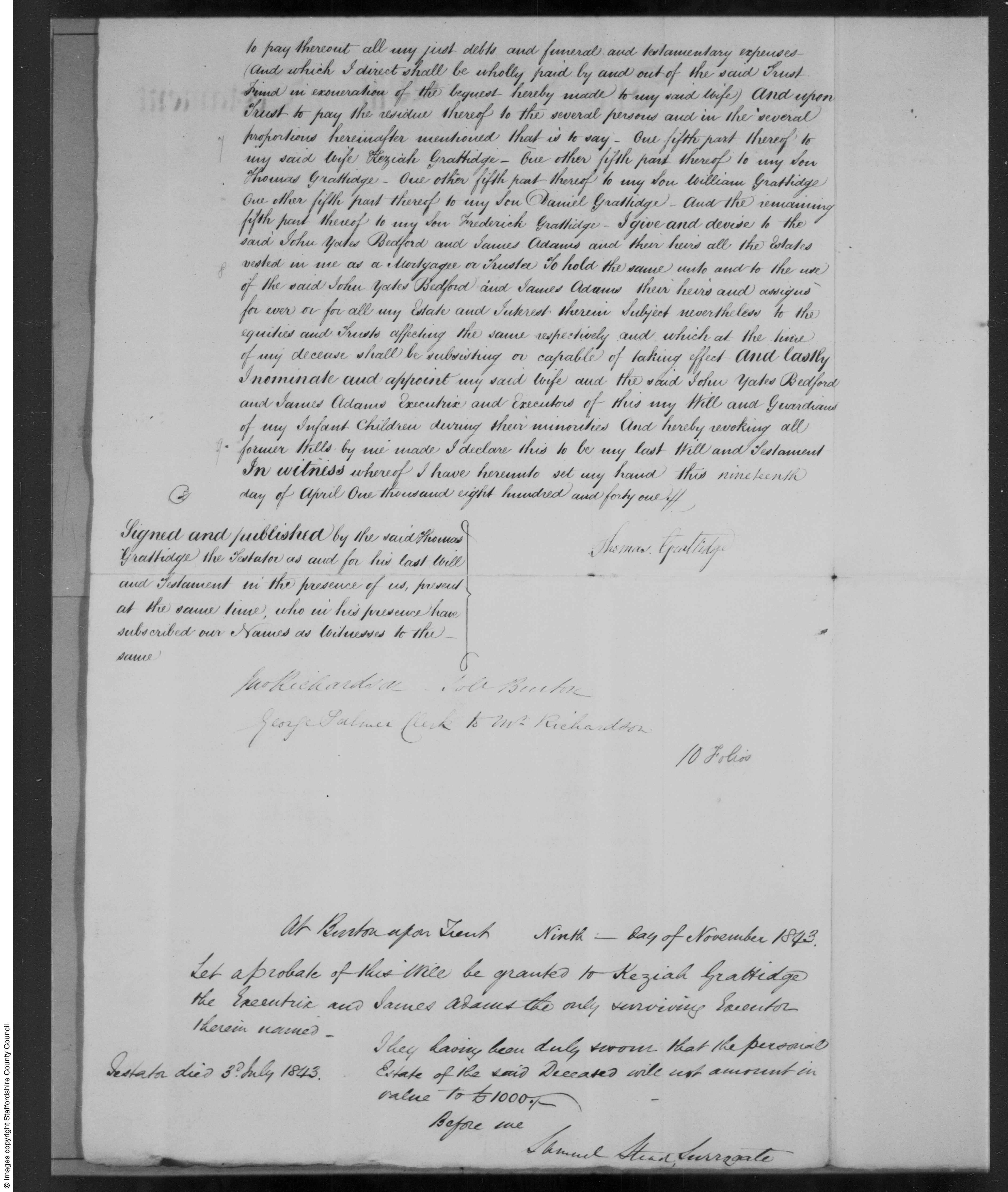
In the 1843 will of Thomas Grattidge, farmer of Foston, he leaves fifth shares of his estate, including freehold real estate at Findern, to his wife Kezia, and sons William, Daniel, Frederick and Thomas. He mentions that the children of his late daughter Bessy, wife of John Buxton, will be taken care of by their father. He leaves the farm to Keziah in confidence that she will maintain, support and educate his children with her.
An excerpt from the will:
I give and bequeath unto my dear wife Keziah Grattidge all my household goods and furniture, wearing apparel and plate and plated articles, linen, books, china, glass, and other household effects whatsoever, and also all my implements of husbandry, horses, cattle, hay, corn, crops and live and dead stock whatsoever, and also all the ready money that may be about my person or in my dwelling house at the time of my decease, …I also give my said wife the tenant right and possession of the farm in my occupation….
A page from the 1843 will of Thomas Grattidge:
William Grattidges half siblings (the offspring of Thomas Grattidge and Kezia Gibbs):
Albert Grattidge (1842-1914) was a railway engine driver in Derby. In 1884 he was driving the train when an unfortunate accident occured outside Ambergate. Three children were blackberrying and crossed the rails in front of the train, and one little girl died.
Albert Grattidge:
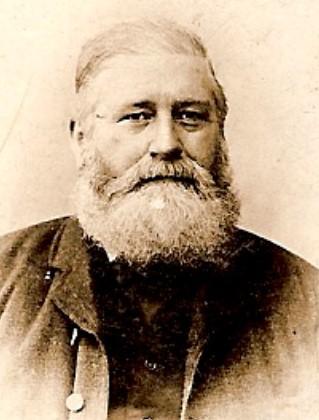
George Grattidge (1826-1876) was baptised Gibbs as this was before Thomas married Kezia. He was a police inspector in Derby.
George Grattidge:
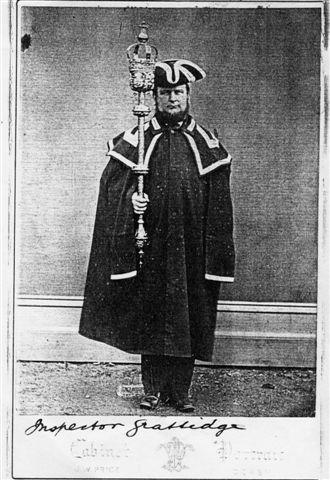
Edwin Grattidge (1837-1852) died at just 15 years old.
Ann Grattidge (1835-) married Charles Fletcher, stone mason, and lived in Derby.
Louisa Victoria Grattidge (1840-1869) was sadly another Grattidge woman who died young. Louisa married Emmanuel Brunt Cheesborough in 1860 in Derby. In 1861 Louisa and Emmanuel were living with her mother Kezia in Derby, with their two children Frederick and Ann Louisa. Emmanuel’s occupation was sawyer. (Kezia Gibbs second husband Frederick Augustus Grattidge was a timber merchant in Derby)
At the time of her death in 1869, Emmanuel was the landlord of the White Hart public house at Bridgegate in Derby.
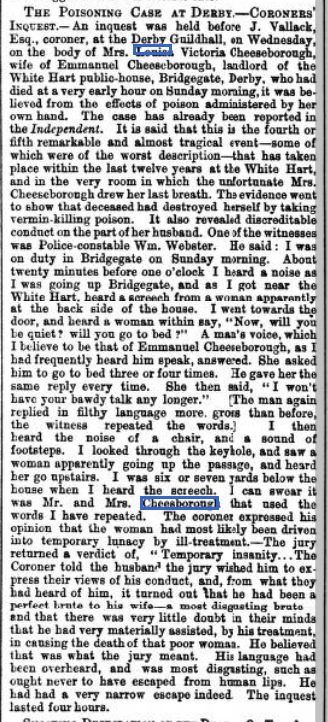
The Derby Mercury of 17th November 1869:
“On Wednesday morning Mr Coroner Vallack held an inquest in the Grand
Jury-room, Town-hall, on the body of Louisa Victoria Cheeseborough, aged
33, the wife of the landlord of the White Hart, Bridge-gate, who committed
suicide by poisoning at an early hour on Sunday morning. The following
evidence was taken:Mr Frederick Borough, surgeon, practising in Derby, deposed that he was
called in to see the deceased about four o’clock on Sunday morning last. He
accordingly examined the deceased and found the body quite warm, but dead.
He afterwards made enquiries of the husband, who said that he was afraid
that his wife had taken poison, also giving him at the same time the
remains of some blue material in a cup. The aunt of the deceased’s husband
told him that she had seen Mrs Cheeseborough put down a cup in the
club-room, as though she had just taken it from her mouth. The witness took
the liquid home with him, and informed them that an inquest would
necessarily have to be held on Monday. He had made a post mortem
examination of the body, and found that in the stomach there was a great
deal of congestion. There were remains of food in the stomach and, having
put the contents into a bottle, he took the stomach away. He also examined
the heart and found it very pale and flabby. All the other organs were
comparatively healthy; the liver was friable.Hannah Stone, aunt of the deceased’s husband, said she acted as a servant
in the house. On Saturday evening, while they were going to bed and whilst
witness was undressing, the deceased came into the room, went up to the
bedside, awoke her daughter, and whispered to her. but what she said the
witness did not know. The child jumped out of bed, but the deceased closed
the door and went away. The child followed her mother, and she also
followed them to the deceased’s bed-room, but the door being closed, they
then went to the club-room door and opening it they saw the deceased
standing with a candle in one hand. The daughter stayed with her in the
room whilst the witness went downstairs to fetch a candle for herself, and
as she was returning up again she saw the deceased put a teacup on the
table. The little girl began to scream, saying “Oh aunt, my mother is
going, but don’t let her go”. The deceased then walked into her bed-room,
and they went and stood at the door whilst the deceased undressed herself.
The daughter and the witness then returned to their bed-room. Presently
they went to see if the deceased was in bed, but she was sitting on the
floor her arms on the bedside. Her husband was sitting in a chair fast
asleep. The witness pulled her on the bed as well as she could.
Ann Louisa Cheesborough, a little girl, said that the deceased was her
mother. On Saturday evening last, about twenty minutes before eleven
o’clock, she went to bed, leaving her mother and aunt downstairs. Her aunt
came to bed as usual. By and bye, her mother came into her room – before
the aunt had retired to rest – and awoke her. She told the witness, in a
low voice, ‘that she should have all that she had got, adding that she
should also leave her her watch, as she was going to die’. She did not tell
her aunt what her mother had said, but followed her directly into the
club-room, where she saw her drink something from a cup, which she
afterwards placed on the table. Her mother then went into her own room and
shut the door. She screamed and called her father, who was downstairs. He
came up and went into her room. The witness then went to bed and fell
asleep. She did not hear any noise or quarrelling in the house after going
to bed.Police-constable Webster was on duty in Bridge-gate on Saturday evening
last, about twenty minutes to one o’clock. He knew the White Hart
public-house in Bridge-gate, and as he was approaching that place, he heard
a woman scream as though at the back side of the house. The witness went to
the door and heard the deceased keep saying ‘Will you be quiet and go to
bed’. The reply was most disgusting, and the language which the
police-constable said was uttered by the husband of the deceased, was
immoral in the extreme. He heard the poor woman keep pressing her husband
to go to bed quietly, and eventually he saw him through the keyhole of the
door pass and go upstairs. his wife having gone up a minute or so before.
Inspector Fearn deposed that on Sunday morning last, after he had heard of
the deceased’s death from supposed poisoning, he went to Cheeseborough’s
public house, and found in the club-room two nearly empty packets of
Battie’s Lincoln Vermin Killer – each labelled poison.Several of the Jury here intimated that they had seen some marks on the
deceased’s neck, as of blows, and expressing a desire that the surgeon
should return, and re-examine the body. This was accordingly done, after
which the following evidence was taken:Mr Borough said that he had examined the body of the deceased and observed
a mark on the left side of the neck, which he considered had come on since
death. He thought it was the commencement of decomposition.
This was the evidence, after which the jury returned a verdict “that the
deceased took poison whilst of unsound mind” and requested the Coroner to
censure the deceased’s husband.The Coroner told Cheeseborough that he was a disgusting brute and that the
jury only regretted that the law could not reach his brutal conduct.
However he had had a narrow escape. It was their belief that his poor
wife, who was driven to her own destruction by his brutal treatment, would
have been a living woman that day except for his cowardly conduct towards
her.The inquiry, which had lasted a considerable time, then closed.”
In this article it says:
“it was the “fourth or fifth remarkable and tragical event – some of which were of the worst description – that has taken place within the last twelve years at the White Hart and in the very room in which the unfortunate Louisa Cheesborough drew her last breath.”
Sheffield Independent – Friday 12 November 1869:
 September 4, 2022 at 6:00 pm #6326
In reply to: The Sexy Wooden Leg
Stung by Egberts question, Olga reeled and almost lost her footing on the stairs. What had happened to her? That damned selfish individualism that was running rampant must have seeped into her room through the gaps in the windows or under the door. “No!” she shouted, her voice cracking.
“Say it isn’t true, Olga,” Egbert said, his voice breaking. “Not you as well.”
It took Olga a minute or two to still her racing heart. The near fall down the stairs had shaken her but with trembling hands she levered herself round to sit beside Egbert on the step.
Gripping his bony knee with her knobbly arthritic fingers, she took a deep breath.
“You are right to have said that, Egbert. If there is one thing we must hold onto, it’s our hearts. Nothing else matters, or at least nothing else matters as much as that. We are old and tired and we don’t like change. But if we escalate the importance of this frankly dreary and depressing home to the point where we lose our hearts…” she faltered and continued. “We will be homeless soon, very soon, and we know not what will happen to us. We must trust in the kindness of strangers, we must hope they have a heart.”
Egbert winced as Olga squeezed his knee. “And that is why”, Olga continued, slapping Egberts thigh with gusto, “We must have a heart…”
“If you’d just stop squeezing and hitting me, Olga…”
Olga loosened her grip on the old mans thigh bone and peered into his eyes. Quietly she thanked him. “You’ve cleared my mind and given me something to live for, and I thank you for that. But you do need to launder your clothes more often,” she added, pulling a face. She didn’t want the old coot to start blubbing, and he looked alarmingly close to tears.
“Come on, let’s go and see Obadiah. We’re all in this together. Homelessness and adventure can wait until tomorrow.” Olga heaved herself upright with a surprising burst of vitality. Noticing a weak smile trembling on Egberts lips, she said “That’s the spirit!”
July 13, 2022 at 3:09 am #6323In reply to: The Sexy Wooden Leg
“Watch where you are going, Child!” Egbert’s tone was sharp.
“Excuse me,” said Maryechka, hunching her shoulders and making herself small as a mouse so she could squeeze past Egbert’s oversized suitcase.
“To be fair, Old Man,” said Olga, glad of the excuse to pause, “you are taking up all the available space on the stairs with those bags.” She peered at Maryechka. “You are Obadiah’s girl aren’t you?”
Maryechka nodded shyly. “He’s my grandpa.” She frowned at the suitcases. “Are you going on holiday?”
“Never you mind that,” said Egbert. “You run along and see your Grandpa.”
Maryechka ducked past the bag and ran up the steps.
“Oy,” said Olga. “What I wouldn’t give for the agility of youth again.” Gripping the wooden hand rail, she stretched out her ankle and grimaced.
“Obadiah is stubborn as a mule,” said Egbert. “I tried warning him! He said he’d die in his room if it came to it.”
“Pfft,” said Olga. “That one will land on his big stinking feet. And he can hear better than he lets on. Is it him spreading the tales about me?”
Egbert dropped his bags and sat heavily on the step. He put his head in his hands and groaned. “Is it right though, Olga? Is it right that we leave our friends to their fate?”
It occurred to Olga that Egbert may be hiding his head so as not to answer her question. However, realising his mental state was fragile, she thought it prudent to keep to the matter at hand. It will keep, she thought.
“Obadiah and myself, we grew up together,” continued Egbert with what sounded like a sob. “We worked together on the farm as young men.” He raised his head and glared at Olga. “How can you expect me to leave him without a word of farewell? Have you no heart?”
July 12, 2022 at 9:46 am #6320In reply to: The Sexy Wooden Leg
When Maryechka arrived at the front gate of the Vyriy hotel with its gaudy plaster storks at the entrance, she sneaked into the side gate leading to the kitchens.
She had to be careful not to to be noticed by Larysa who often had her cigarette break hidden under the pine tree. Larysa didn’t like children, or at least, she disliked them slightly less than the elderly residents, whoever was the loudest and the uncleanliest was sure to suffer her disapproval.
Larysa was basically single-handedly managing the hotel, doing most of the chores to keep it afloat. The only thing she didn’t do was the catering, and packaged trays arrived every day for the residents. Maryechka’s grand-pa was no picky eater, and made a point of clearing his tray of food, but she suspected most of the other residents didn’t.
The only other employee she was told, was the gardener who would have been old enough to be a resident himself, and had died of a stroke before the summer. The small garden was clearly in need of tending after.Maryechka could see the coast was clear, and was making her ways to the stairs when she heard clanking in the stairs and voices arguing.
“Keep your voice down, you’re going to wake the dragon.”
“That’s your fault, you don’t pack light for your adventures. You really needed to take all these suitcases? How can we make a run for it with all that dead weight!”
July 12, 2022 at 8:30 am #6319In reply to: The Sexy Wooden Leg
“Calm yourself, Egbert, and sit down. And be quiet! I can barely hear myself think with your frantic gibbering and flailing around,” Olga said, closing her eyes. “I need to think.”
Egbert clutched the eiderdown on either side of his bony trembling knees and clamped his remaining teeth together, drawing ragged whistling breaths in an attempt to calm himself. Olga was right, he needed to calm down. Besides the unfortunate effects of the letter on his habitual tremor, he felt sure his blood pressure had risen alarmingly. He dared not become so ill that he needed medical assistance, not with the state of the hospitals these days. He’d be lucky to survive the plague ridden wards.
What had become of him! He imagined his younger self looking on with horror, appalled at his feeble body and shattered mind. Imagine becoming so desperate that he wanted to fight to stay in this godforsaken dump, what had become of him! If only he knew of somewhere else to go, somewhere safe and pleasant, somewhere that smelled sweetly of meadows and honesuckle and freshly baked cherry pies, with the snorting of pigs in the yard…
But wait, that was Olga snoring. Useless old bag had fallen asleep! For the first time since Viktor had died he felt close to tears. What a sad sorry pathetic old man he’d become, desperately counting on a old woman to save him.
“Stop sniveling, Egbert, and go and pack a bag.” Olga had woken up from her momentary but illuminating lapse. “Don’t bring too much, we may have much walking to do. I hear the buses and trains are in a shambles and full of refugees. We don’t want to get herded up with them.”
Astonished, Egbert asked where they were going.
“To see Rosa. My cousins father in laws neice. Don’t look at me like that, immediate family are seldom the ones who help. The distant ones are another matter. And be honest Egbert,” Olga said with a piercing look, “Do we really want to stay here? You may think you do, but it’s the fear of change, that’s all. Change feels like too much bother, doesn’t it?”
Egbert nodded sadly, his eyes fixed on the stain on the grey carpet.
Olga leaned forward and took his hand gently. “Egbert, look at me.” He raised his head and looked into her eyes. He’d never seen a sparkle in her faded blue eyes before. “I still have another adventure in me. How about you?”
July 10, 2022 at 2:36 am #6317In reply to: The Sexy Wooden Leg
The sharp rat-a-tat on the door startled Olga Herringbonevsky. The initial surprise quickly turned to annoyance. It was 11am and she wasn’t expecting a knock on the door at 11am. At 10am she expected a knock. It would be Larysa with the lukewarm cup of tea and a stale biscuit. Sometimes Olga complained about it and Larysa would say, Well you’re on the third floor so what do you expect? And she’d look cross and pour the tea so some of it slopped into the saucer. So the biscuits go stale on the way up do they? Olga would mutter. At 10:30am Larysa would return to collect the cup and saucer. I can’t do this much longer, she’d say. I’m not young any more and all these damn stairs. She’d been saying that for as long as Olga could remember.
For a moment, Olga contemplated ignoring the intrusion but the knocking started up again, this time accompanied by someone shouting her name.
With a very loud sigh, she put her book on the side table, face down so she would not lose her place for it was a most enjoyable whodunit, and hauled herself up from the chair. Her ankle was not good since she’d gone over on it the other day and Olga was in a very poor mood by the time she reached the door.
“Yes?” She glowered at Egbert.
“Have you seen this?” Egbert was waving a piece of paper at her.
“No,” Olga started to close the door.
“Olga stop!” Egbert’s face had reddened and Olga wondered if he might cry. Again, he waved the piece of paper in her face and then let his hand fall defeated to his side. “Olga, it’s bad news. You should have got a letter .”
Olga glanced at the pile of unopened letters on her dresser. It was never good news. She couldn’t be bothered with letters any more.
“Well, Egbert, I suppose you’d better come in”.
“That Ursula has a heart of steel,” said Olga when she’d heard the news.
“Pfft,” said Egbert. “She has no heart. This place has always been about money for her.”
“It’s bad times, Egbert. Bad times.”
Egbert nodded. “It is, Olga. But there must be something we can do.” He pursed his lips and Olga noticed that he would not meet her eyes.
“What? Spit it out, Old Man.”
He looked at her briefly before his eyes slid back to the dirty grey carpet. “I have heard stories, Olga. That you are … well connected. That you know people.”
Olga noticed that it had become difficult to breathe. Seeing Egbert looking at her with concern, she made an effort to steady herself. She took an extra big gasp of air and pointed to the book face-down on the side table. “That is a very good book I am reading. You may borrow it when I have finished.”
Egbert nodded. “Thank you.” he said and they both stared at the book.
“It was a long time ago, Egbert. And no business of anyone else.” Olga knew her voice was sharp but not sharp enough it seemed as Egbert was not done yet with all his prying words.
“Olga, you said it yourself. These are bad times. And desperate measures are needed or we will all perish.” Now he looked her in the eyes. “Old woman, swallow your pride. You must save yourself and all of us here.”
July 6, 2022 at 11:05 am #6312In reply to: The Sexy Wooden Leg
When she’d heard of the miracle happening at the Flovlinden Tree, Egna initially shrugged it off as another conman’s attempt at fooling the crowds.
“No, it’s real, my Auntie saw it.”
“Stop fretting” she’d told the little girl, as she was carefully removing the lice from her hair. “This is just someone’s idea of a smart joke. Don’t get fooled, you’re smarter than this.”
She sure wasn’t responsible for that one. If that were a true miracle, she would have known. The little calf next week being resuscitated after being dead a few minutes, well, that was her. Shame nobody was even there to notice. Most of the best miracles go about this way anyway.
So, after having lived close to a millennia in relatively rock solid health and with surprisingly unaging looks, Egna had thought she’d seen it all; at least last time the tree started to ooze sacred oil, it didn’t last for too long, people’s greed starting to sell it stopped it right in its tracks.
But maybe there was more to it this time. Egna’d often wondered why God had let her live that long. She was a useful instrument to Her for sure, but living in secrecy, claiming no ownership, most miracles were just facts of life. She somehow failed to see the point, even after 957 years of existence.
The little girl had left to go back to her nearby town. This side of the country was still quite safe from all the craziness. Egna knew well most of the branches of the ancestral trees leading to that particular little leaf. This one had probably no idea she shared a common ancestor with President Voldomeer, but Egna remembered the fellow. He was a clogmaker in the turn of the 18th century, as was his father before. That was until a rather unexpected turn of events precipitated him to a different path as his brother.
She had a book full of these records, as she’d tracked the lives of many, to keep them alive, and maybe remind people they all share so much in common. That is, if people were able to remember more than 2 generations before them.
“Well, that’s set.” she said to herself and to Her as She’s always listening “I’ll go and see for myself.”
her trusty old musty cloak at the door seemed to have been begging for the journey.June 6, 2022 at 9:17 am #6301In reply to: The Elusive Samuel Housley and Other Family Stories
The Warrens of Stapenhill
There were so many Warren’s in Stapenhill that it was complicated to work out who was who. I had gone back as far as Samuel Warren marrying Catherine Holland, and this was as far back as my cousin Ian Warren had gone in his research some decades ago as well. The Holland family from Barton under Needwood are particularly interesting, and will be a separate chapter.
Stapenhill village by John Harden:
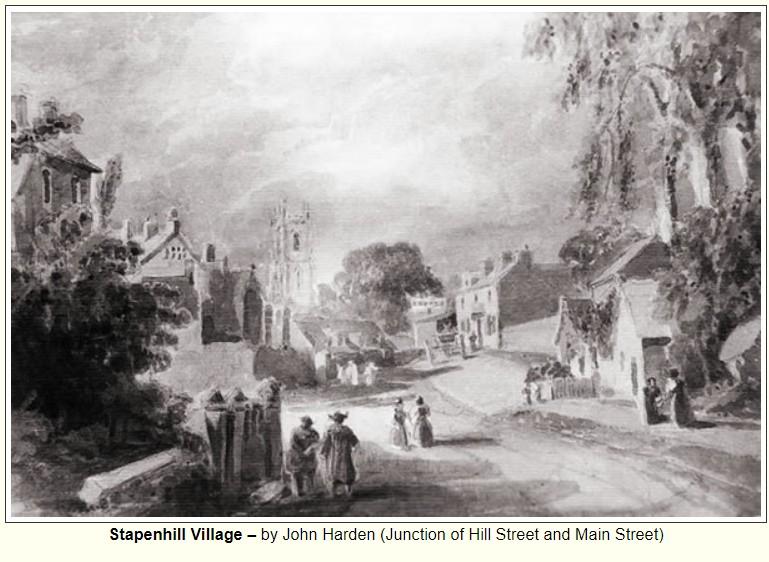
Resuming the research on the Warrens, Samuel Warren 1771-1837 married Catherine Holland 1775-1861 in 1795 and their son Samuel Warren 1800-1882 married Elizabeth Bridge, whose childless brother Benjamin Bridge left the Warren Brothers Boiler Works in Newhall to his nephews, the Warren brothers.
Samuel Warren and Catherine Holland marriage licence 1795:
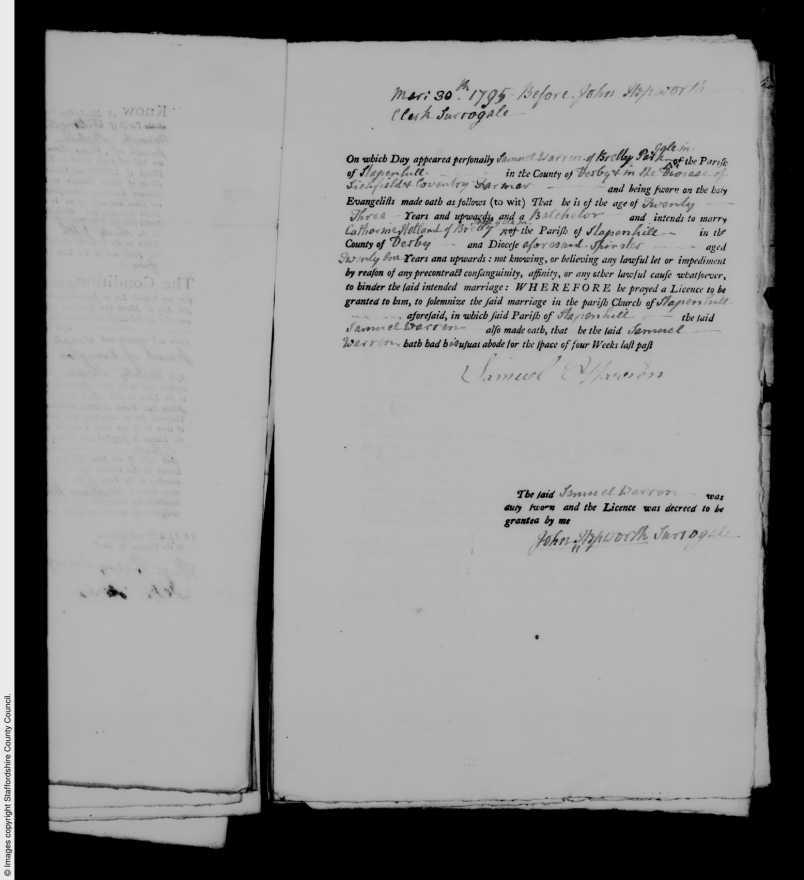
Samuel (born 1771) was baptised at Stapenhill St Peter and his parents were William and Anne Warren. There were at least three William and Ann Warrens in town at the time. One of those William’s was born in 1744, which would seem to be the right age to be Samuel’s father, and one was born in 1710, which seemed a little too old. Another William, Guiliamos Warren (Latin was often used in early parish registers) was baptised in Stapenhill in 1729.
Stapenhill St Peter:
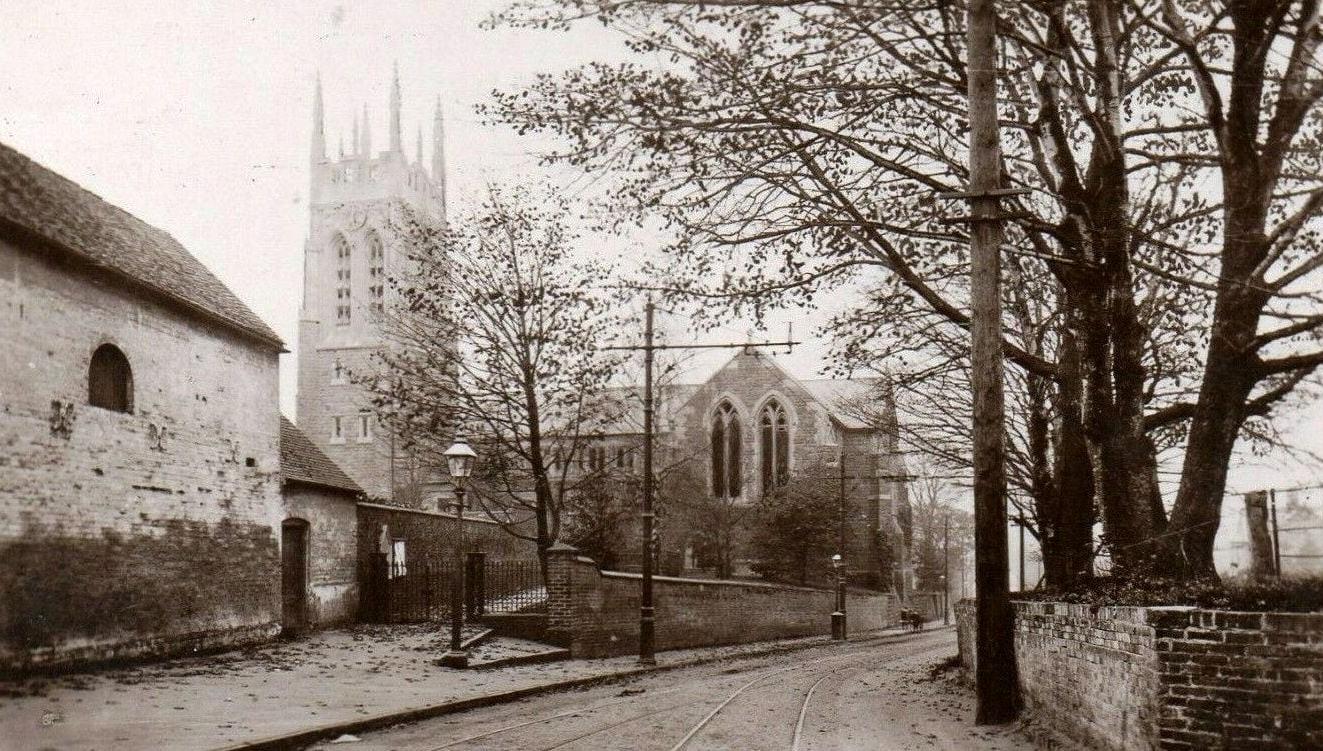
William Warren (born 1744) appeared to have been born several months before his parents wedding. William Warren and Ann Insley married 16 July 1744, but the baptism of William in 1744 was 24 February. This seemed unusual ~ children were often born less than nine months after a wedding, but not usually before the wedding! Then I remembered the change from the Julian calendar to the Gregorian calendar in 1752. Prior to 1752, the first day of the year was Lady Day, March 25th, not January 1st. This meant that the birth in February 1744 was actually after the wedding in July 1744. Now it made sense. The first son was named William, and he was born seven months after the wedding.
William born in 1744 died intestate in 1822, and his wife Ann made a legal claim to his estate. However he didn’t marry Ann Holland (Ann was Catherines Hollands sister, who married Samuel Warren the year before) until 1796, so this William and Ann were not the parents of Samuel.
It seemed likely that William born in 1744 was Samuels brother. William Warren and Ann Insley had at least eight children between 1744 and 1771, and it seems that Samuel was their last child, born when William the elder was 61 and his wife Ann was 47.
It seems it wasn’t unusual for the Warren men to marry rather late in life. William Warren’s (born 1710) parents were William Warren and Elizabeth Hatterton. On the marriage licence in 1702/1703 (it appears to say 1703 but is transcribed as 1702), William was a 40 year old bachelor from Stapenhill, which puts his date of birth at 1662. Elizabeth was considerably younger, aged 19.
William Warren and Elizabeth Hatterton marriage licence 1703:
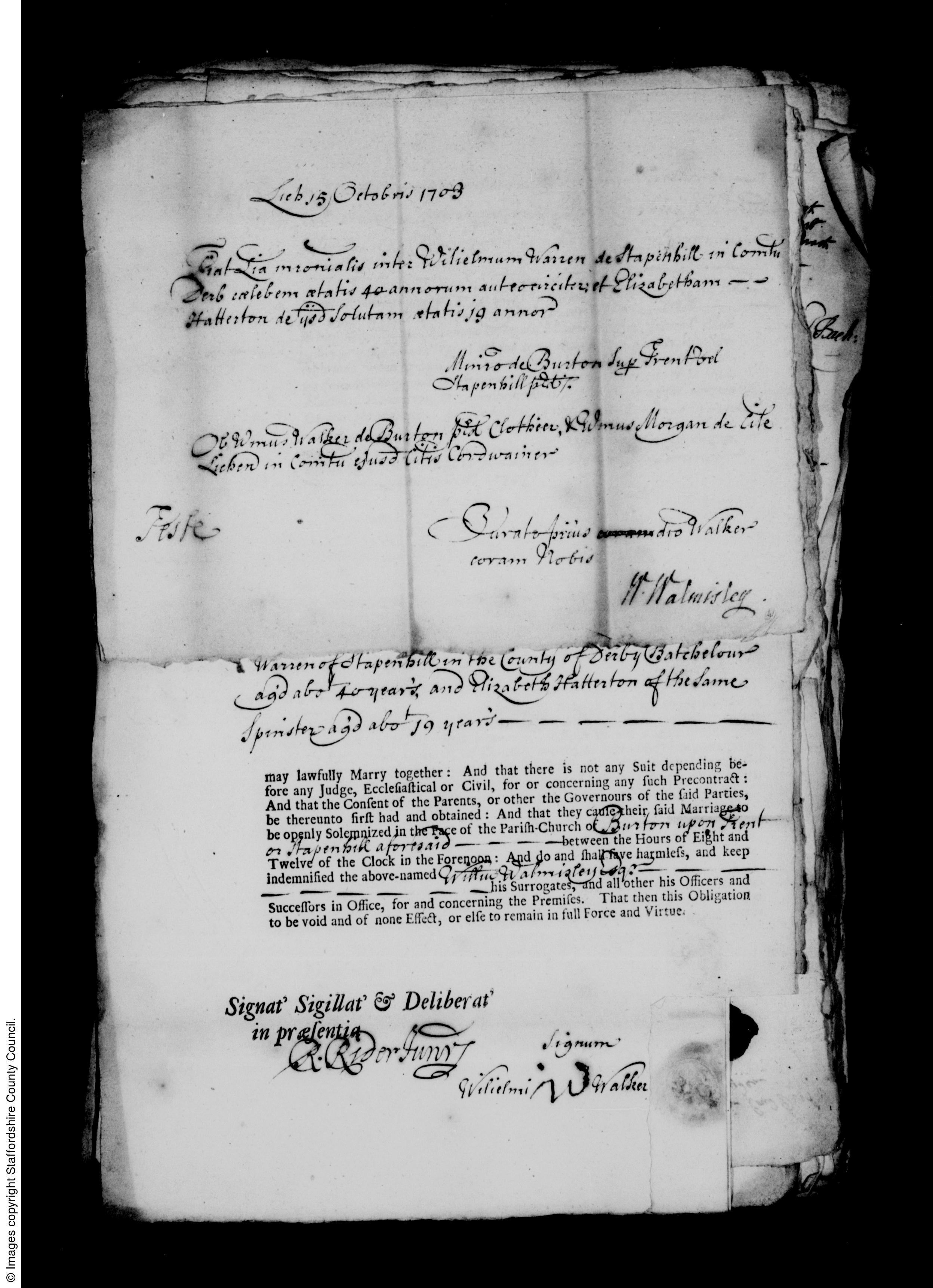
These Warren’s were farmers, and they were literate and able to sign their own names on various documents. This is worth noting, as most made the mark of an X.
I found three Warren and Holland marriages. One was Samuel Warren and Catherine Holland in 1795, then William Warren and Ann Holland in 1796. William Warren and Ann Hollands daughter born in 1799 married John Holland in 1824.
Elizabeth Hatterton (wife of William Warren who was born circa 1662) was born in Burton upon Trent in 1685. Her parents were Edward Hatterton 1655-1722, and Sara.
A page from the 1722 will of Edward Hatterton:
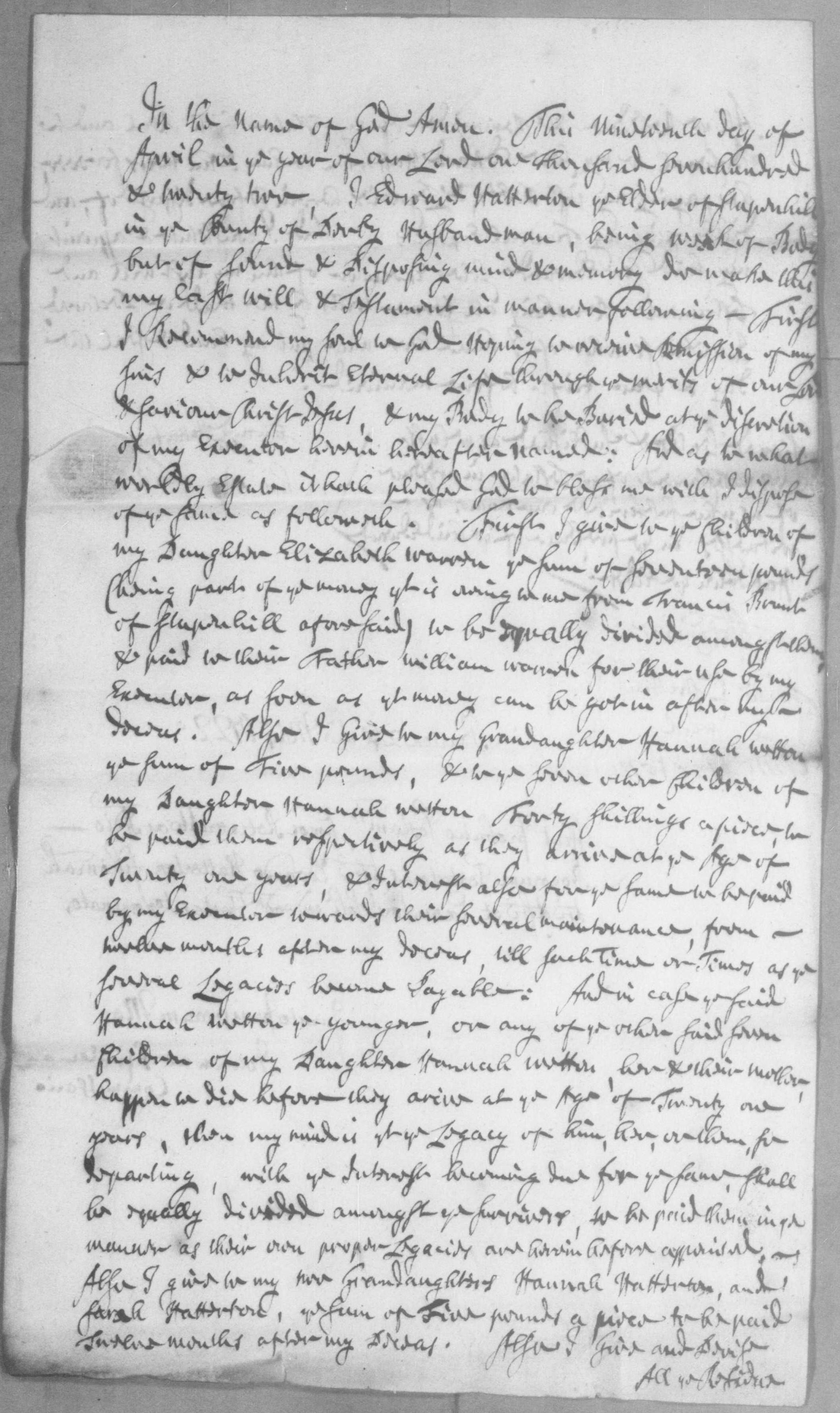
The earliest Warren I found records for was William Warren who married Elizabeth Hatterton in 1703. The marriage licence states his age as 40 and that he was from Stapenhill, but none of the Stapenhill parish records online go back as far as 1662. On other public trees on ancestry websites, a birth record from Suffolk has been chosen, probably because it was the only record to be found online with the right name and date. Once again, I don’t think that is correct, and perhaps one day I’ll find some earlier Stapenhill records to prove that he was born in locally.
Subsequently, I found a list of the 1662 Hearth Tax for Stapenhill. On it were a number of Warrens, three William Warrens including one who was a constable. One of those William Warrens had a son he named William (as they did, hence the number of William Warrens in the tree) the same year as this hearth tax list.
But was it the William Warren with 2 chimneys, the one with one chimney who was too poor to pay it, or the one who was a constable?
from the list:
Will. Warryn 2
Richard Warryn 1
William Warren Constable
These names are not payable by Act:
Will. Warryn 1
Richard Warren John Watson
over seers of the poore and churchwardensThe Hearth Tax:
via wiki:
In England, hearth tax, also known as hearth money, chimney tax, or chimney money, was a tax imposed by Parliament in 1662, to support the Royal Household of King Charles II. Following the Restoration of the monarchy in 1660, Parliament calculated that the Royal Household needed an annual income of £1,200,000. The hearth tax was a supplemental tax to make up the shortfall. It was considered easier to establish the number of hearths than the number of heads, hearths forming a more stationary subject for taxation than people. This form of taxation was new to England, but had precedents abroad. It generated considerable debate, but was supported by the economist Sir William Petty, and carried through the Commons by the influential West Country member Sir Courtenay Pole, 2nd Baronet (whose enemies nicknamed him “Sir Chimney Poll” as a result). The bill received Royal Assent on 19 May 1662, with the first payment due on 29 September 1662, Michaelmas.
One shilling was liable to be paid for every firehearth or stove, in all dwellings, houses, edifices or lodgings, and was payable at Michaelmas, 29 September and on Lady Day, 25 March. The tax thus amounted to two shillings per hearth or stove per year. The original bill contained a practical shortcoming in that it did not distinguish between owners and occupiers and was potentially a major burden on the poor as there were no exemptions. The bill was subsequently amended so that the tax was paid by the occupier. Further amendments introduced a range of exemptions that ensured that a substantial proportion of the poorer people did not have to pay the tax.Indeed it seems clear that William Warren the elder came from Stapenhill and not Suffolk, and one of the William Warrens paying hearth tax in 1662 was undoubtedly the father of William Warren who married Elizabeth Hatterton.
May 21, 2022 at 8:28 am #6298Topic: The Sexy Wooden Leg
in forum Yurara Fameliki’s StoriesThe Rootians invaded Oocrane when everybody was busy looking elsewhere. They entered through the Dumbass region under the pretense of freeing it from Lazies who had infiltrated administrations and media. They often cited a recent short movie from president Voldomeer Zumbaskee in which he appeared in purple leather panties adorned with diamonds, showing unashamedly his wooden leg. The same wooden leg that gave him the status of sexiest man of Oocrane and got him elected. In one of his famous discourses, he accused the Rootian president, Valdamir Potomsky of wanting to help himself to their crops of turnip and weed of which the world depended. And he told him if he expected Lazies he would be surprised by their resolution to defend their country.
By a simple game of chance that reality is so fond of, the man who made the president’s very wooden leg was also called Voldomeer Zumbasky. They might share a common ancestor, but many times in the past population records were destroyed and it was difficult to tell. That man lived in the small city of Duckailingtown in Dumbass, near the Rootian border. He was renowned to be a great carpenter and sculptor and before the war people would come from the neighbooring countries to buy his work.
During the invasion, crops and forests were burnt, buildings were destroyed and Dumbass Voldomeer lost one leg. There were no more trees or beams that hadn’t been turned to ashes, and he had only one block of wood left. Enough to make another wooden leg for himself. But he wondered: wasn’t there something more useful he could do with that block of wood ?
One morning of spring, one year after the war started. Food was scarce in Duckailingtown and Voldomeer’s belly growled as he walked past the nest of a couple of swans. He counted nine beautiful eggs that the parents were arranging with their beaks before lying on top to keep them warm. He found it so touching to see life in this place that he couldn’t bear the idea of simply stealing the eggs.
He went back home, a shelter made of bricks, his stomach aching from starvation. Looking at the block of wood on the floor, he got an idea. He spent the rest of the day and night to carve nine beautiful eggs so smooth that they appeared warm to the touch. He put so much care and love in his work that the swans would see no difference.
The next morning he went back to the nest with a leather bag, hopping heartily on his lone leg. The eggs were still there and by chance both the parents were missing. He didn’t care why. He took the eggs and replaced them with the wooden ones.
That day, he ate the best omelet with his friend Rooby, and as far as one could tell the swans were still brooding by the end of summer.
April 12, 2022 at 8:13 am #6290In reply to: The Elusive Samuel Housley and Other Family Stories
Leicestershire Blacksmiths
The Orgill’s of Measham led me further into Leicestershire as I traveled back in time.
I also realized I had uncovered a direct line of women and their mothers going back ten generations:
myself, Tracy Edwards 1957-
my mother Gillian Marshall 1933-
my grandmother Florence Warren 1906-1988
her mother and my great grandmother Florence Gretton 1881-1927
her mother Sarah Orgill 1840-1910
her mother Elizabeth Orgill 1803-1876
her mother Sarah Boss 1783-1847
her mother Elizabeth Page 1749-
her mother Mary Potter 1719-1780
and her mother and my 7x great grandmother Mary 1680-You could say it leads us to the very heart of England, as these Leicestershire villages are as far from the coast as it’s possible to be. There are countless other maternal lines to follow, of course, but only one of mothers of mothers, and ours takes us to Leicestershire.
The blacksmiths
Sarah Boss was the daughter of Michael Boss 1755-1807, a blacksmith in Measham, and Elizabeth Page of nearby Hartshorn, just over the county border in Derbyshire.
An earlier Michael Boss, a blacksmith of Measham, died in 1772, and in his will he left the possession of the blacksmiths shop and all the working tools and a third of the household furniture to Michael, who he named as his nephew. He left his house in Appleby Magna to his wife Grace, and five pounds to his mother Jane Boss. As none of Michael and Grace’s children are mentioned in the will, perhaps it can be assumed that they were childless.
The will of Michael Boss, 1772, Measham:
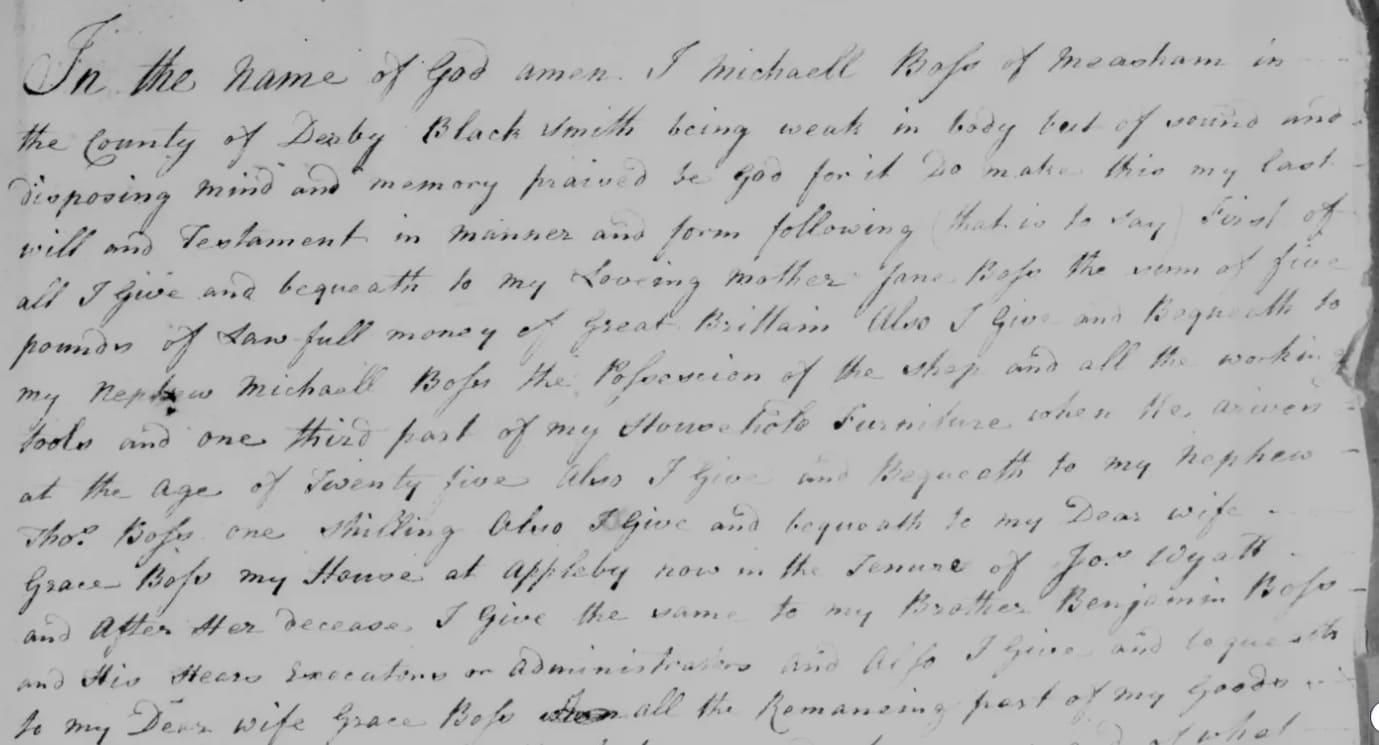
Michael Boss the uncle was born in Appleby Magna in 1724. His parents were Michael Boss of Nelson in the Thistles and Jane Peircivall of Appleby Magna, who were married in nearby Mancetter in 1720.
Information worth noting on the Appleby Magna website:
In 1752 the calendar in England was changed from the Julian Calendar to the Gregorian Calendar, as a result 11 days were famously “lost”. But for the recording of Church Registers another very significant change also took place, the start of the year was moved from March 25th to our more familiar January 1st.
Before 1752 the 1st day of each new year was March 25th, Lady Day (a significant date in the Christian calendar). The year number which we all now use for calculating ages didn’t change until March 25th. So, for example, the day after March 24th 1750 was March 25th 1751, and January 1743 followed December 1743.
This March to March recording can be seen very clearly in the Appleby Registers before 1752. Between 1752 and 1768 there appears slightly confused recording, so dates should be carefully checked. After 1768 the recording is more fully by the modern calendar year.Michael Boss the uncle married Grace Cuthbert. I haven’t yet found the birth or parents of Grace, but a blacksmith by the name of Edward Cuthbert is mentioned on an Appleby Magna history website:
An Eighteenth Century Blacksmith’s Shop in Little Appleby
by Alan RobertsCuthberts inventory
The inventory of Edward Cuthbert provides interesting information about the household possessions and living arrangements of an eighteenth century blacksmith. Edward Cuthbert (als. Cutboard) settled in Appleby after the Restoration to join the handful of blacksmiths already established in the parish, including the Wathews who were prominent horse traders. The blacksmiths may have all worked together in the same shop at one time. Edward and his wife Sarah recorded the baptisms of several of their children in the parish register. Somewhat sadly three of the boys named after their father all died either in infancy or as young children. Edward’s inventory which was drawn up in 1732, by which time he was probably a widower and his children had left home, suggests that they once occupied a comfortable two-storey house in Little Appleby with an attached workshop, well equipped with all the tools for repairing farm carts, ploughs and other implements, for shoeing horses and for general ironmongery.
Edward Cuthbert born circa 1660, married Joane Tuvenet in 1684 in Swepston cum Snarestone , and died in Appleby in 1732. Tuvenet is a French name and suggests a Huguenot connection, but this isn’t our family, and indeed this Edward Cuthbert is not likely to be Grace’s father anyway.
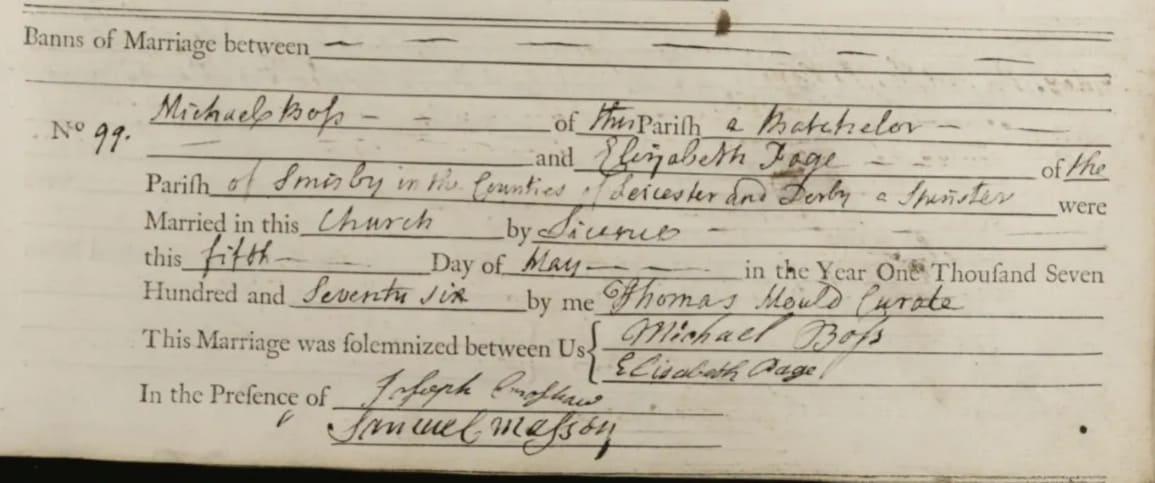
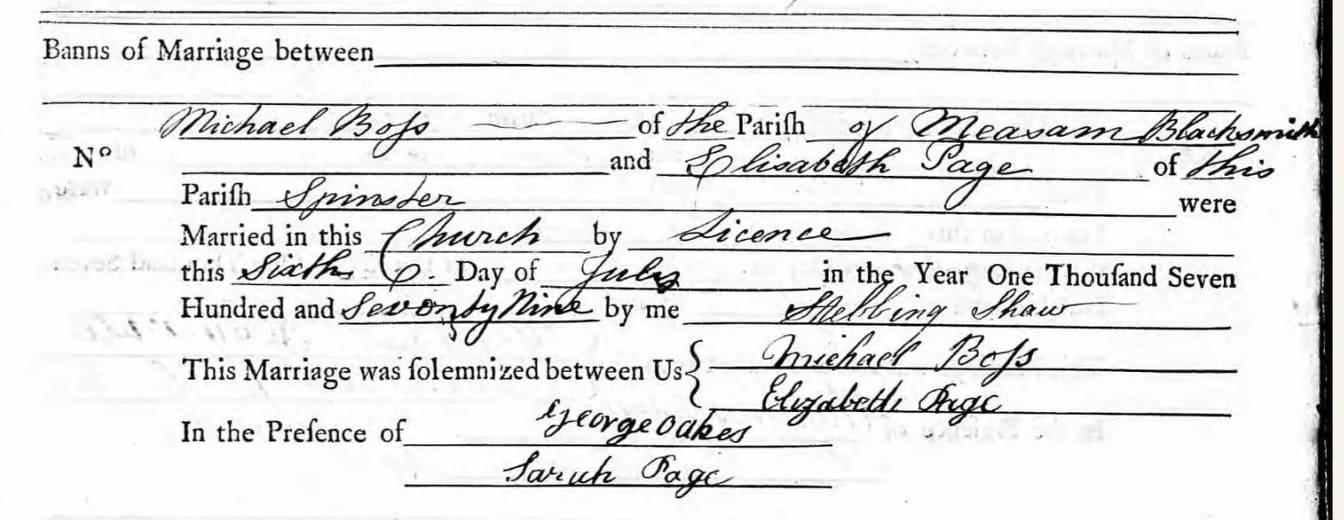
Michael Boss and Elizabeth Page appear to have married twice: once in 1776, and once in 1779. Both of the documents exist and appear correct. Both marriages were by licence. They both mention Michael is a blacksmith.
Their first daughter, Elizabeth, was baptized in February 1777, just nine months after the first wedding. It’s not known when she was born, however, and it’s possible that the marriage was a hasty one. But why marry again three years later?
But Michael Boss and Elizabeth Page did not marry twice.
Elizabeth Page from Smisby was born in 1752 and married Michael Boss on the 5th of May 1776 in Measham. On the marriage licence allegations and bonds, Michael is a bachelor.
Baby Elizabeth was baptised in Measham on the 9th February 1777. Mother Elizabeth died on the 18th February 1777, also in Measham.
In 1779 Michael Boss married another Elizabeth Page! She was born in 1749 in Hartshorn, and Michael is a widower on the marriage licence allegations and bonds.
Hartshorn and Smisby are neighbouring villages, hence the confusion. But a closer look at the documents available revealed the clues. Both Elizabeth Pages were literate, and indeed their signatures on the marriage registers are different:
Marriage of Michael Boss and Elizabeth Page of Smisby in 1776:
Marriage of Michael Boss and Elizabeth Page of Harsthorn in 1779:
Not only did Michael Boss marry two women both called Elizabeth Page but he had an unusual start in life as well. His uncle Michael Boss left him the blacksmith business and a third of his furniture. This was all in the will. But which of Uncle Michaels brothers was nephew Michaels father?
The only Michael Boss born at the right time was in 1750 in Edingale, Staffordshire, about eight miles from Appleby Magna. His parents were Thomas Boss and Ann Parker, married in Edingale in 1747. Thomas died in August 1750, and his son Michael was baptised in the December, posthumus son of Thomas and his widow Ann. Both entries are on the same page of the register.
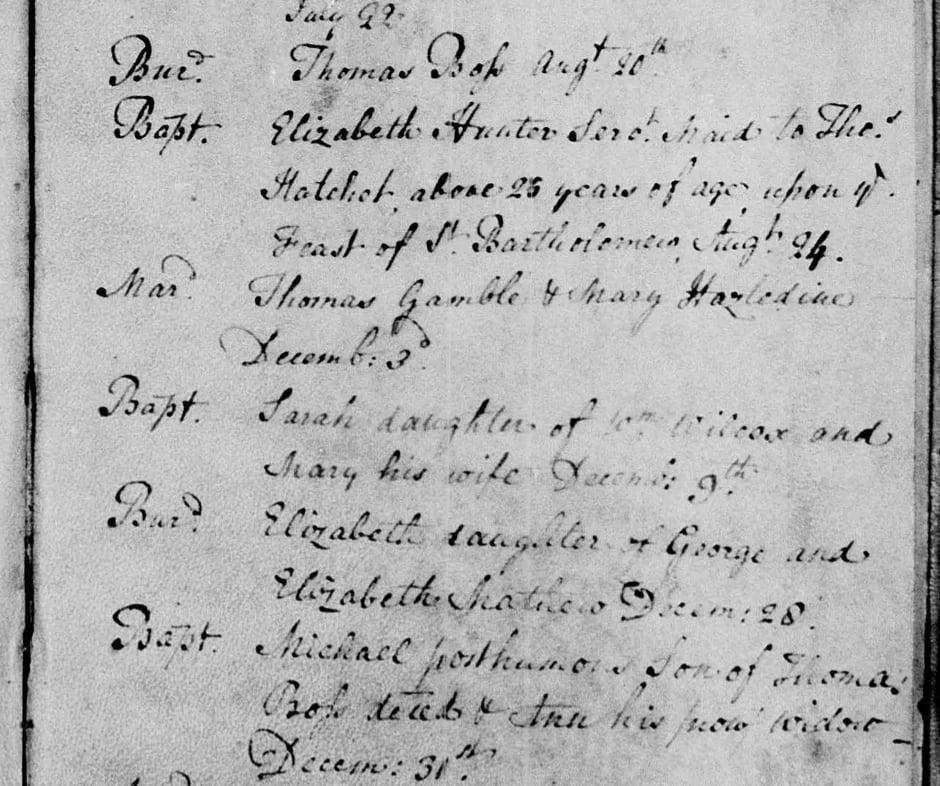
Ann Boss, the young widow, married again. But perhaps Michael and his brother went to live with their childless uncle and aunt, Michael Boss and Grace Cuthbert.
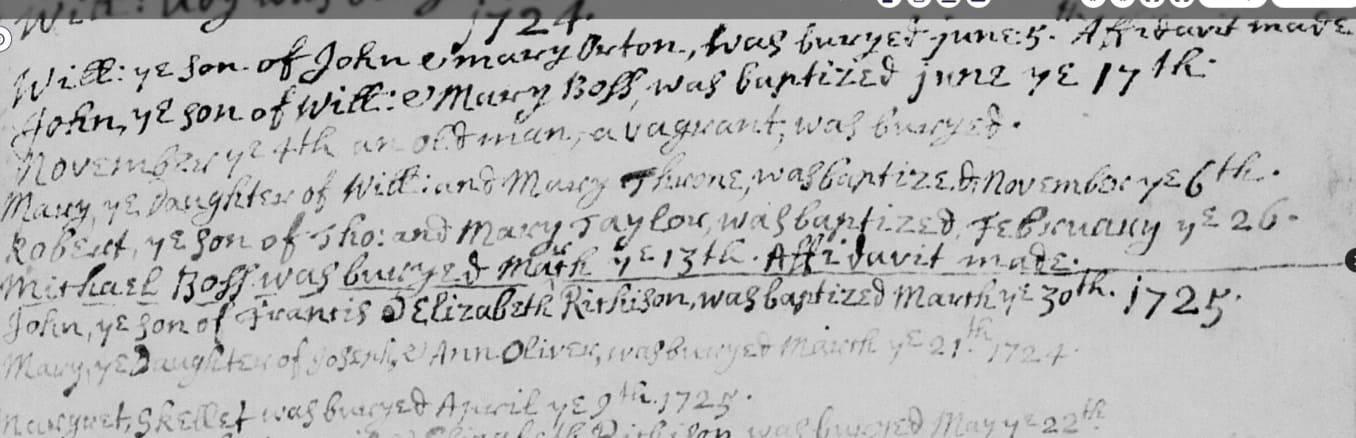
The great grandfather of Michael Boss (the Measham blacksmith born in 1850) was also Michael Boss, probably born in the 1660s. He died in Newton Regis in Warwickshire in 1724, four years after his son (also Michael Boss born 1693) married Jane Peircivall. The entry on the parish register states that Michael Boss was buried ye 13th Affadavit made.
I had not seen affadavit made on a parish register before, and this relates to the The Burying in Woollen Acts 1666–80. According to Wikipedia:
“Acts of the Parliament of England which required the dead, except plague victims and the destitute, to be buried in pure English woollen shrouds to the exclusion of any foreign textiles. It was a requirement that an affidavit be sworn in front of a Justice of the Peace (usually by a relative of the deceased), confirming burial in wool, with the punishment of a £5 fee for noncompliance. Burial entries in parish registers were marked with the word “affidavit” or its equivalent to confirm that affidavit had been sworn; it would be marked “naked” for those too poor to afford the woollen shroud. The legislation was in force until 1814, but was generally ignored after 1770.”
Michael Boss buried 1724 “Affadavit made”:
Elizabeth Page‘s father was William Page 1717-1783, a wheelwright in Hartshorn. (The father of the first wife Elizabeth was also William Page, but he was a husbandman in Smisby born in 1714. William Page, the father of the second wife, was born in Nailstone, Leicestershire, in 1717. His place of residence on his marriage to Mary Potter was spelled Nelson.)
Her mother was Mary Potter 1719- of nearby Coleorton. Mary’s father, Richard Potter 1677-1731, was a blacksmith in Coleorton.
A page of the will of Richard Potter 1731:
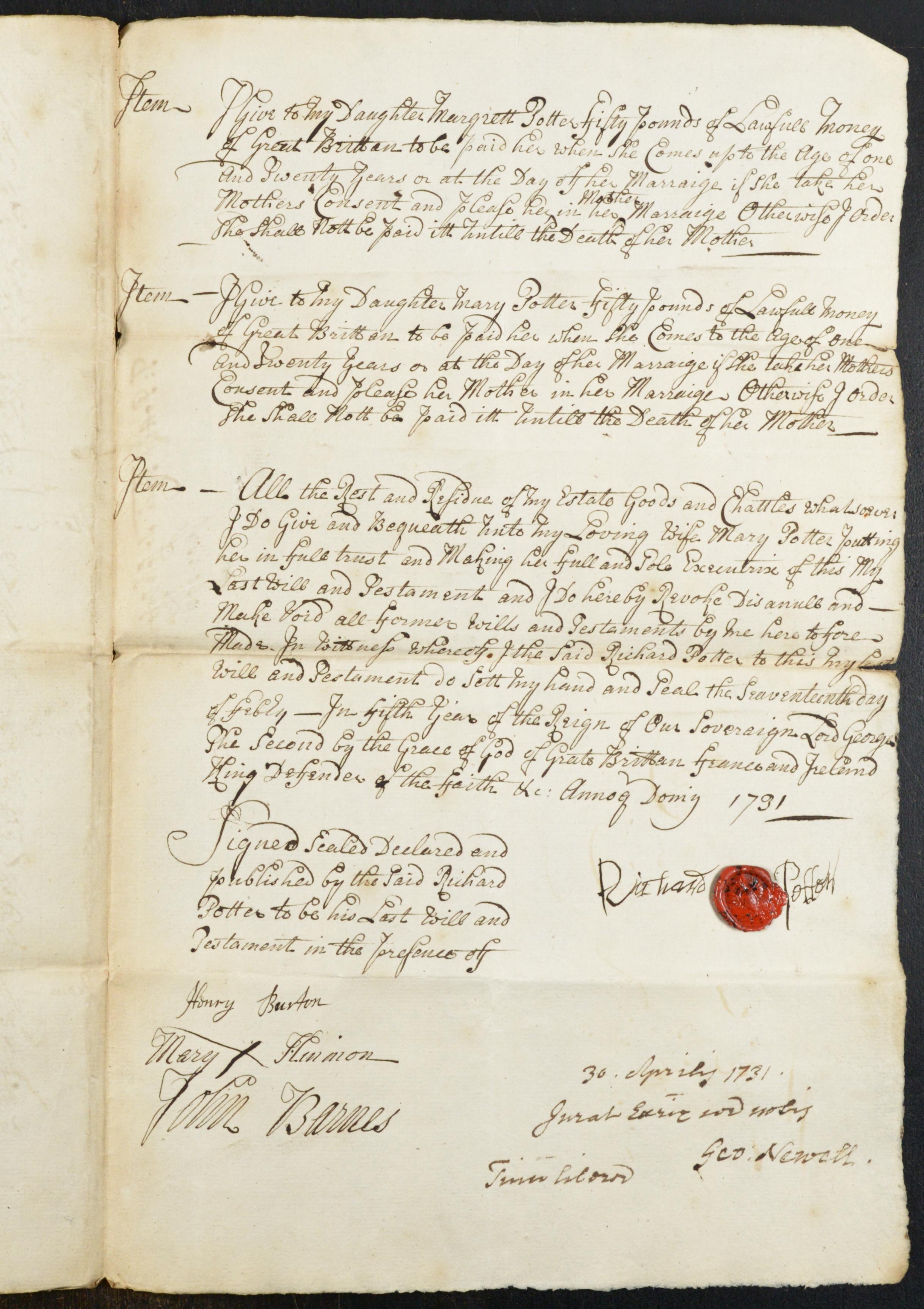
Richard Potter states: “I will and order that my son Thomas Potter shall after my decease have one shilling paid to him and no more.” As he left £50 to each of his daughters, one can’t help but wonder what Thomas did to displease his father.
Richard stipulated that his son Thomas should have one shilling paid to him and not more, for several good considerations, and left “the house and ground lying in the parish of Whittwick in a place called the Long Lane to my wife Mary Potter to dispose of as she shall think proper.”
His son Richard inherited the blacksmith business: “I will and order that my son Richard Potter shall live and be with his mother and serve her duly and truly in the business of a blacksmith, and obey and serve her in all lawful commands six years after my decease, and then I give to him and his heirs…. my house and grounds Coulson House in the Liberty of Thringstone”
Richard wanted his son John to be a blacksmith too: “I will and order that my wife bring up my son John Potter at home with her and teach or cause him to be taught the trade of a blacksmith and that he shall serve her duly and truly seven years after my decease after the manner of an apprentice and at the death of his mother I give him that house and shop and building and the ground belonging to it which I now dwell in to him and his heirs forever.”
To his daughters Margrett and Mary Potter, upon their reaching the age of one and twenty, or the day after their marriage, he leaves £50 each. All the rest of his goods are left to his loving wife Mary.
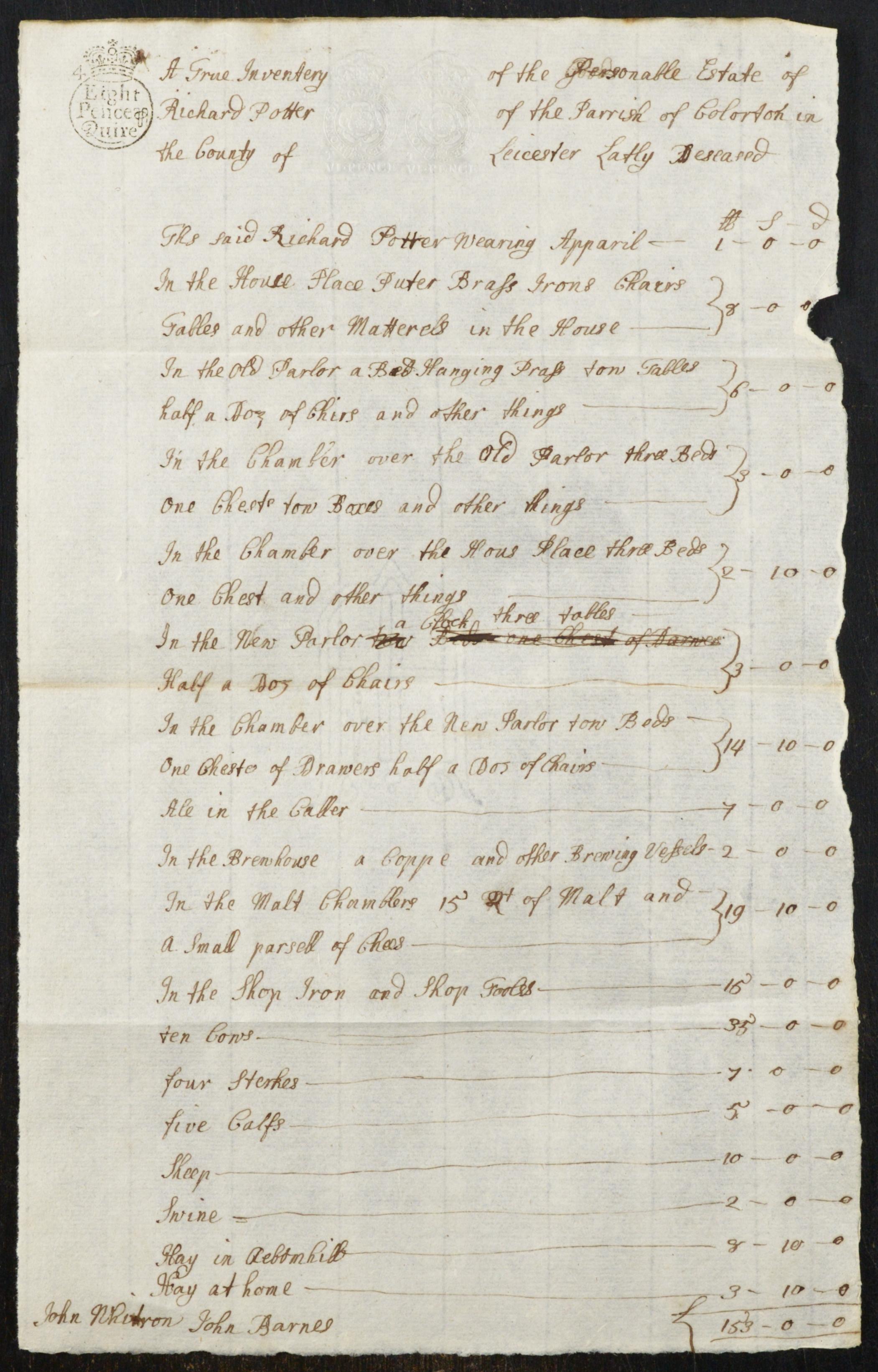
An inventory of the belongings of Richard Potter, 1731:
Richard Potters father was also named Richard Potter 1649-1719, and he too was a blacksmith.
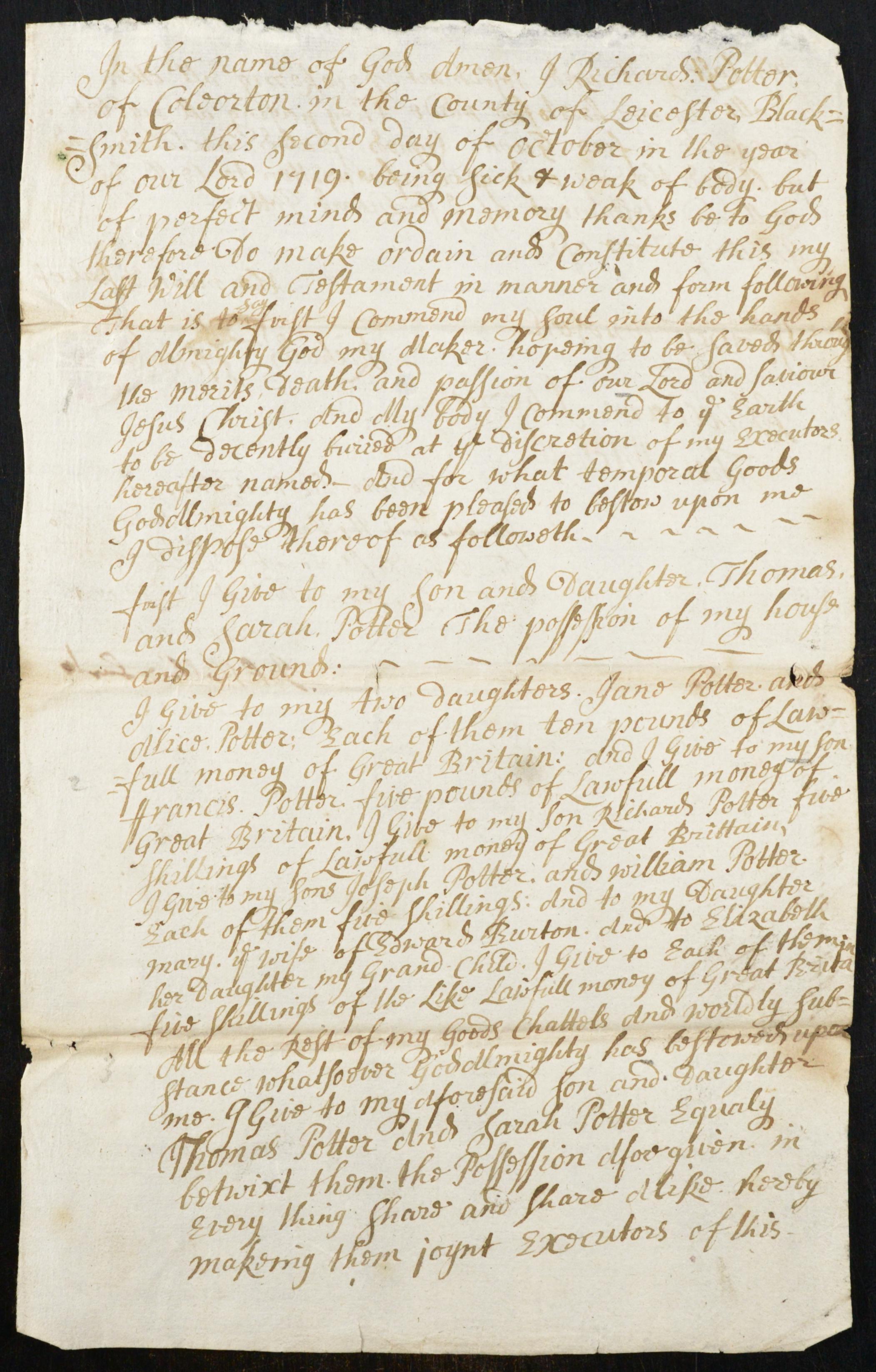
Richard Potter of Coleorton in the county of Leicester, blacksmith, stated in his will: “I give to my son and daughter Thomas and Sarah Potter the possession of my house and grounds.”
He leaves ten pounds each to his daughters Jane and Alice, to his son Francis he gives five pounds, and five shillings to his son Richard. Sons Joseph and William also receive five shillings each. To his daughter Mary, wife of Edward Burton, and her daughter Elizabeth, he gives five shillings each. The rest of his good, chattels and wordly substance he leaves equally between his son and daugter Thomas and Sarah. As there is no mention of his wife, it’s assumed that she predeceased him.
The will of Richard Potter, 1719:
Richard Potter’s (1649-1719) parents were William Potter and Alse Huldin, both born in the early 1600s. They were married in 1646 at Breedon on the Hill, Leicestershire. The name Huldin appears to originate in Finland.
William Potter was a blacksmith. In the 1659 parish registers of Breedon on the Hill, William Potter of Breedon blacksmith buryed the 14th July.
April 2, 2022 at 6:15 pm #6286In reply to: The Elusive Samuel Housley and Other Family Stories
Matthew Orgill and His Family
Matthew Orgill 1828-1907 was the Orgill brother who went to Australia, but returned to Measham. Matthew married Mary Orgill in Measham in October 1856, having returned from Victoria, Australia in May of that year.
Although Matthew was the first Orgill brother to go to Australia, he was the last one I found, and that was somewhat by accident, while perusing “Orgill” and “Measham” in a newspaper archives search. I chanced on Matthew’s obituary in the Nuneaton Observer, Friday 14 June 1907:
LATE MATTHEW ORGILL PEACEFUL END TO A BLAMELESS LIFE.
‘Sunset and Evening Star And one clear call for me.”
It is with very deep regret that we have to announce the death of Mr. Matthew Orgill, late of Measham, who passed peacefully away at his residence in Manor Court Road, Nuneaton, in the early hours of yesterday morning. Mr. Orgill, who was in his eightieth year, was a man with a striking history, and was a very fine specimen of our best English manhood. In early life be emigrated to South Africa—sailing in the “Hebrides” on 4th February. 1850—and was one of the first settlers at the Cape; afterwards he went on to Australia at the time of the Gold Rush, and ultimately came home to his native England and settled down in Measham, in Leicestershire, where he carried on a successful business for the long period of half-a-century.
He was full of reminiscences of life in the Colonies in the early days, and an hour or two in his company was an education itself. On the occasion of the recall of Sir Harry Smith from the Governorship of Natal (for refusing to be a party to the slaying of the wives and children in connection with the Kaffir War), Mr. Orgill was appointed to superintend the arrangements for the farewell demonstration. It was one of his boasts that he made the first missionary cart used in South Africa, which is in use to this day—a monument to the character of his work; while it is an interesting fact to note that among Mr. Orgill’s papers there is the original ground-plan of the city of Durban before a single house was built.
In Africa Mr. Orgill came in contact with the great missionary, David Livingstone, and between the two men there was a striking resemblance in character and a deep and lasting friendship. Mr. Orgill could give a most graphic description of the wreck of the “Birkenhead,” having been in the vicinity at the time when the ill-fated vessel went down. He played a most prominent part on the occasion of the famous wreck of the emigrant ship, “Minerva.” when, in conjunction with some half-a-dozen others, and at the eminent risk of their own lives, they rescued more than 100 of the unfortunate passengers. He was afterwards presented with an interesting relic as a memento of that thrilling experience, being a copper bolt from the vessel on which was inscribed the following words: “Relic of the ship Minerva, wrecked off Bluff Point, Port Natal. 8.A.. about 2 a.m.. Friday, July 5, 1850.”
Mr. Orgill was followed to the Colonies by no fewer than six of his brothers, all of whom did well, and one of whom married a niece (brother’s daughter) of the late Mr. William Ewart Gladstone.
On settling down in Measham his kindly and considerate disposition soon won for him a unique place in the hearts of all the people, by whom he was greatly beloved. He was a man of sterling worth and integrity. Upright and honourable in all his dealings, he led a Christian life that was a pattern to all with whom he came in contact, and of him it could truly he said that he wore the white flower of a blameless life.
He was a member of the Baptist Church, and although beyond much active service since settling down in Nuneaton less than two years ago he leaves behind him a record in Christian service attained by few. In politics he was a Radical of the old school. A great reader, he studied all the questions of the day, and could back up every belief he held by sound and fearless argument. The South African – war was a great grief to him. He knew the Boers from personal experience, and although he suffered at the time of the war for his outspoken condemnation, he had the satisfaction of living to see the people of England fully recognising their awful blunder. To give anything like an adequate idea of Mr. Orgill’s history would take up a great amount of space, and besides much of it has been written and commented on before; suffice it to say that it was strenuous, interesting, and eventful, and yet all through his hands remained unspotted and his heart was pure.
He is survived by three daughters, and was father-in-law to Mr. J. S. Massey. St Kilda. Manor Court Road, to whom deep and loving sympathy is extended in their sore bereavement by a wide circle of friends. The funeral is arranged to leave for Measham on Monday at twelve noon.
“To give anything like an adequate idea of Mr. Orgill’s history would take up a great amount of space, and besides much of it has been written and commented on before…”
I had another look in the newspaper archives and found a number of articles mentioning him, including an intriguing excerpt in an article about local history published in the Burton Observer and Chronicle 8 August 1963:
on an upstairs window pane he scratched with his diamond ring “Matthew Orgill, 1st July, 1858”
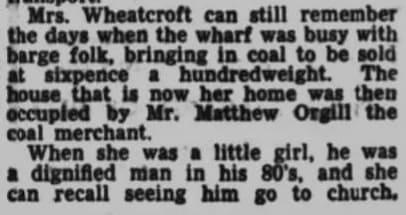
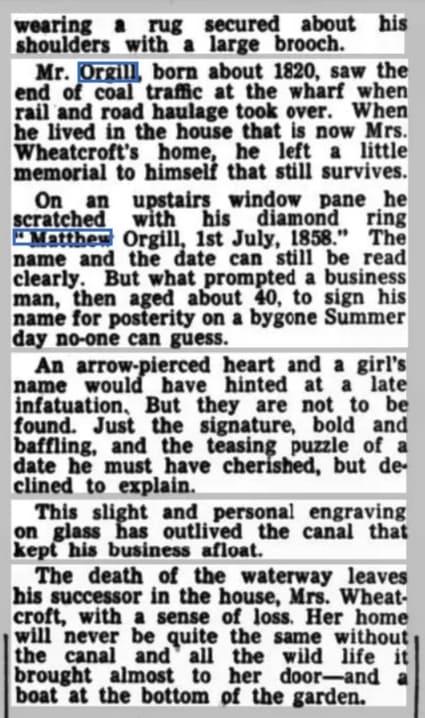
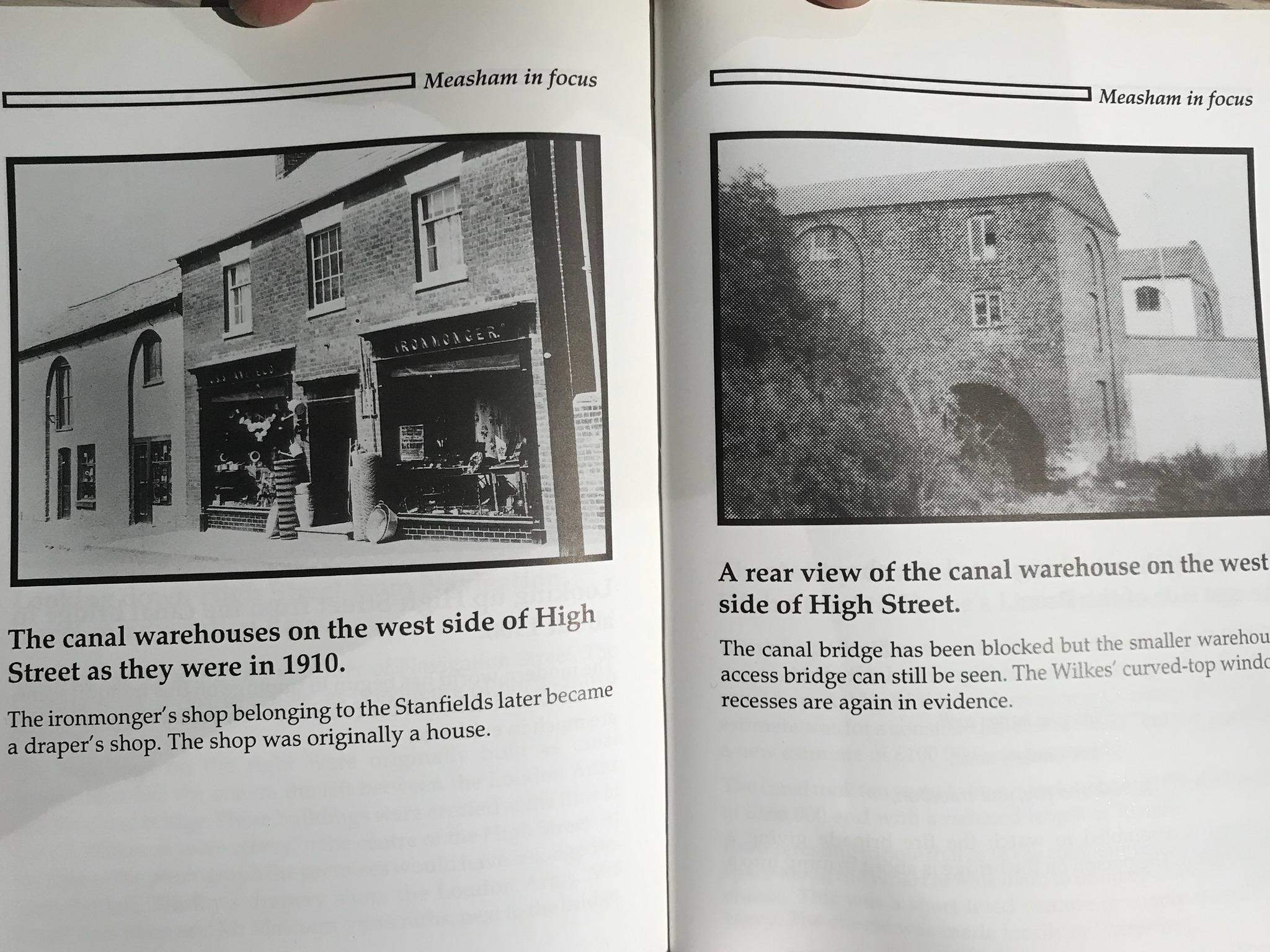
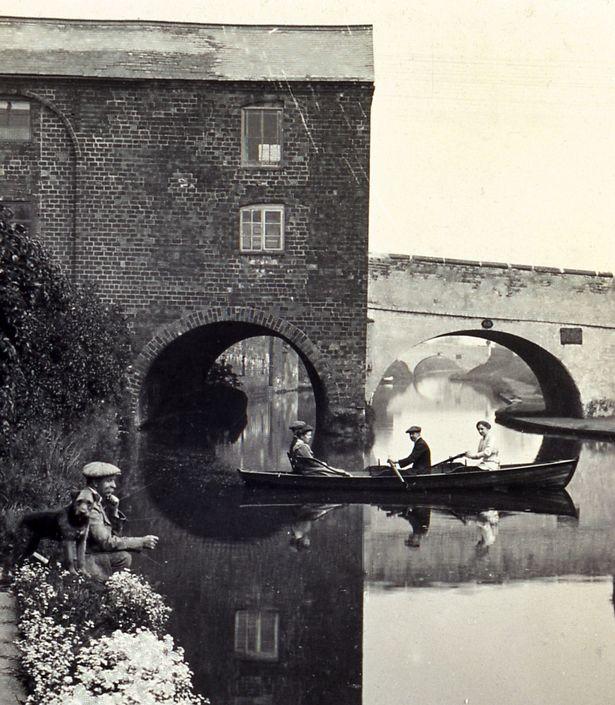
I asked on a Measham facebook group if anyone knew the location of the house mentioned in the article and someone kindly responded. This is the same building, seen from either side:
Coincidentally, I had already found this wonderful photograph of the same building, taken in 1910 ~ three years after Matthew’s death.
But what to make of the inscription in the window?
Matthew and Mary married in October 1856, and their first child (according to the records I’d found thus far) was a daughter Mary born in 1860. I had a look for a Matthew Orgill birth registered in 1858, the date Matthew had etched on the window, and found a death for a Matthew Orgill in 1859. Assuming I would find the birth of Matthew Orgill registered on the first of July 1958, to match the etching in the window, the corresponding birth was in July 1857!
Matthew and Mary had four children. Matthew, Mary, Clara and Hannah. Hannah Proudman Orgill married Joseph Stanton Massey. The Orgill name continues with their son Stanley Orgill Massey 1900-1979, who was a doctor and surgeon. Two of Stanley’s four sons were doctors, Paul Mackintosh Orgill Massey 1929-2009, and Michael Joseph Orgill Massey 1932-1989.
Mary Orgill 1827-1894, Matthews wife, was an Orgill too.
And this is where the Orgill branch of the tree gets complicated.
Mary’s father was Henry Orgill born in 1805 and her mother was Hannah Proudman born in 1805.
Henry Orgill’s father was Matthew Orgill born in 1769 and his mother was Frances Finch born in 1771.Mary’s husband Matthews parents are Matthew Orgill born in 1798 and Elizabeth Orgill born in 1803.
Another Orgill Orgill marriage!
Matthews parents, Matthew and Elizabeth, have the same grandparents as each other, Matthew Orgill born in 1736 and Ann Proudman born in 1735.
But Matthews grandparents are none other than Matthew Orgill born in 1769 and Frances Finch born in 1771 ~ the same grandparents as his wife Mary!
March 4, 2022 at 2:58 pm #6280In reply to: The Whale’s Diaries Collection
I started reading a book. In fact I started reading it three weeks ago, and have read the first page of the preface every night and fallen asleep. But my neck aches from doing too much gardening so I went back to bed to read this morning. I still fell asleep six times but at least I finished the preface. It’s the story of the family , initiated by the family collection of netsuke (whatever that is. Tiny Japanese carvings) But this is what stopped me reading and made me think (and then fall asleep each time I re read it)
“And I’m not entitled to nostalgia about all that lost wealth and glamour from a century ago. And I am not interested in thin. I want to know what the relationship has been between this wooden object that I am rolling between my fingers – hard and tricky and Japanese – and where it has been. I want to be able to reach to the handle of the door and turn it and feel it open. I want to walk into each room where this object has lived, to feel the volume of the space, to know what pictures were on the walls, how the light fell from the windows. And I want to know whose hands it has been in, and what they felt about it and thought about it – if they thought about it. I want to know what it has witnessed.” ― Edmund de Waal, The Hare With Amber Eyes: A Family’s Century of Art and Loss
And I felt almost bereft that none of the records tell me which way the light fell in through the windows.
I know who lived in the house in which years, but I don’t know who sat in the sun streaming through the window and which painting upon the wall they looked at and what the material was that covered the chair they sat on.
Were his clothes confortable (or hers, likely not), did he have an old favourite pair of trousers that his mother hated?
There is one house in particular that I keep coming back to. Like I got on the Housley train at Smalley and I can’t get off. Kidsley Grange Farm, they turned it into a nursing home and built extensions, and now it’s for sale for five hundred thousand pounds. But is the ghost still under the back stairs? Is there still a stain somewhere when a carafe of port was dropped?
Did Anns writing desk survive? Does someone have that, polished, with a vase of spring tulips on it? (on a mat of course so it doesn’t make a ring, despite that there are layers of beeswaxed rings already)
Does the desk remember the letters, the weight of a forearm or elbow, perhaps a smeared teardrop, or a comsumptive cough stain?
Is there perhaps a folded bit of paper or card that propped an uneven leg that fell through the floorboards that might tear into little squares if you found it and opened it, and would it be a rough draft of a letter never sent, or just a receipt for five head of cattle the summer before?
Did he hate the curtain material, or not even think of it? Did he love the house, or want to get away to see something new ~ or both?
Did he have a favourite cup, a favourite food, did he hate liver or cabbage?
Did he like his image when the photograph came from the studio or did he think it made his nose look big or his hair too thin, or did he wish he’d worn his other waistcoat?
Did he love his wife so much he couldn’t bear to see her dying, was it neglect or was it the unbearableness of it all that made him go away and drink?
Did the sun slanting in through the dormer window of his tiny attic room where he lodged remind him of ~ well no perhaps he was never in the room in daylight hours at all. Work all day and pub all night, keeping busy working hard and drinking hard and perhaps laughing hard, and maybe he only thought of it all on Sunday mornings.
So many deaths, one after another, his father, his wife, his brother, his sister, and another and another, all the coughing, all the debility. Perhaps he never understood why he lived and they did not, what kind of justice was there in that?
Did he take a souvenir or two with him, a handkerchief or a shawl perhaps, tucked away at the bottom of a battered leather bag that had his 3 shirts and 2 waistcoats in and a spare cap,something embroidered perhaps.
The quote in that book started me off with the light coming in the window and the need to know the simplest things, something nobody ever wrote in a letter, maybe never even mentioned to anyone.
Light coming in windows. I remeber when I was a teenager I had a day off sick and spent the whole day laying on the couch in a big window with the winter sun on my face all day, and I read Bonjour Tristesse in one sitting, and I’ll never forget that afternoon. I don’t remember much about that book, but I remember being transported. But at the same time as being present in that sunny window.
“Stories and objects share something, a patina…Perhaps patina is a process of rubbing back so that the essential is revealed…But it also seems additive, in the way that a piece of oak furniture gains over years and years of polishing.”
“How objects are handed on is all about story-telling. I am giving you this because I love you. Or because it was given to me. Because I bought it somewhere special. Because you will care for it. Because it will complicate your life. Because it will make someone else envious. There is no easy story in legacy. What is remembered and what is forgotten? There can be a chain of forgetting, the rubbing away of previous ownership as much as the slow accretion of stories. What is being passed on to me with all these small Japanese objects?”
“There are things in this world that the children hear, but whose sounds oscillate below an adult’s sense of pitch.”
What did the children hear?
February 8, 2022 at 2:24 pm #6275In reply to: The Elusive Samuel Housley and Other Family Stories
“AND NOW ABOUT EMMA”
and a mystery about George
I had overlooked this interesting part of Barbara Housley’s “Narrative on the Letters” initially, perhaps because I was more focused on finding Samuel Housley. But when I did eventually notice, I wondered how I had missed it! In this particularly interesting letter excerpt from Joseph, Barbara has not put the date of the letter ~ unusually, because she did with all of the others. However I dated the letter to later than 1867, because Joseph mentions his wife, and they married in 1867. This is important, because there are two Emma Housleys. Joseph had a sister Emma, born in 1836, two years before Joseph was born. At first glance, one would assume that a reference to Emma in the letters would mean his sister, but Emma the sister was married in Derby in 1858, and by 1869 had four children.
But there was another Emma Housley, born in 1851.
From Barbara Housley’s Narrative on the Letters:
“AND NOW ABOUT EMMA”
A MYSTERY
A very mysterious comment is contained in a letter from Joseph:
“And now about Emma. I have only seen her once and she came to me to get your address but I did not feel at liberty to give it to her until I had wrote to you but however she got it from someone. I think it was in this way. I was so pleased to hear from you in the first place and with John’s family coming to see me I let them read one or two of your letters thinking they would like to hear of you and I expect it was Will that noticed your address and gave it to her. She came up to our house one day when I was at work to know if I had heard from you but I had not heard from you since I saw her myself and then she called again after that and my wife showed her your boys’ portraits thinking no harm in doing so.”
At this point Joseph interrupted himself to thank them for sending the portraits. The next sentence is:
“Your son JOHN I have never seen to know him but I hear he is rather wild,” followed by: “EMMA has been living out service but don’t know where she is now.”
Since Joseph had just been talking about the portraits of George’s three sons, one of whom is John Eley, this could be a reference to things George has written in despair about a teen age son–but could Emma be a first wife and John their son? Or could Emma and John both be the children of a first wife?
Elsewhere, Joseph wrote, “AMY ELEY died 14 years ago. (circa 1858) She left a son and a daughter.”
An Amey Eley and a George Housley were married on April 1, 1849 in Duffield which is about as far west of Smalley as Heanor is East. She was the daughter of John, a framework knitter, and Sarah Eley. George’s father is listed as William, a farmer. Amey was described as “of full age” and made her mark on the marriage document.
Anne wrote in August 1854: “JOHN ELEY is living at Derby Station so must take the first opportunity to get the receipt.” Was John Eley Housley named for him?
(John Eley Housley is George Housley’s son in USA, with his second wife, Sarah.)
George Housley married Amey Eley in 1849 in Duffield. George’s father on the register is William Housley, farmer. Amey Eley’s father is John Eley, framework knitter.
On the 1851 census, George Housley and his wife Amey Housley are living with her parents in Heanor, John Eley, a framework knitter, and his wife Rebecca. Also on the census are Charles J Housley, born in 1849 in Heanor, and Emma Housley, three months old at the time of the census, born in 1851. George’s birth place is listed as Smalley.
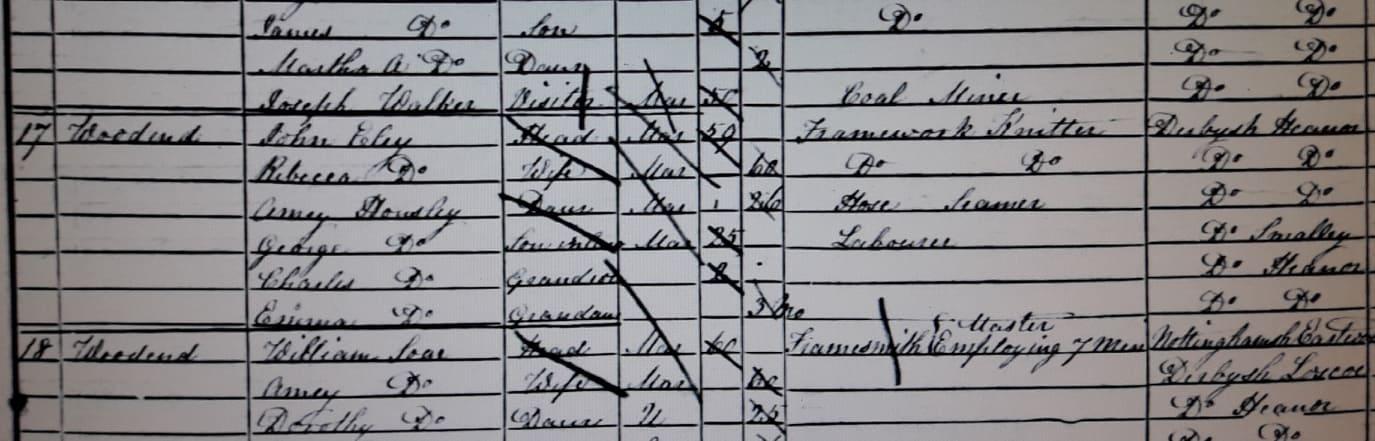
On the 31st of July 1851 George Housley arrives in New York. In 1854 George Housley marries Sarah Ann Hill in USA.
On the 1861 census in Heanor, Rebecca Eley was a widow, her husband John having died in 1852, and she had three grandchildren living with her: Charles J Housley aged 12, Emma Housley, 10, and mysteriously a William Housley aged 5! Amey Housley, the childrens mother, died in 1858.
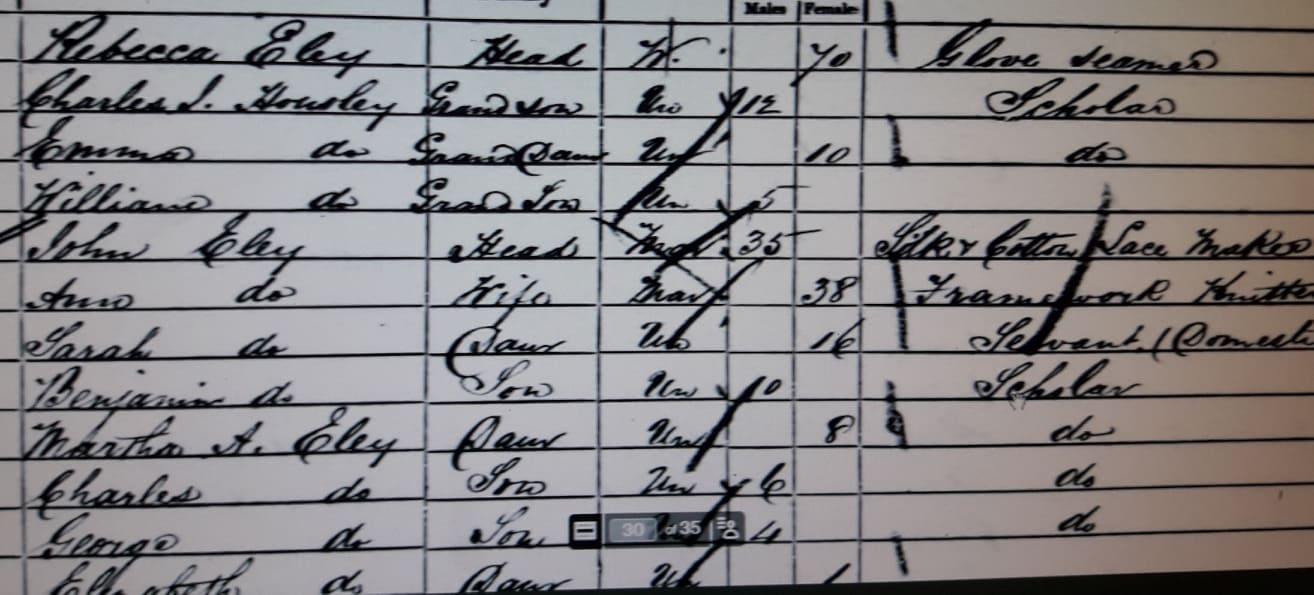
Back to the mysterious comment in Joseph’s letter. Joseph couldn’t have been speaking of his sister Emma. She was married with children by the time Joseph wrote that letter, so was not just out of service, and Joseph would have known where she was. There is no reason to suppose that the sister Emma was trying unsuccessfully to find George’s addresss: she had been sending him letters for years. Joseph must have been referring to George’s daughter Emma.
Joseph comments to George “Your son John…is rather wild.” followed by the remark about Emma’s whereabouts. Could Charles John Housley have used his middle name of John instead of Charles?
As for the child William born five years after George left for USA, despite his name of Housley, which was his mothers married name, we can assume that he was not a Housley ~ not George’s child, anyway. It is not clear who his father was, as Amey did not remarry.
A further excerpt from Barbara Housley’s Narrative on the Letters:
Certainly there was some mystery in George’s life. George apparently wanted his whereabouts kept secret. Anne wrote: “People are at a loss to know where you are. The general idea is you are with Charles. We don’t satisfy them.” In that same letter Anne wrote: “I know you could not help thinking of us very often although you neglected writing…and no doubt would feel grieved for the trouble you at times caused (our mother). She freely forgives all.” Near the end of the letter, Anne added: “Mother sends her love to you and hopes you will write and if you want to tell her anything you don’t want all to see you must write it on a piece of loose paper and put it inside the letter.”
In a letter to George from his sister Emma:
Emma wrote in 1855, “We write in love to your wife and yourself and you must write soon and tell us whether there is a little nephew or niece and what you call them.”
In June of 1856, Emma wrote: “We want to see dear Sarah Ann and the dear little boy. We were much pleased with the “bit of news” you sent.” The bit of news was the birth of John Eley Housley, January 11, 1855. Emma concluded her letter “Give our very kindest love to dear sister and dearest Johnnie.”
It would seem that George Housley named his first son with his second wife after his first wife’s father ~ while he was married to both of them.
Emma Housley
1851-1935
In 1871 Emma was 20 years old and “in service” living as a lodger in West Hallam, not far from Heanor. As she didn’t appear on a 1881 census, I looked for a marriage, but the only one that seemed right in every other way had Emma Housley’s father registered as Ralph Wibberly!
Who was Ralph Wibberly? A family friend or neighbour, perhaps, someone who had been a father figure? The first Ralph Wibberly I found was a blind wood cutter living in Derby. He had a son also called Ralph Wibberly. I did not think Ralph Wibberly would be a very common name, but I was wrong.
I then found a Ralph Wibberly living in Heanor, with a son also named Ralph Wibberly. A Ralph Wibberly married an Emma Salt from Heanor. In 1874, a 36 year old Ralph Wibberly (born in 1838) was on trial in Derby for inflicting grevious bodily harm on William Fretwell of Heanor. His occupation is “platelayer” (a person employed in laying and maintaining railway track.) The jury found him not guilty.
In 1851 a 23 year old Ralph Wibberly (born in 1828) was a prisoner in Derby Gaol. However, Ralph Wibberly, a 50 year old labourer born in 1801 and his son Ralph Wibberly, aged 13 and born in 1838, are living in Belper on the 1851 census. Perhaps the son was the same Ralph Wibberly who was found not guilty of GBH in 1874. This appears to be the one who married Emma Salt, as his wife on the 1871 census is called Emma, and his occupation is “Midland Company Railway labourer”.
Which was the Ralph Wibberly that Emma chose to name as her father on the marriage register? We may never know, but perhaps we can assume it was Ralph Wibberly born in 1801. It is unlikely to be the blind wood cutter from Derby; more likely to be the local Ralph Wibberly. Maybe his son Ralph, who we know was involved in a fight in 1874, was a friend of Emma’s brother Charles John, who was described by Joseph as a “wild one”, although Ralph was 11 years older than Charles John.
Emma Housley married James Slater on Christmas day in Heanor in 1873. Their first child, a daughter, was called Amy. Emma’s mother was Amy Eley. James Slater was a colliery brakesman (employed to work the steam-engine, or other machinery used in raising the coal from the mine.)
It occurred to me to wonder if Emma Housley (George’s daughter) knew Elizabeth, Mary Anne and Catherine (Samuel’s daughters). They were cousins, lived in the vicinity, and they had in common with each other having been deserted by their fathers who were brothers. Emma was born two years after Catherine. Catherine was living with John Benniston, a framework knitter in Heanor, from 1851 to 1861. Emma was living with her grandfather John Ely, a framework knitter in Heanor. In 1861, George Purdy was also living in Heanor. He was listed on the census as a 13 year old coal miner! George Purdy and Catherine Housley married in 1866 in Eastwood, Nottinghamshire ~ just over the county border. Emma’s first child Amy was born in Heanor, but the next two children, Eliza and Lilly, were born in Eastwood, in 1878 and 1880. Catherine and George’s fifth child, my great grandmother Mary Ann Gilman Purdy, was born in Eastwood in 1880, the same year as Lilly Slater.
By 1881 Emma and James Slater were living in Woodlinkin, Codnor and Loscoe, close to Heanor and Eastwood, on the Derbyshire side of the border. On each census up to 1911 their address on the census is Woodlinkin. Emma and James had nine children: six girls and 3 boys, the last, Alfred Frederick, born in 1901.
Emma and James lived three doors up from the Thorn Tree pub in Woodlinkin, Codnor:
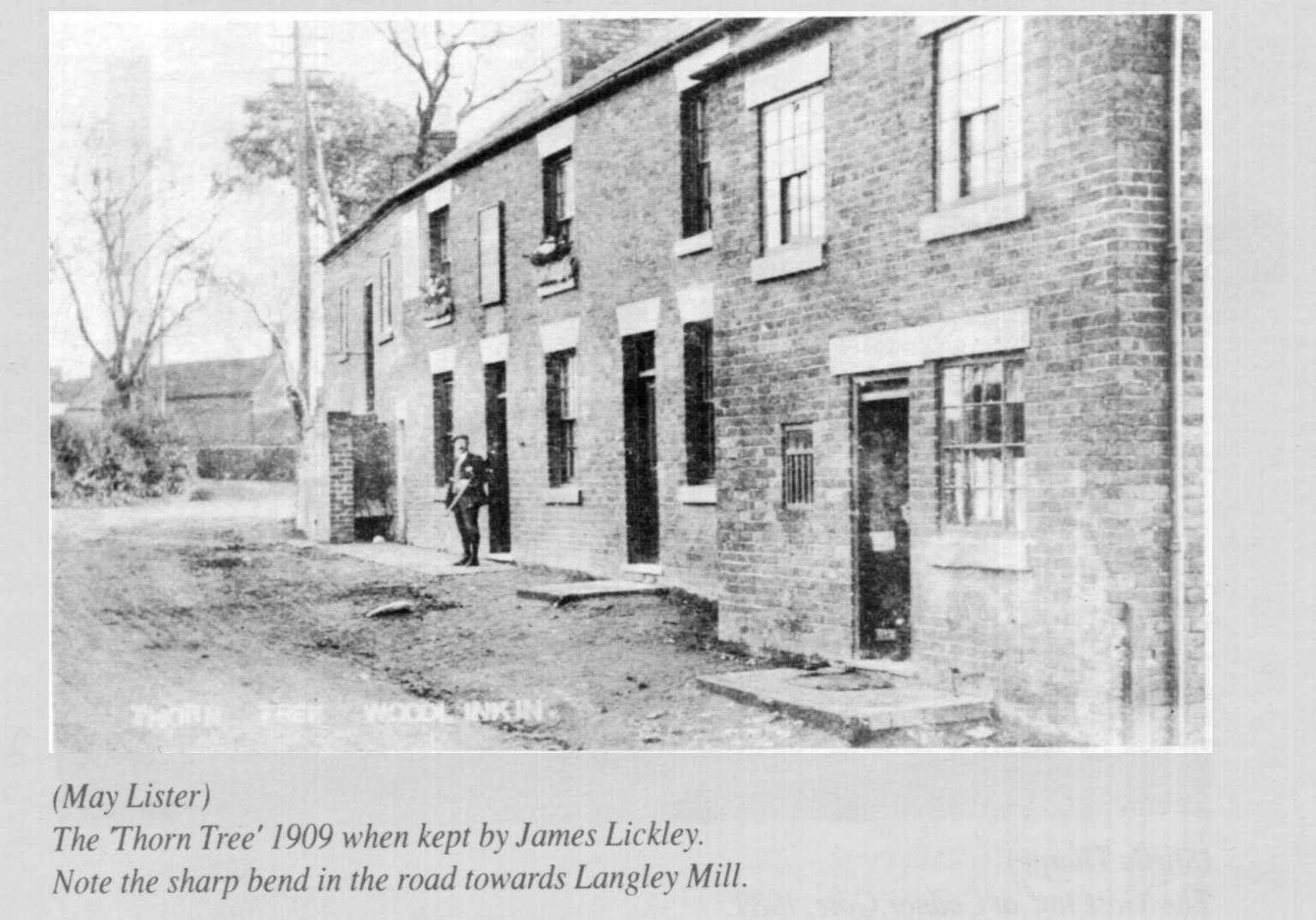
Emma Slater died in 1935 at the age of 84.
IN
LOVING MEMORY OF
EMMA SLATER
(OF WOODLINKIN)
WHO DIED
SEPT 12th 1935
AGED 84 YEARS
AT RESTCrosshill Cemetery, Codnor, Amber Valley Borough, Derbyshire, England:
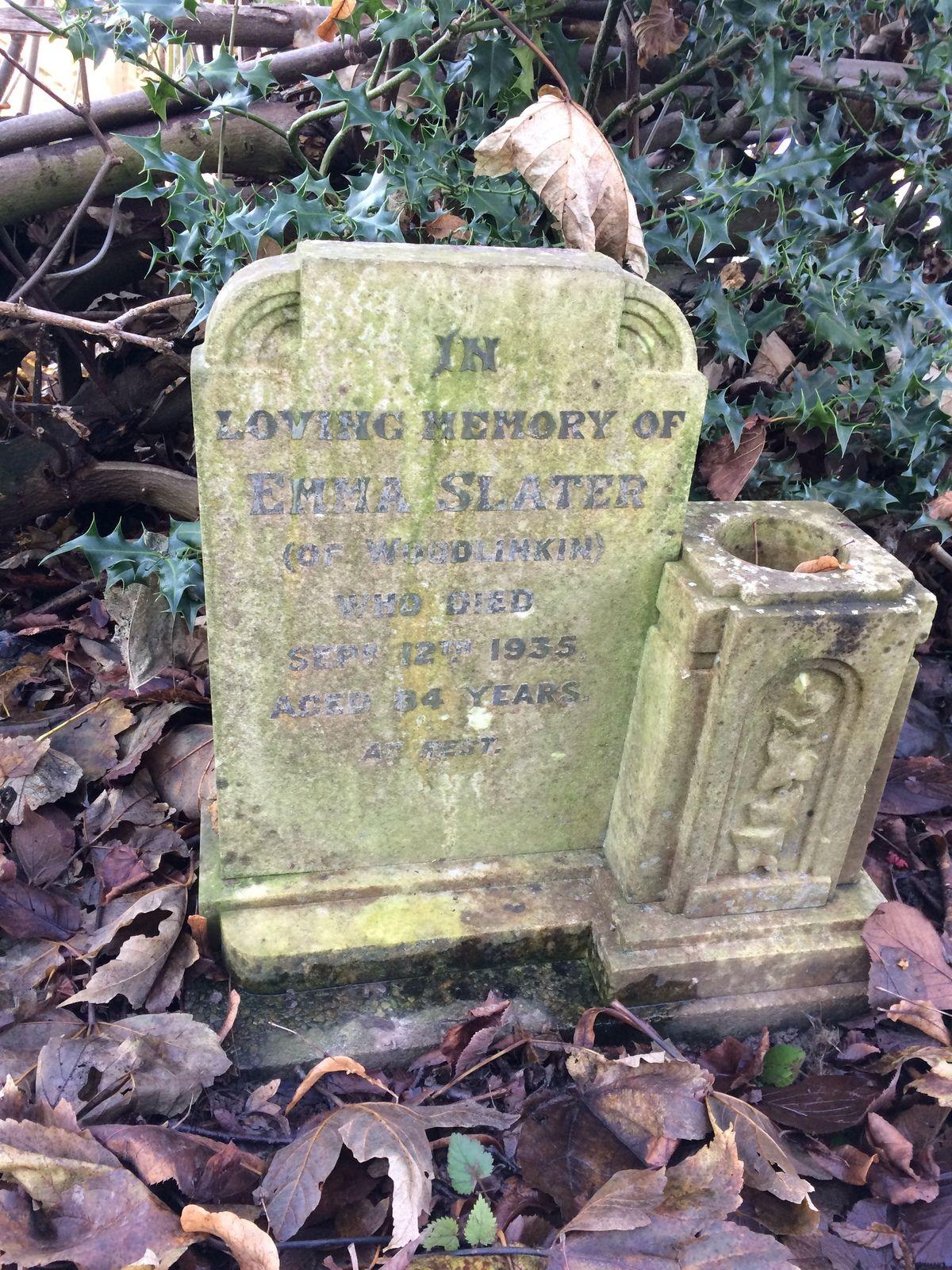
Charles John Housley
1949-
February 5, 2022 at 10:50 am #6271In reply to: The Elusive Samuel Housley and Other Family Stories
The Housley Letters
FRIENDS AND NEIGHBORS
from Barbara Housley’s Narrative on the Letters:
George apparently asked about old friends and acquaintances and the family did their best to answer although Joseph wrote in 1873: “There is very few of your old cronies that I know of knocking about.”
In Anne’s first letter she wrote about a conversation which Robert had with EMMA LYON before his death and added “It (his death) was a great trouble to Lyons.” In her second letter Anne wrote: “Emma Lyon is to be married September 5. I am going the Friday before if all is well. There is every prospect of her being comfortable. MRS. L. always asks after you.” In 1855 Emma wrote: “Emma Lyon now Mrs. Woolhouse has got a fine boy and a pretty fuss is made with him. They call him ALFRED LYON WOOLHOUSE.”
(Interesting to note that Elizabeth Housley, the eldest daughter of Samuel and Elizabeth, was living with a Lyon family in Derby in 1861, after she left Belper workhouse. The Emma listed on the census in 1861 was 10 years old, and so can not be the Emma Lyon mentioned here, but it’s possible, indeed likely, that Peter Lyon the baker was related to the Lyon’s who were friends of the Housley’s. The mention of a sea captain in the Lyon family begs the question did Elizabeth Housley meet her husband, George William Stafford, a seaman, through some Lyon connections, but to date this remains a mystery.)
Elizabeth Housley living with Peter Lyon and family in Derby St Peters in 1861:
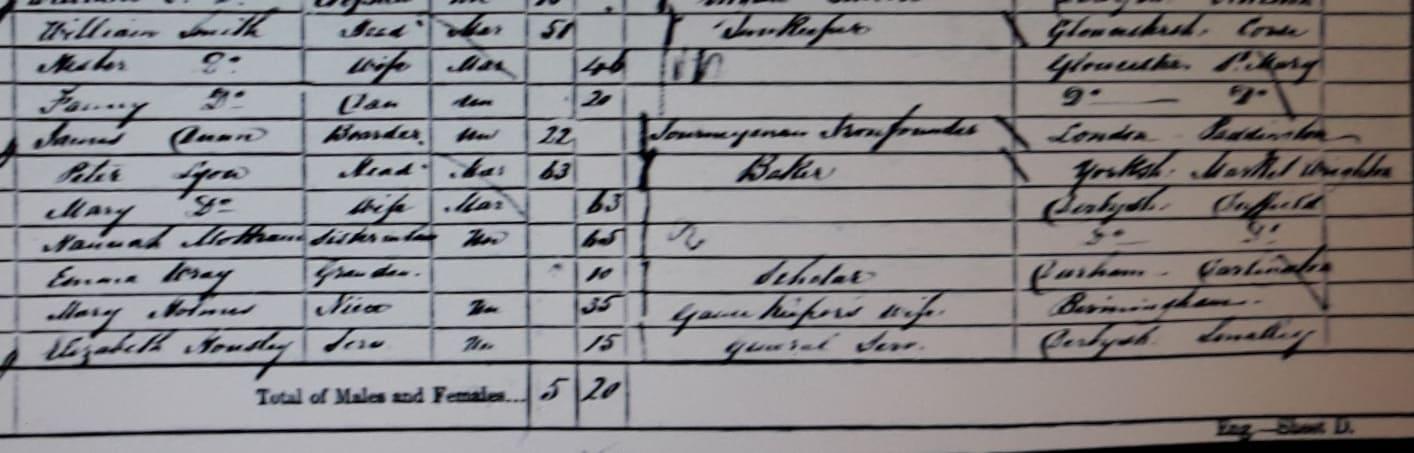
A Henrietta Lyon was married in 1860. Her father was Matthew, a Navy Captain. The 1857 Derby Directory listed a Richard Woolhouse, plumber, glazier, and gas fitter on St. Peter’s Street. Robert lived in St. Peter’s parish at the time of his death. An Alfred Lyon, son of Alfred and Jemima Lyon 93 Friargate, Derby was baptised on December 4, 1877. An Allen Hewley Lyon, born February 1, 1879 was baptised June 17 1879.
Anne wrote in August 1854: “KERRY was married three weeks since to ELIZABETH EATON. He has left Smith some time.” Perhaps this was the same person referred to by Joseph: “BILL KERRY, the blacksmith for DANIEL SMITH, is working for John Fletcher lace manufacturer.” According to the 1841 census, Elizabeth age 12, was the oldest daughter of Thomas and Rebecca Eaton. She would certainly have been of marriagable age in 1854. A William Kerry, age 14, was listed as a blacksmith’s apprentice in the 1851 census; but another William Kerry who was 29 in 1851 was already working for Daniel Smith as a blacksmith. REBECCA EATON was listed in the 1851 census as a widow serving as a nurse in the John Housley household. The 1881 census lists the family of William Kerry, blacksmith, as Jane, 19; William 13; Anne, 7; and Joseph, 4. Elizabeth is not mentioned but Bill is not listed as a widower.
Anne also wrote in 1854 that she had not seen or heard anything of DICK HANSON for two years. Joseph wrote that he did not know Old BETTY HANSON’S son. A Richard Hanson, age 24 in 1851, lived with a family named Moore. His occupation was listed as “journeyman knitter.” An Elizabeth Hanson listed as 24 in 1851 could hardly be “Old Betty.” Emma wrote in June 1856 that JOE OLDKNOW age 27 had married Mrs. Gribble’s servant age 17.
Anne wrote that “JOHN SPENCER had not been since father died.” The only John Spencer in Smalley in 1841 was four years old. He would have been 11 at the time of William Housley’s death. Certainly, the two could have been friends, but perhaps young John was named for his grandfather who was a crony of William’s living in a locality not included in the Smalley census.
TAILOR ALLEN had lost his wife and was still living in the old house in 1872. JACK WHITE had died very suddenly, and DR. BODEN had died also. Dr. Boden’s first name was Robert. He was 53 in 1851, and was probably the Robert, son of Richard and Jane, who was christened in Morely in 1797. By 1861, he had married Catherine, a native of Smalley, who was at least 14 years his junior–18 according to the 1871 census!
Among the family’s dearest friends were JOSEPH AND ELIZABETH DAVY, who were married some time after 1841. Mrs. Davy was born in 1812 and her husband in 1805. In 1841, the Kidsley Park farm household included DANIEL SMITH 72, Elizabeth 29 and 5 year old Hannah Smith. In 1851, Mr. Davy’s brother William and 10 year old Emma Davy were visiting from London. Joseph reported the death of both Davy brothers in 1872; Joseph apparently died first.
Mrs. Davy’s father, was a well known Quaker. In 1856, Emma wrote: “Mr. Smith is very hearty and looks much the same.” He died in December 1863 at the age of 94. George Fox, the founder of the Quakers visited Kidsley Park in 1650 and 1654.
Mr. Davy died in 1863, but in 1854 Anne wrote how ill he had been for two years. “For two last winters we never thought he would live. He is now able to go out a little on the pony.” In March 1856, his wife wrote, “My husband is in poor health and fell.” Later in 1856, Emma wrote, “Mr. Davy is living which is a great wonder. Mrs. Davy is very delicate but as good a friend as ever.”
In The Derbyshire Advertiser and Journal, 15 May 1863:
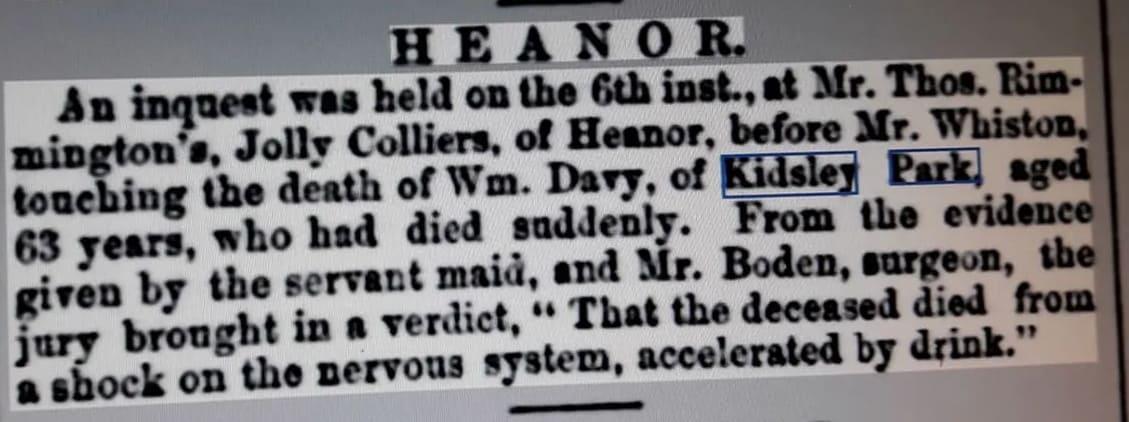
Whenever the girls sent greetings from Mrs. Davy they used her Quaker speech pattern of “thee and thy.” Mrs. Davy wrote to George on March 21 1856 sending some gifts from his sisters and a portrait of their mother–“Emma is away yet and A is so much worse.” Mrs. Davy concluded: “With best wishes for thy health and prosperity in this world and the next I am thy sincere friend.”
Mrs. Davy later remarried. Her new husband was W.T. BARBER. The 1861 census lists William Barber, 35, Bachelor of Arts, Cambridge, living with his 82 year old widowed mother on an 135 acre farm with three servants. One of these may have been the Ann who, according to Joseph, married Jack Oldknow. By 1871 the farm, now occupied by William, 47 and Elizabeth, 57, had grown to 189 acres. Meanwhile, Kidsley Park Farm became the home of the Housleys’ cousin Selina Carrington and her husband Walker Martin. Both Barbers were still living in 1881.
Mrs. Davy was described in Kerry’s History of Smalley as “an accomplished and exemplary lady.” A piece of her poetry “Farewell to Kidsley Park” was published in the history. It was probably written when Elizabeth moved to the Barber farm. Emma sent one of her poems to George. It was supposed to be about their house. “We have sent you a piece of poetry that Mrs. Davy composed about our ‘Old House.’ I am sure you will like it though you may not understand all the allusions she makes use of as well as we do.”
Kiddsley Park Farm, Smalley, in 1898. (note that the Housley’s lived at Kiddsley Grange Farm, and the Davy’s at neighbouring Kiddsley Park Farm)
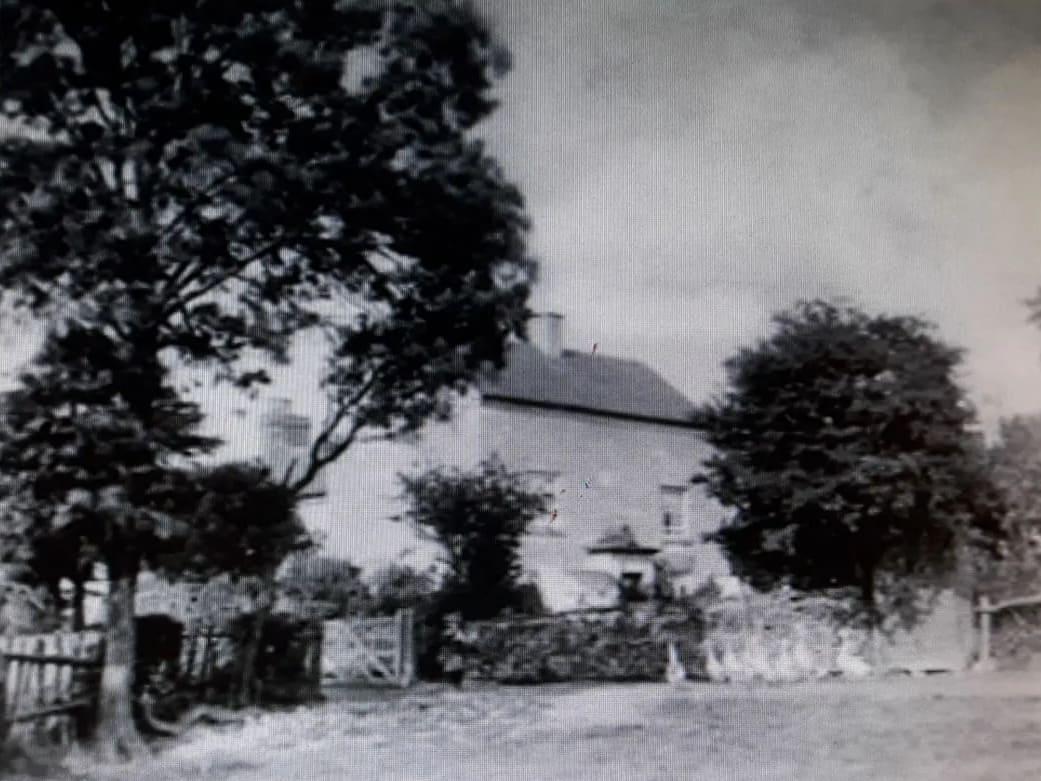
Emma was not sure if George wanted to hear the local gossip (“I don’t know whether such little particulars will interest you”), but shared it anyway. In November 1855: “We have let the house to Mr. Gribble. I dare say you know who he married, Matilda Else. They came from Lincoln here in March. Mrs. Gribble gets drunk nearly every day and there are such goings on it is really shameful. So you may be sure we have not very pleasant neighbors but we have very little to do with them.”
John Else and his wife Hannah and their children John and Harriet (who were born in Smalley) lived in Tag Hill in 1851. With them lived a granddaughter Matilda Gribble age 3 who was born in Lincoln. A Matilda, daughter of John and Hannah, was christened in 1815. (A Sam Else died when he fell down the steps of a bar in 1855.)
February 4, 2022 at 3:17 pm #6269In reply to: The Elusive Samuel Housley and Other Family Stories
The Housley Letters
From Barbara Housley’s Narrative on the Letters.
William Housley (1781-1848) and Ellen Carrington were married on May 30, 1814 at St. Oswald’s church in Ashbourne. William died in 1848 at the age of 67 of “disease of lungs and general debility”. Ellen died in 1872.
Marriage of William Housley and Ellen Carrington in Ashbourne in 1814:
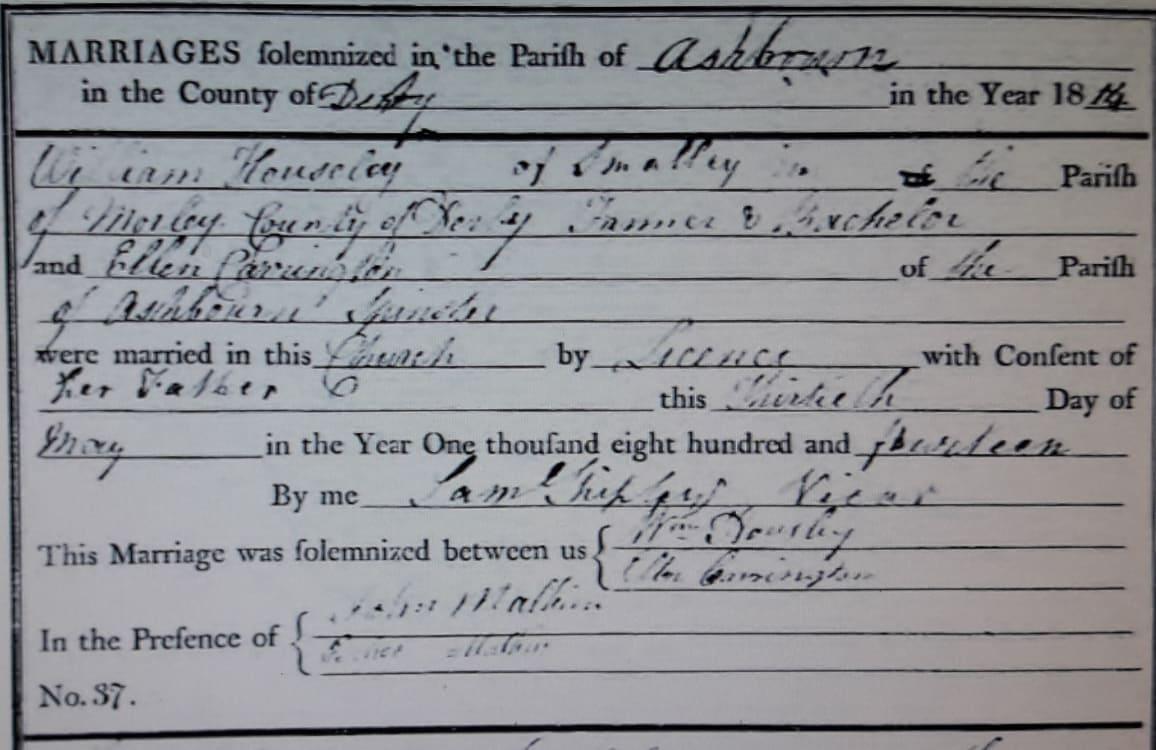
Parish records show three children for William and his first wife, Mary, Ellens’ sister, who were married December 29, 1806: Mary Ann, christened in 1808 and mentioned frequently in the letters; Elizabeth, christened in 1810, but never mentioned in any letters; and William, born in 1812, probably referred to as Will in the letters. Mary died in 1813.
William and Ellen had ten children: John, Samuel, Edward, Anne, Charles, George, Joseph, Robert, Emma, and Joseph. The first Joseph died at the age of four, and the last son was also named Joseph. Anne never married, Charles emigrated to Australia in 1851, and George to USA, also in 1851. The letters are to George, from his sisters and brothers in England.
The following are excerpts of those letters, including excerpts of Barbara Housley’s “Narrative on Historic Letters”. They are grouped according to who they refer to, rather than chronological order.
ELLEN HOUSLEY 1795-1872
Joseph wrote that when Emma was married, Ellen “broke up the comfortable home and the things went to Derby and she went to live with them but Derby didn’t agree with her so she left again leaving her things behind and came to live with John in the new house where she died.” Ellen was listed with John’s household in the 1871 census.
In May 1872, the Ilkeston Pioneer carried this notice: “Mr. Hopkins will sell by auction on Saturday next the eleventh of May 1872 the whole of the useful furniture, sewing machine, etc. nearly new on the premises of the late Mrs. Housley at Smalley near Heanor in the county of Derby. Sale at one o’clock in the afternoon.”Ellen’s family was evidently rather prominant in Smalley. Two Carringtons (John and William) served on the Parish Council in 1794. Parish records are full of Carrington marriages and christenings; census records confirm many of the family groupings.
In June of 1856, Emma wrote: “Mother looks as well as ever and was told by a lady the other day that she looked handsome.” Later she wrote: “Mother is as stout as ever although she sometimes complains of not being able to do as she used to.”
Mary’s children:
MARY ANN HOUSLEY 1808-1878
There were hard feelings between Mary Ann and Ellen and her children. Anne wrote: “If you remember we were not very friendly when you left. They never came and nothing was too bad for Mary Ann to say of Mother and me, but when Robert died Mother sent for her to the funeral but she did not think well to come so we took no more notice. She would not allow her children to come either.”
Mary Ann was unlucky in love! In Anne’s second letter she wrote: “William Carrington is paying Mary Ann great attention. He is living in London but they write to each other….We expect it will be a match.” Apparantly the courtship was stormy for in 1855, Emma wrote: “Mary Ann’s wedding with William Carrington has dropped through after she had prepared everything, dresses and all for the occassion.” Then in 1856, Emma wrote: “William Carrington and Mary Ann are separated. They wore him out with their nonsense.” Whether they ever married is unclear. Joseph wrote in 1872: “Mary Ann was married but her husband has left her. She is in very poor health. She has one daughter and they are living with their mother at Smalley.”
Regarding William Carrington, Emma supplied this bit of news: “His sister, Mrs. Lily, has eloped with a married man. Is she not a nice person!”
WILLIAM HOUSLEY JR. 1812-1890
According to a letter from Anne, Will’s two sons and daughter were sent to learn dancing so they would be “fit for any society.” Will’s wife was Dorothy Palfry. They were married in Denby on October 20, 1836 when Will was 24. According to the 1851 census, Will and Dorothy had three sons: Alfred 14, Edwin 12, and William 10. All three boys were born in Denby.
In his letter of May 30, 1872, after just bemoaning that all of his brothers and sisters are gone except Sam and John, Joseph added: “Will is living still.” In another 1872 letter Joseph wrote, “Will is living at Heanor yet and carrying on his cattle dealing.” The 1871 census listed Will, 59, and his son William, 30, of Lascoe Road, Heanor, as cattle dealers.
Ellen’s children:
JOHN HOUSLEY 1815-1893
John married Sarah Baggally in Morely in 1838. They had at least six children. Elizabeth (born 2 May 1838) was “out service” in 1854. In her “third year out,” Elizabeth was described by Anne as “a very nice steady girl but quite a woman in appearance.” One of her positions was with a Mrs. Frearson in Heanor. Emma wrote in 1856: “Elizabeth is still at Mrs. Frearson. She is such a fine stout girl you would not know her.” Joseph wrote in 1872 that Elizabeth was in service with Mrs. Eliza Sitwell at Derby. (About 1850, Miss Eliza Wilmot-Sitwell provided for a small porch with a handsome Norman doorway at the west end of the St. John the Baptist parish church in Smalley.)
According to Elizabeth’s birth certificate and the 1841 census, John was a butcher. By 1851, the household included a nurse and a servant, and John was listed as a “victular.” Anne wrote in February 1854, “John has left the Public House a year and a half ago. He is living where Plumbs (Ann Plumb witnessed William’s death certificate with her mark) did and Thomas Allen has the land. He has been working at James Eley’s all winter.” In 1861, Ellen lived with John and Sarah and the three boys.
John sold his share in the inheritance from their mother and disappeared after her death. (He died in Doncaster, Yorkshire, in 1893.) At that time Charles, the youngest would have been 21. Indeed, Joseph wrote in July 1872: “John’s children are all grown up”.
In May 1872, Joseph wrote: “For what do you think, John has sold his share and he has acted very bad since his wife died and at the same time he sold all his furniture. You may guess I have never seen him but once since poor mother’s funeral and he is gone now no one knows where.”
In February 1874 Joseph wrote: “You want to know what made John go away. Well, I will give you one reason. I think I told you that when his wife died he persuaded me to leave Derby and come to live with him. Well so we did and dear Harriet to keep his house. Well he insulted my wife and offered things to her that was not proper and my dear wife had the power to resist his unmanly conduct. I did not think he could of served me such a dirty trick so that is one thing dear brother. He could not look me in the face when we met. Then after we left him he got a woman in the house and I suppose they lived as man and wife. She caught the small pox and died and there he was by himself like some wild man. Well dear brother I could not go to him again after he had served me and mine as he had and I believe he was greatly in debt too so that he sold his share out of the property and when he received the money at Belper he went away and has never been seen by any of us since but I have heard of him being at Sheffield enquiring for Sam Caldwell. You will remember him. He worked in the Nag’s Head yard but I have heard nothing no more of him.”
A mention of a John Housley of Heanor in the Nottinghma Journal 1875. I don’t know for sure if the John mentioned here is the brother John who Joseph describes above as behaving improperly to his wife. John Housley had a son Joseph, born in 1840, and John’s wife Sarah died in 1870.
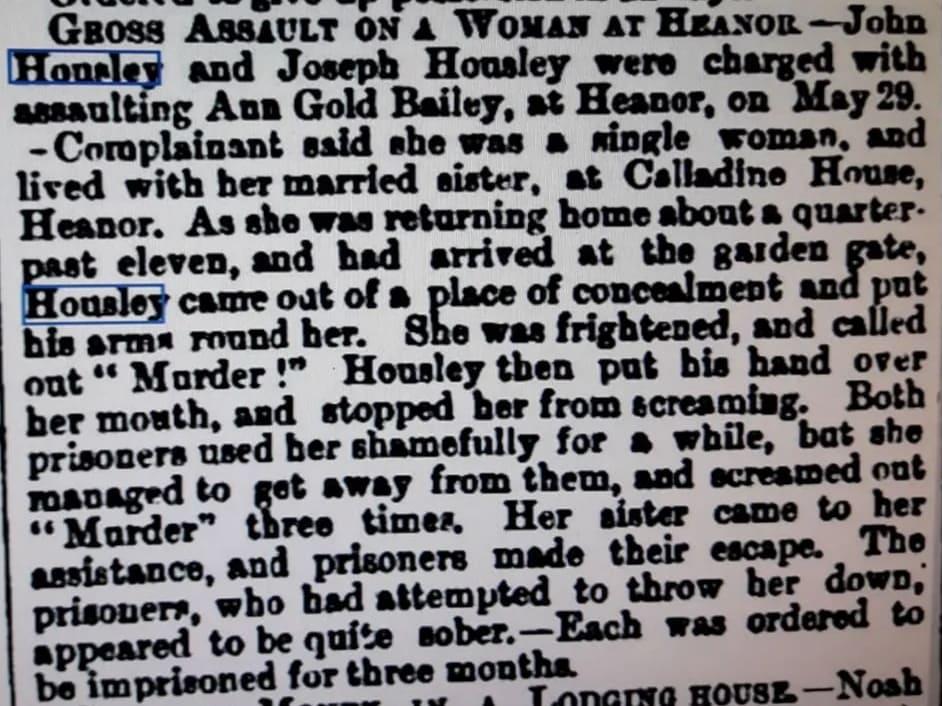
In 1876, the solicitor wrote to George: “Have you heard of John Housley? He is entitled to Robert’s share and I want him to claim it.”
SAMUEL HOUSLEY 1816-
Sam married Elizabeth Brookes of Sutton Coldfield, and they had three daughters: Elizabeth, Mary Anne and Catherine. Elizabeth his wife died in 1849, a few months after Samuel’s father William died in 1848. The particular circumstances relating to these individuals have been discussed in previous chapters; the following are letter excerpts relating to them.
Death of William Housley 15 Dec 1848, and Elizabeth Housley 5 April 1849, Smalley:
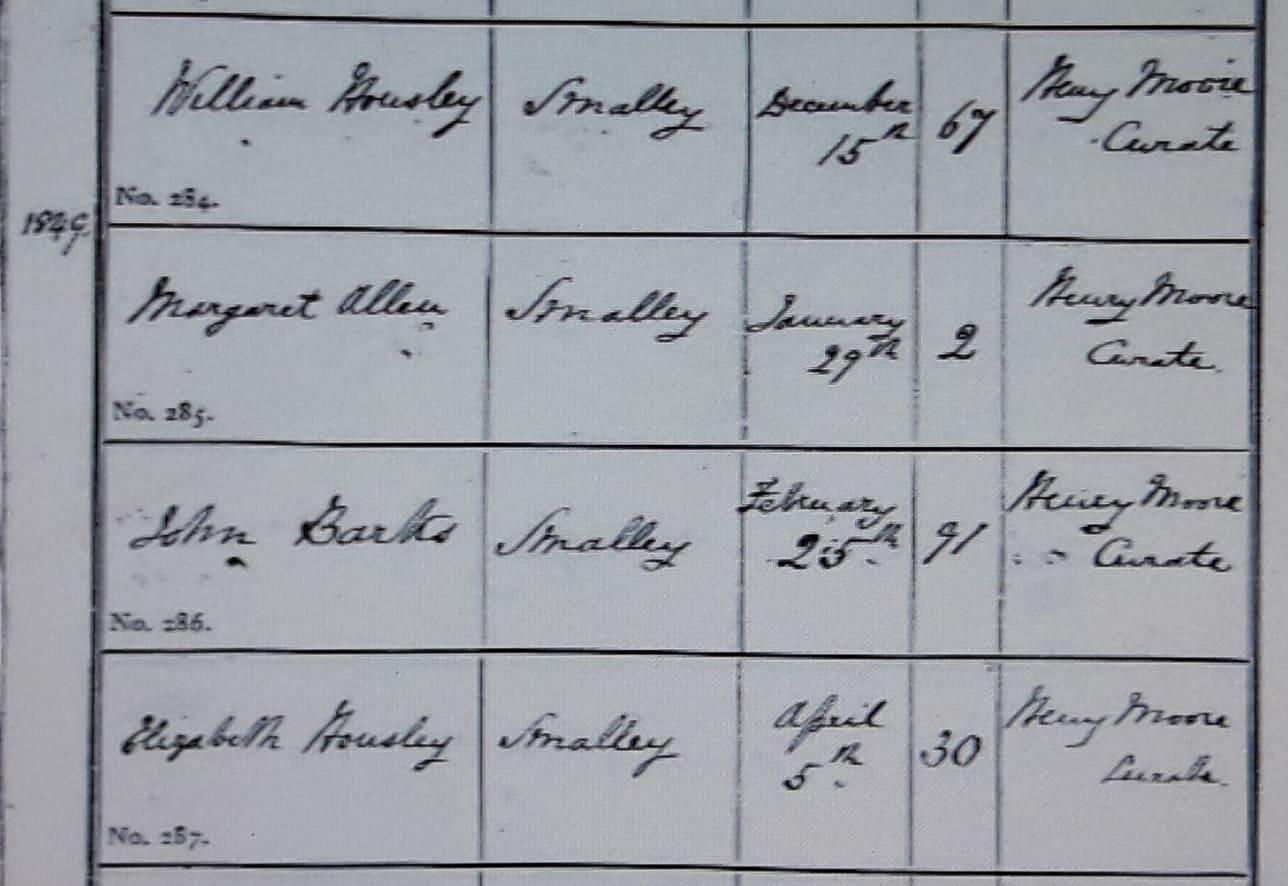
Joseph wrote in December 1872: “I saw one of Sam’s daughters, the youngest Kate, you would remember her a baby I dare say. She is very comfortably married.”
In the same letter (December 15, 1872), Joseph wrote: “I think we have now found all out now that is concerned in the matter for there was only Sam that we did not know his whereabouts but I was informed a week ago that he is dead–died about three years ago in Birmingham Union. Poor Sam. He ought to have come to a better end than that….His daughter and her husband went to Brimingham and also to Sutton Coldfield that is where he married his wife from and found out his wife’s brother. It appears he has been there and at Birmingham ever since he went away but ever fond of drink.”
(Sam, however, was still alive in 1871, living as a lodger at the George and Dragon Inn, Henley in Arden. And no trace of Sam has been found since. It would appear that Sam did not want to be found.)
EDWARD HOUSLEY 1819-1843
Edward died before George left for USA in 1851, and as such there is no mention of him in the letters.
ANNE HOUSLEY 1821-1856
Anne wrote two letters to her brother George between February 1854 and her death in 1856. Apparently she suffered from a lung disease for she wrote: “I can say you will be surprised I am still living and better but still cough and spit a deal. Can do nothing but sit and sew.” According to the 1851 census, Anne, then 29, was a seamstress. Their friend, Mrs. Davy, wrote in March 1856: “This I send in a box to my Brother….The pincushion cover and pen wiper are Anne’s work–are for thy wife. She would have made it up had she been able.” Anne was not living at home at the time of the 1841 census. She would have been 19 or 20 and perhaps was “out service.”
In her second letter Anne wrote: “It is a great trouble now for me to write…as the body weakens so does the mind often. I have been very weak all summer. That I continue is a wonder to all and to spit so much although much better than when you left home.” She also wrote: “You know I had a desire for America years ago. Were I in health and strength, it would be the land of my adoption.”
In November 1855, Emma wrote, “Anne has been very ill all summer and has not been able to write or do anything.” Their neighbor Mrs. Davy wrote on March 21, 1856: “I fear Anne will not be long without a change.” In a black-edged letter the following June, Emma wrote: “I need not tell you how happy she was and how calmly and peacefully she died. She only kept in bed two days.”
Certainly Anne was a woman of deep faith and strong religious convictions. When she wrote that they were hoping to hear of Charles’ success on the gold fields she added: “But I would rather hear of him having sought and found the Pearl of great price than all the gold Australia can produce, (For what shall it profit a man if he gain the whole world and lose his soul?).” Then she asked George: “I should like to learn how it was you were first led to seek pardon and a savior. I do feel truly rejoiced to hear you have been led to seek and find this Pearl through the workings of the Holy Spirit and I do pray that He who has begun this good work in each of us may fulfill it and carry it on even unto the end and I can never doubt the willingness of Jesus who laid down his life for us. He who said whoever that cometh unto me I will in no wise cast out.”
Anne’s will was probated October 14, 1856. Mr. William Davy of Kidsley Park appeared for the family. Her estate was valued at under £20. Emma was to receive fancy needlework, a four post bedstead, feather bed and bedding, a mahogany chest of drawers, plates, linen and china. Emma was also to receive Anne’s writing desk. There was a condition that Ellen would have use of these items until her death.
The money that Anne was to receive from her grandfather, William Carrington, and her father, William Housley was to be distributed one third to Joseph, one third to Emma, and one third to be divided between her four neices: John’s daughter Elizabeth, 18, and Sam’s daughters Elizabeth, 10, Mary Ann, 9 and Catharine, age 7 to be paid by the trustees as they think “most useful and proper.” Emma Lyon and Elizabeth Davy were the witnesses.
The Carrington Farm:
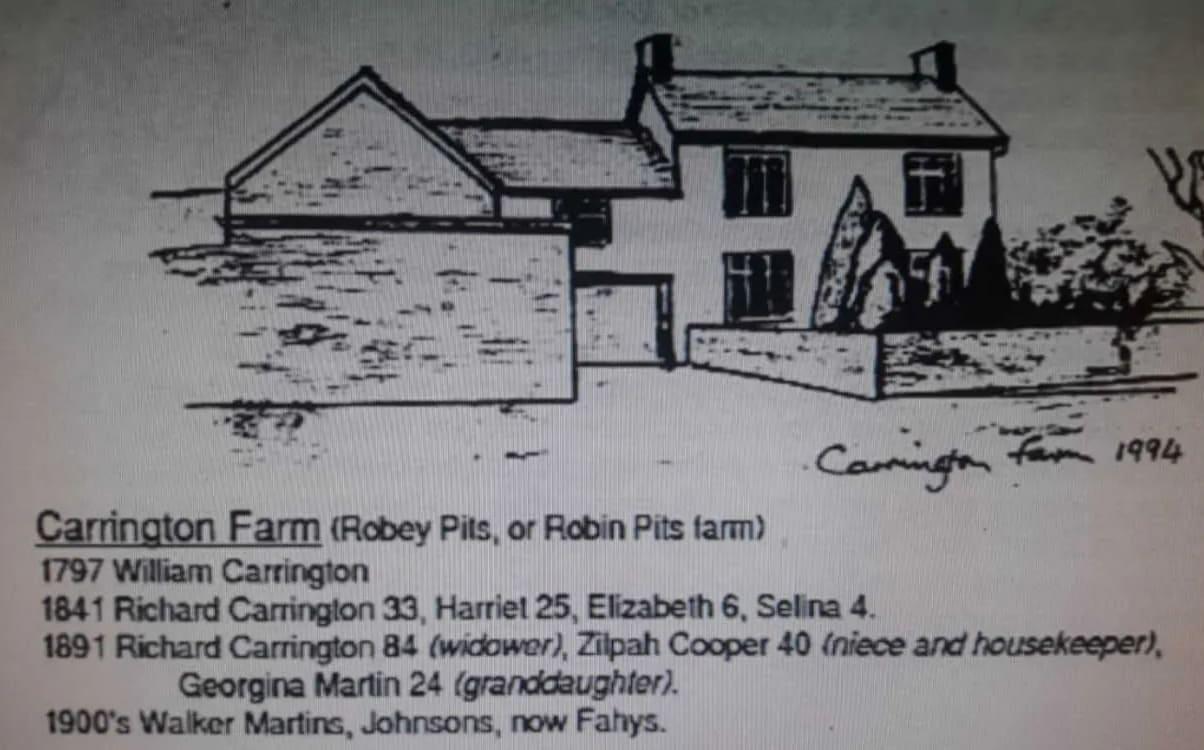
CHARLES HOUSLEY 1823-1855
Charles went to Australia in 1851, and was last heard from in January 1853. According to the solicitor, who wrote to George on June 3, 1874, Charles had received advances on the settlement of their parent’s estate. “Your promissory note with the two signed by your brother Charles for 20 pounds he received from his father and 20 pounds he received from his mother are now in the possession of the court.”
Charles and George were probably quite close friends. Anne wrote in 1854: “Charles inquired very particularly in both his letters after you.”
According to Anne, Charles and a friend married two sisters. He and his father-in-law had a farm where they had 130 cows and 60 pigs. Whatever the trade he learned in England, he never worked at it once he reached Australia. While it does not seem that Charles went to Australia because gold had been discovered there, he was soon caught up in “gold fever”. Anne wrote: “I dare say you have heard of the immense gold fields of Australia discovered about the time he went. Thousands have since then emigrated to Australia, both high and low. Such accounts we heard in the papers of people amassing fortunes we could not believe. I asked him when I wrote if it was true. He said this was no exaggeration for people were making their fortune daily and he intended going to the diggings in six weeks for he could stay away no longer so that we are hoping to hear of his success if he is alive.”
In March 1856, Mrs. Davy wrote: “I am sorry to tell thee they have had a letter from Charles’s wife giving account of Charles’s death of 6 months consumption at the Victoria diggings. He has left 2 children a boy and a girl William and Ellen.” In June of the same year in a black edged letter, Emma wrote: “I think Mrs. Davy mentioned Charles’s death in her note. His wife wrote to us. They have two children Helen and William. Poor dear little things. How much I should like to see them all. She writes very affectionately.”
In December 1872, Joseph wrote: “I’m told that Charles two daughters has wrote to Smalley post office making inquiries about his share….” In January 1876, the solicitor wrote: “Charles Housley’s children have claimed their father’s share.”
GEORGE HOUSLEY 1824-1877
George emigrated to the United states in 1851, arriving in July. The solicitor Abraham John Flint referred in a letter to a 15-pound advance which was made to George on June 9, 1851. This certainly was connected to his journey. George settled along the Delaware River in Bucks County, Pennsylvania. The letters from the solicitor were addressed to: Lahaska Post Office, Bucks County, Pennsylvania.
George married Sarah Ann Hill on May 6, 1854 in Doylestown, Bucks County, Pennsylvania. In her first letter (February 1854), Anne wrote: “We want to know who and what is this Miss Hill you name in your letter. What age is she? Send us all the particulars but I would advise you not to get married until you have sufficient to make a comfortable home.”
Upon learning of George’s marriage, Anne wrote: “I hope dear brother you may be happy with your wife….I hope you will be as a son to her parents. Mother unites with me in kind love to you both and to your father and mother with best wishes for your health and happiness.” In 1872 (December) Joseph wrote: “I am sorry to hear that sister’s father is so ill. It is what we must all come to some time and hope we shall meet where there is no more trouble.”
Emma wrote in 1855, “We write in love to your wife and yourself and you must write soon and tell us whether there is a little nephew or niece and what you call them.” In June of 1856, Emma wrote: “We want to see dear Sarah Ann and the dear little boy. We were much pleased with the “bit of news” you sent.” The bit of news was the birth of John Eley Housley, January 11, 1855. Emma concluded her letter “Give our very kindest love to dear sister and dearest Johnnie.”
In September 1872, Joseph wrote, “I was very sorry to hear that John your oldest had met with such a sad accident but I hope he is got alright again by this time.” In the same letter, Joseph asked: “Now I want to know what sort of a town you are living in or village. How far is it from New York? Now send me all particulars if you please.”
In March 1873 Harriet asked Sarah Ann: “And will you please send me all the news at the place and what it is like for it seems to me that it is a wild place but you must tell me what it is like….”. The question of whether she was referring to Bucks County, Pennsylvania or some other place is raised in Joseph’s letter of the same week.
On March 17, 1873, Joseph wrote: “I was surprised to hear that you had gone so far away west. Now dear brother what ever are you doing there so far away from home and family–looking out for something better I suppose.”The solicitor wrote on May 23, 1874: “Lately I have not written because I was not certain of your address and because I doubted I had much interesting news to tell you.” Later, Joseph wrote concerning the problems settling the estate, “You see dear brother there is only me here on our side and I cannot do much. I wish you were here to help me a bit and if you think of going for another summer trip this turn you might as well run over here.”
Apparently, George had indicated he might return to England for a visit in 1856. Emma wrote concerning the portrait of their mother which had been sent to George: “I hope you like mother’s portrait. I did not see it but I suppose it was not quite perfect about the eyes….Joseph and I intend having ours taken for you when you come over….Do come over before very long.”
In March 1873, Joseph wrote: “You ask me what I think of you coming to England. I think as you have given the trustee power to sign for you I think you could do no good but I should like to see you once again for all that. I can’t say whether there would be anything amiss if you did come as you say it would be throwing good money after bad.”
On June 10, 1875, the solicitor wrote: “I have been expecting to hear from you for some time past. Please let me hear what you are doing and where you are living and how I must send you your money.” George’s big news at that time was that on May 3, 1875, he had become a naturalized citizen “renouncing and abjuring all allegiance and fidelity to every foreign prince, potentate, state and sovereignity whatsoever, and particularly to Victoria Queen of Great Britain of whom he was before a subject.”
ROBERT HOUSLEY 1832-1851
In 1854, Anne wrote: “Poor Robert. He died in August after you left he broke a blood vessel in the lung.”
From Joseph’s first letter we learn that Robert was 19 when he died: “Dear brother there have been a great many changes in the family since you left us. All is gone except myself and John and Sam–we have heard nothing of him since he left. Robert died first when he was 19 years of age. Then Anne and Charles too died in Australia and then a number of years elapsed before anyone else. Then John lost his wife, then Emma, and last poor dear mother died last January on the 11th.”Anne described Robert’s death in this way: “He had thrown up blood many times before in the spring but the last attack weakened him that he only lived a fortnight after. He died at Derby. Mother was with him. Although he suffered much he never uttered a murmur or regret and always a smile on his face for everyone that saw him. He will be regretted by all that knew him”.
Robert died a resident of St. Peter’s Parish, Derby, but was buried in Smalley on August 16, 1851.
Apparently Robert was apprenticed to be a joiner for, according to Anne, Joseph took his place: “Joseph wanted to be a joiner. We thought we could do no better than let him take Robert’s place which he did the October after and is there still.”In 1876, the solicitor wrote to George: “Have you heard of John Housley? He is entitled to Robert’s share and I want him to claim it.”
EMMA HOUSLEY 1836-1871
Emma was not mentioned in Anne’s first letter. In the second, Anne wrote that Emma was living at Spondon with two ladies in her “third situation,” and added, “She is grown a bouncing woman.” Anne described her sister well. Emma wrote in her first letter (November 12, 1855): “I must tell you that I am just 21 and we had my pudding last Sunday. I wish I could send you a piece.”
From Emma’s letters we learn that she was living in Derby from May until November 1855 with Mr. Haywood, an iron merchant. She explained, “He has failed and I have been obliged to leave,” adding, “I expect going to a new situation very soon. It is at Belper.” In 1851 records, William Haywood, age 22, was listed as an iron foundry worker. In the 1857 Derby Directory, James and George were listed as iron and brass founders and ironmongers with an address at 9 Market Place, Derby.
In June 1856, Emma wrote from “The Cedars, Ashbourne Road” where she was working for Mr. Handysides.
While she was working for Mr. Handysides, Emma wrote: “Mother is thinking of coming to live at Derby. That will be nice for Joseph and I.”Friargate and Ashbourne Road were located in St. Werburgh’s Parish. (In fact, St. Werburgh’s vicarage was at 185 Surrey Street. This clue led to the discovery of the record of Emma’s marriage on May 6, 1858, to Edwin Welch Harvey, son of Samuel Harvey in St. Werburgh’s.)
In 1872, Joseph wrote: “Our sister Emma, she died at Derby at her own home for she was married. She has left two young children behind. The husband was the son of the man that I went apprentice to and has caused a great deal of trouble to our family and I believe hastened poor Mother’s death….”. Joseph added that he believed Emma’s “complaint” was consumption and that she was sick a good bit. Joseph wrote: “Mother was living with John when I came home (from Ascension Island around 1867? or to Smalley from Derby around 1870?) for when Emma was married she broke up the comfortable home and the things went to Derby and she went to live with them but Derby did not agree with her so she had to leave it again but left all her things there.”
Emma Housley and Edwin Welch Harvey wedding, 1858:
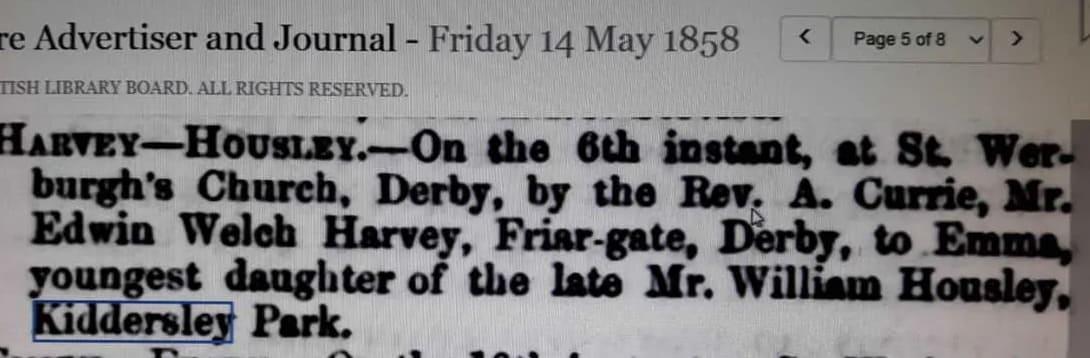
JOSEPH HOUSLEY 1838-1893
We first hear of Joseph in a letter from Anne to George in 1854. “Joseph wanted to be a joiner. We thought we could do no better than let him take Robert’s place which he did the October after (probably 1851) and is there still. He is grown as tall as you I think quite a man.” Emma concurred in her first letter: “He is quite a man in his appearance and quite as tall as you.”
From Emma we learn in 1855: “Joseph has left Mr. Harvey. He had not work to employ him. So mother thought he had better leave his indenture and be at liberty at once than wait for Harvey to be a bankrupt. He has got a very good place of work now and is very steady.” In June of 1856, Emma wrote “Joseph and I intend to have our portraits taken for you when you come over….Mother is thinking of coming to Derby. That will be nice for Joseph and I. Joseph is very hearty I am happy to say.”
According to Joseph’s letters, he was married to Harriet Ballard. Joseph described their miraculous reunion in this way: “I must tell you that I have been abroad myself to the Island of Ascension. (Elsewhere he wrote that he was on the island when the American civil war broke out). I went as a Royal Marine and worked at my trade and saved a bit of money–enough to buy my discharge and enough to get married with but while I was out on the island who should I meet with there but my dear wife’s sister. (On two occasions Joseph and Harriet sent George the name and address of Harriet’s sister, Mrs. Brooks, in Susquehanna Depot, Pennsylvania, but it is not clear whether this was the same sister.) She was lady’s maid to the captain’s wife. Though I had never seen her before we got to know each other somehow so from that me and my wife recommenced our correspondence and you may be sure I wanted to get home to her. But as soon as I did get home that is to England I was not long before I was married and I have not regretted yet for we are very comfortable as well as circumstances will allow for I am only a journeyman joiner.”
Proudly, Joseph wrote: “My little family consists of three nice children–John, Joseph and Susy Annie.” On her birth certificate, Susy Ann’s birthdate is listed as 1871. Parish records list a Lucy Annie christened in 1873. The boys were born in Derby, John in 1868 and Joseph in 1869. In his second letter, Joseph repeated: “I have got three nice children, a good wife and I often think is more than I have deserved.” On August 6, 1873, Joseph and Harriet wrote: “We both thank you dear sister for the pieces of money you sent for the children. I don’t know as I have ever see any before.” Joseph ended another letter: “Now I must close with our kindest love to you all and kisses from the children.”
In Harriet’s letter to Sarah Ann (March 19, 1873), she promised: “I will send you myself and as soon as the weather gets warm as I can take the children to Derby, I will have them taken and send them, but it is too cold yet for we have had a very cold winter and a great deal of rain.” At this time, the children were all under 6 and the baby was not yet two.
In March 1873 Joseph wrote: “I have been working down at Heanor gate there is a joiner shop there where Kings used to live I have been working there this winter and part of last summer but the wages is very low but it is near home that is one comfort.” (Heanor Gate is about 1/4 mile from Kidsley Grange. There was a school and industrial park there in 1988.) At this time Joseph and his family were living in “the big house–in Old Betty Hanson’s house.” The address in the 1871 census was Smalley Lane.
A glimpse into Joseph’s personality is revealed by this remark to George in an 1872 letter: “Many thanks for your portrait and will send ours when we can get them taken for I never had but one taken and that was in my old clothes and dear Harriet is not willing to part with that. I tell her she ought to be satisfied with the original.”
On one occasion Joseph and Harriet both sent seeds. (Marks are still visible on the paper.) Joseph sent “the best cow cabbage seed in the country–Robinson Champion,” and Harriet sent red cabbage–Shaw’s Improved Red. Possibly cow cabbage was also known as ox cabbage: “I hope you will have some good cabbages for the Ox cabbage takes all the prizes here. I suppose you will be taking the prizes out there with them.” Joseph wrote that he would put the name of the seeds by each “but I should think that will not matter. You will tell the difference when they come up.”
George apparently would have liked Joseph to come to him as early as 1854. Anne wrote: “As to his coming to you that must be left for the present.” In 1872, Joseph wrote: “I have been thinking of making a move from here for some time before I heard from you for it is living from hand to mouth and never certain of a job long either.” Joseph then made plans to come to the United States in the spring of 1873. “For I intend all being well leaving England in the spring. Many thanks for your kind offer but I hope we shall be able to get a comfortable place before we have been out long.” Joseph promised to bring some things George wanted and asked: “What sort of things would be the best to bring out there for I don’t want to bring a lot that is useless.” Joseph’s plans are confirmed in a letter from the solicitor May 23, 1874: “I trust you are prospering and in good health. Joseph seems desirous of coming out to you when this is settled.”
George must have been reminiscing about gooseberries (Heanor has an annual gooseberry show–one was held July 28, 1872) and Joseph promised to bring cuttings when they came: “Dear Brother, I could not get the gooseberries for they was all gathered when I received your letter but we shall be able to get some seed out the first chance and I shall try to bring some cuttings out along.” In the same letter that he sent the cabbage seeds Joseph wrote: “I have got some gooseberries drying this year for you. They are very fine ones but I have only four as yet but I was promised some more when they were ripe.” In another letter Joseph sent gooseberry seeds and wrote their names: Victoria, Gharibaldi and Globe.
In September 1872 Joseph wrote; “My wife is anxious to come. I hope it will suit her health for she is not over strong.” Elsewhere Joseph wrote that Harriet was “middling sometimes. She is subject to sick headaches. It knocks her up completely when they come on.” In December 1872 Joseph wrote, “Now dear brother about us coming to America you know we shall have to wait until this affair is settled and if it is not settled and thrown into Chancery I’m afraid we shall have to stay in England for I shall never be able to save money enough to bring me out and my family but I hope of better things.”
On July 19, 1875 Abraham Flint (the solicitor) wrote: “Joseph Housley has removed from Smalley and is working on some new foundry buildings at Little Chester near Derby. He lives at a village called Little Eaton near Derby. If you address your letter to him as Joseph Housley, carpenter, Little Eaton near Derby that will no doubt find him.”
George did not save any letters from Joseph after 1874, hopefully he did reach him at Little Eaton. Joseph and his family are not listed in either Little Eaton or Derby on the 1881 census.
In his last letter (February 11, 1874), Joseph sounded very discouraged and wrote that Harriet’s parents were very poorly and both had been “in bed for a long time.” In addition, Harriet and the children had been ill.
The move to Little Eaton may indicate that Joseph received his settlement because in August, 1873, he wrote: “I think this is bad news enough and bad luck too, but I have had little else since I came to live at Kiddsley cottages but perhaps it is all for the best if one could only think so. I have begun to think there will be no chance for us coming over to you for I am afraid there will not be so much left as will bring us out without it is settled very shortly but I don’t intend leaving this house until it is settled either one way or the other. “Joseph Housley and the Kiddsley cottages:
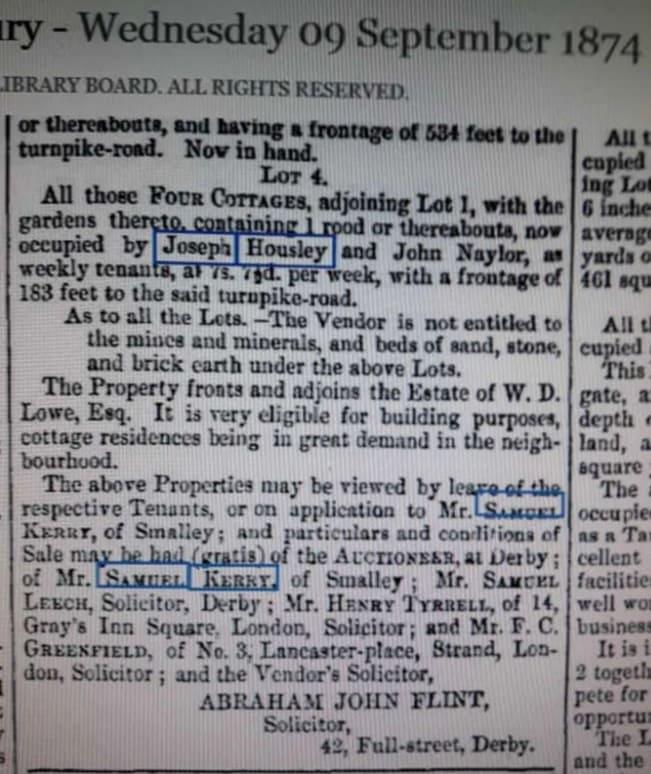
-
AuthorSearch Results
