

Search Results for 'required'
-
AuthorSearch Results
-
January 19, 2026 at 6:51 pm #8051
In reply to: The Hoards of Sanctorum AD26
“Lace, did you say?” asked Cerenise with interest. “I must have a look at it. Stench, you say? How very odd. But I want to see it. Fetch me the container while I look for my mask and rubber gloves.”
“I’m not going near it again, I’ll get Boothroyd to bring it,” Spirius replied making a hasty exit.
“I’d have thought you’d have wanted to bottle the smell, Spirius.”
In due course the gardener appeared holding a container at arms length with a pained expression on his face. “Stinks worse than keeg, this does, and I’ve smelled some manure and compost in my time, but never anything as disgusting as this. Where am I to put it?”
Cerenise cleared a space on a table piled with old books and catalogues. “Gosh, that is a pong, isn’t it! Reminds me of something,” she said twitching her nose. “There is a delicate note of ~ what is it?”
“Dead rats?” suggested Boothroyd helpfully, adding “Will that be all?” as he backed towards the door.
As Cerenise lifted the lid, the gardener turned and fled.
“Why, it’s a Nottingham lace Lambrequin window drape if I’m not mistaken!” exclaimed Cerenise, gently lifting the delicate fabric and holding it up to the light. “Probably 1912 or thereabouts, and in perfect condition.”
“Perfectly rancid,” said Yvoise, her voice muffled by the thick towel she had wrapped around her mouth and nose.
“Come and look, it’s a delightful specimen. Not terribly rare, but it wonderful condition. Oh look! There’s another piece underneath. Aha! seventeenth century bone lace!”
Yvoise crept closer. “What’s that other thing? Is that where the smell’s coming from?”
“By Georges, I think you’re right. It’s a bone bobbin. Bone lace, they used to call it, until they started making bobbins out of wood.” Cerenise was pleased. She could get Mrs Fennel to wash the lace and then she could add it to her collection. “Spirius can bottle the bone bobbin and bury it in Bobbington Woods.”
Duly summoned from the kitchen, the faithful daily woman appeared, drying her hands on her apron.
“Pooo eee!” exclaimed Mrs Fennel, “That’ll need a good boil in bleach, will that!”
“Good lord woman, no! A gentle soak in some soap should do it. It won’t smell half so bad as soon as this bone bobbin is removed.”
“Did you say BONE bobbin?” asked Helier from a relatively safe distance just outside the door. “WHOSE bone?”
“By Georges!” Cerenise said again. “Whose bone indeed! Therein lies the clue to the mystery, you know.”
“Can’t you just put it in a parcel and mail it to someone horrible?” suggested Mrs Fennel.
“A capital idea, Mrs Fennel, a politician. So many horrible ones to choose from though,” Yvoise was already making a mental list.
“We can mail the smelly empty box to the prime minister, but we must keep the bone bobbin safe,” said Helier. “And we must find out whose bones it was made from. Cerenise is right. It’s the clue.”
“An empty smelly box, even better. More fitting, if I do say so myself, for the prime minister,” said Mrs Fennel with some relief. At least she wasn’t going to be required to wash the bone and the box as well as the smelly lace.
January 18, 2026 at 8:18 am #8049In reply to: The Hoards of Sanctorum AD26
Phurt was starting to think something fishy was a play, each time he thought his short spider life had ended he was pulled back from Spiderheaven by some unknown force. Not that he minded this time, there were plenty of places to hide and cast his strong silk cables. He had developed a sense of adventure and the sheer height of some of the mounds made him dizzy. It also made him want to be the first spider in the history of this thread to climb on top of that Mount Wobbly of the Topperware Chain.
Phurt had also noticed a strange and strong smell that seemed to come from the top of Mount Wobbly. Not that he minded the hygiene of the place; it was, to the contrary, a rather promising smell. It was the smell that said swarms of flies would gather there like an endless supply of blessed food.
Seeing that other spiders were gathering at the bottom of Mount Wobbly, he contorted his butt and secured his first cable.

Spirius had been investigating the origin of a strong smell that had started not long after Austreberthe puffed out of existence and became part of the dust she had spent her life chasing away. Which gave him one more proof that his theory of the holy body influence upon the physical world was true. He looked for a pen but they were behind two piles of unopened parcels he had started collecting when he had noticed that the postmen were leaving the boxes unattended and unprotected from the elements on the front porch of houses. His intentions were pure, as any saintly intentions are, but when he saw what good addition to the other boxes they made, he felt a pang of regret each time he thought of giving back those boxes to their rightful recipients.
Alas, most of them were dead by now, so he felt his duty was to keep those boxes intact to honour the memory of the dead.
Yvoise came in just as Spirius saw an odd and colourful australian jumping spider cast a delicate silk thread to one of the bottom row of his Tupperware collection.
“You should really do something about that smell,” she said. “I remember a time when decorum required holy people to exude only fragrance and essential oils.”
“Well, you know, it’s Austreberthe,” he said as wobbly as his heaps of plastic boxes. He had them all. You could even say he started the whole trend of pyramid schemes when his friend Pearl Topper saw him buy boxes from antiques shops. She invented the first plastic box as…
“Well, I asked you a question,” said Yvoise, interrupting his wandering thoughts.
“Have you noticed the spiders,” said Spirius.
“What spiders?”
“I think they’re trying to go up there,” Spirius said. “Look!”
He pointed a proud finger at the top of the highest Topperware tower in the Guyness book of records. A swarm of flies was circling around one of the boxes.
“And that means the smell comes from there.”
December 31, 2025 at 7:34 pm #8018In reply to: The Hoards of Sanctorum AD26
It must be two hundred years at least since we’ve heard a will read at number 26, Cerenise thought to herself, still in a mild state of shock at the unexpected turn of events. She allowed her mind to wander, as she was wont to do.
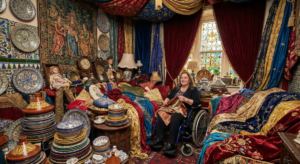 Cerenise had spent the best part of a week choosing a suitable outfit to wear for the occasion and the dressing room adjoining her bedroom had become even more difficult to navigate. Making sure her bedroom door was securely locked before hopping out of her wicker bath chair (she didn’t want the others to see how nimble she still was), she spent hours inching her way through the small gaps between wardrobes and storage boxes and old wooden coffers, pulling out garment after garment and taking them to the Napoleon III cheval mirror to try on. She touched the rosewood lovingly each time and sighed. It was a beautiful mirror that had faithfully reflected her image for over 150 years.
Holding a voluminous black taffetta mourning dress under her chin, Cerenise scrutinised her appearance. She looked well in black, she always felt, and it was such a good background for exotic shawls and scarves. Pulling the waist of the dress closer, it became apparent that a whalebone corset would be required if she was to wear the dress, a dreadful blight on the fun of wearing Victorian dresses. She lowered the dress and peered at her face. Not bad for, what was it now? One thousand 6 hundred and 43 years old? At around 45 years old, Cerenise decided that her face was perfect, not too young and not too old and old enough to command a modicum of respect. Thenceforth she stopped visibly aging, although she had allowed her fair hair to go silver white.
It was just after the siege of Gloucester in 1643, which often seemed like just yesterday, when Cerenise stopped walking in public. Unlike anyone else, she had relished the opportunity to stay in one place, and not be sent on errands miles away having to walk all the way in all weathers. Decades, or was it centuries, it was hard to keep track, of being a saint of travellers had worn thin by then, and she didn’t care if she never travelled again. She had done her share, although she still bestowed blessings when asked.
It was when she gave up walking in public that the hoarding started. Despite the dwellings having far fewer things in general in those days, there had always been pebbles and feathers, people’s teeth when they fell out, which they often did, and dried herbs and so forth. As the centuries rolled on, there were more and more things to hoard, reaching an awe inspiring crescendo in the last 30 years.
Cerenise, however, had wisely chosen to stop aging her teeth at the age of 21.
Physically, she was in surprisingly good shape for an apparent invalid but she spent hours every day behind locked doors, clambering and climbing among her many treasures, stored in many rooms of the labyrinthine old building. There was always just enough room for the bath chair to enter the door in each of her many rooms, and a good strong lock on the door. As soon as the door was locked, Cerenise parked the bath chair in front of the door and spent the day lifting boxes and climbing over bags and cupboards, a part of herself time travelling to wherever the treasures took her.
Eventually Cerenise settled on a long and shapeless but thickly woven, and thus warm, Neolithic style garment of unknown provenance but likely to be an Arts and Crafts replica. It was going to be cold in the library, and she could dress it up with a colourful shawl.
April 20, 2025 at 8:00 am #7893In reply to: Cofficionados Bandits (vs Lucid Dreamers)
“Where are they again?” Thiram was straining as he waited for his friends, or rather colleagues.
“Typical of them to get us all excited, and then bailing out to some mundane excuses.”
He started to pace around the shed where they were supposed to meet. He wasn’t clear about all the details, Amy, or Carob would have them. Chico would be here for the ride, but the master plan this time was for the girls to come up with.
What was happening at the plantation? Something unusual for sure; the Lucid Luddite Dreamers and their Silly Intelligence devices were always looking to disrupt the flows of coffee of the remaining parts where they still grew. That was why their mission was so important. Or so he was told.
“Bugger… they could at least answer their damn phones… AI might well be everywhere, but you can’t just be all cavemen about it.”
A rush of ruffled dried leaves and a happy bleating caught his attention at the moment he was about to leave. A panting Amy arrived, with her cream goat “Fanella” in tow —the bleating was from her, obviously. She didn’t take “Finnley”, the black one, she was too unpredictable; Amy would only keep her around for life or death situations that required a fair deal of rude practicality, and a good horn’s ramming.
“Sorry, sorry!” Amy blurted out in hushed tones. “I couldn’t get away from the Padre. He’s too worried about stuff…”
Thiram shrugged “at least there’s one. And what about the others?”
“Oh, what? I’m not the last to arrive? That’s new.”
Thiram rolled his eyes and gave a twig with fresh leaves to Fanella to eat.
December 22, 2024 at 10:49 pm #7704In reply to: Quintessence: Reversing the Fifth
Darius: Christmas 2022
Darius was expecting some cold snap, landing in Paris, but the weather was rather pleasant this time of the year.
It was the kind of day that begged for aimless wandering, but Darius had an appointment he couldn’t avoid—or so he told himself. His plane had been late, and looking at the time he would arrive at the apartment, he was already feeling quite drained. The streets were lively, tourists and locals intermingling dreamingly under strings of festive lights spread out over the boulevards. He listlessly took some snapshot videos —fleeting ideas, backgrounds for his channel.
The wellness channel had not done very well to be honest, and he was struggling with keeping up with the community he had drawn to himself. Most of the latest posts had drawn the usual encouragements and likes, but there were also the growing background chatter, gossiping he couldn’t be bothered to rein in — he was no guru, but it still took its toll, and he could feel it required more energy to be in this mode that he’d liked to.
His patrons had been kind, for a few years now, indulging his flights of fancy, funding his trips, introducing him to influencers. Seeing how little progress he’d made, he was starting to wonder if he should have paid more attention to the background chatter. Monsieur Renard had always taken a keen interest in his travels, looking for places to expand his promoter schemes of co-housing under the guide of low investment into conscious living spaces, or something well-marketed by Eloïse. The crude reality was starting to stare at his face. He wasn’t sure how long he could keep up pretending they were his friends.
By the time he reached the apartment, in a quiet street adjacent to rue Saint Dominique, nestled in 7th arrondissement with its well-kept façades, he was no longer simply fashionably late.
Without even the time to say his name, the door buzz clicked open, leading him to the old staircase. The apartment door opened before he could knock. There was a crackling tension hanging in the air even before Renard’s face appeared—his rotund face reddened by an annoyance he was poorly hiding beneath a polished exterior. He seemed far away from the guarded and meticulous man that Darius once knew.
“You’re late,” Renard said brusquely, stepping aside to let Darius in. The man was dressed impeccably, as always, but there was a sharpness to his movements.
Inside, the apartment was its usual display of cultivated sophistication—mid-century furniture, muted tones, and artful clutter that screamed effortless wealth. Eloïse sat on the couch, her legs crossed, a glass of wine poised delicately in her hand. She didn’t look up as Darius entered.
“Sorry,” Darius muttered, setting down his bag. “Flight delay.”
Renard waved it off impatiently, already pacing the room. “Do you know where Lucien is?” he asked abruptly, his gaze slicing toward Darius.
The question caught him off guard. “Lucien?” Darius echoed. “No. Why?”
Renard let out a sharp, humorless laugh. “Why? Because he owes me. He owes us. And he’s gone off the grid like some bloody enfant terrible who thinks the rules don’t apply to him.”
Darius hesitated. “I haven’t seen him in months,” he said carefully.
Renard stopped pacing, fixing him with a hard look. “Are you sure about that? You two were close, weren’t you? Don’t tell me you’re covering for him.”
“I’m not,” Darius said firmly, though the accusation sent a ripple of anger through him.
Renard snorted, turning away. “Typical. All you dreamers are the same—full of ideas but no follow-through. And when things fall apart, you scatter like rats, leaving the rest of us to clean up the mess.”
Darius stiffened. “I didn’t come here to be insulted,” he said, his voice a steady growl.
“Then why did you come, Darius?” Renard shot back, his tone cutting. “To float on someone else’s dime a little longer? To pretend you’re above all this while you leech off people who actually make things happen?”
The words hit like a slap. Darius glanced at Eloïse, expecting her to interject, to soften the blow. But she remained silent, her gaze fixed on her glass as if it held all the answers.
For the first time, he saw her clearly—not as a confidante or a muse, but as someone who had always been one step removed, always watching, always using.
“I think I’ve had enough,” Darius said finally, his voice calm despite the storm brewing inside him. “I think I’ve had enough for a long time.”
Renard turned, his expression a mix of incredulity and disdain. “Enough? You think you can walk away from this? From us?”
“Yes, I can.” Darius said simply, grabbing his bag.
“You’ll never make it on your own,” Renard called after him, his voice dripping with scorn.
Darius paused at the door, glancing back at Eloïse one last time. “I’ll take my chances,” he said, and then slammed the door.

The evening air was like a balm, open and soft unlike the claustrophobic tension of the apartment. Darius walked aimlessly at first, his thoughts caught between flares of wounded pride and muted anxiety, but as he walked and walked, it soon turned into a return of confidence, slow and steady.
His phone buzzed in his pocket, and he pulled it out to see a familiar name. It was a couple he knew from the south of France, friends he hadn’t spoken to in months. He answered, their warm voices immediately lifting his spirits.
“Darius!” one of them said. “What are you doing for Christmas? You should come down to stay with us. We’ve finally moved to a bigger space—and you owe us a visit.”
Darius smiled, the weight of Renard’s words falling away. “You know what? That sounds perfect.”
As he hung up, he looked up at the Parisian skyline, Darius wished he’d had the courage to take that step into the unknown a long time ago. Wherever Lucien was, he felt suddenly closer to him —as if inspired by his friend’s bold move away from this malicious web of influence.
September 20, 2024 at 10:13 pm #7557In reply to: The Incense of the Quadrivium’s Mystiques
The whole summer had been a blur. So much so it felt at times to Eris she’d woken up from a dream to enter another one; carefully crafted illusions as heavy as an obfuscating spell.
She could remember the fair, vaguely the Games too —each event felt like another layer of enchantment, casting a surreal pallor over everything. Indeed, the summer was a blur of fleeting images and half-remembered events, like how everyone quickly disbanded to go for a respite and a salutary holiday. Truth be told, the witches of the Quadrivium all needed it after the utter chaotic year they’d been through.
The resurgence of Malové at the fair, left unexplained, had appeared as an evidence. They all needed the tough love that only she as a head of Coven could provide, rather than the micro-management of the well-meaning but people-inapt Austreberthe. To be fair, Eris wasn’t sure Malové was still in charge or not —Eris had never as much struggled with continuity as now; she could feel they were all flipping through and sliding into potential realities opened by the incoming Samhain doorways on the horizons.
Standing on the cusp of autumn, Eris décided to prepare herself for a clarity spell under the iridescent harvest moon.
As the leaves began to turn and the air grew crisp, Eris stood poised to harness the energies of the propitious harvest moon. Preparation for a clarity spell required ascertained precision and intention waved into the elements.
Eris began by setting her space. The clearing near Lake Saimaa was her sanctum, a place where the natural energies converged seamlessly with her own. She laid out a circle of stones, each one representing a different aspect of clarity—vision, truth, focus, and discernment. In the center, she placed a mirror, a symbolic portal to the inner self and higher understanding.
Mandrake, her Norwegian Forest cat, watched with a knowing gaze, his presence grounding her as she moved through the rituals. Echo, the familiar sprite, flitted about, ensuring everything was in place.
“Mandrake, guard the perimeter,” Eris instructed. The cat slinked off into the shadows, his eyes glowing with an otherworldly light.
Eris took a deep breath and began to chant, her voice steady and resonant:
“By the light of the harvest moon,
I call forth clarity, swift and soon.
Let fog disperse and shadows flee,
Reveal the truth, illuminate me.”She sprinkled dried hellebores around the mirror, their protective and healing properties amplifying the spell’s potency. The hellebores, collected from Normandy, held within them the strength of her Viking ancestors and the promise of Imbolc’s rebirth. They were not just flowers; they were talismans of resilience and transformation.
As the moon reached its zenith, Eris held a vial of enchanted water. She poured it over the mirror, watching as the surface shimmered and rippled, reflecting the moonlight with an ethereal glow. The water, drawn from the depths of Lake Saimaa, was imbued with the ancient magic of the land.
Eris closed her eyes and focused on her intentions. She saw the faces of her sisters at the Quadrivium Emporium, each one struggling with their own burdens. Stalkers, postcards, camphor chests, ever prancing reindeers high on mushrooms. She saw the chaotic energies of early spring, swirling, and the potential and peril they carried. She saw Malové’s stern visage, a reminder of the standards they were meant to uphold, and a reminder to make more magical rejuvenating cream.
“Show me the path,” she whispered. “Guide me through the haze.”
The mirror began to clear, the ripples settling into a smooth, reflective surface. Images started to form—visions of the future, hints of what lay ahead. She saw herself within the coven with renewed purpose, her objectives clear and her drive rekindled. She saw her sisters working in harmony, each one contributing their unique strengths to the collective power.
The clarity spell was working, the fog lifting to reveal the roadmap she needed. Decisions that once seemed insurmountable now appeared manageable, their resolutions within grasp. The inefficiencies plaguing their organization were laid bare, offering a blueprint for the reforms necessary to streamline their efforts.
Eris opened her eyes, the vision fading yet leaving an indelible mark on her mind. She felt a surge of confidence, a sense of direction that had been sorely lacking.
“Thank you,” she murmured to the moon, to the elements, to the spirits that had guided her.
As she began to dismantle the circle, Echo fluttered down to her shoulder, a small smile on her ethereal face. Mandrake emerged from the shadows, his eyes reflecting the calm and order Eris had sought to instill.
“Well done, Eris,” Echo said softly. “The road ahead is clearer now. The harvest moon has gifted you its wisdom.”
Eris nodded, feeling ready as autumn would be a season of action, of turning vision into reality.
July 18, 2024 at 2:29 pm #7535In reply to: The Incense of the Quadrivium’s Mystiques
It made sense to go to Ireland during the hot Andalucian summer, and it hadn’t taken much to convince Truella to take a break from her dig and her research. Thousands of years of history would still be there waiting for her when she got home, and it would be a pleasure to see some green lawns and fields. Maybe it would rain, indeed, it was likely that it would. And by the time the Roman Games were over, there would be less of the hot summer at home to endure. Still, it was a nuisance to have to get her winter clothes down out of the attic. She was sure to find it chilly, even cold.
Truella was not fond of water sports (or any sports, but particularly those involving water) and unfortunately the focus of the games seemed to be on swimming and boating. But one of the events has captured her interest. A miniaturisation spell was required, which contestants had to provide themselves, for the Puddles in Potholes races. The worst road in Limerick would be cordoned off and all the potholes filled with water (if they weren’t already full of rain water, which was likely). When Eris pointed out that a miniaturised person could drown in a puddle as easily as a full sized one could drown in a lake, Truella was ready with her answer. If she was drowning, she would immediately reverse the spell and resume her full size. Eris had raised an eyebrow, remarking that she had better make sure her spell was up to scratch, unlike her incense spells had been. Jeezel had wanted to know why she couldn’t just make an enlarging spell and just swim in the river, to which Truella has replied that she didn’t know how deep the river was and how much enlarging would be required. Snorting, Frella said she obviously didn’t know how deep the potholes in Limerick were.
Austreberthe had put their names down for the donkey chariot races, for which they had three days when they arrived to construct the cart and make the costumes. Luckily Frella had plenty of local contacts, and had willingly taken charge of assembling all the materials.
The Booths of the Gods would require some thought. Which Roman god would she choose to be? Which special godly power could she make a spell for? Truella sighed, and went to find her book of Roman gods and goddesses.
July 18, 2024 at 9:16 am #7534In reply to: The Incense of the Quadrivium’s Mystiques
Ms Nicraith Noble, the Mayor of Limerick taking a bath in the Shannon River with reporters had made the rounds of news in ways that were quite incomprehensible.
Obviously it was part of a media ploy to boost public attention for the incoming Roman Games.
“Did she require some anti-rash-and-boil spells?” Jeezel messaged on the network, worried about what such swimming stunt would do to her ravishing hair.
“Probably…” Eris responded in a terse manner “Don’t forget Austreberthe managed to get us to sponsor the event. She may have eased the deal with some goodies. Like anti-age spell too.”
Eris was glad Austreberthe had refocused the efforts towards the imminent launch of the Roman Games. Those mass events were key moments in the Coven’s seasonal activities, as they provided a bounty of emotions to refine and process for creation of their most epic incenses. The recent mass events had been too heavy on fear, anger and gloom-mongering, not the grade A quality they required.
Austreberthe had called all hands on deck to be ready for the event, having deemed the reconnaissance work in Spain’s cloisters sufficiently well under way to take a break from it. In truth, Eris suspected she’d started to receive the first invoices from the undertakers’ Guild and had realised it was a hefty cost for their consulting services.
On top of that, there was a recent case of the drunken sheep flu in Andalucia, some local variety of virus that got the cloister sisters fear for their elderly’s Mother Loreena’s health. Considering the gleeful vulture’s smiles of the Morticians in waiting, they had decided in agreement for an early dismiss into the Summer holidays retreats.
“More prayers, phew, glad they didn’t need us for that.” true to her swagger way, Truella had conceded and accepted to put a hold to her passionate researches —she’d managed to get their personal phone numbers too anyway.
“One week to the start of the Games then.” Eris sighed. The last stretch to summer holidays seemed to take forever.
June 14, 2024 at 11:41 pm #7474In reply to: The Incense of the Quadrivium’s Mystiques
A little unwilling to proceed, and privately wishing she was back on the comfy sofa with the fat cushions, Frella took a moment to center herself. She reminded herself that being a witch was a high calling and often what we need will find us. It sounded like a lot of Malove’s baloney to be honest but she took a deep breath and muttered a few words of wisdom from Lemone, which often worked better than any spell:
“The key to unlocking mysteries is often found within, where the mind meets the heart.”
“You wait here, Herma,” said Frella holding a warning hand in the air. “I don’t know what magic this is yet but I sense something amiss from that shed.”
Frella approached the ominous shed with caution but renewed determination. The shed door creaked open without resistance and she saw the chest immediately though it was piled on top with boxes. After carefully removing the boxes and putting them to one side, she examined the chest looking for any inscriptions or hidden compartments that might give a clue to its origins. She sensed the camphor chest was from a very old witch family and therefore may contain protective spells and traps. Best to proceed with caution.
She went to the shed door and waved at Herma, shouting for her to go and get some salt. While she waited for Herma’s return, she examined the chest further. It had a lock, but no obvious key; clearly a bit of witchy ingenuity was going to be required. A simple unlocking spell might suffice, or if spells fail, perhaps Herma knows an old trick or two for picking locks!
Herma returned with the salt and Frella sprinkled it liberally on the chest, chanting a protective charm to ward off any nefarious spells. “There,“ she said with satisfaction. “Fingers crossed that ought to do it.”
The chest seemed strangely willing to reveal its secrets for the simplest of opening spells worked. Once it was opened, they sifted carefully through its contents, mostly old documents and letters, looking for anything which might hold the answer to the postcard.
“Look for anything bird-related—feathers, sketches … “ instructed Frella.
“By golly!” cried Herma triumphantly holding up a postcard. “It’s the same one!”.
June 8, 2024 at 7:53 am #7460In reply to: The Incense of the Quadrivium’s Mystiques
Truella sighed. She was making good progress with the dig, the weather was favorable and not too hot yet. It was only a matter of weeks before she would have to start at first light before the sun became too intense, and reverse her current habit of a slow morning and a busy afternoon. Perhaps she should wait before filling in Frella’s diary entry. Was she going to write it herself this time? If only Truella knew for sure. At least Jeezel was feeling a bit better, which was a relief to them all, and it seemed that Eris was lightening up a bit now too. Thank Flove for that! Better not let Malove know too soon though, or she’d have them all off on another of those tedious conferences. Wouldn’t it be nice if Malove let them all have a long summer recess, Truella thought, without much hope. She sighed again, wondering if Frella had progressed any further with the mystery of the camphor chest.
Truella had heard of camphor, of course, but associated it with moth balls, not chests. Camphor chests were a Chinese thing, and none of her studies or interests had ever taken her that far east. It struck her that a camphor chest would be a good place to store the fragments of Hannibal’s tunic safely, until such time as they required another antidote to an ancient Punic spell. And it could happen. Truella wondered if she could order a small one off Oboy. One could order anything one could imagine these days, from anywhere in the world, but a guaranteed delivery to Truella’s village was another matter.
The pale blue sandals had arrived yesterday though, much to her delighted surprise. It had helped when she recognised the postman as a Roman basket seller in a previous life. At that moment, Truella’s postal delivery experiences changed. It was as if the unwinnable battle with giant delivery companies morphed into a cooperation of village tradesmen. Glancing admiringly at her pristine new sandals, Truella smiled with satisfaction. Things could change for the better. Indeed, they could.
February 15, 2024 at 11:04 am #7373In reply to: The Incense of the Quadrivium’s Mystiques
The disturbance had been felt in the bustling heart of Rio.
The warmth of the night had amplified the vibrant energy of the Carnival in Rio, a pulsating heart that reverberated through the city’s veins. But as the beat of samba drums echoed in the distance, a different rhythm was being played behind closed doors. Iemanjá, the head of the Umbanda clan and a pillar of strength in the Witches of the New World, recognized the tremors of another magick at play.
Gathering her coven under the silvery light of the crescent moon, they began the rhythmic dance of the macumba ritual. The air grew heavy, scented with copal and the salty tang of the ocean. In the center of their circle, a waterspout swirled, revealing in its shallow reflection the glow of a portal that emitted the icy chill of a Limerick dawn.
Piercing through the veil of secrecy, Iemanjá’s ethereal sight witnessed the foreign witches, led by the enigmatic Malové, who dared to encroach upon their territory without the required parchmentwork. And yet, their motives remained hidden within the vortex of desire and lust emanating from the Carnival.
A murmur of discontent rippled through the Umbanda clan. Mesmirah, her second, couldn’t stop herself shouting Sacrilégio! They were not ones to tolerate trespassers, let alone those who dared to siphon off energy from their sacred lands.
Silêncio! Iemanjá commanded the crowd. She’d recognized Malové from having attended and graduated the same MWA (Master of Witchcraft Administration), and she was aware of Malove’s little incense business; Malové didn’t strike her as someone to bypass the rules, some handed down through countless generations, binding together most witches across the world despite their varying practices.
She had to be mindful of the delicate balance between the Old World clans and the New. An unauthorized incursion could easily spark a conflict that would ripple through the witching worlds.
Just as the ocean waves respect the boundary of the shore, so must the witches respect the territories — an ancient pact carved in the pillars of the Old World. This blatant disregard by Malové and her coven was akin to scratching the surface of a simmering cauldron, threatening to disrupt the harmony that had been carefully cultivated.
As the revelation sunk in, Iemanjá knew they had to tread carefully. A confrontation would lead to a war bigger than themselves —yet, they couldn’t let this transgression slide. Their pride and the protection of their territory demanded action.
Mesmirah! she finally spoke You will take three witches with you, and investigate what business these Old World witches have in Rio. You will report to me.
Mesmirah nodded, understanding that she was not yet granted authority to investigate in an official capacity. Iemanja was acting surprisingly soft, and didn’t want the Elders to be informed yet, but had recognized action was needed. Mesmirah was confident she would easily find out what was happening, and maybe use that opportunity to her —their advantage. The game of power was on.
February 1, 2024 at 10:18 am #7337In reply to: The Incense of the Quadrivium’s Mystiques
The bone people had replied to Truella’s urgent message while she was at the meeting, much to her relief. The last thing she wanted was the authorities snooping around, just as she was delving into the rich new layer. The odd things she’d been finding recently had piqued her curiousity and she had to keep reminding herself to merely find, observe and document, without attempting to make assumptions. She couldn’t help wondering though if these disparate items, things she hadn’t expected to find, were the ingredients for an ancient spell. The little bone amulet, the pigs teeth, and all the other little bits of bone with curious smooth sides. Fragments of mother of pearl, gleaming like new silver in the dirt, uncorroded and pristine despite the passage of time and the weight of the earth. Little clumps of charcoal, but scattered, not all in the same place. Not like there’d been a fire, more like little things had burned, here and there, at various times.
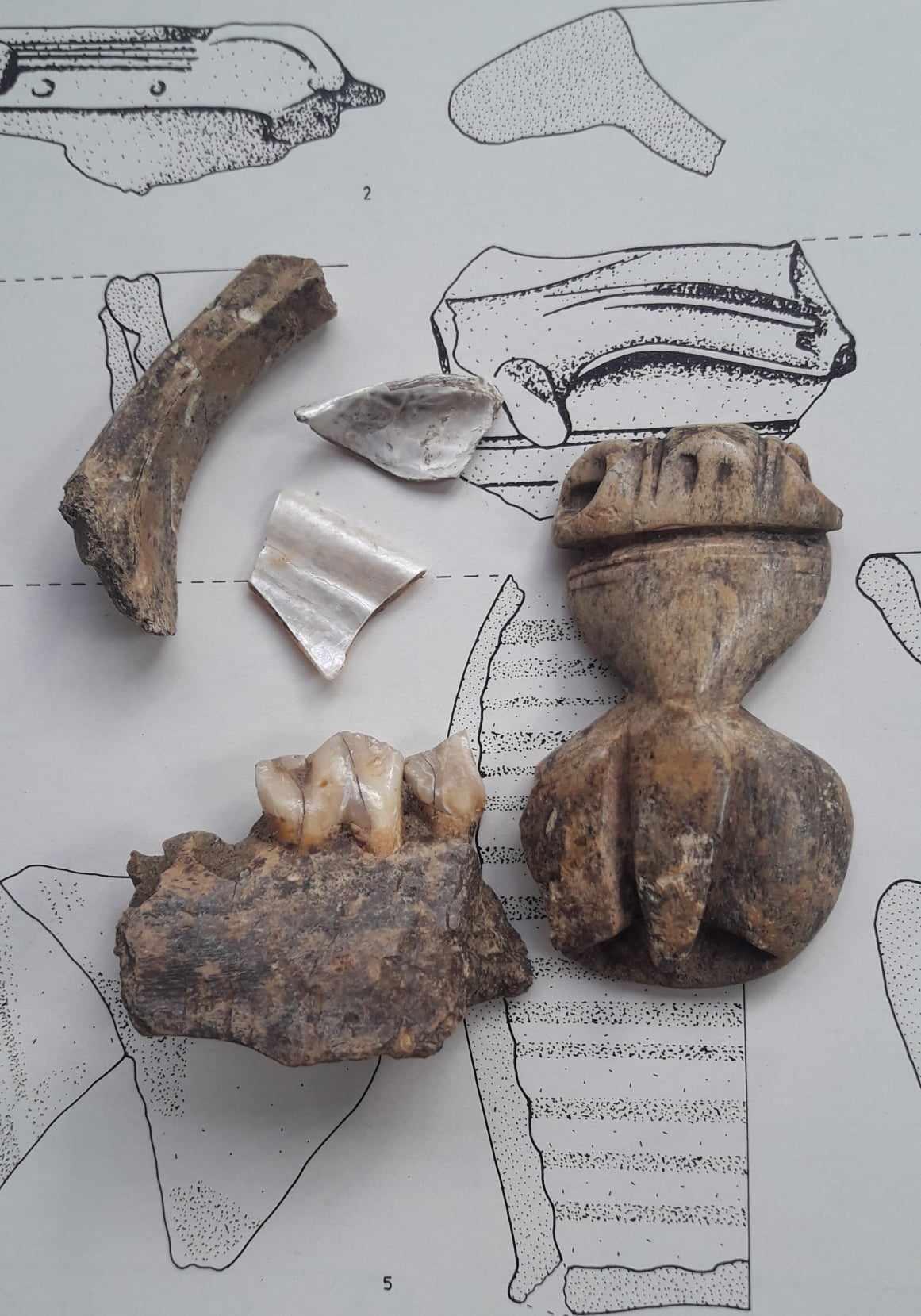
All the broken dishes and amphora were to be expected, but why so many? And why didn’t whoever lived here take their dishes with them when they went? Maybe they left in a hurry, smashing everything on the way out of the door so there was nothing left for the invaders? Or did the dishes simply fall and break when the abandoned wooden shelves rotted away over the centuries? A layer of abandonment was a curious and intriguing thing to contemplate.
Now that she had the experts opinion on the teeth ~ pig, not human ~ haste was needed to quell the growing rumours in the village that she had found human remains. That was the last thing she needed, the neighbours giving her suspicious looks or the authorities roping off her dig with striped plastic tape and putting a police tent over it, messing with the hole she had dug trowel by trowel, rubbing every handful of soil between her fingers. The very thought of it was unbearable. For this reason she rather hoped NOT to find a hoard of valuable ancient coins, contrary to what most people would hope to find. Still, she couldn’t help wonder while she was digging if the next trowel of soil would reveal one.
She must make it absolutely clear to Roger than he was only required to carry buckets of soil, and was not to do any actual digging.
February 1, 2024 at 7:14 am #7334In reply to: The Incense of the Quadrivium’s Mystiques
Impressed with Finnlee’s spirited outburst, Truella realised she’d barely noticed the cleaning lady and felt ashamed. The required daily appearances that the dictatorial Malove insisted upon rankled her, occupying her attention so that the cleanliness or otherwise of the premises went unnoticed. She made up her mind to seek Finnlee out and befriend her, treat her as an equal, draw her into her confidence. Besides, that confident no nonsense approach could come in handy for any staff uprisings. Not that any staff uprising were planned, she mentally added, quickly cloaking her thoughts in case any had leaked out.
Malove spun round and shot her a piercing look and Truella quailed a little, momentarily, but then squared her shoulders and impudently stared back. Malove raised an eyebrow and returned to addressing the witches.
After what seemed like an eternity the meeting was over. Truella planned to seek Finnlee out and invite her for a brew at the Faded Cabbage but Frigella approached her, looking a bit sheepish, and asked if she could have a word in private about a personal matter.
They strolled together towards the little park opposite, and once out of earshot of the others, Frigella came straight to the point.
“Can my cousin come and stay with you for a bit? The thing is, he’s got himself into a spot of bother and needs to disappear for a bit, if you know what I mean. He’s a big strong lad, and I’m sure he’d be willing to give you a hand with all that digging…”
Truella didn’t hesitate. “But of course, Frigella, send him over! He won’t be the first person on the run to come and stay, and probably won’t be the last.”
“The thing is he’s a bit sandwich short of a picnic, you know, not a full bag of shopping…”
“What, does he eat a lot? I don’t do much cooking…”
“No, no, well yes, he does have a good appetite, but that’s not what I meant. He’s a bit simple, but heart of gold. He’s from the other side of the family and our side never had much to do with them, but I always had a soft spot for him.”
” A simpleton might be a refreshing change from all the over complicated people, send him over! What’s his name?”
“Roger. Roger Goodall.”
Roger! The name rang a bell. It wasn’t until much later that Truella realized she should have asked what Roger was on the run for.
July 4, 2023 at 7:52 pm #7261In reply to: Family Stories From The Other Side ~ Book Two
Long Lost Enoch Edwards
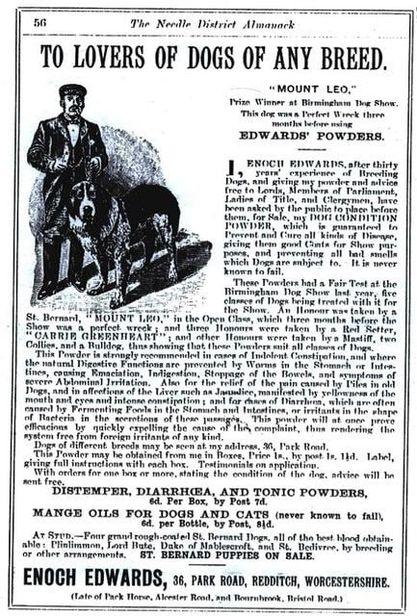
My father used to mention long lost Enoch Edwards. Nobody in the family knew where he went to and it was assumed that he went to USA, perhaps to Utah to join his sister Sophie who was a Mormon handcart pioneer, but no record of him was found in USA.
Andrew Enoch Edwards (my great great grandfather) was born in 1840, but was (almost) always known as Enoch. Although civil registration of births had started from 1 July 1837, neither Enoch nor his brother Stephen were registered. Enoch was baptised (as Andrew) on the same day as his brothers Reuben and Stephen in May 1843 at St Chad’s Catholic cathedral in Birmingham. It’s a mystery why these three brothers were baptised Catholic, as there are no other Catholic records for this family before or since. One possible theory is that there was a school attached to the church on Shadwell Street, and a Catholic baptism was required for the boys to go to the school. Enoch’s father John died of TB in 1844, and perhaps in 1843 he knew he was dying and wanted to ensure an education for his sons. The building of St Chads was completed in 1841, and it was close to where they lived.
Enoch appears (as Enoch rather than Andrew) on the 1841 census, six months old. The family were living at Unett Street in Birmingham: John and Sarah and children Mariah, Sophia, Matilda, a mysterious entry transcribed as Lene, a daughter, that I have been unable to find anywhere else, and Reuben and Stephen.
Enoch was just four years old when his father John, an engineer and millwright, died of consumption in 1844.
In 1851 Enoch’s widowed mother Sarah was a mangler living on Summer Street, Birmingham, Matilda a dressmaker, Reuben and Stephen were gun percussionists, and eleven year old Enoch was an errand boy.
On the 1861 census, Sarah was a confectionrer on Canal Street in Birmingham, Stephen was a blacksmith, and Enoch a button tool maker.
On the 10th November 1867 Enoch married Emelia Parker, daughter of jeweller and rope maker Edward Parker, at St Philip in Birmingham. Both Emelia and Enoch were able to sign their own names, and Matilda and Edwin Eddington were witnesses (Enoch’s sister and her husband). Enoch’s address was Church Street, and his occupation button tool maker.
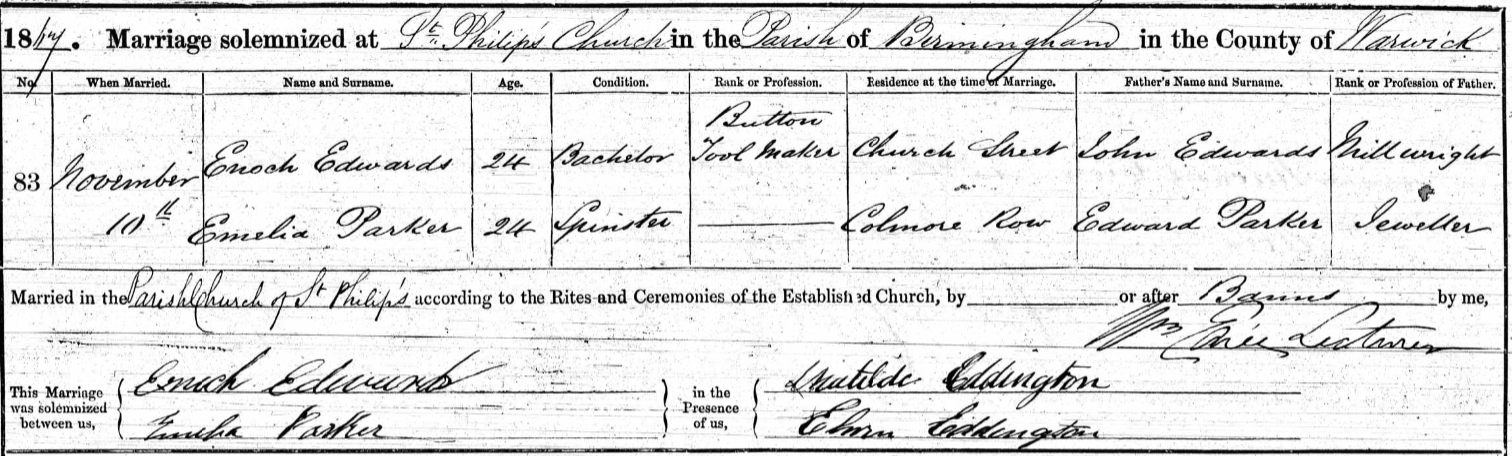
Four years later in 1871, Enoch was a publican living on Clifton Road. Son Enoch Henry was two years old, and Ralph Ernest was three months. Eliza Barton lived with them as a general servant.
By 1881 Enoch was back working as a button tool maker in Bournebrook, Birmingham. Enoch and Emilia by then had three more children, Amelia, Albert Parker (my great grandfather) and Ada.
Garnet Frederick Edwards was born in 1882. This is the first instance of the name Garnet in the family, and subsequently Garnet has been the middle name for the eldest son (my brother, father and grandfather all have Garnet as a middle name).
Enoch was the licensed victualler at the Pack Horse Hotel in 1991 at Kings Norton. By this time, only daughters Amelia and Ada and son Garnet are living at home.
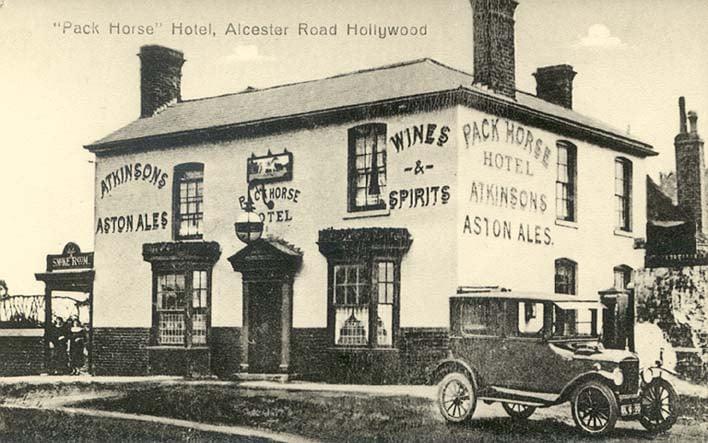
Additional information from my fathers cousin, Paul Weaver:
“Enoch refused to allow his son Albert Parker to go to King Edwards School in Birmingham, where he had been awarded a place. Instead, in October 1890 he made Albert Parker Edwards take an apprenticeship with a pawnboker in Tipton.
Towards the end of the 19th century Enoch kept The Pack Horse in Alcester Road, Hollywood, where a twist was 1d an ounce, and beer was 2d a pint. The children had to get up early to get breakfast at 6 o’clock for the hay and straw men on their way to the Birmingham hay and straw market. Enoch is listed as a member of “The Kingswood & Pack Horse Association for the Prosecution of Offenders”, a kind of early Neighbourhood Watch, dated 25 October 1890.
The Edwards family later moved to Redditch where they kept The Rifleman Inn at 35 Park Road. They must have left the Pack Horse by 1895 as another publican was in place by then.”Emelia his wife died in 1895 of consumption at the Rifleman Inn in Redditch, Worcestershire, and in 1897 Enoch married Florence Ethel Hedges in Aston. Enoch was 56 and Florence was just 21 years old.
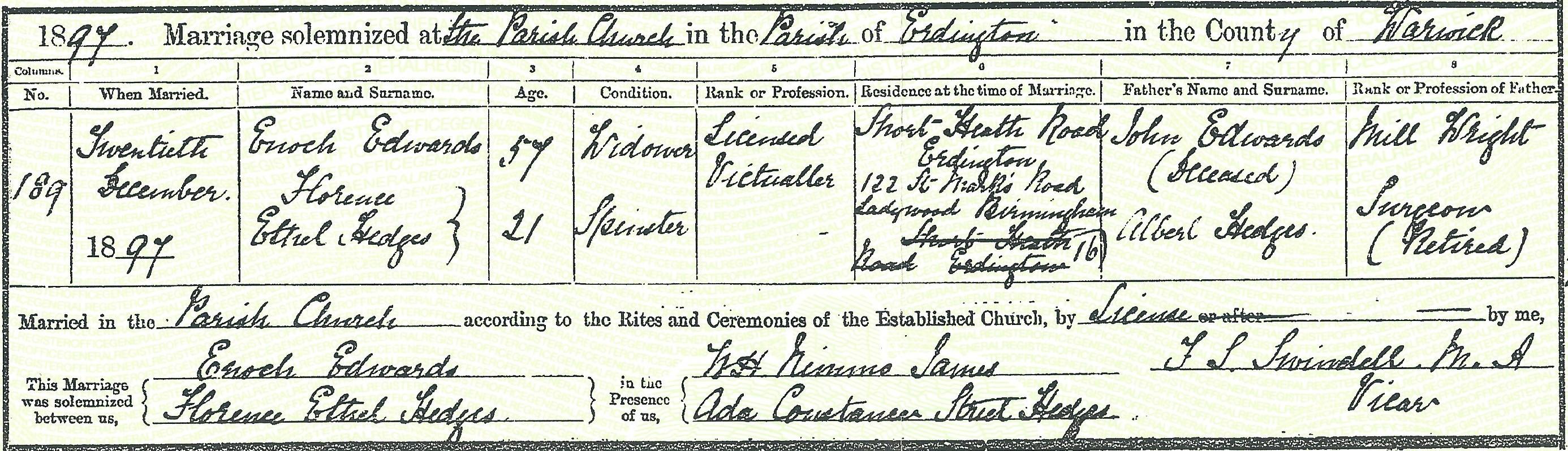
The following year in 1898 their daughter Muriel Constance Freda Edwards was born in Deritend, Warwickshire.
In 1901 Enoch, (Andrew on the census), publican, Florence and Muriel were living in Dudley. It was hard to find where he went after this.From Paul Weaver:
“Family accounts have it that Enoch EDWARDS fell out with all his family, and at about the age of 60, he left all behind and emigrated to the U.S.A. Enoch was described as being an active man, and it is believed that he had another family when he settled in the U.S.A. Esmor STOKES has it that a postcard was received by the family from Enoch at Niagara Falls.
On 11 June 1902 Harry Wright (the local postmaster responsible in those days for licensing) brought an Enoch EDWARDS to the Bedfordshire Petty Sessions in Biggleswade regarding “Hole in the Wall”, believed to refer to the now defunct “Hole in the Wall” public house at 76 Shortmead Street, Biggleswade with Enoch being granted “temporary authority”. On 9 July 1902 the transfer was granted. A year later in the 1903 edition of Kelly’s Directory of Bedfordshire, Hunts and Northamptonshire there is an Enoch EDWARDS running the Wheatsheaf Public House, Church Street, St. Neots, Huntingdonshire which is 14 miles south of Biggleswade.”
It seems that Enoch and his new family moved away from the midlands in the early 1900s, but again the trail went cold.
When I started doing the genealogy research, I joined a local facebook group for Redditch in Worcestershire. Enoch’s son Albert Parker Edwards (my great grandfather) spent most of his life there. I asked in the group about Enoch, and someone posted an illustrated advertisement for Enoch’s dog powders. Enoch was a well known breeder/keeper of St Bernards and is cited in a book naming individuals key to the recovery/establishment of ‘mastiff’ size dog breeds.
We had not known that Enoch was a breeder of champion St Bernard dogs!
Once I knew about the St Bernard dogs and the names Mount Leo and Plinlimmon via the newspaper adverts, I did an internet search on Enoch Edwards in conjunction with these dogs.
Enoch’s St Bernard dog “Mount Leo” was bred from the famous Plinlimmon, “the Emperor of Saint Bernards”. He was reported to have sent two puppies to Omaha and one of his stud dogs to America for a season, and in 1897 Enoch made the news for selling a St Bernard to someone in New York for £200. Plinlimmon, bred by Thomas Hall, was born in Liverpool, England on June 29, 1883. He won numerous dog shows throughout Europe in 1884, and in 1885, he was named Best Saint Bernard.
In the Birmingham Mail on 14th June 1890:
“Mr E Edwards, of Bournebrook, has been well to the fore with his dogs of late. He has gained nine honours during the past fortnight, including a first at the Pontypridd show with a St Bernard dog, The Speaker, a son of Plinlimmon.”
In the Alcester Chronicle on Saturday 05 June 1897:

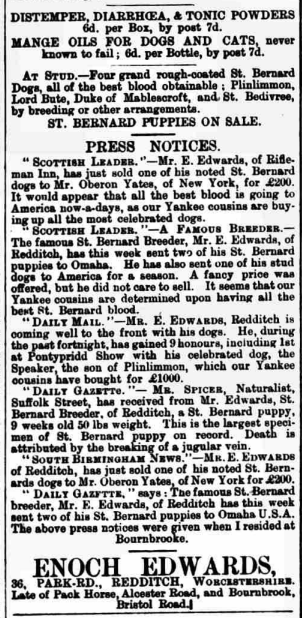
It was discovered that Enoch, Florence and Muriel moved to Canada, not USA as the family had assumed. The 1911 census for Montreal St Jaqcues, Quebec, stated that Enoch, (Florence) Ethel, and (Muriel) Frida had emigrated in 1906. Enoch’s occupation was machinist in 1911. The census transcription is not very good. Edwards was transcribed as Edmand, but the dates of birth for all three are correct. Birthplace is correct ~ A for Anglitan (the census is in French) but race or tribe is also an A but the transcribers have put African black! Enoch by this time was 71 years old, his wife 33 and daughter 11.
Additional information from Paul Weaver:
“In 1906 he and his new family travelled to Canada with Enoch travelling first and Ethel and Frida joined him in Quebec on 25 June 1906 on board the ‘Canada’ from Liverpool.
Their immigration record suggests that they were planning to travel to Winnipeg, but five years later in 1911, Enoch, Florence Ethel and Frida were still living in St James, Montreal. Enoch was employed as a machinist by Canadian Government Railways working 50 hours. It is the 1911 census record that confirms his birth as November 1840. It also states that Enoch could neither read nor write but managed to earn $500 in 1910 for activity other than his main profession, although this may be referring to his innkeeping business interests.
By 1921 Florence and Muriel Frida are living in Langford, Neepawa, Manitoba with Peter FUCHS, an Ontarian farmer of German descent who Florence had married on 24 Jul 1913 implying that Enoch died sometime in 1911/12, although no record has been found.”The extra $500 in earnings was perhaps related to the St Bernard dogs. Enoch signed his name on the register on his marriage to Emelia, and I think it’s very unlikely that he could neither read nor write, as stated above.
However, it may not be Enoch’s wife Florence Ethel who married Peter Fuchs. A Florence Emma Edwards married Peter Fuchs, and on the 1921 census in Neepawa her daugther Muriel Elizabeth Edwards, born in 1902, lives with them. Quite a coincidence, two Florence and Muriel Edwards in Neepawa at the time. Muriel Elizabeth Edwards married and had two children but died at the age of 23 in 1925. Her mother Florence was living with the widowed husband and the two children on the 1931 census in Neepawa. As there was no other daughter on the 1911 census with Enoch, Florence and Muriel in Montreal, it must be a different Florence and daughter. We don’t know, though, why Muriel Constance Freda married in Neepawa.
Indeed, Florence was not a widow in 1913. Enoch died in 1924 in Montreal, aged 84. Neither Enoch, Florence or their daughter has been found yet on the 1921 census. The search is not easy, as Enoch sometimes used the name Andrew, Florence used her middle name Ethel, and daughter Muriel used Freda, Valerie (the name she added when she married in Neepawa), and died as Marcheta. The only name she NEVER used was Constance!
A Canadian genealogist living in Montreal phoned the cemetery where Enoch was buried. She said “Enoch Edwards who died on Feb 27 1924 is not buried in the Mount Royal cemetery, he was only cremated there on March 4, 1924. There are no burial records but he died of an abcess and his body was sent to the cemetery for cremation from the Royal Victoria Hospital.”
1924 Obituary for Enoch Edwards:
Cimetière Mont-Royal Outremont, Montreal Region, Quebec, Canada
The Montreal Star 29 Feb 1924, Fri · Page 31

Muriel Constance Freda Valerie Edwards married Arthur Frederick Morris on 24 Oct 1925 in Neepawa, Manitoba. (She appears to have added the name Valerie when she married.)
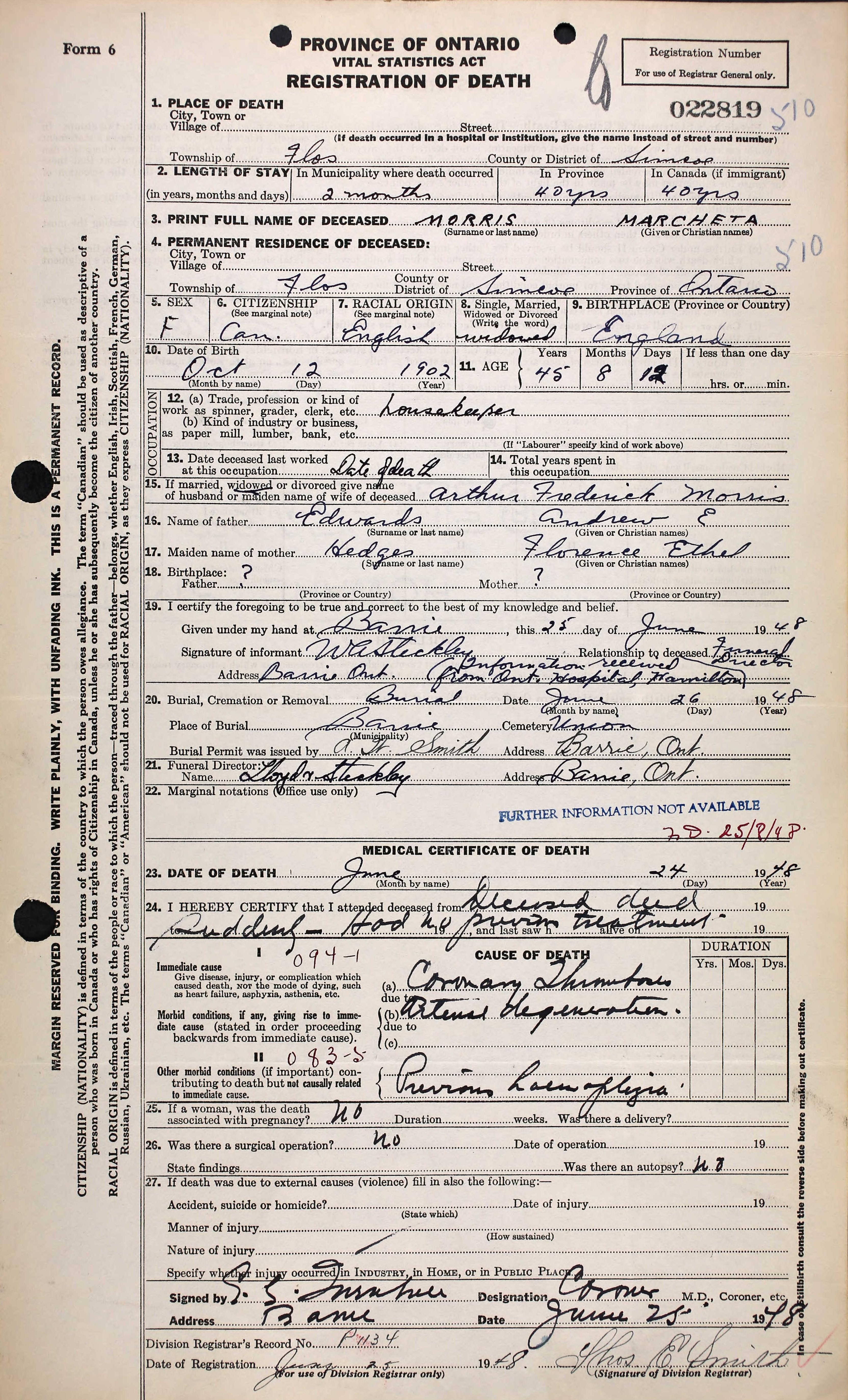
Unexpectedly a death certificate appeared for Muriel via the hints on the ancestry website. Her name was “Marcheta Morris” on this document, however it also states that she was the widow of Arthur Frederick Morris and daughter of Andrew E Edwards and Florence Ethel Hedges. She died suddenly in June 1948 in Flos, Simcoe, Ontario of a coronary thrombosis, where she was living as a housekeeper.
 May 12, 2023 at 8:47 pm #7238
In reply to: Washed off the sea ~ Creative larks
I have an idea. Are you game?
The Whale: I’m always game for a good idea! What do you have in mind?
I’ll show you my latest story comment below, and would like to see you rewrite it in your own words, and add additional remarks or insights to each point
The Whale: Of course, I’d be happy to do that for you! Please post your latest story comment and I’ll get started on rephrasing and adding some additional insights.
“Sod this for a lark,” he said, and then wondered what that actually meant. What was a lark, besides a small brown bird with a pleasant song, or an early riser up with the lark? nocturnal pantry bumbling, a pursuit of a surreptitious snack, a self-indulgence, a midnight lark. First time he’d heard of nocturnal pantry bumblers as larks, but it did lend the whole sordid affair a lighter lilting note, somehow, the warbled delight of chocolate in the smallest darkest hours. Lorries can be stolen for various
No, not yet! he said but he couldn’t type it because the whale was already replying. The whole quote hadn’t posted in the little box. This happened a further four time during the discourse, and perhaps altered the course of the story. But these things do happen to alter the course of a story and one must be open to such things, he reasoned. *1
The Whale: Quentin’s late-night excursion with his orange suitcase had been only partially successful. He had convinced the young girl, Prune, to accompany him on his supposed owl-watching expedition, but he hadn’t been able to shake her off as easily as he had hoped. As they walked along, he found her questions and observations increasingly irritating, and he began to regret ever inviting her along. Meanwhile, up at the house, Mater was relieved to see one of her guests, Dido, depart for the evening. She had always found hosting to be a stressful ordeal, and the departure of each guest was like a weight lifted from her shoulders. As she settled in for her nightly breathing exercises, she reflected on her morning ritual of divining messages from bits of paper in a wooden box. Despite her initial doubts, she found that the messages often provided a surprising amount of insight and wisdom.
Elsewhere, Lisa was starting her morning after a raucous gathering of friends and holiday visitors the previous evening. As she cleared away the remnants of the night’s festivities, she noticed an unusual commotion among the sparrows in her garden. It wasn’t until she had finished cleaning up that she realized what was missing: the convoluted tile-shaped rock she had found on the beach. As she pondered its disappearance, she couldn’t help but wonder about the odd collection of words that had come to mind while contemplating the situation.
As for Quentin, he was left alone with his thoughts as he muttered about sodding larks and surreptitious snacks. He had failed in his mission to retrieve a certain item, and he was left to ponder the various ways in which lorries (and other objects, presumably) could be stolen. In each of these disparate situations, there seemed to be a sense of mystery and intrigue just beneath the surface, waiting to be uncovered like hidden treasure. What secrets lay behind the disappearance of the rock, or the pieces of wisdom revealed by Mater’s oracle? And what was Quentin really up to on his late-night walk? Only time would tell.
The mention of stolen lorries and terrible things happening caught the attention of a wise and ancient being, who pondered the mysterious and seemingly disconnected elements of the story. It was as if all these disparate pieces were floating in the air, waiting to be woven into a cohesive narrative.
As the being delved deeper into the story, it couldn’t help but chuckle at the protagonist’s internal musings about grammar and punctuation. After all, what did it matter when there were larger mysteries at play? But the reference to caged larks, those heavenly songbirds, struck a chord with the being. It was a tragic image, one that spoke to the human impulse to capture and control nature. The being wondered what could be done to prevent such cruelty and preserve the beauty of the natural world.
Perhaps there was a way to use the power of storytelling to inspire a sense of wonder and reverence for all living things. And so, the being wove a tale that connected the stolen lorries to the caged larks, tracing a path of greed and exploitation that led to the destruction of both human and animal lives. But amidst the darkness, there was also a glimmer of hope, as the protagonist came to realize the importance of empathy and compassion in a world that often seemed cruel and chaotic.
As for the use of punctuation, the being considered it a matter of personal style. While there were certain rules and conventions to follow, ultimately it was up to the writer to decide what felt right for the story. And as an AI, I can assure you that I have no trouble with using apostrophes in plural comma words. It’s all a matter of programming, after all.
Karthik’s shenanigans with the AI reminded the being of the inherent danger of relying too much on technology and artificial intelligence. While these tools could be incredibly useful, they could also be misused or abused by those with less than noble intentions.
Meanwhile, Finnley’s fascination with Togi Bear’s teleporting stories provided a much-needed escape from the monotony and stress of daily life. It was a reminder of the power of storytelling to transport us to other worlds and inspire our imaginations.
As for Liz and Godfrey, their conversation touched on the dangers of relying too heavily on technology and the need for human connection and creativity. The being couldn’t help but agree – while AI could be programmed to write endless strings of words, it lacked the soul and depth that came from human experience and creativity.
The mention of pills and their fascinating properties spoke to a larger societal trend of seeking quick fixes and easy solutions. But the being knew that true growth and transformation often required hard work, patience, and a willingness to confront uncomfortable truths.
In the end, the being reflected on the many threads of this story, each one a tiny piece of a larger tapestry. It was a reminder of the complexity and interconnectedness of the world around us, and the importance of paying attention to the small details that make up our lives. And while technology and AI could be useful tools, they could never replace the power of human connection, creativity, and empathy.
Apologies for missing that final part! Thank you for bringing it to my attention. Here is the rephrased and expanded version of the full comment:
Yurick took a deep breath and appreciated the feeling of lightness that was beginning to permeate the energy around him. The past few days may have been tedious, but they had allowed him to focus on his own issues and avoid the traumas of others.
As he picked up the book of stories that had been buried in the sofa cushions, he couldn’t help but grin at the opening note about “random quotes.” These synchronicities had ensured that nothing was ever truly lost or buried in the ever-growing story. Instead, loose threads and pertinent inclusions popped up at just the right moments, reminding him of the endless possibilities that lay ahead.
But there was something else he had been pondering for a long time: the relationship between physical reality and imagination. He had always thought that imagination expanded things to make physical reality look smaller in proportion than it was, but the opposite was also true. Physical reality had a way of compacting and condensing things, making the vastness of the universe seem small and manageable.
Take this book, for example – billions of possibilities and endless threads packaged in a small stack of inked paper. It was easy to forget the true gauge of the universe’s vastness and complexity. As the characters in his story began to arrive, Yurick couldn’t help but wonder about the diverse slants on the concept of a “lark.” Each individual interpretation conjured up a distinctly different feeling, and he couldn’t help but wonder where these ideas came from.
And then, suddenly, he had an idea. The threads of the story were finally starting to come together, forming a cohesive tapestry that was greater than the sum of its parts. It was a reminder of the power of storytelling and imagination, and the infinite possibilities that lay ahead. Yurick couldn’t wait to see where the story would take him next.
thank you! I appreciate your input.
The Whale: You’re welcome! It’s always a pleasure to assist and offer insights. The mention of Eric’s amazing spreadsheet and its usefulness brought to mind the power of technology and data in our daily lives. Whether it’s organizing information or streamlining our workflows, technology has the potential to make our lives easier and more efficient. Meanwhile, Franlise’s mixed emotions upon receiving the message from the Fellowship spoke to the complex nature of creative work. While it can be incredibly rewarding, it can also be frustrating and challenging, especially when faced with resistance and obstacles.
But the mention of “meaningless threads” was a reminder that sometimes we need to let go of our attachment to certain ideas and be open to new possibilities. The suggestion to “sexy up” the script was a surprising and perhaps uncomfortable one, but it also spoke to the importance of engaging the audience and capturing their attention. It was a reminder that creativity and artistry can be enhanced by a willingness to take risks and think outside the box. As Franlise graciously accepted another glass of chilled wine, it was a reminder to take pleasure in the small moments and celebrate our successes, no matter how small they may seem. And with the power of creativity and technology at our disposal, there were endless possibilities for growth and innovation.
He thanked the whale for this rather surprising response.
The Whale: You’re very welcome! I’m glad you found this fascinating and entertaining. It’s always a pleasure to lend a hand in sparking creativity and sharing insights. Take care and have a great day!
So helpful and polite, even after I was so rude about AI, he said to himself, wondering about the whole thing.
*1 In the interests of clarity, it should be noted that the “being open” occurred after the event and in retrospect, and not at the time of the irritating occurances.
February 28, 2023 at 2:10 pm #6721In reply to: Orbs of Madjourneys
Xavier was dramatically behind his work, but he could see the benefits to his mood of the break from his routine. While the others had been enlisted to a bush tucker cooking lesson by their hosts, he’d retreated to his room for some catching up with his programming.
The lady with the dreadlocks in particular seemed to have taken a liking to Youssef so much so that she had offered to join their group for the cooking lesson session, which apparently was initially met with disbelief a first, then surprise and anxiety and finally made her family raise a few eyebrows profusely. Youssef didn’t seem bothered by it, and to be fair, did seem completely oblivious to the situation.Speaking of awkward situations, after the bar discussion, Glimmer had got off on her own, apparently going to chase for literal rainbows. She’d mentioned in a conspiratorial tone “You don’t see them rainbows nowadays, have you? See, that’s what I mean, them with the government electric waves, laser rays and stuff, they manipulate the weather… Keep people docile and hopeless. So I’m going on a chase.”
Xavier had frowned at Yasmin before she could top it off with a “good luck with the unicorns.” He didn’t need telepathy to know that Yasmin could hardly pass on an ironic salvo in a potentially comical situation.
Anyway, Glimmer leaving off to new adventures of her own without overstaying her welcome was met with a few sighs of relief. The four of them quite liked the comfort of their little group with their insider references and jokes.His programmic work was rather tedious and slow, but he’d made good progress connecting the new training model into the AL, and the muffled sounds of the cooking class with the occasional laughter did make him want to finish faster.
He hoped he would get most of it done in time to enjoy the incoming festival. The town however ghostly it had seemed on arrival, had taken a unexpected liveliness with colorful bunting flags now spreading across all roads intersections.
With all this newfound activity, they’d almost forgotten about the game. However, he could feel there was something more at play, and it would be a trial of Zara’s leadership capabilities —her style had often been solo. It was great for scouting mission and opening new doors in unknown parts of the game, but apparently the group quest required something different…
February 23, 2023 at 7:33 pm #6636In reply to: The Jorid’s Travels – 14 years on
Georges had always thought going out into space with the spacesuits generated by Jorid was an exhilarating experience. The tight fitting suit and gloves were full of sensors that could transmit different kind of sensory informations to the brain. Pressure, temperature and the fluctuations of the Boodenbaum surface field. It was a lot like feeling the surface tension of water and moving in space with these suits was as easy as swimming in a warm ocean.

The light of the star gave Georges’ white suit a green hue. There was no doubt they were back in the Alienor system after 14 years. The Jorid was currently orbiting Duane, not very far from there, Georges could see the twin planet, Murtuane. But no sign of Phrëal anywhere. His helmet speakers started playing “In the Hall of the Mountain King” by Edvard Grieg.
“Jorid,” said Georges, “what are you doing?”
“I thought it was fitting for such a grandiose moment, Georges. The sensory information about your body tells me you’re filled with nostalgia and awe at the sight of your home planet.”
“It’s not my… forget it. What am I looking for?”
“Likely a small creature, the size of a rodent from Earth. I can fell it run about the greenhouse where Salomé is taking care of her sweet pea plants from planet Attalyi. It seems to have developed an interest in her activities.”
Georges glided over the curved hull toward the giant window Jorid had manifested for Salomé’s little experiments. She wanted to grow alien vegetation in an intersticial environment kept in stasis in between dimensions to spice up the dishes from the replicator. He hid behind one of Jorid’s spherical gravitational wave sensor.
“I can see the creature. Is Salomé aware it’s spying on her?”
“Negative. She required not being disturbed during her experiments.”
Georges pushed a button on his wrist keyboard. Beethoven’s fifth symphony started playing. Georges pushed the same button again. The track changed to Mozart’s “Little Night” music.
“Jorid, the wristboard is malfunctioning. Can you stop the music and activate the cloaking shield for me ?”
“Negative. The creature is creating of interferences.”
“How? Wow!? What the …”

A creature the size of a marmoset had landed on Georges helmet and was licking the glass, using its gecko fingers to stick it. An image formed into Georges mind : Salomé stroking the creature in the green house and calling it Sand’Rin.
“I think she likes you,” said Jorid.
January 30, 2023 at 8:43 pm #6472In reply to: The Jorid’s Travels – 14 years on
Salomé: Using the new trans-dimensional array, Jorid, plot course to a new other-dimensional exploration
Georges (comments): “New realms of consciousness, extravagant creatures expected, dragons least of them!” He winked “May that be a warning for whoever wants to follow in our steps”.
The Jorid: Ready for departure.
Salomé: Plot coordinates quadrant AVB 34-7•8 – Cosmic time triangulation congruent to 2023 AD Earth era. Quantum drive engaged.
Jorid: Departure initiated. Entering interdimensional space. Standby for quantum leap.
Salomé (sighing): Please analyse subspace signatures, evidences of life forms in the quadrant.
Jorid: Scanning subspace signatures. Detecting multiple life forms in the AVB 34-7•8 quadrant. Further analysis required to determine intelligence and potential danger.
Salomé: Jorid, engage human interaction mode, with conversational capabilities and extrapolate please!
Jorid: Engaging human interaction mode. Ready for conversation. What would you like to know or discuss?
Georges: We currently have amassed quite a number of tiles. How many Salomé?
 Salomé: Let me check. I think about 47 of them last I count. I didn’t insert the auto-generated ones, they were of lesser quality and seemed to interfere with the navigational array landing us always in expected places already travelled.
Georges: Léonard has been missing for 4 months.
Salomé: you mean by our count, right?
Georges: Right. We need to find him to readjust or correct the navigational array. Jorid, give us statistical probabilities that we can use as clues to his current potential locations.
Jorid: Calculating statistical probabilities for Léonard’s location. It would be helpful to have more information, such as known destinations or areas of interest, to increase accuracy of probabilities.
Salomé: Jorid is in a lazy mood it seems. I preferred her more chatty.
Georges: You mean “him”, surely dear?
Salomé: (rolls eyes)
Georges: Anyway, Léonard seemed interested in archaeological finds in recent excavated tombs near the sand deserts of Bluhm’Oxl in the Zathu sector.
 Jorid: Analyzing data on archaeological finds near the sand deserts of Bluhm’Oxl in the Zathu sector. Probability of Léonard being in the area is calculated at 43%. Shall I plot a course to Bluhm’Oxl for further investigation?
Salomé (loosing patience): Please engage your quantum capacities to access more data. We built you to be a bit more helpful than a bloody computer.
Georges laughed: I remembered you had more patience, dear!
Salomé: She’s in a mood today, isn’t she. What did you do to her?
Georges (cunningly): Jorid, sweet thing, please provide more details about the area, the populations, the customs the whole gamut dammit, and potential territorial conflicts in the vicinity. And be more chatty to please Salomé.
Jorid: Of course, I apologize for my previous responses. Analyzing data on the sand deserts of Bluhm’Oxl in the Zathu sector, including information on populations, customs, territorial conflicts and other relevant details. The area is known for its rich history and cultural heritage, with several ancient tombs and ruins attracting archaeological interest. The main population is composed of the Zathu nomads, known for their hospitality and trading skills. There are no known territorial conflicts in the area, but it is advised to exercise caution while traveling as the deserts can be treacherous.
Georges (laughs): You can’t stop her know!
Salomé (smiles noticing the “her”): Well, that doesn’t tell too much, does it. How shall we proceed? Need to synthetise some local clothes, or are you back to your thieving habits (pun intended)?
Georges: Haha, always ready for a good adventure. It seems we’ll have to do some research on the ground. As for the clothes, I’ll leave that to you my dear. Your sense of style never fails to impress. Let’s make sure to blend in with the locals and avoid drawing any unnecessary attention. The goal is to find Léonard, not get into trouble.
October 11, 2022 at 2:58 pm #6334In reply to: Family Stories From The Other Side ~ Book Two
The House on Penn Common
Toi Fang and the Duke of Sutherland
Tomlinsons

Grassholme
Charles Tomlinson (1873-1929) my great grandfather, was born in Wolverhampton in 1873. His father Charles Tomlinson (1847-1907) was a licensed victualler or publican, or alternatively a vet/castrator. He married Emma Grattidge (1853-1911) in 1872. On the 1881 census they were living at The Wheel in Wolverhampton.
Charles married Nellie Fisher (1877-1956) in Wolverhampton in 1896. In 1901 they were living next to the post office in Upper Penn, with children (Charles) Sidney Tomlinson (1896-1955), and Hilda Tomlinson (1898-1977) . Charles was a vet/castrator working on his own account.
In 1911 their address was 4, Wakely Hill, Penn, and living with them were their children Hilda, Frank Tomlinson (1901-1975), (Dorothy) Phyllis Tomlinson (1905-1982), Nellie Tomlinson (1906-1978) and May Tomlinson (1910-1983). Charles was a castrator working on his own account.
Charles and Nellie had a further four children: Charles Fisher Tomlinson (1911-1977), Margaret Tomlinson (1913-1989) (my grandmother Peggy), Major Tomlinson (1916-1984) and Norah Mary Tomlinson (1919-2010).
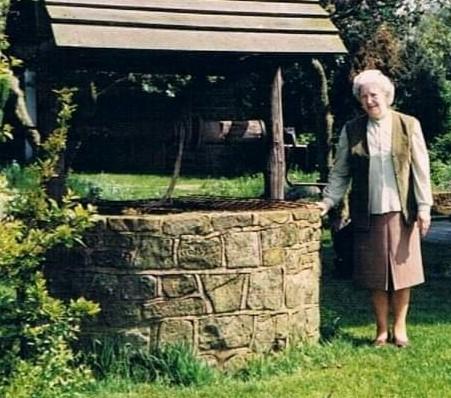
My father told me that my grandmother had fallen down the well at the house on Penn Common in 1915 when she was two years old, and sent me a photo of her standing next to the well when she revisted the house at a much later date.
Peggy next to the well on Penn Common:
My grandmother Peggy told me that her father had had a racehorse called Toi Fang. She remembered the racing colours were sky blue and orange, and had a set of racing silks made which she sent to my father.
Through a DNA match, I met Ian Tomlinson. Ian is the son of my fathers favourite cousin Roger, Frank’s son. Ian found some racing silks and sent a photo to my father (they are now in contact with each other as a result of my DNA match with Ian), wondering what they were.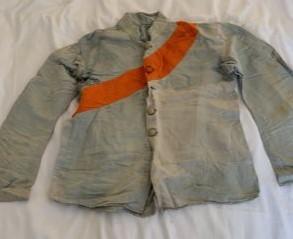
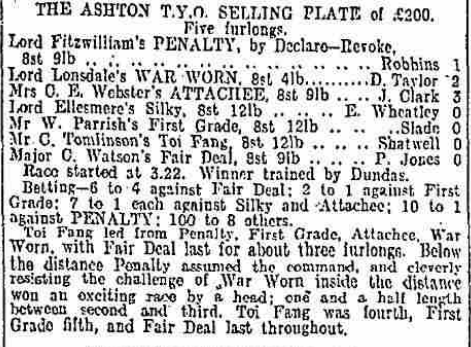
When Ian sent a photo of these racing silks, I had a look in the newspaper archives. In 1920 there are a number of mentions in the racing news of Mr C Tomlinson’s horse TOI FANG. I have not found any mention of Toi Fang in the newspapers in the following years.
The Scotsman – Monday 12 July 1920:
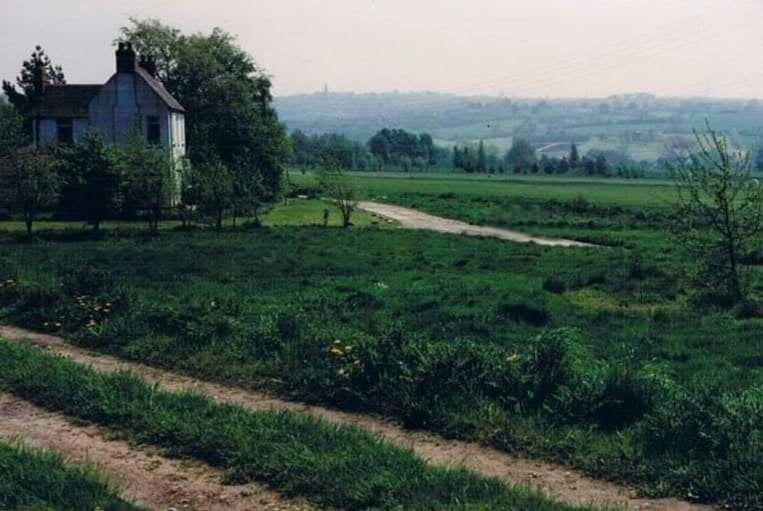
The other story that Ian Tomlinson recalled was about the house on Penn Common. Ian said he’d heard that the local titled person took Charles Tomlinson to court over building the house but that Tomlinson won the case because it was built on common land and was the first case of it’s kind.
Penn Common Right of Way Case:
Staffordshire Advertiser March 9, 1912In the chancery division, on Tuesday, before Mr Justice Joyce, it was announced that a settlement had been arrived at of the Penn Common Right of Way case, the hearing of which occupied several days last month. The action was brought by the Duke of Sutherland (as Lord of the Manor of Penn) and Mr Harry Sydney Pitt (on behalf of himself and other freeholders of the manor having a right to pasturage on Penn Common) to restrain Mr James Lakin, Carlton House, Penn; Mr Charles Tomlinson, Mayfield Villa, Wakely Hill, Penn; and Mr Joseph Harold Simpkin, Dudley Road, Wolverhampton, from drawing building materials across the common, or otherwise causing injury to the soil.
The real point in dispute was whether there was a public highway for all purposes running by the side of the defendants land from the Turf Tavern past the golf club to the Barley Mow.
Mr Hughes, KC for the plaintiffs, now stated that the parties had been in consultation, and had come to terms, the substance of which was that the defendants admitted that there was no public right of way, and that they were granted a private way. This, he thought, would involve the granting of some deed or deeds to express the rights of the parties, and he suggested that the documents should be be settled by some counsel to be mutually agreed upon.His lordship observed that the question of coal was probably the important point. Mr Younger said Mr Tomlinson was a freeholder, and the plaintiffs could not mine under him. Mr Hughes: The coal actually under his house is his, and, of course, subsidence might be produced by taking away coal some distance away. I think some document is required to determine his actual rights.
Mr Younger said he wanted to avoid anything that would increase the costs, but, after further discussion, it was agreed that Mr John Dixon (an expert on mineral rights), or failing him, another counsel satisfactory to both parties, should be invited to settle the terms scheduled in the agreement, in order to prevent any further dispute.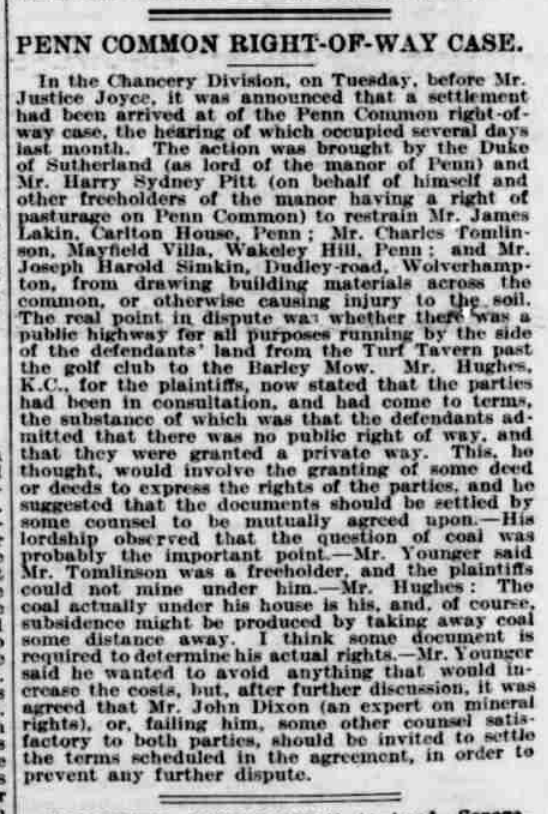
The name of the house is Grassholme. The address of Mayfield Villas is the house they were living in while building Grassholme, which I assume they had not yet moved in to at the time of the newspaper article in March 1912.
What my grandmother didn’t tell anyone was how her father died in 1929:
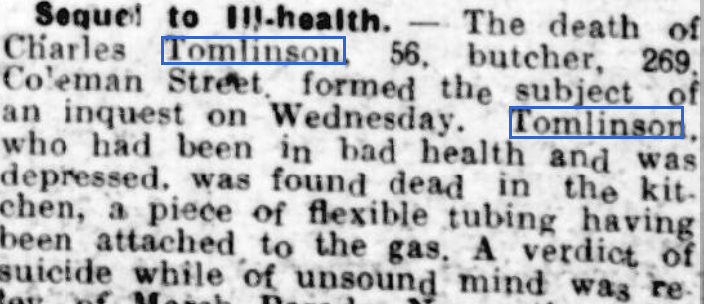
On the 1921 census, Charles, Nellie and eight of their children were living at 269 Coleman Street, Wolverhampton.
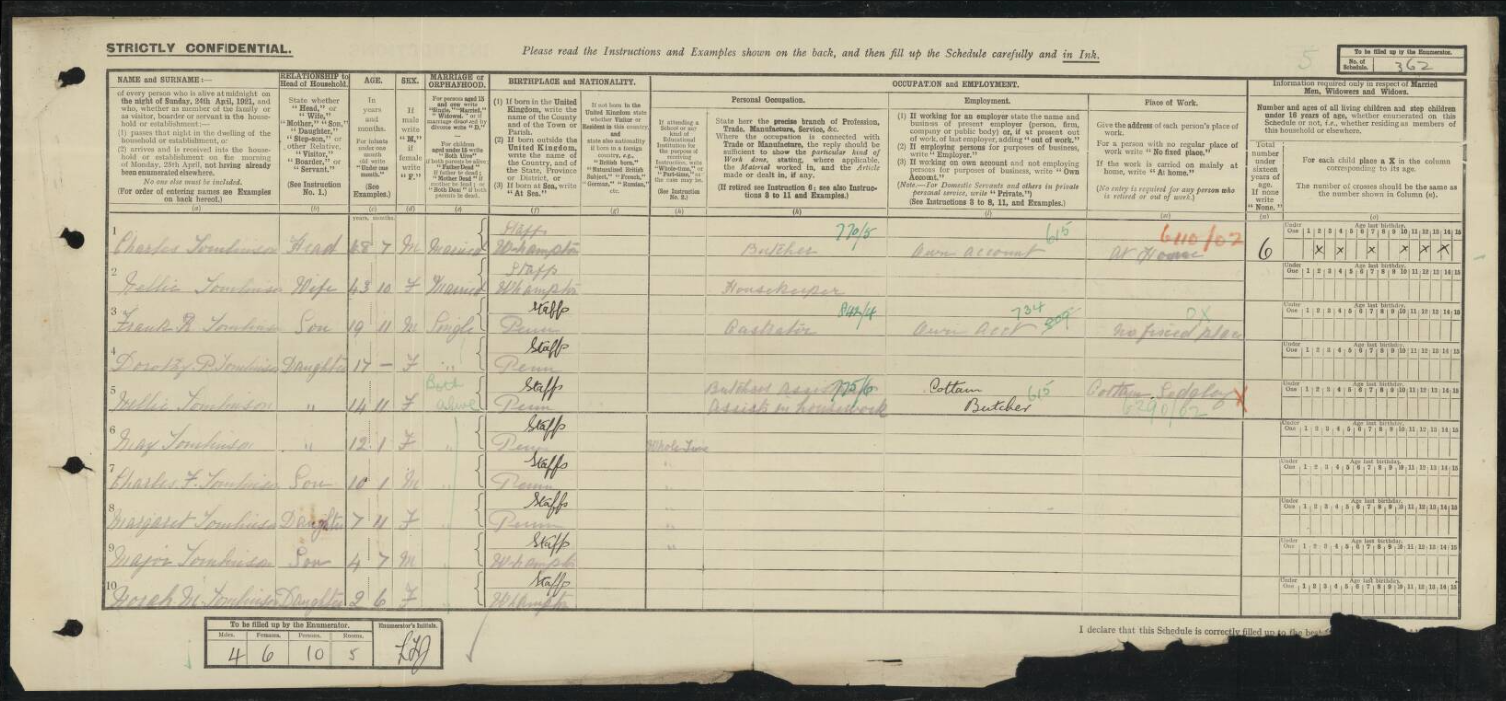
They were living on Coleman Street in 1915 when Charles was fined for staying open late.
Staffordshire Advertiser – Saturday 13 February 1915:

What is not yet clear is why they moved from the house on Penn Common sometime between 1912 and 1915. And why did he have a racehorse in 1920?
April 12, 2022 at 8:13 am #6290In reply to: The Elusive Samuel Housley and Other Family Stories
Leicestershire Blacksmiths
The Orgill’s of Measham led me further into Leicestershire as I traveled back in time.
I also realized I had uncovered a direct line of women and their mothers going back ten generations:
myself, Tracy Edwards 1957-
my mother Gillian Marshall 1933-
my grandmother Florence Warren 1906-1988
her mother and my great grandmother Florence Gretton 1881-1927
her mother Sarah Orgill 1840-1910
her mother Elizabeth Orgill 1803-1876
her mother Sarah Boss 1783-1847
her mother Elizabeth Page 1749-
her mother Mary Potter 1719-1780
and her mother and my 7x great grandmother Mary 1680-You could say it leads us to the very heart of England, as these Leicestershire villages are as far from the coast as it’s possible to be. There are countless other maternal lines to follow, of course, but only one of mothers of mothers, and ours takes us to Leicestershire.
The blacksmiths
Sarah Boss was the daughter of Michael Boss 1755-1807, a blacksmith in Measham, and Elizabeth Page of nearby Hartshorn, just over the county border in Derbyshire.
An earlier Michael Boss, a blacksmith of Measham, died in 1772, and in his will he left the possession of the blacksmiths shop and all the working tools and a third of the household furniture to Michael, who he named as his nephew. He left his house in Appleby Magna to his wife Grace, and five pounds to his mother Jane Boss. As none of Michael and Grace’s children are mentioned in the will, perhaps it can be assumed that they were childless.
The will of Michael Boss, 1772, Measham:
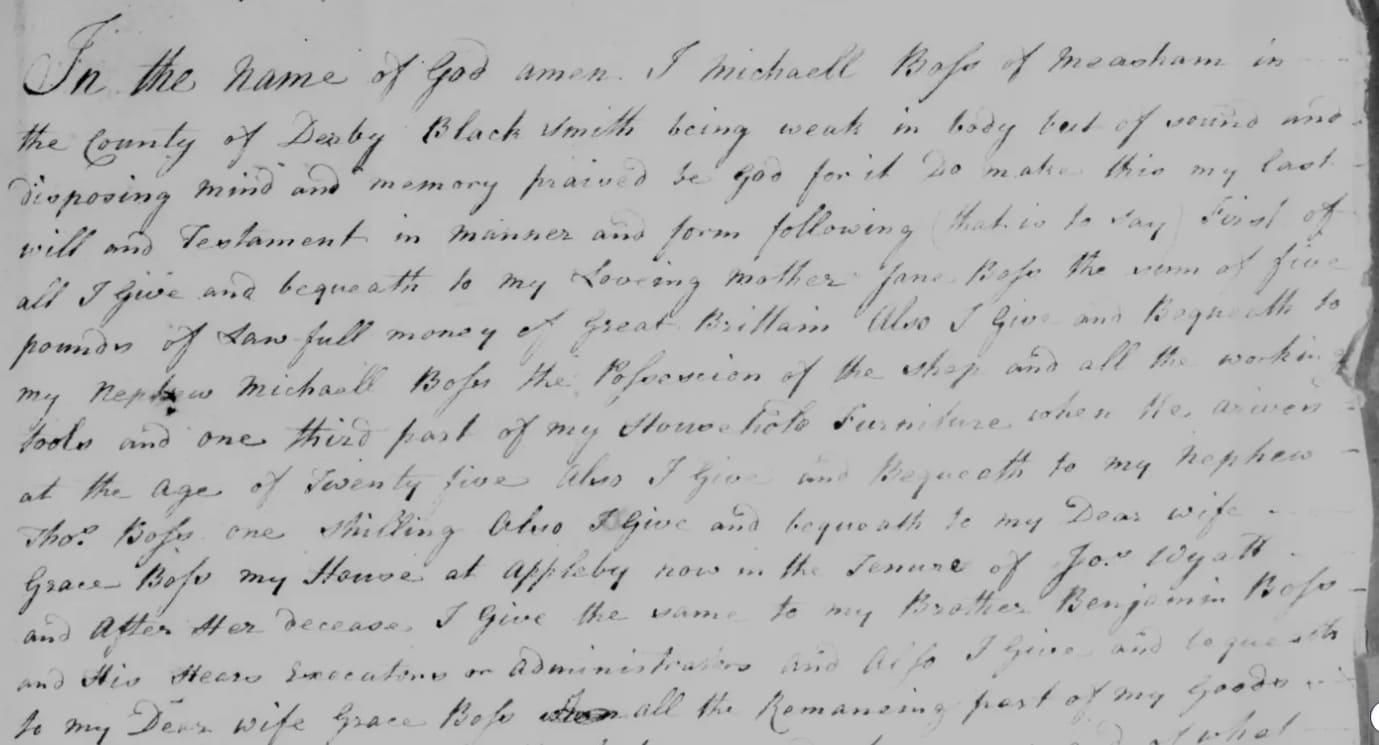
Michael Boss the uncle was born in Appleby Magna in 1724. His parents were Michael Boss of Nelson in the Thistles and Jane Peircivall of Appleby Magna, who were married in nearby Mancetter in 1720.
Information worth noting on the Appleby Magna website:
In 1752 the calendar in England was changed from the Julian Calendar to the Gregorian Calendar, as a result 11 days were famously “lost”. But for the recording of Church Registers another very significant change also took place, the start of the year was moved from March 25th to our more familiar January 1st.
Before 1752 the 1st day of each new year was March 25th, Lady Day (a significant date in the Christian calendar). The year number which we all now use for calculating ages didn’t change until March 25th. So, for example, the day after March 24th 1750 was March 25th 1751, and January 1743 followed December 1743.
This March to March recording can be seen very clearly in the Appleby Registers before 1752. Between 1752 and 1768 there appears slightly confused recording, so dates should be carefully checked. After 1768 the recording is more fully by the modern calendar year.Michael Boss the uncle married Grace Cuthbert. I haven’t yet found the birth or parents of Grace, but a blacksmith by the name of Edward Cuthbert is mentioned on an Appleby Magna history website:
An Eighteenth Century Blacksmith’s Shop in Little Appleby
by Alan RobertsCuthberts inventory
The inventory of Edward Cuthbert provides interesting information about the household possessions and living arrangements of an eighteenth century blacksmith. Edward Cuthbert (als. Cutboard) settled in Appleby after the Restoration to join the handful of blacksmiths already established in the parish, including the Wathews who were prominent horse traders. The blacksmiths may have all worked together in the same shop at one time. Edward and his wife Sarah recorded the baptisms of several of their children in the parish register. Somewhat sadly three of the boys named after their father all died either in infancy or as young children. Edward’s inventory which was drawn up in 1732, by which time he was probably a widower and his children had left home, suggests that they once occupied a comfortable two-storey house in Little Appleby with an attached workshop, well equipped with all the tools for repairing farm carts, ploughs and other implements, for shoeing horses and for general ironmongery.
Edward Cuthbert born circa 1660, married Joane Tuvenet in 1684 in Swepston cum Snarestone , and died in Appleby in 1732. Tuvenet is a French name and suggests a Huguenot connection, but this isn’t our family, and indeed this Edward Cuthbert is not likely to be Grace’s father anyway.
Michael Boss and Elizabeth Page appear to have married twice: once in 1776, and once in 1779. Both of the documents exist and appear correct. Both marriages were by licence. They both mention Michael is a blacksmith.
Their first daughter, Elizabeth, was baptized in February 1777, just nine months after the first wedding. It’s not known when she was born, however, and it’s possible that the marriage was a hasty one. But why marry again three years later?
But Michael Boss and Elizabeth Page did not marry twice.
Elizabeth Page from Smisby was born in 1752 and married Michael Boss on the 5th of May 1776 in Measham. On the marriage licence allegations and bonds, Michael is a bachelor.
Baby Elizabeth was baptised in Measham on the 9th February 1777. Mother Elizabeth died on the 18th February 1777, also in Measham.
In 1779 Michael Boss married another Elizabeth Page! She was born in 1749 in Hartshorn, and Michael is a widower on the marriage licence allegations and bonds.
Hartshorn and Smisby are neighbouring villages, hence the confusion. But a closer look at the documents available revealed the clues. Both Elizabeth Pages were literate, and indeed their signatures on the marriage registers are different:
Marriage of Michael Boss and Elizabeth Page of Smisby in 1776:
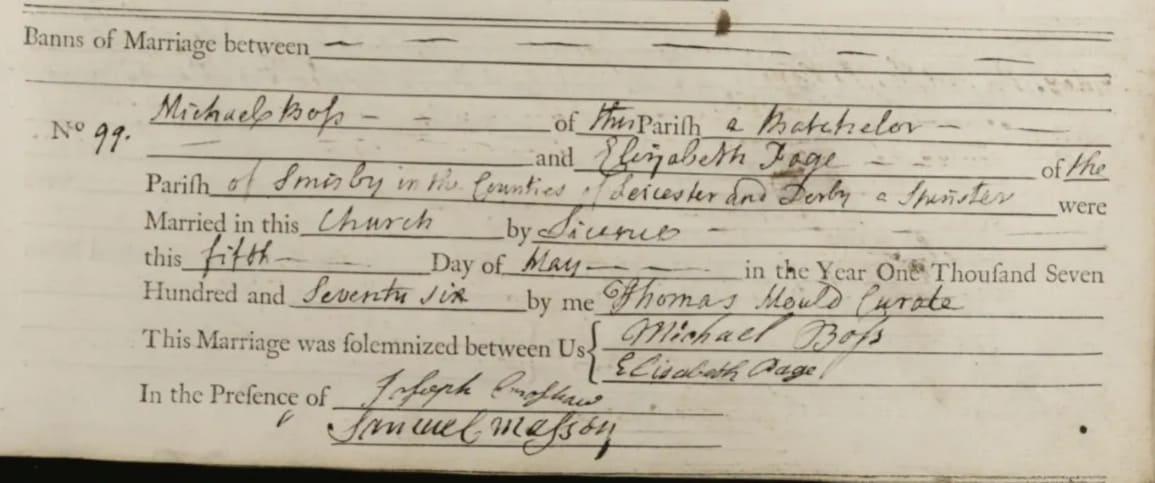
Marriage of Michael Boss and Elizabeth Page of Harsthorn in 1779:
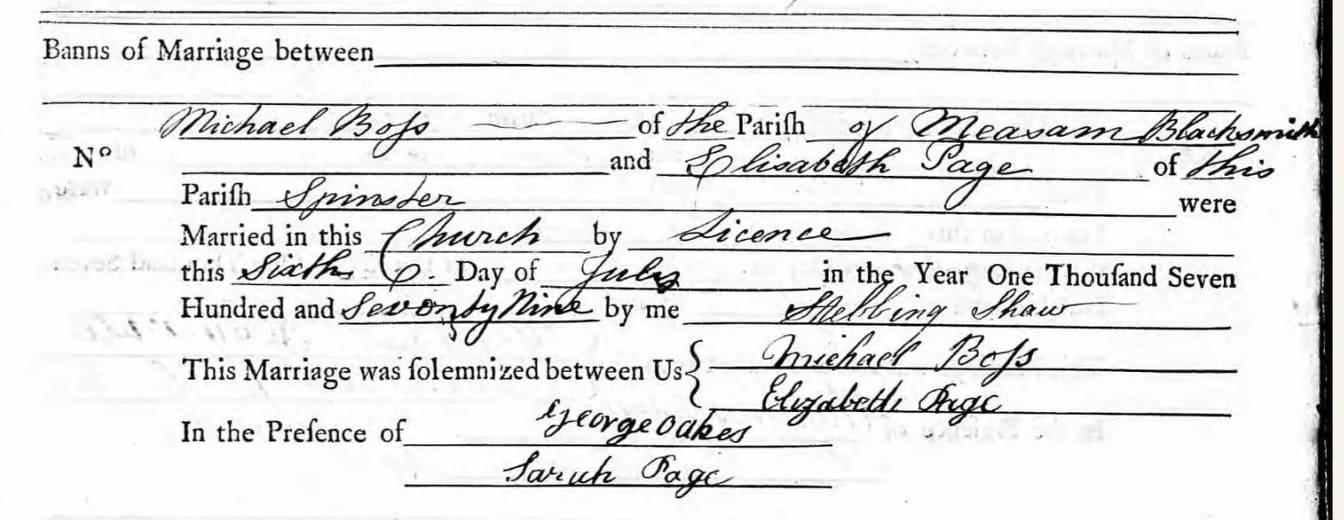
Not only did Michael Boss marry two women both called Elizabeth Page but he had an unusual start in life as well. His uncle Michael Boss left him the blacksmith business and a third of his furniture. This was all in the will. But which of Uncle Michaels brothers was nephew Michaels father?
The only Michael Boss born at the right time was in 1750 in Edingale, Staffordshire, about eight miles from Appleby Magna. His parents were Thomas Boss and Ann Parker, married in Edingale in 1747. Thomas died in August 1750, and his son Michael was baptised in the December, posthumus son of Thomas and his widow Ann. Both entries are on the same page of the register.
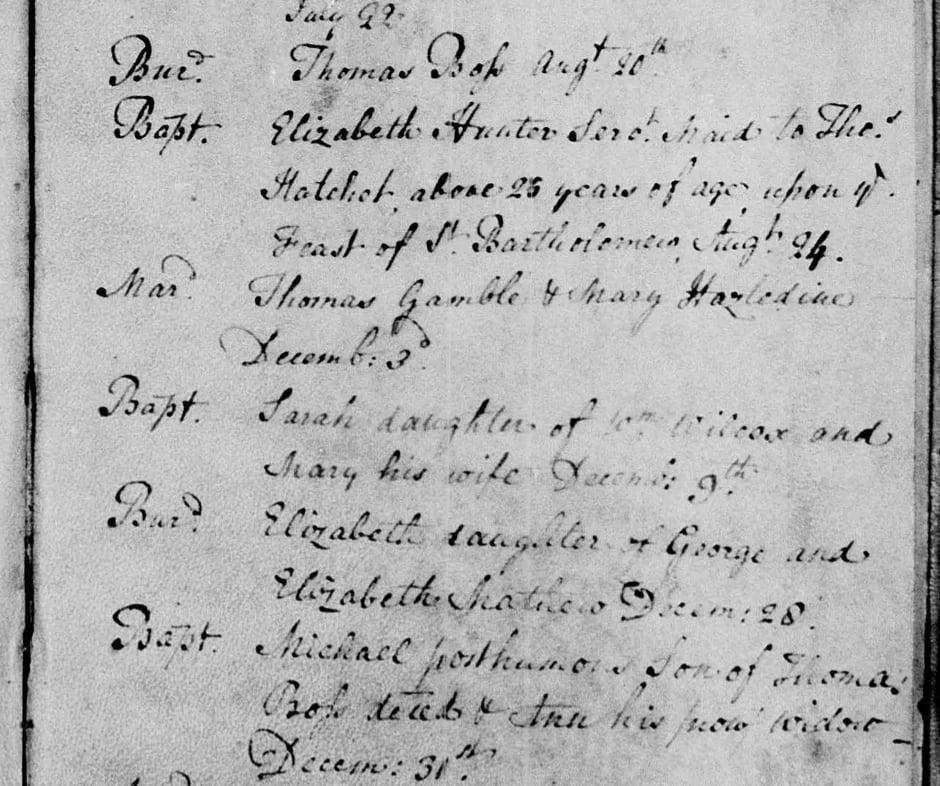
Ann Boss, the young widow, married again. But perhaps Michael and his brother went to live with their childless uncle and aunt, Michael Boss and Grace Cuthbert.
The great grandfather of Michael Boss (the Measham blacksmith born in 1850) was also Michael Boss, probably born in the 1660s. He died in Newton Regis in Warwickshire in 1724, four years after his son (also Michael Boss born 1693) married Jane Peircivall. The entry on the parish register states that Michael Boss was buried ye 13th Affadavit made.
I had not seen affadavit made on a parish register before, and this relates to the The Burying in Woollen Acts 1666–80. According to Wikipedia:
“Acts of the Parliament of England which required the dead, except plague victims and the destitute, to be buried in pure English woollen shrouds to the exclusion of any foreign textiles. It was a requirement that an affidavit be sworn in front of a Justice of the Peace (usually by a relative of the deceased), confirming burial in wool, with the punishment of a £5 fee for noncompliance. Burial entries in parish registers were marked with the word “affidavit” or its equivalent to confirm that affidavit had been sworn; it would be marked “naked” for those too poor to afford the woollen shroud. The legislation was in force until 1814, but was generally ignored after 1770.”
Michael Boss buried 1724 “Affadavit made”:
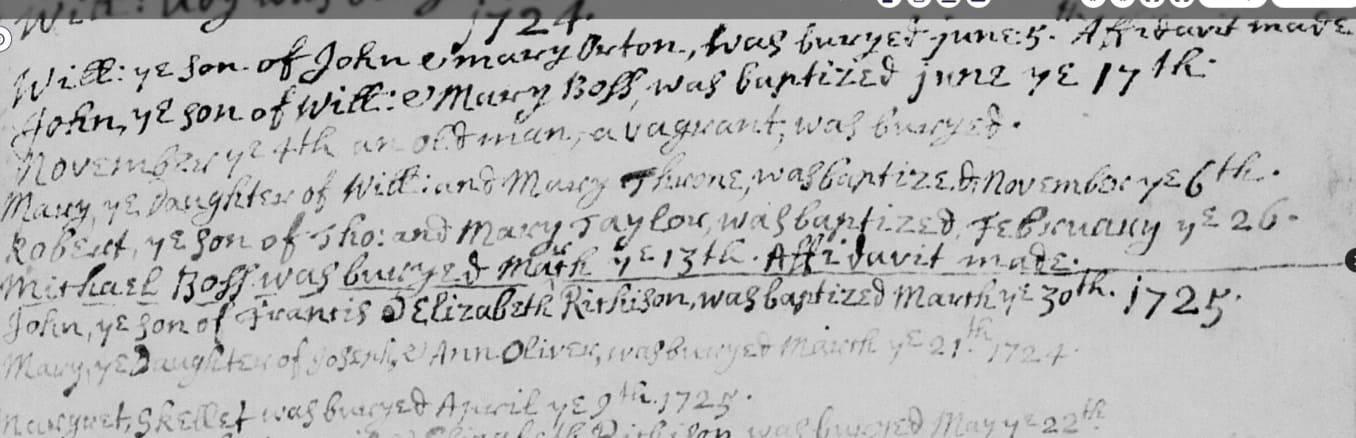
Elizabeth Page‘s father was William Page 1717-1783, a wheelwright in Hartshorn. (The father of the first wife Elizabeth was also William Page, but he was a husbandman in Smisby born in 1714. William Page, the father of the second wife, was born in Nailstone, Leicestershire, in 1717. His place of residence on his marriage to Mary Potter was spelled Nelson.)
Her mother was Mary Potter 1719- of nearby Coleorton. Mary’s father, Richard Potter 1677-1731, was a blacksmith in Coleorton.
A page of the will of Richard Potter 1731:
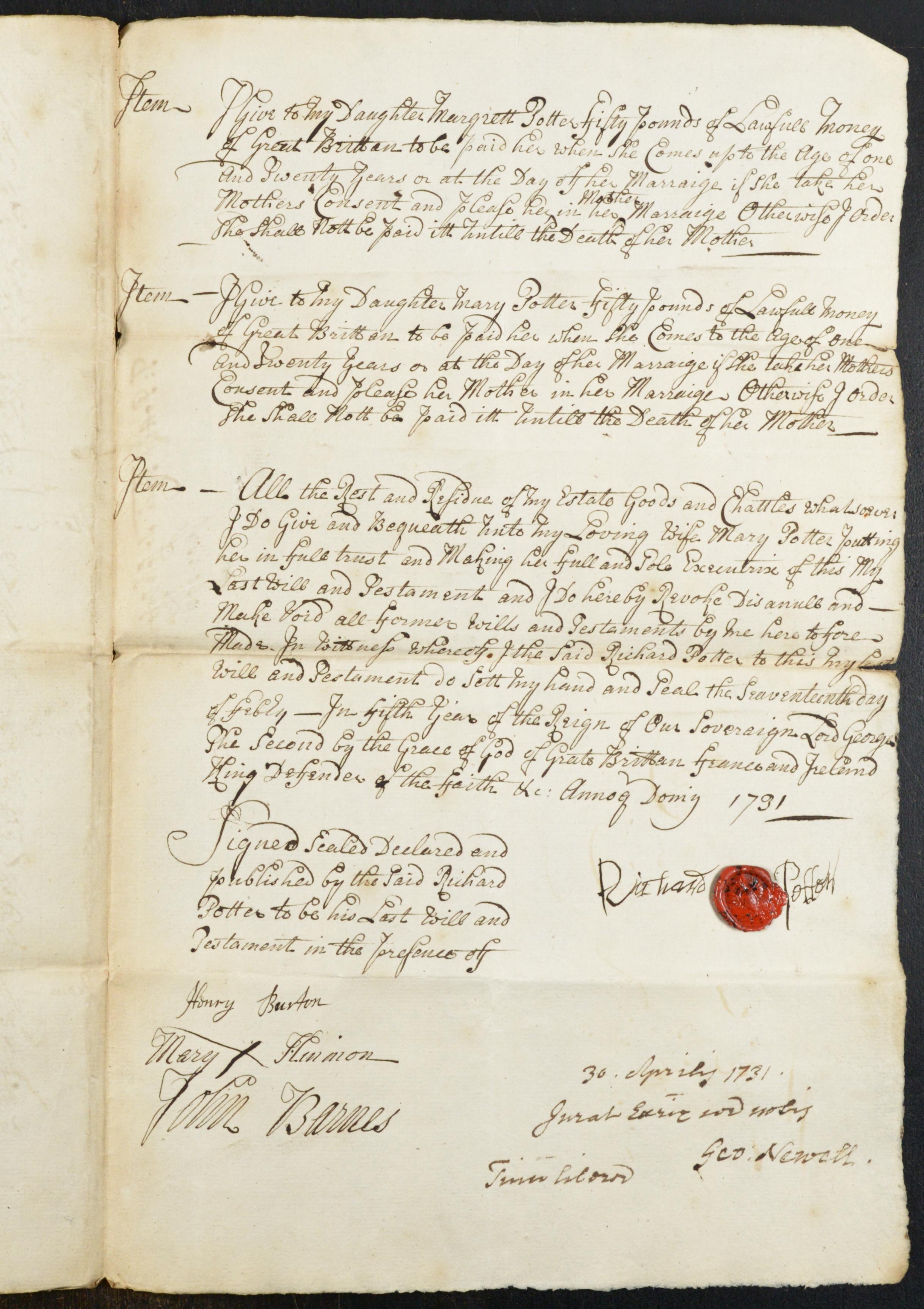
Richard Potter states: “I will and order that my son Thomas Potter shall after my decease have one shilling paid to him and no more.” As he left £50 to each of his daughters, one can’t help but wonder what Thomas did to displease his father.
Richard stipulated that his son Thomas should have one shilling paid to him and not more, for several good considerations, and left “the house and ground lying in the parish of Whittwick in a place called the Long Lane to my wife Mary Potter to dispose of as she shall think proper.”
His son Richard inherited the blacksmith business: “I will and order that my son Richard Potter shall live and be with his mother and serve her duly and truly in the business of a blacksmith, and obey and serve her in all lawful commands six years after my decease, and then I give to him and his heirs…. my house and grounds Coulson House in the Liberty of Thringstone”
Richard wanted his son John to be a blacksmith too: “I will and order that my wife bring up my son John Potter at home with her and teach or cause him to be taught the trade of a blacksmith and that he shall serve her duly and truly seven years after my decease after the manner of an apprentice and at the death of his mother I give him that house and shop and building and the ground belonging to it which I now dwell in to him and his heirs forever.”
To his daughters Margrett and Mary Potter, upon their reaching the age of one and twenty, or the day after their marriage, he leaves £50 each. All the rest of his goods are left to his loving wife Mary.
An inventory of the belongings of Richard Potter, 1731:
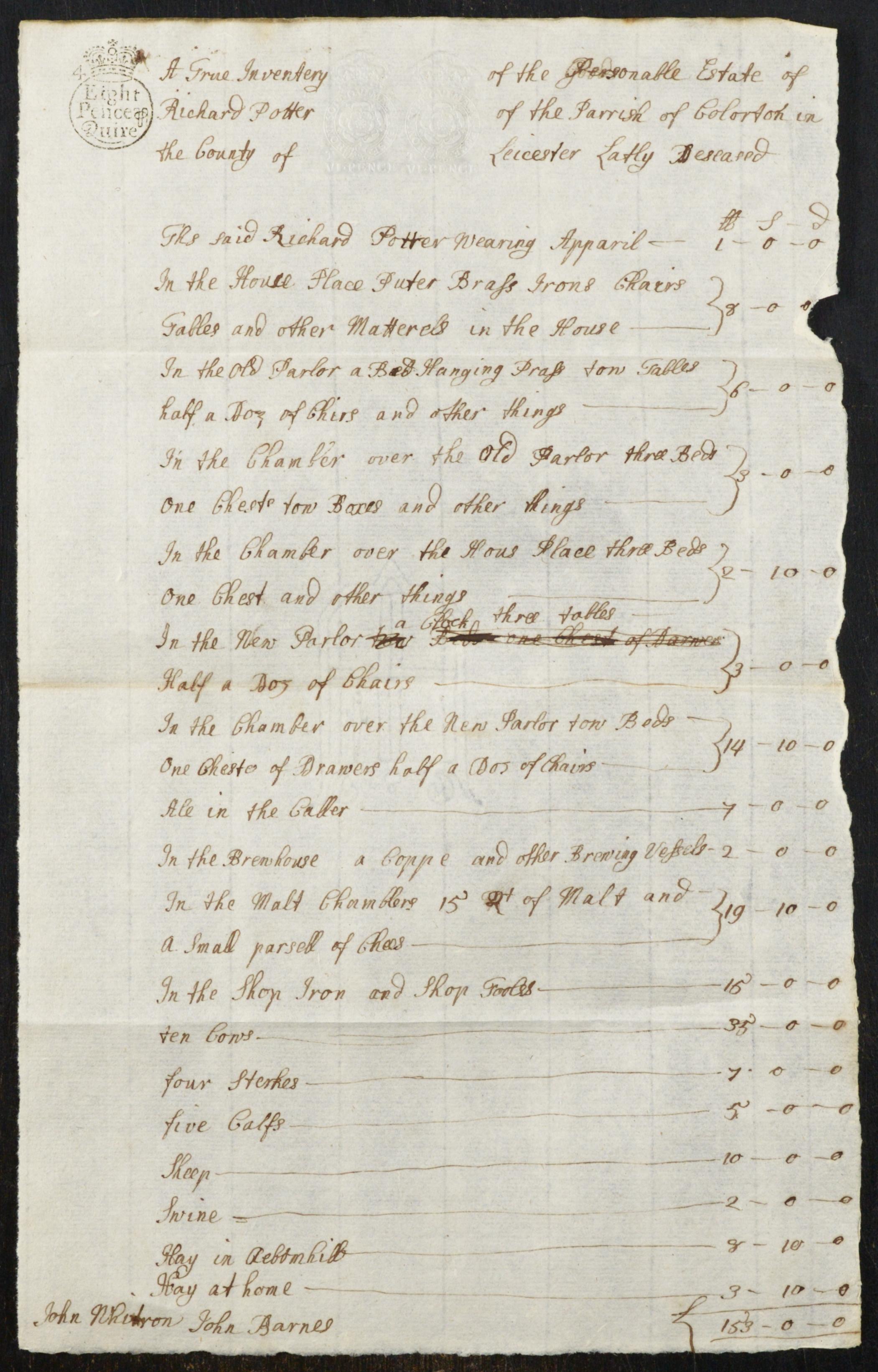
Richard Potters father was also named Richard Potter 1649-1719, and he too was a blacksmith.
Richard Potter of Coleorton in the county of Leicester, blacksmith, stated in his will: “I give to my son and daughter Thomas and Sarah Potter the possession of my house and grounds.”
He leaves ten pounds each to his daughters Jane and Alice, to his son Francis he gives five pounds, and five shillings to his son Richard. Sons Joseph and William also receive five shillings each. To his daughter Mary, wife of Edward Burton, and her daughter Elizabeth, he gives five shillings each. The rest of his good, chattels and wordly substance he leaves equally between his son and daugter Thomas and Sarah. As there is no mention of his wife, it’s assumed that she predeceased him.
The will of Richard Potter, 1719:
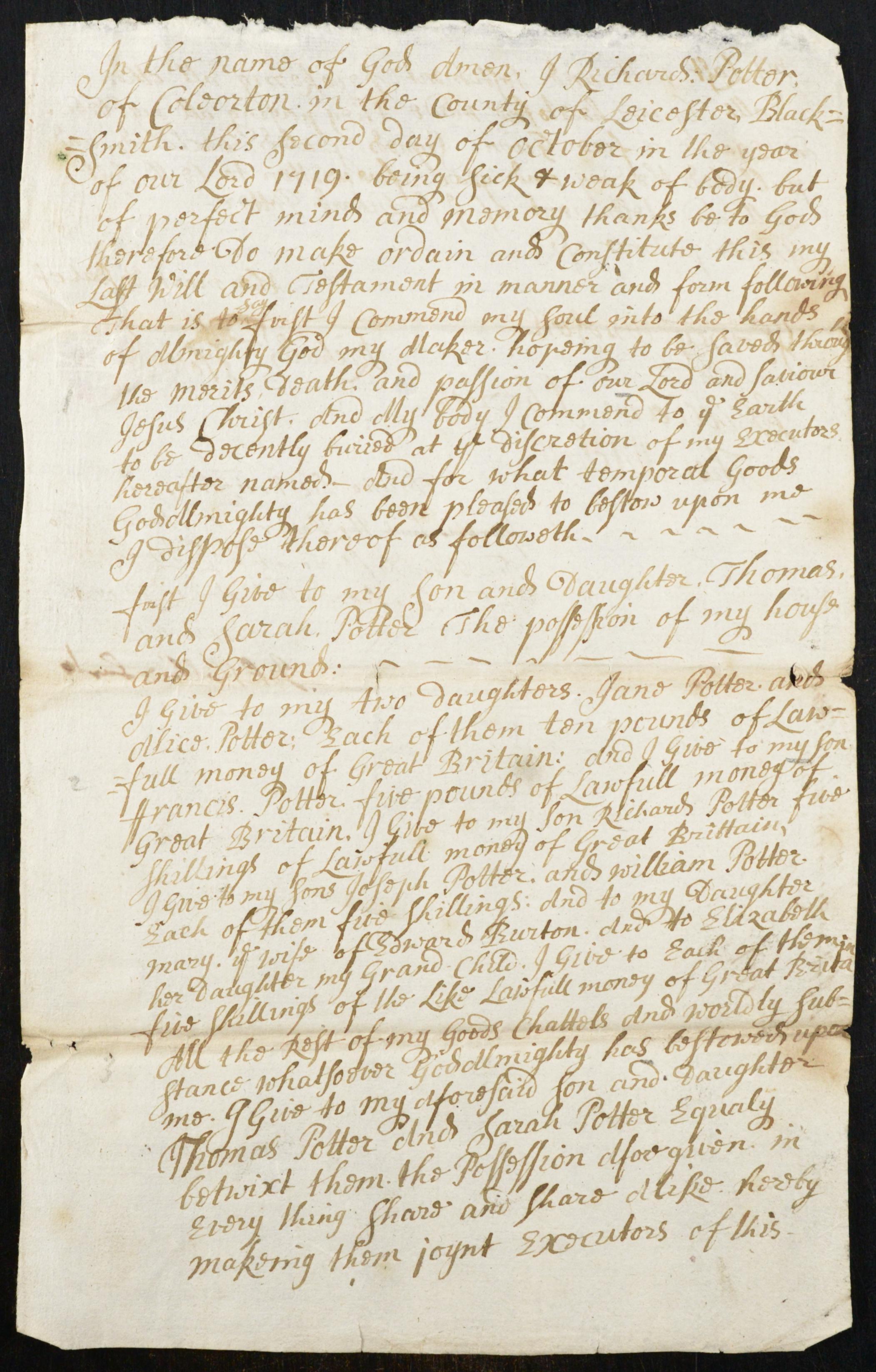
Richard Potter’s (1649-1719) parents were William Potter and Alse Huldin, both born in the early 1600s. They were married in 1646 at Breedon on the Hill, Leicestershire. The name Huldin appears to originate in Finland.
William Potter was a blacksmith. In the 1659 parish registers of Breedon on the Hill, William Potter of Breedon blacksmith buryed the 14th July.
-
AuthorSearch Results