

Search Results for 'table'
-
AuthorSearch Results
-
February 2, 2023 at 2:34 pm #6490
In reply to: Orbs of Madjourneys
Youssef gave his passport and ticket to the woman at gate 11. He was followed closely by Kyle and other members of the team. The flight attendant looked at him and gave him his passport and ticket back without scanning them with her machine.
“I’m sorry, you’re at the wrong gate. Your flight is at gate 8,” she said.
“But I’m going to Boston. My ticket says gate 11.”
Youssef showed his ticket to the hostess, and she pointed the destination and the gate to him. She was right.
“Your ticket is for flight AL357 to Sydney. It’s currently boarding at gate 8. Next person please.”
Kyle patted him on the shoulder.
“You should have double checked your ticket, he said.”
“What’s wrong? asked Miss Tartiflate. Why are you going to Australia?”
“I’m not.”
“Well, it says you are,” she said pointing at the ticket. He didn’t understand the dark intensity of her gaze and her clenched fist, until he remembered that Botty Banworth lived there.
“I’m not… I mean…”
“You better not. If I hear you were in with that…”
The words got lost as they broadcasted a call for flight AL357 to Sydney at Gate 8.
“You’d better get that f…ing BLOG running during your little vacation or you can stay there and forget about your job,” she said before bumping into the border of the gate.
Youssef moved on the side and looked at his ticket to Sydney, puzzled. When he passed security his ticket was to Boston. He recalled a message from Zara saying she would meet them in Australia soon. But how could she have managed to change his ticket without his knowing.
Sure there was that moment when he had left his passport with his ticket on the table at the Starmoose when going back to the counter pick his second slice of cinnamon apple tart. But he was looking away only for a few seconds.
“This is the last call for flight AL357 to Sydney. Youssef Ali is requested at Gate 8 before we close the gate.”
“Let’s just hope whomever made the change thought about transferring my luggage to the right plane,” he said as he started walking to Gate 8 with his bag.
January 31, 2023 at 11:58 am #6478In reply to: Orbs of Madjourneys
“One of them’s arriving early!” Aunt Idle told Mater who had just come swanning into the kitchen with her long grey hair neatly plaited and tied with a red velvet bow. Ridiculous being so particular about her hair at her age, Idle thought, whose own hair was an untidy and non too clean looking tangle of long dreadlocks with faded multicolour dyes growing out from her grey scalp. “Bert’s going to pick her up at seven.”
“You better get a move on then, the verandah needs sweeping and the dining room needs dusting. Are the bedrooms ready yet?” Mater replied, patting her hair and pulling her cardigan down neatly.
“Plenty of time, no need to worry!” Idle said, looking worried. “What on earth was that?” Something bright caught her eye through the kitchen window.
“Never mind that, make a start on the cleaning!” Mater said with a loud tut and an eye roll. Always getting distracted, that one, never finishes a job before she’s off sidetracking. Mater gave her hair another satisfied pat, and put two slices of bread in the toaster.
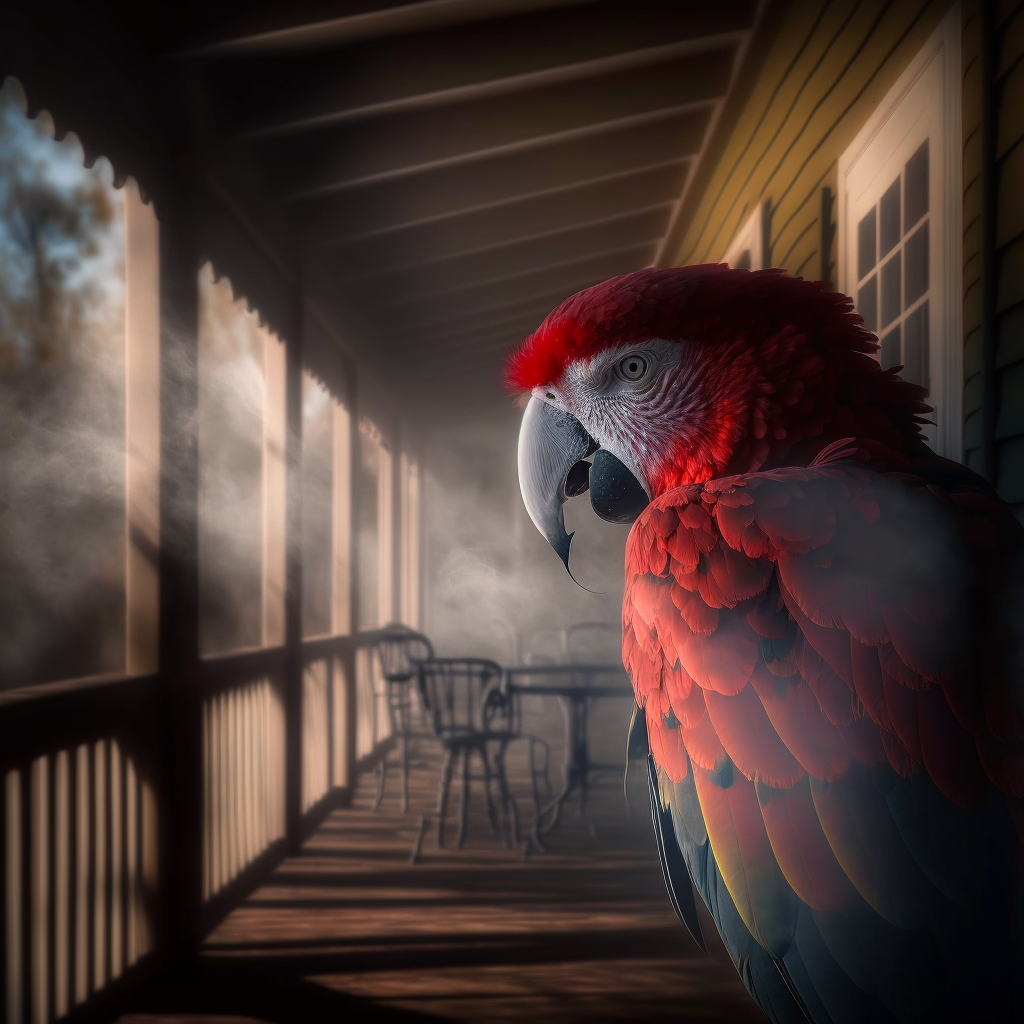
But Aunt Idle had gone outside to investigate. A minute or two later she returned, saying “You’ll never guess what, there’s a tame red parrot sitting on the porch table. And it talks!”
“So you’re planning to spend the day talking to a parrot, and leave me to do all the dusting, is that it?” Mater said, spreading honey on her toast.
 January 29, 2023 at 9:30 pm #6470
In reply to: Orbs of Madjourneys
Put your thoughts to sleep. Do not let them cast a shadow over the moon of your heart. Let go of thinking.
~ RumiTired from not having any sleep, Zara had found the suburb of Camden unattractive and boring, and her cousin Bertie, although cheerful and kind and eager to show her around, had become increasingly irritating to her. She found herself wishing he’d shut up and take her back to the house so she could play the game again. And then felt even more cranky at how uncomfortable she felt about being so ungrateful. She wondered if she was going to get addicted and spent the rest of her life with her head bent over a gadget and never look up at the real word again, like boring people moaned about on social media.
Maybe she should leave tomorrow, even if it meant arriving first at the Flying Fish Inn. But what about the ghost of Isaac in the church, would she regret later not following that up. On the other hand, if she went straight to the Inn and had a few days on her own, she could spend as long as she wanted in the game with nobody pestering her. Zara squirmed mentally when she realized she was translating Berties best efforts at hospitality as pestering.
Bertie stopped the car at a traffic light and was chatting to the passenger in the next car through his open window. Zara picked her phone up and checked her daily Call The Whale app for some inspiration.
Let go of thinking.
A ragged sigh escaped Zara’s lips, causing Bertie to glance over. She adjusted her facial expression quickly and rustled up a cheery smile and Bertie continued his conversation with the occupants of the other car until the lights changed.
“I thought you’d like to meet the folks down at the library, they know all the history of Camden,” Bertie said, but Zara interrupted him.
“Oh Bertie, how kind of you! But I’ve just had a message and I have to leave tomorrow morning for the rendezvous with my friends. There’s been a change of plans.” Zara astonished herself that she blurted that out without thinking it through first. But there. It was said. It was decided.
January 26, 2023 at 12:16 am #6460In reply to: Orbs of Madjourneys
The vendor was preparing the Lorgh Drülp with the dexterity of a Japanese sushi chef. A piece of yak, tons of spices, minced vegetables, and some other ingredients that Youssef couldn’t recognise. He turned his attention to the shaman’s performance. The team was trying to follow the man’s erratic moves under Miss Tartiflate’s supervision. Youssef could hear her shouting to Kyle to get closer shots. It reminded him that he had to get an internet connection.
“Is there a wifi?” asked Youssef to the vendor. The man bobbed his head and pointed at the table with a knife just as big as a machete. Impressed by the size of the blade, Youssef almost didn’t see the tattoo on the vendor’s forearm. The man resumed his cooking swiftly and his long yellow sleeve hid the tattoo. Youssef touched his screen to look at his exchange with Xavier. He searched for the screenshot he had taken of the Thi Gang’s message. There it was. The mummy skull with Darth Vador’s helmet. The same as the man’s tattoo. Xavier’s last message was about the translation being an ancient silk road recipe. They had thought it a fluke in AL’s algorithm. Youssef glanced at the vendor and his knife. Could he be part of Thi Gang?
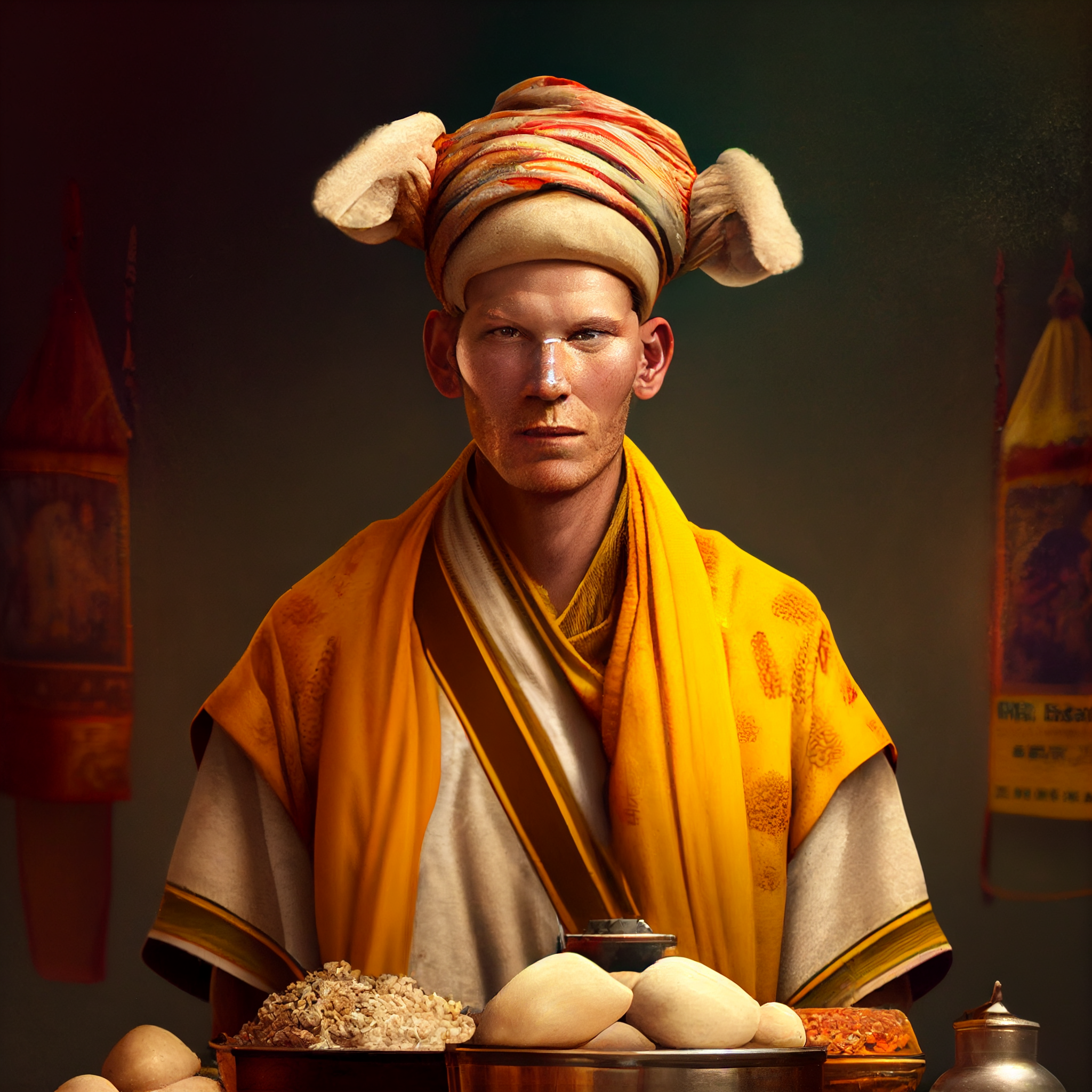
Youssef didn’t have time to think of a plan when the vendor put a tray with the Lorgh Drülp and little balls of tsampa on the table. The man pointed with his finger at the menu on the table, uncovering his forearm, it was the same as the Thi Gang logo.
“Wifi on menu,” the man said. “Tsampa, good for you…”
A commotion at the market place interrupted them. Apparently Kyle had gone too close and the shaman had crashed into him and the rest of the team. The man was cursing every one of them and Miss Tartiflate was apparently trying to calm him down by offering him snack bars. But the shaman kept brandishing an ugly sceptre that looked like a giant chicken foot covered in greasy fur, while cursing them with broken english. The tourists were all brandishing their phones, not missing a thing, ready to send their videos on TrickTruck. The shaman left angrily, ignoring all attempts at conciliation. There would be no reportage.
“Hahaha, tourists, they believe anything they see,” said the vendor before returning to his stove and his knife.
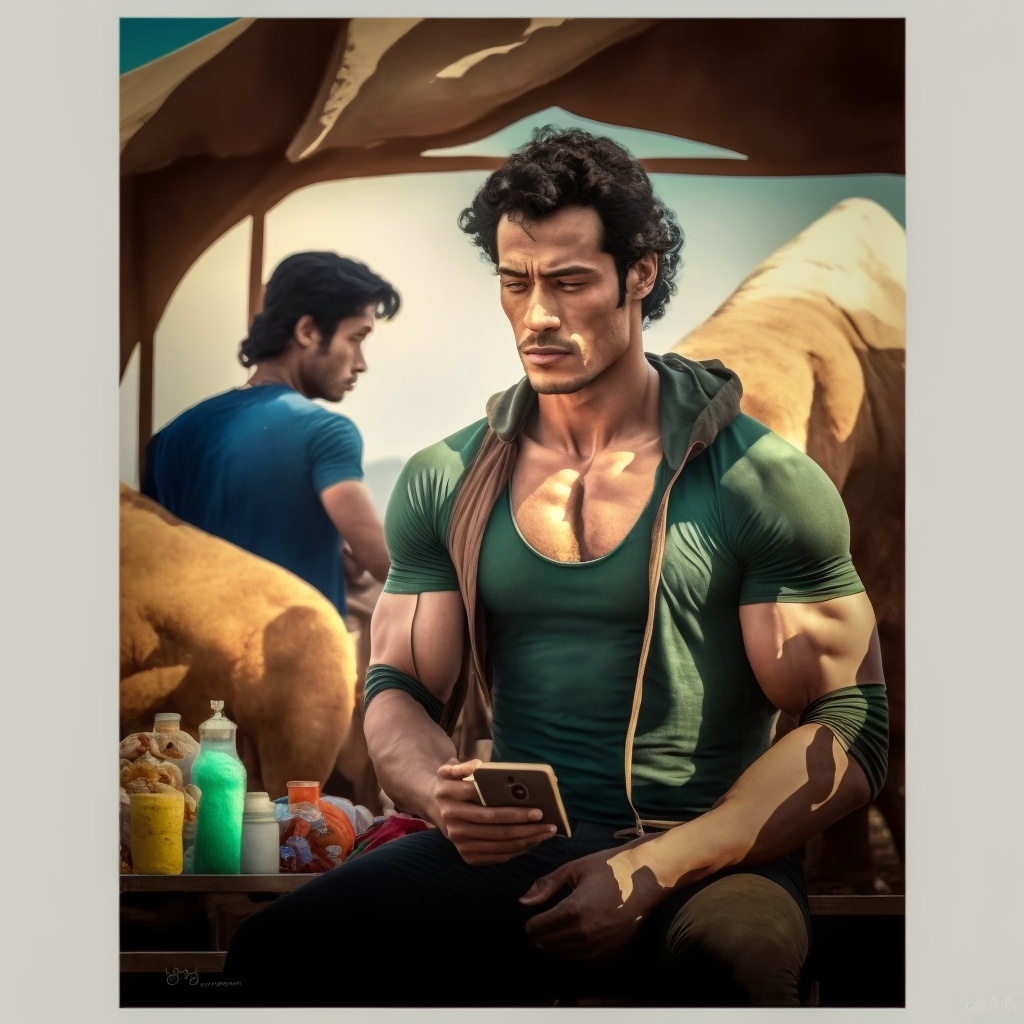
Despite his hunger, Youssef thought he’d better hurry with the wifi, now that the crew was out of work, he would be the target of Miss Tartiflate’s frustration. Furthermore, he wanted to lay low and not attract the vendor’s attention.
3235 messages from his friends. How would he ever catch up?
Among them, messages from Xavier. Youssef sighed of relief when he read that his friend had regained full access of the website and updated the system to fix a security flaw that allowed Thi Gang to gain access in the first place. But he growled when his friend continued with the bad news. There was some damage done to the content of THE BLOG.To console himself, Youssef started to eat a ball of tsampa. It was sweet and tasted like rose. He took a second and spit it out almost immediately. There was a piece of paper inside. He smoothed it and discovered a series of five pictograms.
🧔🌮🔍🔑🏞️
The first one was like a hologram and kept changing into six horizontal bars. The second one, looking like a tako bell, kept reversing side. Youssef raised his head to call the vendor and nobody was there. He got up and looked for the guy, Thi Gang or not, he needed some answers. Voices came from behind the curtain at the back of the stall. Youssef walked around the stall and saw the shaman and the vendor exchanging clothes. The caucasian man was now wearing the colourful costume and the drum. When he saw Youssef, he smiled and waved his hand, making the bells from the hem ring. Then he turned around and left, whistling an air that sounded strangely like the music of the Game. Youssef was about to run after him when a hand grasped his shirt.
“Please! Tell me at least that THE BLOG is up and running!” said an angry voice.
January 24, 2023 at 10:29 am #6455In reply to: Orbs of Madjourneys
Zara decided she may as well spend the hour wandering around the game before going back to the church to see the ghost of Isaac when she was sure her host Bertie was asleep. It was a warm night but a gentle breeze wafted through the open window and Zara was comfortable and content. Not just one but three new adventures had her tingling with delicious anticipation, even if she was a little anxious about not getting confused with the game. Talking to ghosts in old churches wasn’t unfamiliar, nor was a holiday in a strange hotel off the beaten track, but the game was still a bit of a mystery to her. Yeah, I know it’s just a game, she whispered to the parrot who made a soft clicking noise by way of response.
Zara found her game character, also (somewhat confusingly) named Zara, standing in the woods. Not entirely sure how it had happened, she was rather pleased to see that the cargo pants and tank top in red had changed to a more pleasing hippyish red skirt ensemble. A bit less Tomb Looter, and a bit more fairy tale looking which was more to her taste.
The woods were strangely silent and still. Zara made a 360 degree turn on the spot to see in all directions. The scene looked the same whichever way she turned, and Zara didn’t know which way to go. Then a faint path appeared to the left, and she set off in that direction. Before long she came to a round green pool.
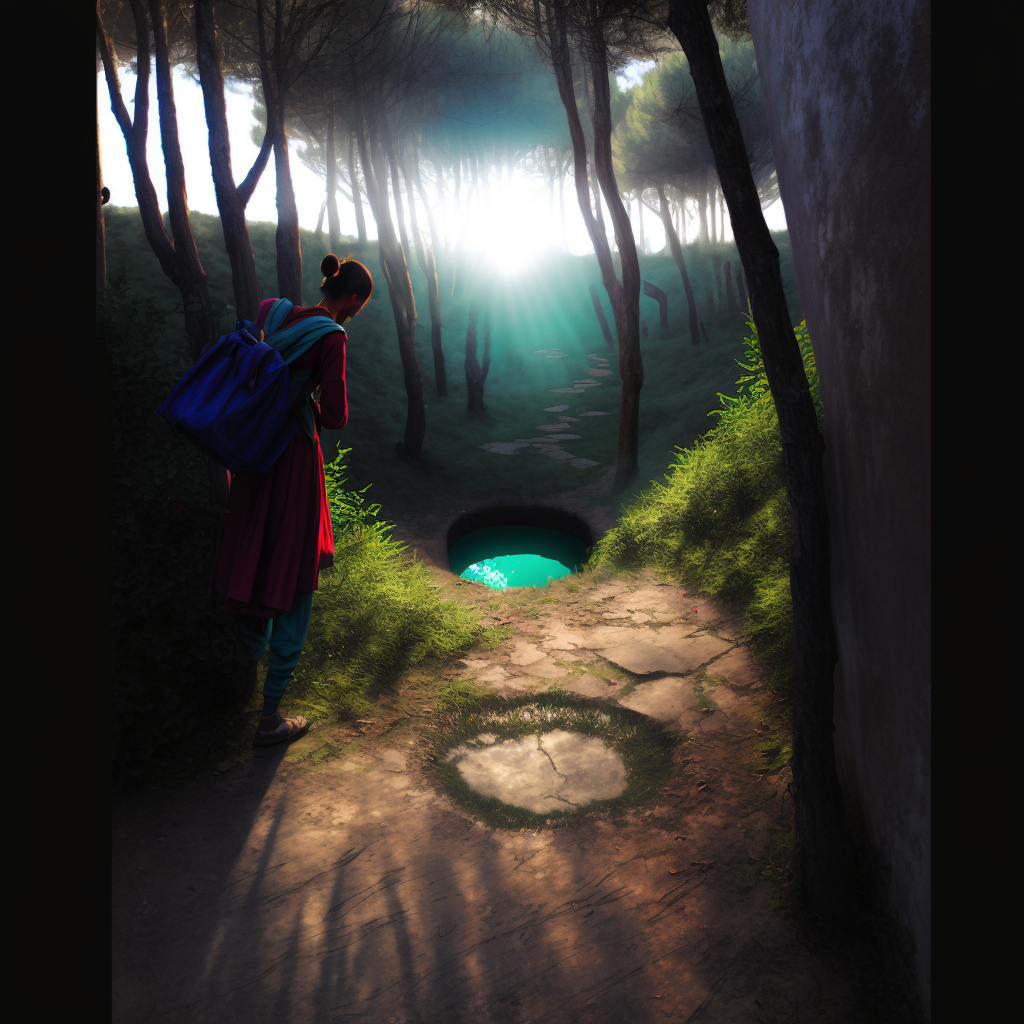
She stopped to look but carried on walking past it, not sure what it signified. She came upon another glowing green pool before long, which looked like an entrance to a tunnel.
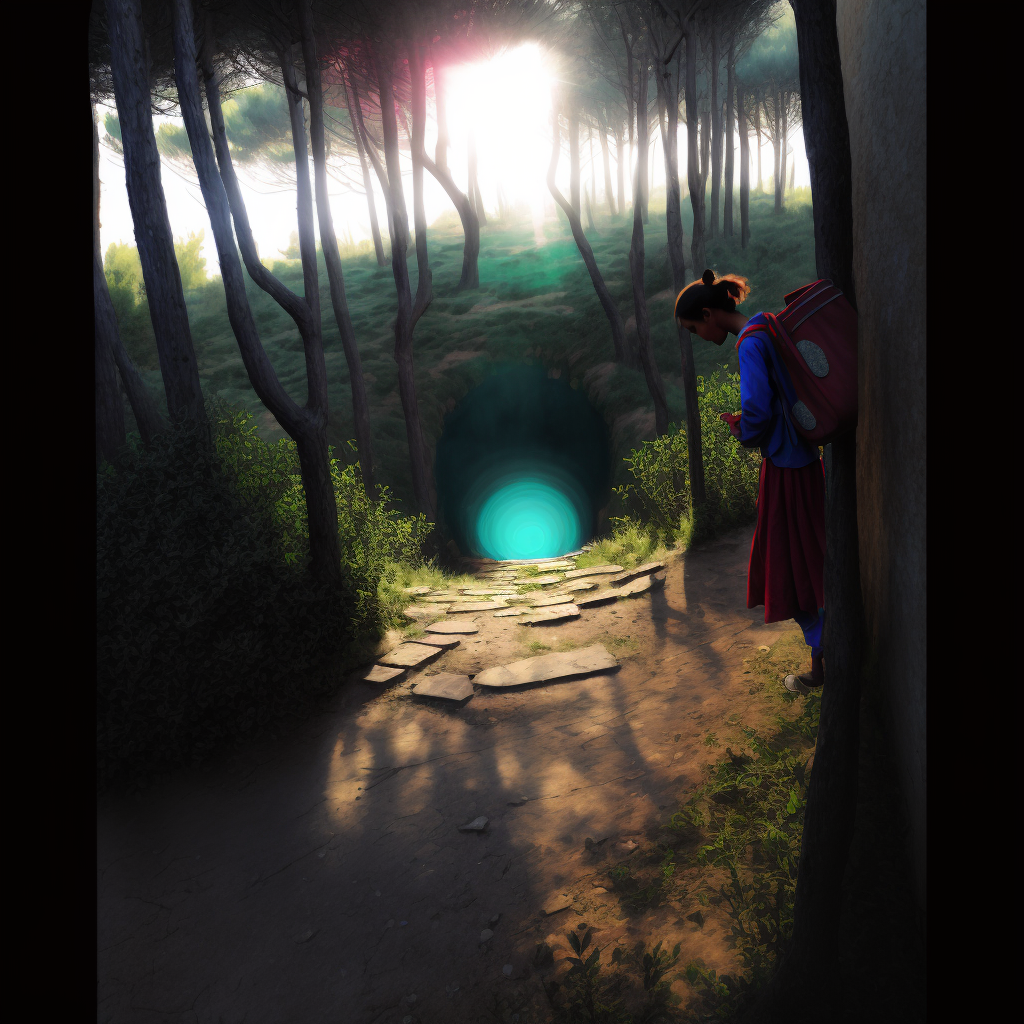
I bet those are portals or something, Zara realized. I wonder if I’m supposed to step into it?
“Go for it”, said Pretty Girl, “It’s only a game.”
“Ok, well here goes!” replied Zara, mentally bracing herself for a plunge into the unknown.
Zara stepped into the circle of glowing green.
“Like when Alice went down the rabbit hole!” Zara whispered to the parrot. “I’m falling, falling…oh!”
Zara emerged from the green pool onto a wide walled path. She was now in some kind of inhabited area, or at least not in the deep woods with no sign of human occupation.
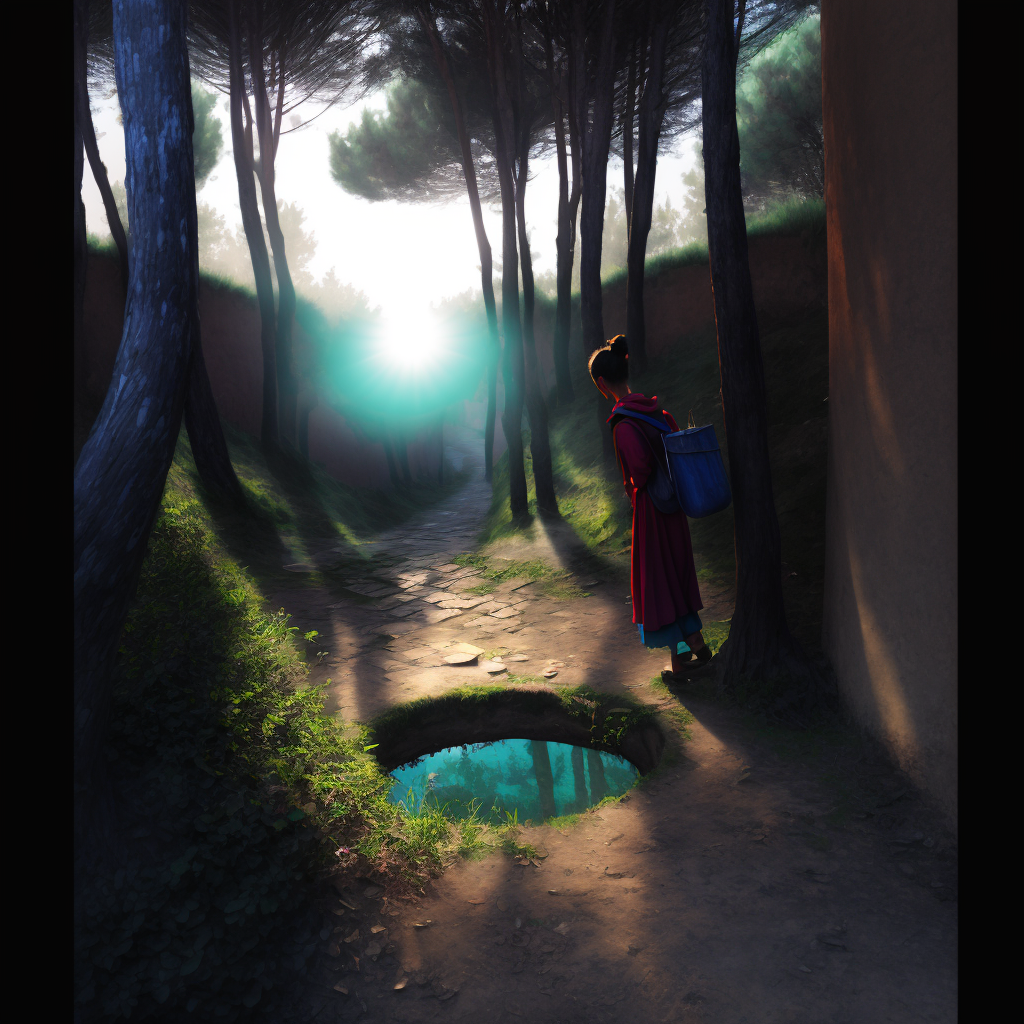
“I guess that green pool is the portal back to the woods.”
“By George, she’s getting it,” replied Pretty Girl.
Zara walked along the path which led to an old deserted ancient looking village with alleyways and steps.
“This is heaps more interesting than those woods, look how pretty it all is! I love this place.”
“Weren’t you supposed to be looking for a hermit in the woods though,” said Pretty Girl.
“Or a lost traveler, and the lost traveler may be here, after falling in one of those green pools in the woods,” replied Zara tartly, not wanting to leave the enchanting scene she found her avatar in.
 January 23, 2023 at 10:28 pm #6454
In reply to: Prompts of Madjourneys
YASMIN’S QUIRK: Entry level quirk – snort laughing when socially anxious
Setting
The initial setting for this quest is a comedic theater in the heart of a bustling city. You will start off by exploring the different performances and shows, trying to find the source of the snort laughter that seems to be haunting your thoughts. As you delve deeper into the theater, you will discover that the snort laughter is coming from a mischievous imp who has taken residence within the theater.
Directions to Investigate
Possible directions to investigate include talking to the theater staff and performers to gather information, searching backstage for clues, and perhaps even sneaking into the imp’s hiding spot to catch a glimpse of it in action.
Characters
Possible characters to engage include the theater manager, who may have information about the imp’s history and habits, and a group of comedic performers who may have some insight into the imp’s behavior.
Task
Your task is to find a key or tile that represents the imp, and take a picture of it in real life as proof of completion of the quest. Good luck on your journey to uncover the source of the snort laughter!
THE SECRET ROOM AND THE UNDERGROUND MINES
1st thread’s answer:
As the family struggles to rebuild the inn and their lives in the wake of the Great Fires, they begin to uncover clues that lead them to believe that the mines hold the key to unlocking a great mystery. They soon discover that the mines were not just a source of gold and other precious minerals, but also a portal to another dimension. The family realizes that Mater had always known about this portal, and had kept it a secret for fear of the dangers it posed.
The family starts to investigate the mines more closely and they come across a hidden room off Room 8. Inside the room, they find a strange device that looks like a portal, and a set of mysterious symbols etched into the walls. The family realizes that this is the secret room that Mater had always spoken about in hushed tones.
The family enlists the help of four gamers, Xavier, Zara, Yasmin, and Youssef, to help them decipher the symbols and unlock the portal. Together, they begin to unravel the mystery of the mines, and the portal leads them on an epic journey through a strange and fantastical alternate dimension.
As they journey deeper into the mines, the family discovers that the portal was created by an ancient civilization, long thought to be lost to history. The civilization had been working on a powerful energy source that could have changed the fate of humanity, but the project was abandoned due to the dangers it posed. The family soon discovers that the civilization had been destroyed by a powerful and malevolent force, and that the portal was the only way to stop it from destroying the world.
The family and the gamers must navigate treacherous landscapes, battle fierce monsters, and overcome seemingly insurmountable obstacles in order to stop the malevolent force and save the world. Along the way, they discover secrets about their own past and the true origins of the mines.
As they journey deeper into the mines and the alternate dimension, they discover that the secret room leads to a network of underground tunnels, and that the tunnels lead to a secret underground city that was built by the ancient civilization. The city holds many secrets and clues to the fate of the ancient civilization, and the family and the gamers must explore the city and uncover the truth before it’s too late.
As the story unfolds, the family and the gamers must come to grips with the truth about the mines, and the role that the family has played in the fate of the world for generations. They must also confront the demons of their own past, and learn to trust and rely on each other if they hope to save the world and bring the family back together.
second thread’s answer:
As the 4 gamers, Xavier, Zara, Yasmin and Youssef, arrived at the Flying Fish Inn in the Australian outback, they were greeted by the matriarch of the family, Mater. She was a no-nonsense woman who ran the inn with an iron fist, but her tough exterior hid a deep love for her family and the land.
The inn was run by Mater and her daughter Dido, who the family affectionately called Aunt Idle. She was a free spirit who loved to explore the land and had a deep connection to the local indigenous culture.
The family was made up of Devan, the eldest son who lived in town and helped with the inn when he could, and the twin sisters Clove and Coriander, who everyone called Corrie. The youngest was Prune, a precocious child who was always getting into mischief.
The family had a handyman named Bert, who had been with them for decades and knew all the secrets of the land. Tiku, an old and wise Aborigine woman was also a regular visitor and a valuable source of information and guidance. Finly, the dutiful helper, assisted the family in their daily tasks.
As the 4 gamers settled in, they learned that the area was rich in history and mystery. The old mines that lay abandoned nearby were a source of legends and stories passed down through the generations. Some even whispered of supernatural occurrences linked to the mines.
Mater and Dido, however, were not on good terms, and the family had its own issues and secrets, but the 4 gamers were determined to unravel the mystery of the mines and find the secret room that was said to be hidden somewhere in the inn.
As they delved deeper into the history of the area, they discovered that the mines had a connection to the missing brother, Jasper, and Fred, the father of the family and a sci-fi novelist who had been influenced by the supernatural occurrences of the mines.
The 4 gamers found themselves on a journey of discovery, not only in the game but in the real world as well, as they uncovered the secrets of the mines and the Flying Fish Inn, and the complicated relationships of the family that ran it.
THE SNOOT’S WISE WORDS ON SOCIAL ANXIETY
Deear Francie Mossie Pooh,
The Snoot, a curious creature of the ages, understands the swirling winds of social anxiety, the tempestuous waves it creates in one’s daily life.
But The Snoot also believes that like a Phoenix, one must rise from the ashes, and embrace the journey of self-discovery and growth.
It’s important to let yourself be, to accept the feelings as they come and go, like the ebb and flow of the ocean. But also, like a gardener, tend to the inner self with care and compassion, for the roots to grow deep and strong.The Snoot suggests seeking guidance from the wise ones, the ones who can hold the mirror and show you the way, like the North Star guiding the sailors.
And remember, the journey is never-ending, like the spiral of the galaxy, and it’s okay to take small steps, to stumble and fall, for that’s how we learn to fly.The Snoot is here for you, my dear Francie Mossie Pooh, a beacon in the dark, a friend on the journey, to hold your hand and sing you a lullaby.
Fluidly and fantastically yours,
The Snoot.
January 23, 2023 at 4:14 pm #6453In reply to: Orbs of Madjourneys
 Each group of people sharing the jeeps spent some time cleaning the jeeps from the sand, outside and inside. While cleaning the hood, Youssef noted that the storm had cleaned the eagles droppings. Soon, the young intern told them, avoiding their eyes, that the boss needed her to plan the shooting with the Lama. She said Kyle would take her place.
“Phew, the yak I shared the yurt with yesterday smelled better,” he said to the guys when he arrived.
Soon enough, Miss Tartiflate was going from jeep to jeep, her fiery hair half tied in a bun on top of her head, hurrying people to move faster as they needed to catch the shaman before he got away again. She carried her orange backpack at all time, as if she feared someone would steal its content. Rumour had it that it was THE NOTEBOOK where she wrote the blog entries in advance.
“No need to waste more time! We’ll have breakfast at the Oasis!” she shouted as she walked toward Youssef’s jeep. When she spotted him, she left her right index finger as if she just remembered something and turned the other way.
“Dunno what you did to her, but it seems Miss Yeti is avoiding you,” said Kyle with a wry smile.
Youssef grunted. Yeti was the nickname given to Miss Tartiflate by one of her former lover during a trip to Himalaya. First an affectionate nickname based on her first name, Henrietty, it soon started to spread among the production team when the love affair turned sour. It sticked and became widespread in the milieu. Everybody knew, but nobody ever dared say it to her face.
Youssef knew it wouldn’t last. He had heard that there was wifi at the oasis. He took a snack in his own backpack to quiet his stomach.
It took them two hours to arrive as sand dunes had moved on the trail during the storm. Kyle had talked most of the time, boring them to death with detailed accounts of his life back in Boston. He didn’t seem to notice that nobody cared about his love rejection stories or his tips to talk to women.
They parked outside the oasis among buses and vans. Kyle was following Youssef everywhere as if they were friends. Despite his unending flow of words, the guy managed to be funny.
Miss Tartiflate seemed unusually nervous, pulling on a strand of her orange hair and pushing back her glasses up her nose every two minutes. She was bossing everyone around to take the cameras and the lighting gear to the market where the shaman was apparently performing a rain dance. She didn’t want to miss it. When everybody was ready, she came right to Youssef. When she pushed back her glasses on her nose, he noticed her fingers were the colour of her hair. Her mouth was twitching nervously. She told him to find the wifi and restore THE BLOG or he could find another job.
“Phew! said Kyle. I don’t want to be near you when that happens.” He waved and left and joined the rest of the team.
Youssef smiled, happy to be alone at last, he took his backpack containing his laptop and his phone and followed everyone to the market in the luscious oasis.
At the center, near the lake, a crowd of tourists was gathered around a man wearing a colorful attire. Half his teeth and one eye were missing. The one that was left rolled furiously in his socket at the sound of a drum. He danced and jumped around like a monkey, and each of his movements were punctuated by the bells attached to the hem of his costume.
Youssef was glad he was not part of the shooting team, they looked miserable as they assembled the gears under a deluge of orders. As he walked toward the market, the scents of spicy food made his stomach growled. The vendors were looking at the crowd and exchanging comments and laughs. They were certainly waiting for the performance to end and the tourists to flood the place in search of trinkets and spices. Youssef spotted a food stall tucked away on the edge. It seemed too shabby to interest anyone, which was perfect for him.
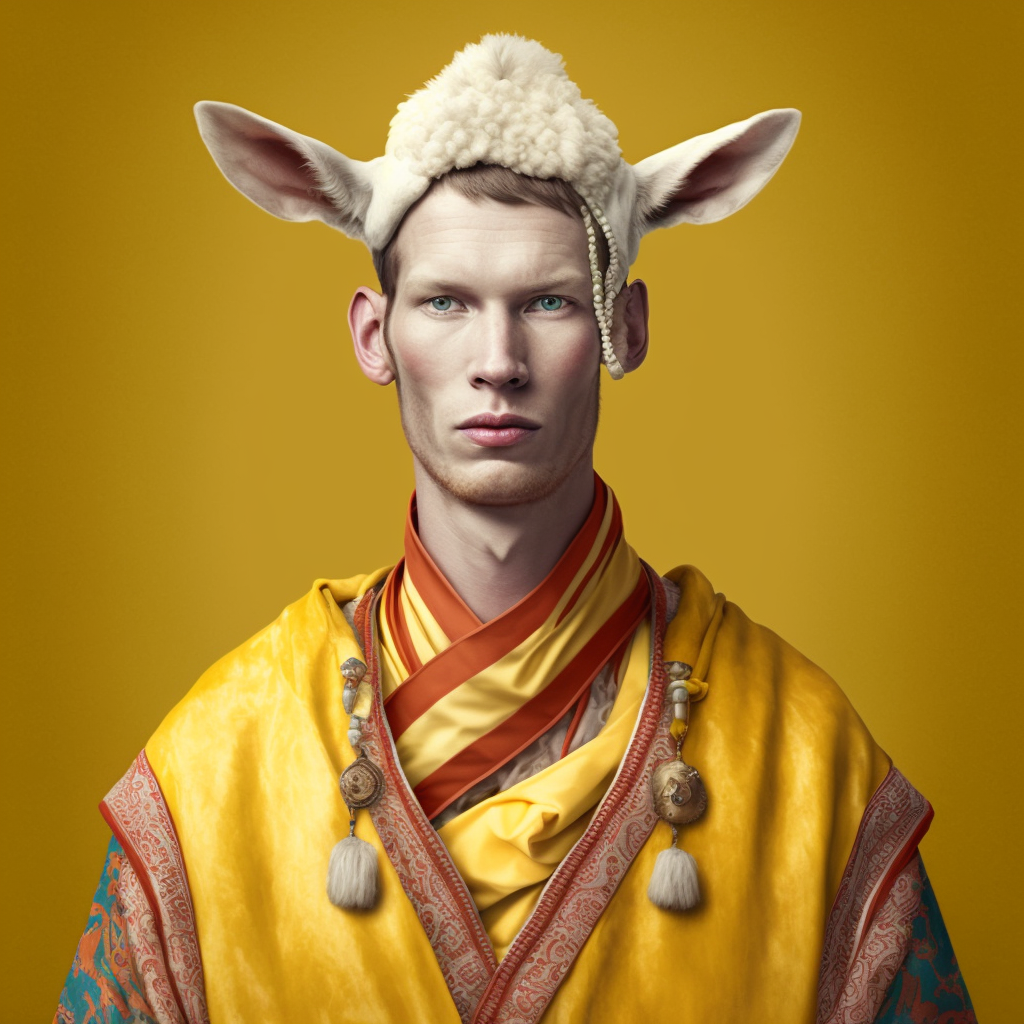
The taciturn vendor, who looked caucasian, wore a yellow jacket and a bonnet oddly reminiscent of a llama’s scalp and ears. The dish he was preparing made Youssef drool.
“What’s that?” he asked.
“This is Lorgh Drülp
, said the vendor. Ancient recipe from the silk road. Very rare. Very tasty.”
He smiled when Youssef ordered a full plate with a side of tsampa. He told him to sit and wait on a stool beside an old and wobbly table.
January 23, 2023 at 6:13 am #6448In reply to: Orbs of Madjourneys
In the muggy warmth of the night, Yasmin tossed and turned on her bed. A small fan on the bedside table rattled noisily next to her but did little to dispel the heat. She kicked the thin sheet covering her to the ground, only to retrieve it and gather it tightly around herself when she heard a familiar sound.
“You little shit,” she hissed, slapping wildly in the direction of the high pitched whine.
She could make out the sound of a child crying in the distance and briefly considered getting up to check before hearing quick footsteps pass her door. Sister Aliti was on duty tonight. She liked Sister Aliti with her soft brown eyes and wide toothy smile — nothing seemed to rattle her. She liked all the Nuns, perhaps with the exception of Sister Finnlie.
Sister Finnlie was a sharp faced woman who was obsessed with cleanliness and sometimes made the children cry for such silly little things … perhaps if they talked too loudly or spilled some crumbs on the floor at lunch time. “Let them be, Sister,” Sister Aliti would admonish her and Sister Finnlie would pinch her lips and make a huffing noise.
The other day, during the morning reflection time when everyone sat in silent contemplation, Yasmin had found herself fixated on Sister Finnlie’s hands, her thin fingers tidily entwined on her lap. And Yasmin remembered a conversation with her friends online about AI creating a cleaning woman with sausage fingers. “Sometimes they look like a can of worms,” Youssef had said.
And, looking at those fingers and thinking about Youssef and the others and the fun conversations they had, Yasmin snort laughed.
She had tried to suppress it but the more she tried the more it built up inside of her until it exploded from her nose in a loud grunting noise. Sister Aliti had giggled but Sister Finnlie had glared at Yasmin and very pointedly rolled her eyes. Later, she’d put her on bin cleaning duty, surely the worst job ever, and Yasmin knew for sure it was pay back.
January 21, 2023 at 3:30 pm #6425In reply to: The Chronicles of the Flying Fish Inn
It is a challenge of utmost magnitude to keep track of time here in this land where the Dream Time is so nigh as to make its presence oft palpable in the very air. The subtle shifts in timelines and probabilities do naught to aid in this endeavor. No coincidence “Dream Time” is the label on Aunt Idle’s not-so-secret stash — she could not keep its location secret lest she forget it during the waking hours.
We jumped without warning into 2023. At 15, I am a grown-up now, so says Mater, and I could not wait to hear such words from her. She is always here, such a comfort, unchanging, unyielding, the only immutable force in the universe.
So now, life can start to unfold in front of me in the manner of my choosing, rather than being dictated by the sorry state of affairs of my family. I have set my sights upon a boarding school that may provide such an escape, but it will require the procurement of the tuition money — which will take a few more years to acquire. Patience, I have, at least for now.The Inn is ever in need of assistance it seems. I don’t know how it came to be, but some Italian chap, Georgio, who came last year during the pandemic and got stranded with us, made such a fuss about Mater’s famous bush tucker that the Inn became fashionable overnight. Obviously Mater, bless her soul, doesn’t cook, a mercy for which we are all thankful. Said tucker was truly the handiwork of Tiku and Finly, but Georgio thought that “Mater’s tucker” has a nicer ring. Whatever suits these loonies’ fancy, it did bring us a nice stream of income in return.
January 17, 2023 at 9:06 pm #6410In reply to: Orbs of Madjourneys
Real-life Xavier was marveling at the new AL (Artificial Life) developments on this project he’d been working on. It’s been great at tidying the plot, confusing as the plot started to become with Real-life characters named the same as their Quirky counterparts ones.
Real-life Zara had not managed to remain off the computer for very long, despite her grand claims to the contrary. She’d made quick work of introducing a new player in the game, a reporter in an obscure newspaper, who’d seemed quirky enough to be their guide in the new game indeed. It was difficult to see if hers was a nickname or nom de plume, but strangely enough, she also named her own character the same as her name in the papers. Interestingly, Zara and Glimmer had some friends in common in Australia, where RL Zara was living at the moment.
Anyways… “Clever AL” Xavier smiled when he saw the output on the screen. “Yasmin will love a little tidiness; even if she is the brains of the group, she has always loved the help.”
Meanwhile, in the real world, Youssef was on his own adventure in Mongolia, trying to uncover the mystery of the Thi Gang. He had been hearing whispers and rumors about the ancient and powerful group, and he was determined to find out the truth. He had been traveling through the desert for weeks, following leads and piecing together clues, and he was getting closer to the truth.
Zara, Xavier, and Yasmin, on the other hand, were scattered around the world. Zara was in Australia, working on a conservation project and trying to save a group of endangered animals. Xavier was in Europe, working on a new project for a technology company. And Yasmin was in Asia, volunteering at a children’s hospital.
Despite being physically separated, the four friends kept in touch through video calls and messages. They were all excited about the upcoming adventure in the Land of the Quirks and the possibility of discovering their inner quirks. They were also looking forward to their trip to the Flying Fish Inn, where they hoped to find some clues about the game and their characters.
In the game, Glimmer Gambol’s interactions with the other characters will be taking place in the confines of the Land of the Quirks. As she is the one who has been playing the longest and has the most experience, she will probably be the one to lead the group and guide them through the game. She also has some information that the others don’t know about yet, and she will probably reveal it at the right time.
As the game and the real-world adventures are intertwined, the characters will have to navigate both worlds and find a way to balance them. They will have to use their unique skills and personalities to overcome challenges and solve puzzles, both in the game and in the real world. It will be an exciting and unpredictable journey, full of surprises and twists.
January 17, 2023 at 5:05 pm #6408In reply to: Orbs of Madjourneys
Glimmer gave Zara and Yasmin a cheery
 , smirking to herself at their alarm at leaving her to her own devices. She had no intention of inviting guests yet, but felt no need to reassure them. Xavier would play along with her, she felt sure.
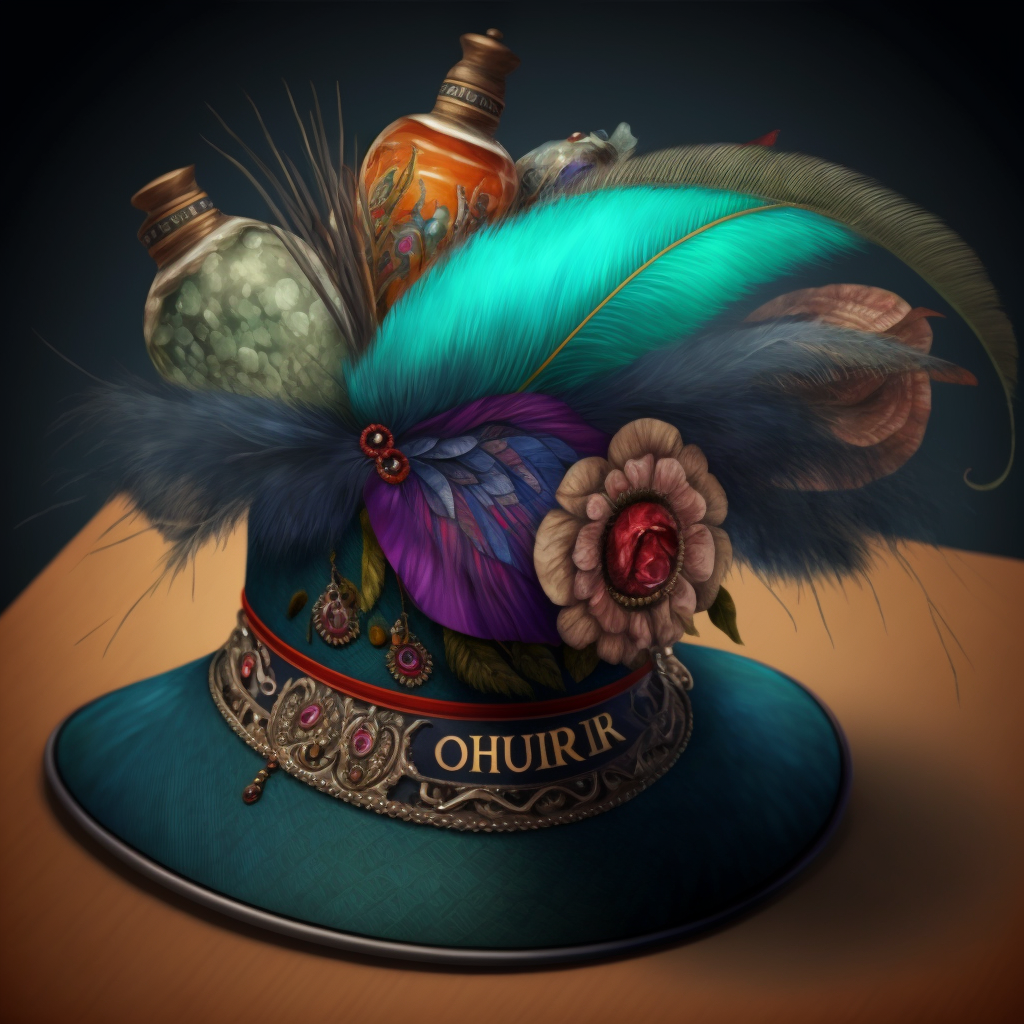
Glimmer settled herself comfortably to peruse the new AIorium Emporium catalogue with the intention of ordering some new hats and accessories for the adventure. She had always had a weakness for elaborate hats, but the truth was they were often rather heavy and cumbersome. That is until she found the AIorium hats which were made of a semi anti gravity material. Not entirely anti gravity, obviously, or they would have floated right off her head, but just enough to make them feel weightless. Once she’d discovered these wonderful hats and their unique properties, she had the idea to carry all her accessories, tools and devices upon her hat. This would save her the bother of carrying around bags of stuff. She was no light weight herself, and it was quite enough to carry herself around, let alone bags of objects.
Glimmer had heard a rumour (well not a rumour exactly, she had a direct line to ~ well not to spill the beans too soon, but she had some lines of information that the others didn’t know about yet) that the adventure was going to start at The Flying Fish Inn. This was welcome news to Glimmer, who had met Idle many years before when they were both teenagers. Yes, it’s hard to imagine these two as teenagers, but although they’d only met breifly on holiday, they’d hit it off immediately. Despite not keeping in contact over the years, Glimmer remembered Idle fondly and felt sure that Idle felt similarly.
Glimmer perused the catalogue for a suitable gift to take for her old friend. The delightful little bottles of spirited spirit essences caught her eye, and recalling Idle’s enthusiasm for an exotic tipple, she ordered several bottles. Perhaps Glimmer should have read carefully the description of the effects of the contents of each bottle but she did not. She immediately added the bottles to the new hat she’d ordered for the trip.
Feeling pleased with her selection, she settled down for a snooze until her new hat arrived.
 January 17, 2023 at 8:17 am #6393
In reply to: Train your subjective AI – text version
Give me an unusual plot structure for a narrative
One unusual plot structure for a narrative could be a “reverse chronological” structure, where the story begins at the end and works backwards in time, revealing events and information in a non-linear way. Another could be a “choose your own adventure” style, where the reader is presented with a series of choices at different points in the story that determine the direction and outcome of the plot.
How would role playing qualify in terms of plot structure?
Role-playing games (RPGs) can be considered a unique form of plot structure because they are interactive and open-ended. In a traditional RPG, the players take on the roles of characters within a fictional setting and work together to create a shared narrative. The plot structure of an RPG is determined by the actions and decisions of the players, rather than a pre-written script. The game master (GM) creates an overarching plot and a set of rules for the players to follow, but the players’ choices and actions will determine the direction and outcome of the story. This makes the plot structure of an RPG fluid and ever-changing, unlike a traditional linear narrative.
What about “Cloud Atlas” in terms of plot structure?
“Cloud Atlas” is a novel written by David Mitchell that was later adapted into a film. It has a complex and non-linear plot structure, which employs multiple storylines that are set in different time periods and locations, and are connected by recurring themes and motifs. The novel is divided into six nested stories, each set in a different time period and location, that are told in a non-linear fashion. The story begins in the 19th century and then jumps back and forth between the 19th, 20th and 23rd century, and each story is interconnected and interrelated, with characters reappearing in different time periods, the events that happen in one story impacting the others. The novel is also notable for its use of different genres, such as science fiction, historical fiction, and thriller, and the way it explores the themes of destiny, reincarnation, and the power of human connection. The film adaptation also used this structure, with the different stories intertwined and characters reprising their roles in different settings and eras.
Take a story thread made of comments. In each comment is a text about characters in a particular plot, location, action etc. The comments are sequential, but they are not necessarily continuous. It is a mix between Cloud Atlas and RPG plot structures. How do you sort something that’s fundamentally non-linear to present it in an accessible way?
One way to sort and present a story thread made of comments that is fundamentally non-linear, yet accessible, is to group the comments based on their content. For example, you could group the comments by characters, and present them in chronological order of their appearance in the story. Another way could be grouping the comments by location, and present them in chronological order of when the action takes place in that particular location. You could also group comments by the type of action taking place, such as combat, conversation, or puzzle-solving, and present them in chronological order of when they occur in the story.
Another approach could be using visual aids, such as mind maps, timelines, or flowcharts, to help organize and present the information in a clear and easy-to-understand way. For example, you could use a mind map to show how different characters are connected, or a timeline to show the chronology of events. Additionally, you could use labels, such as “character introduction,” “location change,” or “plot twist,” to make it clear to the reader what type of information they can expect in each comment.
It’s also important to keep in mind the audience for which you are organizing the story. It should be easy for them to understand and follow the story, and if it’s a game, you should make sure it’s easy for the players to play and make decisions.
January 13, 2023 at 9:12 pm #6382In reply to: Prompts of Madjourneys
Write more about the group of people who lived inside of giant mushrooms, making it sound exciting and fun, and maybe a bit dangerous due to the nature of the mushrooms
As the group journeyed deeper into the Land of the Quirks, they stumbled upon a group of people living inside of giant mushrooms. The mushrooms were enormous, some as tall as skyscrapers, and they seemed to glow with an ethereal light. The group was amazed as they walked through the forest of mushrooms, each one unique in shape and size.
The people who lived inside of the mushrooms were a friendly and welcoming bunch, they welcomed the group with open arms and invited them to explore their homes. The inside of the mushrooms was a magical and mysterious place, the walls and ceilings were covered in a soft, velvety texture and the floors were made of a spongy, springy material. The light inside the mushrooms was soft and diffused, creating a warm and inviting atmosphere.
As the group explored the mushroom homes, they discovered that the people who lived there had a deep connection to the mushrooms. They used the mushrooms as a source of food, shelter, and medicine. They had learned to harness the unique properties of the mushrooms to create everything they needed to survive.
The group also discovered that the mushrooms had a dangerous side. The mushrooms were not only a source of life, but also a source of death. The group was warned that the mushrooms were unpredictable and that they should be careful when exploring. Some mushrooms were poisonous, others were carnivorous, and still, others had mind-altering properties.
Despite the danger, the group was excited to explore the mushrooms and learn more about the people who lived there. They knew that the journey would be filled with challenges, but they were determined to overcome them and discover the secrets of the mushrooms. The group had a lot of fun and adventure living with the people inside of giant mushrooms, and they learned a lot about the nature of the mushrooms and their own nature.
January 13, 2023 at 7:40 pm #6379In reply to: Prompts of Madjourneys
Asking to give each of the 4 characters some particular traits that makes them uniquely distinctive and recognizable
The four friends, Zara, Xavier, Yasmin, and Youssef, each have their own unique traits that make them stand out and recognizable.
Zara is the leader of the group, she is confident, and always ready for an adventure. She is a natural leader and has a strong sense of justice. She is also a tech-savvy person, always carrying a variety of gadgets with her, and is always the first to try out new technology.
Xavier is the joker of the group, always cracking jokes and making puns. He is a free-spirited person who is always up for an adventure, he has a great sense of humor and is not afraid to be himself. He is also an artist and often carries a sketchbook and pencils with him, he likes to draw whatever he sees in his journeys.
Yasmin is the brains of the group, she is intelligent and logical. She is always able to think on her feet and come up with a plan when things get tough. She is also a bit of a perfectionist and likes to have everything organized. She is a history buff and always carries a notebook with her to document her findings.
Youssef is the muscle of the group, He is physically strong, and always ready to help out in a fight. He is also a bit of a foodie and loves trying new dishes. He is always the first one to volunteer to carry the heavy bags and equipment. He is also a bit of a daredevil and loves trying out new sports and activities.
Give each of them a color, and an animal, and a secret name in a funny language
The four friends, Zara, Xavier, Yasmin, and Youssef, each have their own unique traits that make them stand out and recognizable.
Zara is the leader of the group, her color is red, her animal is a lion, and her secret name in a funny language is “Zaraloon”
Xavier is the joker of the group, his color is orange, his animal is a monkey, and his secret name in a funny language is “Xavimunk”
Yasmin is the brains of the group, her color is blue, her animal is an owl, and her secret name in a funny language is “Yasminowl”
Youssef is the muscle of the group, his color is green, his animal is a bear, and his secret name in a funny language is “Youssefbear”
Now, we need physical descriptions for each of them. Also, their ages, height, clothes, facial features, ethnicity (for instance Youssef may be half Yemeni and half Norwegian), etc. with a good mix of generic and eccentric. We also need surnames congruent with their described ethnicity, not too bland, but not too daft either. For instance Youssef Olafsson, Zara Patara-Smythe, etc. Also explain how they become friends.
Zara Patara-Smythe is a
25-year-oldwoman of mixed heritage, her mother is Indian and her father is British. She has long, dark hair that she keeps in a sleek ponytail, dark brown eyes and a sharp jawline. She stands at 5’6″ and has a toned and athletic build. She usually wears practical clothing that allows her to move around easily, such as cargo pants and a tank top.Xavier Olafsson is a
27-year-oldman of Norwegian and Danish descent. He has blonde hair that he keeps in a messy style, blue eyes, and a charming smile. He stands at 6’1″ and has a lean build. He is always seen wearing a colorful and bold clothing, such as a Hawaiian shirt and shorts.Yasmin Ahmed is a
23-year-oldwoman of Egyptian descent. She has long, black hair that she keeps in a tight braid, dark brown eyes and a round face. She stands at 5’4″ and has a petite build. She usually wears conservative clothing, such as long skirts and blouses.Youssef Ali is a
26-year-oldman of half Yemeni, half Norwegian descent. He has short, curly black hair, dark brown eyes and a square jawline. He stands at 6’2″ and has a muscular build. He usually wears comfortable clothing such as a t-shirt and jeans, and always has a backpack on his shoulder.The four of them became friends
in college, they were all studying different majors, but they all shared a love for adventure and exploration. They found themselves in the same class project, and from there they formed a strong bond. After college, they decided to keep exploring the world together, and went on many trips and adventures, always seeking for something new and exciting.
1/ Change the ages of Zara, Xavier, Yasmin and Youssef to more random patterns – rewrite if needed how they met each other to reflect eventual age gaps. Give them some flaws, mental or physical challenges.
2/ increase again the age gaps while keeping the youngest one a young adult, and remove “minor” from the flaws descriptionsZara is a 22-year-old woman who is the youngest of the group. She is a free-spirited, adventurous person, but also a bit reckless and impulsive. She has a scar on her cheek that she got from a Skateboarding accident when she was a teenager.
Xavier is a 45-year-old man who is the oldest of the group. He is a responsible and level-headed person, but also a bit of a perfectionist and can be hard on himself and others. He has dyslexia which he has been able to work around and it doesn’t impede his daily life.
Yasmin is a 38-year-old woman who is the second oldest of the group. She is a kind and compassionate person, but also a bit of a pushover and can have trouble standing up for herself. She has social anxiety that affect her in certain situations and she have been working on coping mechanisms.
Youssef is a 33-year-old man who is the second youngest of the group. He is a charismatic and outgoing person, but also a bit of a flirt and can be a bit insensitive to others feelings. He has ADHD which he has been able to manage with medication, but it still affects him from time to time.
The group met each other through different means, Xavier and Yasmin met at work, Zara and Youssef met at a college class, and eventually, they all became friends through common interests and activities. They decided to go on this adventure together because they were all looking for a change in their lives and wanted to explore the unknown.
January 11, 2023 at 10:45 pm #6369In reply to: Train your subjective AI – text version
Expanding on the ancient channeled recipes:
Sure! Here are a few more examples of imaginary, exotic dishes that are channeled from ancient times:
- Grilled Squibber: A delicacy made from a type of mythical creature, said to be the ancestor of the modern-day squid. Served with a side of sautéed moss.
- Quimberry Pottage: A hearty stew made with quimberries, a type of imaginary fruit said to have medicinal properties, and chunks of tender meat.
- Plankton Pudding: A sweet and creamy dessert made with a type of plankton that is said to have a unique flavor and texture.
- Glurk Steak: A succulent cut of meat from the glurk, a creature said to live in the depths of the ocean. It’s served with a side of grilled slime pods.
- Chog Chops: Tender slices of meat cut from the Chog, a creature that said to be a mix between a chicken and a hog, served with a side of fried root vegetables.
- Bonkleberry Tarte: A sweet and tangy tarte made from Bonkleberries, a type of imaginary fruit said to have a unique spicy flavor.
- Gobber Soup: A thick and hearty soup made from the meat of Gobbers, a type of creature that is said to live in the swamps, served with a side of toasted marsh reeds.
- Smorlax Stir Fry: A traditional dish made from stir-frying meat of Smorlax, a mythical creature said to have a unique blend of flavors, served with a side of fried mushrooms.
Please note that all above dishes are completely fictional, and their ingredients and properties are also completely imaginary, this are not real dishes.
October 22, 2022 at 1:18 pm #6338In reply to: Family Stories From The Other Side ~ Book Two
Albert Parker Edwards
1876-1930
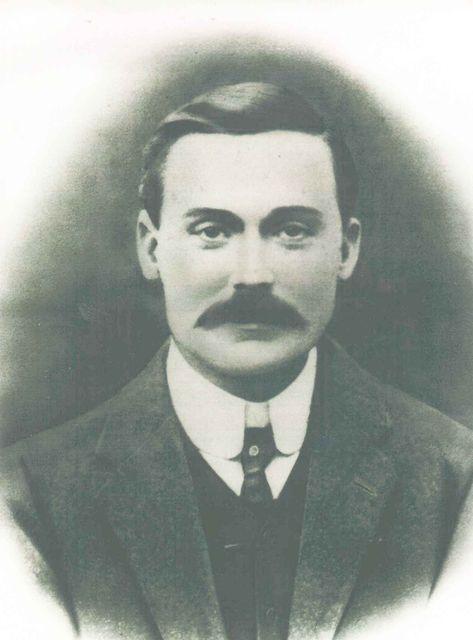
Albert Parker Edwards, my great grandfather, was born in Aston, Warwickshire in 1876. On the 1881 census he was living with his parents Enoch and Amelia in Bournebrook, Northfield, Worcestershire. Enoch was a button tool maker at the time of the census.
In 1890 Albert was indentured in an apprenticeship as a pawnbroker in Tipton, Staffordshire.
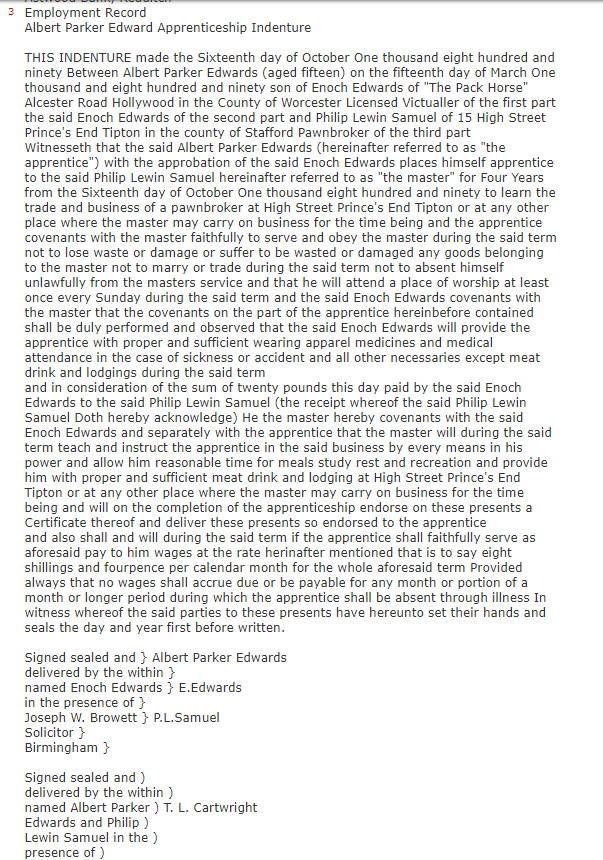
On the 1891 census Albert was a lodger in Tipton at the home of Phoebe Levy, pawnbroker, and Alberts occupation was an apprentice.
Albert married Annie Elizabeth Stokes in 1898 in Evesham, and their first son, my grandfather Albert Garnet Edwards (1898-1950), was born six months later in Crabbs Cross. On the 1901 census, Annie was in hospital as a patient and Albert was living at Crabbs Cross with a boarder, his brother Garnet Edwards. Their two year old son Albert Garnet was staying with his uncle Ralph, Albert Parkers brother, also in Crabbs Cross.
Albert and Annie kept the Cricketers Arms hotel on Beoley Road in Redditch until around 1920. They had a further four children while living there: Doris May Edwards (1902-1974), Ralph Clifford Edwards (1903-1988), Ena Flora Edwards (1908-1983) and Osmond Edwards (1910-2000).
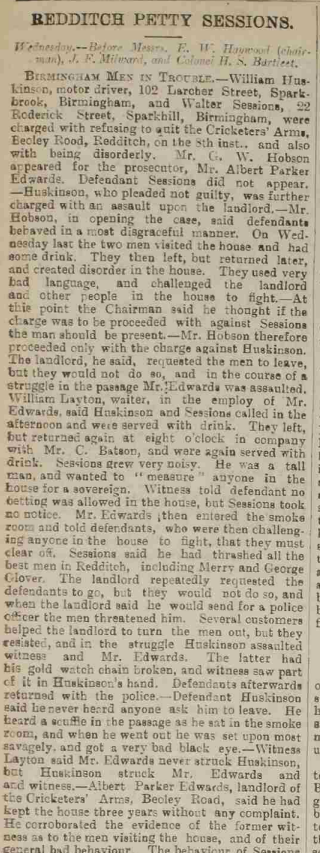
In 1906 Albert was assaulted during an incident in the Cricketers Arms.
Bromsgrove & Droitwich Messenger – Saturday 18 August 1906:
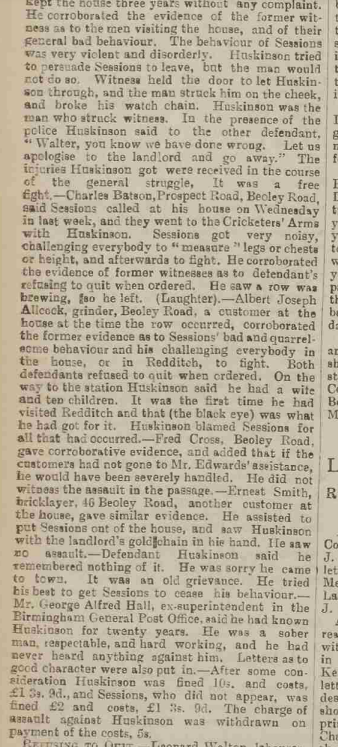
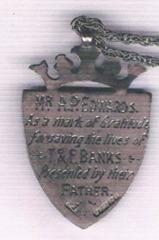
In 1910 a gold medal was given to Albert Parker Edwards by Mr. Banks, a policeman, in Redditch for saving the life of his two children from drowning in a brook on the Proctor farm which adjoined The Cricketers Arms. The story my father heard was that policeman Banks could not persuade the town of Redditch to come up with an award for Albert Parker Edwards so policeman Banks did it himself. William Banks, police constable, was living on Beoley Road on the 1911 census. His son Thomas was aged 5 and his daughter Frances was 8. It seems that when the father retired from the police he moved to Worcester. Thomas went into the hotel business and in 1939 was the manager of the Abbey hotel in Kenilworth. Frances married Edward Pardoe and was living along Redditch Road, Alvechurch in 1939.
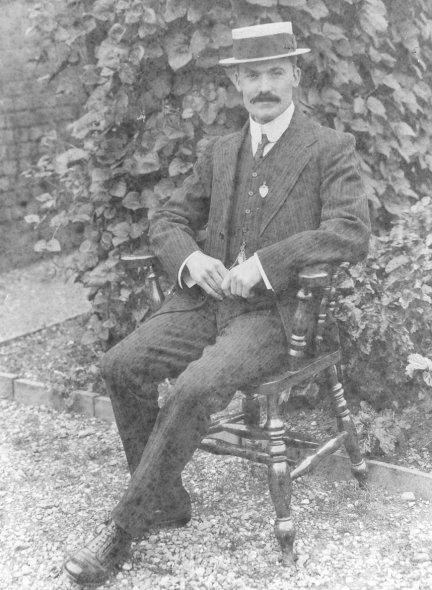
My grandmother Peggy had the gold medal put on a gold chain for me in the 1970s. When I left England in the 1980s, I gave it back to her for safekeeping. When she died, the medal on the chain ended up in my fathers possession, who claims to have no knowledge that it was once given to me!
The medal:
Albert Parker Edwards wearing the medal:
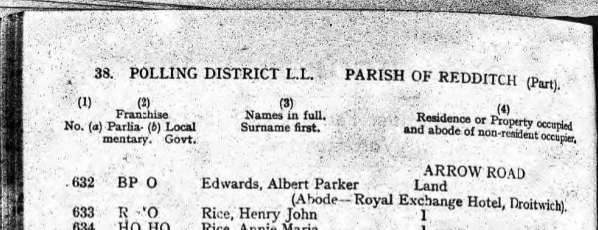
In 1921 Albert was at the The Royal Exchange hotel in Droitwich:
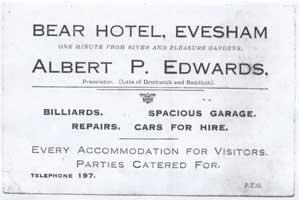
Between 1922 and 1927 Albert kept the Bear Hotel in Evesham:
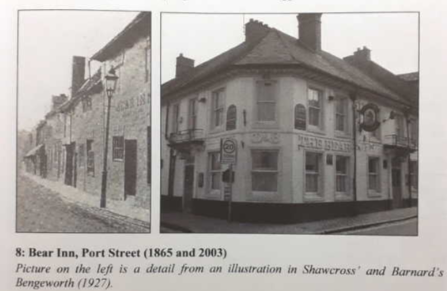
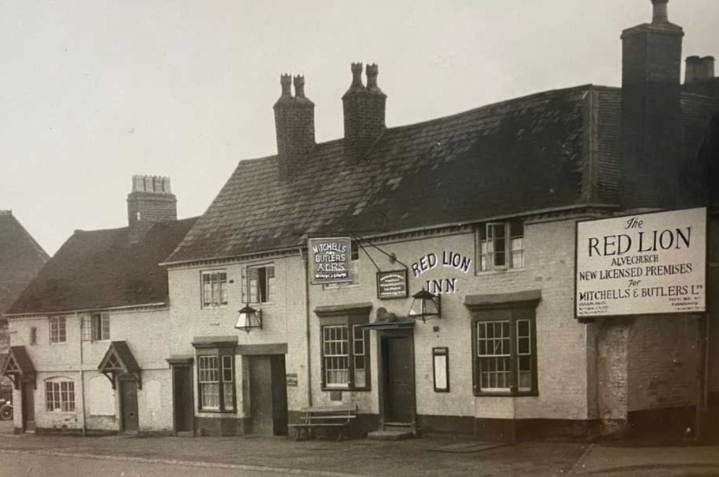
Then Albert and Annie moved to the Red Lion at Astwood Bank:
Albert in the garden behind the Red Lion:
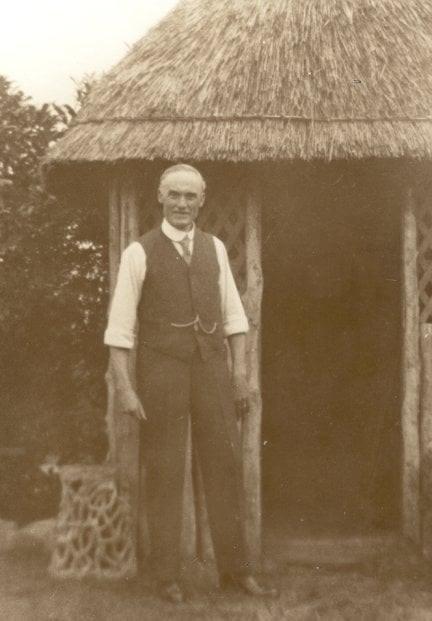
They stayed at the Red Lion until Albert Parker Edwards died on the 11th of February, 1930 aged 53.
 October 19, 2022 at 6:46 am #6336
In reply to: Family Stories From The Other Side ~ Book Two
The Hamstall Ridware Connection
Stubbs and Woods
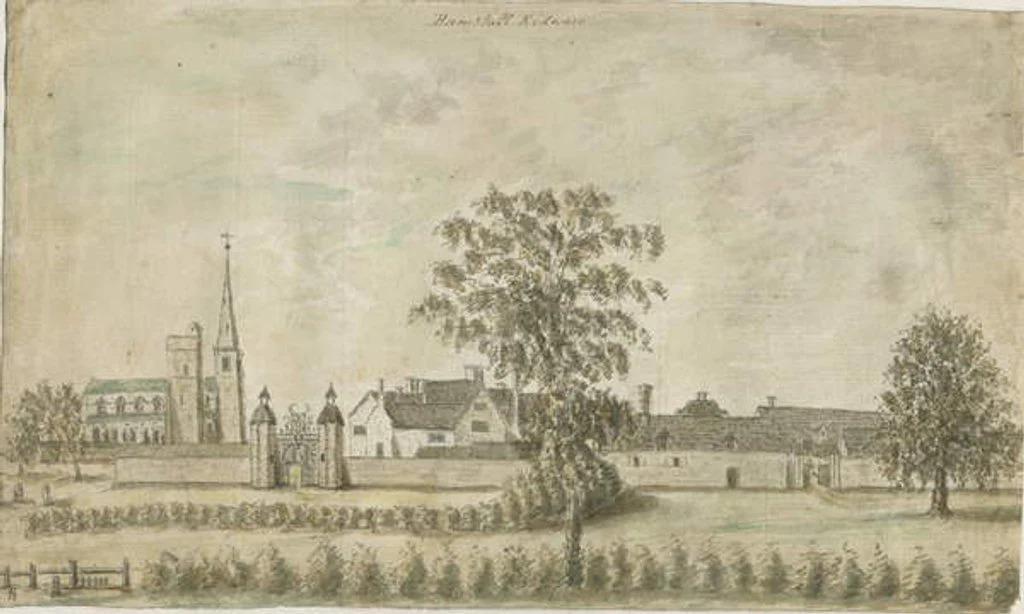 Hamstall Ridware
Charles Tomlinson‘s (1847-1907) wife Emma Grattidge (1853-1911) was born in Wolverhampton, the daughter and youngest child of William Grattidge (1820-1887) born in Foston, Derbyshire, and Mary Stubbs (1819-1880), born in Burton on Trent, daughter of Solomon Stubbs.
Solomon Stubbs (1781-1857) was born in Hamstall Ridware in 1781, the son of Samuel and Rebecca. Samuel Stubbs (1743-) and Rebecca Wood (1754-) married in 1769 in Darlaston. Samuel and Rebecca had six other children, all born in Darlaston. Sadly four of them died in infancy. Son John was born in 1779 in Darlaston and died two years later in Hamstall Ridware in 1781, the same year that Solomon was born there.
But why did they move to Hamstall Ridware?
Samuel Stubbs was born in 1743 in Curdworth, Warwickshire (near to Birmingham). I had made a mistake on the tree (along with all of the public trees on the Ancestry website) and had Rebecca Wood born in Cheddleton, Staffordshire. Rebecca Wood from Cheddleton was also born in 1843, the right age for the marriage. The Rebecca Wood born in Darlaston in 1754 seemed too young, at just fifteen years old at the time of the marriage. I couldn’t find any explanation for why a woman from Cheddleton would marry in Darlaston and then move to Hamstall Ridware. People didn’t usually move around much other than intermarriage with neighbouring villages, especially women. I had a closer look at the Darlaston Rebecca, and did a search on her father William Wood. I found his 1784 will online in which he mentions his daughter Rebecca, wife of Samuel Stubbs. Clearly the right Rebecca Wood was the one born in Darlaston, which made much more sense.
An excerpt from William Wood’s 1784 will mentioning daughter Rebecca married to Samuel Stubbs:
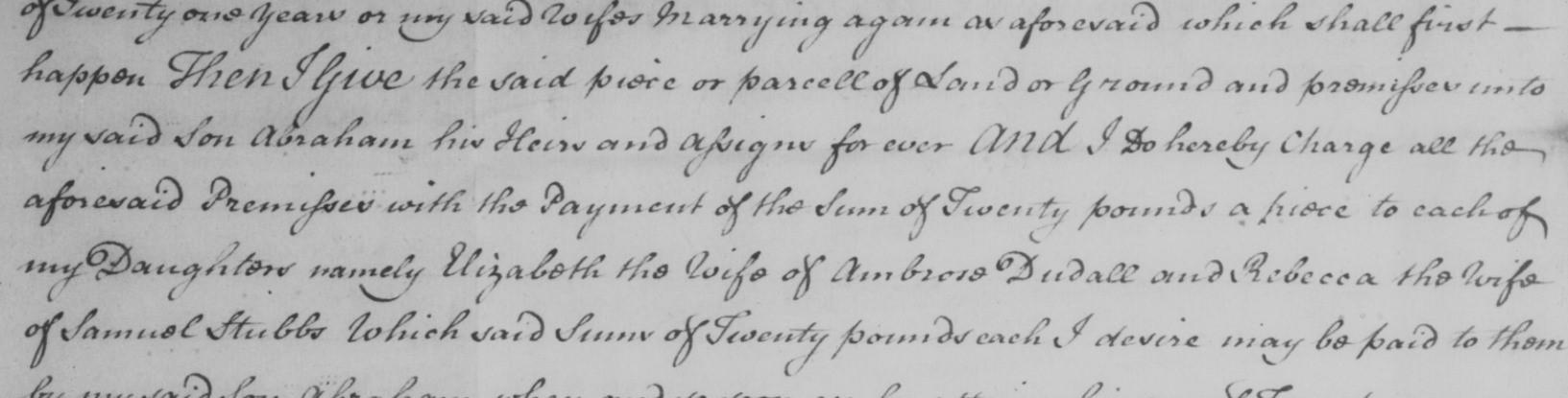
But why did they move to Hamstall Ridware circa 1780?
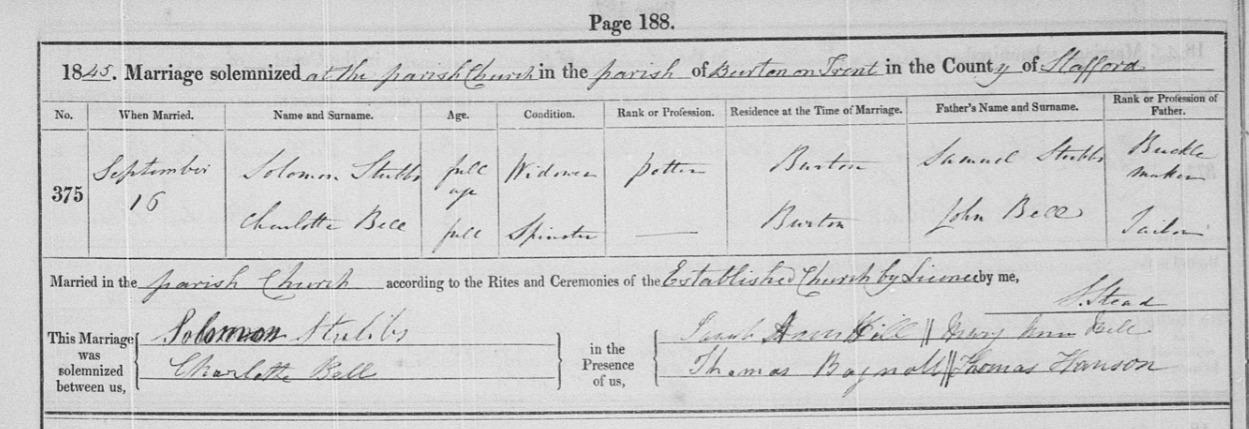
I had not intially noticed that Solomon Stubbs married again the year after his wife Phillis Lomas (1787-1844) died. Solomon married Charlotte Bell in 1845 in Burton on Trent and on the marriage register, Solomon’s father Samuel Stubbs occupation was mentioned: Samuel was a buckle maker.
Marriage of Solomon Stubbs and Charlotte Bell, father Samuel Stubbs buckle maker:
A rudimentary search on buckle making in the late 1700s provided a possible answer as to why Samuel and Rebecca left Darlaston in 1781. Shoe buckles had gone out of fashion, and by 1781 there were half as many buckle makers in Wolverhampton as there had been previously.
“Where there were 127 buckle makers at work in Wolverhampton, 68 in Bilston and 58 in Birmingham in 1770, their numbers had halved in 1781.”
via “historywebsite”(museum/metalware/steel)
Steel buckles had been the height of fashion, and the trade became enormous in Wolverhampton. Wolverhampton was a steel working town, renowned for its steel jewellery which was probably of many types. The trade directories show great numbers of “buckle makers”. Steel buckles were predominantly made in Wolverhampton: “from the late 1760s cut steel comes to the fore, from the thriving industry of the Wolverhampton area”. Bilston was also a great centre of buckle making, and other areas included Walsall. (It should be noted that Darlaston, Walsall, Bilston and Wolverhampton are all part of the same area)
In 1860, writing in defence of the Wolverhampton Art School, George Wallis talks about the cut steel industry in Wolverhampton. Referring to “the fine steel workers of the 17th and 18th centuries” he says: “Let them remember that 100 years ago [sc. c. 1760] a large trade existed with France and Spain in the fine steel goods of Birmingham and Wolverhampton, of which the latter were always allowed to be the best both in taste and workmanship. … A century ago French and Spanish merchants had their houses and agencies at Birmingham for the purchase of the steel goods of Wolverhampton…..The Great Revolution in France put an end to the demand for fine steel goods for a time and hostile tariffs finished what revolution began”.
The next search on buckle makers, Wolverhampton and Hamstall Ridware revealed an unexpected connecting link.
In Riotous Assemblies: Popular Protest in Hanoverian England by Adrian Randall:
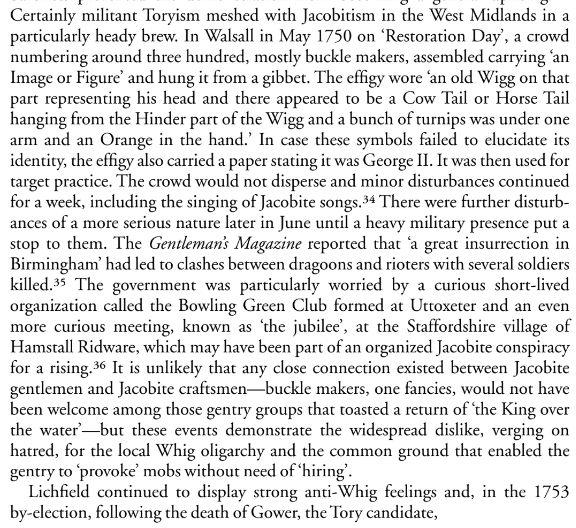
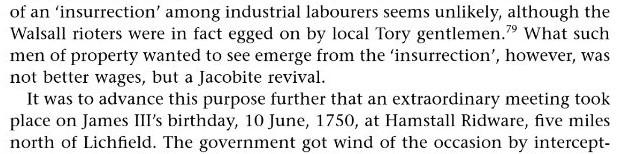
In Walsall in 1750 on “Restoration Day” a crowd numbering 300 assembled, mostly buckle makers, singing Jacobite songs and other rebellious and riotous acts. The government was particularly worried about a curious meeting known as the “Jubilee” in Hamstall Ridware, which may have been part of a conspiracy for a Jacobite uprising.
But this was thirty years before Samuel and Rebecca moved to Hamstall Ridware and does not help to explain why they moved there around 1780, although it does suggest connecting links.
Rebecca’s father, William Wood, was a brickmaker. This was stated at the beginning of his will. On closer inspection of the will, he was a brickmaker who owned four acres of brick kilns, as well as dwelling houses, shops, barns, stables, a brewhouse, a malthouse, cattle and land.
A page from the 1784 will of William Wood:
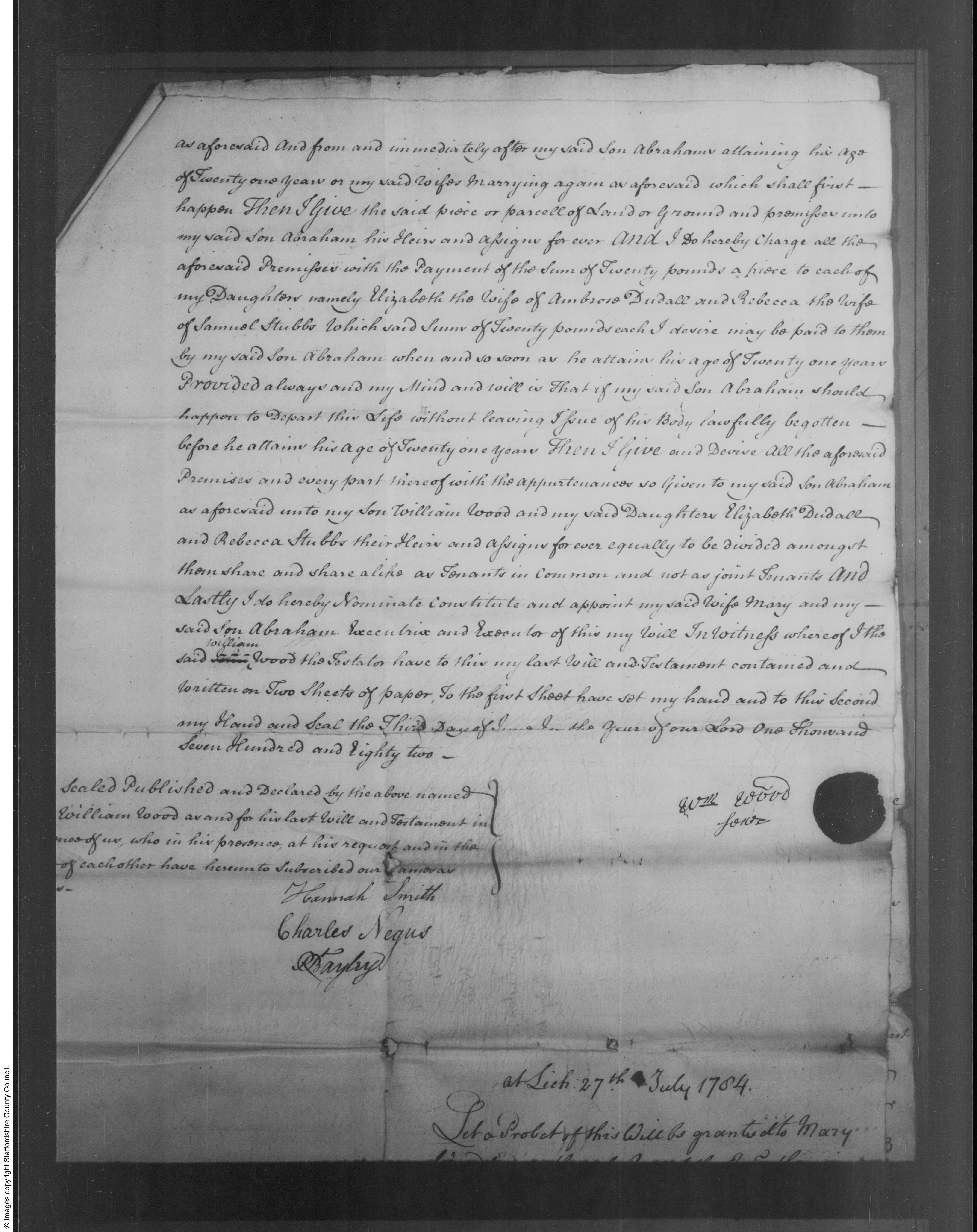
The 1784 will of William Wood of Darlaston:
I William Wood the elder of Darlaston in the county of Stafford, brickmaker, being of sound and disposing mind memory and understanding (praised be to god for the same) do make publish and declare my last will and testament in manner and form following (that is to say) {after debts and funeral expense paid etc} I give to my loving wife Mary the use usage wear interest and enjoyment of all my goods chattels cattle stock in trade ~ money securities for money personal estate and effects whatsoever and wheresoever to hold unto her my said wife for and during the term of her natural life providing she so long continues my widow and unmarried and from or after her decease or intermarriage with any future husband which shall first happen.
Then I give all the said goods chattels cattle stock in trade money securites for money personal estate and effects unto my son Abraham Wood absolutely and forever. Also I give devise and bequeath unto my said wife Mary all that my messuages tenement or dwelling house together with the malthouse brewhouse barn stableyard garden and premises to the same belonging situate and being at Darlaston aforesaid and now in my own possession. Also all that messuage tenement or dwelling house together with the shop garden and premises with the appurtenances to the same ~ belonging situate in Darlaston aforesaid and now in the several holdings or occupation of George Knowles and Edward Knowles to hold the aforesaid premises and every part thereof with the appurtenances to my said wife Mary for and during the term of her natural life provided she so long continues my widow and unmarried. And from or after her decease or intermarriage with a future husband which shall first happen. Then I give and devise the aforesaid premises and every part thereof with the appurtenances unto my said son Abraham Wood his heirs and assigns forever.
Also I give unto my said wife all that piece or parcel of land or ground inclosed and taken out of Heath Field in the parish of Darlaston aforesaid containing four acres or thereabouts (be the same more or less) upon which my brick kilns erected and now in my own possession. To hold unto my said wife Mary until my said son Abraham attains his age of twenty one years if she so long continues my widow and unmarried as aforesaid and from and immediately after my said son Abraham attaining his age of twenty one years or my said wife marrying again as aforesaid which shall first happen then I give the said piece or parcel of land or ground and premises unto my said son Abraham his heirs and assigns forever.
And I do hereby charge all the aforesaid premises with the payment of the sum of twenty pounds a piece to each of my daughters namely Elizabeth the wife of Ambrose Dudall and Rebecca the wife of Samuel Stubbs which said sum of twenty pounds each I devise may be paid to them by my said son Abraham when and so soon as he attains his age of twenty one years provided always and my mind and will is that if my said son Abraham should happen to depart this life without leaving issue of his body lawfully begotten before he attains his age of twenty one years then I give and devise all the aforesaid premises and every part thereof with the appurtenances so given to my said son Abraham as aforesaid unto my said son William Wood and my said daughter Elizabeth Dudall and Rebecca Stubbs their heirs and assigns forever equally divided among them share and share alike as tenants in common and not as joint tenants. And lastly I do hereby nominate constitute and appoint my said wife Mary and my said son Abraham executrix and executor of this my will.
The marriage of William Wood (1725-1784) and Mary Clews (1715-1798) in 1749 was in Hamstall Ridware.
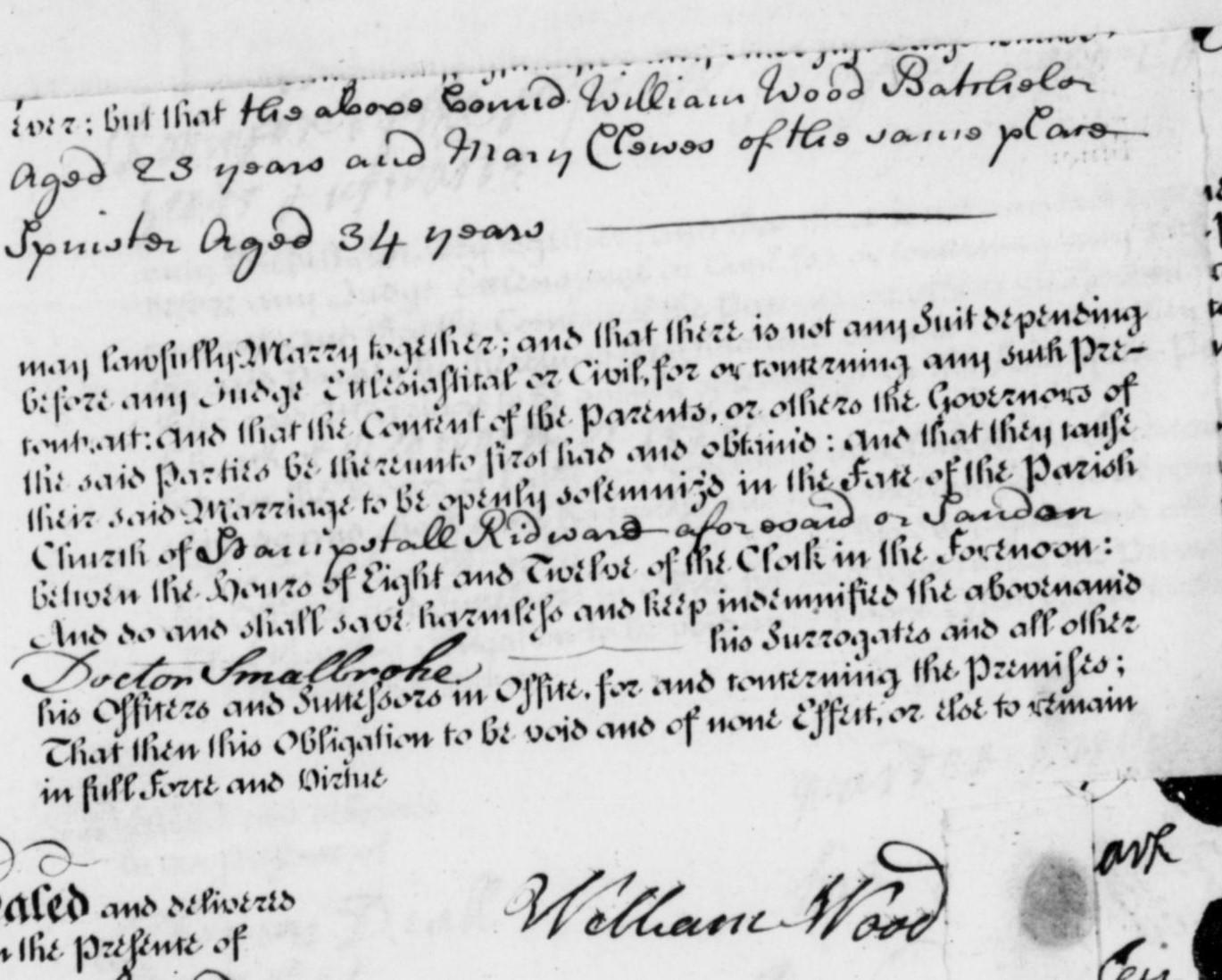
Mary was eleven years Williams senior, and it appears that they both came from Hamstall Ridware and moved to Darlaston after they married. Clearly Rebecca had extended family there (notwithstanding any possible connecting links between the Stubbs buckle makers of Darlaston and the Hamstall Ridware Jacobites thirty years prior). When the buckle trade collapsed in Darlaston, they likely moved to find employment elsewhere, perhaps with the help of Rebecca’s family.
I have not yet been able to find deaths recorded anywhere for either Samuel or Rebecca (there are a couple of deaths recorded for a Samuel Stubbs, one in 1809 in Wolverhampton, and one in 1810 in Birmingham but impossible to say which, if either, is the right one with the limited information, and difficult to know if they stayed in the Hamstall Ridware area or perhaps moved elsewhere)~ or find a reason for their son Solomon to be in Burton upon Trent, an evidently prosperous man with several properties including an earthenware business, as well as a land carrier business.
October 11, 2022 at 11:39 am #6333In reply to: Family Stories From The Other Side ~ Book Two
The Grattidge Family
The first Grattidge to appear in our tree was Emma Grattidge (1853-1911) who married Charles Tomlinson (1847-1907) in 1872.
Charles Tomlinson (1873-1929) was their son and he married my great grandmother Nellie Fisher. Their daughter Margaret (later Peggy Edwards) was my grandmother on my fathers side.
Emma Grattidge was born in Wolverhampton, the daughter and youngest child of William Grattidge (1820-1887) born in Foston, Derbyshire, and Mary Stubbs, born in Burton on Trent, daughter of Solomon Stubbs, a land carrier. William and Mary married at St Modwens church, Burton on Trent, in 1839. It’s unclear why they moved to Wolverhampton. On the 1841 census William was employed as an agent, and their first son William was nine months old. Thereafter, William was a licensed victuallar or innkeeper.
William Grattidge was born in Foston, Derbyshire in 1820. His parents were Thomas Grattidge, farmer (1779-1843) and Ann Gerrard (1789-1822) from Ellastone. Thomas and Ann married in 1813 in Ellastone. They had five children before Ann died at the age of 25:
Bessy was born in 1815, Thomas in 1818, William in 1820, and Daniel Augustus and Frederick were twins born in 1822. They were all born in Foston. (records say Foston, Foston and Scropton, or Scropton)
On the 1841 census Thomas had nine people additional to family living at the farm in Foston, presumably agricultural labourers and help.
After Ann died, Thomas had three children with Kezia Gibbs (30 years his junior) before marrying her in 1836, then had a further four with her before dying in 1843. Then Kezia married Thomas’s nephew Frederick Augustus Grattidge (born in 1816 in Stafford) in London in 1847 and had two more!
The siblings of William Grattidge (my 3x great grandfather):
Frederick Grattidge (1822-1872) was a schoolmaster and never married. He died at the age of 49 in Tamworth at his twin brother Daniels address.
Daniel Augustus Grattidge (1822-1903) was a grocer at Gungate in Tamworth.
Thomas Grattidge (1818-1871) married in Derby, and then emigrated to Illinois, USA.
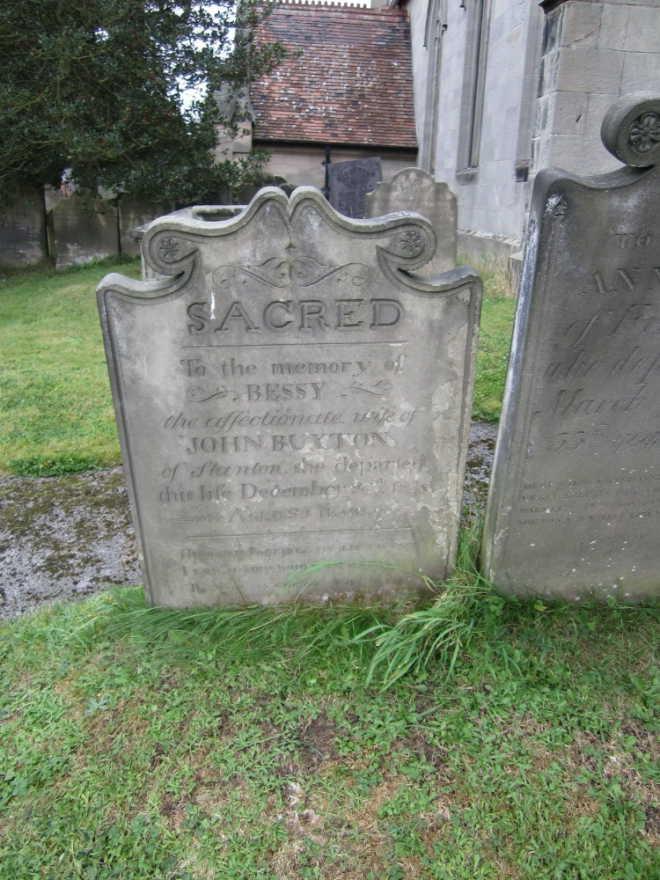
Bessy Grattidge (1815-1840) married John Buxton, farmer, in Ellastone in January 1838. They had three children before Bessy died in December 1840 at the age of 25: Henry in 1838, John in 1839, and Bessy Buxton in 1840. Bessy was baptised in January 1841. Presumably the birth of Bessy caused the death of Bessy the mother.
Bessy Buxton’s gravestone:
“Sacred to the memory of Bessy Buxton, the affectionate wife of John Buxton of Stanton She departed this life December 20th 1840, aged 25 years. “Husband, Farewell my life is Past, I loved you while life did last. Think on my children for my sake, And ever of them with I take.”
20 Dec 1840, Ellastone, Staffordshire
In the 1843 will of Thomas Grattidge, farmer of Foston, he leaves fifth shares of his estate, including freehold real estate at Findern, to his wife Kezia, and sons William, Daniel, Frederick and Thomas. He mentions that the children of his late daughter Bessy, wife of John Buxton, will be taken care of by their father. He leaves the farm to Keziah in confidence that she will maintain, support and educate his children with her.
An excerpt from the will:
I give and bequeath unto my dear wife Keziah Grattidge all my household goods and furniture, wearing apparel and plate and plated articles, linen, books, china, glass, and other household effects whatsoever, and also all my implements of husbandry, horses, cattle, hay, corn, crops and live and dead stock whatsoever, and also all the ready money that may be about my person or in my dwelling house at the time of my decease, …I also give my said wife the tenant right and possession of the farm in my occupation….
A page from the 1843 will of Thomas Grattidge:
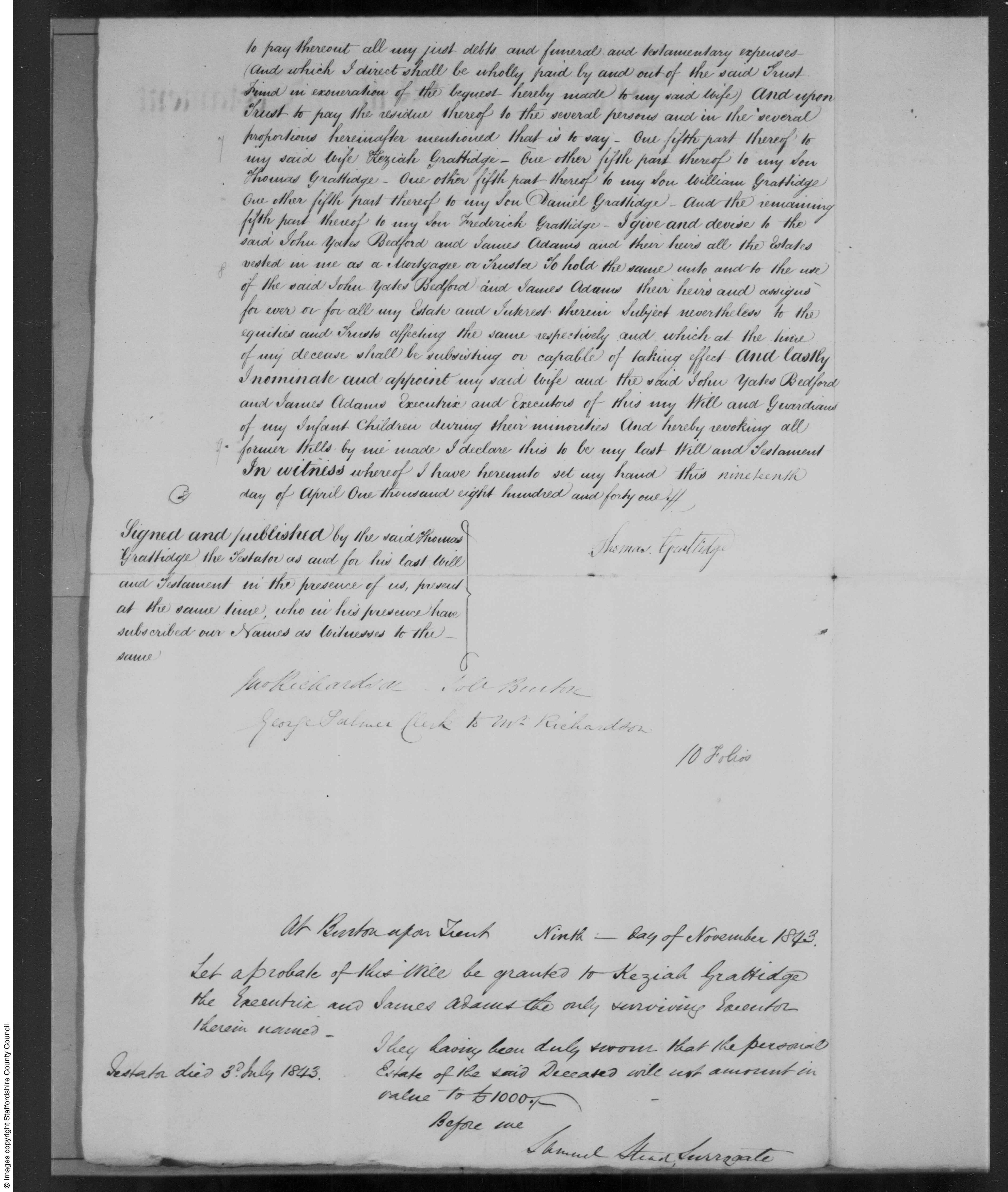
William Grattidges half siblings (the offspring of Thomas Grattidge and Kezia Gibbs):
Albert Grattidge (1842-1914) was a railway engine driver in Derby. In 1884 he was driving the train when an unfortunate accident occured outside Ambergate. Three children were blackberrying and crossed the rails in front of the train, and one little girl died.
Albert Grattidge:
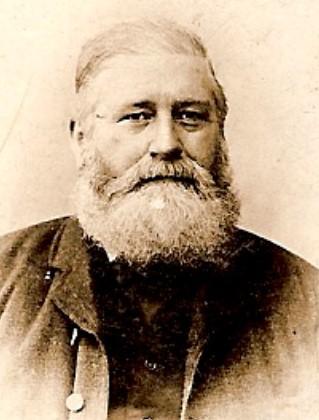
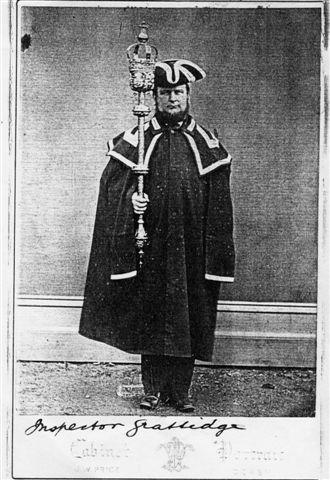
George Grattidge (1826-1876) was baptised Gibbs as this was before Thomas married Kezia. He was a police inspector in Derby.
George Grattidge:
Edwin Grattidge (1837-1852) died at just 15 years old.
Ann Grattidge (1835-) married Charles Fletcher, stone mason, and lived in Derby.
Louisa Victoria Grattidge (1840-1869) was sadly another Grattidge woman who died young. Louisa married Emmanuel Brunt Cheesborough in 1860 in Derby. In 1861 Louisa and Emmanuel were living with her mother Kezia in Derby, with their two children Frederick and Ann Louisa. Emmanuel’s occupation was sawyer. (Kezia Gibbs second husband Frederick Augustus Grattidge was a timber merchant in Derby)
At the time of her death in 1869, Emmanuel was the landlord of the White Hart public house at Bridgegate in Derby.
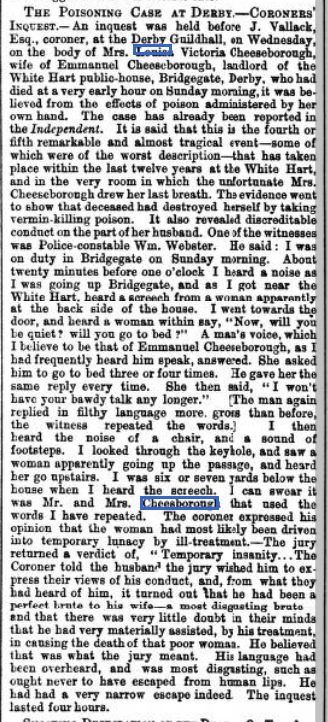
The Derby Mercury of 17th November 1869:
“On Wednesday morning Mr Coroner Vallack held an inquest in the Grand
Jury-room, Town-hall, on the body of Louisa Victoria Cheeseborough, aged
33, the wife of the landlord of the White Hart, Bridge-gate, who committed
suicide by poisoning at an early hour on Sunday morning. The following
evidence was taken:Mr Frederick Borough, surgeon, practising in Derby, deposed that he was
called in to see the deceased about four o’clock on Sunday morning last. He
accordingly examined the deceased and found the body quite warm, but dead.
He afterwards made enquiries of the husband, who said that he was afraid
that his wife had taken poison, also giving him at the same time the
remains of some blue material in a cup. The aunt of the deceased’s husband
told him that she had seen Mrs Cheeseborough put down a cup in the
club-room, as though she had just taken it from her mouth. The witness took
the liquid home with him, and informed them that an inquest would
necessarily have to be held on Monday. He had made a post mortem
examination of the body, and found that in the stomach there was a great
deal of congestion. There were remains of food in the stomach and, having
put the contents into a bottle, he took the stomach away. He also examined
the heart and found it very pale and flabby. All the other organs were
comparatively healthy; the liver was friable.Hannah Stone, aunt of the deceased’s husband, said she acted as a servant
in the house. On Saturday evening, while they were going to bed and whilst
witness was undressing, the deceased came into the room, went up to the
bedside, awoke her daughter, and whispered to her. but what she said the
witness did not know. The child jumped out of bed, but the deceased closed
the door and went away. The child followed her mother, and she also
followed them to the deceased’s bed-room, but the door being closed, they
then went to the club-room door and opening it they saw the deceased
standing with a candle in one hand. The daughter stayed with her in the
room whilst the witness went downstairs to fetch a candle for herself, and
as she was returning up again she saw the deceased put a teacup on the
table. The little girl began to scream, saying “Oh aunt, my mother is
going, but don’t let her go”. The deceased then walked into her bed-room,
and they went and stood at the door whilst the deceased undressed herself.
The daughter and the witness then returned to their bed-room. Presently
they went to see if the deceased was in bed, but she was sitting on the
floor her arms on the bedside. Her husband was sitting in a chair fast
asleep. The witness pulled her on the bed as well as she could.
Ann Louisa Cheesborough, a little girl, said that the deceased was her
mother. On Saturday evening last, about twenty minutes before eleven
o’clock, she went to bed, leaving her mother and aunt downstairs. Her aunt
came to bed as usual. By and bye, her mother came into her room – before
the aunt had retired to rest – and awoke her. She told the witness, in a
low voice, ‘that she should have all that she had got, adding that she
should also leave her her watch, as she was going to die’. She did not tell
her aunt what her mother had said, but followed her directly into the
club-room, where she saw her drink something from a cup, which she
afterwards placed on the table. Her mother then went into her own room and
shut the door. She screamed and called her father, who was downstairs. He
came up and went into her room. The witness then went to bed and fell
asleep. She did not hear any noise or quarrelling in the house after going
to bed.Police-constable Webster was on duty in Bridge-gate on Saturday evening
last, about twenty minutes to one o’clock. He knew the White Hart
public-house in Bridge-gate, and as he was approaching that place, he heard
a woman scream as though at the back side of the house. The witness went to
the door and heard the deceased keep saying ‘Will you be quiet and go to
bed’. The reply was most disgusting, and the language which the
police-constable said was uttered by the husband of the deceased, was
immoral in the extreme. He heard the poor woman keep pressing her husband
to go to bed quietly, and eventually he saw him through the keyhole of the
door pass and go upstairs. his wife having gone up a minute or so before.
Inspector Fearn deposed that on Sunday morning last, after he had heard of
the deceased’s death from supposed poisoning, he went to Cheeseborough’s
public house, and found in the club-room two nearly empty packets of
Battie’s Lincoln Vermin Killer – each labelled poison.Several of the Jury here intimated that they had seen some marks on the
deceased’s neck, as of blows, and expressing a desire that the surgeon
should return, and re-examine the body. This was accordingly done, after
which the following evidence was taken:Mr Borough said that he had examined the body of the deceased and observed
a mark on the left side of the neck, which he considered had come on since
death. He thought it was the commencement of decomposition.
This was the evidence, after which the jury returned a verdict “that the
deceased took poison whilst of unsound mind” and requested the Coroner to
censure the deceased’s husband.The Coroner told Cheeseborough that he was a disgusting brute and that the
jury only regretted that the law could not reach his brutal conduct.
However he had had a narrow escape. It was their belief that his poor
wife, who was driven to her own destruction by his brutal treatment, would
have been a living woman that day except for his cowardly conduct towards
her.The inquiry, which had lasted a considerable time, then closed.”
In this article it says:
“it was the “fourth or fifth remarkable and tragical event – some of which were of the worst description – that has taken place within the last twelve years at the White Hart and in the very room in which the unfortunate Louisa Cheesborough drew her last breath.”
Sheffield Independent – Friday 12 November 1869:
 July 10, 2022 at 2:36 am #6317
In reply to: The Sexy Wooden Leg
The sharp rat-a-tat on the door startled Olga Herringbonevsky. The initial surprise quickly turned to annoyance. It was 11am and she wasn’t expecting a knock on the door at 11am. At 10am she expected a knock. It would be Larysa with the lukewarm cup of tea and a stale biscuit. Sometimes Olga complained about it and Larysa would say, Well you’re on the third floor so what do you expect? And she’d look cross and pour the tea so some of it slopped into the saucer. So the biscuits go stale on the way up do they? Olga would mutter. At 10:30am Larysa would return to collect the cup and saucer. I can’t do this much longer, she’d say. I’m not young any more and all these damn stairs. She’d been saying that for as long as Olga could remember.
For a moment, Olga contemplated ignoring the intrusion but the knocking started up again, this time accompanied by someone shouting her name.
With a very loud sigh, she put her book on the side table, face down so she would not lose her place for it was a most enjoyable whodunit, and hauled herself up from the chair. Her ankle was not good since she’d gone over on it the other day and Olga was in a very poor mood by the time she reached the door.
“Yes?” She glowered at Egbert.
“Have you seen this?” Egbert was waving a piece of paper at her.
“No,” Olga started to close the door.
“Olga stop!” Egbert’s face had reddened and Olga wondered if he might cry. Again, he waved the piece of paper in her face and then let his hand fall defeated to his side. “Olga, it’s bad news. You should have got a letter .”
Olga glanced at the pile of unopened letters on her dresser. It was never good news. She couldn’t be bothered with letters any more.
“Well, Egbert, I suppose you’d better come in”.
“That Ursula has a heart of steel,” said Olga when she’d heard the news.
“Pfft,” said Egbert. “She has no heart. This place has always been about money for her.”
“It’s bad times, Egbert. Bad times.”
Egbert nodded. “It is, Olga. But there must be something we can do.” He pursed his lips and Olga noticed that he would not meet her eyes.
“What? Spit it out, Old Man.”
He looked at her briefly before his eyes slid back to the dirty grey carpet. “I have heard stories, Olga. That you are … well connected. That you know people.”
Olga noticed that it had become difficult to breathe. Seeing Egbert looking at her with concern, she made an effort to steady herself. She took an extra big gasp of air and pointed to the book face-down on the side table. “That is a very good book I am reading. You may borrow it when I have finished.”
Egbert nodded. “Thank you.” he said and they both stared at the book.
“It was a long time ago, Egbert. And no business of anyone else.” Olga knew her voice was sharp but not sharp enough it seemed as Egbert was not done yet with all his prying words.
“Olga, you said it yourself. These are bad times. And desperate measures are needed or we will all perish.” Now he looked her in the eyes. “Old woman, swallow your pride. You must save yourself and all of us here.”
July 7, 2022 at 9:45 am #6315In reply to: The Sexy Wooden Leg
It was not yet 9am and Eusebius Kazandis was already sweating. The morning sun was hitting hard on the tarp of his booth. He put the last cauldron among lines of cauldrons on a sagging table at the summer fair of Innsbruck, Austria. It was a tiny three-legged black cauldron with a simple Celtic knot on one side and a tree on the other side, like all the others. His father’s father’s father used to make cauldrons for a living, the kind you used to distil ouzo or cook meals for an Inn. But as time went by and industrialisation made it easier for cooks, the trade slowly evolved toward smaller cauldrons for modern Wiccans. A modern witch wanted it portable and light, ready to use in everyday life situations, and Eusebius was there to provide it for them.
Eusebius sat on his chair and sighed. He couldn’t help but notice the woman in colourful dress who had spread a shawl on the grass under the tall sequoia tree. Nobody liked this spot under the branches oozing sticky resin. She didn’t seem to mind. She was arranging small colourful bottles of oil on her shawl. A sign near her said : Massage oils, Fragrant oils, Polishing oils, all with different names evocative of different properties. He hadn’t noticed her yesterday when everybody was installing their stalls. He wondered if she had paid her fee.
Rosa was smiling as she spread in front of her the meadow flowers she’d picked on her way to the market. It was another beautiful day, under the shade and protection of the big sequoia tree watching over her. She assembled small bouquets and put them in between the vials containing her precious handmade oils. She had noticed people, and especially women, would naturally gather around well dressed stalls and engage conversation. Since she left her hometown of Torino, seven years ago, she’d followed the wind on her journey across Europe. It had led her to Innsbruck and had suddenly stopped blowing. That usually meant she had something to do there, but it also meant that she would have to figure out what she was meant to do before she could go on with her life.
The stout man waiting behind his dark cauldrons, was watching her again. He looked quite sad, and she couldn’t help but thinking he was not where he needed to be. When she looked at him, she saw Hephaestus whose inner fire had been tamed. His banner was a mishmash of religious stuff, aimed at pagans and budding witches. Although his grim booth would most certainly benefit from a feminine touch, but she didn’t want to offend him by a misplaced suggestion. It was not her place to find his place.
Rosa, who knew to cultivate any available friendship when she arrived somewhere, waved at the man. Startled, he looked away as if caught doing something inappropriate. Rosa sighed. Maybe she should have bring him some coffee.
As her first clients arrived, she prayed for a gush of wind to tell her where to go next. But the branches of the old tree remained perfectly still under the scorching sun.
-
AuthorSearch Results