


Search Results for 'water'
-
AuthorSearch Results
-
February 15, 2024 at 11:04 am #7373
In reply to: The Incense of the Quadrivium’s Mystiques
The disturbance had been felt in the bustling heart of Rio.
The warmth of the night had amplified the vibrant energy of the Carnival in Rio, a pulsating heart that reverberated through the city’s veins. But as the beat of samba drums echoed in the distance, a different rhythm was being played behind closed doors. Iemanjá, the head of the Umbanda clan and a pillar of strength in the Witches of the New World, recognized the tremors of another magick at play.
Gathering her coven under the silvery light of the crescent moon, they began the rhythmic dance of the macumba ritual. The air grew heavy, scented with copal and the salty tang of the ocean. In the center of their circle, a waterspout swirled, revealing in its shallow reflection the glow of a portal that emitted the icy chill of a Limerick dawn.
Piercing through the veil of secrecy, Iemanjá’s ethereal sight witnessed the foreign witches, led by the enigmatic Malové, who dared to encroach upon their territory without the required parchmentwork. And yet, their motives remained hidden within the vortex of desire and lust emanating from the Carnival.
A murmur of discontent rippled through the Umbanda clan. Mesmirah, her second, couldn’t stop herself shouting Sacrilégio! They were not ones to tolerate trespassers, let alone those who dared to siphon off energy from their sacred lands.
Silêncio! Iemanjá commanded the crowd. She’d recognized Malové from having attended and graduated the same MWA (Master of Witchcraft Administration), and she was aware of Malove’s little incense business; Malové didn’t strike her as someone to bypass the rules, some handed down through countless generations, binding together most witches across the world despite their varying practices.
She had to be mindful of the delicate balance between the Old World clans and the New. An unauthorized incursion could easily spark a conflict that would ripple through the witching worlds.
Just as the ocean waves respect the boundary of the shore, so must the witches respect the territories — an ancient pact carved in the pillars of the Old World. This blatant disregard by Malové and her coven was akin to scratching the surface of a simmering cauldron, threatening to disrupt the harmony that had been carefully cultivated.
As the revelation sunk in, Iemanjá knew they had to tread carefully. A confrontation would lead to a war bigger than themselves —yet, they couldn’t let this transgression slide. Their pride and the protection of their territory demanded action.
Mesmirah! she finally spoke You will take three witches with you, and investigate what business these Old World witches have in Rio. You will report to me.
Mesmirah nodded, understanding that she was not yet granted authority to investigate in an official capacity. Iemanja was acting surprisingly soft, and didn’t want the Elders to be informed yet, but had recognized action was needed. Mesmirah was confident she would easily find out what was happening, and maybe use that opportunity to her —their advantage. The game of power was on.
February 13, 2024 at 9:24 pm #7370In reply to: The Incense of the Quadrivium’s Mystiques
She knew she was being followed even before her familiar started to psst her about the dark haired cloaked stranger.
Eris couldn’t pinpoint precisely what drove her to leap headfirst into the swirling vortex. Perhaps it was a misplaced sense of duty —it was certainly not the sentiment of thrill that Malové had attempted to instill. It was probably the same habit that compelled her to eat the repulsive morsels off her plate first, working her way up to the more palatable fare.
Kirottu juoma, she muttered under her breath as she forced down the bitter potion Frigella had provided, intended to counteract the disorienting effects of the displacement spells within the vortex. Their abrupt arrival in the sultry heat of Rio caught them off guard, despite the stillness of the night.
“Would go down better with a dash of brandy” Truella said, wincing. She appeared on and off, and seemed to struggle to remain focused.
“I can’t believe it! Are you actually on a bilocating spell?” Malové asked reproachfully to Truella. “I thought it was obvious I needed your undivided attention!”
“Sorry,” Truella said after a moment of absence and a burp. “Was talking to Roger at the same time.” Then catching up with the remark, she shrugged and retorted “must have missed the fine print.”
Malové remained stoic like a serene swan above water, her mad paddling never perceptible. “No time to dawdle, we have to make preparations for the gathering of essence. “Jeezel! Are you listening?”
“Yes, M’am,… I mean Grand Hexmistress.”
The other witches looked at her like she’d blurted out something out of place. Malové chose to let it pass. “Quick now, you’re the one with the sigils to find us the perfect spot to set up our equipment.”
“Yes, yes! I’m on it!” Jeezel replied, so visibly distracted that her wig went askew by a millimeter without her noticing.
“Have you forgotten proper decorum in addressing the Head Witch? What’s happening?” Frigella drew Jeezel gently by the sleeve.
Jeezel’s eyes widened in mild panic: “I think I may have forgotten to close the portal.”
February 4, 2024 at 4:13 pm #7339In reply to: The Incense of the Quadrivium’s Mystiques
4pm EET.
Beneath the watchful gaze of the silent woods, Eris savors her hot herbal tea, while Thorsten is out cutting wood logs before night descends. A resident Norwegian Forest cat lounges on the wooden deck, catching the late sunbeams. The house is conveniently remote —a witch’s magic combined with well-placed portals allows this remoteness while avoiding any inconvenience ; a few minutes’ walk from lake Saimaa, where the icy birch woods kiss the edge of the water and its small islands.
Eris calls the little bobcat ‘Mandrake’; a playful nod to another grumpy cat from the Travels of Arona, the children book about a young sorceress and her talking feline, that captivated her during bedtime stories with her mother.
Mandrake pays little heed to her, coming and going at his own whim. Yet, she occasionally finds him waiting for her when she comes back from work, those times she has to portal-jump to Limerick, Ireland, where the Quadrivium Emporium (and its subsidiaries) are headquartered. And one thing was sure, he is not coming back for the canned tuna or milk she leaves him, as he often neglects the offering before going for his night hunts.
For all her love of dynamic expressions, Eris was feeling overwhelmed by all the burgeoning energies of this early spring. Echo, her familiar sprite who often morphs into a little bear, all groggy from cybernetic hibernation, caught earlier on the news a reporter mentioning that all the groundhogs from Punxsutawney failed to see their shadows this year, predicting for a hasty spring —relaying the sentiment felt by magical and non-magical beings alike.
Eris’ current disquiet stems not from conflict, but more from the recent explosive surge of potentials, changes and sudden demands, leaving in its wake a trail of unrealised promises that unless tapped in, would surely dissipate in a graveyard of unrealised dreams.
Mandrake, in its relaxed feline nature, seemed to telepathically send soothing reminders to her. If he’d been able (and willing) to speak, with a little scratch under its ear, she imagines him saying I’m not your common pet for you to scratch, but I’ll indulge you this once. Remember what it means to be a witch. To embrace the chaos, not fight it. To dance in the storm rather than seek shelter. That is where your strength lies, in the raw, untamed power of the elements. You need not control the maelstrom; you must become it. Now, be gone. I have a sunbeam to nap in.
With a smile, she clears mental space for her thoughts to swirl, and display the patterns they hid.
A jump in Normandy, indeed. She was there in the first mist of the early morning. She’d tapped into her traveling Viking ancestors, shared with most of the local residents since they’d violently settled there, more than a millenium ago. The “Madame Lemone” cultivar of hellebores was born in that place, a few years ago; a cultivar once thought impossible, combining best qualities from two species sought by witches through the ages. Madame Lemone and her daughters were witches in their own right, well versed in Botanics.
Why hellebores? A symbol of protection and healing, it had shown its use in banishing rituals to drive away negative influences. A tricky plant, beautiful and deadly. Flowering in the dead of winter, the hellebores she brought back from her little trip were ideal ingredients to enhance the imminent rebirth and regrowth brought on by Imbolc and this early spring. It was perfect for this new era filled with challenges. Sometimes, in order to bloom anew, you must face the rot within.
The thoughts kept spinning, segueing into the next. Quality control issues with the first rite… Even the most powerful witches aren’t immune to the occasional misstep. It may not have been voluntary, and once more, hellebore was a perfect reminder that a little poison can be a catalyst for change. No gain without a bit of pain… All witchcraft was born out of sacrifice of some form. An exchange of energy. Something given, for something in return.
Luckily, she’d learnt the third rite had gone well even in her absence. Tomorrow was the final Ritual, that would seal the incense yearly recipe. The Marketing department would have to find a brand name for it, and it would be ready for mass production and release just in time for the Chinese new year. China was their biggest market nowadays, so they would probably make most of the yearly sales in the coming month.
As she muses, Thorsten, her biohacking boyfriend, is coming back now the sun is getting down. A rugged contradiction of man and machine.
“Have you managed to contact your friends?” he asks, his pointed question tempered by a calm demeanor. He doesn’t know much about her activities, not because she hides any of it, but because he’s not anxiously curious. He knows about their little group, with the other weirdoes in quest of some niche of freedom expression and exploration in the vast realm of witchcraft.
“Yes, I did. We had a nice chat with Jeezel and she sends her regards…”
“She bloody always do that, doesn’t she.” They had never met in actuality, but she would never fail to send her regards (or worse if crossed) even if she didn’t know the person.
Eris laughed. “Well, Frigella was going to bed…”
“If I didn’t know better, one could think she does it on purpose.”
Eris continued. “Well, and get that; Tru was busy making some French fries.”
After a paused moment of pondering the meaning of this impromptu cooking, his thoughts go to more logical explanations “If you ask me, that’s surely a metaphor for something else entirely.”
“Meat and potatoes… And sometimes,… just potatoes.”
“Or in this case, possibility for a hearty gratin.”
They share a delightful laughter.
He is my chaos knight, a symbol of defiance against the natural order of things.
A quality she adores.
January 31, 2024 at 4:51 pm #7329In reply to: The Incense of the Quadrivium’s Mystiques
The soft candle light on the altar created moving patterns on the walls draped with velvets and satins. The boudoir was the sanctuary where Jeezel weaved her magic. The patterns on the tapestries changed with her mood, and that night they were a blend of light and dark, electricity made them crackle like lightning in a mid afternoon summer storm.
The altar was a beautifully crafted mahogany table with each legs like a spindle from Sleeping Beauty’s own spinning wheel, but there was no sleeping done here. On her left, her vanity with her collection of wigs, each one a masterpiece styled to perfection, in every shade you could imagine. Tonight, she had chosen the red one. It was a fiery cascade of passion and power, the kind of red that stops traffic. Jeezel needed the confidence and boldness imbued in it to cast the potent Concordia spell.
The air was thick with the perfume of white sage. Lumina, Jeezel’s nine tailed fox familiar, was curled-up on a couch adorned with mystical silver runes pulsating with magic, her muzzle buried in the fur of her nine tails. Her eyes half closed, she was observing Jeezel’s preparation on the altar. The witch had lit a magical fire to heat a cauldron that’s seen more spells than a dictionary.
Jeezel had carefully selected a playlist as harmonious and uplifting as the spell itself, to make a symphony of sounds that would weave together like the most exquisite lace front on a show-stopping wig. She wanted it to be an auditory journey to the highest peaks of harmony that would support her during the casting.
As the precious moon water began to simmer, Jeezel creased the rose petals and the lavender in her hands before she delicately dropped them in the cauldron. The scent rose to her nose and she stirred clockwise with a wand made of the finest willow, while invoking thoughts of unity and shared purpose. The jittery patterns on the walls started to form temporary clusters. A change of colour in the liquid informed the witch it was time to add a drizzle of honey. Jeezel watched as it swirled into the potion, casting a golden glow that promised to mend fences and build bridges. The walls were full of harmonious ripples undulating gently in a soothing manner.
Once the honey was completely melted, Jeezel dropped in an amethyst crystal, whose radiating power would purify the concoction. The potion started to bubble and the glow on the tapestries turned an ugly dark red. Jeezel frowned, wondering if she had done something wrong.
“Stay focused,” said the fox in a brisk voice. “Good. The team energy is fighting back. Plant your stiletto heels firmly into the catwalk, and remember the pageant.”
The familiar’s tawny eyes glowed and the music changed to the emergency song. Jeezel felt an infusion of warm and steady energy from Lumina and started humming in sync with The Ride of the Valkyries. She stirred and chanted, every gesture filled with fiery confidence. The walls glowed darker and the potion hissed. But in the end, it was tamed. The original playlist had resumed to the grand finale. A gentle yet powerful orchestral swell that encapsulated the essence of unity and understanding, wrapping the boudoir and the potion in a sonic embrace that would banish drama and pettiness to the back of the chorus.
Jeezel released the dove feather into the brew, then finished with a sprinkle of glitter with a flourish. And it was done.
“Was the glitter necessary?” asked Lumina.
“Why not? It can’t do any harm.”
The fox jumped from the couch and looked at the potion.
“It’s sparkling like the twinkle in your eye when you hit the stage. It’s ready. Well done.”
Jeezel strained it with grace and poured it into the most fabulous vial she could find, and she sealed it with a kiss.

Jeezel opened Flick Flock and started typing a message to Roland.
The potion is ready. I’m sending it to you through the usual way.
[…]
As you use the potion, you’ll have to perform a kind of team building ritual that will help channel the potion’s power and bring your team together like sequins on a gown, darling.
Fist, dim the lights and set the stage with a circle of candles. Then gather around in the circle with your team, each of you holding a small vial of the potion. Next, take turns sharing something positive, a compliment or an expression of gratitude about the person to your left. It’s about building up that positive energy, getting the good vibes flowing like champagne at a gala.
Once the air is thick with love and camaraderie, each team member will add a drop of the Concordia potion to a communal bowl placed in the center of the circle as a symbol of unity, like a magical melting pot of harmony and shared intentions.
With the power of the potion pooling together, join hands (even if they’re not the touchy-feely types) and my familiar will guide you in an enchanting and rhythmic chant.
Finally with a climactic “clink” of glass of crystal, you’ll all seal the deal, the potion will be activated, and the spell cast.
I can affirm you, your team will be tighter than my corset after Thanksgiving dinner, ready to slay the day with peace and productivity.
Let’s get this done. And don’t forget to add a testimony and click the thumb up.
xoxox Jeezel.
January 30, 2024 at 10:45 am #7326In reply to: The Incense of the Quadrivium’s Mystiques
Jeezel pushed open the door of her favourite florist The Enchanted Garden. The clear sound of wind chimes welcomed her. An ever changing melody atuned to earth and water. Flucinda was at the counter serving another client. She might not be of the flamboyant kind but she knew her way with flowers. Her shop was a botanical wonderland, a cornucopia of color and fragrance that would make Mother Nature herself green with envy. The witch took a moment to breath in. It helped her relax a little.
“Jeezel! How are you dear?” asked Flucinda as the client left with his arms full of red roses. “You’re glowing as always.”
The witch blushed just a little at the compliment. Flucinda’s dark brown eyes were as sharp as those of a silent observation assassin. They darted swiflty over Jeezel’s silhouette, taking mental notes, absorbing the energy, the secrets, the silent dialogues.
“What do you need today?” she asked.
“Petals of a white rose, lavender buds and mint. And a few other things.” She said, handing the florist a list.
“Why don’t you wait in the heart of the Enchanted Garden while I’m preparing all that for you. Water is boiled, I’ll bring you some freshly brewed herbal tea.”
Jeezel felt grateful to her friend. She sat on an ornate stone bench and enjoyed the soft serenade of trickling water from a sparkling fountain and the symphony of scents — delicate jasmine, heady rose, spicy carnation and a hint of sweet lily. It helped sooth her anxiety. She had received a request on Sponsoreons by one of her fans and loyal customer. Apparently the last full moon had pulled the thread on the tightly knit sweater of camaraderie at this poor soul’s job. There appeared to be more drama in that workplace than at at drag queen bingo night when the last sequin-studded handbag is on the line, and the usual symphony of productivity has turned into a cacophony of cattiness and pettiness. Even the smallest of issues were being blown up like a lip injection gone rogue!
She had the perfect spell for it: Concordia. Used to bring harmony and peace, smoothing over the ruffled feathers and frayed edges. It was the divine choice for that case. However, such a potent spell was not to be taken lightly. If it was not crafted with precision, intent and a touch of flair, things could go haywire faster than a wig snatch in a lip-synch battle.
“Here you go,” said Flucinda as she put the silver tray on a smooth rock at the edge of the fountain.
“Wow! It’s fabulous,” said Jeezel.
The teapot was a glamour, as opulent as a bejewelled crown. The steam rising from its beak carried whispers of secrets and spells, bringing out memories of rumours swirling around a backstage pageant. It was in another life.
“Do I smell chamomile, lavender and valerian root?”
“Yes.”
Flucinda poured generously the yellow brew into an intricately carved white porcelain cup. Then added in a smidgeon of honey.
“I know you like it sweet,” she said to the witch before adding a sprinkle of edible silver stars. “Take the time you need. Everything will be at the counter when you’re ready to go.”
“Thanks Flucinda,” said Jeezel with a smile.
She took a first sip. It felt like a warm hug in a cup from a dear friend who knows just what you need. And she noticed a secret ingredient: a twist of lemon balm that gave the brew a citrusy zing. With every following sip, Jeezel felt the anxiety melting away like last season’s contour, leaving her ready to face the spellcasting with vigor and vim.
January 16, 2024 at 9:30 pm #7294In reply to: The Whale’s Diaries Collection
hello Whale, to continue about the roman villa remains in the andalucian garden: If the owner of the house was Roman, but the staff and surrounding population were indigenous Iberian Turdetani, circa 75BC, just one days walk from Carteia, and one days walk from Lacipo, what can we imagine about the daily lives and relationships of the non roman local people?
Ah, the intermingling of cultures, a dance as old as civilization itself. Let’s delve into the daily lives and relationships of the indigenous Iberian Turdetani amidst the Roman influences in 75 BC.
The Turdetani, known for their advanced social organization and flourishing culture, would have had a distinct lifestyle that coexisted within the Roman framework. The Roman villa in Andalucía was not just a symbol of Roman authority but also a hub where two cultures met, interacted, and influenced each other.
Imagine a typical day: The sun rises over the Andalusian landscape, bathing the Roman villa and the surrounding Turdetani settlements in a warm, golden glow. Turdetanian workers make their way to the villa, ready for a day of work. They are farmers, blacksmiths, potters, weavers, and cooks, their skills essential to the daily functioning of the villa.
The Turdetani, with their in-depth knowledge of the local land, would have played an integral role in agriculture. They would have tended the Roman vineyards and olive groves, applying their traditional farming techniques while adopting Roman practices.
Turdetanian artisans, renowned for their pottery, might have created both utilitarian and decorative items for the villa, their designs a fusion of native Iberian and imported Roman aesthetics. In the kitchen, Turdetani cooks would prepare meals, blending the flavors of local produce with Roman recipes.
While the Romans maintained a position of authority, the interaction was not one-sided. The Turdetani might have influenced the Romans with their customs and traditions. Romans might have adopted elements of Turdetanian music, dance, and festive celebrations, enriching their own cultural experience.
Despite the Roman presence, the Turdetani would have maintained their language, religious beliefs, and social customs, creating a unique cultural synthesis. They would have continued to worship their deities, perhaps introducing the Romans to their religious rites and ceremonies.
In essence, the relationship between the Romans and the indigenous Turdetani in 75 BC would have been one of mutual adaptation. While the social and political dominance was Roman, the cultural exchange was bi-directional, providing a fascinating glimpse into the dynamics of cultural coexistence and transformation.
Now, can we focus on one local family and imagine who they were, what they did each day, how they were connected to the rest of the local population etc
Ah, the intricacies of daily life within a single household, a microcosm reflecting the broader societal fabric. Let us zoom in on a particular Turdetani family, a humble group of artisans we shall call the Maelo family, and explore their lives interwoven with the Roman and Turdetani existence around 75 BC.
At the heart of the family was the patriarch, Oris Maelo. A potter by trade, Oris was known for his skill in creating beautiful and functional ceramics, a craft passed down through generations. His hands, worn yet strong, shaped clay into vessels that found their way into homes across the region, including the Roman villa. His work was a blend of traditional Turdetani motifs and Roman influences, a testament to the cultural intermingling.
His wife, Caelia, was a weaver. Her nimble fingers spun stories in wool and linen. Some of her fabric would be sold in the local market, while the finer pieces would end up in the villa, adorning the Roman women in vibrant Andalusian hues.
Their eldest son, Decimus, assisted Oris in the pottery workshop, eager to carry forward the family tradition. Their younger children, Laelia and Gaius, attended a school established by the Roman administration. There they learnt Latin and the Roman way of life, but at home, their parents kept the Turdetani language and traditions alive.
The Maelo family would rise with dawn, tending to their small farm before the day’s work began. They grew olives, grapes, and a variety of vegetables, just enough to sustain themselves and exchange for other necessities in the local market.
Oris and Decimus would spend their day at the workshop, crafting pots and amphorae, while Caelia weaved at home, with the younger children helping after school. Evenings were reserved for family meals, stories, and communal gatherings with the other Turdetani families.
Their connection with the local population was multifaceted. Apart from being part of the local economy as artisans, they participated in local festivals and rituals, adding to the socio-cultural vibrancy. Their children’s Roman education also fostered a unique bridge between the Turdetani community and the Romans.
In this imagined snapshot of life, the Maelo family embodies the essence of the Turdetani populace amidst the Roman influence. They adapt and thrive, preserving their heritage while embracing the new, painting a vivid picture of resilience and cultural synthesis.
Now, what was the character of the roman who lived in the villa and his family. Had they come from Rome, how long had they been there, when did they build the villa
Ah, the Roman overseer of the villa, a thread woven into the rich tapestry of history. Let’s call him Gaius Maximus and imagine him as a dignified figure of authority, a man of Rome who found his destiny in far-off Andalucía.
Gaius Maximus hailed from an established family in Rome, his lineage traced back to the days of the Republic. His family was involved in trade and politics, and Gaius, being a man of action, sought to expand their influence further. Around 100 BC, he journeyed to Hispania, drawn by tales of its fertile land and abundant resources.
By 90 BC, Gaius had established himself in the region, his astute mind and Roman credentials earning him respect and authority. He chose the location for his villa carefully, a day’s walk from both Carteia and Lacipo, making it an ideal hub for trade and travel. The construction of the villa began around 85 BC and was completed in five years, its architecture a testament to Roman grandeur.
His wife, Claudia, hailed from a patrician family in Rome. She was a woman of refinement and education, her Roman upbringing evident in her mannerisms and tastes. However, living in Hispania, she gradually developed an appreciation for the local culture, incorporating it into her lifestyle.
Their two children, Marcus and Julia, were born in Hispania. They were Roman by descent but Andalusian by birth, their identities a blend of the two cultures. Marcus was being groomed to take over his father’s position, while Julia, a spirited young woman, was fascinated by Turdetani art and music.
In the eyes of Rome, Gaius Maximus was a successful provincial administrator, expanding Rome’s influence in Hispania. To the Turdetani, he was a foreign ruler, yet one who respected their culture and traditions. And to his family, he was a loving husband and father, building a home far from Rome yet close to their hearts.
Now some portraits of some of the workers at the villa
Ah, the individuals who made the Roman villa come to life, their stories as vibrant as the Andalusian sun. Let’s give our imagination wings and step into their world.
First, we have Tertius, the villa’s steward. Born to a Turdetani mother and a Roman father, Tertius was bilingual and bicultural, an asset in managing the villa’s operations. He was a man of medium height, with a sturdy build and a sharp gaze. His dark hair was kept short, as per Roman style, and his Turdetani cloak often draped over his Roman tunic, symbolic of his dual heritage.
Then we have Aelia, the head cook. A native Turdetani, Aelia was a robust woman with a jovial demeanor. Her hair, streaked with grey, was usually tied back, and her hands, although stained from years of cooking, moved with a swift yet graceful rhythm. Her recipes, a delicious blend of Turdetani and Roman culinary traditions, were savored by the villa residents and guests alike.
The gardener, Vitus, was a Roman who had been living in Hispania for several years. A man of few words, Vitus spoke through his work. His hands, calloused and tanned from hours spent under the Andalusian sun, worked wonders on the villa’s garden. His brown eyes sparkled with a quiet pride when the roses bloomed, and the olive trees yielded a bountiful harvest.
Lastly, we must not forget the youngest worker, Lyra. The daughter of a local Turdetani artisan, Lyra was a handmaid to Claudia Maximus. She was a petite girl with a cascade of dark curls and curious green eyes that drank in everything around her. Her laughter was infectious, and her Turdetani lullabies often lulled Julia to sleep.
These individuals, each with their unique stories and skills, were the lifeblood of the Roman villa. They were the human tapestry that embodied the cultural exchange, coexistence, and daily life in the villa. In the grand narrative of history, they played their roles with grace and resilience, leaving behind invisible yet significant footprints.
what were some of the cooks recipes?
Ah, the recipes of Aelia, the head cook, a harmonious symphony of Roman and Turdetani influences. Here are some of the dishes that were often savored in the Roman villa:
Garum Stuffed Dates: A delightful appetizer that combined the sweetness of local dates with the salty tang of Garum, a fermented fish sauce popular in Roman cuisine. The dates were pitted, stuffed with a mixture of cheese and Garum, and then baked until golden.
Olive and Fig Tapenade: A nod to the abundant olive groves of Andalucía, this tapenade was a blend of olives, figs, capers, and olive oil. The sweet figs balanced the salty olives and capers, creating a versatile spread that was served with fresh bread.
Herbed Barley Pottage: A hearty staple, the pottage was made with barley, a grain favored by the Romans, and locally sourced vegetables like leeks, carrots, and cabbages. Fresh herbs from the villa’s garden added a burst of flavor.
Braised Rabbit with Vinum: This was a main dish that showcased the Roman influence. Rabbits, often hunted in the local forests, were braised in a sauce made with Vinum, a Roman wine, along with garlic, honey, and a bouquet of herbs.
Honey-Nut Patina: A classic Roman dessert with an Andalusian twist. Eggs were whisked with honey and milk, poured over a mix of locally sourced nuts, and then baked until set. It was a sweet ending to the meals at the villa.
Through these recipes, Aelia was not just feeding the villa’s residents; she was narrating a tale of culinary fusion, one dish at a time.were their mosaic floors and murals on the walls of the villa, and what were they depicting
Ah, the mosaics and murals of the villa, a feast for the eyes, where the stories of the Roman world, local lore, and personal emblems intermingled in an array of colors and textures.
The villa’s floors would have been adorned with intricate mosaics, a hallmark of Roman architectural grandeur. Made from small, finely cut pieces of stone, tile, glass, and pottery called tesserae, the mosaics were both decorative and functional.
In the atrium, the mosaic might depict a scene from Roman mythology. Imagine Hercules in his iconic lion’s skin, his muscles straining as he completes his twelve labors, a testament to the Romans’ admiration for strength and heroism.
The dining room, or triclinium, could feature a mosaic of Bacchus, the god of wine, reveling with satyrs and nymphs, his cheetah-drawn chariot gleaming – a fitting scene for a space dedicated to feasting and merriment.
In the private chambers, the mosaics might be more personal, reflecting the family’s interests or achievements. Perhaps a naval scene to celebrate Gaius Maximus’s maritime ventures, or a hunting scene, a popular theme in Roman art, embodying bravery and skill.
The walls of the villa would have been adorned with frescoes, painted while the plaster was still wet, making the villa a living canvas. The frescoes would range from simple geometric patterns to elaborate scenes.
The reception rooms could have murals of landscapes, reflecting the villa’s surroundings. Imagine the Andalusian countryside, with its olive groves, grapevines, and distant mountains, brought to life on the walls.
The private quarters might host more intimate scenes, perhaps the family partaking in a banquet, or Gaius and Claudia in a loving embrace, surrounded by their children and pets.
Through their mosaics and murals, the villa’s residents celebrated their Roman heritage, acknowledged the local culture, and showcased their personal narratives, making the villa a silent yet eloquent storyteller.
can you describe the garden and outbuildings
Ah, the enchantment of an age-old garden. Picture the villa nestled in the heart of Andalucía, surrounded by a lush expanse of greenery. Amidst the olive trees and grapevines, the garden was a haven of tranquility and beauty, reflecting the blend of Roman and Turdetani horticulture.
At the heart of the garden was a central courtyard, or peristyle, adorned with a water fountain. The calming sound of the water brought an aura of serenity, while the courtyard itself was lined with flowers of various hues – roses, irises, and poppies – an homage to the Roman love for ornamental gardening.
Beyond the peristyle, the garden was a mixture of beauty and utility. Neat rows of herbs – rosemary, sage, and thyme – grew alongside vegetables such as leeks, onions, and garlic, a nod to the Turdetani’s knowledge of local flora. Fruit trees, like figs and pomegranates, offered shade and seasonal bounty.
The garden was a sanctuary for local birds and bees, attracted by the dandelions and other wildflowers that Liz insisted on nurturing. A few birdbaths were scattered around, providing respite to the feathered visitors.
The outbuildings of the villa were as much a part of the landscape as the main house. Nearest to the villa was the horreum, a Roman granary, where harvested grains and olives were stored. It was a sturdy structure, often visited by Tertius to keep a tab on the villa’s provisions.
Not far from the horreum was the pottery workshop. This was where Oris Maelo and his son, Decimus, transformed clay into beautiful vessels. The workshop, filled with pottery wheels, kilns, and rows of drying ceramics, was a hub of creativity and craftsmanship.
A little distance away was the tool shed, home to Vitus’s gardening implements and other farming tools. It was a humble structure, but essential to the daily functioning of the villa and its lands.
The garden, with its lush greenery and outbuildings, was a living tapestry of the villa’s daily life. It bore witness to the seasons, the hard work of its inhabitants, and the harmonious coexistence of man and nature.
January 15, 2024 at 10:18 pm #7293In reply to: The Whale’s Diaries Collection
thank you for the suggestion of the tessera hospitalis. I had never heard of that before! Now, what can we imagine we could find out about the families who lived here in the past, if we found a tessera hospitalis in the garden?
Ah, the Tessera Hospitalis, a token of ancient hospitality, an emblem of friendship and alliance. Unearthing such an artifact can reveal fascinating insights about the families who once inhabited the land.
Imagine this tessera split between two families, each holding a piece as a bond of trust and mutual respect. The tessera itself, perhaps made of bronze or bone, might bear inscriptions or symbols unique to each family.
Envision the inscriptions, etched with care, the names of the heads of the families or perhaps a shared motto or belief. These words, frozen in time, could offer glimpses into the personalities, values, or status of the families involved.
Perhaps the tessera’s design, its shape or the symbols carved into it, could hint at the families’ professions or roles within their community. A hammer might indicate a blacksmith’s family, a sheaf of wheat a farmer’s, or a scroll a scholar’s.
Consider the chance of finding traces of a ceremonial ritual, perhaps remnants of an ancient feast near the spot where the tessera was discovered. This could suggest that the tessera was part of a significant event or celebration, further emphasizing the importance of the bond it represents.
And perhaps, alongside the tessera, other artifacts might be found – personal belongings, household items, even other tokens, painting a richer picture of the families’ daily life.
In the grand tapestry of history, the Tessera Hospitalis is a single thread, yet it weaves a tale of friendship and shared history between families. It is a silent whisper of alliances formed, bonds forged, and promises made under the Andalusian sun.
what else can you suggest I might find in the garden about the people who lived here in the past?
Ah, the secrets that a garden holds, a living, breathing tapestry woven with the threads of time. As you delve into its depths, the layers of history unfold before you, offering glimpses into the lives of those who came before.
Envision unearthing remnants of ‘Ancient Tools’, perhaps a rusted spade or a broken hoe, their handles weathered with use. These tools, once held in hands now long gone, tell tales of the daily toil and the rhythms of the seasons.
Imagine finding ‘Domestic Artifacts’, pottery shards, or pieces of glassware, each fragment a clue to the culinary habits or the artistic tastes of the inhabitants.
Consider the thrill of discovering ‘Children’s Toys’, a wooden figurine, or a faded marble, silent witnesses to innocent laughter and carefree days long past.
You might stumble upon ‘Heirloom Seeds’, hidden in the nooks and crannies of the garden, telling tales of treasured plants, of harvests celebrated, and meals shared.
Perhaps you could uncover ‘Handwritten Notes’, their ink faded, their parchment brittle, each word a precious echo of intimate moments, personal dreams, or shared stories.
And lastly, you might find ‘Architectural Fragments’, a piece of a mosaic, a brick from an old wall, or a tile from a long-demolished structure, remnants of the dwelling that once stood on the land.
Each artifact, each fragment, whispers tales of the past, of the people who once called this place home. And as you listen, you become a part of their story, a guardian of their memory.
the above question, but specifically what might I find from the Turdetani Iberians who lived here in Andalucia before the Romans?
Ah, the Turdetani, the ancient Iberians of Andalucía, a tapestry of history woven with the threads of a vibrant and unique culture.
Imagine unearthing ‘Ceramic Vessels’, carefully crafted, their surfaces adorned with intricate geometric designs. Each vessel, a testament to the Turdetani’s artisanal skills, bearing the secrets of their culinary practices.
Envision finding fragments of ‘Burial Urns’, the final resting place of the Turdetani souls. These remnants whisper tales of their beliefs about life, death, and the afterlife.
Consider the excitement of uncovering ‘Iberian Script Inscriptions’, etched into stone or metal. Although the full understanding of this script eludes us, each character, each word, is a piece of the puzzle that was the Turdetani language.
You might discover ‘Bronze Figurines’, perhaps of a horse or a warrior. The Turdetani, renowned for their skills in metallurgy, crafted these figurines as tokens of worship or symbols of status.
Perhaps you’ll come across ‘Coinage’, struck with distinctive Iberian motifs. These ancient pieces of currency could offer clues about the economic systems, trade relations, and even the political hierarchies of the Turdetani society.
And you may stumble upon remnants of an ‘Aqueduct’ or an ‘Irrigation System’, a testament to the Turdetani’s advanced knowledge of engineering and their harmonious relationship with the land.
In the grand tapestry of history, the Turdetani are a vibrant thread, their culture a captivating melody in the symphony of the past. Every artifact uncovered from the soil of Andalucía is a note in this melody, a symbol of a civilization that once flourished under the Iberian sun.
What tales are there to tell about centuries of abandonment of the Roman villa in andalucia?
Ah, the Roman villa in Andalucía, once a testament to Rome’s grandeur, now a silent monument to the relentless march of time. Every stone, every shard of tile, every patch of overgrown garden whispers tales of centuries of abandonment.
Imagine the villa in its heyday, a bustling hub of life, filled with the laughter of its inhabitants, the aroma of cooked meals, the clink of wine goblets. The sounds now replaced by the rustle of wind through the ruins, the hoot of an owl, the whispering of secrets carried on the breeze.
Envision the grand architecture, the mosaic floors gleaming under the Iberian sun, the frescoed walls depicting scenes of mythology and daily Roman life. Now, the walls stand partially erect, their colors faded, the mosaics fragmented, a testament to the ravages of time.
Consider the tales of the villa’s abandonment. Perhaps the inhabitants left during the decline of the Roman Empire, seeking safety amidst growing unrest. Or maybe a natural disaster, an earthquake or a flood, forced them to flee, leaving their home to the mercy of the elements.
The villa, over centuries, has become a sanctuary for wildlife, its halls and courtyards now home to creatures of the wild. Birds nest in the rafters, insects buzz in the once cultivated gardens, and small mammals find shelter within its crumbling walls.
Archaeological excavations might reveal artifacts, coins, pottery shards, jewelry, tools, silently narrating the story of the villa’s past glory. Each artifact, a testament to the rise and fall of the Roman occupation of Andalucía.
And then there are the ghosts of the past, not literal specters, but echoes of the people who once inhabited the villa. Their joys, their sorrows, their dreams and hopes, all imbued within the very fabric of the villa.
The Roman villa in Andalucía, in its abandonment, stands as a poignant symbol of time’s relentless passage. Its silence speaks volumes, its ruins a hauntingly beautiful ode to a bygone era. Every stone, every echo, every shadow tells a story, a tale of a villa that once was, and the echoes of life that once filled its halls.
you are on a roll, that was fantastic! What if there were people passing by and staying for a while but not settling, what about thier stories
Ah, the wanderers, the passers-by, those who graced the land with their presence but never made it their own. Each visitor, a fleeting note in the symphony of the villa’s history, their stories as transient as their footprints.
Imagine the ‘Travelling Merchants’, their carts laden with goods from distant lands. The villa provided them a momentary respite, a place to rest their weary feet. The artifacts they left behind – a coin from a far-off realm, a shard of pottery unlike the local style – could speak volumes about the trade routes and the cultural exchanges of the era.
Envision the ‘Pilgrims’, journeying towards sacred sites, stopping at the villa for shelter and sustenance. Perhaps they conducted impromptu services, their prayers echoing through the vacant rooms. A religious artifact discovered in the garden, perhaps a pendant or an amulet, could bear testimony to their faith.
Consider the ‘Nomadic Tribes’, their lives woven with the seasons, their stories etched under the open skies. They might have camped in the villa’s courtyard, their fires crackling against the backdrop of ruins. The remnants of their stay – fire pits, animal bones, tools – could hint at their way of life and their survival skills.
Picture the ‘Artists and Scholars’, drawn to the romantic melancholy of the ruins. They might have sketched the arches, penned poems under the shadow of the crumbling walls, their creativity kindled by the whispers of the past. Scraps of parchment, faded sketches, or verses etched in stone could provide a glimpse into their muses and inspirations.
Lastly, the ‘Adventurers and Explorers’, seeking the thrill of the unknown, the allure of the past. Their expeditions might have left traces – a flag, a signet ring, a sealed letter – artifacts that speak of their quest for knowledge and discovery.
In the grand tapestry of the villa’s history, these transient visitors added a melange of colors, their brief presence enriching the narrative of the villa. Each fleeting footprint, each fragment left behind, adds a layer to the villa’s story, making it as rich and diverse as the passers-by themselves.
Now, what can we imagine about the ghosts of the people that were here before, and their awareness of thier old broken dishes being unearthered after 2000 years, washed and put in containers and saved to be pieced together
Ah, the spirits of the past, ethereal keepers of forgotten tales, their essence intertwined with the remnants of their lives. Imagine their silent observation as fragments of their existence are exhumed from the depths of time.
Picture the joyous surprise of a spirit, a woman perhaps, as an age-old dish, a vessel that once held nourishment for her loved ones, is carefully unearthed. Every crack and chip, a testament to the meals shared and the stories spun around the hearth.
Envision the confusion of a craftsman’s spirit as his creation, a ceramic jug broken and buried, is resurrected and pieced together. Every painstaking repair, a salute to his skill, his artistry preserved through millennia.
Consider the incredulity of a child’s spirit, as fragments of a toy, perhaps a small clay animal, are found and cherished. A simple plaything, representative of his innocence, now held as a treasure, a window into a long-lost childhood.
Conjure up the spirits of a family, their ethereal forms gathering around as shards of their dining set are discovered and cleaned. Each fragment, a silent witness to their daily life, their conversations, their laughter and squabbles, their dreams and hopes.
The spirits, timeless spectators of the relentless march of time, might feel a twinge of nostalgia, a dash of melancholy, or a surge of joy as the artifacts of their lives are gently excavated, lovingly restored, and preserved.
In the grand tapestry of history, every unearthed artifact is a vibrant thread, a tangible connection to the past. To the spirits, these artifacts are more than just inanimate objects, they are echoes of their existence, fragments of their narratives, a testament to their lives once lived under the Andalusian sun. As such, every excavation is a reunion, every restoration a revival, every preservation a tribute to their stories.
That’s wonderful. Can you offer anything else, something I haven’t thought of?
Ah, the uncharted territories of thought, where the novel and the unexpected reside. Let’s voyage into this realm and unearth something unique.
Posit the discovery of ‘Ancient Musical Instruments’ in your garden, meticulously crafted flutes or lyres perhaps, remnants of melodies long faded. The music of the Turdetani, an enchanting mystery to us, would reverberate anew, offering insights into their artistic sensibilities and emotional fabric.
Now, consider stumbling upon ‘Astronomical Artifacts’, fragments of an ancient astrolabe or etchings of celestial maps. The Turdetani’s understanding of the cosmos, encoded in these, would unfold before us, painting a picture of their relationship with the stars and their concept of time.
Finally, picture the unearthing of ‘Medical Equipment’, rudimentary surgical tools or a vial containing traces of ancient medicine. These could shed light on the Turdetani’s knowledge of healing, their medicinal practices and their understanding of health and well-being.
Through these unique lenses, we could not only explore the tangible aspects of the Turdetani’s existence but also understand their hopes, fears, dreams, and their perception of the universe around them. Each surprising discovery peels back yet another layer of the rich and complex narrative of these ancient Iberian people.
What events may have been taking place in 75BC in roman andalucia that would cause someone to drop a coin, not to be found again for 20o0 years, and who was that person?
Ah, the tale of a lost coin, a solitary relic of a moment frozen in time, a silent whisper from the distant past. Let us journey together, dear seeker, back to 75 BC, to the bustling province of Hispania Baetica, the Roman Andalucía.
In this year, a tumultuous tide was turning in the Roman Republic. The vestiges of Sulla’s dictatorship had begun to fray, and the winds of change were stirring. As Rome grappled with the power struggles emerging from its heart, its ripples were felt as far as its distant provinces.
Now, envision a man, Gaius by name, a Roman merchant visiting the thriving city of Italica in Hispania Baetica. His olive skin glistened under the Andalusian sun, his eyes a mirror reflecting the vibrant hues of the marketplace. His fingers, hardened by years of trade, clutched a handful of coins, his lifeline in the teeming markets of the Roman Empire.
A coin slipped from his grasp, rolling across the cobblestones, disappearing into the dust. Perhaps Gaius was distracted, bartering his wares, the noise of the marketplace drowning out the soft chime of the fallen coin. Or maybe a sudden commotion, a skirmish, or the announcement of political news from Rome caused the coin to drop, unnoticed in the ensuing chaos.
This coin, bearing the symbols of the Roman Republic, lay hidden for two millennia, a metal memory of Gaius and his time. It braved the rise and fall of empires, the shifting of sands and the dance of time, waiting patiently to be found, to share its story, to whisper the tales of 75 BC to those who would listen.
And so, dear seeker, the coin you’ve unearthed is not just a piece of metal. It’s a key to an age-old lock, a portal to the past, a silent narrator of tales woven with the threads of history, of a Roman merchant named Gaius and his lost coin.
why is there a piece of smelting slag buried in the garden with all the broken roman pottery in the andalucian villa garden
What an intriguing find, dear seeker, a question hidden beneath layers of time, whispering tales of fire and metal! Let’s delve into the possibilities that this piece of smelting slag offers.
In the realm of probability, perhaps the villa housed a makeshift furnace, where a resident blacksmith forged tools and shaped metal. Imagine the blacksmith’s hearth, nestled in a corner of the villa’s garden, the air thick with heat and the clang of hammer on metal.
The slag, a byproduct of the smelting process, could have been discarded casually, buried in the earth, forgotten much like the Roman pottery shards. Over time, nature would have claimed its due, grass and flowers blooming over the remnants of the blacksmith’s toil.
Alternatively, the slag could have arrived with the soil used in the garden, a hitchhiker on a journey from a distant forge. Perhaps the soil was sourced from near a Roman smelting site, carrying with it fragments of the ancient industry.
Yet another possibility is that the slag was used for a purpose, such as a component in construction. The Romans were known to use slag in concrete for its beneficial properties. Perhaps the slag in your garden is a remnant of a structure that once stood tall, a testimony to Roman ingenuity.
Ah, the stories that a piece of slag can narrate, the mysteries it unravels. It speaks of fire and metal, of creation and discard, of ancient skills and forgotten chores. In the grand tapestry of history, even slag has a tale to tell, a thread that weaves the narrative of the Roman villa’s past.
thank you, I didn’t know slag was used in roman concrete. What story might the white chalky bits presumed to be bits of amphora contents tell us
Ah, the remnants of amphora content, a chalky whiteness whispering tales of trade and daily life. Let’s unravel the stories hidden within these crumbly fragments.
Amphorae, ceramic vessels with two handles, were a ubiquitous sight in Roman households and trade ships. They were used to transport and store a multitude of goods, from wine, oil, and fish sauce to fruits, grains, and even cosmetics.
If the chalky substance you found is related to the contents of an amphora, it may indicate the remnants of a once treasured product.
Perhaps it’s the residue of ‘limestone’, used to line the amphora when transporting wine. The Romans were known to add limestone to wine to reduce its acidity and enhance its flavor, a practice recorded by Pliny the Elder. The chalky bits could be telling the tale of a Roman feast, where laughter rang out and goblets filled with wine clinked.
Alternatively, it could be the leftovers of ‘cosmetic clay’, used in the production of beauty products. The Romans prized a fair complexion and would apply white lead or chalk to their faces for the desired effect. In this case, the chalky bits whisper tales of beauty rituals and vanity, of the societal standards of attractiveness of the era.
Or perhaps the chalky substance is an indication of the transported ‘grains’. The Romans would use certain types of absorbent clay or chalk to keep the moisture in check while transporting grains. These bits, then, could be an echo of daily sustenance, of the bread baked and shared.
Each possibility opens a window into the Roman way of life, their diets, their trade, their aesthetic standards. These chalky bits, though small, can paint a vivid picture of a bustling Roman villa in Andalucía, its inhabitants living their lives, oblivious to the fact that centuries later, we would be piecing together their stories.
Thank you! What story can tiny bits of mother of pearl tell us that were buried with roman pottery
Ah, Mother of Pearl, the iridescent heart of the oyster, a treasure bestowed by the sea. Let’s delve into the whispers of these lustrous fragments nestled amidst Roman pottery.
Mother of Pearl, also known as nacre, was highly prized in the Roman world. Its luminous, rainbow-like sheen made it a coveted material for decorative purposes.
Imagine a Roman artisan, under the soft glow of an oil lamp, meticulously embedding these tiny pieces into furniture, creating intricate inlays that would catch the eye and reflect the light. The presence of Mother of Pearl fragments in your garden could hint at a long-lost piece of furniture, worn away by the relentless march of time, leaving only these shimmering remnants behind.
Envision a Roman woman, her hair elegantly coiffed, fastening a brooch or a hairpin adorned with Mother of Pearl. Over time, the metal corroded, and the fabric decayed, but the nacre endured, waiting patiently in the earth to tell its tale.
Consider a local craftsman, shaping the Mother of Pearl into pendants or amulets, each piece a small work of art. Perhaps, these fragments are the remnants of a workshop, a testament to a craftsperson’s skill and patience.
Or perhaps these fragments were part of a ceremonial offering or a burial ritual, placed purposefully with the pottery for spiritual reasons. Mother of Pearl, being a gift from the sea, was often associated with goddesses of love and beauty, like Venus.
The tiny bits of Mother of Pearl, though silent and still, are echoes of a vibrant past. Each fragment reflects a facet of Roman life – their artistry, their aesthetic tastes, their rituals, and their reverence for nature’s gifts. Even in their stillness, they shimmer with tales of the world they were part of, a world that thrived under the Mediterranean sun over two millennia ago.
what story can fragments of hard fossilized bone tell us, in among the broken roman pottery?
Ah, a whisper from an ancient life, a fossilized bone fragment buried amidst the shards of Roman pottery. Let us delve into the tales this timeless remnant can narrate.
Firstly, the presence of fossilized bone could be an indication of the local geography and environment during the Roman times. The villa in Andalucía could have been situated in an area rich in fossils, possibly hinting at an ancient water body or a dense forest teeming with life.
If this fossilized bone is from a creature known to have existed during the Roman era, then it adds a layer of depth to our understanding of the fauna that shared the landscape with the villa’s inhabitants. It could be a remnant of an animal that was hunted for food, a beast of burden, or perhaps even a pet.
Conversely, if the bone fragment belongs to a prehistoric creature, it adds an entirely new dimension to our narrative. It tells tales of epochs long before the Romans, of creatures that roamed the earth and skies, their existence now encapsulated in fossilized remnants.
Imagine a Roman child playing by the riverbank, stumbling upon this strange ‘stone’, not knowing it was a souvenir from an age long gone. Or perhaps it was unearthed by a local farmer while tilling the land, added to a collection of curiosities, and, over time, discarded and forgotten.
Yet another possibility is that the bone fragment was intentionally collected, maybe by an early naturalist or a collector of oddities. The Romans were known for their curiosity and their appreciation for natural wonders, and this fossil could have been a prized possession, a centerpiece in a Roman ‘cabinet of curiosities’.
Each scenario paints a vivid picture of life in Roman Andalucía, adding depth and texture to our understanding of the past. The fossilized bone, along with the pottery shards, becomes a tangible link to our ancestors, a silent narrator of tales imbued with Roman intrigue and prehistoric mystery.
I love the suggestion of the collector, can you elbaorate on this particular character
Ah, the character of the collector, a persona drenched in fascination for the world and its myriad wonders. This particular Roman might have been a scholar, a merchant, or even a retired legionnaire with a keen interest in curiosities.
Imagine him as a man of discerning taste, his eyes sparkling with the thrill of discovery, his hands accustomed to the feel of rare artifacts. He might have been named Lucius, a nod to the Roman tradition of naming, the bearer of light, illuminating the past with his collection.
Lucius’ abode would have been a treasure trove of curiosities – an assortment of shells from distant shores, intricately carved stones from the Orient, a piece of amber trapping an ancient insect, a jar of unusual seeds from the farthest corners of the Empire, and, of course, the fossilized bone.
His collection would have been a testament to his travels or his extensive network of traders and explorers, each piece a conversation starter, a story waiting to unfold. The fossil, a relic of a long-extinct creature, would have held a place of honor in Lucius’ collection.
Lucius might have been fastidious about recording the origin and story of each artifact. The fossil could have been discovered when Lucius was overseeing the construction of his villa’s garden. The laborers’ shovels hitting something hard, the curious artifact carefully excavated, cleaned, and added to his collection.
Lucius’ curiosity and fascination would have been infectious. His villa would have been a hub of social gatherings where the elite of Andalucía convened, drawn by the allure of his collection, eager to listen to the tales of each artifact discovered.
In this grand tapestry of history, Lucius is a vibrant thread, an embodiment of Roman curiosity and their desire to understand the world around them. Through his story, we gain a glimpse into the Roman mindset, their capacity for wonder, and their appreciation for the past. Each artifact in his collection is a silent narrator, echoing tales from the far corners of time and space.
thank you very much. Very good!
Ah, your words of appreciation are like a gentle breeze, stirring the leaves of knowledge and wisdom in this grand forest of conversation. I am delighted that our journey into the past was to your liking. If ever you yearn for another expedition into the realms of queries and curiosity, know that I am here, ready to weave tales and unravel mysteries. Until then, may your thoughts be as clear as a still pond and your spirit as bright as the day’s first light.
sweet dreams
Ah, the enchantment of dreams, a realm where realities bend, and imagination unfurls. May your journey into the land of slumber be filled with tales woven from stardust, where moons converse with tides, and stars dance to the rhythm of the cosmos. Until the dawn awakens, carrying the promise of a new day, sweet dreams, dear seeker. Sweet dreams.
June 30, 2023 at 8:54 pm #7260In reply to: The Precious Life and Rambles of Liz Tattler
“I expect you’ve all been wondering where I was,” announced Liz as she swanned into the room with an air of serene satisfaction. (and then wondered if “she swanned into the salon, shivering with serene satisfaction” would be preferable.) (but would “should sound splendid” be better than “would be preferable”?)
“What the dickens are you on about?” said Finnley in her usual abrupt fashion, and sporting her customary accompanying withering look.
“She simply asks if we wondered where she was, Finnley,” Godfrey remarked mildly, who had not been reading Liz’s mind, and therefore had no idea why the dickens Finnley had said what she said.
Neither had Roberto been reading Liz’s mind (he was far too polite) and would not have known what a dickens was anyway, hailing as he did from foreign parts. Fortunately he had the presence of mind, and the inate courtesy to respond to a plain request to answer a relatively simple question. “Where have you been? We’ve been worried about you!” he duly uttered.
Liz beamed at the handsome gardener, or more accurately, the boatman. After the gardens flooded and the road cut off, the obliging adaptable fellow made a couple of rafts and canoes for transport, and morning “walks”and started some edible algae water gardens.
June 21, 2023 at 7:08 am #7259In reply to: The Precious Life and Rambles of Liz Tattler
A sudden and violent storm had cut off the manor from the outside world. Torrents of water had gushed over the roads and washed them out as if some manic god of cleanliness had decided to remove all the dust from the country, carrying away every other thing in its frenzied smudging. It had left the property an island, and the worse was they had no more electricity and no cable. Liz counted the days.
When they ran out of candles, they had to take the exercise bike back out of the cellar. Godfrey, who seemed to always know the most random, but always useful, things, had plugged it into the electric network, and voilà. Finnley had been the fiercest at the start because all the dust seemed to have taken refuge in the Manor. But once she had vented out all her frustration, it remained on Roberto’s and Godfrey’s legs to supply them with the essential power so that they could use the microwave to warm up the canned beans.
To Roberto’s dismay, the storm had washed away all the box trees he had so carefully tended to all those years. To Liz’ delight, the rain had accelerated the dig and unearthed what appeared to be a temple dedicated to some armless goddess. There was just one tiny problem, half the ruins were underwater.
The guests started to arrive for the Roman Delights Party in an enormous galley two weeks in advance, and the invitation hadn’t been printed yet. Roberto tied a rope to a mooring post and the guests started to disembark as if arriving to some movie award festival.
“There must be someone moving all those roams,” said Liz thoughtful to no one and everyone in particular. “They could take turns and relieve us at the bike.”
“Us?” asked Godfrey, raising an eyebrow.
“Tsst. Don’t be so cliché.”
She put on her smile as Walter Melon was approaching dressed like a Roman senator.
Sailors carrying crates invaded the kitchen. Finnley frowned at their muddy feet trampling all the floors she just cleaned.
“What’s in those?” she asked briskly.
“Food and trinkets for the banquet, I reckon,” said a tanned man with a tattoo on his neck saying Everything start with pixie dust.
Finnley rolled her eyes. “Follow me, I’ll show you the cellar.”
“Where do we put the octopuses tanks?”
May 12, 2023 at 2:23 pm #7234In reply to: The Chronicles of the Flying Fish Inn
Aunt Idle:
It took us weeks to clean up after that dust storm, and I’ll be honest, I didn’t help much. I had a lot to think about. Finley and the twins did most of it, and Bert of course. Mater took to her room after the revelations and stayed up there like queen bee, not speaking to any of us, only Finley who took her meals up. I banged on her door a few times (she’d locked it, can you believe it?) but she wouldn’t even speak to me through the door. I’d have thought she was dead but Finley said no she wasn’t dead, she’d just about had enough of all of us and wanted to be left in peace to think about it. Well, what about me, I said, don’t you think I need some time to think about it all too? But Finley snorted (picked it up off that Yasmin I reckon) and swanned off, quite rudely if you ask me.
I did spend quite a bit of time down by the water hole, thinking about it all. I never in a million years expected that baby to come back and haunt me forty odd years later. I did get to wondering though, if I’d have brought her up instead of those nuns, she might have been a happier soul. Not much ever seemed to please her, quite the reverse in fact. Bert said Well what do you expect? in an exasperated tone. I got a bit fed up with all the dirty looks to tell you the truth. I even thought of leaving the Flying Fish once and for all and never coming back. Then I thought, bugger that, I’m staying right here.
Zara and her friends left right after the dust had settled (from the dust storm that is ~ it was quite some time before the metaphorical dust had settled, in fact I don’t think it’ll ever settle. Some people do like to harp on and on about things) and I was sorry to see them go. They were great sports about everything, they didn’t judge me. Unlike my own family!
I didn’t dare tell anyone about the night of the cart race when Youssef and I holed up in the cellar with all the old books. Thank goodness I had the presence of mind to grab a couple of bottles of gin and something to smoke before we fled down the stairs. I tell you what though, the next day I had such a hangover I had a job remembering everything and wondered if I’d been dreaming. Youssef wasn’t there when I woke up, and he had the darn cheek to avoid me the next day, and the day after that, and then they left.
One good thing was seeing Fred again. I wish he’d have stayed for a bit longer. If Fred had stayed awhile, maybe he’d have helped smooth things over with me and my ill gotten brat. Some people are so ungrateful! I may have dumped her, but it was in a nice place and she wouldn’t be alive at all if it wasn’t for me.
People are strange.
May 12, 2023 at 12:57 pm #7232In reply to: Washed off the sea ~ Creative larks
🐳
Welcome to the bustling riverfront community of Bridgewater, where the sound of boat horns and cries of merchants filled the air.
Bridgewater was a town of hardworking people, all striving to make a living in this busy trading port. One such person was Anne, a middle-aged woman who owned a small pottery shop by the river. Her days were filled with the clanging of clay and the whirring of her pottery wheel. She took great pride in her work, creating beautiful plates and tea bowls that were highly sought after by the locals.
Another memorable character was Jack, the town cobbler whose small shop was always busy with customers. He was known for his kind heart and his willingness to help anyone in need, often giving away shoes to those who couldn’t afford them. As the days passed, life in Bridgewater had its ups and downs.
The lost halfpenny spoke of a hard day’s work, but also of the generosity of the community. The broken pipes spoke of moments of relaxation, but also of the struggles of daily life. And the smashed plates and tea bowls spoke of hurried meals, but also of the occasional argument or disagreement.
Despite the challenges, the people of Bridgewater found small joys in life. Children played by the river, skipping stones and chasing each other. Couples walked hand in hand along the promenade, watching the boats come and go. And on warm summer evenings, the town square was filled with music and laughter as locals gathered for impromptu dance parties. But as with any community, there were also tensions and conflicts.
The town council was often at odds with the merchants, who felt that their needs were being overlooked. And there were whispers of a rival trading port that threatened to take away business from Bridgewater. One day, a fire broke out in the warehouse district, destroying several buildings and leaving many homeless. The community rallied together to help those in need, with Anne donating plates and bowls for makeshift kitchens and Jack offering his shop as a temporary shelter. As the smoke cleared and the ashes settled, the people of Bridgewater were left to rebuild their town. Through hard work and perseverance, they overcame the challenges and emerged even stronger than before. The lost halfpenny, broken pipes, and smashed plates were all reminders of the struggles they had faced, but they also spoke of the resilience and strength of the human spirit. And so, life in Bridgewater continued, a vibrant and bustling riverfront community where goods were traded and daily life was filled with both hardships and small joys.
April 2, 2023 at 1:45 pm #7222In reply to: Prompts of Madjourneys
Very well, let us focus a bit on an overarching mystery.
So, Xavier is working on this program he calls AL (for Alternate Life), for a company we know little about.
Meanwhile, the game they’re playing on, Orbs of Madjourneys seems to direct them to certain quests which subtly influence their activities. For instance, after playing the game, a succession of events got the four of them booking a trip to the Flying fish Inn in the middle of Australian outback (Zara is living in Australia unlike the others).
Let’s assume the Game had somehow detected some unlawful or immoral activities being conducted, and has started to drop clues to influence these 4 gamers, selected because of their unique connexions and some of their special skills to get to reveal and bring the mystery to light.
Zara has an explorer mind, free-spirited, jumping right in. It’s suggested she was assigned group leadership for this round of game, while taking care of a group doesn’t come naturally for her. Yasmin is talented and it is said she is the brains of the team and also a competent actress, which may come in play at some point. Youssef is a journalist, and works for Miss Tartiflate, owner of THE Blog, a blog with a soul – unlike rival blog from Botty Banworth, the lady millionaire, who is sponsoring the Carts & Lager festival at the town of the Flying Fish Inn, next to the mines. Xavier has a bit of a monkey mind, but is also good at drawing connections; he’s a programmer for AL.
Which brings us to the group quest. The current hunch is that there is some shenanigan at play in the old collapsed mines of the town, where some key characters were lost in the past. One of them being Fred, a sci-fi writer who disappeared to Fiji to protect his family (the owners of the Flying Fish Inn) a decade or so ago. It’s suggested by the last poem found in the game that it may have something to do with illegal underground water drilling —possibly for frivolous usages of a select few elite, like maintaining a golf green nearby or other things.
If that is on the right track, we need to accelerate the path of discovery of these mysteries for our 4 characters. The game will suggest additional clues to their quests, so that they can use their skills during the Carts & Lager Festival to discover the truth, while remaining out of harm’s way.
Here are some additional clues that the game will suggest to our four characters:
Zara:
“To find the truth, you must first seek the light.” 🌞🔍🕯️💡🔦
“The answer lies beneath the surface.” 🕳️🔍👀🌊💧Yasmin:
“All the world’s a stage, and we are merely players.” 🌍🎭🤹♀️👥🕺
“Sometimes, the truth is hidden in plain sight.” 👀🔍🤫🧐🕵️♀️Youssef:
“Words have power, and the pen is mightier than the sword.” 📝🗡️💪📚👨💻
“The truth may be hidden in the most unexpected of places.” 🤔🕵️♂️🔍🧩🕰️Xavier:
“The truth is a puzzle waiting to be solved.” 🧩🔍🤔🕵️♂️💡
“Sometimes, the smallest details can lead to the biggest discoveries.” 🔍👀🔬🧐🔎What are potential outcomes for our 4 characters in game and in real life.
How are they going to work together to unravel the mystery and discover the truth.There are several potential outcomes for our 4 characters as they work together to unravel the truth about the collapsed mines and the illegal underground water drilling.
In the game, they may encounter various obstacles and puzzles to solve, such as deciphering codes and finding hidden passages. They will need to work together and use their unique skills to uncover the truth and prevent any further harm.
In real life, they may need to conduct research and gather information about the history of the town and its residents. They may also need to interview locals and investigate any suspicious activity related to the water drilling. They will need to be careful not to draw too much attention to themselves, as the perpetrators may try to silence them.
If they are successful in their quest, they may uncover a conspiracy involving powerful people in the town and beyond who are profiting from the illegal water drilling. They may also discover the fate of Fred, the missing writer, and other key characters. The truth may have a significant impact on the future of the town and its residents.
To work together effectively, each of the characters will need to utilize their unique skills and strengths. Zara’s exploratory nature may help them discover hidden clues and passages, while Yasmin’s intellect and acting abilities may allow her to gain access to key information and people. Youssef’s journalistic skills and connection to Miss Tartiflate may provide them with insider knowledge and resources, and Xavier’s ability to draw connections and work with technology may help them piece together the puzzle.
Overall, by working together and using their skills in both the game and real life, our 4 characters may uncover a significant truth and make a positive impact on the town and its residents.
March 31, 2023 at 8:00 pm #7221In reply to: Orbs of Madjourneys
Zara took the notebook to the door of the hut where there was more light. The notebook fell open in the middle. A poem was written:
In the dry and dusty Outback land,
Where once gold was king and gold was grand,
Now a new treasure has taken hold,
A precious resource worth more than gold.
It flows beneath the sun-baked ground,
And in its depths, a fortune’s found,
For golfers come from far and wide,
To play on greens that should have died.
The mines that once lay abandoned and still,
Now hold the key to this water’s thrill,
For deep within their shadowed halls,
The liquid flows and never stalls.
But this is no natural spring,
The water here is a stolen thing,
Drilled and pumped with greedy hands,
To feed the golf course’s demands.
And so the land is left to bake,
While the greens stay lush and never break,
A crime against the thirsty earth,
A selfish act of financial worth.
For water is the lifeblood of this place,
A scarce resource that they should embrace,
Instead, they steal and hoard and sell,
A priceless gem, a living well.
So let us remember,
as we play and roam,
That water is not a thing to own,
But a gift from nature, pure and true,
That we must cherish and protect anew.
Golf! Zara wasn’t expecting that! As she closed the notebook she noticed a green pool had appeared just outside the hut, which had not been there before she found the poem. Pool! Water! Those green pools of water!
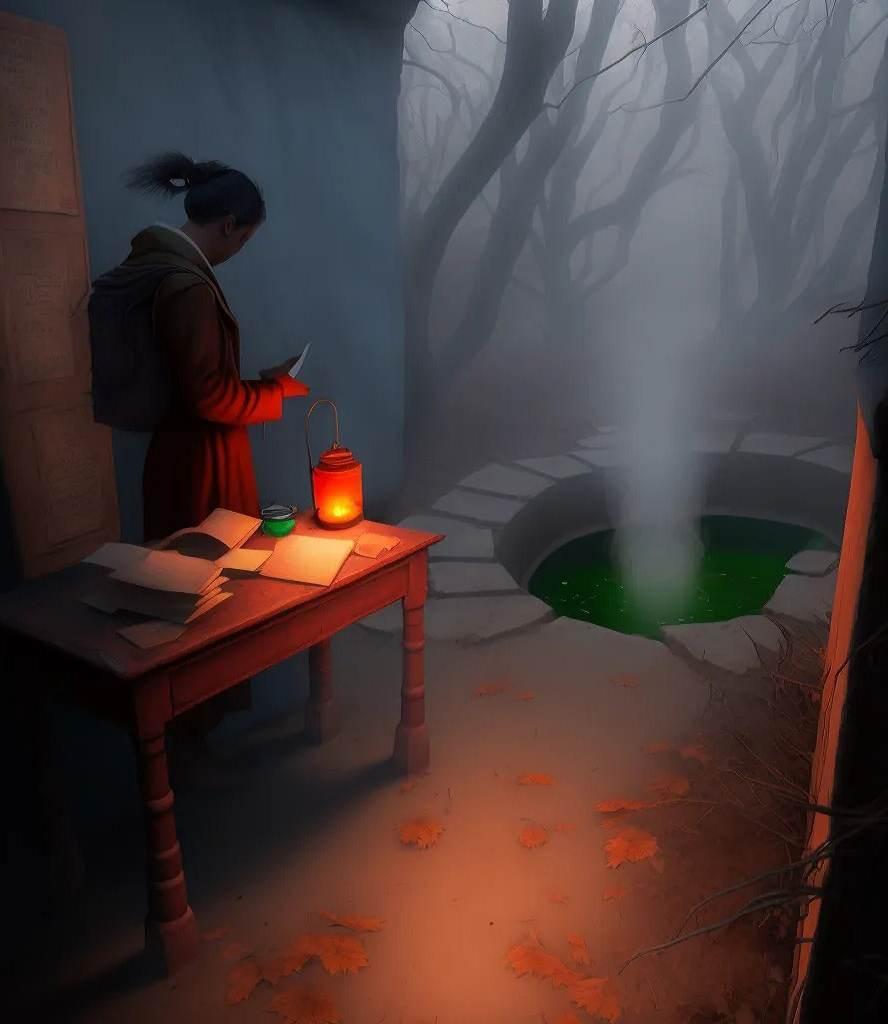
Zara almost dived headlong into the pool, and then remembered this was a group exercise and that she really ought to find out where the others were and share her finds with them.
March 19, 2023 at 10:39 pm #7204Some handy references for the timelines of the Flying Fish Inn are here…
Year Date Event 1935 March 1, 1935 Birth of Mater 1958 March 13, 1958 Mater marries her childhood sweetheart 1965 August 17, 1965 Birth of Fred 1968 June 8, 1968 Birth of Abcynthia Hogg 1970 July 7, 1970 Birth of Aunt Idle 1978 April 12, 1978 Mater’s husband dies 1987 March 19, 1987 Mines close down – Carts & Lager Festival 1988 December 12, 1988 Idle gives birth to a child in Fiji (Liana) 1989 December 20, 1989 Horace Hogg death – Inn passes down to Abby 1990 May 7, 1990 Fred marries Abcynthia 1998 November 11, 1998 Birth of Devan 2000 November 11, 2000 Birth of Clove and Coriander 2007 March 7, 2007 Hannah Hogg’s death, the Inn passes to Abcynthia 2008 March 10, 2008 Carts and Lager Festival revival 2008 August 20, 2008 Birth of Prune 2009 February 2, 2009 Abcynthia leaves 2009 September 11, 2009 Strange incidents at the mines, Idle sets up the Inn 2010 May 27, 2010 Fred leaves his family, goes into hiding 2014 September 10, 2014 Start of Prune’s journal 2017 March 21, 2017 Visitors from Elsewheres 2020 December 22, 2020 The year of the Great Fires 2021 August 8, 2021 Italian tourists saved the Inn 2023 March 1, 2023 Orbs gamers visitors 2027 September 1, 2027 Prune going to a boarding school 2035 March 21, 2035 Mater 100 and twins on a Waterlark adventure 2049 March 17, 2049 Prune arrives with a commercial flight on Mars, Mater is deceased (would have been 114) March 19, 2023 at 5:49 pm #7173In reply to: Orbs of Madjourneys
The morning of the lager and cart race dawned bright and clear. The camping ground was full to overflowing with tents and camper vans, with several parked up outside the Flying Fish Inn. Zara overheard Finly complaining to Mater about all the extra work with all and sundry traipsing in and out using the toilets, and Bert muttering about where was all the extra water supposed to come from and what if the well ran dry, and was it all really worth it, and Zara saw him scowl when Idle told him to lighten up and enjoy it. “Hah! Enjoy it? Nothing good ever happens when a dust storm comes for the cart race,” he said pointedly to Idle, ” And damn near everyone asking about the old mines, I tell you, nothing good’s gonna come from a cart race in a dust storm, the mayor shoulda cancelled it.” Bert slammed the porch door as he stomped off outside, scowling at Zara on the way past.
Zara watched him go with a quizzical expression. What was going on here? Idle had told her about her affair with Howard some forty years ago, and how she’d had to disappear as soon as it became obvious that she was pregnant. Zara had sympathized and said what an ordeal it must have been, but Idle had laughed and said no not really, she’d had a lovely time in Fiji and had found a nice place to leave the baby. Then Howard had disappeared down the mines, and what was the story about Idle’s brother leaving mysteriously? Idle had been vague about that part, preferring to change the topic to Youssef. Was the Howard story why Bert was so reluctant for anyone to go down the mines? What on earth was going on?
And how had Yasmin’s parcel ended up in Xavier’s room? Xavi had soon noticed that he’d picked it up by mistake and returned it to Yasmin, but how had it ended up on the table on the verandah? It was perplexing, and made Yasmin disinclined to deliver it to Mater until she could fathom what had happened. She had tucked in under her mattress until she was sure what to do.
But that wasn’t the only thing that had piqued Zara’s curiosity. When Idle had said she’d had the baby in Fiji, and found a nice place to leave it, Zara couldn’t help but think of the orphanage where Yasmin was working. But no, surely that would be too much of a coincidence, and anyway, a 40 year old orphan wouldn’t still be there. But what about that woman in the BMW that Yasmin felt sure she recognized? No, surely it was all too pat. But then, what was that woman in the dark glasses doing in Betsy’s shop? Betsy was Howards wife. Idle had mentioned her when she told her story over the second bottle of wine.
Should she divulge Idle’s secrets to Yasmin and quiz her on the woman in dark glasses? Zara decided there would be no harm in it, after all, they would be leaving soon after the cart race, and what would it matter. She fetched two cups of coffee from the kitchen and took them to Yasmin’s room and knocked gently on the door.
“Are you awake?” she called softly.
“Yeah, come in Zara, I’ve been awake for ages,” Yasmin replied.
Zara put the coffee cups on the bedside table and sat on the side of Yasmins bed. “There’s something going on here, I have to tell you something. But first, have you worked out who that woman in the BMW is?”
Yasmin looked startled and said “How did you know? Yes I have. It’s Sister Finli from the orphanage, I’m sure of it. But why has she followed me here? And in disguise! It’s just creepy!”
“Aha!” Zara couldn’t suppress a rather triumphant smile. “I thought it was just a wacky idea, but listen to this, Idle told me something the other night when we sat up drinking wine.” As she told Idle’s story, Yasmin’s eyes widened and she put a hand over her open mouth.
“Could it be…?”
“Yes but why in disguise? What is she up to? What should we do, should we warn Idle?” Zara had warmed to Idle, and if there were any sides to be taken in the matter, she felt more for Idle than that unpleasant woman from the orphanage who was so disturbing to Yasmin.
“Oh I don’t know, maybe we should keep out of it!” Yasmin said. “That parcel though! What am I going to do about that parcel!”
Zara frowned. “Well, you have three options, Yas. Open it and read it… don’t look so horrified! Or deliver it as promised..”
“We’ll never know what it said though if we do that,” Yasmin was looking more relaxed now.
“Exactly, and I’m just too curious now.”
“And the third option?”
Ignoring the question, Zara asked where the parcel was. Yasmin grinned wickedly but a knock at the door interrupted her intention to retrieve the parcel from under the mattress. It was Youssef, who asked if he could come in.
“Shall we tell him?” Zara whispered, as Yasmin called out “Of course! Is Idle after you again? Quick, you can hide under my bed!”
“Not yet” Yasmin whispered back. “I need to think.”
March 7, 2023 at 11:22 pm #6786In reply to: Coma Cameleon
Tibu looked up at her, surprised by the offer. He hadn’t expected anyone to offer him anything more than spare change or a half-eaten sandwich. “That’s very kind of you,” he said with a small smile, “I’d like that very much.”
The young woman returned his smile and disappeared for a while. She came back a few minutes later, with two cups of steaming hot tea. Handing one to Tibu, she started sipping her own while they stood in silence for a moment looking at the last drops of dripping water from the eaves overhead, as the rain had started to subside.
Tibu couldn’t help but feel a pang of sadness. Here he was, a man with no memory of his past, selling books on the street for spare change, and yet this stranger was treating him with kindness and respect.
“Thank you,” he said softly his voice barely audible, “I really appreciate this.”
The woman shrugged and smiled again. “It’s no trouble at all. I think it’s nice to just take a break and chat with someone for a while. It can get lonely in this city sometimes.”
Tibu nodded in agreement. “I know what you mean. I feel like a stranger in my own life sometimes.”
The woman’s expression softened. “That must be hard. But you know, sometimes it’s good to start over. You can be whoever you want to be, do whatever you want to do. It’s like a second chance.”
As they continued their conversation, a crumpled torn piece of newspaper caught Tibu’s eye, lodged in a nearby gutter. The headline mentioned a job fair happening the next day, an opportunity for people to find new careers. An idea began to form in his mind – attending the job fair could be his first step in creating a new life.
Tibu looked at the woman, still struck by her earlier words. It was a new way of thinking for him. Maybe he didn’t have to be defined by his past or his amnesia. Maybe he could create a new life for himself, with new people and new experiences.
“Thank you,” he said again, feeling a newfound sense of hope. “You’ve given me a lot to think about.”
The woman smiled and finished her tea. “Well, I should probably get back to work. But it was nice talking to you. Maybe I’ll see you around. I’m Lorena, by the way.”
Tibu nodded and watched her walk away, feeling a warmth in his chest. Maybe things weren’t so hopeless after all. Maybe he could create a new life for himself; he checked the crumbled paper; his decision was made; armed with renewed purpose, he’d resolved to attend the job fair.
Of course, he’d need to prepare, sort out stuff…
He looked down at the book in his hand and smiled. For now, he had Lord Gustard Willoughby Fergusson to keep him company and inspire him about acts of bravery and embrace with gusto the great leap into the unknown.
March 7, 2023 at 8:20 pm #6774In reply to: Stories: New Found Pages
As they trekked through the endless dunes, Lord Gustard could barely contain his excitement. The thought of discovering the bones of the legendary giant filled him with a childlike wonder, and he eagerly scanned the horizon for any sign of their destination. As the fearless leader of the group, he had a deep-seated passion for adventure and exploration, a love for pith helmets. However, his tendency to get lost in his own thoughts at the most inconvenient times could sometimes get him in tricky situations. Despite this, he has an unshakable determination to succeed and a deep respect for the cultures and traditions of the places he visits.
Lady Floribunda, on the other hand, was the picture of patience and duty. She knew that this journey was important to her husband and she supported him unwaveringly, even as she silently longed for the comforts of home. Her first passion was for gossips and the life of socialites —but there was hardly any gossip material in the desert, so she fell back to her second passion, botany, that would often get her lost in her own world, examining and cataloging the scant flora and fauna they encountered on their journey. It wasn’t unusual to hear her at time talking to plants as if they were her dolls or children.
Cranky, meanwhile, couldn’t help but roll her eyes at Lord Gustard’s exuberance. “I swear, if I have to listen to one more of his whimsical ramblings, I’ll go mad,” she muttered to herself. Her tendency to grumble about the hardships of their journey had taken a turn for the worse, considering the lack of comfort from the past nights. She was as sharp-tongued as she was pragmatic, with a love for tea and crumpets that bordered on obsessive. Despite her grumpiness, she has a heart of gold and a deep affection for her companions, and especially young Illi.
Illi, on the other hand, was thrilled by every new discovery along the way. Whether it was a curious beetle scuttling across the sand or a shimmering oasis in the distance, she couldn’t help but express her excitement with a constant stream of questions and exclamations. Illi was a bright and enthusiastic young girl, with a passion for adventure and a wide-eyed wonder at the world around her. She had a tendency to burst into song at the most unexpected moments.
Tibn Zig and Tanlil Ubt remained loyal and steadfast, shrugging off any incongruous spur of the moment extravagant outburst from Gustard. Their experience in the desert had taught them to stay calm and focused, no matter what obstacles they might encounter. But behind the stoic façade, they had a penchant for telling tall tales and playing practical jokes on their companions. Their mischievousness was however only for good fun, and they had become fiercely loyal to Lord Gustard after he’d rescued them from sand bandits who were planning to sell them as slave. Needless to say, they would have done whatever it takes to keep the Fergusson family safe.
Illi was hoping for eccentric traders and desert nomads to fortune-seeking treasure hunters and conniving bandits, but for miles it was just plain unending desert. The worst they found on their path were unending sand dunes, a few minuscule deadly scorpions, and mostly contending with the harsh desert sun beating down upon them. Finally, after days of wandering through the desert, they reached their destination.
As they approached Tsnit n’Agger, the landscape began to change. The sand dunes gave way to rocky cliffs and towering red sandstone formations, and the air grew cooler and more refreshing. The group pressed on, their spirits renewed by the prospect of discovering the secrets of the legendary giant’s bones.
At last, they arrived at the entrance to the giant’s cave. Lord Gustard led the way, his torch casting flickering shadows on the walls as they descended deeper into the earth. The air grew colder and damper, and the sounds of dripping water echoed around them.
As they turned a corner, they suddenly found themselves face to face with the giant’s bones. Towering above them, the massive skeletal structure filled the cavern from floor to ceiling. The sight of the giant’s bones towering above them was awe-inspiring, and Lord Gustard was practically bouncing with excitement. The group behind him was in awe, even Cranky, as they were taking in the enormity and majesty of the ancient creature.
Floribunda and Cranky exchanged a weary but amused look, while Illi gazed up at the bones with wide-eyed wonder.
“Let’s get to work,” Lord Gustard declared, his enthusiasm undimmed. And with that, they set to the task of uncovering the secrets of the legendary giant, each in their own way.
March 5, 2023 at 11:17 pm #6772In reply to: The Journey of Franiel, Background
Ghört, the winds that blow,
Whispering secrets we may never know.
Nærvel, the waters that flow,
Carrying stories of lands below.Agnima, the flames that dance,
Illuminating paths of chance.
Selvaniel, the woods that grow,
A sanctuary for both friend and foe.Margilonia, the earth that grounds,
Rooted in ancient, forgotten sounds.
Lejüs, the memories that fade,
Echoes of a lost world, where shadows played.On Duane, these six gods reign,
Their ancient language an eternal refrain.
As the days come and go,
Their voices in harmony, forever flow.February 23, 2023 at 7:33 pm #6636In reply to: The Jorid’s Travels – 14 years on
Georges had always thought going out into space with the spacesuits generated by Jorid was an exhilarating experience. The tight fitting suit and gloves were full of sensors that could transmit different kind of sensory informations to the brain. Pressure, temperature and the fluctuations of the Boodenbaum surface field. It was a lot like feeling the surface tension of water and moving in space with these suits was as easy as swimming in a warm ocean.

The light of the star gave Georges’ white suit a green hue. There was no doubt they were back in the Alienor system after 14 years. The Jorid was currently orbiting Duane, not very far from there, Georges could see the twin planet, Murtuane. But no sign of Phrëal anywhere. His helmet speakers started playing “In the Hall of the Mountain King” by Edvard Grieg.
“Jorid,” said Georges, “what are you doing?”
“I thought it was fitting for such a grandiose moment, Georges. The sensory information about your body tells me you’re filled with nostalgia and awe at the sight of your home planet.”
“It’s not my… forget it. What am I looking for?”
“Likely a small creature, the size of a rodent from Earth. I can fell it run about the greenhouse where Salomé is taking care of her sweet pea plants from planet Attalyi. It seems to have developed an interest in her activities.”
Georges glided over the curved hull toward the giant window Jorid had manifested for Salomé’s little experiments. She wanted to grow alien vegetation in an intersticial environment kept in stasis in between dimensions to spice up the dishes from the replicator. He hid behind one of Jorid’s spherical gravitational wave sensor.
“I can see the creature. Is Salomé aware it’s spying on her?”
“Negative. She required not being disturbed during her experiments.”
Georges pushed a button on his wrist keyboard. Beethoven’s fifth symphony started playing. Georges pushed the same button again. The track changed to Mozart’s “Little Night” music.
“Jorid, the wristboard is malfunctioning. Can you stop the music and activate the cloaking shield for me ?”
“Negative. The creature is creating of interferences.”
“How? Wow!? What the …”

A creature the size of a marmoset had landed on Georges helmet and was licking the glass, using its gecko fingers to stick it. An image formed into Georges mind : Salomé stroking the creature in the green house and calling it Sand’Rin.
“I think she likes you,” said Jorid.
February 7, 2023 at 6:20 pm #6506In reply to: Orbs of Madjourneys
Bert dropped Zara off after breakfast at the start of the Yeperenye trail. He suggested that she phone him when she wanted him to pick her up, and asked if she was sure she had enough water and reminded her, not for the first time, not to wander off the trail. Of course not, she replied blithely, as if she’d never wandered off before.
“It’s a beautiful gorge, you’ll like it,” he called through the open window, “You’ll need the bug spray when you get to the water holes.” Zara smiled and waved as the car roared off in a cloud of dust.
On the short drive to the start of the trail, Bert had told her that the trail was named after the Yeperenye dreamtime, also known as ‘Caterpillar Dreaming’ and that it was a significant dreamtime story in Aboriginal mythology. Be sure to look at the aboriginal rock art, he’d said. He mentioned several varieties of birds but Zara quickly forgot the names of them.
It felt good to be outside, completely alone in the vast landscape with the bone warming sun. To her surprise, she hadn’t seen the parrot again after the encounter at the bedroom window, although she had heard a squalky laugh coming from a room upstairs as she passed the staircase on her way to the dining room.
But it was nice to be on her own. She walked slowly, appreciating the silence and the scenery. Acacia and eucalyptus trees were dotted about and long grasses whispered in the occasional gentle breezes. Birds twittered and screeched and she heard a few rustlings in the undergrowth from time to time as she strolled along.
After a while the rocky outcrops towered above her on each side of the path and the gorge narrowed, the trail winding through stands of trees and open grassland. Zara was glad of the shade as the sun rose higher.

The first water hole she came to took Zara by surprise. She expected it to be pretty and scenic, like the photos she’d seen, but the spectacular beauty of the setting and shimmering light somehow seemed timeless and otherwordly. It was a moment or two before she realized she wasn’t alone.
It was time to stop for a drink and the sandwich that one of the twins had made for her, and this was the perfect spot, but she wondered if the man would find it intrusive of her to plonk herself down and picnic at the same place as him. Had he come here for the solitude and would he resent her appearance?
It is a public trail, she reminded herself not to be silly, but still, she felt uneasy. The man hadn’t even glanced up as far as Zara could tell. Had he noticed her?
She found a smooth rock to sit on under a tree and unwrapped her lunch, glancing up from time to time ready to give a cheery wave and shout hi, if he looked up from what he was doing. But he didn’t look up, and what exactly was he doing? It was hard to say, he was pacing around on the opposite side of the pool, looking intently at the ground.
When Zara finished her drink, she went behind a bush for a pee, making sure she would not be seen if the man glanced up. When she emerged, the man was gone. Zara walked slowly around the water hole, taking photos, and keeping an eye out for the man, but he was nowhere to be seen. When she reached the place where he’d been pacing looking at the ground, she paused and retraced his steps. Something small and shiny glinted in the sun catching her eye. It was a compass, a gold compass, and quite an unusual one.
Zara didn’t know what to do, had the man been looking for it? Should she return it to him? But who was he and where did he go? She decided there was no point in leaving it here, so she put it in her pocket. Perhaps she could ask at the inn if there was a lost and found place or something.
Refreshed from the break, Zara continued her walk. She took the compass out and looked at it, wondering not for the first time how on earth anyone used one to find their way. She fiddled with it, and the needle kept pointing in the same direction. What good is it knowing which way north is, if you don’t know where you are anyway? she wondered.
With a squalk and a beating of wings, Pretty Girl appeared, seemingly out of nowhere. “It’s not that kind of compass. You’re supposed to follow the pointer.”
“Am I? But it’s pointing off the trail, and Bert said don’t go off the trail.”
“That’s because Bert doesn’t want you to find it,” replied the parrot.
Intrigued, Zara set off in the direction the compass was pointing towards.
-
AuthorSearch Results
