Daily Random Quote

  • Yorath was still trying to explain the nature of forests, the rekindled understanding of the woodland habitats, the memory storing capacity of the vegetation in a vast network of twining tendrils and roots and so on, when Lobbocks burst into the room. Leroway had been finding himself unable to detach the workings of his mind from the ... · ID #4264 (continued)
    (next in 10h 17min…)

Latest Activity

WordCloud says

Search Results for 'archives'

Forums Search Search Results for 'archives'

Viewing 16 results - 21 through 36 (of 36 total)
  • Author
    Search Results
  • #6243
    TracyTracy
    Participant

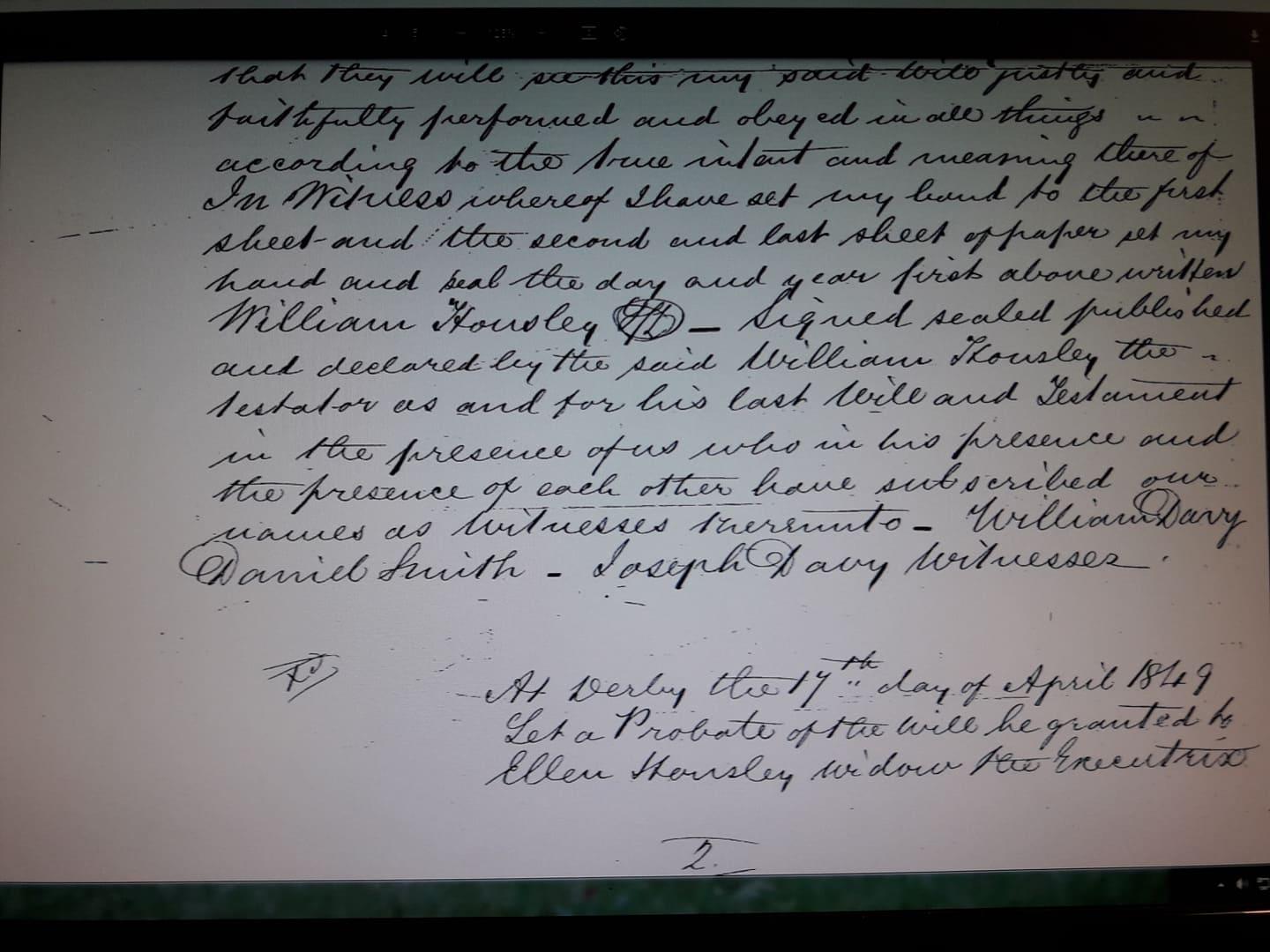
      William Housley’s Will and the Court Case

      William Housley died in 1848, but his widow Ellen didn’t die until 1872.  The court case was in 1873.  Details about the court case are archived at the National Archives at Kew,  in London, but are not available online. They can be viewed in person, but that hasn’t been possible thus far.  However, there are a great many references to it in the letters.

      William Housley’s first wife was Mary Carrington 1787-1813.  They had three children, Mary Anne, Elizabeth and William. When Mary died, William married Mary’s sister Ellen, not in their own parish church at Smalley but in Ashbourne.  Although not uncommon for a widower to marry a deceased wife’s sister, it wasn’t legal.  This point is mentioned in one of the letters.

      One of the pages of William Housley’s will:

      William Housleys Will


      An excerpt from Barbara Housley’s Narrative on the Letters:

      A comment in a letter from Joseph (August 6, 1873) indicated that William was married twice and that his wives were sisters: “What do you think that I believe that Mary Ann is trying to make our father’s will of no account as she says that my father’s marriage with our mother was not lawful he marrying two sisters. What do you think of her? I have heard my mother say something about paying a fine at the time of the marriage to make it legal.” Markwell and Saul in The A-Z Guide to Tracing Ancestors in Britain explain that marriage to a deceased wife’s sister was not permissible under Canon law as the relationship was within the prohibited degrees. However, such marriages did take place–usually well away from the couple’s home area. Up to 1835 such marriages were not void but were voidable by legal action. Few such actions were instituted but the risk was always there.

      Joseph wrote that when Emma was married, Ellen “broke up the comfortable home and the things went to Derby and she went to live with them but Derby didn’t agree with her so she left again leaving her things behind and came to live with John in the new house where she died.” Ellen was listed with John’s household in the 1871 census. 
      In May 1872, the Ilkeston Pioneer carried this notice: “Mr. Hopkins will sell by auction on Saturday next the eleventh of May 1872 the whole of the useful furniture, sewing machine, etc. nearly new on the premises of the late Mrs. Housley at Smalley near Heanor in the county of Derby. Sale at one o’clock in the afternoon.”

      There were hard feelings between Mary Ann and Ellen and her children. Anne wrote: “If you remember we were not very friendly when you left. They never came and nothing was too bad for Mary Ann to say of Mother and me, but when Robert died Mother sent for her to the funeral but she did not think well to come so we took no more notice. She would not allow her children to come either.”
      Mary Ann was still living in May 1872. Joseph implied that she and her brother, Will “intend making a bit of bother about the settlement of the bit of property” left by their mother. The 1871 census listed Mary Ann’s occupation as “income from houses.”

      In July 1872, Joseph introduced Ruth’s husband: “No doubt he is a bad lot. He is one of the Heath’s of Stanley Common a miller and he lives at Smalley Mill” (Ruth Heath was Mary Anne Housley’s daughter)
      In 1873 Joseph wrote, “He is nothing but a land shark both Heath and his wife and his wife is the worst of the two. You will think these is hard words but they are true dear brother.” The solicitor, Abraham John Flint, was not at all pleased with Heath’s obstruction of the settlement of the estate. He wrote on June 30, 1873: “Heath agreed at first and then because I would not pay his expenses he refused and has since instructed another solicitor for his wife and Mrs. Weston who have been opposing us to the utmost. I am concerned for all parties interested except these two….The judge severely censured Heath for his conduct and wanted to make an order for sale there and then but Heath’s council would not consent….” In June 1875, the solicitor wrote: “Heath bid for the property but it fetched more money than he could give for it. He has been rather quieter lately.”

      In May 1872, Joseph wrote: “For what do you think, John has sold his share and he has acted very bad since his wife died and at the same time he sold all his furniture. You may guess I have never seen him but once since poor mother’s funeral and he is gone now no one knows where.”

      In 1876, the solicitor wrote to George: “Have you heard of John Housley? He is entitled to Robert’s share and I want him to claim it.”

      Anne intended that one third of the inheritance coming to her from her father and her grandfather, William Carrington, be divided between her four nieces: Sam’s three daughters and John’s daughter Elizabeth.
      In the same letter (December 15, 1872), Joseph wrote:
      “I think we have now found all out now that is concerned in the matter for there was only Sam that we did not know his whereabouts but I was informed a week ago that he is dead–died about three years ago in Birmingham Union. Poor Sam. He ought to have come to a better end than that”

      However, Samuel was still alive was on the 1871 census in Henley in Arden, and no record of his death can be found. Samuel’s brother in law said he was dead: we do not know why he lied, or perhaps the brothers were lying to keep his share, or another possibility is that Samuel himself told his brother in law to tell them that he was dead. I am inclined to think it was the latter.

      Excerpts from Barbara Housley’s Narrative on the Letters continued:

      Charles went to Australia in 1851, and was last heard from in January 1853. According to the solicitor, who wrote to George on June 3, 1874, Charles had received advances on the settlement of their parent’s estate. “Your promissory note with the two signed by your brother Charles for 20 pounds he received from his father and 20 pounds he received from his mother are now in the possession of the court.”

      In December 1872, Joseph wrote: “I’m told that Charles two daughters has wrote to Smalley post office making inquiries about his share….” In January 1876, the solicitor wrote: “Charles Housley’s children have claimed their father’s share.”

      In the Adelaide Observer 28 Aug 1875

      HOUSLEY – wanted information
      as to the Death, Will, or Intestacy, and
      Children of Charles Housley, formerly of
      Smalley, Derbyshire, England, who died at
      Geelong or Creewick Creek Diggings, Victoria
      August, 1855. His children will hear of something to their advantage by communicating with
      Mr. A J. Flint, solicitor, Derby, England.
      June 16,1875.

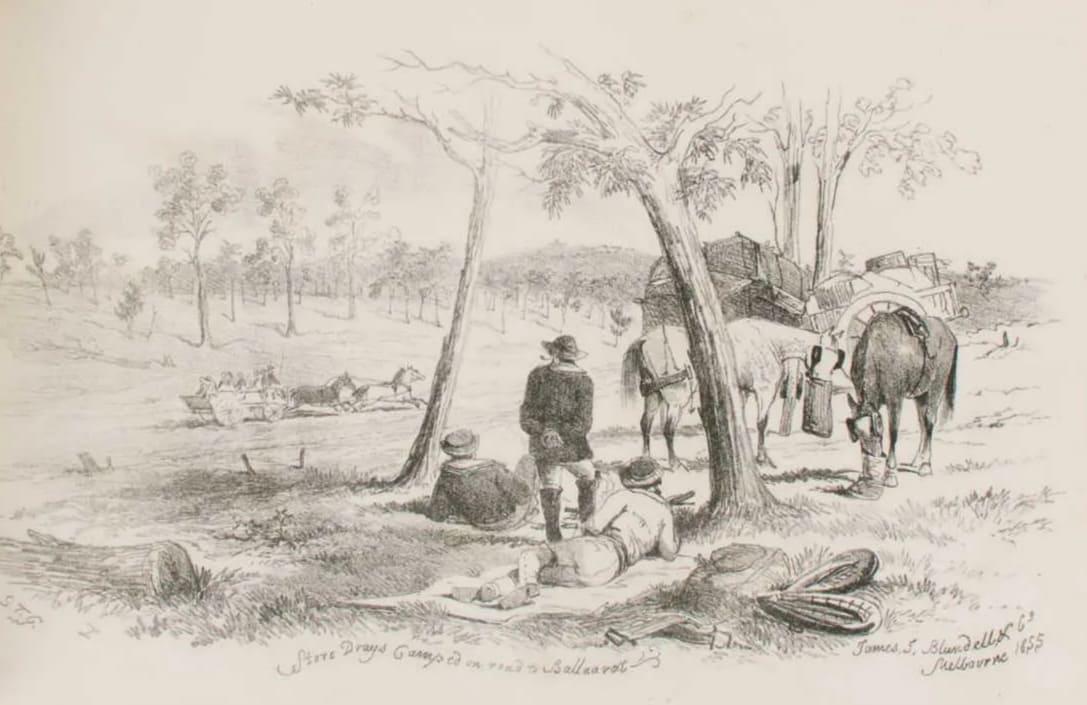
      The Diggers & Diggings of Victoria in 1855. Drawn on Stone by S.T. Gill:

      Victoria Diggings, Australie


      The court case:

       Kerry v Housley.
      Documents: Bill, demurrer.
      Plaintiffs: Samuel Kerry and Joseph Housley.
      Defendants: William Housley, Joseph Housley (deleted), Edwin Welch Harvey, Eleanor Harvey (deleted), Ernest Harvey infant, William Stafford, Elizabeth Stafford his wife, Mary Ann Housley, George Purdy and Catherine Purdy his wife, Elizabeth Housley, Mary Ann Weston widow and William Heath and Ruth Heath his wife (deleted).
      Provincial solicitor employed in Derbyshire.
      Date: 1873

      From the Narrative on the Letters:

      The solicitor wrote on May 23, 1874: “Lately I have not written because I was not certain of your address and because I doubted I had much interesting news to tell you.” Later, Joseph wrote concerning the problems settling the estate, “You see dear brother there is only me here on our side and I cannot do much. I wish you were here to help me a bit and if you think of going for another summer trip this turn you might as well run over here.”

      In March 1873, Joseph wrote: “You ask me what I think of you coming to England. I think as you have given the trustee power to sign for you I think you could do no good but I should like to see you once again for all that. I can’t say whether there would be anything amiss if you did come as you say it would be throwing good money after bad.”

      In September 1872 Joseph wrote; “My wife is anxious to come. I hope it will suit her health for she is not over strong.” Elsewhere Joseph wrote that Harriet was “middling sometimes. She is subject to sick headaches. It knocks her up completely when they come on.” In December 1872 Joseph wrote, “Now dear brother about us coming to America you know we shall have to wait until this affair is settled and if it is not settled and thrown into Chancery I’m afraid we shall have to stay in England for I shall never be able to save money enough to bring me out and my family but I hope of better things.”
      On July 19, 1875 Abraham Flint (the solicitor) wrote: “Joseph Housley has removed from Smalley and is working on some new foundry buildings at Little Chester near Derby. He lives at a village called Little Eaton near Derby. If you address your letter to him as Joseph Housley, carpenter, Little Eaton near Derby that will no doubt find him.”

      In his last letter (February 11, 1874), Joseph sounded very discouraged and wrote that Harriet’s parents were very poorly and both had been “in bed for a long time.” In addition, Harriet and the children had been ill.
      The move to Little Eaton may indicate that Joseph received his settlement because in August, 1873, he wrote: “I think this is bad news enough and bad luck too, but I have had little else since I came to live at Kiddsley cottages but perhaps it is all for the best if one could only think so. I have begun to think there will be no chance for us coming over to you for I am afraid there will not be so much left as will bring us out without it is settled very shortly but I don’t intend leaving this house until it is settled either one way or the other. ”

      Joseph’s letters were much concerned with the settling of their mother’s estate. In 1854, Anne wrote, “As for my mother coming (to America) I think not at all likely. She is tied here with her property.” A solicitor, Abraham John Flint of 42 Full Street Derby, was engaged by John following the death of their mother. On June 30, 1873 the solicitor wrote: “Dear sir, On the death of your mother I was consulted by your brother John. I acted for him with reference to the sale and division of your father’s property at Smalley. Mr. Kerry was very unwilling to act as trustee being over 73 years of age but owing to the will being a badly drawn one we could not appoint another trustee in his place nor could the property be sold without a decree of chancery. Therefore Mr. Kerry consented and after a great deal of trouble with Heath who has opposed us all throughout whenever matters did not suit him, we found the title deeds and offered the property for sale by public auction on the 15th of July last. Heath could not find his purchase money without mortaging his property the solicitor which the mortgagee employed refused to accept Mr. Kerry’s title and owing to another defect in the will we could not compel them.”

      In July 1872, Joseph wrote, “I do not know whether you can remember who the trustee was to my father’s will. It was Thomas Watson and Samuel Kerry of Smalley Green. Mr. Watson is dead (died a fortnight before mother) so Mr. Kerry has had to manage the affair.”

      On Dec. 15, 1972, Joseph wrote, “Now about this property affair. It seems as far off of being settled as ever it was….” and in the following March wrote: “I think we are as far off as ever and farther I think.”

      Concerning the property which was auctioned on July 15, 1872 and brought 700 pounds, Joseph wrote: “It was sold in five lots for building land and this man Heath bought up four lots–that is the big house, the croft and the cottages. The croft was made into two lots besides the piece belonging to the big house and the cottages and gardens was another lot and the little intake was another. William Richardson bought that.” Elsewhere Richardson’s purchase was described as “the little croft against Smith’s lane.” Smith’s Lane was probably named for their neighbor Daniel Smith, Mrs. Davy’s father.
      But in December 1872, Joseph wrote that they had not received any money because “Mr. Heath is raising all kinds of objections to the will–something being worded wrong in the will.” In March 1873, Joseph “clarified” matters in this way: “His objection was that one trustee could not convey the property that his signature was not guarantee sufficient as it states in the will that both trustees has to sign the conveyance hence this bother.”
      Joseph indicated that six shares were to come out of the 700 pounds besides Will’s 20 pounds. Children were to come in for the parents shares if dead. The solicitor wrote in 1873, “This of course refers to the Kidsley property in which you take a one seventh share and which if the property sells well may realize you about 60-80 pounds.” In March 1873 Joseph wrote: “You have an equal share with the rest in both lots of property, but I am afraid there will be but very little for any of us.”

      The other “lot of property” was “property in Smalley left under another will.” On July 17, 1872, Joseph wrote: “It was left by my grandfather Carrington and Uncle Richard is trustee. He seems very backward in bringing the property to a sale but I saw him and told him that I for one expect him to proceed with it.” George seemed to have difficulty understanding that there were two pieces of property so Joseph explained further: “It was left by my grandfather Carrington not by our father and Uncle Richard is the trustee for it but the will does not give him power to sell without the signatures of the parties concerned.” In June 1873 the solicitor Abraham John Flint asked: “Nothing has been done about the other property at Smalley at present. It wants attention and the other parties have asked me to attend to it. Do you authorize me to see to it for you as well?”
      After Ellen’s death, the rent was divided between Joseph, Will, Mary Ann and Mr. Heath who bought John’s share and was married to Mary Ann’s daughter, Ruth. Joseph said that Mr. Heath paid 40 pounds for John’s share and that John had drawn 110 pounds in advance. The solicitor said Heath said he paid 60. The solicitor said that Heath was trying to buy the shares of those at home to get control of the property and would have defied the absent ones to get anything.
      In September 1872 Joseph wrote that the lawyer said the trustee cannot sell the property at the bottom of Smalley without the signatures of all parties concerned in it and it will have to go through chancery court which will be a great expense. He advised Joseph to sell his share and Joseph advised George to do the same.

      George sent a “portrait” so that it could be established that it was really him–still living and due a share. Joseph wrote (July 1872): “the trustee was quite willing to (acknowledge you) for the portrait I think is a very good one.” Several letters later in response to an inquiry from George, Joseph wrote: “The trustee recognized you in a minute…I have not shown it to Mary Ann for we are not on good terms….Parties that I have shown it to own you again but they say it is a deal like John. It is something like him, but I think is more like myself.”
      In September 1872 Joseph wrote that the lawyer required all of their ages and they would have to pay “succession duty”. Joseph requested that George send a list of birth dates.

      On May 23, 1874, the solicitor wrote: “I have been offered 240 pounds for the three cottages and the little house. They sold for 200 pounds at the last sale and then I was offered 700 pounds for the whole lot except Richardson’s Heanor piece for which he is still willing to give 58 pounds. Thus you see that the value of the estate has very materially increased since the last sale so that this delay has been beneficial to your interests than other-wise. Coal has become much dearer and they suppose there is coal under this estate. There are many enquiries about it and I believe it will realize 800 pounds or more which increase will more than cover all expenses.” Eventually the solicitor wrote that the property had been sold for 916 pounds and George would take a one-ninth share.

      January 14, 1876:  “I am very sorry to hear of your lameness and illness but I trust that you are now better. This matter as I informed you had to stand over until December since when all the costs and expenses have been taxed and passed by the court and I am expecting to receive the order for these this next week, then we have to pay the legacy duty and them divide the residue which I doubt won’t come to very much amongst so many of you. But you will hear from me towards the end of the month or early next month when I shall have to send you the papers to sign for your share. I can’t tell you how much it will be at present as I shall have to deduct your share with the others of the first sale made of the property before it went to court.
      Wishing you a Happy New Year, I am Dear Sir, Yours truly
      Abram J. Flint”

      September 15, 1876 (the last letter)
      “I duly received your power of attorney which appears to have been properly executed on Thursday last and I sent it on to my London agent, Mr. Henry Lyvell, who happens just now to be away for his annual vacation and will not return for 14 or 20 days and as his signature is required by the Paymaster General before he will pay out your share, it must consequently stand over and await his return home. It shall however receive immediate attention as soon as he returns and I hope to be able to send your checque for the balance very shortly.”

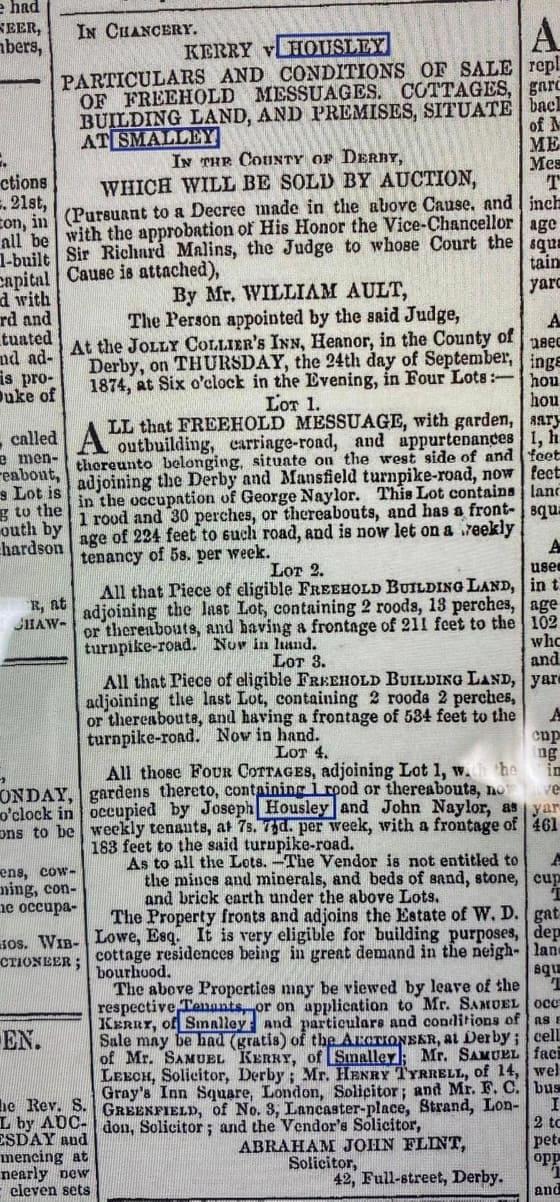
      1874 in chancery:

      Housley Estate Sale

      #6239
      TracyTracy
      Participant

        The Photographer

        Dorothy Mary Marshall

        1907 – 1983


        Without doubt we have Dorothy Tooby to thank for the abundance of priceless photographs of the Marshall family.

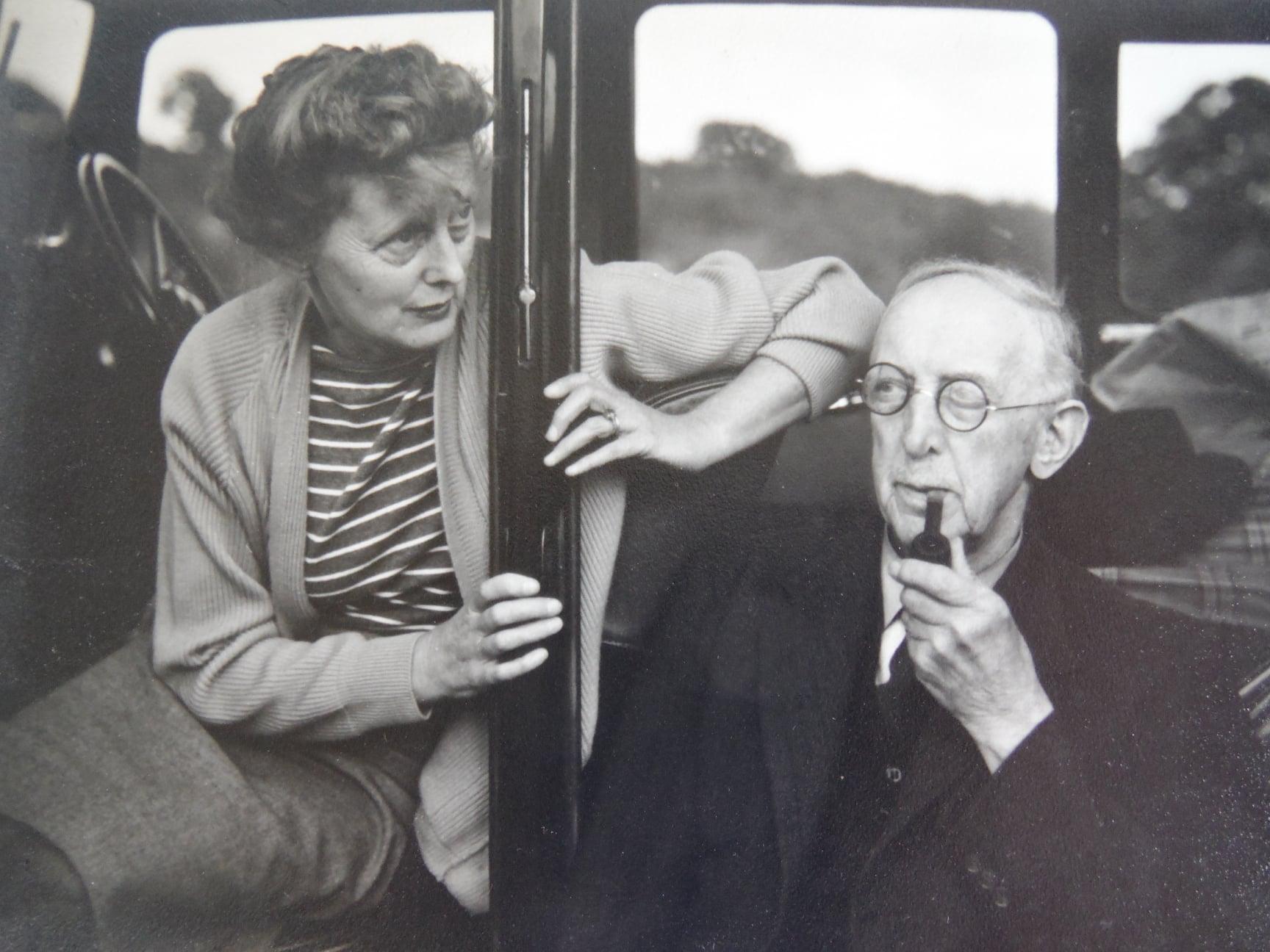
        Dorothy Tooby with her father William Marshall, photo by Charles Tooby:

        Dorothy Tooby William Marshall


        Dorothy Marshall was born in 1907 in Ashby de la Zouch, Leicestershire. She married Charles Tooby in 1932.  They had no children, and they both had a lifelong interest in photography. Dorothy won many prizes and some of her work is in the Birmingham Archives.  I recall her saying once that men didn’t like it when a woman won the prize, although I don’t think she was referring to Charles!  They always seemed to be a very close couple.

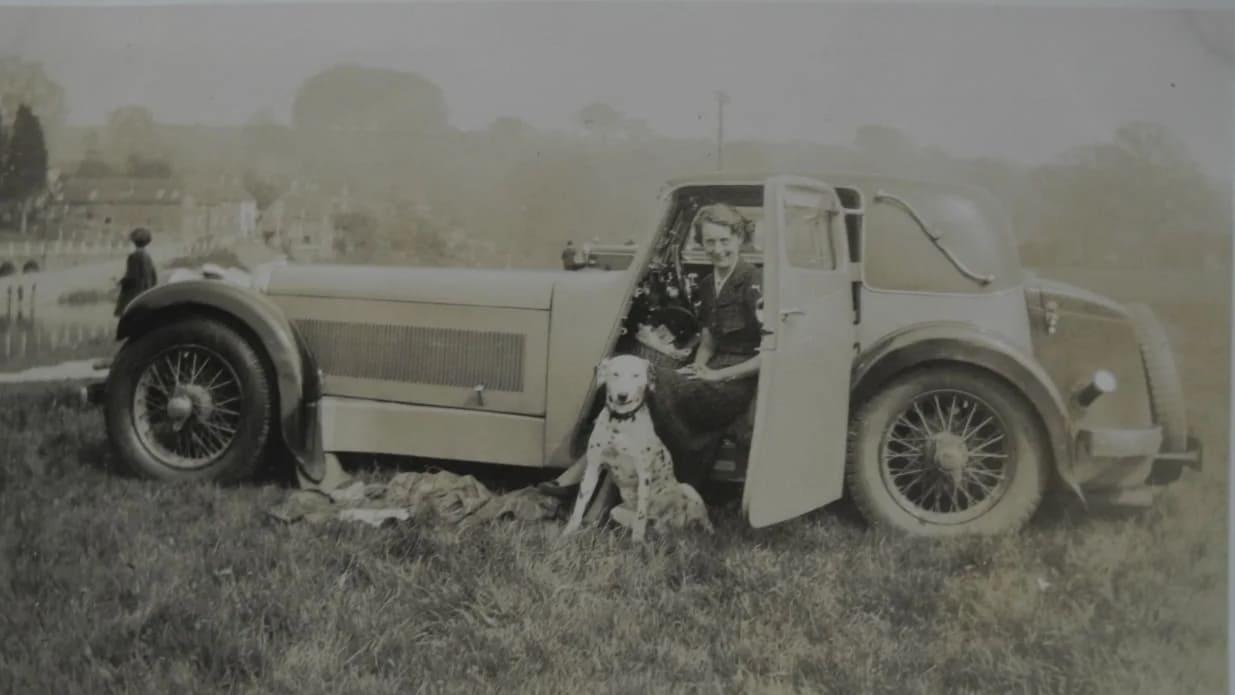
        Dorothy in a 1934 Jaguar SS1. The company was originally known as Swallow Sidecar Company, became SS Cars Ltd in 1934, and Jaguar Cars Ltd in 1945. This car is mentioned in a James Bond book by Ian Fleming.

        Dorothy Tooby 1934 Jaguar SS1


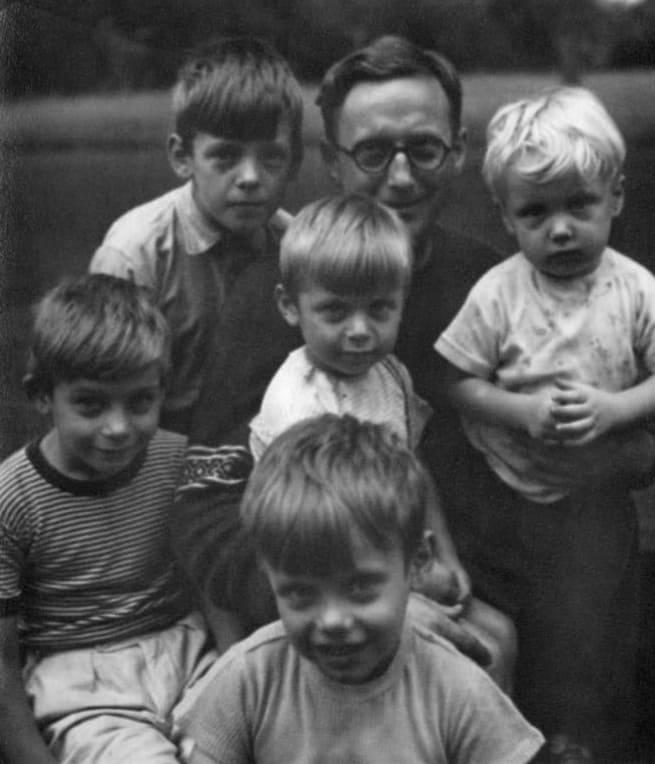
        When I was aged four or so, Dorothy and Charles lived next door to us on High Park Avenue in Wollaston.  Dorothy and Charles spent a lot of time with Dorothy’s brother Geoff’s five sons when they were children.  And of course, they took many photographs of them.

        Bryan, Geoff Marshall, Chris, John, Bobby in the middle, and Jimmy at the front.

        Geoff Marshall and boys


        Bobby, photo by Dorothy Tooby

        Bobby Marshall


        Bobby was one of Geoff and Mary’s sons.  He was also my first husband, my mothers cousin. He was born in 1954 and died in 2021, not long after I’d resumed contact with his brother Bryan, who emigrated to USA in the 1970’s.

        #6219
        TracyTracy
        Participant

          The following stories started with a single question.

          Who was Catherine Housley’s mother?

          But one question leads to another, and another, and so this book will never be finished.  This is the first in a collection of stories of a family history research project, not a complete family history.  There will always be more questions and more searches, and each new find presents more questions.

          A list of names and dates is only moderately interesting, and doesn’t mean much unless you get to know the characters along the way.   For example, a cousin on my fathers side has already done a great deal of thorough and accurate family research. I copied one branch of the family onto my tree, going back to the 1500’s, but lost interest in it after about an hour or so, because I didn’t feel I knew any of the individuals.

          Parish registers, the census every ten years, birth, death and marriage certificates can tell you so much, but they can’t tell you why.  They don’t tell you why parents chose the names they did for their children, or why they moved, or why they married in another town.  They don’t tell you why a person lived in another household, or for how long. The census every ten years doesn’t tell you what people were doing in the intervening years, and in the case of the UK and the hundred year privacy rule, we can’t even use those for the past century.  The first census was in 1831 in England, prior to that all we have are parish registers. An astonishing amount of them have survived and have been transcribed and are one way or another available to see, both transcriptions and microfiche images.  Not all of them survived, however. Sometimes the writing has faded to white, sometimes pages are missing, and in some case the entire register is lost or damaged.

          Sometimes if you are lucky, you may find mention of an ancestor in an obscure little local history book or a journal or diary.  Wills, court cases, and newspaper archives often provide interesting information. Town memories and history groups on social media are another excellent source of information, from old photographs of the area, old maps, local history, and of course, distantly related relatives still living in the area.  Local history societies can be useful, and some if not all are very helpful.

          If you’re very lucky indeed, you might find a distant relative in another country whose grandparents saved and transcribed bundles of old letters found in the attic, from the family in England to the brother who emigrated, written in the 1800s.  More on this later, as it merits its own chapter as the most exciting find so far.

          The social history of the time and place is important and provides many clues as to why people moved and why the family professions and occupations changed over generations.  The Enclosures Act and the Industrial Revolution in England created difficulties for rural farmers, factories replaced cottage industries, and the sons of land owning farmers became shop keepers and miners in the local towns.  For the most part (at least in my own research) people didn’t move around much unless there was a reason.  There are no reasons mentioned in the various registers, records and documents, but with a little reading of social history you can sometimes make a good guess.  Samuel Housley, for example, a plumber, probably moved from rural Derbyshire to urban Wolverhampton, when there was a big project to install indoor plumbing to areas of the city in the early 1800s.  Derbyshire nailmakers were offered a job and a house if they moved to Wolverhampton a generation earlier.

          Occasionally a couple would marry in another parish, although usually they married in their own. Again, there was often a reason.  William Housley and Ellen Carrington married in Ashbourne, not in Smalley.  In this case, William’s first wife was Mary Carrington, Ellen’s sister.  It was not uncommon for a man to marry a deceased wife’s sister, but it wasn’t strictly speaking legal.  This caused some problems later when William died, as the children of the first wife contested the will, on the grounds of the second marriage being illegal.

          Needless to say, there are always questions remaining, and often a fresh pair of eyes can help find a vital piece of information that has escaped you.  In one case, I’d been looking for the death of a widow, Mary Anne Gilman, and had failed to notice that she remarried at a late age. Her death was easy to find, once I searched for it with her second husbands name.

          This brings me to the topic of maternal family lines. One tends to think of their lineage with the focus on paternal surnames, but very quickly the number of surnames increases, and all of the maternal lines are directly related as much as the paternal name.  This is of course obvious, if you start from the beginning with yourself and work back.  In other words, there is not much point in simply looking for your fathers name hundreds of years ago because there are hundreds of other names that are equally your own family ancestors. And in my case, although not intentionally, I’ve investigated far more maternal lines than paternal.

          This book, which I hope will be the first of several, will concentrate on my mothers family: The story so far that started with the portrait of Catherine Housley’s mother.
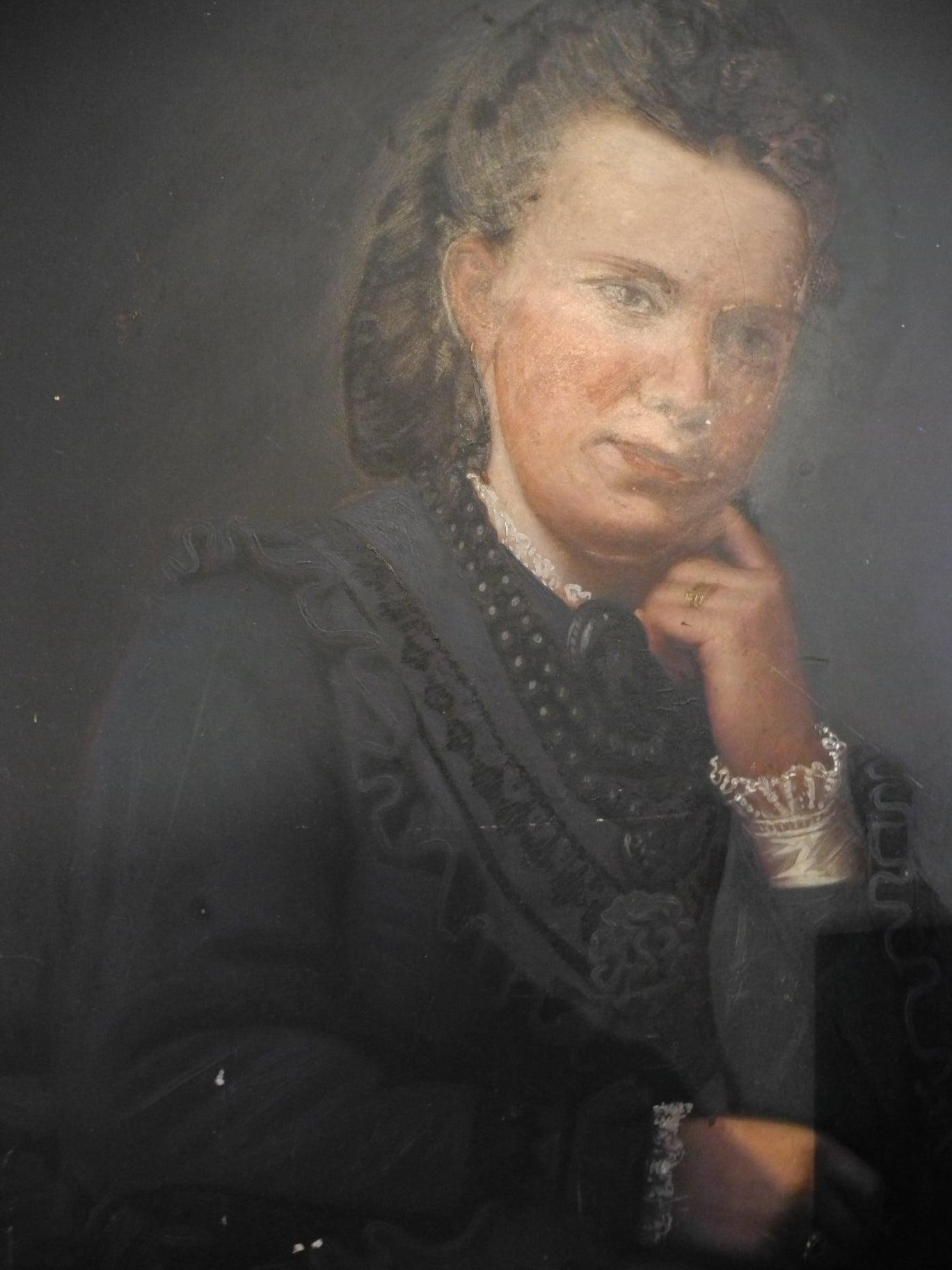
          Elizabeth Brookes


          This painting, now in my mothers house, used to hang over the piano in the home of her grandparents.   It says on the back “Catherine Housley’s mother, Smalley”.

          The portrait of Catherine Housley’s mother can be seen above the piano. Back row Ronald Marshall, my grandfathers brother, William Marshall, my great grandfather, Mary Ann Gilman Purdy Marshall in the middle, my great grandmother, with her daughters Dorothy on the left and Phyllis on the right, at the Marshall’s house on Love Lane in Stourbridge.
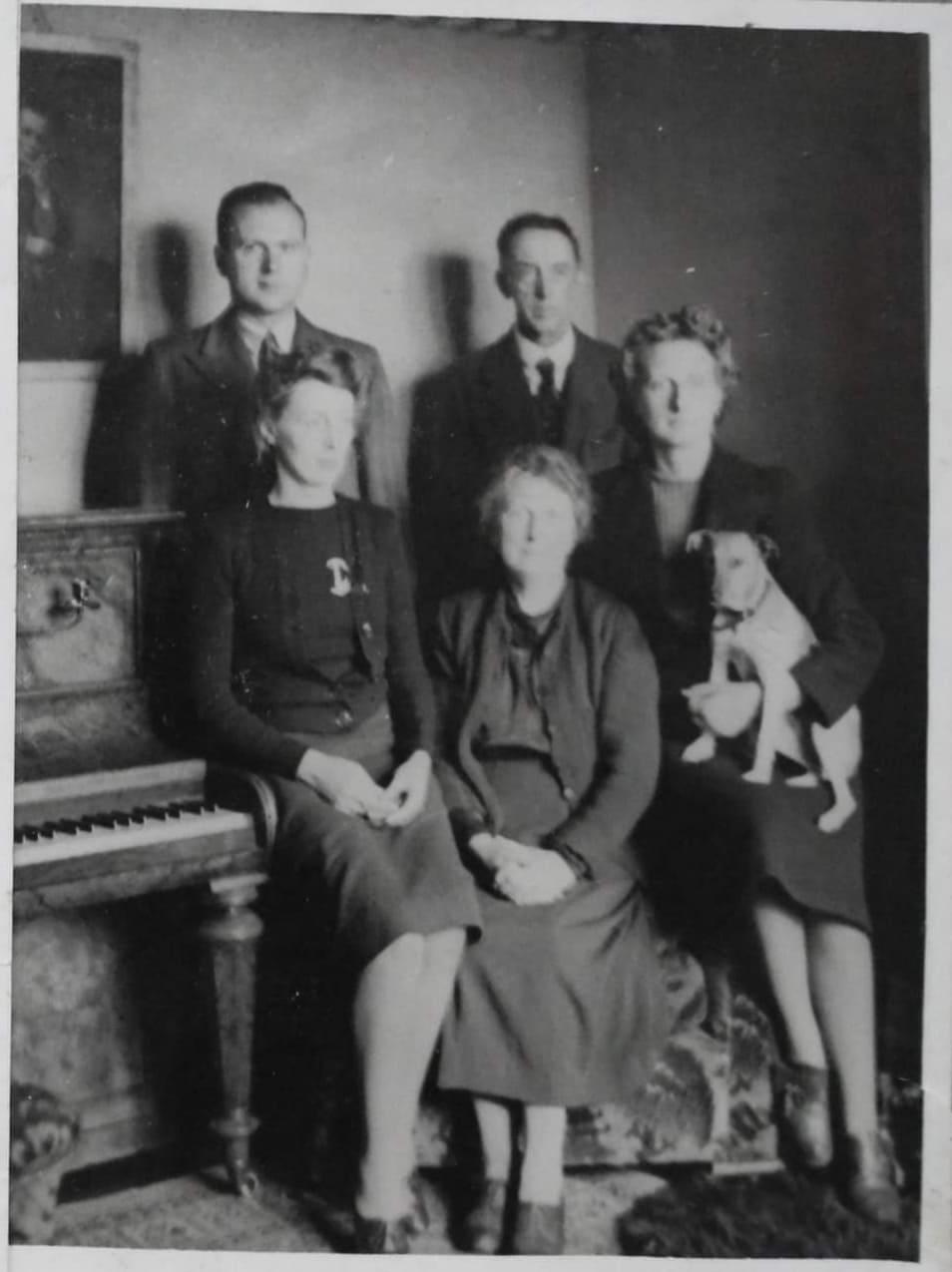
          Marshalls


          The Search for Samuel Housley

          As soon as the search for Catherine Housley’s mother was resolved, achieved by ordering a paper copy of her birth certificate, the search for Catherine Housley’s father commenced. We know he was born in Smalley in 1816, son of William Housley and Ellen Carrington, and that he married Elizabeth Brookes in Wolverhampton in 1844. He was a plumber and glazier. His three daughters born between 1845 and 1849 were born in Smalley. Elizabeth died in 1849 of consumption, but Samuel didn’t register her death. A 20 year old neighbour called Aaron Wadkinson did.
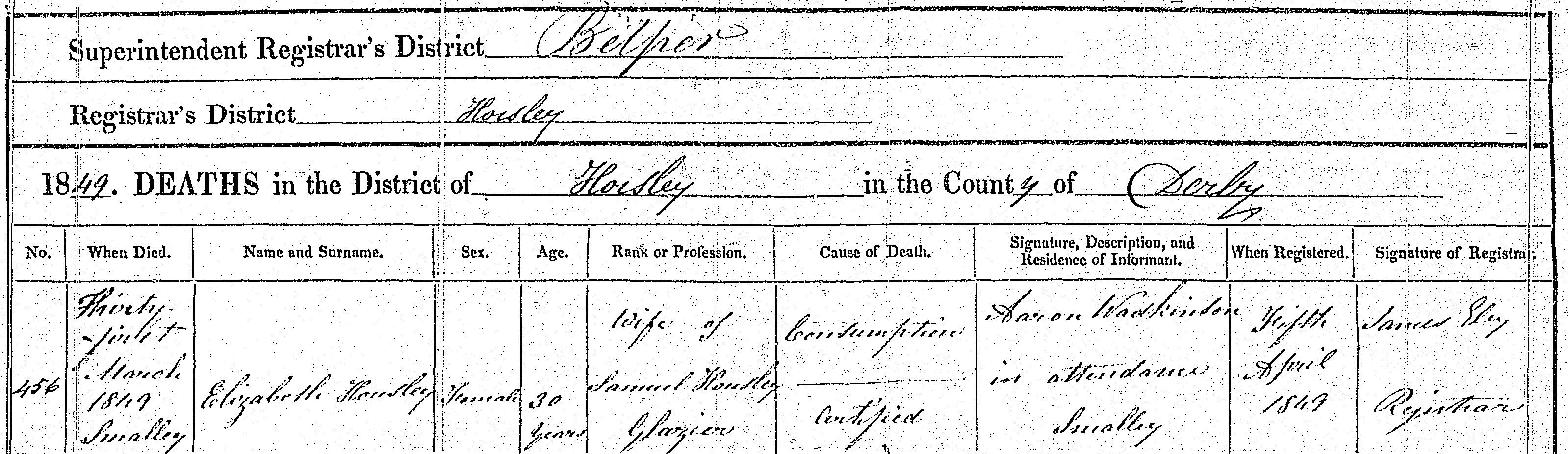
          Elizabeth death


          Where was Samuel?

          On the 1851 census, two of Samuel’s daughters were listed as inmates in the Belper Workhouse, and the third, 2 year old Catherine, was listed as living with John Benniston and his family in nearby Heanor.  Benniston was a framework knitter.

          Where was Samuel?

          A long search through the microfiche workhouse registers provided an answer. The reason for Elizabeth and Mary Anne’s admission in June 1850 was given as “father in prison”. In May 1850, Samuel Housley was sentenced to one month hard labour at Derby Gaol for failing to maintain his three children. What happened to those little girls in the year after their mothers death, before their father was sentenced, and they entered the workhouse? Where did Catherine go, a six week old baby? We have yet to find out.
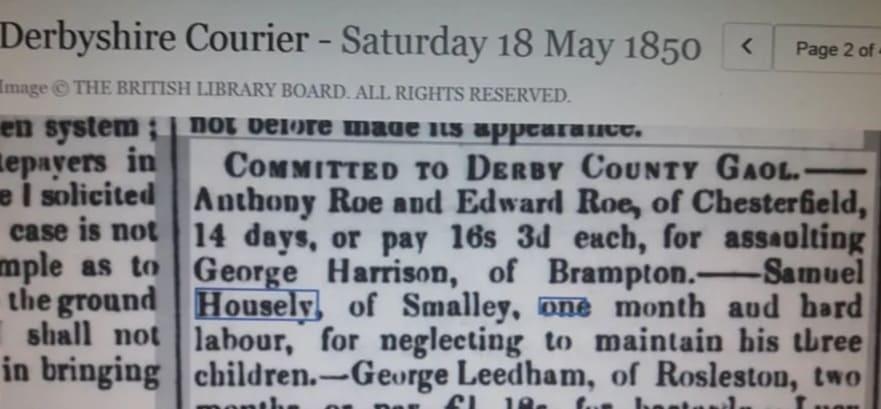
          Samuel Housley 1850


          And where was Samuel Housley in 1851? He hasn’t appeared on any census.

          According to the Belper workhouse registers, Mary Anne was discharged on trial as a servant February 1860. She was readmitted a month later in March 1860, the reason given: unwell.

          Belper Workhouse:
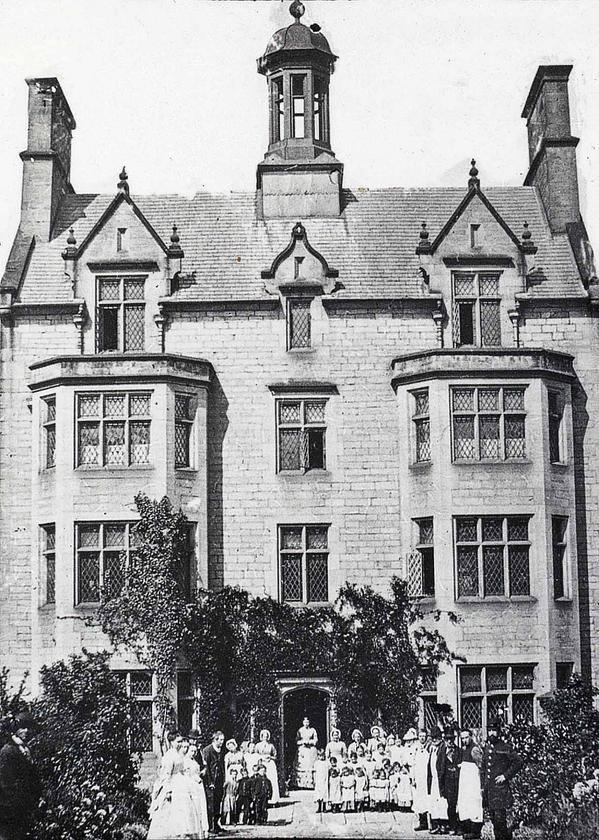
          Belper Workhouse

          Eventually, Mary Anne and Elizabeth were discharged, in April 1860, with an aunt and uncle. The workhouse register doesn’t name the aunt and uncle. One can only wonder why it took them so long.
          On the 1861 census, Elizabeth, 16 years old, is a servant in St Peters, Derby, and Mary Anne, 15 years old, is a servant in St Werburghs, Derby.

          But where was Samuel?

          After some considerable searching, we found him, despite a mistranscription of his name, on the 1861 census, living as a lodger and plumber in Darlaston, Walsall.
          Eventually we found him on a 1871 census living as a lodger at the George and Dragon in Henley in Arden. The age is not exactly right, but close enough, he is listed as an unmarried painter, also close enough, and his birth is listed as Kidsley, Derbyshire. He was born at Kidsley Grange Farm. We can assume that he was probably alive in 1872, the year his mother died, and the following year, 1873, during the Kerry vs Housley court case.
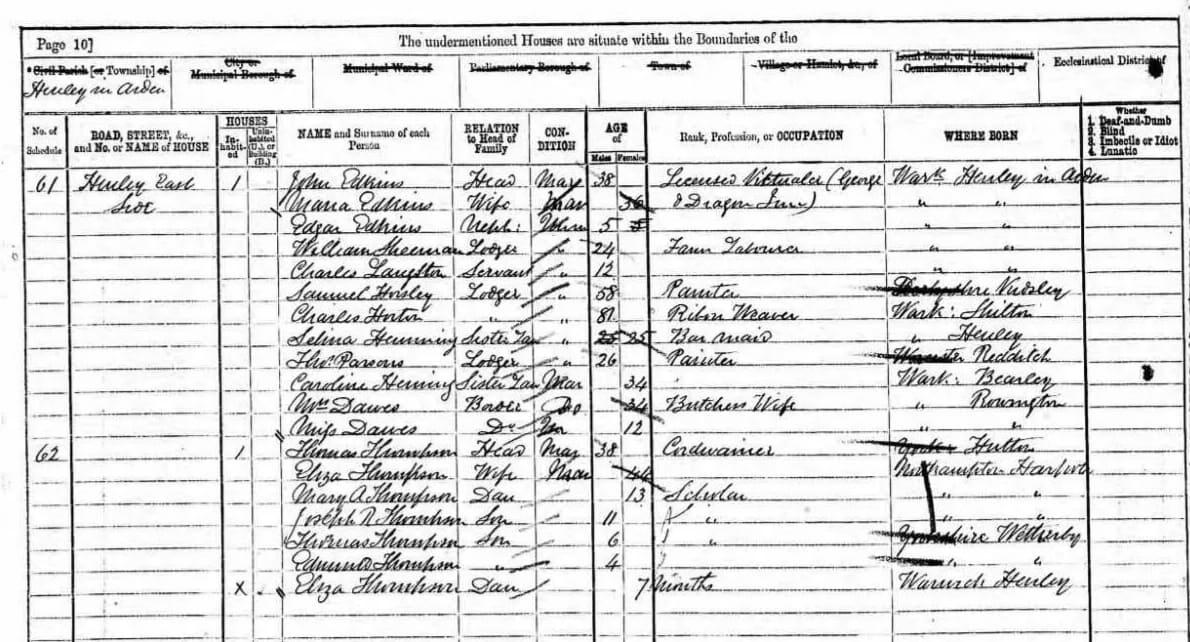
          Samuel Housley 1871


          I found some living Housley descendants in USA. Samuel Housley’s brother George emigrated there in 1851. The Housley’s in USA found letters in the attic, from the family in Smalley ~ written between 1851 and 1870s. They sent me a “Narrative on the Letters” with many letter excerpts.

          The Housley family were embroiled in a complicated will and court case in the early 1870s. In December 15, 1872, Joseph (Samuel’s brother) wrote to George:

          “I think we have now found all out now that is concerned in the matter for there was only Sam that we did not know his whereabouts but I was informed a week ago that he is dead–died about three years ago in Birmingham Union. Poor Sam. He ought to have come to a better end than that….His daughter and her husband went to Birmingham and also to Sutton Coldfield that is where he married his wife from and found out his wife’s brother. It appears he has been there and at Birmingham ever since he went away but ever fond of drink.”

          No record of Samuel Housley’s death can be found for the Birmingham Union in 1869 or thereabouts.

          But if he was alive in 1871 in Henley In Arden…..
          Did Samuel tell his wife’s brother to tell them he was dead? Or did the brothers say he was dead so they could have his share?

          We still haven’t found a death for Samuel Housley.


          #6086

          In reply to: Tart Wreck Repackage

          “A dil-do factory?” She was aghast. “A fucking carrot dildo factory?”

          “Admit it, we’re rubbish at this” Tara said. “Even Rosamund may be better at this than us.”

          “Oh don’t push it.” Star lit a large cigar, a nasty habit that cropped up when she was nervous. She blew a smoke ring and sighed. “At least the rogering was a nice change. Good clean sex, almost a spiritual experience.”

          “Oh come now, with all the don’t-need-to-know details…”

          “Well, don’t be such a prude, you were there after all. With all that luscious moaning. Haven’t seen you so flushed in ages…” Star tittered in that high-pitched laughter that could shatter crystal flutes.

          “Wait… a minute.” Tara was having a brainwave. “We may have overlooked something.”

          “What? In the sex department?”

          “Shush, you lascivious banshee… In the flushed department.”

          “What? Don’t speak riddles tart, I can’t handle riddles when my body’s aching from all that gymnastic.”

          “Can’t you see? They got to get rid of the dissident stuff unfit for cultish dildoing, if you catch my drift.”

          “Oh I catch it alright, but I’ve checked the loo… Oh, what? you mean the compost pile?”

          “I’ve seen trucks parked out the back, they where labelled… Organic Lou’s Disposal Services… OLDS… That’s probably how they remove their archives, if you see what I mean.”

          “Alright, alright, we’ll go investigate them tomorrow. Meanwhile, what about Mr French?” Star was puffing on her cigar making a good effort at trying to remember and link the details together.

          “I have a theory. Although it usually would be more in your area of theories.”

          “What? Alien abduction?”

          “No, don’t be ridiculous. I’m talking time travel… Haven’t you noticed the scent of celery when we were at the mansion and the appartment?”

          “A dead give-away for time-travelling shenanigans!”

          “Exactly. And if I’m correct, might well be that it’s Mr French from the future who phoned us, before he returned to his timeline. Probably because he already knows we’re going to crack the case. Before we know.”

          “Oh, that’s nice. Would have been nicer if he’d told us how to solve it instead, if he knew, from the future and all? Are you not sure he’s not from his past instead, like before he got in that dreadful car accident?”

          “Oh well, doesn’t matter does it? And probably won’t any longer once we locate the Uncle Basil in the Drooling Home of Retired Vegetables.”

          #4687

          Ric was confused as to why he found himself flushed and vaguely excited by Bossy Mam’s sudden and attractive outburst.
          He was so glad the two harpies were off to goat knows where, or they would have tortured him with no end of gossiping.

          Still troubled by the stirring of emotions, he looked around, and almost spilled the cup of over-infused lapsang souchong tea he had prepared. Miss Bossy was the only one to fancy the strong flavour in a way only a former chain smoker could.

          Thankfully, she was still glaring at the window, and while he had no doubt he couldn’t hope to give her the slip for that sort of things, she probably had decided to just let it go.

          He took the chance to run to the archives, and started to dig up all he could on the Doctor.
          Sadly, the documents were few and sparse. Hilda and Connie were not known for their order in keeping records. Their notes looked more like herbariums from a botanist plagued with ADHD. But that probably meant there were lots of overlooked clues.

          He flipped through the dusty pages for a good hour, eyes wet with allergies, and he was about to bring Miss Bossy the sorry pile he had collected when a light bulb lit in his mind.

          How could I miss it!

          He’d never thought about it, but now, a lot of it started to make sense.

          Thinking about how Miss Bossy would probably be pleased by the news, he started to become red again, and hyperventilate.

          Calm down amigo, think about your abuela, and her awful tapas,… thaaat’s it. Crème d’anchovies with pickled strawberries… Jellyfish soufflés with poached snail eggs on rocket salad.

          His mind was rapidly quite sober again.

          Taking the pile of notes, he landed it messily on the desk, almost startling Miss Bossy.

          “Sorry for the interruption, M’am, but I may have found something…”
          “Fine, there’s no need for theatrics, spill it!” Miss Bossy was ever the no-nonsense straight-to-business personality. Some would have called her rude, but they were ignorants, and possibly all dead now.

          “There was a clue, hidden in the trail of Hilda’s collection. I’m not sure how we have missed it.”

          “Ricardooo…” Miss Bossy’s voice was showing a soupçon of annoyance.

          “Yes, pardon me, I’m digressing. Look! Right here!”

          “What? How is it possible? Is that who I think it is?”

          “I think so.”

          They turned around to look across the hall at Sweet Sophie blissfully snoring.

          “I think she was one of her first patient-slash-assistant.”

          “How quaint. But, that explains a lot. Wait a minute. I thought none of his patients were ever found… alive?”

          “Maybe she outsmarted him…”

          They both weren’t too convinced about that. But they knew now old Sweet Sophie was probably unwittingly holding the key to the elusive Doctor.

          #4322
          ÉricÉric
          Keymaster

            It didn’t take much time for Godfrey to figure out that Walter may have been one of the missing husbands of Liz. She’d been always rather discreet about the total number of her past marriages, and she wasn’t very good at keeping archives either, so it was mostly guesswork from his part, but some signs were unmistakable, such as the spellbound speechless face on Liz’ and Walter.
            Frozen in time as they were, Godfrey could probably say anything, without fear of breaking that spell.

            “Well, that is rather awkward, Inspector.” Godfrey said, dropping the empty peanut butter jar into Finnley’s hands before she could make her escape for the sideway door.
            “Weren’t we all worried sick about that poor child since she left hurriedly from the mansion.”
            He felt compelled to add “our dear maid Finnley the most, I believe. She had all her belongings stacked in a safe place, for when she would return. Isn’t it, Finnley? That would surely help the Inspector if you could fetch those in the garden, wouldn’t it Inspector.”

            #3750

            In reply to: The Hosts of Mars

            ÉricÉric
            Keymaster

              The Matrimandir was empty at this time of night, deserted by the occasional late devotees, and only silently browsed by the maintenance robot.

              Its exterior was shaped as a sphere covered in gold — well, not entirely yet. It was first built to be the heart of the future city, and to this date, partly a work in progress, half-coated with the gold foils of discarded satellites and other space craps.

              The interior was rather large now, and air conditioned, though it was probably smaller and hotter in the past — John never had the curiosity to look at the archives, he’d known it like this since he was a child. It was meant to be a sacred place, or a place of simple beauty, which was odd, when you thought about it.
              All around them was infinite space, boundless opportunities to connect to the great mysteries beyond, and quite frankly, this was often scary as hell. Maybe that’s what this place meant, a safe retreat, like a bubble with only a thin wall of soap dividing space between here and out there, but open for the world to see.

              He’d brought another batch of water-stones, and opened the hatch below the meditation altar. When he jumped the last rug of the ladder, his boots landed in a splatch of water. Something had changed. The rate at which the stones were exuding water had increased. He would have to move them again after the next commercial shuttle departure. He couldn’t risk the Consortium getting notice of this… Not yet, not before they figured out what it meant.

              #2150

              In reply to: The Story So Far

              ÉricÉric
              Keymaster

                The Alienor Dimension, Georges and Salome

                Dory (in our current timeline/space reality) meets Georges in a cave in Madagascar during her trip.
                Georges doesn’t explain much, but we get the feeling that, though human, he’s a Traveler, crossing bridges through dimensional veils.
                Sanso, who we happen to meet at times, is supposedly another type of Traveler too, but apparently happier to cross earth-bound space veils rather than time or other-dimensional ones.

                Georges is closely linked to Salome. They are involved in the Alienor Dimension, another parallel universe, which was initially used as the set of the first story bits and in which they are involved at some historical points of importance.

                The Alienor dimension is composed (as we know now) of a central sun named Alienor, and a few planets.

                One of these planets is the Duane, which is a planet similar to Earth, except having easier access to magic, and having dragons, where the characters of Malvina, Arona, Leörmn, Irtak, Badul, Tomkin etc. are supposedly living. A map of parts of that planet was drawn somewhere in the archives.

                There are two major historical plots occurring; one in a time parallel to our own, with Malvina, Arona, Badul’s explorations etc. And another, occurring what we would call centuries earlier, with Lola and her dragon, and the Yellow Princess Atiara story-arc (see Araili’s notes).
                Somewhere in between, many years before Arona’s timeline, there is a subplot with Franiel, the monastery succession, the chalice and other magical artifacts. As far as we know, it ties to the other epochs thanks to Madame Chesterhope and Vincentius’ story.
                Madame Chesterhope is, we found out, known to Georges in his youth, when he first met Salome. Madame Chesterhope is originally from our dimension (Earth, around 1800s something?) but has learned how to travel and is thus able to move through dimensions, and has a few special powers, presumably thanks to artifacts she gathered along her trips.

                Another twin planet is the Murtuane, where there are giant eagles (counterparts of dragons), “mermaids”, zentauras (zebra-centaurs), green-skinned people, and purple beaches. This planet remains to be explored more in depth.

                The third planet, the Phreal, is rarely spoken of, as its vibration was changed before even the first epoch, and is no longer ‘seen’. Guardians, a special race of this Alienor Dimension with great mastery of the energy manipulation powers are involved within most of the historical changes, and in this one in particular.

                Malvina’s explorations are linked to those of her two “sisters”, each paired with a dragon. Initially she’s a healer, but recent developments have made her change locations a few times in space/time, and those alterations have inserted probabilities in the “past”. She has known Leonard, who is also a Traveler and who is linked to Franiel’s subplot.

                #1003
                TracyTracy
                Participant

                  Well, what a coincidence! exclaimed Becky. Becky was choosing her I Ching story comments, not altogether sure (not in the least sure, really) how it worked, but enjoying the opportunity to do a few random impulse searches. She had been reading the blog archives of Stilly from the early part of the century, all about cactus, beetles, and the investigation into the cochineal trade, when she suddenly remembered the Reality Play deadline. Anticipating buckling down to some serious writing, Becky was delighted to find the I Ching game, and made her first random choice.

                  Well, what a coincidence! Becky repeated. It’s all about beetles!

                  Becky made a note of the number: 638. :notepad:

                  #960

                  New Venice, July, 1 st 2035

                  The night was hot in New Venice at this time of the year. The weather patterns had been steadily shifting for many years, and the climate was now sub-tropical in the inundated Big Apple, as more and more people resented the usual coldness of winters, and had subjectively agreed upon a heightening of the temperatures of a few degrees.

                  Though accustomed to tell his body to relax, and vibrate at a lower frequency to counteract the sticky and displeasing effects of the heat, Al was finding sleep hard to find. Usually, he would attribute those moments of twitching slumberness to mass accessing of subjective information and bringing them to the objective. With the eclipse that would occur in the next weeks, those were still time of great cosmic synchronistic congruence.

                  Needless to say, he and Tina had been somewhat stirred by Becky’s sudden casualness, and relative abandon not only of the Reality Play but also of her three lovely first born to her friends.
                  People of that mysterious facility that Becky had briefly spoken so highly of had been doing a fantastic job, considering the very early birth, but still, Al had soon noticed the babies were displaying some kind of emotionless state which was eerie to observe in children that young. He had first thought of a remnant from the birth trauma, but it appeared that they were all perfectly aware, and even more than that, accutely aware of their environment to the point of displaying qualities of awareness akin to telepathy or pre-sentience.

                  Sam’s innate talent with the young ones had been very beneficial to them, and Al was hoping, would help them access their emotional communications as a guidance system to navigate within the immense and potentially overwhelming quantity of subjective information they were given such an easy access to.

                  Finally after having spent so much time before the cyputer, Al was collapsing from tiredness. He threw himself on the tatami for a healthy dose of rejuvenating sleep. Or so he thought…

                  :fleuron:

                  Al woke up with a chill, sweat beading over his eyebrow.
                  He remembered.
                  They would come… Hybrids from their future… He remembered having met one a few years ago.
                  A strange bald guy with piercing eyes and strange snorting twitches on his face. One moment he was talking to him in the middle of the ramp waiting for a condocab, and the moment after, he had forgotten all of this encounter.
                  The guy had said intently to wait for the time when the Dream would remind them it was the Time of the Reunion.
                  So what was next? Aliens coming in their aluminum flying saucepans making mosquito sounds?
                  That sounded awfully like the outrageous rants that old Russian guy named Pasha was making years ago in the archives of Dory —which they had taken as a basis for their Reality Play…

                  Gosh, that dream was so vivid, it couldn’t be a coincidence… Especially since the first Hybrids to make contact all looked like they were clones of Becky!

                  #915

                  Looking again at the leo-parts he just found in the digital archives of the play, Al was now amazed at how the Becky he had had glimpses of in her tarty nunfit had looked similar to her step-mother Dory in her youth…
                  Fascinating…

                  #1756

                  In reply to: Synchronicity

                  F LoveF Love
                  Participant

                    The last few days bees have been in the news. A beekeeper in the Coromandel is suspected of selling contaminated honeycomb. So far 10 people have been seriously poisoned.


                    COROMANDEL BEACH, VERY LOVELY PART OF NZ DESPITE BEE HAZARDS

                    This time of year the bees feed on Tutu which is poisonous.


                    HAMSTER OR RAT WEARING A TUTU. (Eric informed me that in France little rats wear tutus)


                    NATIVE NZ PLANT TUTU. DO NOT EAT!!! :yahoo_shame_on_you:

                    When I first read the story in the newspaper, i left the cafe and there was the HONEYB numberplate across the road, which i have not seen since Sir Ed’s death.

                    The next day the bee story was in the news again. This time the beekeepers name had been released, his surname was “Prout”. He had been operating for 5 months … 5 fun? hmmm not so sure if it is fun for the people getting sick.

                    I am wondering if it is a clue in relation to the Bronkelhampton saga … Plan B, pink tutus and supercilious prouts. :yahoo_thinking:

                    Did you know there was a world prout organisation
                    Yes indeed, they even have their own song. I found it when i was looking for the article and put in search words of honey and prout :yahoo_oh_go_on:

                    #1905
                    TracyTracy
                    Participant

                      “The FBI believed that many New Left leaders had a weakness for spiritualist mumbo-jumbo, so a 1968 memo suggested mailing them anonymous cartoons such as the one pictured here (scroll down)

                      Subsequent mailings (from increasingly closer locations) could say “The Siberian Beetle is Black” or “The Siberian Beetle Can Talk.” Other proposed characters included “The Chinese Scorpion” and “The Egyptian Cobra”–anything with a sinister meaning open to mystical interpretation. According to FBI documents, the messages were intended to cause concern, mental anguish, suspicion, and distrust among their recipients.” –Brian Boling

                      “…..on another occasion, an agent noted the counterculture’s ‘‘yen for magic’‘ and proposed that the F.B.I. send carefully chosen targets a series of drawings with ‘‘mystical’‘ or ‘‘sinister’‘ overtones. His suggestions included a drawing of a beetle, which would be made all the more ‘‘sinister’‘ by its caption, ‘‘The Siberian Beetle Can Talk.’‘ In theory, the perplexed recipients’ efforts to interpret ‘‘the significance of the . . . message’‘ would paralyze them with ‘‘mental anguish.’‘ In fact, such missives proved more laughable than harmful.”

                      Beetle sync (with last nights Indian takeaway )……and a sync with my most recent comment about Elvira’s days as an investigator….

                      #681
                      ÉricÉric
                      Keymaster

                        New Venice, February 2034

                        Al had finally completed his body experiments. The results were encouraging, and would probably help understand more of some bodily processes.
                        Obviously he’d had some fun with them, these past few years —it was a nice way to learn more about himself, and to bring some of that knowledge to other people. Essentially, it was mostly to show them that what centuries of so-called “modern medicine” had done was to make them defiant of their own bodies. The mass creations of all these diseases not so long ago was still very much embedded into people’s imaginations. How ironic was that most of these diseases were coming from the body itself.
                        So, what Albert was doing in his experiments was to push the limits to show how greatly adaptive the body structure was. It was nothing different than what scientists of the last decennia were doing on laboratory rats with many uncouth cocktails of injections —except that the trigger was for the most part an internal projection, no needing great amounts of artificial adjuncts.
                        Becky’s sudden and impressive illnesses, shortly before her wedding had not worried him too much, because he knew that at times the body needed to adapt to new settings and environments, albeit not always physical ones.
                        Another thing he knew well enough for having experienced it was that distrust was the most difficult part during this adjustment process. Distrust of the body, of self and of course of others. It was a delicate subject and most of their ancestors way of tackling the subject had been to reinforce the distrust in one’s own body. Pills and antibiotics could do wonders, but they were not that innocuous when they were used as ways to tell one’s own body it was not behaving the way it was supposed to be. As far as the symptoms were sometimes elusive, their physical effects could be quite unpredictable, depending on the patient’s state of mind.

                        That reality play they were all writing to record their various connections has always been great fun. They had been toying with the idea of great changes, new frontiers of the mind and spirit and expansion of their consciousnesses.
                        It had started during Becky’s infancy, were she was inspired by her step-mother and a bunch of her friends who were doing all kind of meditations and strange “imaginary” stuff. And two years ago, she had found old digital archives and had been amazed at some of the changes that had occurred during so few of the past years of her own existence, much of them mirroring these “imagined” changes.
                        So, she had enlisted Sam, and Al and Tina to join in that reality play, to continue the projection into that “Shift” of the mind and see how farther it would take them.

                        But there was something that Albert had always found a bit far-fetched was Becky’s confidence in such strides in their expansion of the mind. Doubtlessly he was acknowledging that things were changing —the last discoveries in how magnetic fields affected DNA and thus the bodies had been even compelling enough to have scientists reassess their stance on how DNA and evolution of species worked. But he doubted that everything would be a perfect utopia. And pain was such an inherent and useful part of their human experience that he was not conceiving how any consciousness expansion would get rid of it.

                        So, back to Becky’s illnesses which were mirroring his owns, a great deal of them was also about accepting that pain not as a flaw in the way they were creating their reality, but as something real, useful as a mechanism of feed-back. Accepting it didn’t meant cherishing it and holding dearly to it, it merely meant they had to recognize it as a way of the body to bring back the diverted awareness into the body. Well, Al wasn’t sure it would always be necessary to have it, but for the moment, the species was not entirely accustomed to being present into the body. Perhaps when it learns that, pain wouldn’t be necessary…
                        To reassure Becky, he had reminded her of how as a child she had grown teeth, and that had been perhaps one of the weirdest most disturbing and painful experience children experience in relation to their bodies, but her parents had been telling her all along it was just growing. She just had to trust her body knew better. Or like Krustis the clown was saying, it sure won’t help a man if he notices a thumping sound in his chest to have it stop…

                        Well, in a few days time, it would be Chinese New Year. The large Chinese population of New Venice made it a very loved holiday, and Becky and Sean had decided to wed on that day, February 19 th where they would all step into the year of the Tiger.

                        How funny, Al was thinking, leaning over the railing of the balcony, looking at the sunset reflecting over the waters… These funny people that Becky had known in her infancy, the original FGF, they had seen New York under waters in their meditations… And that yellow car…
                        They had discussed a lot about this event, and some had been disquieted by that fact, fearing some impeding catastrophe. But all in all it had been a smooth occurrence. Authorities had been aware of the issue, and though they did not yet know all the mechanisms at play, they had been preparing some measures to avoid the city being flooded.
                        There had been lots of debates, as most politicians were advocating of building of dams to prevent the rising sea levels to enter the city.
                        But the studies of Dutch experts had been the most convincing, and New York City official soon decided to follow the example of the implementation in Netherlands of moving and adapting structures, constructions of buildings and plains liable to be flooded, and even buildings and roads construction on stilts structures, which Dutch had come over time to prefer to the dams, no matter how technically efficient…
                        Another imagery of adapting structures with the flow…

                        #465
                        ÉricÉric
                        Keymaster

                          Al was discussing with Sam on the phone.
                          He was reminded of the good advices Tina had told him to try before Hari Amgic: a treatment based on organic sulfur for his hair loss…
                          All he could get at the time was frizzy blond hair that would fall like red leaves in autumn…

                          But now all was for the best for his hair, he had maintained his hair at a manageable and sustainable growth rate, but somehow this seemed to have been sent back on his nails which were now growing alarmingly fast…

                          At least he had a perfect excuse since no shoe would be stretchable enough, to wander barefoot as he liked to do, though Tina was finding that a bit yucky.

                          This had been seen in the past apparently, as Al was searching in the World’s Archives…

                          #1578

                          In reply to: Synchronicity

                          TracyTracy
                          Participant

                            haahahah!!! Well I have a silly Deep Purple sync too, I used to know Glenn Hughes, before he was in DP he was in a band called Trapeze, managed by my cousins Irene’s husband, Tony Perry

                            http://www.ghpg.net/archives/trapeze/

                            their daughter is the (famous in motorbike circles) Suzy Perry:

                            http://www.suziperry.com/

                            (don’t know how to do those fancy links yet)

                            Another silly sync today, my vet Manolo is connected to the Pileta cave…the owner of the cave is his ex wifes cousin :yahoo_tongue:

                            :yahoo_rose: A rose for everyone maligned or not

                            (well, that was a handy reminder to email my cousin haha…you just never know where the next clue will come from, hey….)

                          Viewing 16 results - 21 through 36 (of 36 total)

                          Daily Random Quote

                          • Yorath was still trying to explain the nature of forests, the rekindled understanding of the woodland habitats, the memory storing capacity of the vegetation in a vast network of twining tendrils and roots and so on, when Lobbocks burst into the room. Leroway had been finding himself unable to detach the workings of his mind from the ... · ID #4264 (continued)
                            (next in 10h 17min…)

                          Latest Activity

                          WordCloud says