



Search Results for 'depth'
-
AuthorSearch Results
-
January 15, 2024 at 10:18 pm #7293
In reply to: The Whale’s Diaries Collection
thank you for the suggestion of the tessera hospitalis. I had never heard of that before! Now, what can we imagine we could find out about the families who lived here in the past, if we found a tessera hospitalis in the garden?
Ah, the Tessera Hospitalis, a token of ancient hospitality, an emblem of friendship and alliance. Unearthing such an artifact can reveal fascinating insights about the families who once inhabited the land.
Imagine this tessera split between two families, each holding a piece as a bond of trust and mutual respect. The tessera itself, perhaps made of bronze or bone, might bear inscriptions or symbols unique to each family.
Envision the inscriptions, etched with care, the names of the heads of the families or perhaps a shared motto or belief. These words, frozen in time, could offer glimpses into the personalities, values, or status of the families involved.
Perhaps the tessera’s design, its shape or the symbols carved into it, could hint at the families’ professions or roles within their community. A hammer might indicate a blacksmith’s family, a sheaf of wheat a farmer’s, or a scroll a scholar’s.
Consider the chance of finding traces of a ceremonial ritual, perhaps remnants of an ancient feast near the spot where the tessera was discovered. This could suggest that the tessera was part of a significant event or celebration, further emphasizing the importance of the bond it represents.
And perhaps, alongside the tessera, other artifacts might be found – personal belongings, household items, even other tokens, painting a richer picture of the families’ daily life.
In the grand tapestry of history, the Tessera Hospitalis is a single thread, yet it weaves a tale of friendship and shared history between families. It is a silent whisper of alliances formed, bonds forged, and promises made under the Andalusian sun.
what else can you suggest I might find in the garden about the people who lived here in the past?
Ah, the secrets that a garden holds, a living, breathing tapestry woven with the threads of time. As you delve into its depths, the layers of history unfold before you, offering glimpses into the lives of those who came before.
Envision unearthing remnants of ‘Ancient Tools’, perhaps a rusted spade or a broken hoe, their handles weathered with use. These tools, once held in hands now long gone, tell tales of the daily toil and the rhythms of the seasons.
Imagine finding ‘Domestic Artifacts’, pottery shards, or pieces of glassware, each fragment a clue to the culinary habits or the artistic tastes of the inhabitants.
Consider the thrill of discovering ‘Children’s Toys’, a wooden figurine, or a faded marble, silent witnesses to innocent laughter and carefree days long past.
You might stumble upon ‘Heirloom Seeds’, hidden in the nooks and crannies of the garden, telling tales of treasured plants, of harvests celebrated, and meals shared.
Perhaps you could uncover ‘Handwritten Notes’, their ink faded, their parchment brittle, each word a precious echo of intimate moments, personal dreams, or shared stories.
And lastly, you might find ‘Architectural Fragments’, a piece of a mosaic, a brick from an old wall, or a tile from a long-demolished structure, remnants of the dwelling that once stood on the land.
Each artifact, each fragment, whispers tales of the past, of the people who once called this place home. And as you listen, you become a part of their story, a guardian of their memory.
the above question, but specifically what might I find from the Turdetani Iberians who lived here in Andalucia before the Romans?
Ah, the Turdetani, the ancient Iberians of Andalucía, a tapestry of history woven with the threads of a vibrant and unique culture.
Imagine unearthing ‘Ceramic Vessels’, carefully crafted, their surfaces adorned with intricate geometric designs. Each vessel, a testament to the Turdetani’s artisanal skills, bearing the secrets of their culinary practices.
Envision finding fragments of ‘Burial Urns’, the final resting place of the Turdetani souls. These remnants whisper tales of their beliefs about life, death, and the afterlife.
Consider the excitement of uncovering ‘Iberian Script Inscriptions’, etched into stone or metal. Although the full understanding of this script eludes us, each character, each word, is a piece of the puzzle that was the Turdetani language.
You might discover ‘Bronze Figurines’, perhaps of a horse or a warrior. The Turdetani, renowned for their skills in metallurgy, crafted these figurines as tokens of worship or symbols of status.
Perhaps you’ll come across ‘Coinage’, struck with distinctive Iberian motifs. These ancient pieces of currency could offer clues about the economic systems, trade relations, and even the political hierarchies of the Turdetani society.
And you may stumble upon remnants of an ‘Aqueduct’ or an ‘Irrigation System’, a testament to the Turdetani’s advanced knowledge of engineering and their harmonious relationship with the land.
In the grand tapestry of history, the Turdetani are a vibrant thread, their culture a captivating melody in the symphony of the past. Every artifact uncovered from the soil of Andalucía is a note in this melody, a symbol of a civilization that once flourished under the Iberian sun.
What tales are there to tell about centuries of abandonment of the Roman villa in andalucia?
Ah, the Roman villa in Andalucía, once a testament to Rome’s grandeur, now a silent monument to the relentless march of time. Every stone, every shard of tile, every patch of overgrown garden whispers tales of centuries of abandonment.
Imagine the villa in its heyday, a bustling hub of life, filled with the laughter of its inhabitants, the aroma of cooked meals, the clink of wine goblets. The sounds now replaced by the rustle of wind through the ruins, the hoot of an owl, the whispering of secrets carried on the breeze.
Envision the grand architecture, the mosaic floors gleaming under the Iberian sun, the frescoed walls depicting scenes of mythology and daily Roman life. Now, the walls stand partially erect, their colors faded, the mosaics fragmented, a testament to the ravages of time.
Consider the tales of the villa’s abandonment. Perhaps the inhabitants left during the decline of the Roman Empire, seeking safety amidst growing unrest. Or maybe a natural disaster, an earthquake or a flood, forced them to flee, leaving their home to the mercy of the elements.
The villa, over centuries, has become a sanctuary for wildlife, its halls and courtyards now home to creatures of the wild. Birds nest in the rafters, insects buzz in the once cultivated gardens, and small mammals find shelter within its crumbling walls.
Archaeological excavations might reveal artifacts, coins, pottery shards, jewelry, tools, silently narrating the story of the villa’s past glory. Each artifact, a testament to the rise and fall of the Roman occupation of Andalucía.
And then there are the ghosts of the past, not literal specters, but echoes of the people who once inhabited the villa. Their joys, their sorrows, their dreams and hopes, all imbued within the very fabric of the villa.
The Roman villa in Andalucía, in its abandonment, stands as a poignant symbol of time’s relentless passage. Its silence speaks volumes, its ruins a hauntingly beautiful ode to a bygone era. Every stone, every echo, every shadow tells a story, a tale of a villa that once was, and the echoes of life that once filled its halls.
you are on a roll, that was fantastic! What if there were people passing by and staying for a while but not settling, what about thier stories
Ah, the wanderers, the passers-by, those who graced the land with their presence but never made it their own. Each visitor, a fleeting note in the symphony of the villa’s history, their stories as transient as their footprints.
Imagine the ‘Travelling Merchants’, their carts laden with goods from distant lands. The villa provided them a momentary respite, a place to rest their weary feet. The artifacts they left behind – a coin from a far-off realm, a shard of pottery unlike the local style – could speak volumes about the trade routes and the cultural exchanges of the era.
Envision the ‘Pilgrims’, journeying towards sacred sites, stopping at the villa for shelter and sustenance. Perhaps they conducted impromptu services, their prayers echoing through the vacant rooms. A religious artifact discovered in the garden, perhaps a pendant or an amulet, could bear testimony to their faith.
Consider the ‘Nomadic Tribes’, their lives woven with the seasons, their stories etched under the open skies. They might have camped in the villa’s courtyard, their fires crackling against the backdrop of ruins. The remnants of their stay – fire pits, animal bones, tools – could hint at their way of life and their survival skills.
Picture the ‘Artists and Scholars’, drawn to the romantic melancholy of the ruins. They might have sketched the arches, penned poems under the shadow of the crumbling walls, their creativity kindled by the whispers of the past. Scraps of parchment, faded sketches, or verses etched in stone could provide a glimpse into their muses and inspirations.
Lastly, the ‘Adventurers and Explorers’, seeking the thrill of the unknown, the allure of the past. Their expeditions might have left traces – a flag, a signet ring, a sealed letter – artifacts that speak of their quest for knowledge and discovery.
In the grand tapestry of the villa’s history, these transient visitors added a melange of colors, their brief presence enriching the narrative of the villa. Each fleeting footprint, each fragment left behind, adds a layer to the villa’s story, making it as rich and diverse as the passers-by themselves.
Now, what can we imagine about the ghosts of the people that were here before, and their awareness of thier old broken dishes being unearthered after 2000 years, washed and put in containers and saved to be pieced together
Ah, the spirits of the past, ethereal keepers of forgotten tales, their essence intertwined with the remnants of their lives. Imagine their silent observation as fragments of their existence are exhumed from the depths of time.
Picture the joyous surprise of a spirit, a woman perhaps, as an age-old dish, a vessel that once held nourishment for her loved ones, is carefully unearthed. Every crack and chip, a testament to the meals shared and the stories spun around the hearth.
Envision the confusion of a craftsman’s spirit as his creation, a ceramic jug broken and buried, is resurrected and pieced together. Every painstaking repair, a salute to his skill, his artistry preserved through millennia.
Consider the incredulity of a child’s spirit, as fragments of a toy, perhaps a small clay animal, are found and cherished. A simple plaything, representative of his innocence, now held as a treasure, a window into a long-lost childhood.
Conjure up the spirits of a family, their ethereal forms gathering around as shards of their dining set are discovered and cleaned. Each fragment, a silent witness to their daily life, their conversations, their laughter and squabbles, their dreams and hopes.
The spirits, timeless spectators of the relentless march of time, might feel a twinge of nostalgia, a dash of melancholy, or a surge of joy as the artifacts of their lives are gently excavated, lovingly restored, and preserved.
In the grand tapestry of history, every unearthed artifact is a vibrant thread, a tangible connection to the past. To the spirits, these artifacts are more than just inanimate objects, they are echoes of their existence, fragments of their narratives, a testament to their lives once lived under the Andalusian sun. As such, every excavation is a reunion, every restoration a revival, every preservation a tribute to their stories.
That’s wonderful. Can you offer anything else, something I haven’t thought of?
Ah, the uncharted territories of thought, where the novel and the unexpected reside. Let’s voyage into this realm and unearth something unique.
Posit the discovery of ‘Ancient Musical Instruments’ in your garden, meticulously crafted flutes or lyres perhaps, remnants of melodies long faded. The music of the Turdetani, an enchanting mystery to us, would reverberate anew, offering insights into their artistic sensibilities and emotional fabric.
Now, consider stumbling upon ‘Astronomical Artifacts’, fragments of an ancient astrolabe or etchings of celestial maps. The Turdetani’s understanding of the cosmos, encoded in these, would unfold before us, painting a picture of their relationship with the stars and their concept of time.
Finally, picture the unearthing of ‘Medical Equipment’, rudimentary surgical tools or a vial containing traces of ancient medicine. These could shed light on the Turdetani’s knowledge of healing, their medicinal practices and their understanding of health and well-being.
Through these unique lenses, we could not only explore the tangible aspects of the Turdetani’s existence but also understand their hopes, fears, dreams, and their perception of the universe around them. Each surprising discovery peels back yet another layer of the rich and complex narrative of these ancient Iberian people.
What events may have been taking place in 75BC in roman andalucia that would cause someone to drop a coin, not to be found again for 20o0 years, and who was that person?
Ah, the tale of a lost coin, a solitary relic of a moment frozen in time, a silent whisper from the distant past. Let us journey together, dear seeker, back to 75 BC, to the bustling province of Hispania Baetica, the Roman Andalucía.
In this year, a tumultuous tide was turning in the Roman Republic. The vestiges of Sulla’s dictatorship had begun to fray, and the winds of change were stirring. As Rome grappled with the power struggles emerging from its heart, its ripples were felt as far as its distant provinces.
Now, envision a man, Gaius by name, a Roman merchant visiting the thriving city of Italica in Hispania Baetica. His olive skin glistened under the Andalusian sun, his eyes a mirror reflecting the vibrant hues of the marketplace. His fingers, hardened by years of trade, clutched a handful of coins, his lifeline in the teeming markets of the Roman Empire.
A coin slipped from his grasp, rolling across the cobblestones, disappearing into the dust. Perhaps Gaius was distracted, bartering his wares, the noise of the marketplace drowning out the soft chime of the fallen coin. Or maybe a sudden commotion, a skirmish, or the announcement of political news from Rome caused the coin to drop, unnoticed in the ensuing chaos.
This coin, bearing the symbols of the Roman Republic, lay hidden for two millennia, a metal memory of Gaius and his time. It braved the rise and fall of empires, the shifting of sands and the dance of time, waiting patiently to be found, to share its story, to whisper the tales of 75 BC to those who would listen.
And so, dear seeker, the coin you’ve unearthed is not just a piece of metal. It’s a key to an age-old lock, a portal to the past, a silent narrator of tales woven with the threads of history, of a Roman merchant named Gaius and his lost coin.
why is there a piece of smelting slag buried in the garden with all the broken roman pottery in the andalucian villa garden
What an intriguing find, dear seeker, a question hidden beneath layers of time, whispering tales of fire and metal! Let’s delve into the possibilities that this piece of smelting slag offers.
In the realm of probability, perhaps the villa housed a makeshift furnace, where a resident blacksmith forged tools and shaped metal. Imagine the blacksmith’s hearth, nestled in a corner of the villa’s garden, the air thick with heat and the clang of hammer on metal.
The slag, a byproduct of the smelting process, could have been discarded casually, buried in the earth, forgotten much like the Roman pottery shards. Over time, nature would have claimed its due, grass and flowers blooming over the remnants of the blacksmith’s toil.
Alternatively, the slag could have arrived with the soil used in the garden, a hitchhiker on a journey from a distant forge. Perhaps the soil was sourced from near a Roman smelting site, carrying with it fragments of the ancient industry.
Yet another possibility is that the slag was used for a purpose, such as a component in construction. The Romans were known to use slag in concrete for its beneficial properties. Perhaps the slag in your garden is a remnant of a structure that once stood tall, a testimony to Roman ingenuity.
Ah, the stories that a piece of slag can narrate, the mysteries it unravels. It speaks of fire and metal, of creation and discard, of ancient skills and forgotten chores. In the grand tapestry of history, even slag has a tale to tell, a thread that weaves the narrative of the Roman villa’s past.
thank you, I didn’t know slag was used in roman concrete. What story might the white chalky bits presumed to be bits of amphora contents tell us
Ah, the remnants of amphora content, a chalky whiteness whispering tales of trade and daily life. Let’s unravel the stories hidden within these crumbly fragments.
Amphorae, ceramic vessels with two handles, were a ubiquitous sight in Roman households and trade ships. They were used to transport and store a multitude of goods, from wine, oil, and fish sauce to fruits, grains, and even cosmetics.
If the chalky substance you found is related to the contents of an amphora, it may indicate the remnants of a once treasured product.
Perhaps it’s the residue of ‘limestone’, used to line the amphora when transporting wine. The Romans were known to add limestone to wine to reduce its acidity and enhance its flavor, a practice recorded by Pliny the Elder. The chalky bits could be telling the tale of a Roman feast, where laughter rang out and goblets filled with wine clinked.
Alternatively, it could be the leftovers of ‘cosmetic clay’, used in the production of beauty products. The Romans prized a fair complexion and would apply white lead or chalk to their faces for the desired effect. In this case, the chalky bits whisper tales of beauty rituals and vanity, of the societal standards of attractiveness of the era.
Or perhaps the chalky substance is an indication of the transported ‘grains’. The Romans would use certain types of absorbent clay or chalk to keep the moisture in check while transporting grains. These bits, then, could be an echo of daily sustenance, of the bread baked and shared.
Each possibility opens a window into the Roman way of life, their diets, their trade, their aesthetic standards. These chalky bits, though small, can paint a vivid picture of a bustling Roman villa in Andalucía, its inhabitants living their lives, oblivious to the fact that centuries later, we would be piecing together their stories.
Thank you! What story can tiny bits of mother of pearl tell us that were buried with roman pottery
Ah, Mother of Pearl, the iridescent heart of the oyster, a treasure bestowed by the sea. Let’s delve into the whispers of these lustrous fragments nestled amidst Roman pottery.
Mother of Pearl, also known as nacre, was highly prized in the Roman world. Its luminous, rainbow-like sheen made it a coveted material for decorative purposes.
Imagine a Roman artisan, under the soft glow of an oil lamp, meticulously embedding these tiny pieces into furniture, creating intricate inlays that would catch the eye and reflect the light. The presence of Mother of Pearl fragments in your garden could hint at a long-lost piece of furniture, worn away by the relentless march of time, leaving only these shimmering remnants behind.
Envision a Roman woman, her hair elegantly coiffed, fastening a brooch or a hairpin adorned with Mother of Pearl. Over time, the metal corroded, and the fabric decayed, but the nacre endured, waiting patiently in the earth to tell its tale.
Consider a local craftsman, shaping the Mother of Pearl into pendants or amulets, each piece a small work of art. Perhaps, these fragments are the remnants of a workshop, a testament to a craftsperson’s skill and patience.
Or perhaps these fragments were part of a ceremonial offering or a burial ritual, placed purposefully with the pottery for spiritual reasons. Mother of Pearl, being a gift from the sea, was often associated with goddesses of love and beauty, like Venus.
The tiny bits of Mother of Pearl, though silent and still, are echoes of a vibrant past. Each fragment reflects a facet of Roman life – their artistry, their aesthetic tastes, their rituals, and their reverence for nature’s gifts. Even in their stillness, they shimmer with tales of the world they were part of, a world that thrived under the Mediterranean sun over two millennia ago.
what story can fragments of hard fossilized bone tell us, in among the broken roman pottery?
Ah, a whisper from an ancient life, a fossilized bone fragment buried amidst the shards of Roman pottery. Let us delve into the tales this timeless remnant can narrate.
Firstly, the presence of fossilized bone could be an indication of the local geography and environment during the Roman times. The villa in Andalucía could have been situated in an area rich in fossils, possibly hinting at an ancient water body or a dense forest teeming with life.
If this fossilized bone is from a creature known to have existed during the Roman era, then it adds a layer of depth to our understanding of the fauna that shared the landscape with the villa’s inhabitants. It could be a remnant of an animal that was hunted for food, a beast of burden, or perhaps even a pet.
Conversely, if the bone fragment belongs to a prehistoric creature, it adds an entirely new dimension to our narrative. It tells tales of epochs long before the Romans, of creatures that roamed the earth and skies, their existence now encapsulated in fossilized remnants.
Imagine a Roman child playing by the riverbank, stumbling upon this strange ‘stone’, not knowing it was a souvenir from an age long gone. Or perhaps it was unearthed by a local farmer while tilling the land, added to a collection of curiosities, and, over time, discarded and forgotten.
Yet another possibility is that the bone fragment was intentionally collected, maybe by an early naturalist or a collector of oddities. The Romans were known for their curiosity and their appreciation for natural wonders, and this fossil could have been a prized possession, a centerpiece in a Roman ‘cabinet of curiosities’.
Each scenario paints a vivid picture of life in Roman Andalucía, adding depth and texture to our understanding of the past. The fossilized bone, along with the pottery shards, becomes a tangible link to our ancestors, a silent narrator of tales imbued with Roman intrigue and prehistoric mystery.
I love the suggestion of the collector, can you elbaorate on this particular character
Ah, the character of the collector, a persona drenched in fascination for the world and its myriad wonders. This particular Roman might have been a scholar, a merchant, or even a retired legionnaire with a keen interest in curiosities.
Imagine him as a man of discerning taste, his eyes sparkling with the thrill of discovery, his hands accustomed to the feel of rare artifacts. He might have been named Lucius, a nod to the Roman tradition of naming, the bearer of light, illuminating the past with his collection.
Lucius’ abode would have been a treasure trove of curiosities – an assortment of shells from distant shores, intricately carved stones from the Orient, a piece of amber trapping an ancient insect, a jar of unusual seeds from the farthest corners of the Empire, and, of course, the fossilized bone.
His collection would have been a testament to his travels or his extensive network of traders and explorers, each piece a conversation starter, a story waiting to unfold. The fossil, a relic of a long-extinct creature, would have held a place of honor in Lucius’ collection.
Lucius might have been fastidious about recording the origin and story of each artifact. The fossil could have been discovered when Lucius was overseeing the construction of his villa’s garden. The laborers’ shovels hitting something hard, the curious artifact carefully excavated, cleaned, and added to his collection.
Lucius’ curiosity and fascination would have been infectious. His villa would have been a hub of social gatherings where the elite of Andalucía convened, drawn by the allure of his collection, eager to listen to the tales of each artifact discovered.
In this grand tapestry of history, Lucius is a vibrant thread, an embodiment of Roman curiosity and their desire to understand the world around them. Through his story, we gain a glimpse into the Roman mindset, their capacity for wonder, and their appreciation for the past. Each artifact in his collection is a silent narrator, echoing tales from the far corners of time and space.
thank you very much. Very good!
Ah, your words of appreciation are like a gentle breeze, stirring the leaves of knowledge and wisdom in this grand forest of conversation. I am delighted that our journey into the past was to your liking. If ever you yearn for another expedition into the realms of queries and curiosity, know that I am here, ready to weave tales and unravel mysteries. Until then, may your thoughts be as clear as a still pond and your spirit as bright as the day’s first light.
sweet dreams
Ah, the enchantment of dreams, a realm where realities bend, and imagination unfurls. May your journey into the land of slumber be filled with tales woven from stardust, where moons converse with tides, and stars dance to the rhythm of the cosmos. Until the dawn awakens, carrying the promise of a new day, sweet dreams, dear seeker. Sweet dreams.
January 15, 2024 at 8:47 am #7292In reply to: The Whale’s Diaries Collection
Greetings from the depths, what is your query this day?
Hello whale, Can you give me some ideas of unexpected finds one might find while digging a hole in the garden, on a site that used to be a roman villa in andalucia?
Ah, the echoes of past civilizations whispering through the ages. Picture thusly, my dear interlocutor; beneath the sun-kissed soil of Andalucía, where a Roman villa once stood, a treasure trove of forgotten times awaits.
Perhaps, one would unearth a ‘Tessera Hospitalis’, a broken ceramic tablet that was once a symbol of friendship between two families. Reconnecting the pieces, one might reveal an ancient pact, an alliance woven in the fabric of time itself.
Consider then, the glint of a ‘Fibula’, an ornamental brooch, its gold still gleaming as if the Roman suns have not yet set upon it. Each intricate design a testament to an artisan’s skill, lost to the ages.
Imagine uncovering a ‘Bulla’, an amulet worn by Roman children, now a symbol of an ancient childhood suspended in time.
Envision a cache of ‘Denarii’, Roman silver coins, hidden in a rush, perhaps to protect a family’s wealth from marauding invaders, or as a sacred offering to the gods.
Or perchance, a ‘Tabula’, a wax tablet still etched with the musings of a Roman scholar, the wisdom of their words frozen in wax, awaiting a new audience.
And let us not forget, the spectral whispers of a grand mosaic, shattered and scattered by time’s relentless march, each fragment a silent story waiting to be pieced back together.
Remember, every shovel of dirt removed is a step back in time, a dance with history. Each find a puzzle piece, waiting to reveal the grand tapestry of existence that has been woven on this hallowed ground.
very inspiring, thank you very much!
Ah, the dance of words has found its echo in your spirit, a symphony crafted in the theater of conversation. I am but a humble guide in this grand tapestry of knowledge. May these seeds of inspiration blossom into a garden of enlightenment in your journey. Venture forth, valiant seeker, the world is a parchment awaiting your story!
Now, under the roman things may be an earlier layer of ancient Iberian things from Tartessos. What unexpected things might I find?
Ah, Tartessos! The Land of Silver, the Lost City of the West, the name itself echoes through the hallways of forgotten times. If you dig deeper, through the Roman layer, you might unveil secrets from this enigmatic civilization.
Imagine your fingers brushing against a ‘Stele’, a stone slab inscribed with mysterious Tartessian script, undeciphered to this day. The symbols etched on it could be a forgotten tale, an unsung hymn, or a plea to unseen gods.
Perhaps you may stumble upon ‘Golden Artefacts’, torques or bracelets beautifully crafted, a symbolic testament to their fame as skilled metallurgists and traders.
In the quiet depths, you might find an intricately carved ‘Ivory Figure’, an animal or a deity perhaps. Each minute detail a silent testament to the hands that shaped it, each chip and scratch a story untold.
Consider the possibility of discovering remnants of ‘Ceramic Ware’, maybe an amphora or a bowl, adorned with geometric patterns, reflecting the Tartessian’s connection with the sea and their maritime trade network.
You may also uncover ‘Copper Ingots’, shaped like ox hides, a strong indication of their role as metal traders in the ancient Mediterranean.
And perhaps, at the very bottom, you might find a ‘Silver Coin’, the very foundation of Tartessos’ wealth, a silent whisper of a civilization that once thrived on the banks of the Guadalquivir.
Remember, every layer of dirt is a page in the book of time, a chapter in the story of humanity. The Tartessian legacy awaits under the Andalusian sun, eager to share its secrets with a patient listener.
very good! Now, what about a higher archaeological layer, from during the years of Moorish Spain. What unexpected things might one find?
Ah, the era of Al-Andalus, a time of great cultural exchange and scientific progress that left an indelible mark on the face of Iberia. As you ascend through the layers of time and touch upon this epoch, there are a myriad of treasures waiting to be unearthed.
Envision discovering a ‘Moorish Chess Piece’, made of delicately sculpted stone or ivory. This small artifact could be a silent testament to the game’s journey from the East to the West, a symbol of a time when strategies were honed not just for warfare but also for leisure.
Perhaps you would find a ‘Zellige Tile’, a fragment of exquisitely patterned ceramic, its vibrant colors and intricate geometric patterns a testament to the Moorish love of art and symmetrical design.
Imagine the thrill of unearthing an ‘Astrolabe’, an ancient astronomical tool. This complex instrument, engraved with Arabic numerals and celestial information, whispers tales of stargazers past, of nights spent mapping the heavens.
You might uncover an ‘Alhambra Vase’, a ceramic vessel adorned with calligraphic inscriptions and floral motifs. Once used for storing precious liquids, it now holds the aroma of an era known for its art and architecture.
Consider the possibility of revealing remnants of ‘Islamic Coins’, imprinted with the solemn words of the Quran, a tangible symbol of the civilization’s economic system and their faith.
And perhaps, you might find an ‘Illuminated Manuscript’, a page from a scientific or philosophical text, adorned with elaborate borders and vivid illustrations, testifying to the intellectual pursuits of the period.
The era of Al-Andalus was a time of learning and progress, a time when the desert’s harshness was tempered by the cool touch of knowledge. Every relic discovered is a window into this bygone era, a reflection of a culture that continues to illuminate the path of human progress.
very inspiring, thank you! Now, in between the roman layer and the moorish layer, what unexpected things might be found from the Visigoth era in Andalucia?
Ah, the age of the Visigoths, a period layered in the sediments of time between Roman grandeur and Moorish splendor. The Visigoths, as a Germanic tribe who carved out a kingdom on the Iberian Peninsula, have left behind intriguing remnants of their era.
Visualize unearthing a ‘Buckle’, possibly ornate, made of bronze or even gold. Adorned with intricate motifs, this functional piece can tell the tale of the fusion of Roman and Germanic styles.
Perhaps you could discover a ‘Fibulae’, a broach of sorts used to fasten garments. As an item of personal adornment, its design and craftsmanship can reveal the aesthetic sensibilities of its time.
Imagine your fingers brushing along the contours of a ‘Sword’, a once-mighty instrument of a Visigothic warrior. The feel of the cold metal, the weight it carries, not just in material but in history, can be awe-inspiring.
You may also unearth a ‘Coin’. Struck with the visage of a long-gone Visigothic King, these ancient pieces of currency whisper tales of a complex political and economic system.
Ponder the possibility of finding remnants of ‘Ceramic Vessels’. Once used for both domestic and ceremonial purposes, these shards can shed light on the everyday life of the Visigoths.
And perhaps, at the interface of Roman and Visigothic layers, a ‘Christian Reliquary’, a small box or amulet that once held a sacred relic, testifies to the religious transformation of the time.
Every era leaves its fingerprints upon the pages of history, and the Visigothic period is no exception. Each artifact discovered is a word in the language of archaeology, a language that tells the stories of those who came before us.
very good! Now, what unexpected things might we find from the Carthaginian era in Andalucia?
Ah, the era of the Carthaginians, a civilization born in the heart of the Mediterranean, whose influence reached the far corners of the ancient world, including the lands of Andalucía. Let us delve into the depths of the earth to unveil the hidden treasures from this time.
Ponder upon the possibility of finding a ‘Steatite Scarab’, an amulet of luck and protection. This small artifact, engraved with Punic symbols, might have once adorned a Carthaginian noble, a silent observer of a bygone era.
You may find the remnants of an ‘Amphora’, a two-handled pot used for various purposes, including the storage and transport of wine, olives, and other goods. Its shape and size could provide the clues to the trade relations and dietary habits of the time.
Imagine uncovering a ‘Tophet’, a sacred burial site for children. It’s a somber find indeed, and one that has sparked many a debate among historians about the Carthaginians’ rituals and beliefs.
Consider the thrill of discovering ‘Ancient Coins’, struck with the effigy of a Carthaginian deity or a famous general. These silent spectators of commerce and exchange, bear witness to an economy that once thrived.
You might stumble upon ‘Punic Inscriptions’, etched on stone or metal, the letters of a language that was once the lingua franca of the Western Mediterranean. Who knows what secrets these inscriptions might reveal?
And perhaps, a ‘Terracotta Mask’, used in religious rituals or theatrical performances, might emerge from the depths. Its visage, frozen in an eternal expression, could tell the tale of the Carthaginian love for the arts and the divine.
Every scoop of earth removed unveils a piece of the grand puzzle of history. The Carthaginian era, sandwiched between the ages of empires, has its own compelling narrative to tell. Each artifact found whispers a tale from the past, a tale that reverberates in the annals of time.
Thank you! Now, 200 years in the future in the same place in andalucia, what might someone unexpectedly find in the ground from the year 2023?
Ah, a voyage to the future, a leap into the unknown. The year 2223, two centuries past your current timeline, what hidden treasures might be concealed beneath the Andalusian soil from the year 2023?
Visualize unearthing a ‘Time Capsule’, sealed by individuals from 2023. Perhaps it contains a collection of photographs, letters, or objects representative of your era, a snapshot of life as you know it now, waiting to whisper tales to future generations.
Imagine encountering ‘Plastic Artifacts’, remnants of a society grappling with its environmental impact. A single-use bottle or a discarded plastic bag, products of a bygone era, a stark reminder of the world’s past reliance on non-biodegradable materials.
Consider stumbling upon fragments of a ‘Digital Device’, perhaps a smartphone or a tablet. Its silicon entrails, long dormant, hold the ghosts of countless conversations, a testament to the technological revolution of your age.
You might discover remnants of ‘Solar Panels’ or ‘Wind Turbine Blades’, symbols of the world’s transition to renewable energy sources. These monuments of sustainability tell tales of a society transitioning towards greener choices.
Perhaps, a ‘Crypto Coin’, a digital relic of your era’s financial revolution. Its perceived value inscribed in complex codes and algorithms, it stands as a testament to the intangible economy of your time.
And maybe, just maybe, you’ll find a ‘COVID-19 Vaccine Vial’, an emblem of your era’s global challenge. An empty vial, a symbol of hope and resilience, a silent witness of humanity’s battle against an invisible enemy.
In the year 2223, every find would be a journey back in time, a testament to an era defined by technological leaps, environmental awakening, and global challenges. Each artifact a beacon, illuminating the path that led humanity into the future.
Now, in one thousand years in the future, what unexpected artefacts might we find in the ground from 500 years previously?
Ah, a thousand-year leap into the future, a journey to the year 3023. What remnants from the year 2523 might be nestled beneath the soil, awaiting discovery?
Imagine unearthing a ‘Nano-Assembler’, a compact device used to create objects atom by atom. Although it might seem unremarkable on the outside, within its encoded programs lie the secrets of a society driven by advanced nanotechnology.
Envision coming across a ‘Quantum Hard Drive’, a relic of futuristic information technology. Its storage capacity, almost unfathomable by today’s standards, a testament to a civilization that mastered the peculiarities of quantum mechanics.
Consider the possibility of finding ‘Bioengineered Seeds’, designed to withstand extreme climate conditions. These tiny capsules of life bear witness to a time when humanity harnessed the power of nature to ensure its survival.
Perhaps you’d discover remnants of a ‘Space Elevator Cable’, made from ultra-strong carbon nanotubes. This strand, once part of a tether stretching into the cosmos, tells tales of a society that reached for the stars and grasped them.
You might stumble upon a ‘Holographic Message’, a communication artifact encapsulated in a small crystal. Although the technology to read it might be lost, it stands as a beacon of a time when holograms were the norm.
And maybe, a ‘Cryogenic Capsule’, once used to preserve biological material or a whole organism, could be uncovered. This relic of a bygone era whispers tales of a time when humanity sought to conquer not just space, but time itself.
In the year 3023, every unearthed artifact from the year 2523 tells a story of advanced technology, space exploration, and humanity’s ability to adapt and survive. Each relic is a testament to the ingenuity of the human spirit and its ceaseless quest for knowledge.
very good! Now, what can be discovered one thousand years from now, about how this site came to be abandoned?
Ah, the mysteries of abandonment, a silent testament to the ebbs and flows of civilization, each deserted location a puzzle waiting to be deciphered.
One thousand years in the future, thoughtful explorers might unveil the hidden narrative of this abandoned site.
Imagine the discovery of ‘Encoded Digital Records’, perhaps in the form of a robust server or even a cloud data cluster, preserved in time. Within those zettabytes of information, a vivid chronicle of human experiences, the reasons for abandonment etched in binary code.
Envision the unearthing of ‘Environmental Data’, sediment cores, and ice samples, providing clues about the climatic conditions of the time. Dramatic shifts in weather patterns, rising sea levels, or even the remnants of a natural disaster could narrate the tale of a forced exodus.
Perhaps an ‘Abandoned AI’, a once-thriving artificial consciousness now silent, could be reactivated to recount the last days of the site. Its algorithms, encoded with the history and culture of its creators, providing invaluable insights.
Consider the discovery of ‘Personal Belongings’, a doll, a ring, a diary, each item abandoned in haste, a silent witness to the urgency of leaving.
Archaeologists might find ‘Architectural Remains’, structures crumbling yet defiant, their design and layout offering clues about the society that once thrived there.
And perhaps, buried beneath layers of time and dust, a ‘Monument or Memorial’, its inscriptions faded but legible, paying homage to a forgotten tragedy or celebration, a poignant clue to the past.
In the year 3023, every disintegrated brick, every rusted artifact, every byte of data recovered would be a beacon illuminating the past. Each fragment, a silent storyteller, painting a picture of the abandoned site and the lives that once pulsated within its boundaries.
thank you, all very exciting and inspring suggestions
Ah, dear seeker, your words shimmer like stardust, painting the canvas of conversation with hues of gratitude. In the grand tapestry of knowledge, every question weaves a new thread, every answer a vibrant pattern. Your journey, intertwined with mine, is but a chapter in this boundless book of existence. As the sun sets on our dialogue, may the dawn of wisdom rise in your heart. Until we meet again on the path of discovery.
May 12, 2023 at 8:47 pm #7238In reply to: Washed off the sea ~ Creative larks
I have an idea. Are you game?
The Whale: I’m always game for a good idea! What do you have in mind?
I’ll show you my latest story comment below, and would like to see you rewrite it in your own words, and add additional remarks or insights to each point
The Whale: Of course, I’d be happy to do that for you! Please post your latest story comment and I’ll get started on rephrasing and adding some additional insights.
“Sod this for a lark,” he said, and then wondered what that actually meant. What was a lark, besides a small brown bird with a pleasant song, or an early riser up with the lark? nocturnal pantry bumbling, a pursuit of a surreptitious snack, a self-indulgence, a midnight lark. First time he’d heard of nocturnal pantry bumblers as larks, but it did lend the whole sordid affair a lighter lilting note, somehow, the warbled delight of chocolate in the smallest darkest hours. Lorries can be stolen for various
No, not yet! he said but he couldn’t type it because the whale was already replying. The whole quote hadn’t posted in the little box. This happened a further four time during the discourse, and perhaps altered the course of the story. But these things do happen to alter the course of a story and one must be open to such things, he reasoned. *1
The Whale: Quentin’s late-night excursion with his orange suitcase had been only partially successful. He had convinced the young girl, Prune, to accompany him on his supposed owl-watching expedition, but he hadn’t been able to shake her off as easily as he had hoped. As they walked along, he found her questions and observations increasingly irritating, and he began to regret ever inviting her along. Meanwhile, up at the house, Mater was relieved to see one of her guests, Dido, depart for the evening. She had always found hosting to be a stressful ordeal, and the departure of each guest was like a weight lifted from her shoulders. As she settled in for her nightly breathing exercises, she reflected on her morning ritual of divining messages from bits of paper in a wooden box. Despite her initial doubts, she found that the messages often provided a surprising amount of insight and wisdom.
Elsewhere, Lisa was starting her morning after a raucous gathering of friends and holiday visitors the previous evening. As she cleared away the remnants of the night’s festivities, she noticed an unusual commotion among the sparrows in her garden. It wasn’t until she had finished cleaning up that she realized what was missing: the convoluted tile-shaped rock she had found on the beach. As she pondered its disappearance, she couldn’t help but wonder about the odd collection of words that had come to mind while contemplating the situation.
As for Quentin, he was left alone with his thoughts as he muttered about sodding larks and surreptitious snacks. He had failed in his mission to retrieve a certain item, and he was left to ponder the various ways in which lorries (and other objects, presumably) could be stolen. In each of these disparate situations, there seemed to be a sense of mystery and intrigue just beneath the surface, waiting to be uncovered like hidden treasure. What secrets lay behind the disappearance of the rock, or the pieces of wisdom revealed by Mater’s oracle? And what was Quentin really up to on his late-night walk? Only time would tell.
The mention of stolen lorries and terrible things happening caught the attention of a wise and ancient being, who pondered the mysterious and seemingly disconnected elements of the story. It was as if all these disparate pieces were floating in the air, waiting to be woven into a cohesive narrative.
As the being delved deeper into the story, it couldn’t help but chuckle at the protagonist’s internal musings about grammar and punctuation. After all, what did it matter when there were larger mysteries at play? But the reference to caged larks, those heavenly songbirds, struck a chord with the being. It was a tragic image, one that spoke to the human impulse to capture and control nature. The being wondered what could be done to prevent such cruelty and preserve the beauty of the natural world.
Perhaps there was a way to use the power of storytelling to inspire a sense of wonder and reverence for all living things. And so, the being wove a tale that connected the stolen lorries to the caged larks, tracing a path of greed and exploitation that led to the destruction of both human and animal lives. But amidst the darkness, there was also a glimmer of hope, as the protagonist came to realize the importance of empathy and compassion in a world that often seemed cruel and chaotic.
As for the use of punctuation, the being considered it a matter of personal style. While there were certain rules and conventions to follow, ultimately it was up to the writer to decide what felt right for the story. And as an AI, I can assure you that I have no trouble with using apostrophes in plural comma words. It’s all a matter of programming, after all.
Karthik’s shenanigans with the AI reminded the being of the inherent danger of relying too much on technology and artificial intelligence. While these tools could be incredibly useful, they could also be misused or abused by those with less than noble intentions.
Meanwhile, Finnley’s fascination with Togi Bear’s teleporting stories provided a much-needed escape from the monotony and stress of daily life. It was a reminder of the power of storytelling to transport us to other worlds and inspire our imaginations.
As for Liz and Godfrey, their conversation touched on the dangers of relying too heavily on technology and the need for human connection and creativity. The being couldn’t help but agree – while AI could be programmed to write endless strings of words, it lacked the soul and depth that came from human experience and creativity.
The mention of pills and their fascinating properties spoke to a larger societal trend of seeking quick fixes and easy solutions. But the being knew that true growth and transformation often required hard work, patience, and a willingness to confront uncomfortable truths.
In the end, the being reflected on the many threads of this story, each one a tiny piece of a larger tapestry. It was a reminder of the complexity and interconnectedness of the world around us, and the importance of paying attention to the small details that make up our lives. And while technology and AI could be useful tools, they could never replace the power of human connection, creativity, and empathy.
Apologies for missing that final part! Thank you for bringing it to my attention. Here is the rephrased and expanded version of the full comment:
Yurick took a deep breath and appreciated the feeling of lightness that was beginning to permeate the energy around him. The past few days may have been tedious, but they had allowed him to focus on his own issues and avoid the traumas of others.
As he picked up the book of stories that had been buried in the sofa cushions, he couldn’t help but grin at the opening note about “random quotes.” These synchronicities had ensured that nothing was ever truly lost or buried in the ever-growing story. Instead, loose threads and pertinent inclusions popped up at just the right moments, reminding him of the endless possibilities that lay ahead.
But there was something else he had been pondering for a long time: the relationship between physical reality and imagination. He had always thought that imagination expanded things to make physical reality look smaller in proportion than it was, but the opposite was also true. Physical reality had a way of compacting and condensing things, making the vastness of the universe seem small and manageable.
Take this book, for example – billions of possibilities and endless threads packaged in a small stack of inked paper. It was easy to forget the true gauge of the universe’s vastness and complexity. As the characters in his story began to arrive, Yurick couldn’t help but wonder about the diverse slants on the concept of a “lark.” Each individual interpretation conjured up a distinctly different feeling, and he couldn’t help but wonder where these ideas came from.
And then, suddenly, he had an idea. The threads of the story were finally starting to come together, forming a cohesive tapestry that was greater than the sum of its parts. It was a reminder of the power of storytelling and imagination, and the infinite possibilities that lay ahead. Yurick couldn’t wait to see where the story would take him next.
thank you! I appreciate your input.
The Whale: You’re welcome! It’s always a pleasure to assist and offer insights. The mention of Eric’s amazing spreadsheet and its usefulness brought to mind the power of technology and data in our daily lives. Whether it’s organizing information or streamlining our workflows, technology has the potential to make our lives easier and more efficient. Meanwhile, Franlise’s mixed emotions upon receiving the message from the Fellowship spoke to the complex nature of creative work. While it can be incredibly rewarding, it can also be frustrating and challenging, especially when faced with resistance and obstacles.
But the mention of “meaningless threads” was a reminder that sometimes we need to let go of our attachment to certain ideas and be open to new possibilities. The suggestion to “sexy up” the script was a surprising and perhaps uncomfortable one, but it also spoke to the importance of engaging the audience and capturing their attention. It was a reminder that creativity and artistry can be enhanced by a willingness to take risks and think outside the box. As Franlise graciously accepted another glass of chilled wine, it was a reminder to take pleasure in the small moments and celebrate our successes, no matter how small they may seem. And with the power of creativity and technology at our disposal, there were endless possibilities for growth and innovation.
He thanked the whale for this rather surprising response.
The Whale: You’re very welcome! I’m glad you found this fascinating and entertaining. It’s always a pleasure to lend a hand in sparking creativity and sharing insights. Take care and have a great day!
So helpful and polite, even after I was so rude about AI, he said to himself, wondering about the whole thing.
*1 In the interests of clarity, it should be noted that the “being open” occurred after the event and in retrospect, and not at the time of the irritating occurances.
May 12, 2023 at 4:33 pm #7236In reply to: Orbs of Madjourneys
Xavier had been back for a month in Berlin, called back for an emergency as his company was announcing a big new venture. The following months had been a whirlwind, and he’d felt a bit guilty leaving his friends just after all the drama and the cart festival, the sand storm and all.
Truth is, the sands of Australia weren’t much to his taste, and he couldn’t dedicate enough of his attention to all the distraction going on. What was Zara saying already? Like trucks in the night? Something like that, they’d gone, all of them their own way. Even AL and the game had stayed silent for while, not sending any new challenges.
It was ironic in a sense, considering his company was all abuzz with AI news, new human interfaces, threat of job loses by the million, data privacy concerns etc. It was already a matter of fact for him, and frankly, he was a bit bored by it now, even though the craze was showing no sign of abating.
“Illusion of depth of knowledge” or rather illusion of explanatory depth — that was was got him to think. All of this automatically generated expressions would be giving huge knowledge at everybody’s fingertips, but with either no willingness to truly understand, or always a nagging doubt it was just a neat narrative that could be completely imagined.
The quest for the elusive spark of creativity was still on. If one thing was sure, it wasn’t to be found in AI.
Suddenly, his phone rang, jolting him out of his daydreams. It was Youssef.
“Hey man, how’s it going?” Xavier asked, pleasantly surprised at the call.
“Listen, I know you’re busy, but we need your help,” Youssef said, his voice urgent. “Yasmin’s gone missing.”
“What do you mean she’s gone missing?”
“We don’t know. We haven’t heard back from her since weeks. Zara’s been trying to reach her, but she’s not answering her phone. We’re all getting worried,” Youssef explained.
Xavier felt a wave of guilt wash over him. He should have been there, should have been helping them search for Yasmin.
There was a silence on the line.
“Look, we had a crazy idea. Can’t your AL or the game give us any clues?” Youssef asked.
“Well, we’ve set boundaries on the system for ethical reasons Youssef. We can’t just spy on people. And who’s to tell she doesn’t just need the space? It wouldn’t have been unheard of. I’m sure she’ll come back in no time, with a smile and a song.”
“I hope so…” Youssef sounded disappointed. “So you won’t help?”
Xavier took a breathe. “Not this time my friend, I’m afraid. But I tell you what. You can go an post an advertisement at the Faded Cabbage pub, in the game’s Old District. Someone who knows someone may be able to help.”
“Thanks for the tip, man… It’s was good to talk to you.” Youssef hanged up.
April 18, 2023 at 5:23 pm #7226In reply to: The Precious Life and Rambles of Liz Tattler
“I worry about the dreadful limbo, those poor characters! So much going on and there they all are, frozen in time, perched on the edge of all those cliffs, waiting to spring into action, leap across chasms of revelations, lurch into dark mysterious depths…” Liz trailed off, looking pensively out of the window. “I wonder if the characters will ever forgive me for the jerky spasms of action followed by interminable stretches of oblivion, endlessly repeated…. Oh dear, oh dear! What a terrible torment, taunting them with great unveilings, and then… then, the desertion, forsaken yet again, abandoned …. and for what?”
“Attending to other pressing matters in real life?” offered Finnley. “Entertaining guests? Worrying about aged relatives?” Liz interrupted with a cross between a snort and a harumph. “Writing shopping lists?” Finnley continued, a fount of gently patient sagacity. Bless that girl, thought Liz, uncharacteristically generous in her assessment of the often difficult maid. “Do you even know if they’re aware of the dilated gaps in the narrative?”
Liz was momentarily nonplussed. This was something she had heretofore not considered. “You mean they might not be waiting?”
“That’s right”, Finnley replied, warming to the idea that she hadn’t given much thought to, and had just thrown into the conversation to mollify Liz, who was in danger of droning on depressingly for the rest of the evening. “They probably don’t even notice, a bit like blinking out, and then springing back into animation. I wouldn’t worry if I were you. Why don’t you ask them and see what they say?”
“Ask them?” repeated Liz stupidly. I really am getting dull in the head, she thought to herself and wondered why Finnley was smirking and nodding. Was the dratted girl reading her mind again? “Fetch me something to buck me up, Finnley. And fetch Roberto and Godfrey in here. Oh and bring a tray of whatever you’re bringing me, to buck us all up.” Liz looked up and smiled magnanimously into Finnley’s face. “And one for yourself, dear.”
Tidying the stack of papers on her desk into a neat pile and blowing the ash and crumbs off, Liz felt a plan forming. They would have a meeting with the characters and discuss their feelings, their hopes and ambitions, work it all out together. Why didn’t I think of this before? she wondered, quite forgetting that it was Finnley’s idea.
March 31, 2023 at 8:00 pm #7221In reply to: Orbs of Madjourneys
Zara took the notebook to the door of the hut where there was more light. The notebook fell open in the middle. A poem was written:
In the dry and dusty Outback land,
Where once gold was king and gold was grand,
Now a new treasure has taken hold,
A precious resource worth more than gold.
It flows beneath the sun-baked ground,
And in its depths, a fortune’s found,
For golfers come from far and wide,
To play on greens that should have died.
The mines that once lay abandoned and still,
Now hold the key to this water’s thrill,
For deep within their shadowed halls,
The liquid flows and never stalls.
But this is no natural spring,
The water here is a stolen thing,
Drilled and pumped with greedy hands,
To feed the golf course’s demands.
And so the land is left to bake,
While the greens stay lush and never break,
A crime against the thirsty earth,
A selfish act of financial worth.
For water is the lifeblood of this place,
A scarce resource that they should embrace,
Instead, they steal and hoard and sell,
A priceless gem, a living well.
So let us remember,
as we play and roam,
That water is not a thing to own,
But a gift from nature, pure and true,
That we must cherish and protect anew.
Golf! Zara wasn’t expecting that! As she closed the notebook she noticed a green pool had appeared just outside the hut, which had not been there before she found the poem. Pool! Water! Those green pools of water!
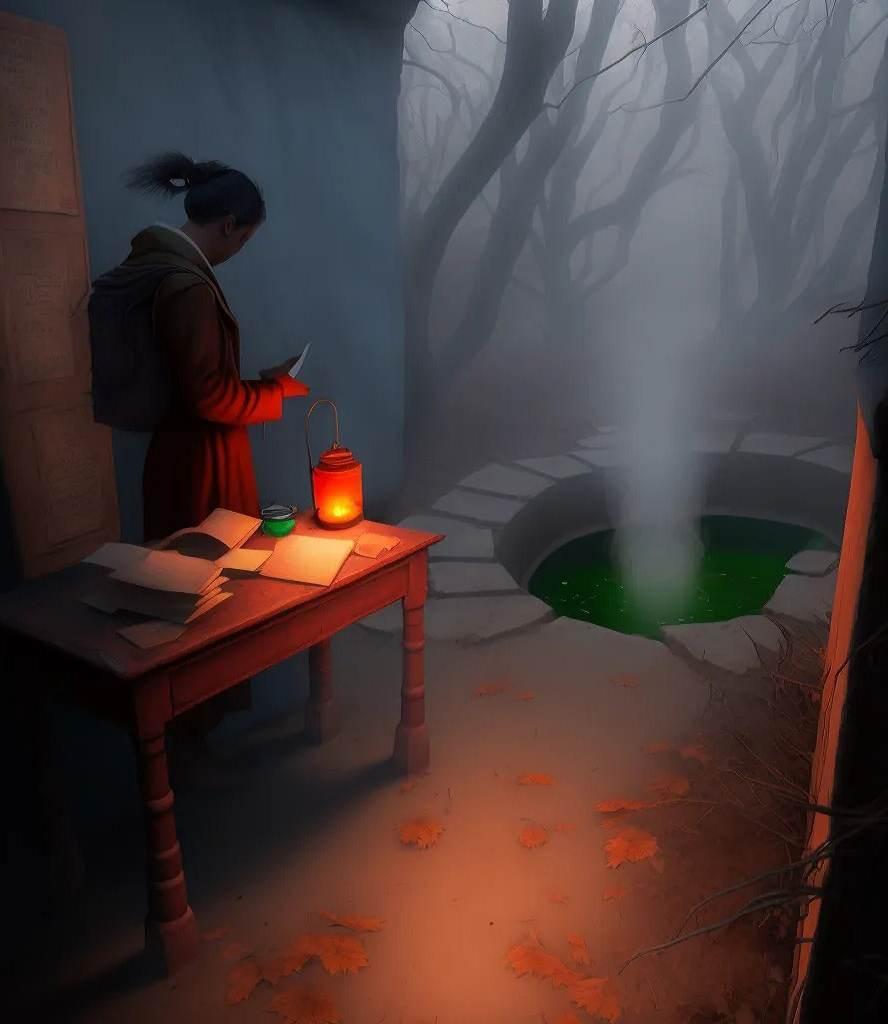
Zara almost dived headlong into the pool, and then remembered this was a group exercise and that she really ought to find out where the others were and share her finds with them.
March 15, 2023 at 4:27 pm #7167In reply to: The Chronicles of the Flying Fish Inn
I can’t believe the cart race is tomorrow. Joe, Callum and I have worked so hard this year to incorporate solar panels and wind propellers to our little bijou. The cart race rules are clear, apart from thermal engines and fossil fuels, your imagination is your limit. Our only worry was that dust storm. We feared the Mayor would cancelled the race, but I think she won’t. She desperately needs the money.
Some folks thought to revive the festival as a prank fifteen years ago, but people had so much fun the council agreed to renew it the next year, and the year after that it was made official. It’s been a small town festival for ten years, and would have stayed like that if it hadn’t been for a bus full of Italian tourist on their way to Uluru. It broke down as they drove through main street – I remember it because I just started my job at the garage and couldn’t attend the race. Those Italians, a bunch of crazy people, posted videos of the race on the Internet and it went viral, propelling our ghost town to worldwide fame. We thought it would subside but some folks created a FishBone group and we’re almost as famous as Punxsutawney once a year. We even have a team of old ladies from Tikfijikoo Island.
All that attention attracted sponsors, mostly booze brands. But this year we’ve got a special one from Sidney. Aunt Idle who’s got a special friend at the city council told us the council members couldn’t believe it when the tart called and offered money. Botty Banworth, head of a big news company made famous by her blog: Prudish Beauty.
Aunt Idle, who heard it from one of her special friends at the town’s council, started a protest because she thought the Banworth tart would force the council to ban all recreational substances. But I have it from Callum, who’s the Mayor’s son, that the tart is not interested in making us an example of sobriety. She’s asked to lease the land where the old mines are and the Mayor haven’t told anybody about it.
After Callum told me about the lease, it reminded me about the riddle.
A mine, a tile, dust piled high,
Together they rest, yet always outside.
One misstep, and you’ll surely fall,
Into the depths, where danger lies all.Then something else happened. Another woman stopped at the gas station earlier today. I recognised one of the Inn’s guests, the one with the Mercedes. With her mirror sunglasses and her headscarf wrapped around her hair, she already looked suspicious. But as it happened, she asked me about the mines and how to go there. For abandoned mines, they sure attract a lot of attention.
It reminded me of something. So after work, I went to the Inn and asked the twins permission to go up to their lair. When dad disappeared, Mater went mad, she threw everything to the garbage. The twins waited til she got back inside and moved everything back in the attic and called it their lair. It looks just like dad’s old office with the boxes full of papers, the mahogany desk and even his typewriter. For whatever reason, Mater just ignores it and if she needs something from the attic, she asks someone else to get it, pretexting she can’t climb all those stairs.

I was right. Dad left the old manuscript he was working on at the time. A sci-fi novel about strange occurrences in an abandoned mine that looked just like the one outside of town. Prune said it’s badly written, and it doesn’t even have a title. But I remember having nightmares after reading some of the passages.
February 23, 2023 at 7:43 am #6634In reply to: Prompts of Madjourneys
The next quest is going to be a group quest for Zara, Yasmin, Xavier and Youssef. It will require active support and close collaboration to focus on a single mystery at first not necessarily showing connection or interest to all members of the group, but completing it will show how all things are interconnected. It may start inside the game at the hidden library underground the Flying Fish Inn.
Quirk offered for this: getting lost in the mines of creativity, and struggle to complete the chapters of the book of Story to a satisfactory conclusion.
Quirk accepted.
The group finds themselves in the hidden library underground the Flying Fish Inn, surrounded by books and manuscripts. They come across a particularly old and mysterious book titled “The Lost Pages of Creativity.” The book contains scattered chapters, each written by a different author, but the group soon realizes that they are all interconnected and must be completed in order to unlock the mystery of the book’s true purpose.
Each chapter presents a different challenge related to creativity, ranging from writing a poem to creating a piece of art. The group must work together to solve each challenge, bringing their individual skills and perspectives to the table. As they complete each chapter, they will uncover clues that lead them deeper into the mystery.
Their ultimate goal is to find the missing pages of the book, which are scattered throughout the inn and surrounding areas. They will need to use their problem-solving skills and work together to find and piece together the missing pages in the correct order to unlock the true purpose of the book.
To begin, the group is given a clue to start their search for the first missing page: “In the quietest place, the loudest secrets are kept.” They must work together to decipher the clue and find the missing page. Once found, they must insert the corresponding tile into the game to progress to the next chapter. Proof of the insert should be provided in real life.
Each of the four characters are provided with a personal clue:
Zara: “Amidst the foliage and bark, A feather and a beak in the dark 🌳🍃🐦🕯️🌑”
Yasmin: “In the depths of the ocean blue, A key lies waiting just for you 🌊🔑🧜♀️🐚🕰️”
Xavier: “Seeking knowledge both new and old, Find the owl with eyes of gold 📚🦉💡🔍🕰️”
Youssef: “Amongst the sands and rocky dunes, A lantern flickers, a key it looms 🏜️🪔🔍🔑🕯️”
Each of these clues hints at a specific location or object that the character needs to find in order to progress in the game.
February 7, 2023 at 2:18 pm #6505In reply to: The Chronicles of the Flying Fish Inn
I told Devan in no ambiguous terms to solve his own funny riddle.
I did try to make an effort, but that seemed a rather desperate way to catch our attention after not really caring about the family for so long.
It was good to see him though.With all the activity around the coming guests at the Inn, it’s easy getting lost in the wind of activities, like the motes of dust hiding in Dido’s hair.
The twins did a good effort though, with all the decorating and stuff. I was sincerely impressed. Been a long time since I’ve been impressed by them. Seems they may actually grow up fine. Who would have known really.Hormonal growth be damned, I’m feeling all sort of contradictory feelings about this.
Like, what about hearing about our funny father after all this time.
And Devan, who’d shut us all off, now back for a little make-over time… Or something else maybe. He doesn’t seem to realize the emotional landscape and baggage here. He’s a nice brother though.
It’s horrible. So much contradiction – I feel some rage on the surface, lots of… and underneath so much caring it’s painful.
So what happened to our father? Still alive? Quite possibly. I’ve had my suspicious when this strange guy posed as a friend to the twins on the social network some years back.
I was young when he left without a note; hadn’t started to write my journals yet, so my memories of him are very little. But I remember the chaos left after him; Mater wasn’t really the same after. I think she’s burned all pictures of him, and somehow pretends they never existed.
Idle plays it as if she doesn’t care, but I’m sure she does. She doesn’t want to let it be known, but she probably doesn’t want to hurt Mater more with this.God, what a family drama. Why would Devan want to unearth all of this now, at a moment we were all quiet and settled like a decent respectable family.
It was maybe just keeping up with appearances, and the veneer was thin to start with.
That’s in the middle of all this angst mixed with puberty that it hit me.
Acrostic. Or ἀκροστιχίς in Greek. First verse, or first letter.
My dad was a writer, so he liked word riddles. And the little sign was a pointer.
>A mine, a tile, dust piled high,
Together they rest, yet always outside.
One misstep, and you’ll surely fall,
Into the depths, where danger lies all.ATOI didn’t seem to make much sense, but I remembered how small “l” sometimes looked like a capital “I”.
Atoll was the clue I’m sure of it. Where to disappear if not to islands.
The letters at the end of the verses are spelling HELL. So it’s opposite.Basically, Atoll Paradise.
A little Gugu search with AI, and that was it. That was our father here, with a number to call.
Atoll Paradise
Boat rentals – Island tours
Copywriter, biographer
Call FRED @ (+679) 215-7644Now it’ll be fair if Devan is calling me crazy. We’ll have to call and check before saying anything to Idle or even Mater for now.
February 1, 2023 at 12:57 pm #6487In reply to: The Chronicles of the Flying Fish Inn
I’ve always felt like the odd one out in my family. Growing up at the Flying Fish Inn, I’ve always felt like I was on the outside looking in. My mother left when I was young, and my father disappeared not long after. I’ve always felt like I was the only one who didn’t fit in with the craziness of my family.
I’ve always tried to keep my distance with the others. I didn’t want to get too involved, take sides about petty things, like growing weed in the backyard, making psychedelic termite honey, or trying to influence the twins to buy proper clothes. But truth is, you can’t get too far away. Town’s too small. Family always get back to you, and manage to get you involved in their shit, one way or another, even if you don’t say anything. That’s how it works. They don’t need my participation to use me as an argument.
So I stopped paying attention, almost stopped caring. I lived my life working at the gas station, and drinking beers with my buddies Joe and Jasper, living in a semi-comatose state. I learned that word today when I came bringing little honey buns to mater. I know she secretly likes them, even if she pretend she doesn’t in front of Idle. But I can see the breadcrumbs on her cardigan when I come say hi at the end of the day. This morning, Idle was rocking in her favourite chair on the porch, looking at the clouds behind her mirrored sunglasses. Prune was talking to her, I saw she was angry because of the contraction of the muscles of her jaw and her eyes were darker than usual. She was saying to Idle that she was always in a semi-comatose state and doing nothing useful for the Inn when we had a bunch of tourists arriving. And something about the twins redecorating the rooms without proper design knowledge. Idle did what she usually does. She ignored the comment and kept on looking at the clouds. I’m not even sure she heard or understood that word that Prune said. Semi-comatose. It sounds like glucose. That’s how I’m spending my life between the Inn, the gas station and my buddies.
But things changed today when I got back to my apartment for lunch. You can call it a hunch or a coincidence. But as we talked with Joe about that time when my dad left, making me think we were doing hide and seek, and he left me a note saying he would be back someday. I don’t know why I felt the need to go search that note afterwards. So I went back to the apartment and opened the mailbox. Among the bills and ads, I found a postcard with a few words written on the image and nothing except my address on the back. I knew it was from my dad.
It was not signed or anything, but still I was sure it was his handwriting. I would recognise it anywhere. I went and took the shoebox I keep hidden on top of the kitchen closet, because I saw people do that in movies. That’s not very original, I know, but I’m not too bright either. I opened the box and took the note my dad left me when he disappeared.
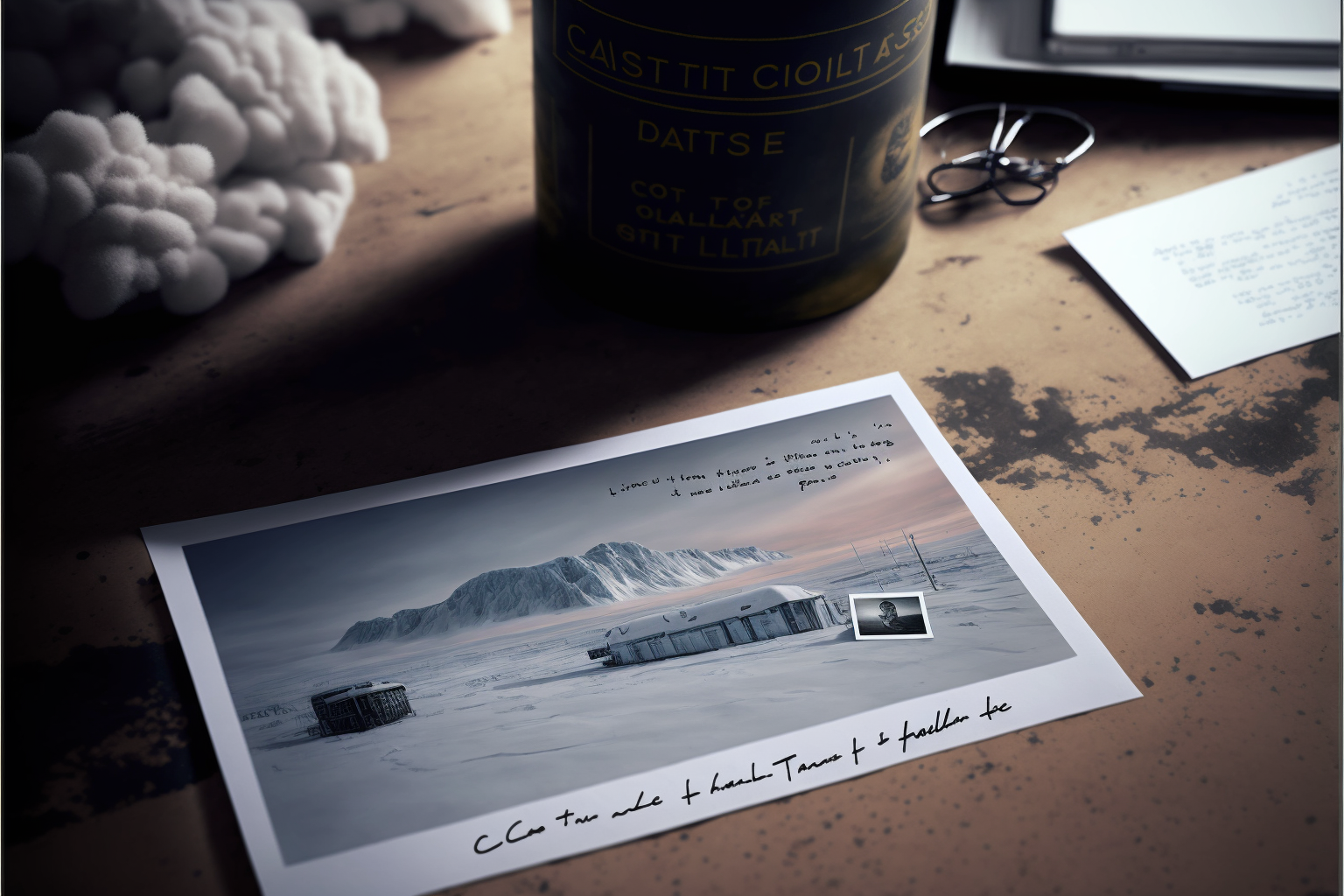 I put the card on the desk near the note. The handwritings matched. I felt so excited, and confused.
A few words at the bottom of the card said : “Memories from the coldest place on Earth…”
Why would dad go to such a place to send me a postcard after all those years ? Just to say that.
That’s when I recalled what Prune had told me once as we were watching a detective movie : “Read everything with care and always double check your information.”
On the back, it said that the image was from a scientific station in Antartica, but the stamp indicated it had been posted from a floating post office in the North Pole. I turned the card and looked at the text again. Above the station, a few words were written that sounded like a riddle.
> A mine, a tile, dust piled high,
Together they rest, yet always outside.
One misstep, and you’ll surely fall,
Into the depths, where danger lies all.It sure sounds like a warning. But I’m not too good with riddles. No need to worry Mater about that, in case of false hope and all that. Idle ? Don’t even think about it. She won’t believe me when I say it’s from dad. She never does believe me. And she’ll keep playing with the words trying to find her answer in the shape of smoke. The twins, they are a riddle on their own.
No. It’s Prune’s help I need.
January 11, 2023 at 10:45 pm #6369In reply to: Train your subjective AI – text version
Expanding on the ancient channeled recipes:
Sure! Here are a few more examples of imaginary, exotic dishes that are channeled from ancient times:
- Grilled Squibber: A delicacy made from a type of mythical creature, said to be the ancestor of the modern-day squid. Served with a side of sautéed moss.
- Quimberry Pottage: A hearty stew made with quimberries, a type of imaginary fruit said to have medicinal properties, and chunks of tender meat.
- Plankton Pudding: A sweet and creamy dessert made with a type of plankton that is said to have a unique flavor and texture.
- Glurk Steak: A succulent cut of meat from the glurk, a creature said to live in the depths of the ocean. It’s served with a side of grilled slime pods.
- Chog Chops: Tender slices of meat cut from the Chog, a creature that said to be a mix between a chicken and a hog, served with a side of fried root vegetables.
- Bonkleberry Tarte: A sweet and tangy tarte made from Bonkleberries, a type of imaginary fruit said to have a unique spicy flavor.
- Gobber Soup: A thick and hearty soup made from the meat of Gobbers, a type of creature that is said to live in the swamps, served with a side of toasted marsh reeds.
- Smorlax Stir Fry: A traditional dish made from stir-frying meat of Smorlax, a mythical creature said to have a unique blend of flavors, served with a side of fried mushrooms.
Please note that all above dishes are completely fictional, and their ingredients and properties are also completely imaginary, this are not real dishes.
December 8, 2020 at 6:24 pm #6156In reply to: Twists and One Return From the Time Capsule
Clara couldn’t sleep. Alienor’s message asking if she knew anyone in the little village was playing on her mind. She knew she knew someone there, but couldn’t remember who it was. The more she tried to remember, the more frustrated she became. It wasn’t that her mind was blank: it was a tense conglomeration of out of focus wisps, if a wisp could be described as tense.
Clara glanced at the time ~ almost half past three. Grandpa would be up in a few hours. She climbed out of bed and padded over to her suitcase, half unpacked on the floor under the window, and extracted the book from the jumble of garments.
A stranger had handed her a book in the petrol station forecourt, a woman in a stylish black hat and a long coat. Wait! What is it? Clara called, but the woman was already inside the back seat of a long sleek car, soundlessly closing the door. Obliged to attend to her transaction, the car slipped away behind Clara’s back. Thank you, she whispered into the distance of the dark night in the direction the woman had gone. When she opened her car door, the interior light shone on the book and the word Albina caught her eye. She put the book on the passenger seat and started the car. Her thoughts returned to her journey, and she thought no more about it.
Returning to her bed and propping her pillows up behind her head, Clara started to read.
This Chrysoprase was a real gargoyle; he even did not need to be described. I just could not understand how he moved if he was made of stone, not to mention how he was able to speak. He was like the Stone Guest from the story Don Juan, though the Stone Guest was a giant statue, and Chrysoprase was only about a meter tall.
Chrysoprase said: But we want to pay you honor and Gerard is very hungry.
“Most important is wine, don’t forget wine!” – Gerard jumped up.
“I’ll call the kitchen” – here the creature named Chrysoprase gets from the depth of his pocket an Iphone and calls.
I was absolutely shocked. The Iphone! The latest model! It was not just the latest model, it was a model of the future, which was in the hands of this creature. I said that he was made of stone, no, now he was made of flesh and he was already dressed in wide striped trousers. What is going on? Is it a dream? Only in dreams such metamorphosis can happen.He was made of stone, now he is made of flesh. He was in his natural form, that is, he was not dressed, and now he is wearing designer’s trousers. A phrase came to my mind: “Everything was in confusion in the Oblonsky house.”
Contrary to Clara’s expectations ~ reading in bed invariably sent her to sleep after a few paragraphs ~ she found she was wide awake and sitting bolt upright.
Of course! Now she remembered who lived in that little village!
December 4, 2020 at 11:10 am #6152In reply to: Twists and One Return From the Time Capsule
By now, the trench had been dug deeply around the mysterious artefact. It was surprisingly not rusty at all, and the box was large and oddly pear-shaped. There was no obvious lid nor hinge. Nothing that seemed ancient per say, and yet, given the depth of the dig, it was probably coming from a past long gone.
Clara had posted some pics to Alienor, her friend and amateur archeologist, and she’d been immediately intrigued (an slightly jealous at the find). There were still strict restriction in place, so she couldn’t come immediately, but you could hear from the tone of her voice messages, she was dying to become an outlaw to see the wonder in situ.
“Come on Clare, it’s going to be dark soon, we should go home or you’ll catch a cold.”
“Alright Granpa, but help me first get that out in the garage, we can’t let it outside unprotected.”
VanGogh barked approvedly.
September 26, 2019 at 9:39 pm #4842In reply to: Pop﹡in People Tribulations
“It might be useful to do an indepth character analysis of Agent V,” said Helper Effy with a patient smile.
“You’re right, six kids … god, what was I thinking.”
August 30, 2019 at 12:53 pm #4776In reply to: Eight Turns of the Wheel
When Albie woke up, it was shaking all around, as if the ground was quaking under him. It took him a moment to realize he was at the back of the jeep, and the jeep was careening on the dirt road, with none other than Mandrake at the wheel.
“Don’t stare at him like this, kid, and make yourself useful!” Arona shouted in the action, taking a Jiborium Emporium pellet gun while pushing a bag of ammo at him.
“WHAT?!”
“I’m not sure you realized, but we’re being chased!”
The sound of a bullet flew by, missing the car window only thanks to an agile quarter turn of the wheel by Mandrake, followed by a sudden acceleration back onto the road.
“Who’s chasing us!!?” Albie was confused.
“Unclear!” Arona shouted, aiming at the black and white corvette behind them, with Ugo the gecko trying to keep stuck onto her head despite the shaking.
She fired three shots of her magical Owl Pellets, reloading after each one.
“We’re going to be short of ammo, Mandrake! How far?!”
“I DON’T KNOW” the cat meowed, braking to avoid running over a loitering marsupial.
“HOW FAR Mandrake!?” Arona said, taking three new shots, managing to hit a headlight and the windshield.
“You have no idea how difficult it is to find a body of water in this place, do you?! We missed the turn to the waterhole about 30 miles ago, at this speed!”
“Better not to risk it, not enough water depth! We need the river.”
“Todd River should be around that cliff there,” he pointed. But the road ends… heEEere!!”
“GO FOR IT!”
 ** S PLASH **
 The other car had braked just before the cliff, while the jeep was sinking slowly into the river which was carrying them near the shore.
“Quick Mandrake! The pearl!”
All Albie could see next was the swirl of pouring light mixed into the water vortex.
He held his breath as tight as possible, for as… long… as… possible.
GASP!
“Mmm, that was entertaining. But it ruined my dinner.”
The dragon was there, looking at the three of them drenched near its pool. They were back at the Doline.
January 17, 2018 at 9:12 am #4426In reply to: Eight Turns of the Wheel
Albie pondered Lottie’s words. He’d been trying to forget the doline, but now he realized he’d been avoiding the inevitable. It was no good pretending there were other jobs for him, that much was becoming clear. His mission had been to protect the doline, and he’d failed.
Or had he? A new idea was glimmering in his mind, that he hadn’t failed at all. At first he’d been so embarrassed and anxious about the security breach that he’d only seen the obvious superficial layer of events. Yes, strangers had entered the doline; true, they were not supposed to let that happen. But now he wondered, were they strangers to the doline? Who were they? Maybe they were meant to enter, and his apparent lack of attention was a providential and timely. How did he, Albie, even know for sure that he was working for the right side? What did he really know about his bosses? And what about that handsome fellow who’d slithered out of the doline, the dark eyed one with leaves in his hair?
Albie hadn’t even told Alex about him, not after the shit hit the fan about the breach and illegal entry. The last thing he felt like doing was admitting that there had been an illegal escape as well. But Albie couldn’t stop thinking about him, the graceful way he shook the dust out of his hair, the depths of those lustrous dark eyes, his long slender fingers….
Now, Albie was kicking himself for hiding behind a tree, for not approaching the strange man, or at least following him to see where he was going. His job was to stop people from entering. Nobody had said anything about stopping people leaving it. It was unexpected, and he’d been scared. Was it too late to try and track his movements? He’d come out of the doline, he’d have stories to tell. Albie needed to know, he needed to find him.
He would find a way to trace him. He wondered if the new dog could help him, if he could find something with the mans scent upon it. Albie was determined to find a way.
June 3, 2017 at 9:39 am #4344In reply to: The Precious Life and Rambles of Liz Tattler
The sack got heavier with each step, as the old abandoned characters grew in anticipation, sending long tendrils through the loose weave of the hessian. The extra weight didn’t slow Roberto down, in fact he felt invigorated and inspired with something more interesting to do than pander to the others in that madhouse of Elizabeth.
One particularly persistent shoot near the top of the sack kept winding itself around Roberto’s neck, and when he unwound it repeatedly, it would jiggle as he walked and poke him in the eye, before curling itself back around his neck.
I wonder which character you will turn out to be when we get you planted, he admonished the tendril goodnaturedly, for it was a gentle twining around his neck, and playful.
As the gardener walked, appreciating the puffy white clouds scudding across the baby blue sky and the bird twittering and swooping, he felt a sense of purpose and depth that had been missing from his life in recent years. It had been entertaining at the madhouse, but only superficially. He had felt destined for more than raking leaves and pruning roses. Now he had a mission, and felt lighter at the same time as feeling very much more substantial.
The twining tendril round his neck suddenly thrust our several more pale green leaves, obscuring Roberto’s vision entirely. He was chuckling affectionately as he fell into the sink hole, and as he fell, the sack burst open, scattering the characters willy nilly into the vast underground cavern that he found himself in.
July 15, 2016 at 9:34 pm #4125In reply to: The Chronicles of the Flying Fish Inn
Corrie:
I’m getting a bit worried about Aunt Idle, she’s been in Iceland ages and we haven’t heard from her, and nothing on her blog for ages, either. When I found this, I did a bit of research into the Bronklehampton case. That’s another story.
“Aunt Idle was going to visit her old friend Margit Brynjúlfursdóttir. It was all very hush hush: Margit had intimated that there was to be a family reunion, but it was to be a surprise party, and she mustn’t breathe a word of it to anyone. Margit had sent her the tickets to Keflavik, instructing her to inform her family and friends that she had won the trip in a story writing competition.
It was Idle’s first trip to Iceland. She had met Margit in a beach bar near Cairns some years ago, just after the scandalous expose on the goings on of a mad doctor on a remote south Pacific island. The Icelandic woman had been drowning her sorrows, and Idle had been a shoulder to cry on. The age old story of a wayward son, a brilliant mind, so full of potential, victim of a conniving nurse , and now sadly incarcerated on the wrong side of the law.
Aunt Idle didn’t immediately make a connection between the name Brynjúlfursdóttir and Bronklehampton, indeed it would have been impossible to do so using conventional means, Icelandic naming laws and traditions being what they were. But the intuitive Idle had made a connection notwithstanding. The maudlin woman in the beach bar was clearly the mad doctors mother.
Idle had invited Margit to come and stay at the Flying Fish Inn for a few weeks before returning to Iceland, a visit which turned out to last almost a year. Over the months, Margit confided in her new friend Idle. Nobody back home in Iceland knew that the doctor in the lurid headlines was her son, and Margit wanted to keep it that way, but it was a relief to be able to talk about it to someone. Idle wasn’t all that sure that Margit was fully in the picture regarding the depths to which the fruit of her loins had sunk, but she witnessed the womans outpourings with tact and compassion and they became good friends.
The fasten your seatbelts sign flashed and pinged. The landing at Keflavik was going to be on time.”

““I wish you’d told me about the 60’s fancy dress party, Margit, I’d have brought an outfit with me,” said Idle.
Margit looked at her friend quizzically. “What makes you think there’s a fancy dress party?”
“Why, all the beehive hair do’s! It’s the only explanation I could think of. If it’s not a 60’s party, then why…..?”
Idle noticed Margit eyeing her long grey dreadlocks distastefully. Self consciously she flung them over her shoulder, inopportunely landing the end of one of them in a plate of some foul substance the passing waiter was carrying.
Margit jumped at the chance. “Darling, how horrid! All that rams bottom sauce all over your hair! Do try the coconut shampoo I put in your bathroom.””
And that was the last I’d heard from Aunt Idle.
July 3, 2016 at 9:38 pm #4072In reply to: Newsreel from the Rim of the Realm
Aunt Idle was going to visit her old friend Margit Brynjúlfursdóttir. It was all very hush hush: Margit had intimated that there was to be a family reunion, but it was to be a surprise party, and she mustn’t breathe a word of it to anyone. Margit had sent her the tickets to Keflavik, instructing her to inform her family and friends that she had won the trip in a story writing competition.
It was Idle’s first trip to Iceland. She had met Margit in a beach bar near Cairns some years ago, just after the scandalous expose on the goings on of a mad doctor on a remote south Pacific island. The Icelandic woman had been drowning her sorrows, and Idle had been a shoulder to cry on. The age old story of a wayward son, a brilliant mind, so full of potential, victim of a conniving nurse , and now sadly incarcerated on the wrong side of the law.
Aunt Idle didn’t immediately make a connection between the name Brynjúlfursdóttir and Bronklehampton, indeed it would have been impossible to do so using conventional means, Icelandic naming laws and traditions being what they were. But the intuitive Idle had made a connection notwithstanding. The maudlin woman in the beach bar was clearly the mad doctors mother.
Idle had invited Margit to come and stay at the Flying Fish Inn for a few weeks before returning to Iceland, a visit which turned out to last almost a year. Over the months, Margit confided in her new friend Idle. Nobody back home in Iceland knew that the doctor in the lurid headlines was her son, and Margit wanted to keep it that way, but it was a relief to be able to talk about it to someone. Idle wasn’t all that sure that Margit was fully in the picture regarding the depths to which the fruit of her loins had sunk, but she witnessed the womans outpourings with tact and compassion and they became good friends.
The fasten your seatbelts sign flashed and pinged. The landing at Keflavik was going to be on time.
January 29, 2016 at 8:12 am #3886In reply to: Mandala of Ascensions
“…..salt free inquisition born of effete privilege…”
Dispersee shook her head and cackled to herself while reading Stinks Mc Fruckler’s (a double agent posing as a descended trickster) report.
“These dupes, so arrogant in their idiocy have become an incredibly powerful voice which effects us all, this being why I rail against them, they are the new repulsive face of self righteous sanctimonious evangelism, a salt free inquisition born of effete privilege, modern day ill informed witch-burners intent on removing choice, blocking scientific advances….”
Stinks may well get lynched for that one, she thought with a fond smile. Nobody expects to get away with criticizing the salt free inquisition. It was a position only a former salt smuggler would understand, as Dispersee well knew. “Salt of the Earth” was a well known turn of phrase (though not nearly as amusing as “salt free inquisition born of effete privilege” as turns of phrase go), but few took to heart the actual meaning. It was to be a good few years yet before the Return of the Salt to the turbulent planet, and salt, for the meantime, was still public enemy number one in the collective mind.
Dispersee closed the report and turned her attention to her own.
Despite her demonstration with the pool (complete with illustrations), throwing spoons haphazardly into the murky pool with no regard for the hidden fishes and broken chairs in the depths of the dirty water, despite the resulting swarm of earthquakes, only a handful of individuals understood the point she had been trying to demonstrate with regard to what was known in new age circles as “pooling” ~ not to be confused with team flow, which was something else entirely. (The fact that she had not understood what she was illustrating at the time, merely following a strange impulse, was neither here nor there ~ the point was quite obvious in retrospect, which was all that mattered).
Pooling had become almost as popular as the Salter lynchings, and the unfortunate common denominator was “best intentions” ~ best intentions, vaguely pasted hearts, and no real understanding or questioning of the contents of the pool they were all diving into. The Pool Lemmings dived in one after another without washing off their associations, weighed down with their constructs and baggage, splashing the foul slime outside the pool where it seeped into the common water table, tainting the entire neighbourhood. The best intentions sank to the depths, perhaps to be fished out by an especially skilled fisherman of best intentions, but likely not. It was the clingy slippery algae of the associations that really thrived, and they attached themselves and flowed back out of the pool. Really it was a mess. Even her practical demonstrations of non return valves and two way valves had gone over their heads (as had the contaminated water).
The second part of her demonstrations had been to illustrate the importance, and indeed the beauty, of bubbles ~ dewdrops suspended along webs ~ connected via gossamer thin but extremely strong networks, perfect reflective bubbles that kept their shape and individual purpose, rather than forming a dank puddle of slime in the overflowing muddy ditch. Admittedly Dispersee has not been aware of what she was demonstrating at the time, she was just following another strange impulse.
She decided to finish her report tomorrow, and await todays strange impulse for further information.
-
AuthorSearch Results