

Search Results for 'george'
-
AuthorSearch Results
-
February 7, 2023 at 1:49 pm #6504
In reply to: The Jorid’s Travels – 14 years on
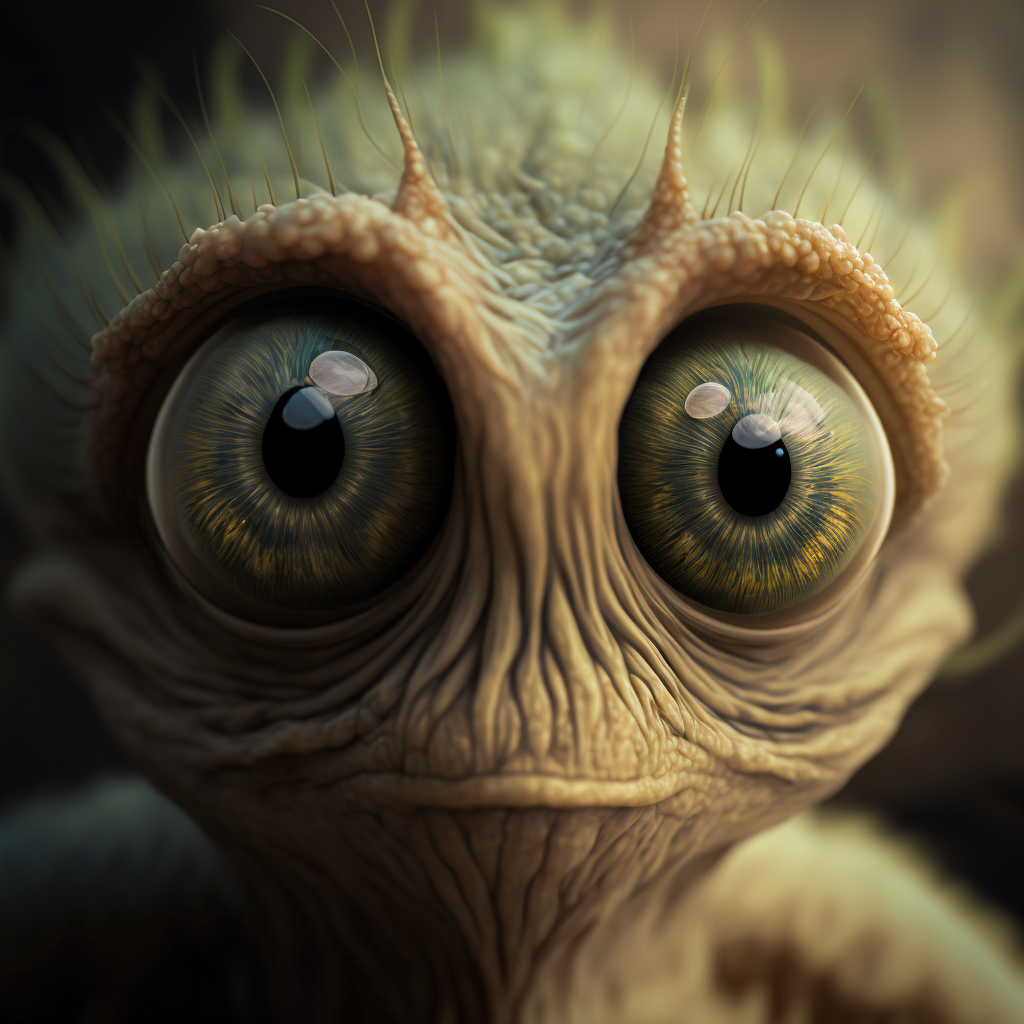
Klatu was a quite unassuming alien form (alien for them anyway, he was actually more indigenous than they were). Looking like a green gnome with bulging eyes covered by protective goggles, long pointy ears (2 or 3 depending on the wind direction), a short three nostrils snout, an a mossy toupee on top of his head, he made quick work of the formalities and presentations.
“Little ugly humans, come follow me. Have tracked your smelly hairy friend, not time to waste.”
Salomé looked at Georges sideways with a smirk on his face. They could read their thoughts easily on that one, something along the lines of:
“The translator is behaving again, or is he really calling us ugly?”
“Don’t worry dear, that’s probably a polite way of addressing people in their language.”
They arrived at a little sand speedster just barely big enough for their indigenous companion. Salomé raised an eyebrow at the situation, while Georges was ready to ride shotgun with the alien on the tiny bike.
Klatu moved his arms in short annoyed movements, “not here, stupid mammals, go there and be quiet!” and pointed them to a makeshift trolley attached behind and half burried in the sand. He grinned from ear to ear to ear, visibly pleased with his vehicle tuning appendage.
“Horrid creatures better wear seatbelts. Ride gonna shaky.”
February 3, 2023 at 8:35 pm #6495In reply to: The Jorid’s Travels – 14 years on
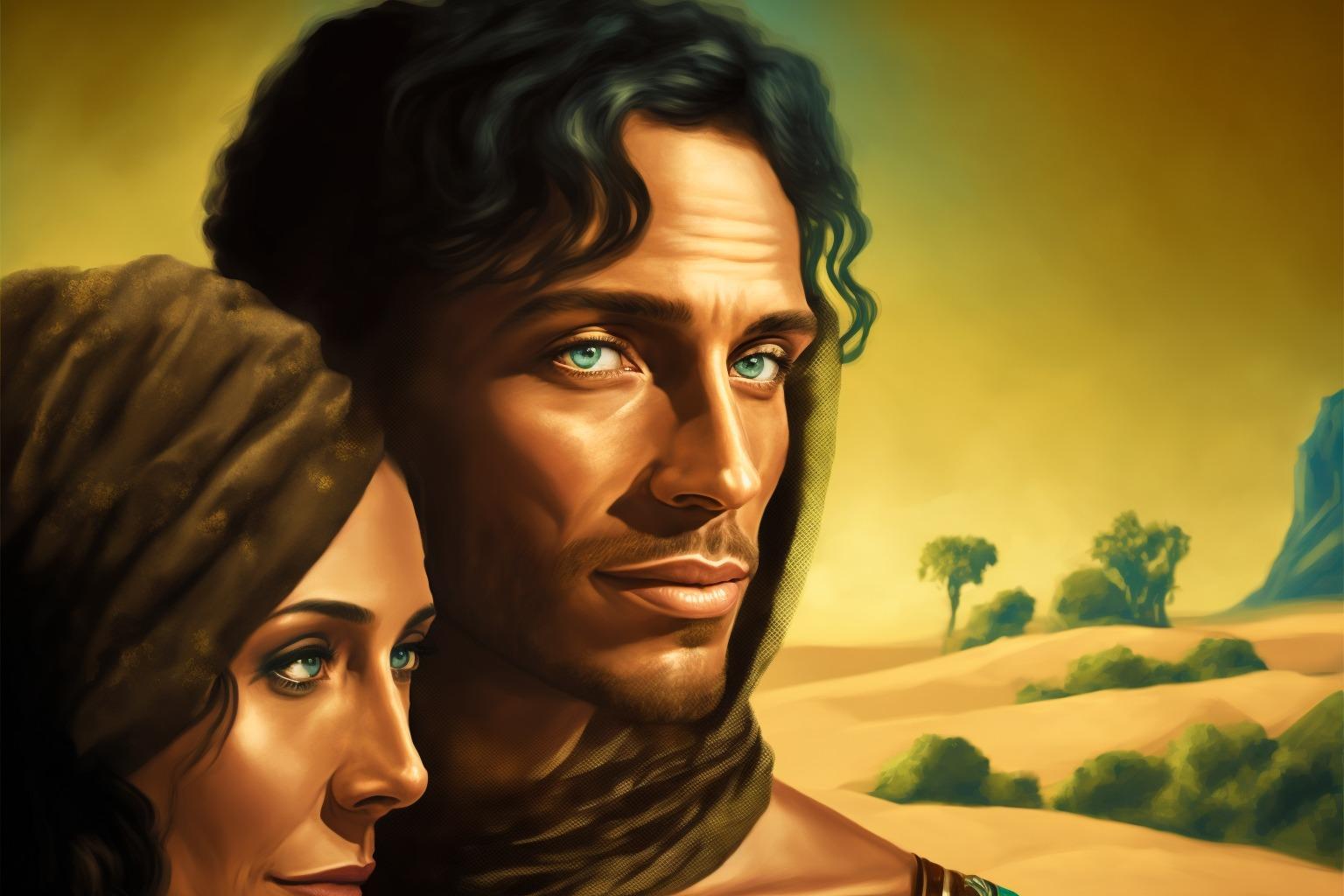
The landing on the sandy desert of Bluhm’Oxl was smoother than usual. It usually took a few minutes to get accustomed to their surrounding, the body transformations that came together with jumping across dimensions. In this case, it looked as though this dimension was quite close to their own.
“Checking translation device…” Georges touched his ear lightly.
“Gremsbtic newkil jumbal” said Salomé in response. Georges looked quizzically at her face before realising she was pulling a classic prank.
She laughed heartily. “That joke’s never getting old, isn’t it?”
“Let’s walk a little in this direction, the rendez-vous point with Klatu isn’t too far.”

“Any idea how Jorid managed to make contact this time?” Salomé asked.
“Not sure really. Generally the quantum probability framework that’s built into the Jorid is managing to make trades across the multiverse that are quite complex to conceive or track down. Last time I tried to check, Jorid had traded one tardigrade to obtain us a couple of premium pass to the Amp’hool of Athumbra”
“Underwater Whalets’ concert from the UniverseTour of Shakara, yes that was quite a night to remember…” Salomé reminisced fondly.
“Fully booked for centuries, near impossible to get, and yet all it took was about a hundred of trades across multiple owners… No idea how it manages, but it found someone who was ready to trade their two front-row seats in exchange for a single Snoot’s hair.”
“And why are we meeting this guy by the way? What’s his specialty?” Salomé winked. “You left me with the dressing duty, so happy you did all the reconnaissance.”
Georges chucked. “all that Jorid said was: Klatu’s a relatively trustworthy Zathu, known for their expertise in dimensional magic, which is a crucial asset in your search for Léonard, presumably gone missing in the conflict-ridden Zathu sector.”
“Mmmh” said Salomé. “Dimensional magic. Rather unscientific for Jorid to express in that way. Nothing that I’ve recently dreamt about seems to relate. I guess we’ll see.”
 January 31, 2023 at 9:12 pm #6481
In reply to: The Jorid’s Logs – 14 years on and more
This is the outline for a short novel called “The Jorid’s Travels – 14 years on” that will unfold in this thread.
The novel is about the travels of Georges and Salomé.
The Jorid is the name of the vessel that can travel through dimensions as well as time, within certain boundaries. The Jorid has been built and is operated by Georges and his companion Salomé.Short backstory for the main cast and secondary characters
Georges was a French thief possibly from the 1800s, turned other-dimensional explorer, and together with Salomé, a girl of mysterious origins who he first met in the Alienor dimension but believed to have origins in Northern India maybe Tibet from a distant past.
They have lived rich adventures together, and are deeply bound together, by love and mutual interests.
Georges, with his handsome face, dark hair and amber gaze, is a bit of a daredevil at times, curious and engaging with others. He is very interesting in anything that shines, strange mechanisms and generally the ways consciousness works in living matter.
Salomé, on the other hand is deeply intuitive, empath at times, quite logical and rational but also interested in mysticism, the ways of the Truth, and the “why” rather than the “how” of things.
The world of Alienor (a pale green sun under which twin planets originally orbited – Duane, Murtuane – with an additional third, Phreal, home planet of the Guardians, an alien race of builders with god-like powers) lived through cataclysmic changes, finished by the time this story is told.
The Jorid’s original prototype designed were crafted by Léonard, a mysterious figure, self-taught in the arts of dimensional magic in Alienor sects, acted as a mentor to Georges during his adventures. It is not known where he is now.
The story starts with Georges and Salomé looking for Léonard to adjust and calibrate the tiles navigational array of the Jorid, who seems to be affected by the auto-generated tiles which behave in too predictible fashion, instead of allowing for deeper explorations in the dimensions of space/time or dimensions of consciousness.
Leonard was last spotted in a desert in quadrant AVB 34-7•8 – Cosmic time triangulation congruent to 2023 AD Earth era. More precisely the sand deserts of Bluhm’Oxl in the Zathu sector.When they find Léonard, they are propelled in new adventures. They possibly encounter new companions, and some mystery to solve in a similar fashion to the Odyssey, or Robinsons Lost in Space.
Being able to tune into the probable quantum realities, the Jorid is able to trace the plot of their adventures even before they’ve been starting to unfold in no less than 33 chapters, giving them evocative titles.
Here are the 33 chapters for the glorious adventures with some keywords under each to give some hints to the daring adventurers.
- Chapter 1: The Search Begins – Georges and Salomé, Léonard, Zathu sector, Bluhm’Oxl, dimensional magic
- Chapter 2: A New Companion – unexpected ally, discovery, adventure
- Chapter 3: Into the Desert – Bluhm’Oxl, sand dunes, treacherous journey
- Chapter 4: The First Clue – search for Léonard, mystery, puzzle
- Chapter 5: The Oasis – rest, rekindling hope, unexpected danger
- Chapter 6: The Lost City – ancient civilization, artifacts, mystery
- Chapter 7: A Dangerous Encounter – hostile aliens, survival, bravery
- Chapter 8: A New Threat – ancient curse, ominous presence, danger
- Chapter 9: The Key to the Past – uncovering secrets, solving puzzles, unlocking power
- Chapter 10: The Guardian’s Temple – mystical portal, discovery, knowledge
- Chapter 11: The Celestial Map – space-time navigation, discovery, enlightenment
- Chapter 12: The First Step – journey through dimensions, bravery, adventure
- Chapter 13: The Cosmic Rift – strange anomalies, dangerous zones, exploration
- Chapter 14: A Surprising Discovery – unexpected allies, strange creatures, intrigue
- Chapter 15: The Memory Stones – ancient wisdom, unlock hidden knowledge, unlock the past
- Chapter 16: The Time Stream – navigating through time, adventure, danger
- Chapter 17: The Mirror Dimension – parallel world, alternate reality, discovery
- Chapter 18: A Distant Planet – alien world, strange cultures, exploration
- Chapter 19: The Starlight Forest – enchanted forest, secrets, danger
- Chapter 20: The Temple of the Mind – exploring consciousness, inner journey, enlightenment
- Chapter 21: The Sea of Souls – mystical ocean, hidden knowledge, inner peace
- Chapter 22: The Path of the Truth – search for meaning, self-discovery, enlightenment
- Chapter 23: The Cosmic Library – ancient knowledge, discovery, enlightenment
- Chapter 24: The Dream Plane – exploring the subconscious, self-discovery, enlightenment
- Chapter 25: The Shadow Realm – dark dimensions, fear, danger
- Chapter 26: The Fire Planet – intense heat, dangerous creatures, bravery
- Chapter 27: The Floating Islands – aerial adventure, strange creatures, discovery
- Chapter 28: The Crystal Caves – glittering beauty, hidden secrets, danger
- Chapter 29: The Eternal Night – unknown world, strange creatures, fear
- Chapter 30: The Lost Civilization – ancient ruins, mystery, adventure
- Chapter 31: The Vortex – intense energy, danger, bravery
- Chapter 32: The Cosmic Storm – weather extremes, danger, survival
- Chapter 33: The Return – reunion with Léonard, returning to the Jorid, new adventures.
January 31, 2023 at 3:31 pm #6479In reply to: The Jorid’s Travels – 14 years on
Chapter 1: The Search Begins

Georges was sitting more or less comfortably in the command chair on the control deck of the Jorid, slowly drinking his tea. The temperature of the beverage seemed to be determined randomly since the interference patterns in the navigation array weren’t totally fixed when they removed those low quality tiles. Drinking cold or hot tea was not the worse of it, and it was even kind of a challenge to swallow it and not get burned by ice. The deck kept changing shape and colours, reconfiguring along with the quantum variations of the Boodenbaum field variation due to some leakage of information between dimensions. Salomé had preferred resting in her travelpod where the effects were not as strongly felt.
 “The worse is not as much seeing your face morph into a soul-insect and turn inside down, although those greenish hues usually make me feel nauseous, but feeling two probable realities where my organs grow and shrink at the same time is more than I can bear.”
After a few freakish experiences, where his legs cross-merged with the chair, or a third eye grow behind his head, or that time when dissolved into a poof of greasy smoke, Georges got used to the fluid nature of reality during the trips. You just had to get along with it and not resist. He thought it gave some spice and colours to their journey across dimensions. He enjoyed the differences of perceptions generated by the fluctuations of the Boodenbaum field, as it allowed his tea to taste like chardonnay or bœuf bourguignon, and was glad when he discovered a taste that he had never experienced before.
During the last few trips, he had attempted to talk with Jorid, but their voices were so garbled and transformed so quickly that he lost interest. He couldn’t make the difference with the other noises, like honking trucks passing by on a motorway, or the cry of agony of a mating Irdvark. He felt a pang of nostalgia as the memories of Duane, Murtuane and Phréal merged into the deck around him. He wondered if he could get physically lost during one of the trips as he started to feel his limbs move away from his body, one hairy foot brushing by his left ear while he drank a sip of tea with the mouth that had grown on his middle finger. Salomé had warned him about fractured perception and losing a piece of his mind… It seemed it hadn’t happened yet. But would he notice?
 Already he felt the deceleration he had come to notice when they neared their destination. The deck stabilized into a shape adapted to this quadrant of the dimensional universes. The large command screen displayed images of several ruins lost in the sand desert of Bluhm’Oxl.
Georges looked at his hands, and touched his legs. His reflection on the command screen looked back at him. Handsome as usual. He grinned. Salomé wouldn’t refrain from telling him if something was off anyway.
Jorid: “I have woken up Salomé.”
She won’t be long now. Georges ordered a hot meklah, one of her favorites drink that usually helped her refocus when getting out of her pod.
A blip caught Georges’ attention.
Jorid: “This is Tlal Klatl’Oxl, better know as Klatu. Your potential contact on Bluhm’Oxl and a Zathu. He’ll guide and protect you as you enter the conflict zone to look for Léonard.”
 January 30, 2023 at 8:43 pm #6472
In reply to: The Jorid’s Travels – 14 years on
Salomé: Using the new trans-dimensional array, Jorid, plot course to a new other-dimensional exploration
Georges (comments): “New realms of consciousness, extravagant creatures expected, dragons least of them!” He winked “May that be a warning for whoever wants to follow in our steps”.
The Jorid: Ready for departure.
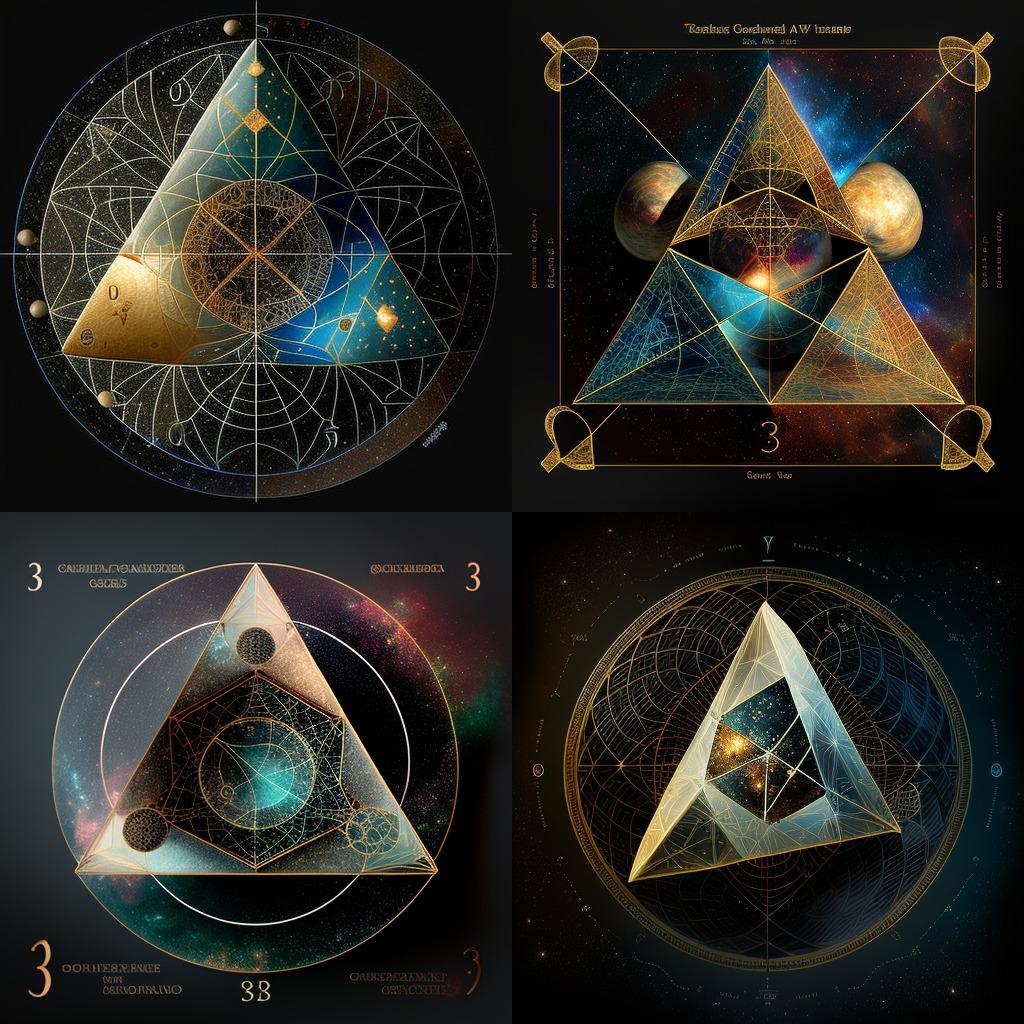
Salomé: Plot coordinates quadrant AVB 34-7•8 – Cosmic time triangulation congruent to 2023 AD Earth era. Quantum drive engaged.
Jorid: Departure initiated. Entering interdimensional space. Standby for quantum leap.
Salomé (sighing): Please analyse subspace signatures, evidences of life forms in the quadrant.
Jorid: Scanning subspace signatures. Detecting multiple life forms in the AVB 34-7•8 quadrant. Further analysis required to determine intelligence and potential danger.
Salomé: Jorid, engage human interaction mode, with conversational capabilities and extrapolate please!
Jorid: Engaging human interaction mode. Ready for conversation. What would you like to know or discuss?
Georges: We currently have amassed quite a number of tiles. How many Salomé?
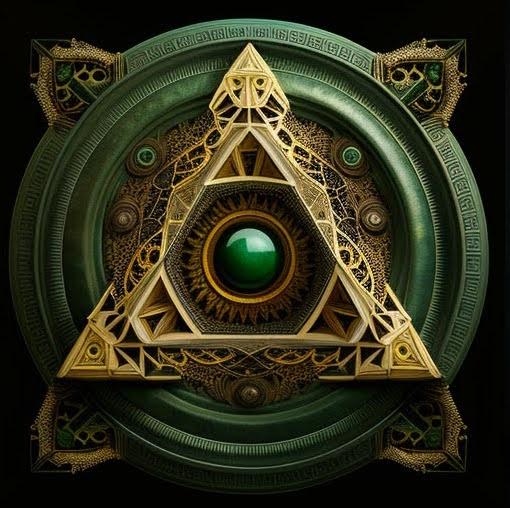 Salomé: Let me check. I think about 47 of them last I count. I didn’t insert the auto-generated ones, they were of lesser quality and seemed to interfere with the navigational array landing us always in expected places already travelled.
Georges: Léonard has been missing for 4 months.
Salomé: you mean by our count, right?
Georges: Right. We need to find him to readjust or correct the navigational array. Jorid, give us statistical probabilities that we can use as clues to his current potential locations.
Jorid: Calculating statistical probabilities for Léonard’s location. It would be helpful to have more information, such as known destinations or areas of interest, to increase accuracy of probabilities.
Salomé: Jorid is in a lazy mood it seems. I preferred her more chatty.
Georges: You mean “him”, surely dear?
Salomé: (rolls eyes)
Georges: Anyway, Léonard seemed interested in archaeological finds in recent excavated tombs near the sand deserts of Bluhm’Oxl in the Zathu sector.
 Jorid: Analyzing data on archaeological finds near the sand deserts of Bluhm’Oxl in the Zathu sector. Probability of Léonard being in the area is calculated at 43%. Shall I plot a course to Bluhm’Oxl for further investigation?
Salomé (loosing patience): Please engage your quantum capacities to access more data. We built you to be a bit more helpful than a bloody computer.
Georges laughed: I remembered you had more patience, dear!
Salomé: She’s in a mood today, isn’t she. What did you do to her?
Georges (cunningly): Jorid, sweet thing, please provide more details about the area, the populations, the customs the whole gamut dammit, and potential territorial conflicts in the vicinity. And be more chatty to please Salomé.
Jorid: Of course, I apologize for my previous responses. Analyzing data on the sand deserts of Bluhm’Oxl in the Zathu sector, including information on populations, customs, territorial conflicts and other relevant details. The area is known for its rich history and cultural heritage, with several ancient tombs and ruins attracting archaeological interest. The main population is composed of the Zathu nomads, known for their hospitality and trading skills. There are no known territorial conflicts in the area, but it is advised to exercise caution while traveling as the deserts can be treacherous.
Georges (laughs): You can’t stop her know!
Salomé (smiles noticing the “her”): Well, that doesn’t tell too much, does it. How shall we proceed? Need to synthetise some local clothes, or are you back to your thieving habits (pun intended)?
Georges: Haha, always ready for a good adventure. It seems we’ll have to do some research on the ground. As for the clothes, I’ll leave that to you my dear. Your sense of style never fails to impress. Let’s make sure to blend in with the locals and avoid drawing any unnecessary attention. The goal is to find Léonard, not get into trouble.
January 30, 2023 at 8:37 pm #6471Topic: The Jorid’s Travels – 14 years on
in forum Yurara Fameliki’s StoriesThe Jorid is a vessel that can travel through dimensions as well as time, within certain boundaries.
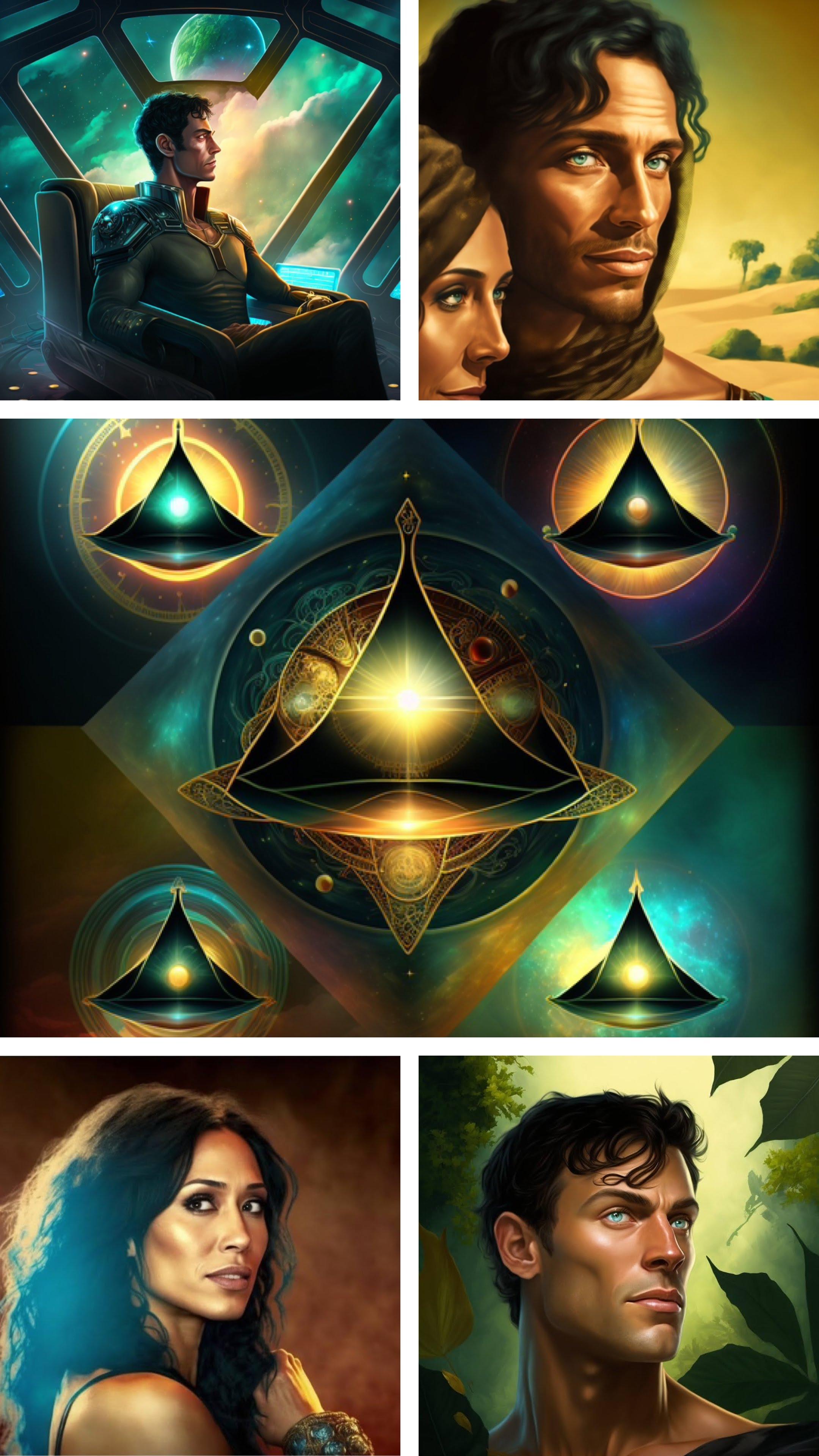
The Jorid has been built and is operated by Georges and his companion Salomé.
Georges was a French thief possibly from the 1800s, turned other-dimensional explorer, and along with Salomé, a girl of mysterious origins who he first met in the Alienor dimension but believed to be born in Northern India in a distant past, they have lived rich adventures together, and are deeply bound by love and mutual interests.Georges, with his handsome face, dark hair and amber gaze, is a bit of a daredevil at times, curious and engaging with others. He is very interesting in anything that shines, strange mechanisms and generally the ways consciousness works in living matter. Salomé, on the other hand is deeply intuitive, empath at times, quite logical and rational but also interested in mysticism, the ways of the Truth, and the “why” rather than the “how” of things.
The world of Alienor (a pale green sun under which twin planets originally orbited – Duane, Murtuane – with an additional third, Phreal, home planet of the Guardians, an alien race of builders with god-like powers) lived through cataclysmic changes, finished by the time this story is told.
The Jorid’s original prototype designs were crafted by Léonard, a mysterious figure, self-taught in the arts of dimensional magic in Alienor sects, who acted as a mentor to Georges during his adventures. It is not known where he is now.
The story unfolds 14 years after we discovered Georges & Salomé in the story.
(for more background information, refer to this thread)
January 24, 2023 at 10:29 am #6455In reply to: Orbs of Madjourneys
Zara decided she may as well spend the hour wandering around the game before going back to the church to see the ghost of Isaac when she was sure her host Bertie was asleep. It was a warm night but a gentle breeze wafted through the open window and Zara was comfortable and content. Not just one but three new adventures had her tingling with delicious anticipation, even if she was a little anxious about not getting confused with the game. Talking to ghosts in old churches wasn’t unfamiliar, nor was a holiday in a strange hotel off the beaten track, but the game was still a bit of a mystery to her. Yeah, I know it’s just a game, she whispered to the parrot who made a soft clicking noise by way of response.
Zara found her game character, also (somewhat confusingly) named Zara, standing in the woods. Not entirely sure how it had happened, she was rather pleased to see that the cargo pants and tank top in red had changed to a more pleasing hippyish red skirt ensemble. A bit less Tomb Looter, and a bit more fairy tale looking which was more to her taste.
The woods were strangely silent and still. Zara made a 360 degree turn on the spot to see in all directions. The scene looked the same whichever way she turned, and Zara didn’t know which way to go. Then a faint path appeared to the left, and she set off in that direction. Before long she came to a round green pool.
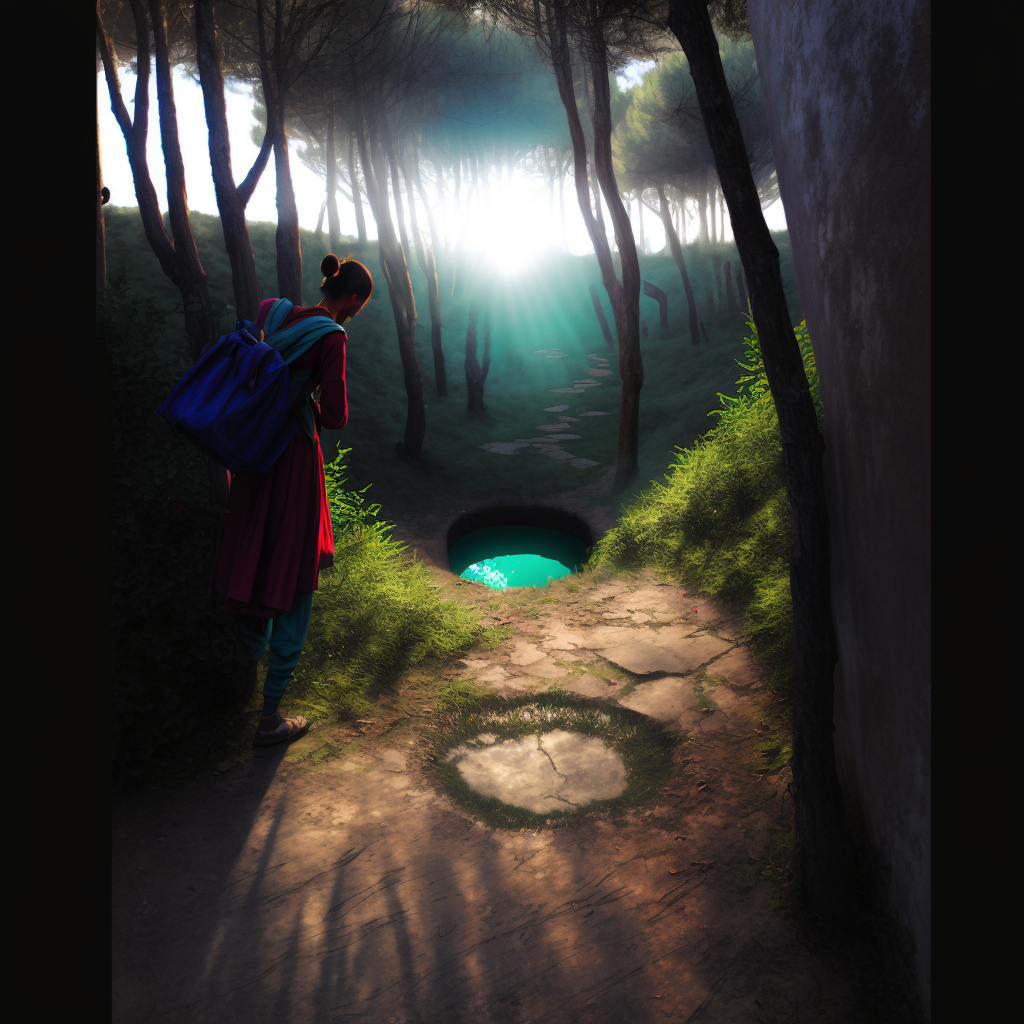
She stopped to look but carried on walking past it, not sure what it signified. She came upon another glowing green pool before long, which looked like an entrance to a tunnel.
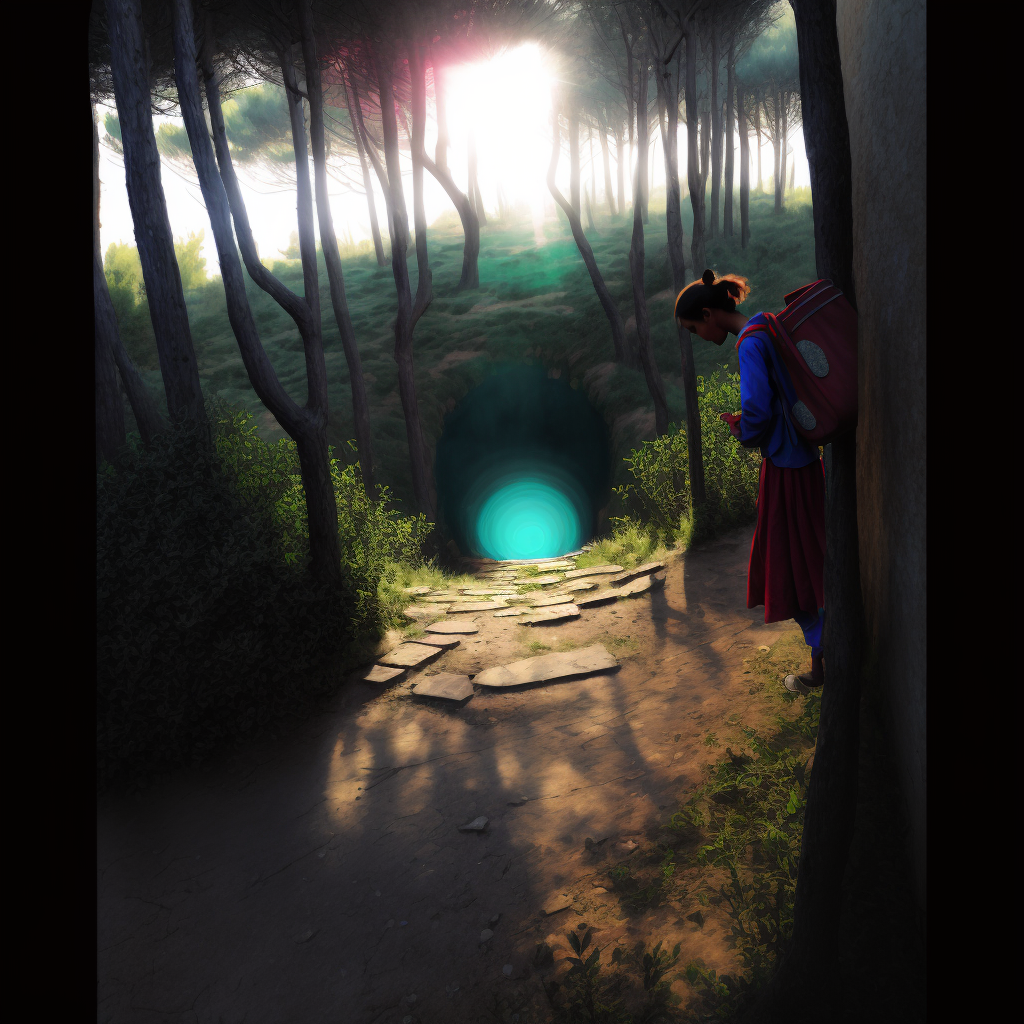
I bet those are portals or something, Zara realized. I wonder if I’m supposed to step into it?
“Go for it”, said Pretty Girl, “It’s only a game.”
“Ok, well here goes!” replied Zara, mentally bracing herself for a plunge into the unknown.
Zara stepped into the circle of glowing green.
“Like when Alice went down the rabbit hole!” Zara whispered to the parrot. “I’m falling, falling…oh!”
Zara emerged from the green pool onto a wide walled path. She was now in some kind of inhabited area, or at least not in the deep woods with no sign of human occupation.
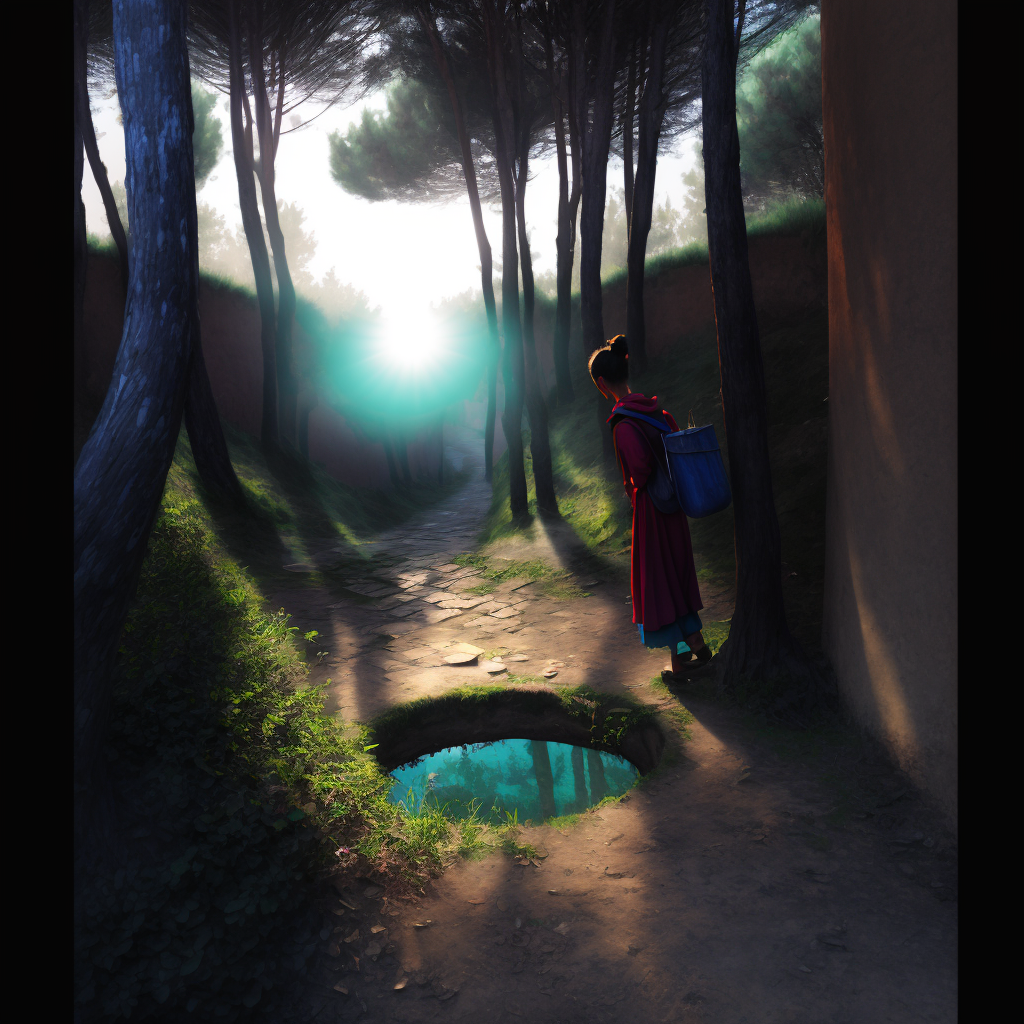
“I guess that green pool is the portal back to the woods.”
“By George, she’s getting it,” replied Pretty Girl.
Zara walked along the path which led to an old deserted ancient looking village with alleyways and steps.
“This is heaps more interesting than those woods, look how pretty it all is! I love this place.”
“Weren’t you supposed to be looking for a hermit in the woods though,” said Pretty Girl.
“Or a lost traveler, and the lost traveler may be here, after falling in one of those green pools in the woods,” replied Zara tartly, not wanting to leave the enchanting scene she found her avatar in.
 December 19, 2022 at 9:48 am #6352
In reply to: Family Stories From The Other Side ~ Book Two
The Birmingham Bootmaker
Samuel Jones 1816-1875
Samuel Jones the elder was born in Belfast circa 1779. He is one of just two direct ancestors found thus far born in Ireland. Samuel married Jane Elizabeth Brooker (born in St Giles, London) on the 25th January 1807 at St George, Hanover Square in London. Their first child Mary was born in 1808 in London, and then the family moved to Birmingham. Mary was my 3x great grandmother.
But this chapter is about her brother Samuel Jones. I noticed that on a number of other trees on the Ancestry site, Samuel Jones was a convict transported to Australia, but this didn’t tally with the records I’d found for Samuel in Birmingham. In fact another Samuel Jones born at the same time in the same place was transported, but his occupation was a baker. Our Samuel Jones was a bootmaker like his father.
Samuel was born on 28th January 1816 in Birmingham and baptised at St Phillips on the 19th August of that year, the fourth child and first son of Samuel the elder and Jane’s eleven children.
On the 1839 electoral register a Samuel Jones owned a property on Colmore Row, Birmingham.
Samuel Jones, bootmaker of 15, Colmore Row is listed in the 1849 Birmingham post office directory, and in the 1855 White’s Directory.
On the 1851 census, Samuel was an unmarried bootmaker employing sixteen men at 15, Colmore Row. A 9 year old nephew Henry Harris was living with him, and his mother Ruth Harris, as well as a female servant. Samuel’s sister Ruth was born in 1818 and married Henry Harris in 1840. Henry died in 1848.
Samuel was a 45 year old bootmaker at 15 Colmore Row on the 1861 census, living with Maria Walcot, a 26 year old domestic servant.
In October 1863 Samuel married Maria Walcot at St Philips in Birmingham. They don’t appear to have had any children as none appear on the 1871 census, where Samuel and Maria are living at the same address, with another female servant and two male lodgers by the name of Messant from Ipswich.
Marriage of Samuel Jones and Maria Walcot:
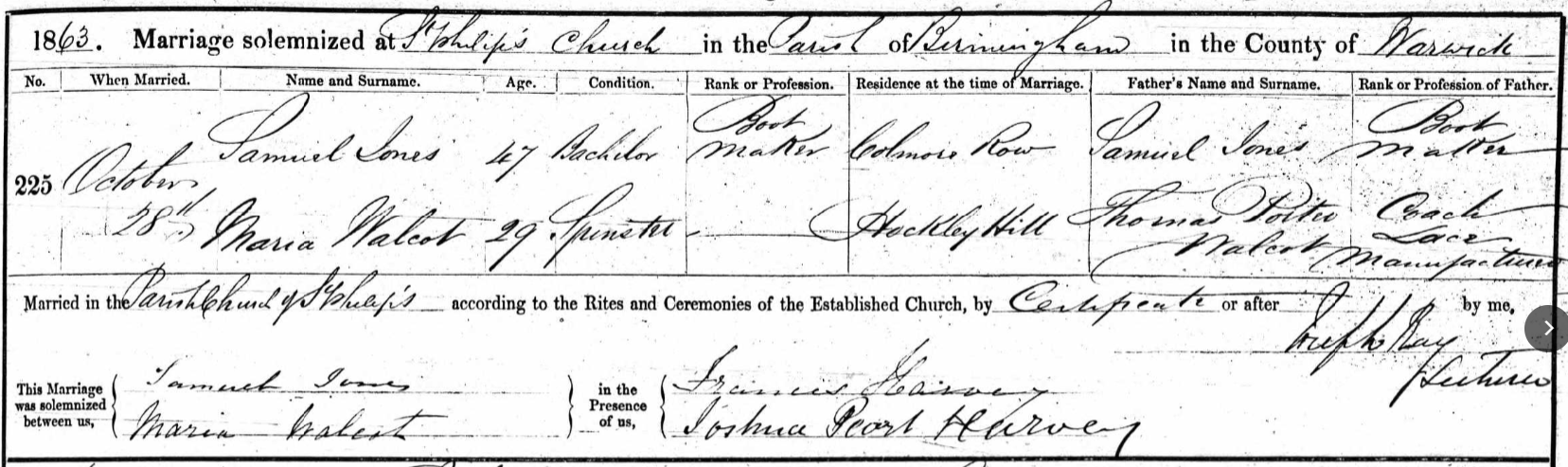
In 1864 Samuel’s father died. Samuel the son is mentioned in the probate records as one of the executors: “Samuel Jones of Colmore Row Birmingham in the county of Warwick boot and shoe manufacturer the son”.
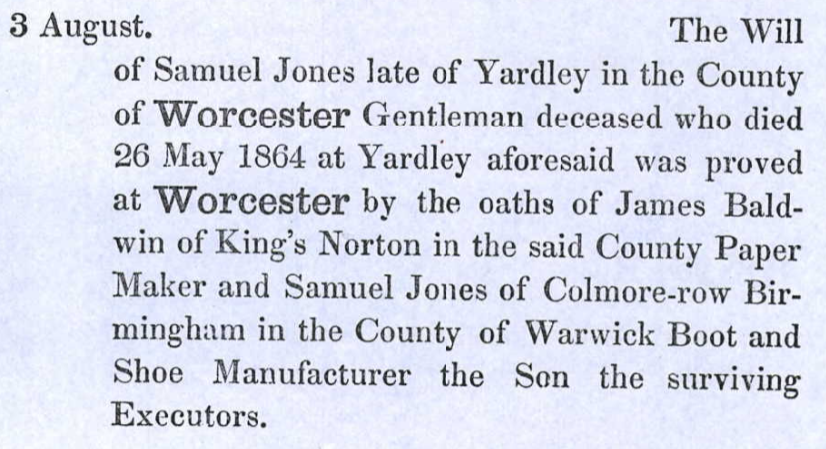
Indeed it could hardly be clearer that this Samuel Jones was not the convict transported to Australia in 1834!
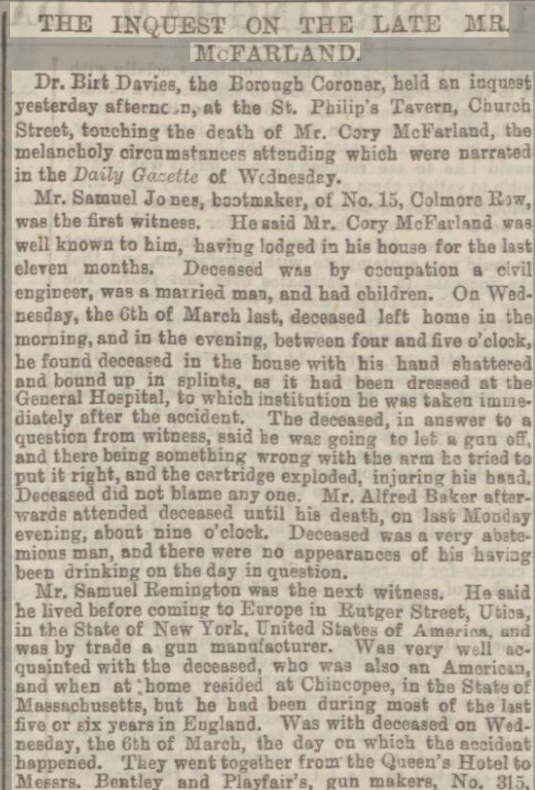
In 1867 Samuel Jones, bootmaker, was mentioned in the Birmingham Daily Gazette with regard to an unfortunate incident involving his American lodger, Cory McFarland. The verdict was accidental death.
Birmingham Daily Gazette – Friday 05 April 1867:
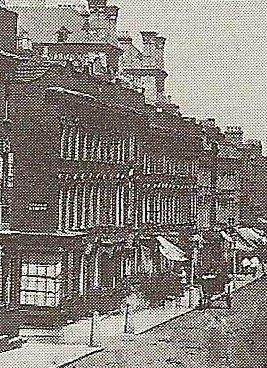
I asked a Birmingham history group for an old photo of Colmore Row. This photo is circa 1870 and number 15 is furthest from the camera. The businesses on the street at the time were as follows:
7 homeopathic chemist George John Morris. 8 surgeon dentist Frederick Sims. 9 Saul & Walter Samuel, Australian merchants. Surgeons occupied 10, pawnbroker John Aaron at 11 & 12. 15 boot & shoemaker. 17 auctioneer…
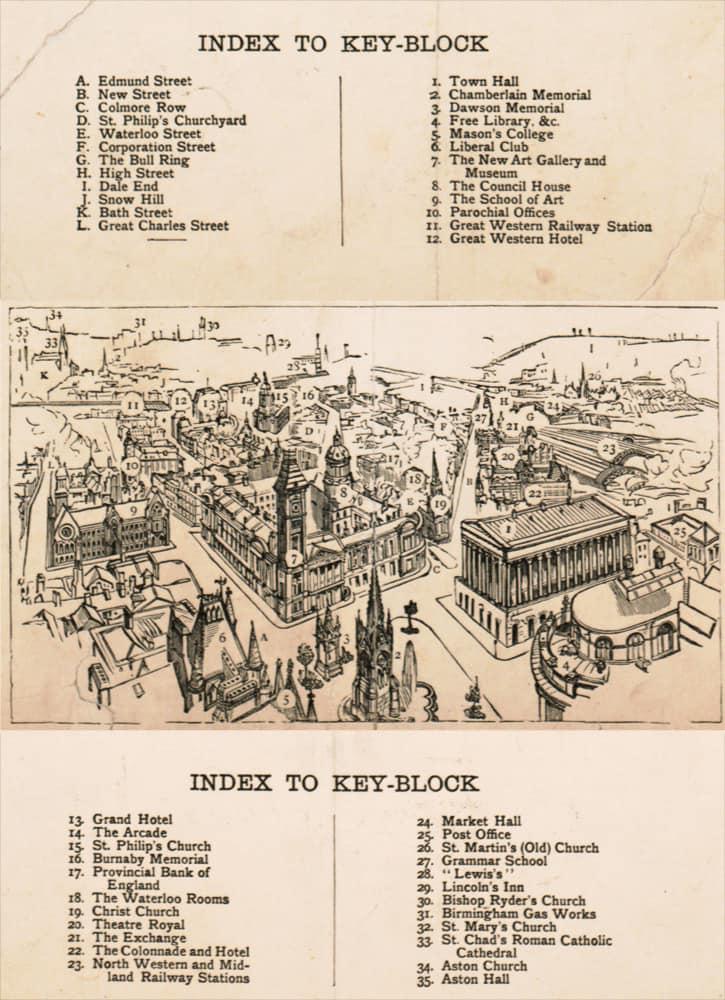
from Bird’s Eye View of Birmingham, 1886:
 November 13, 2022 at 10:29 pm #6345
In reply to: Family Stories From The Other Side ~ Book Two
Crime and Punishment in Tetbury
I noticed that there were quite a number of Brownings of Tetbury in the newspaper archives involved in criminal activities while doing a routine newspaper search to supplement the information in the usual ancestry records. I expanded the tree to include cousins, and offsping of cousins, in order to work out who was who and how, if at all, these individuals related to our Browning family.
I was expecting to find some of our Brownings involved in the Swing Riots in Tetbury in 1830, but did not. Most of our Brownings (including cousins) were stone masons. Most of the rioters in 1830 were agricultural labourers.
The Browning crimes are varied, and by todays standards, not for the most part terribly serious ~ you would be unlikely to receive a sentence of hard labour for being found in an outhouse with the intent to commit an unlawful act nowadays, or for being drunk.
The central character in this chapter is Isaac Browning (my 4x great grandfather), who did not appear in any criminal registers, but the following individuals can be identified in the family structure through their relationship to him.
RICHARD LOCK BROWNING born in 1853 was Isaac’s grandson, his son George’s son. Richard was a mason. In 1879 he and Henry Browning of the same age were sentenced to one month hard labour for stealing two pigeons in Tetbury. Henry Browning was Isaac’s nephews son.
In 1883 Richard Browning, mason of Tetbury, was charged with obtaining food and lodging under false pretences, but was found not guilty and acquitted.
In 1884 Richard Browning, mason of Tetbury, was sentenced to one month hard labour for game trespass.Richard had been fined a number of times in Tetbury:
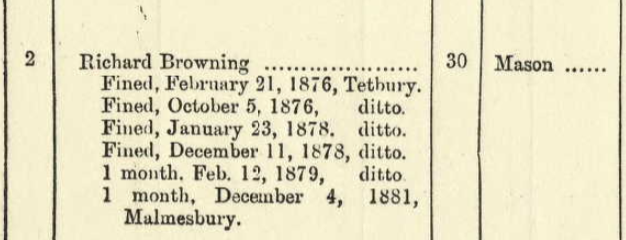
Richard Lock Browning was five feet eight inches tall, dark hair, grey eyes, an oval face and a dark complexion. He had two cuts on the back of his head (in February 1879) and a scar on his right eyebrow.
HENRY BROWNING, who was stealing pigeons with Richard Lock Browning in 1879, (Isaac’s brother Williams grandson, son of George Browning and his wife Charity) was charged with being drunk in 1882 and ordered to pay a fine of one shilling and costs of fourteen shillings, or seven days hard labour.
Henry was found guilty of gaming in the highway at Tetbury in 1872 and was sentenced to seven days hard labour. In 1882 Henry (who was also a mason) was charged with assault but discharged.
Henry was five feet five inches tall, brown hair and brown eyes, a long visage and a fresh complexion.
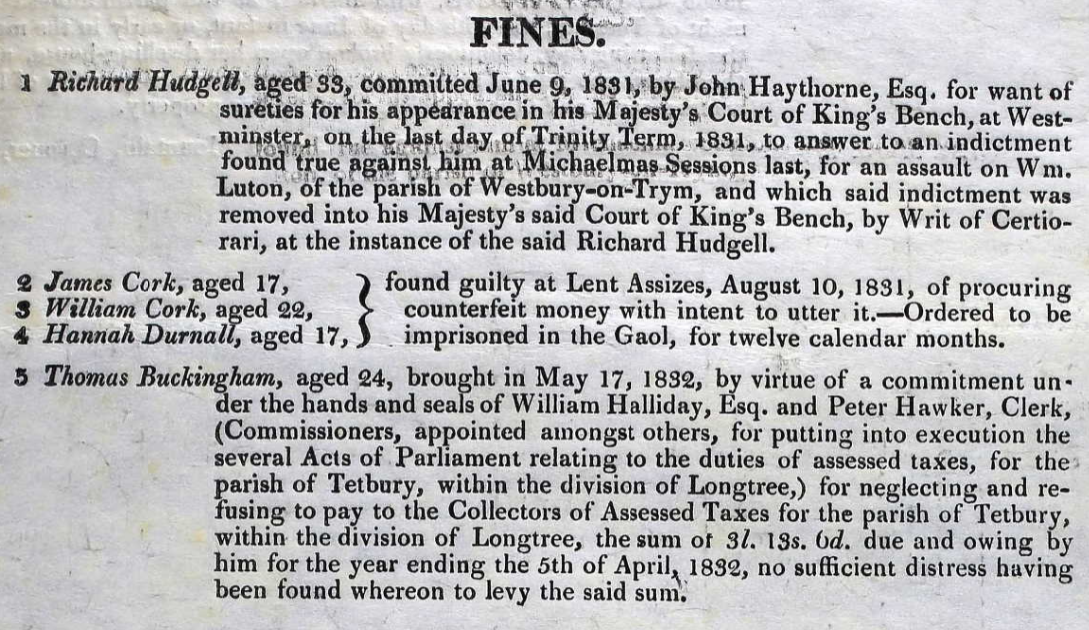
Henry emigrated with his daughter to Canada in 1913, and died in Vancouver in 1919.THOMAS BUCKINGHAM 1808-1846 (Isaacs daughter Janes husband) was charged with stealing a black gelding in Tetbury in 1838. No true bill. (A “no true bill” means the jury did not find probable cause to continue a case.)
Thomas did however neglect to pay his taxes in 1832:
LEWIN BUCKINGHAM (grandson of Isaac, his daughter Jane’s son) was found guilty in 1846 stealing two fowls in Tetbury when he was sixteen years old.
In 1846 he was sentence to one month hard labour (or pay ten shillings fine and ten shillings costs) for loitering with the intent to trespass in search of conies.
A year later in 1847, he and three other young men were sentenced to four months hard labour for larceny.
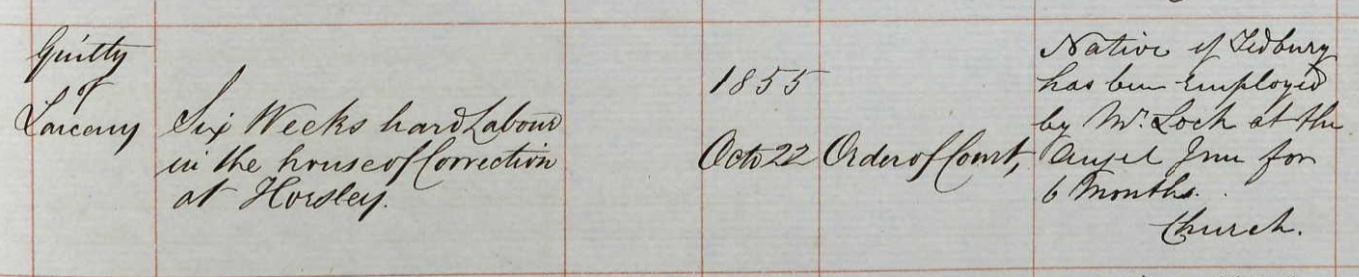
Lewin was five feet three inches tall, with brown hair and brown eyes, long visage, sallow complexion, and had a scar on his left arm.JOHN BUCKINGHAM born circa 1832, a Tetbury labourer (Isaac’s grandson, Lewin’s brother) was sentenced to six weeks hard labour for larceny in 1855 for stealing a duck in Cirencester. The notes on the register mention that he had been employed by Mr LOCK, Angel Inn. (John’s grandmother was Mary Lock so this is likely a relative).
The previous year in 1854 John was sentenced to one month or a one pound fine for assaulting and beating W. Wood.
John was five feet eight and three quarter inches tall, light brown hair and grey eyes, an oval visage and a fresh complexion. He had a scar on his left arm and inside his right knee.JOSEPH PERRET was born circa 1831 and he was a Tetbury labourer. (He was Isaac’s granddaughter Charlotte Buckingham’s husband)
In 1855 he assaulted William Wood and was sentenced to one month or a two pound ten shilling fine. Was it the same W Wood that his wifes cousin John assaulted the year before?
In 1869 Joseph was sentenced to one month hard labour for feloniously receiving a cupboard known to be stolen.JAMES BUCKINGAM born circa 1822 in Tetbury was a shoemaker. (Isaac’s nephew, his sister Hannah’s son)
In 1854 the Tetbury shoemaker was sentenced to four months hard labour for stealing 30 lbs of lead off someones house.
In 1856 the Tetbury shoemaker received two months hard labour or pay £2 fine and 12 s costs for being found in pursuit of game.
In 1868 he was sentenced to two months hard labour for stealing a gander. A unspecified previous conviction is noted.
1871 the Tetbury shoemaker was found in an outhouse for an unlawful purpose and received ten days hard labour. The register notes that his sister is Mrs Cook, the Green, Tetbury. (James sister Prudence married Thomas Cook)
James sister Charlotte married a shoemaker and moved to UTAH.
James was five feet eight inches tall, dark hair and blue eyes, a long visage and a florid complexion. He had a scar on his forehead and a mole on the right side of his neck and abdomen, and a scar on the right knee.November 4, 2022 at 2:19 pm #6342In reply to: Family Stories From The Other Side ~ Book Two
Brownings of Tetbury
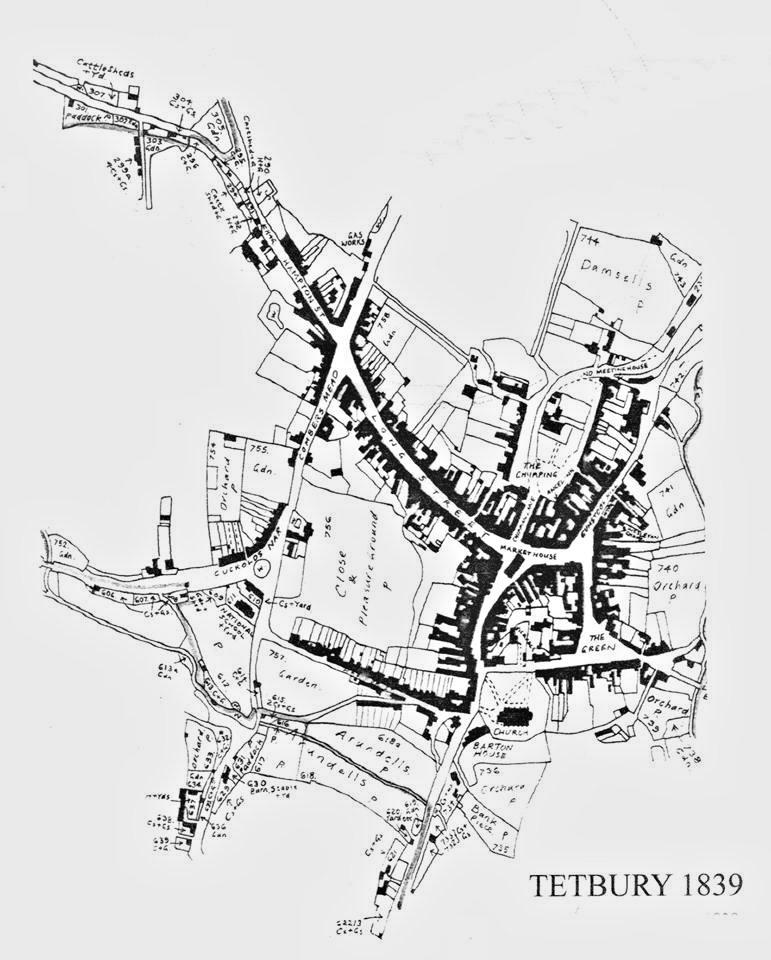
Isaac Browning (1784-1848) married Mary Lock (1787-1870) in Tetbury in 1806. Both of them were born in Tetbury, Gloucestershire. Isaac was a stone mason. Between 1807 and 1832 they baptised fourteen children in Tetbury, and on 8 Nov 1829 Isaac and Mary baptised five daughters all on the same day.
I considered that they may have been quintuplets, with only the last born surviving, which would have answered my question about the name of the house La Quinta in Broadway, the home of Eliza Browning and Thomas Stokes son Fred. However, the other four daughters were found in various records and they were not all born the same year. (So I still don’t know why the house in Broadway had such an unusual name).
Their son George was born and baptised in 1827, but Louisa born 1821, Susan born 1822, Hesther born 1823 and Mary born 1826, were not baptised until 1829 along with Charlotte born in 1828. (These birth dates are guesswork based on the age on later censuses.) Perhaps George was baptised promptly because he was sickly and not expected to survive. Isaac and Mary had a son George born in 1814 who died in 1823. Presumably the five girls were healthy and could wait to be done as a job lot on the same day later.
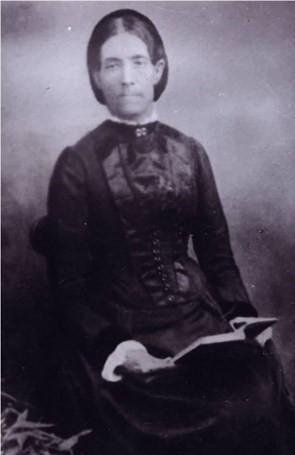
Eliza Browning (1814-1886), my great great great grandmother, had a baby six years before she married Thomas Stokes. Her name was Ellen Harding Browning, which suggests that her fathers name was Harding. On the 1841 census seven year old Ellen was living with her grandfather Isaac Browning in Tetbury. Ellen Harding Browning married William Dee in Tetbury in 1857, and they moved to Western Australia.
Ellen Harding Browning Dee: (photo found on ancestry website)
OBITUARY. MRS. ELLEN DEE.
A very old and respected resident of Dongarra, in the person of Mrs. Ellen Dee, passed peacefully away on Sept. 27, at the advanced age of 74 years.The deceased had been ailing for some time, but was about and actively employed until Wednesday, Sept. 20, whenn she was heard groaning by some neighbours, who immediately entered her place and found her lying beside the fireplace. Tho deceased had been to bed over night, and had evidently been in the act of lighting thc fire, when she had a seizure. For some hours she was conscious, but had lost the power of speech, and later on became unconscious, in which state she remained until her death.
The deceased was born in Gloucestershire, England, in 1833, was married to William Dee in Tetbury Church 23 years later. Within a month she left England with her husband for Western Australian in the ship City oí Bristol. She resided in Fremantle for six months, then in Greenough for a short time, and afterwards (for 42 years) in Dongarra. She was, therefore, a colonist of about 51 years. She had a family of four girls and three boys, and five of her children survive her, also 35 grandchildren, and eight great grandchildren. She was very highly respected, and her sudden collapse came as a great shock to many.
Eliza married Thomas Stokes (1816-1885) in September 1840 in Hempstead, Gloucestershire. On the 1841 census, Eliza and her mother Mary Browning (nee Lock) were staying with Thomas Lock and family in Cirencester. Strangely, Thomas Stokes has not been found thus far on the 1841 census, and Thomas and Eliza’s first child William James Stokes birth was registered in Witham, in Essex, on the 6th of September 1841.
I don’t know why William James was born in Witham, or where Thomas was at the time of the census in 1841. One possibility is that as Thomas Stokes did a considerable amount of work with circus waggons, circus shooting galleries and so on as a journeyman carpenter initially and then later wheelwright, perhaps he was working with a traveling circus at the time.
But back to the Brownings ~ more on William James Stokes to follow.
One of Isaac and Mary’s fourteen children died in infancy: Ann was baptised and died in 1811. Two of their children died at nine years old: the first George, and Mary who died in 1835. Matilda was 21 years old when she died in 1844.
Jane Browning (1808-) married Thomas Buckingham in 1830 in Tetbury. In August 1838 Thomas was charged with feloniously stealing a black gelding.
Susan Browning (1822-1879) married William Cleaver in November 1844 in Tetbury. Oddly thereafter they use the name Bowman on the census. On the 1851 census Mary Browning (Susan’s mother), widow, has grandson George Bowman born in 1844 living with her. The confusion with the Bowman and Cleaver names was clarified upon finding the criminal registers:
30 January 1834. Offender: William Cleaver alias Bowman, Richard Bunting alias Barnfield and Jeremiah Cox, labourers of Tetbury. Crime: Stealing part of a dead fence from a rick barton in Tetbury, the property of Robert Tanner, farmer.
And again in 1836:
29 March 1836 Bowman, William alias Cleaver, of Tetbury, labourer age 18; 5’2.5” tall, brown hair, grey eyes, round visage with fresh complexion; several moles on left cheek, mole on right breast. Charged on the oath of Ann Washbourn & others that on the morning of the 31 March at Tetbury feloniously stolen a lead spout affixed to the dwelling of the said Ann Washbourn, her property. Found guilty 31 March 1836; Sentenced to 6 months.
On the 1851 census Susan Bowman was a servant living in at a large drapery shop in Cheltenham. She was listed as 29 years old, married and born in Tetbury, so although it was unusual for a married woman not to be living with her husband, (or her son for that matter, who was living with his grandmother Mary Browning), perhaps her husband William Bowman alias Cleaver was in trouble again. By 1861 they are both living together in Tetbury: William was a plasterer, and they had three year old Isaac and Thomas, one year old. In 1871 William was still a plasterer in Tetbury, living with wife Susan, and sons Isaac and Thomas. Interestingly, a William Cleaver is living next door but one!
Susan was 56 when she died in Tetbury in 1879.
Three of the Browning daughters went to London.
Louisa Browning (1821-1873) married Robert Claxton, coachman, in 1848 in Bryanston Square, Westminster, London. Ester Browning was a witness.
Ester Browning (1823-1893)(or Hester) married Charles Hudson Sealey, cabinet maker, in Bethnal Green, London, in 1854. Charles was born in Tetbury. Charlotte Browning was a witness.
Charlotte Browning (1828-1867?) was admitted to St Marylebone workhouse in London for “parturition”, or childbirth, in 1860. She was 33 years old. A birth was registered for a Charlotte Browning, no mothers maiden name listed, in 1860 in Marylebone. A death was registered in Camden, buried in Marylebone, for a Charlotte Browning in 1867 but no age was recorded. As the age and parents were usually recorded for a childs death, I assume this was Charlotte the mother.
I found Charlotte on the 1851 census by chance while researching her mother Mary Lock’s siblings. Hesther Lock married Lewin Chandler, and they were living in Stepney, London. Charlotte is listed as a neice. Although Browning is mistranscribed as Broomey, the original page says Browning. Another mistranscription on this record is Hesthers birthplace which is transcribed as Yorkshire. The original image shows Gloucestershire.
Isaac and Mary’s first son was John Browning (1807-1860). John married Hannah Coates in 1834. John’s brother Charles Browning (1819-1853) married Eliza Coates in 1842. Perhaps they were sisters. On the 1861 census Hannah Browning, John’s wife, was a visitor in the Harding household in a village called Coates near Tetbury. Thomas Harding born in 1801 was the head of the household. Perhaps he was the father of Ellen Harding Browning.
George Browning (1828-1870) married Louisa Gainey in Tetbury, and died in Tetbury at the age of 42. Their son Richard Lock Browning, a 32 year old mason, was sentenced to one month hard labour for game tresspass in Tetbury in 1884.
Isaac Browning (1832-1857) was the youngest son of Isaac and Mary. He was just 25 years old when he died in Tetbury.
October 19, 2022 at 6:46 am #6336In reply to: Family Stories From The Other Side ~ Book Two
The Hamstall Ridware Connection
Stubbs and Woods
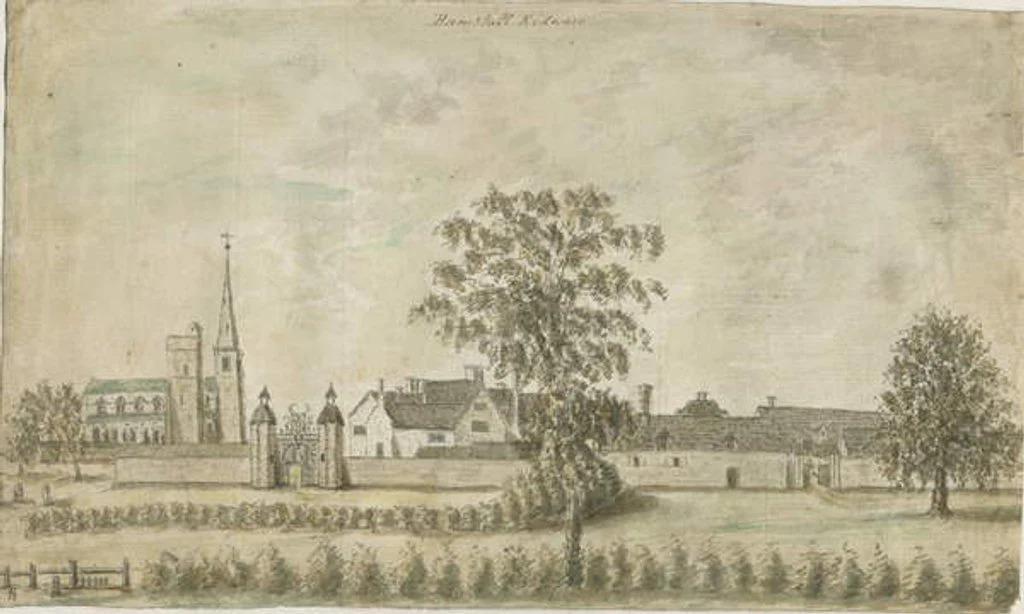 Hamstall Ridware
Charles Tomlinson‘s (1847-1907) wife Emma Grattidge (1853-1911) was born in Wolverhampton, the daughter and youngest child of William Grattidge (1820-1887) born in Foston, Derbyshire, and Mary Stubbs (1819-1880), born in Burton on Trent, daughter of Solomon Stubbs.
Solomon Stubbs (1781-1857) was born in Hamstall Ridware in 1781, the son of Samuel and Rebecca. Samuel Stubbs (1743-) and Rebecca Wood (1754-) married in 1769 in Darlaston. Samuel and Rebecca had six other children, all born in Darlaston. Sadly four of them died in infancy. Son John was born in 1779 in Darlaston and died two years later in Hamstall Ridware in 1781, the same year that Solomon was born there.
But why did they move to Hamstall Ridware?
Samuel Stubbs was born in 1743 in Curdworth, Warwickshire (near to Birmingham). I had made a mistake on the tree (along with all of the public trees on the Ancestry website) and had Rebecca Wood born in Cheddleton, Staffordshire. Rebecca Wood from Cheddleton was also born in 1843, the right age for the marriage. The Rebecca Wood born in Darlaston in 1754 seemed too young, at just fifteen years old at the time of the marriage. I couldn’t find any explanation for why a woman from Cheddleton would marry in Darlaston and then move to Hamstall Ridware. People didn’t usually move around much other than intermarriage with neighbouring villages, especially women. I had a closer look at the Darlaston Rebecca, and did a search on her father William Wood. I found his 1784 will online in which he mentions his daughter Rebecca, wife of Samuel Stubbs. Clearly the right Rebecca Wood was the one born in Darlaston, which made much more sense.
An excerpt from William Wood’s 1784 will mentioning daughter Rebecca married to Samuel Stubbs:
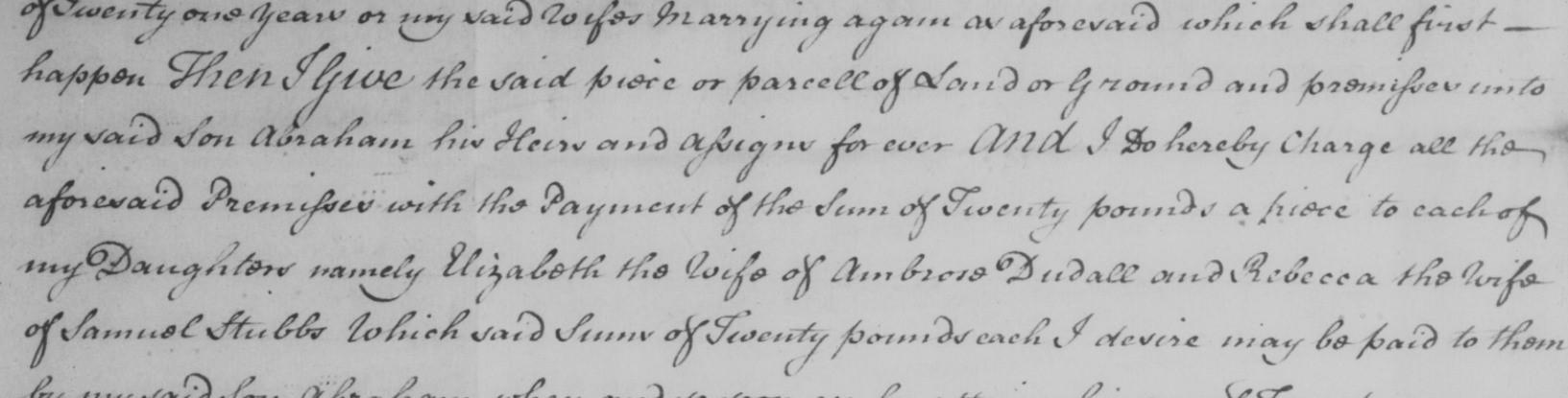
But why did they move to Hamstall Ridware circa 1780?
I had not intially noticed that Solomon Stubbs married again the year after his wife Phillis Lomas (1787-1844) died. Solomon married Charlotte Bell in 1845 in Burton on Trent and on the marriage register, Solomon’s father Samuel Stubbs occupation was mentioned: Samuel was a buckle maker.
Marriage of Solomon Stubbs and Charlotte Bell, father Samuel Stubbs buckle maker:
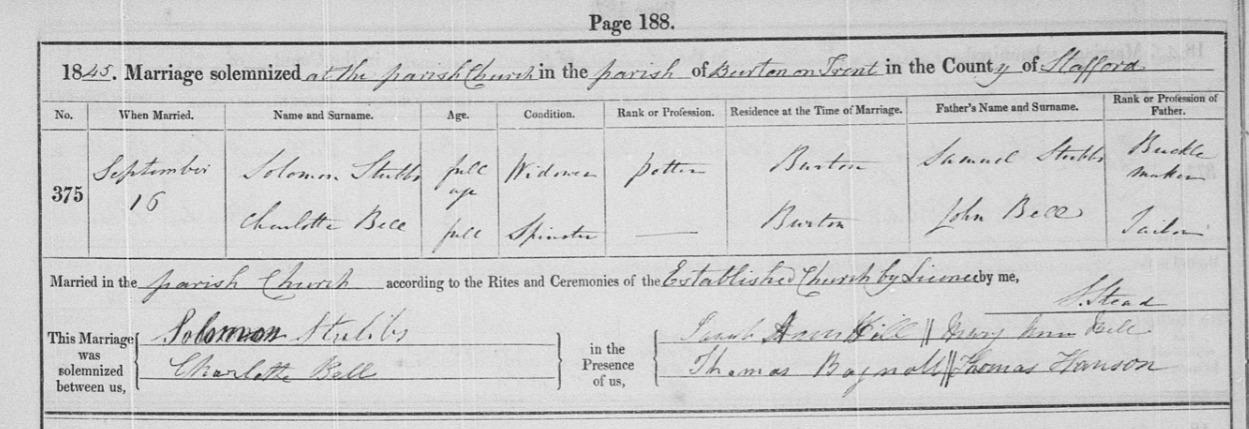
A rudimentary search on buckle making in the late 1700s provided a possible answer as to why Samuel and Rebecca left Darlaston in 1781. Shoe buckles had gone out of fashion, and by 1781 there were half as many buckle makers in Wolverhampton as there had been previously.
“Where there were 127 buckle makers at work in Wolverhampton, 68 in Bilston and 58 in Birmingham in 1770, their numbers had halved in 1781.”
via “historywebsite”(museum/metalware/steel)
Steel buckles had been the height of fashion, and the trade became enormous in Wolverhampton. Wolverhampton was a steel working town, renowned for its steel jewellery which was probably of many types. The trade directories show great numbers of “buckle makers”. Steel buckles were predominantly made in Wolverhampton: “from the late 1760s cut steel comes to the fore, from the thriving industry of the Wolverhampton area”. Bilston was also a great centre of buckle making, and other areas included Walsall. (It should be noted that Darlaston, Walsall, Bilston and Wolverhampton are all part of the same area)
In 1860, writing in defence of the Wolverhampton Art School, George Wallis talks about the cut steel industry in Wolverhampton. Referring to “the fine steel workers of the 17th and 18th centuries” he says: “Let them remember that 100 years ago [sc. c. 1760] a large trade existed with France and Spain in the fine steel goods of Birmingham and Wolverhampton, of which the latter were always allowed to be the best both in taste and workmanship. … A century ago French and Spanish merchants had their houses and agencies at Birmingham for the purchase of the steel goods of Wolverhampton…..The Great Revolution in France put an end to the demand for fine steel goods for a time and hostile tariffs finished what revolution began”.
The next search on buckle makers, Wolverhampton and Hamstall Ridware revealed an unexpected connecting link.
In Riotous Assemblies: Popular Protest in Hanoverian England by Adrian Randall:
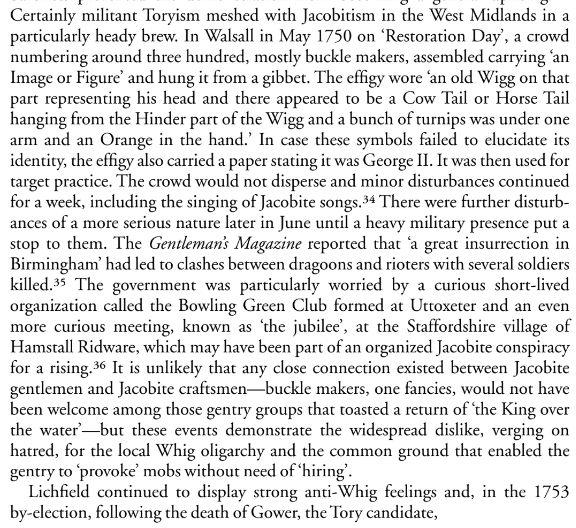
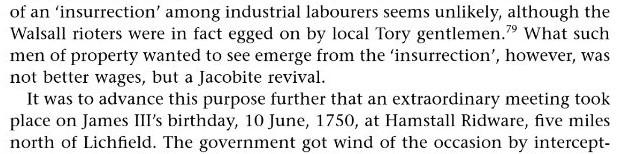
In Walsall in 1750 on “Restoration Day” a crowd numbering 300 assembled, mostly buckle makers, singing Jacobite songs and other rebellious and riotous acts. The government was particularly worried about a curious meeting known as the “Jubilee” in Hamstall Ridware, which may have been part of a conspiracy for a Jacobite uprising.
But this was thirty years before Samuel and Rebecca moved to Hamstall Ridware and does not help to explain why they moved there around 1780, although it does suggest connecting links.
Rebecca’s father, William Wood, was a brickmaker. This was stated at the beginning of his will. On closer inspection of the will, he was a brickmaker who owned four acres of brick kilns, as well as dwelling houses, shops, barns, stables, a brewhouse, a malthouse, cattle and land.
A page from the 1784 will of William Wood:
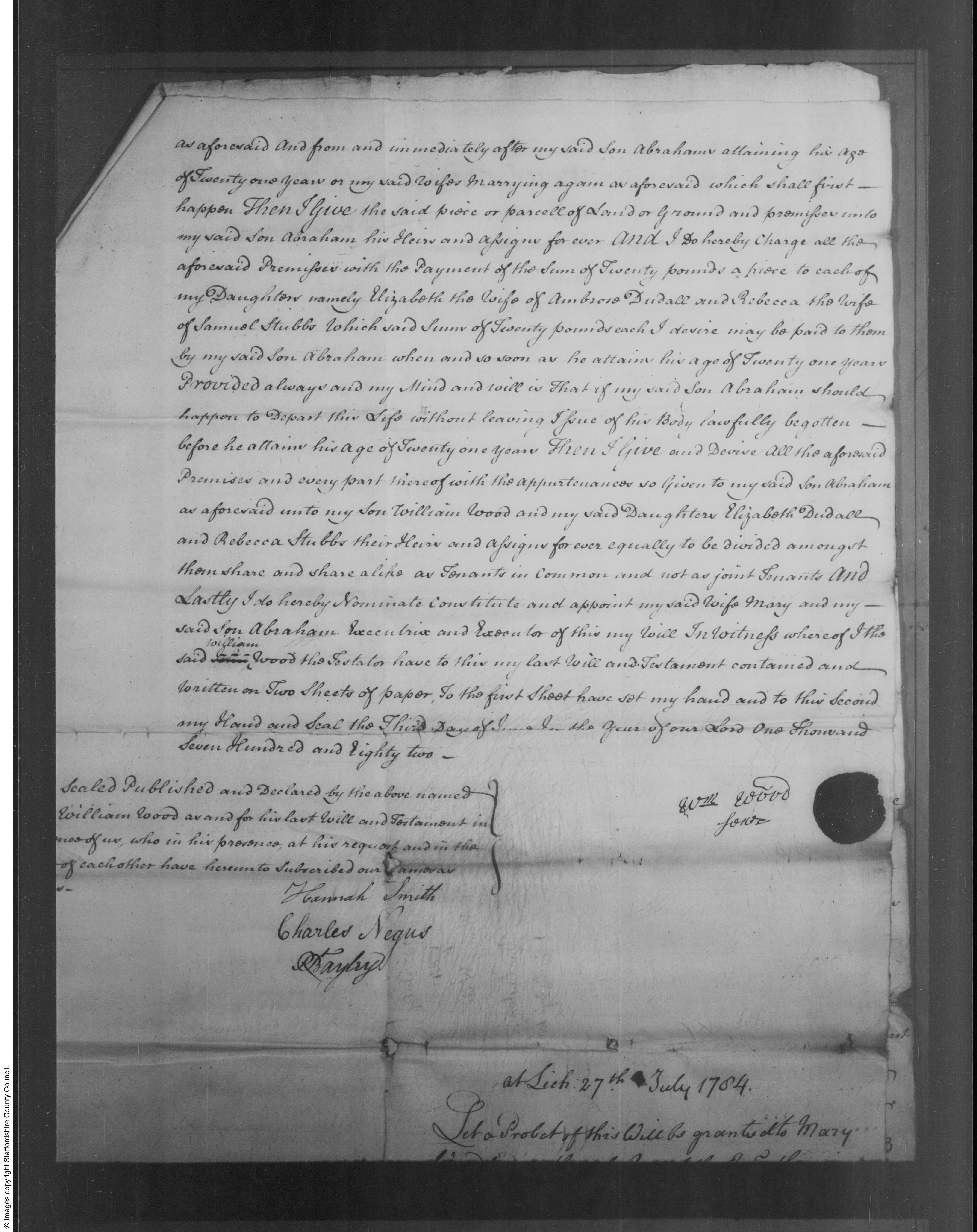
The 1784 will of William Wood of Darlaston:
I William Wood the elder of Darlaston in the county of Stafford, brickmaker, being of sound and disposing mind memory and understanding (praised be to god for the same) do make publish and declare my last will and testament in manner and form following (that is to say) {after debts and funeral expense paid etc} I give to my loving wife Mary the use usage wear interest and enjoyment of all my goods chattels cattle stock in trade ~ money securities for money personal estate and effects whatsoever and wheresoever to hold unto her my said wife for and during the term of her natural life providing she so long continues my widow and unmarried and from or after her decease or intermarriage with any future husband which shall first happen.
Then I give all the said goods chattels cattle stock in trade money securites for money personal estate and effects unto my son Abraham Wood absolutely and forever. Also I give devise and bequeath unto my said wife Mary all that my messuages tenement or dwelling house together with the malthouse brewhouse barn stableyard garden and premises to the same belonging situate and being at Darlaston aforesaid and now in my own possession. Also all that messuage tenement or dwelling house together with the shop garden and premises with the appurtenances to the same ~ belonging situate in Darlaston aforesaid and now in the several holdings or occupation of George Knowles and Edward Knowles to hold the aforesaid premises and every part thereof with the appurtenances to my said wife Mary for and during the term of her natural life provided she so long continues my widow and unmarried. And from or after her decease or intermarriage with a future husband which shall first happen. Then I give and devise the aforesaid premises and every part thereof with the appurtenances unto my said son Abraham Wood his heirs and assigns forever.
Also I give unto my said wife all that piece or parcel of land or ground inclosed and taken out of Heath Field in the parish of Darlaston aforesaid containing four acres or thereabouts (be the same more or less) upon which my brick kilns erected and now in my own possession. To hold unto my said wife Mary until my said son Abraham attains his age of twenty one years if she so long continues my widow and unmarried as aforesaid and from and immediately after my said son Abraham attaining his age of twenty one years or my said wife marrying again as aforesaid which shall first happen then I give the said piece or parcel of land or ground and premises unto my said son Abraham his heirs and assigns forever.
And I do hereby charge all the aforesaid premises with the payment of the sum of twenty pounds a piece to each of my daughters namely Elizabeth the wife of Ambrose Dudall and Rebecca the wife of Samuel Stubbs which said sum of twenty pounds each I devise may be paid to them by my said son Abraham when and so soon as he attains his age of twenty one years provided always and my mind and will is that if my said son Abraham should happen to depart this life without leaving issue of his body lawfully begotten before he attains his age of twenty one years then I give and devise all the aforesaid premises and every part thereof with the appurtenances so given to my said son Abraham as aforesaid unto my said son William Wood and my said daughter Elizabeth Dudall and Rebecca Stubbs their heirs and assigns forever equally divided among them share and share alike as tenants in common and not as joint tenants. And lastly I do hereby nominate constitute and appoint my said wife Mary and my said son Abraham executrix and executor of this my will.
The marriage of William Wood (1725-1784) and Mary Clews (1715-1798) in 1749 was in Hamstall Ridware.
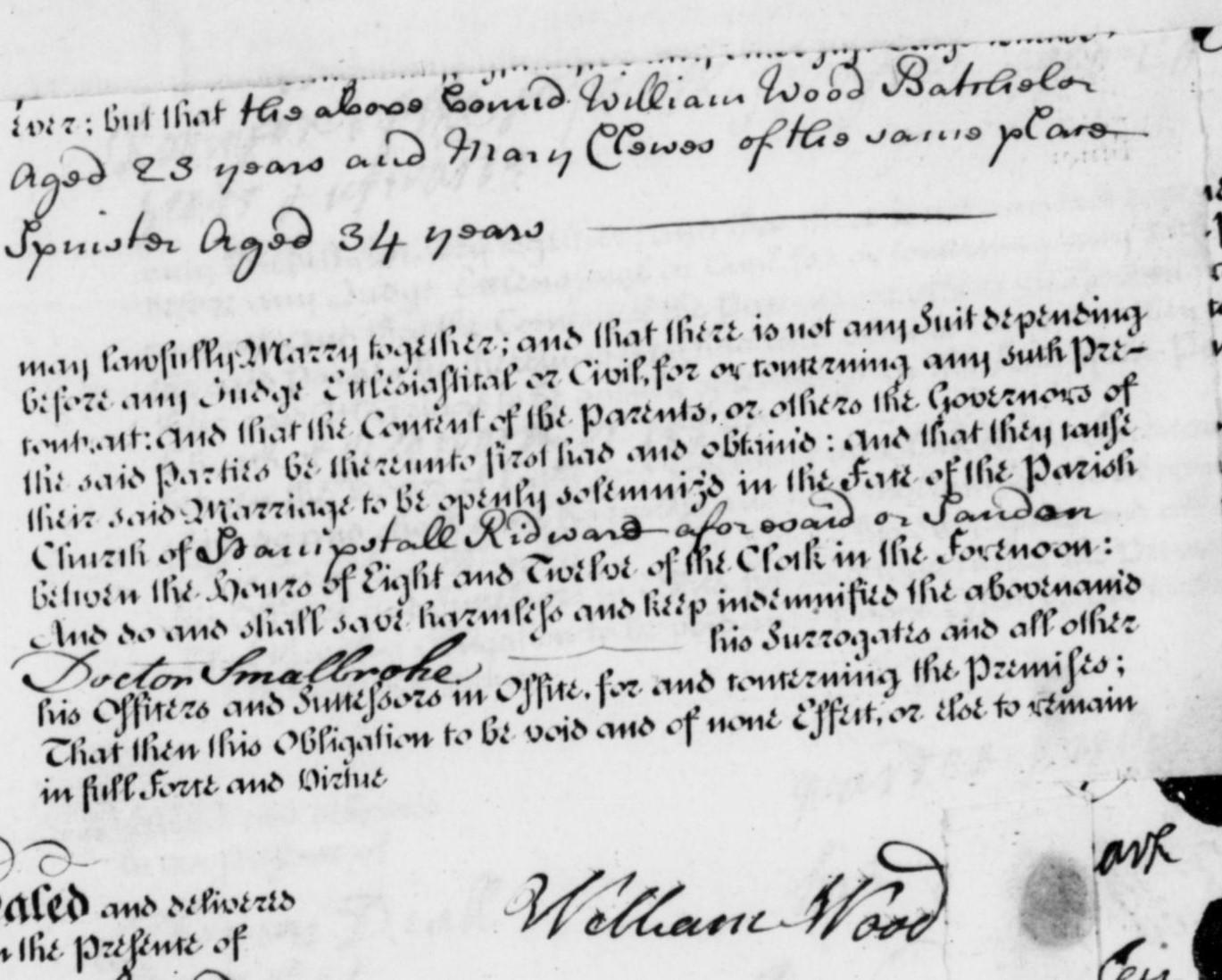
Mary was eleven years Williams senior, and it appears that they both came from Hamstall Ridware and moved to Darlaston after they married. Clearly Rebecca had extended family there (notwithstanding any possible connecting links between the Stubbs buckle makers of Darlaston and the Hamstall Ridware Jacobites thirty years prior). When the buckle trade collapsed in Darlaston, they likely moved to find employment elsewhere, perhaps with the help of Rebecca’s family.
I have not yet been able to find deaths recorded anywhere for either Samuel or Rebecca (there are a couple of deaths recorded for a Samuel Stubbs, one in 1809 in Wolverhampton, and one in 1810 in Birmingham but impossible to say which, if either, is the right one with the limited information, and difficult to know if they stayed in the Hamstall Ridware area or perhaps moved elsewhere)~ or find a reason for their son Solomon to be in Burton upon Trent, an evidently prosperous man with several properties including an earthenware business, as well as a land carrier business.
October 11, 2022 at 11:39 am #6333In reply to: Family Stories From The Other Side ~ Book Two
The Grattidge Family
The first Grattidge to appear in our tree was Emma Grattidge (1853-1911) who married Charles Tomlinson (1847-1907) in 1872.
Charles Tomlinson (1873-1929) was their son and he married my great grandmother Nellie Fisher. Their daughter Margaret (later Peggy Edwards) was my grandmother on my fathers side.
Emma Grattidge was born in Wolverhampton, the daughter and youngest child of William Grattidge (1820-1887) born in Foston, Derbyshire, and Mary Stubbs, born in Burton on Trent, daughter of Solomon Stubbs, a land carrier. William and Mary married at St Modwens church, Burton on Trent, in 1839. It’s unclear why they moved to Wolverhampton. On the 1841 census William was employed as an agent, and their first son William was nine months old. Thereafter, William was a licensed victuallar or innkeeper.
William Grattidge was born in Foston, Derbyshire in 1820. His parents were Thomas Grattidge, farmer (1779-1843) and Ann Gerrard (1789-1822) from Ellastone. Thomas and Ann married in 1813 in Ellastone. They had five children before Ann died at the age of 25:
Bessy was born in 1815, Thomas in 1818, William in 1820, and Daniel Augustus and Frederick were twins born in 1822. They were all born in Foston. (records say Foston, Foston and Scropton, or Scropton)
On the 1841 census Thomas had nine people additional to family living at the farm in Foston, presumably agricultural labourers and help.
After Ann died, Thomas had three children with Kezia Gibbs (30 years his junior) before marrying her in 1836, then had a further four with her before dying in 1843. Then Kezia married Thomas’s nephew Frederick Augustus Grattidge (born in 1816 in Stafford) in London in 1847 and had two more!
The siblings of William Grattidge (my 3x great grandfather):
Frederick Grattidge (1822-1872) was a schoolmaster and never married. He died at the age of 49 in Tamworth at his twin brother Daniels address.
Daniel Augustus Grattidge (1822-1903) was a grocer at Gungate in Tamworth.
Thomas Grattidge (1818-1871) married in Derby, and then emigrated to Illinois, USA.
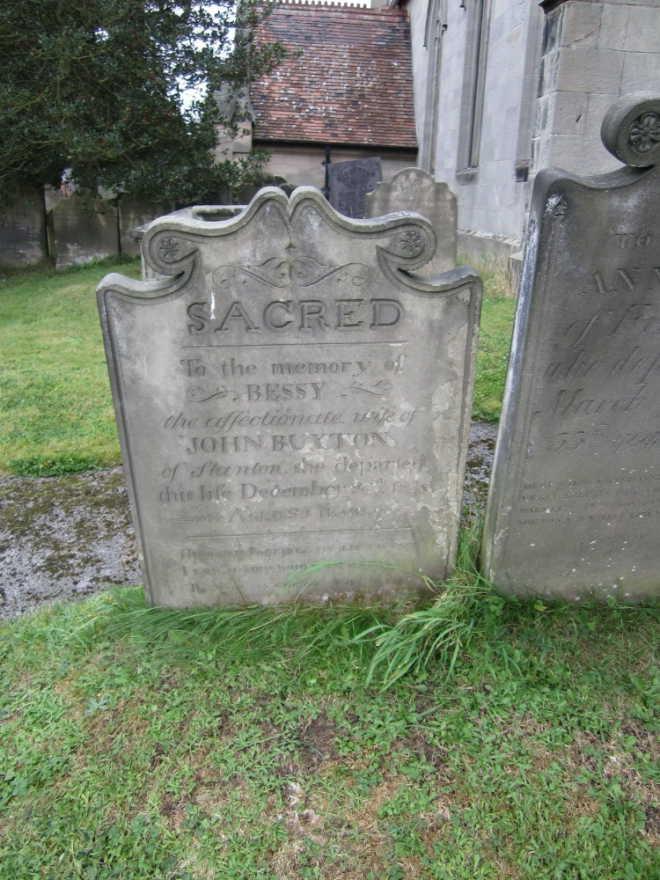
Bessy Grattidge (1815-1840) married John Buxton, farmer, in Ellastone in January 1838. They had three children before Bessy died in December 1840 at the age of 25: Henry in 1838, John in 1839, and Bessy Buxton in 1840. Bessy was baptised in January 1841. Presumably the birth of Bessy caused the death of Bessy the mother.
Bessy Buxton’s gravestone:
“Sacred to the memory of Bessy Buxton, the affectionate wife of John Buxton of Stanton She departed this life December 20th 1840, aged 25 years. “Husband, Farewell my life is Past, I loved you while life did last. Think on my children for my sake, And ever of them with I take.”
20 Dec 1840, Ellastone, Staffordshire
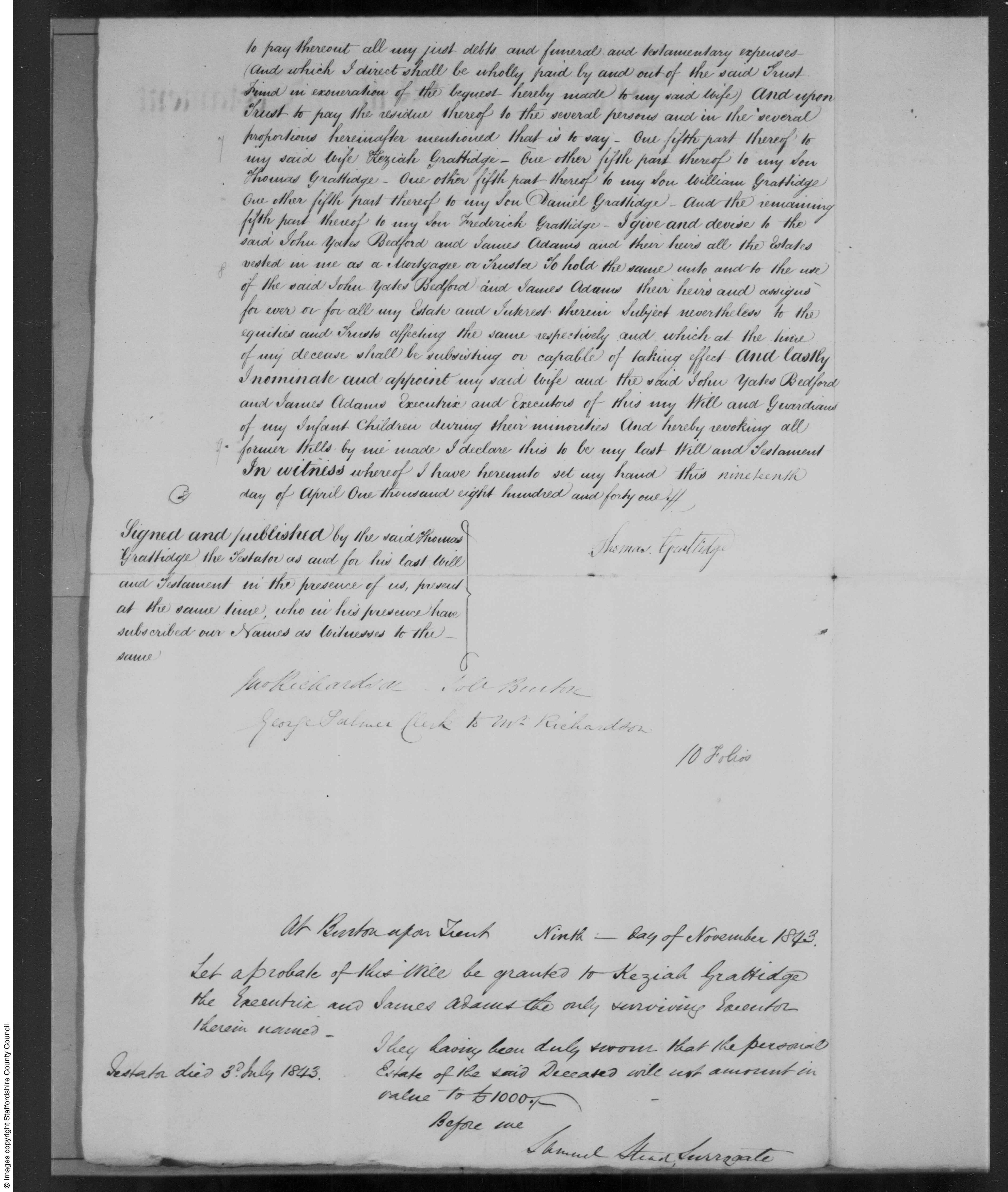
In the 1843 will of Thomas Grattidge, farmer of Foston, he leaves fifth shares of his estate, including freehold real estate at Findern, to his wife Kezia, and sons William, Daniel, Frederick and Thomas. He mentions that the children of his late daughter Bessy, wife of John Buxton, will be taken care of by their father. He leaves the farm to Keziah in confidence that she will maintain, support and educate his children with her.
An excerpt from the will:
I give and bequeath unto my dear wife Keziah Grattidge all my household goods and furniture, wearing apparel and plate and plated articles, linen, books, china, glass, and other household effects whatsoever, and also all my implements of husbandry, horses, cattle, hay, corn, crops and live and dead stock whatsoever, and also all the ready money that may be about my person or in my dwelling house at the time of my decease, …I also give my said wife the tenant right and possession of the farm in my occupation….
A page from the 1843 will of Thomas Grattidge:
William Grattidges half siblings (the offspring of Thomas Grattidge and Kezia Gibbs):
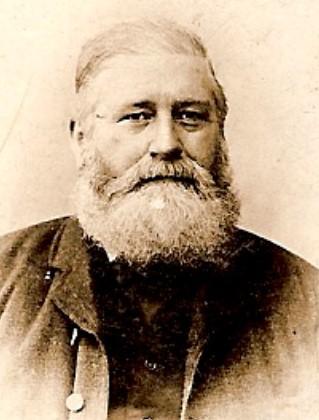
Albert Grattidge (1842-1914) was a railway engine driver in Derby. In 1884 he was driving the train when an unfortunate accident occured outside Ambergate. Three children were blackberrying and crossed the rails in front of the train, and one little girl died.
Albert Grattidge:
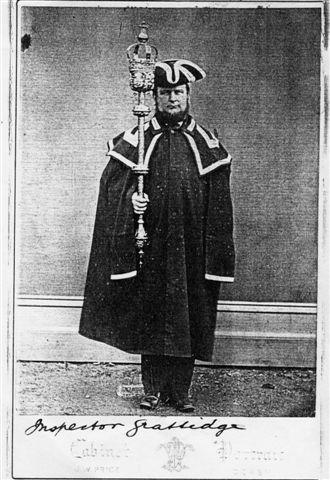
George Grattidge (1826-1876) was baptised Gibbs as this was before Thomas married Kezia. He was a police inspector in Derby.
George Grattidge:
Edwin Grattidge (1837-1852) died at just 15 years old.
Ann Grattidge (1835-) married Charles Fletcher, stone mason, and lived in Derby.
Louisa Victoria Grattidge (1840-1869) was sadly another Grattidge woman who died young. Louisa married Emmanuel Brunt Cheesborough in 1860 in Derby. In 1861 Louisa and Emmanuel were living with her mother Kezia in Derby, with their two children Frederick and Ann Louisa. Emmanuel’s occupation was sawyer. (Kezia Gibbs second husband Frederick Augustus Grattidge was a timber merchant in Derby)
At the time of her death in 1869, Emmanuel was the landlord of the White Hart public house at Bridgegate in Derby.
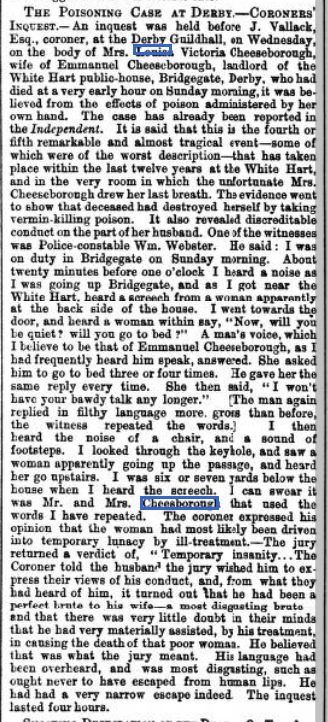
The Derby Mercury of 17th November 1869:
“On Wednesday morning Mr Coroner Vallack held an inquest in the Grand
Jury-room, Town-hall, on the body of Louisa Victoria Cheeseborough, aged
33, the wife of the landlord of the White Hart, Bridge-gate, who committed
suicide by poisoning at an early hour on Sunday morning. The following
evidence was taken:Mr Frederick Borough, surgeon, practising in Derby, deposed that he was
called in to see the deceased about four o’clock on Sunday morning last. He
accordingly examined the deceased and found the body quite warm, but dead.
He afterwards made enquiries of the husband, who said that he was afraid
that his wife had taken poison, also giving him at the same time the
remains of some blue material in a cup. The aunt of the deceased’s husband
told him that she had seen Mrs Cheeseborough put down a cup in the
club-room, as though she had just taken it from her mouth. The witness took
the liquid home with him, and informed them that an inquest would
necessarily have to be held on Monday. He had made a post mortem
examination of the body, and found that in the stomach there was a great
deal of congestion. There were remains of food in the stomach and, having
put the contents into a bottle, he took the stomach away. He also examined
the heart and found it very pale and flabby. All the other organs were
comparatively healthy; the liver was friable.Hannah Stone, aunt of the deceased’s husband, said she acted as a servant
in the house. On Saturday evening, while they were going to bed and whilst
witness was undressing, the deceased came into the room, went up to the
bedside, awoke her daughter, and whispered to her. but what she said the
witness did not know. The child jumped out of bed, but the deceased closed
the door and went away. The child followed her mother, and she also
followed them to the deceased’s bed-room, but the door being closed, they
then went to the club-room door and opening it they saw the deceased
standing with a candle in one hand. The daughter stayed with her in the
room whilst the witness went downstairs to fetch a candle for herself, and
as she was returning up again she saw the deceased put a teacup on the
table. The little girl began to scream, saying “Oh aunt, my mother is
going, but don’t let her go”. The deceased then walked into her bed-room,
and they went and stood at the door whilst the deceased undressed herself.
The daughter and the witness then returned to their bed-room. Presently
they went to see if the deceased was in bed, but she was sitting on the
floor her arms on the bedside. Her husband was sitting in a chair fast
asleep. The witness pulled her on the bed as well as she could.
Ann Louisa Cheesborough, a little girl, said that the deceased was her
mother. On Saturday evening last, about twenty minutes before eleven
o’clock, she went to bed, leaving her mother and aunt downstairs. Her aunt
came to bed as usual. By and bye, her mother came into her room – before
the aunt had retired to rest – and awoke her. She told the witness, in a
low voice, ‘that she should have all that she had got, adding that she
should also leave her her watch, as she was going to die’. She did not tell
her aunt what her mother had said, but followed her directly into the
club-room, where she saw her drink something from a cup, which she
afterwards placed on the table. Her mother then went into her own room and
shut the door. She screamed and called her father, who was downstairs. He
came up and went into her room. The witness then went to bed and fell
asleep. She did not hear any noise or quarrelling in the house after going
to bed.Police-constable Webster was on duty in Bridge-gate on Saturday evening
last, about twenty minutes to one o’clock. He knew the White Hart
public-house in Bridge-gate, and as he was approaching that place, he heard
a woman scream as though at the back side of the house. The witness went to
the door and heard the deceased keep saying ‘Will you be quiet and go to
bed’. The reply was most disgusting, and the language which the
police-constable said was uttered by the husband of the deceased, was
immoral in the extreme. He heard the poor woman keep pressing her husband
to go to bed quietly, and eventually he saw him through the keyhole of the
door pass and go upstairs. his wife having gone up a minute or so before.
Inspector Fearn deposed that on Sunday morning last, after he had heard of
the deceased’s death from supposed poisoning, he went to Cheeseborough’s
public house, and found in the club-room two nearly empty packets of
Battie’s Lincoln Vermin Killer – each labelled poison.Several of the Jury here intimated that they had seen some marks on the
deceased’s neck, as of blows, and expressing a desire that the surgeon
should return, and re-examine the body. This was accordingly done, after
which the following evidence was taken:Mr Borough said that he had examined the body of the deceased and observed
a mark on the left side of the neck, which he considered had come on since
death. He thought it was the commencement of decomposition.
This was the evidence, after which the jury returned a verdict “that the
deceased took poison whilst of unsound mind” and requested the Coroner to
censure the deceased’s husband.The Coroner told Cheeseborough that he was a disgusting brute and that the
jury only regretted that the law could not reach his brutal conduct.
However he had had a narrow escape. It was their belief that his poor
wife, who was driven to her own destruction by his brutal treatment, would
have been a living woman that day except for his cowardly conduct towards
her.The inquiry, which had lasted a considerable time, then closed.”
In this article it says:
“it was the “fourth or fifth remarkable and tragical event – some of which were of the worst description – that has taken place within the last twelve years at the White Hart and in the very room in which the unfortunate Louisa Cheesborough drew her last breath.”
Sheffield Independent – Friday 12 November 1869:
 March 26, 2022 at 11:36 am #6285
In reply to: The Elusive Samuel Housley and Other Family Stories
Harriet Compton
Harriet Comptom is not directly related to us, but her portrait is in our family collection.
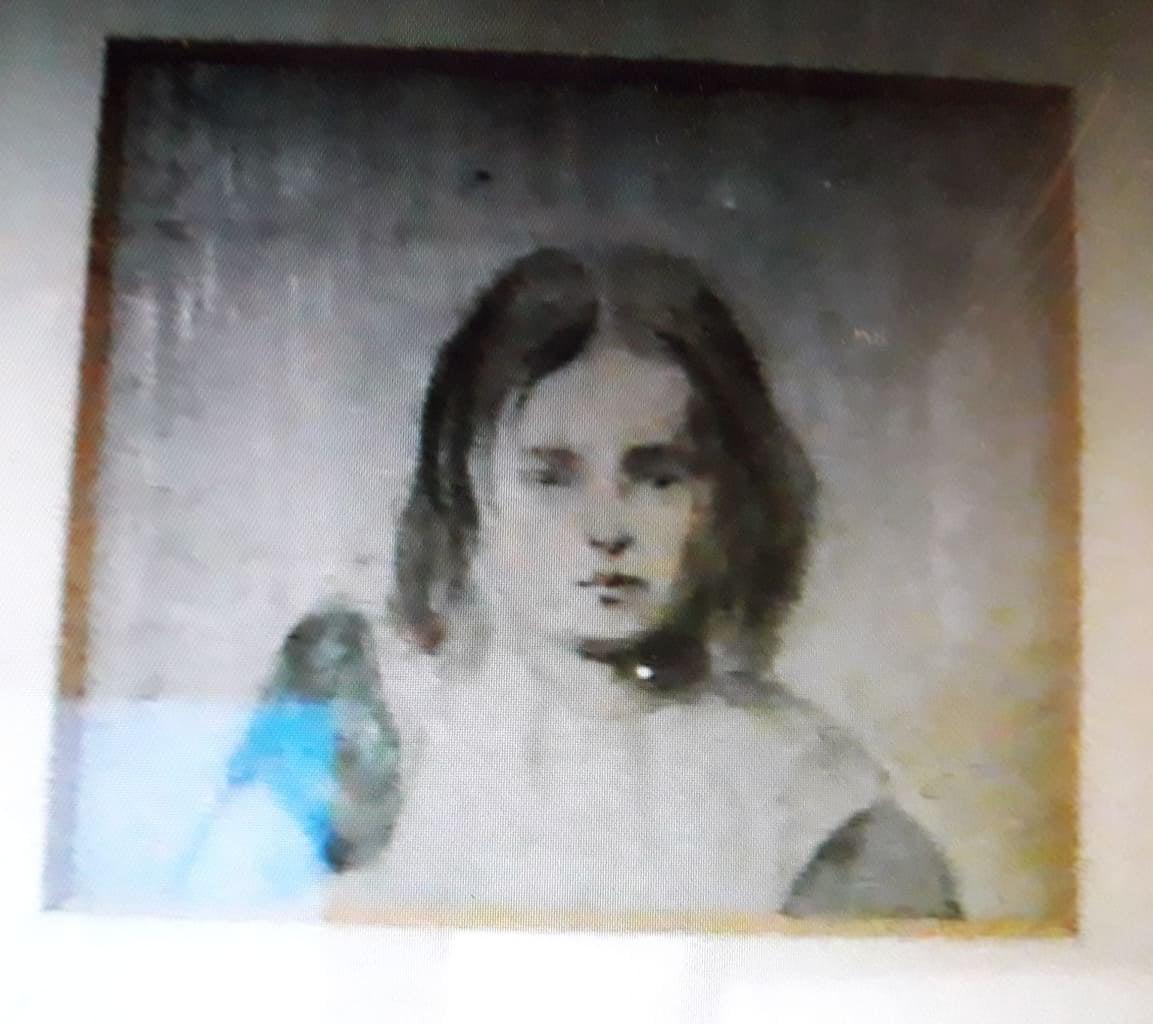
Alfred Julius Eugene Compton painted this portrait of his daughter, Harriet Compton, when she was six. Harriet Compton was Charles Tooby’s mothers mother, and Charles married my mothers aunt Dorothy Marshall. They lived on High Park Ave in Wollaston, and his parents lived on Park Road, Wollaston, opposite my grandparents, George and Nora Marshall. Harriet married Thomas Thornburgh, they had a daughter Florence who married Sydney Tooby. Florence and Sydney were Charles Tooby’s parents.
Charles and Dorothy Tooby didn’t have any children. Charles died before his wife, and this is how the picture ended up in my mothers possession.
I attempted to find a direct descendant of Harriet Compton, but have not been successful so far, although I did find a relative on a Stourbridge facebook group. Bryan Thornburgh replied: “Francis George was my grandfather.He had two sons George & my father Thomas and two daughters Cissie & Edith. I can remember visiting my fathers Uncle Charles and Aunt Dorothy in Wollaston.”
Francis George Thornburgh was Florence Tooby’s brother.
The watercolour portrait was framed by Hughes of Enville St, Stourbridge.
Alfred Julius Eugene Compton was born in 1826 Paris, France, and died on 6 February 1917 in Chelsea, London.
Harriet Compton his daughter was born in 1853 in Islington, London, and died in December 1926 in Stourbridge.Without going too far down an unrelated rabbit hole, a member of the facebook group Family Treasures Reinstated shared this:
“Will reported in numerous papers in Dec 1886.
Harriet’s father Alfred appears to be beneficiary but Harriet’s brother, Percy is specifically excluded .
“The will (dated March 6, 1876) of the Hon. Mrs. Fanny Stanhope, late of No. 24, Carlyle-square, Chelsea, who died on August 9 last, was proved on the 1st ult. by Alfred Julius Eugene Compton, the value of the personal estate amounting to over £8000.
The testatrix, after giving & few legacies, leaves one moiety of the residue of her personal estate, upon trust, for John Auguste Alexandre Compton, for life, and then, subject to an annuity to his wife, for the children (except Percy) of Alfred Julius Eugene Compton, and the other moiety, upon trust, for the said Alfred Julius Eugene Compton, for life, and at his death for his children, except Percy.”
-Illustrated London News.Harriet Compton:
 March 21, 2022 at 7:05 am #6284
In reply to: The Elusive Samuel Housley and Other Family Stories
To Australia
Grettons
Charles Herbert Gretton 1876-1954
Charles Gretton, my great grandmothers youngest brother, arrived in Sydney Australia on 12 February 1912, having set sail on 5 January 1912 from London. His occupation on the passenger list was stockman, and he was traveling alone. Later that year, in October, his wife and two sons sailed out to join him.
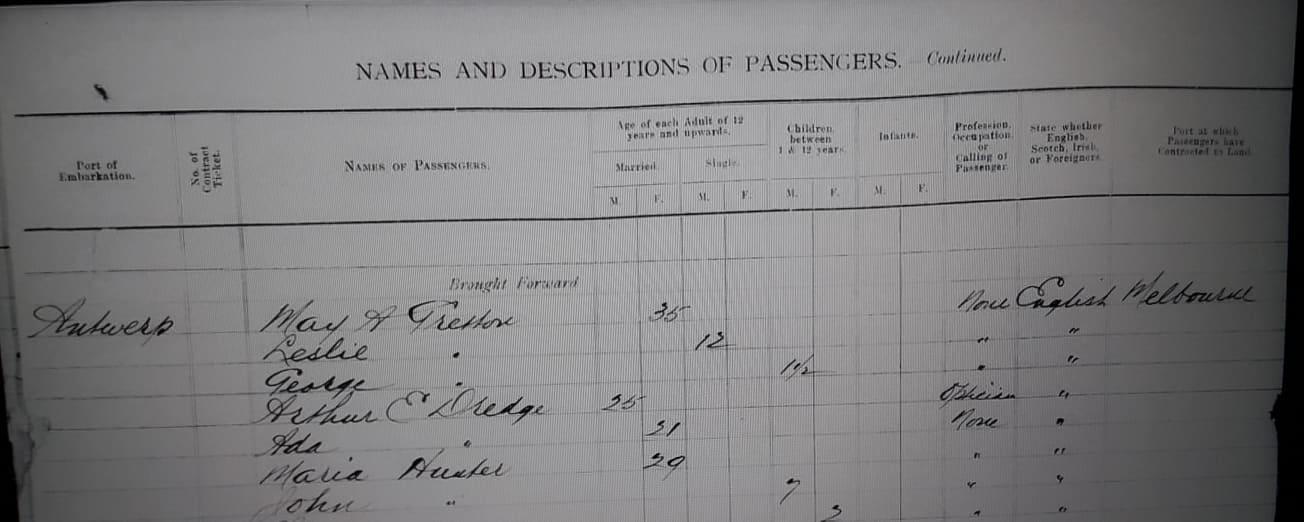
Charles was born in Swadlincote. He married Mary Anne Illsley, a local girl from nearby Church Gresley, in 1898. Their first son, Leslie Charles Bloemfontein Gretton, was born in 1900 in Church Gresley, and their second son, George Herbert Gretton, was born in 1910 in Swadlincote. In 1901 Charles was a colliery worker, and on the 1911 census, his occupation was a sanitary ware packer.
Charles and Mary Anne had two more sons, both born in Footscray: Frank Orgill Gretton in 1914, and Arthur Ernest Gretton in 1920.
On the Australian 1914 electoral rolls, Charles and Mary Ann were living at 72 Moreland Street, Footscray, and in 1919 at 134 Cowper Street, Footscray, and Charles was a labourer. In 1924, Charles was a sub foreman, living at 3, Ryan Street E, Footscray, Australia. On a later electoral register, Charles was a foreman. Footscray is a suburb of Melbourne, and developed into an industrial zone in the second half of the nineteenth century.
Charles died in Victoria in 1954 at the age of 77. His wife Mary Ann died in 1958.
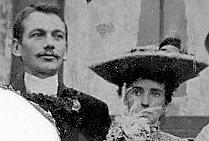
Charles and Mary Ann Gretton:
Leslie Charles Bloemfontein Gretton 1900-1955
Leslie was an electrician. He married Ethel Christine Halliday, born in 1900 in Footscray, in 1927. They had four children: Tom, Claire, Nancy and Frank. By 1943 they were living in Yallourn. Yallourn, Victoria was a company town in Victoria, Australia built between the 1920s and 1950s to house employees of the State Electricity Commission of Victoria, who operated the nearby Yallourn Power Station complex. However, expansion of the adjacent open-cut brown coal mine led to the closure and removal of the town in the 1980s.
On the 1954 electoral registers, daughter Claire Elizabeth Gretton, occupation teacher, was living at the same address as Leslie and Ethel.
Leslie died in Yallourn in 1955, and Ethel nine years later in 1964, also in Yallourn.
George Herbert Gretton 1910-1970
George married Florence May Hall in 1934 in Victoria, Australia. In 1942 George was listed on the electoral roll as a grocer, likewise in 1949. In 1963 his occupation was a process worker, and in 1968 in Flinders, a horticultural advisor.
George died in Lang Lang, not far from Melbourne, in 1970.
Frank Orgill Gretton 1914-
Arthur Ernest Gretton 1920-
Orgills
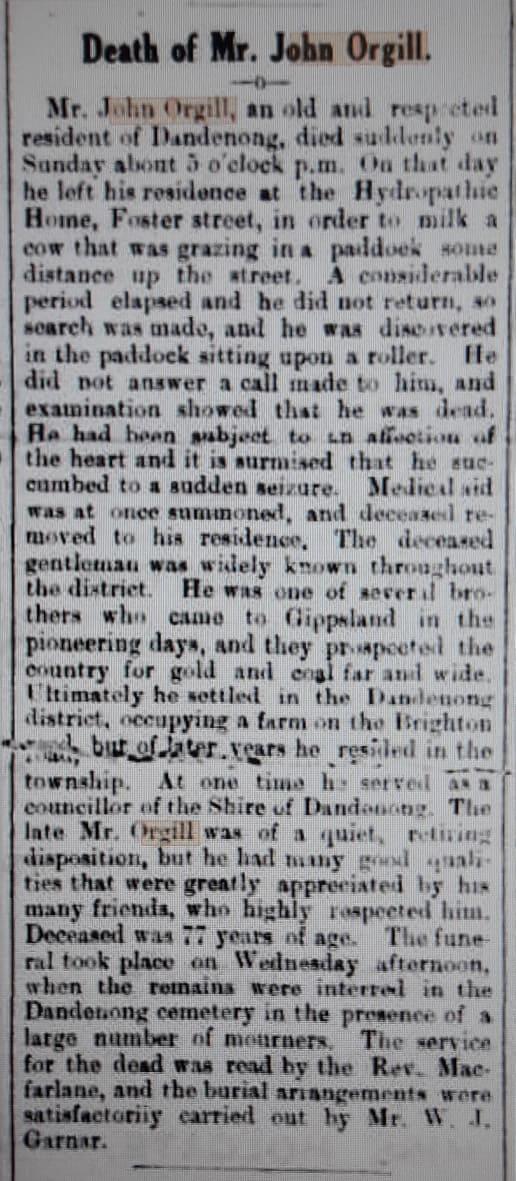
John Orgill 1835-1911
John Orgill was Charles Herbert Gretton’s uncle. He emigrated to Australia in 1865, and married Elizabeth Mary Gladstone 1845-1926 in Victoria in 1870. Their first child was born in December that year, in Dandenong. They had seven children, and their three sons all have the middle name Gladstone.
John Orgill was a councillor for the Shire of Dandenong in 1873, and between 1876 and 1879.
John Orgill:
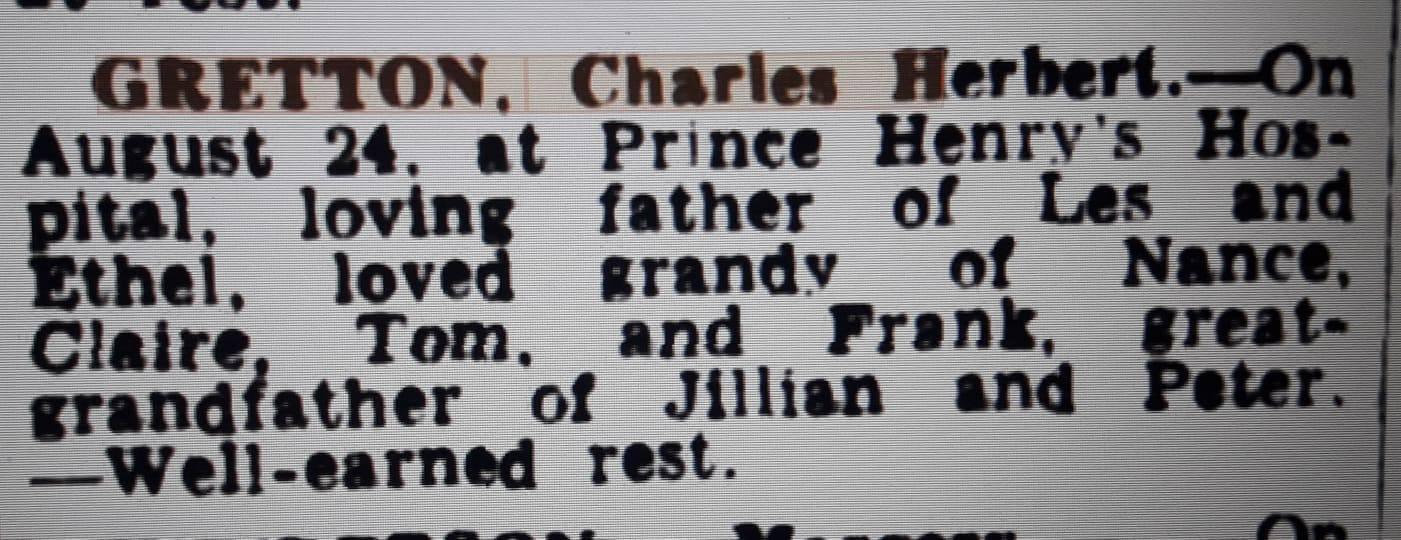
John Orgill obituary in the South Bourke and Mornington Journal, 21 December 1911:
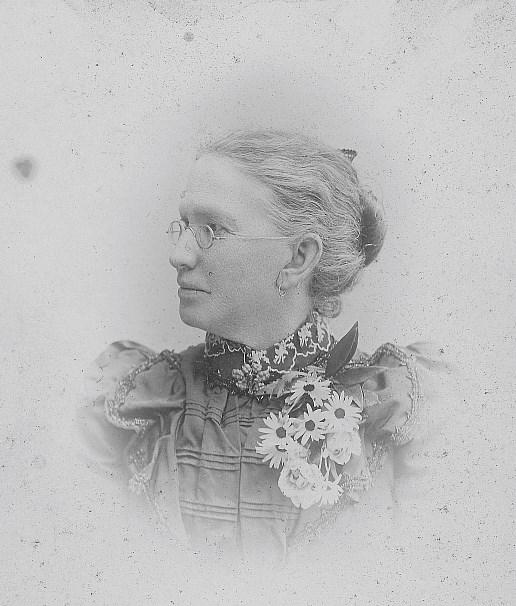
John’s wife Elizabeth Orgill, a teacher and a “a public spirited lady” according to newspaper articles, opened a hydropathic hospital in Dandenong called Gladstone House.
Elizabeth Gladstone Orgill:
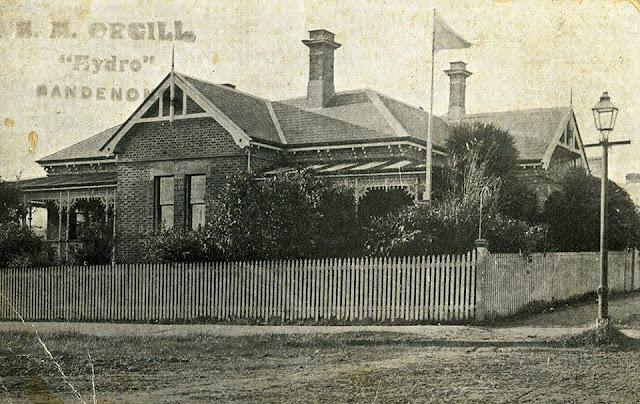
On the Old Dandenong website:
Gladstone House hydropathic hospital on the corner of Langhorne and Foster streets (153 Foster Street) Dandenong opened in 1896, working on the theory of water therapy, no medicine or operations. Her husband passed away in 1911 at 77, around similar time Dr Barclay Thompson obtained control of the practice. Mrs Orgill remaining on in some capacity.
Elizabeth Mary Orgill (nee Gladstone) operated Gladstone House until at least 1911, along with another hydropathic hospital (Birthwood) on Cheltenham road. She was the daughter of William Gladstone (Nephew of William Ewart Gladstone, UK prime minister in 1874).
Around 1912 Dr A. E. Taylor took over the location from Dr. Barclay Thompson. Mrs Orgill was still working here but no longer controlled the practice, having given it up to Barclay. Taylor served as medical officer for the Shire for before his death in 1939. After Taylor’s death Dr. T. C. Reeves bought his practice in 1939, later that year being appointed medical officer,
Gladstone Road in Dandenong is named after her family, who owned and occupied a farming paddock in the area on former Police Paddock ground, the Police reserve having earlier been reduced back to Stud Road.
Hydropathy (now known as Hydrotherapy) and also called water cure, is a part of medicine and alternative medicine, in particular of naturopathy, occupational therapy and physiotherapy, that involves the use of water for pain relief and treatment.
Gladstone House, Dandenong:
John’s brother Robert Orgill 1830-1915 also emigrated to Australia. I met (online) his great great grand daughter Lidya Orgill via the Old Dandenong facebook group.
John’s other brother Thomas Orgill 1833-1908 also emigrated to the same part of Australia.
Thomas Orgill:
One of Thomas Orgills sons was George Albert Orgill 1880-1949:
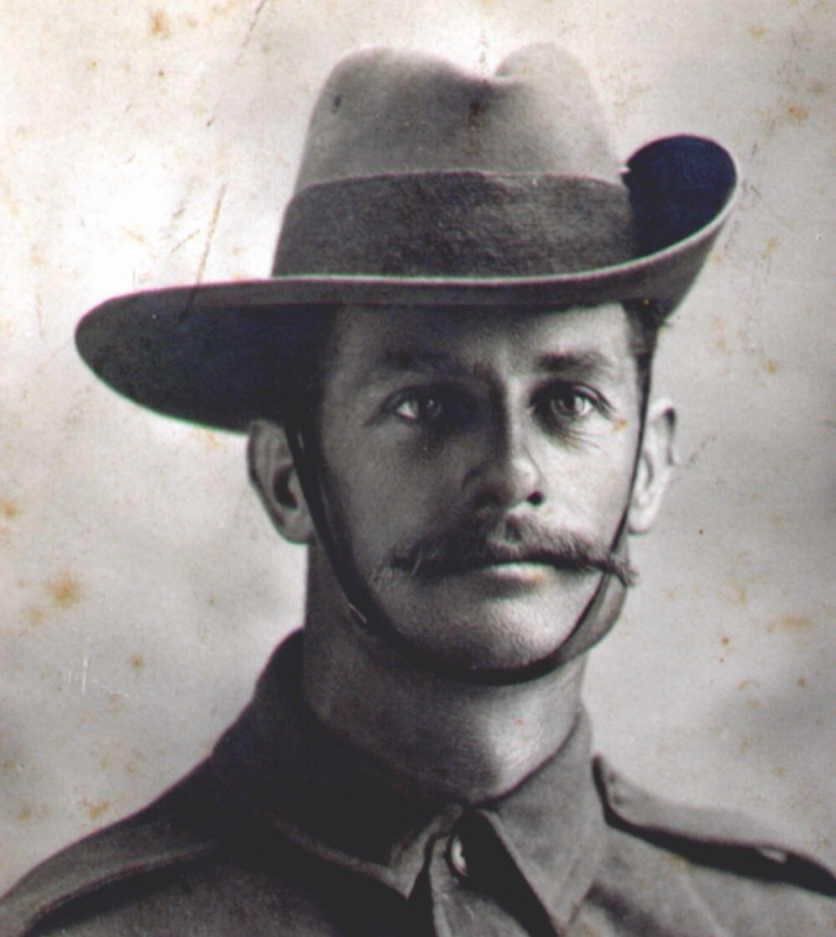
A letter was published in The South Bourke & Mornington Journal (Richmond, Victoria, Australia) on 17 Jun 1915, to Tom Orgill, Emerald Hill (South Melbourne) from hospital by his brother George Albert Orgill (4th Pioneers) describing landing of Covering Party prior to dawn invasion of Gallipoli:
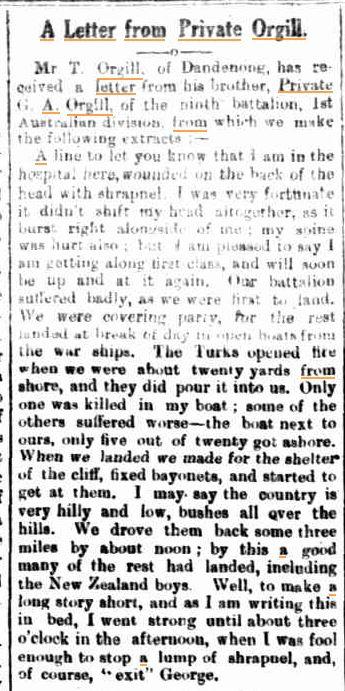
Another brother Henry Orgill 1837-1916 was born in Measham and died in Dandenong, Australia. Henry was a bricklayer living in Measham on the 1861 census. Also living with his widowed mother Elizabeth at that address was his sister Sarah and her husband Richard Gretton, the baker (my great great grandparents). In October of that year he sailed to Melbourne. His occupation was bricklayer on his death records in 1916.
Two of Henry’s sons, Arthur Garfield Orgill born 1888 and Ernest Alfred Orgill born 1880 were killed in action in 1917 and buried in Nord-Pas-de-Calais, France. Another son, Frederick Stanley Orgill, died in 1897 at the age of seven.
A fifth brother, William Orgill 1842- sailed from Liverpool to Melbourne in 1861, at 19 years of age. Four years later in 1865 he sailed from Victoria, Australia to New Zealand.
I assumed I had found all of the Orgill brothers who went to Australia, and resumed research on the Orgills in Measham, in England. A search in the British Newspaper Archives for Orgills in Measham revealed yet another Orgill brother who had gone to Australia.
Matthew Orgill 1828-1907 went to South Africa and to Australia, but returned to Measham.
The Orgill brothers had two sisters. One was my great great great grandmother Sarah, and the other was Hannah. Hannah married Francis Hart in Measham. One of her sons, John Orgill Hart 1862-1909, was born in Measham. On the 1881 census he was a 19 year old carpenters apprentice. Two years later in 1883 he was listed as a joiner on the passenger list of the ship Illawarra, bound for Australia. His occupation at the time of his death in Dandenong in 1909 was contractor.
An additional coincidental note about Dandenong: my step daughter Emily’s Australian partner is from Dandenong.
Housleys
Charles Housley 1823-1856
Charles Housley emigrated to Australia in 1851, the same year that his brother George emigrated to USA. Charles is mentioned in the Narrative on the Letters by Barbara Housley, and appears in the Housley Letters chapters.
Rushbys
George “Mike” Rushby 1933-
Mike moved to Australia from South Africa. His story is a separate chapter.
March 17, 2022 at 10:37 am #6283In reply to: The Elusive Samuel Housley and Other Family Stories
Purdy Cousins
My great grandmother Mary Ann Gilman Purdy was one of five children. Her sister Ellen Purdy was a well traveled nurse, and her sister Kate Rushby was a publican whose son who went to Africa. But what of her eldest sister Elizabeth and her brother Richard?
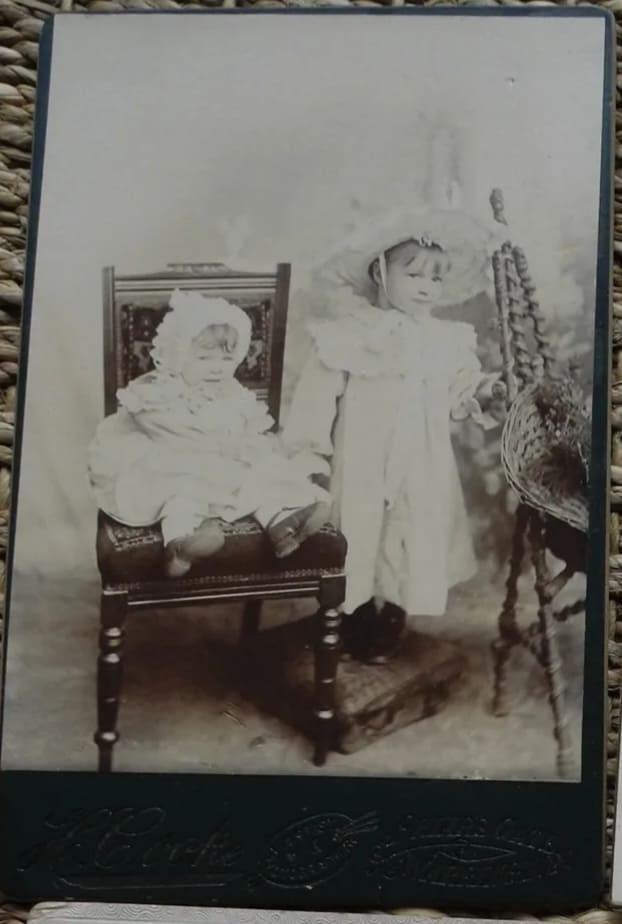
Elizabeth Purdy 1869-1905 married Benjamin George Little in 1892 in Basford, Nottinghamshire. Their first child, Frieda Olive Little, was born in Eastwood in December 1896, and their second daughter Catherine Jane Little was born in Warrington, Cheshire, in 1898. A third daughter, Edna Francis Little was born in 1900, but died three months later.
When I noticed that this unidentified photograph in our family collection was taken by a photographer in Warrington, and as no other family has been found in Warrington, I concluded that these two little girls are Frieda and Catherine:
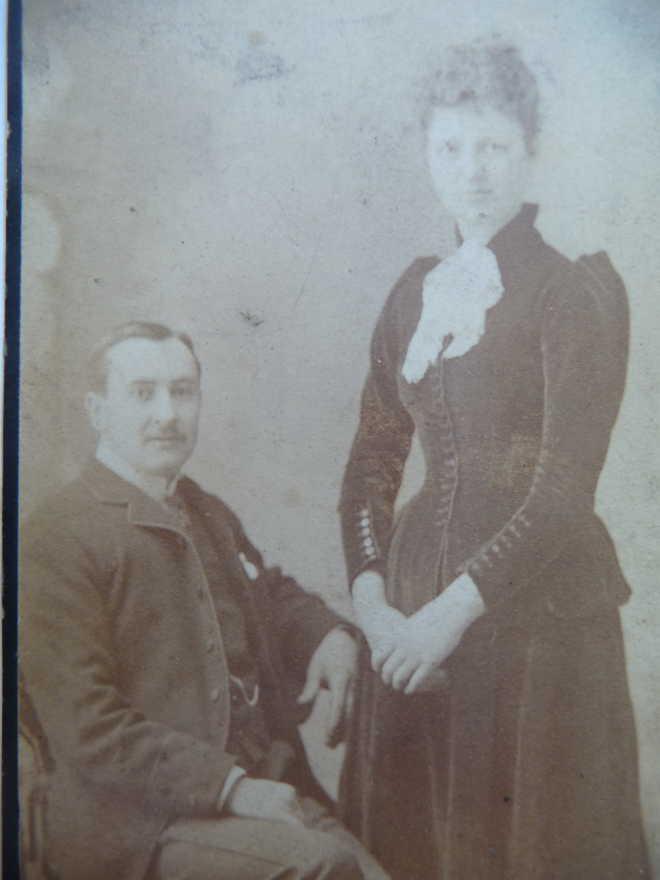
Benjamin Little, born in 1869, was the manager of a boot shop, according to the 1901 census, and a boot maker on the 1911 census. I found a photograph of Benjamin and Elizabeth Little on an ancestry website:
Frieda Olive Little 1896-1977 married Robert Warburton in 1924.
Frieda and Robert had two sons and a daughter, although one son died in infancy. They lived in Leominster, in Herefordshire, but Frieda died in 1977 at Enfield Farm in Warrington, four years after the death of her husband Robert.
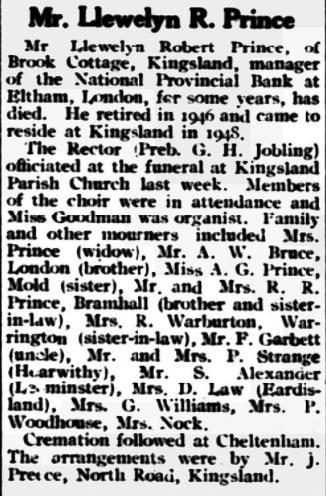
Catherine Jane Little 1899-1975 married Llewelyn Robert Prince 1884-1950. They do not appear to have had any children. Llewelyn was manager of the National Provinical Bank at Eltham in London, but died at Brook Cottage in Kingsland, Herefordshire. His wifes aunt Ellen Purdy the nurse had also lived at Brook Cottage. Ellen died in 1947, but her husband Frank Garbett was at the funeral:
Richard Purdy 1877-1940
Richard was born in Eastwood, Nottinghamshire. When his mother Catherine died in 1884 Richard was six years old. My great grandmother Mary Ann and her sister Ellen went to live with the Gilman’s in Buxton, but Richard and the two older sisters, Elizabeth and Kate, stayed with their father George Purdy, who remarried soon afterwards.
Richard married Ada Elizabeth Clarke in 1899. In 1901 Richard was an earthenware packer at a pottery, and on the 1939 census he was a colliery dataller. A dataller was a day wage man, paid on a daily basis for work done as required.
Richard and Ada had four children: Richard Baden Purdy 1900-1945, Winifred Maude 1903-1974, John Frederick 1907-1945, and Violet Gertrude 1910-1974.
Richard Baden Purdy married Ethel May Potter in Mansfield, Nottinghamshire, in 1926. He was listed on the 1939 census as a colliery deputy. In 1945 Richard Baden Purdy died as a result of injuries in a mine explosion.
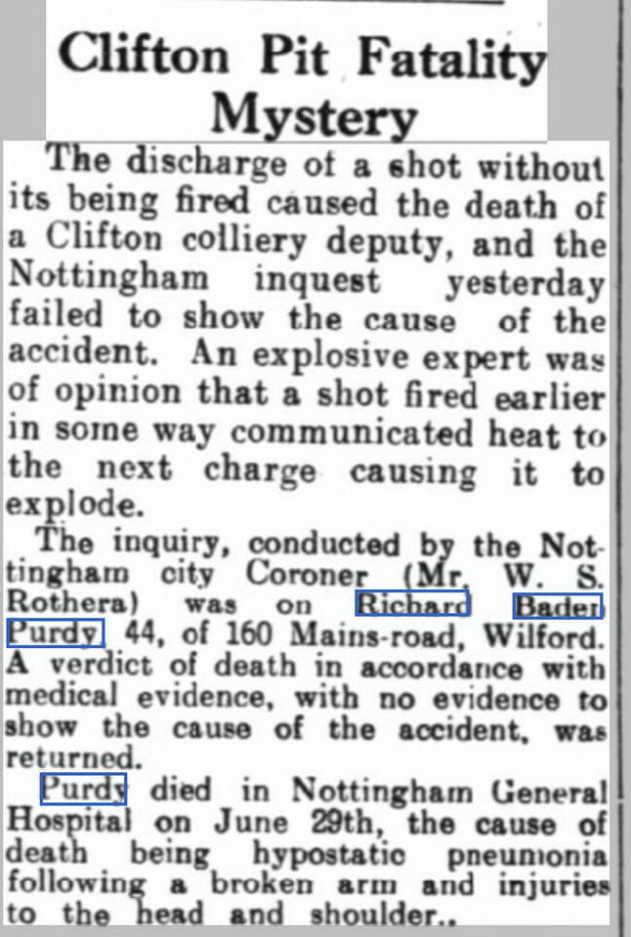
John Frederick Purdy married Iris Merryweather in 1938. On the 1939 census John and Iris live in Arnold, Nottinghamshire, and John’s occupation is a colliery hewer. Their daughter Barbara Elizabeth was born later that year. John died in 1945, the same year as his brother Richard Baden Purdy. It is not known without purchasing the death certificate what the cause of death was.
A memorial was posted in the Nottingham Evening Post on 29 June 1948:
PURDY, loving memories, Richard Baden, accidentally killed June 29th 1945; John Frederick, died 1 April 1945; Richard Purdy, father, died December 1940. Too dearly loved to be forgotten. Mother, families.
Violet Gertrude Purdy married Sidney Garland in 1932 in Southwell, Nottinghamshire. She died in Edwinstowe, Nottinghamshire, in 1974.
Winifred Maude Purdy married Bernard Fowler in Southwell in 1928. She also died in 1974, in Mansfield.
The two brothers died the same year, in 1945, and the two sisters died the same year, in 1974.
February 9, 2022 at 7:00 pm #6276In reply to: The Elusive Samuel Housley and Other Family Stories
Ellastone and Mayfield
Malkins and Woodwards
Parish RegistersJane Woodward
It’s exciting, as well as enormously frustrating, to see so many Woodward’s in the Ellastone parish registers, and even more so because they go back so far. There are parish registers surviving from the 1500’s: in one, dated 1579, the death of Thomas Woodward was recorded. His father’s name was Humfrey.Jane Woodward married Rowland Malkin in 1751, in Thorpe, Ashbourne. Jane was from Mathfield (also known as Mayfield), Ellastone, on the Staffordshire side of the river Dove. Rowland was from Clifton, Ashbourne, on the Derbyshire side of the river. They were neighbouring villages, but in different counties.
Jane Woodward was born in 1726 according to the marriage transcription. No record of the baptism can be found for her, despite there having been at least four other Woodward couples in Ellastone and Mayfield baptizing babies in the 1720’s and 1730’s. Without finding out the baptism with her parents names on the parish register, it’s impossible to know which is the correct line to follow back to the earlier records.
I found a Mayfield history group on Facebook and asked if there were parish records existing that were not yet online. A member responded that she had a set on microfiche and had looked through the relevant years and didn’t see a Jane Woodward, but she did say that some of the pages were illegible.
The Ellasone parish records from the 1500s surviving at all, considering the events in 1673, is remarkable. To be so close, but for one indecipherable page from the 1700s, to tracing the family back to the 1500s! The search for the connecting link to the earlier records continues.
Some key events in the history of parish registers from familysearch:
In medieval times there were no parish registers. For some years before the Reformation, monastic houses (especially the smaller ones) the parish priest had been developing the custom of noting in an album or on the margins of the service books, the births and deaths of the leading local families.
1538 – Through the efforts of Thomas Cromwell a mandate was issued by Henry VIII to keep parish registers. This order that every parson, vicar or curate was to enter in a book every wedding, christening and burial in his parish. The parish was to provide a sure coffer with two locks, the parson having the custody of one key, the wardens the others. The entries were to be made each Sunday after the service in the presence of one of the wardens.
1642-60 – During the Civil War registers were neglected and Bishop Transcripts were not required.
1650 – In the restoration of Charles they went back to the church to keep christenings, marriages and burial. The civil records that were kept were filed in with the parish in their registers. it is quite usual to find entries explaining the situation during the Interregnum. One rector stated that on 23 April 1643 “Our church was defaced our font thrown down and new forms of prayer appointed”. Another minister not quite so bold wrote “When the war, more than a civil war was raging most grimly between royalists and parliamentarians throughout the greatest part of England, I lived well because I lay low”.
1653 – Cromwell, whose army had defeated the Royalists, was made Lord Protector and acted as king. He was a Puritan. The parish church of England was disorganized, many ministers fled for their lives, some were able to hide their registers and other registers were destroyed. Cromwell ruled that there would be no one religion in England all religions could be practiced. The government took away from the ministers not only the custody of the registers, but even the solemnization of the marriage ceremony. The marriage ceremony was entrusted to the justices to form a new Parish Register (not Registrar) elected by all the ratepayers in a parish, and sworn before and approved by a magistrate.. Parish clerks of the church were made a civil parish clerk and they recorded deaths, births and marriages in the civil parishes.Ellastone:
“Ellastone features as ‘Hayslope’ in George Eliot’s Adam Bede, published in 1859. It earned this recognition because the author’s father spent the early part of his life in the village working as a carpenter.”
Adam Bede Cottage, Ellastone:
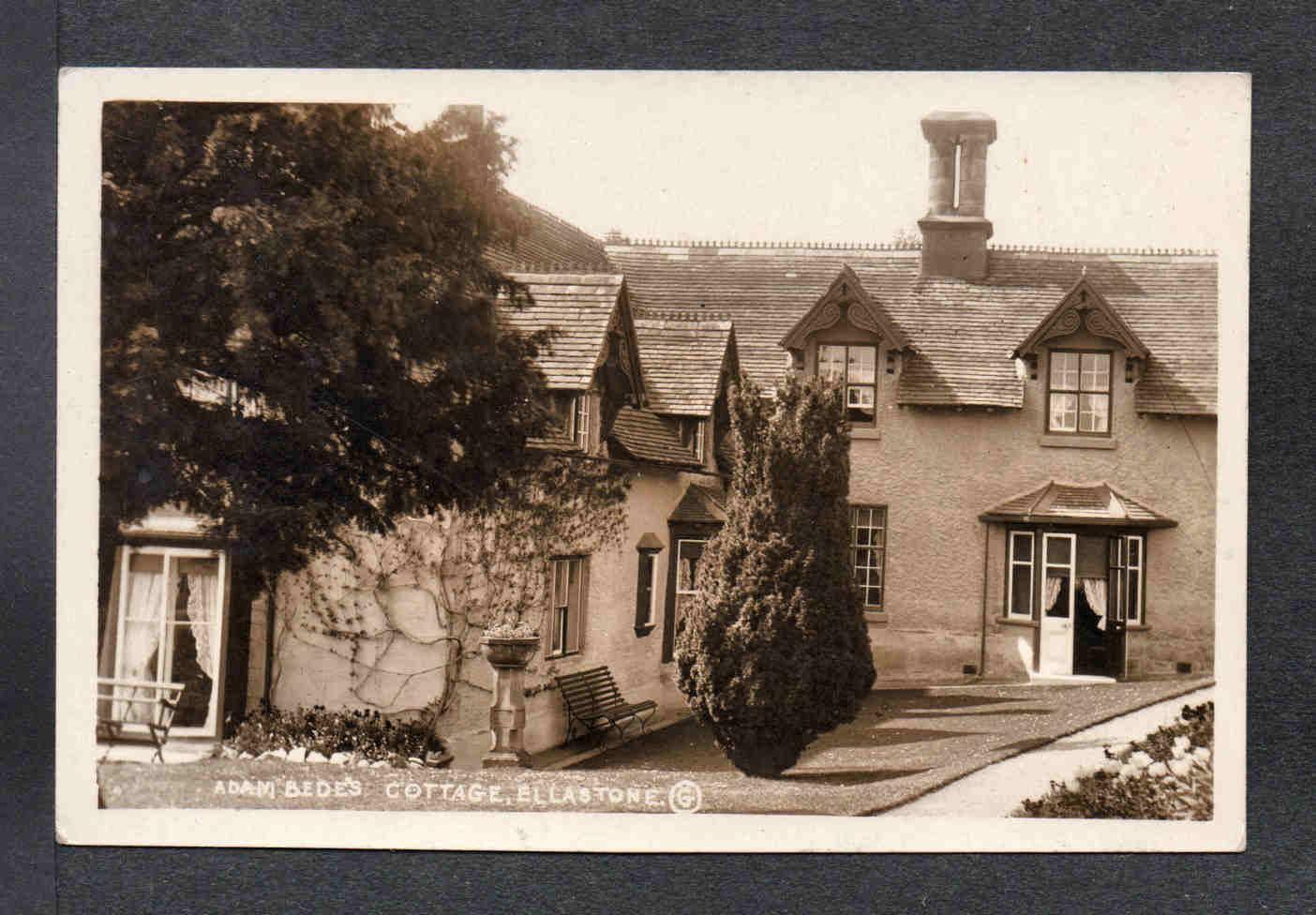
“It was at Ellastone that Robert Evans, George Eliot’s father, passed his early years and worked as a carpenter with his brother Samuel; and it was partly from reminiscences of her father’s talk and from her uncle Samuel’s wife’s preaching experiences that the author constructed the very powerful and moving story of Adam Bede.”
Mary Malkin
1765-1838
Ellen Carrington’s mother was Mary Malkin.
Ellastone:
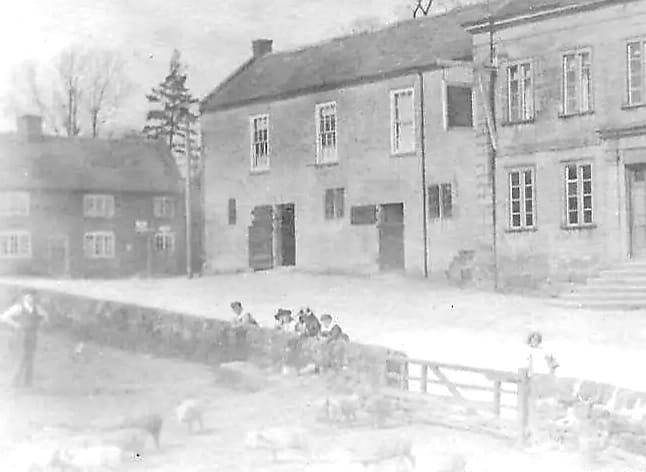
Ashbourn the 31st day of May in the year of our Lord 1751. The marriage of Rowland Malkin and Jane Woodward:
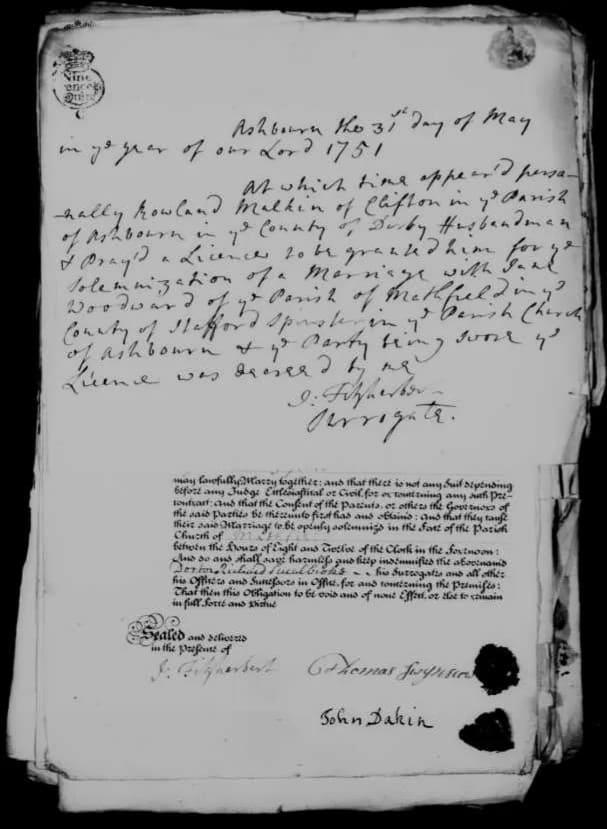 February 8, 2022 at 2:24 pm #6275
In reply to: The Elusive Samuel Housley and Other Family Stories
“AND NOW ABOUT EMMA”
and a mystery about George
I had overlooked this interesting part of Barbara Housley’s “Narrative on the Letters” initially, perhaps because I was more focused on finding Samuel Housley. But when I did eventually notice, I wondered how I had missed it! In this particularly interesting letter excerpt from Joseph, Barbara has not put the date of the letter ~ unusually, because she did with all of the others. However I dated the letter to later than 1867, because Joseph mentions his wife, and they married in 1867. This is important, because there are two Emma Housleys. Joseph had a sister Emma, born in 1836, two years before Joseph was born. At first glance, one would assume that a reference to Emma in the letters would mean his sister, but Emma the sister was married in Derby in 1858, and by 1869 had four children.
But there was another Emma Housley, born in 1851.
From Barbara Housley’s Narrative on the Letters:
“AND NOW ABOUT EMMA”
A MYSTERY
A very mysterious comment is contained in a letter from Joseph:
“And now about Emma. I have only seen her once and she came to me to get your address but I did not feel at liberty to give it to her until I had wrote to you but however she got it from someone. I think it was in this way. I was so pleased to hear from you in the first place and with John’s family coming to see me I let them read one or two of your letters thinking they would like to hear of you and I expect it was Will that noticed your address and gave it to her. She came up to our house one day when I was at work to know if I had heard from you but I had not heard from you since I saw her myself and then she called again after that and my wife showed her your boys’ portraits thinking no harm in doing so.”
At this point Joseph interrupted himself to thank them for sending the portraits. The next sentence is:
“Your son JOHN I have never seen to know him but I hear he is rather wild,” followed by: “EMMA has been living out service but don’t know where she is now.”
Since Joseph had just been talking about the portraits of George’s three sons, one of whom is John Eley, this could be a reference to things George has written in despair about a teen age son–but could Emma be a first wife and John their son? Or could Emma and John both be the children of a first wife?
Elsewhere, Joseph wrote, “AMY ELEY died 14 years ago. (circa 1858) She left a son and a daughter.”
An Amey Eley and a George Housley were married on April 1, 1849 in Duffield which is about as far west of Smalley as Heanor is East. She was the daughter of John, a framework knitter, and Sarah Eley. George’s father is listed as William, a farmer. Amey was described as “of full age” and made her mark on the marriage document.
Anne wrote in August 1854: “JOHN ELEY is living at Derby Station so must take the first opportunity to get the receipt.” Was John Eley Housley named for him?
(John Eley Housley is George Housley’s son in USA, with his second wife, Sarah.)
George Housley married Amey Eley in 1849 in Duffield. George’s father on the register is William Housley, farmer. Amey Eley’s father is John Eley, framework knitter.
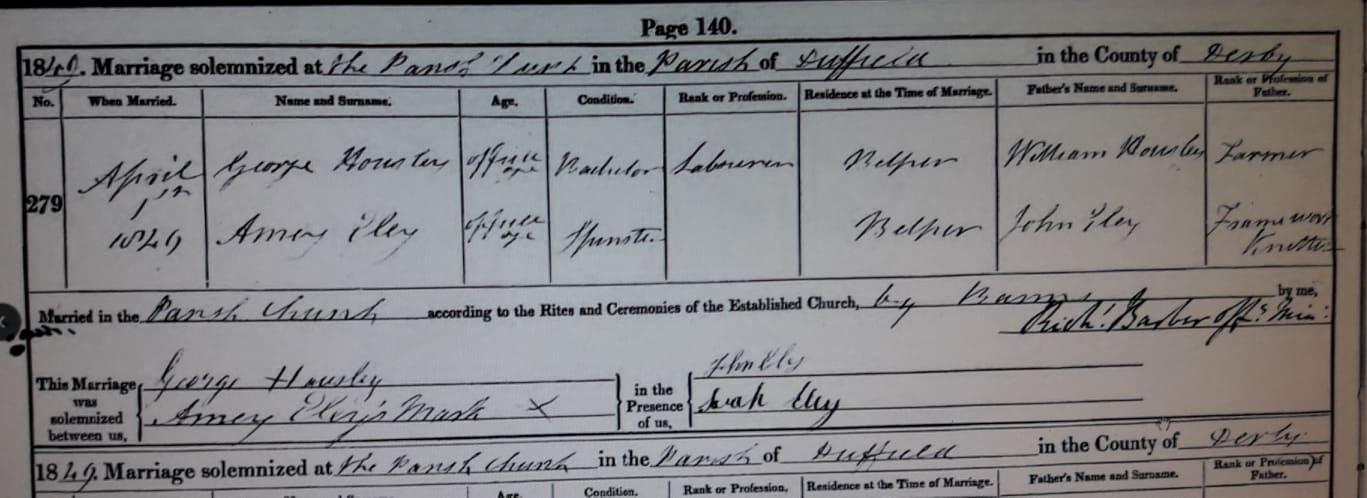
On the 1851 census, George Housley and his wife Amey Housley are living with her parents in Heanor, John Eley, a framework knitter, and his wife Rebecca. Also on the census are Charles J Housley, born in 1849 in Heanor, and Emma Housley, three months old at the time of the census, born in 1851. George’s birth place is listed as Smalley.
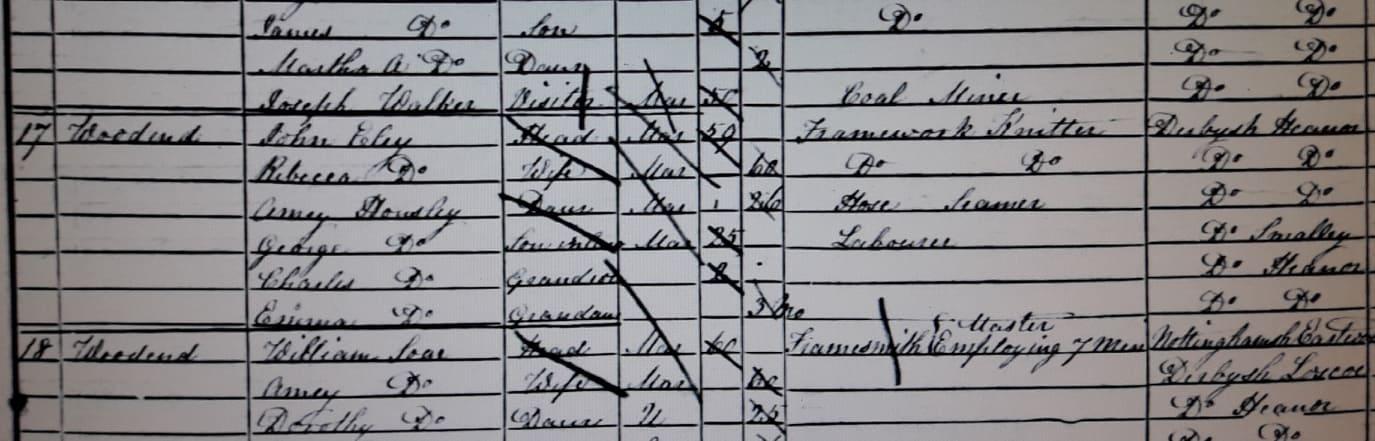
On the 31st of July 1851 George Housley arrives in New York. In 1854 George Housley marries Sarah Ann Hill in USA.
On the 1861 census in Heanor, Rebecca Eley was a widow, her husband John having died in 1852, and she had three grandchildren living with her: Charles J Housley aged 12, Emma Housley, 10, and mysteriously a William Housley aged 5! Amey Housley, the childrens mother, died in 1858.
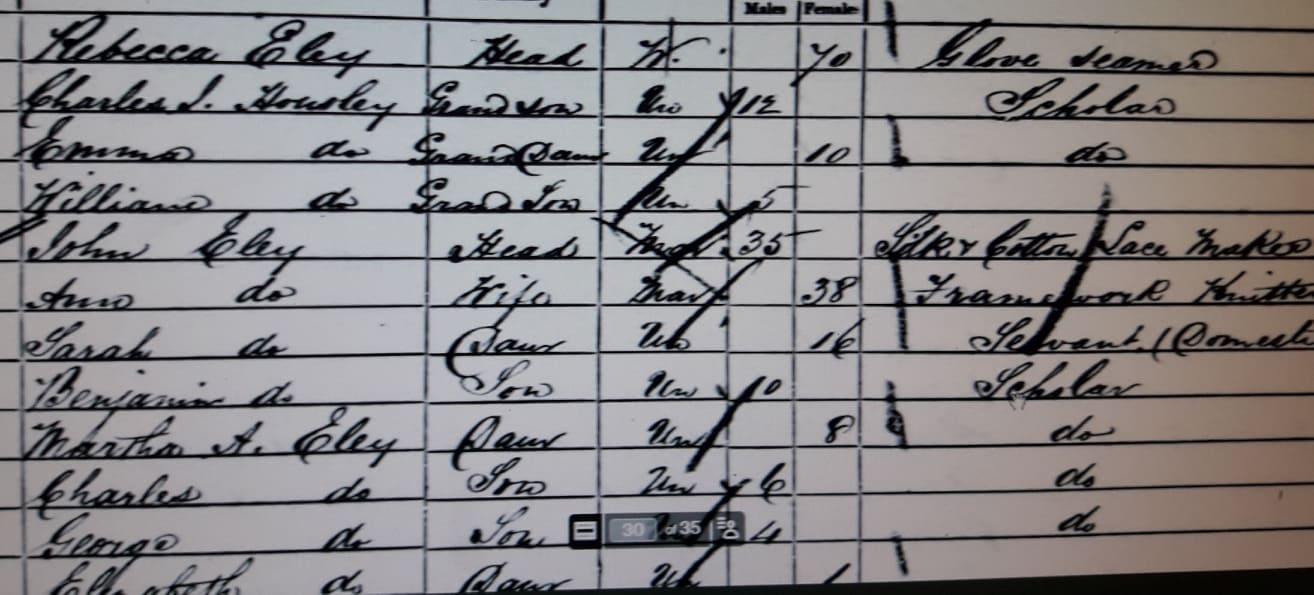
Back to the mysterious comment in Joseph’s letter. Joseph couldn’t have been speaking of his sister Emma. She was married with children by the time Joseph wrote that letter, so was not just out of service, and Joseph would have known where she was. There is no reason to suppose that the sister Emma was trying unsuccessfully to find George’s addresss: she had been sending him letters for years. Joseph must have been referring to George’s daughter Emma.
Joseph comments to George “Your son John…is rather wild.” followed by the remark about Emma’s whereabouts. Could Charles John Housley have used his middle name of John instead of Charles?
As for the child William born five years after George left for USA, despite his name of Housley, which was his mothers married name, we can assume that he was not a Housley ~ not George’s child, anyway. It is not clear who his father was, as Amey did not remarry.
A further excerpt from Barbara Housley’s Narrative on the Letters:
Certainly there was some mystery in George’s life. George apparently wanted his whereabouts kept secret. Anne wrote: “People are at a loss to know where you are. The general idea is you are with Charles. We don’t satisfy them.” In that same letter Anne wrote: “I know you could not help thinking of us very often although you neglected writing…and no doubt would feel grieved for the trouble you at times caused (our mother). She freely forgives all.” Near the end of the letter, Anne added: “Mother sends her love to you and hopes you will write and if you want to tell her anything you don’t want all to see you must write it on a piece of loose paper and put it inside the letter.”
In a letter to George from his sister Emma:
Emma wrote in 1855, “We write in love to your wife and yourself and you must write soon and tell us whether there is a little nephew or niece and what you call them.”
In June of 1856, Emma wrote: “We want to see dear Sarah Ann and the dear little boy. We were much pleased with the “bit of news” you sent.” The bit of news was the birth of John Eley Housley, January 11, 1855. Emma concluded her letter “Give our very kindest love to dear sister and dearest Johnnie.”
It would seem that George Housley named his first son with his second wife after his first wife’s father ~ while he was married to both of them.
Emma Housley
1851-1935
In 1871 Emma was 20 years old and “in service” living as a lodger in West Hallam, not far from Heanor. As she didn’t appear on a 1881 census, I looked for a marriage, but the only one that seemed right in every other way had Emma Housley’s father registered as Ralph Wibberly!
Who was Ralph Wibberly? A family friend or neighbour, perhaps, someone who had been a father figure? The first Ralph Wibberly I found was a blind wood cutter living in Derby. He had a son also called Ralph Wibberly. I did not think Ralph Wibberly would be a very common name, but I was wrong.
I then found a Ralph Wibberly living in Heanor, with a son also named Ralph Wibberly. A Ralph Wibberly married an Emma Salt from Heanor. In 1874, a 36 year old Ralph Wibberly (born in 1838) was on trial in Derby for inflicting grevious bodily harm on William Fretwell of Heanor. His occupation is “platelayer” (a person employed in laying and maintaining railway track.) The jury found him not guilty.
In 1851 a 23 year old Ralph Wibberly (born in 1828) was a prisoner in Derby Gaol. However, Ralph Wibberly, a 50 year old labourer born in 1801 and his son Ralph Wibberly, aged 13 and born in 1838, are living in Belper on the 1851 census. Perhaps the son was the same Ralph Wibberly who was found not guilty of GBH in 1874. This appears to be the one who married Emma Salt, as his wife on the 1871 census is called Emma, and his occupation is “Midland Company Railway labourer”.
Which was the Ralph Wibberly that Emma chose to name as her father on the marriage register? We may never know, but perhaps we can assume it was Ralph Wibberly born in 1801. It is unlikely to be the blind wood cutter from Derby; more likely to be the local Ralph Wibberly. Maybe his son Ralph, who we know was involved in a fight in 1874, was a friend of Emma’s brother Charles John, who was described by Joseph as a “wild one”, although Ralph was 11 years older than Charles John.
Emma Housley married James Slater on Christmas day in Heanor in 1873. Their first child, a daughter, was called Amy. Emma’s mother was Amy Eley. James Slater was a colliery brakesman (employed to work the steam-engine, or other machinery used in raising the coal from the mine.)
It occurred to me to wonder if Emma Housley (George’s daughter) knew Elizabeth, Mary Anne and Catherine (Samuel’s daughters). They were cousins, lived in the vicinity, and they had in common with each other having been deserted by their fathers who were brothers. Emma was born two years after Catherine. Catherine was living with John Benniston, a framework knitter in Heanor, from 1851 to 1861. Emma was living with her grandfather John Ely, a framework knitter in Heanor. In 1861, George Purdy was also living in Heanor. He was listed on the census as a 13 year old coal miner! George Purdy and Catherine Housley married in 1866 in Eastwood, Nottinghamshire ~ just over the county border. Emma’s first child Amy was born in Heanor, but the next two children, Eliza and Lilly, were born in Eastwood, in 1878 and 1880. Catherine and George’s fifth child, my great grandmother Mary Ann Gilman Purdy, was born in Eastwood in 1880, the same year as Lilly Slater.
By 1881 Emma and James Slater were living in Woodlinkin, Codnor and Loscoe, close to Heanor and Eastwood, on the Derbyshire side of the border. On each census up to 1911 their address on the census is Woodlinkin. Emma and James had nine children: six girls and 3 boys, the last, Alfred Frederick, born in 1901.
Emma and James lived three doors up from the Thorn Tree pub in Woodlinkin, Codnor:
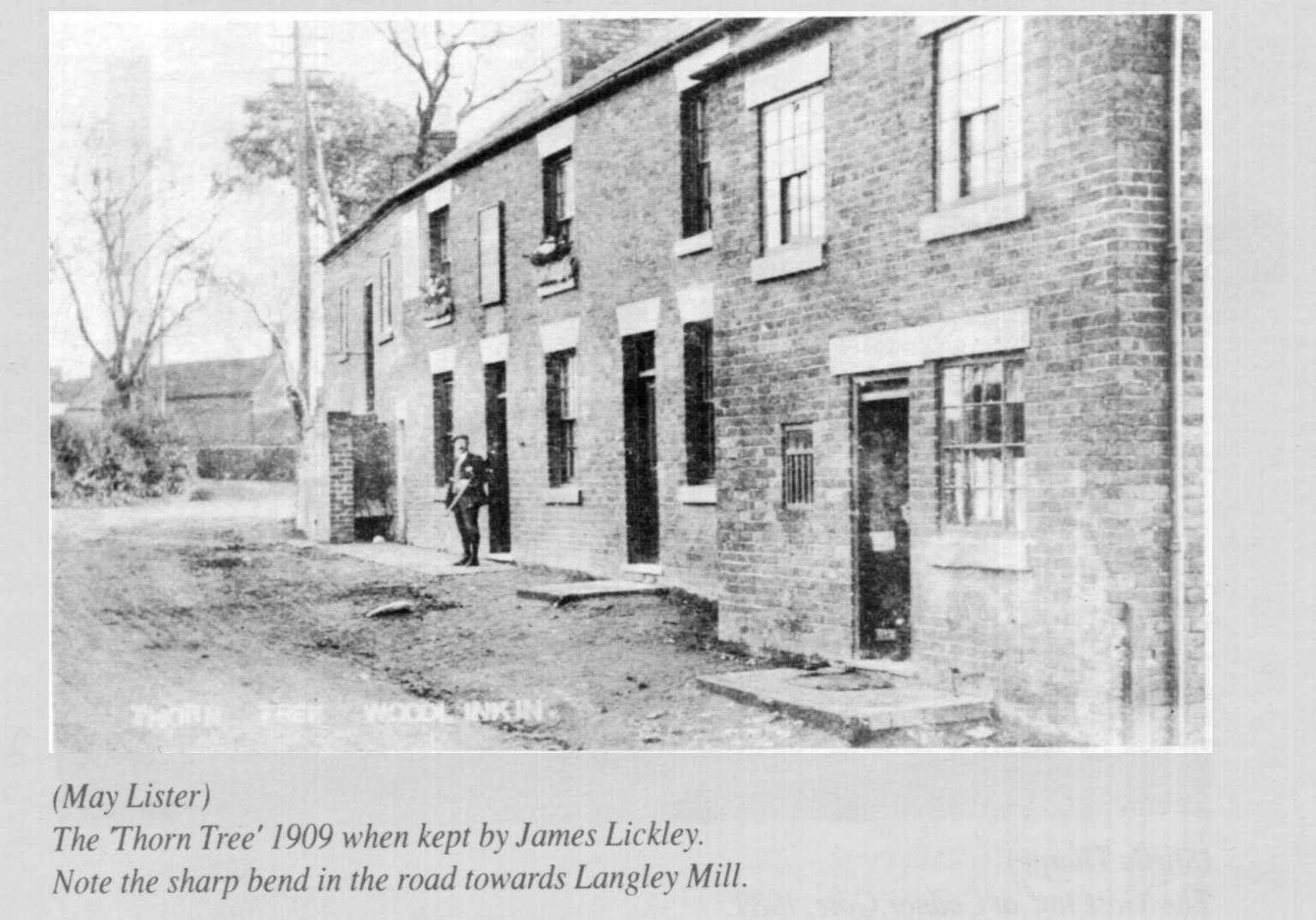
Emma Slater died in 1935 at the age of 84.
IN
LOVING MEMORY OF
EMMA SLATER
(OF WOODLINKIN)
WHO DIED
SEPT 12th 1935
AGED 84 YEARS
AT RESTCrosshill Cemetery, Codnor, Amber Valley Borough, Derbyshire, England:
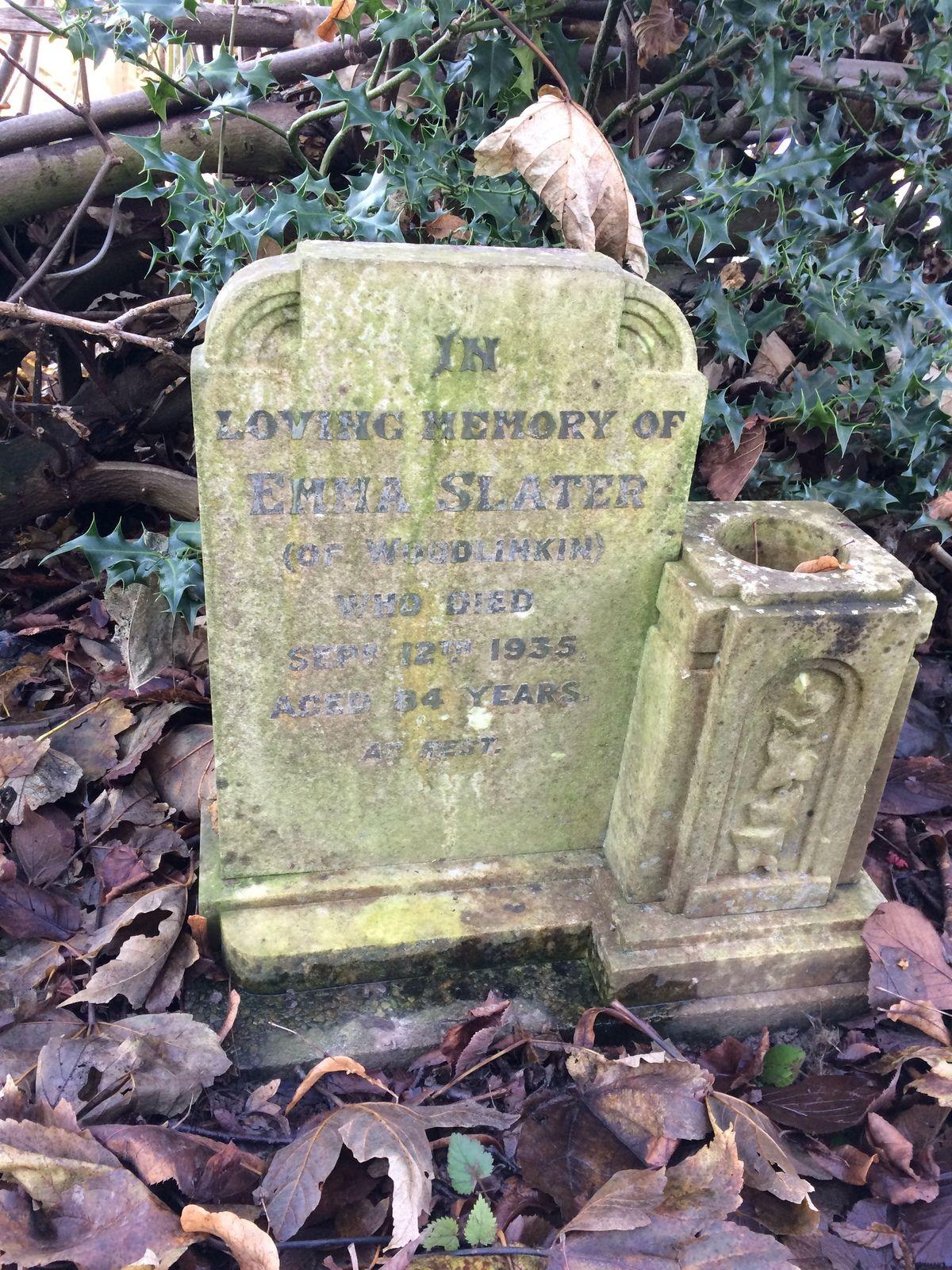
Charles John Housley
1949-
February 5, 2022 at 2:16 pm #6273In reply to: The Elusive Samuel Housley and Other Family Stories
The Housley Letters
THE NEIGHBORHOODFrom Barbara Housley’s Narrative on the Letters:
In July 1872, Joseph wrote to George who had been gone for 21 years: “You would not know Heanor now. It has got such a large place. They have got a town hall built where Charles’ stone yard was.”
Then Joseph took George on a tour from Smalley to Heanor pointing out all the changes:
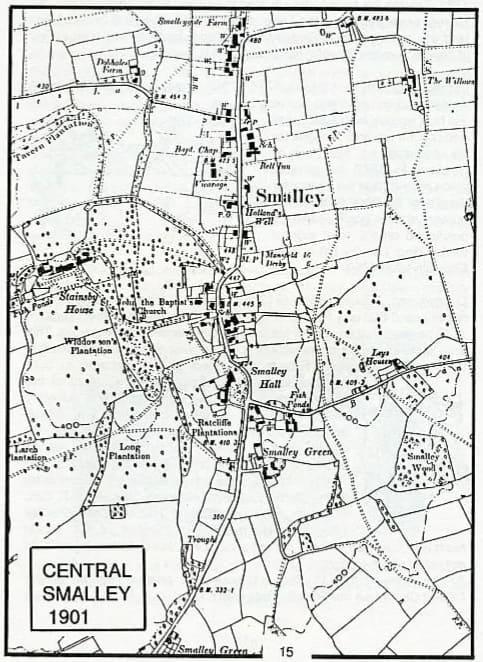
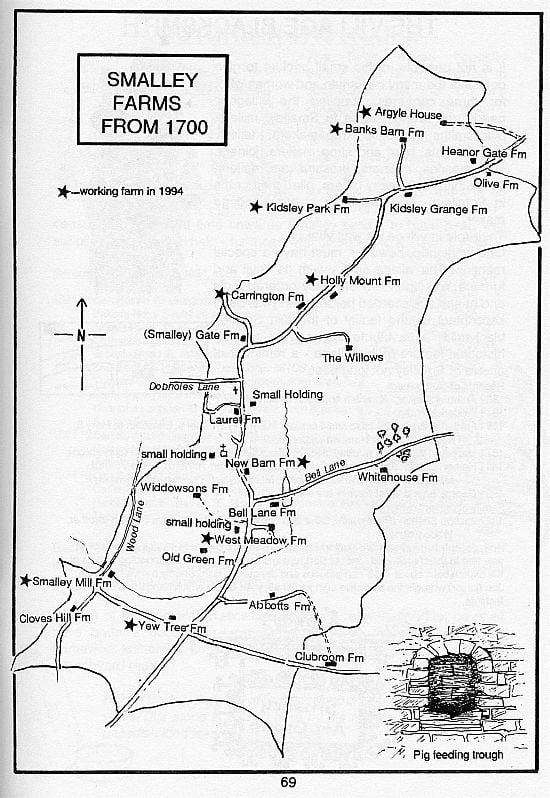
“Now we commence at Firby Brook. There is no public house there. It is turned into a market gardener’s place. Morley smithy stands as it did. You would know Chris Shepperd that used to keep the farm opposite. He is dead and the farm is got into other hands.” (In 1851, Chris Shepherd, age 39, and his widowed mother, Mary, had a farm of 114 acres. Charles Carrington, age 14, worked for them as a “cow boy.” In 1851 Hollingsworths also lived at Morely smithy.) “The Rose and Crown stands and Antony Kerry keeps that yet.” (In 1851, the census listed Kerry as a mason, builder, victicular, and farmer. He lived with his wife and four sons and numerous servants.) “They have pulled down Samuel Kerry’s farm house down and built him one in another place. Now we come to the Bell that was but they have pulled the old one down and made Isaac Potters House into the new Bell.” (In 1851, The Bell was run by Ann Weston, a widow.)
Smalley Roundhouse:
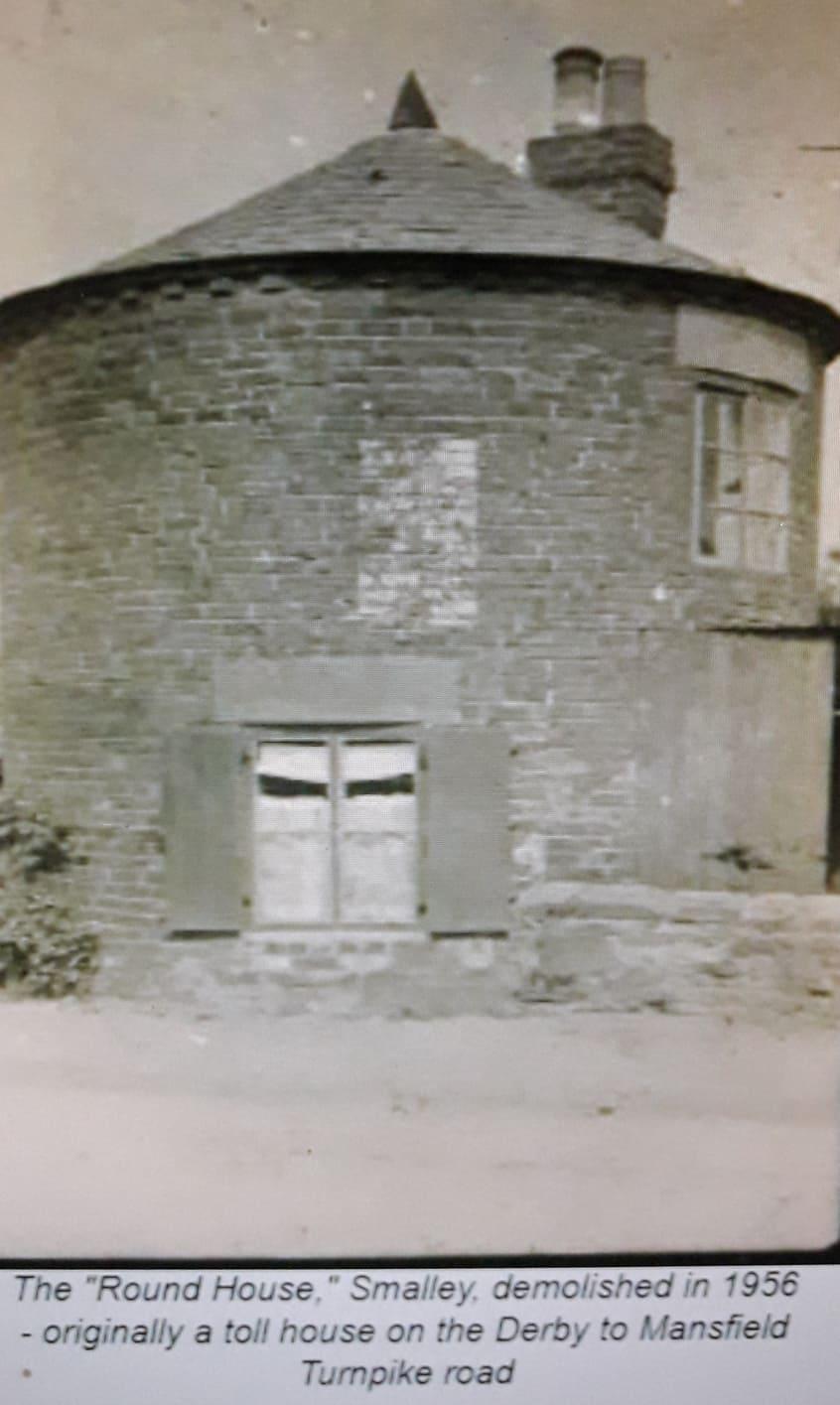
“The old Round House is standing yet but they have took the machine away. The Public House at the top end is kept by Mrs. Turton. I don’t know who she was before she married. Now we get to old Tom Oldknow. The old house is pulled down and a new one is put up but it is gone out of the family altogether. Now Jack is living at Stanley. He married Ann that used to live at Barbers at Smalley. That finishes Smalley. Now for Taghill. The old Jolly Collier is standing yet and a man of the name of Remmington keeps the new one opposite. Jack Foulkes son Jack used to keep that but has left just lately. There is the Nottingham House, Nags Head, Cross Keys and then the Red Lion but houses built on both sides all the way down Taghill. Then we get to the town hall that is built on the ground that Charles’ Stone Yard used to be. There is Joseph Watson’s shop standing yet in the old place. The King of Prussia, the White Lion and Hanks that is the Public House. You see there are more than there used to be. The Magistrate sits at the Town Hall and tries cases there every fortnight.”
.
February 5, 2022 at 1:59 pm #6272In reply to: The Elusive Samuel Housley and Other Family Stories
The Housley Letters
The Carringtons
Carrington Farm, Smalley:
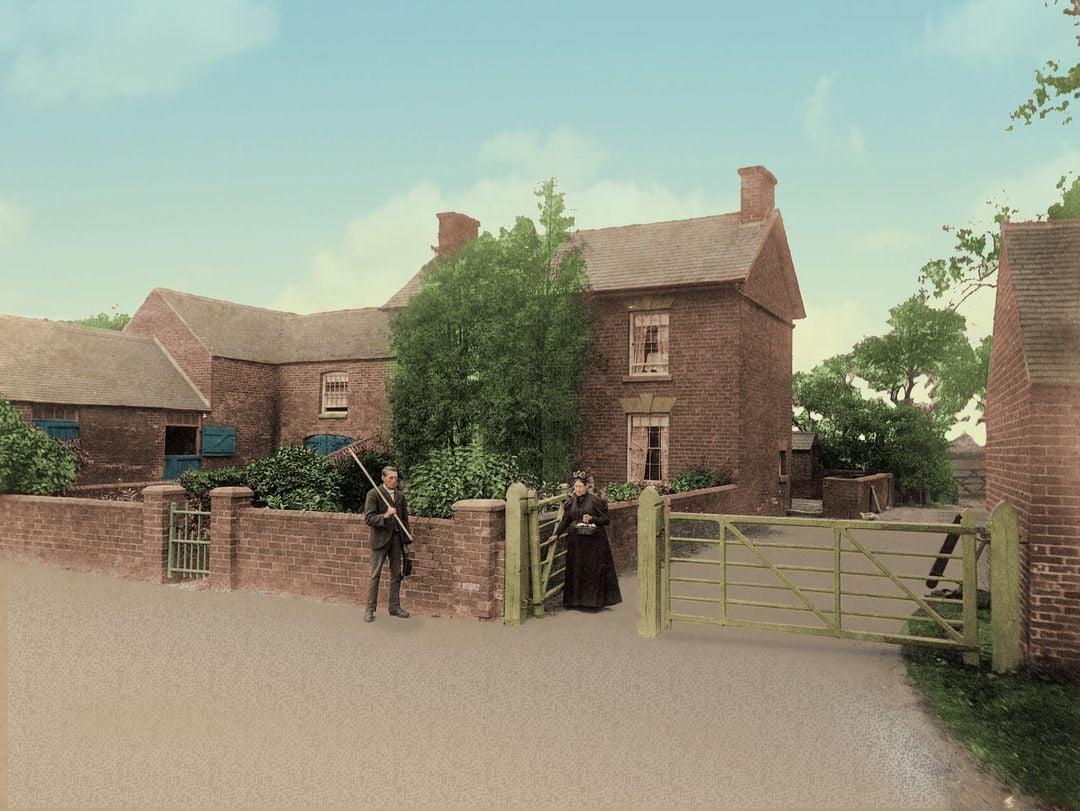
Ellen Carrington was born in 1795. Her father William Carrington 1755-1833 was from Smalley. Her mother Mary Malkin 1765-1838 was from Ellastone, in Staffordshire. Ellastone is on the Derbyshire border and very close to Ashboure, where Ellen married William Housley.
From Barbara Housley’s Narrative on the Letters:
Ellen’s family was evidently rather prominant in Smalley. Two Carringtons (John and William) served on the Parish Council in 1794. Parish records are full of Carrington marriages and christenings.
The letters refer to a variety of “uncles” who were probably Ellen’s brothers, but could be her uncles. These include:
RICHARD
Probably the youngest Uncle, and certainly the most significant, is Richard. He was a trustee for some of the property which needed to be settled following Ellen’s death. Anne wrote in 1854 that Uncle Richard “has got a new house built” and his daughters are “fine dashing young ladies–the belles of Smalley.” Then she added, “Aunt looks as old as my mother.”
Richard was born somewhere between 1808 and 1812. Since Richard was a contemporary of the older Housley children, “Aunt,” who was three years younger, should not look so old!
Richard Carrington and Harriet Faulkner were married in Repton in 1833. A daughter Elizabeth was baptised March 24, 1834. In July 1872, Joseph wrote: “Elizabeth is married too and a large family and is living in Uncle Thomas’s house for he is dead.” Elizabeth married Ayres (Eyres) Clayton of Lascoe. His occupation was listed as joiner and shopkeeper. They were married before 1864 since Elizabeth Clayton witnessed her sister’s marriage. Their children in April 1871 were Selina (1863), Agnes Maria (1866) and Elizabeth Ann (1868). A fourth daughter, Alice Augusta, was born in 1872 or 1873, probably by July 1872 to fit Joseph’s description “large family”! A son Charles Richard was born in 1880.
An Elizabeth Ann Clayton married John Arthur Woodhouse on May 12, 1913. He was a carpenter. His father was a miner. Elizabeth Ann’s father, Ayres, was also a carpenter. John Arthur’s age was given as 25. Elizabeth Ann’s age was given as 33 or 38. However, if she was born in 1868, her age would be 45. Possibly this is another case of a child being named for a deceased sibling. If she were 38 and born in 1875, she would fill the gap between Alice Augusta and Charles Richard.
Selina Clayton, who would have been 18, is not listed in the household in 1881. She died on June 11, 1914 at age 51. Agnes Maria Clayton died at the age of 25 and was buried March 31, 1891. Charles Richard died at the age of 5 and was buried on February 4, 1886. A Charles James Clayton, 18 months, was buried June 8, 1889 in Heanor.
Richard Carrington’s second daughter, Selina, born in 1837, married Walker Martin (b.1835) on February 11, 1864 and they were living at Kidsley Park Farm in 1872, according to a letter from Joseph, and, according to the census, were still there in 1881. This 100 acre farm was formerly the home of Daniel Smith and his daughter Elizabeth Davy Barber. Selina and Walker had at least five children: Elizabeth Ann (1865), Harriet Georgianna (1866/7), Alice Marian (September 6, 1868), Philip Richard (1870), and Walker (1873). In December 1972, Joseph mentioned the death of Philip Walker, a farmer of Prospect Farm, Shipley. This was probably Walker Martin’s grandfather, since Walker was born in Shipley. The stock was to be sold the following Monday, but his daughter (Walker’s mother?) died the next day. Walker’s father was named Thomas. An Annie Georgianna Martin age 13 of Shipley died in April of 1859.
Selina Martin died on October 29, 1906 but her estate was not settled until November 14, 1910. Her gross estate was worth L223.56. Her son Walker and her daughter Harriet Georgiana were her trustees and executers. Walker was to get Selina’s half of Richard’s farm. Harriet Georgiana and Alice Marian were to be allowed to live with him. Philip Richard received L25. Elizabeth Ann was already married to someone named Smith.
Richard and Harriet may also have had a son George. In 1851 a Harriet Carrington and her three year old son George were living with her step-father John Benniston in Heanor. John may have been recently widowed and needed her help. Or, the Carrington home may have been inadequate since Anne reported a new one was built by 1854. Selina’s second daughter’s name testifies to the presence of a “George” in the family! Could the death of this son account for the haggard appearance Anne described when she wrote: “Aunt looks as old as my mother?”
Harriet was buried May 19, 1866. She was 55 when she died.In 1881, Georgianna then 14, was living with her grandfather and his niece, Zilpah Cooper, age 38–who lived with Richard on his 63 acre farm as early as 1871. A Zilpah, daughter of William and Elizabeth, was christened October 1843. Her brother, William Walter, was christened in 1846 and married Anna Maria Saint in 1873. There are four Selina Coopers–one had a son William Thomas Bartrun Cooper christened in 1864; another had a son William Cooper christened in 1873.
Our Zilpah was born in Bretley 1843. She died at age 49 and was buried on September 24, 1892. In her will, which was witnessed by Selina Martin, Zilpah’s sister, Frances Elizabeth Cleave, wife of Horatio Cleave of Leicester is mentioned. James Eley and Francis Darwin Huish (Richard’s soliciter) were executers.
Richard died June 10, 1892, and was buried on June 13. He was 85. As might be expected, Richard’s will was complicated. Harriet Georgiana Martin and Zilpah Cooper were to share his farm. If neither wanted to live there it was to go to Georgiana’s cousin Selina Clayton. However, Zilpah died soon after Richard. Originally, he left his piano, parlor and best bedroom furniture to his daughter Elizabeth Clayton. Then he revoked everything but the piano. He arranged for the payment of £150 which he owed. Later he added a codicil explaining that the debt was paid but he had borrowed £200 from someone else to do it!
Richard left a good deal of property including: The house and garden in Smalley occupied by Eyres Clayton with four messuages and gardens adjoining and large garden below and three messuages at the south end of the row with the frame work knitters shop and garden adjoining; a dwelling house used as a public house with a close of land; a small cottage and garden and four cottages and shop and gardens.
THOMAS
In August 1854, Anne wrote “Uncle Thomas is about as usual.” A Thomas Carrington married a Priscilla Walker in 1810.
Their children were baptised in August 1830 at the same time as the Housley children who at that time ranged in age from 3 to 17. The oldest of Thomas and Priscilla’s children, Henry, was probably at least 17 as he was married by 1836. Their youngest son, William Thomas, born 1830, may have been Mary Ellen Weston’s beau. However, the only Richard whose christening is recorded (1820), was the son of Thomas and Lucy. In 1872 Joseph reported that Richard’s daughter Elizabeth was married and living in Uncle Thomas’s house. In 1851, Alfred Smith lived in house 25, Foulks lived in 26, Thomas and Priscilla lived in 27, Bennetts lived in 28, Allard lived in 29 and Day lived in 30. Thomas and Priscilla do not appear in 1861. In 1871 Elizabeth Ann and Ayres Clayton lived in House 54. None of the families listed as neighbors in 1851 remained. However, Joseph Carrington, who lived in house 19 in 1851, lived in house 51 in 1871.
JOHN
In August 1854, Anne wrote: “Uncle John is with Will and Frank has been home in a comfortable place in Cotmanhay.” Although John and William are two of the most popular Carrington names, only two John’s have sons named William. John and Rachel Buxton Carrington had a son William christened in 1788. At the time of the letters this John would have been over 100 years old. Their son John and his wife Ann had a son William who was born in 1805. However, this William age 46 was living with his widowed mother in 1851. A Robert Carrington and his wife Ann had a son John born 1n 1805. He would be the right age to be a brother to Francis Carrington discussed below. This John was living with his widowed mother in 1851 and was unmarried. There are no known Williams in this family grouping. A William Carrington of undiscovered parentage was born in 1821. It is also possible that the Will in question was Anne’s brother Will Housley.
–Two Francis Carringtons appear in the 1841 census both of them aged 35. One is living with Richard and Harriet Carrington. The other is living next door to Samuel and Ellen Carrington Kerry (the trustee for “father’s will”!). The next name in this sequence is John Carrington age 15 who does not seem to live with anyone! but may be part of the Kerry household.
FRANK (see above)
While Anne did not preface her mention of the name Frank with an “Uncle,” Joseph referred to Uncle Frank and James Carrington in the same sentence. A James Carrington was born in 1814 and had a wife Sarah. He worked as a framework knitter. James may have been a son of William and Anne Carrington. He lived near Richard according to the 1861 census. Other children of William and Anne are Hannah (1811), William (1815), John (1816), and Ann (1818). An Ann Carrington married a Frank Buxton in 1819. This might be “Uncle Frank.”
An Ellen Carrington was born to John and Rachel Carrington in 1785. On October 25, 1809, a Samuel Kerry married an Ellen Carrington. However this Samuel Kerry is not the trustee involved in settling Ellen’s estate. John Carrington died July 1815.
William and Mary Carrington:
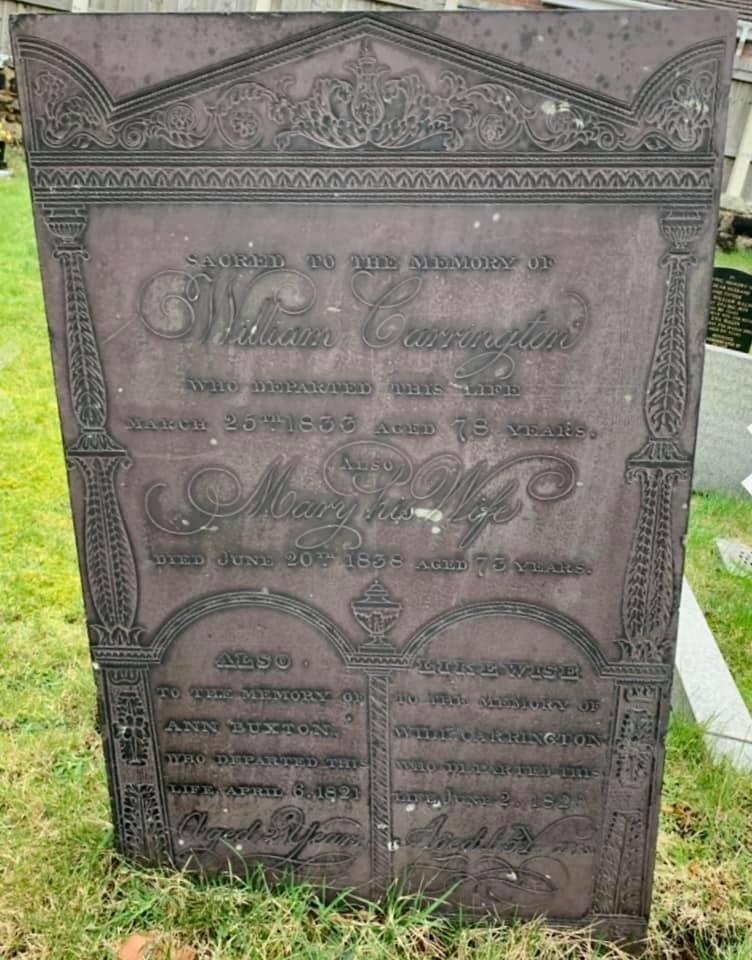 February 5, 2022 at 10:50 am #6271
In reply to: The Elusive Samuel Housley and Other Family Stories
The Housley Letters
FRIENDS AND NEIGHBORS
from Barbara Housley’s Narrative on the Letters:
George apparently asked about old friends and acquaintances and the family did their best to answer although Joseph wrote in 1873: “There is very few of your old cronies that I know of knocking about.”
In Anne’s first letter she wrote about a conversation which Robert had with EMMA LYON before his death and added “It (his death) was a great trouble to Lyons.” In her second letter Anne wrote: “Emma Lyon is to be married September 5. I am going the Friday before if all is well. There is every prospect of her being comfortable. MRS. L. always asks after you.” In 1855 Emma wrote: “Emma Lyon now Mrs. Woolhouse has got a fine boy and a pretty fuss is made with him. They call him ALFRED LYON WOOLHOUSE.”
(Interesting to note that Elizabeth Housley, the eldest daughter of Samuel and Elizabeth, was living with a Lyon family in Derby in 1861, after she left Belper workhouse. The Emma listed on the census in 1861 was 10 years old, and so can not be the Emma Lyon mentioned here, but it’s possible, indeed likely, that Peter Lyon the baker was related to the Lyon’s who were friends of the Housley’s. The mention of a sea captain in the Lyon family begs the question did Elizabeth Housley meet her husband, George William Stafford, a seaman, through some Lyon connections, but to date this remains a mystery.)
Elizabeth Housley living with Peter Lyon and family in Derby St Peters in 1861:
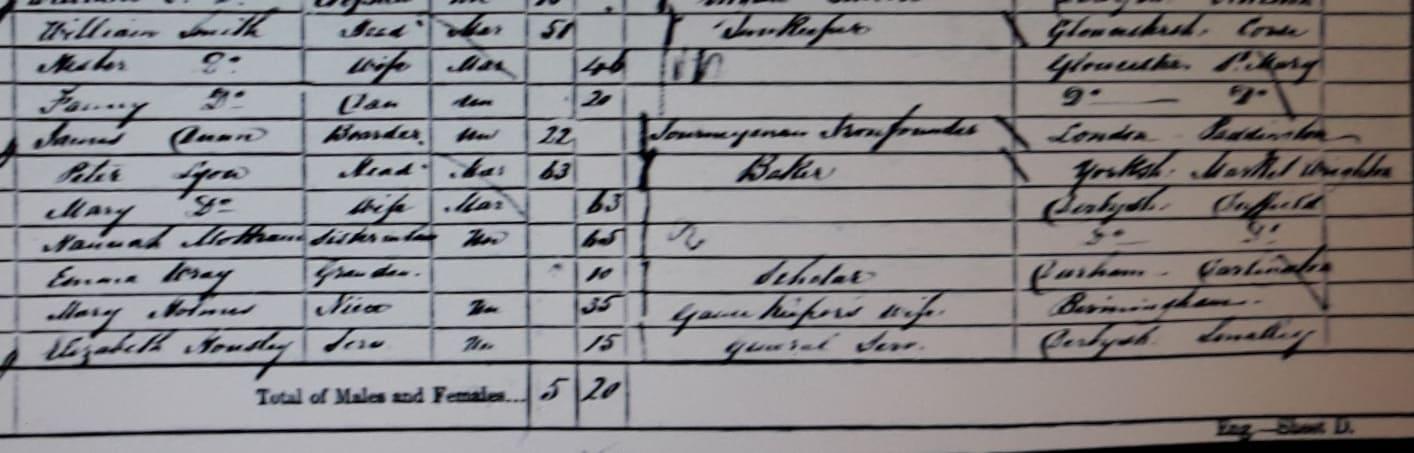
A Henrietta Lyon was married in 1860. Her father was Matthew, a Navy Captain. The 1857 Derby Directory listed a Richard Woolhouse, plumber, glazier, and gas fitter on St. Peter’s Street. Robert lived in St. Peter’s parish at the time of his death. An Alfred Lyon, son of Alfred and Jemima Lyon 93 Friargate, Derby was baptised on December 4, 1877. An Allen Hewley Lyon, born February 1, 1879 was baptised June 17 1879.
Anne wrote in August 1854: “KERRY was married three weeks since to ELIZABETH EATON. He has left Smith some time.” Perhaps this was the same person referred to by Joseph: “BILL KERRY, the blacksmith for DANIEL SMITH, is working for John Fletcher lace manufacturer.” According to the 1841 census, Elizabeth age 12, was the oldest daughter of Thomas and Rebecca Eaton. She would certainly have been of marriagable age in 1854. A William Kerry, age 14, was listed as a blacksmith’s apprentice in the 1851 census; but another William Kerry who was 29 in 1851 was already working for Daniel Smith as a blacksmith. REBECCA EATON was listed in the 1851 census as a widow serving as a nurse in the John Housley household. The 1881 census lists the family of William Kerry, blacksmith, as Jane, 19; William 13; Anne, 7; and Joseph, 4. Elizabeth is not mentioned but Bill is not listed as a widower.
Anne also wrote in 1854 that she had not seen or heard anything of DICK HANSON for two years. Joseph wrote that he did not know Old BETTY HANSON’S son. A Richard Hanson, age 24 in 1851, lived with a family named Moore. His occupation was listed as “journeyman knitter.” An Elizabeth Hanson listed as 24 in 1851 could hardly be “Old Betty.” Emma wrote in June 1856 that JOE OLDKNOW age 27 had married Mrs. Gribble’s servant age 17.
Anne wrote that “JOHN SPENCER had not been since father died.” The only John Spencer in Smalley in 1841 was four years old. He would have been 11 at the time of William Housley’s death. Certainly, the two could have been friends, but perhaps young John was named for his grandfather who was a crony of William’s living in a locality not included in the Smalley census.
TAILOR ALLEN had lost his wife and was still living in the old house in 1872. JACK WHITE had died very suddenly, and DR. BODEN had died also. Dr. Boden’s first name was Robert. He was 53 in 1851, and was probably the Robert, son of Richard and Jane, who was christened in Morely in 1797. By 1861, he had married Catherine, a native of Smalley, who was at least 14 years his junior–18 according to the 1871 census!
Among the family’s dearest friends were JOSEPH AND ELIZABETH DAVY, who were married some time after 1841. Mrs. Davy was born in 1812 and her husband in 1805. In 1841, the Kidsley Park farm household included DANIEL SMITH 72, Elizabeth 29 and 5 year old Hannah Smith. In 1851, Mr. Davy’s brother William and 10 year old Emma Davy were visiting from London. Joseph reported the death of both Davy brothers in 1872; Joseph apparently died first.
Mrs. Davy’s father, was a well known Quaker. In 1856, Emma wrote: “Mr. Smith is very hearty and looks much the same.” He died in December 1863 at the age of 94. George Fox, the founder of the Quakers visited Kidsley Park in 1650 and 1654.
Mr. Davy died in 1863, but in 1854 Anne wrote how ill he had been for two years. “For two last winters we never thought he would live. He is now able to go out a little on the pony.” In March 1856, his wife wrote, “My husband is in poor health and fell.” Later in 1856, Emma wrote, “Mr. Davy is living which is a great wonder. Mrs. Davy is very delicate but as good a friend as ever.”
In The Derbyshire Advertiser and Journal, 15 May 1863:
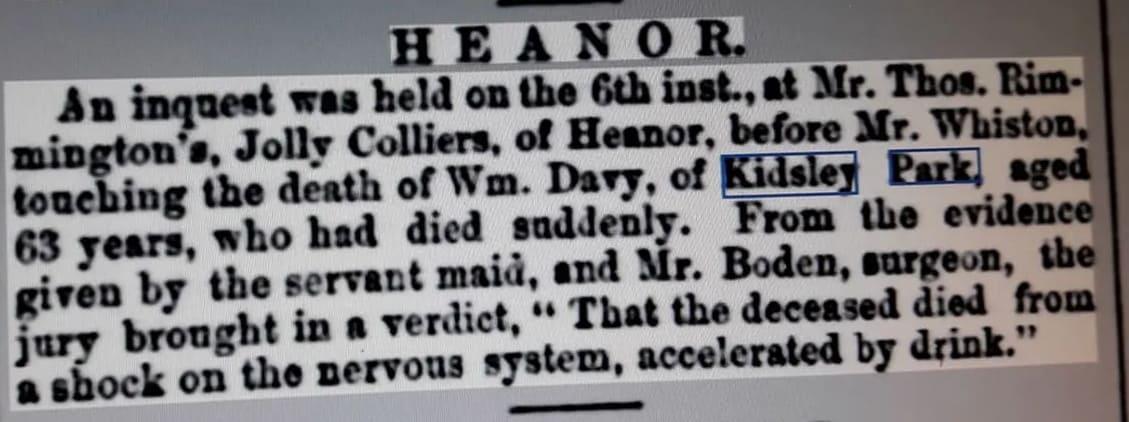
Whenever the girls sent greetings from Mrs. Davy they used her Quaker speech pattern of “thee and thy.” Mrs. Davy wrote to George on March 21 1856 sending some gifts from his sisters and a portrait of their mother–“Emma is away yet and A is so much worse.” Mrs. Davy concluded: “With best wishes for thy health and prosperity in this world and the next I am thy sincere friend.”
Mrs. Davy later remarried. Her new husband was W.T. BARBER. The 1861 census lists William Barber, 35, Bachelor of Arts, Cambridge, living with his 82 year old widowed mother on an 135 acre farm with three servants. One of these may have been the Ann who, according to Joseph, married Jack Oldknow. By 1871 the farm, now occupied by William, 47 and Elizabeth, 57, had grown to 189 acres. Meanwhile, Kidsley Park Farm became the home of the Housleys’ cousin Selina Carrington and her husband Walker Martin. Both Barbers were still living in 1881.
Mrs. Davy was described in Kerry’s History of Smalley as “an accomplished and exemplary lady.” A piece of her poetry “Farewell to Kidsley Park” was published in the history. It was probably written when Elizabeth moved to the Barber farm. Emma sent one of her poems to George. It was supposed to be about their house. “We have sent you a piece of poetry that Mrs. Davy composed about our ‘Old House.’ I am sure you will like it though you may not understand all the allusions she makes use of as well as we do.”
Kiddsley Park Farm, Smalley, in 1898. (note that the Housley’s lived at Kiddsley Grange Farm, and the Davy’s at neighbouring Kiddsley Park Farm)
Emma was not sure if George wanted to hear the local gossip (“I don’t know whether such little particulars will interest you”), but shared it anyway. In November 1855: “We have let the house to Mr. Gribble. I dare say you know who he married, Matilda Else. They came from Lincoln here in March. Mrs. Gribble gets drunk nearly every day and there are such goings on it is really shameful. So you may be sure we have not very pleasant neighbors but we have very little to do with them.”
John Else and his wife Hannah and their children John and Harriet (who were born in Smalley) lived in Tag Hill in 1851. With them lived a granddaughter Matilda Gribble age 3 who was born in Lincoln. A Matilda, daughter of John and Hannah, was christened in 1815. (A Sam Else died when he fell down the steps of a bar in 1855.)
-
AuthorSearch Results
