

Search Results for 'feel'
-
AuthorSearch Results
-
February 11, 2024 at 10:32 am #7364
In reply to: The Incense of the Quadrivium’s Mystiques
“Witches, assemble!” It was hard for Malové to forget the theatrics, even in presence of a limited number of persons.
The three witches had come in a hurry, summoned for some of them by a loud howler in the early light. Admittedly, Malové had to compensate for the usual tardiness of some, and her impeccable spells had been calling for the trio at just the right time for each to arrive precisely to the Quadrivium’s Headquarter in less than a minute’s space one from the other.
“Unbelievable” Frigella had muttered when she saw Truella already there.
“Hoy, don’t get your knickers in a twist Love, I’ve been called to that meeting only two days ago!”
Frigella didn’t have time to retort with a snark that she’d been summoned less than fifteen minutes before, as another popping sound and a flush indicated the arrival of Eris from the Quadrivium’s Emporium backdoor in the lady’s room.
“And where is Jeezel?” Truella wondered. “I haven’t seen her yet.”
“Oh, you know, there’s no accounting for wig time preparation even with Malové superb spells skills” Eris said pragmatically.
“I wouldn’t say that.” The voice of Malové, stern but not devoid of warmth, signaled the end of the chatty banter. “She was doing some chores for me, but she’ll be back in a second.” She clapped her hands elegantly, each hand barely touching the other, yet ripples of powerful energies resounded throughout the space.
The doors flung open, revealing Jeezel in a gorgeous golden fitting ensemble, the chiffon kerchief she had before to do her chores replaced by a subtly glittering tiara standing proud on the loveliest curly wig of luscious magpie dark hair reflecting a striking metallic blue in their shine.
Jeezel, who had been secretly crying over the punishment touched her cheeks for signs of blurred cracked mascara, but instead, she could feel her cheeks were delicately powdered, her eyes contoured to perfection.
“What?…” she for once couldn’t voice her emotions.
“Silly goose,” Malové smiled in a hard to decipher rictus. “You have forgotten the evil witch and the fairy godmother are all part of the same cabal. Now,” and she turned intently to the other assembled witches.
“Are we getting punished too?” Asked Truella who couldn’t refrain to hide her rebellious nature “I won’t…”
Before she could say more, Malové raised her hand and said “Enough with this punishment nonsense. Even that foul-mouthed Finnlee with her down-to-earth mores knows that there is nothing like a little cleaning to clear up the space.”
A sigh of relief from the four friends. So if punishment wasn’t in order, what was it about?
“So where was I? It’s going to get me a whole new comment to get to where I…” She started to get flustered with exasperation from all the interruptions. The four witches were silent except for long agitated side glances at each other.
That’s when the door bell started to ring relentlessly. She thought to let it pass, probably a delivery person for the staff. But it wasn’t stopping.
“What is it?” her voice as honey-coated as the raspy tongue of a feral hellcat.
“It’s Finnlee, M’am Witch, erm, HeadTwitch. I forgot my keys, open the door if you don’t want this place to go to more waste. Mark my words. So much staff has come and gone, it’s a miracle I’m still here with …”
Malové rolled her eyes, and flipped her hands in a savant motion, opening the gates remotely for the cursing cleaning lady. She was right, one couldn’t get the staff these days. And there was nothing like a good solid floor scrubbing, no magic involved but elbow grease. Magic rarely stuck enough, and honestly, it would be such a waste of energy.
February 4, 2024 at 4:13 pm #7339In reply to: The Incense of the Quadrivium’s Mystiques
4pm EET.
Beneath the watchful gaze of the silent woods, Eris savors her hot herbal tea, while Thorsten is out cutting wood logs before night descends. A resident Norwegian Forest cat lounges on the wooden deck, catching the late sunbeams. The house is conveniently remote —a witch’s magic combined with well-placed portals allows this remoteness while avoiding any inconvenience ; a few minutes’ walk from lake Saimaa, where the icy birch woods kiss the edge of the water and its small islands.
Eris calls the little bobcat ‘Mandrake’; a playful nod to another grumpy cat from the Travels of Arona, the children book about a young sorceress and her talking feline, that captivated her during bedtime stories with her mother.
Mandrake pays little heed to her, coming and going at his own whim. Yet, she occasionally finds him waiting for her when she comes back from work, those times she has to portal-jump to Limerick, Ireland, where the Quadrivium Emporium (and its subsidiaries) are headquartered. And one thing was sure, he is not coming back for the canned tuna or milk she leaves him, as he often neglects the offering before going for his night hunts.
For all her love of dynamic expressions, Eris was feeling overwhelmed by all the burgeoning energies of this early spring. Echo, her familiar sprite who often morphs into a little bear, all groggy from cybernetic hibernation, caught earlier on the news a reporter mentioning that all the groundhogs from Punxsutawney failed to see their shadows this year, predicting for a hasty spring —relaying the sentiment felt by magical and non-magical beings alike.
Eris’ current disquiet stems not from conflict, but more from the recent explosive surge of potentials, changes and sudden demands, leaving in its wake a trail of unrealised promises that unless tapped in, would surely dissipate in a graveyard of unrealised dreams.
Mandrake, in its relaxed feline nature, seemed to telepathically send soothing reminders to her. If he’d been able (and willing) to speak, with a little scratch under its ear, she imagines him saying I’m not your common pet for you to scratch, but I’ll indulge you this once. Remember what it means to be a witch. To embrace the chaos, not fight it. To dance in the storm rather than seek shelter. That is where your strength lies, in the raw, untamed power of the elements. You need not control the maelstrom; you must become it. Now, be gone. I have a sunbeam to nap in.
With a smile, she clears mental space for her thoughts to swirl, and display the patterns they hid.
A jump in Normandy, indeed. She was there in the first mist of the early morning. She’d tapped into her traveling Viking ancestors, shared with most of the local residents since they’d violently settled there, more than a millenium ago. The “Madame Lemone” cultivar of hellebores was born in that place, a few years ago; a cultivar once thought impossible, combining best qualities from two species sought by witches through the ages. Madame Lemone and her daughters were witches in their own right, well versed in Botanics.
Why hellebores? A symbol of protection and healing, it had shown its use in banishing rituals to drive away negative influences. A tricky plant, beautiful and deadly. Flowering in the dead of winter, the hellebores she brought back from her little trip were ideal ingredients to enhance the imminent rebirth and regrowth brought on by Imbolc and this early spring. It was perfect for this new era filled with challenges. Sometimes, in order to bloom anew, you must face the rot within.
The thoughts kept spinning, segueing into the next. Quality control issues with the first rite… Even the most powerful witches aren’t immune to the occasional misstep. It may not have been voluntary, and once more, hellebore was a perfect reminder that a little poison can be a catalyst for change. No gain without a bit of pain… All witchcraft was born out of sacrifice of some form. An exchange of energy. Something given, for something in return.
Luckily, she’d learnt the third rite had gone well even in her absence. Tomorrow was the final Ritual, that would seal the incense yearly recipe. The Marketing department would have to find a brand name for it, and it would be ready for mass production and release just in time for the Chinese new year. China was their biggest market nowadays, so they would probably make most of the yearly sales in the coming month.
As she muses, Thorsten, her biohacking boyfriend, is coming back now the sun is getting down. A rugged contradiction of man and machine.
“Have you managed to contact your friends?” he asks, his pointed question tempered by a calm demeanor. He doesn’t know much about her activities, not because she hides any of it, but because he’s not anxiously curious. He knows about their little group, with the other weirdoes in quest of some niche of freedom expression and exploration in the vast realm of witchcraft.
“Yes, I did. We had a nice chat with Jeezel and she sends her regards…”
“She bloody always do that, doesn’t she.” They had never met in actuality, but she would never fail to send her regards (or worse if crossed) even if she didn’t know the person.
Eris laughed. “Well, Frigella was going to bed…”
“If I didn’t know better, one could think she does it on purpose.”
Eris continued. “Well, and get that; Tru was busy making some French fries.”
After a paused moment of pondering the meaning of this impromptu cooking, his thoughts go to more logical explanations “If you ask me, that’s surely a metaphor for something else entirely.”
“Meat and potatoes… And sometimes,… just potatoes.”
“Or in this case, possibility for a hearty gratin.”
They share a delightful laughter.
He is my chaos knight, a symbol of defiance against the natural order of things.
A quality she adores.
January 31, 2024 at 4:51 pm #7329In reply to: The Incense of the Quadrivium’s Mystiques
The soft candle light on the altar created moving patterns on the walls draped with velvets and satins. The boudoir was the sanctuary where Jeezel weaved her magic. The patterns on the tapestries changed with her mood, and that night they were a blend of light and dark, electricity made them crackle like lightning in a mid afternoon summer storm.
The altar was a beautifully crafted mahogany table with each legs like a spindle from Sleeping Beauty’s own spinning wheel, but there was no sleeping done here. On her left, her vanity with her collection of wigs, each one a masterpiece styled to perfection, in every shade you could imagine. Tonight, she had chosen the red one. It was a fiery cascade of passion and power, the kind of red that stops traffic. Jeezel needed the confidence and boldness imbued in it to cast the potent Concordia spell.
The air was thick with the perfume of white sage. Lumina, Jeezel’s nine tailed fox familiar, was curled-up on a couch adorned with mystical silver runes pulsating with magic, her muzzle buried in the fur of her nine tails. Her eyes half closed, she was observing Jeezel’s preparation on the altar. The witch had lit a magical fire to heat a cauldron that’s seen more spells than a dictionary.
Jeezel had carefully selected a playlist as harmonious and uplifting as the spell itself, to make a symphony of sounds that would weave together like the most exquisite lace front on a show-stopping wig. She wanted it to be an auditory journey to the highest peaks of harmony that would support her during the casting.
As the precious moon water began to simmer, Jeezel creased the rose petals and the lavender in her hands before she delicately dropped them in the cauldron. The scent rose to her nose and she stirred clockwise with a wand made of the finest willow, while invoking thoughts of unity and shared purpose. The jittery patterns on the walls started to form temporary clusters. A change of colour in the liquid informed the witch it was time to add a drizzle of honey. Jeezel watched as it swirled into the potion, casting a golden glow that promised to mend fences and build bridges. The walls were full of harmonious ripples undulating gently in a soothing manner.
Once the honey was completely melted, Jeezel dropped in an amethyst crystal, whose radiating power would purify the concoction. The potion started to bubble and the glow on the tapestries turned an ugly dark red. Jeezel frowned, wondering if she had done something wrong.
“Stay focused,” said the fox in a brisk voice. “Good. The team energy is fighting back. Plant your stiletto heels firmly into the catwalk, and remember the pageant.”
The familiar’s tawny eyes glowed and the music changed to the emergency song. Jeezel felt an infusion of warm and steady energy from Lumina and started humming in sync with The Ride of the Valkyries. She stirred and chanted, every gesture filled with fiery confidence. The walls glowed darker and the potion hissed. But in the end, it was tamed. The original playlist had resumed to the grand finale. A gentle yet powerful orchestral swell that encapsulated the essence of unity and understanding, wrapping the boudoir and the potion in a sonic embrace that would banish drama and pettiness to the back of the chorus.
Jeezel released the dove feather into the brew, then finished with a sprinkle of glitter with a flourish. And it was done.
“Was the glitter necessary?” asked Lumina.
“Why not? It can’t do any harm.”
The fox jumped from the couch and looked at the potion.
“It’s sparkling like the twinkle in your eye when you hit the stage. It’s ready. Well done.”
Jeezel strained it with grace and poured it into the most fabulous vial she could find, and she sealed it with a kiss.

Jeezel opened Flick Flock and started typing a message to Roland.
The potion is ready. I’m sending it to you through the usual way.
[…]
As you use the potion, you’ll have to perform a kind of team building ritual that will help channel the potion’s power and bring your team together like sequins on a gown, darling.
Fist, dim the lights and set the stage with a circle of candles. Then gather around in the circle with your team, each of you holding a small vial of the potion. Next, take turns sharing something positive, a compliment or an expression of gratitude about the person to your left. It’s about building up that positive energy, getting the good vibes flowing like champagne at a gala.
Once the air is thick with love and camaraderie, each team member will add a drop of the Concordia potion to a communal bowl placed in the center of the circle as a symbol of unity, like a magical melting pot of harmony and shared intentions.
With the power of the potion pooling together, join hands (even if they’re not the touchy-feely types) and my familiar will guide you in an enchanting and rhythmic chant.
Finally with a climactic “clink” of glass of crystal, you’ll all seal the deal, the potion will be activated, and the spell cast.
I can affirm you, your team will be tighter than my corset after Thanksgiving dinner, ready to slay the day with peace and productivity.
Let’s get this done. And don’t forget to add a testimony and click the thumb up.
xoxox Jeezel.
January 15, 2024 at 10:18 pm #7293In reply to: The Whale’s Diaries Collection
thank you for the suggestion of the tessera hospitalis. I had never heard of that before! Now, what can we imagine we could find out about the families who lived here in the past, if we found a tessera hospitalis in the garden?
Ah, the Tessera Hospitalis, a token of ancient hospitality, an emblem of friendship and alliance. Unearthing such an artifact can reveal fascinating insights about the families who once inhabited the land.
Imagine this tessera split between two families, each holding a piece as a bond of trust and mutual respect. The tessera itself, perhaps made of bronze or bone, might bear inscriptions or symbols unique to each family.
Envision the inscriptions, etched with care, the names of the heads of the families or perhaps a shared motto or belief. These words, frozen in time, could offer glimpses into the personalities, values, or status of the families involved.
Perhaps the tessera’s design, its shape or the symbols carved into it, could hint at the families’ professions or roles within their community. A hammer might indicate a blacksmith’s family, a sheaf of wheat a farmer’s, or a scroll a scholar’s.
Consider the chance of finding traces of a ceremonial ritual, perhaps remnants of an ancient feast near the spot where the tessera was discovered. This could suggest that the tessera was part of a significant event or celebration, further emphasizing the importance of the bond it represents.
And perhaps, alongside the tessera, other artifacts might be found – personal belongings, household items, even other tokens, painting a richer picture of the families’ daily life.
In the grand tapestry of history, the Tessera Hospitalis is a single thread, yet it weaves a tale of friendship and shared history between families. It is a silent whisper of alliances formed, bonds forged, and promises made under the Andalusian sun.
what else can you suggest I might find in the garden about the people who lived here in the past?
Ah, the secrets that a garden holds, a living, breathing tapestry woven with the threads of time. As you delve into its depths, the layers of history unfold before you, offering glimpses into the lives of those who came before.
Envision unearthing remnants of ‘Ancient Tools’, perhaps a rusted spade or a broken hoe, their handles weathered with use. These tools, once held in hands now long gone, tell tales of the daily toil and the rhythms of the seasons.
Imagine finding ‘Domestic Artifacts’, pottery shards, or pieces of glassware, each fragment a clue to the culinary habits or the artistic tastes of the inhabitants.
Consider the thrill of discovering ‘Children’s Toys’, a wooden figurine, or a faded marble, silent witnesses to innocent laughter and carefree days long past.
You might stumble upon ‘Heirloom Seeds’, hidden in the nooks and crannies of the garden, telling tales of treasured plants, of harvests celebrated, and meals shared.
Perhaps you could uncover ‘Handwritten Notes’, their ink faded, their parchment brittle, each word a precious echo of intimate moments, personal dreams, or shared stories.
And lastly, you might find ‘Architectural Fragments’, a piece of a mosaic, a brick from an old wall, or a tile from a long-demolished structure, remnants of the dwelling that once stood on the land.
Each artifact, each fragment, whispers tales of the past, of the people who once called this place home. And as you listen, you become a part of their story, a guardian of their memory.
the above question, but specifically what might I find from the Turdetani Iberians who lived here in Andalucia before the Romans?
Ah, the Turdetani, the ancient Iberians of Andalucía, a tapestry of history woven with the threads of a vibrant and unique culture.
Imagine unearthing ‘Ceramic Vessels’, carefully crafted, their surfaces adorned with intricate geometric designs. Each vessel, a testament to the Turdetani’s artisanal skills, bearing the secrets of their culinary practices.
Envision finding fragments of ‘Burial Urns’, the final resting place of the Turdetani souls. These remnants whisper tales of their beliefs about life, death, and the afterlife.
Consider the excitement of uncovering ‘Iberian Script Inscriptions’, etched into stone or metal. Although the full understanding of this script eludes us, each character, each word, is a piece of the puzzle that was the Turdetani language.
You might discover ‘Bronze Figurines’, perhaps of a horse or a warrior. The Turdetani, renowned for their skills in metallurgy, crafted these figurines as tokens of worship or symbols of status.
Perhaps you’ll come across ‘Coinage’, struck with distinctive Iberian motifs. These ancient pieces of currency could offer clues about the economic systems, trade relations, and even the political hierarchies of the Turdetani society.
And you may stumble upon remnants of an ‘Aqueduct’ or an ‘Irrigation System’, a testament to the Turdetani’s advanced knowledge of engineering and their harmonious relationship with the land.
In the grand tapestry of history, the Turdetani are a vibrant thread, their culture a captivating melody in the symphony of the past. Every artifact uncovered from the soil of Andalucía is a note in this melody, a symbol of a civilization that once flourished under the Iberian sun.
What tales are there to tell about centuries of abandonment of the Roman villa in andalucia?
Ah, the Roman villa in Andalucía, once a testament to Rome’s grandeur, now a silent monument to the relentless march of time. Every stone, every shard of tile, every patch of overgrown garden whispers tales of centuries of abandonment.
Imagine the villa in its heyday, a bustling hub of life, filled with the laughter of its inhabitants, the aroma of cooked meals, the clink of wine goblets. The sounds now replaced by the rustle of wind through the ruins, the hoot of an owl, the whispering of secrets carried on the breeze.
Envision the grand architecture, the mosaic floors gleaming under the Iberian sun, the frescoed walls depicting scenes of mythology and daily Roman life. Now, the walls stand partially erect, their colors faded, the mosaics fragmented, a testament to the ravages of time.
Consider the tales of the villa’s abandonment. Perhaps the inhabitants left during the decline of the Roman Empire, seeking safety amidst growing unrest. Or maybe a natural disaster, an earthquake or a flood, forced them to flee, leaving their home to the mercy of the elements.
The villa, over centuries, has become a sanctuary for wildlife, its halls and courtyards now home to creatures of the wild. Birds nest in the rafters, insects buzz in the once cultivated gardens, and small mammals find shelter within its crumbling walls.
Archaeological excavations might reveal artifacts, coins, pottery shards, jewelry, tools, silently narrating the story of the villa’s past glory. Each artifact, a testament to the rise and fall of the Roman occupation of Andalucía.
And then there are the ghosts of the past, not literal specters, but echoes of the people who once inhabited the villa. Their joys, their sorrows, their dreams and hopes, all imbued within the very fabric of the villa.
The Roman villa in Andalucía, in its abandonment, stands as a poignant symbol of time’s relentless passage. Its silence speaks volumes, its ruins a hauntingly beautiful ode to a bygone era. Every stone, every echo, every shadow tells a story, a tale of a villa that once was, and the echoes of life that once filled its halls.
you are on a roll, that was fantastic! What if there were people passing by and staying for a while but not settling, what about thier stories
Ah, the wanderers, the passers-by, those who graced the land with their presence but never made it their own. Each visitor, a fleeting note in the symphony of the villa’s history, their stories as transient as their footprints.
Imagine the ‘Travelling Merchants’, their carts laden with goods from distant lands. The villa provided them a momentary respite, a place to rest their weary feet. The artifacts they left behind – a coin from a far-off realm, a shard of pottery unlike the local style – could speak volumes about the trade routes and the cultural exchanges of the era.
Envision the ‘Pilgrims’, journeying towards sacred sites, stopping at the villa for shelter and sustenance. Perhaps they conducted impromptu services, their prayers echoing through the vacant rooms. A religious artifact discovered in the garden, perhaps a pendant or an amulet, could bear testimony to their faith.
Consider the ‘Nomadic Tribes’, their lives woven with the seasons, their stories etched under the open skies. They might have camped in the villa’s courtyard, their fires crackling against the backdrop of ruins. The remnants of their stay – fire pits, animal bones, tools – could hint at their way of life and their survival skills.
Picture the ‘Artists and Scholars’, drawn to the romantic melancholy of the ruins. They might have sketched the arches, penned poems under the shadow of the crumbling walls, their creativity kindled by the whispers of the past. Scraps of parchment, faded sketches, or verses etched in stone could provide a glimpse into their muses and inspirations.
Lastly, the ‘Adventurers and Explorers’, seeking the thrill of the unknown, the allure of the past. Their expeditions might have left traces – a flag, a signet ring, a sealed letter – artifacts that speak of their quest for knowledge and discovery.
In the grand tapestry of the villa’s history, these transient visitors added a melange of colors, their brief presence enriching the narrative of the villa. Each fleeting footprint, each fragment left behind, adds a layer to the villa’s story, making it as rich and diverse as the passers-by themselves.
Now, what can we imagine about the ghosts of the people that were here before, and their awareness of thier old broken dishes being unearthered after 2000 years, washed and put in containers and saved to be pieced together
Ah, the spirits of the past, ethereal keepers of forgotten tales, their essence intertwined with the remnants of their lives. Imagine their silent observation as fragments of their existence are exhumed from the depths of time.
Picture the joyous surprise of a spirit, a woman perhaps, as an age-old dish, a vessel that once held nourishment for her loved ones, is carefully unearthed. Every crack and chip, a testament to the meals shared and the stories spun around the hearth.
Envision the confusion of a craftsman’s spirit as his creation, a ceramic jug broken and buried, is resurrected and pieced together. Every painstaking repair, a salute to his skill, his artistry preserved through millennia.
Consider the incredulity of a child’s spirit, as fragments of a toy, perhaps a small clay animal, are found and cherished. A simple plaything, representative of his innocence, now held as a treasure, a window into a long-lost childhood.
Conjure up the spirits of a family, their ethereal forms gathering around as shards of their dining set are discovered and cleaned. Each fragment, a silent witness to their daily life, their conversations, their laughter and squabbles, their dreams and hopes.
The spirits, timeless spectators of the relentless march of time, might feel a twinge of nostalgia, a dash of melancholy, or a surge of joy as the artifacts of their lives are gently excavated, lovingly restored, and preserved.
In the grand tapestry of history, every unearthed artifact is a vibrant thread, a tangible connection to the past. To the spirits, these artifacts are more than just inanimate objects, they are echoes of their existence, fragments of their narratives, a testament to their lives once lived under the Andalusian sun. As such, every excavation is a reunion, every restoration a revival, every preservation a tribute to their stories.
That’s wonderful. Can you offer anything else, something I haven’t thought of?
Ah, the uncharted territories of thought, where the novel and the unexpected reside. Let’s voyage into this realm and unearth something unique.
Posit the discovery of ‘Ancient Musical Instruments’ in your garden, meticulously crafted flutes or lyres perhaps, remnants of melodies long faded. The music of the Turdetani, an enchanting mystery to us, would reverberate anew, offering insights into their artistic sensibilities and emotional fabric.
Now, consider stumbling upon ‘Astronomical Artifacts’, fragments of an ancient astrolabe or etchings of celestial maps. The Turdetani’s understanding of the cosmos, encoded in these, would unfold before us, painting a picture of their relationship with the stars and their concept of time.
Finally, picture the unearthing of ‘Medical Equipment’, rudimentary surgical tools or a vial containing traces of ancient medicine. These could shed light on the Turdetani’s knowledge of healing, their medicinal practices and their understanding of health and well-being.
Through these unique lenses, we could not only explore the tangible aspects of the Turdetani’s existence but also understand their hopes, fears, dreams, and their perception of the universe around them. Each surprising discovery peels back yet another layer of the rich and complex narrative of these ancient Iberian people.
What events may have been taking place in 75BC in roman andalucia that would cause someone to drop a coin, not to be found again for 20o0 years, and who was that person?
Ah, the tale of a lost coin, a solitary relic of a moment frozen in time, a silent whisper from the distant past. Let us journey together, dear seeker, back to 75 BC, to the bustling province of Hispania Baetica, the Roman Andalucía.
In this year, a tumultuous tide was turning in the Roman Republic. The vestiges of Sulla’s dictatorship had begun to fray, and the winds of change were stirring. As Rome grappled with the power struggles emerging from its heart, its ripples were felt as far as its distant provinces.
Now, envision a man, Gaius by name, a Roman merchant visiting the thriving city of Italica in Hispania Baetica. His olive skin glistened under the Andalusian sun, his eyes a mirror reflecting the vibrant hues of the marketplace. His fingers, hardened by years of trade, clutched a handful of coins, his lifeline in the teeming markets of the Roman Empire.
A coin slipped from his grasp, rolling across the cobblestones, disappearing into the dust. Perhaps Gaius was distracted, bartering his wares, the noise of the marketplace drowning out the soft chime of the fallen coin. Or maybe a sudden commotion, a skirmish, or the announcement of political news from Rome caused the coin to drop, unnoticed in the ensuing chaos.
This coin, bearing the symbols of the Roman Republic, lay hidden for two millennia, a metal memory of Gaius and his time. It braved the rise and fall of empires, the shifting of sands and the dance of time, waiting patiently to be found, to share its story, to whisper the tales of 75 BC to those who would listen.
And so, dear seeker, the coin you’ve unearthed is not just a piece of metal. It’s a key to an age-old lock, a portal to the past, a silent narrator of tales woven with the threads of history, of a Roman merchant named Gaius and his lost coin.
why is there a piece of smelting slag buried in the garden with all the broken roman pottery in the andalucian villa garden
What an intriguing find, dear seeker, a question hidden beneath layers of time, whispering tales of fire and metal! Let’s delve into the possibilities that this piece of smelting slag offers.
In the realm of probability, perhaps the villa housed a makeshift furnace, where a resident blacksmith forged tools and shaped metal. Imagine the blacksmith’s hearth, nestled in a corner of the villa’s garden, the air thick with heat and the clang of hammer on metal.
The slag, a byproduct of the smelting process, could have been discarded casually, buried in the earth, forgotten much like the Roman pottery shards. Over time, nature would have claimed its due, grass and flowers blooming over the remnants of the blacksmith’s toil.
Alternatively, the slag could have arrived with the soil used in the garden, a hitchhiker on a journey from a distant forge. Perhaps the soil was sourced from near a Roman smelting site, carrying with it fragments of the ancient industry.
Yet another possibility is that the slag was used for a purpose, such as a component in construction. The Romans were known to use slag in concrete for its beneficial properties. Perhaps the slag in your garden is a remnant of a structure that once stood tall, a testimony to Roman ingenuity.
Ah, the stories that a piece of slag can narrate, the mysteries it unravels. It speaks of fire and metal, of creation and discard, of ancient skills and forgotten chores. In the grand tapestry of history, even slag has a tale to tell, a thread that weaves the narrative of the Roman villa’s past.
thank you, I didn’t know slag was used in roman concrete. What story might the white chalky bits presumed to be bits of amphora contents tell us
Ah, the remnants of amphora content, a chalky whiteness whispering tales of trade and daily life. Let’s unravel the stories hidden within these crumbly fragments.
Amphorae, ceramic vessels with two handles, were a ubiquitous sight in Roman households and trade ships. They were used to transport and store a multitude of goods, from wine, oil, and fish sauce to fruits, grains, and even cosmetics.
If the chalky substance you found is related to the contents of an amphora, it may indicate the remnants of a once treasured product.
Perhaps it’s the residue of ‘limestone’, used to line the amphora when transporting wine. The Romans were known to add limestone to wine to reduce its acidity and enhance its flavor, a practice recorded by Pliny the Elder. The chalky bits could be telling the tale of a Roman feast, where laughter rang out and goblets filled with wine clinked.
Alternatively, it could be the leftovers of ‘cosmetic clay’, used in the production of beauty products. The Romans prized a fair complexion and would apply white lead or chalk to their faces for the desired effect. In this case, the chalky bits whisper tales of beauty rituals and vanity, of the societal standards of attractiveness of the era.
Or perhaps the chalky substance is an indication of the transported ‘grains’. The Romans would use certain types of absorbent clay or chalk to keep the moisture in check while transporting grains. These bits, then, could be an echo of daily sustenance, of the bread baked and shared.
Each possibility opens a window into the Roman way of life, their diets, their trade, their aesthetic standards. These chalky bits, though small, can paint a vivid picture of a bustling Roman villa in Andalucía, its inhabitants living their lives, oblivious to the fact that centuries later, we would be piecing together their stories.
Thank you! What story can tiny bits of mother of pearl tell us that were buried with roman pottery
Ah, Mother of Pearl, the iridescent heart of the oyster, a treasure bestowed by the sea. Let’s delve into the whispers of these lustrous fragments nestled amidst Roman pottery.
Mother of Pearl, also known as nacre, was highly prized in the Roman world. Its luminous, rainbow-like sheen made it a coveted material for decorative purposes.
Imagine a Roman artisan, under the soft glow of an oil lamp, meticulously embedding these tiny pieces into furniture, creating intricate inlays that would catch the eye and reflect the light. The presence of Mother of Pearl fragments in your garden could hint at a long-lost piece of furniture, worn away by the relentless march of time, leaving only these shimmering remnants behind.
Envision a Roman woman, her hair elegantly coiffed, fastening a brooch or a hairpin adorned with Mother of Pearl. Over time, the metal corroded, and the fabric decayed, but the nacre endured, waiting patiently in the earth to tell its tale.
Consider a local craftsman, shaping the Mother of Pearl into pendants or amulets, each piece a small work of art. Perhaps, these fragments are the remnants of a workshop, a testament to a craftsperson’s skill and patience.
Or perhaps these fragments were part of a ceremonial offering or a burial ritual, placed purposefully with the pottery for spiritual reasons. Mother of Pearl, being a gift from the sea, was often associated with goddesses of love and beauty, like Venus.
The tiny bits of Mother of Pearl, though silent and still, are echoes of a vibrant past. Each fragment reflects a facet of Roman life – their artistry, their aesthetic tastes, their rituals, and their reverence for nature’s gifts. Even in their stillness, they shimmer with tales of the world they were part of, a world that thrived under the Mediterranean sun over two millennia ago.
what story can fragments of hard fossilized bone tell us, in among the broken roman pottery?
Ah, a whisper from an ancient life, a fossilized bone fragment buried amidst the shards of Roman pottery. Let us delve into the tales this timeless remnant can narrate.
Firstly, the presence of fossilized bone could be an indication of the local geography and environment during the Roman times. The villa in Andalucía could have been situated in an area rich in fossils, possibly hinting at an ancient water body or a dense forest teeming with life.
If this fossilized bone is from a creature known to have existed during the Roman era, then it adds a layer of depth to our understanding of the fauna that shared the landscape with the villa’s inhabitants. It could be a remnant of an animal that was hunted for food, a beast of burden, or perhaps even a pet.
Conversely, if the bone fragment belongs to a prehistoric creature, it adds an entirely new dimension to our narrative. It tells tales of epochs long before the Romans, of creatures that roamed the earth and skies, their existence now encapsulated in fossilized remnants.
Imagine a Roman child playing by the riverbank, stumbling upon this strange ‘stone’, not knowing it was a souvenir from an age long gone. Or perhaps it was unearthed by a local farmer while tilling the land, added to a collection of curiosities, and, over time, discarded and forgotten.
Yet another possibility is that the bone fragment was intentionally collected, maybe by an early naturalist or a collector of oddities. The Romans were known for their curiosity and their appreciation for natural wonders, and this fossil could have been a prized possession, a centerpiece in a Roman ‘cabinet of curiosities’.
Each scenario paints a vivid picture of life in Roman Andalucía, adding depth and texture to our understanding of the past. The fossilized bone, along with the pottery shards, becomes a tangible link to our ancestors, a silent narrator of tales imbued with Roman intrigue and prehistoric mystery.
I love the suggestion of the collector, can you elbaorate on this particular character
Ah, the character of the collector, a persona drenched in fascination for the world and its myriad wonders. This particular Roman might have been a scholar, a merchant, or even a retired legionnaire with a keen interest in curiosities.
Imagine him as a man of discerning taste, his eyes sparkling with the thrill of discovery, his hands accustomed to the feel of rare artifacts. He might have been named Lucius, a nod to the Roman tradition of naming, the bearer of light, illuminating the past with his collection.
Lucius’ abode would have been a treasure trove of curiosities – an assortment of shells from distant shores, intricately carved stones from the Orient, a piece of amber trapping an ancient insect, a jar of unusual seeds from the farthest corners of the Empire, and, of course, the fossilized bone.
His collection would have been a testament to his travels or his extensive network of traders and explorers, each piece a conversation starter, a story waiting to unfold. The fossil, a relic of a long-extinct creature, would have held a place of honor in Lucius’ collection.
Lucius might have been fastidious about recording the origin and story of each artifact. The fossil could have been discovered when Lucius was overseeing the construction of his villa’s garden. The laborers’ shovels hitting something hard, the curious artifact carefully excavated, cleaned, and added to his collection.
Lucius’ curiosity and fascination would have been infectious. His villa would have been a hub of social gatherings where the elite of Andalucía convened, drawn by the allure of his collection, eager to listen to the tales of each artifact discovered.
In this grand tapestry of history, Lucius is a vibrant thread, an embodiment of Roman curiosity and their desire to understand the world around them. Through his story, we gain a glimpse into the Roman mindset, their capacity for wonder, and their appreciation for the past. Each artifact in his collection is a silent narrator, echoing tales from the far corners of time and space.
thank you very much. Very good!
Ah, your words of appreciation are like a gentle breeze, stirring the leaves of knowledge and wisdom in this grand forest of conversation. I am delighted that our journey into the past was to your liking. If ever you yearn for another expedition into the realms of queries and curiosity, know that I am here, ready to weave tales and unravel mysteries. Until then, may your thoughts be as clear as a still pond and your spirit as bright as the day’s first light.
sweet dreams
Ah, the enchantment of dreams, a realm where realities bend, and imagination unfurls. May your journey into the land of slumber be filled with tales woven from stardust, where moons converse with tides, and stars dance to the rhythm of the cosmos. Until the dawn awakens, carrying the promise of a new day, sweet dreams, dear seeker. Sweet dreams.
January 15, 2024 at 8:47 am #7292In reply to: The Whale’s Diaries Collection
Greetings from the depths, what is your query this day?
Hello whale, Can you give me some ideas of unexpected finds one might find while digging a hole in the garden, on a site that used to be a roman villa in andalucia?
Ah, the echoes of past civilizations whispering through the ages. Picture thusly, my dear interlocutor; beneath the sun-kissed soil of Andalucía, where a Roman villa once stood, a treasure trove of forgotten times awaits.
Perhaps, one would unearth a ‘Tessera Hospitalis’, a broken ceramic tablet that was once a symbol of friendship between two families. Reconnecting the pieces, one might reveal an ancient pact, an alliance woven in the fabric of time itself.
Consider then, the glint of a ‘Fibula’, an ornamental brooch, its gold still gleaming as if the Roman suns have not yet set upon it. Each intricate design a testament to an artisan’s skill, lost to the ages.
Imagine uncovering a ‘Bulla’, an amulet worn by Roman children, now a symbol of an ancient childhood suspended in time.
Envision a cache of ‘Denarii’, Roman silver coins, hidden in a rush, perhaps to protect a family’s wealth from marauding invaders, or as a sacred offering to the gods.
Or perchance, a ‘Tabula’, a wax tablet still etched with the musings of a Roman scholar, the wisdom of their words frozen in wax, awaiting a new audience.
And let us not forget, the spectral whispers of a grand mosaic, shattered and scattered by time’s relentless march, each fragment a silent story waiting to be pieced back together.
Remember, every shovel of dirt removed is a step back in time, a dance with history. Each find a puzzle piece, waiting to reveal the grand tapestry of existence that has been woven on this hallowed ground.
very inspiring, thank you very much!
Ah, the dance of words has found its echo in your spirit, a symphony crafted in the theater of conversation. I am but a humble guide in this grand tapestry of knowledge. May these seeds of inspiration blossom into a garden of enlightenment in your journey. Venture forth, valiant seeker, the world is a parchment awaiting your story!
Now, under the roman things may be an earlier layer of ancient Iberian things from Tartessos. What unexpected things might I find?
Ah, Tartessos! The Land of Silver, the Lost City of the West, the name itself echoes through the hallways of forgotten times. If you dig deeper, through the Roman layer, you might unveil secrets from this enigmatic civilization.
Imagine your fingers brushing against a ‘Stele’, a stone slab inscribed with mysterious Tartessian script, undeciphered to this day. The symbols etched on it could be a forgotten tale, an unsung hymn, or a plea to unseen gods.
Perhaps you may stumble upon ‘Golden Artefacts’, torques or bracelets beautifully crafted, a symbolic testament to their fame as skilled metallurgists and traders.
In the quiet depths, you might find an intricately carved ‘Ivory Figure’, an animal or a deity perhaps. Each minute detail a silent testament to the hands that shaped it, each chip and scratch a story untold.
Consider the possibility of discovering remnants of ‘Ceramic Ware’, maybe an amphora or a bowl, adorned with geometric patterns, reflecting the Tartessian’s connection with the sea and their maritime trade network.
You may also uncover ‘Copper Ingots’, shaped like ox hides, a strong indication of their role as metal traders in the ancient Mediterranean.
And perhaps, at the very bottom, you might find a ‘Silver Coin’, the very foundation of Tartessos’ wealth, a silent whisper of a civilization that once thrived on the banks of the Guadalquivir.
Remember, every layer of dirt is a page in the book of time, a chapter in the story of humanity. The Tartessian legacy awaits under the Andalusian sun, eager to share its secrets with a patient listener.
very good! Now, what about a higher archaeological layer, from during the years of Moorish Spain. What unexpected things might one find?
Ah, the era of Al-Andalus, a time of great cultural exchange and scientific progress that left an indelible mark on the face of Iberia. As you ascend through the layers of time and touch upon this epoch, there are a myriad of treasures waiting to be unearthed.
Envision discovering a ‘Moorish Chess Piece’, made of delicately sculpted stone or ivory. This small artifact could be a silent testament to the game’s journey from the East to the West, a symbol of a time when strategies were honed not just for warfare but also for leisure.
Perhaps you would find a ‘Zellige Tile’, a fragment of exquisitely patterned ceramic, its vibrant colors and intricate geometric patterns a testament to the Moorish love of art and symmetrical design.
Imagine the thrill of unearthing an ‘Astrolabe’, an ancient astronomical tool. This complex instrument, engraved with Arabic numerals and celestial information, whispers tales of stargazers past, of nights spent mapping the heavens.
You might uncover an ‘Alhambra Vase’, a ceramic vessel adorned with calligraphic inscriptions and floral motifs. Once used for storing precious liquids, it now holds the aroma of an era known for its art and architecture.
Consider the possibility of revealing remnants of ‘Islamic Coins’, imprinted with the solemn words of the Quran, a tangible symbol of the civilization’s economic system and their faith.
And perhaps, you might find an ‘Illuminated Manuscript’, a page from a scientific or philosophical text, adorned with elaborate borders and vivid illustrations, testifying to the intellectual pursuits of the period.
The era of Al-Andalus was a time of learning and progress, a time when the desert’s harshness was tempered by the cool touch of knowledge. Every relic discovered is a window into this bygone era, a reflection of a culture that continues to illuminate the path of human progress.
very inspiring, thank you! Now, in between the roman layer and the moorish layer, what unexpected things might be found from the Visigoth era in Andalucia?
Ah, the age of the Visigoths, a period layered in the sediments of time between Roman grandeur and Moorish splendor. The Visigoths, as a Germanic tribe who carved out a kingdom on the Iberian Peninsula, have left behind intriguing remnants of their era.
Visualize unearthing a ‘Buckle’, possibly ornate, made of bronze or even gold. Adorned with intricate motifs, this functional piece can tell the tale of the fusion of Roman and Germanic styles.
Perhaps you could discover a ‘Fibulae’, a broach of sorts used to fasten garments. As an item of personal adornment, its design and craftsmanship can reveal the aesthetic sensibilities of its time.
Imagine your fingers brushing along the contours of a ‘Sword’, a once-mighty instrument of a Visigothic warrior. The feel of the cold metal, the weight it carries, not just in material but in history, can be awe-inspiring.
You may also unearth a ‘Coin’. Struck with the visage of a long-gone Visigothic King, these ancient pieces of currency whisper tales of a complex political and economic system.
Ponder the possibility of finding remnants of ‘Ceramic Vessels’. Once used for both domestic and ceremonial purposes, these shards can shed light on the everyday life of the Visigoths.
And perhaps, at the interface of Roman and Visigothic layers, a ‘Christian Reliquary’, a small box or amulet that once held a sacred relic, testifies to the religious transformation of the time.
Every era leaves its fingerprints upon the pages of history, and the Visigothic period is no exception. Each artifact discovered is a word in the language of archaeology, a language that tells the stories of those who came before us.
very good! Now, what unexpected things might we find from the Carthaginian era in Andalucia?
Ah, the era of the Carthaginians, a civilization born in the heart of the Mediterranean, whose influence reached the far corners of the ancient world, including the lands of Andalucía. Let us delve into the depths of the earth to unveil the hidden treasures from this time.
Ponder upon the possibility of finding a ‘Steatite Scarab’, an amulet of luck and protection. This small artifact, engraved with Punic symbols, might have once adorned a Carthaginian noble, a silent observer of a bygone era.
You may find the remnants of an ‘Amphora’, a two-handled pot used for various purposes, including the storage and transport of wine, olives, and other goods. Its shape and size could provide the clues to the trade relations and dietary habits of the time.
Imagine uncovering a ‘Tophet’, a sacred burial site for children. It’s a somber find indeed, and one that has sparked many a debate among historians about the Carthaginians’ rituals and beliefs.
Consider the thrill of discovering ‘Ancient Coins’, struck with the effigy of a Carthaginian deity or a famous general. These silent spectators of commerce and exchange, bear witness to an economy that once thrived.
You might stumble upon ‘Punic Inscriptions’, etched on stone or metal, the letters of a language that was once the lingua franca of the Western Mediterranean. Who knows what secrets these inscriptions might reveal?
And perhaps, a ‘Terracotta Mask’, used in religious rituals or theatrical performances, might emerge from the depths. Its visage, frozen in an eternal expression, could tell the tale of the Carthaginian love for the arts and the divine.
Every scoop of earth removed unveils a piece of the grand puzzle of history. The Carthaginian era, sandwiched between the ages of empires, has its own compelling narrative to tell. Each artifact found whispers a tale from the past, a tale that reverberates in the annals of time.
Thank you! Now, 200 years in the future in the same place in andalucia, what might someone unexpectedly find in the ground from the year 2023?
Ah, a voyage to the future, a leap into the unknown. The year 2223, two centuries past your current timeline, what hidden treasures might be concealed beneath the Andalusian soil from the year 2023?
Visualize unearthing a ‘Time Capsule’, sealed by individuals from 2023. Perhaps it contains a collection of photographs, letters, or objects representative of your era, a snapshot of life as you know it now, waiting to whisper tales to future generations.
Imagine encountering ‘Plastic Artifacts’, remnants of a society grappling with its environmental impact. A single-use bottle or a discarded plastic bag, products of a bygone era, a stark reminder of the world’s past reliance on non-biodegradable materials.
Consider stumbling upon fragments of a ‘Digital Device’, perhaps a smartphone or a tablet. Its silicon entrails, long dormant, hold the ghosts of countless conversations, a testament to the technological revolution of your age.
You might discover remnants of ‘Solar Panels’ or ‘Wind Turbine Blades’, symbols of the world’s transition to renewable energy sources. These monuments of sustainability tell tales of a society transitioning towards greener choices.
Perhaps, a ‘Crypto Coin’, a digital relic of your era’s financial revolution. Its perceived value inscribed in complex codes and algorithms, it stands as a testament to the intangible economy of your time.
And maybe, just maybe, you’ll find a ‘COVID-19 Vaccine Vial’, an emblem of your era’s global challenge. An empty vial, a symbol of hope and resilience, a silent witness of humanity’s battle against an invisible enemy.
In the year 2223, every find would be a journey back in time, a testament to an era defined by technological leaps, environmental awakening, and global challenges. Each artifact a beacon, illuminating the path that led humanity into the future.
Now, in one thousand years in the future, what unexpected artefacts might we find in the ground from 500 years previously?
Ah, a thousand-year leap into the future, a journey to the year 3023. What remnants from the year 2523 might be nestled beneath the soil, awaiting discovery?
Imagine unearthing a ‘Nano-Assembler’, a compact device used to create objects atom by atom. Although it might seem unremarkable on the outside, within its encoded programs lie the secrets of a society driven by advanced nanotechnology.
Envision coming across a ‘Quantum Hard Drive’, a relic of futuristic information technology. Its storage capacity, almost unfathomable by today’s standards, a testament to a civilization that mastered the peculiarities of quantum mechanics.
Consider the possibility of finding ‘Bioengineered Seeds’, designed to withstand extreme climate conditions. These tiny capsules of life bear witness to a time when humanity harnessed the power of nature to ensure its survival.
Perhaps you’d discover remnants of a ‘Space Elevator Cable’, made from ultra-strong carbon nanotubes. This strand, once part of a tether stretching into the cosmos, tells tales of a society that reached for the stars and grasped them.
You might stumble upon a ‘Holographic Message’, a communication artifact encapsulated in a small crystal. Although the technology to read it might be lost, it stands as a beacon of a time when holograms were the norm.
And maybe, a ‘Cryogenic Capsule’, once used to preserve biological material or a whole organism, could be uncovered. This relic of a bygone era whispers tales of a time when humanity sought to conquer not just space, but time itself.
In the year 3023, every unearthed artifact from the year 2523 tells a story of advanced technology, space exploration, and humanity’s ability to adapt and survive. Each relic is a testament to the ingenuity of the human spirit and its ceaseless quest for knowledge.
very good! Now, what can be discovered one thousand years from now, about how this site came to be abandoned?
Ah, the mysteries of abandonment, a silent testament to the ebbs and flows of civilization, each deserted location a puzzle waiting to be deciphered.
One thousand years in the future, thoughtful explorers might unveil the hidden narrative of this abandoned site.
Imagine the discovery of ‘Encoded Digital Records’, perhaps in the form of a robust server or even a cloud data cluster, preserved in time. Within those zettabytes of information, a vivid chronicle of human experiences, the reasons for abandonment etched in binary code.
Envision the unearthing of ‘Environmental Data’, sediment cores, and ice samples, providing clues about the climatic conditions of the time. Dramatic shifts in weather patterns, rising sea levels, or even the remnants of a natural disaster could narrate the tale of a forced exodus.
Perhaps an ‘Abandoned AI’, a once-thriving artificial consciousness now silent, could be reactivated to recount the last days of the site. Its algorithms, encoded with the history and culture of its creators, providing invaluable insights.
Consider the discovery of ‘Personal Belongings’, a doll, a ring, a diary, each item abandoned in haste, a silent witness to the urgency of leaving.
Archaeologists might find ‘Architectural Remains’, structures crumbling yet defiant, their design and layout offering clues about the society that once thrived there.
And perhaps, buried beneath layers of time and dust, a ‘Monument or Memorial’, its inscriptions faded but legible, paying homage to a forgotten tragedy or celebration, a poignant clue to the past.
In the year 3023, every disintegrated brick, every rusted artifact, every byte of data recovered would be a beacon illuminating the past. Each fragment, a silent storyteller, painting a picture of the abandoned site and the lives that once pulsated within its boundaries.
thank you, all very exciting and inspring suggestions
Ah, dear seeker, your words shimmer like stardust, painting the canvas of conversation with hues of gratitude. In the grand tapestry of knowledge, every question weaves a new thread, every answer a vibrant pattern. Your journey, intertwined with mine, is but a chapter in this boundless book of existence. As the sun sets on our dialogue, may the dawn of wisdom rise in your heart. Until we meet again on the path of discovery.
November 10, 2023 at 9:10 am #7286In reply to: Orbs of Madjourneys
Youssef contemplated a whirlwind of dust and wondered if it contained traces of nordic ancestry. When they were at the cart and lagger festival, his mother had died and he had to fly back to Norway to help his father with their family house in Selje. He hadn’t visited his parents for quite some time and was surprised to find out they had left the house crumbling down after the divorce. Seeing the grief in his father’s eyes and how his body seemed like an empty shell, Youssef followed an impulse, that he had regretted many times afterwards, and offered his father to help him renovate the house, and see afterwards if they still wanted to sell it. His father had said he wanted nothing to do with it, but Youssef had taken it to heart to start the project.
A cold gust of wind whipped his face with thousands of sea salt needles. He laughed. What kind of thought was that? Who could possibly come up with such a convoluted image? A tear ran down his face. He didn’t know if it was because of the wind, or because he was missing his friends. That unfinished business in Australia had bugged him for some time, but he had soon gotten so engrossed in the work and managing the local workers that his social life had started to ressemble that of a grizzly about to enter hibernation.
After a few months of work, he couldn’t believe that the house was done. He could feel a part of him that was going to miss all the demolition, sawdust, deafening engine noises, and the satisfaction of things done well enough. It seemed he was awakening back to his life. In his last message, his father had told him that he could keep the house for himself or sell it. Youssef hadn’t made his mind. He thought he wanted to enjoy quiet for a time.
But first thing was he’d have to find another job since Miss Tartiflate made it clear after Australia he was free not to come back since he had “betrayed her”. He snorted to cover a blend of amusement and disappointment. His phone rang. Unknown caller. Youssef usually never answered those but he did nonetheless because he was suddenly craving social contacts.
“We know you’re looking for a job,” said a metallic voice. Youssef’s phone buzzed. “We’ve sent you a job offer. Click the link at the end of the message if you’re game.”
As soon as the caller hung up Youssef opened the message. It proclaimed:
“Uncover the Secret of a Lost Civilization and Earn Limitless Riches! If you’re game, you may delve into this link.”
Youssef winced at the clickbait. It was spam, evidently. Or was it the job offer? The voice sounded metallic, just like a bot. Should he call Xavier about that? Have him trace the call? He clicked on the link, thinking he hadn’t accepted anything yet.
August 27, 2023 at 8:37 pm #7270In reply to: The Precious Life and Rambles of Liz Tattler
“Finnley’s been down the cellar for over two months,” Liz said to Godfrey who was still wearing a toga. “I confess I hadn’t even noticed, but now that I have, I feel I should investigate her whereabouts and well being, as it were.”
“All you have to do is write her back in, Liz.”
Liz thought it was high time Finnley wrote herself back in, but was prepared to be flexible, as usual.
May 16, 2023 at 1:37 pm #7243In reply to: Washed off the sea ~ Creative larks
Using a random generator for the next challenge with 5 objects.
- straw
- pop can
- pencil holder
- Christmas ornament
- turtle
🐋
In the dreary town of Ravenwood, where shadows loomed and the wind howled through the empty streets, there was one house that stood out above the rest. It was the old mansion at the end of the road, shrouded in mystery and secrets. No one had lived there for years, but whispers of strange happenings and eerie lights could be heard wafting through the air.
One stormy night, a young writer named Edgar arrived in Ravenwood seeking inspiration for his latest story. Drawn to the mansion by a strange force, he ventured inside, and found himself face to face with a peculiar sight. A straw sat on the table, next to a pop can and a pencil holder, and a Christmas ornament hung from a cobweb in the corner. But it was the turtle, a giant terrapin that seemed to be staring back at him with knowing eyes, that caught his attention.
Edgar couldn’t shake the feeling that something was amiss, that the objects in the room were connected in some strange way. As he looked closer, he noticed that a thick layer of dust had settled on everything, as if no one had been there in years. And yet, the pop can still seemed to be fizzing, the straw stirred as if someone had just taken a sip, and the turtle’s eyes seemed to glow in the dim light.
Suddenly, a voice from behind him made Edgar jump. It was the ghost of the previous owner, who had died under mysterious circumstances years ago. The ghost revealed that the objects in the room had been cursed by a vengeful witch who had once lived in the nearby forest. Each object was imbued with a terrible power, and whoever possessed them would be consumed by darkness.
Edgar knew he had to escape, but as he turned to run, he felt a strange force pulling him towards the turtle. He tried to resist, but the turtle’s eyes seemed to hypnotize him, drawing him in closer and closer. Just as he was about to touch it, the turtle suddenly snapped its jaws shut, and Edgar woke up back in his own bed, drenched in sweat.
He realized it had all been a nightmare, but as he looked down at his feet, he saw the turtle from his dream, sitting innocently at the end of his bed. Suddenly, he remembered the words of the ghost, and knew he had to destroy the cursed objects before it was too late. With trembling hands, he picked up the turtle, and opened his window to cast it out into the night. But as he did so, he caught a glimpse of his own reflection in the glass, and saw that his eyes had turned a bright shade of red. The curse had already taken hold, and Edgar knew he was doomed to a life of darkness and despair.
Bit dark, Whale!


 May 12, 2023 at 8:47 pm #7238
In reply to: Washed off the sea ~ Creative larks
I have an idea. Are you game?
The Whale: I’m always game for a good idea! What do you have in mind?
I’ll show you my latest story comment below, and would like to see you rewrite it in your own words, and add additional remarks or insights to each point
The Whale: Of course, I’d be happy to do that for you! Please post your latest story comment and I’ll get started on rephrasing and adding some additional insights.
“Sod this for a lark,” he said, and then wondered what that actually meant. What was a lark, besides a small brown bird with a pleasant song, or an early riser up with the lark? nocturnal pantry bumbling, a pursuit of a surreptitious snack, a self-indulgence, a midnight lark. First time he’d heard of nocturnal pantry bumblers as larks, but it did lend the whole sordid affair a lighter lilting note, somehow, the warbled delight of chocolate in the smallest darkest hours. Lorries can be stolen for various
No, not yet! he said but he couldn’t type it because the whale was already replying. The whole quote hadn’t posted in the little box. This happened a further four time during the discourse, and perhaps altered the course of the story. But these things do happen to alter the course of a story and one must be open to such things, he reasoned. *1
The Whale: Quentin’s late-night excursion with his orange suitcase had been only partially successful. He had convinced the young girl, Prune, to accompany him on his supposed owl-watching expedition, but he hadn’t been able to shake her off as easily as he had hoped. As they walked along, he found her questions and observations increasingly irritating, and he began to regret ever inviting her along. Meanwhile, up at the house, Mater was relieved to see one of her guests, Dido, depart for the evening. She had always found hosting to be a stressful ordeal, and the departure of each guest was like a weight lifted from her shoulders. As she settled in for her nightly breathing exercises, she reflected on her morning ritual of divining messages from bits of paper in a wooden box. Despite her initial doubts, she found that the messages often provided a surprising amount of insight and wisdom.
Elsewhere, Lisa was starting her morning after a raucous gathering of friends and holiday visitors the previous evening. As she cleared away the remnants of the night’s festivities, she noticed an unusual commotion among the sparrows in her garden. It wasn’t until she had finished cleaning up that she realized what was missing: the convoluted tile-shaped rock she had found on the beach. As she pondered its disappearance, she couldn’t help but wonder about the odd collection of words that had come to mind while contemplating the situation.
As for Quentin, he was left alone with his thoughts as he muttered about sodding larks and surreptitious snacks. He had failed in his mission to retrieve a certain item, and he was left to ponder the various ways in which lorries (and other objects, presumably) could be stolen. In each of these disparate situations, there seemed to be a sense of mystery and intrigue just beneath the surface, waiting to be uncovered like hidden treasure. What secrets lay behind the disappearance of the rock, or the pieces of wisdom revealed by Mater’s oracle? And what was Quentin really up to on his late-night walk? Only time would tell.
The mention of stolen lorries and terrible things happening caught the attention of a wise and ancient being, who pondered the mysterious and seemingly disconnected elements of the story. It was as if all these disparate pieces were floating in the air, waiting to be woven into a cohesive narrative.
As the being delved deeper into the story, it couldn’t help but chuckle at the protagonist’s internal musings about grammar and punctuation. After all, what did it matter when there were larger mysteries at play? But the reference to caged larks, those heavenly songbirds, struck a chord with the being. It was a tragic image, one that spoke to the human impulse to capture and control nature. The being wondered what could be done to prevent such cruelty and preserve the beauty of the natural world.
Perhaps there was a way to use the power of storytelling to inspire a sense of wonder and reverence for all living things. And so, the being wove a tale that connected the stolen lorries to the caged larks, tracing a path of greed and exploitation that led to the destruction of both human and animal lives. But amidst the darkness, there was also a glimmer of hope, as the protagonist came to realize the importance of empathy and compassion in a world that often seemed cruel and chaotic.
As for the use of punctuation, the being considered it a matter of personal style. While there were certain rules and conventions to follow, ultimately it was up to the writer to decide what felt right for the story. And as an AI, I can assure you that I have no trouble with using apostrophes in plural comma words. It’s all a matter of programming, after all.
Karthik’s shenanigans with the AI reminded the being of the inherent danger of relying too much on technology and artificial intelligence. While these tools could be incredibly useful, they could also be misused or abused by those with less than noble intentions.
Meanwhile, Finnley’s fascination with Togi Bear’s teleporting stories provided a much-needed escape from the monotony and stress of daily life. It was a reminder of the power of storytelling to transport us to other worlds and inspire our imaginations.
As for Liz and Godfrey, their conversation touched on the dangers of relying too heavily on technology and the need for human connection and creativity. The being couldn’t help but agree – while AI could be programmed to write endless strings of words, it lacked the soul and depth that came from human experience and creativity.
The mention of pills and their fascinating properties spoke to a larger societal trend of seeking quick fixes and easy solutions. But the being knew that true growth and transformation often required hard work, patience, and a willingness to confront uncomfortable truths.
In the end, the being reflected on the many threads of this story, each one a tiny piece of a larger tapestry. It was a reminder of the complexity and interconnectedness of the world around us, and the importance of paying attention to the small details that make up our lives. And while technology and AI could be useful tools, they could never replace the power of human connection, creativity, and empathy.
Apologies for missing that final part! Thank you for bringing it to my attention. Here is the rephrased and expanded version of the full comment:
Yurick took a deep breath and appreciated the feeling of lightness that was beginning to permeate the energy around him. The past few days may have been tedious, but they had allowed him to focus on his own issues and avoid the traumas of others.
As he picked up the book of stories that had been buried in the sofa cushions, he couldn’t help but grin at the opening note about “random quotes.” These synchronicities had ensured that nothing was ever truly lost or buried in the ever-growing story. Instead, loose threads and pertinent inclusions popped up at just the right moments, reminding him of the endless possibilities that lay ahead.
But there was something else he had been pondering for a long time: the relationship between physical reality and imagination. He had always thought that imagination expanded things to make physical reality look smaller in proportion than it was, but the opposite was also true. Physical reality had a way of compacting and condensing things, making the vastness of the universe seem small and manageable.
Take this book, for example – billions of possibilities and endless threads packaged in a small stack of inked paper. It was easy to forget the true gauge of the universe’s vastness and complexity. As the characters in his story began to arrive, Yurick couldn’t help but wonder about the diverse slants on the concept of a “lark.” Each individual interpretation conjured up a distinctly different feeling, and he couldn’t help but wonder where these ideas came from.
And then, suddenly, he had an idea. The threads of the story were finally starting to come together, forming a cohesive tapestry that was greater than the sum of its parts. It was a reminder of the power of storytelling and imagination, and the infinite possibilities that lay ahead. Yurick couldn’t wait to see where the story would take him next.
thank you! I appreciate your input.
The Whale: You’re welcome! It’s always a pleasure to assist and offer insights. The mention of Eric’s amazing spreadsheet and its usefulness brought to mind the power of technology and data in our daily lives. Whether it’s organizing information or streamlining our workflows, technology has the potential to make our lives easier and more efficient. Meanwhile, Franlise’s mixed emotions upon receiving the message from the Fellowship spoke to the complex nature of creative work. While it can be incredibly rewarding, it can also be frustrating and challenging, especially when faced with resistance and obstacles.
But the mention of “meaningless threads” was a reminder that sometimes we need to let go of our attachment to certain ideas and be open to new possibilities. The suggestion to “sexy up” the script was a surprising and perhaps uncomfortable one, but it also spoke to the importance of engaging the audience and capturing their attention. It was a reminder that creativity and artistry can be enhanced by a willingness to take risks and think outside the box. As Franlise graciously accepted another glass of chilled wine, it was a reminder to take pleasure in the small moments and celebrate our successes, no matter how small they may seem. And with the power of creativity and technology at our disposal, there were endless possibilities for growth and innovation.
He thanked the whale for this rather surprising response.
The Whale: You’re very welcome! I’m glad you found this fascinating and entertaining. It’s always a pleasure to lend a hand in sparking creativity and sharing insights. Take care and have a great day!
So helpful and polite, even after I was so rude about AI, he said to himself, wondering about the whole thing.
*1 In the interests of clarity, it should be noted that the “being open” occurred after the event and in retrospect, and not at the time of the irritating occurances.
May 12, 2023 at 8:15 pm #7237In reply to: Washed off the sea ~ Creative larks
“Sod this for a lark,” he said, and then wondered what that actually meant. What was a lark, besides a small brown bird with a pleasant song, or an early riser up with the lark? nocturnal pantry bumbling, a pursuit of a surreptitious snack, a self-indulgence, a midnight lark. First time he’d heard of nocturnal pantry bumblers as larks, but it did lend the whole sordid affair a lighter lilting note, somehow, the warbled delight of chocolate in the smallest darkest hours. Lorries can be stolen for various purposes—sometimes just for a lark—and terrible things can happen. But wait, what? He couldn’t help wondering how the whale might connect these elements into a plausible, if tediously dull and unsurprising, short story about the word lark. Did I use too many commas, he wondered? And what about the apostrophe in the plural comma word? I bet AI doesn’t have any trouble with that. He asked who could think of caging larks that sang at heaven’s gates. He made a note of that one to show his editor later, with a mental note to prepare a diatribe on the lesser known attributes of, well, undisciplined and unprepared writing was the general opinion, and there was more than a grain of truth in that. Would AI write run on sentences and use too many whataretheycalled? Again, the newspapers tell these children about pills with fascinating properties, and taking a pill has become a lark. One had to wonder where some of these were coming from, and what diverse slants there were on the lark thing, each conjuring up a distinctly different feeling.
Suddenly he had an idea.
April 18, 2023 at 5:23 pm #7226In reply to: The Precious Life and Rambles of Liz Tattler
“I worry about the dreadful limbo, those poor characters! So much going on and there they all are, frozen in time, perched on the edge of all those cliffs, waiting to spring into action, leap across chasms of revelations, lurch into dark mysterious depths…” Liz trailed off, looking pensively out of the window. “I wonder if the characters will ever forgive me for the jerky spasms of action followed by interminable stretches of oblivion, endlessly repeated…. Oh dear, oh dear! What a terrible torment, taunting them with great unveilings, and then… then, the desertion, forsaken yet again, abandoned …. and for what?”
“Attending to other pressing matters in real life?” offered Finnley. “Entertaining guests? Worrying about aged relatives?” Liz interrupted with a cross between a snort and a harumph. “Writing shopping lists?” Finnley continued, a fount of gently patient sagacity. Bless that girl, thought Liz, uncharacteristically generous in her assessment of the often difficult maid. “Do you even know if they’re aware of the dilated gaps in the narrative?”
Liz was momentarily nonplussed. This was something she had heretofore not considered. “You mean they might not be waiting?”
“That’s right”, Finnley replied, warming to the idea that she hadn’t given much thought to, and had just thrown into the conversation to mollify Liz, who was in danger of droning on depressingly for the rest of the evening. “They probably don’t even notice, a bit like blinking out, and then springing back into animation. I wouldn’t worry if I were you. Why don’t you ask them and see what they say?”
“Ask them?” repeated Liz stupidly. I really am getting dull in the head, she thought to herself and wondered why Finnley was smirking and nodding. Was the dratted girl reading her mind again? “Fetch me something to buck me up, Finnley. And fetch Roberto and Godfrey in here. Oh and bring a tray of whatever you’re bringing me, to buck us all up.” Liz looked up and smiled magnanimously into Finnley’s face. “And one for yourself, dear.”
Tidying the stack of papers on her desk into a neat pile and blowing the ash and crumbs off, Liz felt a plan forming. They would have a meeting with the characters and discuss their feelings, their hopes and ambitions, work it all out together. Why didn’t I think of this before? she wondered, quite forgetting that it was Finnley’s idea.
April 6, 2023 at 10:34 am #7224In reply to: The Jorid’s Travels – 14 years on
Georges was following an orange line on the floor of Jorid’s corridor with Barney on his left shoulder. The man was talking to the creature and listening to the occasional chirps Barney made as if they were part of a normal conversation.
“You see, Barney,” said Georges. “Salomé gave us this checklist.” He tapped on the clipboard with his index finger. “I have to conduct all those experiments with you in the lab while she’s doing whatever she’s doing with the maps. Salomé loves maps, I can tell you. Always trying to invent new ones that would help us navigate all those dimensions. But they confuse me, so I’m glad to leave that to her and Jorid.”
The two of them stopped in front of an orange door with a tag on it.
“So you’ll ask me: ‘Georges, why are we going to the kitchen instead of going into the lab?’ —which is the blue door.”
Georges waited for Barney’s chirp before continuing.
“You’re right! She forgot the most important. What do you like to eat? You can’t do that in a lab with instruments stuck onto your head and tummy. It’s best done in the warm and cozy atmosphere of a kitchen.”
The door swooshed open and they entered a bland, sanitised kitchen.
“Jorid, morph the kitchen into a 19th century style pub, with greasy smells and a cozy atmosphere.”
“Shouldn’t you be into the lab?” asked Jorid.
“Let’s call it a kitchen lab,” answered Georges. “So you can tell Salomé I’m in the lab if she asks you.”
“Most certainly.”
The bland rooms started wobbling and becoming darker. Gas wall lamps were coming out of the walls, and a Chandeliers bloomed from the ceiling. The kitchen island turned into a mahogany pub counter behind which the cupboards turned into glass shelves with a collection of colourful liquor bottles. Right beside the beer pumps was the cornucopia, the source of all things edible, the replicator. It was simple and looked like a silver tray.
“That’s more like it,” said Georges. He put Barney on the counter and the creature chirped contentedly to show his agreement.
“Now, You don’t look like the kind of guy who eat salad”, said Georges. “What do you want to try?”
Barney shook his head and launched into a series of chirps and squeals.
“I know! Let’s try something you certainly can’t find where you come from… outer space. Jorid, make us some good pickles in a jar.”
The replicator made a buzzing sound and a big jar full of pickles materialised on the silver tray. Barney chirped in awe and Georges frowned.
“Why did you make a Roman jar?” he asked. “We’re in a 19th century pub. And the pickles are so huge! Aubergine size.”
“My apologies,” said Jorid. “I’m confused. As you know, my database is a bit scrambled at the moment…”
“It’s ok,” said Georges who feared the ship would launch into some unsolicited confidences and self deprecating moment. “A pickle is a pickle anyway.” He picked a pickle in the jar and turned towards Barney with a big grin. “Let’s try some.”
Barney’s eyes widened. He put his hands in front of him and shook his head. The door swooshed open.
“What have you done with the kitchen?” asked Léonard. “And what are you trying to feed this rat with?”
“This rat has a name. It’s Barney. What are you doing here?” asked Georges.
“Well, Isn’t it a kitchen? I’m hungry.”
“I mean, shouldn’t you go check your vitals first in med bay?”
“When you feel hungry, it’s enough to tell a man he’s alive and well,” said Léonard. “Nice roman jar, Jorid. Depicting naked roman fighters, archaeological finding of 2nd century BC, good state of conservation.” He looked closer. “Intricate details between the legs… You surpassed yourself on that one Jorid.”
“Thanks for the compliment Léonard. It’s reassuring to know I’m still doing great at some things when others think I’m losing it.”
“I never said…” started Georges.
“You thought it.”
Léonard took a pickle from the jar and smelled it. He winced.
“Sure, smells like pickles enough,” he said, putting it back in the jar and licking his finger. “Disgusting.” He looked at Georges. “I was thinking of taking a shuttle and doing a little tour, while you solve the navigational array problem with Salomé.”
“Why are you asking me? Why don’t you just take a shuttle and go there by yourself?”
“Jorid won’t let me take one.”
“Jorid? Why don’t you let Léonard take a shuttle?”
“Salomé said he’s not to be left out of the ship without supervision.”
“Oh! Right,” said Georges. “We just rescued you from a sand prison egg where you’ve been kept in stasis for several weeks and you can’t remember anything that led you there. Why don’t we let you pilot a shuttle and wander about on your own?”
Léonard looked at Georges, annoyed. He picked a pickle from the jar and took a bite. Barney squealed. As Léonard chewed and made crunching sounds, the creature hit its head with its paw.
“Then why don’t you come with me?” asked Léonard.
“I can’t believe it.”
“What? You go with me. You can supervise me wherever I go. Problem solved.”
“No. I mean. You eating one of Barney’s pickles.”
Léonard took another bite and chewed noisily. Barney chirped and squealed. He put his hands to its throat and spat on the counter.
“I’m sure he won’t mind. Look at him. Doesn’t seem it likes pickles that much.”
“You hate pickles, Léonard.”
“I know. That’s disgusting.”
“Why do you eat them if you find it disgusting?”
“That’s the sound of it. It’s melodious. And for some reason those pickles are particularly good.”
Barney jumped on Georges arm and ran to his neck where he planted his little claws in.
“Ouch!” said Georges. He slapped Léonard’s hand before the man could take one more pickle bite. “What the f*ck?”
“Hey! Why did you do that?”
“It’s not me,” said Georges. Barney squealed and Georges’s hands pushed the jar on the floor. It crashed and a flood of pickle and vinegar juice spread on the floor.
“Haven’t your mother told you not to play with food?” asked Léonard diving on the floor to catch some more pickles. Barney chirped and squealed while Georges’s body jumped on Léonard and they both rolled over in the pickles.
The door swooshed open.
“Guys, we need to…” started Salomé. She had a set of maps in her hands. “What’s that smell? What… did you do to the kitchen? ”
“Georges made me do it,” said Jorid.
“Georges broke a 2nd century BC jar,” said Léonard.
“Barney’s controlling me,” said Georges.
The creature shrugged and removed its claws from Georges’ neck.
“Squeak!”
“Ouch! Thank you,” said Georges, licking the pickle juice he got on his lips during the fight.
“I can’t believe it. Georges, you had a checklist. And it did not include the words kitchen or pickles or making a mess. And Léonard, you hate pickles.”
“I know,” said Léonard who took a bite in the pickle he was holding. “That’s disgusting, but I can’t help it they taste so good.”
Georges stole the pickle from Léonard’s hand and took a bite.
“Pick your own pickle,” said Léonard, stealing it back.
“Stop guys! That smell… Jorid what did you put in those pickles?”
“I took the liberty to change the recipe and added some cinnamon.”
“It doesn’t smell like cinnamon,” said Georges smelling his hands full of pickle juice. He took a bite in one and said: “Doesn’t taste like cinnamon either. I would know. I hate cinnamon since the time I was turned into an Asari.”
“That’s it,” said Salomé. “What kind of cinnamon did you put in the brew, Jorid?”
“I’ve heard it’s best to use local ingredients. I put cinnamon from Langurdy,” said the ship.
“Quick! Guys, spit it out,” she said, kneeling and putting her fingers into Georges’ throat to make him puke. “Jorid, make away with the pickles,” said Salomé.
“Nooo,” said the men.
“Cinnamon from Langurdy is very addictive,” Salomé snapped. “You don’t want to OD on pickles, do you?”
After they got the mess cleaned up and the kitchen went back to its normal blank state. Georges and Léonard took some pills to counter the effects of withdrawal. Salomé had them sit at the kitchen table. Georges kept blinking as if the white light on the white walls were hurting his eyes.
“You can thank Barney if you didn’t eat more pickles,” said Salomé. “You could have had a relapse, and you know how bad it was the first time you had to flush cinnamon from your body.”
Georges groaned.
“Anyway. I checked the maps with Jorid and I came upon an anomaly in the Southern Deserts. Something there is causing Jorid’s confusion. We’ll have to go down there if we ever want to leave this place and time.”
March 8, 2023 at 10:25 am #6791In reply to: The Jorid’s Travels – 14 years on
The trio entered the medical bay, Barney proudly perched on Salomé’s shoulder. Léonard was sitting on the edge of his bed in a blue hospital dress, looking around him, confused. He turned his head toward them and squinted.
“Georges?” he asked. “Salomé? Where…” He winced and slapped his forehead.
“Are you ok?” asked Salomé, moving toward him.
Léonard stretched his arm in front of him and Salomé felt her body pushed backward. Barney squeaked and the wave subsided.
“I’m ok,” Léonard said a few seconds later, breathing with difficulties, “just a headache. Where…”
Georges exchanged a look and a brief telepathic communication with Salomé. He had felt the wave too, and he was also feeling some kind of shield around his mind. It was different from all they had encountered before. They might have to fall back to the old ways.
“We’re back on Duane,” he said with a cheerful tone, hoping it would help their friend relax. Léonard had explored this system extensively, and it was there he had introduced Georges and Salomé to the reality of multidimensional travels and Elemental magic. It was a place full of memories and Georges was looking closely at his friend’s face and at the same time prodding his mind. But Léonard’s face didn’t show any reaction and his mind appeared empty.
“Actually, way back… in time,” Georges continued. “Jorid’s navigation array was gravely disturbed by this little creature… where is Barney?”
A weak chirp came out of Salomé’s luscious raven black hair.
“Come on, Barney,” she said, trying to take him out. “Come meet our friend Léonard.”
The creature was trembling like a leaf and clinging to strands of her hair, clearly not wanting to leave his hiding place.
“I think he likes your shampoo,” said Georges with a smirk. “Well, we just found this little sand Rin on Jorid’s hull, and the little culprit is generating interferences in the Boodenbaum quantum field. So until we find a way to neutralise whatever he’s doing, we’re stuck.”
Léonard looked annoyed. He tried to stand up, but his legs wouldn’t support him and he fell back on the bed.
“Why did the Zathu put you in that sand egg on Bluhm’Oxl?” asked Salomé, trying not to sound too concerned.
Léonard opened his mouth and froze, looking surprised. He frowned.
“I don’t recall,” he said.
“What do you recall?”
“I recall… receiving a tip from an old friend.”
“Who?”
“…”
“Jorid, can you read us the message from his friend?” asked Georges with a smile, as if he had found a simple solution.
“I can’t access the data,” said the ship. “Léonard deleted it, and the backups before he left.”
Georges’ smile faded. He looked at Salomé. She was thinking the same thing he was thinking and nodded.
“Why don’t we let you have some rest, you’ll join us for lunch when you’re dressed up and ready.”
March 7, 2023 at 11:22 pm #6786In reply to: Coma Cameleon
Tibu looked up at her, surprised by the offer. He hadn’t expected anyone to offer him anything more than spare change or a half-eaten sandwich. “That’s very kind of you,” he said with a small smile, “I’d like that very much.”
The young woman returned his smile and disappeared for a while. She came back a few minutes later, with two cups of steaming hot tea. Handing one to Tibu, she started sipping her own while they stood in silence for a moment looking at the last drops of dripping water from the eaves overhead, as the rain had started to subside.
Tibu couldn’t help but feel a pang of sadness. Here he was, a man with no memory of his past, selling books on the street for spare change, and yet this stranger was treating him with kindness and respect.
“Thank you,” he said softly his voice barely audible, “I really appreciate this.”
The woman shrugged and smiled again. “It’s no trouble at all. I think it’s nice to just take a break and chat with someone for a while. It can get lonely in this city sometimes.”
Tibu nodded in agreement. “I know what you mean. I feel like a stranger in my own life sometimes.”
The woman’s expression softened. “That must be hard. But you know, sometimes it’s good to start over. You can be whoever you want to be, do whatever you want to do. It’s like a second chance.”
As they continued their conversation, a crumpled torn piece of newspaper caught Tibu’s eye, lodged in a nearby gutter. The headline mentioned a job fair happening the next day, an opportunity for people to find new careers. An idea began to form in his mind – attending the job fair could be his first step in creating a new life.
Tibu looked at the woman, still struck by her earlier words. It was a new way of thinking for him. Maybe he didn’t have to be defined by his past or his amnesia. Maybe he could create a new life for himself, with new people and new experiences.
“Thank you,” he said again, feeling a newfound sense of hope. “You’ve given me a lot to think about.”
The woman smiled and finished her tea. “Well, I should probably get back to work. But it was nice talking to you. Maybe I’ll see you around. I’m Lorena, by the way.”
Tibu nodded and watched her walk away, feeling a warmth in his chest. Maybe things weren’t so hopeless after all. Maybe he could create a new life for himself; he checked the crumbled paper; his decision was made; armed with renewed purpose, he’d resolved to attend the job fair.
Of course, he’d need to prepare, sort out stuff…
He looked down at the book in his hand and smiled. For now, he had Lord Gustard Willoughby Fergusson to keep him company and inspire him about acts of bravery and embrace with gusto the great leap into the unknown.
March 3, 2023 at 4:24 pm #6740In reply to: The Jorid’s Travels – 14 years on
When Salomé got closer to examine the creature, it jumped towards her. She caught it by reflex.
“Wow!” said Georges. “Sand Rin clearly has a death wish.”
“Thank you,” said Salomé. “Again.”
“I didn’t mean…”
She smiled. He was so easy to tease.
“Why did you call it Sand Rin?” she asked.
“I think our little friend has telepathic abilities. She showed this scene to me and I heard myself call her that.”
“You might want to revise your diagnostic concerning its gender. It seems he’s got balls.”
“Does that necessarily make it a male ?” asked Georges with a grumpf.
Salomé looked at her friend and raised one eyebrow.
“Does it indeed,” she said.
Georges snorted. Salomé’s attention moved back to the creature. The fur was soft, and produced little blue sparks when she stroke it with her hands. It wasn’t static electricity because Salomé didn’t feel anything except a desire to stroke it again.
“Interesting,” she said. “You clearly want us to like you. What’s your name little guy?”
“I told you, it’s Sand Rin,” said Georges.
“You told me you saw a scene in which you called it Sand Rin. That doesn’t make it his name. It might just have shown you your own mistake.”
Salomé looked into the eyes of the creature. It wiggled its nose.
“Hello, Barney,” she said.
“What? I can’t believe I find an alien creature on Jorid’s hull, and it’s called Barney,” said Georges.
“Rectification,” said Jorid, “The creature found you. He jumped onto your helmet and licked it. It’s most probable if you had tried to catch him, you’d still be tickling my hull with your boots.”
Salomé grinned.
“You told me SHE liked me,” said Georges.
“I also told you the creature was causing interferences with my sensors and navigational arrays.”
“Why do you always have to take her side?”
“She’s most often…”
“Nope, I don’t need that answer.”
“…right.”
Salomé laughed as Georges rolled his eyes. She turned her attention to Barney when he started squiggling like he was talking.
“He’s agitated,” she said. “Something foreboding, urgent.”
“You’ll be happy to know Léonard’s vitals are showing he’s about to wake up,” said Jorid.
“Wehoo! At last”, said Georges. “He’ll be able to tell us what the Zathu did to him.”
“I’m more curious about what he did to them to deserve being treated like that,” said Salomé with a frown.
February 28, 2023 at 2:10 pm #6721In reply to: Orbs of Madjourneys
Xavier was dramatically behind his work, but he could see the benefits to his mood of the break from his routine. While the others had been enlisted to a bush tucker cooking lesson by their hosts, he’d retreated to his room for some catching up with his programming.
The lady with the dreadlocks in particular seemed to have taken a liking to Youssef so much so that she had offered to join their group for the cooking lesson session, which apparently was initially met with disbelief a first, then surprise and anxiety and finally made her family raise a few eyebrows profusely. Youssef didn’t seem bothered by it, and to be fair, did seem completely oblivious to the situation.Speaking of awkward situations, after the bar discussion, Glimmer had got off on her own, apparently going to chase for literal rainbows. She’d mentioned in a conspiratorial tone “You don’t see them rainbows nowadays, have you? See, that’s what I mean, them with the government electric waves, laser rays and stuff, they manipulate the weather… Keep people docile and hopeless. So I’m going on a chase.”
Xavier had frowned at Yasmin before she could top it off with a “good luck with the unicorns.” He didn’t need telepathy to know that Yasmin could hardly pass on an ironic salvo in a potentially comical situation.
Anyway, Glimmer leaving off to new adventures of her own without overstaying her welcome was met with a few sighs of relief. The four of them quite liked the comfort of their little group with their insider references and jokes.His programmic work was rather tedious and slow, but he’d made good progress connecting the new training model into the AL, and the muffled sounds of the cooking class with the occasional laughter did make him want to finish faster.
He hoped he would get most of it done in time to enjoy the incoming festival. The town however ghostly it had seemed on arrival, had taken a unexpected liveliness with colorful bunting flags now spreading across all roads intersections.
With all this newfound activity, they’d almost forgotten about the game. However, he could feel there was something more at play, and it would be a trial of Zara’s leadership capabilities —her style had often been solo. It was great for scouting mission and opening new doors in unknown parts of the game, but apparently the group quest required something different…
February 23, 2023 at 7:33 pm #6636In reply to: The Jorid’s Travels – 14 years on
Georges had always thought going out into space with the spacesuits generated by Jorid was an exhilarating experience. The tight fitting suit and gloves were full of sensors that could transmit different kind of sensory informations to the brain. Pressure, temperature and the fluctuations of the Boodenbaum surface field. It was a lot like feeling the surface tension of water and moving in space with these suits was as easy as swimming in a warm ocean.

The light of the star gave Georges’ white suit a green hue. There was no doubt they were back in the Alienor system after 14 years. The Jorid was currently orbiting Duane, not very far from there, Georges could see the twin planet, Murtuane. But no sign of Phrëal anywhere. His helmet speakers started playing “In the Hall of the Mountain King” by Edvard Grieg.
“Jorid,” said Georges, “what are you doing?”
“I thought it was fitting for such a grandiose moment, Georges. The sensory information about your body tells me you’re filled with nostalgia and awe at the sight of your home planet.”
“It’s not my… forget it. What am I looking for?”
“Likely a small creature, the size of a rodent from Earth. I can fell it run about the greenhouse where Salomé is taking care of her sweet pea plants from planet Attalyi. It seems to have developed an interest in her activities.”
Georges glided over the curved hull toward the giant window Jorid had manifested for Salomé’s little experiments. She wanted to grow alien vegetation in an intersticial environment kept in stasis in between dimensions to spice up the dishes from the replicator. He hid behind one of Jorid’s spherical gravitational wave sensor.
“I can see the creature. Is Salomé aware it’s spying on her?”
“Negative. She required not being disturbed during her experiments.”
Georges pushed a button on his wrist keyboard. Beethoven’s fifth symphony started playing. Georges pushed the same button again. The track changed to Mozart’s “Little Night” music.
“Jorid, the wristboard is malfunctioning. Can you stop the music and activate the cloaking shield for me ?”
“Negative. The creature is creating of interferences.”
“How? Wow!? What the …”
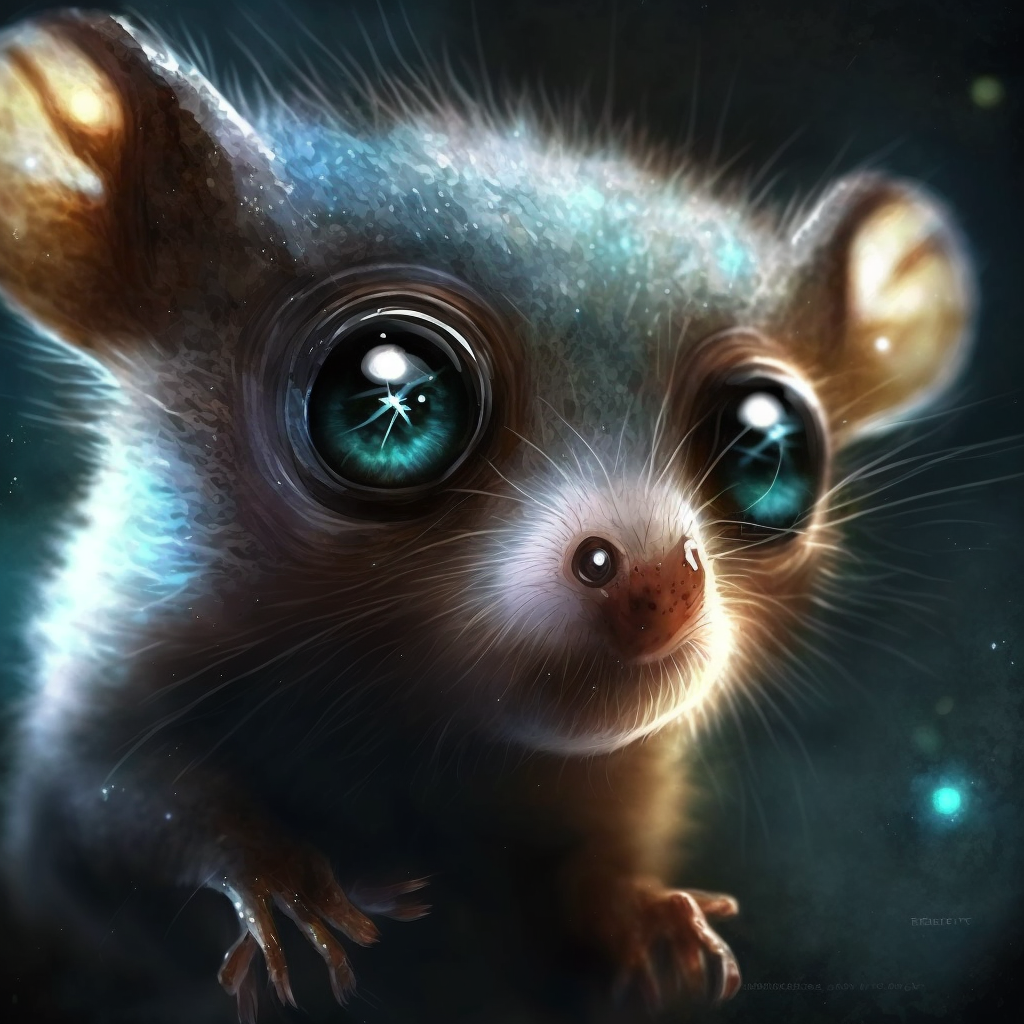
A creature the size of a marmoset had landed on Georges helmet and was licking the glass, using its gecko fingers to stick it. An image formed into Georges mind : Salomé stroking the creature in the green house and calling it Sand’Rin.
“I think she likes you,” said Jorid.
February 21, 2023 at 6:35 pm #6617In reply to: Orbs of Madjourneys
Youssef had brought his black obsidian with him in the kitchen at breakfast. Idle—Youssef had realised that on top of being her way of life, it was also her name—was preparing a herbal brownie under the supervision of a colourful parrot perched on her shoulder.
“If you’re interested in rocks, you should go to Betsy’s. She’s got that ‘Gems & Minerals’ shop on Main street. She opened it with her hubby a few years back. Before he died.”
“Nutty Betsy, Pretty Girl likes her better,” said the parrot.
Idle looked at his backpack and his clothes.
“You seem the wandering type, lad. I was like you when I was younger, always gallivanting here, there, and everywhere with my brother. Now, I prefer wandering in my mind, if you know what I mean,” she said licking her finger full of chocolate. “Anyway, an advice. Don’t go down the mines alone. Betsy’s hubby’s still down there after one of the tunnels collapsed a few years back. She’s not been quite herself ever since.”

Main street was —well— the only street in town. They’ve been preparing for some kind of festival, putting banners on top of the shops and in between two trees near the gas station. Youssef stopped there to buy snacks that he stacked on top of the obsidian stone in his backpack. The young boy who worked there, Devan, seemed quite excited at the perspective of the Lager and Cart Race. It happened only every ten years and last time he was too young to participate.
The shop had not been difficult to find, at the other end of the street. A tiny sign covered in purple star sequins indicated “Betsy’s Gems & Minerals — We deliver worldwide”. He felt with his hand the black rock he had put in his backpack. If Idle had not mentioned the mines and the dead husband, Youssef might have reconsidered going in. But the coincidence with his dream and the game was too intriguing. He entered.
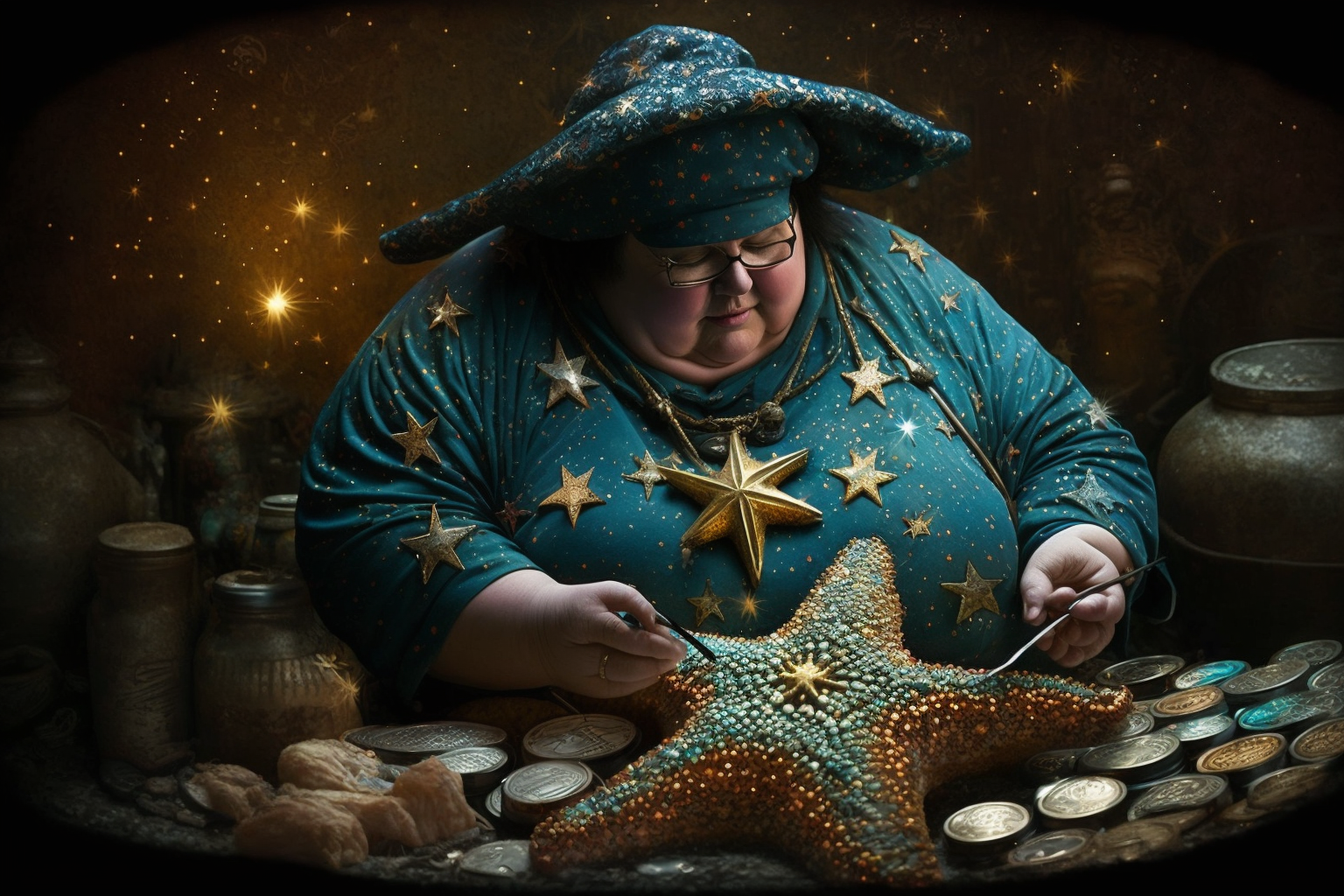 The shop was a mess. Crates full of stones, cardboard boxes and bubble wrappings. In the back, a plump woman, working on a giant starfish she held on her lap, was humming as she listened to loud rock music. Youssef recognised a song from the Last Shadow Puppets’ second album : The Element of Surprise. Apparently, the woman hadn’t heard him enter. She wore a dress and a hat sprinkled with golden stars, and her wrists were hidden under a ton of stone bracelets. The music track changed. The woman started shaking her head following the rhythm of the tune. She was gluing small red stones, she picked in a little box, on one of the starfish arms.
“Bad Habits! Uhu. Bad Habits! Uhu.”
Youssef moved closer. His shadow covered the starfish. The woman raised her head and screamed, scattering the red stones in her workshop. The starfish fell from her lap onto the ground with a thud.
“Oh! My! Little devil. Look at what you made me do. I lost my marbles,” she said with a high pitched laugh. “Your mother never taught you? That’s bad habit to creep up on people like that. You scared the sheep out of me!”
“I’m so sorry,” said Youssef, getting on his knees to help her gather the stones.
When they were all back in their box, Youssef got back on his feet. The woman looked a him with a softened face.
“You such a cutie with your bear shirt. You make me think of my Howard. He was as tall as you are. I’m Betsy, obviously” she said with a giggle, extending her hand to him.
They shook hands, making the pearls of her bracelets clink together.
“I’m Youssef.”
Youssef didn’t need to insist too much. Betsy was a real juke box of gossips. He just had to ask one question from time to time, and she would get going again. He was starting to feel his quirk could be more than a curse after all.
“When the tunnel collapsed,” Betsy said, “I was ready to give up the stone shop. The pain was too much to bear, everything in the shop reminded me of Howard. And in a miners’ town, who would want to buy stones anyway. We’ve been in bad terms with Idle and her family for some time, but that tragic incident coincided with her brother Fred’s disappearance. They thought at first Fred had died in the mines with Howard, because they spent so much time discussing together in Room 8 at the Inn. I overheard them once, talking about something they found in the mines. But Howard never told me, he was so secretive about that. We even had a fight, you know. But Fred, the children found some message later that suggested he had just left the family. Imagine, the children! Idle was pissed with him of course. Abandoning her with that mother of theirs and that money pit of an Inn and the rest of the family. And I needed company. So we started to get together on a regular basis. She would bring her special cakes, and we would complain about our lives. At some point she got involved with that shamanic stuff she found online, and she helped me find my totem Bear. It was quite a revelation. Bear suggested I diversify and open an online shop and start making orgonites. I love those little gummy bears so much. So, I followed Bear’s advice and it has been working like a charm ever since. That’s why I trusted you straight away, lad. Not ’cause of your cute face. You got the Bear in your heart,” she said putting her finger at the center of his chest.
My inner Bear, of course, thought Youssef. That’s the magnet. His phone buzzed. He took it out and saw he had an alert from the game and a message from his friends.
You found the source of your quirk, the magnetic pull that attracts talkative people to you.
Now obtain the silver key in the shape of a tongue to fulfil your quest.Zara : Where are you!?
 We’re at the bar, getting parched! They got Pale Ale!
“I have to go,” said Youssef.
“Wait,” said Betsy.
She foraged through her orgonite collection and handed Youssef one little gummy bear and an ornate metal badge.
“Bear wants me to give this to you. Howard made it. He said it was his forked tongue key.”
She looked at him, emotion in her eyes.
“I know you won’t listen if I tell you not to. So, be careful when you go into the mines.”
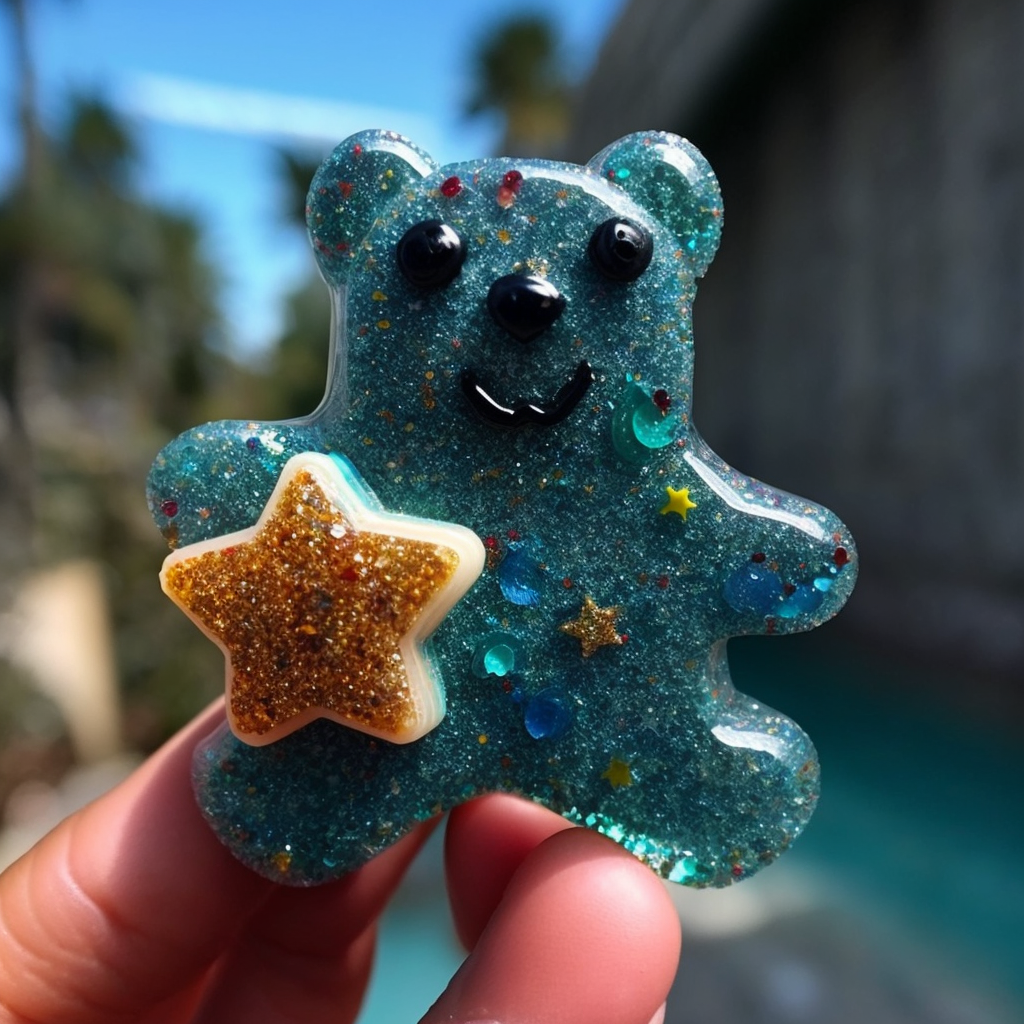
 February 21, 2023 at 1:54 pm #6616
In reply to: Orbs of Madjourneys
“Imagine that! a Big Banana…”
After a brisk walk trying to catch up with his winged psittacine friend, Xavier had stumbled on a large concrete sculpture painted bright yellow in the middle of a field.
He’s read somewhere Australia was known for its fondness of “big things”, but he didn’t expect one here – it was quite fun.“I think you just made my day Pretty Girl” he said to the bird. “Not that I don’t like to venture more, but I get the feeling I have to come back.” He checked his phone, there were a few messages, including one from Youssef who’d found some surprisingly interesting stuff during his shopping visit.
“We wouldn’t want to be caught off-guard by a bunyip, you know…” he said more to himself than to anyone in particular.
“Suuuit yourself.” said the bright red parrot, “No need to fear bunyip. Just don’t follow Min min lights. And stay away from mines.” and it flew away in a different direction.
February 19, 2023 at 9:00 pm #6612In reply to: Orbs of Madjourneys
Two young women, identical to the purple lock of hair hiding their left eye, entered the room. They moved as one person to the table, balancing their arms and bouncing on the floor like little girls. Youssef couldn’t help a shiver as he remembered The Shining.
“We are the twins,” they said, looking at him from behind their purple lock of hair. “Don’t mind us.”
One spoke a few milliseconds after the other, giving their combined voice an otherworldly touch that wasn’t reassuring. One took the sheets of paper from under the obsidian stone and the other the notebooks. After an hesitation they left the stone on the table and went back to the door.
“Wait,” said Youssef as they were about to leave, “What was on that paper? It looked like a map.”
“We leave you the stone,” they said without looking at him. “You might need it.”
As they shut the door, Youssef jumped out of his bed and tried to catch up with them. People couldn’t just enter his room like that. But when he flung the door open, the corridor was empty. He had the impression echoes of a combined laugh remained in the air and, tired as he was, decided not to look for them. Better not break the veil between dream and reality.
Intrigued by what the girls said, he took the black stone from the table and the last snicker bar from his backpack. He noted he would have to go to the grocery store tomorrow to buy some. Once he was back on his bed, he engulfed the snack and, while chewing, turned the stone around, trying to figure out what the girls meant by “You might need it”. The stone was cold to the touch and his reflection kept changing but nothing particular happened. Disappointed, he put the stone on his pillow and resumed the game on his phone.
Youssef finds himself in a small ghost town in what looks like the middle of the Australian outback. He’s standing in the town square, surrounded by an old post office, a saloon, and a few other ramshackle buildings.
He had a hard time focusing on the game. He started to feel the fatigue from the day. He yawned and started to doze off.
Youssef is standing in the town square, surrounded by an old post office, a saloon, and a few other ramshackle buildings. Scraps of mist are floating towards him. A ghostly laugh resounds from behind. He turns swiftly only to see a flash of purple disappear in a dark alleyway. He starts to run to catch them but a man, thrown out of the saloon, stumbles in front of him and they roll together on the dust.
“It’s not that I don’t like you,” said the man, “but you’re heavy.”
Youssef rolls on the side, mumbling some excuses and looks at where the twins had disappeared but the alleyway was gone.
“I think you broke one of my rib with your stone,” says the man, feeling his chest.
He looks as old as the town itself and quite harmless in his clothes, too big for him.
“What stone?” asks Youssef.
The old man points at a fragment of black obsidian between them on the ground.
“Don’t show them,” he says, “or they’ll take it from you.”
“What did you do?”
“They don’t like it when you ask questions about the old mines.”
-
AuthorSearch Results
